2.5 AINPQ Overview
AINPQ supports ITU-N domain MTP/SCCP with ANSI TCAP and handles UDT SCCP messages and non-segmented XUDT messages. The feature processes ANSI-41 NPREQ messages by identifying the TCAP type from the package type field and supports both Rt-on-SSN and Rt-on-GT messages. AINPQ decodes the dialed digits and performs number conditioning by removing provisioned prefixes, NEC, and stop digits, then maps the NAI to the service NAI from the AINPOPTS table. The conditioned number is validated and queried in the UDR. Based on the query result and provisioning options, AINPQ generates either a return result with Digits response using the configured DRA format or a return result without routing digits response. The AINPQ feature is enabled by default.
INPQ will accept ANSI queries for INPQ service and subsystem when AINPQ feature is activated. All the ANSI messages (MTP-routed and GT-routed) reaching INPQ through service selector or subsystem selection shall be treated as AIN queries and decoded.
INPQ enhanced to support AIN Analyze_Route query over ANSI MTP, ANSI SCCP and ANSI TCAP and perform MNP lookup to get the RN.
Message arrives at vSTP route-on-gt. The SCCP portion is decoded, the data is used to perform the service selection using a Service Selector table where INP services (INPQ and INPMR) can be defined for a combination of selectors. These selectors define whether INP Message Relay or INPQ Query is to be performed on an incoming message.
If messages received with Info_Analyzed op-code. During decoding, AINPQ identifies whether the tcap-type is ANSI from the package type field. The INPQ feature handles AIN Info_Analyzed messages. AIN Query supports Rt-on-SSN and Rt-on-GT messages. AINPQ feature must be enabled for AIN Query.
AINPQ supports number conditioning for the AIN Info_Analyzed CalledPartyID based on its NoN and number of digits. Allow setting the NoN of AIN Analyze_Route CalledPartyID based on number of digits. It Provides an option that when AIN based LNP to use GRN, ASD, or RN as the most preferred digits to be sent back in Analyze_Route with CalledPartyID.
For AIN query, INPQ decodes Charge Number and Charge Party Station Type parameters when CCP option in ainpoptions table is Yes and charge parameters present in the query. Based upon configured LNPSNAI value, condition CalledPartyID received in AIN, sends conditioned DN for UDR lookup.
AIN Response package type normal response with one INVOKE_LAST component containing LRN in Called Party ID parameter. If RN found, use RN as LRN as the first preference else use the higher precedence based on following precedence:
- SP (if DEFRN provisioned return DEFRN else return DN in response)
- GRN
- ASD
- Entity not found (copy DN to LRN)
AIN Response package type normal response with INVOKE_LAST component containing original DN copied to LRN in Called Party ID parameter. This type of response is generated when:
- DN specified in the query is not found in database.
- DN is found and entity type for DN is anything other than RN or GRN.
Figure 2-19 Feature Overview
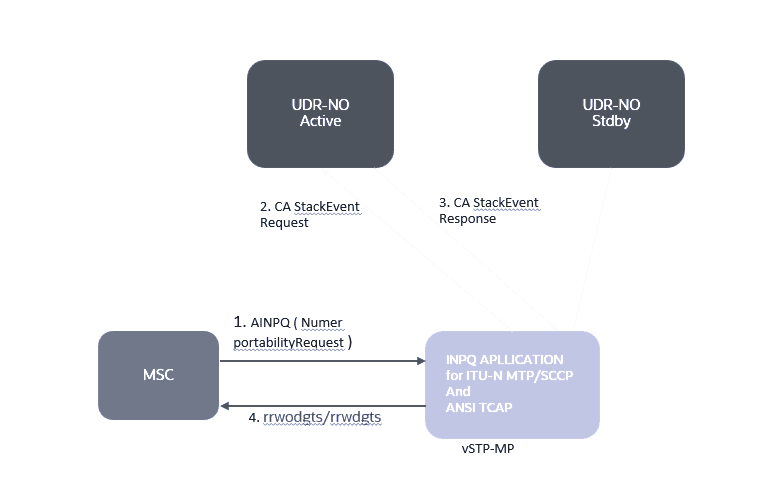
Message Flow for AINPQ Solution on vSTP
- MSC will send NumberPortabilityRequest to vSTP-MP over SS7 links.
- vSTP MP will decode and verify the AINPQ Message.
- Verify whether AINPQ message has valid request.
- Decode the MSISDN parameter from the Subscriber Identity parameter.
- Condition the MSISDN to the international format.
- vSTP MP will query the UDR for conditional MSISDN.
- UDR will look up MSISDN and will send response to the vSTP MP.
- Validate whether the lookup is successful based on the provisioned options. If successful, use the entity information to encode the rrwodgts/rrwdgts response and route it back to the originator.