Autonomous AI Database (Serverless) - In-Transit
Data in Transit Encryption
Autonomous AI Database is protected with encryption of data in transit by default. This ensures that data moving between application and the database is secured from unauthorized interception or tampering
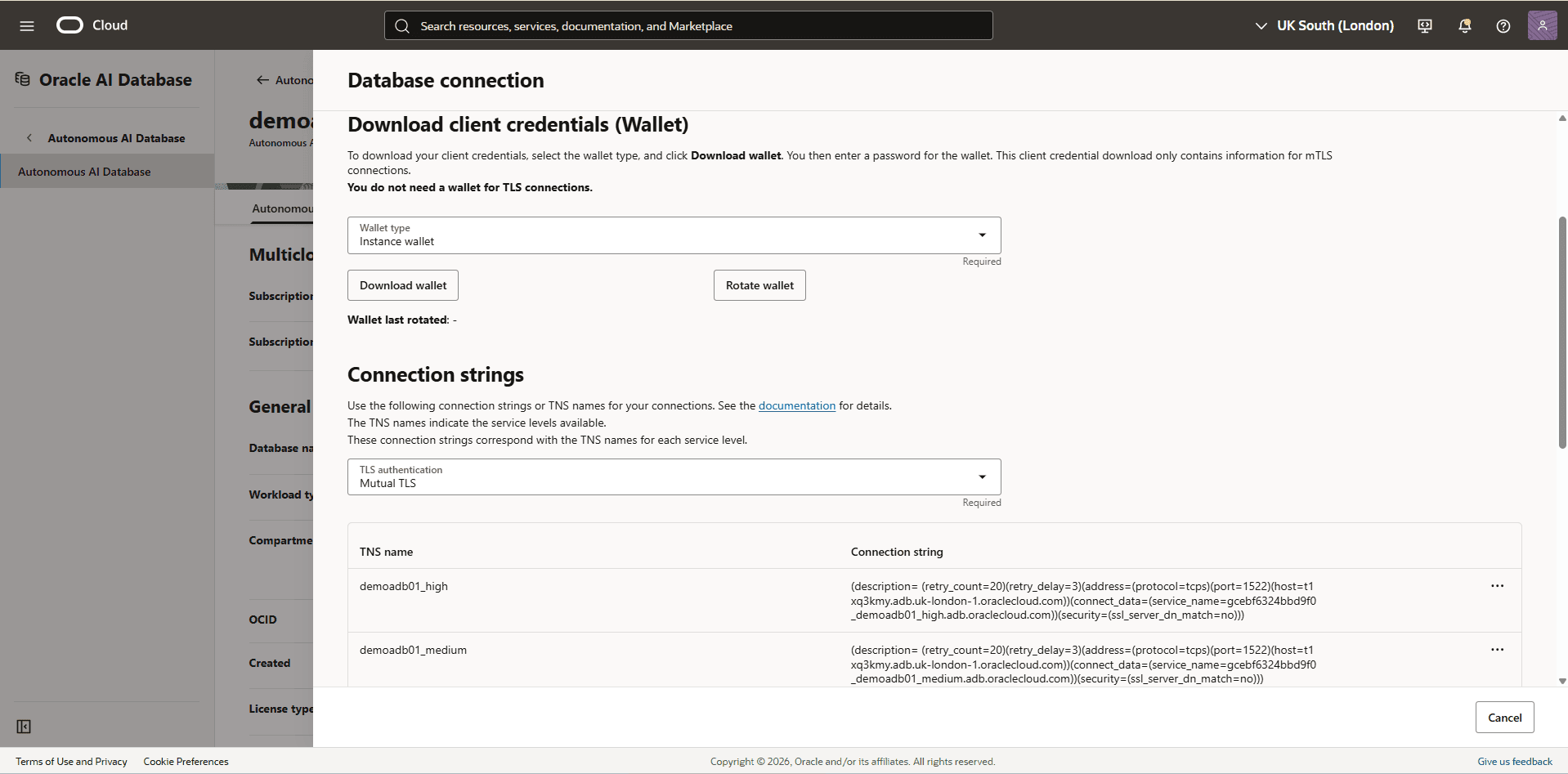
Encryption in transit is implemented using Transport Layer Security (TLS) and mutual TLS (mTLS) for database connections. These protocols provide secure communication channels between database clients and servers, protecting authentication credentials and query data.
Connection Options
-
TLS: Encrypts traffic between the client and the database using standard X.509 certificates.
-
mTLS: Provides two-way authentication, where both the client and the database present valid certificates before a connection is established. This option offers stronger identity assurance for enterprise workloads.
Connections on Autonomous AI Database
Connections to your Autonomous AI Database are secured, and can be authorized using TLS or mTLS authentication options. TLS authentication is easier to use, provides better connection latency, and does not require you to download client credentials (wallet) if any of these is true for your connections:
-
You are using JDBC Thin Client (version 12.2.0.1 or higher) with JDK 8(u163+) or higher.
-
You are using the python-oracledb driver.
-
You are using ODP.NET version 19.14 (or higher), or 21.5 (or higher).
-
You are using an Oracle Call Interface based driver with Oracle Client libraries version 19.14 (or higher), or 21.5 (or higher).
There is currently no content for this page. Oracle AI Database@Azure team intends to add content here, and this placeholder text is provided until that text is added. The Oracle AI Database@Azure team is excited about future new features, enhancements, and fixes to this product and this accompanying documentation. We strongly recommend you watch this page for those updates.
There is currently no content for this page. Oracle AI Database@Azure team intends to add content here, and this placeholder text is provided until that text is added. The Oracle AI Database@Azure team is excited about future new features, enhancements, and fixes to this product and this accompanying documentation. We strongly recommend you watch this page for those updates.
There is currently no content for this page. Oracle AI Database@Azure team intends to add content here, and this placeholder text is provided until that text is added. The Oracle AI Database@Azure team is excited about future new features, enhancements, and fixes to this product and this accompanying documentation. We strongly recommend you watch this page for those updates.
There is currently no content for this page. Oracle AI Database@Azure team intends to add content here, and this placeholder text is provided until that text is added. The Oracle AI Database@Azure team is excited about future new features, enhancements, and fixes to this product and this accompanying documentation. We strongly recommend you watch this page for those updates.
There is currently no content for this page. Oracle AI Database@Azure team intends to add content here, and this placeholder text is provided until that text is added. The Oracle AI Database@Azure team is excited about future new features, enhancements, and fixes to this product and this accompanying documentation. We strongly recommend you watch this page for those updates.