Exascale VM Cluster
To modify an existing Exascale VM Cluster, follow these steps.
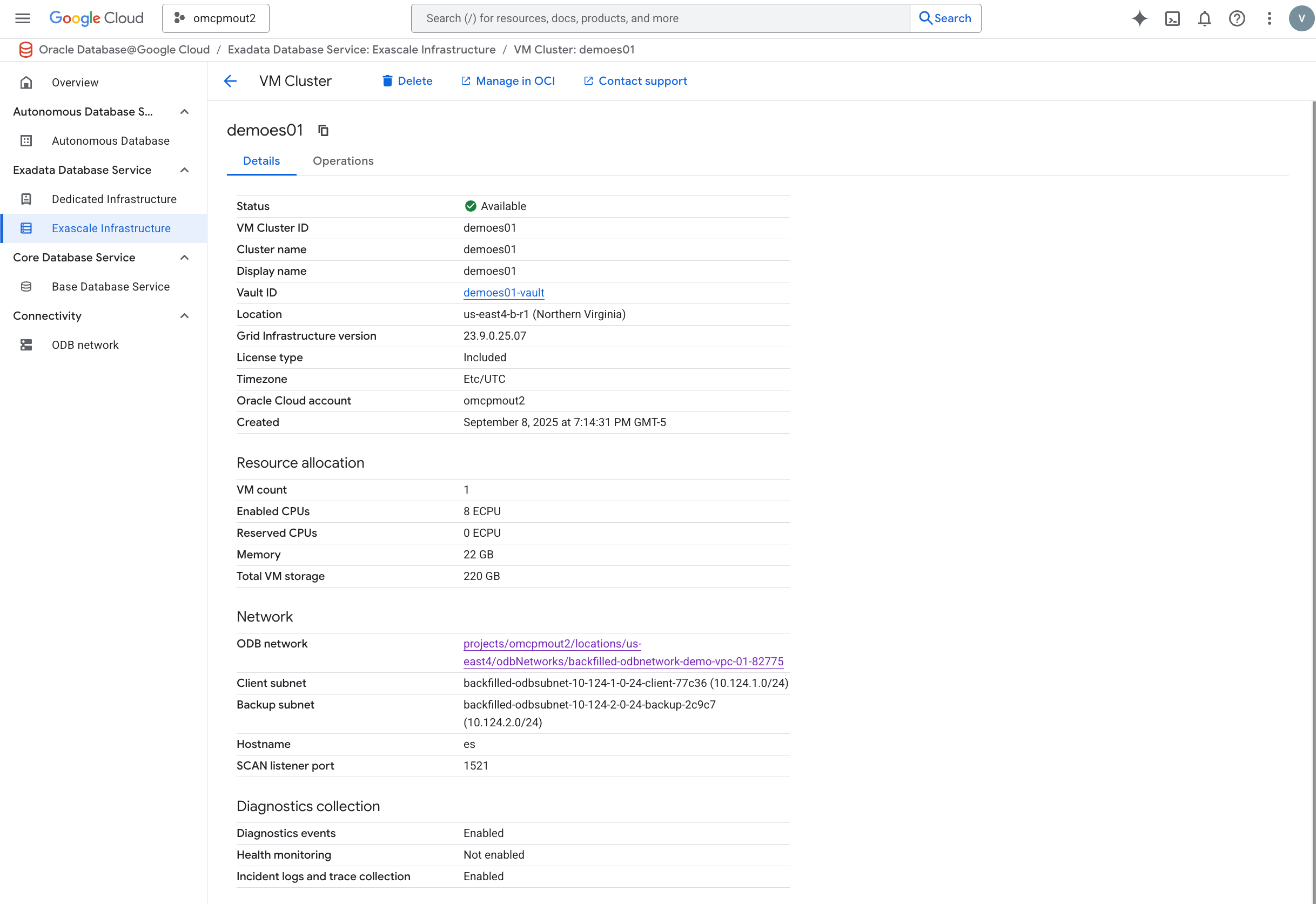
- From the Oracle AI Database@Google Cloud dashboard , select Exadata Database Service > Exascale infrastructure from the left-menu.
- Select the VM Cluster from the list.
- Select the Manage in OCI link.
Modify Storage Vault
- From the Oracle AI Database@Google Cloud dashboard , select Exadata Database Service > Exascale infrastructure from the left-menu.
- Select the Storage Vault tab, and then select the Storage Vault you need to modify.
- Select the Manage in OCI link.
- This page allows you to Scale storage vault. For more information, see Manage Exascale Database Vaults on Exadata Database Service on Exascale Infrastructure.
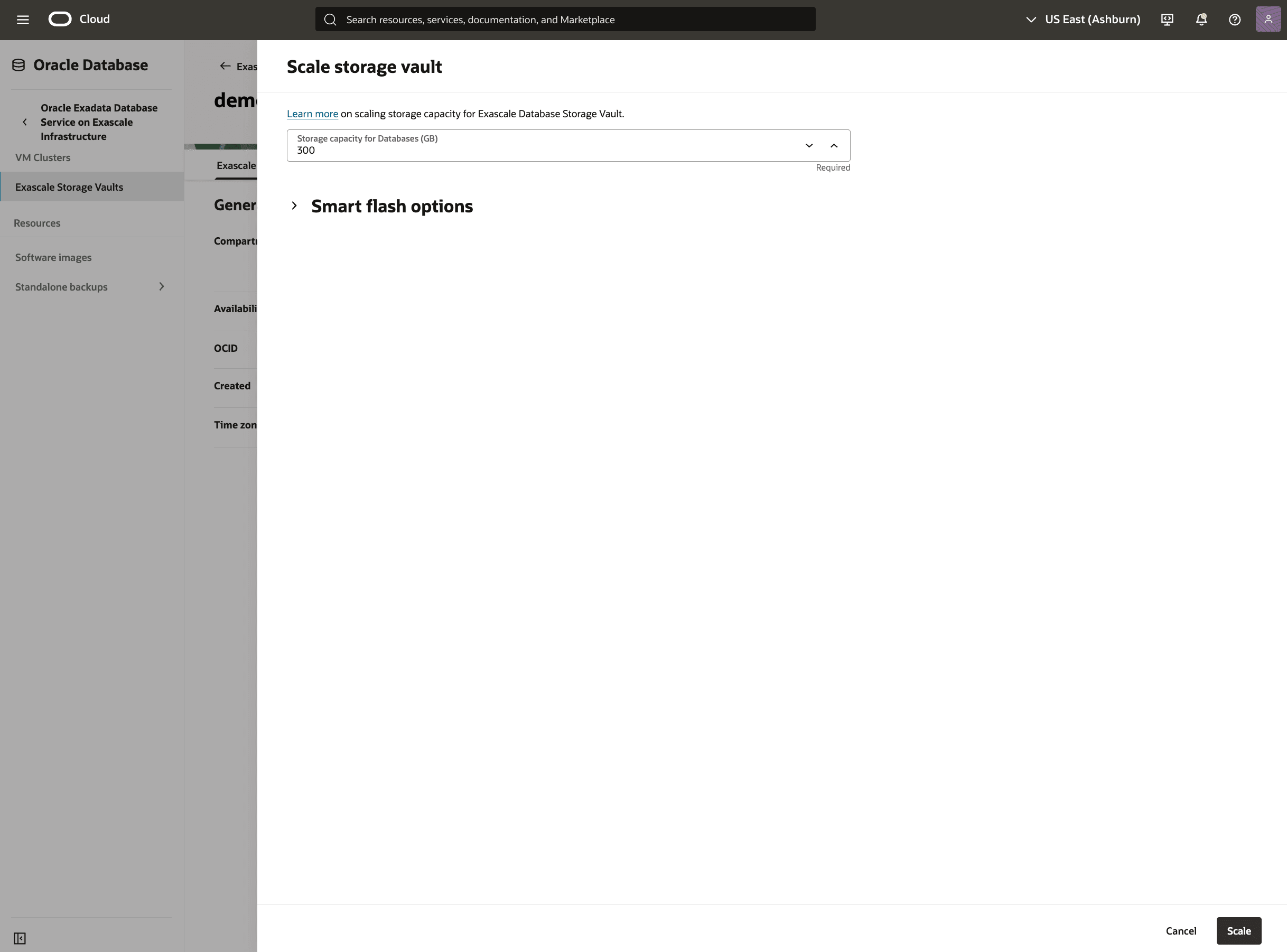
- You can select the Actions menu and Add Tags. For more information, see Overview of Tagging.
There is currently no content for this page. Oracle AI Database@Google Cloud team intends to add content here, and this placeholder text is provided until that text is added. The Oracle AI Database@Google Cloud team is excited about future new features, enhancements, and fixes to this product and this accompanying documentation. We strongly recommend you watch this page for those updates.
There is currently no content for this page. Oracle AI Database@Google Cloud team intends to add content here, and this placeholder text is provided until that text is added. The Oracle AI Database@Google Cloud team is excited about future new features, enhancements, and fixes to this product and this accompanying documentation. We strongly recommend you watch this page for those updates.
You can modify an Exascale VM Cluster in Google Cloud using OCI Terraform provider.
Prerequisites
- Terraform or OpenTofu installed
- OCI credentials configured
- HashiCorp OCI provider version >= 7.0
- Exascale VM Cluster is created using Terraform
To modify an Exascale VM Cluster, perform the following steps:- Create a Modify configuration file and add the import block with the Exascale VM Cluster id. The id value can be found at the Create Exascale VM Cluster output block.
Sample Terraform Configuration using OCI Terraform Provider
# Set OCI Provider source and version terraform { required_providers { # OCI Provider oci = { source = "oracle/oci" version = "8.12.0" } } } # Configure the OCI Provider provider "oci" { tenancy_ocid = "ocid1.tenancy.oc1..aaaaaaaa2pg53mzroh6r2ub72r5mxxxxxxxxxxxxxpylciiqdihofe3dq" user_ocid = "ocid1.user.oc1..aaaaaaaaa6wyl3kzbgogsqpsixxxxxxxxxxxxxxxxuwzkemcrgue5q" private_key_path = "C:\\OCI-Terraform\\private-key.pem" # This example is for Windows OS fingerprint = "6c:c7:a7:60:f2:99:62:b9:8e:01:fc:e8:9b:eb:61:61" region = "us-desmoines-1" } # Import Exascale VM Cluster Configuration import { to = oci_database_exadb_vm_cluster.oci_exascale_vm_cluster id = "ocid1.exadbvmcluster.oc1.xxx.anuwcljtou6knayanpsxxxxxxxxxxxxxxxj74msrv4t53fkgrrspyxm3ona" # Replace the OCID value } - Run the following commands in the Terminal window:
terraform initterraform validateterraform plan -generate-config-out="C:\GoogleCloud-Terraform\Working-Directory\generated_exascale_vm_cluster.tf" # An example on Windows OS - Open the
generated_exascale_vm_cluster.tffile in a text editor and copy the content. - Append the
generated_exascale_vm_cluster.tfcontent in the Modify configuration file. Remove the import block. - Run the following command in the Terminal window:
terraform import oci_database_exadb_vm_cluster.oci_exascale_vm_cluster "ocid1.exadbvmcluster.oc1.xxx.anuwcljtou6knayanpsxxxxxxxxxxxxxxxj74msrv4t53fkgrrspyxm3ona" # Replace the OCID value - Run the following command in the Terminal window to confirm the imported state file and the generated configuration file resources are in sync:
terraform plan - Update the properties/values in the Modify configuration file as required.
NoteSample Terraform Configuration using OCI Terraform Provider
Modifying the configuration of Exascale VM Cluster using OCI Terraform provider will make the Create configuration file out of sync. To avoid out of sync Force replacement / Destroy issue, add the following lifecycle block in the Create configuration file.lifecycle { ignore_changes = [ properties[0].enabled_ecpu_count_per_node, properties[0].additional_ecpu_count_per_node, properties[0].vm_file_system_storage[0].size_in_gbs_per_node ] }# __generated__ by Terraform # Please review these resources and move them into your main configuration files. # __generated__ by Terraform resource "oci_database_exadb_vm_cluster" "oci_exascale_vm_cluster" { availability_domain = "HBfP:US-DESMOINES-1-AD-1" backup_network_nsg_ids = ["ocid1.networksecuritygroup.oc1.xxx.aaaaaaaa5hy6u7izctbm5xxxxxxxxx4nm4sclutb5oyjkxsqaq65axq"] backup_subnet_id = "ocid1.subnet.oc1.xxx.aaaaaaaaclol7pcrsqzia6xxxxxxxxxxxxzkjcdubx53uva" cluster_name = "exacluster" compartment_id = "ocid1.compartment.oc1..aaaaaaaaqn5kip2ivclikxx5yxxxxxxxxzc5rykq3wfkrdoa" defined_tags = { "Oracle-Tags.CreatedBy" = "ocid1.multicloudlink.oc1.iad.amaaaaaaou6knayafyn3zgxxxxxxxxxxgzgwiln3zdhyypbtq" "Oracle-Tags.CreatedOn" = "2026-04-27T18:52:35.085Z" } display_name = "demo-exascale-vm-cluster-tf" domain = "dqytvbomck.v34a03280.oraclevcn.com" exascale_db_storage_vault_id = "ocid1.exascaledbstoragevault.oc1.xxx.anuwcljtou6knaya6bvc5hnu4kxxxxxxxxxxxcggt7irbnkhs45trq" freeform_tags = {} grid_image_id = "ocid1.dbpatch.oc1.xxx.anuwcljtt5t4sqqay7jnl6ldlpysxxxxxxxxxldjxilpjqtzngfjpmjq" hostname = "vm" license_model = "LICENSE_INCLUDED" nsg_ids = ["ocid1.networksecuritygroup.oc1.xxx.aaaaaaaa2paox4n5nvxmfxxxxxxxxxxxxipobipme7yae5mcjkbzhzwa"] scan_listener_port_tcp = 1521 scan_listener_port_tcp_ssl = 2484 security_attributes = {} shape = "EXADBXS" shape_attribute = "SMART_STORAGE" ssh_public_keys = ["ssh-rsa AAAAB3NzaC1yc2EAAAADAQABAAABAQC2Xwmyn1cVUhDhT6jkRMzO+AzUXvBjwxxxxxxxxxxxxx170xVgsBii5tJP7EFQjb2TfQPYbTkrn4SBNZhR1lYHr543yhB1Va7tjJNZz7 first.last@email.com"] subnet_id = "ocid1.subnet.oc1.xxx.aaaaaaaa4dc76m7nsgp6ax2j3dxxxxxxxx5emetya57sstyyqyl4q" system_version = "25.2.6.0.0.260117" time_zone = "UTC" data_collection_options { is_diagnostics_events_enabled = true is_health_monitoring_enabled = true is_incident_logs_enabled = true } node_config { enabled_ecpu_count_per_node = 12 total_ecpu_count_per_node = 16 vm_file_system_storage_size_gbs_per_node = 240 } /* node_resource { node_name = "" } */ } - Run the following command in the Terminal window:
terraform apply