Overview
A multicloud strategy allows organizations to distribute their workloads across multiple cloud platforms and providers. This helps provide flexibility when picking the right tool for each job. By selecting the best cloud service for each task, IT architects can take advantage of each provider's strengths, including custom hardware, software, and service capabilities.
In a basic multicloud scenario, enterprises simply use different cloud services for different purposes—similar to how a consumer might use a streaming video service from one vendor and cloud-based photo storage from another, accessing both through their home internet. In a more advanced business multicloud environment, integration allows applications running in different clouds to communicate and share data. This reduces the need to duplicate data between services and helps organizations use the hardware, software, services, and other tools available on each platform to their best advantage.
Because a multicloud approach involves two or more cloud providers, management occurs on multiple levels. Each platform has its own management tools and dashboards, which allow IT to oversee, configure, and execute granularly within that environment. IT teams monitor the bigger picture a layer above that, and factors such as resource use, policy compliance, interoperability, and operational optimization are all ideally handled by a multicloud management system.
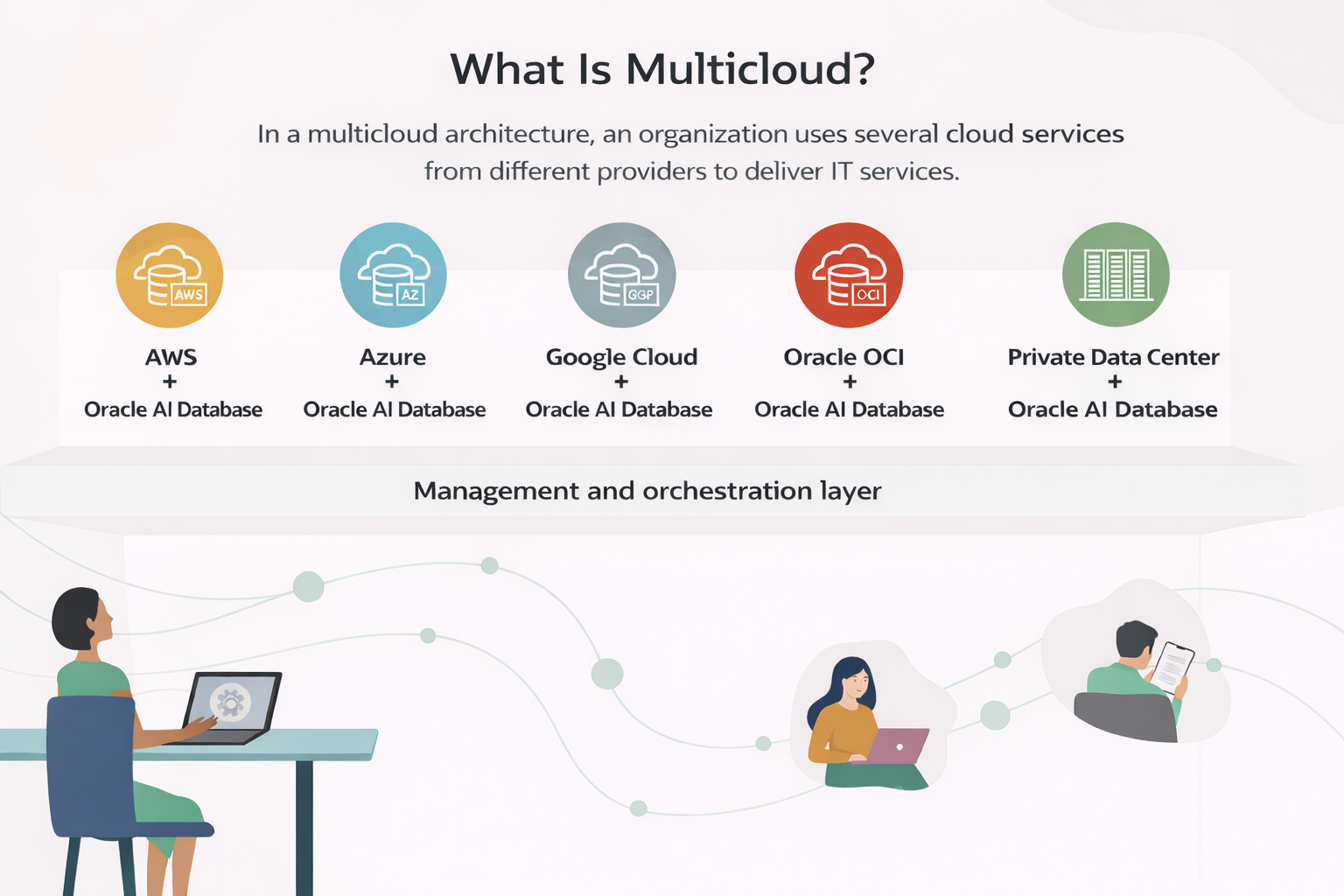
Multicloud systems combine services or workloads from two or more cloud providers to help organizations avoid vendor lock-in, maximize spending, and improve resilience.