Database Management
Database management is the practice of creating, organizing, storing, securing, and maintaining data in a database so it can be reliably accessed and used by applications and people. This subject area enables tracking Database Management, Listener, Cluster Instance, ASM Instance, DB Home, Private Endpoint, Job Execution, external Exadata storage server, and their details.
Business Questions
The subject area can answer the following business questions:
- What is the maximum flash disk | OPS?
- What is the maximum flash disk throughput?
- What is the maximum hard disk | OPS?
- What is the maximum hard disk throughput?
- What are the CPU counts based on lifecycle state?
- What is the Exadata storage server count by lifecycle state?
- What is the memory usage by lifecycle state?
- What are the CPU counts by server ID?
- What are the Exadata storage servers by server ID?
- What is the memory by server ID?
Logical Model
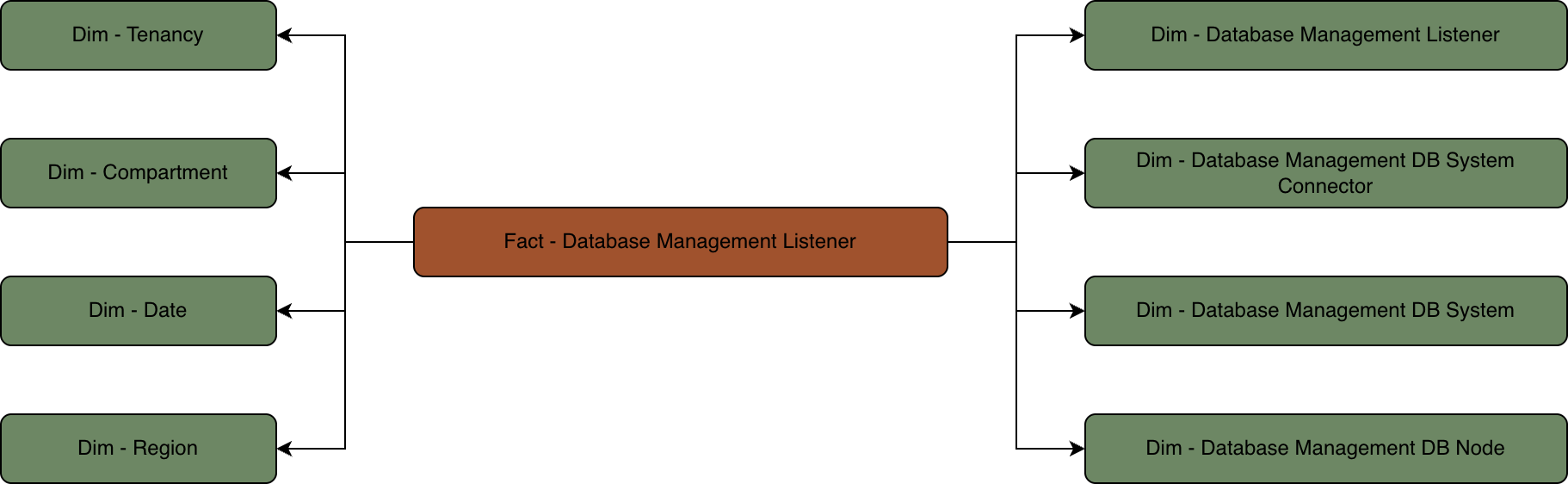
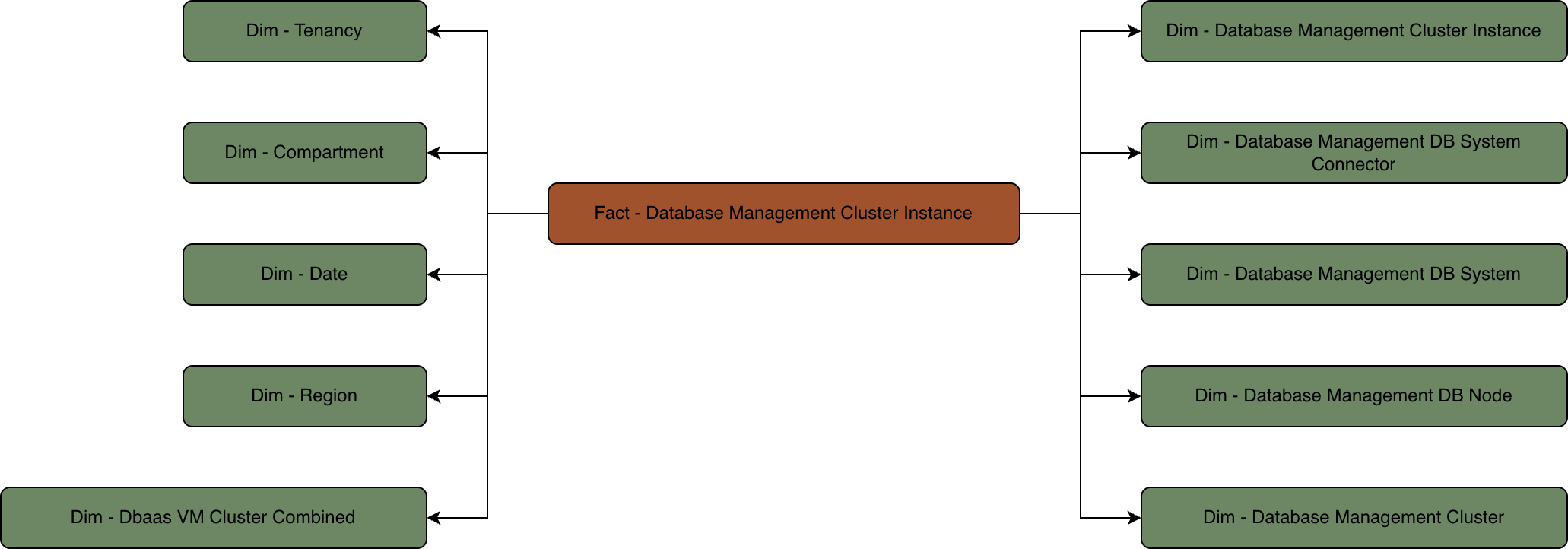
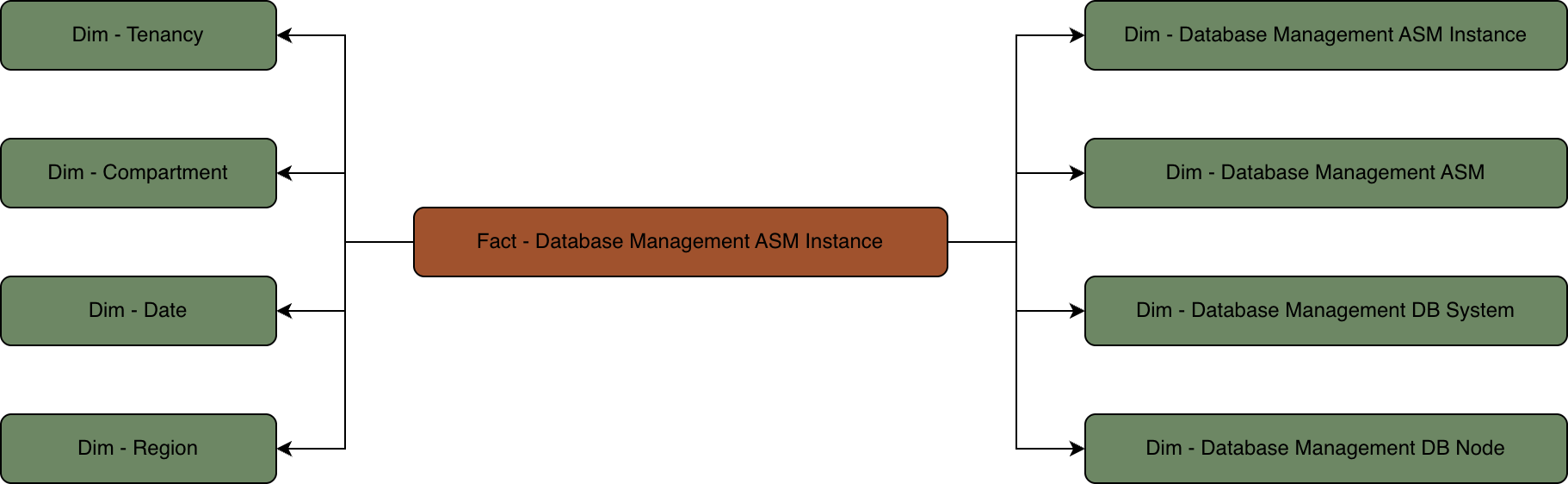
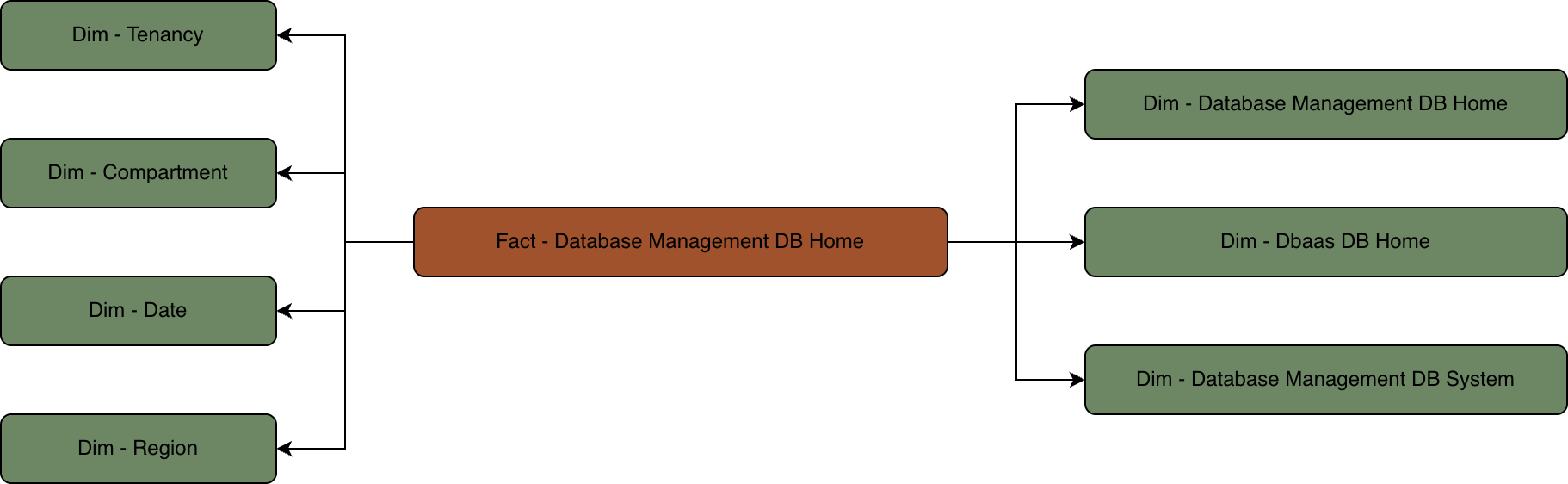
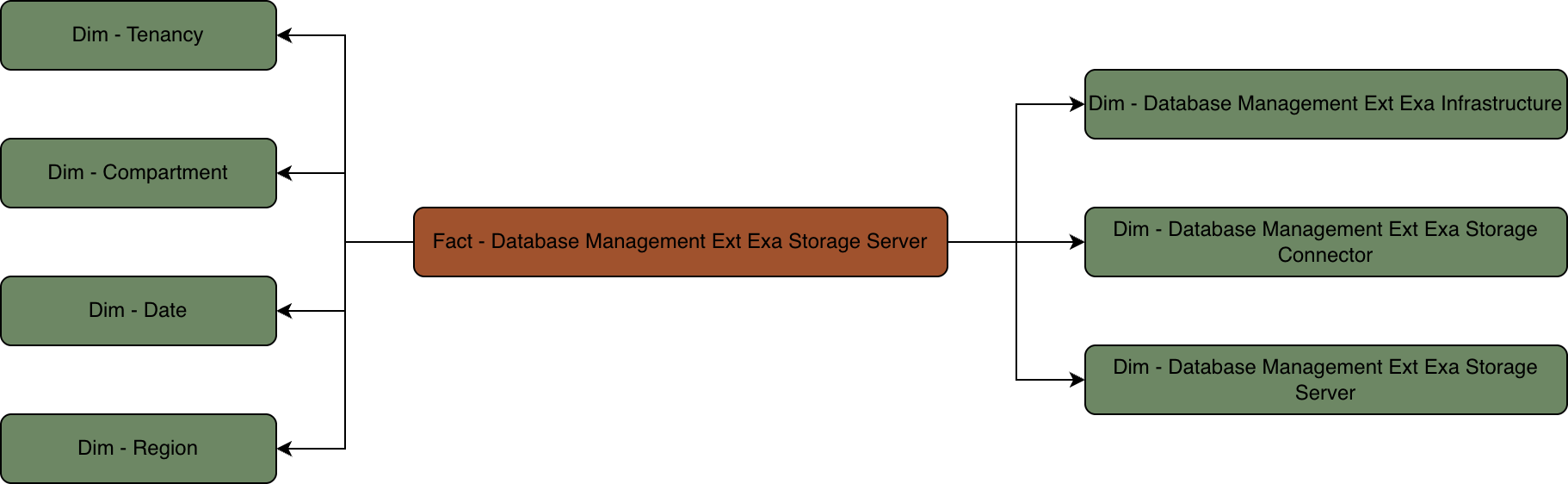
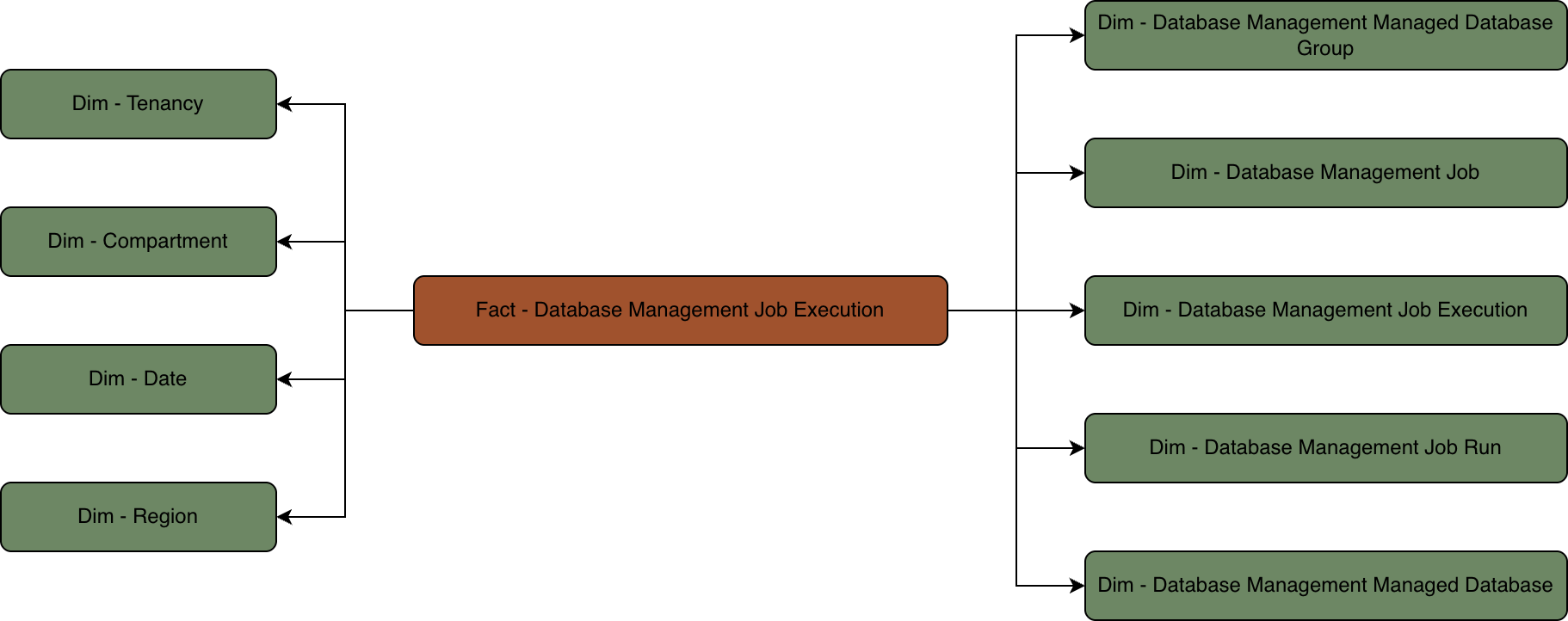
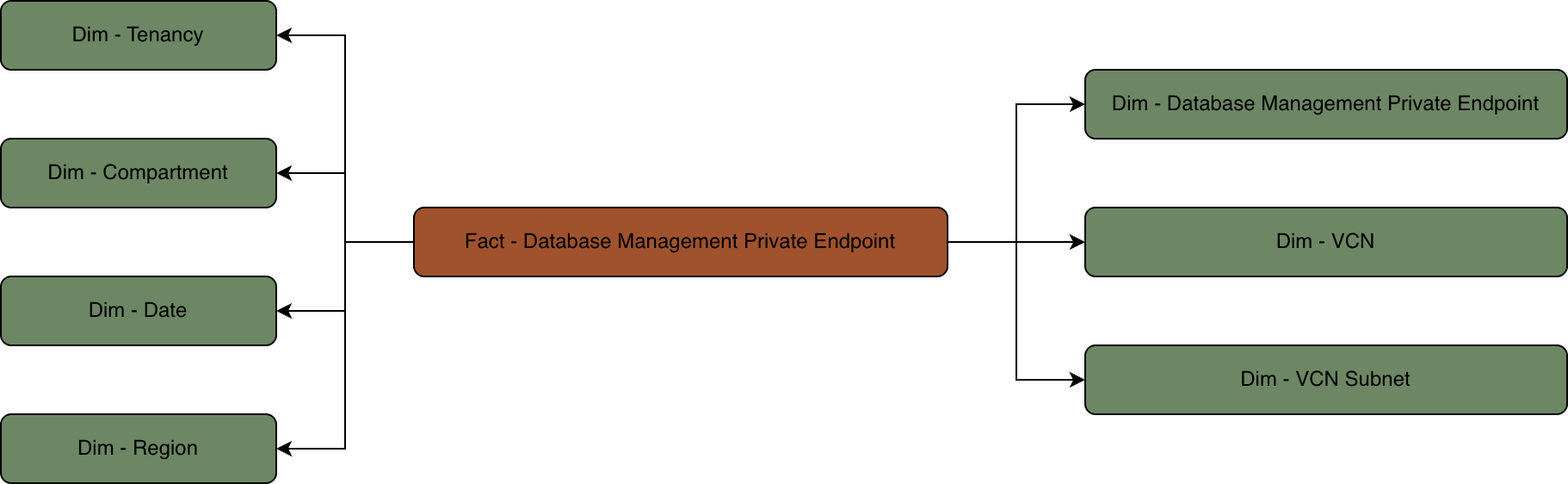
The Database Management subject area is based on a relationship-driven logical model.
This diagram shows how the Database Management fact tables are related to their dimension tables:
Metric Details
The fact folders in this subject area include the following metrics:
| Area | Metric | Definition |
|---|---|---|
| Database Management - Listener | Database Management Listener Count | COUNT(ocira_fact_key) from the fact view's ocira_fact_key (maps to ocira$fact_key) |
| Database Management - Cluster Instance | Database Management Cluster Instance Count | COUNT(ocira_fact_key) from the fact view's ocira_fact_key (maps to ocira$fact_key) |
| Database Management - ASM Instance | Database Management ASM Instance Count | COUNT(ocira_fact_key) from the fact view's ocira_fact_key (maps to ocira$fact_key) |
| Database Management - DB Home | Database Management DB Home Count | COUNT(ocira_fact_key) from the fact view's ocira_fact_key (maps to ocira$fact_key) |
| Database Management - Job Execution | Database Management Job Execution Count | COUNT(ocira_fact_key) from the fact view's ocira_fact_key (maps to ocira$fact_key) |
| Database Management - Private Endpoint | Database Management Private Endpoint Count | COUNT(ocira_fact_key) from the fact view's ocira_fact_key (maps to ocira$fact_key) |
| Database Management - Ext EXA Storage Server | Database Management Ext EXA Storage Server Count | COUNT(ocira_fact_key) from the fact view's ocira_fact_key (maps to ocira$fact_key) |
| Database Management - Ext EXA Storage Server | CPU Count | Provides the CPU count of the Exadata storage server |
| Database Management - Ext EXA Storage Server | Max Flash Disk | OPS | Provides the maximum flash disk IO operations per second of the Exadata storage server |
| Database Management - Ext EXA Storage Server | Max Flash Disk Throughput | Provides the maximum flash disk IO throughput in MB/s of the Exadata storage server. |
| Database Management - Ext EXA Storage Server | Max Hard Disk | OPS | Provides the maximum hard disk IO operations per second of the Exadata storage server |
| Database Management - Ext EXA Storage Server | Max Hard Disk Throughput | Provides the maximum hard disk IO throughput in MB/s of the Exadata storage server. |
| Database Management - Ext EXA Storage Server | Memory (GB) | Provides the Exadata storage server memory size in GB |