Determine the Limits
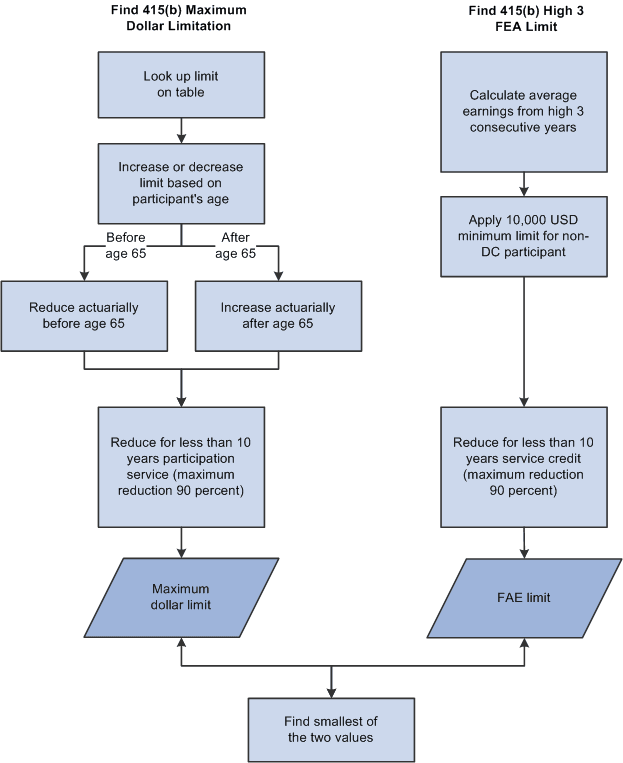
This is the most complex part of the process. You can look at the 415 pages to go through all the parameters used during this stage. The following diagram summarizes the process for determining limits. It includes steps for increasing or decreasing limits based on age, calculating average earnings, and reducing limits for service length:
This diagram shows how the system calculates 415 limits, including how the system increases or decreases limits based on age, calculates average earnings, and reduces limits for service length
This calculation reflects amendments to IRC section 415 by the Small Business Job Protection Act of 1996 (SBJPA) and the Economic Growth and Tax Relief Reconciliation Act of 2001 (EGTRRA).
Note:
The acronym GUST refers to several legislative acts, including SBJPA.
Pre-amendment methodology will be applied, however, when a calculation involves a benefit commencement date occurring in a plan year that ended before January 1, 2002. For subsequent dates, ages used for actuarial increases and decreases to the 415(b) maximum dollar limit were changed by EGTRRA.
Also, SBJPA removed the 415(e) test for defined benefit plans that are secondary to defined contribution plans. Pension Administration still performs this historical calculation if both of the following are true:
-
The benefit commencement date occurs in a plan year that ended before December 31, 2000, the effective date of the SBJPA change.
-
You provide historical 415(e) information for the plan and the employee.
In this case, the final 415 limit is the smallest of the historical 415(e) limit, the 415(b) maximum dollar limit, and the 415(b) high 3 FAE limit.