Understanding Reverse Proxy Servers
A reverse proxy server accepts requests from client browsers on behalf of another web server and then relays those requests to the web server. The reverse proxy server checks web requests and responses to ensure that they adhere to network security policies. For example, a reverse proxy server validates that a command intended for the target web server is a valid command for that server. In this diagram, the HR web server, corp.hr, is behind a reverse proxy server, www.pshr.com:
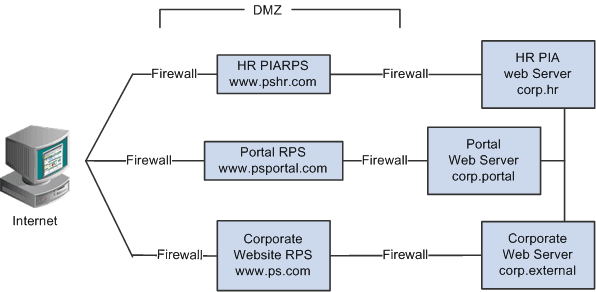
All internet requests for the HR web server are relayed by www.pshr.com to corp.hr. The site URL routes the client to the proxy as if it were a web server. Replicated content is delivered from the proxy cache to the external client without exposing the origin server or the network residing safely behind the firewall. You can balance the load of an overtaxed web server by installing multiple instances of the web server.
Any external content must come from a node that's registered in the portal database so that the portal servlet can look up the node name based on the URL of the content. The external content HTML is rewritten to use that proxied format.