Identity Property
The identity property for a referenceable object in the input contract is used to identify an individual record of that object. Any reference or reference list will contain the identity values of the records they reference.
The value of this property must be unique for each record of a given object, regardless of the record’s parent. Its value cannot be null, undefined or blank string.
By default, the identity property is of type string and is called “id”. You can re-name the property to suit your mapping needs, for example to reflect the name of the identity field of this object in your data source.
You are not required to map the identity property to a field in the decision service, however, you may wish to if:
-
You want to reason with the identity value in your rules. For example, you have a lookup table that uses the unique country code, currency code or state abbreviation.
-
You want the identity property to be a number value. If the identity property is not mapped it will be a string.
Map the identity property to a field
To map the identity property to a field in the decision service:
-
Ensure that the record list in the input contract allows references to records.

-
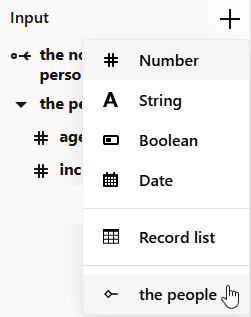
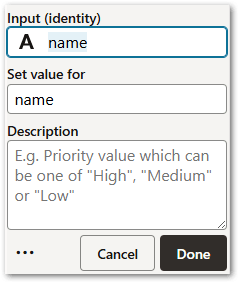
Add a field for the identity property in the input contract. The field can be either a string or a number. The field needs to have:
-
An Input value – this needs to be the same value as the identity property that was defined on the record list. This will automatically be detected as the identity value (as shown by (identity) next to the Input field label).
-
A Set value for value – this is the field name that you will use in the rules.
-
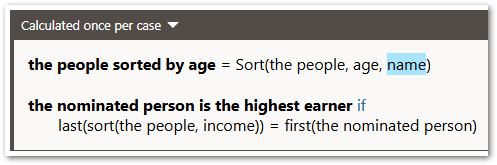
You can now use that field in rules.