Example: Use an Entity-Level Attribute Condition to Set All Attributes of the Inferred Entity
For a policy model where the condition is an entity-level attribute and the relationships proven in the rule table include reference relationships, entity instances and entity attributes can not be inferred in a single rule table as the entity-level attribute used as the condition may not be in scope for all entities and attributes proved in the rule. Instead the rule table should be split into a table to prove entity instances and a separate table to prove entity-level attributes.
For example, if you had the following data model:
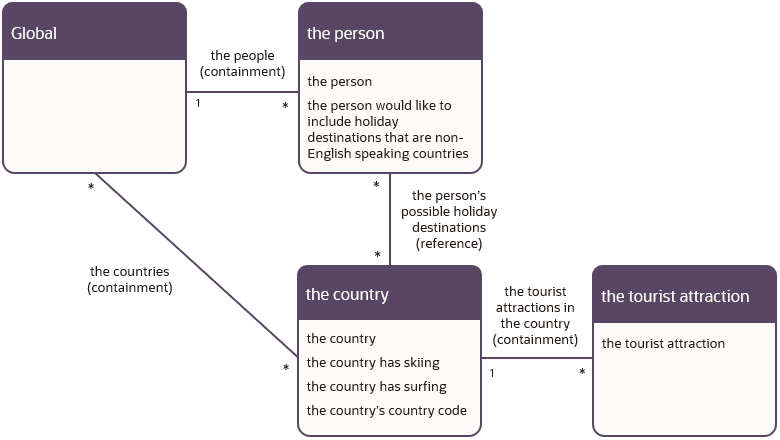
You could have the following three rule tables (on separate sheets) in Excel:
-
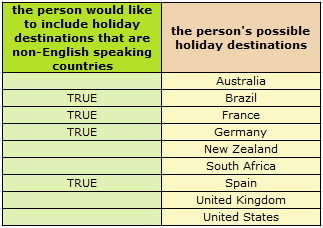
A table that infers the entity instances for 'the person's possible holiday destinations' relationship
-
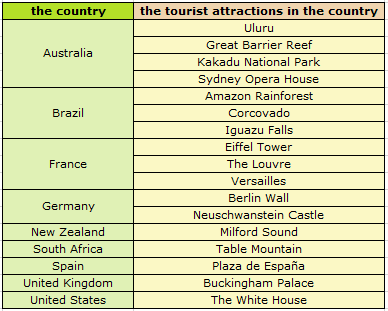
A table that infers the entity instances for 'the tourist attractions in the country' relationship
-
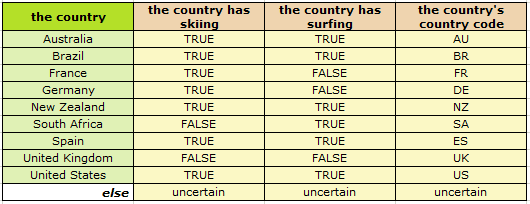
A table that infers the entity-level attributes for 'the country' entity
Tip: To see these rules in action, open the Holiday Destinations 2 project in Oracle Policy Modeling.