25.2.6.4.1 Finding Best Algorithm for Your Data
Use AutoML to find the machine learning model that best predicts your target outcome.
Your application has access to over 30 different machine learning algorithms. You can use them to "mine" your historical data for interesting correlations. By training a machine learning model using the most appropriate algorithm, your applications can predict future outcomes using that model.
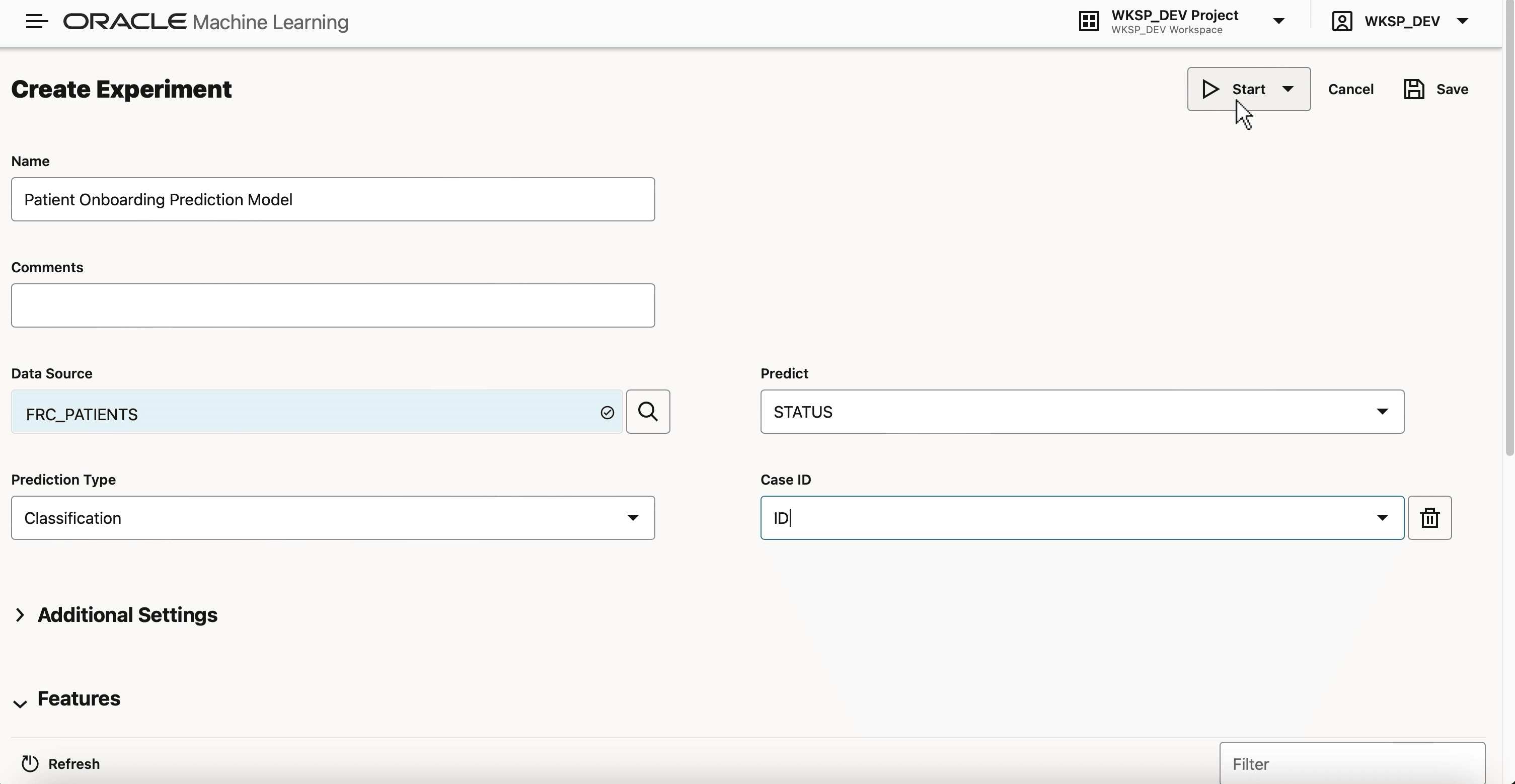
As shown below, Oracle Cloud's AutoML tool lets you run an experiment on your historical data to help you determine the machine learning algorithm that best predicts the outcome you seek. Setting up an experiment is simple. You tell the tool which table to analyze, what column represents the outcome you want to predict, and identify the table's primary key column. For the Woods Clinic app, you select the FRC_PATIENTS table, with its ID primary key column, and specify the patient's onboarding STATUS as the value you aim to predict.
Figure 25-85 Configuring an Oracle Machine Learning AutoML Experiment
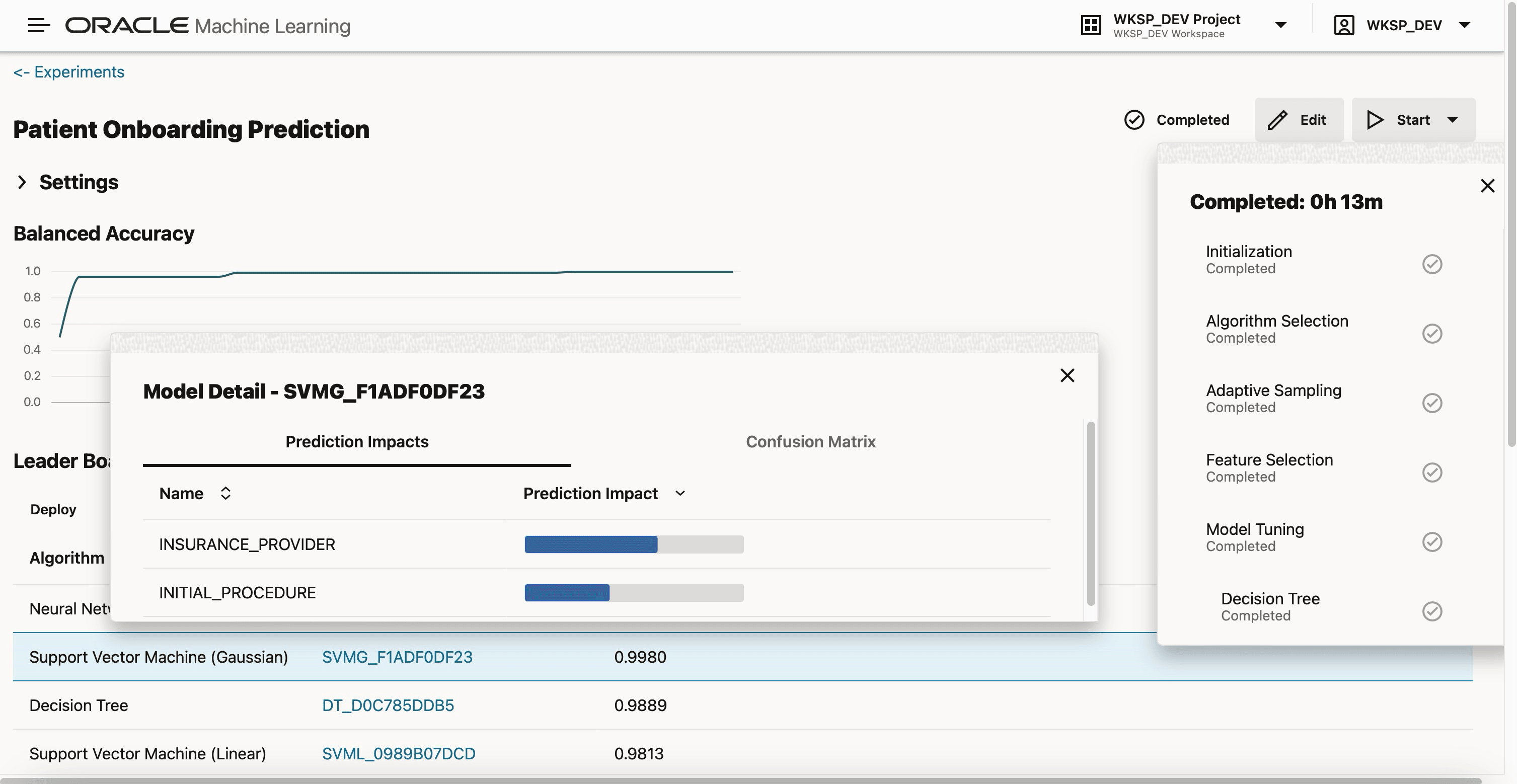
AutoML runs an experiment trying all of its available machine learning algorithms on the Woods Clinic patient onboarding data. This experiment takes about 13 minutes to run. As shown below, it keeps a "Leader Board" of the algorithms that deliver the best prediction accuracy. Clicking on the name of any candidate model in the experiment, you can see the column values that had the strongest impact on predicting the historical outcome. It identifies the INSURANCE_PROVIDER and the INITIAL_PROCEDURE the patient requested during registration as the strongest predictors.
Figure 25-86 Inspecting the Algorithm "Leader Board" Results of the Experiment
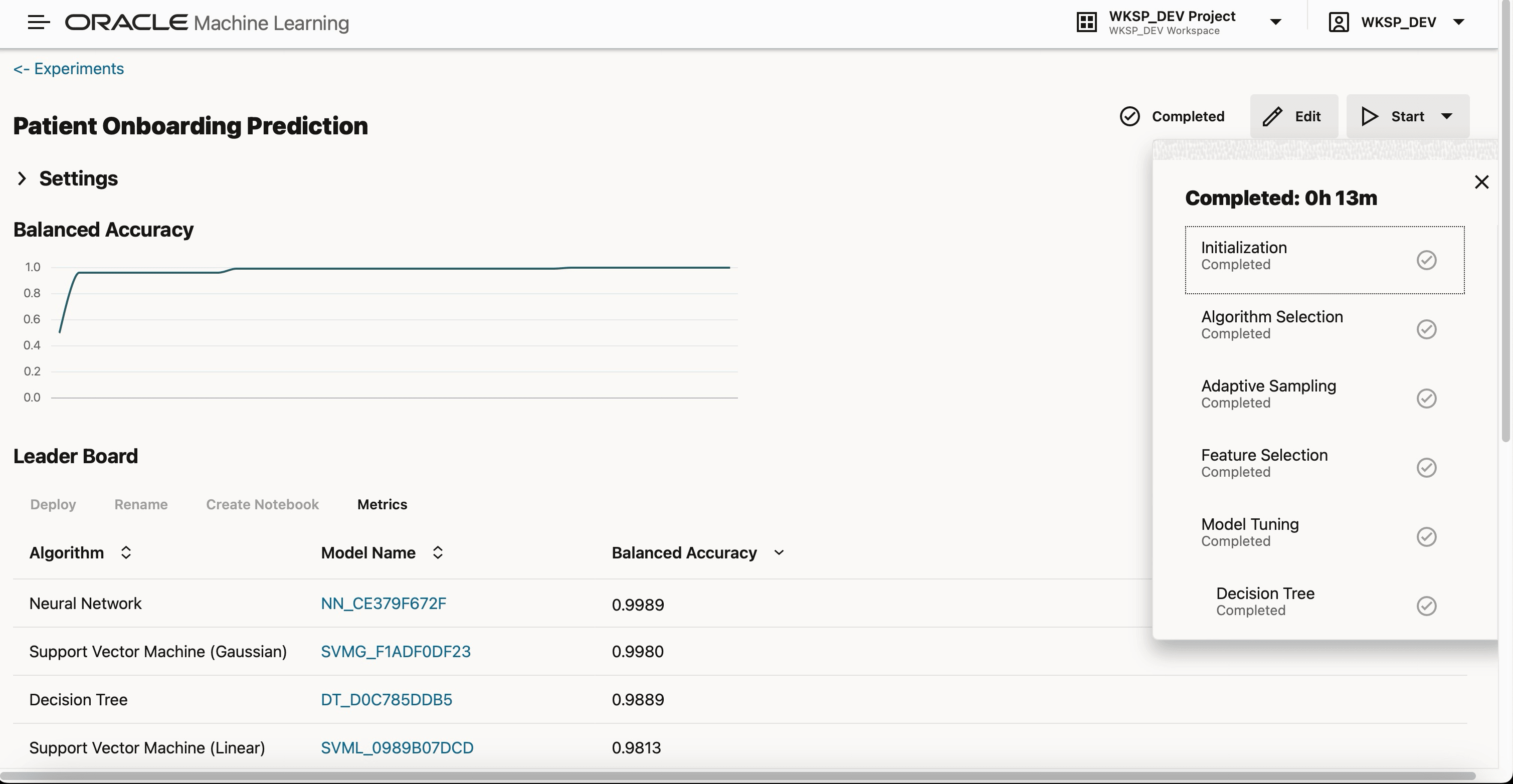
The experiment finds the Neural Network model with the system-generated name of NN_CE379F672F gives the best results, so you can use that model in your Patient Onboarding business process to attempt to automatically predict the patient onboarding approval.
Figure 25-87 Winning Neural Network Model for Woods Clinic Patient Onboarding
Parent topic: Predicting Results with Machine Learning