Understanding Oracle Global Data Services Workload Management
Learn how Oracle Global Data Services (GDS) enhances your ability to manage and balance workloads across distributed, replicated Oracle databases.
Oracle Global Data Services (GDS) global services enables you to efficiently define, manage, and balance workloads across replicated databases. Global services enable workload grouping, placement, and efficient routing in complex, distributed environments, based on replication lag and regional proximity, and overall workload administration.
Database services are logical abstractions for managing workloads in an Oracle database. Each service represents a workload with common attributes, service-level thresholds, and priorities. The grouping can be based on work characteristics, including the application function. For example, the Oracle E-Business Suite defines a service for each application module, such as general ledger, accounts receivable, and order entry. Services are built into Oracle Database, providing a single system image for workloads. Services enable administrators to configure a workload, administer it, enable and disable it, and measure the workload as a single entity. Clients connect using a database service name.
For replicated environments, GDS introduces the concept of a "global service". Global services are provided across a set of databases containing replicated data that belongs to a particular administrative domain known as a GDS pool. Examples of a GDS pool are a SALES pool or an HR pool. A set of databases in a GDS configuration and the database clients are said to be in the same GDS region if they share the network proximity. Examples of GDS regions are the Asian region, European region, and so on.
All of the characteristics of traditional database services are supported by global services. Global services extends traditional database services with additional attributes such as global service placement, replication lag (Oracle Active Data Guard and Oracle GoldenGate from 19c onwards), and region affinity.
Global service placement: When a global service is created, GDS allows the preferred and available databases for that service to be specified. The available databases support a global service if the preferred database fails. In addition, GDS allows you to configure a service to run on all the replicas of a given GDS pool.
Replication lag: Clients can be routed to the Oracle Active Data Guard standbys that are not lagging by the tolerance limit established with the lag attribute of a global service.
Region affinity: A global service allows you to set preferences to which region (for example Asia or Europe) your given applications should connect.
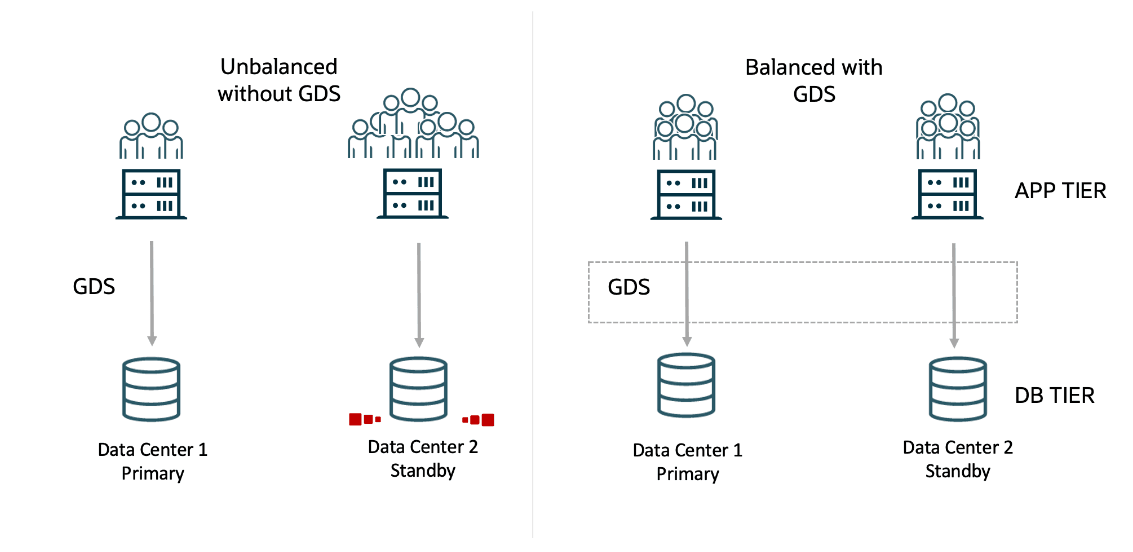
Figure 2-3 Workload Balancing with Global
Data Services
Parent topic: Oracle GDS Concepts for Deployment Planning