6. Performance Considerations
Lakehouse performance is primarily the discipline of avoiding unnecessary remote work. Optimize non-Iceberg files and Iceberg tables separately because they use different pruning and metadata paths.
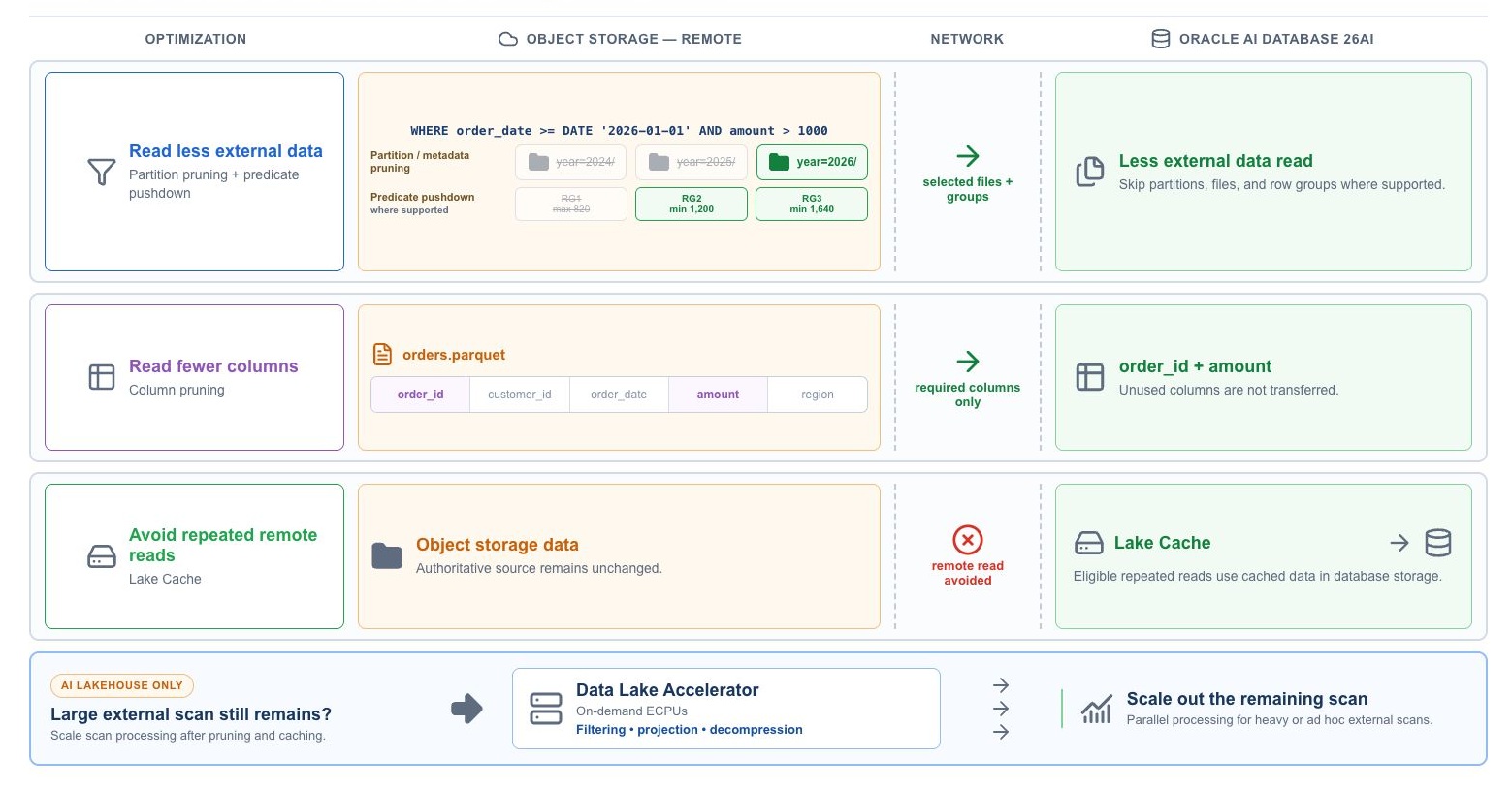
Performance objective - A tuned query should list and open only the required files, read only the required columns and row groups, reuse remote data when repetition justifies caching, and move or scale the workload only after data elimination is working.
Optimization Sequence
- Prune paths or manifests.
- Prune files and row groups.
- Read fewer columns.
- Cache repeated remote reads.
- Scale or materialize only after data elimination works.
Figure 6-1. Reduce Remote I/O before adding Scan Scale
Flow: Diagnose Freshness at the Correct Layer
| Object not found or old snapshot? | → | Metadata is stale | → | Object resolves but local data is old? | → | Data cache is stale |
|---|---|---|---|---|---|---|
| Inspect mounted-catalog metadata cache | Use the provider-supported catalog cache operation | Inspect Lake Cache state | Refresh or repopulate according to the cache policy |