How does Disaster Recovery Work?
Oracle Utilities Enterprise SaaS solutions include full disaster recovery for the Production environment.
This means that a separate secondary (or fail-over) data center is provided in addition to the primary data center, such that:
a. Fail-over hardware for production is available on standby.
b. Transactions and data in the production primary database are securely replicated to the secondary database.
Under normal operating conditions, Active Data Guard replicates changes made in the primary database instance to the secondary database instance on a transactional basis (i.e. as changes are committed to the database).
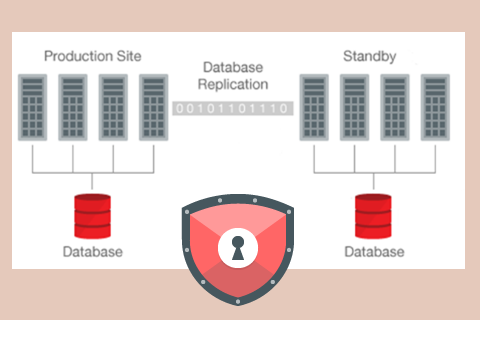
These Disaster Recovery capabilities are of particular benefit to utilities, as reliable disaster recovery is often very challenging to set up and maintain, particularly when large databases are involved (for example more than 5TB with high rates of data change).
Oracle Cloud Infrastructure (OCI) is deployed in Regions and Availability Domains (which include Fault Domains).
• A Region is defined as a localized geographic area.
• An Availability Domain (AD) consists of one or more data centers within a region
• A Fault Domain (FD) consists of independent hardware, infrastructure and power within an availability domain.
Oracle operates two general types of OCI Regions:
• Single Region (Multi-AD) regions with three (3) ADs each. One AD is the primary, with the other two being available as secondaries.

• Single Region (Single-AD) regions with one (1) AD each. In this case, two regions are paired (called a region pair) where Region 1 is the primary and Region 2 is the secondary.

Oracle Utilities Enterprise SaaS solutions are available in the following regions:
• US East (Ashburn), US West (Phoenix), UK South (London) and Germany Central (Frankfurt) which are Single Region (Multi-AD) regions.
• Australia East (Sydney) Primary / Australia Southeast (Melbourne) Secondary and Canada Southeast (Toronto) Primary / Canada Southeast (Montreal) Secondary which are Single Region (Single-AD) region pairs.
Note: For Single Region (Single-AD) region pairs, the primary/secondary arrangement is fixed and alternative configurations are not currently supported.
Please note the following, additional Disaster Recovery considerations:
• Disaster Recovery failover is not available (for example for business continuity testing) on a customer specific basis (as failover is executed at the region/data center level).
• Oracle Identity Domain capabilities are also included in Disaster Recovery failover.
• All hardware required for operation of the protected environments is reserved in the secondary.
• To ensure seamless and transparent failover, FQDNs (Fully Qualified Domain Names) should always be used.
• In some regions, customers will need to configure replication for their subscribed Object Storage containers (if required).
• Disaster Recovery is specific to the subscribed cloud services (where applicable) and does not extend to cover 3rd party systems or integrations. These need to be covered by customer-managed business continuity planning.
• For operational integrity and security reasons, the secondary database is not accessible by customers unless a real-world disaster recovery fail-over has occurred, and service is restored in the secondary location.