AI Patient Prioritization
AI Patient Prioritization helps identify patients that may benefit from short-term follow up and intervention.
Artificial Intelligence (AI) powered Patient Prioritization is an advanced feature that assists care teams in identifying adult (>= 18 years of age) patients that could benefit most from immediate intervention, potentially improving outcomes and preventing unplanned emergency department visits.
The feature is powered by a predictive model that analyzes demographics, medical conditions, symptoms, lab results, vital signs, procedures, and medications to determine whether a patient would benefit from immediate intervention. Patients are ranked as High, Medium, Low, or No Data, and rankings are displayed in the Opportunity column on the Patients list. The top 10 percent of patients are labeled as High; the central 80 percent as Medium; the bottom 10 percent as Low. Patients ranked as No Data do not have a score available in the system.
Position your mouse over the ranking to view recommended actions for the patient and key factors that contributed to the ranking.
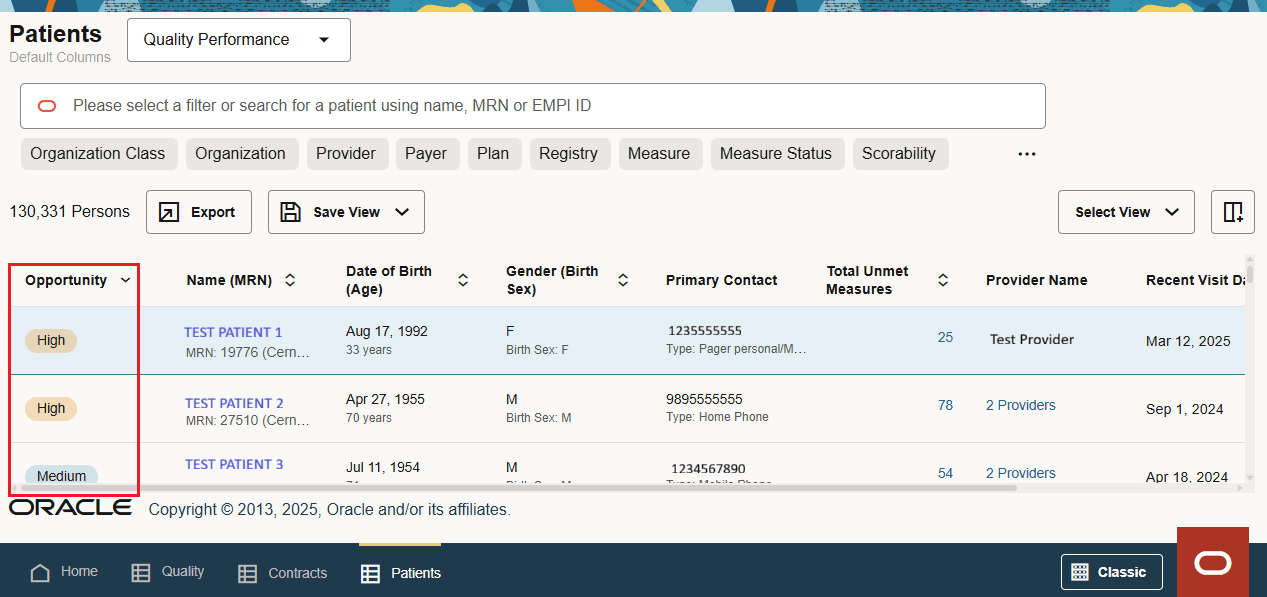
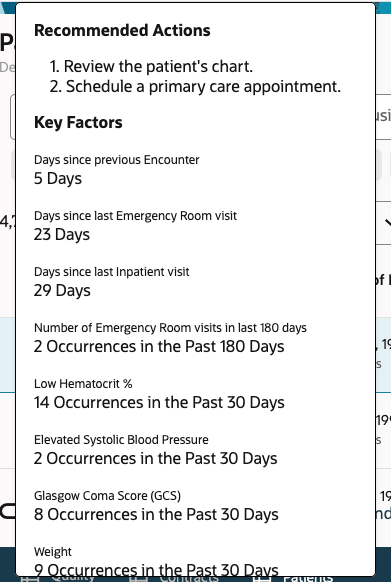
The AI Patient Prioritization rankings are intended for teams who are focused on reducing acute care utilization. Quality managers can use these rankings to make decisions about scheduling outpatient visits to reduce the risk and associated cost of acute care utilization.
If these rankings do not apply to your role, you can hide the Opportunity column from view. See View the Patient List View the Patients List for information on customizing the Patient List view.
The AI Patient Prioritization model is powered by a predictive algorithm that uses the data elements below. Data is refreshed and prioritized is updated every 24 hours.
| Data Element | Description |
|---|---|
| Condition | Presence of clinical condition, problem, diagnosis that is discretely captured documented within the last 180 days. |
| Medications | Identification and definition of a medication, including its ingredients, that was prescribed, dispensed, or administered (individually or in combination) to the patient within the past 90 days. |
| Patient Demographics | Gender, race, ethnicity. |
| Procedures | Discrete procedure documented within last 90 days. |
| Results | Discrete lab results recorded within last 30 days. |
| Vital Signs | Discrete vital signs within last 30 days. |
| Patient Population |
Patient age is greater than or equal to 18 years of age as of today’s date. |
| Patient Exclusion |
|
Parent topic: Patient List