4 LPO Rules and Strategies
Pricing rules and strategies in LPO form the foundation for generating optimized price recommendations. Strategies combine multiple rules that support business objectives, such as maximizing margin, staying competitive, or clearing inventory.
Each rule sets specific conditions or constraints, including minimum margin thresholds, price change limits, or competitive price alignment. You can configure, review, and manage these rules to ensure that recommendations align with your pricing goals. LPO applies these strategies during optimization runs to drive consistent, data-driven pricing decisions.
You create rules and strategies for LPO from the Control and Tactical Center in the Oracle Retail AI Foundation Cloud Service. For further details, see the "Control and Tactical Center" chapter in the Oracle Retail AI Foundation Cloud Service Implementation Guide.
Pricing Optimization Rules in LPO
Pricing rules are the building blocks of price recommendations. They define specific conditions
that must be met when determining a price, ensuring compliance with business objectives such as
margin protection, competitive positioning, or price consistency. You can find the full list of
rules in the RSE_APPL_RULE_PROPERTY table.
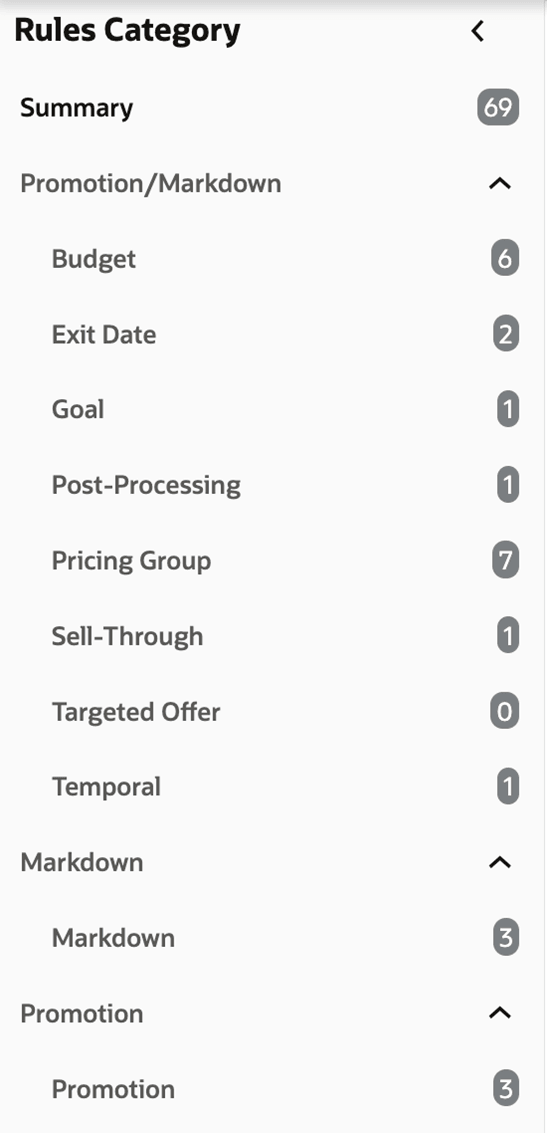
Figure 4-1 Control and Tactical Center - Markdown and Promotion Rule Categories
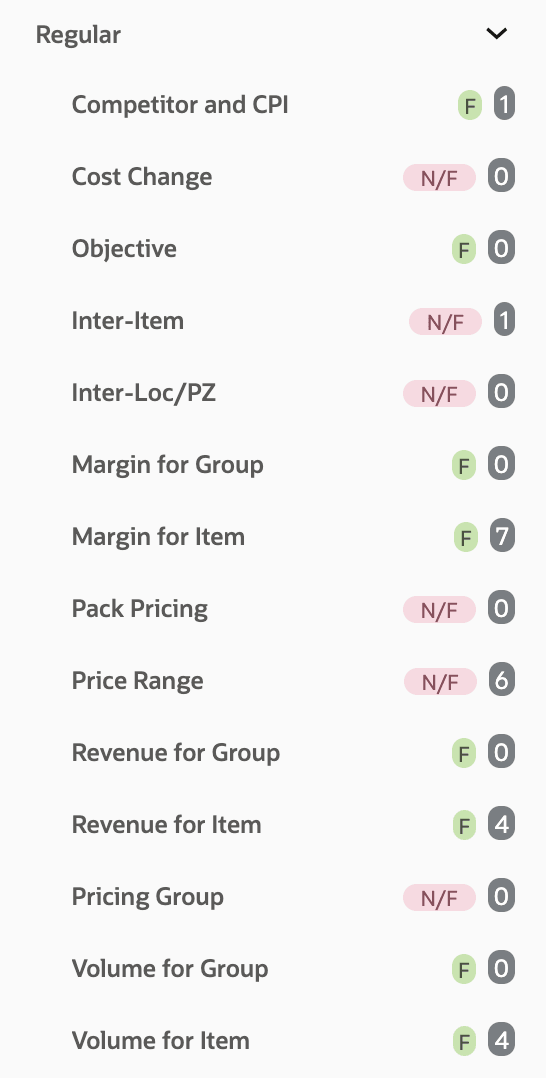
Regular Pricing rules are classified as Forecast-based (F) and Non-Forecast-based (N/F). Regular Pricing uses both F and N/F rules, whereas Rules Based Regular Pricing uses only N/F rules. If a strategy includes both F and N/F rules and you use it for a Rules Based Regular Pricing run, the Forecast rule(s) will be ignored.
Figure 4-2 Control and Tactical Center - Regular Rule Categories - Forecast or Non/Forecast
To list only the Non-Forecast based rules, set RSE_CONFIG.PRO_LPO_REGULAR_LITE_ENABLED_FLG to Y.
For the complete list of Promotion Markdown rules and strategies, see Appendix: Promotion and Markdown - Pricing Optimization Rules. For Regular Pricing rules and strategies, see Appendix: Regular - Pricing Optimization Rules.
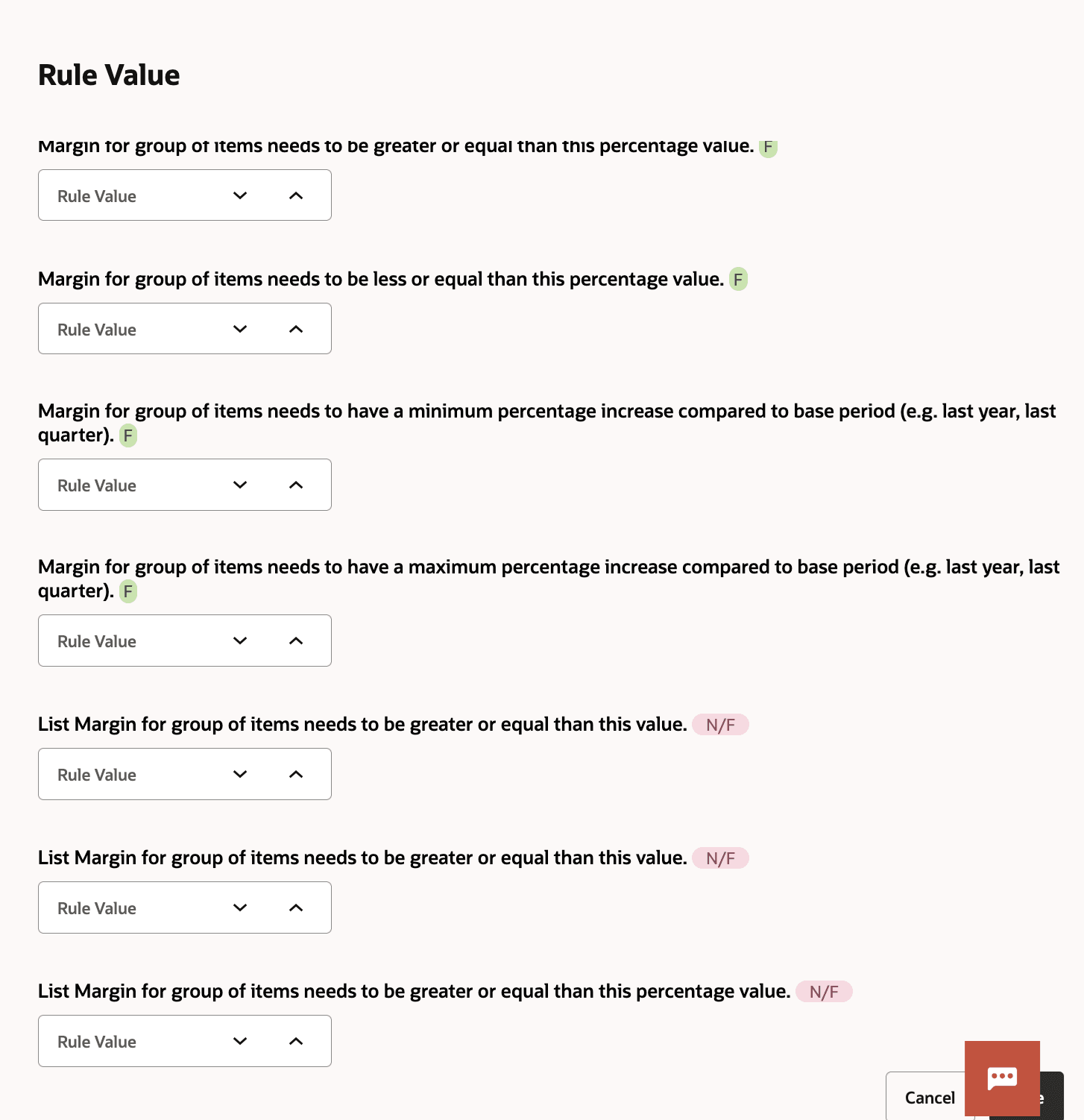
LPO pricing rules are built using rule criteria and rule values. For Regular Pricing, each rule value is labeled as either F (Forecast-based) or N/F (Non-Forecast-based) to indicate its type.
Figure 4-3 Control and Tactical Center - Regular Rule Values - Forecast or Non/Forecast
Rule Criteria
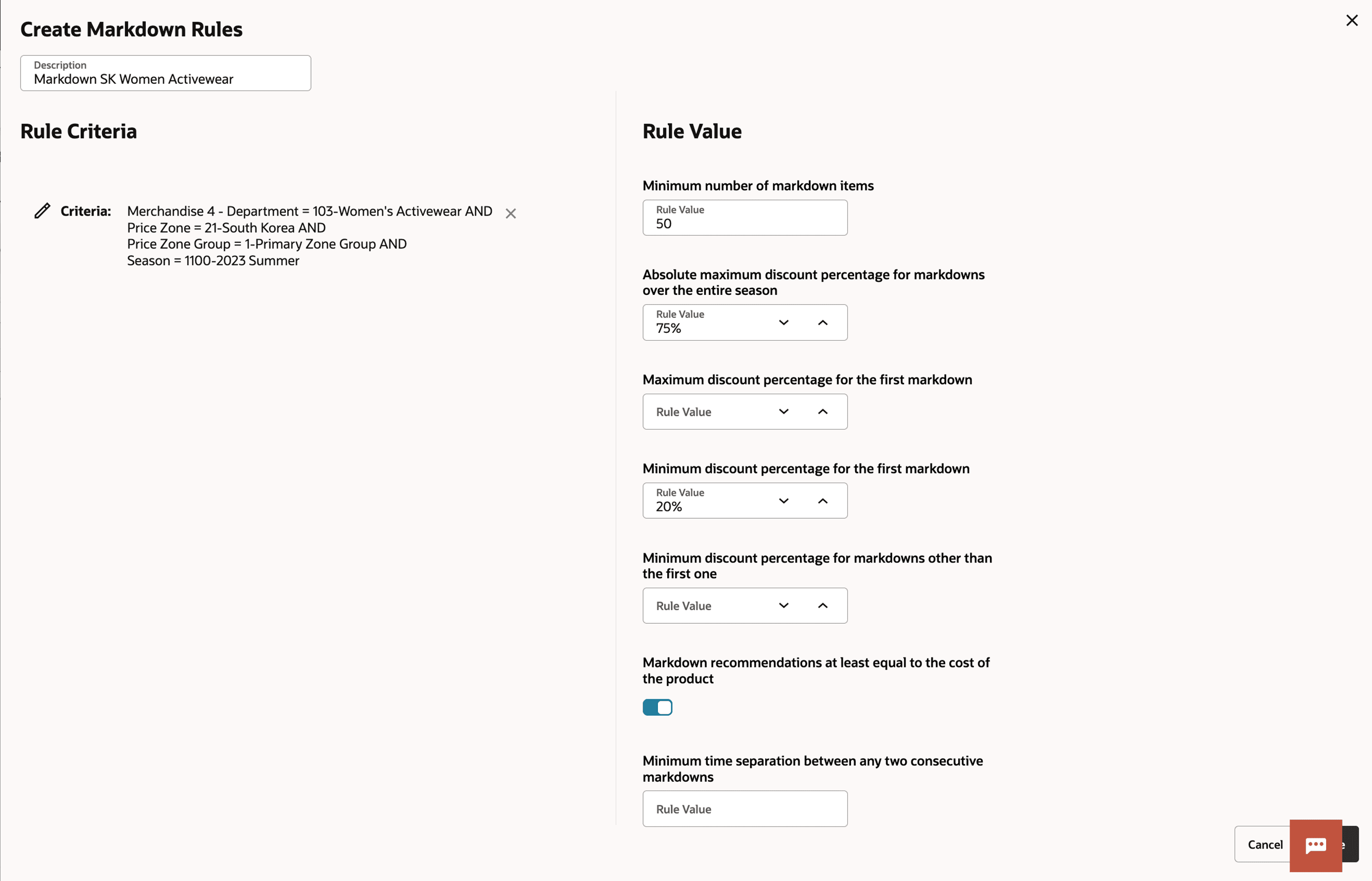
Rule criteria define the scope and conditions under which a rule will apply, specifying where and how the rule should be enforced. Examples of criteria include Merchandise, Price Zone, Season, and Pricing Groups, ensuring alignment with your business objectives.
Not all rule categories and subcategories support the same criteria types; supported criteria depend on the rule type and configuration. For instance, Promo/Markdown rules support criteria such as Merchandise, Price Zone, and Price Zone Group, while Inter-Item and Inter-Location rules require criteria for two sets of items or locations, respectively.
Rule Value
A Rule value defines the target or threshold for the rule. It sets the specific action or limit that the rule will enforce.
-
Margin - Minimum margin of 30%
-
Budget - Maximum budget of $50,00,000
-
Exit Date - 30/09/2023
-
Promotion Range - Between 15% to 40% for first promotion and 10% to 25% for subsequent promotions
Figure 4-4 Rule Criteria and Value - Markdown and Promotion
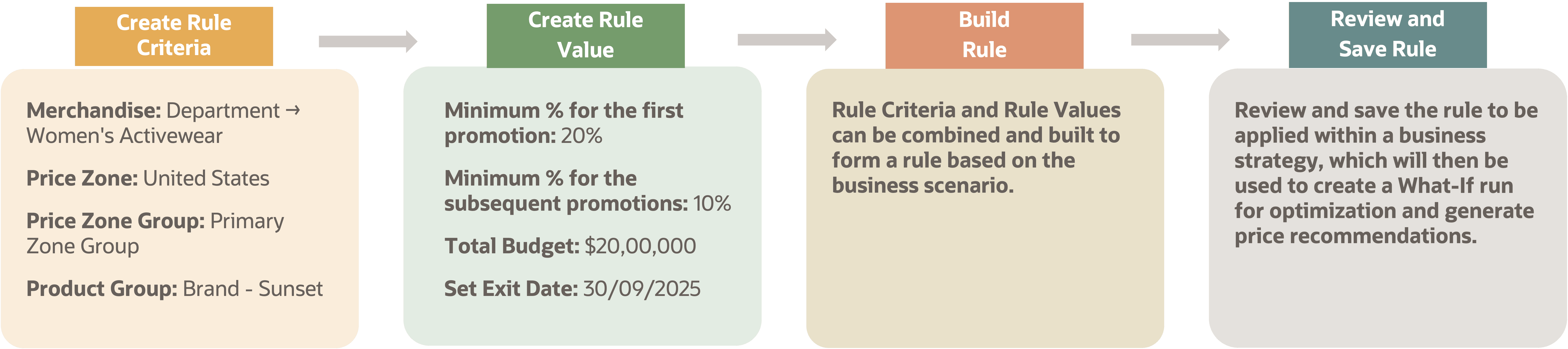
Example - Creating a Pricing Optimization Rule For LPO
-
Apply a minimum 20% discount for the first promotion and 10% for any subsequent promotions
-
Within a budget of $2,000,000
-
Targeting the Women's Activewear brand Sunset in the United States zone
-
Valid through 30/09/2023
Figure 4-5 Steps to Create a Pricing Optimization Rule
Pricing Strategy in LPO
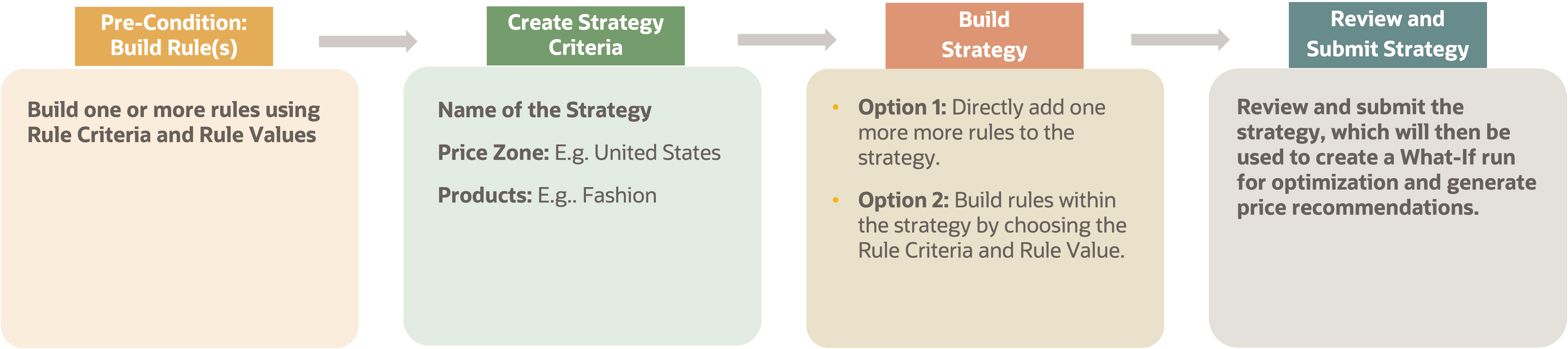
A pricing strategy is a set of one or more rules applied at the merchandise and location level to achieve a specific business objective. LPO enables retailers to define and apply tailored pricing strategies, ensuring that all relevant rules work together to generate price recommendations that align with overall business goals.
-
A competitor match rule (ensuring prices align with key competitors).
-
A margin floor rule (preventing price reductions that affect profitability).
-
A rounding rule (ensuring customer-friendly pricing).
- A markdown phase rule (defining phased markdowns over time).
- A minimum price threshold rule (preventing markdowns below a certain value).
- A sell-through target rule (adjusting markdown depth based on inventory movement).
Types of Strategy
Default Strategy
The default strategy is a baseline pricing framework created during the initial setup and applied automatically in batch runs.
What-If Strategy
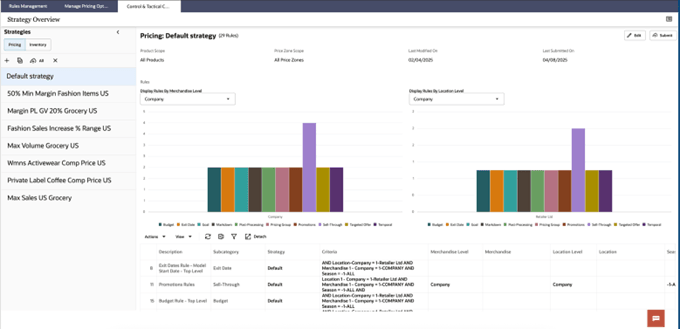
A What-If Strategy is created when you want to test different pricing scenarios. It allows you to compare outcomes against the default strategy to identify the best option before applying any changes. After running a what-if scenario, you can analyze its results alongside the default strategy to decide whether to implement the adjustments.
Figure 4-6 Pricing Strategy Overview
Conflict Management in LPO - Regular Pricing
Since multiple regular pricing rules can apply to the same item, location, or period, conflicts may arise when different rules suggest different pricing outcomes. LPO resolves these conflicts through a structured conflict management framework, which balances business priorities to ensure logical and profitable pricing decisions.
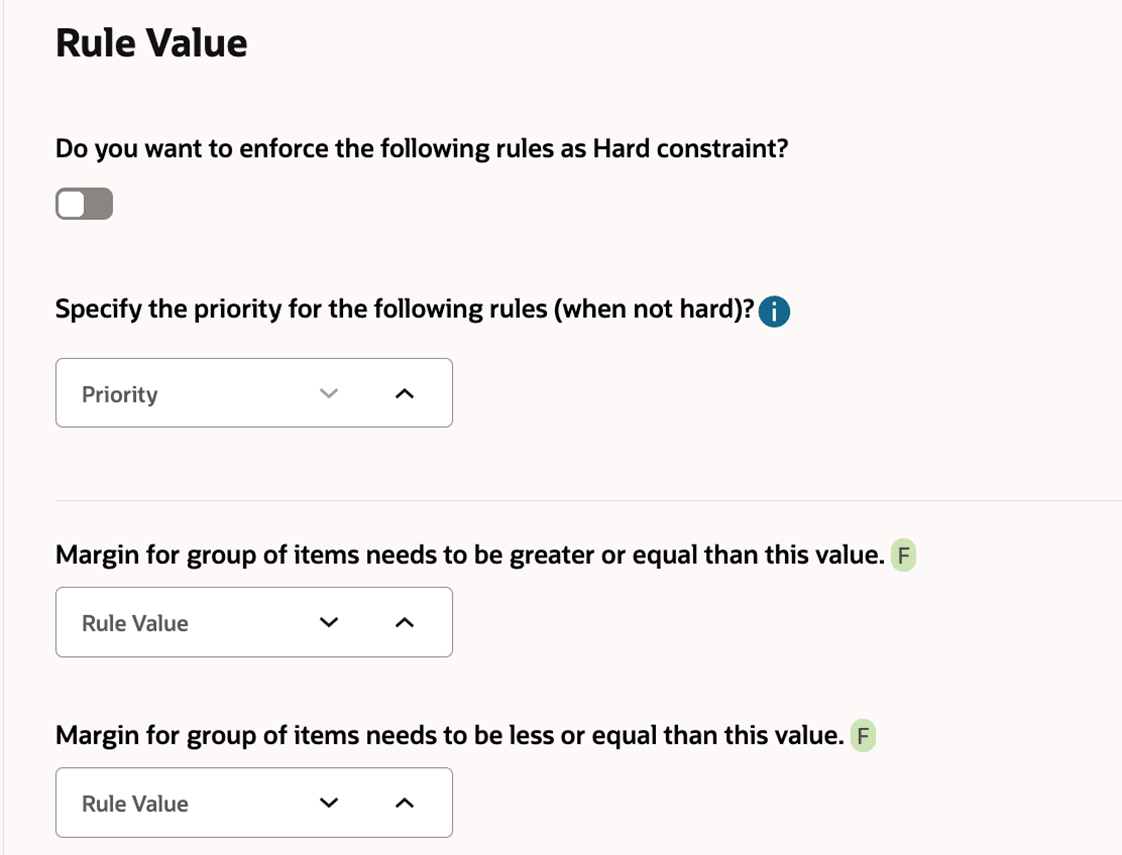
Figure 4-8 Regular Rules - Hard Constraint and Priority
Hard versus Soft Rules
Hard Rules: These are strict, non-negotiable rules that LPO must always enforce. If a price recommendation violates a hard constraint, LPO will reject or adjust the recommendation to ensure compliance.
Example: A minimum margin rule (ensuring at least a 10% profit margin) must always be met, even if it conflicts with a competitor price match.
Soft Rules: These are flexible guidelines that LPO tries to satisfy but can be overridden if necessary to meet other critical objectives.
Example: A competitor match rule may suggest lowering the price to align with a competitor, but if it conflicts with a hard margin constraint, LPO will prioritize profitability over competitor alignment.
How LPO Enforces Hard and Soft Rules
LPO always enforces hard constraints, ensuring that mandatory rules such as legal price limits or minimum margins are never violated. The system also evaluates all soft constraints and strives to satisfy them wherever possible, particularly when they align with high-priority rules. During optimization, LPO aims to minimize rule violations and deliver the best feasible solution within the defined rule framework.
Priorities
When multiple soft rules apply, LPO uses a priority system (ranging from 1 to 100, with 100 being the highest) to determine which rule takes precedence. Higher-priority rules are enforced first, and lower-priority rules are adjusted as needed.
You can configure rule priorities in LPO based on your business objectives to ensure the most important rules guide pricing decisions.
Example: A retailer may set margin protection as a higher priority than competitor pricing, meaning that even if a competitor lowers their price, the retailer will not match it if it results in an unprofitable margin.