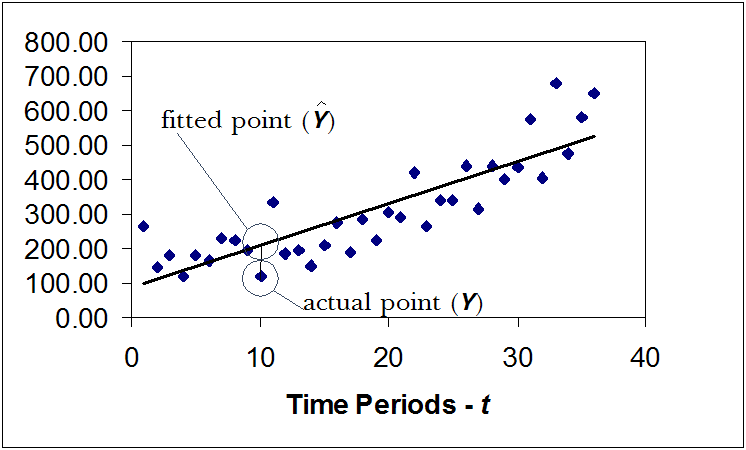
One component of every time-series forecast is the data’s random error that is not explained by the forecast formula or by the trend and seasonal patterns. The error is measured by fitting points for the time periods with historical data and then comparing the fitted points to the historical data.
All the examples are based on the set of data illustrated in the following chart (Figure 37, Sample Data). Most of the formulas refer to the actual points (Y) and the fitted points (Yt). In the chart, the horizontal axis illustrates the time periods (t) and the vertical axis illustrates the data point values.
Predictor measures the error using one of the methods described in the following sections:
Another statistic, Theil’s U, is used as a relative accuracy measure. Also see Durbin-Watson.