2.1 IPFE Description
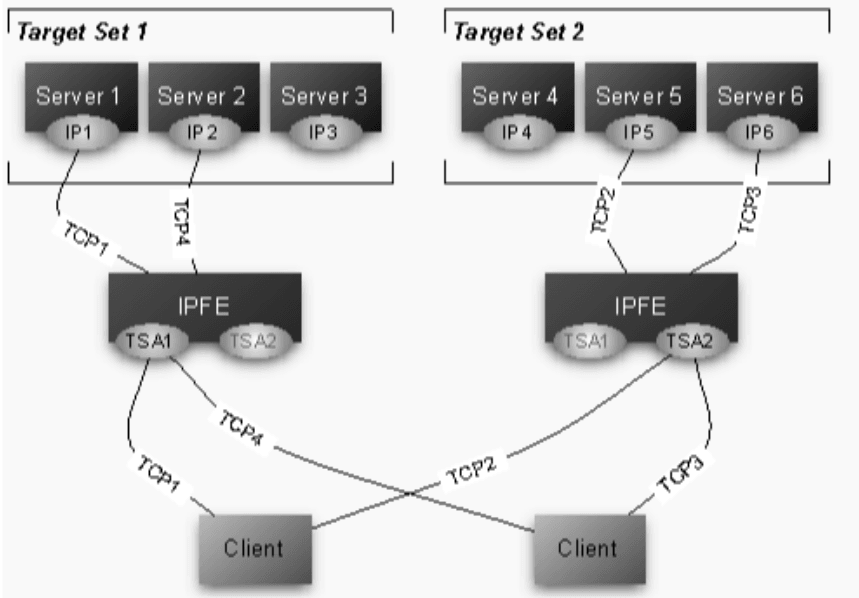
The IPFE acts as a specialized layer-3 router. The various servers to which the IPFE routes packets are divided into 32 groups, called Target Sets. Each of the target sets are assigned a shared Target Set Address, a publicly exposed service address.
#GUID-6E25913C-502A-46E5-93B7-60D0DEEF01FE/V5606026 shows that either two connections are maintained at all times (active/active or active/standby) or that a single connection is maintained, with a backup address for clients to use to establish a connection if the first connection fails.
Figure 2-1 IPFE Architecture
When the IPFE routes packets to application servers, it does not perform any rewriting
of the packet. #GUID-6E25913C-502A-46E5-93B7-60D0DEEF01FE/V5606030 shows that
neither the source IP address nor the destination IP address changes as it passes
through the IPFE. The IPFE behaves as an IP router and does not act as a network address translator
(NAT).
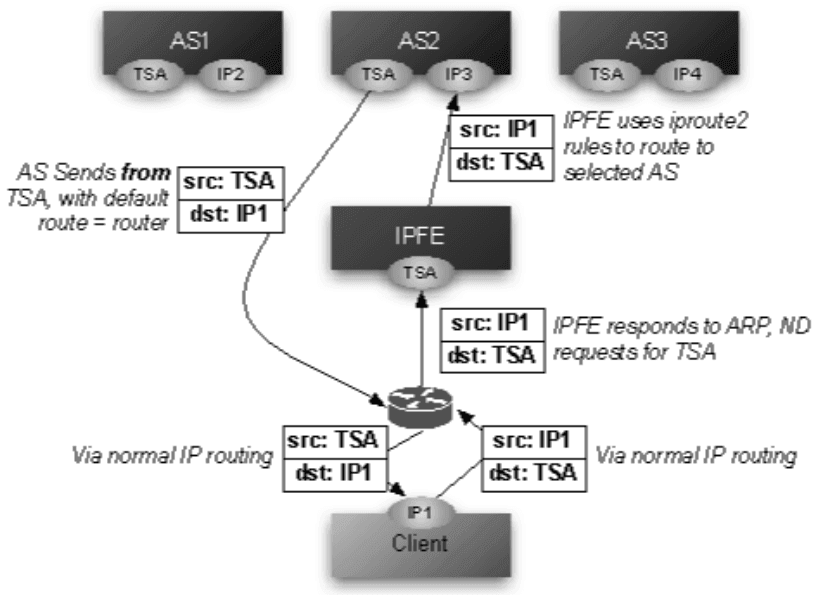
Figure 2-2 Packet Routing Through and Around the IPFE