Example 3
This diagram shows an example of operations with no overlap, the queue and setup are done concurrently, and the setup time is less than the queue time:
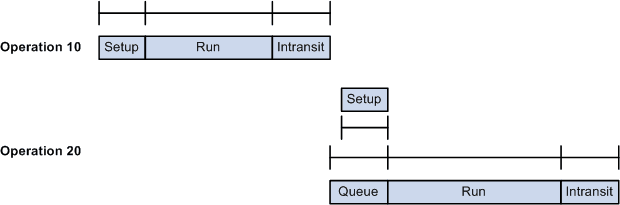
| Operation | Operation Start | Run Start | Operation Due |
|---|---|---|---|
|
10 |
Day 1, 8:00 a.m. |
Day 1, 9:00 a.m. |
Day 1, 2:00 p.m. |
|
20 |
Day 1, 6:00 p.m. |
Day 1, 7:00 p.m. |
Day 2, 5:00 a.m. |
Forward Scheduling Calculations
Production ID Start Date and Time = Day 1, 8:00 a.m.
This table lists the steps that you take to calculate the start and due date and times for the first operation (Operation 10):
| Step | To Calculate | Use | Notes |
|---|---|---|---|
|
1 |
Operation 10 start date and time. |
Production ID's start date and time. |
This calculation assumes that queue doesn't occur at the first operation. |
|
2 |
Operation 10 run start date and time. |
Operation start date and time + setup time. |
None. |
|
3a, or |
Operation 10 run time (time/unit). |
Operation start quantity × run rate (converted to hours) + fixed run (converted to hours). |
Use this calculation if the run rate is in terms of time per unit. |
|
3b |
Operation 10 run time (units and time). |
Operation start quantity / run rate (converted to hours) + fixed run (converted to hours). |
Use this calculation if the run rate is in terms of units per time unit. |
|
4 |
Operation 10 due date and time. |
Run start date and time + run time. |
None. |
This table lists the steps that you take to calculate start and due dates and times for the second operation (Operation 20):
| Step | To Calculate | Use | Notes |
|---|---|---|---|
|
1 |
Operation 20 start date and time. |
Prior operation's (Operation 10) due date and time + prior operation's in transit time + (queue − setup time of current operation). |
This calculation assumes that setup time is less than queue time. |
|
2 |
Operation 20 run start date and time. |
Current operation start date and time + setup time. |
None. |
|
3a or |
Operation 20 run time (time/unit). |
Operation start quantity × run rate (converted to hours) + fixed run (converted to hours). |
Use this calculation if the run rate is in terms of time per unit. |
|
3b |
Operation 20 run time (units and time). |
Operation start quantity / run rate (converted to hours) + fixed run (converted to hours) |
Use this calculation if the run rate is in terms of units per time unit. |
|
4 |
Operation 20 due date and time. |
Current operation run start date and time + run time. |
If you have a schedule with more than two operations, repeat steps 1 through 4in this table until all subsequent operation due dates and times are calculated. |
Backward Scheduling Calculations
Production ID Due Date and Time = Day 2, 5:00 a.m.
This table lists the steps that you take to calculate the start and due date and times for the last operation (Operation 20):
| Step | To Calculate | Use | Notes |
|---|---|---|---|
|
1 |
Operation 20 due date and time |
Production ID's due date and time − current operation's intransit time |
None. |
|
2a, or |
Operation 20 run time (time/unit) |
Operation start quantity × run rate (converted to hours) + fixed run (converted to hours) |
Use this calculation if the run rate is in terms of time per unit. |
|
2b |
Operation 20 run time (units and time) |
Operation start quantity / run rate (converted to hours) × fixed run (converted to hours) |
Use this calculation if the run rate is in terms of units per time unit. |
|
3 |
Operation 20 run start date and time |
Current operation's due date and time − run time |
None. |
|
4 |
Operation 20 start date and time |
Current operation's run start date and time − setup time |
None. |
This table lists the steps that you take to calculate start and due dates and times for the prior operation (Operation 10):
| Step | To Calculate | Use | Notes |
|---|---|---|---|
|
1 |
Operation 10 due date and time |
Subsequent operation's (Operation 20) start date and time − (queue time - setup time of subsequent operation) - current operation's intransit time |
This calculation assumes that setup time is less than queue time. |
|
2a, or |
Operation 10 run time (time/unit) |
Operation start quantity x run rate (converted to hours) + fixed run (converted to hours) |
Use this calculation if the run rate is in terms of time per unit. |
|
2b |
Operation 10 run time (units and time) |
Operation start quantity/ run rate (converted to hours) + fixed run (converted to hours) |
Use this calculation if the run rate is in terms of units per time unit. |
|
3 |
Operation 10 run start date and time |
Current operation's due date and time − run time |
None. |
|
4 |
Operation 10 start date and time |
Current operation's run start date and time − setup time |
If you have a schedule with more than two operations, repeat steps 1 through 4in this table until all prior operation due dates and times are calculated. |