Example 4
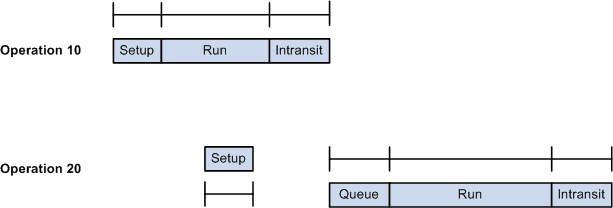
This diagram shows an example of operations with no overlap and the setup is not included:
| Operation | Operation Start | Run Start | Operation Due |
|---|---|---|---|
|
10 |
Day 1, 8:00 a.m. |
Day 1, 9:00 a.m. |
Day 1, 2:00 p.m. |
|
20 |
Day 1, 2:00 p.m. |
Day 1, 5:00 p.m. |
Day 2, 3:00 a.m. |
Forward Scheduling Calculations
Production ID Start Date and Time = Day 1, 8:00 a.m.
This table lists the steps that you take to calculate the start and due date and times for the first operation (Operation 10):
| Step | To Calculate | Use | Notes |
|---|---|---|---|
|
1 |
Operation 10 start date and time |
Production ID's start date and time |
This calculation assumes that queue doesn't occur in the first operation. |
|
2 |
Operation 10 run start date and time |
Operation start date and time + setup time |
Setup is always included at the first operation. |
|
3a, or |
Operation 10 run time (time/unit) |
Operation start quantity x run rate (converted to hours) + fixed run (converted to hours) |
Use this calculation if the run rate is in terms of time per unit. |
|
3b |
Operation 10 run time (units and time) |
Operation start quantity / run rate (converted to hours) + fixed run (converted to hours) |
Use this calculation if the run rate is in terms of units per time unit. |
|
4 |
Operation 10 due date and time |
Run start date and time + run time |
None. |
This table lists the steps that you take to calculate start and due dates and times for the second operation (Operation 20):
| Step | To Calculate | Use | Notes |
|---|---|---|---|
|
1 |
Operation 20 start date and time |
Prior operation's (Operation 10) due date and time + prior operation's intransit time + current operation's queue time - current operation's setup time |
This calculation assumes that setup can be completed any time after the first operation run has started. The start date and time represent the latest possible time that you should begin setup. |
|
2 |
Operation 20 run start date and time |
Current operation start date and time + setup time |
None. |
|
3a, or |
Operation 20 run time (time and unit) |
Operation start quantity x run rate (converted to hours) + fixed run (converted to hours) |
Use this calculation if the run rate is in terms of time per unit. |
|
3b |
Operation 20 run time (units/time) |
Operation start quantity and run rate (converted to hours) + fixed run (converted to hours) |
Use this calculation if the run rate is in terms of units per time unit. |
|
4 |
Operation 20 due date and time |
Current operation run start date and time + run time |
If you have a schedule with more than two operations, repeat steps 1 through 4 in this table until all subsequent operation due dates and times are calculated. |
Backward Scheduling Calculations
Production ID Due Date and Time = Day 2, 3:00 a.m.
This table lists the steps that you take to calculate the start and due date and times for the last operation (Operation 20):
| Step | To Calculate | Use | Notes |
|---|---|---|---|
|
1 |
Operation 20 due date and time |
Production ID's due date and time - current operation's intransit time |
None. |
|
2a, or |
Operation 20 run time (time and unit) |
Operation start quantity x run rate (converted to hours) + fixed run (converted to hours) |
Use this calculation if the run rate is in terms of time per unit. |
|
2b |
Operation 20 run time (units/time) |
Operation start quantity / run rate (converted to hours) + fixed run (converted to hours) |
Use this calculation if the run rate is in terms of units per time unit. |
|
3 |
Operation 20 run start date and time |
Current operation's due date and time - run time |
None. |
|
4 |
Operation 20 start date and time |
Current operation's run start date and time - setup time |
This calculation assumes that setup can be completed any time after the first operation run has started. The start date and time represent the latest possible time that you should begin setup. |
This table lists the steps that you take to calculate start and due dates and times for the prior operation (Operation 10):
| Step | To Calculate | Use | Notes |
|---|---|---|---|
|
1 |
Operation 10 due date and time |
Subsequent operation's (Operation 20) start date and time - subsequent operation's queue time - current operation's intransit time |
The run start date and time is used and setup is not included. The setup at Operation 20 can be completed at the same time the prior operation is being run. |
|
2a, or |
Operation 10 run time (time/unit) |
Operation start quantity x run rate (converted to hours) + fixed run (converted to hours) |
Use this calculation if the run rate is in terms of time per unit. |
|
2b |
Operation 10 run time (units and time) |
Operation start quantity / run rate (converted to hours) + fixed run (converted to hours) |
Use this calculation if the run rate is in terms of units per time unit. |
|
3 |
Operation 10 run start date and time |
Current operation's due date and time - run time |
None. |
|
4 |
Operation 10 start date and time |
Current operation's run start date and time - setup time |
If you have a schedule with more than two operations, repeat steps 1 through 4 in this table until all prior operation due dates and times are calculated. |