Defining Detail Tree Structures

Use the Tree Structure Properties page (PSTREESTRCTDEFN) to specify tree type, key fields, and navigation options.

Navigation:

Tree Manager, and then Tree Structure

This example illustrates the fields and controls on the Tree Structure Properties page. Definitions for the fields and controls appear following the example.
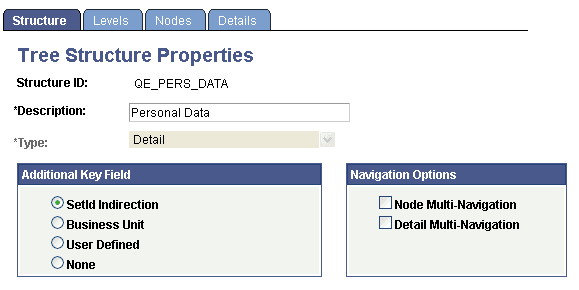
Tree Structure Properties page
Field or Control Description

Type

The default value is Detail.

Additional Key Field

Select from the following values:

  • SetID Indirection: When you create the tree, both the tree name and the setID identify it. Including the setID as part of the tree key means that you can use setID to share the tree definition among multiple business units.

  • Business Unit: Use the Nodes tab to select a specific business unit to act as the key of tree. Business Unit structures can only be used with node-oriented trees (trees with no detail values).

  • User Defined: This option is a desupported feature. You should try to create all of your trees either using SetID, Business Unit, or None.

    Note:Trees with User Defined Key field cannot be used with other PeopleSoft tools such as Query and PeopleSoft nVision. There are no current plans to enhance these tools to work with user-defined keyed trees so you should avoid using this option.

  • None: Your tree does not contain an additional key. It is keyed only by tree name and effective date.

Navigation Options

Select to enable multi-navigation for nodes and details.

Multi-navigation enables you to navigate to any pages that are relevant to the node or detail pages specified on the tree structure. PeopleSoft Tree Manager enforces the set of rules to determine which pages should be included in the list.

Multi-navigation is not available for Summary structure types.

See Using Multinavigation Paths.