Invoke REST Adapter Trigger-Based Integrations with Oracle Cloud Infrastructure Principal Signed Requests
You can configure Oracle Cloud Infrastructure principal signed requests to pass both authentication and policy authorization details to REST Adapter trigger-based integrations.
This use case provides a high level overview of how to invoke and pass both authorization and authentication requests to Oracle Integration REST Adapter trigger-based integrations.
- Create and configure two integrations. For this example, an RPST_CLIENT_GET parent integration and an RPST_SERVICE_GET child integration are created.

- Create REST Adapter invoke and trigger connections in these integrations that are configured with the following security policies.
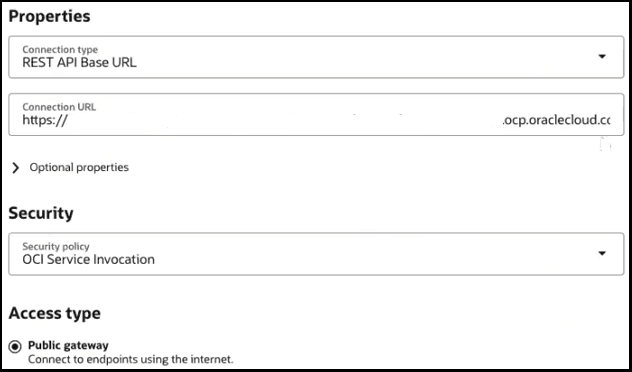
Integration Connection Security Policies to Use Security Policy Defined RPST_CLIENT_GET (parent integration)
Create and configure a REST Adapter invoke connection in this integration with the OCI Service Invocation security policy.
This invoke connection signs the policy request with an OCI signature for authentication and sends it to the trigger connection in the RPST_SERVICE_GET child integration.
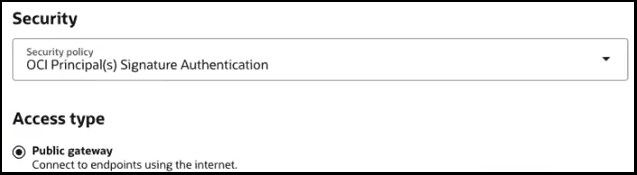
RPST_SERVICE_GET (child integration)
Create and configure a REST Adapter trigger connection in this integration with the OCI Principal(s) Signature Authentication security policy to receive the request.
Once the policy request from the invoke connection is authenticated, Oracle Cloud Infrastructure Identity and Access Management policies are used for authorization.
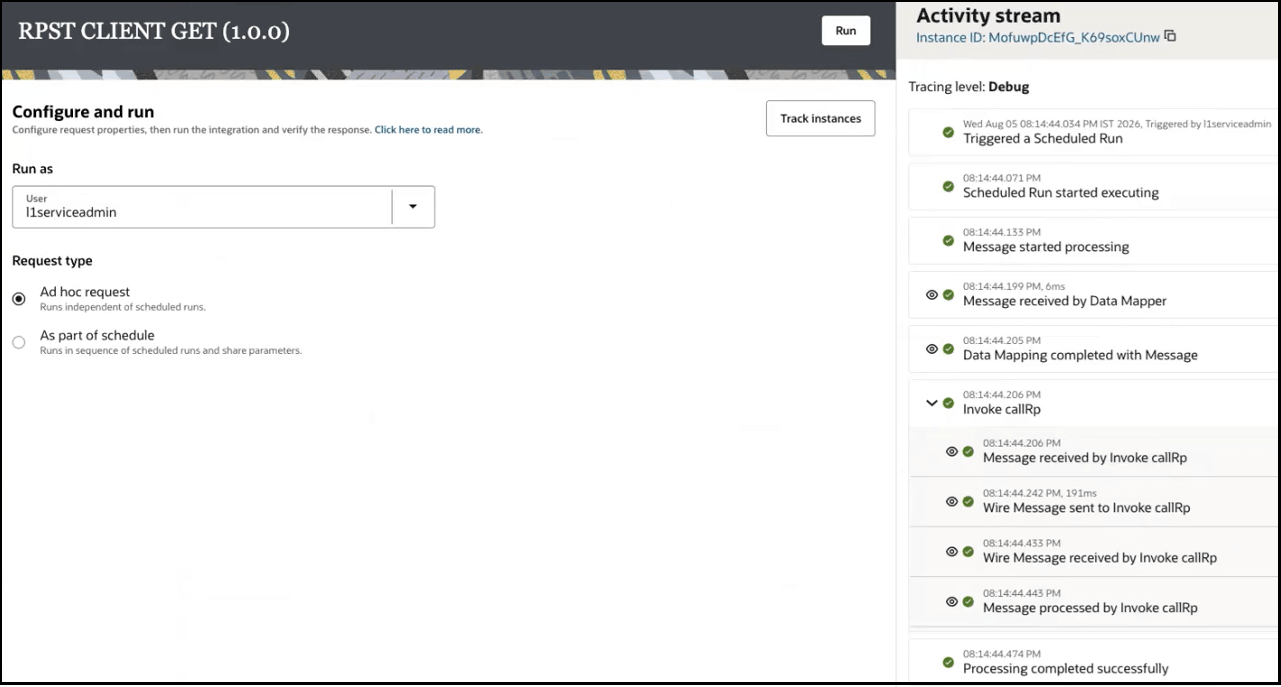
- Run the RPST_CLIENT_GET parent integration. The invoke connection (for this example, named callRp) in this integration calls and passes both authentication and policy authorization details to the RPST_SERVICE_GET child integration.
The activity stream shows the request for authorization was evaluated successfully and the integration was run.
Note:
In addition to RPST authentication, the OCI Service Invocation security policy also supports instance principals and OCI user signature authentications to invoke another integration.