Deploy a Bundle
You can deploy a generated bundle in the target environment to revert to the state of artifacts represented by the bundle. The system validates the bundle before attempting any deployment to ensure software and model versions and any other dependencies are met.
For example, if you have a bundle A (created in instance A) and then later made some changes but want to revert those changes, then use the Deploy option. This option restores the artifacts to an older version by deploying the previous bundle in the system.
To use the replace or merge options during deployment, migrate from the branch framework to the sandbox framework. See Migrate to the Sandbox Framework for Semantic Model Extensions.
When you deploy a bundle, if the required pipeline parameters are missing in either the bundle or the target environment, the system won’t run the pipeline. Even if you select all modules (functional areas, data augmentations, custom configurations), they will stay in “Saved” state and won't be scheduled.
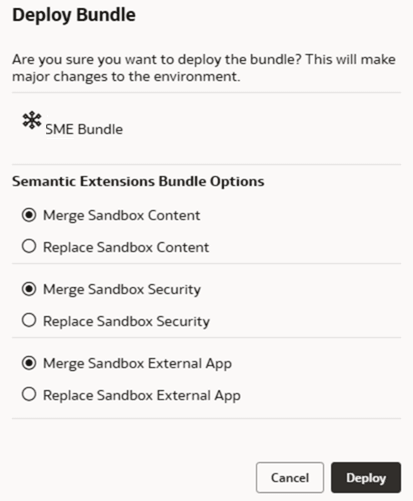
If you’re deploying the semantic extensions bundle or the composite bundle, you can either merge or replace the sandbox content and sandbox security in the target environment. When you replace, you delete the existing semantic model extensions in the target environment and migrate the latest bundle. You must confirm the semantic model replacement to prevent unintended content loss. The merge option is helpful when you've deleted items in your source instance and want those deletions to be applied to the target instance. The default, Merge Sandbox Content, combines the changes from your source sandbox instance with the existing content on the target system.
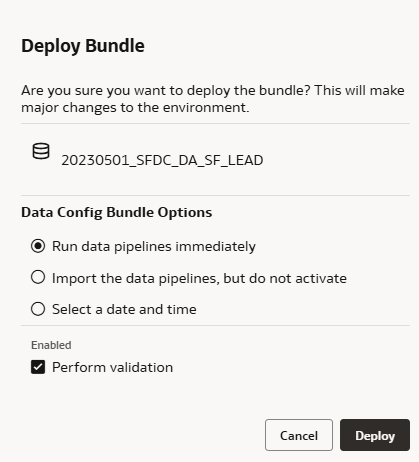
- In Deploy Bundle, if you’re deploying the Data Config bundle, select Perform validation to validate the bundle prior to deployment and click Deploy. If you choose to deselect Perform validation, the bundle deployment will always show a final status of Completed, even if some components failed and were skipped during deployment. If you do deselect this option, it’s recommended you manually validate the deployment by reviewing the bundle reports.
- If you're using the Sandbox framework, you can choose to merge or replace the sandbox content, external application, or security in Semantic Extensions Bundle.
If you have enabled Upload multiple External Applications, you can choose to merge or replace the External Application. See Generally Available Features and Import Semantic Model.
To Merge your Semantic Model, click Deploy to continue the merge immediately without a warning, or click Cancel to quit.
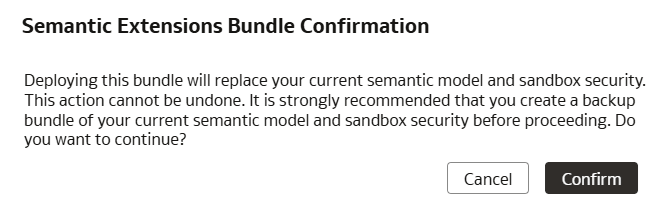
To replace a Semantic Model component, click Deploy, then click Confirm to continue the replacement immediately without a final warning, or click Cancel to quit.
Note:
Replacing Sandbox Content will delete all existing sandboxes on the target and replace them with the sandboxes included in the bundle.If you have chosen to replace a Semantic Model component, you get the following message to confirm or cancel the operation: