16.9.8.3 Using Pre-Authenticated Requests
Use cached PAR URLs to let OCI serve private bucket images directly when possible.
x.jpg, y.jpg,
and z.jpg files. It could use these PAR URLs directly if they are still
valid, or alternatively create a inline image serving page that encapsulates working
with the PAR URL for a requested file:
- If the file's PAR URL in the cache table is still valid, use it
- If not, create a new PAR URL for the file requested, and save it in the cache table
- Redirect the browser to the PAR URL.
An automation could run periodically to clean up the expired entries in the
cache table. Using an image serving strategy involving PAR URLs, you can defer most or
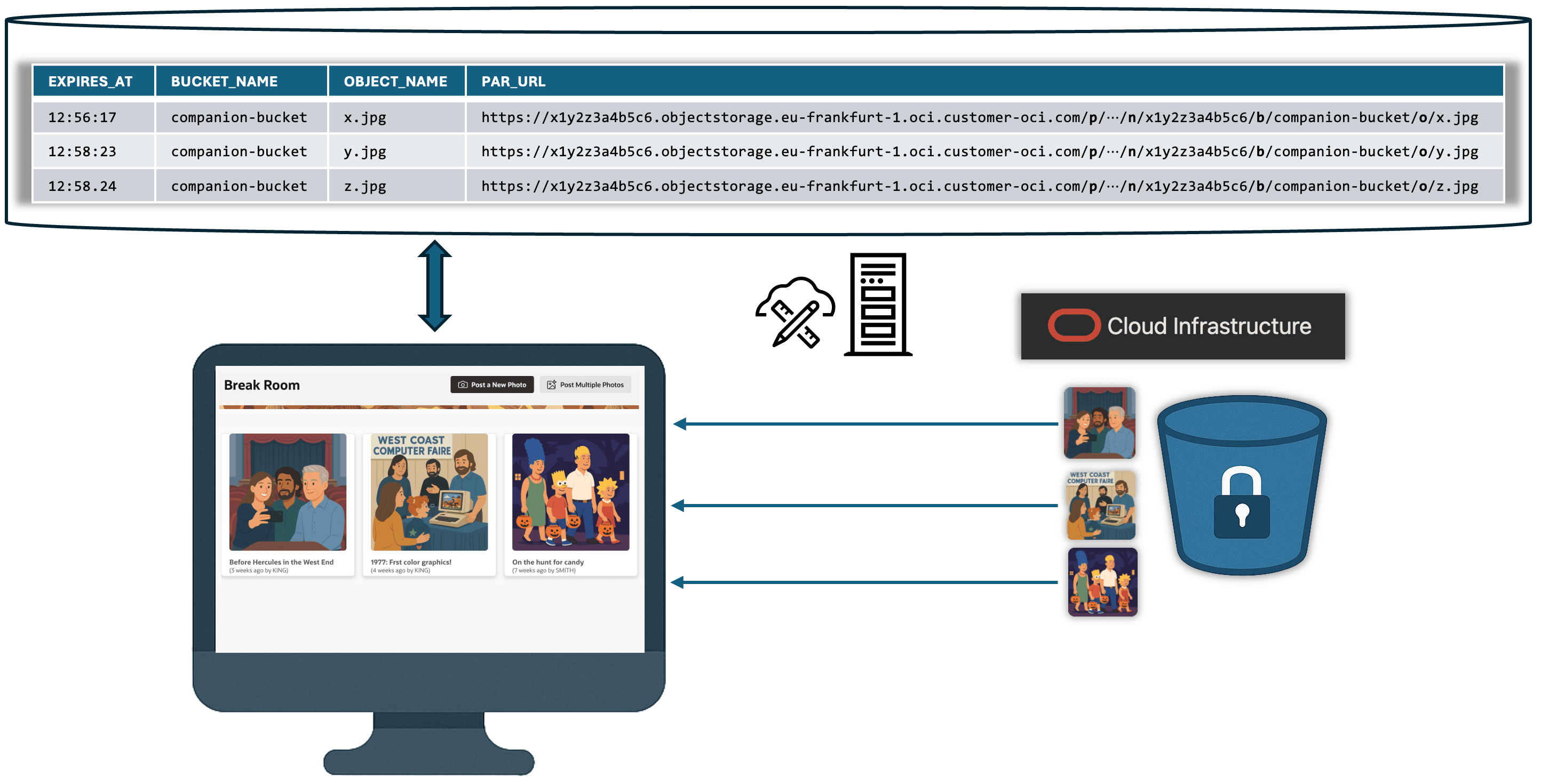
all of the image servring to the object bucket in OCI. The diagram shows how a local
table could store the PAR_URL and EXPIRES_AT time for
different file OBJECT_NAME entries. Your APEX app could use the cached
PAR URLs to delegate image downloading directly to the OCI object bucket.
Figure 16-99 Strategy to Use PAR URLs to Serve Object Bucket Images Directly
Parent topic: Exploring Pre-Authenticated Requests