15.1 Process to Create Communication
This topic describes the information about Create a Communication.
- Under Maintenance, click
Communication. Under
Communication, click Create
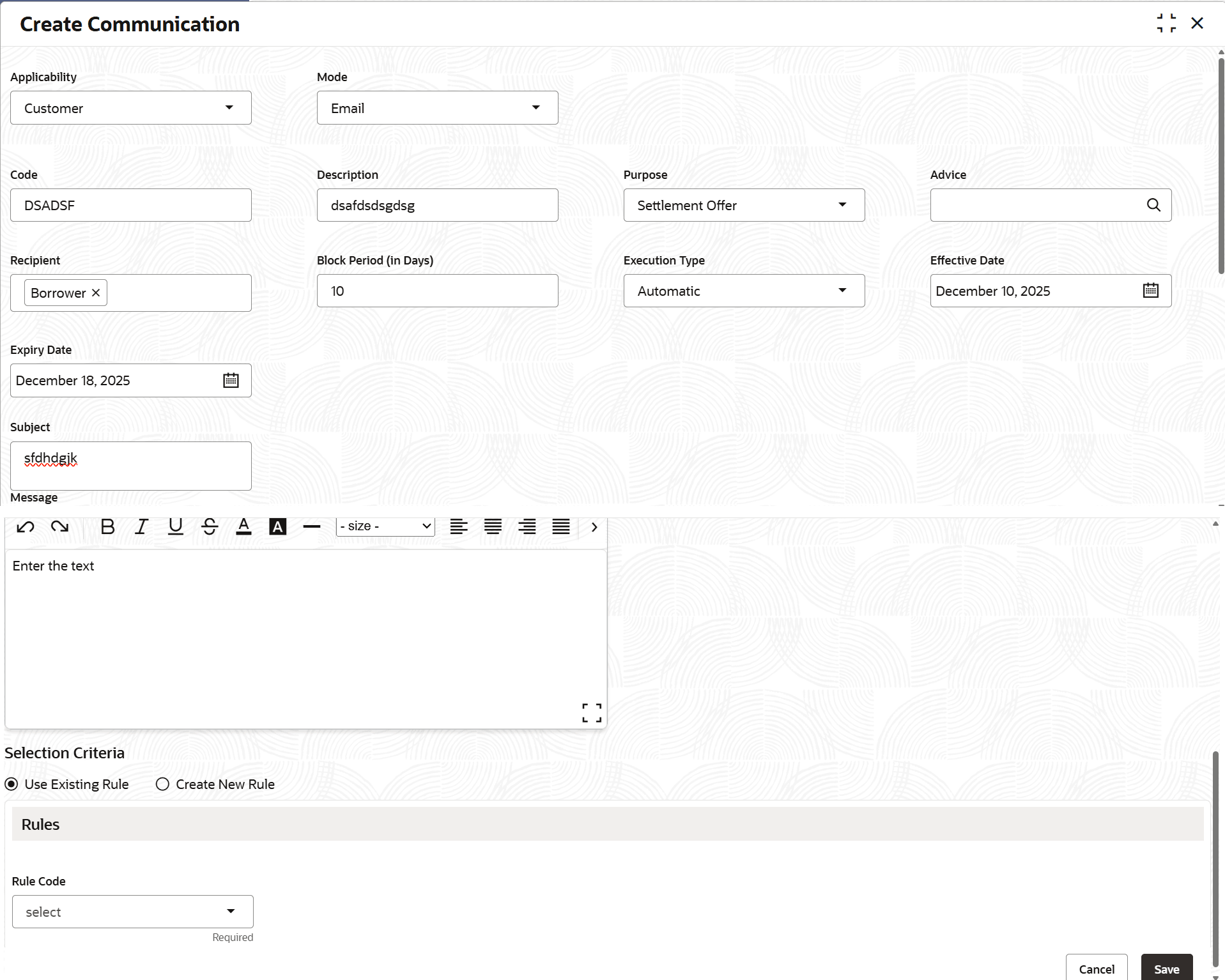
Communication.The Create Communication screen is displayed.
Figure 15-1 Create Communication
- Specify the fields on the Create Communication
screen.For more information on fields, refer to the field description table.
Note:
The fields marked as Required are mandatory.Table 15-1 Field Description: Create Communication
Field Name Description Applicability Indicates the applicability of communication. The options are:- Customer
- Internal
Mode Indicates the mode of communication. The options are:- Letter
- Message
Note: If applicability is selected as Internal, then only Email is displayed in the Mode.
Code Indicates the unique identification code of the communication. Description Indicates the description of the communication. Purpose Indicates purpose of the communication. For example, bankruptcy, delinquency, and legal. Displayed only if applicability is selected as Customer.
Advice Indicates template for the attachment that should be sent to the customer along with the communication. Note: This field is displayed only if user select Email or Letter in the Mode field.
Displayed only if applicability is selected as Customer.
Recipient Indicates the recipients of the communication. User can select multiple recipients for a communication.
Displayed only if applicability is selected as Customer.
User Group Indicates the user groups applicable for the communication. User can select multiple groups for a communication.
Displayed only if applicability is selected as Internal.
Block Period (in Days) Indicates the number of days for block period. Displayed only if applicability is selected as Customer.
Execution Type Indicates the execution type for sending communication. The options are:- Automatic
- Manual
Note: If applicability is selected as Internal , then only Automatic is displayed .
Effective Date Indicates the date from when the communication is effective in the system. Note: The date should be later than or equal to the business date. However, it must be earlier than or equal to the expiry date.
Expiry Date Indicates the date till when the communication is effective in the system. Note: The date should be later than or equal to the business date. However, it must be later than or equal to the effective date.
Subject Indicates the template for subject of the email. User can define the subject to send dynamic values for emails. Note: This field is enabled only if user select Email option in the Mode field.
Message Delivery Preference Indicates the delivery preference. Note: User must select the WhatsApp option in the Mode field to enable this field.
Message Select the template for message body of the email. User can define the message body to send dynamic values for emails. User can use the formatting options provided in the box for drafting the message. Click
 to expand the field.
Note: This field is enabled only if user select Email or Message option in the Mode field.
Selection Criteria This section is used to configure rules for auto generation of communication by the system. For more information on how to configure rules, refer Oracle Banking Common Core User Guide. Note: This tab is displayed only if user select Automatic option in Execution Type field and Applicability is Customer.
Parent topic: Communication