4.2.2.2 AR-AP Details
This topic provides the systematic instructions to view and liquidate outstanding Account Receivable (AR-AP) components for a contract during a transaction.
- On Bills and Collection Contract Detailed screen, click
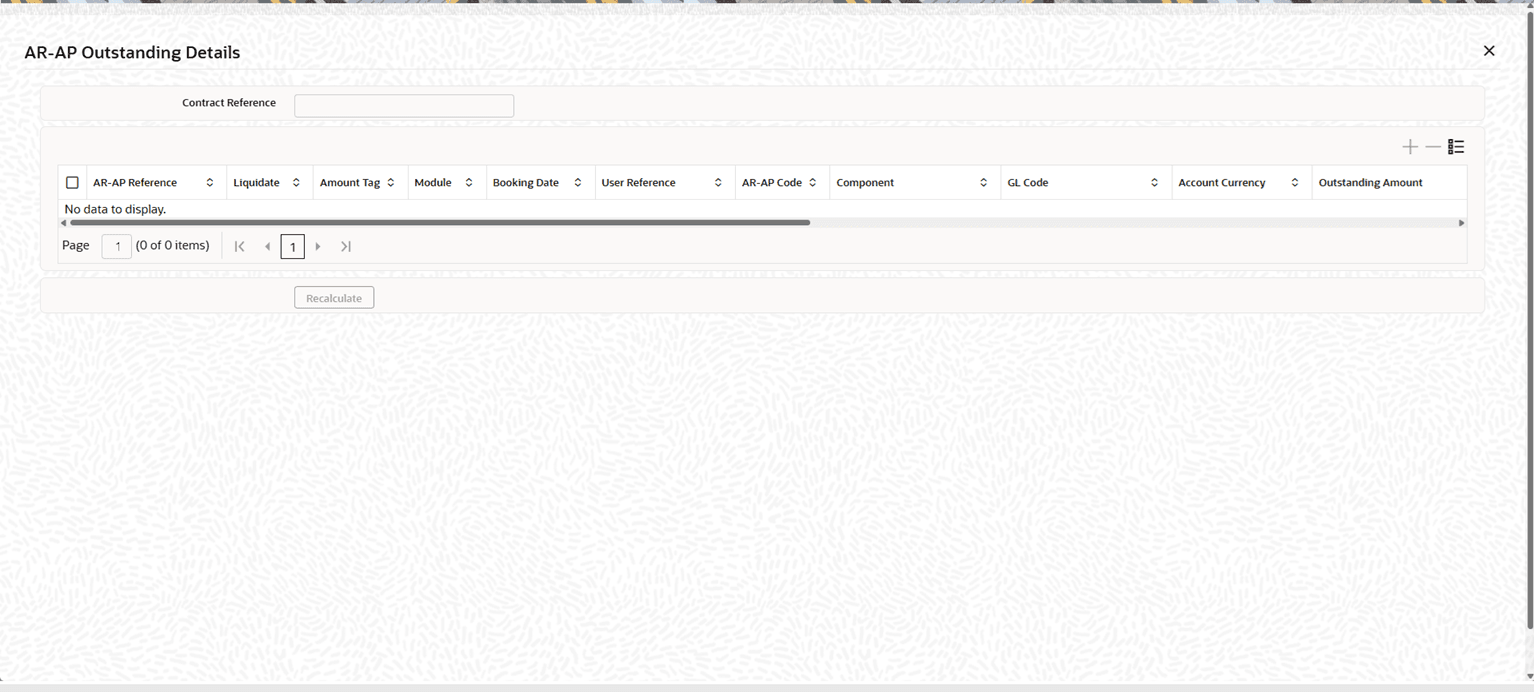
AR-AP Details.AR-AP Details Outstanding Details screen is displayed.
Table 4-14 AR-AP Outstanding Details - Field Description
Field Description Contract Reference System displays the Contract Reference. A Contract Reference is a unique identifier of the Bills & Collection contract against which the Account Receivable is outstanding, used to link and track all related transactions.
AR-AP Reference System displays the reference number of the Account Receivable. An AR-AP Reference is a unique system-generated identifier for each receivable entry, used to track and link it across modules and transactions.
Liquidate Select the toggle to mark the Account Receivable component for liquidation. Liquidate is a user-controlled option that indicates whether a specific receivable component should be settled as part of the current transaction.
Amount Tag System displays the Amount Tag associated with the receivable component. An Amount Tag is a system-generated identifier used to uniquely represent and sequence each receivable component for accounting and processing purposes.
Module System displays the Module from which the Account Receivable is generated. Module indicates the source system module (such as Bills & Collection) from which the receivable was originated.
Booking Date System displays the date on which the Account Receivable was created. Booking Date is the date on which the receivable entry was initially created and recorded in the system.
User Reference System displays the User Reference number associated with the receivable entry. A User Reference is a user-defined identifier or remark used to provide additional context or tracking for the receivable.
AR-AP Code System displays the AR-AP Code defined for the receivable component. An AR-AP Code is a classification code that identifies the type or category of receivable, such as charges or commissions.
Component System displays the charge or Component component for which the receivable is generated. Component refers to the specific charge or commission type associated with the receivable, such as processing fees or advising charges.
GL Code System displays the General Ledger account associated with the receivable component. A GL Code is the General Ledger account number where the receivable is recorded for accounting and financial tracking purposes.
Account Currency System displays the currency of the receivable component. Account Currency is the currency in which the receivable component is originally maintained and outstanding.
Outstanding Amount System displays the Outstanding Amount available for liquidation. Outstanding Amount is the total unpaid balance remaining for the receivable component at a given point in time.
Liquidation Amount Specify the amount to be liquidated for the selected receivable component. Liquidation Amount is the amount entered by the user to settle, either fully or partially, the outstanding receivable.
Offset Account Specify the account to be debited for liquidation of the receivable amount. An Offset Account is the account that is debited to recover or settle the receivable amount during liquidation.
Offset Branch System displays the branch associated with the selected offset account. Offset Branch indicates the branch to which the selected offset account belongs.
Offset Currency System displays the currency of the selected offset account. Offset Currency is the currency of the offset account from which the receivable amount will be debited.
Amount System displays the debit amount calculated based on the liquidation amount and exchange rate. Amount is the calculated debit value in the offset account currency after applying the applicable exchange rate.
Exchange Rate System displays the system derived exchange rate between receivable currency and offset account currency. Exchange Rate is the system-derived rate used to convert the receivable currency into the offset account currency.
Negotiated Rate Specify a negotiated exchange rate to override the system derived rate for the transaction. A Negotiated Rate is a user-defined exchange rate that overrides the system-generated rate for conversion purposes.
Parent topic: Main Tab