4 Commands
This chapter describes the command conventions for commands that are not pass-through or debug commands. The commands are listed in alphabetical order.
act-alm-trns
Use this command to transfer all alarm indications from the local office to the remote maintenance center.
Parameters
This command has no parameters.
Example
act-alm-trns
Dependencies
No other action command can be in progress when this command is entered.
Notes
After this command is entered, use the rept-stat-alm command to verify the action.
New alarms cause the local maintenance center audible alarms to sound for a short period.
Output
act-alm-trns
rlghncxa03w 04-01-09:50:17 EST EAGLE 31.3.0
Alarms transferred to Remote Maintenance Center
Command Completed.
;
Related Topics
act-cdl
Use this command to initiate a command driven loopback for testing a signaling link.
Command Driven Loopback is the ability to locally drive a signaling link into a manual line loopback. The data received on the signaling link is echoed (transmitted) back. This is effectively the reverse of the tst-slk:loopback=lxvr, which loops the transmitted data back to the receiver.
Parameters
- link (mandatory)
- SS7 signaling links. The SS7 signaling link to be tested.
- Synonym:
- port
- Range:
- a, b, a1 - a31, b1 - b31
Not all card types support all link parameter values.
See Table A-1 for valid link parameter range values for each type of card that can have assigned signaling links.
- loc (mandatory)
- The card location as stenciled on the shelf of the system.
- Range:
- 1101 - 1108, 1111 - 1112, 1201 - 1208, 1211 - 1218, 1301 - 1308, 1311 - 1318, 2101 - 2108, 2111 - 2118, 2201 - 2208, 2211 - 2218, 2301 - 2308, 2311 - 2318, 3101 - 3108, 3111 - 3118, 3201 - 3208, 3211 - 3218, 3301 - 3308, 3311 - 3318, 4101 - 4108, 4111 - 4118, 4201 - 4208, 4211 - 4218, 4301 - 4308, 4311 - 4318, 5101 - 5108, 5111 - 5118, 5201 - 5208, 5211 - 5218, 5301 - 5308, 5311 - 5318, 6101 - 6108, 6111 - 6118
Example
act-cdl:loc=1205:link=b
Dependencies
The card location specified in the loc parameter must be equipped.
The signaling link specified in the link parameter must be equipped.
LFS processing must be stopped or must be allowed to complete on the specified signaling link before this command can be entered.
The loopback=payload parameter is valid only for LIM-ATM and E1-ATM cards.
Command Driven Loopback testing is not available during upgrade.
A Command Driven Loopback test cannot be in progress on the specified link when this command is entered.
A tst-slk command cannot be in progress on the specified link when this command is entered. The tst-slk processing must be stopped or must be allowed to complete before this command can be entered
The card location specified in the loc parameter must be in the In-Service-Normal (IS-NR) state.
The card location specified in the loc parameter must support Command Driven Loopback testing.
The signaling link specified in the link parameter must not be active.
The card location specified in the loc parameter cannot be reserved by the system.
Notes
None
Output
act-cdl:loc=1205:link=b
tekelecstp 05-01-21 17:00:36 EST EAGLE5 33.0.0
Command Accepted: Command Driven Loopback message is sent.
;
tekelecstp 05-01-21 17:00:36 EST EAGLE5 33.0.0
Command Completed.
;
act-dlk
Use this command to activate an IP data link and put the link into service. The state of the link is changed from out of service maintenance disabled (OOS-MT-DSBLD) to in service normal (IS-NR).
Parameters
- loc (mandatory)
- The card location as stenciled on the shelf of the system.
- Range:
- 1101 - 1108, 1111 - 1112, 1201 - 1208, 1211 - 1218, 1301 - 1308, 1311 - 1318, 2101 - 2108, 2111 - 2118, 2201 - 2208, 2211 - 2218, 2301 - 2308, 2311 - 2318, 3101 - 3108, 3111 - 3118, 3201 - 3208, 3211 - 3218, 3301 - 3308, 3311 - 3318, 4101 - 4108, 4111 - 4118, 4201 - 4208, 4211 - 4218, 4301 - 4308, 4311 - 4318, 5101 - 5108, 5111 - 5118, 5201 - 5208, 5211 - 5218, 5301 - 5308, 5311 - 5318, 6101 - 6108, 6111 - 6118
Example
act-dlk:loc=1308
Dependencies
No other action command can be in progress when this command is entered.
The shelf and card must be equipped.
The card location must contain a card that is running the STPLAN application.
The card location, frame, shelf, or slot must be within the allowed range.
A card location that is valid and defined in the database must be specified.
The card in the location specified by the loc parameter must be in service.
The ipaddr parameter must specify a valid IP address.
Notes
None
MTT 2373 deleted per PR 204449 - MB
Output
act-dlk:loc=1308
rlghncxa03w 04-01-17:00:36 EST EAGLE 31.3.0
Activate Link message sent to card.
Command Completed.
;
act-echo
Use this command to force responses from the scroll area of a terminal to be printed to a specified terminal or printer. The command supports one terminal echoing to many terminals or many terminals echoing to one terminal.
Caution:
Exercise restraint in using this command, because excessive echoing can cause a loss of output at the receiving terminal.Example
act-echo:trm=3
Dependencies
Terminal output cannot be echoed to a terminal that is out of service.
If a terminal is already echoing to a specified terminal, this command cannot be entered to echo the terminal’s output to that same terminal.
Echo is not allowed to the terminal from which the command is issued.
Echo is not allowed to or from IP User Interface telnet ports (terminals 17-40).
Terminal output cannot be echoed to a terminal that is inhibited.
The trm parameter must be specified.
Notes
This command can be used to echo only command output responses to a terminal. For alarm and network messages to be sent to a terminal, the chg-trm command must be used.
To echo output to a destination port, a user must be logged in at the destination port. The following warning message appears in the scroll area of the issuing terminal if echo is attempted to a terminal that has no user logged in:
No user logged in at Terminal X. No echo will occur until a user
logs in.
where X is the trm parameter value specified in the act-echo command.
Output
act-echo:trm=2
rlghncxa03w 04-01-07 11:11:28 EST EAGLE 31.3.0
act-echo:trm=2
Command entered at terminal #1.
rlghncxa03w 04-01-07 11:11:28 EST EAGLE 31.3.0
Scroll Area Output is echoed to terminal 2.
Caution: Loss of output may occur if too many terminals are echoed.
;
act-echo:trm=3
rlghncxa03w 04-01-07 11:11:28 EST EAGLE 31.3.0
act-echo:trm=3
Command entered at terminal #1.
rlghncxa03w 04-01-07 11:11:28 EST EAGLE 31.3.0
Scroll Area Output is echoed to terminal 2.
Scroll Area Output is echoed to terminal 3.
Caution: Loss of output may occur if too many terminals are echoed.
;
act-file-trns
Use this command to start a file transfer between the system and a remote computer.
Parameters
- loc (optional)
- The location of the fixed disk to or from which the file is to be uploaded or downloaded.
Example
act-file-trns:loc=1116
Dependencies
The loc parameter must specify a TDM card.
Only one file transfer can be active at a time.
This command cannot be entered on a telnet terminal (IDs 17-40).
Notes
Output messages indicating transfer initiated and transfer terminated (whether successful or not) are sent to the output devices in the Security Administration output group.
When used to output seculog, the copy-seculog command sends data to the FTA. Extracting seculog data from the FTA requires:
- A computer with a VT320 or KSR connection to the system
- A communication program that both emulates VT terminals and supports Kermit file transfer
- A spreadsheet program that can import Comma Separated Value (CSV) text files
A PC running ProComm© for Windows and Microsoft Excel© can be used.
Extracting seculog file from the FTA
-
Display the contents of the FTA. Enter
disp-fta-dir:loc=xxxx.Where xxxx = the active TDM (1114 or 1116)
-
Delete any existing files from the FTA. Enter
dlt-fta:loc=xxxx:all=yes.Where xxxx = the active TDM (1114 or 1116)
-
Enter the command to send seculog to the FTA. For example:
copy-seculog:slog=act:dloc=stb:dfile="seculog_copy" -
Activate the file transfer. Enter
act-file-trns:loc=xxxx.Where xxxx = the active TDM (1114 or 1116)
-
Display a list of the files transferred to the FTA. Enter
disp-fta-dir:loc=xxxx.Where xxxx = the active TDM (1114 or 1116)
-
Use the
getcommand from within the communications program configured to run Kermit in ASCII mode to transfer the desired files (with the .csv suffixes) to the PC.For example:
> get seculog_copy.csv> finish -
After all files are successfully transferred and confirmed, remove the files from the FTA. Enter
dlt-fta:loc=xxxx:all=yes.Where xxxx = the active TDM (1114 or 1116)
Output
Normal session output to non-Security Administration user's terminal.
act-file-trns:loc=1114:timeout=20:retries=2
rlghncxa03w 04-01-05 14:37:05 EST EAGLE 31.3.0
act-file-trns:loc=1114:timeout=20:retries=2
Command entered at terminal #1.
;
rlghncxa03w 04-01-05 14:37:05 EST EAGLE 31.3.0
Awaiting File Transfer with remote.
Please initiate binary Kermit session on local computer
;
rlghncxa03w 04-01-05 14:38:33 EST EAGLE 31.3.0
File Transfer : 0 file(s) DOWNLOADED from location 1114 successfully
File Transfer : 1 file(s) UPLOADED to location 1114 successfully
File Transfer : Kermit Session terminated NORMALLY
Normal session output to Security Administration group terminals.
act-file-trns:loc=1114:timeout=20:retries=2
rlghncxa03w 04-01-05 14:40:42 EST EAGLE 31.3.0
File Transfer : INITIATED on terminal #1
;
rlghncxa03w 04-01-05 14:41:07 EST EAGLE 31.3.0
File Transfer: 511_byte.bin UPLOADED to location 1114 successfully.
;
rlghncxa03w 04-01-05 14:41:44 EST EAGLE 31.3.0
File Transfer : terminated NORMALLY on terminal #1
Normal session output to Security Administration user's terminal.
act-file-trns:loc=1114:timeout=20:retries=2
rlghncxa03w 04-01-05 14:42:51 EST EAGLE 31.3.0
act-file-trns:loc=1114:timeout=20:retries=2
Command entered at terminal #1.
;
rlghncxa03w 04-01-05 14:43:29 EST EAGLE 31.3.0
File Transfer : INITIATED on terminal #1
;
rlghncxa03w 04-01-05 14:43:53 EST EAGLE 31.3.0
Awaiting File Transfer with remote.
Please initiate binary Kermit session on local computer
rlghncxa03w 04-01-05 14:44:19 EST EAGLE 31.3.0
File Transfer: 511_byte.bin UPLOADED to location 1114 successfully.
;
rlghncxa03w 04-01-05 14:44:52 EST EAGLE 31.3.0
File Transfer : 0 file(s) DOWNLOADED from location 1114 successfully
File Transfer : 1 file(s) UPLOADED to location 1114 successfully
File Transfer : Kermit Session terminated NORMALLY
;
rlghncxa03w 04-01-05 14:45:31 EST EAGLE 31.3.0
File Transfer : terminated NORMALLY on terminal #1
;
act-flash
Use this command to activate the trial FLASH GPL that is currently running on one target card or on a range of cards.
Parameters
- gpl (optional)
- Generic program load. The flash GPL type that is
running on the cards in the specified range of cards.
Use "gpl=multiple" to simultaneously flash multiple E5-class cards running different GPLs, such as BLMCAP, etc. The command will then flash all E5-class cards in the specified range.
Note:
This parameter must be specified for cards that have more than one flash image (GPL).
Example
act-flash:loc=1105
act-flash:sloc=1101:eloc=1112:gpl=blmcap
Dependencies
The card, or cards, in the specified location or range of locations for this command must be actively running a flash GPL in trial mode.
The allowed cards are E5-ENET-B, E5-E1T1-B, E5-MCAP, or Service Module. Card locations xy09 and xy10 (x is the frame, y is the shelf) can be specified only for MUX cards.
Each specified card does not have to be defined in the database, but it does have to be aligned on the IMT bus.
If the target card is a MUX card, then both card locations specified in the sloc and eloc parameters must contain MUX cards on the same IMT bus. For these cards, the bus is implicit based on the specified location. Location xy09 specifies a MUX A Bus, and location xy10 specifies a MUX B Bus (x is the frame and y is the shelf). For example, sloc=1109:eloc=6109 specifies all MUX cards on the A Bus only; sloc=1110:eloc=6110 specifies all MUX cards on the B Bus only. MUX cards from both the A bus and B bus cannot be flash downloaded simultaneously.
The card must be running an inactive flash GPL when this command is executed.
The provisioning subsystem mode (simple, duplex) must be established prior to executing the command.
The loc parameter cannot be specified with the eloc and sloc parameters.
Either the loc parameter or the eloc and sloc parameters must be specified.
The eloc and sloc parameters must be specified together in the command; one parameter cannot be specified without the other parameter.
The sloc parameter value cannot be greater than the eloc parameter value.
MUX cards in the specified sloc and eloc card locations must be present and able to communicate over the IMT. The cards do not have to be provisioned in the database.
The gpl parameter must be specified if the eloc and sloc parameters are specified.
The gpl parameter must be specified for cards that have more than one flash image (GPL).
MUX cards in the locations specified by the sloc and eloc parameters must be running the specified GPL. If the GPL specified is not multiple, then other cards in the range of locations can be running other GPLs but will not be activated, and only cards that are within the range and running the specified GPL will be activated.
A card that is the active MASP cannot be specified for the loc, sloc, or eloc parameter.
No other action command can be in progress when this command is entered.
A card location that is valid and defined in the database must be specified.
MUX cards specified in the sloc and eloc location parameters must be running the specified general program load (gpl). For other GPLs including multiple, all cards within the range running the specified GPL will be activated.
This command cannot be entered during an Extended Bit Error Rate Test (BERT).
The gpl=multiple parameter can be specified only if the sloc and eloc parameters are specified.
The gpl=multiple parameter can be specified only if the cards in the locations specified in the sloc and eloc parameters are E5-class cards.
Notes
None
Output
act-flash:loc=1105
rlghncxa03w 04-01-04 13:05:05 EST EAGLE 31.3.0
FLASH Memory Activation for card 1105 Started.
;
rlghncxa03w 04-01-04 13:05:05 EST EAGLE 31.3.0
FLASH Memory Activation for card 1105 Completed.
;
rlghncxa03w 04-01-04 13:05:05 EST EAGLE 31.3.0
Command Completed.
;
act-flash:sloc=1101:eloc=1112:gpl=blmcap
tekelecstp 18-01-15 02:30:23 EST EAGLE 46.6.0.0.0-71.5.0
FLASH activation for cards 1101 - 1112 Completed.
LOC 1101 : PASSED
LOC 1102 : PASSED
LOC 1112 : PASSED
ALL CARD RESULTS PASSED
;
Command Completed.
;
act-ftp-trns
Use this command to activate an FTP transfer to send database tables from the system to the customer’s FTP server.
Note:
This command is not for customer use. It is for Tekelec use only.Parameters
- filetype (mandatory)
- The system table type to be transferred.
- Range:
-
- all
- Transfer all types of tables
- enum
- Transfer all ENUM tables
- exts
- Transfer the Extended Statistics table
- ip
- Transfer all IP tables
- gtt
- Transfer all Global Title Translation tables
- gws
- Transfer all Gateway Screening tables
- mtp
- Transfer all Message Transfer Part tables
- vflex
- Transfer all V-Flex tables
Example
act-ftp-trns:action=put:filetype=gtt
Dependencies
This command cannot be entered if another file transfer is already in progress.
The action and filetype parameters must be specified in the command.
The FTP Server table must be accessible.
The FTP Server table must contain at least one FTP server entry that specifies the user application
An IPSM card must be in service before this command can be entered.
This command cannot be entered when CAT2 IPSM to OAM syncing is in progress.
Notes
This command communicates with the user application, defined in the FTP Server table. The IP address and server details necessary for an FTP transfer are also stored in the FTP Server table. One such user application is the FTP-based Table Retrieve Application (FTRA). Refer to the FTP-Based Table Retrieve Application (FTRA) User Guide for assistance.
Output
act-ftp-trns:action=put:filetype=ip
tekelecstp 09-05-06 06:41:17 EST EAGLE 41.0.0
FTP command sent to IPSM card - Processing
;
tekelecstp 09-05-06 06:41:17 EST EAGLE 41.0.0
Copy-table started - tablexxx.tbl
Copy-table COMPLETE.
;
tekelecstp 09-05-06 06:41:17 EST EAGLE 41.0.0
FTP file transfer started - tablexxx.tbl
FTP file transfer SUCCESSFUL.
;
tekelecstp 09-05-06 06:41:17 EST EAGLE 41.0.0
FTP transfer COMPLETE.
;
act-gpl
Use this command to change the status of the trial GPL from “trial” to “approved.” The status of the previously approved GPL is changed to “trial.”
Parameters
- gpl (mandatory)
- Generic program load. The name of the GPL
identifier to be moved from "trial" to "approved" status on the disk.
- Range:
- xyyyyyyy
1 alphabetic character followed by up to 7 alphanumeric characters. Valid GPLs are:
atmhc—Used by E5-ATM-B cards to allow the card to support up to 3 signaling links.
bldc32—Flash GPL containing a tar image with all code required on E5-MCAP cards to support VxWorks6.9 32-bit application, as in OAMHC69.
bldc64—Flash GPL containing a tar image with all code required on E5-SM8G-B cards for SCCP64, ENUM64, SIP64 and DEIR64 applications.
blmcap—Flash GPL containing a tar image with all code required on E5-MCAP, E5-E1T1-B, E5-MCPM-B, E5-ATM-B, E5-ENET-B, and E5-SM8G-B cards
blslc32—Flash GPL containing a tar image with all code required on SLIC cards for 32-bit application i.e. MCPHC, IPSHC etc.
blslc64—Flash GPL containing a tar image with all code required on SLIC cards for 64-bit application i.e. SCCP64, ENUM64, SIP64 and DEIR64.
blsl932—Flash GPL containing a tar image with all code required on SLIC cards for 32-bit application on VxWorks6.9, as in IPSHC69 and MCPHC69.
deirhc— Used by E5-SM8G-B cards to support the S13/S13' EIR feature.
enumhc—Used by E5-SM8G-B cards to support the ENUM Mobile Number Portability and Tier One Address Resolution application.
erthc—Used by E5-ENET-B cards for EAGLE 5 Integrated Monitoring Support functions
hipr2—Communication software used on the High Speed IMT Packet Router (HIPR2) card
ipsg—Used by E5-ENET-B cards to support the combined functionality of IPLIMx M2PA and IPGWx M3UA
ipsg32—Used by SLIC cards to support IPSG application with 64-bit addressing either with GTT functionality or without it.
ipshc—Used by E5-ENET-B cards to support the IPS application.
ipshc69—Used by E5-ENET-B and SLIC cards to support the IPS application when running on VxWorks69.
mcphc— Used by E5-MCPM-B cards for the Measurements Platform feature.
mcphc69—Used by E5-MCPM-B and SLIC cards for the Measurements Platform feature when running on VxWorks69.
oamhc—Used by E5-MCAP cards for enhanced OAM functions.
oamhc69—Used by E5-MCAP cards for enhanced OAM functions, when running on VxWorks 69.
sccphc—Used by E5-SM8G-B cards to support EPAP-based features and the LNP ELAP Configuration feature. If no EPAP-based or LNP ELAP Configuration feature is turned on, and an E5-SM8G-B card is present, then the GPL processes normal GTT traffic.
sfapp—Used by SLIC cards to support the Stateful Firewall Application.
siphc— Used by E5-SM8G-B Cards to support the SIP application.
ss7hc—Application GPL used by E5-E1T1-B and SLIC cards to support E1 and T1 signaling links.
Example
act-gpl:gpl=ss7hc:ver=125-1-0
act-gpl:gpl=deirhc:ver=134-60-0
act-gpl:gpl=enumhc:ver=135-20-0
act-gpl:gpl=ipsg32:ver=140-12-0
Dependencies
No other activate, change, copy, or retrieve GPL commands, nor a GPL audit, can be in progress when this command is entered.
The value specified for the gpl parameter must be supported. See the gpl definition for a list of supported GPLs.
Notes
Test the trial GPL by loading to a card before activating the GPL. Activating the GPL changes it from trial to approved.
The generic program load is committed on the active system and on the standby system.
Trial GPLs are downloaded to cards manually. Only approved GPLs can be downloaded to cards by the system.
Use the
rtrv-gpl command to determine the
version of the GPL.
Output
The output indicates that the specified GPL is activated on each TDM card.
act-gpl:gpl=ss7hc:ver=125-1-0
tekelecstp 05-01-03 16:53:23 EST EAGLE5 33.0.0
SS7HC activate to 1114 completed
SS7HC activate to 1116 completed
;
The output indicates that the specified GPL is activated on each TDM card.
act-gpl:gpl=deirhc:ver=134-60-01
tekelecstp 13-03-15 19:08:39 EST EAGLE 45.1.0
DEIRHC activate to 1114 completed
DEIRHC activate to 1116 completed
;act-gpl:gpl=enumhc:ver=135-20-0
tekelecstp 14-05-20 14:18:32 EST EAGLE 46.1.0
ENUMHC activate to 1114 completed
ENUMHC activate to 1116 completed
;
act-gpl:gpl=ipsg32:ver=140-12-0
tekelecstp 12-08-16 09:35:00 EST EAGLE 46.5.0
IPSG32 activate to 1114 completed
IPSG32 activate to 1116 completed
;
The number of "cards of x complete" represents the total number of cards that can communicate on the IMT at the instant that this information is displayed.
act-gpl:gpl=hipr2:ver=135-041-000
act-gpl:gpl=hipr2:ver=135-041-000
tekelecstp 15-04-16 11:12:45 EST EAGLE5 46.2.0-65.42.0
5575.1104 CARD 1107,A INFO IP Connection Failed
tekelecstp 15-04-16 11:12:49 EST EAGLE5 46.2.0-65.42.0
act-gpl:gpl=hipr2:ver=135-041-000
Command entered at terminal #20.
;
Command Accepted - Processing
tekelecstp 15-04-16 11:12:50 EST EAGLE5 46.2.0-65.42.0
HIPR2 activate on 1116 completed
HIPR2 activate on 1114 completed
;
act-lbp
Use this command to activate one or more loopback point tests for testing data signaling link elements in an SS7 transmission path. Use this command to:
- Activate a test for a specified loopback point that is defined in the LFS database table
- Activate a test for one loopback point that is not defined in the LFS database table
- Activate tests for all loopback points that have been defined in the LFS database table. See Summary of Loopback Testing Commands and Functions for information about loopback testing commands and functions.
The ent-lbp command can be used to define a maximum of 32 loopback points in the LFS database table.
Parameters
To activate a test for a single loopback point that is defined in the LFS database table, specify the loopback point number in the lbp parameter and do not specify the lfst, rle, rep, or clli parameter in the command. Information from the LFS database is used to activate the test for the specified loopback point.
To activate a test for a single loopback point that is not defined in the LFS database table, specify one or more of the lfst, rle, rep, and clli parameters in the command. (If the clli parameter is not specified, then the value is blank, a null string. If the rep parameter is not specified, the default value is 0.)
To activate tests for all loopback points defined in the LFS database, do not specify the lbp, lfst, rle, rep, or clli parameter in the command. Information from the LFS database table is used to activate tests for all defined loopback points.
- link (mandatory)
- SS7 signaling link. The SS7 signaling link to be tested.
- Synonym:
- port
- Range:
- a, b, a1 - a31, b1 - b31
Not all card types support all link parameter values.
See Table A-1 for valid link parameter range values for each type of card that can have assigned signaling link ports.
- loc (mandatory)
- The location of the card containing the signaling link to use for loopback point testing.
- Range:
- 1101 - 1108, 1111 - 1112, 1201 - 1208, 1211 - 1218, 1301 - 1308, 1311 - 1318, 2101 - 2108, 2111 - 2118, 2201 - 2208, 2211 - 2218, 2301 - 2308, 2311 - 2318, 3101 - 3108, 3111 - 3118, 3201 - 3208, 3211 - 3218, 3301 - 3308, 3311 - 3318, 4101 - 4108, 4111 - 4118, 4201 - 4208, 4211 - 4218, 4301 - 4308, 4311 - 4318, 5101 - 5108, 5111 - 5118, 5201 - 5208, 5211 - 5218, 5301 - 5308, 5311 - 5318, 6101 - 6108, 6111 - 6118
- clli (optional)
- Common language location identifier. The CLLI code or other mnemonic identifier, used to refer to the given loopback point.
- force (optional)
- The force=yes parameter must be specified to start a test when there are 256 or more tests already running.
- lbp (optional)
- Loopback point ID. A far-end loopback point that lies along an SS7 signaling link path between the STP and the target device (up to and including the target device).
- lfst (optional)
- Link fault sectionalization test.
Note:
This parameter is mandatory if the rle, clli, or rep parameter is specified.- Range:
-
- llt
- latching loopback test; a software latch is set at the test point to reverse everything that is received and return it to the sender until the test is complete
- mlt
- manual latch loopback test; an external hardware latch is set to reverse everything that is received and return it to the sender until the test is complete (for equipment that cannot set a software latch for the test)
- nlt
- nonlatching loopback test; no permanent latch is set. Loopback codes are alternated with test data until the test is complete.
- Default:
- The value in the LFS database, as shown in the
rtrv-lbpcommand output
- maxerr (optional)
- Bit error threshold. This parameter specifies the actual number of errors allowed for a specific time period during which loopback testing is being performed. If this threshold is exceeded, the TEST STATUS field in the output report indicates an error.
- pattern (optional)
- This parameter specifies the type of test pattern used to perform the LFS test.
- Range:
-
- b2047
- 047-bit BERT pattern sent until it is stopped by software
- b511
- 511-bit BERT pattern sent until it is stopped by software
- octet
- Data (from the data parameter) sent continuously until it is stopped by software
- alternate
- Alternately, a count of 100 octets of the specified data (from the data parameter) followed by 100 octets of 0, sent until it is stopped by the software
The octet and alternate values are valid only when lfst=llt is specified.
- Default:
- b2047
- rep (optional)
- Repetition count. The number of link elements of the same type (not including the target device) that lie between the STP and the link element to be tested.
- rle (optional)
- Remote link element. The link element to be looped back for testing.
Note:
This parameter is mandatory if the lfst, clli, or rep parameter is specified.
Example
Activate tests for all loopback points that are defined in the LFS database table:
act-lbp:loc=1205:link=b:pattern=alternate:maxerr=10:time=000200
Activate a test for a single loopback point that is not defined in the LFS database table:
act-lbp:loc=1205:link=b:lbp=1:rle=ds0:lfst=llt:clli=rlghncxa05w
act-lbp:loc=1205:link=b:lbp=1:rle=ds0:lfst=llt:clli=rlghncxa05w:pattern=octet:data=h’ff
act-lbp:loc=1205:link=b:lbp=1:rle=ds0:lfst=llt:clli=rlghncxa05w:maxerr=40:time=12000
Activate a test for a single loopback point that is defined in the LFS database table:
act-lbp:loc=1205:link=b:lbp=3:pattern=alternate:maxerr=10:time=000200
Dependencies
The Link Fault Sectionalization (LFS) feature must be on before this command can be entered.
If the rle=nei parameter is specified, the rep=0 parameter must be specified.
The rep parameter can be specified only if the lfst=llt parameter is specified.
The rle=ds0 or the rle=nei parameter cannot be specified if the lfst=nlt parameter is specified. The DS0 and Network Element Interface (NEI) link elements do not support non-latching loopbacks.
If one or more of the rle, rep, lfst, or clli parameters are specified, the database is not used to look up their values; therefore, the lfst and rle parameters must be specified when the rep or clli parameter is specified.
The data parameter can be specified only if the pattern=octet parameter or pattern=alternate parameter is specified.
The pattern=octet and pattern=alternate parameters cannot be specified for non-latching tests (rle=nlt).
The card location (loc parameter) must contain a provisioned and equipped E5-E1T1-B card, provisioned with the LIMT1 card type, running the SS7ANSI or CCS7ITU application.
The card in the loc parameter location must be in the In-Service-Normal state.
The signaling link that is used for LFS testing must be equipped, and must be deactivated before this command is entered.
The loopback points (LBPs) must have been previously defined in the database.
Only one LFS test can be active on a signaling link at a time.
This command cannot be entered for a signaling link LFS test when the maximum number of LFS tests are active for the card. At least one LFS test must complete before this command can be entered again.
Up to 8 LFS tests at a time can be active on an E5-E1T1-B card used as a T1 card.
This command cannot be entered when the maximum combined total number of LFS and link tests (1024) are in progress in the system. At least one test must complete before this command can be entered again.
The force=yes parameter must be specified to activate a test when there are 256 or more tests already running in the system.
The specified signaling link must not be running a tst-slk test when this command is entered. The tst-slk test must be stopped or allowed to complete before this command can be entered for the link.
The specified signaling link must not be in Command Driven Loopback (CDL) when this command is entered. The link must be removed from CDL before this command can be entered for the link.
This command cannot be entered for a link that is already blocked by another link diagnostic test. The test must be canceled or allowed to complete before this command can be entered for the link.
LFS testing is not available during upgrade.
The maximum number of loopback point entries allowed in the LFS table is 32.
Notes
This command is not supported for E5-ATM-B cards.
If an LFS test is aborted by a card reset, it can leave the remote far-end loopback condition active. Use the dact-lbp command to cancel LFS tests.
The E5-E1T1-B cards support this command on up to 8 T1 channels at a time; the command is not supported for E1.
The test can terminate with the status "ERROR, bit error exceeded threshold" for two reasons.
- The number of cumulative bit errors exceeds the specified maxerr parameter value.
- The number of bit errors for one second reaches or exceeds 255, without considering the maxerr parameter value.
Output
The LFS report is displayed when the LFS test completes.
This example shows how the test failed because the bit error rate exceeded the threshold. The maxerr=10 parameter is used for a test time of 2 minutes. Because more than 10 errors occurred within 2 minutes, the test is considered a failure and the TEST STATUS field displays the cause. The parameter values are applied to each loopback point. The maxerr value is per test, not cumulative for all tests.
act-lbp:loc=1205:link=b:pattern=alternate:maxerr=10:time=002000
tekelecstp 05-01-21 17:00:36 EST EAGLE5 33.0.0
LOC = 1205 Link = B LSN = ls11345678 Start time = 11:10:34
PATTERN = ALTERNATE DATA= FF MAXERR = 10 TIME = 00:02:00
TEST STATUS = ERROR, bit error exceeded threshold.
LBP CLLI RLE REP LFST BIT_ERROR ERRORED_SEC DURATION
2 rlghncxa05w DS0 0 LLT 0 0 00:02:00
3 ------------ OCU 0 NLT 8 2 00:02:00
5 ------------ NEI 0 LLT 15 1 00:01:20
;
In this example, the test failed because the loopback could not be established.
act-lbp:loc=1205:link=b:pattern=alternate:maxerr=10:time=000200
tekelecstp 05-01-21 17:00:36 EST EAGLE5 33.0.0
LOC = 1205 Link = B LSN = ---------- Start time = 11:10:34
PATTERN = ALTERNATE DATA= FF MAXERR = 10 TIME = 00:02:00
TEST STATUS = ERROR, loopback was not established.
LBP CLLI RLE REP LFST BIT_ERROR ERRORED_SEC DURATION
1 rlghncxa05w DS0 0 LLT 0 0 00:00:00
;
Legend
- LOC—Card location that contains the signaling being tested
- LINK—Signaling link that is being tested on the card
- LSN—Name of the linkset that contains the link being tested
- Start time—Time that the test started
- PATTERN—Type of test pattern used to perform the LFS test
- DATA—Data used with the octet or alternate patterns
- MAXERR—Bit error threshold; actual number of errors allowed for the specific time period during which loopback testing is being performed. If this threshold is exceeded in the specified time period, the TEST STATUS field in the output report indicates an error.
- TIME—Specified length of time to run the test in order to determine success or failure. If the number of errors that actually occur during this time exceeds the threshold set by the maxerr parameter, the loopback test is identified as a failure.
- TEST STATUS—Any one of the following TEST STATUS values can appear:
- PASS
- ERROR, LFS HARDWARE is not available.
- ERROR, loopback could not be established.
- ERROR, bit error exceeded threshold.
- ERROR, LFS test aborted.
- ERROR, LFS hardware failed.
- LBP—Loopback point used to perform the LFS test
- CLLI—Common Language Location Identifier (CLLI) code, or other mnemonic identifier, used to refer to the given loopback point
- RLE—Remote link element to be looped back for testing
- REP—Repetition count. The number of link elements of the same type (not including the target device) that lie between the STP and the link element to be tested.
- LFST—Type of link fault sectionalization loopback test to be performed
- BIT_ERROR—The number of bit errors observed during the test
- ERRORED_SEC—The number of seconds that contained bit errors during the test. (Bit errors are sampled once per second; each sample that contains bit errors adds one second to this count.)
- DURATION—Length of time that the test actually ran for the loopback point. For successful test, the TIME and the DURATION should be the same. If a test ran for less than the specified amount of time, the DURATION will be less than the TIME.
act-lg-card
Use this command to activate LG event generation/reception on a given LG card
The command class is TKLC_INTERNAL inheriting properties of DEBUG class. The Load Generator is supported on IPSG, IPLHC, IPGHC and SS7HC GPLs.Parameters
- loc (mandatory)
- The card location as stenciled on the shelf of the system.
- Range:
- 1101 - 1108, 1111 - 1112, 1201 - 1208, 1211 - 1218, 1301 - 1308, 1311 - 1318, 2101 - 2108, 2111 - 2118, 2201 - 2208, 2211 - 2218, 2301 - 2308, 2311 - 2318, 3101 - 3108, 3111 - 3118, 3201 - 3208, 3211 - 3218, 3301 - 3308, 3311 - 3318, 4101 - 4108, 4111 - 4118, 4201 - 4208, 4211 - 4218, 4301 - 4308, 4311 - 4318, 5101 - 5108, 5111 - 5118, 5201 - 5208, 5211 - 5218, 5301 - 5308, 5311 - 5318, 6101 - 6108, 6111 - 6118
Example
act-lg-card:loc=1302
act-lg-card:loc=1302:dir=tx
act-lg-card:loc=1302:dir=rx
Dependencies
The card location must not be 1113-1118, xy09, or xy10 where x is the frame and y is the shelf.
The LG Card table is corrupt or cannot be found.
The card location specified in the loc parameter must be of a provisioned LG card.
Loc is mandatory
Activating the state of an LG object that is already activated or deactivating the state of an LG object that is already deactivated has no effect.
Output
None.
act-lg-engine
Use this command to activate LG event generation/reception on an LG engine hosted on a LG card.
The command class is TKLC_INTERNAL inheriting properties of DEBUG class. The Load Generator is supported on IPSG, IPLHC, IPGHC and SS7HC GPLs.
Parameters
- loc (optional)
- The card location as stenciled on the shelf of the system.
- Range:
- 1101 - 1108, 1111 - 1112, 1201 - 1208, 1211 - 1218, 1301 - 1308, 1311 - 1318, 2101 - 2108, 2111 - 2118, 2201 - 2208, 2211 - 2218, 2301 - 2308, 2311 - 2318, 3101 - 3108, 3111 - 3118, 3201 - 3208, 3211 - 3218, 3301 - 3308, 3311 - 3318, 4101 - 4108, 4111 - 4118, 4201 - 4208, 4211 - 4218, 4301 - 4308, 4311 - 4318, 5101 - 5108, 5111 - 5118, 5201 - 5208, 5211 - 5218, 5301 - 5308, 5311 - 5318, 6101 - 6108, 6111 - 6118
Example
act-lg-engine:loc=1301
act-lg-engine:engine=txengine1
act-lg-engine:loc=1301:dir=tx
act-lg-engine:engine=txengine1:test=yes
Dependencies
The engine name specified must pre-exist in the LG Engine table.
The loc parameter cannot be specified with the engine parameter.
Atleast one optional parameter must be specified.
The card location specified in the loc parameter must be of a provisioned LG card.
DIR parameter can only be specified along with LOC parameter.
Activating the state of an LG object that is already activated or deactivating the state of an LG object that is already deactivated has no effect.
Test parmameter can only be specified with Tx engine.
Output
None.
act-lg-grp
Use this command to activate event generation/reception for a LG group. The command class is TKLC_INTERNAL inheriting properties of DEBUG class. The Load Generator is supported on IPSG, IPLHC, IPGHC and SS7HC GPLs.
Example
act-lg-grp:grp=lggroup1:dir=tx
act-lg-grp:grp=lggroup1:dir=rx
act-lg-grp:grp=lggroup2
Dependencies
The group name specified must pre-exist in the LG Group table
The LG Group table is corrupt or cannot be found.
The grp parameter must be specified.
Activating the state of an LG object that is already activated or deactivating the state of an LG object that is already deactivated has no effect.
Output
None.
act-lg-sys
Use this command to activate the LG event generation/reception on all LG cards configured in the system.
The command class is TKLC_INTERNAL inheriting properties of DEBUG class. The Load Generator is supported on IPSG, IPLHC, IPGHC and SS7HC GPLs.Parameters
Example
act-lg-sys:dir=tx
act-lg-sys:dir=rx
act-lg-sys:dir=all
Dependencies
The LG System table is corrupt or cannot be found.
dir is mandatory
Activating the state of an LG object that is already activated or deactivating the state of an LG object that is already deactivated has no effect.
Output
None.
act-lpo
Use this command to force a processor outage on the specified link. The system begins sending link status signal units (LSSUs) with a status of SIPO to the adjacent signaling point. Level 2 status remains in service, except when the link is an ATM high-speed signaling link.
Note:
The signaling link’s blocked status is not preserved across a LIM reboot.Parameters
- link (mandatory)
- The signaling link on the card specified in the loc parameter. The links can be specified in any sequence or pattern.
- Synonym:
- port
- Range:
- a, b, a1 - a63, b1 - b63
Not all card types support all link parameter values.
See Table A-1 for valid link parameter range values for each type of card that can have assigned signaling links.
- loc (mandatory)
- The card location as stenciled on the shelf of the system.
- Range:
- 1101 - 1108, 1111 - 1112, 1201 - 1208, 1211 - 1218, 1301 - 1308, 1311 - 1318, 2101 - 2108, 2111 - 2118, 2201 - 2208, 2211 - 2218, 2301 - 2308, 2311 - 2318, 3101 - 3108, 3111 - 3118, 3201 - 3208, 3211 - 3218, 3301 - 3308, 3311 - 3318, 4101 - 4108, 4111 - 4118, 4201 - 4208, 4211 - 4218, 4301 - 4308, 4311 - 4318, 5101 - 5108, 5111 - 5118, 5201 - 5208, 5211 - 5218, 5301 - 5308, 5311 - 5318, 6101 - 6108, 6111 - 6118
Example
act-lpo:loc=1101:link=a
act-lpo:loc=1102:link=a40
Dependencies
A card location that is valid and defined in the database must be specified.
No other action command can be in progress when this command is entered.
This command is not valid for cards running the IPGHC GPL.
The card must contain signaling links.
The signaling link must be equipped in the database.
This command is not valid for links belonging to proxy linksets.
The value specified for the loc parameter must refer to one of the following cards, and the referenced card must be equipped:
- E5-E1T1-B card running the SS7ANSI or CCS7ITU application
- E5-ATM-B card running the ATMANSI or ATMITU application
- E5-ENET-B card running the IPLHC or IPSG application
An appropriate value must be specified for the link parameter when an ATM card is used:
- a-a1, b—E5-ATM-B card running the ATMANSI or ATMITU application
The act-lpo command is not supported for ITU-N16 links.
This command is not valid for IPSG-M3UA signaling links.
Notes
The function of this command is the same as the blk-slk command.
This command generates an alarm.
If this command is followed by the init-card command, the local processor outage is not preserved after the init-card command completes.
The Installation Guide provides an illustration of card locations.
If the blk-slk or act-lpo command is issued for an IPSG signaling link, then an MTP3 local processor outage is initiated.
Output
act-lpo:loc=1101:link=a
tekelecstp 05-01-21 17:00:36 EST EAGLE5 33.0.0
Local processor outage being set.
tekelecstp 05-01-21 17:00:36 EST EAGLE5 33.0.0
* 0014.0208 * SLK 1101,A nc00027 slk local blocked
act-lpo:loc=1102:link=a40
tekelecstp 16-05-27 17:00:36 EST EAGLE 69.1.0
Local processor outage being set.
tekelecstp 16-05-27 17:00:36 EST EAGLE 69.1.0
* 0014.0208 * SLK 1101,A40 lsna40 slk local blocked
act-slk
Use this command to change the link from OOS-MT-DSBLD (Out-of-Service-Maintenance-Disabled) to IS-NR (In-Service-Normal).
Note:
The signaling link’s activated status is preserved across a card reboot.Parameters
- link (mandatory)
- The signaling link on the card specified in the loc parameter. The links can be specified in any sequence or pattern.
- Synonym:
- port
- Range:
- a, b, a1 - a31, b - b31
Not all card types support all link parameter values.
See Table A-1 for valid link parameter range values for each type of card that can have a location specified in the loc parameter.
- loc (mandatory)
- The card location as stenciled on the shelf of the system.
- Range:
- 1101 - 1108, 1111 - 1112, 1201 - 1208, 1211 - 1218, 1301 - 1308, 1311 - 1318, 2101 - 2108, 2111 - 2118, 2201 - 2208, 2211 - 2218, 2301 - 2308, 2311 - 2318, 3101 - 3108, 3111 - 3118, 3201 - 3208, 3211 - 3218, 3301 - 3308, 3311 - 3318, 4101 - 4108, 4111 - 4118, 4201 - 4208, 4211 - 4218, 4301 - 4308, 4311 - 4318, 5101 - 5108, 5111 - 5118, 5201 - 5208, 5211 - 5218, 5301 - 5308, 5311 - 5318, 6101 - 6108, 6111 - 6118
Example
act-slk:loc=1301:link=a
Dependencies
The value specified for the loc parameter must refer to one of the following cards, and the referenced card must be equipped:
- E5-E1T1-B, card running the SS7ANSI or CCS7ITU application
- E5-ATM-B card running the ATMANSI or ATMITU application
- E5-ENET-B card running the IPGWI, IPLIMI, IPSG, or SS7IPGW application
- E5-ENET-B or SLIC card running the IPSG application
This command cannot be entered while the tst-slk command is in progress.
A card location that is defined in the database must be specified.
The card must contain signaling links.
No other action command can be in progress when this command is entered.
The specified signaling link must be provisioned in the database.
An appropriate value must be specified for the link parameter when an ATM card is used:
- a-a1, b— E5-ATM-B card running the ATMANSI or ATMITU application
A link cannot be activated if the tst-j1 command is in progress on the same port on which the particular link being activated is configured.
This command is not valid for IPSG-M3UA signaling links.
Notes
Installation Guide provides an illustration of card locations.
If Port A32-A63 and B32-B63 is configured when card is not in IS-NR state, then the card won't come up if it's NON-SLIC card.
Output
act-slk:loc=1301:link=a
tekelecstp 05-01-21 17:00:36 EST EAGLE5 33.0.0
Activate Link message sent to card
;
act-user
Use this command to log into the system. This command is an alternate to the login command. After the command is entered, the system requests a password. For security reasons the password is not echoed to the terminal.
Parameters
Example
act-user:uid=john
Dependencies
The first character of the user ID must be a letter.
Notes
Caution:
If the OA&M IP Security Enhancements feature is not turned on, a serial terminal (terminals 1-16) must be used to log in with a new Userid and password for the first time or to change an expired password. The OA&M IP Security Enhancements feature must be turned on before the password can be changed at the prompt from an IP User Interface telnet terminal (IDs 17-40) when it is the first time the user is logging in with an assigned Userid and password or the password has expired. The login command can be used instead of act-user. The command act-user has been provided in accordance with OTGR standards.
When a new system is shipped, the user ID and password are set to the system. Change these immediately to ensure system security.
Output
Not applicable.
alw-card
Use this command to change the card from OOS-MT-DSBLD (Out-of-Service-Maintenance-Disabled) to IS-NR (In-Service-Normal) if the loading is successful.
Parameters
- code (optional)
-
The GPL type to be loaded.
Note:
In case code is provided along with sloc and eloc parameters in the command, then code parameter's value is applied to all the cards within sloc-eloc range, including sloc and eloc.Caution:
Do not enter the pktgen or inactiveprtn values for this parameter unless instructed to do so by Oracle personnel.- Range:
-
- appr
- Downloads the approved GPL
- inactiveprtn
- Downloads the MASP with associated GPL from the inactive partition of the TDM. This value should be specified only during a software upgrade.
- pktgen
- Downloads the PKTGEN GPL for the
appropriate hardware type. This GPL is to be used only for engineering test
purposes and must not be used in customer installations without engineering
oversight.
Note:
After the PKTGEN GPL is initially downloaded to a card by this command, the PKTGEN GPL will continue to be downloaded to the card until anotheralw-cardcommand is issued. - trial
- Downloads the trial GPL
- Default:
- appr
- data (optional)
- High memory refresh. This parameter causes data to
be reloaded to the specified card.
Note:
Various conditions in the system may prevent the persistence of the data on the cards. In case data parameter is provided along with sloc and eloc parameters in the command, then data parameter's value is applied to all the cards within sloc-eloc range, including sloc and eloc.- Range:
-
- persist
- Indicates that the database is not to be reloaded to the card. This parameter is used to request that the EAGLE perform a warm restart of the requested cards. The EAGLE performs various checks to ensure that all conditions necessary to initiate the warm restart are in place. During the card initialization and loading sequence, a warm restart is performed if the card meets the warm restart conditions, as described in the Notes section of this command.
- refresh
- Causes data to be reloaded to the specified card.
- Default:
- refresh
- loc (optional)
- The card location as stenciled on the shelf of the
system.
- Range:
- 1101 - 1108, 1111 - 1113, 1115, 1201 - 1208, 1211 - 1218, 1301 - 1308, 1311 - 1318, 2101 - 2108, 2111 - 2118, 2201 - 2208, 2211 - 2218, 2301 - 2308, 2311 - 2318, 3101 - 3108, 3111 - 3118, 3201 - 3208, 3211 - 3218, 3301 - 3308, 3311 - 3318, 4101 - 4108, 4111 - 4118, 4201 - 4208, 4211 - 4218, 4301 - 4308, 4311 - 4318, 5101 - 5108, 5111 - 5118, 5201 - 5208, 5211 - 5218, 5301 - 5308, 5311 - 5318, 6101 - 6108, 6111 - 6118
Example
alw-card:loc=2301:code=trial
alw-card:loc=1101:data=persist
alw-card:loc=1106:data=persist:perdata=gtt
Dependencies
The shelf and card must be equipped.
No other action command can be in progress when this command is entered.
An EPAP-based feature or an LNP feature that is warm-restart capable must be enabled; SIP or DEIR must be enabled, or at least one ENUM or one GTT-enabled IPSG card must be present before this command can be entered with the data=persist parameter.
The data parameter is valid only for SCCP card locations or GPLs, or MPS database (VSCCP) card locations or GPLs, or GTT-enabled IPSG card locations or GPLs.
The card location (loc) must be within the allowed range.
A card that is the active MASP cannot be specified for the loc/sloc/eloc parameter.
- Card location equipped with an E5-APP-B card cannot be specified.
- Card location equipped with a Telco Switch cannot be specified.
If an OAM card is installed in the location specified by the loc parameter, then only a value of inactiveprtn is supported for the code parameter.
The S13 EIR feature must be activated before allowing a card running the DEIRHC GPL.
The PERDATA parameter is valid only with the DATA parameter.
The SIP NP feature must be activated before allowing a card running the SIPHC GPL.
Notes
Installation Guide provides an illustration of card locations.
The system previously supported the data parameter for reloading GTT data. The system does not support persistent GTT data loading, and the data parameter is now used in support of a warm restart feature.
A number of reasons exist for not being able to warm restart. If none of these conditions exists, a warm restart is possible and will be attempted following a Service Module card reset.
- The following conditions require a full data reload:
- AUDIT FAILED—Checksum comparisons of the LNP database failed during card initialization. Data on the card is determined to be corrupted after the reset (was not yet detected by normal auditing).
- AUDIT TIMEOUT—LNP initialization audit timed out (software failure)
- DB LEVEL—Database level is not supported, or the difference exceeds incremental loading capability. This condition is caused by the reset of OAMs or if the number of updates exceeds the incremental loading capability.
- DB STATUS—Database status of the card is incoherent at the time of a reset. This condition can be caused by a failed network card update or a reset during a database update to the card.
- DB VERSION—LNP Database
version has changed from the previous version. An import, or bulk downloads
(
chg-db), or changes from release to release may alter the database version. - HW ERROR—Hardware error bit checks on the card failed during card initialization
- NO AUDIT—Unable to perform an LNP audit. The LNP audit is not on (for example, LNP options has audit=off). This condition can occur if the rate of LNP updates exceeds the ability of the LNP audit to compute checksums (excessive unknown checksums). This condition is more likely on a small database where there are fewer checksums. The percentage of known checksums must be 99% or more. The percentage is based on the number of checksums in use, which is smaller for small databases (such as two million TNs or fewer).
- POWER ON—A power on reset (the card is pulled and reinserted)
- UNKNOWN/OTHER—Unknown or other type of software failure.
- USER REQUEST—User-initiated
init-cardorinit-syscommand reload type=cold. The default restart type for these commands is a cold or full LNP data reload. The user must specify data=persist for a warm restart on command. - XILINX VERSION—The M256 Xilinx program version has changed from the previous version.
- The following conditions require a cold restart for
the MCPM card:
- DB STATUS—Database status of the card is incoherent at the time of a reset. This condition can be caused by a failed network card update or a reset during a database update to the card.
- MEAS DB–Measurements database initialization failure or corruption.
- POWER ON—A power on reset (card is pulled and reinserted).
- UNKNOWN/OTHER—Unknown or other type of software failure.
- XILINX VERSION—D1G Xilinx program version has changed from previous version.
- The following conditions require a cold restart for
the GTT-enabled IPSG card:
- GTT DB LEVEL— GTT Database level is incoherent at the time of reset. This condition is caused by the reset of OAMs.
- GTT DB STATUS— GTT Database status of the card is incoherent at the time of a reset. This condition can be caused by a failed network card update or a reset during a database update to the card.
- POWER ON— A power on reset (the card is pulled and reinserted)
- UNKNOWN/OTHER— Unknown or other type of software failure.
- USER REQUEST— User-initiated init-card or init-sys command reload type=cold. The default restart type for these commands is a cold or full GTT data reload. The user must specify data=persist for a warm restart on command.
- XILINX VERSION— The SLIC Xilinx program version has changed from the previous version.
Caution:
This command can be used to enable Measurements Platform measurements collection after the collection function has been disabled with theinh-card command for ALL MCPM cards in
the system. To enable collection, at least 1 MCPM card must be allowed in the
system. Disabling collection by inhibiting all MCPM cards CAN RESULT IN LOSING
ALL PAST MEASUREMENT DATA ON THE CARDS.
When the OA&M IP Security feature is turned on, and an IPSM card is inserted and initialized for the first time or is removed, inserted, and initialized again, the "SSH Host Keys Regenerated" UIM is displayed. The UIM shows the generated SSH Host Key fingerprint that must be provided at the secure client in order for secure information transfer to occur. The SSH Host Key fingerprint is changed whenever power is lost and restored to an IPSM card.
rlghncxa03 03-07-11 07:05:00 EST EAGLE 30.2.0
0021.1493 CARD 1111 INFO SSH Host Keys Regenerated
84 7c 92 8b c 7c ds 19 1c 6 4b de 5c 8f c5 4d
Report Date:03-07-11 Time:22:27:36
; When the OA&M IP Security feature is turned on, and an IPSM card is restarted with this command, the "SSH Host Keys Loaded" UIM is displayed. The UIM shows the current SSH Host Key fingerprint. The SSH Host Key fingerprint is not changed if the IPSM card does not lose power.
rlghncxa03 03-07-11 07:05:00 EST EAGLE 30.2.0
0021.1493 CARD 1111 INFO SSH Host Keys Regenerated
DSA Server Host Key FTRA-formatted Fingerprint=
84 7c 92 8b c 7c ds 19 1c 6 4b de 5c 8f c5 4d
Report Date:03-07-11 Time:22:27:36
;If a location for an E5-E1T1-B (type LIME1 or LIMT1), or E5-ATM-B (type LIMATM or LIME1ATM) card is specified, then at least one signaling link must be provisioned for the card before it can be allowed.
When SLOC and ELOC are given in the
alw-card command, along with DATA and
PERDATA parameters, instead of displaying an MTT, a list of card locations will
be displayed pointing out the cards on which data was persisted and the cards
on which it wasn't.
Output
alw-card:loc=2301:code=trial
rlghncxa03w 06-06-01 11:11:28 EST EAGLE 35.0.0
Card has been allowed.
;
alw-card:sloc=1103:eloc=1106:data=persist:perdata=all
tekelecstp 16-09-08 17:58:00 EST EAGLE 46.5.0.0.0-70.4.0
Card 1103 – 1106 have been allowed.
LOC 1103 : ALLOW OPERATION COMPLETED.
LOC 1104 : ALLOW OPERATION COMPLETED: Data not persisted.
LOC 1105 : ALLOW OPERATION COMPLETED.
LOC 1106 : ALLOW OPERATION COMPLETED.
alw-imt
Use this command to change the state of the specified Interprocessor Message Transport (IMT) bus from OOS-MT-DSBLD (Out-of-Service-Maintenance-Disabled) to IS-NR (In-Service-Normal), if the command is successful. If the command fails, the status is IS-ANR (In-Service-Abnormal). The IMT bus is comprised of two 125 Mbps counter-rotating serial busses. If one bus fails, the other immediately assumes control of all messages.
Example
alw-imt:bus=a
Dependencies
This command cannot be entered during an IMT Fault Isolation Test or an Extended Bit Error Rate Test (BERT).
This command cannot be entered if an IMT Rate Change sequence is in progress.
Valid IMT bus entries are "A" or "B".
Notes
This command returns an inhibited IMT bus to service.
The function of this command is the same as the rst-imt command.
See the tst-imt command to determine the location of faults on a failed or abnormal IMT bus.
Output
alw-imt:bus=a
rlghncxa03w 04-01-07 11:11:28 EST EAGLE 31.3.0
Allow IMT Bus A command issued.
rlghncxa03w 04-01-07 11:11:28 EST EAGLE 31.3.0
0100.0097 IMT BUS A Imt allowed
;
alw-map-ss
Use this command to activate a subsystem and bring it online. The AIQ, ATINPQ, EIR, INP, INPQS, LNP, LNPQS, and V-Flex subsystems can be allowed and inhibited.
Example
alw-map-ss:ssn=10
Dependencies
No other action command can be in progress when this command is entered.
The system must be configured with at least one Service Module card running the VSCCP application.
The EIR, INP, LNP, or V-Flex feature must be turned on, or the ANSI41 AIQ or ATINPQ feature must be enabled before this command can be entered.
The value specified for the ssn parameter must be the AIQ, ATINPQ, EIR, INP, LNP or V-Flex subsystem number.
The LNP subsystem must be online before the LNPQ subsystem number can be specified as a value for the ssn parameter.
The V-Flex subsystem must be online before the V-Flex subsystem number can be specified as a value for the ssn parameter.
The ATINPQ subsystem must be online before the ATINPQ subsystem number can be specified as a value for the ssn parameter.
The INP subsystem must be online before the INP subsystem number can be specified as a value for the ssn parameter.
The EIR subsystem must be online before the EIR subsystem number can be specified as a value for the ssn parameter.
The AIQ subsystem must be online before the AIQ subsystem number can be specified as a value for the ssn parameter.
Notes
None
Output
alw-map-ss:ssn=11
integrat40 00-05-24 10:37:22 EST EAGLE5 31.0.0
Allow map subsystem command sent to all SCCP cards.
Command Completed.
;
alw-slk
Use this command to return an inhibited signaling link to service. If the link was aligned when it was inhibited, a changeover occurred. This command causes a changeback on the specified link. MSUs are transmitted on the link after the changeback is issued.
Note:
The signaling link’s inhibited status is not preserved across a card reboot.Parameters
- link (mandatory)
- The signaling link defined on the card specified in the loc parameter. The links can be specified in any sequence or pattern.
- Synonym:
- port
- Range:
- a, b, a1 - a63, b1 - b63
Not all card types support all link parameter values.
See Table A-1 for valid link parameter range values for each type of card that can have a location specified by the loc parameter.
- loc (mandatory)
- The card location as stenciled on the shelf of the system.
- Range:
- 1101 - 1108, 1111 - 1112, 1201 - 1208, 1211 - 1218, 1301 - 1308, 1311 - 1318, 2101 - 2108, 2111 - 2118, 2201 - 2208, 2211 - 2218, 2301 - 2308, 2311 - 2318, 3101 - 3108, 3111 - 3118, 3201 - 3208, 3211 - 3218, 3301 - 3308, 3311 - 3318, 4101 - 4108, 4111 - 4118, 4201 - 4208, 4211 - 4218, 4301 - 4308, 4311 - 4318, 5101 - 5108, 5111 - 5118, 5201 - 5208, 5211 - 5218, 5301 - 5308, 5311 - 5318, 6101 - 6108, 6111 - 6118
Example
alw-slk:loc=1301:link=b
Dependencies
A card location that is valid and defined in the database must be specified.
No other action command can be in progress when this command is entered.
The card must contain signaling links.
The signaling link must be equipped in the database.
This command is not valid for cards running the IPGHC GPL.
The card that contains the specified signaling link must be equipped in the specified card location.
The card in the specified card location cannot be a MUX card or the cards running the OAM application.
If IPSG-M3UA signaling links are used, then this command cannot be entered.
An appropriate value must be specified for the link parameter when an ATM card is used:
- a-a1, b—E5-ATM-B card running the ATMANSI or ATMITU application
This command is not valid for IPSG-M3UA signaling links.
Notes
The function of this command is the same as the unhb-slk command.
Not every card location represents a signaling link. Be sure to address a signaling link in this command.
The Installation Guide provides an illustration of card locations.
Output
alw-slk:loc=1301:link=b
tekelecstp 05-01-21 17:00:36 EST EAGLE5 33.0.0
Allow Link message sent to card
;
alw-trm
Use this command to return the specified serial port to the state IS‑NR (in‑service normal) from the state OOS-MT-DSBLD (out-of-service maintenance-disabled) if the command is successful. If the command is not successful, the terminal’s state is OOS-MT (out-of-service maintenance).
Parameters
Example
alw-trm:trm=5
Dependencies
No other action command can be in progress when this command is entered.
The IP User Interface feature must be enabled before terminal ports 17 through 40 can be specified in the trm parameter.
The terminal specified by the trm parameter must be equipped.
If a SEAS terminal is configured, then the IP address for the associated IPSM card must be specified before this command can be entered.
The SEAS Over IP feature must be turned on before a SEAS terminal can be specified.
The specified SEAS terminal cannot be auto-inhibited.
If a critical thermal alarm is raised against the IPSM card hosting the terminal, then the specified Telnet terminal cannot be returned to the IS-NR state.
The terminal specified by the trm parameter cannot be configured as type=none (see the chg-trm command).
Notes
The function of this command is the same as the rst-trm command.
When you attempt to return to service a terminal that is already in service, a warning message is echoed to the scroll area but no action is taken.
If a SEAS terminal is configured, then the corresponding card must be an IPSM card, and the SEAS Over IP feature must be turned on before the SEAS terminal is allowed. The SEAS terminal is auto-inhibited if the IP Address for the corresponding card is invalid.
Output
alw-trm:trm=12
rlghncxa03w 04-01-07 11:11:28 EST EAGLE 31.3.0
Allow message sent to terminal
rlghncxa03w 04-01-07 11:11:28 EST EAGLE 31.3.0
1062.0046 TERMINAL 12 Terminal Enabled
;
aud-data
Use this command to perform a data audit, which is used to determine the integrity of the static and dynamic databases. This command can also be used to perform a separate GPL audit.
Parameters
- ddbqp (optional)
- DDB quiet period. The minimum DDB idle time, in milliseconds, during which no DDB updates are applied. After the quiet period, it is assumed that all DDB updates in the system have been processed, and no outstanding in-flight multi-cast updates exist.
If the idle period that is reported by the network card is less than the quiet period, then additional network responses are discarded, and the DDB audit process restarts. Up to three retries of the DDB audit process are performed by system. If all of the retry efforts fail, then the system status of the DDB audit report is marked as ABORTED.
- display (optional)
- This parameter specifies whether a brief or full display is provided for the audit.
This parameter applies to static and dynamic STP databases.
- Range:
-
- all
- For the static database, displays the checksum values, in hexadecimal, and details for each GPL and each subset of the current and backup database. For the dynamic database, displays the checksum values, in hexadecimal, for each dynamic database table on MTP cards.
- brief
- For the static database, displays the data collections for the current database, the backup database on the fixed disk, and the approved and trial GPLs. For the dynamic database, displays the system status with number of cards responded with or without checksum, the list of inconsistent cards, list of non-responding cards, number of cards not meeting quiet period requirement, number of cards responded with "DDB update in progess", and active MTP cards in system.
- except
- For GPLs or database subsets with problems, displays the same information as display=all
- Default:
- brief
Example
aud-data:type=ddb:display=brief
aud-data:type=ddb:ddbqp=1000
aud-data:display=except
aud-data:tblid=127
aud-data:gplqp=3
Dependencies
Only one aud-data command can be in progress at a time.
If the type=ddb parameter is specified, then the except parameter cannot be specified.
If the ddbqp parameter is specified, then the type=ddb parameter must be specified.
If the gplqp parameter is specified, then the tblid, ddbqp, and type=ddb parameters cannot be specified.
The display and tblid parameters cannot be specified together in the command.
The DMS table specified by the tblid parameter must already exist.
If the system is in upgrade mode, then this command cannot be entered.
Notes
Static Audit
The standby OAM must be available when the aud-data command for audit begins so that the standby OAM can receive the signal to begin auditing. If the standby OAM is not available when aud-data is issued, then the following messages are issued:
Extended Processing Time Required
Standby MASP is (or was) not available at audit start.
The above messages may also appear if the standby OAM is not available when the hourly periodic audit, which uses the aud-data command, automatically starts. The standby OAM is not performing any data auditing, so no audit results for the standby OAM are displayed in the audit report. Instead, the standby’s audit results are as follows:
No information currently available
If an auditing cycle completes on either the active or standby OAM and does not produce the full set of expected results (checksums), the following message appears:
Audit results may be incomplete
The audit results may be missing some of the checksums that would normally be displayed (display=all or display=except). The results may also contain summary status information (display=brief) that might have been calculated differently had some of the missing checksums been available. This condition can be caused if the audit results for the backup database are missing, probably because a backup database has not been created.
If the "Audit results may be incomplete" message appears in the audit report, perform the following procedure:
Audit Data
- Ensure that the standby OAM is online and ready.
- Ensure that a backup database has been created. Use
rept-stat-dbcommand to check whether a backup database has been created.If no backup has ever been created, the output of
rept-stat-dbcommand shows the fixed disk backup (FD BKUP) database at level 1. There will be no information under the heading "Time Last Backup." - If necessary, create a backup on the fixed disk by entering the following command:
chg-db:action=backup:dest=fixed. - Re-enter the
aud-datacommand.
If the standby OAM does not run a audit cycle and no audit information is available, the following message appears:
Audit results are not available
This condition is probably caused by the standby OAM rebooting while a audit cycle is underway. If this message appears, ensure that the standby OAM is available and re-enter the aud-data command. Ensure that the standby OAM remains up (is not rebooted) for the duration of the audit cycle.
Dynamic Audit
The aud-data command is enhanced to allow a Dynamic data audit to be triggered manually.
If a dynamic background audit is already running, and the aud-data command is issued for a dynamic audit, then the following message appears.
Periodic dynamic database audit is running with default quiet period.
Results will be displayed on completion.
The Standby OAM is not required for a dynamic audit.
Output
This example shows output for a full display of a fixed database audit:
aud-data:display=all
rlghncxa03w 09-07-07 10:39:04 EST EAGLE 41.1.0
DATA AUDIT COMPLETE (GPL AUD Quiet Period set to 3)
CARD LOC DATA STATUS NEW CS OLD CS REF CS
TDM-ACTV 1114 CRNT MTP SUBSET OK H'ffaf H'ffaf H'ffaf
CRNT GTT SUBSET OK H'5864 H'5864 H'5864
CRNT GWS SUBSET OK H'd089 H'd089 H'd089
CRNT MISC SUBSET OK H'2735 H'2735 H'2735
CRNT DBMM SUBSET OK H'1001 H'1001 H'1001
BKUP MTP SUBSET OK H'2b85 H'2b85 H'2b85
BKUP GTT SUBSET OK H'5864 H'5864 H'5864
BKUP GWS SUBSET OK H'd089 H'd089 H'd089
BKUP MISC SUBSET OK H'5af1 H'5af1 H'5af1
BKUP DBMM SUBSET OK H'1001 H'1001 H'1001
APPR ATMANSI GPL OK H'1372 H'1372 H'1372
TRI ATMANSI GPL OK H'1372 H'1372 H'1372
APPR VSCCP GPL OK H'9251 H'9251 H'9251
TRI VSCCP GPL OK H'9251 H'9251 H'9251
APPR GLS GPL OK H'8887 H'8887 H'8887
TRI GLS GPL OK H'8887 H'8887 H'8887
APPR UTILITY GPL OK H'18de H'18de H'18de
TRI UTILITY GPL OK H'18de H'18de H'18de
APPR OK H'b6c6 H'b6c6 H'b6c6
TRI OK H'b6c6 H'b6c6 H'b6c6
rlghncxa03w 09-07-07 10:39:04 EST EAGLE 41.1.0
DATA AUDIT COMPLETE (GPL AUD Quiet Period set to 3)
CARD LOC DATA STATUS NEW CS OLD CS REF CS
TDM-STDBY 1116 CRNT MTP SUBSET OK H'ffaf H'ffaf H'ffaf
CRNT GTT SUBSET OK H'5864 H'5864 H'5864
CRNT GWS SUBSET OK H'd089 H'd089 H'd089
CRNT MISC SUBSET OK H'2735 H'2735 H'2735
CRNT DBMM SUBSET OK H'1001 H'1001 H'1001
BKUP MTP SUBSET OK H'2b85 H'2b85 H'2b85
BKUP GTT SUBSET OK H'5864 H'5864 H'5864
BKUP GWS SUBSET OK H'd089 H'd089 H'd089
BKUP MISC SUBSET OK H'5af1 H'5af1 H'5af1
BKUP DBMM SUBSET OK H'1001 H'1001 H'1001
APPR ATMANSI GPL OK H'1372 H'1372 H'1372
TRI ATMANSI GPL OK H'1372 H'1372 H'1372
APPR VSCCP GPL OK H'9251 H'9251 H'9251
TRI VSCCP GPL OK H'9251 H'9251 H'9251
APPR GLS GPL OK H'8887 H'8887 H'8887
TRI GLS GPL OK H'8887 H'8887 H'8887
APPR UTILITY GPL OK H'18de H'18de H'18de
TRI UTILITY GPL OK H'18de H'18de H'18de
APPR OK H'b6c6 H'b6c6 H'b6c6
TRI OK H'b6c6 H'b6c6 H'b6c6
;
aud-data:display=except
rlghncxa03w 09-07-07 10:39:04 EST EAGLE 41.1.0
Extended Processing Time Required
Results will be displayed on completion
rlghncxa03w 09-07-07 10:39:04 EST EAGLE 41.1.0
DATA AUDIT COMPLETE (GPL AUD Quiet Period set to 3):
CARD LOC DATA STATUS NEW CS OLD CS REF CS
TDM-ACTV 1116 CRNT MTP SUBSET DIFFERENT H'aaaa H'aaaa H'cccc
CRNT GTT SUBSET CORRUPTED H'aaaa H'bbbb H'aaaa
APPR MCM GPL CORRUPTED H'4321 H'3456 H'4321
APPR GLS GPL CORRUPTED H'4321 H'3456 H'4321
APPR VSCCP GPL CORRUPTED H'4321 H'3456 H'4321
rlghncxa03w 09-07-07 10:39:01 EST EAGLE 41.1.0
Extended Processing Time Required
Results will be displayed on completion
rlghncxa03w 09-07-07 10:39:04 EST EAGLE 41.1.0
DATA AUDIT COMPLETE (GPL AUD Quiet Period set to 3):
CARD LOC DATA STATUS NEW CS OLD CS REF CS
TDM-STDBY 1114 CRNT MTP SUBSET DIFFERENT H'aaaa H'aaaa H'cccc
CRNT GTT SUBSET CORRUPTED H'aaaa H'bbbb H'aaaa
APPR MCM GPL CORRUPTED H'4321 H'3456 H'4321
APPR GLS GPL CORRUPTED H'4321 H'3456 H'4321
APPR VSCCP GPL CORRUPTED H'4321 H'3456 H'4321
;
This example shows output for a brief display of a fixed database audit:
aud-data or aud-data:display=brief
rlghncxa03w 09-07-07 10:39:04 EST EAGLE 41.1.0
DATA AUDIT COMPLETE (GPL AUD Quiet Period set to 3):
CARD LOC DATA STATUS
TDM-ACTV 1114 CRNT DB OK
BKUP DB OK
GPLS OK
rlghncxa03w 09-07-07 10:39:04 EST EAGLE 41.1.0
DATA AUDIT COMPLETE (GPL AUD Quiet Period set to 3):
CARD LOC DATA STATUS
TDM-STDBY 1116 CRNT DB OK
BKUP DB OK
GPLS OK
;
This example shows output for a full dynamic database audit:
aud-data:type=ddb:display=all
tekelecstp 09/07/21 17:04:47 GMT EAGLE 41.1.0
DDB AUDIT REPORT
SYSTEM STATUS : INCONSISTENT
ACTIVE MTP CARDS : 21
NON RESPONDING CARDS : 7: 1207 1208 1211 1212 2108 2111 2112
RESPONDING CARDS : 14
CARDS WITH NO DATA : 2
CARDS WITH DATA : 12
CARDS FAILING QUIET PRD : 0
CARDS WITH DDB UPD IN PRG : 3
CARDS CONSIDERED FOR CKSM : 9
INCONSISTENT CARDS : 2: 1203 2103
CONSISTENT CARDS : 7
AUDIT START TIME : 21/07/2009 17:04:46
QUIET PERIOD : 600 ms
RTE LINK SET LINK CM CARD CM CLSTR MATED APPL MTP GLOBLS
LOC STATUS CAUSE IDLE DDB UPD ADDN'L STATUS
H'000003e8 H'000003e8 H'000003e8 H'000003e8 H'000003e8 H'000003e8 H'000003e8
1201 CONSISTENT 700 1000
H'000003e8 H'000003e8 H'000003e8 H'000003e8 H'000003e8 H'000003e8 H'000003e8
1202 CONSISTENT 700 1000
H'000007d0 H'000007d0 H'000007d0 H'000007d0 H'000007d0 H'000007d0 H'000007d0
1203 INCONSISTENT 700 1000
---------- ---------- ---------- ---------- ---------- ---------- ----------
1204 NODATA (DDB INIT) ---------- ----------
H'00000bb8 H'00000bb8 H'00000bb8 H'00000bb8 H'00000bb8 H'00000bb8 H'00000bb8
1205 IN UPDATE 1 (TSRC,DDB) 700 1000 (IGNORED)
H'000003e8 H'000003e8 H'000003e8 H'000003e8 H'000003e8 H'000003e8 H'000003e8
1206 CONSISTENT 700 1000
---------- ---------- ---------- ---------- ---------- ---------- ----------
1207 NORESP ---------- ----------
---------- ---------- ---------- ---------- ---------- ---------- ----------
1208 NORESP ---------- ----------
---------- ---------- ---------- ---------- ---------- ---------- ----------
1211 NORESP ---------- ----------
---------- ---------- ---------- ---------- ---------- ---------- ----------
1212 NORESP ---------- ----------
H'000003e8 H'000003e8 H'000003e8 H'000003e8 H'000003e8 H'000003e8 H'000003e8
1213 CONSISTENT 700 1000
H'000003e8 H'000003e8 H'000003e8 H'000003e8 H'000003e8 ---------- H'000003e8
2101 CONSISTENT 700 1000
H'000003e8 H'000003e8 H'000003e8 H'000003e8 H'000003e8 ---------- H'000003e8
2102 CONSISTENT 700 1000
H'000007d0 H'000007d0 H'000007d0 H'000007d0 H'000007d0 ---------- H'000007d0
2103 INCONSISTENT 700 1000 (WWA UPD=2)
---------- ---------- ---------- ---------- ---------- ---------- ----------
2104 NODATA (DDL XLOAD) ---------- ----------
H'00000bb8 H'00000bb8 H'00000bb8 H'00000bb8 H'00000bb8 ---------- H'00000bb8
2105 IN UPDATE 2 (DDB) 700 1000 (IGNORED)
H'00000bb8 H'00000bb8 H'00000bb8 H'00000bb8 H'00000bb8 ---------- H'00000bb8
2106 IN UPDATE 2 (TSRC,DDB) 700 1000 (IGNORED)
H'000003e8 H'000003e8 H'000003e8 H'000003e8 H'000003e8 ---------- H'000003e8
2107 CONSISTENT 700 1000
---------- ---------- ---------- ---------- ---------- ---------- ----------
2108 NORESP ---------- ----------
---------- ---------- ---------- ---------- ---------- ---------- ----------
2111 NORESP ---------- ----------
---------- ---------- ---------- ---------- ---------- ---------- ----------
2112 NORESP ---------- ----------
;
This example shows output for a brief dynamic database audit:
aud-data:type=ddb:display=brief
tekelecstp 09-07-15 07:34:13 GMT EAGLE 41.1.0
DDB AUDIT REPORT
SYSTEM STATUS : OK
ACTIVE MTP CARDS : 10
NON RESPONDING CARDS : 0
RESPONDING CARDS : 10
CARDS WITH NO DATA : 0
CARDS WITH DATA : 10
CARDS FAILING QUIET PRD : 0
CARDS WITH DDB UPD IN PRG : 0
CARDS CONSIDERED FOR CKSM : 10
INCONSISTENT CARDS : 0
CONSISTENT CARDS : 0
AUDIT START TIME : 15/07/2009 07:34:12
QUIET PERIOD : 20 ms
;
aud-data:tblid=127
audit 09-08-12 15:49:28 EST EAGLE 41.1.0
Extended processing time required.
Results will be displayed on completion.
;
audit 09-08-12 15:50:08 EST EAGLE 41.1.0
CARD LOC TABLE ID STATUS NEW CS OLD CS REF CS
TDM-ACTV 1114 127 OK H'cb03 H'cb03 H'cb03
;
TABLE mtt.tbl AUDIT COMPLETE:
CARD LOC TABLE ID STATUS NEW CS OLD CS REF CS
TDM-STDBY 1116 127 OK H'cb03 H'cb03 H'cb03
This example shows output for a full DDB audit when the status is ABORTED. Cards marked ("?") reported correct replies but their status was not evaluted.
aud-data:type=ddb:display=all:ddbqp=600
tekelecstp 09-07-21 21:07:57 GMT EAGLE 41.1.0
DDB AUDIT REPORT
SYSTEM STATUS : ABORTED
ACTIVE MTP CARDS : 21
NON RESPONDING CARDS : 18: 1207 1208 1211 1212 2108 2111 2112 2113
RESPONDING CARDS : 3
CARDS WITH NO DATA : 0
CARDS WITH DATA : 3
CARDS FAILING QUIET PRD : 1
CARDS WITH DDB UPD IN PRG : 1
CARDS CONSIDERED FOR CKSM : 0
INCONSISTENT CARDS : 0
CONSISTENT CARDS : 0
AUDIT START TIME : 21/07/2009 21:07:54
QUIET PERIOD : 600 ms
RTE LINK SET LINK CM CARD CM CLSTR MATED APPL MTP GLOBLS
LOC STATUS CAUSE IDLE DDB UPD ADDN'L STATUS
H'000003e8 H'000003e8 H'000003e8 H'000003e8 H'000003e8 H'000003e8 H'000003e8
1201 NQUIET 100 1000
H'000003e8 H'000003e8 H'000003e8 H'000003e8 H'000003e8 H'000003e8 H'000003e8
1202 IN UPDATE 1 (DDB) 700 1000
H'000003e8 H'000003e8 H'000003e8 H'000003e8 H'000003e8 H'000003e8 H'000003e8
1203 ? 700 1000
---------- ---------- ---------- ---------- ---------- ---------- ----------
1204 NORESP ---------- ----------
---------- ---------- ---------- ---------- ---------- ---------- ----------
1205 NORESP ---------- ----------
---------- ---------- ---------- ---------- ---------- ---------- ----------
1206 NORESP ---------- ----------
---------- ---------- ---------- ---------- ---------- ---------- ----------
1207 NORESP ---------- ----------
---------- ---------- ---------- ---------- ---------- ---------- ----------
1208 NORESP ---------- ----------
---------- ---------- ---------- ---------- ---------- ---------- ----------
1211 NORESP ---------- ----------
---------- ---------- ---------- ---------- ---------- ---------- ----------
1212 NORESP ---------- ----------
---------- ---------- ---------- ---------- ---------- ---------- ----------
1213 NORESP ---------- ----------
---------- ---------- ---------- ---------- ---------- ---------- ----------
2101 NORESP ---------- ----------
---------- ---------- ---------- ---------- ---------- ---------- ----------
2102 NORESP ---------- ----------
---------- ---------- ---------- ---------- ---------- ---------- ----------
2103 NORESP ---------- ----------
---------- ---------- ---------- ---------- ---------- ---------- ----------
2104 NORESP ---------- ----------
---------- ---------- ---------- ---------- ---------- ---------- ----------
2105 NORESP ---------- ----------
---------- ---------- ---------- ---------- ---------- ---------- ----------
2106 NORESP ---------- ----------
---------- ---------- ---------- ---------- ---------- ---------- ----------
2107 NORESP ---------- ----------
---------- ---------- ---------- ---------- ---------- ---------- ----------
2108 NORESP ---------- ----------
---------- ---------- ---------- ---------- ---------- ---------- ----------
2111 NORESP ---------- ----------
---------- ---------- ---------- ---------- ---------- ---------- ----------
2112 NORESP ---------- ----------
;
aud-data:display=alltekelecstp 16-08-25 10:39:04 EST EAGLE 46.5.0
DATA AUDIT COMPLETE (GPL AUD Quiet Period set to 3)
CARD LOC DATA STATUS NEW CS OLD CS REF CS
TDM-ACTV 1114 CRNT MTP SUBSET OK H'ffaf H'ffaf H'ffaf
CRNT GTT SUBSET OK H'5864 H'5864 H'5864
CRNT GWS SUBSET OK H'd089 H'd089 H'd089
CRNT MISC SUBSET OK H'2735 H'2735 H'2735
CRNT DBMM SUBSET OK H'1001 H'1001 H'1001
BKUP MTP SUBSET OK H'2b85 H'2b85 H'2b85
BKUP GTT SUBSET OK H'5864 H'5864 H'5864
BKUP GWS SUBSET OK H'd089 H'd089 H'd089
BKUP MISC SUBSET OK H'5af1 H'5af1 H'5af1
BKUP DBMM SUBSET OK H'1001 H'1001 H'1001
APPR ATMANSI GPL OK H'1372 H'1372 H'1372
TRI ATMANSI GPL OK H'1372 H'1372 H'1372
APPR VSCCP GPL OK H'9251 H'9251 H'9251
TRI VSCCP GPL OK H'9251 H'9251 H'9251
APPR IPSG32 GPL OK H'4261 H'4261 H'4261
TRI IPSG32 GPL OK H'4261 H'4261 H'4261
APPR GLS GPL OK H'8887 H'8887 H'8887
TRI GLS GPL OK H'8887 H'8887 H'8887
APPR UTILITY GPL OK H'18de H'18de H'18de
TRI UTILITY GPL OK H'18de H'18de H'18de
APPR OK H'b6c6 H'b6c6 H'b6c6
TRI OK H'b6c6 H'b6c6 H'b6c6
tekelecstp 16-08-25 10:39:04 EST EAGLE 46.5.0
DATA AUDIT COMPLETE (GPL AUD Quiet Period set to 3)
CARD LOC DATA STATUS NEW CS OLD CS REF CS
TDM-STDBY 1116 CRNT MTP SUBSET OK H'ffaf H'ffaf H'ffaf
CRNT GTT SUBSET OK H'5864 H'5864 H'5864
CRNT GWS SUBSET OK H'd089 H'd089 H'd089
CRNT MISC SUBSET OK H'2735 H'2735 H'2735
CRNT DBMM SUBSET OK H'1001 H'1001 H'1001
BKUP MTP SUBSET OK H'2b85 H'2b85 H'2b85
BKUP GTT SUBSET OK H'5864 H'5864 H'5864
BKUP GWS SUBSET OK H'd089 H'd089 H'd089
BKUP MISC SUBSET OK H'5af1 H'5af1 H'5af1
BKUP DBMM SUBSET OK H'1001 H'1001 H'1001
APPR ATMANSI GPL OK H'1372 H'1372 H'1372
TRI ATMANSI GPL OK H'1372 H'1372 H'1372
APPR VSCCP GPL OK H'9251 H'9251 H'9251
TRI VSCCP GPL OK H'9251 H'9251 H'9251
APPR IPSG32 GPL OK H'4261 H'4261 H'4261
TRI IPSG32 GPL OK H'4261 H'4261 H'4261
APPR GLS GPL OK H'8887 H'8887 H'8887
TRI GLS GPL OK H'8887 H'8887 H'8887
APPR UTILITY GPL OK H'18de H'18de H'18de
TRI UTILITY GPL OK H'18de H'18de H'18de
APPR OK H'b6c6 H'b6c6 H'b6c6
TRI OK H'b6c6 H'b6c6 H'b6c6
;
Legend
Fixed Audit
- CARD—Card type
- LOC—Card location
- DATA—Type of data being audited:
- APPR—Approved GPL
- BKUP—Database in the backup partition
- CRNT—Database in the current partition
- DBMM—Database management mechanism database
- GLS—GLS GPL
- GTT—Global title translation database
- GWS—Gateway screening database
- MISC—Miscellaneous system configuration database
- MTP—Message transfer part database (links, linksets, routing tables)
- VSCCP—VSCCP GPL
- IPSG32— IPSG32 GPL (GPL to be loaded on SLIC cards to run IPSG application with GTT functionality or without it)
- ATMANSI—ATMANSI GPL
- SUBSET orGPL—Indicates whether the data is a part of the database or a generic program load.
- TRI—Trial GPL
- STATUS—Status of the database or GPL:
- CORRUPTED—The database or GPL has been changed by some abnormal process. The GPL cannot be used.
- DIFFERENT—The database or GPL contains information that is not consistent with the reference database or GPL
- OK—The database or GPL is not corrupted and contains the same information as the reference database or GPL
- NEW CS—New checksum value calculated by this command
- OLD CS—Checksum value stored in the database or GPL
- REF CS—Reference checksum value stored on the active MASP
Dynamic DDB Audit
- SYSTEM STATUS:
- OK—DDB is consistent on all active MTP cards or no active MTP card is present in system
- INCONSISTENT—DDB is inconsistent
- UNKNOWN—"All active MTP cards in the system responded without the checksum of DDB table" or "No active MTP card in the system responded to audit request"
- ABORTED—"Checksums collected failed to meet the quiet period requirement" or "Number of cards responded with "DDB update in progess" greater than 25% number of cards responded with data"
- ACTIVE MTP CARDS—Number of active MTP cards
- NON RESPONDING CARDS—Number of non-responding cards
- RESPONDING CARDS—Number of responding cards
- CARDS WITH NO DATA—Cards sending replies without the checksum of dynamic tables, due to incomplete DDL crossload or DDB initialization
- CARDS WITH DATA—Cards sending replies with checksums
- CARDS FAILING QUIET PRD—Cards failing quiet time requirement
- CARDS WITH DDB UPD IN PRG—Cards sending replies marked as "DDB update in progess" due to DDB checksum not evaluated completely or TSRC task is incomplete
- CARDS CONSIDERED FOR CKSM—Cards sending correct replies. Replies are not marked with "DDB update in progess" or "Reply with no data".
- INCONSISTENT CARDS—Cards that are inconsistent
- CONSISTENT CARDS—Cards that are consistent
- AUDIT START TIME—Time that the audit started (DD/MM/YYYYY hh:ms:ss format)
- QUIET PERIOD—Minimum DDB idle time, in milliseconds, during which no DDB updates are applied
- RTE—Checksum of RTE Table
- LINK SET—Checksum of Link Set Table
- LINK—Checksum of Link Table
- CM CARD—Checksum of CM Card
- CM CLSTR—Checksum of CM Cluster
- MATED APPL—Checksum of Mated Application
- MTP GLOBLS—Checksum of MTP Globals Table
- IDLE (PERIOD)—Time elapsed, in milliseconds, since the last DDB update was received by this card
- DDB UPD—Total DDB updates received on the card
- ADDN'L STATUS—Display more information for the card, including WWA updates or whether card is considered for audit calculations
- CAUSE—Display the reason for sending replies of type "reply with no data " or "DDB update in progress". This value can be DDL (crossload not completed), DDB (dynamic database is not initialised), (TSRC, DDB) (TSRC task is not completed) or DDB (checksums still needs to apply on tables).
- ?—Card status is not evaluated (inconsistent/consistent) if the system status is marked as "ABORTED"
- IGNORED—Card responded with "DDB update in progess" and is not considered for calculating system status
- WWA UPD—Number of entries that were updated by the WWA
blk-slk
Use this command to force a local processor outage (LPO) on the specified link. The system begins sending link status signal units (LSSU) with status of processor outage (SIPO) to the adjacent signaling point.
Caution:
Maintenance personnel should use this command only to block MSUs from being sent to the system. Level 2 status remains in service, except when the link is an ATM high-speed signaling link.Note:
The signaling link’s blocked status is not preserved across a card reboot.Parameters
- link (mandatory)
- The signaling link defined on the card specified in the loc parameter. The links can be specified in any sequence or pattern.
- Synonym:
- port
- Range:
- a, b, a1 - a63, b1 - b63
Not all card types support all link parameter values.
See Table A-1 for valid link parameter range values for each type of card that can have a location specified by the loc parameter.
- loc (mandatory)
- The card location as stenciled on the shelf of the system.
- Range:
- 1101 - 1108, 1111 - 1112, 1201 - 1208, 1211 - 1218, 1301 - 1308, 1311 - 1318, 2101 - 2108, 2111 - 2118, 2201 - 2208, 2211 - 2218, 2301 - 2308, 2311 - 2318, 3101 - 3108, 3111 - 3118, 3201 - 3208, 3211 - 3218, 3301 - 3308, 3311 - 3318, 4101 - 4108, 4111 - 4118, 4201 - 4208, 4211 - 4218, 4301 - 4308, 4311 - 4318, 5101 - 5108, 5111 - 5118, 5201 - 5208, 5211 - 5218, 5301 - 5308, 5311 - 5318, 6101 - 6108, 6111 - 6118
Example
blk-slk:loc=2311:link=a
Dependencies
A card location that is valid and defined in the database must be specified.
No other action command can be in progress when this command is entered.
The card must contain signaling links.
The signaling link must be equipped in the database.
The card that contains the specified signaling link must be equipped in the specified card location.
The card in the specified card location cannot be a MUX card or the cards running the OAM application.
This command is not valid for links belonging to proxy linksets.
This command is not valid for cards running IPGHC links.
An appropriate value must be specified for the link parameter when an ATM card is used:
- a-a1, b—E5-ATM-B card running the ATMANSI or ATMITU application
The blk-slk command is not supported for links associated with J7 APCs.
Notes
The function of this command is the same as the act-lpo command.
This command generates a minor alarm. Refer to Maintenance Guide for information on MRNs 0201 and 0208.
If this command is followed by the init-card command, the signaling link blockage is not preserved after the init-card command completes.
Installation Guide provides an illustration of card locations.
If the blk-slk or act-lpo command is issued for an IPSG signaling link, then one of the following events occurs:
- IPSG-M2PA signaling link—MTP3 local processor outage is initiated.
- IPSG-M3UA signaling link—The link is prohibited from entering service by rejecting received AS-ACTIVE messages.
Output
blk-slk:loc=2311:link=a
tekelecstp 05-01-21 17:00:36 EST EAGLE5 33.0.0
Local processor outage being set.
;
This example shows the output when no signaling link is defined for link A:
blk-slk:loc=2312:link=a
tekelecstp 05-01-21 17:00:36 EST EAGLE5 33.0.0
Link is UNEQUIPPED in the database.
Local processor outage being set.
;
This example shows the output when slot 55 in the card location is not valid:
blk-slk:loc=2355:link=a
tekelecstp 05-01-21 17:00:36 EST EAGLE5 33.0.0
Command Rejected: Slot ID out of range
;
blk-slk:loc=1101:port=a
tekelecstp 13-06-20 12:37:33 EST 45.0.0-64.56.0
blk-slk:loc=1101:port=a
Command entered at terminal #4.
E2810 Command Rejected: Command is not valid for ITU-N16 links.
canc-alm-trns
Use this command to return all audible alarm indications to the local office.
Parameters
This command has no parameters.
Example
canc-alm-trns
Dependencies
No other action commands can be in progress when this command is entered.
Notes
The function of this command is the same as the dact-alm-trns command.
After this command is entered, the rept-stat-alm command can be entered to verify the status of the alarms.
Output
canc-alm-trns
rlghncxa03w 04-01-07 11:11:28 EST EAGLE 31.3.0
Alarms returned to Local Maintenance Center
Command Completed.
;
canc-cmd
This command halts processing and output of the copy-ext-stats, rept-imt-info, rept-stat-applsock, rept-stat-as, rept-stat-assoc, rept-stat-card, rept-stat-clk, rept-stat-dstn, rept-stat-ls, rept-stat-rte, rept-stat-slk, rept-stat-trbl, rtrv-appl-rtkey, rtrv-as, rtrv-assoc, rtrv-cmd, rtrv-dstn, rtrv-gta, rtrv-gtt, rtrv-lbp, rtrv-log, rtrv-ls, rtrv-map, rtrv-mrn, rtrv-obit, rtrv-rte, rtrv-scr-aftpc, rtrv-scr-blkdpc, rtrv-scr-blkopc, rtrv-scr-cdpa, rtrv-scr-cgpa, rtrv-scr-destfld, rtrv-scr-dpc, rtrv-scr-isup, rtrv-scr-opc, rtrv-scrset, rtrv-scr-sio, rtrv-scr-tt, rtrv-seculog, rtrv-secu-user, rtrv-slk, rtrv-tbl-capacity, rtrv-trbltx, rtrv-uaps, rtrv-vflx-cd, rtrv-vflx-rn, rtrv-vflx-vmsid, commands.
Entering this command without the trm parameter executes the command on the terminal that is running the canc-cmd command. Entering the command with the trm parameter executes the command on the terminal specified by the trm parameter.
Example
canc-cmd
canc-cmd:trm=3
Dependencies
The trm parameter cannot be specified in a canc-cmd command that is entered on the same terminal that is running the command that is to be cancelled. The terminal will return an error: system is busy.
The canc-cmd:trm= command requires the Security Administration command class for the terminal and for the user.
The canc-cmd:trm= command requires a Security Administration command class for the terminal.
Notes
The canc-cmd command (without the trm parameter) must be entered on the same terminal that is running the command to be cancelled.
If this command is entered on a terminal that is not running a command, the command completes successfully without returning an error. Likewise, if the canc-cmd:trm= command is entered and there is no command running on the specified terminal, the command completes successfully without returning an error.
When canc-cmd with no parameter is entered, a scroll area message appears to indicate that the command has been cancelled. For example:
Command aborted on terminal 2.
Some output can still appear after the above abort message if output accumulated in the output queue before the command was entered. When a command is cancelled, the cancellation should take no longer than 25 seconds to take effect.
The F9 function key provides the same function as this command without the trm parameter. On a terminal in KSR mode, pressing <CTRL>I also provides the same function.
This command and the F9 function key cannot be used for pure SEAS commands.
If this command is entered to cancel a command other than ones listed, the terminal will accept another command, but output and processing of the current command continue.
When this command is entered, a command status code of AB (command aborted) is logged in the security log as follows:
- When
canc-cmd(without the trm parameter) is entered, no entry is logged. - When
canc-cmd:trm=is entered, an entry is logged. - When
canc-cmd(without the trm parameter) is entered as a SEAS flow-thru command, an entry is logged. Thecanc-cmd:trm=command is not allowed as a SEAS flow-thru command because thecanc-cmd:trm=command belongs to the Security Administration Command Class.
For examples of the security log entries, see the rtrv-seculog command.
Output
canc-cmd
rlghncxa03w 04-07-27 17:00:36 EST EAGLE 31.6.0
canc-cmd
Command entered at terminal #2.
rlghncxa03w 04-07-27 17:00:36 EST EAGLE 31.6.0
Command aborted on terminal 2.
;
Related Topics
- copy-ext-stats
- rept-imt-info
- rept-stat-applsock
- rept-stat-as
- rept-stat-assoc
- rept-stat-card
- rept-stat-clk
- rept-stat-dstn
- rept-stat-ls
- rept-stat-rte
- rept-stat-slk
- rept-stat-trbl
- rtrv-appl-rtkey
- rtrv-as
- rtrv-assoc
- rtrv-cmd
- rtrv-dstn
- rtrv-gta
- rtrv-gtt
- rtrv-lbp
- rtrv-log
- rtrv-ls
- rtrv-map
- rtrv-mrn
- rtrv-obit
- rtrv-rte
- rtrv-scr-aftpc
- rtrv-scr-blkdpc
- rtrv-scr-blkopc
- rtrv-scr-cdpa
- rtrv-scr-cgpa
- rtrv-scr-destfld
- rtrv-scr-dpc
- rtrv-scr-isup
- rtrv-scr-opc
- rtrv-scrset
- rtrv-scr-sio
- rtrv-scr-tt
- rtrv-seculog
- rtrv-secu-user
- rtrv-slk
- rtrv-tbl-capacity
- rtrv-trbltx
- rtrv-uaps
- rtrv-vflx-cd
- rtrv-vflx-rn
- rtrv-vflx-vmsid
canc-dlk
Use this command to remove an IP data link from service. The state of the link is changed from in service normal (IS-NR) to out of service maintenance disabled (OOS-MT-DSBLD).
Parameters
- loc (mandatory)
- The card location as stenciled on the shelf of the system.
- Range:
- 1101 - 1108, 1111 - 1112, 1201 - 1208, 1211 - 1218, 1301 - 1308, 1311 - 1318, 2101 - 2108, 2111 - 2118, 2201 - 2208, 2211 - 2218, 2301 - 2308, 2311 - 2318, 3101 - 3108, 3111 - 3118, 3201 - 3208, 3211 - 3218, 3301 - 3308, 3311 - 3318, 4101 - 4108, 4111 - 4118, 4201 - 4208, 4211 - 4218, 4301 - 4308, 4311 - 4318, 5101 - 5108, 5111 - 5118, 5201 - 5208, 5211 - 5218, 5301 - 5308, 5311 - 5318, 6101 - 6108, 6111 - 6118
Example
canc-dlk:loc=1308
Dependencies
No other action command can be in progress when this command is entered.
The shelf and card must be equipped.
The card location must contain a STPLAN card.
The card location, frame, shelf, or slot must be within the allowed range.
The signaling link must be equipped in the database.
A card location that is valid and defined in the database must be specified.
Notes
None
Output
canc-dlk:loc=1308
rlghncxa03w 04-01-27 17:00:36 EST EAGLE 31.3.0
Deactivate Link message sent to card.
Command Completed.
;
canc-echo
Use this command to halt the echoing of command responses from the user’s terminal to other terminals or printers.
Parameters
Example
canc-echo
canc-echo:trm=7
Dependencies
The echo cannot be cancelled to the same terminal from which the canc-echo command is entered.
An act-echo command must be active at the specified terminal before this command can be entered to cancel the echo.
Notes
Only the echoing of command output responses can be halted by this command. To halt the printing of alarm and network messages, the chg-trm command must be used.
Output
canc-echo
rlghncxa03w 04-01-07 11:11:28 EST EAGLE 31.3.0
canc-echo
Command entered at terminal #6.
Scroll Area Output echo disabled to all terminals.
;
canc-echo:trm=7
rlghncxa03w 04-01-07 11:11:28 EST EAGLE 31.3.0
canc-echo:trm=7
Command entered at terminal #6
Scroll Area Output echo disabled for terminal 7.
;
canc-lpo
Use this command to cancel a processor outage and restore the link to its previous state. LSSUs with status of processor outage are terminated, and the link begins sending MSUs.
Note:
The signaling link’s blocked status is not preserved across a card reboot.Parameters
- link (mandatory)
- The signaling link defined on the card specified in the loc parameter. The links can be specified in any sequence or pattern.
- Synonym:
- port
- Range:
- a, b, a1 - a63, b1 - b63
Not all card types support all link parameter values.
See Table A-1 for valid link parameter range values for each type of card that can have a location specified in the loc parameter.
- loc (mandatory)
- The address of the card containing the signaling link to be unblocked.
- Range:
- 1101 - 1108, 1111 - 1112, 1201 - 1208, 1211 - 1218, 1301 - 1308, 1311 - 1318, 2101 - 2108, 2111 - 2118, 2201 - 2208, 2211 - 2218, 2301 - 2308, 2311 - 2318, 3101 - 3108, 3111 - 3118, 3201 - 3208, 3211 - 3218, 3301 - 3308, 3311 - 3318, 4101 - 4108, 4111 - 4118, 4201 - 4208, 4211 - 4218, 4301 - 4308, 4311 - 4318, 5101 - 5108, 5111 - 5118, 5201 - 5208, 5211 - 5218, 5301 - 5308, 5311 - 5318, 6101 - 6108, 6111 - 6118
Example
canc-lpo:loc=2311:link=b
Dependencies
A card location must be specified that is valid and defined in the database.
No other action command can be in progress when this command is entered.
The value specified for the loc parameter must refer to one of the following cards, and the referenced card must be equipped:
- E5-E1T1-B, card running the SS7ANSI or CCS7ITU application
- E5-ATM-B card running the ATMANSI or ATMITU application
- E5-ENET-B card running the IPLIMI, or IPSG application
- SLIC card running the IPSG application
The card must contain signaling links.
The signaling link must be equipped in the database.
This command is not valid for links belonging to proxy linksets.
An appropriate value must be specified for the link parameter when an ATM card is used:
- a-a1, b—E5-ATM-B card running the ATMANSI or ATMITU application
canc-lpo command is not supported for links associated with J7 APCs.
This command is not valid for IPSG-M3UA signaling links.
Notes
The function of this command is the same as the ublk-slk command.
Unblocking a signaling link removes a Level 2 failure resulting from a blk-slk of an ATM high-speed signaling link.
Installation Guide provides an illustration of card locations.
Output
canc-lpo:loc=2311:link=a
tekelecstp 05-01-21 17:00:36 EST EAGLE5 33.0.0
Local processor outage being cleared.
;
In the following example, card location 1113 is not valid:
canc-lpo:loc=1113:link=a
tekelecstp 05-01-21 17:00:36 EST EAGLE5 33.0.0
Command Rejected : Location is not valid for command
;
canc-slk
Use this command to change the state of the specified link to OOS‑MT-DSBLD (Out-Of-Service Maintenance Disabled).
Caution:
This command impacts network performance and should be used only during periods of low traffic.Parameters
- link (mandatory)
- Signaling link defined on the card specified in the loc parameter. The links can be specified in any sequence or pattern.
- Synonym:
- port
- Range:
- a, b, a1 - a63, b1 - b63
Not all card types support all link parameter values.
See Table A-1 for valid link values for each type of card that can have a location specified in the loc parameter.
- loc (mandatory)
- The card location as stenciled on the shelf of the system.
- Range:
- 1101 - 1108, 1111 - 1112, 1201 - 1208, 1211 - 1218, 1301 - 1308, 1311 - 1318, 2101 - 2108, 2111 - 2118, 2201 - 2208, 2211 - 2218, 2301 - 2308, 2311 - 2318, 3101 - 3108, 3111 - 3118, 3201 - 3208, 3211 - 3218, 3301 - 3308, 3311 - 3318, 4101 - 4108, 4111 - 4118, 4201 - 4208, 4211 - 4218, 4301 - 4308, 4311 - 4318, 5101 - 5108, 5111 - 5118, 5201 - 5208, 5211 - 5218, 5301 - 5308, 5311 - 5318, 6101 - 6108, 6111 - 6118
Example
canc-slk:loc=1301:link=a
Dependencies
A card location must be specified that is valid and defined in the database.
No other action command can be in progress when this command is entered.
The card must contain signaling links.
The signaling link must be equipped in the database.
The card that contains the specified signaling link must be equipped in the specified card location.
The card in the specified card location cannot be a MUX card or the cards running the OAM application.
An appropriate value must be specified for the link parameter when an ATM card is used:
- a-a1, b—E5-ATM-B card running the ATMANSI or ATMITU application
Notes
Not every card location represents a signaling link. Be sure to address a signaling link in this command.
Installation Guide provides an illustration of card locations.
After this command is entered, the rept-stat-slk command can be entered to verify the cancellation.
Output
canc-slk:loc=1301:link=a
rlghncxa03w 05-02-07 11:11:28 EST EAGLE5 33.0.0
Deactivate Link message sent to card
;
canc-user
Use this command to end a user session.
Parameters
This command has no parameters.
Example
canc-user
Dependencies
None
Notes
The dact-echo or logout command can be used in place of this command.
Output
Not applicable.chg-acg-mic
Use this command to change the values of ACG controls assigned to certain queries. The control can apply to all queries or to specific query services and called party digits. A particular control is selected to be changed by either specifying that it is the type=all control or specifying its service and digits.
Parameters
- drtn (optional)
- Duration index. The amount of time that the ACG is in effect. This number is mapped to a time value at the LNP node.
Example
To change the type=all MIC to use 3 digits:
chg-acg-mic:type=all:nd=3
To change the MIC for AIN queries for 919-460-2132 to use an interval index of 15:
chg-acg-mic:serv=ain:dgts=9194602132:aintvl=15
To change the MIC for IN queries for 919-xxx-xxxx to use a duration index of 9 and an interval index of 5:
chg-acg-mic:serv=in:dgts=919:drtn=9:intvl=5
Dependencies
If the type=all parameter is specified, then the nd, drtn, intvl, or aintvl parameter must be specified.
If the type=all parameter is specified, then the serv and dgts parameters cannot be specified.
If the type=sd parameter is specified, then the serv and dgts parameters must be specified.
If the type=sd parameter is specified, then the nd parameter cannot be specified.
If the serv=ain parameter is specified, then the drtn or aintvl parameter must be specified.
If the serv=ain parameter is specified, then the intvl parameter cannot be specified.
If the serv=in parameter is specified, then the drtn or intvl parameter must be specified.
If the serv=in parameter is specified, then the aintvl parameter cannot be specified.
The dgts parameter value must be either 3 digits in the range 000-999 or 6-10 digits in the range 000000-9999999999.
The nd parameter value must be 3 or 6-10 to indicate the number of new digits.
The LNP feature must be turned on before this command can be entered.
If the type=all parameter is specified, then a MIC with type=all must exist.
If the type=sd parameter is specified, then a MIC with the same service and digits must exist.
Notes
None
Output
chg-acg-mic:type=all:nd=31
rlghncxa03w 04-01-28 08:50:12 EST EAGLE 31.3.0
ACG MIC table is (11 of 256) 4% full of type SD
CHG-ACG-MIC: MASP A - COMPLTD
;
chg-acg-noc
Use this command to change the definition of a node overload level. The definition is comprised of the threshold LNP query rates for node overload levels and the values for the automatic call gappings (ACG) to be sent when at the specified level.
Parameters
- and (optional)
- AIN number of digits. The number of digits in the global title address of an AIN query.
- drtn (optional)
- Duration index. The amount of time that the ACG is in effect. This number is mapped to a time value at the LNP node.
- ind (optional)
- IN number of digits. The number of digits in the global title address of an IN query.
Example
To change level 10’s query rate and AIN number of digits:
chg-acg-noc:lvl=10:qr=900000:and=6To change level 3’s duration and interval indexes:
chg-acg-noc:lvl=3:drtn=7:intvl=3Dependencies
At least one optional parameter must be specified.
The and parameter value must be either 6 or 10.
The specified overload level must be defined.
The ACG NOC table must be accessible.
The LNP feature must be turned on before this command can be entered.
The ind parameter value must be either 6 or 10.
Notes
None
Output
chg-acg-noc:lvl=10:qr=900000:and=6
rlghncxa03w 03-02-28 08:50:12 EST EAGLE 28.1.0
CHG-ACG-NOC: MASP A - COMPLTD
;
chg-ainpopts
Use this command to provision AINPQ-specific data. This command updates the AINPOPTS table.
Parameters
Note:
The nature of address indicator parameters (rnaiv or rnai) and numbering plan parameters (rnp or rnpv) can be specified using a mnemonic or an explicit value. The mnemonic and explicit values cannot be specified at the same time for the same parameter.- defrn (optional)
- Default routing number. This parameter specifies a default routing number that is used for own-network subscribers.
- lnpentpref (optional)
- LNP entity preference is the first preference for the RTDB data / entity associated with a DN to be used as LRN.
Note:
The option is applied only if SPORT is not applied and EPAP lookup results in more than one entity.
- lnpogdnnai (optional)
- LNP outgoing DN nature of address indicator. This parameter overrides the outgoing Nature of Number if DN is being returned.
- Range:
-
- inc
- Use the incoming NoN
- sub
- Subscriber
- natl
- National Significant
- intl
- International
- diglen
- If the outgoing digit length is less than or equal to LNPSUBDIGLEN then set NoN = SUBSCRIBER.
If the outgoing digit length is greater than LNPSUBDIGLEN and is less than or equal to LNPNATLDIGLEN then set NoN = NATIONAL Significant.
- Default:
- No change to the current value
- System Default:
- inc
- lnpoglrnnai (optional)
- LNP outgoing LRN nature of address indicator. This parameter overrides the outgoing Nature of Number if LRN is being returned.
- lnpsnai (optional)
- LNP service nature of address indicator. This parameter overrides the incoming Nature of Number in AIN Info_Analyzed CalledPartID.
- Range:
-
- inc
- Use the incoming NoN
- sub
- Subscriber
- natl
- National Significant
- intl
- International
- diglen
- If the incoming NoN of AIN Info_Analyzed CalledPartyID is SUBSCRIBER, then do the following, else use the incoming NoN:
If digit length of CalledPartyID = LNPSUBDIGLEN, assume the NoN is Subscriber.
If digit length of CalledPartyID = LNPNATLDIGLEN, assume the NoN is NATIONAL (SIGNIFICANT).
If digit length of CalledPartyID is not equal to LNPNATLDIGLEN or LNPSUBDIGLEN, raise an error.
- Default:
- No change to the current value
- System Default:
- inc
- lnpsport (optional)
- LNP service portability.
- rfmt (optional)
- Routing address format. This parameter specifies the routing address format that is suported in the AINPQ "Return Result" response messages.
- Range:
-
- asdrn
- ASD + RN
- asdrndn
- ASD + RN + [DIALPFX] + DN
- asdrnnecdn
- ASD + RN + [DIALPFX] + NEC + DN
- asdrnccdn
- ASD + RN + [DIALPFX] + CC + DN
- ccasdrndn
- [DIALPFX] + CC + ASD + RN + DN
- ccgrndn
- [DIALPFX] + CC + GRN + DN
- ccrngrndn
- [DIALPFX] + CC + RN + GRN + DN
- ccgrnrndn
- [DIALPFX] + CC + GRN + RN + DN
- ccrndn
- [DIALPFX] + CC + RN + DN
- ccrnasddn
- [DIALPFX] + CC + RN + ASD + DN
- homerndn
- Home Routing Number
- grn
- GRN
- grndn
- GRN + [DIALPFX] + DN
- grnrndn
- GRN + RN + [DIALPFX] + DN
- grnrn
- GRN + RN
- grnrnccdn
- GRN + RN + [DIALPFX] + CC + DN
- grnrnnecdn
- GRN + RN + [DIALPFX] + NEC + DN
- rn
- Routing Number
- rnasd
- RN + ASD
- rnasddn
- RN + ASD + [DIALPFX] + DN
- rnasdccdn
- RN + ASD + [DIALPFX] + CC + DN
- rnasdnecdn
- RN + ASD + [DIALPFX] + NEC + DN
- rndn
- RN + [DIALPFX] + DN
- rngrn
- RN + GRN
- rngrndn
- RN + GRN + [DIALPFX] + DN
- rngrnccdn
- RN + GRN + [DIALPFX] + CC + DN
- rngrnnecdn
- RN + GRN + [DIALPFX] + NEC + DN
- rnnecdn
- RN + [DIALPFX] + NEC + DN
- Default:
- No change to the current value
- System Default:
- rndn
- sporttype (optional)
- Service Portability type. This parameter specifies whether Service Portability is performed for the associated feature.
Note:
If Service Portability is performed, then the Service Portability prefix (RTDB ‘GRN’entity id ) is applied.The S-Port feature must be enabled before this parameter can be specified. The S-Port feature must be turned on before any change to the parameter will impact the associated feature.
Example
chg-ainpopts:rfmt=rn:rnp=e164:rnai=intl:dialpfx=fac:dltpfx=yes
chg-ainpopts:rfmt=rndn:rnp=e212:rnai=intl:dialpfx=fac:dltpfx=no :dialnai=1:snai=natl
chg-ainpopts:rfmt=rngrnccdn:rnp=e164:rnai=intl:dialpfx=fac:dltpfx=yes
chg-ainpopts:sprestype=rrwdgts:rfmt=rnnecdn:nec=abcd1
chg-ainpopts:rfmt=rnnecdn:nec=abcd1
chg-ainpopts:rfmt=rnnecdn:nec=0
chg-ainpopts:rfmt=asdrnccdn:rnp=e164:rnai=intl:dialpfx=fac:dltpfx=yes
chg-ainpopts:rfmt=rn:rnp=e164:lnpsnai=sub:lnpnatldiglen=10:lnpentpref=rn
Dependencies
At least one optional parameter must be specified.
The rnp and rnpv parameters cannot be specified together in the command.
The rnai and rnaiv parameters cannot be specified together in the command.
If the ndialpfx or dltpfx parameter is specified, then the dialpfx parameter must be specified.
The dialpfx=none parameter cannot be specified.
If the ndialpfx=none parameter is specified, then the dltpfx parameter cannot be specified.
If the ndialpfx and dialpfx parameters are specified, then the value specified for the dialpfx parameter must already exist in the AINPOPTS table.
The value specified for the ndialpfx parameter cannot already exist in the AINPOPTS table.
A maximum of 2 Dialed Party Number Nature of Address values are allowed.
The dialnai and snai parameters must be specified together in the command.
If the snai=none parameter is specified, then the value specified for the dialnai parameter must already exist in the AINPOPTS table.
The National Escape Code ( nec parameter) can contain between 1 and 5 digits. Otherwise the value is none.
A maximum of 40 Dialed Party Number Prefix values can be provisioned.
If the nec=none parameter is specified, then values of asdrnnecdn, rnasdnecdn, rnnecdn, rngrnnecdn, and grnrnnecdn cannot be specified for the rfmt parameter.
The S-Port feature must be enabled before the sporttype or lnpsport parameter can be specified.
The AINPQ feature must be enabled before this command can be entered.
The LNPSUBDIGLEN value should be less than value of LNPNATLDIGLEN.
Output
chg-ainpopts:rfmt=rnasd:nec=0
tekelecstp 09-06-03 15:15:44 EST EAGLE 41.1.0
CHG-AINPOPTS: MASP A - COMPLTD
;
chg-aiqopts
Use this command to provision AIQ specific data. This command updates the AIQOPTS table.
Parameters
- digmaxlen (optional)
- Maximum Length of Digit String. The maximum length of a digit string that is considered valid in the Digits (Dialed) field of an AnalyzedInformation query.
- digminlen (optional)
- Minimum Length of Digit String. The minimum length of a digit string that is considered valid in the Digits (Dialed) field of an AnalyzedInformation query.
- pfx (optional)
- Digit String. The digit string associated with a Trigger Type (value of trigtype parameter). The value specified for the pfx parameter is encoded in the response message.
- resfmt (optional)
- Response format. The format of outgoing routing digits in the AnalyzedInformation response message.
- respar (optional)
-
Response Digits. The TCAP field used to encode the AnalyzedInformation response message.
- tcaperr (optional)
-
TCAP Error Code. The TCAP error code used in a Return Error response.
- Range:
- 129 - 255
- 129—UnrecognizedMIN
- 130—UnrecognizedESN
- 131—MIN/HLR Mismatch
- 132—OperationSequenceProblem
- 133—ResourceShortage
- 134—OperationNotSupported
- 135—TrunkUnavailable
- 136—ParameterError
- 137—SystemFailure
- 138—UnrecognizedParameterValue
- 139—FeatureInactive
- 140—MissingParameter
- 141-239—Reserved
- 240-255—Reserved for Protocol Extension
- Default:
- No change to the current value
- System Default:
- 138
- trigtype (optional)
-
TriggerType Value. An individual trigger used to specify an association between a trigger and a corresponding address digit string (value of pfx parameter).
A maximum of 20 trigtype - pfx entries are supported. The pfx digit string corresponding to the specified Trigger Type present in the Incoming AnalyzedInfo Query is encoded in the Response message.
- Range:
- 0 - 255
Table 4-1 lists the mnemonic for each TRIGTYPE decimal value.
Example
This example specifies the provisioning of a Trigger Type – Prefix string pair:
chg-aiqopts:trigtype=2:pfx=65432This example deletes an already provisioned Trigger Type:
chg-aiqopts:trigtype=2:pfx=noneThis example specifies the digminlen-digmaxlen range (5-7):
chg-aiqopts:digminlen=5:digmaxlen=7This example provisions the response parameter and response format:
chg-aiqopts:respar=rtdigits:resfmt=pfxDependencies
The ANSI41 AIQ feature must be enabled before this command can be entered.
The AIQOPTS table is corrupt or cannot be found.
The pfx and trigtype parameters must be specified together in the command.
The value specified for the digminlen parameter must be less than or equal to the value specified for the digmaxlen parameter.
A maximum of 20 trigtype - pfx entries can be specified in the AIQOPTS table.
A pfx - trigtype pair must be specified with a supported value for the trigtype parameter before the pfx=none parameter can be specified.
Notes
If the same value is specified for the digminlen and digmaxlen parameters, then only MSUs with dialed digits of the specified length are accepted for processing.
The value of the Digits (Dialed) length must be between the values specified for the digminlen and digmaxlen parameters.
A maximum of 20 pfx - trigtype pairs can be specified.
Table 4-1 lists the decimal value and mnemonic for each TRIGTYPE parameter value.
Table 4-1 TRIGTYPE Parameter Values
| Decimal Value | Mnemonic | Decimal Value | Mnemonic |
|---|---|---|---|
|
0 |
Unspecified. |
24 |
Local_Call. |
|
1 |
All_Calls. |
25 |
Local_Toll_Call. |
|
2 |
Double_Introducing_Star. |
26 |
Non-Local_Toll_Call |
|
3 |
Single_Introducing_Star. |
27 |
World_Zone_Call. |
|
4 |
Reserved [for Home_System_Feature_ Code] |
28 |
International_Call. |
|
5 |
Double_Introducing_Pound. |
29 |
Unrecognized_Number. |
|
6 |
Single_Introducing_Pound. |
30 |
Prior_Agreement. |
|
7 |
Revertive_Call. |
31 |
Specific_called_Party_ Digit_String. |
|
8 |
0_Digit. |
32 |
Mobile_Termination. |
|
9 |
1_Digit. |
33 |
Advanced_Termination. |
|
10 |
2_Digit. |
34 |
Location. |
|
11 |
3_Digit. |
35-63 |
Reserved. Treat a reserved value the same as value 0, Unspecified. |
|
12 |
4_Digit. |
64 |
Terminating_Resource_ Available. |
|
13 |
5_Digit. |
65 |
T_Busy. |
|
14 |
6_Digit. |
66 |
T_No_Answer. |
|
15 |
7_Digit. |
67 |
T_No_Page_Response. |
|
16 |
8_Digit. |
68 |
T_Unroutable. |
|
17 |
9_Digit. |
69-219 |
Reserved. Treat a reserved value the same as value 0, Unspecified. |
|
18 |
10_Digit. |
220 |
Reserved for TDP-R DP value. |
|
19 |
11_Digit. |
221 |
Reserved for TDP-N DP value. |
|
20 |
12_Digit. |
222 |
Reserved for EDP-R DP value. |
|
21 |
13_Digit. |
223 |
Reserved for EDP-N DP value. |
|
22 |
14_Digit. |
224-255 |
Reserved for TIA-41 protocol extension. If unknown, treat the same as value 0, Unspecified. |
|
23 |
15_Digit. |
Output
chg-aiqopts:trigtype=2:pfx=65432:respar=rtdigits:tcaperr=135
tekelecstp 09-12-03 12:40:16 EST EAGLE 42.0.0
CHG-AIQOPTS: MASP A - COMPLTD
;
chg-appl-rtkey
Use this command to change static entries in the Routing Key table. Only one attribute can be changed at a time.
Parameters
Note:
See Point Code Formats and Conversion for a detailed description of point code formats, rules for specification, and examples.Note:
See Table A-2 for valid CIC values for specified SI and MSU types.- cice (optional)
- The end range of circuit identification codes assigned to the routing key. The cice and cics parameters identify the routing key to be changed.
- cics (optional)
- The start range of circuit identification codes assigned to the routing key. The cics and cice parameters identify the routing key to be changed.
- dpc (optional)
- ANSI destination point code with subfields network indicator-network cluster-network cluster member (ni-nc-ncm).
- dpci (optional)
- ITU international destination point code with subfields zone-area-id. The prefix subfield indicates a spare point code (prefix-zone-area-id)
- dpcn (optional)
- ITU national destination point code in the format of a 5-digit number (nnnnn); or 2, 3, or 4 numbers (members) separated by dashes (m1-m2-m3-m4) as defined by the
chg-stpopts:npcfmtiflexible point code option. A group code must be specified when the ITUDUPPC feature is turned on (nnnnn-gc, m1-m2-m3-m4-gc). The prefix subfield indicates a spare point code (prefix-nnnnn, prefix-nnnnn-gc, prefix-m1-m2-m3-m4, prefix-m1-m2-m3-m4-gc).
- dpcn24 (optional)
- 24-bit ITU national destination point code with subfields main signaling area-sub signaling area-signaling point (msa-ssa-sp).
- dpcn16 (optional)
- 16-bit ITU national point code with subfields unit number--sub number area--main number area (un-sna-mna).
- ncics (optional)
- The new start range of circuit identification codes assigned to the routing key. Specify the ncics and/or ncice parameter to change the range of the circuit identification codes assigned to the routing key.
- ncice (optional)
- The new end range of circuit identification codes assigned to the routing key. Specify the ncice and/or ncics parameter to change the range of the circuit identification codes assigned to the routing key.
- nrcontext (optional)
- This parameter modifies the routing context value assigned to this routing key.
Routing context is mandatory for routing keys associated with SUA Application Servers. Routing context is optional for routing keys associated with M3UA Application Servers.
An AS can be associated with only 1 routing key with routing context. An AS can be associated with multiple routing keys that do not contain routing context. An AS cannot be simultaneously assigned to a routing key with routing contexts and to routing keys without routing contexts.
- opc (optional)
- ANSI originating point code with subfields network indicator-network cluster-network cluster member (ni-nc-ncm).
- Synonym:
- opca
- Range:
- 000-255
Specify a valid value for each subfield of the point code, and separate the subfields with a dash (-).
When
chg-sid:pctype=ansiis specified, ni = 000 is not valid.When
chg-sid:pctype=ansiis specified, nc = 000 is not valid if ni = 001–005.When
chg-sid:pctype=ansiis specified, nc = 000 is valid if ni = 006–255.The point code 000-000-000 is not a valid point code.
- opc/opca/opci/opcn/opcn24/opcn16 (optional)
- Originating point code. Valid only (and required) if si=4, 5, or 13.
- opci (optional)
- ITU international originating point code with subfields zone-area-id. The prefix subfield indicates a spare point code (prefix-zone-area-id)
- opcn (optional)
- ITU national originating point code in the format of a 5-digit number (nnnnn); or 2, 3, or 4 numbers (members) separated by dashes (m1-m2-m3-m4) as defined by the
chg-stpopts:npcfmtiflexible point code option. A group code must be specified when the ITUDUPPC feature is turned on (nnnnn-gc, m1-m2-m3-m4-gc). The prefix subfield indicates a spare point code (prefix-nnnnn, prefix-nnnnn-gc, prefix-m1-m2-m3-m4, prefix-m1-m2-m3-m4-gc).
- opcn24 (optional)
- 24-bit ITU national originating point code with subfields main signaling area-sub signaling area-signaling point (msa-ssa-sp).
- opcn16 (optional)
- 16-bit ITU national point code with subfields unit number sub number area main number area (un-sna-mna).
- rcontext (optional)
- This parameter specifies a routing key by its routing context when a routing key needs to be changed as an alternative to entering the dpc/si/ssn/opc/cics/cice/type parameters.
Split operations are invalid for routing keys with routing context.
- split (optional)
- The CIC value where the routing key with the specified CICS and CICE range will be split. The specified routing key is split into two entries with adjacent CIC ranges. The existing routing key retains the range of CICs that is lower than the split value. The value of split minus 1 is used as the end range for this entry. The range of CICs assigned to the original entry is the values of cics to split minus 1.
A new routing key entry is created with the high end of the original range. The split value is used as the start of the CIC range for this entry. The range of CICs assigned to the new entry is the values of split to cice.
This parameter is valid only if si=4, 5, or 13 and is not valid with ncics or ncice. See Table A-2 and Table 4-2.
Example
chg-appl-rtkey:dpc=123-230-245:si=5:opc=123-230-244:cics=1:cice=100:split=50
chg-appl-rtkey:dpc=123-230-245:si=5:opc=123-230-244:cics=1:cice=50:ncice=100
chg-appl-rtkey:dpcn24=10-100-10:si=5:opcn24=10-100-11:cics=1:cice=100:ncice=200
chg-appl-rtkey:dpc=8-8-8:si=3:ssn=5:rcontext=500
chg-appl-rtkey:dpci=s-3-11-1:si=5:opci=s-4-11-1:cics=1:cice=1000:ncice=500
chg-appl-rtkey:rcontext=5:ncice=100
chg-appl-rtkey:rcontext=1:nrcontext=2
chg-appl-rtkey:dpcn16=121-10-15:si=5:opcn16=121-10-15:cics=1:cice=50:ncice=100
Dependencies
Optional parameters that must be specified with the chg-appl-rtkey command depend on the type of routing key being changed. See Table 4-2 for valid parameter combinations.
For SS7IPGW and IPGWI applications running on E5-ENET-B cards, there is a limit of
2500 routing keys in the system. The srkq
parameter (see the chg-sg-opts command) limits the
maximum number of static routing keys that can be provisioned with the ent-appl-rtkey command.
The subsystem number is mandatory and valid only when the si=3 (or sccp) parameter is specified; if the si parameter does not equal 3 (or sccp), the ssn parameter cannot be specified.
The value entered for the starting circuit identification code (cics) must be less than or equal to the value entered for the ending circuit identification code (cice).
The value entered for the new starting circuit identification code (ncics) must be less than or equal to the value entered for the new ending circuit identification code (ncice).
A circuit identification code range (cics to cice) cannot be specified that overlaps an existing routing key.
When si=4, 5, or 13 (or tup, isup, or qbicc), the opc, cics, and cice parameters are required. The opc, cics, and cice parameters can be specified only if si=4, 5, or 13.
The value entered for the split parameter must be greater than the value entered for the cics parameter and less than or equal to the value entered for the cice parameter.
The value entered for the ncics parameter must be less than or equal to the value entered for the cice parameter when the ncice parameter is not specified.
The value entered for the ncice parameter must be greater than or equal to the value entered for the cics parameter when the ncics parameter is not specified.
The si parameter must have a value of 4, 5, or 13 (or tup, isup, or qbicc) before the split, ncics, and ncice parameters can be specified.
A DPC/SI routing key must be specified when the DPC is ANSI and the si=4 parameter is specified (TUP is used only in an ITU network).
Table A-2 shows valid CIC values for SI types 4, 5, and 13.
Partial point codes are not allowed; no asterisks can be specified in the point codes in the command.
Mixed point code types are not allowed; opc and dpc types must match.
If the type=partial or type=default parameter is specified, then the split and resize parameters cannot be specified.
If the type=default parameter is specified, then the dpc, si, ssn, opc, cics, and cice parameters cannot be specified.
When the type=full parameter is specified, the dpc and si parameters must be specified.
The following types of partial routing keys are supported:
- DPC-SI-OPC (ignore CIC) can be used as a partial match key for CIC- based traffic.
- DPC-SI (ignore all other fields) can be used as a partial match key for CIC- based traffic or SCCP traffic.
- DPC only (ignore all other fields) can be used as a partial match for any type of traffic.
- SI only (ignore all other fields) can be used as a partial match for any type of traffic.
If the rcontext parameter is specified, then the split, ncics and ncice parameters cannot be specified.
The rcontext parameter must be specified for routing keys that are associated with SUA Application Servers.
The specified rcontext parameter value must already exist in the database.
If specified, the service indicator parameter must be si=3 for routing keys that are associated with SUA Application Servers.
An AS cannot be simultaneously assigned to a routing key with routing contexts and routing keys without routing context. To assign an M3UA or SUA association to multiple routing keys with routing context, the M3UA/SUA association must be assigned to more than one AS, and each AS must be assigned to a routing key with routing context.
The AS name and parameters specified for a routing key must use an address format that is valid for the adapter type assigned to the AS.
The routing context value should be unique.
Table 4-2 Valid Parameter Combinations for chg-appl-rtkey Routing Key Types
| Action | dpc | si | ssn | opc | cics | cice | ncics | ncice | split | type |
|---|---|---|---|---|---|---|---|---|---|---|
|
Split CIC Range |
X |
X |
X |
X |
X |
X |
full |
|||
|
Re-size CIC Range |
X |
X |
X |
X |
X |
X |
X |
full |
||
|
Socket Name Override (SI=ISUP or 5) |
X |
X |
X |
X |
X |
full |
||||
|
Socket Name Override (SI = SCCP or 3) |
X |
X |
X |
full |
||||||
|
Socket Name Override (SI = not 3, 4, 5, or 13) |
X |
X |
full |
|||||||
|
Socket Name Override (SI = 4, 5, or 13) |
X |
X |
X |
partial |
||||||
|
Socket Name Override (SI = 3, 4, 5 or 13) |
X |
X |
partial |
|||||||
|
Socket Name Override SI-only key |
X |
partial |
||||||||
|
Socket Name Override DPC-only key |
X |
partial |
||||||||
|
Socket Name Overrride Default key |
default |
The value of the nrcontext parameter cannot be changed for a routing key if the rcontext parameter has not been configured for that routing key.
The attributes that are required to change a routing key must be specified in the command.
The maintenance data must be accessible.
J7 support feature must be enabled before the dpcn16/opcn16 parameter can be specified.
The opc, cics, and cice parameters can be specified with the si parameter only if the si parameter has a value of 4, 5, or 13 (or tup, isup, or qbicc).
Notes
A routing key entry associates a routing key with a socket name or Application Server (AS) name.
The dpc, si, ssn, opc, cics, and cice parameters are used to identify the routing key to be changed.
The split, ncics, and ncice parameters are used to specify new values for the routing key.
The opc, cics, and cice parameters are not required for partial routing keys.
The cics, cice, ncice, ncice, and split parameters are required when si=4 and ITU DPCs (dpci, dpcn) are specified. These parameters are not valid when an ANSI DPC (dpc, dpca) is specified and si=4.
The following changes can be made for routing keys. Only one of these changes is allowed per command.
- A routing key can be split into two entries with adjacent CIC ranges. The resulting entries retain the socket associations of the original entry.
- The range of CICs assigned to a routing key can be changed as long as it does not overlap another routing key. The new entry retains the socket associations of the original entry.
Group codes are required for ITU-N point codes (DPCN/OPCN) when the Duplicate Point Code feature is turned on.
Routing context is a routing key parameter that uniquely identifies routing keys. Routing context is mandatory for routing keys associated with SUA Application Servers and optional for routing keys associated with M3UA Application Servers.
An AS cannot be simultaneously assigned to a routing key with routing contexts and routing keys without routing contexts.In this command, only ITU-international and ITU national point codes support the spare point code subtype prefix (s-).
Output
chg-appl-rtkey:dpc=123-230-245:si=3:ssn=250:nsname=socket5
rlghncxa03w 04-01-28 08:50:12 EST EAGLE 31.3.0
CHG-APPL-RTKEY: MASP A - COMPLTD
;
chg-as
Use this command to change the characteristics of an existing Application Server (AS).
Parameters
Example
chg-as:asname=asx:mode=override
Dependencies
The value specified for the asname parameter must already exist in the AS table.
Association connection parameters must be unique.
The connection state for all associations assigned to the AS must be open=no before the mode parameter can be changed.
Notes
By default, the AS recovery timer value is set to 200 ms when an AS is entered. This value can be changed at any time using the chg-as command. The new timer value will be used the next time the AS enters the AS-Pending state.
Output
chg-as:asname=asx:mode=override
rlghncxa03w 04-01-17 15:35:05 EST EAGLE 31.3.0
CHG-AS: MASP A - COMPLTD
;
chg-assoc
Use this command to configure existing SCTP associations in the IPAPSOCK table.
Parameters
- alhost (optional)
- Alternate local host name. This parameter
configures the SCTP association as a multi-homed endpoint.
- Range:
-
zzzzzzzzzzzzzzzzzzzzzzzzzzzzzzzzzzzzzzzzzzzzzzzzzzzzzzzzzzzz
Any string of characters beginning with a letter and comprising up to 60 characters in length
Valid characters are a–z, A–Z, 0–9, - (dash), . (period)
none —The alhost is not configured; the SCTP association is configured as a uni-homed endpoint.
- alw (optional)
- The parameter specifies whether the connection manager should allow or disallow the association to carry SS7 traffic.
- cwmin (optional)
- Minimum congestion window. The minimum and initial sizes, in bytes, of the association’s congestion window.
- hbtimer (optional)
- Heartbeat timer in milliseconds. The Heartbeat timer value + RTO (Retransmission Time Out) is the value of heartbeat interval at which heartbeat request should be sent.
- istrms (optional)
- SCTP Inbound Stream Value. A 16-bit unsigned integer that defines the number of streams the sender allows the peer end to create in this association.
- lhost (optional)
- Local host name. The local host name as defined in the IP Host table.
- link (optional)
-
Signaling link for the association.
- Synonym:
- port
- Range:
- a, b, a1 - a63, b1 -
b63
Not all card types support all link parameter values.
See Table A-1 for valid link parameter range values for each type of card that can have assigned signaling links.
- Default:
- No change to the current value
- open (optional)
- Connection state (open or closed) that the
connection manager is to put the association in when the socket is operational.
The
chg-assoccommand allows initiation of SCTP graceful shutdown on a per association basis for IPSG M3UA associations or diameter connections (maintained in the DCONN table) . Thechg-assoc:open=nocommand aborts the association and closes the diameter connection (if associated) unless graceful shutdown is provisioned (see thechg-uapscommand). If provisioned, then SCTP graceful shutdown for an association occurs after execution ofchg-assoc:open=no.
- ostrms (optional)
- SCTP Outbound Stream Value. The 16-bit unsigned integer that defines the number of streams the sender wants to create in this association.
- rhost (optional)
- Remote host. The name of the remote host as defined in the IP Host table.
- rhosttype (optional)
- Remote host type. This parameter specifies whether
the remote host is a primary or alternate remote address.
Note:
The alternate remote address is used for multi-homed remote hosts.
- rhostval (optional)
- Remote host validation. The validation mode for
the association when an SCTP INIT/INIT-ACK message is received.
- Range:
-
- match
-
accept the message if the message contains the primary remote host value and the alternate remote host value (if the alternate remote host is provisioned). If the alternate remote host is not provisioned, then accept the message if the message contains the primary remote host value. Reject the message if it contains any IP address other than that of the primary or alternate remote host.
The rules determining the use of the relaxed and match modes depend on multiple conditions, including whether an alternate remote host is provisioned. See Table 4-4 for validation rules that are used to establish an association for the relaxed and match modes.
- relaxed
- accept the message if the IP address for the primary or alternate remote host matches the IP address, source IP address, or host name in the message
- Default:
- No change to the current value
- System Default:
- relaxed
- rmax (optional)
- Maximum retransmission timeout. The maximum value of the calculated retransmission timeout in milliseconds.
- rmin (optional)
- Minimum retransmission timeout. The minimum value of the calculated retransmission timeout in milliseconds.
- rmode (optional)
- Retransmission mode. The retransmission policy
used when packet loss is detected.
- Range:
-
- lin
- The Oracle Linear Retransmission Policy where each retransmission timeout value is the same as the initial transmission timeout, and only the slow start algorithm is used for congestion control.
- rfc
- Standard RFC 2960 algorithm in the retransmission delay doubles after each retransmission. The RFC 2960 standard for congestion control is also used.
- Default:
- No change to the current value
- System Default:
- lin
- rtimes (optional)
- Maximum retransmission retries. The number of times a data retransmission will occur before closing the association.
- rtxthr (optional)
- Retransmission threshold. The value of the retransmission threshold to tune the IP Connection Excess Retransmits alarm.
- uaps (optional)
- User adapter parameter set. The set used by the M3UA, SUA or M2PA associations for various timer and parameter values including False IP Connection Congestion Timer, UA Heartbeat Period Timer, UA Heartbeat Received Timer, ASP SNM options, ASP/AS Notifications, UA Serviceability options, and Payload Protocol Indicator byte order option.
Example
chg-assoc:aname=a1:lhost=gw105.nc.tekelec.com:lport=1030: rhost=gw100.nc.tekelec.com:rport=1030:open=yes:alw=yes:uaps=10
chg-assoc:aname=m3ua03:rtxthr=65535
chg-assoc:aname=a1:lhost=tek1.com:lport=1030:rport=1030:rhost=tek2.com: rhostval=match:rhosttype=primary
chg-assoc:aname=a1:rhost=tek.com:rhostval=relaxed:rhosttype=alternate
chg-assoc:aname=assoc1:adapter=diam
chg-assoc:aname=a1:hbtimer=1000
Dependencies
At least one optional parameter must be specified.
The value specified for the aname parameter must already exist in the IPAPSOCK table.
An association’s connection parameters (lhost, rhost, lport, rport) must be unique.
The connection state must be open=no to change the lhost, rhost, lport, rport, port, alhost, adapter, m2patset, istrms, ostrms, rmode, rmin, rmax, rtimes, cwmin, bufsize, and hbtimer parameters.
The lhost, lport, rhost, and rport parameters must be specified before the open=yes parameter can be specified. The aname parameter and at least one other optional parameter must be specified before the open=no parameter can be specified.
The value of the uaps parameter can be changed for an association if the open=yes parameter is specified.
The hostnames specified in the lhost and alhost parameters must refer to different IP addresses.
The hostnames specified in the lhost and alhost parameters must refer to IP addresses on the same IP card.
If the LHOST is defined on Port A its ALHOST must be on PORT B.
If the LHOST is defined on Port B its ALHOST must be on PORT A.
If the LHOST is defined on Port C, its ALHOST must be PORT D.
An association with an SUA or M3UA adapter cannot be specified as a local host on a card running the IPLIMI application.
An association with an M2PA adapter cannot be specified as a local host on a card running the SS7IPGW or IPGWI application.
An association with an SUA adapter cannot be specified as the local host on a card running the IPSG application.
The local host must have a signaling link assigned to its associated signaling link port before the open=yes parameter can be specified.
An association’s lhost and alhost cannot be assigned to the cards Ethernet interface.
The LHOST cannot be PORT D.
The ALHOST cannot be PORT C.
The adapter layer cannot be changed for an association that is already associated with an Application Server (AS).
Before the local host can be changed, the new local host must have a signaling link assigned to its associated signaling link port.
Links A-A7 and B-B7 can be specified for an E5-ENET-B or SLIC card running the IPLIMI application.
The card location for the card associated with the lhost and alhost must exist in the IP Link table.
The allowed maximum is 1 association per signaling link on IPLIMx cards.
A maximum of 50 connections (association-to-AS assignments) can be specified per local host on IPGWx cards.
A maximum of 4000 connections (association-to-AS assignments + sockets) are allowed per system.
Table 4-3 shows the maximum number of associations and links for E5-ENET-B cards.
Table 4-3 Maximum IP Associations and Links
| GPL | Max # of Associations | Max # of Links |
|---|---|---|
|
IPLHC |
16 |
16 |
|
IPGHC |
50 |
1 |
|
IPSG |
32 |
32 |
|
IPSG on SLIC |
128 |
128 |
|
DEIRHC |
32 |
- |
The rmin parameter value must be less than or equal to the rmax parameter value.
The cwmin parameter value must be less than or equal to the bufsize parameter value.
If the m2patset parameter is specified, the adapter=m2pa parameter must be specified.
The trade ratio states the quantity of associations to sockets that may be provisioned on a certain card, as follows:
- Trade Ratio = a:s
- Where: a=associations and s=sockets
The requested buffer size increase cannot exceed
available buffer space on the card. Use the
rtrv-assoc command with the aname, lhost, or
alhost parameter to display used and
total buffer space on the card.
The ver parameter can only be specified if the adapter=m2pa parameter is specified.
If the value specified for the lhost parameter indicates an IPSG card or DEIR card running the DEIRHC GPL, then the link parameter cannot be specified.
If an IPSG card is being used, and if the association is referenced by a signaling link, then new values cannot be specified for the lhost or adapter parameters.
An IPSG card running on E5--ENET-B card or DEIR card can contain a maximum of 32 associations.
An IPSG application running on the SLIC card can contain a maximum of 128 associations.
If the value specified for the aname parameter refers to an M3UA association on an IPSG card, then the alw parameter cannot be specified.
The value specified for the lhost parameter cannot change the local host for the association from an IPLIMx or IPGWx card to an IPSG card or from an IPSG card to an IPLIMx or IPGWx card.
The rhosttype=primary parameter must be specified before the rhosttype=alternate parameter can be specified.
If the rhosttype parameter is specified, then the rhost parameter must be specified.
The value specified for the alternate remote host cannot be the same as the value specified for the lhost, alhost, or rhost parameter in the same association.
The value specified for the rhost parameter cannot be the same as the value specified for the alternate remote host or for the lhost or alhost parameter in the same association.
The host name specified by the lhost parameter must exist in the IP Host table and must be provisioned as local to this EAGLE.
A valid value must be specified for the host parameter. If the host name contains a hyphen, then the host name must be enclosed within quotation marks.
Realm must be associated with the RHOST specified in the IPHOST table for diameter association.
RHOST must be present in the IPHOST table.
Remote IP address (RHOST) must not exist in the IPLINK table.
The local host name (lhost) parameter must be configured before the alternate local host name (alhost) parameter is configured.
The allowed maximum is 1 connection per signaling link on IPLIMx cards.
No two open associations can have the same value for the LHOST/LPORT parameters.
IP address associated with the LHOST and ALHOST should be of the same IP version.
IP address associated with the LHOST and RHOST should be of the same IP version.
Notes
The command that is entered cannot exceed a total of 150 characters in length.
The IPAPSOCK table is used to associate the Local Host/Local Port to a Remote Host/Remote Port. This fully specifies the connection.
If the open=yes parameter is specified, the association’s lhost and lport configuration must not match that of any open association.
If the card’s application is IPLIMI, then the adapter parameter value and the ipliml2 value for the assigned signaling link must be m2pa.
An association with an adapter value of m2pa cannot be assigned to an SS7IPGW or IPGWI host.
For diameter associations (adapter=DIAM), realm must be associated with lhost and rhost parameters before open=yes parameter can be specified.
The link parameter is not allowed with diameter associations (adapter=DIAM).
While entering arhost for an alhost, the user needs to specify rhost parameter with rhosttype= alternate.
If none is specified for either alhost or rhost, that parameter is removed from the association's entry.
To delete an arhost, the user needs to specify rhost=none with rhosttype=alternate.
The M2PA version is supported if the application is IPLIMx and the adapter=m2pa parameter is specified. When changing the association adapter type to m2pa and a version is not specified, the m2pa=rfc value is assigned by default.
Table 4-4 shows the validation rules used to establish an association.
Table 4-4 Validation Rules for Association Establishment
| RHOSTVAL | RHOST Configured | ARHOST Configured | Source Parameter in IP Header | IP Address List in INIT/INIT ACK | Host Name Address Present in INIT/INIT ACK |
|---|---|---|---|---|---|
|
RELAXED |
Y |
N |
RHOST |
NA (1 or more IP addresses can be present, not necessarily match RHOST.) |
N |
|
RELAXED |
Y |
N |
NA |
RHOST (other IP addresses can also be present) |
N |
|
RELAXED |
Y |
N |
RHOST |
NA |
RHOST |
|
MATCH |
Y |
N |
RHOST |
N |
N |
|
MATCH |
Y |
N |
RHOST |
RHOST only (no additional addresses can be present) |
N |
|
MATCH |
Y |
N |
RHOST |
NA |
RHOST only |
|
RELAXED |
Y |
Y |
RHOST or ARHOST |
NA |
N |
|
RELAXED |
Y |
Y |
NA |
RHOST or ARHOST |
N |
|
RELAXED |
Y |
Y |
Same as Hostname |
NA (Ignore any IP addresses present) |
RHOST or ARHOST |
|
MATCH |
Y |
Y |
RHOST |
ARHOST must be present. RHOST can also be present. No other additional addresses. |
N |
|
MATCH |
Y |
Y |
ARHOST |
RHOST must be present. ARHOST can also be present. No other additional addresses |
N |
Output
chg-assoc:aname=a1:lhost=gw105.nc.tekelec.com:lport=1030:rport=1030:
uaps=10:rhost=gw100.nc.tekelec.com:alw=yes:rhostval=match:rhosttype=primary
rlghncxa03w 09-03-19 15:35:05 EST EAGLE 41.0.0
CHG-ASSOC: MASP A - COMPLTD
;
chg-atinpqopts
Use this command to provision ATINP-specific data. This command updates the ATINPQOPTS table.
Parameters
- atiackimsi (optional)
-
ATIACK IMSI parameter for ATI ACK response message. This parameter specifies formatting of IMSI digits in the ATI ACK response message. The result of formatting determines whether the IMSI parameter will be included in the response.
- Range:
-
- srfimsi
- If an entity was found during RTDB lookup, and SRFIMSI was provisioned in the EPAP entity, then include the IMSI parameter and encode the IMSI digits as the SRFIMSI.
- asd
- If an entity was found during RTDB lookup and ASD (Additional Subscriber Data) was provisioned in the EPAP entity, then include the IMSI parameter and encode the IMSI digits as ASD.
- grn
- If an entity was found during RTDB lookup, and GRN (Generic Routing Number) was provisioned in the EPAP entity, then include the IMSI parameter and encode the IMSI digits as GRN.
- none
- Do not include the IMSI parameter in the response message.
- Default:
- none
- atiackmsisdn (optional)
- MSISDN parameter for ATI ACK response message. This parameter specifies the formatting of MSISDN parameter in the ATI ACK response message. The result of formatting determines whether the MSISDN parameter will be included in the response.
- Range:
-
- msisdn
- Include the MSISDN parameter in the ATI ACK response and encode MSISDN digits as the MSISDN from the incoming ATI query.
- asd
- If an entity was found during RTDB lookup and ASD (Additional Subscriber Data) was provisioned in the entity, then include the MSISDN parameter and encode the MSISDN digits as ASD.
- asddlmmsisdn
- Include the MSISDN parameter in the ATI ACK response and encode MSISDN digits as ASD + delimiter (atidlm) + MSISDN. ASD is encoded if an entity is found and ASD is provisioned. The specified outbound message digits delimiter (atidlm) value is encoded if the value is not none. MSISDN is encoded as the MSISDN from the incoming ATI query.
- grn
- If an entity was found during RTDB lookup and GRN (Generic Routing Number) was provisioned in the EPAP entity, then include the IMSI parameter and encode the IMSI digits as GRN.
- grndlmmsisdn
- Include the MSISDN parameter in the ATI ACK response and encode MSISDN digits as GRN + delimiter (atidlm) + MSISDN. GRN is encoded if GRN entity is found. The specified outbound message digits delimiter (atidlm) value is encoded if the value is not none. MSISDN is encoded as the MSISDN from the incoming ATI query.
- none
- Do not include the MSISDN parameter in the response message.
- Default:
- msisdn
- atiackrn (optional)
- Routing number parameter for ATI ACK response message. This parameter specifies the formatting of the routing number parameter in the ATI ACK response message. The result of formatting determines whether the routing number parameter will be included in the response.
- Range:
-
- rn
- Routing number.
- If an entity was found in RTDB lookup and the entity type was RN, include the routing number parameter and encode routing number digits as found in the entity ID.
- If MSISDN was found in RTDB lookup, but no entity was found and the default routing number parameter value (atidfltrn) is not none, include the routing number parameter and encode routing number digits as the atidfltrn value.
- If MSISDN was not found in RTDB lookup and the default routing number parameter value (atidfltrn) is not none, include the routing number parameter and encode routing number digits as the atidfltrn value.
- If an entity was found in RTDB lookup, the entity type is SP, and the atidfltrn value is not none, include the routing number parameter and encode routing number digits as the atidfltrn value.
- rnsp
- Routing number or signaling point.
- If an entity was found in RTDB lookup and the entity type was either SP or RN, include routing number parameter and encode routing number digits as found in the entity ID.
- If MSISDN was found in RTDB lookup but no entity was found and the default routing number parameter value (atidfltrn) is not none, include the routing number parameter and encode routing number digits as the atidfltrn value.
- If MSISDN was not found in RTDB lookup and the default routing number parameter value (atidfltrn) is not none, include the routing number parameter and encode routing number digits as the atidfltrn value.
- If an entity was found in RTDB lookup and the entity type was not SP or RN and the default routing number parameter value (atidfltrn) is not none, include the routing number parameter and encode routing number digits as the atidfltrn Entity.
- asddlmrnsp
- ASD, delimiter and routing number or signaling point.
Format routing number digits as ASD (if supported and available from lookup entity) + atidlm (if not none) + entity digits (as described in the atiackrn=rnsp parameter).
- If this format results in 0 digits (no ASD, atidlm=none, and no entity digits), the routing number will not be included in the response message.
- If the formatting results only in the specified outbound message digits delimiter (atidlm) digits, the routing number parameter will not be encoded in the response.
- If no entity digits (atiackrn=rnsp) are found, the result is ASD + delimiter digits.
- rnspdlmasd
- Routing number or signaling point, delimiter, ASD
Format routing number digits as entity digits (as described in atiackrn=rnsp) + delimiter (if atidlm is not none) + ASD (if supported and available from lookup entity).
- If this formatting results in 0 digits (no ASD, atidlm=none, and no RN digits, the routing number will not be included in the response message.
- If the formatting results only in delimiter digits, the routing number will not be encoded in the response.
-
If there are outbound message delimiter digits (the atidlm value is not none) and ASD digits are available, the delimiter will be included even if entity digits are not found (resulting in delimiter + ASD).
- srfimsi
- Encode routing number digits as SRFIMSI configured in the entity data.
If SRFIMSI was not found (MSISDN not found in RTDB lookup, or MSISDN found but no entity found, or entity found but SRFIMSI not configured) then the routing number will not be included in the response message.
- srfimsidlmasd
- SRFIMSI, delimiter, ASD
Encode routing number digits as SRFIMSI + delimiter (if atidlm is not none) + ASD (if supported and available from lookup entity). SRFIMSI is encoded as described in the atiackrn=srfimsi option.
- If this formatting results in 0 digits, the routing number parameter will not be included in the response message.
- If the formatting results only in delimiter digits, the routing number parameter will not be encoded in the response message.
- asddlmsrfimsi
- ASD, delimiter, SRFIMSI
Encode routing number as ASD (if supported and available from lookup entity) + delimiter (if atidlm is not none) + SRFIMSI(encoded as specified in the atiackrn=srfimsi parameter).
- If this format results in 0 digits, the routing number parameter will not be included in the response message.
- If the formatting results only in delimiter digits, the routing number parameter will not be encoded in the response.
- If the outbound message digits delimiter value (atidlm) is not none and ASD digits are available, the delimiter will be included even if SRFIMSI does not have any digits (resulting in ASD + delimiter).
- grndlmrnsp
- GRN, delimiter, Routing number or signaling point
Encode routing number as GRN (if supported and available from RTDB lookup) + delimiter (if atidlm is not none) + RNSP (encoded as specified in the atiackrn=rnsp parameter).
- If this format results in 0 digits, the routing number parameter will not be included in the response message.
- If the formatting results only in delimiter digits, the routing number parameter will not be encoded in the response.
- If the outbound message digits delimiter value (atidlm) is not none and GRN digits are available, the delimiter will be included even if RNSP does not have any digits (resulting in GRN + delimiter).
- rnspdlmgrn
- Routing number or signaling point, delimiter, GRN
Encode routing number as entity digits (as described in atiackrn=rnsp) + delimiter (if atidlm is not none) + GRN (if supported and available from RTDB lookup).
- If this format results in 0 digits, the routing number parameter will not be included in the response message.
- If the formatting results only in delimiter digits, the routing number parameter will not be encoded in the response.
- If the outbound message digits delimiter value (atidlm) is notnoneand GRN digits are available, the delimiter will be included even if RNSP does not have any digits (resulting in delimiter + GRN).
- srfimsidlmgrn
- SRFIMSI, delimiter, GRN
Encode routing number as SRFIMSI (encoded as specified in the atiackrn=srfimsi parameter) + delimiter (if atidlm is not none) + GRN (if supported and available from RTDB lookup).
- If this format results in 0 digits, the routing number parameter will not be included in the response message.
- If the formatting results only in delimiter digits, the routing number parameter will not be encoded in the response.
- If the outbound message digits delimiter value (atidlm) is not none and GRN digits are available, the delimiter will be included even if SRFIMSI does not have any digits (resulting in delimiter + GRN).
- grndlmsrfimsi
- GRN, delimiter, SRFIMSI
Encode routing number as GRN (if supported and available from RTDB lookup) + delimiter (if atidlm is not none) + SRFIMSI (encoded as specified in the atiackrn=srfimsi parameter).
- If this format results in 0 digits, the routing number parameter will not be included in the response message.
- If the formatting results only in delimiter digits, the routing number parameter will not be encoded in the response.
- If the outbound message digits delimiter value (atidlm) is not none and GRN digits are available, the delimiter will be included even if SRFIMSI does not have any digits (resulting in GRN + delimiter).
- none
- Do not include the Routing Number field in the response message.
- Default:
- rn
- atiackvlrnum (optional)
-
The formatting of the VLR-number in the ATI ACK response message.
- Range:
-
- rn
- routing number
- If an RN entity was found in RTDB lookup, the VLR-number is formatted as RN.
- If RN entity was found in RTDB lookup, the portability type is zero, and the S-Port feature is enabled or the IGM feature is on, the VLR-number is formatted as GRN (if provisioned).
- If MSISDN was found in RTDB lookup, no entity was found, and the atidfltrn value is not none, the VLR-number is formatted as the atidfltrn value.
- If MSISDN was not found in RTDB lookup, atinptype=always and the atidfltrn value is not none, the VLR-number is formatted as the atidfltrn value.
- If an SP entity was found in RTDB lookup, and the atidfltrn value is not none, the VLR-number is formatted as the atidfltrn value.
- If the format results in 0 digits (no entity digits), the VLR-number is formatted as the incoming MSISDN.
- rnsp
- Routing number or signaling point.
- If an RN or SP entity was found in RTDB lookup, the VLR-number is formatted as the entity ID.
- If MSISDN was found in RTDB lookup, no entity was found, and the atidfltrn value is not none, the VLR-number is formatted as the atidfltrn value.
- If MSISDN was not found in RTDB lookup, atinptype=always, and the atidfltrn value is not none, the VLR-number is formatted as the atidfltrn value.
- If an entity was found in RTDB lookup, the entity type was not RN or SP, and the atidfltrn value is not none, the VLR-number is formatted as the atidfltrn value.
- If the format results in 0 digits (no entity digits), the VLR-number is formatted as the incoming MSISDN.
- asddlmrnsp
- ASD, delimiter and routing number or signaling point.
Format the VLR-number as ASD (if provisioned) + atidlm (if not none) + entity digits (RN or SP).
- If the formatting results in 0 digits (no ASD, atidlm=none, and no entity digits), the VLR-number is formatted as the incoming MSISDN.
- If the formatting results only in atidlm digits, the VLR-number is formatted as the incoming MSISDN.
- If no entity digits are found, the VLR-number is formatted as ASD + delimiter digits.
- rnspdlmasd
- Routing number or signaling point, delimiter, ASD
- If the formatting results in 0 digits (no ASD, atidlm=none, and no RN digits), the VLR-number is formatted as the incoming MSISDN.
- If the formatting results only in delimiter digits, the VLR-number is formatted as the incoming MSISDN. If there are outbound message delimiter digits (the atidlm value is not none) and ASD digits are available, the delimiter is included even if entity digits are not found (resulting in delimiter + ASD).
- srfimsi
- Format the VLR-number as SRFIMSI configured in the entity data.
If SRFIMSI was not found (MSISDN not found in RTDB lookup, or MSISDN found but no entity found, or entity found but SRFIMSI not configured) then the VLR-number is formatted as the incoming MSISDN.
- srfimsidlmasd
- SRFIMSI, delimiter, ASD
Format the VLR-number as SRFIMSI + delimiter (if atidlm is not none) + ASD (if provisioned).
- If the formatting results in 0 digits, the VLR-number is formatted as the incoming MSISDN.
- If the formatting results only in delimiter digits, the VLR-number is formatted as the incoming MSISDN.
If atidlm value is not none and ASD digits are available, the delimiter is included even if SRFIMSI does not have any digits (resulting in delimiter + ASD).
- asddlmsrfimsi
- ASD, delimiter, SRFIMSI
Format the VLR-number as ASD (if provisioned) + delimiter (if atidlm is not none) + SRFIMSI.
- If the formatting results in 0 digits, the VLR-number is formatted as the incoming MSISDN.
- If the formatting results only in delimiter digits, the VLR-number is formatted as the incoming MSISDN.
If the atidlm value is not none and ASD digits are available, the delimiter is included even if SRFIMSI does not have any digits (resulting in ASD + delimiter).
- grndlmrnsp
- GRN, delimiter, Routing number or signaling point
Format VLR-number as GRN (if provisioned) + delimiter (if atidlm is not none) + entity digits (RN or SP).
- If the formatting results in 0 digits, the VLR-number is formatted as the incoming MSISDN.
- If the formatting results only in delimiter digits, the VLR-number is formatted as the incoming MSISDN.
If the atidlm value is not none and GRN digits are available, the delimiter is included even if RNSP does not have any digits (resulting in GRN + delimiter).
- rnspdlmgrn
- Routing number or signaling point, delimiter, GRN
Format VLR-number as entity digits (RN or SP) + delimiter (if atidlm is not none) + GRN (if provisioned).
- If the formatting results in 0 digits, the VLR-number is formatted as the incoming MSISDN.
- If the formatting results only in delimiter digits, the VLR-number is formatted as the incoming MSISDN.
If the atidlm is not none and GRN digits are available, the delimiter is included even if RNSP does not have any digits (resulting in delimiter + GRN).
- srfimsidlmgrn
- SRFIMSI, delimiter, GRN
Format VLR-number as SRFIMSI + delimiter (if atidlm is not none) + GRN (if provisioned).
- If the formatting results in 0 digits, the VLR-number is formatted as the incoming MSISDN.
- If the formatting results only in delimiter digits, the VLR-number is formatted as the incoming MSISDN.
If the atidlm is not none and GRN digits are available, the delimiter is included even if SRFIMSI does not have any digits (resulting in delimiter + GRN).
- grndlmsrfimsi
- GRN, delimiter, SRFIMSI
Format VLR-number as GRN (if provisioned) + delimiter (if atidlm is not none) + SRFIMSI.
- If the formatting results in 0 digits, the VLR-number is formatted as the incoming MSISDN.
- If the formatting results only in delimiter digits, the VLR-number is formatted as the incoming MSISDN.
If the atidlm value is not none and GRN digits are available, the delimiter is included even if SRFIMSI does not have any digits (resulting in GRN + delimiter).
- rnmsisdn
-
- If an RN entity was found in RTDB lookup, the VLR-number is formatted as RN + incoming MSISDN.
- If an SP entity was found in RTDB lookup, and the atidfltrn value is not none, the VLR-number is formatted as atidfltrn + incoming MSISDN
- If MSISDN was found in RTDB lookup, but no entity was found and the atidfltrn value is not none, then VLR-number is formatted as atidfltrn value + incoming MSISDN.
- If MSISDN was not found in RTDB lookup, atinptype=always, and the atidfltrn value is not none, the VLR-number is formatted as atidfltrn value + incoming MSISDN.
- If RN/PT=0 is found in RTDB lookup, the S-Port feature is enabled or the IGM feature is on, and the atidfltrn value is not none, the VLR-number is formatted as atidfltrn + incoming MSISDN. RN/PT=0 is treated as an SP entity.
- rnspmsisdn
-
- If an RN or SP entity was found in RTDB lookup, the VLR-number is formatted as entity digits + incoming MSISDN.
- If MSISDN was found in RTDB lookup, but no entity was found and the atidfltrn value is not none, the VLR-number is formatted as atidfltrn value + incoming MSISDN.
- If an entity was found in RTDB lookup, the entity type was not RN or SP, and the atidfltrn value is not none, then the VLR-number is formatted as the atidfltrn value + incoming MSISDN.
- If MSISDN was not found in RTDB lookup, atinptype=always, and the atidfltrn value is not none, then the VLR-number in the ATI ACK response is formatted as atidfltrn value + incoming MSISDN.
- msisdn
- Format the VLR-number as incoming MSISDN
- asd
- Format the VLR-number in the ATI ACK message as ASD (if provisioned).
If the formatting results in 0 digits, the VLR-number is formatted as incoming MSISDN.
- asdmsisdn
- Format the VLR-number in the ATI ACK message as ASD (if provisioned) + incoming MSISDN.
- Default:
- rnspmsisdn
- atidfltrn (optional)
- Default Routing Number. The routing number to be used in outgoing message formats while encoding outgoing digit formats in the ATI ACK response in cases where an RN is not returned from an RTDB lookup.
- atidlm (optional)
- Outbound message digits delimiter. This delimiter is used in outgoing message formats while encoding outbound digits in the ATI ACK response.
- atinptype (optional)
- Number Portability Type. The criteria for a successful RTDB lookup.
- entitylen (optional)
- Entity Length. The maximum number of digits to be used from entity data (SRFIMSI or entity ID) in the specified encoding format.
- off
- Disables or turns off the specified feature options. A comma-separated list of feature options that are requested to be turned off. Up to 8 feature options can be specified in the list.
- on
- Disables or turns on the specified feature options. A comma-separated list of feature options that are requested to be turned off. Up to 8 feature options can be specified in the list.
- snai (optional)
- Service NAI. The number conditioning that is performed on the MSISDN digits in the incoming ATI query message before RTDB lookup is performed.
- Range:
-
- intl
- Number conditioning is not performed.
- nat
- The default country code (defined in the
chg-stpopts:defcc=command) is pre-pended to the MSISDN before RTDB lookup. - nai
- The NAI from the MSISDN in the incoming ATI query is used to perform number conditioning.. If the message NAI is International (0x1) or Network Specific Number (0x3), then no conditioning is performed. In all other cases, the default country code (defined in the
chg-stpopts:defcc=command) is pre-pended to the MSISDN before RTDB lookup.
- Default:
- nai
- sporttype (optional)
- Service Portability type. The application of Service Portability that is applied to the associated feature.
The S-Port feature must be enabled before this parameter can be specified. The S-Port feature must be turned on before any change to the parameter will impact the associated feature.
If Service Portability is performed, then the Service Portability prefix (RTDB ‘GRN’ entity id) is applied.
Example
This example specifies that the outbound message delimiter will not be used in outgoing message formats:
chg-atinpqopts:atidlm=noneThis example specifies that the NAI of the incoming MSISDN digits will be considered to be National, and that the IMSI parameter will not be included in the ATI ACK response message:
chg-atinpqopts:snai=nai:atiackimsi=noneThis example specifies that the lookup is always considered to be successful and that the NAI of the incoming MSISDN digits will be considered to be National:
chg-atinpqopts:atinptype=always:snai=natThis example specifies that the Routing Number field will not be included in the response, and that the MSISDN in the ATI ACK response will be encoded as the ASD.
chg-atinpqopts:atiackrn=none:atiackmsisdn=asdThe example specifies that the Routing Number field will not be included in the response:
chg-atinpqopts:atiackrn=noneThis example specifies that the IMSI and MSISDN in the ATI ACK response will be encoded as GRN:
chg-atinpqopts:atiackimsi=grn:atiackmsisdn=grnThis example specifies that the Location information request in ATI query is supported and the VLR-number in the ATI ACK response will be encoded as rnspmsisdn :
chg-atinpqopts:atiackvlrnum=rnspmsisdn:on=atisupplocinfoDependencies
At least one optional parameter must be specified.
The ATINP feature must be enabled before this command can be entered.
The EGLEOPTS table is corrupt or cannot be found.
The Service Portability feature must be enabled before the sporttype parameter can be specified.
The same value cannot be specified for the on and off parameters.
Notes
- The ATINP feature must be turned on
- The on=atisupplocinfo parameter must be specified.
Output
chg-atinpqopts:atiackimsi=grn:atiackmsisdn=grndlmmsisdn:atiackrn=grndlmrnsp
tekelecstp 09-06-05 12:40:16 EST EAGLE 41.1.0
CHG-ATINPQOPTS: MASP A - COMPLTD
;
chg-atm-lps
Use this command to configure a link parameter set with timers and other parameters used by the system to provide level 2 functions for each ATM high-speed signaling link and to copy values from lpset 20 and 30, as well as any lpset to another.
Parameters
Note:
Unless specified, the system default values are meant for both ANSI (T1) and ITU (E1) standards.- lpset (mandatory)
- Link parameter set being changed.
Note:
Sets 1 -19 and 21 -29 can be configured. Link parameter sets 20 and 30 are not configurable and are used to contain the recommended default values for a set.
- action (optional)
- This parameter copies a set of ATM signaling link parameters from one set to another.
- tmrcc (optional)
- Timer value, in milliseconds, used during the connection phase to guard against unacknowledged BGN, END, ER or RS PDUs.
- tmridle (optional)
- Timer value, in milliseconds, used during the idle phase when no SD PDUs are being sent to limit time in the idle phase.
- tmrkalive (optional)
- Timer value, in milliseconds, used during the transient phase when no SD PDUs are being sent to keep connection up.
- tmrnocred (optional)
- The timer, in milliseconds, used when the no credit exists and PDUs are available to be sent.
- tmrnorsp (optional)
- Timer value, in milliseconds, used to check that STAT PDUs are arriving often enough.
- tmrpoll (optional)
- Timer value, in milliseconds, used to guarantee that POLL PDUs are sent often enough.
- tmrprov (optional)
- The timer, in milliseconds, used to monitor the status of a link after it is placed into service.
- tmrsrec (optional)
- Timer value, in milliseconds, used to prohibit closely spaced SSCOP recoveries from occurring.
- tmrt1 (optional)
- Time, in milliseconds, between link release action and the next link reestablish action during alignment.
Example
chg-atm-lps:lpset=5:tmrprov=1000:tmridle=55
chg-atm-lps:lpset=3:srclpset=5:action=copy
Dependencies
The values in link parameter sets 20 and 30 are the system default values. They cannot be changed but can be copied to another link parameter set.
The same value cannot be specified for the lpset and srclpset parameters.
The action and srclpset parameters must be specified together.
If action=copy parameter is specified, only the lpset and scrlpset parameters can be specified.
At least one optional parameter must be specified.
The Link Parameter Set table is corrupt or cannot be found.
Notes
If no parameter value for the lpset parameter is included when the ent-slk command is entered, the system default value of 1 is assigned for ANSI links and the system default value of 21 is assigned for ITU links.
All timer values for link parameter sets are initialized to the system default values.
Output
chg-atm-lps:lpset=5:tmrprov=1000:tmridle=55
rlghncxa03w 04-01-05 16:40:40 EST EAGLE 31.3.0
CHG-ATM-LPS: MASP A - COMPLTD
;
Related Topics
chg-attr-seculog
Use this command to modify attributes that affect the operation of the security logging feature.
Parameters
- upldalm (optional)
- Enable or disable log alarms that pertain to uploading of the security log.
- upslg (optional)
- Percent full threshold. The percent full threshold for the security logs. If the upldalm=yes parameter is specified, an alarm is raised for the security log when the %full field (see the
rept-stat-seculogcommand) in the log, on the active OAM, reaches or exceeds the value specified for upslg. This alarm indicates that the administrator must upload the log.
- purgeperiod (optional)
-
Purge period (in Days). Number of days beyond which security logs will be deleted. If
purgeperiodis greater than 0, then all the security logs which are older thanpurgeperiodwill be deleted from OAM (seertrv-seculogandrept-stat-seculog). Log entries will be deleted in background at the rate of one every few seconds until all stale entries have been removed.
Example
chg-attr-seculog:upslg=80:upldalm=yes
Dependencies
At least one optional parameter must be specified.
The Security Log Attributes table is corrupt or cannot be found by the system.
Notes
None
Output
chg-attr-seculog:upslg=80:upldalm=yes
rlghncxa03w 04-01-05 16:40:40 EST EAGLE 31.3.0
CHG-ATTR-SECULOG: MASP B - COMPLTD
;
chg-attr-seculog:purgeperiod=2
Command Accepted - Processing
stpc1081301 20-05-13 17:24:56 EST EAGLE 46.9.0.0.0-76.9.0
chg-attr-seculog:purgeperiod=2
Command entered at terminal #1.
;
stpc1081301 20-05-13 17:24:56 EST EAGLE 46.9.0.0.0-76.9.0
CHG-ATTR-SECULOG: MASP B - COMPLTD
;chg-card
- Change the configuration of a card in the database from an IPLIMx configuration to an IPSG configuration and from an E5-ENET-B or SLIC card.
- Configure the type of EPAP data (DN or IMSI) that is loaded to an E5-SM8G-B or SLIC card.
- If the IPSG application is running on SLIC hardware,
the
chg-cardcommand can be optionally used to change the data type from 'gtt' to 'nosccp' and vice-versa.
Parameters
- loc (mandatory)
- The card location as stenciled on the shelf of the
system.
- Range:
- 1101 - 1108, 1111 - 1112, 1201 - 1208, 1211 - 1218, 1301 - 1308, 1311 - 1318, 2101 - 2108, 2111 - 2118, 2201 - 2208, 2211 - 2218, 2301 - 2308, 2311 - 2318, 3101 - 3108, 3111 - 3118, 3201 - 3208, 3211 - 3218, 3301 - 3308, 3311 - 3318, 4101 - 4108, 4111 - 4118, 4201 - 4208, 4211 - 4218, 4301 - 4308, 4311 - 4318, 5101 - 5108, 5111 - 5118, 5201 - 5208, 5211 - 5218, 5301 - 5308, 5311 - 5318, 6101 - 6108, 6111 - 6118
- data (optional)
-
Type of OAM/MPS data that can be loaded on an E5-SM8G-B or SLIC card.
- Range:
-
- dn
- only DN related data from EPAP is loaded on the card
- epap
- all RTDB data (DN+IMSI) from EPAP are
loaded on the card
Note:
The epap value cannot be specified when the EPAP Data Split feature is ON. - elap
- ELAP data are loaded on the card.
- gtt
- Only OAM data, including GTT data, are loaded on the card. This card will not load any ELAP or EPAP data at all.
- imsi
- Only IMSI related data from EPAP is loaded on the card
- nosccp
- Only OAM data, excluding GTT data is
loaded on the card. No GTT or MPS data will be downloaded on the card. This
value (=nosccp) of the
data parameter is
valid only for IPSG card(s) with the
type=slic.
Note:
The nosccp value signifies the absence of SCCP functionality on the IPSG card, and that it behaves as a regular IPSG card.
Example
chg-card:loc=1105:nappl=ipsg
chg-card:loc=1305:type=enetb
chg-card:loc=1201:data=imsi
chg-card:loc=1101:type=slic
Dependencies
The card location specified by the loc parameter cannot be 1113-1118, xy09, or xy10 where x is the frame and y is the shelf.
The specified shelf location must be provisioned and present in the frame.
The Shelf table is corrupt or cannot be found.
The IMT (Card) table is corrupt or cannot be found.
Only M2PA associations can be configured for the IP link host address for the card indicated by the loc parameter value. M3UA IP associations are not supported.
If the HIPR2 High Rate Mode feature is turned off, then the sum of the TPS values assigned to all linksets in the system must be less than or equal to 500,000. If the HIPR2 High Rate Mode feature is turned on, then the sum of the TPS values assigned to all linksets in the system must be less than or equal to 750,000. If the HIPR2 High Rate Mode and 1M System TPS features are turned on, then the sum of the TPS values assigned to all linksets in the system must be less than or equal to 1,000,000.
The resulting total TPS of all signaling links configured for an E5-ENET-B or SLIC card when the type=enetb parameter is specified cannot exceed 6500 TPS. The resulting total TPS of all signaling links configured for a SLIC card when the type=slic parameter is specified cannot exceed 12,000 TPS
A SLIC card must be installed at the location indicated by the loc parameter.
A value of ipsg must be specified for the nappl parameter.
The card in the location indicated by the loc parameter must already be equipped.
The value specified by the loc parameter must be within the allowed range.
The Link table is corrupt or cannot be found.
The loc parameter must be specified.
All links on the SLIC card must have a matching association configured. For
IPSG-hosted associations, a link and association are matched using the aname parameter for the ent-slk command.
The nappl or type parameter must be specified.
If DN or IMSI is specified for the data parameter for VSCCP, the EPAP Data Split feature must be turned on.
Note:
The DATA parm is valid only for SLIC IPSG cards, and not ENET/ENETB IPSG cards.If ELAP or EPAP is specified for the data parameter for VSCCP, the Dual ExAP Config feature must be enabled.
When data=gtt is specified for VSCCP, either Dual ExAP Config must be enabled or EPAP Data Split feature must be turned ON.
The data=gtt parameter cannot be specified for VSCCP if an IP link has been configured for the card.
To provision card type=ENETB or SLIC, the shelf FAN bit must be turned ON for the card's shelf.
If the IPSG32 GPL is running on the location specified by the loc parameter, then data=gtt and data=nosccp are the only valid values for the DATA parameter. If the GPL is anything but IPSG32 GPL, data=nosccp cannot be used for the card on that location.
If card is type=SLIC with data=GTT and is changed to type=ENET/ENETB, then data must be changed to NOSCCP first.
A GTT-enabled IPSG card can only have 32 equipped SS7 links. A SLIC IPSG card with more than 32 equipped SS7 links cannot be a GTT-enabled IPSG card.
The data parameter can only be specified for IPSG application running on SLIC card.
Notes
If a SLIC card is plugged into a slot provisioned for E5-ENET-B, this command can be used to change the card type from enet to slic or enetb to slic. The card must be manually inhibited first in order to allow the command to be processed.
Output
chg-card:loc=1206:nappl=ipsg
rlghncxa03w 10-03-01 11:11:28 EST EAGLE 42.0.0
CHG-CARD: MASP A - COMPLTD
;
chg-clkopts
Use this command to perform a software update of the clock elements and settings.
Parameters
- force (optional)
- The force=yes parameter is used to change the hsclksrc parameter value when the TDMs are reporting that the high speed system clocks are currently valid.
- hsclksrc (optional)
- High speed master clock source. The force=yes parameter must be specified with this parameter to change the clock source when the TDMs are reporting that the high speed system clocks are currently valid.
Caution:
Changing the high speed master clock source can result in clock outage and loss of traffic on all links, if the new source type does not match the provisioned source for the E1 or T1 cards (what is actually plugged into the backplane).
Example
chg-clkopts:clock=primary:hsclksrc=t1framed
chg-clkopts:clock=all:hsclksrc=rs422:force=yes
chg-clkopts:hsclkll=shorthaul:clock=secondary
Dependencies
The STPOPTS table is corrupt or cannot be found.
The parameters entered are not compatible with the card where the clock resides.
If the hsclksrc and clock=all parameters are specified, and the high speed clocks are reporting, then the force=yes parameter must be specified.
Notes
None.
Output
chg-clkopts:clock=primary:hsclksrc=t1framed
e5oam 09-01-01 17:25:22 MST EAGLE 40.1.0
CHG-CLKOPTS: MASP B - COMPLTD
;
chg-cmd
Use this command to change the attributes of a command.
Parameters
Note:
All class(X) parameters consist of a configurable command class name (ayy), and indicator (-yes or-no) to specify whether the command class is allowed. A value ofayy-yes indicates that the value is allowed. A value ofayy-no indicates that the value is not allowed.- class1 (optional)
- This parameter specifies a configurable command class name and indicator to indicate whether the command class is allowed.
- class2 (optional)
- This parameter specifies a configurable command class name and indicator to indicate whether the command class is allowed.
- class3 (optional)
- This parameter specifies a configurable command class name and indicator to indicate whether the command class is allowed.
- class4 (optional)
- This parameter specifies a configurable command class name and indicator to indicate whether the command class is allowed.
- class5 (optional)
- This parameter specifies a configurable command class name and indicator to indicate whether the command class is allowed.
- class6 (optional)
- This parameter specifies a configurable command class name and indicator to indicate whether the command class is allowed.
- class7 (optional)
- This parameter specifies a configurable command class name and indicator to indicate whether the command class is allowed.
Example
chg-cmd:cmd=ent-rte:class1=u11-yes
chg-cmd:cmd=rept-stat-slk:class7=dab-no
Dependencies
At least one optional parameter must be specified.
The Command Class Management feature must be enabled before this command can be entered.
The cmd parameter value must be a valid system command.
The CCCNAMES table is corrupt or cannot be found.
The CCCMD table is corrupt or cannot be found.
The class1 - class8 parameter values must be valid default or provisioned configurable command class names.
The login command is available to all users and therefore cannot be assigned to a configurable class. If the login command is used as a parameter, it will be rejected.
Notes
Up to 8 configurable command class names can be specified in one command. More than 8 command classes can be updated by entering additional commands. To update all 32 available configurable command classes, you could enter 4 commands with 8 command classes specified in each command.
Output
chg-cmd:cmd=ent-rte:class1=u11-yes
rlghncxa03w 04-01-05 16:40:40 EST EAGLE 31.3.0
CHG-CMD: MASP B - COMPLTD
;
chg-cmdclass
Use this command to change the name or description of a configurable command class.
Parameters
Example
chg-cmdclass:class=abc:descr=”my command class description”
chg-cmdclass:class=u23:nclass=dab:descr=”his command class description”
chg-cmdclass:class=dab:nclass=krb
Dependencies
At least one optional parameter must be specified.
The Command Class Management feature must be enabled and turned on before this command can be entered.
The class parameter value must be a valid configurable command class name (one of the default configurable command class names or a user-defined command class name).
The CCCNAMES table is corrupt or cannot be found.
The value specified for the nclass parameter cannot be the same as an existing configurable or non-configurable command class name.
Notes
None
Output
chg-cmdclass:class=abc:descr=”my command class description”
rlghncxa03w 04-01-05 16:40:40 EST EAGLE 31.3.0
CHG-CMDCLASS: MASP B - COMPLTD
;
chg-csl
Use this command to change an existing entry in the Common Screening List (CSL). The Common Screening List commands are used to tailor certain types of general screening information to specific features.
Parameters
- ds (optional)
- Digit string. A unique string of digits used by the specified screening feature
- Range:
- 1 - 15 hexadecimal digits.
Valid digits are 0-9, a-f, A-F
- 1-6 digits—Prepaid IDP Query Relay ccnc list
- 1-15 digits—Prepaid IDP Query Relay gt list
- 1-10 digits—Prepaid IDP Query Relay skbcsm list
- 4 digits—IDP Screening for Prepaid skts list
- 1-15 digits—IDP Screening for Prepaid insl list
- 1-15 digits—VFLEX vmpfx list
- 1-6 digits—Info Analyzed Relay Base ccnc list
- 1-15 digits—Info Analyzed Relay Base gt list
- 2 digits—Info Analyzed Relay Base trig list
- 1-15 digits — EIR imsipfx list
Table 4-23 lists valid hexadecimal values for the Info Analyzed Relay Base trig list ds entries.
- feature (optional)
- Feature name. The name of the enabled screening feature for which the command is entered.
Note:
The pn or feature parameter must be specified to identify the feature.- Range:
- azzzzzzzzzzzzzzzzzzzzzzzz
1 alphabetic character followed by up to 24 optional alphanumeric characters, including spaces and special characters, enclosed in double quotation marks (" ").
Enter enough of the feature name to make the name unique if two features begin with the same word or acronym. The following feature names are valid for this command:
- EIR
- IDP Screening for Prepaid
- IDP Service Key Routing
- Info Analyzed Relay Base
- Prepaid IDP Query Relay
- SIP Number Portability
- VFLEX
- list (optional)
- Common Screening List associated with the feature.
- Range:
-
- ccnc
- CC+NC List
- delpfx
- Delete Prefix List
- gt
- Global Title List
- imsipfx
- IMSI Screening Prefix List
- insl
- In Network Subscriber List
- npbypass
- SIP NPBYPASS list
- skbcsm
- SK+BCSM List
- skts
- SK+TS List
- trig
- Trigger List
- vmpfx
- Voice Mail Prefix LIst
The following screening lists are valid for the indicated features:
- ccnc, gt— Prepaid IDP Query Relay, Info Analyzed Relay Base
- imsipfx— EIR
Note:
If list argument is not specified in this command for EIR feature then list = imsipfx by default is taken. - npbypass— SIP Number Portability
- skbcsm—Prepaid IDP Query Relay and IDP Service Key Routing
- skts, insl—IDP Screening for Prepaid
- trig—Info Analyzed Relay Base
- vmpfx—VFLEX
The delpfx list is not supported at this time. This list should only be used by Oracle personnel.
- p1 (optional)
- Parameter Value 1. This parameter is specific to the feature and list that use the parameter.
- Range:
- zzzzzzzzzz
Valid values for the IDP Service Key Routing feature are:
- 3 or prepaid1—Prepaid Portability Type 3 for the SKBCSM list
- 4 or prepaid2—Prepaid Portability Type 4 for the SKBCSM list
- 6-35 or prepaid3-prepaid32—Prepaid Portability Types 6 through 35 for the SKBCSM list
- 255 or prepaidno—No Prepaid Portability Type for the SKBCSM list
Valid values for EIR feature are:- 1 or range— Check only range IMEI table for the IMSIPFX list
- 2 or individual — Check only individual IMEI table for the IMSIPFX list
- 3 or both --- Check individual IMEI table first and then range table for the IMSIPFX list
- 4 or none --- No check in either Individual IMEI Table or Range IMEI Table for the IMSIPFX list.
Valid values for the Prepaid IDP Query Relay feature are:
- 0, 1—National or International for the DELPFX list, which is for Tekelec personnel use ONLY.
Note:
The p1 parameter is used by the IDP Service Key Routing feature or EIR feature.
- p2 (optional)
- Parameter Value 2. The IDP Relay Service that is associated with an SKBCSM list DS entry. Multiple IDP Relay Services can be provisioned for use with NPP or Response Type for EIR feature that is associated with an imsipfx list DS Entry.
- p3 (optional)
- Parameter Value 3. The parameter value is specific to the feature and list name that use this parameter. No feature currently uses this parameter.
- pc (optional)
- ANSI point code with subfields network indicator-network cluster-network cluster member (ni-nc-ncm).
- pc/pca/pci/pcn/pcn24 (optional)
- Point code. The ds parameter or a point code parameter must be specified.
Note:
See Point Code Formats and Conversion for a detailed description of point code formats, rules for specification, and example.
- pcn (optional)
- ITU national destination point code in the format of a 5-digit number (nnnnn); or 2, 3, or 4 numbers (members) separated by dashes (m1-m2-m3-m4) as defined by the
chg-stpopts:npcfmtiflexible point code option. A group code must be specified when the ITUDUPPC feature is turned on (nnnnn-gc, m1-m2-m3-m4-gc).
- pcn24 (optional)
- 24-bit ITU national point code with subfields main signaling area-sub signaling area-signaling point (msa-ssa-sp).
- pfxstrip (optional)
- This parameter in NPBYPASS list indicates whether matched prefix must be deleted or not.
- pn (optional)
- Part Number. The 9-digit "893xxxxxx" part number of the feature for which the command is entered. The
rtrv-ctrl-featcommand description shows the part number in the command output example.Note:
The pn or feature parameter must be specified to identify the feature.- Range:
- 893000000 - 893999999 The first 3 digits are 893. Do not separate the digits with dashes or spaces. The following part numbers are valid for this command:
- 893012301 --- EIR
- 893015501—IDP Screening for Prepaid
- 893016001—Prepaid IDP Query Relay
- 893016701—VFLEX
- 893034201—Info Analyzed Relay Base
- 893040601— SIP Number Portability
Example
chg-csl:feature="IDP Screening for Prepaid":list=insl:ds=123456789bcdEF
chg-csl:feature="VFLEX":list=vmpfx:ds=123456789abcdEF
chg-csl:feature="Prepaid IDP Query Relay":list=skbcsm:ds=0000000056:p2=idprcdpn4:scpgta=abce9875
chg-csl:pn=893040601:list=npbypass:ds=0000046:pfxstrip=yes
chg-csl:feature="SIP NUMBER PORTABILITY":list=npbypass:ds=000036:pfxstrip=no
chg-csl:feature="EIR":list=imsipfx:ds=401134134:p1=range:p2=whitelist
Dependencies
An enabled feature must be specified using a valid part number (pn) or feature name (feature). The specified feature must use a Common Screening List.
The feature that is specified by the feature parameter must already be enabled.
The list parameter must be specified for features that use more than one type of screening list.
The value specified for the list parameter must be valid for the specified screening feature.
The specified screening list entry must exist in the screening list that is used by the feature.
The length of the digit string that is specified for the ds parameter must be valid for the screening feature and list type.
A valid ds parameter value is required for the specified feature and list type.
The following parameters are allowed with the indicated common screening list type:
- list=gt—ds parameter
- list=ccnc—ds parameter
- list=skbcsm—ds and scpgta parameters
- list=skts—ds parameter
- list=insl—ds parameter
- list=vmpfx—ds parameter
- list=trig—ds parameter
- list=imsipfx--- ds parameter
The leading digit pattern of the value specified for the ds parameter must be unique in the specified screening list for the indicated feature.
The Common Screening List table is corrupt or cannot be found.
The pc or ds parameter must be specified. The parameters cannot be specified together in the command.
The value specified for the feature parameter must be valid feature name for a feature that uses a Common Screening List. The feature name must be specified as it appears in the rtrv-ctrl-feat command output. Enough of the name must be specified to make the name unique when two features begin with the same word or acronym.
The scpgta and pc parameters cannot be specified together in the command.
If the scpgta parameter is specified, then the ds parameter must be specified.
A valid p1 and p2 parameter value is required for the specified feature and list type.
The SIPNP feature must be enabled before changing NP prefix entries for the NPBYPASS list.
PFXSTRIP must be changed when the list specified is NPBYPASS with the SIPNP Feature.
The DS (Digit String) must be between 1 - 15 digits in length for SIPNP Feature
Notes
None
Output
chg-csl:pn="Prepaid IDP Query Relay":list=skbcsm:ds=0000000056:p2=idprcdpn4:scpgta=abce9875
tekelecstp 10-10-20 14:46:49 EST EAGLE 43.0.0
SK+BCSM List ( 7 of 150) 5%
CHG-CSL: MASP A - COMPLTD
;
chg-csl:feature="SIP Number Portability":list=npbypass:ds=0000000034:pfxstrip=yes
tekelecstp 12-06-25 15:29:14 EST EAGLE 45.0.0
chg-csl:feature="SIP Number Portability":list=npbypass:ds=0000000034:pfxstrip=yes
Command entered at terminal #4.
PFX List ( 2 of 1000) 1%
CHG-CSL: MASP A- COMPLTD
;chg-csl:pn=893040601:list=npbypass:ds=0000000056:pfxstrip=yes
tekelecstp 12-06-025 15:29:14 EST EAGLE 45.0.0
chg-csl:pn=893040601:list=npbypass:ds=0000000056:pfxstrip=yes
Command entered at terminal #4.
PFX List (3 or 1000) 1%
CHG-CSL: MASP A-COMPLTD
;chg-ctrl-feat
Use this command for controlled features that have been
enabled with the
enable-ctrl-feat command to turn on or
turn off On/Off features and to turn on Permanently On features (cannot be
turned off after they have been turned on)
Example
chg-ctrl-feat:partnum=893xxxxxx:status=on
chg-ctrl-feat:partnum=893xxxxxx:alarm=clear
Dependencies
The controlled feature specified by the
partnum parameter must be enabled
(see the
enable-ctrl-feat command) before this
command can be entered.
One of the optional parameters, but not both, must be specified in the command.
To use this command to turn off a feature, the Part Number specified in the command must be for one of the following On/Off features that is currently on. (A Permanently On feature is turned on with this command; after the feature has been turned on, it cannot be turned off with this command):
- 893018001 1100 TPS/DSM for ITU NP
- 893022101 ATI Number Portability Query (ATINP)
- 893017601 Circ Route Auto-Recovery
- 893005801 Command Class Management
- 893400001 EAGLE OA&M IP Security
- 893018101 Enhanced Far-End Loopback
- 893015401 Flexible GTT Load Sharing (FGTTLS)
- 893027401 GTT Load Sharing with Alternate Routing Indicator (GTT LS ARI)
- 893020101 HIPR2 High Rate Mode
- 893025701 IDPR ASD
- 893025601 IDPR GRN
- 893035001 Info Analyzed Relay ASD
- 893035101 Info Analyzed Relay GRN
- 893026101 Info Analyzed Relay NP
- 893038901 Integrated GLS
- 893006901 Intermediate GTT Load Sharing (IGTTLS)
- 893005701 IP User Interface (Telnet)
- 893018401 Large BICC MSU Support for IP Signaling
- 893006601 LNP Short Message Service (LNP SMS)
- 893007001 MNP Circular Route Prevention
- 893026701 MO SMS ASD
- 893024601 MO SMS B-Party Routing
- 893026601 MO SMS GRN
- 893026201 MO SMS IS41-to-GSM Migration
- 893013501 MTP Map Screening
- 893009101 Network Security Enhancement
- 893039301 NPP Unlimited SDWC Characters
- 893009301 Portability Check for Mobile Originated SMS
- 893006701 Prepaid SMS Intercept Phase 1 (PPSMS)
- 893018801 SEAS over IP
- 893034301 Service Portability
- 893024501 TIF ASD
- 893025501 TIF GRN
- 893022501 TIF Number Substitution
- 893037701 TIF Range CgPN Blacklist
- 893037601 TIF Subscriber CgPN Blacklist
Turning on a feature that is already on or turning off a feature that is already off has no effect.
The GTT feature must be turned on (see the
chg-feat command) before the following
features can be turned on:
- Intermediate Global Title Translation Load-Sharing (IGTTLS)
- LNP ELAP Configuration
- SCCP Loop Detection
All IPSM cards in the system must be inhibited before the IP User Interface (Telnet) feature can be turned on or off.
All IPSM cards in the system must be inhibited before the EAGLE OA&M IP Security Enhancements feature can be turned on or off.
Only one of the optional parameters, not both, can be specified in the command.
After a Permanently On feature is turned on, it cannot be turned off with this command. All controlled features with quantity feature access keys (like LNP ported TNs) and the following features are Permanently On features:
- 15 Minute Measurements
- Advanced GTT Modification (AMGTT)
- Advanced GTT Modification Called Party Only (AMGTT CdPA Only)
- Advanced GTT Modification Calling Party Upgrade (AMGTT CgPA Upgrade)
- ANSI-41 INP Query
- ANSI-41 Mobile Number Portability (A-Port)
- ANSI/ITU SCCP Conversion
- Diameter S13/S13' Interface for EIR
- E5-OAM Integrated Measurements (Integrated Measurements)
- Enhanced GSM MAP Screening (EGMS)
- Equipment Identity Register (EIR)
- Flexible Linkset Optional Based Routing (FLOBR)
- G-Flex MAP Layer Routing
- G-Port SRI Query for Prepaid
- GSM Flexible Numbering (G-Flex)
- GSM MAP Screening (GMS)
- GSM MAP SRI Redirect for Serving HLR
- GSM Mobile Number Portability (G-Port)
- GTT Action - DISCARD
- GTT Action - DUPLICATE
- GTT Action - FORWARD
- Hex Digit Support for GTT
- IDP A-Party Blacklist
- IDP A-Party Routing
- IDP Screening for Prepaid
- IDP Service Key Routing
- Info Analyzed Relay Base (IAR)
- INP
- IS41 GSM Migration (IGM)
- ISUP NP with EPAP
- ITU TCAP LRN Query (LRNQT)
- ITUN-ANSI SMS Conversion
- LNP ELAP Configuration
- LOCREQ Query Response
- MO-based GSM SMS NP
- MO-based IS41 SMS NP
- MT-Based GSM SMS NP
- MT-Based GSM MMS NP
- MT-Based IS41 SMS NP
- MTP Msgs for SCCP Apps
- Multiple Linkset to a Single Adjacent Point Code
- Origin-Based MTP Routing
- Origin-based SCCP Routing
- PC & CIC Translation (PCT)
- Prepaid IDP Query Relay
- SCCP Loop Detection
- Service Portability (S-Port) Subscriber Differentiation
- SIP Number Portability
- SLS Bit Rotation by Incoming Linkset (ISLSBR)
- Spare Point Code Support
- Support for 16 GTT Lengths in VGTT
- TCAP Opcode Based Routing (TOBR)
- TCAP Opcode Quantity
- TIF Number Portability
- TIF SCS Forwarding
- TIF Simple Number Substitution
- Transaction-based GTT Loadsharing (TBGTTLS)
- Voice Mail Router (V-Flex)
- Weighted GTT Loadsharing (WGTTLS)
- XUDT UDT Conversion
The value specified for the partnum parameter must be the correct part number for the feature.
The platformenable=on or the
oamhcmeas=on parameter must be
specified (see the
chg-measopts command) before the 15
Minute Measurements feature can be turned on.
If the Measurements Platform feature is turned on (see
the
chg-feat
command) as a precursor to turning on the 15 Minute
Measurements feature, then at least one MCPM card must be available in the
IS-NR state before the 15 Minute Measurements feature can be turned on. The
platformenable=on parameter must be
specified (see the
chg-measopts
command) before an MCPM card can be placed in the IS-NR
state.
The 15 Minute Measurements feature cannot be turned on when 30 minute measurements collection is in progress.
The Global Title Translation (GTT) feature must be
turned on (using the
gtt=on parameter for the
chg-feat
command ) before the Intelligent Network Application Part
(INAP) Number-based Portability (INP) feature or the ANSI-41 INP Query
(AINPQ) feature can be turned on.
The A-Port, G-Port, or IGM feature must be turned on before the MNP Circular Route Prevention feature can be turned on.
The SEASCLLI must be provisioned (see the
chg-seas-config command) before the
SEAS Over IP feature can be turned on.
At least one SEAS terminal must be configured (see the
chg-trm command) before the SEAS Over
IP feature can be turned on.
The IP address of at least one IPSM card associated with a SEAS terminal must be configured before the SEAS Over IP feature can be turned on.
The IP User Interface feature must be turned on before the SEAS Over IP feature can be turned on.
The
login
and
hname parameters must be provisioned
(see the
chg-seas-config
command) before the SEAS Over IP feature can be turned on.
If the SEAS Over IP feature is turned on, then the IP User Interface feature cannot be turned off.
All card locations that correspond to SEAS terminals must be provisioned with IPSM cards before the SEAS Over IP feature can be turned on.
The A-Port feature must be turned on before the MT-Based IS41 SMS NP feature can be turned on.
The G-Port feature must be turned on before the MT-Based GSM SMS NP feature can be turned on.
HIPR2 cards must be installed in all MUX locations before the HIPR2 High Rate Mode feature can be turned on.
The
defcc system option (see the
chg-stpopts command) must be
provisioned before the IAR Base feature can be enabled and before the ATINP,
MT-based GSM SMS NP, or MT-Based IS41 SMS NP feature can be turned on.
The
defmcc GSM option (see the
chg-gsmopts command) must be
provisioned before the MT-Based GSM SMS NP feature can be turned on.
The MT-Based GSM SMS NP feature must be turned on before the MT-Based GSM MMS NP feature can be turned on.
An IDPRCDPN(X) NPP service must be ON before the Prepaid IDP Query Relay feature can be turned on.
The defcc and
defndc system options (see the
chg-stpopts command) must be
provisioned before the V-Flex feature can be turned on.
The Prepaid IDP Query Relay feature must be turned on before the IDPR ASD or IDPR GRN feature can be turned on.
The
matchseq=dn parameter must be
specified (see the
chg-tifopts command) before the TIF
ASD feature can be turned on.
The GTT LS ARI feature must be turned off before the IGTTLS feature can be turned off.
The HIPR2 High Rate Mode feature cannot be turned on or off if an IMT Rate Change sequence is in progress.
If the provisioned System TPS (SIGTRAN TPS + ATM TPS) is greater than 500,000, then the HIPR2 High Rate Mode feature cannot be turned off.
The flashing process must be complete on all MUX cards before the HIPR2 High Rate Mode feature can be turned on or off.
The HIPR2 High Rate Mode feature cannot be turned on or off during an Extended Bit Error Rate Test (BERT).
The
matchseq=dn parameter must be
specified (see the
chg-tifopts command) before the TIF
Subscriber CgPN Blacklist feature can be turned on.
The
crptt parameter must have a value of
none (see the
chg-gsmopts command) before the MNP
CRP feature can be turned off.
The HIPR2 High Rate Mode feature cannot be turned on or off during upgrade.
The Default Country Code must be provisioned (see the
defcc parameter in the
chg-stpopts command) before the
Prepaid IDP Query Relay feature can be turned on.
The EGLEOPTS table is corrupt or cannot be found.
The SEASCFG Table must be accessible.
At least one terminal without a Thermal Alarm must exist before the SEAS Over IP feature can be turned on.
The INP and AINPQ features cannot be turned on if the LNP (an LNP ported TNs quantity), LNP 150,000 LRNs, or LNP 300,000 NPANXX feature is enabled and on.
The LNP ELAP Configuration feature and the WNP feature must be turned on before the LNP SMS feature can be turned on.
The STP Options table is corrupt or cannot be found by the system.
If a
chg-ctrl-feat command is already in
progress, then another
chg-ctrl-feat command cannot
be entered.
The Linkset table is corrupt or cannot be found.
The Link table is corrupt or cannot be found.
If a single digit wildcard (?) is specified as a value for the
fpfx parameter more than 25 times
across all of the rules for an NPP service (see the
ent-npp-srs
command), then the NPP Unlimited SDWC Characters feature
cannot be turned off.
If more than three single digit wildcard characters
(?) are specified for the
fpfx parameter in an NPP Service
rule (see the
ent-npp-srs command), then the NPP
Unlimited SDWC Characters feature cannot be turned on.
If a single digit wildcard (?) is specified after the sixth digit of the value
specified for the
fpfx parameter for an NPP Service
rule (see the
ent-npp-srs command), then the NPP
Unlimited SDWC Characters feature cannot be turned on.
A database error occurred while trying to access the NPPFILT table.
The E5-ENET-B IPSG High Throughput feature cannot be turned off if an E5-ENET-B card running the IPSG application in the system has a configured card capacity above 6500 TPS.
The HIPR2 High Rate Mode feature must be ON before the 1M System TPS feature may be turned ON. The HIPR2 High Rate Mode feature cannot be turned OFF if the 1M System TPS feature is turned ON.
If the System TPS is more than 750K then the 1M System TPS feature cannot be turned OFF.
Notes
SEAS Terminals
All terminals that are configured as SEAS are automatically allowed or inhibited when the SEAS Over IP feature is turned on or off, respectively.
Commands blocked during IMT Rate Change sequence:
If the HIPR2 High Rate Mode feature is turned on or
off, then an IMT Rate Change sequence is carried out (if required). The
alw-imt,
disc-imt,
flash-card,
inh-imt,
init-flash,
init-mux, and
tst-imt commands cannot be entered if
an IMT Rate Change sequence is in progress.
Service Portability
If the Service Portability feature is turned on before a dependent feature is turned on, then a warning is issued:
WARNING: No Service Portability dependent feature is on.If the Service Portability feature is turned off when more than one dependent feature is turned on, then a warning is issued:
WARNING: Service Portability is OFF.
Output
chg-ctrl-feat:partnum=893xxxxxx:status=on
tekelecstp 06-07-26 14:47:49 EST EAGLE 36.0.0
chg-ctrl-feat:partnum=893xxxxxx:status=on
Command entered at terminal #4.
CHG-CTRL-FEAT: MASP A - COMPLTD
;
chg-ctrl-feat:partnum=893xxxxxx:alarm=clear
tekelecstp 06-07-26 14:47:49 EST EAGLE 36.0.0
chg-ctrl-feat:partnum=893xxxxxx:alarm=clear
Command entered at terminal #4.
CHG-CTRL-FEAT: MASP A - COMPLTD
;
tekelecstp 06-07-26 14:47:49 EST EAGLE 36.0.0
0367.0181 * SYSTEM Temp Key(s) expiration alarm cleared.
;
This example shows the output when the 1100 TPS/DSM for
ITU NP feature is on, and the
chg-ctrl-feat command is re-entered
within 30 seconds for confirmation:
chg-ctrl-feat:partnum=893018001:status=on
tekelecstp 06-07-26 14:47:49 EST EAGLE 36.0.0
chg-ctrl-feat:partnum=893018001:status=on
Command entered at terminal #4.
CAUTION:Rated TPS for this feature supports an engineered GTT
traffic mix of no more than 70 percent EPAP-based traffic.
Re-enter the command within 30 seconds to confirm change.
CHG-CTRL-FEAT: MASP A - Command Aborted
Command is re-entered within 30 seconds
chg-ctrl-feat:partnum=893018001:status=on
tekelecstp 06-07-26 14:47:58 EST EAGLE 36.0.0
chg-ctrl-feat:partnum=893018001:status=on
Command entered at terminal #4.
CHG-CTRL-FEAT: MASP A - COMPLTD
This example shows the output when the 1100 TPS/DSM for
ITU NP feature is on, and the
chg-ctrl-feat command is not
re-entered within 30 seconds:
chg-ctrl-feat:partnum=893018001:status=on
tekelecstp 06-07-26 14:47:49 EST EAGLE 36.0.0
chg-ctrl-feat:partnum=893018001:status=on
Command entered at terminal #4.
CAUTION:Rated TPS for this feature supports an engineered GTT
traffic mix of no more than 70 percent EPAP-based traffic.
Re-enter the command within 30 seconds to confirm change.
CHG-CTRL-FEAT: MASP A - Command Aborted
Command is not re-entered within 30 seconds.
CHG-CTRL-FEAT command aborted due to confirmation timeout.
This example shows the output when the 1100 TPS/DSM for
ITU NP feature is not on, and the
chg-ctrl-feat command is re-entered
within 30 seconds for confirmation:
chg-ctrl-feat:partnum=893018001:status=off
tekelecstp 06-07-26 14:47:49 EST EAGLE 36.0.0
chg-ctrl-feat:partnum=893018001:status=off
Command entered at terminal #4.
CAUTION: This command decreases the total TPS of the
SCCP system from 1100 to 850 TPS for each DSM.
Re-enter the command within 30 seconds to confirm.
CHG-CTRL-FEAT: MASP A - Command Aborted
Command is re-entered within 30 seconds
chg-ctrl-feat:partnum=893018001:status=off
tekelecstp 06-07-26 14:47:58 EST EAGLE 36.0.0
chg-ctrl-feat:partnum=893018001:status=off
Command entered at terminal #4.
CHG-CTRL-FEAT: MASP A - COMPLTD
chg-db
Use this command to manipulate elements of the database.
Caution:
When this command is entered, all other database operations are locked out while the command executes.Caution:
The cards that run both the active and standby OAM reboot whenever the restore operation completes successfully. When a database is repaired successfully, the card with the standby OAM reboots. This action purges old database data from memory and reloads the MASPs with the new data. When the card with the active OAM reboots, all terminals reinitialize, automatically logging off all users. Depending on the new database, the terminals may be initialized to a different configuration, and user IDs and passwords may change.Parameters
- action (mandatory)
- The database management action.
- Range:
-
- backup
- Copies the database from the current data partitions to the backup partitions on both fixed disks, the backup partition on the removable drive, or to a compressed tar file on a remote FTP server. If the destination is the server a database file with the following naming convention will be created: 'CLLI string' - 'Release number string' - 'yymmddhh'.tar.gz (tekelecstp-37.5.0-08012212.tar.gz)
- repair
- Copies the current and backup databases from the active to the standby fixed disk.
- restore
- Copies the backup partitions to the current data partitions on both fixed disks, or copies the database from the removable drive or the remote FTP server to the current data partitions on both fixed disks.
Caution:
The action=restore parameter initiates an emergency recovery procedure and requires theinit-syscommand to download the restored database to all the cards in the system.
- file (optional)
- The name of the TAR file on the remote server that
contains the database to be restored to the system.
The src=server parameter must be specified before this parameter can be specified.
Example
chg-db:action=backup:dest=server
chg-db:action=restore:src=remove
chg-db:action=repair
chg-db:action=restore:src=server:file="CLLI-37.5.0-08012212.tar.gz"
Dependencies
This command cannot be entered while the system is in upgrade mode.
The removable drive must be accessible and ready and must be formatted as a system removable disk, NOT as a measurement removable disk.
The dest parameter can be specified only when action=backup. If the dest=fixed parameter is specified, or the dest parameter is not specified, the database on the current partition of the fixed disk is copied to the backup partition of the fixed disk. This action is shown in Figure 4-1.
Figure 4-1 chg-db:action=backup:dest=fixed
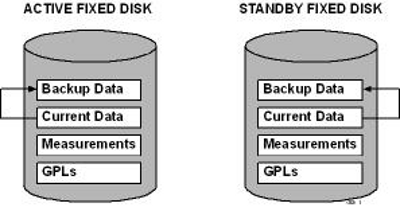
The current database partition of both fixed disks must be free of integrity violations (for example, incoherency, inconsistency, and data corruption) when action=backup is specified.
Figure 4-2 chg-db:action=restore:src=fixed
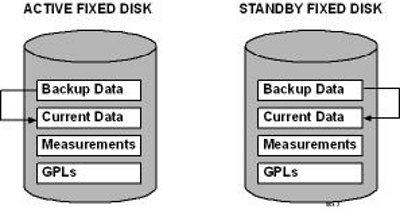
The backup database partition of both fixed disks must
be coherent when
chg-db:action=restore:src=fixed is
specified.
The database on the removable drive must be coherent
when
chg-db:action=restore:src=remove is
specified.
The current and backup database partitions of the active fixed disk must be free of integrity violations (for example, incoherency and data corruption) when action=repair is specified.
When the action=repair/restore parameter is specified, the database(s) serving as the source of data for the operation must be free of integrity violations (for example, incoherency and data corruption).
All databases involved in the operation must contain valid database version information.
The action=restore and src=server parameters must be specified before the file parameter can be specified. If the src=server parameter is specified, then the file parameter must be specified.
The action=restore and src=remove parameters must be specified before the sloc parameter can be specified.
The DB application server must be provisioned (see the
ent-ftp-serv command) before the
chg-db:action=backup:dest=server or
chg-db:action=restore:src=server
command can be entered.
An IPSM card must be provisioned before the
chg-db:action=restore:src=server or
chg-db:action=backup:dest=server
commands can be entered.
The standby MASP must be in the Active state before this command can be entered.
If the src=usb or dest=usb parameter is specified, then a flash drive must be inserted into the Active OAM's flush-mounted USB port.
During a restore procedure, if removable drives
installed in the latched USB port on active and standby E5-MASPs have different
DB levels, then the
sloc parameter must be specified in
the
chg-db:action=restore:src=remove
command to specify the removable drive to be used.
The value specified for the file parameter must have the correct extension.
A value of 1113 or 1115 must be specified for the sloc parameter.
The chg-db command cannot be issued when SFAPP(P)->OAM sync is
ON.
This command cannot be entered when CAT2 IPSM to OAM syncing is in progress.
Notes
When the action=backup parameter is specified, the following message appears when an audit is in progress:
Command In Progress: waiting for database audit to complete
The command executes when the audit is finished.
Performance
The performance time to execute this command varies depending on the number of records allocated for the database, system activity, and system setup. These operations should typically take no longer than 30 minutes. If one of these operations exceeds one hour, contact My Oracle Support. See the "My Oracle Support" section in Chapter 1 of this manual.
If the dest=remove parameter is specified, the database on the current partition of the active fixed disk is copied to the removable drive. This action is shown in Figure 4-3.
Figure 4-3 chg-db:action=backup:dest=remove
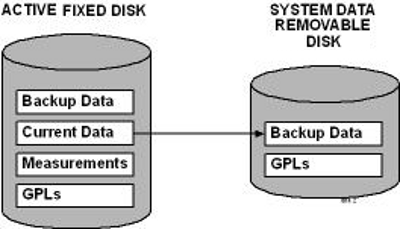
If the
chg-db:action=restore:src=server:filename=xxxxxx.tar or
chg-db:action=backup:dest=server
command is entered, the database partitions are copied from or to the remote
server application through an
IPSM card. This action is shown in
Figure 4-4.
Figure 4-4 Remote Backup or Restore
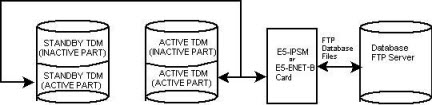
If the action=repair parameter is specified, the current and backup database partitions are copied from the active fixed disk to the standby fixed disk. This action is shown in Figure 4-5.
Figure 4-5 chg-db:action=repair
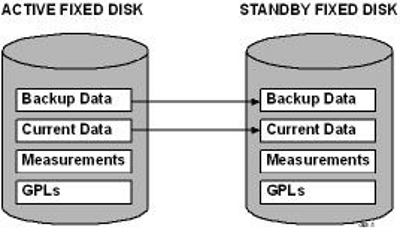
Figure 4-6 chg-db:action=restore:src=remove
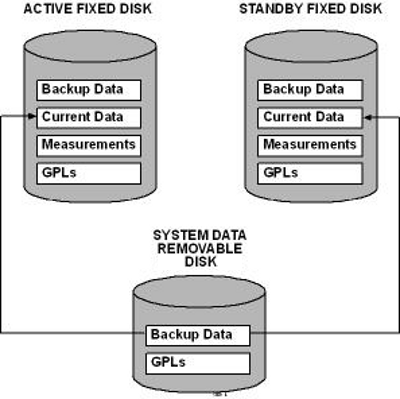
If the action=restore and src=remove parameters are specified on the E5-MASP hardware, the database of the removable drive (in the latched USB port) is copied to the current partition of each fixed disk. The default is to use the removable drive in the active E5-MASP. The sloc parameter can be used to specify the removable drive in the active or standby E5-MASP.
If the dest=remove parameter is specified for an E5-MCAP card, the database on the current partition of each fixed disk is copied to the removable drive in both latched USB ports. If only the active OAM has a removable drive, then only the current partition on the active OAM is copied to the removable drive in the active OAM's latched USB port.
If the
chg-db:action=restore:src=usb or
chg-db:action=backup:dest=usb command
is entered, then the database partitions are copied from or to the flash drive
(inserted in the active OAM's flush-mounted USB port). This action is shown in
Figure 4-4.
Output
Messages such as UIMs might appear at your terminal.
chg-db:action=backup
BACKUP (FIXED): MASP B - Backup starts on active MASP.
BACKUP (FIXED): MASP B - Backup on active MASP to fixed disk complete.
BACKUP (FIXED): MASP B - Backup starts on standby MASP.
BACKUP (FIXED): Backup on standby MASP to fixed disk complete.
chg-db:action=restore
RESTORE (FIXED): MASP A - Restore starts on active MASP.
RESTORE (FIXED): MASP A - Restore from fixed disk on active MASP complete.
RESTORE (FIXED): MASP A - Restore starts on standby MASP.
RESTORE (FIXED): MASP A - Restore from fixed disk on standby MASP complete.
RESTORE (FIXED): MASP A - MASP(s) will reboot to load data.
chg-db:action=backup:dest=remove
BACKUP (REMOVABLE) : MASP A - Backup starts on active MASP.
BACKUP (REMOVABLE) : MASP A - Backup to removable media complete.
chg-db:action=backup:dest=fixed
BACKUP (FIXED) : MASP A - Backup starts on active MASP.
BACKUP (FIXED) : MASP A - Backup on active MASP to fixed disk complete.
BACKUP (FIXED) : MASP A - Backup starts on standby MASP.
BACKUP (FIXED) : MASP A - Backup on standby MASP to fixed disk complete.
chg-db:action=restore:src=remove
RESTORE (REMOVABLE) : MASP A - Restore starts on active MASP.
RESTORE (REMOVABLE) : MASP A - Restore starts on standby MASP.
RESTORE (REMOVABLE) : MASP A - MASP(s) will reboot to load data.
RESTORE (REMOVABLE) : MASP A - Restore from removable media complete.
chg-db:action=restore:src=fixed
RESTORE (FIXED) : MASP A - Restore starts on active MASP.
RESTORE (FIXED) : MASP A - Restore from fixed disk on active MASP complete.
RESTORE (FIXED) : MASP A - Restore starts on standby MASP.
RESTORE (FIXED) : MASP A - MASP(s) will reboot to load data.
RESTORE (FIXED) : MASP A - Restore from fixed disk on stdby MASP complete.
chg-db:action=repair
REPAIR: MASP A - Repair starts on standby MASP.
REPAIR: MASP A - Standby MASP will reboot to load data.
REPAIR: MASP A - Repair from fixed disk complete.
chg-db:action=backup:dest=server
BACKUP (SERVER): MASP A - Backup starts on active MASP.
BACKUP (SERVER) : Copy Database to card memory for processing.
BACKUP (SERVER) : Compress Database before archiving.
BACKUP (SERVER) : Send database archive to server.
BACKUP (SERVER): MASP A - Backup to remote server complete.
chg-db:action=restore:src=server:file="CLLI-37.5.0-08011112.tar.gz"
RESTORE (SERVER) : Retrieve database archive from server.
RESTORE (SERVER) : Validate database archive.
RESTORE (SERVER) : Restore starts on active MASP.
RESTORE (SERVER) : Restore from server on active MASP complete.
RESTORE (SERVER) : Restore starts on standby MASP.
RESTORE (SERVER) : Restore from server on standby MASP complete.
RESTORE (SERVER) : MASP(s) will reboot to load data.
chg-dconn
Use this parameter to change the DEIR connection information. The DCONN table supports the provisioning information related to the Diameter connections.
Parameters
- dcname (mandatory)
- Diameter connection name. This parameter specifies the unique logical name assigned to each diameter connection.
- maxtps (optional)
- Maxmium TPS. This is the maximum TPS for a diameter connection. The unused card capacity will be allocated among the connections that have exceeded their RSVDTPS up to limit of MAXTPS value provisioned for the particular connection.
- rsvdtps (optional)
- Reserved TPS. This is the guaranteed TPS (Transactions per second) for a diameter connection. Total RSVDTPS on a card cannot exceed 8000.
- td (optional)
- Diameter Peer Disconnect timer. This timer is used to control how long the DEIR process will wait for a DPA response (Diameter Peer Answer) to a send DPR (Diameter Peer Request). The value given to a timer is in seconds.
Example
chg-dconn:dcname=conn1:rsvdtps=1000:maxtps=5000:td=5:tw=15
chg-dconn:dcname=conn2:td=6:maxtps=6000
Dependencies
S13/S13' EIR feature must be enabled before changing any parameter of diameter connection.
DCONN table should be accessible.
At least one optional parameter must be specified.
Diameter connection name is not present in DCONN table.
Sum of RSVDTPS of all the diameter connections on a particular card must not exceed the diameter card TPS (8000).
RSVDTPS of a diameter connection must be less than or equal to its MAXTPS.
Notes
None.
Output
chg-dconn:dcname=conn1:rsvdtps=1000:maxtps=5000:td=5:tw=15
tekelecstp 13-03-20 15:44:10 EST EAGLE 45.1.0
chg-dconn:dcname=conn1:rsvdtps=1000:maxtps=5000:td=5:tw=15
Command entered at terminal #4.
CHG-DCONN: MASP A - COMPLTD
;
chg-deiropts
Use this command to change the S13/S13' EIR configuration. This command updates the DEIROPTS (Diameter Options) table.
Parameters
- applid (optional)
- Authentication Application ID. The application id configured should match with the Auth-Application-Id (AVP Code 258) value in Vendor-Specific-Application-ID AVP. This value is fixed to 16777252 and cannot be changed.
- congerr (optional)
- This parameter defines the diameter response to be sent by the DEIRHC card at the time of card congestion. If the card fails in processing the incoming messages, then it shall discard the message and respond with the error code.
- deirdfltimsilkup (optional)
- Diameter Equipment Identity Register (EIR) default IMSI lookup status. This parameter specifies the order of IMEI table lookup for default IMSI screening. This parameter is analogous to the P1 parameter in the IMSIPFX CSL list but is used only when there is no matching IMSI prefix in the IMSIPFX CSL.
- deirdfltimsiresp (optional)
- Diameter Equipment Identity Register (EIR) default IMSI response. This parameter specifies the default IMEI status for default IMSI screening. This parameter is analogous to the P2 parameter in the IMSIPFX CSL list but is used only when there is no matching IMSI prefix in the IMSIPFX CSL.
- deirrsptype (optional)
- Diameter Equipment Identity Register (EIR) Response Type. The Response Type is used to determine how the lists are to be searched.
EIR Response Type Values contains information to help select the value for this parameter.
Presence in List EIR Response Type (Equipment Status) White Gray Black Type 1 Type 2 Type 3 X in white list in white list in white list X X in gray list in gray list in gray list X X X in black list in black list in black list X X in black list in black list in black list X in gray list in gray list unknown X X in black list in black list unknown X in black list in black list unknown in white list * Unknown* unknown * *Indicates no match was found for the IMEI in an incoming message within the database.
- off (optional)
- This parameter turns off the specified options. Up to 8 comma-separated unique options can be specified.
- on (optional)
- This parameter turns on the specified options. Up to 8 comma-separated unique options can be specified.
Example
chg-deiropts:on=deirimsichk:deirrsptype=type2:product=abc123
chg-deiropts:deirgrsp=off:off=deirimsichk:dprcause=1
chg-deiropts:dprcause=0
chg-deiropts:on=deirimsiscrn,deirlogwl,deirdfltimsiscrn,deirimsichk
chg-deiropts:off=deirimsiscrn,deirlogwl,deirdfltimsiscrn,deirimsichk
chg-deiropts:deirdfltimsilkup=range
chg-deiropts:deirdfltimsiresp=whitelist
Dependencies
The S13 feature must be enabled before changing any DEIR configuration.
The DEIROPTS table should be accessible.
At least one optional parameter must be specified.
The product name must be alphanumeric.
The S13 Application ID cannot be changed.
The same value cannot be specified for the on and off parameters.
- deirimsiscrn --- Specifies whether the IMSI Screening for Diameter Equipment Identity Register (EIR) shall be done before the IMEI check. This option has a default of OFF.
- deirlogwl --- Specifies whether the white list logging for Diameter Equipment Identity Register (EIR) shall be on. This option has a default of OFF.
- deirdfltimsiscrn --- Specifies whether the default IMSI Screening for Diameter Equipment Identity Register (EIR) shall be on. This option has a default of OFF.
- deirimsichk --- Specifies the use of Diameter Equipment Identity Register (EIR) IMSI Check status. It specifies whether IMSI lookup shall be performed along with IMEI for blklst numbers. This option has a default of OFF.
Output
chg-deiropts:on=deirimsichk:deirrsptype=type2
tekelecstp 13-04-13 17:25:00 EST EAGLE 45.1
chg-deiropts:on=deirimsichk:deirrsptype=type2
Command entered at terminal #4.
CHG-DEIROPTS: MASP A – COMPLTD
;
Related Topics
chg-dstn
Use this command to change the characteristics of the point codes that are considered destinations from this signal transfer point (STP). A destination does not have to be an adjacent signaling point, but the system must be able to route traffic to this destination.
Parameters
Note:
See Point Code Formats and Conversion for a detailed description of point code formats, rules for specification, and examples.- dpc (optional)
- ANSI destination point code with subfields network indicator-network cluster-network cluster member (ni-nc-ncm). The prefix subfield indicates a private point code (prefix-ni-nc-ncm).
- Synonym:
- dpca
- Range:
- p-, 000-255, *
Specify a valid value for each subfield of the point code, and separate the subfields with a dash (-).
prefix—p-
The asterisk value (*) is not valid for the ni subfield.
When
chg-sid:pctype=ansiis specified, ni = 000 is not valid.When
chg-sid:pctype=ansiis specified, nc = 000 is not valid if ni = 001–005.When
chg-sid:pctype=ansiis specified, nc = 000 is valid if ni = 006–255.The point code 000-000-000 is not a valid point code.
- dpci (optional)
- ITU international destination point code with subfields zone-area-id. The prefix subfield indicates a spare point code, private point code, or private and spare point code (prefix-zone-area-id).
- dpcn (optional)
- ITU national destination point code in the format of a 5-digit number (nnnnn); or 2, 3, or 4 numbers (members) separated by dashes (m1-m2-m3-m4) as defined by the
chg-stpopts:npcfmtiflexible point code option. A group code must be specified when the ITUDUPPC feature is turned on (nnnnn-gc, m1-m2-m3-m4-gc). The prefix subfield indicates a spare point code, private point code, or private and spare point code (prefix-nnnnn, prefix-nnnnn-gc, prefix-m1-m2-m3-m4, prefix-m1-m2-m3-m4-gc).
- dpcn24 (optional)
- 24-bit ITU national destination point code with subfields main signaling area-sub signaling area-signaling point (msa-ssa-sp). The prefix subfield indicates a private point code (prefix-msa-ssa-sp).
- dpcn16 (optional)
- 16-bit ITU national point code with subfields unit number, sub number area, main number area (un-sna-mna). The prefix indicates a private point code (prefix-un-sna-mna).
- aliasa (optional)
- ANSI destination point code with subfields network indicator-network cluster-network cluster member (ni-nc-ncm).
- Range:
- 000-255, none
Specify a valid value for each subfield of the point code, and separate the subfields with a dash (-).
When
chg-sid:pctype=ansiis specified, ni = 000 is not valid.When
chg-sid:pctype=ansiis specified, nc = 000 is not valid if ni = 001–005.When
chg-sid:pctype=ansiis specified, nc = 000 is valid if ni = 006–255.Enter none to delete the point code.
The point code 000-000-000 is not a valid point code.
- aliasi (optional)
-
ITU international alias point code list with subfields zone-area-id. The prefix subfield indicates a spare point code (prefix-zone-area-id).
If an ITU international destination (dpci) point code is entered, the dpci and aliasi prefix subfields cannot be the same, (both spare or both non-spare). Up to 2 comma-delimited entries can be entered in the point code list.
- aliasn (optional)
-
ITU national alias point code list in the format of a 5-digit number (nnnnn); or 2, 3, or 4 numbers (members) separated by dashes (m1-m2-m3-m4) as defined by the
chg-stpopts:npcfmtiflexible point code option. A group code must be specified when the ITUDUPPC feature is turned on (nnnnn-gc, m1-m2-m3-m4-gc). The prefix subfield indicates a spare point code (prefix-nnnnn, prefix-nnnnn-gc, prefix-m1-m2-m3-m4, prefix-m1-m2-m3-m4-gc).If an ITU national destination (dpcn) point code is entered, then the dpcn and aliasn prefix subfields cannot be the same (both spare or both non-spare). Up to 2 comma-delimited entries can be entered in the point code list.
- aliasn24 (optional)
- 24-bit ITU national destination point code with subfields main signaling area-sub signaling area-signaling point (msa-ssa-sp).
- aliasn16 (optional)
- 16-bit ITU national destination point code with subfields unit number, sub number area, main number area (un-sna-mna).
- bei (optional)
- Broadcast exception indicator. This parameter specifies whether the STP broadcasts network management messages to adjacent signaling points. The network management messages contain information about the indicated cluster and any of that cluster’s member signaling points that are on its exception list. The messages whose broadcast is determined by this parameter are:
- TFP—Transfer Prohibited
- TCP—Transfer Cluster Prohibited
- TFA—Transfer Allowed
- TCA—Transfer Cluster Allowed
- elei (optional)
- Exception-list exclusion indicator, for cluster destinations only. This parameter specifies whether the system excludes or includes (maintains) a dynamic status exception list (x-list) for each cluster route used to reach the member signaling points that make up the cluster.
- homescp (optional)
-
This parameter specifies whether the destination point code is considered a Home SCP when performing SCCP processing for messages with no Global Title Address Digits (Global Title Indicator (GTI) is set to zero).
This parameter can only be set to "yes" for full DPCs.
- homesmsc (optional)
-
This parameter specifies whether the DPC is considered a Home SMSC when performing SCCP processing for messages with no Global Title Address Digits (GTI is set to zero).
This parameter can only be set to "yes" for full DPCs.
- ncai (optional)
- Nested cluster allowed indicator. Specifies whether the route to the cluster point code can be different for provisioned members of the cluster. A point code is a member of a cluster point code if it has the same network identifier (NI) and network cluster (NC) values as the cluster point code. This parameter can only be specified for cluster point codes. Nested cluster routing is allowed if this parameter is set to yes and the CRMD and NCR features are turned on.
- Range:
-
- yes
- The cluster point code is a nested cluster point code. Point codes that are members of this cluster point code can be assigned to route sets that are different from the route set assigned to the cluster point code.
- no
- The cluster point code is not a nested cluster point code. Point codes that are members of this cluster point code must be assigned to the same route set assigned to the cluster point code.
- Default:
- Current value.
- nprst (optional)
- NM bits reset. This parameter specifies whether the NM bits should be set to00.
This parameter applies only to ITU IAM messages. The nptype=nm parameter must be specified (see the
chg-tifoptscommand) before this parameter can be specified.
- prx (optional)
- Proxy point code indicator. This parameter specifies whether a destination point code is used as a proxy point code.
- rcause (optional)
- Release cause. The value to be used as the release cause on REL messages.
If the TIFOPTS rlcopc parameter is specified (see the
chg-tifoptscommand), and a value of 0 - 127 is specified for the rcause parameter, then the rcause parameter value overrides the values specified for the TIFOPTS rcausenp and rcausepfx parameters.
- sccpmsgcnv (optional)
- SCCP UDT(S)/XUDT(S) Message Conversion Indicator. The type of conversion performed on messages for the specified destination.
- Range:
-
- none
- conversion is not required on messages for the destination
- udt2xudt
- convert all UDT(S) messages for the destination to XUDT(S) messages
- xudt2udt
- convert all non-segmented XUDT(S) messages for the destination to UDT(S) messages
- sxudt2udt
- convert all segmented and non-segmented XUDT(S) messages for the destination to UDT(S) messages
- Default:
- No change to the current value
- spc (optional)
- ANSI secondary point code with subfields network indicator-network cluster-network cluster member (ni-nc-ncm). The prefix subfield indicates a private point code (prefix-ni-nc-ncm).
- Synonym:
- spca
- Range:
-
Specify a valid value for each subfield of the point code, and separate the subfields with a dash (-).
p-, 000-255, none
prefix—p-
When
chg-sid:pctype=ansiis specified, ni = 000 is not valid.When
chg-sid:pctype=ansiis specified, nc = 000 is not valid for ni = 001-005.When
chg-sid:pctype=ansiis specified, nc = 000 is valid if ni = 006-255.Enter none to delete the point code.
The point code 000-000-000 is not a valid point code.
- Default:
- No change to current value
- spci (optional)
- ITU international secondary point code with subfields zone-area-id. The prefix subfield indicates a spare point code, private point code, or private and spare point code (prefix-zone-area-id).
- Range:
- s-, p-, ps-, 0-255, none
Specify a valid value for each subfield of the point code, and separate the subfields with a dash (-).
prefix—s-, p-, ps
zone—0-7
area—000-255
id—0-7
The point code 0-000-0 is not a valid point code.
Enter none to delete the point code.
- Default:
- No change to current value
- spcn (optional)
- ITU national secondary point code in the format of a 5-digit number (nnnnn); or 2, 3, or 4 numbers (members) separated by dashes (m1-m2-m3-m4) as defined by the
chg-stpopts:npcfmtiflexible point code option. A group code must be specified when the ITUDUPPC feature is turned on (nnnnn-gc, m1-m2-m3-m4-gc). The prefix subfield indicates a spare point code, private point code, or private and spare point code (prefix-nnnnn, prefix-nnnnn-gc, prefix-m1-m2-m3-m4, prefix-m1-m2-m3-m4-gc).- Range:
- s-, p-, ps-, 0-16383, aa-zz, none
Specify a valid value for each subfield of the point code, and separate the subfields with a dash (-).
prefix—s-, p-, ps
nnnnn—0-16383
gc—aa-zz
m1-m2-m3-m4—0-14 for each member; values must sum to 14
Enter none to delete the point code.
- Default:
- No change to current value
- spcn24 (optional)
- 24-bit ITU national secondary point code with subfields main signaling area-sub signaling area-signaling point (msa-ssa-sp). The prefix subfield indicates a private point code (prefix-msa-ssa-sp).
- spcn16 (optional)
- 16-bit ITU national secondary point code with subfields unit number, sub number area, main number area (un-sna-mna). The prefix subfield indicates a private point code (prefix-un-sna-mna).
- splitiam (optional)
-
This parameter specifies when and how to split an ITU IAM message into 1 IAM message + 1 SAM message.
Note:
This parameter applies only to ITU IAM messages.- Range:
- 15-31, none
15 - 31 -Maximum number of CdPN digits allowed in the IAM message before splitting occurs. The remaining digits, up to a total of 32, are encoded in the SAM message.
none -use the value specified for the TIFOPTS splitiam parameter to determine when to split the IAM message
- Default:
- No change to the current value
Example
To change the CLLI of destination 111-222-111 to RLGHNCXA01A:
chg-dstn:dpc=111-222-111:clli=rlghncxa01aTo change the exception-list exclusion indicator for cluster 20-2-* to yes:
chg-dstn:dpca=20-2-*:elei=yesTo change an existing destination to contain an SPC:
chg-dstn:dpc=20-2-2:spc=5-5-5To change Nested Cluster Allowed Indicator for cluster 20-2-* to yes:
chg-dstn:dpc=20-2-*:ncai=yesTo change a network destination:
chg-dstn:dpc=25-*-*:clli=tklcTo change the BEI parameter value of ITU national destination 8111-aa to yes:
chg-dstn:dpcn=8111-aa:bei=yesTo change the BEI parameter value of 24-bit ITU-N destination 15-100-10 to yes:
chg-dstn:dpcn24=15-100-10:bei=yesTo change an existing 24-bit ITU-N destination to contain a 24-bit ITU-N SPC:
chg-dstn:dpcn24=12-12-12:spcn24=25-25-25To change ITU-I spare destination point code s-2-100-1 to contain an ITU-I spare secondary point code, ANSI alias, and ITU-N spare alias:
chg-dstn:dpci=s-2-100-1:spci=s-2-129-9:aliasa=121-120-120:aliasn=s-129To prevent a destination point code from being used as a proxy point code:
chg-dstn:dpc=11-11-11:prx=noTo change ITU-N destination point code 10805-nz to delete its ANSI alias and add both ITU-I spare and non-spare aliases:
chg-dstn:dpcn=10805-nz:aliasa=none:aliasi=s-5-80-0,5-80-1To change ITU-I spare destination point code s-5-60-3 to add ITU-N non-spare and spare aliases:
chg-dstn:dpci=s-5-60-3:aliasn=10723-gr,s-10723-grTo change ITU-I spare destination point code s-5-60-5 to add ITU-N spare and ITU-I non-spare aliases:
chg-dstn:dpci=s-5-60-5:aliasn=s-10725-gr:aliasi=5-60-5To change sccpmsgcnv type to udt2xudt for destination 11:
chg-dstn:dpc=11-11-11:sccpmsgcnv=udt2xudtDependencies
Note:
A full point code contains numerical values for all three segments of the point code.At least one optional parameter must be specified.
The specified destination point code value must already be defined in the Destination point code table.
The destination address must be a full point code, a network destination, or a cluster point code.
The ANSI self-ID destination point code for the STP must be defined before ANSI destinations can be changed.
The ITU-I self-ID destination point code for the STP must be defined before ITU-I destinations can be changed.
The ITU-N self-ID destination point code for the STP must be defined before ITU-N destinations can be changed.
The Spare Point Code Support feature must be enabled before the spare point code prefix s- can be specified for an ITU-I or ITU-N destination, secondary, or alias point code.
If the dpcn or aliasn parameter is specified, the format must match the format that was assigned with the chg-stpopts:npcfmti parameter.
If the 7000 Routesets or 8000 Routesets feature is enabled, then the total number of provisioned aliases in the system cannot exceed 8000. If the 10,000 Routesets feature is enabled, then the total number of provisioned aliases in the system cannot exceed 10000.
Alias point codes are allowed only for full point code destinations.
Alias point codes for destinations must be full point codes.
A specified alias type cannot already be defined as a destination address.
The aliasa and dpca parameters cannot be specified together in the command. The aliasi and dpci parameters and the aliasn and dpcn parameters cannot be specified together in the command if the prefix subfields are the same (both are spare or both are non-spare).
Alias ANSI point codes cannot be members of a cluster or network destination.
The specified alias network type must be different from the destination point code network type.
A 24-bit ITU-N point code cannot have a 14-bit ITU-N alias point code or an ANSI alias point code.
A 24-bit ITU-National point code can have an ITU-I point code alias. This allows conversion of 14-bit ITU-I routing label to 24-bit routing label and vice versa.
A 14-bit ITU-N point code cannot have a 24-bit ITU-N alias point code.
If an ITU-I point code is specified, either the aliasn or the aliasn24 parameter can be specified, but not both.
Cluster destinations are allowed only if the CRMD feature is turned on.
The ncai parameter can be specified only for cluster destinations.
The elei parameter can be specified only for cluster destinations (for example, dpc=ni-nc-*).
The NCR (Nested Cluster Routing) feature must be turned on before the ncai parameter can be specified.
Network routing is valid only if the Network Routing (NRT) feature is turned on.
When using network routing, if the destination point code has a value of * in the nc subfield, the ncm subfield must also be * (for example, dpc=21-*-*).
If a provisioned nested cluster point code is being changed to a non-nested cluster point code (ncai=no), previously provisioned members of the cluster must have the same route set.
If a provisioned non-nested cluster point code is being changed to a nested cluster point code (ncai=yes), the maximum number of provisioned nested clusters must be no greater than 500.
If specified, the spc parameter value must be already be configured as a secondary point code in the Secondary Point Code table.
The value specified for the spc parameter must be a full point code.
If the spc parameter is specified, the domain=ss7 parameter must be specified.
If the spc parameter is specified, then the value specified for the dpc parameter must be a full point code.
The network type of the value specified for the spc parameter must match the network type of the value specified for the dpc parameter.
If a new CLLI for the destination point code is specified, it cannot match the CLLI of the system.
If the corresponding destination for the specified destination point code is an adjacent signaling point (matched a Far End point code in its linkset entity set), the CLLI of the specified destination point code cannot be assigned to any other destination address.
A reserved word cannot be specified for the destination identifier (CLLI).
If the destination does notuse an SPC, the group code of the destination must be the same as the group code of the ITU national true point code. If the destination uses an SPC, then the group code of the destination must match the group code of the SPC.
If an ITU national destination is being changed and the ITUDUPPC feature is turned on, this applies depending on whether the destination uses an SPC (secondary point code). For example, if the ITU national true point code has a group code of ee, then destinations with group codes of ee can be added without using an SPC. Destinations with a group code of ff must use an SPC with a group code of ff.
The Route table is corrupt or cannot be found.
The STP Self-identity table is corrupt or cannot be found.
The ICNP feature must be enabled and turned on in order to specify the icnpxlat, cgpafmt, and cdpafmt parameters.
Alias point codes cannot already be defined as another destination.
The value specified for the spc parameter cannot already be specified as a secondary point code for the destination point code.
The Linkset table is corrupt or cannot be found.
The Proxy Point Code feature must be enabled before the prx parameter can be specified.
If the prx=yes parameter is specified, then the value of the dpc parameter must be a full point code.
If the value of the dpc parameter is used as a proxy point code, then the prx=no parameter cannot be specified.
The number of proxy destinations cannot exceed the value allowed by the enabled Proxy Point Code quantity feature.
If the prx=yes parameter is specified, then the spc/spca/spci/spcn/spcn24 parameter cannot be specified.
The prx parameter must have a value of yes or no.
If the value specified for the dpc parameter is a private point code, then the prx=yes parameter cannot be specified.
The total number of proxy destinations cannot exceed the total capacity (100) of the Proxy Point Code feature.
If an IPGW linkset is used, then the prx=yes parameter cannot be specified.
The network type of the routeset must be the same as the network type of the destination point code. For example, a destination point code with an ANSI network type cannot use a routeset with an ITU network type.
If the specified destination point code is assigned a proxy point code (PPC) in the DSTN table, then the specified routeset must contain a linkset for the destination point code, and the PPC of the linkset must be equal to the PPC of the destination point code.
The value specified for the spc parameter must differ from the secondary point code of the destination/route entry specified by the dpc parameter.
The value specified for the ncai parameter cannot be same as the NCAI that is already assigned to the destination point code.
If the specified destination point code is a cluster or network destination point code, then the specified routeset cannot contain a route over proxy linksets.
If the destination point code and adjacent point code of the routes in the specified routeset are ITU point codes, then the following conditions must apply.
- If one point code is an ITUI point code, and the other is an ITUN or ITUN24 point code, then the network type of the secondary adjacent point code must match the network type of the destination point code.
- If both point codes have the same network type, then either both must be spare point codes or both must not be spare point codes.
- If the destination point code is an ITUN point code, and the ITUDUPC feature is turned on, then the group code of the destination point code must match the adjacent or the secondary adjacent point code.
A maximum of two aliases can be specified per destination.
If the dpci parameter is specified, then a combination of ITUI and ANSI aliases cannot be specified. If the dpcn parameter is specified, then a combination of ITUN and ANSI aliases cannot be specified.
Two ITUI or two ITUN aliases can be specified for the same destination point code only if the aliases have different prefixes. One alias must be spare and one non-spare.
The TIF Number Portability feature must be enabled before the rcause or nprst parameter can be specified.
A TIF feature must be enabled before the splitiam parameter can be specified.
The XUDT UDT Conversion feature must be turned on before the sccpmsgcnv parameter can be specified.
The J7 Support feature must be enabled before the aliasn16 parameter can be specified.
If the J7 Support feature is enabled then aliasa and aliasn24 cannot be specified.
Notes
One of dpc/dpca/dpci/dpcn/dpcn24/dpcn16 is mandatory and they are mutually exclusive.
Only one of aliasa/aliasi/aliasn/aliasn24/aliasn16 can be specified as they are mutually exclusive.
Only one of spc/spca/spci/spcn/spcn24/spcn16 can be specified as they are mutually exclusive.
The domain parameter of a destination cannot be changed with this command. To change the domain parameter, the destination must be removed with the dlt-dstn command and re-entered with the ent-dstn command.
In this command, only ITU-international and ITU national point codes and aliases support the spare point code subtype prefix (s-). Only ITU-international and ITU national point codes support the private and spare point code subtype prefix (ps-). All of the point code types support the private (internal) point code subtype prefix (p-). Aliases do not support the private (internal) point code prefix.
The value specified for the DPC parameter must be a full point code in order to be used as a proxy point code. Cluster point codes and private point codes cannot be used as proxy point codes.
Invalid usage of none with aliasi and aliasn:
- alias=none,none: parser code expects none to be the last argument
- alias=none,pointcode: parser code expects none to be the last argument
- alias=,pointcode: invalid usage of comma separator
Alias Combination Matrix
Table 4-5 Alias Combination Matrix
| specified | result | ||||
|---|---|---|---|---|---|
| Destination | aliasN/aliasN24 | alias1 | aliasA/aniasN16 | alias1 | alias2 |
| ANSI | none | 0 | |||
| pci | pci | ||||
| none | 0 | ||||
| pcn | pcn | ||||
| pcn24 | pcn24 | ||||
| none | none | 0 | 0 | ||
| none | pci | pci | 0 | ||
| pcn | none | 0 | pcn | ||
| pcn24 | none | 0 | pcn24 | ||
| pcn | pci | pci | pcn | ||
| pcn24 | pci | pci | pcn24 | ||
| ITUI | none | 0a | |||
| pca | pca | ||||
| none | 0i | ||||
| pci | pci | ||||
| none | none | 0a, i | |||
| none | pca | pca | |||
| pci | none | pci | |||
| pci | pca | E5074 | |||
| none | 0n | 0 | |||
| pcn | 0n | pcn | |||
| pcn, none | 0n | pcn | |||
| pcn1, pcn2 | pcn2 | pcn1 | |||
| pcn24 | pcn24 | ||||
| none | none | 0a, n | 0 | ||
| none | pca | pca | 0 | ||
| pcn | none | 0a, n | pcn | ||
| pcn | pca | pca | pcn | ||
| pcn, none | none | 0a, n | 0 | ||
| pcn, none | pca | 0a, n | pcn | ||
| pc1, pcn2 | none | pcn1 | pcn2 | ||
| pcn1, pcn2 | pca | E5001 | |||
| pcn24 | none | 0a | pcn24 | ||
| pcn24 | pca | pca | pcn24 | ||
| none | none | 0i, n | 0 | ||
| none | pci | pci | 0 | ||
| pcn | none | 0i, n | pcn | ||
| pcn | pci | pci | pcn | ||
| pcn1, none | none | 0i, n | pcn | ||
| pcn1, none | pci | pci | pcn | ||
| pcn1, pcn2 | none | pcn2 | pcn1 | ||
| pcn1, pcn2 | pci | E5001 | |||
| pcn24 | none | 0i | pcn24 | ||
| pcn24 | pci | pci | pcn24 | ||
| none | none | none | 0a, i, n | 0 | |
| none | none | pca | pca | 0 | |
| none | pci | none | pci | 0 | |
| none | pci | pca | E5074 | ||
| pcn | none | none | 0a,i,n | pcn | |
| pcn | none | pca | pca | pcn | |
| pcn | pci | none | pci | pcn | |
| pcn | pci | pca | E5001 | ||
| pcn, none | none | none | 0a,i,n | pcn | |
| pcn, none | none | pca | pca | pcn | |
| pcn, none | pci | none | pci | pcn | |
| pcn, none | pci | pca | E5001 | ||
| pcn2, pcn1 | none | none | pcn2 | pcn1 | |
| pcn2, pcn1 | none | pca | E5001 | ||
| pcn2, pcn1 | pci | none | E5001 | ||
| pcn2, pcn1 | pci | pca | E5001 | ||
| pcn24 | none | none | 0a,i | pcn24 | |
| pcn24 | none | pca | pca | pcn | |
| pcn24 | pci | none | pca | pcn | |
| pcn24 | pci | pca | E5001 | ||
| pcn16 | pcn16 | ||||
| none | pcn16 | pcn16 | |||
| pci | pcn16 | E2325 | |||
| none | pci | pcn16 | E2325 | ||
| none | pcn16 | pcn16 | |||
| pcn | pcn16 | pnc16 | pcn | ||
| pcn | none | pcn16 | pcn16 | pcn | |
| pcn, none | pcn16 | pcn16 | pcn | ||
| pcn1,pcn2 | pcn16 | E5001 | |||
| none | none | pcn16 | E5074 | ||
| pcn, none | none | pcn16 | pcn16 | pcn | |
| pcn2,pcn1 | none | pcn16 | E5001 | ||
| ITUN | none | 0a | |||
| pca | pca | ||||
| none | 0 | ||||
| pci | pci | ||||
| pci, none | 0 | pci | |||
| pci1, pci2 | pci2 | pci1 | |||
| none | none | 0a,i | 0 | ||
| none | pca | pca | 0 | ||
| pci | none | 0,a | pci | ||
| pci | pca | pca | pci | ||
| pci, none | none | 0,a,i | pci | ||
| pci, none | pca | pca | pci | ||
| pci1, pci2 | none | pci2 | pci1 | ||
| pci1, pci2 | pca | E5001 | |||
| none | 0,n | ||||
| pcn | pcn | ||||
| pcn24 | pcn24 | ||||
| none | none | 0,a,n | |||
| none | pca | pca | |||
| pcn | none | pcn | |||
| pcn | pca | E5074 | |||
| pcn24 | none | pcn24 | |||
| pcn24 | pca | E5074 | |||
| none | none | 0,i,n | 0 | ||
| none | pci | 0,i,n | pci | ||
| none | pci, none | 0,i,n | pci | ||
| none | pci1, pci2 | pci2 | pci1 | ||
| pcn | none | pcn | 0 | ||
| pcn | pci | pcn | pci | ||
| pcn | pci, none | pcn | pci | ||
| pcn | pci1, pci2 | E5001 | |||
| pcn24 | none | pcn24 | 0 | ||
| pcn24 | pci | pcn24 | pci | ||
| pcn24 | pci | none | pcn24 | pci | |
| pcn24 pci1, pci2 | E5001 | ||||
| none | none | none | 0a,i,n | 0 | |
| none | none | pca | pca | 0 | |
| none | pci | none | 0a,i,n | pci | |
| none | pci | pca | pca | pci | |
| none | pci, none | none | 0a,i,n | 0 | |
| none | pci, none | pca | pca | pci | |
| none | pci1, pci2 | none | pci2 | pci1 | |
| none | pci1, pci2 | pca | E5001 | ||
| pcn | none | none | pcn | 0 | |
| pcn | none | pca | E5074 | ||
| pcn | pci | none | pcn | pci | |
| pcn | pci | pca | E5001 | ||
| pcn | pci, none | none | pcn | pci | |
| pcn | pci, none | pca | E5001 | ||
| pcn | pci1, pci2 | none | E5001 | ||
| pcn | pci1, pci2 | pca | E5001 | ||
| pcn24 | none | none | pcn24 | 0 | |
| pcn24 | none | pca | E5074 | ||
| pcn24 | pci | none | pcn24 | pci | |
| pcn24 | pci | pca | E5001 | ||
| pcn24 | pci, none | none | pcn24 | pci | |
| pcn24 | pci, none | pca | E5001 | ||
| pcn24 | pci1, pci2 | none | E5001 | ||
| pcn24 | pci1, pci2 | pca | E5001 | ||
| pcn16 | pcn16 | ||||
| none | pcn16 | pcn16 | |||
| pci, none | pcn16 | pcn16 | |||
| pci | pcn16 | pcn16 | pci | ||
| pci1,pci2 | pcn16 | E5001 | |||
| none | none | pcn16 | pcn16 | 0 | |
| none | pci | pcn16 | pcn16 | pci | |
| none | pci, none | pcn16 | pcn16 | pci | |
| none | pci1,pci2 | pcn16 | E5001 | ||
| pcn | pci | pcn16 | E2325 | ||
| pcn | none | pcn16 | E5074 | ||
| pcn | pci, none | pcn16 | E5001 | ||
| ITUN24 | none | 0 | |||
| pca | pca | ||||
| none | none | ||||
| pci | pci | ||||
| none | none | 0 | 0 | ||
| none | pca | pca | 0 | ||
| pci | none | 0 | pci | ||
| pci | pca | pca | pci | ||
| ITUN16 | - | none | - | 0 | - |
| - | pci | - | pci | - | |
| none | - | 0 | |||
| pcn | - | - | pcn | ||
| none | pci | - | pci | 0 | |
| none | none | - | pci | 0 | |
| pcn | none | - | 0 | pcn | |
| pcn | pci | - | pci | pcn | |
Legend
0—clear alias if provisioned regardless of its point code type
0A—clear alias if provisioned and point code is ANSI
0I—clear alias if provisioned and point code is ITUI
0N—clear alias if provisioned and point code is ITUN
0A,I—clear alias if provisioned and point code is ANSI or ITUI
0A,N—clear alias if provisioned and point code is ANSI or ITUN
0I,N—clear alias if provisioned and point code is ITUI or ITUN
0A,I,N—clear alias if provisioned and point code is ANSI or ITUI or ITUN
Output
This example shows the output when the NCR, NRT, and CRMD features are off and all Routes and Routesets features are off:
chg-dstn:dpca=111-222-111:aliasn=321
rlghncxa03w 04-08-17 15:35:05 EST EAGLE 31.8.0
Destination table is (10 of 2000) 1% full
Destination table is (10 of 2000) 1% full
Alias table is (8 of 12000) 1% full
CHG-DSTN: MASP A - COMPLTD
;
This example shows the output when the NCR, NRT, and CRMD features are off and the 5000 Routes feature is on:
chg-dstn:dpca=111-222-111:aliasn=321
rlghncxa03w 04-08-18 08:29:15 EST EAGLE 31.8.0
Destination table is (10 of 5000) 1% full
Alias table is (8 of 12000) 1% full
CHG-DSTN: MASP A - COMPLTD
;
This example shows the output when one or more of the NCR, NRT, or CRMD features and the DSTN5000 (5000 Routes) feature is on:
chg-dstn:dpca=111-222-111:aliasn=321
rlghncxa03w 04-08-18 08:29:15 EST EAGLE 31.8.0
DESTINATION ENTRIES ALLOCATED: 5000
FULL DPC(s): 9
NETWORK DPC(s): 0
CLUSTER DPC(s): 1
TOTAL DPC(s): 10
CAPACITY (% FULL): 1%
ALIASES ALLOCATED: 12000
ALIASES USED: 8
CAPACITY (% FULL): 1%
X-LIST ENTRIES ALLOCATED: 500
CHG-DSTN: MASP A - COMPLTD
;
This example shows the output when the NCR, NRT, and CRMD features are off and the 6000 Routesets feature is on:
chg-dstn:dpca=111-222-111:aliasn=321
rlghncxa03w 04-08-18 08:29:15 EST EAGLE 31.8.0
Destination table is (60 of 6000) 1% full
Alias table is (8 of 12000) 1% full
CHG-DSTN: MASP A - COMPLTD
;
This example shows the output when one or more of the NCR, NRT, or CRMD features and the 6000 Routesets feature is on:
chg-dstn:dpca=111-222-111:aliasn=321
rlghncxa03w 04-08-18 08:29:15 EST EAGLE 31.8.0
DESTINATION ENTRIES ALLOCATED: 6000
FULL DPC(s): 46
NETWORK DPC(s): 1
CLUSTER DPC(s): 1
TOTAL DPC(s): 12
CAPACITY (% FULL): 1%
ALIASES ALLOCATED: 12000
ALIASES USED: 8
CAPACITY (% FULL): 1%
X-LIST ENTRIES ALLOCATED: 500
CHG-DSTN: MASP A - COMPLTD
;
This example shows the output when the NCR, NRT, and CRMD features are off. When the 7000 Routesets quantity feature is on, the Destination table line shows "...of 7000". When the 8000 Routesets quantity feature is on, the Destination table line shows "...of 8000."
chg-dstn:dpca=111-222-111:aliasn=321
rlghncxa03w 04-08-18 08:29:15 EST EAGLE 31.8.0
Destination table is (60 of 7000) 1% full
Alias table is (8 of 8000) 1% full
CHG-DSTN: MASP A - COMPLTD
;
This example shows the output when one or more of the NCR, NRT, or CRMD features is on. When the 7000 Routesets quantity feature is on, the DESTINATION ENTRIES ALLOCATED line shows "8000". When the 7000 Routesets quantity feature is on, the DESTINATION ENTRIES ALLOCATED line shows "7000."
chg-dstn:dpca=111-222-111:aliasn=321
rlghncxa03w 04-08-18 08:29:15 EST EAGLE 31.8.0
DESTINATION ENTRIES ALLOCATED: 8000
FULL DPC(s): 9
NETWORK DPC(s): 0
CLUSTER DPC(s): 1
TOTAL DPC(s): 10
CAPACITY (% FULL): 1%
ALIASES ALLOCATED: 8000
ALIASES USED: 8
CAPACITY (% FULL): 1%
X-LIST ENTRIES ALLOCATED: 500
CHG-DSTN: MASP A - COMPLTD
;
This example shows the output when one or more of the NCR, NRT, or CRMD features is on. In this example, a destination is defined as a proxy point code:
chg-dstn:dpc=1-1-1:prx=yes
tekelecstp 07-03-05 17:34:18 EST EAGLE 37.5.0
DESTINATION ENTRIES ALLOCATED: 2000
FULL DPC(s): 27
EXCEPTION DPC(s): 0
NETWORK DPC(s): 1
CLUSTER DPC(s): 1
PROXY DPC(s): 1
TOTAL DPC(s): 30
CAPACITY (% FULL): 2%
ALIASES ALLOCATED: 12000
ALIASES USED: 0
CAPACITY (% FULL): 0%
X-LIST ENTRIES ALLOCATED: 500
CHG-DSTN: MASP A - COMPLTD
;
This example shows the output when the secondary point code is changed:
chg-dstn:dpc=1-1-1:spc-144-23-48
tekelecstp 07-03-05 17:34:18 EST EAGLE 37.5.0
CAUTION: Dstn's SPC has changed - verify remote node's route.
DESTINATION ENTRIES ALLOCATED: 2000
FULL DPC(s): 27
EXCEPTION DPC(s): 0
NETWORK DPC(s): 1
CLUSTER DPC(s): 1
PROXY DPC(s): 1
TOTAL DPC(s): 30
CAPACITY (% FULL): 2%
ALIASES ALLOCATED: 12000
ALIASES USED: 0
CAPACITY (% FULL): 0%
X-LIST ENTRIES ALLOCATED: 500
CHG-DSTN: MASP A - COMPLTD
;
This example shows the output when the NCR, NRT, and CRMD features are off and the 10,000 Routesets feature is on:
chg-dstn:dpca=11-22-11:aliasn=321
rlghncxa03w 10-08-17 08:29:15 EST EAGLE 43.0.0
Destination table is (10 of 10000) 1% full
Alias table is (8 of 10000) 1% full
CHG-DSTN: MASP A - COMPLTD
;
This example shows the output when one or more of the NCR, NRT, or CRMD features and the 10,000 Routesets feature is on:
chg-dstn:dpca=11-22-11:aliasn=321
rlghncxa03w 10-08-17 08:29:15 EST EAGLE 43.0.0
DESTINATION ENTRIES ALLOCATED: 10000
FULL DPC(s): 9
NETWORK DPC(s): 0
CLUSTER DPC(s): 1
TOTAL DPC(s): 10
CAPACITY (% FULL): 1%
ALIASES ALLOCATED: 10000
ALIASES USED: 8
CAPACITY (% FULL): 1%
X-LIST ENTRIES ALLOCATED: 500
CHG-DSTN: MASP A - COMPLTD
;
This command shows the output when J7 Support feature is enabled.
chg-dstn:dpcn16=1-1-1:aliasi=2-2-4
tekelecstp 13-02-27 14:39:25 EST 45.0.0-64.56.0
chg-dstn:dpcn16=1-1-1:aliasi=2-2-4
Command entered at terminal #4.
Destination table is (2 of 2000) 1% full
Alias table is (1 of 12000) 1% full
CHG-DSTN: MASP A - COMPLTD
;
chg-e1
Use this command to change an interface for an E1 card in the system. An E1 card can consist of an E5-E1T1-B card used as an E1 or SE-HSL card.
Parameters
- e1port (mandatory)
- E1 port number. The value must be an E1 port that has already been configured with an E1 interface on the specified E1 card.
- loc (mandatory)
- The card location as stenciled on the shelf of the system.
- Range:
- 1101 - 1108, 1111 - 1112, 1201 - 1208, 1211 - 1218, 1301 - 1308, 1311 - 1318, 2101 - 2108, 2111 - 2118, 2201 - 2208, 2211 - 2218, 2301 - 2308, 2311 - 2318, 3101 - 3108, 3111 - 3118, 3201 - 3208, 3211 - 3218, 3301 - 3308, 3311 - 3318, 4101 - 4108, 4111 - 4118, 4201 - 4208, 4211 - 4218, 4301 - 4308, 4311 - 4318, 5101 - 5108, 5111 - 5118, 5201 - 5208, 5211 - 5218, 5301 - 5308, 5311 - 5318, 6101 - 6108, 6111 - 6118
- minsurate (optional)
- Minimum signal unit rate. The minimum number of SUs present on a link that are uniformly distributed.
Example
chg-e1:loc=1205:e1port=1:crc4=off:cas=on:encode=hdb3:si=2:sn=12
chg-e1:loc=1205:e1port=2:encode=ami
chg-e1:loc=1205:e1port=1:minsurate=1000
chg-e1:loc=1201:e1port=2:e1tsel=external
Dependencies
At least one optional parameter must be specified.
The specified card location (loc parameter) must be equipped.
The card specified by the loc parameter must be a LIME1 card type.
The port specified by the e1port parameter must already be equipped with an E1 interface.
If the value specified for the loc parameter indicates an E1 card, then all signaling links that are serviced by the card must be deactivated (see the dlt-slk command) before the values for the crc4, cas, encode, and e1tsel parameters can be changed.
The encode=ami parameter is supported only for cards used as E1 cards (not as SE-HSL cards).
The linkclass=unchan parameter must be specified before the minsurate parameter can be specified.
The E1/T1 table must be accessible.
The Card table must be accessible.
HIPR2 cards must be equipped in card locations xy09 and xy10 (x is the frame, y is the shelf) on each EAGLE shelf that contains one or more E5-E1T1-B cards.
The Shelf FAN bit must be turned ON for the shelf on which an E5-E1T1-B card is being used as an E1 or SE-HSL card.
Card locations 1113 - 1118 (E5-MASP and E5-MDAL cards) cannot be specified as values for the loc parameter.
Locations xy09 and xy10, where x is the frame and y is the shelf, cannot be specified as values for the loc parameter.
Notes
External timing is derived from the EAGLE High-Speed Master Clock (1.544 MHz for T1 or 2.048 MHz for E1); therefore, the Master Timing feature is required. Line timing is derived from its received data stream, if present.
Output
chg-e1:loc=1205:e1port=2:encode=ami
rlghncxa03w 04-01-20 09:07:58 EST EAGLE 31.3.0
CHG-E1: MASP A - COMPLTD
;
chg-eisopts
Use this command to enable and disable the copy functions that are associated with the EAGLE 5 Integrated Monitoring Support (E5IS) feature.
Parameters
- fcgpl (optional)
- This parameter applies the functionality specified by the fcmode parameter to cards running the specified Fast Copy GPL.
Example
chg-eisopts:eiscopy=on
chg-eisopts:fcmode=fcopy:fcgpl=all
Dependencies
At least one parameter must be specified.
The E5IS feature must be turned on before this command can be entered
The NETOPTS table must be accessible.
Before the E5IS copy function can be enabled, at least 2 STC cards must be installed and in the IS-NR state in the system.
The eiscopy=on parameter must be specified before a value of stc or fcopy can be specified for the fcmode parameter.
The fcmode=off parameter must be specified before the eiscopy=off parameter can be specified and before the value of the fcmode parameter can be changed between stc and fcopy .
At least one card must be running the IPSG GPL and must be in the IS-NR state before a value of ipsg or all can be specified for the fcgpl parameter.
If the fcgpl parameter is specified, then the fcmode parameter must be specified.
The host portion of the PVN network address must
be 0 based on the PVN subnet mask (see the
chg-netopts command) before the
eiscopy=on parameter can be
specified.
The destination of a static IP route (see the
ent-ip-rte command) and the local
interface network address of an IP card (see the
ent-ip-host command) must be different
from the PVN, FCNA, and FCNB network addresses (see the
chg-ip-lnk command) before the
eiscopy=on parameter can be
specified.
The FCMODE cannot be changed to FCOPY due to Signaling Link(s) provisioned on Port C or Port D.
If the same value is specified for the PVN, FCNA, or
FCNB network addresses (see the
chg-netopts command), then the
eiscopy=on parameter cannot be
specified.
Notes
Fast Copy Cards
E5-ENET-B cards running the IPSG GPL are considered to be FC- capable. An FC- capable card is considered FC- enabled when Fast Copy monitoring is enabled for the respective GPL.
Output
chg-eisopts:fcmode=fcopy:fcgpl=all
rlghncxa03w 10-02-02 09:08:58 EST EAGLE 42.0.0
CHG-EISOPTS: MASP A - COMPLTD
chg-enumopts
Use this command to provision ENUM-specific data. This command updates the ENUMOPTS table.
Parameters
- cngrcode (optional)
- RCODE values in ENUM error response message to be sent due to congestion on ENUM card.
Example
chg-enumopts:maxdndigs=10
chg-enumopts:conglvl1=50
chg-enumopts:conglvl2=10
chg-enumopts:cngntfy=yes
chg-enumopts:cngrcode=6
chg-enumopts:excludesp=yes
chg-enumopts:rncontext=yes
chg-enumopts:incprefix=yes
Dependencies
The ENUMOPTS table should be accessible.
Congestion level 1 must be less than congestion level 2.
Output
>chg-enumopts:maxdndigs=10
tekelecstp 14-05-28 15:04:28 EST EAGLE 46.1.0
chg-enumopts:maxdndigs=10
Command entered at terminal #4.
CHG-ENUMOPTS: MASP A - COMPLTD
;
>chg-enumopts:conglvl1=50
tekelecstp 14-05-28 15:04:28 EST EAGLE 46.1.0
chg-enumopts:conglvl1=50
Command entered at terminal #4.
CHG-ENUMOPTS: MASP A - COMPLTD
;
>chg-enumopts:conglvl2=90
tekelecstp 14-05-28 15:04:28 EST EAGLE 46.1.0
chg-enumopts:conglvl2=90
Command entered at terminal #4.
CHG-ENUMOPTS: MASP A - COMPLTD
;
>chg-enumopts:cngntfy=yes
tekelecstp 14-05-28 15:04:28 EST EAGLE 46.1.0
chg-enumopts:cngntfy=yes
Command entered at terminal #4.
CHG-ENUMOPTS: MASP A - COMPLTD
;
>chg-enumopts:cngrcode=6
tekelecstp 14-05-28 15:04:28 EST EAGLE 46.1.0
chg-enumopts:cngrcode=6
Command entered at terminal #4.
CHG-ENUMOPTS: MASP A - COMPLTD
;
>chg-enumopts:excludesp=yes
tekelecstp 14-05-28 15:04:28 EST EAGLE 46.5.0
chg-enumopts:excludesp=yes
Command entered at terminal #4.
CHG-ENUMOPTS: MASP A - COMPLTD
;
>chg-enumopts:rncontext=yes
tekelecstp 14-05-28 15:04:28 EST EAGLE 46.5.0
chg-enumopts:rncontext=yes
Command entered at terminal #4.
CHG-ENUMOPTS: MASP A - COMPLTD
;
This example displays output when incprefix is specified:
> chg-enumopts:incprefix=yes
Command Accepted - Processing
tekelecstp 19-05-03 16:53:17 MST EAGLE 46.8.0.0.0-75.18.14
chg-enumopts:incprefix=yes
Command entered at terminal #4.
tekelecstp 19-05-03 16:53:17 MST EAGLE 46.8.0.0.0-75.18.14
CHG-ENUMOPTS: MASP A - COMPLTD
;
chg-enum-prof
Use this command to change the existing profile entry which has data to generate the ENUM response for three supported resource record formats such as NAPTR, NS and CNAME. The ENUMPROF table stores the profile entry.
Parameters
- pref (optional)
- Preferred Response. This parameter will decide the values for the Order and Preference fields to be encoded for each NAPTR resource record. The values of these fields are only applicable when there are two NAPTR resource records in the ENUM response. This parameter is only valid for the NAPTR response type.
- rpdomain (optional)
- Replacement domain name. This parameter specifies the domain name of the name server in the NS record and the Canonical Name of the domain server in the CNAME record. This parameter is valid for NS and CNAME response types.
- rrdomain (optional)
- Domain name present in regular expression. This parameter specifies the domain name used in SIP or PSTNSIP URI for both ported and non-ported numbers. This parameter is only valid for NAPTR response type.
- rtype (optional)
- Response type. This parameter specifies the response type for the profile. Response type can only be modified for the "default" profile.
Example
chg-enum-prof:prn=pr1:rrdomain=abc.oracle.com
chg-enum-prof:prn=pr2:rrdomain=abc1.oracle.com:pref=yes
chg-enum-prof:prn=pr3:rpdomain=def.oracle.com
chg-enum-prof:prn=pr4:rpdomain=cname.123
chg-enum-prof:prn=pr5:prefix=007
Dependencies
The ENUM Profile Table should be accessible.
The SPARM, PREF and RRDOMAIN parameters cannot be specified with a profile name having a response type of NAPTR.
The RRDOMAIN parameter is valid for the SPARM=SIP or SPARM=PSTNSIP value.
The profile name must be present in the ENUM Profile Table.
RRDOMAIN must be specified for the NAPTR response type.
For the RTYPE=NS or RTYPE=CNAME parameter, the replacement domain name (RPDOMAIN) must be specified.
RTYPE can only be changed for the default profile.
SPARM=SIP or SPARM=PSTNSIP is not supported for the default profile.
Notes
The requirement of using PREFIX in the regular expression is only for PSTN-SIP (NAPTR query). As such, PREFIX will not be applied for PSTN-TEL and SIP (NAPTR queries).
PREFIX can be configured for PSTN-TEL and SIP profiles, but it will not be used.
Output
> chg-enum-prof:prn=pr1:rrdomain=abc.oracle.com
tekelecstp 18-05-29 03:35:20 MST EST EAGLE 46.1.0
chg-enum-prof:prn=pr1:rrdomain=abc.oracle.com
Command entered at terminal #19.
;
Command Accepted - Processing
tekelecstp 18-05-29 03:35:20 MST EST EAGLE 46.1.0
CHG-ENUM-PROF: MASP B - COMPLTD
;
> chg-enum-prof:prn=pr2:rrdomain=abc.oracle.com:pref=yes
tekelecstp 18-05-29 03:38:20 MST EST EAGLE 46.1.0
chg-enum-prof:prn=pr2:rrdomain=abc.oracle.com:pref=yes
Command entered at terminal #19.
;
Command Accepted - Processing
tekelecstp 18-05-29 03:38:20 MST EST EAGLE 46.1.0
CHG-ENUM-PROF: MASP B - COMPLTD
;
> chg-enum-prof:prn=pr3:rpdomain=def.oracle.com
tekelecstp 18-05-29 03:40:20 MST EST EAGLE 46.1.0
chg-enum-prof:prn=pr3:rpdomain=def.oracle.com
Command entered at terminal #19.
;
Command Accepted - Processing
tekelecstp 18-05-29 03:40:20 MST EST EAGLE 46.1.0
CHG-ENUM-PROF: MASP B - COMPLTD
;
> chg-enum-prof:prn=default:rtype=naptr:prefix=1159
Command Accepted - Processing
tekelecstp 19-02-01 12:39:44 EST EAGLE 46.8.0.0.0-75.18.11
chg-enum-prof:prn=default:rtype=naptr:prefix=1159
Command entered at terminal #2.
;
tekelecstp 19-02-01 12:39:45 EST EAGLE 46.8.0.0.0-75.18.11
CHG-ENUM-PROF: MASP B - COMPLTD
chg-enum-profsel
Use this command to change an entry in the ENUM Profile Selection Table or the ENUM DN Block Table. The ENUM Profile Selection Table supports the provisioning information related to mapping of Entity Id to Profile Id. The ENUM DN Block Table supports the provisioning information related to mapping of DN Block to Profile Id.
Parameters
Example
chg-enum-profsel:entityid=12345:prn1=ns2:prn2=cname1
chg-enum-profsel:sdn=12345:edn=12400:prn3=naptr1:prn4=none
Dependencies
The ENUM Profile Selection Table should be accessible.
The ENUM DN Block Table should be accessible.
The ENUM Profile Table should be accessible.
ENTITY ID or SDN or EDN must be specified.
At least one profile must be specified.
The profile name specified by the prnX (x=1, 2, 3, 4) parameter must be provisioned in the ENUM Profile Table.
The response type specified by profile name prn1, prn2, prn3 and prn4 should be NS, CNAME, NAPTR and NAPTR respectively.
The last profile name for a particular entry cannot be none.
NAPTR profile names must be unique.
The default profile cannot be associated with any profile selection entry.
Entity Id cannot be specified with SDN or EDN.
Notes
Response type specified by profile name prn1, prn2, prn3 and prn4 should be NS, CNAME, NAPTR and NAPTR respectively.
Output
chg-enum-profsel:entityid=1234:prn1=ns1:prn2=cname1:prn3=naptr1:prn4=naptr2
tekelecstp 14-05-28 15:04:28 EST EAGLE 46.1.0
chg-enum-profsel:entityid=1234:prn1=ns1:prn2=cname1:prn3=naptr1:prn4=naptr2
Command entered at terminal #4.
CHG-ENUM-PROFSEL: MASP A - COMPLTD
;
chg-enum-profsel:sdn=1234:prn1=ns1:prn2=cname1:prn3=naptr1:prn4=naptr2
tekelecstp 14-05-28 15:04:28 EST EAGLE 46.1.0
chg-enum-profsel:sdn=1234:prn1=ns1:prn2=cname1:prn3=naptr1:prn4=naptr2
Command entered at terminal #4.
CHG-ENUM-PROFSEL: MASP A - COMPLTD
;
chg-enum-prosel:edn=2345:prn1=ns1:prn2=cname1:prn3=naptr1:prn4=naptr2
tekelecstp 14-05-28 15:04:28 EST EAGLE 46.1.0
chg-enum-profsel:edn=1234:prn1=ns1:prn2=cname1:prn3=naptr1:prn4=naptr2
Command entered at terminal #4.
CHG-ENUM-PROFSEL: MASP A - COMPLTD
;
chg-feat
Use this command to activate the optional features available on the system.
Some optional features must be purchased before you turn the feature on. If you are not sure whether you are entitled to turn a feature on, contact your Oracle Sales Representative or Account Representative.
Caution:
The features are off when the system is installed. A feature that is turned on with this command cannot be turned off.Parameters
- crmd (optional)
- This parameter turns on the Cluster Routing and Management Diversity (CRMD) feature.
- ituduppc (optional)
- This parameter turns on the ITU National Duplicate Point Code (ITUDUPPC) feature.
- measplat (optional)
- This parameter turns on the Measurements Platform feature. The
chg-measopts:platformenable=oncommand must be entered to enable the Measurement Platform collection function (which cannot be disabled after it is enabled in the system).
- nrt (optional)
- This parameter turns on the Network Routing feature.
Caution:
When using this feature, limited network management is provided for point codes not covered by full point code routing, Cluster Routing, or Nested Cluster Routing.
- plnp (optional)
- This parameter turns on the PCS (Personal Communication Service) 1900 Number Portability feature.
- slsocb (optional)
- This parameter turns on the Other CIC (Circuit Identification Code) Bit Used feature.
- tscsync (optional)
- This parameter turns on the Time Slot Counter Synchronization (TSC) feature that is used with GPSM-II cards. This feature is required, along with use of STC cards, for the EAGLE 5 Integrated Monitoring Support feature ( e5is=on ).
Example
chg-feat:gtt=on
chg-feat:gws=on:cncf=on
chg-feat:sccpcnv=on:tcapcnv=on
chg-feat:tscsync=on:e5is=on
Dependencies
Note:
The "LNP feature" is turned on when the LNP ported TNs quantity appears in thertrv-ctrl-feat command output. An LNP quantity feature access key has been enabled and turned on. See the enable-ctrl-feat and chg-ctrl-feat commands for more information about turning on the LNP feature.
At least one optional parameter must be specified.
The Gateway Screening feature must be turned on before the STP LAN or CNCF feature can be turned on.
The SCCP Conversion feature must be turned on before the TCAP Conversion feature can be turned on.
The LNP feature must be turned on before the Wireless Number Portability or PCS 1900 LNP features can be turned on.
The LNP and Gateway Screening features must be turned on before the Triggerless LNP feature can be turned on.
The Cluster Routing and Management Diversity feature must be turned on before the Nested Cluster Routing feature can be turned on.
The Global Title Translation feature must be turned on before the Enhanced Global Title Translation feature can be turned on.
The Multiple Point Code feature must be turned on before the ITU National Duplicate Point Code feature can be turned on.
The Global Title Translation feature must be turned on before the Variable Length GTT feature can be turned on.
The Time Slot Counter Synchronization feature must be turned on before the EAGLE 5 Integrated Monitoring Support feature can be turned on. These parameters can be specified together in the command to turn them both on at the same time.
If the ANSI/ITU SCCP Conversion feature is enabled, then the SCCP and TCAP conversion features cannot be turned on.
The Gateway Screening feature must be turned on before the Calling Number Conversion Facility feature can be turned on.
The Global Title Translation feature must be turned on before the Padded Variable Length Global Title Translation feature can be turned on.
The Global Title Translation feature must be turned on before the Prefix Deletion of GT feature can be turned on.
The Global Title Translation feature must be turned on before Global System for Mobile Screening feature can be enabled.
The current hardware configuration cannot be determined.
The MAS configuration table must be accessible.
A null pointer was sent into the command handler.
The IMT table must be accessible.
Notes
This command is not allowed in upgrade mode.
After a feature bit is turned on, it cannot be turned off. Take care in turning on features that are not used in the network configuration.
The Calling Name Conversion Facility (CNCF) feature provides a conversion of ISUP IAM messages. The facility uses the following two versions of calling name identification presentation (CNIP) for calling name information delivery:
- The nonstandard, proprietary ISUP party information (PIP) parameter.
- The ANSI standard ISUP generic name (GN) parameter.
The conversion either replaces the PIP parameter with the GN parameter or the GN parameter with the PIP parameter in the ISUP IAM message. The user can set up GWS screens to apply the CNCF feature on a per-point-code or range-of-point-code basis.
The CRMD feature allows the system to configure one route set to an entire cluster of destinations, thus enabling the system to manage and switch traffic to more end nodes.
The GTT feature allows the system to provide translation of the global title digits located in the called party address of an SCCP message. The translation consists of a point code and subsystem number. This feature requires Service Module cards loaded with the VSCCP application.
The EGTT feature provides enhancements to the way the system performs GTT for both ITU and ANSI messages. The feature allows the combination of domain (ANSI or ITU), global title indicator (GTI), translation type (TT), numbering plan (NP), and nature of address indicator (NAI) selectors to be used to select a translation table when the system receives a message requiring EGTT. The feature also allows inclusion of the translated subsystem number (SSN) in the called party address (CDPA) and inclusion of the originating point code (OPC) in the calling party address (CGPA). The feature also provides deletion capability of the GT (global title) in the CDPA.
The GWS feature allows the system to screen specific message types with selected parameters from entering the network through this STP. This feature requires E5-OAM cards.
The STP LAN feature allows selected SS7 messages to be copied and sent to a remote host over an Ethernet LAN using the TCP/IP protocol. This feature requires up to 32 cards running the STPLAN application, and requires the GWS feature.
The TLNP feature gives service providers a method to route calls to ported numbers without having to upgrade their signaling switch (end office or mobile switching center) software. This feature uses the gateway screening stop action TLNP to intercept through-switched ISUP messages on the LIM.
The LFS feature allows the system to perform a series of far end loopback tests that identify faulty segments of an SS7 transmission path up to and including the remote network element.
The MTPRS feature provides an orderly process for bringing signaling links back into service after the system has been isolated and restarted. A greater preference is given to restoring the STP to network service in an orderly fashion than to the speed of recovery. The time required is system dependent as shown:
- Up to 64 LIMs—62 seconds (Link Alignment Delay)
- 64 - 127 LIMs—97 seconds
- 128-191 LIMs—132 seconds
- More than 191 LIMs—167 seconds
The ITUMTPRS feature provides MTP restart support for ITU networks and extends the system’s ANSI MTP restart support to mixed ITU and ANSI networks. The performance of ITU MTP Restart is comparable to the performance of ANSI MTP Restart.
The SCCPCNV and TCAPCNV features allow the system to convert MTP-routed SCCP and TCAP messages from ANSI to ITU format and to convert ITU formatted messages to ANSI.
The PLNP feature provides for LNP query/response in a PCS wireless environment using the LRN method to support Service Provider Number Portability.
The NCR feature allows the system to support full point code entries on different routes within a cluster.
The Other CIC Bit Used feature is one of two methods provided as ITU SLS enhancements for distributing the load across links in a combined and single linkset. The Other CIC Bit Used feature lets the system derive the LSB (Least Significant Bit) from bits 2 through 4 of the CIC to serve as the three lower bits of the SLS (Signaling Link Selection) and one other bit of the CIC to serve as the MSB (Most Significant Bit) of the SLS. The SLSOCB feature applies only to ITU-ISUP messages. The other method of distributing the load is rotation of the four bits of the SLS to change the LSB of the SLS. For additional information on bit rotation, see the ent-ls command.
The NR feature allows provisioning of a single routeset to be used for all MSUs destined to members of that network.
The DSTN5000 feature provides the ability to administer up 5000 routes on the system. If dstn5000=on, the values of the mtpdpcq (destination point code) and mtpxlq (exception list entries) parameters of the chg-stpopts command can total 5500. Otherwise, the sum total for mtpdpcq and mtpxlq cannot exceed 2500. The Cluster Routing and Management Diversity (CRMD) feature must be turned on before the mtpxlq parameter can be specified.
The MPC feature enables the user to use SPCs (secondary point codes) in addition to the true point codes that the EAGLE uses. The SPCs are used for provisioning and routing as if they were the true point code of the EAGLE. SPCs can be provisioned in any of the three domains (ANSI, ITU-N, and ITU-I). SPCs are supported for any type of link.
The ITUDUPPC feature allows an EAGLE mated pair to route traffic for two or more countries that may have overlapping point code values.
The VGTT feature provides the ability to provision global title entries of varying lengths to a single translation type or GTT set. Users are able to assign global title entries of up to 10 different lengths to a single translation type or GTT set.
The TSCSYNC feature allows the system’s A (Active) and B (Standby) internal clocks to be synchronized by the GPSM-II card that is running the standby OAM .
The E5IS feature provides an Ethernet interface between the EAGLE and the Integrated Message Feeder (IMF), to eliminate the need for cabling between each SS7 link and IMF to monitor SS7 traffic.
The Measurements Platform feature provides a dedicated processor for collecting and reporting STP, LNP, INP, G-Flex, and G-Port Measurements data, with support for EAGLE growth to more than 700 links.
Output
chg-feat:gtt=on
rlghncxa03w 04-01-11 11:34:04 EST EAGLE 31.3.0
CHG-FEAT: MASP A - COMPLD
;
chg-frm-pwr
Use this command to change the power threshold value in the Frame Power Threshold table for a specified frame.
The entries in the Frame Power Threshold table contain a Frame ID and the corresponding power threshold value.
Use the following commands to display the threshold and calculated maximum power consumption for the frames in the system.
- The
rtrv-frm-pwrcommand displays the current provisioned frame power threshold for each provisioned frame. - The
rtrv-stp:display=powercommand displays the provisioned frame power threshold for each provisioned frame, and displays the maximum calculated power consumption for each frame, based on card population. - The
rtrv-stp:display=power:frm=xxxxcommand displays the provisioned frame power threshold for the specified frame, the maximum calculated power consumption for the frame based on card population, and the maximum power consumption for each card in the frame and for a fan assembly for each shelf.
Note:
The frame-level power threshold value needs to be determined from the capacity in Amps of the fuse alarm panel (FAP) for the frame. Contact your site engineer to determine the FAP capacity.Parameters
- thrshld (mandatory)
- Threshold. This parameter specifies the frame-level power threshold, in Amps. This value is compared with the current calculated maximum power consumption for the frame (use the
rtrv-stp:display=power:frm=command to obtain the maximum power consumption value), and the appropriate alarms are raised if that power comsumption exceeds the threshold limit.The value of the thrshld parameter needs to be determined from the capacity of the fuse alarm panel (FAP) for the frame. Contact your site engineer to determine the frame FAP capacity.
Example
Change the frame power threshold value for the first extension frame.
chg-frm-pwr:frm=ef00:thrshld=58
Dependencies
The following values are valid for the frm parameter: cf00, ef00, ef01, ef02, ef03, ef04.
The valid range of values for the thrshld parameter is 30-65 Amps.
A power threshold value must already be provisioned for the specified frame.
The Frame Power Threshold table must be accessible.
Notes
The maximum calculated power for a frame is based on the cards that are populated in the system, and includes a fan tray assembly for every shelf (the system cannot detect the presence or absence of a fan tray, and assumes presence for the calculation). These values are typically much higher than the actual power being drawn; the values cannot be used as a gauge of the actual power consumption of the EAGLE.
Output
chg-frm-pwr:frm=ef00:thrshld=58
tekelecstp 06-06-01 15:18:41 EST EAGLE 35.0.0
FRAME POWER THRESHOLD table is (4 of 10) 40% full
CHG-FRM-PWR: MASP A – COMPLTD
;
chg-ftp-serv
Use this command to change an entry for an FTP server in the FTP Server table.
Caution:
Contact the Customer Care Center before specifying the user parameter value. The FTP-based Table Retrieve Application (FTRA) sends the necessary FTP Server information to the system, and the system overwrites any entry that is already in the FTP Server table for that server.Parameters
- app (mandatory)
- Application. This parameter specifies the FTP Client application that interfaces with the FTP server.
Example
chg-ftp-serv:app=meas:ipaddr=1.255.0.102:login=ftpmeas1:path="~meas":prio=1
chg-ftp-serv:app=user:ipaddr=1.255.0.102:login=tekperson1:path="~\data":prio=1
chg-ftp-serv:app=sflog:ipaddr=1.255.0.102:login=tekperson1:path="~\data":prio=2
Dependencies
At least one optional parameter must be specified.
The app parameter must specify an application that uses the FTP Support feature.
The ipaddr parameter must specify a valid IP address for the FTP server.
The path parameter value must be in a valid FTP path format.
The prio parameter specifies a priority for use of an FTP server by an application when the application has more than one FTP server defined in the table. Each FTP server defined for use by the application must have a priority from 1 to 10 assigned. The available FTP server with the highest priority (smallest number) will be used first by the application.
If the login parameter is specified, a separate prompt appears for entry of the FTP server password. You must enter a password that is at least 1 and not more than 15 characters long. If an invalid password is entered or the Return key is pressed without entering a password, the entire command must be entered again to cause the password prompt to appear again. The password is not displayed as it is entered.
An entry for the specified application ID at the specified priority cannot already exist.
The FTP server entry to be changed with this command must already exist in the FTP Server table for the specified IP address and application.
The security parameter cannot be set to OFF with application (app = sflog).
Notes
The same FTP server can be defined more than once, but the specified application must be different for each entry.
The FTP connection will be secure when the security parameter is ON. The secure FTP connection (SFTP) uses port 22, which must be opened in the customer's network.
Output
chg-ftp-serv:app=meas:ipaddr=1.255.0.102:path="-ftpmeas1"
rlghncxa03w 04-01-20 09:07:58 EST EAGLE 31.3.0
CHG-FTP-SERV: MASP A - COMPLTD
;
chg-ftp-serv:app=meas:ipaddr=1.255.0.102:login=ftpmeas1
rlghncxa03w 04-01-20 09:07:58 EST EAGLE 31.3.0
Enter Password:*****
CHG-FTP-SERV: MASP A - COMPLTD
;
chg-ftp-serv:app=user:ipaddr=1.22.10.2:prio=3
rlghncxa03w 04-01-20 09:07:58 EST EAGLE 31.3.0
CHG-FTP-SERV: MASP A - COMPLTD
;
chg-ftp-serv:ipaddr=10.248.13.9:app=meas:security=on
tekelecstp 12-09-19 15:12:54 EST 45.0.0-64.42.0
chg-ftp-serv:ipaddr=10.248.13.9:app=meas:security=on
Command entered at terminal #4.
CHG-FTP-SERV: MASP A-COMPLTD.
;chg-ftp-serv:app=sflog:ipaddr=10.248.13.9:prio=2
tekelecstp 15-05-27 15:43:58 EST Eagle 46.3.0
chg-ftp-serv:app=sflog:ipaddr=10.248.13.9:prio=2
Command entered at terminal #4.
CHG-FTP-SERV: MASP A - COMPLTD
;
Related Topics
chg-gpl
Use this command to copy a generic program load from the system removable drive to the destination active and standby system disks as a "trial" version. The system release identification file is uploaded from the system removable drive to the active and standby fixed drives along with each GPL. This command also provides a parameter to turn GPL auditing “on” and “off”.
Parameters
- audit (optional)
- This parameter specifies whether the active MASP
system release running version is to be audited every 90 seconds. The audit
state is preserved through a system restart or power up.
Note:
When audit is turned off, the system release audit process is stopped. The detection, marking, and reporting of corrupt GPLs is continuous and not affected by turning audit off.
- gpl (optional)
- Generic program load. The name of the GPL
identifier to be
copied from
the system removable drive to the
active and standby
system
disks.
- Range:
- xyyyyyyy
1 alphabetic character followed by up to 7 alphanumeric characters. Valid GPLs are:
atmhc—Used by E5-ATM-B cards to allow the card to support up to 3 signaling links
bldc32—Flash GPL containing a tar image with all code required on E5-MCAP cards to support VxWorks6.9 32-bit application, as in OAMHC69.
bldc64—Flash GPL containing a tar image with all code required on E5-SM8G-B cards for SCCP64, ENUM64, SIP64 and DEIR64 applications.
blmcap—Flash GPL containing a tar image with all code required on E5-MCAP, E5-E1T1-B, E5-MCPM-B, E5-ATM-B, E5-ENET-B, and E5-SM8G-B cards
blslc32—Flash GPL containing a tar image with all code required on SLIC cards for 32-bit application i.e. MCPHC, IPSHC etc.
blslc64—Flash GPL containing a tar image with all code required on SLIC cards for 64-bit application i.e. SCCP64, ENUM64, SIP64 and DEIR64.
blsl932—Flash GPL containing a tar image with all code required on SLIC cards for 32-bit application on VxWorks6.9, as in IPSHC69 and MCPHC69.
deirhc— Used by E5-SM8G-B cards to support the S13/S13' EIR feature
enumhc—Used by E5-SM8G-B cards to support the ENUM Mobile Number Portability and Tier One Address Resolution application
erthc—Used by E5-ENET-B cards for EAGLE 5 Integrated Monitoring Support functions
hipr2—Communication software used on the High Speed IMT Packet Router (HIPR2) card
ipsg—Used by E5-ENET-B cards to support the combined functionality of IPLIMx M2PA and IPGWx M3UA
ipsg32—Used by SLIC cards to support IPSG application with 64-bit addressing either with GTT functionality or without it.
ipshc—Used by E5-ENET-B and SLIC cards to support the IPS application
ipshc69—Used by E5-ENET-B and SLIC cards to support the IPS application when running on VxWorks69.
mcphc— Used by E5-MCPM-B cards for the Measurements Platform feature
mcphc69—Used by E5-MCPM-B and SLIC cards for the Measurements Platform feature when running on VxWorks69.
oamhc—Used by E5-MCAP cards for enhanced OAM functions
oamhc69—Used by E5-MCAP cards for enhanced OAM functions, when running on VxWorks 69.
sccphc—Used by E5-SM8G-B cards to support EPAP-based features and the LNP ELAP Configuration feature. If no EPAP-based or LNP ELAP Configuration feature is turned on, and an E5-SM8G-B card is present, then the GPL processes normal GTT traffic.
sfapp—Used by SLIC cards to support the Stateful Firewall Application.
siphc— Used by E5-SM8G-B Cards to support the SIP application.
ss7hc—Application GPL used by E5-E1T1-B and SLIC cards to support E1 and T1 signaling links.
Example
chg-gpl:audit=on
chg-gpl:gpl=atmhc:ver=138-19-0
chg-gpl:gpl=siphc:ver=134-35-0
chg-gpl:gpl=enumhc:ver=135-20-0
chg-gpl:gpl=ipsg32:ver=140-20-0
chg-gpl:gpl=sfapp:ver=141-012-1
Dependencies
No other activate, change, copy, or retrieve GPL command can be in progress when this command is entered.
If the ver or gpl parameter is specified, then both parameters must be specified.
The audit parameter, the ver and gpl parameters, or the audit and ver and gpl parameters must be specified.
A system removable drive must be inserted in the Active OAM.
A valid value must be specified for the gpl parameter.
Notes
If there is a failure changing the active system, the operation is stopped. If there is a failure changing the standby system, the active system is still updated.
A system removable drive must be inserted into the latched USB port, initialized, and formatted as a system disk.
Use the
rtrv-gpl command to determine the
version number and audit state of a GPL.
The ver and gpl parameters are mandatory if a generic program load is being uploaded from a system removable drive.
The audit parameter is required only when turning GPL auditing on or off and the ver and gpl parameters are optional.
When the audit=off parameter is specified, the system release audit process is stopped. The detection, marking, and reporting of corrupt GPLs is continuous and not affected by turning audit off.
Output
This example shows the output for a successful command execution:
chg-gpl:gpl=ss7hc:ver=125-1-0
rlghncxa03w 09-03-01 11:43:04 EST EAGLE 40.1.0
SS7HC upload to 1114 completed
SS7HC upload to 1116 completed
System Release ID table upload to 1116 completed
System Release ID table upload to 1114 completed
;
chg-gpl:gpl=siphc:ver=134-35-0
tekelecstp 12-07-09 19:08:39 EST EAGLE 45.0.0
SIPHC upload to 1114 completed
SIPHC upload to 1116 completed
System Release ID table upload to 1116 completed
System Release ID table upload to 1114 completed
;
chg-gpl:gpl=enumhc:ver=135-20-0
tekelecstp 14-05-20 15:19:30 EST EAGLE 46.1.0
ENUMHC upload to 1114 completed
ENUMHC upload to 1116 completed
System Release ID table upload to 1116 completed
System Release ID table upload to 1114 completed
;
chg-gpl:gpl=ipsg32:ver=140-20-0
tekelecstp 14-05-20 15:19:30 EST EAGLE 46.1.0
IPSG32 upload to 1114 completed
IPSG32 upload to 1116 completed
System Release ID table upload to 1116 completed
System Release ID table upload to 1114 completed
;
chg-gpl:gpl=sfapp:ver= 141-012-1
tekelecstp 17-11-29 16:18:04 MST EAGLE 46.5.1.5.0-73.2.0
SFAPP activate to 1114 completed
SFAPP activate to 1116 completed
;
chg-gsm-msg
Use this command to provision GSM test messages. These messages are used by the MO SMS NPP Test Tool to test MO-based GSM SMS message processing by the NPP.
Parameters
- active (optional)
- This parameter specifies whether the GSM test message is sent to the network card for processing.
- cdpagti (optional)
- Called party address global title indicator. The SCCP CdPA GT for the GSM test message.
- cdpagtnai (optional)
- Called party address global title nature of address indicator. The SCCP CdPA GT NAI for the GSM test message.
- cdpndgts (optional)
- Called party number digits. The TCAP CdPN (SM-RP-UI TP-DA) digits for the GSM test message.
- cdpnnai (optional)
- Called party number nature of address indicator. The TCAP CdPN (SM-RP-UI TP-DA) NAI for the GSM test message.
- cdpnnp (optional)
- Called party numbering plan. The TCAP CdPN (SM-RP-UI TP-DA) NP for the GSM test message.
- cgpagti (optional)
-
Calling party address global title indicator. The SCCP CgPA GT for the GSM test message.
- cgpagtnai (optional)
- Calling party address global title nature of address indicator. The SCCP CgPA GT NAI for the GSM test message.
- cgpndgts (optional)
- Calling party number digits. The TCAP CgPN (SM-RP-OA MSISDN) for the GSM test message.
- cgpnnai (optional)
- Calling party number nature of address indicator. The TCAP CgPN (SM-RP-OA MSISDN) NAI for the GSM test message.
Example
chg-gsm-msg:msgn=1:cdpnnai=4:cdpadgts=12457896abcd:cgpnnai=2:cgpndgts=919818541560
chg-gsm-msg:msgn=1:reset=yes
Dependencies
The TSTMSG table is corrupt or cannot be found.
If the reset parameter is specified, then no other parameter can be specified.
At least one optional parameter must be specified.
Output
chg-gsm-msg:msgn=1:cdpnnai=4:cdpndgts=987654321:cgpnnai=4
tekelecstp 09-03-02 10:46:51 EST EAGLE 40.1.0
CHG-GSM-MSG: MASP A - COMPLTD
;
Related Topics
chg-gsmmap-scrn
Use this command to change the attributes of GSM Map Screening CgPA and CdPA entries that are used to filter out or allow SCCP messages containing Map Op-Codes, CgPA GTA+NPV+NAIV, CdPA GTA+NPV+NAIV, and forbidden parameters.
Parameters
Note:
See Point Code Formats and Conversion for a detailed description of point code formats, rules for specification, and examples.- opname (mandatory)
- The user-defined name for the operation code. The opname value references the operation code (opcode) defined with the
ent-gsms-opcodecommand. GSM MAP Screening is performed on the specified address or addresses for the referenced operation code.
- force (optional)
- Check Mated Application Override. This parameter must be used to complete command execution if the npc/npca/npci/npcn and nssn parameter combination specified in the command is not already defined in the SCCP Application entity set (Remote Point Code/Mated Application Table).
- naction (optional)
- The new screening action to take if a message is forbidden as defined by the forbid parameter.
- Range:
-
- atierr
- Do not route the MSU. An ATI (Any Time Interrogation) reject message is generated to the originator. This value is valid only for ATI MAP operation codes.
- discard
- Do not route the MSU. The MSU is discarded (thrown away) and an appropriate UIM is issued.
- dupdisc
- Route the original message to the duplicate node. The original message will not be sent to the original node. If, however, the duplicate node is not available for routing, the MSU is discarded.
- duplicate
- Route the message as normal to the original destination and route a copy of the original message to the duplicate node. If the MSU fails to route to the duplicate node, a UIM is generated indicating the duplicate routing failure.
- forward
- Route the original message to the forward node. The original message will not be sent to the original node. If, however, the forward node is not available for routing, the MSU is routed to the original node.
- pass
- Route the message as normal to the destination; a UIM will be issued. This is intended to be a test mode and is recommended when setting up GSM Map Screening during the initial phase to assure that no MSUs will be inadvertently thrown away.
- route
- Route the message as normal to the original destination node; no UIM will be generated. The original destination is the node to which normal GTT would be sent if no GSM MAP actions are taken.
- Default:
- No change to current value
- nforbid (optional)
- The new forbidden parameter value. Indicates a forbidden parameter for the specified entry. If a forbidden parameter is detected, the message is handled with the action defined by the action/naction parameter.
- Range:
-
- all
- All parameters are forbidden. Take the specified screening action defined by the naction parameter for messages arriving at the system.
- none
- None of the parameters are forbidden. Route the message to its destination.
- state
- Take the specified screening action defined by the naction parameter for messages arriving at the system that contain state as the forbidden parameter for the entered address/operation code combination.
Note:
The state parameter is valid only for GSM ATI messages. - location
- Take the specified screening action defined by the naction parameter for messages arriving at the system that contain location as the forbidden parameter for the entered address/operation code combination.
Note:
This value is valid only for GSM ATI messages.
- Default:
- No change to current value
- npc (optional)
- New ANSI point code with subfields network indicator-network cluster-network cluster member (ni-nc-ncm).
- npc/npca/npci/npcn/npcn24 (optional)
- New point code. The npc/npca/ npci/npcn /npcn24 and nssn parameters are used when the new screening action (naction) is forward, duplicate, or dupdisc (duplicate and discard). These parameters allow the user to change the defined node to which the input message will be routed.
- npci (optional)
- New ITU international destination point code with subfields zone-area-id. The prefix subfield indicates a spare point code (prefix-zone-area-id).
- npcn (optional)
- New ITU national destination point code in the format of a 5-digit number (nnnnn); or 2, 3, or 4 numbers (members) separated by dashes (m1-m2-m3-m4) as defined by the
chg-stpopts:npcfmtiflexible point code option. A group code must be specified when the ITUDUPPC feature is turned on (nnnnn-gc,m1-m2-m3-m4-gc). The prefix subfield indicates a spare point code (prefix-nnnnn, prefix-nnnnn-gc, prefix-m1-m2-m3-m4, prefix-m1-m2-m3-m4-gc).
- npcn24 (optional)
- New 24-bit ITU national point code with subfields main signaling area-sub signaling area-signaling point (msa-ssa-sp).
- nri (optional)
- New routing indicator. This parameter specifies whether a subsequent global title translation is required.
Example
chg-gsmmap-scrn:opname=xyz:cgsr=fela:naction=pass
chg-gsmmap-scrn:opname=xyz:cgsr=fela:cdsr=fall:naction=discard
chg-gsmmap-scrn:opname=test2:cgsr=pcn1:npcn=s-333:nssn=254
chg-gsmmap-scrn:opname=test1:naction=forward:npc=2-2-2:nssn=20:nmapset=12
chg-gsmmap-scrn:opname=test2:naction=duplicate:npc=1-1-2:nssn=20:cgsr=cg1:nmapset=dflt
chg-gsmmap-scrn:opname=test3:cgsr=ad:nri=ssn
chg-gsmmap-scrn:opname=test4:cgsr=ksl:ntt=12
Dependencies
At least one optional parameter must be specified.
If the cdsr parameter is specified, at least one additional optional parameter must be specified.
If the ncdsr parameter is specified, then the cdsr parameter must be specified.
If the cdsr parameter is specified, then the ncgsr parameter cannot be specified.
The ncgsr parameter and the ncdsr parameter cannot be specified together in the same command.
The specified cgsr parameter value must exist in the database.
The specified cdsr parameter value must exist in the database.
The specified ncgsr parameter value cannot already exist in the database.
The specified ncdsr parameter value cannot already exist in the database.
The GSM Map Screening feature must be turned on before this command can be entered.
The Enhanced GSM Map Screening (EGMS) feature must be turned on before the cdsr, ncdsr, pc, and pca parameters can be specified.
The specified opname parameter value must exist in the GSM Map Op-Code table.
A value of state or location cannot be specified for the nforbid parameter unless the operation code (opcode) referenced by the opname parameter is 71. The opcode=71 parameter signifies an ATI MAP operation code.
A value of atierr cannot be specified for the naction parameter unless the operation code (OPCODE) referenced by opname is 71.
If specified, the npc/npca/npci/ npcn/npcn24 parameter must be a full point code.
If the naction parameter is specified, and its value is forward, duplicate, or dupdisc, then the npc/npca/npci/npcn/npcn24 parameter and the nssn parameter must be specified.
The npc/npca/npci/npcn/npcn24 and nssn parameters must be specified before the force parameter can be specified.
If the npc/npca/npci/npcn/npcn24 parameter and the nssn parameter are specified, and the force parameter is not specified as yes, the PC-SSN must be populated in the SCCP Application entity set (Remote Point Code / Mated Application Table).
The GSM Map screening table must be accessible.
The GSM Map Op-Code table must be accessible.
The Route table must be accessible.
If specified, the npc/npca/npci/npcn/npcn24 parameter value must exist as a destination in the Ordered Route entity set (ANSI only), or must reside in a cluster that exists as a destination in the Ordered Route entity set (for global title routing).
The npc/npca/npci/npcn/npcn24 and nssn parameters can be specified only if the naction parameter is specified and its value is forward, duplicate, or dupdisc.
The opname parameter must be entered.
The cgsr parameter must be entered.
The opname parameter must be alphanumeric.
The (n)cgsr and (n)cdsr parameters must begin with an alphabetic character.
The (n)cgsr and (n)cdsr parameters must have 1-4 alphanumeric characters each.
If the value of the naction parameter is forward, duplicate, or dupdisc, then the nmapset parameter must be specified.
The naction parameter must have a value of forward, duplicate, or dupdisc before the npc/npca/npci/npcn/npcn24, nssn,nri, ntt, or naction parameters can be specified.
If the naction parameter has a value of forward, duplicate, or dupdisc, then the npc/npca/npci/npcn/npcn24 parameter and the nssn parameter must be specified.
The Flexible GTT Load Sharing feature must be enabled before the nmapset parameter can be specified.
The specified new MAP set must exist in the MAP table.
If the value of the nmapset parameter is not dflt, or if the nmapset=dflt parameter is specified, but the value of the force parameter is not yes, then the values for the npc and nssn parameters must exist in the new MAP set.
If the nmapset, nri, or ntt parameter is specified, and the naction parameter is not specified, then the action parameter (see the ent-gsmmap-scrn command) must have a value of forward, duplicate, or dupdisc.
The MAP table must be accessible.
The force parameter can be specified only if the nmapset parameter is specified.
If the value of the naction parameter is forward, duplicate, or dupdisc, then the value specified for the npc/npca/npci/npcn/npcn24 parameter cannot be associated with a proxy point code.
If the nri=ssn parameter is specified, then the nssn=none parameter cannot be specified.
If the nforbid=none parameter is specified, then the naction parameter must have a value of pass.
If the Flexible GTT Load Sharing feature is enabled, and the new or previously provisioned subsystem number has a value of none, then MAP set and point code combination must already exist in the MAP table.
If the Flexible GTT Load Sharing feature is not enabled, and the new or previously provisioned subsystem number has a value of none, then the point code must already exist in the MAP table.
Notes
Unlike GTT (Global Title Translation) entries, the GSM MAP Screening commands do not support splits of ranges during deletion or changes of entries.
In this command, only ITU-international and ITU national point codes support the spare point code subtype prefix (s-).
Output
chg-gsmmap-scrn:opname=test4:cgsr=ksl:ntt=12
tekelecstp 08-08-20 19:13:01 EST EAGLE 39.2.0
GSM MAP Screening Table (1 of 4000) is 1% full
CHG-GSMMAP-SCRN: MASP A - COMPLTD
;
Related Topics
chg-gsmopts
Use this command to enter GSM (Global System for Mobile Telecommunications) system options in the database. This command updates the GSMOPTS Table.
Parameters
Note:
See Point Code Formats and Conversion for a detailed description of point code formats, rules for specification, and examples.Note:
The options for the on, off, maplyrrtgon, and maplyrrtgoff parameters are described in the Notes section.- dfltrn (optional)
- Default routing number. The digits to use as the routing number portion of the msrndig parameter when an SRI is processed by the SRI Query for Prepaid feature, an RTDB match is found for an own-network subscriber, and Service Portability is not applied.
- eirdfltimsilkup (optional)
-
Equipment Identity Register (EIR) default IMSI lookup status. This parameter specifies the order of the IMEI table lookup for default IMSI screening. This parameter is analogous to the P1 parameter in the IMSIPFX CSL list but is used only when there is no matching IMSI prefix in the IMSIPFX CSL.
- eirdfltimsiresp (optional)
-
Equipment Identity Register (EIR) default IMSI response. This parameter specifies the default IMEI status for default IMSI screening. This parameter is analogous to the P2 parameter in the IMSIPFX CSL list but is used only when there is no matching IMSI prefix in the IMSIPFX CSL.
- eirgrsp (optional)
- Equipment Identity Register (EIR) Global Response status.
- Range:
-
- off
- EIR Global Response is not used
- whitelst
- The IMEI is “valid”. Registration should be allowed for the handset.
- graylst
- The IMEI is “questionable.” Registration should be allowed, but the event is logged in the EIR log and a special measurement peg is incremented.
- blklst
- The IMEI is “invalid”. Registration should not be allowed for this handset.
- unknown
- The IMEI is not in the White, Gray, or Black list. Registration should not be allowed for this handset.
- Default:
- No change to the current value
- System Default:
- off
- eirimsichk (optional)
- Equipment Identity Register (EIR) IMSI Check status. This parameter is not valid for IMEI ranges.
- eirrsptype (optional)
- Equipment Identity Register (EIR) Response Type.
- Range:
-
Table 4-6 contains information to help select the value for this parameter.
Table 4-6 EIR Response Type Values
Presence in List EIR Response Type White Gray Black Type 1 Type 2 Type 3 X white list white list white list X X gray list gray list gray list X X X black list black list black list X X black list black list black list X gray list gray list unknown X X black list black list unknown X black list black list unknown white list* unknown* unknown* *Indicates no match was found for the IMEI in an incoming message within the database.
- gflexmaplayerrtg (optional)
- G-Flex MAP layer routing. The message parameter used in the database lookup performed during G-Flex MAP layer routing.
The gflexmaplayerrtg parameter applies G-Flex MLR to the following MAP operations:
- updateLocation
- sendParameters
- sendAuthenticationInfo
- updateGPRSLocation
- AnyTimeInterrogation
Use the maplyrrtgon and maplyrrtgoff parameters to apply G-Flex MLR to additional MAP operations.
- maplyrrtgoff (optional)
-
MAP Layer Routing Off. This parameter turns off G-Flex MLR for a comma-separated list of MAP operations. Up to 10 operations can be specified in the list.
- Range:
- regss, actss, dactss, intss, authfailrpt, rstdata, procunstrqt, rdyforsm, purgmobss, sriloc, all
all —Turns off G-Flex MLR for all MAP operations supported by the maplyrrtgoff parameter.
Note:
If the all MAP operation is specified, then no other MAP operations can be specified in the same command. - Default:
- No change to the current value
- maplyrrtgon (optional)
- MAP Layer Routing On. This parameter turns on G-Flex MLR for a comma-separated list of MAP operations. Up to 10 operations can be specified in the list.
- Range:
- regss, actss, dactss, intss, authfailrpt, rstdata, procunstrqt, rdyforsm, purgmobss, sriloc, all all —Turns on G-Flex MLR for all MAP operations supported by the maplyrrtgon parameter.
Note:
If the all MAP operation is specified, then no other MAP operations can be specified in the same command. - Default:
- No change to the current value
- migrpfx (optional)
- Migration prefix. This parameter specifies whether the database routing number (RN) or the GSM to IS-41 Migration prefix is used as the source for the prefix in the SRI Ack response message for a migrated subscriber.
- msisdntrunc (optional)
- MS ISDN truncation digits. The number of digits to delete from the beginning of the National MSISDN (MSISDN without Country Code) before formulating the MSRN parameter of the SRI Ack response.
- msrndig (optional)
- The routing number to be used as is or concatenated with the MSISDN.
- Range:
-
- rn
- Routing number
- rndn
- Routing number prefix and the international DN (dialed/directory number)
- ccrndn
- Country code, routing number, and national directory number
- rnccdn
- Routing number, country code and directory number
- rnasd
- Routing number and additional subscriber data
- asdrn
- Additional subscriber data and routing number
- rnasddn
- Routing number, additional subscriber data, and directory number
- asdrndn
- Additional subscriber data, routing number, and directory number
- ccrnasddn
- Country code, routing number, additional subscriber data, and directory number
- ccasdrndn
- Country code, additional subscriber data, routing number and directory number
- rnasdccdn
- Routing number, additional subscriber data, country code, and directory number
- asdrnccdn
- Additional subscriber data, routing number, country code, and directory number
- rngrn
- Routing number and generic routing number
- grnrn
- Generic routing number and routing number
- rngrndn
- Routing number, generic routing number, and directory number
- grnrndn
- Generic routing number, routing number, and directory number
- ccrngrndn
- Country code, routing number, generic routing number, and directory number
- ccgrnrndn
- Country code, generic routing number, routing number, and directory number
- rngrnccdn
- Routing number, generic routing number, country code, and directory number
- grnrnccdn
- Generic routing number, routing number, country code, and directory number
- Default:
- No change to the current value
- System Default:
- rn
- msrnlen (optional)
- The number of digits in the MAP Routing Info portion of the returned SRI_ACK message.
- msrnnp (optional)
- The numbering plan value for the MSRN.
Note:
This parameter is mandatory if the msrnnai parameter is specified.
- off (optional)
- This parameter turns off the specified options. Up to 8 comma-separated unique options can be specified.
- on (optional)
- This parameter turns on the specified options. Up to 8 comma-separated unique options can be specified.
- sporttype (optional)
- Service Portability type. This parameter specifies whether Service Portability applies to SRI Query for Prepaid messages for own-network subscribers.
Note:
If Service Portability is performed, then the Service Portability prefix (RTDB ‘GRN’entity id) is applied.Note:
The S-Port feature must be turned on before any change to the parameter will impact the G-Port SRI Query for Prepaid feature.
- sridnnotfound (optional)
- The processing used when G-Port encounters an RTDB query result that indicates that the specified directory number is not known.
- srirdctent (optional)
- This indicates whether existing SRI REDIRECT feature (SP) or Intra Network Number Portability feature (GRN) is to be used.
Example
chg-gsmopts:msisdntrunc=1:srfaddr=123456789abcdef:srfnai=0:srfnp=0
chg-gsmopts:msrnnai=1:msrnnp=1:msrndig=ccrndn:defmapvr=2
chg-gsmopts:sridn=sccp
chg-gsmopts:is412gsm=1234:gsm2is41=1234
chg-gsmopts:serverpfx=1000
chg-gsmopts:multcc=011
chg-gsmopts:multcc=011:nmultcc=11
chg-gsmopts:ccnc=33322123:mccmnc=21434
chg-gsmopts:eirimsichk=on:eirrsptype=type2:eirgrsp=blklst
chg-gsmopts:migrpfx=multiple
chg-gsmopts:sridnnotfound=srinack
chg-gsmopts:defmcc=214:defmnc=34
chg-gsmopts:msrndig=rnasd
chg-gsmopts:on=eirimsichk,eirimsiscrn,eirlogwl,eirdfltimsiscrn:eirrsptype=type2:
eirgrsp=blklst
chg-gsmopts:on=encodecug,encodenps,srismgrnrtg:off=eirimsichk,eirimsiscrn,eirlogwl,
eirdfltimsiscrn:crptt=50
chg-gsmopts:on=encdnpsptnone,encdnpsdnnotfound
chg-gsmopts:maplyrrtgon=regss,actss,sriloc:maplyrrtgoff=dactss,rstdata
chg-gsmopts:eirdfltimsilkup=range
chg-gsmopts:eirdfltimsiresp=whitelist
chg-gsmopts:srirdctent=grn
chg-gsmopts:ownnetworksetname=cdgta1
Dependencies
At least one parameter must be specified.
The G-Flex feature must be turned on before the defmnc, ccnc, or mccmnc parameter can be specified.
The G-Port or IGM feature must be enabled before the srfaddr, msrndig, msrnnai, sridn, msisdntrunc, migrpfx, gsm2is41, or serverpfx parameter can be specified and before a value of encodecug, encodenps, srismgttrtg, encdnpsptnone, or encdnpsdnnotfound can be specified for the on or off parameter.
An is412gsm parameter value must exist in the database before the serverpfx parameter can be specified.
The serverpfx=none parameter must be specified before the is412gsm=none parameter can be specified.
The EIR feature must be turned on before the eirgrsp, eirrstype, eirimsichk, eirdfltimsilkup, or eirdfltimsiresp parameters can be specified and before the eirimsichk, eirimsiscrn, eirlogwl or eirdfltimsiscrn options can be specified for the on or off parameter.
The ccnc and mccmnc parameter values must be specified together in the command.
A maximum of 10 ccnc records can exist in the database.
The value specified for the ccnc parameter cannot already exist in the database unless the mccmnc=none parameter is specified.
The srfaddr, srfnai, and srfnp parameters must be specified together in the command.
The msrnnai and msrnnp parameters must be specified together in the command.
The value specified for the ccnc parameter must already exist in the database if the mccmnc=none parameter is specified.
A maximum of 10 entries can be defined in the multiple country code list (in addition to the STP options defcc value).
A multiple country code cannot be entered when the STP options defcc value is none. A defcc value must first be defined before the first multiple country code can be entered. See the chg-stpopts command.
The value specified for the nmultcc parameter cannot already exist in the multiple country code list.
If the multcc and nmultcc parameters are specified to change the multcc value to the nmultcc value, then the multcc value must already exist in the multiple country code list.
The specified multcc and nmultcc values cannot already be defined as the STP options defcc parameter value.
The STP Options table is corrupt or cannot be found.
The IGM feature must be enabled before the is412gsm, gsm2is41, or migrpfx parameter can be specified.
The G-Port, IGM, MO SMS ASD, MO SMS B-Party Routing, MO SMS GRN, MO SMS IS41-to-GSM Migration, MO-based GSM SMS NP, or Prepaid SMS Intercept Ph1 feature must be enabled, or the G-Flex, EIR, or V-Flex feature must be turned on before this command can be entered.
The G-Port or IGM feature must be enabled or the V-Flex feature must be turned on before the multcc and nmultcc parameters can be specified.
The G-Flex MAP Layer Routing feature must be enabled and turned on before the gflexmaplayerrtg, maplyrrtgon, or maplyrrtgoff parameter can be specified.
The G-Flex or G-Port feature must be turned on or the MT-Based GSM SMS NP or IGM feature must be enabled before the defm or cc parameter can be specified.
If the MT-Based GSM SMS NP feature is turned on, then the defmcc=none parameter cannot be specified.
The nmultcc and multcc parameters must be specified together in the command.
If the multcc parameter is specified to enter a new value in the multiple country list, then the specified value cannot already exist in the list.
The IGM or MO SMS IS41-to-GSM Migration feature must be enabled before the is412gsm parameter can be specified.
The G-Port feature must be enabled before the sridnnotfound parameter can be specified.
The G-Port feature must be turned on before the migrpfx=multiple parameter can be specified.
The EGLEOPTS table is corrupt or cannot be found.
The G-Port, IGM, MO SMS ASD, MO SMS B-Party Routing, MO SMS GRN, MO-based GSM SMS NP, or Prepaid SMS Intercept Ph1 feature must be enabled before the defmapvr parameter can be specified.
The G-Port SRI Query for Prepaid feature must be enabled before the dfltrn parameter can be specified.
The S-Port and G-Port SRI Query for Prepaid features must be enabled before the sporttype parameter can be specified.
The G-Flex feature must be turned on or the G-Port or IGM feature must be enabled before the ccnc and mccmnc parameters can be specified.
The G-Flex feature must be turned on or the G-Port or IGM feature must be enabled before the ccnc and mccmnc parameters can be specified.
The MNP Circular Route Prevention feature must be turned on before the crptt parameter can be specified.
The eirimsichk parameter and the on or off parameter cannot be specified together in the command.
The same value cannot be specified for the on and off parameters.
The same MAP operation cannot be specified by the maplyrrtgon and maplyrrtgoff parameters in the same command.
If the all MAP operation is specified for the maplyrrtgon or maplyrrtgoff parameter, then no other operation can be specified for these parameters in the same command.
If the maplyrrtgon=all parameter is specified, then the maplyrrtgoff parameter cannot be specified in the same command.
If the maplyrrtgoff=all parameter is specified, then the maplyrrtgon parameter cannot be specified in the same command.
The GSM MAP SRI Redirect feature must be enabled before the srirdctent parameter can be set to grn or sp.
Notes
The sridn parameter can be used with the G-Port feature only or with the G-Port feature and the MNP Circular Route Prevention feature. Refer to G-Port User's Guide for more information.
If the IGM feature was turned on prior to upgrade to Release 36.0, then the migration prefix is hard-coded to a value of multiple. After upgrade, if the chg-gsmopts:migrpfx=single command is used to change the migration prefix to single, then the G-Port feature must be turned on before the migration prefix can be changed back to multiple (chg-gsmopts:migrpfx=multiple).
In 39.2.4, the gflexmaplayerrtg values changed from off/on to none/imsi/msisdn/all. The value off was changed to none. The value on was changed to imsi. The message processing did not change, just the text description that is displayed to the user. The numeric values did not change, so no upgrade is necessary.
SRIRDCTENT is a system-wide option that can be set to use either the Intra Network Number Portability feature or the GSM MAP SRI Redirect feature.
on/off options
- eirimsichk —Specifies the use of the Equipment Identity Register (EIR) IMSI Check status. This option is not valid for IMEI ranges. This option has a default of OFF.
- encodecug —Specifies whether the Closed User Group (CUG) Checkinfo from the SRI message is included in the SRI Ack message. This option has a default of OFF.
- enodenps — Specifies whether the Number Portability Status Indicator (NPSI) is included in SRI Ack messages when the portability type (PT) has a value of 0, 1, 2 or 36. This option has a default of ON.
- srismgttrtg —Specifies whether the SRI_SM routing feature is on. This option has a default of OFF.
- encdnpsptnone —Specifies whether the NPSI is included in SRI Ack messages when the PT has a value of none (255). This option has a default of OFF.
- encdnpsdnnotfound —Specifies whether the NPSI is included in SRI Ack messages when the DN is not found. This option has a default of OFF.
- eirimsiscrn ---- Specifies the use of Equipment Identity Register (EIR) IMSI screening status. This option specifies whether the IMSI Screening shall be done before the IMEI check. This option has a default of OFF.
- eirlogwl ---- Specifies the use of Equipment Identity Register (EIR) white list logging status. This option specifies whether the white list logging for EIR shall be on. This option has a default of OFF.
- eirdfltimsiscrn ---- Specifies the use of Equipment Identity Register (EIR) default IMSI screening status. This option specifies whether the default IMSI screening shall be on. This option has a default of OFF.
MAP Operations Supported by the maplyrrtgon and maplyrrtgoff Parameters
The maplyrrtgon and maplrrtgoff parameters are used to turn G-Flex MLR on and off, respectively, for the following MAP operations:
- regss : registerSS —Register Supplementary Service
- actss : activateSS —Activate Supplementary Service
- dactss : deactivateSS —Deactivate Supplementary Service
- intss : interrogateSS —Interrogate Supplementary Service
- authfailrpt : authenticationFailureReport —Authentication Failure Report
- rstdata : restoreData —Restore Data
- procunstrqt : processUnstructuredSS-Request —Process Unstructured SS Request
- rdyforsm : readyForSM —Ready For Short Message
- purgmobss : purgeMS —Purge Mobile Subscriber
- sriloc : sendRoutingInfoForLCS —Send Routing Information for Location Service
Output
chg-gsmopts:msrnnai=1:msrnnp=1:msrndig=ccrngrndn:defmapvr=2
tekelecstp 09-05-05 12:28:07 EST EAGLE 41.1.0
CHG-GSMOPTS: MASP A – COMPLTD
;
chg-gsmopts:srirdctent=grn
tekelecstp 14-05-30 16:39:41 EST EAGLE 46.1.0
CHG-GSMOPTS: MASP A - COMPLTD
;
Related Topics
chg-gsms-opcode
Use this command to change the attributes of the GSM (Global System for Mobile Telecommunication) MAP (mobile application part) screening operation codes. The command allows you to change the default screening action and the operation-code name for a specific operation code.
Parameters
Note:
See Point Code Formats and Conversion for a detailed description of point code formats, rules for specification, and examples.- force (optional)
- Check Mated Application Override. This parameter is used to complete command execution if the npc/npca/npci/npcn/npcn24 and nssn parameter combination specified in the command is not already defined in the SCCP Application entity set (Remote Point Code/Mated Application Table).
- ndfltact (optional)
- New default screening action.
- Range:
-
- pass
- Route the message as normal to the destination; a UIM will be issued. This is intended to be a test mode and is recommended when setting up GSM Map Screening during the initial phase to assure that no MSUs will be inadvertently thrown away.
- discard
- Do not route the MSU. The MSU is discarded (thrown away) and an appropriate UIM is issued.
- atierr
- Do not route the MSU. An ATI (Any Time Interrogation) reject message is generated to the originator. This value is valid only for ATI MAP operation codes.
- route
- Route the message as normal to the original destination node; no UIM will be generated. The original destination is the node to which normal GTT would be sent if no GSM MAP actions are taken.
- forward
- Route the original message to the forward node. The original message will not be sent to the original node. If, however, the forward node is not available for routing, the MSU is routed to the original node.
- duplicate
- Route the message as normal to the original destination and route a copy of the original message to the duplicate node. If the MSU fails to route to the duplicate node, a UIM is generated indicating the duplicate routing failure.
- dupdisc
- Route the original message to the duplicate node. The original message will not be sent to the original node. If, however, the duplicate node is not available for routing, the MSU is discarded.
- Default:
- No change to the current value
- npc (optional)
- ANSI point code with subfields network indicator-network cluster-network cluster member (ni-nc-ncm).
- Synonym:
- npca
- Range:
- 000-255
Specify a valid value for each subfield of the point code, and separate the subfields with a dash (-).
When
chg-sid:pctype=ansiis specified, ni = 000 is not valid.When
chg-sid:pctype=ansiis specified, nc = 000 is not valid if ni = 001–005.When
chg-sid:pctype=ansiis specified, nc = 000 is valid if ni = 006–255.The point code 000-000-000 is not a valid point code.
- npc/npca/npci/npcn/npcn24 (optional)
- New point code. The npc/npca/npci /npcn/npcn24 and nssn parameters are used when the default screening action (dfltact) is forward, duplicate, or dupdisc (duplicate and discard). These parameters allow the user to change the defined node to which the input message will be routed.
- npci (optional)
- New ITU international point code with subfields zone-area-id. The prefix subfield indicates a spare point code (prefix-zone-area-id).
- npcn (optional)
- New ITU national destination point code in the format of a 5-digit number (nnnnn); or 2, 3, or 4 numbers (members) separated by dashes (m1-m2-m3-m4) as defined by the
chg-stpopts:npcfmtiflexible point code option. A group code must be specified when the ITUDUPPC feature is turned on (nnnnn-gc, m1-m2-m3-m4-gc). The prefix subfield indicates a spare point code (prefix-nnnnn, prefix-nnnnn-gc, prefix-m1-m2-m3-m4, prefix-m1-m2-m3-m4-gc).
- npcn24 (optional)
- New 24-bit ITU national point code with subfields main signaling area-sub signaling area-signaling point (msa-ssa-sp).
Example
chg-gsms-opcode:opname=ati:ndfltact=atierr
chg-gsms-opcode:opname=ati:ndfltact=forward:npci=1-1-1:nssn=5:force=yes
chg-gsms-opcode:opname=xyz:npca=9-9-9:nssn=3
chg-gsms-opcode:opname=test2:npci=s-1-1-1
chg-gsms-opcode:opname=test2:ndfltact=dupdisc:npci=1-1-1:nssn=5:nmapset=8
chg-gsms-opcode:opname=ts4:ndfltact=forward:npc=1-1-2:nssn=5:nmapset=dflt
chg-gsms-opcode:opname=test:nri=ssn
chg-gsms-opcode:opname=test4:ntt=12
Dependencies
At least one optional parameter must be specified.
If the ndfltact parameter is specified, one of the following values must be specified: pass, discard, atierr, route, forward, duplicate, or dupdisc.
If the ndfltact parameter is specified and its value is forward, duplicate, or dupdisc, the npc/npca/npci /npcn/npcn24 and nssn parameters must be specified.
The word none cannot be specified as a value for the opname or nopname parameter.
If the npc/npca/npcinpcn/npcn24 and nssn parameters are specified with the ndfltact parameter, the ndflact parameter must have a value of forward, duplicate, or dupdisc.
The npc/npca/npci/npcn/npcn24 and nssn parameters must be specified before the force parameter can be specified.
The value specified for the opname parameter must already exist in the GSM Map Op-Code table.
The GSM Map Screening feature must be turned on before this command can be entered.
The EGMS feature must be enabled and turned on before the npc or npca parameters can be specified.
The ndfltact=atierr parameter cannot be specified unless the value of the operation code referenced by the opcode parameter is 71 . The atierr option is valid only for ATI MAP operation codes, and the opcode=71 parameter signifies an ATI MAP operation code.
The value specified for the npc/npca/npci/npcn /npcn24 parameter must be a full point code.
The GSM Map Op-Code table must be accessible.
The Route table must be accessible.
If the npc/npca/npci/npcn/npcn24 parameter and the nssn parameter are specified, and the force parameter is not specified as yes, the PC-SSN must be populated in the SCCP Application entity set (Remote Point Code / Mated Application Table).
If specified, the npc/npca/npci/npcn/npcn24 parameter value must exist as a destination in the Ordered Route entity set or reside in a cluster (ANSI only) that exists as a destination in the Ordered Route entity set (for global title routing).
If the opname parameter is specified, the value must be alphanumeric.
The opname parameter value and the nopname parameter value must be no more than 8 characters long.
The nmapset parameter must be specified if the value of the ndfltact parameter is forward, duplicate, or dupdisc.
If the ndfltact parameter is specified with the nmapset, nri, ntt, pc, or ssn parameter, then the ndfltact parameter must have a value of forward, duplicate, or dupdisc.
The nmapset parameter must be specified before the force parameter can be specified.
The Flexible GTT Load Sharing feature must be enabled before the nmapset parameter can be specified.
The specified new MAP set must exist.
If the nmapset=dflt parameter is not specified, or the nmapset=dflt parameter is specified, but the force=yes parameter is not specified, then the new PC and new SSN must exist in the new MAP set.
If the nmapset, nri, or ntt parameter is specified, and the ndfltact parameter is not specified, then the dfltact parameter must have a previously provisioned value of forward, duplicate, or dupdisc .
The MAP table must be accessible.
If the value of the ndfltact parameter is forward, duplicate, or dupdisc, then the value specified for the npc/npca/npci/npcn/npcn24 parameter cannot be associated with a proxy point code.
If the nri=ssn parameter is specified, then the ssn=none parameter cannot be specified.
If the Flexible GTT Load Sharing feature is enabled, and the new or previously provisioned subsystem number has a value of none, then the new or previously provisioned MAP set and point code combination must already exist in the MAP table.
If the Flexible GTT Load Sharing feature is not enabled, and the new or previously provisioned subsystem number has a value of none (the nssn=none parameter is specified in this command, or the ssn=none parameter was specified in the ent-gsms-opcode command), then the point code must already exist in the MAP table.
Notes
In this command, only ITU-international and ITU national point codes support the spare point code subtype prefix (s-).
Output
chg-gsms-opcode:opname=test4:ntt=12
tekelecstp 08-08-20 19:13:01 EST EAGLE 39.2.0
CHG-GSM-OPCODE: MASP A - COMPLTD
;
Related Topics
chg-gsmsmsopts
Use this command to enter GSM SMS system options in the database. This command updates the GSMSMSOPTS table.
Parameters
- bpartygttsn (optional)
- MO SMS B-Party Routing GTT Set name. The GTT set where Global Title Translation lookup on B-Party digits is performed.
- defis41smsc (optional)
- Default IS41 short message service center. The default SMSC where an SRI_SM message received for an own network IS41 subscriber is relayed.
- igmsmsrelay (optional)
- IGM - based SMS relay. This parameter specifies whether IGM relays an SRI_SM message that is received for an own network IS41 subscriber to a default SMSC or sends an SRI_SM-NACK error message.
- is41smscgttsn (optional)
- IS41 SMSC GTT Set name. The GTT set where Global Title Translation lookup on default IS41 SMSC digits is performed.
- mosmsaclen (optional)
-
The number of the digits that are taken from the MO SMS CgPA and used as the Area Code in the MO SMS CdPA.
- mosmsdigmat (optional)
- MO-based SMS Home SMSC match. The method used by the Portability Check for MO SMS or the MO-based GSM SMS NP feature to find a Home SMSC match.
- mosmsfwd (optional)
- MO-based SMS forward. This parameter specifies whether the value of the SCCP CDPA in the MO-based SMS message is modified to the GTA value that is specified by the mosmsgta parameter.
- mosmsgta (optional)
- MO-based SMS GTA. The GTA value that is used to replace the SCCP CDPA value in the MO-based SMS message.
- mosmsgttdig (optional)
-
MO SMS B-Party Routing GTT digits. The digits used for Global Title Translation.
- mosmsnai (optional)
- MO-based SMS NAI. The number conditioning performed on the SMS message destination address before lookup in the number portability database is performed.
- Range:
-
- intl
- Number is treated as INTL (1) for number conditioning
- nai
- The NAI from the SMS message is used to perform number conditioning
- nat
- Number is treated as NATL (2) for number conditioning
- unknown
- Number is treated as UNKNOWN (0) for number conditioning
A value of nai must be specified before the intl, natl, nai1, nai2, nai3, and unkn parameters in the
chg-npp-servcommand can be changed to non-default values for the MOSMSGCDPN service. - Default:
- No change to the current value
- System Default:
- intl
- mosmssa (optional)
- MO-based SMS sub-address. This parameter specifies whether the sub-address is searched in the SMS called party (destination address).
- mosmstcapseg (optional)
- MO-based SMS TCAP Segmentation for GSM. This parameter specifies whether Mobile-Originated segmented TCAP messages are supported.
- mosmstype (optional)
- MO-based SMS type. The value of the entity type that indicates that a successful lookup occurred in the number portability database.
- mtmmsackn (optional)
- MT-Based MMS acknowledgement. The message that is generated in response to a successful number portability database lookup for an SRI_SM message from a Home MMSC.
- mtmmsentylen (optional)
- MT-Based MMS Entity length. The maximum number of digits used from the entity value of a returned RN, SP, or SRFIMSI entity for Multimedia Service (MMS) processing.
- mtmmsgta (optional)
- MT-Based MMS GTA. The GTA that is compared with the SCCP CgPA GTA of an SRI_SM message to determine whether the originator of the message is a Home MMSC.
- mtmmslen (optional)
-
MT-Based MMS Length. The maximum number of digits used in the returned IMSI and/or NNI fields for MMS processing.
- mtmmstype (optional)
- MT-Based MMS type. The value of the entity type that indicates that a successful lookup occurred in the number portability database.
- mtsmsackn (optional)
- MT-Based SMS acknowledgement. The message generated in response to a successful number portability database lookup for an SRI_SM message from a Home SMSC.
- mtsmschksrc (optional)
- MT-Based SMS check source. This parameter specifies whether the SCCP CgPA GTA of a SRI_SM message is validated to determine if the source of the message is a Home SMSC.
- Range:
-
- yes
- The SCCP CgPA GTA of an SRI_SM message is validated
- no
- The SCCP CgPA GTA of an SRI_SM message is not validated
If the mtsmschksrc=yes parameter is specified, and if the incoming SRI_SM message has SCCP CgPA GTA, then the SCCP CgPA GTA must be found in the Home SMSC list for the source of the message to be considered a Home SMSC. If the message is not found in the Home SMSC list, then the MT-Based GSM SMS NP feature does not process the message.
If the mtsmschksrc=no parameter is specified, or if SCCP CgPA GTA does not exist in the incoming message, then the source of the message is considered to be a Home SMSC, and the MT-Based GSM SMS NP feature considers the message for processing.
- Default:
- No change to the current value
- System Default:
- no
- mtsmsdltr (optional)
- MT-Based SMS delimiter. This parameter specifies whether to insert a delimiter digit string before or after the routing number (RN) if the RN is used in the outbound digit format.
Note:
The delimiter string that is inserted is determined by the mtsmsdltrv parameter.
- mtsmsdltrv (optional)
- MT-Based SMS delimiter value. The delimiter digit string that is inserted before or after the RN when the RN is used in the outbound digit format.
- mtsmsimsi (optional)
- MT-Based SMS IMSI. The required format of digits that are encoded in the “IMSI” parameter of the SRI_SM response message.
- Range:
-
- rn
- routing number
- rndn
- routing number and the international dialed or directory number
- ccrndn
- country code, routing number, and national directory or dialed number
- dn
- directory or dialed number
- srfimsi
- IMSI is encoded as the “SRFIMSI” parameter from the number portability database
- mccrndn
- mobile country code, routing number, and directory or dialed number
- Default:
- No change to the current value
- System Default:
- mccrndn
- mtsmsnakerr (optional)
- MT-Based SMS negative acknowledgement error. The TCAP error choice code used in the NACK response message generated for SRI_SM messages.
- mtsmsnni (optional)
- MT-Based SMS network node indicator. The required format of digits that are encoded in the “Network Node Number” parameter of the SRI_SM response message.
- Range:
-
- rn
- routing number
- rndn
- routing number and the international dialed or directory number
- ccrndn
- country code, routing number, and national directory or dialed number
- dn
- Directory or Dialed Number
- srfimsi
- IMSI is encoded as the “SRFIMSI” parameter from the number portability database
- mccrndn
- mobile country code, routing number, and directory or dialed number
- none
- The Network Node Number parameter is not encoded in the response message
- Default:
- No change to the current value
- System Default:
- rn
- mtsmstype (optional)
- MT-Based SMS type. The value of the entity type that indicates that a successful lookup occurred in the number portability database for messages that are modified by the MT-Based GSM SMS NP feature.
- spfill (optional)
- This parameter specifies whether the Numbering Plan Processor (NPP) can populate SP and RN entities for own network subscribers at the same time.
- sporttype (optional)
- Service Portability type. This parameter specifies whether Service Portability is performed for the associated feature.
The S-Port feature must be enabled before this parameter can be specified. The S-Port feature must be turned on before any change to the parameter will impact the associated feature.
If Service Portability is performed, then the Service Portability prefix (RTDB ‘GRN’entity id) is applied.
Example
chg-gsmsmsopts:mosmsnai=intl:mosmstype=sp:mosmssa=no
chg-gsmsmsopts:mosmsfwd=no:mosmsgta=987654321
chg-gsmsmsopts:srismdn=tcap
chg-gsmsmsopts:mtsmsackn=nack:mtsmsdltr=no:mtsmsdltrv=125:mtsmschksrc=no
chg-gsmsmsopts:mtmmsgta=51111:mtmmstype=sp:mtmmsackn=nack:mtmmsentylen=7:mtmmslen=10
chg-gsmsmsopts:mosmsdigmat=bestfit
chg-gsmsmsopts:bpartygttsn=setint001:mosmsgttdig=mapbparty
chg-gsmsmsopts:mosmsaclen=4
chg-gsmsmsopts:mosmstcapseg=on
Dependencies
At least one parameter must be specified.
The Hex Digit Support for GTT feature must be enabled before a hexadecimal value for the mosmsgta parameter can be specified.
The mosmsgta parameter must be specified before the mosmsfwd=yes parameter can be specified.
The mtsmsdltrv parameter must be provisioned before a value of prern or postrn can be specified for the mtsmsdltr parameter.
The value specified for the bpartygttsn or is41smscgttsn parameter must match the name of an existing GTT Set.
The mosmsgttdig=sccpcdpa parameter must be specified before the bpartygttsn=none parameter can be specified.
The GTT set specified for the bpartygttsn or is41smscgttsn parameter must have settype=cdgta (see the ent-gttset command).
If the bpartygttsn=none parameter is specified, then the mosmsgttdig=mapbparty parameter cannot be specified.
The GTT Set table is corrupt or cannot be found.
The EGLEOPTS table is corrupt or cannot be found.
The MO-based GSM SMS NP, MO SMS ASD, or MO SMS GRN feature must be enabled before the mosmsfwd or mosmsgta parameter can be specified.
The Portability Check for MO SMS feature or the MO-based GSM SMS NP feature must be turned on before the mosmsdigmat or mosmstcapseg parameter can be specified.
The MT-Based GSM SMS NP feature must be enabled before the mtsmsimsi, mtsmsnni, mtsmstype, mtsmsackn, mtsmsdltr, mtsmsdltrv, mtsmsnakerr, mtsmschksrc, or srismdn parameter can be specified.
The MT-Based GSM MMS NP feature must be enabled before the mtmmsgta, mtmmstype, mtmmsackn, mtmmsentylen, or mtmmslen parameter can be specified.
The MO SMS B-Party Routing feature must be enabled before the bpartygttsn or mosmsgttdig parameter can be specified.
The MO-based GSM SMS NP feature must be enabled before the mosmstype, defrn, or spfill parameter can be specified.
The MO SMS ASD, MO SMS GRN, MO-based GSM SMS NP, or Prepaid SMS Intercept Phase 1 feature must be enabled before the mosmsaclen, mosmsnai, or mosmssa parameter can be specified.
If a digit string value has already been specified for the mosmsgta or mtsmsdltrv parameter, then a value of none cannot be specified subsequently for that parameter.
The IS41 GSM Migration feature must be turned on before the igmsmsrelay, is41smscgttsn, or defis41smsc parameter can be specified.
If the defis41smsc=none parameter is specified, then the igmsmsrelay=yes parameter cannot be specified.
If the defis41smsc parameter has a value other than none, then the is41smscgttsn=none parameter cannot be specified.
The S-Port feature must be enabled before the sporttype parameter can be specified.
The EGTT feature must be turned on before the is41smscgttsn parameter can be specified.
Notes
The mosmstcapseg parameter is turned off automatically if the Portability Check for MO SMS feature is turned off or the temporary FAK for the feature expires, and the MO-based GSM SMS NP feature is not enabled.
Output
chg-gsmsmsopts:is41smscgttsn=set1:defis41smsc=1234:igmsmsrelay=yes
tekelecstp 09-06-08 18:52:54 EST EAGLE 41.1.0
CHG-GSMSMSOPTS: MASP A - COMPLTD
;
Related Topics
chg-gta
Use this command to change the global title address information (GTA) for applicable global title selectors required to specify a global title entry.
This command changes the routing objects for messages requiring global title translations. The specified point code, subsystem number, MRN set ID, and routing indicator overwrite the existing data values.
When the Intermediate GTT Load Sharing feature and the Flexible GTT Load Sharing feature are both on, multiple relationships can be defined among a set of destination point codes in the existing MRN table. The relationship used in a particular translation is based on the GTA digits used for translation. The MRN Set ID and the post-translation PC create a key that is used to perform a lookup in the MRN table. This lookup results in a set of alternate PCs from which a PC is selected, based on relative cost, to route the MSU in most cost-effective way.
Note:
If the EGTT feature is turned on, then the GTT Selector (ent/chg/dlt/rtrvgttsel), GTT Set
(ent/dlt/rtrv-gttset), and GTA
(ent/chg/dlt/rtrvgta) commands replace the Translation Type
(ent/dlt/rtrv-tt) and Global Title Translation
(ent/chg/dlt/rtrv-gtt) commands. It is not recommended to
run
ent/dlt/rtrv-tt & ent/chg/dlt/rtrv-gtt commands
as it may cause the advance GTA fields of GTT entry to be reset to the default
values.
Parameters
Note:
See Point Code Formats and Conversion for a detailed description of point code formats, rules for specification, and examples.- gttsn (mandatory)
- GTT set name. A GTT set is an entity to which global title addresses and selectors are assigned.
- cggtmod (optional)
- Calling party GT modification indicator. This parameter specifies whether calling party global title modification is required.
- cgpc (optional)
- ANSI CgPA point code with subfields
network
indicator-network cluster-network cluster member (ni-nc-ncm).
- Range:
- 0-255, *
Specify a valid value for each subfield of the point code, and separate the subfields with a dash (-).
The asterisk (*) value is not valid for the ni subfield.
When
chg-sid:pctype=ansiis specified, ni=000 is not valid.When
chg-sid:pctype=ansiis specified, nc = 000 is not valid if ni=001–005.When
chg-sid:pctype=ansiis specified, nc=000 is valid if ni=006–255.When
chg-sid:pctype=ansiis specified, ni-*-* is valid if ni =006–255.The point code 000-000-000 is not a valid point code.
- cgpcaction (optional)
-
This parameter is used to provide the required abilities, indicating what any particular translation needs to do with CgPA PC.
- cgpci (optional)
- ITU international CgPA point code with subfields zone-area-id. The prefix subfield indicates a spare point code (prefix-zone-area-id).
- cgpcn (optional)
- ITU national CgPA point code in the format of a
5-digit number (nnnnn);
or 2, 3, or 4 numbers (members) separated by dashes (m1-m2-m3-m4) as defined by
the
chg-stpopts:npcfmtiflexible point code option. A group code must be specified when the ITUDUPPC feature is turned on (nnnnn-gc, m1-m2-m3-m4-gc). The prefix subfield indicates a spare point code (prefix-nnnnn, prefix-nnnnn-gc, prefix-m1-m2-m3-m4, prefix-m1-m2-m3-m4-gc).
- cgpcn16 (optional)
- 16-bit ITU national CgPA point code with subfields unit number-sub number area-main number area (un-sna-mna).
- cgpcn24 (optional)
- 24-bit ITU national CgPA point code with subfields main signaling area-sub signaling area-signaling point (msa-ssa-sp).
- defmapvr (optional)
- Default MAP version for a MAP message. This parameter is used to provide the default MAP version for a MAP message if ACN (Application Context Name) is not present in an incoming MAP message.
- dpc (optional)
- ANSI destination point code with subfields network indicator-network cluster-network cluster member (ni-nc-ncm).
- dpci (optional)
- ITU international destination point code with subfields zone-area-id. The prefix subfield indicates a spare point code (prefix-zone-area-id).
- dpcn (optional)
- ITU destination point code in the format of a
5-digit number (nnnnn);
or 2, 3, or 4 numbers (members) separated by dashes (m1-m2-m3-m4) as defined by
the
chg-stpopts:npcfmtiflexible point code option. A group code must be specified when the ITUDUPPC feature is turned on (nnnnn-gc, m1-m2-m3-m4-gc). The prefix subfield indicates a spare point code (prefix-nnnnn, prefix-nnnnn-gc, prefix-m1-m2-m3-m4, prefix-m1-m2-m3-m4-gc).
- dpcn16 (optional)
- 16-bit ITU national destination point code with subfields unit number-sub number area-main number area (un-sna-mna).
- dpcn24 (optional)
- 24-bit ITU national destination point code with subfields main signaling area-sub signaling area-signaling point (msa-ssa-sp).
- eaddr (optional)
- End Address (Similar to EGTA). This parameter
specifies the end of a range of MAP digits
(IMEI/IMSI/MSISDN/VLRNB/SMRPOA/SMRPDA).
- Range:
- 1--21 digits
If the Hex Digit Support for GTT feature is not enabled, the range is 1 - 21 decimal digits; valid digits are 0-9.
If the Hex Digit Support for GTT feature is enabled and on, the range is 1 - 21 hexadecimal digits; valid digits are 0-9, a-f, A-F.
- Default
- Same as the specified SADDR value
- egta (optional)
- End global title address. The end of a range of
global title digits.
- Range:
- 1 - 21 digits
If the Hex Digit Support for GTT feature is not enabled, the range is 1-21 decimal digits; valid digits are 0-9.
If the Hex Digit Support for GTT feature is enabled and on, the range is 1 - 21 hexadecimal digits; valid digits are 0-9, a-f, A-F.
- Default:
- Same as the specified gta value
- fallback (optional)
- Fallback option. The action that is taken if the last translation doesn't match when performing GTT using a FLOBR-specific GTT mode.
- opc (optional)
- ANSI originating point code with subfields
network
indicator-network cluster-network cluster member (ni-nc-ncm).
- Range:
- 0-255, *
Specify a valid value for each subfield of the point code, and separate the subfields with a dash (-).
The asterisk (*) value is not valid for the ni subfield.
When
chg-sid:pctype=ansiis specified, ni=000 is not valid.When
chg-sid:pctype=ansiis specified, nc = 000 is not valid if ni=001–005.When
chg-sid:pctype=ansiis specified, nc=000 is valid if ni=006–255.When
chg-sid:pctype=ansiis specified, ni-*-* is valid if ni =006–255.The point code 000-000-000 is not a valid point code.
- opci (optional)
- ITU international originating point code with subfields zone-area-id. The prefix subfield indicates a spare point code (prefix-zone-area-id).
- opcn (optional)
- ITU national originating point code in the format
of a 5-digit number (nnnnn); or 2, 3, or 4
numbers (members) separated by dashes (m1-m2-m3-m4) as defined by
the
chg-stpopts:npcfmtiflexible point code option. A group code must be specified when the ITUDUPPC feature is turned on (nnnnn-gc, m1-m2-m3-m4-gc). The prefix subfield indicates a spare point code (prefix-nnnnn, prefix-nnnnn-gc, prefix-m1-m2-m3-m4, prefix-m1-m2-m3-m4-gc).
- opcn16 (optional)
- 16-bit ITU national originating point code with subfields unit number-sub number area-main number area (un-sna-mna).
- opcn24 (optional)
- 24-bit ITU national originating point code with subfields main signaling area-sub signaling area-signaling point (msa-ssa-sp).
- pc (optional)
- ANSI point code with subfields
network
indicator-network cluster-network cluster member (ni-nc-ncm). The
prefix
subfield indicates a private point code (prefix-ni-nc-ncm).
- Range:
- p-, 000-255
Specify a valid value for each subfield of the point code, and separate the subfields with a dash (-).
prefix—p-
When
chg-sid:pctype=ansiis specified, ni = 000 is not valid.When
chg-sid:pctype=ansiis specified, nc = 000 is not valid if ni = 001-005.When
chg-sid:pctype=ansiis specified, nc = 000 is valid if ni = 006-255.The point code 000-000-000 is not a valid point code.
- pci (optional)
- ITU international point code with subfields zone-area-id. The prefix subfield indicates a spare point code, private point code, or private and spare point code (prefix-zone-area-id).
- pcn (optional)
- ITU national destination point code in the format
of a 5-digit number (nnnnn); or 2, 3, or 4
numbers (members) separated by dashes (m1-m2-m3-m4) as defined by
the
chg-stpopts:npcfmtiflexible point code option. A group code must be specified when the ITUDUPPC feature is turned on (nnnnn-gc, m1-m2-m3-m4-gc). The prefix subfield indicates a spare point code, private point code, or private and spare point code (prefix-nnnnn, prefix-nnnnn-gc, prefix-m1-m2-m3-m4, prefix-m1-m2-m3-m4-gc).
- pcn16 (optional)
- 16-bit ITU national point code with subfields unit number-sub number area-main number area (un-sna-mna). The prefix subfield indicates a private point code (prefix- un-sna-mna).
- pcn24 (optional)
- 24-bit ITU national point code with subfields main signaling area-sub signaling area-signaling point (msa-ssa-sp). The prefix subfield indicates a private point code (prefix-msa-ssa-sp).
- pkgtype (optional)
- The ANSI and ITU TCAP package type.
- Range:
-
- ansiuni
- ANSI unidirectional
- ansiabort
- ANSI abort
- any
- Wildcard value
- bgn
- Begin
- cnt
- Continue
- cwp
- Conversation with Permission
- cwop
- Conversation without Permission
- end
- End
- ituabort
- ITU abort
- ituuni
- ITU unidirectional
- resp
- Response
- qwp
- Query with Permission
- qwop
- Query without Permission
- ANSI TCAP Package Types
- ansiuni, qwp, qwop, resp, cwp, cwop, ansiabort, any
- ITU TCAP Package Types
- bgn, ituabort, ituuni, any, end, cnt
- ppmeasreqd (optional)
- Per Path Measurement required. This parameter specifies whether to perform per path measurements.
- saddr (optional)
- Start Address (Similar to GTA). The beginning of a
range of MAP digits (IMEI/IMSI/MSISDN/VLRNB/SMRPOA/SMRPDA).
- Range:
- 1--21 digits
If the Hex Digit Support for GTT feature is not enabled, the range is 1 - 21 decimal digits; valid digits are 0-9.
If the Hex Digit Support for GTT feature is enabled and on, the range is 1 - 21 hexadecimal digits; valid digits are 0-9, a-f, A-F.
- Default
- Same as the specified SADDR value
- testmode (optional)
- This parameter invokes a Test Tool that is used to
debug the FLOBR/TOBR rules.
Caution:
If the testmode=on parameter is specified, then the rule is used only by test messages and is ignored by live traffic. If the testmode=off parameter is specified, then both test and live messages use the rule. Changing from testmode=off to testmode=on is equivalent to deleting the rule for live traffic.
Example
chg-gta:gttsn=lidb:gta=9195554321:xlat=dpcssn:ri=ssn:pc=001-255-252:ssn=254
chg-gta:gttsn=test:gta=100000:egta=199999:pca=1-1-1:xlat=dpcngt:ri=gt:gtmodid=set1
chg-gta:gttsn=setnat003:gta=987658321198765432102:pcn=s-129
chg-gta:gttsn=itui1:gta=987658321198765432112:pci=s-1-210-1
chg-gta:gttsn=setnat003:gta=987658321198765432122:pcn=s-128-aa
chg-gta:gttsn=setmap:gta=2345678911:egta=3456789022:ri=ssn:pc=2-2-2:ssn=221:mapset=dflt
chg-gta:gttsn=setopcode:pci=3-3-2:opcode=*:pkgtype=bgn:acn=*:prio=1024
In this example, the database contains a GTA range [5556000-5558000], but no part of the GTA range [5558001-5559000] exists. The command deletes the GTA range [5556000-5558000] from the database and adds two new GTA ranges [5556000-5556799] and [5556800-5559000].chg-gta:gttsn=tst1:gta=5556800:egta=5559000:split=yes
This example deletes the GTA range [5556000-5556799] from the database and adds a new GTA range [5556200-5556500] to the database. All the parameters for the GTA range [5556200-5556500] have the same values as that of the deleted [5556000-5556799] GTA range, except the pc parameter that is has a value of 1.
chg-gta:gttsn=tst1:gta=5556200:egta=5556500:pc=1-1-2:split=no
This example deletes the GTA range [5556200-5556500] from the database and adds two new GTA ranges [5556200-5556400] and [5556401-5556500] to the database.
chg-gta:gttsn=tst1:gta=5556401:egta=5556500
This example specifies the default MRN set.chg-gta:gttsn=setmrn:gta=1234567880:pc=1-1-2:mrnset=dflt
This example removes the MRN set ID.chg-gta:gttsn=setmrn:gta=1234567890:egta=2234567890:pc=1-1-2:mrnset=none
chg-gta:gttsn=setcdgta:gta=123456789012345678901:egta=223456789012345678901: optsn=cggta1:opcsn=opc1
chg-gta:gttsn=setcdgta:gta=123456789012345678901:egta=223456789012345678901: cgselid=1024:opcsn=opc1
chg-gta:gttsn=setcdgta:gta=123456789012345678901:egta=223456789012345678901: optsn=none
chg-gta:gttsn=setopc:opca=002-001-001:xlat=dpcssn:ri=ssn: pca=001-001-001:ssn=20:optsn=setcgssn
chg-gta:gttsn=setcgpc:cgpca=001-001-001:xlat=dpcssn:ri=ssn: pca=001-001-001:ssn=20:optsn=setcgssn
chg-gta:gttsn=setcgssn:cgssn=100:ecgssn=200:xlat=dpcssn:ri=ssn: pca=001-001-001:ssn=20
chg-gta:gttsn=set1:gta=2543:egta=2943:actsn=actdisc1:ppmeasreqd=yes
chg-gta:gttsn=set2:cgpc=1-2-*:actsn=actudts1
chg-gta:gttsn=set3:opcn=2543:actsn=actudts1
chg-gta:gttsn=set4:cgssn=25:ecgssn=29:actsn=actdup1:xlat=dpc:ri=gt:pc=1-1-1
This example specifies hexadecimal digits for the gta and egta parameters.chg-gta:gttsn=set1:gta=abcd:egta=abce
chg-gta:gttsn=setmap:gta=2345678901:egta=3456789012:ri=ssn:pc=1-1-3:ssn=225:mapset=2:loopset=raleigh1
This example specifies that calling party GT modification is required.chg-gta:gttsn=setans004:cggtmod=yes:gta=981234
This example changes the GTA translations when the FLOBR feature is turned on.chg-gta:gttsn=setcdgta:gta=1234567890:egta=2234567890: xlat=dpcssn:ri=ssn:pca=001-001-001:ssn=100:fallback=no:testmode=on
This example changes the GTA translations when the OBSR feature is enabled and the FLOBR feature is turned on.chg-gta:gttsn=setcdgta:gta=1234567890:egta=2234567890: xlat=dpcssn:ri=ssn:pc=2-2-2:ssn=100:fallback=yes:optsn=setcggta:testmode=on
This example changes the GTA translations when the FLOBR feature is turned on.chg-gta:gttsn=setcdssn:cdssn=15:ecdssn=29:xlat=dpc:pc=1-1-1:ri=gt
This example changes the GTA translations when the TOBR and OBSR features are turned on.chg-gta:gttsn=setopcode:pkgtype=qwop:opcode=none:family=*:xlat=dpc:ri=gt: pc=2-2-2:opcsn=setopc:optsn=setcdgta
chg-gta:gttsn=setopcode:pkgtype=bgn:opcode=none:acn=1-22-123-43-54-65-76: xlat=dpc:ri=gt:pc=2-2-2:opcsn=setopc:optsn=setcdgta
chg-gta:gttsn=setopcode:pkgtype=bgn:opcode=none:family=*:xlat=dpc:ri=gt: pc=2-2-2:optsn=imsi1:defmapvr=v3
chg-gta:saddr=1234567890:eaddr=2234567890:gttsn=setmsisdn
This example changes the GTA translation for a DPC GTT set when the FLOBR feature is turned on.chg-gta:gttsn=setdpc:dpc=1-1-1:optsn=setc1
chg-gta:gttsn=setcdgta:gta=78901234:xlat=dpc:gtmodid=none
chg-gta:gttsn=setcdgta:gta=123456789012345678901:xlat=none:gtmodid=gttsn1
chg-gta:gttsn=setopcode:pkgtype=bgn:opcode=none:acn=1-2-3-4-5-6-7:xlat=none:mapset=1
chg-gta:gttsn=setcdgta:gta=123456:xlat=none:mapset=1:mrnset=2
Example for 16 bit PC and CGPCACTION param.
chg-gta:gttsn=gtt1:xlat=dpc:ri=ssn:pcn16=1-14-0:cgpcn16=45-1-0:mapset=dflt:
cgpcaction=remove
chg-gta:gttsn=imei1:saddr=98765432112:xlat=dpc:ri=gt:pci=1-210-1:transmeasrqd=yes
Dependencies
The EGTT feature must be turned on before this command can be entered.
The ANSI/ITU SCCP Conversion feature must be enabled before a translated point code that is of a different domain than the GTT set specified by the gttsn parameter can be specified.
At least one optional parameter must be specified.
The gttsn=none parameter cannot be specified.
The point code specified for the pc parameter must be a full point code.
The values of the gta/saddr and egta/eaddr parameters must be the same length.
If the specified or previously provisioned translated
point code is of type ANSI, then the
ngti value of the referred GT
Modification Identifier (see the
ent-gtmod command) must be 2.
The length of the specified gta/saddr parameter must match the number of digits provisioned for the specified GTT set when the VGTT feature is turned off. If the VGTT feature is turned on, then up to 10 GTA/SADDR lengths can exist per GTT set. If the Support for 16 GTT Lengths in VGTT feature is turned on, then up to 16 GTA/SADDR lengths can exist per GTT set.
The specified gta/egta or saddr/eaddr range must exist for the specified GTT set in the STP active database. While an exact match is not required, an overlap with another range cannot be specified. If the range overlaps, an error is generated that displays a list of overlapped global title addresses. An example follows that shows what happens when the user attempts to enter a range (such as 8005550000 to 8005559999) that overlaps an existing range. The overlapping links must match. If they do not, error message E2401 is generated displaying the list of overlapped global title addresses:
The following GTA ranges overlap the input GTA range START GTA END GTA 8005550000 8005551999 8005552000 8005553999 8005554000 8005555999 CHG-GTA: MASP A - Command AbortedIf a new or existing xlat=dpcngt parameter is specified, a new or existing ri=gt parameter must be specified.
If the ssn parameter is specified, a new or existing xlat=dpcssn parameter must be specified.
If the xlat=dpcssn parameter is specified, the ssn parameter must be specified.
If the pc/pca/pci /pcn/pcn24/pcn16 parameter is specified, and the point code is the STP true point code, then the value of the new or existing xlat parameter must be dpcssn, and the new or existing value of the ri parameter must be ssn.If the pc/pca/pci/pcn/pcn24/pcn16 parameter, ssn parameter, or both, are specified, and the point code is the STP true point code, the ssn value must exist in the SS-APPL table.
If the pc/pca/pci/pcn/pcn24/pcn16 parameter is specified, then it must exist as a destination in the Route table or reside in a cluster that exists as a destination in the Route table (for global routing) unless the point code is the STP’s true point code.
If new or existing ri=ssn and xlat=dpc parameters are specified, and the pc/pca/pci/pcn/pcn24/pcn16 parameter is not specified, then the existing PC must exist in the Remote Point Code/MAP table, unless the force=yes parameter is specified.
If new or existing ri=ssn, xlat=dpc, and pc/pca/pci/pcn/pcn24/pcn16 parameters are specified, the new point code must exist in the Remote Point Code/MAP table, unless the force=yes parameter is specified.
If a new or existing ccgt=yes parameter is specified, a new or existing ri=ssn parameter must be specified.
If the new or existing pc/pca/pci/pcn/pcn24/pcn16 parameter is an the STP point code or capability point code, then the ccgt=no parameter must be specified.
If new or existing ri=ssn and xlat=dpcssn parameters are specified, a new or existing xlat=dpcssn parameter must exist in the Remote Point Code/MAP table, unless the force=yes parameter is specified.
The GTT table cannot be full.
If the ri=gt parameter is specified, the mrnset parameter must be specified. If the ri=gt parameter is not specified, the mrnset parameter cannot be specified
If the Flexible GTT Load Sharing feature is enabled, the specified PC must already exist in the specified MRN set.
The specified MRN set must already exist in the MRN table.
If the Flexible GTT Load Sharing feature is enabled, the specified PC must exist in the MRN set.
The Flexible GTT Load Sharing feature must be enabled before the mrnset parameter can be specified.
If the ri=gt parameter is specified, the mrnset parameter must be specified. If the ri=ssn parameter is specified, the mrnset parameter cannot be specified.
The SEAS command can operate only on the default MRN set or the default MAP set.
The MRN table is corrupt or cannot be found.
If the ri=ssn parameter is specified, the mapset parameter must be specified. If the ri=gt parameter is specified, the mapset parameter cannot be specified.
Note: The mapset parameter can only be specified if the Flexible GTT Load Sharing feature is enabled.
The Flexible GTT Load Sharing feature must be enabled before the mapset parameter can be specified.
The specified MAP set must exist in the database.
The specified or previously provisioned PC/SSN must exist in the specified or previously provisioned MAP set.
The SEAS command cannot operate on any MAP set other than the default MAP set.
If the xlat=dpc parameter is specified, and the value of the force parameter is not yes, then the point code and MAP set must exist in the MAP table.
The MAP table is corrupt or cannot be found.
The specified GTA/SADDR must occur within an existing GTA range in the specified GTT Set.
The gta, cgpc/cgpca/cgpci/cgpcn/cgpcn24/cgpcn16, opc/opca/opci/opcn/opcn24/opcn16, cgssn/cdssn, opcode/acn/pkgtype, opcode/family/pkgtype, dpc/dpca/dpci/dpcn/dpcn24/dpcn16, or saddr parameter must be specified.
The FLOBR feature must be turned on before the cgssn, opcsn, optsn, and cgselid parameters can be specified in the same command.
The pc/pca/pci/pcn/pcn24/pcn16, cgpc/cgpca/cgpci/cgpcn/cgpcn24/cgpcn16, opc/opca/opci/opcn/opcn24/opcn16, and dpc/dpca/dpci/dpcn/dpcn24/dpcn16 parameters must have values within the valid range for each subfield.
The value specified for the ecgssn/ecdssn parameter must be greater than the value specified for the cgssn/cdssn parameter.
The specified GTT set must have a set type of
opcode (see the
ent-gttset command) before the
opcode/acn/pkgtype or
opcode/family/pkgtype
parameters can be specified. The specified GTT set must
have a set type of
cdssn, cgssn, cdgta/cgta, opc, or
cgpc before the
cdssn, cgssn, gta, opc, or
cgpc parameter, respectively, can be
specified.
The OBSR feature must be enabled before the opcsn, cgpc/cgpca/cgpci/cgpcn/cgpcn24/cgpcn16, opc/opca/opci/opcn/opcn24/opcn16, or (e)cgssn parameters can be specified.
If the GTT set specified by the
gttsn parameter (GTTSN set) has a
set type of
cdgta (see the
ent-gttset command), then the
optsn parameter cannot specify a GTT
set (OPTSN set) with a set type of cgssn.
The OPTSN set must have a set type of
cggta or
cgpc.
The FLOBR feature must be turned on before a GTTSN set with a set type of cgpc, cggta, or opc can be specified with an OPTSN with a set type other than cgssn.
If the FLOBR feature is turned on, and the GTTSN set has a set type of cdgta or cdssn, then the OPTSN set cannot have a set type of opc.
If the TOBR feature is turned on, and the GTTSN set has a set type of opcode, then the OPTSN set cannot have a set type of opc.
If the GTTSN set has a set type of MBR (imei/imsi/vlrnb/msisdn/smrpda/smrpoa), then the OPTSN set type cannot have the same set type as GTTSN.
If the OPTSN set has a set type of MBR (imei/imsi/vlrnb/msisdn/smrpda/smrpoa), then the GTTSET must have a set type of MBR (imei/imsi/vlrnb/msisdn/smrpda/smrpoa) or opcode.
The
cdselid, cgselid, and
optsn parameters cannot be specified
together in the command. If the GTTSN has a set type of
cdgta,
cdssn, or
opcode (see the
ent-gttset command) then the
opcsn parameter can be specified if
one of the other exclusive parameters is specified.
The gta parameter must be specified if the GTTSN set type has a value of cdgta or cggta. The gta parameter cannot be specified for other set types.
The cgpc/cgpca/cgpci/cgpcn/cgpcn24/cgpcn16 parameter must be specified if the GTTSN set type has a value of cgpc. The cgpc/cgpca/cgpci/cgpcn/cgpcn24/cgpcn16 parameter cannot be specified for other set types.
The opc/opca/opci/opcn/opcn24/opcn16 parameter must be specified if the GTTSN set type has a value of opc. The opc/opca/opci/opcn/opcn24/opcn16 cannot be specified for other set types.
The cgssn parameter must be specified if the GTTSN set type is cgssn. The cgssn parameter cannot be specified for other set types.
The range specified by the cgssn/ecgssn and cdssn/ecdssn parameters cannot overlap a currently existing range for the specified GTT set.
The GTT set specified by the
opcsn
parameter must have a set type of
opc
(see the
ent-gttset
command).
If the specified GTT set is an ANSI set, the cgpc/cgpca, opc/opca, and dpc/dpca parameters must be valid ANSI point codes. If the specified GTT set is an ITU set, the cgpci/cgpcn/cgpcn24/cgpcn16, opci/opcn/opcn24/opcn16, and dpci/dpcn/dpcn24/dpcn16 parameters must be valid ITU point codes.
The set domain of the opcsn parameter must be the same as the set domain of the gttsn parameter. For example, if the set domain of the gttsn parameter is ANSI, then the set domain of the opcsn parameter must be ANSI. If the set domain of the gttsn parameter is ITU, then the set domain of the opcsn parameter must be ITU.
The range specified by the cgssn/ecgssn and cdssn/ecdssn parameters must exist for the specified GTT set in the STP active data base. An exact match is not required.
The translation entry associated with the specified point code (dpc/dpca/dpci/dpcn/dpcn24/dpcn16, pc/pca/pci/pcn/pcn24/pcn16, or opc/opca/opci/opcn/opcn24/opcn16) or opcode must already exist.
The cgpc, cgssn, gta, opc, cdssn, opcode and saddr parameters cannot be specified in the same command.
If the cgssn and cdssn parameters are both specified in the same command (in any order), then only the value for the last of the two parameters specified is used during processing.
The Hex Digit Support for GTT feature must be turned on before hexadecimal digits can be specified for the gta/saddr or egta/eaddr parameters.
The SCCP Loop Detection feature must be enabled before the loopset parameter can be specified.
The value of the loopset parameter must already exist in the database.
The Loopset table is corrupt or cannot be found.
The value specified for the egta/eaddr parameter must be greater than value specified for the gta/saddr parameter.
The value specified for the pc parameter cannot be associated with a proxy point code.
The AMGTT feature or the AMGTT CgPA Upgrade feature must be turned on before the cggtmod parameter can be specified.
The FLOBR feature must be turned on before the fallback, cdselid, (e)cdssn, or dpc parameter can be specified.
The FLOBR feature must be turned on before the
gttsn
parameter can specify a GTT set with a set type other
than cdgta (see the
ent-gttset command) in the same
command with the
cgselid parameter.
The OBSR feature must be enabled or the FLOBR feature must be turned on before the cgselid parameter can be specified.
The same value cannot be specified for the gttsn and optsn parameters.
The ANSI/ITU SCCP Conversion feature must be enabled before the GTT set specified by the optsn parameter can have a different domain than the GTT set specified by the gttsn parameter.
A TOBR quantity feature must be turned on before the opcode, pkgtype, acn, family, saddr, eaddr or defmapvr parameter can be specified.
The opcode, pkgtype, and family parameters must be specified together for ANSI TCAP translations. The opcode, pkgtype, and acn parameters must be specified together for ITU TCAP translations.
If the GTT set specified by the
gttsn parameter has a set type of
opcode (see the
ent-gttset command), then the
opcode/acn/pkgtype
or
opcode/family/pkgtype parameters
must be specified. These parameters cannot be specified if the GTT set has of
any other set type.
If the GTT set specified by the
gttsn parameter has a set type of
cdssn (see the
ent-gttset command), then the
cdssn parameter must be specified.
This parameter cannot be specified if the GTT set has any other set type.
The
opcsn parameter can be specified
only if the GTT set specified by the
gttsn parameter has a set type of
cdgta, opcode, or
cdssn (see the
ent-gttset command).
The value specified for the gttsn parameter must match the name of an existing GTT Set.
A value of none must be specified for the optsn, cgselid, or cdselid parameter before the parameter can be changed to another value.
The ANSI/ITU SCCP Conversion feature must be enabled and the FLOBR feature must be turned on before the cgcnvsn parameter can be specified.
The GTT set specified by the
gttsn parameter must have a set type
of
cdgta or
cggta (see the
ent-gttset command), before the
cgcnvsn parameter can be specified.
The value specified for the gttsn parameter cannot be the same as the value specified for the cgcnvsn parameter.
If the family parameter is specified, then the pkgtype parameter must have a value of ansiuni, qwp, qwop, resp, cwp, cwop, ansiabort, or any.
If the acn parameter is specified, then the pkgtype parameter must have a value of bgn, ituabort, ituuni, any, end, or cnt.
The gttsn parameter must be specified and must match an existing GTT set.
The GTT set name specified in the optsn, opcsn, or cgcnvsn parameters must match an existing GTT set name.
If the pkgtype=ituabort parameter is specified, then a value of none must be specified for the acn and opcode parameters.
If the pkgtype=ansiabort parameter is specified then a value of none must be specified for the family and opcode parameters.
The OBSR feature must be enabled or the FLOBR feature must be turned on before the optsn parameter can be specified.
The GTT Action Set specified by the actsn parameter must already exist in the database.
If the GTT set specified by the
gttsn parameter has a set type of
dpc (see the
ent-gttset command), then
the dpc/dpca/dpci/dpcn/dpcn24/dpcn16
parameter must be specified. If the GTT set has a set type
other than
dpc, then the
dpc/dpca/dpci/dpcn/dpcn24/dpcn16
parameter cannot be specified.
The value specified for the
gtmodid parameter must already exist
in the GTMOD table (see the
ent-gtmod command).
The GTMOD table is corrupt or cannot be found.
The values specified for the
gta and
egta parameters must be an exact
match to the GTA values referred in GTT Action Path table (see the
ent-gttapath command).
If the FGTTLS feature is enabled, and the xlat=none parameter is specified, then the mrnset or mapset parameter must be specified.
If the xlat=none parameter is specified, then the ri, pc/pca/pci/pcn/pcn24/pcn16, force, ssn, and ccgt parameters cannot be specified.
The acn and family parameters cannot be specified together in the command.
If the cgssn parameter is specified, then the (e)cdssn parameter cannot be specified. If the cdssn parameter is specified, then the (e)cgssn parameter cannot be specified.
If the opc or dpc parameter is specified, then the (e)gta, (e)cgssn, (e)cdssn, and opcode parameters cannot be specified.
The J7 Support feature must be enabled before the cgpcn16/opcn16/dpcn16 parameters can be specified.
The J7 Support feature must not be enabled before the cgpcn24/opcn24/dpcn24/cgpca/opca/dpca parameters can be specified.
The SADDR parameter must be specified if the GTT set specified by the gttsn parameter is of MBR type (IMEI/IMSI/MSISDN/VLRNB/SMRPOA/SMRPDA).
If the GTT set specified by the optsn parameter is of MBR type (IMEI/IMSI/MSISDN/VLRNB/SMRPOA/SMRPDA) in the GTA command for an ITU opcode entry, then the package type specified via the pkgtype parameter must be ITU BGN/CNT/END.
The defmapvr parameter can be specified in the GTA command for an ITU opcode entry if the GTT set specified by the optsn parameter is of MBR type (IMEI/IMSI/MSISDN/VLRNB/SMRPOA/SMRPDA).
PRIO parameter can be specified with OPCODE GTT set types only.
PRIO value should lie between 1-1024 (both inclusive)
If the saddr parameter is specified, then the ecgssn/ecdssn parameters cannot be specified.
Notes
The maximum length of the resulting GTA string must not exceed 21 digits when translation is complete.
If a GTT is being deleted or changed and the point code (DPC or RTE) is not found in the route table (unless the point code is the STP’s true point code), then the following message is displayed in the terminal scroll area:
NOTICE: No DPC and/or RTE found for GTT being deleted or changed.
The above situation may occur if the reference count rules were not enforced and a DPC and/or RTE were deleted while being referenced by a GTT entry. This indicates a software error; contact My Oracle Support (MOS).
In this command, only ITU-international and ITU national point codes support the spare point code subtype prefix (s-) and the private and spare point code subtype prefix (ps-). All of the point code types support the private (internal) point code subtype prefix (p-).
When the Flexible GTT Load Sharing feature and the Intermediate GTT Load Sharing feature are on, multiple relationships can be defined among a set of destination point codes in the existing MRN table. The relationship used in a particular translation is based on the GTA digits used for translation. The mrnset parameter and the post-translation PC create a key that is used to perform a lookup in the MRN table. This lookup results in a set of alternate PCs, from which a PC is selected, based on relative cost, to route the MSU in most cost-effective way.
When the Flexible GTT Load Sharing feature is turned on, multiple relationships can be defined among a set of PC/SSN pairs in the existing MAP table. The relationship used in a particular translation is based on the GTA digits used for translation.
When the Origin-based SCCP Routing feature is enabled, the CdPA GTA entry can be provisioned in addition to the CgPA GTA, CgPA PC, CgPA SSN, and OPC entries. When provisioning, the Advanced CdPA GTA entry can associate with the CgPA GTA set or the CgPA PC set, the SELID and/or OPC set; the CgPA GTA, CgPA PC, or OPC can associate with the CgPA SSN set; the CgPA SSN cannot associate with any other GTT set. The Advanced CdPA GTA entry may contain the selector ID along with CgPA information present in the MSU to search the Selector table again for the CgPA GTA or CgPA PC Set.
A loopset consists of a set of point codes that form a routing loop in the network. If the SCCP Loop Detection feature is enabled, then the loopset can be associated with or disassociated from specified translation entries. Loopsets that are associated with translation entries are checked during intermediate and final GTT traffic routing. If a loop exists, then the system can be notified with or without discarding the associated traffic.
If the range specified by the gta and egta parameters does not exactly match the existing range, then the existing range is split. All addresses in the existing range that are outside the range specified by the gta/egta parameters retain the original xlat, ri, pc and ssn parameters. A new range is created that is bounded by the gta/egta parameters. The new range contains new values for the xlat, ri, pc and ssn parameters that are present in the command, while retaining parameter values from the previous range that do not have corresponding new values in the command.
If the FLOBR GTT hierarchy is provisioned on a linkset, then translations do not have to be searched in a predetermined manner. If a translation points to another GTTSET/SELID, then database searches continue. The number of searches is limited by the following conditions:
- The same GTT set name cannot be referred more than once.
- Up to 7 database searches can be performed.
- For MBR, the same GTT settype (IMEI/IMSI/MSISDN/VLRNB/SMRPOA/SMRPDA) cannot be referred more than once.
If the FLOBR feature is turned on, then any translation can point to any GTTSETs other than that specified by the GTTSN. The CdPA GTA and CdPA SSN translations can also point to an OPCSN. For CdPA GTA and CdPA SSN translations, if an OPTSN GTTSET/SELID is provisioned apart from an OPCSN, then the OPTSN GTTSET/SELID takes precedence over the OPCSN.
The MBR GTT set types translation entries (IMEI/IMSI/MSISDN/VLRNB/SMRPOA/SMRPDA) can be configured only when the TOBR feature is turned ON. The GTTSets of the types mentioned above are allowed to be provisioned ONLY in GTA entries from a GTTSet of the type OPCODE or one of the other GTT Set types supported by this feature (SS7 Firewall).
Translations associated with the TOBR feature:
- ANSI Opcode—ANSI opcode specifier, ANSI TCAP Package type, and Family
- ITU Opcode—ITU opcode, ITU TCAP Package Type, and ACN
Translations associated with the FLOBR feature:
- CdPA SSN Translations—Can be configured with routing and flexible routing data. The provisioning rules for CdPA SSN translations are the same as CgPA SSN translations in OBSR.
- DPC Translations—The provisioning rules for DPC translations are the same as OPC translations except that OPCSN parameter cannot be configured for DPC translations.
Output
chg-gta:gttsn=set2:xlat=dpcssn:ri=ssn:pc=3-3-3:ssn=10:cgpc=1-2-*:actsn=actudts1:ppmeasreqd=yes
tekelecstp 10-02-15 17:29:06 EST EAGLE 42.0.0
CHG-GTA: MASP A - COMPLTD
;
chg-gta:gttsn=imsi1:xlat=dpc:ri=gt:pc=1-1-1:saddr=1234567890:eaddr=2234567890
tekelecstp 15-05-24 12:09:18 EST EAGLE 46.3.0
ENT-GTA: MASP A - COMPLTD
;
chg-gta:gttsn=setopcode:pci=3-3-2:opcode=*:pkgtype=bgn:acn=*:
prio=1024
tekelecstp 16-11-07 14:13:13 MST EAGLE 46.5.0.0.0-70.5.0
CHG-GTA: MASP A - COMPLTD
;
chg-gta:gttsn=imei1:saddr=98765432112:xlat=dpc:ri=gt:pci=1-210-1:transmeasrqd=yes
tekelecstp 17-05-11 15:20:06 EST EAGLE 46.6.0
CHG-GTA: MASP A - COMPLTD
;
chg-gtcnv
Use this command to change entries in the Default Global Title Conversion table. A table entry is identified by the direction and the tta or tti parameter, or the tti/np/nai parameter combination. The Notes section for this command describes rules for changing entry information.
Parameters
- nai (optional)
- Nature of address indicator. This parameter is mandatory when gtixlat=24 is specified, and cannot be specified when gtixlat=22 is specified.
- np (optional)
- Numbering plan. This parameter is mandatory when gtixlat=24 is specified, and cannot be specified when gtixlat=22 is specified.
- npdd (optional)
- New prefix digits to be deleted. The number of new prefix digits to be deleted. These digits will be replaced with the new prefix digits string (npds).
- npds (optional)
- New prefix digits string. The new prefix digits string that will replace the received prefix digits.
- Range:
- 1 - 21 digits
If the Hex Digit Support for GTT feature is not enabled and on, the range is 1 - 21 decimal digits; valid digits are 0-9.
If the Hex Digit Support for GTT feature is enabled and on, the range is 1 - 21 hexadecimal digits; valid digits are 0-9, a-f, A-F.
- Default:
- No change to current value
- nsdd (optional)
- New suffix digits to be deleted. The number of new suffix digits to be deleted. These digits will be replaced with the new suffix digits string (nsds).
- nsds (optional)
- New suffix digits string. The new suffix digits string that will replace the received suffix digits.
- Range:
- 1 - 21 digits
If the Hex Digit Support for GTT feature is not enabled and on, the range is 1 - 21 decimal digits; valid digits are 0-9.
If the Hex Digit Support for GTT feature is enabled and on, the range is 1 - 21 hexadecimal digits; valid digits are 0-9, a-f, A-F.
- Default:
- No change to current value
Example
This example changes a dir=atoi entry’s current tti value to 5:
chg-gtcnv:dir=atoi:tta=10:tti=5This example changes a dir=atoi entry’s current tti, nai, and np values to 7, 8, and 6 respectively, and changes or adds NSDD and NSDS values:
chg-gtcnv:dir=atoi:tta=11:tti=7:nai=8:np=6:nsdd=3:nsds=123
This example changes a dir=itoa entry’s current TTA value to 11, and changes or adds NPDD and NPDS values:
chg-gtcnv:dir=itoa:tta=11:tti=7:npdd=3:npds=123This example changes a dir=itoa entry’s TTA value to 12, and changes or adds NSDD and NSDS values:
chg-gtcnv:dir=itoa:tta=12:tti=7:nai=8:np=6:nsdd=5:nsds=45667This example adds or changes a dir=both entry’s NSDD and NSDS values:
chg-gtcnv:dir=both:tta=12:tti=33:nsdd=3:nsds=456This example changes a default dir=atoi entry’s current TTI value to 9, and changes or adds NSDD and NSDS values:
chg-gtcnv:dir=atoi:tta=*:tti=9:nsdd=1:nsds=9This example changes a default dir=atoi entry’s current TTI, NAI, and NP value to 4, 6, and 5 respectively:
chg-gtcnv:dir=atoi:tta=*:tti=4:nai=6:np=5This example changes a default dir=itoa entry’s current TTI value to 17, and changes or adds NPDD and NPDS values:
chg-gtcnv:dir=itoa:tta=17:tti=*:nai=*:np=*:npdd=3:npds=123This example resets existing NPDD/NPDS or NSDD/NSDS values to "no digit modification":
chg-gtcnv:dir=both:tta=12:tti=11:rdmod=yesThis example specifies hexadecimal digits for NSDS:
chg-gtcnv:dir=atoi:tta=*:tti=4:npdd=3:npds=abc1234fedDependencies
The ANSI/ITU SCCP Conversion feature must be enabled before this command can be entered.
If the dir=atoi parameter is specified, then the tta parameter must be specified.
If the dir=both parameter is specified, then the tta and tti parameters must be specified.
If the dir=both parameter is specified, then a wildcard value (*) cannot be specified for any of the other parameters.
If the dir=atoi parameter is specified, then a value of * can be specified only for the tta parameter.
If the dir=itoa parameter is specified, then a value of * must be specified for the tti, np, and nai parameters.
If the dir=itoa and gtixlat=22 parameters are specified, then a value of * cannot be specified.
The specified dir, tta, tti, np, and nai parameter combination cannot already exist in the database.
The nsdd/nsds and the npdd/npds parameters cannot be specified together in the command.
The Hex Digit Support for GTT feature must be enabled and on before hexadecimal digits can be specified for the npds and nsds parameters.
Notes
The use of asterisks (wildcards) is allowed only once for each direction of ANSI to ITU and ITU to ANSI. This provides a configurable default.
In the conversion direction of ANSI to ITU, an asterisk can be specified only for the ANSI tta parameter.
In the conversion direction of ITU to ANSI, the asterisk value must be specified for the itu, tti, np, and nai parameters.
Asterisks are not allowed when conversion is in both directions (dir=both).
The suffix digit manipulation parameters nsdd and nsds cannot be specified in the same command with the prefix digit manipulation parameters (npdd and npds). The npdd and nsdd parameters specify how many digits to delete, if any, from the beginning or end respectively of the Global Title address digits. The npds and nsds parameters specify what digits, if any, to append to the beginning or end respectively of the Global Title address digits.
The gtixlat parameter is expressed in the form of the ANSI GTI and the ITU GTI. The gtixlat parameter is used to indicate the conversion of the Global Title Indicator between the ANSI and ITU standards. For example: A gtixlat value of 24 converts an incoming ANSI GTI2 to an outgoing ITU GTI 4 or an incoming ITU GTI 4 to an outgoing ANSI GTI2.
Output
chg-gtcnv:dir=atoi:gtixlat=22:tta=10:tti=5
rlghncxa03w 03-11-07 11:43:07 EST EAGLE 31.3.0
CHG-GTCNV: MASP A - COMPLTD
;
Related Topics
chg-gtmod
Use this command to change GT Modification (GTMOD) entry data. The GTMOD entry consists of a GTMOD ID and GTMOD specific data.
Parameters
Note:
Definitions for the feature options specified by the on and off parameters are located in the Notes section.- cgpassn (optional)
- Calling party subsystem number. This parameter specifies the calling party subsystem address that receives the message.
- ngti (optional)
- New Global Title Indicator. This parameter specifies whether a new GTI translation format is type 2 or type 4.
- nnai (optional)
- New nature of address indicator. This parameter specifies the value that is used to replace the received NNAI.
- npdd (optional)
- Number of prefix digits to be deleted. The number of digits to be deleted from the prefix of the received GT address.
- nsdd (optional)
- Number of suffix digits to be deleted. The number of digits to be deleted from the suffix of the received GT address.
- off (optional)
-
Turns off the specified feature options. A comma-separated list of feature options that are requested to be turned off. Up to 8 feature options can be specified in the list.
Example
chg-gtmod:gtmodid=set2:ngti=4:nnp=4:nnai=2:off=gt0fill:npds=2:precd=sfx:nsds=1
chg-gtmod:gtmodid=set3:on=gt0fill:nnp=7:nnai=100:nsdd=2:ntt=none
Dependencies
If the ngti=4 parameter is specified, then the nnp and nnai parameters must be specified.
If the ngti=2 parameter is specified, then the nnp and nnai parameters cannot be specified.
The ANSI/ITU SCCP Conversion feature must be enabled before the ngti parameter can be specified.
The Hex Digit Support for GTT feature must be turned on before hexadecimal digits can be specified for the npds or nsds parameter.
The GTMOD table is corrupt or cannot be found.
At least one optional parameter must be specified.
The AMGTT, AMGTT CdPA Only, or AMGTT CgPA Upgrade feature must be turned on before any parameter except the ntt parameter can be specified.
The value specified for the gtmodid parameter must already exist in the GTMOD table.
If the npdd/npds and nsdd/nsds parameters are specified or were previously provisioned, then the precd parameter must be specified.
The combined digit length of the values for the specified or previously provisioned npds and nsds parameters cannot be greater than 21.
The (n)gtmodid=none parameter cannot be specified.
If the ngti=4 parameter is specified, then the referred translated point code cannot be ANSI. For ANSI point codes, the ngti value must be 2.
If the ngti=4 parameter is specified or was previously provisioned, then a value of none cannot be specified for the nnp and nnai parameters.
If the ngti=none parameter is specified, then the on=gt0fill parameter cannot be specified.
If the on=gt0fill parameter is specified, then the ngti parameter must be specified.
The value specified for the ngtmodid parameter cannot already exist in the database.
The same value cannot be specified for the on and off parameters.
Notes
on/off options
- gt0fill —GT zero fill. Specifies whether the last 0 of the GTA is a treated as a valid digit (OFF) or as filler (ON) during GT Modification for the gti(x)=2 to gti(x)=4 scenario.
Output
chg-gtmod:gtmodid=gtmodid2:ngti=4:nnp=4:nnai=2:off=gt0fill
tekelecstp 10-03-18 14:43:31 EST EAGLE 42.0.0
Command entered at terminal #4
GTMOD table is (2 of 50000) 1% full
CHG-GTMOD: MASP A - COMPLTD
;
Related Topics
chg-gtt
Use this command to change the routing objects for messages requiring global title translation. The global title addresses remain unchanged.
Note:
If the EGTT feature is turned on, then the GTT Selector (ent/chg/dlt/rtrvgttsel), GTT Set
(ent/dlt/rtrv-gttset), and GTA
(ent/chg/dlt/rtrvgta) commands replace the Translation Type
(ent/dlt/rtrv-tt) and Global Title Translation
(ent/chg/dlt/rtrv-gtt) commands. It is not recommended to
run
ent/dlt/rtrv-tt & ent/chg/dlt/rtrv-gtt commands
as it may cause the advance GTA fields of GTT entry to be reset to the default
values.
Parameters
Note:
See Point Code Formats and Conversion for a detailed description of point code formats, rules for specification, and examples.- cggtmod (optional)
- Calling party GT modification indicator. This parameter specifies whether calling party global title modification is required.
- pc (optional)
- ANSI point code with subfields
network
indicator-network cluster-network cluster member (ni-nc-ncm). The
prefix
subfield indicates a private point code (prefix-ni-nc-ncm).
- Range:
- p-, 000-255
Specify a valid value for each subfield of the point code, and separate the subfields with a dash (-).
prefix—p-
When
chg-sid:pctype=ansiis specified, ni = 000 is not valid.When
chg-sid:pctype=ansiis specified, nc = 000 is not valid if ni = 001-005.When
chg-sid:pctype=ansiis specified, nc = 000 is valid if ni = 006-255.The point code 000-000-000 is not a valid point code.
- pci (optional)
- ITU international point code with subfields zone-area-id. The prefix subfield indicates a spare point code, private point code, or private and spare point code (prefix-zone-area-id).
- pcn (optional)
- ITU national point code in the format of a 5-digit
number (nnnnn); or 2, 3,
or 4 numbers (members) separated by dashes (m1-m2-m3-m4) as defined by
the
chg-stpopts:npcfmtiflexible point code option. A group code must be specified when the ITUDUPPC feature is turned on (nnnnn-gc, m1-m2-m3-m4-gc). The prefix subfield indicates a spare point code, private point code, or private and spare point code (prefix-nnnnn, prefix-nnnnn-gc ,prefix-m1-m2-m3-m4, prefix-m1-m2-m3-m4-gc).
- pcn24 (optional)
- 24-bit ITU national point code with subfields main signaling area-sub signaling area-signaling point (msa-ssa-sp). The prefix subfield indicates a private point code (prefix-msa-ssa-sp).
- ri (optional)
- Routing Indicator. This parameter provides routing instructions to the receiving signaling point. In gateway screening, messages may be screened based on the value of the routing indicator.
- type/typea/typei/typen/typen24/typeis/typens (optional)
- Translation type. The translation type and network
type. This parameter is the decimal representation of the 1-byte field used in
SS7.
The type and typea parameters specify an ANSI network.
The typei parameter specifies an ITU-international network.
The typen parameter specifies an ITU-national network.
The typen24 parameter specifies a 24-bit ITU-national network.
The typeis parameter specifies an ITU-international spare network.
The typens parameter specifies an ITU-national spare network.
A translation type numeric value may be entered as an ANSI type (type or typea) and as an ITU type (typei/typen/typen24/typeis/typens). However, they are separate entities.
The point code domain translation types for GTT are handled by the EAGLE protocol processing as either ANSI or ITU; therefore, ITU applies to ITU-I, ITU-I spare, ITU-N, ITU-N spare, and ITU-N24.
Example
chg-gtt:type=5:gta=9195551212:egta=9195551999:xlat=dpcssn:ri=ssn: pc=255-002-001 :ssn=255
chg-gtt:ttn=lidb2:gta=9197771212:egta=9197771999:xlat=dpcngt:ri=gt: pc=255-002-001
chg-gtt:ttn=lidb6:gta=910777:pc=255-002-002
chg-gtt: type=10:gta=8005553232:egta=8005554000:gtmodid=sn1
chg-gtt:type=11:gta=8005553232:egta=8005554000:gtmodid=none
chg-gtt:gta=123456:pci=s-1-129-7:typei=41
chg-gtt:gta=223456:pcn=s-128-aa:typen=3
chg-gtt:ttn=setmrn:gta=1234567890:egta=2234567890:pc=1-1-2:mrnset=none
chg-gtt:ttn=setmrn:gta=2234567891:egta=2234567892:pc=1-1-2:mrnset=dflt
chg-gtt:ttn=setmrn:gta=2345678901:egta=3456789012:pc=1-1-3:mrnset=2
chg-gtt:ttn=setmap:gta=2345678911:egta=3456789022:ri=ssn:pc=2-2-2:ssn=6: mapset=dflt
The database contains a GTA range [5556000-5558000], but no part of the GTA range [5558001-5559000] exists. This example deletes the GTA range [5556000-5558000] from the database and adds a new GTA range [5556800-5559000] to the database.chg-gtt:ttn=tst1:gta=5556800:egta=5559000:split=no
This example deletes the GTA range [5556800-5559000] from the database and adds three new GTA ranges [5556800-5556899], [5556900-5557000] and [5557001-5559000] to the database.chg-gtt:ttn=tst1:gta=5556900:egta=5557000
This example specifies hexadecimal digits for the gta, egta, and nsds parameters.chg-gtt:type=1:xlat=dpcssn:ri=ssn:ssn=10:pc=1-1-1:gta=df3456789012345678906: egta=df345678901234567890a
chg-gtt:ttn=setmap:gta=2345678901:egta=3456789012:ri=ssn:pc=1-1-3:ssn=10:mapset=2: loopset=none:gtmodid=set6
This example specifies that calling party GT modification is required.chg-gtt:gta=981234:type=4:cggtmod=yes
chg-gtt:typeis=5:gta=123456:egta=129999:xlat=dpc:ri=gt:pci=s-1-1-4
chg-gtt:typens=5:gta=123456:egta=129999:xlat=dpc:ri=gt:pcn=s-111
Dependencies
If the
pcn parameter is specified, its
format must match the format that was assigned with
chg-stpopts:npcfmti.
The value specified for the tt parameter must correspond to the value specified for the type/typea/typei/typen/typen24/typeis/typens parameter.
The value of the tt parameter must exist in the Translation Type table.
The ANSI/ITU SCCP Conversion feature must be enabled before a translated point code and a translation type in different network types can be specified.
If the xlat=dpc, ri=ssn, and pc/pca/pci/pcn parameters are specified, then the point code must exist in the MAP table.
If the new or existing xlat parameter value is dpc, the new or existing ri parameter value is ssn, and the pc/pca/pci/pcn parameter is not specified, a point code must exist in the Remote Point Code/MAP table.
If the xlat parameter value is changed from dpcssn to dpc or dpcngt, a new ssn parameter value cannot be specified, and the current ssn parameter value must be removed.
If the new xlat parameter value is dpcssn, and the current ssn parameter value has been removed, a new ssn parameter value must be specified.
The start GTA length must equal the number of digits
specified by the translation type. If the VGTT (variable length GTT) feature is
turned on, then up to 10 GTA lengths per translation type are allowed. When the
ent-gtt command is entered to create
entries, the software keeps track of the lengths and allows only ten different
lengths. The global title address specified for the translation type must then
have the same number of digits as an existing GTA.
If the specified or previously provisioned translated
point code is of type ANSI, then the
ngti value of the referred GT
Modification Identifier (see the
ent-gtmod command) must be 2.
If the egta parameter is specified, the length must equal the length of the start GTA.
If the egta parameter is specified, the value must be greater than the value specified for the gta parameter.
The range of global title addresses to be changed, as specified by the start and end global title addresses, must match exactly or be contained within an existing range in the global title translation data for the specified translation type.
The new gta - egta range cannot include the GTA or EGTA of an existing range. However, the new GTA range can completely fall within an existing GTA range. If the range overlaps, an error is generated that displays a list of overlapped GTAs. An example follows that shows what happens when the user attempts to enter a global title address range (such as 8005550000 to 8005559999) that overlaps an existing range. The overlapping links must match. If they do not, the error message displays the list of overlapped global title addresses:
The following GTA ranges overlap the input GTA range
START GTA END GTA 8005550000 8005551999 8005552000 8005553999 8005554000 8005555999
CHG-GTT: MASP A - Command Aborted The tt parameter cannot be specified with a value that has been defined as an alias for another translation type.
Either the type or the ttn parameter must be specified.
Point code entries must be full point codes. Partial point codes are not allowed.
Table 4-7 Valid Parameter Combinations for chg-gtt Routing Parameters
| New or Existing XLAT Value | New or Existing RI Value | Routing Action | SSN Value |
|---|---|---|---|
|
DPC |
GT |
Translate DPC only and route on GT |
Cannot be specified. The current database entry is removed. |
|
DPC |
SSN |
Translate DPC only and route on SSN |
Cannot be specified. The current database entry is removed. |
|
DPCSSN |
GT |
Translate DPC and SSN and route on GT |
Must be specified |
|
DPCSSN |
SSN |
Translate DPC and SSN and route on SSN |
Must be specified |
|
DPCNGT |
GT |
Translate DPC only and route on GT |
Cannot be specified. The current database entry is removed. |
To enter this command, the Remote Point Code table cannot be full.
To enter this command, the subsystem table for primary remote point codes cannot be full.
If the ri=ssn parameter is specified, the mrnset parameter cannot be specified.
If the Flexible GTT Load Sharing feature is enabled, the point code must already exist in the specified MRN set.
The specified MRN set must already exist in the MRN table.
The Flexible GTT Load-Sharing feature must be enabled before the mrnset parameter can be specified.
The SEAS command is not allowed to operate on any other MRN set except the default MRN set.
The MRN table is corrupt or cannot be found.
The mapset parameter can only be specified if the Flexible GTT Load Sharing feature is enabled, and the ri=ssn parameter is specified. If the ri=ssn parameter is specified, the mapset parameter must be specified. If the ri=gt parameter is specified, the mapset parameter cannot be specified.
If the Flexible GTT Load Sharing feature is not enabled, the mapset parameter cannot be specified.
At least one entry must be provisioned in the specified MAP set in the MAP table.
The MAP table is corrupt or cannot be found.
The specified or previously provisioned point code and subsystem number must exist in the specified or previously provisioned MAP set.
The SEAS command cannot operate on any MAP set other than the default MAP set.
The specified GTA must lie within an existing GTA range in the specified GTT Set.
The specified GTA range must not overlap with any other existing GTA range in the specified GTT Set.
If the Flexible GTT Load Sharing feature is enabled, then the specified PC must exist in the MRN set.
If the ri=gt parameter is specified, the mapset parameter cannot be specified.
The Hex Digit Support for GTT feature must be turned on before hexadecimal digits can be specified for the gta or egta parameter.
The Loopset table is corrupt or cannot be found.
The SCCP Loop Detection feature must be enabled before the loopset parameter can be specified.
The value of the loopset parameter must exist in the Loopset table.
The site identification table is corrupt or cannot be found.
The Route table is corrupt or cannot be found.
The database is corrupt or cannot be found. Severe database failure.
The Loopset table is corrupt or cannot be found.
If the ri=gt parameter is specified, the mrnset parameter must be specified.
The GTT table cannot be full.
If the value of the pc/pca/pci/pcn/pcn24 parameter is the True Point Code, then the xlat=dpcssn parameter and the ri=ssn parameter must be specified.
If the ssn parameter is specified, and if the value of the pc/pca/pci/pcn/pcn24 parameter is the True Point Code, then the value of the ssn parameter must exist in the SS-APPL table.
The value of the pc/pca/pci/pcn/pcn24 parameter must exist as a destination in the ordered route entity set or must reside in a cluster (ANSI only) that exists as a destination in the ordered route entity set.
If the xlat=dpcssn and ri=gt parameters are specified, then the ssn parameter must be specified.
The xlat=dpcssn parameter must be specified before the ssn parameter can be specified.
If the xlat=dpcngt parameter is specified, then the ri=gt parameter must be specified.
The gta length is not defined for the specified translation type entity.
If the tt parameter is not specified, then the value of the ttn parameter must match the value of a tt parameter in the STP database.
The value of the pc/pca/pci/pcn/pcn24 parameter cannot be out of range.
At least one optional parameter must be specified.
The value specified for the pc parameter cannot be associated with a proxy point code.
The AMGTT feature or the AMGTT CgPA Upgrade feature must be turned on before the cggtmod parameter can be specified.
The GTT set associated with the translation type
specified by the ttn parameter must have a
set type of
cdgta (see the
ent-gttset command).
The value specified by the
gtmodid parameter must already exist
in the GTMOD table (see the
ent-gtmod command).
The GTMOD table is corrupt or cannot be found.
The ttn=none parameter cannot be specified.
The network domain of the translation type specified by
the
ttn parameter cannot be CROSS (see
the
ent-gttset command).
The xlat=none parameter cannot be specified.
The values specified for the
gta and
egta parameters must match the GTA
values referred in the GTT Action Path table (see the
ent-gttapath command).
Notes
The specified DPC, SSN, relative cost, and routing indicator will overwrite the existing data values in the table.
When the Intermediate GTT Load Sharing feature and the Flexible GTT Load Sharing feature are on, multiple relationships can be defined among a set of destination point codes in the existing MRN table. The relationship used in a particular translation is based on the GTA digits used for translation. The MRN Set and the post-translation PC formulate a key used as a lookup in the MRN table. The MRN table lookup results in a set of alternate PCs, one of which is selected (based on relative cost) to route the MSU in the most cost effective way.
When the Flexible GTT Load Sharing feature is turned on, multiple relationships among a set of PCs and SSNs in the existing MAP table are supported. The relationship used in a particular translation is based on the GTA digits used for translation. The MAP set ID and PC/SSN formulate a key that is used to perform lookup tasks in the MAP table. The lookup results in a set of mate PC/SSNs, one of which is selected to route the MSU in the most cost effective way.
If the AMGTT feature is turned off, then the Default GT Conversion table is used for conversion.
AMGTT feature: The digit manipulation parameters NSDD, NSDS are enabled with the AMGTT feature. NSDD and NSDS (suffix digit manipulation parameters) are mutually exclusive of the NPDD and NPDS (prefix digit manipulations parameters).
Spare Point Code feature (53120): The point code parameters PCI and PCN supports the Spare Point Code subtype prefix (s-). The Point Code domain translation types for GTT are handled by the system protocol processing as ANSI or ITU. ITU applies to ITU-I, ITU-I Spare, ITU-N, and ITU-N Spare. ITU-I includes ITU-I Spare, and ITU-N includes ITU-N Spare.
Flexible GTT Load Sharing feature (74382): The Flexible GTT Load Sharing feature allows a PC or PC/SSN combination to be provisioned in multiple load-sharing relationships for post-GTT load sharing of intermediate and final GTT traffic.
Load sharing for intermediate GTT traffic requires the Intermediate GTT Load Sharing feature, which can be run in conjunction with the Flexible GTT Load Sharing feature. Intermediate GTT load sharing is performed through the MRN table, and the GTT destination is a PC. If both the Intermediate and Flexible GTT Load Sharing features are on, different load-sharing relationships can be defined between the same set of PCs, and different sets of destinations can contain the same PCs.
Load sharing for final GTT traffic is performed through the MAP table, and the GTT destination is a PC/SSN combination. If the Flexible GTT Load Sharing feature is on, different load-sharing relationships can be defined between the same set of PC/SSNs, and different sets of destinations can contain the same PC/SSN combinations.
A loopset consists of a set of point codes that form a routing loop in the network. If the SCCP Loop Detection feature is enabled, then the loopset can be associated with or disassociated from specified translation entries. Loopsets that are associated with translation entries are checked during intermediate and final GTT traffic routing. If a loop exists, then the system can be notified with or without discarding the associated traffic.
The maximum length of the resulting GTA string must not exceed 21 digits when translation is complete.
If the range specified by the gta and egta parameters does not exactly match the existing range, then the existing range is split. All addresses in the existing range that are outside the range specified by the gta and egta parameters retain the original xlat, ri, pc, and ssn parameters.
A new range is created that is bounded by the gta and egta parameters. The new range contains new values for the xlat, ri, pc, and ssn parameters that are present in the command, while retaining parameter values from the previous range that do not have corresponding new values in the command.
If the EGTT feature is turned on, then the following
occurs for the
chg-gtt command:
- For ANSI, if a GTT selector is deleted using the
dlt-gttselcommand, then the corresponding GTT entry cannot be updated. - For ITU, if a true GTT selector entry (GTI=2 or
GTI=4) is deleted using the
dlt-gttselcommand, or if the GTT set name of an entry is changed using thechg-gttselcommand, then the corresponding GTT entry cannot be updated.
Output
chg-gtt:gta=981234:type=4:cggtmod=yes:gtmodid=set3
tekelecstp 10-03-09 17:29:06 EST EAGLE 42.0.0
CHG-GTT: MASP A - COMPLTD
;
chg-gttact
Use this command to change a Global Title Translation (GTT) Action entry. A GTT Action entry consists of an Action ID, an action, and action specific data. The action specified in the entry determines the process that is performed on the MSU during translation.
Parameters
Note:
Definitions for the feature options specified by the on and off parameters are located in the Notes section.- act (optional)
- Action. The GTT Action that is applied to the
message.
- Range:
-
- disc
- discard message with no return error
- dup
- route a copy of the message to a specified duplicate node
- fwd
- route the original message to a specified forward node instead of the destination indicated by the GTT/ DB data
- scpval
- perform the SCCP MAP validation on MO/MT-FSM messages
- sflog
- send a copy of original message to SFLOG card
- sfthrot
- discard message if threshold is exceeded
- srvc
- apply service (GPORT/GFLEX/SMSMR) on the message
- tcaperr
- discard message that has a specified TCAP error
- udts
- discard message and send UDTS/XUDTS
- atcaperr (optional)
-
ANSI TCAP error cause. The reason for discarding a message that contains the ANSI TCAP portion associated with the tcaperr GTT Action.
- atirescgmodid (optional)
-
Calling party global title modification identifier for ATI. The GTMOD ID to be associated with the calling party of a SFAPP GTT Action entry.
- bursts (optional)
- The number of previous 30 second windows from where the unused capacity can be carried over to the current window.
- cgpc (optional)
- ANSI CgPA point code with subfields
network
indicator-network cluster-network cluster member (ni-nc-ncm). The
prefix
subfield indicates a private point code
(prefix-ni-nc-ncm).
- Range:
- p-, 000-255
Specify a valid value for each subfield of the point code, and separate the subfields with a dash (-).
prefix—p-
When
chg-sid:pctype=ansiis specified, ni = 000 is not valid.When
chg-sid:pctype=ansiis specified, nc = 000 is not valid if ni = 001-005.When
chg-sid:pctype=ansiis specified, nc = 000 is valid if ni = 006-255.The point code 000-000-000 is not a valid point code.
- cgpci (optional)
- ITU international CgPA point code with subfields zone-area-id. The prefix subfield indicates a spare point code, private point code, or private and spare point code (prefix-zone-area-id).
- cgpcn (optional)
-
ITU national CgPA point code in the format of a 5-digit number (nnnnn); or 2, 3, or 4 numbers (members) separated by dashes (m1-m2-m3-m4) as defined by the
chg-stpopts:npcfmtiflexible point code option. A group code must be specified when the ITUDUPPC feature is turned on (nnnnn-gc, m1-m2-m3-m4-gc). The prefix subfield indicates a spare point code, private point code, or private and spare point code (prefix-nnnnn, prefix-nnnnn-gc, prefix-m1-m2-m3-m4, prefix-m1-m2-m3-m4-gc).
- cgpcn16 (optional)
- 16-bit ITU national CgPA point code with subfields unit number-sub number area-main number area (un-sna-mna). The prefix subfield indicates a private point code (prefix-un-sna-mna).
- cgpcn24 (optional)
- 24-bit ITU national CgPA point code with subfields main signaling area-sub signaling area-signaling point (msa-ssa-sp). The prefix subfield indicates a private point code (prefix-msa-ssa-sp).
- cgpcogmsg (optional)
- The data used as the Calling Party Point Code in the outgoing message.
- defactid (optional)
- Default Action ID. The default action that
is performed when the
fwd GTT Action fails to route the
MSU or when
sfthrot or
scpval GTT Action fails.
- Range:
- ayyyyyyyy
1 leading alphabetic character followed by 8 alphanumeric characters
The defactid parameter can take one of the following values:
- GTT Action ID with a GTT Action of disc, udts, or tcaperr (see the act parameter). This value must already be defined in the GTT Action table.
- fallback —The MSU is routed using routing data in the translated MSU when action is fwd. When action is set to scpval/sfthrot, the MSU is discarded.
- itcaperr (optional)
-
ITU TCAP error cause. The reason for discarding the message that contains the ITU TCAP portion associated with the tcaperr GTT Action.
- ndgt (optional)
- Number of digits to be matched. This parameter is used to specify the number of digits that needs to be matched between the SCCP and MAP parameters.
- off (optional)
-
Disables or turns off the specified feature options. A comma-separated list of feature options that are requested to be turned off. Up to 8 feature options can be specified in the list.
- on (optional)
-
Enables or turns on the specified feature options. A comma-separated list of feature options that are requested to be turned on. Up to 8 feature options can be specified in the list.
- pc (optional)
- ANSI point code with subfields
network
indicator-network cluster-network cluster member (ni-nc-ncm). The
prefix
subfield indicates a private point code
(prefix-ni-nc-ncm).
- Synonym:
- pca
- Range:
- p-, 000-255
Specify a valid value for each subfield of the point code, and separate the subfields with a dash (-).
prefix—p-
When
chg-sid:pctype=ansiis specified, ni = 000 is not valid.When
chg-sid:pctype=ansiis specified, nc = 000 is not valid if ni = 001-005.When
chg-sid:pctype=ansiis specified, nc = 000 is valid if ni = 006-255.The point code 000-000-000 is not a valid point code.
- pci (optional)
-
ITU international destination point code with subfields zone-area-id. The prefix subfield indicates a spare point code, private point code, or private and spare point code (prefix-zone-area-id).
- pcn (optional)
-
ITU national point code in the format of a 5-digit number (nnnnn); or 2, 3, or 4 numbers (members) separated by dashes (m1-m2-m3-m4) as defined by the
chg-stpopts:npcfmtiflexible point code option. A group code must be specified when the ITUDUPPC feature is turned on (nnnnn-gc, m1-m2-m3-m4-gc). The prefix subfield indicates a spare point code, private point code, or private and spare point code (prefix-nnnnn, prefix-nnnnn-gc, prefix-m1-m2-m3-m4, prefix-m1-m2-m3-m4-gc).
- pcn24 (optional)
-
24-bit ITU national point code with subfields main signaling area-sub signaling area-signaling point (msa-ssa-sp). The prefix subfield indicates a private point code (prefix-msa-ssa-sp).
- pcn16 (optional)
- 16-bit ITU national point code with subfields unit number-sub number area-main number area (un-sna-mna). The prefix subfield indicates a private point code (prefix-un-sna-mna).
- psirescgmodid (optional)
-
Calling party global title modification identifier for PSI. The GTMOD ID to be associated with the calling party of a SFAPP GTT Action entry.
- ri (optional)
- Routing indicator. The routing indicator in the SCCP called party address of the MSU being processed.
- sprm (optional)
-
SCCP Parameter. This parameter is used to decide whether the SCCP GTA, NP and NAI (if GTI=4 and NP/NAI is present) will be picked up from CDPA or CGPA and used for comparison.
- ssn (optional)
-
Subsystem number. The value used for the SSN in the SCCP called party address of the MSU.
- threshold (optional)
- Throttling threshold. The MSU is discarded if the number of MSUs serviced by the SFTHROT action exceeds this value in a 30 second period.
Example
chg-gttact:actid=dup1:act=dup:ssn=40
Changing the Action Id of the already provisioned GTT Action entry:chg-gttact:actid=dup1:act=dup:nactid=dup2
chg-gttact:actid=disc1:act=tcaperr:atcaperr=10
chg-gttact:actid=actfwd1:act=fwd:pc=2-2-2:ri=gt:defactid=none
chg-gttact:act=dup:actid=dup2:cdgtmodid=set1:cggtmodid=none
chg-gttact:act=dup:actid=dup5:cggtmodid=set4
chg-gttact:actid=actfwd2:act=fwd:pc=2-2-2:ri=gt:defactid=fallback:on=useicmsg
chg-gttact:actid=actfwd3:act=fwd:pc=2-2-2:ri=gt:cgpcogmsg=opcicmsg
chg-gttact:actid=actdup3:act=dup:pc=2-2-2:ri=gt:cgpc=1-1-1:cgpcogmsg=provcgpc
chg-gttact:act=fwd:actid=actfwd5:pcn16=1-14-0:ri=gt:mrnset=dflt:cgpcogmsg=remove
chg-gttact:actid=gflex1:act=GPORT
chg-gttact:actid=actsrvc1:snp=e164:snai=rnndn:srvcerr=gtt
chg-gttact:actid=actsfthrot:threshold=2000:bursts=1
chg-gttact:actid=sflog1:nactid=sflogid1
chg-gttact:actid=scpval1:act=scpval:sprm=cgpa:ndgt=20
chg-gttact:actid=sfapp8:failactid=fallback
chg-gttact:actid=sfapp8:hlraddr=tcapparm:tt=26
chg-gttact:actid=sfapp9:hlraddr=usecdpa
chg-gttact:actid=sfapp10:act=sfapp:atirescgmodid=set1
chg-gttact:actid=sfapp10:psirescgmodid=set5
chg-gttact:actid=sfapp10:on=handlresp
Dependencies
A value of dup or fwd must be specified for the act parameter before the pc/pca/pci/pcn/pcn24/pcn16, cgpc/cgpca/cgpci/cgpcn/cgpcn24/cgpcn16, cgpcogmsg, cdgtmodid, cggtmodid, ssn, ri, mrnset, mapset, or loopset parameter can be specified and before a value of useicmsg can be specified for the on or off parameter.
The act=tcaperr parameter must be specified before the atcaperr and itcaperr parameters can be specified.
The act=udts parameter must be specified before the udtserr parameter can be specified.
The act=fwd/sfthrot/scpval parameter must be specified before the defactid parameter can be specified.
The Service Numbering Plan (snp), Service Nature of Address Indicator (snai), Service Name (srvcname) and Service Error Cause (srvcerr) parameters can only be specified when act is set to srvc.
The srvc/sflog/sfthrot/scpval GTT Action cannot be changed to any other GTT Action (Duplicate/forward/TCAP Error/Discard/UDTS Error) and vice versa.
The parameters threshold and bursts can only be specified when action is set to sfthrot.
The sfthrot GTT Action cannot be changed to any other GTT Action (Duplicate/Forward/TCAP Error/Discard/UDTS Error/SRVC/SCPVAL) and vice versa.
The scpval GTT Action cannot be changed to any other GTT Action (Duplicate/Forward/TCAP Error/Discard/UDTS Error/SRVC/SFTHROT) and vice versa.
The sflog GTT Action cannot be changed to any other GTT Action (Duplicate/Forward/TCAP Error/Discard/UDTS Error/SRVC/SFTHROT/SCPVAL) and vice versa.
The SCCP Parameter (sprm), TCAP Parameter (tprm) can only be specified when act is set to scpval and valtype is set to sccptotcap.
The Number of digits to match (ndgt) parameters can only be specified when act is set to scpval.
A value of disc, udts, tcaperr or scpval must be specified for the act parameter before a value of uimreqd can be specified for the on or off parameter.
The GTT Action table is corrupt or cannot be found.
The GTT Action entry specified by the actid parameter must already exist in the database.
The value specified for the nactid parameter cannot already exist in the database.
A value of none or fallback cannot be specified for the actid or nactid parameter.
If a value of dup or fwd is specified for the act parameter then the pc/pca/pci/pcn/pcn24/pcn16 parameter must be specified.
If the cgpcogmsg=provcgpc parameter is specified, then the cgpc/cgpca/cgpci/cgpcn/cgpcn24/pcn16 parameter must be specified.
The GTT Action - DISCARD feature must be enabled before a value of disc, udts, or tcaperr can be specified for the act parameter.
The GTT Action - DUPLICATE feature must be enabled before the act=dup parameter can be specified.
The specified PC/SSN must already exist in the specified MAP set.
If the ri=ssn parameter is specified, then the mrnset parameter cannot be specified.
The Flexible GTT Load Sharing feature must be enabled before the mrnset parameter can be specified.
If the ri=gt parameter is specified, then the mapset parameter cannot be specified.
The Flexible GTT Load Sharing feature must be enabled before the mapset parameter can be specified.
The specified MAP set must already exist in the database.
The specified MRN set must already exist in the MRN table.
If the Flexible GTT Load Sharing feature is enabled, then the specified PC must already exist in the specified MRN set.
The point code specified for the pc/pca/pci/pcn/pcn24/pcn16 parameter must be a full point code.
The value specified for the pc/pca/pci/pcn/pcn24/pcn16 parameter must already exist as a destination in the Route table.
If the value specified for the pc/pca/pci/pcn/pcn24/pcn16 parameter is the STP true point code, then the value specified for the ssn parameter must already exist in the SS-APPL table.
The value specified for the pc parameter cannot be associated with a proxy point code.
The MAP table is corrupt or cannot be found.
If the pc/pca/pci/pcn/pcn24/pcn16, ri=ssn and ssn parameters are specified, then the PC/SSN must be populated in the Remote Point Code and MAP tables.
The point code specified for the pc/pca/pci/pcn/pcn24/pcn16 and cgpc/cgpca/cgpci/cgpcn/cgpcn24/cgpcn16 parameters must be within the range specified by the parameter definition.
A value of disc, utds, or tcaperr must be specified for the defactid parameter.
The Route table is corrupt or cannot be found.
The STP Self-identity table is corrupt or cannot be found.
The SS-APPL table is corrupt or cannot be found.
The MRN table is corrupt or cannot be found.
The ri=ssn and the ssn=none parameters cannot be specified together in the command.
The SCCP Loop Detection feature must be enabled before the loopset parameter can be specified.
The value specified for the loopset parameter must already exist in the database.
The Loopset table is corrupt or cannot be found.
Failure while reading the GTT Action Set Table.
The GTT Action - FORWARD feature must be enabled before the act=fwd parameter can be specified.
The GTMOD table is corrupt or cannot be found.
The point code specified by the pc/pca/pci/pcn/pcn24/pcn16 parameter must be associated with a valid route.
If the value specified for the pc/pca/pci/pcn/pcn24/pcn16 parameter is the STP true point code, then the ri=ssn parameter must be specified.
The values specified for the cdgtmodid and cggtmodid parameters must already exist in the GTMOD table.
The AMGTT or AMGTT CgPA Upgrade feature must be turned on before the cggtmodid parameter can be specified.
The GTT Action ID specified by the defactid parameter must already exist.
The pc/pca/pci/pcn/pcn24/pcn16 and cgpc/cgpca/cgpci/cgpcn/cgpcn24/cgpcn16 parameters must have the same domain.
One of the optional parameters must be specified.
The value specified by the act parameter cannot be changed until the associated Action ID is referenced by an Action Set or by any forward/scpval/sfthrot/sflog action. The value can only be changed from disc/udts/tcaperr to disc/udts/tcaperr.
The defactid=none parameter cannot be specified.
The same value(s) cannot be specified for the on and off parameters.
The GFLEX feature must be activated if the GFLEX service is entered with the SRVCNAME parameter.
The GPORT feature must be activated if the GPORT service is entered with the SRVCNAME parameter.
The Portability Check for Mobile Originated SMS feature/PPSMS feature must be turned ON, or the MO SMS ASD/MO SMS B-Party Routing/MO SMS GRN/MO SMS IS41-to-GSM Migration/MO-based GSM SMS NP/MO-based IS41 SMS NP feature must be ENABLED before the SMSMR Service is entered with SRVCNAME parameter.
If the value specified for the SRVCNAME parameter is GFLEX, then the snai=sub, natl or intl parameter must be specified.
If the value specified for the SRVCNAME parameter is GPORT/SMSMR, then the snai= rnidn, rnndn, rnsdn or ccrndn parameter must be specified.
If the value specified for the SRVCNAME parameter is GPORT/SMSMR, then the snp=e164 parameter must be specified.
If the value specified for the SRVCNAME parameter is GFLEX, then the snp=e164, e212 or e214 parameter must be specified.
The GTT destination must exist in the DSTN table.
A value of fwd, dup or scpval must be specified for the act parameter before a value of useicmsg can be specified for the on or off parameter.
The value specified for the atirescgmodid and psirescgmodid parameters must already exist in the GTMOD table.
AMGTT feature must be enabled, if atirescgmodid or psirescgmodid is specified.
Notes
on/off options
- uimreqd —UIM required. Specifies whether a UIM should be generated.
- useicmsg —Use Incoming Message. Specifies whether to apply GTT Action data to the message as the message was received (OFF) or after any EPAP or GTT translation/modification data has been applied (ON).
- handlresp — Handle response message. Specifies whether to apply GTT Action data to the message as the message is a response message to an Eagle-generated ATI or PSI.
GTT Actions srvc, scpval, sflog and sfthrot cannot be changed to any other GTT Action (Duplicate/Forward/TCAP Error/Discard/UDTS Error/srvc/scpval/sflog/sfthrot) and vice versa. A srvc GTT Action representing one service can be changed to another service.
GTI, TT and NPDS must be provisioned in GTMOD table to associate gtmodid with ATIRESCGMODID or PSIRESCGMODID.
Output
chg-gttact:actid=dup1:ssn=40
tekelecstp 10-02-04 18:29:41 EST EAGLE 42.0.0
chg-gttact:actid=dup1:ssn=40
Command entered at terminal #4
GTT Action table is (2 of 2000) 1% full
CHG-GTTACT: MASP A - COMPLTD
;
chg-gttact:actid=gflex1:act=GPORT
tekelecstp 13-12-07 13:41:11 EST EAGLE 46.0.0
chg-gttact:actid=gflex1:act=GPORT
Command entered at terminal #1
GTT Action table is (5 of 2000) 1% full
CHG-GTTACT: MASP A - COMPLTD
;
chg-gttact:actid=sfthrot1:threshold=2000:bursts=1
tekelecstp 15-05-27 15:43:59 EST Eagle 46.3.0
chg-gttact:actid=sfthrot1:threshold=2000:bursts=1
Command entered at terminal #1
GTT Action table is (5 of 2000) 1% full
CHG-GTTACT: MASP A - COMPLTD
;
chg-gttact:actid=scpval1:act=scpval:sprm=cgpa:ndgt=20
tekelecstp 15-05-28 10:27:42 EST EAGLE 46.3.0
chg-gttact:actid=scpval1:act=scpval:sprm=cgpa:ndgt=20
Command entered at terminal #1
GTT Action table is (20 of 2000) 1% full
CHG-GTTACT: MASP A - COMPLTD
;
chg-gttact:actid=sfapp3:act=sfapp:atirescgmodid=set5
tekelecstp 18-05-07 10:13:26 EST EAGLE 46.7.0.0.0-74.5.0
chg-gttact:actid=sfapp3:act=sfapp:atirescgmodid=set5
Command entered at terminal #4.
GTT-ACT table is (3 of 2000) 1% full.
CHG-GTTACT: MASP A - COMPLTD
;
Related Topics
chg-gttapath
Use this command to change a GTT Action path entry. A GTT Action path consists of pairs of "setname + value" for Opcode/CgGTA/CdGTA. Each "setname + value" pair must already be defined in the GTT translation table.
Parameters
Example
chg-gttapath:gttpn=path1:opgttsn=opsn2:acn=1-1-1-1-1-1-1:opcode=123:pkgtype=ituuni
chg-gttapath:gttpn=path1:cggttsn=cgsn2:cggta=45673
chg-gttapath:gttpn=path1:ngttpn=path2
Dependencies
If the family parameter is specified, then a value of ansiuni, qwp, qwop, resp, cwp, cwop, ansiabort, or any must be specified for the pkgtype parameter.
If the acn parameter is specified, then a value of bgn, ituabort, ituuni, any, end, or cnt must be specified for the pkgtype parameter.
If the pkgtype=ituabort parameter is specified, then a value of none must be specified for the acn and opcode parameters.
If the pkgtype=ansiabort parameter is specified then a value of none must be specified for the family and opcode parameters.
The opcode, pkgtype, and family parameters must be specified together for ANSI TCAP translations. The opcode, pkgtype, and acn parameters must be specified together for ITU TCAP translations.
If the family and opcode parameters are specified, then either both parameters must have a value of none or neither parameter can have a value of none.
The GTA table is corrupt or cannot be found.
The GTT DBMM table is corrupt or cannot be found.
A value of none cannot be specified for the opgttsn, cggttsn, and cdgttsn parameter(s).
The GTT Action Path table is corrupt or cannot be found.
The specified path cannot already exist in the GTT Action Path table.
The acn and family parameters cannot be specified together in the command.
The GTT Action - DISCARD, GTT Action - FORWARD, or GTT Action - DUPLICATE feature must be enabled before this command can be entered.
A translation entry corresponding to the specified (opgttsn + opcode + pkgtype + acn/family)/(cgttsn + cggta)/(cdgttsn + cdgta) parameters must exist.
At least one GTT set-value combination must be specified.
The GTT set name specified by the opgttsn, cggttsn, or cdgttsn parameter must match an existing GTT set name.
The GTT set name specified by the opgttsn, cggttsn, and cdgttsn parameters must have set types of opcode, cggta, and cdgta, respectively.
The GTT Set table must be accessible.
The GTA value specified by the cggta or cdgta parameter must be the start GTA in the translation entry.
The GTT path name specified by the gttpn parameter must already exist in the database.
A GTT set-value combination(s) cannot be associated with a GTT path that is already associated to another combination. The value specified for the path name must be different from the existing path name.
The GTT path name specified by the ngttpn parameter cannot already exist in the database.
The value specified for the gttpn and ngttpn parameters cannot be a reserved word.
At least one optional parameter must be specified.
Output
chg-gttapath:gttpn=path2:cggttsn=cgsn2:cggta=45673
tekelecstp 10-02-04 18:29:41 EST EAGLE 42.0.0
chg-gttapath:gttpn=path2:cggttsn=cgsn2:cggta=45673
Command entered at terminal #4.
GTT Action Path table is (1 of 10000) 1% full
CHG-GTTAPATH: MASP A - COMPLTD
;
Related Topics
chg-gttaset
Use this command to change Global Title Translation (GTT) Action Set data. A GTT Action Set consists of an Action Set name and a set of Action IDs. The specified Action IDs determine the actions that are applied to the MSU during translation. Action IDs are configured using the ent/chg/dlt-gttact commands.
Parameters
Note:
Definitions for the feature options specified by the on and off parameters are located in the Notes section.Example
Changing the GTT Action Set name:chg-gttaset:actsn=asetdisc1:nactsn=asetdisc2
Removing Action ID1 and ID3 from an Action Set and changing ID2 to another ID in the GTT Action Set table:chg-gttaset:actsn=asetdup1:actid1=none:actid2=disc1:actid3=none:off=testmode
chg-gttaset:actsn=asetfwd1:actid1=actfwd1:actid2=actdup1:on=testmode
chg-gttaset:actsn=asetsrvc1:actid1=actdup2:actid2=actsrvc2
Dependencies
The GTT Action table is corrupt or cannot be found.
The GTT Action Set table is corrupt or cannot be found.
The Action ID specified by the actid(X) parameter(s) must already exist in the GTT Action table.
The value specified for the nactsn parameter cannot already exist in the database.
The GTT Action Set name specified by the actsn parameter must already exist in the GTT Action Set table.
A value of none cannot be specified for the (n)actsn parameter.
At least one Action ID in the Action Set must be associated with an action other than none or fallback.
Only one Action ID in an Action Set can be associated with an action of type disc, udts, tcaperr or srvc.
If an Action ID with an action of fwd is specified, then no other Action ID in the Action Set can be associated with an act of disc, udts, tcaperr, srvc, or fwd.
If an Action ID with an action of srvc is specified, then no other Action ID in the same Action Set can be associated with an act of fwd, disc, udts, tcaperr, or srvc.
If the Action Set contains five Action IDs with an action of dup then the remaining Action ID cannot have an action of dup.
Action IDs associated with an action of disc, udts, tcaperr, srvc, or fwd must be the last actions in an Action Set.
Action IDs associated with an action of sfthrot must be the first action in an Action Set.
If the Action Set contains two Action IDs associated with an action of scpval, then the remaining action ID cannot be associated with an action of scpval.
One of the optional parameters must be specified.
The actid1/actid2/actid3/actid4/actid5/actid6 parameters must each specify a unique Action ID in the command.
The EGTT feature must be turned on before this command can be entered.
The same option(s) cannot be specified for the on and off parameters.
A maximum of two SCPVAL GTT actions are allowed in an action set. Both action sets should have a different combination of SPRM and TPRM.
Notes
on/off options
- testmode—invokes a field-safe Test Tool used to debug the GTT Action Set rules
Output
chg-gttaset:actsn=asetdup1:actid1=dup2:on=testmode
tekelecstp 10-02-04 18:29:41 EST EAGLE 42.0.0
chg-gttaset:actsn=asetdup1:actid1=dup2:on=testmode
Command entered at terminal #4.
GTT Action Set table is (2 of 20000) 1% full
CHG-GTTASET: MASP A - COMPLTD
;
Related Topics
chg-gttsel
Note:
If the EGTT feature is turned on, then the GTT Selector (ent/chg/dlt/rtrvgttsel), GTT Set
(ent/dlt/rtrv-gttset), and GTA
(ent/chg/dlt/rtrvgta) commands replace the Translation Type
(ent/dlt/rtrv-tt) and Global Title Translation
(ent/chg/dlt/rtrv-gtt) commands. It is not recommended to
run
ent/dlt/rtrv-tt & ent/chg/dlt/rtrv-gtt commands
as it may cause the advance GTA fields of GTT entry to be reset to the default
values.
Parameters
Note:
The nature of address indicator parameters (naiv or nai) and the numbering plan parameters (npv or np) can be specified using either a mnemonic or an explicit value. Both values cannot be specified at the same time for the same parameter. NAIV/NAI Mapping shows the mapping between the naiv and nai values. NPV/NP Mapping shows the mapping between the npv and np values.- gti/gtia/gtii/gtin/gtin24/gtiis/gtins /gtin16 (mandatory)
- Global title indicator.
For all EGTT selector commands, the domain is defined as GTI and GTIA (ANSI), GTII (ITU international), GTIN (ITU national), GTIN24 (24-bit ITU national), GTIIS (ITU international spare), GTINS (ITU national spare) and GTIN16 (16-bit ITU National).
For the selector commands, GTI and GTIA are equivalent. GTT selectors can be provisioned for the same translation type (TT) with different ITU domains. GTT selectors are provisioned independently for each domain.
- eaglegen (optional)
- This parameter specifies whether the selector is used by system-generated messages.
- gttsn (optional)
- GTT set name. A GTT set is an entity to which global title addresses and selectors are assigned.
Example
chg-gttsel:gtii=2:tt=40:cdgtasn=setcggta:cgpcsn=none:cgssn=10:selid=12
chg-gttsel:gtia=2:tt=253:gttsn=newansi
chg-gttsel:gtin=4:tt=0:np=dflt:nai=dflt:gttsn=setint000
This example changes the selectors linked with GTTSN ANSI1 so that the selectors are linked with ANSI2 (if ANSI2 is an existing GTT set in the database):
chg-gttsel:gtii=4:tt=5:npv=1:naiv=2:gttsn=ansi2
chg-gttsel:gtin=4:tt=60:npv=5:naiv=5:cgpcsn=setcgpc:selid=100:cgssn=10
chg-gttsel:gtia=2:tt=21:cggttsn=setcgpc:cdgttsn=setcdgta:cgssn=20:selid=1:lsn=ls10
chg-gttsel:gtia=2:tt=2:cdgttsn=setcdgta:lsn=ls1010
chg-gttsel:gtia=2:tt=2:cdgttsn=setcdgta:eaglegen=yes
chg-gttsel:gtins=4:cdgttsn=setitu004:tt=4:np=e164:nai=intl
chg-gttsel:gti=0:cdgttsn=setansi0
chg-gttsel:gtin16=2:tt=10:cgpcsn=abc
chg-gttsel:gtii=2:tt=17:msgtype=u:cdgttsn=cdset1
chg-gttsel:gtii=2:tt=17:msgtype=x,xs:cdgttsn=cdset3
Dependencies
The EGTT feature must be turned on before this command can be entered.
The np and npv parameters cannot be specified together in the same command.
The nai and naiv parameters cannot be specified together in the same command.
The gti/gtia=4, gti(x)=, and gti(x)=3 parameters cannot be specified.
If the gti/gtia/gtii/gtin/gtin24/gtiis/gtins/gtin16=2 parameter is specified, then the np/npv and nai/naiv parameter combinations cannot be specified.
If the gtii/gtin/gtin24/gtiis/gtins/gtin16=4 parameter is specified, an np(v)/nai(v) parameter combination must be specified. These parameters can be specified in any combination.
The network domain (ANSI or ITU) must match that of the GTT Set entry specified by the cdgttsn, cdgtasn, or gttsn parameter.
The GTT set specified by the cdgtasn, cdgttsn, or gttsn parameter must already exist in the GTT Set table.
A value of none cannot be specified for the gttsn, cdgtasn, cdgttsn, cggttsn, cggtasn, or cgpcsn parameter.
The OBSR feature must be enabled before the cdgtasn, cggtasn, cgpcsn, or cgssn parameter can be specified.
The GTT set specified by the cgttsn, cggtasn, or cgpcsn parameter must already exist in the GTT Set table.
The network domain of the CgPA GTT Set specified by the cggttsn, cggtasn, or cgpcsn parameter must match the domain indicated by the gti(x) parameter.
The set type specified by the cggtasn or cgpcsn parameter must match the set type of the corresponding entry in the GTT set table. For example, the cggtasn parameter should have a set type of cggta, and the cgpcsn parameter should have a set type of cgpc.
The SSNSELID table must be accessible.
A value of none cannot be specified for the cdgtasn parameter if the gttsn parameter specifies the only GTTSET associated with that selector.
If the FLOBR feature is turned on, then the cdgtasn, cggtasn, and cgpcsn parameters cannot be specified.
An entry must already exist that matches the msgtype, gti(x), tt, and np(v)/nai(v) combination of parameters.
If the OBSR feature is enabled or the FLOBR feature is turned on, then the gttsn parameter cannot be specified.
The np and nai parameters must both have a value of dflt or neither can have a value of dflt.
The FLOBR feature must be turned on before the l sn, eaglegen, cdgttsn, and cggttsn parameters can be specified.
At least one GTT set name parameter must be specified. These parameters include:
- cdgtasn, cggtasn, or cgpcsn if the OBSR feature is enabled
- cdgttsn or cggttsn if the FLOBR feature is turned on
- gttsn if the OBSR feature is not enabled and the FLOBR feature is not turned on
The GTT Set specified by the
cdgtasn or
gttsn parameter must have a set type
of
cdgta (see the
ent-gttset
command).
The GTT Set table is corrupt or cannot be found.
The GTT Selector table is corrupt or cannot be found.
The GTTDBMM table is corrupt or cannot be found.
The linkset specified by the lsn parameter must already exist in the Linkset table.
A database error occurred while trying to access the SSNSELID table.
The SSNSELID Table cannot contain more than 100,000 entries.
The GTTDBMM Table cannot contain more than 42,502 entries.
The Linkset table is corrupt or cannot be found.
If the lsn parameter is specified, then the cdgttsn or cggttsn parameter must be specified.
The cggtasn, cgpcsn, and cggttsn parameters cannot be specified together in the command.
The gttsn, cdgtasn, and cdgttsn parameters cannot be specified together in the command.
If the gttsn, cdgttsn, or cdgtasn parameter is specified, then the cgssn parameter cannot be specified. If the cggtasn, cgpcsn, or cggttsn parameter is specified, then the cgssn parameter must be specified.
If the eaglegen=yes parameter is specified, then the msgtype, lsn, selid, gttsn, cdgtasn, cgssn, cggttsn, cggtasn, and cgpcsn parameters cannot be specified.
If the np=dflt or nai=dflt parameter is specified, then the cggtasn, cggttsn, cgpcsn, cgssn, eaglegen, lsn, and selid parameters cannot be specified.
If the gti(x)=0 parameter is specified, then the eaglegen, tt, np/npv, and nai/naiv parameters cannot be specified.
If a value of 2 or 4 is specified for the gti(x) parameter, then the tt parameter must be specified.
The MBR - supported GTT set types (IMEI/IMSI/MSISDN/VLRNB/SMRPDA/SMRPOA) cannot be referenced by GTT selectors.
Notes
The entry that matches the specified parameter combination is assigned to the specified gttsn.
When the Origin-based SCCP Routing feature is enabled, two GTT sets, either the cdgtasn/cggtasn or the cdgtasn/cgpcsn, can be assigned to a GTT selector. The cggtasn and cgpcsn GTT sets are mutually exclusive and cannot be assigned to the same GTT selector.
When the value of the cggtasn/cgpcsn GTT set is specified as none, that combination (domain, tt, gti, np/npi, na/nai, cgssn, and selid) are deleted from the database. At any point of time, each provisioned selector must have at least one GTT set.
There is no J7 FAK dependency on the GTIA/GTIN16/GTIN24 parameters. The command can be entered successfully whether the J7 FAK is enabled or not enabled.
GTT Selector entries configured using GTIN24/GTIN16 parameters shall be treated as ITU-N24 entries if the J7 FAK is disabled and shall be treated as ITU-N16 entries if the J7 FAK is enabled.
chg-gttsel:gtii=2:tt=17:msgtype=u,us:cdgttsn=cdset1
- chg-gttsel:gtii=2:tt=32:msgtype=all:cdgttsn=cdset1
Output
chg-gttsel:gti=0:cdgttsn=setansi0
tekelecstp 10-04-28 13:02:49 EST Eagle 42.0.0
chg-gttsel:gti=0:cdgttsn=setansi0
Command entered at terminal #4.
CHG-GTTSEL: MASP A - COMPLTD
;
chg-gttsel:gttsn=cd1:msgtype=u:gtii=0
tekelecstp 17-07-14 15:22:49 EST Eagle 46.6
chg-gttsel:gttsn=cd1:msgtype=u:gtii=0
Command entered at terminal #4.
CHG-GTTSEL: MASP A - COMPLTD
;
chg-gttsel:gttsn=u,us,xs:msgtype=u:gtii=0
tekelecstp 17-07-14 15:22:49 EST Eagle 46.6
chg-gttsel:gttsn=cd1:msgtype= u,us,xs:gtii=0
Command entered at terminal #4.
CHG-GTTSEL: MASP A - COMPLTD
;
Related Topics
chg-gttset
Use this command to specify the attributes to change for an existing set of global title translations.
Parameters
- gttsn (mandatory)
- GTT set name. A GTT set is an entity to which global title addresses and selectors are assigned.
- checkmulcomp (optional)
- This option indicates whether or not to find translation for multiple components (up to 3 components, if present) of a TCAP message.
- gttsetmeasrqd (optional)
- GTTSET Measurement required. This parameter specifies whether to perform per GTTSET measurements.
- ndgt (optional)
- Number of digits. The number of digits required for GTAs associated with this GTT set.
- netdom (optional)
- Network domain. This command does not distinguish
between ITU national or ITU international because the Enhanced Global Title
Translation (EGTT) feature does not discriminate between the ITU-I and ITU-N
translations.
Note:
The netdom parameter refers to the incoming message network domain.
Example
chg-gttset:gttsn=lidb:netdom=cross
chg-gttset:gttsn=setxyz:netdom=cross:ndgt=10
chg-gttset:gttsn=acdgta:ngttsn=acdgta1
chg-gttset:gttsn=imsi1:npsn=imsi
chg-gttset:gttsn=setopcode:checkmulcomp=on
chg-gttset:gttsn=setabc:gttsetmeasrqd=pertrans
chg-gttset:gttsn=opcode1:sxudt=no
Dependencies
The (n)gttsn=none parameter cannot be specified.
The specified netdom parameter value must be cross. This command cannot be used to change the netdom setting from cross to ansi or itu.
If the settype parameter has a value of cdssn, cgpc, cgssn, opc, opcode, or dpc, then the ndgt parameter cannot be specified.
The EGTT feature must be turned on prior to using this command.
The value specified for the gttsn parameter must match the name of an existing GTT Set.
If the VGTT feature is turned on, the ndgt parameter cannot be specified.
The ANSI/ITU SCCP Conversion feature must be enabled before the netdom parameter can be specified.
If GTAs are assigned to the GTT set, the ndgt parameter cannot be specified.
The netdom=cross parameter can be specified if the settype=cdgta/imei/imsi/msisdn/vlrnb/smrpoa/smrpda parameter is specified.
The GTTSET table must be accessible.
The GTT DBMM table must be accessible.
The NPSN parameter will be specified with IMEI/IMSI/MSISDN/VLRNB/SMRPOA/SMRPDA GTT set types.
The NPSN parameter can be of MBR set type only.
The value specified for the npsn parameter must match the name of an existing GTT Set of IMEI/IMSI/MSISDN/VLRNB/SMRPOA/SMRPDA types.
The GTT set type of GTT set entry referred by the NPSN parameter should be different from the GTT set type referred by the GTTSN parameter.
The GTT set specified by the gttsn parameter must not be associated with the GTT set referred by the NPSN parameter.
The GTTSET domain and the associated NPSN set domain must match, when the SCCP conversion feature is not ON.
CHECKMULCOMP parameter can be specified with OPCODE GTT set types only.
The SXUDT parameter must be specified with the OPCODE GTT set type only.
Output
chg-gttset:gttsn=acdgta:ngttsn=acdgta1
tekelecstp 10-04-28 17:58:38 EST Eagle 42.0.0
GTT-SET table is (1 of 2000) 1% full.
CHG-GTTSET: MASP A - COMPLTD
;
chg-gttset:gttsn=msisdn:npsn=smrpoa1
tekelecstp 15-05-28 17:58:38 EST Eagle 46.3.0
GTT-SET table is (1 of 2000) 1% full.
CHG-GTTSET: MASP A - COMPLTD
;
chg-gttset:gttsn=setopcode:checkmulcomp=on
tekelecstp 16-10-10 13:54:11 MST EAGLE 46.5.0.0.0-70.5.0
CHG-GTTSET: MASP A - COMPLTD
;
chg-gttset:gttsn=imei12:gttsetmeasrqd=yes
tekelecstp 17-05-11 15:30:38 EST Eagle 46.6.0
GTT-SET table is (1 of 10000) 1% full.
CHG-GTTSET: MASP A - COMPLTD
;
chg-gttset:gttsn=opcode1:sxudt=yes
tekelecstp 17-07-15 14:28:38 EST Eagle 46.6.0
GTT-SET table is (3 of 10000) 1% full.
CHG-GTTSET: MASP A - COMPLTD
;
Related Topics
chg-gtw-stp
Use this command to modify the level 3 ANSI transfer control status (TFCSTAT) when converted from ITU to ANSI.
Parameters
Example
chg-gtw-stp:tfcstat=1
Dependencies
None
Notes
None
Output
chg-gtw-stp:tfcstat=1
rlghncxa03w 04-01-11 11:34:04 EST EAGLE 31.3.0
CHG-GTW-STP: MASP A - COMPLTD
;
Related Topics
chg-gws-actset
Table 4-8 Gateway Screening Stop Action Definitions
| Gateway Screening Stop Action ID | Gateway Screening Stop Action Set Name | Stop Action 1 | Stop Action 2 | Action Performed by the system |
|---|---|---|---|---|
|
1 |
copy |
copy |
— |
Copy the MSU for the STP LAN feature. |
|
2 |
rdct |
rdct |
— |
Redirect the MSU for the DTA feature. |
|
3 |
cr |
copy |
rdct |
Copy the MSU for the STP LAN feature and redirect the MSU for the DTA feature. |
Caution:
Even though gateway screening is in the screen test mode, as defined by the gwsa=off and gwsm=on parameters in thechg-ls command, the GWS action in the stop action set will be performed at the end of the screening process.
Parameters
Note:
The TIF, TIF2, and TIF3 stop actions each represent a specific TIF service. The services are provisioned using thechg-npp-serv command.
Note:
Definitions of the values for the act1 - act10 parameters are located in the Notes section.Note:
GWS Stop Actions DUP and STRIP can be provisioned only in the GWS Action Set.Example
chg-gws-actset:actid=4:actname=cncf:act1=cncf
chg-gws-actset:actid=5:actname=dup:act1=dup
Dependencies
At least one optional parameter must be specified.
If the all=none parameter is specified, then no other optional parameters can be specified.
The actname=none parameter cannot be specified.
The force=yes parameter must be specified to change an existing stop action.
The Calling Name Conversion Feature must be turned on before the CNCF stop action can be specified.
The TLNP feature must be turned on or the ISUP NP with EPAP feature must be enabled before the TLNP stop action can be specified.
The TLNP feature must be turned on before the TLNP stop action can be specified.
A specific stop action can be specified for one and only one stop action parameter for each stop action set.
The value specified for the actname parameter cannot already exist in the database.
A value of copy can be specified for only the act1 parameter.
If the RDCT stop action is specified with other stop actions, then it must be specified with the last stop action parameter specified for the command.
The TLNP stop action cannot be specified in the same action set with the CNCF stop action.
The TINP gateway screening stop action cannot be specified in the same action set with the CNCF gateway screening stop action.
The TINP feature must have been enabled before upgrading to Release 39.2 or later before the TINP stop action can be specified.
At least one TIF feature must be enabled before the TIF, TIF2, or TIF3 stop action can be specified.
Only one of the TIF, TIF2, TIF3, TLNP, TINP, RDCT, and SCCP stop actions can be specified in the command.
If specified, the TIF, TIF2, TIF3, TLNP, TINP, RDCT, or SCCP stop action must be the last stop action in the command.
The SCCP stop action cannot be specified in the same Action Set with the CNCF stop action.
The MTP Routed GWS Stop Action feature must be enabled before the SCCP stop action can be specified.
The GWS STRIP stop action cannot be specified with other stop actions in the same Action Set.
The GWS DUP point code (GDPC) must be configured in the STPOPTS table before the GWS DUP stop action can be specified.
Notes
The GWS stop action 1 (act1) is the first stop action to be performed, and GWS stop action 10 (act10) is the last stop action to be performed on the MSU. These parameters can have the following values:
- cncf—Convert the PIP parameter with the GN parameter or the GN parameter with the PIP parameter in the ISUP IAM message for the Calling Name Conversion Facility feature
- copy—Copy the MSU for the STP LAN feature
- dup---- MSUs that pass gateway screening are duplicated towards a point code configured in STPOPTS:GDPC.
- none—No action is performed on the MSU
- rdct—Redirect the MSU for the DTA feature
- sccp—SCCP messages that pass gateway screening are forwarded to the SCCP card for service processing. This GWS stop action applies only to MTP routed UDT/UDTS and XUDT/XUDTS messages.
- strip--- De-encapsulate the MSUs encapsulated by GWS REDIRECT stop action and then send to MTP3 layer for further processing.
- tif—Apply TIF processing to MSU
- tif2—Apply TIF processing to MSU
- tif3—Apply TIF processing to MSU
- tinp—ISUP IAMs that pass gateway screening are intercepted by the Triggerless ISUP NP equipped EAGLE and converted to include the RN if the call is to a ported number. This GWS stop action applies only to the Triggerless ISUP NP feature.
- tlnp—ISUP IAMs that pass gateway screening are intercepted by the Triggerless LNP equipped EAGLE and converted to include the LRN if the call is to a ported number. This GWS stop action applies only to the Triggerless LNP feature.
Output
chg-gws-actset:actid=4:actname=cncf:act1=cncf
rlghncxa03w 04-01-10 11:43:04 EST EAGLE 31.3.0
CAUTION: GWS action set may be referenced by one or more GWS rules
CHG-GWS-ACTSET: MASP A - COMPLTD
;
chg-gws-actset:actid=5:actname=dup:act1=dup
tklcstp 13-10-10 11:43:04 EST EAGLE 46.0
CAUTION: GWS action set may be referenced by one or more GWS rules
CHG-GWS-ACTSET: MASP A - COMPLTD
;
Related Topics
chg-gws-redirect
Use this command to change the provisioning data for the redirect function. The values that are specified for this command are stored in the Redirect table, and they are used to set the variable fields of the MSUs being redirected. For example, if the ri=gt parameter is specified, the value gt is set for the routing indicator in the called party address (CDPA) of the MSU being redirected.
Parameters
Note:
See Point Code Formats and Conversion for a detailed description of point code formats, rules for specification, and examples.- dpc (optional)
- Specifies the value used to set the ANSI destination point code field in the routing label of the MSU that is being redirected. The point code has subfields network indicator-network cluster-network cluster member (ni-nc-ncm).
- Synonym:
- dpca
- Range:
- 000-255
Specify a valid value for each subfield of the point code, and separate the subfields with a dash (-).
When
chg-sid:pctype=ansiis specified, ni = 000 is not valid.When
chg-sid:pctype=ansiis specified, nc = 000 is not valid if ni = 001–005.When
chg-sid:pctype=ansiis specified, nc = 000 is valid if ni = 006–255.The point code 000-000-000 is not a valid point code.
- Default:
- Current value.
- dpci (optional)
- Specifies the value used to set the ITU international destination point code field in the routing label of the MSU that is being redirected. The point code has subfields zone-area-id.
- dpcn (optional)
- Specifies the value used to set the ITU national destination point code field in the routing label of the MSU that is being redirected. The point code is in the format of a 5-digit number (nnnnn); or 2, 3, or 4 numbers (members) separated by dashes (m1-m2-m3-m4) when the
chg-stpopts:npcfmtiflexible point code option is on. A group code (gc) must be specified when the ITUDUPPC feature is on (nnnnn-gc, m1-m2-m3-m4-gc).
- dpcn24 (optional)
- Specifies the value used to set the 24-bit ITU national destination point code field in the routing label of the MSU that is being redirected. The point code has subfields main signaling area-sub signaling area-signaling point (msa-ssa-sp).
- dpcn16 (optional)
- Specifies the value used to set the 16-bit ITU national destination point code field in the routing label of the MSU that is being redirected. The point code has subfields unit number-sub number area-main number area (un-sna-mna).
- enabled (optional)
- This parameter specifies whether MSUs that have passed gateway screening are redirected or routed as normal.
- gta (optional)
- The value used to set the global title address (dialed digits) in the SCCP called party address of the MSU being redirected.
- ri (optional)
- The value used to set the routing indicator in the SCCP called party address of the MSU being redirected.
Example
chg-gws-redirect:dpc=111-222-111:ri=gt:ssn=10:tt=1:gta=180833:enabled=on
chg-gws-redirect:enabled=off
chg-gws-redirect:dpcn16=1-14-0:ri=gt:ssn=10:tt=10:gta=1:enabled=off
Dependencies
At least one optional parameter must be specified.
The dpc/dpca/dpci/dpcn/dpcn24/dpcn16 parameter must be defined in the Destination table or defined as the STP site point code.
If the dpc/dpca/dpci/dpcn/dpcn24/dpcn16 parameter is defined as a destination, at least one route must be defined.
The redirect function data must exist in the database before it can be changed with this command.
Notes
None
Output
chg-gws-redirect:dpc=111-222-111:ri=gt:ssn=10:tt=1:gta=180833:enabled=on
rlghncxa03w 04-07-10 11:43:04 EST EAGLE 31.6.0
CHG-GWS-REDIRECT: MASP A - COMPLTD
;
Related Topics
chg-inpopts
Use this command to provision INP-specific data. This command updates the INPOPTS table.
Parameters
Note:
The options in the on and off parameters are described in the Notes section.- defrn (optional)
- Default routing number. A default routing number that is used for own-network subscribers.
- dra (optional)
- Destination routing address. This parameter specifies the routing address format supported in INP "Connect" response messages.
- Range:
-
- rndn
- RN + [CDPNPFX] + DN
- rn
- Routing Number
- ccrndn
- [CDPNPFX] + CC + RN + DN
- rnnecdn
- RN+ [CDPNPFX]+ NEC+ DN
- homerndn
- Home Routing Number
- rnasd
- RN + ASD
- asdrn
- ASD + RN
- rnasddn
- Supports RN +ASD+ [CDPNPFX] + DN in the INP "CONNECT" response messages.
- asdrndn
- Supports ASD+ RN + [CDPNPFX] + DN in the INP "CONNECT" response messages.
- ccrnasddn
- Supports [CDPNPFX] +CC + RN + ASD+DN in the INP "CONNECT" response messages.
- asdrnccdn
- Supports ASD+ RN+ [CDPNPFX]+ CC+ DN in the INP "CONNECT" response messages.
- ccasdrndn
- Supports [CDPNPFX] +CC + ASD + RN+DN in the INP "CONNECT" response messages.
- rnasdccdn
- Supports RN + ASD + [CDPNPFX] +CC + DN in the INP "CONNECT" response messages.
- rnasdnecdn
- RN + ASD + [CDPNPFX] + NEC + DN
- asdrnnecdn
- ASD + RN+ [CDPNPFX]+ NEC+ DN
- rngrn
- RN + GRN
- grnrn
- GRN + RN
- rngrndn
- RN + GRN + [CDPNPFX] + DN
- grnrndn
- GRN + RN + [CDPNPFX] + DN
- ccrngrndn
- [CDPNPFX] + CC + RN + GRN + DN
- ccgrnrndn
- [CDPNPFX] + CC + GRN + RN + DN
- grnrnccdn
- GRN + RN + [CDPNPFX] + CC + DN
- rngrnccdn
- RN + GRN + [CDPNPFX] + CC + DN
- rngrnnecdn
- RN + GRN + [CDPNPFX] + NEC + DN
- grnrnnecdn
- GRN + RN + [CDPNPFX] + NEC + DN
- grn
- GRN
- grndn
- GRN + [CDPNPFX] + DN
- ccgrndn
- [CDPNPFX] + CC + GRN + DN
- Default:
- No change to the current value
- System Default:
- rndn
- off (optional)
- This parameter turns off the specified options. Up to 8 comma-separated unique options can be specified.
- on (optional)
- This parameter turns on the specified options. Up to 8 comma-separated unique options can be specified.
- relcause (optional)
- Release cause. The reason for releasing the call when an INP Circular Route is detected.
- sporttype (optional)
- Service Portability type. This parameter specifies whether Service Portability is performed for the associated feature.
Note:
The S-Port feature must be turned on before any change to the parameter will impact the associated feature.Note:
If Service Portability is performed, then the Service Portability prefix (RTDB ‘GRN’entity id ) is applied.
Example
chg-inpopts:dra=rn:dranp=e164:dranai=intl
chg-inpopts:dranp=f69:dranai=sub:dra=rndn
chg-inpopts:dra=rn:dranp=e164:dranai=intl:cdpnpfx=fac:dltpfx=yes
chg-inpopts:dranp=f69:dranai=sub:dra=rndn:cdpnpfx=200
chg-inpopts:dranp=f69:dranai=sub:dra=rndn:cdpnpfx=200:ncdpnpfx=3abcdef:dltpfx=yes
chg-inpopts:dranp=f69:dranai=sub:dra=rndn:cdpnpfx=3abcdef:ncdpnpfx=none
chg-inpopts:dranp=f69:dranai=sub:dra=rndn:cdpnpfx=fed123:dltpfx=no
chg-inpopts:dra=rn:dranp=e164:dranai=intl:cdpnpfx=fac:dltpfx=no:cdpnnai=1 :snai=none
chg-inpopts:sprestype=connect
chg-inpopts:dra=rnnecdn:nec=abcd1
chg-inpopts:dra=asdrnccdn:dranp=e164:dranai=intl:cdpnpfx=fac:dltpfx=yes
chg-inpopts:relcause=30
chg-inpopts:dra=grnrndn:dranp=e164:dranai=intl
chg-inpopts:dranp=e164:dranaiv=10:dra=rn
chg-inpopts:dranai=sub:dranpv=3
chg-inpopts:dranpv=4:dranaiv=20
chg-inpopts:cdpnpfx=2a3b4c5d6e7f
chg-inpopts:cdpnnai=1:snai=sub
chg-inpopts:on=cutnpaste
chg-inpopts:dra=ccgrndn:dranp=e164:dranai=intl
Dependencies
At least one optional parameter must be specified.
The dranp and dranpv parameters cannot be specified together in the command.
The dranai and dranaiv parameters cannot be specified together in the command.
If the ncdpnpfx or dltpfx parameter is specified, the cdpnpfx parameter must be specified.
A value of none cannot be specified for the cdpnpfx parameter.
If the ncdpnpfx=none parameter is specified, then the dltpfx parameter cannot be specified.
The value specified for the cdpnpfx parameter must already exist in the INPOPTS table.
The value specified for the ncdpnpfx parameter cannot already exist in the INPOPTS table.
A maximum of 5 Called Party Number Nature of Address values is allowed.
The cdpnnai and snai parameters must be specified together in the command.
If this command is entered to delete a CdPN Nature of Address value from the INPOPTS table, then the value specified for the cdpnnai parameter must already exist in the INPOPTS table.
A valid value must be specified for the nec parameter.
A maximum of 40 Called Party Number Prefix values can be provisioned.
If the nec=none parameter is specified, then values of asdrnnecdn, rnasdnecdn, rnnecdn, rngrnnecdn, and grnrnnecdn cannot be specified for the dra parameter.
The INP CRP feature must be enabled before the relcause parameter can be specified.
The S-Port feature must be enabled before the sporttype parameter can be specified.
The INP feature must be enabled before this command can be entered.
The same option cannot be specified for the on and off parameters.
Notes
on/off options
- cutnpaste —Specifies whether the CutAndPaste parameter is included in an INP CONNECT response message. The value for the CutAndPaste parameter is the length of the incoming DN in the IDP query. If the cutnpaste option is provisioned, then this value is cut from the CdPN. The remaining digits are pasted to the end of the DRA digits sent by the STP in the CONNECT response to form the new routing digits. This option has a default of OFF.
Output
chg-inpopts:dra=rngrn:nec=0
tekelecstp 09-05-05 12:20:32 EST EAGLE 41.1.0
CHG-INPOPTS: MASP A - COMPLTD
;
Related Topics
chg-ip-card
Use this command to provision IP networking parameters for a given card.
Parameters
- loc (mandatory)
- Card location. The unique identifier of a specific
application subsystem located in the STP.
- Range:
- 1101 - 1108, 1111 - 1112, 1201 - 1208, 1211 - 1218, 1301 - 1308, 1311 - 1318, 2101 - 2108, 2111 - 2118, 2201 - 2208, 2211 - 2218, 2301 - 2308, 2311 - 2318, 3101 - 3108, 3111 - 3118, 3201 - 3208, 3211 - 3218, 3301 - 3308, 3311 - 3318, 4101 - 4108, 4111 - 4118, 4201 - 4208, 4211 - 4218, 4301 - 4308, 4311 - 4318, 5101 - 5108, 5111 - 5118, 5201 - 5208, 5211 - 5218, 5301 - 5308, 5311 - 5318, 6101 - 6108, 6111 - 6118, 1113, 1115
- bpipaddr (optional)
- Bonded Port IPv4 address. This parameter specifies an IPv4 address for the card in the specified location.
- bpsubmask (optional)
- Bonded Port IPv4 submask.
- Range:
- The value must be valid for the class of the entered IP address.
- Valid for Class A Networks
-
- 255.0.0
- 255.192.0
- 255.224.0
- 255.240.0
- 255.248.0
- 255.252.0
- 255.254.0
- 255.255.128.0
- Valid for Class A or B Networks
-
- 255.255.0.0
- 255.255.192.0
- 255.255.224.0
- 255.255.240.0
- 255.255.248.0
- 255.255.252.0
- 255.255.254.0
- 255.255.255.128
- Valid for Class A, B, or C Networks
-
- 255.255.255.0
- 255.255.255.192
- 255.255.255.224
- 255.255.255.240
- 255.255.255.248
- 255.255.255.252
- defrouter (optional)
- Default router IP address. This is a TCP/IP address expressed in standard dot notation. IP addresses consist of the system’s network number and the machine’s unique host number. An example IP address is 192.126.100.5, where 192.126.100 is the network number and 5 is the machine’s host number.
- dnsa (optional)
- IP address for Domain Name Server A. TCP/IP address expressed in standard dot notation. IP addresses consist of the system’s network number and the machine’s unique host number. An example IP address is 192.126.100.5, where 192.126.100 is the network number and 5 is the machine’s host number.
- dnsa6 (optional)
- The IPv6 address for Domain Name Server A.
dsna6 address should be enclosed in double quotes (" ").
- dnsb (optional)
- IP address for Domain Name Server B. TCP/IP address expressed in standard dot notation. IP addresses consist of the system’s network number and the machine’s unique host number. An example IP address is 192.126.100.5, where 192.126.100 is the network number and 5 is the machine’s host number.
- domain (optional)
- Domain name of the Domain server.
- dscp (optional)
- This parameter specifies the dscp value that shall be set for outbound messages for SIGTRAN cards.
- rstdomain (optional)
- Reset Domain Name. This parameter is used to reset the Domain Name to a NULL value.
- sctpcsum (optional)
-
SCTP checksum algorithm. This parameter specifies the configured SCTP checksum algorithm for a specific card.
The system-wide setting for the SCTP checksum algorithm type (see the
chg-sg-optscommand) takes precedence over the setting for an individual card. Thechg-sg-opts:sctpcsum=percardcommand must be entered before thechg-ip-card:sctpsum=command can be entered.
Example
chg-ip-card:loc=1211:dnsa=150.1.1.1:domain=nc.tekelec.com:defrouter=150.1.1.105
chg-ip-card:loc=1107:sctpcsum=adler32
chg-ip-card:dscp=4
Dependencies
At least one optional parameter must be specified.
The value specified for the loc parameter must correspond to the location of a card that can run an IP application (other than the eroute application, which is not supported by this command). For a list of the cards and their associated applications, see Table A-7.
The card in the location specified by the loc parameter must be inhibited before this command can be entered.
If the domain parameter is specified, the rstdomain parameter cannot be specified.
The default router IP address cannot be an existing IP link address.
The default router IP address must be local to one of the card's Ethernet network(s).
If the card in the location specified by the loc parameter is not an E5-SM4G or E5-SM8G-B card then the bpipaddr and bpsubmask parameters cannot be specified.
The IP address specified by the bpipaddr and bpsubmask parameters must be unique.
The bpipaddr parameter must be specified before the bpsubmask parameter can be specified.
A valid value must be specified for the bpsubmask parameter.
If the bpipaddr parameter is specified, then the bpsubmask parameter must be specified.
The
chg-sg-opts:sctpsum=percard command
must be entered before the
sctpsum parameter can be specified
in the
chg-ip-card command.
A valid value must be specified for the domain parameter. If the value contains a hyphen, then the host name must be enclosed within quotation marks.
Notes
The Domain Name has a 120 character limitation.
Table 4-9 Standard DSCP Values
| DSCP Class | DSCP (bin) | DSCP (hex) | DSCP (dec) |
|---|---|---|---|
| NONE | 000000 | 0×00 | 0 |
| CS1 | 001000 | 0×08 | 8 |
| AF11 | 001010 | 0×0A | 10 |
| AF12 | 001100 | 0×0C | 12 |
| AF13 | 001110 | 0×0E | 14 |
| CS2 | 010000 | 0×10 | 16 |
| AF21 | 010010 | 0×12 | 18 |
| AF22 | 010100 | 0×14 | 20 |
| AF23 | 010110 | 0×16 | 22 |
| CS3 | 011000 | 0×18 | 24 |
| AF31 | 011010 | 0×1A | 26 |
| AF32 | 011100 | 0×1C | 28 |
| AF33 | 011110 | 0×1E | 30 |
| CS4 | 100000 | 0×20 | 32 |
| AF41 | 100010 | 0×22 | 34 |
| AF42 | 100100 | 0×34 | 36 |
| AF43 | 100110 | 0×26 | 38 |
| CS5 | 101000 | 0×28 | 40 |
| EF | 101110 | 0×2E | 46 |
| CS6 | 110000 | 0×30 | 48 |
| CS7 | 111000 | 0×38 | 56 |
Output
chg-ip-card:loc=1211:dnsa=150.1.1.1:domain=nc.tekelec.com:defrouter=150.1.1.105:
sctpcsum=adler32
rlghncxa03w 08-02-22 15:35:05 EST EAGLE 38.0.0
CHG-IP-CARD: MASP A - COMPLTD
;
chg-ip-card:dscp=10
rlghncxa03w 13-09-24 16:56:31 EST EAGLE 46.0.0
CHG-IP-CARD: MASP A - COMPLTD
;
Related Topics
chg-ip-conn
Use this command to enable or disable a particular SIP/ENUM/SCCP/SFAPP/IPS with SFLOG connection to receive SIP/ENUM/SCCP/SFAPP/IPS with SFLOG traffic respectively. The IPCONN table supports the provisioning information related to the SIP/ENUM/SCCP/SFAPP/IPS with SFLOG connections.
Parameters
Example
chg-ip-conn:cname=conn1101a:open=yes
chg-ip-conn:cname=conn1101a:open=no
Dependencies
SIPNP Feature must be enabled before enabling or disabling any SIP connection.
At least one ENUM card must be provisioned before entering any ENUM connection information.
At least one IPS card with SFLOG=yes must be provisioned before entering any TCP connection information on IPS
At least one SCCP/SFAPP card must be provisioned before entering any Visualization connection information
IPCONN table should be accessible.
The value specified for the CNAME parameter must already exist in the IPCONN table.
Notes
None
Output
chg-ip-conn:cname=conn1101a:open=yes
tekelecstp 12-06-25 15:44:10 EST EAGLE 45.0.0
chg-ip-conn:cname=conn1101a:open=yes
Command entered at terminal #4.
CHG-IP-CONN: MASP A - COMPLTD
;chg-ip-lnk
Use this command to provision the IP link table.
Parameters
- loc (mandatory)
- Card location. The unique identifier of a specific
application subsystem located in the system.
- Range:
- 1101 - 1108, 1111 - 1112, 1201 - 1208, 1211 - 1218, 1301 - 1308, 1311 - 1318, 2101 - 2108, 2111 - 2118, 2201 - 2208, 2211 - 2218, 2301 - 2308, 2311 - 2318, 3101 - 3108, 3111 - 3118, 3201 - 3208, 3211 - 3218, 3301 - 3308, 3311 - 3318, 4101 - 4108, 4111 - 4118, 4201 - 4208, 4211 - 4218, 4301 - 4308, 4311 - 4318, 5101 - 5108, 5111 - 5118, 5201 - 5208, 5211 - 5218, 5301 - 5308, 5311 - 5318, 6101 - 6108, 6111 - 6118, 1113, 1115
- auto (optional)
- Tells hardware whether to automatically determine
duplex and speed.
Note:
Always specify "auto=yes" for ports that connected to an ELAP. The corresponding ports on ExAP LAN switches should be configured accordingly to achieve the operational speed and duplex of 1Gbps and Full Duplex.
- ipaddr (optional)
- The IP address for the specified port. This is a TCP/IP address expressed in standard dot notation. IP addresses consist of the system’s network number and the machine’s unique host number. An example IP address is 192.126.100.5, where 192.126.100 is the network number and 5 is the machine’s host number.
- mcast (optional)
- Multicast Control. This parameter enables or disables multicast support for the interface. This parameter is necessary for INP, G-Port, and G-Flex to establish the connection from the Service Module card to the MPS system.
- submask (optional)
- The subnet mask of the IP interface in the form of
an IP address with a restricted range of values.
This parameter is mandatory when the ipaddr parameter is specified.
- Range:
- The value must be valid for the class of the entered IP address.
- Valid for Class A Networks
-
- 255.0.0
- 255.192.0
- 255.224.0
- 255.240.0
- 255.248.0
- 255.252.0
- 255.254.0
- 255.255.128.0
- Valid for Class A or B Networks
-
- 255.255.0.0
- 255.255.192.0
- 255.255.224.0
- 255.255.240.0
- 255.255.248.0
- 255.255.252.0
- 255.255.254.0
- 255.255.255.128
- Valid for Class A, B, or C Networks
-
- 255.255.255.0
- 255.255.255.192
- 255.255.255.224
- 255.255.255.240
- 255.255.255.248
- 255.255.255.252
- Default:
- If the
ipaddr parameter is not
specified, there is no change to the parameter value. If a host's IP address is
known, the default subnet mask should be chosen according to
Default
Subnet Mask Values.
Table 4-10 Default Subnet Mask Values
Network Class IP Network Address Range Default Subnet Mask A
1.0.0.0 to 127.0.0.0
255.0.0.0
B
128.0.0.0 to 191.255.0.0
255.255.0.0
C
192.0.0.0 to 223.255.255.0
255.255.255.0
- System Default:
- 0.0.0.0
Example
chg-ip-lnk:loc=1102:port=a:auto=yes
Dependencies
The value specified for the ipaddr parameter must already exist in the Host table.
The IP addresses for interface A, B, C, and D must be unique (a card cannot have two interfaces on the same network).
At least one optional parameter must be specified.
If auto=yes is specified, then the duplex and speed parameters cannot be specified.
The value specified for the loc parameter must correspond to the location of a card that can run an IP application (other than the EROUTE application, which is not supported by this command). For a list of the cards and their associated applications, see Table A-7.
The card in the location (other than OAM locations) specified by the loc parameter must be inhibited before this command can be entered.
If the location specified by the loc parameter is an OAM card location, then the command can be entered while the card is in IN-SR status (as DB modifications are not allowed while the OAM is inhibited). However, the card needs to be re-initialized after the command in order for the changes to take effect.
Sockets cannot be assigned to the B interface for all cards except for those configured as IPSG.
The local
ipaddr and
submask values of either the A or B
network cannot be changed to an address that represents a different network if
a default router and/or other gateway routers are is assigned to the current
local network (display with
rtrv-ip-card and
rtrv-ip-rte).
The local IP address cannot be changed if the current
or new local host has open sockets or associations (the
open parameter set to
yes with the
ent/chg-assoc command).
The IP address of an existing IP link entry in the IP Link table cannot be changed if it exists in the IP Host table.
An IP link entry must be provisioned in the IP Link table before an IP host entry can be provisioned with a corresponding IP address in the IP Host table.
The IP host entry must be deleted from the IP Host table before an IP link entry can be deleted from the IP Link table.
An existing IP link entry in the IP Link table cannot be deleted (ipaddr=0.0.0.0) if it exists in the IP Host table.
The IP network address specified by the
ipaddr and
submask parameters must be different
from the PVN and fast copy network addresses specified by the
pvn/pvnmask, fcna/fcnamask, and
fcnb/fcnbmask parameters (see the
chg-netopts command).
The card in the location specified by the loc parameter must support the port specified by the port parameter.
The ipaddr and submask parameters must be specified together in the command.
The local IP address cannot be changed if the local
host associated with a diameter connection has open connections (the open
parameter set to
yes with the
chg-assoc command and that association
is associated with a diameter connection in the DCONN table).
An IP address cannot be configured for the card if the card is provisioned as a GTT card.
Each IP address in the IP link table must be unique.
Speed = 1000 (1 Gbps link) can be specified only for ExAP port on the card.
Each IP address entered into the IP Link table must be unique.
If the submask parameter is specified, the value given must be a valid subnet mask.
Notes
Interface A/D is used for ExAP connectivity and interface B/C is used for the signaling network on the SLIC card running the DEIR/EIR/SIP application.
When the
chg-ip-lnk command is executed for an
OAM card location, the following message is displayed:
CAUTION: MCAP IP INFO HAS BEEN CHANGED, MANUAL RE-INITIALIZATION IS NEEDEDOutput
chg-ip-lnk:loc=1102:port=a:auto=yes
chg-ip-lnk:loc=1102:port=a:auto=yes
Command entered at terminal #3.
;
tekelecstp 14-06-05 11:17:48 MST EAGLE5 46.0.0-65.20.0
CHG-IP-LINK: MASP B - COMPLTD
;
chg-ip-lnk:loc=1103:port=c:ipaddr=10.248.13.59:submask=255.255.255.0:auto=yes
chg-ip-lnk:loc=1103:port=c:ipaddr=10.248.13.59:submask=255.255.255.0:auto=yes
Command entered at terminal #18.
;
tekelecstp 16-05-25 11:51:03 MST EAGLE 46.4.0.0.0-69.1.0
CHG-IP-LINK: MASP B - COMPLTD
;
Related Topics
chg-is41-msg
Use this command to provision IS41 test messages. These messages are used by the MO SMS NPP Test Tool to test MO-based IS41 SMS message processing by the NPP.
Parameters
- active (optional)
- This parameter specifies whether the IS41 MOSMS message can be sent to the network card for processing.
- cdpagti (optional)
- Called party address global title indicator. The SCCP CdPA GT for the IS41 test message.
- cdpagtnai (optional)
- Called party address global title nature of address indicator. The SCCP CdPA GT NAI for the IS41 test message.
- cdpndgts (optional)
- Called party number digits. The TCAP CdPN (SMS_DA / SMS_ODA) digits for the IS41 test message.
- cdpnes (optional)
- Called party number encoding scheme. The TCAP CdPN (SMS_DA / SMS_ODA) encoding scheme for the IS41 test message
- cdpnnai (optional)
- Called party number nature of address indicator. The TCAP CdPN (SMS_DA / SMS_ODA) NAI for the IS41 test message.
- cdpnnp (optional)
- Called party numbering plan. The TCAP CdPN (SMS_DA / SMS_ODA) NP for the IS41 test message.
- cgpagti (optional)
-
Calling party address global title indicator. The SCCP CgPA GT for the IS41 test message.
- cgpagtnai (optional)
- Calling party address global title nature of address indicator. The SCCP CgPA GT NAI for the IS41 test message.
- cgpndgts (optional)
- Calling party number digits. The TCAP CgPN (SMS_OOA) digits for the IS41 test message.
- cgpnes (optional)
- Calling party number encoding scheme. The TCAP CgPN (SMS_OOA) encoding scheme for the IS41 test message
- cgpnnai (optional)
- Calling party number nature of address indicator. The TCAP CgPN (SMS_OOA) NAI for the IS41 test message.
Example
chg-is41-msg:msgn=1:cdpnnai=1:cdpadgts=12457896abcd:cgpnnai=1
chg-is41-msg:msgn=1:cdpnnai=1:cdpndgts=981123456
Dependencies
The TSTMSG table is corrupt or cannot be found.
If the reset parameter is specified, then no other parameters can be specified.
At least one optional parameter must be specified.
Output
chg-is41-msg:msgn=1:cdpnnai=1:cdpndgts=987654321:cgpnnai=1
tekelecstp 09-03-02 10:46:51 EST EAGLE 40.1.0
CHG-IS41-MSG: MASP A - COMPLTD
;
Related Topics
chg-is41opts
Use this command to change the values of one or more of the IS41 option indicators maintained in the IS41 Options (IS41OPTS) table.
Parameters
Note:
The options for the on and off parameters are described in the Notes section.- dfltrn (optional)
- Default routing number. The routing digits if Service Portability is not applicable.
- esnmfg (optional)
- ESN manufacturer code. The value that will be encoded in the manufacturer code section of the esn parameter for a LOCREQ response message.
- esnsn (optional)
- ESN serial number. The value that will be encoded in the serial number section of the esn parameter for a LOCREQ response message.
- iec (optional)
- International escape code. The international escape code that a received LOCREQ message can contain and have lookup performed.
- locreqdn (optional)
- This parameter specifies whether to obtain the Called Party, used for database lookup, from the SCCP or TCAP layer of a received LOCREQ message.
- locreqrmhrn (optional)
- LOCREQ remove HomeRN. This parameter specifies whether to remove the HomeRN from the TCAP Outgoing Called Party for a relayed LOCREQ message.
- mscmktid (optional)
- MSCID market ID. The value that will be encoded in the Market ID section of the mscid parameter for a response LOCREQ message.
- mscswitch (optional)
- MSCID market ID switch. The value that will be encoded in the Market ID Switch section of the mscid parameter for a response LOCREQ message.
- mtplocreqlen (optional)
- The number of terminating called party digits to extract from the LOCREQ message.
- mtplocreqnai (optional)
- MTP-routed LOCREQ nature of address indicator. This parameter specifies how the Called Party from the TCAP layer of a received MTP-routed LOCREQ message will be interpreted.
- Range:
-
- ccrndn
- Country code, routing number, and national directory number
- frmsg
- Incoming message value.
- intl
- International number
- natl
- National number
- rnidn
- Routing number prefix and international dialed/directory number
- rnndn
- Routing number prefix and national dialed/directory number
- rnsdn
- Routing number prefix and subscriber dialed/directory number
- sub
- Subscriber number
- locreqlen
- Number of terminating called party digits specified by the locreqlen parameter
- Default:
- frmsg
- nec (optional)
- National escape code. The national escape code that a received LOCREQ message can contain and have lookup performed.
- off (optional)
- This parameter turns off the specified options. Up to 8 comma-separated options can be specified.
- on (optional)
-
This parameter turns on the specified options. Up to 8 comma-separated options can be specified.
- rspcdpapcp (optional)
- Response called party point code present. The point code present bit that will encode the SCCP CdPA GTA of a LOCREQ response message.
- Range:
-
- off
- The response will not contain a point code present bit.
- on
- The point code in the SCCP CgPA of the received LOCREQ message will be used. If no point code is present, the originating point code in the MTP Routing Label will be used.
- frmsg
- The point code present bit from the received message will be used. Override does not occur.
- Default:
- off
- rspcdpari (optional)
- Response called party routing indicator. The value of the routing indicator bit that will encode the SCCP CdPA GTA of a LOCREQ response message.
- Range:
-
- frmsg
- The received message routing indicator bit will be used. Override does not occur.
- gt
- The GTA digits in the SCCP CgPA GTA of the received message will be used. If no GTA digits are present in the SCCP CgPA GTA, override will occur according to the cdpari=ssn parameter.
- ssn
- The SCCP CgPA of the received message will be used.
- Default:
- frmsg
- rspcgpanai (optional)
- Response calling party nature of address indicator. The nature of address (NAI) that will encode the SCCP CgPA GTA of a LOCREQ response message.
- rspcgpanp (optional)
- Response calling party numbering plan. The numbering plan (NP) that will encode the SCCP CgPA GTA of a LOCREQ response message.
- rspcgpapcp (optional)
- Response calling party point code present. This parameter specifies the point code present bit that will encode the SCCP CgPA GTA of a LOCREQ response message.
- Range:
-
- frmsg
- The point code present bit from the received message will be used.
- on
- The point code in the SCCP CdPA of the incoming LOCREQ message will be used. If no point code is present, the destination point code in the MTP Routing Label will be used.
- off
- The response message will not contain a point code present bit.
- Default:
- frmsg
- rspcgpari (optional)
- Response calling party routing indicator. The routing indicator bit that will encode the SCCP CgPA GTA of a LOCREQ response message.
- rspcgpatt (optional)
- Response calling party translation type. The translation type (TT) that will encode the SCCP CgPA GTA of a LOCREQ response message.
- rspdig (optional)
- Routing number. The digit encoding format of the TCAP Outgoing Called Pary parameter for a LOCREQ response message.
The routing number will be used as is or concatenated with the Called Party Number. The routing number format will be used on a per EAGLE node basis.
- rspdigtype (optional)
- Response digit type. The value that will encode the Digit Type field in the TCAP Outgoing Called Party parameter of a LOCREQ response message.
- rspmin (optional)
- Response LOCREQ MIN parameter encoding. This parameter specifies how the min parameter of a LOCREQ response message will be encoded.
- Range:
-
- homern
- The exact number of digits, with home RN prefix, as encoded in the Called Party of the received LOCREQ message.
- nothomern
- The exact number of digits, without home RN prefix, as encoded in the Called Party of the received LOCREQ message.
- tendelhomern
- The leading 10 digits of the Called Party of the received LOCREQ message after deleting the home RN prefix, if it exists.
- tenhomern
- The leading 10 digits the Called Party of the received LOCREQ message without deletion of the home RN prefix.
- tenzero
- 10 digits filled with 0.
- Default:
- homern
- rspnon (optional)
- MSRN nature of number. The nature of number value that will encode the TCAP Outgoing Called Party parameter of a LOCREQ response message.
- rspnp (optional)
- MSRN numbering plan. This parameter specifies the numbering plan that will encode the TCAP Outgoing Called Party parameter of the LOCREQ response message.
- rspparm (optional)
- Response parameter. The TCAP parameter that will encode the RN and/or DN information for a LOCREQ response message.
This value encodes the DigitType field of the TerminationList, RoutingDigits, or Digits[Destination] on a per EAGLE node basis.
- smsreqbypass (optional)
- This parameter specifies whether a received SMSREQ message that passes the MNP Service Selector ( serv=mnp parameter in the
chg-sccp-servcommand) will undergo A-Port message processing.
- sporttype (optional)
- Service Portability Type. The application of Service Portability that is applied to the associated feature.
The S-Port feature must be enabled before this parameter can be specified. The S-Port feature must be turned on before any change to the parameter will impact the associated feature.
Note:
If Service Portability is performed, then the Service Portability prefix (RTDB ‘GRN’entity id ) is applied.
- tcapsnai (optional)
- This parameter specifies how the Called Party from the TCAP layer of a received LOCREQ message will be interpreted.
- Range:
-
- ccrndn
- Country code, routing number, and national directory number
- frmsg
- Incoming message value
- intl
- International number
- natl
- National number
- rnidn
- Routing number prefix and international dialed/directory number
- rnndn
- Routing number prefix and national dialed/directory number
- rnsdn
- Routing number prefix and subscriber dialed/directory number
- sub
- Subscriber number
- Default:
- frmsg
Example
chg-is41opts:iec=12345:nec=12345:rspcgpari=gt:rspcdpari=gt
chg-is41opts:rspnon=1:tcapsnai=sub:mscmktid=78
chg-is41opts:locreqdn=tcap:rspcgpapcp=frmsg:rspnp=14:rspmin=tendelhomern
chg-is41opts:smsreqbypass=yes:rspcdpapcp=off
chg-is41opts:rspcgpanai=120:rspcgpanp=5:rspcgpatt=25
chg-is41opts:mtplocreqnai=intl:rspparm=tlist:rspdig=rn
chg-is41opts:rspnon=25:mscmktid=535:mscswitch=55
chg-is41opts:esnmfg=159:esnsn=7215:rspdigtype=67:locreqrmhrn=yes
chg-is41opts:sporttype=gsm:dfltrn=48607:on=smsreqbypass,locreqrspnd
Dependencies
The A-Port or IS41 GSM Migration (IGM) feature must be enabled before this command can be entered.
The EGLEOPTS table is corrupt or cannot be found.
The Service Portability and LOCREQ Query Response features must be enabled before the sporttype parameter can be specified.
The smsreqbypass and locreqrmhrn parameters and the on or off parameter cannot be specified in the same command.
The LOCREQ Query Response feature must be enabled before the dfltrn parameter can be specified.
The LOCREQ Query Response feature must be turned on before the locreqrspnd option can be specified for the on or off parameter.
The same option cannot be specified for the on and off parameters.
Notes
on/off options
- smsreqbypass —Specifies whether a received SMSREQ message that passes the MNP Service Selector (see the
chg-sccp-servcommand) undergoes A-Port message processing. This option has a default of OFF. - locreqrmhrn —LOCREQ remove HomeRN. Specifies whether to remove the HomeRN from the TCAP Outgoing Called Party for a relayed LOCREQ message. This option has a default of OFF.
- locreqrspnd —Specifies whether the system should always respond to a LOCREQ query. This option has a default of OFF.
Output
chg-is41opts:smsreqbypass=yes
tekelecstp 06-09-11 15:13:20 EST EAGLE 36.0.0
Command entered at terminal #4.
CHG-IS41OPTS: MASP A - COMPLTD
;
Related Topics
chg-is41smsopts
Use this command to enter IS41 SMS system options in the database. This command updates the IS41SMSOPTS table.
Parameters
- bpartygttsn (optional)
- MO SMS B-Party Routing GTT Set name. The GTT set where Global Title Translation lookup on B-Party digits is performed.
- defrn (optional)
- Default routing number. A default routing number that is used for own-network subscribers.
- modaparam (optional)
-
This parameter specifies whether the SMS_DestinationAddress or SMS_OriginalDestinationAddress parameter from the IS41 SMDPP message is used for conditioning, lookup, and modification for the MO-based IS41 SMS NP and MO SMS IS41-to-GSM Migration features.
- moigmpfx (optional)
- MO SMS IS41-to-GSM migration prefix. This parameter specifies whether the MO SMS IS41-to-GSM Migration feature uses digits from the RTDB network entity (NE) associated with the B number or the is412gsm parameter (see the
chg-gsmoptscommand) as a prefix to modify the destination address in the outgoing SMDPP.
- mosmsaclen (optional)
-
The number of the digits that are taken from the MO SMS CgPA and used as the Area Code in the MO SMS CdPA.
- mosmsdigmat (optional)
-
This parameter specifies that the “HomeSMSC Match with Digits” search option can be used with the MO-based IS41 SMS NP and MO SMS IS41-to-GSM Migration features.
- mosmsgttdig (optional)
- MO SMS B-Party Routing GTT digit. The digits that are used for Global Title Translation.
- mosmsnai (optional)
- MO-based SMS Nature Address Indicator. The number conditioning that is performed on the SMS_DestinationAddress digits in the SMDPP message before lookup in the number portability database is performed.
- Range:
-
- intl
- Number is treated as INTL (1) for number conditioning.
- nai
- The NAI from the SMS_DestinationAddress parameter in the SMDPP message is used to perform number conditioning
- nat
- Number is treated as NATL (0) for number conditioning.
- unknown
- Number is treated as UNKNOWN (2) for number conditioning.
A value of nai must be specified before the intl, natl, nai1, nai2, nai3, and unkn parameters in the
chg-npp-servcommand can be changed to non-default values for the MOSMSICDPN service. - Default:
- No change to the current value
- System Default:
- intl
- mosmstype (optional)
- MO-based SMS type. The value of the entity type that indicates that a successful lookup occurred in the number portability database.
- mtsmsackn (optional)
- MT-Based SMS acknowledgement. The message generated in response to a successful number portability database lookup for an SMSREQ message from a Home SMSC.
- mtsmschksrc (optional)
- MT-Based SMS check source. This parameter specifies whether the SCCP CgPA GTA of a SMSREQ message is validated to determine whether the source of the message is a Home SMSC.
- Range:
-
- yes
- The SCCP CgPA GTA of an SMSREQ message is validated.
- no
- The SCCP CgPA GTA of an SMSREQ message is not validated.
If the mtsmschksrc=yes parameter is specified, and if the incoming SMSREQ message has SCCP CgPA GTA, then the SCCP CgPA GTA must be found in the Home SMSC list for the source of the message to be considered a Home SMSC. If the message is not found in the Home SMSC list, then the MT-Based IS41 SMS NP feature does not process the message.
If the mtsmschksrc=no parameter is specified, or if SCCP CgPA GTA does not exist in the incoming message, then the source of the message is considered to be a Home SMSC, and the MT-Based IS41 SMS NP feature considers the message for processing.
- Default:
- No change to current value
- System Default:
- no
- mtsmsdigtype (optional)
- MT-Based SMS digit type. The value that is used to encode the "Type of digits" field in the SMS_Address parameter of an SMSREQ ACK message.
- mtsmsdltr (optional)
- MT-Based SMS delimiter. This parameter specifies whether to insert a delimiter string before or after the routing number (RN) when the RN is used in the mtsmsdnfmt digits.
Note:
The delimiter string that is inserted is determined by the mtsmsdltrv parameter.
- mtsmsdltrv (optional)
- MT-Based SMS delimiter value. The delimiter digit string inserted before or after the RN when the RN is used in the mtsmsdnfmt digits.
- mtsmsdnfmt (optional)
- MT-Based SMS DN format. The required format of digits to be encoded in the “SMS_Address” parameter of the SMSREQ response.
- mtsmsesn (optional)
- MT-Based SMS electronic serial number. This parameter specifies whether to encode the ESN parameter while generating the SMSREQ response message.
- mtsmsnakerr (optional)
- MT-Based SMS negative acknowledgement error. The TCAP access denied reason to be included in the NACK response message that is generated for SMSREQ messages.
- mtsmsparm (optional)
- MT-Based SMS parameter. The format used to encode the “SMS_Address” parameter of an SMSREQ response message.
- mtsmsssn (optional)
- MT-Based SMS subsystem number. The SSN that is encoded in "SMS_Address" field, if the mtsmsparm=pcssn parameter is specified, and the SSN entry is not found in the entity.
- mtsmstype (optional)
- MT-Based SMS type. The entity type that indicates a successful lookup occurred in the number portability database.
- spfill (optional)
- This parameter specifies whether the Numbering Plan Processor (NPP) can populate SP and RN entities for own network subscribers at the same time.
- sporttype (optional)
- Service Portability type. This parameter specifies whether Service Portability is performed for the associated feature.
Note:
If Service Portability is performed, then the Service Portability prefix (RTDB GRN entity id) is applied.
Example
This example sets the IS41 SMS options when MO SMS ASD or MO SMS GRN feature is enabled:chg-is41smsopts:modaparam=da:mosmsnai=intl:mosmsaclen=3
This example sets the IS41 SMS options when the MT-based IS41 SMS NP feature is enabled:chg-is41smsopts:mtsmsdltr=no:mtsmsparm=digit
chg-is41smsopts:mtsmsdltrv=9854:mtsmsackn=nack:mtsmsesn=no
chg-is41smsopts:mtsmsssn=2:mtsmsnakerr=55:mtsmsdigtype=25
chg-is41smsopts:mtsmschksrc=no
This example sets the IS41 SMS options when the MO SMS B-Party Routing feature is enabled:chg-is41smsopts:bpartygttsn=setint001:mosmsgttdig=mapbparty
chg-is41smsopts:mtsmsdnfmt=dn:mtsmstype=sp
This example sets the IS41 SMS options when the MO-based IS41 SMS NP feature is enabled:
chg-is41smsopts:mosmstype=sp:mosmsnai=intl:mosmsdigmat=exact: modaparam=da:mosmsaclen=3
This example sets the IS41 SMS options when the MO SMS IS41-to-GSM Migration feature is enabled.
chg-is41smsopts:mosmsdigmat=exact:moigmpfx=is412gsm:modaparam=da: mosmsnai=intl:mosmsaclen=3
This example sets the Area Code Length, when MO-based IS41 SMS NP, MO SMS IS41-to-GSM Migr, MO SMS ASD or MO SMS GRN feature is enabled:chg-is41smsopts:mosmsaclen=5
Dependencies
At least one parameter must be specified.
The mtsmsdltrv parameter must be specified before a value of prern or postrn can be specified for the mtsmsdltr parameter.
The value specified for the bpartygttsn parameter must match the name of an existing GTT Set.
The mosmsgttdig=sccpcdpa parameter must be specified before the bpartygttsn=none parameter can be specified.
The GTT set specified for the bpartygttsn parameter must have settype=cdgta (see the ent-gttset command).
If the bpartygttsn=none parameter is specified, then the mosmsgttdig=mapbparty parameter cannot be specified.
The GTT Set table is corrupt or cannot be found.
The EGLEOPTS table is corrupt or cannot be found.
The MT-Based IS41 SMS NP feature must be enabled before the mtsmsdnfmt, mtsmstype, mtsmsparm, mtsmsdltr, mtsmsdltrv, mtsmsackn, mtsmsesn, mtsmsssn, mtsmsnakerr, mtsmsdigtype, or mtsmschksrc parameters can be specified.
The MO SMS IS41-to-GSM Migration feature must be enabled before the moigmpfx parameter can be specified.
The MO SMS B-Party Routing feature must be enabled before the bpartygttsn or mosmsgttdig parameter can be specified.
The MO-based IS41 SMS NP or MO SMS IS41-to-GSM Migration feature must be enabled before the mosmsdigmat parameter can be specified.
The MO-based IS41 SMS NP feature must be enabled before the mosmstype, defrn, and spfill parameters can be specified.
The MO-based IS41 SMS NP, MO SMS IS41-to-GSM Migration, MO SMS ASD, or MO SMS GRN feature must be enabled before the modaparam, mosmsnai, or mosmsaclen parameter can be specified. The modaparam parameter can also be specified if the MO SMS B-Party Routing feature is enabled.
The S-Port feature must be enabled before the sporttype parameter can be specified.
Output
chg-is41smsopts:mtsmsackn=ack
tekelecstp 08-05-11 13:11:27 EST EAGLE 39.0.0
CHG-IS41SMSOPTS: MASP A - COMPLTD
;
Related Topics
chg-isup-msg
Use this command to enter or change specific parameters of an ISUP test message in the TESTMSG table. The TIF Test Tool processes ISUP test messages to verify the TIF and NPP provisioned configuration in the system.
Parameters
- msgn (mandatory)
- Test message number. The ISUP test message number for which parameters are being changed in the TESTMSG table.
- cdpndgts (optional)
- Called Party Number digits. The value for the CdPN digits in the specified ISUP test message.
- cdpnnai (optional)
- Called Party Number Nature of Address Indicator. The value for the CdPN NAI in the specified ISUP test message.
- cgpncat (optional)
- Calling Party Number Category. The value of the CgPN Category in the specified ISUP test message.
- cgpndgts (optional)
- Calling Party Number digits. The value for the CgPN digits in the specified ISUP test message.
- cgpnnai (optional)
- Calling Party Number Nature of Address Indicator. The value of the CgPN NAI in the specified ISUP test message.
Example
chg-isup-msg:msgn=1:active=yes:nmbits=1:cgpndgts=987654321:cdpndgts=923487:cdpnnai=125
chg-isup-msg:msgn=6:cgpncat=200:cdpnnai=23
Dependencies
At least one of the optional parameters must be specified.
At least one TIF feature must be enabled before this command can be entered.
The TSTMSG table is corrupt or cannot be found.
Output
chg-isup-msg:msgn=10:active=yes:nmbits=1
tekelecstp 08-07-24 10:37:20 EST EAGLE 39.2.0
CHG-ISUP-MSG: MASP A - COMPLTD
;
Related Topics
chg-j1
Use this command to change an interface for a J1 card in the system. J1 interface can be provisioned on E5-E1T1-B.
Parameters
- loc (mandatory)
- The card location as stenciled on the shelf of the system.
- Range:
- 1101 - 1108, 1111 - 1112, 1201 - 1208, 1211 - 1218, 1301 - 1308, 1311 - 1318, 2101 - 2108, 2111 - 2118, 2201 - 2208, 2211 - 2218, 2301 - 2308, 2311 - 2318, 3101 - 3108, 3111 - 3118, 3201 - 3208, 3211 - 3218, 3301 - 3308, 3311 - 3318, 4101 - 4108, 4111 - 4118, 4201 - 4208, 4211 - 4218, 4301 - 4308, 4311 - 4318, 5101 - 5108, 5111 - 5118, 5201 - 5208, 5211 - 5218, 5301 - 5308, 5311 - 5318, 6101 - 6108, 6111 - 6118
Example
chg-j1:loc=1101:j1port=1:encode=ami:j1tsel=external
chg-j1:loc=1102:j1port=2:encode=b8zs:ll=250
Dependencies
At least one optional parameter must be specified.
The card location specified by the loc parameter must be equipped.
The J1 table must be accessible.
The Card (IMT) table must be accessible.
The card specified by the loc parameter must be a LIMT1 card type and application must be CCS7ITU.
The port specified by the j1port parameter must have already been configured with a J1 interface on the specified J1 card with application as CCS7ITU.
All signaling links that are serviced by the specified J1 card with application as CCS7ITU must be deactivated before the values for the encode, j1tsel, and ll parameters can be changed.
Card locations 1113 - 1118 (OAM, TDM, MDAL cards) cannot be specified as values for the loc parameter.
j1port must be in range from 1 to 8.
Notes
External timing is derived from the EAGLE High-Speed Master Clock (1.544 MHz for T1 or 2.048 MHz for E1): therefore, the Master Timing feature is required. Line timing is derived from its received data stream, if present.
Output
chg-j1:loc=1101:j1port=1:encode=ami
tekelecstp 13-12-20 12:33:39 EST 46.0.0-65.3.0
chg-j1:loc=1101:j1port=1:encode=ami
Command entered at terminal #4.
CHG-J1: MASP A - COMPLTD
;
chg-l2t
Use this command to change the values of the SS7 MTP
level 2 timers. The timers are organized in 40 timer sets of which sets 1-35
have 9 timer values and sets 36-40 have 10 timer values. The timer sets are
grouped and system default values are initialized by specification (ANSI, ITU,
High Speed for China, High Speed for Q.703 Annex A, JT Q703, and High Speed for
Unchannelized T1). Each timer set is administered individually by this command.
The
ent-slk command is used to assign an
SS7 signaling link to any of the timer sets. Each assigned link is associated
with a timer set.
Parameters
- l2tset (mandatory)
- Level 2 timer set. This parameter specifies the Level 2 timer set identifier or timer set number. Up to 40 different timer sets can be defined. A signaling link can be assigned to any of the timer sets.
- nodata (optional)
- This parameter specifies a value for the NODATA
timer.
Note:
The NODATA timer measures the amount of time, in milliseconds, that must pass with no transmissions on a link before the EAGLE interprets the condition as a link failure or terminal equipment failure and initiates changeover procedures.The NODATA timer is not applicable for HSLs. It is valid for low speed links only.
The NODATA timer is configurable only for low speed SS7 links running BASIC Error Correction Method (ECM).
The NODATA timer is not configurable for low speed SS7 links running PCR ECM. The NODATA timer value is calculated as T2 (L2 timer 2 value)/3 for low speed SS7 links running PCR ECM.
- t1 (optional)
- Timer 1—Aligned/ready
- Range:
-
5000 - 350000 (milliseconds)
ANSI timer sets 1–10—5000–20000
ITU timer sets 11–20—40000–50000
China timer sets 21–25—25000–350000
Q.703 Annex A timer sets 26–30—25000–350000
Unchannelized T1 timer sets 31–35—16000–151000
Japan timer sets 36--40--- 15000
- Default:
- No change to the current value
- System Default:
-
ANSI timer sets 1–10—13000
ITU timer sets 11–20—40000
China timer sets 21–25—150000
Q.703 Annex A timer sets 26–30—300000
Unchannelized T1 timer sets 31–35—151000
Japan timer sets 36--40--- 15000
- t2 (optional)
- Timer 2—Not aligned
- Range:
-
5000 - 480000
(milliseconds)
ANSI timer sets 1–10—5000–30000
ITU timer sets 11–20—5000–150000
China timer sets 21–25—5000–150000
Q.703 Annex A timer sets 26–30—5000–150000
Unchannelized T1 timer sets 31–35—5000–14000
Japan timer sets 36--40----5000--480000
- Default:
- No change to the current value
- System Default:
-
ANSI timer sets 1–10—11500
ITU timer sets 11–20—30000
China timer sets 21–25—130000
Q.703 Annex A timer sets 26–30—130000
Unchannelized T1 timer sets 31–35—14000
Japan timer sets 36--40--5000
- t3 (optional)
- Timer 3—Aligned
- Range:
-
1000 - 20000
(milliseconds)
ANSI timer sets 1–10—5000–20000
ITU timer sets 11–20—1000–2000
Q.703 Annex A timer sets 26–30—1000–2000
China timer sets 21–25—1000–2000
Unchannelized T1 timer sets 31–35—5000–14000
Japan timer sets 36--40---3000
- Default:
- No change to the current value
- System Default:
-
ANSI timer sets 1–10—11500
ITU timer sets 11–20—2000
China timer sets 21–25—1000
Q.703 Annex A timer sets 26–30—1000
Unchannelized T1 timer sets 31–35—14000
Japan ITU low speed links 36--40---3000
- t4epp (optional)
- Timer 4—Proving period Emergency
- Range:
-
200 - 10000
(milliseconds)
ANSI timer sets 1–10—200–1000
ITU timer sets 11–20— 400–600
China timer sets 21–25—400–600
Q.703 Annex A timer sets 26–30—400–600
Unchannelized T1 timer sets 31–35—3000–10000
Japan timer sets 36--40--3000
- Default:
- No change to the current value
- System Default:
-
ANSI timer sets 1–10—600
ITU timer sets 11–20—500
China timer sets 21–25—500
Q.703 Annex A timer sets 26–30—500
Unchannelized T1 timer sets 31–35—3000
Japan timer sets 36--40--3000
- t4npp (optional)
- Timer 4— Proving period normal
- Range:
-
500 - 70000
(milliseconds)
ANSI timer sets 1–10—500–5000
ITU timer sets 11–20—7500–9500
China timer sets 21–25—3000–70000
Q.703 Annex A timer sets 26–30—3000–70000
Unchannelized T1 timer sets 31–35—3000–30000
Japan timer sets 36--40-- Not applicable
- Default:
- No change to the current value
- System Default:
-
ANSI timer sets 1–10—2300
ITU timer sets 11–20—8200
China timer sets 21–25—30000
Q.703 Annex A timer sets 26–30—30000
Unchannelized T1 timer sets 31–35—30000
- t5 (optional)
- Timer 5—Sending SIB
- Range:
- 40 - 500
(milliseconds)
ANSI timer sets 1–10—40–500
ITU timer sets 11–20—80–120
China timer sets 21–25—80–120
Q.703 Annex A timer sets 26–30—80–120
Unchannelized T1 timer sets 31–35—80–120
Japan timer sets 36--40--200
- Default:
- No change to the current value
- System Default:
-
ANSI timer sets 1–10—100
ITU timer sets 11–20—100
China timer sets 21–25—100
Q.703 Annex A timer sets 26–30—100
Unchannelized T1 timer sets 31–35—80
Japan timer sets 36--40--200
- t6 (optional)
- Timer 6—Remote congestion
- Range:
- 1000 - 10000
(milliseconds)
ANSI timer sets 1–10—1000 - 10000
ITU timer sets 11–20—3000 - 6000
China timer sets 21–24—3000 - 6000
Q.703 timer sets 26–30—3000 - 6000
Unchannelized T1 sets 31–35—3000 - 6000
Japan timer sets 36--40--5000
- Default:
- No change to the current value
- System Default:
-
ANSI timer sets 1–10—4000
ITU timer sets 11–20—4000
China timer sets 21–25—5000
Q.703 Annex A timer sets 26–30—5000
Unchannelized T1 timer sets 31–35—5000
Japan timer sets 36--40--5000
- t7 (optional)
- Timer 7—Excessive delay of acknowledgment
- Range:
- 200 - 3000
(milliseconds)
For ANSI timer sets 1–10—200–3000
ITU timer sets 11–20—500–2000
China timer sets 21–25—500–2000
Q.703 Annex A timer sets 26–30—500–2000
Unchannelized T1 timer sets 31–35—500–2000
Japan ITU low speed links 36--40---2000--3000
- Default:
- No change to the current value
- System Default:
-
ANSI timer sets 1–10—1500
For ITU timer sets 11–20—1500
For China timer sets 21–25—800
For Q.703 Annex A timer sets 26–30—800
For Unchannelized T1 timer sets 31–35—500
Japan ITU low speed links 36--40--2000
Example
chg-l2t:l2tset=1:t1=5400
chg-l2t:l2tset=21:t4epp=600:t5=90:t6=3500:t7=1900
chg-l2t:l2tset=1:nodata=200
chg-l2t:l2tset=36:t2=6000
Dependencies
At least one optional parameter must be specified.
Failed reading level 2 timer set table.
The value specified for the timer must be within the range for that domain.
The value specified for the timer must be in the allowed range.
For l2tset greater than 35, timers t1, t3, t4epp, t5, and t6 are not allowed to change.
Notes
ANSI timer defaults are within the Telcordia recommended ranges.
ITU timer defaults are within ITU Q.703 white book recommended ranges.
J1 timer defaults are within JT Q.703 white book recommended ranges.
If the value specified for the nodata parameter is greater than 200 milliseconds, then the following message appears:
Caution:
WARNING: If NODATA timer value is greater than 200ms, links could go into congestion before link failure is declaredOutput
chg-l2t:l2tset=21:t4epp=600:t5=90:t6=3500:t7=1900
rlghncxa03w 05-02-07 11:11:28 EST EAGLE5 34.0.0
CHG-L2T: MASP A - COMPLTD
;
chg-l2t:l2tset=1:nodata=200
tekelecstp 08-05-02 16:36:09 EST EAGLE 39.0.0
CHG-L2T: MASP A - COMPLTD
chg-l3t
Use this command to change the SS7 MTP level 3 timers. The SS7 MTP level 3 timers are organized in a timer set of 21 values each. Only one timer set is administered by this command. Each linkset is associated with the SS7 MTP level 3 Timer set. The linkset and timer set association is assigned with the link administration commands.
Parameters
Note:
All timer values are entered in milliseconds. Thertrv-l3t command displays output in seconds.
Note:
All it(X) parameters can be specified for ITU networks only. All t(x) parameters can be specified for ANSI or ITU networks. Tc parameter can be specified for J7 (Japan ITU-N) networks only.- l3tset (mandatory)
- Timer set table. Only one timer set table exists. All SS7 signaling links use the SS7 MTP level 3 timer set table.
- it18 (optional)
-
Timer 18—Timer within a signaling point whose MTP restarts to supervise the receipt of routing information and the activation of the link and link set.
- it19 (optional)
-
Timer 19—Supervision timer during MTP restart to avoid ping-pong of TFP, TFR1, and TRA messages.
- it21 (optional)
-
Timer 21—Overall MTP restart timer at a signaling point adjacent to one whose MTP restarts.
- t22 (optional)
-
Timer 22—Timer at restarting STP, waiting for signaling links to become available; in milliseconds.
- t23 (optional)
-
Timer 23—Timer at restarting STP, started after T22, waiting to receive all TRA messages; in milliseconds.
- t24 (optional)
-
Timer 24—Timer at restarting STP with transfer function, started after T23, waiting to broadcast all TRA messages.
- t25 (optional)
-
Timer 25—Timer at adjacent STP and restarting STP, waiting for TRA message; may be started at level 2.
- t29 (optional)
-
Timer 29—Timer started when a TRA is sent in response to an unexpected TRA or TRW; also, started when traffic resumed without receipt of TRA.
- t30 (optional)
-
Timer 30—Timer to limit sending of TFPs/TFRs in response to an unexpected TRA or TRW.
Example
chg-l3t:l3tset=1:t1=800
chg-l3t:l3tset=1:t5=800:t6=800:t32=70000
Dependencies
The minimum parameter requirement is the table number and at least one timer specified.
Do not specify T20 and IT22 pairs of timers together because one value overrides the other.
Do not specify T21 and IT23 pairs of timers together because one value overrides the other.
The Level 3 timer table must be accessible.
The STP options table must be accessible.
Notes
The command line allows 157 characters. Some SS7 MTP level 3 timer changes may exceed this limit. Multiple entries of this command may be required in such cases.
Timer 9 is not currently supported in the SS7 protocol, and has been omitted from this manual. The command will support this timer when it has been defined in the protocol.
The default values are within the Telcordia recommended ranges.
tc timer is only supported in J7 network.
Output
chg-l3t:l3tset=1:t1=800
rlghncxa03w 04-01-07 08:40:50 EST EAGLE 31.3.0
CHG-L3T: MASP A - COMPLTD
;
chg-lbp
Use this command to change a far-end loopback point’s attribute values maintained in the link fault sectionalization table.
Parameters
- lbp (mandatory)
- Loopback point ID. This parameter identifies a far-end loopback point that lies along an SS7 signaling link path between the STP and the target device (up to and including the target device).
- link (mandatory)
- SS7 signaling links. The SS7 signaling link to be tested.
- Synonym:
- port
- Range:
- a, b, a1 - a31, b1 - b31
Not all card types support all link parameter values.
See Table A-1 for valid link parameter range values for each type of card that can have assigned signaling links.
- loc (mandatory)
- Card location. The unique identifier of a specific application subsystem located in the STP.
- Range:
- 1101 - 1108, 1111 - 1112, 1201 - 1208, 1211 - 1218, 1301 - 1308, 1311 - 1318, 2101 - 2108, 2111 - 2118, 2201 - 2208, 2211 - 2218, 2301 - 2308, 2311 - 2318, 3101 - 3108, 3111 - 3118, 3201 - 3208, 3211 - 3218, 3301 - 3308, 3311 - 3318, 4101 - 4108, 4111 - 4118, 4201 - 4208, 4211 - 4218, 4301 - 4308, 4311 - 4318, 5101 - 5108, 5111 - 5118, 5201 - 5208, 5211 - 5218, 5301 - 5308, 5311 - 5318, 6101 - 6108, 6111 - 6118
- clli (optional)
- Common Language Location Identifier (CLLI) code. This parameter specifies the CLLI or other mnemonic identifier used to refer to the given loopback point.
- lfst (optional)
- Link fault sectionalization test. The type of link fault sectionalization loopback test to be performed.
- rep (optional)
- Repetition count. The number of link elements of the same type (not including the target device) that lie between the STP and the link element to be tested.
- Range:
- 0 - 31
- Default:
- No change unless:
0—The link element to be looped back for testing is NEI (rle=nei is specified)
0—The type of link fault sectionalization test is NLT (lfst=nlt is specified)
0—The new remote link element is the first loopback point of the link to be tested
1–30—Next sequential number for subsequent loopback points of the link to be tested
Example
chg-lbp:loc=1101:link=a:lbp=1:rle=ds0:lfst=llt
Dependencies
The Link Fault Sectionalization (LFS) feature must be on before using this command.
At least one optional parameter must be specified.
The card location specified in the loc parameter cannot be reserved by the system.
The card location (loc parameter) must identify a provisioned E5-E1T1-B card, provisioned with the LIMT1 card type, configured with either the SS7ANSI or CCS7ITU application.
The CLLI cannot be a reserved word.
The rep parameter value that is specified for this loopback point (LBP) must be greater than the rep parameter value of any previously defined LBP and less than the rep parameter value of any subsequently defined LBP.
The rep parameter must be specified if the default value is a duplicate of the rep parameter value of any previously defined loopback point.
The LBP must have been previously defined.
The rep parameter can be specified only if the lfst=llt parameter is specified.
If the rle=nei parameter is specified, the rep=0 parameter must be specified.
The rle=ds0 or the rle=nei parameter cannot be specified if the lfst=nlt parameter is specified. The DS0 and Network Element Interface (NEI) link elements do not support non-latching loopbacks.
For each SS7 signaling link, you can define only one loopback point with rle=nei specified; and that loopback point must be the terminating SS7 signaling link component.
For each SS7 signaling link, the loopback point with rle=nei specified must be the terminating SS7 signaling link component.
The card location specified in the loc parameter must be equipped.
The Link Fault Sectionalization database Loopback Point (LBP) table is not accessible.
Notes
None
Output
chg-lbp:loc=1101:port=a:lbp=1:rle=ds0:lfst=llt
rlghncxa03w 05-01-17 15:35:05 EST EAGLE5 33.0.0
CHG-LBP: MASP A - COMPLTD
;
chg-lg-card
Use this command to change the group of an LG card.
The command class is TKLC_INTERNAL inheriting properties of DEBUG class. The Load Generator is supported on IPSG, IPLHC, IPGHC and SS7HC GPLs.Parameters
- loc (mandatory)
- The card location as stenciled on the shelf of the system.
- Range:
- 1101 - 1108, 1111 - 1112, 1201 - 1208, 1211 - 1218, 1301 - 1308, 1311 - 1318, 2101 - 2108, 2111 - 2118, 2201 - 2208, 2211 - 2218, 2301 - 2308, 2311 - 2318, 3101 - 3108, 3111 - 3118, 3201 - 3208, 3211 - 3218, 3301 - 3308, 3311 - 3318, 4101 - 4108, 4111 - 4118, 4201 - 4208, 4211 - 4218, 4301 - 4308, 4311 - 4318, 5101 - 5108, 5111 - 5118, 5201 - 5208, 5211 - 5218, 5301 - 5308, 5311 - 5318, 6101 - 6108, 6111 - 6118
Example
chg-lg-card:loc=1304:grp=lggroup1
Dependencies
The specified grp parameter value must exist in the database.
The card location must not be 1113-1118, or xy09 and xy10 where x is the frame and y is the shelf.
The LG Card table is corrupt or cannot be found.
The card location specified in the loc parameter must be of a provisioned LG card.
The LG Group table is corrupt or cannot be found.
The loc and grp parameters are mandatory
Changing the group of an LG card to which it is already a part of has no effect.
Output
Related Topics
chg-lg-engine
Use this command to modify an LG engine. The command class is TKLC_INTERNAL inheriting properties of DEBUG class. The Load Generator is supported on IPSG, IPLHC, IPGHC and SS7HC GPLs.
Parameters
- port (optional)
- The signaling link on the card specified in the loc parameter.
- Synonym:
- link
- Range:
- a, b, a1 - a31, b1 - b31
Not all card types support all link parameter values.
See Table A-1 for valid link parameter range values for each type of card that can have a location specified in the loc parameter.
Example
chg-lg-engine:engine=txengine1:txrate=100
chg-lg-engine:engine=txengine1:port=b
Dependencies
The engine name specified must pre-exist in the LG Engine table.
The LG Engine table is corrupt or cannot be found.
The number of events associated with a engine should not exceed the max limit.
The txrate parameter cannot be specified with the event parameter of Rx type.
The action=pbk parameter can only be assigned to Tx event direction.
The action parameter of type snk, ret, retl2, cong, or cap can only be assigned to RX event direction.
The port specified in the command must be provisioned.
The rxengine parameter can only be specified with the action=pbk parameter.
The LG Card and Event specified in the command must belong to same network
SIF Size > 272 not supported on ss7hc
The Rx Event can not be associated to more than one Engine on the same LG card
Event dir and Action cannot be changed if engine is of Rx type and associated with the Tx engine.
The LG Event name specified in the command must exist in the table
The specified Rx engine parameter value must be associated with the card.
The port parameter cannot be specified with the event parameter of Rx type.
Engine specified in RxEngine parameter must of Rx Type.
The Rxengine specified must pre-exist in the LG Engine table.
Output
Related Topics
chg-lg-event
Use this command to change an LG event’s characteristics. The command class is TKLC_INTERNAL inheriting properties of DEBUG class. The Load Generator is supported on IPSG, IPLHC, IPGHC and SS7HC GPLs.
Parameters
- cpc (optional)
- ANSI capability point code with subfields network indicator-network cluster-network cluster member (ni-nc-ncm).
- Synonym:
- cpca
- Range:
- 000-255
Specify a valid value for each subfield of the point code, and separate the subfields with a dash (-).
When
chg-sid:pctype=ansiis specified, ni = 000 is not valid.When
chg-sid:pctype=ansiis specified, nc = 000 is not valid if ni = 001–005.When
chg-sid:pctype=ansiis specified, nc = 000 is valid if ni = 006–255.The point code 000-000-000 is not a valid point code.
- cpc/cpca/cpci/cpcn/cpcn24 (optional)
- Capability point code. The code used by the SS7 protocol to identify a group of functionally related STPs in the signaling network to which the STP belongs.
- cpcn (optional)
- ITU national point code in the format of a 5-digit number (nnnnn); or 2, 3, or 4 numbers (members) separated by dashes (m1-m2-m3-m4) as defined by the
chg-stpopts:npcfmtiflexible point code option. A group code must be specified when the ITUDUPPC feature is turned on (nnnnn-gc,m1-m2-m3-m4-gc). The prefix subfield indicates a spare point code (prefix-nnnnn, prefix-nnnnn-gc, prefix-m1-m2-m3-m4, prefix-m1-m2-m3-m4-gc).
- cpcn24 (optional)
- 24-bit ITU national point code with subfields main signaling area-sub signaling area-signaling point (msa-ssa-sp).
- dpc (optional)
- ANSI destination point code with subfields network indicator-network cluster-network cluster member (ni-nc-ncm). The prefix subfield indicates a private point code (prefix-ni-nc-ncm).
- Synonym:
- dpca
- Range:
- p-, 000-255, *
Specify a valid value for each subfield of the point code, and separate the subfields with a dash (-).
prefix—p-
The asterisk value (*) is not valid for the ni subfield.
When
chg-sid:pctype=ansiis specified, ni = 000 is not valid.When
chg-sid:pctype=ansiis specified, nc = 000 is not valid if ni = 001–005.When
chg-sid:pctype=ansiis specified, nc = 000 is valid if ni = 006–255.The point code 000-000-000 is not a valid point code.
- dpci (optional)
- ITU international destination point code with subfields zone-area-id. The prefix subfield indicates a spare point code, private point code, or private and spare point code (prefix-zone-area-id).
- dpcn (optional)
- ITU national destination point code in the format of a 5-digit number (nnnnn); or 2, 3, or 4 numbers (members) separated by dashes (m1-m2-m3-m4) as defined by the
chg-stpopts:npcfmtiflexible point code option. A group code must be specified when the ITUDUPPC feature is turned on (nnnnn-gc, m1-m2-m3-m4-gc). The prefix subfield indicates a spare point code, private point code, or private and spare point code (prefix-nnnnn, prefix-nnnnn-gc, prefix-m1-m2-m3-m4, prefix-m1-m2-m3-m4-gc).
- dpcn24 (optional)
- 24-bit ITU national point code with subfields main signaling area-sub signaling area-signaling point (msa-ssa-sp). The prefix indicates a private point code (prefix-msa-ssa-sp).
- opc (optional)
- ANSI originating point code with subfields network indicator-network cluster-network cluster member (ni-nc-ncm).
- Range:
- p-, 000-255, *
Specify a valid value for each subfield of the point code, and separate the subfields with a dash (-).
prefix—p-
The asterisk value (*) is not valid for the ni subfield.
When
chg-sid:pctype=ansiis specified, ni = 000 is not valid.When
chg-sid:pctype=ansiis specified, nc = 000 is not valid if ni = 001–005.When
chg-sid:pctype=ansiis specified, nc = 000 is valid if ni = 006–255.The point code 000-000-000 is not a valid point code.
- opci (optional)
- ITU international originating point code with subfields zone-area-id. The prefix subfield indicates a spare point code (prefix-zone-area-id).
- opcn (optional)
- ITU national originating point code in the format of a 5-digit number (nnnnn); or 2, 3, or 4 numbers (members) separated by dashes (m1-m2-m3-m4) as defined by the
chg-stpopts:npcfmtiflexible point code option. A group code must be specified when the ITUDUPPC feature is turned on (nnnnn-gc, m1-m2-m3-m4-gc). The prefix subfield indicatesa spare point code (prefix-nnnnn, prefix-nnnnn-gc, prefix-m1-m2-m3-m4, prefix-m1-m2-m3-m4-gc).
- opcn24 (optional)
- 24-bit ITU national originating point code with subfields main signaling area-sub signaling area-signaling point (msa-ssa-sp).
- sgta (optional)
- Start of global title address. This parameter specifies the beginning of a range of global title digits.
Example
chg-lg-event:event=txisup1:dpc=3-3-3
chg-lg-event:event=txisup1:dpc=2-2-2:opc=1-1-1
chg-lg-event:event=rxisup1:dpc=4-4-4
Dependencies
If the h0h1/cnglvl/cause/usrid/cpc parameter is specified, then the si parameter must have a value of 0 (snm).
If the mincic/maxcic parameter is specified, then the si must have a value of 4 (tup), 5 (isup), or 13 (bicc)
If the tt/ssn/sgta/egta parameter is specified, the si must be 3 (sccp)
Failed to read LG Event table.
The LG Event name specified in the command must exist in the table
The event parameter is mandatory
The value specified for the mincic parameter must be less than the value specified for the maxcic parameter.
The minsize specified must be less than maxsize.
The value specified for the minsls parameter must be less than the value specified for the maxsls parameter.
ITU SLS must be less than 15
The OPC/DPC network type must match the provisioned OPC/DPC network type.
The value specified for the SIF size must be valid for the SI type.
The same DPC cannot be assigned to more than one Event of Rx type.
The value specified for the event name cannot be an EAGLE reserved name.
At least one optional parameter must be specified
SI-specific parameters cannot be specified together in the command.
Optional parameters except dpc cannot be specified with Rx event
The lengths of the values specified for the sgta and egta parameters must match
The sgta and egta parameters must be specified together in the command.
The value specified for the egta parameter must be greater than or equal to the value specified for the sgta parameter.
If the ri=gt parameter is specified, then the sgta/egta parameters must be specified.
If the lengths of the values specified for the sgta/egta parameters do not match the provisioned length of the sgta parameter, then the minsize parameter must be specified.
Output
Related Topics
chg-lnp-serv
Use this command to change an existing LNP service.
Parameters
Note:
All alias translation types must be removed before the service can be moved to another translation type.- ndfltact (optional)
- New default action associated with an LNP TT Service entry.
- Range:
- ayyyyyyyy
1 leading alphabetic character followed by up to 8 alphanumeric characters
The ndfltact parameter must have one of the following values:
- a GTT Action ID that already exists in the GTT Action table with an associated action of disc/udts/tcaperr
- fallback —Fallback to the relay data for MSUs relayed by LNP using relay data from the LNP database provided by the LNP Message Relay service. For an LNP Query message, the MSU is sent to the LNP local subsystem.
- falltogtt —Fallback to GTT. The GTT selector search is performed again, using gttselid=none.
- Default:
- No change to the current value
- nrqdtblnop (optional)
- The action performed with a message that arrives at an SCCP card that does not have the necessary LNP table, and the current message routing is subsystem.
- off (optional)
- Disables or turns off the specified feature options. This parameter specifies a comma-separated list of feature options that are requested to be turned off. Up to 10 feature options can be specified in the list.
- on (optional)
- Enables or turns on the specified feature options. This parameter specifies a comma-separated list of feature options that are requested to be turned on. Up to 10 feature options can be specified in the list.
Example
chg-lnp-serv:tt=10:ndfltact=fallback:on=gttrqd:ngttselid=none
chg-lnp-serv:serv=lidb:ntt=22:ndv=tcap:nttn=mrlidb
chg-lnp-serv:tt=239:nserv=lrnqt
Dependencies
The same value cannot be specified for the on and off parameters.
The ndfltact=none parameter cannot be specified.
The EGTT feature must be turned on before the ngttselid, ndfltact, or on/off=gttrqd parameter can be specified.
If a GTT Action ID is specified as the value for the ndfltact parameter, then the Action ID must already exist in the GTT Action table.
If a GTT Action ID is specified as a value for the ndfltact parameter, then the GTT Action ID must have an associated action of disc, udts, or tcaperr.
The LNP feature must be turned on before this command can be entered.
The LNP SMS feature must be turned on before the nserv=wsmsc parameter can be specified.
The PCS 1900 LNP (PLNP) feature must be turned on before the nserv=pcs parameter can be specified.
The WNP feature must be turned on before the nserv=wnp parameter can be specified.
The value of the ntt parameter cannot already exist in the LNP database.
The value of the nttn parameter cannot already exist in the LNP database.
The value of the serv parameter must already exist in the LNP database.
The serv or tt parameter and one other optional parameter must be specified.
The same value cannot be specified for the ndv and dv parameters.
An LNP alias cannot be specified as the value for the ntt parameter.
All LNP aliases for the existing service must be removed from the LNP database before the nserv or ntt parameter can be specified.
A reserved service type name can be specified as a value for the nttn parameter only if the name matches the existing service (the value specified for the serv parameter).
The LNP TT SERV table is corrupt or cannot be found.
If a value of wsmsc, udf1, udf2, udf3, or udf4 is specified for the serv parameter, then the ndv=sccp parameter must be specified.
If a value of lnpqs, ain, in, pcs, wnp, or lrnqt is specified for the serv parameter, then the ndv=tcap parameter must be specified.
The LRNQT feature must be turned on before the (n)serv=lrnqt parameter can be specified.
The GTT Action table is corrupt or cannot be found.
The value specified for the nserv parameter cannot already exist in the LNP database.
If the value specified for the tt parameter is an alias, then the ntt, nserv, nttn, and ndv parameters cannot be specified.
If the value specified for the (n)serv parameter is already associated with the class, lidb, cnam, isvm, wsmsc, udf1, udf2, udf3, or udf4 service, then a value of lnpqs, lrnqt, ain, in, wnp, or pcs cannot be specified for the (n)serv parameter.
The ndfltact, ngttselid, and on/off=gttrqd parameters cannot be specified with the udf1, udf2, udf3, and udf4 LNP Services.
The nrqdtblnop parameter requires that the Dual ExAP Config feature be enabled.
Notes
on/off options
gttrqd—GTT required. Specifies whether GTT is performed after the successful completion of an LNP Message Relay service and before initiation of an LNP Query service. This option has a default of OFF.
Output
chg-lnp-serv:tt=3:on=gttrqd:ngttselid=10:ndfltact=falltogtt
rlghncxa03w 10-11-08 08:50:12 EST EAGLE 43.0.0
CHG-LNP-SERV: MASP A - COMPLTD
;
Related Topics
chg-lnpopts
Use this command to enter LNP-specific system options in the database. This command updates the LNPOPTS table.
Parameters
Note:
As of Release 43.0, the dra, lrndgts, naiv, and tndgts parameters are obsolete for this command.- admhipri (optional)
- Give LNP database administration the highest administrative priority in the system.
- ccp (optional)
- Copy charge parameters. When this parameter has a value of yes, the system copies the Charge Number and Charge Party Station type from an LNP AIN query (if present) to the LNP AIN Response message.
- jipprv (optional)
- Determines whether a Jurisdictional Information Parameter value is to be added to the IAM.
- servport (optional)
- Service portability.
- Range:
-
- yes
- allows splitting services between TN and LRN override records. This setting allows the LNP user to update LRN overrides for message relay services that are to be supported in the network. The TN gateway point code (NPAC subscription data) is used for message relay services the CLEC wants to provide.
- no
- If no LRN override services are provisioned, then the TN’s gateway point codes (NPAC subscription data) are used to route queries out of the network. If one or more LRN override services are provisioned, the TN is considered to be ported into the network. In this case, if an LRN override service is requested and the LRN has other services administered, but the requested service is not provisioned, then a UDTS response for the service is provided.
- Default:
- No change to the current value
- tndgts (optional)
- SCCP GTA digit length indicator for 10 or 11 digits.
- Range:
-
- yes
- The system verifies that either 10 or 11 digits are present in the CDPA GTA. If 11 digits are present, the first digit is stripped to derive 10 digits for LNP SMS translation. If 10 digits are present, all 10 digits are used for LNP SMS translation.
- no
- The system verifies that 11 digits (plus a padded 0 digit) are present in the CDPA GTA. If 11 digits are present, the system strips the first digit and considers only 10 digits for LNP SMS translation.
- Default:
- No change to the current value
Example
chg-lnpopts:amaslpid=123456789
chg-lnpopts:amactype=003
chg-lnpopts:amafeatid=010
chg-lnpopts:incslp=yes
chg-lnpopts:cic=1369
chg-lnpopts:sp=1234
chg-lnpopts:jipdigits=919460
chg-lnpopts:jipprv=yes
chg-lnpopts:frcsmplx=yes
chg-lnpopts:admhipri=yes
chg-lnpopts:gtwystp=yes
chg-lnpopts:ccp=yes
chg-lnpopts:servport=yes
chg-lnpopts:wqredrct=off
chg-lnpopts:wsmsc10dig=yes
Dependencies
At least one optional parameter must be specified.
The LNP and Triggerless LNP (TLNP) features must be turned on before this command can be entered.
The LNP database must be accessible.
The Triggerless LNP feature must be turned on before the jipprv and jipdigits parameters can be specified.
The LNP SMS feature must be turned on before the wsmsc10dig parameter can be specified.
The LNP options table must be accessible.
The LNP feature or AINPQ feature must be turned on before this command can be entered.
The WNP or PCS feature must be turned on before the wqredrct parameter can be specified.
Notes
If the admhipri=yes parameter is specified, LNP database administration can starve out normal STP updates during LNP administration of 2 TNs per second. If the parameter is set to no, then STP and LNP updates receive the same priority. Depending on the system activity level, the performance of LNP updates may be reduced.
If the gtwystp=yes parameter is specified, the LNP system is also configured as a gateway STP. The NPAC sends down capability point codes without routes. In this configuration, the system does not output a warning (UIM 1176) about capability point codes or true point codes without routes.
MTT rule E3524 has been deleted in Release 43.0 under PR 168138.
AINPQ feature dependency is required to get AIN queries processed by INPQ subsystem.
Output
chg-lnpopts:amaslpid=123456789
rlghncxa03w 04-01-07 00:57:31 EST EAGLE 31.3.0
CHG-LNPOPTS: MASP A - COMPLTD
;
Related Topics
chg-loopset
Use this command to change the loopset data in the database. This command updates the Loopset Table. A single instance of this command can be used to append up to 6 point codes to the loopset (a loopset can contain a total of 12 point codes), replace all data in the loopset, or change one or two point codes in the loopset.
Parameters
- name (mandatory)
- Loopset name. Sn entry in the Loopset table.
The name=none parameter cannot be specified.
- apcl (optional)
- ANSI appending point code list with subfields network indicator-network cluster-network cluster member (ni-nc-ncm). The prefix subfield indicates a private point code (prefix-ni-nc-ncm). This parameter allows up to 6 comma-delimited entries in the point code list.
- Synonym:
- apcla
- Range:
- p-, 000-255
Specify a valid value for each subfield of the point code, and separate the subfields with a dash (-).
prefix—p-
When
chg-sid:pctype=ansiis specified, ni = 000 is not valid.When
chg-sid:pctype=ansiis specified, nc = 000 is not valid if ni = 001-005.When
chg-sid:pctype=ansiis specified, nc = 000 is valid if ni = 006-255.The point code 000-000-000 is not a valid point code.
- apcli (optional)
- ITU international appending point code list with subfields zone-area-id. The prefix subfield indicates a spare point code, private point code, or private and spare point code (prefix-zone-area-id). This parameter allows up to 6 comma delimited entries in the point code list.
- apcln (optional)
- ITU national appending point code list in the format of a 5-digit number (nnnnn); or 2, 3, or 4 numbers (members) separated by dashes (m1-m2-m3-m4) as defined by the chg-stpopts:npcfmti flexible point code option. A group code must be specified when the ITUDUPPC feature is turned on (nnnnn-gc, m1-m2-m3-m4-gc). The prefix subfield indicates a spare point code (prefix-nnnnn, prefix-nnnnn-gc, prefix-m1-m2-m3-m4, prefix-m1-m2-m3-m4-gc). This parameter allows up to 6 comma-delimited entries in the point code list.
- apcln24 (optional)
- 24-bit ITU national appending point code list with subfields main signaling area-sub signaling area-signaling point (msa-ssa-sp). This parameter allows up to 6 comma-delimited entries in the point code list.
- apc1n16 (optional)
- 16-bit ITU national point code with subfields unit number-sub number area-main number area (un-sna-mna). This parameter allows up to 6 comma-delimited entries in the point code list.
- mode (optional)
- Mode of operation. This parameter specifies whether the message is discarded when an SCCP loop is detected.
- npc1 (optional)
- ANSI new point code 1 with subfields network indicator-network cluster-network cluster member (ni-nc-ncm). The prefix subfield indicates a private point code (prefix-ni-nc-ncm).
- Synonym:
- npc1a
- Range:
- p-, 000-255
Specify a valid value for each subfield of the point code, and separate the subfields with a dash (-).
prefix—p-
When
chg-sid:pctype=ansiis specified, ni = 000 is not valid.When
chg-sid:pctype=ansiis specified, nc = 000 is not valid if ni = 001-005.When
chg-sid:pctype=ansiis specified, nc = 000 is valid if ni = 006-255.The point code 000-000-000 is not a valid point code.
- npc1i (optional)
- ITU international new point code 1 with subfields zone-area-id. The prefix subfield indicates a spare point code, private point code, or private and spare point code (prefix-zone-area-id).
- npc1n (optional)
- ITU national new point code 1 in the format of a 5-digit number (nnnnn); or 2, 3, or 4 numbers (members) separated by dashes (m1-m2-m3-m4) as defined by the chg-stpopts:npcfmti flexible point code option. A group code must be specified when the ITUDUPPC feature is turned on (nnnnn-gc, m1-m2-m3-m4-gc).The prefix subfield indicates a spare point code (prefix-nnnnn, prefix-nnnnn-gc, prefix-m1-m2-m3-m4, prefix-m1-m2-m3-m4-gc).
- npc1n24 (optional)
- 24-bit ITU national new point code 1 with subfields main signaling area-sub signaling area-signaling point (msa-ssa-sp).
- npc1n16 (optional)
- 16-bit ITU national point code with subfields unit number-sub number area-main number area (un-sna-mna). This parameter allows up to 6 comma-delimited entries in the point code list.
- npc2 (optional)
- ANSI new point code 2 with subfields network indicator-network cluster-network cluster member (ni-nc-ncm). The prefix subfield indicates a private point code (prefix-ni-nc-ncm).
- Synonym:
- npc2a
- Range:
- p-, 000-255
Specify a valid value for each subfield of the point code, and separate the subfields with a dash (-).
prefix—p-
When
chg-sid:pctype=ansiis specified, ni = 000 is not valid.When
chg-sid:pctype=ansiis specified, nc = 000 is not valid if ni = 001-005.When
chg-sid:pctype=ansiis specified, nc = 000 is valid if ni = 006-255.The point code 000-000-000 is not a valid point code.
- npc2i (optional)
- ITU international new point code 2 with subfields zone-area-id. The prefix subfield indicates a spare point code, private point code, or private and spare point code (prefix-zone-area-id).
- npc2n (optional)
- ITU national new point code 2 in the format of a 5-digit number (nnnnn); or 2, 3, or 4 numbers (members) separated by dashes (m1-m2-m3-m4) as defined by the
chg-stpopts:npcfmtiflexible point code option. A group code must be specified when the ITUDUPPC feature is turned on (nnnnn-gc, m1-m2-m3-m4-gc). The prefix subfield indicates a spare point code (prefix-nnnnn, prefix-nnnnn-gc, prefix-m1-m2-m3-m4, prefix-m1-m2-m3-m4-gc).
- npc2n24 (optional)
- 24-bit ITU national new point code 2 with subfields main signaling area-sub signaling area-signaling point (msa-ssa-sp).
- npc2n16 (optional)
- 16-bit ITU national point code with subfields unit number-sub number area-main number area (un-sna-mna). This parameter allows up to 6 comma-delimited entries in the point code list.
- pc1 (optional)
- ANSI point code 1 with subfields network indicator-network cluster-network cluster member (ni-nc-ncm). The prefix subfield indicates a private point code (prefix-ni-nc-ncm).
- Synonym:
- pc1a
- Range:
- p-, 000-255
Specify a valid value for each subfield of the point code, and separate the subfields with a dash (-).
prefix—p-
When
chg-sid:pctype=ansiis specified, ni = 000 is not valid.When
chg-sid:pctype=ansiis specified, nc = 000 is not valid if ni = 001-005.When
chg-sid:pctype=ansiis specified, nc = 000 is valid if ni = 006-255.The point code 000-000-000 is not a valid point code.
- pc1i (optional)
- ITU international point code 1 with subfields zone-area-id. The prefix subfield indicates a spare point code, private point code, or private and spare point code (prefix-zone-area-id).
- pc1n (optional)
- ITU national point code 1 in the format of a 5-digit number (nnnnn); or 2, 3, or 4 numbers (members) separated by dashes (m1-m2-m3-m4) as defined by the
chg-stpopts:npcfmtiflexible point code option. A group code must be specified when the ITUDUPPC feature is turned on (nnnnn-gc, m1-m2-m3-m4-gc). The prefix subfield indicates a spare point code (prefix-nnnnn, prefix-nnnnn-gc, prefix-m1-m2-m3-m4, prefix-m1-m2-m3-m4-gc).
- pc1n24 (optional)
- 24-bit ITU national point code 1 with subfields main signaling area-sub signaling area-signaling point (msa-ssa-sp).
- pc1n16 (optional)
- 16-bit ITU national point code with subfields unit number-sub number area-main number area (un-sna-mna). This parameter allows up to 6 comma-delimited entries in the point code list.
- pc2 (optional)
- ANSI point code 2 with subfields network indicator-network cluster-network cluster member (ni-nc-ncm). The prefix subfield indicates a private point code (prefix-ni-nc-ncm).
- Synonym:
- pc2a
- Range:
- p-, 000-255
Specify a valid value for each subfield of the point code, and separate the subfields with a dash (-).
prefix—p-
When
chg-sid:pctype=ansiis specified, ni = 000 is not valid.When
chg-sid:pctype=ansiis specified, nc = 000 is not valid if ni = 001-005.When
chg-sid:pctype=ansiis specified, nc = 000 is valid if ni = 006-255.The point code 000-000-000 is not a valid point code.
- pc2i (optional)
- ITU international point code 2 with subfields zone-area-id. The prefix subfield indicates a spare point code, private point code, or private and spare point code (prefix-zone-area-id).
- pc2n (optional)
- ITU national point code 2 in the format of a 5-digit number (nnnnn); or 2, 3, or 4 numbers (members) separated by dashes (m1-m2-m3-m4) as defined by the
chg-stpopts:npcfmtiflexible point code option. A group code must be specified when the ITUDUPPC feature is turned on (nnnnn-gc, m1-m2-m3-m4-gc). The prefix subfield indicates a spare point code (prefix-nnnnn, prefix-nnnnn-gc, prefix-m1-m2-m3-m4, prefix-m1-m2-m3-m4-gc).
- pc2n24 (optional)
- 24-bit ITU national point code 2 with subfields main signaling area-sub signaling area-signaling point (msa-ssa-sp).
- pc2n16 (optional)
- 16-bit ITU national point code with subfields unit number-sub number area-main number area (un-sna-mna). This parameter allows up to 6 comma-delimited entries in the point code list.
- rpcl (optional)
- ANSI replacing point code list with subfields network indicator-network cluster-network cluster member (ni-nc-ncm). The prefix subfield indicates a private point code (prefix-ni-nc-ncm). This parameter allows up to 6 comma-delimited entries in the point code list.
- Synonym:
- rpcla
- Range:
- p-, 000-255
Specify a valid value for each subfield of the point code, and separate the subfields with a dash (-).
prefix—p-
When
chg-sid:pctype=ansiis specified, ni = 000 is not valid.When
chg-sid:pctype=ansiis specified, nc = 000 is not valid if ni = 001-005.When
chg-sid:pctype=ansiis specified, nc = 000 is valid if ni = 006-255.The point code 000-000-000 is not a valid point code.
- rpcli (optional)
- ITU international replacing point code list with subfields zone-area-id. The prefix subfield indicates a spare point code, private point code, or private and spare point code (prefix-zone-area-id). This parameter allows up to 6 comma-delimited entries in the point code list.
- rpcln (optional)
- ITU national replacing point code list in the format of a 5-digit number (nnnnn); or 2, 3, or 4 numbers (members) separated by dashes (m1-m2-m3-m4) as defined by the
chg-stpopts:npcfmtiflexible point code option. A group code must be specified when the ITUDUPPC feature is turned on (nnnnn-gc, m1-m2-m3-m4-gc). The prefix subfield indicates a spare point code (prefix-nnnnn, prefix-nnnnn-gc, prefix-m1-m2-m3-m4, prefix-m1-m2-m3-m4-gc). This parameter allows up to 6 comma-delimited entries in the point code list.
Example
This example sets the mode to discard and appends the listed point codes to the loopset RTP1 if the set is not being used by GTT.chg-loopset:name=rtp1:mode=discard:apcl=3-7-3,5-7-5,7-4-7,5-4-5
This example replaces the point codes in the set with the listed point codes for the loopset RTP1 if the set is not being used by GTT.chg-loopset:name=rtp2:rpcl=3-2-3,5-7-8,7-8-7,3-5-3
This example sets the mode to DISCARD in the loopset RTP2 if the set is not being used by GTT.chg-loopset:name=rtp2:mode=discard
This example replaces PC1 with NPC1 in the loopset RTP1 if the set is not being used by GTT.chg-loopset:name=rtp1:pc1=3-3-3:npc1=3-3-9
This example replaces PC1 and PC2 with NPC1 and NPC2 in the loopset RTP2 if the set is not being used by GTT.chg-loopset:name=rtp2:pc1=3-2-3:npc1=3-3-9:pc2=7-8-7:npc2=7-7-9
This example sets the mode to NOTIFY in the loopset RTP2 even if the set is being used by GTT.chg-loopset:name=rtp2:mode=notify:force=yes
chg-loopset:name=rtpn16:pc1n16=3-2-3:npc1n16=3-3-9:pc2n16=7-8-7:npc2n16=7-7-9
Dependencies
If the loopset is being used by GTT, and the rpcl, pc1/pc2/npc1/npc2, or mode parameter is specified, then the force=yes parameter must be specified.
If the pc2 parameter is specified, then the pc1 parameter must be specified.
If the npc1 or npc2 parameter is specified, then the corresponding pc1 or pc2 parameter must be specified.
The command requires at least one optional parameter.
The rpcl and apcl parameters cannot be specified together in the command.
If the pc1 or pc2 parameter is specified, then the apcl and rpcl parameters cannot be specified.
The value of the name parameter must already exist in the database.
The SCCP Loop Detection feature must be enabled before this command can be entered.
The GTT feature must be turned on before this command can be entered.
A maximum of 6 point codes can be added using this command with the apcl parameter. The Loopset entry can contain a maximum of 12 point codes.
The Loopset table can hold a maximum of 1,000 loopset entries, with each entry containing up to 12 point codes. Additional loopset entries and point codes cannot be added when the table is full.
The Loopset table must be accessible.
The values for the apcl and rpcl parameters cannot consist of any invalid point codes. The valid point codes must be consecutively specified and separated by commas.
The name=none parameter cannot be specified.
At least one valid point code must be specified as a value for the apcl and rpcl parameters.
The values specified for the apcl and rpcl parameters must be unique.
If the npc1/pc1 or npc2/pc2 parameters are specified together, then the value of the npc parameter cannot equal the value of the pc parameter.
A valid point code must be specified for the pc1, pc2, npc1 or npc2 parameter.
Equal values cannot be specified for the pc1 and pc2 parameters.
Equal values cannot be specified for the npc1 and npc2 parameters.
The GTT table must be accessible.
When adding point codes using the apcl parameter, or changing point codes using the pc1/npc1 or pc2/npc2 parameters, the new point code type must match the point code type of the loopset where the point codes are being added or changed.
The value of the apcl parameter cannot already exist in the loopset.
The value of the pc1 or pc2 parameter must already exist in the loopset.
Notes
There is no J7 FAK dependency on the apcln16/rpcln16/pc1n16/npc1n16/pc2n16/npc2n16 parameters. The command can be entered successfully when the J7 FAK is not enabled.
There is no J7 FAK dependency on the apcln24/rpcln24/pc1n24/npc1n24/pc2n24/npc2n24 parameters. The command can be entered successfully when the J7 FAK is enabled.
There is no J7 FAK dependency on the apcl/apcla/rpcla/pc1a/npc1a/pc2a/npc2a parameters. The command can be entered successfully when the J7 FAK is enabled.
Output
This example replaces the existing point codes with new point codes in loopset RTP2 when that set is not being used by GTT:
chg-loopset:name=rtp2:pc1=3-2-3:npc1=3-3-9:pc2=7-8-7:npc2=7-7-9
rlghncxa03w 07-02-10 08:41:17 EST EAGLE Rel 35.6.0
LOOPSET table is (12 of 1000) 1% full
CHG-LOOPSET: MASP A – COMPLTD
;
Related Topics
chg-ls
Use this command to change the attributes for a specified linkset in the system database. The new values overwrite the existing values. All parameters required for MTP distribution will be used whether they are explicitly specified or obtain from existing provisioning.
Parameters
Note:
See Point Code Formats and Conversion for a detailed description of point code formats, rules for specification, and examples.- action (optional)
- This parameter adds or deletes the SAPC, mate IPGWx linkset name, or the value specified for the rcontext parameter.
- apc (optional)
- ANSI point code with subfields network indicator-network
cluster-network cluster member (ni-nc-ncm). The prefix subfield
indicates a private point code (prefix-ni-nc-ncm).
- Synonym:
- apca
- Range:
- p-, 000-255
Specify a valid value for each subfield of the point code, and separate the subfields with a dash (-).
prefix—p-
When
chg-sid:pctype=ansiis specified, ni = 000 is not valid.When
chg-sid:pctype=ansiis specified, nc = 000 is not valid if ni = 001-005.When
chg-sid:pctype=ansiis specified, nc = 000 is valid if ni = 006-255.The point code 000-000-000 is not a valid point code.
- apci (optional)
- ITU international point code with subfields zone-area-id. The prefix subfield indicates a spare point code, private point code, or private and spare point code (prefix-zone-area-id).
- apcn (optional)
- ITU national point code in the format of a 5-digit number (nnnnn); or 2, 3, or 4
numbers (members) separated by dashes (m1-m2-m3-m4) as
defined by the
chg-stpopts:npcfmtiflexible point code option. A group code must be specified when the ITUDUPPC feature is turned on (nnnnn-gc, m1-m2-m3-m4-gc). The prefix subfield indicates a spare point code, private point code, or private and spare point code (prefix-nnnnn, prefix-nnnnn-gc, prefix-m1-m2-m3-m4, prefix-m1-m2-m3-m4-gc).
- apcn24 (optional)
- 24-bit ITU national point code with subfields main signaling area-sub signaling area-signaling point (msa-ssa-sp). The prefix indicates a private point code (prefix-msa-ssa-sp).
- apcn16 (optional)
- 16-bit ITU national point code with subfields unit number-sub number area-main number area (un-sna-mna). The prefix indicates a private point code (prefix-un-sna-mna).
- apcntype (optional)
- ITU-N Adjacent Point Code Type. The format used for changeover and changeover acknowledgement messages.
- asl8 (optional)
- Adjacent SLS 8-bit indicator. This parameter specifies whether the adjacent node is sending MSUs with 8-bit SLSs.
- asnotif (optional)
- AS notification. This parameter specifies whether AS notifications are sent for an IPSG linkset.
- bei (optional)
- Broadcast exception indicator. This parameter specifies whether TFP (transfer prohibited) messages are allowed to be broadcast on the linkset.
- cggtmod (optional)
- Calling party GT modification indicator. This parameter specifies whether calling party global title modification is required for the specified linkset.
- chgmtp3opc (optional)
- Change MTP3 OPC. This parameter specifies whether to change MTP3 OPC with SPC or not.
- clli (optional)
- Far-end Common Language Location Identifier (CLLI). The CLLI assigned to the linkset.
- gsmscrn (optional)
- GSM MAP screening. This parameter specifies whether GSM MAP screening is allowed.
- gttmode (optional)
- Global Title Translation Mode. This parameter specifies a GTT
Mode hierarchy for each link set.
- Range:
-
- cd
- CdPA GTT only
- cg
- CgPA GTT only
- acdcd
- Advanced CdPA GTT, CdPA GTT
- acdcgcd
- Advanced CdPA GTT, CgPA GTT, CdPA GTT
- acdcdcg
- Advanced CdPA GTT, CdPA GTT, CgPA GTT
- cgacdcd
- CgPA GTT, Advanced CdPA GTT, CdPA GTT
- cgcd
- CgPA GTT, CdPA GTT
- cdcg
- CdPA GTT, CgPA GTT
- fcd
- FLOBR CdPA only
- fcg
- FLOBR CgPA only
- fcgfcd
- FLOBR CgPA, FLOBR CdPA
- fcdfcg
- FLOBR CdPA, FLOBR CgPA
- sysdflt
- System wide default value
- Default:
- No change to current value.
- gwsa (optional)
- Gateway screening action. This parameter specifies whether gateway screening (GWS) is on or off for the specified linkset.
- gwsd (optional)
- Gateway screening MSU discard. This parameter specifies whether the discarding of MSUs that bypass the gateway screening function due to load-shedding is on or off. This parameter is also used with the redirect function; MSUs that cannot be screened are discarded if gwsd=on is specified.
- gwsm (optional)
- Gateway screening messaging. This parameter specifies whether messages are generated for each message screened by gateway screening.
- ipsg (optional)
- IP signaling gateway adjacent point code. This parameter specifies whether a linkset is entered for an IPSG card. The specified adjacent point code is an IP gateway adjacent point code.
- islsrsb (optional)
-
Incoming rotated signaling link selection (SLS) bit. The bit (1-4) for ITU and (1–8) for ANSI link sets to rotate as the new SLS LSB (Least Significant Bit) of the incoming linkset. The SLS is not modified in the outgoing message.
Table 4-32 shows how the rotation affects the four bits of the ITU SLS during linkset selection.
Table 4-33 shows how the rotation affects the four bits of the ANSI SLS during linkset selection.
This parameter is used for ITU or ANSI messages on a per-linkset basis.
- itutfr (optional)
- ITU TFR (Transfer Restricted) procedure indicator. This parameter specifies whether the TFR procedure is on or off on a per-linkset basis. This parameter is valid for ITU national linksets only.
- lst (optional)
- Linkset type of the specified linkset. This parameter specifies whether the specified link is an access link, bridge link, cross link, diagonal link, or extended link, as defined in Telcordia GR-246-CORE, T1.111.5.
- lsusealm (optional)
- IPTPS linkset alarm threshold percent. The percent of the linkset TPS (iptps) at which an alarm is generated to indicate that the actual linkset TPS is approaching the configured iptps value for the linkset.
- maxslktps (optional)
-
Maximum per signaling link TPS. The maximum capacity a link is permitted when sufficient unused capacity is present on the host card.
Note:
This parameter cannot be specified for links in non-IPSG linksets.If the HIPR2 High Rate Mode feature is turned off, then the sum of the TPS values assigned to all linksets in the system must be less than or equal to 500,000. If the HIPR2 High Rate Mode feature is turned on, then the sum of the TPS values assigned to all linksets in the system must be less than or equal to 750,000. If the HIPR2 High Rate Mode and 1M System TPS features are turned on, then the sum of the TPS values assigned to all linksets in the system must be less than or equal to 1,000,000.
- Range:
- 25 - 12,000
Note:
The maximum value that can be specified for this parameter depends on the type of IPSG card that is used:- E5-ENET-B card when the E5-ENET-B IPSG High Throughput feature is turned off-6500 TPS
- E5-ENET-B card when the E5-ENET-B IPSG High Throughput feature is turned on-9500 TPS
- SLIC card - 12,000 TPS
- Default:
- No change to the current value
- System Default:
- 6500
- mtprse (optional)
- ANSI or ITU MTP Restart equipped. This parameter specifies whether the node adjacent to the linkset is equipped with MTP Restart.
- multgc (optional)
- Multiple group codes. The parameter specifies whether multiple group codes can be specified.
- nis (optional)
- Network Indicator Spare. This parameter specifies whether the Network Indicator Spare option is on or off for the specified linkset. When this option is enabled, the Network Spare value for network indicator for both ANSI and ITU-National (ITU-N) links is supported by the system.
- randsls (optional)
- Random SLS (signaling link selection). This parameter is used
to apply random SLS generation on a per linkset basis.
Specifying this parameter enables random SLS generation on a per linkset basis only if the randsls=perls parameter has been specified in the
chg-stpoptscommand. For more details, refer to Database Administration - SS7 User's Guide, Per-Linkset Random SLS.
- sapci (optional)
- ITU international secondary adjacent point code with subfields zone-area-id. The prefix subfield indicates a spare point code, private point code, or private and spare point code (prefix-zone-area-id).
- sapcn (optional)
- ITU national secondary adjacent point code in the format of a
5-digit number (nnnnn); or 2, 3, or 4 numbers (members) separated by dashes (m1-m2-m3-m4) as
defined by the
chg-stpopts:npcfmtiflexible point code option. A group code must be specified when the ITUDUPPC feature is turned on (nnnnn-gc, m1-m2-m3-m4-gc). The prefix subfield indicates a spare point code, private point code, or private and spare point code (prefix-nnnnn, prefix-nnnnn-gc, prefix-m1-m2-m3-m4, prefix-m1-m2-m3-m4-gc).
- sapcn24 (optional)
- 24-bit ITU national secondary adjacent point code with subfields main signaling area-sub signaling area-signaling point (msa-ssa-sp). The prefix indicates a private point code (prefix-msa-ssa-sp).
- scrn (optional)
- Gateway screening screen set. The gateway screening screen
set assigned to this linkset.
When using this parameter to change Gateway Screening from an old screenset name with Gateway Screening Allowed Mode gwsa=off to a new screenset name with gwsa=on, the command must first be entered to assign the screenset name to NONE (scrn=none). This assignment prevents any rules from the old screenset from being applied during the interim period that it takes for the new screenset to load.
- slktps (optional)
-
Reserved per signaling link TPS for IPSG Linkset. The capacity guaranteed for each link in the linkset.
Note:
This parameter is required for each link in an IPSG linkset and cannot be specified for links in non-IPSG linksets.Note:
The sum of guaranteed capacities for the links hosted by an IPSG card cannot exceed the IPSG card capacity.Note:
If the HIPR2 High Rate Mode feature is turned off, then the sum of the TPS values assigned to all linksets in the system must be less than or equal to 500,000. If the HIPR2 High Rate Mode feature is turned on, then the sum of the TPS values assigned to all linksets in the system must be less than or equal to 750,000. If the HIPR2 High Rate Mode and 1M System TPS features are turned on, then the sum of the TPS values assigned to all linksets in the system must be less than or equal to 1,000,000.- Synonym:
- rsvdslktps
- Range:
- 0 - 12,000
Note:
The maximum value that can be specified for this parameter depends on the type of IPSG card that is used:- E5-ENET-B card when the E5-ENET-B IPSG High Throughput feature is turned off-6500 TPS
- E5-ENET-B card when the E5-ENET-B IPSG High Throughput feature is turned on-9500 TPS
- SLIC card - 12,000 TPS
- Default:
- No change to the current value
- slkusealm (optional)
- IPTPS signaling link alarm threshold percent. The percent of the link TPS at which an alarm is generated to indicate that the actual link TPS is approaching the alarmed IPTPS (slktps/rsvdslktps or maxslktps) configured for the link.
- slsci (optional)
- 5-bit to 8-bit SLS conversion indicator. This parameter specifies whether the 5-bit to 8-bit SLS conversion feature is used to select links for outgoing messages direct to the given linkset. When enabled, the system replaces any 5-bit SLS values contained in received messages, with a random 8-bit value before the 5-bit SLS values are used by the STP to select the outgoing link in that linkset.
- slsocbit (optional)
- Other CIC (Circuit Identification Code) Bit. If the SLSOCB
feature is turned on, this parameter specifies whether the Other CIC Bit
option is to be used during link selection. If the option is to be used,
specify which bit (5– 16) of the CIC is to be used as the other CIC bit.
During link selection, the specified bit acts as the most significant bit of
the new SLS and bits 2 through 4 of the received CIC become the least
significant bits of the new SLS. This parameter is used for ITU-ISUP
messages. The SLS is not modified in the outgoing message. Table 4-11 shows a received
CIC where bit 9 is the other CIC bit (slsocbit=9). The new SLS is 0100:
Table 4-11 slsocbit example (chg-ls)
16 15 14 13 12 11 10 9 8 7 6 5 4 3 2 1 0 0 0 0 1 0 0 0 1 0 0 1 1 0 0 1 New SLS 0 1 0 0
- slsrsb (optional)
-
Rotated SLS (Signaling Link Selection) Bit. The bit (1–4) to rotate as the new SLS LSB (Least Significant Bit). The SLS is not modified in the outgoing message.
Table 4-35 shows how the rotation affects the SLS during linkset selection.
This parameter is used for ITU messages on a per-linkset basis.
- spc (optional)
- ANSI secondary point code with subfields network indicator-network
cluster-network cluster member (ni-nc-ncm).
- Synonym:
- spca
- Range:
-
Specify a valid value for each subfield of the point code, and separate the subfields with a dash (-).
p-, 000-255, none
prefix—p-
When
chg-sid:pctype=ansiis specified, ni = 000 is not valid.When
chg-sid:pctype=ansiis specified, nc = 000 is not valid for ni = 001-005.When
chg-sid:pctype=ansiis specified, nc = 000 is valid if ni = 006-255.Enter none to delete the point code.
The point code 000-000-000 is not a valid point code.
- spci (optional)
- ITU international secondary point code with subfields zone-area-id. The prefix subfield indicates a spare point code (prefix-zone-area-id).
- spcn (optional)
- ITU national secondary point code in the format of a 5-digit
number (nnnnn); or 2,
3, or 4 numbers (members) separated by dashes (m1-m2-m3-m4) as
defined by the
chg-stpopts:npcfmtiflexible point code option. A group code must be specified when the ITUDUPPC feature is turned on (nnnnn-gc, m1-m2-m3-m4-gc). The prefix subfield indicates a spare point code (prefix-nnnnn, prefix-nnnnn-gc, prefix-m1-m2-m3-m4, prefix-m1-m2-m3-m4-gc).
- spcn24 (optional)
- 24-bit ITU national secondary point code with subfields main signaling area-sub signaling area-signaling point (msa-ssa-sp).
- spcn16 (optional)
- 16-bit ITU national point code with subfields unit number sub number area main number area (un-sna-mna).
- tfatcabmlq (optional)
- TFA/TCA broadcast minimum link quantity. The minimum number
of links in the given linkset, or in the combined linkset in which the
linkset resides, that must be available to user-part messages traffic. This
parameter value is used by the STP to consider the first-choice ordered
routes using that linkset as Allowed rather than Restricted.
If this parameter's provisioned or default value is 0, then the TFA/TCA broadcast minimum link quantity is calculated by the system to be either 1 for linksets containing 2 or fewer links, or half (rounded-up) of the number of links configured in the linkset for linksets containing more than 2 links.
If this parameter value is set to a specific value greater than 0, then the system does not calculate a TFA/TCA broadcast minimum link quantity. The specified value is used.
Example
Changes linkset WY644368 to use APC 144-202-5:
chg-ls:lsn=wy644368:apc=144-202-005
Changes link set WY644368 to Link Set Type A:
chg-ls:lsn=wy644368:lst=a
Adds an SAPC to a linkset:
chg-ls:lsn=linkset:sapcn=1234-fr:action=add
chg-ls:lsn=c002:gwsm=on: nis=on
chg-ls:lsn=nc003:sltm=reg:lst=b
Adds a 24-bit ITU-N SAPC to a linkset:
chg-ls:lsn=ls1:sapcn24=5-5-5
Deletes a 24-bit ITU-N SAPC from a linkset:
chg-ls:lsn=ls1:sapcn24=5-5-5:action=delete
Assigns a mate linkset to a linkset:
chg-ls:lsn=linkset:matelsn=matelinkset
Changes an ITUN24 linkset to an APCNTYPE for China:
chg-ls:lsn=ls2:apcntype=itunchina
chg-ls:lsn=nc003:slsci=yes:tfatcabmlq=2
chg-ls:lsn=lsitu1:gsmscrn=off
chg-ls:apca=p-011-2-3:lsn=lsa1:lst=a
chg-ls:lsn=ls1:randsls=all
Indicates that calling party GT modification is required:chg-ls:lsn=ls1:apc=1-1-1:cggtmod=yes
Changes the linkset's SPC value:chg-ls:lsn=lsl:spc=100-23-48
Changes the adapter of a specified IPSG linkset:chg-ls:lsn=ls2:adapter=m2pa
Changes the AS notification status and routing context value for an IPSG-M3UA linkset:chg-ls:lsn=m3ua33:rcontext=9999:action=add
Converts the linkset to IPSG:chg-ls:lsn=m2pa33:ipsg=yes
This command changes the Incoming SLS Bit Rotation value to 6 for ANSI link sets:chg-ls:lsn=ls1:islsrsb=6
Changes the GTTMODE value to FLOBR CdPA when the FLOBR feature is turned on:chg-ls:lsn=ls3:gttmode=fcd
Converts the linkset to SLT reflect mode:chg-ls:lsn=ls1:sltset=0
Change adapter type of a 16-bit ITU national linkset type:
chg-ls:lsn=ls1:apcn16=121-5-15:adapter=m3ua
Change linkset chgmtp3opc parameter:
chg-ls:lsn=ls112:chgmtp3opc=off
Change linkset gnameset parameter:
chg-ls:lsn=ls112:gnameset=setb
Change linkset cgpnblset parameter:
chg-ls:lsn=ls112:cgpnblset=3
Dependencies
A valid screenset name must be associated with the linkset, or the scrn parameter must be specified with a valid screenset name before the gwsa, gwsm, and gwsd parameters can be specified.
The gwsa=on parameter must be specified before the gwsd=on parameter can be specified.
At least one optional parameter must be specified.
If the
lsrestrict=off parameter is
specified (see the
chg-ss7opts command), the
tfatcabmlq database value for
C linksets cannot be changed from the system default of 0. If the
lsrestrict=on parameter is
specified, the
tfatcabmlq value for C linksets
(lst=c) can be set to 1 - 16. If the
tfatcabmlq value for one or more
C linksets in the system is changed, the
lsrestrict parameter cannot be
changed from
on to
off until all of the changed C linkset
tfatcabmlq values are set back to 0.
C linksets are never the primary route (except to reach the STP’s mate).
The tfatcabmlq parameter value cannot exceed the total number of assigned links in the linkset.
The linkset name must be in the database.
The screen set name specified by the scrn parameter must be valid and must be in the database.
Adjacent point codes must be full point codes.
The adjacent point code must be defined as a destination point code.
The adjacent point code cannot match the site point code.
The domain of the new adjacent point code must be the same as the previous adjacent point code unless there are no links in the linkset.
Only one linkset can be defined for an adjacent point code.
An SAPC cannot be deleted when routes exist for its SS7 domain.
If the gwsa=off and gwsm=off parameters are specified, all MSUs are passed. If the gwsa=off and gwsm=off parameters are specified for all linksets, gateway screening and the GWS redirect function for the DTA feature are disabled.
If the gwsa=on and gwsm=off parameters are specified, MSUs are screened but messages are not generated.
Caution:
Even though gateway screening is in the screen test mode, as defined by the parameters gwsa=off and gwsm=on, the gateway screening action in the stop action set specified by the actname parameter of the screen set is performed at the end of the screening process. The
mtprse parameter can be specified
only if the MTP restart feature, MTPRS (for ANSI), or ITUMTPRS (for ITU), is
turned on. The
rtrv-feat command can be used to
verify whether the feature is turned on (MTPRS=YES or ITUMTPRS=YES in the
output).
If the ipgwapc=yes or ipsg=yes parameter is specified, then the mtprse=yes parameter cannot be specified.
The clli and apc/apca/apci/apcn/apcn24/apcn16 parameters must be specified together in the command.
The value of the clli parameter must match the clli of the current site.
The asl8=yes parameter can be assigned only to an SS7 linkset (a linkset containing an adjacent point code in the SS7 domain).
The
apcn parameter format must match the
format assigned with the
chg-stpopts:npcfmti parameter.
An SAPC parameter can be specified only for ITU-N and ITU-N24 linksets.
The slsocbit parameter is valid only for ITU linksets.
The slsrsb parameter is valid only for ITU linksets.
The GSM Map Screening feature must be turned on before the gsmscrn parameter can be specified.
The Enhanced GSM Map Screening feature must be turned on before the gsmscrn=on parameter can be specified for an ANSI linkset.
The itutfr parameter is valid only for ITU national linksets.
The group code of DPC(s) must match the group code of the APC/SAPC when the multgc=no parameter is specified.
If the adjacent point code’s group code is changed, the multgc=yes parameter must be specified, or there must be no routes using the linkset.
The multgc parameter value can be changed to no only if there are no routes with group codes different from the adjacent point code’s group code.
Only one ITU-N APC/SAPC is allowed with the multgc=no parameter.
Only one ITU-I or 24-bit ITU-N APC/SAPC is allowed per linkset.
The apcntype parameter can be specified only for ITU-N and ITU-N24 linksets.
A linkset cannot have both a 14-bit ITU-N and a 24-bit ITU-N APC/SAPC unless it contains only IPGWI links. These links support 14-bit ITU-N and 24-bit ITU-N traffic simultaneously.
A linkset with the ipgwapc=no parameter cannot have both a 14-bit ITU-N and a 24-bit ITU-N APC/SAPC if no links are provisioned.
The SAPC cannot be a 24-bit ITU-N point code if the linkset contains E1 ATM links, which do not support 24-bit ITU-N traffic.
The ipgwapc=yes or ipsg=yes parameter must be specified before the lsusealm parameter can be specified.
The ipgwapc=yes or ipsg=yes parameter must be specified before the slkusealm parameter can be specified.
The same value cannot be specified for the lsn and matelsn parameters.
If the action=add parameter is specified, the specified mate linkset cannot already be assigned as the mate of the specified linkset.
When the action=add parameter is specified, the specified mate linkset cannot already be the mate of another linkset.
The specified mate linkset must be an existing linkset in the database.
A mated linkset can have only one assigned link.
Mated linksets can contain only SS7IPGW or IPGWI links.
Mated linksets must have APCs of the same network type.
The card that has the link assigned to the specified linkset must be inhibited before the action=add parameter can be specified to assign the specified mate linkset to the specified linkset.
The card that has a link in the mate linkset must be inhibited before the action=delete parameter can be specified to delete the mate linkset assignment.
If the action=delete parameter is specified to delete a mate linkset assignment, the specified mate linkset must be the mate of the specified linkset in the database.
If the action=delete parameter is specified, then the sapc, matelsn, or rconext parameter must be specified. The parameters cannot be specified together in the command.
The
mtprse parameter can be specified
only if the MTP restart feature ITUMTPRS (for ITU) is turned on. The
rtrv-feat command can be used to
verify whether the feature is turned on (ITUMTPRS=YES in the output).
The slsocbit parameter is valid only if the SLSOCB feature is turned on.
The adjacent point code cannot match the capability point code.
The STP Site ID table is corrupt or cannot be found.
The Linkset table is corrupt or cannot be found.
The Route table is corrupt or cannot be found.
An APC cannot be changed to a point code that has exception routes provisioned.
The Route Exception table is corrupt or cannot be found.
The Origin-based SCCP Routing feature must be turned on before the gttmode parameter can have a value of acdcd, cgacdcd, acdcgcd, acdcdcg, cgcd, cdcg, or cg.
All links assigned to the linkset must be removed before changing the apcntype parameter value from apcn to apcn24 or from apcn24 to apcn.
If one or more of the links in the specified linkset are in service, then the apc/apca/apci/apcn/apcn24/apcn16 parameter cannot be specified.
If
apcn is specified for the Adjacent
Point Code then the format of
apcn must match the format dictated
by the
npcfmti parameter via the
chg-stpopts command.
Gateway linksets must be configured from a SEAS terminal.
If the system is configured for ANSI formatted point code, the network indicator value of the foreign point code parameter must be 6 or greater when the cluster value is 0.
The value of the apc/apca/apci/apcn/apcn24/apcn16 or sapc/sapca/sapci/sapcn/sapcn24 parameter cannot be assigned to more than one linkset.
The new apc/apca/apci/apcn/apcn24/apcn16 parameter must have the same point code type as the apc/apca/apci/apcn/apcn24/apcn16 parameter currently specified for the linkset.
The value of the apc/apca/apci/apcn/apcn24/apcn16 parameter must exist in the Point Code table.
The lst parameter must have a value of b, c, or d if a network or cluster route is configured through the linkset.
If the multgc=yes parameter is specified, then an IPGWI or IPLIMI link must be specified.
If the ITUDUPPC feature is off, then the multgc=yes parameter cannot be specified.
If the multgc=yes parameter is specified, then the apci, apcn, apcn16, or apcn24 parameter must be specified.
The value of the sapc/sapca/sapci/sapcn/sapcn24 parameter must exist in the Destination Point Code table.
The apc/apca/apci/apcn/apcn24 or sapc/sapca/sapci/sapcn/sapcn24 parameter can be defined only once per linkset.
The maximum number of sapc/sapca/sapci/sapcn/sapcn24 entries is 1000.
The value of the specified lsn parameter cannot already exist in the database.
The specified matelsn parameter must already be equipped in the linkset database.
If the linkset is not mated to the linkset specified by the matelsn parameter, then the action=delete parameter cannot be specified.
The value specified for the spc parameter must be a valid full point code.
The values specified for the spc and apc parameters must have the same network type.
If the sapc, matelsn, rcontext, or action parameter is specified, then those four parameters are the only optional parameters that can be specified. If the action parameter is specified, then the sapc or rcontext or matelsn parameter must be specified. If the ipsg parameter is specified, then no other optional parameters can be specified.
The Multiple Linksets to Single Adjacent PC (MLS) feature must be turned on before the spc parameter can be specified.
The value specified for the spc parameter must already exist in the SPC table.
The SPC table must be accessible.
The point code type of the value specified for the spc parameter must be the same as the point code type of the value of the existing spc parameter.
The value specified for the spc parameter cannot already be specified as a secondary point code for an adjacent destination point code.
The value specified for the apc parameter must differ from the adjacent point code of the linkset specified by the lsn parameter.
The value specified for the spc parameter must differ from the secondary point code of the linkset specified by the lsn parameter.
If a proxy linkset is used, then the apc, sapc, action, and lst parameters cannot be specified.
The specified combination of the apc and spc parameters must be unique for each linkset.
The specified combination of the apc and sapc parameters must be unique for each linkset.
The AMGTT feature or the AMGTT CgPA Upgrade feature must be turned on before the cggtmod parameter can be specified.
The ipsg=yes parameter must be specified before the adapter parameter can be specified.
The ipsg=yes and adapter=m3ua parameters must be specified before the asnotif parameter can be specified.
The ipsg=yes and adapter=m3ua parameters must be specified before the rcontext parameter can be specified.
If the IPSG linkset contains links, then the adapter parameter cannot be specified.
The ipsg=yes parameter must be specified before the slktps/rsvdslktps or maxslktps parameter can be specified.
If the ipsg=yes and adapter=m3ua parameters are specified, then the lst=a parameter must be specified.
A maximum of 1 IPGW linkset or a maximum of 6 of any other linksets are allowed between any APC and the EAGLE.
If the HIPR2 High Rate Mode feature is turned off, then the sum of the TPS values assigned to all linksets in the system must be less than or equal to 500,000. If the HIPR2 High Rate Mode feature is turned on, then the sum of the TPS values assigned to all linksets in the system must be less than or equal to 750,000. If the HIPR2 High Rate Mode and 1M System TPS features are turned on, then the sum of the TPS values assigned to all linksets in the system must be less than or equal to 1,000,000.
The value specified for the slktps/rsvdslktps parameter cannot cause the card to exceed the total maximum capacity of the card.
If the ipsg=yes and adapter=m3ua parameters are specified, then the multgc=yes parameter cannot be specified.
If the ipsg=yes and adapter=m3ua parameters are specified, then the tfatcabmlq parameter cannot be specified.
If the action=delete parameter is specified to delete the routing context, then the value specified for the rcontext parameter must be the value used by the specified linkset in the database.
The link must be equipped.
The Link table is corrupt or cannot be found.
If the linkset already contains IPSG links, then the ipsg=no parameter cannot be specified.
If the ipsg=yes and adapter=m3ua parameters are specified, then a secondary adjacent point code cannot be specified for the linkset.
If one or more links in a specified linkset are in service, then the rcontext parameter cannot be specified.
Multiple signaling links in a single linkset cannot share the same association.
If multiple linksets share an association, then the rcontext parameter cannot be specified for only one linkset.
The value specified for the rcontext parameter must already exist in the database.
If a linkset shares an association with another linkset, then a unique value for the rcontext parameter must be specified for each linkset.
If the ipsg=yes parameter is specified, then the slktps/rsvdslktps parameter must be specified.
If the multgc=yes parameter is specified, then all links assigned to the linkset must be of the same type.
If any of the links are not in the OOS state, then the rcontext parameter cannot be specified.
The ISLSBR feature must be enabled before the islsrsb parameter can be specified.
The FLOBR feature must be turned on before the gttmode parameter can have a value of fcd, fcg, fcgfcd, or fcdfcg.
The SAPC table is corrupt or cannot be found.
The
rsls8=yes parameter (see the
chg-lsopts
command) must be specified for an ANSI linkset before a
value greater than 5 can be specified for the
islsrsb parameter.
If an ITU linkset is used, then a value of 1 – 4 must be specified for the islsrsb parameter.
The value specified for the slktps/rsvdslktps parameter must be less than or equal to the value specified for the maxslktps parameter.
The sltset=0 parameter can be specified only for a type A linkset (lst=a).
The value specified for the slktps/rsvdslktps and maxslktps parameters must be within the allowed range.
The ITUTFR (command
ent/chg-ls) cannot be specified for a
linkset to be configured for APCN16.
The NIS (command
ent/chg-ls) cannot be specified for a
linkset to be configured for APCN16.
The PPC specified must not be a private point code.
The MTP Restart Equipped (MTPRSE) parameter is only valid for adjacent ANSI nodes in the SS7 domain.
The adapter type specified must be either m3ua or m2pa.
The GTT destination must exist in the DSTN table.
Notes
Any optional parameter that is not specified is not changed.
The links that directly connect the system with a distant node are grouped into one or more linksets. A linkset can contain up to 8 (international standards) or 16 (national standard) signaling links, depending on how the system attributes were defined when the network was created.
Signaling link test acknowledgments (SLTA) are the same type of maintenance message as the SLTMs received on the link.
MTP restart provides an orderly process for bringing signaling links back into service after the system has been isolated and restarted. A greater preference is given to restoring the STP to network service in an orderly fashion than to the speed of recovery. The time required is system dependent as shown:
- up to 64 LIMs—62 seconds (Link Alignment Delay)
- 64 - 127 LIMs—97 seconds
- 128 - 191 LIMs—132 seconds
- more than 191 LIMs—167 seconds
When two linksets are used as a combined linkset, each linkset should have the same slsci and asl8 values and the same slsocbit and islsrsb/slsrsb values.
Caution:
This is not enforced in the system and there is no warning mechanism if the values of these parameters are not the same for each linkset.The slsrsb parameter alone does not provide an even distribution of ITU-ISUP messages across all links within a linkset. The system uses all four bits of the SLS to determine the actual link to route messages. Because the static bit is simply rotated within the SLS, all possible values of the SLS field will still not be realized. The slsocbit parameter must also be used to provide an even distribution across all links within the linkset. If both parameters are used for a given linkset, the SLS field is processed in the following order:
- The SLS is modified using the Other CIC Bit option.
- The modified SLS is modified again using the Rotated SLS Bit option.
- The modified SLS is used by the existing linkset and link selection algorithms to select a link.
- The ISUP message is sent out of the link containing the original, unmodified SLS field.
To modify a secondary adjacent point code, sapc has to be first deleted, then added again.
A 24-bit ITU-N point code can be provisioned as an SAPC only if the APC is not already a 24-bit ITU-N point code.
Only one 24-bit ITU-N point code is allowed to be provisioned as an SAPC.
For a linkset containing either low speed CCS7ITU links if the APC is a 14-bit ITU-N point code, then a 24-bit ITU-N point code cannot be provisioned as an SAPC.
For a linkset containing either low speed CCS7ITU links, if the APC is a 24-bit ITU-N point code, then a 14-bit ITU-N point code cannot be provisioned as a SAPC.
For a linkset containing either low speed CCS7ITU links, if the APC is an ITU-I point code, then either a 24-bit ITU-N point code or a 14-bit ITU-N point code can be provisioned as an SAPC, but not both.
In this command, only ITU-international and ITU national point codes support the spare point code subtype prefix (s-) and the private and spare point code subtype prefix (ps-). All of the point code types support the private (internal) point code subtype prefix (p-).
The ITU National and ITU National China Adjacent Point Code types indicate the format that is used for changeover and changeover acknowledgement messages. China specifies a 16-bit field for data in changeover messages. The FSN occupies the first 12 bits. The trailing 4 bits are spare and are coded as 0. ITU uses a 24-bit field for data in the extended changeover/changeover acknowledgement messages. The FSN is encoded in the first 12 bits. The last 12 bits of the field are spare and are coded as zero.
The
randsls parameter value applies to
SCCP ITU-T messages and Class0 and ISUP ANSI messages when random SLS
generation is set to occur on a per linkset basis (the
randsls=perls parameter is specified
in the
chg-stpopts command).
If the randsls=perls parameter is specified, it is recommended that the linksets in a combined linkset be provisioned with the same randsls value to avoid undesired SLS distribution.
The tfatcabmlq=0 parameter specifies that the system broadcasts TFAs or TCAs only when half the links in the given linkset, or in the combined linkset in which it resides, become available.
A gateway linkset can be configured only from a SEAS terminal and not from a system terminal.
If the gwsa=off and gwsm=on parameters are specified, then all MSUs pass. Error messages are generated if an MSU matches a screening condition.
If the gwsa=on and gwsm=off parameters are specified, then MSUs are screened but messages are not generated.
If the gwsa=off and gwsm=on parameters are specified, then gateway screening is defined to be in the screen test mode. The gateway screening action in the stop action set specified by the actname parameter of the screen set is performed at the end of the screening process.
If the asl8=yes and the lst=a (a linkset containing access signaling links) parameters are specified, then the originator of the MSUs is generating 8-bit SLSs. For other linkset types, the asl8=yes parameter indicates that the adjacent STP is converting 5-bit SLSs to 8-bit SLSs. The SLS in MSUs received by the system on a linkset that has the asl8=yes parameter assigned is not converted. These MSUs are assumed to contain 8-bit SLSs.
If the gwsa=on, gwsm=on, and gwsd=off parameters are specified, then MSUs are screened, and error messages are generated if an MSU is passed when it should have been screened.
The chgmtp3opc parameter is applied on the outgoing linkset.
The chgmtp3opc parameter will be nullified if the sccpopts:mtprgtt option is set to fullgtt.
Incoming SLS Bit Rotation
If the ISLSBR feature is turned on, and Incoming SLS Bit Rotation is applied to an MSU, then the outgoing SLS bit rotation is not applied for that MSU. If the ISLSBR feature is turned off, or Incoming SLS Bit Rotation is not applied to an MSU, then the outgoing SLS bit rotation is applied for that MSU.
The valid ISLSRSB values are 1 – 4 for ITU linksets and 1 – 8 for ANSI linksets.
The randsls parameter is applied on incoming linksets for ANSI messages and on outgoing linksets for ITU messages.
Output
This example shows the output when the secondary point code is changed:
chg-ls:lsn=lsl:spc=100-23-48
rlghncxa03w 07-07-18 08:16:14 EST EAGLE 37.5.0
CAUTION: Linkset SPC has changed - verify remote node’s route.
Link set table is (114 of 1024) 1% full
CHG-LS: MASP A - COMPLTD
This example shows the output when GTT mode is changed to FLOBR CdPA:
chg-ls:lsn=ls3:gttmode=fcd
tekelecstp 09-04-12 13:34:33 EST EAGLE 41.0.0
Link set table is (5 of 1024) 1% full.
CHG-LS: MASP A - COMPLTD
;
Related Topics
chg-lsopts
Use this command to administer the thresholds for IPSG-M3UA linksets and to set SLS bit rotation for ANSI linksets.
Parameters
- lsn (mandatory)
- Linkset name. The name of the linkset. Each linkset name must be unique in the system.
- icnimap (optional)
- Incoming NI Map. The NI mapping for incoming MSUs on a linkset. The NI value in the incoming MSU is changed to the value specified by this parameter before processing the message.
- numslkalw (optional)
- Number of signaling links allowed. The IS-NR link count threshold required for an IPSG-M3UA linkset to transition from the Restricted or Prohibited state to the Allowed state.
Note:
When the number of IS-NR links in an IPSG-M3UA linkset transitions from a value less than numslkalw to a value equal to or greater than numslkalw, the linkset transitions to the allowed state.
- numslkproh (optional)
- Number of signaling links required to prohibit a linkset. The IS-NR link count threshold required for an IPSG-M3UA linkset to transition from the Restricted or Allowed state to the Prohibited state.
Note:
When the number of IS-NR links in an IPSG-M3UA linkset transitions from a value equal to or greater than numslkproh to a value less than numslkproh, the linkset transitions to the Prohibited state.
- numslkrstr (optional)
-
Number of signaling links required to restrict a linkset. The IS-NR link count threshold required for an IPSG-M3UA linkset to transition from the Allowed state to the Restricted state.
When the number of IS-NR links in an IPSG-M3UA linkset transitions from a value equal to or greater than numslkrstr to a value less than numslkrstr and greater than numslkproh, the linkset transitions from the Allowed state to the Restricted state. Transition from the Prohibited state to the Restricted state is not supported.
- ognimap (optional)
- Outgoing NI Map. The NI mapping for outgoing MSUs on a linkset. The NI value in the processed MSU is changed to the value specified by the ognimap parameter for that linkset before routing the message to the intended destination.
- pct (optional)
- Point Code and CIC Translation. This option specifies whether to apply PCT to the specified linkset.
Example
The following example changes the threshold value of the numslkproh parameter to 3 for an IPSG-M3UA linkset.chg-lsopts:lsn=lsm3ual:numslkproh=3
The following example sets the incoming and outgoing NI Mapping for a linkset.chg-lsopts:lsn=lsnimap1:icnimap=itun2ituns:ognimap=ituns2itun
The following example sets 8 bit incoming bit rotation for an ANSI link setchg-lsopts:lsn=lsl:rsls8=yes
chg-lsopts:lsn=ls111:pct=on
Dependencies
The value specified for the numslkproh parameter cannot be greater than the value specified for the numslkrstr parameter.
The value specified for the numslkrstr parameter cannot be greater than the value specified for the numslkalw parameter.
The value specified for the lsn parameter must indicate an IPSG-M3UA linkset before the numslkalw, numslkproh, and numslkrstr parameters can be specified.
The value specified for the numslkalw, numslkproh, or numslkrstr parameter cannot be greater than the number of links configured in the IPSG-M3UA linkset.
The ITU National and International Spare Point Code Support feature must be enabled before the icnimap and ognimap parameters can be specified.
The icnimap and ognimap parameters must be specified together in the command.
The NI mapping for incoming messages in a linkset must be compatible with the NI mapping for the outgoing messages.
Values for the icnimap and ognimap parameters other than none can be specified only for ITU-I and ITU-N APCs of the linkset.
An ANSI linkset must be specified by the lsn parameter before the rsls8=yes parameter can be specified.
The ISLSBR feature must be enabled before the rsls8 parameter can be specified.
A PCT quantity feature must be enabled before the pct parameter can be specified.
Notes
NI Mapping Parameter Compliance Rules
The values specified for the icnimap and ognimap parameters for a linkset must be compatible. Table 4-12 shows the relationship between the parameters for a linkset.
Table 4-12 NI Mapping Rules
| ICNIMAP | OGNIMAP |
|---|---|
|
ITUI2ITUIS |
ITUIS2ITUI |
|
ITUIS2ITUI |
ITUI2ITUIS |
|
ITUN2ITUNS |
ITUNS2ITUN |
|
ITUNS2ITUN |
ITUN2ITUNS |
|
NONE |
NONE |
If the rsls8=yes parameter is specified, then 8 bits of the Incoming ANSI SLS are used for the ISLSBR feature. If the rsls8=no parameter is specified, then 5 bits are used.
Table 4-13 summarizes the cases in which rotation is done on the Incoming ANSI SLS bits:
Table 4-13 Incoming SLS Bit Rotation for ANSI Linksets
| Number of Incoming SLS Bits | RSLS8 | Valid range of values of ISLSRSB | SLSCNV/SLSCI | If Incoming SLS bits are rotated or not |
|---|---|---|---|---|
|
5 |
No |
1-5 |
No |
Yes |
|
5 |
No |
1-5 |
Yes |
Yes ( Lower 5 bits) |
|
5 |
Yes |
1-8 |
No |
No |
|
5 |
Yes |
1-8 |
Yes |
Yes |
|
8 |
No |
1-5 |
Yes/No |
Yes (Lower 5 bits) |
|
8 |
Yes |
1-8 |
Yes/No |
Yes |
Output
chg-lsopts:lsn=ls1:rsls8=yes
tekelecstp 09-03-03 10:52:55 EST EAGLE 41.0.0
Command entered at terminal #4.
Link set table is (7 of 1024) 1% full.
CHG-LSOPTS: MASP A - COMPLTD
chg-m2pa-tset
Use this command to change M2PA timers in an M2PA timer set. The srcset and tset parameters can be used to copy from one timer set to another.
Note:
The M2PA RFC feature introduces 20 new timer sets. M2PA timer sets created prior to this feature become M2PA Draft 6 timer sets, which are used by the M2PA Draft 6 associations. M2PA RFC associations use the RFC timer sets.Parameters
Note:
All values specified for the timer parameters (t(X)) are in milliseconds.- srctset (optional)
-
The timer set to be copied into the timer set specified by the tset parameter. If this parameter is specified, no other timer values can be specified.
- t1 (optional)
- T1 timer. Alignment timer. The amount of time M2PA waits to receive a Link Status Alignment message from the peer.
- t3 (optional)
- T3 timer. Ready timer. The amount of time after proving that M2PA waits to receive a Link Status Ready message from the peer.
- t4e (optional)
- T4E timer. Emergency proving timer. The amount of time M2PA generates Link Status Proving messages during emergency proving.
- t4n (optional)
- T4N timer. Normal proving timer. The amount of time M2PA generates Link Status Proving messages during normal proving.
- t5 (optional)
- T5 timer. Busy rate timer. The amount of time between sending Link Status Busy messages while the link is in service.
- t6 (optional)
- T6 timer. Remote congestion timer. The amount of time that a congested link will remain in service.
- t7 (optional)
- T7 timer. Excessive acknowledgement delay timer. The maximum amount of time that can pass between transmission of a user data message and receipt of an acknowledgement for that message from the peer. If this timer expires, the link is taken out of service.
- t16 (optional)
- T16 timer. Proving rate timer. The amount of time between sending Link Status Proving messages while T2N or T2E is running.
Note:
The T16 value is given in microseconds.
- t17 (optional)
- T17 timer. Ready rate timer. The amount of time between sending Link Status Ready messages while T3 is running.
Example
chg-m2pa-tset:tset=1:t1=20000
chg-m2pa-tset:tset=1:t1=20000:ver=d6
chg-m2pa-tset:srctset=1:tset=2:ver=rfc
Dependencies
At least one optional parameter must be specified.
The srctset parameter and the tset parameter cannot specify the same timer set name.
The specified timer must be supported for the Draft 6 version of M2PA.
Either a timer value or the srctset parameter must be specified.
Timer value parameters and the SRCTSET parameter cannot be specified together.
Notes
None
Output
chg-m2pa-tset:tset=1:t1=20000:ver=d6
rlghncxa03w 06-01-18 08:16:14 EST EAGLE 34.3.0
CHG-M2PA-TSET: MASP A - COMPLTD
;
Related Topics
chg-map
Use this command to add or modify an entry in the Mated Application Part (MAP) table. A MAP table entry consists of a mate PC/SSN, its attributes, and an Alternate Routing Indicator Mate MRN Set and MRN point code.
Note:
A mate point code defines an adjacent signaling point, which is considered the mated signal transfer point (STP) to the system. See the Notes section for additional information on multiplicity modes.Note:
The GTT Load Sharing with Alternate Routing Indicator (GTT LS ARI) feature must be enabled before an Alternate RI Mate for a MAP Set can be provisioned.Parameters
Note:
See Point Code Formats and Conversion for a detailed description of point code formats, rules for specification, and examples.Note:
The mrnset and mrnpc parameters indicate whether an Alternate RI Mate search is performed in the MRN table if all of the point code/subsystem number combinations provisioned in a given MAP Set are unavailable or congested.- pc (mandatory)
- ANSI point code with subfields network indicator-network cluster-network cluster member (ni-nc-ncm).
- Synonym:
- pca
- Range:
- 000-255
Specify a valid value for each subfield of the point code, and separate the subfields with a dash (-).
When
chg-sid:pctype=ansiis specified, ni = 000 is not valid.When
chg-sid:pctype=ansiis specified, nc = 000 is not valid if ni = 001–005.When
chg-sid:pctype=ansiis specified, nc = 000 is valid if ni = 006–255.The point code 000-000-000 is not a valid point code.
- pci (mandatory)
- ITU international point code with subfields zone-area-id. The prefix subfield indicates a spare point code (prefix-zone-area-id).
- pcn (mandatory)
- ITU national point code in the format of a 5-digit number (nnnnn); or 2, 3, or 4 numbers (members) separated by dashes (m1-m2-m3-m4) as defined by the
chg-stpopts:npcfmtiflexible point code option. A group code must be specified when the ITUDUPPC feature is turned on (nnnnn-gc, m1-m2-m3-m4-gc). The prefix subfield indicates a spare point code (prefix-nnnnn, prefix-nnnnn-gc, prefix-m1-m2-m3-m4, prefix-m1-m2-m3-m4-gc).
- pcn24 (mandatory)
- 24-bit ITU national point code with subfields main signaling area-sub signaling area-signaling point (msa-ssa-sp).
- pcn16 (mandatory)
- 16-bit ITU national point code with subfields unit number-sub number area-main number area (un-sna-mna).
- eswt (optional)
- Entity set weight. The weight assigned to each PC/SSN in a weighted entity set.
Note:
This parameter cannot be specified when adding PC/SSNs to a weighted entity set or when modifying RC or weight values for an individual PC/SSN.
- force (optional)
- This parameter must be specified to modify the rc parameter and the srm, mrc, or wt parameter in the same command.
Modification of the srm, mrc, or wt parameter depends on the parameter's current multiplicity state, which depends on the RC value. Changing the rc parameter value can change the multiplicity state, which can cause the srm, mrc, or wt parameter value to become invalid.
- grp (optional)
- The concerned point code broadcast list (CSPC) group name. The CSPC is a group of point codes that should be notified of the subsystem status. A different CSPC group can be assigned to each mated PC/SSN. For ANSI, the EAGLE broadcasts SSP or SSA to the mate subsystem only if the mate’s point code is provisioned as part of the CSPC group to receive an SSP or SSA.
- grpwt (optional)
- Group weight. The weight assigned to each PC/SSN in a weighted RC group.
Note:
This parameter cannot be specified when adding PC/SSNs to a weighted entity set or when modifying RC or weight values for an individual PC/SSN.
- materc (optional)
- Mate relative cost. The RC assigned to the mate PC/SSN that is being added to the entity set. The system determines the multiplicity mode based on the RC values (rc and materc parameters) of the subsystem.
- mpc (optional)
- ANSI point code with subfields network indicator-network cluster-network cluster member (ni-nc-ncm).
- Synonym:
- mpca
- Range:
- 000-255
Specify a valid value for each subfield of the point code, and separate the subfields with a dash (-).
When
chg-sid:pctype=ansiis specified, ni = 000 is not valid.When
chg-sid:pctype=ansiis specified, nc = 000 is not valid if ni = 001–005.When
chg-sid:pctype=ansiis specified, nc = 000 is valid if ni = 006–255.The point code 000-000-000 is not a valid point code.
- Default:
- 000
- mpci (optional)
- ITU international point code with subfields zone-area-id. The prefix subfield indicates a spare point code (prefix-zone-area-id).
- mpcn (optional)
- ITU national point code in the format of a 5-digit ITU number (nnnnn). The prefix subfield indicates a spare point code (prefix-nnnnn).
- mpcn24 (optional)
- 24-bit ITU national point code with subfields main signaling area-sub signaling area-signaling point (msa-ssa-sp).
- mpcn16 (optional)
- 16-bit ITU national point code with subfields unit number-sub number area-main number area (un-sna-mna).
- mrc (optional)
- Message routing under congestion. This parameter specifies whether Class 0 messages to the specified PC/SSN are routed to the next preferred mode/subsystem when that PC/SSN is congested.
- mrnpc (optional)
- ANSI point code with subfields network indicator-network cluster-network cluster member (ni-nc-ncm).
- mrnpci (optional)
- ITU international point code with subfields zone-area-id. The prefix subfield indicates a spare point code (prefix-zone-area-id).
- mrnpcn (optional)
- ITU national point code in the format of a 5-digit number (nnnnn); or 2, 3, or 4 numbers (members) separated by dashes (m1-m2-m3-m4) as defined by the
chg-stpopts:npcfmtiflexible point code option. A group code must be specified when the ITUDUPPC feature is turned on (nnnnn-gc, m1-m2-m3-m4-gc). The prefix subfield indicates a spare point code (prefix-nnnnn, prefix-nnnnn-gc, prefix-m1-m2-m3-m4, prefix-m1-m2-m3-m4-gc).
- mrnpcn24 (optional)
- 24-bit ITU national point code with subfields main signaling area-sub signaling area-signaling point (msa-ssa-sp).
- mrnpcn16 (optional)
- 16-bit ITU national point code with subfields unit number-sub number area-main number area (un-sna-mna).
- mrnset (optional)
- Alternate RI Mate MRN Set ID. The MRN Set where the Alternate RI Mate search is performed.
- mwt (optional)
- Mate point code weight. The weight assigned to the PC/SSN that is being added to a weighted entity set.
- rc (optional)
- Relative cost. The RC assigned to a specified PC/SSN. The EAGLE determines the multiplicity mode based on the relative costs (the rc and materc parameters) of the subsystem.
- srm (optional)
- Subsystem routing messages. This parameter specifies whether subsystem routing messages (SBR, SNR) are transmitted between the mated applications.
This value can be provisioned in any of the multiplicity modes, but its value only affects traffic if the multiplicity mode is DOM or COM. See the Notes section for more information on multiplicity modes.
- sso (optional)
- Subsystem status option. This parameter specifies whether the PC/SSN initiates a subsystem test when a RESUME is received for the PC.
- thr (optional)
- Threshold. The in-service threshold assigned to each PC/SSN in a weighted entity set or RC group.
This parameter cannot be specified when adding PC/SSNs to a weighted entity set or RC group or when modifying RC or weight values for an individual PC/SSN.
If this parameter is not specified, a value of 1% is assigned to each weighted PC/SSN.
Example
This example enters 1 into the MAP table and adds it to the same group as 1. Because 1 already exists in the MAP table, the rc parameter is not used.
chg-map:pc=1-1-0:ssn=10:mpc=1-1-3:mssn=10:materc=40
This example enters 1 into the MAP table, and adds it to the same group as 1. Because 1 has a lower relative cost than 1, it is placed into the group in relative cost order.
chg-map:pc=1-1-0:ssn=10:mpc=1-1-2:mssn=10:materc=30
This example changes the relative cost for the specified PC/SSN pair:
chg-map:pc=1-1-0:ssn=10:rc=20
This example changes the concerned PC broadcast list group name for the specified PC/SSN pair:
chg-map:pc=1-1-0:ssn=10:grp=abc
This example changes the ITU-I spare point code entry s-1-12-2 and adds the spare mate point code entry s-2-23-3 in the map table:chg-map:pci=s-1-12-2:ssn=10:rc=10:mpci=s-2-23-3:mssn=20:materc=10
This example turns ON the SSO option for PC 1-1-0 and SSN 10.
chg-map:pc=1-1-0:ssn=10:sso=on
This example turns OFF the SSO option for PC 1-1-0 and SSN 10.
chg-map:pc=1-1-0:ssn=10:sso=off
This example does not change the current value of the SSO option for the primary or the mate.
chg-map:pc=1-1-0:ssn=10:rc=10
This example turns ON the SSO option for primary and mate.
chg-map:pc=1-1-0:ssn=10:mpc=3-3-3:mssn=2:sso=on
This example turns OFF the sso option for primary and mate.
chg-map:pc=1-1-0:ssn=10:mpc=4-4-4:mssn=2:sso=off
This example does not change the current value for the SSO option for the primary. The SSO option is turned OFF for the mate, because the mate is specified but the sso parameter is not specified (the default is OFF for the mate when the mate is specified).
chg-map:pc=1-1-0:ssn=10:mpc=5-5-5:mssn=2
This example changes the ITU-I spare s-1-12-2 entry and adds the spare mate point code s-2-23-3 entry in the map table.
chg-map:pci=s-1-12-2:ssn=10:rc=10:mpci=s-2-23-3:mssn=20:materc=10
This example adds a new PC/SSN 1 in the existing MAP set 362.chg-map:pc=1-1-1:ssn=10:mpc=1-1-3:mssn=10:materc=40:mapset=362
This example adds a new PC/SSN 1-1-3/15 to the same load-sharing group in the default MAP set to which 1-1-1/15 belongs.chg-map:pc=1-1-1:ssn=15:mpc=1-1-3:mssn=15:materc=40:mapset=dflt
This example changes the RC of 1-1-1/10 in existing MAP set 362 to 20.chg-map:pc=1-1-1:ssn=10:rc=20:mapset=362
This example changes a non-weighted shared or non-weighted combined entity set to a weighted shared or weighted combined entity set.chg-map:pc=1-1-1:ssn=10:eswt=30
This example changes a non-weighted shared or non-weighted combined entity set to a weighted shared or weighted combined entity set. The example also sets a threshold value and changes the weights of all of the PC/SSNs in the entity set.chg-map:pc=1-1-1:ssn=10:eswt=30:thr=50
This example changes a weighted shared or weighted combined entity set to a non-weighted shared or non-weighted combined entity set.chg-map:pc=1-1-1:ssn=10:eswt=none
This example assigns a weight value to each PC/SSN in an RC group within a weighted entity set.chg-map:pc=1-1-1:ssn=10:grpwt=20
This example assigns a threshold value to each PC/SSN in an RC group within a weighted entity set.chg-map:pc=1-1-1:ssn=10:thr=70
This example assigns weight and threshold values to each PC/SSN in an RC group within a weighted entity set.chg-map:pc=1-1-1:ssn=10:grpwt=20:thr=70
This example changes the weight of an existing PC/SSN in a weighted entity set.chg-map:pc=1-1-1:ssn=10:wt=20
This example changes the weight of PC/SSN 1 and adds PC/SSN 1-2-1/10 to an existing weighted entity set.chg-map:pc=1-1-1:ssn=10:wt=50:mpc=1-2-1:mssn=10:materc=20:mwt=30
This example adds PC/SSN 1-3-2/10 to an existing non-weighted entity set.chg-map:pc=1-1-1:ssn=10:mpc=1-3-2:mssn=10:materc=20:mwt=10
This example changes the RC value and turns on MRC of an existing PC/SSN in a weighted entity set.chg-map:pc=1-1-1:ssn=10:rc=30:mrc=yes:force=yes
This example changes the RC value and turns on SRM of an existing PC/SSN in a weighted entity set.chg-map:pc=1-1-1:ssn=10:rc=30:srm=yes:force=yes
This example changes the RC value and the weight of an existing PC/SSN in a weighted entity set.chg-map:pc=1-1-1:ssn=10:rc=30:wt=20:force=yes
This example changes the Alternate RI Mate (MRNSET and MRNPC) in an existing MAP set.
chg-map:mapset=362:pc=1-1-1:ssn=10:mrnset=1:mrnpc=1-1-2
Example for 16 bit PC:
chg-map:pcn16=1-1-1:ssn=10:rc=20:wt=30:mpcn16=1-2-3:mssn=10:materc=20:mwt=20:thr=40
Dependencies
At least one optional parameter must be specified.
The specified remote PC must exist in the MAP table.
The Spare Point Code Support feature must be enabled before an ITU-I or ITU-N spare point code can be specified.
The specified SSN must exist for the specified remote PC.
If a subsystem is configured for a subsystem number (SSN) value in the SS-APPL table, then the specified MAP table entry for that subsystem must be a valid point code type for that subsystem. The following point code types are not valid for the indicated subsystems:
- For the INP subsystem, the True Point code cannot be an ITU-I point code.
- For the AIQ, ATINPQ, VFLEX, and EIR subsystems, the True Point code cannot be an ITU-N24 point code.
The mate PC/SSN cannot be the same as the primary PC/SSN.
If the PC value is an ITU type (pci/pcn/pcn24/pcn16), the srm=yes parameter cannot be specified.
The apca and pcn24/pcn16 parameters cannot be specified for the same MAP set. The pci and pcn parameters cannot be specified for the same MAP set if the MAP set contains a true point code.
The ANSI/ITU SCCP Conversion feature must be enabled before the network type of the CPC broadcast group can be different from the network type of the point code.
The mated PC/SSN must not already exist in the MAP table.
The DPCs of the primary subsystem and the mate subsystem must be full PCs.
The Route table must be accessible.
The format of the pcn or mpcn parameter must match the format assigned with the npcfmti parameter of the chg-stpopts command.
If the mpc parameter is specified, the mssn and materc parameters must be specified.
A maximum of 128 mated applications is allowed per MAP set.
The sso parameter cannot be specified with a PC that is the system true PC.
A true PC can have only one mate.
A true PC cannot be routed to itself.
The RPC3 table must be accessible.
The Site Identification table must be accessible.
If the mssn or materc parameter is specified, the mpc parameter must be specified.
The PC must already exist in the CPC group.
The specified CSPC broadcast list group name must already exist.
If the mpc parameter is specified, then the mssn parameter must be specified.
The number of MPC Subsystem entries must not exceed the table capacity.
A maximum of 1024 unique remote point codes are allowed.
If a remote MPC is specified, then the remote MPC must exist in the Routing table.
If the Flexible GTT Load Sharing feature is not enabled, then the mapset parameter must not be specified. If the Flexible GTT Load Sharing feature is enabled, then the mapset parameter must be specified.
The specified MAP set must exist in the database.
The specified PC/SSN/MAP set must already be provisioned in the MAP table.
The EAGLE true PC can be provisioned only in the default MAP set.
The MAP table must be accessible.
The Weighted GTT Loadsharing feature must be turned on before the wt, mwt, eswt, grpwt, or thr parameters can be specified.
If the eswt, grpwt, or thr parameter is specified, the mpc parameter cannot be specified.
If the eswt, grpwt, and thr parameters are specified, the rc, wt, mrc, srm, sso, and grp parameters cannot be specified.
The eswt and grpwt parameters cannot be specified together in the command.
If the eswt=none parameter is specified, the thr parameter cannot be specified.
If the mwt parameter is specified, the mpc parameter must be specified.
The mpc parameter value must be a full point code.
If the mpc parameter is specified for a weighted entity set, the mwt parameter must be specified.
If the mpc parameter is specified for a non-weighted entity set, the mwt parameter cannot be specified.
The eswt=none parameter cannot be specified for a non-weighted entity set.
The grpwt and thr parameters cannot be specified for a non-weighted entity set.
If the chg-sid:pctype=ansi command is entered, a value of ni=000 cannot be specified.
If the chg-sid:pctype=ansi command is entered, and a value of ni=001 – 005 is specified, a value of nc=000 cannot be specified.
The mate point code in the command cannot exceed the maximum number of entries in the MAP table.
The MAP table contains the maximum number of possible entries for the specified True Point Code. Maximum entries for the ANSI, ITU-I, and ITU-N point codes are:
- ANSI—2 (ANS41 AIQ and LNP), 4 (ANSI41 AIQ, ATINPQ, INP, and V-FLEX)
- ITU-I—4 (ANSI41 AIQ, ATINPQ, EIR, and V-FLEX)
- ITU-N—5 (ANSI41 AIQ, ATINPQ, EIR, INP, and V-FLEX)
Note:
LNP is mutually exclusive with ATINPQ and V-FLEX, unless the Dual ExAP Config feature is enabled.The true point code in the entity set must be the primary PC/SSN for that entity set. The rc parameter value for the specified point code cannot be changed, and a new point code cannot be added that causes the true point code to no longer be the primary PC/SSN.
If the pc parameter value is a true point code, the subsystem must have a lower RC than all other mated subsystems in the RC group.
If the mpc parameter value is a true point code, the subsystem must have a lower RC than all other mated subsystems in the RC group.
The eswt, grpwt, and thr parameters cannot be specified for solitary or dominant entity sets.
The AINPQ, EIR, INP, or V-Flex feature must be turned on or the ANSI41 AIQ or ATINP feature must be enabled before the value specified for the mpcn parameter can be a true point code.
The force=yes parameter must be specified before the rc parameter can be specified in the same command with the srm, mrc, or wt parameter.
The force parameter can be used only to specify the rc parameter and the srm, mrc, or wt parameter in the same command.
If the pcn or mpcn parameter is specified, then the format of the parameter must match the format dictated by the chg-stpopts:npcfmti command.
The values specified for the pc and mpc parameters cannot be associated with proxy point codes.
The EIR or V-Flex feature must be turned on or the ANSI41 AIQ or ATINP feature must be enabled before the value specified for the mpci parameter can be a true point code.
The LNP, V-Flex, EIR, or INP feature must be turned on or the ANSI41 AIQ or ATINP feature must be enabled before the value specified for the mpca parameter can be a true point code.The GTT LS ARI feature must be enabled before the mrnset and mrnpc parameters can be specified.
The value specified for the mrnpc parameter must be a full point code.
The value specified for the mrnset parameter must already exist in the MRN table.
The MRN table is corrupt or cannot be found.
The point codes and alternate RI Mate point codes must have compatible network types as shown:
- ITUI, ITU-N, ITU-I spare, ITU-N-spare—ITUI, ITU-N, ITU-I spare, ITU-N-spare
- ANSI—ANSI
- ITUN-24—ITUN-24
- ITUN-16---ITUN-16
The value specified for the mrnpc parameter must already exist in the specified MRN Set.
If the mrnset parameter is specified, then the mrnpc/mrnpca/mrnpci/mrnpcn/mrnpcn24/mrnpcn16 parameter must be specified.
If the eswt, grpwt, or thr parameter is specified, then the mrnpc parameter cannot be specified.
The mrnset parameter cannot be specified if the MAP Set specified by the mapset parameter contains a True Point Code.
The chg-map command will reject provisioning of local subsystem for ITUN16 SID, so that ITUN16 MSUs will not be forwarded to Local Subsystems.
Notes
When the ANSI/ITU SCCP Conversion feature is enabled, the Concerned Point Code (CSPC) Group’s network type can be of a different network than the mated application’s network type. For example, the mated application’s network type could be ANSI and the CSPC Group could be ITU or mixed with ANSI, ITU, and ITUN concerned point codes.
Multiplicity Modes
For the -map commands, an entity set consists of a group of PC/SSNs that are used for traffic distribution, and an RC group consists of PC/SSNs within an entity set that have the same RC. In loadsharing mode, an entity set contains 1 RC group. In combined loadsharing/dominant mode, an entity set can contain multiple loadsharing groups.
Note:
For dominant and combined loadsharing/dominant modes, the PC/SSN in the MAP table where traffic distribution initializes is determined by the result of GTT translation and is referred to as the preferred PC/SSN. The preferred PC/SSN may not be the lowest cost entry.The EAGLE supports the following multiplicity modes for nodes/subsystems:
- When a PC/SSN pair is not replicated, the pair is in solitary (SOL) mode. The subsystem acts as the only application, with no backup. If this subsystem fails, messages routed to it are discarded and SCCP management returns “Subsystem Unavailable” messages to the originator.
- A group of replicated PC/SSN pairs are in dominant (DOM) mode if each PC/SSN pair in the group has a unique RC. The preferred PC/SSN acts as the primary subsystem while the higher cost systems act as backups.
- A group of replicated PC/SSN pairs are in load sharing (SHR) mode if each PC/SSN pair in the group has the same RC. All messages are evenly distributed at the SCCP level to all nodes/subsystems in the group. If failure occurs, the non-affected subsystem assumes the load of its failed mate.
- The combined load sharing/dominant (COM) mode supports a combination of load sharing and dominant mode. A group of PC/SSN pairs are in COM mode when at least two of the PC/SSN pairs have the same RC and another node subsystem in the group has a different RC.
The sso parameter changes the initialization of the subsystem status (“prohibited” or “allowed”) for PC/SSN MAP entries. The system previously marked the subsystem status “allowed” (OFF) for each PC/SSN entry. The sso option marks the subsystem status “prohibited” for each entry that has sso=on. This causes the EAGLE to generate an SST to the remote PC when an MTP-RESUME is received. Upon reception of an SSA, the subsystem status is marked “allowed”.
In this command, only ITU-international and ITU national point codes support the spare point code subtype prefix (s-).
When the Flexible GTT Load Sharing feature is turned on, MAP Load-Sharing Sets are supported. Each MAP set is identified by a new mapset parameter.
When the Weighted GTT Loadsharing feature is turned on, weighted entity sets and RC groups are supported, and threshold values can be assigned to each PC/SSN in a weighted entity set.
Output
chg-map:pc=1-1-0:ssn=10:mpc=1-1-3:mssn=10:materc=40:mapset=362
tekelecstp 11-03-22 12:29:22 EST EAGLE 44.0.0
chg-map:pc=1-1-0:ssn=10:mpc=1-1-3:mssn=10:materc=40:mapset=362
Command entered at terminal #4.
CHG-MAP: MASP A - MESSAGE: EXTENDED PROCESSING REQUIRED
CHG-MAP: MASP A – COMPLTD
;
chg-map:pc=1-1-1:ssn=100:mrc=no:srm=no
tekelecstp 11-03-22 12:29:22 EST EAGLE 44.0.0
chg-map:pc=1-1-1:ssn=100:mrc=no:srm=no
Command entered at terminal #4.
CHG-MAP: MASP A - MESSAGE: EXTENDED PROCESSING REQUIRED
CAUTION: THE VALUE OF SRM IS EFFECTIVE WHEN MULT IS COM OR DOM AND
THE VALUE OF MRC IS EFFECTIVE WHEN MULT IS DOM.
CHG-MAP: MASP A - COMPLTD
;
chg-mate-stp
Use this command to enter mate or self PC (point code) into the database.
Note:
This command is used to populate the mate STP table, and is used to route responses to queries generated by the EAGLE for SFAPP UC #3/4 back to the originating EAGLE if a member of a set of EAGLEs is forming a gateway. For messages to be routed properly, the table in each of the members of the set must have the same entries.Parameters
- pc (mandatory)
- ANSI point code with subfields network indicator-network cluster-network cluster member (ni-nc-ncm).
- pc/pca/pci/pcn/pcn24/pcn16 (mandatory)
- Point code.
Note:
See Point Code Formats and Conversion for a detailed description of point code formats, rules for specification, and examples.
- pci (mandatory)
- ITU international point code with subfields zone-area-id. The prefix subfield indicates a spare point code (prefix-zone-area-id)
- pcn (mandatory)
- ITU international point code with subfields zone-area-id. The prefix subfield indicates a spare point code (prefix-zone-area-id)
Example
This example adds a point code:
chg-mate-stp:pc=10-20-30
This example adds a 24-bit ITU-N secondary point code:
chg-mate-stp:pcn24=99-99-99
This example adds a spare ITU-N secondary point code:
chg-mate-stp:pcn=s-12345
This example adds a 16-bit ITU-N secondary point code:
chg-mate-stp:pcn16=121-5-10
Dependencies
Mate STP point code must be present in either destination table or SID table.
Point code already exist in mate STP table.
Point code entered must be in same network as other existing point codes.
Mate stp table is full.
Notes
- The command is rejected when the point code is in invalid format.
- The command is rejected when point code is of a different network than the existing point codes/code's network.
- The command is rejected when the stp_table is full, as in, there are 16 point codes in the table already.
- The command is rejected when the point code specified already exists in the table.
- The command is rejected when no DPC (destination point code) exists for the specified point code. To add a new point code in the STP table, either it should be in the SID table or it should exist in the destination point code table.
Output
chg-mate-stp:pci=3-3-1
Searching destination table on disk - please wait...
Searching route table on disk - please wait...
Command Accepted - Processing
tekelecstp 18-05-28 17:24:37 MST EAGLE 46.6.2.0.0-73.19.0
chg-mate-stp:pci=3-3-1
Command entered at terminal #2.
;
tekelecstp 18-05-28 17:24:38 MST EAGLE 46.6.2.0.0-73.19.0
CHG-MATE-STP: MASP B - COMPLTD
chg-meas
Use this command to change both the report and collecting status of the OAM based measurement subsystem.
Note:
After the Measurements Platform collection function has been enabled, the collect=on/off parameter controls only the output of reports to the UI. The parameter has no effect on enabling and disabling collection and report generation for the Measurements Platform. Report generation for the Measurements Platform is controlled by therept-ftp-meas and
chg-measopts commands.
Parameters
- collect (optional)
- Activates or deactivates the reporting of scheduled measurements to the UI when the E5-OAM Integrated Measurements feature is on. This parameter does not affect measurements collection and generation for the Measurements Platform. It only activates or deactivates the reporting of scheduled measurements to the UI for the Measurements Platform.
- gtwylnkset (optional)
- Activates or deactivates the scheduled GTWY measurement report for the linkset.
- gtwylsfltr (optional)
- Filters the linksets included in the GTWY report.
- Range:
-
- both
- Only gateway linksets are included in the report to the terminal and SEAS.
- stp
- Only gateway linksets are included in the report to the terminal. All defined linksets are included in the report to SEAS.
- seas
- All defined linksets are included in the report to the terminal. Only gateway linksets are included in the report to SEAS.
- none
- All defined linksets are included in the report to the terminal and SEAS
Example
chg-meas:collect=on
chg-meas:complink=on:complnkset=on:systottt=off:systotstp=off:collect=on
chg-meas:gtwylsfltr=both
Dependencies
At least one optional parameter must be specified.
If the 15 Minute Measurements and Measurements Platform
collection functions are provisioned (see the
chg-measopts command), then the
collect=on parameter cannot be
specified.
At least one SLK or SIP/DEIR connection must be configured before the collect=on parameter is specified.
If the Integrated Measurements feature is turned on and the link count exceeds 700 links, then the systotstp=on, systottt=on, complnkset=on, complink=on, gtwystp=on, or gtwylnkset=on parameter cannot be specified.
Beginning with Release 46.3, basic OAM measurements are not supported. To turn collect=on, either MCPM or integrated measurements should be enabled.
Notes
Activated scheduled reports print at serial ports
configured for traffic-related unsolicited messages (the
traf=yes parameter of the
chg-trm command).
When the Measurements Platform is not enabled, the daily maintenance scheduled reports are always allowed and cannot be inhibited.
Maintenance Guide provides detailed information on measurements and measurement reports.
Output
chg-meas:complink=on:complnkset=on:systottt=off:systotstp=off:collect=on
rlghncxa03w 04-01-18 17:02:57 EST EAGLE 31.3.0
CHG-MEAS: MASP A - COMPLTD
;
Related Topics
chg-measopts
Use this command to:
- turn on the collection function for Integrated Measurements and Measurements Platform,
- turn the collection function for 15 Minute Measurements on or off
- turn on and off the unchannelized link label for high-speed MTP2 links
- turn the CLLI-based file name option for measurements reports files on or off
- activate or de-activate automatic generation and FTP transfer of scheduled measurements reports to the FTP server
Note:
After the Measurements Platform or Integrated Measurements collection function has been enabled, it cannot be disabled with this command.Caution:
Do not execute thechg-measopts:platformenable=on or
chg-measopts:oamhcmeas=on command near
a collection starting boundary. The best times for executing these commands are
xx07, xx17, xx37 and xx47, where
xx is any hour,
from 00-23.
Parameters
Note:
As of Release 45.0, the all, avldlink, avllink, avlstplan, cllibasedname, collect15min, complink, complnkset, compsctpasoc, compsctpcard, compua, gtwylnkset, gtwylsdestni, gtwylsonismt, gtwylsorigni, gtwyorigni, gtwyorigninc, gtwystp, nmlink, nmlnkset, nmstp, systotstp, systotstplan, systottt, systotsip and systotsfthrot parameters can be set using the individual parameters or as options for the on and off parameters.Note:
The options for the on and off parameters are described in the Notes section.- all (optional)
- Activates or deactivates the automatic generation
and FTP transfer of all scheduled measurements reports.
Note:
The all parameter does not change the setting of the platformenable, cllibasedname, collect15min, unchlinklabel, and oamhcmeas parameters.
- avldlink (optional)
- Activates or deactivates the automatic generation and FTP transfer of the scheduled daily availability measurement report for links.
- avllink (optional)
- Activates or deactivates the automatic generation and FTP transfer of the scheduled hourly availability measurement report for links.
- complink (optional)
- Activates or deactivates the automatic generation and FTP transfer of the scheduled component measurement report for links.
- complnkset (optional)
- Activates or deactivates the automatic generation and FTP transfer of the scheduled component measurement report for linksets.
- compsctpasoc (optional)
- Activates or deactivates the automatic generation and FTP transfer of the scheduled component measurement report for per association SCTP data.
- compsctpcard (optional)
- Activates or deactivates the automatic generation and FTP transfer of the scheduled component measurement report for per card SCTP data.
- compua (optional)
- Activates or deactivates the automatic generation and FTP transfer of the scheduled component measurement report for M3UA and SUA application server/association pairs.
- gtwylnkset (optional)
- Activates or deactivates the automatic generation and FTP transfer of scheduled GTWY measurement report for linksets.
- gtwylsdestni (optional)
- Activates or deactivates the automatic generation and FTP transfer of scheduled GTWY link set measurement report for destination NI
- gtwylsonismt (optional)
- Activates or deactivates the automatic generation and FTP transfer of scheduled GTWY linkset measurement report for ISUP message type per linkset per originating NI
- gtwylsorigni (optional)
- Activates or deactivates the automatic generation and FTP transfer of scheduled GTWY link set measurement report for originating NI
- gtwyorigni (optional)
- Activates or deactivates the automatic generation and FTP transfer of scheduled GTWY link measurement report for originating NI.
- gtwyorigninc (optional)
- Activates or deactivates the automatic generation and FTP transfer of scheduled GTWY link measurement report for originating NI and NC.
- gtwystp (optional)
- Activates or deactivates the automatic generation and FTP transfer of scheduled GTWY measurement report for STP.
- nmlink (optional)
- Activates or deactivates automatic generation and FTP transfer of the scheduled network management measurement report for links.
- nmlnkset (optional)
- Activates or deactivates automatic generation and FTP transfer of the scheduled network management measurement report for link sets.
- nmstp (optional)
- Activates or deactivates automatic generation and FTP transfer of scheduled network management measurement report for STP.
- oamhcmeas (optional)
- Turns on the Integrated Measurements collection
function on the E5-OAM card.
This function cannot be turned off after it has been turned on.
- off (optional)
- This parameter turns off the specified options. Up to 8 comma-separated unique options can be specified.
- on (optional)
- This parameter turns on the specified options. Up
to 8 comma-separated unique options can be specified.
- Range:
-
- all
- avldlink
- avllink
- avlstplan
- cllibasedname
- collect15min
- complink
- complnkset
- compsctpasoc
- compsctpcard
- compua
- gtwylnkset
- gtwylsdestni
- gtwylsonismt
- gtwylsorigni
- gtwyorigni
- gtwyorigninc
- gtwystp
- nmlink
- nmlnkset
- nmstp
- oamhcmeas
- platformenable
- systotidpr
- systotsfthrot
- systotsip
- systotstp
- systotstplan
- systottt
- unchlinklabel
- platformenable (optional)
- Turns on the Measurements Platform collection
function.
This parameter cannot be turned off after it has been turned on.
- systotsfthrot (optional)
- Activates or deactivates automatic generation and FTP transfer of scheduled measurement report for GTT SFTHROT Action.
- systotsip (optional)
- Activates or deactivates automatic generation and FTP transfer of scheduled measurement report for SIP system totals.
- systotstp (optional)
- Activates or deactivates automatic generation and FTP transfer of scheduled measurement report for STP system totals.
Example
chg-measopts:platformenable=on
chg-measopts:platformenable=on:complink=on: complnkset=on:systottt=off:systotstp=off
chg-measopts:on=complink,complnkset,systottt,systotidpr: off=gtwylsonismt,compua,nmlink,nmstp
chg-measopts:systotsip=on
chg-measopts:systotsfthrot=on
Dependencies
The Measurements Platform feature must be turned on before the platformenable=on parameter can be specified.
An MCPM card must be in the IS-ANR Restrict state before the Measurements Platform collection option can be enabled.
The 15 Minute Measurements feature must enabled and turned on before the 15 Minute Measurements collection option can be turned on.
The platformenable=on or oamhcmeas=on parameter must be specified before the cllibasedname=on parameter can be specified.
This command is not allowed while in upgrade mode.
Half-hour collection and report processing cannot be in progress when collect15min=on is specified.
Quarter-hour collection and report processing cannot be in progress when collect15min=off is specified.
At least one SLK or SIP/DEIR connection must be configured, before the platformenable=on or oamhcmeas=on parameter is specified.
The oamhcmeas or platformenable parameter cannot be specified if an OAM/OAMHC to MCP or MCP to OAMHC transition is in progress.
The Integrated Measurements feature must be turned on before the oamhcmeas=on parameter can be specified.
The Integrated Measurements or Measurements Platform feature must be turned on before this command can be entered.
The platformenable and oamhcmeas parameters cannot be specified together in the command.
The same option cannot be specified for the on and off parameters in the same command.
Parameters cannot be specified individually and as options for the on or off parameter in the same command.
At least one GTT Action - SFTHROT must be provisioned before the systotsfthrot=on parameter is specified.
Notes
Activated scheduled reports are generated and transferred to the customer’s FTP server.
The
rept-ftp-meas command can be used to
manually generate and transfer one report at a time as needed.
The primary application of the
set-time command is for Daylight
Savings Time changes, setting the time forward or backward 1 hour. To reduce
effects of
set-time changes on measurements, the
time change should be done within the first 15 minutes of any hour.
The Maintenance Guide provides detailed information on measurements and measurement reports.
CLLI-Based Measurements Report File Name
When the CLLI-based file name option (cllibasedname) is turned on, the CLLI is added to the measurements report file name, and the year is removed from the file name to ensure that the file name is equal to or fewer than 39 characters.
15 Minute Measurements
When the SEAS feature is turned on and 15 Minute Measurements collection is turned from off to on with the collect15min=on parameter, the message "Disabling SEAS Measurements..." is displayed at the UI.
When the SEAS feature is turned on and 15 Minute Measurements collection is running (collect15min=on), EAGLE measurements output to the SEAS interface is disabled.
When the SEAS feature is turned on and 15 Minute Measurements collection is turned from on to off with the collect15min=off parameter, EAGLE measurements output to the SEAS interface is enabled again.
Note:
If SEAS reporting is turned on, for the 24 hours after the 15 Minute Measurements option is turned from on to off, 30-minute demand SEAS reports for time periods prior to the option status change will contain only 15 minutes of data, and SEAS will not support reporting at the xx15 and xx45 times.Some quarter-hour measurements data might not be available for 24 hours after turning 15 Minute Measurements collection on. This condition exists for quarter-hour intervals for which 15 Minute Measurements collection has not yet occurred. Data that was collected on a 30-minute basis is available for reporting for up to 24 hours after it is collected. After the 15 Minute Measurements collection option is turned on, this data remains available on a half-hour basis (xx00 and xx30) but is not available on a quarter-hour basis (xx15 and xx45) because no data was collected on the quarter hours. After the 15 Minute Measurements collection option has been turned on for 24 hours, all 15-minute measurements data is available on a quarter-hour basis (xx00, xx15, xx30, and xx45).
In addition, full 30-minute data coverage will not be available until 24 hours after turning off the 15 Minute Measurements collection option. Reports for specific periods will always contain the amount of data collected for that period.
The action of turning 15-minute measurements feature
control status on using the
chg-ctrl-feat command also has an
impact on the generation of measurements reports for
period=active. Specifically, if the
feature control status of 15-minute measurements is turned on and a report is
requested for the active interval prior to the next scheduled measurements
collection (based on the current 15-minute measurements status), the starting
time for the period shown in the report will be incorrect. As soon as the next
scheduled collection occurs, active reports will show the correct starting
time. For example, if 15-minute feature control status is turned on with the
chg-ctrl-feat command at 13:03, and
the 15-minute measurements collection option is turned on using the
chg-measopts command at 13:05, and a
comp-link report for
period=active is requested at 13:10,
that report will contain an incorrect interval start time. If the same report
is requested at 13:20, the start time shown in the report will be correct,
because a collection occurred at 13:15.
A similar limitation exists for period=last. If the feature control status of 15-minute measurements is turned on and a report is requested for the last interval prior to the next scheduled measurements collection (based on the current 15-minute measurements status), the start and end times for the period shown in the report will be incorrect. The data presented in the report will correspond to the start and end times. As soon as the next scheduled collection occurs, then period=last reports will show the correct start and end times and the corresponding data for that interval. To generate measurements from the last collected interval before the first collection with feature control status on, a period=specific report will need to be entered. In the example given in the previous paragraph, the first report requested at 13:10 would not give the last interval, but the data given would correspond to the interval shown in the report. The second report requested at 13:20 would show correct start and end times and the data would correspond to the interval.
If the 15 Minute Measurements collection option is turned from on to off in the first 15 minutes of a half-hour (xx00-xx15 or xx30-xx45) and a demand report is requested in the second 15 minutes of a half-hour (xx15-xx30 or xx45-xx60) for period=last or period not specified, the report that is displayed will be the last 15-minute interval (xx00-xx15 or xx30-xx45), not the last collected 15-minute interval (xx45-xx00 or xx15-xx30). Collection did not occur during this 15-minute period, and the message “Measurements data not current” will be displayed. To report the last collected 15-minute interval, period=specific must be specified in the command with the correct qh/hh value.
The time interval in each measurements report shows which collection option was on when the measurements were collected. (This might not be the option that is currently on if the option was changed in the last 24 hours).
- xx00-xx15—None. 15 minutes of data will be collected for the quarter-hour xx15.
- xx15-xx30—The xx15 interval will contain no data. The xx30 interval will contain 30 minutes of data.
- xx30-xx45—None. 15 minutes of data will be collected for the quarter-hour xx15.
- xx45-xx00—The xx45 interval will contain no data. The xx00 interval will contain 30 minutes of data.
on/off options
- all —Allows automatic generation and FTP transfer of all scheduled measurements reports. If the 15 Minute Measurements feature is turned on and the collect15min parameter is specified, then scheduled reports on FTP can be generated every 15 minutes. This parameter does not change the setting of the platformenable, cllibasedname, collect15min, unchlinklabel, and oamhcmeas parameters. This option has a default of OFF
- avldlink —Allows automatic generation and FTP transfer of the scheduled daily availability measurement report for links. If the 15 Minute Measurements feature is turned on and the collect15min parameter is specified, then scheduled reports on FTP can be generated every 15 minutes. This option has a default of OFF.
- avllink —Allows automatic generation and FTP transfer of the scheduled hourly availability measurement report for links. If the 15 Minute Measurements feature is turned on and the collect15min parameter is specified, then scheduled reports on FTP can be generated every 15 minutes. This option has a default of OFF.
- avlstplan —Allows automatic generation and FTP transfer of the scheduled hourly availability measurement report for STPLAN. If the 15 Minute Measurements feature is turned on and the collect15min parameter is specified, then scheduled reports on FTP can be generated every 15 minutes. This option has a default of OFF.
- cllibasedname —CLLI-based measurements report file name option. This option has a default of OFF.
- collect15min —15 Minute Measurements collection function. This option has a default of OFF.
- complink —Allows automatic generation and FTP transfer of the scheduled component measurement report for links. If the 15 Minute Measurements feature is turned on and the collect15min parameter is specified, then scheduled reports on FTP can be generated every 15 minutes. This option has a default of OFF.
- complnkset —Allows automatic generation and FTP transfer of the scheduled component measurement report for linksets. If the 15 Minute Measurements feature is turned on and the collect15min parameter is specified, then scheduled reports on FTP can be generated every 15 minutes. This option has a default of OFF.
- compsctpasoc —Allows automatic generation and FTP transfer of the scheduled component measurement report for per association SCTP data. If the 15 Minute Measurements feature is turned on and the collect15min parameter is specified, then scheduled reports on FTP can be generated every 15 minutes. This option has a default of OFF.
- compsctpcard —Allows automatic generation and FTP transfer of the scheduled component measurement report for per card SCTP data. If the 15 Minute Measurements feature is turned on and the collect15min parameter is specified, then scheduled reports on FTP can be generated every 15 minutes. This option has a default of OFF.
- compua —Allows automatic generation and FTP transfer of the scheduled component measurement report for M3UA and SUA application server/association pairs. If the 15 Minute Measurements feature is turned on and the collect15min parameter is specified, then scheduled reports on FTP can be generated every 15 minutes. This option has a default of OFF.
- gtwylnkset —Allows automatic generation and FTP transfer of scheduled GTWY measurement report for linksets. If the 15 Minute Measurements feature is turned on and the collect15min parameter is specified, then scheduled reports on FTP can be generated every 15 minutes. This option has a default of OFF.
- gtwylsdestni —Allows automatic generation and FTP transfer of scheduled GTWY link set measurement report for destination NI. If the 15 Minute Measurements feature is turned on and the, collect15min parameter is specified, then scheduled reports on FTP can be generated every 15 minutes. This option has a default of OFF.
- gtwylsonismt —Allows automatic generation and FTP transfer of scheduled GTWY linkset measurement report for ISUP message type per linkset per originating NI. If the 15 Minute Measurements feature is turned on and the, collect15min parameter is specified, then scheduled reports on FTP can be generated every 15 minutes. This option has a default of OFF.
- gtwylsorigni —Allows automatic generation and FTP transfer of scheduled GTWY link set measurement report for originating NI. If the 15 Minute Measurements feature is turned on and the collect15min parameter is specified, then scheduled reports on FTP can be generated every 15 minutes. This option has a default of OFF.
- gtwyorigni —Allows automatic generation and FTP transfer of scheduled GTWY link measurement report for originating NI. If the 15 Minute Measurements feature is turned on and the collect15min parameter is specified, then scheduled reports on FTP can be generated every 15 minutes. This option has a default of OFF.
- gtwyorigninc —Allows automatic generation and FTP transfer of scheduled GTWY link measurement report for originating NI and NC. If the 15 Minute Measurements feature is turned on and the collect15min parameter is specified, then scheduled reports on FTP can be generated every 15 minutes. This option has a default of OFF.
- gtwystp —Allows automatic generation and FTP transfer of scheduled GTWY measurement report for STP. If the 15 Minute Measurements feature is turned on and the collect15min parameter is specified, then scheduled reports on FTP can be generated every 15 minutes. This option has a default of OFF.
- nmlink —Allows automatic generation and FTP transfer of the scheduled network management measurement report for links. This option has a default of OFF.
- nmlnkset —Allows automatic generation and FTP transfer of the scheduled network management measurement report for link sets. This option has a default of OFF.
- nmstp —Allows automatic generation and FTP transfer of scheduled network management measurement report for STP. This option has a default of OFF.
- oamhcmeas —Turns ON the Integrated Measurements collection function on the E5-OAM card. This option cannot be turned OFF.
- platformenable —Turns ON the Measurements Platform collection function. This option cannot be turned OFF.
- systotidpr —Allows scheduled reports for IDPR Measurement Pegs on FTP to be generated every 30 minutes. If the 15 Minute Measurements feature is turned on and the collect15min parameter is specified, then scheduled reports on FTP can be generated every 15 minutes. This option has a default of OFF.
- systotsfthrot — Allows automatic generation and FTP transfer of scheduled measurement report for GTT SFTHROT actions system totals. If the 15 Minute Measurements feature is turned on and the collect15min parameter is specified, then scheduled reports on FTP can be generated every 15 minutes. This option has a default of OFF.
- systotsip — Allows automatic generation and FTP transfer of scheduled measurement report for SIP system totals. If the 15 Minute Measurements feature is turned on and the collect 15min parameter is specified, then scheduled reports on FTP can be generated every 15 minutes. This option has a default of OFF.
- systotstp —Allows automatic generation and FTP transfer of scheduled measurement report for STP system totals. If the 15 Minute Measurements feature is turned on and the collect15min parameter is specified, then scheduled reports on FTP can be generated every 15 minutes. This option has a default of OFF.
- systotstplan —Allows automatic generation and FTP transfer of the scheduled measurement report for the STPLAN feature system totals. If the 15 Minute Measurements feature is turned on and the collect15min parameter is specified, then scheduled reports on FTP can be generated every 15 minutes. This option has a default of OFF.
- systottt —Allows automatic generation and FTP transfer of scheduled measurement report for translation type system totals. If the 15 Minute Measurements feature is turned on and the collect15min parameter is specified, then scheduled reports on FTP can be generated every 15 minutes. This option has a default of OFF.
- unchlinklabel —Turns ON/OFF a link label that identifies unchannelized (high-speed) MTP2 links. This option has a default of OFF.
Output
chg-measopts:platformenable=on:complink=on:complnkset=on:systottt=off:systotstp=off
tekelecstp 08-06-01 14:31:25 EST EAGLE 44.0.0
CHG-MEASOPTS: MASP A - COMPLTD
;
chg-measopts:on=systotidpr,systottt,complnkset,complink:off=avldlink,avllink,avlstplan
tekelecstp 10-12-01 12:15:25 EST EAGLE 44.0.0
CHG-MEASOPTS: MASP A – COMPLTD
;
chg-measopts:systotsip=on
tekelecstp 12-07-26 14:41:09 EST EAGLE 45.0.0
chg-measopts:systotsip=on
Command entered at terminal #4.
CHG-MEASOPTS: MASP A - COMPLTD
; chg-measopts:systotsfthrot=on
tekelecstp 15-08-26 14:41:09 EST EAGLE 46.3.0
chg-measopts:systotsfthrot=on
Command entered at terminal #4.
CHG-MEASOPTS: MASP A - COMPLTD
;
chg-mrn
Use this command to add new point codes, modify existing point codes and relative costs, and add or modify Alternate RI Mate data in the Mated Relay Node (MRN) table. The Intermediate GTT Load-Sharing (IGTTLS) feature must be on to enter this command. The GTT Load Sharing with Alternate Routing Indicator Feature (GTT LS ARI) must be enabled to provision an Alternate RI Mate.
If the IGTTLS feature is on, and the Flexible GTT Load Sharing feature (FGTTLS) is enabled, then entries are added to or changed in existing MRN sets in the MRN table.
If the IGTTLS feature is on, and the FGTTLS feature is not enabled, then the MRN table can contain a maximum of 3000 entries. If both the IGTTLS and FGTTLS features are on, then the MRN table can contain a maximum of 6000 entries.
Caution:
If any entries are provisioned in the SCCP-SERV table, the maximum number of entries that the MRN table can contain is reduced by that amount. Enter thertrv-sccp-serv command to see if entries exist in the SCCP-SERV table. See the Notes section for additional information on multiplicity modes.
Parameters
Note:
See Point Code Formats and Conversion for a detailed description of point code formats, rules for specification, and examples.Note:
The mapset, mappc, and mapssn parameters indicate whether an Alternate RI Mate search is performed in the MAP table if all PCs provisioned in a given MRN Set are unavailable or congested.- pc (mandatory)
- ANSI point code with subfields network indicator-network cluster-network cluster member (ni-nc-ncm).
- Synonym:
- pca
- Range:
- 000-255
Specify a valid value for each subfield of the point code, and separate the subfields with a dash (-).
When
chg-sid:pctype=ansiis specified, ni = 000 is not valid.When
chg-sid:pctype=ansiis specified, nc = 000 is not valid if ni = 001–005.When
chg-sid:pctype=ansiis specified, nc = 000 is valid if ni = 006–255.The point code 000-000-000 is not a valid point code.
- pci (mandatory)
- ITU international point code with subfields zone-area-id. The prefix subfield indicates a spare point code (prefix-zone-area-id).
- pcn (mandatory)
- ITU national point code in the format of a 5-digit number (nnnnn); or 2, 3, or 4 numbers (members) separated by dashes (m1-m2-m3-m4) as defined by the
chg-stpopts:npcfmtiflexible point code option. A group code must be specified when the ITUDUPPC feature is turned on (nnnnn-gc, m1-m2-m3-m4-gc). The prefix subfield indicates a spare point code (prefix-nnnnn, prefix-nnnnn-gc, prefix-m1-m2-m3-m4, prefix-m1-m2-m3-m4-gc).
- pcn24 (mandatory)
- 24-bit ITU national point code with subfields main signaling area-sub signaling area-signaling point (msa-ssa-sp).
- pcn16 (mandatory)
- 16-bit ITU national point code with subfields unit number-sub number area-main number area (un-sna-mna).
- eswt (optional)
- Entity set weight. The weight assigned to each PC in a weighted entity set.
Note:
This parameter cannot be specified when adding PCs to a weighted entity set or when modifying RC or weight values for an individual PC.
- force (optional)
- This parameter must be specified to modify the rc, rc1, rc2, rc3, or rc4 parameter and the wt, wt1, wt2, wt3, or wt4 parameter in the same command.
Modification of the wt, wt1, wt2, wt3, or wt4 parameters depends on the parameter's current multiplicity state, which depends on the RC value. Changing the rc parameter value can change the multiplicity state, which can then cause any of the weight parameter values to become invalid.
- grpwt (optional)
- Group weight. The weight assigned to each PC in a weighted RC group.
Note:
This parameter cannot be specified when adding PCs to a weighted entity set or when modifying RC or weight values for an individual PC.
- mappc (optional)
- ANSI point code with subfields network indicator-network cluster-network cluster member (ni-nc-ncm).
- Synonym:
- mappca
- Range:
- 000-255
Specify a valid value for each subfield of the point code, and separate the subfields with a dash (-).
When
chg-sid:pctype=ansiis specified, ni = 000 is not valid.When
chg-sid:pctype=ansiis specified, nc = 000 is not valid if ni = 001–005.When
chg-sid:pctype=ansiis specified, nc = 000 is valid if ni = 006–255.The point code 000-000-000 is not a valid point code.
- Default:
- 000
- mappci (optional)
- ITU international point code with subfields zone-area-id. The prefix subfield indicates a spare point code (prefix-zone-area-id).
- mappcn (optional)
- ITU national point code in the format of a 5-digit number (nnnnn); or 2, 3, or 4 numbers (members) separated by dashes (m1-m2-m3-m4) as defined by the
chg-stpopts:npcfmtiflexible point code option. A group code must be specified when the ITUDUPPC feature is turned on (nnnnn-gc, m1-m2-m3-m4-gc). The prefix subfield indicates a spare point code (prefix-nnnnn, prefix-nnnnn-gc, prefix-m1-m2-m3-m4, prefix-m1-m2-m3-m4-gc).
- mappcn24 (optional)
- 24-bit ITU national point code with subfields main signaling area-sub signaling area-signaling point (msa-ssa-sp).
- mappcn16 (optional)
- 16-bit ITU national point code with subfields unit number-sub number area-main number area (un-sna-mna).
- mapset (optional)
- Alternate RI Mate MAP Set ID. The MAP set where Alternate Routing Indicator searches are performed.
- mapssn (optional)
- Alternate RI Mate Subsystem Number. The subsystem number used for the Alternate Routing Indicator search.
- pc1 (optional)
- ANSI point code with subfields network indicator-network cluster-network cluster member (ni-nc-ncm).
- Synonym:
- pca1
- Range:
- 000-255
Specify a valid value for each subfield of the point code, and separate the subfields with a dash (-).
When
chg-sid:pctype=ansiis specified, ni = 000 is not valid.When
chg-sid:pctype=ansiis specified, nc = 000 is not valid if ni = 001–005.When
chg-sid:pctype=ansiis specified, nc = 000 is valid if ni = 006–255.The point code 000-000-000 is not a valid point code.
- pc2 (optional)
- ANSI point code with subfields network indicator-network cluster-network cluster member (ni-nc-ncm).
- Synonym:
- pca2
- Range:
- 000-255
Specify a valid value for each subfield of the point code, and separate the subfields with a dash (-).
When
chg-sid:pctype=ansiis specified, ni = 000 is not valid.When
chg-sid:pctype=ansiis specified, nc = 000 is not valid if ni = 001–005.When
chg-sid:pctype=ansiis specified, nc = 000 is valid if ni = 006–255.The point code 000-000-000 is not a valid point code.
- pc3 (optional)
- ANSI point code with subfields network indicator-network cluster-network cluster member (ni-nc-ncm).
- Synonym:
- pca3
- Range:
- 000-255
Specify a valid value for each subfield of the point code, and separate the subfields with a dash (-).
When
chg-sid:pctype=ansiis specified, ni = 000 is not valid.When
chg-sid:pctype=ansiis specified, nc = 000 is not valid if ni = 001–005.When
chg-sid:pctype=ansiis specified, nc = 000 is valid if ni = 006–255.The point code 000-000-000 is not a valid point code.
- pc4 (optional)
- ANSI point code with subfields network indicator-network cluster-network cluster member (ni-nc-ncm).
- Synonym:
- pca4
- Range:
- 000-255
Specify a valid value for each subfield of the point code, and separate the subfields with a dash (-).
When
chg-sid:pctype=ansiis specified, ni = 000 is not valid.When
chg-sid:pctype=ansiis specified, nc = 000 is not valid if ni = 001–005.When
chg-sid:pctype=ansiis specified, nc = 000 is valid if ni = 006–255.The point code 000-000-000 is not a valid point code.
- pci1 (optional)
- ITU international point code with subfields zone-area-id. The prefix subfield indicates a spare point code (prefix-zone-area-id).
- pci2 (optional)
- ITU international point code with subfields zone-area-id. The prefix subfield indicates a spare point code (prefix-zone-area-id).
- pci3 (optional)
- ITU international point code with subfields zone-area-id. The prefix subfield indicates a spare point code (prefix-zone-area-id).
- pci4 (optional)
- ITU international point code with subfields zone-area-id. The prefix subfield indicates a spare point code (prefix-zone-area-id).
- pcn161 (optional)
- 16-bit ITU national point code with subfields unit number-sub number area-main number area (un-sna-mna).
- pcn162 (optional)
- 16-bit ITU national point code with subfields unit number-sub number area-main number area (un-sna-mna).
- pcn163 (optional)
- 16-bit ITU national point code with subfields unit number-sub number area-main number area (un-sna-mna).
- pcn164 (optional)
- 16-bit ITU national point code with subfields unit number-sub number area-main number area (un-sna-mna).
- pcn1 (optional)
- ITU national point code in the format of a 5-digit number (nnnnn); or 2, 3, or 4 numbers (members) separated by dashes (m1-m2-m3-m4) as defined by the
chg-stpopts:npcfmtiflexible point code option. A group code must be specified when the ITUDUPPC feature is turned on (nnnnn-gc, m1-m2-m3-m4-gc). The prefix subfield indicates a spare point code (prefix-nnnnn, prefix-nnnnn-gc, prefix-m1-m2-m3-m4, prefix-m1-m2-m3-m4-gc).
- pcn2 (optional)
- ITU national point code in the format of a 5-digit number (nnnnn); or 2, 3, or 4 numbers (members) separated by dashes (m1-m2-m3-m4) as defined by the
chg-stpopts:npcfmtiflexible point code option. A group code must be specified when the ITUDUPPC feature is turned on (nnnnn-gc,m1-m2-m3-m4-gc). The prefix subfield indicates a spare point code (prefix-nnnnn, prefix-nnnnn-gc, prefix-m1-m2-m3-m4, prefix-m1-m2-m3-m4-gc).
- pcn241 (optional)
- 24-bit ITU national point code with subfields main signaling area-sub signaling area-signaling point (msa-ssa-sp).
- pcn242 (optional)
- 24-bit ITU national point code with subfields main signaling area-sub signaling area-signaling point (msa-ssa-sp).
- pcn243 (optional)
- 24-bit ITU national point code with subfields main signaling area-sub signaling area-signaling point (msa-ssa-sp).
- pcn244 (optional)
- 24-bit ITU national point code with subfields main signaling area-sub signaling area-signaling point (msa-ssa-sp).
- pcn3 (optional)
- ITU national point code in the format of a 5-digit number (nnnnn); or 2, 3, or 4 numbers (members) separated by dashes (m1-m2-m3-m4) as defined by the
chg-stpopts:npcfmtiflexible point code option. A group code must be specified when the ITUDUPPC feature is turned on (nnnnn-gc,m1-m2-m3-m4-gc). The prefix subfield indicates a spare point code (prefix-nnnnn, prefix-nnnnn-gc, prefix-m1-m2-m3-m4, prefix-m1-m2-m3-m4-gc).
- pcn4 (optional)
- ITU national point code in the format of a 5-digit number (nnnnn); or 2, 3, or 4 numbers (members) separated by dashes (m1-m2-m3-m4) as defined by the
chg-stpopts:npcfmtiflexible point code option. A group code must be specified when the ITUDUPPC feature is turned on (nnnnn-gc, m1-m2-m3-m4-gc). The prefix subfield indicates a spare point code (prefix-nnnnn, prefix-nnnnn-gc, prefix-m1-m2-m3-m4, prefix-m1-m2-m3-m4-gc).
- thr (optional)
- Threshold. The in-service threshold of all PCs in a weighted entity set or RC group.
This parameter cannot be specified when adding PCs to a weighted entity set or RC group or when modifying RC or weight values for an individual PC.
If this parameter is not specified, a value of 1% is assigned to each weighted PC.
- wt (optional)
- Weight. The new weight assigned to the primary PC.
Note:
This parameter cannot be specified when adding PCs to a weighted entity set.
- wt1 (optional)
- Weight 1. The weight assigned to the mate PC 1 that is being added to the weighted entity set.
- wt2 (optional)
- Weight 2. The weight assigned to the mate PC 2 that is being added to the weighted entity set.
Example
In this example, the system searches the MRN table for a point code of 1-1-0. If the point code is found, its relative cost is set to 40.
chg-mrn:pc=1-1-0:rc=40
In this example, the system searches the MRN table for point code 1-1-0. Having found it, the system searches the entity set for 1-1-10. If 1-1-10 is not in the entity set, the command adds point code 1-1-10 is added to the entity set and assigned a relative cost of 30.
chg-mrn:pc=1-1-0:pc1=1-1-10:rc1=30
In this example, the system searches the MRN table for a point code of 1-1-0. Having found it, the system searches for each of the specified associated point codes in the entity set. If neither associated point code is found, the specified point codes and their relative costs are inserted into the entity set in the MRN table.
chg-mrn:pc=1-1-0:pc1=1-1-1: rc1=10:pc2=1-1-10:rc2=20
These examples include spare point codes.
chg-mrn:pcn=s-1-1-1-123-aa:rc=1:pcn1=s-1-1-1-235-aa:rc1=2:pcn2=s-1-1-1-235-aa:rc2=3
chg-mrn:pci=s-2-2-1:rc=20:pci1=s-2-2-2:rc1=21:pci2=s-2-100-1:rc2=22
chg-mrn:pc=1-1-1:rc=30:mrnset=dflt
chg-mrn:pc=1-1-1:rc=20:pc1=2-2-2:rc1=20:mrnset=111
chg-mrn:pc=1-1-1:pc1=3-3-3:rc1=30:mrnset=111
This example changes a non-weighted entity set to a weighted entity set.chg-mrn:pc=1-1-1:eswt=30
chg-mrn:pc=1-1-1:eswt=30:thr=50
This example changes a weighted entity set to a non-weighted entity set.chg-mrn:pc=1-1-1:eswt=none
This example assigns a weight value to each PC in a weighted RC group within a weighted entity set.chg-mrn:pc=1-1-1:grpwt=20
This example assigns a threshold value to each PC in the RC group within a weighted entity set.chg-mrn:pc=1-1-1:thr=70
This example assigns a weight and threshold to each PC in an RC group within a weighted entity set.chg-mrn:pc=1-1-1:grpwt=20:thr=70
This example assigns PC 1 a weight of 30.chg-mrn:pc=1-1-1:wt=30
This example adds PC 1 to the weighted entity set containing PC 1 and assigns PC 1 an RC of 30 and a weight of 20.chg-mrn:pc=1-1-0:pc1=1-1-10:rc1=30:wt1=20
This example assigns specified PCs and their associated RCs and weights to the weighted entity set that contains the point code 1.chg-mrn:pc=1-1-0:pc1=1-1-1:rc1=10:wt1=35:pc2=1-1-10:rc2=20:wt2=20
This example modifies both RC values and weights for PCs in an existing weighted entity set.chg-mrn:pc=1-1-0:rc=30:wt=10:pc1=1-1-10:rc1=20:pc2=1-1-2:wt2=5:force=yes
This example modifies only weights for PCs in an existing weighted entity set.
chg-mrn:pc=1-1-0:wt=10:pc1=1-1-10:wt1=20:pc2=1-1-2:wt2=5chg-mrn:pc=1-1-1:mrnset=111:mapset=dflt:mappc=2-1-1:mapssn=10
chg-mrn:pc=1-1-1:mrnset=111:mapssn=*
chg-mrn:pc=1-1-1:mrnset=111:mapset=1:mappc=2-1-2:mapssn=12
chg-mrn:pci=1-002-1:mrnset=10:mapset=2:mappcn=00126:mapssn=12
Example for 16 bit PC entry:
chg-mrn:pcn16=1-14-0:rc=10:wt=30:pcn161=45-1-0:rc1=10:wt1=10:mrnset=dflt
Dependencies
The Intermediate Global Title Translation Load Sharing feature must be turned on before this command can be entered.
The apca and pcn24/pcn16 parameters cannot be specified for the same MRN set.
When a new point code is specified, its relative cost (rc) must be specified; a new point code and its relative cost must be entered together in the command.
A new point code that is specified in the command must not already exist in the MRN table.
The point codes cannot have the same value as the EAGLE SID.
The same point code value cannot be entered more than once in the MRN table.
Each point code group can contain a maximum of 128 point codes.
ITU-N point codes must be in the format set by the npcfmti parameter of the chg-stpopts command. (Use the rtrv-stpopts command to display the STP option settings).
Mate remote point codes must already exist as destinations in the Ordered Route entity set or reside in a cluster destination for which ordered routes are specified.
To change the relative cost for a point code, the point code must already exist in the MRN table.
The Flexible GTT Loadsharing feature must be enabled before the mrnset parameter can be specified.
If the Flexible GTT Loadsharing feature is enabled, the specified PC must already exist in the specified MRN set.
The specified MRN set must already exist in the MRN table.
If the IGTTLS feature is on, and the FGTTLS feature is not enabled, then the MRN table can contain a maximum of 3000 entries. If both the IGTTLS and FGTTLS features are on, then the MRN table can contain a maximum of 6000 entries.
The Weighted GTT Loadsharing feature must be turned on before the wt/wt1/wt2/wt3/wt4, eswt, grpwt, or thr parameter can be specified.
If the rc parameter is not specified, the wt parameter cannot be specified.
The eswt and grpwt parameters cannot be specified together in the command.
If the eswt=none parameter is specified, the thr parameter cannot be specified.
If the eswt, grpwt, or thr parameters are specified, the rc/rc1/rc2/rc3/rc4 and wt/wt1/wt2/wt3/wt4 parameters cannot be specified.
If the Weighted GTT Loadsharing feature is enabled, and individual PCs are being modified, the wt or rc parameter must be specified for each PC.
Alternate point codes cannot be specified when modifying an entity set or RC group.
If the pc1/pc2/pc3/pc4 parameter is specified for a weighted entity set, a corresponding wt1/wt2/wt3/wt4 parameter must be specified.
If the pc1/pc2/pc3/pc4 parameter is specified for a non-weighted entity set, the wt1/wt2/wt3/wt4 parameter cannot be specified.
The eswt=none parameter cannot be specified for non-weighted entity sets.
The grpwt and thr parameters cannot be specified for non-weighted entity sets.
At least one additional point code must be specified.
If the wt/wt1/wt2/wt3/wt4 parameter is specified, the corresponding pc/pc1/pc2/pc3/pc4 parameter must be specified.
The pc/pc1/pc2/pc3/pc4 parameter values must be full point codes.
The SID table is corrupt or cannot be found by the system.
The Route table is corrupt or cannot be found by the system.
At least one optional parameter must be specified.
If the Weighted GTT Loadsharing feature is not enabled, and individual PCs are being modified, the rc parameter must be specified for each PC.
The eswt, grpwt, and thr parameters cannot be specified for solitary or dominant entity sets.
If the chg-sid:pctype=ansi command is entered, a value of ni=000 cannot be specified.
If the chg-sid:pctype=ansi command is entered, and a value of ni=001 – 005 is specified, a value of nc=000 cannot be specified.
The force=yes parameter must be specified before the rc, rc1, rc2, rc3, or rc4 parameter can be specified in the same command with the wt, wt1, wt2, wt3, or wt4 parameter.
The force parameter can be used only to specify the rc, rc1, rc2, rc3, or rc4 parameter and the wt, wt1, wt2, wt3, or wt4 parameter in the same command.
The value specified for the pc/pc1/pc2/pc3/pc4 parameter cannot be associated with a proxy point code.
The GTT LS ARI feature must be enabled before the mapset, mappc, or mapssn parameter can be specified.
The value specified for the mappc parameter must be a full point code.
The point codes and alternate RI Mate point codes must have compatible network types as shown:
- ITUI, ITU-N, ITU-I spare, ITU-N-spare—ITUI, ITU-N, ITU-I spare, ITU-N-spare
- ANSI—ANSI
- ITUN-24—ITUN-24
- ITUN-16---ITUN-16
The MAP table is corrupt or cannot be found.
The value specified for the mapset parameter must already exist in the MAP table.
The values specified for the mappc and mapssn parameters must already exist in the specified MAP Set.
The values specified for the mapset and mappc parameters must already exist in the MAP table.
The value specified for the mappc parameter cannot match an existing STP point code.
The mappc and mapssn parameters must be specified together in the command.
Notes
For MRN commands, an entity set consists of a group of PCs that are used for traffic distribution, and an RC group consists of PCs within an entity set that have the same RC. In loadsharing mode, an entity set contains 1 RC group. In combined/dominant loadsharing mode, an entity set can contain multiple loadsharing groups.
All of the point codes that are specified in one command must exist in the same point code group in the MRN table.
In this command, only ITU-international and ITU national point codes support the spare point code subtype prefix (s-).
The EAGLE supports the following multiplicity modes for nodes/subsystems.
- A group of replicated PCs are in dominant mode if each PC in the group has a unique RC. The specified subsystem with the lowest RC acts as the primary subsystem, while the mate subsystem acts as a backup. In the event of congestion, messages route to the mate subsystem. When the congestion subsides, messages are again routed to the primary (dominant) subsystem.
- A group of replicated PCs are in load sharing mode if each PC in the group has the same RC. All messages are evenly distributed at the SCCP level to all nodes/subsystems in the group. In the event of congestion or failure, the non-affected subsystem assumes the load of its failed or congested mate.
- The combined load sharing/dominant mode supports a combination of load sharing and dominant mode. A group of PCs are in combined load sharing/dominant mode when at least two of the PCs have the same RC and another node subsystem in the group has a different RC. A combination of node accessibility and RC determines the preferred PC.
When the Weighted GTT Loadsharing feature is turned on, weighted entity sets and RC groups are supported, and threshold values can be assigned to each PC.
When the GTT LS ARI feature is enabled, the Alternate RI Mate for an MRN Set can be provisioned.
Output
chg-mrn:pci=1-1-2:mrnset=111:mapset=10:mappc=1-1-1:mapssn=*
tekelecstp 11-03-22 15:43:00 EST EAGLE 44.0.0
chg-mrn:pci=1-1-2:mrnset=111:mapset=10:mappc=1-1-1:mapssn=*
Command entered at terminal #4.
CHG-MRN: MASP A - MESSAGE: EXTENDED PROCESSING REQUIRED
CHG-MRN: MASP A - COMPLTD
;
chg-mtc-measopts
Use this command to enable or disable the automatic generation and FTP transfer of scheduled maintenance measurements reports to the FTP server.
Parameters
Note:
As of Release 46.6, the mtcdaiq, mtcdatinpq, mtcdeir, mtcdgttapath, mtcdgttset, mtcdlink, mtcdlnkset, mtcdlnp, mtcdmap, mtcdnp, mtcdsctpasoc, mtcdsctpcard, mtcdsip, mtcdstp, mtcdstplan, mtcdua, mtcdvflex, mtchaiq, mtchatinpq, mtcheir, mtchgttapath, mtchgttset, mtchlnp, mtchmap, mtchnp, mtchvflex, mtcddeir, mtchdeir and mtcdsfthrot parameters can be specified individually or as options for the on and off parameters.Note:
The options for the on and off parameters are specified in the Notes section.- mtcdaiq (optional)
- Activates or deactivates the automatic generation and FTP transfer of the scheduled daily maintenance measurement report for ANSI41 AnalyzedInformation Query (ANSI41 AIQ).
- mtcdatinpq (optional)
- Activates or deactivates the automatic generation and FTP transfer of the scheduled daily maintenance measurement report for ATI Number Portability Query (ATINP).
- mtcdeir (optional)
- Activates or deactivates the automatic generation and FTP transfer of the daily maintainenance measurement reports for Equipment Identity Register (EIR).
- mtcdenum (optional)
- Activates or deactivates the automatic generation and FTP transfer of the daily ENUM NP maintenance measurement reports.
- mtcdgttapath (optional)
- Activates or deactivates the automatic generation and FTP transfer of the scheduled daily maintenance measurement report for GTT Action per path measurements.
- mtcdgttset (optional)
- Activates or deactivates the automatic generation and FTP transfer of the scheduled daily per GTTSET maintenance measurement report.
- mtcdlink (optional)
- Activates or deactivates the automatic generation and FTP transfer of the daily maintenance measurement report for links.
- mtcdlnkset (optional)
- Activates or deactivates the automatic generation and FTP transfer of the daily maintenance measurement report for link sets.
- mtcdlnp (optional)
- Activates or deactivates the automatic generation and FTP transfer of the scheduled daily maintenance measurement report for LNP.
- mtcdmap (optional)
- Activates or deactivates the automatic generation and FTP transfer of the scheduled daily maintenance measurement report per GSM MAP Screening server entry.
- mtcdnp (optional)
- Activates or deactivates the automatic generation and FTP transfer of the scheduled daily maintenance measurement report for INP.
- mtcdsctpasoc (optional)
- Activates or deactivates the automatic generation and FTP transfer of the scheduled daily maintenance measurement report for per association SCTP data.
- mtcdsctpcard (optional)
- Activates or deactivates the automatic generation and FTP transfer of the scheduled daily maintenance measurement report for per card SCTP data.
- mtcdsfthrot (optional)
- Activates or deactivates the automatic generation and FTP transfer of the scheduled daily maintenance measurement report for GTT SFTHROT Action measurements.
- mtcdsip (optional)
- Activates or deactivates the automatic generation and FTP transfer of the daily maintenance measurement report for SIP.
- mtcdstp (optional)
- Activates or deactivates the automatic generation and FTP transfer of the daily maintenance measurement report for STP.
- mtcdua (optional)
- Activates or deactivates the automatic generation and FTP transfer of the scheduled daily maintenance measurement report for M3UA and SUA application server/association pairs.
- mtcdvflex (optional)
- Activates or deactivates the automatic generation and FTP transfer of the daily maintenance measurement report for V-Flex (Voice Mail Router).
- mtchaiq (optional)
- Activates or deactivates the automatic generation and FTP transfer of the scheduled hourly maintenance measurement report of ANSI41 AnalyzedInformation Query (ANSI41 AIQ).
- mtchatinpq (optional)
- Activates or deactivates the automatic generation and FTP transfer of the scheduled hourly maintenance measurement report of Any Time Interrogation (ATI) Number Portability (NP) Queries.
- mtchdeir (optional)
- Activates or deativates the automatic generation and FTP transfer of the hourly S13 EIR maintenance measurement reports.
- mtcheir (optional)
- Activates or deactivates the automatic generation and FTP transfer of the scheduled hourly maintenance measurement report for Equipment Identity Register (EIR).
- mtchenum (optional)
- Activates or deactivates the automatic generation and FTP transfer of the hourly ENUM NP maintenance measurement reports.
- mtchgttapath (optional)
- Activates or deactivates the automatic generation and FTP transfer of the scheduled hourly maintenance measurement report for GTT Action per path measurements.
- mtchgttset (optional)
- Activates or deactivates the automatic generation and FTP transfer of the scheduled hourly per GTTSET maintenance measurement report.
- mtchlnp (optional)
- Activates or deactivates the automatic generation and FTP transfer of the scheduled hourly maintenance measurement report for LNP.
- mtchmap (optional)
- Activates or deactivates the automatic generation and FTP transfer of scheduled hourly maintenance measurement report per GSM MAP Screening server entry.
- mtchnp (optional)
- Activates or deactivates the automatic generation and FTP transfer of the scheduled hourly maintenance measurement report for INP.
- mtchvflex (optional)
- Activates or deactivates the automatic generation and FTP transfer of the scheduled hourly maintenance measurement report for V-Flex (Voice Mail Router).
- off (optional)
- This parameter turns off the specified options. Up to 8 comma-separated unique options can be specified.
Example
chg-mtc-measopts:mtcdeir=off:mtcheir=on
chg-mtc-measopts:mtchvflex=on:mtcdvflex=on
chg-mtc-measopts:mtchaiq=on:mtcdaiq=on
chg-mtc-measopts:on=mtcdaiq,mtcdatinpq,mtcdeir,
mtcdgttapath,mtcdlink,mtcdlnkset,mtcdlnp,mtcdmap
chg-mtc-measopts:off=mtcdsctpcard,mtcdstp,mtcdstplan,
mtcdua,mtcdvflex,mtchaiq:on=mtchlnp,mtchmap
chg-mtc-measopts:mtcdsip=on
chg-mtc-measopts:on=mtchdeir,mtcddeir
chg-mtc-measopts:mtchdeir=on:mtcddeir=on
chg-mtc-measopts:on=mtcdenum,mtchenum
chg-mtc-measopts:mtchenum=on:mtcdenum=off
chg-mtc-measopts:mtcdsfthrot=on
chg-mtc-measopts:mtchgttset=on:mtcdgttset=on
Dependencies
The LNP feature must be turned on before the mtchlnp=on or mtcdlnp=on parameter can be specified.
The GSM Map Screening (GSMSCR) feature must be turned on before the mtcdmap=on parameter or the mtchmap=on parameter can be specified.
The Equipment Identity Register (EIR) feature must be turned on before the mtcheir=on parameter or the mtcdeir=on parameter can be specified.
This command is not allowed while in upgrade mode.
The V-Flex feature must be turned on before the mtchvflex=on parameter or the mtcdvflex=on parameter can be specified.
The ATINP feature must be enabled before the mtchatinpq=on parameter or the mtcdatinpq=on parameter can be specified.
The A-Port, G-Port, IS41 GSM Migration, MO SMS IS41-to-GSM Migration, MO-based GSM SMS NP, MO-based IS41 SMS NP, Prepaid SMS Intercept Ph1, TIF ASD, TIF GRN, TIF Number Portability, or TIF Simple Number Substitution feature must be enabled, or the INP feature must be turned on before the mtchnp=on parameter or the mtcdnp=on parameter can be specified.
The ANSI41 AIQ feature must be enabled before the mtchaiq=on or mtcdaiq=on parameter can be specified.
The Integrated Measurements or Measurements Platform feature must be turned on before this command can be entered.
The GTT Action - DISCARD, GTT Action - FORWARD, or GTT Action - DUPLICATE feature must be enabled before the mtchgttapath=on or mtcdgttapath=on parameter can be specified.
At least one GTT Action - SFTHROT must be provisioned before the mtcdsfthrot=on parameter is specified.
The same option cannot be specified for the on and off parameters in the same command.
Parameters cannot be specified individually and as options for the on or off parameter in the same command.
The Diameter S13/S13' Interface for EIR feature (DEIR) must be turned on before the mtchdeir=on parameter or the mtcddeir=on parameter can be specified.
At least one ENUM card must be provisioned before the mtchenum=on or mtcdenum=on parameter can be specified.
The EGTT feature must be turned ON before mtchgttset=on or mtcdgttset=on parameter can be specified.
Notes
Activated scheduled reports are generated and transferred to the customer’s FTP server
The
rept-ftp-meas command can be used to
manually generate and transfer one report at a time as needed.
Maintenance Guide provides detailed information on measurements and measurement reports.
on/off options
- mtcdaiq
- Allows automatic generation and FTP transfer of the scheduled daily maintenance measurement report for ANSI41 Analyzed Information Query (ANSI41 AIQ). The option has a default of OFF.
- mtcdatinpq
- Allows automatic generation and FTP transfer of the scheduled daily maintenance measurement report for ATI Number Portability Query (ATINP). The option has a default of OFF.
- mtcddeir
- Allows automatic generation and FTP transfer of the scheduled daily maintenance measurement report for S13 EIR. The option has a default of OFF.
- mtcdeir
- Allows automatic generation and FTP transfer of the daily maintenance measurement report for Equipment Identity Register (EIR). The option has a default of OFF.
- mtcdenum
- Allows automatic generation and FTP transfer of the scheduled daily maintenance measurement report for ENUM NP. The option has a default of OFF.
- mtcdgttapath
- Allows automatic generation and FTP transfer of the scheduled daily maintenance measurement report for GTT Action per path measurements. The option has a default of OFF.
- mtcdgttset
- Allows automatic generation and FTP transfer of the scheduled daily maintenance measurement report per GTTSET. The option has a default of OFF.
- mtcdlink
- Allows automatic generation and FTP transfer of the daily maintenance measurement report for links. The option has a default of OFF.
- mtcdlnkset
- Allows automatic generation and FTP transfer of the daily maintenance measurement report for link sets. The option has a default of OFF.
- mtcdlnp
- Allows automatic generation and FTP transfer of the scheduled daily maintenance measurement report for LNP. The option has a default of OFF.
- mtcdmap
- Allows automatic generation and FTP transfer of the scheduled daily maintenance measurement report per GSM MAP Screening server entry. The option has a default of OFF.
- mtcdnp
- Allows automatic generation and FTP transfer of the scheduled daily maintenance measurement report for INP. The option has a default of OFF.
- mtcdsctpasoc
- Allows automatic generation and FTP transfer of the scheduled daily maintenance measurement report for per association SCTP data. The option has a default of OFF.
- mtcdsctpcard
- Allows automatic generation and FTP transfer of the scheduled daily maintenance measurement report for per card SCTP data. The option has a default of OFF.
- mtcdsfthrot
- Allows automatic generation and FTP transfer of the scheduled daily maintenance measurement report for GTT SFTHROT Action measurements. The option has a default of OFF.
- mtcdsip
- Allows automatic generation and FTP transfer of the daily maintenance measurement report for SIP. The option has a default of OFF.
- mtcdstp
- Allows automatic generation and FTP transfer of the daily maintenance measurement report for STP. The option has a default of OFF.
- mtcdstplan
- Allows automatic generation and FTP transfer of the daily maintenance measurement report for STPLAN. The option has a default of OFF.
- mtcdua
- Allows automatic generation and FTP transfer of the scheduled daily maintenance measurement report for M3UA and SUA application server/association pairs. The option has a default of OFF.
- mtcdvflex
- Allows automatic generation and FTP transfer of the daily maintenance measurement report for V-Flex (Voice Mail Router). The option has a default of OFF.
- mtchaiq
- Allows automatic generation and FTP transfer of the scheduled hourly maintenance measurement report of ANSI41 Analyzed Information Query (ANSI41 AIQ). The option has a default of OFF.
- mtchatinpq
- Allows automatic generation and FTP transfer of the scheduled hourly maintenance measurement report of Any Time Interrogation (ATI) Number Portability (NP) Queries. The option has a default of OFF.
- mtchdeir
- Allows automatic generation and FTP transfer of the scheduled hourly maintenance measurement report for S13 EIR. The option has a default of OFF.
- mtcheir
- Allows automatic generation and FTP transfer of the scheduled hourly maintenance measurement report for Equipment Identity Register (EIR). The option has a default of OFF.
- mtchenum
- Allows automatic generation and FTP transfer of the scheduled hourly maintenance measurement report for ENUM NP. The option has a default of OFF.
- mtchgttapath
- Allows automatic generation and FTP transfer of the scheduled hourly maintenance measurement report for GTT Action per path measurements. The option has a default of OFF.
- mtchgttset
- Allows automatic generation and FTP transfer of the scheduled hourly maintenance measurement report per GTTSET. The option has a default of OFF.
- mtchlnp
- Allows automatic generation and FTP transfer of the scheduled hourly maintenance measurement report for LNP. The option has a default of OFF.
- mtchmap
- Allows automatic generation and FTP transfer of scheduled hourly maintenance measurement report per GSM MAP Screening server entry. The option has a default of OFF.
- mtchnp
- Allows automatic generation and FTP transfer of the scheduled hourly maintenance measurement report for INP. The option has a default of OFF.
- mtchvflex
- Allows automatic generation and FTP transfer of the scheduled hourly maintenance measurement report for V-Flex (Voice Mail Router). The option has a default of OFF.
Output
chg-mtc-measopts:mtchgttapath=on:mtcdgttapath=on
tekelecstp 10-02-11 14:31:25 EST EAGLE 44.0.0
CHG-MTC-MEASOPTS: MASP A - COMPLTD
;
chg-mtc-measopts:on=mtcdaiq,mtcdatinpq,mtcdeir,
mtcdgttapath,mtcdlink:off=mtcheir,mtchgttapath,mtchlnp
tekelecstp 10-02-11 14:31:25 EST EAGLE 44.0.0
CHG-MTC-MEASOPTS: MASP A - COMPLTD
;
chg-mtc-measopts:mtcdsip=on
tekelecstp 12-07-26 14:55:58 EST EAGLE 45.0.0
chg-mtc-measopts:mtcdsip=on
Command entered at terminal #4.
CHG-MTC-MEASOPTS: MASP A - COMPLTD.
;
chg-mtc-measopts:mtchdeir=on:mtcddeir=on
tekelecstp 13-03-15 14:55:58 EST EAGLE 45.1.0
chg-mtc-measopts:mtchdeir=on:mtcddeir=on
Command entered at terminal #4.
CHG-MTC-MEASOPTS: MASP A - COMPLTD
;
chg-mtc-measopts:mtchenum=on:mtcdenum=off
tekelecstp 14-05-18 14:55:58 EST EAGLE 46.1.0
chg-mtc-measopts:mtchenum=on:mtcdenum=off
Command entered at terminal #4.
CHG-MTC-MEASOPTS: MASP A - COMPLTD
;
chg-mtc-measopts:mtcdsfthrot=on
tekelecstp 15-03-15 14:55:58 EST EAGLE 46.3.0
chg-mtc-measopts:mtcdsfthrot=on
Command entered at terminal #4.
CHG-MTC-MEASOPTS: MASP A - COMPLTD
;
chg-mtc-measopts:mtchgttset=on:mtcdgttset=on
tekelecstp 17-05-11 15:55:48 EST EAGLE 46.6.0
chg-mtc-measopts:mtchgttset=on:mtcdgttset=on
Command entered at terminal #4.
CHG-MTC-MEASOPTS: MASP A - COMPLTD
;
chg-netopts
Use this command to change the Private Virtual Network (PVN) address and PVN subnet mask values for the IP networks and the network address and subnet mask values for the Fast Copy networks used by the system.
Caution:
Ensure that the configured addresses do not conflict with the DHCP IP addresses leased to STC cards (see the mode=full report generated by therept-stat-card command). Conflicting IP addresses can adversely affect the EAGLE 5 Integrated Monitoring Support feature.
Parameters
- fcna (optional)
-
Fast Copy Network A. The network address for the Fast Copy A network.
Note:
This parameter consists of a classless Inter Domain Routing (Supernet) address with a network prefix of up to 23 bits.
- fcnb (optional)
- Fast Copy Network B. The network address for the Fast Copy B network.
Note:
This parameter consists of a classless Inter Domain Routing (Supernet) address with a network prefix of up to 23 bits.
- pvn (optional)
- Private Virtual Network address for the EAGLE. The value must be valid for a Class B network IP address. The host portion of the PVN address must be 0 based on the PVNMASK.
Example
chg-netopts:pvn=170.120.50.1:pvnmask=255.255.252.0
chg-netopts:fcna=170.120.50.0
chg-netopts:fcnb=172.121.50.0
Dependencies
At least one pair of optional parameters must be specified in the command (i.e. pvn and pvnmask or fcna and fcnb).
The pvn and pvnmask IP addresses cannot have the same value.
The NETOPTS table is corrupt or cannot be found.
The pvn and pvnmask parameters must be specified together in the command.
The IP network address specified by the pvn/pvnmask or fcna/fcnb parameters cannot be the same as, overlap, or include any IP network or host addresses assigned to any Ethernet interface for any IP card.
The IP Network address specified by the pvn and pvnmask parameters or the fcna and fcnb parameters cannot have an existing route in the IP Route table.
The E5IS feature must be turned on before this command can be specified.
The value specified for the fcna parameter must be a classless Inter Domain Routing (Supernet) address with a 23-bit network prefix.
The value specified for the fcnb parameter must be a classless Inter Domain Routing (Supernet) address with a 23-bit network prefix.
If the fcmode=fcopy parameter is specified (see the chg-eisopts command) for an IPSG or IPGHC GPL, then the fcna and fcnb parameters cannot be specified.
The eiscopy=off parameter must be specified (see the chg-eisopts command) before the pvn or pvnmask parameter can be specified.
The same value cannot be specified for the pvn, fcna, and fcnb parameters.
The same value cannot be specified for the fcna and fcnamask parameters.
The same value cannot be specified for the fcnb and fcnbmask parameters.
The value specified for the pvn parameter must be a valid Class B network IP address.
The host portion of the value specified for the pvn parameter must be 0.0.0.0 based on the value specified for the pvnmask parameter.
The value specified for the pvnmask parameter must be a valid subnet IP address.
Notes
Fast Copy Cards
E5-ENET-B cards running the IPSG or IPGHC GPL are considered to be FC- capable. A card running the IPGHC GPL must be in the IS-NR State before the card can be considered FC- capable. This restriction does not apply to cards running the IPSG GPL. An FC- capable card is considered FC- enabled when Fast Copy monitoring is enabled for the respective GPL.
Output
chg-netopts:fcna=170.120.50.0
tekelecstp 10-12-09 16:00:29 EST EAGLE 43.0.0
chg-netopts:fcna=170.120.50.0
Command entered at terminal #4.
CAUTION: Ensure that configured PVN/FCNA/FCNB addresses do not conflict
with the DHCP IP addresses leased to STC cards.
CHG-NETOPTS: MASP A - COMPLTD
;
Related Topics
chg-npp-as
Use this command to change a Numbering Plan Processor (NPP) Action Set (AS). An AS is used by the NPP to assist with digit string filtering, conditioning, and encoding for selected EAGLE applications. An AS is a collection of NPP Conditioning Actions (CAs), Service Actions (SAs), and Formatting Actions (FAs).
Parameters
Note:
CAs and FAs are processed in the order that they are specified in the comma-separated list.Note:
SAs are processed in order of high-to-low precedence and must be specified in high-to-low precedence order in the comma-separated list. The SAs cannot be duplicated in the list. If multiple SAs have the same precedence, then the SAs are processed in the order in which they appear in the list.Note:
CAs and FAs are processed in consecutive order. The CAs and FAs are processed in the order that they are specified in the comma separated list.Note:
SAs are processed in order of high-to-low precedence. The SAs must be specified in high-to-low precedence order in the list, and cannot be duplicated in the comma separated list. If multiple SAs have the same precedence, then the SAs are processed in the order in which they appear in the list.Note:
The ac*, dn*, sn*, and cc* values refer to all CAs that begin with ac, dn, sn, or cc, respectively.Note:
To change the value of a single CA, FA, or SA within an AS, all of the associated parameters that were specified for that CA, FA, or SA for the AS must be entered.Note:
Refer to Numbering Plan Processor (NPP) User's Guide and to the Feature Manual for the feature of interest for more information on provisioning Action Sets and for definitions for the CA, FA, and SA values.Note:
The sa(X)dgts parameters are currently not supported by any feature.Note:
The sa(X)val parameters are used by the TIF Range CgPN Blacklist, TIF Subscriber CgPN Blacklist, and TIF Selective Screening features. Up to 2 numerical values can be specified in each list.Note:
If an sa(X) value is changed or removed, then any associated sa(X)val and sa(X)dgts parameters are set to none unless a new value is specified in the command.Note:
Support of a numerical values list (sa(X)val parameter) is specific to the Service and Service Action.- ca (optional)
- Conditioning Action list. A comma-separated CA list that can be applied to an incoming digit string. Up to 12 CAs can be specified in the list. The CAs are processed in the order they are specified in the list.
- Range:
- ac1, ac2, ac3, ac4, ac5, ac6, ac7, ac8, accgpn, accgpn1, accgpn2, accgpn3, accgpn4, accgpn5, accgpn6, accgpn7, accgpn8, acdef, aclac, cc1, cc2, cc3, ccdef, cccgpn, dn1, dn2, dn3, dn4, dn5, dn6, dn7, dn8, dn9, dn11, dn12, dn13, dn14, dn15, dnx, fpfx, ign1, ign2, ign3, ign4, ign5, ign6, ign7, ign8, ign9, ign10, pfxa1, pfxa2, pfxa3, pfxa4, pfxa5, pfxa6, pfxa7, pfxa8, pfxb1, pfxb2, pfxb3, pfxb4, pfxb5, pfxb6, pfxb7, pfxb8, pfxc1, pfxc2, pfxc3, pfxc4, pfxc5, pfxc6, pfxc7, pfxc8, pfxd1, pfxd2, pfxd3, pfxd4, pfxd5, pfxd6, pfxd7, pfxd8, pfxe1, pfxe2, pfxe3, pfxe4, pfxe5, pfxe6, pfxe7, pfxe8, pfxf1, pfxf2, pfxf3, pfxf4, pfxf5, pfxf6, pfxf7, pfxf8, sn1, sn2, sn3, sn4, sn5, sn6, sn7, sn8, sn9, sn10, sn11, sn12, sn13, sn14, sn15, snx, znx
- fa (optional)
- Formatting Action list. A comma-separated FA list that can be applied to the outgoing digit string. Up to 12 FAs can be specified in the list. The FAs are processed in the order they are specified in the list and cannot be duplicated.
- Range:
- ac, asd, asdother, cc, dlma, dlmb, dlmc, dlmd, dlme, dlmf, dlmg, dlmh, dlmi, dlmj, dlmk, dlml, dlmm, dlmn, dlmo, dlmp, dn, fpfx, grn, grnother, orig, pfxa, pfxb, pfxc, pfxd, pfxe, pfxf, rn, rnospodn, rnosposn, rnospozn, sn, sp, sfrimsi, vmid, zn, none
none-deletes all FAs from the specified FA list
- fatype (optional)
-
Formatting Action List Type. The Formatting Action list used to format digits in response messages on a per message basis. The lists are updated by values specified for the fa parameter.
- Range:
-
- dflt
- digits are formatted using the TTROPTS:CDDRA and TTROPTS:CGDRA parameters
- fane
- Formatting Action list to format digits when neither the SP nor the RN network entity is associated with the DN in the RTDB
- fanf
- Formatting Action list to format digits when the DN is not present in the RTDB
- farn
- Formatting Action list to format digits when the RN network entity is associated with the DN in the RTDB
- fasp
- Formatting Action list to format digits when the SP network entity is associated with the DN in the RTDB
- fascrcd
- Formatting Action list to format ISUP CdPN digits when CdPN is Screened by SELSCR SA and SA(X)VAL is none.
- fascrcg
- Formatting Action list to format ISUP CgPN digits when CdPN is Screened by SELSCR SA and SA(X)VAL is none.
- ofnai (optional)
- Outgoing filter nature of address indicator. The filter nature of address indicator (FNAI) class of the outgoing digit string.
- Range:
-
- intl
- intl value provisioned in the
chg-npp-servcommand - natl
- natl value provisioned in the
chg-npp-servcommand - nai1
- nai1 value provisioned in the
chg-npp-servcommand - nai2
- nai2 value provisioned in the
chg-npp-servcommand - nai3
- nai3 value provisioned in the
chg-npp-servcommand - unkn
- unkn value provisioned in the
chg-npp-servcommand - inc
- NAI of the incoming digit string
- sa (optional)
- Service Action list. A comma-separated SA list that can be applied to an incoming digit string. Up to 8 SAs can be specified in the list. The SAs must be specified in high-to-low precedence order in the list, and cannot be duplicated in the list.
- Range:
- asdlkup, blklstqry, blklstrly, blnfndrls, blrls, cdial,
ccncchk, cdpnnp, cgpnasdrqd, cgpngrnrqd, cgpnnp, cgpnrtg,
cgpnsvcrqd, crp, fpfxrls, fraudchk, fwdscs, grnlkup, inprtg,
lacck, migrate, nocgpnrls, npnrls, nprelay, nprls, nscgpn,
nscdpn, pprelay, rtdbtrn, rtdbtsp, rtdbtrnsp, skgtartg,
snscgpn, tifgnbl, tiflsbl, tifrdnbl
none— Deletes ALL SAs from the Action Set.
- sa1dgts (optional)
- Service Action 1 digit string. A digit string that can be used with the first SA.
- sa1val (optional)
- Service Action 1 numerical values list. A comma-separated numerical values list that can be used with the first SA.
- sa2dgts (optional)
- Service Action 2 digit string. A digit string that can be used with the second SA.
- sa2val (optional)
- Service action 2 numerical values list. A comma-separated numerical values list that can be used with the second SA.
- sa3dgts (optional)
- Service Action 3 digit string. A digit string that can be used with the third SA.
- sa3val (optional)
- Service Action 3 numerical values list. A comma-separated numerical values list that can be used with the third SA.
- sa4dgts (optional)
- Service Action 4 digit string. A digit string that can be used with the fourth SA.
- sa4val (optional)
- Service Action 4 numerical values list. A comma-separated numerical values list that can be used with the fourth SA.
- sa5dgts (optional)
- Service Action 5 digit string. A digit string that can be used with the fifth SA.
- sa5val (optional)
- Service Action 5 numerical values list. A comma-separated numerical values list that can be used with the fifth SA.
- sa6dgts (optional)
- Service Action 6 digit string. A digit string that can be used with the sixth SA.
- sa6val (optional)
- Service Action 6 numerical values list. A comma-separated numerical values list that can be used with the sixth SA.
- sa7dgts (optional)
- Service Action 7 digit string. A digit string that can be used with the seventh SA.
- sa7val (optional)
- Service Action 7 numerical values list. A comma-separated numerical values list that can be used with the seventh SA.
Example
chg-npp-as:asn=asn7:ca=ign1,ac1,cc3,sn2:fa=cc,sn,ac
chg-npp-as:asn=asn7:ca=cc1,dn1:fa=cc,dn
chg-npp-as:asn=asn1:ca=znx:fa=asd:sa=cgpnasdrqd
chg-npp-as:asn=asn8:ca=cc2,dnx:fa=cc,rnospodn
chg-npp-as:asn=asn9:sa=migrate,asdlkup
chg-npp-as:asn=asn6:ca=znx:fa=zn:sa=nscdpn,nscgpn
chg-npp-as:asn=set10:sa=blrls,blnfndrls,nscgpn:sa1val=101,102:sa2val=77,88
chg-npp-as:asn=asn9:ca=znx:sa=inprtg=skgtartg
chg-npp-as:asn=set32:ca=ccdef,accgpn2,snx
chg-npp-as:asn=asn1:fa=cc,ac,grn,sn:fatype=fane
chg-npp-as:asn=asn1:fa=none:fatype=fasp
chg-npp-as:asn=tif5557:fa=dlma,zn:fatype=fascrd
chg-npp-as:asn=tif1:fa=dlma,zn:sa1va1=10,none:sa1dgt=ff:fatype=fascrcd
chg-npp-as:asn=set1:ca=znx:sa=tifgnbl
Dependencies
One of the following combinations of Conditioning Actions must be specified:
- znx
- cc*, dn*
- cc*, ac*, sn*
The existing or new Formatting Actions specified for the AS must contain the corresponding Formatting Action that a Conditioning Action will populate or load.
The AS must contain a CA that can load or populate all the Formatting Action lists configured in the AS.
The CAs within an AS cannot condition more than 32 digits.
The AS cannot contain CAs that load or populate the same FA.
Conditioning Actions must be specified for inclusion in an individual Action Set using valid number conditioning rules:
- If the ZNX Conditioning Action is specified, then the CC*, AC*, SN*, DN*, and DNX Conditioning Actions cannot be specified.
- If the CC* AND DN* or DNX Conditioning Actions are specified, then the AC*, SN*, SNX, and ZNX Conditioning Actions cannot be specified.
- If the CC*, AC*, AND SN* or SNX Conditioning Actions are specified, then the DN*, DNX, and ZNX Conditioning Actions cannot be specified.
The AS cannot contain the following combinations of FAs:
- If the DN Formatting Action is specified, then the AC, SN, and ZN Formatting Actions cannot be specified.
- If the ZN Formatting Action is specified, then the AC, CC, SN, and DN Formatting Actions cannot be specified.
- If the SN Formatting Action is specified, then the ZN and DN Formatting Actions cannot be specified.
- If the RNOSPODN, RNOSPOSN, or RNOSPOZN Formatting Action is specified, then the RN, SP, SN, DN, and ZN Formatting Actions cannot be specified.
- The RNOSPODN, RNOSPOSN, and RNOSPOZN Formatting Actions cannot be specified together.
Note:
This rule is applicable for FA lists FANE, FANF, FARN, and FASP as well.If specified, the FPFX CA must be the first value (fpfx) in the ca value list.
If specified, the ZNX, SNX, or DNX CA must be the final value (znx, snx, or dnx) in the ca value list.
If rules that reference an AS exist, then the AS cannot be changed.
The ca and caX, fa and faX, and sa and saX parameters cannot be specified together in the command.
The fa parameter must be specified before the fatype parameter can be specified.
The AS specified by the asn parameter must already exist.
If no Service Actions are provisioned, then only a value of none can be specified for the sa1val parameter.
If less than 2 Service Actions are provisioned, then only a value of none can be specified for the sa2val parameter.
If less than 3 Service Actions are provisioned, then only a value of none can be specified for the sa3val parameter.
If less than 4 Service Actions are provisioned, then only a value of none can be specified for the sa4val parameter.
If less than 5 Service Actions are provisioned, then only a value of none can be specified for the sa5val parameter.
If less than 6 Service Actions are provisioned, then only a value of none can be specified for the sa6val parameter.
If less than 7 Service Actions are provisioned, then only a value of none can be specified for the sa7val parameter.
If less than 8 Service Actions are provisioned, then only a value of none can be specified for the sa8val parameter.
If no Service Actions are provisioned, then only a value of none can be specified for the sa1dgts parameter.
If less than 2 Service Actions are provisioned, then only a value of none can be specified for the sa2dgts parameter.
If less than 3 Service Actions are provisioned, then only a value of none can be specified for the sa3dgts parameter.
If less than 4 Service Actions are provisioned, then only a value of none can be specified for the sa4dgts parameter.
If less than 5 Service Actions are provisioned, then only a value of none can be specified for the sa5dgts parameter.
If less than 6 Service Actions are provisioned, then only a value of none can be specified for the sa6dgts parameter.
If less than 7 Service Actions are provisioned, then only a value of none can be specified for the sa7dgts parameter.
If less than 8 Service Actions are provisioned, then only a value of none can be specified for the sa8dgts parameter.
Notes
None.
Output
chg-npp-as:asn=asn7:ca=cc1,dn1:fa=cc,dn
tekelecstp 09-08-18 13:57:06 EST EAGLE 41.1.0
NPP-AS table is (5 of 1024) 1% full.
CHG-NPP-AS: MASP A - COMPLTD
;
Related Topics
chg-npp-serv
Use this command to change a Numbering Plan Processor (NPP) service entry. An NPP service is any EAGLE feature that uses the NPP to assist with the processing of digit strings.
Note:
This command can be used to enter values for the dlma - dlmc parameters. However, if these parameters have a value other than none in thetifopts:dlma - dlmc or ttropts:dlma - dlmc commands, then those values will overwrite the values that were entered for the parameters using the chg-npp-serv command for the TIF and IDPR services, respectively.
Note:
- The intl, natl, nai1, nai2, nai3, and unkn parameters are used to change the FNAI class to NAI mappings for a service.
- A value of incoming must be specified for the
ttropts:snaiparameter before the intl, natl, nai1, nai2, nai3, and unkn parameters can be changed to non-default values for the IDPRCDPN(X) service. - A value of incoming must be specified for the
ttropts:cgsnaiparameter before the intl, natl, nai1, nai2, nai3, and unkn parameters can be changed to non-default values for the IDPRCGPN service. -
A value of nai must be specified for the
is41smsopts:mosmsnaiparameter before the intl, natl, nai1, nai2, nai3, and unkn parameters can be changed to non-default values for the MOSMSICDPN service. -
A value of nai must be specified for the
gsmsmsopts:mosmsnaiparameter before the intl, natl, nai1, nai2, nai3, and unkn parameters can be changed to non-default values for the MOSMSGCDPN service.
Parameters
- srvn (mandatory)
- Service name. The name of the NPP Service.
- Range:
-
- nppt
- NPP Test Service
- idprcdpn
- IDPRCDPN Service
- idprcgpn
- IDPRCGPN Service
- tif
- TIF Service
- tif2
- TIF2 Service
- tif3
- TIF3 Service
- mosmsicgpn
- MOSMSICGPN Service
- mosmsicdpn
- MOSMSICDPN Service
- mosmsgcgpn
- MOSMSGCGPN Service
- mosmsgcdpn
- MOSMSGCDPN Service
- iarcdpn
- IARCDPN Service
- iarcgpn
- IARCGPN Service
- idprcdpn2
- IDPRCDPN2 Service
- idprcdpn3
- IDPRCDPN3 Service
- idprcdpn4
- IDPRCDPN4 Service
- tifcgpn
- TIFCGPN Service
- tifcgpn2
- TIFCGPN2 Service
- tifcgpn3
- TIFCGPN3 Service
- dlme (optional)
- This parameter specifies a delimiter that is used to format the outgoing dialed number.
- intl (optional)
- International. This parameter maps an International FNAI class to the NAI of the incoming digit string.
Example
chg-npp-serv:srvn=nppt:status=on
chg-npp-serv:srvn=nppt:status=on:nai3=6:intl=15:natl=50
chg-npp-serv:srvn=nppt:status=on:nai3=6:intl=15
chg-npp-serv:srvn=tif:dlma=1234567890abcdef:
dlmb=aaaaabbbbbcccccd:dlmc=102030405
Dependencies
The service specified by the srvn parameter must have associated rules before the status=on parameter can be specified.
If the service specified by the srvn parameter references any NPP rules, then the intl, natl, nai1, nai2, and nai3 parameters cannot have a value of none.
Output
chg-npp-serv:srvn=nppt:status=on:nai3=6:intl=15:natl=50
tekelecstp 08-05-17 15:55:35 EAGLE 39.0.0
chg-npp-serv:srvn=nppt:status=on:nai3=6:intl=15:natl=50
CHG-NPP-SERV: MASP A - COMPLTD
;
Related Topics
chg-npp-srs
Use this command to change the Action Set (AS) that is associated with a Numbering Plan Processor (NPP) Rule. An NPP Rule is an association between a single NPP filter and an AS.
Note:
The contents of the AS are configured using theent/chg-npp-as commands.
Parameters
- fdl (mandatory)
- Filter digit length. The number of digits on the incoming digit string that is filtered by the NPP.
- fnai (mandatory)
- Filter nature of address indicator. The filter Nature of Address Indicator (NAI) class.
- Range:
-
- intl
- filter messages with NAI=INTL
- natl
- filter messages with NAI=NATL
- nai1
- filter messages with NAI=NAI1
- nai2
- filter messages with NAI=NAI2
- nai3
- filter messages with NAI=NAI3
- unkn
- filter messages with NAI=UNKN
Note:
Thechg-npp-servcommand is used to assign values to the various FNAI classes.
- srvn (mandatory)
- The name of the NPP Service.
- Range:
-
- nppt
- NPP Test Service
- idprcdpn
- IDPRCDPN Service
- idprcgpn
- IDPRCGPN Service
- tif
- TIF Service
- tif2
- TIF2 Service
- tif3
- TIF3 Service
- mosmsicgpn
- MOSMSICGPN Service
- mosmsicdpn
- MOSMSICDPN Service
- mosmsgcgpn
- MOSMSGCGPN Service
- mosmsgcdpn
- MOSMSGCDPN Service
- iarcdpn
- IARCDPN Service
- iarcgpn
- IARCGPN Service
- idprcdpn2
- IDPRCDPN2 Service
- idprcdpn3
- IDPRCDPN3 Service
- idprcdpn4
- IDPRCDPN4 Service
- tifcgpn
- TIFCGPN Service
- tifcgpn2
- TIFCGPN2 Service
- tifcgpn3
- TIFCGPN3 Service
- invkserv (optional)
- Invoke service name. The name of the NPP service to be invoked.
Note:
As of Release 44.0, only the tifcgpn, tifcgpn2, tifcgpn3, and none values are supported.- Range:
-
- nppt
- NPP Test Service
- idprcdpn
- IDPRCDPN Service
- idprcgpn
- IDPRCGPN Service
- tif
- TIF Service
- tif2
- TIF2 Service
- tif3
- TIF3 Service
- mosmsicgpn
- MOSMSICGPN Service
- mosmsicdpn
- MOSMSICDPN Service
- mosmsgcgpn
- MOSMSGCGPN Service
- mosmsgcdpn
- MOSMSGCDPN Service
- iarcdpn
- IARCDPN Service
- iarcgpn
- IARCGPN Service
- idprcdpn2
- IDPRCDPN2 Service
- idprcdpn3
- IDPRCDPN3 Service
- idprcdpn4
- IDPRCDPN4
- tifcgpn
- TIFCGPN
- tifcgpn2
- TIFCGPN2
- tifcgpn3
- TIFCGPN3
- none
- no additional NPP services are invoked
- Default:
- No change to the current value
- System Default:
- none
Example
chg-npp-srs:srvn=nppt:fpfx=a:fdl=16:fnai=intl:asn=asn3
chg-npp-srs:srvn=tif:fnai=intl:fpfx=9090:fdl=*:asn=set1:invkserv=tifcgpn
chg-npp-srs:srvn=idprcdpn4:fpfx=91:fnai=intl:asn=asn9:fdl=12
Dependencies
The AS specified by the asn parameter must already exist in the NPP AS table.
The AS specified by the asn parameter cannot contain Conditioning Actions that are not supported by the service specified by the srvn parameter.
The AS specified by the asn parameter cannot contain Service Actions that are not supported by the service specified by the srvn parameter.
The AS specified by the asn parameter cannot contain Formatting Actions that are not supported by the service specified by the srvn parameter.
The AS specified by the asn parameter cannot contain Service Actions that do not conform to the precedence order that is supported by the service specified by the srvn parameter.
The Conditioning Actions in the AS specified by the asn parameter cannot condition more digits than allowed by the fdl parameter.
If the fdl=* parameter is specified, then the AS specified by the asn parameter must contain Conditioning Actions that support variable digit string conditioning.
The NPP Rule that is specified by the fdl, fnai, fpfx, and srvn parameters must already exist in the NPP Rule table.
All of the features associated with the Service Actions in the AS specified by the asn parameter must be turned on before the AS can be used.
The Service Actions in the AS specified by the asn parameter cannot violate mutual exclusivity rules defined by the service specified by the srvn parameter. Refer to the Feature Manual for the feature of interest for additional information.
The AS specified by the asn parameter cannot contain an OFNAI class with a value of none.
At least one TIF feature must be turned on before an AS containing the CDIAL Service Action can be specified as a value for the asn parameter.
The TIF SCS Forwarding feature must be turned on before an AS containing the FWDSCS Service Action can be specified as a value for the asn parameter.
The TIF Simple Number Substitution feature must be turned on before an AS containing the SNSCGPN Service Action can be specified as a value for the asn parameter.
The TIF Number Portability feature must be turned on before an AS containing the CRP, NPNRLS, CGPNNPRQD, NPRELAY, or NPRLS Service Action can be specified as a value for the asn parameter.
The IDPR ASD feature must be enabled before an AS containing the ASDLKUP or CPGNASDRQD Service Action can be specified as a value for the asn parameter with the IDPRCDPN(X) or IDPRCGPN service.
The IDPR GRN feature must be enabled before an AS containing the GRNLKUP or CGPNGRNRQD Service Action can be specified as a value for the asn parameter with the IDPRCDPN(X) or IDPRCGPN service.
An AS containing the ASDLKUP and CGPNASDRQD Service Actions cannot be specified as a value for the asn parameter.
An AS containing the GRNLKUP and CGPNGRNRQD Service Actions cannot be specified as a value for the asn parameter.
If a value of tif, tif2, or tif3 is specified for the servn parameter, then the TIF ASD feature must be enabled before an AS containing the ASDLKUP or CGPNASDRQD Service Action can be specified as value for the asn parameter.
The TIF GRN feature must be enabled before an AS containing the GRNLKUP or CGPNGRNRQD Service Actions can be specified as a value for the asn parameter with the TIF services.
If a value of mosmsgcdpn, mosmsgcgpn, mosmsicdpn, or mosmsicgpn is specified for the servn parameter, then the MO SMS ASD feature must be enabled before an AS containing the ASDLKUP or CGPNASDRQD Service Action can be specified as a value for the asn parameter.
If a value of mosmsgcdpn, mosmsgcgpn, mosmsicdpn, or mosmsicgpn is specified for the servn parameter, then the MO SMS GRN feature must be enabled before an AS containing the CGPNGRNRQD or GRNLKUP Service Action can be specified as a value for the asn parameter.
If a rule contains an FPFX with a wildcard value, then the rule cannot also contain an AS where the FPFX Condtioning Action is specified.
The TIF Number Substitution feature must be enabled before an AS containing the NSCGPN or NSCDPN Service Action can be specified as a value for the asn parameter.
The AS specified by the asn parameter cannot contain both the NSCGPN and SNSCGPN Service Actions.
If a value of mosmsgcdpn or mosmsgcgpn is specified for the servn parameter, then the Prepaid SMS Intercept Ph1 feature must be enabled before an AS containing the PPRELAY Service Action can be specified as a value for the asn parameter.
If the servn=mosmsgcgpn parameter is specified, then the Portability Check for MO SMS feature must be enabled before an AS containing the FRAUDCHK Service Action can be specified as a value for the asn parameter.
If the servn=mosmsicdpn parameter is specified, then the MO SMS IS41-to-GSM Migration feature must be enabled before an AS containing the MIGRATE Service Action can be specified as a value for the asn parameter.
If the servn=mosmsicdpn parameter is specified, then the MO-based IS41 SMS NP feature must be enabled before an AS containing the CDPNNP Service Action can be specified as a value for the asn parameter.
If the servn=mosmsgcdpn parameter is specified, then the MO-based GSM SMS NP feature must be enabled before an AS containng the CDPNNP Service Action can be specified as a value for the asn parameter.
The IDP A-Party Routing feature must be enabled before the AS specified by the asn parameter can contain the CGPNRTG Service Action.
The IDP A-Party Blacklist feature must be enabled before the AS specified by the asn parameter can contain the BLKLSTQRY or BLKLSTRLY Service Action.
If the AS specified by the asn parameter contains the BLKLSTQRY Service Action, then the AS cannot contain any other Service Actions.
If the srvn=idprcdpn(X) parameter is specified, then the Action Set specified by the asn parameter cannot contain both the ACCGPN* and CCCGPN Conditioning Actions.
If a value of iarcdpn or iarcgpn is specified for the servn parameter, then the IAR Base feature must be enabled before an AS containing the CCNCCHK, CDIAL, or CPGNSRVRQQD Service Action can be specified as a value for the asn parameter.
If a value of iarcdpn or iarcgpn is specified for the servn parameter, then the IAR NP feature must be enabled before an AS containing the CDPNNP or CGPNNP Service Action can be specified as a value for the asn parameter.
If a value of iarcdpn or iarcgpn is specified for the servn parameter, then the IAR ASD feature must be enabled before an AS containing the ASDLKUP or CGPNASDRQD Service Action can be specified as a value for the asn parameter.
If a value of iarcdpn or iarcgpn is specified for the servn parameter, then the IAR GRN feature must be enabled before an AS containing the GRNLKUP or CGPNGRNRQD Service Action can be specified as a value for the asn parameter.
If the NPP Service specified by the srvn parameter does not support invoking another NPP Service, then only a value of none can be specified for the invkserv parameter.
If the NPP Service specified by the srvn parameter can invoke the TIFCGPN NPP Service, then only a value of tifcgpn or none can be specified for the invkserv parameter.
If the NPP Service specified by the srvn parameter can invoke the TIFCGPN3 NPP Service, then only a value of tifcgpn3 or none can be specified for the invkserv parameter.
If the AS specified by the asn parameter contains the ASDOTHER or GRNOTHER Formatting Action, then the invkserv=none parameter cannot be specified.
If the AS specified by the asn parameter contains the CGPNASDRQD, CGPNGRNQD, CGPNSVCRQD, NSCGPN, or SNSCGPN Service Action, then only a value of none can be specified for the invkserv parameter.
The TIF Range CgPN Blacklist feature must be enabled before:
- an AS containing the NOCGPNRLS Service Action can be specified as a value for the asn parameter and a value of tif, tif2, or tif3 can be specified for the srvn parameter
- an AS containing the FPFXRLS Service Action can be specified as a value for the asn parameter and a value of tifcgpn, tifcgnp2, or tifcgpn3 can be specified for the srvn parameter
If the AS specified by the asn parameter contains the FPFXRLS Service Action, then no other Service Action can be specified in the AS.
If the AS specified by the asn parameter contains the FPFXRLS Service Action, then the AS must also contain a numerical values list with 2 numerical values.
If the AS specified by the asn parameter contains the FPFXRLS Service Action, then the 2 numerical values specified by the numerical values list must each be between 0-127.
If the AS specified by the asn parameter contains the NOCGPNRLS Service Action, then the AS must also contain a numerical values list with 2 numerical values.
If the AS specified by the asn parameter contains the NOCGPNRLS Service Action, then the 2 numerical values specified by the numerical values list must each be between 0-127.
The TIF Subscr CgPN Blacklist feature must be enabled before an AS containing the BLRLS or BLNFNDRLS Service Action can be specified as a value for the asn parameter, and a value of tifcgpn, tifcgpn2, or tifcgpn3 can be specified as a value for the srvn parameter.
If the AS specified by the asn parameter contains the BLRLS Service Action, then the AS must also contain a numerical values list with 2 numerical values.
If the AS specified by the asn parameter contains the BLRLS Service Action, then the 2 numerical values specified by the numerical values list must each be between 0-127.
If the AS specified by the asn parameter contains the BLNFNDRLS Service Action, then the AS must also contain a numerical values list with 2 numerical values.
If the AS specified by the asn parameter contains the BLNFNDRLS Service Action, then the 2 numerical values specified by the numerical values list must each be between 0-127.
If the Service specified by the srvn parameter does not support a numerical value list for the first Service Action in the AS specified by the asn parameter, then the sa1val parameter in the AS can only have a value of none.
If the Service specified by the srvn parameter does not support a numerical value list for the second Service Action in the AS specified by the asn parameter, then the sa2val parameter in the AS can only have a value of none.
If the Service specified by the srvn parameter does not support a numerical value list for the third Service Action in the AS specified by the asn parameter, then the sa3val parameter in the AS can only have a value of none.
If the Service specified by the srvn parameter does not support a numerical value list for the fourth Service Action in the AS specified by the asn parameter, then the sa4val parameter in the AS can only have a value of none.
If the Service specified by the srvn parameter does not support a numerical value list for the fifth Service Action in the AS specified by the asn parameter, then the sa5val parameter in the AS can only have a value of none.
If the Service specified by the srvn parameter does not support a numerical value list for the sixth Service Action in the AS specified by the asn parameter, then the sa6val parameter in the AS can only have a value of none.
If the Service specified by the srvn parameter does not support a numerical value list for the seventh Service Action in the AS specified by the asn parameter, then the sa7val parameter in the AS can only have a value of none.
If the Service specified by the srvn parameter does not support a numerical value list for the eighth Service Action in the AS specified by the asn parameter, then the sa8val parameter in the AS can only have a value of none.
If the Service specified by the srvn parameter does not support a digit string for the first Service Action in the AS specified by the asn parameter, then the sa1dgts parameter in the AS can only have a value of none.
If the Service specified by the srvn parameter does not support a digit string for the second Service Action in the AS specified by the asn parameter, then the sa2dgts parameter in the AS can only have a value of none.
If the Service specified by the srvn parameter does not support a digit string for the third Service Action in the AS specified by the asn parameter, then the sa3dgts parameter in the AS can only have a value of none.
If the Service specified by the srvn parameter does not support a digit string for the fourth Service Action in the AS specified by the asn parameter, then the sa4dgts parameter in the AS can only have a value of none.
If the Service specified by the srvn parameter does not support a digit string for the fifth Service Action in the AS specified by the asn parameter, then the sa5dgts parameter in the AS can only have a value of none.
If the Service specified by the srvn parameter does not support a digit string for the sixth Service Action in the AS specified by the asn parameter, then the sa6dgts parameter in the AS can only have a value of none.
If the Service specified by the srvn parameter does not support a digit string for the seventh Service Action in the AS specified by the asn parameter, then the sa7dgts parameter in the AS can only have a value of none.
If the NPP Service specified by the srvn parameter can invoke the TIFCGPN2 NPP Service, then only a value of tifcgpn2 or none can be specified for the invkserv parameter.
If the Service specified by the srvn parameter does not support a digit string for the eighth Service Action in the AS specified by the asn parameter, then the sa8dgts parameter in the AS can only have a value of none.
At least one optional parameter must be specified.
A new value must be specified for the asn or invkserv parameter.
The TIF Selective Screening feature must be enabled before an AS containing the SELSCR, FPFXRLS, BLRLS, or BLNFNDRLS Service Action can be specified as a value for the asn parameter, and a value of tif, tif2, or tif3 can be specified as a value for the srvn parameter.
If the AS specified by the asn parameter contains the SELSCR Service Action, then no TIF Number Substitution (NSCGPN or NSCDPN) Service Action can be specified in the AS.
If the AS specified by the asn parameter contains the SELSCR Service Action, then the 2 numerical values specified by the numerical values list must each be between 0-127 or none.
Only one call type can be specified for the SELSCR Service Action in the TIF NPP service rule. If the AS specified by the asn parameter contains the SELSCR Service Action, the corresponding SA Digit String specified must be between none or 1-FF.
The CGPNSVCRQD and NPNRLS Service Actions cannot exist within the same Action Set.
SUBCDPN must be configured in TIFOPTS in order to apply TIFRDNBL SA.
ASD related SAs cannot be configured in same srs.
Notes
None.
Output
chg-npp-srs:srvn=tif:fnai=intl:fpfx=9090:fdl=*:asn=set1
tekelecstp 09-04-05 15:45:28 EST EAGLE 41.0.0
NPP-SRS table is (1 of 8192) 1% full.
CHG-NPP-SRS: MASP A - COMPLTD
;
Related Topics
chg-pid
Use this command to change your password.
When this command is executed, you are prompted to enter your current password. This prevents anyone but you from changing your password.
Parameters
This command has no parameters.
Example
chg-pid
Dependencies
This command cannot be entered from a terminal that is configured as an OAP terminal.
The password can contain up to 12 characters.
The password must contain at least the number of characters specified by the minlen parameter in the chg-secu-dflt command.
The password must contain at least the number of alphabetic characters specified by the alpha parameter in the chg-secu-dflt command.
The password must contain at least the number of numeric characters specified by the num parameter in the chg-secu-dflt command.
The password must contain at least the number of punctuation characters specified by the punc parameter in the chg-secu-dflt command.
The password cannot contain the associated User ID.
The number of days specified by the minintrvl parameter in the chg-secu-dflt command must pass between password changes.
The password must contain fewer duplicate characters from the existing password than the number specified by the pchreuse parameter in the chg-secu-dflt command.
The password cannot be the same as a previous password if the limit in the password history, specified by the preuse parameter of the chg-secu-dflt command, has been reached.
The current password cannot be entered as the new password.
The OA&M IP Security Enhancements feature must be turned on before passwords can be created or modified from a telnet terminal (terminal IDs 17-40).
The value entered for password verification must match the value entered for the password.
Notes
When a new system is shipped, both the user ID and password are set to the system. Change these immediately to ensure system security.
MTT 2889 was deleted for 42.0, PR 158511.
Output
chg-pid
rlghncxa03w 10-03-07 09:10:41 EST EAGLE 42.0.0
CHG-PID: MASP A - COMPLTD
;
Enter Old Password : <old password> Enter New Password : <new password>
If secu-dflt parameter preuse is non zero and pchreuse is non zero:
New password must contain:
- between 8 and 12 characters
- at least 1 alphabetic character(s) ('a'-'z')
- at least 1 numeric character(s) ('0'-'9')
- at least 1 punctuation character(s) (e.g. $%@#)
New password must:
- be unique from the old password
- be unique from the last 2 historical password(s)
- not reuse more than 4 character(s) from the old password
If secu-dflt parameter preuse is non zero and pchreuse is zero:
New password must contain:
- between 8 and 12 characters
- at least 1 alphabetic character(s) ('a'-'z')
- at least 1 numeric character(s) ('0'-'9')
- at least 1 punctuation character(s) (e.g. $%@#)
New password must:
- be unique from the old password
- be unique from the last 2 historical password(s)
If secu-dflt parameter preuse is zero and pchreuse is non zero:
New password must contain:
- between 8 and 12 characters
- at least 1 alphabetic character(s) ('a'-'z')
- at least 1 numeric character(s) ('0'-'9')
- at least 1 punctuation character(s) (e.g. $%@#)
New password must:
- be unique from the old password
- not reuse more than 4 character(s) from the old password
If secu-dflt parameter preuse is zero and pchreuse is zero:
New password must contain:
- between 8 and 12 characters
- at least 1 alphabetic character(s) ('a'-'z')
- at least 1 numeric character(s) ('0'-'9')
- at least 1 punctuation character(s) (e.g. $%@#)
New password must:
- be unique from the old password
chg-ppsopts
Use this command to enter Prepaid Short Message Service options (PPSOPTS) in the database. This command updates the PPSOPTS Table with entries that correspond to Intelligent Network (IN) platforms.
Parameters
Note:
See Point Code Formats and Conversion for a detailed description of point code formats, rules for specification, and examples.Note:
If the CgPA GTA matches the value of the gta, gta1, gta2, or gta3 parameter during message screening, then the message falls through to GTT instead of receiving PPSMS screening.- bpartychk (optional)
- MO SMS B-Party PPSMS Check. This parameter specifies whether a prepaid check on the B-Party is performed on an incoming MO SMS message.
- gta (optional)
- Global title address. The entity address for an IN platform. Determines whether an incoming message receives PPSMS screening.
- gta1 (optional)
- Global title address. The entity address for an IN platform. Determines whether an incoming message receives PPSMS screening.
- gta2 (optional)
- Global title address. The entity address for an IN platform. Determines whether an incoming message receives PPSMS screening.
- gta3 (optional)
- Global title address. This parameter specifies the entity address for an IN platform. Determines whether an incoming message receives PPSMS screening.
- ngta (optional)
- New global title address. An entity address that replaces an existing entity address for an IN platform.
- pc (optional)
- ANSI point code with subfields network indicator-network cluster-network cluster member (ni-nc-ncm). The prefix subfield indicates a private point code (prefix-ni-nc-ncm).
- Synonym:
- pca
- Range:
-
Specify a valid value for each subfield of the point code, and separate the subfields with a dash (-).
p-, 000-255, none
prefix—p-
When
chg-sid:pctype=ansiis specified, ni = 000 is not valid.When
chg-sid:pctype=ansiis specified, nc = 000 is not valid for ni = 001-005.When
chg-sid:pctype=ansiis specified, nc = 000 is valid if ni = 006-255.Enter none to delete the point code.
The point code 000-000-000 is not a valid point code.
- Default:
- No change to current value.
- pci (optional)
- ITU international point code with subfields zone-area-id. The prefix subfield indicates a spare point code (prefix-zone-area-id).
- pcn (optional)
- ITU national point code in the format of a 5-digit number (nnnnn); or 2, 3, or 4 numbers (members) separated by dashes (m1-m2-m3-m4) as defined by the
chg-stpopts:npcfmtiflexible point code option. A group code must be specified when the ITUDUPPC feature is turned on (nnnnn-gc, m1-m2-m3-m4-gc). The prefix subfield indicates a spare point code (prefix-nnnnn, prefix-nnnnn-gc, prefix-m1-m2-m3-m4, prefix-m1-m2-m3-m4-gc).
Example
This command provisions a single GTA in the PPSOPTS table.chg-ppsopts:gta=1234
This command provisions four GTAs in the PPSOPTS table.chg-ppsopts:gta=1101:gta1=1102:gta2=1103:gta3=1104
This command replaces an existing GTA with a new GTA.chg-ppsopts:gta=1101:ngta=4567
This command deletes a specified GTA from the PPSOPTS table.chg-ppsopts:gta=1102:ngta=none
This command deletes the pc, ri, and setid values for a specified IN platform.chg-ppsopts:ppt=1:pci=none
This example provisions a loadsharing set for a specified IN platform.chg-ppsopts:ppt=2:setid=2
This example provisions point code, routing indicator, and set ID values for a specified IN platform and loadsharing set.chg-ppsopts:ppt=1:pci=1-1-1:ri=gt:setid=1
This example provisions the prepaid check on B-Party.chg-ppsopts:bpartychk=on
This example provisions ANSI point code, routing indicator, and set ID values for a specified IN platform and loadsharing set.chg-ppsopts:ppt=2:pca=2-2-1:ri=ssn:setid=4
Dependencies
At least one parameter must be specified.
The PPSMS, IDP A-Party Routing, or IDP Service Key Routing feature must be enabled and turned on before this command can be entered.
If the ngta parameter is specified, then the gta parameter must be specified.
The gta, gta1, gta2, and gta3 parameters cannot have a value of none.
If the ngta parameter is specified, the gta parameter value must already exist in the database.
The ngta parameter value cannot already exist in the database.
The value specified for the pc/pca/pci/pcn parameter cannot be the same as the STP True Point Code.
The value specified for the pc/pca/pci/pcn parameter cannot be the same as the STP Capability Point Code.
If the pc, ri, ssn, or setid parameter is specified, then the ppt parameter must be specified.
If the gta1, gta2, or gta3 parameter is specified, then the ngta parameter cannot be specified.
The Flexible GTT Load Sharing (FGTTLS) feature must be enabled before the setid parameter can be specified.
If the ri=gt parameter is specified, then the value of the setid parameter cannot exceed the value of the maximum MRN set ID.
The Site Identification table is corrupt or cannot be found.
The value specified for the pc/pca/pci/pcn parameter must already exist in the Routing Indicator table.
The Prepaid SMS options (PPSOPTS) table is corrupt or cannot be found.
The value of the gta, gta1, gta2, or gta3 parameter cannot already exist in the database unless the ngta parameter is specified.
The pc/pca/pci/pcn parameter and the ri parameter must be specified together in the command, or a value of none must be specified for the pc/pca/pci/pcn parameter.
The gta, gta1, gta2, and gta3 parameters cannot have the same value.
A maximum of 32 GTA values (for 32 IN platforms) can be defined in the database.
If the Flexible GTT Load Sharing (FGTTLS) feature is enabled, and if the ri=ssn parameter is specified, then the values specified for the pc/pca/pci/pcn and ssn parameters must exist in the MAP table in the MAP set specified by the setid parameter, or in the default MAP set if the setid parameter is not specified.
If the ri=gt parameter is specified, then the value specified for the pc/pca/pci/pcn parameter must exist in the MRN table.
If the ri=ssn parameter is specified, then the setid=none parameter cannot be specified.
The pc/pca/pci/pcn, ri, setid, and ssn parameters must be specified before the ppt parameter can be specified.
The pc/pca/pci/pcn parameter must be provisioned for the prepaid type specified by the ppt parameter before the setid parameter can be specified.
If a value of none is specified for the pc/pca/pci/pcn parameter, then the ri or setid parameter cannot be specified.
If the Flexible GTT Load Sharing (FGTTLS) feature is not enabled, and if the ri=ssn parameter is specified, then the value specified for the pc/pca/pci/pcn parameter must exist in the default MAP set of the MAP table.
The value specified for the pc/pca/pci/pcn parameter cannot be associated with a proxy point code.
If the ssn parameter is specified, then the pc/pca/pci/pcn parameter must be specified.
The MRN table is corrupt or cannot be found.
Notes
The spare point code subtype prefix (s-) is supported only for ITU international and ITU national point codes.
The GTA digits are used during message screening to determine whether an incoming message should receive PPSMS screening. If the CgPA GTA matches the value of any of the GTA parameters, then the message falls through to GTT instead of receiving PPSMS screening.
The point code and routing indicator values (pc/pca/pci/pcn and ri parameters) are used to route messages from prepaid subscribers to the correct IN for credit checking.
Output
chg-ppsopts:ppt=1:pci=1-1-1:ri=gt:setid=1
tekelecstp 06-06-25 09:04:14 EST EAGLE 37.0.0
CHG-PPSOPTS: MASP A - COMPLTD
;
Related Topics
chg-prefix
Use this command to enter the name of a feature, the value of a prefix used by the feature, and a prefix number that is used to refer to the prefix from another table.
Parameters
- feature (mandatory)
- Feature Name. The name of an enabled controlled feature supported by this command. The parameter value must match the feature name as it is displayed in the
rtrv-ctrl-featcommand output.- Range:
- azzzzzzzzzzzzzzzzzzzzzzzz
1 alphabetic character and up to 24 optional alphanumeric characters and spaces, enclosed in double quotation marks
The parameter value is not case-sensitive; upper case or lower case or both can be entered.
Part or all of the feature name can be entered. If part of the feature name is specified, the entry must start with the first letter of the name, and must contain enough of the name to uniquely identify the feature. For example, there are two feature names that begin with “GSM MAP.” Enough additional characters to identify which GSM MAP feature is being entered (at least “GSM MAP SR” to identify the “GSM MAP SRI Redirect” feature). This command supports the following controlled features:
- GSM MAP SRI Redirect
- ISUP NP for EPAP
Example
Define a prefix with prefix number 1 for the ISUP NP with EPAP feature.
chg-prefix:feature="isup np with epap":prefix=1004:prefixnum=1
Define a prefix with prefix number 2 and specify part of the GSM MAP SRI Redirect feature name.
chg–prefix:feature="GSM MAP SRI":prefix=104:prefixnum=2
Define a prefix with prefix number 6 and specify part of the GSM MAP SRI Redirect feature name.
chg-prefix:feature=”GSM MAP SRI Redirect”:prefix=1006:prefixnum=6
Dependencies
The specified feature name value (feature parameter) must be enclosed in double quotation marks
(" ").
The GSM MAP SRI Redirect feature must be enabled before a GSM MAP SRI Redirect prefix can be defined.
The ISUP NP with EPAP feature must be enabled before an ISUP NP with EPAP prefix can be defined.
The specified prefix value must contain a number of digits that is equal to or less than the maximum number of digits required by the specified feature.
The specified prefix number (prefixnum) must be valid for the specified feature.
The specified feature name must be the name of an enabled controlled feature as it is displayed in the rtrv-ctrl-feat command output. The specified feature must be the GSM MAP SRI Redirect or ISUP NP for EPAP feature.
The FEATPFX table is corrupt or cannot be found by the system.
The FEATPFX table cannot be full when a new entry is added.
Notes
Figure 4-7 Prefix Table References
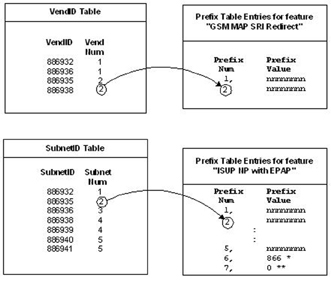
* Reserved for the ISUP NP with EPAP feature Insertion Country Code value
** Reserved for the ISUP NP with EPAP feature Deletion Condition value
For the ISUP NP with EPAP feature:
- When the Insertion Country Code (prefix number 6) is defined, the following information message appears:
ISUP NP with EPAP, Insertion Country Code value is now defined
- When the Deletion Condition (prefix number 7) is defined, the following information message appears:
ISUP NP with EPAP, Deletion Condition value is now defined
The maximum number of prefixes that can be defined is:
- 128 for the GSM MAP SRI Redirect feature
- 5 values, 1 Insertion Country Code, and 1 Deletion Condition for the ISUP NP with EPAP feature
Output
chg-prefix:feature="isup np with epap":prefix=1004:prefixnum=1
rlghncxa03w 04-09-20 09:04:14 EST EAGLE 31.11.0
CHG-PREFIX: MASP A - COMPLTD
;
chg-prefix:feature="gsm map sri redirect":prefix=1205:prefixnum=18
tekelecstp 14-05-30 16:44:50 EST EAGLE 46.1.0
CHG-PREFIX: MASP A - COMPLTD
;
Related Topics
chg-rte
Use this command to change the “cost,” or priority of a route. The cost is based on whether this route is first choice, second choice, and so on. Prioritize routes in such a way that the most direct route (fewest intermediate signaling points) is highest priority.
Parameters
Note:
See Point Code Formats and Conversion for a detailed description of point code formats, rules for specification, and examples.- lsn (mandatory)
- Linkset name. The name of the linkset associated with the route.
Note:
The linkset name must be unique.
- dpc (optional)
- ANSI destination point code with subfields network indicator-network cluster-network cluster member (ni-nc-ncm). The prefix subfield indicates a private point code (prefix-ni-nc-ncm).
- Synonym:
- dpca
- Range:
- p-, 000-255, *
Specify a valid value for each subfield of the point code, and separate the subfields with a dash (-).
prefix—p-
The asterisk value (*) is not valid for the ni subfield.
When
chg-sid:pctype=ansiis specified, ni = 000 is not valid.When
chg-sid:pctype=ansiis specified, nc = 000 is not valid if ni = 001–005.When
chg-sid:pctype=ansiis specified, nc = 000 is valid if ni = 006–255.The point code 000-000-000 is not a valid point code.
- dpci (optional)
- ITU international destination point code with subfields zone-area-id. The prefix subfield indicates a spare point code, private point code, or private and spare point code (prefix-zone-area-id).
- dpcn (optional)
- ITU national point code in the format of a 5-digit number (nnnnn); or 2, 3, or 4 numbers (members) separated by dashes (m1-m2-m3-m4) as defined by the
chg-stpopts:npcfmtiflexible point code option. A group code must be specified when the ITUDUPPC feature is turned on (nnnnn-gc, m1-m2-m3-m4-gc). The prefix subfield indicates a spare point code, private point code, or private and spare point code (prefix-nnnnn, prefix-nnnnn-gc, prefix-m1-m2-m3-m4, prefix-m1-m2-m3-m4-gc).
- dpcn24 (optional)
- 24-bit ITU national destination point code with subfields main signaling area-sub signaling area-signaling point (msa-ssa-sp). The prefix subfield indicates a private point code.
- dpcn16 (optional)
- 16-bit ITU national point code with subfields unit number sub number area main number area (un-sna-mna). The prefix subfield indicates a private point code.
- force (optional)
- This parameter allows the NLSN to be same as the ILSN in the exception routes of the destination or allows APC to be same as OPC in the exception routes of the destination.
Example
chg-rte:lsn=rlgh03:rc=0:dpc=244-003-001
chg-rte:dpc=25-*-*:lsn=myls:rc=10
This example changes route for DPCN 4084-aa using linkset E1M2ITUN to relative cost of 30:
chg-rte:dpcn=4085-aa:lsn=e1m2itun:rc=30
This example changes route for DPCN24, 10-100-14 using linkset WE123624 to a relative cost of 2:
chg-rte:dpcn24=10-100-14:lsn=we123624:rc=25
This example changes route for private point code DPC p-1-1-1 using linkset WE123642 to relative cost of 50:
chg-rte:dpc=p-1-1-1:lsn=we123642:rc=50
This example changes route for spare point code DPCN s-4085-aa using linkset E1M2ITUN to relative cost of 30:
chg-rte:dpc=s-4085-aa:lsn=e1m2itun:rc=30
This example changes route for private point code DPCN24 p-1-100-1 using linkset WE123624 to relative cost of 25:
chg-rte:dpcn24=p-1-100-1:lsn=we123624:rc=25
This example changes route for private and spare point code DPCI ps-1-104-1 using linkset E1M2ITUI to relative cost of 30:
chg-rte:dpci=ps-1-104-1:lsn=e1m2itui:rc=30
This example changes route for DPCN16, 121-10-15 using linkset WE123624 to a relative cost of 10:
chg-rte:dpcn16=10-100-14:lsn=we123624:rc=10
Dependencies
The 6-Way Loadsharing on Routesets feature must be turned on before more than 2 routes can be provisioned with the same relative cost.
If the ipgwapc=yes parameter is specified, then the associated dpc/dpca/dpci/dpcn/dpcn24/dpcn16 parameter cannot have a cluster route assigned.
If the identity of a route is being changed because of a change in the linkset name, the database must not already contain the new linkset name and destination address.
If the nlsn parameter is specified, the link set must already exist in the database and at least one link must be assigned to the link set.
If a new linkset name (nlsn parameter) is specified for an existing destination network address (ni-*-*), or destination network cluster address (ni-nc-*), the linkset type used in the route (see the chg-ls command) must be b, c, or d.
If the specified destination address is a full point code address (ni-nc-ncm) and is a member of a provisioned cluster (ni-nc-*), whether the attributes of the ordered routes assigned to the cluster can be changed is determined by the destination address’s NCAI (Nested Cluster Allowed Indicator). The NCAI is set with the ncai parameter of the ent/chg-dstn commands.
- If the ncai=no parameter is specified, the cluster point code is not a nested cluster point code and the attributes of the ordered routes assigned to the cluster cannot be changed.
- If the ncai=yes parameter is specified, the specified destination address is a member of a provisioned nested cluster where the attributes of the ordered routes assigned to the cluster can be changed.
If the specified destination address is a network cluster address (ni-nc-*), how the attributes of the specified ordered route are changed is determined by the setting of the destination address’s NCAI.
- If the ncai=no parameter is specified, the attributes of the specified ordered route are changed for each signaling point code having the same network identifier (ni) and network cluster (nc) codes.
- If the ncai=yes parameter is specified, the specified destination address is a nested cluster where changing the attributes of the ordered routes for the cluster does not affect the attributes of the ordered routes of the provisioned members.
The route destination’s type must match the route’s linkset adjacent point code or the route’s linkset secondary adjacent point code type.
Only IPGW routes are allowed for private point codes.
If the dpcn parameter is specified, its format must match the format that was assigned with the chg-stpopts:npcfmti parameter.
Network routing is valid only if the NRT feature is on.
When using network routing, if the destination point code has a value of * in the nc field, the ncm field must also be * (for example, dpc=21-*-*).
The Route table is corrupt or cannot be found.
The Linkset table is corrupt or cannot be found.
The nda, nz, nlsn, or nrc parameter must be specified.
The current destination address must be a full or a cluster point code.
All linksets that are currently assigned to a route set must still be equipped.
The linkset specified by the lsn parameter must exist in the routeset of the destination table entry.
If a new link set (nlsn parameter) is specified in the command, that link set name must exist in the active LINK SET entity.
The specified DPC must be in the database.
Only a single route is allowed for an APC or SAPC for an IPGWx linkset. The changed route must include the APC or SAPC’s IPGWx linkset with the destination equal to the APC or SAPC.
If a proxy linkset is used, then the nlsn parameter cannot be specified.
If a proxy linkset is used, then the value specified for the dpc parameter cannot be a network cluster address (ni-nc-*) or network address (ni-*-*).
The network type of the routeset must be same as the network type of the destination point code.
The value specified for the rc parameter must differ from the original routing cost of the associated linkset.
If the value specified for the dpc parameter refers to a Proxy Point Code in the Destination table, then the nlsn parameter cannot be specified.
The SAPC table is corrupt or cannot be found.
Notes
In this command, only ITU-international and ITU national point codes support the spare point code subtype prefix (s-) and the private and spare point code subtype prefix (ps-). All of the point code types support the private (internal) point code subtype prefix (p-).
Output
chg-rte:lsn=rlgh03:rc=0:dpc=244-003-001
rlghncxa03w 04-01-07 11:43:04 EST EAGLE 31.3.0
CHG-RTE: MASP A - COMPLTD
;
Related Topics
chg-rtx
Use this command to change an exception route entry in the Routing table.
Parameters
At least one of the following optional parameters must be specified: opc, ilsn, si, or cic.- dpc (mandatory)
- ANSI destination point code with subfields network indicator-network cluster-network cluster member (ni-nc-ncm). The prefix subfield indicates a private point code (prefix-ni-nc-ncm).
- Synonym:
- dpca
- Range:
- p-, 000-255
Specify a valid value for each subfield of the point code, and separate the subfields with a dash (-).
prefix—p-
When
chg-sid:pctype=ansiis specified, ni = 000 is not valid.When
chg-sid:pctype=ansiis specified, nc = 000 is not valid if ni = 001-005.When
chg-sid:pctype=ansiis specified, nc = 000 is valid if ni = 006-255.The point code 000-000-000 is not a valid point code.
- dpci (mandatory)
- Destination Point Code. ITU international point code with subfields zone-area-id. The prefix subfield indicates a spare point code, private point code, or private and spare point code (prefix-zone-area-id).
- dpcn (mandatory)
- Destination Point Code. ITU national point code in the format of a 5-digit number (nnnnn); or 2, 3, or 4 numbers (members) separated by dashes (m1-m2-m3-m4) as defined by the
chg-stpopts:npcfmtiflexible point code option. A group code must be specified when the ITUPUPPC feature is turned on (nnnnn-gc, m1-m2-m3-m4-gc). The prefix subfield indicates a spare point code, private point code or private and spare point code (prefix-nnnnn, prefix-nnnnn-gc, prefix-m1-m2-m3-m4, prefix-m1-m2-m3-m4-gc).
- dpcn24 (mandatory)
- Destination Point Code. 24-bit ITU national point code with subfields main signaling area-sub signaling area-signaling point (msa-ssa-sp). The prefix subfield indicates a private point code (prefix-msa-ssa-sp).
- dpcn16 (mandatory)
- Destination Point Code. 16-bit ITU national point code with subfields unit number-sub number area-main number area (un-sna-mna). The prefix subfield indicates a private point code (prefix-un-sna-mna).
- cic (optional)
- Starting Circuit Identification Code. This parameter is used alone or with the ecic parameter as exception routing criteria for the specified exception route.
- ecic (optional)
- Ending Circuit Identification Code. This parameter and the cic parameter define the CIC range that is used as exception routing criteria for the specified exception route.
- force (optional)
- This parameter must be specified when the ilsn parameter value is the same as the nlsn parameter value.
- ilsn (optional)
- The name of the incoming/originating linkset. This parameter is used as part of the exception routing criteria for the specified exception route.
- nlsn (optional)
- The new linkset name that replaces the linkset name associated with the specified exception route.
- opc (optional)
- ANSI origination point code with subfields network indicator-network cluster-network cluster member (ni-nc-ncm). The prefix subfield indicates a private point code (prefix-ni-nc-ncm).
- Range:
- p-, 000-255
Specify a valid value for each subfield of the point code, and separate the subfields with a dash (-).
prefix—p-
When
chg-sid:pctype=ansiis specified, ni = 000 is not valid.When
chg-sid:pctype=ansiis specified, nc = 000 is not valid if ni = 001-005.When
chg-sid:pctype=ansiis specified, nc = 000 is valid if ni = 006-255.The point code 000-000-000 is not a valid point code.
- opci (optional)
- ITU international point code with subfields zone-area-id. The prefix subfield indicates a spare point code, private point code, or private and spare point code (prefix-zone-area-id).
- opcn (optional)
- ITU national point code in the format of a 5-digit number (nnnnn); or 2, 3, or 4 numbers (members) separated by dashes (m1-m2-m3-m4) as defined by the
chg-stpopts:npcfmtiflexible point code option. A group code must be specified when the ITUPUPPC feature is turned on (nnnnn-gc, m1-m2-m3-m4-gc). The prefix subfield indicates a spare point code, private point code or private and spare point code (prefix-nnnnn, prefix-nnnnn-gc, prefix-m1-m2-m3-m4, prefix-m1-m2-m3-m4-gc).
- opcn24 (optional)
- 24-bit ITU national point code with subfields main signaling area-sub signaling area-signaling point (msa-ssa-sp). The prefix subfield indicates a private point code (prefix-msa-ssa-sp).
Example
This example changes the relative cost of an existing exception route.
chg-rtx:dpca=1-1-1:opca=2-3-3:lsn=lset1:rc=30
This example changes the linkset associated with the exception route.chg-rtx:dpca=1-2-1:si=3:lsn=lset2:nlsn=lset3
This example changes the linkset and relative cost of the exception route.
chg-rtx:dpca=1-3-1:ilsn=lset2:lsn=lset3:nlsn=lset4:rc=20
chg-rtx:dpci=2-100-1:ilsn=lset2:lsn=lset4:rc=10
chg-rtx:dpci=2-100-1:si=5:lsn=lset5:rc=50
chg-rtx:dpcn16=121-10-15:si=5:lsn=lset5:rc=50
Dependencies
Only one of the opc, ilsn, cic, or si parameters can be specified for an exception route entry.
If the ecic parameter is specified, the cic parameter must be specified.
The ecic parameter value cannot be less than the cic parameter value.
The opc/opca/opci/opcn/opcn24/opcn16 parameter value cannot be the same as the dpc parameter value.
The Origin-Based MTP Routing feature must be turned on before this command can be entered.
The specified combination of exception route parameter conditions must already exist.
The linkset name, as defined by the ilsn, lsn, or nlsn parameter, must exist.
The 6-Way Loadsharing on Routesets feature must be turned on before more than 2 routes can be provisioned with the same relative cost for a given exception route criteria.
The network domain of the adjacent point code in the linkset or in the routes in the specified routeset must be the same as the network domain of the specified destination point code or its alias.
The APC/SAPC type and group code in the linkset specified by the lsn parameter must match the value specified by the dpc/dpca/dpci/dpcn/dpcn24/dpcn16 parameter.
The Linkset table is corrupt or cannot be found.
The Route table is corrupt or cannot be found.
The Route Exception table is corrupt or cannot be found.
The nlsn parameter value cannot be the same as the lsn parameter value.
Either the nlsn parameter, the rc parameter, or both parameters must be specified.
The value specified for the destination point code must be a full point code and not a cluster or network point code.
The point code specified by the dpc/dpca/dpci/dpcn/dpcn24/dpcn16 parameter must exist in the destination table.
If the ilsn and lsn parameter have the same value, or if the value specified for the opc/opca/opci/opcn/opcn24/opcn16 parameter is the same as the APC of the linkset specified by the lsn parameter, then the force=yes parameter must be specified.
The route cost specified by the rc parameter must differ from the existing route cost for the linkset specified by the lsn parameter.
The route associated with the linkset specified by the lsn parameter must already exist in the specified exception route.
The route associated with the linkset specified by the nlsn parameter cannot already exist in the specified exception route.
The value specified for the opc/opca/opci/opcn/opc24/opcn16 parameters cannot be the same as the adjacent point code of the linkset specified by the lsn parameter.
The J7 Support feature must be enabled before the dpcn16/opcn16 parameter can be specified.
Output
chg-rtx:dpca=1-1-1:opc=2-3-3:lsn=lset1:rc=30
stdcfg2b 06-05-19 18:20:11 EST EAGLE 35.0.0
CHG-RTX: MASP A - COMPLTD
Related Topics
chg-sccp-msg
Use this command to revise an SCCP message.
Parameters
Note:
The nature of address indicator, numbering plan, and TCAP package indicator can be specified by mnemonic or numeric values (cdnai/cdnaiv, cdnp/cdnpv, and tcappkg/tcappkgv respectively).- active (optional)
- This parameter specifies whether the SCCP message should be sent to the network card for processing.
- cdnaiv (optional)
- CdPA NAIV. The Called Party Nature of Address Indicator Value for the SCCP message.
- cdpc (optional)
-
ANSI Called Party point code with subfields network indicator-network cluster-network cluster member (ni-nc-ncm).
- Range:
- p-, 000-255
Specify a valid value for each subfield of the point code, and separate the subfields with a dash (-).
prefix—p-
When
chg-sid:pctype=ansiis specified, ni = 000 is not valid.When
chg-sid:pctype=ansiis specified, nc = 000 is not valid if ni = 001-005.When
chg-sid:pctype=ansiis specified, nc = 000 is valid if ni = 006-255.The point code 000-000-000 is not a valid point code.
- Default:
- 10
- cdpci (optional)
- ITU international destination point code with subfields zone-area-id. The prefix subfield indicates a spare point code, private point code, or private and spare point code (prefix-zone-area-id).
- cdpcn (optional)
- ITU national point code in the format of a 5-digit
number (nnnnn); or 2, 3,
or 4 numbers (members) separated by dashes (m1-m2-m3-m4) as defined by
the
chg-stpopts:npcfmtiflexible point code option. A group code must be specified when the ITUDUPPC feature is turned on (nnnnn-gc, m1-m2-m3-m4-gc). The prefix subfield indicates a spare point code, private point code, or private and spare point code (prefix-nnnnn, prefix-nnnnn-gc, prefix-m1-m2-m3-m4, prefix-m1-m2-m3-m4-gc).
- cdpcn24 (optional)
- 24-bit ITU national CdPA point code with subfields main signaling area-sub signaling area-signaling point (msa-ssa-sp).
- cdpcn16 (optional)
- 16-bit ITU national CdPA point code with subfields unit number-sub number area-main number area (un-sna-mna).
- cgnaiv (optional)
- CgPA NAIV. The Calling Party Nature of Address Indicator Value for the SCCP message.
- cgpc (optional)
-
ANSI CGPA point code with subfields network indicator-network cluster-network cluster member (ni-nc-ncm).
- Range:
- p-, 000-255
Specify a valid value for each subfield of the point code, and separate the subfields with a dash (-).
prefix—p-
When
chg-sid:pctype=ansiis specified, ni = 000 is not valid.When
chg-sid:pctype=ansiis specified, nc = 000 is not valid if ni = 001-005.When
chg-sid:pctype=ansiis specified, nc = 000 is valid if ni = 006-255.The point code 000-000-000 is not a valid point code.
- Default:
- 20
- cgpci (optional)
- ITU international CgPA point code with subfields zone-area-id. The prefix subfield indicates a spare point code (prefix-zone-area-id).
- cgpcn (optional)
- ITU national CgPA point code in the format of a
5-digit number (nnnnn);
or 2, 3, or 4 numbers (members) separated by dashes (m1-m2-m3-m4) as defined by
the
chg-stpopts:npcfmtiflexible point code option. A group code must be specified when the ITUDUPPC feature is turned on (nnnnn-gc, m1-m2-m3-m4-gc). The prefix subfield indicates a spare point code (prefix-nnnnn, prefix-nnnnn-gc, prefix-m1-m2-m3-m4, prefix-m1-m2-m3-m4-gc).
- cgpcn24 (optional)
- 24-bit ITU national CgPA point code with subfields main signaling area-sub signaling area-signaling point (msa-ssa-sp).
- cgpcn16 (optional)
- 16-bit ITU national CgPA point code with subfields unit number-sub number area-main number area (un-sna-mna).
- dpc (optional)
- ANSI destination point code with subfields
network
indicator-network cluster-network cluster member (ni-nc-ncm).
- Synonym:
- dpca
- Range:
- p-, 000-255
Specify a valid value for each subfield of the point code, and separate the subfields with a dash (-).
prefix—p-
When
chg-sid:pctype=ansiis specified, ni = 000 is not valid.When
chg-sid:pctype=ansiis specified, nc = 000 is not valid if ni = 001-005.When
chg-sid:pctype=ansiis specified, nc = 000 is valid if ni = 006-255.The point code 000-000-000 is not a valid point code.
- Default:
- 20
- dpci (optional)
- ITU international destination point code with subfields zone-area-id. The prefix subfield indicates a spare point code (prefix-zone-area-id).
- dpcn (optional)
- ITU national destination point code in the format
of a 5-digit number (nnnnn); or 2, 3, or 4
numbers (members) separated by dashes (m1-m2-m3-m4) as defined by
the
chg-stpopts:npcfmtiflexible point code option. A group code must be specified when the ITUDUPPC feature is turned on (nnnnn-gc, m1-m2-m3-m4-gc). The prefix subfield indicates a spare point code (prefix-nnnnn, prefix-nnnnn-gc, prefix-m1-m2-m3-m4, prefix-m1-m2-m3-m4-gc).
- dpcn24 (optional)
- 24-bit ITU national destination point code with subfields main signaling area-sub signaling area-signaling point (msa-ssa-sp).
- dpcn16 (optional)
- 16-bit ITU national destination point code with subfields unit number-sub number area-main number area (un-sna-mna).
- imeidgts (optional)
- IMEI Digits. This specifies the IMEI digits present in the TCAP portion of the incoming MSU.
- imsidgts (optional)
- IMSI Digits. This specifies the IMSI digits present in the TCAP portion of the incoming MSU.
- mapparam (optional)
- MAP Parameters. The parameter defines the MAP parameters (IMEI/IMSI/MSISDN/VLR/SMRPOA/SMRPDA) present in the incoming MSU.
- msisdndgts (optional)
- MSISDN Digits. This specifies the MSISDN digits present in the TCAP portion of the incoming MSU.
- opc (optional)
-
ANSI originating point code with subfields network indicator-network cluster-network cluster member (ni-nc-ncm).
- Range:
- p-, 000-255
Specify a valid value for each subfield of the point code, and separate the subfields with a dash (-).
prefix—p-
When
chg-sid:pctype=ansiis specified, ni = 000 is not valid.When
chg-sid:pctype=ansiis specified, nc = 000 is not valid if ni = 001-005.When
chg-sid:pctype=ansiis specified, nc = 000 is valid if ni = 006-255.The point code 000-000-000 is not a valid point code.
- Default:
- 10
- opci (optional)
- ITU international originating point code with subfields zone-area-id. The prefix subfield indicates a spare point code (prefix-zone-area-id).
- opcn (optional)
- ITU national originating point code in the format
of a 5-digit number (nnnnn); or 2, 3, or 4
numbers (members) separated by dashes (m1-m2-m3-m4) as defined by
the
chg-stpopts:npcfmtiflexible point code option. A group code must be specified when the ITUDUPPC feature is turned on (nnnnn-gc, m1-m2-m3-m4-gc). The prefix subfield indicates a spare point code (prefix-nnnnn, prefix-nnnnn-gc, prefix-m1-m2-m3-m4, prefix-m1-m2-m3-m4-gc).
- opcn24 (optional)
- 24-bit ITU national originating point code with
subfields
main signaling
area-sub signaling area-signaling point (msa-ssa-sp).
- Range:
-
Specify a valid value for each subfield of the point code, and separate the subfields with a dash (-).
p-, 000-255, none
prefix—p-
When
chg-sid:pctype=ansiis specified, ni = 000 is not valid.When
chg-sid:pctype=ansiis specified, nc = 000 is not valid for ni = 001-005.When
chg-sid:pctype=ansiis specified, nc = 000 is valid if ni = 006-255.Enter none to delete the point code.
The point code 000-000-000 is not a valid point code.
- opcn16 (optional)
- 16-bit ITU national originating point code with subfields unit number-sub number area-main number area (un-sna-mna).
- smrpdadgts (optional)
- SMRPDA Digits. The digits present in the SMRPDA parameter of the incoming MSU.
- smrpoadgts (optional)
- SMRPOA Digits. The digits present in the SMRPOA parameter of the incoming MSU.
- tcappkg (optional)
- TCAP package. The ANSI TCAP and ITU TCAP package
type.
- Range:
-
- ituuni
- ITU unidirectional
- qwp
- Query with Permission
- qwop
- Query without Permission
- resp
- Response
- cwp
- Conversation with Permission
- cwop
- Conversation without Permission
- bgn
- Begin
- end
- End
- cnt
- Continue
- ituabort
- ITU abort
- ansiabort
- ANSI abort
- ansiuni
- ANSI unidirectional
- ANSI TCAP Package Types—
- ansiuni, qwp, qwop, resp, cwp, cwop, ansiabort
- ITU TCAP Package Types—
- bgn, ituabort, ituuni, end, cnt
Example
chg-sccp-msg:msgn=1:cgtt=4:cdnp=generic:eaglegen=yes:cdpc=2-2-2
chg-sccp-msg:msgn=3:cdgta=324ab12:cdtt=6:cdnaiv=3:cgnai=rsvd
chg-sccp-msg:msgn=5:cdtt=10:opc=4-5-6:cgpcn=1234
chg-sccp-msg:msgn=1:tcappkg=bgn:tcapopcode=34
chg-sccp-msg:msgn=1:cdtt=12:dpci=1-101-1:cgpci=1-101-2
chg-sccp-msg:msgn=5:cdtt=10:opcn16=2-14-0:cgpcn16=2-14-1
chg-sccp-msg:msgn=1:smrpoadgts=654789:smrpdanp=e164:smrpoanp=x121:
imsidgts=123456
chg-sccp-msg:msgn=1:tcapopcode=34:tcapopcode2=35:tcapopcode3=100
Dependencies
The TSTMSG table is corrupt or cannot be found.
At least one optional parameter must be specified.
The cdnp and cdnpv parameters and the cgnp and cgnpv parameters cannot be specified together in the command.
The cdnai and cdnaiv parameters and the cgnai and cgnaiv parameters cannot be specified together in the command.
A TOBR quantity feature must be turned on before the tcapacn, tcappkg, tcappkgv, tcapopcode, tcapopcode2, tcapopcode3, tcapfamily, tcapfamily2, tcapfamily3, mapparam, imsidgts, imeidgts, msisdndgts, vlrdgts, smrpoadgts, smrpdadgts, msisdnnp, smrpoanp or smrpdanp parameter can be specified.
The tcappkg and tcappkgv parameters cannot be specified together in the command.
The values 1 and 3 cannot be specified for the cdgti and cggti parameters.
The GTT feature must be turned on before this command can be entered.
The J7 Support feature must be enabled before the cgpcn16/cdpcn16/opcn16/dpcn16 parameters can be specified.
Tcapopcode2 cannot be 0-255 or none if tcapopcode = notpresent, and tcapopcode3 cannot be 0-255 or none if tapopcode2 = notpresent.
Notes
There is no J7 FAK dependency on ANSI/N24 point code parameters, i.e., cgpcn24/cdpcn24/opcn24/dpcn24/cgpca/cdpca/opca/dpca. The command can be entered successfully whether or not the J7 Support feature is enabled.
Output
chg-sccp-msg:msgn=1:tcapacn=7-8-9-0
tekelecstp 09-03-02 16:07:33 EST EAGLE 41.0.0
Command entered at terminal #4.
CHG-SCCP-MSG: MASP A - COMPLTD
;
chg-sccp-msg:msgn=1:smrpoadgts=654789:smrpdanp=e164:smrpoanp=x121:imsidgts=123456
tekelecstp 15-06-01 16:07:33 EST EAGLE 46.3.0
Command entered at terminal #4.
CHG-SCCP-MSG: MASP A - COMPLTD
;
chg-sccp-msg:msgn=1:tcapopcode=34:tcapopcode2=35:tcapopcode3=100
tekelecstp 16-10-03 14:18:10 MST EAGLE 46.5.0.0.0
Command entered at terminal #17.
CHG-SCCP-MSG: MASP A - COMPLTD
;
chg-sccp-msg:msgn=1:imeidgts=98715123450
tekelecstp 17-05-11 15:09:18 EST EAGLE 46.6.0
Command entered at terminal #4.
CHG-SCCP-MSG: MASP A - COMPLTD
;
Related Topics
chg-sccp-serv
Use this command to:
- Change the state of G-Flex and G-Port services to online or offline. Taking a service offline shifts the processing load to designated nodes.
- Add PCs to an existing service group for service re-route assignment, or change the relative cost (RC) of existing point codes in a group.
Parameters
Note:
See Point Code Formats and Conversion for a detailed description of point code formats, rules for specification, and examples.- gtt (optional)
- GTT option indicator. This parameter specifies whether to use GTT as part of the re-routing procedure when the service is offline, and alternate PCs are not defined or not available.
- pc1 (optional)
- ANSI point code with subfields network indicator-network cluster-network cluster member (ni-nc-ncm).
- Synonym:
- pca1
- Range:
- 000-255
Specify a valid value for each subfield of the point code, and separate the subfields with a dash (-).
When
chg-sid:pctype=ansiis specified, ni = 000 is not valid.When
chg-sid:pctype=ansiis specified, nc = 000 is not valid if ni = 001–005.When
chg-sid:pctype=ansiis specified, nc = 000 is valid if ni = 006–255.The point code 000-000-000 is not a valid point code.
- pc2 (optional)
- ANSI point code with subfields network indicator-network cluster-network cluster member (ni-nc-ncm).
- Synonym:
- pca2
- Range:
- 000-255
Specify a valid value for each subfield of the point code, and separate the subfields with a dash (-).
When
chg-sid:pctype=ansiis specified, ni = 000 is not valid.When
chg-sid:pctype=ansiis specified, nc = 000 is not valid if ni = 001–005.When
chg-sid:pctype=ansiis specified, nc = 000 is valid if ni = 006–255.The point code 000-000-000 is not a valid point code.
- pc3 (optional)
- ANSI point code with subfields network indicator-network cluster-network cluster member (ni-nc-ncm).
- Synonym:
- pca3
- Range:
- 000-255
Specify a valid value for each subfield of the point code, and separate the subfields with a dash (-).
When
chg-sid:pctype=ansiis specified, ni = 000 is not valid.When
chg-sid:pctype=ansiis specified, nc = 000 is not valid if ni = 001–005.When
chg-sid:pctype=ansiis specified, nc = 000 is valid if ni = 006–255.The point code 000-000-000 is not a valid point code.
- pc4 (optional)
- ANSI point code with subfields network indicator-network cluster-network cluster member (ni-nc-ncm).
- Synonym:
- pca4
- Range:
- 000-255
Specify a valid value for each subfield of the point code, and separate the subfields with a dash (-).
When
chg-sid:pctype=ansiis specified, ni = 000 is not valid.When
chg-sid:pctype=ansiis specified, nc = 000 is not valid if ni = 001–005.When
chg-sid:pctype=ansiis specified, nc = 000 is valid if ni = 006–255.The point code 000-000-000 is not a valid point code.
- pci1 (optional)
- ITU international point code with subfields zone-area-id. The prefix subfield indicates a spare point code (prefix-zone-area-id).
- pci2 (optional)
- ITU international point code with subfields zone-area-id. The prefix subfield indicates a spare point code (prefix-zone-area-id).
- pci3 (optional)
- ITU international point code with subfields zone-area-id. The prefix subfield indicates a spare point code (prefix-zone-area-id).
- pci4 (optional)
- ITU international point code with subfields zone-area-id. The prefix subfield indicates a spare point code (prefix-zone-area-id).
- pcn1 (optional)
- ITU national point code in the format of a 5-digit number (nnnnn); or 2, 3, or 4 numbers (members) separated by dashes (m1-m2-m3-m4) as defined by the
chg-stpopts:npcfmtiflexible point code option. A group code must be specified when the ITUDUPPC feature is turned on (nnnnn-gc,m1-m2-m3-m4-gc). The prefix subfield indicates a spare point code (prefix-nnnnn, prefix-nnnnn-gc, prefix-m1-m2-m3-m4, prefix-m1-m2-m3-m4-gc).
- pcn2 (optional)
- ITU national point code in the format of a 5-digit number (nnnnn); or 2, 3, or 4 numbers (members) separated by dashes (m1-m2-m3-m4) as defined by the
chg-stpopts:npcfmtiflexible point code option. A group code must be specified when the ITUDUPPC feature is turned on (nnnnn-gc, m1-m2-m3-m4-gc). The prefix subfield indicates a spare point code (prefix-nnnnn, prefix-nnnnn-gc, prefix-m1-m2-m3-m4, prefix-m1-m2-m3-m4-gc).
- pcn241 (optional)
- 24-bit ITU national point code with subfields main signaling area-sub signaling area-signaling point (msa-ssa-sp).
- pcn242 (optional)
- 24-bit ITU national point code with subfields main signaling area-sub signaling area-signaling point (msa-ssa-sp).
- pcn243 (optional)
- 24-bit ITU national point code with subfields main signaling area-sub signaling area-signaling point (msa-ssa-sp).
- pcn244 (optional)
- 24-bit ITU national point code with subfields main signaling area-sub signaling area-signaling point (msa-ssa-sp).
- pcn3 (optional)
- ITU national point code in the format of a 5-digit number (nnnnn); or 2, 3, or 4 numbers (members) separated by dashes (m1-m2-m3-m4) as defined by the
chg-stpopts:npcfmtiflexible point code option. A group code must be specified when the ITUDUPPC feature is turned on (nnnnn-gc,m1-m2-m3-m4-gc). The prefix subfield indicates a spare point code (prefix-nnnnn, prefix-nnnnn-gc, prefix-m1-m2-m3-m4, prefix-m1-m2-m3-m4-gc).
- pcn4 (optional)
- ITU national point code in the format of a 5-digit number (nnnnn); or 2, 3, or 4 numbers (members) separated by dashes (m1-m2-m3-m4) as defined by the
chg-stpopts:npcfmtiflexible point code option. A group code must be specified when the ITUDUPPC feature is turned on (nnnnn-gc, m1-m2-m3-m4-gc). The prefix subfield indicates a spare point code (prefix-nnnnn, prefix-nnnnn-gc, prefix-m1-m2-m3-m4, prefix-m1-m2-m3-m4-gc).
- rc1 (optional)
- Relative cost 1. The relative cost of the route for alternate post-GTT-translated point code 1.
- rc2 (optional)
- Relative cost 2. The relative cost of the route for alternate post-GTT-translated point code 2.
- rc3 (optional)
- Relative cost 3. The relative cost of the route for alternate post-GTT-translated point code 3.
Example
chg-sccp-serv:serv=gport:state=online
chg-sccp-serv:serv=gport:pca1=1-1-1:rc1=10: pca2=2-2-2:rc2=20:pca3=3-3-3:rc3=30:pca4=4-4-4:rc4=40
chg-sccp-serv:serv=gport:pci1=2-2-2:rc1=10:pci2=3-3-3:rc2=10
chg-sccp-serv:serv=gport:state=online:gtt=yes
Dependencies
The specified point code network type must match an existing point code network type.
The point code and relative cost parameter values must be specified together as a pair in the command.
The point code cannot match the existing site identification true point code.
The mate remote point code must already exist as destination in the Ordered Route entity set or reside in a cluster destination for which ordered routes are specified.
The SCCP Service table cannot be full when the command is entered. For each supported service (G-Port and G-Flex), up to 7 point codes can be specified for each network type (ANSI, ITU-I, S-ITU-I, ITU-N, S-ITU-N, and ITU-N24).
A maximum of 7 point codes can be allocated to a group or SCCP Service set.
The Route table is corrupt or cannot be found by the system.
The Site Identification table is corrupt or cannot be found by the system.
The MRN table is corrupt or cannot be found by the system.
The SCCP Service table is corrupt or cannot be found by the system.
The A-Port or IGM feature, G-Flex feature, and G-Port feature must be enabled before the serv=mnp, serv=gflex, and serv=gport parameter can be specified, respectively.
If the A-Port or IS41 GSM Migration (IGM) feature is enabled, the serv=gport parameter cannot be specified.
The A-Port or IGM feature must be enabled before the serv=mnp parameter can be specified.
At least one optional parameter must be specified.
At least one PC/RC pair (for example, the pc1 and rc1 parameters) must be specified.
The mated point code must be a full point code.
Each new point code (specified by the pc1, pc2, pc3, or pc4 parameter) must already exist in the destination table. See the ent-dstn command.
The same point code value cannot be entered more than once in the SCCP-SERV table.
New and existing point codes cannot be entered together in the same command.
The specified MRN set must already exist in the MRN table for the SCCP-SERV table.
If the Flexible GTT Loadsharing feature is enabled, the specified point code must already exist in the specified SCCP-SERV set in the MRN table.
Notes
The SCCP Service table is part of the MRN table.
When using this command to modify relative cost values, all of the point codes that are specified in one command must exist in the same group in the SCCP-SERV table.
In this command, only ITU-international and ITU national point codes support the spare point code subtype prefix (s-).
This command supports the assignment of point codes to SCCP Service point code groups used for service re-route assignment. It is used to add point codes to a service group or to change the relative cost (RC) of existing point codes in a service group.
SCCP Service groups are organized by service (G-Flex or G-Port) and PC network type (ANSI, ITU-I, Spare ITU-I, ITU-N, Spare ITU-N, or ITUN-24). Up to 7 point codes can be in a network type grouping for service re-route load sharing. Up to 4 point codes can be added or modified in one command.
The -sccp-serv commands differ from the -mrn commands in that the service name (serv parameter) is required instead of an existing PC in the set serving as the key.
When using this command to add new point codes, none of the point codes that are specified in one command can exist in the group in the SCCP-SERV table and must all be added to the same SCCP-SERV group.
Output
The following example changes the SCCP service for G-Port to provision the point code and relative cost values: chg-sccp-serv:serv=gport:pca1=1-1-1:rc1=10:pc2=1-1-2:rc2=20
tekelecstp 05-12-20 08:35:15 EST 35.0.0
CHG-SCCP-SRV : MASP A - COMPLTD
;
Related Topics
chg-sccpopts
Use this command to change the values of one or more of the SCCP option indicators maintained in the STP options table.
Parameters
- aclen (optional)
- Area code length. The length of the area code.
Note:
This parameter is used with the CgPN.
- cclen (optional)
- Country code length. The length of the
country code.
Note:
This parameter is used with the CgPN.
- cnvainat (optional)
-
The value of the called party/calling party address Reserved for National Use bit when the message is routed to the ITU national network.
When SCCP Conversion is performed on a LIM card, this option is applied only in cases of domain crossing.
When message processing is done on an SCCP card, this option is applied always, regardless of whether there was domain crossing or not.
- cnvclgitu (optional)
- This parameter enables or disables the CgPA conversion for ITU-I/ITU-I Spare/ITU-N/ITU-N Spare domain crossing during SCCP conversion.
- delccprefix (optional)
- This parameter specifies how to apply the
DELCCPREFIX digit action to a Called Party Global Title Address (CdPA GTA).
- Default:
- on
- Range:
-
- pfxwcc
- Apply the DELCCPREFIX digit action to the CdPA GTA only when the address has a International format. If this option is selected, then the Country Code is deleted and the GTA is prefixed with the Entity Id.
- pfx4all
- Apply the DELCCPREFIX digit action to the CdPA GTA in all cases. If this option is selected, then for an International format, the Country Code is deleted and the GTA is prefixed with the Entity Id. For a National format, the GTA is prefixed with the Entity ID.
- dfltfallback (optional)
- Default fallback option. This parameter specifies the action that is taken if the last translation doesn't match when performing GTT using a FLOBR-specific GTT mode.
- dfltgttmode (optional)
- Default GTT mode. The system default value of the
GTT mode hierarchy used by the EAGLE when performing GTT.
- Range:
-
- acdcd
- Advanced CdPA GTT, CdPA GTT
- acdcgcd
- Advanced CdPA GTT, CgPA GTT, CdPA GTT
- acdcdcg
- Advanced CdPA GTT, CdPA GTT, CgPA GTT
- cd
- CdPA GTT only
- cdcg
- CdPA GTT, CgPA GTT
- cg
- CgPA GTT only
- cgcd
- CgPA GTT, CdPA GTT
- cgacdcd
- CgPA GTT, Advanced CdPA GTT, CdPA GTT
- fcd
- FLOBR CdPA only
- fcg
- FLOBR CgPA only
- fcgfcd
- FLOBR CgPA, FLOBR CdPA
- fcdfcg
- FLOBR CdPA, FLOBR CgPA
- gmstcapce (optional)
- This parameter enables and disables the processing of GSM Map Screening for TCAP_Continue and TCAP_End messages.
- gttdist (optional)
- This parameter specifies the type of card on which the GTT traffic will be distributed.
- intlunknnai (optional)
- This parameter specifies whether International NAIs (nai=intl) are included in Unknown NAIs (nai=unkn) and should be considered for country code CgPN (cccgpn) conditioning.
- itun16scmg (optional)
- This parameter specifies whether sccp scmg meassages will be processed or not.
- mobrsccpopc (optional)
- The OPC that is derived from the SCCP message that
is used as an exception class.
- Range:
-
- sccp
- The OPC exception class uses the point code within the CGPA, if the CGPA portion of the message is "route-on-dpcssn". If the option is "route-on-gt", the sccp option is not used and defaults to the mtp option.
- mtp
- The OPC exception class uses the original MTP OPC value as its criteria.
- tpc
- The OPC exception class uses the EAGLE true point code for the criteria.
- mtprgtt (optional)
- This parameter specifies whether GTT is performed on an MTP-routed MSU and the routing that is performed on the MSU after GTT.
- mtprgttfallbk (optional)
- This parameter specifies whether an MTP-routed MSU is MTP-routed after GTT failure.
- tgtt0 (optional)
- This parameter enables or disables
transaction-based GTT loadsharing for SCCP Class0 UDT, Class0 XUDT, UDTS, and
XUDTS messages.
- Range:
-
- udt
- Enables transaction-based GTT loadsharing for UDTS and Class0 UDT messages.
- xudt
- Enables transaction-based GTT loadsharing for XUDTS and Class0 XUDT messages.
- both
- Enables transaction-based GTT loadsharing for UDTS, XUDTS, Class0 UDT, and Class0 XUDT messages.
- none
- —Disables transaction-based GTT loadsharing for UDTS, XUDTS, Class0 UDT, and Class0 XUDT messages.
- Default:
- No change to current value
- System Default:
- none
- tgtt1 (optional)
- This parameter enables or disables
transaction-based GTT loadsharing for SCCP Class1 UDT, Class1 XUDT, UDTS, and
XUDTS messages.
- Range:
-
- udt
- Enables transaction-based GTT loadsharing for UDTS and Class1 UDT messages.
- xudt
- Enables transaction-based GTT loadsharing for XUDTS and Class1 XUDT messages.
- both
- Enables transaction-based GTT loadsharing for UDTS, XUDTS, Class1 UDT, and Class1 XUDT messages.
- none
- Disables transaction-based GTT loadsharing for UDTS, XUDTS, Class1 UDT, and Class1 XUDT messages.
- Default:
- No change to current value
- System Default:
- none
- tgttudtkey (optional)
- The transaction parameter for incoming UDT(S)
messages. Messages with this parameter are routed to the same load-shared PC
within a MAPGROUP or MRNGROUP.
- Range:
-
- mtp
- Transaction-based GTT loadsharing is performed using the mtp algorithm
- tcap
- Transaction-based GTT loadsharing is performed using the tcap algorithm
- sccp
- Transaction-based GTT loadsharing is performed using the sccp algorithm
- enhmtp
- Transaction-based GTT loadsharing is performed using the enhanced mtp algorithm
- Default:
- No change to current value
- System Default:
- mtp
Example
chg-sccpopts:class1seq=on
chg-sccpopts:mobrsccpopc=sccp
chg-sccpopts:tgtt0=udt
chg-sccpopts:tgtt1=xudt
chg-sccpopts:tgttudtkey=mtp
chg-sccpopts:tgttxudtkey=sccp
chg-sccpopts:cclen=1:aclen=3
chg-sccpopts:dfltfallback=yes
chg-sccpopts:dfltgttmode=fcd
chg-sccpopts:mtprgttfallbk=gttfail
chg-sccpopts:unqgttsel=exactmatch
chg-sccpopts:gttdist=dn
chg-sccpopts:gttdist=epap
chg-sccpopts:itun16scmg=on
Dependencies
At least one optional parameter must be specified.
The STP Options table must be accessible.
The Origin-based MTP Routing feature must be turned on before the mobrsccpopc parameter can be specified.
The Origin-based SCCP Routing feature must be turned on before the dfltgttmode parameter can have a value of acdcd, cgacdcd, acdcgcd, acdcdcg, cgcd, cdcg, or cg.
The GTTSET table must be accessible.
The Transaction-based GTT Loadsharing feature must be enabled before the tgtt0, tgtt1, tgttudtkey, or tgttxudkey parameters can be specified.
The GSM Map Screening feature must be turned on before the gmstcapce parameter can be specified.
The ANSI/ITU SCCP Conversion feature must be enabled before the cnvainat or cnvclgitu parameter can be specified.
The FLOBR feature must be turned on before the dfltgttmode parameter can have a value of fcd, fcg, fcgfcd, or fcdfcg and before the dfltfallback parameter can be specified.
The MTP routed messages for SCCP Applications feature or the GWS Stop Action SCCP feature must be enabled before the mtprgtt or mtprgttfallbk parameter can be specified.
The S-Port Subscriber Differentiation feature must be enabled and turned on before the subdfrn parameter can be specified.
The ANSI/ITU SCCP Conversion feature must be ON before the cnvclgitu parameter can be specified.
The EPAP Data Split feature must be enabled before GTTDIST=DN/IMSI parameter can be specified.
The Dual ExAP Config feature or EPAP Data Split feature must be enabled before GTTDIST = EPAP parameter can be specified.
The Dual ExAP Config feature must be enabled before GTTDIST=EPAP/ELAP parameter can be specified.
Either Dual ExAP Config or EPAP Data Split feature should be enabled before GTTDIST=GTT parameter can be specified.
The J7 Support feature must be enabled before the ITUN16SCMG parameter can be specified.
Notes
None.
Output
chg-sccpopts:mtprgtt=usemtppc
tekelecstp 10-02-10 20:09:11 EST EAGLE 42.0.0
chg-sccpopts:mtprgtt=usemtppc
Command entered at terminal #4.
CHG-SCCPOPTS: MASP A - COMPLTD
;
chg-sccpopts:gttdist=elap
tekelecstp 12-07-11 14:47:02 EST EAGLE 45.0.0
chg-sccpopts:gttdist=elap
Command entered at terminal #4.
CHG-SCCPOPTS: MASP A - COMPLTD
;
Related Topics
chg-scr-aftpc
Use this command to change the attributes of a specific screening reference in the allowed affected point code category. Attributes that can be changed are the point code and the subsystem number.
Parameters
Note:
See Point Code Formats and Conversionfor a detailed description of point code formats, rules for specification, and examples.- actname (optional)
- Action name. The name of the gateway screening stop action set. Stop actions must be administered using this parameter in conjunction with the gateway screening stop action table (see the
chg-gws-actsetandrtrv-gws-actsetcommands).
- force (optional)
- When there are more than 200 affected screensets, this parameter will decide whether to execute the command successfully or not.
- mna (optional)
- 16-bit ITU national main number area. The mna in the point code represented by un-sna-mna.
- msa (optional)
- 24-bit ITU-national main signaling area value. The msa of the point code represented by msa-ssa-sp.
- nc (optional)
- Network cluster value. Specifies one or more nc values for the network indicator and network cluster member values specified by the ni and ncm parameters. It specifies the nc of the point code represented by ni-nc-ncm.
- ncm (optional)
- Network cluster member value. Specifies one or more ncm values for the network indicator and network cluster values identified in the ni and nc parameters. It specifies the ncm of the point code represented by ni-nc-ncm.
- ni (optional)
- Network indicator value. Specifies one or more ni values for the network cluster and network cluster member values identified in the nc and ncm parameters. It specifies the ni of the point code represented by ni-nc-ncm.
- nmna (optional)
- New 16-bit ITU national main number area. The new mna in the point code represented by un-sna-mna.
- nmsa (optional)
- New 24-bit ITU-national main signaling area value. The new msa of the point code represented by msa-ssa-sp.
- nnc (optional)
- New network cluster. Specifies one or more nnc values for the screening reference specified in the sr parameter. It specifies the new nc of the point code represented by ni-nc-ncm.
- nncm (optional)
- New network cluster member. Specifies one or more ncm values for the screening reference specified in the sr parameter. It specifies the new ncm of the point code represented by ni-nc-ncm.
- nni (optional)
- New network identifier. Specifies one or more nni values for the screening reference specified in the sr parameter. It specifies the new ni of the point code represented by ni-nc-ncm.
- nnpc (optional)
- New ITU-national point code.
Note:
Gateway screening allows the ITU national point code to be displayed and entered in the database only as a single number.If you use multiple-part ITU national point codes, see Converting ITU National Point Code Formats in Appendix A for information on converting the point code format.
- npcst (optional)
- New point code subtype. This parameter indicates whether the specified new ITU international or ITU national point code has no subtype prefix or has the spare point code prefix (s-).
- nsfi (optional)
- The next screening category used in the gateway screening process. This parameter halts the gateway screening process, and the message then proceeds through normal routing.
- nsna (optional)
- New 16-bit ITU national sub number area. The new sna in the point code represented by un-sna-mna.
- nsp (optional)
- New 24-bit ITU national signaling point. The new sp of the point code represented by msa-ssa-sp.
- nsr (optional)
- Next screening reference. This parameter specifies which screening reference in the specified screening category (nsfi) is to be used in the screening process.
- nssa (optional)
- New 24-bit ITU national sub signaling area. The new ssa of the point code represented by msa-ssa-sp.
- nun (optional)
- New 16-bit ITU national unit number. The new un in the point code represented by un-sna-mna.
- nzone (optional)
- New ITU-international zone. The new zone for the point code represented by zone-area-id.
- pcst (optional)
- Point code subtype. This parameter indicates whether the specified ITU international or ITU national point code has no subtype prefix or has the spare point code prefix (s-).
- sna (optional)
- 16-bit ITU-national sub number area. The sna of the point code represented by un-sna-mna.
- sp (optional)
- 24-bit ITU national signaling point. The sp in the point code represented by msa-ssa-sp.
- ssa (optional)
- 24-bit ITU national sub signaling area. The ssa in the point code represented by the format msa-ssa-sp.
Example
chg-scr-aftpc:sr=iec:ni=240:nc=010:ncm=010:ssn=254:nni=240:nnc=003:nncm=030 :nssn=253
chg-scr-aftpc:sr=iec:ni=240:nc=008:ncm=203:nssn=253:nsfi=stop:actname=copy
chg-scr-aftpc:sr=aft1:zone=1:area=2:id=3:nsfi=stop:ssn=1:pcst=s:npcst=none
chg-scr-aftpc:sr=aft2:un=1:sna=2:mna=1:nsfi=stop:ssn=1:nun=2:nsna=3:nmna=2
Dependencies
Caution:
Even though gateway screening is in the screen test mode, as defined by the parameters gwsa=off and gwsm=on, the gateway screening action in the stop action set specified by the actname parameter of the screen set will be performed at the end of the screening process.A complete point code must be specified, and must be one and only one, of the five point code parameter combinations: ni-nc-ncm, zone-area-id, msa-ssa-sp, un-sna-mna, or npc.
ANSI point code value 000-000-000 and ITU-International point code value 0-000-0 are not allowed.
At least one optional parameter must be specified.
The new affected point code and subsystem number to be changed cannot already exist in the affected point code entity set.
The actname parameter value must already be defined in the Gateway Screening Stop Action table with the chg-gws-actset command. These values are shown in the ACT NAME field of the rtrv-gws-actset command output.
If the zone=* parameter is specified, the area=* and id=* parameters must be specified.
If the area=* parameter is specified, the id=* parameter must be specified.
If the msa=* parameter is specified, the ssa=* and sp=* parameters must be specified.
If the ssa=* parameter is specified, the sp=* parameter must be specified.
If the un=* parameter is specified, the sna=* and mna=* parameters must be specified.
If the sna=* parameter is specified, the mna=* parameter must be specified.
If the nc parameter is specified as a range, the ncm parameter must be specified as an asterisk or as the full range 0–255.
If the nc parameter is specified as a single value or a range, a single value must be specified for the ni parameter.
If the nc=* paramter is specified, the ncm parameter must be specified as an asterisk or as the full range 0–255.
If the ncm parameter is specified as a single value, or a range other than the full range of 0–255, the ni and nc parameters must be specified with a single value.
If the ni parameter is specified as an asterisk (ni=*) or as a range, the nc and ncm parameters must be specified as an asterisk or as the full range 0–255.
If the nsfi parameter is specified, the parameter value must be stop.
If the nsfi=stop parameter is specified, the nsr parameter cannot be specified.
The characterccannot be specified for the ni, nc, ncm, zone, area, id, msa, ssa, sp, un, sna, mna, and npc parameters.
The Gateway Screening Rules table can contain a maximum of 372,600 rules.
The specified screening reference (sr) must already exist in the database.
The Spare Point Code Support feature must be enabled before the pcst parameter can be specified.
The spare point code subtype prefix (s-) is not supported for ANSI point codes (parameters ni, nc, ncm) or for 24-bit ITU national point codes (parameters msa, ssa, sp) or for 16-bit ITU national point codes (parameters un, sna, mna). The pcst and npcst parameters cannot be specified for ANSI, ITU-N24 or ITU-N16 point codes.
The Gateway Screening Stop Action table must be accessible.
The affected point code and subsystem number to be changed must already exist in the affected point code entity set.
The J7 support feature must be enabled before the un, sna, mna, nun, nsna, or nmna parameters are specified.
The J7 support feature must not be enabled before the msa, ssa, sp, nmsa, nssa, or nsp parameters are specified.
The GWSOA parameter combination should be known and valid.
Notes
A range of values is specified by separating the values that define the range by two ampersands (&&); for example, ni=025&&100 specifies all network indicators for ANSI point codes from 25 - 100.
An asterisk cannot be specified for a parameter value in this command unless an asterisk was specified for the parameter value in the original ent-scr-aftpc command.
If the screen set reaches 100% capacity (indicated by the “100% full” message), the system will allow subsequent entries. An error will occur, however, when downloading the screen set to the card. Screen sets should not exceed 100% capacity. Remove screen set entries until the capacity is below 100%.
A screening reference is assigned to screen sets using the ent-scrset command. A screening reference can belong to multiple screen sets.
The spare point code subtype prefix s- is supported only for ITU international and ITU national point codes. The pcst parameter indicates whether the specified point code has no subtype prefix or has the spare point code prefix.
There is no feature dependency on ANSI point code parameters i.e., ni, nc, ncm, nni, nnc or nncm. The command can be entered successfully whether the J7 feature is enabled or not enabled.
If there are more than 200 affected screensets and the force parameter is set to yes, then the following warning message is displayed: "WARNING: Command may take up to 30 minutes" and the command proceeds successfully.
If there are more than 200 affected screensets and the force parameter is set to no, then the following notice is displayed: "Notice: Force parameter is required for affected screensets greater than 200" and the command is aborted.
Output
chg-scr-aftpc:sr=iec:ni=240:nc=010:ncm=010:ssn=254:nni=240:nnc=003:nncm=030 :nssn=253
rlghncxa03w 04-01-07 11:43:04 EST EAGLE 31.3.0
CHG-SCR-AFTPC: SCREEN SET AFFECTED - IEC 25% FULL
CHG-SCR-AFTPC: MASP A - COMPLTD
;
When there are more than 200 affected screensets and the force parameter is no:
chg-scr-aftpc:sr=iec:ni=240:nc=010:ncm=010:ssn=254:nni=240:nnc=003:nncm=030 :nssn=253:force=noCommand entered at terminal #17.
;
tekelecstp 15-07-15 12:19:42 MST EAGLE5 46.3.0.0.0-66.10.0
CHG-SCR-AFTPC: MASP A - Cannot access standby fixed disk.
CHG-SCR-AFTPC: MASP A - Simplex database update.
Notice: Force parameter is required for affected screensets greater than 200
CHG-SCR-AFTPC: MASP A - Command Aborted
When there are more than 200 affected screensets and the force parameter is yes:
chg-scr-aftpc:sr=iec:ni=240:nc=010:ncm=010:ssn=254:nni=240:nnc=003:nncm=030 :nssn=253:force=yesCommand entered at terminal #17.
;
tekelecstp 15-07-15 14:10:31 MST EAGLE5 46.3.0.0.0-66.10.0
CHG-SCR-AFTPC: MASP A - Cannot access standby fixed disk.
CHG-SCR-AFTPC: MASP A - Simplex database update.
WARNING: Command may take upto 30 minutes.
-----------------------------------------
;
Command Accepted - Processing
tekelecstp 15-07-15 14:10:31 MST EAGLE5 46.3.0.0.0-66.10.0
Notice: The number of screensets affected is 201.
CHG-SCR-AFTPC: SCREEN SET AFFECTED - s1 1% FULL
CHG-SCR-AFTPC: SCREEN SET AFFECTED - s10 1% FULL
CHG-SCR-AFTPC: SCREEN SET AFFECTED - s100 1% FULL
CHG-SCR-AFTPC: SCREEN SET AFFECTED - s101 1% FULL
CHG-SCR-AFTPC: SCREEN SET AFFECTED - s102 1% FULL
---------------------------------------------------
---------------------------------------------------
(List of affected screensets)
Related Topics
chg-scr-blkdpc
Use this command to change the attributes of a specific screening reference in the blocked DPC category. Attributes that can be changed are the blocked destination point code, next screening function identifier, and the next screening reference.
Parameters
Note:
See Point Code Formats and Conversion for a detailed description of point code formats, rules for specification, and examples.- actname (optional)
- Action name. The name of the gateway screening stop action set. Stop actions must be administered using this parameter in conjunction with the gateway screening stop action table (see
chg-gws-actsetandrtrv-gws-actset).
- force (optional)
- When there are more than 200 affected screensets, this parameter will decide whether to execute the command successfully or not.
- mna (optional)
- 16-bit ITU national main number area. The mna in the point code represented by un-sna-mna.
- msa (optional)
- 24-bit ITU-national main signaling area value. The msa of the point code represented by msa-ssa-sp.
- nc (optional)
- Network cluster value. This parameter specifies one or more nc values for the network indicator and network cluster member values specified in the ni and ncm parameters. It specifies the nc of the point code represented by ni-nc-ncm.
- ncm (optional)
- Network cluster member value. This parameter specifies one or more ncm values for the network indicator and network cluster values identified in the ni and nc parameters. It specifies the ncm of the point code represented by ni-nc-ncm.
- ni (optional)
- Network indicator value. This parameter specifies one or more ni values for the network cluster and network cluster member values identified in the nc and ncm parameters. It specifies the ni of the point code represented by ni-nc-ncm.
- nmna (optional)
- New 16-bit ITU national main number area. The new mna in the point code represented by un-sna-mna.
- nmsa (optional)
- New 24-bit ITU-national main signaling area value. The new msa of the point code represented by msa-ssa-sp.
- nnc (optional)
- New network cluster. This parameter specifies one or more nnc values for the screening reference specified in the sr parameter. It specifies the nc of the point code represented by ni-nc-ncm.
- nncm (optional)
- New network cluster member. This parameter specifies one or more ncm values for the screening reference specified in the sr parameter. It specifies the new ncm of the point code represented by ni-nc-ncm.
- nni (optional)
- New network identifier. This parameter specifies one or more nni values for the screening reference specified in the sr parameter. It specifies the new ni of the point code represented by ni-nc-ncm.
- nnpc (optional)
- New ITU-national point code.
Note:
Gateway screening allows the ITU national point code to be displayed and entered in the database only as a single number. If you use multiple-part ITU national point codes, see Converting ITU National Point Code Formats in Appendix A for information on converting the point code format.
- npcst (optional)
- New point code subtype. Indicates whether the specified new ITU international or ITU national point code has no subtype prefix or has the spare point code prefix (s-).
- nsfi (optional)
- This parameter specifies the next screening category that is used in the gateway screening process, or it indicates that the gateway screening process should stop.
- Range:
-
- cgpa
- Allowed CGPA is the next screening category
- fail
- Discard the received message
- destfld
- Allowed destination field (DESTFLD) is the next screening category
- isup
- ISUP message type (ISUP) is the next screening category
- stop
- The gateway screening process ends and the message proceeds through normal routing
- Default:
- No change to the current value
- nsna (optional)
- New 16-bit ITU national sub number area. The new sna in the point code represented by un-sna-mna.
- nsp (optional)
- New 24-bit ITU national signaling point. The new sp of the point code represented by msa-ssa-sp.
- nsr (optional)
- Next screening reference. Indicates which screening reference in the specified screening category (nsfi) is to be used in the screening process.
- nssa (optional)
- New 24-bit ITU national sub signaling area. The new ssa of the point code represented by msa-ssa-sp.
- nun (optional)
- New 16-bit ITU national unit number. The new un in the point code represented by un-sna-mna.
- nzone (optional)
- New ITU-international zone. The new zone for the point code represented by zone-area-id.
- pcst (optional)
- Point code subtype. zindicates whether the specified ITU international or ITU national point code has no subtype prefix or has the spare point code prefix (s-).
- sna (optional)
- 16-bit ITU national sub number area. The sna in the point code represented by un-sna-mna.
- sp (optional)
- 24-bit ITU national signaling point. The sp in the point code represented by msa-ssa-sp.
- ssa (optional)
- 24-bit ITU national sub signaling area. The ssa in the point code represented by the format msa-ssa-sp.
Example
chg-scr-blkdpc:sr=iec:ni=240:nc=010:ncm=010:nni=240:nnc=003:nncm=030
chg-scr-blkdpc:sr=iec:ni=c:nc=c:ncm=c:nsfi=cgpa:nsr=wrd2
chg-scr-blkdpc:sr=iec:ni=240:nc=010:ncm=010:nsfi=stop:actname=cr
chg-scr-blkdpc:sr=bdp1:npc=128:nsfi=fail:pcst=s:npcst=none
chg-scr-blkdpc:sr=iec:un=121:sna=10:mna=15:nun=50:nsna=5:nmna=10
Dependencies
Caution:
Even though gateway screening is in the screen test mode, as defined by the parameters gwsa=off and gwsm=on, the gateway screening action in the stop action set specified by the actname parameter of the screen set will be performed at the end of the screening process.The Gateway Screening Rules table can contain a maximum of 360,600 rules.
A complete point code must be specified, using the ni-nc-ncm, zone-area-id, msa-ssa-sp, un-sna-mna, or npc combination unless a value of c is specified.
A new point code entry must be specified by one and only one, of the five point code parameter combinations: nni-nnc-nncm, nzone-narea-nid, nun-nsna-nmna, nmsa-nssa-nsp, or nnpc. If the new point code entry is a different point code type than the existing point code entry, all subfields of the new point code type must be specified.
ANSI point code value 000-000-000 and ITU-International point code value 0-000-0 are not allowed.
At least one optional parameter must be specified.
The blocked DPC specified by ni-nc-ncm, zone-area-id, msa-ssa-sp, un-sna-mna or npc must already exist in the screening reference or within an existing range of DPCs.
The new blocked DPC or DPC range defined by ni-nc-ncm, zone-area-id, msa-ssa-sp, un-sna-mna or npc cannot already exist in the screening reference or within an existing range of DPCs.
If an asterisk (*) is specified for the new blocked DPC, nothing that matches the specified range of DPCs can already exist in the DPC screening table for the screening reference.
If the actname parameter is specified, the nsfi=stop parameter must be specified.
If the actname parameter is specified, the nsr parameter cannot be specified.
The value of the actname parameter must already be defined in the Gateway Screening Stop Action table.
If the area=* parameter is specified, then the id=* parameter must be specified.
If the msa=* parameter is specified, then the ssa=* and sp=* parameters must be specified.
If the un=* parameter is specified, then the sna=* and mna=* parameters must be specified.
If the msa=c parameter is specified, then the ssa and sp parameters must have a value of c or must not be specified. If the msa=c parameter is specified, and the ssa and sp parameters are not specified, then the ssa and sp parameters default to a value of c.
If the un=c parameter is specified, then the sna and mna parameters must have a value ofcor must not be specified. If the un=c parameter is specified, and the sna and mna parameters are not specified, then the sna and mna parameters default to a value ofc.
If the nc parameter is specified as a range, the ncm parameter must be specified as an asterisk or as the full range (0–255)
If the nc parameter is specified as a single value or a range, a single value must be specified for the ni parameter.
If the nc parameter is specified as an asterisk, the ncm parameter must be specified as an asterisk or as the full range (0–255).
If the ncm parameter is specified as a single value, or a range other than the full range of 0–255, the ni and nc parameters must be specified with a single value.
If the ni parameter is specified as an asterisk (ni=*) or as a range, the nc and ncm parameters must be specified as an asterisk or as the full range (0–255).
If the ni=c parameter is specified, then the nc and ncm parameters must have a value of c or must not be specified. If the ni=c parameter is specified, and the nc and ncm parameters are not specified, then the nc and ncm parameters default to a value of c.
If the specified ni-nc-ncm, zone-area-id, un-sna-mna, or msa-ssa-sp is not equal to c-c-c, or if the npc=c parameter is not specified, then the nsfi=fail parameter must be specified, and the nsr parameter cannot be specified.
If the nnc parameter is specified as a range, the nncm parameter must be specified as an asterisk or as the full range (0–255).
If the nnc parameter is specified as a single value or a range, a single value must be specified for the nni parameter.
If the nnc parameter is specified as an asterisk, the nnm parameter must be specified as an asterisk or as the full range (0–255).
If the nncm parameter is specified as a single value, or a range other than the full range of 0–255, the nni and nnc parameters must be specified with a single value.
If the nni parameter is specified as an asterisk or as a range, the nnc and nncm parameters must be specified as an asterisk or as the full range (0–255).
If the value of the nsfi parameter is not stop or fail, then the nsr parameter must be specified.
If the nsfi=fail parameter is specified, then the nni, nc, nncm, narea, nzone, nid, nmsa, nssa, nsp, npc, nun, nsna, and nmna parameters cannot have a value of c.
The specified screening reference (sr) must already exist in the database.
The Spare Point Code Support feature must be enabled before the pcst parameter can be specified.
The pcst and npcst parameters cannot be specified with c for a blocked screen reference (sr).
The spare point code subtype prefix (s-) is not supported for ANSI point codes (parameters ni, nc, ncm) for 24-bit ITU national point codes (parameters msa, ssa, sp) or for 16-bit ITU National point codes (parameters un, sna, mna). The pcst and npcst parameters cannot be specified for ANSI, ITU-N16 or ITU-N24 point codes.
If the ssa=* parameter is specified, then the sp=* parameter must be specified.
If the sna=* parameter is specified, then the mna=* parameter must be specified.
If the zone=* parameter is specified, then the area=* and id=* parameters must be specified.
If the zone=c parameter is specified, then the area and id parameters must have a value of c or must not be specified. If the zone=c parameter is specified, and the area and id parameters are not specified, then the area and id parameters default to a value of c.
The nsfi=fail parameter cannot be specified when changing a continue entry.
The nsfi and nsr parameters cannot be specified when changing a screening entry that is other than the continue entry (c-c-c).
The value of the nsfi parameter must be valid for the BLKDPC entity type.
The Gateway Screening Stop Action table is corrupt or cannot be found.
If the specified ni-nc-ncm, zone-area-id,msa-ssa-sp, or un-sna-mna is equal toc-c-cor if the npc=c parameter is specified, the nsfi=fail parameter cannot be specified, and the nni, nnc, nncm, nzone, narea, nid, nmsa, nssa, nsp nun, nsna, nmna, and nnpc parameters cannot be specified. Point codec-c-cand npc=c cannot be changed to a numbered point code.
The nsfi and nsr parameters must point to an existing screen, or the nsfi=stop parameter must be specified, and the nsr parameter cannot be specified.
The J7 support feature must be enabled before the un/sna/mna/nun/nsna/nmna parameters are specified.
The J7 support feature must not be enabled before the msa, ssa, sp, nmsa, nssa, or nsp parameters are specified.
The GWSOA parameter combination should be known and valid.
Notes
When a blocked DPC screening reference is created, the first entry for a point code must be c-c-c or npc=c parameter. Subsequent entries must be specific point codes.
The character c is used in the blocked DPC screens to allow the screening process to continue for messages with point codes that do not match any point codes in the blocked DPC screens. When screening for a blocked DPC and the point code being screened does not match any of the point codes in the blocked DPC screens, the message is not rejected and the screening process continues.
There must be an entry in the blocked DPC screens to allow the screening process to continue. This entry consists of a screening reference, point code, nsfi, and nsr. The point code is npc=c or subfields equal to c-c-c. When the character c is specified, the nsfi and nsr parameters must be specified.
If the character c is specified for the parameters ni-nc-ncm, zone-area-id, un-sna-mna, or msa-ssa-sp, the character c is the only value that can be specified for all three parameters. No other values can be used. For example, a point code c-c-255 is not allowed. The point code must be c-c-c. The asterisk (*) value cannot be used with the character c (for example, a point code c-c-* is not allowed).
When the point code does not match any entries in the blocked DPC screens, the screening process is directed to the screening reference with the point code c-c-c or npc=c. The nsfi and nsr in this entry are examined to determine the next step in the screening process.
If the current ni-nc-ncm, zone-area-id, un-sna-mna, or msa-ssa-sp is equal to c-c-c or npc=c, only the nsfi and nsr can be changed. Otherwise, only the blocked DPC can be changed.
A range of values is specified by separating the values that define the range by two ampersands (&&); for example, ni=025&&100 specifies all network indicators for ANSI point codes from 25 - 100.
An asterisk cannot be specified for a parameter value in this command unless an asterisk was specified for the parameter value in the ent-scr-blkdpc command.
If the screen set reaches 100% capacity (indicated by the 100% Full message), the system allows subsequent entries. An error occurs, however, when downloading the screen set to an LIM. Ensure that screen sets do not exceed 100% capacity. Remove screen set entries until the capacity is below 100%.
The spare point code subtype prefix (s-) is supported only for ITU international and ITU national point codes. The pcst and npcst parameters indicate whether the specified point code has no subtype prefix or has the spare point code prefix.
There is no feature dependency on ANSI point code parameters i.e., ni, nc, ncm, nni, nnc, or nncm. The command can be entered successfully whether the J7 feature is enabled or not enabled.
If there are more than 200 affected screensets and the force parameter is set to yes, then the following warning message is displayed: "WARNING: Command may take up to 30 minutes" and the command proceeds successfully.
If there are more than 200 affected screensets and the force parameter is set to no, then the following notice is displayed: "Notice: Force parameter is required for affected screensets greater than 200" and the command is aborted.
Output
chg-scr-blkdpc:sr=ss01:ni=240:nc=010:ncm=010:nni=240:nnc=003:nncm=030
rlghncxa03w 04-01-07 11:43:04 EST EAGLE 31.3.0
CHG-SCR-BLKDPC: SCREEN SET AFFECTED - SS01 25% FULL
CHG-SCR-BLKDPC: MASP A - COMPLTD
;
When there are more than 200 affected screensets and the force parameter is no:
chg-scr-blkdpc:sr=ss01:ni=240:nc=010:ncm=010:nni=240:nnc=003:nncm=030:force=noCommand entered at terminal #17.
;
tekelecstp 15-07-15 12:19:42 MST EAGLE5 46.3.0.0.0-66.10.0
CHG-SCR-BLKDPC: MASP A - Cannot access standby fixed disk.
CHG-SCR-BLKDPC: MASP A - Simplex database update.
Notice: Force parameter is required for affected screensets greater than 200
CHG-SCR-BLKDPC: MASP A - Command Aborted
When there are more than 200 affected screensets and the force parameter is yes:
chg-scr-blkdpc:sr=ss01:ni=240:nc=010:ncm=010:nni=240:nnc=003:nncm=030:force= yesCommand entered at terminal #17.
;
tekelecstp 15-07-15 14:10:31 MST EAGLE5 46.3.0.0.0-66.10.0
CHG-SCR-BLKDPC: MASP A - Cannot access standby fixed disk.
CHG-SCR-BLKDPC: MASP A - Simplex database update.
WARNING: Command may take upto 30 minutes.
-----------------------------------------
;
Command Accepted - Processing
tekelecstp 15-07-15 14:10:31 MST EAGLE5 46.3.0.0.0-66.10.0
Notice: The number of screensets affected is 201.
CHG-SCR-BLKDPC: SCREEN SET AFFECTED - s1 1% FULL
CHG-SCR-BLKDPC: SCREEN SET AFFECTED - s10 1% FULL
CHG-SCR-BLKDPC: SCREEN SET AFFECTED - s100 1% FULL
CHG-SCR-BLKDPC: SCREEN SET AFFECTED - s101 1% FULL
CHG-SCR-BLKDPC: SCREEN SET AFFECTED - s102 1% FULL
---------------------------------------------------
---------------------------------------------------
(List of affected screensets)
Related Topics
chg-scr-blkopc
Use this command to change the attributes associated with a screening reference in the blocked OPC category. Attributes that can be changed are the point code, next screening function identifier, and next screening reference.
Parameters
- actname (optional)
- Name of the gateway screening stop action set. Stop actions must be administered using this parameter in conjunction with the gateway screening stop action table (see
chg-gws-actsetandrtrv-gws-actset).
- force (optional)
- When there are more than 200 affected screensets, this parameter will decide whether to execute the command successfully or not.
- mna (optional)
- 16-bit ITU national main number area. The mna in the point code represented by un-sna-mna.
- msa (optional)
- 24-bit ITU-national main signaling area value. The msa of the point code represented by msa-ssa-sp.
- nc (optional)
- Network cluster value. This parameter specifies one or more nc values for the network indicator and network cluster member values specified in the ni and ncm parameters. It specifies the nc of the point code represented by ni-nc-ncm.
- ncm (optional)
- Network cluster member value. This parameter specifies one or more ncm values for the network indicator and network cluster values identified in the ni and nc parameters. It specifies the ncm of the point code represented by ni-nc-ncm.
- ni (optional)
- Network indicator value. This parameter specifies one or more nivalues for the network cluster and network cluster member values identified in the nc and ncm parameters. It specifies the ni of the point code represented by ni-nc-ncm.
- nmna (optional)
- New 16-bit ITU national main number area. The new mna in the point code represented by un-sna-mna.
- nmsa (optional)
- New 24-bit ITU-national main signaling area value. The new msa of the point code represented by msa-ssa-sp.
- nnc (optional)
- New network cluster. This parameter specifies one or more nnc values for the screening reference specified in the sr parameter. It specifies the new nc of the point code represented by ni-nc-ncm.
- nncm (optional)
- New network cluster member. This parameter specifies one or more ncm values for the screening reference specified in the sr parameter. It specifies the new ncm of the point code represented by ni-nc-ncm.
- nni (optional)
- New network identifier. This parameter specifies one or more nni values for the screening reference specified in the sr parameter. It specifies the new ni of the point code represented by ni-nc-ncm.
- nnpc (optional)
- New ITU-national point code.
Note:
Gateway screening allows the ITU national point code to be displayed and entered in the database only as a single number.If you use multiple-part ITU national point codes, see Converting ITU National Point Code Formats in Appendix A for information on converting the point code format.
- npcst (optional)
- New point code subtype. Indicates whether the specified new ITU international or ITU national point code has no subtype prefix or has the spare point code prefix (s-).
- nsfi (optional)
- This parameter specifies the next screening category that is used in the gateway screening process, or it indicates that the gateway screening process should stop.
- nsna (optional)
- New 16-bit ITU national sub number area. The new sna in the point code represented by un-sna-mna.
- nsp (optional)
- New 24-bit ITU national signaling point. This parameter specifies the new sp of the point code represented by msa-ssa-sp.
- nsr (optional)
- Next screening reference. The parameter indicates which screening reference in the specified screening category (nsfi) is to be used in the screening process.
- nssa (optional)
- New 24-bit ITU national sub signaling area. The new ssa of the point code represented by msa-ssa-sp.
- nun (optional)
- New 16-bit ITU national unit number. The new un in the point code represented by un-sna-mna.
- nzone (optional)
- New ITU-international zone. The new zone for the point code represented by zone-area-id.
- pcst (optional)
- Point code subtype. This parameter indicates whether the specified ITU international or ITU national point code has no subtype prefix or has the spare point code prefix (s-).
- sna (optional)
- 16-bit ITU national sub number area. The sna in the point code represented by un-sna-mna.
- sp (optional)
- 24-bit ITU national signaling point. The sp in the point code represented by msa-ssa-sp.
- ssa (optional)
- 24-bit ITU national sub signaling area. The ssa in the point code represented by msa-ssa-sp.
Example
chg-scr-blkopc:sr=iec:ni=240:nc=010:ncm=010:nni=240:nnc=010:nncm=020
chg-scr-blkopc:sr=iec:ni=c:nc=c:ncm=c:nsfi=dpc:nsr=wrd1
chg-scr-blkopc:sr=iec:ni=c:nc=c:ncm=c:nsfi=stop:actname=none
chg-scr-blkopc:sr=bop1:npc=128:nsfi=fail:pcst=s:npcst=none
chg-scr-blkopc:sr=iec:un=121:sna=10:mna=15:nun=50:nsna=5:nmna=10
Dependencies
Caution:
Even though gateway screening is in the screen test mode, as defined by the parameters gwsa=off and gwsm=on, the gateway screening action in the stop action set specified by the actname parameter of the screen set will be performed at the end of the screening process.A complete point code must be specified, using the ni-nc-ncm, zone-area-id, msa-ssa-sp, un-sna-mna, or npc combination unless a value of c is specified.
A new point code entry must be specified by one, and only one of the five point code parameter combinations: nni-nnc-nncm, nzone-narea-nid, nmsa-nssa-nsp, nun-nsna-nmna or nnpc. If the new point code entry is a different point code type than the existing point code entry, all subfields of the new point code type must be specified.
ANSI point code value 000-000-000 and ITU-International point code value 0-000-0 are not allowed.
At least one optional parameter must be specified.
The blocked OPC specified by the ni-nc-ncm, zone-area-id, msa-ssa-sp, un-sna-mna, or npc parameter must already exist in the screening reference or within an existing range of OPCs.
The new blocked OPC or OPC range defined by the ni-nc-ncm, zone-area-id, msa-ssa-sp, un-sna-mna, or npc parameter must not already exist in the screening reference or within an existing range of OPCs.
If the actname parameter is specified, the nsr parameter cannot be specified.
The actname parameter value must already be defined in the Gateway Screening Stop Action table with the chg-gws-actset command.
If the area=* parameter is specified, then the id=* parameter must be specified.
If the msa=* parameter is specified, then the ssa=* and sp=* parameters must be specified.
If the un=* parameter is specified, then the sna=* and mna=* parameters must be specified.
If the msa=c parameter is specified, then the ssa and sp parameters must have a value of c or must not be specified. If the msa=c parameter is specified, and the ssa and sp parameters are not specified, then the ssa and sp parameters default to a value of c.
If the un=c parameter is specified, then the sna and mna parameters must have a value ofcor must not be specified. If the un=c parameter is specified, and the sna and sp parameters are not specified, then the sna and mna parameters default to a value ofc.
The nsfi and nsr parameters must point to an existing screen, or the nsfi=stop parameter must be specified, and the nsr parameter cannot be specified.
If the nc parameter is specified as a range, the ncm parameter must be specified as an asterisk or as the full range.
If the nc parameter is specified as a single value or a range, a single value must be specified for the ni parameter.
If the nc=* parameter is specified, the ncm parameter must be specified as an asterisk or as the full range 0–255.
If the ncm parameter is specified as a single value, or a range other than the full range, the ni and nc parameters must be specified with a single value.
If the ni parameter is specified as an asterisk or as a range, the nc and ncm parameters must be specified as an asterisk or as the full range.
If the ni=c parameter is specified, then the nc and the ncm parameters must have a value of c or must not be specified. If the ni=c parameter is specified, and the nc and the ncm parameters are not specified, then the nc and ncm parameters default to a value of c.
If the nnc parameter is specified as a range, the nncm parameter must be specified as an asterisk or as the full range.
If the nnc parameter is specified as a single value or a range, a single value must be specified for the nni parameter.
If the nnc=* parameter is specified, the nnm parameter must be specified as an asterisk or as the full range.
If the nncm parameter is specified as a single value, or a range other than the full range of 0–255, the nni and nnc parameters must be specified with a single value.
If the nni parameter is specified as an asterisk or as a range, the nnc and nncm parameters must be specified as an asterisk or as the full range.
If the nsfi=fail parameter is specified, then the nni, nc, nncm, narea, nzone, nid, nmsa, nssa, nsp, nun, nsna, nmna, and npc parameters cannot have a value of c.
When changing a screening entry, and the nsfi=fail parameter is specified, the nni, nnc, nncm, narea, nzone, nid, nmsa, nssa, nsp, nun, nsna, nmna, and npc parameters cannot have a value of c.
If the specified ni-nc-ncm, zone-area-id, msa-ssa-sp, or un-sna-mna is equal toc-c-cor if the npc=c parameter is specified, the nsfi=fail parameter cannot be specified, and the nni, nnc, nncm, nzone, narea, nid, nmsa, nssa, nsp, nun, nsna, nmna, and nnpc parameters cannot be specified. Point code c-c-c and npc=c cannot be changed to a numbered point code.
If the specified ni-nc-ncm, zone-area-id, un-sna-mna, or msa-ssa-sp is not equal to c-c-c, or the npc=c parameter is not specified, the nsfi=fail parameter must be specified, and the nsr parameter cannot be specified.
If the ssa=* parameter is specified, then the sp=* parameter must be specified.
If the sna=* parameter is specified, then the mna=* parameter must be specified.
The specified screening reference must already exist in the database.
The Spare Point Code Support feature must be enabled before the pcst and npcst parameters can be specified.
The pcst and npcst parameters cannot be specified if the sr=c parameter is specified.
The spare point code subtype prefix (s-) is not supported for ANSI point codes (parameters ni, nc, ncm) or for 24-bit ITU national point codes (parameters msa, ssa, sp) or for 16-bit ITU national point codes (parameters un, sna, mna). The pcst and npcst parameters cannot be specified for ANSI, ITU-N24 or ITU-N16 point codes.
If the zone=* parameter is specified, then the area=* and id=* parameters must be specified.
If the zone=c parameter is specified, then the area and id parameters must have a value of c or must not be specified. If the zone=c parameter is specified, and the area and the id parameters are not specified, then the area and id parameters default to a value of c.
If the actname parameter is specified, then the nsfi=stop parameter must be specified.
The value of the nsfi parameter must be valid for the BLKOPC entity type.
The nsr parameter cannot be specified if a stop action is specified.If the specified ni-nc-ncm, zone-area-id, un-sna-mna, or msa-ssa-sp equals c-c-c, then the nsfi=fail parameter cannot be specified.
If the specified ni-nc-ncm, zone-area-id, un-sna-mna or msa-ssa-sp is not equal to c-c-c, or if the npc=c parameter is not specified, then the nsfi=fail parameter must be specified, and the nsr parameter cannot be specified.
The nsfi and nsr parameters cannot be specified when changing a screening entry that is other than c-c-c.
The nsr parameter must be specified when the next screening function identifier (nsfi) is not equal to stop or fail.
The Gateway Screening Stop Action table is corrupt or cannot be found.
The J7 Support feature must be enabled before the un/sna/mna/nun/nsna/nmna parameters are specified.
The J7 support feature must not be enabled before the msa, ssa, sp, nmsa, nssa, or nsp parameters are specified.
The GWSOA parameter combination should be known and valid.
Notes
When a blocked OPC screening reference is created, the first entry for a point code must be c-c-c or c for the npc parameter. Subsequent entries must be specific point codes.
The character c is used in the blocked OPC screens to allow the screening process to continue for messages with point codes that do not match any point codes in the blocked OPC screens. When screening for a blocked OPC and the point code being screened does not match any of the point codes in the blocked OPC screens, the message is not rejected and the screening process continues. There must be an entry in the blocked OPC screens to allow the screening process to continue.
This entry consists of a screening reference, point code, nsfi, and nsr. The point code is npc=c or subfields equal to c. When the character c is specified, the nsfi and nsr parameters must be specified.
If the character c is specified for the parameters ni-nc-ncm, zone-area-id, un-sna-mna or msa-ssa-sp, the character c is the only value that can be specified for all three parameters. No other values can be used. For example, a point code c-c-255 is not allowed. The point code must be c-c-c. The asterisk (*) value cannot be used with the character c (for example, a point code c-c-* is not allowed).
When the point code does not match any entries in the blocked OPC screens, the screening process is directed to the screening reference with the point code c-c-c or npc=c. The nsfi and nsr in this entry are examined to determine the next step in the screening process.
If the current ni-nc-ncm, zone-area-id, un-sna-mna or msa-ssa-sp is equal to c-c-c or npc=c, only the nsfi and nsr can be changed. Otherwise, only the blocked OPC can be changed.
A range of values is specified by separating the values that define the range by two ampersands (&&); for example, ni=025&&100 specifies all network indicators for ANSI point codes from 25 - 100.
An asterisk cannot not be specified for a parameter value in this command unless an asterisk was specified for the parameter value in the original ent-scr-blkopc command.
If the screen set reaches 100% capacity (indicated by the “100% full” message), the system will allow subsequent entries. An error will occur, however, when downloading the screen set to the card. Screen sets should not exceed 100% capacity. Remove screen set entries until the capacity is below 100%.
The spare point code subtype prefix (s-) is supported only for ITU international and ITU national point codes. The pcst and npcst parameters indicate whether the specified point code has no subtype prefix or has the spare point code prefix.
There is no feature dependency on ANSI point code parameters i.e., ni, nc, ncm, nni, nnc, or nncm. The command can be entered successfully whether the J7 Support feature is enabled or not enabled.
If there are more than 200 affected screensets and the force parameter is set to yes, then the following warning message is displayed: "WARNING: Command may take up to 30 minutes" and the command proceeds successfully.
If there are more than 200 affected screensets and the force parameter is set to no, then the following notice is displayed: "Notice: Force parameter is required for affected screensets greater than 200" and the command is aborted.
Output
chg-scr-blkopc:sr=iec:ni=240:nc=010:ncm=010:nni=240:nnc=010:nncm=020
rlghncxa03w 04-01-07 11:43:04 EST EAGLE 31.3.0
CHG-SCR-BLKOPC: SCREEN SET AFFECTED - IEC 25% FULL
CHG-SCR-BLKOPC: MASP A - COMPLTD
;
When there are more than 200 affected screensets and the force parameter is no:
chg-scr-blkopc:sr=bo1:nsfi=sio:nsr=sr2:nc=c:ncm=c:ni=c:force=noCommand entered at terminal #17.
;
tekelecstp 15-07-15 12:19:42 MST EAGLE5 46.3.0.0.0-66.10.0
CHG-SCR-BLKOPC: MASP A - Cannot access standby fixed disk.
CHG-SCR-BLKOPC: MASP A - Simplex database update.
Notice: Force parameter is required for affected screensets greater than 200
CHG-SCR-BLKOPC: MASP A - Command Aborted
When there are more than 200 affected screensets and the force parameter is yes:
chg-scr-blkopc:sr=bo1:nsfi=sio:nsr=sr2:nc=c:ncm=c:ni=c:force=yesCommand entered at terminal #17.
;
tekelecstp 15-07-15 14:10:31 MST EAGLE5 46.3.0.0.0-66.10.0
CHG-SCR-BLKOPC: MASP A - Cannot access standby fixed disk.
CHG-SCR-BLKOPC: MASP A - Simplex database update.
WARNING: Command may take upto 30 minutes.
-----------------------------------------
;
Command Accepted - Processing
tekelecstp 15-07-15 14:10:31 MST EAGLE5 46.3.0.0.0-66.10.0
Notice: The number of screensets affected is 201.
CHG-SCR-BLKOPC: SCREEN SET AFFECTED - s1 1% FULL
CHG-SCR-BLKOPC: SCREEN SET AFFECTED - s10 1% FULL
CHG-SCR-BLKOPC: SCREEN SET AFFECTED - s100 1% FULL
CHG-SCR-BLKOPC: SCREEN SET AFFECTED - s101 1% FULL
CHG-SCR-BLKOPC: SCREEN SET AFFECTED - s102 1% FULL
---------------------------------------------------
---------------------------------------------------
(List of affected screensets)
Related Topics
chg-scr-cdpa
Use this command to change the attributes associated with a specific screening reference in the allowed called party address category. Attributes that can be changed are the point code, subsystem number, next screening function identifier, and next screening reference.
Parameters
- actname (optional)
- Action name. The name of the gateway screening stop action set. Stop actions must be administered using this parameter in conjunction with the gateway screening stop action table (see
chg-gws-actsetandrtrv-gws-actset).
- force (optional)
- When there are more than 200 affected screensets, this parameter will decide whether to execute the command successfully or not.
- mna (optional)
- 16-bit ITU national main number area. The mna in the point code represented by un-sna-mna.
- msa (optional)
- 24-bit ITU-national main signaling area value. The msa of the point code represented by msa-ssa-sp.
- nc (optional)
- Network cluster value. This parameter specifies one or more nc values for the network indicator and network cluster member values specified in the ni and ncm parameters.It specifies the nc of the point code represented by ni-nc-ncm.
- ncm (optional)
- Network cluster member value. This parameter specifies one or more ncm values for the network indicator and network cluster values identified in the ni and nc parameters. It specifies the ncm of the point code represented by ni-nc-ncm.
- ni (optional)
- Network indicator value. This parameter specifies one or more ni values for the network cluster and network cluster member values identified in the nc and ncm parameters. It specifies the ni of the point code represented by ni-nc-ncm.
- nmna (optional)
- New 16-bit ITU national main number area. The new mna in the point code represented by un-sna-mna.
- nmsa (optional)
- New 24-bit ITU-national main signaling area value. The new msa of the point code represented by msa-ssa-sp.
- nnc (optional)
- New network cluster. This parameter specifies one or more nnc values for the screening reference specified in the sr parameter. It specifies the new nc of the point code represented by ni-nc-ncm.
- nncm (optional)
- New network cluster member. This parameter specifies one or more ncm values for the screening reference specified in the sr parameter. It specifies the new ncm of the point code represented by ni-nc-ncm.
- nni (optional)
- New network identifier. This parameter specifies one or mor nni values for the screening reference specified in the sr parameter. It specifies the new ni of the point code represented by ni-nc-ncm.
- nnpc (optional)
- New ITU-national point code.
Note:
Gateway screening allows the ITU national point code to be displayed and entered in the database only as a single number. If you use multiple-part ITU national point codes, see Converting ITU National Point Code Formats in Appendix A for information on converting the point code format.
- npcst (optional)
- New point code subtype. Indicates whether the specified new ITU international or ITU national point code has no subtype prefix or has the spare point code prefix (s-).
- nsfi (optional)
- This parameter specifies the next screening category that is used in the gateway screening process, or it indicates that the gateway screening process should stop.
- nsna (optional)
- New 16-bit ITU national sub number area. The new sna in the point code represented by un-sna-mna.
- nsp (optional)
- New 24-bit ITU national signaling point. The new sp of the point code represented by msa-ssa-sp.
- nsr (optional)
- Next screening reference. This parameter indicates which screening reference in the specified screening category (nsfi) is to be used in the screening process.
- nssa (optional)
- New 24-bit ITU national sub signaling area. The new ssa of the point code represented by msa-ssa-sp.
- nun (optional)
- New 16-bit ITU national unit number. The new un in the point code represented by un-sna-mna.
- nzone (optional)
- New ITU-international zone. The new zone for the point code represented by zone-area-id.
- pcst (optional)
- Point code subtype. This parameter indicates whether the specified ITU international or ITU national point code has no subtype prefix or has the spare point code prefix (s-).
- scmgfid (optional)
- SCCP management format ID. This parameter consists of a one-octet field and uniquely defines the function and format of each SCMG message. The following SCCP message types are screened against the Allowed CDPA table and all others are passed: UDT, UDTS, XUDT, XUDTS.
- sna (optional)
- 16-bit ITU national sub number area. The sna in the point code represented by un-sna-mna.
- sp (optional)
- 24-bit ITU national signaling point. The sp in the point code represented by msa-ssa-sp.
- ssa (optional)
- 24-bit ITU national sub signaling area. The ssa in the point code represented by msa-ssa-sp.
Example
chg-scr-cdpa:sr=cdp1:ni=5:nc=5:ncm=5:ssn=1:scmgfid=4:nsfi=stop:nni=6:nncm=3 :nssn=*
chg-scr-cdpa:sr=cdp1:ni=c:nc=c:ncm=c:ssn=1:scmgfid=3:nsfi=stop:actname=copy
chg-scr-cgpa:sr=cgpa:zone=1:area=2:id=3:ssn=1:sccpmt=9:ri=*:nsfi=stop:pcst=s :npcst=none
chg-scr-cdpa:sr=cdp1:un=1:sna=2:mna=1:ssn=1:nun=2:nsna=3:nmna=2:nsfi=stop
Dependencies
Caution:
Even though gateway screening is in the screen test mode, as defined by the parameters gwsa=off and gwsm=on, the gateway screening action in the stop action set specified by the actname parameter of the screen set will be performed at the end of the screening process.A complete point code must be specified, and must be one and only one of the five point code parameter combinations: ni-nc-ncm, zone-area-id, msa-ssa-sp, un-sna-mna or npc, except in the special case of entering c for "continue."
ANSI point code value 000-000-000 and ITU-International point code value 0-000-0 are not allowed.
At least one optional parameter must be specified.
The CDPA point code, scmgfid, and ssn to be changed must already exist in the CDPA entity set.
The new CDPA point code, scmgfid, and ssn cannot already exist in the CDPA entity set.
If the actname parameter is specified, the nsfi=stop parameter must be specified.
If the actname parameter is specified, the nsr parameter cannot be specified.
The actname parameter value must already be defined in the Gateway Screening Stop Action table with the chg-gws-actset command.
If the nc parameter is specified as a range, the ncm parameter must be specified as an asterisk or as the full range.
If the nc parameter is specified as a single value or a range, a single value must be specified for the ni parameter.
If the nc=* parameter is specified, the ncm parameter must be specified as an asterisk or as the full range.
If the ncm parameter is specified as a single value, or a range other than the full range of 0–255, the ni and nc parameters must be specified with a single value.
If the ni parameter is specified as an asterisk or as a range, the nc and ncm parameters must be specified as an asterisk or as the full range.
If the nnc parameter is specified as a range, the nncm parameter must be specified as an asterisk or as the full range.
If the nnc parameter is specified as a single value or a range, a single value must be specified for the nni parameter.
If the nnc=* parameter is specified, the nnm parameter must be specified as an asterisk or as the full range.
If the nncm parameter is specified as a single value, or a range other than the full range of 0–255, the nni and the nnc parameters must be specified with a single value.
If the nni parameter is specified as an asterisk or as a range, the nnc and nncm parameters must be specified as an asterisk or as the full range.
If the nsfi=aftpc parameter is specified, the ssn=1 parameter must be specified.
If the nsfi=stop parameter is specified, the nsr parameter cannot be specified.
If the nsfi parameter is specified with a value other than stop, the nsr parameter must be specified.
The next screening function identifier (nsfi) and the next screening reference (nsr) must point to an existing screen, or the nsfi must be equal to stop and the nsr must not be specified.
The specified screening reference must already exist in the database.
The Spare Point Code Support feature must be enabled before the pcst parameter can be specified.
The spare point code subtype prefix (s-) is not supported for ANSI point codes (parameters ni, nc, ncm) or for 24-bit ITU national point codes (parameters msa, ssa, sp) or for 16-bit ITU national point codes (parameters un, sna, mna). The pcst and npcst parameters cannot be specified for ANSI, ITU-N24, or ITU-N16 point codes.
If the ssn parameter is specified with a value other than 1, the scmgfid parameter cannot be specified.
If the ssn=1 parameter is specified, the scmgfid parameter must be specified.
The specified value for the nsfi parameter is not valid for cdpa screen.
The Gateway Screening Stop Action table is corrupt or cannot be found.
The J7 Support feature must be enabled before the un, sna, mna, nun, nsna, or nmna parameters are specified.
The J7 Support feature must not be enabled before the msa, ssa, sp, nmsa, nssa, or nsp parameters are specified.
The GWSOA parameter combination should be known and valid.
Notes
A range of values is specified by separating the values that define the range by two ampersands (&&); for example, ni=025&&100 specifies all network indicators for ANSI point codes from 25 - 100.
If the screen set reaches 100% capacity (indicated by the 100% Full message), the system will allow subsequent entries. An error will occur, however, when downloading the screen set to a LIM. Screen sets should not exceed 100% capacity. Remove screen set entries until the capacity is below 100%.
An asterisk can be specified for a parameter value in the chg/dlt-scr-cdpa commands only if that parameter value was specified as an asterisk in the ent-scr-cdpa command to define the parameter value.
The Spare Point Code Support feature must be enabled before the pcst parameter can be specified.
The spare point code subtype prefix (s-) is supported only for ITU international and ITU national point codes. The pcst parameter indicates whether the specified point code has no subtype prefix or has the spare point code prefix.
There is no feature dependency on ANSI point code parameters i.e., ni, nc, ncm, nni, nnc, or nncm. The command can be entered successfully whether the J7 Support feature is enabled or not enabled.
If there are more than 200 affected screensets and the force parameter is set to yes, then the following warning message is displayed: "WARNING: Command may take up to 30 minutes" and the command proceeds successfully.
If there are more than 200 affected screensets and the force parameter is set to no, then the following notice is displayed: "Notice: Force parameter is required for affected screensets greater than 200" and the command is aborted.
Output
chg-scr-cdpa:sr=cdp1:ni=5:nc=5:ncm=5:ssn=1:scmgfid=4:nsfi=stop:nni=6:nncm=3 :nssn=*
rlghncxa03w 04-01-14 15:35:30 EST EAGLE 31.3.0
CHG-SCR-CDPA: MASP A - COMPLTD
;
When there are more than 200 affected screensets and the force parameter is no:
chg-scr-cdpa:sr=cd1:nsfi=aftpc:nsr=af2:ni=4:nc=1:ncm=1:ssn=1:scmgfid=1:force=noCommand entered at terminal #17.
;
tekelecstp 15-07-15 12:19:42 MST EAGLE5 46.3.0.0.0-66.10.0
CHG-SCR-CDPA: MASP A - Cannot access standby fixed disk.
CHG-SCR-CDPA: MASP A - Simplex database update.
Notice: Force parameter is required for affected screensets greater than 200
CHG-SCR-CDPA: MASP A - Command Aborted
When there are more than 200 affected screensets and the force parameter is yes:
chg-scr-cdpa:sr=cd1:nsfi=aftpc:nsr=af2:ni=4:nc=1:ncm=1:ssn=1:scmgfid=1:force=yesCommand entered at terminal #17.
;
tekelecstp 15-07-15 14:10:31 MST EAGLE5 46.3.0.0.0-66.10.0
CHG-SCR-CDPA: MASP A - Cannot access standby fixed disk.
CHG-SCR-CDPA: MASP A - Simplex database update.
WARNING: Command may take upto 30 minutes.
-----------------------------------------
;
Command Accepted - Processing
tekelecstp 15-07-15 14:10:31 MST EAGLE5 46.3.0.0.0-66.10.0
Notice: The number of screensets affected is 201.
CHG-SCR-CDPA: SCREEN SET AFFECTED - s1 1% FULL
CHG-SCR-CDPA: SCREEN SET AFFECTED - s10 1% FULL
CHG-SCR-CDPA: SCREEN SET AFFECTED - s100 1% FULL
CHG-SCR-CDPA: SCREEN SET AFFECTED - s101 1% FULL
CHG-SCR-CDPA: SCREEN SET AFFECTED - s102 1% FULL
---------------------------------------------------
---------------------------------------------------
(List of affected screensets)
Related Topics
chg-scr-cgpa
Use this command to change the attributes associated with a specific screening reference in the allowed calling party address category. Attributes that can be changed are the point code, subsystem number, routing indicator, next screening function identifier, and next screening reference.
Parameters
- ri (mandatory)
- Routing indicator. This parameter specifies routing instructions to the receiving signaling point. In gateway screening, messages may be screened based on the value of the routing indicator.
- actname (optional)
- Action name. The name of the gateway screening stop action set. Stop actions must be administered using this parameter in conjunction with the gateway screening stop action table (see
chg-gws-actsetandrtrv-gws-actset).
- force (optional)
- When there are more than 200 affected screensets, this parameter will decide whether to execute the command successfully or not.
- mna (optional)
- 16-bit ITU national main number area. The mna in the point code represented by un-sna-mna.
- msa (optional)
- 24-bit ITU-national main signaling area value. The msa of the point code represented by msa-ssa-sp.
- nc (optional)
- Network cluster value. This parameter specifies one or more nc values for the network indicator and network cluster member values specified in the ni and ncm parameters. It specifies the nc of the point code represented by ni-nc-ncm.
- ncm (optional)
- Network cluster member value. This parameter specifies one or more ncm values for the network indicator and network cluster values identified in the ni and nc parameters. It specifies the ncm of the point code represented by ni-nc-ncm.
- ni (optional)
- Network indicator value. This parameter specifies one or more ni values for the network cluster and network cluster member values identified in the nc and ncm parameters. It specifies the ni of the point code represented by ni-nc-ncm.
- nmna (optional)
- New 16-bit ITU national main number area. The new mna in the point code represented by un-sna-mna.
- nmsa (optional)
- New 24-bit ITU-national main signaling area value. The new msa of the point code represented by msa-ssa-sp.
- nnc (optional)
- New network cluster. This parameter specifies one or more nnc values for the screening reference specified in the sr parameter. It specifies the new nc of the point code represented by ni-nc-ncm.
- nncm (optional)
- New network cluster member. This parameter specifies one or more ncm values for the screening reference specified in the sr parameter. It specifies the new ncm of the point code represented by ni-nc-ncm.
- nni (optional)
- New network identifier. This parameter specifies one or more nni values for the screening reference specified in the sr parameter. It specifies the new ni of the point code represented by ni-nc-ncm.
- nnpc (optional)
- New ITU-national point code.
Note:
Gateway screening allows the ITU national point code to be displayed and entered in the database only as a single number. If you use multiple-part ITU national point codes, see Converting ITU National Point Code Formats for information on converting the point code format.
- npcst (optional)
- New point code subtype. This parameter indicates whether the specified new ITU international or ITU national point code has no subtype prefix or has the spare point code prefix (s-).
- nri (optional)
- New routing indicator that provides routing instructions to the receiving signaling point. In gateway screening, messages may be screened based on the value of the routing indicator.
- nsfi (optional)
- This parameter specifies the next screening category used in the gateway screening process, or it indicates that the gateway screening process should stop.
- nsna (optional)
- New 16-bit ITU national sub number area. The new sna in the point code represented by un-sna-mna.
- nsp (optional)
- New 24-bit ITU national signaling point. The new sp of the point code represented by msa-ssa-sp.
- nsr (optional)
- Next screening reference. This parameter specifies which screening reference in the specified screening category (nsfi) is to be used in the screening process.
- nssa (optional)
- New 24-bit ITU national sub signaling area. The new ssa of the point code represented by msa-ssa-sp.
- nun (optional)
- New 16-bit ITU national unit number. The new un in the point code represented by un-sna-mna.
- nzone (optional)
- New ITU-international zone. The new zone for the point code represented by zone-area-id.
- pcst (optional)
- Point code subtype. This parameter indicates whether the specified ITU international or ITU national point code has no subtype prefix or has the spare point code prefix (s-).
- sna (optional)
- 16-bit ITU national sub number area. The sna in the point code represented by un-sna-mna.
- sp (optional)
- 24-bit ITU national signaling point. The sp in the point code represented by msa-ssa-sp.
- ssa (optional)
- 24-bit ITU national sub signaling area. The ssa in the point code represented by the format msa-ssa-sp.
Example
chg-scr-cgpa:sr=iec:ni=240:nc=010:ncm=010:ssn=3:ri=dpc
chg-scr-cgpa:sr=iec:ni=240:nc=010:ncm=010:ssn=3:ri=dpc:nsfi=stop:actname=copy
chg-scr-cgpa:sr=cdp1:ni=5:nc=5:ncm=5:ssn=1:ri=dpc:sccpmt=009:nsfi=sdpa:nsr=cdp1
chg-scr-cgpa:sr=cgpa:zone=1:area=2:id=3:ssn=1:sccpmt=9:ri=*:nsfi=stop:pcst=s :npcst=none
chg-scr-cgpa:sr=cgp1:un=1:sna=2:mna=1:ssn=1:sccpmt=9:nun=2:nsna=3:nmna=2:nsfi=stop:ri=*
Dependencies
Caution:
Even though gateway screening is in the screen test mode, as defined by the gwsa=off and gwsm=on parameters, the gateway screening action in the stop action set specified by the actname parameter of the screen set will be performed at the end of the screening process.A complete point code must be specified, and must be one, and only one of the five point code parameter combinations: ni-nc-ncm, zone-area-id, msa-ssa-sp, un-sna-mna, or npc.
ANSI point code value 000-000-000 and ITU-International point code value 0-000-0 are not allowed.
At least one optional parameter must be specified.
The CGPA point code or range of point codes, ri, sccpmt, and subsystem number or numbers to be changed must exist in the CGPA entity set.
The new CGPA point code and subsystem number cannot already exist in the CGPA entity set.
If the actname parameter is specified, the nsfi=stop parameter must be specified.
If the actname parameter is specified, the nsr parameter cannot be specified.
The value of the actname parameter must already be defined in the Gateway Screening Stop Action table with the chg-gws-actset command.
The next screening function identifier (nsfi) and the next screening reference (nsr) must point to an existing screen, or the nsfi must be equal to stop and the nsr must not be specified.
If the nc parameter is specified as a range, the ncm parameter must be specified as an asterisk or as the full range.
If the nc parameter is specified as a single value or a range, a single value must be specified for the ni parameter.
If the nc parameter is specified as an asterisk, the ncm parameter must be specified as an asterisk or as the full range.
If the ncm parameter is specified as a single value, or a range other than the full range of 0–255, the ni and nc parameters must be specified with a single value.
If the ni parameter is specified as an asterisk or as a range, the nc and ncm parameters must be specified as an asterisk or as the full range.
If the nnc parameter is specified as a range, the nncm parameter must be specified as an asterisk or as the full range.
If the nnc parameter is specified as a single value or a range, a single value must be specified for the nni parameter.
If the nnc parameter is specified as an asterisk, the nnm parameter must be specified as an asterisk or as the full range.
If the nncm parameter is specified as a single value, or a range other than the full range of 0–255, the nni and nnc parameters must be specified with a single value.
If the nni parameter is specified as an asterisk or as a range, the nnc and nncm parameters must be specified as an asterisk or as the full range.
The nsfi=cdpa parameter can be specified only when the ri=* or the ri=dpc parameter is specified.
The nsfi=tt parameter can be specified only when the ri=* or the ri=gt parameter is specified.
If the nsfi=stop parameter is specified, the nsr parameter cannot be specified.
If the nsfi parameter has a value other than stop, the nsr parameter must be specified.
The specified screening reference (sr) must already exist in the database.
The Spare Point Code Support feature must be enabled before the pcst parameter can be specified.
The spare point code subtype prefix (s-) is not supported for ANSI point codes (parameters ni, nc, ncm) or for 24-bit ITU national point codes (parameters msa, ssa, sp) or for 16-bit ITU national point codes (parameters un, sna, mna). The pcst and npcst parameters cannot be specified for ANSI, ITU-N24 or ITU-N16 point codes.
Valid values must be specified for the nsccpmt and sccpmt parameters.
The Gateway Screening Stop Action table must be accessible.
The specified value for the nsfi parameter is not valid for cgpa screen.
The new CGPA point code, ri, sccpmt, and ssn to be added can not already exist in the CGPA entity set.
The J7 Support feature must be enabled before the un, sna, mna, nun, nsna, or nmna parameters are specified.
The J7 Support feature must not be enabled before the msa, ssa, sp, nmsa, nssa, or nsp parameters are specified.
The GWSOA parameter combination should be known and valid.
Notes
A range of values is specified by separating the values that define the range by two ampersands (&&); for example, ni=025&&100 specifies all network indicators for ANSI point codes from 25 - 100.
If the screen set reaches 100% capacity (indicated by the 100% Full message), the system will allow subsequent entries. An error will occur, however, when downloading the screen set to a LIM. Screen sets should not exceed 100% capacity. Remove screen set entries until the capacity is below 100%.
An asterisk can be specified for a parameter value in the chg/dlt-scr-cgpa commands only if that parameter value was specified as an asterisk in the ent-scr-cgpa command to define the parameter value.
The spare point code subtype prefix (s-) is supported only for ITU international and ITU national point codes. The pcst parameter indicates whether the specified point code has no subtype prefix or has the spare point code prefix.
There is no feature dependency on ANSI point code parameters i.e., ni, nc, ncm, nni, nnc, or nncm. The command can be entered successfully whether the J7 Support feature is enabled or not enabled.
If there are more than 200 affected screensets and the force parameter is set to yes, then the following warning message is displayed: "WARNING: Command may take up to 30 minutes" and the command proceeds successfully.
If there are more than 200 affected screensets and the force parameter is set to no, then the following notice is displayed: "Notice: Force parameter is required for affected screensets greater than 200" and the command is aborted.
Output
chg-scr-cgpa:sr=iec:ni=240:nc=010:ncm=010:ssn=3:ri=dpc
rlghncxa03w 04-01-07 11:43:04 EST EAGLE 31.3.0
CHG-SCR-CGPA: SCREEN SET AFFECTED - IEC 25% FULL
CHG-SCR-CGPA: MASP A - COMPLTD
;
When there are more than 200 affected screensets and the force parameter is no:
chg-scr-cgpa:sr=iec:ni=240:nc=010:ncm=010:ssn=3:ri=dpc:force=noCommand entered at terminal #17.
;
tekelecstp 15-07-15 12:19:42 MST EAGLE5 46.3.0.0.0-66.10.0
CHG-SCR-CGPA: MASP A - Cannot access standby fixed disk.
CHG-SCR-CGPA: MASP A - Simplex database update.
Notice: Force parameter is required for affected screensets greater than 200
CHG-SCR-CGPA: MASP A - Command Aborted
When there are more than 200 affected screensets and the force parameter is yes:
chg-scr-cgpa:sr=iec:ni=240:nc=010:ncm=010:ssn=3:ri=dpc:force=yesCommand entered at terminal #17.
;
tekelecstp 15-07-15 14:10:31 MST EAGLE5 46.3.0.0.0-66.10.0
CHG-SCR-CGPA: MASP A - Cannot access standby fixed disk.
CHG-SCR-CGPA: MASP A - Simplex database update.
WARNING: Command may take upto 30 minutes.
-----------------------------------------
;
Command Accepted - Processing
tekelecstp 15-07-15 14:10:31 MST EAGLE5 46.3.0.0.0-66.10.0
Notice: The number of screensets affected is 201.
CHG-SCR-CGPA: SCREEN SET AFFECTED - s1 1% FULL
CHG-SCR-CGPA: SCREEN SET AFFECTED - s10 1% FULL
CHG-SCR-CGPA: SCREEN SET AFFECTED - s100 1% FULL
CHG-SCR-CGPA: SCREEN SET AFFECTED - s101 1% FULL
CHG-SCR-CGPA: SCREEN SET AFFECTED - s102 1% FULL
---------------------------------------------------
---------------------------------------------------
(List of affected screensets)
Related Topics
chg-scr-destfld
Use this command to change the attributes of a specific screening reference in the allowed affected destination field (DESTFLD) category. Attributes that can be changed are the allowed affected destination point codes.
Parameters
- actname (optional)
- Action name. The name of the gateway screening stop action set. Stop actions must be administered using this parameter in conjunction with the gateway screening stop action table (see
chg-gws-actsetandrtrv-gws-actset).
- force (optional)
- When there are more than 200 affected screensets, this parameter will decide whether to execute the command successfully or not.
- mna (optional)
- 16-bit ITU national main number area. The mna in the point code represented by un-sna-mna.
- msa (optional)
- 24-bit ITU-national main signaling area value. The msa of the point code represented by msa-ssa-sp.
- nc (optional)
- Network cluster value. This parameter specifies one or more nc values for the network indicator and network cluster member values specified in the ni and ncm parameters. It specifies the nc of the point code represented by ni-nc-ncm.
- ncm (optional)
- Network cluster member value. This parameter specifies one or more ncm values for the network indicator and network cluster values identified in the ni and nc parameters. It specifies the ncm of the point code represented by ni-nc-ncm.
- ni (optional)
- Network indicator value. This parameter specifies one or more ni values for the network cluster and network cluster member values identified in the nc and ncm parameters. It specifies the ni of the point code represented by ni-nc-ncm.
- nmna (optional)
- New 16-bit ITU national main number area. The new mna in the point code represented by un-sna-mna.
- nmsa (optional)
- New 24-bit ITU-national main signaling area value. The new msa of the point code represented by msa-ssa-sp.
- nnc (optional)
- New network cluster. This parameter specifies one or more nnc values for the screening reference specified in the sr parameter. It specifies the new nc of the point code represented by ni-nc-ncm.
- nncm (optional)
- New network cluster member. This parameter specifies one or more ncm values for the screening reference specified in the sr parameter. It specifies the new ncm of the point code represented by ni-nc-ncm.
- nni (optional)
- New network identifier. This parameter specifies one or more nni values for the screening reference specified in the sr parameter. It specifies the new ni of the point code represented by ni-nc-ncm.
- nnpc (optional)
- New ITU-national point code
Note:
Gateway screening allows the ITU national point code to be displayed and entered in the database only as a single number. If you use multiple-part ITU national point codes, see Converting ITU National Point Code Formats in Appendix A for information on converting the point code format.
- npcst (optional)
- New point code subtype. This parameter indicates whether the specified new ITU international or ITU national point code has no subtype prefix or has the spare point code prefix (s-).
- nsfi (optional)
- This parameter specifies the next screening category that is used in the gateway screening process.
- nsna (optional)
- New 16-bit ITU national sub number area. The new sna in the point code represented by un-sna-mna.
- nsp (optional)
- New 24-bit ITU national signaling point. The new sp of the point code represented by msa-ssa-sp. A
- nsr (optional)
- Next screening reference. This parameter specifies the point code's unique screening reference name.
- nssa (optional)
- New 24-bit ITU national sub signaling area. The new ssa of the point code represented by msa-ssa-sp.
- nun (optional)
- New 16-bit ITU national unit number. The new un in the point code represented by un-sna-mna.
- nzone (optional)
- New ITU-international zone. The new zone for the point code represented by zone-area-id.
- pcst (optional)
- Point code subtype. This parameter indicates whether the specified ITU international or ITU national point code has no subtype prefix or has the spare point code prefix (s-).
- sna (optional)
- 16-bit ITU national sub number area. The sna in the point code represented by un-sna-mna.
- sp (optional)
- 24-bit ITU national signaling point. The sp in the point code represented by msa-ssa-sp.
- ssa (optional)
- 24-bit ITU national sub signaling area. The ssa in the point code represented by msa-ssa-sp.
Example
chg-scr-destfld:sr=iec:ni=240:nc=010:ncm=019&&020:nncm=021
chg-scr-destfld:sr=iec:ni=240:nc=010:ncm=019&&020:nsfi=stop:actname=none
chg-scr-destfld:sr=dst1:zone=1:area=2:id=3:nsfi=stop:pcst=s:npcst=none
chg-scr-destfld:sr=ds01:un=1:sna=2:mna=3:nun=4:nsna=5:nmna=6
Dependencies
Caution:
Even though gateway screening is in the screen test mode, as defined by the gwsa=off and gwsm=on parameters, the gateway screening action in the stop action set specified by the actname parameter of the screen set will be performed at the end of the screening process.A complete point code must be specified, using the ni-nc-ncm, zone-area-id, msa-ssa-sp, un-sna-mna or npc combination unless a value of c is specified.
A new point code entry must be specified by one, and only one of the five point code parameter combinations: nni-nnc-nncm, nzone-narea-nid, nmsa-nssa-nsp, nun-nsna-nmna or nnpc. If the new point code entry is a different point code type than the existing point code entry, all subfields of the new point code type must be specified.
ANSI point code value 000-000-000 and ITU-International point code value 0-000-0 are not allowed.
At least one optional parameter must be specified.
The new DESTFLD defined by ni-nc-ncm, zone-area-id, msa-ssa-sp, un-sna-mna, or the npc parameter must not already exist in the screening reference.
If the actname parameter is specified, the nsfi=stop parameter must be specified.
If the actname parameter is specified, the nsr parameter cannot be specified.
The value of the actname parameter must already be defined in the Gateway Screening Stop Action table with the chg-gws-actset command.
If the zone=* parameter is specified, then the area=* and the id=* parameters must be specified.
If the area=* parameter is specified, then the id=* parameter must be specified.
If the msa=* parameter is specified, then the ssa=* and the sp=* parameters must be specified.
If the un=* parameter is specified, then the sna=* and the mna=* parameters must be specified.
If the ssa=* parameter is specified, then the sp=* parameter must be specified.
If the sna=* parameter is specified, then the mna=* parameter must be specified.
If the nsfi=stop parameter is specified, then the nsr parameter cannot be specified.
If the nc parameter is specified as a range, the ncm parameter must be specified as an asterisk or as the full range 000–255 .
If the nc parameter is specified as a single value or a range, a single value must be specified for the ni parameter.
If the nc=* parameter is specified, the ncm parameter must be specified as an asterisk or as the full range.
If the ncm parameter is specified as a single value, or a range other than the full range of 0–255, the ni and nc parameters must be specified with a single value.
If the ni parameter is specified as an asterisk or as a range, the nc and ncm parameters must be specified as an asterisk or as the full range.
If the nnc parameter is specified as a range, the nncm parameter must be specified as an asterisk or as the full range.
If the nnc parameter is specified as a single value or a range, a single value must be specified for the nni parameter.
If the nnc parameter is specified as an asterisk, the nnm parameter must be specified as an asterisk or as the full range.
If the nncm parameter is specified as a single value, or a range other than the full range of 0–255, the nni and nnc parameters must be specified with a single value.
If the nni parameter is specified as an asterisk or as a range, the nnc and nncm parameters must be specified as an asterisk or as the full range.
The nsfi=stop parameter must be specified in the command
The entry specified by ni-nc-ncm, zone-area-id, msa-ssa-sp, un-sna-mna, or the npc parameter must already exist in the screening reference.
The specified screening reference must already exist in the database.
The Spare Point Code Support feature must be enabled before the pcst parameter can be specified.
The spare point code subtype prefix (s-) is not supported for ANSI point codes (parameters ni, nc, ncm) or for 24-bit ITU national point codes (parameters msa, ssa, sp) or for 16-bit ITU national point codes (parameters un, sna, mna). The pcst and npcst parameters cannot be specified for ANSI, ITU-N24 or ITU-N16 point codes.
If the nsfi=fail parameter is specified, then the nni, nc, nncm, narea, nzone, nid, nmsa, nssa, nsp, nun, nsna, nmna, and npc parameters cannot have a value of c.
The Gateway Screening Stop Action table must be accessible.
The J7 support feature must be enabled before the un, sna, mna, nun, nsna, or nmna parameters are specified.
The J7 support feature must not be enabled before the msa, ssa, sp, nmsa, nssa, or nsp parameters are specified.
The GWSOA parameter combination should be known and valid.
Notes
A range of values is specified by separating the values that define the range by two ampersands (&&); for example, ni=025&&100 specifies all network indicators for ANSI point codes from 25 - 100.
An asterisk can be specified for a parameter value in the chg/dlt-scr-destfld commands only if that parameter value was specified as an asterisk in the ent-scr-destfld command to define the parameter value.
The spare point code subtype prefix (s-) is supported only for ITU international and ITU national point codes. The pcst and npcst parameters indicate whether the specified point code has no subtype prefix or has the spare point code prefix.
There is no feature dependency on ANSI point code parameters i.e., ni, nc, ncm, nni, nnc or nncm. The command can be entered successfully whether the J7 feature is enabled or not enabled.
If there are more than 200 affected screensets and the force parameter is set to yes, then the following warning message is displayed: "WARNING: Command may take up to 30 minutes" and the command proceeds successfully.
If there are more than 200 affected screensets and the force parameter is set to no, then the following notice is displayed: "Notice: Force parameter is required for affected screensets greater than 200" and the command is aborted.
Output
chg-scr-destfld:sr=iec:ni=240:nc=010:ncm=019&&020:nncm=021
rlghncxa03w 04-01-13 11:49:47 EST EAGLE 31.3.0
CHG-SCR-DESTFLD: SCREEN SET AFFECTED - SS01 25% FULL
CHG-SCR-DESTFLD: MASP A - COMPLTD
;
When there are more than 200 affected screensets and the force parameter is no:
chg-scr-destfld:sr=iec:ni=240:nc=010:ncm=019&&020:nncm=021:force=noCommand entered at terminal #17.
;
tekelecstp 15-07-15 12:19:42 MST EAGLE5 46.3.0.0.0-66.10.0
CHG-SCR-DESTFLD: MASP A - Cannot access standby fixed disk.
CHG-SCR-DESTFLD: MASP A - Simplex database update.
Notice: Force parameter is required for affected screensets greater than 200
CHG-SCR-DESTFLD: MASP A - Command Aborted
When there are more than 200 affected screensets and the force parameter is yes:
chg-scr-destfld:sr=iec:ni=240:nc=010:ncm=019&&020:nncm=021:force=yesCommand entered at terminal #17.
;
tekelecstp 15-07-15 14:10:31 MST EAGLE5 46.3.0.0.0-66.10.0
CHG-SCR-DESTFLD: MASP A - Cannot access standby fixed disk.
CHG-SCR-DESTFLD: MASP A - Simplex database update.
WARNING: Command may take upto 30 minutes.
-----------------------------------------
;
Command Accepted - Processing
tekelecstp 15-07-15 14:10:31 MST EAGLE5 46.3.0.0.0-66.10.0
Notice: The number of screensets affected is 201.
CHG-SCR-DESTFLD: SCREEN SET AFFECTED - s1 1% FULL
CHG-SCR-DESTFLD: SCREEN SET AFFECTED - s10 1% FULL
CHG-SCR-DESTFLD: SCREEN SET AFFECTED - s100 1% FULL
CHG-SCR-DESTFLD: SCREEN SET AFFECTED - s101 1% FULL
CHG-SCR-DESTFLD: SCREEN SET AFFECTED - s102 1% FULL
---------------------------------------------------
---------------------------------------------------
(List of affected screensets)
Related Topics
chg-scr-dpc
Use this command to change the attributes of a specific screening reference in the allowed DPC category. Attributes that may be changed are the point code, next screening function identifier, and the next screening reference.
Parameters
- actname (optional)
- Action name. The name of the gateway screening stop action set. Stop actions must be administered using this parameter in conjunction with the gateway screening stop action table (see
chg-gws-actsetandrtrv-gws-actset).
- force (optional)
- When there are more than 200 affected screensets, this parameter will decide whether to execute the command successfully or not.
- mna (optional)
- 16-bit ITU national main number area. The mna in the point code represented by un-sna-mna.
- msa (optional)
- 24-bit ITU-national main signaling area value. The msa of the point code represented by msa-ssa-sp.
- nc (optional)
- Network cluster value. This parameter specifies one or more nc values for the network indicator and network cluster member values specified in the ni and ncm parameters. It specifies the nc of the point code represented by ni-nc-ncm.
- ncm (optional)
- Network cluster member value. This parameter specifies one or more ncm values for the network indicator and network cluster values identified in the ni and nc parameters. It specifies the ncm of the point code represented by ni-nc-ncm.
- ni (optional)
- Network indicator value. This parameter specifies one or more ni values for the network cluster and network cluster member values identified in the nc and ncm parameters. It specifies the ni of the point code represented by ni-nc-ncm.
- nmna (optional)
- New 16-bit ITU national main number area. The new mna in the point code represented by un-sna-mna.
- nmsa (optional)
- New 24-bit ITU-national main signaling area value. The new msa of the point code represented by msa-ssa-sp.
- nnc (optional)
- New network cluster. This parameter specifies one or more nnc values for the screening reference specified in the sr parameter. It specifies the new nc of the point code represented by ni-nc-ncm.
- nncm (optional)
- New network cluster member. This parameter specifies one or more ncm values for the screening reference specified in the sr parameter. It specifies the new ncm of the point code represented by ni-nc-ncm.
- nni (optional)
- New network identifier. This parameter specifies one or more nni values for the screening reference specified in the sr parameter. It specifies the new ni of the point code represented by ni-nc-ncm.
- nnpc (optional)
- New ITU-national point code.
Note:
Gateway screening allows the ITU national point code to be displayed and entered in the database only as a single number. If you use multiple-part ITU national point codes, see Converting ITU National Point Code Formats in Appendix A for information on converting the point code format.
- npcst (optional)
- New point code subtype. This parameter indicates whether the specified new ITU international or ITU national point code has no subtype prefix or has the spare point code prefix (s-).
- nsfi (optional)
- This parameter specifies the next screening category that is used in the gateway screening process, or it indicates that the gateway screening process should stop.
- Range:
-
- blkdpc
- Blocked DPC is the next screening category.
- cgpa
- Allowed CGPA is the next screening category.
- cgpa
- Allowed CGPA is the next screening category.
- cgpa
- Allowed CGPA is the next screening category.
- isup
- ISUP message type (ISUP) is the next screening category.
- stop
- The gateway screening process ends and the message proceeds through normal routing.
- Default:
- No change to the current value
- nsna (optional)
- New 16-bit ITU national sub number area. The new sna in the point code represented by un-sna-mna.
- nsp (optional)
- New 24-bit ITU national signaling point. The new sp of the point code represented by msa-ssa-sp.
- nsr (optional)
- Next screening reference. This parameter specifies which screening reference in the specified screening category (nsfi) is to be used in the screening process.
- nssa (optional)
- New 24-bit ITU national sub signaling area. The new ssa of the point code represented by msa-ssa-sp.
- nun (optional)
- New 16-bit ITU national unit number. The new un in the point code represented by un-sna-mna.
- nzone (optional)
- New ITU-international zone. The new zone for the point code represented by zone-area-id.
- pcst (optional)
- Point code subtype. This parameter indicates whether the specified ITU international or ITU national point code has no subtype prefix or has the spare point code prefix (s-).
- sna (optional)
- 16-bit ITU national sub number area. The sna in the point code represented by un-sna-mna.
- sp (optional)
- 24-bit ITU national signaling point. The sp in the point code represented by msa-ssa-sp.
- ssa (optional)
- 24-bit ITU national sub signaling area. The ssa in the point code represented by msa-ssa-sp.
Example
chg-scr-dpc:sr=iec:ni=240:nc=010:ncm=010:nni=240:nnc=003:nncm=030
chg-scr-dpc:sr=iec:ni=240:nc=010:ncm=010:nni=240:nnc=003:nncm=030:nsfi=stop :actname=none
chg-scr-dpc:sr=dpc1:npc=128:nsfi=fail:pcst=s:npcst=none
chg-scr-dpc:sr=dpc2:un=1:sna=2:mna=1:nun=2:nsna=3:nmna=2:nsfi=stop
Dependencies
Caution:
Even though gateway screening is in the screen test mode, as defined by the gwsa=off and gwsm=on parameters, the gateway screening action in the stop action set specified by the actname parameter of the screen set will be performed at the end of the screening process.A complete point code must be specified, using the ni-nc-ncm, zone-area-id, msa-ssa-sp, un-sna-mna or npc combination unless a value of c is specified.
A new point code entry must be specified by one, and only one of the four point code parameter combinations: nni-nnc-nncm, nzone-narea-nid, nmsa-nssa-nsp, nun-nsna-nmna or nnpc . If the new point code entry is a different point code type than the existing point code entry, all subfields of the new point code type must be specified.
ANSI point code value 000-000-000 and ITU-International point code value 0-000-0 are not allowed.
At least one optional parameter must be specified.
The DPC specified by ni-nc-ncm, zone-area-id, msa-ssa-sp, un-sna-mna, or the npc parameter must already exist in the screening reference or within an existing range of DPCs.
The new DPC or DPC range defined by ni-nc-ncm, zone-area-id, msa-ssa-sp, un-sna-mna, or the npc parameter must not already exist in the screening reference or within an existing range of DPCs.
If the actname parameter is specified, then the nsfi=stop parameter must be specified.
If the actname parameter is specified, the nsr parameter cannot be specified.
The actname parameter value must already be defined in the Gateway Screening Stop Action table with the chg-gws-actset command. These values are shown in the ACT NAME field of the rtrv-gws-actset command output.
If the zone=* parameter is specified, then the area=* and id=* parameters must be specified.
If the area=* parameter is specified, then the id=* parameter must be specified.
If the msa=* parameter is specified, then the ssa=* and sp=* parameters must be specified.
If the ssa=* parameter is specified, then the sp=* parameter must be specified.
If the un=* parameter is specified, then the sna=* and mna=* parameters must be specified.
If the sna=* parameter is specified, then the mna=* parameter must be specified.
The nsfi and nsr parameters must point to an existing screen, or the nsfi=stop parameter must be specified, and the nsr parameter cannot be specified.
If the nc parameter is specified as a range, the ncm parameter must be specified as an asterisk or as the full range.
If the nc parameter is specified as a single value or a range, a single value must be specified for the ni parameter.
If the nc=* parameter is specified, the ncm parameter must be specified as an asterisk or as the full range.
If the ncm parameter is specified as a single value, or a range other than the full range of 0–255, the ni and nc parameters must be specified with a single value.
If the ni parameter is specified as an asterisk or as a range, the nc and ncm parameters must be specified as an asterisk or as the full range.
If the nnc parameter is specified as a range, the nncm parameter must be specified as an asterisk or as the full range.
If the nnc parameter is specified as a single value or a range, a single value must be specified for the nni parameter.
If the nnc=* parameter is specified, the nnm parameter must be specified as an asterisk or as the full range.
If the nncm parameter is specified as a single value, or a range other than the full range of 0–255, the nni and nnc parameters must be specified with a single value.
If the nni parameter is specified as an asterisk or as a range, the nnc and nncm parameters must be specified as an asterisk or as the full range.
If the nsfi=stop parameter is not specified, then the nsr parameter must be specified.
The value of the sr parameter must already exist in the BLKDPC entity set.
The Spare Point Code Support feature must be enabled before the pcst parameter can be specified.
The spare point code subtype prefix (s-) is not supported for ANSI point codes (parameters ni, nc, ncm) or for 24-bit ITU national point codes (parameters msa, ssa, sp) or for 16-bit ITU national point codes (parameters un, sna, mna). The pcst and npcst parameters cannot be specified for ANSI, ITU-N24, or ITU-N16 point codes.
If the nsfi=fail parameter is specified, then the nni, nc, nncm, narea, nzone, nid, nmsa, nssa, nsp, nun, nsna, nmna, and npc parameters cannot have a value of c.
The Gateway Screening Stop Action table is corrupt or cannot be found.
The J7 support feature must be enabled before the un, sna, mna, nun, nsna or nmna parameters are specified.
The J7 support feature must not be enabled before the msa, ssa, sp, nmsa, nssa or nsp parameters are specified.
The GWSOA parameter combination should be known and valid.
Notes
A range of values is specified by separating the values that define the range by two ampersands (&&); for example, ni=025&&100 specifies all network indicators for ANSI point codes from 25 - 100.
An asterisk cannot not be specified for a parameter value in this command unless an asterisk was specified for the parameter value in the original ent-scr-dpc command.
If the screen set reaches 100% capacity (indicated by the “100% full” message), the system will allow subsequent entries. An error will occur, however, when downloading the screen set to the card. Screen sets should not exceed 100% capacity. Remove screen set entries until the capacity is below 100%.
The spare point code subtype prefix (s-) is supported only for ITU international and ITU national point codes. The pcst and npcst parameters indicate whether the specified point code has no subtype prefix or has the spare point code prefix.
There is no feature dependency on ANSI point code parameters i.e., ni, nc, ncm, nni, nnc or nncm. The command can be entered successfully whether the J7 feature is enabled or not enabled.
If there are more than 200 affected screensets and the force parameter is set to yes, then the following warning message is displayed: "WARNING: Command may take up to 30 minutes" and the command proceeds successfully.
If there are more than 200 affected screensets and the force parameter is set to no, then the following notice is displayed: "Notice: Force parameter is required for affected screensets greater than 200" and the command is aborted.
Output
chg-scr-dpc:sr=iec:ni=240:nc=010:ncm=010:nni=240:nnc=003:nncm=030
rlghncxa03w 04-01-07 11:43:04 EST EAGLE 31.3.0
CHG-SCR-DPC: SCREEN SET AFFECTED - IEC 25% FULL
CHG-SCR-DPC: MASP A - COMPLTD
;
When there are more than 200 affected screensets and the force parameter is no:
chg-scr-dpc:sr=dp1:nsfi=cgpa:nsr=cg1:ni=2:nc=1:ncm=1:force=noCommand entered at terminal #17.
;
tekelecstp 15-07-15 12:19:42 MST EAGLE5 46.3.0.0.0-66.10.0
CHG-SCR-DPC: MASP A - Cannot access standby fixed disk.
CHG-SCR-DPC: MASP A - Simplex database update.
Notice: Force parameter is required for affected screensets greater than 200
CHG-SCR-DPC: MASP A - Command Aborted
When there are more than 200 affected screensets and the force parameter is yes:
chg-scr-dpc:sr=dp1:nsfi=cgpa:nsr=cg1:ni=2:nc=1:ncm=1:force=yesCommand entered at terminal #17.
;
tekelecstp 15-07-15 14:10:31 MST EAGLE5 46.3.0.0.0-66.10.0
CHG-SCR-DPC: MASP A - Cannot access standby fixed disk.
CHG-SCR-DPC: MASP A - Simplex database update.
WARNING: Command may take upto 30 minutes.
-----------------------------------------
;
Command Accepted - Processing
tekelecstp 15-07-15 14:10:31 MST EAGLE5 46.3.0.0.0-66.10.0
Notice: The number of screensets affected is 201.
CHG-SCR-DPC: SCREEN SET AFFECTED - s1 1% FULL
CHG-SCR-DPC: SCREEN SET AFFECTED - s10 1% FULL
CHG-SCR-DPC: SCREEN SET AFFECTED - s100 1% FULL
CHG-SCR-DPC: SCREEN SET AFFECTED - s101 1% FULL
CHG-SCR-DPC: SCREEN SET AFFECTED - s102 1% FULL
---------------------------------------------------
---------------------------------------------------
(List of affected screensets)
Related Topics
chg-scr-isup
Use this command to change the attributes associated with a specific allowed ISUP screening reference in the Allowed ISUP entity set.
Parameters
- force (optional)
- When there are more than 200 affected screensets, this parameter will decide whether to execute the command successfully or not.
Example
chg-scr-isup:sr=iec:isupmt=1:nisupmt=1&&2
chg-scr-isup:tupmt=20:ntupmt=1:sr=tu01
Dependencies
At least one optional parameter must be specified.
If the actname parameter is specified, the nsfi=stop parameter must be specified.
The value of the actname parameter must already be defined in the Gateway Screening Stop Action table with the chg-gws-actset command.
The value specified for the isupmt or tupmt parameter must already exist in the screening reference specified by the sr parameter.
The specified nisupmt or ntupmt parameter value cannot already exist in the specified sr.
If the nsfi parameter is specified, the parameter value must be stop.
If the nsfi=stop parameter is specified, the nsr parameter cannot be specified.
For SEAS commands with the nisupmt parameter specified, the nsfi parameter must be specified.
The GWSOA parameter combination should be known and valid.
The ISUPMT (ISUP Message Type) parameter must be specified for a SEAS command.
Notes
An asterisk can be specified for a parameter value in the chg/dlt-scr-isup and commands only if that parameter value was specified as an asterisk in the ent-scr-isup command to define the parameter value.
A range of values can be specified for the isupmt or tupmt parameter, by separating the values that define the range by two ampersands (&&); for example, isupmt=025&&100 specifies all ISUP message types from 25 - 100. The value to the left of the && must be less than the value to the right of the&& in the range.
TUP does not apply to SEAS. ISUP Message Type is the default.
To use TUP message type screening, an SIO screening reference with si=04 (TUP) must exist in the SIO table. The TUP screening reference specifies the SIO screening reference as the next screening reference parameter (nsr) value.
To use ISUP message type screening, an SIO screening reference with si=05 (ISUP) must exist in the SIO table. The ISUP screening reference specifies the ISUP SIO screening reference as the nsr value.
To screen for TUP and ISUP message types using a combined ISUP/TUP screen set, the SIO screening reference with si=4 and the SIO screening reference with si=5 must be two different scrrening references. The TUP screening reference specifies the SIO screening reference as the nsr value, and the ISUP screening reference specifies the SIO ISUP screening reference as the nsr value.
If there are more than 200 affected screensets and the force parameter is set to yes, then the following warning message is displayed: "WARNING: Command may take up to 30 minutes" and the command proceeds successfully.
If there are more than 200 affected screensets and the force parameter is set to no, then the following notice is displayed: "Notice: Force parameter is required for affected screensets greater than 200" and the command is aborted.
Output
When a screening reference is specified that is not yet associated with a screen set, the following output appears:
chg-scr-isup:sr=is01:isupmt=2:nsfi=stop:nisupmt=4
rlghncxa03w 04-01-14 16:45:50 EST EAGLE 31.3.0
CHG-SCR-ISUP: MASP A - COMPLTD
;
When there are more than 200 affected screensets and the force parameter is no:
chg-scr-isup:sr=is02:isupmt=9:nsfi=stop:nisupmt=8:force=noCommand entered at terminal #17.
;
tekelecstp 15-07-15 12:19:42 MST EAGLE5 46.3.0.0.0-66.10.0
CHG-SCR-ISUP: MASP A - Cannot access standby fixed disk.
CHG-SCR-ISUP: MASP A - Simplex database update.
Notice: Force parameter is required for affected screensets greater than 200
CHG-SCR-ISUP: MASP A - Command Aborted
When there are more than 200 affected screensets and the force parameter is yes:
chg-scr-isup:sr=is02:isupmt=9:nsfi=stop:nisupmt=8:force=yesCommand entered at terminal #17.
;
tekelecstp 15-07-15 14:10:31 MST EAGLE5 46.3.0.0.0-66.10.0
CHG-SCR-ISUP: MASP A - Cannot access standby fixed disk.
CHG-SCR-ISUP: MASP A - Simplex database update.
WARNING: Command may take upto 30 minutes.
-----------------------------------------
;
Command Accepted - Processing
tekelecstp 15-07-15 14:10:31 MST EAGLE5 46.3.0.0.0-66.10.0
Notice: The number of screensets affected is 201.
CHG-SCR-ISUP: SCREEN SET AFFECTED - s1 1% FULL
CHG-SCR-ISUP: SCREEN SET AFFECTED - s10 1% FULL
CHG-SCR-ISUP: SCREEN SET AFFECTED - s100 1% FULL
CHG-SCR-ISUP: SCREEN SET AFFECTED - s101 1% FULL
CHG-SCR-ISUP: SCREEN SET AFFECTED - s102 1% FULL
---------------------------------------------------
---------------------------------------------------
(List of affected screensets)
Related Topics
chg-scr-opc
Use this command to change the attributes associated with a specific screening reference in the allowed OPC category. Attributes that can be changed are the point code, next screening function identifier and, next screening reference.
Parameters
- actname (optional)
- Action name. The name of the gateway screening stop action set. Stop actions must be administered using this parameter in conjunction with the gateway screening stop action table (see
chg-gws-actsetandrtrv-gws-actset).
- force (optional)
- When there are more than 200 affected screensets, this parameter will decide whether to execute the command successfully or not.
- mna (optional)
- 16-bit ITU national main number area. The mna in the point code represented by un-sna-mna.
- msa (optional)
- 24-bit ITU-national main signaling area value. The msa of the point code represented by msa-ssa-sp.
- nc (optional)
- Network cluster value. This parameter specifies one or more nc values for the network indicator and network cluster member values specified in the ni and ncm parameters. It specifies the nc of the point code represented by ni-nc-ncm.
- ncm (optional)
- Network cluster member value. This parameter specifies one or more ncm values for the network indicator and network cluster values identified in the ni and nc parameters. It specifies the ncm of the point code represented by ni-nc-ncm.
- ni (optional)
- Network indicator value. This parameter specifies one or more ni values for the network cluster and network cluster member values identified in the nc and ncm parameters. It specifies the ni of the point code represented by ni-nc-ncm.
- nmna (optional)
- New 16-bit ITU national main number area. The new mna in the point code represented by un-sna-mna.
- nmsa (optional)
- New 24-bit ITU-national main signaling area value. The new msa of the point code represented by msa-ssa-sp .
- nnc (optional)
- New network cluster. This parameter specifies one or more nnc values for the screening reference specified in the sr parameter. It specifies the new nc of the point code represented by ni-nc-ncm.
- nncm (optional)
- New network cluster member. This parameter specifies one or more ncm values for the screening reference specified in the sr parameter. It specifies the new ncm of the point code represented by ni-nc-ncm.
- nni (optional)
- New network identifier. This parameter specifies one or more nni values for the screening reference specified in the sr parameter. It specifies the new ni of the point code represented by ni-nc-ncm.
- nnpc (optional)
- New ITU-national point code.
Note:
Gateway screening allows the ITU national point code to be displayed and entered in the database only as a single number. If you use multiple-part ITU national point codes, see Converting ITU National Point Code Formats in Appendix A for information on converting the point code format.
- npcst (optional)
- New point code subtype. This parameter indicates whether the specified new ITU international or ITU national point code has no subtype prefix or has the spare point code prefix (s-).
- nsfi (optional)
- This parameter specifies the next screening category that is used in the gateway screening process, or it indicates that the gateway screening process should stop.
- Range:
-
- blkdpc
- Blocked DPC is the next screening category.
- blkopc
- Blocked OPC is the next screening category.
- cgpa
- Allowed CGPA is the next screening category.
- dpc
- Allowed DPC is the next screening category.
- sio
- Allowed SIO is the next screening category.
- stop
- The gateway screening process ends and the message proceeds through normal routing.
- Default:
- No change to the current value
- nsna (optional)
- New 16-bit ITU national sub number area. The new sna in the point code represented by un-sna-mna.
- nsp (optional)
- New 24-bit ITU national signaling point. The new sp of the point code represented by msa-ssa-sp.
- nsr (optional)
- Next screening reference. This parameter indicates which screening reference in the specified screening category (nsfi) is to be used in the screening process.
- nssa (optional)
- New 24-bit ITU national sub signaling area. The new ssa of the point code represented by msa-ssa-sp.
- nun (optional)
- New 16-bit ITU national unit number. The new un in the point code represented by un-sna-mna.
- nzone (optional)
- New ITU-international zone. The new zone for the point code represented by zone-area-id.
- pcst (optional)
- Point code subtype. This parameter indicates whether the specified ITU international or ITU national point code has no subtype prefix or has the spare point code prefix (s-).
- sna (optional)
- 16-bit ITU national sub number area. The sna in the point code represented by un-sna-mna.
- sp (optional)
- 24-bit ITU national signaling point. The sp in the point code represented by msa-ssa-sp.
- ssa (optional)
- 24-bit ITU national sub signaling area. The ssa in the point code represented by msa-ssa-sp.
Example
chg-scr-opc:sr=iec:ni=240:nc=010:ncm=010:nni=240:nnc=010:nncm=020
chg-scr-opc:sr=iec:ni=240:nc=010:ncm=010:nni=240:nnc=010:nncm=020:nsfi=stop :actname=cncf
chg-scr-opc:sr=iec:nsfi=dpc:nsr=wrd2
chg-scr-opc:sr=opc1:npc=128:nsfi=fail:pcst=s:npcst=none
chg-scr-opc:sr=opc2:un=1:sna=2:mna=1:nun=2:nsna=3:nmna=2:nsfi=stop
Dependencies
Caution:
Even though gateway screening is in the screen test mode, as defined by the gwsa=off and gwsm=on parameters, the gateway screening action in the stop action set specified by the actname parameter of the screen set will be performed at the end of the screening process.A complete point code must be specified, using the ni-nc-ncm, zone-area-id, msa-ssa-sp, un-sna-mna or npc combination unless a value of c for “continue” is specified.
A new point code entry must be specified by one, and only one of the four point code parameter combinations: nni-nnc-nncm, nzone-narea-nid, nmsa-nssa-nsp, nun-nsna-nmna or nnpc. If the new point code entry is a different point code type than the existing point code entry, all subfields of the new point code type must be specified.
ANSI point code value 000-000-000 and ITU-International point code value 0-000-0 are not allowed.
At least one optional parameter must be specified.
The current OPC specified by ni-nc-ncm, zone-area-id, msa-ssa-sp, un-sna-mna or the npc parameter must already exist in the screening reference or within an existing range of OPCs.
The new OPC or OPC range defined by ni-nc-ncm, zone-area-id, msa-ssa-sp, un-sna-mna or the npc parameter must not already exist in the screening reference or within an existing range of OPCs.
If the actname parameter is specified, then the nsfi=stop parameter must be specified.
If the nsr parameter is specified, then the actname parameter cannot be specified.
The actname parameter value must already be defined in the Gateway Screening Stop Action table with the chg-gws-actset command.
If zone=* is specified, area=* and id=* must be specified.
If the area=* parameter is specified, the id=* parameter must be specified.
If the msa=* parameter is specified, the ssa=* and sp=* parameters must be specified.
If the ssa=* parameter is specified, the sp=* parameter must be specified.
If the un=* parameter is specified, then the sna=* and mna=* parameters must be specified.
If the sna=* parameter is specified, then the mna=* parameter must be specified.
The nsfi and nsr parameters must point to an existing screen, or the nsfi=stop parameter must be specified, and the nsr parameter cannot be specified.
If the nc parameter is specified as a range, the ncm parameter must be specified as an asterisk or as the full range.
If the nc parameter is specified as a single value or a range, a single value must be specified for the ni parameter.
If the nc=* parameter is specified, the ncm parameter must be specified as an asterisk or as the full range .
If the ncm parameter is specified as a single value, or a range other than the full range of 0–255, the ni and the nc parameters must be specified with a single value.
If the ni parameter is specified as an asterisk or as a range, the nc and ncm parameters must be specified as an asterisk or as the full range.
If the nnc parameter is specified as a range, the nncm parameter must be specified as an asterisk or as the full range.
If the nnc parameter is specified as a single value or a range, a single value must be specified for the nni parameter.
If the nc=* parameter is specified, the nnm parameter must be specified as an asterisk or as the full range.
If the nncm parameter is specified as a single value, or a range other than the full range of 0–255, the nni and the nnc parameters must be specified with a single value.
If the nni parameter is specified as an asterisk or as a range, the nnc and nncm parameters must be specified as an asterisk or as the full range.
If the nsfi=stop parameter is not specified, then the nsr parameter must be specified.
The value of the sr parameter must already exist in the BLKOPC entity set.
The Spare Point Code Support feature must be enabled before the pcst parameter can be specified.
The spare point code subtype prefix (s-) is not supported for ANSI point codes (parameters ni, nc, ncm) or for 24-bit ITU national point codes (parameters msa, ssa, sp) or for 16-bit ITU national point codes (parameters un, sna, mna). The pcst parameter cannot be specified for ANSI, ITU-N24 or ITU-N16 point codes.
The Gateway Screening Stop Action table is corrupt or cannot be found.
The J7 support feature must be enabled before the un, sna, mna, nun, nsna, or nmna parameters are specified.
The J7 support feature must not be enabled before the msa, ssa, sp, nmsa, nssa, or nsp parameters are specified.
The GWSOA parameter combination should be known and valid.
Notes
A range of values is specified by separating the values that define the range by two ampersands (&&); for example, ni=025&&100 specifies all network indicators for ANSI point codes from 25 - 100.
An asterisk cannot not be specified for a parameter value in this command unless an asterisk was specified for the parameter value in the original ent-scr-opc command.
If the screen set reaches 100% capacity (indicated by the “100% full” message), the system will allow subsequent entries. An error will occur, however, when downloading the screen set to the card. Screen sets should not exceed 100% capacity. Remove screen set entries until the capacity is below 100%.
The spare point code subtype prefix (s-) is supported only for ITU international and ITU national point codes. The pcst and npcst parameters indicate whether the specified point code has no subtype prefix or has the spare point code prefix.
There is no feature dependency on ANSI point code parameters i.e., ni, nc, ncm, nni, nnc, or nncm. The command can be entered successfully whether the J7 feature is enabled or not enabled.
If there are more than 200 affected screensets and the force parameter is set to yes, then the following warning message is displayed: "WARNING: Command may take up to 30 minutes" and the command proceeds successfully.
If there are more than 200 affected screensets and the force parameter is set to no, then the following notice is displayed: "Notice: Force parameter is required for affected screensets greater than 200" and the command is aborted.
Output
chg-scr-opc:sr=iec:ni=240:nc=010:ncm=010:nni=240:nnc=010:nncm=020
rlghncxa03w 04-01-07 12:05:33 EST EAGLE 31.3.0
CHG-SCR-OPC: SCREEN SET AFFECTED - IEC 25% FULL
CHG-SCR-OPC: MASP A - COMPLTD
;
When there are more than 200 affected screensets and the force parameter is no:
chg-scr-opc:sr=op1:nsfi=blkopc:nsr=bo1:ni=1:nc=1:ncm=1:force=noCommand entered at terminal #17.
;
tekelecstp 15-07-15 12:19:42 MST EAGLE5 46.3.0.0.0-66.10.0
CHG-SCR-OPC: MASP A - Cannot access standby fixed disk.
CHG-SCR-OPC: MASP A - Simplex database update.
Notice: Force parameter is required for affected screensets greater than 200
CHG-SCR-OPC: MASP A - Command Aborted
When there are more than 200 affected screensets and the force parameter is yes:
chg-scr-opc:sr=op1:nsfi=blkopc:nsr=bo1:ni=1:nc=1:ncm=1:force=yesCommand entered at terminal #17.
;
tekelecstp 15-07-15 14:10:31 MST EAGLE5 46.3.0.0.0-66.10.0
CHG-SCR-OPC: MASP A - Cannot access standby fixed disk.
CHG-SCR-OPC: MASP A - Simplex database update.
WARNING: Command may take upto 30 minutes.
-----------------------------------------
;
Command Accepted - Processing
tekelecstp 15-07-15 14:10:31 MST EAGLE5 46.3.0.0.0-66.10.0
Notice: The number of screensets affected is 201.
CHG-SCR-OPC: SCREEN SET AFFECTED - s1 1% FULL
CHG-SCR-OPC: SCREEN SET AFFECTED - s10 1% FULL
CHG-SCR-OPC: SCREEN SET AFFECTED - s100 1% FULL
CHG-SCR-OPC: SCREEN SET AFFECTED - s101 1% FULL
CHG-SCR-OPC: SCREEN SET AFFECTED - s102 1% FULL
---------------------------------------------------
---------------------------------------------------
(List of affected screensets)
Related Topics
chg-scr-sio
Use this command to change a specific screening reference in the allowed service indicator octet category. Attributes that may be changed are the network indicator, service indicator, message priority, heading codes, next screening function identifier, and next screening reference.
Note:
To use TUP message type screening, an SIO screening reference with si=04 (TUP) must be defined in the SIO table. This SIO screening reference is specified as the next screening reference (nsr) value in an ISUP screening reference for screening TUP message types.Parameters
- nic (mandatory)
- Network indicator code. This parameter specifies whether the message originated from an international (0) or national (2) network.
- si (mandatory)
- Service indicator. The type of message. The values are defined in Telcordia TR-NWT-000246.
- actname (optional)
- Action name. The name of the gateway screening stop action set. Stop actions must be administered using this parameter in conjunction with the gateway screening stop action table (see
chg-gws-actsetandrtrv-gws-actset).
- force (optional)
- When there are more than 200 affected screensets, this parameter will decide whether to execute the command successfully or not.
- h0 (optional)
- This parameter is mandatory if the si value is 00, 01, 02, or 03. Otherwise, the h0 parameter is undefined.
- h1 (optional)
- This parameter is mandatory if the si value is 00, 01, 02, or 03. Otherwise, the h1 parameter is undefined.
- nh0 (optional)
- New H0 heading code. The new H0 heading code for the screening reference specified in the sr parameter.
- nh1 (optional)
- New H1 heading code. The new H1 heading code for the screening reference specified in the sr parameter.
- nsfi (optional)
- This parameter specifies the next screening category that is used in the gateway screening process, or it indicates that the gateway screening process should stop.
Example
chg-scr-sio:sr=iec:nic=1:si=1:h0=02:h1=03:pri=*:nh0=03&&04
chg-scr-sio:sr=iec:nic=1:si=3:pri=2:npri=1
chg-scr-sio:sr=iec:nic=1:si=3:pri=3:nnic=2:nsfi=stop:actname=copy
Dependencies
Caution:
Even though gateway screening is in the screen test mode, as defined by the gwsa=off and gwsm=on parameters, the gateway screening action in the stop action set specified by the actname parameter of the screen set will be performed at the end of the screening process.At least one attribute must be changed.
If asterisk values or ranges are specified for the new heading codes, nothing that matches the entire combination of nic/nnic, si/nsi, and the specified new heading codes and priorities can already exist in the allowed SIO category for the screening reference.
An asterisk cannot be specified for a parameter value in this command unless an asterisk was specified for the parameter value in the original ent-scr-sio command.
If the actname parameter is specified, then the nsfi=stop parameter must be specified.
If the actname parameter is specified, the nsr parameter cannot be specified.
The actname parameter value must already be defined in the Gateway Screening Stop Action table with the chg-gws-actset command. These values are shown in the ACT NAME field of the rtrv-gws-actset command output.
The nsfi and nsr parameters must point to an existing screen, or the nsfi=stop parameter must be specified, and the nsr parameter cannot be specified.
The values specified for the nsfi and si parameters must meet the mapping requirements as shown:
- nsfi=destfld — si=00
- nsfi=cdpa — si=03
- nsfi=cgpa — si=03
- nsfi=isup — si=05
If the si parameter value is greater than 2, and the nsi parameter value is greater than 3, the nh0 and nh1 parameters are used to enter the required h0 and h1 parameter values.
Valid combinations for the h0/h1 and nh0/nh1 parameters are:
- h0 (nh0) is a single value—h1 (nh1) can be a single value, range, or asterisk
- h0 (nh0) is a range— h1 (nh1) can be an asterisk
- h0 (nh0) is an asterisk— h1 (nh1) can be an asterisk
If the value specified for the nsi parameter is greater than 2, then the nh0 and nh1 parameters cannot be specified.
Use Table 4-14 to determine additional acceptable combinations of specified parameter values
Table 4-14 Supported chg-scr-sio Parameter Combinations
| si value: | nic value | pri value | h0 value: | h1 value: |
|---|---|---|---|---|
|
0 |
s, * |
s, *, r |
s |
s, *, r |
|
0 |
s, * |
s, *, r |
*, r |
* |
|
1, 2 |
s, * |
s, *, r |
s |
s, *, r |
|
1, 2 |
s, * |
s, *, r |
*, r |
* |
|
3-15 |
s, * |
s, *, r |
u |
u |
Legend
|
||||
If the nh0 or nh1 parameters are specified, the parameter values must be valid with the h0 or h1 values currently in the database.
The h0, h1, nh0, and nh1 parameters cannot be specified if the si parameter is not equal to 00, 01, or 02, and the nsi parameter is not specified.
The nnic, nsi, pri, and nh0/nh1 parameters must not already exist in the allowed SIO category.
The sr, nic, si, pri, and h0/h1 parameters for which attributes are to be changed must be in the allowed SIO category.
If the nsfi=stop parameter is specified, the nsr parameter cannot be specified.
If the nsfi=stop parameter is not specified, then the nsr parameter must be specified.
The Gateway Screening Stop Action table must be accessible.
If the si parameter is equal to 00, 01, or 02, the h0 and h1 parameters must be specified. Otherwise, the h0 parameter cannot be specified.
The specified screening reference must already exist in the database.
The GWSOA parameter combination should be known and valid.
For SEAS command commands, the pri parameter specified must be in the range 0-3, *.”
For SEAS command commands, the h0 parameter specified must be in the range 0-15, *.”
For SEAS command commands, the h1 parameter specified must be in the range 0-15, *.”
Notes
If the screen set reaches 100% capacity (indicated by the “100% full” message), the system allows subsequent entries. An error occurs, however, when downloading the screen set to the card. Ensure that screen sets do not exceed 100% capacity. Remove screen set entries until the capacity is below 100%.
To use TUP message type screening, an SIO screening reference with si=04 (TUP) must be defined in the SIO table. To use ISUP message type screening, a rule with si=05 (ISUP) must be defined in the SIO table. To use a combined ISUP/TUP screen set for TUP and ISUP message screening, the SIO screening reference with si=4 and the SIO screening reference with si=5 must be two different screening references.
A network indicator value of 1 or 3 can be used in private networks.
A network indicator value of 3 can be used in some national networks to broaden the identity of a national network, but is usually spare.
If there are more than 200 affected screensets and the force parameter is set to yes, then the following warning message is displayed: "WARNING: Command may take up to 30 minutes" and the command proceeds successfully.
If there are more than 200 affected screensets and the force parameter is set to no, then the following notice is displayed: "Notice: Force parameter is required for affected screensets greater than 200" and the command is aborted.
Output
chg-scr-sio:sr=iec:nic=1:si=3:pri=2:npri=1
rlghncxa03w 04-01-14 16:45:50 EST EAGLE 31.3.0
CHG-SCR-SIO: SCREEN SET AFFECTED - SS01 25% FULL
CHG-SCR-SIO: SCREEN SET AFFECTED - SS04 35% FULL
CHG-SCR-SIO: MASP A - COMPLTD
;
When there are more than 200 affected screensets and the force parameter is no:
chg-scr-sio:sr=iec:nic=1:si=3:pri=2:npri=1:force=noCommand entered at terminal #17.
;
tekelecstp 15-07-15 12:19:42 MST EAGLE5 46.3.0.0.0-66.10.0
CHG-SCR-SIO: MASP A - Cannot access standby fixed disk.
CHG-SCR-SIO: MASP A - Simplex database update.
Notice: Force parameter is required for affected screensets greater than 200
CHG-SCR-SIO: MASP A - Command Aborted
When there are more than 200 affected screensets and the force parameter is yes:
chg-scr-sio:sr=iec:nic=1:si=3:pri=2:npri=1:force=yesCommand entered at terminal #17.
;
tekelecstp 15-07-15 14:10:31 MST EAGLE5 46.3.0.0.0-66.10.0
CHG-SCR-SIO: MASP A - Cannot access standby fixed disk.
CHG-SCR-SIO: MASP A - Simplex database update.
WARNING: Command may take upto 30 minutes.
-----------------------------------------
;
Command Accepted - Processing
tekelecstp 15-07-15 14:10:31 MST EAGLE5 46.3.0.0.0-66.10.0
Notice: The number of screensets affected is 201.
CHG-SCR-SIO: SCREEN SET AFFECTED - s1 1% FULL
CHG-SCR-SIO: SCREEN SET AFFECTED - s10 1% FULL
CHG-SCR-SIO: SCREEN SET AFFECTED - s100 1% FULL
CHG-SCR-SIO: SCREEN SET AFFECTED - s101 1% FULL
CHG-SCR-SIO: SCREEN SET AFFECTED - s102 1% FULL
---------------------------------------------------
---------------------------------------------------
(List of affected screensets)
Related Topics
chg-scr-tt
Use this command to change the attributes of a specific screening reference in the allowed translation type category. Attributes that can be changed are the translation type, next screening function identifier and next screening reference.
Parameters
- actname (optional)
- Action name. The name of the gateway screening stop action set. Stop actions must be administered using this parameter in conjunction with the gateway screening stop action table (see
chg-gws-actsetandrtrv-gws-actset).
- force (optional)
- When there are more than 200 affected screensets, this parameter will decide whether to execute the command successfully or not.
- nsfi (optional)
- This parameter specifies the next screening category that is used in the gateway screening process, or it indicates that the gateway screening process should stop.
Example
chg-scr-tt:sr=iec:type=012:ntype=014
chg-scr-tt:sr=iec:type=012:ntype=014:nsfi=stop:actname=none
Dependencies
Caution:
Even though gateway screening is in the screen test mode, as defined by the gwsa=off and gwsm=on parameters, the gateway screening action in the stop action set specified by the actname parameter of the screen set will be performed at the end of the screening process.At least one attribute must be changed.
The new translation type cannot already exist.
If an asterisk is specified for the new allowed type, no other translation types can exist in the screening table.
If the actname parameter is specified, the nsfi=stop parameter must be specified.
If the actname parameter is specified, the nsr parameter cannot be specified.
The actname parameter value must already be defined in the Gateway Screening Stop Action table with the chg-gws-actset command. These values are shown in the ACT NAME field of the rtrv-gws-actset command output.
The next screening function identifier and the next screening to be added must point to one or more existing screening references.
If the nsfi=stop parameter is specified, the nsr parameter cannot be specified.
If the nsfi parameter has a value other than stop, the nsr parameter must be specified.
If the screening reference exists, the single value or range specified for the allowed type to be added to the TT screen for the allowed TT screening reference must not already exist in that TT screen.
The screening reference and translation type for which the attributes are to be changed must exist.
The current translation type must already exist.
The Gateway Screening Stop Action table must be accessible.
The value specified for the type parameter must be within the allowed range.
The GWSOA parameter combination should be known and valid.
Notes
If the screen set reaches 100% capacity (indicated by the “100% full” message), the system allows subsequent entries. An error occurs, however, when downloading the screen set to the card. Ensure that screen sets do not exceed 100% capacity. Remove screen set entries until the capacity is below 100%.
An asterisk can be specified for a parameter value in the chg/dlt-scr-tt commands only if that parameter value was specified as an asterisk in the ent-scr-tt command to define the parameter value.
If there are more than 200 affected screensets and the force parameter is set to yes, then the following warning message is displayed: "WARNING: Command may take up to 30 minutes" and the command proceeds successfully.
If there are more than 200 affected screensets and the force parameter is set to no, then the following notice is displayed: "Notice: Force parameter is required for affected screensets greater than 200" and the command is aborted.
Output
chg-scr-tt:sr=iec:type=012:ntype=014
rlghncxa03w 04-01-07 12:05:33 EST EAGLE 31.3.0
CHG-SCR-TT: SCREEN SET AFFECTED - IEC 25% FULL
CHG-SCR-TT: MASP A - COMPLTD
;
When there are more than 200 affected screensets and the force parameter is no:
chg-scr-tt:sr=tt1:nsfi=cdpa:nsr=cd1:type=0:force=noCommand entered at terminal #17.
;
tekelecstp 15-07-15 12:19:42 MST EAGLE5 46.3.0.0.0-66.10.0
CHG-SCR-TT: MASP A - Cannot access standby fixed disk.
CHG-SCR-TT: MASP A - Simplex database update.
Notice: Force parameter is required for affected screensets greater than 200
CHG-SCR-TT: MASP A - Command Aborted
When there are more than 200 affected screensets and the force parameter is yes:
chg-scr-tt:sr=tt1:nsfi=cdpa:nsr=cd1:type=0:force=yesCommand entered at terminal #17.
;
tekelecstp 15-07-15 14:10:31 MST EAGLE5 46.3.0.0.0-66.10.0
CHG-SCR-TT: MASP A - Cannot access standby fixed disk.
CHG-SCR-TT: MASP A - Simplex database update.
WARNING: Command may take upto 30 minutes.
-----------------------------------------
;
Command Accepted - Processing
tekelecstp 15-07-15 14:10:31 MST EAGLE5 46.3.0.0.0-66.10.0
Notice: The number of screensets affected is 201.
CHG-SCR-TT: SCREEN SET AFFECTED - s1 1% FULL
CHG-SCR-TT: SCREEN SET AFFECTED - s10 1% FULL
CHG-SCR-TT: SCREEN SET AFFECTED - s100 1% FULL
CHG-SCR-TT: SCREEN SET AFFECTED - s101 1% FULL
CHG-SCR-TT: SCREEN SET AFFECTED - s102 1% FULL
---------------------------------------------------
---------------------------------------------------
(List of affected screensets)
Related Topics
chg-scrset
Use this command to change the attributes of a screen set. A screen set is a group of screening references that can be assigned to a linkset. It is defined by a name and a pointer to the first screening reference of a screen set.
Parameters
The nscrn, nsfi, or nsr parameter must be specified.
- actname (optional)
- Action name. This parameter specifies the name of the gateway screening stop action set. Stop actions must be administered using this parameter in conjunction with the gateway screening stop action table (see
chg-gws-actsetandrtrv-gws-actset).
- destfld (optional)
- This parameter turns on and off the automatic allowed affected destination screening for network management messages against the routing table, self point codes, and capability point codes. When this parameter is on, the automatic screening is applied at the end of the provisioned screen set.
- nsfi (optional)
- This parameter specifies the next screening category that is used in the gateway screening process, or it indicates that the gateway screening process should stop.
- Range:
-
- blkdpc
- Blocked DPC is the next screening category.
- blkopc
- Blocked OPC is the next screening category.
- dpc
- Allowed DPC is the next screening category.
- opc
- AllowedOPC is the next screening category.
- sio
- Allowed SIO is the next screening category.
- stop
- The gateway screening process ends and the message proceeds through normal routing.
- Default:
- Current value
Example
chg-scrset:scrn=ss01:nsfi=opc:nsr=iec
chg-scrset:scrn=ss02:nsfi=stop:nscrn=ss03
chg-scrset:scrn=ss02:nscrn=ss03:nsfi=stop:actname=copy
chg-scrset:scrn=ss02:nsfi=stop:nscrn=ss03:destfld=no
Dependencies
The value of the nscrn parameter cannot be assigned to another screen set.
If the actname parameter is specified, the nsfi=stop parameter must be specified.
If the actname parameter is specified, the nsr parameter cannot be specified.
The actname parameter value must already be defined in the Gateway Screening Stop Action table with the chg-gws-actset command. These values are shown in the ACT NAME field of the rtrv-gws-actset command output.
The nsfi and nsr parameters must point to one or more existing entities in another entity set, or the nsfi=stop parameter must be specified, and the nsr parameter cannot be specified.
If the nsfi=stop parameter is not specified, then the nsr parameter must be specified.
An existing screen set must be removed from all linksets before it can be changed.
If the nscrn parameter is specified, the scrn parameter value cannot be referenced by a linkset.
The Gateway Screening (GSW) Stop Action table must be accessible.
If the next screening function identifier (nsfi) and the next screening reference (nsr) does not point to an existing screen, the nsfi must be equal to stop and the nsr parameter must not be specified.
The nsfi parameter must be valid for the SCRSET entity.
At least one optional parameter must be specified.
The GWSOA parameter combination should be known and valid.
The value for the scrn and nscrn parameters must be different.
When the screen sets are provisioned at maximum capacity (1023 screen sets), no screen sets can be changed.
Notes
If the screen set reaches 100% capacity (indicated by the “100% full” message), the system allows subsequent entries. An error occurs, however, when downloading the screen set to the card. Screen sets should not exceed 100% capacity. Remove screen set entries until the capacity is below 100%.
The system validates the command to verify that the specified screen set name is in use.
Output
chg-scrset:scrn=ss01:nsfi=opc:nsr=iec
rlghncxa03w 04-01-07 09:35:10 EST EAGLE 31.3.0
CHG-SCRSET: SCREEN SET AFFECTED - SS01 25% FULL
CHG-SCRSET: MASP A - COMPLTD
;
Related Topics
chg-seas-config
Use this command to configure information for the CCS Message Router (CCS MR) in the EAGLE database. The CCS MR is a stand-alone, self-contained system that provides a centralized mechanism for routing CCS network operations traffic between STPs/SCPs and existing and new OSS.
Parameters
- authmode (optional)
- Authentication mode. The authentication mode for the EAGLE.
Note:
Password-based authentication is the only authentication mode that is supported currently.
- seasclli (optional)
- The SEASCLLI portion of the EAGLE node name that is sent in SR-5129 messages.
Note:
This value is different from the EAGLE CLLI value that is configured with thechg-sidcommand.The corresponding SEASCLLI name must be configured on the CCS MR. Refer to Telecordia Configuration Specification "Telcordia Technologies System Documentation", BD-SNAM-ADMIN-4 Issue 14, November 2006.
Example
chg-seas-config:seasclli=eaglestp001:conn=ipmr1: ipaddr=198.168.25.10:port=1500
chg-seas-config:conn=ipmr2:port=3000
chg-seas-config:conn=ipmr2:ipaddr=10.203.63.23
Dependencies
The SEAS Over IP feature must be enabled before this command can be entered.
The SEAS terminal must be inhibited before the seasclli, ipaddr, port, login, hname, or authmode parameters can be specified.
The conn parameter must be specified before the port, ipaddr, login, or hname parameters can be specified.
The SEASCFG Table must be accessible.
The value of the password requested by the login parameter must be from 1 - 15 alphanumeric characters in length.
The values of the login and hname parameters must be between 1-15 characters in length.
The port and ipaddr parameters must have unique values for each CCS MR.
Output
chg-seas-config:seasclli=eaglestp001:conn=ipmr1:ipaddr=198.168.25.10:port=1500
tekelecstp 07-06-16 22:34:11 IST EAGLE 37.5.0
CHG-SEAS-CONFIG: MASP A - COMPLTD
;
Related Topics
chg-secu-dflt
Use this command to change various system-wide, security-related defaults, such as:
- The default password aging interval
- The default user ID aging interval
- Whether to allow or prohibit multiple simultaneous logins with the same user ID
- Control of the password security algorithm
- Login warning message text
- Clear the warning message text displayed during login to the EAGLE
- Password expiring notification interval
- Password expired grace period
- Control of the Telnet terminal security
Parameters
- multlog (optional)
- This parameter specifies whether multiple simultaneous logins can be performed with a user ID.
- page (optional)
- Default password aging interval for newly created
user IDs. If the
page parameter is specified in
the
ent-usercommand, the system uses that value; otherwise, the system uses the value specified here.
- pchreuse (optional)
- Number of characters that cannot be reused from the existing password when setting a new password.
- pgrace (optional)
- Number of days after password expiration during which the user can login without changing their password.
- pnotify (optional)
- Number of days before password expiration that the user is notified about the expiration.
- punc (optional)
- Minimum number of punctuation characters required in a new password. A punctuation character is any character that is not an alphabetic or numeric character, including spaces.
- uout (optional)
- Number of successive days a user ID can go unused
(no successful login) before the system denies login. If the
uout parameter is specified in
the
ent-usercommand, the system uses that value; otherwise, the system uses the value specified here.
- wrnln (optional)
- Warning message line number. The line number within the warning message to receive the new text specified by the wrntx parameter.
Example
chg-secu-dflt:minlen=5
The following example input shows how to add a blank line to the display after a successful login and how to cause lines not to display as part of the message after a successful login.chg-secu-dflt:wrnln=1:wrntx=“**************************************************************”
chg-secu-dflt:wrnln=1:clrwrntx=yes
chg-secu-dflt:wrnln=3:wrntx=“* unauthorized access or use may lead to*”
chg-secu-dflt:wrnln=4:wrntx=“* prosecution.*“
chg-secu-dflt:wrnln=5:wrntx=“* 05-07-01 notice!!! eagle will be upgraded between‘*”
chg-secu-dflt:wrnln=6:wrntx=“* the hours of 2am-3am on 05-07-01.*”
chg-secu-dflt:wrnln=7:wrntx=“* *”
chg-secu-dflt:wrnln=8:wrntx=“* today’s happy message: go with oracle!!*”
chg-secu-dflt:wrnln=9:wrntx=“*****************************************************”
chg-secu-dflt:wrnln=10:wrntx=“ ” (set to 1 space to insert a blank line)
chg-secu-dflt:wrnln=10:clrwrntx=yes
chg-secu-dflt:clrwrntx=all
chg-secu-dflt:clrwrntx=no:multilog=yes
chg-secu-dflt:ssh=on
Dependencies
At least one optional parameter must be specified.
The sum of the values specified for the alpha, num, and punc parameters must not be greater than 12.
The wrnln and wrntx parameters must be specified together in this command.
If the clrwrntx=yes parameter is specified, then the wrnln parameter must be specified.
If the clrwrntx=all parameter is specified, then the wrnln and wrntx parameters cannot be specified.
If the wrnln parameter is specified, then the wrntx parameter or the clrwrntx=yes parameter must be specified.
Inhibit the IPSM cards before changing the value of parameter SSH.
Notes
The warning message lines are displayed in the scroll area in order after a successful login; that is, line 1, line 2, and so on.
Any warning message line deleted with clrwrntx=yes parameter is not displayed in the scroll area during login.
The following message is the default message delivered with every system:
NOTICE: This is a private computer system.
Unauthorized access or use may lead to prosecution.
Even though the minimum number of characters allowed in a password is specified using the minlen parameter, the password also must satisfy the minimum value requirements specified on the alpha, num, and punc parameters. The actual minimum password length is the greater of either the value specified on the minlen parameter or the total number of characters specified on the alpha, num, and punc parameters.
For example, if
chg-secu-dflt:minlen=5:alpha=2:num=2:punc=2 is entered,
the minimum number of password characters specified on the
minlen parameter is 5. But the total
number of characters specified in the
alpha, num, and
punc parameters is 6 (alpha+num+punc). The effective minimum number of
characters is actually 6 rather than the 5 specified on the
minlen parameter.
If the clrwrntx=yes parameter is specified, then at least one line number must be specified.
The Telnet connections will be secure when the value of the ssh parameter is ON. If the ssh parameter is OFF, the Telnet connections will not be secure.
Output
The following commands create the warning message that
is shown in the output after the commands. The notes that are not bold in
parentheses after some commands explain the displayed output. The warning
message is displayed after the user enters the
login command and a password. The
output example shows the command output, a
login command and password prompt, and
the warning message that was created with these commands. See the Notes section
for this command for additional information about entering this command.
chg-secu-dflt:wrnln=1:wrntx=“*****************************************************”
chg-secu-dflt:wrnln=2:wrntx=“*
NOTICE: This is a private computer system. *”
chg-secu-dflt:wrnln=3:wrntx=“*
Unauthorized Access or use may lead to *”
chg-secu-dflt:wrnln=4:wrntx=“*
prosecution. *“
chg-secu-dflt:wrnln=5:wrntx=“*
08/03/01 Notice!!! Eagle will be upgraded between ‘*”
chg-secu-dflt:wrnln=6:wrntx=“*
the hours of 2am-3am on 08/03/15. *”
chg-secu-dflt:wrnln=7:wrntx=“*
*”
chg-secu-dflt:wrnln=8:wrntx=“*
Today’s happy message: Go with Oracle!! *”
chg-secu-dflt:wrnln=9:wrntx=“*****************************************************”
chg-secu-dflt:wrnln=10:wrntx=“ ”
(set to 1 space to cause blank line before login history is
displayed)
chg-secu-dflt:wrnln=11:clrwrntx=yes
chg-secu-dflt:wrnln=12:clrwrntx=yes
chg-secu-dflt:wrnln=13:clrwrntx=yes
chg-secu-dflt:wrnln=14:clrwrntx=yes
(remaining lines are provisioned to cause
chg-secu-dflt:wrnln=15:clrwrntx=yes
them not to display as part of the message
chg-secu-dflt:wrnln=16:clrwrntx=yes
after successful login)
chg-secu-dflt:wrnln=17:clrwrntx=yes
chg-secu-dflt:wrnln=18:clrwrntx=yes
chg-secu-dflt:wrnln=19:clrwrntx=yes
chg-secu-dflt:wrnln=20:clrwrntx=yes
rlghncxa03w 08-03-10 11:43:04 EST EAGLE 38.0.0
CHG-SECU-DFLT: MASP A - COMPLTD
;
LOGIN:UID=eagle
PASSWORD:<password is not displayed>
*****************************************************
* NOTICE: This is a private computer system. *
* Unauthorized Access or use may lead to *
* prosecution. *
* 08/03/01 Notice!!! Eagle will be upgraded between *
* the hours of 2am-3am on 08/03/15. *
* *
* Today’s happy message: Go with Oracle!! *
*****************************************************
0 LOGIN failures since last successful LOGIN
Last successful LOGIN was on port 3 on 08-03-09 @ 12:12:35
;
The following command clears all of the warning messages.
chg-secu-dflt:clrwrntx=all
tekelecstp 08-03-02 17:53:13 EST EAGLE 38.0.0
CHG-SECU-DFLT: MASP A - COMPLTD
;
LOGIN:UID=eagle
PASSWORD:<password is not displayed>
0 LOGIN failures since last successful LOGIN
Last successful LOGIN was on port 3 on 08-02-26 @ 12:12:35
;
The following commands set the warning message text that is shown in the output. The parameter clrwrntx=no has no impact on the command output.
chg-secu-dflt:wrnln=1:wrntx=“*****************************************************”:clrwrntx=no
chg-secu-dflt:wrnln=2:wrntx=“* NOTICE: This is a private computer system. *”:clrwrntx=no
chg-secu-dflt:wrnln=3:wrntx=“*****************************************************":clrwrntx=no
tekelecstp 08-03-02 17:53:31 EST EAGLE 38.0.0
CHG-SECU-DFLT: MASP A - COMPLTD
;
LOGIN:UID=eagle
PASSWORD:<password is not displayed>
*****************************************************
* NOTICE: This is a private computer system. *
*****************************************************
0 LOGIN failures since last successful LOGIN
Last successful LOGIN was on port 3 on 08-02-26 @ 17:12:35
;
The following command sets the ssh parameter to allow secure terminals.
chg-secu-dflt:ssh=on
tekelecstp 12-09-18 10:11:43 EST 45.0.0-64.42.0
chg-secu-dflt:ssh=on
Command entered at terminal #4.
CHG-SECU-DFLT: MASP A - COMPLTD
;Related Topics
chg-secu-trm
Use this command to configure the access rights for a terminal. Only a user with system security administration authority can change a terminal’s access rights. Access rights determine whether a terminal or port has command access to the system for the different command classes.
Parameters
- all (optional)
- All non-configurable command classes. This parameter specifies whether to configure all of the command classes.
- cc1 (optional)
- Configurable command class name specifying whether the command class is allowed for the specified terminal.
- cc2 (optional)
- Configurable command class name specifying whether the command class is allowed for the specified terminal.
- cc3 (optional)
- Configurable command class name specifying whether the command class is allowed for the specified terminal.
- cc4 (optional)
- Configurable command class name specifying whether the command class is allowed for the specified terminal.
- cc5 (optional)
- Configurable command class name, specifying whether the command class is allowed for the specified terminal.
- cc6 (optional)
- Configurable command class name specifying whether the command class is allowed for the specified terminal.
- cc7 (optional)
- Configurable command class name specifying whether the command class is allowed for the specified terminal.
- cc8 (optional)
- Configurable command class name specifying whether the command class is allowed for the specified terminal.
- db (optional)
- Database Administration class. This parameter specifies whether the Database Administration class of commands is allowed.
- dbg (optional)
- Debug class. This parameter specifies whether the Debug class of commands is allowed.
- link (optional)
- Link Maintenance class. This parameter specifies whether the Link Maintenance class of commands is allowed.
- pu (optional)
- Program Update class. This parameter specifies whether the Program Update class of commands is allowed.
Example
chg-secu-trm:trm=3:all=yes
chg-secu-trm:trm=3:sys=yes:cc1=u04-no:cc3=u11-yes
Dependencies
This command is not supported on telnet terminals (terminal IDs 17-40).
At least one optional parameter must be specified.
Access rights for a terminal cannot be changed while a user is logged on to that terminal.
At least two terminal ports must be configured to have security administration authority.
The Command Class Management feature must be enabled before any of the configurable command class name parameters ( cc(X) ) can be specified.
The value specified for a configurable command class name must be a default or provisioned command class name in the CCNAMES table.
The CCCNAMES table is corrupt or cannot be found.
The Terminal table is corrupt or cannot be found.
If the all parameter is specified and any of the individual command classes are also specified, the individual command classes take precedence.
Notes
Up to 8 configurable command class name parameters can be entered in one command. Additional commands can be entered to change access rights for more than 8 names. To change access rights for all 32 available configurable command class names, four commands could be entered with 8 names specified in each command.
Security Administration ports whose terminal port type has been configured with a value of none or printer do not allow commands to be entered. Because commands cannot be entered from terminals attached to these ports, they are not considered as ports configured for security administration authority.
Output
chg-secu-trm:trm=3:all=yes
rlghncxa03w 04-01-15 12:30:04 EST EAGLE 31.3.0
Command entered at terminal #13.
rlghncxa03w 04-01-15 12:30:07 EST EAGLE 31.3.0
CHG-SECU-TRM: MASP A - COMPLTD
;
Related Topics
chg-sfappopts
Use this command to change SFAPP configuration. This command updates the SFAPPOPTS table.
Parameters
- failth (optional)
- This parameter defines the failed validation threshold. The difference between failure and success counts of a dynamically learned VLR must cross this threshold in order for the VLR to become Blacklisted.
- mode (optional)
- Provides the option to turn off dynamic learning, test the learning algorithm, and move the system in operation using various modes
- succth (optional)
- This parameter defines the successful validation threshold. The difference between success and failure counts of a dynamically learned VLR must cross this threshold in order for the VLR to become Whitelisted.
Example
chg-sfappopts:vlrimeichallenge=yes
chg-sfappopts:mode=off
chg-sfappopts:mode=learn
chg-sfappopts:mode=test
chg-sfappopts:mode=active
chg-sfappopts:succth=3
chg-sfappopts:failth=5
chg-sfappopts:succth=5:failth=3:velth=8:mode=learn
Dependencies
When SFAPP(P) to OAM sync (copy-table) is in progress do not switch the mode to OFF or LEARN as these mode performs copy table from SFAPP(P) to OAM.
Multiple copy table at same time may cause table corruption
The SFAPP table should be accessible.
When there is NO Active SFAPP cards on EAGLE, User will not be able to switch the mode
Output
chg-sfappopts:mode=learn
tekelecstp 18-09-13 11:04:35 EST EAGLE 46.7.0.0.0-75.10.0
chg-sfappopts:mode=learn
Command entered at terminal #17.
;
tekelecstp 18-09-13 11:04:35 EST EAGLE 46.7.0.0.0-75.10.0
WARNING: Re-Switch the mode after TWO Minute as this mode needs time to sync with OAM
;
Command Accepted - Processing
tekelecstp 18-09-13 11:04:35 EST EAGLE 46.7.0.0.0-75.10.0
CHG-SFAPPOPTS: MASP A - COMPLTD
;
Command Executed
Legend
- VLRIMEICHALLENGE - Enables/Disables the VLR IMEI challenge for CAT3.2 messages
- MODE- Provides option to
turn off dynamic learning, test the learning algorithm, and move the system in
operation using various modes
- OFF- Turn off the dynamic whitelist learning. Delete all the dynamic VLR profile and dynamic VLR roaming entries.
- LEARN - Only learn about new VLRs, no challenges are performed (newly learned VLRs are considered as Whitelisted). Delete dynamic entries without parent in static when switch from ACTIVE or TEST mode
- ACTIVE - Challenges are performed. Status of dynamically learned VLRs are changed to Whitelisted or Blacklisted if they meet criteria
- TEST - Challenges are performed. However, learned VLRs remain Grey listed
- SUCCTH If system-wide success threshold is 0 i.e., None, then do not transition any VLR to whitelist
- VELTH - In case VELTH is set to None, all dynamic VLR roaming entries will always be in LEARNING phase and will never be used for VLR validation
- AGETIME - In case agetime is set to None, ageing will not perform
Related Topics
chg-sg-opts
Use this command to change the IP7 Secure Gateway protocol options.
Parameters
- dscp (optional)
- This parameter specifies the dscp value that shall be set for outbound messages for SIGTRAN cards.
- getcomm (optional)
- The community name to use for SNMP Get and GetNext request validations. This
value applies for each E5-ENET-B SNMP agent in the system.
- Range:
-
zzzzzzzzzzzzzzzzzzzzzzzzzzzzzzzz
Any string up to 32 characters in length
If the string contains characters other than alphanumeric characters, the entire string must be enclosed in single quotes (’ ’).
The string can be entered in upper and lower case; the system converts upper case alphabetic characters to lower case.
- ipgwabate (optional)
- Enable or disable IPGWx SS7 congestion abatement procedures. This parameter specifies whether the TFC is forwarded to the system’s true point code, to allow MSUs to be discarded as part of abatement procedures on all cards running the IPGWx application. When set to yes, the system will maintain and abate congestion on behalf of IPGWx-connected nodes.
- setcomm (optional)
- The community name to use for SNMP set request validations. This value applies
for each E5-ENET-B SNMP agent in the system.
- Range:
-
zzzzzzzzzzzzzzzzzzzzzzzzzzzzzzzz
Any string up to 32 characters in length.
If the string contains characters other than alphanumeric characters, the entire string must be enclosed in single quotes (’ ’).
The string can be entered in upper and lower case; the system converts upper case alphabetic characters to lower case.
- snmpcont (optional)
- System contact information for each DCM SNMP agent in the Secure Gateway. This parameter specifies the sysContact object in the SNMP MIB II System Group (OID 1.3.6.1.2.1.1.4).
- Range:
- zzzzzzzzzzzzzzzzzzzzzzzzzzzzzzzzzzzzzzzzzzzzzzzzzzzzzzzzzzzzzzzz
Any string of up to 64 characters.
If the string contains characters other than alphanumeric characters, the entire string must be enclosed in single quotes (’ ’-TO).
The string can be entered in upper and lower case; the system converts upper case alphabetic characters to lower case.
- srkq (optional)
- Static routing key quantity. The maximum number of routing key entries available in the Static Routing Key table of each SS7IPGW or IPGWI card.
- trapcomm (optional)
- The value used in the community name field when SNMP traps are generated. This
value applies for each E5-ENET-B SNMP agent in the system.
- Range:
-
zzzzzzzzzzzzzzzzzzzzzzzzzzzzzzzz
Any string up to 32 characters in length.
If the string contains characters other than alphanumeric characters, the entire string must be enclosed in single quotes (’ ’).
The string can be entered in upper and lower case; the system converts upper case alphabetic characters to lower case.
- uameasusedftas (optional)
- This parameter specifies whether UA measurements are pegged against the
default application server or against the application server indicated by
the routing context.
This parameter applies to E5-ENET-B cards. UA measurements for E5-ENET-B cards running the IPSG application are always pegged against the default application server.
Example
chg-sg-opts:srkq=500
chg-sg-opts:snmpcont="John Doe 555-123-4444"
chg-sg-opts:getcomm=public
chg-sg-opts:setcomm=private
chg-sg-opts:sctpcsum=adler32
chg-sg-opts:trapcomm=public
chg-sg-opts:ipgwabate=yes
chg-sg-opts:uameasuseas=yes
chg-sg-opts:dscp=7
Dependencies
At least one optional parameter must be specified.
The number of static entries in the Routing Key table cannot exceed the value specified for the srkq parameter.
The srkq parameter value must be greater than or equal to the current number of static routing key entries. Attempts to decrease the value below the actual current number of static routing key entries are not allowed.
The total number of the srkq value cannot exceed 2500 for E5-ENET-B cards running the SS7IPGW or IPGWI application.
The total number of actual routing keys cannot not exceed 2500 per system.
This command generated an unexpected response message.
There was a processor timeout error during the period when this command was entered.
Notes
SCTP Checksum Algorithm
The SCTP checksum algorithm affects the IPLIMx, IPGWx, and IPSG cards under the following conditions:
- All associations on the card are in the open=no state.
- No associations are provisioned on the card
If neither condition is true, the card raises minor alarm (UAM 298) under the following scenarios:
- The system-wide SCTP checksum algorithm is configured to a different value than the active SCTP checksum algorithm on the card.
- The system-wide SCTP checksum algorithm is set to percard, and the per-card setting is different than the active SCTP checksum algorithm on the card.
The alarm is cleared (UAM 299), and the SCTP checksum algorithm takes effect when all associations on the card are set to open=no or when the card is reset.
Table 4-15 Standard DSCP Values
| DSCP Class | DSCP (bin) | DSCP (hex) | DSCP (dec) |
|---|---|---|---|
| NONE | 000000 | 0×00 | 0 |
| CS1 | 001000 | 0×08 | 8 |
| AF11 | 001010 | 0×0A | 10 |
| AF12 | 001100 | 0×0C | 12 |
| AF13 | 001110 | 0×0E | 14 |
| CS2 | 010000 | 0×10 | 16 |
| AF21 | 010010 | 0×12 | 18 |
| AF22 | 010100 | 0×14 | 20 |
| AF23 | 010110 | 0×16 | 22 |
| CS3 | 011000 | 0×18 | 24 |
| AF31 | 011010 | 0×1A | 26 |
| AF32 | 011100 | 0×1C | 28 |
| AF33 | 011110 | 0×1E | 30 |
| CS4 | 100000 | 0×20 | 32 |
| AF41 | 100010 | 0×22 | 34 |
| AF42 | 100100 | 0×34 | 36 |
| AF43 | 100110 | 0×26 | 38 |
| CS5 | 101000 | 0×28 | 40 |
| EF | 101110 | 0×2E | 46 |
| CS6 | 110000 | 0×30 | 48 |
| CS7 | 111000 | 0×38 | 56 |
Output
chg-sg-opts:sctpcsum=percard
tekelecstp 08-02-22 17:56:31 EST EAGLE 38.0.0
CHG-SG-OPTS: MASP A - COMPLTD
;
chg-sg-opts:dscp=8
tekelecstp 13-09-24 16:56:31 EST EAGLE 46.0.0
CHG-SG-OPTS: MASP A - COMPLTD
;
Related Topics
chg-shlf
Use this command to change the Shelf FAN bit for an equipment shelf in the database, based on whether the shelf is equipped with a FAN unit or not.
Example
chg-shlf:loc=1200:fan=on
chg-shlf:loc=1200:fan=off
Dependencies
The frame and shelf values of the shelf location parameter (loc) must be within the valid range (xyzz, where x=frame and y=shelf; zz is always 00 for this command).
The specified shelf location must have been configured previously.
A shelf cannot be provisioned at location 1100. This location is reserved for the control shelf.
The Shelf FAN bit cannot be turned OFF if EPMB, SLIC or E5-APP-B card(s) are provisioned in the shelf.
Notes
None
Output
chg-shlf:loc=1200:fan=on
tekelecstp 03-09-12 11:11:28 EST EAGLE 45.0.0
ENT-SHLF: MASP A - COMPLTD
;
chg-shlf:loc=1200:fan=off
tekelecstp 03-09-12 11:11:28 EST EAGLE 45.0.0
ENT-SHLF: MASP A - COMPLTD
;chg-sid
Use this command to change the self-identification of the system. The self-identification identifies the system to the other signaling points in the network.
Caution:
Use this command only during periods of low traffic. If you use thechg-sid command to change the point code, then the change does not become enabled until you initialize (init-sys) the system.
Note:
If you use thechg-sid command to change the capability point code, then you do not need to initialize the system for the change to become enabled.
Caution:
Changing a SID impacts all adjacent nodes that reference the SID. Both sides must be changed at the same time, or the signaling link test messaging will fail, and the links will go down.Parameters
Note:
See Point Code Formats and Conversion for a detailed description of point code formats, rules for specification, and examples.Caution:
If there are STC cards in the system for the EAGLE 5 Integrated Monitoring Support (E5IS) feature, you must turn off the EIS copy function (see thechg-eisopts command) before you change the system CLLI. When the CLLI change is complete, use the chg-eisopts command to turn on the EIS copy function again.
- clli (optional)
- Common language location identifier. This parameter, which must be unique, identifies the system in terms of its physical location:
- The first four characters identify the city, town, or locality.
- The fifth and sixth characters identify state or province.
- The seventh and eighth characters identify the building.
- The last three characters identify the traffic unit.
- cpc (optional)
- ANSI capability point code with subfields network indicator-network cluster-network cluster member (ni-nc-ncm).
- Synonym:
- cpca
- Range:
- 000-255
Specify a valid value for each subfield of the point code, and separate the subfields with a dash (-).
When
chg-sid:pctype=ansiis specified, ni = 000 is not valid.When
chg-sid:pctype=ansiis specified, nc = 000 is not valid if ni = 001–005.When
chg-sid:pctype=ansiis specified, nc = 000 is valid if ni = 006–255.The point code 000-000-000 is not a valid point code.
- cpc/cpca/cpci/cpcn/cpcn24/cpcn16 (optional)
- Capability point code. The code used by the SS7 protocol to identify a group of functionally related STPs in the signaling network to which the STP belongs.
- cpci (optional)
- ITU international point code with subfields zone-area-id. The prefix subfield indicates a spare point code (prefix-zone-area-id).
- cpcn (optional)
- ITU national point code in the format of a 5-digit number (nnnnn); or 2, 3, or 4 numbers (members) separated by dashes (m1-m2-m3-m4) as defined by the
chg-stpopts:npcfmtiflexible point code option. A group code must be specified when the ITUDUPPC feature is turned on (nnnnn-gc,m1-m2-m3-m4-gc). The prefix subfield indicates a spare point code (prefix-nnnnn, prefix-nnnnn-gc, prefix-m1-m2-m3-m4, prefix-m1-m2-m3-m4-gc).
- cpcn24 (optional)
- 24-bit ITU national point code with subfields main signaling area-sub signaling area-signaling point (msa-ssa-sp).
- cpcn16 (optional)
- 16-bit ITU national point code with subfields unit number sub number area main number area (un-sna-mna).
- cpctype (optional)
- Capability point code type. This parameter specifies whether the capability point code is for the STP or for a particular service.
This parameter cannot be changed after it is assigned.
- Range:
-
- lnp
- Local Number Portability
- stp
- EAGLE
- inp
- INAP-based Number Portability
- eir
- Equipment Identity Register
- gport
- G-Port (GSM Mobile Number Portability)
- gflex
- G-Flex (GSM Flexible Numbering)
- mnp
- Mobile Number Portability
- atinpq
- ATI Number Portability Query
- vflex
- Voice Mail Router
- aiq
- ANSI41 Analyzed Information Query
- Default:
- stp
- ncpc (optional)
- New ANSI capability point code with subfields network indicator-network cluster-network cluster member (ni-nc-ncm).
- Synonym:
- ncpca
- Range:
- 000-255, none
Specify a valid value for each subfield of the point code, and separate the subfields with a dash (-).
When
chg-sid:pctype=ansiis specified, ni = 000 is not valid.When
chg-sid:pctype=ansiis specified, nc = 000 is not valid if ni = 001–005.When
chg-sid:pctype=ansiis specified, nc = 000 is valid if ni = 006–255.Enter none to delete the point code.
The point code 000-000-000 is not a valid point code.
- ncpc/ncpca/ncpci/ncpcn/ncpcn24/ncpcn16 (optional)
- New capability point code. Use new CPCs to replace or delete existing CPCs.
- ncpci (optional)
- ITU international point code with subfields zone-area-id. The prefix subfield indicates a spare point code (prefix-zone-area-id).
- ncpcn (optional)
- New ITU national point code in the format of a 5-digit number (nnnnn); or 2, 3, or 4 numbers (members) separated by dashes (m1-m2-m3-m4) as defined by the
chg-stpopts:npcfmtiflexible point code option. A group code must be specified when the ITUDUPPC feature is turned on (nnnnn-gc, m1-m2-m3-m4-gc). The prefix subfield indicates a spare point code (prefix-nnnnn, prefix-nnnnn-gc, prefix-m1-m2-m3-m4, prefix-m1-m2-m3-m4-gc).- Range:
- s-, 0-16383, aa-zz, none
Specify a valid value for each subfield of the point code, and separate the subfields with a dash (-).
prefix—s
nnnnn—0-16383
gc—aa-zz
m1-m2-m3-m4—0-14 for each member; values must sum to 14
Enter none to delete the point code.
- Default:
- No change to existing point code value.
- ncpcn24 (optional)
- New 24-bit ITU national point code with subfields main signaling area-sub signaling area-signaling point (msa-ssa-sp).
- ncpcn16 (optional)
- 16-bit ITU national point code with subfields unit number sub number area main number area (un-sna-mna).
- npc (optional)
- New ANSI STP point code with subfields network indicator-network cluster-network cluster member (ni-nc-ncm).
- Range:
- 000-255, none
Specify a valid value for each subfield of the point code, and separate the subfields with a dash (-).
When chg-sid:pctype=ansi is specified, ni = 000 is not valid.
When chg-sid:pctype=ansi is specified, nc = 000 is not valid if ni = 001-005.
When chg-sid:pctype=ansi is specified, nc = 000 is valid if ni = 006-255.
Enter none to delete the point code.
The point code 000-000-000 is not a valid point code.
- npci (optional)
- New STP ITU international point code with subfields zone-area-id. The prefix subfield indicates a spare point code (prefix-zone-area-id).
- npcn (optional)
- New STP ITU national point code in the format of a 5-digit number (nnnnn); or 2, 3, or 4 numbers (members) separated by dashes (m1-m2-m3-m4) as defined by the
chg-stpopts:npcfmtiflexible point code option. A group code must be specified when the ITUDUPPC feature is turned on (nnnnn-gc, m1-m2-m3-m4-gc). The prefix subfield indicates a spare point code (prefix-nnnnn, prefix-nnnnn-gc, prefix-m1-m2-m3-m4, prefix-m1-m2-m3-m4-gc).
- pc (optional)
- ANSI STP point code with subfields network indicator-network cluster-network cluster member (ni-nc-ncm).
- Synonym:
- pca
- Range:
- 000-255
Specify a valid value for each subfield of the point code, and separate the subfields with a dash (-).
When
chg-sid:pctype=ansiis specified, ni = 000 is not valid.When
chg-sid:pctype=ansiis specified, nc = 000 is not valid if ni = 001–005.When
chg-sid:pctype=ansiis specified, nc = 000 is valid if ni = 006–255.The point code 000-000-000 is not a valid point code.
- pci (optional)
- ITU international point code with subfields zone-area-id. The prefix subfield indicates a spare point code (prefix-zone-area-id).
- pcn (optional)
- ITU national point code in the format of a 5-digit number (nnnnn); or 2, 3, or 4 numbers (members) separated by dashes (m1-m2-m3-m4) as defined by the
chg-stpopts:npcfmtiflexible point code option. A group code must be specified when the ITUDUPPC feature is turned on (nnnnn-gc,m1-m2-m3-m4-gc). The prefix subfield indicates a spare point code (prefix-nnnnn, prefix-nnnnn-gc, prefix-m1-m2-m3-m4, prefix-m1-m2-m3-m4-gc).
- pcn24 (optional)
- 24-bit ITU national point code with subfields main signaling area-sub signaling area-signaling point (msa-ssa-sp).
Example
To change the site identification PCTYPE to ANSI:
chg-sid:pctype=ANSI
To change the site identification CLLI to rlghncxa03w :
chg-sid:clli=rlghncxa03w
To add a new ANSI capability point code:
chg-sid:cpc=002-002-002
To delete an ITU-I capability point code:
chg-sid:cpci=2-003-4:ncpci=none
To change an existing ITU-N capability point code, 01234, to 02092 : (The existing CPC is replaced with the new CPC)
chg-sid:cpcn=01234:ncpcn=02092
To add a new ANSI LNP CPC:
chg-sid:cpc=002-002-002:cpctype=lnp
To change an existing ITU-N capability point code with a group code of 01234-aa to 02092-si : (The existing CPC is replaced with the new CPC)
chg-sid:cpcn=01234-aa:ncpcn=02092-si:cpctype=stp
To change the ITU-N 24-bit site identification STP Point Code when no previous ITU-N site identification STP point code exists:
chg-sid:pcn24=1-101-1
To change the ITU-N site identification STP Point Code when a previous ITU-N site identification STP point code exists:
chg-sid:pcn=11111:npcn=none
To add a new ITU-N 24-bit Capability Point Code:
chg-sid:cpcn24=22-22-22
To change an existing 24-bit ITN-N Capability Point Code 22 to 33:
chg-sid:cpcn24=22-22-22:ncpcn24=33-33-33
To add a new EIR-type Capability Point Code:
chg-sid:cpctype=eir:cpci=2-30-1
To delete an existing ITUI Capability Spare Point Code:
chg-sid:cpci=s-2-003-4:ncpci=none
To change an existing node ITU-I spare true point code from an assigned point code value to none:
chg-sid:pci=s-1-234-5:npci=none
To change an existing ITU-N spare capability point code from s-01234 to s-02092. The existing CPC is replaced with the new CPC:
chg-sid:cpcn=s-01234:ncpcn=s-02092:cpctype=stp
To change or add new node true point codes simultaneously, for ITU-I spare and ITU-N spare point code types:
chg-sid:pci=s-1-234-5:pcn=s-12345
To change an existing node ITU-N spare true point code from an assigned point code value to none:
chg-sid:pcn=s-12345:npcn=none
To change the CPC list to include an ANSI CPC for the G-Port service:chg-sid:cpca=1-2-3:cpctype=gport
To change the CPC list to include an ITU-I CPC for the G-Flex service:chg-sid:cpci=2-3-4:cpctype=gflex
To change the ITU-N site identification STP Point Code when a previous ITU-N site identification STP point code does not exist:chg-sid:pcn=11112
To change the CPC list to include an ANSI CPC for the ATINPQ service:chg-sid:cpc=3-4-6:cpctype=atinpq
To change the CPC list to include an ANSI CPC for the AIQ service:chg-sid:cpc=2-3-5:cpctype=aiq
To change the CPC list to include an ANSI CPC for the INP service:
chg-sid:cpc=1-1-1:cpctype=inp
To add a new ITU-N 16-bit Capability Point Code:
chg-sid:cpcn16=125-10-25
To change an existing 16-bit ITU-N Capability Point Code from 10 to 15:
chg-sid:cpcn16=125-10-25:ncpcn16=125-15-25
To change the ITU-N16 site identification STP Point Code:
chg-sid:pcn16=123-10-25
Dependencies
At least one optional parameter must be specified.
The Spare Point Code Support feature must be enabled before a spare point code (s-) can be specified in the command.
The value specified for the pcn, cpcn, or npcn parameter must be a full point code.
The STP destination and capability point codes can be specified only as full point codes or none.
If the ncpc/ncpca/ncpci/ncpcn/ncpcn24/ncpcn16 parameter is specified, a corresponding existing cpc/cpca/cpci/cpcn/cpcn24/cpcn16 parameter must be specified.
If the npci or npcn parameter is specified, a corresponding existing pci parameter or pcn parameter must be specified.
If the cpctype parameter is specified, the cpc/cpca/cpci/cpcn/cpcn24/cpcn16 parameter must be specified.
If the cpctype parameter is specified, an ncpc/ncpca/ncpci/ncpcn/ncpcn24/ncpcn16 parameter cannot be specified in the command.
The values of the pc/pca/pci/pcn/pcn24/pcn16, cpc/cpca/cpci/cpcn/cpcn24/cpcn16, and ncpc/ncpca/ncpci/ncpcn/ncpcn24/ncpcn16 parameters cannot be equal.
The STP capability point code type (domain) must match the new STP capability point code type (domain).
If the cpctype=lnp parameter is specified, then the cpc/cpca parameter must be specified with an ANSI point code value.
If the cpctype=inp parameter is specified, the cpc parameter and the cpca parameter cannot be specified for the point code. An ANSI point code cannot be specified.
The LNP feature must be turned on before the cpctype=lnp parameter can be specified.
The INP feature must be on before the cpctype=inp parameter can be specified.
The EIR feature must be on before the cpctype=eir parameter can be specified.
Only the pcn parameter or the pcn24 parameter can be specified; however, both parameters cannot be specified in the same command.
If a 14-bit ITU-N site ID exists, then a 24-bit ITU-N site ID cannot be assigned. If a 24-bit ITU-N site ID exists, then a 14-bit ITU-N site ID cannot be assigned.
Only one of the ncpc/ncpca/ncpci/ncpcn/ncpcn24/ncpcn16 parameters can be specified.
If the pcn, npcn, cpcn, or ncpcn parameter is specified, the format must match the format that was assigned with the chg-stpopts:npcfmti parameter.
The site CLLI code that is specified in the command cannot be the same as an existing route destination CLLI code.
The STP capability point code that is specified in the command cannot be the same as an existing STP capability point code.
The new STP capability point code that is specified in the command cannot be the same as an existing STP capability point code.
If the system is configured for ANSI format point codes, the specified network indicator value (ni) of the pc, cpc, or ncpc parameter must be 6 or greater when the specified cluster value (nc) is 0 .
The true point code and capability point codes cannot be the same as existing secondary point codes.
The existing true point code cannot be changed if it is in the MAP table.
The maximum number of capability point codes that can be provisioned is 96.
If the existing spare ITU-I or spare ITU-N point code is an STP destination point code, then the npci=none or npcn=none parameter (respectively) cannot be specified.
A value of none cannot be specified for the cpc/cpca/cpci/cpcn/cpcn24/cpcn16 parameters.
The STP destination point code that is specified in the command cannot be the same as an existing route dpc or cpc.
The new STP capability point code that is specified in the command cannot be the same as the STP destination point code.
The specified pci or pcn parameter value must already exist as an STP destination point code.
The STP Site ID Table is corrupt or cannot be found.
The MAS Configuration Table is corrupt or cannot be found.
The Route Table is corrupt or cannot be found.
The Redirect Table is corrupt or cannot be found.
The SPC Table is corrupt or cannot be found.
The G-Flex feature must be turned on to change the capability point code if the cpctype=gflex parameter is specified.
The G-Port feature must be enabled before the cpctype=gport parameter can be specified.
If the A-Port or the IS41 GSM Migration (IGM) feature is not enabled, the cpctype=mnp parameter cannot be specified.
If the A-Port or IGM feature is enabled, the cpctype=gport parameter cannot be specified.
Could not add or change the (new) capability point code to the list due to software error.
The ATINP feature must be enabled before the cpctype=atinpq parameter can be specified.
If a value of aiq, atinpq,or eir is specified for the cpctype parameter, then the cpcn24 parameter cannot be specified.
The V-Flex feature must be turned on before the cpctype=vflex parameter can be specified.
The ANSI41 AIQ feature must be enabled before the cpctype=aiq parameter can be specified.
The values specified for the cpc/cpca/cpci/cpcn, ncpc/ncpca/ncpci/npcn, npc/npca/npci/npcn, and pc/pca/pci/pcn parameters cannot be the same as any Emulated Point Code value in the PCT table.
ANSI or ITUN-24 SID cannot be provisioned if the J7 feature is enabled.
Notes
If one of the pc/pca/pci/pcn/pcn24/pcn16 parameters is specified to change the point code, the following message is displayed:
CAUTION: SYSTEM SITE ID HAS BEEN CHANGED, MANUAL RE-INITIALIZATION IS NEEDED
If the redirect function refers to any of the pc/pca or cpc/cpca parameters, the following message is displayed:
CAUTION: SYSTEM SITE ID WAS REFERENCED BY THE REDIRECT FUNCTION’S DPC
In order for the change to be fully implemented, you must enter the init-sys command. This initializes the entire system, and reloads all LIMs with the new self ID.
Only one ITU-N Site ID point code can be defined at one time (PCN or PCN24). To change from one to the other, the current Site ID must be disabled before the new one can be defined.
When the cpctype=lnp parameter is specified, it associates a specific service or capability (for example, local number portability query response and message relay service) with one or more of the capability point codes.
After the CPCTYPE is defined, it cannot be changed.
For initial installation of a system, the self point code must be entered before any destination is entered.
In this command, only ITU-international and ITU national point codes support the spare point code subtype prefix (s-).
When the Site ID is changed, manual initialization is required because an MSU can be in transition between a link card and an SCCP card at the time the SID table is changed. In that case, it is possible for the Destination True Point Code to no longer appear to belong to the STP node, and SCCP would not know what to do with it. The following message is displayed:
CAUTION: SYSTEM SITE ID HAS BEEN CHANGED, MANUAL RE-INITIALIZATION IS NEEDED
Introduced for Feature 90773 GFlex Reroute
Parameter CPCType has new values added for the services GPORT and GFLEX.
The CPC parameter is used to support incoming messages (DPC = CPC) which are routed via Final GTT (rt-ssn) to the Eagles internal LNP, EIR, and/or INP Subsystems.
The CPC parameter is also used to support incoming messages which are routed via Intermediate GTT (rt-gt) to the Eagle (with DPC = CPC) for G-FLEX and/or G-PORT Services and Subsystems on HLR's and/or Nodes which are external to the Eagle.
Spare Point Code support is introduced for Feature 53120.
EAGLE documentation uses the terminology “STP Point Code (PC)” in place of the Bellcore terminology “Destination Point Code (DPC)”.
The chg-sid command is used to identify the STP in the signaling network. STP identity is determined by the Common Language (CLLI) code and the SS7 Destination/True Point Code (DPC). For MTP message discrimination, the STP can also be identified by one or more optional capability codes representing service-related SCCP capabilities resident at the STP.
The CLLI and DPC are used as paired key fields in SEAS to uniquely identify the STP and all SEAS interactions with that STP. This command is viewed as the first command to be used in provisioning a newly commissioned STP or an STP that is being reactivated in a new location or at a new network address.
The chg-sid command can also be used to add capability codes to the existing set for that STP after the CLLI and DPC have been initialized. Alternatively, the STP CLLI and DPC can be provisioned locally during installation, and the command used only to add new capability codes. The STP's own CLLI must be provisioned before SEAS-STP communication, in order to support UAL-level interactions.
If the chg-sid command is used to change only the capability point code, then the system does not need to be initialized to enable the change.
The cpctype=vflex parameter is used to support incoming messages (DPC = CPC) that are routed through Final GTT to the EAGLE V-Flex subsystem.
If the CLLI of the system is entered or changed with the chg-sid command, and the SEAS Over IP feature is turned on, then the CCS MR configuration must be changed to include the new EAGLE CLLI value. The following warning message appears:
CAUTION: System CLLI has changed, CCSMR re-configuration required
The cpctype=aiq parameter is used to support incoming messages (DPC = CPC) that are routed through Final GTT to the EAGLE AIQ subsystem.
If the CLLI is changed and if platformenable is on (see the chg-measopts command), the MCPM cards should be booted.
If the CLLI is changed and if oamhcmeas is on (see the chg-measopts command), the E5-OAM cards should be booted.
Output
chg-sid:pc=10-20-30
rlghncxa03w 04-01-07 09:17:40 EST EAGLE 31.3.0
CHG-SID: MASP A - COMPLTD
;
chg-sid:pcn16=125-2-6
tekelecstp 13-02-27 12:34:45 EST 45.0.0-64.56.0
chg-sid:pcn24=125-2-6
Command entered at terminal #4.
CAUTION: SYSTEM SITE ID HAS BEEN CHANGED, MANUAL RE-INITIALIZATION IS NEEDED
CHG-SID: MASP A - COMPLTD
;
chg-sip-npp
Use this command to change existing number normalization rules (SIPPHCXT and SIPNNPFX). SIPPHCXT table will be used to provision the phone-context. SIPNNPFX table will be used to configure the prefixes against each phone context and it will also contain number of digits to be deleted (NPDD) and new prefix to be added (NPDS).
Parameters
Example
chg-sip-npp:phctxt=abc.com:pfx=131:npdd=2
chg-sip-npp:phctxt=xyz.com:pfx=131:npds=3a
chg-sip-npp:phctxt=abc.com:pfx=1:npdd=1:npds=af91
chg-sip-npp:phctxt=user@xyz.com:pfx=91*:npdd=1:npds=af91
Dependencies
SIPNP Feature must be enabled before changing any number normalization rules.
SIP Phone Context table (SIPPHCXT) should be accessible.
SIP Prefix table (SIPNNPFX) should be accessible.
SIP DBMM 2 table should be accessible.
At least one optional parameter must be specified.
The SIP Prefix entry must already exist in the SIPNNPFX table.
The SIP Phone Context entry must already exist in the SIPPHCXT table.
At least one NPDD or NPDS must be specified with non-default (other than 0, NONE) value.
Notes
None
Output
This example displays the output when all the parameters are specified:
chg-sip-npp:phctxt=abc.com:pfx=1:npdd=1:npds=af91
tekelecstp 12-07-09 19:12:14 EST EAGLE 45.0.0
chg-sip-npp:phctxt=abc.com:pfx=1:npdd=1:npds=af91
Command entered at terminal #4.
PHCTXTID table is (2 of 101) 2% full.
CHG-SIP-NPP: MASP A - COMPLTD
;chg-sipopts
Use this command to change SIP configuration. This command updates the SIPOPTS table.
Parameters
Example
chg-sipopts:on=includenpdi
chg-sipopts:nprspfmt=rndn:off=includern,includenpdi
chg-sipopts:rnfmt=rnasd:nplkupfail=302:rncontext=abc.com
Dependencies
SIPNP Feature must be enabled before changing any SIP configuration.
SIPOPTS table should be accessible.
At least one optional parameter must be specified.
The same option cannot be specified for the on and off parameters in the same command.
Only the defined values must be given for the parameters nplkupfail, rnfmt, on, off and nprspfmt.
Output
chg-sipopts:on=includenpdi
tekelecstp 12-06-22 17:25:00 EST EAGLE 45.0.0
chg-sipopts:on=includenpdi
Command entered at terminal #4.
CHG-SIPOPTS: MASP A - COMPLTD
;chg-slt
Use this command to change the fields of a signaling link test message (SLTM) record in the SLTM table.
Parameters
- mode (optional)
- SLTM mode to be used when sending test messages.
- pattern (optional)
- Test pattern to be sent with a signaling link test message.
Example
chg-slt:sltset=1:t1=4000:t2=39000:enabled=off:pattern=aabbccdd
Dependencies
The value of t1 should be greater than the level 3 timer t6 . The level 3 timer t6 can be 100 - 2000 milliseconds. Enter the rtrv-l3t command to verify the value of the level 3 timer t6.
Notes
None
Output
chg-slt:sltset=1:t1=4000:t2=39000:enabled=off:pattern=aabbccdd
rlghncxa03w 04-01-07 00:21:41 EST EAGLE 31.3.0
CHG-SLT: MASP A - COMPLTD
;
chg-snmp-host
Use this command to change an existing entry in the SNMP Host table to re-configure an SNMP northbound interface.
Parameters
- ipaddr (optional)
- IP Address. This parameter is used as the search key to locate a specific table entry. Either HOST of IPADDR must be specified, but both cannot be used in the same command.
- trapcomm (optional)
- The value used in the community name field when SNMP traps are generated.
- Range:
- zzzzzzzzzzzzzzzzzzzzzzzzzzzzzzzz
Any string up to 32 characters in length.
If the string contains characters other than alphanumeric characters, the entire string must be enclosed in double quotes (" ").
The string can be entered in upper and lower case; however, the system converts upper case alphabetic characters to lower case.
- cmdport (optional)
- SNMP interface command port ID.
Example
chg-snmp-host:host=snmpmgr:hb=300:trapcomm="newpwd"
chg-snmp-host:ipaddr=10.25.60.99:hb=300:trapcomm="password":cmdport=2000
Dependencies
The specified HOST or IPADDR must exist in the SNMP Host table.
The specified heartbeat value must be within the range for the HB parameter.
The SNMP feature must be enabled before an SNMP Host can be configured.
To locate a table entry, either the HOST or IPADDR parameters must be specified, but both cannot be used in the same command.
The specified CMDPORT and TRAPPORT values must be within the allowed range.
Notes
None.
Output
chg-snmp-host:ipaddr=10.25.55.25:cmdport=2015:hb=60tekelecstp 12-06-13 10:58:26 EST 45.0.0-64.66.0
chg-snmp-host:ipaddr=10.25.55.25:cmdport=2015:hb=60
Command entered at terminal #4.
CHG-SNMP-HOST: MASP A-COMPLTD
;chg-snmpopts
Use this command to change the system-wide SNMP Options.
Parameters
- off (optional)
- This parameter turns off the specified options. Up to 8 comma-separated unique options can be specified.
- getcomm (optional)
- The value used as a password for incoming GET commands.
- Range:
- zzzzzzzzzzzzzzzzzzzzzzzzzzzzzzzz
Any string up to 32 characters in length.
If the string contains characters other than alphanumeric characters, the entire string must be enclosed in double quotes (" ").
The string can be entered in upper and lower case; however, the system converts upper case alphabetic characters to lower case.
Example
chg-snmpopts:on=snmpuim:getcomm="my.getcomm.str"
Dependencies
None.
Notes
None.
Output
chg-snmpopts:on=snmpuim:getcomm=my.getcomm.strtekelecstp 12-06-13 15:27:34 EST 45.0.0-64.66.0
chg-snmpopts:on=snmpuim:getcomm=my.getcomm.str
Command entered at terminal #4.
CHG-SNMPOPTS: MASP A - COMPLTD
;chg-srvsel
Use this command to assign the applicable service selectors required to change a service entry for DSM services.
Parameters
Note:
Definitions for the feature options specified by the on and off parameters are located in the Notes section.Note:
The nature of address indicator parameters (naiv or nai) and the numbering plan parameters (npv or np) can be specified using a mnemonic or an explicit value. The mnemonic or the explicit value can be specified; however, both values cannot be specified at the same time for the same parameter. Table A-5 shows the mapping between the naiv and nai values. Table A-6 shows the mapping between the npv and np values.- gti/gtia/gtii/gtin/gtin24 (mandatory)
- Global title indicator. For all service selector commands, the domain is defined as GTI and GTIA (ANSI), GTII (ITU international), GTIN (ITU national) and GTIN24 (24-bit ITU national). For the service selector commands, GTI and GTIA are equivalent.
- ndfltact (optional)
- New default action ID associated with the service selector entry.
- Range:
- ayyyyyyyy
1 leading alphabetic character followed by up to 8 alphanumeric characters
This parameter must have one of the following values:
- a valid GTT Action ID that exists in the GTT Action table and has a GTT Action of disc/udts/tcaperr
- fallback — Fallback to the relay data. The relayed MSU is routed using routing data provided by the service.
- falltogtt —Fallback to GTT. If the gttselid parameter has a value other than none, and the GTT selector search fails, then the GTT selector search is performed again using gttselid=none.
- Default:
- No change to the current value
- ngttselid (optional)
- New GTT Selector ID. The new ID used to perform GTT on the message relayed by the service.
- nrqdtblnop
- The action performed if a message arrives at an SCCP card that does not have the necessary RTDB table, and the current message routing is GT.
- nserv (optional)
- New DSM service.
Note:
The GPORT service cannot be used for the Prepaid SMS Intercept Phase 1 (PPSMS) or the Portability Check for Mobile Originated SMS feature; use the SMSMR service. The MNP service includes the G-Port, A-Port, and IS41-to-GSM Migration services.- Range:
-
- eir
- Equipment Identity Register
- gflex
- GSM flexible numbering
- gport
- GSM number portability
- inpq
- INP query
- inpmr
- INP message relay
- smsmr
- Prepaid SMS Intercept Phase 1, Portability Check for Mobile Originated SMS, MO-based GSM SMS NP, MO-based IS41 SMS NP, MO SMS IS41-to-GSM Migration, MO SMS ASD, MO SMS GRN, MO SMS B-Party Routing.
- idpr
- Prepaid IDP Query Relay
- idps
- IDP Screening for Prepaid
- mnp
- Mobile Number Portability
- vflex
- V-Flex
- atinp
- ATI Number Portability Query (ATINP)
- ttr
- Triggerless TCAP Relay
- aiq
- ANSI41 Analyzed Information Query
- Default:
- No change to the current value
- nsnai (optional)
- New service nature of address indicator.
- Range:
-
- sub
- Subscriber number
- natl
- National significant number
- intl
- International number
- rnidn
- Routing number prefix and international dialed/directory number
- rnndn
- Routing number prefix and national dialed/directory number
- rnsdn
- Routing number prefix and subscriber dialed/directory number
- none
- The nsnai is not associated with the new DSM service.
- ccrndn
- Country code, routing number, and national directory number
- Default:
- No change to the current value
Example
chg-srvsel:gti=2:tt=10:ssn=250:nserv=gflex
chg-srvsel:gtin=4:tt=0:ssn=100:np=e164:nai=intl:nsnp=e164:nsnai=rnidn
chg-srvsel:gtin24=4:tt=4:np=e164:ssn=50:nai=intl:nsnai=rnidn
chg-srvsel:gtii=4:tt=4:np=e164:nai=intl:ssn=10:nserv=eir
chg-srvsel:gtii=4:tt=4:np=e164:nai=intl:ssn=12:nserv=gport:on=gttrqd:ngttselid=4:ndfltact=act1
chg-srvsel:gti=2:tt=10:ssn=250:nserv=gflex:nrqdtblnop=gtt
Dependencies
The G-Flex feature must be turned on before the nserv=gflex parameter can be specified.
The INP feature must be turned on before the nserv=inpmr or nserv=inpq parameter can be specified.
The G-Port feature must be turned on before the nserv=gport parameter can be specified.
The Equipment Identity Register (EIR) feature must be turned on before the nserv=eir parameter can be specified.
The nsnp, nsnai, nserv, ndfltact, ngttselid, on, or off parameter must be specified.
Values 1 and 3 are not valid for the gti/gtia/gtii/gtin/gtin24 parameters.
Value 4 is not valid for the gtia parameter.
If the gti/gtia/gtii/gtin/gtin24=2 parameter is specified, then the np(v) and nai(v) parameter combinations cannot be specified.
If the gtii/gtin/gtin24=4 parameter is specified, then an np(v) and nai(v) parameter combination must be specified. The parameters can be specified in these combinations: np/naiv, npv/nai, np/nai, or npv/naiv.
The np and npv parameters cannot be specified together in the command.
The nai and naiv parameters cannot be specified together in the command.
If the nserv parameter has a value of inpmr, gport, or eir then the gtia and gti parameters cannot be specified.
If the nserv=inpmr parameter is specified, then the nsnp=e164 parameter must be specified.
If the value specified for the nsnai parameter is rnidn, rnndn, or rnsdn, then the value specified for the nserv parameter must be inpmr, gport, or smsmr.
If the nserv=inpq parameter is specified, then the gtii parameter cannot be specified.
If a value of aiq, atinp, eir, idpr, idps, inpq, ttr, or vflex is specified for the nserv parameter, then only a value of none can be specified for the nsnai or nsnp parameter.
If the nserv=gflex parameter is specified, then the nsnai=none and nsnp=none parameters cannot be specified.
If the nserv=inpmr parameter is specified, then the nsnai parameter must be specified.
An entry must already exist that exactly matches the gti/gtii/gtin/gtin24, tt, ssn, np(v), and nai(v) combination of parameters.
If the nsnai=ccrndn parameter is specified, then the value specified for the nserv parameter must be gport or smsmr.
If the value specified for the nserv parameter is inpmr, smsmr, or gport, then the nsnp=e164 parameter must be specified.
If the value specified for the nserv parameter is gflex, gport, inpmr or smsmr, then the nsnai and nsnp parameters must be specified.
The nsnai=none parameter can be specified only if the value specified for the nserv parameter is atinp, eir, idps, inpq, idpr, ttr, or vflex.
If the ansigflex STP option is enabled (see the chg-stpotps command), then an ITU Service Selector cannot be entered.
The Prepaid IDP Query Relay feature must be turned on or the IAR Base feature must be enabled before the nserv=ttr parameter can be specified.
If a value of idpr or ttr is specified for the nserv parameter, then the only valid mandatory service parameters are gtii, gtin, ssn, and tt, and the only valid optional parameters are np and nai.
The IDP Screening for Prepaid feature must be turned on before the nserv=idps parameter can be specified.
When the nserv=idps parameter is specified, the only valid optional service parameters are np and nai.
If the nserv=idps parameter is specified, then the only valid mandatory service parameters are tt, serv, ssn, gtin, and gtii.
The V-Flex feature must be turned on before the nserv=vflex parameter can be specified.
The PPSMS or Portability Check for MO SMS feature must be turned on, or the MO SMS ASD, MO SMS GRN, MO SMS IS41-to-GSM Migration, MO SMS B-party Routing, MO-based GSM SMS NP, or MO-based IS41 SMS NP feature must be enabled before the nserv=smsmr parameter can be specified.
The ATINP feature must be enabled before the nserv=atinp parameter can be specified.
If a value of aiq, atinp, or eir is specified for the nserv parameter, then the gtin24 parameter cannot be specified.
If the A-Port or IGM feature is enabled, then the nserv=gport parameter cannot be specified.
The Prepaid IDP Query Relay feature must be turned on before the nserv=idpr parameter can be specified.
The ANSI41 AIQ feature must be enabled before the nserv=aiq parameter can be specified.
The A-Port or IGM feature must be turned on, or the A-Port or IGM feature must be enabled and the G-Port feature must be turned on before the nserv=mnp parameter can be specified.
If a DSM4G card is active in the system, then the on=gttrqd parameter cannot be specified.
The ndfltact, ngttselid, on=gttrqd, and off=gttrqd parameters are supported for the IDPR, TTR, MNP, GPORT, SMSMR, GFLEX, and INPMR services.
The GTT Action table is corrupt or cannot be found.
If a GTT Action ID is specified as the value for the ndfltact parameter, then the Action ID must already exist in the GTT Action table.
The value specified for the ndfltact parameter must be fallback, falltogtt, or a valid GTT Action ID with an associated GTT Action of disc/udts/tcaperr.
The EGTT feature must be turned on before the ngttselid or ndfltact parameter can be specified.
The same values cannot be specified for the on and off parameters.
The ndfltact=none parameter cannot be specified.
The EPAP Data Split feature or the Dual ExAP Config feature must be ON before the nrqdtblnop parameter can be specified.
- an existing service record for the INPQ, VFLEX, ATI NP, or EIR service is being changed
- a value of inpq, vflex, atinp, or eir is specified for the nserv parameter
- an existing AIQ or IDPS service record is being changed
- a value of aiq or idps is specified for the nserv parameter
If the serv=inpq parameter is specified, then the gtii parameter cannot be specified.
If the value specified for the serv parameter is gport or smsmr, then the snp=e164 parameter must be specified.
The requested service selector entry must exist in the database.
The GSM DBMM table must be accessible.
Notes
on/off options
- gttrqd —GTT required. Specifies whether GTT is required after service execution is complete and the message is relayed by the service. This option is supported for the IDPR, MNP, TTR, GPORT, SMSMR, GFLEX, and INPMR services.
Output
chg-srvsel:gti=2:tt=10:ssn=25:nserv=aiq
tekelecstp 09-12-03 16:40:40 EST EAGLE 42.0.0
Service Selector table is (115 of 1024) 11% full
CHG-SRVSEL: MASP A - COMPLTD
;
Related Topics
chg-ss-appl
Use this command to change the application status in the database.
Parameters
Example
chg-ss-appl:appl=lnp:nstat=offline
chg-ss-appl:appl=atinpq:nstat=online
chg-ss-appl:appl=inp:nstat=offline:nrqdtblnop=disc
Dependencies
The LNP feature must be turned on before the appl=lnp parameter can be specified.
The INP feature must be turned on before the chg-ss-appl:appl=inp command can be entered.
The Equipment Identity Register (EIR) feature must be turned on before the chg-ss-appl:appl=eir command can be entered.
The application type (appl parameter) must already exist in the SS-APPL table.
The LNP database is corrupt or cannot be found.
The subsystem must be in the opposite state of the requested change.
The subsystem must be inhibited before status=offline can be specified.
Application type must exist in the LNP database
Application type not in SS-APPL table
The SSAPPL table must be accessible (non-DBS 1.0 systems only).
The SSAPPL table must be accessible (DBS 1.0 systems only)
The V-Flex feature must be turned on before the appl=vflex parameter can be specified.
The ATINP feature must be enabled before the appl=atinpq parameter can be specified.
The ANSI41 AIQ feature must be enabled before the appl=aiq parameter can be specified.
The EPAP Data Split feature OR Dual ExAP Config feature must be turned on before the nrqdtblnop parameter can be specified.
If the appl=aiq parameter is specified, then the nrqdtblnop parameter cannot be specified.
Notes
After the LNP subsystem is inhibited before performing an LNP ELAP bulk download, chg-ss-appl:appl=lnp:nstat=offline must be entered to ensure that the subsystem remains down through Service Module card replacements and reloads.
Output
chg-ss-appl:appl=aiq:nstat=offline
tekelecstp 09-12-03 13:35:40 EST EAGLE 42.0.0
CHG-SS-APPL: MASP A - COMPLTD
;
chg-ss7opts
Use this command to update (change by simple replacement) the values of one or more of the SS7 option indicators maintained in the STP Options table. SS7 options can modify normal handling of SS7 traffic.
Parameters
- ddbaudtimer (optional)
- Dynamic database audit timer. The amount of time, in minutes, between the end of an automatic dynamic database audit and the beginning of the next automatic dynamic database audit.
- discardtfci (optional)
- This parameter enables and disables the handling of TFC traffic from ITU-I networks. If enabled, TFC traffic from ITU-I networks will be discarded.
- discardtfcn (optional)
- This parameter enables and disables the handling of TFC traffic from ITU-N networks. If enabled, TFC traffic from ITU-N networks will be discarded.
- lsrestrict (optional)
- Use the restricted linkset routing determination algorithm. This parameter enables and disables the restricted linkset routing determination algorithm on a system-wide basis.
- msgpri2itui (optional)
- Message Priority to ITUI. The priority for messages that cross to an ITUI network.
- msgpri2itun (optional)
- Message Priority to ITUN. The priority for messages that cross to an ITUN or ITUN-24 network.
- slancporgopc (optional)
- This parameter specifies whether to copy the originating point code (OPC) from the incoming MSU to the STPLAN application.
- slanlsn (optional)
- SLAN linkset name. This parameter specifies whether to copy the incoming and outgoing linkset names into the STPLAN message format.
- slsreplace (optional)
- Signaling link selector replace. This parameter enables the EAGLE to replace the SLS for an ANSI message with a random generated SLS value by Random SLS feature .
Note:
The randsls=perls parameter must be specified in thechg-stpoptscommand and a randsls parameter value other than off must be specified on the individual ANSI incoming linkset before the SLS can be replaced. The size of the SLS in the outgoing message is based on the STPOPTS:SLSREPLACE parameter, ingress linkset ASL8 parameter and 5->8 bit conversion option. Please refer to Database Administration - SS7 User's Guide, Per-Linkset Random SLS for more details.
Example
chg-ss7opts:lsrestrict=on
chg-ss7opts:slancporgopc=on
chg-ss7opts:slsreplace=yes
chg-ss7opts:ddbaudtimer=5
chg-ss7opts:ddbaudtimer=none
chg-ss7opts:slanlsn=on
Dependencies
At least one optional parameter must be specified.
When the lsrestrict=on parameter is specified, the tfatcabmlq parameter value for C linksets can be changed to a non-zero value (see the chg-ls command). If the tfatcabmlq parameter in any C linkset has been changed to a non-zero value, the tfatcabmlq value must be set back to 0 for all C linksets before the lsrestrict parameter can be turned off.
The STP Options Table is corrupt or cannot be found by the system.
The STP LAN feature must be turned on before the slancporgopc or slanlsn parameter can be specified.
Notes
None
Output
chg-ss7opts:slancporgopc=on
tekelecstp 08-09-26 15:22:38 EST EAGLE 39.2.0
CHG-SS7OPTS: MASP B - COMPLTD
;
Related Topics
chg-stpopts
Use this command to change the values of one or more of the STP node level processing option indicators maintained in the STP’s options table. All values are assigned initially to system defaults at STP installation time, and they may be updated subsequently using this command.
Note:
For those STP option attributes supporting STP event message throttling, the values for the indicated parameters shall become effective in the next event-message output interval following their activation. All other updates shall be effective immediately, as of the time of activation.Parameters
Note:
If the cnvcgda, cnvcgdi, cnvcgdn, or cnvcgdn24 parameter has a value of no (or a value of cnvcgda, cnvcgdi, cnvcgdn, or cnvcgdn24 is specified for the off parameter), and the CGPA cannot be converted during processing, then the MSU is discarded.- archbldid (optional)
- Archive build ID. This parameter specifies whether the database archive file name contains the EAGLE build number instead of the release number.
- cnvcgda (optional)
- This parameter enables discarding of the CGPA point code in SCCP messages if the destination network type is ANSI, and the point code or alias point code of the destination network type is not defined.
- cnvcgdi (optional)
- This parameter enables discarding of the CGPA point code in SCCP messages if the destination network type is ITU-I, and the point code or alias point code of the destination network type is not defined.
- cnvcgdn (optional)
- This parameter enables discarding of the CGPA point code in SCCP messages if the destination network type is ITU-N, and the point code or alias point code of the destination network type is not defined.
- cnvcgdn24 (optional)
- This parameter enables discarding of the CGPA point code in SCCP messages if the destination network type is ITU-N24, and the point code or alias point code of the destination network type is not defined.
- cnvcgdn16 (optional)
- This parameter enables discarding of the CGPA point code in SCCP messages if the destination network type is ITU-N16, and the point code or alias point code of the destination network type is not defined.
- dispactalms (optional)
- Display active alarms. This parameter displays active or total alarms in the alarm status area of the VT320 screen (see Figure 2-1). The alarm status area comprises four boxes to show counts for critical, major, minor, and inhibited alarms. When total alarms are displayed (dispactalms=no), the counts for critical, major, and minor alarms include any temporarily or permanently inhibited alarms. The alarm status area is labeled Total Alarm Status. When active alarms are displayed (dispactalms=yes), the counts for critical, major, and minor alarms do not include any temporarily or permanently inhibited alarms. The alarm status area is labeledActive Alarm Status. This parameter does not affect the count displayed in the inhibited box; the number of inhibited alarms is always displayed.
- dsmaud (optional)
- Service Module card audit running state.
- Range:
-
- on
- Running
- off
- Not running
- ccc
- Running with Corruption Cross Correction enabled. EAGLE LNP, G-Flex, G-Port, INP, or V-Flex systems contain n+1 Service Module cards (maximum 32) running the VSCCP application. Each Service Module card contains a full image of the RTDB database. If a record within the RTDB database on any card should become corrupted, a mate Service Module card can supply the corrected data. The dsmaud=ccc parameter enables the Corruption Cross Correction function used by the system to obtain the correct data from a mate Service Module card.
- Default:
- No change to the current value
- System Default:
- off
- gdpc (optional)
- Specifies the value used to set the ANSI destination point code field in the routing label of the MSU that is being duplicated. The point code has subfields network indicator-network cluster-network cluster member (ni-nc-ncm).
- gdpci (optional)
- Specifies the value used to set the ITU international destination point code field in the routing label of the MSU that is being duplicated. The point code has subfields zone-area-id.
- gdpcn (optional)
- Specifies the value used to set the ITU national destination point code field in the routing label of the MSU that is being duplicated. The point code is in the format of a 5-digit number (nnnnn); or 2, 3, or 4 numbers (members) separated by dashes (m1-m2-m3-m4) when the chg-stpopts:npcfmti flexible point code option is on. A group code (gc) must be specified when the ITUDUPPC feature is on (nnnnn-gc, m1-m2-m3-m4-gc).
- gdpcn24 (optional)
- Specifies the value used to set the 24-bit ITU national destination point code field in the routing label of the MSU that is being duplicated. The point code has subfields main signaling area-sub signaling area-signaling point (msa-ssa-sp).
- gdpcn16 (optional)
- Specifies the value used to set the 16-bit ITU national destination point code with subfields unit number, sub number area, main number area (un-sna-mna).
- gtcnvdflt (optional)
- This parameter enables routing of SCCP messages using system defaults when an appropriate entry is not found in the Default GT Conversion Table.
- mtpdpcq (optional)
- MTP destination point code quantity. The maximum
number of DPCs that can be provisioned from the STP. The value of this
parameter depends on the number of x-list entries that can be provisioned using
the
mtpxlq parameter. If the number
of destinations that can be provisioned is increased, the number of x-list
entries that can be maintained is decreased.
- Range:
- 500 - 10000
500-2000 —if the DSTN5000 feature is not turned on
500–5000 —if the DSTN5000 feature is turned on
500–6000 —if the 6000 Routesets feature is enabled
500–7000 —if the 7000 Routesets feature is enabled
500–8000 —if the 8000 Routesets feature is enabled
500–10000 —if the 10,000 Routesets feature is enabled
- Default:
- No change to the current value
- System Default:
- 2000
- mtplprst (optional)
- MTP low priority route set test. This parameter specifies whether low priority route set polling is enabled or disabled at the STP.
- mtpltctdpcq (optional)
- MTP loop test congestion trigger DPC quantity. The number of most frequently occurring DPCs to which the MTP loop test messages are to be sent when the MTP loop test is triggered by congestion.
- mtplti (optional)
- MTP loop test indicator. This parameter specifies whether the MTP loop detection procedures are enabled or disabled at the STP.
- mtpltst (optional)
- MTP loop test supervision timer. The amount of time, in milliseconds, that the MTP loop test detection procedures run when started.
- mtprsi (optional)
- MTP Restart indicator. This parameter specifies whether ANSI and ITU MTP Restart procedures are enabled at the STP.
- mtprsit (optional)
- ANSI MTP Restart isolation timer. The minimum duration of node isolation, in milliseconds, before the ANSI MTP Restart procedure is deemed necessary.
- mtpt10alt (optional)
- MTP T10 alternate timer, in milliseconds. The interval at which the STP performs a route set test on low priority routes. The value of this parameter must be equal to or greater than the value of the level 3 T10 timer.
- mtpt31ctl (optional)
- MTP T31 congestion trigger level. The signaling link congestion level at which the system starts the level 3 t31 timer. When the level 3 t31 timer expires, the associated signaling link is removed from service for realignment.
- mtpxlet (optional)
- MTP x-list expiration time. The maximum amount of time the system maintains an unreferenced dynamic status exception list (x-list) entry. This parameter must be specified in one of the following formats: mm, hmm, or hhmm, where m is minutes and h is hours. For example, 43 is 43 minutes, 138 is 1 hour 38 minutes, and 2400 is 24 hours.
- mtpxlot (optional)
- MTP x-list occupancy threshold. The dynamic status exception list (x-list) occupancy threshold at which the system raises a minor alarm. The threshold is expressed as a percentage of space available.
- mtpxlq (optional)
- MTP x-list quantity. The number of dynamic status exception list (x-list) entries the system maintains. The value of this parameter is dependent directly on the number of destinations that are provisioned using the mtpdpcq parameter.
- npcfmti (optional)
- ITU National Point Code Format Identifier. This
parameter specifies how the ITU national point code is entered into the
database and how it is displayed in any outputs from the system. The ITU
national point code is a 14-bit integer. The point codes can be a single number
up to five digits, or two, three, or four numbers separated by dashes. This
parameter specifies the number of bits to allow in each position of the four
members.
- Range:
-
m1-m2-m3-m4: Four members where each member represents the number of
bits allowed in the corresponding position for a flexible ITU national point
code. The range of each member (m1–m4) is from
0 - 14.
Each member must be specified no matter how many numbers the point code format contains, and the sum of m1+m2+m3+m4 must equal 14 (for example, npcfmti=7-7-0-0 or npcfmti=0-6-8-0).
- Default:
- No change to the current value
- System Default:
- 14-0-0-0
- off (optional)
-
Disables or turns off the specified feature options. A comma-separated list of feature options that are requested to be turned off. Up to 8 feature options can be specified in the list.
- on (optional)
-
Enables or turns on the specified feature options. A comma-separated list of feature options that are requested to be turned on. Up to 8 feature options can be specified in the list.
- pcn16fmt (optional)
- PCN16 point code can be provisioned in two formats: first format is 745 (un-sna-mna) and second format is 547 (mna-sna-un).
- randsls (optional)
-
Random SLS (signaling link selection) option. This parameter enables the system to ignore the incoming SLS value and randomly generate a new SLS value to select an outgoing linkset and a link. This parameter is implemented independently of the SLS Enhancement feature settings for individual linksets, which are defined by the slsocbit and slsrsb parameters of the
ent/chg-lscommands. For ITU the value specified for the randsls parameter in thechg-stpoptscommand will override the value specified for the randsls parameter for each individual linkset. To use the randsls with ANSI, the value for randsls must be specified as perls.To enable random SLS generation per linkset, the randsls=perls parameter must be specified. When this parameter is specified, the SLS Bit Rotation capability (set with the slsrsb parameter of the
ent/chg-lscommand) is overridden, and cannot be used on individual linksets. Theent/chg-lscommands do not prevent the user from provisioning with the parameter and also enables the user to restrict Random SLS generation to Class 0 messages only.This parameter is implemented independently of the SLS Enhancement feature settings for individual linksets. These settings are specified by the slsocbit (Use of the Other CIC BIT capability) and slsrsb (SLS Bit Rotation capability) parameters of the
ent/chg-lscommands. When the SLS Enhancement is turned on with the randsls=all or randsls=class0 parameters, the SLS Bit Rotation capability (set with the slsrsb parameter of theent/chg-lscommand) is overridden, and cannot be used on individual linksets. Theent/chg-lscommands do not prevent the user from provisioning with the slsrsb parameter.When randsls=perls is specified, the randsls parameter needs to be individually enabled on outgoing linksets for ITU traffic and on incoming linksets for ANSI traffic, to get the feature working for the particular traffic.
- Range:
-
- class0
- Enables random SLS generation for ITU Class0 SCCP traffic. (Not compatible with ANSI)
- all
- Enables random SLS generation for both ITU Class0 & Class1 SCCP traffic. (Not compatible with ANSI)
- off
- Disables random SLS generation for both ITU and ANSI traffic
- perls
- Enables random SLS generation on a per-linkset basis for ITU Traffic (SCCP Class0 or both SCCP Class0 & Class1 instead of a system-wide basis) and for ANSI traffic (SCCP Class0 or both SCCP Class0 & ISUP).
- Default:
- No change to the current value
- System Default:
- off
- rptlnpmrss (optional)
- Report LNP MR SS unequipped. This parameter specifies whether to generate UIN 1049 for LNP message relay (MR) messages with missing subsystems. If no MAP entry is found from a GTT done on an LNP MR message, the UIM is either displayed (rptlnpmrss=yes) or suppressed (rptlnpmrss=no). This setting applies only to LNP MR messages. All other messages display UIM 1049 when no MAP entry is found, regardless of this setting.
- rstrdev (optional)
-
Restore device state. This parameter enables restoration of device states when the
init-syscommand is executed and when an OAM role change occurs and maintains the inhibited state of terminals, links, and cards.Caution:
Aninit-syscommand causes the system to go down.
- secmtpmate (optional)
- This parameter enables security screening for MTP messages received by an STP on a non-C-Link, with an OPC equal to the SID (True, Adjacent, or Capability) point code of its mate.
- secmtpsid (optional)
- This parameter enables security screening for MTP
messages received at MTP3 containing an OPC equal to its own SID (OPC that is
the True, Secondary, or Capability point code entered in the
chg-sidcommand) that is not a route-set-congestion-message. The system should not receive a message with its own OPC unless the message is a result of a circular route test or is an SLTM when the far end is in loopback. (SLTM messages are not checked.)
- secmtpsnm (optional)
- This parameter enables security screening for MTP
SNM messages. The system should not receive an MTP network management message
unless:
- The OPC is an adjacent point code. (For all link types, this rule does not apply to UPU, TFC, and RCT messages.)
- The system has a route to the OPC of the MTP network management message on the linkset which the message was received.
- The system has a route to the destination field in the message (if applicable to the concerned message) on the linkset which the message was received. (For all link types, this rule does not apply to RST messages.)
- secsccpscmg (optional)
- This parameter enables security screening for SCCP
SCMG messages. The system should not receive an SCCP network management message
unless:
- The system has a route to the OPC of the SCMG message on the linkset on which the message was received.
- The system has a route to the Affected Point Code (Concerned Point Code) in the message on the linkset on which the message was received.
- tfatfrpr (optional)
- TFA/TFR pacing rate. The amount of time, in milliseconds, between partial broadcasts of up to 20 percent increments of the number of TFAs/TCAs or TFRs/TCRs to be broadcast by the STP when an affected destination becomes accessible using its primary route rather than an alternate route. The STP uses this pacing to prevent congestion on the newly recovered linksets.
- uimrd (optional)
- Unsolicited Information Message (UIM) redirect indicator. This parameter specifies whether the UIMs are to be routed to the specified output group.
Example
chg-stpopts:mtpt31ctl=2:uimrd=yes
chg-stpopts:mtpxlq=1000:mtpxlet=0200:mtpxlot=75
chg-stpopts:npcfmti=4-4-4-2
chg-stpopts:rptlnpmrss=no
chg-stpopts:rstrdev=on
chg-stpopts:hsclksrc=t1framed
chg-stpopts:hsclksrc=e1unframed:force=yes
chg-stpopts:hsclkll=shorthaul
chg-stpopts:cnvcgda=yes
chg-stpopts:randsls=perls
chg-stpopts:pct=on
chg-stpopts:mtpdpcq=10000
chg-stpopts:cnvcgdn16=on
chg-stpopts:pcn16fmt=547
chg-stpopts:gdpca=2-2-2
chg-stpopts:epapx=on
Dependencies
The values of the mtpdpcq and mtpxlq parameters are interdependent; that is, to increase the number of DPCs that can be provisioned, the number of x-list entries that the STP is to maintain must be decreased. Conversely, to increase the number of x-list entries that the STP maintains, the number of DPCs that can be provisioned must be decreased.
At least one optional parameter must be specified.
The ANSI/ITU SCCP Conversion feature must be enabled before the cnvcgda, cnvcgdi, cnvcgdn, cnvcgdn24, or gtcnvdflt parameters can be specified.
To allow ANSI GFLEX and other EPAP-based features to co-exist, the E5-SM4G Throughput Cap quantity key for 6800 must be enabled.
The ansigflex option cannot be enabled if a DSM is equipped in the system AND one or more of the following features are Enabled:
- 1100 TPS/DSM for ITU NP
- A-Port
- AINPQ
- ATINP
- EIR
- G-Flex MAP Layer Routing
- G-Port
- Info Analyzed Relay Base
- INP
- IS41 GSM Migration
- Prepaid Short Message Intercept Phase 1 (PPSMS)
- MO SMS ASD
- MO SMS GRN
- MO SMS IS41-to-GSM Migration
- MO-based GSM SMS NP
- MO-based IS41 SMS NP
- Portability Check for MO SMS
- TIF Number Portability
- TIF Number Substitution
- TIF Selective Screening
- TIF Subscr CgPN Blacklist
- V-Flex
The G-Flex feature must be on before the ansigflex option can be enabled.
The
ansigflex option cannot be enabled
when Service Selector table contains an ITU entry. (See the
chg-srvsel
command.)
When the mtpxlet parameter is specified, the value for minutes (mm) must be in the range 00-59.
The DSTN5000 (5000 Routes) feature must be turned on before the mtpdpcq parameter value can be increased to more than 2000.
When the number of x-list entries (mtpxlq parameter) is specified, the total number of DPCs (mtpdpcq parameter) and x-list entries provisioned cannot exceed the space available in the Route table.
When the number of DPCs (mtpdpcq parameter) is specified, the total number of DPCs and x-list entries (mtpxlq parameter) provisioned cannot exceed the space available in the Route table.
The number of DPCs provisioned (mtpdpcq parameter) cannot be increased if space allocated for maintaining x-list entries becomes full.
The value for the mtpdpcq parameter cannot be less than the number of DPCs provisioned.
The Cluster Routing and Management Diversity (CRMD) feature must be turned on before the mtpxlq, mtpxlet, and mtpxlot parameters can be specified.
The ANSI MTP restart (MTPRS) feature must be turned on before the mtprsit parameter can be specified.
The ANSI MTP restart (MTPRS) or ITU MTP restart (ITUMTPRS) feature must be turned on before the mtprsi parameter can be specified.
The value for the tfatfrpr parameter must be specified in increments of 100 milliseconds (0.1 seconds).
The System Options table is corrupt or cannot be found.
Cluster x-list maintenance data must be accessible.
The level 3 Timer table is corrupt or cannot be found.
If critical alarms are inhibited in the system, then the critalminh=no parameter cannot be specified.
If the npcfmti parameter is specified, the sum of the values specified for m1 + m2 + m3 + m4 must be equal to 14.
The defcc parameter value cannot already exist as an entry in the GSM Options Multiple Country Code (the multcc parameter) list.
If a GSM Options Multiple Country Code (multcc parameter) has been defined, the defcc=none parameter cannot be specified.
The GSM Map Screening feature must be turned on before the gsmdflt or gsmsdecerr parameter can be specified.
The Network Security Enhancements feature must be turned on before the secmtpmate, secmtpsid, secmtpsnm, and secsccpscmg parameters can be specified.
The MAS Configuration table is corrupt or cannot be found.
If the Origin-based MTP Routing feature is enabled, then the mtplprst=no parameter cannot be specified.
The AINPQ, EIR, G-Flex, G-PORT, INP, LNP ELAP Configuration, Prepaid SMS Intercept Ph1, SIP NP or V-Flex feature must be turned on before the dsmaud parameter can be specified.
The value specified for mtpt10alt parameter cannot be less than the Level3-T10 timer value.
The GSM Options table is corrupt or cannot be found.
If the MT-Based GSM SMS NP feature is turned on, then the defcc=none parameter cannot be specified.
If the MT-Based IS41 SMS NP feature is turned on, then the defcc=none parameter cannot be specified.
If the ATINP feature is turned on, then the defcc=none parameter cannot be specified.
If the TN quantity key is above 228M, or if ELAP version 8.0 or above is provisioned, then the dsmaud=ccc parameter cannot be specified.
If the Prepaid IDP Relay feature is turned on or the IAR Base feature is enabled, then the defcc=none parameter cannot be specified.
If the on or off parameter is specified, then the ansigflex, archbldid, cnvcgda, cnvcgdi, cnvcgdn, cnvcgdn24, gtcnvdflt, critalminh, dispactalms, mtplprst, mtplti, mtprsi, rptlnpmrss, rstrdev, and uimrd parameters cannot be specified.
Contact My Oracle Support (MOS) for assistance in turning off the GBSUSNMINM parameter.
The same option cannot be specified by both the on and off parameters.
A PCT quantity feature must be enabled before the pct parameter can be specified.
Contact My Oracle Support (MOS) for assistance in turning off the PCT Feature.
If the SIPNP feature is turned on, then the defcc=none parameter cannot be specified.
EPAP240M or EPAPX can only be turned on if at least one EPAP-related feature is ON.
EPAP240M can not be turned on if an EPAP-based E5-SM4G card is present in the system.
GBSUSNMINM cannot be turned on if an A-class card is present in the system.
EPAPX cannot be turned on if 32-bit SM8G/SLIC EPAP based SCCP cards is present in the system.
If EPAPX is turned ON then EPAP240M cannot be turned ON.
This command cannot be entered when CAT2 syncing is in progress.
Notes
If the database contains ITU national point codes of a particular format, and the format is changed with the npcfmti parameter, the format of the ITU national point codes in the database will be changed to the new format.
The format defined by the npcfmti parameter applies to all database entities that use ITU national point codes except gateway screening. Gateway screening allows the ITU national point code to be displayed and entered in the database only as a single number. If the system is using a format for the ITU national point code other than a single number, the point code will have to be converted from its current format to a single number in order to be used by gateway screening. The conversion is explained in “Converting ITU National Point Code Formats”.
For the STP option attributes supporting STP event message throttling, the values for the indicated parameters become effective in the next event-message output interval following their activation. All other updates become effective at the time of activation (immediately).
When the slscnv=on parameter is specified, the node acts as if the 5-bit to 8-bit SLS conversion is being performed on every linkset in the database, including linksets where the slsci=no parameter has been specified.
When the slscnv=off parameter is specified, the node acts as if the 5-bit to 8-bit SLS conversion has been turned off for every linkset in the database, including linksets where the slsci=yes parameter has been specified.
When the slscnv=perls parameter is specified, the 5-bit to 8-bit SLS conversion is performed only on the linksets where the slsci=yes parameter has been specified.
When the value of the dispactalms parameter is changed, there could be a delay of up to five seconds as the VT320 screen refreshes to the selected display.
The maximum allowed number of destination point codes can be changed by the mtpdpcq parameter.
If the Cluster Routing and Management Diversity feature is turned on, the maximum number of destination point codes contained in the exception list can be changed by the mtpxlq parameter.
The sum of the values of the mtpdpcq and mtpxlq parameters can be increased beyond 2500 only if one or more of the following features are turned on:
- If the DSTN5000 feature is turned on, the parameters cannot exceed 5500.
- If the 6000 Routesets feature is enabled, the parameters cannot exceed 6500.
- If the 7000 Routesets feature is enabled, the parameters cannot exceed 7500.
- If the 8000 Routesets feature is enabled, the parameters cannot exceed 8500.
- If the 10,000 Routesets feature is enabled, the parameters cannot exceed 10500.
To enter seconds (instead of milliseconds) for the
timer values, the timer value must contain at least one decimal place, and can
contain up to three decimal places. If no decimal places are entered, the
system accepts the value as milliseconds. The
rtrv-stpopts
command always displays the output in milliseconds, not
seconds.
on/off options
- ansigflex —Enables/Disables ANSI G-Flex to execute at 1700 TPS per DSM card
- archbldid —Archive build ID Enables/Disables specifying that the database archive file name contains the EAGLE build number/release number, respectively.
- cnvcgda —Enables/Disables discarding of the CGPA point code in SCCP messages if the destination network type is ANSI, and the point code or alias point code of the destination network type is not defined
- cnvcgdi —Enables/Disables discarding of the CGPA point code in SCCP messages if the destination network type is ITU-I, and the point code or alias point code of the destination network type is not defined
- cnvcgdn —Enables/Disables discarding of the CGPA point code in SCCP messages if the destination network type is ITU-N, and the point code or alias point code of the destination network type is not defined
- cnvcgdn24 —Enables/Disables discarding of the CGPA point code in SCCP messages if the destination network type is ITU-N24, and the point code or alias point code of the destination network type is not defined
- critalminh —Critical alarm inhibit. This enables/disables inhibiting of critical alarms.
- dispactalms —Enables/Disables the display of active alarms in the alarm status area of the VT320 screen (see Figure 2-1). The alarm status area comprises four boxes to show counts for critical, major, minor, and inhibited alarms. The counts for critical, major, and minor alarms do not include any temporarily or permanently inhibited alarms. The alarm status area is labeled Active Alarm Status. This parameter does not affect the count displayed in the inhibited box; the number of inhibited alarms is always displayed.
- epap240m - Enables
the option to download the 240M DN/IMSI RTDB data on EPAP-based E5-SM8G-B card.
It cannot be turned ON once
epapx is turned ON.
Note:
This feature has a dependency on 64-bit GPLs. The SM cards must be running 64-bit GPLs in order to support the larger RTDB data from the EPAP. If the SM cards are not already running 64-bit GPLs, then the flash GPLs on the SM cards need to be manually converted to 64-bit. See theinit-flashcommand for more information. - epapx -
Enables the option to download the 480M DN & 600M IMSI/600M IMEI RTDB data
on EPAP-based SLIC SCCP cards. Enabling
epapx will automatically turn OFF epap240m.
Note:
- This feature has a
dependency on 64-bit GPLs. The SLIC cards must be running 64-bit GPLs in order
to support the larger RTDB data from the EPAP. If the SLIC cards are not
already running 64-bit GPLs, then the flash GPLs on the SLIC cards need to be
manually converted to 64-bit. See the
init-flashcommand for more information. - The epapx parameter should only be turned ON after connecting to EPAP 16.3.
- This feature has a
dependency on 64-bit GPLs. The SLIC cards must be running 64-bit GPLs in order
to support the larger RTDB data from the EPAP. If the SLIC cards are not
already running 64-bit GPLs, then the flash GPLs on the SLIC cards need to be
manually converted to 64-bit. See the
- gbsusnminm-
Enable/Disable applications to send SNM/INM Group Broadcast message. The
default value is off.
Note:
- The gbsusnminm parameter cannot be turned on if an A-class card is present in the system.
- Customers cannot disable (off) this option once enabled. Debug method is required for turning off gbsusnminm. Customers need to contact MOS if it is required to turn off the gbsusnminm.
- gdpc --- MSU duplicated by GWS DUP Stop Action will be routed to the point code configured in GDPC..
- gtcnvdflt —Enables/Disables routing of SCCP messages using system defaults when an appropriate entry is not found in the Default GT Conversion Table.
- mtplprst —Enables/Disables MTP low priority route set testing via polling the STP.
- mtplti —Enables/Disables MTP loop detection procedures on the STP .
- mtprsi —Enables/Disables the MTP Restart procedures (both ANSI and ITU) on the STP .
- rptlnpmrss —Enables/Disables the generation of UIM 1049 for LNP message relay (MR) messages with missing subsystems if no MAP entry is found from a GTT done on an LNP MR message.
- rstrdev
—Enables/Disables restoration of device states when the
init-syscommand is executed and when an OAM role change occurs and maintains the inhibited state of terminals, links, and cards through aninit-sysexecution, OAM role change, and card reload. Aninit-syscommand causes the system to go down. - uimrd —Enables/Disables UIMs (Unsolicited Information Messages) to be routed to the specified output group.
EPM-B based cards refer to E5-ENET-B, E5-E1T1-B, E5-ATM-B, and E5-MCPM-B cards.
Output
chg-stpopts:randsls=all
tekelecstp 06-07-26 12:03:28 EST EAGLE 36.0.0
CHG-STPOPTS: MASP A - COMPLTD
;
Related Topics
chg-t1
Use this command to change an interface for a T1 card in the system. T1 cards consist of /E5-E1T1-B cards used as T1 or ST-HSL-A cards.
Parameters
- loc (mandatory)
- The card location as stenciled on the shelf of the system.
- Range:
- 1101 - 1108, 1111 - 1112, 1201 - 1208, 1211 - 1218, 1301 - 1308, 1311 - 1318, 2101 - 2108, 2111 - 2118, 2201 - 2208, 2211 - 2218, 2301 - 2308, 2311 - 2318, 3101 - 3108, 3111 - 3118, 3201 - 3208, 3211 - 3218, 3301 - 3308, 3311 - 3318, 4101 - 4108, 4111 - 4118, 4201 - 4208, 4211 - 4218, 4301 - 4308, 4311 - 4318, 5101 - 5108, 5111 - 5118, 5201 - 5208, 5211 - 5218, 5301 - 5308, 5311 - 5318, 6101 - 6108, 6111 - 6118
- t1port (mandatory)
- T1 port number
The value must be a T1 port that has already been configured with a T1 interface on the specified T1 card.
- framing (optional)
- Indicator for framing format. esfperf is the framing format with performance monitoring.
Example
chg-t1:loc=1205:t1port=1:encode=ami
chg-t1:loc=1205:t1port=2:encode=b8z:ll=250s
chg-t1:loc=1205:t1port=1:minsurate=1000
chg-t1:loc=1205:t1port=1:encode=ami:t1tsel=external
Dependencies
At least one optional parameter must be specified.
The card location specified by the loc parameter must be equipped.
The E1/T1 table must be accessible.
The Card (IMT) table must be accessible.
The card specified by the loc parameter must be a LIMT1 card type.
The port specified by the t1port parameter must have already been configured with a T1 interface on the specified T1 card.
All signaling links that are serviced by the specified T1 card must be deactivated before the values for the encode, t1tsel, ll, and framing parameters can be changed.
The shelf FAN bit must be turned ON for the shelf on which an E5-E1T1-B card is provisioned and present. The system checks the shelf FAN bit when an E5-E1T1-B card is present in the specified odd card location (loc parameter) and the chanbrdg=on parameter is specified.
HIPR2 cards must be equipped in card locations xy09 and xy10 (x is the frame, y is the shelf) on each EAGLE shelf that contains one or more /E5-E1T1-B cards. The system checks for HIPR2 cards when the chanbrdg=on parameter is specified for /E5-E1T1-B cards.
The following card locations cannot be specified in the loc parameter: 1113 - 1118 (E5-MASP and E5-MDAL cards), or xy09 and xy10 where x is the frame and y is the shelf (MUX cards).
The linkclass=unchan parameter must be specified (see the ent-t1 command) before the minsurate parameter can be specified.
The ST-HSL-A feature must be turned on before the framing=esfperf parameter can be specified.
Notes
External timing is derived from the EAGLE High-Speed Master Clock (1.544 MHz for T1 or 2.048 MHz for E1): therefore, the Master Timing feature is required. Line timing is derived from its received data stream, if present.
Output
chg-t1:loc=1205:t1port=1:encode=ami
rlghncxa03w 04-01-20 09:07:58 EST EAGLE 31.3.0
CHG-T1: MASP A - COMPLTD
;
chg-tatr-msg
Use this command to revise a Triggerless ANSI TCAP Relay message.
Parameters
- active (optional)
- This parameter specifies whether the TATR message is sent to the network card for processing.
- cdpadgts (optional)
- Called party address digits. This parameter specifies the SCCP CdPA digits for the IAR message.
- cdpagtnai (optional)
- Called party address global title nature of address indicator. The SCCP CdPA GT NAI for the IAR message.
- cdpnnai (optional)
- Called party number Nature of Address Indicator. The value for TCAP CdPN NAI value for the IAR message.
- cgpagtnai (optional)
- Calling party address global title nature of address indicator. The SCCP CgPA GT NAI for the IAR message.
- cgpnnai (optional)
- Calling party number nature of address indicator. The TCAP CgPN NAI in the IAR message.
- trigtype (optional)
- Trigger Type. The value for the TrigType field of the IAR message.
- Range:
- 0 - 255
The value for this parameter can be entered as a decimal value ( 0-255 ) or as 2 hexadecimal digits. Valid digits are 0-9, a-f, A-F.
If hexadecimal digits are used, then the digits must be preceded by h'. Table 4-23 lists valid hexadecimal values.
- Default:
- No change to the current value
Example
chg-tatr-msg:msgn=1:trigtype=h'26:cdpnnai=4:cdpadgts=12457896abcd:cgpnnai=4
chg-tatr-msg:msgn=1:trigtype=12:cdpnnai=2:cdpndgts=981123456:active=yes
Dependencies
The IAR Base feature must be enabled before this command can be entered.
The TSTMSG table is corrupt or cannot be found.
If the reset parameter is specified, then no other parameters can be specified.
At least one optional parameter must be specified.
Output
chg-tatr-msg:msgn=1:trigtype=37:cdpnnai=4:cdpndgts=987654321:cgpnnai=4
tekelecstp 09-07-07 15:58:08 EST EAGLE 41.1.0
CHG-TATR-MSG: MASP A - COMPLTD
;
Related Topics
chg-tatropts
Use this command to enter Triggerless ANSI TCAP Relay (TATR)-specific options in the database. This command updates the TATROPTS table.
Parameters
- cdnptype (optional)
- Entity type for CdPN RTDB lookup. The entity type that is considered a success when used for RTDB lookup.
- Range:
-
- sp
- Service provider
- rn
- Routing number
- rnsp
- rn or sp
- anymatch
- rn, sp, or no match with any entity
- always
- Lookup is always considered successful
- rnspdn
- rn, sp, or dn
If the cdnptype=anymatch parameter is specified, then the value is also used as the RN for the outgoing CdPN.
- Default:
- No change to the current value
- System Default:
- rnsp
- cgnptype (optional)
- CgPN database lookup type. The entity type that is considered a success when used for RTDB lookup.
- Range:
-
- sp
- Service Provider
- rn
- Routing Number
- rnsp
- rn or sp
- anymatch
- rn, sp, or no match with any entity
- always
- Lookup is always considered successful
- rnspdn
- rn, sp, or dn
If the cgnptype=anymatch parameter is specified, then the value is also used as the RN for the outgoing CgPN.
- Default:
- No change to the current value
- System Default:
- rnsp
- cgpaccck (optional)
- CgPA country code check. This parameter specifies whether a DEFCC check is performed on the incoming CgPA.
- dfltrn (optional)
- Default routing number. The default RN used when a value of sp or rnsp is specified for the cdnptype or cgnptype parameter, and the CdPN or CgPN RTDB lookup returns entity type SP.
- sporttype (optional)
-
Service Portability type. This parameter specifies whether Service Portability is performed for the Info Analyzed Relay (IAR) NP feature.
Note:
The S-Port feature must be turned on before any change to the parameter will impact the associated feature.Note:
If Service Portability is performed, then the Service Portability prefix (RTDB ‘GRN’entity id) is applied.
Example
chg-tatropts:cdnptype=always:sporttype=is41
chg-tatropts:cgnptype=sp
chg-tatropts:cgpaccck=always
chg-tatropts:dfltrn=123456789012345
Dependencies
At least one optional parameter must be specified.
The IAR Base feature must be enabled before this command can be entered.
The EGLEOPTS table is corrupt or cannot be found.
The IAR Number Portability and the Service Portability features must be enabled before the sporttype parameter can be specified.
Output
chg-tatropts:cdnptype=sp
tekelecstp 09-07-05 13:34:22 EST EAGLE 41.1.0
CHG-TATROPTS: MASP A - COMPLTD
;
Related Topics
chg-th-alm
Use this command to change the alarm thresholds and associated values.
Parameters
- gttservlv1 (optional)
- The percentage for the SCCP GTT Service error ratio level 1 (lower) Threshold Alarm.
- gttservlv2 (optional)
- The percentage for the SCCP GTT Service error ratio level 2 (upper) Threshold Alarm.
- imtbusutllvl1 (optional)
- The percentage for the IMT Bus Combined utilization level 1 Threshold Alarm (reported on IMT System).
- imtbusutllvl2 (optional)
- The percentage for the IMT Bus Combined utilization level 2 Threshold Alarm (reported on IMT System).
- imtcongestlvl1 (optional)
- The percentage for the IMT Bus Congestion level 1 Threshold Alarm (reported on HIPR2 card).
- imtcongestlvl2 (optional)
- The percentage for the IMT Bus Congestion level 2 Threshold Alarm (reported on HIPR2 card).
- lnptndblv1 (optional)
- The percentage for the TN Database provisioned level 1 (lower) Capacity Threshold Alarm.
- lnptndblv2 (optional)
- The percentage for the LNP TN Database provisioned level 2 (upper) Capacity Threshold Alarm.
- nongttservlv1 (optional)
- The percentage for the SCCP Non-GTT Service (AIQ, ATINPQ, GPORT, GFLEX, EIR, INPMR, INPQS, LNPMR, LNPQS, LRNQT, PLNPQS, TLNP, V-Flex, WNPQS) error ratio level 1 (lower) Threshold Alarm.
- nongttservlv2 (optional)
- The percentage for the SCCP Non-GTT Service (AIQ, ATINPQ, GPORT, GFLEX, EIR, INPMR, INPQS, LNPMR, LNPQS, LRNQT, PLNPQS, TLNP, V-Flex, WNPQS) error ratio level 2 (upper) Threshold Alarm.
- sccpcalcmthd (optional)
- Calculation method used to determine whether the TPS Threshold Alarm levels have been exceeded.
- sccpthlv1intvl (optional)
- Number of minutes during which the SCCP threshold level 1 alarm cannot be raised more than once.
- sccpthlv2intvl (optional)
- Number of minutes during which the SCCP threshold level 2 alarm cannot be raised more than once.
- sfappthlvl1intv1 (optional)
- Interval in minutes during which SFAPP Service Alarm Level 1 cannot be raised more.
- sfappthlvl2intv1 (optional)
- Interval in minutes during which SFAPP Service Alarm Level 2 cannot be raised more.
Example
chg-th-alm:lnptndblv1=85
chg-th-alm:sccptpscap=85
chg-th-alm:sccpcalcmthd=nplus1
chg-th-alm:gttservlv1=25:gttservlv2=28
chg-th-alm:sccpthlv1intvl=20:sccpthlv2intvl=50
chg-th-alm:nongttservlv1=30:nongttservlv2=60
chg-th-alm:deirconglvl1=50:deirconglvl2=80
chg-th-alm:sipconglvl1=50:sipconglvl2=80
chg-th-alm:sfthrotthresh=70
chg-th-alm:sfappcalcmthd=nplus1
chg-th-alm:sfapptpscap=85
chg-th-alm:sfappthlv1intvl=20:sfappthlv2intvl=50
chg-th-alm:sfappservlv1=30:sfappservlv2=60
chg-th-alm:sfappconglvl1=50:sfappconglvl2=80
Dependencies
Each Level 1 parameter value must be less than its corresponding Level 2 parameter value.
Notes
To display the currently configured values for the
Thermal Alarm Levels, use the
rtrv-th-alm command.
EPM based E5-ENET, E5-IPSM, and E5-TSM cards have a thermal operating limit of 95 degrees Celsius. E5-SM4G and EPM-B based cards have a thermal operating limit of 90 degrees Celsius. thermallvl1 and thermallvl2 are applicable to both EPM and EPM-B based cards.
The thermal threshold values represent a percentage of the thermal operating limit of a card.
EPM-B based cards refer to E5-ATM-B, E5-ENET-B, E5-E1T1-B, and E5-MCPM-B cards.
Output
chg-th-alm:thermallv1=85
rlghncxa03w 06-05-07 11:43:04 EST EAGLE 35.0.0
CHG-TH-ALM: MASP A - COMPLTD
;
chg-th-alm:deirconglvl1=50:deirconglvl2=80
tekelecstp 13-03-19 11:43:04 EST EAGLE 45.1.0
CHG-TH-ALM: MASP A - COMPLTD
;
chg-th-alm:sipconglvl1=50:sipconglvl2=80
tekelecstp 15-04-22 13:06:06 MST EAGLE5 46.3.0
CHG-TH-ALM: MASP A - COMPLTD
;
chg-th-alm:sfthrotthresh=70
tekelecstp 15-03-19 11:43:04 EST EAGLE 46.3.0
CHG-TH-ALM: MASP A - COMPLTD
;
chg-th-alm:sfappconglvl1=50:sfappconglvl2=80
tekelecstp 13-03-19 11:43:04 EST EAGLE 46.5.1.5
CHG-TH-ALM: MASP A - COMPLTD
;
chg-th-alm:sfappcalcmthd=nplus1
tekelecstp 15-04-22 13:06:06 MST EAGLE5 46.5.1.5
CHG-TH-ALM: MASP A - COMPLTD
;
chg-th-alm:sfappservlv1=30:sfappservlv2=60
tekelecstp 15-03-19 11:43:04 EST EAGLE 46.5.1.5
CHG-TH-ALM: MASP A - COMPLTD
;
Related Topics
chg-tifopts
Use this command to update the TIF Options table.
Note:
Values other than none that are entered for the dlma, dlmb, or dlmc parameters for the TIF services (TIF, TIF2, TIF3) using this command will overwrite values entered for those parameters using thechg-npp-serv command.
Parameters
- dfltrn (optional)
- Default routing number. This parameter provides a set of digits to substitute for a signaling point.
This parameter is used with both calling party and called party numbers.
- npflag (optional)
- This parameter specifies whether the nm parameter is modified in the IAM message to show that NP lookup has been performed.
The nm parameter exists only in incoming and outgoing IAM messages.
- nptypecgpn (optional)
- NP entity type for the CgPN. The entity type of the DN that is used to indicate that a successful NP lookup occurred.
- Range:
-
- sp
- signaling point
- rn
- routing number
- sprn
- Lookup is successful if the value of the entity type is sp or rn
- all
- Lookup is always considered successful.
- rnspdn
- Lookup is successful if the value of the entity type is rn, sp, or dn
- any
- Lookup is successful if the value of the entity type is rn, sp, or no match with any entity.
- Default:
- sprn
- nptyperls (optional)
- The entity type of the DN that is used to indicate that a successful NP lookup occurred for the NPRLS and NPNRLS Service Actions.
- Range:
-
- sp
- signaling point
- rn
- routing number
- sprn
- Lookup is successful if the value of the entity type is sp or rn.
- all
- Lookup is always considered successful.
- rnspdn
- Lookup is successful if the value of the entity type is rn, sp, or dn.
- any
- Lookup is successful if the value of the entity type is rn, sp, or no match with any entity.
- Default:
- No change to the current value
- System Default:
- sprn
- nptyperly (optional)
- The entity type of the DN that is used to indicate that a successful NP lookup occurred for the NPRELAY Service Action.
- Range:
-
- sp
- signaling point
- rn
- routing number
- sprn
- Lookup is successful if the value of the entity type is sp or rn.
- all
- Lookup is always considered successful.
- rnspdn
- Lookup is successful if the value of the entity type is rn, sp, or dn.
- any
- Lookup is successful if the value of the entity type is rn, sp, or no match with any entity.
- Default:
- No change to the current value
- System Default:
- sprn
- nsaddldata (optional)
-
This parameter specifies whether the incoming IAM Calling Party Category should be compared with the value for the nspublic parameter before performing Calling Party number substitution.
- nspublic (optional)
-
The value of the Calling Party Category that indicates that the Calling Party number is public.
- rcausenp (optional)
-
The value used for the release cause in an REL message when number portability occurs.
- rcausepfx (optional)
-
The value used for the release cause in an REL message when number portability does not occur.
- rlcopc (optional)
- This parameter specifies whether the value specified for the rcause parameter (see the
ent/chg-dstncommands) overrides the values specified for the rcausenp and rcausepfx parameters.
- rnrqd (optional)
- This parameter specifies whether the redirection number is included in the release message when release handling is indicated.
- spfill (optional)
- This parameter specifies whether the sp entity type is populated if the value specified for the defltrn or grn parameter is used for NPP processing.
- sportrelay (optional)
- The Service Portability configuration option for the NPRELAY Service Action.
- Range:
-
- none
- Service Portability is not performed for this Service Action
- gsm
- Apply Service Portability prefix (RTDB ‘GRN’ entity id) for own-network GSM subscribers
- is41
- Apply Service Portability prefix (RTDB ‘GRN’ entity id) for own-network IS41 subscribers
- all
- Apply Service Portability prefix (‘GRN’ from RTDB entity) for all own-network (IS41 and GSM) subscribers
- Default:
- No change to the current value
- System Default:
- none
- sportrls (optional)
- The Service Portability configuration option for the NPRLS Service Action.
- Range:
-
- none
- Service Portability is not performed for this Service Action
- gsm
- Apply Service Portability prefix (RTDB ‘GRN’entity id ) for own-network GSM subscribers
- is41
- Apply Service Portability prefix (RTDB ‘GRN’ entity id) for own-network IS41 subscribers
- all
- Apply Service Portability prefix (‘GRN’ from RTDB entity) for all own-network (IS41 and GSM) subscribers
- Default:
- No change to the current value
- System Default:
- none
Example
chg-tifopts:dlma=1234567890
chg-tifopts:dfltrn=123456789012345
chg-tifopts:nptype=all
chg-tifopts:nsaddldata=yes:nspublic=5
chg-tifopts:subcdpn=1234567890
Dependencies
At least one optional parameter must be specified.
At least one of the following features must be enabled before this command can be entered.
- TIF Additional Subscriber Data
- TIF Generic Routing Number
- TIF Number Portability
- TIF Number Substitution
- TIF Range CgPN Blacklist
- TIF SCS Forwarding
- TIF Simple Number Substitution
- TIF Subscriber CgPN Blacklist
- TIF Selective Screening
The Eagle Options table is corrupt or cannot be found.
If the TIF ASD feature is turned on, then the matchseq=nptype parameter cannot be specified.
If the TIF GRN feature is turned on, then the matchseq=nptype parameter cannot be specified.
The TIF Number Portability feature must be enabled before the matchseq=nptype parameter can be specified.
If the TIF Number Substitution feature is enabled, then the matchseq=nptype parameter cannot be specified.
The TIF Number Substitution feature must be enabled before the nsaddldata parameter or the nspublic parameter can be specified.
If the matchseq=nptype parameter is specified, then the only value that can be specified for the sportrelay or sportrls parameter is none. If the sportrelay or sportrls parameter has a value other than none, then the matchseq=nptype parameter cannot be specified.
The S-Port feature must be enabled before the sportrelay or sportrls parameter can be specified.
When npp-srs table has TIFRDNBL configured as an SA corresponding to the ASN in npp-as table SUBCDPN cannot be set to none.
Notes
None
Output
chg-tifopts:nsaddldata=yes:nspublic=5
tekelecstp 09-03-05 09:36:03 EST EAGLE 41.0.0
CHG-TIFOPTS: MASP A - COMPLTD
;
Related Topics
chg-trm
Use the change terminal command to configure the operational characteristics of each of the 40 terminal ports used to connect modems, printers, and terminals to the system.
Parameters
- all (optional)
- This parameter specifies whether to display unsolicited messages of all types (TRAF, LINK, SA, DB, SYS, PU, UIMRD, APPSERV, APPSS, CARD, CLK, DBG, GTT, GWS, MEAS, MON, MPS, SEAS, SLAN) in the scroll area.
- appserv (optional)
- Application server. This parameter specifies whether to display UAMs and UIMs assigned to the Application Server output group in the scroll area.
- appss (optional)
- Application subsystem. This parameter specifies whether to display UAMs and UIMs assigned to the Application Subsystem output group in the scroll area
- card (optional)
- This parameter specifies whether to display UAMs and UIMs assigned to the Card output group in the scroll area.
- clk (optional)
- Clock. This parameter specifies whether to display UAMs and UIMs assigned to the Clock output group in the scroll area.
- db (optional)
- Database. This parameter specifies whether to display database-related unsolicited messages in the scroll area.
- dbg (optional)
- Debug. This parameter specifies whether to display UAMs and UIMs assigned to the Debug output group in the scroll area.
- dural (optional)
- Terminal lockout time. The length of time the terminal is disabled after each failed login/unlock attempt in excess of the threshold configured on the mxinv parameter. The value can be specified as seconds (ss); minutes and seconds (mmss); or hours, minutes, and seconds (hhmmss).
- fc (optional)
- Flow control. The type of flow control used to regulate the flow of data between the system and an RS-232 connected device, so that no characters are lost (especially at high baud rates). The control setting of the system and the connected device must match.
- gtt (optional)
- This parameter specifies whether to display UAMs and UIMs assigned to the GTT output group in the scroll area.
- gws (optional)
- This parameter specifies whether to display UAMs and UIMs assigned to the GWS output group in the scroll area.
- link (optional)
- This parameter specifies whether to display link maintenance-related unsolicited messages in the scroll area.
- logintmr (optional)
- Login timer. The amount of time, in seconds, allowed for a user to log into a Telnet terminal after selecting the terminal.
Note:
This parameter applies to Telnet terminals.
- logouttmr (optional)
- Logout timer. The amount of time, in seconds, before the Telnet session closes after the user manually or automatically logs out.
Note:
This parameter applies to Telnet terminals.
- meas (optional)
- Measurement. This parameter specifies whether to display UAMs and UIMs assigned to the Measurements Maintenance output group in the scroll area.
- mon (optional)
- Monitor. This parameter specifies whether to display UAMs and UIMs assigned to the Monitor output group in the scroll area.
- mps (optional)
- This parameter specifies whether to display UAMs and UIMs assigned to the MPS output group in the scroll area.
- mxinv (optional)
- Login/unlock failure threshold. When a login or unlock failure occurs on a terminal, a counter of successive login failures is incremented by one. After the increment, if the counter is greater than or equal to the mxinv parameter value, the system sends an information message to all system administrator ports and locks out the port temporarily. The port is locked out for an interval that is specified in the dural parameter.
To disable the info message and temporary lockout function for the terminal, specify mxinv=0.
- pngfailcnt (optional)
- Ping fail count. The number of consecutive ping fails that must occur before the Telnet connection is dropped.
Note:
This parameter applies to Telnet terminals or to EMSALM terminals that have Telnet connections.
- pngtimeint (optional)
- Ping time out. The amount of time, in milliseconds, that must pass before the IPSM card initiates a new ping cycle.
Note:
This parameter applies to Telnet terminals or to EMSALM terminals that have Telnet connections.
- pu (optional)
- Program update. This parameter specifies whether to display program update-related unsolicited messages in the scroll area.
- sa (optional)
- Security administration. This parameter specifies whether to display security administration-related unsolicited messages in the scroll area.
- seas (optional)
- This parameter specifies whether to display UAMs and UIMs assigned to the SEAS Maintenance output group in the scroll area.
- slan (optional)
- This parameter specifies whether to display UAMs and UIMs assigned to the SLAN Maintenance output group in the scroll area.
- sys (optional)
- System. This parameter specifies whether to display system maintenance-related unsolicited messages in the scroll area.
- tmout (optional)
- Maximum channel idle time. The maximum amount of time in minutes that a login session can remain idle (no user input) on a terminal before being automatically logged off. To disable idle time monitoring for a terminal, specify tmout=0.
- traf (optional)
- Traffic. This parameter specifies whether to display traffic-related unsolicited messages displayed in the scroll area.
Example
chg-trm:trm=13:type=ksr:baud=9600:uimrd=yes
chg-trm:trm=1:link=yes:sys=yes:db=yes
chg-trm:trm=17:all=yes
chg-trm:trm=22:type=none
chg-trm:trm=10:link=yes:card=yes:clk=yes
chg-trm:trm=1:type=ksr:gtt=yes
chg-trm:trm=2:appserv=no:appss=yes:card=yes:clk=no:dbg=no:gtt=yes:gws=no :meas=yes:mon=no:mps=yes:seas=no:slan=yes
chg-trm:trm=17:logintmr=50
chg-trm:trm=17:pngtimeint=1000
chg-trm:trm=17:pngfailcnt=5
Dependencies
At least one optional parameter must be specified.
The system requires that at least two terminals be configured as security administration terminals. If only two security administration terminals are configured, the value of the type parameter cannot be changed to a value that would make the terminal unusable (printer or none) because only one security administration terminal would remain.
The combined total line speed (baud rate) for all active terminal ports cannot exceed 168,000. This value allows for 16 terminal to be configured at 9600 bps each.
If the prty=none parameter is specified, then the type=vt320 parameter cannot be specified. A VT320 terminal does not support 7-bit data bytes and no parity. The number of data bits cannot be changed.
If the prty=none parameter is specified, then the type=sccs parameter cannot be specified.
For terminals 1 – 16, the type=telnet parameter cannot be specified.
For terminals 17 - 40, the value of the type parameter must be telnet,seas, emsalm, or none.
If the type=telnet parameter is specified, then the baud, prty, sb, and fc parameters cannot be specified.
If the value of the type parameter is telnet, seas, or emsalm, and if the value of the trm parameter is 17-40, then an IPSM card must be equipped in the system. Parameters for these terminals cannot be changed unless an IPSM card has been added for the target terminal.
Note:
For one IPSM card, telnet terminals 17-24 are available. For two IPSM cards, telnet terminal IDs 17-32 are available. For three IPSM cards, telnet terminal IDs 17-40 are available. If an installed IPSM card is removed, the eight terminal IDs that were assigned to that card are no longer available. For example, if three IPSM cards are installed, and the second card that was installed is then removed, telnet terminal IDs 17-24 and 33-40 are available. To make the IDs consecutive again, the third card that was previously installed must be removed and re-installed. Then, its available terminal IDs change from 33-40 to 25-32. Use thertrv-trm command to display the available telnet terminal IDs.
The terminal port must be inhibited (see the inh-trm command) before the type, baud, prty, sb, and fc parameters can be changed.
The all, traf, link, sa, db, sys, uimrd, and pu parameters can be changed on any terminal, including the one in use, regardless of the port status (inhibited or allowed).
The port cannot be removed from service (rmv-trm) when the type, baud, prty, sb, and fc parameters are being changed.
The dural parameter must be specified in the range of 0–995959 or with a value of 999999.
The hours portion of the dural parameter must be in the range 0–99.
The seconds portion of the dural parameter must be in the range 0–59.
The Terminal table is corrupt or cannot be found.
The IP User Interface (Telnet) feature must be enabled and turned on before the type=telnet parameter (IDs 17-40) or the type=emsalm parameter (IDs 1-40).can be specified.
The minutes portion of the dural parameter must be in the range 0–59.
A valid value must be specified or the baud parameter. Baud rates 38400, 57600, and 115200 are only valid when the OAMHC is used.
The terminal state requested must be answered.
The parity (prty) parameter must have a valid value assigned.
The flow control (fc) parameter if specified must have a valid value assigned.
The specified terminal must be inhibited before the type=seas parameter can be specified.
If the specified terminal is a SEAS Terminal, then the SEAS output group cannot be turned off.
If the SEAS Over IP feature is turned on, then an IPSM card must be provisioned at the location corresponding to the specified SEAS terminal.
The SEAS Over IP feature must be enabled before the type=seas parameter can be specified.
The type=seas parameter cannot be specified if:
- The value of the trm parameter is 1 - 16.
- Specifying the parameter results in more than one SEAS terminal on an IPSM card.
- Specifying the parameter results in more than two SEAS terminals in the EAGLE.
- An IPSM card is not physically present in the corresponding location.
- An available (unconfigured) SEAS terminal does not exist in the SEASCFG table.
The IP User Interface feature must be turned on before the value of the type parameter can be telnet, seas, emsalm, or none.
The IPTERM table is corrupt or could not be found.
The type=telnet parameter must be specified before the logintmr and logouttmr parameters can be specified.
If the value specified for the type parameter is seas or none, then the pngtimeint and pngfailcnt parameters cannot be specified.
The terminal must be in the Inhibited state before the logintmr, logouttmr, pngtimeint, and pngfailcnt parameters can be specified.
Notes
Refer to Maintenance Guide for a list of unsolicited output messages that you might see for each output group.
This command cannot be entered when an upgrade is in progress.
If your terminal has the auto-wrap feature, you must disable the feature to use the terminal on the system.
To disable the informational message and temporary port lockout feature for a terminal, specify the mxinv=0 parameter.
To prevent a terminal from being disabled, specify the dural=0 parameter.
To make the lockout period for a terminal indefinite, specify the dural=999999 parameter. When disabled, a terminal remains disabled until the port is inhibited (inh-trm command) and then allowed (alw-trm command).
Terminal idle time monitoring and auto-logout applies only if the terminal type is vt320, ksr, or sccs. The chg-trm command can be entered with a tmout parameter value for other terminal types, but it has no effect.
Using the terminal type of none conveys to the terminal processor that a particular port is not connected or is no longer in use. The terminal processor does not service output queues for a terminal port that is configured as type=none.
When the terminal type for a terminal is changed to type=emsalm, the value for all output group parameters is set to yes.
When the terminal type for a terminal is changed from type=emsalm to another type, the current value for all output groups is not changed. A command must be entered to change one or more output group values to another value.
Note:
Though the output groups are set to yes, terminals of type emsalm do not display any reports or any UIMs except "UIM 1083 system alive".The number of data bits cannot be changed; it is set to 7.
Software flow control (XON and XOFF pacing), involves sending control codes between the system and the connected device.
Software flow control is recommended if the connected device is a printer. Software flow control is highly recommended if the connected device is a modem.
To connect a modem, specify the type=vt320 parameter.
The all parameter cannot be specified in the command with the other message status parameters (traf, link, sa, db, sys, or pu). If the all parameter and other message status parameters are specified together in the command, the terminal is assigned the other specified message status parameters and the all parameter is ignored.
If a SEAS terminal is being removed, then a warning that states “Invalidating the Terminal data in SEASCFG table” appears.
If the SEAS output group is turned off for a SEAS terminal, then a message "SEAS Output Group is SET for SEAS Terminal trm number"" appears.
Output
chg-trm:trm=2:all=yes
rlghncxa03w 04-05-07 11:11:28 EST EAGLE 31.5.0
CHG-TRM: MASP A - COMPLTD
;
chg-ttmap
Use this command to change a mapped SS7 message translation type (TT) for a given gateway linkset name. With this command you can change the identification of the type of allowed global title translation in the SS7 message before and after translation type mapping. For example, suppose you are mapping the translation type 001 (before TT mapping) to 238 (after TT mapping). You can use this command to change that mapping to 001 (before) to 254 (after).
Parameters
- ett (mandatory)
- Translation type before mapping. The identification of the type of global title translation in the SS7 message before translation type mapping. This attribute is the decimal representation of the 1-octet binary field used by the SS7 protocol to identify the translation type.
- io (mandatory)
- Incoming or outgoing. This parameter indicates whether the translation type mapping data provisioned for the gateway linkset is for SS7 messages received or sent on the linkset.
Example
chg-ttmap:lsn=nc001:io=o:ett=128:mtt=55
Dependencies
The Translation Type mapping table must be accessible.
The linkset table must be accessible.
The linkset must be defined.
Notes
None
Output
chg-ttmap:lsn=nc001:io=o:ett=128:mtt=55
rlghncxa03w 04-01-22 10:37:07 EST EAGLE 31.3.0
CHG-TTMAP: MASP A - COMPLTD
TTMAP table for nc001 is (2 of 64) 3% full
;
Related Topics
chg-ttr-msg
Use this command to revise a Triggerless TCAP Relay message.
Parameters
- active (optional)
- This parameter specifies whether the TTR message is sent to the network card for processing.
- cdpagtnai (optional)
- Called party address global title nature of address indicator. The SCCP CdPA GT NAI for the IDP message.
- cdpnnai (optional)
- Called Party Number Nature of Address Indicator. The value for TCAP CdPN NAI value for the IDP message.
- cgpagtnai (optional)
- Calling party address global title nature of address indicator. The SCCP CgPA GT NAI for the IDP message.
- cgpnnai (optional)
- Calling party number nature of address indicator. The TCAP CgPN NAI in the IDP message.
- lacdgts (optional)
- Location area code digits. The area code if the value is not provided in the CdPN.
Example
chg-ttr-msg:msgn=1:tcaptype=INAP:cdpnnai=4:cdpadgts=12457896abcd:cgpnnai=4
chg-ttr-msg:msgn=1:cdpnnai=2:cdpndgts=981123456:sk=00006b00:bcsm=02
Dependencies
The Prepaid IDP Query Relay feature must be enabled before this command can be entered.
If the tcaptype parameter is specified, then the cdpnnai and the cgpnnai parameters must be specified.
The TSTMSG table is corrupt or cannot be found.
If the reset parameter is specified, then no other parameters can be specified.
At least one optional parameter must be specified.
Notes
None.
Output
chg-ttr-msg:msgn=1:tcaptype=CAP:cdpnnai=4:cdpndgts=987654321:cgpnnai=4
tekelecstp 08-05-05 15:58:08 EST EAGLE 39.0.0
CHG-TTR-MSG: MASP A - COMPLTD
;
Related Topics
chg-ttropts
Use this command to enter Triggerless TCAP Relay (TTR)-specific options in the database. This command updates the TTROPTS table.
Note:
Values other than none that are entered for the dlma, dlmb, or dlmc parameters for the IDP Relay services (IDPRCDPN(X), IDPRCGPN) using this command will overwrite values entered for those parameters using thechg-npp-serv command.
Parameters
Note:
The options for the on and off parameters are described in the Notes section.- cddnnotfndrsp (optional)
- The system response for an IDP message processed by the IDPR/TTR service when the Called Party Number (CdPN) is not found in the RTDB.
- cddra (optional)
- The destination routing address (DRA) used in the CONNECT message generated by the INPRTG Service Action based on the CdPN RTDB lookup.
- Range:
-
- rndn
- RN + DN
- rn
- RN
- grn
- GRN
- rnasd
- RN + ASD
- asdrn
- ASD + RN
- rngrn
- RN + GRN
- grnrn
- GRN + RN
- ccrndn
- CC + RN + DN
- rnasddn
- RN + ASD + DN
- asdrndn
- ASD + RN + DN
- ccrnasddn
- CC + RN + ASD + DN
- ccasdrndn
- CC + ASD + RN + DN
- asdrnccdn
- ASD + RN + CC + DN
- rnasdccdn
- RN + ASD + CC + DN
- rngrndn
- RN + GRN + DN
- grnrndn
- GRN + RN + DN
- ccrngrndn
- CC + RN + GRN + DN
- ccgrnrndn
- CC + GRN + RN + DN
- grnrnccdn
- GRN + RN + CC + DN
- rngrnccdn
- RN + GRN + CC + DN
- grndn
- GRN + DN
- ccgrndn
- CC + GRN + DN
- Default:
- rndn
- cddranai (optional)
- The DRA nature of address indicator used in the CONNECT response generated by the INPRTG Service Action based on the CdPN RTDB lookup.
- cddranp (optional)
- The DRA numbering plan used in the CONNECT response generated by the INPRTG Service Action based on the CdPN RTDB lookup.
- cdnoentityrsp (optional)
- The system response for an IDP message processed by the IDPR/TTR service when neither the RN nor SP entity is found in the CdPN RTDB.
- cdrelcause (optional)
- The cause parameter value for the RELEASECALL message generated by the INPRTG Service Action based on the CdPN RTDB lookup.
- cdrnrsp (optional)
- The system response for an IDP message processed by the IDPR/TTR service when the CdPN is associated with an RN entity.
- cdsprsp (optional)
- The system response for an IDP message processed by the IDPR/TTR service when the CdPN is associated with an SP entity.
- cgdnnotfndrsp (optional)
- The system response for an IDP message processed by the IDPR/TTR service when the Calling Party Number (CgPN) is not found in the RTDB.
- cgdra (optional)
- The DRA used in the CONNECT response generated by the INPRTG Service Action based on the CGPN RTDB lookup.
- Range:
-
- rndn
- RN + DN
- rn
- RN
- grn
- GRN
- rnasd
- RN + ASD
- asdrn
- ASD + RN
- rngrn
- RN + GRN
- grnrn
- GRN + RN
- ccrndn
- CC + RN + DN
- rnasddn
- RN + ASD + DN
- asdrndn
- ASD + RN + DN
- ccrnasddn
- CC + RN + ASD + DN
- ccasdrndn
- CC + ASD + RN + DN
- asdrnccdn
- ASD + RN + CC + DN
- rnasdccdn
- RN + ASD + CC + DN
- rngrndn
- RN + GRN + DN
- grnrndn
- GRN + RN + DN
- ccrngrndn
- CC + RN + GRN + DN
- ccgrnrndn
- CC + GRN + RN + DN
- grnrnccdn
- GRN + RN + CC + DN
- rngrnccdn
- RN + GRN + CC + DN
- grndn
- GRN + DN
- ccgrnrndn
- CC + GRN + DN
- Default:
- rndn
- cgdranai (optional)
- The NAI option used in the CONNECT response generated by the INPRTG Service Action based on the CgPN lookup.
- cgdranp (optional)
- The DRA NP used in the CONNECT response generated by the INPRTG Service Action based on the CgPN lookup.
- cgnoentityrsp (optional)
- The system response for an IDP message processed by the IDPR/TTR service when neither the RN nor SP entity is found in the CgPN RTDB.
- cgnptype (optional)
- CgPN database lookup type. The entity type that is considered a success when used for RTDB lookup.
- cgpaccck (optional)
- CgPA country code check. This parameter specifies whether a DEFCC check is performed on the incoming CgPA.
- cgpnskrtg (optional)
- This parameter specifies whether SK routing occurs if IDP A-Party routing fails.
- cgrelcause (optional)
- The cause parameter value in the RELEASECALL message generated by an INPRTG Service Action based on the CgPN RTDB lookup.
- cgrnrsp (optional)
- The system response for an IDP message processed by the IDPR/TTR service when the CgPN is associated with an RN entity.
- cgsnai (optional)
- Calling party number nature of address indicator. The CgPN NAI that is used during number conditioning.
- Range:
-
- incoming
- The incoming CgPN NAI is used.
- intl
- The CgPN NAI is set to ‘International’ (4).
- natl
- The CgPN NAI is set to ‘National’ (3).
- unkn
- The CgPN NAI is set to ‘Unknown’ (0).
A value of incoming must be specified before the intl, natl, nai1, nai2, nai3, and unkn parameters in the
chg-npp-servcommand can be changed to non-default values for the IDPRCGPN service. - Default:
- incoming
- cgsprsp (optional)
- The system response sent for an IDP message processed by the IDPR/TTR service when the CgPN is associated with an SP entity.
- dfltrn (optional)
- Default routing number. The default RN used when a value of sp or rnsp is specified for the nptype parameter, and the CdPN RTDB lookup returns entity type SP.
- dranai (optional)
-
DRA nature of address indicator. The DRA NAI that is used during number conditioning.
- map (optional)
- Mapping direction. The mapping direction between the Type of Number (TON) and the Nature Of Address Indicator (NAI).
- nptype (optional)
- Entity type for CdPN RTDB lookup. The entity type that is considered a success when used for RTDB lookup.
- off (optional)
- This parameter turns off the specified options. Up to 8 comma-separated unique options can be specified.
- on (optional)
- This parameter turns on the specified options. Up to 8 comma-separated unique options can be specified.
- rnspfill (optional)
-
This parameter specifies whether the RN and SP entities are set to the value of the RN or SP digits from the RTDB when certain conditions are met.
- Range:
-
- off
- If the nptype parameter has a value of rnsp, anymatch, or always, and the dfltrn=none parameter is specified, then the RN entity is NOT set to the value of the SP digits from the RTDB. If the nptype parameter has a value of rnsp, anymatch, or always, then the SP entity is NOT set to the value of the RN digits from the RTDB.
- Default:
- No change to the current value
- System Default:
- off
- snai (optional)
- CdPN nature of address indicator. The CdPN NAI used during number conditioning.
- Range:
-
- incoming
- The incoming CdPN NAI is used.
- intl
- A CdPN NAI of 'International' (4) is used.
- natl
- A CdPN NAI of 'National' (3) is used.
- unkn
- A CdPN NAI of 'Unknown' (0) is used.
A value of incoming must be specified before the intl, natl, nai1, nai2, nai3, and unkn parameters in the
chg-npp-servcommand can be changed to non-default values for the IDPRCDPN(X) service. - Default:
- incoming
- spfill (optional)
- This parameter specifies whether the SP entity type is populated if the value specified for the dfltrn or grn parameter is used for NPP processing.
- sporttype (optional)
- Service Portability type. This parameter specifies whether Service Portability is performed for the associated feature.
The S-Port feature must be turned on before any change to the parameter will impact the associated feature. If Service Portability is performed, then the Service Portability prefix (RTDB ‘GRN’entity id) is applied.
Example
chg-ttropts:nptype=always
chg-ttropts:snai=intl
chg-ttropts:cgnptype=sp
chg-ttropts:cgsnai=natl
chg-ttropts:dlma=1234567890
chg-ttropts:dlmb=1234567890123456
chg-ttropts:dlmc=1234567890abcdef
chg-ttropts:cgpaccck=always
chg-ttropts:dfltrn=123456789012345
chg-ttropts:cddra=rn:cdrelcause=10:cgdranp=e164:cdrnrsp=continue
chg-ttropts:cddra=grndn:on=cdcnp:off=cgcnp
chg-ttropts:nai=12:ton=7:map=nai2ton
Dependencies
At least one optional parameter must be specified.
The Prepaid IDP Query Relay feature must be enabled before this command can be entered.
The EGLEOPTS table is corrupt or cannot be found.
The IDP A-Party Routing feature and the IDP SK Routing feature must be enabled before the cgpnskrtg parameter can be specified.
If the new or existing value specified for the drafrmt parameter contains a country code (e.g., ccgrndn), then only a value of 4 can be specified for the dranai parameter. If the dranai parameter has a new or existing value that is not equal to 4, then the value that is specified for the drafrmt parameter cannot contain a country code.
The S-Port feature must be enabled before the sporttype parameter can be specified.
The same option cannot be specified for the on and off parameters.
The nai, ton, and map parameters must be specified together in the command.
Notes
Definitions for the on/off options
- cdcnp —Specifies whether the CutAndPaste parameter is included in the CONNECT message generated by the INPRTG Service Action based on the CdPN RTDB lookup. The value for the CutAndPaste parameter is the length of the incoming DN in the IDP query if the DRA formatting option has a DN. If the option does not have a DN, the value is 0. The option has a default of OFF.
- cgcnp —Specifies whether the CutAndPaste parameter is included in the CONNECT message generated by the INPRTG Service Action based on the CgPN RTDB lookup. The value for the CutAndPaste parameter is the length of the incoming DN in the IDP query if the DRA formatting option has a DN. If the option does not have a DN, the value is 0. The option has a default of OFF.
IDPR TON Mapping Default Values
If the map, nai, and ton parameters are not specified, then the TON and NAI values are associated as follows:
Table 4-18 TON2NAI Mapping Default Values
| TON | NAI | |
|---|---|---|
|
1 |
4 |
INTL |
|
2 |
3 |
NATL |
|
0 |
2 |
UNKN |
|
All other values |
2 |
- |
Table 4-19 NAI2TON Mapping Default Values
| NAI | TON | |
|---|---|---|
|
4 |
1 |
INTL |
|
3 |
2 |
NATL |
|
2 |
0 |
UNKN |
|
All other values |
0 |
- |
Output
chg-ttropts:nptype=sp
tekelecstp 08-05-05 13:34:22 EST EAGLE 39.0.0
CHG-TTROPTS: MASP A - COMPLTD
;
chg-ttropts:cgdra=rn:cdrelcause=10:cgdranp=e164:cdrnrsp=continue
tekelecstp 10-10-20 16:01:35 EST EAGLE 43.0.0
Command entered at terminal #4.
CHG-TTROPTS: MASP A - COMPLTD
;
Related Topics
chg-uaps
Use this command to change the UA parameter set.
Parameters
- pvalue (optional)
- If the parm parameter is specified, then this parameter specifies the numerical value that the parm parameter will be set to. Each parameter value is 32 bits (decimal 4294967295); not all 32 bits are used for each parameter. Only the values of the used bits are evaluated to determine the parameter value.
If the default setting for one bit is ON and you want to turn ON another bit in addition, specify the value that turns both bits ON. To turn OFF a bit that is ON and leave other bits ON, specify the value that turns ON just the bits that you want to be on. See the Notes section for this command for an explanation of the meanings of the bit settings.
- Range:
- 0 - 4294967295
Enter a valid decimal or hexadecimal value shown in Table 4-20 for the pvalue parameter to be used for the specified parm parameter.
Table 4-20 Valid and Default UAPS Parameter Values
Parameter (parm) To Turn On Only Bit(s) Decimal pvalue Hexadecimal pvalue System Default 1. ASP SNM Options
Bit 0= Broadcast
Bit 1= Response Method
Bit 6 = Broadcast Congestion Status Change
Bits 2-5 and 7-31= Unused
0
1
h’1
1
2
h’2
6
64
h’40
Off
0, 1
3
h’3
On
0, 6
65
h’41
1, 6
66
h’42
0, 1, 6
67
h’43
2. ASP/AS Notification Options Bit 0= ASP ACTIVE Notifications
Bit 1= ASP INACTIVE Notifications
Bit 2 = ASP AS State Query
Bits 3-31 = Unused
1
h’1
1
2
h’2
2
4
h’4
0, 1
3
h’3
0, 2
5
h’5
1, 2
6
h’6
0, 1, 2
7
h’7
Off
3. UA Serviceability Options Bit 0 = UA Heartbeats
Bit 1 = UA Graceful Shutdown
Bits 2-31 = Unused
0
1
0,1
1
2
3
h’1
h'2
h'3
Off
Off
Off
4. SCTP Payload Protocol Indicator Option Bit 0 = Payload Protocol Indicator
Bits 1-31 = Unused
0
1
h'1
Off
- Default:
- No change to the current value
Example
The following example copies UA parameter set 1 into UA parameter set 2.
chg-uaps:set=2:srcset=1
The following example sets the Timer 2 value to 30 milliseconds.
chg-uaps:set=1:timer=2:tvalue=30
The following example sets the UA parameter set 2 value to hexadecimal 7, which turns on bits 0, 1, and 2.
chg-uaps:set=1:parm=2:pvalue=h’7
The following example sets the Timer 2 value to 30 milliseconds, and sets the value for UA parameter set 1 to decimal 64, which turns OFF bits 0 and 1 and turns ON only bit 6.
chg-uaps:set=2:timer=2:tvalue=30:parm=1:pvalue=64
Dependencies
The srcset and set parameter values cannot be the same.
At least one of the timer, parm, and srcset optional parameters must be entered.
If the srcset parameter is specified, no other optional parameters can be entered in the command.
If the parm parameter is specified, the pvalue parameter must be specified.
If the timer parameter is specified, the tvalue parameter must be specified.
Notes
There are 10 UA parameter sets. Each UA parameter set has 10 timers and 10 optional bit-mapped parameters. The bit-mapped parameter values control SNM and extended UA notification message behavior.
Timer 2 is the False IP Connection Congestion Timer, which controls the maximum amount of time (in milliseconds) that an association is allowed to remain congested before failing due to false connection congestion. This timer value is limited to 0-30,000 milliseconds by the IPGWx application. The default value is 3000 milliseconds. This timer is not supported on the IPSG application.
Timer 3 is the UA Heartbeat Period Timer, which controls the time (in milliseconds) between sending of BEAT messages by the NE. This timer value is limited to 100-60,000 milliseconds by the IPSG and IPGWx applications. The default value is 10,000 milliseconds.
Timer 4 is the UA Heartbeat Received Timer, which controls the timeout period for response BEAT ACK messages by the NE. This timer value is limited to 100-10,000 milliseconds by the IPSG and IPGWx applications. The default value is 5000 milliseconds.
The bit-mapped parameters contain the following flags, which are set by using the pvalue parameter to turn the bits on or off in each bit map:
- Broadcast —Controls broadcast phase SNM TFPs, TFRs and TFAs sent when a destination’s status changes. If this flag is on (set to 1), SNM TFPs, TFRs, and TFAs will be broadcast to all associations and sockets assigned to routing keys associated with the destination’s network and group code. The default is to enable all broadcast phase messages.
- Response Method —Sending a SNM TFC/UPU as a reply to a message received on an association or a socket for an unavailable destination. If this bit is on (set to 1), the SNM response message is sent. The default is to allow the response to be sent.
- Broadcast Congestion Status Change —Controls sending unsolicited congestion status changes. If this flag is on (set to 1) for an ASP, unsolicited congestion status messages are sent by the ASP when a destination’s congestion status changes. This flag is applicable only if, ipgwabate has been turned on with the
chg-sg-optscommand. The default is do not generate unsolicited congestion status changes. - ASP ACTIVE Notifications—Controls sending ASP-Active notifications. If this flag is on (set to 1), the Secure Gateway will, when an ASP transitions to Active, send a Notify message to all inactive and active ASPs in the AS of status type "Other" and a newly defined status ID of "ASP Activation". The ASP Activation notification message will include the ASP ID of the ASP that activated, and is transmitted only if the ASP ID is present. This notification is an extension to RFC3332 and not implemented for M3UA Version 8 adapters. The default is do not send ASP Active Notifications.
- ASP INACTIVE Notifications—Controls sending ASP-Inactive notifications. If this flag is on (set to 1), the Secure Gateway will, when an ASP transitions to Inactive, send a Notify message to all inactive and active ASPs in the AS of status type "Other" and a newly defined status ID of "ASP Inactivation". The ASP Inactivation notification message will include the ASP ID of the ASP that inactivated and is transmitted only if the ASP ID is present. This notification is an extension to RFC3332 and not implemented for M3UA Version 8 adapters. The default is do not send ASP Inactive Notifications.
- ASP AS State Query—Controls sending ASP/AS State Notifications on request by ASP. If this flag is on (set to 1), the Secure Gateway will respond with ASP and AS state notifications if 1) the remote ASP sends ASP-UP or ASP-INACTIVE while the local ASP is in the ASP-INACTIVE state, or 2) the remote ASP sends ASP-ACTIVE while the local ASP is in the ASP-ACTIVE state. The default is do not send state notifications.
- UA Heartbeats—Controls sending UA Heartbeats on request by a connection. If this flag is on (set to 1), Heartbeat messages are transmitted in the ASP-DOWN, ASP-ACTIVE and ASP-INACTIVE States on connections from the Secure Gateway to the far end.
- UA Graceful Shutdown—Controls whether an association should be shutdown gracefully or not. If this flag is on (set to 1), then a graceful shutdown will occur when OPEN=NO is executed on the server side. Otherwise, the association will abort when OPEN=NO is executed.
- SCTP Payload Protocol Indicator byte order option—Indicates whether the SCTP Payload Protocol Indicator (PPI) in received/transmitted messages is in big endian or little endian byte format. If this flag is on (set to 1), then the PPI in received/transmitted messages is little endian. Otherwise, the PPI is in big endian byte format. This flag is implemented only on IPSG M2PA associations; all other association types ignore the flag.
Output
chg-uaps:set=2:srcset=1
rlghncxa03w 02-03-07 11:11:28 EST EAGLE 30.0.0
CHG-UAPS: MASP A - COMPLTD
;
Related Topics
chg-user
Use this command to change user access to commands, change user ID’s, and change passwords.
Parameters
Note:
Allcc(X)parameters consist of a configurable command class name (ayy), and indicator (-yesor-no) to specify whether the command class is allowed. A value ofayy-yesindicates that the value is allowed. A value ofayy-noindicates that the value is not allowed.- all (optional)
- Specifies whether or not the user ID is assigned all non-configurable command classes (LINK, SA, SYS, PU, DB, DBG, LNP).
- cc1 (optional)
- Configurable command class name and an indicator to specify whether the User ID can enter commands assigned to the specified command class.
- cc2 (optional)
- Configurable command class name and an indicator to specify whether the User ID can enter commands assigned to the specified command class.
- cc3 (optional)
- Configurable command class name and an indicator to specify whether the User ID can enter commands assigned to the specified command class.
- cc4 (optional)
- Configurable command class name and an indicator to specify whether the User ID can enter commands assigned to the specified command class.
- cc5 (optional)
- Configurable command class name and an indicator to specify whether the User ID can enter commands assigned to the specified command class.
- cc6 (optional)
- Configurable command class name and an indicator to specify whether the User ID can enter commands assigned to the specified command class.
- cc7 (optional)
- Configurable command class name and an indicator to specify whether the User ID can enter commands assigned to the specified command class.
- cc8 (optional)
- Configurable command class name and an indicator to specify whether the User ID can enter commands assigned to the specified command class.
- page (optional)
- The maximum age of the password, in days. The STP automatically prompts the user for a new password at login if the user’s password is older than the value specified for the page parameter.
- rstlsl (optional)
- Reset the user ID. Use this command to reset the last successful login date, for this user ID, to the current date. If the user ID has been prevented login for non-use, use the rstlsl=yes parameter to allow the user ID access again.
Example
chg-user:uid=john:nuid=johnmayer
chg-user:uid=john:nuid=john*mayer
chg-user:uid=john:db=yes
chg-user:uid=user123:cc1=dab-no:cc2=krb-yes
Dependencies
Passwords cannot be created or modified from a telnet terminal (terminal IDs 17-40) unless the OA&M IP Security Enhancements feature is turned on.
Changes to a user ID cannot be made while that user is logged on the system.
The revoke=yes parameter cannot be specified for a user ID with system administration authorization.
The Command Class Management feature must be enabled before a configurable command class name can be specified in the cc1 - cc8 parameters.
The UserID table must be accessible.
The Password table must be accessible.
The CCCNAMES table must be accessible.
The values specified in the cc1 - cc8 parameters must be valid default ( u01 - u32 ) or provisioned configurable command class names.
Notes
When the pid=yes parameter is specified, the system issues a separate prompt for this password and disables character echo at the terminal so that the entered password is not displayed on the screen. After the password has been entered, the system issues a second prompt, and the password must be entered again. This feature ensures that no typing mistakes were made on the first entry. The password must adhere to all password provisioning rules as established by the chg-secu-dflt command. These rules are displayed on the screen when the password prompt is presented.
The current password is not required when assigning a new password.
Use the following rules for changing passwords:
- A new password cannot contain more than 12 characters.
- A new password must contain at least the number of characters that is specified in the minlen parameter of the
chg-secu-dfltcommand. - A new password must contain at least the number of alphabetic, numeric, and punctuation characters specified in the
chg-secu-dfltcommand.
A new password cannot contain the associated user ID.
As a default, the command class Basic is assigned to all users. If no other command class is assigned, the user still has access to commands in the Basic class.
Up to 8 configurable command class name parameters can be specified in one command. Additional commands can be entered to assign user access for more than 8 names. To assign user access for all 32 available configurable command class names, you could enter four commands with 8 names specified in each command.
Output
chg-user:uid=john:nuid=johnmayer
rlghncxa03w 04-01-07 11:11:28 EST EAGLE 31.3.0
CHG-USER: MASP A - COMPLTD
;
Related Topics
chg-vflx-cd
Use this command to revise the call decision criteria. This command updates the Call Decision table. The V-Flex feature must be enabled before this command can be entered.
Parameters
Example
The following command specifies a new routing number index.chg-vflx-cd:cdn=cdn1:nrnidx=7
The following command specifies a new call decision entry name and new routing number index.chg-vflx-cd:cdn=cdn1:ncdn=cdn3:nrnidx=3
The following command specifies a new call decision entry name.chg-vflx-cd:cdn=cdn3:ncdn=cdn5
The following command specifies a new voice mail number or voice mail prefix digits.chg-vflx-cd:cdn=cdn1:nvmdig=123456
Dependencies
The value specified for the cdn parameter cannot be a reserved word, such as none.
At least one parameter value must be different from the values provisioned for the table entry.
The Call Decision table is corrupt or cannot be found.
The value specified for the cdn parameter must already exist in the Call Decision table.
The ncdn, nrnidx, or nvmdig parameter must be specified.
The V-Flex feature must be enabled before this command can be entered.
The value specified for the ncdn parameter cannot already exist in the Call Decision table.
The value specified for the nvmdig parameter cannot already exist in the Call Decision table with the same dnstat, rdi, and bcap values.
The value specified for the nvmdig parameter cannot differ from a value that already exists in the Call Decision table by only the value of the dnstat parameter. The values specified for the rdi and bcap parameters must also differ.
Output
chg-vflx-cd:cdn=cdn1:ncdn=cdn3:nrnidx=3
rlghncxa03w 08-05-07 11:11:28 EST EAGLE 39.0.0
CHG-VFLX-CD: MASP A - COMPLTD
;
Related Topics
chg-vflx-opts
Use this command to provision the data that is used to condition the DN in an incoming MSU. This command updates the VFLXOPTS table. The V-Flex feature must be enabled before this command can be entered.
Parameters
Note:
The nature of address indicator parameters (dranaiv or drnai) can be specified using a mnemonic or an explicit value. Either the mnemonic or the explicit value can be specified: however, both values cannot be specified at the same time for the same parameter. Table A-3 shows the mapping between the dranaiv and drnai parameter values.Note:
The numbering plan parameters (dranpv or dranp) can be specified using a mnemonic or an explicit value. Either the mnemonic or the explicit value can be specified: however, both values cannot be specified at the same time for the same parameter. Table A-4 shows the mapping between the dranaiv and the drnai parameter values.- dra (optional)
- Destination routing address. This parameter specifies the destination routing address in the "CONNECT" response.
- dranai (optional)
- Nature of address indicator. The nature of address indicator for the destination routing address.
- dranpv (optional)
- This parameter specifies the numbering plan value for the destination routing address.
Example
This example specifies a new numbering plan and nature of address indicator:
chg-vflx-opts:dranai=sub:dranp=e164This example searches the Call Decision and VMSID tables and uses the vmsid network entity before RTDB lookup:
chg-vflx-opts:nequeryonly=on:netype=vmsidThis example specifies a new destination routing address:
chg-vflx-opts:dra=rn
Dependencies
At least one optional parameter must be specified.
The dranp and dranpv parameters cannot be specified together in the command.
The dranai and dranaiv parameters cannot be specified together in the command.
The V-Flex Options table is corrupt or cannot be found by the system.
The V-Flex feature must be enabled before this command can be entered.
The nequeryonly=on parameter must be specified before the netype parameter can be specified.
Output
chg-vflx-opts:dra=rn:dranp=e164:dranai=intl
tekelecstp 08-05-11 11:34:04 EST EAGLE 39.0.0
CHG-VFLX-OPTS: MASP A - COMPLTD
;
Related Topics
chg-vflx-rn
Use this command to revise the voice mail routing numbers. This command updates the Routing Number table. The V-Flex feature must be enabled before this command can be entered.
Parameters
Example
This example changes the name of the routing number.
chg-vflx-rn:rnname=rn01:nrnname=rn04This example changes the routing number digits for a specified routing number name.
chg-vflx-rn:rnname=rn01:nrn=122345BC8This example changes the routing number digits and the routing number name.
chg-vflx-rn:rnname=rn01:nrn=1223EAB68:nrnname=rn03Dependencies
The Routing Number table is corrupt or cannot be found by the system.
The value specified for the rnname parameter must already exist in the Routing Number table.
The value specified for the nrn parameter cannot already exist in the Routing Number table.
The V-Flex feature must be enabled before this command can be entered.
The value specified for the nrnname parameter cannot already exist in the Routing Number table.
The nrn or nrnname parameter must be specified in the command.
The value specified for the nrnname parameter cannot be a reserved word, such as none.
At least one parameter value must be different from the values provisioned for the table entry.
Output
chg-vflx-rn:rnname=rn01:nrn=122345CE8:nrnname=rn02
rlghncxa03w 08-05-07 11:43:04 EST EAGLE 39.0.0
CHG-VFLX-RN: MASP A - COMPLTD
;
Related Topics
chg-vflx-vmsid
Use this command to revise the routing numbers that are associated with a VMS ID. This command updates the VMSID table. The V-Flex feature must be enabled before this command can be entered.
Parameters
Example
The following example updates the specified VMS ID with a new routing number name for index 5. It also removes the routing number name associated with index 1.chg-vflx-vmsid:id=1234ae5:nidx1=none:nidx5=rname1
Dependencies
The V-Flex feature must be enabled before this command can be entered.
The value specified for the id parameter must already exist in the VMSID table.
The routing number name of the entry specified by the id parameter must already exist in the Routing Number table.
At least one of the optional parameters must be specified.
The VMSID table is corrupt or cannot be found by the system.
The Routing Number table is corrupt or cannot be found by the system.
The GTT DBMM table is corrupt or cannot be found by the system.
At least one parameter value must be different from the values provisioned for the table entry.
The value specified for the rnname parameter must already exist in the Routing Number table.
Output
chg-vflx-vmsid:id=1234ae5:nidx1=none:nidx5=rname1
rlghncxa03w 08-05-07 11:43:04 EST EAGLE 39.0.0
CHG-VFLX-VMSID: MASP A - COMPLTD
;
Related Topics
chg-vlr-prof
Use this command to change a Visitor Location Register (VLR) Profile for a mobile subscriber. A VLR-Profile entry helps in getting information required to locate the user while roaming and is subsequently used in VLR-ROAM table.
Parameters
- ageofloc (optional)
- Determines whether the duration at which the location was last updated must be taken into consideration.
Example
chg-vlr-prof:vlr=4234:filter=blacklist
chg-vlr-prof:vlr=4234:ageofloc=no:lastact=yes
chg-vlr-prof:vlr=4234:imeirtrv=yes
Dependencies
VLR_PROF table must be accessible.
VLR DBMM table must be accessible.
OLDVLR and NEWVLR parameter length must be in the range 1 to 5 digits as per current restriction.
OLDVLR or NEWVLR parameter must be existing in VLR-PROF table
At least one of the optional parameter is mandatory to be specified.
If an entry is referenced in VLR-ROAMING table, then it cannot be updated.
Output
chg-vlr-prof:vlr=9234:ageofloc=no:lastact=yes
tekelecstp 17-11-23 14:08:49 MST EAGLE 46.5.1.5.0-73.2.0
chg-vlr-prof:vlr=9234:ageofloc=no:lastact=yes
Command entered at terminal #17.
;
tekelecstp 17-11-23 14:08:49 MST EAGLE 46.5.1.5.0-73.2.0
CHG-VLR-PROF: MASP A - Cannot access standby fixed disk.
CHG-VLR-PROF: MASP A - Simplex database update.
Command Accepted - Processing
VLR-PROF table is (4 of 500) 1% full.
;
tekelecstp 17-11-23 14:08:49 MST EAGLE 46.5.1.5.0-73.2.0
CHG-VLR-PROF: MASP A - COMPLTD
;
Command Executed
The following example explains E3609:
chg-vlr-prof:vlr=124:filter=blacklist
E3609 Cmd Rej: A reference of this entry exists in VLR roaming tbl
tekelecstp 17-11-27 13:36:07 MST EAGLE 46.5.1.5.0-73.2.0
chg-vlr-prof:vlr=124:filter=blacklist
Command entered at terminal #2.
;
tekelecstp 17-11-27 13:36:07 MST EAGLE 46.5.1.5.0-73.2.0
CHG-VLR-PROF: MASP A - Cannot access standby fixed disk.
CHG-VLR-PROF: MASP A - Simplex database update.
CHG-VLR-PROF: MASP A - Command Aborted
;
Related Topics
chg-vlr-roaming
Use this command to change a Visitor Location Register (VLR) roaming entry for a mobile subscriber. A VLR-Roaming entry uses existing entries for both new as well as old entries from vlr-prof table.
Parameters
- oldvlr (mandatory)
- VLR Number from which mobile subscriber has moved, hexadecimal digit GT number with variable length (1 to 16).
Example
chg-vlr-roaming:oldvlr=1234:newvlr=56545:time=20
Dependencies
VLR_PROF table must be accessible.
VLR DBMM table must be accessible.
VLR_ROAM table must be accessible.
OLDVLR and NEWVLR parameter length must be in the range 1 to 5 digits as per current restriction.
OLDVLR or NEWVLR parameter must be existing in VLR-PROF table
The entry should be existing in VLR_ROAM table
Output
chg-vlr-roaming:oldvlr=1234:newvlr=56545:time=20
tekelecstp 17-11-23 16:23:44 MST EAGLE 46.5.1.5.0-73.2.0
chg-vlr-roaming:oldvlr=1234:newvlr=56545:time=20
Command entered at terminal #17.
;
tekelecstp 17-11-23 16:23:44 MST EAGLE 46.5.1.5.0-73.2.0
CHG-VLR-ROAMING: MASP A - Cannot access standby fixed disk.
CHG-VLR-ROAMING: MASP A - Simplex database update.
Command Accepted - Processing
VLR-ROAMING table is (1 of 1000) 1% full.
;
tekelecstp 17-11-23 16:23:44 MST EAGLE 46.5.1.5.0-73.2.0
CHG-VLR-ROAMING: MASP A - COMPLTD
;
Related Topics
chk-unref-ent
Use this command to check for unreferenced entities in the STP gateway screening entity sets. Unreferenced entities are those entities not referenced by another entity using the next screening function identifier and next screening reference combination, or using the linkset screening reference.
Parameters
Example
chk-unref-ent:opc=yes:dpc=yes:sio=yes
chk-unref-ent:all=yes
chk-unref-ent:all=yes:blkopc=no:blkdpc=no
Dependencies
At least one entity set name must be specified.
The Gateway Screening (GWS) database must be accessible.
Notes
None
Output
chk-unref-ent:opc=yes:dpc=yes:sio=yes
rlghncxa03w 04-01-18 08:29:15 EST EAGLE 31.3.0
ENTITY UNREFERENCED
TYPE ENTITIES
----------- ------------
OPC <NONE>
DPC DPC1
DPC DPC2
SIO <NONE>
;
chk-unref-ent:all=yes
rlghncxa03w 04-01-18 08:29:15 EST EAGLE 31.3.0
ENTITY UNREFERENCED
TYPE ENTITIES
----------- ------------
OPC <NONE>
DPC dpc1
dpc2
BLKOPC <NONE>
BLKDPC <NONE>
SIO <NONE>
CGPA <NONE>
CDPA <NONE>
TT tt0-1
tt-05
DESTFLD <NONE>
AFTPC <NONE>
ISUP <NONE>
;
chk-unref-ent:all=yes:blkopc=no:blkdpc=no
rlghncxa03w 04-01-18 08:29:15 EST EAGLE 31.3.0
ENTITY UNREFERENCED
TYPE ENTITIES
----------- ------------
OPC <NONE>
DPC dpc1
dpc2
SIO <NONE>
CGPA <NONE>
CDPA <NONE>
TT tt01
tt05
AFTPC <NONE>
;
Legend
- ENTITY TYPE—This field displays which entity type is being checked.
- UNREFERENCED ENTITIES—This field displays whether the entity type listed is referenced by another entity.
Related Topics
- aud-data
- chg-scr-aftpc
- chg-scr-blkdpc
- chg-scr-blkopc
- chg-scr-cdpa
- chg-scr-cgpa
- chg-scr-destfld
- chg-scr-dpc
- chg-scr-opc
- chg-scr-sio
- chg-scr-tt
- chg-scrset
- dlt-scr-aftpc
- dlt-scr-blkdpc
- dlt-scr-blkopc
- dlt-scr-cdpa
- dlt-scr-cgpa
- dlt-scr-destfld
- dlt-scr-dpc
- dlt-scr-opc
- dlt-scr-sio
- dlt-scr-tt
- dlt-scrset
- ent-scr-aftpc
- ent-scr-blkdpc
- ent-scr-blkopc
- ent-scr-cdpa
- ent-scr-cgpa
- ent-scr-destfld
- ent-scr-dpc
- ent-scr-opc
- ent-scr-sio
- ent-scr-tt
- ent-scrset
clr-imt-stats
Every card in the system has a card location identifier (stenciled on the shelf and provided in all output) and an IMT address. Use this command to clear the following statistics:
- IMT level 1 and level 2 statistics for specified IMT addresses and hourly time period statistics for IMT errors
- Card error and hourly time period statistics for the MUX cards
- All IMT and MUX error and hourly time period statistics. When hourly time period statistics for the errors are cleared, the current hourly time period number is reset to 0 (zero) on all cards.
Parameters
- eloc (optional)
- End location. The card location of the last card in the range.
- Range:
- 1101 - 1113, 1115, 1201 - 1218, 1301 - 1318, 2101 - 2118, 2201 - 2218, 2301 - 2318, 3101 - 3118, 3201 - 3218, 3301 - 3318, 4101 - 4118, 4201 - 4218, 4301 - 4318, 5101 - 5118, 5201 - 5218, 5301 - 5318, 6101 - 6118
- Default:
- If sloc is specified—current sloc value
If sloc is not specified—1115 which corresponds to IMT address 251 ( e=251)
- eshelf (optional)
- End shelf location for MUX statistics. The shelf location of the last shelf in the range. (MUX statistics will be cleared if they exist in the range between and including the sshelf and eshelf locations).
- sloc (optional)
- Start location. Specifies the card location of the first card in the range.
- Range:
- 1101 - 1113, 1115, 1201 - 1218, 1301 - 1318, 2101 - 2118, 2201 - 2218, 2301 - 2318, 3101 - 3118, 3201 - 3218, 3301 - 3318, 4101 - 4118, 4201 - 4218, 4301 - 4318, 5101 - 5118, 5201 - 5218, 5301 - 5318, 6101 - 6118
- Default:
- If eloc is specified—current eloc value
If eloc is not specified— 1201 which corresponds to IMT address 0 (s=0).
Example
clr-imt-stats:s=00
Dependencies
The command cannot be entered if the rept-imt-info, rept-imt-lvl1, rept-imt-lvl2, or tst-imt command is running.
The s and e parameters and the sloc and eloc parameters cannot be specified in the same command.
This command cannot be entered during IMT statistics collection following an hourly boundary.
The s, sloc, or shelf parameter must be specified.
This command cannot be entered during an Extended Bit Error Rate Test (BERT).
Notes
The sloc and eloc parameters allow individual MUX cards to be cleared.
The s and e parameters will not clear MUX cards.
The sshelf and eshelf parameters clear MUX cards on bus A and bus B.
Output
clr-imt-stats:all=yes
rlghncxa03w 04-01-07 11:02:30 EST EAGLE 35.0.0
Clear IMT Statistics command(s) issued...
Command Completed.
;
Related Topics
conn-imt
Use this command to connect a manually disconnected card to the specified IMT bus. The card must have been manually disconnected from the bus previously by the disc-imt command. If the card was disconnected from the bus for other reasons, this command has no effect.
Parameters
- loc (mandatory)
- The card location as stenciled on the shelf of the system.
- Range:
- 1101 - 1108, 1111 - 1112, 1201 - 1208, 1211 - 1218, 1301 - 1308, 1311 - 1318, 2101 - 2108, 2111 - 2118, 2201 - 2208, 2211 - 2218, 2301 - 2308, 2311 - 2318, 3101 - 3108, 3111 - 3118, 3201 - 3208, 3211 - 3218, 3301 - 3308, 3311 - 3318, 4101 - 4108, 4111 - 4118, 4201 - 4208, 4211 - 4218, 4301 - 4308, 4311 - 4318, 5101 - 5108, 5111 - 5118, 5201 - 5208, 5211 - 5218, 5301 - 5308, 5311 - 5318, 6101 - 6108, 6111 - 6118
Example
conn-imt:loc=1201:bus=a
Dependencies
The card being reconnected must first be disconnected manually from the bus by using the disc-imt command.
This command cannot be entered during an IMT Fault Isolation Test or an Extended Bit Error Rate Test (BERT).
The card location, frame, shelf, or slot must be within the allowed range.
Valid IMT bus entries are "A" or "B".
Notes
This command has no effect if the card was disconnected from the IMT bus in any way other than manually using the disc-imt command.
Output
conn-imt:loc=1201:bus=a
rlghncxa03w 04-01-07 11:02:30 EST EAGLE 31.3.0
Connect IMT Bus A command issued to card 1201
rlghncxa03w 04-01-07 11:02:30 EST EAGLE 31.3.0
0100.0006 IMT Bus A Card connected to IMT
rlghncxa03w 04-01-07 11:02:30 EST EAGLE 31.3.0
3112.0006 CARD 1201 CCS7ITU Card connected to IMT
;
Related Topics
copy-disk
Use this command to copy a mirror image of the active fixed disk to the standby fixed disk. When the fixed disk requires replacement, or needs to be repaired or updated, this command formats the standby fixed disk and copies the contents of the active fixed disk to the standby fixed disk.
Caution:
Before entering this command, contact the Customer Care Center.Caution:
If this command fails and the standby E5-TDM boots continuously, insert a removable disk with the same release as the fixed disks in the latched USB port of the standby E5-MCAP. The standby E5-MASP should successfully boot off the removable disk. After the E5-MASP has booted completely, re-enter the command.Parameters
- dloc (mandatory)
- The location of the standby fixed disk. This is the destination drive for this function.
- force (optional)
- This parameter provides some protection against data loss from copying over a fixed disk. If the target medium is recognized as a valid system medium, the force=yes parameter must be specified.
Example
copy-disk:sloc=1114:dloc=1116:force=yes
Dependencies
Caution:
Do not turn off measurements at midnight because doing so can cause the loss of an entire day of measurements. Do not turn off measurements during the 30 minute measurements processing period, because this can result in the loss of the measurements for the 30 minute period being processed. Measurements collection must be turned off before this
command can be executed. Do not issue the
chg-meas command while the
copy-disk command is in progress. This
results in read and write errors, because the standby fixed disk is not
accessible and the active fixed disk only allows read-only access.
OAM Measurements collection cannot be in progress when this command is entered. Retry the command after a period of waiting for the measurements collection to complete.
The
copy-disk command reserves both the
active and standby disks, preventing database updates for the duration of the
command. Access is allowed for read-only; writing to the disk is prohibited.
All commands that affect the database are not allowed
for the duration of the command. Attempts to use such commands are rejected,
and an error message is displayed indicating that the command has been rejected
because the
copy-disk command is in use.
The OAMHC GPL version that is running in the active OAM card location must be the same GPL version that is running in the standby OAM card location.
The sloc and dloc fixed disks must be available and compatible.
The sloc fixed disk must be coherent.
The dloc parameter must specify the standby fixed disk.
The sloc parameter must specify the active fixed disk.
The standby fixed disk cannot be initialized while un-uploaded security log entries exist.
The force=yes parameter is required if the destination medium is recognized as a system medium. This parameter is optional if the destination medium is not a system medium. Only media that contain the dms.cfg file are recognized as system media.
If the force=yes parameter is specified, the disk should not require low-level formatting, and the format=no parameter should also be specified.
This command cannot be entered when CAT2 IPSM to OAM syncing is in progress.
N/A N/A
Notes
If this command is initiated and the standby OAM
initialization is not complete, command processing will be delayed. If standby
initialization fails, the command proceeds to allow the standby TDM to recover
from a previous
format-disk
or
copy-disk failure. In such cases, the
following messages appear:
Standby MASP has not finished initializing - please wait...
Standby MASP initialization timed out - continuing...
Specify the format=no parameter when upgrading a spare TDM. Specify the format=yes parameter when there is a suspected hardware problem.
When the active command is processing, the system cannot log other commands to the security log because the active fixed disk is set to read-only. During this time, commands that would alter the database fail when entered.
The performance time required to copy a fixed disk to
another fixed disk varies depending on database size and system activity. This
operation should typically take no longer than 2.5 hours. (If the low-level
format (format=no) is not being performed,
the operation should take no longer than an hour.) If the
copy-disk operation exceeds three
hours, or if the operation without the low-level format exceeds 1.5 hours,
contact My Oracle Support. See the "My Oracle Support" section in Chapter 1 of
this manual.
Output
copy-disk:sloc=1114:dloc=1116:force=yes
rlghncxa03w 04-01-07 11:02:30 EST EAGLE 31.3.0
copy-disk:sloc=1114:dloc=1116:force=yes
Command entered at terminal #3.
Copy-disk (fixed): from active (1114) to standby (1116) started.
Extended processing required, please wait.
Copy-disk (fixed): from active (1114) to standby (1116) completed.
Measurements collection may be turned on now if desired.
copy-ext-stats
Use this command to copy the HIPR2 Extended Statistics information from the HIPR2 cards to the EXTSTATS.SYS file.
Parameters
- eloc (optional)
-
The ending card location for a range of HIPR2 cards that contain extended statistics to be copied.
Note:
Statistics are copied from only valid In-Service Normal HIPR2 cards within the range.
- mode (optional)
-
A bitmask where the numeric value entered is converted to its binary value. Each bit represents a unique set of data to retrieve.
Note:
This parameter is currently unused.
Example
copy-ext-stats
copy-ext-stats:loc=1110
copy-ext-stats:mode=1:loc=1109
copy-ext-stats:sloc=1101:eloc=6118:b=a
copy-ext-stats:sloc=1209:eloc=1210
Dependencies
Numeric values must be specified for the loc, sloc, and eloc parameters. These values must indicate valid card locations. See the associated parameter definitions for lists of valid values.
The value specified for the mode parameter must be from 0 - 65535.
A value of a, b, or both must be specified for the bus parameter.
No other init/copy-ext-stats command can be in progress when this command is entered.
The loc parameter cannot be specified in the same command with the sloc and eloc or bus parameters.
The value specified for the loc parameter must be a valid MUX card location.
The range specified by the sloc and eloc parameters must include an MUX card location.
Output
copy-exts-stats
e5oam 10-02-10 23:07:15 EST EAGLE 42.0.0
copy-ext-stats
Command entered at terminal #6.
;
e5oam 10-02-10 23:07:15 EST EAGLE 42.0.0
COPY-EXT-STATS: Data retrieval starting for MUX card 1209
;
e5oam 10-02-10 23:07:15 EST EAGLE 42.0.0
COPY-EXT-STATS: Data retrieval completed for MUX card 1209
;
e5oam 10-02-10 23:07:15 EST EAGLE 42.0.0
COPY-EXT-STATS: Data retrieval starting for MUX card 1210
;
e5oam 10-02-10 23:07:35 EST EAGLE 42.0.0
COPY-EXT-STATS: Data retrieval completed for MUX card 1210
;
e5oam 10-02-10 23:07:35 EST EAGLE 42.0.0
COPY-EXT-STATS: Data retrieval starting for MUX card 1109
;
e5oam 10-02-10 23:07:36 EST EAGLE 42.0.0
COPY-EXT-STATS: Data retrieval completed for MUX card 1109
;
e5oam 10-02-10 23:07:36 EST EAGLE 42.0.0
COPY-EXT-STATS: Data retrieval starting for MUX card 1110
;
e5oam 10-02-10 23:07:36 EST EAGLE 42.0.0
COPY-EXT-STATS: Data retrieval completed for MUX card 1110
;
e5oam 10-02-10 23:07:36 EST EAGLE 42.0.0
COPY-EXT-STATS: Data retrieved from the following MUX cards:
CARD Location: 1209 : PASSED
CARD Location: 1210 : PASSED
CARD Location: 1109 : PASSED
CARD Location: 1110 : PASSED
;
e5oam 10-02-10 23:07:36 EST EAGLE 42.0.0
Command Completed.
;
Related Topics
copy-fta
Use this command to copy tables into or from the file transfer area (FTA).
Parameters
Example
copy-fta:sloc=1114:dloc=1114:stbl=2:dfile=”F1_name.OUT”
copy-fta:sfile=dms.cfg:dtbl=0:sloc=1114:dloc=1116
Dependencies
A destination table must be specified when a source file is specified.
A destination file must be specified when a source table is specified.
A source and a destination must be specified.
Only one source parameter and one destination parameter can be specified.
This command cannot be entered to modify the security log.
File name formats are limited to 8 + 3 DOS-compatible characters.
When using DOS file names, if the file name contains a special character such as an underscore (_) or begins with a numeric, the file name must be in quotes (" "), for example,“92_name.ext”.
Only one file transfer can be active at a time.
The 1113 and 1115 locations are used by E5-MCAP cards. The 1114 and 1116 locations are used by E5-TDM cards.
Legacy TDM, GPSM-II, and MDAL cards cannot be installed in the same system as E5-TDM, E5-MCAP, and E5-MDAL cards.
The source file and destination file combination is not allowed.
The source table and destination table combination is not allowed.
The removable drive must have a File Transfer Area to be used as the source or destination.
Notes
This command is used to copy into the file transfer area or out of the file transfer area. The stbl, dfile, sfile, and dtbl parameters are used to describe the nature of the copy. A copy from a DMS table into the file transfer area would use the stbl (source table) and dfile (destination file) parameters. Thus, data would move from a table into a transfer area file. To copy from the file transfer area to a DMS table, use the sfile (source file) and dtbl (destination table) parameters. Any other combination of these 4 parameters is invalid.
Output
copy-fta:stbl=1:dfile="2F1.OUT":sloc=1114:dloc=1114
rlghncxa03w 15-01-05 14:59:10 EST EAGLE 46.2.0
copy-fta:stbl=1:dfile="2F1.OUT":sloc=1114:dloc=1114
Command entered at terminal #1.
;
rlghncxa03w 15-01-05 14:59:26 EST EAGLE 46.2.0
Copied Table 1 successfully from FIXED to 2F1.OUT in FTA.
;
rlghncxa03w 15-01-05 15:00:49 EST EAGLE 46.2.0
copy-fta:sfile=dms.cfg:dtbl=0:sloc=1114:dloc=1113
Command entered at terminal #1.
;
rlghncxa03w 15-01-05 15:01:12 EST EAGLE 46.2.0
Copied DMS.CFG successfully from FTA to Table 0 on REMOVABLE.
;
Related Topics
copy-gpl
Use this command to copy all approved GPLs from one drive to another. The GPLs can be copied only from the fixed disk on the active TDM to the removable drive, or from the removable drive to the fixed disk on the standby TDM.
Parameters
Example
copy-gpl
copy-gpl:sloc=1115:dloc=1116
copy-gpl:sloc=1116
Dependencies
While this command is executing, the
act/chg-gpl
commands cannot be entered.
The standby fixed disk could not be accessed. There could be a hardware problem.
The active fixed disk could not be accessed. There could be a hardware problem.
The source and destination disks are not compatible. There could be a hardware problem
The system cannot determine the capacity of the disk that is being formatted.
The removable disk must be accessible.
The GPLs can be copied only from the fixed disk on the active TDM (sloc=1114 or sloc=1116) to the removable drive (dloc=1113 or dloc=1115), or from the removable drive (sloc=1113 or sloc=1115) to the fixed disk on the standby TDM (dloc=1114 or dloc=1116).
The source drive must be coherent when the command is executed.
The 1113 and 1115 locations are used by E5-MCAP cards. The 1114 and 1116 locations are used by E5-TDM cards.
The plug-in flash drive must be accessible in the Active OAM's flush-mounted USB port.
The specified disk type must match the specified location.
This command cannot be entered when CAT2 IPSM to OAM syncing is in progress.
Notes
This command has no effect on the GPLs stored on other cards (for example, SCCP).
Output
Copying the GPLs from the fixed disk on the active TDM (card location 1114) to the removable drive (card location 1113).
copy-gpl:sloc=1114:dloc=1113
rlghncxa03w 09-01-07 00:57:31 EST EAGLE 40.1.0
COPY GPL: MASP A - COPY STARTS ON ACTIVE MASP
COPY GPL: MASP A - COPY TO REMOVABLE MEDIA COMPLETE
;
Copying the GPLs from the removable drive (card location 1115) to the fixed disk on the standby TDM (card location 1116).
copy-gpl:sloc=1115:dloc=1116
rlghncxa03w 09-01-07 00:57:31 EST EAGLE 40.1.0
COPY GPL: MASP B - COPY STARTS ON REMOVABLE DRIVE
;
rlghncxa03w 09-01-07 01:01:27 EST EAGLE 40.1.0
COPY GPL: MASP B - COPY TO STANDBY MASP COMPLETE
;
Copying the GPLs from the fixed disk on the active USB drive.
copy-gpl:sloc=1114:ddrv=usb
e5oam 09-01-09 05:14:23 MST EAGLE 40.1.0
COPY GPL: MASP A - COPY STARTS ON ACTIVE MASP
;
e5oam 09-01-09 05:22:30 MST EAGLE 40.1.0
COPY GPL: MASP A - COPY TO USB DRIVE COMPLETE
copy-meas
Use this command to copy all measurements tables on the active fixed disk to a measurements removable drive. Do this when you need to perform off-line analysis of the raw measurements data.
Note:
This command is not supported on the Measurements Platform feature.Parameters
None
Example
copy-meas
Dependencies
The removable drive:
- must be inserted
- must be initialized
- must be a MEAS disk
- cannot be a SYSTEM disk
This command cannot be entered when CAT2 IPSM to OAM syncing is in progress.
Notes
To execute this command, measurement collection must be turned off. If measurement collection is on, enter the chg-meas:collect=off command to turn off measurement collection.
The Maintenance Guide provides a description of all measurement report parameters.
To copy the raw measurements data from the active fixed disk to the measurements removable drive requires approximately 2 minutes. This period is the minimum time and is dependent on system activity.
The removable drive must be accessible.
Output
copy-meas
COPY MEASUREMENTS: MASP A - COPY STARTS ON ACTIVE MASP
COPY MEASUREMENTS: MASP A - COPY TO REMOVABLE MEDIA COMPLETE
;
Related Topics
copy-seculog
Use this command to copy the contents of a security log to the file transfer area (FTA). If no parameters are specified, a file called yymmdda.log (see the description of the dfile parameter) is created in the FTA on the active fixed disk. The contents of the security log on the active fixed disk are copied into this file.
Parameters
- dfile (optional)
- Target file name. The name of the file that is to be created in the FTA and initialized with the security log contents.
Example
copy-seculog
copy-seculog:dfile=”somename.log”
copy-seculog:slog=stb
copy-seculog:slog=act
copy-seculog:slog=act:dloc=stb
Dependencies
No other security log command can be in progress when this command is entered.
No copy-fta command can be in progress when this command is entered.
GPSM-II and E5-MCAP cards cannot be provisioned in the system at the same time.
The source log and destination file combination is not allowed.
The removable drive must have a File Transfer Area to be used as the destination.
Notes
For the dfile parameter, if the file name is not accepted by the system because it contains special characters such as blanks, colons, dashes, ampersands, or others; or because it does not start with an alphabetic character, enclose the file name in double quotes as in this example: "seculog-1.ext".
Any scroll area failure message that can be produced by the copy-fta command can be produced also by the copy-seculog command.
Output
This example shows that the log on the active fixed disk is copied to the FTA on the active fixed disk and given the default name (note the a in the log name).
copy-seculog
rlghncxa03w 04-01-04 15:59:06 EST EAGLE 31.3.0
Security log on TDM 1114 copied to file 040104a.log on TDM 1114
This example shows that the log on the active fixed disk is copied to the FTA on the active fixed disk and given a user-specified name.
copy-seculog:dfile=”somename.log”
rlghncxa03w 04-01-04 15:59:06 EST EAGLE 31.3.0
Security log on TDM 1116 copied to file somename.log on TDM 1114
This example shows that the log on the standby fixed disk is copied to the FTA on the active fixed disk and given the default name (note the s in the log name).
copy-seculog:slog=stb
rlghncxa03w 04-01-04 15:59:06 EST EAGLE 31.3.0
Security log on TDM 1114 copied to file 040104s.log on TDM 1116
This example shows that the copy of the log fails because a file already exists in the FTA with the same name.
copy-seculog:slog=act
rlghncxa03w 04-01-04 15:59:06 EST EAGLE 31.3.0
Command Failed - Destination File already exists in the File Transfer Area
This example shows that the copy fails because there is not enough room in the FTA to contain the copy.
copy-seculog:slog=act:dloc=stb
rlghncxa03w 04-01-04 15:59:06 EST EAGLE 31.3.0
Command Failed - Not enough room exists in the File Transfer Area
dact-alm-trns
Use this command to return all audible alarm indications to the local office.
Parameters
This command has no parameters.
Example
dact-alm-trns
Dependencies
None
Notes
After you enter dact-alm-trns, enter rept-stat-alm to verify the status of the alarms.
Output
dact-alm-trns
rlghncxa03w 04-01-07 11:11:28 EST EAGLE 31.3.0
Alarms returned to Local Maintenance Center
;
Related Topics
dact-cdl
Use this command to deactivate a previously initiated command driven loopback for testing a signaling link, if the test is active. If it is not active, the command will attempt to clear both near-end and far-end latched loopback points
Parameters
- link (mandatory)
- SS7 signaling ports. The signaling port to which the SS7 signaling link being tested is assigned.
- Synonym:
- port
- Range:
- a, b, a1 - a31, b1 - b31
Not all card types support all link parameter values.
See Table A-1 for valid link parameter range values for each type of card that can have assigned signaling links.
- loc (mandatory)
- The card location as stenciled on the shelf of the system.
- Range:
- 1101 - 1108, 1111 - 1112, 1201 - 1208, 1211 - 1218, 1301 - 1308, 1311 - 1318, 2101 - 2108, 2111 - 2118, 2201 - 2208, 2211 - 2218, 2301 - 2308, 2311 - 2318, 3101 - 3108, 3111 - 3118, 3201 - 3208, 3211 - 3218, 3301 - 3308, 3311 - 3318, 4101 - 4108, 4111 - 4118, 4201 - 4208, 4211 - 4218, 4301 - 4308, 4311 - 4318, 5101 - 5108, 5111 - 5118, 5201 - 5208, 5211 - 5218, 5301 - 5308, 5311 - 5318, 6101 - 6108, 6111 - 6118
Example
dact-cdl:loc=1205:link=b
Dependencies
The card location specified in the loc parameter must be equipped.
The signaling link specified in the link parameter must be equipped.
Link Fault Sectionalization (LFS) must not be running on the specified signaling link when this command is entered.
Command Driven Loopback testing is not available during upgrade.
A link diagnostic test is in progress on the signaling link specified in the link parameter, but it is not a Command Driven Loopback.
The card location specified in the loc parameter must be in service.
The signaling link specified in the link parameter must not be active.
The card location specified in the loc parameter cannot be reserved by the system.
Notes
None
Output
dact-cdl:loc=1205:link=b
tekelecstp 05-01-21 17:00:36 EST EAGLE5 33.0.0
Command Accepted: Stop Command Driven Loopback message is sent.
;
tekelecstp 05-01-21 17:00:36 EST EAGLE5 33.0.0
Command Completed.
;
Related Topics
dact-echo
Use this command to halt the echoing of command responses from the user’s terminal to other terminals or printers.
Parameters
Example
dact-echo
Dependencies
The echo to the same terminal from which the dact-echo command is issued cannot be cancelled.
There must be an active echo (act-echo) to the terminal specified.
Notes
Only the echoing of command output responses can be halted by this command. To halt the printing of alarm and network messages, use the chg-trm command.
Output
dact-echo
rlghncxa03w 04-01-07 11:11:28 EST EAGLE 31.3.0
Command entered at terminal #6.
Scroll Area Output echo disabled to all terminals.
;
dact-echo:trm=7
rlghncxa03w 04-01-07 11:11:28 EST EAGLE 31.3.0
Command entered at terminal #1.
Scroll Area Output echo disabled for terminal 7.
;
dact-lbp
Use this command to deactivate a previously activated loopback point test, if a test is active. If no test is active, the command attempts to clear both near-end and far-end latched loopback points.
Parameters
- link (mandatory)
- SS7 signaling link. The signaling link for which the loopback point test is being deactivated.
- Synonym:
- port
- Range:
- a, b, a1 - a31, b1 - b31
Not all card types support all link parameter values.
See Table A-1 for valid link parameter range values for each type of card that can have a location specified in the loc parameter.
- loc (mandatory)
- Card location. The unique identifier of the card containing the signaling link on which loopback point testing is to be deactivated.
- Range:
- 1101 - 1108, 1111 - 1112, 1201 - 1208, 1211 - 1218, 1301 - 1308, 1311 - 1318, 2101 - 2108, 2111 - 2118, 2201 - 2208, 2211 - 2218, 2301 - 2308, 2311 - 2318, 3101 - 3108, 3111 - 3118, 3201 - 3208, 3211 - 3218, 3301 - 3308, 3311 - 3318, 4101 - 4108, 4111 - 4118, 4201 - 4208, 4211 - 4218, 4301 - 4308, 4311 - 4318, 5101 - 5108, 5111 - 5118, 5201 - 5208, 5211 - 5218, 5301 - 5308, 5311 - 5318, 6101 - 6108, 6111 - 6118
Example
dact-lbp:loc=1205:link=b
Dependencies
The specified signaling link must be equipped.
For clearing a remotely initiated loopback or LFS test stop, the card location (loc parameter) must be an or E5-E1T1-B card, provisioned with the LIMT1 card type, configured with either the SS7ANSI or CCS7ITU application.
This command cannot be entered until any previously issued act-lbp or dact-lbp command is accepted.
If an LFS test is about to complete, a new dact-lbp command cannot be entered until the test completes.
This command cannot be entered to cancel a signaling link test (a tst-slk test).
This command cannot be entered to cancel a Command Driven Loopback test.
The specified link must exist, and the maximum number of allowed LFS or signaling link tests must not already be in progress. At least one active LFS or signaling link test must be completed before this command can be entered again.
This command cannot be entered during upgrade.
The specified signaling link must not be active.
For clearing a remotely initiated loopback, the card location specified in the loc parameter must be equipped.
For clearing a remotely initiated loopback, the card location specified in the loc parameter must be in service (IS-NR).
For clearing a remotely initiated loopback, the card location specified in the loc parameter cannot be reserved by the system.
Notes
After the deactivation of loopback point testing has started, you cannot cancel the process.
If an LFS test is aborted by a card reset, it could leave the remote far-end loop-back condition active. Use the dact-lbp command to cancel LFS tests.
Output
The following example output is generated only when a latched loopback is cleared and when there were no active loopback tests in progress.
Note:
This situation could occur even if there were no latched loopbacks to be cleared. dact-lbp:loc=1205:link=b
rlghncxa03w 04-02-17 16:02:05 EST EAGLE5 33.0.0
LOC = 1205 LINK = B
CLEAR STATUS = PASS, loopback was cleared.
;
The following example output is generated only when a latched loopback could not be cleared when there were no active loopback tests in progress.
dact-lbp:loc=1205:link=b
rlghncxa03w 04-02-17 16:02:05 EST EAGLE5 33.0.0
LOC = 1205 LINK = B
CLEAR STATUS = ERROR, loopback could not be cleared.
;
dact-lg-card
Use this command to deactivate all LG event generation/reception for a given LG card. The command class is TKLC_INTERNAL inheriting properties of DEBUG class. The Load Generator is supported on IPSG, IPLHC, IPGHC and SS7HC GPLs.
Parameters
- loc (mandatory)
- The card location as stenciled on the shelf of the system.
- Range:
- 1101 - 1108, 1111 - 1112, 1201 - 1208, 1211 - 1218, 1301 - 1308, 1311 - 1318, 2101 - 2108, 2111 - 2118, 2201 - 2208, 2211 - 2218, 2301 - 2308, 2311 - 2318, 3101 - 3108, 3111 - 3118, 3201 - 3208, 3211 - 3218, 3301 - 3308, 3311 - 3318, 4101 - 4108, 4111 - 4118, 4201 - 4208, 4211 - 4218, 4301 - 4308, 4311 - 4318, 5101 - 5108, 5111 - 5118, 5201 - 5208, 5211 - 5218, 5301 - 5308, 5311 - 5318, 6101 - 6108, 6111 - 6118
Example
dact-lg-card:loc=1302
dact-lg–card:loc=1302:dir=tx
Dependencies
The card location must not be 1113-1118, or xy09 and xy10 where x is the frame and y is the shelf.
The LG Card table is corrupt or cannot be found.
The card location specified in the loc parameter must be of a provisioned LG card.
Loc is mandatory
Activating the state of an LG object that is already activated or deactivating the state of an LG object that is already deactivated has no effect.
Output
Related Topics
dact-lg-engine
Use this command to deactivate LG event generation/reception for a given engine on a LG engine. The command class is TKLC_INTERNAL inheriting properties of DEBUG class. The Load Generator is supported on IPSG, IPLHC, IPGHC and SS7HC GPLs.
Parameters
- loc (optional)
- The card location as stenciled on the shelf of the system.
- Range:
- 1101 - 1108, 1111 - 1112, 1201 - 1208, 1211 - 1218, 1301 - 1308, 1311 - 1318, 2101 - 2108, 2111 - 2118, 2201 - 2208, 2211 - 2218, 2301 - 2308, 2311 - 2318, 3101 - 3108, 3111 - 3118, 3201 - 3208, 3211 - 3218, 3301 - 3308, 3311 - 3318, 4101 - 4108, 4111 - 4118, 4201 - 4208, 4211 - 4218, 4301 - 4308, 4311 - 4318, 5101 - 5108, 5111 - 5118, 5201 - 5208, 5211 - 5218, 5301 - 5308, 5311 - 5318, 6101 - 6108, 6111 - 6118
Example
dact-lg-engine:loc=1301
dact-lg-engine:loc=1301:dir=tx
dact-lg-engine:engine=txengine1
Dependencies
The engine name specified must pre-exist in the LG Engine table.
The loc and engine parameters cannot be specified together in the command.
The card location specified in the loc parameter must be of a provisioned LG card.
The loc parameter must be specified before the dir parameter can be specified.
Activating the state of an LG object that is already activated or deactivating the state of an LG object that is already deactivated has no effect.
Output
Related Topics
dact-lg-grp
Use this command to deactivate event generation/reception for a LG group. The command class is TKLC_INTERNAL inheriting properties of DEBUG class. The Load Generator is supported on IPSG, IPLHC, IPGHC and SS7HC GPLs.
Example
dact-lg-grp:grp=lggroup1:dir=tx
dact-lg-grp:grp=lggroup2
Dependencies
The value specified for the grp parameter must already exist in the LG Group table.
The LG Group table is corrupt or cannot be found.
The grp parameter must be specified.
Activating the state of an LG object that is already activated or deactivating the state of an LG object that is already deactivated has no effect.
Output
Related Topics
dact-lg-sys
Use this command to deactivate the LG event generation/reception on all LG cards configured in the system.
The command class is TKLC_INTERNAL inheriting properties of DEBUG class. The Load Generator is supported on IPSG, IPLHC, IPGHC and SS7HC GPLs.
Parameters
Example
dact-lg-sys:dir=tx
dact-lg-sys:dir=rx
dact-lg-sys:dir=all
Dependencies
The LG System table is corrupt or cannot be found.
The dir parameter must be specified.
Activating the state of an LG object that is already activated or deactivating the state of an LG object that is already deactivated has no effect.
Output
Related Topics
dact-rstst
Use this command to request deactivation of the routeset test being performed by the LIMs running the ss7ansi application. The system verifies that the point code and the linkset exist, and that the specified linkset is in the routeset of the specified point code. If it is, then a request to stop routeset testing procedures for the specified destination-linkset combination is sent to the LIM.
Parameters
- dpc (mandatory)
- The ANSI destination point code of the destination, x-list entry, or cluster whose routeset testing is to be stopped, with subfields network indicator-network cluster-network cluster member (ni-nc-ncm).
- Synonym:
- dpca
- Range:
- 000-255
Specify a valid value for each subfield of the point code, and separate the subfields with a dash (-).
When
chg-sid:pctype=ansiis specified, ni = 000 is not valid.When
chg-sid:pctype=ansiis specified, nc = 000 is not valid if ni = 001–005.When
chg-sid:pctype=ansiis specified, nc = 000 is valid if ni = 006–255.The point code 000-000-000 is not a valid point code.
Example
dact-rstst:dpc=1-2-*:lsn=lsn1a
dact-rstst:dpc=1-2-33:lsn=lsn1b
Dependencies
The specified DPC must be either provisioned or an x-list entry.
The specified linkset must be in the DPC’s routeset.
The destination address must be a full point code or a cluster point code specified as ni-nc-*. A DPC cannot be specified as ni-nc-** or ni-nc-*** for the this command.
The specified linkset must exist in the linkset table.
Notes
None
Output
dact-rstst:dpc=1-2-*:lsn=lsn1a
rlghncxa03w 04-01-05 16:40:40 EST EAGLE 31.3.0
Stop routeset testing request sent to SNM (scroll area)
rlghncxa03w 04-01-05 16:40:40 EST EAGLE 31.3.0
Command Completed.
;
dact-slk
Use this command to change the state of the specified link to OOS-MT-DSBLD (out-of-service maintenance-disabled).
Caution:
This command impacts network performance, and should be used only during periods of low traffic.Parameters
- link (mandatory)
- Signaling link on the card specified in the loc parameter. The signaling links can be specified in any sequence or pattern.
- Synonym:
- port
- Range:
- a, b, a1 - a63, b1 - b63
Not all card types support all link parameter values.
See Table A-1 for valid link parameter range values for each type of card that can have a location specified in the loc parameter.
- loc (mandatory)
- The card location as stenciled on the shelf of the system.
- Range:
- 1101 - 1108, 1111 - 1112, 1201 - 1208, 1211 - 1218, 1301 - 1308, 1311 - 1318, 2101 - 2108, 2111 - 2118, 2201 - 2208, 2211 - 2218, 2301 - 2308, 2311 - 2318, 3101 - 3108, 3111 - 3118, 3201 - 3208, 3211 - 3218, 3301 - 3308, 3311 - 3318, 4101 - 4108, 4111 - 4118, 4201 - 4208, 4211 - 4218, 4301 - 4308, 4311 - 4318, 5101 - 5108, 5111 - 5118, 5201 - 5208, 5211 - 5218, 5301 - 5308, 5311 - 5318, 6101 - 6108, 6111 - 6118
Example
dact-slk:loc=1301:link=a
Dependencies
Valid IMT bus entries are "A" or "B".
A card location must be specified that is valid and defined in the database.
No other action command can be in progress when this command is entered.
The value specified for the loc parameter must refer to one of the following cards, and the referenced card must be equipped:
- E5-E1T1-B, or HC MIM card running the SS7ANSI or CCS7ITU application
- E5-ATM-B card running the ATMANSI or ATMITU application
- E5-ENET-B card running the IPGWI, IPLIMI, IPSG, or SS7IPGW application
- SLIC card running the IPSG application
The card must contain signaling links.
The signaling link must be equipped in the database.
The card must be equipped in the specified card location.
An appropriate value must be specified for the link parameter when an ATM card is used:
- a-a1, b—E5-ATM-B card running the ATMANSI or ATMITU application
This command is not valid for IPSG-M3UA signaling links.
Notes
Installation Guide provides an illustration of card locations.
After the dact-slk command is entered, verify the cancellation by issuing the rept-stat-slk command.
Output
dact-slk:loc=1301:link=a
rlghncxa03w 04-01-07 11:11:28 EST EAGLE5 33.0.0
Deactivate Link message sent to card
;
dact-user
Use this command to end a user session. The logout command has the same affect as the dact-user command.
Parameters
This command has no parameters.
Example
dact-user
Dependencies
None
Notes
The logout or canc-user commands can be used in place of dact-user.
Output
Not applicable.Related Topics
disc-imt
The interprocessor message transport bus (IMT bus) is the main communications artery between all subsystems in the system. Use this command to disconnect a card from the specified IMT bus.
Note:
When a card is disconnected from the IMT Bus, it may take several seconds for the card IMT Status to be updated. If aninit-mux or disc-imt command is entered for the alternate IMT Bus before the card IMT Status is updated, then the card may reboot. After disconnecting the card from the IMT bus, use the rept-stat-imt or rept-stat-card command to determine whether the card IMT status is updated. Do not issue the disc-imt or init-mux command for the alternate IMT bus until the card status is updated.
Parameters
- loc (mandatory)
- The card location as stenciled on the shelf of the system.
- Range:
- 1101 - 1108, 1111 - 1112, 1201 - 1208, 1211 - 1218, 1301 - 1308, 1311 - 1318, 2101 - 2108, 2111 - 2118, 2201 - 2208, 2211 - 2218, 2301 - 2308, 2311 - 2318, 3101 - 3108, 3111 - 3118, 3201 - 3208, 3211 - 3218, 3301 - 3308, 3311 - 3318, 4101 - 4108, 4111 - 4118, 4201 - 4208, 4211 - 4218, 4301 - 4308, 4311 - 4318, 5101 - 5108, 5111 - 5118, 5201 - 5208, 5211 - 5218, 5301 - 5308, 5311 - 5318, 6101 - 6108, 6111 - 6118
Example
disc-imt:loc=1213:bus=b
Dependencies
Valid IMT bus entries are "A" or "B".
This command cannot be entered during an IMT Fault Isolation Test. The card cannot be isolated from both IMT busses.
When disconnecting a card from one IMT bus, the other (alternate) IMT bus must be in a known, good (IS-NR) state.
The card location, frame, shelf, or slot must be within the allowed range.
This command cannot be entered if an IMT Rate Change sequence is in progress.
This command cannot be entered during an IMT Fault Isolation Test or an Extended Bit Error Rate Test (BERT).
Notes
The card can be reconnected by issuing the conn-imt command, or by re-inserting the card. A software reset does not affect connect status. (The init-card command performs a software reset.)
Output
disc-imt:loc=1213:bus=b
rlghncxa03w 04-01-07 11:02:30 EST EAGLE 31.3.0
Disconnect IMT Bus B command issued to card 1213
;
Related Topics
disp-fta-dir
Use this command to display the files that are in the file transfer area (FTA) the layout of FTA, and the amount of free space in the FTA.
Parameters
Example
disp-fta-dir:loc=1114
Dependencies
This command must display the files (along with deleted files and free slots) in the order in which they appear in the file transfer area.
The loc parameter must specify a TDM card.
Only one file transfer can be active at a time.
TDM and E5-TDM cards cannot co-exist in the system.
Notes
None
Output
disp-fta-dir:loc=1114
rlghncxa03w 05-07-01 16:21:12 EST EAGLE 31.3.0
File Transfer Area Directory of fixed disk 1114:
FILENAME LENGTH LAST MODIFIED LBA
oam.elf 1048576 05-07-01 16:51 40960
<deleted> 65536 -------- ----- 43008
sccp.elf 1048576 05-07-01 18:30 43136
<deleted> 1048576 -------- ----- 46704
tbl213.out 640000 05-07-01 06:39 48752
5 File(s) 21584896 bytes free
;
Related Topics
dlt-acg-mic
Use this command to delete ACG controls that apply to certain queries. The control can apply to all queries or to specific query services and called party digits. A particular control is selected to be deleted by either specifying that it is the type=all control or specifying its service and digits.
Parameters
Example
dlt-acg-mic:type=all
dlt-acg-mic:serv=ain:dgts=9194602132
Dependencies
If the type=all parameter is specified, then the serv and dgts parameters cannot be specified.
If the type=sd parameter is specified, then the serv and dgts parameters must be specified.
If the type=all parameter is specified, a MIC with type=all must exist.
If the type=sd parameter is specified, a MIC with the same service and digits must exist.
The LNP feature must be turned on before this command can be entered.
The dgts parameter value must be 3 digits or 6-10 digits in length.
Notes
None
Output
dlt-acg-mic:type=all
rlghncxa03w 04-02-28 08:50:12 EST EAGLE 31.3.0
ACG MIC table is (10 of 256) 4% full of type SD
DLT-ACG-MIC: MASP A - COMPLTD
;
Related Topics
dlt-acg-noc
Use this command to delete the definition of a node overload level. The definition is comprised of the threshold LNP query rates for node overload levels and the values for the Automatic Call Gappings (ACG) to be sent when at the level. If a level is not defined, it is not used. Level 10 cannot be deleted.
Example
dlt-acg-noc:lvl=3
Dependencies
The specified overload level must be defined.
The ACG NOC table must be accessible.
The LNP feature must be turned on before this command can be entered.
Notes
None
Output
dlt-acg-noc:lvl=3
rlghncxa03w 04-02-28 08:50:12 EST EAGLE 31.3.0
DLT-ACG-NOC: MASP A - COMPLTD
;
Related Topics
dlt-appl-rtkey
Use this command to delete static entries from the Routing Key table. These entries are used to associate a routing key with a socket name. A static entry is created using the ent-appl-rtkey command.
There are three types of routing keys, as follows:
- DPC, SI, SSN routing keys, which are used to route SCCP messages
- DPC, SI routing keys, which are used to route non-SCCP and non-ISUP messages
- DPC, SI, CIC routing keys, which are used to route ISUP messages
Parameters
Note:
See Point Code Formats and Conversion for a detailed description of point code formats, rules for specification, and examples.- cice (optional)
- The end range of circuit identification codes assigned to the routing key. The cice and cics parameters identify the routing key to be changed. Valid only and required if a value of 4, 5, or 13 is specified for the si parameter.
- Range:
- 0 - 4294967295
See Table A-2 for valid CIC values for specified SI and MSU types.
- cics (optional)
- The end range of circuit identification codes assigned to the routing key. The cice and cics parameters identify the routing key to be changed. Valid only and required if a value of 4, 5, or 13 is specified for the si parameter.
- Range:
- 0 - 4294967295
See Table A-2 for valid CIC values for specified SI and MSU types.
- dpc (optional)
- ANSI destination point code with subfields network indicator-network cluster-network cluster member (ni-nc-ncm).
- Synonym:
- dpca
- Range:
- 000-255
Specify a valid value for each subfield of the point code, and separate the subfields with a dash (-).
When
chg-sid:pctype=ansiis specified, ni = 000 is not valid.When
chg-sid:pctype=ansiis specified, nc = 000 is not valid if ni = 001–005.When
chg-sid:pctype=ansiis specified, nc = 000 is valid if ni = 006–255.The point code 000-000-000 is not a valid point code.
- dpci (optional)
- ITU international destination point code with subfields zone-area-id. The prefix subfield indicates a spare point code (prefix-zone-area-id).
- dpcn (optional)
- ITU national destination point code in the format of a 5-digit number (nnnnn); or 2, 3, or 4 numbers (members) separated by dashes (m1-m2-m3-m4) as defined by the
chg-stpopts:npcfmtiflexible point code option. A group code must be specified when the ITUDUPPC feature is turned on (nnnnn-gc, m1-m2-m3-m4-gc). The prefix subfield indicates a spare point code (prefix-nnnnn, prefix-nnnnn-gc, prefix-m1-m2-m3-m4, prefix-m1-m2-m3-m4-gc).
- dpcn24 (optional)
- 24-bit ITU national destination point code with subfields main signaling area-sub signaling area-signaling point (msa-ssa-sp).
- dpcn16 (optional)
- 16-bit ITU national point code with subfields unit number-sub number area-main number area (un-sna-mna).
- opc (optional)
- ANSI originating point code with subfields network indicator-network cluster-network cluster member (ni-nc-ncm).
- Synonym:
- opca
- Range:
- 000-255
Specify a valid value for each subfield of the point code, and separate the subfields with a dash (-).
When
chg-sid:pctype=ansiis specified, ni = 000 is not valid.When
chg-sid:pctype=ansiis specified, nc = 000 is not valid if ni = 001–005.When
chg-sid:pctype=ansiis specified, nc = 000 is valid if ni = 006–255.The point code 000-000-000 is not a valid point code.
- opc/opca/opci/opcn/opcn24/opcn16 (optional)
- Originating point code. Valid only and required if the si parameter has a value of 4, 5, or 13.
- opci (optional)
- ITU international originating point code with subfields zone-area-id. The prefix subfield indicates a spare point code (prefix-zone-area-id)
- opcn (optional)
- ITU national originating point code in the format of a 5-digit number (nnnnn); or 2, 3, or 4 numbers (members) separated by dashes (m1-m2-m3-m4) as defined by the
chg-stpopts:npcfmtiflexible point code option. A group code must be specified when the ITUDUPPC feature is turned on (nnnnn-gc, m1-m2-m3-m4-gc). The prefix subfield indicates a spare point code (prefix-nnnnn, prefix-nnnnn-gc, prefix-m1-m2-m3-m4, prefix-m1-m2-m3-m4-gc).
- opcn24 (optional)
- 24-bit ITU national originating point code with subfields main signaling area-sub signaling area-signaling point (msa-ssa-sp).
- opcn16 (optional)
- 16-bit ITU national point code with subfields unit number-sub number area-main number area (un-sna-mna).
- rcontext (optional)
- Identify a routing key by its routing context when a routing key needs to be deleted as an optional alternative to entering the dpc/si/ssn/opc/cics/cice/type key parameters.
- si (optional)
- Service indicator.
- Range:
- 0 - 15
0-15 or equivalent text values
Number = Text—Description
0=snm—Signaling network management messages
1=regtest—Signaling network testing and maintenance regular
2=spltest—Signaling network testing and maintenance special
3=sccp—SCCP
4=tup—Telephone user part
5= isup—ISDN user part
13= qbicc
Example
dlt-appl-rtkey:dpc=1-1-1:si=3:asname=as1:ssn=255
dlt-appl-rtkey:dpci=s-3-11-1:si=5:opci=s-4-11-2:
cics=1:cice=1000:asname=asitu
dlt-appl-rtkey:rcontext=100
dlt-appl-rtkey:dpcn16=121-10-5:si=5:opcn16=121-10-6:cics=1:cice=1000:
asname=asitu
Dependencies
The SSN is valid and must be specified only when the si=3 (or sccp) parameter is specified. When the si=3 (or sccp) parameter is not specified, the ssn parameter must not be specified.
The value entered for the cics parameter must be less than or equal to the value entered for the ending circuit identification code cice parameter.
A circuit identification code range (cics to cice) that overlaps an existing routing key cannot be specified.
When the DPC is ANSI and the si=4 parameter is specified, a DPC/SI routing key must be specified (TUP is used only in an ITU network).
The opc, cics, and cice parameters are required and can be entered only if the si parameter value is 4, 5, or 13.
If the si parameter has a value of 4, 5, or 13 (tup, isup), or the qbicc parameter is specified, the opc, cics, and cice parameters used to route ISUP messages must be specified. The opc, cics, and cice parameters can be specified only if the si parameter has a value of 4, 5, or 13 (tup, isup), or if the qbicc parameter is specified.
Table A-2 shows valid CIC values for SI types 4, 5, and 13.
The routing key must be in the Routing Key table.
If the asname parameter is specified, the AS name must already be defined in the AS table. The AS name and parameters specified for a routing key must use an address format that is valid for the adapter type used by the ASP associations assigned to the AS.
When the type=full parameter is specified, the dpc and si parameters must be specified.
The following types of partial routing keys are supported:
- DPC-SI-OPC (ignore CIC) can be used as a partial match key for CIC- based traffic.
- DPC-SI (ignore all other fields) can be used as a partial match key for CIC- based traffic or SCCP traffic.
- DPC only (ignore all other fields) can be used as a partial match for any type of traffic.
- SI only (ignore all other fields) can be used as a partial match for any type of traffic.
The following card locations are not valid for this command: 1113, 1115, 1117, 1118, and all xy09 and xy10 locations (where x is the frame and y is the shelf). The card must be equipped and in service.
If the type=default parameter is specified, then the dpc, si, ssn, opc, cice, and cics parameters cannot be specified.
The asname or the rcontext parameter must be specified in the command.
The opc, cics, and cice parameters can be specified with the si parameter only if the si parameter has a value of 4, 5, or 13 (or tup, isup, or qbicc).
Notes
A specific routing key/socket name association can be deleted by specifying a fully qualified routing key (dpc/dpca, si, ssn, and asname). By default, socket associations in the static key entries are deleted using the dlt-appl-rtkey command.
The OPC and DPC cannot specify a cluster route.
Group codes are required for ITU-N point codes (DPCN/OPCN) when the Duplicate Point Code feature is turned on.
In this command, only ITU-international and ITU national point codes support the spare point code subtype prefix (s-).
Output
dlt-appl-rtkey:asname=tekelec:si=3:ssn=255:type=full:dpc=2-2-2
rlghncxa03w 08-03-17 15:35:05 EST EAGLE 38.0.0
DLT-APPL-RTKEY: MASP A - COMPLTD
;
Related Topics
dlt-as
Use this command to delete an AS.
Example
dlt-as:as=asx:aname=asxp1
Dependencies
An AS that is still assigned to a routing key cannot be deleted.
The connection state for the associations assigned to the AS must be open=no before the AS can be deleted.
The AS must be defined in the AS table.
The specified associaton name (aname) parameter must be defined in the AS.
Notes
None
Output
dlt-as:as=asx:as=asxp1
rlghncxa03w 04-02-17 15:35:05 EST EAGLE 31.3.0
DLT-AS: MASP A - COMPLTD
;
Related Topics
dlt-assoc
Use this command to delete the SCTP associations from the IPAPSOCK table.
Parameters
Example
dlt-assoc:aname=tekelec
Dependencies
The value specified for the aname parameter must already exist in the IP Socket/Association (IPAPSOCK) table.
An association that exists on any AS cannot be deleted from the IPAPSOCK table.
An AS assigned to a routing key cannot be deleted from the IPAPSOCK table.
The connection state must be open=no to delete the association from the IPAPSOCK table.
If the association on an IPSG card is referenced by a signaling link, then the association cannot be deleted.
An association that is already assigned to a diameter connection in the DCONN table cannot be deleted from the IPAPSOCK table.
Notes
None.
Output
dlt-assoc:aname=tekelec
rlghncxa03w 04-02-17 15:35:05 EST EAGLE 31.3.0
DLT-ASSOC: MASP A - COMPLTD
;
Related Topics
dlt-card
Use this command to remove a card entry from the system database.
Parameters
- loc (mandatory)
- The card location as stenciled on the shelf of the
system.
- Range:
- 1101 - 1108, 1111 - 1112, 1201 - 1208, 1211 - 1218, 1301 - 1308, 1311 - 1318, 2101 - 2108, 2111 - 2118, 2201 - 2208, 2211 - 2218, 2301 - 2308, 2311 - 2318, 3101 - 3108, 3111 - 3118, 3201 - 3208, 3211 - 3218, 3301 - 3308, 3311 - 3318, 4101 - 4108, 4111 - 4118, 4201 - 4208, 4211 - 4218, 4301 - 4308, 4311 - 4318, 5101 - 5108, 5111 - 5118, 5201 - 5208, 5211 - 5218, 5301 - 5308, 5311 - 5318, 6101 - 6108, 6111 - 6118, 6201 - 6208, 6211 - 6218, 6301 - 6308, 6311 - 6318
Example
dlt-card:loc=1201
dlt-card:loc=6201
Dependencies
The card location slot must be between 1 - 18, but not 9 or 10.
The card location cannot be 1113–1118.
The shelf location must be 11xx, 12xx, 13xx, 21xx, 22xx, 23xx, 31xx, 32xx, 33xx, 41xx, 42xx, 43xx, 51xx, 52xx, 53xx, 61xx, 62xx, or 63xx.
The shelf and card must be equipped.
Before this command can be entered, all TCP/IP data links assigned to the card must be deleted.
Before an E1 card can be deleted, any E1 interfaces assigned to the card must be deleted.
Before a T1 card can be deleted, any T1 interfaces assigned to the card must be deleted.
After the links are deleted, the card must be inhibited
before it can be deleted. Use the
inh-card
command to set the card to the OOS-MT-DSBLD state.
Before this command can be entered, SS7 signaling links assigned to the card must be deleted. E5-APP-B cards do not need to be inhibited first before they can be deleted.
Only one database change, action, backup, or restore can be in progress at a time.
The E1/T1 table must be accessible.
The Shelf table must be accessible.
The Card (IMT) table must be accessible.
The Link table must be accessible.
Before a J1 card can be deleted, any J1 interfaces assigned to the card must be deleted.
Before deleting the SFLOG card, the SFLOG action must be deleted from the GTT Action table.
Notes
If a SEAS terminal is configured for a location, then
entering the
dlt-card command causes the warning
“Invalidating the Terminal data in SEASCFG table” to appear.
Output
dlt-card:loc=1201
rlghncxa03w 04-01-07 11:11:28 EST EAGLE 31.3.0
DLT-CARD: MASP A - COMPLTD
;
dlt-card:loc=6201
tekelecstp 13-02-28 12:40:29 EST 45.0.0
DLT-CARD: MASP A - COMPLTD
;Related Topics
dlt-csl
Use this command to delete an existing entry from the Common Screening List (CSL). The Common Screening List commands are used to tailor certain types of general screening information to specific features.
Parameters
Note:
Either the ds parameter or the pc parameter must be specified in the command. Both parameters cannot be specified in the same command.- ds (optional)
- Digit string. A unique string of digits that is
used by the specified screening feature.
- Range:
- 1 - 15 hexadecimal digits. Valid digits are
0-9, a-f, A-F
- 1-6 digits—Prepaid IDP Query Relay CCNC list
- 1-15 digits—Prepaid IDP Query Relay GT list
- 1-10 digits—Prepaid IDP Query Relay SKBCSM list
- 4 digits—IDP Screening for Prepaid SKTS list
- 1-15 digits—IDP Screening for Prepaid INSL list
- 1-15 digits—VFLEX VMPFX list
- 1-6 digits—Info Analyzed Relay Base CCNC list
- 1-15 digits—Info Analyzed Relay Base GT list
- 2 digits—Info Analyzed Relay Base TRIG list
- 1 - 15 digits — EIR imsipfx list
Table 4-23 lists valid hexadecimal values for the Info Analyzed Relay Base TRIG list DS entries.
- feature (optional)
- Feature name. The name of the enabled screening
feature for which the command is entered.
- Range:
-
azzzzzzzzzzzzzzzzzzzzzzzz
1 alphabetic character followed by up to 24 optional alphanumeric characters, including spaces and special characters, enclosed in double quotation marks (" ").
Enter enough of the feature name to make the name unique if two features begin with the same word or acronym. The following feature names are valid for this command:
- EIR
- IDP Screening for Prepaid
- IDP Service Key Routing
- Info Analyzed Relay Base
- Prepaid IDP Query Relay
- VFLEX
- list (optional)
- Name of the Common Screening List associated with
the feature.
This parameter must be specified when the feature uses more than one type of Common Screening List.
- Range:
-
- ccnc
- CC+NC List
- delpfx
- Delete Prefix List
- gt
- Global Title List
- imsipfx
- IMSI Screening Prefix List
- insl
- In Network Subscriber List
- npbypass
- SIP NPBYPASS List
- skbcsm
- SK+BCSM List
- skts
- Service Key + Teleservice List
- trig
- Trigger List
- vmpfx
- Voice Mail Prefix List
- opcdpc
- OPC + DPC List
The following screening lists are valid for the indicated features:
- ccnc, gt—Prepaid IDP Query Relay and Info Analyzed Relay Base
- imsipfx --- EIR
Note:
If list argument is not specified in this command for EIR feature then list = imsipfx by default is taken - insl, skts—IDP Screening for Prepaid
- npbypass — SIP Number Portability
- skbcsm—Prepaid IDP Query Relay and IDP Service Key Routing
- trig—Info Analyzed Relay Base
- vmpfx—VFLEX
- opcdpc—Prepaid IDP Query Related
The delpfx list is not supported at this time. This list should only be used by Oracle personnel.
- pc (optional)
- ANSI point code with subfields
network
indicator-network cluster-network cluster member (ni-nc-ncm).
- Synonym:
- pca
- Range:
- 000-255
Specify a valid value for each subfield of the point code, and separate the subfields with a dash (-).
When
chg-sid:pctype=ansiis specified, ni = 000 is not valid.When
chg-sid:pctype=ansiis specified, nc = 000 is not valid if ni = 001–005.When
chg-sid:pctype=ansiis specified, nc = 000 is valid if ni = 006–255.The point code 000-000-000 is not a valid point code.
Note:
See Point Code Formats and Conversion for a detailed description of point code formats, rules for specification, and examples.- pc/pca/pci/pcn/pcn24 (optional)
- Point code. The ds parameter or a point code parameter must be specified.
- pcn (optional)
- ITU national point code in the format of a 5-digit
number (nnnnn); or 2, 3,
or 4 numbers (members) separated by dashes (m1-m2-m3-m4) as defined by
the
chg-stpopts:npcfmtiflexible point code option. A group code must be specified when the ITUDUPPC feature is turned on (nnnnn-gc, m1-m2-m3-m4-gc).
- pcn24 (optional)
- 24-bit ITU national point code with subfields main signaling area-sub signaling area-signaling point (msa-ssa-sp).
- dpc(optional)
- ANSI destination point code with subfields network indicator-network cluster-network cluster member (ni-nc-ncm).
Specify a valid value for each subfield of the point code, and separate the subfields with a dash (-).
The point code 000-000-000 is not a valid point code.
- dpci (optional)
- ITU international destination point code with subfields zone-area-id. The prefix subfield indicates a spare point code (prefix-zone-area-id).
Specify a valid value for each subfield of the point code, and separate the subfields with a dash (-).
prefix-s
zone-0-7
area-000-255
id-0-7
The point code 0-000-0 is not a valid point code.
- dpcn (optional)
- ITU national destination point code in the format of a 5-digit number (nnnnn); or 2, 3, or 4 numbers (members) separated by dashes (m1-m2-m3-m4) as defined by the chg-stpopts:npcfmti flexible point code option. A group code must be specified when the ITUDUPPC feature is turned on (nnnnn-gc,m1-m2-m3-m4-gc). The prefix subfield indicates a spare point code (prefix-nnnnn, prefix-nnnnn-gc, prefix-m1-m2-m3-m4, prefix-m1-m2-m3-m4-gc).
Specify a valid value for each subfield of the point code, and separate the subfields with a dash (-).
prefix-s-
nnnnn-0-16383
gc-aa-zz
m1-m2-m3-m4-0-14 for each member; values must sum to 14
- dpcn24 (optional)
- 16-bit ITU national point code with subfields unit number sub number area main number area (un-sna-mna).
msa-000-255
ssa-000-255
sp-000-255
- dpcn16 (optional)
- 24-bit ITU national destination point code with subfields main signaling area-sub signaling area-signaling point (msa-ssa-sp).
Specify a valid value for each subfield of the point code, and separate the subfields with a dash (-).
un---000---127
sna---000---15
mna---000---31
- opc (optional)
- ANSI originating point code with subfields network indicator-network cluster-network cluster member (ni-nc-ncm).
Specify a valid value for each subfield of the point code, and separate the subfields with a dash (-).
The point code 000-000-000 is not a valid point code.
- opci (optional)
- ITU international destination point code with subfields zone-area-id. The prefix subfield indicates a spare point code (prefix-zone-area-id).
Specify a valid value for each subfield of the point code, and separate the subfields with a dash (-).
prefix-s
zone-0-7
area-000-255
id-0-7
The point code 0-000-0 is not a valid point code.
- opcn (optional)
- New ITU national originating point code in the format of a 5-digit number (nnnnn); or 2, 3, or 4 numbers (members) separated by dashes (m1-m2-m3-m4) as defined by the chg-stpopts:npcfmti flexible point code option. A group code must be specified when the ITUDUPPC feature is turned on (nnnnn-gc, m1-m2-m3-m4-gc). The prefix subfield indicates a spare point code (prefix-nnnnn, prefix-nnnnn-gc, prefix-m1-m2-m3-m4, prefix-m1-m2-m3-m4-gc).
Specify a valid value for each subfield of the point code, and separate the subfields with a dash (-).
prefix-s-
nnnnn-0-16383
gc-aa-zz
m1-m2-m3-m4-0-14 for each member; values must sum to 14
- opcn24 (optional)
- 24-bit ITU national originating point code with subfields main signaling area-sub signaling area-signaling point (msa-ssa-sp).
Specify a valid value for each subfield of the point code, and separate the subfields with a dash (-).
msa-000-255
ssa-000-255
sp-000-255
- opcn16 (optional)
- 16-bit ITU national point code with subfields unit number sub number area main number area (un-sna-mna).
Specify a valid value for each subfield of the point code, and separate the subfields with a dash (-).
un---000---127
sna---000---15
mna---000---31
Example
dlt-csl:feature="IDP Screening for Prepaid":list=insl:ds=246810
dlt-csl:pn=893015501:list=skts:ds=36ab
dlt-csl:feature="VFLEX":list=vmpfx:ds=123456789abcdEF
dlt-csl:pn=893040601:list=npbypass:ds=0000000056
dlt-csl:feature="EIR":list=imsipfx:ds=4012312312
dlt-csl:pn=893016001:list=opcdpc:dpci=4-5-6
dlt-csl:pn=893016001:list=opcdpc:dpci=4-5-6:opci=2-1-2
Dependencies
An enabled feature must be specified using a valid part number (pn parameter) or feature name (feature parameter). The specified feature must use a Common Screening List.
The value specified for the feature parameter must be a
valid feature name for a feature that uses a Common Screening List. The feature
name must be specified as it appears in the
rtrv-ctrl-feat
command output. Enough of the name must be specified to make
the name unique when two features begin with the same word or acronym.
The feature that is specified in the feature parameter must be enabled.
The list parameter must be specified for features that use more than one type of screening list.
The value specified for the list parameter must be valid for the specified screening feature.
The specified screening list entry must exist in the screening list that is used by the feature.
The following parameters are allowed with the indicated common screening list type:
- list=gt— ds parameter
- list=ccnc—ds parameter
- list=imsipfx--- ds parameters
- list=skbcsm—ds parameter
- list=skts—ds parameter
- list=insl—ds parameter
- list=vmpfx—ds parameter
- list=trig—ds parameter
The Common Screening List table is corrupt or cannot be found.
The opc/dpc, pc and ds parameters cannot be specified together in the command.
The parameter p1 or p2 cannot be specified in the command.
For IDPR service, if list type opcdpc given, then opc/dpc parameter must be specified.
Notes
None
Output
dlt-csl:pn=893015501:list=insl:ds=123456789abcdEF
tekelecstp 05-08-21 15:18:41 EST EAGLE 34.3.0
INSL List table is (5 of 50) 10% full
DLT-CSL: MASP A - COMPLTD
;
dlt-csl:pn=893040601:list=npbypass:ds=0000000012
tekelecstp 12-06-25 15:29:14 EST EAGLE 45.0.0
dlt-csl:pn=893040601:list=npbypass:ds=0000000012
Command entered at terminal #4.
PFX List (2 of 1000) 1%
DLT-CSL: MASP A-COMPLTD
;Related Topics
dlt-cspc
Use this command to remove a CSPC or an entire CSPC group.
Parameters
Note:
See Point Code Formats and Conversion for a detailed description of point code formats, rules for specification, and examples.One, but not both, of these optional parameters must be specified: all, pc/pca/pci/pcn/pcn24.
- all (optional)
- Use this parameter to confirm that all entries for this concerned signaling point code group are to be removed.
- pc (optional)
- ANSI point code with subfields network indicator-network cluster-network cluster member (ni-nc-ncm).
- Synonym:
- pca
- Range:
- 000-255
Specify a valid value for each subfield of the point code, and separate the subfields with a dash (-).
When
chg-sid:pctype=ansiis specified, ni = 000 is not valid.When
chg-sid:pctype=ansiis specified, nc = 000 is not valid if ni = 001–005.When
chg-sid:pctype=ansiis specified, nc = 000 is valid if ni = 006–255.The point code 000-000-000 is not a valid point code.
- pci (optional)
- ITU international point code with subfields zone-area-id. The prefix subfield indicates a spare point code (prefix-zone-area-id)
- pcn (optional)
- ITU national point code in the format of a 5-digit number (nnnnn); or 2, 3, or 4 numbers (members) separated by dashes (m1-m2-m3-m4) as defined by the
chg-stpopts:npcfmtiflexible point code option. A group code must be specified when the ITUDUPPC feature is turned on (nnnnn-gc, m1-m2-m3-m4-gc). The prefix subfield indicates a spare point code (prefix-nnnnn, prefix-nnnnn-gc, prefix-m1-m2-m3-m4, prefix-m1-m2-m3-m4-gc).
Example
dlt-cspc:grp=grp01:pc=144-201-001
dlt-cspc:grp=grp01:pci=s-144-201-001
dlt-cspc:grp=grp01:all=yes
dlt-cspc:grp=grp01:pcn16=123-7-20
Dependencies
A CPC group name must be specified. The specified group name must exist in the database.
The grp parameter and the all=yes parameter must be entered with no point code parameter, to remove a group and all of its point codes.
If a PC is specified, then the PC network type must match the group network type, and the PC must exist in the specified CPC group. The specified PC is removed from the CPC group.
Either a PC parameter or the all=yes parameter must be specified.
The Spare Point Code Support feature must be enabled before the spare PC prefix s- can be specified for an ITU-I or ITU-N point code.
The pc/pca/pci/pcn/pcn24 parameter and the all parameter cannot be specified in the same command.
The specified CSPC group must not be referred to by any Mate Application entity.
If the Flexible GTT Load Sharing feature is not enabled, a CAUTION is displayed. When the feature is enabled, the command is rejected with message E4534.
Notes
The system issues a warning if a mate application entity could potentially use a group name that is being deleted.
In this command, only ITU-international and ITU national point codes support the spare point code subtype prefix (s-).
Output
dlt-cspc:grp=grp01:pci=2-2-2
tekelecstp 04-04-08 12:42:47 EST EAGLE 31.3.0
DLT-CSPC: MASP A - COMPLTD
;
dlt-dconn
Use this command to delete existing Diameter connection information. The DCONN table supports the provisioning information related to the Diameter connections.
Parameters
Example
dlt-dconn:dcname=conn1
Dependencies
S13 feature must be enabled before deleting any existing diameter connection.
DCONN table should be accessible.
The value specified for the DCNAME parameter must already exist in the DCONN table.
Any Diameter Connection that is still OPEN to receive traffic cannot be deleted (the open parameter set to yes with the chg-assoc command).
Notes
None
Output
dlt-dconn:dcname=conn1
tekelecstp 13-03-19 15:29:14 EST EAGLE 45.1.0
dlt-dconn:dcname=conn1
Command entered at terminal #4.
DLT-DCONN: MASP A - COMPLTD
;
dlt-dlk
Use this command to remove a TCP/IP data link from the database. The TCP/IP data link is used for the STP LAN feature, connecting the system to a remote host for message processing.
Parameters
- loc (mandatory)
- The card location as stenciled on the shelf of the system.
- Range:
- 1101 - 1108, 1111 - 1112, 1201 - 1208, 1211 - 1218, 1301 - 1308, 1311 - 1318, 2101 - 2108, 2111 - 2118, 2201 - 2208, 2211 - 2218, 2301 - 2308, 2311 - 2318, 3101 - 3108, 3111 - 3118, 3201 - 3208, 3211 - 3218, 3301 - 3308, 3311 - 3318, 4101 - 4108, 4111 - 4118, 4201 - 4208, 4211 - 4218, 4301 - 4308, 4311 - 4318, 5101 - 5108, 5111 - 5118, 5201 - 5208, 5211 - 5218, 5301 - 5308, 5311 - 5318, 6101 - 6108, 6111 - 6118
Example
dlt-dlk:loc=1201
Dependencies
The value specified for the loc parameter must indicate an STPLAN card.
The shelf and card must be equipped.
The location specified by the loc parameter must already have a TCP/IP data link assigned to it.
The specified card and data link must be out-of-service maintenance-disabled (OOS-MT-DSBLD).
Notes
None
Output
dlt-dlk:loc=1201
rlghncxa03w 04-02-10 11:43:02 EST EAGLE 31.3.0
DLT-DLK: MASP A - COMPLTD
;
dlt-dstn
Use this command to delete destinations from the Destination entity set after the STP no longer routes to those destinations.
Parameters
Note:
See Point Code Formats and Conversion for a detailed description of point code formats, rules for specification, and examples.- dpc (optional)
- ANSI destination point code with subfields network indicator-network cluster-network cluster member (ni-nc-ncm). The prefix subfield indicates a private point code (prefix-ni-nc-ncm).
- Synonym:
- dpca
- Range:
- p-, 000-255, *
Specify a valid value for each subfield of the point code, and separate the subfields with a dash (-).
prefix—p-
The asterisk value (*) is not valid for the ni subfield.
When
chg-sid:pctype=ansiis specified, ni = 000 is not valid.When
chg-sid:pctype=ansiis specified, nc = 000 is not valid if ni = 001–005.When
chg-sid:pctype=ansiis specified, nc = 000 is valid if ni = 006–255.The point code 000-000-000 is not a valid point code.
- dpci (optional)
- ITU international destination point code with subfields zone-area-id. The prefix subfield indicates a spare point code, private point code, or private and spare point code (prefix-zone-area-id).
- dpcn (optional)
- ITU national destination point code in the format of a 5-digit number (nnnnn); or 2, 3, or 4 numbers (members) separated by dashes (m1-m2-m3-m4) as defined by the
chg-stpopts:npcfmtiflexible point code option. A group code (gc) must be specified when the ITUDUPPC feature is turned on. The prefix indicates a spare point code, private point code, or private and spare point code.
Example
To delete destination 11-222-111:
dlt-dstn:dpc=111-222-111
To delete a network destination:
dlt-dstn:dpc=21-*-*
To delete destination 8112-ge:
dlt-dstn:dpcn=8112-ge
To delete ITU-N 24-bit destination 13-100-10:
dlt-dstn:dpcn24=13-100-10
To delete destination spare point code s-8112:
dlt-dstn:dpcn=s-8112
Dependencies
The destination address must be either a full point code, a cluster point code, or a network destination point code.
The format of the specified dpcn parameter must match the format for ITU national point codes that was assigned with the chg-stpopts:npcfmti parameter.
The specified destination point code must already exist in the Destination entity set.
The destination cannot have routes assigned to it.
The specified destination point code cannot already be defined as a remote application internal point code (IPC).
The dpc parameter must be defined as a destination point code.
The specified destination point code cannot already be defined as an adjacent point code or a secondary adjacent point code.
The specified destination cannot be referenced by SCCP as a destination point codes in the Mate Application table.
The specified destination cannot be referenced by SCCP as a destination point code in the Mated Relay Node (MRN) table.
Network routing is valid only if the Network Routing (NRT) feature is turned on.
When using network routing, if the destination point code has a value of * in the nc subfield, the ncm subfield must also be * (for example, dpc=21-*-*).
The Route table is corrupt or cannot be found.
The MAS Configuration table is corrupt or cannot be found.
The Linkset table is corrupt or cannot be found.
A destination point code that is used as a proxy point code cannot be deleted.
The SAPC table is corrupt or cannot be found.
If an exception route is associated with a cluster member, then the cluster member cannot be deleted.
Notes
In this command, only ITU-international and ITU national point codes support the spare point code subtype prefix (s- ) and the private and spare point code subtype prefix (ps-). All of the point code types support the private (internal) point code subtype prefix (p-).
One of dpc/dpca/dpci/dpcn/dpcn24/dpcn16 is mandatory and they are mutually exclusive.
Output
This example shows the output with the NCR, NRT, and CRMD features off (disabled) and all Routes and Route sets features off:
dlt-dstn:dpc=111-222-111
rlghncxa03w 04-08-17 15:35:05 EST EAGLE 31.8.0
Destination table is (10 of 2000) 1% full
Alias table is (8 of 12000) 1% full
DLT-DSTN: MASP A - COMPLTD
;
This example shows the output with the NCR, NRT, and CRMD features off and the DSTN5000 (5000 Routes) feature on:
dlt-dstn:dpc=111-222-111
rlghncxa03w 04-08-18 08:29:15 EST EAGLE 31.8.0
Destination table is (10 of 5000) 1% full
Alias table is (8 of 12000) 1% full
DLT-DSTN: MASP A - COMPLTD
;
This example shows the output with one or more of the NCR, NRT, or CRMD features on and the DSTN5000 (5000 Routes) feature on:
dlt-dstn:dpc=111-222-111
rlghncxa03w 04-08-18 08:29:15 EST EAGLE 31.8.0
DESTINATION ENTRIES ALLOCATED: 5000
FULL DPC(s): 9
NETWORK DPC(s): 0
CLUSTER DPC(s): 1
TOTAL DPC(s): 10
CAPACITY (% FULL): 1%
ALIASES ALLOCATED: 12000
ALIASES USED: 8
CAPACITY (% FULL): 1%
X-LIST ENTRIES ALLOCATED: 500
DLT-DSTN: MASP A - COMPLTD
;
This example shows the output with the NCR, NRT, and CRMD features off and the 6000 Routesets feature on:
dlt-dstn:dpc=111-222-111
rlghncxa03w 04-08-18 08:29:15 EST EAGLE 31.8.0
Destination table is (60 of 6000) 1% full
Alias table is (8 of 12000) 1% full
DLT-DSTN: MASP A - COMPLTD
;
This example shows the output with one or more of the NCR, NRT, or CRMD features on and the 6000 Routesets feature on:
dlt-dstn:dpc=111-222-111
rlghncxa03w 04-08-18 08:29:15 EST EAGLE 31.8.0
DESTINATION ENTRIES ALLOCATED: 6000
FULL DPC(s): 46
NETWORK DPC(s): 1
CLUSTER DPC(s): 1
TOTAL DPC(s): 12
CAPACITY (% FULL): 1%
ALIASES ALLOCATED: 12000
ALIASES USED: 8
CAPACITY (% FULL): 1%
X-LIST ENTRIES ALLOCATED: 500
DLT-DSTN: MASP A - COMPLTD
;
This example shows the output with the NCR, NRT, and CRMD features off. When the 7000 Routesets quantity feature is on, the Destination table line shows "...of 7000". When the 8000 Routesets quantity feature is on, the Destination table line shows "...of 8000."
dlt-dstn:dpc=111-222-111
rlghncxa03w 04-08-18 08:29:15 EST EAGLE 31.8.0
Destination table is (10 of 7000) 1% full
Alias table is (8 of 8000) 1% full
DLT-DSTN: MASP A - COMPLTD
;
This example shows the output with one or more of the NCR, NRT, or CRMD features on. When the 8000 Routesets quantity feature is on, the DESTINATION ENTRIES ALLOCATED line shows "8000". When the 7000 Routesets quantity feature is on, the DESTINATION ENTRIES ALLOCATED line shows "7000."
dlt-dstn:dpc=111-222-111
rlghncxa03w 04-08-18 08:29:15 EST EAGLE 31.8.0
DESTINATION ENTRIES ALLOCATED: 8000
FULL DPC(s): 46
NETWORK DPC(s): 1
CLUSTER DPC(s): 1
TOTAL DPC(s): 12
CAPACITY (% FULL): 1%
ALIASES ALLOCATED: 8000
ALIASES USED: 8
CAPACITY (% FULL): 1%
X-LIST ENTRIES ALLOCATED: 500
DLT-DSTN: MASP A - COMPLTD
;
This example shows the output with none of the NCR, NRT, or CRMD features on. A proxy destination is being deleted.
dlt-dstn:dpc=11-11-11
tekelecstp 07-03-07 16:34:32 EST EAGLE 37.5.0
Destination table is (11 of 2000) 1% full
Alias table is (0 of 12000) 0% full
PPC table is (1 of 10) 10% full
DLT-DSTN: MASP A - COMPLTD
;
This example shows the output when the NCR, NRT, and CRMD features are off and the 10,000 Routesets feature is on:
dlt-dstn:dpc=11-222-11
rlghncxa03w 10-08-17 08:29:15 EST EAGLE 43.0.0
Destination table is (10 of 10000) 1% full
Alias table is (8 of 10000) 1% full
DLT-DSTN: MASP A - COMPLTD
;
This example shows the output with one or more of the NCR, NRT, or CRMD features and the 10,000 Routesets feature on:
dlt-dstn:dpc=11-222-11
rlghncxa03w 10-08-17 08:29:15 EST EAGLE 43.0.0
DESTINATION ENTRIES ALLOCATED: 10000
FULL DPC(s): 9
NETWORK DPC(s): 0
CLUSTER DPC(s): 1
TOTAL DPC(s): 10
CAPACITY (% FULL): 1%
ALIASES ALLOCATED: 10000
ALIASES USED: 8
CAPACITY (% FULL): 1%
X-LIST ENTRIES ALLOCATED: 500
DLT-DSTN: MASP A - COMPLTD
;
Related Topics
dlt-e1
Use this command to delete an interface for E5-E1T1-B cards used as E1 or SE-HSL cards.
Parameters
- loc (mandatory)
- The card location as stenciled on the shelf of the system.
- Range:
- 1101 - 1108, 1111 - 1112, 1201 - 1208, 1211 - 1218, 1301 - 1308, 1311 - 1318, 2101 - 2108, 2111 - 2118, 2201 - 2208, 2211 - 2218, 2301 - 2308, 2311 - 2318, 3101 - 3108, 3111 - 3118, 3201 - 3208, 3211 - 3218, 3301 - 3308, 3311 - 3318, 4101 - 4108, 4111 - 4118, 4201 - 4208, 4211 - 4218, 4301 - 4308, 4311 - 4318, 5101 - 5108, 5111 - 5118, 5201 - 5208, 5211 - 5218, 5301 - 5308, 5311 - 5318, 6101 - 6108, 6111 - 6118
Example
dlt-e1:loc=1205:e1port=1
Dependencies
The card in the location specified by the loc parameter must be equipped.
The card in the location specified by the loc parameter must be a LIME1 card type.
The port specified by the e1port parameter must be already equipped with an E1 interface.
The E1/T1 table must be accessible.
The Card (IMT) table must be accessible.
All signaling links providing timeslots serviced by the specified E1 interface must be deleted before the E1 interface can be deleted. See the dlt-slk command to delete the signaling links providing the timeslots.
Card locations 1113 - 1118 (control cards) cannot be specified as values for the loc parameter.
Notes
None.
Output
dlt-e1:loc=1205:e1port=1
rlghncxa03w 04-02-20 09:07:58 EST EAGLE 31.3.0
dlt-E1: MASP A - COMPLTD
;
dlt-enum-acl
Use this command to delete an entry in the ENUM Access Control List (ACL) Table. The ENUM ACL Table supports the provisioning information related to the allowed IP Addresses for the ENUM application.
Parameters
Example
dlt-enum-acl:ipaddr=10.248.13.9
dlt-enum-acl:ipaddr=10.248.13.*
dlt-enum-acl:ipaddr=10.248.*.*
dlt-enum-acl:ipaddr=10.*.*.*
Dependencies
The ENUM ACL Table should be accessible.
The IP Address specified by the IPADDR parameter should be provisioned in the ENUM ACL Table.
The IP Address specified by the IPADDR parameter must be a valid IP address.
Notes
Wildcard IP addresses are allowed to support the ranges of IP addresses.
Output
dlt-enum-acl:ipaddr=10.248.13.*
tekelecstp 14-05-28 15:04:28 EST EAGLE 46.1.0
dlt-enum-acl:ipaddr=10.248.13.*
Command entered at terminal #4.
DLT-ENUM-ACL: MASP A - COMPLTD
;
dlt-enum-prof
Use this command to delete the existing profile entry which has data used to generate the ENUM response for three supported resource record formats such as NAPTR, NS and CNAME. The ENUM Profile Table is used to configure the profile entry.
Parameters
Example
dlt-enum-prof:prn=pr1
Dependencies
The ENUM Profile Table should be accessible.
The profile name must be present in the ENUM Profile Table.
The profile name cannot be referenced in either the ENUM Profile Selection Table or the ENUM DN Block Table.
The default profile cannot be deleted.
Notes
None.
Output
> dlt-enum-prof:prn=pr1
tekelecstp 18-05-29 04:35:20 MST EST EAGLE 46.1.0
dlt-enum-prof:prn=pr1
Command entered at terminal #19.
;
Command Accepted - Processing
tekelecstp 18-05-29 04:35:20 MST EST EAGLE 46.1.0
DLT-ENUM-PROF: MASP B - COMPLTD
;
dlt-enum-profsel
Use this command to delete an entry from the ENUM Profile Selection Table or the ENUM DN Block Table. The ENUM Profile Selection Table supports the provisioning information related to the mapping of Entity Id to Profile Id. The ENUM DN Block Table supports the provisioning information related to the mapping of DN Block to Profile Id.
Parameters
Example
dlt-enum-profsel:entityid=12345
dlt-enum-profsel:sdn=11223344
dlt-enum-profsel:edn=1324566
Dependencies
The ENUM Profile Selection Table should be accessible.
The ENUM DN Block Table should be accessible.
The ENUM Profile Table should be accessible.
At least one optional parameter must be specified.
The Entity Id, SDN or EDN must already exist in the ENUM Profile Selection Table and the ENUM DN Block Table respectively.
ENTITYID cannot be specified with SDN or EDN.
Output
dlt-enum-profsel:entityid=1234
tekelecstp 14-05-28 15:04:28 EST EAGLE 46.1.0
dlt-enum-profsel:entityid=1234
Command entered at terminal #4.
DLT-ENUM-PROSEL: MASP A - COMPLTD
;
dlt-enum-profsel:sdn=1234567
tekelecstp 14-05-28 15:04:28 EST EAGLE 46.1.0
dlt-enum-profsel:sdn=1234567
Command entered at terminal #4.
DLT-ENUM-PROFSEL: MASP A - COMPLTD
;
dlt-enum-profsel:edn=11223344
tekelecstp 14-05-28 15:04:28 EST EAGLE 46.1.0
dlt-enum-profsel:edn=11223344
Command entered at terminal #4.
DLT-ENUM-PROFSEL: MASP A - COMPLTD
;
dlt-frm-pwr
Use this command to delete the existing power threshold entry from the Frame Power Threshold table for the specified frame. After the power threshold value is deleted, the default power threshold value of 30 Amps is assumed for the specified frame.
Parameters
Example
Delete the frame power threshold value for the third extension frame.
dlt-frm-pwr:frm=ef02
<Table> = FRAME POWER THRESHOLD
<Cmd Keyword> = DLT-FRM-PWR
Dependencies
The following values are valid for the frm parameter: cf00, ef00, ef01, ef02, ef03, ef04.
A power threshold value must already be provisioned for the specified frame.
The Frame Power Threshold table must be accessible.
Output
dlt-frm-pwr:frm=ef02
tekelecstp 06-04-11 16:07:11 EST EAGLE 35.0.0
FRAME POWER THRESHOLD table is (3 of 10) 30% full
DLT-FRM-PWR: MASP A – COMPLTD
;
Related Topics
dlt-fta
This command removes a file from the file transfer area (FTA).
Parameters
Note:
At least one of these parameters but not both, must be specified:all,file.
Example
dlt-fta:loc=1114:file="CAM.ELF"
dlt-fta:loc=1114:file="CAM.ELF":force=yes
dlt-fta:loc=1116:all=yes
Dependencies
Removing an individual file only frees up that file name for another transfer of that file.
The all=yes parameter must be specified when a specific filename is not supplied.
The all=yes parameter not only removes all files from the FTA, but frees up the space in the FTA.
When using DOS file names, if the file name contains a special character such as an underscore (_) or begins with a numeric, the file name must be in quotes (" "), for example, “92_name.ext”.
Removing an individual file only frees up that file name for another transfer of that file.
The force=yes parameter must be specified to remove the last file in the FTA.
The loc parameter must specify a TDM card.
A specific filename and all=yes cannot be specified at the same time.
Only one file transfer can be active at a time.
TDM and E5-TDM cards cannot be installed in the same system.
Notes
None
Output
dlt-fta:file=oam.elf:loc=1114
rlghncxa03w 04-02-05 15:31:59 EST EAGLE 31.3.0
File OAM.ELF deleted from File Transfer Area on fixed disk 1114.
;
dlt-fta:all=yes:loc=116
rlghncxa03w 04-02-05 15:33:32 EST EAGLE 31.3.0
All files deleted from File Transfer Area on fixed disk 1116.
;
dlt-ftp-serv
Use this command to delete an entry for an FTP server from the FTP Server table.
Parameters
Example
dlt-ftp-serv:app=meas:ipaddr=1.255.0.102
dlt-ftp-serv:app=sflog:ipaddr=10.248.13.9
Dependencies
Both the app and ipaddr parameters must be entered in the command to delete an FTP server.
An entry must already exist in the FTP Server table for this application at the specified IP address.
The app parameter must specify an application that uses the FTP Support feature.
The ipaddr parameter must specify a valid IP address for the FTP server.
Notes
None
Output
dlt-ftp-serv:app=meas:ipaddr=1.255.0.102
rlghncxa03w 04-02-20 09:07:58 EST EAGLE 31.3.0
FTP SERV table is (1 of 10) 10% full
DLT-FTP-SERV: MASP A - COMPLTD
;
dlt-ftp-serv:app=user:ipaddr=1.255.0.102
rlghncxa03w 04-02-20 09:07:58 EST EAGLE 31.3.0
FTP SERV table is (0 of 10) 0% full
DLT-FTP-SERV: MASP A - COMPLTD
;
dlt-ftp-serv:app=sflog:ipaddr=10.248.13.9 tekelecstp 15-05-27 15:50:06 EST Eagle 46.3.0
dlt-ftp-serv:app=sflog:ipaddr=10.248.13.9
Command entered at terminal #4.
FTP SERV table is (0 of 10) 0% full
DLT-FTP-SERV: MASP A - COMPLTD
;
Related Topics
dlt-gserv-data
Use this command to delete translation type, originating point code, or global title address data from the GSERV table. These values are used to determine whether a Send Routing Information (SRI) request should receive G-Port SRI Query for Prepaid Service or normal G-Port SRI service.
Parameters
Note:
See Point Code Formats and Conversion for a detailed description of point code formats, rules for specification, and examples.- opc (optional)
- ANSI originating point code with subfields network indicator-network cluster-network cluster member (ni-nc-ncm).
- Synonym:
- opca
- Range:
- p-, 000-255
Specify a valid value for each subfield of the point code, and separate the subfields with a dash (-).
prefix—p-
When
chg-sid:pctype=ansiis specified, ni = 000 is not valid.When
chg-sid:pctype=ansiis specified, nc = 000 is not valid if ni = 001-005.When
chg-sid:pctype=ansiis specified, nc = 000 is valid if ni = 006-255.The point code 000-000-000 is not a valid point code.
- opc/opca/opci/opcn/opcn24 (optional)
- Originating point code. Use these parameters to specify message transfer part (MTP) originating point codes.
- opcn (optional)
- ITU national originating point code in the format of a 5-digit number (nnnnn); or 2, 3, or 4 numbers (members) separated by dashes (m1-m2-m3-m4) as defined by the
chg-stpopts:npcfmtiflexible point code option. A group code must be specified when the ITUDUPPC feature is turned on (nnnnn-gc, m1-m2-m3-m4-gc).
Example
dlt-gserv-data:tt=26
dlt-gserv-data:opc=1-1-1
dlt-gserv-data:gta=9194605500
Dependencies
The tt, opc/opca/opci/opcn/opcn24, or gta parameter must exist in the GSERV table before this command can be entered.
The system is busy, or the GSERV table is corrupted.
The G-Port SRI Query for Prepaid feature must be enabled before this command can be entered.
Only one of the tt, opc, and gta parameters can be specified in the command.
The G-Port feature must be enabled before this command can be entered.
Output
dlt-gserv-data:tt=26
mystp 06-07-20 09:04:21 EST EAGLE 35.2.0
DLT-GSERV-DATA: MASP A - CMPLTD
;
Related Topics
dlt-gsmmap-scrn
Use this command to delete the GSM Map Screening CgPA and CdPA entries that are used to filter out or allow SCCP messages containing Map Op-Codes, CGPA GTA+NPV+NAIV, CDPA GTA+NPV+NAIV, and forbidden parameters.
Parameters
Example
dlt-gsmmap-scrn:opname=xyz:cgsr=fela:cdsr=fall
dlt-gsmmap-scrn:opname=xyz:cgsr=fela
Dependencies
The GSM Map Screening feature must be enabled before this command can be entered.
The Enhanced GSM Map Screening (EGMS) feature must be enabled before the cdsr parameter can be specified.
The specified cgsr parameter value must exist in the database.
The specified cdsr parameter value must exist in the database.
A cgpa entry cannot be deleted if it is referred to by cdpa entries.
The GSM MAP Op-Code table is corrupt or cannot be found.
The GSM MAP screening table is corrupt or cannot be found.
The specified opname parameter value must exist in the GSM Map Op-Code table.
The opname parameter must be an alphanumeric character.
The cgsr and cdsr parameters must begin with an alphabetic character.
The cgsr and cdsr parameters must each have 1-4 alphanumeric characters.
The opname and cgsr parameters must be entered.
The MAP table is corrupt or cannot be found.
Notes
Unlike GTT (Global Title Translation) entries, the GSM MAP screening commands do not support splits of ranges during deletion or changes of entries.
Output
dlt-gsmmap-scrn:opname=xyz:cgsr=fela:cdsr=fall
rlghncxa03w 04-02-29 08:51:12 EST EAGLE 31.4.0
GSM Map Screening table is (1 of 4000) 1% full
DLT-GSMMAP-SCRN: MASP A - COMPLTD
;
Related Topics
dlt-gsms-opcode
Use this command to delete GSM (Global System for Mobile Telecommunication) MAP (Mobile Application Part) screening operation codes and the default screening action for that operation code.
Example
dlt-gsms-opcode:opname=ati
Dependencies
The reserved word none cannot be specified as a value for the opname parameter.
The value specified for the opname parameter must exist in the GSM MAP Op-Code table.
The GSM MAP Op-Code table must be accessible.
The opname value being deleted cannot be referenced in the GSM MAP Screening table.
The GSM Map Screening feature must be enabled before this command can be entered.
The opname parameter must consist of alphanumeric characters.
The opname parameter must be no more than 8 characters long.
The MAP table must be accessible.
Notes
None
Output
dlt-gsms-opcode:opname=ati
rlghncxa03w 06-02-29 08:50:12 EST EAGLE 35.0.0
DLT-GSMS-OPCODE: MASP A - COMPLTD
;
Related Topics
dlt-gsmssn-scrn
Use this command to delete an SSN (subsystem number) from the GSM (Global System for Mobile Telecommunication) SSN screening table.
Parameters
Example
This example deletes a destination subsystem of 255 from the GMS SSN screening table:
dlt-gsmssn-scrn:ssn=255:type=dest
Dependencies
The GSM Map Screening feature must be enabled before this command can be entered.
The GSM SSN screening table is corrupt or cannot be found.
A value for the ssn/type parameter combination must be specified that exists in the GSM SSN screening table.
A valid value must be specified for the ssn parameter.
A valid value must be specified for the type parameter.
Notes
None
Output
dlt-gsmssn-scrn:ssn=255:type=dest
rlghncxa03w 04-02-20 09:04:21 EST EAGLE 31.3.0
DLT-GSMSSN-SCRN: MASP A - COMPLTD
;
Related Topics
dlt-gta
Use this command to delete the GTA (global title address) information applicable to a global title selector combination.
This command deletes the routing of SCCP messages for specified global title addresses from designated destinations and their subsystem numbers.
Note:
If the EGTT feature is turned on, then the GTT Selector (ent/chg/dlt/rtrvgttsel), GTT Set
(ent/dlt/rtrv-gttset), and GTA
(ent/chg/dlt/rtrvgta) commands replace the Translation Type
(ent/dlt/rtrv-tt) and Global Title Translation
(ent/chg/dlt/rtrv-gtt) commands. It is not recommended to
run
ent/dlt/rtrv-tt & ent/chg/dlt/rtrv-gtt commands
as it may cause the advance GTA fields of GTT entry to be reset to the default
values.
Parameters
- gttsn (mandatory)
- GTT set name. A GTT set is an entity to which global title addresses and selectors are assigned.
- cgpc (optional)
- ANSI CgPA point code with subfields
network
indicator-network cluster-network cluster member (ni-nc-ncm).
- Synonym:
- cgpa
- Range:
- 0-255, *
Specify a valid value for each subfield of the point code, and separate the subfields with a dash (-).
The asterisk (*) value is not valid for the ni subfield.
When
chg-sid:pctype=ansiis specified, ni=000 is not valid.When
chg-sid:pctype=ansiis specified, nc = 000 is not valid if ni=001–005.When
chg-sid:pctype=ansiis specified, nc=000 is valid if ni=006–255.When
chg-sid:pctype=ansiis specified, ni-*-* is valid if ni =006–255.The point code 000-000-000 is not a valid point code.
- cgpci (optional)
- ITU international CgPA point code with subfields zone-area-id. The prefix subfield indicates a spare point code (prefix-zone-area-id).
- cgpcn (optional)
- ITU national CgPA point code in the format of a
5-digit number (nnnnn);
or 2, 3, or 4 numbers (members) separated by dashes (m1-m2-m3-m4) as defined by
the
chg-stpopts:npcfmtiflexible point code option. A group code must be specified when the ITUDUPPC feature is turned on (nnnnn-gc, m1-m2-m3-m4-gc). The prefix subfield indicates a spare point code (prefix-nnnnn, prefix-nnnnn-gc, prefix-m1-m2-m3-m4, prefix-m1-m2-m3-m4-gc).
- cgpcn24 (optional)
- 24-bit ITU national CgPA point code with subfields main signaling area-sub signaling area-signaling point (msa-ssa-sp).
- cgpcn16 (optional)
- 16-bit ITU national CgPA point code with subfields unit number-sub number area-main number area (un-sna-mna).
- dpc (optional)
- ANSI destination point code with subfields
network
indicator-network cluster-network cluster member (ni-nc-ncm).
- Synonym:
- dpca
- Range:
- 0-255, *
Specify a valid value for each subfield of the point code, and separate the subfields with a dash (-).
The asterisk (*) value is not valid for the ni subfield.
When
chg-sid:pctype=ansiis specified, ni=000 is not valid.When
chg-sid:pctype=ansiis specified, nc = 000 is not valid if ni=001–005.When
chg-sid:pctype=ansiis specified, nc=000 is valid if ni=006–255.When
chg-sid:pctype=ansiis specified, ni-*-* is valid if ni =006–255.The point code 000-000-000 is not a valid point code.
- dpci (optional)
- ITU international destination point code with subfields zone-area-id. The prefix subfield indicates a spare point code (prefix-zone-area-id).
- dpcn (optional)
- ITU destination point code in the format of a
5-digit number (nnnnn);
or 2, 3, or 4 numbers (members) separated by dashes (m1-m2-m3-m4) as defined by
the
chg-stpopts:npcfmtiflexible point code option. A group code must be specified when the ITUDUPPC feature is turned on (nnnnn-gc, m1-m2-m3-m4-gc). The prefix subfield indicates a spare point code (prefix-nnnnn, prefix-nnnnn-gc, prefix-m1-m2-m3-m4, prefix-m1-m2-m3-m4-gc).
- dpcn24 (optional)
- 24-bit ITU national destination point code with subfields main signaling area-sub signaling area-signaling point (msa-ssa-sp).
- dpcn16 (optional)
- 16-bit ITU national destination point code with subfields unit number-sub number area-main number area (un-sna-mna).
- eaddr (optional)
- End Address (Similar to EGTA). This parameter
specifies the end of a range of MAP digits
(IMEI/IMSI/MSISDN/VLRNB/SMRPOA/SMRPDA).
- Range:
- 1 - 21
digits
If the Hex Digit Support for GTT feature is not enabled, the range is 1 - 21 decimal digits; valid digits are 0-9
If the Hex Digit Support for GTT feature is enabled and on, the range is 1 - 21 hexadecimal digits; valid digits are 0-9, a-f, A-F
- Default:
- Same as the specified SADDR value.
- egta (optional)
- End global title address. This parameter specifies
the end of a range of global title digits.
- Range:
- 1 - 21 digits
If the Hex Digit Support for GTT feature is not enabled and on, the range is 1 - 21 decimal digits; valid digits are 0-9
If the Hex Digit Support for GTT feature is enabled and on, the range is 1 - 21 hexadecimal digits; valid digits are 0-9, a-f, A-F
- Default:
- Same as the specified gta value
- opc (optional)
- ANSI originating point code with subfields
network
indicator-network cluster-network cluster member (ni-nc-ncm).
- Synonym:
- opca
- Range:
- 0-255, *
Specify a valid value for each subfield of the point code, and separate the subfields with a dash (-).
The asterisk (*) value is not valid for the ni subfield.
When
chg-sid:pctype=ansiis specified, ni=000 is not valid.When
chg-sid:pctype=ansiis specified, nc = 000 is not valid if ni=001–005.When
chg-sid:pctype=ansiis specified, nc=000 is valid if ni=006–255.When
chg-sid:pctype=ansiis specified, ni-*-* is valid if ni =006–255.The point code 000-000-000 is not a valid point code.
- opci (optional)
- ITU international originating point code with subfields zone-area-id. The prefix subfield indicates a spare point code (prefix-zone-area-id).
- opcn (optional)
- ITU national originating point code in the format
of a 5-digit number (nnnnn); or 2, 3, or 4
numbers (members) separated by dashes (m1-m2-m3-m4) as defined by
the
chg-stpopts:npcfmtiflexible point code option. A group code must be specified when the ITUDUPPC feature is turned on (nnnnn-gc, m1-m2-m3-m4-gc). The prefix subfield indicates a spare point code (prefix-nnnnn, prefix-nnnnn-gc, prefix-m1-m2-m3-m4, prefix-m1-m2-m3-m4-gc).
- opcn24 (optional)
- 24-bit ITU national originating point code with subfields main signaling area-sub signaling area-signaling point (msa-ssa-sp).
- opcn16 (optional)
- 16-bit ITU national originating point code with subfields unit number-sub number area-main number area (un-sna-mna).
- pkgtype (optional)
- Package type. The ANSI TCAP and ITU TCAP package
type.
- Range:
-
- ansiuni
- ANSI unidirectional
- qwp
- Query with Permission
- qwop
- Query without Permission
- cwp
- Conversation with Permission
- cwop
- Conversation without Permission
- any
- Wildcard value
- bgn
- Begin
- cnt
- Continue
- ansiabort
- ANSI abort
- end
- End
- ituabort
- ITU abort
- ituuni
- ITU unidirectional
- resp
- Response
- ANSI TCAP PKGTYPE—
- ansiuni, qwp, qwop, resp, cwp, cwop, ansiabort, any
- ITU TCAP PKGTYPE—
- bgn, ituabort, ituuni, any, end, cnt
Example
dlt-gta:gttsn=setcdgta:gta=123456789012345678901:egta=223456789012345678901
dlt-gta:gttsn=t800:gta=919461:egta=919468
dlt-gta:gttsn=setcggta:gta=323456789012345678901:egta=423456789012345678901
dlt-gta:gttsn=setcgpc:cgpca=001-001-001
dlt-gta:gttsn=setopc:opca=002-001-001
dlt-gta:gttsn=setcgssn:cgssn=100:ecgssn=200
The following example specifies hexadecimal digits for the GTA and EGTA.dlt-gta:gttsn=set1:gta=abcd:egta=abce
The following examples specify the GTA translations when the FLOBR feature is on.dlt-gta:gttsn=setcdssn:cdssn=100:ecdssn=150
dlt-gta:gttsn=setdpc:dpci=1-101-1
dlt-gta:gttsn=gtt1:cgpcn16=45-1-0
dlt-gta:gttsn=setimsi:saddr=3234567890:eaddr=4234567890
Dependencies
The gttsn parameter must be specified, cannot have a value of none, and must match an existing gttsn.
The length of the specified gta/saddr parameter must match the number of digits provisioned for the specified GTT set when the VGTT feature is turned off. If the VGTT feature is turned on, then up to 10 GTA/SADDR lengths can exist per GTT set. If the Support for 16 GTT Lengths in VGTT feature is turned on, then up to 16 GTA/SADDR lengths can exist per GTT set.
The specified gta/egta or saddr/eaddr range must exist for the specified GTT set in the STP active database. While an exact match is not required, you cannot specify an overlap with another range. If the range overlaps, an error is generated that displays a list of overlapped global title addresses. An example follows that shows what happens when the user attempts to enter a global title address range (such as 8005550000 to 8005559999) that overlaps an existing range. The overlapping links must match. If they do not, the error message displays the list of overlapped global title addresses:
The following GTA ranges overlap the input GTA range START GTA END GTA 8005550000 8005551999 8005552000 8005553999 8005554000 8005555999 DLT-GTA: MASP A - Command AbortedIf the egta/eaddr parameter is specified, the gta/saddr and egta/eaddr value must be the same length and the egta/eaddr value must be greater than the gta/saddr value.
The GTT table cannot be full in case a delete command causes a split requiring more entries to be added.
The cgpc/cgpca/cgpci/cgpcn/cgpcn24/cgpcn16, opc/opca/opci/opcn/opcn24/opcn16, cgssn, gta, cdssn, opcode/acn/pkgtype, opcode/family/pkgtype, dpc/dpca/dpci/dpcn/dpcn24/dpcn16 or saddr parameter must be specified.
The cgpc/cgpca/cgpci/cgpcn/cgpcn24/cgpcn16, opc/opca/opci/opcn/opcn24/opcn16 and dpc/dpca/dpci/dpcn/dpcn24/dpcn16 parameters must have a valid value within the range for each subfield.
If specified, the ecgssn/ecdssn parameter must be greater than the cgssn/cdssn parameter.
The Origin-based SCCP Routing feature must be enabled when specifying the cgpc/cgpca/cgpci/cgpcn/cgpcn24/cgpcn16, opc/opca/opci/opcn/opcn24/opcn16, or (e)cgssn parameters.
The gta parameter must be specified if the GTTSN set type has a value of cdgta or cggta, and cannot be specified for other set types.
The cgpc/cgpca/cgpci/cgpcn/cgpcn24/cgpcn16 parameter must be specified if the GTTSN set type has a value of cgpc, and cannot be specified for other set types.
The opc/opca/opci/opcn/opcn24/opcn16 parameter must be specified if the GTTSN set type has a value of opc, and cannot be specified for other set types.
The cgssn parameter must be specified if the GTTSN set type has a value of cgssn, and cannot be specified for other set types.
If the specified GTT Set is an ANSI set, then the cgpc/cgpca, opc/opca, and dpc/dpca parameters must be valid ANSI point codes. If the specified GTT Set is an ITU set, then the cgpci/cgpcn/cgpcn24/cgpcn16, opci/opcn/opcn24/opcn16, and dpci/dpcn/dpcn24/dpcn16 parameters must be valid ITU point codes.
The range specified by the cgssn/ecgssn and cdssn/ecdssn parameters must exist for the specified GTT set.
The translation entry associated with the specified point code (dpc/dpca/dpci/dpcn/dpcn24/dpcn16, pc/pca/pci/pcn/pcn24/pcn16, or opc/opca/opci/opcn/opcn24/opcn16 or opcode value must already exist.
The range specified by the cgssn/ecgssn and cdssn/ecdssn parameters cannot overlap an existing range for the specified GTT set.
The cgpc, cgssn, gta, opc, cdssn, opcode and saddr parameters cannot be specified together in the command.
If the cgssn and cdssn parameters are both specified in the same command (in any order), then only the value for the last of the two parameters specified is used during processing.
The Hex Digit Support for GTT feature must be enabled and on before hexadecimal digits can be specified for the gta/saddr or egta/eaddr parameters.
If the specified GTT set has a set type of
opcode (see the
ent-gttset
command), then the
opcode/acn/pkgtype or
opcode/family/pkgtype parameters
must be specified. These parameters cannot be specified for GTT sets with
other set types.
If the specified GTT set has a set type of
cdssn (see the
ent-gttset
command), then the
cdssn parameter must be specified.
The
cdssn parameter cannot be specified
for GTT sets with other set types.
The value specified for the gttsn parameter must match the name of an existing GTT Set.
A TOBR quantity feature must be turned on before the opcode, pkgtype, acn, family, saddr, eaddr or defmapvr parameter can be specified.
The opcode, pkgtype, and family parameters must be specified together for ANSI TCAP translations. The opcode, pkgtype, and acn parameters must be specified together for ITU TCAP translations.
If the cgssn parameter is specified, then the ecdssn parameter cannot be specified. If the cdssn parameter is specified, then the ecgssn parameter cannot be specified.
If the family parameter is specified, then the pkgtype parameter must have a value of ansiuni, qwp, qwop, resp, cwp, cwop, ansiabort, or any.
If the acn parameter is specified, then the pkgtype parameter must have a value of bgn, ituabort, ituuni, any, end, or cnt.
If the pkgtype=ituabort parameter is specified, then a value of none must be specified for the acn and opcode parameters.
If the pkgtype=ansiabort parameter is specified, then a value of none must be specified for the family and opcode parameters.
The GTT Action Set table is corrupt or cannot be found.
If the GTT set specified by the
gttsn parameter has a set type of
dpc (see the
ent-gttset command), then the
dpc/dpca/dpci/dpcn/dpcn24/dpcn16
parameter must be specified. If the set type has a value other than
dpc, then the
dpc/dpca/dpci/dpcn/dpcn24/dpcn16
parameter cannot be specified.
The FLOBR feature must be turned on before the cdssn, ecdssn, or dpc parameter can be specified.
If the translation entry is referenced in GTT Action Path table, then the entry cannot be deleted.
The specified GTT set must have a set type of
opcode (see the
ent-gttset command) before the
opcode/acn/pkgtype or
opcode/family/pkgtype
parameters can be specified. The specified GTT set must
have a set type of cdssn, cgssn, cdgta/cgta,
opc, or
cgpc before the
cdssn, cgssn, gta, opc, or
cgpc parameter, respectively, can be
specified.
The acn and family parameters cannot be specified together in the command.
If the opc or dpc parameter is specified, then the (e)gta, (e)cgssn, (e)cdssn, and opcode parameters cannot be specified.
SADDR parameter must be specified if GTT set specified by gttsn parameter is of MBR type (IMEI/IMSI/MSISDN/VLRNB/SMRPOA/SMRPDA).
If the saddr parameter is specified, then the ecgssn/ecdssn parameters cannot be specified.
Notes
If a GTT is being deleted or changed and the point code (DPC or RTE) is not found in the route table (unless the point code is the STP’s true point code), the following message is displayed in the terminal scroll area:
NOTICE: No DPC and/or RTE found for GTT being deleted or changed.
The above situation may occur for the following reasons:
A database was upgraded from a release prior to EAGLE Release 27.1 or IP7 Secure Gateway Release 3.0 when GTT entries were not linked to the route table and the deletion of the DPC was permitted. The GTT referenced a DPC/RTE that was deleted, and the enforce reference counts between the GTT and route tables were not updated.
- A serious problem occurred in which the reference count rules were not enforced and a DPC and/or RTE were deleted while being referenced by a GTT entry. This indicates a software error; notify the Customer Care Center.
The error message E2478 was deleted in release 41.0 for PR 137896.
The error message E5099 was deleted in release 42.0 for PR 137290.
Output
The following example specifies GTA translations when the FLOBR feature is on. dlt-gta:gttsn=setcdssn:cdssn=100
rlghncxa03w 10-03-10 09:04:21 EST EAGLE 42.0.0
DLT-GTA: MASP A - CMPLTD
;
dlt-gtcnv
Use this command to delete entries from the Default Global Title Conversion table. The particular entry to be deleted is identified by the direction in conjunction with the TTA or TTI, or with the TTI, NP, and NAI.
Parameters
- nai (optional)
- Nature of Address Indicator. This parameter is mandatory when gtixlat=24 is specified, and cannot be specified when gtixlat=22 is specified.
- np (optional)
- Numbering Plan. This parameter is mandatory when gtixlat=24 is specified, and cannot be specified when gtixlat=22 is specified.
Example
The following example deletes an ANSI-to-ITU entry using the TTA of 10 to identify the entry.
dlt-gtcnv:dir=atoi:tta=10
The following example deletes an ANSI-to-ITU entry using the TTA of 11 to identify the entry.
dlt-gtcnv:dir=atoi:tta=11
The following example deletes a ITU-to-ANSI entry using the TTI of 7, NAI of 8, and NP of 6 to identify the entry.
dlt-gtcnv:dir=itoa:tti=7:nai=8:np=6
The following example deletes a BOTH (ANSI <-> ITU) entry using the TTI of 9 and TTA of 12 to identify the entry.
dlt-gtcnv:dir=both:tta=12:tti=9
The following example deletes a BOTH (ANSI <-> ITU) entry using the TTI of 7, NAI of 6, NP of 4, and TTA of 12 to identify the entry.
dlt-gtcnv:dir=both:tta=12:tti=7:np=4:nai=6
The following example deletes an ANSI-to-ITU default entry using the TTA of * to identify the entry.
dlt-gtcnv:dir=atoi:tta=*
The following example deletes an ITU-to-ANSI default entry using the TTI and NAI of * and NP of * to identify the entry.
dlt-gtcnv:dir=itoa:tti=*:nai=*:np=*
Dependencies
The ANSI/ITU SCCP Conversion feature must be enabled before this command can be entered.
The specified dir, tta, tti, np, and nai parameter combination must already exist in the database.
If the dir=atoi parameter is specified, then the tta parameter must be specified.
If the dir=atoi parameter is specified, then the tti, nai, and np parameters cannot be specified.
If the dir=itoa parameter is specified, then the tti parameter must be specified.
If the dir=itoa parameter is specified, then a wildcard value (*) must be specified for the tti, np, and nai parameters.
If the dir=both parameter is specified, then the tta and tti parameters must be specified.
If the dir=both parameter is specified, then a wildcard value (*) cannot be specified for any of the other parameters.
If specified, the nai and np parameters must be specified together in the command.
If the dir=itoa and gtixlat=22 parameters are specified, then wildcard values (*) cannot be specified. The dir=itoa and gtixlat=24 parameters must be specified before wildcard values can be specified.
If the dir=itoa parameter is specified, then the tta parameter cannot be specified.
Notes
To delete an ANSI-to-ITU entry, specify the direction (dir) and TTA.
To delete an ITU-to-ANSI entry when gtixlat=22, specify the direction and TTI.
To delete an ITU-to-ANSI entry when gtixlat=24, specify the direction, TTI, NAI, and NP.
To delete a BOTH (ANSI <-> ITU) entry when gtixlat=22, specify the direction, TTA and TTI.
To delete a BOTH (ANSI <-> ITU) entry when gtixlat=24, specify the direction, TTA, TTI, NP and NAI.
Output
dlt-gtcnv:dir=both:tta=12:tti=9
rlghncxa03w 03-03-18 08:50:12 EST EAGLE 31.3.0
DLT-GTCNV: MASP A - COMPLTD
;
Related Topics
dlt-gtmod
Use this command to delete an existing GT Modification (GTMOD) entry. The GTMOD entry consists of a GTMOD ID and GTMOD specific data.
Parameters
Example
dlt-gtmod:gtmodid=set1
Dependencies
The GTMOD table is corrupt or cannot be found.
If the GTMOD identifier is referenced in the GTT or GTT Action tables, then the identifier cannot be deleted.
The value specified for the gtmodid parameter must already exist in the GTMOD table.
The gtmodid=none parameter cannot be specified.
Output
dlt-gtmodid:gtmodid=set1
tekelecstp 10-03-08 18:38:05 EST EAGLE 42.0.0
GTMOD table is (2 of 100000) 1% full
DLT-GTMOD: MASP A - COMPLTD
;
Related Topics
dlt-gtt
Use this command to remove the routing of messages for specified global title addresses from designated destinations and their subsystem numbers.
Note:
If the EGTT feature is turned on, then the GTT Selector (ent/chg/dlt/rtrvgttsel), GTT Set
(ent/dlt/rtrv-gttset), and GTA
(ent/chg/dlt/rtrvgta) commands replace the Translation Type
(ent/dlt/rtrv-tt) and Global Title Translation
(ent/chg/dlt/rtrv-gtt) commands. It is not recommended to
run
ent/dlt/rtrv-tt & ent/chg/dlt/rtrv-gtt commands
as it may cause the advance GTA fields of GTT entry to be reset to the default
values.
Parameters
- egta (optional)
- Global title end addresss. The end of a range of
global title digits.
- Range:
- 1-21 digits
If the Hex Digit Support for GTT feature is not enabled and on, the range is 1 - 21 decimal digits; valid digits are 0-9
If the Hex Digit Support for GTT feature is enabled and on, the range is 1 - 21 hexadecimal digits; valid digits are 0-9, a-f, A-F .
- Default:
- value of the gta parameter
- type/typea/typei/typen/typen24/typeis/typens (optional)
- Translation type. This parameter identifies the
translation type and network type. This parameter is the decimal representation
of the 1-byte field used in SS7.
The type and typea parameters specify an ANSI network.
The typei parameter specifies an ITU-international network.
The typen parameter specifies an ITU-national network.
The typen24 parameter specifies a 24-bit ITU-national network.
The typeis parameter specifies an ITU-international spare network.
The typens parameter specifies an ITU-national spare network.
A translation type numeric value may be entered as ANSI type (type or typea) and as an ITU type (typi/typen/typen24/typeis/typens). However, they are separate entities.
The point code domain translation types for GTT are handled by the EAGLE protocol processing as either ANSI or ITU; therefore, ITU applies to ITU-I, ITU-I spare, ITU-N, ITU-N spare, and ITU-N24.
Example
dlt-gtt:type=252:ttn=lidb9:gta=408908:egta=408988
dlt-gtt:gta=919833:typen24=4
dlt-gtt:ttn=set1:gta=abcd123456789a:egta=abcE123456789F
dlt-gtt:gta=123456:typeis=5
dlt-gtt:gta=123456:typens=5
Dependencies
If translation type is specified, it must exist in the database.
If the ttn parameter is specified, the name must correspond to a translation type entry.
If both ttn and type are specified, ttn must correspond to the given translation type.
The type or ttn parameter must specified.
The
gta length must equal the number of
digits specified by the translation type. If the VGTT (variable length GTT)
feature is turned on, you can have up to 10 GTA lengths per translation type.
When you enter the
ent-gtt
command to create entries, the software keeps track of the
lengths and allows only ten different lengths.The global title address
specified for the translation type must then have the same number of digits as
an existing GTA.
The global title address range as expressed by the gta and egta parameters must already exist in the global title translation.
The range, as specified by the GTA and EGTA, must be exactly the same as a current entry or be contained within an existing range in the GTT data for the specified translation type. If the range overlaps, an error is generated that displays a list of overlapped global title addresses. An example follows that shows what happens when the user attempts to delete a global title address range (such as 8005550000 to 8005559999) that overlaps an existing range. The overlapping links must match. If they do not, the error message displays the list of overlapped global title addresses:
The following GTA ranges overlap the input GTA range START GTA END GTA 8005550000 8005551999 8005552000 8005553999 8005554000 8005555999 DLT-GTT: MASP A - Command AbortedIf the address range as specified by the start and end global title addresses does not exactly match the existing range, the range is split. All addresses in the existing range that are outside of the specified range are used to create new ranges. The specified range is deleted.
The Hex Digit Support for GTT feature must be enabled and on before hexadecimal digits can be specified for the gta or egta parameters.
If the egta parameter is specified, the value must be greater than the value specified for the gta parameter.
The tt parameter cannot be specified with a value that has been defined as an alias for another translation type.
The length of the specified GTA must match the number of digits provisioned for the specified Translation Type or the Translation Type referenced by the specified Translation Type Name, unless the PVGTT or VGTT feature is on. In the case the PVGTT feature is on the length of the specified GTA and EGTA can be less than or equal to the number of digits provisioned for the corresponding TT. In the case the VGTT feature is on, up to 10 different lengths can be provisioned per TT.
The gta length is not defined for the specified translation type entity.
The GTT table cannot be full.
The MAP table is corrupt or cannot be found.
The GTT set associated with the translation type
specified by the ttn parameter must have a
set type of
cdgta (see the
ent-gttset command).
The network domain of the translation type specified by
the
ttn parameter cannot be CROSS (see
the
ent-gttset command).
The ttn=none parameter cannot be specified.
The xlat=none parameter cannot be specified.
If the translation entry is referenced in GTT Action Path table, then the entry cannot be deleted.
Notes
If the OBSR or FLOBR feature is turned on, then this command can delete only translation entries that have been provisioned by GTA commands and that have a set type of CdGTA.
Output
dlt-gtt:type=252:ttn=lidb9:gta=408908:egta=408988
rlghncxa03w 04-01-07 11:43:07 EST EAGLE 31.3.0
DLT-GTT: MASP A - COMPLTD
;
dlt-gttact
Use this command to delete an existing Global Title Translations (GTT) Action entry.
Parameters
Example
dlt-gttact:actid=disc1
Dependencies
The specified Action ID must already exist in the database.
The GTT Action table is corrupt or cannot be found.
The Action ID specified by the actid parameter cannot be referenced by an Action Set or an action entry that is associated an action of fwd/scpval/sfthrot.
The Action ID specified by the actid parameter cannot be associated with an action of none or fallback.
The GTT destination must exist in the DSTN table.
Output
dlt-gttact:actid=disc1
tekelecstp 10-02-04 18:38:05 EST EAGLE 42.0.0
dlt-gttact:actid=disc1
Command entered at terminal #4.
GTT Action table is (1 of 2000) 1% full
DLT-GTTACT: MASP A - COMPLTD
;
Related Topics
dlt-gttapath
Use this command to delete a GTT Action Path entry. A GTT Action Path entry consists of pairs of "setname + value" for Opcode/CgGTA/CdGTA. Each of these "setname + value" pairs should already be defined in the GTT translation table.
Parameters
Example
dlt-gttapath:gttpn=path1
Dependencies
The GTA table is corrupt or cannot be found.
The GTT Action Path table is corrupt or cannot be found.
The GTT Action - DISCARD, GTT Action - FORWARD, or GTT Action - DUPLICATE feature must be enabled before this command can be entered.
The GTT path name specified by the gttpn parameter must already exist in the database.
The value specified for the gttpn parameter cannot be a reserved word.
Output
dlt-gttapath:gttpn=path1
tekelecstp 10-02-04 18:29:41 EST EAGLE 42.0.0
dlt-gttapath:gttpn=path1
Command entered at terminal #4.
GTT Action Path table is (2 of 10000) 1% full
DLT-GTTAPATH: MASP A - COMPLTD
;
Related Topics
dlt-gttaset
Use this command to delete an existing Global Title Translations (GTT) Action Set.
Parameters
Example
dlt-gttaset:actsn=asetdisc1
Dependencies
The specified GTT Action Set must already exist in the database.
The GTT Action table is corrupt or cannot be found.
The GTT Action entry cannot be referred by any translation entry.
The actsn=none parameter cannot be specified.
The GTT Action Set table is corrupt or cannot be found.
The EGTT feature must be turned on before this command can be entered.
Output
dlt-gttaset:actsn=asetdisc1
tekelecstp 10-02-04 18:38:05 EST EAGLE 42.0.0
dlt-gttaset:actsn=asetdisc1
Command entered at terminal #4.
GTT Action Set table is (1 of 20000) 1% full
DLT-GTTASET: MASP A - COMPLTD
;
Related Topics
dlt-gttsel
Use this command to delete an applicable global title translation (GTT) selector.
Note:
When the EGTT feature is turned on, the GTT Selector (ent/chg/dlt/rtrv-gttsel), GTT
Set (ent/dlt/rtrv-gttset), and GTA (ent/chg/dlt/rtrv-gta) commands replace the Translation
Type (ent/dlt/rtrv-tt) and Global Title
Translation (ent/chg/dlt/rtrv-gtt) commands.
However, the Translation Type and Global Title Translation commands continue to
work according to their original functionality when the EGTT feature is turned
on.
Parameters
Note:
The nature of address indicator parameters (naivornai) can be specified using a mnemonic or an explicit value. Either the mnemonic or the explicit value can be specified; however, both values cannot be specified at the same time for the same parameter. Table A-5 shows the mapping between the naiv and nai parameter values.Note:
The numbering plan parameters (npv or np) can be specified using a mnemonic or an explicit value. Either the mnemonic or explicit value can be specified: however, both values cannot be specified at the same time for the same parameter. Table A-6 shows the mapping between the npv and np parameter values.- gti/gtia/gtii/gtin/gtin24/gtiis/gtins/gtin16 (mandatory)
- Global title indicator.
For all EGTT selector commands, the domain is defined as gti and gtia (ANSI), gtii(ITU international), gtin (ITU national), gtin24 (24-bit ITU national), gtiis (ITU international spare), gtins (ITU national spare) and gtin16 (16-bit ITU national).
For the selector commands, gti and gtia are equivalent. GTT selectors can be provisioned for the same translation type (TT) with different ITU domains.
- eaglegen (optional)
- This parameter specifies whether the selector is used by EAGLE generated messages.
Example
dlt-gttsel:gti=2:tt=10
dlt-gttsel:gtin=4:tt=0:np=dflt:nai=dflt
dlt-gttsel:gtia=2:tt=21:cgssn=20:selid=1:lsn=ls10
dlt-gttsel:gtia=2:tt=2:eaglegen=yes
dlt-gttsel:gti=0:selid=2
dlt-gttsel:gtiis=0
dlt-gttsel:gtins=0
dlt-gttsel:gtin16=2:tt=10
dlt-gttsel:npv=2:naiv=14:msgtype=x,us:gtii=4:TT=245
dlt-gttsel:npv=2:naiv=14:msgtype=xs,us:gtin=4:TT=242:cgssn=10
Dependencies
The EGTT feature must be turned on before this command can be entered.
The np and npv parameters cannot be specified together in the same command.
The nai and naiv parameters cannot be specified together in the same command.
The gti/gtia=4, gti(x)=1, and gti(x)=3 parameters cannot be specified.
If the gti/gtia/gtii/gtin/gtin24/gtiis/gtins/gtin16 =2 parameter is specified, then the np/npv and nai/naiv parameters cannot be specified.
If the gtii/gtin/gtin24/gtiis/gtins/gtin16 =4 parameter is specified, then an np(v) and nai(v) parameter combination must be specified. These parameters can be specified in any combination: np/naiv, npv/nai, np/nai, or npv/naiv.
The SSNSELID table must be accessible.
The FLOBR feature must be turned on before the lsn or eaglegen parameters can be specified.
If the eaglegen=yes parameter is specified, then the msgtype, lsn, selid, or cgssn parameters cannot be specified.
The GTT selector specified by the gti(x), tt, and np(v) and nai(v) parameters must already exist.
A value of dflt must be specified for the np and nai parameters, or neither parameter can have a value of dflt.
A database error occurred while trying to access the SSNSELID table.
The OBSR feature must be enabled before the cgssn parameter can be specified.
If a value of dflt is specified for the np and nai parameters, then the cgssn, selid, lsn, or eaglegen parameters cannot be specified.
The linkset specified by the lsn parameter must already exist.
If the gti(x)=0 parameter is specified, then the eaglegen, tt, np/npv, and nai/naiv parameters cannot be specified.
If a value of 2 or 4 is specified for the gti(x) parameter, then the tt parameter must be specified.
Notes
There is no J7 FAK dependency on GTIA/GTIN16/GTIN24 parameters. The command can be entered successfully whether the J7 FAK is enabled or not enabled.
GTT Selector entries configured using GTIN24/GTIN16 parameters shall be treated as ITU-N24 entries if the J7 FAK is disabled and treated as ITU-N16 entries if the J7 FAK is enabled.
In the msgtype parameter, the parameter values correspond to SCCP message types as given in the following list:
- 'u' implies SCCP UDT message
- 'us' implies SCCP UDTS message
- 'x' implies SCCP XUDT message
- 'xs' implies to SCCP XUDTS messages, and
- 'all' implies all SCCP messages
This command will delete the EXACT match of the GTTSel parameteric
values provided in command. For example, a given selector is provisioned with
msgtype=u,us. To delete the said selector, only the
following command can be used:
dlt-gttsel:gtii=2:tt=17:msgtype=u,us
Similarly, to delete a given selector provisioned with
msgtype=all, only the following commands can be
used:
dlt-gttsel:gtii=2:tt=32:msgtype=all
dlt-gttsel:gtii=2:tt=32
Output
dlt-gttsel:gti=0
tekelecstp 10-02-05 16:35:13 EST Eagle 42.0.0
dlt-gttsel:gti=0
Command entered at terminal #4.
DLT-GTTSEL: MASP A - COMPLTD
;
dlt-gttsel:msgtype=u:gti=2:tt=253
tekelecstp 17-06-16 02:49:32 EST EAGLE 46.6.0.0.0-71.1.0
dlt-gttsel:msgtype=u:gti=2:tt=253
Command entered at terminal #4.
DLT-GTTSEL: MASP A - COMPLTD
;
dlt-gttsel:msgtype=u,us,x:gti=2:tt=253
tekelecstp 17-06-16 02:49:32 EST EAGLE 46.6.0.0.0-71.1.0
dlt-gttsel:msgtype=u,us,x:gti=2:tt=253
Command entered at terminal #4.
DLT-GTTSEL: MASP A - COMPLTD
;
Related Topics
dlt-gttset
Use this command to delete the specified global title translation set.
Note:
When the EGTT feature is turned on, the GTT Selector (ent/chg/dlt/rtrv-gttsel), GTT Set (ent/dlt/rtrv-gttset), and GTA (ent/chg/dlt/rtrv-gta) commands replace the Translation Type (ent/dlt/rtrv-tt) and Global Title Translation (ent/chg/dlt/rtrv-gtt) commands. However, the Translation Type and Global Title Translation commands continue to work according to their original functionality when the EGTT feature is turned on.
Parameters
Example
dlt-gttset:gttsn=t800
Dependencies
The EGTT feature must be turned on before this command can be entered.
The gttsn parameter must be specified, cannot have a value of none, and must match an existing GTT set.
The GTT set cannot be deleted if it is referenced in the GTTSEL or GTA tables or if the GTT set is used by the IS41SMSCGTTSN option (see the ent/chg-gsmsmsopts command) or BPARTYGTTSN option (see the ent/chg-is41smsopts command).
The GTT set cannot be deleted if it is referenced by npsn.
If a translation is provisioned in the specified GTT set, or if the GTT set is referred by any translation, then the GTT set cannot be deleted.
The EGLEOPTS table is corrupt or cannot be found.
The value specified for the gttsn parameter must match the name of an existing GTT Set.
Notes
None
Output
dlt-gttset:gttsn=t800
rlghncxa03w 09-08-09 08:20:26 EST EAGLE 41.1.0
DLT-GTTSET: MASP A - CMPLTD
GTT-SET table is (3 of 2000) 1% full.
;
Related Topics
dlt-gws-redirect
Use this command to delete the provisioning of the redirect function and subsequently to disable the gateway screening redirect function. After the gateway screening redirect function is disabled, you must use ent-gws-redirect to enable the function again.
Parameters
This command has no parameters.
Example
dlt-gws-redirect
Dependencies
The redirect function data that will be deleted (removed) with this command must exist in the database.
Notes
None
Output
dlt-gws-redirect
rlghncxa03w 04-02-10 11:43:04 EST EAGLE 31.3.0
DLT-GWS-REDIRECT: MASP A - COMPLTD
;
Related Topics
dlt-home-smsc
Use this command to delete HOME SMSC specific addresses currently used to identify Short Message Service Centers in the database. This command updates the HOME SMSCADDR table.
Parameters
Example
dlt-home-smsc:smsc=552611646
Dependencies
One of the following features must be enabled before this command can be entered.
- MO SMS IS41-to-GSM Migration
- MO-based GSM SMS NP
- MO-based IS41 SMS NP
- MT-Based GSM SMS NP
- MT-Based IS41 SMS NP
- Portability Check for Mobile Originated SMS
The specified HOME SMSC address must exist in the HOME SMSCADDR table.
The HOME SMSCADDR table must be accessible.
The GSM DBMM table must be accessible.
Notes
None
Output
dlt-home-smsc:smsc=552611646
rlghncxa03w 04-02-28 08:50:12 EST EAGLE 31.3.0
DLT-HOME-SMSC: MASP A - COMPLTD
;
Related Topics
dlt-homern
Use this command to delete a routing number prefix from the HOMERN table.
Example
dlt-homern:rn=C441234
Dependencies
The specified routing number must already exist in the HOMERN table.
A value of none cannot be specified for the rn parameter.
The A-Port, AINPQ, G-Port, INP, or V-Flex feature must be turned on before this command can be entered.
The HOMERN table must be accessible.
Notes
None
Output
dlt-homern:rn=C441234
rlghncxa03w 04-02-28 08:50:12 EST EAGLE 31.3.0
HOMERN table is (1 of 100) 1% full
DLT-HOMERN: MASP A - COMPLTD
;
Related Topics
dlt-ip-conn
Use this command to delete existing SIP/ENUM/SCCP/SFAPP/IPS with SFLOG connection information. The IPCONN table supports the provisioning information related to the SIP/ENUM/SCCP/SFAPP/IPS with SFLOG connections.
Parameters
Example
dlt-ip-conn:cname=conn1101a
Dependencies
SIPNP Feature must be enabled before deleting any existing SIP connection.
At least one ENUM/SCCP/SFAPP/IPS with SFLOG card must be provisioned before entering any ENUM/SCCP/SFAPP/IPS connection information.
IPCONN table should be accessible.
The value specified for the CNAME parameter must already exist in the IPCONN table.
Any Connection that is still OPEN to receive traffic cannot be deleted (the open parameter set to yes with the chg-ip-conn command).
Notes
None
Output
dlt-ip-conn:cname=conn1102a
tekelecstp 12-06-25 15:29:14 EST EAGLE 45.0.0
dlt-ip-conn:cname=conn1102a
Command entered at terminal #4.
DLT-IP-CONN: MASP A - COMPLTD
;dlt-ip-host
Use this command to delete entries from the IP Host table. The IP Host table defines the local and remote host names and their associated IP addresses.
Parameters
Example
dlt-ip-host:host=gw100.nc.tekelec.com
Dependencies
A valid value must be specified for the host parameter. If the value contains a hyphen, then the host name must be enclosed within quotation marks.
The value specified for the host parameter must already exist in the IP Host table.
Before a local entry can be deleted from the IP Host table, all association references to the hostname must be deleted. This rule is also applied for remote host entries associated with diameter adapter.
Before deleting IP Host table entry, all connection references to the hostname are checked in the IPCONN table. IPCONN table must be accessible.
The IP host entry to be deleted is still referenced by a connection.
Notes
It is possible to remove/delete a remote host while the association is an in-service state without tearing down the corresponding association. If that association goes down in the future and a new SCTP-init is received, this change (delete of the remote host) will prevent the association from connecting.
Output
dlt-ip-host:host=gw100.nc.tekelec.com
rlghncxa03w 04-02-17 15:35:05 EST EAGLE 31.3.0
DLT-IP-HOST: MASP A - COMPLTD
;
Related Topics
dlt-ip-node
Use this command to remove an IP node from the database that is directly connected to a TCP/IP data link used for the STP LAN feature. You can remove a particular connection, a particular application on a node, or an entire node.
Parameters
- ipaddr (mandatory)
- The node’s IP address. This is a TCP/IP address expressed in standard dot notation. IP addresses consist of the system’s network number and the machine’s unique host number. An example IP address is 192.126.100.5, where 192.126.100 is the network number and 5 is the machine’s host number.
- force (optional)
- Whether or not to remove all applications associated with the node, thus removing the entire node from the database.
- loc (optional)
- The card location as stenciled on the shelf of the system.
- Range:
- 1101 - 1108, 1111 - 1112, 1201 - 1208, 1211 - 1218, 1301 - 1308, 1311 - 1318, 2101 - 2108, 2111 - 2118, 2201 - 2208, 2211 - 2218, 2301 - 2308, 2311 - 2318, 3101 - 3108, 3111 - 3118, 3201 - 3208, 3211 - 3218, 3301 - 3308, 3311 - 3318, 4101 - 4108, 4111 - 4118, 4201 - 4208, 4211 - 4218, 4301 - 4308, 4311 - 4318, 5101 - 5108, 5111 - 5118, 5201 - 5208, 5211 - 5218, 5301 - 530, 5311 - 5318, 6101 - 6108, 6111 - 6118
- Default:
- none
Example
To delete the connection for a TCP/IP link associated with an STPLAN on a specified location:
dlt-ip-node:ipaddr=193.4.201.50:ipappl=stplan:loc=1201
To delete the connection for a TCP/IP link associated with an IPPORT on a specified location:
dlt-ip-node:ipaddr=193.4.201.50:ipport=1024:loc=1201
To delete all connections for TCP/IP links associated with the STPLAN on all locations:
dlt-ip-node:ipaddr=193.4.201.50:ipappl=stplan
To delete the connection for TCP/IP links associated with an IPPORT:
dlt-ip-node:ipaddr=193.4.201.50:ipport=1024
To delete all connections for a TCP/IP link associated with any application on a specified location:
dlt-ip-node:ipaddr=193.4.201.50:loc=1201
To delete all connections for TCP/IP links associated with any application on any location:
dlt-ip-node:ipaddr=193.4.201.50:force=yes
Dependencies
The ipappl must be supported by the node.
The ipport must exist.
The ipaddr must exist.
The force parameter must be specified to remove an entire node.
The ipappl, ipport, loc, or force=yes parameter must be specified.
If the force=yes parameter is specified, the ipappl, ipport, and loc parameters cannot be specified.
The ipappl and ipport parameters cannot be specified together in the command.
If the loc parameter is specified, the shelf and card must be equipped.
If the loc parameter is specified, the specified card must have a TCP/IP data link assigned to it.
If the loc parameter is specified, the IP port on the node must be assigned to the application for the specified TCP/IP data link.
If the loc and ipaddr parameters are specified, the specified IP address must match the IP address of the card location’s remote IP node.
If the loc and ipport parameters are specified, the specified IP port must match the card location’s remote IP port.
If the loc and ipappl parameters are specified, the specified IP application must match the card location’s remote IP application.
Notes
A particular application can be specified by giving either the application’s name or its IP port on the node.
Only Class A, Class B, and Class C IP addresses are supported by the STP LAN feature.
Output
dlt-ip-node:ipaddr=193.4.201.50:loc=1201
rlghncxa03w 04-02-10 11:43:04 EST EAGLE 31.3.0
Deleting multiple nodes on disk - please wait...
DLT-IP-NODE: MASP A - COMPLTD
;
Related Topics
dlt-ip-rte
Use this command to delete a static IP route entry from the Static IP Route table (destination IP address, subnet mask, and gateway IP address) for the specified card.
Caution:
The deletion of static IP routes can adversely affect IP connection oriented transports.Parameters
- loc (mandatory)
- Card location. The unique identifier of a specific
IP card in the system.
- Range:
- 1101 - 1108, 1111 - 1112, 1201 - 1208, 1211 - 1218, 1301 - 1308, 1311 - 1318, 2101 - 2108, 2111 - 2118, 2201 - 2208, 2211 - 2218, 2301 - 2308, 2311 - 2318, 3101 - 3108, 3111 - 3118, 3201 - 3208, 3211 - 3218, 3301 - 3308, 3311 - 3318, 4101 - 4108, 4111 - 4118, 4201 - 4208, 4211 - 4218, 4301 - 4308, 4311 - 4318, 5101 - 5108, 5111 - 5118, 5201 - 5208, 5211 - 5218, 5301 - 5308, 5311 - 5318, 6101 - 6108, 6111 - 6118
Example
dlt-ip-rte:loc=1301:dest=128.252.10.5
dlt-ip-rte:loc=1301:dest=128.252.10.5:force=yes
Dependencies
The specified destination IP address (dest parameter):
- Must not be the default route (0.0.0.0)
- Must not correspond to any loopback address (i.e. 127.X.X.X)
- Must not reside on this card’s A or B network
The specified destination IP address must exist in the Static IP Route table.
The card in the location specified with the loc parameter should typically be inhibited for this command to complete successfully. The force=yes parameter is required when the card is allowed and the command is entered.
Notes
None
Output
dlt-ip-rte:loc=1301:dest=128.252.10.5
rlghncxa03w 04-02-17 15:35:05 EST EAGLE 31.3.0
DLT-IP-RTE: MASP A - COMPLTD
;
Related Topics
dlt-j1
Use this command to delete J1 interface.
Parameters
- loc (mandatory)
- The card location as stenciled on the shelf of the system.
- Range:
- 1101 - 1108, 1111 - 1112, 1201 - 1208, 1211 - 1218, 1301 - 1308, 1311 - 1318, 2101 - 2108, 2111 - 2118, 2201 - 2208, 2211 - 2218, 2301 - 2308, 2311 - 2318, 3101 - 3108, 3111 - 3118, 3201 - 3208, 3211 - 3218, 3301 - 3308, 3311 - 3318, 4101 - 4108, 4111 - 4118, 4201 - 4208, 4211 - 4218, 4301 - 4308, 4311 - 4318, 5101 - 5108, 5111 - 5118, 5201 - 5208, 5211 - 5218, 5301 - 5308, 5311 - 5318, 6101 - 6108, 6111 - 6118
Example
dlt-j1:loc=1101:j1port=2
Dependencies
The specified card location ( loc parameter) must be equipped.
The card in the specified card location ( loc parameter) must be a LIMT1 card type and application must be CCS7ITU.
The port specified by the j1port parameter must be already equipped with J1 interface.
The J1 table must be accessible.
The Card (IMT) table must be accessible.
All signaling links providing timeslots serviced by the specified J1 interface must be deleted before the J1 interface can be deleted. Use the dlt-slk command to delete the signaling links providing the timeslots.
Card locations 1113 - 1118 (OAM, TDM, MDAL cards) cannot be specified as values for the loc parameter.
J1port must be in range from 1 to 8.
Notes
None.
Output
dlt-j1:loc=1101:j1port=1
tekelecstp 13-12-20 12:57:15 EST 46.0.0-65.3.0
dlt-j1:j1port=1:loc=1101
DLT-J1: MASP A - COMPLTD
;
dlt-lbp
Use this command to delete one or all far-end loopback points maintained in the Link Fault Sectionalization table for testing data signaling link elements in a single CCS7 transmission path.
Parameters
- link (mandatory)
- SS7 signaling link. The SS7 signaling link that is to be tested.
- Synonym:
- port
- Range:
- a, b, a1 - a31, b1 - b31
Not all card types support all link parameter values.
See Table A-1 for valid link parameter range values for each type of card that can have assigned signaling link ports.
- loc (mandatory)
- Card location. The unique identifier of the card containing the signaling link to be used for loopback point testing.
- Range:
- 1101 - 1108, 1111 - 1112, 1201 - 1208, 1211 - 1218, 1301 - 1308, 1311 - 1318, 2101 - 2108, 2111 - 2118, 2201 - 2208, 2211 - 2218, 2301 - 2308, 2311 - 2318, 3101 - 3108, 3111 - 3118, 3201 - 3208, 3211 - 3218, 3301 - 3308, 3311 - 3318, 4101 - 4108, 4111 - 4118, 4201 - 4208, 4211 - 4218, 4301 - 4308, 4311 - 4318, 5101 - 5108, 5111 - 5118, 5201 - 5208, 5211 - 5218, 5301 - 5308, 5311 - 5318, 6101 - 6108, 6111 - 6118
Example
dlt-lbp:loc=1101:link=a:lbp=1
dlt-lbp:loc=1101:link=a:all=yes
Dependencies
At least one optional parameter must be specified.
The lbp parameter and the all parameter cannot be specified together in the command.
The Link Fault Sectionalization (LFS) feature must be on before this command can be entered.
The loopback point (LBP) must have been previously defined.
The card location indicated by the loc parameter must indicate an E5-E1T1-B card, provisioned with the LIMT1 card type, with either the SS7ANSI or CCS7ITU application.
The card location specified in the loc parameter must be equipped.
The card location specified in the loc parameter cannot be reserved by the system.
The Link Fault Sectionalization database Loopback Point (LBP) table is not accessible.
Notes
None
Output
dlt-lbp:loc=1101:link=a:lbp=1
rlghncxa03w 05-02-17 15:35:05 EST EAGLE5 33.0.0
DLT-LBP: MASP A - COMPLTD
;
dlt-lg-card
Use this command to delete an LG card.
The command class is TKLC_INTERNAL inheriting properties of DEBUG class. The Load Generator is supported on IPSG, IPLHC, IPGHC and SS7HC GPLs.Parameters
- loc (mandatory)
- The card location as stenciled on the shelf of the system.
- Range:
- 1101 - 1108, 1111 - 1112, 1201 - 1208, 1211 - 1218, 1301 - 1308, 1311 - 1318, 2101 - 2108, 2111 - 2118, 2201 - 2208, 2211 - 2218, 2301 - 2308, 2311 - 2318, 3101 - 3108, 3111 - 3118, 3201 - 3208, 3211 - 3218, 3301 - 3308, 3311 - 3318, 4101 - 4108, 4111 - 4118, 4201 - 4208, 4211 - 4218, 4301 - 4308, 4311 - 4318, 5101 - 5108, 5111 - 5118, 5201 - 5208, 5211 - 5218, 5301 - 5308, 5311 - 5318, 6101 - 6108, 6111 - 6118
Example
dlt-lg-card:loc=1302
Dependencies
The card location must not be 1113-1118, or xy09 and xy10 wherex is the frame andy is the shelf.
All LG engines must be removed or disassociated from the LG card.
Card must be deactivated before it can be deleted.
The card location specified in the loc parameter must be of a provisioned LG card.
The LG Card table is corrupt or cannot be found.
The loc parameter must be specified.
Output
Related Topics
dlt-lg-engine
Use this command to delete an LG engine.
The command class is TKLC_INTERNAL inheriting properties of DEBUG class. The Load Generator is supported on IPSG, IPLHC, IPGHC and SS7HC GPLs.Parameters
Example
dlt-lg-engine:engine=txengine1
Dependencies
The LG Engine table is corrupt or cannot be found.
The engine name specified must pre-exist in the LG Engine table.
Engine must be deactivated before it can be deleted.
Rx engine must be removed or disassociated from the Tx engine.
Output
Related Topics
dlt-lg-event
Use this command to delete an LG event. The command class is TKLC_INTERNAL inheriting properties of DEBUG class. The Load Generator is supported on IPSG, IPLHC, IPGHC and SS7HC GPLs.
Parameters
Example
dlt-lg-event:event=txisup1
Dependencies
When failed to read LG Event table.
The value specifeid for the event parameter must already exist in the table
The LG Event name specified in the command should not be referenced in the LG Engine table.
The event parameter must be specified.
Output
Related Topics
dlt-lg-grp
Use this command to delete an LG group. The command class is TKLC_INTERNAL inheriting properties of DEBUG class. The Load Generator is supported on IPSG, IPLHC, IPGHC and SS7HC GPLs.
Parameters
Example
dlt-lg-grp:grp=lggroup1
Dependencies
The value specified for the grp parameter must already exist in the LG Group table.
An LG group can be deleted only when no LG cards are associated with that group.
The Group must be deactivated before it can be deleted.
The LG Group table is corrupt or cannot be found.
The grp parameter is mandatory
Output
Related Topics
dlt-lnp-serv
Use this command to delete from the database an LNP service or an alias translation type associated with an LNP service.
Example
dlt-lnp-serv:serv=lidb:alias=236
dlt-lnp-serv:serv=lrnqt
Dependencies
The LNP feature must be turned on before this command can be entered.
The value of the serv parameter must already exist in the LNP database.
The service must not be referenced in the LNP database.
The value of the alias parameter must be associated with the value of the specified serv parameter.
The value specified for the alias parameter cannot already exist in the LNP database as a true translation type.
The LNP TT SERV table is corrupt or cannot be found.
All aliases associated with the LNP service must be deleted before the service can be deleted.
The value of the alias parameter must exist in the LNP database.
The LNP database is corrupt or cannot be found.
The GTT Action table is corrupt or cannot be found.
Notes
None
Output
dlt-lnp-serv:serv=cnam:alias=23
rlghncxa03w 10-11-09 16:40:40 EST EAGLE 43.0.0
DLT-LNP-SERV: MASP A - COMPLTD
Command Completed.
;
Related Topics
dlt-loopset
Use this command to delete loopset and point code data from the database. This command updates the Loopset table.
Note:
A total of 6 point codes can be deleted each time this command is issued. If the command is issued twice, all point codes in a loopset can be deleted, creating an empty loopset.Parameters
- force (optional)
- The force=yes parameter must be specified to delete a single point code entry from a loopset that is being used by GTT.
- pcl (optional)
- ANSI point code list with subfields network indicator-network cluster-network cluster-member (ni-nc-ncm). The prefix subfield indicates a private point code(prefix-ni-nc-ncm). This parameter allows up to 6 comma-delimited entries in the point code list.
- Synonym:
- pcla
- Range:
- p-, 000-255
Specify a valid value for each subfield of the point code, and separate the subfields with a dash (-).
prefix—p-
When
chg-sid:pctype=ansiis specified, ni = 000 is not valid.When
chg-sid:pctype=ansiis specified, nc = 000 is not valid if ni = 001-005.When
chg-sid:pctype=ansiis specified, nc = 000 is valid if ni = 006-255.The point code 000-000-000 is not a valid point code.
- pcli (optional)
- ITU international point code list with subfields zone-area-id. The prefix subfield indicates a spare point code, private point code, or private and spare point code (prefix-zone-area-id). This parameter allows up to 6 comma-delimited entries in the point code list.
- pcln (optional)
- ITU national point code list in the format of a 5-digit number (nnnnn); or 2, 3, or 4 numbers (members) separated by dashes (m1-m2-m3-m4) as defined by the chg-stpopts:npcfmti flexible point code option. A group code must be specified when the ITUDUPPC feature is turned on (nnnnn-gc, m1-m2-m3-m4-gc). The prefix subfield indicates a spare point code (prefix-nnnnn, prefix-nnnnn-gc, prefix-m1-m2-m3-m4, prefix-m1-m2-m3-m4-gc). This parameter allows up to 6 comma-delimited entries in the point code list.
Example
This example deletes the entire loopset table entry for the loopset RTP7 when that set is not being used by GTT.dlt-loopset:name=rtp7
This example deletes a single point code in the entry for the loopset RTP2 when that set is being used by GTT.dlt-loopset:name=rtp2:pcl=3-3-9:force=yes
This example deletes a point code for the loopset RTP1 when the loopset is not being used by GTT.dlt-loopset:name=rtp1:pc1=3-3-9
This example deletes a point code for the loopset RTP1 when the loopset is not being used by GTT.
dlt-loopset:name=rtp1:pc1n16=3-3-9
Dependencies
The value of the name parameter must already exist in the database.
The SCCP Loop Detection feature must be enabled before this command can be entered.
The GTT feature must be turned on before this command can be entered.
A loopset entry cannot be deleted when it is being used by GTT.
If a point code in the Loopset table is being used by GTT, then the force=yes parameter must be specified before the pcl/pcli/pcln/pcln24/pcln16 parameter can be specified.
The Loopset table must be accessible.
The values for the pcl parameter cannot consist of any invalid point codes. The valid point codes must be consecutively specified and separated by commas.
The name=none parameter cannot be specified.
At least one valid point code must be specified as a value for the pcl parameter.
The values for the pcl parameter must be unique.
The GTT table must be accessible.
The value of the pcl parameter must exist in the loopset entry in the database.
Notes
There is no J7 feature dependency on the pcln16 parameter. The command can be entered successfully when the J7 feature is not enabled.
There is no J7 feature dependency on the pcl/pcla/pcln2 4 parameters. The command can be entered successfully when the J7 feature is enabled.
Output
The following example deletes a single point code in the entry for the loopset RTP2 when the set is being used by GTT. dlt-loopset:name=rtp2:pcl=3-3-9:force=yes
rlghncxa03w 07-02-10 08:48:25 EST EAGLE Rel 35.6.0
LOOPSET table is (11 of 1000) 1% full
DLT-LOOPSET: MASP A – COMPLTD
;
Related Topics
dlt-ls
Use this command to remove a linkset from the system database. A linkset is a group of signaling links carrying traffic to the same signaling point.
Parameters
Example
dlt-ls:lsn=lsna
Dependencies
The linkset must be in the database.
The linkset can be removed only if all links associated with the linkset have been removed.
If the linkset is referenced by the historic routeset of any destination, then this command cannot be entered.
The specified linkset cannot be deleted if it has or is a mate linkset.
A gateway linkset can be deleted only from a SEAS terminal, and not from a system terminal.
The Linkset table is corrupt or cannot be found.
The Route table is corrupt or cannot be found.
The linkset cannot be deleted if an SAPC entry is present for the linkset.
If the linkset is referenced by the historic routeset of any exception route destination, then this command cannot be entered.
The Route Exception table is corrupt or cannot be found.
SAPC entry present for the linkset.
If multiple linksets are assigned to an adjacent point code, then the proxy linkset must be the final linkset that is deleted.
If the linkset that is specified by the lsn parameter is used as an incoming linkset for an exception route entry (see the rtrv-rtx command), then this command cannot be entered.
If the linkset is referenced by the GTT selector table, then this command cannot be entered.
The GTT selector table is corrupt or cannot be found.
The SAPC table is corrupt or cannot be found.
The GTT destination must exist in the DSTN table.
Notes
When a linkset is removed from the system database, the related entries are removed automatically from the translation type mapping table.
Deleted MTT 4848 (MB).
Output
dlt-ls:lsn=lsna
rlghncxa03w 04-01-07 11:11:28 EST EAGLE 31.3.0
Link set table is (114 of 1024) 11% full
DLT-LS: MASP A - COMPLTD
;
Related Topics
dlt-map
Use this command to remove mate application entries, groups, or an Alternate RI Mate associated with a MAP Set. This command removes one or more entries from the Remote Point Code Subsystem Number table.
Caution:
If PC/SSNs within a weighted entity set are deleted such that the entity set's multiplicity mode becomes solitary or dominant, the weight values are reset to indicate a non-weighted entity set.Note:
See the "Notes" section for this command for additional information on multiplicity modes.Note:
The GTT LS ARI feature must be enabled before an Alternate RI Mate can be deleted from a MAP Set.Parameters
Note:
At least one of these parameters must be specified: all, ssn.Note:
See Point Code Formats and Conversion for a detailed description of point code formats, rules for specification, and examples.- pc (mandatory)
- ANSI point code with subfields network indicator-network cluster-network cluster member (ni-nc-ncm).
- Synonym:
- pca
- Range:
- 000-255
Specify a valid value for each subfield of the point code, and separate the subfields with a dash (-).
When
chg-sid:pctype=ansiis specified, ni = 000 is not valid.When
chg-sid:pctype=ansiis specified, nc = 000 is not valid if ni = 001–005.When
chg-sid:pctype=ansiis specified, nc = 000 is valid if ni = 006–255.The point code 000-000-000 is not a valid point code.
- pci (mandatory)
- ITU international point code with subfields zone-area-id. The prefix subfield indicates a spare point code (prefix-zone-area-id)
- pcn (mandatory)
- ITU national point code in the format of a 5-digit number (nnnnn); or 2, 3, or 4 numbers (members) separated by dashes (m1-m2-m3-m4) as defined by the
chg-stpopts:npcfmtiflexible point code option. A group code must be specified when the ITUDUPPC feature is turned on (nnnnn-gc,m1-m2-m3-m4-gc). The prefix subfield indicates a spare point code (prefix-nnnnn, prefix-nnnnn-gc, prefix-m1-m2-m3-m4, prefix-m1-m2-m3-m4-gc).
- pcn24 (mandatory)
- 24-bit ITU national point code with subfields main signaling area-sub signaling area-signaling point (msa-ssa-sp).
- pcn16 (mandatory)
- 16-bit ITU national point code with subfields unit number-sub number area-main number area (un-sna-mna).
- all (optional)
- This parameter must be specified to remove all subsystem numbers associated with this point code. If this parameter is not specified, only the specified subsystem number is removed.
Example
This example deletes the single entry PC 1 with an SSN value of 123 from its mated group. If this is the last entry in the group then the PC is also deleted from the MAP tables:dlt-map:pc=1-1-1: ssn=123
This example deletes each entry of PC 1-1-1 and all SSNs associated with the PC from each of the PC/SSN mated groups. The PC is also deleted from the MAP tables:dlt-map:pc=1-1-1:all=yes
This example deletes subsystem 10 associated with spare PC 1 from the MAP table.dlt-map:pci=s-1-1-0:ssn=10
This example deletes subsystem 10 associated with PC 1 in MAP set 362.dlt-map:pc=1-1-1:ssn=10:mapset=362
This example deletes PC 1 along with all the subsystems associated with this PC in the default MAP set.dlt-map:pc=1-1-2:all=yes:mapset=dflt
This example deletes the Alternate RI Mate associated with MAP Set 362.dlt-map:mapset=362:mrnset=1
This example deletes the Alternate RI Mate for the default MAP Set and PC/SSN 1-1-1/10.dlt-map:mapset=dflt:pc=1-1-1:ssn=10:mrnset=1
This example deletes the entry from MAP set.
dlt-map:mapset=1:pc=1-1-1:ssn=10
This example deletes the 16 bit PC entry from MAP set.
dlt-map:mapset=1:pcn16=1-1-1:ssn=10
Dependencies
The all and ssn parameters cannot be specified together in the command.
If the all=yes parameter is specified, all SSNs for the given PC are removed.
The DPC of the primary subsystem must be a full PC.
The specified remote PC must exist in the MAP table.
The specified SSN must exist in the MAP table entity set associated with the specified remote PC.
An STP true point code that is assigned to an AIQ, ATINPQ, EIR, INP, LNP, or V-Flex subsystem cannot be deleted.
If the pcn parameter is specified, the format of the PC must match the format that was assigned with the chg-stpopts:npcfmti parameter.
The Site Identification table is corrupt or cannot be found.
If the FGTTLS feature is not enabled, the mapset parameter cannot be specified. If the FGTTLS feature is enabled, the mapset parameter must be specified.
The specified MAP set must exist in the database.
The specified PC/SSN/MAP set must already be provisioned in the MAP table.
If the pc and mapset parameters are specified, and the all=yes parameter is specified, then at least one entry for that PC/MAP set must exist in the MAP table.
If the FGTTLS feature is enabled, then a MAP entry cannot be deleted if the entry is referenced in the MRN, GTT, GTA, GTT Action, GSM MAP Opcode, or GSM MAP Screening table using the MAPSET/PC/SSN combination, or if the entry is referenced in the MRN, GTT, GTA, GSM MAP Opcode, GSM MAP Screening, or PPSOPTS table using the MAPSET/PC combination, and the entry is the last entry in that MAP set with the specified point code.
If the FGTTLS feature is not enabled, then a MAP entry cannot be deleted if the entry is referenced in the GTT, GTA, GTT Action, GSM MAP Opcode, or GSM MAP Screening table using the PC/SSN combination or if the entry is referenced in the GTT, GTA, GSM MAP Opcode, GSM MAP Screening, or PPSOPTS table using the point code, and the entry is the last entry in the default MAP set with that point code.
The MAP table is corrupt or cannot be found.
PC “Point code out of range”.
If the pcn or mpcn parameter is specified, then the format of the parameter must match the format dictated by the chg-stpopts:npcfmti command.
The GTT LS ARI feature must be enabled before the mrnset parameter can be specified.
The value specified for the mrnset parameter must already be associated with a MAP Set.
The MRN table is corrupt or cannot be found.
If the mrnset parameter is specified, then the all parameter cannot be specified.
If a MAP set is referenced in the GTT table without an associated point code and subsystem number, then the MAP set cannot be deleted.
Notes
For the MAP commands, an entity set consists of a group of PC/SSNs that are used for traffic distribution, and an RC group consists of PC/SSNs within an entity set that have the same RC. In loadsharing mode, an entity set contains 1 RC group. In combined/dominant loadsharing mode, an entity set can contain multiple loadsharing groups.
The EAGLE supports the following modes for nodes/subsystems:
- When a PC/SSN pair is not replicated, the pair is in solitary mode. The subsystem acts as the only application, with no backup. If this subsystem fails, messages routed to it are discarded and SCCP management returns “Subsystem Unavailable” messages to the originator.
- A group of replicated PC/SSN pairs are in dominant mode if each PC/SSN pair in the group has a unique RC. The specified subsystem with the lowest RC acts as the primary subsystem, while the mate subsystem acts as a backup. In the event of congestion, messages route to the mate subsystem. When the congestion subsides, messages are again routed to the primary (dominant) subsystem.
- A group of replicated PC/SSN pairs are in load sharing mode if each PC/SSN pair in the group has the same RC. All messages are evenly distributed at the SCCP level to all nodes/subsystems in the group. In the event of congestion or failure, the non-affected subsystem assumes the load of its failed or congested mate.
- The combined load sharing/dominant mode supports a combination of load sharing and dominant mode. A group of PC/SSN pairs are in combined load sharing/dominant mode when at least two of the PC/SSN pairs have the same RC and another node subsystem in the group has a different RC. A combination of node accessibility and RC determines the preferred PC/SSN.
In this command, only ITU-international and ITU national PCs support the spare point code subtype prefix (s-).
When the FGTTLS feature is on, MAP load sharing sets are supported. Each MAP set is identified by a new mapset parameter.
When the Weighted GTT Loadsharing feature is turned on, weighted entity sets and RC groups are supported, and threshold values can be assigned to each PC/SSN.
Output
dlt-map:pc=1-1-0:ssn=10:mapset=362
tekelecstp 08-12-22 12:20:10 EST EAGLE 40.1.0
DLT-MAP: MASP A - COMPLTD
;
dlt-map:mapset=362:mrnset=1
tekelecstp 08-12-22 12:20:10 EST EAGLE 40.1.0
DLT-MAP: MASP A - COMPLTD
;
dlt-mate-stp
Use this command to delete an PC (secondary point code) from the database. Also use this command to change an PC by first removing the PC from the database and then using the ent-mate-stp command to enter the new PC value.
Parameters
Note:
See Point Code Formats and Conversion for a detailed description of point code formats, rules for specification, and examples.- pc (mandatory)
- ANSI point code with subfields network indicator-network cluster-network cluster member (ni-nc-ncm).
- pci (mandatory)
- ITU international point code with subfields zone-area-id. The prefix subfield indicates a spare point code (prefix-zone-area-id)
- pcn (mandatory)
- ITU international point code with subfields zone-area-id. The prefix subfield indicates a spare point code (prefix-zone-area-id)
Example
dlt-mate-stp:pc=10-20-30
dlt-mate-stp:pcn24=98-98-98
dlt-mate-stp:pcn=s-12345
dlt-mate-stp:pcn16=121-10-30
Dependencies
A point code is not present in Mate STP table.
Output
dlt-mate-stp:pci=1-1-1
Command Accepted - Processing
tekelecstp 18-05-29 11:09:12 MST EAGLE 46.6.2.0.0-73.19.0
dlt-mate-stp:pci=1-1-1
Command entered at terminal #2.
;
tekelecstp 18-05-29 11:09:13 MST EAGLE 46.6.2.0.0-73.19.0
DLT-MATE-STP: MASP B - COMPLTD
;
Related Topics
dlt-mrn
Use this command to delete entries or an Alternate RI Mate from the MRN table. A single command can delete one point code from the group, or delete the entire group.
Caution:
If PCs within a weighted entity set are deleted such that the entity set's multiplicity mode becomes dominant, the weight values are reset to indicate a non-weighted entity set.Note:
See the "Notes" section for this command for additional information on multiplicity modes.Note:
The GTT LS ARI feature must be enabled before an Alternate RI Mate can be deleted from an MRN Set.Parameters
Note:
See Point Code Formats and Conversion for a detailed description of point code formats, rules for specification, and examples.- pc (mandatory)
- ANSI point code with subfields network indicator-network cluster-network cluster member (ni-nc-ncm).
- Synonym:
- pca
- Range:
- 000-255
Specify a valid value for each subfield of the point code, and separate the subfields with a dash (-).
When
chg-sid:pctype=ansiis specified, ni = 000 is not valid.When
chg-sid:pctype=ansiis specified, nc = 000 is not valid if ni = 001–005.When
chg-sid:pctype=ansiis specified, nc = 000 is valid if ni = 006–255.The point code 000-000-000 is not a valid point code.
- pci (mandatory)
- ITU international point code with subfields zone-area-id. The prefix subfield indicates a spare point code (prefix-zone-area-id)
- pcn (mandatory)
- ITU national point code in the format of a 5-digit number (nnnnn); or 2, 3, or 4 numbers (members) separated by dashes (m1-m2-m3-m4) as defined by the
chg-stpopts:npcfmtiflexible point code option. A group code must be specified when the ITUDUPPC feature is turned on (nnnnn-gc, m1-m2-m3-m4-gc). The prefix subfield indicates a spare point code (prefix-nnnnn, prefix-nnnnn-gc, prefix-m1-m2-m3-m4, prefix-m1-m2-m3-m4-gc).
- pcn24 (mandatory)
- 24-bit ITU national point code with subfields main signaling area-sub signaling area-signaling point (msa-ssa-sp).
- pcn16 (mandatory)
- 16-bit ITU national point code with subfields unit number-sub number area-main number area (un-sna-mna).
- all (optional)
- This parameter is used to delete the entire group of point codes that contains the specified point code in the MRN table.
- pc1 (optional)
- ANSI point code with subfields network indicator-network cluster-network cluster member (ni-nc-ncm).
- Synonym:
- pca1
- Range:
- 000-255
Specify a valid value for each subfield of the point code, and separate the subfields with a dash (-).
When
chg-sid:pctype=ansiis specified, ni = 000 is not valid.When
chg-sid:pctype=ansiis specified, nc = 000 is not valid if ni = 001–005.When
chg-sid:pctype=ansiis specified, nc = 000 is valid if ni = 006–255.The point code 000-000-000 is not a valid point code.
- pc2 (optional)
- ANSI point code with subfields network indicator-network cluster-network cluster member (ni-nc-ncm).
- Synonym:
- pca2
- Range:
- 000-255
Specify a valid value for each subfield of the point code, and separate the subfields with a dash (-).
When
chg-sid:pctype=ansiis specified, ni = 000 is not valid.When
chg-sid:pctype=ansiis specified, nc = 000 is not valid if ni = 001–005.When
chg-sid:pctype=ansiis specified, nc = 000 is valid if ni = 006–255.The point code 000-000-000 is not a valid point code.
- pc3 (optional)
- ANSI point code with subfields network indicator-network cluster-network cluster member (ni-nc-ncm).
- Synonym:
- pca3
- Range:
- 000-255
Specify a valid value for each subfield of the point code, and separate the subfields with a dash (-).
When
chg-sid:pctype=ansiis specified, ni = 000 is not valid.When
chg-sid:pctype=ansiis specified, nc = 000 is not valid if ni = 001–005.When
chg-sid:pctype=ansiis specified, nc = 000 is valid if ni = 006–255.The point code 000-000-000 is not a valid point code.
- pc4 (optional)
- ANSI point code with subfields network indicator-network cluster-network cluster member (ni-nc-ncm).
- Synonym:
- pca4
- Range:
- 000-255
Specify a valid value for each subfield of the point code, and separate the subfields with a dash (-).
When
chg-sid:pctype=ansiis specified, ni = 000 is not valid.When
chg-sid:pctype=ansiis specified, nc = 000 is not valid if ni = 001–005.When
chg-sid:pctype=ansiis specified, nc = 000 is valid if ni = 006–255.The point code 000-000-000 is not a valid point code.
- pci1 (optional)
- ITU international point code with subfields zone-area-id. The prefix subfield indicates a spare point code (prefix-zone-area-id)
- pci2 (optional)
- ITU international point code with subfields zone-area-id. The prefix subfield indicates a spare point code (prefix-zone-area-id)
- pci3 (optional)
- ITU international point code with subfields zone-area-id. The prefix subfield indicates a spare point code (prefix-zone-area-id)
- pci4 (optional)
- ITU international point code with subfields zone-area-id. The prefix subfield indicates a spare point code (prefix-zone-area-id)
- pcn1 (optional)
- ITU national point code in the format of a 5-digit number (nnnnn); or 2, 3, or 4 numbers (members) separated by dashes (m1-m2-m3-m4) as defined by the
chg-stpopts:npcfmtiflexible point code option. A group code must be specified when the ITUDUPPC feature is turned on (nnnnn-gc, m1-m2-m3-m4-gc). The prefix subfield indicates a spare point code (prefix-nnnnn, prefix-nnnnn-gc, prefix-m1-m2-m3-m4, prefix-m1-m2-m3-m4-gc).
- pcn2 (optional)
- ITU national point code in the format of a 5-digit number (nnnnn); or 2, 3, or 4 numbers (members) separated by dashes (m1-m2-m3-m4) as defined by the
chg-stpopts:npcfmtiflexible point code option. A group code must be specified when the ITUDUPPC feature is turned on (nnnnn-gc,m1-m2-m3-m4-gc). The prefix subfield indicates a spare point code (prefix-nnnnn, prefix-nnnnn-gc, prefix-m1-m2-m3-m4, prefix-m1-m2-m3-m4-gc).
- pcn241 (optional)
- 24-bit ITU national point code with subfields main signaling area-sub signaling area-signaling point (msa-ssa-sp).
- pcn242 (optional)
- 24-bit ITU national point code with subfields main signaling area-sub signaling area-signaling point (msa-ssa-sp).
- pcn243 (optional)
- 24-bit ITU national point code with subfields main signaling area-sub signaling area-signaling point (msa-ssa-sp).
- pcn244 (optional)
- 24-bit ITU national point code with subfields main signaling area-sub signaling area-signaling point (msa-ssa-sp).
- pcn3 (optional)
- ITU national point code in the format of a 5-digit number (nnnnn); or 2, 3, or 4 numbers (members) separated by dashes (m1-m2-m3-m4) as defined by the
chg-stpopts:npcfmtiflexible point code option. A group code must be specified when the ITUDUPPC feature is turned on (nnnnn-gc,m1-m2-m3-m4-gc). The prefix subfield indicates a spare point code (prefix-nnnnn, prefix-nnnnn-gc, prefix-m1-m2-m3-m4, prefix-m1-m2-m3-m4-gc).
- pcn4 (optional)
- ITU national point code in the format of a 5-digit number (nnnnn); or 2, 3, or 4 numbers (members) separated by dashes (m1-m2-m3-m4) as defined by the
chg-stpopts:npcfmtiflexible point code option. A group code must be specified when the ITUDUPPC feature is turned on (nnnnn-gc, m1-m2-m3-m4-gc). The prefix subfield indicates a spare point code (prefix-nnnnn, prefix-nnnnn-gc, prefix-m1-m2-m3-m4, prefix-m1-m2-m3-m4-gc).
- pcn161 (optional)
- 16-bit ITU national point code with subfields unit number-sub number area-main number area (un-sna-mna).
- pcn162 (optional)
- 16-bit ITU national point code with subfields unit number-sub number area-main number area (un-sna-mna).
Example
This example deletes the entire entry for the specified point code (the point code plus all of its associated point codes):
dlt-mrn:pc=1-1-0
This example finds point codes 1-1-0 and 1-1-1, and deletes them from the group that contains them in the MRN table:
dlt-mrn:pc=1-1-0:pc1=1-1-1
This example deletes the entire group of point codes that contains the specified point code from the MRN table:
dlt-mrn:pc=1-1-0:all=yes
This examples includes a spare point codes:
dlt-mrn:pci=s-2-2-1
dlt-mrn:pc=1-1-9:mrnset=dflt
dlt-mrn:pc=1-1-1:pc1=1-1-9:mrnset=111
dlt-mrn:pc=1-1-9:all=yes:mrnset=111
This example deletes the Alternate RI Mate for MRN Set 111:
dlt-mrn:mrnset=111:mapset=123
This example deletes the Alternate RI Mate for the default MRN Set and PC 1-1-1:
dlt-mrn:mrnset=dflt:pc=1-1-1:mapset=123
This example deletes the entry from the MRN set:
dlt-mrn:mrnset=1:pc=1-1-1
Example for 16 bit PC entry:
dlt-mrn:pcn16=1-1-0:mrnset=dflt
Dependencies
ITU-N point codes must be the format set by the npcfmti parameter of the chg-stpopts command. (Use the rtrv-stpopts command to display the STP option settings.)
A point code that is specified in the command must already exist in the MRN table.
The PCs in an entity set cannot be deleted if the deletion leaves only one PC in the entity set. If this occurs, the entire entity set must be deleted by specifying the all=yes parameter.
The mrnset parameter can be specified only when the Flexible GTT Load Sharing (FGTTLS) feature is enabled.
If the FGTTLS feature is enabled, then the specified PC must already exist in the specified MRN set.
The specified MRN set must already exist in the MRN table.
If the FGTTLS feature is enabled, then an MRN entry cannot be deleted if the entry is referenced in the MAP, GTT, GTA, GTT Action, or PPSOPTS table, using the MRNSET/PC combination. If the FGTTLS feature is not enabled, then the entry cannot be deleted if the entry is referenced in the GTT, GTA, GTT Action, or PPSOPTS table, using the point code.
If the all=yes parameter is specified, the pc parameter must be specified, and the pc1/pc2/pc3/pc4 parameters cannot be specified.
The same point code value cannot be entered more than once for deletion.
The pc/pc1/pc2/pc3/pc4 parameter values must be full point codes.
The GTT LS ARI feature must be enabled before the mapset parameter can be specified.
The value specified for the mrnset parameter must already be associated with a MAP Set.
The MAP table is corrupt or cannot be found.
If the mapset parameter is specified, then the pc1, pc2, pc3, pc4, and all parameters cannot be specified.
An MRN set cannot be deleted if the MRN set is referenced in the GTT table without an associated point code.
Notes
For the MRN commands, an entity set consists of a group of PCs that are used for traffic distribution, and an RC group consists of PCs within an entity set that have the same RC. In loadsharing mode, an entity set contains 1 RC group. In combined/dominant loadsharing mode, an entity set can contain multiple loadsharing groups.
The EAGLE supports the following modes for nodes/subsystems:
- A group of replicated PCs are in dominant mode if each PC in the group has a unique RC. The specified subsystem with the lowest RC acts as the primary subsystem, while the mate subsystem acts as a backup. In the event of congestion, messages route to the mate subsystem. When the congestion subsides, messages are again routed to the primary (dominant) subsystem.
- A group of replicated PCs are in load sharing mode if each PC in the group has the same RC. All messages are evenly distributed at the SCCP level to all nodes/subsystems in the group. In the event of congestion or failure, the non-affected subsystem assumes the load of its failed or congested mate.
- The combined load sharing/dominant mode supports a combination of load sharing and dominant mode. A group of PC are in combined load sharing/dominant mode when at least two of the PC have the same RC and another node subsystem in the group has a different RC. A combination of node accessibility and RC determines the preferred PC.
In this command, only ITU-international and ITU national point codes support the spare point code subtype prefix (s-).
The Flexible Intermediate GTT Loadsharing feature adds support for loadsharing sets, which are identified by the mrnset parameter.
The Flexible GTT Loadsharing feature and the Intermediate GTT Loadsharing feature used together support MRN sets for flexible intermediate GTT loadsharing.
When the Weighted GTT Loadsharing feature is turned on, weighted entity sets and RC groups are supported, and threshold values can be assigned to each PC/SSN.
E3358 was deleted in release 44.0 for PR 168592.
Output
dlt-mrn:pc=1-1-1:mrnset=111
tekelecstp 08-12-22 12:20:10 EST EAGLE 40.1.0
DLT-MRN : MASP A – COMPLTD
;
dlt-mrn:mrnset=111:mapset=123
tekelecstp 08-12-22 12:20:10 EST EAGLE 40.1.0
DLT-MRN : MASP A – COMPLTD
;
dlt-na
Use this command to delete a previously defined network appearance.
Example
dlt-na:type=ansi:na=10
dlt-na:type=itui:na=11
dlt-na:type=itun:na=10
dlt-na:type=itun:na=11:gc=fr
Dependencies
If a value of ansi, itui, ituis, itun16, or itun24 is specified for the type parameter, then the gc parameter cannot be specified.
The specified network appearance must exist in the Network Appearance table
Notes
The ITUDUPPC feature must be turned on before a group code can be deleted for an ITU-N network type
Output
dlt-na:pstncat=5000:pstnid=1:force=yes
rlghncxa03w 04-02-20 09:07:58 EST EAGLE 31.3.0
DLT-NA: MASP A - COMPLTD
;
dlt-npp-as
Use this command to delete an NPP Action Set (AS) entry.
Parameters
Example
dlt-npp-as:asn=asn1
Dependencies
The value specified for the asn parameter must exist in the NPP AS table.
If the AS is referenced by a NPP Service Rule Set, then this command cannot be entered.
Output
dlt-npp-as:asn=asn1
tekelecstp 09-02-19 13:57:06 EST EAGLE 40.1.0
NPP-AS table is (4 of 1024) 1% full.
DLT-NPP-AS: MASP A - COMPLTD
;
Related Topics
dlt-npp-srs
Use this command to delete an NPP Service Rule Set (SRS).
Parameters
- fdl (mandatory)
- Filter digit length. The number of digits on the incoming digit string that is filtered by the NPP.
- srvn (mandatory)
- Service name. The name of the NPP Service.
- Range:
-
- nppt
- NPP Test Service
- idprcdpn
- IDPRCDPN Service
- idprcgpn
- IDPRCGPN Service
- tif
- TIF Service
- tif2
- TIF2 Service
- tif3
- TIF3 Service
- mosmsicgpn
- MOSMSICGPN Service
- mosmsicdpn
- MOSMSICDPN Service
- mosmsgcgpn
- MOSMSGCGPN Service
- mosmsgcdpn
- MOSMSGCDPN Service
- iarcdpn
- IARCDPN Service
- iarcgpn
- IARCGPN Service
- idprcdpn2
- IDPRCDPN2 Service
- idprcdpn3
- IDPRCDPN3 Service
- idprcdpn4
- IDPRCDPN4 Service
- tifcgpn
- TIFCGPN Service
- tifcgpn2
- TIFCGPN2 Service
- tifcgpn3
- TIFCGPN3 Service
Example
dlt-npp-srs:srvn=nppt:fpfx=a:fdl=10:fnai=intl
dlt-npp-srs:srvn=idprcdpn4:fnai=intl:fdl=12:fpfx=91
Dependencies
The NPP Rule must exist in the NPP Rule table.
Notes
MTT 4945 deleted for PR 194868 in rel 43.0
None
Output
dlt-npp-srs:srvn=nppt:fpfx=abc:fdl=16:fnai=intl
tekelecstp 09-02-19 13:57:01 EST EAGLE 40.1.0
NPP-SRS table is (0 of 8192) 0% full.
DLT-NPP-SRS: MASP A - COMPLTD
;
Related Topics
dlt-pct
Use this command to delete a Point Code and CIC Translation.
Parameters
- epc (mandatory)
- ANSI point code with subfields network indicator-network cluster-network cluster member (ni-nc-ncm).
- Synonym:
- epca
- Range:
- 000-255
Specify a valid value for each subfield of the point code, and separate the subfields with a dash (-).
When
chg-sid:pctype=ansiis specified, ni = 000 is not valid.When
chg-sid:pctype=ansiis specified, nc = 000 is not valid if ni = 001–005.When
chg-sid:pctype=ansiis specified, nc = 000 is valid if ni = 006–255.The point code 000-000-000 is not a valid point code.
- epcn (mandatory)
-
ITU national point code in the format of a 5-digit number (nnnnn); or 2, 3, or 4 numbers (members) separated by dashes (m1-m2-m3-m4) as defined by the
chg-stpopts:npcfmtiflexible point code option. A group code must be specified when the ITUDUPPC feature is turned on (nnnnn-gc, m1-m2-m3-m4-gc).
- realpc (mandatory)
- ANSI point code with subfields network indicator-network cluster-network cluster member (ni-nc-ncm).
- Synonym:
- realpca
- Range:
- 000-255
Specify a valid value for each subfield of the point code, and separate the subfields with a dash (-).
When
chg-sid:pctype=ansiis specified, ni = 000 is not valid.When
chg-sid:pctype=ansiis specified, nc = 000 is not valid if ni = 001–005.When
chg-sid:pctype=ansiis specified, nc = 000 is valid if ni = 006–255.The point code 000-000-000 is not a valid point code.
- realpcn (mandatory)
- ITU national point code in the format of a 5-digit number (nnnnn); or 2, 3, or 4 numbers (members) separated by dashes (m1-m2-m3-m4) as defined by the
chg-stpopts:npcfmtiflexible point code option. A group code must be specified when the ITUDUPPC feature is turned on (nnnnn-gc, m1-m2-m3-m4-gc).
- filtpc (optional)
- ANSI point code with subfields network indicator-network cluster-network cluster member (ni-nc-ncm).
- Synonym:
- filtpca
- Range:
- 0-255, *
Specify a valid value for each subfield of the point code, and separate the subfields with a dash (-).
The asterisk (*) value is not valid for the ni subfield.
When
chg-sid:pctype=ansiis specified, ni=000 is not valid.When
chg-sid:pctype=ansiis specified, nc = 000 is not valid if ni=001–005.When
chg-sid:pctype=ansiis specified, nc=000 is valid if ni=006–255.When
chg-sid:pctype=ansiis specified, ni-*-* is valid if ni =006–255.The point code 000-000-000 is not a valid point code.
- filtpcn (optional)
- ITU national point code in the format of a 5-digit number (nnnnn); or 2, 3, or 4 numbers (members) separated by dashes (m1-m2-m3-m4) as defined by the
chg-stpopts:npcfmtiflexible point code option. A group code must be specified when the ITUDUPPC feature is turned on (nnnnn-gc, m1-m2-m3-m4-gc).
Example
dlt-pct:epc=1-1-1:si=3:ssn=10
dlt-pct:realpc=2-2-2:si=5:ecics=20
Dependencies
The values specified for the epc/epca/epci/epcn, filtpc/filtpca/filtpci/filtpcn, and realpc/realpca/realpci/realpcn parameters must be within the range specified by the parameter definition.
The value specified for the ecice or rcice parameter must be equal to or greater than the value specified for the ecics or rcics parameter, respectively.
A full point code must be specified as the value for the realpc/realpca/realpci/realpcn and epc/epca/epci/epcn parameters.
A PCT quantity feature must be enabled before this command can be entered.
If the ITUDUPPC feature is on, and ITU-N Point codes are specified, then the values specified for the epcn, realpcn, and filtpcn parameters must have the same group code.
The Point Code and CIC Translation (PCT) table is corrupt or cannot be found.
The values specified for the epc/epca/epci/epcn, filtpc/filtpca/filtpci/filtpcn, and realpc/realpca/realpci/realpcn parameters must have the same domain.
If the ssn or ecics parameter is specified, then the si parameter must be specified.
A spare point code cannot be specified as a value for the epci/epcn, filtpci/filtpcn, and realpci/realpcn parameters.
A PCT translation entry with the specified parameters must exist.
The si=3 parameter must be specified before the ssn parameter can be specified.
If the ecice or rcice parameter is specified, then the ecics or rcics parameter must be specified, respectively.
If the rcics parameter is specified, then the ecics parameter must be specified.
If the ecics, ecice, and rcics parameters are specified, then the rcice parameter must be specified.
A value of 4, 5, or 13 must be specified for the si parameter before the ecice/ecics and rcice/rcics parameters can be specified.
The values specified for the epc/epca/epci/epcn, filtpc/filtpca/filtpci/filtpcn, and realpc/realpca/realpci/realpcn parameters cannot be the same as the STP point code.
The values specified for the epc/epca/epci/epcn, filtpc/filtpca/filtpci/filtpcn, and realpc/realpca/realpci/realpcn parameters cannot be the same as the STP capability point code.
The values specified for the realpc/realpca/realpci/realpcn and filtpc/filtpca/filtpci/filtpcn parameters must already exist in the Route table.
The values specified for the realpc/realpca/realpci/realpcn and filtpc/filtpca/filtpci/filtpcn parameters must have at least one route for each value defined in the Route table.
The value specified for the ecics/ecice and rcics/rcice parameters must be within the range specified by the parameter definition.
The difference between the values specified for the ecice and ecics parameters must be equal to the difference between the values specified for the rcice and rcics parameters.
The ssn and cic parameters cannot be specified together in the command.
If the ecics, rcics and rcice parameters are specified, then the ecice parameter must be specified.
If the same value is specified for the epc and realpc parameters, then the values specified for the ecics/ecice and rcics/rcice parameters cannot indicate the same range.
Only one of the filtpca, filtpci, and filtpcn parameters can be specified in the command.
The value specified for the epc/epci/epcn parameter cannot be the same as a secondary point code.
Output
dlt-pct:epc=1-1-1:realpc=5-5-5:si=3:ssn=10
tekelecstp 10-08-10 18:29:41 EST EAGLE 43.0.0
dlt-pct:epc=1-1-1:realpc=5-5-5:si=3:ssn=10
Command entered at terminal #4.
DLT-PCT: MASP A - COMPLTD
;
dlt-prefix
Use this command to delete a prefix based on the name of the feature, its prefix, and its prefix number.
Parameters
Note:
See "Point Code Formats and Conversion" for a detailed description of point code formats, rules for specification, and examples.- feature (mandatory)
- Feature Name. This parameter specifies the name of an enabled controlled feature that is supported by this command. The parameter value must match the feature name as it is displayed in the
rtrv-ctrl-featcommand output.- Range:
- azzzzzzzzzzzzzzzzzzzzzzzz
1 alphabetic character and up to 24 optional alphanumeric characters and spaces, enclosed in double quotation marks.
The parameter value is not case-sensitive; upper case or lower case or both can be entered.
Part or all of the feature name can be entered. If part of the feature name is specified, the entry must start with the first letter of the name, and must contain enough of the name to uniquely identify the feature. For example, there are two feature names that begin with “GSM MAP.” Enter enough additional characters to identify which GSM MAP feature is being entered (at least “GSM MAP SR” to identify the “GSM MAP SRI Redirect” feature). This command supports the following controlled features:
- GSM MAP SRI Redirect
- ISUP NP for EPAP
Example
Delete a prefix with prefix number 1 for the ISUP NP with EPAP feature.
dlt-prefix:feature="isup np with epap":prefix=1004:prefixnum=1
Delete a prefix with prefix number 2 and specify part of the GSM MAP SRI Redirect feature name.
dlt–prefix:feature="GSM MAP SRI":prefix=104:prefixnum=2
Dependencies
The specified feature name must be the name of an enabled controlled feature as it is displayed in the rtrv-ctrl-feat command output. The specified feature must be one of the following features that are supported by this command:
- GSM MAP SRI Redirect
- ISUP NP for EPAP
The specified feature prefix value must already exist in the database.
The specified feature prefix value must not be used by the specified feature in the database.
The FEATPFX table is corrupt or cannot be found by the system.
Notes
None
Output
dlt-prefix:feature="isup np with epap":prefix=1004:prefixnum=1
rlghncxa03w 04-09-20 09:04:14 EST EAGLE 31.11.0
DLT-PREFIX: MASP A - COMPLTD
;
Related Topics
dlt-rmt-appl
Use this command to remove remote application assignments from the database.
Parameters
- ipc (mandatory)
- ANSI point code with subfields network indicator-network cluster-network cluster member (ni-nc-ncm).The prefix subfield indicates a private point code (prefix-ni-nc-ncm).
- Synonym:
- ipca
- Range:
- p-, 000-255
Specify a valid value for each subfield of the point code, and separate the subfields with a dash (-).
prefix—p-
When
chg-sid:pctype=ansiis specified, ni = 000 is not valid.When
chg-sid:pctype=ansiis specified, nc = 000 is not valid if ni = 001-005.When
chg-sid:pctype=ansiis specified, nc = 000 is valid if ni = 006-255.The point code 000-000-000 is not a valid point code.
- ipci (mandatory)
- ITU international point code with subfields zone-area-id. The prefix subfield indicates a spare point code, private point code, or private and spare point code (prefix-zone-area-id).
- ipcn (mandatory)
- ITU national point code in the format of a 5-digit number (nnnnn); or 2, 3, or 4 numbers (members) separated by dashes (m1-m2-m3-m4) as defined by the
chg-stpopts:npcfmtiflexible point code option. A group code must be specified when the ITUDUPPC feature is turned on (nnnnn-gc, m1-m2-m3-m4-gc). The prefix subfield indicates a spare point code, private point code, or private and spare point code (prefix-nnnnn,prefix-nnnnn-gc, prefix-m1-m2-m3-m4, prefix-m1-m2-m3-m4-gc).
- ipcn24 (mandatory)
- 24-bit ITU national point code with subfields main signaling area-sub signaling area-signaling point (msa-ssa-sp). The prefix indicates a private point code (prefix-msa-ssa-sp).
- ipcn16 (mandatory)
- 16-bit ITU national point code with subfields unit number-sub number area-main number area (un-sna-mna). The prefix indicates a private point code (prefix-un-sna-mna).
Example
dlt-rmt-appl:ipc=0-0-1:si=3:ssn=5
dlt-rmt-appl:ipc=0-0-1:si=5
dlt-rmt-appl:ipcn24=1-100-1:si=5
dlt-rmt-appl:ipci=ps-2-2-2:si=5
dlt-rmt-appl:ipcn16=1-2-1:si=5
Dependencies
Partial point codes are not allowed.
The ssn parameter is required if si=3.
The ssn and ssne parameters are not allowed unless si=3.
The ssne parameter value must be greater than the ssn parameter value.
The specified ipc must be previously defined in the Destination table.
The new entry cannot conflict with an existing entry.
The ipc, si, ssn, and ssne parameter values must all match a value in the Destination table.
Notes
To specify a range of subsystem numbers, specify the ssn parameter value as the start of the range and the ssne parameter value as the end of the range.
In this command, only ITU-international and ITU national point codes support the spare point code subtype prefix (s-) and the private and spare point code subtype prefix (ps-). All of the point code types support the private (internal) point code subtype prefix (p-).
Output
dlt-rmt-appl:ipc=0-0-1:si=3:ssn=5
rlghncxa03w 04-01-07 11:43:04 EST EAGLE 31.3.0
DLT-RMT-APPL: MASP A - COMPLTD
;
Related Topics
dlt-rte
Use this command to remove either a single route or all routes from the system database.
Parameters
Note:
See Point Code Formats and Conversion for a detailed description of point code formats, rules for specification, and examples.- dpc (optional)
- ANSI destination point code with subfields network indicator-network cluster-network cluster member (ni-nc-ncm). The prefix subfield indicates a private point code (prefix-ni-nc-ncm).
- Synonym:
- dpca
- Range:
- p-, 000-255, *
Specify a valid value for each subfield of the point code, and separate the subfields with a dash (-).
prefix—p-
The asterisk value (*) is not valid for the ni subfield.
When
chg-sid:pctype=ansiis specified, ni = 000 is not valid.When
chg-sid:pctype=ansiis specified, nc = 000 is not valid if ni = 001–005.When
chg-sid:pctype=ansiis specified, nc = 000 is valid if ni = 006–255.The point code 000-000-000 is not a valid point code.
- dpci (optional)
- ITU international destination point code with subfields zone-area-id. The prefix subfield indicates a spare point code, private point code, or private and spare point code (prefix-zone-area-id).
- dpcn (optional)
- ITU national destination point code in the format of a 5-digit number (nnnnn); or 2, 3, or 4 numbers (members) separated by dashes (m1-m2-m3-m4) as defined by the
chg-stpopts:npcfmtiflexible point code option. A group code must be specified when the ITUDUPPC feature is turned on (nnnnn-gc, m1-m2-m3-m4-gc). The prefix subfield indicates a spare point code, private point code, or private and spare point code (prefix-nnnnn, prefix-nnnnn-gc, prefix-m1-m2-m3-m4, prefix-m1-m2-m3-m4-gc).
- dpcn24 (optional)
- 24-bit ITU national point code with subfields main signaling area-sub signaling area-signaling point (msa-ssa-sp). The prefix subfield indicates a private point code (prefix-msa-ssa-sp).
- dpcn16 (optional)
- 16-bit ITU national point code with subfields unit number sub number area main number area (un-sna-mna). The prefix subfield indicates a private point code (prefix-un-sna-mna).
Example
Delete route to DPC 1-1-1 using linkset HQ435326:
dlt-rte:dpc=1-1-1:lsn=hq435326
Delete all routes to DPC 2-2-2:
dlt-rte:dpc=2-2-2:all=yes
Delete route to DPCN 3-15-15-15-sp using link E1M2ITUN:
dlt-rte:dpcn=3-15-15-15-sp:lsn=e1m2itun
Delete route for DPCN24 10-100-14 using linkset WE123624:
dlt-rte:dpcn24=10-100-14:lsn=we123624:rc=10
Delete route to private point code DPC p-1-1-1 using linkset HQ 325426:
dlt-rte:dpc=p-1-1-1:lsn=hq325426
Delete all routes to private point code DPC p-21-*-*:
dlt-rte:dpc=p-21-*-*:all=yes
Delete route to spare point code DPCI s-1-100-1 using linkset WE123624:
dlt-rte:dpci=s-1-100-1:lsn=we123624
Delete route to spare point code DPCN16 121-10-15 using linkset WE123624:
dlt-rte:dpcn16=121-10-15:lsn=we123624
Dependencies
The dpc/dpca/dpci/dpcn/dpcn24/dpcn16 parameter must exist in the Destination Point Code table.
The value of the lsn parameter must exist in the Linkset table.
If the all=yes parameter is specified, then the lsn parameter cannot be specified.
At least one optional parameter must be specified.
The destination point code of a route must be a full point code (ni-nc-ncm) or a cluster point code (ni-nc-*).
If the specified destination address is a full point code address (ni-nc-ncm) and is a member of a provisioned cluster (ni-nc-*), then whether the ordered routes can be deleted is determined by the destination address’s nested cluster allowed indicator. This value is set with the ncai parameter of the ent/chg-dstn commands:
- If the ncai=no parameter is specified, then the ordered route cannot be deleted.
- If the ncai=yes parameter is specified, then the destination address is a member of a provisioned nested cluster where the ordered routes of the provisioned members can be deleted. Deletion of the ordered routes of a provisioned member results in the provisioned member assuming the attributes of its cluster
If the specified destination address is a network cluster address (ni-nc-*), then the method used to delete the specified ordered route attributes is determined by the setting of the destination address’s nested cluster allowed indicator. This value is set with the ncai parameter of the ent/chg-dstn commands.
- If the ncai=no parameter is specified, then the specified ordered route is deleted for each signaling point code having the same network identifier (ni) and network cluster (nc) codes.
- If the ncai=yes parameter is specified, then the specified destination is a nested cluster where deletion of the cluster route will not delete the ordered route of the provisioned member.
If the dpcn parameter is specified, the format of the point code(s) must match the format you assigned with the chg-stpopts:npcfmti parameter.
The last route for the specified destination point code being removed cannot be referenced by a mated application, or a concerned signaling point code. If any of the destinations referencing the specified routset exist in the MAP table, then the last route of the routeset cannot be deleted.
If any of the destinations referencing the routset is used by the redirect function, then the last route of the routeset cannot be deleted.
The last route to a destination point code that exists in the MRN table cannot be deleted until the point code is deleted from the MRN table. If any of the destinations referencing the specified routset exists in the MRN table, then the last route of the routeset cannot be deleted.
The last route to a destination point code that still exists in the Concerned Secondary Point Code (CSPC) table cannot be deleted until the point code is deleted from the CSPC table. If any of the destinations referencing the routset exist in the CSPC table, then the last route of the routeset cannot be deleted.
If the destination point codes associated with the routeset are referenced by GTT, then the last route cannot be deleted. If the last route to a destination point code is referenced by a GTT, then the route cannot be deleted until one of the following actions is performed:
- Delete the GTT using the route’s destination.
- Change the route used by the GTT to a route using a different destination.
- Add another route using the same destination.
The NRT feature must be turned on before the dpc/dpca parameter can be specified.
When using network routing, if the destination point code has a value of * in the nc field, the ncm field must also be * (for example, dpc=21-*-*).
If the routeset does not contain routes, then the all=yes parameter cannot be specified.
If the destination point code is specified, then the linkset must exist in the historic routeset.
The Route table is corrupt or cannot be found.
The Linkset table is corrupt or cannot be found.
The Redirect table is corrupt or cannot be found.
The last route to a destination that contains exception routes cannot be deleted. If any of the destinations referencing the specified routset contains exception routes, then the last route of the routeset cannot be deleted.
If a cluster point code is provisioned with ncai=no, and any cluster member has an associated exception route, then the routeset cannot be deleted using the all=yes parameter.
The Route Exception table is corrupt or cannot be found.
The value of the dpc/dpca/dpci/dpcn/dpcn24/dpcn16 parameter cannot exist in the Application Filter table.
The last route to a destination point code that still exists in the Prepaid SMS Options (PPSOPTS) table cannot be deleted until the point code is deleted from the PPSOPTS table. If any of the destinations referencing the routset exist in the PPSOPTS table, then the last route of the routeset cannot be deleted.
If multiple routes are assigned to a point code, then the route that uses the proxy linkset must be the final route that is deleted.
The network type of the linkset and routeset must match.
The last route to a destination point code that exists in the PCT table cannot be deleted until the Filter Point Code or the Real Point Code is deleted from the table.
The Prepaid SMS Options Table must be available.
Notes
In this command, only ITU-international and ITU national point codes support the spare point code subtype prefix (s-) and the private and spare point code subtype prefix (ps-). All of the point code types support the private (internal) point code subtype prefix (p-).
Output
dlt-rte:dpc=1-1-1:lsn=ls01
rlghncxa03w 04-01-07 11:43:04 EST EAGLE 31.3.0
DLT-RTE: MASP A - COMPLTD
;
This example shows the output when the GTT feature is turned on:
dlt-rte:dpc=2-2-2:all=yes
rlghncxa03w 10-03-06 11:43:04 EST EAGLE 42.0.0
WARNING - ROUTE MAY BE REFERENCED BY MAP OR CSPC.
DLT-RTE: MASP A - COMPLTD
;
Related Topics
dlt-rtx
Use this command to delete an exception route entry. If only the dpc and criteria (opc/ilsn/cic/si) parameters are specified, then all exception route entries associated with those parameters are deleted.
Parameters
- dpc (mandatory)
- ANSI destination point code with subfields network indicator-network-cluster-network cluster member (ni-nc-ncm). The prefix subfield indicates a private point code (prefix-ni-nc-ncm).
- Synonym:
- dpca
- Range:
- p-, 000-255
Specify a valid value for each subfield of the point code, and separate the subfields with a dash (-).
prefix—p-
When
chg-sid:pctype=ansiis specified, ni = 000 is not valid.When
chg-sid:pctype=ansiis specified, nc = 000 is not valid if ni = 001-005.When
chg-sid:pctype=ansiis specified, nc = 000 is valid if ni = 006-255.The point code 000-000-000 is not a valid point code.
- dpci (mandatory)
- ITU international point code with subfields zone-area-id. The prefix subfield indicates a spare point code, private point code, or private and spare point code (prefix-zone-area-id).
- dpcn (mandatory)
- ITU national point code in the format of a 5-digit number (nnnnn); or 2, 3, or 4 numbers (members) separated by dashes (m1-m2-m3-m4) as defined by the
chg-stpopts:npcfmtiflexible point code option. A group code must be specified when the ITUDUPPC feature is turned on (nnnnn-gc, m1-m2-m3-m4-gc). The prefix subfield indicates a spare point code, private point code, or private and spare point code (prefix-nnnnn, prefix-nnnnn-gc, prefix-m1-m2-m3-m4, prefix-m1-m2-m3-m4-gc).
- dpcn24 (mandatory)
- 24-bit ITU national point code with subfields main signaling area-sub signaling area-signaling point (msa-ssa-sp). The prefix subfield indicates a private point code (prefix-msa-ssa-sp).
- dpcn16 (mandatory)
- 16-bit ITU national point code with subfields unit number sub number area main number area (un-sna-mna). The prefix subfield indicates a private point code (prefix-un-sna-mna).
- cic (optional)
- Starting Circuit Identification Code. This parameter is used alone or together with the ecic parameter as exception routing criteria for the specified exception route.
- ecic (optional)
- Ending Circuit Identification Code. This parameter and the cic parameter define the CIC range that is used as exception routing criteria for the specified exception route.
- ilsn (optional)
- Incoming Link Set Name. The name of the originating linkset. This value is used as part of the exception routing criteria for the specified exception route.
- opc (optional)
- ANSI origination point code with subfields network indicator-network-cluster-network cluster member (ni-nc-ncm). The prefix subfield indicates a private point code (prefix-ni-nc-ncm).
- Range:
- p-, 000-255
Specify a valid value for each subfield of the point code, and separate the subfields with a dash (-).
prefix—p-
When
chg-sid:pctype=ansiis specified, ni = 000 is not valid.When
chg-sid:pctype=ansiis specified, nc = 000 is not valid if ni = 001-005.When
chg-sid:pctype=ansiis specified, nc = 000 is valid if ni = 006-255.The point code 000-000-000 is not a valid point code.
- opci (optional)
- ITU international point code with subfields zone-area-id. The prefix subfield indicates a spare point code, private point code, or private and spare point code (prefix-zone-area-id).
- opcn (optional)
- ITU national point code in the format of a 5-digit number (nnnnn); or 2, 3, or 4 numbers (members) separated by dashes (m1-m2-m3-m4) as defined by the
chg-stpopts:npcfmtiflexible point code option. A group code must be specified when the ITUDUPPC feature is turned on (nnnnn-gc, m1-m2-m3-m4-gc). The prefix subfield indicates a spare point code, private point code, or private and spare point code (prefix-nnnnn, prefix-nnnnn-gc, prefix-m1-m2-m3-m4, prefix-m1-m2-m3-m4-gc).
- opcn24 (optional)
- 24-bit ITU national point code with subfields main signaling area-sub signaling area-signaling point (msa-ssa-sp). The prefix subfield indicates a private point code (prefix-msa-ssa-sp).
Example
dlt-rtx:dpca=1-1-1:opc:2-3-3:lsn=lset1
dlt-rtx:dpca=1-2-1:si=3:lsn=lset2
dlt-rtx:dpca=1-3-1:ilsn=lset2:lsn=lset3
dlt-rtx:dpci=2-100-1:si=5:lsn=lset5
dlt-rtx:dpci=2-100-1:si=6
dlt-rtx:dpci=2-100-1:opc=8-*-*
dlt-rtx:dpcn16=121-10-15:opcn:121-3-30:lsn=lset1
Dependencies
Only one of the opc, ilns, cic, or si parameters can be specified for an exception route entry.
If the ecic parameter is specified, the cic parameter must also be specified.
The ecic parameter value cannot be less than the cic parameter value.
The Origin-Based MTP Routing feature must be enabled and turned on before this command can be entered.
The linkset name, as defined by the ilsn or lsn parameter, must exist.
The specified combination of exception route parameter conditions must exist.
The Linkset table is corrupt or cannot be found.
The Route table is corrupt or cannot be found.
The Route Exception table is corrupt or cannot be found.
The value specified for the destination point code must be a full point code and not a cluster or network point code.
The point code specified by the dpc/dpca/dpci/dpcn/dpcn24/dpcn16 parameter must exist in the destination table.
The route to be deleted cannot be the last route or route set in the RTX table.
Output
This example deletes a specific exception route:
dlt-rtx:dpca=1-3-1:ilsn=lset2:lsn=lset3
stdcfg2b 06-05-19 18:20:11 EST EAGLE 35.0.0
DLT-RTX: MASP A - COMPLTD
This example deletes all exception routes for a specific exception criteria:
dlt-rtx:dpci=2-100-2:opc=8-*-*
tekelecstp 08-02-25 10:54:07 EST EAGLE 38.0.0
Command entered at terminal #4.
DLT-RTX: MASP A - COMPLTD
;
Related Topics
dlt-sccp-serv
Use this command to remove entries from the SCCP Service table. The command may either remove a PC from a group or remove the entire group.
Parameters
- pc1 (optional)
- ANSI point code with subfields network indicator-network cluster-network cluster member (ni-nc-ncm).
- Range:
- 000-255
Specify a valid value for each subfield of the point code, and separate the subfields with a dash (-).
When
chg-sid:pctype=ansiis specified, ni = 000 is not valid.When
chg-sid:pctype=ansiis specified, nc = 000 is not valid if ni = 001–005.When
chg-sid:pctype=ansiis specified, nc = 000 is valid if ni = 006–255.The point code 000-000-000 is not a valid point code.
- pc2 (optional)
- ANSI point code with subfields network indicator-network cluster-network cluster member (ni-nc-ncm).
- Synonym:
- pca2
- Range:
- 000-255
Specify a valid value for each subfield of the point code, and separate the subfields with a dash (-).
When
chg-sid:pctype=ansiis specified, ni = 000 is not valid.When
chg-sid:pctype=ansiis specified, nc = 000 is not valid if ni = 001–005.When
chg-sid:pctype=ansiis specified, nc = 000 is valid if ni = 006–255.The point code 000-000-000 is not a valid point code.
- pc3 (optional)
- ANSI point code with subfields network indicator-network cluster-network cluster member (ni-nc-ncm).
- Synonym:
- pca3
- Range:
- 000-255
Specify a valid value for each subfield of the point code, and separate the subfields with a dash (-).
When
chg-sid:pctype=ansiis specified, ni = 000 is not valid.When
chg-sid:pctype=ansiis specified, nc = 000 is not valid if ni = 001–005.When
chg-sid:pctype=ansiis specified, nc = 000 is valid if ni = 006–255.The point code 000-000-000 is not a valid point code.
- pc4 (optional)
- ANSI point code with subfields network indicator-network cluster-network cluster member (ni-nc-ncm).
- Range:
- 000-255
Specify a valid value for each subfield of the point code, and separate the subfields with a dash (-).
When
chg-sid:pctype=ansiis specified, ni = 000 is not valid.When
chg-sid:pctype=ansiis specified, nc = 000 is not valid if ni = 001–005.When
chg-sid:pctype=ansiis specified, nc = 000 is valid if ni = 006–255.The point code 000-000-000 is not a valid point code.
- pci1 (optional)
- ITU international point code with subfields zone-area-id. The prefix subfield indicates a spare point code (prefix-zone-area-id).
- pci2 (optional)
- ITU international point code with subfields zone-area-id. The prefix subfield indicates a spare point code (prefix-zone-area-id).
- pci3 (optional)
- ITU international point code with subfields zone-area-id. The prefix subfield indicates a spare point code (prefix-zone-area-id).
- pci4 (optional)
- ITU international point code with subfields zone-area-id. The prefix subfield indicates a spare point code (prefix-zone-area-id).
- pcn1 (optional)
- ITU national point code in the format of a 5-digit number (nnnnn); or 2, 3, or 4 numbers (members) separated by dashes (m1-m2-m3-m4) as defined by the
chg-stpopts:npcfmtiflexible point code option. A group code must be specified when the ITUDUPPC feature is turned on (nnnnn-gc, m1-m2-m3-m4-gc). The prefix subfield indicates a spare point code (prefix-nnnnn, prefix-nnnnn-gc, prefix-m1-m2-m3-m4, prefix-m1-m2-m3-m4-gc).
- pcn2 (optional)
- ITU national point code in the format of a 5-digit number (nnnnn); or 2, 3, or 4 numbers (members) separated by dashes (m1-m2-m3-m4) as defined by the
chg-stpopts:npcfmtiflexible point code option. A group code must be specified when the ITUDUPPC feature is turned on (nnnnn-gc, m1-m2-m3-m4-gc). The prefix subfield indicates a spare point code (prefix-nnnnn, prefix-nnnnn-gc, prefix-m1-m2-m3-m4, prefix-m1-m2-m3-m4-gc).
- pcn241 (optional)
- 24-bit ITU national point code with subfields main signaling area-sub signaling area-signaling point (msa-ssa-sp).
- pcn242 (optional)
- 24-bit ITU national point code with subfields main signaling area-sub signaling area-signaling point (msa-ssa-sp).
- pcn243 (optional)
- 24-bit ITU national point code with subfields main signaling area-sub signaling area-signaling point (msa-ssa-sp).
- pcn244 (optional)
- 24-bit ITU national point code with subfields main signaling area-sub signaling area-signaling point (msa-ssa-sp).
- pcn3 (optional)
- ITU national point code in the format of a 5-digit number (nnnnn); or 2, 3, or 4 numbers (members) separated by dashes (m1-m2-m3-m4) as defined by the
chg-stpopts:npcfmtiflexible point code option. A group code must be specified when the ITUDUPPC feature is turned on (nnnnn-gc, m1-m2-m3-m4-gc). The prefix subfield indicates a spare point code (prefix-nnnnn, prefix-nnnnn-gc, prefix-m1-m2-m3-m4, prefix-m1-m2-m3-m4-gc).
- pcn4 (optional)
- ITU national point code in the format of a 5-digit number (nnnnn); or 2, 3, or 4 numbers (members) separated by dashes (m1-m2-m3-m4) as defined by the
chg-stpopts:npcfmtiflexible point code option. A group code must be specified when the ITUDUPPC feature is turned on (nnnnn-gc, m1-m2-m3-m4-gc). The prefix subfield indicates a spare point code (prefix-nnnnn, prefix-nnnnn-gc, prefix-m1-m2-m3-m4, prefix-m1-m2-m3-m4-gc).
Example
To delete a specified PC from the G-Port service:dlt-sccp-serv:serv=gport:pca2=3-3-3
To delete all PCs from the G-Port service and to specify a network PC to delete:dlt-sccp-serv:serv=gport:all=yes:pca1=1-1-1
Dependencies
At least one PC must be specified.
The MRN table must be accessible.
The SCCP Service table must be accessible.
The specified PC must already exist in the SCCP Service table.
The same point code cannot be specified more than once.
The specified point code must already exist in the specified MRN set in the SCCP-SERV table.
At least one point code must be specified.
The specified MRN set must already exist in the SCCP-SERV table portion of the MRN table.
Notes
In this command, only ITU-international and ITU national point codes support the spare point code subtype prefix (s-).
Output
dlt-sccp-serv:serv=gport:pca2=3-3-3
tekelecstp 05-12-20 08:54:59 EST EAGLE 35.0.0
DLT-SCCP-SRV: MASP A - COMPLTD
;
Related Topics
dlt-scr-aftpc
Use this command to remove a specific screening reference in the allowed affected point code category.
Parameters
- mna (optional)
- 16-bit ITU national main number area. The mna in the point code represented by un-sna-mna.
- nc (optional)
- Network cluster value. This parameter specifies one or more nc values for the network indicator and network cluster member values specified in the ni and ncm parameters. It specifies the nc of the point code represented by ni-nc-ncm.
- ncm (optional)
- Network cluster member value. This parameter specifies one or more ncm values for the network indicator and network cluster values identified in the ni and nc parameters. It specifies the ncm of the point code represented by ni-nc-ncm.
- ni (optional)
- Network indicator value. This parameter specifies one or more ni values for the network cluster and network cluster member values identified in the nc and ncm parameters. It specifies the ni of the point code represented by ni-nc-ncm
- npc (optional)
- ITU national point code.
Note:
Gateway screening allows the ITU national point code to be displayed and entered in the database only as a single number. If you are using multiple-part ITU national point codes, see Converting ITU National Point Code Formats in Appendix A for information on converting the point code format.
- pcst (optional)
- Point code subtype. This parameter indicates whether the specified ITU international or ITU national point code has no subtype prefix or has the spare point code prefix (s-).
- sna (optional)
- 16-bit ITU national sub number area. The sna in the point code represented by un-sna-mna.
- sp (optional)
- 24-bit ITU national signaling point. The sp in the point code represented by msa-ssa-sp.
- ssa (optional)
- 24-bit ITU national sub signaling area. The ssa in the point code represented by msa-ssa-sp.
Example
dlt-scr-aftpc:sr=iec:ni=240:nc=010:ncm=010:ssn=012
dlt-scr-aftpc:sr=aft1:zone=1:area=2:id=3:ssn=1:pcst=s
dlt-scr-aftpc:sr=aft2:un=1:sna=2:mna=3:ssn=1
Dependencies
A complete point code must be specified, and must be one, and only one of the five point code parameter combinations: ni-nc-ncm, zone-area-id, msa-ssa-sp, un-sna-mna or npc.
The affected point code or point code range (given by ni-nc-ncm/ssn, zone-area-id, msa-ssa-sp, un-sna-mna or npc) to be removed from the table must already exist in the screening reference.
ANSI point code value 000-000-000 and ITU-International point code value 0-000-0 are not allowed.
If asterisk values are specified, the range cannot overlap or contain any of the point code ranges that already exist in the allowed affected point code screening category.
If zone=* is specified, area=* and id=* must be specified.
If area=* is specified, id=* must be specified.
If ssa=* is specified, sp=* must be specified.
If msa=* is specified, ssa=* and sp=* must be specified.
If sna=* is specified, mna=* must be specified.
If un=* is specified, sna=* and mna=* must be specified.
If the nc parameter is specified as a range, the ncm parameter must be specified as an asterisk or as the full range.
If the nc parameter is specified as a single value or a range, a single value must be specified for the ni parameter.
If the nc parameter is specified as an asterisk, the ncm parameter must be specified as an asterisk or as the full range.
If the ncm parameter is specified as a single value, or a range other than the full range 0-255, the ni and the nc parameters must be specified with a single value.
If the ni parameter is specified as an asterisk or as a range, the nc and ncm parameters must be specified as an asterisk or as the full range.
The character c is not a valid value for the ni, nc, ncm, zone, area, id, msa, ssa, sp, un, sna, mna, and npc parameters.
The specified screening reference (sr) must already exist in the database.
The Spare Point Code Support feature must be enabled before the pcst parameter can be specified.
The spare point code subtype prefix (s-) is not supported for ANSI point codes (parameters ni, nc, ncm) or for 24-bit ITU national point codes (parameters msa, ssa, sp) or for 16-bit ITU national point codes (parameters un, sna, mna). The pcst parameter cannot be specified for ANSI, ITU-N24 or ITU-N16 point codes.
No AFTPC screening reference (sr) can be deleted that is referenced by an entity in another screening set.
The sr, ni, nc, ncm, and ssn parameters, or the zone, area, id, and npc parameters cannot be deleted if they are the last entry in the screening reference and the screening reference is part of a screen set.
If only one entry exists, the sr cannot be referenced by another screening table. If the sr is not referenced by another screening table, the entire screening table is deleted.
The GWSOA parameter combination should be known and valid.
Notes
The asterisk is a parameter value indicating that the gateway screening process is screening all values for that parameter in the MSU. The asterisk parameter value does not mean that multiple entries whose values may be in the range implied by the asterisk will be removed. The only entry that will be removed by this command when the asterisk is specified as a parameter value is the entry that contains an asterisk as that parameter value.
For example, if the dlt-scr-aftpc:sr=ied:ni=240:nc=010:nccm=":ssn=* command is entered, the only entry that will be removed from the database is the entry in screening reference iec that contains the values ni=240, nc=010, ncm=*, and ssn=*. For an entry to be specified in this command with asterisks as parameter values, that entry must be shown in the rtrv-scr-aftpc output with asterisks as the same parameter values specified in the dlt-scr-aftpc command.
A range of values is specified by separating the values that define the range by two ampersands (&&); for example, ni=025&&100 specifies all network indicators for ANSI point codes from 25 - 100.
The spare point code subtype prefix (s-) is supported only for ITU international and ITU national point codes. The pcst parameter indicates whether the specified point code has no subtype prefix or has the spare point code prefix.
Output
dlt-scr-aftpc:sr=iec:ni=240:nc=010:ncm=010:ssn=012
rlghncxa03w 04-01-07 11:43:04 EST EAGLE 31.3.0
DLT-SCR-AFTPC: SCREEN SET AFFECTED - IEC 25% FULL
DLT-SCR-AFTPC: MASP A - COMPLTD
;
Related Topics
dlt-scr-blkdpc
Use this command to remove a specific screening reference from the blocked DPC category. Deleting the last point code (c) also deletes the screening reference.
Parameters
- sr (mandatory)
- Screening reference. This parameter specifies the point code’s unique screening reference name.
- mna (optional)
- 16-bit ITU national main number area. The mna in the point code represented by un-sna-mna.
- msa (optional)
- 24-bit ITU-national main signaling area value. The msa of the point code represented by msa-ssa-sp.
- nc (optional)
- Network cluster value. This parameter specifies one or more nc values for the network indicator and network cluster member values specified in the ni and ncm parameters. It specifies the nc of the point code represented by ni-nc-ncm.
- ncm (optional)
- Network cluster member value. This parameter specifies one or more ncm values for the network indicator and network cluster values identified in the ni and nc parameters. It specifies the ncm of the point code represented by ni-nc-ncm.
- ni (optional)
- Network indicator value. This parameter specifies one or more ni values for the network cluster and network cluster member values identified in the nc and ncm parameters. It specifies the ni of the point code represented by ni-nc-ncm.
- npc (optional)
- ITU national point code.
Note:
Gateway screening allows the ITU national point code to be displayed and entered in the database only as a single number. If you are using multiple-part ITU national point codes, see Converting ITU National Point Code Formats in Appendix A for information on converting the point code format.
- pcst (optional)
- Point code subtype. This parameter indicates whether the specified ITU international or ITU national point code has no subtype prefix or has the spare point code prefix (s-).
- sna (optional)
- 16-bit ITU national sub number area. The sna in the point code represented by un-sna-mna.
- sp (optional)
- 24-bit ITU national signaling point. The sp in the point code represented by msa-ssa-sp.
- ssa (optional)
- 24-bit ITU national sub signaling area. The ssa in the point code represented by msa-ssa-sp.
Example
dlt-scr-blkdpc:sr=iec:ni=240:nc=010:ncm=010
dlt-scr-blkdpc:sr=bdp1:npc=128:pcst=s
dlt-scr-blkdpc:sr=bdp1:un=125:sna=12:mna=17
Dependencies
At least one optional parameter must be specified.
A complete point code must be specified, using the ni-nc-ncm, zone-area-id, msa-ssa-sp, un-sna-mna, or npc combination unless a value of c is specified.
The blocked DPC or blocked DPC range specified by ni-nc-ncm, zone-area-id, msa-ssa-sp, un-sna-mna, or the npc parameter must already exist in the specified screening reference.
The point code to delete cannot have the value c-c-c if there is another point code in the blocked screening reference. The last screening reference to be deleted must have ni, zone, msa, un, or npc equal to c.
ANSI point code value 000-000-000 and ITU-International point code value 0-000-0 are not allowed.
If msa=* is specified, ssa=* and sp=* must be specified.
If un=* is specified, sna=* and mna=* must be specified.
If the msa=c parameter is specified, then the ssa and sp parameters must have a value of c or must not be specified. If the msa=c parameter is specified, and the ssa and the sp parameters are not specified, then the ssa and sp parameters default to a value of c.
If the un=c parameter is specified, then the sna and mna parameters must have a value of c or must not be specified. If the un=c parameter is specified, and the sna and the mna parameters are not specified, then the sna and mna parameters default to a value of c.
If the nc parameter is specified as a range, the ncm parameter must be specified as an asterisk or as the full range.
If the nc parameter is specified as a single value or a range, a single value must be specified for the ni parameter.
If the nc parameter is specified as an asterisk, the ncm parameter must be specified as an asterisk or as the full range.
If the ncm parameter is specified as a single value, or a range other than the full range of 0–255, the n and the nc parameters must be specified with a single value.
If the ni parameter is specified as an asterisk or as a range, the nc and ncm parameters must be specified as an asterisk or as the full range.
If the ni=c parameter is specified, then the nc and the ncm parameters must have a value of c or must not be specified. If the ni=c parameter is specified, and the nc and the ncm parameters are not specified, then the nc and ncm parameters default to a value of c.
The last screening reference (sr) entry cannot be deleted if it is referenced by another screen.
The Spare Point Code Support feature must be enabled before the pcst parameter can be specified.
The spare point code subtype prefix (s-) is not supported for ANSI point codes (parameters ni, nc, ncm) or for 24-bit ITU national point codes (parameters msa, ssa, sp) or for 16-bit ITU national point codes (parameters un, sna, mna). The pcst parameter cannot be specified for ANSI, ITU-N16 or ITU-N24 point codes.
If the zone=c parameter is specified, then the area and id parameters must have a value of c or must not be specified. If the zone=c parameter is specified, and the area and the id parameters are not specified, then the area and id parameters default to a value of c.
The GWSOA parameter combination should be known and valid.
Notes
If the screening reference is not referenced by any other screen, and if all entries are removed, the entire screening reference can be removed using ni-nc-ncm, zone-area-id, un-sna-mna, or msa-ssa-sp equal to c or npc=c. If more than one entry exists, ni-nc-ncm, zone-area-id, msa-ssa-sp, un-sna-mna, or npc cannot equal c.
The asterisk is a parameter value indicating that the gateway screening process is screening all values for that parameter in the MSU. The asterisk parameter value does not mean that multiple entries whose values may be in the range implied by the asterisk will be removed. The only entry that will be removed by this command when the asterisk is specified as a parameter value is the entry that contains an asterisk as that parameter value.
For example, if the dlt-scr-blkdpc:sr=ied:ni=240:nc=010:nccm=":ssn=* command is entered, the only entry that will be removed from the database is the entry in screening reference iec that contains the values ni=240, nc=010, ncm=*, and ssn=*. For an entry to be specified in this command with asterisks as parameter values, that entry must be shown in the rtrv-scr-blkdpc output with asterisks as the same parameter values specified in the dlt-scr-blkdpc command.
The asterisk (*) value cannot be specified with the character c. For example, a point code c-c-c is not allowed.
A range of values is specified by separating the values that define the range by two ampersands (&&); for example, ni=025&&100 specifies all network indicators for ANSI point codes from 25 - 100.
The character c is used in the blocked DPC screens to allow the screening process to continue for messages with point codes that do not match any point codes in the blocked DPC screens. When screening for a blocked DPC and the point code being screened does not match any of the point codes in the blocked DPC screens, the message is not rejected and the screening process continues.
There must be an entry in each unique blocked DPC screening reference to allow the screening process to continue. This entry consists of a screening reference, point code, nsfi, and nsr. The point code is in the form of subfields ni-nc-ncm, zone-area-id, un-sna-mna or msa-ssa-sp equal to c-c-c or npc=c. When the character c is specified, the nsfi and nsr parameters must be specified.
When the point code does not match any entries in the blocked DPC screens, the screening process is directed to the screening reference with the point code c. The nsfi and nsr in this entry are examined to determine the next step in the screening process.
The spare point code subtype prefix (s-) is supported only for ITU international and ITU national point codes. The pcst parameter indicates whether the specified point code has no subtype prefix or has the spare point code prefix.
Output
dlt-scr-blkdpc:sr=iec:ni=240:nc=010:ncm=010
rlghncxa03w 04-01-07 11:43:04 EST EAGLE 31.3.0
DLT-SCR-BLKDPC: SCREEN SET AFFECTED - IEC 25% FULL
DLT-SCR-BLKDPC: MASP A - COMPLTD
;
Related Topics
dlt-scr-blkopc
Use this command to remove a specific screening reference from the blocked OPC category.
Parameters
- mna (optional)
- 16-bit ITU national main number area. The mna in the point code represented by un-sna-mna.
- msa (optional)
- 24-bit ITU-national main signaling area value. The msa of the point code represented by msa-ssa-sp.
- nc (optional)
- Network cluster value. This parameter specifies one or more nc values for the network indicator and network cluster member values specified in the ni and ncm parameters. It specifies the nc of the point code represented by ni-nc-ncm.
- ncm (optional)
- Network cluster member value. This parameter specifies one or more ncm values for the network indicator and network cluster values identified in the ni and nc parameters. It specifies the ncm of the point code represented by ni-nc-ncm.
- ni (optional)
- Network indicator value. This parameter specifies one or more ni values for the network cluster and network cluster member values identified in the nc and ncm parameters. It specifies the ni of the point code represented by ni-nc-ncm.
- npc (optional)
- ITU national point code.
Note:
Gateway screening allows the ITU national point code to be displayed and entered in the database only as a single number. For multiple-part ITU national point codes, see Converting ITU National Point Code Formats for information on converting the point code format.
- pcst (optional)
- Point code subtype. This parameter indicates whether the specified ITU international or ITU national point code has no subtype prefix or has the spare point code prefix (s-).
- sna (optional)
- 16-bit ITU national sub number area. The sna in the point code represented by un-sna-mna.
- sp (optional)
- 24-bit ITU national signaling point. The sp in the point code represented by msa-ssa-sp.
- ssa (optional)
- 24-bit ITU national sub signaling area. The ssa in the point code represented by msa-ssa-sp.
Example
dlt-scr-blkopc:sr=iec:ni=240:nc=010:ncm=010
dlt-scr-blkopc:sr=bop1:npc=128:pcst=s
dlt-scr-blkopc:sr=bop1:un=125:sna=12:mna=17
Dependencies
A complete point code must be specified, using the ni-nc-ncm, zone-area-id, msa-ssa-sp, un-sna-mna, or npc combination unless a value of c is specified.
The blocked OPC specified by ni-nc-ncm, zone-area-id, msa-ssa-sp, un-sna-mna, or the npc parameter must already exist in the screening reference or within an existing range of OPCs.
The point code to delete cannot have the value c-c-c if there is another point code in the blocked screening reference. The last screening reference to be deleted must have ni, zone, msa, un, or npc equal to c.
ANSI point code value 000-000-000 and ITU-International point code value 0-000-0 are not allowed.
If the msa=c parameter is specified, then the ssa and sp parameters must have a value of c or must not be specified. If the msa=c parameter is specified, and the ssa and the sp parameters are not specified, then the ssa and sp parameters default to a value of c.
If the un=c parameter is specified, then the sna and mna parameters must have a value of c or must not be specified. If the un=c parameter is specified, and the sna and the sp parameters are not specified, then the sna and mna parameters default to a value of c.
If the nc parameter is specified as a range, the ncm parameter must be specified as an asterisk or as the full range.
If the nc parameter is specified as a single value or a range, a single value must be specified for the ni parameter.
If the nc parameter is specified as an asterisk, the ncm parameter must be specified as an asterisk or as the full range.
If the ncm parameter is specified as a single value, or a range other than the full range of 0–255, the ni and the nc parameters must be specified with a single value.
If the ni parameter is specified as an asterisk or as a range, the nc and ncm parameters must be specified as an asterisk or as the full range.
If the ni=c parameter is specified, then the nc and the ncm parameters must have a value of c or must not be specified. If the ni=c parameter is specified, and the nc and ncm parameters are not specified, then the nc and ncm parameters default to a value of c.
The spare point code subtype prefix (s-) is not supported for ANSI point codes (parameters ni, nc, ncm) or for 24-bit ITU national point codes (parameters msa, ssa, sp) or for 16-bit ITU national point codes (parameters un, sna, mna). The pcst parameter cannot be specified for ANSI, ITU-N16 or ITU-N24 point codes.
The Spare Point Code Support feature must be enabled before the pcst and npcst parameters can be specified.
The last screening reference (sr) entry cannot be deleted if it is referenced by another screen.
If the zone=c parameter is specified, then the area and id parameters must have a value of c or must not be specified. If the zone=c parameter is specified, and the area and the id parameters are not specified, then the area and id parameters default to a value of c.
The GWSOA parameter combination should be known and valid.
Notes
If the screening reference is not referenced by any other screen, and if all entries are removed, the entire screening reference can be removed using ni-nc-ncm, zone-area-id, un-sna-mna, or msa-ssa-sp equal to c-c-c or npc=c. If more than one entry exists, ni-nc-ncm, zone-area-id, un-sna-mna, msa-ssa-sp, or npc must not equal c.
The asterisk is a parameter value indicating that the gateway screening process is screening all values for that parameter in the MSU. The asterisk parameter value does not mean that multiple entries whose values may be in the range implied by the asterisk will be removed. The only entry that will be removed by this command when the asterisk is specified as a parameter value is the entry that contains an asterisk as that parameter value.
For example, if the dlt-scr-blkopc:sr=ied:ni=240:nc=010:nccm=":ssn=* command is entered, the only entry that will be removed from the database is the entry in screening reference iec that contains the values ni=240, nc=010, ncm=*, and ssn=*. For an entry to be specified in this command with asterisks as parameter values, that entry must be shown in the rtrv-scr-blkopc output with asterisks as the same parameter values specified in the dlt-scr-blkopc command.
The asterisk (*) value cannot be specified with the character c. For example, a point code c-c-* is not allowed.
A range of values is specified by separating the values that define the range by two ampersands (&&); for example, ni=025&&100 specifies all network indicators for ANSI point codes from 25 - 100.
The character c is used in the blocked OPC screens to allow the screening process to continue for messages with point codes that do not match any point codes in the blocked OPC screens. When screening for a blocked OPC and the point code being screened does not match any of the point codes in the blocked DPC screens, the message is not rejected and the screening process continues.
There must be an entry in each unique blocked OPC screening reference to allow the screening process to continue. This entry consists of a screening reference, point code, nsfi, and nsr. The point code is npc=c or in the form of subfields ni-nc-ncm, zone-area-id, or msa-ssa-sp, un-sna-mna equal to c-c-c. When the character c is specified, the nsfi and nsr must be specified.
When the point code does not match any entries in the blocked OPC screens, the screening process is directed to the screening reference with the point code c-c-c. The nsfi and nsr in this entry are examined to determine the next step in the screening process.
The spare point code subtype prefix (s-) is supported only for ITU international and ITU national point codes. The pcst parameter indicates whether the specified point code has no subtype prefix or has the spare point code prefix.
Output
dlt-scr-blkopc:sr=iec:ni=240:nc=010:ncm=010
rlghncxa03w 04-01-07 11:43:04 EST EAGLE 31.3.0
DLT-SCR-BLKOPC: SCREEN SET AFFECTED - IEC 25% FULL
DLT-SCR-BLKOPC: MASP A - COMPLTD
;
Related Topics
dlt-scr-cdpa
Use this command to remove a specific screening reference from the allowed called party address category.
Parameters
- mna (optional)
- 16-bit ITU national main number area. The mna in the point code represented by un-sna-mna.
- msa (optional)
- 24-bit ITU national signaling point. The msa in the point code represented by msa-ssa-sp.
- nc (optional)
- Network cluster value. This parameter specifies one or more nc values for the network indicator and network cluster member values specified in the ni and ncm parameters. It specifies the nc of the point code represented by ni-nc-ncm.
- ncm (optional)
- Network cluster member value. This parameter specifies one or more ncm values for the network indicator and network cluster values identified in the ni and nc parameters. It specifies the ncm of the point code represented by ni-nc-ncm.
- ni (optional)
- Network indicator value. This parameter specifies one or more ni values for the network cluster and network cluster member values identified in the nc and ncm parameters. It specifies the ni of the point code represented by ni-nc-ncm.
- npc (optional)
- ITU national point code.
Note:
Gateway screening allows the ITU national point code to be displayed and entered in the database only as a single number. For multiple-part ITU national point codes, see Converting ITU National Point Code Formats for information on converting the point code format.
- pcst (optional)
- Point code subtype. This parameter indicates whether the specified ITU international or ITU national point code has no subtype prefix or has the spare point code prefix ( s- ).
- scmgfid (optional)
- SCCP management format ID. This parameter consists of a one-octet field and uniquely defines the function and format of each SCMG message. A single value or a range of values can be specified.
- sna (optional)
- 16-bit ITU national sub number area. The sna in the point code represented by un-sna-mna.
- sp (optional)
- 24-bit ITU national signaling point. The sp in the point code represented by msa-ssa-sp.
- ssa (optional)
- 24-bit ITU national sub signaling area. The ssa in the point code represented by msa-ssa-sp.
Example
dlt-scr-cdpa:sr=iec:ni=240:nc=010:ncm=010:ssn=012
dlt-scr-cdpa:sr=cdpa:zone=1:area=2:id=3:ssn=1:sccpmt=9:ri=*:pcst=s
dlt-scr-cdpa:sr=cdp2:un=1:sna=2:mna=3:ssn=1
Dependencies
A complete point code must be specified, and must be one and only one of the five point code parameter combinations: ni-nc-ncm, zone-area-id, msa-ssa-sp, un-sna-mna, or npc, except for entering c.
The CDPA point code, ssn, and scmgfid to be removed must exist in the CDPA entity set.
ANSI point code value 000-000-000 and ITU-International point code value 0-000-0 are not allowed.
If the nc parameter is specified as a range, the ncm parameter must be specified as an asterisk or as the full range.
If the nc parameter is specified as a single value or a range, a single value must be specified for the ni parameter.
If the nc parameter is specified as an asterisk, the ncm parameter must be specified as an asterisk or as the full range.
If the ncm parameter is specified as a single value, or a range other than the full range of 0–255, the ni and nc parameters must be specified with a single value.
If the ni parameter is specified as an asterisk or as a range, the nc and ncm parameters must be specified as an asterisk or as the full range.
The specified screening reference (sr) must already exist in the database.
The Spare Point Code Support feature must be enabled before the pcst parameter can be specified.
The spare point code subtype prefix (s-) is not supported for ANSI point codes (parameters ni, nc, ncm) or for 24-bit ITU national point codes (parameters msa, ssa, sp) or for 16-bit ITU national point code (parameters un, sna, mna). The pcst parameter cannot be specified for ANSI, ITU-N24 or ITU-N16 point codes.
A CDPA screening reference (sr) cannot be deleted if it referenced by an entity in another screening set.
If the ssn parameter is a value other than 1, the scmgfid parameter cannot be specified.
If the ssn=1 parameter is specified, the scmgfid parameter must be specified.
The GWSOA parameter combination should be known and valid.
Notes
If only one entry exists and is not referenced by another screening table, the entire screening table is removed.
The asterisk is a parameter value indicating that the gateway screening process is screening all values for that parameter in the MSU. The asterisk parameter value does not mean that multiple entries whose values may be in the range implied by the asterisk will be removed. The only entry that will be removed by this command when the asterisk is specified as a parameter value is the entry that contains an asterisk as that parameter value.
For example, if the dlt-scr-cdpa:sr=ied:ni=240:nc=010:nccm=":ssn=* command is entered, the only entry that will be removed from the database is the entry in screening reference iec that contains the values ni=240, nc=010, ncm=*, and ssn=*. For an entry to be specified in this command with asterisks as parameter values, that entry must be shown in the rtrv-scr-cdpa output with asterisks as the same parameter values specified in the dlt-scr-cdpa command.
A range of values is specified by separating the values that define the range by two ampersands (&&); for example, ni=025&&100 specifies all network indicators for ANSI point codes from 25 - 100 .
The spare point code subtype prefix (s-) is supported only for ITU international and ITU national point codes. The pcst parameter indicates whether the specified point code has no subtype prefix or has the spare point code prefix.
Output
dlt-scr-cdpa:sr=iec:ni=240:nc=010:ncm=010:ssn=012
rlghncxa03w 04-01-07 11:43:04 EST EAGLE 31.3.0
DLT-SCR-CDPA: SCREEN SET AFFECTED - IEC 25% FULL
DLT-SCR-CDPA: MASP A - COMPLTD
;
Related Topics
dlt-scr-cgpa
Use this command to remove a specific screening reference from the allowed calling party address category.
Parameters
- ri (mandatory)
- Routing indicator. Routing instructions to the receiving signaling point. In gateway screening, messages may be screened based on the value of the routing indicator.
- sr (mandatory)
- Screening reference. This parameter specifies the point code’s unique screening reference name.
- mna (optional)
- 16-bit ITU national main number area. The mna in the point code represented by un-sna-mna.
- msa (optional)
- 24-bit ITU-national main signaling area value. The msa of the point code represented by msa-ssa-sp.
- nc (optional)
- Network cluster value. This parameter specifies one or more nc values for the network indicator and network cluster member values specified in the ni and ncm parameters. It specifies the nc of the point code represented by ni-nc-ncm.
- ncm (optional)
- Network cluster member value. This parameter specifies one or more ncm values for the network indicator and network cluster values identified in the ni and nc parameters. It specifies the ncm of the point code represented by ni-nc-ncm.
- ni (optional)
- Network indicator value. This parameter specifies one or more ni values for the network cluster and network cluster member values identified in the nc and ncm parameters. It specifies the ni of the point code represented by ni-nc-ncm.
- npc (optional)
- ITU national point code.
Note:
Gateway screening allows the ITU national point code to be displayed and entered in the database only as a single number. For multiple-part ITU national point codes, see Converting ITU National Point Code Formats for information on converting the point code format.
- pcst (optional)
- Point code subtype. This parameter indicates whether the specified ITU international or ITU national point code has no subtype prefix or has the spare point code prefix (s-).
- sna (optional)
- 16-bit ITU national sub number area. The sna in the point code represented by un-sna-mna.
- sp (optional)
- 24-bit ITU national signaling point. The sp in the point code represented by msa-ssa-sp.
- ssa (optional)
- 24-bit ITU national sub signaling area. The ssa in the point code represented by msa-ssa-sp.
Example
dlt-scr-cgpa:sr=iec:ni=240:nc=010:ncm=010:ssn=012
dlt-scr-cgpa:sr=cdp1:ni=5:nc=5:ncm=5:ssn=1:ri=dpc:sccpmt=009
dlt-scr-cgpa:sr=cgpa:zone=1:area=2:id=3:ssn=1:sccpmt=9:ri=*:pcst=s
dlt-scr-cgpa:sr=cgp1:un=1:sna=2:mna=1:ssn=1:sccpmt=9:ri=*
Dependencies
A complete point code must be specified, and must be one, and only one of the five point code parameter combinations: ni-nc-ncm, zone-area-id, msa-ssa-sp, un-sna-mna, or npc.
ANSI point code value 000-000-000 and ITU-International point code value 0-000-0 are not allowed.
The CGPA point code, ri, ssn, and sccpmt to be removed must exist in the CGPA entity set.
If the nc parameter is specified as a range, the ncm parameter must be specified as an asterisk or as the full range.
If the nc parameter is specified as a single value or a range, a single value must be specified for the ni parameter.
If the nc parameter is specified as an asterisk, the ncm parameter must be specified as an asterisk or as the full range.
If the ncm parameter is specified as a single value, or a range other than the full range of 0–255, the ni and the nc parameters must be specified with a single value.
If the ni parameter is specified as an asterisk or as a range, the nc and ncm parameters must be specified as an asterisk or as the full range.
The specified screening reference (sr) must already exist in the database.
The Spare Point Code Support feature must be enabled before the pcst parameter can be specified.
The spare point code subtype prefix (s-) is not supported for ANSI point codes (parameters ni, nc, ncm) or for 24-bit ITU national point codes (parameters msa, ssa, sp) or for 16-bit ITU national point codes (parameters un, sna, mna). The pcst parameter cannot be specified for ANSI, ITU-N24 or ITU-N16 point codes.
A CGPA screening reference (sr) cannot be deleted if it is referenced by an entity in another screening set.
The GWSOA parameter combination should be known and valid.
Notes
The asterisk is a parameter value indicating that the gateway screening process is screening all values for that parameter in the MSU. The asterisk parameter value does not mean that multiple entries whose values may be in the range implied by the asterisk will be removed. The only entry that will be removed by this command when the asterisk is specified as a parameter value is the entry that contains an asterisk as that parameter value.
For example, if the dlt-scr-cgpa:sr=ied:ni=240:nc=010:nccm=":ssn=* command is entered, the only entry that will be removed from the database is the entry in screening reference iec that contains the values ni=240, nc=010, ncm=*, and ssn=*. For an entry to be specified in this command with asterisks as parameter values, that entry must be shown in the rtrv-scr-cgpa output with asterisks as the same parameter values specified in the dlt-scr-cgpa command.
A range of values is specified by separating the values that define the range by two ampersands (&&); for example, ni=025&&100 specifies all network indicators for ANSI point codes from 25 - 100.
The routing indicator in the calling party address provides routing instructions for the receiving signaling point. When the routing indicator specifies global title, the message is routed based on the global title digits. If the routing indicator specifies DPC, the message is routed based on the DPC/subsystem number in the calling party address.
The spare point code subtype prefix (s-) is supported only for ITU international and ITU national point codes. The pcst parameter indicates whether the specified point code has no subtype prefix or has the spare point code prefix.
Output
dlt-scr-cgpa:sr=iec:ni=240:nc=010:ncm=010:ssn=012
rlghncxa03w 04-01-07 11:43:04 EST EAGLE 31.3.0
DLT-SCR-CGPA: SCREEN SET AFFECTED - IEC 25% FULL
DLT-SCR-CGPA: MASP A - COMPLTD
;
Related Topics
dlt-scr-destfld
Use this command to remove a specific screening reference from the allowed affected destination field (DESTFLD) category.
Parameters
- sr (mandatory)
- Screening reference. This parameter specifies the point code’s unique screening reference name.
- mna (optional)
- 16-bit ITU national main number area. The mna in the point code represented by un-sna-mna.
- msa (optional)
- 24-bit ITU-national main signaling area value. The msa of the point code represented by msa-ssa-sp.
- nc (optional)
- Network cluster value. This parameter specifies one or more nc values for the network indicator and network cluster member values specified in the ni and ncm parameters. It specifies the nc of the point code represented by ni-nc-ncm.
- ncm (optional)
- Network cluster member value. This parameter specifies one or more ncm values for the network indicator and network cluster values identified in the ni and nc parameters. It specifies the ncm of the point code represented by ni-nc-ncm.
- ni (optional)
- Network indicator value. This parameter specifies one or more ni values for the network cluster and network cluster member values identified in the nc and ncm parameters. It specifies the ni of the point code represented by ni-nc-ncm .
- npc (optional)
- ITU national point code.
Note:
Gateway screening allows the ITU national point code to be displayed and entered in the database only as a single number. For multiple-part ITU national point codes, see Converting ITU National Point Code Formats for information on converting the point code format.
- pcst (optional)
- Point code subtype. This parameter indicates whether the specified ITU international or ITU national point code has no subtype prefix or has the spare point code prefix (s- ).
- sna (optional)
- 16-bit ITU national sub number area. The sna in the point code represented by un-sna-mna.
- sp (optional)
- 24-bit ITU national signaling point. The sp in the point code represented by msa-ssa-sp.
- ssa (optional)
- 24-bit ITU national sub signaling area. The ssa in the point code represented by msa-ssa-sp.
Example
dlt-scr-destfld:sr=iec:ni=240:nc=010:ncm=010
dlt-scr-destfld:sr=dst1:zone=1:area=2:id=3:pcst=s
dlt-scr-destfld:sr=dst1:un=125:sna=12:mna=17
Dependencies
A complete point code must be specified, using the ni-nc-ncm, zone-area-id, msa-ssa-sp, un-sna-mna, or npc combination unless a value of c is specified.
ANSI point code value 000-000-000 and ITU-International point code value 0-000-0 are not allowed.
If the zone=* parameter is specified, then the area=* and the id=* parameters must be specified.
If the area=* parameter is specified, then the id=* parameter must be specified.
If the ssa=* parameter is specified, then the sp=* parameter must be specified.
If the sna=* parameter is specified, then the mna=* parameter must be specified.
If the msa=* parameter is specified, then the ssa=* and the sp=* parameters must be specified.
If the un=* parameter is specified, then the sna=* and the mna=* parameters must be specified.
If the nc parameter is specified as a range, the ncm parameter must be specified as an asterisk or as the full range.
If the nc parameter is specified as a single value or a range, a single value must be specified for the ni parameter.
If the nc parameter is specified as an asterisk, the ncm parameter must be specified as an asterisk or as the full range.
If the ncm parameter is specified as a single value, or a range other than the full range of 0–255, the ni and nc parameters must be specified with a single value.
If the ni parameter is specified as an asterisk or as a range, the nc and ncm parameters must be specified as an asterisk or as the full range.
The DESTFLD specified by ni-nc-ncm, zone-area-id, msa-ssa-sp, un-sna-mna, or the npc parameter must already exist in the screening reference.
If only one entry exists, the sr cannot be referenced by another screening table. If the sr is not referenced by another screening table, the entire screening table is deleted.
The Spare Point Code Support feature must be enabled before the pcst parameter can be specified.
The spare point code subtype prefix (s-) is not supported for ANSI point codes (parameters ni, nc, ncm) or for 24-bit ITU national point codes (parameters msa, ssa, sp) or for 16-bit ITU national point codes (parameters un, sna, mna). The pcst parameter cannot be specified for ANSI, ITU-N16 and ITU-N24 point codes.
If the nsfi=fail parameter is specified, then the nni, nc, nncm, narea, nzone, nid, nmsa, nssa, nsp, nun, nsna, nmna, and npc parameters cannot have a value of c.
The GWSOA parameter combination should be known and valid.
Notes
The asterisk is a parameter value indicating that the gateway screening process is screening all values for that parameter in the MSU. The asterisk parameter value does not mean that multiple entries whose values may be in the range implied by the asterisk will be removed. The only entry that will be removed by this command when the asterisk is specified as a parameter value is the entry that contains an asterisk as that parameter value.
For example, if the dlt-scr-destfld:sr=ied:ni=240:nc=010:nccm=":ssn=* command is entered, the only entry that will be removed from the database is the entry in screening reference iec that contains the values ni=240, nc=010, ncm=*, and ssn=* . For an entry to be specified in this command with asterisks as parameter values, that entry must be shown in the rtrv-scr-destfld output with asterisks as the same parameter values specified in the dlt-scr-destfld command.
A range of values is specified by separating the values that define the range by two ampersands (&&); for example, ni=025&&100 specifies all network indicators for ANSI point codes from 25 - 100.
The spare point code subtype prefix (s-) is supported only for ITU international and ITU national point codes. The pcst parameter indicates whether the specified point code has no subtype prefix or has the spare point code prefix.
Output
dlt-scr-destfld:sr=iec:ni=240:nc=010:ncm=010
rlghncxa03w 04-02-13 11:49:47 EST EAGLE 31.3.0
DLT-SCR-DESTFLD: SCREEN SET AFFECTED - SS01 25% FULL
DLT-SCR-DESTFLD: MASP A - COMPLTD
;
Related Topics
dlt-scr-dpc
Use this command to remove a specific screening reference from the allowed DPC category.
Parameters
- mna (optional)
- 16-bit ITU national main number area. The mna in the point code represented by un-sna-mna.
- msa (optional)
- 24-bit ITU-national main signaling area value. The msa of the point code represented by msa-ssa-sp.
- nc (optional)
- Network cluster value. This parameter specifies one or more nc values for the network indicator and network cluster member values specified in the ni and ncm parameters. It specifies the nc of the point code represented by ni-nc-ncm.
- ncm (optional)
- Network cluster member value. This parameter specifies one or more ncm values for the network indicator and network cluster values identified in the ni and nc parameters. It specifies the ncm of the point code represented by ni-nc-ncm.
- ni (optional)
- Network indicator value. This parameter specifies one or more ni values for the network cluster and network cluster member values identified in the nc and ncm parameters. It specifies the ni of the point code represented by ni-nc-ncm.
- npc (optional)
- ITU national point code.
Note:
Gateway screening allows the ITU national point code to be displayed and entered in the database only as a single number. For multiple-part ITU national point codes, see Converting ITU National Point Code Formats for information on converting the point code format.
- pcst (optional)
- Point code subtype. This parameter indicates whether the specified ITU international or ITU national point code has no subtype prefix or has the spare point code prefix (s-).
- sna (optional)
- 16-bit ITU national sub number area. The sna in the point code represented by un-sna-mna.
- sp (optional)
- 24-bit ITU national signaling point. The sp in the point code represented by msa-ssa-sp.
- ssa (optional)
- 24-bit ITU national sub signaling area. The ssa in the point code represented by msa-ssa-sp.
Example
dlt-scr-dpc:sr=iec:ni=240:nc=010:ncm=010
dlt-scr-dpc:sr=dpc1:npc=128:pcst=s
dlt-scr-dpc:sr=dpc2:un=1:sna=2:mna=1
Dependencies
A complete point code must be specified, using the ni-nc-ncm, zone-area-id, msa-ssa-sp, un-sna-mna, or npc combination unless a value of c is specified.
The DPC specified by ni-nc-ncm, zone-area-id, msa-ssa-sp, un-sna-mna, or the npc parameter must already exist in the screening reference or within an existing range of DPCs.
ANSI point code value 000-000-000 and ITU-International point code value 0-000-0 are not allowed.
If the nc parameter is specified as a range, the ncm parameter must be specified as an asterisk or as the full range.
If the nc parameter is specified as a single value or a range, a single value must be specified for the ni parameter.
If the nc parameter is specified as an asterisk, the ncm parameter must be specified as an asterisk or as the full range.
If the ncm parameter is specified as a single value, or a range other than the full range of 0–255, the ni and nc parameters must be specified with a single value.
If the ni parameter is specified as an asterisk or as a range, the nc and ncm parameters must be specified as an asterisk or as the full range.
If only one entry exists, the sr must not be referenced by another screening table. If the sr is not referenced by another screening table, the entire screening table is deleted.
The Spare Point Code Support feature must be enabled before the pcst parameter can be specified.
The spare point code subtype prefix (s-) is not supported for ANSI point codes (parameters ni, nc, ncm) or for 24-bit ITU national point codes (parameters msa, ssa, sp) or for 16-bit ITU national point codes (parameters un, sna, mna). The pcst parameter cannot be specified for ANSI, ITU-N24, or ITU-N16 point codes.
If the nsfi=fail parameter is specified, then the nni, nc, nncm, narea, nzone, nid, nmsa, nssa, nsp, nun, nsna, nmna, and npc parameters cannot have a value of c.
The GWSOA parameter combination should be known and valid.
Notes
The asterisk is a parameter value indicating that the gateway screening process is screening all values for that parameter in the MSU. The asterisk parameter value does not mean that multiple entries whose values may be in the range implied by the asterisk will be removed. The only entry that will be removed by this command when the asterisk is specified as a parameter value is the entry that contains an asterisk as that parameter value.
For example, if the dlt-scr-dpc:sr=ied:ni=240:nc=010:nccm=":ssn=* command is entered, the only entry that will be removed from the database is the entry in screening reference iec that contains the values ni=240, nc=010, ncm=*, and ssn=*. For an entry to be specified in this command with asterisks as parameter values, that entry must be shown in the rtrv-scr-dpc output with asterisks as the same parameter values specified in the dlt-scr-dpc command.
A range of values is specified by separating the values that define the range by two ampersands (&&); for example, ni=025&&100 specifies all network indicators for ANSI point codes from 25 - 100.
The spare point code subtype prefix (s-) is supported only for ITU international and ITU national point codes. The pcst parameter indicates whether the specified point code has no subtype prefix or has the spare point code prefix.
Output
dlt-scr-dpc:sr=iec:ni=240:nc=010:ncm=010
rlghncxa03w 04-01-07 11:43:04 EST EAGLE 31.3.0
DLT-SCR-DPC: SCREEN SET AFFECTED - IEC 25% FULL
DLT-SCR-DPC: MASP A - COMPLTD
;
Related Topics
dlt-scr-isup
Use this command to delete an allowed ISUP screening reference from the Allowed ISUP entity set.
Example
dlt-scr-isup:sr=iec:isupmt=9
dlt-scr-isup:sr=iec:isupmt=1&&2
dlt-scr-isup:tupmt=1:sr=tu01
Dependencies
The specified sr must exist in the Allowed ISUP entity set.
The specified isupmt or tupmt parameter value must already exist in the specified sr.
The last entry in the specified sr cannot be deleted if the entry is referenced by another screen.
The GWSOA parameter combination should be known and valid.
The ISUPMT (ISUP Message Type) parameter must be specified for a SEAS command.
Notes
An asterisk can be specified for a parameter value in the chg/dlt-scr-isup commands only if that parameter value was specified as an asterisk in the ent-scr-isup command to define the parameter value.
A range of values can be specified for the isupmt or tupmt parameter, by separating the values that define the range by two ampersands (&&); for example, isupmt=025&&100 specifies all ISUP message types from 25 - 100. The value to the left of the && must be less than the value to the right of the && in the range.
Output
No screen sets are listed in the following example, because the specified screening reference is not associated with any screen sets. dlt-scr-isup:sr=iec:isupmt=9
tekelecstp 02-09-02 11:59:41 EST EAGLE 30.0.0
DLT-SCR-ISUP: MASP A - COMPLTD
;
dlt-scr-isup:sr=iec:isupmt=1&&2
tekelecstp 02-09-02 12:00:30 EST EAGLE 30.0.0
DLT-SCR-ISUP: MASP A - COMPLTD
;
dlt-scr-isup:tupmt=1:sr=tu01
tekelecstp 03-11-02 12:00:30 EST EAGLE 31.3.0
Extended Processing Time Required -- Please Wait
Notice: The number of screensets affected is 2.
DLT-SCR-ISUP: SCREEN SET AFFECTED - ist1 1% FULL
DLT-SCR-ISUP: SCREEN SET AFFECTED - ist2 1% FULL
DLT-SCR-ISUP: MASP A - COMPLTD
;
Related Topics
dlt-scr-opc
Use this command to remove a specific screening reference from the allowed OPC category.
Parameters
- sr (mandatory)
- Screening reference. This parameter specifies the point code’s unique screening reference name.
- mna (optional)
- 16-bit ITU national main number area. The mna in the point code represented by un-sna-mna.
- msa (optional)
- 24-bit ITU-national main signaling area value. The msa of the point code represented by msa-ssa-sp.
- nc (optional)
- Network cluster value. This parameter specifies one or more nc values for the network indicator and network cluster member values specified in the ni and ncm parameters. It specifies the nc of the point code represented by ni-nc-ncm.
- ncm (optional)
- Network cluster member value. This parameter specifies one or more ncm values for the network indicator and network cluster values identified in the ni and nc parameters. It specifies the ncm of the point code represented by ni-nc-ncm.
- ni (optional)
- Network indicator value. This parameter specifies one or more ni values for the network cluster and network cluster member values identified in the nc and ncm parameters. It specifies the ni of the point code represented by ni-nc-ncm.
- npc (optional)
- ITU national point code.
Gateway screening allows the ITU national point code to be displayed and entered in the database only as a single number. For multiple-part ITU national point codes, see Converting ITU National Point Code Formats for information on converting the point code format.
- pcst (optional)
- Point code subtype. This parameter indicates whether the specified ITU international or ITU national point code has no subtype prefix or has the spare point code prefix (s-).
- sna (optional)
- 16-bit ITU national sub number area. The sna in the point code represented by un-sna-mna.
- sp (optional)
- 24-bit ITU national signaling point. The spin the point code represented by msa-ssa-sp.
- ssa (optional)
- 24-bit ITU national sub signaling area. The ssa in the point code represented by msa-ssa-sp.
Example
dlt-scr-opc:sr=iec:ni=240:nc=010:ncm=010
dlt-scr-opc:sr=opc1:npc=128:pcst=s
dlt-scr-opc:sr=opc2:un=1:sna=2:mna=1
Dependencies
A complete point code must be specified, using the ni-nc-ncm, zone-area-id, msa-ssa-sp, un-sna-mna, or npc combination unless a value of c for “continue” is specified.
The OPC specified by ni-nc-ncm, zone-area-id, msa-ssa-sp, un-sna-mna, or the npc parameter must already exist in the screening reference or within an existing range of OPCs.
ANSI point code value 000-000-000 and ITU-International point code value 0-000-0 are not allowed.
If the nc parameter is specified as a range, the ncm parameter must be specified as an asterisk or as the full range.
If the nc parameter is specified as a single value or a range, a single value must be specified for the ni parameter.
If the nc parameter is specified as an asterisk, the ncm parameter must be specified as an asterisk or as the full range.
If the ncm parameter is specified as a single value, or a range other than the full range of 0–255, the ni and nc parameters must be specified with a single value.
If the ni parameter is specified as an asterisk or as a range, the nc and ncm parameters must be specified as an asterisk or as the full range.
If only one entry exists, the sr must not be referenced by another screening table. If the sr is not referenced by another screening table, the entire screening table is deleted.
The Spare Point Code Support feature must be enabled before the pcst parameter can be specified.
The spare point code subtype prefix (s-) is not supported for ANSI point codes (parameters ni, nc, ncm) or for 24-bit ITU national point codes (parameters msa, ssa, sp) or for 16-bit ITU national point codes (parameters un, sna, mna). The pcst parameter cannot be specified for ANSI, ITU-N24, or ITU-N16 point codes.
If the nsfi=fail parameter is specified, then the nni, nc, nncm, narea, nzone, nid, nmsa, nssa, nsp, un, sna, mna, and npc parameters cannot have a value of c.
The GWSOA parameter combination should be known and valid.
Notes
The asterisk is a parameter value indicating that the gateway screening process is screening all values for that parameter in the MSU. The asterisk parameter value does not mean that multiple entries whose values may be in the range implied by the asterisk will be removed. The only entry that will be removed by this command when the asterisk is specified as a parameter value is the entry that contains an asterisk as that parameter value.
For example, if the dlt-scr-dpc:sr=ied:ni=240:nc=010:nccm=":ssn=* command is entered, the only entry that will be removed from the database is the entry in screening reference iec that contains the values ni=240, nc=010, ncm=*, and ssn=*. For an entry to be specified in this command with asterisks as parameter values, that entry must be shown in the rtrv-scr-dpc output with asterisks as the same parameter values specified in the dlt-scr-dpc command.
A range of values is specified by separating the values that define the range by two ampersands (&&); for example, ni=025&&100 specifies all network indicators for ANSI point codes from 25 - 100.
The spare point code subtype prefix (s-) is supported only for ITU international and ITU national point codes. The pcst parameter indicates whether the specified point code has no subtype prefix or has the spare point code prefix.
Output
dlt-scr-opc:sr=iec:ni=240:nc=010:ncm=010
rlghncxa03w 04-01-07 11:43:04 EST EAGLE 31.3.0
DLT-SCR-OPC: SCREEN SET AFFECTED - IEC 25% FULL
DLT-SCR-OPC: MASP A - COMPLTD
;
Related Topics
dlt-scr-sio
Use this command to remove a specific screening reference from the allowed service indicator octet (SIO) category.
Parameters
- nic (mandatory)
- Network indicator code. This parameter specifies whether the message originated from an international (0) or national (2) network.
- si (mandatory)
- Service indicator. The service indicator identifies the type of message. The values are defined in Telcordia TR-NWT-000246.
Example
dlt-scr-sio:sr=iec:nic=1:si=1:h0=4:h1=2:pri=*
dlt-scr-sio:sr=iec:nic=1:si=3:pri=2
Dependencies
The h0 and h1 parameters cannot be specified if the si parameter is specified and is not equal to 00, 01, or 02.
The parameter to be removed must be in the screening reference.
Valid combinations for the h0/h1 parameters:
- h0 is a single value— h1 can be a single value, range, or an asterisk
- h0 is a range— h1 can be an asterisk
- h0 is an asterisk— h1 can be an asterisk
The sr, nic, si, pri, and h0/h1 parameters cannot be removed if they are the last entry in the screening reference and the screening reference is part of a screen set.
If the si parameter has value of 00, 01, or 02, the h0 and h1 parameters must be specified. Otherwise, the h0 parameter cannot be specified.
If the value of the si parameter value is greater than 2, then the h0 and h1 parameters cannot be specified.
If asterisks or ranges are specified for the heading codes, nothing that matches the +combination of nic, si, and the specified heading codes can already exist in the allowed SIO entity set for the screening reference.
The specified screening reference (sr) must already exist in the database.
The GWSOA parameter combination should be known and valid.
For SEAS commands, the pri parameter specified must be in the range 0-3, *.
For SEAS commands, the h0 parameter specified must be in the range 0-15, *.
For SEAS commands, the h1 parameter specified must be in the range 0-15, *.
Notes
The network identifier specifies whether the message originated from an international (0) or a national (2) network.
The asterisk is a parameter value indicating that the gateway screening process is screening all values for that parameter in the MSU. The asterisk parameter value does not mean that multiple entries whose values may be in the range implied by the asterisk will be removed. The only entry that will be removed by this command when the asterisk is specified as a parameter value is the entry that contains an asterisk as that parameter value.
For example, if the dlt-scr-sio:sr=ied:ni=240:nc=010:nccm=":ssn=* command is entered, the only entry that will be removed from the database is the entry in screening reference iec that contains the values ni=240, nc=010, ncm=*, and ssn=*. For an entry to be specified in this command with asterisks as parameter values, that entry must be shown in the rtrv-scr-sio output with asterisks as the same parameter values specified in the dlt-scr-sio command.
A range of values is specified by separating the values that define the range by two ampersands (&&); for example, ni=025&&100 specifies all network indicators for ANSI point codes from 25 - 100.
Output
dlt-scr-sio:sr=iec:nic=1:si=3:pri=2
rlghncxa03w 04-02-14 16:45:50 EST EAGLE 31.3.0
DLT-SCR-SIO: SCREEN SET AFFECTED - SS01 25% FULL
DLT-SCR-SIO: SCREEN SET AFFECTED - SS04 35% FULL
DLT-SCR-SIO: MASP A - COMPLTD
;
Related Topics
dlt-scr-tt
Use this command to remove a specific screening reference from the allowed translation type category.
Parameters
Example
dlt-scr-tt:sr=iec:type=012
Dependencies
The screening reference must exist.
The sr and type parameters cannot be removed if they are the last entry in the screening reference and the screening reference is part of a screen set.
The allowed type to be removed must already exist in the screening reference.
The single value or range specified for the allowed type to be deleted from the TT screen for the allowed TT screening reference must already exist in that TT screen.
The value specified for the type parameter must be within the allowed range.
The GWSOA parameter combination should be known and valid.
Notes
The asterisk is a parameter value indicating that the gateway screening process is screening all values for that parameter in the MSU. The asterisk parameter value does not mean that multiple entries whose values may be in the range implied by the asterisk will be removed. The only entry that will be removed by this command when the asterisk is specified as a parameter value is the entry that contains an asterisk as that parameter value.
For example, if the dlt-scr-tt:sr=ied:type=":ssn=* command is entered, the only entry that will be removed from the database is the entry in screening reference iec that contains an asterisk as the value for the type parameter. For an entry to be specified in this command with an asterisk as the value for the type parameter, that entry must be shown in the rtrv-scr-tt output with an asterisk as the value for the type parameter.
Output
dlt-scr-tt:sr=iec:type=012
rlghncxa03w 04-01-07 11:43:04 EST EAGLE 31.3.0
DLT-SCR-TT: SCREEN SET AFFECTED - IEC 25% FULL
DLT-SCR-TT: MASP A - COMPLTD
;
Related Topics
dlt-scrset
Use this command to remove a screen set definition from the database. A screen set is a group of screening references that belong to various categories. This command does not remove any gateway screening tables.
Parameters
Example
dlt-scrset:scrn=nc27
Dependencies
The screen set name must exist.
Before the screen set can be removed, it must be removed from all linksets.
The GWSOA parameter combination should be known and valid.
Notes
The system validates the command to ensure that the specified screen set name is in use.
Output
dlt-scrset:scrn=nc27
rlghncxa03w 04-01-07 11:43:04 EST EAGLE 31.3.0
DLT-SCRSET: MASP A - COMPLTD
;
Related Topics
dlt-shlf
Use this command to remove a shelf from the system database.
Parameters
Example
dlt-shlf:loc=2300
dlt-shlf:loc=6200
Dependencies
The frame and shelf values of the shelf location parameter (loc) must be within the valid range (xyzz, where x=frame and y=shelf; zz is always 00 for this command).
The equipment shelf must have been configured previously.
The specified shelf cannot have any configured cards.
The Shelf table is corrupt or cannot be found by the system.
The IMT table is corrupt or cannot be found by the system.
If the equipment shelf is the only provisioned shelf in the frame and a frame power threshold entry is configured in the Frame Power Threshold table for the frame, the shelf cannot be deleted until the frame power threshold entry is deleted from the Frame Power Threshold table.
Notes
All shelves in the system can be removed, except the control shelf (1100).
Before a shelf can be removed from the database, all SS7 signaling links and TCP/IP data links must be deactivated and removed from the database and all cards in the shelf must be removed from the database. See Database Administration - System Management User's Guide for more information on shelf removal.
Refer to Installation User's Guide for an illustration of shelf locations.
Output
dlt-shlf:loc=2300
rlghncxa03w 04-01-07 11:11:28 EST EAGLE 31.3.0
DLT-SHLF: MASP A - COMPLTD
;
dlt-shlf:loc=6200tekelecstp 03-09-12 11:11:28 EST EAGLE 45.0.0
DLT-SHLF: MASP A - COMPLTD
;dlt-sip-npp
Use this command to delete existing number normalization rules (SIPPHCXT and SIPNNPFX). SIPPHCXT table will be used to provision the phone-context. SIPNNPFX table will be used to configure the prefixes against each phone context and it will also contain number of digits to be deleted (NPDD) and new prefix to be added (NPDS).
Parameters
Example
dlt-sip-npp:phctxt=abc.com:pfx=111111
dlt-sip-npp:phctxt=xyz.com
dlt-sip-npp:phctxt=a+bc.com
Dependencies
SIPNP Feature must be enabled before entering any number normalization rules.
SIP Phone Context table (SIPPHCXT) should be accessible.
SIP Prefix table (SIPNNPFX) should be accessible.
SIP DBMM 2 table should be accessible.
Phone Context cannot be deleted if it still has some Prefix assigned to it.
Requested SIP Prefix entry must exist in the SIPNNPFX table.
Requested SIP Phone Context entry must exist in the SIPPHCXT table.
Default Phone Context cannot be deleted from the SIPPHCXT table.
Notes
None.
Output
This example displays the output when all the parameters are specified:
dlt-sip-npp:phctxt=x+yz.com:pfx=12
tekelecstp 12-07-09 19:08:39 EST EAGLE 45.0.0
dlt-sip-npp:phctxt=x+yz.com:pfx=12
Command entered at terminal #4.
PHCTXTID table is (3 of 101) 3% full.
DLT-SIP-NPP: MASP A - COMPLTD
;dlt-slk
Use this command to remove a signaling link from the system database.
Parameters
- link (mandatory)
- Signaling link on the card specified in the loc parameter. The links can be specified in any sequence or pattern.
- Synonym:
- port
- Range:
- a, b, a1 - a63, b1 - b63
Not all card types support all link parameter values.
See Table A-1 for valid link parameter range values for each type of card that can have a location specified in the loc parameter.
- loc (mandatory)
- The card location as stenciled on the shelf of the system.
- Range:
- 1101 - 1108, 1111 - 1112, 1201 - 1208, 1211 - 1218, 1301 - 1308, 1311 - 1318, 2101 - 2108, 2111 - 2118, 2201 - 2208, 2211 - 2218, 2301 - 2308, 2311 - 2318, 3101 - 3108, 3111 - 3118, 3201 - 3208, 3211 - 3218, 3301 - 3308, 3311 - 3318, 4101 - 4108, 4111 - 4118, 4201 - 4208, 4211 - 4218, 4301 - 4308, 4311 - 4318, 5101 - 5108, 5111 - 5118, 5201 - 5208, 5211 - 5218, 5301 - 5308, 5311 - 5318, 6101 - 6108, 6111 - 6118
Example
dlt-slk:loc=1211:link=a
dlt-slk:loc=1201:link=b:force=yes
Dependencies
Card locations 1113 - 1118 cannot be specified.
The frame and shelf portions of the specified card location (loc) can be 11 - 13, 21 - 23, 31 - 33, 41 - 43, 51 - 53, and 61 . (The card location isxyss, wherex is the frame,y is the shelf, andss is the slot.)
Links A16 - A31 and B16 - B31 cannot be specified for even-numbered card locations. HC MIM cards are dual-slot cards. The links are assigned only to the cards in odd-numbered locations.
Links A32-A63 and B32-B63 is only applicable for SLIC cards running the IPSG application.
The specified link must exist in the database.
The signaling link must be in the unavailable (UAV) state before it can be removed. Enter the rept-stat-slk command to verify the state of the signaling link.
The signaling link cannot have an active LFS test in progress when this command is entered to delete the link.
The force=yes parameter must be specified to remove the last signaling link in a linkset that is assigned to a route.
To remove the last signaling link on a card, the state of the card must be OOS-MT-DSBLD.
The card must be inhibited before the last link on the card can be deleted.
An IPLIMx or IPGWx signaling link assigned to a local host cannot be deleted if it has a socket or association with connection status open=yes.
The Route table must be accessible.
The Link table must be accessible.
The Linkset table must be accessible.
The slot portion of the specified card location (loc) can be 1 - 8 and 11 - 18 . Slots 09 and 10 cannot be specified. (The card location is xyss, where x is the frame, y is the shelf, and ss is the slot.)
If deleting the link causes the provisioned link count to fall below the numslk thresholds configured for the corresponding IPSG-M3UA linkset (see the chg-lsopts command), then the command cannot be entered.
If values of 0 or 1 are specified for all of the numslk threshold parameters, then the last link can be deleted.
SLK can only be deleted if no LG Engine is associated with it.
If the lsrestrict=on parameter is specified (see the chg-ss7opts command), and if deleting the link would send the number of links assigned to the linkset below the value specified for the tfatcabmlq parameter (see the chg-ls command), then the link cannot be deleted.
The GTT destination must exist in the DSTN table.
Notes
This command disassociates the equipment of a link from a logical signaling link. The link must first be placed in the unavailable (UAV) state by entering the chg-slk (or canc-slk) command before this command can be used to disconnect it. Entering this command results in the link entity being deleted from the STP’s link entity set. The link is then considered to be “disconnected.” The link on the STP becomes unassigned (spare) but retains the existing equipment type and options; the link remains in the “equipped” provisioning state unless that state is changed by subsequent local craft activity. The link is also no longer associated with its assigned linkset.
Not every card location represents a signaling link. Be sure to address a signaling link in this command.
Installation Guide provides an illustration of card locations.
Signaling links and scheduled UI measurement reports
If the Integrated Measurements feature is turned on, the measurements subsystem is provisioned (see the chg-measopts command), and the latest deletion causes the provisioned link count to fall to 700, then the measurements subsystem automatically enables the scheduled UI measurements report.
MTT 2976 and MTT 3494 are deleted as part of EPM-B.
Output
dlt-slk:loc=1211:link=a
rlghncxa03w 05-02-07 11:11:28 EST EAGLE5 33.0.0
DLT-SLK: MASP A - COMPLTD
;
dlt-snmp-host
Use this comand to delete an existing entry in the SNMP Host table.
Parameters
Example
dlt-snmp-host:host=snmpmgr
dlt-snmp-host:ipaddr=10.25.60.99
Dependencies
The specified HOST or IPADDR must exist in the SNMP Host table.
The SNMP feature must be enabled before an SNMP Host can be configured.
To locate a table entry, either the HOST or IPADDR parameters must be specified, but both cannot be used in the same command.
Notes
None.
Output
dlt-snmp-host:ipaddr=10.25.55.25tekelecstp 12-06-13 11:08:11 EST 45.0.0-64.66.0
dlt-snmp-host:ipaddr=10.25.55.25
Command entered at terminal #4.
SNMP HOST table is (1 of 2) 50% full
DLT-SNMP-HOST: MASP A - COMPLTD
; dlt-spc
Use this command to delete an SPC (secondary point code) from the database. Also use this command to change an SPC by first removing the SPC from the database and then using the ent-spc command to enter the new SPC value.
Parameters
Note:
See Point Code Formats and Conversion in Appendix A for a detailed description of point code formats, rules for specification, and examples.- spc (mandatory)
- ANSI destination point code with subfields network indicator-network cluster-network cluster member (ni-nc-ncm).
- Synonym:
- spca
- Range:
- 000-255
Specify a valid value for each subfield of the point code, and separate the subfields with a dash (-).
When
chg-sid:pctype=ansiis specified, ni = 000 is not valid.When
chg-sid:pctype=ansiis specified, nc = 000 is not valid if ni = 001–005.When
chg-sid:pctype=ansiis specified, nc = 000 is valid if ni = 006–255.The point code 000-000-000 is not a valid point code.
- spci (mandatory)
- ITU international point code with subfields zone-area-id. The prefix subfield indicates a spare point code (prefix-zone-area-id)
- spcn (mandatory)
- ITU international point code with subfields zone-area-id. The prefix subfield indicates a spare point code (prefix-zone-area-id).
Example
dlt-spc:spc=10-20-30
dlt-spc:spcn24=98-98-98
dlt-spc:spcn=s-12345
dlt-spc:spcn16=121-10-30
Dependencies
A secondary point code that is referenced in the Destination table cannot be deleted.
SPC table must be accessible.
Route Destination table must be accessible.
If the value specified for the spc parameter is referenced in the Linkset table, then the parameter cannot be deleted.
Linkset table must be accessible.
The MPC feature must be turned on before this command can be entered.
The value specified for the spc parameter must exist in the Secondary Point Code table.
Notes
In this command, only ITU-international and ITU national point codes support the spare point code subtype prefix (s-).
Output
dlt-spc:spc=10-20-30
rlghncxa03w 04-02-18 08:50:12 EST EAGLE 31.3.0
Secondary Point Code table is (7 of 40) 17% full
DLT-SPC: MASP A - COMPLTD
;
dlt-spc:spcn16=126-10-30
rlghncxa03w 14-06-22 08:50:12 EST EAGLE 46.0.0
Secondary Point Code table is (7 of 40) 17% full
DLT-SPC: MASP A - COMPLTD
;
dlt-srvsel
Use this command to delete a service selector.
Parameters
Example
dlt-srvsel:gti=2:ssn=250:tt=10
dlt-srvsel:gtin=4:tt=0:ssn=100:np=e164:nai=sub
dlt-srvsel:gtin24=4:tt=4:ssn=20:np=e164:nai=intl
dlt-srvsel:gtii=4:tt=4:np=e164:nai=intl:ssn=9
dlt-srvsel:gtii=4:tt=5:np=e164:nai=intl:ssn=*
dlt-srvsel:gtii=0:tt=0:ssn=*
Dependencies
The np and npv parameters cannot be specified together in the command.
The nai and naiv parameters cannot be specified together in the command.
The value 0, 4 is not valid for the gti and gtia parameters.
The values 1 and 3 are not valid for the gti/gtia/gtii/gtin/gtin24 parameters.
If the gtii/gtin/gtin24=4 parameter is specified, then an np(v) and nai(v) parameter combination must be specified. These parameters can be specified in the following combinations: np/naiv, npv/nai, np/nai, or npv/naiv.
If the gti/gtia/gtii/gtin/gtin24=0 or 2 parameter is specified, no np(v) and nai(v) parameter combinations can be specified.
An entry must already exist that matches the gti/gtia/gtii/gtin/gtin24, tt, ssn, and np(v) and nai(v) combination of parameters.
The requested service selector entry must exist in the database.
The GSM DBMM table must be accessible.
Notes
None
Output
dlt-srvsel:gti=2:ssn=250:tt=10
rlghncxa03w 07-10-05 16:40:40 EST EAGLE 37.5.0
Service Selector table is (114 of 1024) 11% full
DLT-SRVSEL: MASP A - COMPLTD
;
Related Topics
dlt-ss-appl
Use this command to remove the application from the database.
Example
dlt-ss-appl:appl=inp
Dependencies
The LNP feature must be turned on before the appl=lnp parameter can be specified.
The INP feature must be turned on before the
dlt-ss-appl:appl=inp command can be
entered.
The Equipment Identity Register (EIR) feature must be
turned on before the
dlt-ss-appl:appl=eir command can be
entered.
The value specified for the appl parameter must already exist in the SS-APPL table.
The LNP database and the SS-APPL table are corrupt or cannot be found.
The subsystem must be inhibited before status=offline can be specified. This condition is not true in the case of SFAPP, as the status is not changed to offline for SFAPP, but the entry is deleted.
Application type must exist in the LNP database (non DBS 1.0 only)
Unable to access database. Severe database failure.
Failed reading SSAPPL table. (non-DBS 1.0 systems only)
The V-Flex feature must be turned on before the appl=vflex parameter can be specified.
The ATINP feature must be enabled before the appl=atinpq parameter can be entered.
The ANSI41 AIQ feature must be enabled before the appl=aiq parameter can be specified.
Notes
When a subsystem application is deleted, the following message is displayed:
CAUTION: DELETED APPL SSN MAY BE REFERENCED BY GTT ENTRY
Output
dlt-ss-appl:appl=aiq
tekelecstp 09-12-03 17:34:20 EST EAGLE 42.0.0
DLT-SS-APPL: MASP A - CAUTION: DELETED APPL SSN MAY BE REFERENCED BY GTT ENTRY
DLT-SS-APPL: MASP A - COMPLTD
;
Related Topics
dlt-subnetid
Use this command to delete a Subnet ID entry from the Subnet ID list, for the ISUP NP with EPAP feature.
Example
dlt-subnetid:subnetid=886933
Dependencies
The subnetid=none parameter cannot be specified.
The SUBNETID table is corrupt or cannot be found by the system.
The specified Vendor ID entry must already exist in the SUBNETID table.
Notes
None.
Output
dlt-subnetid:subnetid=886933
rlghncxa03w 04-10-07 11:11:28 EST EAGLE 31.11.0
SUBNETID table is (6 of 50) 3% full
DLT-SUBNETID: MASP A - COMPLTD
;
Related Topics
dlt-t1
Use this command to delete an interface for E5-E1T1-B cards used as T1 or ST-HSL-A cards.
Parameters
- loc (mandatory)
- The card location as stenciled on the shelf of the system.
- Range:
- 1101 - 1108, 1111 - 1112, 1201 - 1208, 1211 - 1218, 1301 - 1308, 1311 - 1318, 2101 - 2108, 2111 - 2118, 2201 - 2208, 2211 - 2218, 2301 - 2308, 2311 - 2318, 3101 - 3108, 3111 - 3118, 3201 - 3208, 3211 - 3218, 3301 - 3308, 3311 - 3318, 4101 - 4108, 4111 - 4118, 4201 - 4208, 4211 - 4218, 4301 - 4308, 4311 - 4318, 5101 - 5108, 5111 - 5118, 5201 - 5208, 5211 - 5218, 5301 - 5308, 5311 - 5318, 6101 - 6108, 6111 - 6118
Example
dlt-t1:loc=1205:t1port=2
Dependencies
The specified card location (loc parameter) must be equipped.
The card in the specified card location (loc parameter) must be a LIMT1 card type.
The port specified by the t1port parameter must be already equipped with a T1 interface.
The E1/T1 table must be accessible.
The Card (IMT) table must be accessible.
All signaling links providing timeslots serviced by the specified T1 interface must be deleted before the T1 interface can be deleted. Use the dlt-slk command to delete the signaling links providing the timeslots.
Card locations 1113 - 1118 (E5-MASP and E5-MDAL cards) cannot be specified as values for the loc parameter.
Notes
None.
Output
dlt-t1:loc=1205:t1port=1
rlghncxa03w 04-02-20 09:07:58 EST EAGLE 31.3.0
DLT-T1: MASP A - COMPLTD
;
dlt-tt
Use this command to remove a translation type from the system database.
Note:
When the EGTT feature is turned on, the GTT Selector (ent/chg/dlt/rtrv-gttsel), GTT Set (ent/dlt/rtrv-gttset), and GTA (ent/chg/dlt/rtrv-gta) commands replace the Translation Type (ent/dlt/rtrv-tt) and Global Title Translation (ent/chg/dlt/rtrv-gtt) commands. However, the Translation Type and Global Title Translation commands continue to work according to their original functionality when the EGTT feature is turned on.
Parameters
- type/typea/typei/typen/typen24/typeis/typens (optional)
- Translation type. This parameter identifies the translation type and network type. This parameter is the decimal representation of the 1-byte field used in SS7.
The type and typea parameters specify an ANSI network.
The typei parameter specifies an ITU-international network.
The typen parameter specifies an ITU-national network.
The typen24 parameter specifies a 24-bit ITU-national network.
The typeis parameter specifies an ITU-international spare network.
The typens parameter specifies an ITU-national spare network.
A translation type numeric value may be entered as ANSI type and as an ITU type. However, they are separate entities.
The point code domain translation types for GTT are handled by the EAGLE protocol processing as either ANSI or ITU; therefore, ITU applies to ITU-I, ITU-I spare, ITU-N, ITU-N spare, and ITU-N24.
Example
dlt-tt:type=230
dlt-tt:ttn=lidb
dlt-tt:type=230:ttn=lidb
dlt-tt:type=230:ttn=lidb:alias=030
dlt-tt:typeis=3
dlt-tt:typens=4
dlt-tt:typeis=1:ttn=setitu001
Dependencies
Asterisk (*) parameter values are not allowed in this command.
To delete a translation type, the translation type, the translation name, or both, must be specified.
If the translation type is specified, it must already exist in the database for the network type.
If the translation name is specified, it must already exist in the database.
If the translation type is specified, it cannot be an alias value.
If both the translation type and translation name are specified, they must correspond.
The translation type cannot be deleted if there are current GTT entries that reference it.
To delete an alias, both the alias and the translation type must be specified, and both must already exist in the database for the network type.
If an alias is specified, it must be associated with the specified translation type and cannot be the value of an existing translation type.
The type or ttn parameter must be specified.
If aliases exist, they must be removed from the database before the translation types can be can removed.
The GTT set associated with the translation type specified by the ttn parameter must have a set type of CDGTA (see the ent-gttset command).
The network domain of the translation type specified by the ttn parameter cannot be CROSS (see the ent-gttset command).
The ttn=none parameter cannot be specified.
Notes
If the specified translation type entry is not referenced by a current global title translation entry and does not have any aliases, the translation type entry is removed.
This command can delete only selector entries that have been provisioned by GTT Selector commands, have a GTI value of 2, and a set type of CdGTA.
If the EGTT feature is turned on:
- For ANSI, if the GTT selector of a true entry is deleted using the
dlt-gttselcommand, then the aliases for the entry or the entry itself cannot be deleted. - For ITU, if a true GTT selector entry (GTI=2 or GTI=4) is deleted using the
dlt-gttselcommand, or if the GTTSN of an entry is changed using thechg-gttselcommand, then the aliases for that entry or the entry itself cannot be deleted.
Output
dlt-tt:typens=4
tekelecstp 10-03-28 16:51:25 EST Eagle 42.0.0
DLT-TT: MASP A - COMPLTD
;
dlt-ttmap
Use this command to delete from the database a mapped SS7 message translation type (TT) for a given gateway linkset name. For example, suppose you are mapping the translation type 001 (before TT mapping) to 238 (after TT mapping). You can use this command to delete that mapping from the database.
Parameters
Example
dlt-ttmap:lsn=n c001:io=i:ett=128:mtt=55
Dependencies
The linkset must be defined and the linkset table must be accessible.
The translation type mapping table must be accessible.
None
Notes
None
Output
dlt-ttmap:lsn=nc001:io=i:ett=128:mtt=55
rlghncxa03w 04-02-22 11:18:50 EST EAGLE 31.3.0
TTMAP table for nc001 is (2 of 64) 3% full
DLT-TTMAP: MASP A - COMPLTD
;
Related Topics
dlt-uim-acthresh
Use this command to clear the level of activity threshold that is used to report UIM messages.
Example
Clears UIM number 1333 message threshold:
dlt-uim-acthresh:uimn=1333
Dependencies
The uimn parameter value must be a numeric value in the range of 1000–1999 .
The specified uimn value must exist in the UIM Threshold database table.
The uimn parameter must be within the valid range: 1000-1999 for UIMs.
Notes
None
Output
dlt-uim-acthresh:uimn=1333
rlghncxa03w 04-02-01 08:50:12 EST EAGLE 31.3.0
DLT-UIM-ACTHRESH: MASP A - COMPLTD
;
Related Topics
dlt-user
Use this command to remove a user from the system database.
Parameters
Example
dlt-user:uid=terryjohnson
Dependencies
The first character must be a letter.
Notes
If the user being removed is logged onto the system, this command logs the user off immediately.
Output
dlt-user:uid=terryjohnson
rlghncxa03w 04-01-07 11:11:28 EST EAGLE 31.3.0
DLT-USER: MASP A - COMPLTD
;
Related Topics
dlt-vendid
Use this command to delete a Vendor ID entry from the Vendor ID list, for the GSM MAP SRI Redirect to Serving HLR feature.
Example
dlt-vendid:vendid=886933
Dependencies
The VENDID table is corrupt or cannot be found by the system.
The specified Vendor ID entry must already exist in the VendID table.
Notes
None.
Output
dlt-vendid:vendid=886933
rlghncxa03w 04-10-07 11:11:28 EST EAGLE 31.11.0
VENDID table is (6 of 200) 3% full
DLT-VENDID: MASP A - COMPLTD
;
Related Topics
dlt-vflx-cd
Use this command to delete call decision criteria from the Call Decision table. The V-Flex feature must be enabled before this command can be entered.
Parameters
Example
dlt-vflx-cd:cdn=cdn1
Dependencies
The value specified for the cdn parameter cannot be a reserved word, such as none.
The Call Decision table is corrupt or cannot be found.
The value specified for the cdn parameter must already exist in the Call Decision table.
The V-Flex feature must be enabled before this command can be entered.
Output
dlt-vflx-cd:cdn=cdn1
rlghncxa03w 08-05-07 11:11:28 EST EAGLE 39.0.0
DLT-VFLX-CD: MASP A - COMPLTD
;
Related Topics
dlt-vflx-rn
Use this command to delete a voice mail routing number from the Routing Number table. The V-Flex feature must be enabled before this command can be entered.
Parameters
Example
dlt-vflx-rn:rnname=rn01
Dependencies
The V-Flex feature must be enabled before this command can be entered.
The Routing Number table is corrupt or cannot be found.
The value specified for the rnname parameter must already exist in the Routing Number table.
The value specified for the rnname parameter cannot be referenced by an entry in the VMSID table.
The value specified for the rnname parameter cannot be a reserved word such as none.
Output
dlt-vflx-rn:rnname=rn02
rlghncxa03w 08-05-29 08:51:12 EST EAGLE 39.0.0
DLT-VFLX-RN: MASP A – COMPLTD
;
Related Topics
dlt-vflx-vmsid
Use this command to delete a voice mail server ID from the VMSID table.
Parameters
Example
dlt-vflx-vmsid:id=1234ae4
Dependencies
The V-Flex feature must be enabled before this command can be entered.
The value specified for the vmsid parameter must already exist in the VMSID table.
The VMSID table is corrupt or cannot be found.
The Routing Number table is corrupt or cannot be found.
The GTT DBMM table is corrupt or cannot be found.
Output
dlt-vflx-vmsid:id=1234ae5
rlghncxa03w 08-05-29 08:51:12 EST EAGLE 39.0.0
DLT-VFLX-VMSID: MASP A – COMPLTD
;
Related Topics
dlt-vlr-prof
Use this command to delete a Visitor Location Register (VLR) Profile for a mobile subscriber for existing entries.
Parameters
Example
dlt-vlr-prof:vlr=4234
Dependencies
VLR_PROF table must be accessible.
VLR DBMM table must be accessible.
OLDVLR and NEWVLR parameter length must be in the range 1 to 5 digits as per current restriction.
OLDVLR or NEWVLR parameter must be existing in VLR-PROF table
Entry being deleted should not be referenced in roaming table
Output
dlt-vlr-prof:vlr=9234
tekelecstp 17-11-23 14:08:49 MST EAGLE 46.5.1.5.0-73.2.0
dlt-vlr-prof:vlr=9234
Command entered at terminal #17.
;
tekelecstp 17-11-23 14:08:49 MST EAGLE 46.5.1.5.0-73.2.0
DLT-VLR-PROF: MASP A - Cannot access standby fixed disk.
DLT-VLR-PROF: MASP A - Simplex database update.
Command Accepted - Processing
VLR-PROF table is (4 of 500) 1% full.
;
tekelecstp 17-11-23 14:08:49 MST EAGLE 46.5.1.5.0-73.2.0
DLT-VLR-PROF: MASP A - COMPLTD
;
Command Executed
Output
Legend
rtrv-vlr-prof
tekelecstp 17-11-23 14:21:51 MST EAGLE 46.5.1.5.0-73.2.0
rtrv-vlr-prof:num=50000
Command entered at terminal #17.
;
Command Accepted - Processing
tekelecstp 17-11-23 14:21:51 MST EAGLE 46.5.1.5.0-73.2.0
VLRIDX VLRNb FILTER AGEOFLOC LASTUEACTIVITY REFCNT
1 1234 whitelist no no 1
2 56545 whitelist no no 1
3 4234 blacklist no no 0
4 9234 whitelist no yes 0
VLR-PROF table is (4 of 500) 1% full.
;
rtrv-vlr-prof:num=2
tekelecstp 17-11-23 14:23:35 MST EAGLE 46.5.1.5.0-73.2.0
rtrv-vlr-prof:num=2
Command entered at terminal #17.
;
Command Accepted - Processing
tekelecstp 17-11-23 14:23:35 MST EAGLE 46.5.1.5.0-73.2.0
VLRIDX VLRNb FILTER AGEOFLOC LASTUEACTIVITY REFCNT
1 1234 whitelist no no 1
2 56545 whitelist no no 1
VLR-PROF table is (4 of 500) 1% full.
;
rtrv-vlr-prof:filter=blacklist
tekelecstp 17-11-23 14:23:23 MST EAGLE 46.5.1.5.0-73.2.0
rtrv-vlr-prof:filter=blacklist
Command entered at terminal #17.
;
Command Accepted - Processing
tekelecstp 17-11-23 14:23:23 MST EAGLE 46.5.1.5.0-73.2.0
VLRIDX VLRNb FILTER AGEOFLOC LASTUEACTIVITY REFCNT
3 4234 blacklist no no 0
VLR-PROF table is (4 of 500) 1% full.
;
rtrv-vlr-prof:filter=whitelist:num=1
tekelecstp 17-10-12 18:11:44 EST EAGLE 46.5.1.5.0-73.2.0
rtrv-vlr-prof:filter=whitelist:num=1
Command entered at terminal #23.
;
Command Accepted - Processing
tekelecstp 17-10-12 18:11:44 EST EAGLE 46.5.1.5.0-73.2.0
VLRIDX VLRNb FILTER AGEOFLOC LASTUEACTIVITY REFCNT
1 17071 whitelist no no 1
VLR-PROF table is (2 of 50000) 1% full.
;
Command Executed
rtrv-vlr-prof:vlr=1707
tekelecstp 17-10-12 18:11:00 EST EAGLE 46.5.1.5.0-73.2.0
rtrv-vlr-prof:vlr=1707
Command entered at terminal #23.
;
Command Accepted - Processing
tekelecstp 17-10-12 18:11:00 EST EAGLE 46.5.1.5.0-73.2.0
VLRIDX VLRNb FILTER AGEOFLOC LASTUEACTIVITY REFCNT
2 1707 whitelist no no 1
VLR-PROF table is (2 of 50000) 1% full.
;
Command Executed
rtrv-vlr-prof:vlr=100
Command Accepted - Processing
tekelecstp 17-11-27 14:43:15 MST EAGLE 46.5.1.5.0-73.2.0
rtrv-vlr-prof:vlr=100
Command entered at terminal #2.
;
tekelecstp 17-11-27 14:43:15 MST EAGLE 46.5.1.5.0-73.2.0
VLRIDX VLRNb FILTER AGEOFLOC LASTUEACTIVITY REFCNT
No VLR Profiles matching the specified criteria were found.
VLR-PROF table is (3 of 500) 1% full.
;
- VLRIDX - Index of entry in VLR table.
- VLRNb - VLR Number
- FILTER - Flag to findout whether the number is whitelisted, blacklisted, or graylisted.
- GEOFLOC - Whether age of location is supported or not.
- LASTUEACTIVITY - Whether the last use activity is supported or not.
- REFCNT - Number of times this entry is referred in VLR_ROAM table.
Related Topics
dlt-vlr-roaming
Use this command to delete a Visitor Location Register (VLR) Roaming entry for a mobile subscriber for existing entries.
Parameters
Example
dlt-vlr-roaming:newvlr=12345:oldvlr=56780
Dependencies
VLR_PROF table must be accessible.
VLR DBMM table must be accessible.
VLR_ROAM table must be accessible.
OLDVLR and NEWVLR parameter length must be in the range 1 to 5 digits as per current restriction.
OLDVLR or NEWVLR parameter must be existing in VLR-PROF table
The entry should be existing in VLR_ROAM table
Output
dlt-vlr-roaming:newvlr=12345:oldvlr=56780
tekelecstp 17-11-23 16:23:44 MST EAGLE 46.5.1.5.0-73.2.0
dlt-vlr-roaming:oldvlr=1234:newvlr=56545:time=20
Command entered at terminal #17.
;
tekelecstp 17-11-23 16:23:44 MST EAGLE 46.5.1.5.0-73.2.0
DLT-VLR-ROAMING: MASP A - Cannot access standby fixed disk.
DLT-VLR-ROAMING: MASP A - Simplex database update.
Command Accepted - Processing
VLR-ROAMING table is (1 of 1000) 1% full.
;
tekelecstp 17-11-23 16:23:44 MST EAGLE 46.5.1.5.0-73.2.0
DLT-VLR-ROAMING: MASP A - COMPLTD
;
Related Topics
enable-ctrl-feat
Use this command to enable a controlled feature that the customer is entitled to use.
Note:
The “LNP (Local Number Portability) feature” is turned on when the LNP ported TNs quantity is greater than 0 in thertrv-ctrl-feat command output (an LNP ported TNs quantity feature access key has been enabled and turned on).
Example
enable-ctrl-feat:partnum=893xxxxxx
Dependencies
The phrase "Service Module cards" refers to E5-SM4G or E5-SM8G-B cards when any of these cards can be used. If a specific card is required, then the appropriate requirement is listed.The Dual ExAP Config feature cannot be enabled before the E5-SM4G Throughput Cap feature is enabled.
The system
serial number must be locked in the database before this command can be entered for
the feature (see the ent-serial-num command).
A feature cannot be enabled with this command when the feature has already been enabled with a permanently ON feature access key or a feature access key for a quantity that is greater than the quantity specified in the command.
The GTT feature must be on before the IDP Screening for Prepaid feature can be enabled.
The value specified for the partnum parameter must be the correct part number for the feature.
A valid system serial number must be entered in
the database before this command can be entered for the feature (see the ent-serial-num command).
The Feature Control database (FEATCTRL.TBL) is corrupt; database maintenance is required.
The LNP ELAP Configuration feature and the WNP feature must be turned on before the LNP SMS feature can be enabled.
The GTT feature must be turned on before the XGTT Table Expansion feature can be enabled.
Both cards that run the OAM application in the system must be GPSM-II cards before the XGTT Table Expansion feature can be enabled.
The DSTN5000 feature bit for the 5000 Routesets feature must be turned on before the 6000 Routesets, 7000 Routesets, 8000 Routesets, or 10,000 Routesets feature can be enabled.
The 7000 Routesets or 8000 Routesets feature cannot be enabled if more than 8000 alias point codes are already assigned in the system.
The 10,000 Routesets feature cannot be enabled if more than 10000 alias point codes are already assigned in the system.
If the LNP (an LNP ported TNs quantity), LNP 150,000 LRNs, or LNP 300,000 NPANXX feature is enabled, then none of the following features can be enabled unless the Dual ExAP Config feature is enabled:
- AINPQ
- A-Port
- ATINP
- Equipment Identity Register (EIR)
- G-Flex
- G-Port
- Info Analyzed Relay Base (IAR Base)
- INP
- IS41 GSM Migration (IGM)
- MO SMS ASD
- MO SMS GRN
- MO-based GSM SMS NP
- MO-based IS41 SMS NP
- MTP Msgs for SCCP Apps
- Portability Check for MO SMS
- Prepaid IDP Query Relay (IDP Relay)
- Prepaid SMS Intercept Phase 1 (PPSMS)
- TIF Number Portability
- TIF Number Substitution
- TIF Subscriber CgPN Blacklist
- V-Flex
The LNP feature (an LNP ported TNs quantity) must be enabled before the LNP 150,000 LRNs feature or the LNP 300.000 NPANXXs feature can be enabled.
A card with unknown hardware is detected in system (possibly in the process of loading, or a loading error has occurred).
The LNP ELAP Configuration feature must be enabled and turned on before any LNP quantity features can be enabled.
The LNP feature for 24 million TNs requires all Service Module cards with a minimum of 2GB of memory.
The LNP feature for 36 million TNs requires all Service Module cards with a minimum of 3GB of memory.
The LNP feature for LNP ported TNs quantities of 48 million TNs to 192 million TNs requires all Service Module cards with a minimum of 4GB of memory.
The LNP feature for LNP ported TNs quantities of 204 million TNs to 228 million TNs requires all Service Module cards with a minimum of 4GB of memory.
The 150,000 LNP LRNs feature requires all Service Module cards with a minimum of 2GB of memory.
The 300,000 LNP NPANXXs feature requires all Service Module cards with a minimum of 2GB of memory.
The GTT feature bit must be turned on (see the chg-feat
command) before the following features can be enabled:
- Advanced GT Modification (AMGTT)
- ANSI41 AIQ
- ATI Number Portability Query (ATINP)
- Dual ExAP Config
- E5-SM4G Throughput Capacity
- Equipment Identity Register (EIR)
- G-Flex
- GSM Map Screening (GSM)
- Hex Digit Support for GTT
- Info Analyzed Relay Base (IAR Base)
- Intermediate GTT Loadsharing (IGTTLS)
- LNP ELAP Configuration
- LNP ported LRNs
- LNP ported NPANXXs
- LNP ported TNs
- MO SMS ASD
- MO SMS GRN
- MO SMS IS41-to-GSM Migration
- MO-based GSM SMS NP
- MO-based IS41 SMS NP
- MTP Msgs for SCCP Apps
- MTP Routed Gateway Screening Stop Action
- Portability Check for MO SMS (MNPSMS)
- Prepaid SMS Intercept Ph1 (PPSMS)
- SCCP Loop Detection
- TIF Additional Subscriber Data
- TIF Generic Routing Number
- TIF Number Portability
- TIF Number Substitution
- TIF Range CgPN Blacklist
- TIF SCS Forwarding
- TIF Simple Number Substitution
- TIF Subscriber CgPN Blacklist
- Transaction-based GTT Loadsharing (TBGTTLS)
- Voice Mail Router (V-Flex)
If the SCCP Conversion or TCAP Conversion feature is turned on, then the ANSI/ITU SCCP Conversion feature cannot be enabled.
The ANSI/ITU SCCP Conversion feature requires Service Module cards in the system.
The GSM Map Screening (GSM) feature must be turned on before the Enhanced GSM Map Screening (EGSM) feature can be enabled.
The Enhanced GSM Map Screening (EGSM) feature must be turned on before the MTP MAP Screening feature can be enabled.
The Measurements Platform feature must be turned on and the Measurements Platform
collection function must be enabled (see the chg-measopts:platformenable=on parameter) before the MTP MAP
Screening feature can be enabled (at least one MCPM card must be active).
The G-Port feature must be turned on before the following features can be enabled:
- GSM MAP SRI Redirect for Serving HLR
- ISUP NP with EPAP
- MNP Circular Route Prevention
- Prepaid SMS Intercept Phase 1 (PPSMS)
The GWS (Gateway Screening) feature must be turned on before the following features can be enabled:
- Integrated GLS
- ISUP NP with EPAP
- TIF Additional Subscriber Data
- TIF Generic Routing Number
- TIF Number Portability
- TIF Number Substitution
- TIF Range CgPN Blacklist
- TIF SCS Forwarding
- TIF Simple Number Substitution
- TIF Subscriber CgPN Blacklist
The following features cannot be enabled if the
ANSIGFLEX system option is enabled (see the chg-stpopts command) AND E5-SM4G Throughput Cap quantity key for 6800
or above has not been enabled:
- 1100 TPS/DSM for ITU NP
- ANSI-41 INP Query (AINPQ)
- A-Port
- ATINP
- Equipment Identity Register (EIR)
- G-Flex MAP Layer Routing
- G-Port
- Info Analyzed Relay Base
- INP
- IS41 GSM Migration (IGM)
- MO SMS ASD
- MO SMS GRN
- MO SMS IS41-to-GSM Migration
- MO-based GSM SMS NP
- MO-based IS41 SMS NP
- Portability Check for MO SMS
- TIF Number Portability
- TIF Number Substitution
- TIF Selective Screening
- TIF Subscriber CgPN Blacklist
- V-Flex
The following features cannot be enabled if the
ANSIGFLEX system option is enabled (see the chg-stpopts command) AND DSM is equipped in the system
- 1100 TPS/DSM for ITU NP
- ANSI-41 INP Query (AINPQ)
- A-Port
- ATINP
- Equipment Identity Register (EIR)
- G-Flex MAP Layer Routing
- G-Port
- Info Analyzed Relay Base
- INP
- IS41 GSM Migration (IGM)
- MO SMS ASD
- MO SMS GRN
- MO SMS IS41-to-GSM Migration
- MO-based GSM SMS NP
- MO-based IS41 SMS NP
- Portability Check for MO SMS
- TIF Number Portability
- TIF Number Substitution
- TIF Selective Screening
- TIF Subscriber CgPN Blacklist
- V-Flex
Before an LNP ported TNs quantity greater than 96 million numbers can be enabled, an ELAP system that supports a quantity greater than 96 million numbers must be available to the EAGLE.
- The ELAP software must be at version 4.0 to support LNP ported TNs quantities greater than 96 million numbers and up to 120 million numbers.
- The ELAP software must be at version 5.0 or greater to support LNP ported TNs quantities greater than 120 million numbers. A quantity greater than 120 million numbers cannot be enabled until the ELAP is upgraded to the required software level, and the appropriate ELAP commands are issued to convert the 120 Million LNP Numbers database structure to the data compaction structure for more than 120 million numbers.
The rept-stat-mps command can
be entered at the EAGLE to determine the ELAP software version.
Service Module cards running the VSCCP application must be present in the system before the following features can be enabled:
- AINPQ
- ANSI41 AIQ
- A-Port
- ATI Number Portability Query (ATINP)
- EIR
- Enhanced GSM MAP Screening (EGMS)
- Flexible GTT Load Sharing
- G-Flex
- G-Port
- INP
- IS41 GSM Migration (IGM)
- LNP ELAP Configuration
- MO SMS ASD
- MO SMS B-Party Routing
- MO SMS GRN
- MO SMS IS41-to-GSM Migration
- MO-based GSM SMS NP
- MO-based IS41 SMS NP
- Origin-based SCCP Routing (OBSR)
- PPSMS
- SCCP Loop Detection
- TIF Additional Subscriber Data
- TIF Generic Routing Number
- TIF Number Portability
- TIF Number Substitution
- TIF Range CgPN Blacklist
- TIF SCS Forwarding
- TIF Simple Number Substitution
- TIF Subscriber CgPN Blacklist
- Transaction-based GTT Loadsharing (TBGTTLS)
- Weighted GTT Loadsharing (WGTTLS)
- V-Flex
Before LNP ported TNs quantities greater than 96 million numbers can be enabled, an ELAP system must be available to validate its software version to the EAGLE.
The Enhanced GTT (EGTT) feature must be turned on before the following features can be enabled
- Flexible Linkset Optional Based Routing (FLOBR)
- GTT Action - DISCARD
- GTT Action - DUPLICATE
- GTT Action - FORWARD
- MO SMS B-Party Routing
- Origin-based SCCP Routing
At least one of the EPAP-based ITU NP features (G-Port, A-Port, INP, IGM, EIR, IDP Relay, ANSI-41 INP Query, V-Flex, or PPSMS) must be turned on before the 1100 TPS/DSM for ITU NP feature can be enabled.
The GTT feature must be turned on before the A-Port feature can be enabled.
The GTT feature must be turned on before the G-Port feature can be enabled.
The GTT feature must be turned on before the IS41 GSM Migration (IGM) feature can be enabled.
If a DSM card with less than 4 gigabytes of memory is present in the system, the following features cannot be enabled
- A-Port
- MO SMS ASD
- MO SMS B-Party Routing
- MO SMS GRN
- MO SMS IS41-to-GSM Migration
- MO SMS Prepaid Intercept on B-Party
- Portability Check for MO SMS
- PPSMS
The PPSMS feature cannot be enabled if the LNP ELAP Configuration feature is turned on.
Service Module cards must be provisioned in the system before the Prepaid IDP Query Relay feature can be enabled.
The GTT feature must be turned on before the Prepaid IDP Query Relay feature can be enabled.
The IP User Interface feature must be enabled before the SEAS Over IP feature can be enabled.
If the TIF (Number Portability/ Additional Subscriber Data / Generic Routing Number) is enabled, then the LNP feature cannot be enabled. If the LNP feature is enabled, then the TIF (Number Portability/ Additional Subscriber Data / Generic Routing Number) feature cannot be enabled.
The Multiple Point Code (MPC) feature must be turned on before the Multiple Linksets to Single Adjacent PC (MLS) feature can be enabled.
The G-Flex feature must be turned on before the G-Flex MAP Layer Routing feature can be enabled.
The STP Options table is corrupt or cannot be found by the system.
The G-Port feature must be enabled before the following features can be enabled:
- G-Port SRI Query for Prepaid
- MT-Based GSM SMS NP
The A-Port feature must be enabled before the MT-Based IS41 SMS NP feature can be enabled.
The AMGTT CdPA Only feature cannot be enabled using the enable-ctrl-feat command. This feature is automatically
enabled and turned on if the MGTT feature was on before upgrade to EAGLE Release
38.0 occurred.
The AMGTT CdPA Only feature must be turned on before the AMGTT CgPA Upgrade feature can be enabled.
If the AMGTT CdPA Only feature or the AMGTT CgPA Upgrade feature is turned on, then the AMGTT feature cannot be enabled.
The LNP (an LNP ported TNs quantity), LNP 150,000 LRNs, or LNP 300,000 NPANXX feature cannot be enabled if the INP or AINPQ feature is turned on or if any of the features listed below is enabled. If the LNP (an LNP ported TNs quantity), LNP 150,000 LRNs, or LNP 300,000 NPANXX feature is enabled, then none of the features listed below can be enabled.
- A-Port
- ATINP
- Equipment Identity Register (EIR)
- G-Flex
- G-Port
- Info Analyzed Relay Base (IAR Base)
- IDP Screening for Prepaid
- IS41 GSM Migration (IGM)
- MO SMS ASD
- MO SMS GRN
- MO SMS IS41-to-GSM Migration
- MO-based GSM SMS NP
- MO-based IS41 SMS NP
- MTP Msgs for SCCP Apps
- Portability Check for MO SMS (MNPSMS)
- Prepaid IDP Query Relay (IDP Relay)
- Prepaid SMS Intercept Phase 1 (PPSMS)
- TIF Number Portability
- TIF Number Substitution
- TIF Subscriber CgPN Blacklist
- V-Flex
The MT-Based GSM SMS NP feature must be enabled before the MT-Based GSM MMS NP feature can be enabled.
The LNP ported TNs 24 Million Quantity feature or greater must be turned on before the LRNQT feature can be enabled.
The Intermediate GTT Load Sharing feature must be turned on before the GTT LS ARI feature can be enabled.
The Flexible GTT Load Sharing feature must be enabled before the GTT LS ARI feature can be enabled.
The Flexible Linkset Optional Based Routing (FLOBR) feature must be turned on before the TCAP Opcode Based Routing (TOBR) feature can be enabled.
The Variable Length GTT (VGTT) feature must be turned on before the Support for 16 GTT Lengths in VGTT feature can be enabled.
The TOBR feature must be turned on before any of the TOBR Quantity features can be enabled.
A TOBR quantity feature cannot be enabled if a TOBR feature with a higher quantity is enabled.
If the TOBR quantity feature of maximum quantity level is enabled, then no other TOBR Quantity feature can be enabled.
The Prepaid IDP Query Relay feature must be turned on before the following features can be enabled:
- IDP A-Party Blacklist
- IDP A-Party Routing
- IDP Service Key Routing
The INP feature must be turned on before the INP CRP feature can be enabled.
The Default Country Code must be provisioned (see the defcc parameter in the chg-stpopts command) before the ATINP, IAR Base, MT-Based GSM SMS NP,
or MT-Based IS41 SMS NP feature can be enabled.
If the system contains any cards other than those listed below, then the 2800 links quantity of the Large System # Links feature cannot be enabled:
- E5-ATM-B
- E5-E1T1-B
- E5-ENET-B
- E5-IPSM
- E5-MCPM-B
- E5-OAM
- E5-SM4G
- E5-SM8G-B
- E5-TSM
- HIPR2
The Info Analyzed Relay Base (IAR Base) feature must be enabled before the IAR NP, IAR GRN, or IAR ASD feature can be enabled.
The S-Port feature and the IDP A-Party Blacklist feature cannot both be enabled in the system.
The value specified for the partnum parameter must consist of 9 digits, without any dashes. The first three digits are 893. The next six values are numeric (0...9).
The Service Portability (S-Port) feature must be enabled before the S-Port Subscriber Differentiation feature can be enabled.
If the system is not in mixed mode and is equipped with GPSM-II/TDM card(s), then the Integrated GLS and Integrated Measurements features cannot be enabled.
The A-Port or IGM feature must be turned on before the LOCREQ Query Response feature can be enabled.
If a PCT feature of maximum quantity level is enabled, then a PCT feature of a lower quantity cannot be enabled.
A PCT feature cannot be enabled if the quantity is higher than the quantity of the associated FAK.
If a DSM card is provisioned in the system, then the FLOBR, GTT Action – DUPLICATE, and VGTT-16 features cannot be enabled.
If an EOAM card is in the active or standby MASP location, then the 10,000 Routesets feature cannot be enabled.
The VCI value
for any ATM link (see the ent-slk command) must
be less than or equal to 16383 before a 3 Links per Card feature quantity can be
enabled.
The mtplprst option must be configured (see the chg-stpopts command) before the Origin-based MTP Routing
feature can be enabled.
The matchseq=dn parameter must be specified (see the
chg-tifopts command) before the TIF Number
Substitution feature can be enabled.
Each provisioned Service Module card must have at least 4G memory before the AINPQ feature can be enabled.
At least one EPAP related feature must be turned on before the EPAP Data Split feature can be enabled.
The EPAP Data Split feature requires E5-SM4G or E5-SM8G-B cards.
ISUP NP with EPAP feature cannot be enabled once Dual ExAP Config feature has been enabled.
TIF Selective Screening feature is mutually exclusive with TIF Number Substitution feature. TIF Selective Screening feature uses Number Substitution digit field to store Call Types associated with DN.
The Default Country Code must be provisioned (see the defcc parameter in the chg-stpopts command) before the SIP NP feature can be enabled.
The J7 support feature cannot be enabled if ANSI or ITUN-24 SID is already provisioned.
The EPM A/E5-SM4G cards are not supported when the SMxG 13,600 TPS Throughput Capacity feature is enabled.
Notes
XGTT or XMAP (GTT or MAP Table Increase) Feature
After the XGTT feature is enabled, the feature cannot be disabled or turned off.
After the XMAP feature is enabled, the feature cannot be disabled or turned off.
1500 Links and 2000 Links Support
After the 1500 Links feature or the 2000 Links Support feature is enabled, the feature cannot be disabled or turned off.
SE-HSL SLK Capacity
The SE-HSL feature allows unchannelized E1 links to be provisioned. The maximum number of unchannelized signaling links that can be assigned to E5-E1T1-B cards in the system with each SE-HSL SLK Capacity quantity feature access key are:
- 893-0130-01—4
- 893-0130-02—8
- 893-0130-03—16
- 893-0130-04—24
- 893-0130-05—32
- 893-0130-06—40
- 893-0130-07—48
- 893-0130-08—56
- 893-0130-09—64
- 893-0130-10—72
- 893-0130-11—80
- 893-0130-12—88
- 893-0130-13—96
- 893-0130-14—104
- 893-0130-15—112
- 893-0130-16—120
LNP Ported Numbers Capacity, LNP NPANXXs, LNP LRNs, and LNP ELAP Configuration Features
Table 4-21 lists the minimum Service Module hardware type required by each LNP quantity feature. Quantities of 204-228 million TNs require DSM cards and do not support E5-SM4G or E5-SM8G-B cards. Quantities of 240-504 million TNs require E5-SM4G or E5-SM8G-B cards.
Table 4-21 Minimum Hardware Required for LNP Quantity Features
| Object / Capacity | Minimum Hardware | Part Number |
|---|---|---|
|
156 Million TNs |
4 GB Service Module card |
893-0110-17 |
|
168 Million TNs |
4 GB Service Module card |
893-0110-18 |
|
180 Million TNs |
4 GB Service Module card |
893-0110-19 |
|
192 Million TNs |
4 GB Service Module card |
893-0110-20 |
|
204 Million TNs |
This capacity was previously supported only on the 4 GB DSM card. Starting with EAGLE Release 46.0, the DSM card is no longer supported; therefore this specific capacity limit is no longer supported. |
893-0110-21 |
|
216 Million TNs |
This capacity was previously supported only on the 4 GB DSM card. Starting with EAGLE Release 46.0, the DSM card is no longer supported; therefore this specific capacity limit is no longer supported. |
893-0110-22 |
|
228 Million TNs |
This capacity was previously supported only on the 4 GB DSM card. Starting with EAGLE Release 46.0, the DSM card is no longer supported; therefore this specific capacity limit is no longer supported. |
893-0110-23 |
|
240 Million TNs |
E5-SM4G/E5-SM8G-B |
893-0110-24 |
|
252 Million TNs |
E5-SM4G/E5-SM8G-B |
893-0110-25 |
|
264 Million TNs |
E5-SM4G/E5-SM8G-B |
893-0110-26 |
|
276 Million TNs |
E5-SM4G/E5-SM8G-B |
893-0110-27 |
|
288 Million TNs |
E5-SM4G/E5-SM8G-B |
893-0110-28 |
|
300 Million TNs |
E5-SM4G/E5-SM8G-B |
893-0110-29 |
|
312 Million TNs |
E5-SM4G/E5-SM8G-B |
893-0110-30 |
|
324 Million TNs |
E5-SM4G/E5-SM8G-B |
893-0110-31 |
|
336 Million TNs |
E5-SM4G/E5-SM8G-B |
893-0110-32 |
|
348 Million TNs |
E5-SM4G/E5-SM8G-B |
893-0110-33 |
|
360 Million TNs |
E5-SM4G/E5-SM8G-B |
893-0110-34 |
|
372 Million TNs |
E5-SM4G/E5-SM8G-B |
893-0110-35 |
|
384 Million TNs |
E5-SM4G/E5-SM8G-B |
893-0110-36 |
|
396 Million TNs |
E5-SM4G/E5-SM8G-B |
893-0110-37 |
|
408 Million TNs |
E5-SM4G/E5-SM8G-B |
893-0110-38 |
|
420 Million TNs |
E5-SM4G/E5-SM8G-B |
893-0110-39 |
|
432 Million TNs |
E5-SM4G/E5-SM8G-B |
893-0110-40 |
|
444 Million TNs |
E5-SM4G/E5-SM8G-B |
893-0110-41 |
|
456 Million TNs |
E5-SM4G/E5-SM8G-B |
893-0110-42 |
|
468 Million TNs |
E5-SM4G/E5-SM8G-B |
893-0110-43 |
|
480 Million TNs |
E5-SM4G/E5-SM8G-B |
893-0110-44 |
|
492 Million TNs |
E5-SM4G/E5-SM8G-B |
893-0110-45 |
|
504 Million TNs |
E5-SM4G/E5-SM8G-B |
893-0110-46 |
|
150,000 NPANXXs |
4 GB Service Module card |
893-0094-01 |
|
300,000 NPANXXs |
4 GB Service Module card |
893-0094-02 |
|
100,000 LRNs |
4 GB Service Module card |
893-0105-05 |
|
150,000 LRNs |
4 GB Service Module card |
893-0105-01 |
Flexible GTT Load Sharing
The Flexible GTT Load Sharing feature allows a PC or PC/SSN combination to be provisioned in multiple load-sharing relationships for post-GTT load sharing of intermediate and final GTT traffic.
Load sharing for intermediate GTT traffic requires the Intermediate GTT Load Sharing feature, which can be run in conjunction with the Flexible GTT Load Sharing feature. Intermediate GTT load sharing is performed through the MRN table, and the GTT destination is a PC. If both the Intermediate and Flexible GTT Load Sharing features are on, different load-sharing relationships can be defined between the same set of PCs, and different sets of destinations can contain the same PCs.
Load sharing for final GTT traffic is performed through the MAP table, and the GTT destination is a PC/SSN combination. If the Flexible GTT Load Sharing feature is on, different load-sharing relationships can be defined between the same set of PC/SSNs, and different sets of destinations can contain the same PC/SSN combinations.
Weighted GTT Loadsharing
The Weighted GTT Loadsharing feature allows a PC or PC/SSN combination to be provisioned with weights and threshold values to change the loadsharing method. This weight is relative to the weights of the PCs or PC/SSNs that have the same relative cost (RC group) and determines the relative percentage of traffic sent to the PC or PC/SSN. If the total available weight of the PCs or PC/SSNs in the RC group falls below the threshold, that RC group is not used and the next lowest RC group is used for traffic loadsharing.
SEAS Over IP
All database commands associated with the SEAS Over IP feature can be entered after the SEAS Over IP feature is enabled.
SCCP Loop Detection
The SCCP Loop Detection feature allows sets of point codes that form a routing loop in the network to be specified. These sets are linked with GTT sets and are checked during intermediate and final GTT traffic routing. If a loop exists, either the system can simply be notified or the traffic can be discarded. The SCCP Loop Detection feature requires the GTT feature and is supported on Service Module cards.
Multiple Linksets to a Single Adjacent PC (MLS)
The MLS feature allows multiple linksets to be established to a single adjacent destination point code.
Voice Mail Router (V-Flex)
The V-Flex feature allows calls to be routed to a specific voice mail server based on subscriber and call context data.
Proxy Point Code Capacity
The Proxy Point Code feature allows the EAGLE to assume the point codes of other nodes. The total numbers of proxy point codes that can be provisioned in the system for each quantity are:
- 893-0187-01—10
- 893-0187-02—20
- 893-0187-03—30
- 893-0187-04—40
- 893-0187-05—50
- 893-0187-06—60
- 893-0187-07—70
- 893-0187-08—80
- 893-0187-09—90
- 893-0187-10—100
E5-SM4G and E5-SM8G-B Throughput Capacity
The E5-SM4G and E5-SM8G-B Throughput Capacity feature is a quantity feature that is used to increase the SCCP traffic processing capacity of an E5-SM4G or E5-SM8G-B card.
- 893-0191-01—5000 TPS
- 893-0191-02—6800 TPS
- 893-0191-03—10,000 TPS
- 893-0191-04—13,600 TPS
Table 4-22 displays the TPS capacities for each E5-SM4G Throughput Capacity Quantity
Table 4-22 TPS Capacities
| Feature Quantity Part Number | Maximum TPS Capacity per Card | Maximum System TPS Capacity* |
|---|---|---|
| 893-0191-01 | 3125 (if one or more EPAP-based features are enabled) |
75,000 TPS with one or more EPAP-based features and 24+1cards 96,875 TPS with one or more EPAP-based features and 31+1 cards |
| 5000 (if no EPAP-based features are enabled) |
155,000 TPS (if one or more GTT-based features is turned on) and 31+1 cards 40,000 TPS (if one or more ELAP-based features is enabled) with 8+1 cards 85,000 TPS (if one or more ELAP-based features is enabled) with 17+1 cards |
|
| 893-0191-02 | 6800 |
210,800 TPS with or without EPAP-based features and 31+1 cards 163,200 TPS with one or more EPAP-based features and 24+1 cards 54,400 TPS with ELAP and 8+1 cards 115,600 TPS with ELAP and 17+1 cards |
| 893-0191-03** | 10,000 |
310,000 TPS with or without EPAP-based features and 31+1 cards 240,000 TPS with one or more EPAP-related features and 24+1 cards 80,000 TPS with ELAP and 8+1 cards 170,000 TPS with ELAP and 17+1 cards |
| 893-0191-04** *** | 13,600 |
421,600 TPS with or without EPAP-based features and 31+1 cards 326,400 TPS with one or more EPAP-related features and 24+1 cards 108,800 TPS with ELAP and 8+1 cards 231,200 TPS with ELAP and 17+1 cards |
** Requires E5-SM8G-B
*** Requires B cards (E5-E1T1-B is recommended) or SLIC cards throughout a node.
HIPR2
The HIPR2 High Rate Mode feature (Part Number 893-0201-01) must be enabled before the EAGLE can use the entire channel for data and provide a throughput rate of 2.5Gbps. If this feature is not enabled, then the EAGLE provides an effective inter-shelf throughput rate of 1Gbps.
Advanced GT Modification (AMGTT)
There are three AMGTT features:
- Part number 893-0218-01: Advanced Global Title Modification (AMGTT). Allows non-MGTT customers to enable CdPA and CgPA functions after upgrade.
- Part number 893-0218-02: Advanced Global Title Modification, Called Party Only (AMGTT CdPA Only). Allows existing MGTT customers to continue using CdPA modification functions after upgrade. Does not allow any CgPA modification capabilities. The AMGTT CdPA Only feature cannot be enabled by this command. It is automatically enabled upon upgrading from the source release to EAGLE release 38.0 if the MGTT feature was turned on prior to the upgrade.
- Part number 893-0218-03: Advanced Global Title Modification, Calling Party Upgrade (AMGTT CgPA Upgrade). Allows existing MGTT customers to upgrade to AMGTT after upgrade to EAGLE release 38.0. Requires the AMGTT CdPA Only feature to be enabled, and allows full AMGTT CdPA and CgPA modification.
Prepaid IDP Query Relay
The IDPRCDPN(X) NPP Service must be turned on before the Prepaid IDP Query Relay feature can be turned on. The IDPRCGPN NPP service must be turned on to process Calling Party Numbers. The IDPRCGPN Service is reached from the IDPRCDPN Service. The following warning message appears while enabling the Prepaid IDP Query Relay feature:
Caution:
Any of the IDPRCDPN(X) NPP services must be ON before turning ON the IDPR feature.MO SMS IS41-to-GSM Migration
The MO SMS IS41-to-GSM Migration feature addresses modifications to the MO-based IS41 SMS NP feature (893-0194-01) required to meet certain IS41-to-GSM Migration call flows. This feature also allows the IS412GSM Migration Prefix to be used as a prefix instead of the RTDB RN/SP when an SMS is destined for a GSM-migrated subscriber.
SLS Bit Rotation by Incoming Linkset (ISLSBR)
The ISLSBR feature allows SLS Bit rotation to occur on an incoming linkset. This feature provides the ability to configure distribution in an ANSI or ITU network.
Eagle Additional Subscriber Data
Prepaid IDP Query Relay and TIF framework features support ASD data, which can be associated with individual subscribers and ranges. IDPR and TIF ASD/GRN features address the addition of ASD fields into the EAGLE. The ASD feature allows generic data to be associated with DN and DN Block subscriber records.
Prepaid SMS Intercept Ph1
The MOSMSGCDPN and MOSMSGCGPN services must be provisioned before the MO SMS Prepaid Check feature is turned on for "Prepaid SMS Intercept Ph1" to be functional. The following warning message appears while enabling the MO SMS Prepaid Check feature:
Caution:
MOSMSGCDPN or/and MOSMSGCGPN NPP Services must be turned on for the feature to be functional.MO-based IS41 SMS NP and MO SMS IS41-to-GSM Migration
The MOSMSICDPN NPP service must be provisioned before the MO-based IS41 SMS NP or the MO SMS IS41-to-GSM Migration feature is turned on for the feature to be functional. The following warning message appears while enabling these features:
Caution:
MOSMSICDPN NPP Services must be turned on for the feature to be functional.Portability Check for MO SMS
The MOSMSGCGPN NPP service must be enabled before the Portability Check for MO SMS feature is turned on for the feature to be functional. The following warning message appears while enabling the feature:
Caution:
MOSMSGCGPN NPP Services must be turned on for the feature to be functional.MO-based GSM SMS NP
The MOSMSGCDPN NPP service must be provisioned before the MO-based GSM SMS NP feature is turned on for the feature to be functional. The following warning message appears while enabling the feature:
Caution:
MOSMSGCDPN NPP Services must be turned on for the feature to be functional.GTT Load Sharing With Alternate Routing Indicator
The GTT Load Sharing with Alternate Routing Indicator (GTT LS ARI) feature allows loadsharing relationships to be established between the MAP and MRN table in that the MAP and MRN sets allow provisioning of MRN and MAP sets, respectively, as the Alternate Mate RI if the point codes in the MAP or MRN table are unavailable.
ST-HSL-A SLK Capacity
The ST-HSL-A feature allows unchannelized T1 links to be provisioned. The total number of unchannelized signaling links that can be assigned to E5-E1T1-B cards in the system with each ST-HSL-A SLK Capacity quantity feature access key is enabled are:
- 893-0273-01—4
- 893-0273-02—8
- 893-0273-03—16
- 893-0273-04—24
- 893-0273-05—32
- 893-0273-06—40
- 893-0273-07—48
- 893-0273-08—56
- 893-0273-09—64
- 893-0273-10—72
- 893-0273-11—80
- 893-0273-12—88
- 893-0273-13—96
- 893-0273-14—104
- 893-0273-15—112
- 893-0273-16—120
- 893-0273-07—128
- 893-0273-18—136
- 893-0273-19—144
- 893-0273-20—152
- 893-0273-21—160
- 893-0273-22—168
- 893-0273-23—176
- 893-0273-24—180
MO SMS ASD, MO SMS GRN
The MOSMSGCGPN, MOSMSGCDPN, MOSMSICGPN, or MOSMSICDPN NPP service must be provisioned before the MO SMS ASD or MO SMS GRN feature is turned on for the feature to be functional. The following warning message appears while enabling the feature:
Caution:
MOSMSGCDPN, MOSMSICDPN, MOSMSGCGPN or/and MOSMSICGPN NPP Services must be turned on for the feature to be functional.Large MSU Support for IP Signaling
The Large MSU Support for IP Signaling feature supports MSUs having a Service Information Field (SIF) up to 4095 bytes over M2PA and M3UA Protocols with Service Indicator (SI) values ranging from 6 to 15. The values for the Service Indicators are:
- 6, 7—Data
- 9—Broadband ISDN
- 10—Satellite ISDN
- 13—BICC
- 14—H.248
- 8, 11, 12, 15—Spare
EPAP based features
If Global Title Translation (GTT) is on and more than 25 SCCP cards are provisioned, then when the first EPAP based feature is enabled, a warning is issued to state that the EAGLE must be connected to an EPAP T1200 or higher. Subsequent commands for enabling EPAP based features are accepted without any warning.
XUDT UDT Conversion feature
The XUDT UDT Conversion feature allows the following SCCP message conversions:
- UDT(S) messages to XUDT(S) messages
- Non-segmented XUDT(S) messages to UDT(S) messages
- Segmented XUDT(S) messages to UDT(S) messages
MTT 3354 deleted for PR 165345 MB
3 Links per Card feature
The 3 Links per Card feature is a quantity feature that supports a third link (A1) on an E5-ATM-B card. Each quantity FAK supports the 3 Links per card feature in an increment of 5 cards, up to a maximum of 385 cards. Part numbers range from 893-0391-01 (supports the feature on 5 cards) to 893-0391-77 (supports the feature on 385 cards).
Point Code and CIC Translation (PCT)
The PCT feature is a quantity feature that allows the EAGLE to change the destination point code (DPC) and originating point code (OPC) of an MTP-routed MSU to previously configured values. The quantity is used to define the maximum number of allowed translations:
- 893-0372-01—25 translations
- 893-0372-02—50 translations
- 893-0372-03—75 translations
- 893-0372-04—100 translations
- 893-0372-05—150 translations
- 893-0372-06—200 translations
- 893-0372-07—250 translations
- 893-0372-08—1000 translations
Integrated GLS
The E5-OAM Integrated GLS (Integrated GLS) feature allows the E5-MASP cards to support the function of GLS cards for Gateway Screening. If the Integrated GLS feature is turned on, then the E5-MASP accepts the bind requests for the GWS screenset from network cards, binds the requested screenset, and downloads the screenset to the requested network cards.
If the Integrated GLS feature is turned OFF, then the E5-MASP cards do not service the requests for binding screensets and the network cards continue to send binding requests for screen sets to the active GLS cards.
E5-ENET-B IPSG High Throughput
The E5-ENET-B IPSG High Throughput feature allows the E5-ENET-B card running the IPSG application to have a maximum capacity of 9500 TPS. If the feature is not turned on, then the E5-ENET-B card running the IPSG application has a maximum capacity of 6500 TPS.
EPAP Data Split
The EPAP Data Split feature allows EPAP data to be split into DN and IMSI subsets. Each subset is loaded on a specific set of E5-SM4G or E5-SM8G-B cards. The maximum capacity for each data subset (120 million) can be loaded on the associated set of cards. Therefore, splitting the data allows a system-wide EPAP data capacity of 240 million.
Dual ExAP Config
Warning: Enabling the Dual ExAP Config feature will disable functions of ISUP NP with EPAP and TINP.
Prior to enabling the Dual ExAP Config feature, upgrade the ISUP NP with EPAP and TINP features to TIF if one or both of those features are present in the system.
The Dual ExAP Config feature is allowed to be turned on regardless of whether the ISUP NP with EPAP or TINP features are already turned on.
If the Dual ExAP Config is turned on while ISUP NP with EPAP and TINP are not upgraded to TIF, these two features will stop working.
SIP Number Portability
The SIP-based Number Portability feature allows the E5-SM8G-B card running the SIPHC application to support SIP interfaces on EAGLE and also provide SIP based Number Portability using EAGLE's RTDB/RIDB.
1M System TPS
The 1M System TPS feature allows provisioning 1,000,000 TPS on SIGTRAN and ATM cards collectively. If the feature is not turned on, then the system will support 750,000 TPS or 500,000 TPS only based on the state of HIPR2 High Rate Mode feature. If the HIPR2 High Rate Mode feature is ON and the 1M System TPS is OFF, the system will support 750,000 TPS. If the HIPR2 High Rate Mode feature is OFF and the 1M System TPS is OFF, the system will support 500,000 TPS. HIPR2 High Rate Mode feature is a mandatory feature for turning ON the 1M System TPS feature.
S13/S13' Interface for EIR
The Diameter S13/S13' Interface for EIR feature allows the E5-SM8G-B card running the DEIRHC application to support Diameter S13/S13' interface on EAGLE and also provide EIR functionality on 3G and LTE networks.
Output
enable-ctrl-feat:partnum=893xxxxxx
tekelecstp 08-12-04 13:55:19 EST EAGLE 46.3.0
enable-ctrl-feat:partnum=893xxxxxx
Command entered at terminal #4.
ENABLE-CTRL-FEAT: MASP A - COMPLTD
;
This example shows the output when more than 25 SCCP cards are provisioned and first EPAP-based feature is enabled:
This warning is issued when the first and only the first EPAP based feature is enabled.
enable-ctrl-feat:partnum=89xxxxxxx
tekelecstp 10-02-26 15:40:56 EST EAGLE 46.3.0
enable-ctrl-feat:partnum=893xxxxxx
Command entered at terminal #4.
Warning: The Eagle must be connected to an EPAP T1200 or higher
ENABLE-CTRL-FEAT: MASP A - COMPLTD
;
Related Topics
ent-acg-mic
Use this command to assign Automatic Call Gapping (ACG) controls to certain queries. The control can apply to all queries or to specific query services and called party digits. If the EAGLE LNP query service receives a query to which a control applies, then the EAGLE sends an ACG component, encoded as configured, with the response.
Parameters
- drtn (mandatory)
- Duration index. The amount of time that the ACG is in effect. This number is mapped to a time value at the LNP node.
Example
ent-acg-mic:type=all:nd=6:drtn=6:intvl=2:aintvl=7
ent-acg-mic:serv=ain:dgts=9194602132:drtn=13:aintvl=1
ent-acg-mic:type=sd:serv=in:dgts=919:drtn=8:intvl=3
Dependencies
If the type=all parameter is specified, then the nd, intvl, and aintvl parameters must be specified.
If the type=all parameter is specified, the optional parameters serv and dgts cannot be specified.
If the type=sd parameter is specified, the optional parameters serv and dgts must be specified.
If the type=sd parameter is specified, then the nd parameter cannot be specified.
If the serv=in parameter is specified, the aintvl parameter cannot be specified.
If the serv=ain parameter is specified, the optional parameter intvl cannot be specified.
If the serv=in parameter is specified, the optional parameter intvl must be specified.
If the serv=ain parameter is specified, the optional parameter aintvl must be specified.
The dgts parameter value must be specified as 3 or 6–10 digits.
A valid value must be specified for the nd parameter.
The LNP feature must be turned on before this command can be entered.
If the type=all parameter is specified, then an MIC with the type=all parameter cannot already exist.
If the type=sd parameter is specified, a MIC with the same service and digits must not already exist.
The ACG MIC table must be accessible.
A maximum of 256 type=sd MICs are allowed.
Notes
None
Output
ent-acg-mic:type=all:nd=6:drtn=6:intvl=2:aintvl=7
rlghncxa03w 04-02-28 08:50:12 EST EAGLE 31.3.0
ACG MIC table is (11 of 256) 4% full of type SD
ENT-ACG-MIC: MASP A - COMPLTD
;
Related Topics
ent-acg-noc
Use this command to enter the values for the automatic call gapping (ACG) controls that you want to send when you reach the specified node overload level. The definition is comprised of the threshold LNP query rates for node overload levels and the values for the ACG to be sent when at the level. If a level is not defined, it is not used. Level 10 is predefined.
Parameters
- drtn (mandatory)
- Duration index. The amount of time that the ACG is in effect. This number is mapped to a time value at the LNP node.
- intvl (mandatory)
- Interval index. The amount of time between ACGs. This number is mapped to a time value for the LNP node.
- qr (mandatory)
- Query rate. The number of LNP queries, which define a particular overload level, in a 30-second period.
Example
ent-acg-noc:lvl=3:qr=300000:and=10:ind=6:drtn=6:intvl=3
Dependencies
The ACG NOC table must be accessible.
The LNP feature must be turned on before this command can be entered.
Either 6 or 10 must be specified for the and parameter.
The specified overload level must not already be defined.
Either 6 or 10 must be specified for the ind parameter.
Notes
None
Output
ent-acg-noc:lvl=3:qr=300000:and=10:ind=6:drtn=6:intvl=3
rlghncxa03w 04-02-28 08:50:12 EST EAGLE 31.3.0
ENT-ACG-NOC: MASP A - COMPLTD
;
Related Topics
ent-appl-rtkey
Use this command to configure static entries in the Routing Key table, which associates a routing key with a socket name.
There are three types of routing keys, as follows:
- DPC, SI, SSN routing keys, which are used to route SCCP messages
- DPC, SI routing keys, which are used to route non-SCCP and non-ISUP messages
- DPC, SI, CIC routing keys, which are used to route ISUP messages
Parameters
Note:
See Point Code Formats and Conversion in Appendix A for a detailed description of point code formats, rules for specification, and examples.- cice (optional)
- The end range of circuit identification codes assigned to the routing key.
- Range:
- 0 - 4294967295
See Table A-2 for valid CIC values for specified SI and MSU types.
- cics (optional)
- The start range of circuit identification codes assigned to the routing key.
- Range:
- 0 - 4294967295
See Table A-2 for valid CIC values for specified SI and MSU types.
- dpc (optional)
- ANSI destination point code with subfields network indicator-network cluster-network cluster member (ni-nc-ncm).
- Synonym:
- dpca
- Range:
- 000-255
Specify a valid value for each subfield of the point code, and separate the subfields with a dash (-).
When
chg-sid:pctype=ansiis specified, ni = 000 is not valid.When
chg-sid:pctype=ansiis specified, nc = 000 is not valid if ni = 001–005.When
chg-sid:pctype=ansiis specified, nc = 000 is valid if ni = 006–255.The point code 000-000-000 is not a valid point code.
- dpci (optional)
- ITU international destination point code with subfields zone-area-id. The prefix subfield indicates a spare point code (prefix-zone-area-id)
- dpcn (optional)
- ITU national destination point code in the format of a 5-digit number (nnnnn); or 2, 3, or 4 numbers (members) separated by dashes (m1-m2-m3-m4) as defined by the
chg-stpopts:npcfmtiflexible point code option. A group code must be specified when the ITUDUPPC feature is turned on (nnnnn-gc,m1-m2-m3-m4-gc). The prefix subfield indicates a spare point code (prefix-nnnnn, prefix-nnnnn-gc, prefix-m1-m2-m3-m4, prefix-m1-m2-m3-m4-gc).
- dpcn24 (optional)
- 24-bit ITU national destination point code with subfields main signaling area-sub signaling area-signaling point (msa-ssa-sp).
- dpcn16 (optional)
- 16-bit ITU national point code with subfields unit number sub number area main number area (un-sna-mna).
- opc (optional)
- ANSI originating point code with subfields network indicator-network cluster-network cluster member (ni-nc-ncm).
- Synonym:
- opca
- Range:
- 000-255
Specify a valid value for each subfield of the point code, and separate the subfields with a dash (-).
When
chg-sid:pctype=ansiis specified, ni = 000 is not valid.When
chg-sid:pctype=ansiis specified, nc = 000 is not valid if ni = 001–005.When
chg-sid:pctype=ansiis specified, nc = 000 is valid if ni = 006–255.The point code 000-000-000 is not a valid point code.
- opc/opca/opci/opcn/opcn24/opcn16 (optional)
- Originating point code. This parameter is valid and required if a value of 4, 5, or 13 is specified for the si parameter and the type=full parameter is specified.
- opci (optional)
- ITU international destination point code with subfields zone-area-id. The prefix subfield indicates a spare point code (prefix-zone-area-id)
- opcn (optional)
- New ITU national originating point code in the format of a 5-digit number (nnnnn); or 2, 3, or 4 numbers (members) separated by dashes (m1-m2-m3-m4) as defined by the
chg-stpopts:npcfmtiflexible point code option. A group code must be specified when the ITUDUPPC feature is turned on (nnnnn-gc, m1-m2-m3-m4-gc). The prefix subfield indicates a spare point code (prefix-nnnnn, prefix-nnnnn-gc, prefix-m1-m2-m3-m4, prefix-m1-m2-m3-m4-gc).
- opcn24 (optional)
- 24-bit ITU national originating point code with subfields main signaling area-sub signaling area-signaling point (msa-ssa-sp).
- opcn16 (optional)
- 16-bit ITU national point code with subfields unit number sub number area main number area (un-sna-mna).
- rcontext (optional)
- Routing context. The new routing context for a routing key. The routing context uniquely identifies the routing key.
Routing context is mandatory for routing keys associated with SUA Application Servers. Routing context is optional for routing keys associated with M3UA Application Servers.
Example
ent-appl-rtkey:asname=suaas1:dpc=8-8-8:si=3:ssn=5:rcontext=100
ent-appl-rtkey:asname=suaas2:dpc=8-8-8:si=3:type=partial:rcontext=101
ent-appl-rtkey:asname=suaas3:dpc=8-8-8:type=partial:rcontext=102
ent-appl-rtkey:asname=suaas4:si= 3:type=partial:rcontext=103
ent-appl-rtkey:asname=suaas5:type=default:rcontext=104
ent-appl-rtkey:asname=m3uaas1:dpc=8-8-9:si=5:opc=3-3-3:cics=1:cice=100:rcontext=200
ent-appl-rtkey:asname=m3uaas2:dpc=8-8-9:si=5:opc=3-3-3:type=partial:rcontext=201
ent-appl-rtkey:asname=m3uaas3:dpc=8-8-9:si=5:type=partial:rcontext=202
ent-appl-rtkey:asname=m3uaas4:dpc=8-8-9:type=partial:rcontext=203
ent-appl-rtkey:asname=m3uaas5:si= 5:type=partial:rcontext=204
ent-appl-rtkey:asname=m3uaas6:type=default:rcontext=205
ent-appl-rtkey:dpci=s-3-11-1:si=5:opci=s-4-11-1:cics=1:cice=1000:asname=asitu
ent-appl-rtkey:dpc=1-1-1:si=3:asname=as1:ssn=255
ent-appl-rtkey:dpci=3-11-1:si=3:opci=4-11-1:cics=1:cice=1000:asname=asitu:rcontext=7
ent-appl-rtkey:dpcn16=121-10-15:si=3:opcn16=121-10-16:asname=asitu
Dependencies
The srkq parameter (see the chg-sg-opts command) limits the maximum number of static
routing keys that can be provisioned using this command. For SS7IPGW and
IPGWI applications running on E5-ENET-B cards, there is a limit of 2500 routing keys
in the system.
The ssn parameter is valid only when the si=3 (or sccp) parameter is specified.
The value specified for the cics parameter must be less than or equal to the value specified for the cice parameter.
The ISUP routing-over-IP feature must be turned on before a DPC/SI/CIC routing key to route ISUP messages can be specified.
A circuit identification code range (cics - cice) cannot be specified that overlaps an existing routing key.
When a value of 4, 5, or 13 (tup, isup, or qbicc) is specified for the si parameter, the opc, cics, and cice parameters are required. The opc, cics, and cice parameters can be specified only if a value of 4, 5, or 13 is specified for the si parameter. See Table A-2 for valid cic and si values for MSU types.
Partial point codes are not allowed; no asterisks can be specified in the routing key in the command.
Mixed point code types are not allowed; the types for the opc and dpc parameters must match.
A DPC/SI routing key must be specified when the DPC is ANSI and the si=4 parameter is specified (TUP is used only in an ITU network).
When the type=full parameter is specified, the dpc and si parameters must also be specified.
The group codes for the dpc and opc parameter values must match when both parameters are entered in the command.
The rcontext parameter must be specified for routing keys that are associated with SUA Application Servers.
The specified rcontext parameter value must not already exist in the database.
If specified, the service indicator parameter must be si=3 for routing keys that are associated with SUA Application Servers.
An AS cannot be simultaneously assigned to a routing key with routing contexts and routing keys without routing context.
To assign an M3UA or SUA association to multiple routing keys with routing context, the M3UA/SUA association must be assigned to more than one AS and each AS must be assigned to a routing key with routing context.
The AS name and parameters specified for a routing key must use an address format that is valid for the adapter type used by the ASP associations assigned to the AS.
If the type=default parameter is specified, then the rcontext and asname parameters are the only optional parameters that can be specified.
The following four types of partial routing keys are supported:
- DPC/SI/OPC (ignore CIC) can be used as a partial match key for CIC- based traffic.
- DPC/SI (ignore all other fields) can be used as a partial match key for CIC- based traffic or SCCP traffic.
- DPC only (ignore all other fields) can be used as a partial match for any type of traffic.
- SI only (ignore all other fields) can be used as a partial match for any type of traffic.
The DPC entered cannot be an APC or SAPC for an IPGWx linkset. Routing keys cannot be provisioned for the fake adjacent node.
AS can be associated to only one routing key that contains a routing context value.
The J7 support feature must be enabled before the dpcn16/opcn16 parameters can be specified.
Mixed point code types are not allowed, the types for the opc and dpc must match.
The routing context value should be unique.
The opc, cics, and cice parameters can be specified with the si parameter only if the si parameter has a value of 4, 5, or 13 (or tup, isup, or qbicc).
Notes
The Routing Key table associates a routing key with a socket name or an Application Server (AS).
The routing key can be associated with up to 16 socket names or with 1 AS.
The OPC and DPC cannot specify a cluster route.
Group codes are required for ITU-N point codes and spare point codes (DPCN/OPCN) when the ITU Duplicate Point Code feature (ITUDUPPC) is turned on, and not allowed when the feature is off.
Routing context is a routing key parameter that uniquely identifies routing keys. Routing context is mandatory for routing keys associated with SUA Application Servers and optional for routing keys associated with M3UA Application Servers. An AS cannot be simultaneously assigned to routing keys with routing contexts and routing keys without routing contexts.
An AS cannot be simultaneously assigned to a routing key with routing contexts and routing keys without routing contexts.
An AS can be associated with multiple routing keys that do not contain routing context. An AS can be associated with only 1 routing key with routing context.To assign an M3UA or SUA association to multiple routing keys with routing context, the M3UA/SUA association must be assigned to more than one AS and each AS must be assigned to a routing key with routing context.
In this command, only ITU-international and ITU national point codes support the spare point code subtype prefix (s-).
The opc, cics, and cice parameters can be specified with the si parameter only if the si parameter has a value of 4, 5, or 13 (or tup, isup, or qbicc).
Output
ent-appl-rtkey:dpc=2-2-2:asname=assoc1:type=partial
rlghncxa03w 08-04-17 15:35:05 EST EAGLE 38.0.0
ENT-APPL-RTKEY: MASP A - COMPLTD
;
Related Topics
ent-as
Use this command to create an Application Server (AS) as a logical entity to serve a specific routing key. This command enters a new AS into the AS table and assigns an M3UA or SUA SCTP association to it, or assigns an M3UA or SUA SCTP association to an existing AS.
Example
ent-as:asname=asx:aname=asxp1
Dependencies
The specified aname must exist in the IPAPSOCK table.
The adapter layer for each association assigned to the AS must be defined.
SUA Application Servers must have routing keys with assigned routing contexts.
The service indicator must be si=3 for routing keys that are associated with SUA Application Servers.
The adapter layer must be the same for all M3UA/SUA associations assigned to the AS.
The value specified for the aname parameter cannot refer to an IPLIMx or IPSG association.
The asname=default parameter cannot be specified.
An association can be assigned to a maximum of 50 application servers.
Notes
The DCM card has 16 MB of memory. Socket/association limits are based on card memory as is the ratio of associations to sockets. This ratio, known as the trade ratio, defines the number of sockets that are equivalent to one association with respect to memory consumption.
By default the AS recovery timer value is set to 200 ms when an AS is entered. This value can be changed at any time using the chg-as command. The new timer value will be used the next time the AS enters the AS-Pending state.
The trade ratio states the quantity of associations to sockets that may be provisioned on a certain card, as follows:
Trade Ratio = a:s
Where:
a=association : s=socket
The maximum sockets/associations per DCM card are:
- Socket to Association Ratio—8:1
- Max Sockets—50
- Max Associations—4
Output
ent-as:asame=asx:aname=asxp1
rlghncxa03w 05-05-17 15:35:05 EST EAGLE 34.0.0
ENT-AS: MASP A - COMPLTD
;
ent-assoc
Use this command to configure the SCTP associations in the IPAPSOCK table. This command associates the local host and local port to a remote host and remote port in the IPAPSOCK table. This command provides the association to transport protocol data units and adapter layer peer messages. Each association is connected to a process on the far end.
Parameters
- alhost (optional)
- Name of alternate local host. When specified, this parameter configures the SCTP association as a multi-homed endpoint.
- link (optional)
- The signaling link for this association.
- Synonym:
- port
- Range:
- a, b, a1-a63,
b1-b63
Not all card types support all link parameter values.
See Table A-1 for valid link parameter range values for each type of card that can have assigned signaling links.
- Default:
- a
Example
ent-assoc:aname=assoc1:lhost=gw105.nc.tekelec.com:lport=1030 :rhost=gw100.nc.tekelec.com:rport=1030:adapter=m3ua
ent-assoc:aname=assoc1:lhost=gw105.nc.tekelec.com:lport=1030 :rhost=gw100.nc.tekelec.com:rport=1030:adapter=diam
Dependencies
The value specified for the aname parameter must already exist in the IP Socket/Association (IPAPSOCK) table.
The hostnames specified in the lhost and alhost parameters must refer to different IP addresses.
The IP host names specified in the lhost and alhost parameters must exist in the IP Host table and must be provisioned as local to this EAGLE.
The hostnames specified in the lhost and alhost parameters must refer to IP addresses on the same IP card.
If the m2patset parameter is specified, then the adapter=m2pa parameter must be specified.
If the card is running an IPLIMI application, then an association with adapter=sua or m3ua cannot be assigned as a value for the lhost parameter. If the card is running the DEIRHC GPL, then the adapter type must be DIAM.
Association connection parameters (lhost, rhost, lport, rport) must be unique.
The card location for the card associated with the lhost and alhost must exist in the IP Link table.
The allowed maximum is 1 association per signaling link on IPLIMx cards.
There is a maximum of 50 connections (association-to-AS assignments + sockets) per Local Host on IPGWx cards.
A maximum of 4000 connections (association-to-AS assignments + sockets) are allowed per system.
If the value specified for the lhost parameter refers to an IPSG card or a DEIR card running the DEIRHC GPL, then the link parameter cannot be specified.
The value specified for the link parameter must be valid for the card and application type:
- Link A—card running the SS7IPGW or IPGWI application
- Links A - A7 and B - B7—card running the IPLIMI application
A maximum of 32 associations can be provisioned on an IPSG card.
The value specified for the host parameter must begin with an alphabetic character and can contain a..z, A..Z, 0..9, - (hyphen), or . (period). If the host name contains a hyphen, then the host name must be enclosed within quotation marks.
LHOST with REALM and RHOST with REALM are mandatory parameters for an association with adapter type DIAM.
RHOST is a mandatory parameter for a DIAM association.
If the LHOST is defined on Port A its ALHOST must be on PORT B.
If the LHOST is defined on Port B its ALHOST must be on PORT A.
If the LHOST is defined on Port C, its ALHOST must be PORT D.
RHOST must be present in the IPHOST table.
Remote IP address (RHOST) must not exist in the IPLINK table.
The IP Socket/Association (IPAPSOCK) table cannot contain more than 4000 entries.
The requested buffer size increase cannot exceed the
available buffer space on the card. Use the
rtrv-assoc command with the
aname,
lhost, or
alhost parameter to display used and
total buffer space on the card.
IP address associated with the LHOST and ALHOST should be of the same IP version.
IP address associated with the LHOST and RHOST should be of the same IP version.
Association name must be unique
The alhost or lhost should be present in IP link table
The LHOST cannot be PORT D.
The ALHOST cannot be PORT C.
Notes
The IPAPSOCK table is used to associate the Local Host/Local Port to a Remote Host/Remote Port. This fully specifies the connection.
For a diameter association, the IPAPSOCK table is used to associate the Local Host/Local Realm/Local Port to a Remote Host/Remote Realm/Remote Port. This fully specifies the diameter connection.
SCTP associations can be configured as either uni-homed
or multi-homed endpoints. Uni-homed endpoints are SCTP associations configured
with the
lhost parameter specified and the
alhost parameter not specified. In
this case, the
lhost represents an IP address that
corresponds to either the A or B network of the IP application card (see
chg-ip-lnk ). Multi-homed endpoints
are SCTP associations configured with both the
lhost
and
alhost parameters specified. In this
case, the
lhost represents an IP address
corresponding to one of the networks (A or B) of the IP card while the
alhost represents an IP address
corresponding to the other network of the same IP card.
If a valid lhost parameter is specified that equates to a valid IP address, the lhost maps directly to a card location in the IP Link table, which can then determine the card’s application (IPLIMx or SS7IPGWx). If the application is an IPLIMx, two additional validation checks are made:
- The adapter parameter value must equal m3ua or m2pa.
- The ipliml2 value for the IPLIMx signaling link must be the same as the association adapter parameter value.
- The ipliml2 value for an IPLIMx signaling link cannot be set to m3ua.
If the determination of the application running on the
card or the signal link cannot be performed when the
ent-assoc command is executed, the
check will be performed by the
chg-assoc command.
An association with an adapter value of m2pa cannot be assigned to an SS7IPGW or IPGWI host.
There are fields in the IPAPSOCK table that receive
default values even though there are no parameters on this command for changing
those fields. If a different value is desired, the
chg-assoc command must be used. The
chg-assoc command can also be used if
the hostnames are too long to fit on the command line with other parameters.
The fields in question and their default values are:
- open=no
- alw=no
- rmode=lin
- rmin=120
- rmax=800
- rtimes=10
- cwmin=3000
- ver=rfc
- istrms=2
- ostrms=2
For the M2PA RFC feature, when the application is IPLIMx and the adapter=m2pa parameter is specified, the supported M2PA version is set to M2PA RFC by default.
For the S13/S13' EIR feature, if the E5-SM8G-B card is running the DEIRHC GPL, an adapter other than diam cannot be specified.
Output
ent-assoc:aname=assoc1:lhost=gw105.nc.tekelec.com:lport=1030
:rhost=gw100.nc.tekelec.com:rport=1030:adapter=m3ua
rlghncxa03w 04-02-17 15:35:05 EST EAGLE 31.3.0
ENT-ASSOC: MASP A - COMPLTD
;
Related Topics
ent-card
Use this command to add a card to the database. The card type and application specifies the function assigned to the card.
Parameters
Note:
The phrase "Service Module card" refers to an E5-SM8G-B or SLIC card when any of these cards can be used to provision the VSCCP, DEIRHC, SIPHC, and ENUMHC application. The cards are provisioned with the type=dsm or type=slic and appl=deirhc/enumhc/siphc/vsccp parameters.- appl (mandatory)
- Application. The application for the card.
- Range:
- xyyyyyy
1 alphabetic character followed by up to 6 alphanumeric characters. Valid applications are:
atmansi—Used by E5-ATM-B cards to support ANSI high-speed ATM signaling links and T1 functions.
atmitu—Used by E5-ATM-B cards to support ITU E1 high-speed ATM signaling links and E1 functions.
ccs7itu—Used by E5-E1T1-B, and SLIC cards for ITU-TSS MTP functions.
deirhc—Used by E5-SM8G-B and SLIC cards to support the S13/S13' EIR feature.
elap- Used by E5-APP-B card to support ELAP/LNP functionality.
enumhc- Used by E5-SM8G-B and SLIC cards to support the ENUM application.
epap - Used by E5-APP-B card to support EPAP/RTDB functionality.eroute—Used by STC and E5-STC cards for EAGLE 5 Integrated Monitoring Support functions.
gls—Used by E5-TSM cards for downloading gateway screening to LIM and Service Module cards.
imf --- Used by E5-APP-B card to support IMF functionality.
ipgwi—Used by E5-ENET-B cards for IP point-to-multipoint connectivity for ITU point codes.
iplimi—Used by E5-ENET-B cards for IP point-to-point connectivity for ITU point codes.
ips—Used by E5-IPSM and E5-ENET-B cards for the IP User Interface feature.
ipsg—Used by E5-ENET-B, and SLIC cards to support the combined functionality of IPLIMx M2PA and IPGWx M3UA.
lsms - Used by E5-APP-B card to support LSMS/LNP functionality.
mcp—Used by E5-MCPM-B cards for the Measurements Platform feature.
nas - Used by E5-APP-B card to support NAS (storage of LNPDB from LSMS) functionality.
sfapp— Used by SLIC cards to support the SFAPP application.
siphc— Used by E5-SM8G-B and SLIC Cards to support SIP application.
ss7ansi—Used by E5-E1T1-B, and SLIC cards for ANSI MTP functions.
ss7ipgw— Used by E5-ENET-B cards for TCP/IP point-to-multipoint connectivity.
stplan—Used by E5-ENET-B cards to support STP LAN functions.
switch - Used by Telco switch to add power consumed by Telco Switch to Frame Power Budget. This is not an application gpl.
vsccp—Used by Service Module cards to support EPAP-based features and LNP features. If no EPAP-based features or LNP features are turned on, and a Service Module card is present, the VSCCP GPL processes GTT traffic.
- loc (mandatory)
- The card location as stenciled on the shelf of the
system.
- Range:
- 1101 - 1108, 1111 - 1112, 1201 - 1208, 1211 - 1218, 1301 - 1308, 1311- 1318, 2101 - 2108, 2111 - 2118, 2201 - 2208, 2211 - 2218, 2301 - 2308, 2311 - 2318, 3101 - 3108, 3111 - 3118, 3201 - 3208, 3211 - 3218, 3301 - 3308, 3311 - 3318, 4101 - 4108, 4111 - 4118, 4201 - 4208, 4211 - 4218, 4301 - 4308, 4311 - 4318, 5101 - 5108, 5111 - 5118, 5201 - 5208, 5211 - 5218, 5301 - 5308, 5311 - 5318, 6101 - 6108, 6111 - 6118, 6201 - 6208, 6211 - 6218, 6301 - 6308, 6311 - 6318
- type (mandatory)
- The type of hardware being added.
- Range:
-
- dcm
- Data Communications Module card (E5-ENET-B card). Applications for this card type are STPLAN, IPLIMI, SS7IPGW, and IPGWI.
- dsm
- E5-SM8G-B or SLIC card to support EPAP-based features, LNP features, and the GTT feature. The application for this card type is VSCCP. The E5-SM8G-B and SLIC cards also supports the S13/S13' EIR, ENUM, and SIP Number Portability features. The application for the E5-SM8G-B or SLIC card running the S13/S13' EIR, ENUM, or SIP application is DEIRHC, ENUMHC, or SIPHC respectively.
- e5appb
- E5-APP-B card to support ELAP, EPAP, IMF, LSMS, and NAS applications.
- enet
- E5-ENET-B card to support the IP Signaling Gateway. The application for this card type is IPSG.
- enetb
- E5-ENET-B or SLIC card to support the IP Signaling Gateway. The application for this card type is IPSG
- ipsm
- IP Services Module card (E5-IPSM or E5-ENET-B card) to support the IP User Interface feature. The application for this card type is IPS.
- limatm
- E5-ATM-B card to support high-speed signaling links. The application for this card type is ATMANSI.
- lime1atm
- E5-ATM-B card to support high-speed signaling links. The application for this card type is ATMITU.
- lime1
- E5-E1T1-B, or SLIC card used as an E1 card or an SE-HSL card. Applications for this card type are SS7ANSI and CCS7ITU.
- limt1
-
E5-E1T1-B, or SLIC card used as a T1 card or an SE-HSL card; or E5- E1T1-B card used as an ST-HSL card. Applications for this card type are SS7ANSI or CCS7ITU
- mcpm
- E5-MCPM-B card used as a Measurement Collection and Polling Module (MCPM) card for the Measurements Platform feature. The application for this card type is MCP.
- slic
- SLIC card to support Service Module Applications and IP Signaling Gateway. The application for this card type are IPSG (with or without GTT functionality), VSCCP, DEIRHC, SIPHC, ENUMHC, or SFAPP.
- stc
- E5-ENET-B or SLIC card used as a Signaling Transport Card (STC or E5-STC) for the EAGLE 5 Integrated Monitoring Support feature. The application for this card type is EROUTE.
- telco
- TELCO switch to add power consumed by Telco Switch to Frame Power Budget.
- tsm
- E5-TSM card used for Gateway Screening. The application for this card type is GLS.
- data (optional)
- The type of OAM/MPS data that can be loaded on an
E5-SM8G-B or a SLIC card.
- Range:
-
- dn
- only DN related data from EPAP is loaded on the card
- elap
- ELAP data are loaded on the card
- epap
- all RTDB data (DN + IMSI) from EPAP
are loaded on the card
Note:
The epap value cannot be specified when the EPAP Data Split feature is ON. - gtt
- only OAM data are loaded on the card. The card will not load any ELAP or EPAP data at all.
- imsi
- only IMSI related data from EPAP is loaded on the card
- nosccp
- only OAM data, excluding GTT data is
loaded on the card. No GTT or MPS data will be downloaded on the card. This
value (=nosccp) of the
data parameter is
valid only for IPSG card(s) with the
type=slic.
Note:
The nosccp value signifies the absence of SCCP functionality on the IPSG card, and that it behaves as a regular IPSG card.
- force (optional)
- If the force=yes parameter is used to add a LIM card to the database, it is recommended that you add the required number of Service Module cards to the database after the LIM card is added to avoid the loss of global title translation (GTT) traffic.
Example
ent-card:loc=1206:type=limatm:appl=atmansi:force=yes
ent-card:loc=1208:type=limatm:appl=atmansi:force=no
ent-card:loc=1105:type=enet:appl=ipsg
ent-card:loc=1201:type=dsm:appl=vsccp:data=dn
ent-card:loc=1101:type=e5appb:appl=epap:srvname=tklcepap:force=yes
ent-card:loc=1103:type=e5appb:appl=elap:srvname=tklcelap
ent-card:loc=6201:type=telco:appl=switch:srvname=telco1
ent-card:loc=1101:type=dsm:appl=siphc=data=dn
ent-card:loc=1101:type=dsm:appl=vsccp:data=elap
ent-card:loc=1104:type=dsm:appl=deirhc
ent-card:loc=1101:type=dsm:appl=enumhc
ent-card:loc=1111:type=ipsm:appl=ips:sflog=yes
ent-card:loc=1103:type=slic:appl=ipsg
ent-card:loc=1105:type=slic:appl=vsccp //odd slot
ent-card:loc=1106:type=slic:appl=vsccp //even slot
ent-card:loc=1108:type=slic:appl=sfapp
Dependencies
Note:
The LNP feature is "turned on" when an LNP ported TNs quantity is shown in thertrv-ctrl-feat command
output.
enable-ctrl-feat command, use the rtrv-ctrl-feat command to verify whether a feature is enabled or turned
on. For features that are turned on with the chg-feat
command, use the rtrv-feat command to display the ON or
OFF status of the features.
Table A-7 shows the card names, the only valid card type (type parameter) and application (appl parameter) combinations, the card part numbers, and the maximum number of cards allowed in the database.
The card location must not be 1113-1118, xy09 or xy10 where x is the frame and y is the shelf.
The specified shelf location must be provisioned and present in the frame.
The specified card location cannot already be provisioned in the database.
The DSM card must be inserted into an odd-numbered location. The n+1 slot next to the DSM card must be empty, where n is the odd-numbered location (for example, if the DSM card is in location 1101, then the 1102 slot must be empty and unprovisioned).
The Measurements Platform feature must be turned on before the command can be entered for an MCPM card (type=mcpm:appl=mcp).
A valid value must be specified for the appl parameter.
The Shelf table is corrupt or cannot be found.
The IMT (Card) table is corrupt or cannot be found.
A card that is in an active maintenance state cannot be provisioned with this command. A card must be in the Out-of Service-Memory Administration (OOS-MA) state before it can be provisioned.
The n+1 slot next to the DSM card must be empty, where n is the odd-numbered location (for example, if the DSM card is in location 1101, then the 1102 slot must be empty and unprovisioned).
The GTT feature must be turned on to specify the appl=vsccp parameter.
The GWS feature must be turned on to specify the appl=gls parameter.
The LAN feature must be turned on to specify the appl=stplan parameter.
A valid card type must be specified. See the description for the type parameter for a list of valid values.
Table A-7 lists the maximum number of cards of each card type and application that are allowed in the system.
The MAS Configuration table is corrupt or cannot be found.
All provisioned shelves must contain HIPR cards before more than 115 LIM-ATM cards can be provisioned.
If ELAP or EPAP is specified for the data parameter for VSCCP, then the Dual ExAP Config feature must be enabled.
When data=gtt is specified for VSCCP, either the Dual ExAP Config feature must be enabled or the EPAP Data Split feature must be turned ON.
If DN or IMSI is specified for the data parameter for VSCCP, the EPAP Data Split feature must be turned on.
Note:
The data parameter is valid only for SLIC IPSG cards, and not ENET/ENET-B IPSG cards.The Diameter S13/S13' Interface for EIR feature must be enabled before the type=dsm and appl=deirhc parameters can be specified.
The data parameter is not allowed with the DEIRHC GPL.
The parameter sflog=yes can be specified only when the type=ipsm and appl=ips parameters are specified.
A maximum of 32 EPAP based cards can be provisioned with type=dsm and data=EPAP/DN/IMSI.
A maximum of 2 SFLOG cards can be provisioned.
The SIPNP feature must be enabled before the type=dsm and appl=siphc parameters can be specified.
The DATA parameter can only be equal to EPAP/ELAP when type=dsm and appl=siphc parameters are specified.
If the IPSG32 GPL is running on the location specified by the loc parameter, then data=gtt and data=nosccp are the only valid values for the DATA parameter. If the GPL is anything but IPSG32 GPL, data=nosccp cannot be used for the card on that location.
The srvname parameter must be specified for an E5-APP-B card and Telco Switch.
The srvname must be unique for each E5-APP-B card and Telco Switch to be provisioned in the system.
Unless the force parameter is specified, two E5-APP-B cards running the same application cannot be provisioned in slots drawing power from the same FAP power source. EAGLE shelf card slots XXX1, XXX2, XXX5, and XXX6 draw power from the A designation FAP power source. Cards XXX3, XXX4, XXX7, and XXX8 draw power from the B designation FAP power source.
The srvname parameter can only be used with E5-APP-B card or Telco Switch.
Telco switch can only be provisioned in a shelf with type equal to FPB.
E5-APP-B card and Telco switch cannot be provisioned in the same shelf. They are mutually exclusive.
A maximum of 6 Telco switches can be provisioned in a shelf.
E5-ENET-B, SLIC, and E5-APP-B cards can be provisioned if the shelf FAN bit is turned ON.
When re-entering the command for the provisioning of the 26th Service Module card, the re-entered command must specify type=dsm and the same loc value as the original command. See "Service Module Cards" under Notes for more information.
The data parameter can only be specified for IPSG application running on SLIC card.
Notes
ITU Environment
The force parameter can be specified to add the card even if its addition would exceed the SCCP TPS threshold. If the force=yes parameter is specified, the command is accepted but the following warning message appears:
WARNING: System current rated TPS unable to support additional SS7 card = use FORCE=YES.
If the force=yes parameter is specified, it is recommended that the required number of Service Module cards be added to the database after the LIM card is added. This action avoids the loss of GTT traffic. Another option is to add additional Service Module cards or to increase the SCCP TPS threshold, and then add the LIM card. This action prevents the alarm from being triggered.
For additional information on using the force parameter, see Chapter 4, "System Administration Procedures" of Database Administration - System Management User's Guide.
STC Cards
STC cards are E5-ENET-B cards that run the EROUTE application. E5-ENET-B cards provisioned with type=stc can be referred to as E5-STC cards.
The type=stc and appl=eroute parameters apply only when the EAGLE 5 Integrated Monitoring Support (E5IS) feature is turned on.
An "n+1" STC configuration is required to provide redundancy: therefore, a minimum of two STC cards must be provisioned in the EAGLE.
The EAGLE can contain a maximum of 32 STC cards.
The STC cards must be provisioned in the same shelf that contains the cards or links being monitored.
Cards Running the STPLAN Application
E5-ENET-B cards can be provisioned to run the STPLAN application. E5-ENET-B cards running the STPLAN application can be referred to as E5-SLAN cards.
An "n+1" STP LAN configuration is required to provide redundancy: therefore, a minimum of two E5-SLAN cards must be provisioned in the EAGLE. A minimum of 2 E5-SLAN cards must be provisioned in the EAGLE for "n+1" redundancy purposes.
The cards used to run the STPLAN application (E5-SLAN cards) must be provisioned in the same shelf that contains the cards or links being monitored.
E5-SM8G-B/SLIC Cards
If an LNP feature quantity that is greater than 192
million numbers and less than 240 million numbers is present in a node, and
there is an attempt to insert an E5-SM8G-B or SLIC card, then the card
auto-inhibits (see the
alw-card command).
IPSM Cards
IPSM cards consist of E5-IPSM and E5-ENET-B cards.
A maximum of three IPSM cards are supported for a single EAGLE node, on any shelf or combination of shelves.
Apart from these, two more cards with application type IPS can be configured on E5-ENET-B cards for the SS7 Firewall Logging feature.
IPSG Cards
IPSG cards consist of E5-ENET-B, or SLIC cards running the IP Signaling Gateway application (type=enet, enetb or slic, and appl=ipsg). The IPSG application combines the functionality of IPLIMx M2PA and IPGWx M3UA. They can also have GTT-enabled capabilities support with SLIC running the 64-bit IPSG GPL.
If an E5-ENET-B card is inserted in a slot provisioned for SLIC, then the E5-ENET-B card will be auto-inhibited and issue a degraded mode alarm.
E5-ATM-B Cards
E5-ATM-B cards support ANSI and ITU implementations. The cards can support 3 ATM signaling links, operating at 1 Erlang.
IP Signaling Capacity Guidelines
System limits on the total number of cards allowed in
the system are not enforced by the
ent-card
command. If the HIPR2 High Rate Mode feature is turned off,
then the total IP Signaling TPS for the system must be less than or equal to
500,000 TPS. If the HIPR2 High Rate Mode feature is turned on, then the total
IP Signaling TPS for the system must be less than or equal to 750,000 TPS.
If the HIPR2 High Rate Mode and 1M System TPS
features are turned on, then the total IP Signaling TPS for the system must be
less than or equal to 1,000,000 TPS.
E5-TSM Cards
A maximum of eight E5-TSM cards are supported for a single EAGLE node, on any shelf or combination of shelves, to support the GLS application for Gateway Screening.
Fast Copy Cards
E5-ENET-B, or SLIC cards running the IPSG or IPGHC GPL are considered to be FC- capable. A card running the IPGHC GPL must be in the IS-NR State before the card can be considered FC- capable. This restriction does not apply to cards running the IPSG GPL. An FC- capable card is considered FC- enabled when Fast Copy monitoring is enabled for the respective GPL.
Service Module Cards
Service Module cards consist of E5-SM8G-B or SLIC cards.
If the
ent-card command is issued while an
EPAP-based feature is enabled, then a warning is issued only for the
provisioning of the 26th Service Module card. The command must be re-entered
within 30 seconds to be accepted.
If the command is entered a second time with
type=dsm and a different loc specified, the command will be rejected.
For Service Module applications (VSCCP, ENUMHC , SIPHC, DEIRHC), the
ent-card command can be used to provision E5-SM4G
and E5-SM8G-B cards only in even numbered slots and the next odd numbered slot
has to be empty since these cards are dual slots. There is no such restriction
with SLIC cards since it is a single slot card, as in, these applications can
be provisioned either in even numbered slot or odd numbered slot.
E5-E1T1-B Cards
E5-T1T1-B cards support ANSI and ITU implementations and can be used to replace the cards.
Each E5-E1T1-B card provides access to eight E1/T1 ports. Each card supports up to two SE-HSL signaling links on one of the eight ports (links A or B).
EPM and EPM-B Based Cards
Release 44.0 introduces the E5-ATM-B, E5-ENET-B, and E5-MCPM-B cards and Release 45.0 introduces the E5-E1T1-B card, which are all based on a new EPM-B. If the Message Flow Control option is provisioned (see the chg-stpopts command), and fan trays are installed, then the EPM-B cards can co-exist and be hot-swapped with the EPM cards. The E5-ENET-B and SLIC card running the IPS application and the E5-MCPM-B card do not require Message Flow Control, except for cards configured as SFLOG.
Service and Link Interface Cards
Release 46.3 introduced the EAGLE's Service and Link Interface Card (SLIC). These cards are the next generation, general purpose EAGLE processors and can be installed in any EAGLE shelf equipped with fan trays. In Release 46.3 the SLIC card supports the IPSG application and is hot-swappable with E5-ENET-B cards. In Release 46.5, the SLIC card supports VSCCP, SIPHC, ENUMHC, DEIRHC, CCS7ITU and SS7ANSI applications.
MCPM Cards
E5-MCPM-B cards are the MCPM cards. These cards are used to perform Measurements collection and reporting functionality for nodes with a link capacity greater than 2,400 (1,200 if 15 Minute Measurements is enabled). E5-OAM Integrated Measurements is used for nodes with a link capacity of 2400/1200 or less.
E5-APP-B Cards
E5-APP-B cards support the ELAP, EPAP, IMF, LSMS and NAS applications. E5-APP-B card is dual-slot card. These cards host the EPAP, ELAP, IMF, LSMS and NAS application servers that can be placed in any odd numbered slot in any EAGLE shelf. These cards do not connect to the IMT bus. The ENT-CARD command only reserves a slot in an EAGLE shelf for this card. An E5-APP-B card cannot be provisioned if there is another E5-APP-B card already on the same source of power unless the force parameter is specified.
TELCO Switches
Telco Switches are not application cards. The support of Telco Switches is added in the ENT-CARD command to reserve a slot in an Eagle shelf (type=FPB) and add the power consumed by Telco Switch to the Frame Power Budget. These switches will not be connected to the IMT bus. Telco Switch and E5-APP-B cards will be mutually exclusive for a shelf. There can be a maximum of 6 Telco Switches in a shelf.
Output
ent-card:loc=1206:type=lime1:appl=ss7ansi
rlghncxa03w 06-06-01 11:11:28 EST EAGLE 35.0.0
ENT-CARD: MASP A - COMPLTD
;
ent-card:loc=1101:type=dsm:appl=siphc
tekelecstp 12-07-27 10:24:14 EST EAGLE 45.0.0
ent-card:loc=1101:type=dsm:appl=siphc
Command entered at terminal #4.
ENT-CARD: MASP A - COMPLTD
;This example shows the output when the
ent-card command is not re-issued
within 30 seconds for the provisioning of 26th SCCP card when any EPAP based
feature is enabled.
ent-card:type=dsm:appl=vsccp:loc=1306
tekelecstp 10-02-27 23:06:21 EST EAGLE 42.0.0
ent-card:type=dsm:appl=vsccp:loc=1306
Command entered at terminal #1.
;
CAUTION: Please ensure EPAP Application Server is running on
hardware supporting 32 SCCP cards e.g.: T1200.
Re-enter command within 30 seconds to confirm change.
tekelecstp 10-02-27 23:06:21 EST EAGLE 42.0.0
ENT-CARD: MASP B - Command Aborted
> Command is not re-entered within 30 seconds.
ENT-CARD command (Type=DSM) confirmation timer expired
This example shows the output when the
ent-card command is re-issued within
30 seconds for the provisioning of 26th SCCP card when any EPAP based feature
is enabled.
ent-card:type=dsm:appl=vsccp:loc=1306
tekelecstp 10-02-27 23:07:16 EST EAGLE 42.0.0
ent-card:type=dsm:appl=vsccp:loc=1306
Command entered at terminal #1.
;
CAUTION: Please ensure EPAP Application Server is running on
hardware supporting 32 SCCP cards e.g.: T1200.
Re-enter command within 30 seconds to confirm change.
tekelecstp 10-02-27 23:07:16 EST EAGLE 42.0.0
ENT-CARD: MASP B - Command Aborted
> ent-card command is re-issued within 30 seconds.
> ent-card:type=dsm:appl=vsccp:loc=1306
Command Accepted - Processing
tekelecstp 10-02-27 23:07:28 EST EAGLE 42.0.0
ent-card:type=dsm:appl=vsccp:loc=1306
Command entered at terminal #1.
;
tekelecstp 10-02-27 23:07:28 EST EAGLE 42.0.0
ENT-CARD: MASP B - COMPLTD
;
This example shows the output when the
ent-card command is issued for the
provisioning of any additional (>26 and <=32) SCCP card when any EPAP
based feature is enabled.
ent-card:type=dsm:appl=vsccp:loc=1307
tekelecstp 10-02-27 23:11:18 EST EAGLE 42.0.0
ent-card:type=dsm:appl=vsccp:loc=1307
Command entered at terminal #1.
;
tekelecstp 10-02-27 23:11:18 EST EAGLE 42.0.0
ENT-CARD: MASP B - COMPLTD
;
ent-card:loc=1105:type=e5appb:appl=epap:srvname=tklcepap1
tekelecstp 12-07-13 11:42:29 EST 45.0.0-64.37.0
ent-card:loc=1105:type=e5appb:appl=epap:srvname=tklcepap1
Command entered at terminal #4.
ENT-CARD: MASP A – COMPLTD
;ent-card:loc=1103:type=e5appb:appl=elap:srvname=tklcelap1
tekelecstp 12-07-13 11:42:55 EST 45.0.0-64.37.0
ent-card:loc=1103:type=e5appb:appl=elap:srvname=tklcelap1
Command entered at terminal #4.
ENT-CARD: MASP A – COMPLTDent-card:loc=1101:type=e5appb:appl=epap:srvname=tklcepap2
tekelecstp 12-07-13 11:43:29 EST 45.0.0-64.37.0
ent-card:loc=1101:type=e5appb:appl=epap:srvname=tklcepap2
Command entered at terminal #4.
Command Rejected: E2667 - Same Power source of E5APPB cards running same application
ENT-CARD: MASP A - Command Aborted
ent-card:loc=6201:type=telco:appl=switch:srvname=telco1
tekelecstp 12-09-06 10:58:45 EST 45.0.0
ent-card:loc=6201:type=telco:appl=switch:srvname=telco1
Command entered at terminal #4.
WARNING: Minimum two TELCO Switches are needed per shelf.
ENT-CARD: MASP A - COMPLTD.
;This example shows the output when the ent-card command is issued for the provisioning the 7th TELCO Switch in a shelf.
ent-card:lock=6211:type=telco:appl=switch:srvname=telco11
tekelecstp 12-09-06 11:01:50 EST 45.0.0
ent-card:loc=6211:type-telco:appl=switch:srvname=telco11
Command entered at terminal #4.
Command Rejected: E2678 - Maximum 6 TELCO Switches can be provisioned in a shelf
ENT-CARD: MASP A - Command Aborted
ent-card:loc=1101:type=dsm:appl=siphc
tekelecstp 12-07-27 10:24:47 EST EAGLE 45.0.0
ent-card:loc=1101:type=dsm:appl=siphc
Command entered at terminal #4.
ENT-CARD: MASP A - COMPLTD
;
ent-card:loc=1103:type=dsm:appl=deirhc
tekelecstp 13-04-5 10:24:47 EST EAGLE 45.1
ent-card:loc=1103:type=dsm:appl=deirhc
Command entered at terminal #4.
ENT-CARD: MASP A - COMPLTD
;
This example shows the output to configure a logging card running the IPSHC GPL.
ent-card:loc=1111:type=ipsm:appl=ips:sflog=yes
tekelecstp 15-05-27 14:56:16 EST Eagle 46.3.0
ent-card:loc=1111:type=ipsm:appl=ips:sflog=yes
Command entered at terminal #4.
ENT-CARD: MASP A - COMPLTD
;
This example shows the output to configure a SLIC card running the IPSG GPL.
ent-card:loc=1101:type=slic:appl=ipsg
Command Accepted - Processing
tekelecstp 17-04-20 14:28:49 EST EAGLE 46.6.0.0.0-71.1.0
ent-card:loc=1101:type=slic:appl=ipsg
Command entered at terminal #1.
;
tekelecstp 17-04-20 14:28:49 EST EAGLE 46.6.0.0.0-71.1.0
ENT-CARD: MASP A - Cannot access standby fixed disk.
ENT-CARD: MASP A - Simplex database update.
ENT-CARD: MASP A - COMPLTD
;
This example shows the output when DATA parameter is specified with an ENETB card running the IPSG appl:
ent-card:loc=1101:type=enetb:appl=ipsg:data=gtt
tekelecstp 17-05-22 11:20:29 EST EAGLE 46.6
ent-card:loc=1101:type=enetb:appl=ipsg:data=gtt
Command entered at terminal #4.
Command Rejected: E3540 – DATA parm can be enteredspecified for IPSG appl running on SLIC card only.
ENT-CARD: MASP A - Command Aborted
This example shows the output to configure a SLIC card running the SCCPHC GPL.
ent-card:loc=1105:type=slic:appl=vsccp
Command Accepted - Processing
e9021503 18-03-22 12:47:26 EST EAGLE 46.5.1.0.0-70.40.0
ent-card:loc=1105:type=slic:appl=vsccp
Command entered at terminal #2.
;
e9021503 18-03-22 12:47:27 EST EAGLE 46.5.1.0.0-70.40.0
*C 8446.0331 *C SCCP SYSTEM SCCP is not available
;
e9021503 18-03-22 12:47:27 EST EAGLE 46.5.1.0.0-70.40.0
ENT-CARD: MASP B - COMPLTD
This example shows the output to configure a SLIC card running the SFAPP GPL:
ent-card:loc=1108:type=slic:appl=sfapp
tekelecstp 17-11-13 04:40:52 EST EAGLE 46.5.1.5.0-73.2.0
ent-card:loc=1108:type=slic:appl=sfapp
Command entered at terminal #17.
;
Command Accepted - Processing
tekelecstp 17-11-13 04:40:52 EST EAGLE 46.5.1.5.0-73.2.0
ENT-CARD: MASP A - COMPLTD
;
Command Executed
ent-csl
Use this command to enter new screening data into the Common Screening List (CSL). The Common Screening List commands are used to tailor certain types of general screening information to specific features.
Parameters
- ds (optional)
- Digit string. A unique string of digits that is
used by the specified screening feature.
- Range:
-
1-15 hexadecimal digits.
Valid digits are 0-9, a-f, A-F.
- 1-6 digits—Prepaid IDP Query Relay ccnc list
- 1-15 digits—Prepaid IDP Query Relay gt list
- 1-10 digits—Prepaid IDP Query Relay skbcsm list
- 4 digits—IDP Screening for Prepaid skts list
- 1-15 digits—IDP Screening for Prepaid insl list
- 1-15 digits—VFLEX vmpfx list
- 1-6 digits—Info Analyzed Relay Base ccnc list
- 1-15 digits—Info Analyzed Relay Base gt list
- 2 digits—Info Analyzed Relay Base trig list
- 1-15 digits — EIR imsipfx list
Table 4-23 lists valid hexadecimal values for the Info Analyzed Relay Base trig list ds entries.
- feature (optional)
- Feature name. The name of the enabled feature for
which the command is entered.
Note:
The pn or feature parameter must be specified to identify the feature.- Range:
-
ayyyyyyyyyyyyyyyyyyyyyyyy
1 alphabetic character followed by up to 24 optional alphanumeric characters, including spaces and special characters, enclosed in double quotation marks (" ").
- EIR
- IDP Screening for Prepaid
- IDP Service Key Routing
- Info Analyzed Relay Base
- Prepaid IDP Query Relay
- VFLEX
- list (optional)
- The name of the Common Screening List associated
with the feature.
Note:
This parameter must be specified when the feature uses more than one type of Common Screening List.- Range:
-
- ccnc
- CC+NC List
- delpfx
- Delete Prefix List
- gt
- Global Title List
- imsipfx
- IMSI Screening Prefix List
- insl
- In Network Subscriber List
- npbypass
- SIP NPBYPASS List
- skbcsm
- SK+BCSM List
- skts
- SK+TS List
- trig
- Trigger List
- vmpfx
- Voice Mail Prefix List
- opcdpc
- OPC + DPC List
The following screening lists are valid for the indicated features:
- ccnc, gt—Prepaid IDP Query Relay and Info Analyzed Relay Base
- imsipfx ---EIR
Note:
If the list argument is not specified in this command, then list=imsipfx by default is taken. - skbcsm—Prepaid IDP Query Relay and IDP Service Key Routing
- skts, insl—IDP Screening for Prepaid
- trig—Info Analyzed Relay Base
- vmpfx—VFLEX
- opcdpc—Prepaid IDP Query Relay
The delpfx list is not supported at this time. This list should only be used by Oracle personnel.
- dpci(optional)
- ITU international destination point code with subfields
zone-area-id.
The
prefix
subfield indicates a spare point code (prefix-zone-area-id).
Specify a valid value for each subfield of the point code, and separate the subfields with a dash (-).
prefix-s
zone-0-7
area-000-255
id-0-7
The point code 0-000-0 is not a valid point code.
- dpcn(optional)
- ITU national destination point code in the format of a 5-digit
number (nnnnn); or 2, 3,
or 4 numbers (members) separated by dashes (m1-m2-m3-m4) as defined by
the chg-stpopts:npcfmti flexible point code option. A group code must be
specified when the ITUDUPPC feature is turned on (nnnnn-gc,m1-m2-m3-m4-gc). The
prefix
subfield indicates a spare point code (prefix-nnnnn,
prefix-nnnnn-gc,
prefix-m1-m2-m3-m4,
prefix-m1-m2-m3-m4-gc).
Specify a valid value for each subfield of the point code, and separate the subfields with a dash (-).
prefix-s-
nnnnn-0-16383
gc-aa-zz
m1-m2-m3-m4-0-14 for each member; values must sum to 14
- dpcn24(optional)
- 24-bit ITU national destination point code with subfields
main signaling
area-sub signaling area-signaling point (msa-ssa-sp).
Specify a valid value for each subfield of the point code, and separate the subfields with a dash (-).
msa-000-255
ssa-000-255
sp-000-255
- dpcn16(optional)
- 16-bit ITU national point code with subfields
unit number sub
number area main number area (un-sna-mna).
Specify a valid value for each subfield of the point code, and separate the subfields with a dash (-).
un---000---127
sna---000---15
mna---000---31
- opci(optional)
- ITU international destination point code with subfields
zone-area-id.
The
prefix
subfield indicates a spare point code (prefix-zone-area-id).
Specify a valid value for each subfield of the point code, and separate the subfields with a dash (-).
prefix-s
zone-0-7
area-000-255
id-0-7
The point code 0-000-0 is not a valid point code.
- opcn(optional)
- New ITU national originating point code in the format of a
5-digit number (nnnnn);
or 2, 3, or 4 numbers (members) separated by dashes (m1-m2-m3-m4) as defined by
the chg-stpopts:npcfmti flexible point code option. A group code must be
specified when the ITUDUPPC feature is turned on (nnnnn-gc,
m1-m2-m3-m4-gc). The
prefix
subfield indicates a spare point code (prefix-nnnnn,
prefix-nnnnn-gc,
prefix-m1-m2-m3-m4,
prefix-m1-m2-m3-m4-gc).
Specify a valid value for each subfield of the point code, and separate the subfields with a dash (-).
prefix-s-
nnnnn-0-16383
gc-aa-zz
m1-m2-m3-m4-0-14 for each member; values must sum to 14.
- opcn24(optional)
- 24-bit ITU national originating point code with subfields
main signaling
area-sub signaling area-signaling point (msa-ssa-sp).
Specify a valid value for each subfield of the point code, and separate the subfields with a dash (-).
msa-000-255
ssa-000-255
sp-000-255
- opcn16(optional)
-
- opcn24(optional)
- 16-bit ITU national point code with subfields
unit number
sub number area main number area (un-sna-mna).
Specify a valid value for each subfield of the point code, and separate the subfields with a dash (-).
un---000---127
sna---000---15
mna---000---31
Specify a valid value for each subfield of the point code, and separate the subfields with a dash (-).
msa-000-255
ssa-000-255
sp-000-255
- p1 (optional)
- Parameter Value 1. This parameter is specific to
the feature and list that use the parameter.
Valid values for the IDP Service Key Routing feature are:
- 3 or prepaid1—Prepaid Portability Type 3 for the SKBCSM list
- 4 or prepaid2—Prepaid Portability Type 4 for the SKBCSM list
- 6-35 or prepaid3-prepaid32—Prepaid Portability Types 6 through 35 for the SKBCSM list
- 255 or prepaidno—No Prepaid Portability Type for the SKBCSM list
Valid values for the EIR feature are:- 1 or range - Check only Range IMEI Table for the IMSIPFX list
- 2 or individual - Check only Individual IMEI Table for the IMSIPFX list
- 3 or both - Check Individual IMEI Table then Range IMEI Table for the IMSIPFX list
- 4 or none - No check in either Individual or Range IMEI Table for the IMSIPFX list
Valid values for the Prepaid IDP Query Relay feature are:
- 0, 1—National or International for the DELPFX list, which is for Oracle personnel use ONLY.
Note:
The p1 parameter is used by the IDP Service Key Routing feature or the EIR feature.
- p2 (optional)
- Parameter Value 2. The IDP Relay Service that is
associated with an SKBCSM list DS entry. Multiple IDP Relay Services can be
provisioned for use with NPP or Response Type for EIR feature that is
associated with an
imsipfx list DS Entry. This
value can be entered as a number or as a mnemonic.
- Range:
- zzzzzzzzzz
Valid values for the Prepaid IDP Query Relay feature are:
1 or idprcdpn —IDPRCDPN Service for the SKBCSM list
2 or idprcdpn2 —IDPRCDPN2 Service for the SKBCSM list
3 or idprcdpn3 —IDPRCDPN3 Service for the SKBCSM list
4 or idprcdpn4 —IDPRCDPN4 Service for the SKBCSM list
Valid values for the EIR feature are:
1 or whitelist - Response Type as Whitelist for imsipfx list.
2 or graylist - Response Type as Graylist for imsipfx list.
3 or blacklist - Response Type as Blacklist for imsipfx list.
4 or unknown - Response Type as Unknown for imsipfx list.
Note:
The p2 parameter is used by the Prepaid IDP Query Relay feature or the EIR feature.
- p3 (optional)
- Parameter 3. The parameter value is specific to the feature and list name that use this parameter. No feature currently uses this parameter.
- pc (optional)
- ANSI point code with subfields
network
indicator-network cluster-network cluster member (ni-nc-ncm).
Note:
See Point Code Formats and Conversion for a detailed description of point code formats, rules for specification, and examples.- Synonym:
- pca
- Range:
- 000-255
Specify a valid value for each subfield of the point code, and separate the subfields with a dash (-).
When
chg-sid:pctype=ansiis specified, ni = 000 is not valid.When
chg-sid:pctype=ansiis specified, nc = 000 is not valid if ni = 001–005.When
chg-sid:pctype=ansiis specified, nc = 000 is valid if ni = 006–255.The point code 000-000-000 is not a valid point code.
- pcn (optional)
- ITU national destination point code in the format
of a 5-digit number (nnnnn); or 2, 3, or 4
numbers (members) separated by dashes (m1-m2-m3-m4) as defined by
the
chg-stpopts:npcfmtiflexible point code option. A group code must be specified when the ITUDUPPC feature is turned on (nnnnn-gc, m1-m2-m3-m4-gc).
- pcn24 (optional)
- 24-bit ITU national point code with subfields main signaling area-sub signaling area-signaling point (msa-ssa-sp).
- pfxstrip (optional)
- This parameter in NPBYPASS list indicates whether matched prefix must be deleted or not.
- pn (optional)
- Part number. The 9-digit "893xxxxxx" part number
of the feature for which the command is entered. The
rtrv-ctrl-featcommand description shows the part number in the command output example.Note:
The pn or feature parameter must be specified to identify the feature.
Example
ent-csl:feature=”Prepaid IDP Query Relay”:list=ccnc:ds=123456
ent-csl:pn=893015001:list=insl:ds=123456789bcdEF
ent-csl:feature="Prepaid IDP Query Relay":list=skbcsm:ds=0000000056:p2=idprcdpn2:scpgta=896589
ent-csl:feature="EIR":list=imsipfx:ds=401134134:p1=range:p2=whitelist
ent-csl:pn=893016001:list=opcdpc:dpci=4-5-6
ent-csl:pn=893016001:list=opcdpc:dpci=4-5-6:opci=2-3-4
Dependencies
An enabled feature must be specified using either a valid part number (pn parameter) or feature name (feature parameter). The specified feature must use a Common Screening List.
The feature that is specified in the feature parameter must be enabled.
The list parameter must be specified for features that use more than one type of screening list.
The value specified for the list parameter must be valid for the specified screening feature.
The length of the digit string specified for the ds parameter must be valid for the screening feature and list type.
A valid ds parameter value is required for the specified feature and list type.
The following parameters are allowed with the indicated common screening list type:
- list=gt — ds parameter
- list=ccnc — ds parameter
- list=imsipfx---ds parameter
- list=insl--- ds parameter
- list=skbcsm — ds and scpgta parameters
- list=skts — ds parameter
- list=trig — ds parameter
- list=vmpfx — ds parameter
The leading digit pattern of the value specified for the ds parameter must be unique in the specified screening list for the indicated feature.
The Common Screening List table is corrupt or cannot be found.
Each list table is allowed to contain a maximum number of entries:
- IDP Screening for Prepaid
- INSL —50 entries
- SKTS—25 entries
- Prepaid IDP Query Relay
- CCNC —20 entries
- GT—500 entries
- SKBCSM—150 entries
- VFLEX
- VMPFX—100 entries
- Info Analyzed Relay Base
- CCNC—20 entries
- GT—500 entries
- TRIG—150 entries
- EIR
- IMSIPFX — 100000 entries
The pc or ds parameter must be specified in the command. The parameters cannot be specified together in the command.
The value specified for the feature parameter must be a
valid feature name for a feature that uses a Common Screening List. The feature
name must be specified as it appears in the
rtrv-ctrl-feat command output. Enough
of the name must be specified to make the name unique when two features begin
with the same word or acronym.
The value specified for the ds parameter must be unique in the specified screening list for the indicated feature.
The scpgta and pc parameters cannot be specified together in the command.
If the scpgta parameter is specified, then the ds parameter must be specified.
A valid p1 and p2 parameter value is required for the specified feature and list type.
If list type opcdpc given, then p1, p2, p3, ds, scpgta and pc parameters cannot be specified.
For IDPR service, if list type opcdpc given, then opc/dpc parameter must be specified and the types for the OPC and DPC must match.
Notes
Table 4-23 TRIGTYPE Hexadecimal Codes
| Hex | Decimal | Mnemonic | Hex | Decimal | Mnemonic |
|---|---|---|---|---|---|
|
00 |
0 |
Unspecified |
1A |
26 |
Inter-LATA_ Toll_Call. |
|
01 |
1 |
All_Calls. |
1B |
27 |
World_Zone_ Call. |
|
02 |
2 |
Double_ Introducing _Star. |
1C |
28 |
International_ Call. |
|
03 |
3 |
Single_ Introducing_ Star. |
1D |
29 |
Unrecognized_ Number. |
|
04 |
4 |
Reserved |
1E |
30 |
Prior_ Agreement. |
|
05 |
5 |
Double_ Introducing_ Pound. |
1F |
31 |
Specific_ Called_Party_ Digit_String |
|
06 |
6 |
Single_ Introducing_ Pound. |
20 |
32 |
Mobile_ Termination |
|
07 |
7 |
Revertive_ Call. |
21 |
33 |
Advanced_ Termination |
|
08 |
8 |
0_Digit. |
22 |
34 |
Location |
|
09 |
9 |
1_Digit. |
23 |
35 |
Locally_Allowed _Specific_Digit_ String |
|
0A |
10 |
2_Digit. |
24 |
36 |
Orgination_ Atempt_ Authorized. |
|
0B |
11 |
3_Digit. |
25 |
37 |
Calling_ Routing_ Address _Available. |
|
0C |
12 |
4_Digit. |
26 |
38 |
Initial_ Termination |
|
0D |
13 |
5_Digit. |
27 |
39 |
Called_ Routing_ Address_ Available |
|
0E |
14 |
6_Digit. |
29 |
40 |
O_Answer. |
|
0F |
15 |
7_Digit. |
29 |
41 |
O_Disconnect. |
|
10 |
16 |
8_Digit. |
2A |
42 |
O_Called_ Party_Busy. |
|
11 |
17 |
9_Digit. |
2B |
43 |
O_No_Answer. |
|
12 |
18 |
10_Digit. |
40 |
64 |
Terminating_ Resource_ Available |
|
13 |
19 |
11_Digit. |
41 |
65 |
T_Busy. |
|
14 |
20 |
12_Digit. |
42 |
66 |
T_No_Answer. |
|
15 |
21 |
13_Digit. |
43 |
67 |
T_No_Page_ Response. |
|
16 |
22 |
14_Digit. |
44 |
68 |
T_Unroutable. |
|
17 |
23 |
15_Digit. |
45 |
69 |
T_Answer. |
|
18 |
24 |
Local_Call. |
46 |
70 |
T_Disconnect. |
|
19 |
25 |
Intra-LATA _Toll_Call. |
Output
ent-csl:feature="VFLEX":list=vmpfx:ds=123456789abcdEF
tekelecstp 08-05-22 13:53:59 EST EAGLE 39.0.0
VM Prefix List table is (1 of 100) 1% full
ENT-CSL: MASP A - COMPLTD
;
ent-csl:pn=893040601:list=npbypass:ds=0000000012:pfxstrip=yes
tekelecstp 12-06-25 15:29:14 EST EAGLE 45.0.0
ent-csl:pn=893040601:list=npbypass:ds=0000000012:pfxstrip=yes
Command entered at terminal #4.
PFX List (2 of 1000) 1%
ENT-CSL: MASP A - COMPLTD
;ent-csl:feature="EIR":list=imsipfx:ds=4444444441:p1=range:p2=whitelisttekelecstp 20-02-09 02:52:23 EST EAGLE 46.9.0.0.0
ent-csl:feature="eir":list=imsipfx:ds=4444444441:p1=range:p2=whitelist
Command entered at terminal #4.
PFX List ( 5 of 100000) 1%
ENT-CSL: MASP A - COMPLTD;Related Topics
ent-cspc
Use this command to add signaling points to a current broadcast signaling point code group. These point codes are notified of the receipt by the system of subsystem-prohibited (SSP) and subsystem-allowed (SSA) SS7 SCCP management messages from an application at an adjacent signaling point and subsystem. This command can also be used to add new groups to the table.
Note:
The command must be entered first with the group only (no point code); then the command must be entered again with the group code and the point code.Parameters
Note:
See Point Code Formats and Conversion in Appendix A for a detailed description of point code formats, rules for specification, and examples.- grp (mandatory)
- Name of the group. This parameter is a character string associated with this broadcast list.
- pc (optional)
- ANSI point code with subfields network indicator-network cluster-network cluster member (ni-nc-ncm).
- Synonym:
- pca
- Range:
- 000-255
Specify a valid value for each subfield of the point code, and separate the subfields with a dash (-).
When
chg-sid:pctype=ansiis specified, ni = 000 is not valid.When
chg-sid:pctype=ansiis specified, nc = 000 is not valid if ni = 001–005.When
chg-sid:pctype=ansiis specified, nc = 000 is valid if ni = 006–255.The point code 000-000-000 is not a valid point code.
- pc/pca/pci/pcn/pcn24/pcn16 (optional)
- Point code.
This parameter is mandatory when the group and point code are entered, after the group has been entered.
- pci (optional)
- ITU international point code with subfields zone-area-id. The prefix subfield indicates a spare point code (prefix-zone-area-id)
- pcn (optional)
- ITU national point code in the format of a 5-digit number (nnnnn); or 2, 3, or 4 numbers (members) separated by dashes (m1-m2-m3-m4) as defined by the
chg-stpopts:npcfmtiflexible point code option. A group code must be specified when the ITUDUPPC feature is turned on (nnnnn-gc, m1-m2-m3-m4-gc). The prefix subfield indicates a spare point code (prefix-nnnnn, prefix-nnnnn-gc, prefix-m1-m2-m3-m4, prefix-m1-m2-m3-m4-gc).
Example
ent-cspc:grp=grp01:pc=144-201-001
ent-cspc:grp=group02:pcn24=10-100-10
ent-cspc:grp=grp01
ent-cpsc:grp=grp01:pc=240-3-55
ent-cspc:grp=grp01:pci=7-233-5
ent-cspc:grp=grp01:pci=s-7-233-5
ent-cspc:grp=grp01:pcn24=234-56-245
ent-cspc:grp=grp01:pcn16=123-13-27
Dependencies
Reserved words (for example, “ none ”) cannot be used to name a group.
The specified CSPC Broadcast group name must not exist if a point code is not specified. If the specified group name does not exist, and a point code is not specified, a new group is created.
The Spare Point Code Support feature must be enabled before the spare point code prefix s- can be specified for an ITU-I or ITU-N point code.
If the CSPC group name and a point code are specified, the group name must exist in the database.
The specified point code must exist in the Routing Table and cannot already exist in the specified group.
The destination point code must be a full point code (ni-nc-ncm).
The concerned signaling point code must have been specified previously as a full point code destination, or it must be a member of a previously specified cluster.
A maximum of 2550 Concerned Signaling Point Code Broadcast groups can be defined.
A maximum of 96 point codes can be defined for each group.
If the ANSI/ITU SCCP Conversion feature is not enabled, then the first point code to be entered defines the network type for the group. All subsequent point codes for the group must be for the same network type.
The ANSI/ITU SCCP Conversion feature must be enabled before the point codes in a group can be of different network types.
The point code must exist in the routing table.
A routeset and link that provides a path to the new CSPC must be configured before the ent-cspc command can be entered.
Notes
To broadcast SSPs and SSAs to one or more mated applications, each mate’s point code must be added to the CSPC group. Otherwise the broadcast is not sent to the mate.
In this command, only ITU-international and ITU national point codes support the spare point code subtype prefix ( s- ).
Output
The command must be entered with just the grp parameter to define a new group in the database.
ent-cspc:grp=grp01
rlghncxa03w 04-01-07 11:43:04 EST EAGLE 31.3.0
ENT-CSPC: MASP A - COMPLTD
;
The command must specify an existing group and a point code to add the point code to the group.
ent-cspc:grp=grp01:pc=144-201-001
rlghncxa03w 04-01-07 11:43:04 EST EAGLE 31.3.0
ENT-CSPC: MASP A - COMPLTD
;
ent-dconn
Use this parameter to enter DEIR connection information. The DCONN table supports the provisioning information related to the Diameter connections.
Parameters
- dcname (mandatory)
- Diameter connection name. This parameter specifies the unique logical name assigned to each diameter connection.
- maxtps (optional)
- Maximum TPS. This is the maximum TPS for a diameter connection. The unused card capacity will be allocated among the connections that have exceeded their RSVDTPS up to the limit of the MAXTPS value provisioned for the particular connection.
- rsvdtps (optional)
- Reserved TPS. This is the guaranteed TPS (Transactions per second) for a diameter connection. Total RSVDTPS on a card cannot exceed 8000.
- td (optional)
- Diameter Peer Disconnect timer. This timer is used to control how long the S13 process will wait for a DPA (Disconnect Peer Answer) response before sending a DPR (Disconnect Peer Request). The value given to a timer is in seconds.
Example
ent-dconn:dcname=connection1:aname=assoc1:rsvdtps=1000
ent-dconn:dcname=connection2:aname=assoc2:rsvdtps=500:td=5:tw=10
ent-dconn:dcname=connection3:aname=assoc3:maxtps=5000:td=2
Dependencies
S13/S13' EIR feature must be enabled before entering any diameter connection.
DCONN table should be accessible.
A unique DCNAME must be specified for a new connection.
The adapter for the association linked to diameter connection on DEIR card must be of type DIAM.
ANAME must be present in IPAPSOCK table.
ANAME cannot be assigned to another diameter connection.
Any OPEN association cannot be assigned to a new diameter connection (the open parameter set to yes/no with the chg-assoc command).
RSVDTPS of all the diameter connections on a particular card must not exceed the MAXTPS.
RSVDTPS of a diameter connection must be less than or equal to MAXTPS.
Notes
The ent-assoc command should be used to configure an association for the adapter type = DIAM prior to establishing any diameter connection.
Maximum of 32 connections can be provisioned per Diameter card and maximum of 16 diameter cards are allowed. So, maximum of 512 diameter connections can be provisioned.
Output
ent-dconn:dcname=connection1:aname=assoc1:rsvdtps=1000
tekelecstp 13-03-20 15:04:28 EST EAGLE 45.1.0
ent-dconn:dcname=connection1:aname=assoc1:rsvdtps=1000
Command entered at terminal #4.
ENT-DCONN: MASP A - COMPLTD
;
ent-dconn:dcname=connection3:aname=assoc3:maxtps=5000:td=2
tekelecstp 12-06-25 15:04:28 EST EAGLE 45.1.0
ent-dconn:dcname=connection3:aname=assoc3:maxtps=5000:td=2
Command entered at terminal #4.
ENT-DCONN: MASP A - COMPLTD
;Related Topics
ent-dlk
Use this command to add a TCP/IP data link to the database. The TCP/IP data link is used to send copies of SS7 MSUs (selected by the gateway screening feature) to a remote host for further processing.
Parameters
- ipaddr (mandatory)
- The TCP/IP data link’s IP address. This is a TCP/IP address expressed in standard dot notation. IP addresses consist of the system’s network number and the machine’s unique host number. An example IP address is 192.126.100.5, where 192.126.100 is the network number and 5 is the machine’s host number.
- loc (mandatory)
- The card location as stenciled on the shelf of the
system.
- Range:
- 1101 - 1108, 1111 - 1112, 1201 - 1208, 1211 - 1218, 1301 - 1308, 1311 - 1318, 2101 - 2108, 2111 - 2118, 2201 - 2208, 2211 - 2218, 2301 - 2308, 2311 - 2318, 3101 - 3108, 3111 - 3118, 3201 - 3208, 3211 - 3218, 3301 - 3308, 3311 - 3318, 4101 - 4108, 4111 - 4118, 4201 - 4208, 4211 - 4218, 4301 - 4308, 4311 - 4318, 5101 - 5108, 5111 - 5118, 5201 - 5208, 5211 - 5218, 5301 - 5308, 5311 - 5318, 6101 - 6108, 6111 - 6118
- auto (optional)
-
Automatic. This parameter specifies whether the hardware automatically determines duplex and speed.
Note:
This parameter is valid only for E5-ENET-B cards (running the SLANHC GPL).
Example
ent-dlk:loc=1201:ipaddr=196.3.202.45
ent-dlk:loc=1101:ipaddr=192.168.63.11:speed=10:duplex=half
ent-dlk:loc=1107:ipaddr=192.168.63.12:auto=yes
Dependencies
The shelf and card must be equipped.
The IP address (ipaddr) cannot be in the TCP/IP link table and cannot be a TCP/IP node.
The specified card cannot contain any data links.
The specified card’s status must be out of service
maintenance disabled (OOS-MT-DSBLD). Enter the
rept-stat-card command to verify the
state of the card.
The specified TCP/IP data link cannot be in the database.
The specified card must be running the STPLAN application.
The first octet of the IP Address cannot be 127. The 127 represents an IP address for loopback.
If the auto=yes parameter is specified, then the speed and duplex parameters cannot be specified.
The speed and duplex parameters must be specified together in the command.
If the speed=100 parameter is specified, then an E5-ENET-B card (running the SLANHC GPL) must be used.
The IP address (ipaddr) cannot be in the TCP/IP link table and cannot be a TCP/IP router.
Notes
The value of the
ipaddr parameter cannot match the
TCP/IP default router’s IP address (the
iprte parameter of the
ent-ip-node command).
Output
ent-dlk:loc=1201:ipaddr=196.3.202.45
tekelecstp 07-04-03 11:12:34 EST EAGLE 37.0.0
ENT-DLK: MASP A - COMPLTD
;
ent-dlk:loc=1201:ipaddr=127.3.202.45
rlghncxa03w 07-04-03 11:43:04 EST EAGLE 37.0.0
Command Rejected : First octet of IPADDR cannot be 127.
ENT-DLK: MASP A - COMPLTD
;
ent-dstn
Use this command to add a destination address (a destination point code, capability point code, or network cluster address) and the associated destination attributes to the destination point code table.
Caution:
When using the Network Routing feature, limited network management is provided for point codes not covered by full point code routing, Cluster Routing, or Nested Cluster Routing.Parameters
Note:
See Point Code Formats and Conversion for a detailed description of point code formats, rules for specification, and examples.- dpc (optional)
- ANSI destination point code with subfields
network
indicator-network cluster-network cluster member (ni-nc-ncm). The
prefix
subfield indicates a private point code (prefix-ni-nc-ncm).
- Synonym:
- dpca
- Range:
- p-, 000-255, *
Specify a valid value for each subfield of the point code, and separate the subfields with a dash (-).
prefix—p-
The asterisk value (*) is not valid for the ni subfield.
When
chg-sid:pctype=ansiis specified, ni = 000 is not valid.When
chg-sid:pctype=ansiis specified, nc = 000 is not valid if ni = 001–005.When
chg-sid:pctype=ansiis specified, nc = 000 is valid if ni = 006–255.The point code 000-000-000 is not a valid point code.
- dpci (optional)
- ITU international destination point code with subfields zone-area-id. The prefix subfield indicates a spare point code, private point code, or private and spare point code (prefix-zone-area-id).
- dpcn (optional)
- ITU national destination point code in the format
of a 5-digit number (nnnnn); or 2, 3, or 4
numbers (members) separated by dashes (m1-m2-m3-m4) as defined by
the
chg-stpopts:npcfmtiflexible point code option. A group code must be specified when the ITUDUPPC feature is turned on (nnnnn-gc, m1-m2-m3-m4-gc). The prefix subfield indicates a spare point code, private point code, or private and spare point code (prefix-nnnnn, prefix-nnnnn-gc, prefix-m1-m2-m3-m4, prefix-m1-m2-m3-m4-gc).
- dpcn24 (optional)
- 24-bit ITU national point code with subfields main signaling area-sub signaling area-signaling point (msa-ssa-sp). The prefix indicates a private point code (prefix-msa-ssa-sp).
- dpcn16 (optional)
- 16-bit ITU national point code with subfields unit number sub number area main number area (un-sna-mna). The prefix indicates a private point code (prefix-un-sna-mna).
- aliasa (optional)
- ANSI alias point code with subfields
network
indicator-network cluster-network cluster member (ni-nc-ncm). This parameter
is not valid if an ANSI (DPC or DPCA) point code is entered.
- Range:
- 000-255
Specify a valid value for each subfield of the point code, and separate the subfields with a dash (-).
When
chg-sid:pctype=ansiis specified, ni = 000 is not valid.When
chg-sid:pctype=ansiis specified, nc = 000 is not valid if ni = 001–005.When
chg-sid:pctype=ansiis specified, nc = 000 is valid if ni = 006–255.The point code 000-000-000 is not a valid point code.
- aliasi (optional)
-
ITU international alias point code list with subfields zone-area-id. The prefix subfield indicates a spare point code (prefix-zone-area-id).
If an ITU international destination (DPCI) point code is entered, then the dpci and aliasi prefix subfields cannot be the same (both spare or both non-spare). Up to 2 comma-delimited entries can be entered in the point code list.
- aliasn (optional)
-
ITU national alias point code list in the format of a 5-digit number (nnnnn); or 2, 3, or 4 numbers (members) separated by dashes (m1-m2-m3-m4) as defined by the
chg-stpopts:npcfmtiflexible point code option. A group code must be specified when the ITUDUPPC feature is turned on (nnnnn-gc, m1-m2-m3-m4-gc). The prefix subfield indicates a spare point code (prefix-nnnnn, prefix-nnnnn-gc, prefix-m1-m2-m3-m4, prefix-m1-m2-m3-m4-gc).If an ITU national destination (DPCN) point code is entered, then the dpcn and aliasn prefix subfields cannot be the same (both spare or both non-spare). Up to 2 comma-delimited entries can be entered in the point code list.
- aliasn24 (optional)
- 24-bit ITU national alias point code with subfields main signaling area-sub signaling area-signaling point (msa-ssa-sp). This parameter is not valid if a 24-bit ITU national (DPCN24) point code is entered.
- aliasn16 (optional)
- 16-bit ITU national alias point code with subfields unit number-sub number area-main number area (un-sna-mna). This parameter is not valid if a 16-bit ITU national (DPCN16) point code is entered.
- bei (optional)
- Broadcast exception indicator. This parameter
specifies whether the STP broadcasts network management messages to adjacent
signaling points.
Note:
The network management messages contain information about the indicated cluster and any of that cluster’s member signaling points that are on its exception list. The messages whose broadcast is determined by this parameter are:- TFP—transfer prohibited
- TCP—transfer cluster prohibited
- TFA—transfer allowed
- TCA—transfer cluster allowed
- elei (optional)
- Exception-list exclusion indicator, for cluster destinations only. This parameter specifies whether the system excludes or includes (maintains) a dynamic status exception list (x-list) for each cluster route used to reach the member signaling points that make up the cluster.
- homescp (optional)
-
This parameter specifies whether the destination point code (DPC) is considered a Home SCP when performing SCCP processing for messages with no Global Title Address Digits (Global Title Indicator (GTI) is set to zero)
This parameter can only be set to "yes" for full DPCs.
- homesmsc (optional)
-
This parameter specifies whether the DPC is considered a Home SMSC when performing SCCP processing for messages with no Global Title Address Digits (GTI is set to zero).
This parameter can only be set to "yes" for full DPCs.
- ncai (optional)
- Nested cluster allowed indicator. Specifies
whether the route to the cluster point code can be different for provisioned
members of the cluster. A point code is a member of a cluster point code if it
has the same network identifier (NI) and network cluster (NC) values as the
cluster point code. This parameter can be specified only for cluster point
codes. Nested cluster routing is allowed if this parameter is set to
yes
and the CRMD and NCR features are turned on.
- Range:
-
- yes
- The cluster point code is a nested cluster point code. Point codes that are members of this cluster point code can be assigned to route sets that are different from the route set assigned to the cluster point code.
- no
- The cluster point code is not a nested cluster point code. Point codes that are members of this cluster point code must be assigned to the same route set assigned to the cluster point code.
- Default:
- no
- nprst (optional)
- NM bits reset. This parameter specifies whether
the NM bits should be set to 00.
This parameter applies only to ITU IAM messages. The nptype=nm parameter must be specified (see the
chg-tifoptscommand) before this parameter can be specified.
- ppc/ppca/ppci/ppcn/ppcn24/ppcn16 (optional)
- Proxy point code.
The proxy point code must be a full point code.
- ppc (optional)
- ANSI proxy point code with subfields
network
indicator-network cluster-network cluster member (ni-nc-ncm).
The proxy point code must be a full point code.
- Synonym:
- ppca
- Range:
- 000-255
Specify a valid value for each subfield of the point code, and separate the subfields with a dash (-).
When
chg-sid:pctype=ansiis specified, ni = 000 is not valid.When
chg-sid:pctype=ansiis specified, nc = 000 is not valid if ni = 001–005.When
chg-sid:pctype=ansiis specified, nc = 000 is valid if ni = 006–255.The point code 000-000-000 is not a valid point code.
- ppci (optional)
- ITU international proxy point code with subfields zone-area-id. The prefix subfield indicates a spare point code (prefix-zone-area-id).
- ppcn (optional)
- ITU national proxy point code in the format of a
5-digit number (nnnnn);
or 2, 3, or 4 numbers (members) separated by dashes (m1-m2-m3-m4) as defined by
the
chg-stpopts:npcfmtiflexible point code option. A group code must be specified when the ITUDUPPC feature is turned on (nnnnn-gc, m1-m2-m3-m4-gc). The prefix subfield indicates a spare point code (prefix-nnnnn, prefix-nnnnn-gc, prefix-m1-m2-m3-m4, prefix-m1-m2-m3-m4-gc).
- ppcn24 (optional)
- 24-bit ITU national proxy point code with subfields main signaling area-sub signaling area-signaling point (msa-ssa-sp).
- ppcn16 (optional)
- 16-bit ITU national proxy point code with subfields unit number-sub number area-main number area (un-sna-mna).
- prx (optional)
- Proxy point code indicator. This parameter specifies whether a destination is used as a proxy point code.
- rcause (optional)
-
Release cause. The condition that triggers the sending of a Release message.
Note:
If the rlcopc parameter is specified (see thechg-tifoptscommand), and a value of 0 - 127 is specified for the rcause parameter, then the rcause parameter value overrides the values specified for the TIFOPTS rcausenp and rcausepfx parameters.
- sccpmsgcnv (optional)
- SCCP UDT(S)/XUDT(S) Message Conversion Indicator.
The type of conversion performed on messages for the specified destination.
- Range:
-
- none
- conversion is not required on messages for the destination
- udt2xudt
- convert all UDT(S) messages for the destination to XUDT(S) messages
- xudt2udt
- convert all non-segmented XUDT(S) messages for the destination to UDT(S) messages
- sxudt2udt
- convert all segmented and non-segmented XUDT(S) messages for the destination to UDT(S) messages
- Default:
- none
- spc (optional)
- ANSI secondary point code with subfields
network
indicator-network cluster-network cluster member (ni-nc-ncm). The
prefix
subfield indicates a private point code (prefix-ni-nc-ncm).
- Synonym:
- spca
- Range:
- 000-255
Specify a valid value for each subfield of the point code, and separate the subfields with a dash (-).
When
chg-sid:pctype=ansiis specified, ni = 000 is not valid.When
chg-sid:pctype=ansiis specified, nc = 000 is not valid if ni = 001–005.When
chg-sid:pctype=ansiis specified, nc = 000 is valid if ni = 006–255.The point code 000-000-000 is not a valid point code.
- spci (optional)
- ITU international secondary point code with subfields zone-area-id. The prefix subfield indicates a spare point code, private point code, or private and spare point code (prefix-zone-area-id).
- spcn (optional)
- ITU national secondary point code in the format of
a 5-digit number (nnnnn);
or 2, 3, or 4 numbers (members) separated by dashes (m1-m2-m3-m4) as defined by
the
chg-stpopts:npcfmtiflexible point code option. A group code must be specified when the ITUDUPPC feature is turned on (nnnnn-gc, m1-m2-m3-m4-gc). The prefix subfield indicates a spare point code, private point code, or private and spare point code (prefix-nnnnn, prefix-nnnnn-gc, prefix-m1-m2-m3-m4, prefix-m1-m2-m3-m4-gc).
- spcn24 (optional)
- 24-bit ITU national secondary point code with subfields main signaling area-sub signaling area-signaling point (msa-ssa-sp). The prefix subfield indicates a private point code (prefix-msa-ssa-sp).
- spcn16 (optional)
- 16-bit ITU national secondary point code with subfields unit number-sub number area-main number area (un-sna-mna). The prefix indicates a private point code (prefix-un-sna-mna).
- splitiam (optional)
-
This parameter specifies when and how to split an ITU IAM message into 1 IAM message + 1 SAM message.
This parameter applies only to ITU IAM messages.
- Range:
- 15-31, none
15-31 - Maximum number of CdPN digits allowed in the IAM message before splitting occurs. The remaining digits, up to a total of 32, are encoded in the SAM message.
none -the value specified for the TIFOPTS table's splitiam parameter is used to determine when to split the IAM message
- System Default:
- none
Example
To add destination 8-1-1 with CLLI of systest1:
ent-dstn:dpc=8-1-1:clli=systest1:bei=yes
To add destination 8 with ITU and national aliases:
ent-dstn:dpc=8-8-8:aliasi=1-2-3:aliasn=124
To add cluster 20-2-*:
ent-dstn:dpc=20-2-*:elei=yes:bei=yes
To add a destination with an SPC of 100:
ent-dstn:dpc=20-2-2:spc=100-100-100
To add nested cluster 21-2-*:
ent-dstn:dpc=21-2-*:elei=yes:bei=yes:ncai=yes
To add network routing destination 21-*-*:
ent-dstn:dpc=21-*-*
To add ITU national destination 7654 with a group code of FR and secondary point code of 7050:
ent-dstn:dpcn=7654-fr:spc=7050-fr
To add ITU-N 24-bit destination 15-100-10:
ent-dstn:dpcn24=15-100-10:bei=no
To add a 24-bit ITU-N destination with a 24-bit ITU-N secondary point code of 99:
ent-dstn:dpcn24=12-12-12:spcn24=99-99-99
To add destination 1-6-1 with a 24-bit ITU-N alias:
ent-dstn:dpci=1-6-1:aliasn24=4-4-4
To add private ANSI destination point code p-100-100-101 with spare point code alias s-1-123-1:
ent-dstn:dpca=p-100-100-101:spca=2-2-3:aliasi=s-1-123-1:aliasn=128
To add spare ITU-I destination point code s-2-100-1 with ANSI alias point code 121-120-120 and ITU-N alias spare point code s-129:
ent-dstn:dpci=s-2-100-1:spci=s-2-129-9:aliasa=121-120-120:aliasn=s-129
To add spare ITU-N destination point code s-231 with ITU-N secondary point code 129, ANSI alias point code 120, and ITU-I alias spare point code s-2-123-2:
ent-dstn:dpcn=s-231:spcn=129:aliasa=120-120-122:aliasi=s-2-123-2
To define a destination as a proxy point code:
ent-dstn:dpc=11-11-11:prx=yes
To associate a proxy point code with a destination point code:ent-dstn:dpc=11-11-11:ppc=2-7-2
To add ITU-I destination point code 3-30-3 with ITU-I spare alias s-3-30-3:ent-dstn:dpci=3-30-3:aliasi=s-3-30-3
To add ITU-N destination point code 8199-aa with ITU-I aliases s-4-0-7 and 4-0-7:ent-dstn:dpcn=8199-aa:aliasi=s-4-0-7,4-0-7
To add destination 11 with SCCPMSGCNV type as UDT2XUDT:ent-dstn:dpc=11-11-11:sccpmsgcnv=udt2xudt
To add ITU-N 16-bit destination 121-10-5:
ent-dstn:dpcn16=121-10-5
Dependencies
Note:
A full point code contains numerical values for all three segments of the point code.The ANSI self-ID destination point code for the STP must be defined before ANSI destinations can be entered.
The ITU-I self-ID destination point code for the STP must be defined before ITU-I destinations can be entered.
The ITU-N self-ID or SPCN destination point code for the STP must be defined before ITU-N destinations can be entered.
The 24-bit ITU-N self-ID or SPCN24 destination point
code for the STP must be defined before 24-bit ITU-N destinations can be
entered. (See the
chg-sid command.)
The Destination point code table can contain up to 2000 entries.
The destination address must be a full point code or a cluster point code.
The specified destination address cannot already exist in the Destination entity set.
A destination address cannot already be defined as an alias address.
The Spare Point Code Support feature must be enabled before the spare point code prefix (s-) can be specified for an ITU-I or ITU-N destination, secondary, or alias point code.
The specified dpc value cannot match the point code, secondary point code, or capability point code of the system.
A destination can have up to two alias point codes. A destination alias point code type (ANSI, ITU-I, ITU-N, ITU-N24) must not match that destination's true point code type. If both alias point codes are defined, the point code types of the aliases must not match.
Alias point codes are supported only for full point code destinations.
Alias point codes for destinations must be full point codes.
An alias point code cannot already be defined as a destination point code.
The format of the specified
dpcn or
aliasn parameter must match the
format that was assigned with the
chg-stpopts:npcfmti parameter.
If the 7000 Routesets or 8000 Routesets feature is enabled, then the total number of provisioned aliases in the system cannot exceed 8000. If the 10,000 Routesets feature is enabled, then the total number of provisioned aliases in the system cannot exceed 10000.
If an ANSI or ITU-I point code is specified, the aliasn or the aliasn24 parameter can be specified, but not both.
A 24-bit ITU-N point code cannot have:
- A 14-bit ITU-N alias point code
- An ANSI alias point code
A 24-bit ITU-National point code can have an ITU-I point code alias. This allows conversion of 14-bit ITU-I routing label to 24-bit routing label and vice versa.
An ITU-I point code can have either a 14-bit ITU-N alias or a 24-bit ITU-N alias, but not both.
A 14-bit ITU-N point code cannot have a 24-bit ITU-N alias point code.
An ANSI point code cannot have a 24-bit ITU-N alias point code.
The CRMD feature must be turned on before a cluster destination point code (ni-nc-*) can be specified.
A cluster destination cannot be defined using the same network identifier (ni) and network cluster (nc) subfields of any previously defined alias ANSI point codes.
The CRMD (Cluster Routing and Management Diversity) and NCR (Nested Cluster Routing) features must be turned on before the ncai parameter can be specified.
If the ncai=yes parameter is specified, then the maximum number of provisioned nested clusters must be no greater than 500.
When a cluster point code is specified, the collection of signaling points sharing the same network identifier (ni) and network cluster (nc) subfields must have the same route set.
Cluster DPCs are not allowed to inherit cluster members that have routes with A or E linkset types.
Network routing is valid only if the Network Routing (NRT) feature is turned on.
When using network routing, if the destination point code has a value of * in the nc subfield, the ncm subfield must also be * (e.g., dpc=21-*-*).
The ncai parameter can be specified only for cluster destinations.
Alias ANSI point codes cannot have the same network identifier (ni) and network cluster (nc) subfields as a cluster point code that is already defined.
The CRMD feature must be turned on before the elei parameter can be specified.
The elei parameter can be specified only for cluster destinations (e.g., dpc=ni-nc-*).
The CLLI of the destination point code cannot match the CLLI of the system.
A reserved word cannot be specified for the destination identifier (clli).
If the corresponding destination for the specified destination point code is an adjacent signaling point (matched a Far End point code in its linkset entity set), the CLLI of the specified destination point code cannot be assigned to any other destination address.
The value of the dpc parameter must be a valid point code.
If specified, the spc parameter value must be already be configured as a secondary point code in the Secondary Point Code table.
The value specified for the spc parameter must be a full point code.
If the spc parameter is specified, the domain=ss7 parameter must be specified.
If the spc parameter is specified, then the value specified for the dpc parameter must be a full point code.
The network type of the value specified for the spc parameter must match the network type of the value specified for the dpc parameter.
If an ITU national destination is provisioned and the ITUDUPPC feature is turned on, and if the destination does not use an SPC, the group code of the destination must be the same as the group code of the ITU national true point code.
For example, if the ITU national true point code has a group code of ee, then you can add destinations with group codes of ee without using an SPC. Destinations with a group code of ff, however, must use an SPC with a group code of ff.
The Route table cannot be full.
If an ITU national destination is provisioned and the ITUDUPPC feature is turned on, and if the destination uses an SPC, then the group code of the destination must match the group code of the SPC.
For example, if the ITU national true point code has a group code of ee, then you can add destinations with group codes of ee without using an SPC. Destinations with a group code of ff, must use an SPC with a group code of ff.
The ncai parameter can be specified only for cluster destinations (for example (dpc=ni-nc-*).
The value of the clli parameter cannot already exist in the Route table.
The ICNP feature must be turned on before the icnpxlat, cgpafmt, and cdpafmt parameters can be specified.
The NCR feature must be enabled before the ncai parameter can be enabled.
The MAS configuration table is corrupt or cannot be found.
The route table is corrupt or cannot be found.
If the 6000 Routesets feature is turned on, and the destination point code to be provisioned is above 5000, then the GPSM-II OAM cards must be used.
The alias parameter must be specified with a different point code type than the dpc parameter.
The aliasa and dpca parameters cannot be specified together in the command. The aliasi and dpci parameters and the aliasn and dpcn parameters cannot be specified together in the command if the prefix subfields are the same (both are spare or both are non-spare).
The Proxy Point Code feature must be enabled before the prx=yes parameter can be specified.
The Proxy Point Code feature must be enabled before the ppc parameter can be specified.
If the ppc parameter or the prx=yes parameter is specified, then the value specified for the dpc parameter must be a full point code.
The spc and ppc parameters cannot be specified together in the command.
The values specified for the dpc and ppc parameters must have the same network type.
The values specified for the dpc and ppc parameters must have the same group code.
The number of proxy destinations cannot exceed the value given by the enabled Proxy Point Code quantity feature.
If the value of the dpc parameter is a private point code, then the prx=yes parameter cannot be specified.
If the value of the dpc parameter is a private point code, then the ppc parameter cannot be specified.
The dpc parameter and the prx=yes parameter must be specified before the ppc parameter can be specified.
The total number of proxy destinations cannot exceed the total capacity (100) of the Proxy Point Code feature.
The prx parameter must have a value of yes or no.
Cluster destination point codes cannot inherit cluster members that have routes using proxy linksets.
The spare ITU-I self-ID destination point code for the STP must be defined before spare ITU-I destinations can be entered.
The spare ITU-N self-ID destination point code for the STP must be defined before spare ITU-N destinations can be entered.
A maximum of two aliases can be specified per destination point code.
If the dpci parameter is specified, then a combination of ITUI and ANSI aliases cannot be specified. If the dpcn parameter is specified, then a combination of ITUN and ANSI aliases cannot be specified.
Two ITUI or two ITUN aliases can be specified for the same destination point code only if the aliases have different prefixes. One alias must be spare and one non-spare.
The TIF Number Portability feature must be enabled before the rcause or nprst parameter can be specified.
A TIF feature must be enabled before the splitiam parameter can be specified.
The XUDT UDT Conversion feature must be turned on before the sccpmsgcnv parameter can be specified.
The value specified for the ppc parameter must already exist in the DSTN table and the prx=yes parameter must be assigned.
ITU-N16 destination cannot be provisioned if ITU-N16 site id is not provisioned.
The J7 Support feature must be enabled before the aliasn16 parameter can be specified.
If the J7 Support feature is enabled then the aliasa and aliasn24 parameters cannot be specified.
Spare point codes for aliasn 1 and aliasn 2 must be different, and spare point codes for aliasi 1 and aliasi 2 must be different.
Notes
Upon initial installation of the system, the self point code must be entered before you enter any destination.
When you define a DPC with the unique destination signaling point of a provisioned cluster, the DPC automatically inherits the route set of its cluster if the ncai=no parameter is specified. If the ncai=yes parameter is specified, the provisioned members can have a different route set.
When you define a cluster point code for previously defined destination signaling points, the cluster automatically inherits the unique route set of its members.
For ITU national duplicate point codes, you cannot change a destination’s group code. To move a destination from one group to another, provision a new destination that uses the new group code and delete the old destination.
The system requires that the destination point code of each routeset be entered in the database. For example, to enter 6000 routesets in the database, 6000 destination point codes must be entered in the database.
If you have turned on the 5000 Routes feature, prior to
provisioning the additional routing table entries, you must issue the
chg-stpopts command to specify the
maximum number of allowed DPCs and dynamic x-list entries.
If the 6000, 7000, 8000, or 10,000 Routesets feature is
enabled, then in order to enter more than 2000 destination point codes, the
maximum number of point codes that can be configured on the system must be
changed to 6000, 7000, 8000, or 10000 respectively, using the
mtpdpcq parameter of the
chg-stpopts command.
In this command, only ITU-international and ITU national point codes and aliases support the spare point code subtype prefix (s-). Only ITU-international and ITU national point codes support the private and spare point code subtype prefix (ps-). All of the point code types support the private (internal) point code subtype prefix (p-). Aliases do not support the private (internal) point code prefix.
If the Proxy Point Code feature is enabled, then the value specified for the ppc or dpc parameter (when the destination point code is designated as a proxy point code) must be full point codes. Cluster point codes and private point codes are not supported.
One of dpc/dpca/dpci/dpcn/dpcn24/dpcn16 is mandatory and they are mutually exclusive.
Only one of aliasa/aliasi/aliasn/aliasn24/aliasn16 can be specified as they are mutually exclusive.
Only one of spc/spca/spci/spcn/spcn24/spcn16 can be specified as they are mutually exclusive.
Output
This example shows the output with the NCR, NRT, and CRMD features off and all Routes and Routesets features off:
ent-dstn:dpc=8-8-8:aliasi=1-2-3:aliasn=124
rlghncxa03w 04-08-17 15:35:05 EST EAGLE 31.8.0
Destination table is (10 of 2000) 1% full
Alias table is (8 of 12000) 1% full
ENT-DSTN: MASP A - COMPLTD
;
This example shows the output with the NCR, NRT, and CRMD features off and the DSTN5000 (5000 Routes) feature on:
ent-dstn:dpc=8-8-8:aliasi=1-2-3:aliasn=124
rlghncxa03w 04-08-18 08:29:15 EST EAGLE 31.8.0
Destination table is (10 of 5000) 1% full
Alias table is (8 of 12000) 1% full
ENT-DSTN: MASP A - COMPLTD
;
This example shows the output with one or more of the NCR, NRT, or CRMD features on and the DSTN5000 (5000 Routes) feature on:
ent-dstn:dpc=8-8-8:aliasi=1-2-3:aliasn=124
rlghncxa03w 04-08-18 08:29:15 EST EAGLE 31.8.0
DESTINATION ENTRIES ALLOCATED: 5000
FULL DPC(s): 9
NETWORK DPC(s): 0
CLUSTER DPC(s): 1
TOTAL DPC(s): 10
CAPACITY (% FULL): 1%
ALIASES ALLOCATED: 12000
ALIASES USED: 8
CAPACITY (% FULL): 1%
X-LIST ENTRIES ALLOCATED: 500
ENT-DSTN: MASP A - COMPLTD
;
This example shows the output with the NCR, NRT, and CRMD features off and the 6000 Routesets feature on:
ent-dstn:dpc=8-8-8:aliasi=1-2-3:aliasn=124
rlghncxa03w 04-08-18 08:29:15 EST EAGLE 31.8.0
Destination table is (60 of 6000) 1% full
Alias table is (8 of 12000) 1% full
ENT-DSTN: MASP A - COMPLTD
;
Thus example shows the output with one or more of the NCR, NRT, or CRMD features on and the 6000 Routesets feature on:
ent-dstn:dpc=8-8-8:aliasi=1-2-3:aliasn=124
rlghncxa03w 04-08-18 08:29:15 EST EAGLE 31.8.0
DESTINATION ENTRIES ALLOCATED: 6000
FULL DPC(s): 46
NETWORK DPC(s): 1
CLUSTER DPC(s): 1
TOTAL DPC(s): 12
CAPACITY (% FULL): 1%
ALIASES ALLOCATED: 12000
ALIASES USED: 8
CAPACITY (% FULL): 1%
X-LIST ENTRIES ALLOCATED: 500
ENT-DSTN: MASP A - COMPLTD
;
This example shows the output with the NCR, NRT, and CRMD features off. When the 7000 Routesets quantity feature is on, the Destination table line shows "...of 7000". When the 8000 Routesets quantity feature is on, the Destination table line shows "...of 8000."
ent-dstn:dpc=8-8-8:aliasi=1-2-3:aliasn=124
rlghncxa03w 04-08-18 08:29:15 EST EAGLE 31.8.0
Destination table is (60 of 7000) 1% full
Alias table is (8 of 8000) 1% full
ENT-DSTN: MASP A - COMPLTD
;
This example shows the output with one or more of the NCR, NRT, or CRMD features on. When the 7000 Routesets quantity feature is on, the DESTINATION ENTRIES ALLOCATED line shows "7000". When the 8000 Routesets quantity feature is on, the DESTINATION ENTRIES ALLOCATED line shows "8000."
ent-dstn:dpc=8-8-8:aliasi=1-2-3:aliasn=124
rlghncxa03w 04-08-18 08:29:15 EST EAGLE 31.8.0
DESTINATION ENTRIES ALLOCATED: 8000
FULL DPC(s): 9
NETWORK DPC(s): 0
CLUSTER DPC(s): 1
TOTAL DPC(s): 10
CAPACITY (% FULL): 1%
ALIASES ALLOCATED: 8000
ALIASES USED: 8
CAPACITY (% FULL): 1%
X-LIST ENTRIES ALLOCATED: 500
ENT-DSTN: MASP A - COMPLTD
;
This example shows the output when none of the NCR, NRT, or CRMD features on. A destination is defined as a proxy point code.
ent-dstn:dpc=11-11-11:prx=yes
tekelecstp 07-03-07 16:34:32 EST EAGLE 37.5.0
Destination table is (11 of 2000) 1% full
Alias table is (0 of 12000) 0% full
PPC table is (2 of 10) 20% full
ENT-DSTN: MASP A - COMPLTD
;
This example shows the output when one or more of the NCR, NRT, or CRMD features are on. The destination refers to a proxy point code.
ent-dstn:dpc=1-1-1:ppc=11-11-11
tekelecstp 07-03-05 17:34:18 EST EAGLE 37.5.0
DESTINATION ENTRIES ALLOCATED: 2000
FULL DPC(s): 27
EXCEPTION DPC(s): 0
NETWORK DPC(s): 1
CLUSTER DPC(s): 1
Proxy DPC(s): 1
TOTAL DPC(s): 30
CAPACITY (% FULL): 2%
ALIASES ALLOCATED: 12000
ALIASES USED: 0
CAPACITY (% FULL): 0%
X-LIST ENTRIES ALLOCATED: 500
ENT-DSTN: MASP A - COMPLTD
;
This example shows the output when the NCR, NRT, and CRMD features are off and the 10,000 Routesets feature is on:
ent-dstn:dpc=8-8-8:aliasi=1-2-3:aliasn=124
rlghncxa03w 10-08-17 08:29:15 EST EAGLE 43.0.0
Destination table is (10 of 10000) 1% full
Alias table is (8 of 10000) 1% full
ENT-DSTN: MASP A - COMPLTD
;
This example shows the output when one or more of the NCR, NRT, or CRMD features and the 10,000 Routesets feature is on:
ent-dstn:dpc=8-8-8:aliasi=1-2-3:aliasn=124
rlghncxa03w 10-08-17 08:29:15 EST EAGLE 43.0.0
DESTINATION ENTRIES ALLOCATED: 10000
FULL DPC(s): 9
NETWORK DPC(s): 0
CLUSTER DPC(s): 1
TOTAL DPC(s): 10
CAPACITY (% FULL): 1%
ALIASES ALLOCATED: 10000
ALIASES USED: 8
CAPACITY (% FULL): 1%
X-LIST ENTRIES ALLOCATED: 500
ENT-DSTN: MASP A - COMPLTD
;
ent-dstn:dpci=1-2-6:aliasn16=2-4-6
tekelecstp 13-02-27 13:58:55 EST 45.0.0-64.56.0
ent-dstn:dpc=1-2-6:aliasn16=2-4-6
Command entered at terminal #4.
Destination table is (2 of 2000) 1% full
Alias table is (1 of 12000) 0% full
ENT-DSTN: MASP A - COMPLTD
;
Related Topics
ent-e1
Use this command to enter an interface into the system for E5-E1T1-B cards used as an E1 or SE-HSL cards.
Any of the 8 ports can be specified when the card is used as a standard E1 card. No more than 2 ports on the E5-E1T1-B can have defined E1 interfaces.
Parameters
- e1port (mandatory)
- E1 card port number. The value must be an E1 port for which an interface has not been configured on the specified E1 card.
- loc (mandatory)
- The card location as stenciled on the shelf of the system.
- Range:
- 1101 - 1108, 1111 - 1112, 1201 - 1208, 1211 - 1218, 1301 - 1308, 1311 - 1318, 2101 - 2108, 2111 - 2118, 2201 - 2208, 2211 - 2218, 2301 - 2308, 2311 - 2318, 3101 - 3108, 3111 - 3118, 3201 - 3208, 3211 - 3218, 3301 - 3308, 3311 - 3318, 4101 - 4108, 4111 - 4118, 4201 - 4208, 4211 - 4218, 4301 - 4308, 4311 - 4318, 5101 - 5108, 5111 - 5118, 5201 - 5208, 5211 - 5218, 5301 - 5308, 5311 - 5318, 6101 - 6108, 6111 - 6118
- linkclass (optional)
- Link class for links that are assigned to E1 cards (“channelized” links) or SE-HSL cards (“unchannelized” links).
Example
ent-e1:loc=1205:e1port=1:crc4=off:encode=hdb3:si=2:sn=12
ent-e1:loc=1205:e1port=2:encode=ami
ent-e1:loc=1203:crc4=on:e1port=2:encode=hdb3:linkclass=unchan:minsurate=2000
ent-e1:loc=1205:e1port=1:crc4=off:encode=hdb3:e1tsel=external: si=2:sn=12
ent-e1:loc=1205:e1port=1:crc4=off:encode=hdb3:e1tsel=line: si=2:sn=12
Dependencies
The card location specified by the loc parameter must be equipped.
The card specified by the loc parameter must be an LIME1 card type.
The E1/T1 table is corrupt or cannot be found.
The Card (IMT) table is corrupt or cannot be found.
The port specified by the e1port parameter cannot already be equipped with an E1 interface.
The minsurate parameter can be specified only when the linkclass=unchan parameter is specified.
Only 2 ports can be used for E1 interfaces on an E5-E1T1-B card that is used as an SE-HSL card. Any 2 of the 8 ports can be used on the SE-HSL card.
The shelf FAN bit must be turned ON for the shelf on which an E5-E1T1-B card is being used as an E1 or SE-HSL card.
HIPR2 cards must be equipped in card locations xy09 and xy10 (x is the frame, y is the shelf) on each EAGLE shelf that contains one or more E5-E1T1-B cards that are used as E1 or SE-HSL cards.
An SE-HSL feature quantity must be enabled before the linkclass=unchan parameter can be specified for an SE-HSL card.
Channelized and unchannelized E1 ports (mixed mode) are not allowed on a single card (the card cannot be used as an E1 card and an SE-HSL card at the same time).
Card locations 1113 - 1118 (E5-MASP and E5-MDAL cards) cannot be specified as values for the loc parameter.
The encode=ami parameter is supported only for cards used as E1 cards (not as SE-HSL cards).
Locations xy09 and xy10, where x is the frame and y is the shelf, cannot be specified as values for the loc parameter.
Notes
One or two E1 interfaces must be defined on an E1 card after the E1 card type (LIME1) is defined in the database (see the ent-card command), and before the signaling links and associated timeslots are defined for the E1 card (see the ent-slk command).
External timing is derived from the EAGLE High-Speed Master Clock (1.544 MHz for T1 or 2.048 MHz for E1); therefore, the Master Timing feature is required. Line timing is derived from its received data stream, if present.
Up to 8 E1 interfaces can be defined on a card used as an E1 card after the E1 card type (LIME1) is defined in the database (with the ent-card command), and before the signaling links and associated timeslots are defined for the E1 card.
For an SE-HSL card, the minsurate parameter indicates the least number of SUs present on a link uniformly distributed. The number of SUs present is the minsurate parameter value (without link traffic) or the minsurate parameter value minus the number of MSUs (with link traffic).
Output
ent-e1:loc=1205:e1port=1:crc4=off:encode=hdb3:si=2:sn=12
rlghncxa03w 04-02-20 09:07:58 EST EAGLE 31.3.0
ENT-E1: MASP A - COMPLTD
;
ent-enum-acl
Use this command to make an entry in the ENUM Access Control List (ACL) Table. The ENUM ACL Table supports the provisioning information related to the allowed IP Addresses for the ENUM application.
Parameters
Example
ent-enum-acl:ipaddr=10.248.13.9
ent-enum-acl:ipaddr=10.248.13.*
ent-enum-acl:ipaddr=10.248.*.*
ent-enum-acl:ipaddr=10.*.*.*
ent-enum-acl:ipaddr6="2003:db8::*"
ent-enum-acl:ipaddr6="2004:1234:abcd::3456:abc6"
ent-enum-acl:ipaddr6="2005:*:*:*:*:*:*:*"
Dependencies
The ENUM ACL Table should be accessible.
An overlapping IP Address cannot be provisioned in the ENUM ACL Table.
The IP Address specified by the IPADDR parameter must be a valid IP address.
A maximum of 100 IP addresses can be defined in the ENUM ACL Table.
The IP address specified by the IPADDR parameter must be unique.
Notes
Wildcard IP addresses are allowed to support the ranges of IP addresses.
Output
ent-enum-acl:ipaddr=10.248.13.*
tekelecstp 14-05-28 15:04:28 EST EAGLE 46.1.0
ent-enum-acl:ipaddr=10.248.13.*
Command entered at terminal #4.
ENT-ENUM-ACL: MASP A - COMPLTD
;
ent-enum-prof
Use this command to configure the data used to generate the ENUM response for three supported resource record formats such as NAPTR, NS and CNAME. The ENUM Profile Table is used to configure the resource record data.
Parameters
- pref (optional)
- Preferred Response. This parameter will decide the values for the Order and Preference fields to be encoded for each NAPTR resource record. The values of these fields are only applicable when there are two NAPTR resource records in the ENUM response. This parameter is only valid for the NAPTR response type.
- rpdomain (optional)
- Replacement domain name. This parameter specifies the domain name present in the replacement field of the NAPTR record, the domain name of the name server in the NS record, and the Canonical Name of the domain server in the CNAME record. This parameter is valid for all three response types.
- rrdomain (optional)
- Domain name present in regular expression. This parameter specifies the domain name used in SIP URI for both ported and non-ported numbers. This parameter is only valid for the NAPTR response type.
Example
ent-enum-prof:prn=pr1:rtype=naptr:rrdomain=abc.oracle.com:sparm=sip
ent-enum-prof:prn=pr2:rtype=naptr:rrdomain=abc1.oracle.com:pref=yes:sparm=sip
ent-enum-prof:prn=pr3:rtype=ns:rpdomain=def.oracle.com
ent-enum-prof:prn=pr4:rtype=cname:rpdomain=cname.123
ent-enum-prof:prn=pr5:rtype=naptr:rrdomain=abc2.oracle.com:sparm=sip
ent-enum-prof:prn=pr6:rtype=naptr:rrdomain=sr71.blackbird.com:sparm=pstnsip
ent-enum-prof:prn=prof1:sparm=pstntel:rtype=naptr
ent-enum-prof:rtype=naptr: prn=pr7:sparm=sip:rrdomain=a.b.com :prefix=7
Dependencies
The ENUM Profile Table should be accessible.
The domain name for regular expression (RRDOMAIN) can be specified only with RTYPE=NAPTR.
For RTYPE=NS or CNAME, the replacement domain name (RPDOMAIN) must be specified.
The SPARM, PREF and RRDOMAIN parameters are valid only for RTYPE=NAPTR.
The RRDOMAIN parameter is valid for SPARM=SIP or SPARM=PSTNSIP.
A unique profile name must be specified for a new profile.
A maximum of 1024 entries can be provisioned in the ENUM Profile Table.
The RRDOMAIN parameter must be specified with either SPARM=SIP or SPARM=PSTNSIP.
A profile name of "none" cannot be specified.
Notes
The requirement of using PREFIX in the regular expression is only for PSTN-SIP (NAPTR query). As such, PREFIX will not be applied for PSTN-TEL and SIP (NAPTR queries).
PREFIX can be configured for PSTN-TEL and SIP profiles, but it will not be used.
Output
> ent-enum-prof:prn=pr1:rtype=naptr:sparm=pstnsip:rrdomain=abc.oracle.com
tekelecstp 18-05-29 03:13:20 MST EST EAGLE 46.1.0
ent-enum-prof:prn=pr1:rtype=naptr:sparm=pstnsip:rrdomain=abc.oracle.com
Command entered at terminal #19.
;
Command Accepted - Processing
tekelecstp 18-05-29 03:13:20 MST EST EAGLE 46.1.0
ENT-ENUM-PROF: MASP B - COMPLTD
;
> ent-enum-prof:prn=pr2:rtype=naptr:sparm=pstnsip:rrdomain=abc.oracle.com
tekelecstp 18-05-29 03:15:20 MST EST EAGLE 46.1.0
ent-enum-prof:prn=pr2:rtype=naptr:sparm=pstnsip:rrdomain=abc.oracle.com
Command entered at terminal #19.
;
Command Accepted - Processing
tekelecstp 18-05-29 03:15:20 MST EST EAGLE 46.1.0
ENT-ENUM-PROF: MASP B - COMPLTD
;
> ent-enum-prof:prn=pr3:rtype=ns:rpdomain=def.oracle.com
tekelecstp 18-05-29 03:18:20 MST EST EAGLE 46.1.0
ent-enum-prof:prn=pr3:rtype=ns:rpdomain=def.oracle.com
Command entered at terminal #19.
;
Command Accepted - Processing
tekelecstp 18-05-29 03:18:20 MST EST EAGLE 46.1.0
ENT-ENUM-PROF: MASP B - COMPLTD
;
> ent-enum-prof:prn=pr7:rtype=naptr:rrdomain=sr73.blackbird.com:sparm=sip
eagle10 16-08-12 15:13:28 MST EAGLE 46.4.0.0.0-69.8.0
2428.1321 CARD 1101 INFO Eagle RTDB Birthdate Mismatch
eagle10 16-08-12 15:13:48 MST EAGLE 46.4.0.0.0-69.8.0
ent-enum-prof:prn=pr7:rtype=naptr:rrdomain=sr71.blackbird.com:sparm=sip
Command entered at terminal #17.
;
Command Accepted - Processing
eagle10 16-08-12 15:13:48 MST EAGLE 46.4.0.0.0-69.8.0
ENT-ENUM-PROF: MASP A - COMPLTD
;
Command Executed
Report Date:16-08-12 Time:15:13:28
;
ent-enum-prof:prn=prof1:sparm=pstntel:rtype=naptr
tekelecstp 16-08-25 06:14:53 EST EAGLE 46.4.0.0.0-69.10.0
ent-enum-prof:prn=prof1:sparm=pstntel:rtype=naptr
Command entered at terminal #4.
ENT-ENUM-PROF: MASP A - COMPLTD
;
> ent-enum-prof:rtype=naptr:prn=pr7:sparm=sip:rrdomain=a.b.com:prefix=3698
Command Accepted - Processing
tekelecstp 19-01-03 14:00:52 MST EAGLE 46.8.0.0.0-75.18.11
ent-enum-prof:rtype=naptr:prn=pr3:sparm=sip:rrdomain=abcdd:prefix=3698
Command entered at terminal #3.
;
tekelecstp 19-01-03 14:00:52 MST EAGLE 46.8.0.0.0-75.18.11
ENT-ENUM-PROF: MASP B - COMPLTD
;
ent-enum-profsel
Use this command to make an entry in the ENUM Profile Selection Table and the ENUM DN Block Table. The ENUM Profile Selection Table supports the provisioning information related to mapping of Entity Id to Profile Id. The ENUM DN Block Table supports the provisioning information related to mapping of DN Block to Profile Id.
Parameters
Example
ent-enum-profsel:entityid=12345:prn1=ns1:prn2=cname1:prn3=naptr1:prn4=naptr2
ent-enum-profsel:sdn=12345:edn=12400:prn1=ns1:prn2=cname1:prn3=naptr1:prn4=naptr2
Dependencies
The ENUM Profile Selection Table should be accessible.
The ENUM DN Block Table should be accessible.
The ENUM Profile Table should be accessible.
Either ENTITYID or SDN and EDN must be specified.
ENTITYID cannot be specified with SDN or EDN.
At least one profile must be specified.
The profile name specified by the prnX (x=1,2,3,4) parameter must be provisioned in the ENUM Profile Table.
SDN and EDN digit length must be the same.
EDN must be greater than or equal to SDN.
The response type specified by profile name prn1, prn2, prn3 and prn4 should be NS, CNAME, NAPTR and NAPTR respectively.
The entity ID value must be unique in the ENUM Profile Selection Table.
NAPTR profile names must be unique.
A maximum of 1024 entries can be provisioned in the ENUM Profile Selection Table.
A maximum of 1024 entries can be provisioned in the ENUM DN Block Table.
The SDN and EDN cannot already be provisioned in the ENUM Profile Selection Table.
The default profile cannot be associated with any profile selection entry.
If SDN is specified then EDN must be specified or vice-versa.
Overlapping SDN and EDN cannot already be provisioned in the ENUM DN Block Table.
Notes
Response type specified by profile name prn1, prn2, prn3 and prn4 should be NS, CNAME, NAPTR and NAPTR respectively.
Entity Id and SDN/EDN are mutually exclusive.
SDN must be specified with EDN and vice-versa.
Output
This example displays output when entity id specified:
ent-enum-profsel:entityid=1234:prn1=ns1:prn2=cname1:prn3=naptr1:prn4=naptr2
tekelecstp 14-05-28 15:04:28 EST EAGLE 46.1.0
ent-enum-profsel:entityid=1234:prn1=ns1:prn2=cname1:prn3=naptr1:prn3=naptr2
Command entered at terminal #4.
ENT-ENUM-PROFSEL: MASP A - COMPLTD
;
ent-enum-profsel:sdn=12345:edn=23456:prn1=ns1:prn2=cname1:prn3=naptr1:prn4=naptr2
tekelecstp 14-05-28 15:04:28 EST EAGLE 46.1.0
ent-enum-profsel:sdn=12345:edn=23456:prn1=ns1:prn2=cname1:prn3=naptr1:prn3=naptr2
Command entered at terminal #4.
ENT-ENUM-PROFSEL: MASP A - COMPLTD
;
ent-frm-pwr
Use this command to add a new entry to the Frame Power Threshold (FPT) table. The frame-level power threshold value in the table is compared with the current calculated maximum power consumption for a particular frame, and appropriate alarms are raised if that consumption exceeds the threshold limit.
The entries in the Frame Power Threshold table contain a Frame ID and the corresponding power threshold value. You can use the following commands to display the threshold and calculated maximum power consumption for the frames in the system.
- The
rtrv-frm-pwrcommand displays the current provisioned frame power threshold for each provisioned frame. - The
rtrv-stp:display=powercommand displays the provisioned frame power threshold for each provisioned frame, and displays the maximum calculated power consumption for each frame, based on card population. - The
rtrv-stp:display=power:frm=xxxxcommand displays the provisioned frame power threshold for the specified frame, the maximum calculated power consumption for the frame based on card population, and the maximum power consumption for each card in the frame and for a fan assembly for each shelf.
Note:
The frame-level power threshold value needs to be determined from the capacity in Amps of the fuse alarm panel (FAP) for the frame. Contact your site engineer to determine the FAP capacity.Parameters
- thrshld (optional)
- Threshold. The frame-level power threshold value, in Amps. This value is compared with the current calculated maximum power consumption for a particular frame (use the
rtrv-stp:display=power:frm=command to obtain the maximum power consumption value), and the appropriate alarms are raised if current consumption exceeds the threshold limit.The value of the thrshld parameter needs to be determined from the capacity of the fuse alarm panel (FAP) for the frame. Contact your site engineer to determine the frame FAP capacity.
Example
Enter the frame power threshold value for the first extension frame.
ent-frm-pwr:frm=ef00:thrshld=55
Dependencies
A valid value must be specified for the frm parameter.
The valid range for the thrshld parameter is 30-65 Amps.
The specified power threshold value (thrshld parameter) cannot already be provisioned for the specified frame.
The specified frame (frm parameter) must be a provisioned frame.
The Frame Power Threshold table must be accessible.
Notes
The maximum calculated power for a frame is based on the cards that are populated in the system, and includes a fan tray assembly for every shelf (the system cannot detect the presence or absence of a fan tray, and assumes presence for the calculation). These values are typically much higher than the actual power being drawn; the values cannot be used as a gauge of the actual power consumption of the EAGLE.
Output
ent-frm-pwr:frm=ef00:thrshld=55
tekelecstp 06-04-11 15:18:41 EST EAGLE 35.0.0
FRAME POWER THRESHOLD table is (4 of 10) 40% full
ENT-FRM-PWR: MASP A – COMPLTD
;
Related Topics
ent-ftp-serv
Use this command to write an entry into the FTP Server table for an FTP Server.
Note:
The FTP Server table entry for the Oracle Communications EAGLE FTP Table Base Retrieval (FTRA) is entered through input from FTRA. Though the entry can be made with this command at the EAGLE, the information entered at the EAGLE will be overwritten by the information sent by FTRA.Parameters
- app (mandatory)
- Application. This parameter specifies the FTP Client application that interfaces with the FTP server.
- login (mandatory)
- FTP Server Username (A prompt for entering a password appears on a separate line.)
Example
ent-ftp-serv:app=meas:ipaddr=1.255.0.102:login=ftpmeas1:path="~meas":prio=1
ent-ftp-serv:app=user:ipaddr=1.255.0.102:login=tekperson1:path=”~\data”:prio=1
ent-ftp-serv:app=dist:ipaddr=192.168.53.195:
login=pvftp:prio=1:path="/remote/labftp1/pvftp/dallen2ftp"
ent-ftp-serv:app=db:ipaddr=192.168.53.195:
login=pvftp:prio=1:path="/remote/labftp1/pvftp/aholden"
ent-ftp-serv:ipaddr=10.248.13.9:app=meas:login=root:path="/root":prio=5:security=on
ent-ftp-serv:ipaddr=10.248.13.9:app=sflog:login=root:path="/root":prio=1:security=on
Dependencies
A separate prompt appears for you to enter the FTP server password that will be used with the FTP Server Username (login). You must enter a password that is at least 1 and not more than 15 characters long. If you enter an invalid password (you press the Return key without entering a password, or you enter more than 15 characters), you must enter the entire command again to cause the password prompt to appear again. The password that you enter is not displayed as you enter it.
An entry for the specified application ID at the specified priority cannot already exist.
An entry for the specified application ID at the specified IP address cannot already exist.
The app parameter must specify an application that uses the FTP Support feature.
The ipaddr parameter must specify a valid IP address for the FTP server.
The path parameter value must be in a valid FTP path format.
The prio parameter specifies a priority for use of an FTP server by an application when the application has more than one FTP server defined in the table. Each FTP server defined for use by the application must have a priority from 1 to 10 assigned. The available FTP server with the highest priority (smallest number) will be used first by the application.
The FTP Server table can contain entries for a maximum of 10 FTP servers: however, the number of FTP servers supported by an application may be less than 10. Entries that are made for an application cannot be made for more than the maximum number of FTP servers supported by the application.
- The Measurements Platform application (app=meas) supports 3 FTP servers.
- The FTP-based Table Retrieve Application (FTRA) (app=user) supports 2 FTP servers.
- The Database (app=db) and Software Distribution (app=dist) applications each support 1 FTP server.
- The SS7 Firewall Logging application (app=sflog) supports 2 FTP servers.
The security parameter must be set with value ON when the SS7 Firewall Logging application (app=sflog) is configured.
Notes
The same FTP server can be defined more than once, but the specified application must be different for each entry.
The FTP connection will be secure when the security parameter is ON. The secure FTP connection (SFTP) uses port 22, which must be opened in the customer's network.
Output
ent-ftp-serv:app=meas:ipaddr=1.255.0.102:login=ftpmeas1:path="~meas":prio=1
rlghncxa03w 04-02-20 09:07:58 EST EAGLE 31.3.0
Enter Password:*****
FTP SERV table is (1 of 10) 10% full
ENT-FTP-SERV: MASP A - COMPLTD
;
ent-ftp-serv:app=user:ipaddr=1.255.0.102:login=tekperson1:path=”~data”:prio=1
rlghncxa03w 04-02-20 09:07:58 EST EAGLE 31.3.0
Enter Password:*****
FTP SERV table is (2 of 10) 20% full
ENT-FTP-SERV: MASP A - COMPLTD
;
The following command provisions the FTP Server entry with 'security=on' to use a secure SFTP server.
ent-ftp-serv:ipaddr=10.248.13.100:app=user:login=root:path="/root":prio=4:security=on.
tekelecstp 12-09-19 14:49:17 EST 45.0.0-64.42.0
ent-ftp-serv:ipaddr=10.248.13.100:app=user:login=root:path="/root":prio=4:security=on
Command entered at terminal #4.
Enter Password:***
FTP SERV table is (3 of 10) 30% full
ENT-FTP-SERV: MASP A- COMPLTD
;
ent-ftp-serv:ipaddr=10.248.13.9:app=sflog:prio=1:login=root:path=data:security=on
tekelecstp 15-05-27 15:36:05 EST Eagle 46.3.0
ent-ftp-serv:ipaddr=10.248.13.9:app=sflog:prio=1:login=root:path=data:security=on
Command entered at terminal #4.
Enter Password :******
FTP SERV table is (3 of 10) 30% full
ENT-FTP-SERV: MASP A - COMPLTD
;
Related Topics
ent-gserv-data
Use this command to enter translation type, originating point code, or global title address data in the GSERV table. These values are used to determine whether a Send Routing Information (SRI) request should receive G-Port SRI Query for Prepaid service or normal G-Port SRI service.
Parameters
Note:
See Point Code Formats and Conversion for a detailed description of point code formats, rules for specification, and examples.- gta (optional)
- Global title address. Use this parameter to specify a calling party (CgPA) global title address.
- opc (optional)
- ANSI originating point code in the form of network indicator-network cluster-network cluster member (ni-nc-ncm ). The prefix subfield indicates a private point code prefix-ni-nc-ncm).
- Synonym:
- opca
- Range:
- p-, 000-255
Specify a valid value for each subfield of the point code, and separate the subfields with a dash (-).
prefix—p-
When
chg-sid:pctype=ansiis specified, ni = 000 is not valid.When
chg-sid:pctype=ansiis specified, nc = 000 is not valid if ni = 001-005.When
chg-sid:pctype=ansiis specified, nc = 000 is valid if ni = 006-255.The point code 000-000-000 is not a valid point code.
- opc/opca/opci/opcn/opcn24 (optional)
- Originating point code. Use these parameters to specify message transfer part (MTP) originating point codes.
- opcn (optional)
- ITU national originating point code in the format of a 5-digit number (nnnnn); or 2, 3, or 4 numbers (members) separated by dashes (m1-m2-m3-m4) as defined by the
chg-stpopts:npcfmtiflexible point code option. A group code must be specified when the ITUDUPPC feature is turned on (nnnnn-gc, m1-m2-m3-m4-gc).
Example
ent-gserv-data:tt=26
ent-gserv-data:opc=1-1-1
ent-gserv-data:gta=9194605500
Dependencies
Duplicate entries cannot exist in the GSERV table.
The system is busy, or the GSERV table is corrupted.
The G-Port SRI Query for Prepaid feature must be enabled before this command can be entered.
A new entry cannot be added to the GSERV table because all available space is in use. A maximum of 256 tt values, 50 gta values, and 50 opc values can be entered in the GSERV table.
The tt, opc, and gta parameters cannot be specified within the same command.
The G-Port feature must be enabled before this command can be entered.
Notes
A translation type, originating point code, or global title address value must be entered in the GSERV table and must match the corresponding SRI Query parameter for an SRI message to receive the G-Port SRI Query for Prepaid service.
The G-Port SRI Query for Prepaid feature must be on before entries in the GSERV table can be used to affect a G-Port SRI query
Output
ent-gserv-data:tt=26
mystp 06-07-27 22:58:17 EST EAGLE 35.2.0
ENT-GSERV-DATA: MASP A - COMPLTD
Related Topics
ent-gsmmap-scrn
Use this command to assign the GSM (Global System for Mobile Telecommunication) MAP (Mobile Application Part) screening entries that filter or allow TCAP messages for certain MAP operation codes. The messages are filtered or allowed based on CgPA GTA+NPV+NAIV, CdPA GTA+NPV+NAIV, and forbidden (forbid) parameters. Each CgPA entry is associated with one or more CdPA entries and one or more CgPA entries are associated with a MAP Opcode. This command provisions both CgPA and CdPA entries into the database.
Parameters
Note:
See Point Code Formats and Conversion for a detailed description of point code formats, rules for specification, and examples.- opname (mandatory)
- Operation code name. This parameter references the operation code (opcode) defined with the
ent-gsms-opcodecommand. GSM Map Screening is performed on the specified address or addresses for the referenced operation code.
- action (optional)
- The screening action to take if a message is forbidden as defined by the forbid parameter.
- Range:
-
- atierr
- Generate an ATI reject message. This option is only valid for ATI MAP operation codes.
- discard
- Discard the MSU
- dupdisc
- Route the original message to the duplicate node. The original message will not be sent to the original node. If, however, the duplicate node is not available for routing, the MSU is discarded.
- duplicate
- Route the message as normal to the original destination and route a copy of the original message to the duplicate node. If the MSU fails to route to the duplicate node, a UIM is generated indicating the duplicate routing failure.
- forward
- Route the original message to the forward node. The original message will not be sent to the original node. If, however, the forward node is not available for routing, the MSU is routed to the original node.
- pass
- Route the message as normal to the destination.
- route
- Route the message as normal to the original destination node; no UIM will be generated. The original destination is the node to which normal GTT would be sent if no GSM MAP actions are taken.
- Default:
- discard
- eaddr (optional)
- Ending CDPA address. This parameter is used with the npv, naiv, cgsr, and cdsr parameters.
- forbid (optional)
- Forbidden parameter value. A forbidden parameter for the entered address. If a forbidden parameter is detected, then the message is rejected by the action defined by the action parameter.
- Range:
-
- all
- All parameters are forbidden. Take the specified screening action defined by the action parameter for messages arriving at the system.
- none
- None of the parameters are forbidden. Route the message to its destination.
- state
- Take the specified screening action defined by the naction parameter for messages arriving at the system that contain state as the forbidden parameter for the entered address/operation code combination.
Note:
The state parameter is valid only for GSM ATI messages. - location
- Take the specified screening action defined by the naction parameter for messages arriving at the system that contain location as the forbidden parameter for the entered address/operation code combination.
Note:
The location parameter is valid only for GSM ATI messages.
- Default:
- all
- force (optional)
- Check Mated Application Override. This parameter must be used to complete command execution if the pc/pca/pci/pcn/pcn24 and ssn parameter combination (if the ssn parameter has a value other than none) specified in the command is not already defined in the SCCP Application entity set (Remote Point Code/Mated Application Table).
- naiv (optional)
- Nature of Address value for the address or range of CgPA and CdPA addresses. If a message is screened and does not contain matching npv and naiv values, the message is rejected. The message is rejected with the default action defined by the
ent-gsms-opcodecommand for the operation code (opcode) parameter entry referenced by the operation name (opname) parameter.This parameter must be specified with the npv parameter.
- npv (optional)
- Numbering Plan value for the address or range of CgPA and CdPA addresses. If a message is screened and does not contain matching npv and naiv values, the message is rejected. The message is rejected with the default action defined by the
ent-gsms-opcodecommand for the operation code (opcode) parameter entry referenced by the operation name (opname) parameter.This parameter must be specified with the naiv parameter.
- pc (optional)
- ANSI point code with subfields network indicator-network cluster-network cluster member (ni-nc-ncm).
- Synonym:
- pca
- Range:
- 000-255
Specify a valid value for each subfield of the point code, and separate the subfields with a dash (-).
When
chg-sid:pctype=ansiis specified, ni = 000 is not valid.When
chg-sid:pctype=ansiis specified, nc = 000 is not valid if ni = 001–005.When
chg-sid:pctype=ansiis specified, nc = 000 is valid if ni = 006–255.The point code 000-000-000 is not a valid point code.
- pc/pca/pci/pcn/pcn24 (optional)
- Point code. The Point Code and SSN parameters are used to enter the node to which the input message will be routed.
- pci (optional)
- ITU international point code with subfields zone-area-id. The prefix subfield indicates a spare point code (prefix-zone-area-id).
- pcn (optional)
- ITU national point code in the format of a 5-digit number (nnnnn); or 2, 3, or 4 numbers (members) separated by dashes (m1-m2-m3-m4) as defined by the
chg-stpopts:npcfmtiflexible point code option. A group code must be specified when the ITUDUPPC feature is turned on (nnnnn-gc, m1-m2-m3-m4-gc). The prefix subfield indicates a spare point code (prefix-nnnnn, prefix-nnnnn-gc, prefix-m1-m2-m3-m4, prefix-m1-m2-m3-m4-gc).
- pcn24 (optional)
- 24-bit ITU national point code with subfields main signaling area-sub signaling area-signaling point (msa-ssa-sp).
- ri (optional)
- Routing indicator. This parameter specifies whether a subsequent global title translation is required.
This parameter can be specified only when the value specified for the action parameter is forward, duplicate, or dupdisc.
- saddr (optional)
- Starting origination address.
With the npv, naiv, and cgsr parameters, this parameter is for a single CGPA entry or the starting CGPA address in the range to be screened.
With the npv, naiv, and cdsr parameters, this parameter is for a single CDPA entry or the starting CDPA address in the range to be screened.
Example
The following example adds a MAP OPNAME of ATI with a range of allowed addresses, defines a forbidden parameter for that range of addresses and an action to take if the forbidden parameter is detected, and sets the NPV and NAIV values. This example is wrapped to the next line for readability:
ent-gsmmap-scrn:saddr=919461:eaddr=919462:opname=ati:action=discard:forbid=state :npv=1:naiv=4:cgsr=fela
The following example adds a MAP OPNAME of ATI of with a range of allowed addresses, defines a forbidden parameter for that range of addresses and an action to take if the forbidden parameter is detected, and sets the NPV and NAIV values. The command also defines an ITU International Point Code with Subsystem Number 5, and forbids by location messages that have an action of forward. This example is wrapped to the next line for readability:
ent-gsmmap-scrn:saddr=919461:eaddr=919462:opname=ati:action=forward:pci=1-1-1 :ssn=5:force=yes:forbid=location:cgsr=fela
The following example adds a MAP OPNAME of XYZ with an allowed hexadecimal address of abcdefabcdefabc, defines the action discard to take if a forbidden parameter is detected, and sets the NPV and NAIV values. The command also defines a CGSR of FELA. This example is wrapped to the next line for readability:
ent-gsmmap-scrn:opname=xyz:saddr=abcdefabcdefabc:npv=10:naiv=10:cgsr=fela :action=discard
ent-gsmmap-scrn:opname=test2:cgsr=t1:cdsr=cd3:saddr=125:pci=s-1-1-1:ssn=10 :action=duplicate
ent-gsmmap-scrn:opname=test2:cgsr=cg1:cdsr=cd1:saddr=125:pci=1-1-1:ssn=10 :action=duplicate:mapset=11
ent-gsmmap-scrn:opname=test3:cgsr=ad:action=forward:pc=1-1-2:ssn=12:ri=gt
ent-gsmmap-scrn:opname=test4:cgsr=ksl:action=forward:mapset=dflt:pc=1-2-3 :ssn=12:tt=11
Dependencies
The GSM Map Screening feature must be turned on before this command can be entered.
The EGMS feature must be turned on before:
- The saddr=* parameter can be specified.
- Values for the saddr and eaddr parameters can contain hexadecimal digits.
- The cdsr parameter can be specified.
- The pc/pca parameter can be specified.
If the eaddr parameter is specified, the saddr parameter must be specified.
If the eaddr parameter is specified, then its value must contain the same number of digits as the value of the saddr parameter.
If the eaddr parameter is specified, its value must be greater than the saddr parameter value.
If the saddr=* parameter is specified, then the eaddr parameter cannot be specified.
If the opname parameter is specified, its value must exist in the GSM MAP Op-Code table.
A value of state or location cannot be specified for the forbid parameter unless the operation code (opcode) referenced by the opname parameter is 71.
The action=atierr parameter cannot be specified unless the operation code (opcode) referenced by the opname parameter is 71.
The GSM MAP Screening table cannot be full.
The GSM MAP Screening table must have at least two free entries to provision a CgPA entry, because a default wildcard CdPA entry is created for each CgPA entry.
If a single entry is specified for the CgPA/CdPA (the eaddr parameter is not specified), then the combination of saddr/npv/naiv and opname parameters cannot already exist in the GSM MAP screening table.
If a range entry is specified for the CgPA/CdPA (the eaddr parameter is specified), then the saddr/eaddr/npv/naiv and opname combination cannot already exist or overlap another range entry in the GSM MAP screening table.
If a CdPA entry is being created, then the CGSR must already exist for the specified OPNAME.
If a CgPA entry is being created, the CGSR cannot already exist for the specified OPNAME.
The specified cdsr cannot already exist for the specified cgsr.
If specified, the pc/pca/pci/pcn/pcn24 parameter must be a full point code.
If the action parameter is specified with a value of forward, duplicate, or dupdisc, the pc/pca/pci/pcn/pcn24 and ssn parameters must be specified.
The pc/pca/pci/pcn/pcn24 and ssn parameters can be specified only if the action parameter is specified with a value of forward, duplicate, or dupdisc.
The force parameter can be specified only if the pc/pca/pci/pcn /pcn24 and ssn parameters are specified.
If the pc/pca/pci/pcn/pcn24 and ssn parameters are specified, and the force parameter is not specified as yes, then the PC/SSN must be populated in the SCCP Application entity set (Remote Point Code/MAP Table).
The values for the npv and naiv parameters must both be numbers or asterisks (*).
The GSM Map screening table must be accessible.
The GSM Map Op-Code table must be accessible.
The Route table must be accessible.
If specified, the pc/pca/pci/pcn/pcn24 parameter value must exist as a destination in the Ordered Route entity set or reside in a cluster (ANSI only) that exists as a destination in the Ordered Route entity set (for global title routing).
The opname parameter must consist of alphanumeric characters.
The opname parameter must be entered.
The cgsr parameter must be entered.
The saddr and eaddr parameters must each be between 1 - 15 digits in length.
The npv parameter must be in range (0 - 15, *).
The naiv parameter must be in range (0 - 127, *).
The saddr parameter must have valid hexadecimal digits (0 – 9, a-f, A-F, or *).
The eaddr parameter must have valid hexadecimal digits (0 – 9, a - f, A - F).
The cgsr and cdsr parameters must each begin with an alphabetic character.
The cgsr and cdsr parameters must each consist of 1-4 alphanumeric characters.
If the action parameter has a value of forward, duplicate, or dupdisc, then the mapset parameter must be specified.
If the mapset, ri, or tt parameter is specified, then the value specified for the action parameter must be forward, duplicate, or dupdisc.
The Flexible GTT Load Sharing feature must be enabled before the mapset parameter can be specified.
The specified MAP set must exist.
If the value of the mapset parameter is not dflt, then the specified PC/SSN must exist in the specified MAP set.
If the mapset=dflt parameter is specified, and the force parameter is not specified as yes, then the specified PC/SSN must exist in the specified MAP set.
The MAP Table must be accessible.
If the action parameter has a value of forward, duplicate, or dupdisc, then the value specified for the pc/pca/pci/pcn/pcn24 parameter cannot be associated with a proxy point code.
If the ri=ssn parameter is specified, then the ssn=none parameter cannot be specified.
If the forbid=none parameter is specified, then the action=pass parameter must be specified.
If the FGTTLS feature is enabled, the mapset parameter is specified, and the ssn parameter is not specified or has a value of none, then the specified MAPSET/PC combination must already exist in the MAP table.
If the FGTTLS feature is not enabled and the ssn parameter is not specified or has a value of none, then the specified point code must already exist in the MAP table.
Notes
GSM screening entries are handled differently from other screening entries such as GWS (gateway screening) in the system database. The following differences apply to provisioning GSM screening entries:
- GSM screening entries can be either single entries or range entries.
- Single entries have precedence in screening over range entries. Thus the single entries are searched first and if a match is found, the range entries are never searched.
- Range entries can overlap single entries.
In this command, only ITU-international and ITU national point codes support the spare point code subtype prefix (s-).
Output
ent-gsmmap-scrn:opname=test2:cgsr=cg1:cdsr=cd1:saddr=125:pci=1-1-1:ssn=10:ac tion=duplicate:mapset=11
tekelecstp 06-05-29 13:24:41 EST EAGLE 35.0.0
GSM Map Screening table is (1 of 4000) 1% full
ENT-GSMMAP-SCRN: MASP A – COMPLTD
;
ent-gsmmap-scrn:opname=test3:cgsr=ad:action=forward:pc=1-1-2:ssn=12:ri=gt
tekelecstp 08-01-18 17:03:01 EST EAGLE 38.0.0
GSM MAP Screening Table (4 of 4000) is 1% full
ENT-GSMMAP-SCRN: MASP A - COMPLTD
;
ent-gsmmap-scrn:opname=test4:cgsr=ksl:action=forward:mapset=dflt:pc=1-2-3:ssn=12:tt=11
tekelecstp 08-08-20 19:13:01 EST EAGLE 39.2.0
GSM MAP Screening Table (1 of 4000) is 1% full
ENT-GSMMAP-SCRN: MASP A - COMPLTD
;
Related Topics
ent-gsms-opcode
Use this command to assign the concerned GSM (Global System for Mobile Telecommunication) MAP (mobile application part) screening operation codes and the default screening action for the operation code. This command allows the craftsperson to provision a list of all operation codes that the system uses in performing GSM screening.
Parameters
Note:
See Point Code Formats and Conversion for a detailed description of point code formats, rules for specification, and examples.- opcode (mandatory)
- MAP operation code. This parameter refers to the actual decimal value of the MAP operation codes from the TCAP layer of GSM MAP messages.
- opname (mandatory)
- Operation code name. The opname value is defined with the
ent-gsmmap-scrncommand.
- dfltact (optional)
- Default screening action for a MAP operation code. The default screening action is used when a matching CGPA address+NPV+NAIV entry is not found in the GSM MAP screening table.
- Range:
-
- atierr
- Do not route the MSU. An ATI (Any Time Interrogation) reject message is generated. This option is only valid for ATI MAP operation codes.
- discard
- Do not route the MSU. The MSU is discarded (thrown away) and an appropriate UIM is issued.
- dupdisc
- Route the original message to the duplicate node. The original message will not be sent to the original node. If, however, the duplicate node is not available for routing, the MSU is discarded.
- duplicate
- Route the message as normal to the original destination and route a copy of the original message to the duplicate node. If the MSU fails to route to the duplicate node, a UIM is generated indicating the duplicate routing failure.
- forward
- Route the original message to the forward node. The original message will not be sent to the original node. If, however, the forward node is not available for routing, the MSU is routed to the original node.
- pass
- Route the message as normal to the destination.
- route
- Route the message as normal to the original destination node; no UIM will be generated. The original destination is the node to which normal GTT would be sent if no GSM MAP actions are taken.
- Default:
- discard
- force (optional)
- Check Mated Application Override. This parameter must be used to complete command execution if the pc/pca/pci/pcn/pcn24 and ssn parameter combination (if the ssn parameter has a value other than none) specified in the command is not already defined in the SCCP Application entity set (Remote Point Code/Mated Application Table).
- pc (optional)
- ANSI point code with subfields network indicator-network cluster-network cluster member (ni-nc-ncm).
- Synonym:
- pca
- Range:
- 000-255
Specify a valid value for each subfield of the point code, and separate the subfields with a dash (-).
When
chg-sid:pctype=ansiis specified, ni = 000 is not valid.When
chg-sid:pctype=ansiis specified, nc = 000 is not valid if ni = 001–005.When
chg-sid:pctype=ansiis specified, nc = 000 is valid if ni = 006–255.The point code 000-000-000 is not a valid point code.
- pc/pca/pci/pcn/pcn24 (optional)
- Point code. The pc/pca/pci/ncn/pcn24 and ssn parameters allow the user to change the defined node to which the input message will be routed.
- pci (optional)
- ITU international point code with subfields zone-area-id. The prefix subfield indicates a spare point code (prefix-zone-area-id).
- pcn (optional)
- ITU national point code in the format of a 5-digit number (nnnnn); or 2, 3, or 4 numbers (members) separated by dashes (m1-m2-m3-m4) as defined by the
chg-stpopts:npcfmtiflexible point code option. A group code must be specified when the ITUDUPPC feature is turned on (nnnnn-gc, m1-m2-m3-m4-gc). The prefix subfield indicates a spare point code (prefix-nnnnn, prefix-nnnnn-gc, prefix-m1-m2-m3-m4, prefix-m1-m2-m3-m4-gc).
- pcn24 (optional)
- 24-bit ITU national point code with subfields main signaling area-sub signaling area-signaling point (msa-ssa-sp).
- ri (optional)
- Routing indicator. This parameter specifies whether a subsequent global title translation is required.
Note:
This parameter can be specified only when the value specified for the dfltact parameter is forward, duplicate, or dupdisc.
Example
This example adds a MAP operation code of 71 with a name of ATI with a default action of DISCARD:
ent-gsms-opcode:opcode=71:opname=ati:dfltact=discard
This example adds a MAP operation code of 71 with a name of ATI, a default action of FORWARD, an international point code of 1, a subsystem number of 5, and forces:
ent-gsms-opcode:opcode=71:opname=ati:dfltact=forward:pci=1-1-1:ssn=5:force=yes
This example adds a MAP operation code of 71 with a name of ATI, a default action of DUPLICATE, an international point code of 1, a subsystem number of 5, and forces:
ent-gsms-opcode:opcode=71:opname=ati:dfltact=duplicate:pci=1-1-1:ssn=5:force=yes
This example adds a MAP operation code of 71 with a name of ATI, a default action of DUPDISC, an international point code of 1, a subsystem number of 5, and forces:
ent-gsms-opcode:opcode=71:opname=ati:dfltact=dupdisc:pci=1-1-1:ssn=5:force=yes
This example adds a MAP operation code of * with a name of XYZ, a default action of DUPLICATE, an ANSI point code of 8, a subsystem number of 20:
ent-gsms-opcode:opcode=*:opname=xyz:pca=8-8-8:dfltact=duplicate:ssn=20
This example adds a MAP operation code of 22 with a name of ATI with a default action of DISCARD:
ent-gsms-opcode:opcode=22:opname=ati:dfltact=discard
This example shows a spare point code:
ent-gsms-opcode:opname=test3:opcode=3:pci=s-1-1-1:dfltact=duplicate:ssn=10:force
This example shows a MAP set value. The Flexible GTT Load Sharing feature is ON.ent-gsms-opcode:opname=test3:opcode=3:pc=1-1-1:dfltact=duplicate:ssn=10:mapset=7
This example adds a MAP operation code of 27 with a name of TEST3, a default action of FORWARD, an ANSI point code of 1, a subsystem number of 12 and a routing indicator of GT:
ent-gsms-opcode:opname=test3:opcode=27:dfltact=forward:pca=1-1-2:ssn=12:ri=gt
This example shows a translation type value:
ent-gsms-opcode:opname=test4:opcode=32:dfltact=forward:mapset=dflt:pc=1-2-3:ssn=12:tt=11
Dependencies
The GSM Map Screening feature must be turned on before this command can be entered.
A valid value must be specified for the dfltact parameter.
The opcode parameter value must be specified as a number in the range 0-255 or as *.
The reserved word none cannot be specified as a value for the opname parameter.
The pc/pca/pci/pcn/pcn24 and ssn parameters can be specified only if the dfltact parameter is specified and its value is forward, duplicate, or dupdisc.
If the dfltact parameter is specified with a value of forward, duplicate, or dupdisc, then the pc/pca/pci/pcn/pcn24 and ssn parameter must be specified.
The force parameter can be specified only if the pc/pca/pci/pcn/pcn24 and the ssn parameters are specified.
The dfltact=atierr parameter cannot be specified unless the value of the operation code referenced by the opname parameter is 71. The atierr option is valid only for ATI MAP operation codes, and the opcode=71 parameter signifies an ATI MAP operation code.
The value specified for the opcode parameter cannot already exist in the GSM Map Op-Code table.
The value specified for the opname parameter cannot already be used in the GSM Map Op-Code table.
If the pc/pca/pci/pcn/pcn24 and ssn parameters are specified, and the force parameter is not specified as yes, then the PC-SSN must exist in the SCCP Application entity set (Remote Point Code / Mated Application Table).
The Enhanced GSM Map Screening feature must be enabled and turned on before the opcode=* parameter can be specified.
If specified, the pc/pca/pci/pcn /pcn24 parameter value must be a full point code.
The GSM MAP Op-Code table must be accessible.
The Route table must be accessible.
If specified, the pc/pca/pci/pcn/pcn24 parameter value must exist as a destination in the Ordered Route entity set or reside in a cluster (ANSI only) that exists as a destination in the Ordered Route entity set (for global title routing).
The Enhanced GSM Map Screening feature must be enabled and turned on when the PC/PCA is specified.
The opname parameter must consist of alphanumeric characters.
The opname parameter must be no more than 8 characters in length.
If the mapset, ri, or tt parameter is specified, then the value specified for the dfltact parameter must be forward, duplicate, or dupdisc.
If the dfltact parameter is specified as forward, duplicate, or dupdisc, then the mapset parameter must be specified.
The Flexible GTT Load Sharing feature must be enabled before the mapset parameter can be specified.
The specified MAP set must exist.
If the mapset parameter is not specified as dflt, or if the mapset=dflt parameter is specified, and the force parameter is not specified as yes, then the specified PC/SSN must exist in the specified MAP set.
The MAP table must be accessible.
If the dfltact parameter has a value of forward, duplicate, or dupdisc, then the value specified for the pc/pca/pci/pcn/pcn24 parameter cannot be associated with a proxy point code.
If the ri=ssn parameter is specified, then the ssn=none parameter cannot be specified.
If the FGTTLS feature is enabled, the mapset parameter is specified and the ssn parameter is not specified or has a value of none, then the specified MAPSET/PC combination must already exist in the MAP table.
If the FGTTLS feature is not enabled and the ssn parameter is not specified or has a value of none, then the specified point code must already exist in the MAP table.
Notes
Origination Addresses are considered to be the SCCP CGPA address as well as the Numbering Plan and Nature of Address values.
In this command, only ITU-international and ITU national point codes support the spare point code subtype prefix (s-).
Output
ent-gsms-opcode:opname=test3:opcode=3:pc=1-1-1:dfltact=duplicate:ssn=10:mapset=7
tekelecstp 06-05-29 13:21:58 EST EAGLE 35.0.0
ENT-GSMS-OPCODE: MASP A – COMPLTD
;
ent-gsms-opcode:opname=test3:opcode=27:dfltact=forward:pca=1-1-2:ssn=12:ri=gt
tekelecstp 08-01-18 16:56:43 EST EAGLE 38.0.0
ENT-GSM-OPCODE: MASP A - COMPLTD
;
ent-gsms-opcode:opname=test4:opcode=32:dfltact=forward:mapset=dflt:pc=1-2-3:ssn=12:tt=11
tekelecstp 08-08-20 19:13:01 EST EAGLE 39.2.0
ENT-GSM-OPCODE: MASP A - COMPLTD
;
Related Topics
ent-gsmssn-scrn
Use this command to provision origination and destination SSNs (subsystem numbers) to be screened using the GSM (Global System for Mobile Telecommunication) MAP (mobile application part) screening feature. The value of the ssn parameter that is entered with this command is added to the GSM SSN screening table. All the MAP messages with the originating or destination SSN entered are screened using the GSM Map screening feature.
Parameters
Example
The following example adds an originating subsystem of 10 to the GSM SSN Screening table:
ent-gsmssn-scrn:ssn=10:type=orig
Dependencies
The GSM Map Screening feature must be turned on before this command can be entered.
The GSM SSN screening table is corrupt or cannot be found.
A value for the ssn and type parameter combination cannot be specified that already exists in the GSM SSN screening table.
The ssn value must be a valid numeric between0 and255
The type parameter value must be orig or dest.
Notes
None
Output
ent-gsmssn-scrn:ssn=10:type=orig
rlghncxa03w 04-01-10 11:43:04 EST EAGLE 31.3.0
ENT-GSMSSN-SCRN: MASP A - COMPLTD
;
Related Topics
ent-gta
Use this command to specify the GTA (global title address) information for applicable global title selectors required to specify a global title entry.
This command adds the routing object (a destination address and a subsystem number) for messages requiring a global title translation. The translation is performed on the basis of the global title address (GTA), global title indicator (GTI), numbering plan (NP), nature of address indicator (NAI), and translation type (TT) of each SS7 SCCP message directed to the STP with a routing indicator of 0, indicating a GTT is required.
Note:
If the EGTT feature is turned on, then the GTT Selector (ent/chg/dlt/rtrvgttsel), GTT Set
(ent/dlt/rtrv-gttset), and GTA
(ent/chg/dlt/rtrvgta) commands replace the Translation Type
(ent/dlt/rtrv-tt) and Global Title Translation
(ent/chg/dlt/rtrv-gtt) commands. It is not recommended to
run
ent/dlt/rtrv-tt & ent/chg/dlt/rtrv-gtt
commands as it may cause the advance GTA fields of GTT entry to be reset to the
default values.
Parameters
Note:
See Point Code Formats and Conversion for a detailed description of point code formats, rules for specification, and examples.- gttsn (mandatory)
- GTT set name. The entity to which global title addresses and selectors are assigned.
- xlat (mandatory)
- Translate indicator. This parameter specifies translation actions and routing actions.
- acn (optional)
- Application context name. This parameter specifies the ITU TCAP acn field in the incoming MSU.
- cggtmod (optional)
- Calling party GT modification indicator. This parameter specifies whether calling party global title modification is required.
- cgpc (optional)
- ANSI CgPA point code with subfields
network
indicator-network cluster-network cluster member (ni-nc-ncm).
- Synonym:
- cgpca
- Range:
- 0-255, *
Specify a valid value for each subfield of the point code, and separate the subfields with a dash (-).
The asterisk (*) value is not valid for the ni subfield.
When
chg-sid:pctype=ansiis specified, ni=000 is not valid.When
chg-sid:pctype=ansiis specified, nc = 000 is not valid if ni=001–005.When
chg-sid:pctype=ansiis specified, nc=000 is valid if ni=006–255.When
chg-sid:pctype=ansiis specified, ni-*-* is valid if ni =006–255.The point code 000-000-000 is not a valid point code.
- cgpcaction (optional)
- This parameter is used to provide the required abilities, indicating what any particular translation needs to do with CgPA PC.
- cgpci (optional)
- ITU international CgPA point code with subfields zone-area-id. The prefix subfield indicates a spare point code (prefix-zone-area-id).
- cgpcn (optional)
- ITU national CgPA point code in the format of a
5-digit number (nnnnn);
or 2, 3, or 4 numbers (members) separated by dashes (m1-m2-m3-m4) as defined by
the
chg-stpopts:npcfmtiflexible point code option. A group code must be specified when the ITUDUPPC feature is turned on (nnnnn-gc, m1-m2-m3-m4-gc). The prefix subfield indicates a spare point code (prefix-nnnnn, prefix-nnnnn-gc, prefix-m1-m2-m3-m4, prefix-m1-m2-m3-m4-gc).
- cgpcn24 (optional)
- 24-bit ITU national CgPA point code with subfields main signaling area-sub signaling area-signaling point (msa-ssa-sp).
- cgpcn16 (optional)
- 16-bit ITU national CgPA point code with subfields unit number-sub number area-main number area (un-sna-mna).
- defmapvr (optional)
- Default MAP version for MBR opcodes. This parameter is used to provide the default MAP version for supported MBR opcodes if Application Context Name (ACN) is not present in an incoming MAP message.
- dpc (optional)
- ANSI destination point code with subfields
network
indicator-network cluster-network cluster member (ni-nc-ncm).
- Synonym:
- dpca
- Range:
- 0-255, *
Specify a valid value for each subfield of the point code, and separate the subfields with a dash (-).
The asterisk (*) value is not valid for the ni subfield.
When
chg-sid:pctype=ansiis specified, ni=000 is not valid.When
chg-sid:pctype=ansiis specified, nc = 000 is not valid if ni=001–005.When
chg-sid:pctype=ansiis specified, nc=000 is valid if ni=006–255.When
chg-sid:pctype=ansiis specified, ni-*-* is valid if ni =006–255.The point code 000-000-000 is not a valid point code.
- dpci (optional)
- ITU international destination point code with subfields zone-area-id. The prefix subfield indicates a spare point code (prefix-zone-area-id).
- dpcn (optional)
- ITU destination point code in the format of a
5-digit number (nnnnn);
or 2, 3, or 4 numbers (members) separated by dashes (m1-m2-m3-m4) as defined by
the
chg-stpopts:npcfmtiflexible point code option. A group code must be specified when the ITUDUPPC feature is turned on (nnnnn-gc, m1-m2-m3-m4-gc). The prefix subfield indicates a spare point code (prefix-nnnnn, prefix-nnnnn-gc, prefix-m1-m2-m3-m4, prefix-m1-m2-m3-m4-gc).
- dpcn24 (optional)
- 24-bit ITU national destination point code with subfields main signaling area-sub signaling area-signaling point (msa-ssa-sp).
- dpcn16 (optional)
- 16-bit ITU national destination point code with subfields unit number-sub number area-main number area (un-sna-mna).
- eaddr (optional)
-
End Address (similar to EGTA). This parameter specifies the end of a range of MAP digits (IMEI/IMSI/MSISDN/VLRNB/SMRPOA/SMRPDA).
- Range:
- 1 - 21 digits
If the Hex Digit Support for GTT feature is not enabled, the range is 1 - 21 decimal digits; valid digits are 0-9.
If the Hex Digit Support for GTT feature is enabled and on, the range is 1 - 21 hexadecimal digits; valid digits are 0-9, a-f, A-F.
- Default:
- Same as the specified SADDR value
- egta (optional)
- End global title address. This parameter specifies
the end of a range of global title digits.
- Range:
- 1 - 21 digits
If the Hex Digit Support for GTT feature is not enabled, the range is 1 - 21 decimal digits; valid digits are 0-9.
If the Hex Digit Support for GTT feature is enabled and on, the range is 1 - 21 hexadecimal digits; valid digits are 0-9, a-f, A-F.
- Default:
- Same as the specified gta value
- fallback (optional)
- Fallback option. The action taken when the final translation does not match while performing GTT using a FLOBR-specific GTT mode.
- force (optional)
- Check mated application override. This parameter must be used to complete command execution if the pci/pcn and ssn parameter combination specified in the command is not already defined in the SCCP Application entity set (Remote Point Code/Mated Application Table).
- opc (optional)
- ANSI originating point code with subfields
network
indicator-network cluster-network cluster member (ni-nc-ncm).
- Synonym:
- opca
- Range:
- 0-255, *
Specify a valid value for each subfield of the point code, and separate the subfields with a dash (-).
The asterisk (*) value is not valid for the ni subfield.
When
chg-sid:pctype=ansiis specified, ni=000 is not valid.When
chg-sid:pctype=ansiis specified, nc = 000 is not valid if ni=001–005.When
chg-sid:pctype=ansiis specified, nc=000 is valid if ni=006–255.When
chg-sid:pctype=ansiis specified, ni-*-* is valid if ni =006–255.The point code 000-000-000 is not a valid point code.
- opci (optional)
- ITU international originating point code with subfields zone-area-id. The prefix subfield indicates a spare point code (prefix-zone-area-id).
- opcn (optional)
- ITU originating point code in the format of a
5-digit number (nnnnn);
or 2, 3, or 4 numbers (members) separated by dashes (m1-m2-m3-m4) as defined by
the
chg-stpopts:npcfmtiflexible point code option. A group code must be specified when the ITUDUPPC feature is turned on (nnnnn-gc, m1-m2-m3-m4-gc). The prefix subfield indicates a spare point code (prefix-nnnnn, prefix-nnnnn-gc, prefix-m1-m2-m3-m4, prefix-m1-m2-m3-m4-gc).
- opcn24 (optional)
- 24-bit ITU national originating point code with subfields main signaling area-sub signaling area-signaling point (msa-ssa-sp).
- opcn16 (optional)
- 16-bit ITU national originating point code with subfields unit number-sub number area-main number area (un-sna-mna).
- pc (optional)
- ANSI point code with subfields
network
indicator-network cluster-network cluster member (ni-nc-ncm). The
prefix
subfield indicates a private point code
(prefix-ni-nc-ncm).
- Synonym:
- pca
- Range:
- p-, 000-255
Specify a valid value for each subfield of the point code, and separate the subfields with a dash (-).
prefix—p-
When
chg-sid:pctype=ansiis specified, ni = 000 is not valid.When
chg-sid:pctype=ansiis specified, nc = 000 is not valid if ni = 001-005.When
chg-sid:pctype=ansiis specified, nc = 000 is valid if ni = 006-255.The point code 000-000-000 is not a valid point code.
- pci (optional)
- ITU international destination point code with subfields zone-area-id. The prefix subfield indicates a spare point code, private point code, or private and spare point code (prefix-zone-area-id).
- pcn (optional)
- ITU national point code in the format of a 5-digit
number (nnnnn); or 2, 3,
or 4 numbers (members) separated by dashes (m1-m2-m3-m4) as defined by
the
chg-stpopts:npcfmtiflexible point code option. A group code must be specified when the ITUDUPPC feature is turned on (nnnnn-gc, m1-m2-m3-m4-gc). The prefix subfield indicates a spare point code, private point code, or private and spare point code (prefix-nnnnn, prefix-nnnnn-gc, prefix-m1-m2-m3-m4, prefix-m1-m2-m3-m4-gc).
- pcn24 (optional)
- 24-bit ITU national point code with subfields main signaling area-sub signaling area-signaling point (msa-ssa-sp). The prefix subfield indicates a private point code (prefix-msa-ssa-sp).
- pcn16 (optional)
- 16-bit ITU national point code with subfields unit number-sub number area-main number area (un-sna-mna). The prefix subfield indicates a private point code (prefix- un-sna-mna).
- pkgtype (optional)
- The ANSI and ITU TCAP package type.
- Range:
-
- ituuni
- ITU unidirectional
- qwp
- Query with Permission
- qwop
- Query without Permission
- resp
- Response
- cwp
- Conversation with Permission
- cwop
- Conversation without Permission
- any
- Wildcard value
- bgn
- Begin
- end
- End
- cnt
- Continue
- ituabort
- ITU abort
- ansiabort
- ANSI abort
- ansiuni
- ANSI unidirectional
- ANSI TCAP Package Types
- ansiuni, qwp, qwop, resp, cwp, cwop, ansiabort, any
- ITU TCAP Package Types
- bgn, ituabort, ituuni, any, end, cnt
- saddr (optional)
-
Start Address (similar to GTA). This parameter specifies the beginning of a range of MAP digits (IMEI/IMSI/MSISDN/VLRNB/SMRPOA/SMRPDA).
- testmode (optional)
- This parameter is used to invoke a field-safe Test
Tool in order to debug the FLOBR/TOBR rules.
Caution:
If the testmode=on parameter is specified, then the rule is used only by test messages. The rule is ignored by 'live' traffic. If the testmode=off parameter is specified, then both test and live messages use the rule. Changing from testmode=off to testmode=on is equivalent to deleting the rule for live traffic.
Example
The lines in some examples are wrapped for readability:
ent-gta:gttsn=lidb:gta=9195554321:xlat=dpc:ri=gt:pc=001-255-253
ent-gta:gttsn=t800:gta=919460:xlat=dpc:ri=gt:pc=001-255-252
ent-gta:gttsn=t800:gta=919461:egta=919468:
xlat=dpcssn:ri=ssn:pc=001-255-252:ssn=254
ent-gta:gttsn=setint000:gta=391951212000000:
egta=391951212399999:xlat=dpcssn :ri=ssn:pci=1-253-1:ssn=255
ent-gta:gttsn=imsi:gta=591975593000000:
egta=591975593299999:xlat=dpcngt:ri=gt :pci=004-167-25
ent-gta:gttsn=test:gta=100000:egta=199999:
pca=1-1-1:ssn=123:xlat=dpcngt:gtmodid=set1
ent-gta:gttsn=test2:gta=123:egta=321:
pcn=222:ssn=10:xlat=dpcngt:ri=gt:gtmodid=set2
ent-gta:xlat=dpcssn:ri=ssn:pcn24=8-8-8:gttsn=any:gta=919833:ssn=20
ent-gta:xlat=dpcssn:ri=ssn:ssn=10:gta=12345678901:
egta=23456789012:gtmodid=set3:pcn=s-124: gttsn=setnat003
ent-gta:xlat=dpcssn:ri=ssn:ssn=10:gta=12345688901:
egta=23456889012:pcn=s-128-aa: gttsn=setnat003
ent-gta:gta=987666799012345678901:egta=987667321099765432101
xlat=dpcngt:ri=gt:pcn=s-124-aa:ccgt=no: gttsn=setnat003:gtmodid=set6
ent-gta:xlat=dpcssn:ri=ssn:ssn=10:gta=13345688901:
egta=24456889012:pci=s-1-230-2:gttsn=itui1
ent-gta:gttsn=tbla:xlat=dpc:ri=gt:pc=1-1-1:gta=1234567700:mrnset=dflt
ent-gta:gttsn=tbla:xlat=dpc:ri=gt:pc=1-1-1:gta=1234567890:
egta=2234567890:mrnset=23
ent-gta:gttsn=tbla:xlat=dpcngt:ri=gt:pc=1-1-2:gta=2345678901:
egta=3456789012:mrnset=54
ent-gta:gttsn=tbla:xlat=dpcngt:ri=gt:pc=1-1-3:gta=3456789012:
egta=4567890123:mrnset=none
ent-gta:gttsn=tblx:xlat=dpcssn:ri=ssn:pc=1-1-1:gta=1234567890:
egta=2234567890:ssn=10: mapset=23
ent-gta:gttsn=tblx:xlat=dpc:ri=ssn:pc=2-2-2:gta=2345678911:
egta=3456789022:mapset=dflt
ent-gta:gttsn=t800:gta=919460:xlat=dpc:ri=gt:pc=001-255-252:transmeasrqd=yes
This example provisions GTA translations when TOBR is turned on.
ent-gta:gttsn=setopcode:opcode=*:pkgtype=bgn:acn=*:xlat=dpc:ri=gt:pci=1-1-1:prio=1024
This example provisions Advanced CdPA GTA translations.
ent-gta:gttsn=setcdgta:gta=123456789012345678901:egta=223456789012345678901:
xlat=dpcssn:ri=ssn:pca=001-001-001:ssn=100:optsn=setcggta:opcsn=setopc
This example provisions GTA translations when FLOBR is turned on.
ent-gta:gttsn=setcdgta:gta=1234567890:egta=2234567890:
xlat=dpcssn:ri=ssn:pca=001-001-001:ssn=100:fallback=yes:testmode=on
ent-gta:gttsn=setudts1:gta=423456789012345678901:
xlat=dpc:ri=gt:pc=2-2-2:egta=523456789012345678901:actsn=actudts1
ent-gta:gttsn=setcggta:gta=323456789012345678901:egta=423456789012345678901:
xlat=dpcssn:ri=ssn:pca=001-001-001:ssn=20:optsn=setcgssn
ent-gta:gttsn=cggtadsc:gta=623456789012345678901:
egta=623456789012345678901: actsn=actdisc1
ent-gta:gttsn=setcgpc:cgpca=001-001-001:xlat=dpcssn:
ri=ssn: pca=001-001-001:ssn=20:optsn=setcgssn
ent-gta:gttsn=cgpcudt2:xlat=dpc:ri=gt:pc=2-2-2:
cgpca=001-001-009:actsn=actudts2
ent-gta:gttsn=setopc:opca=002-001-001:xlat=dpcssn:
ri=ssn: pca=001-001-001:ssn=20:optsn=setcgssn
ent-gta:gttsn=opcdis3:opca=002-001-001:actsn=actdisc1
ent-gta:gttsn=setcgssn:cgssn=100:ecgssn=200:
xlat=dpcssn:ri=ssn: pca=001-001-001:ssn=20
ent-gta:gttsn=cgssnud3:xlat=dpc:ri=gt:pc=001-002-003:
cgssn=100:ecgssn=200:actsn=actudts1: ppmeasreqd=yes
ent-gta:gttsn=setans004:gta=981817:xlat=dpc:pc=1-1-1:ri=gt:cggtmod=yes
ent-gta:gttsn=tblx:xlat=dpcssn:ri=ssn:pc=1-1-1:
gta=1234567890:egta=2234567890:ssn=10: mapset=23:loopset=raleigh1
The following example provisions the flexible GTA translations when the FLOBR and OBSR features are turned on.ent-gta:gttsn=setcggta:gta=1234567890:egta=2234567890:
xlat=dpcssn:ri=ssn:pca=001-001-001:ssn=100:fallback=yes:opcsn=setopcsn
ent-gta:gttsn=setopc:opca=2-2-2:xlat=dpcssn:ri=ssn:
pca=001-001-002:ssn=100:optsn=setcgpc:fallback=no
ent-gta:gttsn=setcdgta:gta=567565756552:
xlat=dpc:ri=gt:pc=1-1-2:optsn=setcgpc:fallback=no:opcsn=setopc
This example provisions GTA translation when the FLOBR feature is turned on.ent-gta:gttsn=setcdssn:cdssn=5:xlat=dpc:ri=gt:pc=1-1-1:opcsn=setopc
These examples provision the GTA translations when the TOBR and OBSR features are turned on.ent-gta:gttsn=setopcode:pkgtype=qwop:opcode=none:family=*:
xlat=dpc:ri=gt:pc=2-2-2:opcsn=setopc: optsn=setcdgta
ent-gta:gttsn=setopcode:pkgtype=bgn:opcode=none:acn=1-2-3-4-5-6-7:
xlat=dpc:ri=gt:pc=2-2-2:opcsn=setopc: optsn=setcdgta
ent-gta:gttsn=setopcode:pkgtype=bgn:opcode=2:defmapvr=v2:
xlat=dpc:ri=gt:pci=2-2-2:opcsn=setopc:optsn=imsi1
ent-gta:gttsn=imsi1:xlat=dpc:ri=gt:pc=1-1-1:saddr=1234567890:eaddr=2234567890
This example provisions a DPC translation when the FLOBR feature is turned on.ent-gta:gttsn=setdpc:xlat=dpc:ri=gt:pc=1-1-1:dpc=1-1-2:optsn=setdpc1
ent-gta:gttsn=setcdgta:xlat=none:actsn=asetdisc:ppmeasreqd=yes
ent-gta:gttsn=setopcode:pkgtype=bgn:opcode=none:
acn=1-2-3-4-5-6-8:xlat=none:mapset=1: mrnset=1
Example for 16 bit PC and CGPCACTION param.
ent-gta:gttsn=gtt1:xlat=dpc:ri=ssn:pcn16=1-14-0:cgpcn16=45-1-0:
mapset=dflt:cgpcaction=ignore
Dependencies
The EGTT feature must be turned on before this command can be entered.
The ANSI/ITU SCCP Conversion feature must be enabled before a translated PC that is of a different domain than the GTT set specified by the gttsn parameter can be specified.
The ANSI/ITU SCCP Conversion feature must be enabled before a translated PC and a translation type in different network types can be specified.
The gttsn parameter must be specified and must match an existing gttsn.
The pc/pca/pci/pcn/pcn24/pcn16 parameter cannot be out of range.
If the egta/eaddr parameter is specified, then the values of the gta/saddr and egta/eaddr parameters must be the same length.
The length of the specified gta/saddr parameter must match the number of digits provisioned for the specified GTT set (gttsn) when VGTT is OFF. If the VGTT (variable length GTT) feature is turned on, then up to 10 GTA/SADDR lengths can exist per GTT set. If the Support for 16 GTT Lengths in VGTT feature is turned on, then up to 16 GTA/SADDR lengths can exist per GTT set.
The specified gta/egta or saddr/eaddr range must exist for the specified GTT set in the STP active database. While an exact match is not required, you cannot specify an overlap with another range. If the range overlaps, an error is generated that displays a list of overlapped global title addresses. An example follows that shows what happens when the user attempts to enter a global title address range (such as 8005550000 to 8005559999) that overlaps an existing range. The overlapping links must match. If they do not, the error message displays the list of overlapped global title addresses:
The following GTA ranges overlap the input GTA range START GTA END GTA
8005550000 8005551999 8005552000 8005553999 8005554000 8005555999 ENT-GTA: MASP A - Command Aborted If the translated point code is of type ANSI, the ngti parameter of the referred GTMOD cannot be 4. For ANSI PCs, the ngti value must be 2.
If the new or existing pc/pca/pci/pcn/pcn24/pcn16 parameter is the STP point code or capability point code, then the ccgt=no parameter must be specified.
If the xlat=dpcngt parameter is specified, then the ri=gt parameter must be specified.
If the ssn parameter is specified, then the xlat=dpcssn parameter must be specified.
If the xlat=dpcssn parameter is specified, then the ssn parameter must be specified.
If the value specified for the pc/pca/pci/pcn/pcn24/pcn16 parameter is the STP’s true point code, the xlat=dpcssn and ri=ssn parameters must be specified.
If the value specified for the pc/pca/pci/pcn/pcn24/pcn16 parameter is the STP’s true point code and the ssn parameter is specified, the ssn parameter must exist in the SS-APPL table.
Unless the PC is the STP true PC, the value specified for the pc/pca/pci/pcn/pcn24/pcn16 parameter must exist as a destination in the Route table or reside in a cluster that exists as a destination in the Route table (for global routing).
CAUTION: DPC DOES NOT EXIST IN MATED APPLICATION TABLE.If the ccgt=yes parameter is specified, then the ri=ssn parameter must be specified.
If the ri=gt parameter is specified, then the ccgt=no parameter must be specified.
If the pc/pca/pci/pcn/pcn24/pcn16 parameter is any of the STP’s PCs or CPCs, then the ccgt=no parameter must be specified.
If the XGTT feature is enabled, the GTT table can contain up to either 400,000 or 1,000,000 entries, depending on the controlled feature Part Number that is enabled. If XGTT is not enabled, the GTT table can contain up to 269,999 user entries. An error message is displayed if a command entry would result in more than the allowed maximum number of entries in the table.
If the egta/eaddr parameter is specified, then the value of the egta/eaddr parameter must be greater than or equal to the value of the gta/saddr parameter.
The GTT Set Name must not be none.
The pc/pca/pci/pcn/pcn24/pcn16 parameter must be a full PC.
If the VGTT feature is turned on, then up to 10 GTA/SADDR lengths can exist per GTT set. If the Support for 16 GTT Lengths in VGTT feature is turned on, then up to 16 GTA/SADDR lengths can exist per GTT set.
The GTT Selector table is corrupt or cannot be found.
The GTT Set table is corrupt or cannot be found.
The GTA table is corrupt or cannot be found.
The GTT DBMM table is corrupt or cannot be found.
A severe system fault has occurred, and the command was rejected.
The Site ID table is corrupt or cannot be found.
The SS-APPL table is corrupt or cannot be found.
The Route table is corrupt or cannot be found.
The MRN table is corrupt or cannot be found.
The MAP table is corrupt or cannot be found.
If the ri=ssn parameter is specified, then the mrnset parameter must not be specified.
If the Flexible GTT Load Sharing feature is enabled, then the specified PC must already exist in the specified MRN set.
The specified MRN set must already exist in the MRN table.
The mrnset parameter can only be specified when the Flexible GTT Load-Sharing feature is enabled.
If the ri=gt parameter is specified, then the mrnset parameter must be specified.
The mapset parameter can only be specified if the Flexible GTT Load Sharing feature is enabled, and the ri=ssn parameter is specified. If the ri=ssn parameter is specified, the mapset parameter must be specified. If the ri=gt parameter is specified, the mapset parameter cannot be specified.
The Flexible GTT Load Sharing feature must be enabled before the mapset parameter can be specified.
The specified PC and SSN must exist in the specified MAP set.
The specified MAP set must exist in the database.
If the xlat=dpc parameter is specified, and the force parameter is not specified as yes, then the specified PC and MAP set must exist in the MAP table.
The MAP table is corrupt or cannot be found.
The gta, cgpc/cgpca/cgpci/cgpcn/cgpcn24/cgpcn16, opc/opca/opci/opcn/opcn24/opcn16, cgssn, cdssn, opcode/acn/pkgtype, opcode/family/pkgtype, dpc/dpca/dpci/dpcn/dpcn24/dpcn16, or saddr parameter must be specified.
The cdselid, cgselid, and optsn parameters cannot be specified together in the command. If the GTT set has a set type of cdgta, cdssn, or opcode, then the opcsn parameter can be specified with one of the above parameters.
If the cgssn parameter is specified, then the optsn and cgselid parameters cannot be specified.
The cgpc/cgpca/cgpci/cgpcn/cgpcn24/cgpcn16, opc/opca/opci/opcn/opcn24/opcn16 and dpc/dpca/dpci/dpcn/dpcn24/dpcn16 parameters must have a valid value within the range for each subfield.
The value specified for the ecgssn or ecdssn parameter must be greater than the value specified for the cgssn or cdssn parameter.
The OBSR feature must be enabled before the opcsn, optsn, cgpc/cgpca/cgpci/cgpcn/cgpcn24/cgpcn16, opc/opca/opci/opcn/opcn24/opcn16, or (e)cgssn parameters can be specified.
If the GTT set specified by the
gttsn parameter (GTTSN set) has a
set type of cdgta (see the
ent-gttset command), then the
optsn parameter cannot specify a
GTT set (OPTSN set) with a set type of
cgssn.
If the GTTSN set has a set type of cdgta, then the OPTSN set must have a set type of cggta or cgpc.
The FLOBR feature must be turned on before a GTTSN set with a set type of cgpc, cggta, or opc can be specified with an OPTSN with a set type other than cgssn.
If the FLOBR feature is turned on, and the GTTSN set has a set type of cdgta or cdssn, then the OPTSN set cannot have a set type of opc.
If the TOBR feature is turned on, and the GTTSN set has a set type of opcode, then the OPTSN set cannot have a set type of opc.
If the GTTSN set has a set type of MBR (imei/imsi/vlrnb/msisdn/smrpda/smrpoa), then the OPTSN set type cannot have the same set type as GTTSN.
If the OPTSN set has a set type of MBR (imei/imsi/vlrnb/msisdn/smrpda/smrpoa), then the GTTSET must have a set type of MBR (imei/imsi/vlrnb/msisdn/smrpda/smrpoa) or opcode.
The GTA must be specified if the GTTSN set type has a value of cdgta or cggta. The GTA cannot be specified for other set types.
If the GTTSN set type has a value of cgpc, the cgpc/cgpca/cgpci/cgpcn/cgpcn24/cgpcn16 parameter must be specified. This parameter cannot be specified for other set types.
The opc/opca/opci/opcn/opcn24/opcn16 parameter must be specified if the GTTSN set type has a value of opc. These parameters cannot be specified for other set types.
If the GTTSN set type has a value of cgssn, the cgssn parameter must be specified. The cgssn parameter cannot be specified for GTTSN of other types.
The range specified by the cdssn/ecdssn and cgssn/ecgssn parameters cannot overlap a currently existing range for the specified GTT set.
The GTT set name specified by the
opcsn parameter must have a set type
of opc (see the
ent-gttset
command).
The OPC subsystem number set domain must be the same as the GTTSN set domain. If the GTT subsystem number set domain is ANSI, then the OPC subsystem number set domain must be ANSI. If the GTT subsystem number set domain is ITU, then the OPC subsystem number set domain must be ITU.
The translation entry specified by the cgpc, opcode, opc, or dpc parameters cannot already exist.
The cgpc, cgssn, gta, opc, cdssn, opcode, dpc, and saddr parameters cannot be specified together in the command.
If the cgssn and cdssn parameters are both specified in the same command (in any order), then only the value for the last of the two parameters specified is used during processing.
The Hex Digit Support for GTT feature must be turned on before hexadecimal digits can be specified for the gta/saddr or egta/eaddr parameter.
The value of the loopset parameter must already exist in the database.
The SCCP Loop Detection feature must be enabled before the loopset parameter can be specified.
The Loopset table is corrupt or cannot be found.
The value specified for the pc parameter cannot be associated with a proxy point code.
The AMGTT feature or the AMGTT CgPA Upgrade feature must be turned on before the cggtmod parameter can be specified.
The FLOBR feature must be turned on before the fallback, cdselid, cdssn, ecdssn, or dpc parameter can be specified.
The FLOBR feature must be turned on before the
gttsn parameter can specify a GTT
set with a set type other than
cdgta (see the
ent-gttset command) in the same
command with the
cgselid parameter.
The OBSR feature must be enabled or the FLOBR feature must be turned on before the cgselid parameter can be specified.
The ANSI/ITU SCCP Conversion feature must be enabled before the GTT set specified by the optsn parameter can have a different domain than the GTT set specified by the gttsn parameter.
A TOBR quantity feature must be turned on before the opcode, pkgtype, acn, family, saddr, eaddr, or defmapvr parameter can be specified.
The opcode, pkgtype, and family parameters must be specified together for ANSI TCAP translations. The opcode, pkgtype, and acn parameters must be specified together for ITU TCAP translations.
If the GTT set specified by the gttsn parameter has a set type of
opcode (see the
ent-gttset command), then the
opcode/acn/pkgtype or
opcode/family/pkgtype parameter
must be specified. These parameters cannot be specified for GTT sets of any
other set types.
If the GTT set specified by the
gttsn parameter has a set type of
cdssn (see the
ent-gttset command), then the
cdssn parameter must be specified.
This parameter cannot be specified for GTT sets with other set types.
The maximum number of OPCODE translation entries cannot exceed the value that is set by the associated TOBR quantity feature.
The GTT set specified by the
gttsn parameter must have a set type
of
cdgta, opcode, or
cdssn (see the
ent-gttset command) before the
opcsn parameter can be specified.
The same value cannot be specified for the gttsn and optsn parameters.
The ANSI/ITU SCCP conversion feature must be enabled and the FLOBR feature must be turned on before the cgcnvsn parameter can be specified.
The GTT set specified by the
gttsn parameter must have a set type
of
cdgta or
cggta (see the
ent-gttset
command) before the
cgcnvsn parameter can be specified.
If the cgssn parameter is specified, then the ecdssn parameter cannot be specified. If the cdssn parameter is specified, then the ecgssn parameter cannot be specified.
The GTT set specified by the gttsn parameter cannot be the same as the GTT set specified by the cgcnvsn parameter.
If the family parameter is specified, then a value of ansiuni, qwp, qwop, resp, cwp, cwop, ansiabort, or any must be specified for the pkgtype parameter.
If the acn parameter is specified, then a value of bgn, ituabort, ituuni, any, end, or cnt must be specified for the pkgtype parameter.
The GTT set specified by the optsn, opcsn, and cgcnvsn parameters must match an existing GTT set.
If the pkgtype=ituabort parameter is specified, then a value of none must be specified for the acn and opcode parameters.
If the pkgtype=ansiabort parameter is specified, then a value of none must be specified for the family and opcode parameters.
If the family and opcode parameters are specified in the command, then either both parameters must have a value of none or neither parameter can have a value of none.
The OBSR feature must be enabled or the FLOBR feature must be turned on before the optsn parameter can be specified.
The specified GTT Action Set must already exist in the database.
Failure while reading GTT Action Set Table.
The actsn=none parameter cannot be specified.
The
dpc/dpca/dpci/dpcn/dpcn24/dpcn16
parameter must be specified if the GTTSN set type is
dpc (see the
ent-gttset
command). If the GTT set has a set type other than
dpc, then the
dpc/dpca/dpci/dpcn/dpcn24/dpcn16
parameter cannot be specified.
If the xlat=none parameter is specified, then the ri, pc/pca/pci/pcn/pcn24/pcn16, force, ssn and ccgt parameters cannot be specified.
The value specified for the gtmodid parameter must already exist in the GTMOD table.
The GTMOD table is corrupt or cannot be found.
The gtmodid=none parameter cannot be specified.
If the FGTTLS feature is enabled, and the xlat=none parameter is specified, then the mrnset or mapset parameter must be specified.
The specified GTT set must have a set type of
opcode (see the
ent-gttset command) before the
opcode/acn/pkgtype or
opcode/family/pkgtype parameters can
be specified. The specified GTT set must have a set type of
cdssn, cgssn, cdgta/cgta, opc, or
cgpc before the
cdssn, cgssn, gta, opc, or
cgpc parameter, respectively, can be
specified.
The acn and family parameters cannot be specified together in the command.
If the opc or dpc parameter is specified, then the (e)gta, (e)cgssn, (e)cdssn, eaddr, and opcode parameters cannot be specified.
The J7 Support feature must be enabled before the cgpcn16/opcn16/dpcn16 parameters can be specified.
The J7 Support feature must not be enabled before the cgpcn24/opcn24/dpcn24/cgpca/opca/dpca parameters can be specified.
The saddr parameter must be specified if the GTT set specified by the gttsn parameter is of MBR type (IMEI/IMSI/MSISDN/VLRNB/SMRPOA/SMRPDA).
If the GTT set specified by the optsn parameter is of MBR type (IMEI/IMSI/MSISDN/VLRNB/SMRPOA/SMRPDA) in the GTA command for the ITU opcode entry, then the package type specified via the pkgtype parameter must be ITU BGN/CNT/END.
The defmapvr parameter can be specified in the GTA command for the ITU opcode entry if the GTT set specified by the optsn parameter is of MBR type (IMEI/IMSI/MSISDN/VLRNB/SMRPOA/SMRPDA).
The PRIO parameter can be specified with OPCODE GTT set types only.
If the GTA/EGTA parameter is specified, then the EADDR parameter cannot be specified.
If the SADDR parameter is specified, then the ECGSSN/ECDSSN parameter cannot be specified.
If the OPCODE parameter is specified, then the EADDR/EGTA/ ECGSSN/ECDSSN parameter cannot be specified.
If the CGPC parameter is specified, then the EADDR/EGTA/ECGSSN/ECDSSN parameter cannot be specified.
If the ECGSSN/ECDSSN parameter is specified, then the EADDR/EGTA parameter cannot be specified.
SSN configured for SFAPP cannot be used in any command for any configuration
Notes
In this command, only ITU-international and ITU national point codes support the spare point code subtype prefix (s-) and the private and spare point code subtype prefix (ps-). All of the point code types support the private (internal) point code subtype prefix (p-).
When the Flexible GTT Load Sharing feature and the Intermediate GTT Load Sharing feature are on, multiple relationships can be defined among set of destination point codes in the MRN table, which already exists in the EAGLE. The relationship used in a particular translation is based on the GTA digits used for translation. The MRN set and the post-translation PC create a key that is used to perform lookups in the MRN table. The lookup results in a set of alternate PCs, one of which is selected, based on PC relative cost, to route the MSU in the most cost effective way.
When the Flexible GTT Load Sharing feature is enabled, multiple relationships can be defined among a set of PC/SSNs in the existing MAP table. The relationship used in a particular translation is based on the GTA digits used for translation.
When the Origin-based SCCP Routing feature is turned on, the CdPA GTA, CgPA GTA, CgPA PC, CgPA SSN, and OPC entries can be provisioned. When provisioning, the following rules apply:
- The Advanced CdPA GTA entry can associate with CgPA GTA set, CgPA PC set, or SELID and OPC set.
- The CgPA GTA, CgPA PC, or OPC entry can associate with the CgPA SSN set.
- The CgPA SSN entry cannot associate with any other GTT set.
- The Advanced CdPA GTA entry may contain SELID, which is (together with the CgPA information) derived from incoming MSU to search the Selector table again for the CgPA GTA or CgPA PC Set.
When the Origin-based SCCP Routing feature is enabled, the GTA and EGTA can be used for the CgPA translation as well as the CdPA GTA translation.
The Flexible GTT Load Sharing feature introduces the mrnset parameter. The MRN set and the post-translation PC create a key that is used to perform look ups in the MRN table. This lookup results in a set of alternate PCs, from which one is selected, based on PCs relative cost, to route the MSU in the most cost effective way.
A loopset consists of a set of point codes that form a routing loop in the network. If the SCCP Loop Detection feature is enabled, then the loopset can be associated with or disassociated from specified translation entries. Loopsets that are associated with translation entries are checked during intermediate and final GTT traffic routing. If a loop exists, then the system can be notified with or without discarding the associated traffic.
The maximum length of the resulting GTA string must not exceed 21 digits when translation is complete.
If the FLOBR GTT hierarchy is provisioned on a linkset, then translations do not have to be searched in a predetermined manner. If a translation points to another GTTSET/SELID, then database searches continue. The number of searches is limited by the following conditions:
- The same GTT set name cannot be referred more than once.
- Up to 7 database searches can be performed.
- For MBR, the same GTT set type (IMEI/IMSI/MSISDN/VLRNB/SMRPOA/SMRPDA) cannot be referred more than once.
If the FLOBR feature is turned on, then any translation can point to any GTTSETs other than that specified by the GTTSN. The CdPA GTA and CdPA SSN translations can also point to an OPCSN. For CdPA GTA and CdPA SSN translations, if an OPTSN GTTSET/SELID is provisioned apart from an OPCSN, then the OPTSN GTTSET/SELID takes precedence over the OPCSN.
The MBR GTT set type translation entries (IMEI/IMSI/MSISDN/VLRNB/SMRPOA/SMRPDA) can be configured only when the TOBR feature is turned on. The GTT sets of the types mentioned above are allowed to be provisioned ONLY in GTA entries from a GTT set of the type OPCODE or one of the other GTT set types supported by this feature (SS7 Firewall).
Translations, supporting ANSI or ITU opcodes, associated with the TOBR feature:
- ANSI Opcode—ANSI opcode specifier, ANSI TCAP Package type, and Family
- ITU Opcode—ITU opcode, ITU TCAP Package Type, and ACN
Translations associated with the FLOBR feature:
- CdPA SSN Translations—Can be configured with routing and flexible routing data. The provisioning rules for CdPA SSN translations are the same as CgPA SSN translations in OBSR.
- DPC Translations—The provisioning rules for DPC translations are the same as OPC translations except that the OPCSN parameter cannot be configured for DPC translations.
Output
ent-gta:gttsn=opcdis3:xlat=dpc:ri=gt:pc=1-1-1:opca=002-001-001:actsn=actdisc1:ppmeasreqd=yes
tekelecstp 10-02-24 12:09:18 EST EAGLE 42.0.0
ENT-GTA: MASP A - COMPLTD
;ent-gta:gttsn=imsi1:xlat=dpc:ri=gt:pc=1-1-1:saddr=1234567890:eaddr=2234567890
tekelecstp 15-05-24 12:09:18 EST EAGLE 46.3.0
ENT-GTA: MASP A - COMPLTD
;
ent-gta:gttsn=setopcode:opcode=*:pkgtype=bgn:acn=*:xlat=dpc:ri=gt:pci=1-1-1:prio=1024
tekelecstp 16-11-07 14:13:13 MST EAGLE 46.5.0.0.0-70.5.0
ENT-GTA: MASP A - COMPLTD
;
ent-gta:gttsn=imsi3:xlat=dpc:ri=gt:pc=1-1-1:saddr=1234567890:transmeasrqd=yes
tekelecstp 17-05-11 15:09:18 EST EAGLE 46.6.0
ENT-GTA: MASP A - COMPLTD
;
ent-gtcnv
Use this command to provision the Default Global Title Conversion table. The table is used during conversion for MTP-routed cross network SCCP UDT(S), XUDT(S) and SCCP Management messages. It is also used during conversion for GT routed messages when a matching entry exists in the Global Title address table but the NGTI value is not provisioned.
Parameters
- gtixlat (mandatory)
- Global Title Indicator conversion. This parameter is expressed in the form of the ANSI GTI and the ITU GTI.
- nai (optional)
- Nature of address indicator. This parameter is mandatory when gtixlat=24 is specified, and not specified when gtixlat=22 is specified.
- np (optional)
- Numbering plan. This parameter is mandatory when gtixlat=24 is specified, and not specified when gtixlat=22 is specified.
- npdd (optional)
- New prefix digits to be deleted. The number of new prefix digits to be deleted. These digits will be replaced with the new prefix digits string (npds).
- npds (optional)
- New prefix digits string. The new prefix digits string that will replace the received prefix digits string.
- nsdd (optional)
- New suffix digits to be deleted. This parameter identifies the new suffix digits to be deleted that will replace the received suffix digits to be deleted.
Example
The following example assigns an entry used for ANSI to ITU conversion where the conversion is from GTI 2 to GTI 2.
ent-gtcnv:dir=atoi:gtixlat=22:tta=10:tti=5
The following example assigns an entry used for ANSI to ITU conversion where the conversion is from GTI 2 to GTI 4. The nsdd parameter specifies that the last 3 digits are to be removed from the end of the address digits, and the nsds parameter specifies that the digits 123 are to be appended to the end of the remaining address digits.
ent-gtcnv:dir=atoi:gtixlat=24:tta=11:tti=7:nai=8:np=6:nsdd=3:nsds=123
The following example assigns an entry used for ITU to ANSI conversion where the conversion is from GTI 2 to GTI 2. The npdd parameter specifies that the first 3 digits are to be deleted from the beginning of the address digits, and the npds parameter specifies that the digits 407 should be appended to the beginning of the remaining address digits.
ent-gtcnv:dir=itoa:gtixlat=22:tta=11:tti=7:npdd=3:npds=407
The following example assigns an entry used for ITU to ANSI conversion where the conversion is from GTI 2 to GTI 4. The nsds parameter specifies that the digits 45667 are to be appended to the end of the address digits.
ent-gtcnv:dir=itoa:gtixlat=24:tta=11:tti=7:nai=8:np=6:nsds=45667
The following example assigns an entry used for ANSI/ITU conversion in both directions where the conversion is from GTI 2 to GTI 2.
ent-gtcnv:dir=both:gtixlat=22:tta=11:tti=7
The following example assigns an entry used for ANSI/ITU conversion where an incoming ANSI GTI 2 is converted to an outgoing ITU GTI 4 or an incoming ITU GTI 4 to an outgoing ANSI GTI 2.
ent-gtcnv:dir=both:gtixlat=24:tta=12:tti=9:nai=6:np=4
The following example assigns a default entry for ANSI to ITU conversion where the conversion is from GTI 2 to GTI 2.
ent-gtcnv:dir=atoi:gtixlat=24:tta=*:tti=4:nai=6:np=5
The following example assigns a default entry for ITU to ANSI where the conversion is from GTI 2 to GTI 4. The npds parameter specifies that the digits 919 are to be appended to the beginning of the address digits.
ent-gtcnv:dir=itoa:gtixlat=24:tta=17:tti=*:nai=*:np=*:npds=919
The following example specifies hexadecimal digits for the npds parameter.ent-gtcnv:dir=atoi:gtixlat=22:tta=*:tti=4:npdd=3:npds=abcdef0123456789
The following example assigns a default entry for ITU to ANSI where the conversion is from GTI 2 to GTI 4. The npds parameter specifies that the digits 123 are to be appended to the beginning of the address digits and the nsds parameter specifies that the digits 407 are to be appended to the end of the address digitsent-gtcnv:dir=itoa:gtixlat=24:tta=17:tti=*:nai=*:np=*:npds=123:nsds=407
Dependencies
The ANSI/ITU SCCP Conversion feature must be enabled before this command can be entered.
If the gtxlat=22 parameter is specified, then the nai and np parameters cannot be specified.
If the gtxlat=24 parameter is specified, then the nai and np parameters must be specified.
If the dir=both parameter is specified, then a wildcard value (*) cannot be specified for any of the other parameters.
If the dir=atoi parameter is specified, then a wildcard value (* ) can be specified only for the tta parameter.
If the dir=itoa parameter is specified, then a wildcard value (*) must be specified for the tti, np, and nai parameters.
The specified dir, tta, tti, np, and nai parameter combination cannot already exist in the database.
The nsdd/nsds and npdd/npds parameters cannot be specified together in the command.
The Default Global Title Conversion table can contain a maximum of 1000 entries.
The Hex Digit Support for GTT feature must be enabled and on before hexadecimal digits can be specified for the npds and nsds parameters.
Notes
The use of asterisks (wildcards) is allowed only once for each direction of ANSI to ITU and ITU to ANSI. This provides a configurable default.
In the conversion direction of ANSI to ITU, an asterisk can be specified only for the ANSI tta parameter.
In the conversion direction of ITU to ANSI, the asterisk value must be specified for the itu, tti, np, and nai parameters.
Asterisks are not allowed when conversion is in both directions (dir=both).
The suffix digit manipulation parameters nsdd and nsds cannot be specified in the same command with the prefix digit manipulation parameters npdd and npds parameters. The npdd and nsdd parameters specify how many digits to delete, if any, from the beginning or end respectively of the Global Title address digits. The npds and nsds parameters specify what digits, if any, to append to the beginning or end respectively of the Global Title address digits.
The gtixlat parameter is expressed in the form of the ANSI GTI and the ITU GTI. The gtixlat parameter is used to indicate the conversion of the Global Title Indicator between the ANSI and ITU standards. For example: A gtixlat value of 24 converts an incoming ANSI GTI 2 to an outgoing ITU GTI 4 or an incoming ITU GTI 4 to an outgoing ANSI GTI 2.
Output
ent-gtcnv:dir=atoi:gtixlat=22:tta=10:tti=5
rlghncxa03w 04-01-07 11:43:07 EST EAGLE 31.3.0
ENT-GTCNV: MASP A - COMPLTD
;
Related Topics
ent-gtmod
Use this command to enter GT Modification (GTMOD) data in the GTMOD table. The GTMOD entry consists of a GTMOD ID and GTMOD specific data. After the GTMOD ID is provisioned, it can be used in GTT and GTT Action commands.
Parameters
Note:
Definitions for the feature options specified by the on and off parameters are located in the Notes section.- cgpassn (optional)
- Calling party subsystem number. This parameter specifies the calling party subsystem address that receives the message.
- ngti (optional)
- New global title indicator. This parameter specifies whether a new GTI translation format is type 2 or type 4.
- npdd (optional)
- Number of prefix digits to be deleted. The number of digits to be deleted from the prefix of the received GT address.
- nsdd (optional)
- Number of suffix digits to be deleted. The number of digits to be deleted from the suffix of the received GT address.
- ntt (optional)
- New Translation type. This parameter specifies the value that replaces the received Translation Type.
- off (optional)
-
Disables or turns off the specified feature options. This parameter specifies a comma-separated list of feature options that are requested to be turned off. Up to 8 feature options can be specified in the list.
Example
ent-gtmod:gtmodid=set1:npdd=5:npds=123:off=gt0fill:ntt=10
ent-gtmod:gtmodid=gtmodset4:npdd=5:npds=123:nsdd=2:
nsds=1234:ngti=4:on=gt0fill:nnai=12:nnp=5:precd=sfx
ent-gtmod:gtmodid=setntt:ntt=12
Dependencies
If the ngti=4 parameter is specified, then the nnp and nnai parameters must be specified.
If the ngti=2 parameter is specified, the nnp and nnai parameters cannot be specified.
The ANSI/ITU SCCP Conversion feature must be enabled before the ngti parameter can be specified.
The Hex Digit Support for GTT feature must be turned on before hexadecimal digits can be specified for the npds or nsds parameters.
The GTMOD table cannot contain more than 100000 entries.
The GTMOD table is corrupt or cannot be found.
At least one optional parameter must be specified.
The AMGTT, AMGTT CdPA Only, or AMGTT CgPA Upgrade feature must be turned on before any parameter except the ntt parameter can be specified.
The value specified for the gtmodid parameter cannot already exist in the GTMOD table.
The combined digit length of the values specified for the npds and nsds parameters cannot be greater than 21.
If the npdd/npds and nsdd/nsds parameters are specified, then the precd parameter must be specified.
The gtmodid=none parameter cannot be specified.
If the precd parameter is specified, then the npdd, npds, nsdd, or nsds parameter must be specified.
If the on=gt0fill parameter is specified, then the ngti parameter must be specified.
The same value cannot be specified for the on and off parameters.
SSN configured for SFAPP cannot be used in any command for any configuration
Notes
on/off options
- gt0fill —GT zero fill. Specifies whether the last 0 of the GTA is a treated as a valid digit (OFF) or as filler (ON) during GT Modification for the gti(x)=2 to gti(x)=4 scenario.
Output
ent-gtmod:gtmodid=set5:ngti=4:nnp=4:nnai=2:on=gt0fill
tekelecstp 10-03-08 14:43:31 EST EAGLE 42.0.0
GTMOD table is (2 of 50000) 1% full
ENT-GTMOD: MASP A - COMPLTD
;
Related Topics
ent-gtt
Use this command to add the routing object, DPC, and subsystem number for messages requiring global title translation. The translation is performed on the basis of the global title address (GTA) and translation type (TT) for each SS7 SCCP message directed to the STP’s self-identity DPC or CPC with a routing indicator of 0, indicating a GTT is required.
Note:
If the EGTT feature is turned on, then the GTT Selector (ent/chg/dlt/rtrvgttsel), GTT Set
(ent/dlt/rtrv-gttset), and GTA
(ent/chg/dlt/rtrvgta) commands replace the Translation Type
(ent/dlt/rtrv-tt) and Global Title Translation
(ent/chg/dlt/rtrv-gtt) commands. It is not recommended to
run
ent/dlt/rtrv-tt & ent/chg/dlt/rtrv-gtt commands
as it may cause the advance GTA fields of GTT entry to be reset to the default
values.
Parameters
Note:
See Point Code Formats and Conversion for a detailed description of point code formats, rules for specification, and examples.- pc (mandatory)
- ANSI point code with subfields
network
indicator-network cluster-network cluster member (ni-nc-ncm). The
prefix
subfield indicates a private point code (prefix-ni-nc-ncm).
- Synonym:
- pca
- Range:
- p-, 000-255
Specify a valid value for each subfield of the point code, and separate the subfields with a dash (-).
prefix—p-
When
chg-sid:pctype=ansiis specified, ni = 000 is not valid.When
chg-sid:pctype=ansiis specified, nc = 000 is not valid if ni = 001-005.When
chg-sid:pctype=ansiis specified, nc = 000 is valid if ni = 006-255.The point code 000-000-000 is not a valid point code.
- pci (mandatory)
- ITU international point code with subfields zone-area-id. The prefix subfield indicates a spare point code, private point code, or private and spare point code (prefix-zone-area-id).
- pcn (mandatory)
- ITU national point code in the format of a 5-digit
number (nnnnn); or 2, 3,
or 4 numbers (members) separated by dashes (m1-m2-m3-m4) as defined by
the
chg-stpopts:npcfmtiflexible point code option. A group code must be specified when the ITUDUPPC feature is turned on (nnnnn-gc,m1-m2-m3-m4-gc). The prefix subfield indicates a spare point code, private point code, or private and spare point code (prefix-nnnnn, prefix-nnnnn-gc, prefix-m1-m2-m3-m4, prefix-m1-m2-m3-m4-gc).
- pcn24 (mandatory)
- 24-bit ITU national point code with subfields main signaling area-sub signaling area-signaling point (msa-ssa-sp). The prefix subfield indicates a private point code (prefix-msa-ssa-sp).
- ri (mandatory)
- Route indicator. This parameter specifies whether a subsequent global title translation is required.
- cggtmod (optional)
- Calling party GT modification indicator. This parameter specifies whether calling party global title modification is required.
- force (optional)
- When a final GTT is specified, the DPC and subsystem number must be configured in the mated application table (xlat=dpc and ri=ssn). The force=yes parameter overrides this restriction.
- ssn (optional)
- Subsystem number. The subsystem address that will
receive the message.
This parameter is required and can only be specified if the xlat=dpcssn parameter is specified.
- ttn (optional)
- Translation type name. The name is of local significance only, and is related to the translation type.
- type/typea/typei/typen/typen24/typeis/typens (optional)
- Translation type. This parameter identifies the
translation type and network type. This parameter is the decimal representation
of the 1-byte field used in SS7.
The type and typea parameters specify an ANSI network.
The typei parameter specifies an ITU-international network.
The typen parameter specifies an ITU-national network.
The typen24 parameter specifies a 24-bit ITU-national network.
The typeis parameter specifies an ITU-international spare network.
The typens parameter specifies an ITU-national spare network.
A translation type numeric value may be entered as an ANSI type (type/typea) and as an ITU type (typei/typen/typen24/typeis/typens). However, they are separate entities.
The point code domain translation types for GTT are handled by the EAGLE protocol processing as either ANSI or ITU; therefore, ITU applies to ITU-I, ITU-I spare, ITU-N, ITU-N spare, and ITU-N24.
Example
The lines in the following examples are wrapped for readability:
ent-gtt:type=3:gta=9195551212:egta=9195552000:
xlat=dpcssn:ri=ssn:pc=001-255-255:ssn=255
ent-gtt:ttn=lidb1:gta=9105551212:egta=9105554000:
xlat=dpcngt:ri=gt:pc=001-255-254
ent-gtt:ttn=c800:gta=9195554321:xlat=dpc:ri=gt:pc=001-255-253
ent-gtt:type=4:gta=919460:xlat=dpc:ri=ssn:pc=001-255-252
ent-gtt:type=4:gta=919461:xlat=dpcssn:ri=gt:ssn=254
ent-gtt:typea=210:ttn=test:gta=100000:egta=199999:
pca=1-1-1:ssn=123:xlat=dpcngt:ri=gt: gtmodid=abc1
ent-gtt:type=100:ttn=test2:gta=123:egta=321:
pcn=222:ssn=10:xlat=dpcngt:ri=gt: gtmodid=id1
ent-gtt:pcn24=8-8-8:gta=919833:xlat=dpcssn:ri=ssn:ssn=20:typen24=4
ent-gtt:typea=100:ttn=test2:gta=123:egta=321:
pci=2-2-2:ssn=10:xlat=dpcngt:ri=gt
ent-gtt:xlat=dpcssn:ssn=10:ri=gt:pci=s-1-21-1:gta=123456:typei=3
ent-gtt:xlat=dpcssn:ssn=10:ri=gt:pcn=s-124:gta=123456:typen=3
ent-gtt:xlat=dpcssn:ssn=10:ri=gt:pcn=s-125-aa:gta=123456:typen=3
ent-gtt:type=1:xlat=dpc:ri=gt:pc=1-1-1:
gta=1234567890:egta=2234567890:mrnset=23
ent-gtt:type=1:xlat=dpcngt:ri=gt:pc=1-1-2:
gta=2345678901: egta=3456789012:mrnset=54
ent-gtt:type=1:xlat=dpcngt:ri=gt:pc=1-1-3:
gta=3456789013: egta=3456789019:mrnset=dflt
ent-gtt:type=1:xlat=dpcngt:ri=gt:pc=1-1-3:
gta=3456789012: egta=4567890123:mrnset=none
ent-gtt:type=1:xlat=dpcssn:ri=ssn:pc=1-1-1:
gta=1234567890:egta=2234567890:ssn=10: mapset=23
ent-gtt:type=1:xlat=dpcssn:ri=ssn:pc=2-2-2:
gta=2345678911:egta=3456789022:ssn=25: mapset=dflt
This example specifies hexadecimal digits for the gta and egta parameters.ent-gtt:ttn=set1:xlat=dpcssn:ri=ssn:ssn=10:pc=1-1-1:gta=abcd:egta=abce
This example specifies that calling party GT modification is required.
ent-gtt:xlat=dpc:pc=1-1-1:ri=gt:gta=981234:type=4:cggtmod=yes
ent-gtt:xlat=dpc:ri=gt:pci=s-1-1-4:gta=123456:typeis=5
ent-gtt:xlat=dpc:ri=gt:pcn=s-111:gta=123456:typens=5
Dependencies
The end address must be greater than or equal to the start address.
The
pcn parameter format must match the
format that was assigned with the
chg-stpopts:npcfmti parameter.
Point code entries must be full point codes. Partial point codes are not allowed.
The start global title address length must be equal to the number of digits specified by the given translation type. If the VGTT (variable length GTT) feature is turned on, then up to 10 GTA lengths per translation type can be provisioned. When this command is entered to create entries, the software keeps track of the lengths and allows only 10 different lengths. The global title address specified for the translation type must then have the same number of digits as an existing GTA.
If the end global title address is specified, its length must equal the length of the start global title address.
The maximum length of the resulting GTA string must not exceed 21 digits when translation is complete.
If the translation type is specified, then it must already exist and cannot be an alias.
The ANSI/ITU SCCP Conversion feature must be enabled before a translated PC and a translation type in different network types can be specified.
When the translated point code is of type ANSI, the ngti parameter of the referred GTMOD cannot have a value of 4. For ANSI PCs, the ngti parameter must have a value of 2.
The range, as specified by the start and end global title addresses, cannot exist in the global title translation data for the specified translation type. Each range may be contained completely within a previously defined range, in which case splitting is performed. However, if the ranges overlap, splitting cannot occur, the command is rejected, and a list of overlapped global title addresses is displayed. An example follows that shows what happens when the user attempts to enter a global title address range (such as 8005550000 to 8005559999) that overlaps an existing range. The overlapping links must match. If they do not, error message E2401 is generated displaying the list of overlapped global title addresses:
The following GTA ranges overlap the input GTA range
START GTA END GTA 8005550000 8005551999 8005552000 8005553999 8005554000 8005555999 ENT-GTT: MASP A - Command Aborted If a final GTT is specified with the ri=ssn parameter and the xlat=dpc parameter, and if the value of the force parameter is not yes, the point code must be configured in the Remote Point Code/MAP Table.
The xlat=dpcssn parameter must be specified before the ssn parameter can be specified.
If the xlat=dpcssn parameter is specified, then the ssn parameter must be specified.
Table 4-24 shows the valid combinations for the xlat, ri, and ssn parameters. All other combinations are rejected.
Table 4-24 Valid ent-gtt Routing Parameter Combinations
| XLAT Value | RI Value | Routing Action | SSN Value |
|---|---|---|---|
|
DPC |
GT |
Translate DPC only and route on GT |
Cannot specify |
|
DPC |
SSN |
Translate DPC only and route on SSN |
Cannot specify |
|
DPCSSN |
GT |
Translate DPC and SSN and route on GT |
Must specify |
|
DPCSSN |
SSN |
Translate DPC and SSN and route on SSN |
Must specify |
|
DPCNGT |
GT |
Translate DPC only and route on GT |
Cannot specify |
If the XGTT feature is enabled, then the GTT table can have up to either 400,000 or 1,000,000 entries, depending on the controlled feature Part Number that is enabled. If XGTT is not enabled, then the GTT table can contain up to 269,999 user entries.
To enter this command, the Remote Point Code table cannot be full.
To enter this command, the subsystem table for primary remote point codes cannot be full.
If the ri=ssn parameter is specified, the mrnset parameter cannot be specified.
If the Flexible GTT Load Sharing feature is enabled, the specified PC must already exist in the specified MRN set.
The specified MRN set must already exist in the MRN table.
The Flexible GTT Load Sharing feature must be enabled before the mrnset parameter can be specified.
If the ri=gt parameter is specified, then the mrnset parameter must be specified.
The MRN table is corrupt or cannot be found.
If the ri=gt parameter is specified, the mapset parameter cannot be specified.
The Flexible GTT Load Sharing feature must be enabled before the mapset parameter can be specified.
The mapset parameter can only be specified if the Flexible GTT Load Sharing feature is enabled, and the ri=ssn parameter is specified. If the ri=ssn parameter is specified, the mapset parameter must be specified. If the ri=gt parameter is specified, the mapset parameter cannot be specified.
The specified PC and SSN must exist in the specified MAP set.
At least one entry must be provisioned in the specified MAP set in the MAP table.
If the xlat=dpc parameter is specified, and the force parameter is not specified as yes, the specified PC and MAP set must exist in the MAP table.
The MAP table is corrupt or cannot be found.
The Hex Digit Support for GTT feature must be turned on before hexadecimal digits can be specified for the gta or egta parameters.
The SCCP Loop Detection feature must be enabled before the loopset parameter can be specified.
The value of the loopset parameter must already exist in the database.
The tt or the ttn parameter must be specified.
The value specified for the pc/pca/pci/pcn/pcn24 parameter must be a valid point code.
The SCCP Loop Detection feature must be enabled before the loopset parameter can be specified.
The value of the loopset parameter must exist in the Loopset table.
If the value of the pc/pca/pci/pcn/pcn24 parameter is the True Point Code, then the xlat=dpcssn parameter and the ri=ssn parameter must be specified.
If the ssn parameter is specified, and if the value of the pc/pca/pci/pcn/pcn24 parameter is the True Point Code, then the value of the ssn parameter must exist in the SS-APPL table.
The value of the pc/pca/pci/pcn/pcn24 parameter must exist as a destination in the ordered route entity set or must reside in a cluster (ANSI only) that exists as a destination in the ordered route entity set (for global title routing).
If the VGTT feature is turned on, then up to 10 GTA lengths can exist per translation type. If the Support for 16 GTT Lengths in VGTT feature is turned on, then up to 16 GTA lengths can exist per translation type.
The value of the tt parameter must not be defined as an alias.
If both the translation type (tt) and translation type name (ttn) are specified, the translation type name (ttn) must match that of the specified translation type (tt).
If the tt parameter is not specified, then the value of the ttn parameter must match the value of a tt parameter in the STP database.
If the xlat=dpcngt parameter is specified, then the ri=gt parameter must be specified.
The site identification table is corrupt or cannot be found.
The Route table is corrupt or cannot be found.
The Loopset table is corrupt or cannot be found.
The database is corrupt or cannot be found.
The GTT table cannot be full.
The value specified for the pc parameter cannot be associated with a proxy point code.
The AMGTT feature or the AMGTT CgPA Upgrade feature must be turned on before the cggtmod parameter can be specified.
The GTT set associated with the translation type
specified by the
ttn parameter must have a set type
of
cdgta (see the
ent-gttset command).
The value specified for the gtmodid parameter must already exist in the GTMOD table.
The GTMOD table is corrupt or cannot be found.
The gtmodid=none parameter cannot be specified.
The network domain of the translation type specified by
the
ttn parameter cannot be CROSS (see
the
ent-gttset command).
The ttn=none parameter cannot be specified.
The length of the specified gta parameter must match the number of digits provisioned for the specified GTT set (gttsn) when the VGTT feature is turned off. If the VGTT feature is turned on, then up to 10 GTA lengths can exist per GTT set. If the Support for 16 GTT Lengths in VGTT feature is turned on, then up to 16 GTA lengths can exist per GTT set.
SSN configured for SFAPP cannot be used in any command for any configuration
Notes
The routing indicator provides routing instructions to the receiving signaling point. If the routing indicator specifies global title, global title translation then needs to be performed at another signaling point.
Up to 200,000 entries are allowed for an individual translation type if all SCCP cards are E5-TSM cards or DSM cards.
The ANSI point code 0 and the ITU-I point code 0-000-0 are not valid point codes.
The EAGLE does not require a MAP table entry to be configured prior to provisioning a GTT entry. The EAGLE assumes that the GTT entry is for a solitary point code/subsystem and automatically creates a MAP entry for the point code/subsystem.
In this command, only ITU-international and ITU national point codes support the spare point code subtype prefix (s-) and the private and spare point code subtype prefix (ps-). All of the point code types support the private (internal) point code subtype prefix (p-).
When the Flexible GTT Load Sharing (FGTTLS) feature and the Intermediate GTT Load Sharing feature are on, multiple relationships can be defined among a set of destination point codes in the MRN table that exists in the EAGLE. The relationship used in a particular translation is based on the GTA digits used for translation. The MRN set and the post-translation PC creates a key that is used to perform lookups in the MRN table. The lookup results in a set of alternate PCs, one of which is selected, based on the PCs relative cost, to route the MSU in the most cost-effective way.
The FGTTLS feature introduces the mrnset parameter. The MRNSET and post-translation PC create a key that is used to perform lookup tasks in the MRN table. This lookup results in a set of alternate PCs, from which one is selected, based on the PCs relative cost, to route the MSU in the most cost-effective way.
When the FGTTLS feature is turned on, multiple relationships can be defined among set of PC/SSNs in the existing MAP table. The relationship used in a particular translation is based on the GTA digits used for translation.
When the FGTTLS feature is ON, the mapset parameter is used. The MAP set and PC/SSN creates a key that is used to perform lookup tasks in the MAP table. The lookup into the MAP table results in a set of mate PC/SSNs, from which one is selected to route the MSU in the most cost-effective way.
If the AMGTT feature is turned off, then the Default GT Conversion Table is used for conversion.
A loopset consists of a set of point codes that form a routing loop in the network. If the SCCP Loop Detection feature is enabled, then the loopset can be associated with or disassociated from specified translation entries. Loopsets that are associated with translation entries are checked during intermediate and final GTT traffic routing. If a loop exists, then the system can be notified with or without discarding the associated traffic.
If the OBSR or FLOBR feature is turned on, then this command can provision only translation entries with a set type of CdGTA.
If the EGTT feature is turned on, then the following occurs:
- For ANSI, if the GTT selector of a true entry is
deleted using the
dlt-gttselcommand, then a GTT entry cannot be created for that translation type. - For ITU, if a true GTT selector entry (GTI=2 or
GTI=4) is deleted using the
dlt-gttselcommand, or if the GTT set name of an entry is changed using thechg-gttselcommand, then a GTT entry cannot be created for that translation type.
Output
ent-gtt:xlat=dpc:pc=12-1-11:ri=gt:gta=981234:type=4:cggtmod=yes:gtmodid=set1
tekelecstp 10-03-09 12:06:11 EST EAGLE 42.0.0
ENT-GTT: MASP A - COMPLTD
;
ent-gttact
Use this command to enter a Global Title Translations (GTT) Action entry. A GTT Action entry consists of an Action ID, an action, and action-specific data. The action specified in the entry determines the actions performed the MSU during translation.
Parameters
Note:
Definitions for the feature options specified by the on and off parameters are located in the Notes section.- act (mandatory)
- Action. The action applied to the message.
- Range:
-
- disc
- discard message with no return error
- dup
- route a copy of the message to a specified duplicate node
- fwd
- route the original message to a specified forward node instead of the destination indicated by the GTT/ DB data
- scpval
- perform the SCCP MAP validation on MO/MT-FSM messages
- sflog
- send a copy of original message to SFLOG card
- sfthrot
- discard message if threshold exceeded
- srvc
- apply service (GPORT/GFLEX/SMSMR) on the message
- tcaperr
- discard message that has a specified TCAP error
- udts
- discard message and send UDTS/XUDTS
- sfapp
- route message to SFAPP card
- atcaperr (optional)
-
ANSI TCAP Error Cause. The reason for discarding the message containing the ANSI TCAP portion that is associated with the TCAPERR GTT Action.
- atirescgmodid (optional)
-
Calling party global title modification identifier for ATI. The GTMOD ID to be associated with the calling party of a SFAPP GTT Action entry.
- bursts (optional)
-
This parameter signifies the number of previous 30-second windows from which the unused capacity can be carried over to the current window.
- cdgtmodid (optional)
- Called party global title modification identifier. The GTMOD ID to be associated with the called party of a GTT Action entry.
- cggtmodid (optional)
- Calling party global title modification identifier. The GTMOD ID to be associated with the calling party of a GTT Action entry.
- cgpc (optional)
- ANSI point code with subfields
network
indicator-network cluster-network cluster member (ni-nc-ncm). The
prefix
subfield indicates a private point code (prefix-ni-nc-ncm).
- Synonym:
- cgpca
- Range:
- p-, 000-255
Specify a valid value for each subfield of the point code, and separate the subfields with a dash (-).
prefix—p-
When
chg-sid:pctype=ansiis specified, ni = 000 is not valid.When
chg-sid:pctype=ansiis specified, nc = 000 is not valid if ni = 001-005.When
chg-sid:pctype=ansiis specified, nc = 000 is valid if ni = 006-255.The point code 000-000-000 is not a valid point code.
- cgpci (optional)
- ITU international destination point code with subfields zone-area-id. The prefix subfield indicates a spare point code, private point code, or private and spare point code (prefix-zone-area-id).
- cgpcn (optional)
-
ITU national point code in the format of a 5-digit number (nnnnn); or 2, 3, or 4 numbers (members) separated by dashes (m1-m2-m3-m4) as defined by the
chg-stpopts:npcfmtiflexible point code option. A group code must be specified when the ITUDUPPC feature is turned on (nnnnn-gc, m1-m2-m3-m4-gc). The prefix subfield indicates a spare point code, private point code, or private and spare point code (prefix-nnnnn, prefix-nnnnn-gc, prefix-m1-m2-m3-m4, prefix-m1-m2-m3-m4-gc).
- cgpcn24 (optional)
- 24-bit ITU national point code with subfields main signaling area-sub signaling area-signaling point (msa-ssa-sp). The prefix subfield indicates a private point code (prefix-msa-ssa-sp).
- cgpcn16 (optional)
- 16-bit ITU national point code with subfields unit number-sub number area-main number area (un-sna-mna). The prefix subfield indicates a private point code (prefix-un-sna-mna).
- cgpcogmsg (optional)
- The data that is used as the Calling Party Point Code in the outgoing message.
- defactid (optional)
- Default Action ID. The default action that is
performed when the
fwd GTT Action fails to route the
MSU
or when the
sfthrot or
scpval GTT Action fails.
- Range: ayyyyyyyy
-
1 leading alphabetic character followed by 8 alphanumeric characters
The defactid parameter can take one of the following values:
- GTT Action ID with a GTT Action of disc, udts, or tcaperr (see the act parameter). This value must already be defined in the GTT Action table.
- fallback —The MSU is routed using routing data in the translated MSU when action is fwd. When action is set to scpval/sfthrot, the MSU is discarded.
- Default:
- fallback
- failactid (optional)
- Fail Action ID. The default action that is performed to route
the message when the VLR Validation fails on Stateful App.
- Range:
- ayyyyyyyy
1 leading alphabetic character followed by 8 alphanumeric characters
The failactid parameter can take one of the following values:- GTT Action ID with a GTT Action of disc, udts or tcaperr (see the act parameter). This value must already be defined in the GTT Action table.
- fallback -The MSU is discarded.
- Default:
- fallback
- itcaperr (optional)
- ITU TCAP Error Cause. The reason for discarding the message containing the ITU TCAP portion that is associated with the TCAPERR GTT Action.
- ndgt (optional)
-
Number of digits to be matched. This parameter is used to specify the number of digits that must be matched between the SCCP parameter and MAP parameter.
- off (optional)
-
Disables or turns off the specified feature options. This parameter specifies a comma-separated list of feature options that are requested to be turned off. Up to 8 feature options can be specified in the list.
- on (optional)
-
Enables or turns on the specified feature options. A comma-separated list of feature options that are requested to be turned on. Up to 8 feature options can be specified in the list.
- pc (optional)
- ANSI point code with subfields
network
indicator-network cluster-network cluster member (ni-nc-ncm). The
prefix
subfield indicates a private point code
(prefix-ni-nc-ncm).
- Synonym:
- pca
- Range:
- p-, 000-255
Specify a valid value for each subfield of the point code, and separate the subfields with a dash (-).
prefix—p-
When
chg-sid:pctype=ansiis specified, ni = 000 is not valid.When
chg-sid:pctype=ansiis specified, nc = 000 is not valid if ni = 001-005.When
chg-sid:pctype=ansiis specified, nc = 000 is valid if ni = 006-255.The point code 000-000-000 is not a valid point code.
- pci (optional)
- ITU international destination point code with subfields zone-area-id. The prefix subfield indicates a spare point code, private point code, or private and spare point code (prefix-zone-area-id).
- pcn (optional)
-
ITU national point code in the format of a 5-digit number (nnnnn); or 2, 3, or 4 numbers (members) separated by dashes (m1-m2-m3-m4) as defined by the
chg-stpopts:npcfmtiflexible point code option. A group code must be specified when the ITUDUPPC feature is turned on (nnnnn-gc, m1-m2-m3-m4-gc). The prefix subfield indicates a spare point code, private point code, or private and spare point code (prefix-nnnnn, prefix-nnnnn-gc, prefix-m1-m2-m3-m4, prefix-m1-m2-m3-m4-gc).
- pcn24 (optional)
- 24-bit ITU national point code with subfields main signaling area-sub signaling area-signaling point (msa-ssa-sp). The prefix subfield indicates a private point code (prefix-msa-ssa-sp).
- pcn16 (optional)
- 16-bit ITU national point code with subfields unit number-sub number area-main number area (un-sna-mna). The prefix subfield indicates a private point code (prefix- un-sna-mna).
- psirescgmodid (optional)
-
Calling party global title modification identifier for PSI. The GTMOD ID to be associated with the calling party of a SFAPP GTT Action entry.
- ri (optional)
- Routing indicator. The routing indicator in the SCCP called party address of the duplicated copy of MSU.
- scfaddr (optional)
- GSM SCFAddressparameter must be specified when sfapp action needs to be performed.
- sprm (optional)
-
SCCP Parameter. This parameter is used to determine whether the SCCP GTA, NP, and NAI (if GTI=4 and NP/NAI is present) will be picked up from CDPA or CGPA and used for comparison.
- srvcerr (optional)
- The action to be taken when the Service triggered by GTT Action Service fails. The MSU can be processed by either applying the results of the pre-Service GTT, or continue with the specific Service error.
- threshold (optional)
-
If the number of MSUs serviced by the SFTHROT action exceeds this value, MSUs are discarded.
- tprm (optional)
-
TCAP Parameter. This parameter is used to determine whether the MAP digits, NP, and NON (if NP and NON are present) will be picked up from SMRPDA or SMRPOA and used for comparison.
Example
Provisioning GTT Action entry with action type duplicate:ent-gttact:actid=dup1:act=dup:pc=1-1-1:ssn=10:ri=ssn:mapset=20
ent-gttact:actid=actudts:act=udts:udtserr=10
ent-gttact:actid=actdisc:act=disc
ent-gttact:actid=actfwd:act=fwd:pc=2-2-2:ssn=2:ri=ssn:mapset=10
ent-gttact:act=dup:actid=actdup2:pca=1-1-1:ssn=15:ri=gt:
cdgtmodid=set1:cggtmodid=set5:loopset=loop1:cgpca=2-2-2:cgpcogmsg=provcgpc
ent-gttact:actid=actfwd2:act=fwd:pc=2-2-2:ssn=2:
ri=ssn:defactid=actdisc:on=useicmsg
ent-gttact:act=dup:actid=actdup3:pc=1-1-1:ri=gt:mrnset=dflt:cgpc=2-2-2
ent-gttact:act=fwd:actid=actfwd3:pc=1-1-1:ri=gt:mrnset=dflt:cgpcogmsg=dflt
ent-gttact:act=fwd:actid=actfwd4:pc=1-1-1:
ri=gt:mrnset=dflt:defactid=fallback
ent-gttact:actid=acttcap:act=tcaperr:atcaperr=5
ent-gttact:act=fwd:actid=actfwd5:pcn16=1-14-0:ri=gt:mrnset=dflt:cgpcogmsg=remove
ent-gttact:actid=actsrvc:act=srvc:srvcname=gflex:snp=e164:snai=sub:srvcerr=gtt
ent-gttact:actid=actsflog:act=sflog
ent-gttact:actid=sfthrot1:act=sfthrot:bursts=1:threshold=2500
ent-gttact:actid=scpval1:act=scpval:valtype=sccptotcap:sprm=cdpa:tprm=smrpda:
ndgt=15:on=uimreqd:defactid=actdisc
ent-gttact:actid=scpval1:act=scpval:valtype=ir21totcap
ent-gttact:actid=sfapp10:act=sfapp:scfaddr=19:hlraddr=usecdpa:failactid=actdisc
ent-gttact:actid=sfapp10:act=sfapp:scfaddr=19:hlraddr=tcapparm:tt=10
ent-gttact:actid=sfapp10:act=sfapp:scfaddr=19:hlraddr=fwdact:fwdgtt=actsfapp
ent-gttact:actid=sfapp10:act=sfapp:scfaddr=19:atirescgmodid=set1
ent-gttact:actid=sfapp10:act=sfapp:scfaddr=1912:psirescgmodid=set5
ent-gttact:actid=sfapp10:act=sfapp:scfaddr=19:on=handlresp
Dependencies
A value of disc, udts, tcaperr, scpval, or sfapp must be specified for the act parameter before a value of uimreqd can be specified for the on or off parameter.
The GTT Action table cannot contain more than 2000 entries.
The GTT Action table is corrupt or cannot be found.
If a value of dup or fwd is specified for the act parameter then the pc/pca/pci/pcn/pcn24/pcn16 parameter must be specified.
If the ri=ssn parameter is specified, then the ssn parameter must be specified.
If the value of the cgpcogmsg=provcgpc parameter is specified, then the cgpc/cgpca/cgpci/cgpcn/cgpcn24/cgpcn16 parameter must be specified.
The sprm and tprm parameters must be specified when act is set to scpval.
If the hlraddr=tcapparm parameter is specified, then the tt parameter must be specified.
If the hlraddr=fwdact parameter is specified, then the fwdgtt parameter must be specified.
The GTT Action - DISCARD feature must be enabled before a value of disc, udts, or tcaperr can be specified for the act parameter.
The GTT Action - DUPLICATE feature must be enabled before the act=dup parameter can be specified.
The specified PC and SSN must already exist in the specified MAP set.
If the ri=ssn parameter is specified, then the mrnset parameter cannot be specified.
The Flexible GTT Load-Sharing feature must be enabled before the mrnset parameter can be specified.
If the ri=gt parameter is specified, then the mapset parameter cannot be specified.
The Flexible GTT Load Sharing feature must be enabled before the mapset parameter can be specified.
The specified MAP set must already exist in the database.
The specified MRN set must already exist in the MRN table.
If the Flexible GTT Load Sharing feature is enabled, the specified PC must already exist in the specified MRN set.
The point code specified for the pc/pca/pci/pcn/pcn24/pcn16 and cgpc/cgpca/cgpci/cgpcn/cgpcn24/cgpcn16 parameters must be within the range specified by the parameter definition.
The point code specified for the pc/pci/pcn/pcn24/pcn16 parameter must be a full point code.
A value of dup or fwd must be specified for the act parameter before the pc/pca/pci/pcn/pcn24/pcn16, cgpc/cgpca/cgpci/cgpcn/cgpcn24/cgpcn16, ssn, ri, mrnset, mapset, loopset, cgpcogmsg, cdgtmodid, or cggtmodid parameter can be specified and before a value of useicmsg can be specified for the on or off parameter.
The act=tcaperr parameter must be specified before the atcaperr and itcaperr parameters can be specified.
The act=udts parameter must be specified before the udtserr parameter can be specified.
The act=fwd/sfthrot/scpval/sfapp parameter must be specified before the defactid parameter can be specified.
The Service Numbering Plan (snp), Service Nature of Address Indicator (snai), Service name (srvcname) and Service Error Cause (srvcerr) parameters can only be specified if action type is srvc.
The threshold or bursts parameter can only be specified when act=sfthrot is specified.
The tprm, sprm, and ndgt parameters can only be specified if action type is scpval/sfapp.
The scfaddr, hlraddr, tt, failactid and fwdgtt parameters can only be specified if action type is sfapp.
A value of none or fallback cannot be specified for the actid parameter.
The GTT Action entry specified by the actid parameter cannot already exist in the database.
If the value specified for the pc/pca/pci/pcn/pcn24/pcn16 parameter is the STP true point code, then the value specified for the ssn parameter must already exist in the SS-APPL table.
The value specified for the pc/pca/pci/pcn/pcn24/pcn16 parameter must already exist as a destination in the Route table.
The value specified for the pc parameter cannot be associated with a proxy point code.
The MAP table is corrupt or cannot be found.
If the pc/pca/pci/pcn/pcn24/pcn16, ri=ssn and ssn parameters are specified, then the PC/SSN must be populated in the SCCP Application entity set (Remote Point Code/MAP Table).
The SS-APPL table is corrupt or cannot be found.
The Route table is corrupt or cannot be found.
The STP Self-identity table is corrupt or cannot be found.
The MRN table is corrupt or cannot be found.
If the value specified for the pc/pca/pci/pcn/pcn24/pcn16 parameter is the STP’s true point code, then the ri=ssn parameter must be specified.
The value specified for the loopset parameter must already exist in the database.
The SCCP Loop Detection feature must be enabled before the loopset parameter can be specified.
The Loopset table is corrupt or cannot be found.
The GTT Action - FORWARD feature must be enabled before the act=fwd parameter can be specified.
The GTMOD table is corrupt or cannot be found.
The value specified for the pc/pca/pci/pcn/pcn24/pcn16 parameter must be a point code that is already associated with a valid route.
The AMGTT feature must be enabled before the cggtmodid parameter can be specified.
The value specified for the cdgtmodid and cggtmodid parameters must already exist in the GTMOD table.
A value of none cannot be specified for the cdgtmodid or cggtmodid parameter.
A value of disc, utds, or tcaperr must be specified for the defactid/failactid parameter.
The GTT Action ID specified by the defactid or failactid parameter must already exist.
The values specified for the pc/pca/pci/pcn/pcn24/pcn16 and cgpc/cgpca/cgpci/cgpcn/cgpcn24/cgpcn16 parameters must have the same domain.
The loopset=none parameter cannot be specified.
The defactid=none or failactid=none parameter cannot be specified.
The same value cannot be specified for the on and off parameters.
The snp, snai, and srvcname parameters must be specified when act is set to srvc.
The GFLEX Feature must be activated if the GFLEX service is entered with the SRVCNAME parameter.
The GPORT Feature must be activated if the GPORT service is entered with the SRVCNAME parameter.
When the service specified is GFLEX, SNAI must be specified as subscriber, national or international.
The Portability Check for Mobile Originated SMS feature/PPSMS feature must be turned ON, or the MO SMS ASD/MO SMS B-Party Routing/MO SMS GRN/MO SMS IS41-to-GSM Migration/MO-based GSM SMS NP/MO-based IS41 SMS NP feature must be ENABLED before the SMSMR Service is entered with SRVCNAME parameter.
When service is specified as GPORT or SMSMR, the SNP must be specified as E164.
The GTT Action - FORWARD/DISCARD/DUPLICATE feature must be enabled before the act=srvc parameter can be specified.
The GTT destination must exist in the DSTN table.
More than 32 SFTHROT GTT Actions are not permitted.
A value of fwd, dup, or scpval must be specified for the act parameter before a value of useicmsg can be specified for the on or off parameter.
The EGTT feature must be on before the SCPVAL GTT Action can be entered.
A value of none cannot be specified for the atirescgmodid and psirescgmodid parameter.
The value specified for the atirescgmodid and psirescgmodid parameters must already exist in the GTMOD table.
AMGTT feature must be enabled, if atirescgmodid or psirescgmodid is specified.
Notes
on/off options
- uimreqd —UIM required. Specifies whether a UIM should be generated.
- useicmsg —Use Incoming Message. Specifies whether to apply GTT Action data to the message as the message was received (OFF) or after any EPAP or GTT translation/modification data has been applied (ON).
- handlresp —Specifies whether the ATI/PSI response will be sent to SFAPP card or not.
GTI, TT and NPDS must be provisioned in GTMOD table to associate gtmodid with ATIRESCGMODID or PSIRESCGMODID.
Output
ent-gttact:actid=disc1:act=disc
tekelecstp 10-02-04 18:29:41 EST EAGLE 42.0.0
ent-gttact:actid=disc1:act=disc
Command entered at terminal #4.
GTT Action table is (1 of 2000) 1% full
ENT-GTTACT: MASP A - COMPLTD
;
ent-gttact:actid=sfthrot1:act=sfthrot
tekelecstp 15-05-27 15:43:58 EST Eagle 46.3.0
ent-gttact:actid=sfthrot1:act=sfthrot
Command entered at terminal #4.
GTT Action table is (1 of 2000) 1% full
ENT-GTTACT: MASP A - COMPLTD
;ent-gttact:actid=sflog1:act=sflog
tekelecstp 15-05-27 15:43:58 EST Eagle 46.3.0
ent-gttact:actid=sflog1:act=sflog
Command entered at terminal #4.
GTT Action table is (1 of 2000) 1% full
ENT-GTTACT: MASP A - COMPLTD
;ent-gttact:actid=scpval1:act=scpval:sprm=cdpa:tprm=smrpda:ndgt=15:on=uimreqd:defactid=actdisc
tekelecstp 15-05-29 10:25:11 EST Eagle 46.3.0
ent-gttact:actid=scpval1:act=scpval:sprm=cdpa:tprm=smrpda:ndgt=15:
on=uimreqd:defactid=actdisc
Command entered at terminal #4.
GTT Action table is (10 of 2000) 1% full
ENT-GTTACT: MASP A - COMPLTD
;
ent-gttact:actid=sfapp10:act=sfapp:scfaddr=19:hlraddr=usecdpa
tekelecstp 17-11-22 10:01:01 EST EAGLE 46.5.1.5.0-73.2.0
ent-gttact:actid=sfapp10:act=sfapp:scfaddr=19:hlraddr=usecdpa
Command entered at terminal #17.
;
Command Accepted - Processing
tekelecstp 17-11-22 10:01:01 EST EAGLE 46.5.1.5.0-73.2.0
GTT-ACT table is (9 of 2000) 1% full.
;
tekelecstp 17-11-22 10:01:02 EST EAGLE 46.5.1.5.0-73.2.0
ENT-GTTACT: MASP B - COMPLTD
;
Command Executed
ent-gttact:actid=sfapp13:act=sfapp:scfaddr=16:failactid=fallback
tekelecstp 17-11-22 10:07:39 EST EAGLE 46.5.1.5.0-73.2.0
7406.1083 SYSTEM INFO REPT COND: system alive
tekelecstp 17-11-22 10:07:47 EST EAGLE 46.5.1.5.0-73.2.0
ent-gttact:actid=sfapp13:act=sfapp:scfaddr=16:failactid=fallback
Command entered at terminal #17.
;
Command Accepted - Processing
tekelecstp 17-11-22 10:07:47 EST EAGLE 46.5.1.5.0-73.2.0
GTT-ACT table is (10 of 2000) 1% full.
;
tekelecstp 17-11-22 10:07:47 EST EAGLE 46.5.1.5.0-73.2.0
ENT-GTTACT: MASP B - COMPLTD
;
Command Executed
ent-gttact:actid=sfapp3:scfaddr=6762:act=sfapp:atirescgmodid=set1
tekelecstp 18-05-07 10:13:26 EST EAGLE 46.7.0.0.0-74.5.0
ent-gttact:actid=sfapp3:scfaddr=6762:act=sfapp:atirescgmodid=set1
Command entered at terminal #4.
GTT-ACT table is (3 of 2000) 1% full.
ENT-GTTACT: MASP A - COMPLTD
;
Related Topics
ent-gttapath
Use this command to enter a GTT Action path entry. A GTT Action path consists of pairs of "setname + value" for Opcode/CgGTA/CdGTA. Each "setname + value" pair must already be defined in the GTT translation table.
Parameters
- pkgtype (optional)
- The ANSI and ITU TCAP package type.
- Range:
-
- ituuni
- ITU unidirectional
- qwp
- Query with Permission
- qwop
- Query without Permission
- resp
- Response
- cwp
- Conversation with Permission
- cwop
- Conversation without Permission
- any
- Wildcard value
- bgn
- Begin
- end
- End
- cnt
- Continue
- ituabort
- ITU abort
- ansiabort
- ANSI abort
- ansiuni
- ANSI unidirectional
ANSI TCAP Package Types—ansiuni, qwp, qwop, resp, cwp, cwop, ansiabort, any
ITU TCAP Package Types—bgn, ituabort, ituuni, any, end, cnt
Example
ent-gttapath:gttpn=path1:opgttsn=opsn1:acn=111-111-111-111-111-111-111: opcode=123:pkgtype=ituuni:cdgttsn=cdsn1:cdgta=7654
ent-gttapath:gttpn=path2:cggttsn=cgsn2:cggta=45673:opgttsn=opsn2:opcode=124: family=2:pkgtype=ansiuni
ent-gttapath:gttpn=path3:opgttsn=opsn2:pkgtype=ansiuni:opcode=124:family=2: cggttsn=cgsn3:cggta=987654:cdgttsn=cdsn1:cdgta=123456
Dependencies
If the family parameter is specified, then a value of ansiuni, qwp, qwop, resp, cwp, cwop, ansiabort, or any must be specified for the pkgtype parameter.
If the acn parameter is specified, then a value of bgn, ituabort, ituuni, any, end, or cnt must be specified for the pkgtype parameter.
If the pkgtype=ituabort parameter is specified, then a value of none must be specified for the acn and opcode parameters.
If the pkgtype=ansiabort is specified then a value of none must be specified for the family and opcode parameters.
The opcode, pkgtype, and family parameters must be specified together for ANSI TCAP translations. The opcode, pkgtype, and acn parameters must be specified together for ITU TCAP translations.
If the family and opcode parameters are specified in the command, then both parameters must have a value of none or neither parameter can have a value of none.
The GTA table is corrupt or cannot be found.
The GTT DBMM table is corrupt or cannot be found.
A value of none cannot be specified for the opgttsn, cggttsn, or cdgttsn parameter.
The GTT Action Path table cannot contain more than 10000 entries.
The GTT Action Path table is corrupt or cannot be found.
The path specified cannot already exist in the GTT Action Path table.
The acn and family parameters cannot be specified together in the command.
The GTT Action - DISCARD, GTT Action - FORWARD, or GTT Action - DUPLICATE feature must be enabled before this command can be entered.
A translation entry corresponding to the specified (opgttsn + opcode + pkgtype + acn/family)/(cgttsn + cggta )/(cdgttsn + cdgta) parameters must already exist.
At least one GTT set-value combination must be specified.
The value specified for the opgttsn, cggttsn, or cdgttsn parameter must match an existing GTT setname.
The GTT set name specified by the opgttsn, cggttsn, and cdgttsn parameters must have set types of opcode, cggta, and cdgta, respectively.
The GTT Set table must be accessible.
The GTA value specified by the cggta or cdgta parameter must be the start GTA in the translation entry.
The GTT path name specified by the gttpn parameter must not exist in the GTT Action Path table.
The value specified for the gttpn parameter cannot be a reserved word.
Output
ent-gttapath:gttpn=path2:cggttsn=cgsn2:cggta=45673:opgttsn=opsn2:opcode=124:family=2: pkgtype=ansiuni
tekelecstp 10-02-04 18:29:41 EST EAGLE 42.0.0
ent-gttapath:gttpn=path2:cggttsn=cgsn2:cggta=45673:opgttsn=opsn2:opcode=124: family=2:pkgtype=ansiuni
Command entered at terminal #4.
GTT Action Path table is (1 of 10000) 1% full
ENT-GTTAPATH: MASP A - COMPLTD
;
Related Topics
ent-gttaset
Use this command to enter a Global Title Translations (GTT) Action Set. A GTT Action Set consists of an Action Set name and a group of actions. The specified actions determine what actions that applied to the MSU during translation.
Parameters
Note:
Definitions for the feature options specified by the on and off parameters are located in the Notes section.Example
ent-gttaset:actsn=asetdisc1:actid1=disc1
ent-gttaset:actsn=aset2:actid1=dup1:actid2=disc1
ent-gttaset:actsn=aset3:actid1=actfwd:actid2=actdup1:on=testmode
ent-gttaset:actsn=aset4:actid1=dup1:actid2=actsrvc
ent-gttaset:actsn=aset5:actid1=dup1:actid2=scpval1:actid3=fwd1
Dependencies
The GTT Action table must be accessible.
The Action ID specified by the actid1/actid2/actid3/actid4/actid5/actid6 parameter(s) must already exist in the GTT Action table.
At least one Action ID in the Action Set must be associated with an action other than none or fallback.
The value specified by the actid parameter cannot already exist in a GTT Action Set.
The GTT Action Set table cannot contain more than 20000 entries
Failure while reading the GTT Action Set table.
The actsn=none parameter cannot be specified.
Only one Action ID in an Action Set can be associated with an action of disc, udts, srvc, sflog, sfthrot, or tcaperr.
If an Action ID associated with an action of fwd is specified, then no other Action ID in the Action Set can be associated with an action of disc, udts, tcaperr, srvc, or fwd.
If an Action ID associated with an action of srvc is specified, then no other Action ID in the same Action Set can be associated with an action of fwd, disc, udts, tcaperr, or srvc.
If the Action Set contains 5 Action IDs associated with an action of dup, then the remaining action ID cannot be associated with an action of dup.
Action IDs associated with an action of disc, udts, tcaperr, or fwd must be the last actions in an Action Set.
Action IDs associated with an action of sfthrot must be the first action in an Action Set.
If the Action Set contains 2 Action IDs associated with an action of scpval, then the remaining Action ID cannot be associated with an action of scpval.
One of the optional parameters must be specified.
The actid1/actid2/actid3/actid4/actid5/actid6 parameters must each specify a unique GTT Action ID in the command.
The EGTT feature must be on before this command can be entered.
The same values cannot be specified for the on and off parameters.
A maximum of 2 SCPVAL GTT Actions are allowed in an Action Set. Both Action Sets should have a different combination of SPRM and TPRM.
Notes
on/off options
- testmode —invokes a field-safe Test Tool used to debug the GTT Action Set rules
Output
ent-gttaset:actsn=asetdisc1:actid1=disc1:actid2=dup1:actid3=dup2:actid4=dup3: actid5=dup4:actid6=dup5:on=testmode
tekelecstp 10-02-04 18:29:41 EST EAGLE 42.0.0
ent-gttaset:actsn=asetdisc1:actid1=disc1:actid2=dup1:actid3=dup2:actid4=dup3:actid5=dup4:
actid6=dup5:on=testmode
Command entered at terminal #4.
GTT Action Set table is (1 of 20000) 1% full
ENT-GTTASET: MASP A - COMPLTD
;
Related Topics
ent-gttsel
Use this command to assign applicable global title
selectors to a GTT set for enhanced global title translations. If the EGTT
feature is turned on, then the GTT Selector (ent/chg/dlt/rtrv-gttsel), GTT Set (ent/dlt/rtrv-gttset), and GTA (ent/chg/dlt/rtrv-gta) commands replace the Translation
Type (ent/dlt/rtrv-tt) and Global Title
Translation (ent/chg/dlt/rtrv-gtt) commands.
However, the Translation Type and Global Title Translation commands continue to
work according to their original functionality when the EGTT feature is on.
Parameters
Note:
The nature of address indicator parameters (naiv or nai) and the numbering plan parameters (npv or np) can be specified using a mnemonic or an explicit value. Either the mnemonic or the explicit value can be specified: however, both values cannot be specified at the same time for the same parameter. NAIV/NAI Mapping shows the mapping between the naiv and nai values. NPV/NP Mapping shows the mapping between the npv and np values.- gti/gtia/gtii/gtin/gtin24/gtiis/gtins/gtin16 (mandatory)
- Global title indicator.
For all EGTT selector commands, the domain is defined as GTI and GTIA (ANSI), GTII (ITU international), GTIN (ITU national), GTIN24 (24-bit ITU national), GTIIS (ITU international spare), GTINS (ITU national spare) and GTIN16 (16-bit ITU National).
For the selector commands, gti and gtia are equivalent. GTT selectors can be provisioned for the same translation type (TT) with different ITU domains. GTT selectors are provisioned independently for each domain. For example, if an entry with gtii=2 and tt=4 already exists, an entry with gtin=2 and tt=4 can be specified.
- eaglegen (optional)
- This parameter specifies whether the selector is used by EAGLE generated messages.
- gttsn (optional)
- GTT set name. A GTT set is an entity to which global title addresses and selectors are assigned.
Example
ent-gttsel:gti=0:cdgttsn=acdgta
ent-gttsel:gtia=2:tt=10:gttsn=t800
ent-gttsel:gtia=2:tt=253:gttsn=setans253
ent-gttsel:gtii=4:tt=0:np=e164:nai=intl:gttsn=setint000
ent-gttsel:gtii=2:tt=0:gttsn=setint000
ent-gttsel:gtin=4:tt=9:np=e214:nai=natl:gttsn=imsi
ent-gttsel:gtii=4:tt=0:np=e164:nai=sub:gttsn=setint000
ent-gttsel:gtia=2:tt=20:cdgtasn=setcdgta:
cggtasn=setcggta:cgssn=10:selid=0
ent-gttsel:gtia=2:tt=21:cggttsn=setcgpc:cdgttsn=setcdgta:
cgssn=20:selid=1:lsn=ls10
ent-gttsel:gtii=2:tt=40:cdgtasn=setcdgta:cgpcsn=setcgpc:cgssn=12
ent-gttsel:gtii=2:tt=41:cgpcsn=setcgpc:cgssn=255:selid=65534
ent-gttsel:gtin=4:tt=60:npv=5:naiv=5:cdgtasn=setcdgta
ent-gttsel:gtin=4:tt=60:npv=5:naiv=6:cgpcsn=setcgpc:cgssn=112
ent-gttsel:gtia=2:tt=9:cdgttsn=lidb:eaglegen=yes
ent-gttsel:gti=0:cdgttsn=acdgta:selid=1
ent-gttsel:gtin16=0:cgpcsn=abc
ent-gttsel:gtin16=2:cgpcsn=abc:tt=10
ent-gttsel:gtin16=4:cgpcsn=abc:tt=10:np=x121:nai=natl
ent-gttsel:msgtype=u:gtin16=4:cgpcsn=abc:tt=10:np=x121:nai=natl
ent-gttsel:msgtype=u,us,x:gtii=4:cdgtasn=abc:tt=10:np=x121:nai=natl
Dependencies
The EGTT feature must be turned on before this command can be entered.
The np and npv parameters cannot be specified in the same command.
The nai and naiv parameters cannot be specified in the same command.
The gti, gtia=4, gti(x)=1, and gti(x)=3 parameters cannot be specified.
If the gti/gtia/gtii/gtin/gtin24/gtiis/gtins/gtin16=2 parameter is specified, then the np/npv and nai/naiv parameters cannot be specified.
If the gtii/gtin/gtin24/gtiis/gtins/gtin16=4 parameter is specified, the np(v) and nai(v) parameters must be specified. These parameters can be specified in any combination: np/naiv, npv/nai, np/nai, or npv/naiv.
A value of none cannot be specified for the gttsn, cdgtasn, cggtasn, cgpcsn, cdgttsn, and cggttsn parameters.
The GTT Selector table must be accessible.
The GTT Set table must be accessible.
At least one GTT set name parameter must be specified. These parameters include:
- cdgtasn, cggtasn, or cgpcsn if the OBSR feature is enabled
- cdgttsn or cggttsn if the FLOBR feature is turned on
- gttsn if the OBSR feature is not enabled and the FLOBR feature is not turned on
The OBSR feature must be enabled before the cggtasn, cgpcsn, cgssn, or cdgtasn parameters can be specified.
The SSNSELID Table cannot contain more than 100,000 entries.
The SSNSELID table must be accessible.
The linkset specified by the lsn parameter must already exist.
The Linkset table is corrupt or cannot be found.
The FLOBR feature must be turned on before the lsn, eaglegen, cdgttsn, and cggttsn parameters can be specified.
If the FLOBR feature is turned on, then the cdgtasn, cggtasn, and cgpcsn parameters cannot be specified.
The value specified for the cdgtasn or gttsn parameter must match the name of an existing GTT set.
The GTT set specified by the
cdgtasn or
gttsn parameter must have a set type
of
cdgta (see the
ent-gttset command).
An entry cannot already exist that matches the
eaglegen, gti, tt, and np(v), and
nai(v) parameter combination for the
specified CdPA and/or CgPA selector. If a GTT Selector entry is already
provisioned for the given
gti, tt, np(v) and nai(v) combination with
msgtype=all, another entry for the same combination
but different msgtype
(u/us/x/xs) is not allowed.
The GTT set specified by the gttsn, cdgtasn, or cdgttsn parameter must already exist in the GTT Set table.
The network domain of the specified GTT selector must match the domain of the GTT set that is specified by the gttsn, cdgtasn, or cdgttsn parameter, unless the domain of the GTT set has a value of cross.
The GTT set specified by the cgttsn, cggtasn or cgpcsn parameter must already exist in the GTT Set table.
The network domain of the GTT set that is specified by the cggttsn, cggtasn, or cgpcsn parameter must match the domain specified by the gti(x) parameter.
The set type of the GTT set specified by the cggtasn or cgpcsn parameter must match the set type of the corresponding entry in the GTT Set table.
The GTT Set specified by the cdgtasn or
gttsn parameter must have a set type
of
cdgta (see the
ent-gttset
command).
The gttsn parameter cannot be specified if the OBSR feature is enabled or the FLOBR feature is turned on.
The GTTDBMM Table cannot contain more than 42,502 entries.
The GTTDBMM table is corrupt or cannot be found.
A database error occurred while trying to access the SSNSELID table.
If the gti(x)=4 parameter is specified, then the GTT selector table cannot have more than 5 nai entries per tt/np combination.
The cggtasn, cgpcsn, and cggttsn parameters cannot be specified together in the command.
The gttsn, cdgtasn, and cdgttsn parameters cannot be specified together in the command.
If the gttsn, cdgttsn, or cdgtasn parameter is specified, then the cgssn parameter cannot be specified. If the cggtasn, cgpcsn or cggttsn parameter is specified, then the cgssn parameter must be specified.
If the cdgttsn or cggttsn parameter is specified, then the lsn parameter must be specified.
If the eaglegen=yes parameter is specified, then the msgtype, lsn, selid, gttsn, cdgtasn, cgssn, cggttsn, cggtasn, and cgpcsn parameters cannot be specified.
If the gti(x)=0 parameter is specified, then the eaglegen, tt, np/npv, and nai/naiv parameters cannot be specified.
If a value of 2 or 4 is specified for the gti(x) parameter, then the tt parameter must be specified.
For existing TTs with gtii/gtin/gtin24/gtiis/gtins/gtin16=4, the domain of the new entry must match the existing domain.
The MBR supported GTT set types (IMEI/IMSI/MSISDN/VLRNB/SMRPDA/SMRPOA) cannot be referenced by GTT selectors.
SSN configured for SFAPP cannot be used in any command for any configuration
Notes
For
gtii/gtin=4, DFLT may appear in the
rtrv-gttsel output, but
dflt cannot be specified as value for
the
np or
nai parameters when the
ent-gttsel command is entered. If a
new GTT selector is specified that matches an existing GTT selector’s GTI and
TT and the existing selector has
dflt as the value for the
np and/or
nai parameters, a new entry is
created with the new
np and
nai parameter values. The existing
GTT selector entry with the
dflt value is also retained. The
np/nai parameter value
dflt can be specified for the
chg/dlt/rtrv-gttsel commands.
The Origin-based SCCP Routing feature allows two GTT sets to be assigned to a GTT selector: CDGTASN and CGGTASN or CDGTASN and CGPCSN. The CGGTASN and CGPCSN GTT sets are mutually exclusive and cannot be assigned to the same GTT selector.
There is no J7 FAK dependency on the GTIA/GTIN16/GTIN24 parameters. The command can be entered successfully whether the J7 FAK is enabled or not enabled.
GTT Selector entries configured using the GTIN24/GTIN16 parameters shall be treated as ITU-N24 entries if the J7 FAK is disabled and shall be treated as ITU-N16 entries if the J7 FAK is enabled.
In the msgtype parameter, the parameter values correspond to SCCP message types as given in the following list:
- 'u' implies SCCP UDT message
- 'us' implies SCCP UDTS message
- 'x' implies SCCP XUDT message
- 'xs' implies to SCCP XUDTS messages, and
- 'all' implies all SCCP messages
Using this parameter, a GTT Selector entry can be made to select one or more types of messages. For similar gti(x), tt, np and nai values but different msgtype values, different selector entries will be made.
The user cannot enter a selector with an existing message type again. For example, if the user is trying to add a selector with message type as "xs,u" and an existing message type is "xs,x", it cannot be added because the selector with message type "xs" already exists and the message type is a part of a key to the GTT Selector table and cannot be changed.
To enter a selector with message type xs,u either delete the existing xs,x entry and enter a selector again with "xs,x,u" as the message type, or add an another entry with the message type as "u". Please refer the output for example.
Output
ent-gttsel:gti=0:cdgttsn=acdgta
tekelecstp 10-04-05 15:41:49 EST Eagle 42.0.0
ent-gttsel:gti=0:cdgttsn=acdgta
Command entered at terminal #4.
ENT-GTTSEL: MASP A - COMPLTD
;
ent-gttsel:msgtype=u,us:gti=0:cdgttsn=acdgta
tekelecstp 17-05-11 13:09:15 EST EAGLE 46.6.0.0.0-71.2.0
ent-gttsel:msgtype=u,us:gti=0:cdgttsn=acdgta
Command entered at terminal #4.
ENT-GTTSEL: MASP A - COMPLTD
;
ent-gttsel:msgtype=x,xs:gtin=4:np=e164:nai=intl:tt=0:cggttsn=gttcggta
tekelecstp 17-12-27 06:35:47 EST EAGLE 46.6.0.0.0-71.21.0
ent-gttsel:msgtype=x,xs:gtin=4:np=e164:nai=intl:tt=0:cggttsn=gttcggta
Command entered at terminal #4.
ENT-GTTSEL: MASP A - COMPLTD
;
rtrv-gttsel
tekelecstp 17-12-27 06:35:51 EST EAGLE 46.6.0.0.0-71.21.0
rtrv-gttsel
Command entered at terminal #4.
GTI CG CDPA CGPA
MSGTYPE ANSI TT NP NAI SSN SELID LSN GTTSET GTTSET
GTI CG CDPA CGPA
MSGTYPE INT TT NP NAI SSN SELID LSN GTTSET GTTSET
GTI CG CDPA CGPA
MSGTYPE NAT TT NP NAI SSN SELID LSN GTTSET GTTSET
x,xs 4 0 e164 intl any none any ----- gttcggta
(--- ) (cggta)
GTI CG CDPA CGPA
MSGTYPE N24 TT NP NAI SSN SELID LSN GTTSET GTTSET
GTI CG CDPA CGPA
MSGTYPE INTS TT NP NAI SSN SELID LSN GTTSET GTTSET
GTI CG CDPA CGPA
MSGTYPE NATS TT NP NAI SSN SELID LSN GTTSET GTTSET
;
ent-gttsel:msgtype=xs,u:gtin=4:np=e164:nai=intl:tt=0:cggttsn=gttcggta
tekelecstp 17-12-27 06:36:27 EST EAGLE 46.6.0.0.0-71.21.0
ent-gttsel:msgtype=xs,u:gtin=4:np=e164:nai=intl:tt=0:cggttsn=gttcggta
Command entered at terminal #4.
E5121 Cmd Rej: CdPA/CgPA GTT Selector already exists
ENT-GTTSEL: MASP A - Command Aborted
ent-gttsel:msgtype=xs,u:gtin=4:np=e164:nai=intl:tt=0:cdgttsn=gttcdgta
tekelecstp 17-12-27 06:39:10 EST EAGLE 46.6.0.0.0-71.21.0
ent-gttsel:msgtype=xs,u:gtin=4:np=e164:nai=intl:tt=0:cdgttsn=gttcdgta
Command entered at terminal #4.
ENT-GTTSEL: MASP A - COMPLTD
;
rtrv-gttsel
tekelecstp 17-12-27 06:39:17 EST EAGLE 46.6.0.0.0-71.21.0
rtrv-gttsel
Command entered at terminal #4.
GTI CG CDPA CGPA
MSGTYPE ANSI TT NP NAI SSN SELID LSN GTTSET GTTSET
GTI CG CDPA CGPA
MSGTYPE INT TT NP NAI SSN SELID LSN GTTSET GTTSET
GTI CG CDPA CGPA
MSGTYPE NAT TT NP NAI SSN SELID LSN GTTSET GTTSET
x,xs 4 0 e164 intl any none any gttcdgta gttcggta
(cdgta) (cggta)
GTI CG CDPA CGPA
MSGTYPE N24 TT NP NAI SSN SELID LSN GTTSET GTTSET
GTI CG CDPA CGPA
MSGTYPE INTS TT NP NAI SSN SELID LSN GTTSET GTTSET
GTI CG CDPA CGPA
MSGTYPE NATS TT NP NAI SSN SELID LSN GTTSET GTTSET
;
Related Topics
ent-gttset
Use this command to specify the attributes of a new GTT set (a set of global title translations). A GTT set consists of a GTT set name, the number of digits allocated for the GTA (global title address), the domain of the point codes used in the translation, and a pointer to a GTA tree. After the GTT set is provisioned, you can enter subsequent GTT Selector commands and GTA commands.
Parameters
- gttsn (mandatory)
- GTT set name. A GTT set is an entity to which global title addresses and selectors are assigned.
- netdom (mandatory)
- Network domain. This command does not distinguish
between ITU national or ITU international because the Enhanced Global Title
Translation (EGTT) feature does not discriminate between the ITU-I and ITU-N
translations.
This parameter refers to the incoming message network domain.
- checkmulcomp (optional)
- This option indicates whether or not to find translation for multiple components (up to 3 components, if present) of a TCAP message.
- gttsetmeasrqd (optional)
- GTTSET Measurement required. This parameter specifies whether to perform per GTTSET measurements.
- ndgt (optional)
- Number of digits. This parameter specifies the number of digits required for GTAs associated with the GTT set.
- npsn (optional)
- GTT set name (Not Present Set Name). This parameter can have IMEI/IMSI/MSISDN/VLRNB/SMRPOA/SMRPDA GTT set types.
Example
ent-gttset:gttsn=lidb:ndgt=10:netdom=ansient-gttset:gttsn=t800:netdom=ansi
ent-gttset:gttsn=setint000:netdom=itu:ndgt=15
ent-gttset:gttsn=setcdgt:netdom=cross:ndgt=10:settype=cdgta
ent-gttset:gttsn=setcggt:netdom=ansi:ndgt=11:settype=cggta
ent-gttset:gttsn=setxyz:netdom=ansi:ndgt=11:settype=cggta
ent-gttset:gttsn=setopc:netdom=itu:settype=opc
ent-gttset:gttsn=setcgpc:netdom=ansi:settype=cgpc
ent-gttset:gttsn=setssn:netdom=ansi:settype=cgssn
ent-gttset:gttsn=setopcode:settype=opcode
ent-gttset:gttsn=setcdssn:netdom=ansi:settype=cdssn
ent-gttset:gttsn=setdpc:netdom=ansi:settype=dpc
ent-gttset:gttsn=imsi1:settype=imsi:netdom=itu
ent-gttset:gttsn=msisdn1:settype=msisdn:npsn=imsi1:netdom=itu
ent-gttset:gttsn=setopcode:settype=opcode:netdom=itu:checkmulcomp=on
ent-gttset:gttsn=imei1:settype=imei:netdom=itu
ent-gttset:gttsn=imsi1:settype=imsi:netdom=itu:gttsetmeasrqd=pertrans
ent-gttset:gttsn=op1:settype=opcode:netdom=itu:sxudt=yes
Dependencies
The EGTT feature must be turned on before this command can be entered.
The GTT Set table cannot contain more than 2000 entries.
The gttsn=none parameter cannot be specified.
If the VGTT (Variable Length GTT) feature is turned on, the ndgt parameter cannot be specified.
The gttsn parameter must be specified and must not match an existing gttsn.
The GTT Set table must be accessible.
The GTT DBMM table must be accessible.
If the settype parameter has a value of cgssn, opc, cgpc, cdssn, opcode, or dpc, then the ndgt parameter cannot be specified.
The netdom=cross parameter can be specified if the settype=cdgta/imei/imsi/msisdn/vlrnb/smrpoa/smrpda parameter is specified.
The Origin-based SCCP Routing feature must be turned on if the value of the settype parameter is cggta, cgssn, opc, or cgpc.
If the OBSR feature is enabled or the FLOBR feature is turned on, then the settype parameter must be specified.
The ANSI/ITU SCCP Conversion feature must be enabled before the netdom=cross parameter can be specified.
The TOBR feature must be turned on before the settype=opcode/imei/imsi/msisdn/vlrnb/smrpoa/smrpda parameter can be specified.
The OBSR feature must be enabled or the FLOBR feature must be turned on before the settype parameter can be specified and before more than 950 GTT set entries can be provisioned.
The FLOBR feature must be turned on before a value of cdssn or dpc can be specified for the settype parameter.
The NPSN parameter must be specified with the IMEI/IMSI/MSISDN/VLRNB/SMRPOA/SMRPDA GTT set types.
NPSN must be of MBR set type only.
The GTT set type of the GTT set entry referred to by the NPSN parameter should be different from the GTT set type referred to by the GTTSN parameter.
The value specified for the NPSN parameter must match the name of an existing GTT set of IMEI/IMSI/MSISDN/VLRNB/SMRPOA/SMRPDA set types.
The GTTSET domain and associated NPSN set domain must match when the SCCP conversion feature is not ON.
CHECKMULCOMP parameter can be specified with OPCODE GTT set types only.
The SXUDT parameter must be specified with the OPCODE GTT set type only.
Notes
When the Origin-based SCCP Routing feature is turned on, VGTT is supported only for CdPA GTA and CgPA GTA. The cross network domain is supported for CdPA GTA and IMEI/IMSI/MSISDN/VLRNB/SMRPOA/SMRPDA GTT set type entries.
Output
ent-gttset:gttsn=setcdssn:netdom=ansi:settype=cdssn
tekelecstp 10-03-12 18:28:54 EST EAGLE 42.0.0
ENT-GTTSET: MASP A - COMPLTD
GTT-SET table is (3 of 2000) 1% full.
;ent-gttset:gttsn=setimsi:netdom=itu:settype=imsi:npsn=msisdn
tekelecstp 15-06-12 18:28:54 EST EAGLE 46.3.0
ENT-GTTSET: MASP A - COMPLTD
GTT-SET table is (3 of 2000) 1% full.
;
ent-gttset:gttsn=setopcode:settype=opcode:netdom=itu:checkmulcomp=on
tekelecstp 16-10-10 13:54:11 MST EAGLE 46.5.0.0.0-70.5.0
ENT-GTTSET: MASP A - COMPLTD
;
ent-gttset:gttsn=imei1:netdom=itu:settype=imei:gttsetmeasrqd=yes
tekelecstp 17-05-11 15:30:34 EST EAGLE 46.6.0
ENT-GTTSET: MASP A - COMPLTD
GTT-SET table is (3 of 10000) 1% full.
;
ent-gttset:gttsn=opcode1:netdom=itu:settype=opcode:sxudt=yes
tekelecstp 17-07-15 15:22:17 EST EAGLE 46.6.0
ENT-GTTSET: MASP A - COMPLTD
GTT-SET table is (5 of 10000) 1% full.
;
Related Topics
ent-gws-redirect
Use this command to provision the gateway screening redirect function. The Redirect table must be provisioned before configuring gateway screening to redirect received MSUs. The values that are specified with this command are stored in the Redirect table, and they are used to set the variable fields of the MSUs being redirected. For example, if the ri=gt parameter is specified, the value gt is set for the routing indicator in the called party address (CDPA) of the MSU being redirected.
Parameters
Note:
See Point Code Formats and Conversion for a detailed description of point code formats, rules for specification, and examples.- dpc (mandatory)
- Specifies the value used to set the ANSI destination point code field in the routing label of the MSU that is being redirected. The ANSI point code has subfields network indicator-network cluster-network cluster member (ni-nc-ncm).
- Synonym:
- dpca
- Range:
- 000-255
Specify a valid value for each subfield of the point code, and separate the subfields with a dash (-).
When
chg-sid:pctype=ansiis specified, ni = 000 is not valid.When
chg-sid:pctype=ansiis specified, nc = 000 is not valid if ni = 001–005.When
chg-sid:pctype=ansiis specified, nc = 000 is valid if ni = 006–255.The point code 000-000-000 is not a valid point code.
- dpci (mandatory)
- Specifies the value used to set the ITU international destination point code field in the routing label of the MSU that is being redirected. The point code has subfields zone-area-id.
- dpcn (mandatory)
- Specifies the value used to set the ITU national destination point code field in the routing label of the MSU that is being redirected. The point code is in the format of a 5-digit number (nnnnn); or 2, 3, or 4 numbers (members) separated by dashes (m1-m2-m3-m4) when the
chg-stpopts:npcfmtiflexible point code option is on. A group code (gc) must be specified when the ITUDUPPC feature is on (nnnnn-gc, m1-m2-m3-m4-gc).
- dpcn24 (mandatory)
- Specifies the value used to set the 24-bit ITU national destination point code field in the routing label of the MSU that is being redirected. The point code has subfields main signaling area-sub signaling area-signaling point (msa-ssa-sp).
- dpcn16 (mandatory)
- Specifies the value used to set the 16-bit ITU national destination point code field in the routing label of the MSU that is being redirected. The point code has subfields unit number-sub number area-main number area (un-sna-mna).
- gta (mandatory)
- Specifies the value used to set the global title address (dialed digits) in the SCCP called party address of the MSU being redirected.
- ri (mandatory)
- Specifies the value used to set the routing indicator in the SCCP called party address of the MSU being redirected. Use the gt value to route by global title digits or use the ssn value to route by subsystem number.
- ssn (mandatory)
- Specifies the value used to set the subsystem number (SSN) in the SCCP called party address of the MSU being redirected. This number is the SSN of the SCP to which all MSUs meeting the redirect criteria are to be redirected.
Example
ent-gws-redirect:dpc=1-40-1:ri=gt:ssn=10:tt=1:gta=180833:enabled=on
ent-gws-redirect:dpc=1-40-1:ri=ssn:ssn=10:tt=1:gta=1800833:enabled=off
ent-gws-redirect:dpcn16=1-14-0:ri=gt:ssn=10:tt=10:gta=1:enabled=on
Dependencies
The dpc/dpca/dpci/dpcn/dpcn24/dpcn16 parameter must be defined in the Destination table or defined as the STP site point code.
If the dpc/dpca/dpci/dpcn/dpcn24/dpcn16 parameter is defined as a destination, it must have at least one route defined.
The redirect function data can be entered only once.
Notes
The SCCP screening functions (CGPA, TT, CDPA, and AFTPC) cannot select an MSU to be redirected.
Do not apply a Redirect Stop Action on the Adjacent Node point code for the BLKOPC and OPC screening functions.
Do not apply a Redirect Stop Action for an allowed DPC screen rule if the rule contains the self-identity point code of the EAGLE where the screening rule is applied. This is because the redirection of SLTAs and SLTMs (Signal Link Test Messages and Acknowledgements) will not return to the originating EAGLE and will cause the link to fail.
If gwsa=off and gwsm=off are specified for all linksets, gateway screening and the GWS redirect function for the DTA feature are disabled.
Output
ent-gws-redirect:dpc=1-40-1:ri=gt:ssn=10:tt=1:gta=180833:enabled=on
rlghncxa03w 03-11-10 11:43:04 EST EAGLE 31.6.0
ENT-GWS-REDIRECT: MASP A - COMPLTD
;
Related Topics
ent-home-smsc
Use this command to enter HOME SMSC specific addresses, currently used to identify Short Message Service Centers in the database. This command updates the HOME SMSCADDR table.
Parameters
Example
ent-home-smsc:smsc=256489
ent-home-smsc:smsc=256489a98bccee56ad237
Dependencies
The Portability Check for Mobile Originated SMS (MNPSMS) feature must be turned on or one of the following features must be enabled before this command can be entered.
- MO SMS IS41-to-GSM Migration
- MO-based GSM SMS NP
- MO-based IS41 SMS NP
- MT-Based GSM SMS NP
- MT-Based IS41 SMS NP
The specified HOME SMSC address cannot already exist in the HOME SMSCADDR table.
The HOME SMSCADDR table can contain a maximum of 500 entries.
The HOME SMSCADDR table must be accessible.
The GSM DBMM table must be accessible.
Notes
None
Output
ent-home-smsc:smsc=256489
rlghncxa03w 04-02-28 08:50:12 EST EAGLE 31.3.0
ENT-HOME-SMSC: MASP A - COMPLTD
;
Related Topics
ent-homern
Use this command to enter up to 100 routing number prefixes for the operating network into the HOMERN table.
Parameters
Example
ent-homern:rn=C441234
Dependencies
The HOMERN table cannot be full.
The routing number must not already exist in the HOMERN table.
The rn=none parameter cannot be specified.
The A-Port, AINPQ, G-Port, INP, or V-Flex feature must be turned on before this command can be entered.
The HOMERN table must accessible.
Notes
None
Output
ent-homern:rn=C441234
rlghncxa03w 04-01-28 08:50:12 EST EAGLE 31.3.0
HOMERN table is (1 of 100) 1% full
ENT-HOMERN: MASP A - COMPLTD
;
Related Topics
ent-ip-conn
Use this command to enter SIP/ENUM/SCCP/SFAPP/IPS with SFLOG connection information. The IPCONN table supports the provisioning information related to the SIP/ENUM/SCCP/SFAPP/IPS with SFLOG connections.
Parameters
- cname (mandatory)
-
Connection name. This parameter specifies the unique logical name assigned to each SIP/ENUM/SCCP/SFAPP/IPS with SFLOG connection.
- lhost (mandatory)
- Local host name. This parameter specifies the local host name as defined in the IP Host table.
- lport (mandatory)
-
IP port on SIP/ENUM/SCCP/SFAPP/IPS with SFLOG card on which EAGLE will listen for the SIP/ENUM/SCCP/SFAPP/IPS with SFLOG message.
Example
ent-ip-conn:prot=tcp:lhost=lss1:lport=2019:cname=connection1
ent-ip-conn:prot=udp:lhost=enumhost:lport=2014:cname=enumudp
Dependencies
SIPNP Feature must be enabled before entering any SIP connection information.
At least one ENUM card must be provisioned before entering any ENUM connection information.
At least one IPS card with SFLOG=yes must be provisioned before entering any TCP connection information on IPS.
At least one SCCP/SFAPP card must be provisioned before entering any Visualization connection information.
IPCONN table should be accessible.
A unique CNAME must be specified for a new connection.
The value specified for the HOST parameter must begin with an alphabetic character and can contain a..z, A..Z, 0..9, - (hyphen), or . (period).
New connections cannot be made if the Number of CNAMES or TCP/UDP connections have reached the maximum limit.
Duplicate LHOST, RHOST, LPORT and RPORT entry combination is not allowed.
Connections can only be made with a LHOST that is configured on a SIP card.
Remote IP address (RHOST) must not exist in the IPLINK table.
The TCP protocol is not supported for ENUMHC; only the UDP protocol is supported.
Only one UDP can be provision per interface (lhost).
The UDP protocol is not supported for SCCP/SFAPP/IPS card with SFLOG; only the TCP protocol is supported.
Visualization connection supports on Port c on SCCP and SFAPP card.
Notes
The
ent-ip-host command should be used to
define local host names and remote host names for IP addresses. This is an
existing command and will be used to configure the local host and remote host
for an IP address prior to adding any SIP connection.
Maximum of 16 connections can be provisioned against a local host.
If the host name contains a hyphen, then the host name must be enclosed within quotation marks.
Output
ent-ip-conn:prot=tcp:lhost=lss1:lport=2020:rhost=rss1:rport=2020:cname=connection5
tekelecstp 12-06-25 15:04:28 EST EAGLE 45.0.0
ent-ip-conn:prot=tcp:lhost= lss1:lport=2020:rhost=rss1:rport=2020:cname=connection5
Command entered at terminal #4.
ENT-IP-CONN: MASP A - COMPLTD
;ent-ip-host
Use this command to configure the IP Host table. The IP Host table defines local and remote host names for IP addresses.
Parameters
- host (mandatory)
- Host name. This parameter specifies the logical
name of the device associated with the specified IP address.
Special characters, such as hyphens, can be used in the host name if the host name is enclosed in double quotes (" ").
- ipaddr (mandatory)
- The IP address associated with the host name. This is a TCP/IP address expressed in standard dot notation. IP addresses consist of the system’s network number and the machine’s unique host number. An example IP address is 192.126.100.5, where 192.126.100 is the system’s network number and 5 is the machine’s host number.
Example
ent-ip-host:host=gw100.nc.tekelec.com:ipaddr=150.001.001.001
ent-ip-host:host=gw100.nc.tekelec.com:ipaddr=150.001.001.001:type=local
ent-ip-host:host="gw100.nc-tekelec.com":ipaddr=150.001.001.001
ent-ip-host:host=abc:ipaddr=250.001.001.001:type=remote:realm=xyz
Dependencies
The value specified for the IP Address parameter cannot already exist in the IP Host table.
A valid value must be specified for the host parameter. If the host name contains a hyphen, then the host name must be enclosed within quotation marks.
The ipaddr=0.0.0.0. parameter cannot be specified.
The value specified for the host parameter cannot already exist in the IP Host table.
The IP Host table can have a maximum of 4096 host entries.
If a remote host is used (the type=remote parameter is specified), then the value specified for the IP Address cannot already exist in the IP Link table.
If a local host is used (the type=local parameter is specified), then the value specified for the IP Address must already exist in the IP Link table.
A valid value must be specified for the realm parameter. If the realm contains a hyphen, then the realm must be enclosed within quotation marks.
HOST and REALM must be specified together for the host associated with diameter connection.
Notes
If the realm contains a hyphen, then the realm must be enclosed within quotation marks.
Realm is mandatory for all the IP hosts associated with diameter connections.
Output
ent-ip-host:host=gw100.nc.tekelec.com:ipaddr=150.001.001.001:type=local
rlghncxa03w 05-07-17 15:35:05 EST EAGLE 34.0.0
ENT-IP-HOST: MASP A - COMPLTD
;
Related Topics
ent-ip-node
Use this command to define the IP address of a node that will be receiving messages from the STPLAN application.
Parameters
- cap (mandatory)
- The maximum percentage of Ethernet capacity for the node connection. This
capacity is added to other connections to this node for the total capacity
of the node.
Note:
The value specified for this parameter can be used to calculate throughput for E5-ENET-B cards. Refer to the Notes section for more information.
- ipaddr (mandatory)
- The node’s IP address. This is a TCP/IP address expressed in standard dot notation. IP addresses consist of the system’s network number and the machine’s unique host number. An example IP address is 192.126.100.5, where 192.126.100 is the network number and 5 is the machine’s host number.
- loc (mandatory)
- The card location as stenciled on the shelf of the system that contains the TCP/IP link that will be directly connected to the node.
- Range:
- 1101 - 1108, 1111 - 1112, 1201 - 1208, 1211 - 1218, 1301 - 1308, 1311 - 1318, 2101 - 2108, 2111 - 2118, 2201 - 2208, 2211 - 2218, 2301 - 2308, 2311 - 2318, 3101 - 3108, 3111 - 3118, 3201 - 3208, 3211 - 3218, 3301 - 3308, 3311 - 3318, 4101 - 4108, 4111 - 4118, 4201 - 4208, 4211 - 4218, 4301 - 4308, 4311 - 4318, 5101 - 5108, 5111 - 5118, 5201 - 5208, 5211 - 5218, 5301 - 5308, 5311 - 5318, 6101 - 6108, 6111 - 6118
- iprte (optional)
- The default router IP address. This is a TCP/IP address expressed in standard dot notation. IP addresses consist of the system’s network number and the machine’s unique host number. An example IP address is 192.126.100.5, where 192.126.100 is the network number and 5 is the machine’s host number.
Example
ent-ip-node:ipaddr=13.49.210.50:ipappl=stplan:ipport=1024:loc=1201:cap=15:iprte=193.4.201.84
Dependencies
The shelf and card must be equipped.
The node IP address cannot be 127.x.x.x, where x is a number from 1 to 254.
The specified card location must be equipped with a TCP/IP data link.
The IP address must be unique to the TCP/IP link table and to the TCP/IP nodes.
Only one node can be connected for each data link and each application. The IP address, IP application, and card location combination must be unique in the database.
The IP port on each node cannot already be assigned to another application.
The class of the IP address (ipaddr) must match the class of the assigned TCP/IP data link’s IP address. The system supports three classes of IP addresses, Class A, Class B, and Class C. Class A IP addresses can contain only the values 1 - 126 in the first field of the IP address. Class B IP addresses can contain only the values 128 - 191 in the first field of the IP address. Class C IP addresses can contain only the values 192 - 223 in the first field of the IP address.
The network portion of the IP address (ipaddr) must match the network portion of the IP address assigned to the TCP/IP data link. The network portion of the IP address is based on the class of the IP address. If the IP address is a Class A IP address, the first field is the network portion of the IP address. If the IP address is a Class B IP address, the first two fields are the network portion of the IP address. If the IP address is a Class C IP address, the first three fields are the network portion of the IP address.
If the network portion and class of the IP address of the TCP/IP node matches the class of the assigned TCP/IP data link’s IP address, the iprte parameter cannot be specified. The iprte parameter can be specified only with the ent-ip-node command when the network portion and class of the TCP/IP node does not match the class of the assigned TCP/IP data link’s IP address. The values of the ipaddr parameter, the IP address of the TCP/IP node, and the iprte parameter cannot be the same.
The capacity of all connections to the given node cannot be greater than 100%.
The router's IP address must not be assigned to a local TCP/IP data link.
The router's IP address must be in the same network as the node's IP address.
Notes
If the IP address is a Class A IP address, do not use the IP addresses 127.x.x.x, where x is a number from 1 - 254. These addresses are reserved for loopback.
Using the CAP Value to Calculate Throughput for E5-ENET-B Cards
The value specified for the cap parameter can be used to calculate the throughput in transactions per second (TPS) for E5-ENET-B cards. The TPS value is the smaller of the following values:
- GPL_CARD_CAPACITY
- E5-ENET-B card—15000
- 175 [or 17.5] * cap parameter value
Caution:
The 175 multiplier is used only when the link negotiates to 100 Mbits/second full duplex. If the link is a different value than 100 Mbits/second full duplex, then a multiplier of 17.5 is used.Output
ent-ip-node:ipaddr=13.49.210.50:ipappl=stplan:ipport=1024:loc=1201:cap=15:iprte=193.4.201.84
rlghncxa03w 04-01-18 08:50:12 EST EAGLE 31.3.0
ENT-IP-NODE: OAM A - COMPLTD
;
Related Topics
ent-ip-rte
Use this command to configure the destination IP address, subnet mask, and the gateway IP address for the specified card in the Static IP Route table.
Parameters
- loc (mandatory)
- Card location. The unique identifier of a specific
IP card in the system.
- Range:
- 1101 - 1108, 1111 - 1112, 1201 - 1208, 1211 - 1218, 1301 - 1308, 1311 - 1318, 2101 - 2108, 2111 - 2118, 2201 - 2208, 2211 - 2218, 2301 - 2308, 2311 - 2318, 3101 - 3108, 3111 - 3118, 3201 - 3208, 3211 - 3218, 3301 - 3308, 3311 - 3318, 4101 - 4108, 4111 - 4118, 4201 - 4208, 4211 - 4218, 4301 - 4308, 4311 - 4318, 5101 - 5108, 5111 - 5118, 5201 - 5208, 5211 - 5218, 5301 - 5308, 5311 - 5318, 6101 - 6108, 6111 - 6118
- dest (mandatory)
- Destination IP Address. The IP Address of a remote destination host or network to be reached.
- gtwy (optional)
- Gateway IP Address. The IP address assigned to the gateway router that will properly forward IP datagrams with the destination IP address (dest) to the next-hop gateway router or final destination host.
- submask (mandatory)
- The subnet mask of the destination IP address, in
the form of an IP address with a restricted range of values. This parameter is
required if the
ipaddr parameter is entered.
- Range:
- The value must be valid for the class of the entered IP address.
- Valid for Class A Networks
-
- 255.0.0
- 255.192.0
- 255.224.0
- 255.240.0
- 255.248.0
- 255.252.0
- 255.254.0
- 255.255.128.0
- Valid for Class A or B Networks
-
- 255.255.0.0
- 255.255.192.0
- 255.255.224.0
- 255.255.240.0
- 255.255.248.0
- 255.255.252.0
- 255.255.254.0
- 255.255.255.128
- Valid for Class A, B, or C Networks
-
- 255.255.255.0
- 255.255.255.192
- 255.255.255.224
- 255.255.255.240
- 255.255.255.248
- 255.255.255.252
Note:
The value 255.255.255.255 must be specified if the destination IP address represents a host address. If the destination IP address represents a network address, a value must be specified that identifies the network ID and host ID portions of the address.
Example
ent-ip-rte:loc=1301:dest=128.252.10.5:submask=255.255.255.255: gtwy=140.188.13.33
Dependencies
The specified destination IP address (dest parameter):
- Must not be the default route (0.0.0.0)
- Must not correspond to any loopback address (i.e. 127.X.X.X)
- Must be unique per card
- Must not reside on any local network on the card
The specified gateway IP address (gtwy parameter):
- Must not be the default route (0.0.0.0)
- Must not correspond to any loopback address (i.e. 127.X.X.X)
- Must correspond to a host IP address that resides on any local network on the card
The IP address must be defined for any or all networks for the card before this command can be entered. (See the chg-ip-lnk command.)
Each destination IP address entered into the Static IP Route table must be unique for the card.
A maximum of 64 static IP routes can be defined for a card.
A maximum of 2048 static IP routes can be defined in the IP Route table.
The network address specified by the dest and submask parameters must be different from the network address specified by the pvn and pvnmask, fcna and fcnamask, and fcnb and fcnbmask parameters of the NETOPTS table.
Notes
The Static IP Route table is used to store static IP route entries. Static routes are maintained across card initialization, failures, and reloads. These types of routes are used when the IP Layer cannot determine routes dynamically. Static IP route entries can be added or deleted dynamically.
Output
ent-ip-rte:loc=1301:dest=128.252.10.5:submask=255.255.255.255:
gtwy=140.188.13.33
rlghncxa03w 12-07-24 15:35:05 EST EAGLE 45.0.0
IP Route table is (1 of 2048) 1% full
ENT-IP-RTE: MASP A - COMPLTD
;
Related Topics
ent-j1
Use this command to enter a J1 interface on a T1 card.
Parameters
- loc (mandatory)
- The card location as stenciled on the shelf of the system.
- Range:
- 1101 - 1108, 1111 - 1112, 1201 - 1208, 1211 - 1218, 1301 - 1308, 1311 - 1318, 2101 - 2108, 2111 - 2118, 2201 - 2208, 2211 - 2218, 2301 - 2308, 2311 - 2318, 3101 - 3108, 3111 - 3118, 3201 - 3208, 3211 - 3218, 3301 - 3308, 3311 - 3318, 4101 - 4108, 4111 - 4118, 4201 - 4208, 4211 - 4218, 4301 - 4308, 4311 - 4318, 5101 - 5108, 5111 - 5118, 5201 - 5208, 5211 - 5218, 5301 - 5308, 5311 - 5318, 6101 - 6108, 6111 - 6118
Example
ent-j1:loc=1101:j1port=1:encode=ami:j1tsel=external
ent-j1:loc=1102:j1port=1:j1tsel=line
ent-j1:loc=1103:j1port=2
Dependencies
The specified card location (loc parameter) must be equipped.
The J1 table must be accessible.
The Card (IMT) table must be accessible.
The port specified by the j1port parameter must not be already equipped with a J1 interface.
Card locations 1113 - 1118 (OAM, TDM, MDAL cards) cannot be specified as values for the loc parameter.
The specified card location must be provisioned with type as limt1 and appl as ccs7itu.
The card must not be provisioned with any E1/T1 ports.
The j1port parameter must be in the range from 1 to 8.
IMT card location cannot be specified.
The J7 support feature must be enabled before the J1 port can be provisioned.
Notes
There is not a new card type for J1. The J1 interface will be provisioned on a T1.
Once the J1 interface is provisioned on it, no T1 interface will be allowed on the T1 card.
This card will be treated as a J1 card.
Output
ent-j1:loc=1101:j1port=1:encode=ami:j1tsel=external
tekelecstp 13-12-20 12:12:36 EST 46.0.0-65.3.0
ent-j1:loc=1101:j1port=1:encode=ami:j1tsel=external
ENT-J1: MASP A - COMPLTD
;
ent-lbp
Use this command to assign a far-end loopback point for testing data signaling link elements in a SS7 transmission path.
Parameters
- lbp (mandatory)
- Loopback point ID. A far-end loopback point that lies along an SS7 signaling link path between the STP and the target device (up to and including the target device).
- lfst (mandatory)
- Link fault sectionalization test. The type of link fault sectionalization loopback test to be performed.
- link (mandatory)
- SS7 signaling link. The SS7 signaling link that is to be tested.
- Synonym:
- port
- Range:
- a, b, a1 - a31, b1 - b31
Not all card types support all link parameter values.
See Table A-1 for valid link parameter range values for each type of card that can have assigned signaling link ports.
- loc (mandatory)
- Card location. The unique identifier of a specific application subsystem located in the STP.
- Range:
- 1101 - 1108, 1111 - 1112, 1201 - 1208, 1211 - 1218, 1301 - 1308, 1311 - 1318, 2101 - 2108, 2111 - 2118, 2201 - 2208, 2211 - 2218, 2301 - 2308, 2311 - 2318, 3101 - 3108, 3111 - 3118, 3201 - 3208, 3211 - 3218, 3301 - 3308, 3311 - 3318, 4101 - 4108, 4111 - 4118, 4201 - 4208, 4211 - 4218, 4301 - 4308, 4311 - 4318, 5101 - 5108, 5111 - 5118, 5201 - 5208, 5211 - 5218, 5301 - 5308, 5311 - 5318, 6101 - 6108, 6111 - 6118
- clli (optional)
- The Common Language Location Identifier (CLLI) code, or other mnemonic identifier, used to refer to the given loopback point.
- rep (optional)
- Repetition count. The number of link elements of the same type (not including the target device) that lie between the STP and the link element to be tested.
- Range:
- 0 - 31
- Default:
- 0—If the link element to be looped back for testing is NEI (rle=nei is specified)
0—If the LFS test is NLT (non-latched); lfst=nlt is specified
0—If no other LBP for this link has the same rle value
1–30—Next sequential number for subsequent loopback points of the link to be tested (rle is specified as anything but nei)
Example
ent-lbp:loc=1101:link=a:lbp=1:rle=ds0:lfst=llt:rep=0:clli=rlghncxa05w
ent-lbp:loc=1101:port=a:lbp=2:rle=nei:lfst=llt
ent-lbp:loc=1205:port=a1:lbp=1:rle=ds0:lfst=llt:clli=rlghncxa05w:rep=1
Dependencies
The Link Fault Sectionalization (LFS) feature must be on before this command can be entered.
The card location (loc parameter) must be equipped.
The rle=ds0 parameter and the rle=nei parameter cannot be specified when the lfst=nlt parameter is specified. The DS0 and Network Element Interface (NEI) link elements do not support non-latching loopbacks.
If the rle=nei parameter is specified, the rep=0 parameter must be specified.
The rep parameter can be specified only if the lfst=llt parameter is specified.
Each specified rep parameter value must be greater than any previously specified rep value and less than any subsequent specified rep value.
The specified clli cannot be a reserved word.
The loopback point (LBP) cannot have been previously defined.
The value specified for the lbp parameter cannot exceed the lbp parameter value previously defined for a loopback point with rle=nei specified.
For each SS7 signaling link, only one loopback point with rle=nei specified can be defined.
The rep parameter must be specified if taking the default value results in duplicate rep values for loopback points.
The loopback point with rle=nei specified must be the terminating SS7 signaling link element.
The card location must contain a provisioned E5-E1T1-B card, provisioned with the LIMT1 card type, that is running either the SS7ANSI or CCS7ITU application.
The card location (loc parameter) must not be reserved by the system.
The Link Fault Sectionalization database Loopback Point (LBP) table is not accessible.
The values specified for the loc and link parameters must already exist in the database.
Notes
None
Output
ent-lbp:loc=1101:link=a:lbp=2:rle=nei:lfst=llt
rlghncxa03w 05-02-17 15:35:05 EST EAGLE5 33.0.0
ENT-LBP: MASP A - COMPLTD
;
ent-lg-card
Use this command to create a new LG card. An LG Card is associated with a single LG Group. The command class is TKLC_INTERNAL inheriting properties of DEBUG class. The Load Generator is supported on IPSG, IPLHC, IPGHC and SS7HC GPLs.
Parameters
- loc (mandatory)
- The card location as stenciled on the shelf of the system.
- Range:
- 1101 - 1108, 1111 - 1112, 1201 - 1208, 1211 - 1218, 1301 - 1308, 1311 - 1318, 2101 - 2108, 2111 - 2118, 2201 - 2208, 2211 - 2218, 2301 - 2308, 2311 - 2318, 3101 - 3108, 3111 - 3118, 3201 - 3208, 3211 - 3218, 3301 - 3308, 3311 - 3318, 4101 - 4108, 4111 - 4118, 4201 - 4208, 4211 - 4218, 4301 - 4308, 4311 - 4318, 5101 - 5108, 5111 - 5118, 5201 - 5208, 5211 - 5218, 5301 - 5308, 5311 - 5318, 6101 - 6108, 6111 - 6118
Example
ent-lg-card:loc=1301:grp=lggroup1
Dependencies
The card location must not be 1113-1118, or xy09 and xy10 where x is the frame and y is the shelf.
The valid card types are DCM, ENET, LIME1, and LIMT1.
The specified group name value must exist in the database.
The card location specified in the loc parameter must not be associated with another LG group.
The LG Card table is corrupt or cannot be found.
The card in the specified card location must be a LIM and must exist.
The card location specified in the loc parameter must be equipped.
The LG Group table is corrupt or cannot be found.
The loc and grp parameters are mandatory
The IMT table is corrupt or cannot be found.
Only E-5 Class cards are supported card types for a card to be an LG card
Output
Related Topics
ent-lg-engine
Use this command to create an LG engine. An LG Engine is associated with a single LG Card. The command class is TKLC_INTERNAL inheriting properties of DEBUG class. The Load Generator is supported on IPSG, IPLHC, IPGHC and SS7HC GPLs.
Parameters
- loc (mandatory)
- The card location as stenciled on the shelf of the system.
- Range:
- 1101 - 1108, 1111 - 1112, 1201 - 1208, 1211 - 1218, 1301 - 1308, 1311 - 1318, 2101 - 2108, 2111 - 2118, 2201 - 2208, 2211 - 2218, 2301 - 2308, 2311 - 2318, 3101 - 3108, 3111 - 3118, 3201 - 3208, 3211 - 3218, 3301 - 3308, 3311 - 3318, 4101 - 4108, 4111 - 4118, 4201 - 4208, 4211 - 4218, 4301 - 4308, 4311 - 4318, 5101 - 5108, 5111 - 5118, 5201 - 5208, 5211 - 5218, 5301 - 5308, 5311 - 5318, 6101 - 6108, 6111 - 6118
- port (optional)
- The signaling link on the card specified in the loc parameter. The links can be specified in any sequence or pattern.
- Synonym:
- link
- Range:
- a, b, a1 - a31, b1 - b31
Not all card types support all link parameter values.
See Summary of Range Values for :link Parameter for valid link parameter range values for each type of card that can have a location specified in the loc parameter.
Example
ent-lg-engine:engine=txengine1:loc=1302:event=txisup1:port=a:txrate=100
ent-lg-engine:engine=rxengine1:loc=1302:event=rxisup1:action=cap
ent-lg-engine:engine=txengine2:loc=1302:event=txisup2:action=pbk:rxengine=rxengine1
Dependencies
The value specified for the engine parameter cannot already exist in the LG Engine table.
The LG Engine table is corrupt or cannot be found.
The number of engines associated with a card should not exceed the max limit.
The number of events associated with a engine should not exceed the max limit.
The txrate parameter cannot be specified with the parameter event of Rx type.
The action parameter of type PBK can only be assigned to Tx event direction.
The engine name specified shouldn't be an Eagle reserved name
The action parameter of type SNK/RET/RETL2/CONG/CAP can only be assigned to RX event direction.
The card location specified in the loc parameter must be of a provisioned LG card.
The port specified in the command must be provisioned.
The rxengine parameter cannot be specified with the action parameter of type other than PBK.
The specifiedRx engine parameter value must be associated with the card.
The Rxengine specified must pre-exist in the LG Engine table.
Engine specified in RxEngine parameter must of Rx Type.
The LG Event name specified in the command must exist in the table
The LG Engine table cannot already be full.
SIF Size > 272 not supported on ss7hc
The Rx Event can not be associated to more than one Engine on the same LG card
The LG Card and Event specified in the command must belong to same network
The port parameter cannot be specified with the parameter event of Rx type.
Output
Related Topics
ent-lg-event
Use this command to create a new LG event. The command class is TKLC_INTERNAL inheriting properties of DEBUG class. The Load Generator is supported on IPSG, IPLHC, IPGHC and SS7HC GPLs.
Parameters
- dpc (mandatory)
- ANSI destination point code with subfields network indicator-network cluster-network cluster member (ni-nc-ncm). The prefix subfield indicates a private point code (prefix-ni-nc-ncm).
- Synonym:
- dpca
- Range:
- p-, 000-255, *
Specify a valid value for each subfield of the point code, and separate the subfields with a dash (-).
prefix—p-
The asterisk value (*) is not valid for the ni subfield.
When
chg-sid:pctype=ansiis specified, ni = 000 is not valid.When
chg-sid:pctype=ansiis specified, nc = 000 is not valid if ni = 001–005.When
chg-sid:pctype=ansiis specified, nc = 000 is valid if ni = 006–255.The point code 000-000-000 is not a valid point code.
- dpci (mandatory)
- ITU international destination point code with subfields zone-area-id. The prefix subfield indicates a spare point code, private point code, or private and spare point code (prefix-zone-area-id).
- dpcn (mandatory)
- ITU national destination point code in the format of a 5-digit number (nnnnn); or 2, 3, or 4 numbers (members) separated by dashes (m1-m2-m3-m4) as defined by the
chg-stpopts:npcfmtiflexible point code option. A group code must be specified when the ITUDUPPC feature is turned on (nnnnn-gc, m1-m2-m3-m4-gc). The prefix subfield indicates a spare point code, private point code, or private and spare point code (prefix-nnnnn, prefix-nnnnn-gc, prefix-m1-m2-m3-m4, prefix-m1-m2-m3-m4-gc).
- dpcn24 (mandatory)
- 24-bit ITU national point code with subfields main signaling area-sub signaling area-signaling point (msa-ssa-sp). The prefix indicates a private point code (prefix-msa-ssa-sp).
- opc (mandatory)
- ANSI originating point code with subfields network indicator-network cluster-network cluster member (ni-nc-ncm).
- Range:
- p-, 000-255, *
Specify a valid value for each subfield of the point code, and separate the subfields with a dash (-).
prefix—p-
The asterisk value (*) is not valid for the ni subfield.
When
chg-sid:pctype=ansiis specified, ni = 000 is not valid.When
chg-sid:pctype=ansiis specified, nc = 000 is not valid if ni = 001–005.When
chg-sid:pctype=ansiis specified, nc = 000 is valid if ni = 006–255.The point code 000-000-000 is not a valid point code.
- opci (mandatory)
- ITU international originating point code with subfields zone-area-id. The prefix subfield indicates a spare point code (prefix-zone-area-id).
- opcn (mandatory)
- ITU national originating point code in the format of a 5-digit number (nnnnn); or 2, 3, or 4numbers (members) separated by dashes (m1-m2-m3-m4) as defined by the
chg-stpopts:npcfmtiflexible point code option. A group code must be specified when the ITUDUPPC feature is turned on (nnnnn-gc, m1-m2-m3-m4-gc). The prefix subfield indicates a spare point code (prefix-nnnnn, prefix-nnnnn-gc, prefix-m1-m2-m3-m4,prefix-m1-m2-m3-m4-gc).
- opcn24 (mandatory)
- 24-bit ITU national originating point code with subfields main signaling area-sub signaling area-signaling point (msa-ssa-sp).
- cpc (optional)
- ANSI capability point code with subfields network indicator-network cluster-network cluster member (ni-nc-ncm).
- Synonym:
- cpca
- Range:
- 000-255
Specify a valid value for each subfield of the point code, and separate the subfields with a dash (-).
When
chg-sid:pctype=ansiis specified, ni = 000 is not valid.When
chg-sid:pctype=ansiis specified, nc = 000 is not valid if ni = 001–005.When
chg-sid:pctype=ansiis specified, nc = 000 is valid if ni = 006–255.The point code 000-000-000 is not a valid point code.
- cpc/cpca/cpci/cpcn/cpcn24 (optional)
- Capability point code. The code used by the SS7 protocol to identify a group of functionally related STPs in the signaling network to which the STP belongs.
- cpcn (optional)
- ITU national point code in the format of a 5-digit number (nnnnn); or 2, 3, or 4 numbers (members) separated by dashes (m1-m2-m3-m4) as defined by the
chg-stpopts:npcfmtiflexible point code option. A group code must be specified when the ITUDUPPC feature is turned on (nnnnn-gc, m1-m2-m3-m4-gc). The prefix subfield indicates a spare point code (prefix-nnnnn, prefix-nnnnn-gc, prefix-m1-m2-m3-m4, prefix-m1-m2-m3-m4-gc).
- cpcn24 (optional)
- 24-bit ITU national point code with subfields main signaling area-sub signaling area-signaling point (msa-ssa-sp).
Example
ent-lg-event:event=txisup1:dir=tx:type=msu:si=5:dpc=2-2-2:opc=1-1-1
ent-lg-event:event=txisup1:dir=tx:si=5:dpc=4-4-4:opc=3-3-3
ent-lg-event:event=rxisup1:dir=rx:dpc=3-3-3
Dependencies
If the mincic/maxcic parameter is specified, the si parameter must be 4 (tup), 5 (isup) or 13 (bicc).
If the tt/ssn/sgta/egta parameter is specified, the si=3 (sccp) parameter must be specified.
If the h0h1/cnglvl/cause/usrid/cpc parameter is specified, the si=0 (snm) parameter must be specified.
When failed to read LG Event table.
The event name specified shouldn't be an Eagle reserved name
The event and dir parameters must be specified.
The dpc parameter is mandatory with Rx event type
The opc, dpc, and si parameters are mandatory with Tx event.
The h0h1 parameter is mandatory for si=0 (snm) Tx event.
The mincic specified must be less than maxcic.
The minsize specified must be less than maxsize.
The minsls specified must be less than maxsls.
The value specified for the event parameter cannot already exist in the LG Event table.
ITU SLS must be less than 15.
The LG Event Table cannot be full.
A valid SIF size must be specified with SI value.
The same dpc parameter cannot be assigned to more than one Event of Rx type.
When other optional parameters are specified with Rx event
When sgta/egta/tt parameters are specified with RI=SSN for Tx event
The network type for the opc and dpc parameters must match.
If the ri=gt parameter is specified, then the sgta/egta parameters must be specified.
The lengths of the sgta and egta parameters must match.
The egta and sgta parameters must be specified together in the command.
The value specified for the egta parameter must be greater than or equal to the value specified for the sgta parameter.
Notes
Mandatory and optional event parameters can be organized into two groups: generic and event type specific parameters. The generic parameters are applicable to any event type whereas event type specific are applicable only to a specific event type.
Generic event parameters are shown below:
Table 4-25 ENT-LG-EVENT Generic Parameters
|
Parameter |
Description |
Mand/Opt |
Applicable Event Direction |
Valid Values |
|
event |
event name |
M |
Any |
|
|
dir |
transmit or receive |
M |
Any |
Tx, Rx |
|
class |
internal or external |
O |
Tx |
INT Default : INT |
|
type |
event type (msu) |
O |
Any |
MSU Default: MSU |
Configurable parameters specific to each type of event are shown below:
Common MSU related configuration parameters when DIR (direction) parameter is Rx, are as follows:
Table 4-26 ENT-LG-EVENT Rx MSU Event Type common Parameters
|
Parameter |
Description |
Mand/Opt |
Valid Values |
|
dpca |
Destination PC (ANSI) |
M |
|
|
dpci |
Destination PC (ITU) |
M |
|
|
dpcn |
Destination PC (ITU National) |
M |
|
|
dpcn24 |
Destination PC (24 bit ITU national) |
M |
Common MSU related configuration parameters when DIR (direction) parameter is Tx, are as follows:
Table 4-27 ENT-LG-EVENT Tx MSU Event Type common Parameters
|
Parameter |
Description |
Mand/Opt |
Valid Values |
|
dpca |
Destination PC (ANSI) |
M |
|
|
dpci |
Destination PC (ITU) |
M |
|
|
dpcn |
Destination PC (ITU National) |
M |
|
|
dpcn24 |
Destination PC (24 bit ITU national) |
M |
|
|
opca |
Origination PC (ANSI) |
M |
|
|
opci |
Origination PC (ITU) |
M |
|
|
opcn |
Origination PC (ITU National) |
M |
|
|
opcn24 |
Origination PC (24 bit ITU national) |
M |
|
|
priority |
Service message priority |
O |
|
|
minsls |
Minimum SLS selector |
O |
|
|
maxsls |
Maximum SLS selector |
O |
|
|
minsize |
Minimum service message SIF size |
O |
0 – 4095 |
|
maxsize |
Maximum service message SIF size |
O |
0 – 4095 |
|
si |
MSU service indicator |
M |
0-SNM, 1,2, 6-12, 14 - TEST 3-SCCP, 4-TUP, 5-ISUP, 13-BICC 15-H248 |
For MSU event type, Service indicators (SI) can have different formats, and consequently unique parameters. Following tables list these parameters related to MSU event type and SI.
Table 4-28 ENT-LG-EVENT Tx MSU Event Type Specific Parameters (SI = 0)
|
Para meter |
Description |
Mand/Opt |
Valid Values |
|
h0h1 |
SNM type |
M |
TFA, TFP, TFC, TFR, RCT or UPU |
|
cpca |
concerned destination (ANSI) |
O |
|
|
cpci |
concerned destination (ITU) |
O |
|
|
cpcn |
concerned destination (ITU National) |
O |
|
|
cpcn24 |
concerned destination (24 bit ITU National) |
O |
|
|
cnglvl |
congestion level for TFCs |
O |
0-3 |
|
cause |
cause code for UPUs |
O |
0-15 |
|
usrid |
user ID for UPUs |
O |
0-15 |
Table 4-29 ENT-LG-EVENT Tx MSU Event Type Specific Parameters (SI = 1, 2, 6-12, 14, 15)
|
Parameter |
Description |
Mand/Opt |
Valid Values |
|
None |
Table 4-30 ENT-LG-EVENT Tx MSU Event Type Specific Parameters (SI = 3)
|
Parameter |
Description |
Mand/Opt |
Valid Values |
|
tt |
Translation Type |
O |
0 – 255 |
|
ssn |
Sub System Number |
O |
0 – 255 |
|
sgta |
Start of global title address |
O |
1-21 digits |
|
egta |
End of global title address |
O |
1-21 digits |
|
sclass |
Class of service |
O |
0 – 1 |
|
ri |
Routing Indicator (GT or SSN) |
O |
GT, SSN |
Table 4-31 ENT-LG-EVENT Tx MSU Event Type Specific Parameters (SI = 4, 5, 13)
|
Parameter |
Description |
Mand/Opt |
Valid Values |
|
mincic |
Minimum CIC selector |
O |
0..4294967295 |
|
maxcic |
Maximum CIC selector |
O |
0..4294967295 |
Output
Related Topics
ent-lg-grp
Use this command to create an LG group. The command class is TKLC_INTERNAL inheriting properties of DEBUG class. The Load Generator is supported on IPSG, IPLHC, IPGHC and SS7HC GPLs.
Parameters
Example
ent-lg-grp:grp=lggroup1
Dependencies
The group name specified shouldn't be an Eagle reserved name
An LG group with the specified name shouldn't pre-exist in the system.
The LG Group table cannot be full.
The LG Group table is corrupt or cannot be found.
grpis mandatory parameter for this command
Output
Related Topics
ent-lnp-serv
Use this command to reserve an LNP translation type for a unique LNP service. The available services include up to six query services (ain, in, pcs, lnpqs, wnp, and lrnqt) and any combination of six message relay or user-defined services. Translation type names can also be defined and are defaulted to the corresponding reserved service type names.
Note:
LNP Translation Type name referenced in the ENT-LNP-SERV command is different from the Translation Type name referenced in ENT-TT command.A maximum of 10 LNP services can be assigned in systems with up to 12 million numbers, and a maximum of 15 LNP services can be assigned in systems with more than 12 million numbers (using ELAP). Two of these assigned services will always be reserved for administration of AIN and IN Translation Types. Administration of Message Relay user defined services will also be allowed.
Parameters
- dfltact (optional)
-
This parameter specifies the default action associated with the LNP TT Service entry.
- Range:
- ayyyyyyy
1 leading alphabetic followed by up to 8 alphanumeric characters. This parameter can have one of the following values:
- a valid GTT Action ID of type disc/udts/tcaperr that already exists in the GTT Action table
- fallback —Fallback to the relay data for MSUs relayed by LNP using relay data from the LNP database provided by the LNP Message Relay service. For an LNP Query message, the MSU is sent to the LNP local subsystem.
- falltogtt —Fallback to GTT. The GTT selector search is performed again, using gttselid=none.
- Default:
- fallback
- gttselid (optional)
- GTT Selector ID. This parameter specifies the ID used to perform GTT on the MSU processed by the LNP Message Relay or LNP Query Service.
- off (optional)
- Disables or turns off the specified feature options. This parameter specifies a comma-separated list of feature options that are requested to be turned off. Up to 10 feature options can be specified in the list.
- on (optional)
- Enables or turns on the specified feature options. This parameter specifies a comma-separated list of feature options that are requested to be turned on. Up to 10 feature options can be specified in the list.
Example
ent-lnp-serv:serv=class:tt=10:ttn=class1:dfltact=disc1:on=gttrqd:gttselid=100
ent-lnp-serv:serv=lidb:tt=16:dv=tcap:ttn=mrlidb
ent-lnp-serv:serv=lrnqt:tt=239:dv=tcap
Dependencies
The same value cannot be specified for the on and off parameters.
The dfltact=none parameter cannot be specified.
The EGTT feature must be turned on before the gttselid, dfltact, or on/off=gttrqd parameter can be specified.
If a GTT Action ID is specified as the value for the dfltact parameter, then the Action ID must already exist in the GTT Action table.
If a GTT Action ID is specified as a value for the dfltact parameter, then the GTT Action ID must be associated with an action of disc/udts/tcaperr .
The LNP feature must be turned on before this command can be entered.
The PLNP feature must be turned on before the serv=pcs parameter can be specified.
The WNP feature must be turned on before the serv=wnp parameter can be specified.
The LNP SMS feature must be turned on before the serv=wsmsc parameter can be specified.
If a value of udf1, udf2, udf3, or udf4 is specified for the serv parameter, then the dfltact, gttselid and on/off=gttrqd parameters cannot be specified.
The tt parameter must be specified if the alias parameter is not specified.
The ttn=none parameter cannot be specified.
If a value of udf1, udf2, udf3, udf4, or wsmsc is specified for the serv parameter, then the dv=sccp parameter must be specified.
If the lnpqs, ain, in, pcs, wnp, or lrnqt value is specified for the serv parameter, then the dv=tcap parameter must be specified.
A reserved service type name can be specified for the ttn parameter only if it matches the serv parameter value.
The value of the tt parameter cannot already exist in the LNP database.
If the tt parameter is specified, then the value of the serv parameter cannot exist in the LNP database.
A maximum of 6 Message Relay services are allowed.
If the alias parameter is specified, then the serv parameter must already have an assigned translation type.
When the alias parameter is specified, its value cannot already exist in the LNP database as a true translation type for this service.
If the alias parameter is specified, then the specified alias cannot be in use.
The LNP database is corrupt or cannot be found.
If the tt parameter is specified, then its value cannot already exist in the LNP database as an alias for this service.
The LNP TT SERV table is corrupt or cannot be found.
The value of the ttn parameter cannot exist in the LNP database.
The LRNQT feature must be turned on before the serv= lrnqt parameter can be specified.
If the alias parameter is specified, then the tt, ttn, and dv parameters cannot be specified.
The GTT Action table is corrupt or cannot be found.
The nrqdtblnop parameter requires that the Dual ExAP Config feature is enabled.
The defactid=none parameter cannot be specified.
Notes
on/off options
gttrqd —GTT required. Specifies whether GTT is performed after the successful completion of an LNP Message Relay service and before initiation of an LNP Query service. This option has a default of OFF.
Translation type names must be unique for LNP services.
A translation type name can be a reserved service type name only if it matches the specified service.
TTN
LNP Translation type name referenced in the ENT-LNP-SERV command is different from the Translation type name referenced in ENT-TT command.
Output
ent-lnp-serv:tt=1:serv=lidb:on=gttrqd:dfltact=falltogtt
rlghncxa03w 10-11-08 08:50:12 EST EAGLE 43.0.0
ENT-LNP-SERV: MASP A - COMPLTD
;
Related Topics
ent-loopset
Use this command to enter the loopset information into the database. This command updates the Loopset table.
Parameters
- name (mandatory)
- Loopset name. This parameter specifies an entry in the Loopset table.
The name=none parameter cannot be specified.
- pcl (mandatory)
- ANSI point code list with subfields network indicator-network cluster-network cluster member (ni-nc-ncm). The prefix subfield indicates a private point code (prefix-ni-nc-ncm). This parameter allows up to 6 comma-delimited entries in the point code list.
- Synonym:
- pcla
- Range:
- p-, 000-255
Specify a valid value for each subfield of the point code, and separate the subfields with a dash (-).
prefix—p-
When
chg-sid:pctype=ansiis specified, ni = 000 is not valid.When
chg-sid:pctype=ansiis specified, nc = 000 is not valid if ni = 001-005.When
chg-sid:pctype=ansiis specified, nc = 000 is valid if ni = 006-255.The point code 000-000-000 is not a valid point code.
- pcli (mandatory)
- ITU international point code list with subfields zone-area-id. The prefix subfield indicates a spare point code, private point code, or private and spare point code (prefix-zone-area-id). This parameter allows up to 6 comma-delimited entries in the point code list.
- pcln (mandatory)
- ITU national point code list in the format of a 5-digit number (nnnnn); or 2, 3, or 4 numbers (members) separated by dashes (m1-m2-m3-m4) as defined by the
chg-stpopts:npcfmtiflexible point code option. A group code must be specified when the ITUDUPPC feature is turned on (nnnnn-gc, m1-m2-m3-m4-gc). The prefix subfield indicates a spare point code (prefix-nnnnn, prefix-nnnnn-gc, prefix-m1-m2-m3-m4, prefix-m1-m2-m3-m4-gc). This parameter allows up to 6 comma-delimited entries in the point code list.
- pcln24 (mandatory)
- 24-bit ITU national point code list with subfields main signaling area-sub signaling area-signaling point (msa-ssa-sp). This parameter allows up to 6 comma-delimited entries in the point code list.
Example
This example creates a new loopset using the default mode of notify .ent-loopset:name=rtp1:pcl=3-3-3,5-5-5,7-7-7,3-4-3
This example creates a new loopset and sets the mode to discard .ent-loopset:name=rtp2:mode=discard:pcl=3-3-3,5-5-5,7-7-7,3-4-3
This example creates a new loopset with four 16-bit ITU-N point codes.
ent-loopset:name=rtp1:pcln16=3-3-3,5-5-5,7-7-7,3-4-3
Dependencies
The value of the name parameter cannot already exist in the database.
The SCCP Loop Detection feature must be enabled before this command can be entered.
The GTT feature must be turned on before this command can be entered.
The Loopset table can hold a maximum of 1,000 loopset entries, with each entry containing up to 12 point codes. Additional loopset entries and point codes cannot be added when the table is full.
The Loopset table must be accessible.
The values for the pcl parameter must be unique.
The name=none parameter cannot be specified.
At least one valid point code must specified as a value for the pcl parameter.
The values for the pcl parameter cannot consist of any invalid point codes. The valid point codes must be consecutively specified and separated by commas.
Notes
There is no J7 FAK dependency on the apcln16/rpcln16/pc1n16/npc1n16/pc2n16/npc2n16 parameters. The command can be entered successfully when the J7 FAK is not enabled.
There is no J7 FAK dependency on the apcln24/rpcln24/pc1n24/npc1n24/pc2n24/npc2n24 parameters. The command can be entered successfully when the J7 FAK is enabled.
There is no J7 FAK dependency on the apcl/ apcla/rpcla/pc1a/npc1a/pc2a/npc2a parameters. The command can be entered successfully when the J7 FAK is enabled.
Output
The following example creates a new loopset and sets the mode to discard. ent-loopset:name=rtp2:mode=discard:pcl=3-3-3,5-5-5,7-7-7,3-4-3
rlghncxa03w 07-02-10 08:31:28 EST EAGLE Rel 35.6.0
LOOPSET table is (12 of 1000) 1% full
ENT-LOOPSET: MASP A – COMPLTD
;
Related Topics
ent-ls
Use this command to add a linkset, with its assigned far-end point code and other linkset attributes, to the database.
Parameters
Note:
See Point Code Formats and Conversion for a detailed description of point code formats, rules for specification, and examples.- apc (mandatory)
- ANSI adjacent destination point code with
subfields
network
indicator-network cluster-network cluster member (ni-nc-ncm). The
prefix
subfield indicates a private point code (prefix-ni-nc-ncm).
- Range:
-
p-, 000-255
Specify a valid value for each subfield of the point code, and separate the subfields with a dash (-).
prefix-p-
When chg-sid:pctype=ansi is specified, ni = 000 is not valid.
When chg-sid:pctype=ansi is specified, nc = 000 is not valid if ni = 001-005.
When chg-sid:pctype=ansi is specified, nc = 000 is valid if ni = 006-255.
The point code 000-000-000 is not a valid point code.
- apc/apca/apci/apcn/apcn24/apcn16 (mandatory)
- Adjacent point code. The DPC of the adjacent signaling node at the far end of the linkset.
- apci (mandatory)
- ITU international adjacent destination point code with subfields zone-area-id. The prefix subfield indicates a spare point code, private point code, or private and spare point code (prefix-zone-area-id).
- apcn (mandatory)
- ITU national adjacent destination point code in
the format of a 5-digit number (nnnnn); or 2, 3, or 4
numbers (members) separated by dashes (m1-m2-m3-m4) as defined by
the
chg-stpopts:npcfmtiflexible point code option. A group code must be specified when the ITUDUPPC feature is turned on (nnnnn-gc, m1-m2-m3-m4-gc). The prefix subfield indicates a spare point code, private point code, or private and spare point code (prefix-nnnnn, prefix-nnnnn-gc, prefix-m1-m2-m3-m4, prefix-m1-m2-m3-m4-gc).
- apcn24 (mandatory)
- 24-bit ITU national adjacent destination point code with subfields main signaling area-sub signaling area-signaling point (msa-ssa-sp). The prefix subfield indicates a private point code (prefix-msa-ssa-sp).
- apcn16 (mandatory)
- 16-bit ITU national point code with subfields unit number sub number area main number area (un-sna-mna). The prefix subfield indicates a private point code (prefix-un-sna-mna).
- lst (mandatory)
- Linkset type. The linkset type of the specified linkset as defined in Telcordia GR-246-CORE, T1.111.5.
- apcntype (optional)
- ITU-N Adjacent Point Code Type. The format used for changeover and changeover acknowledgement messages.
- asl8 (optional)
- Adjacent SLS 8-bit indicator. This parameter specifies whether the adjacent node is sending MSUs with 8-bit SLSs.
- asnotif (optional)
- AS notification. This parameter specifies whether AS notifications should be sent for IPSG-M3UA linkset.
- bei (optional)
- Broadcast exception indicator. This parameter specifies whether TFP (transfer prohibited) messages are allowed to be broadcast on the linkset.
- cggtmod (optional)
- Calling party GT modification indicator. This parameter specifies whether calling party global title modification is required for the specified linkset.
- chgmtp3opc (optional)
- Change MTP3 OPC. This parameter specifies whether to change MTP3 OPC with SPC. With this parameter off, OPC-to-SPC conversion will not take place and the outgoing MSU will have the original OPC.
- clli (optional)
- Far-end Common Language Location Identifier (CLLI). The CLLI assigned to the linkset.
- gsmscrn (optional)
- GSM MAP screening. This parameter specifies whether GSM MAP screening is allowed.
- gttmode (optional)
- Global title translation mode. The GTT Mode
hierarchy for each link set.
- Range:
-
- cd
- CdPA GTT only
- cg
- CgPA GTT only
- acdcd
- Advanced CdPA GTT, CdPA GTT
- acdcgcd
- Advanced CdPA GTT, CgPA GTT, CdPA GTT
- acdcdcg
- Advanced CdPA GTT, CdPA GTT, CgPA GTT
- cgacdcd
- CgPA GTT, Advanced CdPA GTT, CdPA GTT
- cgcd
- CgPA GTT, CdPA GTT
- sysdflt
- System wide default value
- fcd
- FLOBR CdPA only
- fcg
- FLOBR CgPA only
- fcgfcd
- FLOBR CgPA, FLOBR CdPA
- fcdfcg
- FLOBR CdPA, FLOBR CgPA
- cdcg
- CdPA GTT, CgPA GTT
- Default:
- sysdflt
- gwsa (optional)
- Gateway screening action. This parameter specifies whether gateway screening is on or off for the specified linkset.
- gwsd (optional)
- Gateway screening MSU discard. This parameter specifies whether the discarding of MSUs that bypass the gateway screening function due to load-shedding is on or off. This parameter is also used with the redirect function; MSUs that cannot be screened are discarded if gwsd=on is specified.
- gwsm (optional)
- Gateway screening messaging. This parameter specifies whether messages are generated for each message screened by gateway screening.
- ipsg (optional)
- IP signaling gateway adjacent point code. This parameter specifies whether a linkset is entered for an IPSG card. The specified adjacent point code is an IP gateway adjacent point code.
- islsrsb (optional)
-
Incoming rotated signaling link selection (SLS) bit. The bit (1–4 for ITU and 1 – 8 for ANSI linksets) to rotate as the new SLS LSB (Least Significant Bit) of the incoming linkset. The SLS is not modified in the outgoing message.
Table 4-32 shows how the rotation affects the four bits of the ITU SLS during linkset selection:
Table 4-32 Incoming SLS Bit Rotation for ITU
If This Bit is Selected... Then Bit Locations 4 3 2 1 Are Rotated To... Description Bit 4
3 2 1 4
SLS = 0110 becomes Rotated SLS = 1100
SLS = 1011 becomes Rotated SLS = 0111
Bit 3
2 1 4 3
SLS = 0110 becomes Rotated SLS = 1001
SLS = 1011 becomes Rotated SLS = 1110
Bit 2
1 4 3 2
SLS = 0110 becomes Rotated SLS = 0011
SLS = 1011 becomes Rotated SLS = 1101
Bit 1
No rotation is performed because bit 1 is the existing LSB
-
Table 4-33 shows how the rotation affects the eight bits of the ANSI SLS during linkset selection:
Table 4-33 Incoming SLS Bit Rotation for ANSI
If This Bit is Selected... Then Bit Locations 8 7 6 5 4 3 2 1 Are Rotated To... Bit 8
7 6 5 4 3 2 1 8
SLS = 10010110 becomes Rotated SLS = 00101101
SLS = 11001011 becomes Rotated SLS = 10010111
Bit 7
6 5 4 3 2 1 8 7
SLS = 10010110 becomes Rotated SLS = 01011010
SLS = 11001011 becomes Rotated SLS = 00101111
Bit 6
5 4 3 2 1 8 7 6
SLS = 10010110 becomes Rotated SLS = 10110100
SLS = 11001011 becomes Rotated SLS = 01011110
Bit 5
4 3 2 1 8 7 6 5
SLS = 10010110 becomes Rotated SLS = 01101001
SLS = 11001011 becomes Rotated SLS = 10111100
Bit 4
3 2 1 8 7 6 5 4
SLS = 10010110 becomes Rotated SLS = 11010010
SLS = 11001011 becomes Rotated SLS = 01111001
Bit 3
2 1 8 7 6 5 4 3
SLS = 10010110 becomes Rotated SLS = 10100101
SLS = 11001011 becomes Rotated SLS = 11110010
Bit 2
1 8 7 6 5 4 3 2
SLS = 10010110 becomes Rotated SLS = 01001011
SLS = 11001011 becomes Rotated SLS = 11100101
Bit 1
No rotation is performed because bit 1 is the existing LSB.
This parameter is used for ITU or ANSI messages on a per-linkset basis.
- itutfr (optional)
- ITU TFR (Transfer Restricted) procedure indicator. This parameter specifies whether the TFR procedure is on or off on a per-linkset basis. This parameter is valid for ITU national linksets only.
- l3tset (optional)
- Link timer set. This parameter value is the value
that is defined with the
chg-l3tcommand.
- lsusealm (optional)
- IPTPS linkset alarm threshold percent. The percent of the linkset TPS (IPTPS) at which an alarm is generated to indicate that the actual linkset TPS is approaching the configured IPTPS value for the linkset.
- maxslktps (optional)
-
Maximum per signaling link TPS. The maximum capacity a link is permitted when sufficient unused capacity is present on the host card.
Note:
This parameter can only be specified for links in IPSG linksets.Note:
If the HIPR2 High Rate Mode feature is turned off, then the sum of the TPS values assigned to all linksets in the system must be less than or equal to 500,000. If the HIPR2 High Rate Mode feature is turned on, then the sum of the TPS values assigned to all linksets in the system must be less than or equal to 750,000. If the HIPR2 High Rate Mode and 1M System TPS features are turned on, then the sum of the TPS values assigned to all linksets in the system must be less than or equal to 1,000,000.- Range:
- 25 - 12,000
Note:
The maximum value that can be specified for this parameter depends on the type of IPSG card that is used:- E5-ENET-B card when the E5-ENET-B IPSG High Throughput feature is turned off-6500 TPS
- E5-ENET-B card when the E5-ENET-B IPSG High Throughput feature is turned on-9500 TPS
- SLIC card - 12,000 TPS
- System Default:
- value of slktps/rsvdslktps parameter
- mtprse (optional)
- ANSI or ITU MTP Restart equipped. This parameter specifies whether the node adjacent to the linkset is equipped with MTP Restart.
- multgc (optional)
- Multiple group codes. This parameter specifies whether multiple group codes can be specified.
- nis (optional)
- Network Indicator Spare. This parameter specifies whether the Network Indicator Spare option is on or off for the specified linkset. When this option is enabled, the Network Spare value for network indicator for both ANSI and ITU-National (ITU-N) links is supported by the system.
- ppc (optional)
- ANSI proxy point code with subfields
network
indicator-network cluster-network cluster member (ni-nc-ncm).
The proxy point code must be a full point code.
- Synonym:
- ppca
- Range:
- 000-255
Specify a valid value for each subfield of the point code, and separate the subfields with a dash (-).
When
chg-sid:pctype=ansiis specified, ni = 000 is not valid.When
chg-sid:pctype=ansiis specified, nc = 000 is not valid if ni = 001–005.When
chg-sid:pctype=ansiis specified, nc = 000 is valid if ni = 006–255.The point code 000-000-000 is not a valid point code.
- ppc/ppca/ppci/ppcn/ppcn24/ppcn16 (optional)
- Proxy Point Code
The proxy point code must be a full point code.
- ppci (optional)
- ITU international proxy point code with subfields zone-area-id. The prefix subfield indicates a spare point code.
- ppcn (optional)
- ITU national proxy point code in the format of a
5-digit number (nnnnn);
or 2, 3, or 4 numbers (members) separated by dashes
(m1-m2-m3-m4) as defined
by the
chg-stpopts:npcfmtiflexible point code option. A group code must be specified when the ITUDUPPC feature is turned on (nnnnn-gc,m1-m2-m3-m4-gc). The prefix subfield indicates a spare point code (prefix-nnnnn, prefix-nnnnn-gc, prefix-m1-m2-m3-m4, prefix-m1-m2-m3-m4-gc).
- ppcn24 (optional)
- 24-bit ITU national point code with subfields main signaling area-sub signaling area-signaling point (msa-ssa-sp).
- ppcn16 (optional)
- 16-bit ITU national point code with subfields unit number sub number area main number area (un-sna-mna).
- randsls (optional)
- Random SLS (signaling link selection). This
parameter is used to apply random SLS generation for the specified linkset.
The randsls=perls parameter must be specified in the
chg-stpoptscommand before specifying the randsls parameter in theent-lscommand to enable random SLS generation on a per linkset basis.- Range:
-
- off
- Disables random SLS generation on a specified linkset.
- class0
- Enables random SLS generation for Class0 SCCP traffic on a specified linkset.
- all
- Enables random SLS generation for Class0 and Class1 SCCP traffic on a specified ITU linkset and for Class0 and ISUP traffic on a specified ANSI linkset.
- Default:
- off
- scrn (optional)
- Gateway screening screen set. The gateway screening screen set assigned to this linkset.
- slktps (optional)
-
Reserved per signaling link TPS for IPSG Linkset. The capacity guaranteed to each link in the linkset.
Note:
This parameter is required for each link in an IPSG linkset. The parameter cannot be specified for links in non-IPSG linksets. The guaranteed capacity for the links hosted by an IPSG card cannot exceed the IPSG card capacity.Note:
If the HIPR2 High Rate Mode feature is turned off, then the sum of the TPS values assigned to all linksets in the system must be less than or equal to 500,000. If the HIPR2 High Rate Mode feature is turned on, then the sum of the TPS values assigned to all linksets in the system must be less than or equal to 750,000. If the HIPR2 High Rate Mode and 1M System TPS features are turned on, then the sum of the TPS values assigned to all linksets in the system must be less than or equal to 1,000,000.- Synonym:
- rsvdslktps
- Range:
- 0 - 12,000
Note:
The maximum value that can be specified for this parameter depends on the type of IPSG card that is used:- E5-ENET-B card when the E5-ENET-B IPSG High Throughput feature is turned off-6500 TPS
- E5-ENET-B card when the E5-ENET-B IPSG High Throughput feature is turned on-9500 TPS
- SLIC card - 12,000 TPS
- slkusealm (optional)
- IPTPS signaling link alarm threshold percent. The percent of the link TPS at which an alarm is generated to indicate that the actual link TPS is approaching the alarmed IPTPS (slktps/rsvdslktps or maxslktps) configured for the link.
- slsci (optional)
- 5-bit to 8-bit SLS conversion indicator. This parameter specifies whether the 5-bit to 8-bit SLS conversion feature is used to select links for outgoing messages direct to the given linkset. When enabled, the system replaces any 5-bit SLS values contained in received messages, with a random 8-bit value before the 5-bit SLS values are used by the STP to select the outgoing link in that linkset.
- slsocbit (optional)
- Other CIC (Circuit Identification Code) Bit. If
the SLSOCB feature is turned on, this parameter specifies whether the Other CIC
Bit option is to be used during link selection. If the option is to be used,
specify which bit (5– 16) of the CIC is to be used as the other CIC bit. During
link selection, the specified bit acts as the most significant bit of the new
SLS and bits 2 through 4 of the received CIC become the least significant bits
of the new SLS. This parameter is used for ITU-ISUP messages. The SLS is not
modified in the outgoing message. The following example shows a received CIC
where bit 9 is the other CIC bit (slsocbit=9). The new SLS is 0100.
Table 4-34 SLSOCBIT example (ent-ls)
16 15 14 13 12 11 10 9 8 7 6 5 4 3 2 1 0 0 0 0 1 0 0 0 1 0 0 1 1 0 0 1 New SLS 0 1 0 0
- slsrsb (optional)
-
Rotated signaling link selection (SLS) bit. The bit (1–4) to rotate as the new SLS Least Significant Bit (LSB). The SLS is not modified in the outgoing message. Table 4-35 shows how the rotation affects the four bits of the SLS during linkset selection:
Table 4-35 SLS Bit Rotation
If This Bit is Selected... Then Bit Locations 4 3 2 1 Are Rotated To... Description Bit 4
3 2 1 4
SLS = 0110 becomes Rotated SLS = 1100
SLS = 1011 becomes Rotated SLS = 0111
Bit 3
2 1 4 3
SLS = 0110 becomes Rotated SLS = 1001
SLS = 1011 becomes Rotated SLS = 1110
Bit 2
1 4 3 2
SLS = 0110 becomes Rotated SLS = 0011
SLS = 1011 becomes Rotated SLS = 1101
Bit 1
No rotation is performed because bit 1 is the existing LSB
-
This parameter is used for ITU messages on a per-linkset basis.
- spc (optional)
- ANSI secondary point code with subfields
network
indicator-network cluster-network cluster member (ni-nc-ncm). The
prefix
subfield indicates a private point code (prefix-ni-nc-ncm).
- Range:
- 000-255
Specify a valid value for each subfield of the point code, and separate the subfields with a dash (-).
When
chg-sid:pctype=ansiis specified, ni = 000 is not valid.When
chg-sid:pctype=ansiis specified, nc = 000 is not valid if ni = 001–005.When
chg-sid:pctype=ansiis specified, nc = 000 is valid if ni = 006–255.The point code 000-000-000 is not a valid point code.
- spci (optional)
- ITU international secondary point code with subfields zone-area-id. The prefix subfield indicates a spare point code (prefix-zone-area-id).
- spcn (optional)
- ITU national secondary point code in the format of
a 5-digit number (nnnnn);
or 2, 3, or 4 numbers (members) separated by dashes (m1-m2-m3-m4) as defined by
the
chg-stpopts:npcfmtiflexible point code option. A group code must be specified when the ITUDUPPC feature is turned on (nnnnn-gc,m1-m2-m3-m4-gc). The prefix subfield indicates a spare point code (prefix-nnnnn, prefix-nnnnn-gc, prefix-m1-m2-m3-m4, prefix-m1-m2-m3-m4-gc).
- spcn24 (optional)
- 24-bit ITU national secondary point code with subfields main signaling area-sub signaling area-signaling point (msa-ssa-sp).
- spcn16 (optional)
- 16-bit ITU national point code with subfields unit number sub number area main number area (un-sna-mna).
Example
Adds linkset WY64438 with APC 144-201-1 AND LIST C:
ent-ls:lsn=wy644368:apc=144-201-001:lst=c
Adds linkset LSITUA1 with APCN 5 and LST C. The APCN uses a four-part
format where the maximum number of bits in each position is defined by the chg-stpopts:npcfmti parameter:
ent-ls:lsn=lsitua1:apcn=5-5-5-1:lst=c
Adds linkset EXP123 with APCN 2-3-4-5-aa, which has a duplicate point code group of aa and linkset type a. The ITU national duplicate point code (ITUDUPPC) feature is turned on, so the ITU national point code contains a group code:
ent-ls:lsn=exp123:apcn=2-3-4-5-aa:lst=a
Add a linkset in which all applicable MSUs arriving on the linkset are screened using the GSM MAP screening feature:
ent-ls:lsn=lsitu1:apcn=5000:lst=a:gsmscrn=on
Adds linkset LSN24 with 24-bit ITU-N APCN24 10-100-10 and linkset type a:
ent-ls:lsn=lsn24:apcn24=10-100-10:lst=a
Adds linkset LSA2 with private APC p-1-2-4:
ent-ls:lst=a:lsn=lsa2:apc=p-1-2-4
Adds linkset LSN410234 with private and spare APCN ps-1-1-1-2047-aa:
ent-ls:lst=b:lsn=lsn410234:apcn=ps-1-1-1-2047-aa
Adds linkset LSI00001 with spare APCI s-1-1-209-7:
ent-ls:lst=b:lsn=lsi00001:apci=s-1-1-209-7
Adds linkset LSN24 with APCN24 10-100-10 with an APCNTYPE of itunchina and linkset type a:
ent-ls:lsn=lsn24:apcn24=10-100-10:lst=a:apcntype=itunchina
Adds linkset LSA using the global title translation mode CGACDCD:
ent-ls:lsn=lsa:lst=a:apca=1-1-1:gttmode=cgacdcd
Enables random SLS generation for Class0 and Class1 SCCP traffic on ITU linkset LSA:
ent-ls:lsn=lsa:lst=a:apci=1-1-2:randsls=all
Adds a linkset in which calling party global title modification is required for all GT routed MSUs arriving on the linkset:ent-ls:lsn=ls2:apc=2-2-2:lst=a:cggtmod=yes
Adds an IPSG-M3UA linkset:
ent-ls:lsn=ls1201:apc=10-10-10:lst=a:adapter=m3ua:ipsg=yes:slktps=100
Adds an IPSG-M2PA linkset:
ent-ls:lsn=lsm2pa:apc=5-6-7:lst=c:ipsg=yes:slktps=300
Adds a linkset and sets the Incoming SLS Bit Rotation on the 2nd Bit:
ent-ls:lsn=lsa:lst=a:apci=1-1-2:islsrsb=2
Adds linkset LSA using GTT mode FCDFCG when the Flexible Option Based Routing (FLOBR) feature is turned on:
ent-ls:lsn=lsa:lst=a:apca=1-1-1:gttmode=fcdfcg
Adds ANSI linkset LSA and sets the Incoming SLS Bit Rotation to the 6th bit (the 6th bit in the SLS is used as the LSB):
ent-ls:lsn=lsa:lst=a:apca=1-1-1:islsrsb=6
Converts the linkset to SLT reflect mode:
ent-ls:lsn=ls1:lst=a:apca=1-1-1:sltset=0
Add linkset LS1 with 16-bit ITU-N APCN16 120-11-12 and sets linkset to SLT reflect mode:
ent-ls:lsn=ls1:lst=a:apcn16=120-11-12:sltset=0
Add linkset ls113 with gnameset=seta
ent-ls:lsn=ls113:gnameset=seta
Add linkset ls113 with cgpnblset=5
ent-ls:lsn=ls113:cgpnblset=5
Dependencies
The value specified for the apc parameter must be a full point code.
The specified adjacent point code cannot exist as an alias point code.
If the gwsa=on, gwsm=on, and gwsd=on parameters are specified, the scrn parameter must be specified.
The specified adjacent point code cannot be the same as the self-ID destination point code of the STP.
The specified adjacent point code cannot be the same as any self-ID capability point codes of the STP.
If the system is configured for ANSI point codes, and the nc=0 parameter is specified, then the value of the ni parameter must be 6 or greater.
The specified linkset name cannot already exist in the database.
The specified adjacent point code cannot be assigned to any other linkset.
The maximum number of linksets that can be defined in the system is 1024.
The specified screen set (scrn parameter) must exist in the database.
If the gwsd=on parameter is specified, the gwsa=on parameter must be specified.
If a destination point code matching the specified far-end point code exists, the far-end CLLI for the given linkset must match the destination identifier (DI) of that matching destination.
The
mtprse parameter can be specified
only if the MTP Restart feature MTPRS (for ANSI) is turned on. The
rtrv-feat command can be used to
verify whether the feature is turned on (mtprs=yes in the output).
If the ipgwapc=yes parameter is specified or the ipsg=yes and the adapter=m3ua parameters are specified, then the mtprse=yes parameter cannot be specified.
The asl8=yes parameter can be assigned only to an ANSI linkset (a linkset containing an adjacent point code in the SS7 domain).
The apcntype parameter can be specified only for ITU-N and ITU-N24 linksets.
The Other CIC (Circuit Identification Code) Bit Used feature (SLSOCB) feature must be turned on before the slsocbit parameter can be specified.
The slsocbit parameter is valid only for ITU linksets.
The slsrsb parameter is valid only for ITU linksets.
The GSM Map Screening feature must be turned on (see
the
enable/chg-ctrl-feat commands) before
the
gsmscrn parameter can be specified.
The itutfr parameter is valid only for ITU linksets.
The ITU National Duplicate Point Code (ITUDUPPC) feature must be turned on before the multgc=yes parameter can be specified.
The multgc=yes parameter is valid only for ITU-N or ITU-I point codes.
If the HIPR2 High Rate Mode feature is turned off, then the sum of the TPS values assigned to all linksets in the system must be less than or equal to 500,000. If the HIPR2 High Rate Mode feature is turned on, then the sum of the TPS values assigned to all linksets in the system must be less than or equal to 750,000. If the HIPR2 High Rate Mode and 1M System TPS features are turned on, then the sum of the TPS values assigned to all linksets in the system must be less than or equal to 1,000,000.
The ipgwapc=yes or the ipsg=yes parameter must be specified before the lsusealm parameter can be specified.
The ipgwapc=yes or the ipsg=yes parameter must be specified before the slkusealm parameter can be specified.
The Enhanced GSM Map Screening feature must be turned on before the gsmscrn=on parameter can be specified for an ANSI linkset.
The
mtprse parameter can be specified
only if the MTP Restart feature ITUMTPRS (for ITU), is turned on. The
rtrv-feat command can be used to
verify whether the feature is turned on (itumtprs=yes in the output).
The STP Site ID table is corrupt or cannot be found.
The Linkset table is corrupt or cannot be found.
The Route table is corrupt or cannot be found.
The MAS Configuration table is corrupt or cannot be found.
A point code cannot be assigned to a linkset as an APC if the point code has been provisioned with exception routes.
The Route Exception table is corrupt or cannot be found.
The Origin-based SCCP Routing feature must be turned on before the gttmode parameter can have a value of acdcd, cgacdcd, acdcgcd, acdcdcg, cgcd, cdcg, or cg.
If APCN is specified for the Adjacent Point Code then the format of APCN must match the format dictated by the NPCFMTI parameter via the CHG-STPOPTS command.
The value of the dpc/dpca/dpci/dpcn/dpcn24/dpcn16 parameter must exist in the Destination Point Code table.
The gsmscrn parameter can be specified only for ITU linksets.
The value specified for the spc parameter must be a full point code.
If the Multiple Linksets to a Single Adjacent Point Code (MLS) feature is enabled and turned on, then a maximum of 6 non-IPGW linksets can be created using the same adjacent point code.
The values specified by the spc and apc parameters must have the same network type.
The Multiple Linksets to a Single Adjacent Point Code (MLS) feature must be turned on before the spc parameter can be specified.
The value specified by the spc parameter must already exist in the SPC table.
The SPC table must be accessible.
The specified combination of the apc and spc parameters must be unique for each linkset.
The value specified for the spc parameter cannot already be specified as a secondary point code for an adjacent destination point code.
The Proxy Point Code feature must be enabled before the lst=prx parameter can be specified.
The Proxy Point Code feature must be enabled before the ppc parameter can be specified.
The value specified for the ppc parameter must be a full point code.
The lst=prx parameter must be specified before the ppc parameter can be specified. If the lst=prx parameter is specified, then the ppc parameter must be specified.
The values specified for the apc and ppc parameters must have the same network type.
The values specified for the apc and ppc parameters must have the same group code.
The spc and ppc parameters cannot be specified together in the command.
The ppc parameter cannot be specified for more than 10 linksets.
Two adjacent point codes cannot reference each other as proxy point codes.
The apc parameter and the prx=yes parameter must be specified before the ppc parameter can be specified.
A valid value must be specified for the lst parameter.
The spc and ppc parameters cannot be specified together in the command.
All of the linksets for an adjacent destination point code must be of the same type.
The specified combination of the apc and ppc parameters must be unique for each linkset.
The value specified for the proxy point code must be defined in the Destination table before the lst=prx parameter can be specified.
If multiple linksets are defined for the
apc parameter, and if a proxy point
code is defined for the
apc parameter, then the first
linkset defined in the
ent-ls
command must use the proxy point code.
The AMGTT feature or the AMGTT CgPA Upgrade feature must be turned on before the cggtmod parameter can be specified.
The ipsg=yes parameter must be specified before the adapter parameter can be specified.
The ipsg=yes and adapter=m3ua parameters must be specified before the asnotif parameter can be specified.
The ipsg=yes and the adapter=m3ua parameters must be specified before the rcontext parameter can be specified.
If the ipsg=yes parameter is specified, then the slktps/rsvdslktps or maxslktps parameter must be specified.
The ipsg=yes parameter must be specified before the slktps/rsvdslktps or maxslktps parameter can be specified.
The ipsg=yes and adapter=m3ua parameters must be specified before the lst=a parameter can be specified.
A maximum of one IPGW linkset or a maximum of 6 of any other linksets are allowed between any APC and the EAGLE.
If the ipsg=yes and adapter=m3ua parameters are specified, then the multgc=yes parameter cannot be specified.
The ISLSBR feature must be enabled before the islsrsb parameter can be specified.
The FLOBR feature must be turned on before a value of fcd, fcg, fcgfcd, or fcdfcg can be specified for the gttmode parameter.
The SAPC table is corrupt or cannot be found.
The
rsls8=yes parameter (see the
chg-lsopts command) must be specified
for an ANSI linkset before a value greater than 5 can be specified for the
islsrsb parameter.
If an ITU linkset is used, then a value of 1 – 4 must be specified for the islsrsb parameter.
The value specified for the slktps/rsvdslktps parameter must be less than or equal to the value specified for the maxslktps parameter.
The value specified for the
ppc parameter must already exist in
the DSTN table and the
prx=yes parameter must be assigned
(see the
ent-dstn command).
The sltset=0 parameter can be specified only for a type A linkset (lst=a).
The value specified for the slktps/rsvdslktps and maxslktps parameters must be within the allowed range.
The ITUTFR cannot be specified for a linkset to be configured for APCN16.
The NIS cannot be specified for a linkset to be configured for APCN16.
The PPC specified must not be a private point code.
The MTP Restart Equipped (MTPRSE) parameter is only valid for adjacent ANSI nodes in the SS7 domain.The adapter type specified must be either m3ua or m2pa.
Notes
Of the 1024 maximum linksets supported, up to 255 of the linksets can be gateway linksets.
The system supports a maximum of 2800 links and all of them can be used at one time.
The links that directly connect the system with an adjacent node are grouped into one or more linksets. A linkset can contain up to 8 (international standards) or 16 (national standards) signaling links, depending on how the system was configured when the network was created.
Each linkset must be assigned the same physical links at both ends of the link (local and adjacent signaling points) and each link must be assigned the same link number.
Signaling link acknowledgments (SLTA) are the same type of maintenance message as the SLTMs received on the link.
If the gwsa=off and gwsm=off parameters are specified, all MSUs are passed.
If the gwsa=off and gwsm=off parameters are specified for all linksets, gateway screening and the GWS redirect function for the DTA feature are disabled.
If the gwsa=off and gwsm=on parameters are specified, all MSUs pass, but MRNs are generated if an MSU matches a screening condition.
If the gwsa=on and gwsm=off parameters are specified, MSUs are screened but messages are not generated.
If the gwsa=on and gwsm=on parameters are specified, MSUs are screened and MRNs are generated at the rate of one MRN every 20 seconds per link.
If the asl8=yes parameter is specified with the lst=a parameter (a linkset containing access signaling links), this indicates that the originator of the MSUs is generating 8-bit SLSs. For other linkset types, the asl8=yes parameter indicates that the adjacent STP is converting 5-bit SLSs to 8-bit SLSs. The SLS in MSUs received by the system on a linkset that has the asl8=yes parameter assigned to it will not be converted. These MSUs are assumed to contain 8-bit SLSs.
The Network Indicator Spare (nis) parameter can be specified only for ANSI and ITU-N links.
The
mtprse parameter value can be
specified independently of the value specified on the
mtprsi parameter of the
chg-stpopts command.
The MTP restart option (mtprse) is not a valid option on point-to-multipoint IP links (DCM cards equipped as SS7IPGW links).
When two linksets are used as a combined linkset, each linkset must have the same slsci and asl8 values and the same slsocbit and islsrsb/slsrsb values.
Caution:
This is not enforced in the system and there is no warning mechanism if the values of these parameters are not the same for each linkset.MTP restart provides an orderly process for bringing signaling links back into service after the system has been isolated and restarted. A greater preference is given to restoring the STP to network service in an orderly fashion than to the speed of recovery. The time required is system dependent as shown:
- up to 64 LIMs—62 seconds (Link Alignment Delay)
- 64 - 127 LIMs—97 seconds
- 128 - 191 LIMs—132 seconds
- more than 191 LIMs—167 seconds
The slsrsb parameter alone does not provide an even distribution of ITU-ISUP messages across all links within a linkset. The system uses all four bits of the SLS to determine the actual link to route messages. Because the static bit is simply rotated within the SLS, all possible values of the SLS field are still not realized. The slsocbit parameter must also be specified to provide an even distribution across all links within the linkset. If both parameters are specified for a given linkset, the SLS field is processed in the following order.
- The SLS is modified using the Other CIC Bit option.
- The modified SLS is modified again using the Rotated SLS Bit option.
- The modified SLS is used by the existing linkset and link selection algorithms to select a link
- The ISUP message is sent out the link containing the original, unmodified SLS field.
If the ITU National Duplicate Point Code (ITUDUPPC) feature is turned on, for each group that is defined, a separate ITU national C linkset must be provisioned. The C linkset is used as the alternate route for point codes in the group.
In this command, only ITU-international and ITU national point codes support the spare point code subtype prefix (s-) and the private and spare point code subtype prefix (ps-). All point code types support the private (internal) point code subtype prefix (p-).
The ITU National and ITU National China Adjacent Point Code types indicate the format that is used for changeover and changeover acknowledgement messages. China specifies a 16-bit field for data in changeover messages. The FSN occupies the first 12 bits. The trailing 4 bits are spare and are coded as 0. ITU uses a 24-bit field for data in the extended changeover/changeover acknowledgement messages. The FSN is encoded in the first 12 bits. The last 12 bits of the field are spare and are coded as zero.
The
randsls parameter value applies to
SCCP ITU-T messages and Class0 and ISUP ANSI messages when random SLS
generation is set to occur on a per linkset basis (the
randsls=perls parameter is specified
in the
chg-stpopts command).
If the
randsls=perls parameter is specified
in the
chg-stpopts command, it is recommended
that the linksets in a combined linkset be provisioned with the same
randsls value to avoid undesired SLS
distribution.
The value specified for the ppc parameter must be a full point code. Cluster point codes and private point codes are not supported.
Invalid point codes (ANSI network = 0) can be used for
the adjacent point code of an IPGWx linkset. Private point codes (p-) can be
used for IPGWx linksets, as adjacent point codes (ent-ls:apc=xxx) or internal point codes (ent-rmt-appl:ipc=xxx). Ordinary point codes can be used
in all cases as APCs or IPCs.
If the ISLSBR feature is turned on, and Incoming SLS Bit Rotation is applied to an MSU, then the outgoing SLS bit rotation is not applied for that MSU. If the ISLSBR feature is turned off, or Incoming SLS Bit Rotation is not applied to an MSU, then the outgoing SLS bit rotation is applied for that MSU.
The valid ISLSRSB values for ITU link sets are 1 – 4 and for ANSI link sets are 1 – 8.
The randsls parameter is applied on an incoming linkset for ANSI messages and on an outgoing linkset for ITU messages.
The chgmtp3opc parameter is applied on the outgoing linkset.
The chgmtp3opc parameter will be nullified if the sccpopts:mtprgtt option is set to fullgtt.
Output
ent-ls:lsn=lsa:lst=a:apca=1-1-1:gttmode=fcdfcg
tekelecstp 09-03-22 12:14:11 EST EAGLE 41.0.0
Link set table is (1 of 1024) 1% full.
ENT-LS: MASP A - COMPLTD
;
Related Topics
ent-map
Use this command to create new entries in the MAP table, which allow the assignment of mated applications and Alternate RI Mate searches for use with SCCP network management. A mated application is used if the local application becomes unavailable. An Alternate RI Mate is used if all mated applications within a MAP Set become unavailable or congested.
Note:
A MAP set is a logical grouping of a set of PC/SSNs that already exist in the EAGLE MAP table. The Flexible GTT Load Sharing (FGTTLS) feature allows a PC/SSN combination to be part of more than one load-sharing group, with each PC/SSN combination defined by a different MAP set.Note:
If the FGTTLS feature is enabled, then all existing entries in the MAP table and all existing GTA translations in the GTT table with ri=ssn are stored in default MAP sets. Additional MAP sets can be provisioned, and GTT entries can be associated to the MAP sets.Note:
The GTT Load Sharing with Alternate Routing Indicator (GTT LS ARI) feature must be enabled to provision Alternate RI Mates.Parameters
Note:
See Point Code Formats and Conversion for a detailed description of point code formats, rules for specification, and examples.- pc (mandatory)
- ANSI point code with subfields
network
indicator-network cluster-network cluster member (ni-nc-ncm).
- Synonym:
- pca
- Range:
- 000-255
Specify a valid value for each subfield of the point code, and separate the subfields with a dash (-).
When
chg-sid:pctype=ansiis specified, ni = 000 is not valid.When
chg-sid:pctype=ansiis specified, nc = 000 is not valid if ni = 001–005.When
chg-sid:pctype=ansiis specified, nc = 000 is valid if ni = 006–255.The point code 000-000-000 is not a valid point code.
- pci (mandatory)
- ITU international point code with subfields zone-area-id. The prefix subfield indicates a spare point code (prefix-zone-area-id).
- pcn (mandatory)
- ITU national point code in the format of a 5-digit
number (nnnnn); or 2, 3,
or 4 numbers (members) separated by dashes (m1-m2-m3-m4) as defined by
the
chg-stpopts:npcfmtiflexible point code option. A group code must be specified when the ITUDUPPC feature is turned on (nnnnn-gc,m1-m2-m3-m4-gc). The prefix subfield indicates a spare point code (prefix-nnnnn, prefix-nnnnn-gc, prefix-m1-m2-m3-m4, prefix-m1-m2-m3-m4-gc).
- pcn24 (mandatory)
- 24-bit ITU national point code with subfields main signaling area-sub signaling area-signaling point (msa-ssa-sp).
- pcn16 (mandatory)
- 16-bit ITU national point code with subfields unit number-sub number area-main number area (un-sna-mna).
- ssn (mandatory)
- Subsystem number. The application’s subsystem number. This attribute is composed of the decimal representation of the 1-byte field used in the SS7 protocol.
- grp (optional)
- Concerned point code broadcast list (CSPC) group
name. The name of a group of point codes that should be notified of the
subsystem status. A different CSPC group can be assigned to each mated PC/SSN.
For ANSI, the EAGLE broadcasts SSP or SSA to the mate subsystem only if the
mate’s point code is provisioned as part of the CSPC group to receive an SSP or
SSA. This parameter must be provisioned for a node if the node is to receive
SSP or SSA broadcasts, even if the node is a mated application.
- Range:
- ayyyyyyy
1 alphabetic character followed by up to 7 alphanumeric characters
- Default:
- Current value.
Note:
If the grp parameter value is specified, and the specified point code and SSN is assigned to multiple mated applications, the grp value for all mated applications containing the specified point code and SSN will be changed to the values specified in this procedure.
- materc (optional)
- Mate relative cost. The RC assigned to the mate PC/SSN that is being added to the entity set. The EAGLE determines the multiplicity mode based on the relative costs (the rc and materc parameters) of the subsystem.
- mpc (optional)
- ANSI point code with subfields
network
indicator-network cluster-network cluster member (ni-nc-ncm).
- Synonym:
- mpca
- Range:
- 000-255
Specify a valid value for each subfield of the point code, and separate the subfields with a dash (-).
When
chg-sid:pctype=ansiis specified, ni = 000 is not valid.When
chg-sid:pctype=ansiis specified, nc = 000 is not valid if ni = 001–005.When
chg-sid:pctype=ansiis specified, nc = 000 is valid if ni = 006–255.The point code 000-000-000 is not a valid point code.
- Default:
- 000
- mpci (optional)
- ITU international destination point code with subfields zone-area-id. The prefix subfield indicates a spare point code (prefix-zone-area-id).
- mpcn (optional)
- ITU national point code with subfield ITU number (nnnnn). The prefix subfield indicates a spare point code.
- mpcn24 (optional)
- 24-bit ITU national point code with subfields main signaling area-sub signaling area-signaling point (msa-ssa-sp).
- mpcn16 (optional)
- 16-bit ITU national point code with subfields unit number-sub number area-main number area (un-sna-mna).
- mrc (optional)
- Message routing under congestion. This parameter indicates whether Class 0 messages to the specified PC/SSN can be routed to the next preferred node/subsystem when that PC/SSN is congested.
- mrnpc (optional)
- ANSI point code with subfields
network
indicator-network cluster-network cluster member (ni-nc-ncm).
- Synonym:
- mrnpca
- Range:
- 000-255
Specify a valid value for each subfield of the point code, and separate the subfields with a dash (-).
When
chg-sid:pctype=ansiis specified, ni = 000 is not valid.When
chg-sid:pctype=ansiis specified, nc = 000 is not valid if ni = 001–005.When
chg-sid:pctype=ansiis specified, nc = 000 is valid if ni = 006–255.The point code 000-000-000 is not a valid point code.
- Default:
- 000
- mrnpci (optional)
- ITU international point code with subfields zone-area-id. The prefix subfield indicates a spare point code (prefix-zone-area-id).
- mrnpcn (optional)
- ITU national point code with subfield ITU number (nnnnn). The prefix subfield indicates a spare point code.
- mrnpcn24 (optional)
- 24-bit ITU national point code with subfields main signaling area-sub signaling area-signaling point (msa-ssa-sp).
- mrnpcn16 (optional)
- 16-bit ITU national point code with subfields unit number-sub number area-main number area (un-sna-mna).
- mrnset (optional)
- Alternate RI Mate MRN Set ID. The MRN Set where the Alternate RI Mate search is performed.
- mssn (optional)
- Mate subsystem number. The mate application’s subsystem number. This attribute is the decimal representation of the one-byte field used in the SS7 protocol.
- mwt (optional)
- Mate point code weight. The weight assigned to the mate PC/SSN that is being added to a weighted entity set.
- rc (optional)
- Relative cost. The EAGLE determines the multiplicity mode based on the relative costs (the rc and materc parameters) of the subsystem. (SeeNotes for additional information on multiplicity modes).
- srm (optional)
- Subsystem routing messages. This parameter
specifies whether subsystem routing messages (SBR, SNR) are transmitted between
the mated applications.
Note:
This value can be provisioned in any of the multiplicity modes, but its value only affects traffic if the multiplicity mode is DOM or COM. See the Notes section for more information on multiplicity modes.
- sso (optional)
- Subsystem status option. This parameter specifies whether or not the PC/SSN is to initiate a subsystem test when a RESUME is received for the PC.
Example
In this example, the rc parameter is not required for a solitary PC/SSN pair. If the rc parameter is not specified, the relative cost defaults to 10.
ent-map:pc=1-1-1:ssn=10:grp=xyzThis example enters 1 and 1 into the MAP table. The rc and materc parameters are required for this command, which defines a map group.
ent-map:pc=1-1-0:ssn=10:rc=10:mpc=1-1-1:mssn=10:materc=20:grp=xyz:srm=on
These examples enter a solitary point code in the MAP table with the Subsystem Status Option set to ON:
ent-map:pc=1-1-3:ssn=20:grp=abc:sso=on
ent-map:pc=2-2-3:ssn=20:grp=abc
This example sets the Subsystem Status Option to ON for the primary and mate:
ent-map:pc=1-1-4:ssn=10:rc=10:mpc=1-1-1:mssn=10:materc=20:sso=on
This example enters a solitary point code in the MAP table with the Subsystem Status Option set to OFF (the default):
ent-map:pc=1-1-6:ssn=10:rc=10:mpc=1-1-7:mssn=10:materc=20
This example creates a new MAP Set with Alternate RI Mate 1-1-3/1:ent-map:pc=1-1-1:ssn=15:rc=10:mpc=1-1-2:mssn=25:materc=20:mapset=new:mrnset=1:mrnpc=1-1-3
The following example creates a new MAP set, and enters 1 and 1 into the newly created MAP set:ent-map:pc=1-1-1:ssn=10:rc=10:mpc=1-1-2:mssn=20:materc=20:mapset=new
The following example enters 1 and 1 into the default MAP set:ent-map:pc=1-1-1:ssn=15:rc=10:mpc=1-1-2:mssn=25:materc=20:mapset=dflt
The following example creates a new MAP set and enters a solitary PC/SSN value of 1:ent-map:pc=1-1-1:ssn=10:mapset=new
This example enters a solitary PC/SSN of 1 into the default MAP set:ent-map:pc=1-1-2:ssn=15:mapset=dflt
This example creates a new MAP set and enters a solitary PC/SSN 1 with the subsystem option ON. It specifies the sso=on parameter for all instances of PC/SSN 1:
ent-map:pc=1-1-1:ssn=10:sso=on:mapset=new
This example enters a solitary PC/SSN of 1 into the default MAP set with the subsystem option ON. The sso=on parameter is specified for all instances of PC/SSN 1:ent-map:pc=1-1-3:ssn=15:sso=on:mapset=dflt
These examples create a weighted shared PC/SSN pair:ent-map:pc=1-1-1:ssn=10:rc=20:wt=30:mpc=1-2-1:mssn=10:materc=20:mwt=20
ent-map:pc=1-1-1:ssn=10:rc=20:wt=30:mpc=1-2-1:mssn=10:materc=20:mwt=20:thr=40
This example creates a new MAP Set with a different ITU network type point code for the Alternate RI Mate PC:ent-map:pci=1-001-1:ssn=15:rc=10:mpci=1-001-2:mssn=25:materc=20:mapset=new:mrnpcn=00126: mrnset=2
Example for 16 bit PC:
ent-map:pcn16=1-2-3:ssn=10:rc=20:wt=30:mpcn16=1-1-1:mssn=10:materc=20:mwt=20:thr=40
Dependencies
The PC/SSN pair cannot already exist in the MAP table.
The specified MPC/MSSN pair cannot already exist in the MAP table.
The apca and pcn24/pcn16 parameters cannot be specified for the same MAP set. The pci and pcn parameters cannot be specified for the same MAP set if the MAP set contains a true point code.
If a subsystem is configured for a subsystem number (SSN) value in the SS-APPL table, then the specified MAP table entry for that subsystem must be a valid point code type for that subsystem. The following point code types are not valid for the indicated subsystems:
- For the INP subsystem, the True Point code cannot be an ITU-I point code.
- For the AIQ, ATINPQ, VFLEX, and EIR subsystems, the True Point code cannot be an ITU-N24 point code.
The ANSI/ITU SCCP Conversion feature must be enabled before the network type of the CPC broadcast group can be different from the network type of the point code.
If the pci, pcn, or pcn24/pcn16 parameter is specified, then the srm=yes parameter cannot be specified.
The primary remote point code must already exist in the Route table, as a destination in the ordered route entity set, or in a cluster destination for which ordered routes are specified.
If a CSPC broadcast list group name is specified, it must already exist.
A maximum of 1024 unique remote point codes are allowed.
A maximum of 12 SSNs per remote point code can be entered.
The primary subsystem DPCs must be full point codes.
The mate subsystem DPCs must be full point codes.
The LNP, V-Flex, EIR, or INP feature must be turned on or the ANSI41 AIQ or ATINP feature must be enabled before a value that is a true point code can be specified for the pca/mpca parameter.
The AINPQ, EIR, INP, or V-Flex feature must be turned on or the ANSI41 AIQ or ATINP feature must be enabled before a value that is a true point code can be specified for the pcn/mpcn parameter.
The EIR or V-Flex feature must be turned on or the ANSI41 AIQ or ATINP feature must be enabled before a value that is a true point code can be specified for the pci/mpci parameter.
If the mpc/mpca/mpci/mpcn/mpcn24/mpcn16 parameter is specified, then the value must exist in the Routing table.
If the mssn or materc parameter is specified, then the mpc parameter must be specified.
If the pc parameter value is an EAGLE true point code, the subsystem must have a lower relative cost than all other mated subsystems in the group.
The sso parameter cannot be specified with a point code value that is the system true point code.
A true point code cannot be routed to itself.
The mpc and mssn parameters cannot have the same values as the pc and ssn parameters.
The point code must already exist in the Concerned Point Code (CSPC) group.
The number of MPC Subsystem entries must not exceed the table capacity.
The Route table is corrupt or cannot be found.
The Site Identification table is corrupt or cannot be found.
If the Flexible GTT Load Sharing feature is not enabled, then the mapset parameter cannot be specified. If the Flexible GTT Load Sharing feature is enabled, then the mapset parameter must be specified.
The EAGLE True PC can be provisioned only in the default MAP set.
The Weighted GTT Loadsharing feature must be turned on before the wt, mwt, or thr parameters can be specified.
If the thr parameter is specified, the wt and mwt parameters must be specified.
If the mpc parameter is specified, the rc parameter must be specified.
The wt and mwt parameters must be specified together in the same command.
If the materc parameter value equals the rc parameter value, a Loadshared Group is indicated, and the rc, mpc, materc, and mwt parameters must be specified.
If the
chg-sid:pctype=ansi command is
entered, a value of
ni=000 cannot be
specified.
If the
chg-sid:pctype=ansi command is
entered, and a value of
ni=001 – 005 is
specified, a value of
nc=000 cannot be
specified.
If the mpc parameter value is a true point code, the subsystem must have a lower RC than all other mated subsystems in the entity set.
The maximum number of entries in the MAP table cannot be exceeded.
The maximum number of possible entries in the MAP table for the specified True Point Code cannot be exceeded. Maximum entries for the ANSI, ITU-I, and ITU-N point codes are:
- ANSI—2 (ANS41 AIQ and LNP), 4 (ANSI41 AIQ, ATINPQ, INP, and V-FLEX)
- ITU-I—4 (ANSI41 AIQ, ATINPQ, EIR, V-FLEX)
- ITU-N—5 (ANSI41 AIQ, ATINPQ, EIR, INP, and V-FLEX)
Note:
LNP is mutually exclusive with ATINPQ and V-FLEX, unless the Dual ExAP Config feature is enabled.If the mwt parameter is specified, the mpc parameter must be specified.
If the mpc parameter is specified, the mssn and materc parameters must be specified.
The entity set being created must be either solitary or dominant to use the true point code as a point code.
The MAP table is corrupt or cannot be found.
If the thr parameter is specified, the rc1, rc2, rc3, and rc4 parameters must be of equal value.
If the mpc parameter is specified, then the mssn parameter must be specified.
SRM=YES cannot be entered with ITU point codes.
If the mpc or mssn parameter is specified, then the materc parameter must be specified.
If the pc/ssn parameters and the mpc/mssn parameters are specified, then the rc parameter must be specified.
If the
pcn or
mpcn parameter is specified, then
the format of the parameter must match the format dictated by the
chg-stpopts:npcfmti
command.
A True PC cannot be routed to itself.
The Spare Point Code Support feature must be enabled to allow provisioning of an ITU-I or ITU-N spare point code.
The True Point Code can be provisioned only in the default MAPSET.
Unable to access database. Severe database failure.
Failed reading SS APPL table.
The values specified for the pc and mpc parameters cannot be associated with proxy point codes.
If the mrnset parameter is specified, then the mrnpc parameter must be specified.
The GTT LS ARI feature must be enabled before the mrnset or mrnpc parameters can be specified.
The value specified for the mrnpc/mrnpca/mrnpci/mrnpcn/mrnpcn24/mrnpcn16 parameter must be a full point code.
The point codes and alternate RI Mate point codes must have the same network type as shown:
- ITUI, ITU-N, ITU-I spare, ITU-N-spare—ITUI, ITU-N, ITU-I spare, ITU-N-spare
- ANSI—ANSI
- ITUN-24—ITUN-24
- ITUN-16 ---ITUN-16
The value specified for the mrnset parameter must already exist in the MRN table.
The MRN table is corrupt or cannot be found.
The value specified for the mrnpc parameter must already exist in the specified MRN Set.
The mrnset parameter cannot be specified if the MAP Set specified by the mapset parameter contains a True Point Code.
The
ent-map command will reject
provisioning of local subsystem for ITUN16 SID, so that ITUN16 MSUs won't be
forwarded to Local Subsystems.
SSN configured for SFAPP cannot be used in any command for any configuration
Notes
Up to 128 PC/SSN pairs can be entered into a mated PC/SSN group.
Multiplicity Modes
For the
-map commands, an entity set consists
of a group of PC/SSNs that are used for traffic distribution, and an RC group
consists of PC/SSNs within an entity set that have the same RC. In
loadsharing mode,
an entity set contains 1 RC group. In
combined
loadsharing/dominant mode, an entity set can contain multiple loadsharing
groups.
Note:
For dominant and combined loadsharing/dominant modes, the PC/SSN in the MAP table where traffic distribution initializes is determined by the result of GTT translation and is referred to as the preferred PC/SSN. The preferred PC/SSN may not be the lowest cost entry.The EAGLE supports the following multiplicity modes for nodes/subsystems:
- When a PC/SSN pair is not replicated, the pair is in solitary (SOL) mode. The subsystem acts as the only application, with no backup. If this subsystem fails, messages routed to it are discarded and SCCP management returns “Subsystem Unavailable” messages to the originator.
- A group of replicated PC/SSN pairs are in dominant (DOM) mode if each PC/SSN pair in the group has a unique RC. The specified subsystem with the lowest RC acts as the primary subsystem, while the mate subsystem acts as a backup.
- A group of replicated PC/SSN pairs are in load sharing (SHR) mode if each PC/SSN pair in the group has the same RC. All messages are evenly distributed at the SCCP level to all nodes/subsystems in the group. If failure occurs, the non-affected subsystem assumes the load of its failed mate.
- The combined load sharing/dominant (COM) mode supports a combination of load sharing and dominant mode. A group of PC/SSN pairs are in COM mode when at least two of the PC/SSN pairs have the same RC and another node subsystem in the group has a different RC.
If the XMAP feature is enabled, the MAP table can have up to either 2000 or 3000 entries, depending on the controlled feature Part Number that is enabled. If XMAP is not enabled, the MAP table can contain up to 1024 user entries.
The sso parameter changes the initialization of the subsystem status (“prohibited” or “allowed”) for PC/SSN MAP entries. The EAGLE previously marked the subsystem status “allowed” for each PC/SSN entry. The sso parameter marks the subsystem status “prohibited” for each new entry that has sso=on. This causes the EAGLE to generate an SST to the remote point-code when an MTP-RESUME is received. Upon reception of an SSA, the subsystem status is marked “allowed”.
In this command, only ITU-international and ITU national point codes support the spare point code subtype prefix (s-).
When the Flexible GTT Load Sharing feature is on, MAP load sharing sets are supported. Each set is identified by the mapset parameter.
When the Weighted GTT Loadsharing feature is turned on, weighted entity sets and RC groups are supported, and threshold values can be assigned to each PC/SSN.
When the GTT Load Sharing with Alternate Routing Indicator feature is enabled, an Alternate RI Mate can be provisioned.
Output
ent-map:pc=1-1-1:ssn=10:rc=10:mpc=1-1-2:mssn=20:materc=20:mapset=new
tekelecstp 11-03-22 11:22:28 EST EAGLE 44.0.0
ent-map:pc=1-1-1:ssn=10:rc=10:mpc=1-1-2:mssn=20:materc=20:mapset=new
Command entered at terminal #4.
ENT-MAP: MASP A - MESSAGE: EXTENDED PROCESSING REQUIRED
New MAPSET Created : MAPSETID = 362
ENT-MAP: MASP A – COMPLTD
;
ent-map:pc=1-1-1:ssn=10:rc=10:mapset=dflt:mrnset=1:mrnpc=1-1-2
tekelecstp 11-03-12 11:22:28 EST EAGLE 44.0.0
ent-map:pc=1-1-1:ssn=10:rc=10:mapset=dflt:mrnset=1:mrnpc=1-1-2
Command entered at terminal #4.
ENT-MAP: MASP A - MESSAGE: EXTENDED PROCESSING REQUIRED
ENT-MAP: MASP A - COMPLTD
;
ent-map:pc=1-1-1:ssn=100:rc=10:mrc=no:srm=no
tekelecstp 11-03-12 11:22:28 EST EAGLE 44.0.0
ent-map:pc=1-1-1:ssn=100:rc=10:mrc=no:srm=no
Command entered at terminal #4.
ENT-MAP: MASP A - MESSAGE: EXTENDED PROCESSING REQUIRED
CAUTION: THE VALUE OF SRM IS EFFECTIVE WHEN MULT IS COM OR DOM AND
THE VALUE OF MRC IS EFFECTIVE WHEN MULT IS DOM.
ENT-MAP: MASP A - COMPLTD
;
ent-mate-stp
Use this command to enter mate or self PC ( point code) into the database.
Note:
This command is used to populate the mate STP table, and is used to route responses to queries generated by the EAGLE for SFAPP UC #3/4 back to the originating EAGLE if a member of a set of EAGLEs is forming a gateway. For messages to be routed properly, the table in each of the members of the set must have the same entries.Parameters
- pc (mandatory)
- ANSI point code with subfields network indicator-network cluster-network cluster member (ni-nc-ncm).
- pc/pca/pci/pcn/pcn24/pcn16 (mandatory)
- Point code.
Note:
See Point Code Formats and Conversion for a detailed description of point code formats, rules for specification, and examples.
- pci (mandatory)
- ITU international point code with subfields zone-area-id. The prefix subfield indicates a spare point code (prefix-zone-area-id)
- pcn (mandatory)
- ITU international point code with subfields zone-area-id. The prefix subfield indicates a spare point code (prefix-zone-area-id)
Example
This example adds a point code:
ent-mate-stp:pc=10-20-30
This example adds a 24-bit ITU-N secondary point code:
ent-mate-stp:pcn24=99-99-99
This example adds a spare ITU-N secondary point code:
ent-mate-stp:pcn=s-12345
This example adds a 16-bit ITU-N secondary point code:
ent-mate-stp:pcn16=121-5-10
Dependencies
Mate STP point code must be present in either destination table or SID table.
Point code already exist in mate STP table.
Point code entered must be in same network as other existing point codes.
Mate stp table is full.
Notes
- The command is rejected when the point code is in invalid format.
- The command is rejected when point code is of a different network than the existing point codes/code's network.
- The command is rejected when the stp_table is full, as in, there are 16 point codes in the table already.
- The command is rejected when the point code specified already exists in the table.
- The command is rejected when no DPC (destination point code) exists for the specified point code. To add a new point code in the STP table, either it should be in the SID table or it should exist in the destination point code table.
Output
ent-mate-stp:pci=3-3-1
Searching destination table on disk - please wait...
Searching route table on disk - please wait...
Command Accepted - Processing
tekelecstp 18-05-28 17:24:37 MST EAGLE 46.6.2.0.0-73.19.0
ent-mate-stp:pci=3-3-1
Command entered at terminal #2.
;
tekelecstp 18-05-28 17:24:38 MST EAGLE 46.6.2.0.0-73.19.0
ENT-MATE-STP: MASP B - COMPLTD
Related Topics
ent-mrn
Use this command to assign point codes and Alternate RI Mates in the Mated Relay Node (MRN) table. The Intermediate GTT Loadsharing feature must be on before this command can be entered. The GTT Load Sharing with Alternate Routing Indicator (GTT LS ARI) feature must be enabled to provision Alternate RI Mates.
If the Flexible GTT Loadsharing feature is enabled, use this command to create a new MRN set, or to add entries to an existing MRN set in the MRN table. If the Flexible GTT Loadsharing feature is turned on, then MRN sets are used.
Note:
If only the Intermediate GTT Loadsharing feature is turned on, the MRN table can contain a maximum of 3000 entries. If the Intermediate GTT Loadsharing feature is on and the Flexible GTT Loadsharing feature is enabled, the MRN table can contain a maximum of 6000 entries.Caution:
If any entries are provisioned in the SCCP-SERV table, the maximum number of entries that the MRN table can contain is reduced by that amount. Check thertrv-sccp-serv command output to see
if entries exist in the SCCP-SERV table.
Note:
An MRN set is a logical grouping of PCs that already exist in the EAGLE MRN table. The Intermediate GTT Loadsharing feature allows PCs to be part of more than one load-sharing group, with each PC defined by a different MRN set. If the Intermediate GTT Loadsharing feature is enabled, then all existing entries in the MRN table and all existing GTA translations in the GTT table with ri=gtare stored in default MRN sets. Additional MRN sets can be provisioned, and GTT entries can be associated to the MRN sets.Parameters
Note:
See Point Code Formats and Conversion for a detailed description of point code formats, rules for specification, and examples.- pc (mandatory)
- ANSI point code with subfields
network
indicator-network cluster-network cluster member (ni-nc-ncm).
- Synonym:
- pca
- Range:
- 000-255
Specify a valid value for each subfield of the point code, and separate the subfields with a dash (-).
When
chg-sid:pctype=ansiis specified, ni = 000 is not valid.When
chg-sid:pctype=ansiis specified, nc = 000 is not valid if ni = 001–005.When
chg-sid:pctype=ansiis specified, nc = 000 is valid if ni = 006–255.The point code 000-000-000 is not a valid point code.
- pci (mandatory)
- ITU international point code with subfields zone-area-id. The prefix subfield indicates a spare point code (prefix-zone-area-id).
- pcn (mandatory)
- ITU national point code in the format of a 5-digit
number (nnnnn); or 2, 3,
or 4 numbers (members) separated by dashes (m1-m2-m3-m4) as defined by
the
chg-stpopts:npcfmtiflexible point code option. A group code must be specified when the ITUDUPPC feature is turned on (nnnnn-gc, m1-m2-m3-m4-gc). The prefix subfield indicates a spare point code (prefix-nnnnn, prefix-nnnnn-gc, prefix-m1-m2-m3-m4, prefix-m1-m2-m3-m4-gc).
- pcn24 (mandatory)
- 24-bit ITU national point code with subfields main signaling area-sub signaling area-signaling point (msa-ssa-sp).
- pcn16 (mandatory)
- 16-bit ITU national point code with subfields unit number-sub number area-main number area (un-sna-mna).
- dfltwt (optional)
- Default weight. The weight to be assigned to a
specified PC that is not assigned a weight with the
wt/wt1/wt2/wt3/wt4 parameter.
Note:
If a PC weight is specified with the wt/wt1/wt2/wt3/wt4 parameter and the dfltwt parameter is specified, the default weight is ignored, and the PC is assigned the weight specified by its respective weight parameter.
- mappc (optional)
- ANSI point code with subfields
network
indicator-network cluster-network cluster member (ni-nc-ncm).
- Synonym:
- mappca
- Range:
- 000-255
Specify a valid value for each subfield of the point code, and separate the subfields with a dash (-).
When
chg-sid:pctype=ansiis specified, ni = 000 is not valid.When
chg-sid:pctype=ansiis specified, nc = 000 is not valid if ni = 001–005.When
chg-sid:pctype=ansiis specified, nc = 000 is valid if ni = 006–255.The point code 000-000-000 is not a valid point code.
- Default:
- 000
- mappci (optional)
- ITU international point code with subfields zone-area-id. The prefix subfield indicates a spare point code (prefix-zone-area-id).
- mappcn (optional)
- ITU national point code in the format of a 5-digit
number (nnnnn); or 2, 3,
or 4 numbers (members) separated by dashes (m1-m2-m3-m4) as defined by
the
chg-stpopts:npcfmtiflexible point code option. A group code must be specified when the ITUDUPPC feature is turned on (nnnnn-gc, m1-m2-m3-m4-gc). The prefix subfield indicates a spare point code (prefix-nnnnn, prefix-nnnnn-gc, prefix-m1-m2-m3-m4, prefix-m1-m2-m3-m4-gc).
- mappcn24 (optional)
- 24-bit ITU national point code with subfields main signaling area-sub signaling area-signaling point (msa-ssa-sp).
- mappcn16 (optional)
- 16-bit ITU national point code with subfields unit number-sub number area-main number area (un-sna-mna).
- mapset (optional)
- Alternate RI Mate MAP Set ID. The MAP Set where the Alternate RI Mate search is performed.
- pc1 (optional)
- ANSI point code with subfields
network
indicator-network cluster-network cluster member (ni-nc-ncm).
- Synonym:
- pca1
- Range:
- 000-255
Specify a valid value for each subfield of the point code, and separate the subfields with a dash (-).
When
chg-sid:pctype=ansiis specified, ni = 000 is not valid.When
chg-sid:pctype=ansiis specified, nc = 000 is not valid if ni = 001–005.When
chg-sid:pctype=ansiis specified, nc = 000 is valid if ni = 006–255.The point code 000-000-000 is not a valid point code.
- pc2 (optional)
- ANSI point code with subfields
network
indicator-network cluster-network cluster member (ni-nc-ncm).
- Synonym:
- pca2
- Range:
- 000-255
Specify a valid value for each subfield of the point code, and separate the subfields with a dash (-).
When
chg-sid:pctype=ansiis specified, ni = 000 is not valid.When
chg-sid:pctype=ansiis specified, nc = 000 is not valid if ni = 001–005.When
chg-sid:pctype=ansiis specified, nc = 000 is valid if ni = 006–255.The point code 000-000-000 is not a valid point code.
- pc3 (optional)
- ANSI point code with subfields
network
indicator-network cluster-network cluster member (ni-nc-ncm).
- Synonym:
- pca3
- Range:
- 000-255
Specify a valid value for each subfield of the point code, and separate the subfields with a dash (-).
When
chg-sid:pctype=ansiis specified, ni = 000 is not valid.When
chg-sid:pctype=ansiis specified, nc = 000 is not valid if ni = 001–005.When
chg-sid:pctype=ansiis specified, nc = 000 is valid if ni = 006–255.The point code 000-000-000 is not a valid point code.
- pc4 (optional)
- ANSI point code with subfields
network
indicator-network cluster-network cluster member (ni-nc-ncm).
- Synonym:
- pca4
- Range:
- 000-255
Specify a valid value for each subfield of the point code, and separate the subfields with a dash (-).
When
chg-sid:pctype=ansiis specified, ni = 000 is not valid.When
chg-sid:pctype=ansiis specified, nc = 000 is not valid if ni = 001–005.When
chg-sid:pctype=ansiis specified, nc = 000 is valid if ni = 006–255.The point code 000-000-000 is not a valid point code.
- pci1 (optional)
- ITU international point code with subfields zone-area-id. The prefix subfield indicates a spare point code, (prefix-zone-area-id).
- pci2 (optional)
- ITU international point code with subfields zone-area-id. The prefix subfield indicates a spare point code (prefix-zone-area-id).
- pci3 (optional)
- ITU international point code with subfields zone-area-id. The prefix subfield indicates a spare point code (prefix-zone-area-id).
- pci4 (optional)
- ITU international point code with subfields zone-area-id. The prefix subfield indicates a spare point code (prefix-zone-area-id).
- pcn1 (optional)
- ITU national point code in the format of a 5-digit
number (nnnnn); or 2, 3,
or 4 numbers (members) separated by dashes (m1-m2-m3-m4) as defined by
the
chg-stpopts:npcfmtiflexible point code option. A group code must be specified when the ITUDUPPC feature is turned on (nnnnn-gc, m1-m2-m3-m4-gc). The prefix subfield indicates a spare point code (prefix-nnnnn, prefix-nnnnn-gc, prefix-m1-m2-m3-m4, prefix-m1-m2-m3-m4-gc).
- pcn2 (optional)
- ITU national point code in the format of a 5-digit
number (nnnnn); or 2, 3,
or 4 numbers (members) separated by dashes (m1-m2-m3-m4) as defined by
the
chg-stpopts:npcfmtiflexible point code option. A group code must be specified when the ITUDUPPC feature is turned on (nnnnn-gc, m1-m2-m3-m4-gc). The prefix subfield indicates a spare point code (prefix-nnnnn, prefix-nnnnn-gc, prefix-m1-m2-m3-m4, prefix-m1-m2-m3-m4-gc).
- pcn241 (optional)
- 24-bit ITU national point code with subfields main signaling area-sub signaling area-signaling point (msa-ssa-sp).
- pcn242 (optional)
- 24-bit ITU national point code with subfields main signaling area-sub signaling area-signaling point (msa-ssa-sp).
- pcn243 (optional)
- 24-bit ITU national point code with subfields main signaling area-sub signaling area-signaling point (msa-ssa-sp).
- pcn244 (optional)
- 24-bit ITU national point code with subfields main signaling area-sub signaling area-signaling point (msa-ssa-sp).
- pcn3 (optional)
- ITU national point code in the format of a 5-digit
number (nnnnn); or 2, 3,
or 4 numbers (members) separated by dashes (m1-m2-m3-m4) as defined by
the
chg-stpopts:npcfmtiflexible point code option. A group code must be specified when the ITUDUPPC feature is turned on (nnnnn-gc, m1-m2-m3-m4-gc). The prefix subfield indicates a spare point code (prefix-nnnnn, prefix-nnnnn-gc, prefix-m1-m2-m3-m4, prefix-m1-m2-m3-m4-gc).
- pcn4 (optional)
- ITU national point code in the format of a 5-digit
number (nnnnn); or 2, 3,
or 4 numbers (members) separated by dashes (m1-m2-m3-m4) as defined by
the
chg-stpopts:npcfmtiflexible point code option. A group code must be specified when the ITUDUPPC feature is turned on (nnnnn-gc, m1-m2-m3-m4-gc). The prefix subfield indicates a spare point code (prefix-nnnnn, prefix-nnnnn-gc, prefix-m1-m2-m3-m4, prefix-m1-m2-m3-m4-gc).
- pcn161 (optional)
- 16-bit ITU national point code with subfields unit number-sub number area-main number area (un-sna-mna).
- pcn162 (optional)
- 16-bit ITU national point code with subfields unit number-sub number area-main number area (un-sna-mna).
- pcn163 (optional)
- 16-bit ITU national point code with subfields unit number-sub number area-main number area (un-sna-mna).
- pcn164 (optional)
- 16-bit ITU national point code with subfields unit number-sub number area-main number area (un-sna-mna).
- thr (optional)
- Threshold. The in-service threshold of all PCs in
a weighted entity set or RC group. The Weighted GTT Loadsharing feature must be
turned on before this parameter can be specified.
Note:
If a threshold value is not specified when creating a new RC group in an existing entity set, the new RC group is assigned a threshold value of 1%.
- wt (optional)
- Weight. The weight assigned to the primary PC.
Note:
If PCs are being added to an existing entity set, the wt parameter cannot be specified. If a new entity set is being created, the wt parameter can only be specified if at least two of the specified RC values are equal, which creates a weighted entity set.
- wt1 (optional)
- Weight 1. The weight assigned to the mate PC 1 that is being added to the weighted entity set.
- wt2 (optional)
- Weight 2. The weight assigned to the mate PC 2 that is being added to the weighted entity set.
Example
This example enters point code 1 into the MRN table with a relative cost of 10 and associates point code 1 with it as a point code with a relative cost of 20.
ent-mrn:pc=1-1-0:rc=10:pc1=1-1-1:rc1=20
This example updates the group containing point code 1 in the MRN table, to add point code 1 with relative cost of 20 and point code 1 with relative cost of 30 to the group.
ent-mrn:pc=1-1-0:rc=10:pc1=1-1-1:rc1=20:pc2=1-1-10:rc2=30
These examples include spare point codes:
ent-mrn:pci=s-2-2-1:rc=10:pci1=s-2-2-2:rc1=11:pci2=2-100-1:rc2=12
ent-mrn:pcn=s-1-1-1-123-aa:rc=1:pcn1=1-1-1-235-aa:rc1=2:pcn2=s-1-1-1-235-aa:rc2=3
ent-mrn:pc=1-1-1:rc=10:pc1=1-1-2:rc1=10:mrnset=dflt
ent-mrn:pc=1-1-1:rc=10:pc1=1-1-2:rc1=20:pc2=1-1-3:rc2=30:apc3=1-1-4:rc3=40:apc4=1-1-5: rc4=50:mrnset=new
ent-mrn:pc=1-1-3:pc1=1-1-6:rc1=60:pc2=1-1-7:rc2=70:mrnset=111
These examples create a new weighted entity set:ent-mrn:pc=1-1-0:rc=10:wt=30:pc1=1-1-1:rc1=10:wt1=10
ent-mrn:pc=1-1-0:rc=10:wt=30:pc1=1-1-1:rc1=10:wt1=10:thr=50
ent-mrn:pc=1-1-0:rc=10:pc1=1-1-1:rc1=10:pc2=1-3-2:rc2=20:wt2=30:pc3=1-10-2: rc3=20:dfltwt=20
ent-mrn:pc=1-1-0:rc=10:pc1=1-1-1:rc1=10:wt1=30:pc2=1-3-2:rc2=10:dfltwt=20:thr=60
ent-mrn:pc=1-1-0:pc1=2-2-2:rc1=20:pc2=1-1-10:rc2=30:pc3=1-3-2:rc3=10:wt3=20: dfltwt=30
ent-mrn:pc=1-1-0:pc1=2-2-2:rc1=20:wt1=10:pc2=1-1-10:rc2=20:wt2=40:thr=30
ent-mrn:pc=1-1-0:pc1=2-2-2:rc1=20:wt1=40:pc2=1-1-10:rc2=20:pc3=1-3-2:rc3=20: dfltwt=25:thr=30
ent-mrn:pc=1-1-0:pc1=2-2-2:rc1=20:wt1=10:pc2=1-1-10:rc2=30:wt2=40
ent-mrn:pc=1-1-0:rc=10:pc1=1-1-1:rc1=20:pc2=1-1-10:rc2=30:mapset=1: mappc=2-1-1:mapssn=*
ent-mrn:pc=1-1-0:rc=10:pc1=1-1-1:rc1=20:pc2=1-1-10:rc2=30:mappc=2-1-1:mapssn=*
ent-mrn:pci=1-001-0:rc=10:pci1=1-001-1:rc1=20:pci2=1-001-10:rc2=30:mapset=1: mappcn=00126:mapssn=12
ent-mrn:pcn16=1-14-0:rc=10:wt=30:pcn161=40-2-3:rc1=10:wt1=10:mrnset=dfltDependencies
The Intermediate Global Title Translation Loadsharing feature must be turned on before this command can be entered.
The apca and pcn24/pcn16 parameters cannot be specified for the same MRN set.
When a point code parameter is specified, its relative cost parameter must be specified.
Point codes cannot have the same value as the EAGLE SID.
The same point code value cannot be entered more than once in the MRN table.
ITU-N point codes must be in the format set by the
npcfmti parameter of the
chg-stpopts command. (Use the
rtrv-stpopts command to display the
STP option settings.)
Remote point codes must already exist as destinations in the Ordered Route entity set or reside in a cluster destination for which ordered routes are specified.
One or more point codes in the command will exceed the maximum number of point codes that can be entered into the MRN table (3000 if the IGTTLS feature is turned on and 6000 if the IGTTLS and FGTTLS features are turned on)..
The Flexible GTT Load-Sharing feature must be enabled before the mrnset parameter can be specified.
If the Flexible GTT Loadsharing feature is enabled, then the specified PC must already exist in the specified MRN set.
The specified MRN set must already exist in the MRN table.
When creating a new weighted entity set, the mrnset=new or mrnset=dflt parameter must be specified.
Each point code group can contain a maximum of 128 point codes.
The Weighted GTT Loadsharing feature must be turned on before the wt/wt1/wt2/wt3/wt4, thr, and dfltwt parameters can be specified.
If the wt/wt1/wt2/wt3/wt4 parameter is specified, the corresponding pc/pc1/pc2/pc3pc4 parameter must be specified.
When creating or modifying a weighted entity set, the dfltwt parameter must be specified, or an individual weight must be specified for each PC.
Entity sets in a solitary or dominant loadsharing mode cannot have weights assigned to the PCs. When creating an entity set, if all of the RC values are unique, the wt/wt1/wt2/wt3/wt4 and thr parameters cannot be specified.
If the thr parameter is specified, the rc1, rc2, rc3, and rc4 parameters must be of equal value.
If the thr parameter is specified, the associated wt/wt1/wt2/wt3/wt4 parameter or the dfltwt parameter must be specified.
At least one additional point code must be specified.
Any specified point code must be a full point code.
If the
chg-sid:pctype=ansi command is
entered, a value of
ni=000 cannot be
specified.
If the
chg-sid:pctype=ansi command is
entered, and a value of
ni=001 – 005 is
specified, a value of
nc=000 cannot be
specified
The SID table is corrupt or could not be found by the system.
If a new point code is being added to the MRN table, the pc and rc parameters must be specified together in the command.
If the Flexible GTT Loadsharing feature is enabled, and the mrnset=new parameter is specified, the pc and rc parameters must be specified together in the command.
The Route table is corrupt or could not be found by the system.
If the pc1/pc2/pc3/pc4 parameter is specified, the pc parameter value must already exist in the MRN table.
A new point code that is specified in the command must not already exist in the MRN table.
If the rc parameter is not specified, the wt parameter cannot be specified.
If PCs are being added to a weighted entity set, the wt/wt1/wt2/wt3/wt4 parameter or the dftwt parameter must be specified.
If PCs are being added to a non-weighted entity set, the wt/wt1/wt2/wt3/wt4 and the dfltwt parameters cannot be specified.
At least one optional parameter must be specified.
If the wt/wt1/wt2/wt3/wt4 parameters are specified, the dfltwt parameter cannot be specified.
The value specified for the pc/pc1/pc2/pc3/pc4 parameter cannot be associated with a proxy point code.
The GTT LS ARI feature must be enabled before the mapset, mappc, or mapssn parameter can be specified.
The value specified for the mappc/mappca/mappci/mappcn/mappcn24/mappcn16 parameter must be a full point code.
The point codes and alternate RI Mate point codes must have the same network type as shown:
- ITUI, ITU-N, ITU-I spare, ITU-N-spare—ITUI, ITU-N, ITU-I spare, ITU-N-spare
- ANSI—ANSI
- ITUN-24—ITUN-24
- ITUN-16---ITUN-16
The specified MAPSET must already exist in the MAP table.
If the mapset parameter is specified, then the mappc and mapssn parameters must be specified.
The mappc and mapssn parameters must be specified together in the command.
The values specified for the mappc and mapssn parameters must already exist in the specified MAP Set.
The values specified for the mapset and mappc parameters must already exist in the MAP table.
The value specified for the mappc parameter cannot match an STP point code.
The
ent-mrn command cannot be used to
change an Alternate RI Mate that has already been specified for an MRN Set. Use
the
chg-mrn command to modify the
Alternate RI Mate.
SSN configured for SFAPP cannot be used in any command for any configuration
Notes
For the
-mrn commands, an entity set consists
of a group of PCs that are used for traffic distribution, and an RC group
consists of PCs within an entity set that have the same RC. In loadsharing
mode, an entity set contains 1 RC group. In combined/dominant loadsharing mode,
an entity set can contain multiple loadsharing groups.
The EAGLE supports the following modes for nodes and subsystems:
- A group of replicated PCs are in dominant mode if each PC in the group has a unique RC. The specified subsystem with the lowest RC acts as the primary subsystem, while the mate subsystem acts as a backup. In the event of congestion, messages route to the mate subsystem. When the congestion subsides, messages are again routed to the primary (dominant) subsystem.
- A group of replicated PCs are in load sharing mode if each PC in the group has the same RC. All messages are evenly distributed at the SCCP level to all nodes/subsystems in the group. In the event of congestion or failure, the non-affected subsystem assumes the load of its failed or congested mate.
- The combined load sharing/dominant mode supports a combination of load sharing and dominant mode. A group of PCs are in combined load sharing/dominant mode when at least two of the PCs have the same RC and another node subsystem in the group has a different RC. A combination of node accessibility and RC determines the preferred PC.
The
ent-mrn command cannot be used to
change the relative cost value for a point code; the
chg-mrn command must be used.
In this command, only ITU-international and ITU national point codes support the spare point code subtype prefix (s-).
If the
ent-mrn command is used to add PCs to
an existing weighted entity set, and the threshold is specified, all RC group
values specified with
rc/rc1/rc2/rc3/rc4 parameters for
the alternate post-GTT-translated point codes must be equal.
The following rules apply when the
ent-mrn command is used to add PCs to
RC groups:
- If a threshold value is specified and the PCs are being added to an existing RC group in the existing entity set, the RC group threshold is changed to the specified threshold value and both pre-existing and new PCs in the RC group assume the new threshold value.
- If a threshold value is specified and the PCs are creating a new RC group in the existing entity set, the new RC group assumes the specified threshold value.
- If a threshold value is not specified and the PCs are being added to an existing RC group in the existing entity set, the RC group threshold does not change and the PC assumes the threshold value of the existing RC group.
When the Weighted GTT Loadsharing feature is turned on, weighted entity sets and RC groups are supported, and threshold values can be assigned to each PC.
Entries cannot be provisioned in the MRN table unless routes are also provisioned for corresponding point codes. However, an entry without a configured route may result from upgrading to a new EAGLE release. If such an entry occurs, then traffic will not be routed to the corresponding point code. The entry can be deleted, or a route for the entry can be configured.
When a node is marked congested in the MRN or MAP table, traffic continues to be routed to that node. When the congested node becomes prohibited, traffic is diverted to another node.
Output
ent-mrn:pc=1-1-1:rc=10:pc1=1-1-2:rc1=20:pc2=1-1-3:rc2=30:apc3=1-1-4:rc3=40:apc4=1-1-5:
rc4=50: mrnset=new
tekelecstp 11-03-04 12:59:14 EST EAGLE 44.0.0
ent-mrn:pc=1-1-1:rc=10:pc1=1-1-2:rc1=20:pc2=1-1-3:rc2=30:apc3=1-1-4:rc3=40:apc4=1-1-5: rc4=50:mrnset=new
Command entered at terminal #4.
ENT-MRN: MASP A - MESSAGE: EXTENDED PROCESSING REQUIRED
New MRNSET Created : MRNSETID = 112
ENT-MRN: MASP A – COMPLTD
;
ent-mrn:pc=1-1-0:rc=10:pc1=1-1-1:rc1=10:mrnset=dflt:mapset=dflt:mappc=1-1-2:mapssn=10
tekelecstp 11-03-04 12:15:32 EST EAGLE 44.0.0
ent-mrn:pc=1-1-0:rc=10:pc1=1-1-1:rc1=10:mrnset=dflt:mapset=dflt:mappc=1-1-2:mapssn=10
Command entered at terminal #4.
ENT-MRN: MASP A - MESSAGE: EXTENDED PROCESSING REQUIRED
ENT-MRN: MASP A - COMPLTD
;
ent-na
Use this command to enter a new network appearance in the Network Appearance table.
Parameters
Example
ent-na:type=ansi:na=10
ent-na:type=itun:na=11:gc=fr
Dependencies
The value specified for the na parameter cannot already exist in the Network Appearance table.
The Network Appearance table can contain a maximum of 45 entries.
The value specified for the gc or na parameter cannot already be equipped.
A value of itun or ituns must be specified for the type parameter before the gc parameter can be specified.
If the ITUDUPPC feature is turned on, and a value of itun or ituns is specified for the type parameter, then the gc parameter must be specified.
If the ITUDUPPC feature is turned off, then the gc parameter cannot be specified.
The value specified for the gc parameter must already exist in the SID or SPC table.
The Spare Point Code Support feature must be enabled before the ituis or ituns network type can be specified.
The J7 Support feature must be enabled before the type=itun16 parameter is specified.
If the J7 support feature is enabled then the type=(ansi or itun24) parameter can not be specified.
Notes
Network Appearance identifies the SS7 network context of the message, for the purposes of logically separating signaling traffic between the SGP and ASP over a common SCTP association. A unique network appearance value can be associated with ANSI, ITUI, 14-bit ITU-N or 24-bit ITU-N networks. When the ITUDUPPC (ITU National Duplicate Point Code) feature is turned on, network appearance can be associated with a specific 14-bit ITU-N group code.
Output
ent-na:type=ansi:na=10
rlghncxa03w 04-02-20 09:07:58 EST EAGLE 31.3.0
ENT-NA: MASP A - COMPLTD
;
ent-npp-as
Use this command to enter a Numbering Plan Processor (NPP) Action Set (AS). An AS is a collection of Conditioning Actions (CAs), Service Actions (SAs), and Formatting Actions (FAs).
Parameters
Note:
CAs and FAs are processed in the order that they are specified in the comma-separated list.Note:
CAs and FAs are processed in consecutive order.Note:
SAs are processed in order of high-to-low precedence and must be specified in high-to-low precedence order in the comma-separated list. The SAs cannot be duplicated in the list. If multiple SAs in the list have the same precedence, then those SAs are processed in the order in which they appear in the list.Note:
SAs are processed in order of high-to-low precedence. The SAs must be specified in high-to-low precedence order in the list, and cannot be duplicated in the comma separated list. If multiple SAs in the list have the same precedence, then those SAs are processed in the order in which they appear in the list.Note:
The ac*, dn*, sn*, and cc* values refer to all CAs that begin with ac, dn, sn, or cc, respectively.Note:
Refer to the Numbering Plan Processor (NPP) Overview and to the Feature Manual for the feature of interest for more information on provisioning Action Sets and for definitions for the CA, FA, and SA values.Note:
The sa(X)dgts parameters are currently not supported by any feature.Note:
The sa(X)val parameters are used by the TIF Range CgPN Blacklist, TIF Subscriber CgPN Blacklist, and TIF Selective Screening features. Up to 2 numerical values can be specified in each list.Note:
Support of a numerical values list (sa(X)val parameter) is specific to the Service and Service Action.- ca (optional)
- Conditioning Action list. A comma-separated CA list that can be applied to an incoming digit string. Up to 12 CAs can be specified in the list. The CAs are processed in the order in which they are specified in the list.
- Range:
- ac1, ac2, ac3, ac4, ac5, ac6, ac7, ac8, accgpn, accgpn1, accgpn2, accgpn3, accgpn4, accgpn5, accgpn6, accgpn7, accgpn8, acdef, aclac, cc1, cc2, cc3, ccdef, cccgpn, dn1, dn2, dn3, dn4, dn5, dn6, dn7, dn8, dn9, dn11, dn12, dn13, dn14, dn15, dnx, fpfx, ign1, ign2, ign3, ign4, ign5, ign6, ign7, ign8, ign9, ign10, pfxa1, pfxa2, pfxa3, pfxa4, pfxa5, pfxa6, pfxa7, pfxa8, pfxb1, pfxb2, pfxb3, pfxb4, pfxb5, pfxb6, pfxb7, pfxb8, pfxc1, pfxc2, pfxc3, pfxc4, pfxc5, pfxc6, pfxc7, pfxc8, pfxd1, pfxd2, pfxd3, pfxd4, pfxd5, pfxd6, pfxd7, pfxd8, pfxe1, pfxe2, pfxe3, pfxe4, pfxe5, pfxe6, pfxe7, pfxe8, pfxf1, pfxf2, pfxf3, pfxf4, pfxf5, pfxf6, pfxf7, pfxf8, sn1, sn2, sn3, sn4, sn5, sn6, sn7, sn8, sn9, sn10, sn11, sn12, sn13, sn14, sn15, snx, znx
- fa (optional)
- Formatting Action list. A comma-separated FA list that can be applied to the outgoing digit string. Up to 12 FAs can be specified in the list. The FAs are processed in the order they are specified in the list and cannot be duplicated.
- ofnai (optional)
- Outgoing filter nature of address indicator. This parameter specifies the filter nature of address indicator (FNAI) class of the outgoing digit string.
- Range:
-
- intl
- intl value provisioned in the
chg-npp-servcommand - natl
- natl value provisioned in the
chg-npp-servcommand - nai1
- nai1 value provisioned in the
chg-npp-servcommand - nai2
- nai2 value provisioned in the
chg-npp-servcommand - nai3
- nai3 value provisioned in the
chg-npp-servcommand - unkn
- unkn value provisioned in the
chg-npp-servcommand - inc
- NAI of the incoming digit string
- Default:
- inc
- sa (optional)
-
Service Action list. A comma-separated SA list that can be applied to an incoming digit string. Up to 8 SAs can be specified in the list. The SAs must be specified in high-to-low precedence order in the list, and cannot be duplicated in the list.
Note:
SAs are service-specific.- Range:
- asdlkup, blklstqry, blklstrly, blnfndrls, blrls, cdial, ccncchk, cdpnnp, cgpnasdrqd, cgpngrnrqd, cgpnnp, cgpnrtg, cgpnsvcrqd, crp, fpfxrls, fraudchk, fwdscs, grnlkup, inprtg, lacck, migrate, nocgpnrls, npnrls, nprelay, nprls, nscgpn, nscdpn, pprelay, rtdbtrn, rtdbtsp, rtdbtrnsp, skgtartg, snscgpn, selscr, tifgnbl, tiflsbl, tifrdnbl
- sa1dgts (optional)
- Service Action 1 digit string. This parameter specifies a digit string that can be used with the first SA.
- sa1val (optional)
- Service Action 1 numerical values list. A comma-separated numerical values list that can be used with the first SA.
- sa2dgts (optional)
- Service Action 2 digit string. A digit string that can be used with the second SA.
- sa2val (optional)
- Service Action 2 numerical values list. A comma-separated numerical values list that can be used with the second SA.
- sa3dgts (optional)
- Service Action 3 digit string. A digit string that can be used with the third SA.
- sa3val (optional)
- Service Action 3 numerical values list. A comma-separated numerical values list that can be used with the third SA.
- sa4dgts (optional)
- Service Action 4 digit string. A digit string that can be used with the fourth SA.
- sa4val (optional)
- Service Action 4 numerical values list. A comma-separated numerical values list that can be used with the fourth SA.
- sa5dgts (optional)
- Service Action 5 digit string. A digit string that can be used with the fifth SA.
- sa5val (optional)
- Service Action 5 numerical values list. A comma-separated numerical values list that can be used with the fifth SA.
- sa6dgts (optional)
- Service Action 6 digit string. A digit string that can be used with the sixth SA.
- sa6val (optional)
- Service Action 6 numerical values list. A comma-separated numerical values list that can be used with the sixth SA.
- sa7dgts (optional)
- Service Action 7 digit string. a digit string that can be used with the seventh SA.
- sa7val (optional)
- Service Action 7 numerical values list. A comma-separated numerical values list that can be used with the seventh SA.
Example
ent-npp-as:asn=asn1:ca=ign1,ign2,ign4,znx:fa=zn
ent-npp-as:asn=asn4:ca=fpfx,cc2,ign3,dn4:fa=dn,cc
ent-npp-as:asn=asn5:ca=ac8,sn8,cc3:fa=sn,ac,cc:
sa=rtdbtrn,rtdbtsp,rtdbtrnsp,cdial
ent-npp-as:asn=asn1:ca=znx:fa=asd:sa=asdlkup
ent-npp-as:asn=asn10:ca=cc2,ac2,snx:sa=migrate,cdpnnp:fa=cc,rnosposn
ent-npp-as:asn=asn9:ca=fpfx,cc2,dnx:sa=fraudchk,pprelay:fa=cc,dn
ent-npp-as:asn=set10:ca=znx:sa=blrls,blnfndrls,nscgpn:
sa1val=10,20:sa2val=31,41:fa=zn:ofnai=intl
ent-npp-as:asn=asn7:ca=cc2,ac3,sn5:sa=inprtg,skgtartg
ent-npp-as:asn=set32:ca=cc2,accgpn5,snx
ent-npp-as:asn=tifcd7:ca=znx:sa=selscr,cgpnnp:sa1va1=12,none:fa=zn
ent-npp-as:asn=set1:ca=znx:sa=tifgnbl
Dependencies
The value specified for the asn parameter cannot already exist in the NPP AS table.
One of the following combinations of Conditioning Actions must be specified for the AS:
- znx
- cc*, dn*
- cc*, ac*, sn*
The Formatting Actions specified for the AS must contain the corresponding Formatting Action that a Conditioning Action will populate or load.
The AS must contain a CA that can load or populate the specified FA.
The CAs within an AS cannot condition more than 32 digits.
The AS cannot contain CAs that load or populate the same FA.
Conditioning Actions must be specified for inclusion in an individual Action Set using valid number conditioning rules:
- If the ZNX Conditioning Action is specified, then the CC*, AC*, SN*, DN*, and DNX Conditioning Actions cannot be specified.
- If the CC* AND DN* or DNX Conditioning Actions are specified, then the AC*, SN*, SNX, and ZNX Conditioning Actions cannot be specified.
- If the CC*, AC*, AND SN* or SNX Conditioning Actions are specified, then the DN*, DNX, and ZNX Conditioning Actions cannot be specified.
The AS cannot contain the following combinations of FAs:
- If the DN FA is specified, then the AC, SN, and ZN FAs cannot be specified.
- If the ZN FA is specified, then the AC, CC, SN, and DN FAs cannot be specified.
- If the SN FA is specified, then the ZN and DN FAs cannot be specified.
- If the RNOSPODN, RNOSPOSN, or RNOSPOZN FA is specified, then the RN, SP, SN, DN, and ZN FAs cannot be specified.
- The RNOSPODN, RNOSPOSN, and RNOSPOZN FAs cannot be specified together in the command.
If specified, the FPFX CA must be the first value (fpfx) in the ca list.
If specified, the ZNX, SNX, or DNX CA must be the final value (znx, snx, or dnx) in the ca list.
A maximum of 1024 (1K) AS entries can be specified in the NPP system.
If no Service Actions are provisioned, then the sa1val parameter cannot be specified.
If less than 2 Service Actions are provisioned, then the sa2val parameter cannot be specified.
If less than 3 Service Actions are provisioned, then the sa3val parameter cannot be specified.
If less than 4 Service Actions are provisioned, then the sa4val parameter cannot be specified.
If less than 5 Service Actions are provisioned, then the sa5val parameter cannot be specified.
If less than 6 Service Actions are provisioned, then the sa6val parameter cannot be specified.
If less than 7 Service Actions are provisioned, then the sa7val parameter cannot be specified.
If less than 8 Service Actions are provisioned, then the sa8val parameter cannot be specified.
If no Service Actions are provisioned, then the sa1dgts parameter cannot be specified.
If less than 2 Service Actions are provisioned, then the sa2dgts parameter cannot be specified.
If less than 3 Service Actions are provisioned, then the sa3dgts parameter cannot be specified.
If less than 4 Service Actions are provisioned, then the sa4dgts parameter cannot be specified.
If less than 5 Service Actions are provisioned, then the sa5dgts parameter cannot be specified.
If less than 6 Service Actions are provisioned, then the sa6dgts parameter cannot be specified.
If less than 7 Service Actions are provisioned, then the sa7dgts parameter cannot be specified.
If less than 8 Service Actions are provisioned, then the sa8dgts parameter cannot be specified.
Notes
Note:
When a new Action Set is entered using theent-npp-as command, the FANF, FASP, FARN, FANE, FASCRCD, and FASCRCG FA lists are unpopulated. These lists are populated using the chg-npp-as command.
Output
ent-npp-as:asn=asn6:ca=znx:sa=nscdpn,nscgpn:fa=zn:ofnai=intl
tekelecstp 09-08-18 11:25:31 EAGLE 41.1.0
NPP-AS table is (5 of 1024) 1% full.
ENT-NPP-AS: MASP A - COMPLTD
;
Related Topics
ent-npp-srs
Use this command to enter a Numbering Plan Processor (NPP) Service Rule Set entry. A Service Rule Set (SRS) is a collection of NPP Rules that are associated with a NPP Service. A NPP Rule is an association between a single NPP filter and a single NPP Action Set.
Parameters
- fdl (mandatory)
- Filter digit length. This parameter specifies the number of digits on the incoming digit string that is filtered by the NPP.
- fnai (mandatory)
- Filter nature of address indicator. The filter Nature of Address Indicator (NAI) class.
- srvn (mandatory)
- Service name. The name of the NPP service.
- Range:
-
- nppt
- NPP Test Service
- idprcdpn
- IDPRCDPN Service
- idprcgpn
- IDPRCGPN Service
- tif
- TIF Service
- tif2
- TIF2 Service
- tif3
- TIF3 Service
- mosmsicgpn
- MOSMSICGPN Service
- mosmsicdpn
- MOSMSICDPN Service
- mosmsgcgpn
- MOSMSGCGPN Service
- mosmsgcdpn
- MOSMSGCDPN Service
- iarcdpn
- IARCDPN Service
- iarcgpn
- IARCGPN Service
- idprcdpn2
- IDPRCDPN2 Service
- idprcdpn3
- IDPRCDPN3 Service
- idprcdpn4
- IDPRCDPN4 Service
- tifcgpn
- TIFCGPN Service
- tifcgpn2
- TIFCGPN2 Service
- tifcgpn3
- TIFCGPN3 Service
- invkserv (optional)
- Invoke service name. The name of the NPP service to be invoked.
Note:
As of Release 44.0, only the tifcgpn, tifcgpn2, tifcgpn3, and none values are supported.- Range:
-
- nppt
- NPP Test Service
- idprcdpn
- IDPRCDPN Service
- idprcgpn
- IDPRCGPN Service
- tif
- TIF Service
- tif2
- TIF2 Service
- tif3
- TIF3 Service
- mosmsicgpn
- MOSMSICGPN Service
- mosmsicdpn
- MOSMSICDPN Service
- mosmsgcgpn
- MOSMSGCGPN Service
- mosmsgcdpn
- MOSMSGCDPN Service
- iarcdpn
- IARCDPN Service
- iarcgpn
- IARCGPN Service
- idprcdpn2
- IDPRCDPN2 Service
- idprcdpn3
- IDPRCDPN3 Service
- idprcdpn4
- IDPRCDPN4 Service
- tifcgpn
- TIFCGPN Service
- tifcgpn2
- TIFCGPN2 Service
- tifcgpn3
- TIFCGPN3 Service
- none
- no additional NPP services are invoked
- Default:
- none
Example
ent-npp-srs:srvn=nppt:fpfx=a:fdl=10:fnai=intl:asn=asn2
ent-npp-srs:srvn=tif:fnai=INTL:fpfx=9090:fdl=*:asn=set1:invkserv=tifcgpn
ent-npp-srs:srvn=nppt:asn=testzn1:fnai=nai2:fdl=*:fpfx=1?2?3
ent-npp-srs:srvn=tif:fpfx=12:fdl=*:fnai=intl:asn=set32
Dependencies
The value specified for the asn parameter must exist in the NPP AS table.
The AS specified by the asn parameter cannot contain Conditioning Actions that are not supported by the service specified by the srvn parameter.
The AS specified by the asn parameter cannot contain Service Actions that are not supported by the service specified by the srvn parameter.
The AS specified by the asn parameter cannot contain Formatting Actions that are not supported by the service specified by the srvn parameter.
The AS specified by the asn parameter cannot contain Service Actions that do not conform to the precedence order supported by the service specified by the srvn parameter.
The Conditioning Actions in the AS specified by the asn parameter cannot condition more digits than allowed by the fdl parameter.
If the fdl=* parameter is specified, then the AS specified by the asn parameter must contain Conditioning Actions that support variable digit string conditioning.
A maximum of 8192 (8K) rules can be specified in the NPP system.
A maximum of 4096 (4K) service rules can be specified in the NPP system.
The NPP Rule cannot already exist within the NPP Rule table.
If a values other than * is specified for the fpfx and fdl parameters, then the value specified for the fpfx parameter cannot be greater than the value specified for the fdl parameter.
All of the features that are associated with the Service Actions in the AS specified by the asn parameter must be turned on before the AS can be used.
The Service Actions in the AS specified by the asn parameter cannot violate mutual exclusivity rules defined by the service specified by the srvn parameter.
The AS specified by the asn parameter cannot contain an OFNAI class with a value of none.
At least one TIF feature must be turned on before an AS containing the CDIAL Service Action can be specified as a value for the asn parameter.
The TIF SCS Forwarding feature must be turned on before an AS containing the FWDSCS Service Action can be specified.
The TIF Simple Number Substitution feature must be turned on before an AS containing the SNSCGPN Service Action can be specified as a value for the asn parameter.
The TIF Number Portability feature must be turned on before an AS containing the CRP, NPNRLS, CGPNNPRQD, NPRELA, or NPRLS Service Action can be specified as a value for the asn parameter.
The IDPR ASD feature must be enabled before an AS containing the ASDLKUP or CGPNASDRQD Service Action can be specified as a value for the asn parameter with the IDPRCDPN(X) or IDPRCGPN service.
The IDPR GRN feature must be enabled before an AS containing the GRNLKUP or GPNGRNRQD Service Action can be specified as a value for the asn parameter with the IDPRCDPN(X) or IDPRCGPN service.
An AS containing the ASDLKUP and CGPNASDRQD and SAs cannot be specified as a value for the asn parameter.
An AS containing the GRNLKUP and CGPNGRNRQD Service Actions cannot be specified as a value for the asn parameter.
The TIF GRN feature must be enabled before an AS containing the GRNLKUP or CGPNGRNRQD SAs can be specified as a value for the asn parameter with the TIF services.
The TIF ASD feature must be enabled before an AS containing the ASDLKUP or CGPNASDRQD SA can be specified as a value for the asn parameter with the TIF services.
If a value of mosmsgcdpn, mosmsgcgpn, mosmsicdpn, or mosmsicgpn is specified for the srvn parameter, then the MO SMS ASD feature must be enabled before an AS containing the ASDLKUP or CGPNASDRQD Service Action can be specified as a value for the asn parameter.
If a value of mosmsgcdpn, mosmsgcgpn, mosmsicdpn, or mosmsicgpn is specified for the srvn parameter, then the MO SMS GRN feature must be enabled before an AS containing the CGPNGRNRQD or GRNLKUP Service Action can be specified as a value for the asn parameter.
If the fpfx=* parameter is specified, then an AS containing the FPFX Conditioning Action cannot be specified as value for the asn parameter.
The value specified for the fpfx parameter cannot have a ? as the final character.
The TIF Number Substitution feature must be enabled before an AS containing the NSCGPN or NSCDPN Service Action can be specified.
The AS specified by the asn parameter cannot contain both the NSCGPN and SNSCGPN Service Actions.
If a value of mosmsgcdpn or mosmsgcgpn is specified for the srvn parameter, then the Prepaid SMS Intercept Ph1 feature must be enabled before an AS containing the PPRELAY Service Action can be specified as a value for the asn parameter.
If the srvn=mosmsgcgpn parameter is specified, then the Portability Check for MO SMS feature must be enabled before an AS containing the FRAUDCHK Service Action can be specified as a value for the asn parameter.
If the srvn=mosmsicdpn parameter is specified, then the MO SMS IS41-to-GSM Migration feature must be enabled before an AS containing the MIGRATE Service Action can be specified as a value for the asn parameter.
If the srvn=mosmsicdpn parameter is specified, then the MO-based IS41 SMS NP feature must be enabled before an AS containing the CDPNNP Service Action can be specified as a value for the asn parameter.
If the srvn=mosmsgcdpn parameter is specified, then the MO-based GSM SMS NP feature must be enabled before an AS containng the CDPNNP Service Action can be specified as a value for the asn parameter.
The IDP A-Party Routing feature must be enabled before the AS specified by the asn parameter can contain the CGPNRTG Service Action.
The IDP A-Party Blacklist feature must be enabled before the AS specified for the asn parameter can contain the BLKLSTQRY or BLKLSTRLY Service Action.
If the AS specified by the asn parameter contains the BLKLSTQRY Service Action, then the AS cannot contain any other Service Actions.
The NPP Unlimited SDWC Characters feature must be turned on before a single digit wildcard (?) can be specified as a value for the fpfx parameter more than 25 times across all of the rules for an NPP service.
If the srvn=idprcdpn(X) parameter is specified, then the Action Set specified by the asn parameter cannot contain both the ACCGPN* and the CCCGPN Conditioning Actions.
If a value of iarcdpn or iargcpn is specified for the srvn parameter, then the IAR ASD feature must be enabled before an AS containing the ASDLKUP or CGPNASDRQD Service Action can be specified as a value for the asn parameter.
If a value of iarcdpn or iargcpn is specified for the srvn parameter, then the IAR GRN feature must be enabled before an AS containing the GRNLKUP or CGPNGRNRQD Service Action can be specified as a value for the asn parameter.
If a value of iarcdpn or iargcpn is specified for the srvn parameter, then the IAR Base feature must be enabled before an AS containing the CCNCCHK, CDIAL, or CGPNSRVRQD Service Action can be specified as a value for the asn parameter.
If a value of iarcdpn or iargcpn is specified for the srvn parameter, then the IAR NP feature must be enabled before an AS containing the CDNNP or CGNNP Service Action can be specified as a value for the asn parameter.
If the NPP Service specified by the srvn parameter does not support invoking another NPP Service, then only a value of none can be specified for the invkserv parameter.
If the NPP Service specified by the srvn parameter can invoke the TIFCGPN NPP Service, then only a value of tifcgpn or none can be specified for the invkserv parameter.
If the NPP Service specified by the srvn parameter can invoke the TIFCGPN2 NPP Service, then only a value of tifcgpn2 or none can be specified for the invkserv parameter.
If the NPP Service specified by the srvn parameter can invoke the TIFCGPN3 NPP Service, then only a value of tifcgpn3 or none can be specified for the invkserv parameter.
If the AS specified by the asn parameter contains the ASDOTHER or GRNOTHER Formatting Action, then the invkserv=none parameter cannot be specified.
If the AS specified by the asn parameter contains the CGPNASDRQD, CGPNGRNQD, CGPNSVCRQD, NSCGPN, or SNSCGPN Service Action, then only a value of none can be specified for the invkserv parameter.
The TIF Range CgPN Blacklist feature must be enabled before:
- an AS containing the NOCGPNRLS Service Action can be specified as a value for the asn parameter and a value of tif, tif2, or tif3 can be specified for the srvn parameter
- an AS containing the FPFXRLS Service Action can be specified as a value for the sn parameter and a value of tifcgpn, tifcgnp2, or tifcgpn3 can be specified for the srvn parameter.
If the AS specified by the asn parameter contains the FPFXRLS Service Action, then no other Service Action can be specified in the AS.
If the AS specified by the asn parameter contains the FPFXRLS Service Action, then the AS must also contain a numerical values list with 2 numerical values.
If the AS specified by the asn parameter contains the FPFXRLS Service Action, then the 2 numerical values specified by the numerical values list must each be between 0-127.
If the AS specified by the asn parameter contains the NOCGPNRLS Service Action, then the AS must also contain a numerical values list with 2 numerical values.
If the AS specified by the asn parameter contains the NOCGPNRLS Service Action, then the 2 numerical values specified by the numerical values list must each be between 0-127.
The TIF Subscr CgPN Blacklist feature must be enabled before an AS containing the BLRLS or BLNFNDRLS Service Action can be specified as a value for the asn parameter, and a value of tifcgpn, tifcgpn2, or tifcgpn3 can be specified as a value for the srvn parameter.
If the AS specified by the asn parameter contains the BLRLS Service Action, then the AS must also contain a numerical values list with 2 numerical values.
If the AS specified by the asn parameter contains the BLRLS Service Action, then the 2 numerical values specified by the numerical values list must each be between 0-127.
If the AS specified by the asn parameter contains the BLNFNDRLS Service Action, then the AS must also contain a numerical values list with 2 numerical values.
If the AS specified by the asn parameter contains the BLNFNDRLS Service Action, then the 2 numerical values specified by the numerical values list must each be between 0-127.
If the Service specified by the srvn parameter does not support a numerical value list for the first Service Action in the AS specified by the asn parameter, then the sa1val parameter in the AS can only have a value of none.
If the Service specified by the srvn parameter does not support a numerical value list for the second Service Action in the AS specified by the asn parameter, then the sa2val parameter in the AS can only have a value of none.
If the Service specified by the srvn parameter does not support a numerical value list for the third Service Action in the AS specified by the asn parameter, then the sa3val parameter in the AS can only have a value of none.
If the Service specified by the srvn parameter does not support a numerical value list for the fourth Service Action in the AS specified by the asn parameter, then the sa4val parameter in the AS can only have a value of none.
If the Service specified by the srvn parameter does not support a numerical value list for the fifth Service Action in the AS specified by the asn parameter, then the sa5val parameter in the AS can only have a value of none.
If the Service specified by the srvn parameter does not support a numerical value list for the sixth Service Action in the AS specified by the asn parameter, then the sa6val parameter in the AS can only have a value of none.
If the Service specified by the srvn parameter does not support a numerical value list for the seventh Service Action in the AS specified by the asn parameter, then the sa7val parameter in the AS can only have a value of none.
If the Service specified by the srvn parameter does not support a numerical value list for the eighth Service Action in the AS specified by the asn parameter, then the sa8val parameter in the AS can only have a value of none.
If the Service specified by the srvn parameter does not support a digit string for the first Service Action in the AS specified by the asn parameter, then the sa1dgts parameter in the AS can only have a value of none.
If the Service specified by the srvn parameter does not support a digit string for the second Service Action in the AS specified by the asn parameter, then the sa2dgts parameter in the AS can only have a value of none.
If the Service specified by the srvn parameter does not support a digit string for the third Service Action in the AS specified by the asn parameter, then the sa3dgts parameter in the AS can only have a value of none.
If the Service specified by the srvn parameter does not support a digit string for the fourth Service Action in the AS specified by the asn parameter, then the sa4dgts parameter in the AS can only have a value of none.
If the Service specified by the srvn parameter does not support a digit string for the fifth Service Action in the AS specified by the asn parameter, then the sa5dgts parameter in the AS can only have a value of none.
If the Service specified by the srvn parameter does not support a digit string for the sixth Service Action in the AS specified by the asn parameter, then the sa6dgts parameter in the AS can only have a value of none.
If the Service specified by the srvn parameter does not support a digit string for the seventh Service Action in the AS specified by the asn parameter, then the sa7dgts parameter in the AS can only have a value of none.
If the Service specified by the srvn parameter does not support a digit string for the eighth Service Action in the AS specified by the asn parameter, then the sa8dgts parameter in the AS can only have a value of none.
If the NPP Unlimited SDWC Characters feature is turned on, then the value specified for the fpfx parameter cannot contain more than three single digit wildcards (?).
If the NPP Unlimited SDWC Characters feature is turned on, then the value specified for the fpfx parameter can contain single digit wildcards (?) within only the first six digits.
The TIF Selective Screening feature must be enabled before an AS containing the SELSCR, FPFXRLS, BLRLS, or BLNFNDRLS Service Action can be specified as a value for the asn parameter, and a value of tif, tif2, or tif3 can be specified as a value for the srvn parameter.
If the AS specified by the asn parameter contains the SELSCR Service Action, then no TIF Number Substitution (NSCGPN or NSCDPN) Service Action can be specified in the AS.
If the AS specified by the asn parameter contains the SELSCR Service Action, then the 2 numerical values specified by the numerical values list must be none or between 0-127.
Only one call type can be specified for the SELSCR SA. If the AS specified by the asn parameter contains the SELSCR SA, the corresponding SA Digit String specified must be none or between 1-FF.
The CGPNSVCRQD and NPNRLS Service Actions cannot exist within the same Action Set.
SUBCDPN must be configured in TIFOPTS in order to apply TIFRDNBL SA.
ASD related SAs cannot be configured in same srs.
Notes
None.
The following error messages were deleted in release 41.1 for PR 135911: E4856 and E4958. These two error messages were re-added and slightly modified for PR 194229 that is in releases 42.1 and 44.0 (and later). These two error messages are NOT in release 43.0.
Output
ent-npp-srs:srvn=nppt:fpfx=abc:fdl=16:fnai=intl:asn=asn3
tekelecstp 09-02-19 13:57:09 EST EAGLE 40.1.0
NPP-SRS table is (1 of 8192) 1% full.
ENT-NPP-SRS: MASP A - COMPLTD
;
Related Topics
ent-pct
Use this command to enter Point Code and CIC Translations.
Parameters
- epc (mandatory)
- ANSI point code with subfields network indicator-network cluster-network cluster member (ni-nc-ncm).
- Synonym:
- epca
- Range:
- 000-255
Specify a valid value for each subfield of the point code, and separate the subfields with a dash (-).
When
chg-sid:pctype=ansiis specified, ni = 000 is not valid.When
chg-sid:pctype=ansiis specified, nc = 000 is not valid if ni = 001–005.When
chg-sid:pctype=ansiis specified, nc = 000 is valid if ni = 006–255.The point code 000-000-000 is not a valid point code.
- epcn (mandatory)
-
ITU national point code in the format of a 5-digit number (nnnnn); or 2, 3, or 4 numbers (members) separated by dashes (m1-m2-m3-m4) as defined by the
chg-stpopts:npcfmtiflexible point code option. A group code must be specified when the ITUDUPPC feature is turned on (nnnnn-gc, m1-m2-m3-m4-gc).
- realpc (mandatory)
- ANSI point code with subfields network indicator-network cluster-network cluster member (ni-nc-ncm).
- Synonym:
- realpca
- Range:
- 000-255
Specify a valid value for each subfield of the point code, and separate the subfields with a dash (-).
When
chg-sid:pctype=ansiis specified, ni = 000 is not valid.When
chg-sid:pctype=ansiis specified, nc = 000 is not valid if ni = 001–005.When
chg-sid:pctype=ansiis specified, nc = 000 is valid if ni = 006–255.The point code 000-000-000 is not a valid point code.
- realpcn (mandatory)
- ITU national point code in the format of a 5-digit number (nnnnn); or 2, 3, or 4 numbers (members) separated by dashes (m1-m2-m3-m4) as defined by the
chg-stpopts:npcfmtiflexible point code option. A group code must be specified when the ITUDUPPC feature is turned on (nnnnn-gc, m1-m2-m3-m4-gc).
- filtpc (optional)
- ANSI point code with subfields network indicator-network cluster-network cluster member (ni-nc-ncm).
- Synonym:
- filtpca
- Range:
- 0-255, *
Specify a valid value for each subfield of the point code, and separate the subfields with a dash (-).
The asterisk (*) value is not valid for the ni subfield.
When
chg-sid:pctype=ansiis specified, ni = 000 is not valid.When
chg-sid:pctype=ansiis specified, nc = 000 is not valid if ni = 001-005.When
chg-sid:pctype=ansiis specified, nc = 000 is valid if ni = 006-255.When
chg-sid:pctype=ansiis specified, ni-*-* is valid if ni = 006-255.The point code 000-000-000 is not a valid point code.
- filtpcn (optional)
- ITU national point code in the format of a 5-digit number (nnnnn); or 2, 3, or 4 numbers (members) separated by dashes (m1-m2-m3-m4) as defined by the
chg-stpopts:npcfmtiflexible point code option. A group code must be specified when the ITUDUPPC feature is turned on (nnnnn-gc, m1-m2-m3-m4-gc).
Example
ent-pct:epc=1-1-1:realpc=2-2-2:si=5:ecics=100:ecice=200
ent-pct:epc=1-1-2:realpc=2-2-3:si=3:ssn=10:filtpc=5-5-5
Dependencies
If the ecice or rcice parameter is specified, then the ecics or rcics parameter must be specified, respectively.
The value specified for the ecice/rcice parameter must be equal to or greater than the value specified for the ecics/rcics parameter, respectively.
Full point codes must be specified as the values for the realpc/realpca/realpci/realpcn and epc/epca/epci/epcn parameters.
The PCT table is corrupt or cannot be found.
The PCT table cannot contain more entries than the amount specified by the FAK for the PCT quantity feature.
The si=3 parameter must be specified before the ssn parameter can be specified.
The values specified for the realpc/realpca/realpci/realpcn and filtpc/filtpca/filtpci/filtpcn parameters must already exist in the Route table.
The Route table is corrupt or cannot be found.
The values specified for the epc/epca/epci/epcn, filtpc/filtpca/filtpci/filtpcn, and realpc/realpca/realpci/realpcn parameters must have the same domain.
A PCT quantity feature must be enabled before this command can be specified.
If the ssn or ecics parameter is specified, then the si parameter must be specified.
Duplicate values for the following Key combinations are not allowed:
- epc/epca/epci/epcn + filtpc/filtpca/filtpci/filtpcn + si + ssn/(ecics/ecice)
- realpc/realpca/realpci/realpcn + filtpc/filtpca/filtpci/filtpcn + si + ssn/(rcics/rcice)
The values specified for the realpc/realpca/realpci/realpcn and filtpc/filtpca/filtpci/filtpcn parameters must have at least one route for each value defined in the Route table.
If the ITUDUPPC feature is turned on, and ITU-N Point codes are specified, then the values specified for the epcn, realpcn, and filtpcn parameters must have the same group code.
A total of 250 unique epc and rpc values are supported in the PCT table.
A total of 100 PCT Translations with a single epc and realpc value are supported in the PCT table.
A spare point code cannot be specified as a value for the epci/epcn, filtpci/filtpcn, and realpci/realpcn parameters.
The ecics parameter must be specified before the relcause parameter can be specified.
A value of 4, 5, or 13 must be specified for the si parameter before the ecice/ecics and rcice/rcics parameters can be specified.
If the rcics parameter is specified, then the ecics parameter must be specified.
If the ecics, ecice, and rcics parameters are specified, then the rcice parameter must be specified.
The values specified for the epc/epca/epci/epcn, filtpc/filtpca/filtpci/filtpcn, and realpc/realpca/realpci/realpcn parameters cannot be the same as the STP point code.
The values specified for the epc/epca/epci/epcn, filtpc/filtpca/filtpci/filtpcn, and realpc/realpca/realpci/realpcn parameters cannot be the same as the STP capability point code.
The value specified for the ecics/ecice and rcics/rcice parameters must be within the range specified by the parameter definition.
The difference between the values specified for the ecice and ecics parameters must be equal to the difference between the values specified for the rcice and rcics parameters.
A value of 5 or 13 must be specified for the si parameter before the relcause parameters can be specified.
The ssn and cic parameters cannot be specified together in the command.
If the ecics, rcics, and rcice parameters are specified, then the ecice parameter must be specified.
If the same value is specified for the epc and realpc parameters, then the values specified for the ecics/ecice and rcics/rcice parameters cannot indicate the same range.
Only one of the filtpc/filtpca/filtpci/filtpcn parameters can be specified in the command.
The value specified for the epc/epci/epcn parameter cannot be the same as a secondary point code.
Output
ent-pct:epc=1-1-1:realpc=5-5-5:si=13:ecics=10:ecice=20:relcause=15
tekelecstp 10-08-10 18:29:41 EST EAGLE 43.0.0
ent-pct:epc=1-1-1:realpc=5-5-5:si=13:ecice=10:ecics=20:relcause=15
Command entered at terminal #4.
ENT-PCT: MASP A - COMPLTD
;
ent-rmt-appl
Use this command to assign user parts to an internal point code that, in turn, assigns user parts to an End Office node.
Parameters
Note:
See Point Code Formats and Conversion for a detailed description of point code formats, rules for specification, and examples.- ipc (mandatory)
- ANSI point code with subfields network indicator-network cluster-network cluster member (ni-nc-ncm). The prefix subfield indicates a private point code (prefix-ni-nc-ncm).
- Synonym:
- ipca
- Range:
- p-, 000-255
Specify a valid value for each subfield of the point code, and separate the subfields with a dash (-).
prefix—p-
When
chg-sid:pctype=ansiis specified, ni = 000 is not valid.When
chg-sid:pctype=ansiis specified, nc = 000 is not valid if ni = 001-005.When
chg-sid:pctype=ansiis specified, nc = 000 is valid if ni = 006-255.The point code 000-000-000 is not a valid point code.
- ipci (mandatory)
- ITU international destination point code with subfields zone-area-id. The prefix subfield indicates a spare point code, private point code, or private and spare point code (prefix-zone-area-id).
- ipcn (mandatory)
- ITU national point code with subfield ITU number (nnnnn). The prefix subfield indicates a spare point code, private point code, or private and spare point code (prefix-nnnnn, prefix-nnnnn-gc, prefix-m1-m2-m3-m4, prefix-m1-m2-m3-m4-gc).
- ipcn24 (mandatory)
- 24-bit ITU national point code with subfields main signaling area-sub signaling area-signaling point (msa-ssa-sp). The prefix indicates a private point code (prefix-msa-ssa-sp).
- ipcn16 (mandatory)
- 16-bit ITU national point code with subfields unit number-sub number area-main number area (un-sna-mna). The prefix indicates a private point code (prefix- un-sna-mna).
Example
ent-rmt-appl:ipc=0-0-1:si=3:ssn=5
ent-rmt-appl:ipc=0-0-1:si=3:ssn=5:ssne=100
ent-rmt-appl:ipc=0-0-1:si=5
ent-rmt-appl:ipcn24=1-100-1:si=5
ent-rmt-appl:ipc=p-1-1-1:si=3:ssn=5:ssne=102
ent-rmt-appl:ipci=ps-2-2-2:si=5
ent-rmt-appl:ipcn16=1-2-1:si=5
Dependencies
Partial point codes are not allowed.
The ssn parameter is required if si=3.
The ssn and ssne parameters are not allowed unless si=3.
The ssne parameter value must be greater than the ssn parameter value.
The specified IPC must be previously defined in the destination table.
The new entry cannot conflict with an existing entry.
Notes
To specify a range of subsystem numbers, specify the ssn parameter value as the start of the range and the ssne parameter value as the end of the range.
In this command, only ITU-international and ITU national point codes support the spare point code subtype prefix (s-) and the private and spare point code subtype prefix (ps-). All of the point code types support the private (internal) point code subtype prefix (p-).
Output
ent-rmt-appl:ipc=0-0-1:si=3:ssn=5
rlghncxa03w 04-01-07 11:11:28 EST EAGLE 31.3.0
ENT-RMT-APPL: MASP A - COMPLTD
;
Related Topics
ent-rte
Use this command to add a route to the system.
Caution:
When using the Network Routing feature, limited network management is provided for point codes not covered by full point code routing, Cluster Routing, or Nested Cluster Routing.Parameters
Note:
See Point Code Formats and Conversion for a detailed description of point code formats, rules for specification, and examples.- dpc (optional)
- ANSI destination point code with subfields network indicator-network cluster-network cluster member (ni-nc-ncm). The prefix subfield indicates a private point code (prefix-ni-nc-ncm).
- Synonym:
- dpca
- Range:
- p-, 000-255, *
Specify a valid value for each subfield of the point code, and separate the subfields with a dash (-).
prefix—p-
The asterisk value (*) is not valid for the ni subfield.
When
chg-sid:pctype=ansiis specified, ni = 000 is not valid.When
chg-sid:pctype=ansiis specified, nc = 000 is not valid if ni = 001–005.When
chg-sid:pctype=ansiis specified, nc = 000 is valid if ni = 006–255.The point code 000-000-000 is not a valid point code.
- dpci (optional)
- ITU international point code with subfields zone-area-id. The prefix subfield indicates a spare point code, private point code, or private and spare point code (prefix-zone-area-id).
- dpcn (optional)
- ITU national point code in the format of a 5-digit number (nnnnn); or 2, 3, or 4 numbers (members) separated by dashes (m1-m2-m3-m4) as defined by the
chg-stpopts:npcfmtiflexible point code option. A group code must be specified when the ITUDUPPC feature is turned on (nnnnn-gc, m1-m2-m3-m4-gc). The prefix subfield indicates a spare point code, private point code, or private and spare point code (prefix-nnnnn, prefix-nnnnn-gc, prefix-m1-m2-m3-m4, prefix-m1-m2-m3-m4-gc).
- dpcn24 (optional)
- 24-bit ITU national point code with subfields main signaling area-sub signaling area-signaling point (msa-ssa-sp). The prefix indicates a private point code (prefix-msa-ssa-sp).
Example
Adds route for DPC 1 to linkset WE123642:
ent-rte:dpc=1-1-1:lsn=we123642:rc=25
Adds route for DPC 21-*-* to linkset WE123642:
ent-rte:dpc=21-*-*:lsn=we123642:rc=25
Adds route for DPCN24 10-100-14 to linkset WE123624:
ent-rte:dpcn24=10-100-14:lsn=we123624:rc=10
Adds route for private DPC p-1-1-1 to linkset WE123642:
ent-rte:dpc=p-1-1-1:lsn=we123642:rc=25
Adds route for private and spare DPCN ps-4082-ge to linkset E1NITUN:
ent-rte:dpc=ps-4082-ge:lsn=e1ntitun:rc=10
Adds route for private DPCN24 p-10-100-14 to linkset WE123642:
ent-rte:dpcn24=p-10-100-1:lsn=we123642:rc=10
Adds route for private and spare DPCI s-1-100-1 to linkset UE123642:
ent-rte:dpci=s-10-100-1:lsn=ue123642:rc=10
Adds route for DPCN16 121-10-15 to linkset WE123642:
ent-rte:dpcn16=121-10-15:lsn=we123642:rc=10
Dependencies
The value of the lns parameter must exist in the STP database.
The DPC must be in the Destination Point Code table.
The destination point code of a route must be a full point code (ni-nc-ncm), a cluster point code (ni-nc-*), or a network point code (ni-*-*).
If the specified destination address is a full point code address (ni-nc-ncm) and is a member of a provisioned cluster (ni-nc-*), whether ordered routes can be assigned is determined by the destination address’s NCAI (nested cluster allowed indicator). The ncai=yes/no parameter is set with the ncai parameter of the ent/chg-dstn commands.
- If the ncai=no parameter is specified, destinations comprising a cluster inherit their ordered routes from the cluster.
- If the ncai=yes parameter is specified, then the destination address is a member of a provisioned nested cluster where ordered routes can be assigned to a provisioned member.
If the specified destination address is a network cluster address (ni-nc-*), the assignment of the specified ordered route attributes is determined by the setting of the destination address’s NCAI (nested cluster allowed indicator). The ncai=yes/no parameter is set with the ncai parameter of the ent/chg-dstn commands.
- If the ncai=no parameter is specified, the collection of signaling point codes having the same network identifier (the ni parameter) and network cluster (the nc parameter) code are assigned the specified ordered route.
- If the ncai=yes parameter is specified, then the specified destination is a network cluster address where provisioned members’s signaling point codes can be assigned the same or different ordered routes from the cluster.
If the dpcn parameter is specified, the format of the point code(s) must match the format that was assigned with chg-stpopts:npcfmti.
The dpc/dpca/dpci/dpcn/dpcn24/dpcn16 parameter cannot be specified with a private point code (-p) unless the route is an IPGW route.
The route destination’s type must match the route’s linkset adjacent point code or the route’s linkset secondary adjacent point code type.
If the ipgwapc=yes parameter is specified for the linkset, then the associated dpc/dpca/dpci/dpcn/dpcn24/dpcn16 parameter cannot have a cluster route assigned.
The linkset must be defined with at least one link. To override this requirement, specify force=yes.
The 6-Way Loadsharing on Routesets feature must be turned on before more than 2 routes can be provisioned with the same relative cost.
A linkset can be entered only once as a route for each destination or for a routeset.
If the specified destination address is a network address (ni-*-*), or network cluster address (ni-nc-*), the linkset type (see the chg-ls command) used in the route must be b, c, or d.
All routes with ANSI DPCs must use ANSI linkset APCs. A route with an ITU-I DPC can go over an ITU-N APC and an ITU-N DPC can go over an ITU-I APC.
If the link set name (the lsn parameter) references a link set that has the ipgwapc=yes parameter specified, the DPC must not be a cluster route.
The NRT feature must be turned on before the dpc/dpca parameter can be specified using the asterisk (*) in the nc or ncm subfields.
When using network routing, if the DPC has a value of * in the nc field, the ncm field must also be * (for example, dpc=21-*-*).
The Route table is corrupt or cannot be found.
The STP Site ID table is corrupt or cannot be found.
The Linkset table is corrupt or cannot be found.
The value of the dpc/dpca/dpci/dpcn/dpcn24/dpcn16 parameter cannot be the same as the EAGLE point code.
The value of the dpc/dpca/dpci/dpcn/dpcn24/dpcn16 parameter cannot be the same as the EAGLE capability point code.
The value of the dpc/dpca/dpci/dpcn/dpcn24/dpcn16 parameter cannot have already been assigned to an APC or SAPC for an IPGWx linkset. The entered route must include the APC or SAPC’s linkset with the destination equal to the APC or SAPC.
If dpcn is specified then the format of dpcn must match the format dictated by the chg-stpopts:npcfmti command
The ITU-N ordered route destination’s group code must match the route’s Link Set Adjacent PC’s group code for all linksets other than IPGWI and IPLHC.
The group code must match for all linksets because the ITU Duplicate Point Code feature is on.
All linksets in a routeset must have the same network type. The network type of the routeset must be the same as the network type of the destination point code.
If multiple routes are defined for the destination point code, and if a proxy point code is assigned to the destination point code, then the first route defined in the ent-rte command must use the proxy linkset.
If the dpc parameter has a network cluster address (ni-nc-*) or network address (ni-*-*), then the lst=prx parameter cannot be specified.
The SAPC table is corrupt or cannot be found.
Notes
In this command, only ITU-international and ITU national point codes support the spare point code subtype prefix (s-) and the private and spare point code subtype prefix (ps-). All of the point code types support the private (internal) point code subtype prefix (p-).
Output
ent-rte:dpc=1-1-1:lsn=we123642:rc=25
rlghncxa03w 04-01-07 11:11:28 EST EAGLE 31.3.0
ENT-RTE: MASP A - COMPLTD
;
Related Topics
ent-rtx
Use this command to enter an exception route entry. An exception route is associated with an entry in the Routing table. When the Origin-Based MTP Routing feature is enabled and turned on, the least cost route available for an MSU to be routed to a Destination Point Code over a specified linkset is used.
Up to 6 routes can be defined to a single entry in the Routing table. Up to 8000 routesets can be defined for an STP. This total must include at least one normal route (not an exception route). The remaining 7999 routesets can include any combination of normal and exception routes.
Note:
A routeset is a collection of routes to a destination. Each routeset can have up to 6 routes, with 16 links on each route. An exception routeset is a collection of up to 6 exception routes that have the same DPC, exception class, and criteria.Parameters
- dpc (mandatory)
- ANSI destination point code with subfields network indicator-network cluster-network cluster member (ni-nc-ncm). The prefix subfield indicates a private point code (prefix-ni-nc-ncm).
- Synonym:
- dpca
- Range:
- p-, 000-255
Specify a valid value for each subfield of the point code, and separate the subfields with a dash (-).
prefix—p-
When
chg-sid:pctype=ansiis specified, ni = 000 is not valid.When
chg-sid:pctype=ansiis specified, nc = 000 is not valid if ni = 001-005.When
chg-sid:pctype=ansiis specified, nc = 000 is valid if ni = 006-255.The point code 000-000-000 is not a valid point code.
- dpci (mandatory)
- ITU international point code with subfields zone-area-id. The prefix subfield indicates a spare point code, private point code, or private and spare point code (prefix-zone-area-id).
- dpcn (mandatory)
- ITU national point code in the format of a 5-digit number (nnnnn); or 2, 3, or 4 numbers (members) separated by dashes (m1-m2-m3-m4) as defined by the
chg-stpopts:npcfmitiflexible point code option. A group code must be specified when the ITUDUPPDC feature is turned on (nnnnn-gc, m1-m2-m3-m4-gc). The prefix subfield indicates a spare point code, private point code, or private and spare point code (prefix-nnnnn, prefix-nnnnn-gc, prefix-m1-m2-m3-m4, prefix-m1-m2-m3-m4-gc).
- dpcn24 (mandatory)
- 24-bit ITU national point code with subfields main signaling area-sub signaling area-signaling point (msa-ssa-sp). The prefix subfield indicates a private point code (prefix-msa-ssa-sp).
- dpcn16 (mandatory)
- 16-bit ITU national point code with subfields unit number sub number area main number area (un-sna-mna). The prefix subfield indicates a private point code (prefix-un-sna-mna).
- lsn (mandatory)
- Linkset Name. The name of the linkset that is associated with the specified exception route.
- cic (optional)
- Starting Circuit Identification Code. This parameter is used alone or together with the ecic parameter as exception routing criteria for the specified exception route.
- ecic (optional)
- Ending Circuit Identification Code. This parameter, together with the cic parameter, defines the CIC range that is used as exception routing criteria for the specified exception route.
- force (optional)
- The force=yes parameter must be specified when the ilsn parameter value is the same as the lsn parameter value.
- ilsn (optional)
- Incoming Link Set Name. The name of the originating linkset. This value is used as part of the exception routing criteria for the specified exception route.
- opc (optional)
- ANSI origination point code with subfields network indicator-network cluster-network cluster member (ni-nc-ncm). The prefix subfield indicates a private point code (prefix-ni-nc-ncm).
- Synonym:
- opca
- Range:
- p-, 000-255
Specify a valid value for each subfield of the point code, and separate the subfields with a dash (-).
prefix—p-
When
chg-sid:pctype=ansiis specified, ni = 000 is not valid.When
chg-sid:pctype=ansiis specified, nc = 000 is not valid if ni = 001-005.When
chg-sid:pctype=ansiis specified, nc = 000 is valid if ni = 006-255.The point code 000-000-000 is not a valid point code.
- opci (optional)
- ITU international point code with subfields zone-area-id. The prefix subfield indicates a spare point code, private point code, or private and spare point code (prefix-zone-area-id).
- opcn (optional)
- ITU national point code in the format of a 5-digit number (nnnnn); or 2, 3, or 4 numbers (members) separated by dashes (m1-m2-m3-m4) as defined by the
chg-stpopts:npcfmitflexible point code option. A group code must be specified when the ITUDUPPDC feature is turned on (nnnnn-gc, m1-m2-m3-m4-gc). The prefix subfield indicates a spare point code, private point code, or private and spare point code (prefix-nnnnn, prefix-nnnnn-gc, prefix-m1-m2-m3-m4, prefix-m1-m2-m3-m4-gc).
- opcn24 (optional)
- 24-bit ITU national point code with subfields main signaling area-sub signaling area-signaling point (msa-ssa-sp). The prefix subfield indicates a private point code (prefix-msa-ssa-sp).
Example
ent-rtx:dpca=1-1-1:opca=2-3-3:lsn=lset1:rc=30
ent-rtx:dpca=1-3-1:ilsn=lset2:lsn=lset3:rc=20
ent-rtx:dpca=2-100-1:si=5:lsn=lset5:rc=50
Dependencies
Only one of the opc, ilsn, cic, or si parameters can be specified for a exception route entry.
For an ANSI origination point code that is defined using asterisks (nnn-*-*), the value of the network identifier subfield (nnn) must be greater than 5.
If the ecic parameter is specified, the cic parameter must also be specified.
The ecic parameter value cannot be less than the cic parameter value.
The opc/opca/opci/opcn/opcn24/opcn16 parameter value cannot be the same as the dpc parameter value.
The Origin-Based MTP Routing feature must be enabled and turned on before this command can be entered.
The point code specified by the dpc/dpca/dpci/dpcn/dpcn24/dpcn16 parameter must already exist in the Route table.
The value specified for the dpc parameter cannot already be used as an adjacent point code (APC).
The linkset name, as defined by the ilsn or lsn parameter, must exist.
An exception route entry cannot already exist with the same input parameter values, other than the relative cost.
The 6-Way Loadsharing on Routesets feature must be turned on before more than 2 routes can be provisioned with the same relative cost for a given exception route criteria.
A maximum of 6 exception routes can be associated with the specified DPC and criteria.
A maximum total of 8000 exception routes and normal routes can be defined for the EAGLE. At least one route must be a normal (not exception) route. The remaining routes (up to 7999) can be all normal routes, all exception routes, or any combination of normal and exception routes.
The network domain of the adjacent point code in the linkset or of the routes in the specified routeset must be the same as the network domain of the specified destination point code or its alias.
The adjacent or secondary point code type and group code of the linkset or linksets in the specified routeset must match the point code type and group code of the destination point code.
The specified CIC/ECIC range must not overlap an existing range.
The Linkset table is corrupt or cannot be found.
The Route table is corrupt or cannot be found.
The Route Exception table is corrupt or cannot be found.
If the ilsn and lsn parameters have the same value, or if the value specified for the opc/opca/opci/opcn/opcn24/opcn16 parameter is the same as the APC of the linkset specified by the lsn parameter, then the force=yes parameter must be specified.
The opcn parameter must be in the same ITU-N group as the dpcn parameter.
The Group Code of the APCN in the ilsn parameter must be the same as the Group Code of the dpcn parameter.
ANSI network routing and cluster point codes as OPC exception route criteria are not allowed for ITU destinations.
ITU point codes as OPC exception route criteria are not allowed for ANSI Network and Cluster destination.
If the lsn parameter is specified, then the rc parameter must be specified.
If a proxy destination is used, then this command cannot be entered.
The value specified for the destination point code must be a full point code and not a cluster or network point code.
The destination point code specified by the dpc parameter must have routes provisioned.
The Nested Cluster Routing feature must be turned on before an exception route can be assigned to cluster members.
The STPOPTS table is corrupt or cannot be found.
The value specified for the opc/opca/opci/opcn/opcn24/opcn16 parameter cannot be the same as the adjacent point code of the linkset specified by the lsn parameter.
The J7 Support feature must be enabled before the dpcn16/opcn16 parameter can be specified.
Output
ent-rtx:dpci=2-100-1:si=5:lsn=lset5:rc=50
stdcfg2b 06-05-19 18:20:11 EST EAGLE 35.0.0
ENT-RTX: MASP A - COMPLTD
Related Topics
ent-scr-aftpc
Use this command to add a specific allowed affected point code (AFTPC) screening reference in the AFTPC entity set.
Parameters
Note:
See Point Code Formats and Conversion for a detailed description of point code formats, rules for specification, and examples.- actname (optional)
- Name of the gateway screening stop action set. Stop actions must be administered using this parameter in conjunction with the gateway screening stop action table (see
chg-gws-actsetandrtrv-gws-actset).
- mna (optional)
- 16-bit ITU national main number area. The mna in the point code represented by un-sna-mna.
- msa (optional)
- 24-bit ITU-national main signaling area value. The msa of the point code represented by msa-ssa-sp.
- nc (optional)
- Network cluster value. This parameter specifies one or more nc values for the network indicator and network cluster member values specified in the ni and ncm parameters. It specifies the nc of the point code represented by ni-nc-ncm.
- ncm (optional)
- Network cluster member value. This parameter specifies one or more ncm values for the network indicator and network cluster values identified in the ni and nc parameters. It specifies the ncm of the point code represented by ni-nc-ncm.
- ni (optional)
- Network indicator value. This parameter specifies one or more ni values for the network cluster and network cluster member values identified in the nc and ncm parameters. It specifies the ni of the point code represented by ni-nc-ncm.
- npc (optional)
- ITU national point code.
Note:
Gateway screening allows the ITU national point code to be displayed and entered in the database only as a single number. For multiple-part ITU national point codes, see Converting ITU National Point Code Formats for information on converting the point code format.
- nsr (optional)
- Next screening reference. This parameter specifies which screening reference in the specified screening category (nsfi) is to be used in the screening process.
- pcst (optional)
- Point code subtype. This parameter indicates whether the specified ITU international or ITU national point code has no subtype prefix or has the spare point code prefix (s-).
- sna (optional)
- 16-bit ITU national sub number area. The sna in the point code represented by un-sna-mna.
- sp (optional)
- 24-bit ITU national signaling point. The sp in the point code represented by msa-ssa-sp.
- ssa (optional)
- 24-bit ITU national sub signaling area. The ssa in the point code represented by msa-ssa-sp.
Example
ent-scr-aftpc:sr=iec:ni=240:nc=010:ncm=010:ssn=012:nsfi=stop
ent-scr-aftpc:sr=iec:ni=240:nc=010:ncm=010:ssn=012:nsfi=stop:actname=copy
ent-scr-aftpc:nsfi=stop:sr=af01:ssn=1:msa=255:ssa=255:sp=255
ent-scr-aftpc:sr=aft1:zone=1:area=2:id=3:nsfi=stop:ssn=1:pcst=s
ent-scr-aftpc:nsfi=stop:sr=af02:ssn=1:un=10:sna=2:mna=5
Dependencies
Caution:
Even though gateway screening is in the screen test mode, as defined by the gwsa=off and gwsm=on parameters, the gateway screening action in the stop action set specified by the actname parameter of the screen set will be performed at the end of the screening process.A complete point code must be specified, and must be one, and only one of the five point code parameter combinations: ni-nc-ncm, zone-area-id, msa-ssa-sp, un-sna-mna, or npc.
ANSI point code value 000-000-000 and ITU-International point code value 0-000-0 are not allowed.
The value of the actname parameter must already be defined in the Gateway Screening Stop Action table with the chg-gws-actset command.
The character c is not a valid value for the ni, nc, ncm, zone, area, id, msa, ssa, sp, un, sna, mna, and npc parameters.
If zone=* is specified, area=* and id=* must be specified.
If area=* is specified, id=* must be specified.
If msa=* is specified, ssa=* and sp=* must be specified.
If ssa=* is specified, sp=* must be specified.
If un=* is specified, sna=* and mna=* must be specified.
If sna=* is specified, mna=* must be specified.
If specified, the nsfi parameter value must be stop.
If the nsfi=stop parameter is specified, the nsr parameter cannot be specified.
If the screening reference exists, the new affected point code and subsystem number to be added cannot already exist in the AFTPC entity set.
The Spare Point Code Support feature must be enabled before the pcst parameter can be specified.
The spare point code subtype prefix (s-) is not supported for ANSI point codes (parameters ni, nc, ncm) or for 24-bit ITU national point codes (parameters msa, ssa, sp) or for 16-bit ITU national point codes (parameters un, sna, mna). The pcst and npcst parameters cannot be specified for ANSI, ITU-N24 and ITU-N16 point codes.
The Gateway Screening Rules table can contain a maximum of 360,600 rules.
If the nc parameter is specified as a range, the ncm parameter must be specified as an asterisk or as the full range.
If the nc parameter is specified as a single value or a range, a single value must be specified for the ni parameter.
If the nc parameter is specified as an asterisk, the ncm parameter must be specified as an asterisk or as the full range.
If the ncm parameter is specified as a single value, or a range other than the full range of 0–255, the ni and nc parameters must be specified with a single value.
If the ni parameter is specified as an asterisk or as a range, the nc and ncm parameters must be specified as an asterisk or as the full range.
The Gateway Screening Stop Action table must be accessible.
The J7 support feature must be enabled before the un, sna, or mna parameters can be specified.
The J7 support feature must not be enabled before the msa, ssa, or sp parameters can be specified.
The GWSOA parameter combination should be known and valid.
Notes
A range of values is specified by separating the values that define the range by two ampersands (&&); for example, ni=025&&100 specifies all network indicators for ANSI point codes from 25 - 100.
If the screening reference is valid, but does not exist, a new AFTPC screen is created.
If the screening reference exists, a new rule is added to the AFTPC screening table.
If asterisks or ranges are specified for the allowed AFTPCs, nothing that matches the specified range of AFTPCs can already exist in the AFTPC screen for the screening reference.
If the screen set reaches 100% capacity (indicated by the 100% Full message), the system allows subsequent entries. An error occurs, however, when downloading the screen set to an LIM. Ensure that screen sets do not exceed 100% capacity. Remove screen set entries until the capacity is below 100%.
An asterisk cannot not be specified for a parameter value in this command unless an asterisk was specified for the parameter value in the original ent-scr-aftpc command.
The spare point code subtype prefix (s-) is supported only for ITU international and ITU national point codes. The pcst parameter indicates whether the specified point code has no subtype prefix to has the spare point code prefix.
There is no feature dependency on ANSI point code parameters, i.e., ni, nc, ncm. The command can be entered successfully whether the J7 feature is enabled or not enabled.Output
ent-scr-aftpc:sr=iec:ni=240:nc=010:ncm=010:ssn=012:nsfi=stop
rlghncxa03w 04-01-07 11:43:04 EST EAGLE 31.3.0
ENT-SCR-AFTPC: SCREEN SET AFFECTED - IEC 25% FULL
ENT-SCR-AFTPC: MASP A - COMPLTD
;
Related Topics
ent-scr-blkdpc
Use this command to add a specific blocked destination point code (BLKDPC) screening reference, and associated attributes, to the BLKDPC’s table. The associated attributes are: destination point code, next screening function identifier, and next screening reference. The destination point codes listed on this screen are prohibited from sending SS7 messages to the network.
Parameters
- nsfi (mandatory)
- The next screening category that is used in the gateway screening process, or it indicates that the gateway screening process should stop.
- Range:
-
- cgpa
- Allowed CGPA is the next screening category.
- destfld
- Allowed destination field (DESTFLD) is the next screening category.
- fail
- Discard the received message.
- isup
- ISUP message type (ISUP) is the next screening category.
- stop
- The gateway screening process ends and the message proceeds through normal routing.
- actname (optional)
- Name of the gateway screening stop action set. Stop actions must be administered using this parameter in conjunction with the gateway screening stop action table (see
chg-gws-actsetandrtrv-gws-actset).
- mna (optional)
- 16-bit ITU national main number area. The mna in the point code represented by un-sna-mna.
- msa (optional)
- 24-bit ITU-national main signaling area value. The msa of the point code represented by msa-ssa-sp.
- nc (optional)
- Network cluster value. This parameter specifies one or more nc values for the network indicator and network cluster member values specified in the ni and ncm parameters. It specifies the nc of the point code represented by ni-nc-ncm.
- ncm (optional)
- Network cluster member value. This parameter specifies one or more ncm values for the network indicator and network cluster values identified in the ni and nc parameters. It specifies the ncm of the point code represented by ni-nc-ncm.
- ni (optional)
- Network indicator value. This parameter specifies one or more ni values for the network cluster and network cluster member values identified in the nc and ncm parameters. It specifies the ni of the point code represented by ni-nc-ncm.
- npc (optional)
- ITU national point code.
Note:
Gateway screening allows the ITU national point code to be displayed and entered in the database only as a single number. If you are using multiple-part ITU national point codes, see Converting ITU National Point Code Formats in Appendix A for information on converting the point code format.
- nsr (optional)
- Next screening reference. This parameter specifies which screening reference in the screening category (nsfi) is to be used in the screening process.
- pcst (optional)
- Point code subtype. This parameter indicates whether the specified ITU international or ITU national point code has no subtype prefix or has the spare point code prefix (s-).
- sna (optional)
- 16-bit ITU national sub number area. The sna in the point code represented by un-sna-mna.
- sp (optional)
- 24-bit ITU national signaling point. The sp in the point code represented by msa-ssa-sp.
- ssa (optional)
- 24-bit ITU national sub signaling area. The ssa in the point code represented by msa-ssa-sp.
Example
ent-scr-blkdpc:sr=iec:ni=c:nc=c:ncm=c:nsfi=cgpa:nsr=wrd5
ent-scr-blkdpc:sr=iec:ni=c:nc=c:ncm=c:nsfi=stop
ent-scr-blkdpc:sr=iec:ni=c:nc=c:ncm=c:nsfi=stop:actname=copy
ent-scr-blkdpc:sr=iec:ni=240:nc=*:ncm=*:nsfi=fail
ent-scr-blkdpc:sr=bdp1:zone=1:area=2:id=3:nsfi=fail:pcst=none
ent-scr-blkdpc:sr=bdp1:zone=2:area=2:id=3:nsfi=fail:pcst=s
ent-scr-blkdpc:sr=bdp1:npc=128:nsfi=fail:pcst=s
ent-scr-blkdpc:sr=bl01:un=1:sna=2:mna=3:nsfi=fail
Dependencies
Caution:
Even though gateway screening is in the screen test mode, as defined by the gwsa=off and gwsm=on parameters, the gateway screening action in the stop action set specified by the actname parameter of the screen set will be performed at the end of the screening process.The Gateway Screening Rules table can contain a maximum of 360,600 rules.
A complete point code must be specified, using the ni-nc-ncm, zone-area-id, un-sna-mna, msa-ssa-sp, or npc combination unless a value of c is specified.
ANSI point code value 000-000-000 and ITU-International point code value 0-000-0 are not allowed.
At least one optional parameter must be specified.
When a blocked screening reference is created, the first entry for the ni-nc-ncm, zone-area-id, msa-ssa-sp, or un-sna-mna must be c-c-c or npc=c must be specified. Subsequent entries can be specific point codes.
If the actname parameter is specified, then the nsfi=stop parameter must be specified.
The value of the actname parameter must already be defined in the Gateway Screening Stop Action table with the chg-gws-actset command.
If the area=* parameter is specified, then the id=* parameter must be specified.
If the msa=* parameter is specified, then the ssa=* and the sp=* parameters must be specified.
If the un=* parameter is specified, then the sna=* and the mna=* parameters must be specified.
If the msa=c parameter is specified, then the ssa and the sp parameters must have a value of c or cannot be specified. If the msa=c parameter is specified, and the ssa and the sp parameters are not specified, then the ssa and sp parameters default to a value of c.
If the un=c parameter is specified, then the sna and the mna parameters must have a value of c or cannot be specified. If the un=c parameter is specified, and the sna and the mna parameters are not specified, then the sna and mna parameters default to a value of c.
If the nc parameter is specified as a range, the ncm parameter must be specified as an asterisk or as the full range.
If the nc parameter is specified as a single value or a range, a single value must be specified for the ni parameter.
If the nc parameter is specified as an asterisk, the ncm parameter must be specified as an asterisk or as the full range.
If the ncm parameter is specified as a single value, or a range other than the full range of 0–255, the ni and nc parameters must be specified with a single value.
If the ni parameter is specified as an asterisk or as a range, the nc and ncm parameters must be specified as an asterisk or as the full range.
If the ni=c parameter is specified, then the nc and ncm parameters must have a value of c or cannot be specified. If the ni=c parameter is specified, and the nc and the ncm parameters are not specified, then the nc and ncm parameters default to a value of c.
If the specified ni-nc-ncm, zone-area-id, un-sna-mna or msa-ssa-sp is not equal to c-c-c, or if the npc=c parameter is not specified, then the nsfi=fail parameter must be specified, and the nsr parameter cannot be specified.
If the nsfi parameter has a value other than stop or fail, the nsr parameter must be specified and must exist.
The nsfi and nsr parameters must point to an existing screen, or the nsfi=stop parameter must be specified, and the nsr parameter cannot be specified.
If the sr does not exist, then the ni-nc-ncm, zone-area-id, un-sna-mna or msa-ssa-sp parameters must equal c-c-c, or the npc=c parameter must be specified, and the nsfi=fail parameter cannot be specified.
If the specified screening reference exists:
- The ni-nc-ncm, zone-area-id, un-sna-mna or msa-ssa-sp must equal c-c-c or npc cannot equal c.
- The nsfi parameter must have a value of fail.
- The nsr parameter cannot be specified.
- The blocked DPC, given by ni-nc-ncm, zone-area-id, or npc, to be added to the BLKDPC screening table for the blocked DPC screening reference cannot exist as defined or within an existing range of DPCs.
The Spare Point Code Support feature must be enabled before the pcst parameter can be specified.
The pcst parameter cannot be specified with c for a blocked screen reference ( sr).
The spare point code subtype prefix (s-) is not supported for ANSI point codes (parameters ni, nc, ncm) or for 24-bit ITU national point codes (parameters msa, ssa, sp) or 16-bit ITU national point codes (parameters un, sna, mna). The pcst parameter cannot be specified for ANSI, ITU-N16 and ITU-N24 point codes.
If the ssa=* parameter is specified, then the sp=* parameter must be specified.
If the sna=* parameter is specified, then the mna=* parameter must be specified.
If the zone=* parameter is specified, then the area=* and the id=* parameters must be specified.
If the zone=c parameter is specified, then the area and id parameters must have a value of c or cannot be specified. If the zone=c parameter is specified, and the area and id parameters are not specified, then the area and id parameters default to a value of c.
The value of the nsfi parameter must be valid for the BLKDPC entity type.
If a blocked screening reference exists, then the ni, zone, msa, un, and npc parameters cannot have a value of c.
The Gateway Screening Stop Action table is corrupt or cannot be found.
The J7 support feature must be enabled before the un/sna/mna parameters are specified.
The J7 support feature must not be enabled before the msa,ssa,sp parameters are specified.
The GWSOA parameter combination should be known and valid.
Notes
When a blocked DPC screening reference is created, the first entry for a point code must be c-c-c, or c for the npc parameter. Subsequent entries must be specific point codes.
The character c is used in the blocked DPC screens to allow the screening process to continue for messages with point codes that do not match any point codes in the blocked DPC screens. When screening for a blocked DPC and the point code being screened does not match any of the point codes in the blocked DPC screens, the message is not rejected and the screening process continues.
There must be an entry in the blocked DPC screens to allow the screening process to continue. This entry consists of a screening reference, point code, nsfi, and nsr. The point code is in the form of npc=c, or of subfields equal to c-c-c. When the character c is specified, the nsfi and nsr parameters must be specified.
If the character c is specified for the parameters ni-nc-ncm, zone-area-id, un-sna-mna or msa-ssa-sp, the character c is the only value that can be specified for all three parameters. No other values can be used. For example, a point code c-c-255 is not allowed. The point code must be c-c-c. The asterisk value cannot be used with the character c (for example, a point code c-c-* is not allowed).
When the point code does not match any entries in the blocked DPC screens, the screening process is directed to the screening reference with the point code c-c-c or npc=c. The nsfi and nsr in this entry are examined to determine the next step in the screening process.
If the current ni-nc-ncm, zone-area-id, un-sna-mna or msa-ssa-sp is equal to c-c-c or npc=c, only the nsfi and nsr parameters can be changed. Otherwise, only the blocked DPC can be changed.
A range of values is specified by separating the values that define the range by two ampersands (&&); for example, ni=025&&100 specifies all network indicators for ANSI point codes from 25 - 100.
An asterisk cannot not be specified for a parameter value in this command unless an asterisk was specified for the parameter value in the original ent-scr-blkdpc command.
If the screen set reaches 100% capacity (indicated by the 100% Full message), the system allows subsequent entries. An error occurs, however, when downloading the screen set to an LIM. Ensure that screen sets do not exceed 100% capacity. Remove screen set entries until the capacity is below 100%.
The spare point code subtype prefix (s-) is supported only for ITU international and ITU national point codes. The pcst parameter indicates whether the specified point code has no subtype prefix or has the spare point code prefix.
There is no feature dependency on ANSI point code parameters, i.e., ni, nc, ncm. The command can be entered successfully whether the J7 feature is enabled or not enabled.
Output
ent-scr-blkdpc:sr=iec:ni=c:nc=c:ncm=c:nsfi=cgpa:nsr=wrd5
rlghncxa03w 04-01-07 11:43:04 EST EAGLE 31.3.0
ENT-SCR-BLKDPC: SCREEN SET AFFECTED - IEC 25% FULL
ENT-SCR-BLKDPC: MASP A - COMPLTD
;
Related Topics
ent-scr-blkopc
Use this command to add a specific blocked originating point code (BLKOPC) screening reference and associated attributes OPC, nsfi, and nsr to the BLKOPC entity set. Any messages received on the link assigned to this screening reference that match the attributes in this table are blocked from entering the network.
Parameters
- nsfi (mandatory)
- This parameter specifies the next screening category that is used in the gateway screening process, or it indicates that the gateway screening process should stop.
- Range:
-
- blkdpc
- Blocked DPC is the next screening category.
- cgpa
- Allowed CGPA is the next screening category.
- dpc
- Allowed DPC is the next screening category.
- fail
- Discard the received message.
- sio
- Allowed SIO is the next screening category.
- stop
- The gateway screening process ends and the message proceeds through normal routing.
- actname (optional)
- Name of the gateway screening stop action set. Stop actions must be administered using this parameter in conjunction with the gateway screening stop action table (see
chg-gws-actsetandrtrv-gws-actset).
- id (optional)
- ITU international ID. This parameter specifies the ID of the point code represented by zone-area-id.
- mna (optional)
- 16-bit ITU national main number area. The mna in the point code represented by un-sna-mna.
- msa (optional)
- 24-bit ITU-national main signaling area value. The msa of the point code represented by msa-ssa-sp.
- nc (optional)
- Network cluster value. This parameter specifies one or more nc values for the network indicator and network cluster member values specified in the ni and ncm parameters. It specifies the nc of the point code represented by ni-nc-ncm.
- ncm (optional)
- Network cluster member value. This parameter specifies one or more ncm values for the network indicator and network cluster values identified in the ni and nc parameters. It specifies the ncm of the point code represented by ni-nc-ncm.
- ni (optional)
- Network indicator value. This parameter specifies one or more ni values for the network cluster and network cluster member values identified in the nc and ncm parameters. It specifies the ni of the point code represented by ni-nc-ncm.
- npc (optional)
- ITU national point code.
Note:
Gateway screening allows the ITU national point code to be displayed and entered in the database only as a single number. For multiple-part ITU national point codes, see Converting ITU National Point Code Formats for information on converting the point code format.
- nsr (optional)
- Next screening reference. This parameter indicates which screening reference in the specified screening category (nsfi) is to be used in the screening process.
- pcst (optional)
- Point code subtype. This parameter indicates whether the specified ITU international or ITU national point code has no subtype prefix or has the spare point code prefix (s-).
- sna (optional)
- 16-bit ITU national sub number area. The sna in the point code represented by un-sna-mna.
- sp (optional)
- 24-bit ITU national signaling point. The sp in the point code represented by msa-ssa-sp.
- ssa (optional)
- 24-bit ITU national sub signaling area. The ssa in the point code represented by msa-ssa-sp.
Example
ent-scr-blkopc:sr=iec:ni=c:nc=c:ncm=c:nsfi=cgpa:nsr=wrd5
ent-scr-blkopc:sr=iec:ni=c:nc=c:ncm=c:nsfi=stop
ent-scr-blkopc:sr=iec:ni=c:nc=c:ncm=c:nsfi=stop:actname=copy
ent-scr-blkopc:sr=iec:ni=240:nc=*:ncm=*:nsfi=fail
ent-scr-blkopc:sr=bo30:nsfi=stop:msa=c:ssa=c:sp=c
ent-scr-blkopc:sr=bo30:nsfi=fail:msa=1:ssa=2:sp=3
ent-scr-blkopc:sr=bo30:nsfi=fail:msa=3:ssa=*:sp=*
ent-scr-blkopc:sr=bop1:zone=1:area=2:id=3:nsfi=fail:pcst=none
ent-scr-blkopc:sr=bop1:npc=128:nsfi=fail:pcst=s
ent-scr-blkopc:sr=bl01:un=1:sna=2:mna=3:nsfi=fail
Dependencies
Caution:
Even though gateway screening is in the screen test mode, as defined by the gwsa=off and gwsm=on parameters, the gateway screening action in the stop action set specified by the actname parameter of the screen set will be performed at the end of the screening process.The Gateway Screening Rules table can contain a maximum of 360,600 rules.
A complete point code must be specified, using the ni-nc-ncm, zone-area-id, un-sna-mna, msa-ssa-sp, or npc combination unless a value of c is specified.
The ANSI point code value 000-000-000 and the ITU-International point code value 0-000-0 cannot be specified.
At least one optional parameter must be specified.
When a blocked screening reference is created, the first entry for the ni-nc-ncm, zone-area-id, msa-ssa-sp or un-sna-mna must be c-c-c or npc=c must be specified. Subsequent entries can be specific point codes.
If asterisks or ranges are specified for the blocked OPCs, nothing that matches the specified range of blocked OPCs can already exist in the BLKOPC screening table for the screening reference.
If the actname parameter is specified, then the nsfi=stop parameter must be specified.
The value of the actname parameter must exist in the Gateway Screening Stop Action table.
If area=* is specified, id=* must be specified.
If msa=* is specified, ssa=* and sp=* must be specified.
If un=* is specified, sna=* and mna=* must be specified.
If the msa=c parameter is specified, then the ssa and sp parameters must have a value of c or cannot be specified. If the msa=c parameter is specified, and the ssa and the sp parameters are not specified, then the ssa and sp parameters default to a value of c.
If the un=c parameter is specified, then the sna and mna parameters must have a value of c or cannot be specified. If the un=c parameter is specified, and the sna and the mna parameters are not specified, then the sna and mna parameters default to a value of c.
If the nc parameter is specified as a range, the ncm parameter must be specified as an asterisk or as the full range.
If the nc parameter is specified as a single value or a range, a single value must be specified for the ni parameter.
If the nc parameter is specified as an asterisk, the ncm parameter must be specified as an asterisk or as the full range.
If the ncm parameter is specified as a single value, or a range other than the full range of 0–255, the ni and nc parameters must be specified with a single value.
If the ni parameter is specified as an asterisk or as a range, the nc and ncm parameters must be specified as an asterisk or as the full range.
If the ni=c parameter is specified, then the nc and the ncm parameters must have a value of c or cannot be specified. If the ni=c parameter is specified, and the nc and the ncm parameters are not specified, then the nc and ncm parameters default to a value of c.
If the specified ni-nc-ncm, zone-area-id, un-sna-mna or msa-ssa-sp is not equal to c-c-c, or if the npc=c parameter is not specified, then the nsfi=fail parameter must be specified, and the nsr parameter cannot be specified.
If the value of the nsfi parameter is not stop or fail, then the nsr parameter must be specified.
The nsfi and nsr parameters must point to an existing screen, or the nsfi=stop parameter must be specified, and the nsr parameter cannot be specified.
If the sr does not exist, then the ni-nc-ncm, zone-area-id, un-sna-mna or msa-ssa-sp parameters must equal c-c-c, or the npc=c parameter must be specified, and the nsfi=fail parameter cannot be specified.
If the specified screening reference exists:
- The ni-nc-ncm, zone-area-id, un-sna-mna or msa-ssa-sp must equal c-c-c or npc=c cannot be specified.
- The nsfi parameter must be fail.
- The nsr parameter cannot be specified.
- The blocked OPC, specified by ni-nc-ncm, zone-area-id, un-sna-mna, msa-ssa-sp, or npc, to be added to the BLKOPC screening table for the blocked OPC screening reference cannot exist as defined or within an existing range of OPCs.
The Spare Point Code Support feature must be enabled before the pcst parameter can be specified.
The pcst parameter cannot be specified with c for a blocked screen reference (sr).
The spare point code subtype prefix (s-) is not supported for ANSI point codes (parameters ni, nc, ncm) or for 24-bit ITU national point codes (parameters msa, ssa, sp) or for 16-bit ITU national point codes (parameters un, sna, sna). The pcst parameter cannot be specified for ANSI, ITU-N16 and ITU-N24 point codes.
If ssa=* is specified, sp=* must be specified.
If sna=* is specified, mna =* must be specified.
If zone=* is specified, area=* and id=* must be specified.
If the zone=c parameter is specified, then the area and id parameters must have a value of c or cannot be specified. If the zone=c parameter is specified, and the area and the id parameters are not specified, then the area and id parameters default to a value of c.
The specified nsfi parameter value must be valid for the BLKOPC entity type.
The Gateway Screening Stop Action table is corrupt or cannot be found.
If a blocked screening reference exists, then the ni, zone, msa, un and npc parameters cannot have a value of c.
The J7 support feature must be enabled before the un/ sna/ mna parameters are specified.
The J7 support feature must not be enabled before the msa, ssa, sp parameters are specified.
The GWSOA parameter combination should be known and valid.
Notes
When a blocked DPC screening reference is created, the first entry for a point code must be c-c-c, or the npc=c parameter must be specified. Subsequent entries must be specific point codes.
The character c is used in the blocked DPC screens to allow the screening process to continue for messages with point codes that do not match any point codes in the blocked DPC screens. When screening for a blocked DPC and the point code being screened does not match any of the point codes in the blocked DPC screens, the message is not rejected and the screening process continues.
There must be an entry in the blocked DPC screens to allow the screening process to continue. This entry consists of a screening reference, point code, nsfi, and nsr. The point code is in the form of npc=c or subfields equal to c-c-c. When the character c is specified, the nsfi and nsr parameters must be specified.
If the character c is specified for the parameters ni-nc-ncm, zone-area-id, un-sna-mna or msa-ssa-sp, the character c is the only value that can be specified for all three parameters. For example, a point code c-c-255 is not allowed. The point code must be c-c-c. The asterisk value cannot be used with the character c (for example, a point code c-c-* is not allowed).
When the point code does not match any entries in the blocked DPC screens, the screening process is directed to the screening reference with the point code c-c-c or npc=c. The nsfi and nsr in this entry are examined to determine the next step in the screening process.
If the current ni-nc-ncm, zone-area-id, un-sna-mna or msa-ssa-sp is equal to c-c-c or npc=c, only the nsfi and nsr can be changed. Otherwise, only the blocked DPC can be changed.
A range of values is specified by separating the values that define the range by two ampersands (&&); for example, ni=025&&100 specifies all network indicators for ANSI point codes from 25 - 100.
An asterisk cannot not be specified for a parameter value in this command unless an asterisk was specified for the parameter value in the original ent-scr-blkopc command.
If the screen set reaches 100% capacity (indicated by the 100% Full message), the system allows subsequent entries. An error occurs, however, when downloading the screen set to an LIM. Ensure that screen sets do not exceed 100% capacity. Remove screen set entries until the capacity is below 100%.
The spare point code subtype prefix (s-) is supported only for ITU international and ITU national point codes. The pcst parameter indicates whether the specified point code has no subtype prefix ot has the spare point code prefix.
There is no feature dependency on ANSI point code parameters, i.e., ni, nc, ncm. The command can be entered successfully whether the J7 feature is enabled or not enabled.Output
ent-scr-blkopc:sr=iec:ni=c:nc=c:ncm=c:nsfi=cgpa:nsr=wrd5
rlghncxa03w 04-01-07 11:43:04 EST EAGLE 31.3.0
ENT-SCR-BLKOPC: SCREEN SET AFFECTED - IEC 25% FULL
ENT-SCR-BLKOPC: MASP A - COMPLTD
;
Related Topics
ent-scr-cdpa
Use this command to add a specific allowed called party address (CDPA) screening reference in the CDPA entity set.
Parameters
- nsfi (mandatory)
- This parameter specifies the next screening category that is used in the gateway screening process, or it indicates that the gateway screening process should stop.
- sr (mandatory)
- Screening reference. This parameter specifies the screening reference name for the CdPA.
- actname (optional)
- Name of the gateway screening stop action set. Stop actions must be administered using this parameter in conjunction with the gateway screening stop action table (see
chg-gws-actsetandrtrv-gws-actset).
- mna (optional)
- 16-bit ITU national main number area. The mna in the point code represented by un-sna-mna.
- msa (optional)
- 24-bit ITU-national main signaling area value. The msa of the point code represented by msa-ssa-sp.
- nc (optional)
- Network cluster value. This parameter specifies one or more nc values for the network indicator and network cluster member values specified in the ni and ncm parameters. It specifies the nc of the point code represented by ni-nc-ncm.
- ncm (optional)
- Network cluster member value. This parameter specifies one or more ncm values for the network indicator and network cluster values identified in the ni and nc parameters. It specifies the ncm of the point code represented by ni-nc-ncm.
- ni (optional)
- Network indicator value. This parameter specifies one or more ni values for the network cluster and network cluster member values identified in the nc and ncm parameters. It specifies the ni of the point code represented by ni-nc-ncm.
- npc (optional)
- ITU national point code.
Note:
Gateway screening allows the ITU national point code to be displayed and entered in the database only as a single number. For multiple-part ITU national point codes, see Converting ITU National Point Code Formats for information on converting the point code format.
- nsr (optional)
- Next screening reference. This parameter specifies which screening reference in the specified screening category (nsfi) is to be used in the screening process.
- pcst (optional)
- Point code subtype. This parameter indicates whether the specified ITU international or ITU national point code has no subtype prefix or has the spare point code prefix (s-).
- scmgfid (optional)
- SCMG Format ID. The following SCCP message types are screened against the Allowed CDPA table and all others are passed: UDT, UDTS, XUDT, XUDTS.
- sna (optional)
- 16-bit ITU national sub number area. The sna in the point code represented by un-sna-mna.
- sp (optional)
- 24-bit ITU national signaling point. The sp in the point code represented by msa-ssa-sp.
- ssa (optional)
- 24-bit ITU national sub signaling area. The ssa in the point code represented by msa-ssa-sp.
Example
ent-scr-cdpa:sr=iec:ni=240:nc=010:ncm=*:ssn=224:nsfi=aftpc:nsr=wrd5
ent-scr-cdpa:sr=iec:ni=240:nc=010:ncm=*:ssn=224:nsfi=stop:actname=copy
ent-scr-cdpa:sr=cdp1:zone=1:area=2:id=3:ssn=1:nsfi=stop:scmgfid=1:pcst=s
ent-scr-cdpa:sr=cdp2:un=1:sna=2:mna=1:ssn=1:nsfi=stop
Dependencies
Caution:
Even though gateway screening is in the screen test mode, as defined by the gwsa=off and gwsm=on parameters, the gateway screening action in the stop action set specified by the actname parameter of the screen set will be performed at the end of the screening process.The Gateway Screening Rules table can contain a maximum of 360,600 rules.
A complete point code must be specified, and must be one and only one of the five point code parameter combinations: ni-nc-ncm, zone-area-id, un-sna-mna, msa-ssa-sp, or npc.
ANSI point code value 000-000-000 and ITU-International point code value 0-000-0 are not allowed.
At least one optional parameter must be specified.
The new CDPA entry to be added cannot match any specific, range, or asterisk entry already existing in the specified screening table.
The character c is not a valid value for the ni, nc, ncm, zone, area, id, msa, ssa, sp, una, sna, mna, and npc parameters.
The value of the actname parameter must already be defined in the Gateway Screening Stop Action table with the chg-gws-actset command.
When the actname parameter is specified, the nsfi=stop parameter must be specified.
If the nc parameter is specified as a range, the ncm parameter must be specified as an asterisk or as the full range.
If the nc parameter is specified as a single value or a range, a single value must be specified for the ni parameter.
If the nc parameter is specified as an asterisk, the ncm parameter must be specified as an asterisk or as the full range.
If the ncm parameter is specified as a single value, or a range other than the full range of 0–255, the ni and the nc parameters must be specified with a single value.
If the ni parameter is specified as an asterisk or as a range, the nc and ncm parameters must be specified as an asterisk or as the full range.
If the nnc parameter is specified as a range, the nncm parameter must be specified as an asterisk or as the full range.
When nsfi=aftpc is specified, the ssn=1 parameter must be specified.
When nsfi is a value other than stop, the nsr parameter must be specified.
When nsfi=stop is specified, the nsr parameter cannot be specified.
When ssn=1 is specified, the scmgfid parameter must be specified.
When ssn is not 1, the scmgfid parameter cannot be specified.
The Spare Point Code Support feature must be enabled before the pcst parameter can be specified.
The spare point code subtype prefix (s-) is not supported for ANSI point codes (parameters ni, nc, ncm) or for 24-bit ITU national point codes (parameters msa, ssa, sp) or for 16-bit ITU national point codes (parameters un, sna, mna). The pcst parameter cannot be specified for ANSI, ITU-N16 or ITU-N24 point codes.
The specified value for the nsfi parameter is not valid for cdpa screen.
The Gateway Screening Stop Action table must be accessible.
The next screening function identifier (nsfi) and the next screening reference ( nsr) must point to an existing screen, or the nsfi=stop parameter must be specified and the nsr parameter cannot be specified.
The J7 support feature must be enabled before the un/sna/mna parameters are specified.
The J7 support feature must not be enabled before the msa/ssa/sp parameters are specified.
The GWSOA parameter combination should be known and valid.
Notes
If the screening reference is valid, but does not exist, a new CDPA screen is created.
If the screening reference exists, a new rule is added to the CDPA screening table.
A range of values is specified by separating the values that define the range by two ampersands (&&); for example, ni=025&&100 specifies all network indicators for ANSI point codes from 25 - 100.
If the screen set reaches 100% capacity (indicated by the 100% Full message), the system will allow subsequent entries. An error will occur, however, when downloading the screen set to a LIM. Screen sets should not exceed 100% capacity. Remove screen set entries until the capacity is below 100%.
An asterisk cannot not be specified for a parameter value in this command unless an asterisk was specified for the parameter value in the original ent-scr-cdpa command.
The spare point code subtype prefix (s-) is supported only for ITU international and ITU national point codes. The pcst parameter indicates whether the specified point code has no subtype prefix ot has the spare point code prefix.
There is no feature dependency on ANSI point code parameters, i.e., ni, nc, ncm. The command can be entered successfully whether the J7 feature is enabled or not enabled.Output
ent-scr-cdpa:sr=iec:ni=240:nc=010:ncm=*:ssn=224:nsfi=aftpc:nsr=wrd5
rlghncxa03w 04-01-07 11:43:04 EST EAGLE 31.3.0
ENT-SCR-CDPA: SCREEN SET AFFECTED - IEC 25% FULL
ENT-SCR-CDPA: MASP A - COMPLTD
;
Related Topics
ent-scr-cgpa
Use this command to add a specific allowed calling party address (CGPA) screening reference in the CGPA entity set.
Parameters
- nsfi (mandatory)
- This parameter specifies the next screening category that is used in the gateway screening process, or it indicates that the gateway screening process should stop.
- ri (mandatory)
- Routing indicator. This parameter provides routing instructions to the receiving signaling point. In gateway screening, messages may be screened based on the value of the routing indicator.
- actname (optional)
- Name of the gateway screening stop action set. Stop actions must be administered using this parameter in conjunction with the gateway screening stop action table (see
chg-gws-actsetandrtrv-gws-actset).
- mna (optional)
- 16-bit ITU national main number area. The mna in the point code represented by un-sna-mna.
- msa (optional)
- 24-bit ITU-national main signaling area value. The msa of the point code represented by msa-ssa-sp.
- nc (optional)
- Network cluster value. This parameter specifies one or more nc values for the network indicator and network cluster member values specified in the ni and ncm parameters. It specifies the nc of the point code represented by ni-nc-ncm.
- ncm (optional)
- Network cluster member value. This parameter specifies one or more ncm values for the network indicator and network cluster values identified in the ni and nc parameters. It specifies the ncm of the point code represented by ni-nc-ncm.
- ni (optional)
- Network indicator value. This parameter specifies one or more ni values for the network cluster and network cluster member values identified in the nc and ncm parameters. It specifies the ni of the point code represented by ni-nc-ncm.
- npc (optional)
- ITU national point code.
Note:
Gateway screening allows the ITU national point code to be displayed and entered in the database only as a single number. For multiple-part ITU national point codes, see Converting ITU National Point Code Formats for information on converting the point code format.
- nsr (optional)
- Next screening reference. This parameter indicates which screening reference in the specified screening category (nsfi) is to be used in the screening process.
- pcst (optional)
- Point code subtype. This parameter indicates whether the specified ITU international or ITU national point code has no subtype prefix or has the spare point code prefix (s-).
- sna (optional)
- 16-bit ITU national sub number area. The sna in the point code represented by un-sna-mna.
- sp (optional)
- 24-bit ITU national signaling point. The sp in the point code represented by msa-ssa-sp.
- ssa (optional)
- 24-bit ITU national sub signaling area. The ssa in the point code represented by msa-ssa-sp.
Example
ent-scr-cgpa:sr=iec:ni=240:nc=010:ncm=*:ssn=224:nsfi=aftpc:nsr=wrd5:ri=dpc
ent-scr-cgpa:sr=iec:ni=240:nc=010:ncm=*:ssn=224:nsfi=stop:ri=dpc:actname=copy
ent-scr-cgpa:sr=cdp1:ni=5:nc=5:ncm=5:ssn=1:ri=dpc:sccpmt=9:nsfi=sdpa:nsr=cdp1
ent-scr-cgpa:sr=cgpa:zone=1:area=2:id=3:ssn=1:sccpmt=9:ri=*:nsfi=stop:pcst=s
ent-scr-cgpa:sr=cgp1:un=1:sna=2:mna=1:ssn=1:sccpmt=9:nsfi=stop:ri=*
Dependencies
Caution:
Even though gateway screening is in the screen test mode, as defined by the gwsa=off and gwsm=on parameters, the gateway screening action in the stop action set specified by the actname parameter of the screen set will be performed at the end of the screening process.The Gateway Screening Rules table can contain a maximum of 360,600 rules.
A complete point code must be specified, and must be one, and only one of the five point code parameter combinations: ni-nc-ncm, zone-area-id, un-sna-mna, msa-ssa-sp, or npc.
ANSI point code value 000-000-000 and ITU-International point code value 0-000-0 are not allowed.
The new CGPA point code, ri, sccpmt, and ssn to be added can not already exist in the CGPA entity set.
The character c is not a valid value for the ni, nc, ncm, zone, area, id, msa,ssa, sp, un, sna, mna, and npc parameters.
The value of the actname parameter must already be defined in the Gateway Screening Stop Action table with the chg-gws-actset command.
When the actname parameter is specified, the nsfi=stop parameter must be specified.
If area=* is specified, id=* must be specified.
If msa=* is specified, ssa=* and sp=* must be specified.
If un=* is specified, sna=* and mna=* must be specified.
If the nc parameter is specified as a range, the ncm parameter must be specified as an asterisk or as the full range.
If the nc parameter is specified as a single value or a range, a single value must be specified for the ni parameter.
If the nc parameter is specified as an asterisk, the ncm parameter must be specified as an asterisk or as the full range.
If the ncm parameter is specified as a single value, or a range other than the full range of 0–255, the ni and nc parameters must be specified with a single value.
If the ni parameter is specified as an asterisk or as a range, the nc and ncm parameters must be specified as an asterisk or as the full range.
The Spare Point Code Support feature must be enabled before the pcst parameter can be specified.
The spare point code subtype prefix (s-) is not supported for ANSI point codes (parameters ni, nc, ncm) or for 24-bit ITU national point codes (parameters msa,ssa, sp) or for 16-bit ITU national point codes (parameters un, sna, mna). The pcst parameter cannot be specified for ANSI, ITU-N16 or ITU-N24 point codes.
The screen referenced by nsfi and nsr must already exist.
The nsr parameter must be specified, if nsfi is not equal to stop.
When nsfi=stop is specified, the nsr parameter cannot be specified.
The nsfi=tt parameter can be specified only if the ri=gt parameter or the ri=* parameter is specified.
The nsfi=cdpa parameter can be specified only if the ri=dpc parameter or the ri=* parameter is specified.
If ssa=* is specified, sp=* must be specified.
If sna=* is specified, mna=* must be specified.
If zone=* is specified, area=* and id=* must be specified.
The specified value for the nsfi parameter is not valid for cgpa screen.
The Gateway Screening Stop Action table must be accessible.
Valid values must be specified for the nsccpmt and sccpmt parameters.
The J7 Support feature must be enabled before the un/ sna/ mna parameters are specified.
The J7 Support feature must not be enabled before the msa/ ssa/ sp parameters are specified.
The GWSOA parameter combination should be known and valid.
Notes
A range of values is specified by separating the values that define the range by two ampersands (&&); for example, ni=025&&100 specifies all network indicators for ANSI point codes from 25 - 100 .
If the screening reference is valid, but does not exist, a new CGPA screening table is created.
If the screening reference exists, a new rule is added to the CGPA screening table. Only one rule may exist for a given ni-nc-ncm/ssn/ri/sccpmt (or zone-area-id or npc ) combination. This implies that for a given combination, only one value of ri may be specified. The ri for a given combination can be dpc, gt, or *, but not dpc and gt independently.
If the screen set reaches 100% capacity (indicated by the 100% Full message), the system will allow subsequent entries. An error will occur, however, when downloading the screen set to a LIM. Screen sets should not exceed 100% capacity. Remove screen set entries until the capacity is below 100%.
An asterisk cannot not be specified for a parameter value in this command unless an asterisk was specified for the parameter value in the original ent-scr-cgpa command.
The spare point code subtype prefix (s-) is supported only for ITU international and ITU national point codes. The pcst parameter indicates whether the specified point code has no subtype prefix of has the spare point code prefix.
There is no feature dependency on ANSI point code parameters, i.e., ni, nc, ncm. The command can be entered successfully whether the J7 Support feature is enabled or not enabled.Output
ent-scr-cgpa:sr=iec:ni=240:nc=010:ncm=*:ssn=224:nsfi=aftpc:nsr=wrd5:ri=dpc
rlghncxa03w 04-01-07 11:43:04 EST EAGLE 31.3.0
ENT-SCR-CGPA: SCREEN SET AFFECTED - IEC 25% FULL
ENT-SCR-CGPA: MASP A - COMPLTD
;
Related Topics
ent-scr-destfld
Use this command to add an allowed affected destination field (DESTFLD) screening reference and associated attributes (destination point code, next screening function identifier, and next screening reference) to the allowed DESTFLD entity set. One or more point codes can be associated with the allowed DESTFLD screening reference. MTP Network Management messages regarding the DESTFLDs listed in this entity set are accepted from another network.
Parameters
- actname (optional)
- Name of the gateway screening stop action set. Stop actions must be administered using this parameter in conjunction with the gateway screening stop action table (see
chg-gws-actsetandrtrv-gws-actset).
- mna (optional)
- 16-bit ITU national main number area. The mna in the point code represented by un-sna-mna.
- msa (optional)
- 24-bit ITU-national main signaling area value. The msa of the point code represented by msa-ssa-sp.
- nc (optional)
- Network cluster value. This parameter specifies one or more nc values for the network indicator and network cluster member values specified in the ni and ncm parameters. It specifies the nc of the point code represented by ni-nc-ncm .
- ncm (optional)
- Network cluster member value. This parameter specifies one or more ncm values for the network indicator and network cluster values identified in the ni and nc parameters. It specifies the ncm of the point code represented by ni-nc-ncm.
- ni (optional)
- Network indicator value. This parameter specifies one or more ni values for the network cluster and network cluster member values identified in the nc and ncm parameters. It specifies the ni of the point code represented by ni-nc-ncm.
- npc (optional)
- ITU national point code.
Note:
Gateway screening allows the ITU national point code to be displayed and entered in the database only as a single number. For multiple-part ITU national point codes, see Converting ITU National Point Code Formats for information on converting the point code format.
- nsr (optional)
- Next screening reference. This parameter indicates which screening reference in the specified screening category (nsfi) is to be used in the screening process.
- pcst (optional)
- Point code subtype. This parameter indicates whether the specified ITU international or ITU national point code has no subtype prefix or has the spare point code prefix (s-).
- sna (optional)
- 16-bit ITU national sub number area. The sna in the point code represented by un-sna-mna.
- sp (optional)
- 24-bit ITU national signaling point. The sp in the point code represented by msa-ssa-sp.
- ssa (optional)
- 24-bit ITU national sub signaling area. The ssa in the point code represented by msa-ssa-sp.
Example
ent-scr-destfld:sr=iec:ni=240:nc=010:ncm=010-012:nsfi=stop
ent-scr-destfld:sr=iec1:ni=1:nc=1:ncm=1:nsfi=stop:actname=copy
ent-scr-destfld:sr=dst1:zone=1:area=2:id=3:nsfi=stop:pcst=s
ent-scr-destfld:sr=iec:un=120:sna=10:mna=15:nsfi=stop
Dependencies
Caution:
Even though gateway screening is in the screen test mode, as defined by the gwsa=off and gwsm=on parameters, the gateway screening action in the stop action set specified by the actname parameter of the screen set will be performed at the end of the screening process.The Gateway Screening Rules table can contain a maximum of 360,600 rules.
The destination point code specified by ni-nc-ncm, zone-area-id, un-sna-mna, msa-ssa-sp, or the npc parameter must not already exist in the screening reference or within an existing range of DPCs.
ANSI point code value 000-000-000 and ITU-International point code value 0-000-0 are not allowed.
If the actname parameter is specified, then the nsfi=stop parameter must be specified.
The value of the actname parameter must already be defined in the Gateway Screening Stop Action table with the chg-gws-actset command.
If the area=* parameter is specified, then the id=* parameter must be specified.
If the msa=* parameter is specified, then the ssa=* and the sp=* parameters must be specified.
If the un=* parameter is specified, then the sna=* and the mna=* parameters must be specified.
If the nc parameter is specified as a range, the ncm parameter must be specified as an asterisk or as the full range.
If the nc parameter is specified as a single value or a range, a single value must be specified for the ni parameter.
If the nc parameter is specified as an asterisk, the ncm parameter must be specified as an asterisk or as the full range.
If the ncm parameter is specified as a single value, or a range other than the full range of 0–255, the ni and nc parameters must be specified with a single value.
If the ni parameter is specified as an asterisk or as a range, the nc and ncm parameters must be specified as an asterisk or as the full range.
The nsfi=stop parameter must be specified in the command.
If the nsfi=stop parameter is specified, then the nsr parameter cannot be specified.
If the ssa=* parameter is specified, then the sp=* parameter must be specified.
If the sna=* parameter is specified, then the mna=* parameter must be specified.
If the zone=* parameter is specified, then the area=* and the id=* parameters must be specified.
The Spare Point Code Support feature must be enabled before the pcst parameter can be specified.
The spare point code subtype prefix (s-) is not supported for ANSI point codes (parameters ni, nc, ncm) or for 24-bit ITU national point codes (parameters msa, ssa, sp) or for 16-bit ITU national point codes (parameters un, sna, mna). The pcst and npcst parameters cannot be specified for ANSI, ITU-N16 or ITU-N24 point codes.
If the nsfi=fail parameter is specified, then the nni, nc, nncm, narea, nzone, nid, nmsa, nssa, nsp, nun, nsna, nmna, and npc parameters cannot have a value of c.
The Gateway Screening Stop Action table must be accessible.
The J7 support feature must be enabled before the un/ sna/ mna parameters are specified.
The J7 support feature must not be enabled before the msa/ ssa/ sp parameters are specified.
The GWSOA parameter combination should be known and valid.
Notes
A range of values is specified by separating the values that define the range by two ampersands (&&); for example, ni=025&&100 specifies all network indicators for ANSI point codes from 25-100.
An asterisk cannot not be specified for a parameter value in this command unless an asterisk was specified for the parameter value in the original ent-scr-destfld command.
The spare point code subtype prefix (s-) is supported only for ITU international and ITU national point codes. The pcst parameter indicates whether the specified point code has no subtype prefix ot has the spare point code prefix.
There is no feature dependency on ANSI point code parameters, i.e., ni, nc, ncm. The command can be entered successfully whether the J7 feature is enabled or not enabled.Output
ent-scr-destfld:sr=iec:ni=240:nc=010:ncm=010-012:nsfi=stop
rlghncxa03w 04-02-13 11:49:47 EST EAGLE 31.3.0
ENT-SCR-DESTFLD: SCREEN SET AFFECTED - IEC 25% FULL
ENT-SCR-DESTFLD: MASP A - COMPLTD
;
Related Topics
ent-scr-dpc
Use this command to add an allowed DPC screening reference and associated attributes (destination point code, next screening function identifier, next screening function reference) to the allowed DPC entity set. One or more DPCs may be associated with the allowed DPC screening reference. The DPCs listed in this entity set are allowed to receive SS7 messages from another network.
Parameters
- nsfi (mandatory)
- This parameter specifies the next screening category that is used in the gateway screening process, or it indicates that the gateway screening process should stop.
- Range:
-
- blkdpc
- Blocked DPC is the next screening category.
- cgpa
- Allowed CGPA is the next screening category.
- destfld
- Allowed destination field (DESTFLD) is the next screening category.
- isup
- ISUP message type (ISUP) is the next screening category.
- stop
- The gateway screening process ends and the message proceeds through normal routing.
- sr (mandatory)
- Allowed DPC screening reference name. A set of one or more allowed destination point codes.
- actname (optional)
- Name of the gateway screening stop action set. Stop actions must be administered using this parameter in conjunction with the gateway screening stop action table (see
chg-gws-actsetandrtrv-gws-actset).
- mna (optional)
- 16-bit ITU national main number area. The mna in the point code represented by un-sna-mna.
- msa (optional)
- 24-bit ITU-national main signaling area value. The msa of the point code represented by msa-ssa-sp.
- nc (optional)
- Network cluster value. This parameter specifies one or more nc values for the network indicator and network cluster member values specified in the ni and ncm parameters. It specifies the nc of the point code represented by ni-nc-ncm.
- ncm (optional)
- Network cluster member value. This parameter specifies one or more ncm values for the network indicator and network cluster values identified in the ni and nc parameters. It specifies the ncm of the point code represented by ni-nc-ncm.
- ni (optional)
- Network indicator value. This parameter specifies one or more ni values for the network cluster and network cluster member values identified in the nc and ncm parameters. It specifies the ni of the point code represented by ni-nc-ncm.
- npc (optional)
- ITU national point code.
Note:
Gateway screening allows the ITU national point code to be displayed and entered in the database only as a single number. For multiple-part ITU national point codes, see Converting ITU National Point Code Formats for information on converting the point code format.
- nsr (optional)
- Next screening reference. This parameter indicates which screening reference in the specified screening category (nsfi) is to be used in the screening process.
- pcst (optional)
- Point code subtype. This parameter indicates whether the specified ITU international or ITU national point code has no subtype prefix or has the spare point code prefix (s-).
- sna (optional)
- 16-bit ITU national sub number area. The sna in the point code represented by un-sna-mna.
- sp (optional)
- 24-bit ITU national signaling point. This parameter specifies the sp in the point code represented by msa-ssa-sp.
- ssa (optional)
- 24-bit ITU national sub signaling area. The ssa in the point code represented by msa-ssa-sp.
Example
ent-scr-dpc:sr=iec:ni=240:nc=010:ncm=010:nsfi=stop:actname=cncf
ent-scr-dpc:sr=iec:ni=240:nc=010:ncm=010:nsfi=blkdpc:nsr=bdp1
ent-scr-dpc:sr=dpc1:zone=1:area=2:id=3:nsfi=fail:pcst=none
ent-scr-dpc:sr=dpc1:zone=2:area=2:id=3:nsfi=fail:pcst=s
ent-scr-dpc:sr=dpc1:npc=128:nsfi=fail:pcst=s
ent-scr-dpc:sr=dpc2:un=1:sna=2:mna=1:nsfi=stop
Dependencies
Caution:
Even though gateway screening is in the screen test mode, as defined by the gwsa=off and gwsm=on parameters, the gateway screening action in the stop action set specified by the actname parameter of the screen set will be performed at the end of the screening process.The Gateway Screening Rules table can contain a maximum of 360,600 rules.
The destination point code specified by ni-nc-ncm, zone-area-id, msa-ssa-sp, un-sna-mna, or the npc parameter must not already exist in the screening reference or within an existing range of DPCs.
If the actname parameter is specified, then the nsfi=stop parameter must be specified.
ANSI point code value 000-000-000 and ITU-International point code value 0-000-0 are not allowed.
The value of the actname parameter must already be defined in the Gateway Screening Stop Action table with the chg-gws-actset command.
If the area=* parameter is specified, then the id=* parameter must be specified.
If the msa=* parameter is specified, then the ssa=* and the sp=* parameters must be specified.
If the un=* parameter is specified, then the sna=* and the mna=* parameters must be specified.
If the nc parameter is specified as a range, the ncm parameter must be specified as an asterisk or as the full range.
If the nc parameter is specified as a single value or a range, a single value must be specified for the ni parameter.
If the nc parameter is specified as an asterisk, the ncm parameter must be specified as an asterisk or as the full range.
If the ncm parameter is specified as a single value, or a range other than the full range of 0–255, the ni and nc parameters must be specified with a single value.
If the ni parameter is specified as an asterisk or as a range, the nc and ncm parameters must be specified as an asterisk or as the full range.
The nsfi and nsr parameters must point to an existing screen, or the nsfi=stop parameter must be specified, and the nsr parameter cannot be specified.
If the nsfi=stop parameter is not specified, then the nsr parameter must be specified.
If the ssa=* parameter is specified, then the sp=* parameter must be specified.
If the sna=* parameter is specified, then the mna=* parameter must be specified.
If the zone=* parameter is specified, then the area=* and id=* parameters must be specified.
The Spare Point Code Support feature must be enabled before the pcst parameter can be specified.
The spare point code subtype prefix (s-) is not supported for ANSI point codes (parameters ni, nc, ncm) or for 24-bit ITU national point codes (parameters msa, ssa, sp) or for 16-bit ITU national point codes (parameters un, sna, mna). The pcst parameter cannot be specified for ANSI, ITU-N16 or ITU-N24 point codes.
If the nsfi=fail parameter is specified, then the ni, nc, ncm, area, zone, id, msa, ssa, sp, un, sna, mna, and npc parameters cannot have a value of c.
The value of the nsfi parameter must be valid for the BLKDPC entity type.
The Gateway Screening Stop Action table is corrupt or cannot be found.
The J7 support feature must be enabled before the un/ sna/ mna parameters are specified.
The J7 support feature must not be enabled before the msa/ ssa/ sp parameters are specified.
The GWSOA parameter combination should be known and valid.
Notes
When a DPC screening reference is created, the first entry for a point code must be c-c-c, or c for the npc parameter. Subsequent entries must be specific point codes.
The character c is used in the DPC screens to allow the screening process to continue for messages with point codes that do not match any point codes in the DPC screens. When screening for a DPC and the point code being screened does not match any of the point codes in the DPC screens, the message is not rejected and the screening process continues.
There must be an entry in the DPC screens to allow the screening process to continue. This entry consists of a screening reference, point code, nsfi, and nsr . The point code is in the form of npc=c or subfields equal to c-c-c. When the character c is specified, the nsfi and nsr parameters must be specified.
If the character c is specified for the parameters ni-nc-ncm, zone-area-id, un-sna-mna or msa-ssa-sp, the character c is the only value that can be specified for all three parameters. For example, a point code c-c-255 is not allowed. The asterisk (*) value cannot be used with the character c (for example, a point code c-c-* is not allowed).
When the point code does not match any entries in the blocked DPC screens, the screening process is directed to the screening reference with the point code c-c-c or npc=c. The nsfi and nsr in this entry are examined to determine the next step in the screening process.
If the current ni-nc-ncm, zone-area-id, un-sna-mna or msa-ssa-sp is equal to c-c-c or npc=c, only the nsfi and nsr can be changed. Otherwise, only the blocked DPC can be changed.
A range of values is specified by separating the values that define the range by two ampersands (&&); for example, ni=025&&100 specifies all network indicators for ANSI point codes from 25 - 100 .
An asterisk cannot be specified for a parameter value in this command unless an asterisk was specified for the parameter value in the original ent-scr-dpc command.
If the screen set reaches 100% capacity (indicated by the 100% Full message), the system allows subsequent entries. An error occurs, however, when downloading the screen set to an LIM. Ensure that screen sets do not exceed 100% capacity. Remove screen set entries until the capacity is below 100%.
The spare point code subtype prefix (s-) is supported only for ITU international and ITU national point codes. The pcst parameter indicates whether the specified point code has no subtype prefix or has the spare point code prefix.
There is no feature dependency on ANSI point code parameters, i.e., ni, nc, ncm. The command can be entered successfully whether the J7 feature is enabled or not enabled.Output
ent-scr-dpc:sr=iec:ni=240:nc=010:ncm=010:nsfi=stop:actname=cncf
rlghncxa03w 04-01-07 11:43:04 EST EAGLE 31.3.0
ENT-SCR-DPC: SCREEN SET AFFECTED - IEC 25% FULL
ENT-SCR-DPC: MASP A - COMPLTD
;
Related Topics
ent-scr-isup
Use this command to add an allowed ISUP or TUP screening reference to the Allowed ISUP entity set. One or more message types can be associated with the allowed ISUP screening reference. The ISUP message types listed in this entity set are accepted from another network.
Parameters
- sr (mandatory)
- Individual ISUP screening reference to which this rule will be added. If the specified sr does not exist, it will be created.
- actname (optional)
- Name of the gateway screening stop action set. Stop actions must be administered using this parameter in conjunction with the gateway screening stop action table (see
chg-gws-actsetandrtrv-gws-actset).
Example
ent-scr-isup:sr=iec:isupmt=1:nsfi=stop
ent-scr-isup:sr=ibig:isupmt=1&&128:nsfi=stop
ent-scr-isup:sr=iall:isupmt=*:nsfi=stop
ent-scr-isup:tupmt=20:sr=tu01:nsfi=stop
Dependencies
If the actname parameter is specified, the nsfi-stop parameter must be specified.
The value of the actname parameter must already be defined in the Gateway Screening Stop Action table with the chg-gws-actset command.
The specified isupmt parameter or tupmt parameter value must not already exist in the specified sr.
If the nsfi parameter is specified, the value must be stop.
The nsr parameter cannot be specified if the nsfi=stop parameter is specified.
The GWSOA parameter combination should be known and valid.
The Gateway Screening Rules table can contain a maximum of 360,600 rules.
Notes
A range of values can be specified for the isupmt or tupmt parameter by separating the values that define the range by two ampersands (&&); for example, isupmt=025&&100 specifies all ISUP message types from 25-100. The value to the left of the&&must be less than the value to the right of the && in the range.
An asterisk cannot not be specified for a parameter value in this command unless an asterisk was specified for the parameter value in the original ent-scr-isup command.
TUP does not apply to SEAS. ISUP Message Type is the default.
To use TUP message type screening, an SIO screening reference with si=04 (TUP) must exist in the SIO table. The TUP screening reference specifies the SIO screening reference as the next screening reference parameter (nsr) value.
To use ISUP message type screening, an SIO screening reference with si=05 (ISUP) must exist in the SIO table. The ISUP screening reference specifies the ISUP SIO screening reference as the next screening reference parameter (nsr) value.
To screen for TUP and ISUP message types using a combined ISUP/TUP screen set, the SIO screening reference with si=4 and the SIO screening reference with si=5 must be two different screening references. The TUP screening reference specifies the SIO screening reference as the next screening reference parameter (nsr) value, and the ISUP screening reference specifies the SIO ISUP screening reference as the next screening reference parameter (nsr) value.
Output
When a screen reference is specified that is not yet associated with a screen set, the following output appears:
ent-scr-isup:sr=iec:isupmt=1:nsfi=stop
tekelecstp 04-09-02 09:39:13 EST EAGLE 31.3.0
ENT-SCR-ISUP: MASP A - COMPLTD
;
When a screen reference is specified that is already associated with one or more screen sets, the following output appears:
ent-scr-isup:tupmt=20:sr=tu01:nsfi=stop
tekelecstp 04-11-17 16:22:27 EST EAGLE 31.4.0
Extended Processing Time Required -- Please Wait
Notice: The number of screensets affected is 2.
ENT-SCR-ISUP: SCREEN SET AFFECTED - ist1 1% FULL
ENT-SCR-ISUP: SCREEN SET AFFECTED - ist2 1% FULL
ENT-SCR-ISUP: MASP A - COMPLTD
;
Related Topics
ent-scr-opc
Use this command to add an allowed OPC screening reference and associated attributes (originating point code, next screening function identifier, next screening function reference) to the allowed OPC entity set. One or more OPCs may be associated with the allowed OPC screening reference. Each OPC listed in this entity set is allowed to send SS7 messages to the customer’s network.
Parameters
- nsfi (mandatory)
- This parameter specifies the next screening category that is used in the gateway screening process, or it indicates that the gateway screening process should stop.
- Range:
-
- blkdpc
- Blocked DPC is the next screening category.
- blkopc
- Blocked OPC is the next screening category.
- cgpa
- Allowed CGPA is the next screening category.
- dpc
- Allowed DPC is the next screening category.
- sio
- Allowed SIO is the next screening category.
- stop
- The gateway screening process ends and the message proceeds through normal routing.
- actname (optional)
- Name of the gateway screening stop action set. Stop actions must be administered using this parameter in conjunction with the gateway screening stop action table (see
chg-gws-actsetandrtrv-gws-actset).
- mna (optional)
- 16-bit ITU national main number area. The mna in the point code represented by un-sna-mna.
- msa (optional)
- 24-bit ITU-national main signaling area value. The msa of the point code represented by msa-ssa-sp.
- nc (optional)
- Network cluster value. This parameter specifies one or more nc values for the network indicator and network cluster member values specified in the ni and ncm parameters. It specifies the nc of the point code represented by ni-nc-ncm.
- ncm (optional)
- Network cluster member value. This parameter specifies one or more ncm values for the network indicator and network cluster values identified in the ni and nc parameters. It specifies the ncm of the point code represented by ni-nc-ncm.
- ni (optional)
- Network indicator value. This parameter specifies one or more ni values for the network cluster and network cluster member values identified in the nc and ncm parameters. It specifies the ni of the point code represented by ni-nc-ncm.
- npc (optional)
- ITU national point code.
Note:
Gateway screening allows the ITU national point code to be displayed and entered in the database only as a single number. For multiple-part ITU national point codes, see Converting ITU National Point Code Formats for information on converting the point code format.
- nsr (optional)
- Next screening reference. This parameter indicates which screening reference in the specified screening category (nsfi) is to be used in the screening process.
- pcst (optional)
- Point code subtype. This parameter indicates whether the specified ITU international or ITU national point code has no subtype prefix or has the spare point code prefix (s-).
- sna (optional)
- 16-bit ITU national sub number area. The sna in the point code represented by un-sna-mna.
- sp (optional)
- 24-bit ITU national signaling point. The sp in the point code represented by msa-ssa-sp.
- ssa (optional)
- 24-bit ITU national sub signaling area. The ssa in the point code represented by msa-ssa-sp.
Example
ent-scr-opc:sr=iec:nsfi=stop
ent-scr-opc:sr=iec:ni=240:nsfi=sio:nsr=iec
ent-scr-opc:sr=iec:ni=240:nc=010:ncm=010:nsfi=stop:actname=copy
ent-scr-opc:sr=iec:ni=240:nc=010:ncm=010:nsfi=dpc:nsr=iec
ent-scr-opc:sr=opc1:zone=1:area=2:id=3:nsfi=fail:pcst=none
ent-scr-opc:sr=opc1:zone=2:area=2:id=3:nsfi=fail:pcst=s
ent-scr-opc:sr=opc1:npc=128:nsfi=fail:pcst=s
ent-scr-opc:sr=opc2:un=1:sna=2:mna=1:nsfi=stop
Dependencies
Caution:
Even though gateway screening is in the screen test mode, as defined by the gwsa=off and gwsm=on parameters, the gateway screening action in the stop action set specified by the actname parameter of the screen set will be performed at the end of the screening process.The Gateway Screening Rules table can contain a maximum of 360,600 rules.
A complete point code must be specified, using the ni-nc-ncm, zone-area-id, msa-ssa-sp, un-sna-mna or npc combination unless a value of c is specified.
The OPC specified by ni-nc-ncm, zone-area-id, msa-ssa-sp, un-sna-mna or the npc parameter must already exist in the screening reference or within an existing range of OPCs.
ANSI point code value 000-000-000 and ITU-International point code value 0-000-0 are not allowed.
If the actname parameter is specified, then the nsfi=stop parameter must be specified.
The value of the actname parameter must already be defined in the Gateway Screening Stop Action table with the chg-gws-actset command.
If the area=* parameter is specified, then the id=* parameter must be specified.
If the msa=* parameter is specified, then the ssa=* and the sp=* parameters must be specified.
If the un=* parameter is specified, then the sna=* and the mna=* parameters must be specified.
If the nc parameter is specified as a range, the ncm parameter must be specified as an asterisk or as the full range.
If the nc parameter is specified as a single value or a range, a single value must be specified for the ni parameter.
If the nc parameter is specified as an asterisk, the ncm parameter must be specified as an asterisk or as the full range.
If the ncm parameter is specified as a single value, or a range other than the full range of 0–255, the ni and nc parameters must be specified with a single value.
If the ni parameter is specified as an asterisk or as a range, the nc and ncm parameters must be specified as an asterisk or as the full range.
The nsfi and nsr parameters must point to an existing screen, or the nsfi=stop parameter must be specified, and the nsr parameter cannot be specified.
If the nsfi=stop parameter is not specified, then the nsr parameter must be specified.
The nsr parameter must be specified if nsfi is not equal to stop.
If the ssa=* parameter is specified, then the sp=* parameter must be specified.
If the sna=* parameter is specified, then the mna=* parameter must be specified.
If the zone=* parameter is specified, then the area=* and id=* parameters must be specified.
The Spare Point Code Support feature must be enabled before the pcst parameter can be specified.
The spare point code subtype prefix (s-) is not supported for ANSI point codes (parameters ni, nc, ncm) or for 24-bit ITU national point codes (parameters msa, ssa, sp) or for 16-bit ITU national point codes (parameters un, sna, mna). The pcst parameter cannot be specified for ANSI, ITU-N16 or ITU-N24 point codes.
If the nsfi=fail parameter is specified, then the nni, nc, nncm, narea, nzone, nid, nmsa, nssa, nsp, nun, nsna, nmna, and npc parameters cannot have a value of c.
The value of the nsfi parameter must be valid for the OPC entity type.
The Gateway Screening Stop Action table is corrupt or cannot be found.
The J7 support feature must be enabled before the un/ sna/ mna parameters are specified.
The J7 support feature must not be enabled before the msa/ ssa/ sp parameters are specified.
The GWSOA parameter combination should be known and valid.
Notes
When an OPC screening reference is created, the first entry for a point code must be c-c-c or c for the npc parameter. Subsequent entries must be specific point codes.
The character c is used in the OPC screens to allow the screening process to continue for messages with point codes that do not match any point codes in the OPC screens. When screening for a DPC and the point code being screened does notmatch any of the point codes in the DPC screens, the message is not rejected and the screening process continues.
There must be an entry in the OPC screens to allow the screening process to continue. This entry consists of a screening reference, point code, nsfi, and nsr . The point code is in the form of npc=c or subfields equal to c-c-c. When the character c is specified, the nsfi and nsr parameters must be specified.
If the character c is specified for the parameters ni-nc-ncm, zone-area-id, un-sna-mna or msa-ssa-sp, the character c is the only value that can be specified for all three parameters. For example, a point code c-c-255 is not allowed. The point code must be c-c-c . The asterisk value cannot be used with the character c (for example, a point code c-c-* is not allowed).
When the point code does not match any entries in the blocked OPC screens, the screening process is directed to the screening reference with the point code c or npc=c. The nsfi and nsr in this entry are examined to determine the next step in the screening process.
If the current ni-nc-ncm, zone-area-id, un-sna-mna or msa-ssa-sp is equal to c-c-c or npc=c, only the nsfi and nsr can be changed. Otherwise, only the OPC can be changed.
A range of values is specified by separating the values that define the range by two ampersands (&&); for example, ni=025&&100 specifies all network indicators for ANSI point codes from 25 - 100.
An asterisk cannot not be specified for a parameter value in this command unless an asterisk was specified for the parameter value in the original ent-scr-opc command.
If the screen set reaches 100% capacity (indicated by the 100% Full message), the system allows subsequent entries. An error occurs, however, when downloading the screen set to an LIM. Ensure that screen sets do not exceed 100% capacity. Remove screen set entries until the capacity is below 100%.
The spare point code subtype prefix (s-) is supported only for ITU international and ITU national point codes. The pcst parameter indicates whether the specified point code has no subtype prefix or has the spare point code prefix.
There is no feature dependency on ANSI point code parameters, i.e., ni, nc, ncm. The command can be entered successfully whether the J7 feature is enabled or not enabled.
Output
ent-scr-opc:sr=iec:nsfi=stop
rlghncxa03w 04-01-07 11:43:04 EST EAGLE 31.3.0
ENT-SCR-OPC: SCREEN SET AFFECTED - IEC 25% FULL
ENT-SCR-OPC: MASP A - COMPLTD
;
Related Topics
ent-scr-sio
Use this command to add an allowed SIO screening reference and associated attributes (network indicator, service indicator, message priority, H0 heading code, H1 heading code, next screening function identifier, next screening function reference) to the allowed SIO entity set.
Note:
To use TUP message type screening, an SIO screening reference with si=04 (TUP) must be defined in the SIO table. This SIO screening reference is specified in theent-scr-isup command as the next screening reference (nsr) value in a screening reference for TUP message types
Parameters
- nic (mandatory)
- Network indicator code. NIC for the SIO screening reference specified in the sr parameter. The NIC is the last 2 bits of the subservice field of an SIO.
- nsfi (mandatory)
- This parameter specifies the next screening category that is used in the gateway screening process, or it indicates that the gateway screening process should stop.
- Range:
-
- blkdpc
- Blocked DPC is the next screening category.
- cdpa
- cgpa
- Allowed CGPA is the next screening category.
- destfld
- Allowed destination field (DESTFLD) is the next screening category.
- dpc
- Allowed DPC is the next screening category.
- isup
- ISUP message type (ISUP) is the next screening category.
- stop
- The gateway screening process ends and the message proceeds through normal routing.
- pri (mandatory)
- Message priority. A single priority, or the beginning of a range of priorities for the SIO screening reference specified by the sr parameter .
- si (mandatory)
- Service indicator. SI for the SIO screening reference specified in the sr parameter. The SI is the first 4 bits of an SIO. The SS7 code directs the message to the MTP-user at the destination code.
- sr (mandatory)
- The allowed SIO screening reference name. This parameter specifies a set of one or more si/nic/pri combinations.
- actname (optional)
- Name of the gateway screening stop action set. Stop actions must be administered using this parameter in conjunction with the gateway screening stop action table (see
chg-gws-actsetandrtrv-gws-actset).
- h0 (optional)
- H0 heading code. New H0 heading code for the screening reference specified in the sr parameter.
Example
ent-scr-sio:sr=iec:nic=1:si=1:h0=01&&03:h1=*:pri=*:nsfi=dpc:nsr=abc
ent-scr-sio:sr=iec:nic=1:si=3:pri=2:nsfi=stop
ent-scr-sio:sr=iec:nic=1:si=4:pri=3:nsfi=stop:actname=cncf
Dependencies
Caution:
Even though gateway screening is in the screen test mode, as defined by the gwsa=off and gwsm=on parameters, the gateway screening action in the stop action set specified by the actname parameter of the screen set will be performed at the end of the screening process.If the actname parameter is specified, then the nsfi=stop parameter must be specified.
The value of the actname parameter must already be defined in the Gateway Screening Stop Action table with the chg-gws-actset command.
If the si parameter is equal to 00, 01, or 02, the h0 and h1 parameters must be specified. Otherwise, the h0 parameter cannot be specified.
Valid combinations for the h0/h1 and nh0/nh1 parameters are:
- h0 is a single value—h1 can be a single value, range, or an asterisk
- h0 is a range— h1 can be an asterisk
- h0 is an asterisk— h1 can be an asterisk
If the screening reference exists, the nic, si, h0/h1, and priorities to be added to the allowed SIO entity set for the SIO screening reference cannot exist in that allowed SIO entity set.
If asterisks or ranges are specified for the heading codes, nothing that matches the combination of nic, si, and the specified heading codes can already exist in the allowed SIO entity set for the screening reference.
If the screening reference does not exist, a new screening reference for the allowed SIO entity set is created.
The nsfi and nsr parameters must point to an existing screen, or the nsfi=stop parameter must be specified, and the nsr parameter cannot be specified.
The values specified for the nsfi and si parameters must meet the mapping requirements as shown:
- nsfi=destfld — si=00
- nsfi=cdpa — si=03
- nsfi=cgpa — si=03
- nsfi=isup — si=05
Use Table 4-36 to determine the acceptable combination of the specified parameter values:
Table 4-36 Additional Valid ent-scr-sio Parameter Combinations
| si value: | nic value | pri value | h0 value: | h1 value: |
|---|---|---|---|---|
|
00 |
s, * |
s, *, r |
s |
s, *, r |
|
00 |
s, * |
s, *, r |
*, r |
* |
|
01, 02 |
s, * |
s, *, r |
s |
s, *, r |
|
01, 02 |
s, * |
s, *, r |
*, r |
* |
|
03-15 |
s, * |
s, *, r |
u |
u |
|
Legend
|
The Gateway Screening Stop Action table must be accessible.
If the nsfi parameter has a value other than stop or fail, the nsr parameter must be specified and must exist.
If the nsfi=stop parameter is specified, then the nsr parameter must be specified.
If the si parameter is greater than 2, the h0 and h1 parameters must not be specified.
The Gateway Screening Rules table can contain a maximum of 360,600 rules.
The GWSOA parameter combination should be known and valid.
For SEAS commands, the pri parameter specified must be in the range 0-3, *.
For SEAS commands, the h0 parameter specified must be in the range 0-15, *.
For SEAS commands, the h1 parameter specified must be in the range 0-15, *.
Notes
A range of values is specified by separating the values that define the range by two ampersands (&&); for example, pri=0&&2 specifies all message priorities for the range 0 - 2.
If the screen set reaches 100% capacity (indicated by the 100% Full message), the system will allow subsequent entries. An error will occur, however, when downloading the screen set to a LIM. Screen sets should not exceed 100% capacity. Remove screen set entries until the capacity is below 100%.
To use TUP message type screening, an SIO screening reference with si=04 (TUP) must be defined in the SIO table. To use ISUP message type screening, a rule with si=05 (ISUP) must be defined in the SIO table. To use a combined ISUP/TUP screen set for TUP and ISUP message screening, the SIO screening reference with si=4 and the SIO screening reference with si=5 must be two different screening references.
The h0 and h1 parameters cannot be specified if si is not equal to 00, 01, or 02.
An asterisk cannot not be specified for a parameter value in this command unless an asterisk was specified for the parameter value in the original ent-scr-sio command.
Output
ent-scr-sio:sr=iec:nic=1:si=1:h0=01&&03:h1=*:pri=*:nsfi=dpc:nsr=abc
rlghncxa03w 04-02-14 16:45:50 EST EAGLE 31.3.0
ENT-SCR-SIO: SCREEN SET AFFECTED - SS01 25% FULL
ENT-SCR-SIO: SCREEN SET AFFECTED - SS04 35% FULL
ENT-SCR-SIO: MASP A - COMPLTD
;
Related Topics
ent-scr-tt
Use this command to add a specific allowed translation type (TT) screening reference in the TT entity set.
Parameters
- nsfi (mandatory)
- This parameter specifies the next screening category that is used in the gateway screening process, or it indicates that the gateway screening process should stop.
- type (mandatory)
- Translation type. The GTT type value in the CdPA. This value is the decimal representation of the 1-byte field used in SS7.
Example
ent-scr-tt:sr=iec:type=012:nsfi=cdpa:nsr=wrd5
ent-scr-tt:sr=iec:type=012:nsfi=stop:actname=copy
Dependencies
Caution:
Even though gateway screening is in the screen test mode, as defined by the gwsa=off and gwsm=on parameters, the gateway screening action in the stop action set specified by the actname parameter of the screen set will be performed at the end of the screening process.If the screening reference is valid, but does not exist, a new TT screen is created.
If the screening reference exists, a new rule is added to the TT screening table.
An asterisk cannot not be specified for a parameter value in this command unless an asterisk was specified for the parameter value in the original ent-scr-tt command.
If the actname parameter is specified, the nsfi=stop parameter must be specified.
The value of the actname parameter must already be defined in the Gateway Screening Stop Action table with the chg-gws-actset command.
If the nsfi=stop parameter is specified, the nsr parameter cannot be specified.
If the nsfi parameter has a value other than stop, the nsr parameter must be specified.
If the nsr parameter is specified, the specified screening reference must exist.
If the screening reference (sr) exists, the single value or range specified for the allowed type to be added to the TT screen for the allowed TT screening reference must not already exist in that TT screen.
If an asterisk is specified for the allowed type, nothing can already exist in the TT screen for the screening reference.
The Gateway Screening Stop Action table is corrupt or cannot be found.
The specified value for the nsfi parameter is not valid for TT screen.
The screen referenced by sfi and nsr must already exist.
The Gateway Screening Rules table can contain a maximum of 360,600 rules.
The value specified for the type parameter must be within the allowed range.
The GWSOA parameter combination should be known and valid.
Notes
If the screen set reaches 100% capacity (indicated by the 100% Full message), the system will allow subsequent entries. An error will occur, however, when downloading the screen set to a LIM. Screen sets should not exceed 100% capacity. Remove screen set entries until the capacity is below 100%.
Output
ent-scr-tt:sr=iec:type=012:nsfi=cdpa:nsr=wrd5
rlghncxa03w 04-01-07 11:43:04 EST EAGLE 31.3.0
ENT-SCR-TT: SCREEN SET AFFECTED - IEC 25% FULL
ENT-SCR-TT: MASP A - COMPLTD
;
Related Topics
ent-scrset
Use this command to create a new screen set and point it to its first screen. A screen set is a set of screens (filters) that can be assigned to a linkset. SS7 messages transmitted on a linkset assigned to a screen set require screening by the system, if screening is enabled.
Parameters
- nsfi (mandatory)
- This parameter specifies the next screening category that is used in the gateway screening process, or it indicates that the gateway screening process should stop.
- Range:
-
- blkdpc
- Blocked DPC is the next screening category.
- blkopc
- Blocked OPC is the next screening category.
- dpc
- Allowed DPC is the next screening category.
- opc
- Allowed OPC is the next screening category.
- sio
- Allowed SIO is the next screening category.
- stop
- The gateway screening process ends and the message proceeds through normal routing.
- actname (optional)
- The name of the gateway screening stop action set. Stop actions must be administered using the actname parameter in conjunction with the gateway screening stop action table (see
chg-gws-actsetandrtrv-gws-actset).
- destfld (optional)
- This parameter turns on and off the automatic allowed affected destination screening for network management messages against the routing table, self point codes, and capability point codes. When this parameter is ON, the automatic screening is applied at the end of the provisioned screen set.
Example
ent-scrset:scrn=ss01:nsfi=opc:nsr=iec
ent-scrset:scrn=ss02:nsfi=stop
ent-scrset:scrn=empt:nsfi=stop:destfld=yes
ent-scrset:scrn=scr1:nsfi=stop:actname=copy
Dependencies
Even though gateway screening is in the screen test mode, as defined by the parameters gwsa=off and gwsm=on, the gateway screening action in the stop action set specified by the actname parameter of the screen set will be performed at the end of the screening process.
The nsfi=stop parameter must be specified before the actname parameter can be specified.
The value of the actname parameter must already be defined in the Gateway Screening Stop Action table with the chg-gws-actset command. These values are shown in the ACT NAME field of the rtrv-gws-actset command output.
If the nsfi=stop parameter is specified, then the nsr parameter cannot be specified.
The specified screen set name cannot be in use by another screen set.
A maximum of 63 user-defined screen sets can be defined in the database.
The nsfi and nsr parameters must point to one or more existing entities in another entity set, or the nsfi=stop parameter must be specified, and the nsr parameter cannot be specified.
If the nsfi=stop parameter is not specified, then the nsr parameter must be specified.
The Gateway Screening (GWS) Stop Action Set table must be accessible.
The nsfi parameter must be valid for the SCRSET entity.
The Gateway Screening (GWS)/Global Title Translation (GTT) shared database resource (DBMM.TBL) cannot be full.
The GWSOA parameter combination should be known and valid.
Notes
Entering a new screen set may take a few minutes of processor time. The following message appears in the scroll area:
Extended processing time required-please wait
If the screen set reaches 100% capacity (indicated by the 100% Full message), the system will allow subsequent entries. An error will occur, however, when downloading the screen set to a LIM. Screen sets should not exceed 100% capacity. Remove screen set entries until the capacity is below 100%.
Output
ent-scrset:scrn=ss01:nsfi=opc:nsr=iec
rlghncxa03w 04-01-07 11:43:04 EST EAGLE 31.3.0
ENT-SCRSET: SCREEN SET AFFECTED - SS01 25% FULL
ENT-SCRSET: MASP A - COMPLTD
;
Related Topics
ent-serial-num
Use this command to enter and lock the NT serial number into the database for an EAGLE STP.
You must enter the serial number at least once without specifying the lock parameter. As long as you enter the command without the lock parameter, you can enter the system serial number as many time as needed. After the correct serial number is entered, you must use the lock=yes parameter to lock the serial number table. You cannot change the serial number with administration commands after the table is locked.
Parameters
- lock (optional)
- This parameter is used to lock the Serial Number table when the serial number is entered for the system.
Caution:
After the serial number is locked, you cannot enter it again or change it in the database. You can use the command without the lock parameter to enter the serial number as many times as needed; then enter the command with the lock parameter and the correct serial number to lock the serial number table.
Example
ent-serial-num:serial=nt00000123
ent-serial-num:serial=nt00000123:lock=yes
Dependencies
The serial number must be entered at least once without specifying the lock parameter.
The system serial number that is entered when the lock parameter is specified must match the serial number that was previously entered in the Serial Number table by using the command without the lock parameter.
The system serial number cannot be entered again after the Serial Number table is locked.
The system serial number must start with two alphabetical characters.
The format of the serial number should be AANNNNNNNN where NNNNNNNN must be numeric digits (0 - 9).
The format of the serial number needs to be 2 alphabetical letters followed by 8 numbers (e.g., NT01234567.)
Notes
None
Output
ent-serial-num:serial=nt00000123
rlghncxa03w 04-01-05 16:40:40 EST EAGLE 31.3.0
ENT-SERIAL-NUM: MASP A - COMPLTD
;
Related Topics
ent-shlf
Use this command to add an equipment shelf to the database.
Example
ent-shlf:type=ext:loc=1200
ent-shlf:type=imtswch:loc=6100
ent-shlf:type=fpb:loc=6200:fan=on
Dependencies
The frame and shelf values of the shelf location parameter (loc) must be within the valid range (xyzz, where x=frame and y=shelf; zz is always 00 for this command).
The specified shelf location must not have been configured previously.
The Shelf table is corrupt or cannot be found by the system.
A shelf cannot be provisioned at location 1100. This location is reserved for the control shelf.
The shelf locations 6200 and 6300 are reserved for shelf type FPB only. However, shelf with type=fpb can be provisioned in any shelf location from 1200 to 6300.
Notes
None
Output
ent-shlf:type=ext:loc=1200
rlghncxa03w 04-01-07 11:11:28 EST EAGLE 31.3.0
ENT-SHLF: MASP A - COMPLTD
;
ent-shlf:type=fpb:loc=6300:fan=on
tekelecstp 03-09-12 11:11:28 EST EAGLE 45.0.0
ENT-SHLF: MASP A - COMPLTD
;ent-sid
Use this command to define additional true point codes for an STP. This command allows newly defined true point codes to be distributed to the cards without requiring system initialization.
Parameters
- pc (optional)
- ANSI point code with subfields
network
indicator-network cluster-network cluster member (ni-nc-ncm).
- Synonym:
- pca
- Range:
- 000-255
Specify a valid value for each subfield of the point code, and separate the subfields with a dash (-).
When
chg-sid:pctype=ansiis specified, ni = 000 is not valid.When
chg-sid:pctype=ansiis specified, nc = 000 is not valid if ni = 001–005.When
chg-sid:pctype=ansiis specified, nc = 000 is valid if ni = 006–255.The point code 000-000-000 is not a valid point code.
- pci (optional)
- ITU international point code with subfields zone-area-id. The prefix subfield indicates a spare point code (prefix-zone-area-id).
- pcn (optional)
- ITU national point code in the format of a 5-digit
number (nnnnn); or 2, 3,
or 4 numbers (members) separated by dashes (m1-m2-m3-m4) as defined by
the
chg-stpopts:npcfmtiflexible point code option. A group code must be specified when the ITUDUPPC feature is turned on (nnnnn-gc, m1-m2-m3-m4-gc). The prefix subfield indicates a spare point code (prefix-nnnnn, prefix-nnnnn-gc, prefix-m1-m2-m3-m4, prefix-m1-m2-m3-m4-gc).
Example
To create a site identification STP PC for ITU-N and ITU-I:ent-sid:pcn=123:pci=1-1-1
To create a site identification STP PC for ITU-N Spare and ITU-I Spare:
ent-sid:pcn=s-123:pci=s-1-1-1
To create a site identification STP PC for ITU-N16:
ent-sid:pcn16=125-1-6
Dependencies
At least one optional parameter must be specified.
The Spare Point Code Support feature must be enabled before an ITU-I or ITU-N spare point code can be specified.
If the system is configured for ANSI format point codes, the specified network indicator value (ni) of the pc parameter must be 6 or greater when the specified cluster value is 0 (nc).
The pcn and pcn24 parameters cannot be specified together in the command.
The specified STP point code must not have been previously defined as a capability point code.
An STP point code cannot exist that is the same type (ANSI, ITU-I, ITU-N, ITU-N24, ITU-N16, ITU-ISpare, or ITU-NSpare) as the specified STP point code or must not have been previously defined as a capability point code.
The value of the pc/pca/pci/pcn/pcn24/pcn16 parameter must be a full point code.
The SID table is corrupt or cannot be found.
ITU-N STP destination point codes can be specified only as full point codes.
Invalid parameter was specified.
ANSI or ITUN-24 SID cannot be provisioned if the J7 feature is enabled.
Notes
The SID Table can simultaneously contain the node’s true point codes of any following point code types: ANSI, ITU-I, ITU-N or ITU-N24, ITU-ISpare, and ITU-NSpare. (Only ITU-N or ITU-N24, not both, can be defined in the SID Table.)
In this command, only ITU-international and ITU national point codes support the spare point code subtype prefix ( s- ).
Feature 53120 introduces Spare Point Code Support.
When the J7 feature is enabled, ANSI and ITUN-24 point codes are not allowed for the SID table.
Output
ent-sid:pcn=123:pci=1-1-1
rlghncxa03w 05-01-07 11:11:28 EST EAGLE 31.12.0
ENT-SID: MASP A - COMPLTD
;
ent-sid:pcn16=125-1-5
tekelecstp 13-02-26 11:52:41 EST 45.0.0-64.56.0
ent-sid:pcn16=125-1-5
Command entered at terminal #4.
ENT-SID: MASP A - COMPLTD
;
ent-sip-npp
Use this command to configure number normalization rules (SIPPHCXT and SIPNNPFX). SIPPHCXT table will be used to provision the phone-context. SIPNNPFX table will be used to configure the prefixes against each phone context and it will also contain number of digits to be deleted (NPDD) and new prefix to be added (NPDS).
Parameters
Example
ent-sip-npp:phctxt=abc.com:pfx=101
ent-sip-npp:phctxt=abc.com:pfx=121:npdd=5:npds=2f
ent-sip-npp:phctxt=a*bc.com:pfx=91*:npdd=5:npds=af1
ent-sip-npp:phctxt=dflt:pfx=*121#
Dependencies
SIPNP Feature must be enabled before entering any number normalization rules.
SIP Phone Context table (SIPPHCXT) should be accessible.
SIP Prefix table (SIPNNPFX) should be accessible.
SIP DBMM 2 table should be accessible.
A maximum of 101 entries can be added in the SIP Phone Context table (SIPPHCXT).
A maximum of 50 prefixes for each phone context can be added in the SIP Prefix table (SIPNNPFX).
Prefixes must be unique. Duplicate Prefix entries are not allowed.
Phone Contexts must be unique. Duplicate Phone Context entries are not allowed.
At least one NPDD or NPDS must be specified with non-default (other than 0, NONE) value.
SIPPHCXT table can have a maximum of 101 Phone Contexts which includes 100 Unique and 1 DFLT.
A valid Phone Context/Prefix value should be given.
The PHCTXT parameter value must contain no more than 64 characters and the PFX parameter value must contain no more than 15 characters.
Notes
None.
Output
This example displays the output when all the parameters are specified:
ent-sip-npp:phctxt=a*bc.com:pfx=91:npdd=5:npds=af1
tekelecstp 12-07-16 10:05:45 EST EAGLE 45.0.0
ent-sip-npp:phctxt=a*bc.com:pfx=91:npdd=5:npds=af1
Command entered at terminal #4.
PHCTXTID table is (2 of 101) 2% full.
ENT-SIP-NPP: MASP A - COMPLTD
;This example displays the output when just the phctxt and pfx parameters are specified:
ent-sip-npp:phctxt=linea.com:pfx=*121#
tekelecstp 12-07-09 18:59:31 EST 45.0.0-64.35.0
ent-sip-npp:phctxt=linea.com:pfx=*121#
Command entered at terminal #4.
PHCTXTID table is (1 of 101) 1% full.
ENT-SIP-NPP: MASP A - COMPLTD
;ent-slk
Use this command to add a low-speed or high-speed (ATM or IP) signaling link to a linkset in the database.
Signaling links are the only elements in the database directly supported by a hardware device. When a link is added to a linkset, the link remains in the state OOS-MT-DSBLD (out of service maintenance disabled) until it is activated.
For E5-E1T1-B cards, use this command to associate a signaling link and a timeslot with the E1, T1 or J1 interface that will service the timeslot.
For E5-E1T1-B cards used for SE-HSL links, use this command to assign links A and B on any 2 of the 8 E5-E1T1-B card ports.
Up to 64 signaling links can be assigned to one E5-E1T1-B card, allowing links A, A1 - A31, B, and B1 - B31 to be provisioned.
Up to 128 signaling links can be assigned to SLIC cards running IPSG application, allowing links A, A1 - A63, B, and B1 - B63 to be provisioned.
Up to 3 signaling links can be assigned to an E5-ATM-B card, allowing links A, A1, and B to be provisioned.
Note:
The link parameter has been added as a synonym for the port parameter. Either port or link can be used for a few more EAGLE releases; then the port parameter will be removed.Parameters
- link (mandatory)
- The signaling link on the card specified in the loc parameter. The links can be specified in any sequence or pattern.
- Synonym:
- port
- Range:
- a, b, a1 - a63, b1 - b63
Not all card types support all link parameter values.
See Table A-1 for valid link parameter range values for each type of card that can have a location specified in the loc parameter.
- loc (mandatory)
- The card location as stenciled on the shelf of the system.
- Range:
- 1101 - 1108, 1111 - 1112, 1201 - 1208, 1211 - 1218, 1301 - 1308, 1311 - 1318, 2101 - 2108, 2111 - 2118, 2201 - 2208, 2211 - 2218, 2301 - 2308, 2311 - 2318, 3101 - 3108, 3111 - 3118, 3201 - 3208, 3211 - 3218, 3301 - 3308, 3311 - 3318, 4101 - 4108, 4111 - 4118, 4201 - 4208, 4211 - 4218, 4301 - 4308, 4311 - 4318, 5101 - 5108, 5111 - 5118, 5201 - 5208, 5211 - 5218, 5301 - 5308, 5311 - 5318, 6101 - 6108, 6111 - 6118
- slc (mandatory)
- Signaling link code. The SLC must be unique within the linkset. It must be the same at both the system location and the distant node.
- aname (optional)
- Association name. The association assigned to the signaling link added in an IPSG linkset.
- atmtsel (optional)
- ATM timing selector. The timing source for the ATM signaling link—internal, line, or external. Internal timing is derived from an internal clock source operating at 1.544 MHz ± 200 Hz for ANSI links and 2.048 MHz ± 103 Hz for ITU links. External timing is derived from the High-Speed Master Clock (T1 or E1). Line timing is derived from its received data stream, if present.
Caution:
The internal timing source is used for debug purposes only, and is not to be used for production operation.If you are using the 2.048 MHz reference clock as the timing source for E1 signaling links, the atmtsel=external parameter must be specified for high-speed ATM signaling links. The atmtsel parameter is not valid in the command when the e1port parameter is specified for an E1 signaling link. For information on the E1 interface, see the Database Administration - SS7 User's Guide.
- bps (optional)
-
Transmission rate for the link in bits per second.
Note:
Links with different speeds can be mixed within a linkset. Mixing of high speed links and low speed links in a linkset is supported for migration purposes and is not recommended for standard provisioning.- Range:
- 1536000, 1544000, 1984000, 2048000, 56000, 64000
The value specified for the bps parameter must be supported for the associated card application:
- SS7ANSI—56000 or 64000
- CCS7ITU—56000 or 64000
- ATMANSI—1544000
- SS7ANSI, CCS7ITU (E1 SE-HSL cards)—1984000
- SS7ANSI, CCS7ITU, (T1 SE-HSL-A cards)—1536000
- ATMITU—2048000
- CCS7ITU, (J1 cards) --- 64000
- Default:
- 56000
- Default: (For J1 links)
- 64000
- e1port (optional)
- Port for the E1 interface on the E1 card where a signaling link and timeslot or an SE-HSL link is being assigned.
- j1port (optional)
- Port for the J1 interface on the J1 card where a signaling link and timeslot is being assigned.
- l2tset (optional)
- Level 2 timer set
A signaling link can be assigned to any of the thirty-five timer sets.
- Range:
- 1 - 40
1–10 —ANSI low speed links
11-20 —ITU low speed links
21-25 —ITUN China high speed links
26-30 —ITUN Q703.A high speed links
31-35 —Unchannelized T1 high speed links
36 --40---- ITUN16 Japan low speed links
- Default:
- 1 — ANSI low speed links
11 — ITU low speed links
21 — ITUN China high speed links (SE-HSL link in a linkset defined with the apcntype=ituchina parameter)
26 — ITUN Q703.A high speed links (SE-HSL link in a linkset defined with the apcntype=itun parameter)
31 — Unchannelized T1 high speed links
36----ITUN16 Japan low speed links
- pcrn1 (optional)
- Threshold of the number of MSUs available for retransmission. If the error correction method being used is PCR and this threshold is reached, no new MSUs or FISUs are sent. The retransmission cycle is continued up to the last MSU entered into the retransmission buffer in the order in which they were originally transmitted.
- pcrn2 (optional)
- Threshold of the number of MSU octets available for retransmission. If the error correction method being used is PCR, and this threshold is reached, no new MSUs or FISUs are sent. The retransmission cycle is continued up to the last MSU entered into the retransmission buffer in the order in which they were originally transmitted.
- t1port (optional)
- Port for the T1 interface on the T1 card where a signaling link and timeslot or an ST-HSL-A link is being assigned.
Example
ent-slk:loc=1201:link=a:slc=3:lsn=c1201001:l2tset=3:bps=64000:ecm=basic
ent-slk:loc=1201:link=a:slc=3:lsn=c1201001:l2tset=3:ecm=pcr:pcrn1=50:pcrn2=4000
This example adds signaling link A to linkset LSHCAP:ent-slk:loc=1304:link=a:slc=0:lsn=lshcap:lpset=3:vci=5:vpi=15
ent-slk:loc=1302:link=a:slc=5:lsn=atm1302a:lpset=3:vci=10:vpi=15:ll=0:atmtsel=external
This example adds a link to linkset LS1 at 56 KB:
ent-slk:loc=1205:link=a1:slc=0:lsn=ls1
This example assigns a timeslot for the signaling link on an E1 card that uses E1 port 1:
ent-slk:loc=1206:link=a:slc=0:lsn=e1jwk:ts=1
This example assigns a timeslot for a signaling link on an E1 card that uses E1 port 2:
ent-slk:loc=1205:link=b:slc=0:lsn=e1typ:ts=1:e1port=2
This example adds a timeslot for a signaling link using E1 port 2 and signaling link B2:
ent-slk:loc=1205:link=b2:slc=0:lsn=e1typ:ts=1:e1port=2
This example adds a timeslot for a signaling link using signaling link A2. The T1 interface defaults to the interface defined for T1 port 1 (t1port parameter not specified):
ent-slk:loc=1207:link=a2:slc=0:lsn=t1jwk:bps=64000:ts=1
This example adds a timeslot for a signaling link using T1 port 2 and signaling link B2:
ent-slk:loc=1207:link=b2:slc=0:lsn=t1typ:ts=1:t1port=2
This example adds a signaling link to linkset LS1 at 2048000 bps for an ATM card that will use the CRC4 multi-frame structure:
ent-slk:loc=1205:link=a:slc=0:lsn=ls1:bps=2048000:atmsel=line:e1atmcrc4=on
This example adds a link to linkset LS1 at 56 Kbps for a card that is provisioned as an E1 card:
ent-slk:loc=1205:link=a31:slc=0:lsn=ls1:e1port=4:ts=4
This example adds a link to linkset LS2 at 64 Kbps for a card provisioned as a T1 card:
ent-slk:loc=1207:link=b27:slc=3:lsn=ls2:t1port=8:ts=6:bps=64000
This example adds signaling link B to linkset LSE5ATM on an E5-ATM-B card:ent-slk:loc=1305:link=b:slc=1:lsn=lse5atm:lpset=3:vci=5:vpi=15
This example adds signaling link A1 to linkset L2E5ATM on an E5-ATM-B card:ent-slk:loc=1303:link=a1:slc=1:lsn=l2e5atm:lpset=3:vci=5:vpi=15
This example assigns a timeslot for the signaling link on a J1 card that uses the J1 port:
ent-slk:lsn=ls2:j1port=2:slc=9:port=a3:loc=1102:ts=5:bps=64000:ecm=basic
Dependencies
Card locations 1113 - 1118 cannot be specified.
The ecm=pcr parameter must be specified before the pcrn1 and pcrn2 parameters can be specified for the SS7ANSI and CCS7ITU applications.
The value specified for the bps parameter must be supported for the associated card application.
If the card application is SS7ANSI or CCS7ITU, then a value of 56000 or 64000, respectively, must be specified for the bps parameter. If SE-HSL or ST-HSL-A cards are used, then a value of 1984000 or 1536000, respectively, must be specified for the bps parameter.
A value of 1544000 must be specified for the bps parameter if the card application is ATMANSI.
A value 2048000 must be specified for the bps parameter if the card type is LIME1ATM.
The card application must be ATMANSI before the bps=1544000 parameter can be specified. The card application must be ATMITU before the bps=2048000 parameter can be specified.
A value of 1984000 or 1536000 must be specified for the bps parameter if the card is an E5-E1T1-B card used for SE-HSL or ST-HSL-A links (the linkclass=unchan parameter is specified in the ent-e1 or ent-t1
command) respectively.
The values 0 - 4 and 6 - 31 cannot be specified for the vci parameter; these values are reserved system values.
The linkset type must be valid for the card:
- The linkset adjacent point code (APC) type must be the same as the card application type (ANSI or ITU).
- IPSG-M2PA linksets cannot contain IPGWx and IPSG-M3UA link types. During migration to an IPSG-M2PA linkset, link types other than IPGWx or IPSG-M3UA can be added to the linkset. After the linkset is transitioned to IPSG-M2PA, only IPSG-M2PA and IPLIMx links can be added.
- IPSG-M3UA linksets cannot contain SS7IPGW, IPGWI, and IPGHC link types. After the linkset is transitioned to IPSG-M3UA, only IPSG-M3UA links can be added to the linkset.
The specified linkset name must exist in the database.
The value of the slc parameter cannot be used by more than one link in the linkset.
A card must be equipped in the specified card location.
The card in the specified card location must be a LIM or MIM and must exist.
A link cannot be already assigned to the specified port.
The parameters that are specified for the command must be valid for the type of card in the specified card location.
If a low-speed link is assigned to a card (card application is not ATMANSI or ATMITU), then the ATM high-speed link and E1 ATM parameters (atmtsel, e1atmcrc4, etatmsi, e1atmsn, ll, lpset, vci, and vpi) cannot be specified.
If an ATM high-speed link is assigned to a card (card application is ATMANSI), then the low-speed link parameters (ecm, l2tset, pcrn1, and pcrn2) cannot be specified.
If an IP link is assigned to a card (card application is SS7IPGW, IPGWI, or IPLIMI), then the following low-speed link parameters, ATM high-speed link parameters, and E1 ATM high-speed link parameters cannot be specified: lpset, vci, vpi, ll, atmtsel, e1atmcrc4, e1atmsi, e1atmsn, ecm, l2tset, pcrn1, and pcrn2.
The value specified for the link parameter must be valid for the specified card type and application:
- A4 - A-15 and B4 - B15—card type is LIME1 or LIMT1 for an E5-E1T1-B card, and the card application is SS7ANSI or CCS7ITU
- A16 - A31 and B16 - B31 --- card type is LIME1 or LIMT1 for an E5-E1T1-B card used as an E1 or T1 card, and the card application is SS7ANSI or CCS7ITU.
- A4 - A31 and B4 - B31—cannot be specified for an SE-HSL or an ST-HSL-A card
- A - A7 and B - B7—E5-ENET-B cards running the IPLIMI application
- A - A15 and B - B15—E5-ENET-B, or SLIC cards running the IPSG application
- A, A1 - A63 and B, B1 - B63-SLIC card running the IPSG application
HIPR2 cards must be in card locations xy09 and xy10 on any shelf that contains one or more E5-E1T1-B, E5-ENET-B, or SLIC cards. When links A4 - A31 or B4 - B31 are specified, the system verifies that HIPR2 cards are in card locations xy09 and xy10 on the same shelf with the specified E5-E1T1-B, E5-ENET-B, or SLIC card.
If the card application is SS7IPGW or IPGWI, then the link=a parameter must be specified.
If an E5-E1T1-B card is used for SE-HSL or ST-HSL-A links, then only the link=a parameter or link=b parameter can be specified.
If the specified linkset has a mate linkset, only 1 SS7IPGW or IPGWI signaling link can be assigned to the specified linkset. The assigned link must be an SS7IPGW or IPGWI link.
Up to 8 IPGWx signaling links can be assigned to one linkset if the linkset is not mated.
If an IP link is assigned to a card running the SS7IPGW application, then the lsn parameter must reference a linkset that specifies an IP gateway adjacent point code.
If an IP link is assigned to a card running the IPGWI application, then the lsn parameter must reference a linkset that specifies an IP gateway adjacent point code.
If the multgc=yes parameter is specified, then all links assigned to the linkset must be of the same type.
If multgc=yes parameter is specified, then the card in the specified location must be running the IPGWI, IPLIMI, or IPSG application.
Linksets with 14-bit ITU-N and 24-bit ITU-N APCs or SAPCs can contain only IPGWI or IPLIMI M3UA links. These links support 14-bit ITU-N and 24-bit ITU-N traffic simultaneously.
Linksets containing 24-bit ITU-N APCs or SAPCs cannot contain E1 ATM links. These links do not support 24-bit ITU-N traffic.
A maximum of 1200, 1500, 2000, or 2800 links is allowed in the system. The maximum depends on the enabled Large System # Links quantity (see the rtrv-ctrl-feat command output). A FAK is required to enable support for more than 1200 links. A mixture of T1 ATM high-speed, E1 ATM high-speed, SE-HSL, IP, and low-speed signaling links is supported.
If a card location is specified for an E1, T1, or Channel card (card type LIME1, LIMT1, or LIMCH), then the ts parameter must be specified.
A specific timeslot can be assigned in the ts parameter to only one E1 signaling link for the E1 interface that services that timeslot.
A specific timeslot can be assigned in the ts parameter to only one T1 signaling link for the T1 interface that services that timeslot.
The ts parameter value for a T1 link must be in the range 1-24.
The ts parameter cannot be specified for E5-E1T1-B cards that are used for SE-HSL or ST-HSL-A links
(the linkclass=unchan parameter is specified in
the ent-e1 or ent-t1 command).
The Card (IMT) table is corrupt or cannot be found.
The Link table is corrupt or cannot be found.
The Linkset table is corrupt or cannot be found.
The E1/T1 table is corrupt or cannot be found.
The Extended Link table is corrupt or cannot be found.
If the card is an IPSG card, then the ipsg=yes parameter must be specified (see the ent-ls command).
If an IPSG linkset and card are used, then the aname parameter must be specified.
If the aname=m3ua parameter is specified, then a maximum of 16 signaling links can be assigned.
If the aname=m2pa parameter is specified, then only one signaling link can be assigned.
The total TPS of all signaling links configured for an IPSG card cannot
exceed 6500 TPS for an E5-ENET-B or SLIC card when the type=enetb parameter is specified (see the ent-card command).
The total TPS of all signaling links configured for an IPSG card cannot exceed 10,000 TPS for a SLIC card when the type=slic parameter is specified (see the ent-card command).
If the HIPR2 High Rate Mode feature is turned off, then the sum of the TPS values assigned to all linksets in the system must be less than or equal to 500,000. If the HIPR2 High Rate Mode feature is turned on, then the sum of the TPS values must be less than or equal to 750,000. If the HIPR2 High Rate Mode and 1M System TPS features are turned on, then the sum of the TPS values assigned to all linksets in the system must be less than or equal to 1,000,000. The total provisioned system TPS is equal to SIGTRAN TPS + ATM TPS.
The value specified for the aname parameter must already exist in the database.
The adapter assigned to the association must be the same as the adapter assigned to the linkset.
The value specified for the aname parameter must be associated with the value specified for the loc parameter.
Linksets must have same routing context to share an association.
The aname parameter can be specified only for IPSG links.
The specified parameter must be valid for the card type and use:
- e1port —E5-E1T1-B cards used as E1 cards
- t1port —E5-E1T1-B cards used as T1 cards
- j1port---E5-E1T1-B cards used as J1 cards
- ts —E5-E1T1-B cards used as E1/T1 cards
- lsn, slc, loc, port, bps, lpset, atmsel, vci, vpi, e1atmcrc4, e1atmsi, and e1atmsn —E5-ATM-B cards. Low-speed link parameters (ecm, l2tset, pcrn1, and pcrn2) cannot be specified.
- e1port and l2tset —E5-E1T1-B cards used as SE-HSL cards
- t1port and l2tset—E5-E1T1-B cards used as ST-HSL-A cards
The E1 interface for the card at the location specified by the loc parameter must be defined (see the ent-e1 command) before a signaling link can be assigned to the port.
The card location specified by the e1loc parameter must contain an E5-E1T1-B card that is used as an E1 card.
The specified card slot must be equipped with the valid card type.
The value specified for the ts parameter cannot already be in use by the E1 card.
The T1 interface of the T1 card specified by the loc parameter must already be defined (see the ent-t1 command) before a signaling link can be assigned to the card.
If a multi-port LIM card is used, then the bps=56000 parameter must be specified.
If the loc parameter indicates an ST-HSL-A card, then the t1port parameter must be specified.
If the loc parameter indicates an SE-HSL card, then the e1port parameter must be specified.
If the link is In-Service, then this command cannot be entered.
Links must be available in the linkset that is specified by the lsn parameter.
The domain of the linkset specified by the lsn parameter must match the domain of the link specified by the link parameter.
The link capacity cannot exceed the maximum allowed by the SE-HSL or ST-HSL-A FAK.
The L2 timer range must be valid for the type of signaling link being provisioned as shown:
- ANSI LSL—1 - 10
- ITU LSL—11 - 20
- E1-HSL (China)—21 - 25
- E1-HSL (ITUN)—26 - 30
- T1-HSL-A—31 - 35
- J1 LSL ---- 36-40
The same value cannot be specified for the aname parameter for multiple links in the same linkset.
The same value must be specified for the ecm parameter for all links in a linkset.
The T1 interface on the card at the location specified by the loc parameter must be defined (see the ent-t1 command) before a signaling link can be assigned to the port.
The N1/N2 thresholds for PCR Error Correction Mode (ECM) specified by the pcrn1 and pcrn2 parameters must be within the range specified for the link type. Only low speed E1/T1 (LSL) and Unchannelized T1 links support PCR ECM.
E5-ATM-B cards must be inhibited before the card can support an A1 link.
If a 3 Links per Card feature quantity is enabled, and an E5-ATM-B card is used, then the value specified for the vci parameter must be less than or equal to 16383.
A 3 Links per Card feature quantity must be enabled before the link=a1 parameter can be specified for an E5-ATM-B card.
The maximum number of E5-ATM-B cards with 3 links cannot exceed the value that is set by the 3 Links per Card quantity feature.
The value specified for the link parameter when an ATM card is used must be valid:
- a-a1, b—E5-ATM-B card running the ATMANSI or ATMITU application
The BPS parameter value must be 64000 for J1 links. By default, BPS is 64000 for J1 links.
The Time Slot parameter value must not be greater than 24 for J1 links. The range for the Time Slot is 1 - 24.
The ECM parameter value must be BASIC for J1 links. By default, ECM is BASIC for J1 links.
The J1 table must be accessible.
A specific timeslot can be assigned in the ts parameter to only one J1 signaling link for the J1 interface that services that timeslot.
The value specified for the SLC parameter must be in the range of 0 to 15.
The value specified for TS parameter must be in the range of 0 to 15.
Notes
The ll parameter is not available in the SEAS database.
If a signaling link is assigned to a card that is running the ATMANSI or ATMITU application, and the bps, vci, vpi, e1atmcrc4, e1atmsi, e1atmsn, ll, atmsel, and lpset parameters are not specified, then the ATM default values are assigned for these parameters.
The MTP Level 2 timers (l2tset parameter) are not valid for IP links or for ATM links.
A link is equipped when it is physically operational, that is, when the hardware is in place that is needed to support the link.
Signaling Links for E5-E1T1-B Cards
An E5-E1T1-B card can be used for E1, T1, or J1 card functions, but not both at the same time. E1 cards and T1 cards can coexist in the same EAGLE.
Each signaling link for an E1, T1, or J1 card must be associated with a timeslot assigned in this command. Each signaling link and timeslot assigned for an E1, T1, or J1 card must be associated with an E1, T1, or J1 interface that has been defined for one of the ports on the card (see the ent-e1 or ent-t1 command, respectively).
Timeslots and signaling links are defined in the ent-slk command by a combination of card location (loc parameter), the signaling link that uses the timeslot (A, A1-A31, B, B1-B31), the timeslot number (ts), and the port for the servicing E1, T1, or J1 interface on the E1, T1, or J1 card (e1port or t1port parameter). Timeslot numbers must be unique to the E1, T1, or J1 interface that services the timeslot; that is, the same timeslot cannot be assigned to the same E1, T1, or J1 interface for more than one signaling link.
Each E5-E1T1-B card used as an E1 card can have up to 64 signaling links assigned to the card. Each E1 interface on the card can service 1-31 timeslots.
Each E5-E1T1-B card used as a T1 card can have up to 64 signaling links assigned to the card. Each T1 interface on the card can service 1-24 timeslots.
Each E5-E1T1-B card used as a J1 card can have up to 64 signaling links assigned to the card. Each J1 interface on the card can service 1-24 timeslots.
Signaling Links for E5-ATM-B Cards
An E5-ATM-B card can support E1 or T1 card functions: however, the card cannot support both functions at the same time. Cards running E1 and T1 functions can coexist in the same EAGLE.
Each E5-ATM-B card can have up to 3 signaling links assigned to the card. Only the A, A1, or B link can be used. The card must be inhibited, a 3 Links per Card feature quantity must be enabled, and the value specified for the vci parameter must be less than or equal to 16383 before the A1 link can be provisioned.
The A, A1, and B links can be provisioned for a location if a card is not seated in that location. However, if a card other than an E5-ATM-B card is inserted in this location, then the card is auto-inhibited.
Signaling Links for IPSG Cards
An IPSG card supports both M2PA and M3UA signaling links.
The E5-ENET-B card supports up to 32 signaling links per card, 16 M3UA links per association, and 32 associations per card.
The SLIC card supports up to 128 signaling links per card, 16 M3UA links per association, and 128 associations per card.
Multiple M3UA signaling links with routing context (different linksets/AS, up to 16) can use a single association.
Each M3UA AS-ASP instance maps to a signaling link. Signaling link state depends upon AS-ASP state, as well as administrative action.
The IPSG card can share M2PA linksets with IPLIMI, and IPLHC cards, but the card cannot share M3UA linksets with SS7IPGW, IPGWI, and IPGHC cards.
The IPSG card supports ANSI and ITU and ITUN/ITUN24 signaling links simultaneously on one card and on one association. Each signaling link resides in a set of networks determined by the APC and SAPCs of the assigned linkset.
The slktps parameter specified for the IPSG linkset (see the ent/chg-ls command) specifies the TPS for each link provisioned for that linkset.
HSL and LSL in same linkset
Mixing of high speed links and low speed links in a linkset is supported for migration purposes and is not recommended for standard provisioning.
Signaling links and scheduled UI measurement reports
If the Integrated Measurements feature is turned on, then the measurements subsystem automatically disables the scheduled UI measurements reports, including the daily scheduled reports, if the entered link causes the provisioned link count to exceed 700.
Output
ent-slk:loc=1303:link=a1:slc=7:lsn=l2e5atm:lpset=3:vci=5:vpi=15
eagle1 10-10-11 13:15:03 EST EAGLE 43.0.0
ent-slk:loc=1303:port=a1:slc=7:lsn=l2e5atm:ts=1:e1port=1
Command entered at terminal #4.
ENT-SLK: MASP A - COMPLTD
;
J1 links output:
ent-slk:lsn=ls2:j1port=2:slc=9:port=a3:loc=1102:ts=5:bps=64000:ecm=basic
tekelecstp 13-12-20 11:11:40 EST 46.0.0-65.3.0
ent-slk:lsn=ls2:j1port=2:slc=9:port=a3:loc=1102:ts=5:bps=64000:ecm=basic
Command entered at terminal #4.
ENT-SLK: MASP A - COMPLTD
;ent-snmp-host
Use this command to write an entry into the SNMP Host table to configure an SNMP northbound interface.
Parameters
- host (mandatory)
- Host name. This parameter specifies the logical name of the device associated with the specified IP address.
- ipaddr (mandatory)
- The IP address associated with the host name. This is a TCP/IP address expressed in standard dot notation.
- trapcomm (optional)
- The value used in the community name field when SNMP traps are generated.
- Range:
- zzzzzzzzzzzzzzzzzzzzzzzzzzzzzzzz
Any string up to 32 characters in length.
If the string contains characters other than alphanumeric characters, the entire string must be enclosed in double quotes (" ").
The string can be entered in upper and lower case; however, the system converts upper case alphabetic characters to lower case.
- Default:
- public
Example
ent-snmp-host:host=snmpmgr:ipaddr=192.168.54.100
ent-snmp-host:host="linux-server":
ipaddr=10.25.60.99:hb=300:trapcomm="password"
Dependencies
An entry for the specified IPADDR cannot already exist.
An entry for the specified HOST cannot already exist.
A maximum of two SNMP Hosts can be configured.
The specified heartbeat value must be within the range for the HB parameter.
The SNMP feature must be enabled before an SNMP Host can be configured.
The specified PORT value must be within the allowed range.
Notes
None.
Output
ent-snmp-host:host=snmphost1:ipaddr=192.168.54.100tekelecstp 12-06-13 10:31:11 EST 45.0.0-64.66.0
ent-snmp-host:host=snmphost1:ipaddr=192.168.54.100
Command entered at terminal #4.
SNMP HOST table is (1 of 2) 50% full
ENT-SNMP-HOST: MASP A-COMPLTD
;ent-snmp-host:host="snmp-srvr":ipaddr=10.25.55.25:hb=300:trapcomm="passwd"tekelecstp 12-06-13 10:33:31 EST 45.0.0-64.66.0
ent-snmp-host:host="snmp-srvr":ipaddr=10.25.55.25:hb=300:trapcomm="passwd"
Command entered at terminal #4
SNMP HOST table is (2 of 2) 100% full
ENT-SNMP-HOST: MASP A - COMPLTD
;ent-spc
Use this command to enter an SPC (secondary point code) into the database.
Parameters
- spc (mandatory)
- ANSI point code with subfields network indicator-network cluster-network cluster member (ni-nc-ncm).
- Synonym:
- spca
- Range:
- 000-255
Specify a valid value for each subfield of the point code, and separate the subfields with a dash (-).
When
chg-sid:pctype=ansiis specified, ni = 000 is not valid.When
chg-sid:pctype=ansiis specified, nc = 000 is not valid if ni = 001–005.When
chg-sid:pctype=ansiis specified, nc = 000 is valid if ni = 006–255.The point code 000-000-000 is not a valid point code.
- spc/spca/spci/spcn/spcn24/spcn16 (mandatory)
- Secondary point code.
Note:
See Point Code Formats and Conversion for a detailed description of point code formats, rules for specification, and examples.
- spci (mandatory)
- ITU international secondary point code with subfields zone-area-id. The prefix subfield indicates a spare point code (prefix-zone-area-id).
- spcn (mandatory)
- ITU national point code in the format of a 5-digit number (nnnnn); or 2, 3, or 4 numbers (members) separated by dashes (m1-m2-m3-m4) as defined by the
chg-stpopts:npcfmtflexible point code option. A group code must be specified when the ITUDUPPC feature is turned on (nnnnn-gc, m1-m2-m3-m4-gc). The prefix subfield indicates a spare point code (prefix-nnnnn, prefix-nnnnn-gc, prefix-m1-m2-m3-m4, prefix-m1-m2-m3-m4-gc).
Example
This example adds a secondary point code:
ent-spc:spc=10-20-30This example adds a 24-bit ITU-N secondary point code:
ent-spc:spcn24=99-99-99This example adds a spare ITU-N secondary point code:
ent-spc:spcn=s-12345This example adds a 16-bit ITU-N secondary point code:
ent-spc:spcn16=121-5-10
Dependencies
The Spare Point Code Support feature must be enabled before a spare point code (prefix s- ) can be specified in the command.
The value specified for the spc parameter must be a full point code.
The ANSI point code range requirements have been violated for an ANSI SID. For the ANSI secondary point code with subfields ni-nc-ncm, the ni component cannot equal 000, the nc component cannot equal 000 if the ni component is 001 - 005
The specified secondary point code to be added must not already exist as a secondary point code.
A maximum of 40 secondary point codes may be defined.
The MPC feature must be turned on before a secondary point code can be added using this command.
The value specified for the spc parameter cannot already exist in the Destination table as a destination point code, true point code, or concerned point code.
The specified secondary point code cannot match an existing true point code or capability point code in the Site Identification table.
STP Site ID table must be accessible.
SPC table must be accessible.
Route Destination table must be accessible.
The value specified for the spc/spca/spci/spcn/spcn24/spcn16 parameter cannot be the same as any Emulated Point Code value in the PCT table.
The J7 support feature must be enabled before the spcn16 parameter can be specified.
The SPC/SPCA/SPCN24 parameters are not allowed if the J7 support feature is enabled.
Notes
If the spcn parameter is specified, its format must match the format that was assigned with the chg-stpopts:npcfmti parameter.
In this command, only ITU-international and ITU national point codes support the spare point code subtype prefix (s-).
Output
ent-spc:spc=10-20-30
rlghncxa03w 04-02-18 08:50:12 EST EAGLE 31.3.0
Secondary Point Code table is (7 of 40) 17% full
ENT-SPC: MASP A - COMPLTD
;
ent-spc:spcn16=121-2-15
tekelecstp 13-02-27 17:01:18 EST EAGLE 45.0.0-64.56.0
Secondary Point Code table is (3 of 40) 8% full.
ENT-SPC: MASP A - COMPLTD
;
ent-srvsel
Use this command to assign the applicable service selectors required to specify a service entry for DSM services.
Parameters
Note:
Definitions for the feature options specified by the on and off parameters are located in the Notes section.Note:
The nature of address indicator parameters (naiv or nai) and the numbering plan parameters (npv or np) can be specified using a mnemonic or an explicit value. Either the mnemonic or the explicit value can be specified; however, both values cannot be specified at the same time for the same parameter. Table A-5 shows the mapping between the naiv and nai values. Table A-6 shows the mapping between the npv and np values.- gti/gtia/gtii/gtin/gtin24 (mandatory)
- Global title indicator. For all service selector commands, the domain is defined as GTI and GTIA (ANSI), GTI (ITU international), and GTIN (ITU national). For the service selector commands, GTI and GTIA are equivalent.
- serv (mandatory)
- DSM service.
Note:
The gport service cannot be used for the Prepaid SMS Intercept Phase 1 (PPSMS) or the Portability Check for Mobile Originated SMS feature; use the smsmr service. The mnp service includes the G-Port, A-Port, and IS41 GSM Migration services.- Range:
-
- eir
- Equipment Identity Register
- gflex
- GSM flexible numbering
- gport
- GSM number portability
- inpq
- INP query
- inpmr
- INP message relay
- smsmr
- MO SMS ASD, MO SMS B-Party Routing, MO SMS GRN, MO-based GSM SMS NP, MO-based IS41 SMS NP, MO SMS IS41-to-GSM Migration, Portability Check for MO SMS, Prepaid SMS Intercept Phase 1
- idps
- IDP Screening for Prepaid
- idpr
- Prepaid IDP Query Relay
- mnp
- Mobile Number Portability
- vflex
- Voice Mail Router
- atinp
- ATI Number Portability Query (ATINP)
- ttr
- Triggerless TCAP Relay
- aiq
- ANSI41 Analyzed Information Query
- dfltact (optional)
-
This parameter specifies the default Action ID associated with the service selector entry.
- Range:
- ayyyyyyyy
1 leading alphabetic followed by up to 8 alphanumeric characters
The dfltact parameter can have one of the following values:
- a GTT Action ID that exists in the GTT Action table and has an associated GTT Action of disc/udts/tcaperr
- fallback —Fallback to the Relay data. The relayed MSU is routed as per routing data provided by the service.
- falltogtt —Fallback to GTT. If the gttselid parameter has a value other than none, and the GTT selector search fails, then the GTT selector search is performed again using gttselid=none.
- Default:
- fallback
- off (optional)
- Disables or turns off the specified feature options. A comma-separated list of feature options that are requested to be turned off. Up to 10 feature options can be specified in the list.
- on (optional)
- Enables or turns on the specified feature options. A comma-separated list of feature options that are requested to be turned on. Up to 10 feature options can be specified in the list.
- rqdtblnop (optional)
- The action performed if a message arrives at an SCCP card that does not have the necessary RTDB table, and the current message routing is GT.
- snai (optional)
- Service nature of address indicator.
- Range:
-
- natl
- National significant number
- intl
- International number
- rnidn
- Routing number prefix and international dialed/directory number
- rnndn
- Routing number prefix and national dialed/directory number
- rnsdn
- Routing number prefix and subscriber dialed/directory number
- ccrndn
- Country code, routing number, and national directory number
- sub
- Subscriber number
Example
ent-srvsel:gtii=4:tt=20:np=e164:nai=intl:serv=eir:ssn=*
ent-srvsel:gtin24=4:tt=4:np=e164:nai=intl:serv=gport:snp=e164:snai=intl:ssn=9
ent-srvsel:gtii=4:tt=4:np=e164:nai=intl:serv=eir:ssn=11
ent-srvsel:gtin=4:tt=9:np=e214:nai=natl:snp=e164:snai=intl:serv=gflex:ssn=250
ent-srvsel:gtii=2:tt=6:snai=intl:snp=e164:serv=smsmr:ssn=10
ent-srvsel:gtii=2:tt=6:snai=intl:snp=e164:serv=gport:ssn=10:on=gttrqd:gttselid=4: dfltact=act2
ent-srvsel:gtii=4:tt=20:np=e164:nai=intl:serv=eir:ssn=*:rqdtblnop=disc
ent-srvsel:gtii=0:tt=0:serv=idpr:ssn=*
Dependencies
The Service Selector table cannot contain more than 1024 entries.
The G-Flex feature must be turned on before the serv=gflex parameter can be specified.
The INP feature must be turned on before the serv=inpmr or serv=inpq parameter can be specified.
The G-Port feature must be turned on before the serv=gport parameter can be specified.
The Equipment Identity Register (EIR) feature must be turned on before the serv=eir parameter can be specified.
The np and npv parameters cannot be specified together in the command.
The nai and naiv parameters cannot be specified together in the command.
The gtia=4 parameter cannot be specified.
The values 1 and 3 are not valid for the gti/gtia/gtii/gtin/gtin24 parameters.
If the gti/gtia/gtii/gtin/gtin24=0 , 2 parameter is specified, then the np(v) and nai(v) parameter combinations cannot be specified.
If the gtii/gtin/gtin24=4 parameter is specified, then an np(v) and nai(v) parameter combination must be specified. The parameters can be specified in the following combinations: np/naiv, npv/nai, np/nai, or npv/naiv.
If the serv parameter has a value of inpmr, gport or eir, then the gtia and gti parameters cannot be specified.
If the serv=inpmr parameter is specified, then the snp=e164 parameter must be specified.
If the serv=inpq parameter is specified, then the gtii parameter cannot be specified.
If the value specified for the snai parameter is rnidn, rnndn, or rnsdn, then the value specified for the serv parameter must be inpmr, gport, or smsmr.
If the value specified for the serv parameter is gflex, gport, inpmr, or smsmr, then the snai and snp parameters must be specified.
If the value specified for the serv parameter is aiq, atinp, eir, idpr, inpq, ttr, or vflex then the snai and snp parameters cannot be specified.
If the snai=ccrndn parameter is specified, then the value specified for the serv parameter must be gport or smsmr.
If the value specified for the serv parameter is gport or smsmr, then the snp=e164 parameter must be specified.
An entry cannot already exist that matches the new gti/gtii/gtin/gtin24, tt, ssn, np(v), and nai(v) combination of parameters.
For the specified gti/gtia/gtii/gtin, tt, np(v), nai(v), and ssn=* parameters, an entry matching a specific ssn cannot already exist.
For the specified gti/gtia/gtii/gtin, tt, np(v), nai(v), and ssn parameters, an entry matching the ssn=* parameter cannot already exist.
If the
ansigflex STP option is enabled (see
the
chg-stpotps
command), then an ITU service selector cannot be entered.
The IDP Screening for Prepaid feature must be on before the serv=idps parameter can be specified.
If the serv=idps parameter is specified, then the supported mandatory parameters are tt, serv, ssn, gtin, and gtii. Supported optional parameters are np and nai.
The Prepaid IDP Query Relay feature must be turned on or the IAR Base feature must be enabled before the serv=ttr parameter can be specified.
If a value of idpr or ttr is specified for the serv parameter, then the only valid mandatory service parameters are tt, serv, ssn, gtii, and gtin, and the only valid optional parameters are np and nai.
If the A-Port or IGM feature is enabled, then the serv=gport parameter cannot be specified.
An entry cannot already exist that matches the new gti/gtii/gtin/gtin24, tt, ssn, np(v), and nai(v) combination of parameters.
An entry cannot already exist that matches the new gti/gtii/gtin/gtin24, tt, ssn, np(v), and nai(v) combination of parameters.
An entry cannot already exist that matches the new gti/gtii/gtin/gtin24, tt, ssn, np(v), and nai(v) combination of parameters.
The V-Flex feature must be turned on before the serv=vflex parameter can be specified.
The ATINP feature must be enabled before the serv=atinp parameter can be specified.
The PPSMS or Portability Check for Mobile Originated SMS feature must be turned on, or the MO SMS ASD, MO SMS GRN, MO SMS B-Party Routing, MO SMS IS41-to-GSM Migration, MO-based GSM SMS NP, or MO-based IS41 SMS NP feature must be enabled before the serv=smsmr parameter can be specified.
If a value of aiq, atinp, or eir is specified for the serv parameter, then the gtin24 parameter cannot be specified.
The Prepaid IDP Query Relay feature must be turned on before the serv=idpr parameter can be specified.
The ANSI41 AIQ feature must be enabled before the serv=aiq parameter can be specified.
The A-Port or IGM feature must be turned on, or the A-Port or IGM feature must be enabled and the G-Port feature must be turned on before the serv=mnp parameter can be specified.
If a DSM4G card is active in the system, then the on=gttrqd parameter cannot be specified.
The dfltact, gttselid, and on/off=gttrqd parameters are supported for only the IDPR, TTR, MNP, GPORT, SMSMR, GFLEX, and INPMR services.
If a GTT Action ID is specified as the value for the dfltact parameter, then the Action ID must already exist in the GTT Action table.
The GTT Action table is corrupt or cannot be found.
A valid value must be specified for the dfltact parameter.
The EGTT feature must be turned on before the gttselid or dfltact parameter can be specified.
The same value cannot be specified for the on and off parameters.
The dfltact=none parameter cannot be specified.
The EPAP Data Split feature or the Dual ExAP Config feature must be on before the rqdtblnop parameter can be specified.
If a value of inpq, vflex, atinp, or eir is specified for the serv parameter, then the rqdtblnop=gtt parameter cannot be specified.
If a value of aiq or idps is specified for the serv parameter, then the rqdtblnop parameter cannot be specified.
The requested service selector entry must exist in the database.
The GSM DBMM table must be accessible.
Only for IDP Relay feature, gtii/gtin/gtin24=0 can be specified.
If the serv=idpr parameter is specified and the gti/gtia/gtii/gtin/gtin24=0, tt=0 parameter is entered, then the gti/gtia/gtii/gtin/gtin24=2, tt=0 parameter combinations cannot be entered. The parameters can be specified in the following combinations: gtii=0 tt=0, or gtii=2 tt=0.
Notes
on/off options
- gttrqd —GTT required. Specifies whether GTT is required after service execution is complete and the message is relayed by the service. This option is supported for the IDPR, MNP, TTR, GPORT, SMSMR, GFLEX, and INPMR services.
Output
ent-srvsel:gtia=4:tt=10:ssn=25:snai=natl:serv=aiq
tekelecstp 09-12-03 16:40:40 EST EAGLE 42.0.0
Service Selector table is (114 of 1024) 11% full
ENT-SRVSEL: MASP A - COMPLTD
;
ent-srvsel:gtia=2:tt=20:ssn=105:snai=natl:serv=inp
tekelecstp 13-09-26 11:51:11 EST EAGLE 46.0.0
Service Selector table is (11 of 1024) 1% full
ENT-SRVSEL: MASP A - COMPLTD
;
Related Topics
ent-ss-appl
Use this command to reserve a subsystem number for an application and set the application status to be online or offline. One subsystem can be defined per application. The application must be unique.
Parameters
Example
ent-ss-appl:appl=lnp:ssn=16:stat=online
ent-ss-appl:appl=inp:ssn=15:stat=offline:rqdtblnop=disc
Dependencies
The LNP feature must be turned on before the appl=lnp parameter can be specified.
The INP feature must be turned on before the appl=inp parameter can be specified.
The EIR feature must be turned on before the appl=eir parameter can be specified.
The value specified for the appl parameter cannot already be assigned.
The maximum number of applications must not already be assigned.
The LNP database is corrupt or cannot be found.
For LNP, the STP true point code and LNP subsystem must exist in the MAP table.
For INP, the STP true point code and INP subsystem must exist in the MAP table.
For EIR, the STP true point code and EIR subsystem must exist in the MAP table.
STP True Point Code must exist in MAP table
The SSAPPL table is corrupt or cannot be found (non-DBS 1.0 systems only).
The SSAPPL table is corrupt or cannot be found (DBS 1.0 systems only)
If the V-Flex feature is turned on, then the STP true point code and V-Flex subsystem must exist in the MAP table.
The V-Flex feature must be turned on before the appl=vflex parameter can be specified.
The RPC3 table is corrupt or cannot be found.
The ATINP feature must be enabled before the appl=atinpq parameter can be specified.
For ATINP, the STP true point code and ATINPQ subsystem must exist in the MAP table.
The value specified for the ssn parameter cannot already exist in the SS-APPL table.
The specified MAP table entry for a subsystem number (SSN) value in the SS-APPL table, must be a valid point code type for that subsystem. The following point code types are not valid for the indicated subsystems:
- For the INP subsystem, the True Point code cannot be an ITU-I point code.
- For the EIR subsystem, the True Point code cannot be an ANSI point code.
- For the AIQ, ATINPQ, or VFLEX subsystem, the True Point code can not be an ITU-N24 point code.
The ANSI41 AIQ feature must be enabled before the appl=aiq parameter can be specified.
The STP true point code and a MAP entry for the AIQ subsystem must be provisioned in the MAP table before the appl=aiq parameter can be specified.
The EPAP Data Split feature OR Dual ExAP Config feature must be on before the rqdtblnop parameter can be specified.
If the appl=aiq parameter is specified, then the rqdtblnop parameter cannot be specified.
If the appl=sfapp parameter is specified, then the stat parameter cannot take the value offline.
For SFAPP, the value specified in the ssn parameter should not have an existing entry in MAP table that is associated with STP's own True PC; however, it is valid if the ssn is associated with point codes other than the STP's own True PC in any table.
Notes
If not specified, the application subsystem status defaults to OFFLINE. When the application is OFFLINE, the application subsystem is down. For SFAPP, this defaults to ONLINE and cannot be changed to OFFLINE in any case.
The LNP application status applies to both message relay and LNP query.
Output
ent-ss-appl:appl=aiq:ssn=18:stat=online
tekelecstp 09-12-03 16:40:40 EST EAGLE 42.0.0
ENT-SS-APPL: MASP A - COMPLTD
;
Related Topics
ent-subnetid
Use this command to enter elements into the Subnet ID list, for the ISUP NP with EPAP feature. Each entry is identified by the Subnet ID and the Subnet number.
The Subnet ID length (subnetidlen parameter) must be entered first, before the command is entered the second time to enter the Subnet ID and Subnet Number.
Parameters
Example
ent-subnetid:subnetidlen=6
ent-subnetid:subnetid=886933:subnetnum=1
Dependencies
The value none cannot be specified for the subnetid parameter.
The ISUP NP with EPAP feature must be enabled before this command can be entered.
The SUBNETID table can contain a maximum of 50 entries.
The specified ID entry cannot already exist in the SUBNETID table.
The SUBNETID table is corrupt or cannot be found by the system.
All SUBNETID table entries must have the number of digits defined by the subnetidlen parameter value.
The prefix with the same prefix number as the specified Subnet Number must already be provisioned for the ISUP NP with EPA feature.
The Subnet ID length cannot be changed unless the SUBNETID table is empty. All Subnet IDs must be deleted from the table before a different Subnet ID length can be entered.
The Subnet ID length must be entered before any Subnet IDs can be defined.
The subnetidlen parameter cannot be specified in the same command with the subnetid and subnetnum parameters.
Notes
None.
Output
The Subnet ID length must be entered first.
ent-subnetid:subnetidlen=6
rlghncxa03w 04-10-07 11:11:28 EST EAGLE 31.11.0
ENT-SUBNETID: MASP A - COMPLTD
;
The first Subnet ID and Subnet number can be entered after the Subnet ID length has been entered.
ent-subnetid:subnetid=886933:subnetnum=1
rlghncxa03w 04-10-07 11:11:28 EST EAGLE 31.11.0
VENDID table is (6 of 50) 11% full
ENT-SUBNETID: MASP A - COMPLTD
;
Related Topics
ent-t1
Use this command to enter an interface for an E5-E1T1-B card used as a T1 or ST-HSL-A card.
Parameters
- loc (mandatory)
- The card location as stenciled on the shelf of the system.
- Range:
- 1101 - 1108, 1111 - 1112, 1201 - 1208, 1211 - 1218, 1301 - 1308, 1311 - 1318, 2101 - 2108, 2111 - 2118, 2201 - 2208, 2211 - 2218, 2301 - 2308, 2311 - 2318, 3101 - 3108, 3111 - 3118, 3201 - 3208, 3211 - 3218, 3301 - 3308, 3311 - 3318, 4101 - 4108, 4111 - 4118, 4201 - 4208, 4211 - 4218, 4301 - 4308, 4311 - 4318, 5101 - 5108, 5111 - 5118, 5201 - 5208, 5211 - 5218, 5301 - 5308, 5311 - 5318, 6101 - 6108, 6111 - 6118
- t1port (mandatory)
- T1 card port number. The value must be a T1 port for which an interface has not been configured on the specified T1 card.
- framing (optional)
- Indicator for framing format. esfperf is the framing format with performance monitoring.
- linkclass (optional)
- Link class for links assigned to T1 cards (channelized links) or ST-HSL-A cards (unchannelized links).
Example
ent-t1:loc=1205:t1port=1:encode=ami:framing=sf:ll=100
ent-t1:loc=1203:t1port=1
ent-t1:loc=1203:t1port=2:linkclass=unchan:minsurate=1200
ent-t1:loc=1205:t1port=1:encode=ami:t1tsel=external:framing=sf:ll=100
ent-t1:loc=1205:t1port=2:encode=b8zs:t1tsel=line:framing=sf
Dependencies
The specified card location (loc parameter) must be equipped.
The card specified by the loc parameter must be a LIMT1 card type.
The E1/T1 table must be accessible.
The Card (IMT) table must be accessible.
The port specified by the t1port parameter must not be already equipped with a T1 interface.
HIPR2 cards must be equipped in card locations xy09 and xy10 (x is the frame, y is the shelf) on each EAGLE shelf that contains one or more /E5-E1T1-B cards that are used as T1 cards or ST-HSL-A cards.
Card locations 1113 - 1118 (E5-MASP and E5-MDAL cards) cannot be specified as values for the loc parameter.
The linkclass=unchan parameter must be specified before the minsurate parameter can be specified.
An ST-HSL-A feature quantity must be enabled before the linkclass=unchan parameter can be specified for an ST-HSL-A card.
Channelized and unchannelized T1 ports (mixed mode) cannot be specified on a single card (the card cannot be used as a T1 card and an ST-HSL-A card at the same time).
Only 2 of the 8 ports can be used for T1 interfaces on an E5-E1T1-B card that is used as an ST-HSL-A card.
The ST-HSL-A feature must be turned on before the framing=esfperf parameter can be specified.
Notes
One or two T1 interfaces must be defined on a T1 card after the T1 card type (LIMT1) is defined in the database, and before the signaling links and associated timeslots are defined for the T1 card.
External timing is derived from the EAGLE High-Speed Master Clock (1.544 MHz for T1 or 2.048 MHz for E1); therefore, the Master Timing feature is required. Line timing is derived from its received data stream, if present.
Up to 8 T1 interfaces can be defined on an /E5-E1T1-B card used as a T1 card after the T1 card type (LIMT1) is defined in the database, and before the signaling links and associated timeslots are defined for the T1 card.
For an ST-HSL-A card, the minsurate parameter indicates the least number of SUs present on a link uniformly distributed. The number of SUs present is the minsurate parameter value (without link traffic) and the minsurate parameter value minus the number of MSUs (with link traffic).
Output
ent-t1:loc=1205:t1port=1:encode=ami:framing=sf:ll=100
rlghncxa03w 04-02-20 09:07:58 EST EAGLE 31.3.0
ENT-T1: MASP A - COMPLTD
;
ent-tt
Use this command to add a translation type to the system database.
Note:
If the EGTT feature is turned on, then the GTT Selector (ent/chg/dlt/rtrvgttsel), GTT Set
(ent/dlt/rtrv-gttset), and GTA
(ent/chg/dlt/rtrvgta) commands replace the Translation Type
(ent/dlt/rtrv-tt) and Global Title Translation
(ent/chg/dlt/rtrv-gtt) commands. It is not recommended to
run
ent/dlt/rtrv-tt & ent/chg/dlt/rtrv-gtt commands
as it may cause the advance GTA fields of GTT entry to be reset to the default
values.
Parameters
- type/typea/typei/typen/typen24/typeis/typens (mandatory)
- The translation type and network type. This value
is the decimal representation of the 1-byte field used in SS7.
The type and typea parameters specify an ANSI network.
The typei parameter specifies an ITU-international network.
The typen parameter specifies an ITU-national network.
The typen24 parameter specifies a 24-bit ITU-national network.
The typeis parameter specifies an ITU-international spare network.
The typens parameter specifies an ITU-national spare network.
A translation type numeric value may be entered as ANSI type (type/typea) and as an ITU type (typei/typen/typen24/typeis/typens). However, they are separate entities.
The point code domain translation types for GTT are handled by the EAGLE protocol processing as either ANSI or ITU; therefore, ITU applies to ITU-I, ITU-I spare, ITU-N, ITU-N spare, and ITU-N24.
Example
ent-tt:type=230:ttn=lidb:ndgt=5
ent-tt:type=230:ttn=lidb:alias=007
ent-tt:type=2:ndgt=5
ent-tt:type=3
ent-tt:typens=2
ent-tt:typeis=1:ttn=setitu001
Dependencies
The translation type specified by type/typea/typei/typen/typen24/typeis/typens cannot already exist in the database containing the ANSI and ITU types.
The alias and ndgt parameters cannot be specified together in the command.
The translation type name must be unique.
The ndgt parameter is not valid if the VGTT (variable length GTT) feature is turned on.
The value specified for the type/typea/typei/typen/typen24/typeis/typens parameter cannot be an alias value.
The value specified for the type/typea/typei/typen/typen24/typeis/typens parameter must already exist in the database for the network type.
The value specified for the ttn parameter must already exist in the database.
The values specified for the type/typea/typei/typen/typen24/typeis/typens and ttn parameters must refer to the same entity.
The value specified for the alias parameter must be associated with the specified translation type and cannot be the value of an existing translation type.
The value specified for the alias parameter cannot be an existing alias value for the specified network type.
The network domain of the translation type specified by
the
ttn parameter cannot be CROSS (see
the
ent-gttset
command) when entering an alias entry for that
ttn.
The ttn=none parameter cannot be specified.
Notes
The new translation type is entered into the translation type table along with the translation name and the number of digits used by the translation type.
The ttn parameter always refers to a translation type. Aliases do not have translation type names.
If the OBSR or FLOBR feature is turned on, then the
ent-tt command can be used
to provision only CdGTA GTT sets and GTT selectors. NP and NAI values cannot be
specified for GTT selectors using the
ent-tt
command as
gtii=4 entries cannot be provisioned
with this command.
If the EGTT feature is on, then the following occurs for this command:
- For ANSI, if the GTT selector of a true entry is
deleted using the
dlt-gttselcommand, a new entry using the same TTN cannot be created. If the true selector is deleted for an entry using thedlt-gttselcommand, then its aliases cannot be entered. - For ITU, if a true GTT selector entry (GTI=2 or
GTI=4) is deleted using the
dlt-gttselcommand, or if the GTT set name of an entry is changed using thechg-gttselcommand, then a new entry for the same TTN cannot be created. If a true GTT selector entry is deleted using thedlt-gttselcommand, or if the GTT set name of an entry is changed using thechg-gttselcommand, then its aliases cannot be created.
Output
ent-tt:typeis=1:ttn=setitu001
tekelecstp 10-04-28 16:45:34 EST Eagle 42.0.0
ENT-TT: MASP A - COMPLTD
;
ent-ttmap
Use this command to add a mapped SS7 message translation type (TT) for a given gateway linkset name. With this command you can add to the database the identification of the type of allowed global title translation in the SS7 message before and after translation type mapping. For example, you can use this command to add to the database that you want the SS7 message translation type 001 (before TT mapping) mapped to 254 (after TT mapping).
Parameters
- ett (mandatory)
- Translation type before mapping. The identification of the type of global title translation in the SS7 message before translation type mapping. This attribute is the decimal representation of the 1-octet binary field used by the SS7 protocol to identify the translation type.
- io (mandatory)
- Incoming or outgoing. The system uses this parameter to indicate whether the translation type mapping data provisioned for the gateway linkset is for SS7 messages received or sent on the linkset.
Example
ent-ttmap:lsn=nc001:io=i:ett=128:mtt=16
Dependencies
The linkset must be defined.
The linkset table must be accessible.
The translation type mapping table must be accessible.
The Translation Type Mapping table must not be full for the linkset specified in the lsn parameter. Translation type mapping entries are supported for up to 255 linksets.
Notes
None
Output
ent-ttmap:lsn=nc001:io=i:ett=128:mtt=16
rlghncxa03w 04-02-21 13:09:27 EST EAGLE 31.3.0
ENT-TTMAP: MASP A - COMPLTD
TTMAP table for nc001 is (2 of 64) 3% full
;
Related Topics
ent-user
Use this command to add a user to the database. When you first enter the command, the system prompts you for the user’s password, which must follow the administered password guidelines. For security reasons, the password is not displayed. After successfully entering a user password, you are prompted to verify it by entering it again.
Parameters
Note:
Allcc(X)parameters consist of a configurable command class name (ayy), and indicator (-yesor-no) to specify whether the command class is allowed. A value ofayy-yesindicates that the value is allowed. A value ofayy-noindicates that the value is not allowed.- all (optional)
- This parameter specifies whether the user ID is assigned all non-configurable command classes (LINK, SA, SYS, PU, DB, DBG, LNP).
- cc1 (optional)
- Configurable command class name and an indicator to specify whether the User ID can enter commands assigned to the specified command class.
- cc2 (optional)
- Configurable command class name and an indicator to specify whether the User ID can enter commands assigned to the specified command class.
- cc3 (optional)
- Configurable command class name and an indicator to specify whether the User ID can enter commands assigned to the specified command class.
- cc4 (optional)
- Configurable command class name and an indicator to specify whether the User ID can enter commands assigned to the specified command class.
- cc5 (optional)
- Configurable command class name and an indicator to specify whether the User ID can enter commands assigned to the specified command class.
- cc6 (optional)
- Configurable command class name and an indicator to specify whether the User ID can enter commands assigned to the specified command class.
- cc7 (optional)
- Configurable command class name and an indicator to specify whether the User ID can enter commands assigned to the specified command class.
- cc8 (optional)
- Configurable command class name and an indicator to specify whether the User ID can enter commands assigned to the specified command class.
- page (optional)
- The maximum age of the password, in days. The STP automatically prompts the user for a new password at login if the user’s password is older than the value specified for this parameter.
Example
ent-user:uid=john:db=yes
ent-user:uid=john*mayer:db=yes
ent-user:uid=user123:cc5=u21-yes:cc8=u32-yes
Dependencies
Passwords cannot be created or modified from a telnet terminal (terminal IDs 17-40) without the OA&M IP Security Enhancements feature turned on.
The specified user ID cannot already exist.
The user IDs seas or none cannot be entered because they are reserved for system use. Up to 100 users can be entered.
The revoke=yes parameter cannot be specified for a user ID with system administration authorization.
The Command Class Management feature must be enabled before a configurable command class name can be specified in the cc1-cc8 parameters.
The CCCNAMES table must be accessible.
The UserID table must be accessible.
The Security Defaults table must be accessible.
The cc1-cc8 parameter values must have valid default or provisioned configurable command class names. Default names are u01-u32 .
Notes
To disable user ID aging, specify the uout=0 parameter.
The Database Administration Manual - System Management provides a list of all commands allowed within each command class.
Up to 8 configurable command class name parameters can be specified in one command. Additional commands can be entered to assign user access for more than 8 names. To assign user access for all 32 available configurable command class names, four commands could be entered with 8 names specified in each command.
A password must be entered for the newly-created userID. The system issues a separate prompt for this password and disables character echo at the terminal so that the entered password is not displayed on the screen.
After the password has been entered, the system issues a second prompt, and the password must be entered again. This ensures that no typing mistakes were made on the first entry.
Use the following rules for creating passwords:
- A new password cannot contain more than 12 characters.
- A new password must contain at least the number of characters that is specified in the minlen parameter of the
chg-secu-dfltcommand. - A new password must contain at least the number of alphabetic ( alpha parameter), numeric ( num parameter), and punctuation ( punc parameter) characters that is specified in the
chg-secu-dfltcommand. - A new password cannot contain the associated user ID.
As a default, the command class Basic is assigned to all users. If no other command class is assigned, the user still has access to commands in the Basic class.
Output
ent-user:uid=john*mayer:db=yes
rlghncxa03w 04-01-07 11:11:28 EST EAGLE 31.3.0
ENT-USER: MASP A - COMPLTD
;
Related Topics
ent-vendid
Use this command to enter elements into the Vendor ID list, for the GSM MAP SRI Redirect to Serving HLR (also called GSM MAP SRI Redirect) feature. Each entry is identified by the Vendor ID and the Vendor number.
The Vendor ID length (vendidlen parameter) must be entered first, before the command is entered the second time to enter the Vendor ID and Vendor Number.
Parameters
- vendidlen (optional)
- Vendor ID Length. All Vendor IDs defined for the GSM MAP SRI Redirect for Serving HLR feature must contain this number of digits.
Example
ent-vendidvend:len=6
ent-vendid:vendid=886933:vendnum=1:vendtype=1
ent-vendid:vendid=886939:vendnum=5:vendtype=9
Dependencies
The vendid=none parameter cannot be specified.
The GSM MAP SRI Redirect feature must be enabled before this command can be entered.
The VENDID table can contain a maximum of 500 entries.
The specified ID entry cannot already exist in the VENDID table.
The VENDID table is corrupt or cannot be found by the system.
All VENDID table entries must have the number of digits defined by the vendidlen parameter value.
The prefix with the same prefix number as the specified Vendor Number must already be provisioned for the GSM MAP SRI Redirect feature.
The Vendor ID length cannot be changed unless the VENDID table is empty. All Vendor IDs must be deleted from the table before a different Vendor ID length can be entered.
The Vendor ID length must be entered before any Vendor IDs can be defined.
The vendidlen parameter cannot be specified in the same command with the vendid, vendidlen, and vendtype parameters. Either the vendidlen parameter, or the vendid, vendidlen, and vendtype parameters can be specified in the command.
Notes
None.
Output
ent-vendid:vendidlen=6
rlghncxa03w 04-10-07 11:11:28 EST EAGLE 31.11.0
ENT-VENDID: MASP A - COMPLTD
;
ent-vendid:venid=886933:vendnum=1:vendtype=1
rlghncxa03w 04-10-07 11:11:28 EST EAGLE 31.11.0
VENDID table is (6 of 200) 3% full
ENT-VENDID: MASP A - COMPLTD
;
ent-vendid:vendid=886939:vendnum=5:vendtype=9
tekelecstp 14-05-30 14:12:00 EST EAGLE 46.1.0
VENDID table is (35 of 500) 7% full
ENT-VENDID: MASP A - COMPLTD
;
Related Topics
ent-vflx-cd
Use this command to provision the call decision criteria that is used to create a voice mail routing number. This command creates a new entry in the V-Flex Call Decision Table. The V-Flex feature must be enabled before this command can be entered.
Parameters
- bcap (mandatory)
- The INAP/CAP bearer capabilities for the call.
The INAP/CAP bearer capabilities are used to determine the type of mail that is used by the call, such as voice, video, multimedia, etc.
- dnstat (mandatory)
- Dialed number status. This parameter specifies whether the MSISDN is found in the EPAP RTDB.
- rnidx (mandatory)
- Routing number index. The index associated with the generated voice mail routing number.
- vmdig (mandatory)
- Voice mail number or voice mail prefix digits. A voice mail number or voice mail digits for the call decision entry.
Note:
If the call is redirected (the rdi=redir parameter is specified), then the value specified for the vmdig parameter represents a voice mail number. If the call is not redirected (the rdi=dir parameter is specified), then the value specified for the vmdig parameter represents a set of voice mail digits.
Example
ent-vflx-cd:dnstat=fnd:rdi=redir:bcap=31:vmdig=abcdef123456abc:rnidx=0:cdn=cdn1
Dependencies
The V-Flex feature must be enabled before this command can be entered.
The value specified for the cdn parameter cannot be a reserved word, such as none.
The value specified for the cdn parameter cannot already exist in the Call Decision table.
An entry with the specified dnstat, rdi, bcap, and vmdig parameters cannot already exist in the Call Decision table.
The Call Decision table is corrupt or cannot be found.
The value specified for the vmdig parameter cannot differ from a value that already exists in the Call Decision table by only the value of the dnstat parameter. The values specified for the rdi and bcap parameters must differ as well.
The maximum number of 25 entries cannot already be provisioned for a given rdi, dnstat, and bcap.
Output
ent-vflx-cd:dnstat=fnd:rdi=redir:bcap=31:vmdig=abcdef123456abc:rnidx=0:cdn=cdn1
rlghncxa03w 08-05-07 11:11:28 EST EAGLE 39.0.0
ENT-VFLX-CD: MASP A - COMPLTD
;
ent-vflx-cd:dnstat=nfnd:bcap=none:vmdig=dadbeefeed:rnidx=9:cdn=cdn2
rlghncxa03w 08-05-07 11:11:28 EST EAGLE 39.0.0
ENT-VFLX-CD: MASP A - COMPLTD
;
Related Topics
ent-vflx-rn
Use this command to associate a routing number name to a set of voice mail routing numbers. This command creates an entry in the Routing Number table. The V-Flex feature must be enabled before this command can be entered.
Example
ent-vflx-rn:rnname=rn01:rn=123ABCDF012
Dependencies
The V-Flex feature must be enabled before this command can be specified.
The Routing Number table is corrupt or cannot be found.
The Routing Number table cannot contain more than 10,000 entries.
The value specified for the rnname parameter cannot already exist in the database.
The value specified for the rn parameter cannot already exist in the database.
The value specified for the rnname parameter cannot be a reserved word, such as none.
Output
ent-vflx-rn:rnname=rn01:rn=1234ABCDF56
rlghncxa03w 08-05-07 11:11:28 EST EAGLE 39.0.0
ENT-VFLX-RN: MASP A - COMPLTD
;
Related Topics
ent-vflx-vmsid
Use this command to provision a voice mail server ID and associate up to 10 routing number names with the ID. This command creates an entry in the VMSID table. The V-Flex feature must be enabled before this command can be entered.
Parameters
Example
This example provisions a VMS ID and associates a routing number name with index 0:
ent-vflx-vmsid:id=123456abcdef123:idx0=RN45This example provisions a VMS ID and associates routing number names with index 0 and index 5:
ent-vflx-vmsid:id=DADBEEFEED:idx0=rn15:idx5=rn30Dependencies
The V-Flex feature must be enabled before this command can be entered.
The values specified for the idx* parameters must already exist in the Routing Number table.
The Routing Number table is corrupt or cannot be found.
The VMSID table is corrupt or cannot be found.
The value specified for the id parameter cannot already exist in the VMSID table.
The GTT DBMM table is corrupt or cannot be found.
The idx*=none parameter cannot be specified.
The VMSID table contains a maximum of 1000 entries.
The value specified for the rnname parameter must already exist in the Routing Number table.
Output
ent-vflx-vmsid:id=123456abcdef123:idx0=rn45
rlghncxa03w 08-05-07 11:11:28 EST EAGLE 39.0.0
ENT-VFLX-VMSID: MASP A - COMPLTD
;
ent-vflx-vmsid:id=DADBEEFEED:idx0=rn15:idx5=rn30
rlghncxa03w 08-05-07 11:11:28 EST EAGLE 39.0.0
ENT-VFLX-VMSID: MASP A - COMPLTD
;
Related Topics
ent-vlr-prof
Use this command to enter a Visitor Location Register (VLR) Profile for a mobile subscriber. A VLR-Profile entry helps in getting information required to locate the user while roaming and is subsequently used in VLR-ROAM table.
Parameters
- ageofloc (optional)
- Determines whether the duration at which the location was last updated must be taken into consideration.
Example
ent-vlr-prof:vlr=12345
ent-vlr-prof:vlr=4234:filter=blacklist
ent-vlr-prof:vlr=4234:filter=blacklist
ent-vlr-prof:vlr=12345:imeirtrv=no
Dependencies
VLR_PROF table must be accessible.
VLR parameter must be unique.
VLR parameter specified must neither be a subset of more than 2 existing vlrs present nor be a superset of more than 2 existing vlr entries in VLR-PROF table.
Output
ent-vlr-prof:vlr=9234:ageofloc=no:lastact=yes
tekelecstp 17-11-23 14:08:49 MST EAGLE 46.5.1.5.0-73.2.0
ent-vlr-prof:vlr=9234:ageofloc=no:lastact=yes
Command entered at terminal #17.
;
tekelecstp 17-11-23 14:08:49 MST EAGLE 46.5.1.5.0-73.2.0
ENT-VLR-PROF: MASP A - Cannot access standby fixed disk.
ENT-VLR-PROF: MASP A - Simplex database update.
Command Accepted - Processing
VLR-PROF table is (4 of 500) 1% full.
;
tekelecstp 17-11-23 14:08:49 MST EAGLE 46.5.1.5.0-73.2.0
ENT-VLR-PROF: MASP A - COMPLTD
;
Command Executed
The following example shows that VLR parameter specified must not be a superset of more than 2 existing vlr entries present in VLR-PROF table:
ent-vlr-prof:vlr=1234
E3608 Cmd Rej: Max no of VLR entries provisioned with same leading digits
tekelecstp 17-11-27 13:06:46 MST EAGLE 46.5.1.5.0-73.2.0
ent-vlr-prof:vlr=1234
Command entered at terminal #2.
;
tekelecstp 17-11-27 13:06:46 MST EAGLE 46.5.1.5.0-73.2.0
ENT-VLR-PROF: MASP A - Cannot access standby fixed disk.
ENT-VLR-PROF: MASP A - Simplex database update.
List of existing matching entries for entered VLR:
1 123 whitelist no no 0
2 12 whitelist no no 0
ENT-VLR-PROF: MASP A - Command Aborted
;
The below example shows that VLR parameter specified must not be a subset of more than 2 existing vlr entries present in VLR-PROF table:
ent-vlr-prof:vlr=1
E3608 Cmd Rej: Max no of VLR entries provisioned with same leading digits
tekelecstp 17-11-27 13:06:46 MST EAGLE 46.5.1.5.0-73.2.0
ent-vlr-prof:vlr=1
Command entered at terminal #2.
;
tekelecstp 17-11-27 13:06:46 MST EAGLE 46.5.1.5.0-73.2.0
ENT-VLR-PROF: MASP A - Cannot access standby fixed disk.
ENT-VLR-PROF: MASP A - Simplex database update.
List of existing matching entries for entered VLR:
1 123 whitelist no no 0
2 12 whitelist no no 0
ENT-VLR-PROF: MASP A - Command Aborted
;
Related Topics
ent-vlr-roaming
Use this command to enter a Visitor Location Register (VLR) roaming entry for a mobile subscriber. A VLR-Roaming entry uses existing entries for both new as well as old entries from vlr-prof table.
Parameters
- oldvlr (mandatory)
- VLR Number from which mobile subscriber has moved, hexadecimal digit GT number with variable length (1 to 16).
Example
ent-vlr-roaming:newvlr=12345:oldvlr=56780:time=10
Dependencies
VLR_PROF table must be accessible.
VLR DBMM table must be accessible.
VLR_ROAM table must be accessible.
OLDVLR as well as NEWVLR parameter length must be in the range 1 to 5 digits as per current restriction.
OLDVLR or NEWVLR parameter must be existing in VLR-PROF table
The entry should not be existing in VLR_ROAM table
OLDVLR as well as NEWVLR parameter must not be mentioned as blacklisted in vlr table.
Entries over 1000 are not allowed
Value for OLDVLR and NEWVLR parameter must not be same.
Output
ent-vlr-roaming:oldvlr=1234:newvlr=56545:time=20
tekelecstp 17-11-23 16:23:44 MST EAGLE 46.5.1.5.0-73.2.0
ent-vlr-roaming:oldvlr=1234:newvlr=56545:time=20
Command entered at terminal #17.
;
tekelecstp 17-11-23 16:23:44 MST EAGLE 46.5.1.5.0-73.2.0
ENT-VLR-ROAMING: MASP A - Cannot access standby fixed disk.
ENT-VLR-ROAMING: MASP A - Simplex database update.
Command Accepted - Processing
VLR-ROAMING table is (1 of 1000) 1% full.
;
tekelecstp 17-11-23 16:23:44 MST EAGLE 46.5.1.5.0-73.2.0
ENT-VLR-ROAMING: MASP A - COMPLTD
;
Related Topics
flash-card
Use this command to load all flash images (GPL)
supported by a specified card. This command performs the same functions as the
init-flash
and the
act-flash
commands.
Parameters
- loc (mandatory)
- Card address. The location of the card as
stenciled on the shelf of the system.
- Range:
- 1101 - 1108, 1111 - 1113, 1115, 1201 - 1208, 1211 - 1218, 1301 - 1308, 1311 - 1318, 2101 - 2108, 2111 - 2118, 2201 - 2208, 2211 - 2218, 2301 - 2308, 2311 - 2318, 3101 - 3108, 3111 - 3118, 3201 - 3208, 3211 - 3218, 3301 - 3308, 3311 - 3318, 4101 - 4108, 4111 - 4118, 4201 - 4208, 4211 - 4218, 4301 - 4308, 4311 - 4318, 5101 - 5108, 5111 - 5118, 5201 - 5208, 5211 - 5218, 5301 - 5308, 5311 - 5318, 6101 - 6108, 6111 - 6118
- force (optional)
- This parameter is used to force the command to work on an IS-NR card. Links provisioned on the card are inhibited during command execution. The card and inhibited links are restored to their previous state when the command is completed.
- mode (optional)
- This parameter converts the flash GPL of cards present in the Upgrade SET
lists (
RTRV-UPGRADE-CONFIG:DISPLAY=SETS)- Range:
-
- migrate2
- Flashes all the cards present in the Upgrade
SETs that are running on BLMCAP and/or BLSLC32.
Converts BLMCAP to BLDC32 and BLSLC32 to BLSLC932
respectively.
Cards running BLDC32 or BLSLC64 are not affected.
Uses the data in the SETs to decide which cards to migrate simultaneously. The migration sequence follows the same sequence as used by the Upgrade operations. The OAM cancels the links and boots the cards as the flash GPL changes occur. The use of SETs by the OAM ensures that sufficient signaling link capacity remains available at all times, and prevents disabling all links in the same linkset.
Example
flash-card:loc=1105:code=trial
flash-card:loc=1105:code=appr:force=yes
flash-card:mode=migrate2
Dependencies
Cards do not have to be provsioned to use the
flash-card
command. However, if the specified card is provisioned and
not inhibited, use of the
force parameter is required.
The specified card locations must be running a flashable software image.
This command cannot be used to load flash images for
MUX cards. Use the
init-flash
command.
If the even-numbered E5-TDM (1114,1116) is specified, the flash occurs on the odd-numbered E5-MCAP running OAM (1113,1115).
The specified card location cannot be the active E5-MASP (either the active E5-MCAP or the active E5-TDM).
No other action command can be in progress when this command is entered.
The card specified in the location parameter must be present and able to communicate over the IMT. The card does not have to be provisioned in the database.
If the card is already running the specified code load, it cannot be loaded by this command.
This command cannot be entered if an IMT Rate Change sequence is in progress.
This command cannot be entered during an Extended Bit Error Rate Test (BERT).
Notes
The specified card must be present and able to communicate over the IMT.
A card that is already running the specified code load
cannot be reflashed using the
force parameter. The
act-flash and
init-flash commands must then be used
to reload the same code level.
Output
flash-card:code=appr:force=yes:loc=1112
Command Accepted - Processing
tekelecstp 18-01-18 16:06:22 MST EAGLE 46.5.1.5.0-73.3.0
flash-card:code=appr:force=yes:loc=1112
Command entered at terminal #1.
;
tekelecstp 18-01-18 16:06:55 MST EAGLE 46.5.1.5.0-73.3.0
Flash Card: FLASH GPL required to be downloaded on card 1112
BLMCAP : Running version 143-001-000 Expected version 143-002-000
;
tekelecstp 18-01-18 16:07:14 MST EAGLE 46.5.1.5.0-73.3.0
Flash Card: Downloading BLMCAP on card 1112
Flash Card: Card(s) will reset after the flash GPL download.
;
tekelecstp 18-01-18 16:07:56 MST EAGLE 46.5.1.5.0-73.3.0
Flash Card: Activating BLMCAP on card 1112
;
tekelecstp 18-01-18 16:08:25 MST EAGLE 46.5.1.5.0-73.3.0
Flash Card: Card 1112 flash activation complete.
;
Flash Card: Activating links on card 1112.
;
tekelecstp 18-01-11 16:09:11 EST EAGLE5 39.0.0
Command Completed.
;
>
flash-card:mode=migrate2Command Accepted - Processing
tklc1121001 20-03-02 01:05:43 EST EAGLE 46.9.0.0.0-76.11.0
flash-card:mode=migrate2
Command entered at terminal #3.
;
tklc1121001 20-03-02 01:05:43 EST EAGLE 46.9.0.0.0-76.11.0
Recovery Required: Manually flash inhibited card 1112.
;
tklc1121001 20-03-02 01:05:43 EST EAGLE 46.9.0.0.0-76.11.0
Recovery Required: Manually flash inhibited card 1107.
;
tklc1121001 20-03-02 01:05:43 EST EAGLE 46.9.0.0.0-76.11.0
Network Conversion: Inhibiting card 1108.
;
tklc1121001 20-03-02 01:05:43 EST EAGLE 46.9.0.0.0-76.11.0
** 8007.0539 ** ENET 1108,A Ethernet Interface Down
;
tklc1121001 20-03-02 01:06:04 EST EAGLE 46.9.0.0.0-76.11.0
* 8010.0107 * IMT BUS A Minor IMT failure detected
;
tklc1121001 20-03-02 01:06:06 EST EAGLE 46.9.0.0.0-76.11.0
8011.0106 IMT BUS A IMT Bus alarm cleared
;
tklc1121001 20-03-02 01:06:06 EST EAGLE 46.9.0.0.0-76.11.0
Network Conversion: Downloading BLSL932 on IPSG card 1108
Network Conversion: Card(s) will reset after the flash GPL download.
;
tklc1121001 20-03-02 01:06:07 EST EAGLE 46.9.0.0.0-76.11.0
MBUS DBG: GPL download timeout: 1140000 (MS) 19 (MINS)
;
tklc1121001 20-03-02 01:07:56 EST EAGLE 46.9.0.0.0-76.11.0
Network Conversion: Card 1108 flash download complete.
;
tklc1121001 20-03-02 01:08:11 EST EAGLE 46.9.0.0.0-76.11.0
* 8023.0004 * GPL SYSTEM BLSL932 Card is running non-activated GPL
;
tklc1121001 20-03-02 01:08:14 EST EAGLE 46.9.0.0.0-76.11.0
Network Conversion: FLASH GPL(s) required to be activated on card 1108
BLSL932 : Running inactive version 059-011-000
;
tklc1121001 20-03-02 01:08:14 EST EAGLE 46.9.0.0.0-76.11.0
Network Conversion: Activating BLSL932 on card 1108
;
tklc1121001 20-03-02 01:08:53 EST EAGLE 46.9.0.0.0-76.11.0
Network Conversion: Card 1108 flash activation complete.
;
tklc1121001 20-03-02 01:09:00 EST EAGLE 46.9.0.0.0-76.11.0
8029.0005 GPL SYSTEM BLSL932 Alarm cleared running non-activated GPL
;
tklc1121001 20-03-02 01:09:06 EST EAGLE 46.9.0.0.0-76.11.0
Network Conversion: Allowing card 1108
;
tklc1121001 20-03-02 01:09:07 EST EAGLE 46.9.0.0.0-76.11.0
MBUS DBG: Card Loading Timeout: 8 minutes.
;
tklc1121001 20-03-02 01:09:07 EST EAGLE 46.9.0.0.0-76.11.0
Network Conversion: Cards loading, wait for them to return to IS-NR.
;
tklc1121001 20-03-02 01:09:39 EST EAGLE 46.9.0.0.0-76.11.0
8033.0096 CARD 1108 IPSG69 Card has been reloaded
;
tklc1121001 20-03-02 01:09:48 EST EAGLE 46.9.0.0.0-76.11.0
8035.0540 ENET 1108,A Ethernet Interface Up
;
tklc1121001 20-03-02 01:10:24 EST EAGLE 46.9.0.0.0-76.11.0
Command Completed.
;
Related Topics
format-disk
Use this command to format and initialize a removable drive or standby Terminal Disk Module (TDM).
Note:
Theformat-disk command leaves the disk unusable until the chg-db and copy-gpl commands are entered.
Parameters
- force (optional)
- This parameter provides some protection against data loss due to reformatting a used system removable drive.
- low (optional)
- This parameter provides control over whether a low-level format will be performed on the target disk. Specifying low=no can be used to decrease formatting time.
- prtngrp (optional)
-
Partition group. The disk partition group to be formatted. Specifying the inactive group is relevant only when type=fixed is specified.
Caution:
Do not enter theformat-disk:prtngrp=inactivecommand unless directed to by the Customer Care Center to avoid possible loss of a previously archived software release.
Example
format-disk:type=system
format-disk:type=meas:force=yes
Dependencies
The type=fixed parameter must be specified before the prtngrp parameter can be specified.If the prtngrp parameter is specified, then the low=no parameter must be specified.
- Do not enter the
chg-measopts:collect=oncommand while theformat-diskcommand is in progress. This results in read and write errors, because the standby disk is not accessible. - Do not enter the
format-diskcommand until the 30 minute measurements processing or the midnight measurements processing has completed, because inhibiting measurements during these periods results in the loss of measurement data for the period being processed.
If a removable flash drive that is inserted into the latched USB port contains EAGLE data, then the force=yes parameter is required.
If a plug-in flash drive that is inserted into the flush-mounted USB port contains EAGLE data, then the force=yes parameter is required.
If the medium that is being formatted contains system data, then the force=yes parameter is required.
The force=yes parameter must be specified if the drive to be formatted is recognized as a system removable drive. This parameter is optional if the drive is not recognized as a system removable drive. Only drives that have a dms.cfg file are recognized as system removable drives.
A removable drive must be inserted and made ready before the type=meas or type=system parameter can be specified in the command.
If the force=yes parameter is specified, the disk should not require low-level formatting, and the format=no parameter should be specified.
The card with the standby OAM must be available when this command is entered.
The standby fixed disk could not be accessed. There could be a hardware problem.
The active fixed disk could not be accessed. There could be a hardware problem.
The source and destination disks are not compatible. There could be a hardware problem.
The system cannot determine the capacity of the disk that is being formatted.
Refer to Database Administration - System Management User's Guide for detailed instructions to resolve this issue.
The standby fixed disk contains security log entries that have not yet been uploaded. Upload the log entries before formatting the disk to avoid loss of log data.
The OAMHC GPL version that is running in the active OAM card location must be the same GPL version that is running in the standby OAM card location.
OAM Measurements collection cannot be in progress when this command is entered.
A value of 1114 or 1116 must be specified for the loc parameter before the type=fixed parameter can be specified.
An E5-MCAP card must be installed before the type=usb parameter can be specified.
The OAM card must be able to read the media being formatted.
The format-disk
command cannot be issued when SFAPP(P)->OAM sync is ON.
Notes
The low=no parameter should be specified when upgrading a spare TDM. The low=yes parameter should be specified when there is a suspected hardware problem.
When the type=meas parameter is specified, a measurements removable drive is built.
When the type=system parameter is specified, a system removable drive is built.
A system removable drive can contain only GPLs and the database, not measurement data. After formatting, the drive does not contain any data, but can be used as the destination disk of the copy-gpl and chg-db:action=backup:dest=remove commands. The copy-gpl command copies all approved GPLs from the fixed disk on the active TDM to the system removable drive, providing a backup copy of the approved GPLs. The chg-db:action=backup:dest=remove command copies the database from the current partition of the fixed disk on the active TDM to a system removable drive, providing a backup copy of the database.
A measurements removable drive can contain only measurement data, not database information and GPLs. After formatting, the drive does not contain any data, but can be used as the destination disk of the copy-meas command. The copy-meas command copies all measurement data from the fixed disk on the active TDM to a measurements removable drive for offline processing of the measurement data.
The database audit and GPL audit facilities are automatically disabled during execution of this command. When this command has completed (successful or not), the database and GPL audit facilities are automatically re-enabled.
All commands that affect the database are disallowed for the duration of the command. Attempts to use such commands are rejected, and an error message is displayed explaining that the command has been rejected.
During the upgrade process, files made obsolete by the upgrade process are deleted, freeing up disk space.
If the format-disk command is initiated and the standby OAM initialization is not complete, command processing is delayed. If standby initialization fails, the command proceeds to allow the standby TDM to recover from a previous format-disk or copy-disk failure. In such cases, the following messages appear:
Standby MASP has not finished initializing - please wait...
Standby MASP initialization timed out - continuing...
The dms.cfg file on either the active TDM or a system formatted removable drive is used by the format-disk command when formatting the target disk. The location of the dms.cfg file cannot be specified by the format-disk command. The value of the type parameter is used to determine the target disk to format and the location of the dms.cfg file on which to base the format. Table 4-37 shows the location of the dms.cfg file based on the value of the type parameter for the format-disk command.
Table 4-37 DMS.CFG File Location for format-disk Command
| Value of the type Parameter | Target Disk (Card Location) | Location of the DMS.CFG File |
|---|---|---|
|
fixed |
Standby TDM (1114 or 1116) |
Latched USB Port (1113 or 1115) |
|
system |
Latched USB Port (1113 or 1115) |
Active TDM (1114 or 1116) |
|
meas |
Latched USB Port (1113 or 1115) |
Active TDM (1114 or 1116) |
The format-disk command can create a maximum disk partition size of 2047 Mbytes, based on a 16-bit cluster size. A cluster is composed of 64 512-Kilobyte sectors. The physical capacity of the disk being formatted determines the formatted size of the disk and the number of partitions created on the disk.
Table 4-38 shows the format capacities of each type of disk used on the system and the number of partitions created on each disk.
Table 4-38 Disk Format Capacity
| Target Disk Type | Disk Location | Target Capacity | Number of Partitions | Formatted Size of Partition |
|---|---|---|---|---|
| Latched USB Port | 1113 or 1115 | 2 Gigabytes | 1 | 1.9 GB |
| TDM | 1114 or 1116 | 540 Mbytes | 1 | 507 Mbytes |
| TDM | 1114 or 1116 | 2 Gigabytes | 1 | 2014 Mbytes |
| TDM | 1114 or 1116 | 4 Gigabytes | 2 | 2047 Mbytes |
Output
format-disk:type=system
rlghncxa03w 04-01-07 00:57:31 EST EAGLE 31.3.0
Format-disk of system removable media started.
rlghncxa03w 04-01-07 00:57:31 EST EAGLE 31.3.0
Format-disk (removable media) format in progress.
rlghncxa03w 04-01-07 00:57:31 EST EAGLE 31.3.0
Format-disk (removable media) format in progress.
rlghncxa03w 04-01-07 00:57:31 EST EAGLE 31.3.0
Format-disk (removable media) format is complete.
rlghncxa03w 04-01-07 00:57:31 EST EAGLE 31.3.0
Format-disk of system removable media completed.
Measurements collection may be turned on now if desired.
;
format-disk:type=fixed:low=no:force=yes
rlghncxa03w 04-01-07 00:57:31 EST EAGLE 31.3.0
Format-disk of standby fixed disk started.
Extended processing required, please wait.
;
rlghncxa03w 04-01-07 00:57:31 EST EAGLE 31.3.0
Format-disk (fixed) format in progress.
rlghncxa03w 04-01-07 00:57:31 EST EAGLE 31.3.0
Format-disk (fixed) format is complete.
rlghncxa03w 04-01-07 00:57:31 EST EAGLE 31.3.0
Format-disk of standby fixed disk completed.
Measurements collection may be turned on now if desired.
;
inh-alm
Use this command to inhibit the reporting of alarms for the given device. Inhibited alarms will not generate unsolicited output or cause alarm indicators to be turned on. All rept-stat-xxx commands continue to display the alarm with an indication that the device has its alarms inhibited.
The frame alarm LEDs are off for the inhibited alarm. This command does not affect the alarm counts on the VT320 banner. The fourth box on the right of the VT320 Control Area indicates the number of devices in the system with inhibited alarms.
Parameters
Note:
See Point Code Formats and Conversion for a detailed description of point code formats, rules for specification, and examples.- dev (mandatory)
- Device. The device where the reporting of alarms is to be inhibited.
- Range:
-
- applsock
- IP gateway application socket
- as
- IP gateway Application Server
- card
- Cards in the database
- cdt
- Customer defined troubles
- clock
- System clock
- dlk
- IP ports on the VSCCP, EROUTE, STPLAN, MCP, and FC-capable cards
- e1port
- E1 port on E5-E1T1-B cards
- enet
- Ethernet
- ls
- Linksets
- lsmsconn
- Communication link between the LSMS and the EMS
- route
- Route
- rtx
- Exception Route
- slk
- Signaling links
- t1port
- T1 port on E5-E1T1, or E5-E1T1-B cards
- tps
- TPS subsystem
- trm
- Terminals
- asname (optional)
- Gateway Application Server name. Used with the dev=as parameter to inhibit alarms for the named Application Server.
- cic (optional)
- Starting Circuit Identification Code. Used with the ecic parameter to define the CIC range that is used as an exception routing criterion for the specified exception route.
- dpc (optional)
- ANSI destination point code with subfields network indicator-network cluster-network cluster member (ni-nc-ncm). The prefix subfield indicates a private point code (prefix-ni-nc-ncm).
- Synonym:
- dpca
- Range:
- p-, 000-255, *
Specify a valid value for each subfield of the point code, and separate the subfields with a dash (-).
prefix—p-
The asterisk value (*) is not valid for the ni subfield.
When
chg-sid:pctype=ansiis specified, ni = 000 is not valid.When
chg-sid:pctype=ansiis specified, nc = 000 is not valid if ni = 001–005.When
chg-sid:pctype=ansiis specified, nc = 000 is valid if ni = 006–255.The point code 000-000-000 is not a valid point code.
- dpci (optional)
- ITU international destination point code with subfields zone-area-id. The prefix subfield indicates a spare point code, private point code, or private and spare point code (prefix-zone-area-id).
- dpcn (optional)
- ITU national destination point code in the format of a 5-digit number (nnnnn); or 2, 3, or 4 numbers (members) separated by dashes (m1-m2-m3-m4) as defined by the
chg-stpopts:npcfmtiflexible point code option. A group code must be specified when the ITUDUPPC feature is turned on (nnnnn-gc, m1-m2-m3-m4-gc). The prefix subfield indicates a spare point code, private point code, or private and spare point code (prefix-nnnnn, prefix-nnnnn-gc, prefix-m1-m2-m3-m4, prefix-m1-m2-m3-m4-gc).
- dpcn24 (optional)
- 24-bit ITU national destination point code with subfields main signaling area-sub signaling area-signaling point. The prefix subfield indicates a private point code.
- dpcn16 (optional)
- 16-bit ITU national point code with subfields unit number sub number area main number area (un-sna-mna). The prefix subfield indicates a private point code.
- dur (optional)
- Duration. The period for which the alarms are inhibited.
- Range:
-
- perm
- permanent inhibition of an alarm
- temp
- temporary inhibition of an alarm
- timed
- inhibition of an alarm for a specified duration
Note:
If the dur=temp parameter is specified, then an alarm inhibit lasts as long as the alarm is present. If the system boots or switches over, then the alarm inhibit is removed. If the dur=perm parameter is specified, then the alarm inhibit remains after the alarm is cleared or is no longer present, and after a boot/switchover. The dur=timed parameter behaves the same as the dur=perm parameter, but for a set time period.
- e1port (optional)
- Port ID. The E1 port on the specified E1 card.
This parameter is mandatory if the dev=e1port parameter is specified.
- ecic (optional)
- Ending Circuit Identification Code. Used with the cic parameter to define the CIC range that is used as exception routing criteria for the specified exception route.
- edate (optional)
- Expiry date. The date on which a timed alarm inhibit expires, at the time specified in the etime parameter value.
Note:
This parameter is valid and required when the dur=timed parameter is specified.
- etime (optional)
- Expiry time. The time at which a timed alarm inhibit expires, on the date specified in the edate parameter value.
This parameter is valid and required when the dur=timed parameter is specified.
- force (optional)
- Allows critical alarms to be inhibited on a device.
This parameter is mandatory if the lvl=crit parameter is specified.
The critalminh STP option must be turned on before this parameter can be specified.
- id (optional)
- Identification number of the customer-defined trouble. Customer-defined troubles 1 - 4 are generated critical alarms and cannot be specified as values for this parameter.
- ilsn (optional)
- Incoming Link Set Name. The name of the originating linkset. The parameter value is used as part of the exception routing criteria for the specified exception route.
- lsn (optional)
- Linkset name. The name of the linkset for which the report information is to be displayed.
- opc (optional)
- ANSI point code with subfields network indicator-network cluster-network cluster member (ni-nc-ncm). The prefix subfield indicates a private point code (prefix-ni-nc-ncm).
- opci (optional)
- ITU international destination point code with subfields zone-area-id. The prefix subfield indicates a spare point code, private point code, or private and spare point code (prefix-zone-area-id).
- opcn (optional)
- ITU national destination point code in the format of a 5-digit number (nnnnn); or 2, 3, or 4 numbers (members) separated by dashes (m1-m2-m3-m4) as defined by the
chg-stpopts:npcfmtiflexible point code option. A group code must be specified when the ITUDUPPC feature is turned on (nnnnn-gc, m1-m2-m3-m4-gc). The prefix subfield indicates a spare point code, private point code, or private and spare point code (prefix-nnnnn, prefix-nnnnn-gc, prefix-m1-m2-m3-m4, prefix-m1-m2-m3-m4-gc).
- opcn24 (optional)
- 24-bit ITU national destination point code with subfields main signaling area-sub signaling area-signaling point (msa-ssa-sp). The prefix subfield indicates a private point code (prefix-msa-ssa-sp).
- opcn16 (optional)
- 16-bit ITU national point code with subfields unit number sub number area main number area (un-sna-mna). The prefix subfield indicates a private point code (prefix-un-sna-mna).
- si (optional)
- Service Indicator. This parameter is used as the exception routing criterion for the specified exception route.
- sname (optional)
- Gateway application socket. Used with the dev=applsock parameter to inhibit alarms for the named application socket.
Example
inh-alm:dev=route:dpc=1-1-1:dur=perm:lvl=crit:force=yes
inh-alm:dev=rtx:dpc=1-101-1:opc=4-4-4
inh-alm:dev=route:dpc=1-1-1:dur=timed:lvl=crit:edate=050515:etime=2300:force=yes
inh-alm:dev=enet:loc=1201:port=a
inh-alm:dev=enet:loc=1101:port=a:dur=temp:lvl=minr
inh-alm:loc=1102:dev=dlk:port=a1
inh-alm:dev=rtx:dpcn16=121-10-15:opcn16=121-10-16
Dependencies
This command is not allowed in upgrade mode.
The parameters that can be specified with the dev parameter vary, depending on the value specified for the dev parameter as shown:
- dev=(any value) — dur or lvl
- dev=asname — as
- dev=dpc/dpca/dpci/dpcn/dpcn24/dpcn16 — route
- dev=id — cdt
- dev=loc — card, dlk, e1port, slk, t1port, enet
- dev=lsn — ls
- dev=e1port — e1port
- dev=link (link=a, b)— dlk, slk, enet
- dev=link (link=a1, b1)— dlk (For FC-capable cards)
- dev=link (link=a, b, a1, a2, b1, b2, a3, b3)— slk
- dev=link (link=a1, a2, b1, b2)— lsmsconn
- dev=sname — applsock
- dev=t1port — t1port
- dev=trm — trm
No other action command can be in progress when this command is entered.
The linkset specified by the lsn parameter must be equipped in the database.
This command will not execute while the signaling link is running either a Link Fault Sectionalization test or a Loopback test. An AST of LFS or LPBK must be cleared before signaling link alarms can be inhibited.
This command cannot be used to permanently inhibit XLIST point codes.
Before critical alarms can be inhibited, the STP option critalminh must be enabled. The chg-stpopts:critalminh=yes command enables this option.
Alarms cannot already be inhibited for the specified device.
The Device Alarm Inhibit table is corrupt or cannot be found.
The STP Options table is corrupt or cannot be found.
If the lvl=crit parameter is specified, the force=yes parameter must be specified.
When the dev=card parameter is specified, the loc parameter must be specified.
When the dev=dlk parameter is specified, the loc parameter must be specified.
When the dev=slk parameter is specified, the loc parameter and the link parameter must be specified.
When the dev=e1port parameter is specified, the loc and e1port parameters must be specified.
When the dev=t1port parameter is specified, the loc and t1port parameter must be specified.
When the dev=ls parameter is specified, the lsn parameter must be specified.
When the dev=trm parameter is specified, the trm parameter must be specified.
When the dev=cdt parameter is specified, the id parameter must be specified.
When the dev=lsmsconn parameter is specified, the link parameter must be specified.
When the dev=route parameter is specified, the dpc/dpca/dpci/dpcn/dpcn24/dpcn16 parameter must be specified.
When the dev=applsock parameter is specified, the sname parameter must be specified.
If the dev=as parameter is specified, the asname parameter must be specified.
If the sname parameter is specified, the socket name must exist in the IPAPSOCK table.
If a point code parameter is specified, the point code must exist in the Routing table.
If the dev=slk or dev=dlk parameter is specified, the specified link must exist in the database.
The card location that is specified in the loc parameter must be equipped.
The specified device type must be supported by the card in the specified card location.
The Origin-Based MTP Routing feature must be on before the dev=rtx parameter can be specified.
Permanent alarm inhibit is not allowed on the cluster PC if either the cluster or a member PC of the cluster is already alarm inhibited.
When the dur=timed parameter is specified, the edate and etime parameters must be specified.
If the dur parameter has a value other than timed, the edate and etime parameters cannot be specified.
The edate parameter value must be a date equal to or later than the current system date. If the current system date is specified, then the etime parameter value must be a time later than the current system time. If a date later than the current system date is specified, then the etime parameter value can be any valid time in the format hhmm.
This command cannot be used to change the level of inhibition on a device.
If the dev=enet parameter is specified, then the loc and port parameters must be specified.
The card specified by the loc parameter must be provisioned with an IPS, MCP, STPLAN, EROUTE, VSCCP, IPSG, IPLIM, IPLIMI, SS7IPGW, or IPGWI application.
The value specified for the e1port/t1port parameter must be in the range 1-8.
The link parameter must be valid for the selected device type.
The J7 Support feature must be enabled before the opcn16/dpcn16 parameters can be specified.
Notes
If critical alarms are inhibited, all alarms (critical, major, and minor) are disabled. Likewise, if major alarms are inhibited, both major and minor alarms are disabled.
The dur parameter allows alarms to be inhibited on a temporary basis. If a device has its alarms temporarily disabled, the device’s alarms are automatically enabled after the alarm clears.
In this command, only ITU-international and ITU national point codes support the spare point code subtype prefix (s-) and the private and spare point code subtype prefix (ps-). All of the point code types support the private (internal) point code subtype prefix (p-).
Output
inh-alm:dev=route:dpc=1-1-1:dur=perm:lvl=crit
rlghncxa03w 04-02-23 13:20:59 EST EAGLE 31.3.0
Alarms are permanently inhibited.
;
rlghncxa03w 04-02-23 13:20:59 EST EAGLE 31.3.0
Command Completed.
;
inh-alm:dev=rtx:dpc=1-101-1:opc=4-4-4
stdcfg2b 06-05-27 20:20:35 EST EAGLE 35.0.0
Alarms are permanently inhibited
Command Completed.
;
inh-alm:dev=route:dpc=1-1-1:dur=timed:lvl=crit:edate=050515:etime=2300:force=yes
tekelecstp 07‑02‑27 13:20:59 EST EAGLE 35.6.0
Alarms are timed inhibited.
;
tekelecstp 07‑02‑27 13:20:59 EST EAGLE 35.6.0
Command Completed
;
inh-alm:dev=enet:loc=1201:port=a
stdcfg2b 07-02-07 20:20:35 EST EAGLE 35.6.0
Alarms are permanently inhibited
Command Completed.
;
inh-alm:dev=enet:loc=1101:port=a:dur=temp:lvl=minr
stdcfg2b 07-02-07 20:20:35 EST EAGLE 35.6.0
Temporary alarm inhibit level less than alarm level on device
Command Completed.
;
inh-card
Use this command to change the state of the card from in-service normal (IS-NR) to Out-of-Service Maintenance-Disabled (OOS-MT-DSBLD). A user can then test the card or physically remove it from the shelf.
Parameters
- eloc (optional)
- End location. The location of the last card of a
range of cards to be inhibited.
- Range:
- 1101 - 1108, 1111 - 1113, 1115, 1201 - 1208, 1211 - 1218, 1301 - 1308, 1311 - 1318, 2101 - 2108, 2111 - 2118, 2201 - 2208, 2211 - 2218, 2301 - 2308, 2311 - 2318, 3101 - 3108, 3111 - 3118, 3201 - 3208, 3211 - 3218, 3301 - 3308, 3311 - 3318, 4101 - 4108, 4111 - 4118, 4201 - 4208, 4211 - 4218, 4301 - 4308, 4311 - 4318, 5101 - 5108, 5111 - 5118, 5201 - 5208, 5211 - 5218, 5301 - 5308, 5311 - 5318, 6101 - 6108, 6111 - 6118
- force (optional)
- Force indicator. This parameter is required if:
- The specified card is the last card supporting a linkset, SCCP subsystem, MPS-to-Service Module connection, E1, T1, Measurements Platform subsystem, or GLS
- The TDM contains a security log with un-uploaded entries or any other TDM process in progress
- The specified E5-E1T1-B card is in channel bridging mode
- The specified card has the last in-service SEAS terminal configured.
Note:
If the force parameter is specified in the command along with the sloc and eloc parameters, then the force parameter's value is applied to all the cards within the sloc-eloc range, including sloc and eloc.
- loc (optional)
- Card address. The card location as stenciled on
the shelf of the system.
- Range:
- 1101 - 1108, 1111 - 1113, 1115, 1201 - 1208, 1211 - 1218, 1301 - 1308, 1311 - 1318, 2101 - 2108, 2111 - 2118, 2201 - 2208, 2211 - 2218, 2301 - 2308, 2311 - 2318, 3101 - 3108, 3111 - 3118, 3201 - 3208, 3211 - 3218, 3301 - 3308, 3311 - 3318, 4101 - 4108, 4111 - 4118, 4201 - 4208, 4211 - 4218, 4301 - 4308, 4311 - 4318, 5101 - 5108, 5111 - 5118, 5201 - 5208, 5211 - 5218, 5301 - 5308, 5311 - 5318, 6101 - 6108, 6111 - 6118
- sloc (optional)
- Start location. The location of the first card of a
range of cards to be inhibited.
- Range:
- 1101 - 1108, 1111 - 1113, 1115, 1201 - 1208, 1211 - 1218, 1301 - 1308, 1311 - 1318, 2101 - 2108, 2111 - 2118, 2201 - 2208, 2211 - 2218, 2301 - 2308, 2311 - 2318, 3101 - 3108, 3111 - 3118, 3201 - 3208, 3211 - 3218, 3301 - 3308, 3311 - 3318, 4101 - 4108, 4111 - 4118, 4201 - 4208, 4211 - 4218, 4301 - 4308, 4311 - 4318, 5101 - 5108, 5111 - 5118, 5201 - 5208, 5211 - 5218, 5301 - 5308, 5311 - 5318, 6101 - 6108, 6111 - 6118
Example
inh-card:loc=1101
inh-card:loc=1201:force=yes
inh-card:sloc=1101:eloc=1111
inh-card:sloc=1101:eloc=1111:force=yes
Dependencies
No other action commands can be in progress when this command is entered.
TDM and MDAL cards cannot be inhibited. E5-APP-B cards and Telco Switches cannot be inhibited. Card locations 1114, 1116, 1117, xx09, and xx10 cannot be specified as values for the loc parameter.
If the card contains signaling or data links, all links must be out of service (OOS-MT-DSBLD) before the card can be inhibited.
If the card is type LIME1, all signaling links providing timeslots serviced by the E1 interfaces assigned to the card must be deactivated, unless force=yes is specified.
If the card is type LIMT1, all signaling links providing timeslots serviced by the T1 interfaces assigned to the card must be deactivated, unless force=yes is specified.
The shelf and card must be equipped.
If the specified card is the only in-service MPS-Service Module, the force=yes parameter must be specified.
If inhibiting the Service Module card would cause less than 80% of the in-service normal (IS-NR) LIM cards to have VSCCP service (i.e., cause the system to enter an unstable loading mode), the force=yes parameter must be specified.
If the Integrated GLS feature is turned OFF and the specified card is only GLS card remaining, then the force=yes parameter is required.
The card that is specified by the loc/sloc/eloc parameter cannot be running the active OAM.
If the specified card has the last in-service SEAS Terminal configured, then the force=yes parameter must be specified to inhibit the card.
The card location (loc) must be within the allowed range.
The standby fixed disk cannot be initialized while un-uploaded security log entries exist.
The loc parameter cannot be specified with the eloc and sloc parameters.
Either the loc parameter or the eloc and sloc parameters must be specified.
The eloc and sloc parameters must be specified together in the command.
The sloc parameter value cannot be greater than the eloc parameter value.
The inh-card command cannot be issued when SFAPP(P)->OAM sync is
ON.
This command cannot be entered when CAT2 IPSM to OAM syncing is in progress.
Notes
The function of this command is the same as the
rmv-card command.
When this command is entered, the card is initialized and enters the OOS-MT-DSBLD state. It has no affect if the card is already OOS-MT-DSBLD.
Caution:
This command can be used to disable Measurements Platform measurements collection after the collection function has been enabled with thechg-measopts:platformenable=on
command. To disable collection, ALL MCPM cards in the system must be inhibited.
THIS CAN RESULT IN LOSING ALL PAST MEASUREMENT DATA ON THE CARDS. Use the
alw-card command to enable
measurements collection after the MCPM cards have been inhibited.
When an IPSM card is inhibited, the active SEAS terminals are set to the state OOS-MT/FLT.
Output
inh-card:loc=1101
rlghncxa03w 04-01-07 11:11:28 EST EAGLE 31.3.0
Card has been inhibited.
;
inh-card:sloc=1101:eloc=1107
Command Accepted - Processing
tekelecstp 15-04-22 16:52:31 MST EAGLE5 47.0.0-66.1.0
inh-card:sloc=1101:eloc=1107
Command entered at terminal #4.
;
tekelecstp 15-04-22 16:52:31 MST EAGLE5 47.0.0-66.1.0
inh-card command for location 1101-1107 Started
;
tekelecstp 15-04-22 16:52:31 MST EAGLE5 47.0.0-66.1.0
LOC 1101: INHIBIT OPERATION COMPLETED
LOC 1103: INHIBIT OPERATION COMPLETED
LOC 1105: INHIBIT OPERATION COMPLETED
LOC 1107: INHIBIT OPERATION COMPLETED
ALL CARDS HAVE BEEN INHIBITED
inh-card command for location 1101-1107 Completed
;
tekelecstp 15-04-22 16:52:31 MST EAGLE5 47.0.0-66.1.0
Command Completed.
;inh-imt
The interprocessor message transport bus (IMT bus) is the main communications artery between all subsystems in the system. This command removes the IMT bus from service.
Caution:
Use this command only when directed by the Customer Care Center.Parameters
Example
inh-imt:bus=a
inh-imt:bus=a:force=yes
Dependencies
Valid IMT bus entries are "A" or "B".
The alternate IMT bus must be in-service normal (IS-NR) in order for the specified bus to be inhibited.
This command cannot be entered during an IMT Fault Isolation Test or an Extended Bit Error Rate Test (BERT).
The force=yes parameter must be specified to inhibit a bus where an IMT Rate Change sequence is in progress.
If an IMT Rate Change sequence is in progress on the alternate bus, then this command cannot be entered.
Notes
Cards not connected to the other IMT bus will reinitialize.
All traffic is rerouted to the alternate IMT bus.
The function of this command is the same as the rmv-imt command.
Output
inh-imt:bus=a
rlghncxa03w 04-01-07 11:11:28 EST EAGLE 31.3.0
Inhibit IMT Bus A command issued
rlghncxa03w 04-01-07 13:12:41 EST EAGLE 31.3.0
3116.0098 IMT BUS A IMT inhibited
;
Related Topics
inh-map-ss
Use this command to shut down (inhibit) a mated application subsystem. Currently, the AIQ, ATINPQ, EIR, INP, INPQS, LNP, and V-Flex and subsystems can be inhibited. The specified subsystem attempts a coordinated shutdown. If the coordinated shutdown fails, a UIM is issued indicating the shutdown failed. If the force parameter is specified, the subsystem is forced to shut down, and a coordinated shutdown is not performed.
Parameters
Example
inh-map-ss:ssn=10
inh-map-ss:ssn=10:force=yes
Dependencies
The EIR, INP, LNP, or V-Flex feature must be turned on or the ANSI41 AIQ or ATINP feature must be enabled before this command can be entered.
No other action command can be in progress when this command is entered.
The specified ssn parameter value must represent the AIQ, ATINPQ, EIR, INP, LNP or V-Flex subsystem.
The EAGLE must be configured with at least one card running the SCCP application.
Notes
If the LNPQS subsystem is disabled, any GTT requiring Message Relay is also disabled because they both use the same database. This causes the EAGLE to generate a TFP for the EAGLE CPCs. Traffic is then routed to the mate. If both Message Relay GTT and non Message Relay GTT use the same CPC, this could affect the GTT.
Table 4-39 Route Set Test When LNP is Offline
| Network Management | Concerned PC | Network Management |
|---|---|---|
|
RSP |
CPC |
TFA concerning CPC |
|
RSP |
LNP CPC |
None |
|
RSP |
TPC |
TFA concerning TPC |
|
RSR |
CPC |
TFA concerning CPC |
|
RSR |
LNP CPC |
TFP concerning LNP CPC |
|
RSR |
TPC |
TFA concerning TPC |
Table 4-40 shows what actions the system takes when LNP is offline and a message arrives requiring LNP. This table assumes that SCCP cards are available.
Table 4-40 Receiving Messages when LNP is Offline
| Routing Indicator in Incoming Message | DPC | Result of GTT | Message Handling | Network Management |
|---|---|---|---|---|
|
rt-on-gt |
Capability PC |
rt-on-ssn, LNP subsystem |
Reroute to mate |
TFP concerning CPC |
|
rt-on-gt |
True PC |
rt-on-ssn, LNP subsystem |
Reroute to mate |
None |
|
rt-on-gt |
Capability PC |
Message Relay required |
Generate UDTS |
TFP concerning CPC |
|
rt-on-gt |
True PC |
Message Relay required |
Generate UDTS |
None |
|
rt-on-ssn |
Capability PC |
Not applicable |
Generate UDTS |
None |
|
rt-on-ssn |
True PC |
Not applicable |
Generate UDTS |
SSP concerning True PC |
Output
inh-map-ss:ssn=30
rlghncxa03w 04-02-24 10:37:22 EST EAGLE5 31.0.0
Inhibit map subsystem command sent to all SCCP cards.
Command Completed.
;
inh-map-ss:ssn=30:force=yes
rlghncxa03w 04-02-24 10:37:22 EST EAGLE5 31.0.0
Inhibit map subsystem command sent to all SCCP cards.
Command Completed.
;
Related Topics
inh-slk
Use this command to prevent message signal units (MSU) from being transmitted on a specified, previously uninhibited signaling link.
Note:
The signaling link’s inhibited status is not preserved across a LIM reboot.Parameters
- link (mandatory)
- The signaling link on the card that is specified in the loc parameter. The links can be specified in any sequence or pattern.
- Synonym:
- port
- Range:
- a, b, a1 - a63, b1 - b63
Not all card types support all link parameter values.
See Table A-1 for valid link parameter range values for each type of card that can have a location specified in the loc parameter.
- loc (mandatory)
- The card location as stenciled on the shelf of the system.
- Range:
- 1101 - 1108, 1111 - 1112, 1201 - 1208, 1211 - 1218, 1301 - 1308, 1311 - 1318, 2101 - 2108, 2111 - 2118, 2201 - 2208, 2211 - 2218, 2301 - 2308, 2311 - 2318, 3101 - 3108, 3111 - 3118, 3201 - 3208, 3211 - 3218, 3301 - 3308, 3311 - 3318, 4101 - 4108, 4111 - 4118, 4201 - 4208, 4211 - 4218, 4301 - 4308, 4311 - 4318, 5101 - 5108, 5111 - 5118, 5201 - 5208, 5211 - 5218, 5301 - 5308, 5311 - 5318, 6101 - 6108, 6111 - 6118
Example
inh-slk:loc=1307:link=b
Dependencies
A card location must be specified that is valid and defined in the database.
No other action command can be in progress when this command is entered.
The card must be equipped and must be one of the following cards:
- E5-E1T1-B, card running the SS7ANSI or CCS7ITU application
- E5-ATM-B card running the ATMANSI or ATMITU application
- E5-ENET-B card running the IPLIMI, or IPSG application
- SLIC card running the IPSG application
The card must contain signaling links.
The signaling link must be equipped in the database.
If an IPSG-M3UA signaling link is used, then this command cannot be entered.
This command is not valid for E5-ENET-B cards with IPGWI links.
If an ATM card is used, then a valid value must be specified for the link parameter:
- a-a1, b—E5-ATM-B card running the ATMANSI or ATMITU application
This command is not supported for links associated with J7 APCs.
This command is not valid for IPSG-M3UA signaling links.
Notes
If the link is already inhibited, the system does not execute the command.
If the link is aligned, it attempts to perform a changeover to alternate links. If it is not aligned, it cannot carry traffic.
If the link is the last link in the linkset, or if the node assigned to the link is inaccessible by another route, then the SS7 changeover procedure cannot occur, the inhibit request is denied, and UIM 1150 is issued. The UIM can be retrieved from the logs or from a terminal with the appropriate TRM settings.
If the inh-slk command is followed by the init-card command, the inhibition of the signaling link is not preserved after the init-card command completes.
The inh-slk command might time out if a far-end remote does not respond to the inhibit message.
Output
inh-slk:loc=1301:link=a
rlghncxa03w 05-01-07 11:11:28 EST EAGLE5 33.0.0
Inhibit Link message sent to card
;
inh-trm
Use this command to set the primary state of a serial port to OOS-MT-DSBLD . It sets the secondary state to MANUAL . The serial port is not available to perform service functions. There is no outgoing traffic from the serial port, and all incoming traffic is ignored.
Parameters
Example
inh-trm:trm=5
inh-trm:trm=1:force=yes
Dependencies
No other action command can be in progress when this command is entered.
The IP User Interface feature must be enabled before terminal ports 17 through 40 can be specified for the trm parameter.
The terminal specified by the trm parameter must be equipped.
This command cannot be used to inhibit the terminal from which the command is entered.
The force=yes parameter must be specified to inhibit the last in-service SEAS terminal.
Notes
When inhibiting an already inhibited terminal, a warning message is echoed to the scroll area, but no action is taken.
Output
inh-trm:trm=5
rlghncxa03w 04-01-07 11:11:28 EST EAGLE 31.3.0
Inhibit message sent to terminal
;
inh-trm:trm=17:force=yes
tekelecstp 07-01-23 18:46:01 EST EAGLE 37.5.0
Inhibit message sent to terminal
;
init-card
Use this command to cause a soft reset of a card. It has the same result as a hard reset (card boots, application, and data load), except that connect status is not affected; that is, if a card is not connected, it stays that way.
When the command is issued, there is a 10-second wait before the card is reset. This wait period is intended to ensure that all database updates are complete before the card is reset.
Caution:
Resetting more than 8 Service Module cards at once may result in an extended reload time for the Service Module cards.Parameters
- appl (optional)
- Application. The type of application residing on
the card.
Caution:
Because the appl parameter causes all LIMs running the assigned application to reload, it should be used only during periods of low traffic.- Range:
- xyyyyyy
1 alphabetic character followed by up to 6 alphanumeric characters. Valid applications are:
all—Used to reset EAGLE cards. Cannot be specified unless serial=yes is also specified.
atmansi—Used by E5-ATM-B cards to support high-speed ATM signaling links and T1 functions.
atmitu—Used by E5-ATM-B cards to support E1 high-speed signaling links and E1 functions.
ccs7itu—Used by E5-E1T1-B cards for ITU-TSS MTP functions.
deirhc— Used by E5-SM8G-B and SLIC cards to support the S13/S13' EIR feature.
enumhc— Used by E5-SM8G-B and SLIC cards to support the ENUM application.
eroute—Used by E5-ENET-B cards for EAGLE 5 Integrated Monitoring Support functions.
gls—Used by E5-TSM cards for downloading gateway screening to LIM cards and Service Module cards.
ipgwi—Used by E5-ENET-B cards for point-to-multipoint IP connectivity for ITU point codes. The system allows a maximum of 125 cards to be assigned the IPGWI application.
iplimi—Used by E5-ENET-B cards for point-to-point IP connectivity for ITU point codes.
ips—Used by E5-IPSM and E5-ENET-B cards for the IP User Interface feature.
ipsg—Used by E5-ENET-B cards to support the combined functionality of IPLIMx M2PA and IPGWx M3UA.
mcp—Used by E5-MCPM-B cards for the Measurements Platform feature
oam—Used by both MASP Cards running GPLs that support the OAM application
siphc—Used by E5-SM8G-B and SLIC Cards to support SIP application
ss7ansi—Used by E5-E1T1-B cards for the MTP functions
ss7ipgw—Application software for point-to-multipoint IP connectivity. The system allows a maximum of 125 cards to be assigned the SS7IPGW application.
stplan—Used by E5-ENET-B cards to support STP LAN functions
vsccp—Used by Service Module cards to support EPAP-based features and LNP features. If no EPAP-based features or LNP features are turned on, and a Service Module card is present, the vsccp application processes normal GTT traffic.
- data (optional)
- High memory refresh. This parameter causes data to
be reloaded to the specified card.
Note:
The LNP feature or an EPAP-based feature must be turned on or the ATINP feature must be enabled before this parameter can be specified. This parameter applies only to Service Module cards that (1) run the VSCCP application and contain an RTDB or (2) run the DEIRHC application.- Range:
-
- refresh
- Causes data to be reloaded to the specified card.
- persist
- Indicates that the database is not to be reloaded to the card. Used to request that the EAGLE perform a warm restart of the requested cards. The EAGLE performs various checks to ensure that all conditions necessary to initiate the warm restart are in place. The force parameter is required if all of the specified cards do not meet the warm restart requirements. During the card initialization and loading sequence, a warm restart is performed for all cards that meet the warm restart conditions.
- Default:
- refresh
- force (optional)
- Force indicator. Enables the command to be
processed under the following conditions:
- If serial=yes and all cards of the specified GPL type are not IS-NR or OOS-MT-DSBLD.
- If initclk=yes and the TDM card specified in the loc parameter is the only good HS clock source that is currently active. A temporary clock outage will occur.
- If initclk=yes and appl=oam is specified (bitfiles on both TDMs will be initialized). A temporary clock outage will occur.
- initclk (optional)
- Initialize TDM Bitfile indicator. If TDM reload
would cause a system clock outage, the
initclk parameter cannot be
specified unless
force=yes is also specified.
Caution:
The resulting clock outage will probably cause loss of traffic on all links.The following scenarios will cause such clock outages:
- Simplex MASP configuration (a system with a single TDM).
- Bad clock status on the remaining TDM.
- loc (optional)
- Card address. The card location as stenciled on
the shelf of the system.
- Range:
- 1101 - 1108, 1111 -
1116, 1201 - 1208, 1211 - 1218, 1301 - 1308, 1311 - 1318, 2101 - 2108, 2111 -
2118, 2201 - 2208, 2301 - 2318, 3101 - 3108, 3111 - 3118, 3201 - 3208, 3211 -
3218, 3301 - 3308, 3311 - 3318, 4101 - 4108, 4111 - 4118, 4201 - 4208, 4211 -
4218, 4301 - 4308, 4311 - 4318, 5101 - 5108, 5111 - 5118, 5201 - 5208, 5211 -
5218, 5301 - 5308, 5311 - 5318, 6101 - 6108, 6111 - 6118
When the initclk parameter is not specified, the listed card locations are valid.
When the initclk parameter is specified, card locations 1113, 1114, 1115, and 1116 are valid.
Entering locations 1114 and 1116 results in the same action as entering 1113 and 1115.
- Default:
- All valid card locations are initialized.
- perdata (optional)
- Persist a particular DB type on all cards
(irrespective of the card's type).
Note:
The perdata parameter can only be specified where data=persist is given.
- prtngrp (optional)
- Partition group. The disk partition group that is
used as the source for downloading the appropriate GPL.
A value of 1113 or 1115 must be specified for the loc parameter before this parameter can be specified.
- type (optional)
- SM Type. The type of RTDB data that can be loaded
on an E5-SM8G-B or SLIC card.
- Range:
-
- dn
- initialize SM cards running the SIPHC, ENUMHC or SCCPHC gpl, with SM type DN or EPAP.
- elap
- initialize SM cards running the SIPHC or SCCPHC gpl, with SM type ELAP.
- epap
- initialize SCCPHC cards running the SIPHC, ENUMHC, DEIRHC, or SCCPHC gpl, with SM type DN, IMSI, or EPAP.
- gtt
- initialize SM cards running the SCCPHC gpl, with SM type GTT.
- imsi
- initialize SM cards running the DEIRHC or SCCPHC gpl, with SM type IMSI or EPAP.
- nosccp
- initialize the SLIC card running the IPSG application having no GTT functionality.
- Default:
- none
Example
init-card:loc=1113:prtngrp=inactive
init-card:loc=1101:data=persist
init-card:loc=1113:initclk=yes
init-card:appl=oam:initclk=yes:force=yes
init-card:appl=ipsg
init-card:type=epap
init-card:appl=deirhc
init-card:appl=deirhc:data=persist
init-card:appl=enumhc
init-card:appl=ipsg:type=gtt
init-card:appl=ipsg:type=nosccp
init-card:appl=ipsg:data=persist:perdata=gtt
Dependencies
The shelf and card must be equipped.
The loc or appl or type parameter must be specified in the command. The parameters cannot be specified together in the command, except for when appl=ipsg.
This command cannot be entered when CAT2 IPSM to OAM syncing is in progress.
Note:
An exception to this MTT is when appl=ipsg. In this case, it is possible to specify the 'type' parameter. The legal values of the 'type' parameter with appl=ipsg are type=gtt (Initialize all GTT-enabled IPSG cards) and type=nosccp (Initialize all GTT-disabled IPSG cards).The following card locations (loc parameter) are not allowed for this command: 1117, 1118, and all xy09 and xy10 card locations (where x is the frame and y is the shelf).
If the loc and initclk parameters are specified, the loc parameter value must be card location 1113 or 1115. If the appl and initclk parameters are specified, the appl parameter value must be oam.
The force parameter must be specified for the cards that are not in the In-service Normal state.
The serial parameter is valid only when used with the appl parameter.
The appl=all parameter can be specified only when the serial=yes parameter is also specified.
A valid value must be specified for the appl parameter.
The initclk, appl, and data parameters must be specified before the force parameter can be specified.
The data parameter is valid only for SCCP card locations or GPLs/MPS database (VSCCP) card locations or GPLs/SIP/ENUM/DEIR card locations, GPLs, or GTT-enabled IPSG card locations.
The card location (loc) must be within the allowed range.
The specified card must exist in the card database and must be a logical processing element.
An EPAP-based feature or an LNP feature that is warm-restart-capable must be enabled, or SIP or DEIR must be enabled, or at least one ENUM card or one GTT-enabled IPSG card must be present before this command can be entered with the data=persist parameter.
If the serial=yes parameter is specified, the appl parameter must specify a network type application value or must be equal to all.
A primary Service Module card must be provisioned.
The command cannot be executed if system maintenance is in progress.
The A-Port, EIR, G-Flex, G-Port, INP, IS41 GSM Migration (IGM), LNP ELAP Configuration, PPSMS, Prepaid IDP Relay Query (IDP Relay), or V-Flex feature must be turned on, or the ATINP feature must be enabled before the data parameter can be specified.
If a removable drive is inserted in the system, then the prtngrp=inactive parameter cannot be specified.
The loc parameter must be specified with a value of 1113 or 1115 before the prtngrp parameter can be specified.
If an Extended BERT is running, the appl parameter cannot be specified in this command to initialize multiple cards.
If type specified is epap, elap or gtt for VSCCP, then the Dual ExAP Config, SIPNP or DEIR feature must be enabled. For appl=ipsg and type=gtt, no such features must be enabled.
If type specified is imsi or dn for VSCCP, then the EPAP Data Split feature must be ON.
Note:
The data parameter is valid only for SLIC IPSG cards and not for ENET/ENET-B IPSG cards.If the IPSG application is running with SLIC H/W on the location specified by the loc parameter, then type=gtt and type=nosccp are the only valid values of the type parameter. For any other APPL, type=nosccp is an invalid value of the type parameter.
Note:
- The card at the specified loc must either run the IPSG32 GPL or VSCCP application
- The card appl specified must either be IPSG or VSCCP
With IPSG/VSCCP application, the type parameter is allowed. For appl=ipsg, type can be nosccp/gtt only. And, for appl=vsccp, type can be dn/imsi/epap/elap/gtt only.
The init-card command cannot be issued when SFAPP(P)->OAM sync is
ON.
Notes
The TDM card has a processor but no application.
If the
type specified is
gtt in the
init-card command and only a
GTT-enabled IPSG card is present in system, then the MTT 3115 will not be
observed, as there is no dependency of the Dual ExAP feature on GTT-enabled
IPSG card.
Table 4-41 Using init-card Parameters
| SCENARIO | INIT COMMAND |
|---|---|
| Cold boot all VSCCP cards | init-card:appl=vsccp
|
| Cold boot all GTT-enabled IPSG cards |
init-card:appl=ipsg:type=gtt
|
| Cold boot all GTT-disabled IPSG cards |
init-card:appl=ipsg:type=nosccp
|
| Warm boot all GTT-enabled IPSG cards |
init-card:appl=ipsg:type=gtt:data=persist:perdata=gtt
|
| Warm boot a GTT-enabled IPSG card location (e.g., 1106) |
init-card:loc=1106:data=persist:perdata=gtt
|
| Warm boot all cards of the specified application that have ExAP/DN/IMSI data (e.g., vsccp) |
init-card:appl=vsccp:type=dn:data=persist:perdata=mps
|
| Warm boot a card that has MPS and/or GTT data (e.g., 1106) |
init-card:loc=1106:data=persist:perdata=all
|
| Boot all IPSG cards and persist GTT data on all GTT-enabled IPSG cards |
init-card:appl=ipsg:data=persist:perdata=gtt
|
| Boot all SCCP cards and persist whatever data is on those cards |
init-card:appl=vsccp:data=persist:perdata=all
|
Output
init-card:loc=1201
Init Card command issued to card 1201
3021.0013 * CARD 1201 CCS7ITU Card is isolated from the system
3022.0201 * SLK 1201,A lsnsspn2 SLK unavailable for traffic
SLC=0 FECLLI=-----------
3023.1201 * SLK 1201,B lsnstpi SLK unavailable for traffic
SLC=0 FECLLI=-----------
;
init-card:appl=all:serial=yes
Command entered at terminal #3.
Init Card command issued to card 1201
* 3021.0013 * CARD 1201 SS7ANSI Card is isolated from the system
** 3022.0236 ** SLK 1201,A lsnsspn2 REPT-LKF: not aligned
SLC=0 FECLLI=----------- CLASS=MTP2
3023.0014 CARD 1201 SS7ANSI Card is present
3024.0200 SLK 1201,A lsnsspn2 RCVRY-LKF: link available
SLC=0 FECLLI=----------- CLASS=MTP2
Init Card command issued to card 1202
* 3026.0013 * CARD 1202 ATMANSI Card is isolated from the system
** 3026.0236 ** SLK 1202,A lsnsspn3 REPT-LKF: not aligned
SLC=0 FECLLI=----------- CLASS=SAAL
3027.0014 CARD 1202 ATMANSI Card is present
3028.0200 SLK 1202,A lsnsspn3 RCVRY-LKF: link available
SLC=0 FECLLI=----------- CLASS=SAAL
;
init-card:loc=1101:data=refresh
Command entered at terminal #10.
Init Card command issued to card 1101
** 1127.0013 ** CARD 1101 SCCP Card is isolated from the system
ASSY SN: 97361659
1128.0329 SCCP SYSTEM SCCP capacity normal, card(s) abnormal
1129.0014 CARD 1101 SCCP Card is present
ASSY SN: 97361659
1234.1238 SYSTEM INFO Full LNP database reload initiated:
CARD=1101 GPL=SCCP CAUSE=USER REQUEST
Report Date: 00-02-24 Time: 16:27:19
5402.1241 SYSTEM INFO REPT EVT: LNP Incremental Loading.
database levels loaded : 0 of 1145
Report Date: 00-02-24 Time: 16:52:04
1234.1239 SYSTEM INFO LNP updates inhibited: loading stability
Report Date: 00-02-24 Time: 16:52:07
1234.1240 SYSTEM INFO LNP updates allowed: loading stability
Report Date: 00-02-24 Time: 16:52:09
1130.0096 CARD 1101 SCCP Card has been reloaded
1131.0328 SCCP SYSTEM SCCP is available
;
init-card:loc=1115:initclk=yes
tekelecstp 04-07-17 13:01:59 EST EAGLE 31.6.0
Init Card command issued to card 1115
;
tekelecstp 04-07-17 13:01:59 EST EAGLE 31.6.0
* 3021.0013 * CARD 1115 OAMHC Card is isolated from the system
;
tekelecstp 04-07-17 13:03:10 EST EAGLE 31.6.0
3022.0014 CARD 1115 OAMHC Card is present
ASSY SN: 1216115
;
init-card:appl=siphc
tekelecstp 12-07-09 19:08:39 EST EST EAGLE 45.0.0
init-card:appl=siphc
Command entered at terminal #18.
;
Command Accepted - Processing
tekelecstp 12-07-09 19:08:39 EST EST EAGLE 45.0.0
Init Card command issued to card 1101
;
tekelecstp 12-07-09 19:08:39 EST EST EAGLE 45.0.0
Initialized all SIPHC cards.
;
Command Executed
Report Date:02-13-06 Time:17:09:52
;
tekelecstp 12-07-09 19:08:39 EST EST EAGLE 45.0.0
** 2167.0013 ** CARD 1101 SIPHC Card is isolated from the system;
tekelecstp 12-07-09 19:08:39 EST EST EAGLE 45.0.0
2168.0014 CARD 1101 SIPHC Card is present
tekelecstp 12-07-09 19:08:39 EST EST EAGLE 45.0.0
2169.0096 CARD 1101 SIPHC Card has been reloaded
;
init-card:appl=deirhc
eagle7 13-06-21 10:05:10 MST EAGLE 45.1.0
init-card:appl=deirhc:data=persist
Command entered at terminal #18.
;
Command Accepted - Processing
eagle7 13-06-21 10:15:11 MST EAGLE 45.1.0
Init Card command issued to card 1207
;
eagle7 13-06-21 10:15:11 MST EAGLE 45.1.0
Init Card command issued to card 1217
eagle7 13-06-21 10:15:11 MST EAGLE 45.1.0
Initialized all DEIRHC cards.
;
Command Executed
eagle7 13-06-21 10:15:14 MST EAGLE 45.1.0
** 6738.0013 ** CARD 1207 DEIRHC Card is isolated from the system
ASSY SN: 10209135227
;
eagle7 13-06-21 10:15:14 MST EAGLE 45.1.0
*C 6739.0483 *C DEIR SYSTEM DEIR System is not available
;
eagle7 13-06-21 10:15:14 MST EAGLE 45.1.0
** 6740.0539 ** ENET 1207,A Ethernet Interface Down
;
eagle7 13-06-21 10:15:15 MST EAGLE 45.1.0
** 6741.0539 ** ENET 1207,B Ethernet Interface Down
;
eagle7 13-06-21 10:15:15 MST EAGLE 45.1.0
** 6742.0084 ** DLK 1207,A DEIRHC IP Connection Unavailable
Failed Channels: Prov Dnld UDP
;
eagle7 13-06-21 10:15:15 MST EAGLE 45.1.0
** 6743.0013 ** CARD 1217 DEIRHC Card is isolated from the system
ASSY SN: 10208097026
;
eagle7 13-06-21 10:15:15 MST EAGLE 45.1.0
** 6744.0539 ** ENET 1217,A Ethernet Interface Down
;
eagle7 13-06-21 10:15:16 MST EAGLE 45.1.0
** 6745.0539 ** ENET 1217,B Ethernet Interface Down
;
eagle7 13-06-21 10:15:16 MST EAGLE 45.1.0
** 6746.0084 ** DLK 1217,A DEIRHC IP Connection Unavailable
Failed Channels: Prov Dnld UDP
;
eagle7 13-06-21 10:16:01 MST EAGLE 45.1.0
6757.0014 CARD 1217 DEIRHC Card is present
ASSY SN: 10208097026
;
eagle7 13-06-21 10:16:01 MST EAGLE 45.1.0
6759.0014 CARD 1207 DEIRHC Card is present
ASSY SN: 10209135227
;
eagle7 13-06-21 10:23:01 MST EAGLE 45.1.0
6834.1238 SYSTEM INFO Full database reload initiated:
CARD=1207 GPL=DEIRHC CAUSE=USER REQUEST
Report Date:13-06-21 Time:10:17:59
;
eagle7 13-06-21 10:18:45 MST EAGLE 45.1.0
6768.0540 ENET 1207,A Ethernet Interface Up
;
eagle7 13-06-21 10:18:46 MST EAGLE 45.1.0
6769.0540 ENET 1207,B Ethernet Interface Up
;
eagle7 13-06-21 10:23:01 MST EAGLE 45.1.0
6834.1238 SYSTEM INFO Full database reload initiated:
CARD=1217 GPL=DEIRHC CAUSE=USER REQUEST
Report Date:13-06-21 Time:10:18:46
;
eagle7 13-06-21 10:18:46 MST EAGLE 45.1.0
6770.0085 DLK 1207,A DEIRHC IP Connection Available
;
eagle7 13-06-21 10:18:46 MST EAGLE 45.1.0
6771.0540 ENET 1217,A Ethernet Interface Up
;
eagle7 13-06-21 10:18:46 MST EAGLE 45.1.0
6772.0540 ENET 1217,B Ethernet Interface Up
;
eagle7 13-06-21 10:18:47 MST EAGLE 45.1.0
6773.0085 DLK 1217,A DEIRHC IP Connection Available
;
eagle7 13-06-21 10:19:02 MST EAGLE 45.1.0
6777.0096 CARD 1207 DEIRHC Card has been reloaded
;
eagle7 13-06-21 10:19:05 MST EAGLE 45.1.0
6775.0485 DEIR SYSTEM DEIR System is available
;
eagle7 13-06-21 10:19:06 MST EAGLE 45.1.0
6778.0096 CARD 1217 DEIRHC Card has been reloaded
;
init-card:appl=deirhc:data=persist
eagle7 13-06-21 10:05:10 MST EAGLE 45.1.0
init-card:appl=deirhc:data=persist
Command entered at terminal #18.
;
eagle7 13-06-21 10:05:11 MST EAGLE 45.1.0
Verifying card(s) persistent database - please wait
;
Command Accepted - Processing
eagle7 13-06-21 10:05:11 MST EAGLE 45.1.0
Init Card command issued to card 1207
;
eagle7 13-06-21 10:05:11 MST EAGLE 45.1.0
Init Card command issued to card 1217
eagle7 13-06-21 10:05:11 MST EAGLE 45.1.0
Initialized all DEIRHC cards.
;
Command Executed
eagle7 13-06-21 10:05:14 MST EAGLE 45.1.0
** 6738.0013 ** CARD 1207 DEIRHC Card is isolated from the system
ASSY SN: 10209135227
;
eagle7 13-06-21 10:05:14 MST EAGLE 45.1.0
*C 6739.0483 *C DEIR SYSTEM DEIR System is not available
;
eagle7 13-06-21 10:05:14 MST EAGLE 45.1.0
** 6740.0539 ** ENET 1207,A Ethernet Interface Down
;
eagle7 13-06-21 10:05:15 MST EAGLE 45.1.0
** 6741.0539 ** ENET 1207,B Ethernet Interface Down
;
eagle7 13-06-21 10:05:15 MST EAGLE 45.1.0
** 6742.0084 ** DLK 1207,A DEIRHC IP Connection Unavailable
Failed Channels: Prov Dnld UDP
;
eagle7 13-06-21 10:05:15 MST EAGLE 45.1.0
** 6743.0013 ** CARD 1217 DEIRHC Card is isolated from the system
ASSY SN: 10208097026
;
eagle7 13-06-21 10:05:15 MST EAGLE 45.1.0
** 6744.0539 ** ENET 1217,A Ethernet Interface Down
;
eagle7 13-06-21 10:05:16 MST EAGLE 45.1.0
** 6745.0539 ** ENET 1217,B Ethernet Interface Down
;
eagle7 13-06-21 10:05:16 MST EAGLE 45.1.0
** 6746.0084 ** DLK 1217,A DEIRHC IP Connection Unavailable
Failed Channels: Prov Dnld UDP
;
eagle7 13-06-21 10:06:01 MST EAGLE 45.1.0
6757.0014 CARD 1217 DEIRHC Card is present
ASSY SN: 10208097026
;
eagle7 13-06-21 10:06:01 MST EAGLE 45.1.0
6759.0014 CARD 1207 DEIRHC Card is present
ASSY SN: 10209135227
;
eagle7 13-06-21 10:08:45 MST EAGLE 45.1.0
6768.0540 ENET 1207,A Ethernet Interface Up
;
eagle7 13-06-21 10:08:46 MST EAGLE 45.1.0
6769.0540 ENET 1207,B Ethernet Interface Up
;
eagle7 13-06-21 10:08:46 MST EAGLE 45.1.0
6770.0085 DLK 1207,A DEIRHC IP Connection Available
;
eagle7 13-06-21 10:08:46 MST EAGLE 45.1.0
6771.0540 ENET 1217,A Ethernet Interface Up
;
eagle7 13-06-21 10:08:46 MST EAGLE 45.1.0
6772.0540 ENET 1217,B Ethernet Interface Up
;
eagle7 13-06-21 10:08:47 MST EAGLE 45.1.0
6773.0085 DLK 1217,A DEIRHC IP Connection Available
;
eagle7 13-06-21 10:09:02 MST EAGLE 45.1.0
6777.0096 CARD 1207 DEIRHC Card has been reloaded
;
eagle7 13-06-21 10:09:05 MST EAGLE 45.1.0
6775.0485 DEIR SYSTEM DEIR System is available
;
eagle7 13-06-21 10:09:06 MST EAGLE 45.1.0
6778.0096 CARD 1217 DEIRHC Card has been reloaded
;
init-card:type=elap
init-card:type=elap
Command entered at terminal #17.
;
Command Accepted - Processing
Init Card command issued to card 1205
;
Initialized all ELAP cards.
6160.0013 ** CARD 1205 VSCCP Card is isolated from the system
6161.0331 *C SCPELAP SYSTEM SCCP is not available
6162.0014 CARD 1205 SCCPHC Card is present
;
init-ext-stats
Use this command to cause the HIPR2 cards to collect Extended Statistics for later retrieval.
Parameters
- eloc (optional)
- The ending card location for a range of HIPR2 cards where extended statistics are collected.
Note:
Statistics are collected from only valid In-Service Normal HIPR2 cards within the range.
Example
init-ext-stats
init-ext-stats:bus=a
init-ext-stats:sloc=1109:eloc=1110
init-ext-stats:loc=1109
Dependencies
The value specified for the loc or sloc and eloc parameters must indicate a valid card location. See the description of the desired parameter for a list of valid values.
The range specified by the sloc and eloc parameters must include an MUX card location.
The value specified for the loc parameter must be a valid MUX card location or the range specified by the sloc and eloc parameters must include an MUX card location.
The value specified for the delay parameter must be between 0 - 10000.
A value of a, b, or both must be specified for the bus parameter.
The loc parameter cannot be specified in the same command with the sloc and eloc or bus parameters.
An init-ext-stats or copy-ext-stats command cannot already be in progress when this command is entered.
Output
init-ext-stats
e5oam 10-02-06 00:56:54 EST EAGLE 42.0.0
init-ext-stats
Command entered at terminal #6.
;
e5oam 10-02-06 00:56:54 EST EAGLE 42.0.0
INIT-EXT_STATS: Init msg sent to the following MUX cards:
CARD Location: 1209
CARD Location: 1210
CARD Location: 1109
CARD Location: 1110
;
e5oam 10-02-06 00:56:54 EST EAGLE 42.0.0
Command Completed.
;
Related Topics
init-flash
Use this command to load the Board PROM to the inactive FLASH memory of a specified card or range of cards. When a card is reinitialized, it runs this version of the GPL in the card’s inactive FLASH memory.
Parameters
- bits (optional)
- This parameter must be specified for one E5-class card in conjunction with mode=rplcebl or mode=cnvrtbit. It indicates whether the bootloader or the flash image will be converted to a 32-bit or a 64-bit image. The E5-class card must be inhibited before the bootloader or the flash image can be changed through this mode.
- boot (optional)
- This parameter specifies whether the EPME5-class card should boot after the command
successfully completes.
Multiple images can be flashed without having to boot after each flash. If multiple images are being flashed to the E5-class card, this parameter can be used to prevent the card from booting after each image is flashed. If multiple images are being flashed and the card is allowed to boot after each flash, an image that is not activated after the card boots will be lost on a subsequent reset of the card. This option does not apply to MUX cardsor IMT Switch cards.
For E5-class cards, if the mode parameter is not specified or if mode=foregrnd, mode=imgselct or mode=pvjoy, then default value of boot parameter is yes. If the mode parameter is specified for E5-class card(s) as mode=backgrnd, then default value of boot parameter is no.
- gpl (optional)
- Generic program load. The flash GPL type that is running on the cards in the specified range of cards.
- initclk (optional)
- Initialize clock. If this parameter is specified, then the card location should be 1113 or 1115.
- mode (optional)
- If this parameter is specified for the E5-class cards, it indicates that the flashing of the E5-class card or range of cards will be performed in the specified mode. This parameter can be specified only for E5-class cards.
Example
init-flash:loc=1105:code=trial
init-flash:loc=1113:code=appr:initclk=yes
init-flash:loc=1115:code=appr:initclk=yes:force=yes
init-flash:loc=1115:code=trial:initclk=no
init-flash:sloc=1302:eloc=1306:gpl=blisim:code=appr
init-flash:sloc=6305:eloc=6305:code=appr:gpl=blispm
init-flash:sloc=1105:eloc=1306:appr:gpl=blmcap:mode=foregrnd
init-flash:loc=1205:code=appr:mode=backgrnd
init-flash:sloc=1201:eloc=1311:code=trial:gpl=blmcap:mode=backgrnd
init-flash:sloc=1201:eloc=1311:code=trial:mode=imgselct
init-flash:loc=1301:mode=rplcebl:bits=64
init-flash:loc=1301:code=trial:mode=cnvrtbit:bits=64
init-flash:sloc=1103:eloc=1306:code=appr:gpl=blmcap
Dependencies
The specified card must be an E5-class card or Service Module card. A MUX card can be specified for locations xy09 and xy10 (x is the frame and y is the shelf).
Each specified card does not have to be defined in the database, but it does have to be aligned on the IMT bus.
If the card in the specified card location is provisioned, then the card must be inhibited before this command is entered (unless the card is a MUX card or E5-class card with mode set to backgrnd, imgselct or pvjoy).
If the target card is a MUX card, then both card locations specified in the sloc and eloc parameters must contain MUX cards on the same IMT bus. For these cards, the bus is implicit based on the specified location. Location xy09 specifies the MUX A Bus, and location xy10 specifies the MUX B Bus (x is the frame and y is the shelf). For example, sloc=1109:eloc=6109 specifies all MUX cards on the A Bus only; sloc=1110:eloc-6110 specifies all MUX cards on the B Bus only. MUX cards from both the A bus and B bus cannot be flash downloaded simultaneously.
The boot parameter can be specified only if the target is an E5-class card.
A card location that contains the active MASP cannot be specified for the loc, sloc, or eloc parameter.
The provisioning subsystem mode (simple, duplex) must be established prior to executing the command.
The loc parameter cannot be specified with the eloc and sloc parameters.
The loc parameter or the eloc and sloc parameters must be specified.
If the eloc and sloc parameters are specified, the gpl parameter must be specified. MUX cards in the locations specified in the sloc and eloc parameters must be running the specified general program load (gpl). If the GPL specified is not multiple, then other cards in the range of card locations can be running other GPLs, but will not be initialized and only the cards within the range that are running the specified GPL will be initialized.
The sloc parameter value must be less than the eloc parameter value, when the two parameters are specified.
The specified card cannot be running an inactive flash GPL when the command is executed. If the sloc and eloc parameters are specified, cards within the range running an inactive flash GPL will be skipped. If there are no cards in the list because all the cards are running an inactive flash GPL, then UIM 1119 (example in Notes section) will be raised and the command will be rejected.
If the initclk parameter is specified, the card location parameter value must be 1113 or 1115.
If TDM reload would cause a system clock outage, the initclk parameter cannot be specified unless force=yes is also specified.
Caution:
The resulting clock outage will probably cause loss of traffic on all links.No other related command can be in progress when this command is entered.
A card location that is valid and defined in the database must be specified.
The eloc and sloc parameters must be specified together in the command.
MUX cards specified in the sloc and eloc location parameters must be running the specified GPL. For other GPLs including multiple, all cards within the range running the specified GPL will be flashed.
This command cannot be entered if an IMT Rate Change sequence is in progress.
This command cannot be entered during an Extended Bit Error Rate Test (BERT).
The boot parameter cannot be specified with the mode=backgrnd, mode=imgselct or mode=pvjoy for the E5-class card.
A card location that contains the MASP cannot be specified for the sloc or eloc parameter.
The mode parameter cannot be specified with the non E5-class card.
The gpl=multiple parameter can be specified only if the sloc and eloc parameters are specified.
The gpl=multiple parameter can be specified only if the card locations in the sloc and eloc parameters are E5-class cards.
The code parameter cannot be specified with mode=imgselct parameter for the E5-class card(s). If the mode=imgselct parameter is not specified, then the code parameter must be specified.
The GPL parameter cannot be specified when the mode=rplcebl or mode=cnvrtbit parameter is used with the E5-class card.
The mode=cnvrtbit parameter must be specified with the loc, code, and bits parameters. Any other parameters like force, boot, initclk, and sloc/eloc cannot be specified when the mode=cnvrtbit parameter is specified.
The mode=rplcebl parameter must be specified with the loc and bits parameters. Any other parameters like force, boot, initclk, code, and sloc/eloc cannot be specified when the mode=rplcebl parameter is specified.
The mode=cnvrtbit parameter can be specified only when the E5-class card is an SM8GB card type.
The mode=rplcebl parameter can be specified only when the E5-class card is either an SM8GB or a SLIC card type.
The mode=cnvrtbit parameter can be specified with the bits=64 parameter only when the E5-class card is running a 32-bit flash image (i.e., either BLMCAP or BLSLC32).
The mode=cnvrtbit parameter can be specified with the bits=32 parameter only when the E5-class card is running a 64-bit flash image (as in, BLDC64).
Notes
Card locations 1114, 1116, and 1117 are not valid and cannot be specified.
For the E5-class cards, multiple images can be flashed
without having to boot the card after each flash. If multiple images are being
flashed to the card the
boot=no parameter can be used to
prevent the card from booting after each image is flashed. After flashing any
number of images, the card can be reset either by entering the
init-flash
command with the
boot=yes parameter or by entering
the
init-card
command. If multiple images are being flashed and the card
is allowed to boot after each flash, any images that are not activated after
the card boots will be lost on a subsequent reset of the card.
If E5-OAMs are being used, then the init-flash command can be accepted even when the cards specified in the sloc and eloc parameter range contains 1113 and/or 1115 locations in it. But the cards in 1113 and 1115 are never included in the list to flash the cards.
For example, if "sloc=1111:eloc=1215:gpl=blmcap", neither 1113 nor 1115 would be included in the list to flash the cards and the command will be accepted. The only way to flash an E5-OAM card is to specify loc=1113/1115 but the card location specified cannot be the active E5-MASP.
For mode=backgrnd or mode=imgselct to be accepted, the E5-class target card must already be running a 45.0.0=64.XX.YY release version or higher.
When the sloc and eloc parameters are specified for E5-class cards and one or more cards in the range are running an inactive Flash GPL, then UIM 1119 will be raised along with the flash results. UIM 1119 will capture the first 5 card locations along with the total number of cards that have been skipped because of running an inactive Flash GPL. Example:
XXXX.1119 CARD <Active OAM location> INFO Cards out of phase with flash procedure
Card List: 1101, 1102, 1103, 1105, 1111, ... ( 1 others)
To use a 64-bit flash image, the EAGLE must be running Release 46.3 or higher. Steps for converting an E5-SM8G-B card running BLMCAP to BLDC64 GPL and vice-versa:
- Flash BLMCAP --> BLDC64:
- Make sure the E5-SM8G-B card is running BLMCAP Release 46.3 or higher.
- Replace the bootloader with the new 64-bit
version:
init-flash:loc=xxxx:mode=rplcebl:bits=64- This command will not cause the card to boot.
- If the card is already running the new bootloader, this command does nothing.
- Flash card to BLDC64:
init-flash:loc=xxxx:code=yyyyy:mode=cnvrtbit:bits=64 - Activate flash.
- The card is now running the 64-bit flash image.
- Flash BLDC64 --> BLMCAP:
- The card is running BLDC64.
- Flash card to BLMCAP (Release 46.3 or higher):
init-flash:loc=xxxx:code=yyyyy:mode=cnvrtbit:bits=32 - Activate flash.
- The card is now running the 32-bit flash image.
SLIC cards run either the 32-bit BLSLC32 flash GPL or the 64-bit BLSLC64 flash GPL.
To convert a SLIC card from the 32-bit to the 64-bit flash image:
- Inhibit the card:
inh-card:loc=xxxx:force=yesThe card will boot and return to state OOS-MT-DSBLD.
- Flash the card:
init-flash:loc=xxxx:code=appr:64gpl=blslc64The card will boot and return to state OOS-MT-DSBLD.
- Activate the 64-bit BLSLC64 flash GPL:
act-flash:loc=xxxxThe card will now accept 64-bit application GPLs from the OAM.
To convert a SLIC card from the 64-bit to the 32-bit flash image:
- Inhibit the card:
inh-card:loc=xxxx:force=yesThe card will boot and return to state OOS-MT-DSBLD.
- Flash the card:
init-flash:loc=xxxx:code=appr:gpl=blslc32The card will boot and return to state OOS-MT-DSBLD.
- Activate the 32-bit BLSLC32 flash GPL:
act-flash:loc=xxxxThe card will now accept 32-bit application GPLs from the OAM.
Output
init-flash:loc=1105:code=trial
rlghncxa03w 04-01-05 13:05:05 EST EAGLE 31.3.0
FLASH Memory Downloading for card 1105 Started.
rlghncxa03w 04-01-05 13:05:05 EST EAGLE 31.3.0
BPHCAP Downloading for card 1105 Complete.
rlghncxa03w 04-01-05 13:05:05 EST EAGLE 31.3.0
Command Completed.
;
init-flash:loc=1113:code=appr:initclk=yes
rlghncxa03w 04-03-08 10:02:04 EST EAGLE 31.6.0
FLASH Memory Download for card 1113 Started.
;
rlghncxa03w 04-03-08 10:02:23 EST EAGLE 31.6.0
FLASH Memory Download for card 1113 Completed.
;
init-flash:sloc=1101:eloc=1112:gpl=blmcap:code=appr
tekelecstp 18-01-15 02:28:23 EST EAGLE 46.6.0.0.0-71.5.0
FLASH Memory Download for cards 1101 - 1112 Started.
LOC 1101 : PASSED
LOC 1102 : PASSED
LOC 1112 : PASSED
ALL CARD RESULTS PASSED
;
Command Completed.
init-imt-gpl
Use this command to load the specified IMT GPL software to the specified card and to reset that card. The application software is reloaded following IMT reset.
Parameters
- loc (optional)
- The location of the card to be initialized.
- Range:
- 1101 - 1108, 1111 - 1112, 1201 - 1208, 1211 - 1218, 1301 - 1308, 1311 - 1318, 2101 - 2108, 2111 - 2118, 2201 - 2208, 2211 - 2218, 2301 - 2308, 2311 - 2318, 3101 - 3108, 3111 - 3118, 3201 - 3208, 3211 - 3218, 3301 - 3308, 3311 - 3318, 4101 - 4108, 4111 - 4118, 4201 - 4208, 4211 - 4218, 4301 - 4308, 4311 - 4318, 5101 - 5108, 5111 - 5118, 5201 - 5208, 5211 - 5218, 5301 - 5308, 5311 - 5318, 6101 - 6108, 6111 - 6118
- Default:
- All locations
Example
init-imt-gpl:loc=1201:code=trial
init-imt-gpl:code=refresh
init-imt-gpl:code=appr
Dependencies
The card location shelf must be within the allowed ranges as specified on the loc parameter. The shelf is the first two digits of the loc parameter.
The card location slot must be within the allowed ranges as specified on the loc parameter. The slot is the second two digits of the loc parameter.
The card location cannot contain a card with flash memory (MUX).
When this command is entered, no other action command can be in progress.
If the code=appr or code=trial parameter is specified, the loc parameter must be specified.
If the code=trial parameter is specified, the loc parameter must be specified, and the specified card location must be equipped and in service.
If the code=appr or code=refresh parameter is specified, the card must be connected to at least one IMT bus and communicating with the active MASP when the command is entered.
This command cannot be entered if the clr-imt-stats, rept-imt-info, rept-imt-lvl1, rept-imt-lvl2, or tst-imt command is running.
This command must not be entered during IMT statistics collection following an hourly boundary.
A card location that is valid and defined in the database must be specified.
This command cannot be entered during an Extended Bit Error Rate Test (BERT).
Notes
None
Output
init-imt-gpl:loc=1201:code=trial
rlghncxa03w 04-02-27 16:53:22 EST EAGLE 31.3.0
Initializing IMT GPL for card 1201.
rlghncxa03w 04-02-27 16:53:22 EST EAGLE 31.3.0
* 0192.0013 * CARD 1201 SS7ANSI Card is isolated from the system
rlghncxa03w 04-02-27 16:53:22 EST EAGLE 31.3.0
0193.0014 CARD 1201 SS7ANSI Card is present
rlghncxa03w 04-02-27 16:53:22 EST EAGLE 31.3.0
0194.0096 CARD 1201 SS7ANSI Card has been reloaded
;
Related Topics
init-mux
This command is used to reset an individual MUX card, or a given IMT Bus A or B (which includes all MUX cards for that bus).
The command boots the MUX card processor and brings down the respective IMT bus temporarily (approximately 10 seconds) until the MUX card(s) come back into service.
Note:
When a card is disconnected from the IMT Bus, it may take several seconds for the card IMT Status to be updated. If aninit-mux or disc-imt command is entered for the alternate IMT Bus before the card IMT Status is updated, then the card may reboot. After disconnecting the card from the IMT bus, use the rept-stat-imt or rept-stat-card command to determine whether the card IMT status is updated. Do not issue the disc-imt or init-mux command for the alternate IMT bus until the card status is updated.
Parameters
- force (optional)
- This parameter is specified to override normal safeguards. The force=yes parameter can be used to reset an entire MUX bus when the alternate bus is non-functional or to reset one MUX card during a fault isolation test (see the
tst-imtcommand).Caution:
If the force=yes parameter is specified, and the alternate IMT bus is OOS, then all of the cards on the IMT that are running a GPL will initialize. If one or more cards are not aligned on the alternate bus, placing the alternate IMT in IS-ANR, only the non-aligned cards will initialize. Either occurrence could result in nodal isolation.
Example
init-mux:bus=a
init-mux:bus=a:hs=no
init-mux:loc=1109
init-mux:loc=6202
Dependencies
An act/init-flash command cannot be in progress when this command is entered.
The bus or loc parameter must be specified in the command. Both parameters cannot be specified in the command.
The hs parameter can be specified only when the bus parameter is specified.
The force=yes parameter must be specified before this command can be entered during an IMT Fault Isolation test.
This command cannot be entered during an Extended Bit Error Rate Test (BERT) even if the force=yes parameter is specified.
This command is not allowed during the IMT statistics collection period following an hourly boundary (IMT performance monitoring).
This command cannot be entered if an IMT Rate Change sequence is in progress.
If one or more cards are not aligned on the alternate bus, the alternate IMT state will become IS-ANR. If the alternate bus is IS-ANR, then the force=yes parameter must be specified.
Notes
The hs parameter should be specified only as a tool to facilitate updating spare cards for releases that support MUX bus speeds of 2.5 Gbps only. The hs parameter is persistent as long as the card remains powered. If the card loses power, it will default back to 2.5 Gbps.
Output
init-mux:loc=1109
rlghncxa03w 05-07-13 08:15:10 EST EAGLE 31.3.0
Command Completed.
;
Related Topics
init-network
Use this command to reset all the network cards. The network cards are E5- TSMs and LIMs; that is, anything not part of the Maintenance and Administration Subsystem (MAS). This command resets all the network cards by reloading GPLs and data to the cards. Use of this command requires maintenance personnel to be located at the site.
Caution:
Using this command causes network nodal isolation; however, if the network nodal isolation is less than two seconds, it may not be detected and may not be reported. Also, in some cases when network nodal isolation has been detected and a large number of maintenance troubles are being reported, the network nodal isolation message may not be reported. An alarm is generated, however.Example
init-network
Dependencies
The MASP must be in either Upgrade Phase 3 mode or Full Function mode. (See the “Notes” section for this command for more information.)
The system database must be coherrent when this command is entered.
At least one card with the SS7ANSI or CCS7ITU application installed must exist with an in-service active signaling link.
The force=yes parameter must be specified to override the required four-card SS7ANSI or CCS7ITU configuration. The system then selects the best available of the remaining SS7ANSI or CCS7ITU cards.
This command cannot be entered during an Extended Bit Error Rate Test (BERT).
Notes
Upgrade Phase 3
Upgrade Phase 3mode means that the MASPs are running GPLs that match the major revision defined for the approved GPLs, but the other network processors are only prepared to be upgraded.
Full Function
Full Function mode means that all MASPs are running GPLs that match the major revision defined for the approved GPLs. Full Function mode is the normal operating mode for the MASP.
Output
The command output scrolls into the scroll area of your display contiguously. However, for purposes of this example, each part has an explanation preceding it.
init-network
rlghncxa03w 06-05-27 08:15:10 EST EAGLE 35.0.0
(Reports the selection of an alternate card.)
rlghncxa03w 06-05-27 08:15:10 EST EAGLE 35.0.0
1234.1107 SYSTEM INFO INW ALT card as first to be preloaded
CARD=1201 GPL=SS7ANSI
Report Date: 06-05-27 Time: 16:29:15
Reports the selection of a main card.
init-network
rlghncxa03w 06-05-27 08:15:10 EST EAGLE 35.0.0
1234.1108 SYSTEM INFO INW MAIN card as last to be reset
CARD=1202 GPL=SS7ANSI
Report Date: 06-05-27 Time: 16:29:17
Reports that the card cross loading is inhibited.
init-network
rlghncxa03w 06-05-27 16:30:02 EST EAGLE 35.0.0
1234.1109 SYSTEM INFO Asserted DDL inhibition
CARD=1113 GPL=OAM
Report Date: 06-05-27 Time: 16:27:18
Reports that a card reset has been issued.
init-network
rlghncxa03w 06-05-27 16:30:02 EST EAGLE 35.0.0
1234.1110 SYSTEM INFO Card reset command issued
CARD=1204 GPL=SS7ANSI
Report Date: 06-05-27 Time: 16:30:18
Reports that a card is being allowed to load.
init-network
rlghncxa03w 06-05-27 16:30:02 EST EAGLE 35.0.0
1234.1111 SYSTEM INFO Allowing card to load
CARD=1204 GPL=SS7ANSI
Report Date: 06-05-27 Time: 16:30:18
Reports that INW is waiting for validation of card loading.
init-network
rlghncxa03w 06-05-27 16:30:02 EST EAGLE 35.0.0
1234.1112 SYSTEM INFO Waiting for validation of card loading
CARD=1204 GPL=SS7ANSI
Report Date: 06-05-27 Time: 16:30:18
Reports that INW has detected successful completion of card loading.
init-network
rlghncxa03w 06-05-27 16:30:02 EST EAGLE 35.0.0
1234.1113 SYSTEM INFO Detected card loaded
CARD=1204 GPL=SS7ANSI
Report Date: 06-05-27 Time: 16:30:18
Reports that INW has detected the reset or removal of a card.
init-network
rlghncxa03w 06-05-27 16:30:02 EST EAGLE 35.0.0
1234.1114 SYSTEM INFO Detected card reset or removed
CARD=1204 GPL=SS7ANSI
Report Date: 06-05-27 Time: 16:30:18
Reports that the card is being allowed to crossload.
init-network
rlghncxa03w 06-05-27 16:30:02 EST EAGLE 35.0.0
1234.1115 SYSTEM INFO Allowed card to skip DDL inhibited
CARD=1204 GPL=SS7ANSI
Report Date: 06-05-27 Time: 16:30:18
Reports that DDL inhibition has been removed.
init-network
rlghncxa03w 06-05-27 16:30:02 EST EAGLE 35.0.0
1234.1116 SYSTEM INFO Removed DDL inhibition
CARD=1113 GPL=OAM
Report Date: 06-05-27 Time: 16:30:18
If init-network is entered during an upgrade, reports that the upgrade is to continue.
init-network
rlghncxa03w 06-05-27 16:30:02 EST EAGLE 35.0.0
1234.1117 SYSTEM INFO Initialize OAMs to continue upgrade
CARD=1113 GPL=OAM
Report Date: 06-05-27 Time: 16:30:18
Reports that a card must be reset manually or removed.
init-network
rlghncxa03w 06-05-27 16:30:02 EST EAGLE 35.0.0
1234.1118 SYSTEM INFO Card must be manually reset/removed
CARD=1204 GPL=SS7ANSI
Report Date: 06-05-27 Time: 16:30:18
Reports that a card has failed to reset.
init-network
rlghncxa03w 06-05-27 16:30:02 EST EAGLE 35.0.0
1234.1119 SYSTEM INFO Card failed to reset
CARD=1204 GPL=SS7ANSI
Report Date: 06-05-27 Time: 16:30:18
Reports that a DDL inhibition assertion has failed.
init-network
rlghncxa03w 06-05-27 16:30:02 EST EAGLE 35.0.0
1234.1120 SYSTEM INFO Failed to assert DDL inhibition
CARD=1113 GPL=OAM
Report Date: 06-05-27 Time: 16:30:18
Reports that an internal error has stopped an init-network .
init-network
rlghncxa03w 06-05-27 16:30:02 EST EAGLE 35.0.0
Command Aborted : Internal error.
Reports that a failure to load a card has stopped an init-network .
init-network
rlghncxa03w 06-05-27 16:30:02 EST EAGLE 35.0.0
Command Aborted : Card 1206 failed to load.
init-sys
Use this command to reset all cards in the system (except HIPR2 cards). When this command is entered, a caution message is displayed in the scroll area requesting to re-enter the command to confirm the operation. The command must be re-entered within 30 seconds. The only valid commands that can be entered after entering this command the second time are the login and act-user commands.
Caution:
This command causes a complete system reload, and should be used only during periods of low traffic. Use this command only when directed by the Customer Care Center.Caution:
When this command executes, the system does not retain the manually initiated state (for example, OOS-MT-DSBLD) for the signaling link, card, or the terminal. After the command executes, the system attempts to bring all provisioned links, cards, and terminals on line, including those that were previously out of service. Each device must be put back into its previous state after the system is back on line. It is advisable to print or electronically capture the output of therept-stat-slk, rept-stat-card, and rept-stat-trm commands for reference prior to issuing the init-sys command. To restore a device to its previous state, issue the appropriate inhibit/deactivate command listed in this manual in the section for each of the above rept-stat commands.
Parameters
- data (optional)
- High memory refresh. This parameter causes data to be reloaded to the specified card. This parameter is used to reload data if the G-Flex, G-Port, INP, or LNP feature is on, or the ATINP feature is enabled. This parameter is applicable only to network cards containing the MPS database (VSCCP/ENUM or S13 card running DEIRHC gpl).
- Range:
-
- refresh
- Causes data to be reloaded to the specified card.
- persist
- Indicates that the database is not to be reloaded to the card. Used to request that the EAGLE perform a warm restart of the requested cards. The EAGLE performs various checks to ensure that all conditions necessary to initiate the warm restart are in place.
- Default:
- refresh
Example
init-sys
init-sys:data=persist
init-sys:data=persist:perdata=mps
Dependencies
When this command is entered, another init-sys command cannot be in progress on another port.
An EPAP-based feature or an LNP feature that is warm-restart-capable must be enabled, or SIP or DEIR must be enabled, or at least one ENUM card or one GTT-enabled IPSG card must be present before this command can be entered with the data=persist parameter.
The value specified for the data parameter for the confirmation command must be the same value that was specified the first time.
The force parameter is valid only with the data parameter.
The perdata parameter is valid only with the data parameter.
The init-sys command cannot be issued when SFAPP(P)->OAM sync is
ON.
This command cannot be entered when CAT2 IPSM to OAM syncing is in progress.
Notes
When this command is entered the first time, 30 seconds are allowed to enter the command again. After the command is accepted, a delay of 10 seconds gives the system time to broadcast the information message regarding the system initialization.
From the time that the init-sys command is accepted, you must wait approximately two minutes before you can log into the system. If the system terminal is in the VT-100/VT-320 mode, the terminal display will be refreshed with nonzero alarm counts. During this 2-minute interval, an intermediate screen refresh caused by the MASPs’ role change from active to standby, and from standby to active. This screen refresh is typically a partial refresh and the alarm indicators are set to zero.
If you are logged into the system in the KSR mode, you receive UAM 0009 (MASP became active) to indicate that you are now able to log into the system. UAM 0009 could be issued twice due to possible transient MASP role change (switching from active to standby). Following the execution of the init-sys command, the MASP that was active before the init-sys command was entered will be the active MASP when the system has finished reinitializing. E5-TSM cards are reloaded only in the event of power failure or hardware reboot. The execution of this command does not require E5-TSM cards to be reloaded.
When the init-sys command is given with data=persist and perdata=all, it means that all cards in the system will boot, but those that contain either MPS or GTT data as persistent will be warm booted, while others will be cold booted.
When the OA&M IP Security feature and the parameter SSH in SECUDFLT table are turned ON, and an IPSM card is inserted and initialized for the first time or is removed, inserted, and initialized again, the "SSH Host Keys Regenerated" UIM is displayed. The UIM shows the generated SSH Host Key fingerprint that must be provided at the secure client in order for secure information transfer to occur. The SSH Host Key fingerprint is changed whenever power is lost and restored to an IPSM card.
rlghncxa03 03-07-11 07:05:00 EST EAGLE 30.2.0
0021.1493 CARD 1111 INFO SSH Host Keys Regenerated
DSA Server Host Key FTRA-formatted Fingerprint=
84 7c 92 8b c 7c ds 19 1c 6 4b de 5c 8f c5 4d
Report Date:03-07-11 Time:22:27:36 When the OA&M IP Security feature and the parameter SSH in SECUDFLT table are turned ON, and an IPSM card is restarted with this command, the "SSH Host Keys Loaded" UIM is displayed. The UIM shows the current SSH Host Key fingerprint. The SSH Host Key fingerprint is not changed if the IPSM card does not lose power.
rlghncxa03 01-07-11 07:05:00 EST EAGLE 30.2.0
0021.1493 CARD 1111 INFO SSH Host Keys Loaded
DSA Server Host Key FTRA-formatted Fingerprint=
84 7c 92 8b c 7c ds 19 1c 6 4b de 5c 8f c5 4d
Report Date:03-07-11 Time:22:27:36
Output
This example shows the output when the init-sys command is entered once, then entered again within 30 seconds, causing the system to start resetting all of its cards:
init-sys
rlghncxa03w 04-01-07 07:05:00 EST EAGLE 31.3.0
Command entered at terminal #3
rlghncxa03w 04-01-07 07:05:01 EST EAGLE 31.3.0
CAUTION: This command causes a complete system reload, and
will result in traffic loss.
Re-enter command within 30 seconds to confirm. init-sys rlghncxa03w 04-01-07 07:05:16 EST EAGLE 31.3.0
Command entered at terminal #3
rlghncxa03w 04-01-07 07:05:17 EST EAGLE 31.3.0
Init System command issued at terminal #3init-sys command is entered once, and more than 30 seconds pass with no other keyboard entry:
init-sys
rlghncxa03w 04-01-05 07:05:00 EST EAGLE 31.3.0
Command entered at terminal #3.
rlghncxa03w 04-01-05 07:05:01 EST EAGLE 31.3.0
CAUTION: This command causes a complete system reload, and
will result in traffic loss.
Re-enter command within 30 seconds to confirm.
rlghncxa03w 04-01-05 07:05:31 EST EAGLE 31.3.0
Init System command aborted due to confirmation timeout
This example shows the output when the init-sys command is entered once and then the rls-alm:lvl=minr command is entered, letting the 30-second timer expire for the second entry of the init-sys command:
init-sys
rlghncxa03w 04-01-05 07:05:00 EST EAGLE 31.3.0
Command entered at terminal #3
rlghncxa03w 04-01-05 07:05:01 EST EAGLE 31.3.0
CAUTION: This command causes a complete system reload, and
will result in traffic loss.
Re-enter command within 30 seconds to confirm.
rls-alm:lvl=minr
rlghncxa03w 04-01-05 07:05:10 EST EAGLE 31.3.0
Command entered at terminal #3
rlghncxa03w 04-01-05 07:05:11 EST EAGLE 31.3.0
All the minor alarms are released
rlghncxa03w 04-01-05 07:05:12 EST EAGLE 31.3.0
Command Completed
rlghncxa03w 04-01-05 07:05:31 EST EAGLE 31.3.0
Init System command aborted due to confirmation timeout
This example shows the output when the init-sys command is entered twice within 30 seconds, and the data=persist parameter is specified to perform a warm restart of the requested cards without reloading the database to the cards:
init-sys:data=persist
rlghncxa03w 04-01-05 07:05:31 EST EAGLE 31.3.0
Command entered at terminal #3
rlghncxa03w 04-01-05 07:05:31 EST EAGLE 31.3.0
CAUTION: This command causes a complete system reload, and will result in
traffic loss.
Re-enter command within 30 seconds to confirm.
init-sys:data=persist
rlghncxa03w 04-01-05 07:05:31 EST EAGLE 31.3.0
Command entered at terminal #3
rlghncxa03w 04-01-05 07:05:31 EST EAGLE 31.3.0
Init System command issued at terminal #3
This example shows the output when the init-sys command is entered twice within 30 seconds, and the force=yes and data=persist parameter is specified to perform a warm restart of the requested cards without reloading the database to the cards:
init-sys:data=persist:force=yes
tekelecstp 02-01-01 21:49:15 MST EAGLE5 46.2.0-65.42.0
init-sys:data=persist:force=yes
Command entered at terminal #17.
;
tekelecstp 02-01-01 21:49:15 MST EAGLE5 46.2.0-65.42.0
Verifying card(s) persistent database - please wait
Command Accepted - Processing
tekelecstp 02-01-01 21:49:15 MST EAGLE5 46.2.0-65.42.0
CAUTION: This command causes a complete system reload, and
will result in traffic loss.
Re-enter command within 30 seconds to confirm.
;
Command Executed
init-sys:data=persist:force=yes
tekelecstp 02-01-01 21:49:20 MST EAGLE5 46.2.0-65.42.0
init-sys:data=persist:force=yes
Command entered at terminal #17.
;
Command Accepted - Processing
Command Executed
lock
Use this command to lock a terminal’s keyboard. When the keyboard is locked, the system accepts no keyboard commands other than the unlock command. The keyboard remains locked until the logged on user’s login password is entered at the UNLOCK prompt. When the keyboard is locked, any idle terminal monitor in effect for the terminal is suspended temporarily.
Parameters
This command has no parameters.
Example
lock
Dependencies
The terminal cannot be an MGMT terminal used for Network Surveillance.
The terminal cannot be a TELNET terminal (terminal IDs 17-40).
Notes
A locked terminal can also be unlocked by entering the inh-trm command, followed by the alw-trm command.
Output
lock
rlghncxa03w 04-02-17 16:02:05 EST EAGLE 31.3.0
Terminal keyboard is locked. Enter UNLOCK command to unlock.
;
Related Topics
login
Use this command to log into the system. After you enter this command, the system requests a password. For security reasons, the password is not displayed at the terminal.
Parameters
Example
login:uid=john
Dependencies
The user cannot be logged onto any terminal while changing the password.
The user ID must not be logged in to another port already, and it must not be revoked.
The user ID must have been logged in successfully within the number of days specified on the uout parameter of the ent-user command.
The OA&M IP Security Enhancements feature must be turned on before the password can be changed from a Telnet terminal (IDs 17-40) if the user is logging in with the assigned ID and password for the first time, or the password has expired.
The password can contain up to 12 characters.
The password must contain at least the number of characters specified by the minlen parameter in the chg-secu-dflt command.
The password must contain at least the number of alphabetic characters specified by the alpha parameter in the chg-secu-dflt command.
The password must contain at least the number of numeric characters specified by the num parameter in the chg-secu-dflt command.
The password must contain at least the number of punctuation characters specified by the punc parameter in the chg-secu-dflt command.
The password cannot contain the associated User ID.
The number of days specified by the minintrvl parameter in the chg-secu-dflt command must pass between password changes.
The password must contain fewer duplicate characters from the existing password than the number specified by the pchreuse parameter in the chg-secu-dflt command.
The password cannot be the same as a previous password if the limit in the password history, specified by the preuse parameter of the chg-secu-dflt command, has been reached.
The current password cannot be entered as the new password.
The values specified for the uid parameter and for the password must already exist.
Notes
The act-user command can be used in place of login. The act-user command has been provided in compliance with TL1 standards.
When a new system is shipped, the user ID and password are set to the system. These should be changed immediately to ensure system security.
Output
When the login command is entered, a password prompt occurs. If the password and User ID are valid, then the login is processed. When a password change is required, password rules are displayed, and a new password is requested. The login is granted if the change is successful, then or if no password change is necessary.
After login is granted, a banner is displayed. This banner consists of the warning text provided on the chg-secu-dflt command, indications about the last login, and any unsuccessful login attempts.
This example shows the output for a normal login path with no request for new password:
login:uid=eagle
eagle5 10-02-19 19:37:16 EST EAGLE5 42.0.0
User logged in on terminal 3.
;
eagle5 10-02-19 19:37:16 EST EAGLE5 42.0.0
NOTICE: This is a private computer system.
Unauthorized access or use may lead to prosecution.
0 LOGIN failures since last successful LOGIN
Last successful LOGIN was on port 3 on 10-02-18 @ 20:38:26
;
This example shows the output for a login where a password change is required:
login:uid=user1
Enter Password :
Enter new password (password has expired and must be changed) :
Verify Password :
Command Accepted - Processing
e5oam 10-02-19 23:30:57 EST EAGLE 42.0.0
login:uid=user1
Command entered at terminal #3.
;
e5oam 10-02-19 23:30:59 EST EAGLE 42.0.0
New password must contain:
- between 8 and 12 characters
- at least 1 alphabetic character(s) ('a'-'z')
- at least 1 numeric character(s) ('0'-'9')
- at least 1 punctuation character(s) (e.g. $%@#)
New password must:
- be unique from the old password
- be unique from the last 2 historical password(s)
- not reuse more than 4 character(s) from the old password
;
The following is an example of logging when the EAGLE OA&M IP Security control feature (893400001) has a status of OFF. That Feature Control Status blocks all alarming with the use of non-secure IP protocols for FTP servers and the terminal SSH setting:
tekelecstp 16-10-24 13:31:13 EST EAGLE 46.5.0.0.0-70.6.0
login:uid=eagle
Command entered at terminal #3.
;
tekelecstp 16-10-24 13:31:17 EST EAGLE 46.5.0.0.0-70.6.0
User logged in on terminal 3.
;
tekelecstp 16-10-24 13:31:17 EST EAGLE 46.5.0.0.0-70.6.0
Copyright (c) 1993, 2015, Oracle and/or its affiliates. All rights reserved.
NOTICE: This is a private computer system.
Unauthorized access or use may lead to prosecution.
1 LOGIN failures since last successful LOGIN
Last successful LOGIN was on port 4 on 16-10-24 @ 13:06:06
***WARNING: OA&M IP Security FAK-OFF, insecure access protocols not alarmed
;
logout
Use this command to end a user session. The logout command has the same affect as the canc/dact-user commands.
Parameters
This command has no parameters.
Example
logout
Dependencies
None
Notes
The canc/dact-user commands can be used in place of logout.
Output
logout
rlghncxa03w 06-06-05 07:05:31 EST EAGLE 35.0.0
Command Completed.
;
Related Topics
pass
Use this command to pass a command string to an individual card for processing. This command reduces the reliance on the OAM build for card-specific or application-specific information.
Parameters
- loc (mandatory)
- The card location as stenciled on the shelf of the system.
- Range:
- 1101 - 1108, 1111 - 1112, 1201 - 1208, 1211 - 1218, 1301 - 1308, 1311 - 1318, 2101 - 2108, 2111 - 2118, 2201 - 2208, 2211 - 2218, 2301 - 2308, 2311 - 2318, 3101 - 3108, 3111 - 3118, 3201 - 3208, 3211 - 3218, 3301 - 3308, 3311 - 3318, 4101 - 4108, 4111 - 4118, 4201 - 4208, 4211 - 4218, 4301 - 4308, 4311 - 4318, 5101 - 5108, 5111 - 5118, 5201 - 5208, 5211 - 5218, 5301 - 5308, 5311 - 5318, 6101 - 6108, 6111 - 6118
- cmd (optional)
- Command string including quotes (“ “). The command represented in the quoted string is sent to the specified card. Maximum command string length including quotes is 132 characters.
- Range:
- zzzzzzzzzzzzzzzzzzzzzzzzzzzzzzzzzzzzzzzzzzzzzzzzzzzzzzzzzzzzzzzzzzzzzzzzzzzzzzzzz
Any string of characters that represent a pass-through command. The string must be enclosed in double quotation marks.
Valid pass-through commands are arp, aslog, asplog, assocrtt, connmgr, drklog, ftptest, help, linkinfo, msucount, msuroute, msutrace, netstat, nslookup, pct, ping, sctp, sockrtt, sockstate, traceroute, ualog, soipdata, soiplog .
Note:
Pass-through commands shown in online help that are not documented in Chapter 6 are not supported at this time.
Example
pass:loc=1201:cmd="ping 198.89.1.2"
pass:loc=1111:cmd="soipdata -f"
pass:loc=6312:cmd="help"
Dependencies
The value specified for the loc parameter must be valid for the card type and application:
- E5-ENET-B card running the IPGWI, IPLIMI, IPSG, SS7IPGW, or STPLAN application
- STC or E5-STC card running the EROUTE application
- IPSM card running the IPS application
- Service Module card running the VSCCP application
- E5-TSM card running the GLS application
The specified card location is out of range.
Sytnax error found in the pass command.
Card is not in service
The pass command must include either the cmd or shellcmd parameter.
Notes
None
Output
Output is shown in the individual Pass commands.
rept-ftp-meas
Use this command to manually initiate generation and FTP transfer of a measurements report from the Measurements Platform MCPM or Integrated Measurements enabled E5-OAM to an FTP server.
Parameters
- enttype (mandatory)
- Entity type to report on in the measurements
report.
- Range:
-
- aiq
- Measurements for ANSI41 AIQ
- atinpq
- Measurements for ATINP
- deir
- Measurements for S13/S13' EIR
- eir
- Measurements for Equipment Identity Register
- enum
- Measurements for ENUM Mobile Number Portability and Tier One Address Resolution
- gttapath
- Measurements for GTT Actions Per-Path
- gttset
- Measurements per GTTSET
- idpr
- Measurements for IDPR
- link
- Measurements for signaling links
- lnkset
- Measurements for linksets
- lnp
- Measurements for local number portability
- lsdestni
- Measurements for linkset destination network identifiers
- lsonismt
- Measurements for ISUP message type screening
- lsorigni
- Measurements for linkset originating network identifiers
- mapscrn
- Measurements for GSM MAP message screening
- np
- Measurements for INP, INP CRP, G-Port, A-Port, MO-based GSM SMS NP, MO-based IS41 SMS NP, IGM, MT-Based GSM SMS NP, and MT-Based IS41 SMS NP
- origni
- Measurements for originating network identifiers greater than 5
- origninc
- Measurements for originating network identifiers (less than 5, small networks) for network clusters
- sctpasoc
- Measurements per association for the SCTP protocol (used to carry M3UA, M2PA, and SUA traffic)
- sctpcard
- Measurements per card for the SCTP protocol (used to carry M3UA, M2PA, and SUA traffic)
- sfthrot
- Measurements for SFTHROT GTT Action
- sip
- Measurements for SIP
- stp
- Measurements pertaining to the Signaling Transfer Point in general or summarized totals recorded on the STP
- stplan
- Measurements for STP Local Area Network data links
- tt
- Measurements for translation types
- ua
- Measurements per application server/association for the M3UA and SUA protocols
- vflex
- Measurements for V-Flex
- type (mandatory)
- Type of measurement report.
- Range:
-
- avl
- Availability measurements
- avld
- Daily availability measurements
- avldth
- Day to hour availability measurements.
- comp
- Component measurements
- gtwy
- Internetwork gateway-related data from the STP for ANSI and ITU measurements. ANSI gateway measurements are pegged on a per-linkset, per-Network Indicator basis, whereas ITU measurements are pegged on a per-linkset basis.
- mtcd
- Daily maintenance measurements
- mtcdth
- Day-to-hour maintenance measurements
- mtch
- Hourly maintenance measurements
- mtcs
- Link/linkset maintenance status
- nm
- Network management, on-demand
- rbase
- Schedule-report type record base measurements
- systot
- STP system totals
Example
rept-ftp-meas:type=systot:enttype=stp
rept-ftp-meas:type=systot:enttype=sip
rept-ftp-meas:type=mtch:enttype=deir
rept-ftp-meas:type=mtch:enttype=enum
rept-ftp-meas:type=mtcd:enttype=sfthrot
rept-ftp-meas:type=mtch:enttype=gttset
Dependencies
This command cannot be used to specify a report type if that report type is currently printing.
A primary MCPM card must be available when this command is entered.
The 15 Minute Measurements feature must be turned on
and the 15 Minute Measurements collection option (chg-measopts:collect15min=on
command) must be on before the
qh parameter can be specified.
The LNP feature must be turned on before the mtchlnp=on, mtcdlnp=on, or enttype=lnp parameter can be specified.
The GSM Map Screening feature must be turned on before the mtcdmap=on and enttype=mapscrn parameters can be specified
The EIR feature must be turned on before the enttype=eir parameter can be specified,.
If a value of avl, avld, comp, gtwy, mtcd, or systot is specified for the type parameter, then the value specified for the hh parameter must indicate a half-hour boundary (the end of the requested half-hour for the report). If the type=mtch parameter is specified, then the value specified for the hh parameter must indicate an hourly boundary (half hours ending in 00, such as 0100, etc).
The qh parameter must specify a quarter-hourly boundary (the end of the requested quarter-hour for the report) for valid report types (avld(th), mtcd(th), mtch, nm, rbase, and mtcs) cannot be specified.
Hourly collection and report processing cannot be in progress when report type mtch is specified.
Day-to-hour collection and report processing cannot be in progress
- When report type mtcd is specified
- When report type mtcdth is specified
Daily collection and report processing cannot be in progress when report type mtcd is specified.
Half-hourly collection and report processing cannot be in progress when report type comp, systot, avl, or gtwy is specified.
Quarter-hourly collection and report processing cannot be in progress when report type comp, systot, avl, or gtwy is specified.
5-minute collection and report processing cannot be in progress when report type nm is specified.
The mtcdth report type is unavailable between midnight and 1:00 AM (0100).
The day parameter can be specified only for report type mtcd and entity types aiq, eir, lnp, np, vflex, mapscrn, atinpq, and gttapath.
The hh and qh parameters cannot be specified together in the command.
When the period=last parameter is specified, the hh, qh, and day parameter cannot be specified.
When the period=active parameter is specified, the hh, qh, and day parameters cannot be specified.
When the period=specific parameter is specified, the hh, qh, or day parameters must be specified.
Table 4-42 indicates valid parameter combinations for measurements reports; invalid combinations will generate an error message.
Table 4-42 rept-ftp-meas Valid Parameter Combinations
| Param. Value | :type Values | |||||||||||
|---|---|---|---|---|---|---|---|---|---|---|---|---|
| avl | avld | avldth | comp | gtwy | mtcd | mtcdth | mtch | mtcs | nm | systot | rbase | |
| entity | ||||||||||||
| aiq | X | X | ||||||||||
| atinpq | X | X | ||||||||||
| deir | X | X | ||||||||||
| eir | X | X | ||||||||||
| enum | X | X | ||||||||||
| gttapath | X | X | ||||||||||
| gttset | X | X | ||||||||||
| idpr | X | |||||||||||
| link | X | X | X | X | X | X | X | X | X | |||
| linkset | X | X | X | X | X | X | X | |||||
| lnp | X | X | ||||||||||
| lsdestni | X | |||||||||||
| lsonismt | X | |||||||||||
| lsorigni | X | |||||||||||
| mapscrn | X | X | ||||||||||
| np | X | X | ||||||||||
| origni | X | |||||||||||
| origninc | X | |||||||||||
| sctpasoc | X | X | X | |||||||||
| sctpcard | X | X | X | |||||||||
| sfthrot | X | X | ||||||||||
| SIP | X | X | ||||||||||
| stp | X | X | X | X | X | X | ||||||
| stplan | X | X | X | X | ||||||||
| tt | X | |||||||||||
| ua | X | X | X | |||||||||
| :period | ||||||||||||
| active | X | X | ||||||||||
| last | X | X | X | X | X | X | X | X | X | X | ||
| specific | X | X | X | X | X | X | ||||||
An hourly boundary must be specified for report type mtch.
The
oamhcmeas=on
or
platformenable=on
parameter must be specified (see the
chg-measopts
command) before this command can be entered.
The V-Flex feature must be turned on before the enttype=vflex parameter can be specified.
The A-Port, G-Port, IS41 GSM Migration, Prepaid SMS Intercept Ph1, TIF ASD, TIF GRN, TIF Number Portability, or TIF Simple Number Substitution feature must be enabled, or the INP, MO SMS IS41-to-GSM Migration, MO-based GSM SMS NP, or MO-based IS41 SMS NP feature must be turned on before the mtchnp=on or mtcdnp=on parameter can be specified.
The ANSI41 AIQ feature must be enabled before the enttype=aiq parameter can be specified.
The Integrated Measurements or Measurements Platform feature must be turned on before this command can be entered.
The GTT Action - DUPLICATE, GTT Action - DISCARD, or GTT Action - FORWARD feature must be enabled before the enttype=gttapath parameter can be specified.
At least one SFTHROT GTT Action must be provisioned before the enttype=sfthrot parameter is specified.
SIPNP Feature must be enabled before the enttype=sip and type=mtcd/systot parameters can be specified.
Period/type parameter combinations:
- If the period=specific parameter is specified, then a value of avl, mtcd, comp, systot, gtwy, or mtch must be specified for the type parameter.
- If the type=mtcd and period=specific parameters are specified, then a value of lnp, mapscrn, np, eir, vflex, atinpq, aiq, or gttapath must be specified for the enttype parameter.
- If the period=active parameter is specified, then a value of mtcs or rbase must be specified for the type parameter.
- If the period=last parameter is specified, then a value of mtcs or rbase cannot be specified for the type parameter.
At least one ENUM card must be present before the enttype=enum parameter can be specified.
The EGTT feature must be turned ON before enttype=gttset parameter can be specified.
Notes
None
Output
Note:
Refer to Measurements Reference for the current release forrept-ftp-meas output examples.
rept-ftp-meas:type=mtcd:enttype=gttapath
tekelecstp 10-02-11 15:31:25 EST EAGLE 42.0.0
FTP measurement report request sent to primary MCP.
tekelecstp 10-02-11 15:31:25 EST EAGLE 42.0.0
Measurement Server Connection Successful
tekelecstp 10-02-11 15:31:25 EST EAGLE 42.0.0
REPT-FTP-MEAS request was successful.
;
rept-ftp-meas:type=systot:enttype=sip
tekelecstp 12-07-27 13:12:38 EST EAGLE 45.0.0
rept-ftp-meas:type=systot:enttype=sip
Command entered at terminal #4.
;
tekelecstp 12-07-27 13:12:38 EST EAGLE 45.0.0
FTP measurement report request sent to primary MCP.
;
tekelecstp 12-07-27 13:12:38 EST EAGLE 45.0.0
REPT-FTP-MEAS request was successful.
;
rept-ftp-meas:type=mtcd:enttype=deir
tekelecstp 13-03-15 13:12:38 EST EAGLE 45.1.0
rept-ftp-meas:type=mtcd:enttype=deir
Command entered at terminal #4.
tekelecstp 13-03-15 13:12:38 EST EAGLE 45.1.0
FTP measurement report request sent to primary MCP.
tekelecstp 13-03-15 13:12:38 EST EAGLE 45.1.0
REPT-FTP-MEAS request was successful.
rept-ftp-meas:type=mtcd:enttype=enum
tekelecstp 14-05-15 13:12:38 EST EAGLE 46.1.0
rept-ftp-meas:type=mtcd:enttype=enum
Command entered at terminal #4.
;
tekelecstp 14-05-15 13:12:38 EST EAGLE 46.1.0
FTP measurement report request sent to primary MCP.
;
tekelecstp 14-05-15 13:12:38 EST EAGLE 46.1.0
REPT-FTP-MEAS request was successful.
;
rept-ftp-meas:type=mtcd:enttype=sfthrot
tekelecstp 15-04-15 13:12:38 EST EAGLE 46.3.0
rept-ftp-meas:type=mtcd:enttype=sfthrot
Command entered at terminal #4.
tekelecstp 15-04-15 13:12:38 EST EAGLE 46.3.0
FTP measurement report request sent to primary MCP.
tekelecstp 15-04-15 13:12:38 EST EAGLE 46.3.0
REPT-FTP-MEAS request was successful
;
rept-ftp-meas:type=mtcd:enttype=gttset
tekelecstp 17-05-11 15:12:30 EST EAGLE 46.6.0
rept-ftp-meas:type=mtcd:enttype=gttset
Command entered at terminal #4.
tekelecstp 17-05-11 15:12:30 EST EAGLE 46.6.0
FTP measurement report request sent to primary MCP.
tekelecstp 17-05-11 15:12:30 EST EAGLE 46.6.0
REPT-FTP-MEAS request was successful
;
Related Topics
rept-imt-info
Use this command to display the following statistics:
- IMT bus error statistics currently stored in the IMT fault isolation hourly statistics
- Current IMT bus use statistics. Bus use is the percentage of the capacity of the IMT bus that is used for data during a particular time.
- MUX card error statistics
Parameters
- ebucket (optional)
- End bucket. The last one-hour time period (bucket) for which error statistics are reported.
- eloc (optional)
- End location. Specifies the card location of the
last card in the range for the report.
- Range:
- 1101 - 1113, 1115, 1201 - 1218, 1301 - 1318, 2101 - 2118, 2201 - 2218, 2301 - 2318, 3101 - 3118, 3201 - 3218, 3301 - 3318, 4101 - 4118, 4201 - 4218, 4301 - 4318, 5101 - 5118, 5201 - 5218, 5301 - 5318, 6101 - 6118
- Default:
- If
sloc is specified—current
sloc value; displays
information for one card
If sloc is not specified—1115, which corresponds to IMT address 251 (e=251); displays information for entire range of locations.
- erronly (optional)
- This parameter filters the output to display only non-zero counts in the error report.
- eshelf (optional)
- The end shelf location for MUX statistics. This shelf location is the last shelf in the range.
- sbucket (optional)
- Start bucket. The first one-hour time period (bucket) for which error statistics are reported.
- sloc (optional)
- Start location. The card location of the first
card in the range for the report.
- Range:
- 1101 - 1113, 1115, 1201 - 1218, 1301 - 1318, 2101 - 2118, 2201 - 2218, 2301 - 2318, 3101 - 3118, 3201 - 3218, 3301 - 3318, 4101 - 4118, 4201 - 4218, 4301 - 4318, 5101 - 5118, 5201 - 5218, 5301 - 5318, 6101 - 6118
- Default:
-
eloc is specified—current
eloc value
eloc and sloc are not specified—displays information for entire range of card locations
- sshelf (optional)
- The starting shelf location for MUX statistics. This location is the first shelf in the range.
Example
rept-imt-info:report=err
rept-imt-info:report=err:sloc=1101:eloc=1102:mode=stats
rept-imt-info:report=err:sloc=1101:eloc=1102:mode=full:erronly=no
rept-imt-info:report=hiprerr:sbucket=0
rept-imt-info:report=hiprerr:sshelf=1100:sslot=1:eslot=2:sbucket=0
Dependencies
No related IMT command can be in progress when this command is entered. Only one report can be active at a time.
This command cannot be entered at a telnet terminal (terminal ID 17-40).
This command cannot be entered during an IMT statistics collection period following an hourly boundary (IMT performance monitoring).
The ending hourly time period cannot be less than the starting hourly time period.
If the sslot and eslot parameters are specified, then the sshelf parameter must be specified and the eshelf parameter cannot be specified (slot information is reported for a single shelf).
A value of hmuxerr, hiprerr, or hipr2err must be specified for the report parameter before the sshelf and eshelf parameters can be specified.
The MUX card slots (09 and 10) cannot be specified for the sslot and eslot parameter values.
A card location that is valid and defined in the database must be specified.
This command cannot be entered during an Extended Bit Error Rate Test (BERT).
The shelf locations specified by the sshelf and eshelf parameters must be provisioned in the frame.
The report=err parameter must be specified before the erronly and mode parameters can be specified.
The sshelf parameter must be specified, and a value of hiprerr or hipr2err must be specified for the report parameter before the sslot and eslot parameters can be specified.
A value of hiprerr, hipr2err, or hmuxerr must be specified for the report parameter before the sshelf or eshelf parameter can be specified.
Notes
This command can be canceled using the
F9 function key
or the
canc-cmd command. See
canc-cmd
for more information.
Hourly Bucket Statistics
Hourly Bucket Statistics apply to cards on the IMT bus and to MUX cards. Each hourly time period (bucket) contains the statistics for a single hour. A total of 16 hourly time periods, numbered 0 - 15, exist. Hourly time period 0 is the most-recent (current), and hourly time period 15 is the least-recent (oldest).
Each hour the statistics for the current hourly time period expire, and the hourly time periods advance. That is, after the advance, the statistics previously reported in hourly time period 0 are now reported in the hourly time period 1, and so on. The statistics reported in the hourly time period 15 are no longer available after the change.
When a card is reinitialized, it begins collecting statistics in hourly time period 0 and changes to hourly time period 1 at the start of the next hour. Thus, the first statistics that a card collects after being reinitialized may be for a partial hour.
MUX Statistics
A MUX card stores the statistics separately for each card on its shelf. If the sloc and eloc parameters are specified, then the card sends the statistics for each card to the OAM application for display. If the sloc and eloc parameters are not specified, then the card sends an aggregate number to the OAM application to represent statistics for all cards on its shelf.
Low Speed Summary
Table 4-43 rept-imt-info Statistics, Low Speed Summary (rept-imt-info:report=(hmuxerr, hiprerr, or hipr2err))
| Stat Label – Low Speed Error & Event Counts | Explanation of Stat | Probable Cause | Recommended Action |
|---|---|---|---|
| IMT Rx Packet CRC Error |
Receive CRC error: Bad Checksum in received IMT packet. Caused by corrupted data within the received packet. Detected by hardware. |
Maintenance activity: Card insertion, removal, or boot. Does not occur in a normal system and indicates a hardware failure: defective LIM card, MUX card, FC cable or backplane. | Clear IMT stats, wait 1 hour and retrieve stats again. If stats are clear, there is no action to perform. If errors continue, a hardware issue is present. Contact the Customer Care Center. |
| IMT Rx Packet Format Error |
Receive Format error: Occurs when the End of Message byte of an IMT packet is found missing. Detected by hardware/software. |
Maintenance activity: Card insertion, removal, or boot. Does not occur in a normal system and indicates a hardware failure: defective LIM card, MUX card, FC cable or backplane. | Clear IMT stats, wait 1 hour and retrieve stats again. If stats are clear, there is no action to perform. If errors continue, a hardware issue is present. Contact the Customer Care Center. |
| IMT Rx Violation Error |
Violation Error: Received an illegal character from the physical IMT transport (TAXI Interface). Detected by hardware |
Card insertion, removal, or boot or defective hardware | Clear IMT stats, wait 1 hour and retrieve stats again. If stats are clear, there is no action to perform. If errors continue, a problem may exist. Contact the Customer Care Center. |
| IMT Rx Command Error | Reserved. | Reserved. | Reserved. |
| IMT Rx FIFO Full | Receive FIFO Full: Watermark indication that this interface receiving data off the TAXI line is receiving traffic in excess of what it can handle. Some traffic will have been discarded. May cause retransmissions, CRC errors and Format errors. | Relatively heavy traffic on this interface can cause these counts to increment. If these counts occur in the field, a software problem may exist. | Clear IMT stats, wait 1 hour and retrieve stats again. If stats are clear, there is no action to perform. If errors continue, a problem may exist. Contact the Customer Care Center. |
| IMT Rx FIFO Half Full | Receive FIFO Half Full: Watermark indication that the interface receiving data off the TAXI line has received substantial traffic. | Relatively heavy traffic on this interface can cause these counts to increment. | None. FIFO Half Full is an indication; no action is required. |
| IMT Tx FIFO Full |
Transmit FIFO Full: The FIFO has overflowed and data has been lost. This stat is only meaningful for MUX card columns. |
Relatively heavy traffic on this interface can cause these counts to increment. This condition should never occur. These events may indicate a software problem | Clear IMT stats, wait 1 hour and retrieve stats again. If stats are clear, there is no action to perform. If errors continue, a problem may exist. Contact the Customer Care Center. |
| IMT Tx FIFO Half Full |
Transmit FIFO Half Full: Watermark indication that this interface is backed up through ½ of its available storage. This stat is only meaningful for MUX card columns. |
Indicates that data was transmitted at a relatively high rate for a short period. | None. FIFO Half Full is just an indication; no action is required. |
| CPU Rx FIFO Empty Before SOM | Occurs when valid packet data is read from the CPU Rx FIFO and the beginning (SOM) of the packet is found missing before all data was read. | The SOM was corrupted while being written into the CPU Rx FIFO from the low speed link. | None. This error will automatically empty the FIFO so it is ready to continue receiving data. If the error continues, contact the Customer Care Center. |
| CPU Rx FIFO Empty Before EOM | Occurs when valid packet data is read from the CPU Rx FIFO and the end (EOM) of the packet is found missing before all data was read. | The SOM was corrupted while being written into the CPU Rx FIFO or a partial packet was written into the FIFO from the low speed link. | None. This error will automatically empty the FIFO so that it is ready to continue receiving data. If the error continues, contact the Customer Care Center. |
| CPU Rx Packet SOM Before EOM | A Start of Message was received when an End of Message was expected from the IMT bus. | Packet was corrupted in the system (EOM lost) and has another packet appended to it. | None. If the problem persists, contact the Customer Care Center. |
| CPU Rx Packet CRC Error | Occurs when valid packet data is read from the CPU Rx FIFO and transferred to the processor memory and calculated CRC does NOT match the CRC word at the end of the packet. | The data was corrupted while being written into the CPU Rx FIFO or data coming from the low speed link is corrupted. | None. If the problem persists, contact the Customer Care Center. |
| DMA Terminal Count | Received IMT packet length is longer than the max allowed. Detected by hardware. | Card insertion/removal or boot. | None if card has booted or was just inserted. Clear the stats and if the problem persists, contact the Customer Care Center. |
| CPU Tx Buffer EOB | A packet that was being transmitted from the CPU Tx Buffer did not have an EOM. | The data was corrupted while being written into or being read from the FIFO. | None. If the problem persists, contact the Customer Care Center. |
| CPU Tx Buffer Full | Transmit Buffer Full: The Tx Buffer unexpectedly filled up. | Either the COM software attempted to transmit too much data at once or the Tx logic was unable to transmit the data. | None. If the problem persists, contact the Customer Care Center. |
| CPU Tx Buffer Half Full | Transmit Buffer Half Full: Watermark indication that this interface is backed up through ½ of its available storage. | Relatively heavy outbound traffic on this interface can cause these counts to increment. | None. Buffer Half Full is just an indication, no action is required. |
| CPU Rx FIFO Full | Receive FIFO Full: The Rx FIFO unexpectedly filled up. | Indicates that data was received at a higher rate than could be processed by the Communications processor. | Clear IMT stats, wait 1 hour and retrieve stats again. If stats are clear, there is no action to perform. If the errors continue, a problem may exist. Contact the Customer Care Center. |
| CPU Rx FIFO Half Full | Receive FIFO Half Full: Watermark indication that this interface is backed up through ½ of its available storage. | Relatively heavy inbound traffic on this interface can cause these counts to increment. | None. FIFO half full is just an indication, no action is required. |
| IMT Bypass FIFO Full | IMT Bypass FIFO Full: The bypass FIFO unexpectedly filled up. | Relatively heavy traffic on this interface can cause these counts to increment. If these counts occur in the field, a software problem may exist. | Clear IMT stats, wait 1 hour and retrieve stats again. If stats are clear, there is no action to perform. If the errors continue, a problem may exist. Contact the Customer Care Center. |
| IMT Bypass FIFO Half Full | IMT Bypass FIFO Half Full: Watermark indication that this interface is backed up through ½ of its available storage. | Relatively heavy inbound traffic on this interface can cause these counts to increment. | None. FIFO half full is just an indication, no action is required. |
High Speed Summary
Table 4-44 rept-imt-info Statistics, High Speed Summary
| Stat Label – High Speed Error & Event Counts | Explanation of Stat | Probable Cause | Recommended Action |
|---|---|---|---|
| IMT Rx Disparity Error | Fibre Channel Receive Packet with Disparity Errors: Parity error in received packet. Usually caused by corrupted data. | Should not occur in a properly functioning system and may indicate a hardware failure. | Clear IMT stats, wait 1 hour and retrieve stats again. If stats are clear, there is no action to perform. If errors continue, a problem may exist. Contact the Customer Care Center. |
| IMT Rx Sync Lost Error (This error count is not used in MUX card.) |
Fibre Channel Receive Lost Synchronization Errors: The receiver on this interface lost synchronization. |
Should not occur in a properly functioning system and may indicate a hardware failure. | Clear IMT stats, wait 1 hour and retrieve stats again. If stats are clear, there is no action to perform. If errors continue, a problem may exist. Contact the Customer Care Center. |
| IMT Rx Code Word Error | Fibre Channel Receive code Word Errors: Error in received packet. Caused by corrupted data. | Should not occur in a properly functioning system and may indicate a hardware failure. | Clear IMT stats, wait 1 hour and retrieve stats again. If stats are clear, there is no action to perform. If the errors continue, a problem may exist. Contact the Customer Care Center. |
| IMT Rx Packet SOM Before EOM | Fibre Channel Receive Packet with Start of Message without a previous End of Message Errors: The software detected the start of a new packet before the end of the previous packet was detected. | Should not occur in a properly functioning system and may indicate a hardware failure. | Clear IMT stats, wait 1 hour and retrieve stats again. If stats are clear, there is no action to perform. If errors continue, a problem may exist. Contact Customer Care Center. |
| IMT Bypass FIFO Full | Fibre Channel Bypass FIFO Full: The FIFO has over run and data has been lost. May result in significant downstream errors. | Should not occur in a properly functioning system, and may indicate a software or hardware failure. | Clear IMT stats, wait 1 hour and retrieve stats again. If stats are clear, there is no action to perform. If errors continue, a problem may exist. Contact the Customer Care Center. |
| IMT Bypass FIFO Half Full | Fibre Channel Bypass FIFO Half Full: Watermark indication that this interface has backed up to the half way point of its capabilities. | Relatively heavy traffic on this interface can cause these counts to increment. | None. FIFO Half Full is just an indication: no action is required. |
| IMT Rx FIFO Full | Fibre Channel Receive FIFO Full: The FIFO has over run and data has been lost. May result in significant downstream errors. | Should not occur in a properly functioning system. Indicates a software or hardware failure | Clear IMT stats, wait 1 hour and retrieve stats again. If stats are clear, there is no action to perform. If errors continue, a problem may exist. Contact the Customer Care Center. |
| IMT Rx FIFO Half Full | Fibre Channel Receive FIFO Half Full: Watermark indication that this interface has backed up to the half way point of its capabilities. | Relatively heavy traffic on this interface can cause these counts to increment. | None. FIFO Full in this case is just an indication; no action is required. |
| IMT Tx FIFO Full | Fibre Channel Transmit FIFO Full: Watermark indication that this interface has transmitted substantial traffic. | Relatively heavy traffic on this interface can cause these counts to increment. | None. FIFO Full in this case is just an indication; no action is required. |
| IMT Tx FIFO Half Full | Fibre Channel Transmit FIFO Half Full: Watermark indication that this interface has backed up to the half way point of its capabilities. | Relatively heavy traffic on this interface can cause these counts to increment. | None. FIFO Half Full is just an indication; no action is required. |
| CPU Rx Fifo Full | Receive FIFO Full: The Rx FIFO unexpectedly filled up. | Indicates that data was received at a higher rate than could be processed by the Communications processor. | Clear IMT stats, wait 1 hour and retrieve stats again. If stats are clear, there is no action to perform. If the errors continue, a problem may exist. Contact the Customer Care Center. |
| CPU Rx FIFO Half Full | Receive FIFO Half Full: Watermark indication that this interface is backed up through ½ of its available storage. | Relatively heavy inbound traffic on this interface can cause these counts to increment. | None. FIFO half full is just an indication, no action is required. |
| CPU Rx FIFO Empty Before SOM | Occurs when valid packet data is read from the CPU Rx FIFO and the beginning (SOM) of the packet is found missing before all data was read. | The SOM was corrupted while being written into the CPU Rx FIFO from the high speed link. | None. This error will automatically empty the FIFO so that it is ready to continue receiving data. If the problem persists, contact the Customer Care Center. |
| CPU Rx FIFO Empty Before EOM | Occurs when valid packet data is read from the CPU Rx FIFO and the beginning (SOM) of the packet is found missing before all data was read. | The SOM was corrupted while being written into the CPU Rx FIFO or a partial packet was written into the FIFO from the high speed link. | None. This error will automatically empty the FIFO so that it is ready to continue receiving data. If the problem persists, contact the Customer Care Center. |
| CPU Rx Packet SOM Before EOM | A Start of Message was received when an End of Message was expected from the Fibre Channel bus. | Packet was corrupted in the system (EOM lost) and has another packet appended to it. | None. If the problem persists, contact the Customer Care Center. |
| CPU Rx Packet CRC Error | Occurs when valid packet data is read from the CPU Rx FIFO and transferred to the processor memory and calculated CRC does NOT match the CRC word at the end of the packet. | The data was corrupted while being written into the CPU Rx FIFO or data coming from the high speed link is corrupted. | None. If the problem persists, contact the Customer Care Center. |
| DMA Terminal Count | Received IMT packet length (on Fibre Channel) is longer than the max allowed. Detected by hardware. | Card insertion/removal or boot. | None if card has booted or was just inserted. Clear the stats and if the problem persists, contact the Customer Care Center. |
| CPU Tx Buffer EOB | A packet that was being transmitted from the CPU Tx Buffer did not have an EOM. | The data was corrupted while being written into or being read from the FIFO. | None. If the problem persists, contact Customer Care Center. |
| CPU Tx Buffer Full | Transmit Buffer Full: The Tx Buffer unexpectedly filled up. | Either the COM software attempted to transmit too much data at once or the Tx logic was unable to transmit the data. | None. If the problem persists, contact the Customer Care Center. |
| CPU Tx Buffer Half Full | Transmit Buffer Half Full: Watermark indication that this interface is backed up through ½ of its available storage. | Relatively heavy outbound traffic on this interface can cause these counts to increment. | None. Buffer Half Full is an indication, no action is required. |
| IXP Rx FIFO Full | Fibre Channel IXP Receive FIFO Full: The IXP Rx FIFO momentarily became full. This event can occur under normal conditions and it does not indicate an issue. | Relatively heavy traffic on this interface can cause these counts to increase. | None. FIFO Full in this case is just an indication; no action is required. |
| IXP Rx FIFO Half Full | Fibre Channel IXP Receive FIFO Half Full: Watermark indication that this interface has backed up to the half way point of its capabilities. | Relatively heavy traffic on this interface can cause these counts to increment. | None. FIFO Full in this case is just an indication; no action is required. |
| IMT Rx Byte Per Minute AVG | Average per minute | Normal behavior | None. Information only. |
| IMT Rx Byte Per Second AVG | Average per second | Normal behavior | None. Information only. |
| IMT Tx Byte Per Minute AVG | Average per minute | Normal behavior | None. Information only. |
| IMT Tx Byte Per Second AVG | Average per second | Normal behavior | None. Information only. |
| IMT Rx Packet Per Minute AVG | Average per minute | Normal behavior | None. Information only. |
| IMT Rx Packet Per Second AVG | Average per second | Normal behavior | None. Information only. |
| IMT Tx Packet Per Minute AVG | Average per minute | Normal behavior | None. Information only. |
| IMT Tx Packet Per Second AVG | Average per second | Normal behavior | None. Information only. |
| IMT Rx Errors Per Minute AVG | Average per minute | Normal behavior | None. Information only. |
| IMT Rx Errors Per Second AVG | Average per second | Normal behavior | None. Information only. |
| IMT Tx Errors Per Minute AVG | Average per minute | Normal behavior | None. Information only. |
| IMT Tx Errors Per Second AVG | Average per second | Normal behavior | None. Information only. |
| IMT Rx Safety Per Minute AVG | Average per minute | Normal behavior | None. Information only. |
| IMT Rx Safety Per Second AVG | Average per second | Normal behavior | None. Information only. |
| IMT Rx MSU Byte Per Minute AVG | Average bytes per minute received on the line card interface within reliable delivery packets. | Normal behavior | None. Information only. |
| IMT Rx MSU Byte Per Second AVG | Average bytes per second received on the line card interface within reliable delivery packets. | Normal behavior | None. Information only |
| IMT Rx ASU Byte Per Minute AVG | Average bytes per minute received on the line card interface within acknowledgment packets. | Normal behavior | None. Information only. |
| IMT Rx ASU Byte Per Second AVG | Average bytes per second received on the line card interface within acknowledgment packets. | Normal behavior | None. Information only |
| IMT Rx DSU Byte Per Minute AVG | Average bytes per minute received on the line card interface within best effort delivery packets. | Normal behavior | None. Information only. |
| IMT Rx DSU Byte Per Second AVG | Average bytes per second received on the line card interface within best effort delivery packets. | Normal behavior | None. Information only. |
| IMT Rx MSU Byte Count | Number of bytes received on the line card interface within reliable delivery packets. | Normal behavior | None. Information Only |
| IMT Rx ASU Byte Count | Number of bytes received on the line card interface within acknowledgment packets. | Normal behavior | None. Information only. |
| IMT Rx DSU Byte Count | Number of bytes received on the line card interface within best effort delivery packets. | Normal behavior | None. Information only. |
| IMT RX HSU Byte Count | Number of bytes received on the line card interface within mux specific packets. | Normal behavior | None. Information only. |
| IMT Rx LSSU Byte Count | Number of bytes received on the line card interface within virtual circuit alignment packets. | Normal behavior | None. Information only. |
| IMT Rx TSU Byte Count | Number of bytes received on the line card interface within test data packets. | Normal behavior | None. Information only |
| IMT Rx SSU Byte Count | Number of bytes received on the line card interface within safety packets. | Normal behavior. | None. Information only. |
| IMT Rx BSU Byte Count | Number of bytes received on the line card interface within broadcast packets. | Normal behavior | None. Information only. |
| IMT Rx Byte Other | Number of bytes received on the line card interface within data packets other than the above. | Normal behavior | None. Information only. |
| IMT Rx Total Byte Count | Number of bytes received on the line card interface within all types of packets. | Normal behavior | None. Information only. |
| IMT Rx MSU Packet Count | Number of reliable delivery packets received on the IMT. | Normal behavior | None. Information only. |
| IMT Rx ASU Packet Count | Number of acknowledgment packets received on the IMT. | Normal behavior | None. Information only. |
| IMT Rx DSU Packet Count | Number of best effort delivery message data packets received on the IMT. | Normal behavior | None. Information only. |
| IMT Rx HSU Packet Count | Number of mux card data packets received on the IMT. | Normal behavior | None. Information only. |
| IMT Rx LSSU Packet Count | Number of virtual circuit alignment packets received on the IMT. | Normal behavior | None. Information only. |
| IMT Rx TSU Packet Count | Number of test data packets received on the IMT. | Normal behavior. | None. Information only. |
| IMT Rx SSU Packet Count | Number of safety packets received on the IMT. | Normal behavior | None. Information only. |
| IMT Rx BSU Packet Count | Number of broadcast data packets received on the IMT. | Normal behavior | None. Information only. |
| IMT Rx Packet Other | Number of all packets types not counted by one of the above. | Normal behavior | None. Information only. |
| IMT Rx Total Packet Count | Number of packets received on the IMT, all types. | Normal behavior | None. Information only. |
| IMT Rx MSU Packet Safety Count | Number of reliable delivery message data packets that did not arrive to the intended recipient on the IMT. | Normal behavior | None. Information only. |
| IMT Rx ASU Packet Safety Count | Number of acknowledgment packets that did not arrive to the intended recipient on the IMT. | Normal behavior | None. Information only. |
| IMT Rx DSU Packet Safety Count | Number of best effort delivery packets that did not arrive to the intended recipient on the IMT. | Normal behavior | None. Information only. |
| IMT Rx HSU Packet Safety Count | Number of mux card packets that did not arrive to the intended recipient on the IMT. | Normal behavior | None. Information only. |
| IMT Rx LSSU Packet Safety Count | Number of virtual circuit alignment packets that did not arrive to the intended recipient on the IMT. | Normal behavior | None. Information only. |
| IMT Rx TSU Packet Safety Count | Number of test data packets that did not arrive to the intended recipient on the IMT. | Normal behavior | None. Information only. |
| IMT Rx SSU Packet Safety Count | Number of safety packets that did not arrive to the intended recipient on the IMT. | Normal behavior | None. Information only. |
| IMT Rx BSU Packet Safety Count | Number of broadcast data packets that did not arrive to the intended recipient on the IMT. | Normal behavior | None. Information only. |
| IMT Rx Other Packet Safety Count | Number of other packets types not included above that did not arrive to the intended recipient on the IMT. | Normal behavior | None. Information only. |
| IMT Rx Total Packet Safety Count | Number of all packets that did not arrive to the intended recipient on the IMT. | Normal behavior | None. Information only. |
| IMT Rx Packet Violation Error | Number of packets received that contained an illegal character. | Card insertion, removal, boot or defective hardware | Clear IMT stats, wait 1 hour and retrieve stats again. If stats are clear, there is no action to perform. If errors continue, a hardware issue exists. Contact Customer Care Center. |
| IMT Rx Packet CRC Error | Receive CRC error: Bad Checksum in received IMT packet. Caused by corrupted data within the received packet. Detected by hardware. | Card insertion, removal, or boot. Does not occur in a normal system and indicates a hardware failure: defective LIM card, MUX card, FC cable or backplane. | Clear IMT stats, wait 1 hour and retrieve stats again. If stats are clear, there is no action to perform. If errors continue, a hardware issue exists. Contact Customer Care Center. |
| IMT Rx Packet Format Error | Receive Format error: Occurs when the End of Message byte of an IMT packet is found missing. Detected by hardware/software. | Card insertion, removal, or boot. Does not occur in a normal system and indicates a hardware failure: defective LIM card, MUX card, FC cable or backplane. | Clear IMT stats, wait 1 hour and retrieve stats again. If stats are clear, there is no action to perform. If errors continue, a hardware issue exists. Contact Customer Care Center. |
| IMT Rx Packet Discard Error | Number of packets received that were discarded by this interface. | Relatively heavy traffic on this interface can cause these counts to increment. | Clear IMT stats, wait 1 hour and retrieve stats again. If stats are clear then there is no action to perform. If errors continue, a problem may exist. Contact Customer Care Center. |
| IMT Tx Packet Format Error | Number of packets transmitted that were detected to contain a data format error. | Maintenance activity: Card insertion, removal, or boot. Does not occur in a normal system and indicates a hardware failure: defective LIM card, MUX card, FC cable or backplane. | Clear IMT stats, wait 1 hour and retrieve stats again. If stats are clear then there is no action to perform. If errors continue, a problem may exist. Contact Customer Care Center. |
| IMT Tx Packet Discard Error | Number of packets that were discarded by the transmit interface. | Relatively heavy traffic on this interface can cause these counts to increment. | Clear IMT stats, wait 1 hour and retrieve stats again. if stats are clear then there is no action to perform. If errors continue a problem may exist. Contact Customer Care Center. |
Miscellaneous Summary
Table 4-45 rept-imt-info Statistics, Miscellaneous Summary
| Stat Label – Low Speed Error & Event Counts | Explanation of Stat | Probable Cause | Recommended Action |
|---|---|---|---|
| Shelf ID UART Framing Error | The Mux card at this location detected a framing error within the data stream containing its shelf address, transmitted by the MASP through the clock cable. | These errors can occur when a Mux card or a MASP has booted or been inserted/ removed from the slot. | Clear IMT stats, wait 1 hour and retrieve stats again. If stats are clear, there is no action to perform. If the errors continue, a problem may exist. Contact the Customer Care Center. |
| Shelf ID UART Overrun Error | The Mux card at this location detected a overrun error in the data stream containing its shelf address, transmitted by the MASP through the clock cable. | These errors can occur when a Mux card or a MASP has booted or been inserted/ removed from the slot. | Clear IMT stats, wait 1 hour and retrieve stats again. If stats are clear, there is no action to perform. If the errors continue, a problem may exist. Contact the Customer Care Center. |
Output
An asterisk (*) is appended to each statistic in the output when one or more MUX cards are unable to report statistics during the collection of IMT statistics.
IMT statistics are displayed as '-' instead of zero for
counts when the IMT bus is down or inhibited in the output for
rept-imt-info
reports for MUX cards.
rept-imt-info:report=err
rlghncxa03w 04-02-27 12:47:07 EST EAGLE 31.3.0
IMT Fault Isolation Error Statistics
=================================================================
SUMMARY REPORT: Totals accumulated from all requested cards for all buckets
Statistic Bus A Value Bus B Value
--------- ----------- -----------
Rcv CRC Err 12 1
Primary Ctl Rcv Err 23 3
Violation Err 34 5
CPU Rcv FIFO Full 45 12
;
rept-imt-info:report=err:sloc=1101:eloc=1102:mode=stats
rlghncxa03w 04-02-27 12:47:07 EST EAGLE 31.3.0
IMT Fault Isolation Error Statistics
-----------------------------------------------------------------
Totals accumulated from all requested cards for each bucket
Bucket Statistic Bus A Value Bus B Value
------ --------- ----------- -----------
00 Rcv CRC Err 1 2
Rcv Invalid Len 1012345678 0
CPU Rcv FIFO Full 23 123
01 No errors in this bucket.
.
. (data continues for each hourly time period)
;
rept-imt-info:report=err:sloc=1101:eloc=1102:mode=full:erronly=no
rlghncxa03w 04-02-27 12:47:07 EST EAGLE 31.3.0
IMT Fault Isolation Error Statistics
------------------------------------------------------------------
Totals accumulated from all requested cards for each bucket
Bucket Statistic Bus A Value Bus B Value
------ --------- ----------- -----------
00 Rcv CRC Err 0 0
Rcv Format Err 0 0
Rcv Invalid Len 1 0
Primary Ctl Rcv Err 0 0
Primary Ctl Tx Err 0 0
Primary Ctl Sanity Err 0 0
Violation Err 1 0
IMT Rcv FIFO Half Full 0 0
IMT Rcv FIFO Full 0 0
CPU Rcv FIFO Half Full 0 0
CPU Rcv FIFO Full 0 0
MSU Retransmitted 0 0
DMA Terminal Ct Intrpt 0 0
SSU Pkts Txd 0 0
SSU Pkts Rcvd 0 0
01 Rcv CRC Err 3 0
Rcv Format Err 0 0
Rcv Invalid Len 0 0
Primary Ctl Rcv Err 0 0
Primary Ctl Tx Err 0 0
Primary Ctl Sanity Err 0 0
Violation Err 0 0
IMT Rcv FIFO Half Full 0 0
IMT Rcv FIFO Full 0 0
CPU Rcv FIFO Half Full 0 0
CPU Rcv FIFO Full 0 0
MSU Retransmitted 0 0
DMA Terminal Ct Intrpt 0 0
SSU Pkts Txd 0 0
SSU Pkts Rcvd 0 0
.
(data continues for each hourly time period)
=================================================================
SUMMARY REPORT: Totals accumulated from all requested cards for all buckets
Statistic Bus A Value Bus B Value
--------- ----------- -----------
Rcv CRC Err 3 0
Rcv Format Err 0 0
Rcv Invalid Len 1 0
Primary Ctl Rcv Err 1012345678 0
Primary Ctl Tx Err 0 0
Primary Ctl Sanity Err 0 0
Violation Err 1 0
IMT Rcv FIFO Half Full 0 0
IMT Rcv FIFO Full 0 0
CPU Rcv FIFO Half Full 23 0
CPU Rcv FIFO Full 0 0
MSU Retransmitted 0 0
DMA Terminal Ct Intrpt 0 0
SSU Pkts Txd 1 0
SSU Pkts Rcvd 0 0
;This example output displays the output when IMT Bus A and Bus B are normal and all HMUX cards are reporting the statistics:
rept-imt-info:report=hmuxerr:sbucket=0
rlghncxa03w 10-01-17 00:10:20 PST EAGLE 42.0.0
HMUX Summary Report: Summed across all requested cards for each bucket
Collecting HMUX stats: Extended processing time required.
HMUX Hourly Bucket Statistics
===========================================================================
Bucket Low Speed Statistic BUS A Value BUS B Value
------ ------------------- ----------- -----------
00 IMT Rx Packet CRC Error 0123456789 0123456789
IMT Rx Packet Format Error 0123456789 0123456789
IMT Rx Violation Error 0123456789 0123456789
CPU Rx FIFO Full 0123456789 0123456789
CPU Rx FIFO Half Full 0123456789 0123456789
CPU Rx FIFO Empty Before SOM 0123456789 0123456789
CPU Rx FIFO Empty Before EOM 0123456789 0123456789
CPU Rx Packet SOM Before EOM 0123456789 0123456789
CPU Rx Packet CRC Error 0123456789 0123456789
DMA terminal count 0123456789 0123456789
CPU Tx Buffer EOB 0123456789 0123456789
CPU Tx Buffer Full 0123456789 0123456789
CPU Tx Buffer Half Full 0123456789 0123456789
IMT Bypass FIFO Full 0123456789 0123456789
IMT Bypass FIFO Half Full 0123456789 0123456789
IMT Rx FIFO Full 0123456789 0123456789
IMT Rx FIFO Half Full 0123456789 0123456789
High Speed Statistic BUS A Value BUS B Value
-------------------- ----------- -----------
IMT Rx Packet CRC Error 0123456789 0123456789
IMT Rx Disparity Error 0123456789 0123456789
IMT Rx Sync Lost Error 0123456789 0123456789
IMT Rx Code Word Error 0123456789 0123456789
CPU Rx FIFO Full 0123456789 0123456789
CPU Rx FIFO Half Full 0123456789 0123456789
CPU Rx FIFO Empty Before SOM 0123456789 0123456789
CPU Rx FIFO Empty Before EOM 0123456789 0123456789
CPU Rx Packet SOM Before EOM 0123456789 0123456789
CPU Rx Packet CRC Error 0123456789 0123456789
DMA terminal count 0123456789 0123456789
CPU Tx Buffer EOB 0123456789 0123456789
CPU Tx Buffer Full 0123456789 0123456789
CPU Tx Buffer Half Full 0123456789 0123456789
IMT Bypass FIFO Full 0123456789 0123456789
IMT Bypass FIFO Half Full 0123456789 0123456789
IMT Rx FIFO Full 0123456789 0123456789
IMT Rx FIFO Half Full 0123456789 0123456789
Misc Speed Statistic BUS A Value BUS B Value
-------------------- ----------- -----------
Shelf ID UART Framing Error 0123456789 0123456789
Shelf ID UART Overrun Error 0123456789 0123456789
HMUX CUMULATIVE Statistics
===========================================================================
Low Speed Statistic BUS A Value BUS B Value
------------------- ----------- -----------
IMT Rx Packet CRC Error 0123456789 0123456789
IMT Rx Packet Format Error 0123456789 0123456789
IMT Rx Violation Error 0123456789 0123456789
CPU Rx FIFO Full 0123456789 0123456789
CPU Rx FIFO Half Full 0123456789 0123456789
CPU Rx FIFO Empty Before SOM 0123456789 0123456789
CPU Rx FIFO Empty Before EOM 0123456789 0123456789
CPU Rx Packet SOM Before EOM 0123456789 0123456789
CPU Rx Packet CRC Error 0123456789 0123456789
DMA terminal count 0123456789 0123456789
CPU Tx Buffer EOB 0123456789 0123456789
CPU Tx Buffer Full 0123456789 0123456789
CPU Tx Buffer Half Full 0123456789 0123456789
IMT Bypass FIFO Full 0123456789 0123456789
IMT Bypass FIFO Half Full 0123456789 0123456789
IMT Rx FIFO Full 0123456789 0123456789
IMT Rx FIFO Half Full 0123456789 0123456789
High Speed Statistic BUS A Value BUS B Value
-------------------- ----------- -----------
IMT Rx Packet CRC Error 0123456789 0123456789
IMT Rx Disparity Error 0123456789 0123456789
IMT Rx Sync Lost Error 0123456789 0123456789
IMT Rx Code Word Error 0123456789 0123456789
CPU Rx FIFO Full 0123456789 0123456789
CPU Rx FIFO Half Full 0123456789 0123456789
CPU Rx FIFO Empty Before SOM 0123456789 0123456789
CPU Rx FIFO Empty Before EOM 0123456789 0123456789
CPU Rx Packet SOM Before EOM 0123456789 0123456789
CPU Rx Packet CRC Error 0123456789 0123456789
DMA terminal count 0123456789 0123456789
CPU Tx Buffer EOB 0123456789 0123456789
CPU Tx Buffer Full 0123456789 0123456789
CPU Tx Buffer Half Full 0123456789 0123456789
IMT Bypass FIFO Full 0123456789 0123456789
IMT Bypass FIFO Half Full 0123456789 0123456789
IMT Rx FIFO Full 0123456789 0123456789
IMT Rx FIFO Half Full 0123456789 0123456789
Misc Speed Statistic BUS A Value BUS B Value
-------------------- ----------- -----------
Shelf ID UART Framing Error 0123456789 0123456789
Shelf ID UART Overrun Error 0123456789 0123456789
;This example shows the output when IMT Bus A and Bus B are normal and all MUX cards are reporting the statistics:
rept-imt-info:report=hiprerr:sbucket=0
rlghncxa03w 10-01-17 00:10:20 PST EAGLE 42.0.0
HIPR Summary Report: Summed across all requested cards for each bucket
HIPR Hourly Bucket Statistics
===========================================================================
Bucket Loc Low Speed Statistic BUS A Value BUS B Value
------ ---- ------------------- ----------- -----------
00 ---- IMT Rx Packet CRC Error 0123456789 0123456789
IMT Rx Packet Format Error 0123456789 0123456789
IMT Rx Violation Error 0123456789 0123456789
IMT Rx Command Error 0123456789 0123456789
IMT Rx FIFO Full 0123456789 0123456789
IMT Rx FIFO Half Full 0123456789 0123456789
IMT Tx FIFO Full 0123456789 0123456789
IMT Tx FIFO Half Full 0123456789 0123456789
High Speed Statistic BUS A Value BUS B Value
-------------------- ----------- -----------
IMT Rx Packet Format Error 0123456789 0123456789
IMT Rx Disparity Error 0123456789 0123456789
IMT Rx Sync Lost Error 0123456789 0123456789
IMT Rx Code Word Error 0123456789 0123456789
IMT Rx Packet SOM Before EOM 0123456789 0123456789
IMT Rx Packet CRC Error 0123456789 0123456789
IMT Bypass FIFO Full 0123456789 0123456789
IMT Bypass FIFO Half Full 0123456789 0123456789
IMT Rx FIFO Full 0123456789 0123456789
IMT Rx FIFO Half Full 0123456789 0123456789
IMT Tx FIFO Full 0123456789 0123456789
IMT Tx FIFO Half Full 0123456789 0123456789
IXP Rx FIFO Full 0123456789 0123456789
IXP Rx FIFO Half Full 0123456789 0123456789
Misc Speed Statistic BUS A Value BUS B Value
-------------------- ----------- -----------
Shelf ID UART Framing Error 0123456789 0123456789
Shelf ID UART Overrun Error 0123456789 0123456789
HIPR CUMULATIVE Statistics
===========================================================================
Low Speed Statistic BUS A Value BUS B Value
------------------- ----------- -----------
IMT Rx Packet CRC Error 0123456789 0123456789
IMT Rx Packet Format Error 0123456789 0123456789
IMT Rx Violation Error 0123456789 0123456789
IMT Rx Command Error 0123456789 0123456789
IMT Rx FIFO Full 0123456789 0123456789
IMT Rx FIFO Half Full 0123456789 0123456789
IMT Tx FIFO Full 0123456789 0123456789
IMT Tx FIFO Half Full 0123456789 0123456789
High Speed Statistic BUS A Value BUS B Value
-------------------- ----------- -----------
IMT Rx Packet Format Error 0123456789 0123456789
IMT Rx Disparity Error 0123456789 0123456789
IMT Rx Sync Lost Error 0123456789 0123456789
IMT Rx Code Word Error 0123456789 0123456789
IMT Rx Packet SOM Before EOM 0123456789 0123456789
IMT Rx Packet CRC Error 0123456789 0123456789
IMT Bypass FIFO Full 0123456789 0123456789
IMT Bypass FIFO Half Full 0123456789 0123456789
IMT Rx FIFO Full 0123456789 0123456789
IMT Rx FIFO Half Full 0123456789 0123456789
IMT Tx FIFO Full 0123456789 0123456789
IMT Tx FIFO Half Full 0123456789 0123456789
IXP Rx FIFO Full 0123456789 0123456789
IXP Rx FIFO Half Full 0123456789 0123456789
Misc Speed Statistic BUS A Value BUS B Value
-------------------- ----------- -----------
Shelf ID UART Framing Error 0123456789 0123456789
Shelf ID UART Overrun Error 0123456789 0123456789
;This example shows the output when both IMT Bus A and Bus B are normal and all MUX cards are reporting the statistics:
rept-imt-info:report=hiprerr:sshelf=1100:sslot=1:eslot=2:sbucket=0
rlghncxa03w 10-01-17 00:10:20 PST EAGLE 42.0.0
HIPR Summary Report: Summed across all requested cards for each bucket
HIPR Hourly Bucket Statistics
===========================================================================
Bucket Loc Low Speed Statistic BUS A Value BUS B Value
------ ---- ------------------- ----------- -----------
00 1101 IMT Rx Packet CRC Error 0123456789 0123456789
IMT Rx Packet Format Error 0123456789 0123456789
IMT Rx Violation Error 0123456789 0123456789
IMT Rx Command Error 0123456789 0123456789
IMT Rx FIFO Full 0123456789 0123456789
IMT Rx FIFO Half Full 0123456789 0123456789
IMT Tx FIFO Full 0123456789 0123456789
IMT Tx FIFO Half Full 0123456789 0123456789
Bucket Loc Low Speed Statistic BUS A Value BUS B Value
------ ---- ------------------- ----------- -----------
00 1102 IMT Rx Packet CRC Error 0123456789 0123456789
IMT Rx Packet Format Error 0123456789 0123456789
IMT Rx Violation Error 0123456789 0123456789
IMT Rx Command Error 0123456789 0123456789
IMT Rx FIFO Full 0123456789 0123456789
IMT Rx FIFO Half Full 0123456789 0123456789
IMT Tx FIFO Full 0123456789 0123456789
IMT Tx FIFO Half Full 0123456789 0123456789
High Speed Statistic BUS A Value BUS B Value
-------------------- ----------- -----------
IMT Rx Packet Format Error 0123456789 0123456789
IMT Rx Disparity Error 0123456789 0123456789
IMT Rx Sync Lost Error 0123456789 0123456789
IMT Rx Code Word Error 0123456789 0123456789
IMT Rx Packet SOM Before EOM 0123456789 0123456789
IMT Rx Packet CRC Error 0123456789 0123456789
IMT Bypass FIFO Full 0123456789 0123456789
IMT Bypass FIFO Half Full 0123456789 0123456789
IMT Rx FIFO Full 0123456789 0123456789
IMT Rx FIFO Half Full 0123456789 0123456789
IMT Tx FIFO Full 0123456789 0123456789
IMT Tx FIFO Half Full 0123456789 0123456789
IXP Rx FIFO Full 0123456789 0123456789
IXP Rx FIFO Half Full 0123456789 0123456789
Misc Speed Statistic BUS A Value BUS B Value
-------------------- ----------- -----------
Shelf ID UART Framing Error 0123456789 0123456789
Shelf ID UART Overrun Error 0123456789 0123456789
HIPR CUMULATIVE Statistics
===========================================================================
Low Speed Statistic BUS A Value BUS B Value
------------------- ----------- -----------
IMT Rx Packet CRC Error 0123456789 0123456789
IMT Rx Packet Format Error 0123456789 0123456789
IMT Rx Violation Error 0123456789 0123456789
IMT Rx Command Error 0123456789 0123456789
IMT Rx FIFO Full 0123456789 0123456789
IMT Rx FIFO Half Full 0123456789 0123456789
IMT Tx FIFO Full 0123456789 0123456789
IMT Tx FIFO Half Full 0123456789 0123456789
High Speed Statistic BUS A Value BUS B Value
-------------------- ----------- -----------
IMT Rx Packet Format Error 0123456789 0123456789
IMT Rx Disparity Error 0123456789 0123456789
IMT Rx Sync Lost Error 0123456789 0123456789
IMT Rx Code Word Error 0123456789 0123456789
IMT Rx Packet SOM Before EOM 0123456789 0123456789
IMT Rx Packet CRC Error 0123456789 0123456789
IMT Bypass FIFO Full 0123456789 0123456789
IMT Bypass FIFO Half Full 0123456789 0123456789
IMT Rx FIFO Full 0123456789 0123456789
IMT Rx FIFO Half Full 0123456789 0123456789
IMT Tx FIFO Full 0123456789 0123456789
IMT Tx FIFO Half Full 0123456789 0123456789
IXP Rx FIFO Full 0123456789 0123456789
IXP Rx FIFO Half Full 0123456789 0123456789
Misc Speed Statistic BUS A Value BUS B Value
-------------------- ----------- -----------
Shelf ID UART Framing Error 0123456789 0123456789
Shelf ID UART Overrun Error 0123456789 0123456789
; rept-imt-info:report=hipr2err:sbucket=0
tekelecstp 11-16-12 14:01:34 EST EAGLE 44.0.0
HIPR2 Summary Report: Summed across all requested cards for each bucket
HIPR2 Hourly Bucket Statistics
============================================================================
Bucket Loc Low Speed Statistic BUS A Value BUS B Value
------ ---- ------------------- ----------- -----------
00 ---- IMT Rx Packet CRC Error 0123456789 0123456789
IMT Rx Packet Format Error 0123456789 0123456789
IMT Rx Violation Error 0123456789 0123456789
IMT Rx Command Error 0123456789 0123456789
IMT Rx FIFO Full 0123456789 0123456789
IMT Rx FIFO Half Full 0123456789 0123456789
IMT Tx FIFO Full 0123456789 0123456789
IMT Tx FIFO Half Full 0123456789 0123456789
High Speed Statistic BUS A Value BUS B Value
-------------------- ----------- -----------
IMT Rx Disparity Error 0123456789 0123456789
IMT Rx Code Word Error 0123456789 0123456789
IMT Rx Packet SOM Before EOM 0123456789 0123456789
IMT Bypass FIFO Full 0123456789 0123456789
IMT Bypass FIFO Half Full 0123456789 0123456789
IMT Rx FIFO Full 0123456789 0123456789
IMT Rx FIFO Half Full 0123456789 0123456789
IMT Tx FIFO Full 0123456789 0123456789
IMT Tx FIFO Half Full 0123456789 0123456789
IXP Rx FIFO Full 0123456789 0123456789
IXP Rx FIFO Half Full 0123456789 0123456789
IMT Rx Byte Per Minute AVG 0123456789 0123456789
IMT Rx Byte Per Second AVG 0123456789 0123456789
IMT Tx Byte Per Minute AVG 0123456789 0123456789
IMT Tx Byte Per Second AVG 0123456789 0123456789
IMT Rx Packet Per Minute AVG 0123456789 0123456789
IMT Rx Packet Per Second AVG 0123456789 0123456789
IMT Tx Packet Per Minute AVG 0123456789 0123456789
IMT Tx Packet Per Second AVG 0123456789 0123456789
IMT Rx Errors Per Minute AVG 0123456789 0123456789
IMT Rx Errors Per Second AVG 0123456789 0123456789
IMT Tx Errors Per Minute AVG 0123456789 0123456789
IMT Tx Errors Per Second AVG 0123456789 0123456789
IMT Rx Safety Per Minute AVG 0123456789 0123456789
IMT Rx Safety Per Second AVG 0123456789 0123456789
IMT Rx MSU Byte Per Minute AVG 0123456789 0123456789
IMT Rx MSU Byte Per Second AVG 0123456789 0123456789
IMT Rx ASU Byte Per Minute AVG 0123456789 0123456789
IMT Rx ASU Byte Per Second AVG 0123456789 0123456789
IMT Rx DSU Byte Per Minute AVG 0123456789 0123456789
IMT Rx DSU Byte Per Second AVG 0123456789 0123456789
IMT Rx MSU Byte Count 0123456789 0123456789
IMT Rx ASU Byte Count 0123456789 0123456789
IMT Rx DSU Byte Count 0123456789 0123456789
IMT Rx HSU Byte Count 0123456789 0123456789
IMT Rx LSSU Byte Count 0123456789 0123456789
IMT Rx TSU Byte Count 0123456789 0123456789
IMT Rx SSU Byte Count 0123456789 0123456789
IMT Rx BSU Byte Count 0123456789 0123456789
IMT Rx Byte Other 0123456789 0123456789
IMT Rx Total Byte Count 0123456789 0123456789
IMT Rx MSU Packet Count 0123456789 0123456789
IMT Rx ASU Packet Count 0123456789 0123456789
IMT Rx DSU Packet Count 0123456789 0123456789
IMT Rx HSU Packet Count 0123456789 0123456789
IMT Rx LSSU Packet Count 0123456789 0123456789
IMT Rx TSU Packet Count 0123456789 0123456789
IMT Rx SSU Packet Count 0123456789 0123456789
IMT Rx BSU Packet Count 0123456789 0123456789
IMT Rx Packet Other 0123456789 0123456789
IMT Rx Total Packet Count 0123456789 0123456789
IMT Rx MSU Packet Safety Count 0123456789 0123456789
IMT Rx ASU Packet Safety Count 0123456789 0123456789
IMT Rx DSU Packet Safety Count 0123456789 0123456789
IMT Rx HSU Packet Safety Count 0123456789 0123456789
IMT Rx LSSU Packet Safety Count 0123456789 0123456789
IMT Rx TSU Packet Safety Count 0123456789 0123456789
IMT Rx SSU Packet Safety Count 0123456789 0123456789
IMT Rx BSU Packet Safety Count 0123456789 0123456789
IMT Rx Other Packet Safety Count 0123456789 0123456789
IMT Rx Total Packet Safety Count 0123456789 0123456789
IMT Rx Packet Violation Error 0123456789 0123456789
IMT Rx Packet CRC Error 0123456789 0123456789
IMT Rx Packet Format Error 0123456789 0123456789
IMT Rx Packet Discard Error 0123456789 0123456789
IMT Tx Packet Format Error 0123456789 0123456789
IMT Tx Packet Discard Error 0123456789 0123456789
Misc Speed Statistic BUS A Value BUS B Value
-------------------- ----------- -----------
Shelf ID UART Framing Error 0123456789 0123456789
Shelf ID UART Overrun Error 0123456789 0123456789
HIPR2 CUMULATIVE Statistics
============================================================================
Low Speed Statistic BUS A Value BUS B Value
------------------- ----------- -----------
IMT Rx Packet CRC Error 0123456789 0123456789
IMT Rx Packet Format Error 0123456789 0123456789
IMT Rx Violation Error 0123456789 0123456789
IMT Rx Command Error 0123456789 0123456789
IMT Rx FIFO Full 0123456789 0123456789
IMT Rx FIFO Half Full 0123456789 0123456789
IMT Tx FIFO Full 0123456789 0123456789
IMT Tx FIFO Half Full 0123456789 0123456789
High Speed Statistic BUS A Value BUS B Value
-------------------- ----------- -----------
IMT Rx Disparity Error 0123456789 0123456789
IMT Rx Code Word Error 0123456789 0123456789
IMT Rx Packet SOM Before EOM 0123456789 0123456789
IMT Bypass FIFO Full 0123456789 0123456789
IMT Bypass FIFO Half Full 0123456789 0123456789
IMT Rx FIFO Full 0123456789 0123456789
IMT Rx FIFO Half Full 0123456789 0123456789
IMT Tx FIFO Full 0123456789 0123456789
IMT Tx FIFO Half Full 0123456789 0123456789
IXP Rx FIFO Full 0123456789 0123456789
IXP Rx FIFO Half Full 0123456789 0123456789
IMT Rx Byte Per Minute AVG 0123456789 0123456789
IMT Rx Byte Per Second AVG 0123456789 0123456789
IMT Tx Byte Per Minute AVG 0123456789 0123456789
IMT Tx Byte Per Second AVG 0123456789 0123456789
IMT Rx Packet Per Minute AVG 0123456789 0123456789
IMT Rx Packet Per Second AVG 0123456789 0123456789
IMT Tx Packet Per Minute AVG 0123456789 0123456789
IMT Tx Packet Per Second AVG 0123456789 0123456789
IMT Rx Errors Per Minute AVG 0123456789 0123456789
IMT Rx Errors Per Second AVG 0123456789 0123456789
IMT Tx Errors Per Minute AVG 0123456789 0123456789
IMT Tx Errors Per Second AVG 0123456789 0123456789
IMT Rx Safety Per Minute AVG 0123456789 0123456789
IMT Rx Safety Per Second AVG 0123456789 0123456789
IMT Rx MSU Byte Per Minute AVG 0123456789 0123456789
IMT Rx MSU Byte Per Second AVG 0123456789 0123456789
IMT Rx ASU Byte Per Minute AVG 0123456789 0123456789
IMT Rx ASU Byte Per Second AVG 0123456789 0123456789
IMT Rx DSU Byte Per Minute AVG 0123456789 0123456789
IMT Rx DSU Byte Per Second AVG 0123456789 0123456789
IMT Rx MSU Byte Count 0123456789 0123456789
IMT Rx ASU Byte Count 0123456789 0123456789
IMT Rx DSU Byte Count 0123456789 0123456789
IMT Rx HSU Byte Count 0123456789 0123456789
IMT Rx LSSU Byte Count 0123456789 0123456789
IMT Rx TSU Byte Count 0123456789 0123456789
IMT Rx SSU Byte Count 0123456789 0123456789
IMT Rx BSU Byte Count 0123456789 0123456789
IMT Rx Byte Other 0123456789 0123456789
IMT Rx Total Byte Count 0123456789 0123456789
IMT Rx MSU Packet Count 0123456789 0123456789
IMT Rx ASU Packet Count 0123456789 0123456789
IMT Rx DSU Packet Count 0123456789 0123456789
IMT Rx HSU Packet Count 0123456789 0123456789
IMT Rx LSSU Packet Count 0123456789 0123456789
IMT Rx TSU Packet Count 0123456789 0123456789
IMT Rx SSU Packet Count 0123456789 0123456789
IMT Rx BSU Packet Count 0123456789 0123456789
IMT Rx Packet Other 0123456789 0123456789
IMT Rx Total Packet Count 0123456789 0123456789
IMT Rx MSU Packet Safety Count 0123456789 0123456789
IMT Rx ASU Packet Safety Count 0123456789 0123456789
IMT Rx DSU Packet Safety Count 0123456789 0123456789
IMT Rx HSU Packet Safety Count 0123456789 0123456789
IMT Rx LSSU Packet Safety Count 0123456789 0123456789
IMT Rx TSU Packet Safety Count 0123456789 0123456789
IMT Rx SSU Packet Safety Count 0123456789 0123456789
IMT Rx BSU Packet Safety Count 0123456789 0123456789
IMT Rx Other Packet Safety Count 0123456789 0123456789
IMT Rx Total Packet Safety Count 0123456789 0123456789
IMT Rx Packet Violation Error 0123456789 0123456789
IMT Rx Packet CRC Error 0123456789 0123456789
IMT Rx Packet Format Error 0123456789 0123456789
IMT Rx Packet Discard Error 0123456789 0123456789
IMT Tx Packet Format Error 0123456789 0123456789
IMT Tx Packet Discard Error 0123456789 0123456789
Misc Speed Statistic BUS A Value BUS B Value
-------------------- ----------- -----------
Shelf ID UART Framing Error 0123456789 0123456789
Shelf ID UART Overrun Error 0123456789 0123456789
;This example shows the output when IMT Bus A is inhibited:
rept-imt-info:report=hiprerr:sbucket=0
rlghncxa03w 10-01-27 00:10:20 PST EAGLE 42.0.0
HIPR Summary Report: Summed across all requested cards for each bucket
HIPR Hourly Bucket Statistics
===========================================================================
Bucket Loc Low Speed Statistic BUS A Value BUS B Value
------ ---- ------------------- ----------- -----------
00 ---- IMT Rx Packet CRC Error - 0
IMT Rx Packet Format Error - 0
IMT Rx Violation Error - 101
IMT Rx Command Error - 0
IMT Rx FIFO Full - 0
IMT Rx FIFO Half Full - 0
IMT Tx FIFO Full - 0
IMT Tx FIFO Half Full - 0
High Speed Statistic BUS A Value BUS B Value
-------------------- ----------- -----------
IMT Rx Packet Format Error - 0
IMT Rx Disparity Error - 0
IMT Rx Sync Lost Error - 0
IMT Rx Code Word Error - 0
IMT Rx Packet SOM Before EOM - 0
IMT Rx Packet CRC Error - 0
IMT Bypass FIFO Full - 0
IMT Bypass FIFO Half Full - 0
IMT Rx FIFO Full - 0
IMT Rx FIFO Half Full - 0
IMT Tx FIFO Full - 0
IMT Tx FIFO Half Full - 0
IXP Rx FIFO Full - 0
IXP Rx FIFO Half Full - 0
Misc Speed Statistic BUS A Value BUS B Value
-------------------- ----------- -----------
Shelf ID UART Framing Error - 0
Shelf ID UART Overrun Error - 0
HIPR CUMULATIVE Statistics
===========================================================================
Low Speed Statistic BUS A Value BUS B Value
------------------- ----------- -----------
IMT Rx Packet CRC Error - 0
IMT Rx Packet Format Error - 0
IMT Rx Violation Error - 1165
IMT Rx Command Error - 0
IMT Rx FIFO Full - 0
IMT Rx FIFO Half Full - 0
IMT Tx FIFO Full - 0
IMT Tx FIFO Half Full - 1
High Speed Statistic BUS A Value BUS B Value
-------------------- ----------- -----------
IMT Rx Packet Format Error - 0
IMT Rx Disparity Error - 0
IMT Rx Sync Lost Error - 0
IMT Rx Code Word Error - 0
IMT Rx Packet SOM Before EOM - 0
IMT Rx Packet CRC Error - 0
IMT Bypass FIFO Full - 1
IMT Bypass FIFO Half Full - 1
IMT Rx FIFO Full - 0
IMT Rx FIFO Half Full - 0
IMT Tx FIFO Full - 0
IMT Tx FIFO Half Full - 0
IXP Rx FIFO Full - 0
IXP Rx FIFO Half Full - 0
Misc Speed Statistic BUS A Value BUS B Value
-------------------- ----------- -----------
Shelf ID UART Framing Error - 35
Shelf ID UART Overrun Error - 0
;This example shows the output when at least one card on the IMT Bus does not respond when statistics are collected:
rept-imt-info:report=hiprerr:sbucket=0
rlghncxa03w 10-01-27 00:10:20 PST EAGLE 42.0.0
HIPR Summary Report: Summed across all requested cards for each bucket
HIPR Hourly Bucket Statistics
===========================================================================
Bucket Loc Low Speed Statistic BUS A Value BUS B Value
------ ---- ------------------- ----------- -----------
00 ---- IMT Rx Packet CRC Error 0 0
IMT Rx Packet Format Error 0 0
IMT Rx Violation Error 128 0
IMT Rx Command Error 0 0
IMT Rx FIFO Full 0 0
IMT Rx FIFO Half Full 0 0
IMT Tx FIFO Full 36 0
IMT Tx FIFO Half Full 182 0
High Speed Statistic BUS A Value BUS B Value
-------------------- ----------- -----------
IMT Rx Packet Format Error 0 0
IMT Rx Disparity Error 0 0
IMT Rx Sync Lost Error 0 0
IMT Rx Code Word Error 0 0
IMT Rx Packet SOM Before EOM 0 0
IMT Rx Packet CRC Error 0 0
IMT Bypass FIFO Full 0 0
IMT Bypass FIFO Half Full 0 0
IMT Rx FIFO Full 0 0
IMT Rx FIFO Half Full 0 0
IMT Tx FIFO Full 0 0
IMT Tx FIFO Half Full 0 0
IXP Rx FIFO Full 0 0
IXP Rx FIFO Half Full 0 0
Misc Speed Statistic BUS A Value BUS B Value
-------------------- ----------- -----------
Shelf ID UART Framing Error 2 0
Shelf ID UART Overrun Error 0 0
HIPR CUMULATIVE Statistics
===========================================================================
Low Speed Statistic BUS A Value BUS B Value
------------------- ----------- -----------
IMT Rx Packet CRC Error 0 0*
IMT Rx Packet Format Error 0 0*
IMT Rx Violation Error 1415 0*
IMT Rx Command Error 0 0*
IMT Rx FIFO Full 0 0*
IMT Rx FIFO Half Full 0 0*
IMT Tx FIFO Full 120 0*
IMT Tx FIFO Half Full 1113 0*
High Speed Statistic BUS A Value BUS B Value
-------------------- ----------- -----------
IMT Rx Packet Format Error 0 0*
IMT Rx Disparity Error 0 0*
IMT Rx Sync Lost Error 15 0*
IMT Rx Code Word Error 0 0*
IMT Rx Packet SOM Before EOM 0 0*
IMT Rx Packet CRC Error 0 0*
IMT Bypass FIFO Full 1 0*
IMT Bypass FIFO Half Full 1 0*
IMT Rx FIFO Full 0 0*
IMT Rx FIFO Half Full 0 0*
IMT Tx FIFO Full 0 0*
IMT Tx FIFO Half Full 0 0*
IXP Rx FIFO Full 0 0*
IXP Rx FIFO Half Full 0 0*
Misc Speed Statistic BUS A Value BUS B Value
-------------------- ----------- -----------
Shelf ID UART Framing Error 59 0*
Shelf ID UART Overrun Error 0 0*
;Legend
IMT Statistics:
- Bucket—The hourly time periods (buckets) for which a report was requested.
- Statistic—The error statistic type for the IMT buses A and B.
- Bus A Value—The number of occurrences of the type of error displayed in the Statistic column for the IMT bus A.
- Bus B Value—The number of occurrences of the type of error displayed in the Statistic column for the IMT bus B.
- Low Speed Statistic—The error statistic type for the low speed 125 Mbps secondary rings with MUX cards installed on buses A (xy09 card locations) and B (xy10 card locations).
- High Speed Statistic—The error statistic type for the high-speed 1 Gbps primary ring with MUX cards installed on buses A (xy09 card locations) and B (xy10 card locations).
- Misc Speed Statistics—Shelf ID Universal Asynchronous Receiver Transmitter (UART) error counts on the MUX cards installed on buses A (xy09 card locations) and B (xy10 card locations).
- Bucket Summary—The error
count for each parameter for one hour for HMUX cards installed on buses A (xy09 card locations) and B
(xy10 card locations).
(The count is for the most recent part of an hour if the card was booted within
an hour of executing the
rept-imt-infocommand.) - Cumulative—The running total error count for each parameter since card initialization for HMUX cards installed on buses A (xy09 card locations) and B (xy10 card locations).
MUX Statistics:
- Bucket—The hourly time periods (buckets) for which a report was requested.
- Loc—The card location (shelf and slot) for which information is displayed.
- Low Speed Statistic—The error statistic type for the low speed 125 Mbps secondary rings with MUX cards installed on buses A (xy09 card locations) and B (xy10 card locations).
- High Speed Statistic—The error statistic type for the high-speed 1 Gbps primary ring with MUX cards installed on buses A (xy09 card locations) and B (xy10 card locations).
- Misc Speed Statistic—The miscellaneous error statistic type.
- Bus A—The number of occurrences of the type of error displayed in the Statistic column for the IMT bus A.
- Bus B—The number of occurrences of the type of error displayed in the Statistic column for the IMT bus B.
Related Topics
rept-imt-lvl1
Use this command to display IMT level 1 statistics for a card or a range of cards. A summary report of totals for all cards is also generated.
Parameters
- e (optional)
- End address. The IMT address of the last card in the range. A decimal value or a hexadecimal value can be specified for this parameter (see Table 4-46 to map the values by card location).
- eloc (optional)
- End location. The card location of the last card
in the range.
- Range:
- 1101 - 1108, 1111 - 1113, 1115, 1201 - 1208, 1211 - 1218, 1301 - 1308, 1311 - 1318, 2101 - 2108, 2111 - 2118, 2201 - 2208, 2211 - 2218, 2301 - 2308, 2311 - 2318, 3101 - 3108, 3111 - 3118, 3201 - 3208, 3211 - 3218, 3301 - 3308, 3311 - 3318, 4101 - 4108, 4111 - 4118, 4201 - 4208, 4211 - 4218, 4301 - 4308, 4311 - 4318, 5101 - 5108, 5111 - 5118, 5201 - 5208, 5211 - 5218, 5301 - 5308, 5311 - 5318, 6101 - 6108, 6111 - 6118
- Default:
- If
sloc is specified—current
sloc value; displays
information for one card
If sloc is not specified— 1115, which corresponds to IMT address 251 (e=251); displays information for entire range of locations.
- hs (optional)
- This parameter specifies whether to include High Speed interface counts in the report.
- s (optional)
- Start address. The IMT address of the first (or only) card in the range. A decimal value or a hexadecimal value can be specified for this parameter (see Table 4-46 to map the values by card location).
- sloc (optional)
- Start location. The card location of the first
card in the range.
- Range:
- 1101 - 1108, 1111 - 1113, 1115, 1201 - 1208, 1211 - 1218, 1301 - 1308, 1311 - 1318, 2101 - 2108, 2111 - 2118, 2201 - 2208, 2211 - 2218, 2301 - 2308, 2311 - 2318, 3101 - 3108, 3111 - 3118, 3201 - 3208, 3211 - 3218, 3301 - 3308, 3311 - 3318, 4101 - 4108, 4111 - 4118, 4201 - 4208, 4211 - 4218, 4301 - 4308, 4311 - 4318, 5101 - 5108, 5111 - 5118, 5201 - 5208, 5211 - 5218, 5301 - 5308, 5311 - 5318, 6101 - 6108, 6111 - 6118
- Default:
- If
eloc is specified—current
eloc value
If eloc is not specified— 1201, which corresponds to IMT address 0 (s=0).
Example
This example requests low speed interface counts.
rept-imt-lvl1:s=h'00:e=h'00This example requests a summary report of low speed interface counts.
rept-imt-lvl1:s=h'00:e=h'00:r=summaryThis example requests low speed interface counts.
rept-imt-lvl1:sshelf=1200This example requests low speed interface counts for individual cards.
rept-imt-lvl1:sshelf=1200:r=statsThis example requests low speed and high speed interface counts.
rept-imt-lvl1:sshelf=1200:hs=yesThis example requests low speed and high speed interface counts.
rept-imt-lvl1:s=h'00:e=h'00:hs=yesThis example requests an error report for non-zero error counts.
rept-imt-lvl1:s=h'00:e=h'00:filter=error-onlyThis example requests an error report for zero and non-zero error counts.
rept-imt-lvl1:s=h'00:e=h'00:filter=errorDependencies
Only one report status command can be in progress at a time.
The s, sloc, or sshelf parameter must be specified in the command.
This command cannot be entered during IMT statistics collection following an hourly boundary.
The command cannot be entered if the
clr-imt-stats,
rept-imt-info,
rept-imt-lvl2, or
tst-imt
command is running.
Only one of the sloc/eloc, s/e, and sshelf/eshelf parameter combinations can be specified in the command.
A card location that is valid and defined in the database must be specified.
This command cannot be entered during an Extended Bit Error Rate Test (BERT).
Notes
Table 4-46 maps each card location to the decimal and hexadecimal Converting ITU National Point Code Formats values that can be specified for the s and e parameters.
Table 4-46 Hexadecimal/Decimal Values for s and e Parameters
| Card Location | Hexadecimal Value | Decimal Value | Card location | Hexadecimal Value | Decimal Value |
|---|---|---|---|---|---|
| Control Shelf 11 | |||||
| 1101 | h'f0 | 240 | 1102 | h'f1 | 241 |
| 1103 | h'f2 | 242 | 1104 | h'f3 | 243 |
| 1105 | h'f4 | 244 | 1106 | h'f5 | 245 |
| 1107 | h'f6 | 246 | 1108 | h'f7 | 247 |
| 1111 | h'f8 | 248 | 1112 | h'f9 | 249 |
| 1113 | h'fa | 250 | 1115 | h'fb | 251 |
| Extension Shelf 12 | |||||
| 1201 | h'00 | 0 | 1202 | h'01 | 1 |
| 1203 | h'02 | 2 | 1204 | h'03 | 3 |
| 1205 | h'03 | 4 | 1206 | h'05 | 5 |
| 1207 | h'06 | 6 | 1208 | h'07 | 7 |
| 1211 | h'08 | 8 | 1212 | h'09 | 9 |
| 1213 | h'0a | 10 | 1214 | h'0b | 11 |
| 1215 | h'0c | 12 | 1216 | h'0d | 13 |
| 1217 | h'0e | 14 | 1218 | h'0f | 15 |
| Extension Shelf 13 | |||||
| 1301 | h'10 | 16 | 1302 | h'11 | 17 |
| 1303 | h'12 | 18 | 1304 | h'13 | 19 |
| 1305 | h'14 | 20 | 1306 | h'15 | 21 |
| 1307 | h'16 | 22 | 1308 | h'17 | 23 |
| 1311 | h'18 | 24 | 1312 | h'19 | 25 |
| 1313 | h'1a | 26 | 1314 | h'1b | 27 |
| 1315 | h'1c | 28 | 1316 | h'1d | 29 |
| 1317 | h'1e | 30 | 1318 | h'1f | 31 |
| Extension Shelf 21 | |||||
| 2101 | h'20 | 32 | 2102 | h'21 | 33 |
| 2103 | h'22 | 34 | 2104 | h'23 | 35 |
| 2105 | h'24 | 36 | 2106 | h'25 | 37 |
| 2107 | h'26 | 38 | 2108 | h'27 | 39 |
| 2111 | h'28 | 40 | 2112 | h'29 | 41 |
| 2113 | h'2a | 42 | 2114 | h'2b | 43 |
| 2115 | h'2c | 44 | 2116 | h'2d | 45 |
| 2117 | h'2e | 46 | 2118 | h'2f | 47 |
| Extension Shelf 22 | |||||
| 2201 | h'30 | 48 | 2202 | h'31 | 49 |
| 2203 | h'32 | 50 | 2204 | h'33 | 51 |
| 2205 | h'34 | 52 | 2206 | h'35 | 53 |
| 2207 | h'36 | 54 | 2208 | h'37 | 55 |
| 2211 | h'38 | 56 | 2212 | h'39 | 57 |
| 2213 | h'3a | 58 | 2214 | h'3b | 59 |
| 2215 | h'3c | 60 | 2216 | h'3d | 61 |
| 2217 | h'3e | 62 | 2218 | h'3f | 63 |
| Extension Shelf 23 | |||||
| 2301 | h'40 | 64 | 2302 | h'41 | 65 |
| 2303 | h'42 | 66 | 2304 | h'43 | 67 |
| 2305 | h'44 | 68 | 2306 | h'45 | 69 |
| 2307 | h'46 | 70 | 2308 | h'47 | 71 |
| 2311 | h'48 | 72 | 2312 | h'49 | 73 |
| 2313 | h'4a | 74 | 2314 | h'4b | 75 |
| 2315 | h'4c | 76 | 2316 | h'4d | 77 |
| 2317 | h'4e | 78 | 2318 | h'4f | 79 |
| Extension Shelf 31 | |||||
| 3101 | h'50 | 80 | 3102 | h'51 | 81 |
| 3103 | h'52 | 82 | 3104 | h'53 | 83 |
| 3105 | h'54 | 84 | 3106 | h'55 | 85 |
| 3107 | h'56 | 86 | 3108 | h'57 | 87 |
| 3111 | h'58 | 88 | 3112 | h'59 | 89 |
| 3113 | h'5a | 90 | 3114 | h'5b | 91 |
| 3115 | h'5c | 92 | 3116 | h'5d | 93 |
| 3117 | h'5e | 94 | 3118 | h'5f | 95 |
| Extension Shelf 32 | |||||
| 3201 | h'60 | 96 | 3202 | h'61 | 97 |
| 3203 | h'62 | 98 | 3204 | h'63 | 99 |
| 3205 | h'64 | 100 | 3206 | h'65 | 101 |
| 3207 | h'66 | 102 | 3208 | h'67 | 103 |
| 3211 | h'68 | 104 | 3212 | h'69 | 105 |
| 3213 | h'6a | 106 | 3214 | h'6b | 107 |
| 3215 | h'6c | 108 | 3216 | h'6d | 109 |
| 3217 | h'6e | 110 | 3218 | h'6f | 111 |
| Extension Shelf 33 | |||||
| 3301 | h'70 | 112 | 3303 | h'71 | 113 |
| 3303 | h'72 | 114 | 3304 | h'73 | 115 |
| 3305 | h'74 | 116 | 3306 | h'75 | 117 |
| 3307 | h'76 | 118 | 3308 | h'77 | 119 |
| 3311 | h'78 | 120 | 3312 | h'79 | 121 |
| 3313 | h'7a | 122 | 3314 | h'7b | 123 |
| 3315 | h'7c | 124 | 3316 | h'7d | 125 |
| 3317 | h'7e | 126 | 3318 | h'7f | 127 |
| Extension Shelf 41 | |||||
| 4101 | h'80 | 128 | 4102 | h'81 | 129 |
| 4103 | h'82 | 130 | 4104 | h'83 | 131 |
| 4105 | h'84 | 132 | 4106 | h'85 | 133 |
| 4107 | h'86 | 134 | 4108 | h'87 | 135 |
| 4111 | h'88 | 136 | 4112 | h'89 | 137 |
| 4113 | h'8a | 138 | 4114 | h'8b | 139 |
| 4115 | h'8c | 140 | 4116 | h'8d | 141 |
| 4117 | h'8e | 142 | 4118 | h'8f | 143 |
| Extension Shelf 42 | |||||
| 4201 | h'90 | 144 | 4202 | h'91 | 145 |
| 4203 | h'92 | 146 | 4204 | h'93 | 147 |
| 4205 | h'94 | 148 | 4206 | h'95 | 149 |
| 4207 | h'96 | 150 | 4208 | h'97 | 151 |
| 4211 | h'98 | 152 | 4212 | h'99 | 153 |
| 4213 | h'9a | 154 | 4214 | h'9b | 155 |
| 4215 | h'9c | 156 | 4216 | h'9d | 157 |
| 4217 | h'9e | 158 | 4218 | h'9f | 159 |
| Extension Shelf 43 | |||||
| 4301 | h'a0 | 160 | 4302 | h'a1 | 161 |
| 4303 | h'a2 | 162 | 4302 | h'a3 | 163 |
| 4305 | h'a4 | 164 | 4306 | h'a5 | 165 |
| 4307 | h'a6 | 166 | 4308 | h'a7 | 167 |
| 4311 | h'a8 | 168 | 4312 | h'a9 | 169 |
| 4313 | h'aa | 170 | 4314 | h'ab | 171 |
| 4315 | h'ac | 172 | 4316 | h'ad | 173 |
| 4317 | h'ae | 174 | 4318 | h'af | 175 |
| Extension Shelf 51 | |||||
| 5101 | h'b0 | 176 | 5102 | h'b1 | 177 |
| 5103 | h'b2 | 178 | 5104 | h'b3 | 179 |
| 5105 | h'b4 | 180 | 5106 | h'b5 | 181 |
| 5107 | h'b6 | 182 | 5108 | h'b7 | 183 |
| 5111 | h'b8 | 184 | 5112 | h'b9 | 185 |
| 5113 | h'ba | 186 | 5114 | h'bb | 187 |
| 5115 | h'bc | 188 | 5116 | h'bd | 189 |
| 5117 | h'be | 190 | 5118 | h'bf | 191 |
| Extension Shelf 52 | |||||
| 5201 | h'c0 | 192 | 5202 | h'c1 | 193 |
| 5204 | h'c2 | 194 | 5204 | h'c3 | 195 |
| 5205 | h'c4 | 196 | 5206 | h'c5 | 197 |
| 5307 | h'c6 | 198 | 5208 | h'c7 | 199 |
| 5211 | h'c8 | 200 | 5212 | h'c9 | 201 |
| 5213 | h'ca | 202 | 5214 | h'cb | 203 |
| 5215 | h'cc | 204 | 5216 | h'cd | 205 |
| 5217 | h'ce | 206 | 5218 | h'cf | 207 |
| Extension Shelf 53 | |||||
| 5301 | h'd0 | 208 | 5302 | h'd1 | 209 |
| 5303 | h'd2 | 210 | 5304 | h'd3 | 211 |
| 5305 | h'd4 | 212 | 5306 | h'd5 | 213 |
| 5307 | h'd6 | 214 | 5308 | h'd7 | 215 |
| 5311 | h'd8 | 216 | 5312 | h'd9 | 217 |
| 5313 | h'da | 218 | 5314 | h'db | 219 |
| 5315 | h'dc | 220 | 5316 | h'dd | 221 |
| 5317 | h'de | 222 | 5318 | h'df | 223 |
| Extension Shelf 61 | |||||
| 6101 | h'e0 | 224 | 6102 | h'e1 | 225 |
| 6103 | h'e2 | 226 | 6104 | h'e3 | 227 |
| 6105 | h'e4 | 228 | 6106 | h'e5 | 229 |
| 6107 | h'e6 | 230 | 6108 | h'e7 | 231 |
| 6111 | h'e8 | 232 | 6112 | h'e9 | 233 |
| 6113 | h'ea | 234 | 6114 | h'eb | 235 |
| 6115 | h'ec | 236 | 6116 | h'ed | 237 |
| 6117 | h'ee | 238 | 6118 | h'ef | 239 |
Low speed ring counts and performance counts
If an HMUX card is not present in the shelf, then HMUX low speed ring counts are not displayed. If HIPR or HIPR2 cards are not present in the shelf, then performance counts are not displayed.
Table 4-47 describes the statistics that are shown in the report for each card and in the Summary of totals for all requested cards, and their possible causes and corrective actions.
These statistics are displayed when the
rept-imt-lvl1:sloc=xxxx:eloc=yyyy:r=full command is
entered.
Table 4-47 Level 1 IMT Statistics
| IMT Statistic | Explanation Of Statistic | Probable Causes | Recommended Action |
|---|---|---|---|
| Rx CRC Error |
Receive CRC error: Bad Checksum in received IMT packet. Caused by corrupted data within the received packet. Detected by hardware. |
Maintenance activity: Card insertion, removal, or boot. Does not occur in a normal system. Indicates a hardware failure: defective LIM card, MUX card, FC cable or backplane. |
Clear IMT stats, wait 1 hour and retrieve stats again. If stats are clear, there is no action to perform. If errors continue, a hardware issue is present. Contact Customer Care Center. |
| Rx Format Error |
Receive Format Error: Occurs when the End of Message byte of an IMT packet is found missing. Detected by hardware. |
Service/Maintenance activity: Card insertion, removal, or boot. Does not occur in a normal system. Indicates a hardware failure: defective LIM card, MUX card, FC cable or backplane. |
Clear IMT stats, wait 1 hour and retrieve stats again. If stats are clear, there is no action to perform. If errors continue, a hardware issue is present. Contact Customer Care Center. |
| Rx Inv Len |
Receive Packet with Invalid Length: Card received an IMT packet where the actual length of the packet did not match the length indicated in the length field. Detected by software |
Software defect. Does not occur in a normal system. |
Contact Customer Care Center. |
| Rx FIFO Half Full | Receive FIFO Half Full: Watermark indication that this interface receiving data off the TAXI line has received substantial traffic. | Relatively heavy traffic on this interface can cause these counts to increment. | None. FIFO Half Full is an indication; no action required. |
| Rx FIFO Full | Receive FIFO Full: Watermark indication that this interface receiving data off the TAXI line is receiving traffic in excess of what it can handle. Some traffic will have been discarded. May cause retransmissions, CRC errors and Format errors. Detected by hardware | Relatively heavy traffic on this interface can cause these counts to increment. Seeing these counts in the field may indicate a software problem. | Clear IMT stats, wait 1 hour and retrieve stats again. If stats are clear, there is no action to perform. If errors continue, a problem may exist. Contact the Customer Care Center. |
| CPU Rx FIFO Half Full |
CPU Receive FIFO Half Full: Communication CPU on the card is becoming congested. Detected by hardware. This stat is only meaningful for cards that contain a BPxxxx GPL. |
Relatively heavy traffic on this interface can cause these counts to increment. May indicate a SW problem. | None: FIFO Half Full is an indication; no action required. |
| CPU Rx FIFO Full |
CPU Receive FIFO Full: Communication CPU on the card is becoming congested. Data has been dropped. May cause retransmissions, format and large packet errors. Detected by hardware. This stat is only meaningful for cards that contain a BPxxxx GPL. |
Relatively heavy traffic on this interface can cause these counts to increment. May indicate a SW problem. | Clear IMT stats, wait 1 hour and retrieve stats again. If stats are clear, there is no action to perform. If errors continue, a hardware issue is present. Contact Customer Care Center. |
| CPU Rx MSU FIFO Full |
CPU Receive MSU FIFO Full: Watermark indication that the MSU traffic is in excess of what the card can handle. Traffic will have been discarded. Expect retransmissions and possibly other errors. This stat is only meaningful for cards that contain the IMTPCI GPL; the FIFO stores data determined to be a MSU with no CRC error. |
Relatively heavy traffic on this interface can cause these counts to increment. May indicate a SW problem. | Clear IMT stats, wait 1 hour and retrieve stats again. If stats are clear, there is no action to perform. If errors continue, a hardware issue is present. Contact Customer Care Center. |
| CPU Rx LSSU FIFO Full |
CPU Receive LSSU FIFO Full: Watermark indication that the LSSU traffic is in excess of what the card can handle. This stat is only meaningful for cards that contain the IMTPCI GPL; the FIFO stores data determined to be a LSSU with no CRC error. |
May indicate a hardware failure (i.e.: a defective board), although a software issue is also possible. | Clear IMT stats, wait 1 hour and retrieve stats again. If stats are clear, there is no action to perform. If errors continue, a hardware issue exists. Contact Customer Care Center. |
| CPU Rx XSU FIFO Full |
CPU Receive XSU FIFO Full: Watermark indication that the XSU traffic is in excess of what the card can handle. This stat is only meaningful for cards that contain the IMTPCI GPL; the FIFO stores data determined not to be a MSU, LSSU or ASU, and no CRC error. Data internal to this card has been lost. |
Relatively heavy traffic on this interface can cause these counts to increment. | Clear IMT stats, wait 1 hour and retrieve stats again. If stats are clear, there is no action to perform. If errors continue, a hardware issue exists. Contact Customer Care Center. |
| ASU Rx FIFO Half Full |
CPU Receive ASU FIFO Half Full: Watermark indication that this interface has received substantial ASU traffic. This stat is only meaningful for cards that contain a BPxxxx GPL; the FIFO stores data determined to be an ASU with no CRC error. |
Relatively heavy traffic on this interface can cause these counts to increment. | None. FIFO Half Full is an indication. No action required. |
| ASU Rx FIFO Full |
CPU Receive ASU FIFO Full: Watermark indication that the ASU traffic is in excess of what the card can handle. ASUs will have been lost resulting in retransmission and other possible LVL1 errors. This stat is only meaningful for cards that contain a BPxxxx or IMTPCI GPL; the FIFO stores data determined to be an ASU with no CRC error. |
Relatively heavy traffic on this interface can cause these counts to increment. Seeing these counts in the field may indicate a software problem. | Clear IMT stats, wait 1 hour and retrieve stats again. If stats are clear, there is no action to perform. If errors continue, a hardware issue exists. Contact Customer Care Center. |
| SSU Packet Rx | Safety Packets Received: This message type detects the loss of a card in the system if virtual connections between cards are lost. | Card insertion, removal, or boot, heavy traffic, abnormal conditions and/or software/hardware problems can result in these packets being generated. | None. These counts are an indication. No action required. |
| ASU Safety Pkt | ASU Safety Packets: ASU Unit has timed out on the IMT. | Card insertion, removal, or boot | None. These counts are only an indication. No action required. |
| TSU Safety Pkt | TSU Safety Packets: TSU Unit has timed out on the IMT | Card insertion, removal, or boot | None. These counts are only an indication. No action required. |
| BSU Safety Pkt | BSU Safety Packets: BSU Unit has timed out on the IMT. | Card insertion, removal, or boot | None. These counts are only an indication. No action required. |
| SSU Safety Pkt | SSU Safety Packets: SSU Unit has timed out on the IMT | Card insertion, removal, or boot | None. These counts are only an indication. No action required. |
| Other Safety Pkt | Other Safety Packets Received: Possible message types are MSU, DSU, ISU, and/or HSU. | Card insertion, removal, or boot | None. These counts are only an indication. No action required. |
| Pri Ctrl Rx Error | Primary control receive error: Corrupted packet received. Detected by hardware | Card insertion, removal, or boot | Clear IMT stats, wait 1 hour and retrieve stats again. If stats are clear, there is no action to perform. If errors continue, a problem may exist. Contact Customer Care Center. |
| Pri Ctrl Sanity Err | Primary Control Sanity Error: Internal hardware monitoring self check failed. Detected by hardware | Indicates that the hardware receive logic was unable to successfully process the incoming packet. May indicate a hardware problem. | Clear IMT stats, wait 1 hour and retrieve stats again. If stats are clear, there is no action to perform. If errors continue, a problem may exist. Contact Customer Care Center. |
| RX HW flow control event |
Indicates the number of times the HW RX FIFO's backed up to a point to request the other end to HOLD until room is made available in the RX FIFO. Counts in the MUX column indicate the receiver was backed up on the MUX. Counts in the COM side indicate the LIM receiver was backed up. |
Does not indicate a problem just an indication of low level congestion. Should excessive counts be seen it could indicate a problem. | None. RX HW flow control event is an indication. No action is required. |
| Pri Ctrl No SOM |
Primary Control No Start of Message Error: Incoming data was detected without a start of message (SOM.) This stat is only meaningful for cards that contain a BPxxxx GPL. |
Card insertion, removal, or boot. | Clear IMT stats, wait 1 hour and retrieve stats again. If stats are clear there is no action to perform. If errors continue, a problem may exist. Contact Customer Care Center. |
| Pri Ctrl Tx Err |
Primary Control Transmit Error: Transmit logic encountered a problem sending a packet. Detected by hardware. This stat is only meaningful for application cards. |
Card insertion, removal, or boot. | Clear IMT stats, wait 1 hour and retrieve stats again. If stats are clear, there is no action to perform. If errors continue, a problem may exist. Contact Customer Care Center. |
| Tx FIFO Half Full |
Transmit FIFO Half Full: Watermark indication that this interface is backed up through ½ of its available storage. This stat is only meaningful for MUX card columns. |
Indicates that data was transmitted at a relatively high rate for a short period. | None. FIFO Half Full is an indication. No action is required. |
| Tx FIFO Full |
Transmit FIFO Full: The FIFO has overflowed and data has been lost. This stat is only meaningful for MUX card columns. |
Relatively heavy traffic on this interface can cause these counts to increment. May indicate a software problem | Clear IMT stats, wait 1 hour and retrieve stats again. If stats are clear, there is no action to perform. If errors continue, a problem may exist. Contact Customer Care Center. |
| Future Field | Reserved | Reserved | Reserved |
| Future Field | Reserved | Reserved | Reserved |
| IMT Tx FIFO Half Full |
Transmit FIFO Half Full: Watermark indication that this interface is backed up through ½ of its available storage. This stat is only meaningful for MUX card columns. |
Indicates that data was transmitted at a relatively high rate for a short period. | None. FIFO Half Full is just an indication; no action is required. |
| IMT Tx FIFO Full |
Transmit FIFO Full: The FIFO has overflowed and data has been lost. This stat is only meaningful for MUX card columns. |
May indicate a software problem. | Clear IMT stats, wait 1 hour and retrieve stats again. If stats are clear, there is no action to perform. If errors continue, a problem may exist. Contact Customer Care Center. |
| Tx FIFO 3/4 Full | Reserved | Reserved | Reserved |
| IMT By-pass FIFO Half Full |
Watermark indication that this interface has backed to fill half on the FIFO. This stat is only meaningful for cards that contain a BLMCAP GPL. |
May indicate that data was transmitted at a relatively high rate for a short period. | None. FIFO Half Full is an indication. No action is required. |
| IMT By-pass FIFO Full |
By-pass FIFO overflowed data has been lost. This stat is only meaningful for cards that contain a BLMCAP GPL. |
Very little if any data flows through this FIFO. May indicate a hardware problem | Clear IMT stats, wait 1 hour and retrieve stats again. If stats are clear, there is no action to perform. If errors continue, a problem may exist. Contact Customer Care Center. The card may need to be replaced. |
| Pass thru CRC Error | Reserved | Reserved | Reserved |
| Lost Multicast Pkt |
Lost Multicast Packets: This counter increments when the interface detects that one of these packets has not been delivered to a card in the list. This stat is only meaningful for application card columns. |
Card insertion, removal, or boot. These events may indicate a software problem. | Clear IMT stats, wait 1 hour and retrieve stats again. If stats are clear, there is no action to perform. If errors continue, a problem may exist. Contact Customer Care Center. |
| Invalid Interrupt |
The interface generated a spurious interrupt. This stat is only meaningful for cards that contain an IMTPCI GPL. |
May indicate a software or hardware defect. | Clear IMT stats, wait 1 hour and retrieve stats again. If stats are clear, there is no action to perform. If errors continue, a problem may exist. Contact Customer Care Center. The card may need to be replaced. |
| Error Int Overflow | Deprecated | Deprecated | Deprecated |
| Large Pkt Error |
Large Packet Error: The interface has detected packets larger than allowed in the data stream. This stat is meaningful for all cards except those containing the IMTPCI GPL. |
Card insertion, removal, boot, or a hardware error. May indicate a hardware problem. | Clear IMT stats, wait 1 hour and retrieve stats again. If stats are clear, there is no action to perform. If errors continue, a problem may exist. Contact Customer Care Center. |
| MSU Retran / MUX LVL1 Cong |
COM - Retransmissions occur when a transmitted MSU does not receive an acknowledgment (ASU) within an engineered timeout value. Detected by software. This stat is only meaningful for application cards. MUX - Count of occurrences that the MUX has reached level 1 congestion on the transmit path to the LIM (works in conjunction with MFC) |
COM - Card insertion, removal, or boot. May indicate hardware, software or configuration problems. MUX - Nothing specific to do except for monitor for excessive counts |
COM - Clear IMT stats, wait 1 hour and retrieve stats again. If stats are clear, there is no action to perform. If errors continue, a problem may exist. Contact Customer Care Center. MUX - Clear IMT stats, wait 1 hour and retrieve stats again. If stats are clear, there is no action to perform. If errors continue, a problem may exist. Contact Customer Care Center. |
| MSU ROE / MUX LVL2 Cong |
COM - MSU Returned On Error: Number of MSUs returned to the application as undeliverable. Each application is responsible for indicating their need for MSUs to be returned if undeliverable. This count is for messages that the application has deemed important and requested that they be returned if undeliverable. Detected by software. MUX - Count of occurrences that the MUX has reached level 2 congestion on the transmit path to the LIM (works in conjunction with MFC) |
COM - Destination card is not available to receive packets. MUX - Nothing specific to do except monitor for excessive counts |
COM - None. MSU Returned on Error is an indication. No action is required. MUX - Clear IMT stats, wait 1 hour and retrieve stats again. If stats are clear, there is no action to perform. If errors continue, a problem may exist. Contact Customer Care Center. |
| VC OS Cnt / MUX Cong Disc |
COM - Virtual Circuit Out of Service Count: Count of times a Virtual Circuit (VC) on this card has gone Out of Service. Note: The A and B bus counts will be the same. For the VC to drop, communications on both busses must be lost. This stat is only meaningful for application cards. MUX - Count of occurrences that the MUX has reached congestion discard on the transmit path to the LIM. More data is being delivered to the transmit queue than can be transmitted to the slot/LIM. |
COM - Destination card is not available to receive packets, or software/hardware errors that cause the virtual connection(s) to be dropped. Could occur during normal maintenance (card replacement/upgrades, or booting). MUX - Packets are being dropped or re-transmitted internally. This should not occur. |
COM - Clear IMT stats, wait 1 hour and retrieve stats again. If stats are clear, there is no action to perform. If errors continue, a problem may exist. Contact Customer Care Center. MUX - Contact Customer Care Center. |
| Bus Disconnect Count |
Bus Disconnect Count: Counts the times that the card has been disconnected from the bus. Note: The A and B bus counts can be different. This stat is only meaningful for application cards. |
Any event that disconnects the card from the bus can cause
this counter to increment (e.g. connectivity problems to the IMT bus, or
issuing the
disc-imt or
inh-imt command)
|
If commands that disconnect the card from the bus have not been issued, clear IMT stats, wait 1 hour and retrive stats again. If stats are clear, there is no action to perform. If errors continue, a problem may exist. Contact Customer Care Center. |
| Violation Error | Received an illegal character from the physical IMT transport (TAXI Interface). Detected by hardware | Card insertion, removal, or boot or defective hardware | Clear IMT stats, wait 1 hour and retrieve stats again. If stats are clear, there is no action to perform. If errors continue, a problem may exist. Contact Customer Care Center. |
| Info: MSU Dropped no Rept |
MSU Dropped With No Report: Number of undeliverable MSUs that are not being returned to the application.
Note: This statistic may be non-zero after executing the
|
Destination card is not available to receive packets. | None. MSU Dropped is an indication. No action is required. |
| GBSU Resync | The count of how many times the GBSU receive sequence numbers have been resynchronized | These counts will occur on new card insertions, removals, boots, or a hardware error. | None. GBSU Resync is an indication. No action required. |
| GBSU Invalid Seq | The count of how many times a cards received a GBSU out of sequence. | This is unlikely but could occur on one bus (GBSU lost) and not the other bus. | Clear IMT stats, wait 1 hour and retrieve stats again. If stats are clear there is no action to perform. If stats continue to increase (and there are no booting cards), it is possible that the card's Dynamic Database may be inconsistent. Review the DDB status and if an issue exists, contact My Oracle Support. |
| GBSU Lost Packet | The count of lost GBSU packets in the system (This is received, not sent). In a clean system with counts cleared this count should stay at 0x00. | GBSUs may be occasionally lost in a congested system. | Use the LVL2 stats to determine/find the path of the lost GBSU. Clear IMT stats, wait 1 hour and retrieve stats again. If stats are clear there is no action to perform. If stats continue to increase (and there are no booting cards), there could be a problem with the system. Contact the My Oracle Support. |
| GBSU RX GRP Discard | This count reflects the amount of overhead that the GBSU logic adds to these cards , and it is the number of GBSU's sent to this card that the card was not subscribed for. | GBSU Discards are normal events. | None. GBSU RX GRP Discard is an indication. No action required. |
Level 1 IMT Statistics, Low Speed Performance Counts
The probable cause for all Level 1 IMT Statistics, Low Speed Performance Counts is normal behavior. These counts are information only, and no action is required.
These statistics are displayed when the
rept-imt-lvl1:sloc=xxxx:eloc=yyyy:r=full
command is entered.
- All Packets—Number of packets transmitted on the IMT, all types
- All bytes—Number of bytes transmitted on the IMT, all types
- MSU Packets—Number of reliable delivery message data packets transmitted on the IMT
- MSU Bytes—Number of reliable delivery message data bytes transmitted on the IMT
- ASU Packets—Number of acknowledgment packets transmitted on the IMT
- ASU Bytes—Number of acknowledgment bytes transmitted on the IMT
- DSU Bytes—Number of best effort delivery message data bytes transmitted on the IMT
- HSU Packets—Number of mux card data packets transmitted on the IMT
- HSU Bytes—Number of mux card data bytes transmitted on the IMT
- TSU Bytes—Number of test bytes transmitted on the IMT
- TSU Packets—Number of test packets transmitted on the IMT
- LSSU Packets—Number of virtual circuit alignment packets transmitted on the IMT
- LSSU Bytes—Number of virtual circuit alignment bytes transmitted on the IMT
- BSU Packets—Number of broadcast data packets transmitted on the IMT
- BSU Bytes—Number of broadcast data bytes transmitted on the IMT
- SSU Packets—Number of Safety packets transmitted on the IMT
- SSU Bytes—Number of safety bytes transmitted on the IMT
- Othr Packets—Number of all packets types not counted by one of the above
- Othr Bytes—Number of all data bytes not counted by one of the above
- TAXI Util—Approximate percentage utilization of Low Speed data bus
High Speed Error Summary for Level 1 IMT Statistics
Table 4-48 displays the High Speed Error Summary for Level 1 IMT Statistics.
These statistics are displayed when the
rept-imt-lvl1:sloc=xxxx:eloc=yyyy:r=full command is
entered.
Table 4-48 Level 1 IMT Statistics, High Speed Error Summary
| Stat Label | Explanation of Stat | Probable Cause | Recommended Action |
|---|---|---|---|
| HS Rx Packet CRC Error | Fibre Channel Receive Packet with CRC Errors: Checksum error in received packet. Caused by corrupted data. | May indicate a hardware failure | Clear IMT stats, wait 1 hour and retrieve stats again. If stats are clear, there is no action to perform. If errors continue a problem may exist. Contact My Oracle Support. |
| HS Rx Packet Format Error | Fibre Channel Receive Packet with Format Errors: Format error in received packet. Usually caused by corrupted data. | May indicate a hardware failure | Clear IMT stats, wait 1 hour and retrieve stats again. If stats are clear, there is no action to perform. If errors continue a problem may exist. Contact My Oracle Support. |
| HS Rx Disparity Error | Fibre Channel Receive Packet with Disparity Errors: Error in received packet. Caused by corrupted data. | May indicate a hardware failure | Clear IMT stats, wait 1 hour and retrieve stats again. If stats are clear, there is no action to perform. If errors continue a problem may exist. Contact My Oracle Support. |
| HS Rx Sync Lost Error | Fibre Channel Receive Lost Synchronization Errors: The interface lost sync on the received stream. | May indicate a hardware failure. | Clear IMT stats, wait 1 hour and retrieve stats again. If stats are clear, there is no action to perform. If errors continue a problem may exist. Contact My Oracle Support. |
| HS Rx Code Word Error | Fibre Channel Receive code Word Errors: Error in received packet. Caused by corrupted data. | May indicate a hardware failure. | Clear IMT stats, wait 1 hour and retrieve stats again. If stats are clear, there is no action to perform. If errors continue a problem may exist. Contact My Oracle Support. |
| HS Rx Packet SOM Before EOM | Fibre Channel Receive Packet with Start of Message without a previous End of Message Errors: The software received detected the start of a new packet before the end of the previous packet was detected. | May indicate a hardware failure. | Clear IMT stats, wait 1 hour and retrieve stats again. If stats are clear, there is no action to perform. If errors continue a problem may exist. Contact My Oracle Support. |
| HS Bypass FIFO Half Full | Fibre Channel Bypass FIFO Half Full: Watermark indication that this interface has backed up to the half way point of its capabilities. | Relatively heavy traffic on this interface can cause these counts to increment. | None. FIFO Half Full is an indication. No action is required. |
| HS Bypass FIFO Full | Fibre Channel Bypass FIFO Full: The FIFO has over run and data has been lost. May result is significant downstream errors. | Indicates a software or hardware failure | Clear IMT stats, wait 1 hour and retrieve stats again. If stats are clear, there is no action to perform. If errors continue a problem may exist. Contact My Oracle Support. |
| HS Rx FIFO Half Full | Fibre Channel Receive FIFO Half Full: Watermark indication that this interface has backed up to the half way point of its capabilities. | Relatively heavy traffic on this interface can cause these counts to increment. | None. FIFO Half Full is an indication. No action is required. |
| HS Rx FIFO Full | Fibre Channel Receive FIFO Full: The FIFO has over run and data has been lost. May result is significant downstream errors. | Indicates a software or hardware failure | Clear IMT stats, wait 1 hour and retrieve stats again. If stats are clear, there is no action to perform. If errors continue a problem may exist. Contact My Oracle Support. |
| HS Tx FIFO Half Full | Fibre Channel Transmit FIFO Half Full: Watermark indication that this interface has backed up to the half way point of its capabilities. | Relatively heavy traffic on this interface can cause these counts to increment. | None. FIFO Half Full is an indication. No action is required. |
| HS Tx FIFO Full | Fibre Channel Transmit FIFO Full: Watermark indication that this interface has transmitted substantial traffic. | Relatively heavy traffic on this interface can cause these counts to increment. | None. FIFO Full is an indication. No action is required. |
| IXP RX FIFO Half Full | Fibre Channel IXP Receive FIFO Half full: Watermark indication that this interface has backed up to the half way point of its capabilities. | Relatively heavy traffic on this interface can cause these counts to increment. | None. FIFO Half Full is an indication. No action is required. |
| IXP Rx FIFO Full | Fibre Channel IXP Receive FIFO Full: The IXP Rx FIFO momentarily became full. This event can occur under normal conditions and it does not indicate an issue. | Relatively heavy traffic on this interface can cause these counts to increment. | None. FIFO Full is an indication. No action is required. |
| HS RX Large PKT Discard | A packet larger than allowed was processed on the receive path of the Fibre Channel. May result in significant downstream errors. | Indicates a software or hardware failure, unless the BUS is being brought up or being taken down. | Clear IMT stats, wait 1 hour and retrieve stats again. If stats are clear, there is no action to perform. If errors continue a problem may exist. Contact My Oracle Support. |
Output
rept-imt-lvl1:sloc=1201
Command Accepted - Processing
tklc1070501 02-02-11 23:10:45 MST UNKNOWN ??.?.?-65.10.0
rept-imt-lvl1:sloc=1201
Command entered at terminal #5.
;tklc1070501 02-02-11 23:10:45 MST UNKNOWN ??.?.?-65.10.0
Retrieving LVL1 data from Eagle cards...
--------------------------------------------------------------------------
Card: H'0000 Elapsed Time (day - h:m:s): 0 - 04:56:52.0
A Bus B Bus
Error Counts COM MUX COM MUX
------------ ---------- ---------- ---------- ----------
Rx CRC Error 0 0 0 0
Rx Format Error 0 0 0 0
Rx Inv Len 0 N/A 0 0
Rx FIFO Half Full 0 0 0 0
Rx FIFO Full 0 0 0 0
CPU Rx FIFO Half Full 0 N/A 0 N/A
CPU Rx FIFO Full 0 N/A 0 N/A
CPU Rx MSU FIFO Full 0 N/A 0 N/A
CPU Rx LSSU FIFO Full 0 N/A 0 N/A
CPU Rx XSU FIFO Full 0 N/A 0 N/A
ASU Rx FIFO Half Full 0 N/A 0 N/A
ASU Rx FIFO Full 0 N/A 0 N/A
SSU Packet Rx 0 N/A 0 N/A
ASU Safety Pkt 0 N/A 0 N/A
TSU Safety Pkt 0 N/A 0 N/A
BSU Safety Pkt 0 N/A 0 N/A
SSU Safety Pkt 0 N/A 0 N/A
Other Safety Pkt 0 N/A 0 N/A
Pri Ctrl Rx Err 0 N/A 0 N/A
Pri Ctrl Sanity Err 0 N/A 0 N/A
RX HW flow control event 0 N/A 0 N/A
Pri Ctrl No SOM 0 N/A 0 N/A
Pri Ctrl Tx Err 0 N/A 0 N/A
Tx FIFO Half Full 0 N/A 0 N/A
Tx FIFO Full 0 N/A 0 N/A
Future Field 0 N/A 0 N/A
Future Field 0 N/A 0 N/A
IMT Tx FIFO Half Full 0 0 0 0
IMT Tx FIFO Full 0 0 0 0
Tx FIFO 3/4 Full 0 N/A 0 N/A
IMT By-pass FIFO Half Full 0 N/A 0 N/A
IMT By-pass FIFO Full 0 N/A 0 N/A
Pass thru CRC Error 0 N/A 0 N/A
Lost Multicast Pkt 0 N/A 0 N/A
Invalid Interrupt 0 N/A 0 N/A
Error Int Overflow 0 N/A 0 N/A
Large Pkt Error 0 N/A 0 N/A
MSU Retran / MUX LVL1 Cong 0 0 0 0
MSU ROE / MUX LVL2 Cong 0 0 0 0
VC OS Cnt / MUX Cong Disc 0 0 0 0
Bus Disconnect Count 0 N/A 0 N/A
Violation Error 0 0 0 0
A Bus B Bus
Low Speed Perf Counts Rx Tx Rx Tx
--------------------- ----------- ----------- ----------- -----------
All Packets 120K 3440K 3328K 135K
All Bytes 13M 69M 63M 15M
MSU Packets -- -- 0K 17K
MSU Bytes -- -- 8K 2042K
ASU Packets -- -- 17K 31K
ASU Bytes -- -- 209K 374K
DSU Packets -- -- 0K 0K
DSU Bytes -- -- 0K 0K
HSU Packets -- -- 0K 0K
HSU Bytes -- -- 0K 0K
TSU Packets -- -- 87K 87K
TSU Bytes -- -- 12522K 12522K
LSSU Packets -- -- 3223K 0K
LSSU Bytes -- -- 51575K 0K
BSU Packets -- -- 0K 0K
BSU Bytes -- -- 0K 0K
SSU Packets -- -- 0K 0K
SSU Bytes -- -- 0K 0K
Othr Packets -- -- 0K 0K
Othr Bytes -- -- 0K 0K
TAXI Util -- -- 0 0
;tklc1070501 02-02-11 23:10:54 MST UNKNOWN ??.?.?-65.10.0
==========================================================================
SUMMARY REPORT: Totals accumulated from 1 User slots
A Bus B Bus
Error Counts COM MUX COM MUX
------------ ---------- ---------- ---------- ----------
Rx CRC Error 0 0 0 0
Rx Format Error 0 0 0 0
Rx Inv Len 0 0 0 0
Rx FIFO Half Full 0 0 0 0
Rx FIFO Full 0 0 0 0
CPU Rx FIFO Half Full 0 0 0 0
CPU Rx FIFO Full 0 0 0 0
CPU Rx MSU FIFO Full 0 N/A 0 N/A
CPU Rx LSSU FIFO Full 0 N/A 0 N/A
CPU Rx XSU FIFO Full 0 N/A 0 N/A
ASU Rx FIFO Half Full 0 N/A 0 N/A
ASU Rx FIFO Full 0 N/A 0 N/A
SSU Packet Rx 0 N/A 0 N/A
ASU Safety Pkt 0 N/A 0 N/A
TSU Safety Pkt 0 N/A 0 N/A
BSU Safety Pkt 0 N/A 0 N/A
SSU Safety Pkt 0 N/A 0 N/A
Other Safety Pkt 0 N/A 0 N/A
Pri Ctrl Rx Err 0 N/A 0 N/A
Pri Ctrl Sanity Err 0 N/A 0 N/A
RX HW flow control event 0 N/A 0 N/A
Pri Ctrl No SOM 0 N/A 0 N/A
Pri Ctrl Tx Err 0 N/A 0 N/A
Tx FIFO Half Full 0 N/A 0 N/A
Tx FIFO Full 0 N/A 0 N/A
Future Field 0 N/A 0 N/A
Future Field 0 N/A 0 N/A
IMT Tx FIFO Half Full 0 0 0 0
IMT Tx FIFO Full 0 0 0 0
Tx FIFO 3/4 Full 0 N/A 0 N/A
IMT By-pass FIFO Half Full 0 N/A 0 N/A
IMT By-pass FIFO Full 0 N/A 0 N/A
Pass thru CRC Error 0 N/A 0 N/A
Lost Multicast Pkt 0 N/A 0 N/A
Invalid Interrupt 0 N/A 0 N/A
Error Int Overflow 0 N/A 0 N/A
Large Pkt Error 0 N/A 0 N/A
MSU Retran / MUX LVL1 Cong 0 0 0 0
MSU ROE / MUX LVL2 Cong 0 0 0 0
VC OS Cnt / MUX Cong Disc 0 0 0 0
Bus Disconnect Count 0 N/A 0 N/A
Violation Error 0 0 0 0
A Bus B Bus
Low Speed Perf Counts Rx Tx Rx Tx
--------------------- ----------- ----------- ----------- -----------
All Packets 0M 3M 3M 0M
All Bytes 13M 69M 63M 15M
MSU Packets -- -- 0K 17K
MSU Bytes -- -- 8K 2042K
ASU Packets -- -- 17K 31K
ASU Bytes -- -- 209K 374K
DSU Packets -- -- 0K 0K
DSU Bytes -- -- 0K 0K
HSU Packets -- -- 0K 0K
HSU Bytes -- -- 0K 0K
TSU Packets -- -- 87K 87K
TSU Bytes -- -- 12522K 12522K
LSSU Packets -- -- 3223K 0K
LSSU Bytes -- -- 51575K 0K
BSU Packets -- -- 0K 0K
BSU Bytes -- -- 0K 0K
SSU Packets -- -- 0K 0K
SSU Bytes -- -- 0K 0K
Othr Packets -- -- 0K 0K
Othr Bytes -- -- 0K 0K
--------------------------------------------------------------------------
SUMMARY REPORT HS Totals accummlated from 1 HIPR2 Slots
1 HIPR Slots
0 HMUX Slots
High Speed Error Summary A Bus B Bus
------------------------ ---------- ----------
HS Rx Packet CRC Error -- 0
HS Rx Packet Format Error -- 0
HS Rx Disparity Error -- 0
HS Rx Sync Lost Error -- 0
HS Rx Code Word Error -- 0
HS Rx Packet SOM Before EOM -- 0
HS Bypass FIFO Half Full -- 0
HS Bypass FIFO Full -- 0
HS Rx FIFO Half Full -- 0
HS Rx FIFO Full -- 0
HS Tx FIFO Half Full -- 0
HS Tx FIFO Full -- 0
IXP Rx FIFO Half Full -- 0
IXP Rx FIFO Full -- 0
HS RX Large PKT discard -- 0
--------------------------------------------------------------------------
;END OF REPORT
;tklc1070501 02-02-11 23:11:06 MST UNKNOWN ??.?.?-65.10.0
Command Completed.
rept-imt-lvl1:e=251:s=0:r=summary
Command Accepted - Processing
stpa9020901 16-12-30 05:20:16 EST EAGLE 46.5.0.0.0-70.12.0
rept-imt-lvl1:e=251:s=0:r=summary
Command entered at terminal #6.
;
stpa9020901 16-12-30 05:20:16 EST EAGLE 46.5.0.0.0-70.12.0
Retrieving LVL1 data from Eagle cards...
==========================================================================
SUMMARY REPORT: Totals accumulated from 218 User slots
A Bus B Bus
Error Counts COM MUX COM MUX
------------ --------- ---------- ---------- ----------
Rx CRC Error 0 0 553 1
Rx Format Error 0 7 0 458
Rx Inv Len 23 2942 23 3397
Rx FIFO Half Full 1 0 6 0
Rx FIFO Full 0 0 2 0
CPU Rx FIFO Half Full 0 0 0 0
CPU Rx FIFO Full 0 0 0 0
CPU Rx MSU FIFO Full 0 N/A 0 N/A
CPU Rx LSSU FIFO Full 0 N/A 0 N/A
CPU Rx XSU FIFO Full 0 N/A 0 N/A
ASU Rx FIFO Half Full 0 N/A 0 N/A
ASU Rx FIFO Full 0 N/A 0 N/A
SSU Packet Rx 10501 N/A 10501 N/A
ASU Safety Pkt 0 N/A 0 N/A
TSU Safety Pkt 0 N/A 0 N/A
BSU Safety Pkt 0 N/A 0 N/A
SSU Safety Pkt 138 N/A 163 N/A
Other Safety Pkt 0 N/A 0 N/A
Pri Ctrl Rx Err 3 N/A 4 N/A
Pri Ctrl Sanity Err 0 N/A 0 N/A
RX HW flow control event 0 3 2 6
Pri Ctrl No SOM 0 N/A 0 N/A
Pri Ctrl Tx Err 0 N/A 0 N/A
Tx FIFO Half Full 0 N/A 0 N/A
Tx FIFO Full 0 N/A 0 N/A
GBSU Resync 6627053 N/A 6627053 N/A
GBSU Invalid Seq 1 N/A 1 N/A
IMT Tx FIFO Half Full 0 111133 0 118851
IMT Tx FIFO Full 0 0 0 0
Tx FIFO 3/4 Full 0 N/A 0 N/A
GBSU Lost Packet 89 N/A 89 N/A
GBSU RX GRP Discard 0 N/A 0 N/A
Future 0 N/A 0 N/A
Lost Multicast Pkt 2432 N/A 0 N/A
Invalid Interrupt 0 N/A 0 N/A
Error Int Overflow 0 N/A 0 N/A
Large Pkt Error 0 N/A 0 N/A
MSU Retran/MUX LVL1 Cong 186038 6281 186314 15016
MSU ROE/MUX Cong BSU Disc 184 0 184 0
VC OS Cnt/MUX Cong Disc 4574195 0 4574195 0
Bus Disconnect Count 0 N/A 0 N/A
Violation Error 80 27521 80 25791
Info: MSU Dropped no Rept 91798 N/A 91798 N/A
A Bus B Bus
Low Speed Perf Counts Rx Tx Rx Tx
--------------------- ----------- ----------- ----------- -----------
All Packets 26247M 35191M 30881M 39758M
All Bytes 265659M 473133M 262981M 411159M
MSU Packets 6574660K 6574652K 11342489K 11342478K
MSU Bytes 155370714K 159559021K 153192761K 190935334K
ASU Packets 17831677K 17831688K 17815194K 17815215K
ASU Bytes 78708121K 78708353K 78526845K 78527060K
DSU Packets 4830K 4830K 0K 0K
DSU Bytes 360553K 360554K 0K 0K
HSU Packets 102720K 5132K 102702K 5130K
HSU Bytes 2077810K 438111K 2077455K 437868K
TSU Packets 238690K 238684K 238691K 238691K
TSU Bytes 33997710K 33997698K 33996473K 33996461K
LSSU Packets 2020343K 109602K 2020155K 109705K
LSSU Bytes 32376702K 1804919K 32374244K 1807059K
BSU Packets 103665K 11270920K 103000K 11200670K
BSU Bytes 2697154K 293504718K 2678460K 291483278K
SSU Packets 36K 57K 36K 57K
SSU Bytes 792K 778K 792K 777K
Othr Packets 0K 0K 0K 0K
Othr Bytes 9K 0K 9K 0K
--------------------------------------------------------------------------
SUMMARY REPORT HS Totals accummlated from 32 HIPR2 Slots
0 HIPR Slots
0 HMUX Slots
High Speed Error Summary A Bus B Bus
------------------------ ------ ----------
HS Rx Packet CRC Error 0 0
HS Rx Packet Format Error 0 0
HS Rx Disparity Error 0 0
HS Rx Sync Lost Error 0 0
HS Rx Code Word Error 0 0
HS Rx Packet SOM Before EOM 0 0
HS Bypass FIFO Half Full 0 0
HS Bypass FIFO Full 0 0
HS Rx FIFO Half Full 0 0
HS Rx FIFO Full 0 0
HS Tx FIFO Half Full 0 0
HS Tx FIFO Full 0 0
IXP Rx FIFO Half Full 5288 3752
IXP Rx FIFO Full 5288 3752
HS RX Large PKT discard 0 0
--------------------------------------------------------------------------
;END OF REPORT
;
stpa9020901 16-12-30 05:20:18 EST EAGLE 46.5.0.0.0-70.12.0
-> 0x4320c28 (imtu_mgr): 0x4320c28 (imtu_mgr): difftime = 40013 start_time
= 3, current time = 40016
difftime = 40013 start_time = 3, current time = 40016
;stpa9020901 16-12-30 05:20:26 EST EAGLE 46.5.0.0.0-70.12.0
Command Completed.
;Note:
In the top portion of this sample output "Error Counts" there are three types of possible output for each field:1) A decimal number (indicates a count)
2) “—“ (indicates NO DATA)
3) “N/A” (indicates this field is not supported)
Legend
- Card—IMT address of the card in hexadecimal
- Elapsed Time (day - h:m:s)— Amount of time that has
elapsed since a card reset has occurred or the IMT statistics were cleared with
the
clr-imt-statscommand. This is shown in the format day - h:m:s, where day is the number of days that have elapsed, and h:m:s is the amount of time in the current day in hours, minutes, and seconds (and tenths of seconds). - "--"—"--" in the statistics column signifies that the statistics count is not applicable for the corresponding Card type.
- Error Count—IMT level 1 error statistics displayed in this report.
- Perf Count—IMT level 1 performance statistics displayed in this report.
- A Bus value and B Bus value—Values of the IMT level 1 statistics on IMT bus A and IMT bus B. Refer to the Notes section for descriptions of the statistics that are shown in the report for each card and in the Summary of totals for all requested cards, and their possible causes and corrective actions. Contact My Oracle Support if the count is excessive in relation to other cards.
"Excessive" count is primarily determined by the operator based upon:
- Overall system behavior
- Duration of time from when the last statistics were taken
- Statistics of an individual card in relation to other cards
The following types of Packets are included in the counts:
- Safety Packet—When an IMT packet goes around the IMT, a pre-determined value in the packet is decremented by each card. When this value reaches zero, the card that receives the value equal to zero logs this as a safety packet and removes the IMT packet from the IMT.
- Message Signaling Unit (MSU)—IMT packet containing data
- Acknowledgement Signaling Unit (ASU)—ACK for an MSU that is sent from the destination card back to the originating card.
- Test Signaling Unit (TSU)—Typically used to keep the card on the bus. There are many types of TSUs one of which performs a heartbeat function.
- Broadcast Signaling Unit (BSU)—Function is the same as an MSU except that each card will process the BSU and then copy it to the next card for processing. Used for IMT maintenance functions.
- Safety Signaling Unit (SSU)—Anytime a packet times out (Safety Packet), the card that logged a safety packet sends an SSU to make sure the original destination card is still on the IMT bus.
- Isolation Signaling Unit (ISU)—These are only used by the Fault Isolation test (tst-imt), in an attempt to isolate a hard failure on an IMT bus.
- Other Packets and Other Bytes—These include the ISUs when Fault Isolation test (tst-imt) is run (IMT bus is inhibited).
- GBSU—GBSU Lost Packet and GBSU RX GRP Discard.
Related Topics
rept-imt-lvl2
Use this command to display IMT level 2 statistics for a card. This report displays IMT traffic statistics for one or both IMT busses in the system. The report can be filtered as follows:
- Report statistics between the source card (specified with the loc or l parameter), whose statistics pool is queried for report information, and another card (specified with the sloc or s parameter).
- Report statistics between the source card and a range of cards (specified with the sloc/eloc or s/e parameter combination).
Parameters
- e (optional)
- End address. The IMT address of the last card in the range. A decimal value or a hexadecimal value can be specified for this parameter (see Table 4-46 to map the values by card location).
- eloc (optional)
- End location. Specifies the card location of the last card in the range.
- Range:
- 1101 - 1108, 1111 - 1113, 1115, 1201 - 1208, 1211 - 1218, 1301 - 1308, 1311 - 1318, 2101 - 2108, 2111 - 2118, 2201 - 2208, 2211 - 2218, 2301 - 2308, 2311 - 2318, 3101 - 3108, 3111 - 3118, 3201 - 3208, 3211 - 3218, 3301 - 3308, 3311 - 3318, 4101 - 4108, 4111 - 4118, 4201 - 4208, 4211 - 4218, 4301 - 4308, 4311 - 4318, 5101 - 5108, 5111 - 5118, 5201 - 5208, 5211 - 5218, 5301 - 5308, 5311 - 5318, 6101 - 6108, 6111 - 6118
- Default:
- If sloc is specified—current sloc value; displays information for one card.
If sloc is not specified— 1115, which corresponds to IMT address 251 (e=251); displays information for entire range of locations.
- l (optional)
- Source card IMT address. The IMT address of the card whose statistics pool is to be queried for report information.
- loc (optional)
- Source card location. The location of the card whose statistics pool is to be queried for report information.
- Range:
- 1101 - 1108, 1111 - 1113, 1115, 1201 - 1208, 1211 - 1218, 1301 - 1308, 1311 - 1318, 2101 - 2108, 2111 - 2118, 2201 - 2208, 2211 - 2218, 2301 - 2308, 2311 - 2318, 3101 - 3108, 3111 - 3118, 3201 - 3208, 3211 - 3218, 3301 - 3308, 3311 - 3318, 4101 - 4108, 4111 - 4118, 4201 - 4208, 4211 - 4218, 4301 - 4308, 4311 - 4318, 5101 - 5108, 5111 - 5118, 5201 - 5208, 5211 - 5218, 5301 - 5308, 5311 - 5318, 6101 - 6108, 6111 - 6118
- s (optional)
- Start address. The IMT address of the first (or only) card in the range. A decimal value or a hexadecimal value can be specified for this parameter (see Table 4-46 to map the values by card location).
- sloc (optional)
- Start location. The card location of the first card in the range.
- Range:
- 1101 - 1108, 1111 - 1113, 1115, 1201 - 1208, 1211 - 1218, 1301 - 1308, 1311 - 1318, 2101 - 2108, 2111 - 2118, 2201 - 2208, 2211 - 2218, 2301 - 2308, 2311 - 2318, 3101 - 3108, 3111 - 3118, 3201 - 3208, 3211 - 3218, 3301 - 3308, 3311 - 3318, 4101 - 4108, 4111 - 4118, 4201 - 4208, 4211 - 4218, 4301 - 4308, 4311 - 4318, 5101 - 5108, 5111 - 5118, 5201 - 5208, 5211 - 5218 5301 - 5308, 5311 - 5318, 6101 - 6108, 6111 - 6118
- Default:
- If eloc is specified—current sloc value.
If eloc is not specified—IMT address 0 (s=0).
Example
rept-imt-lvl2:l=00:s=00:e=02:b=a
Dependencies
The s/e parameters and sloc/eloc parameters cannot be specified together in the command.
This command cannot be entered if the clr-imt-stats, rept-imt-info, rept-imt-lvl1, or tst-imt command is running.
The l or loc parameter must be specified.
This command cannot be entered during IMT statistics collection following an hourly boundary.
The l parameter or the loc parameter must be specified. Both parameters cannot be specified.
A card location must be specified that is valid and defined in the database.
This command cannot be entered during an Extended Bit Error Rate Test (BERT).
Notes
Table 4-46 maps each card location to the decimal and hexadecimal values that can be specified for the s and e parameters.
Table 4-46 maps each card location to the decimal and hexadecimal values that can be specified for the s and e parameters.
Output
If the source card location falls within the range of cards specified with the sloc/eloc or s/e parameters, then the output report for the source card shows zeros. The zeros are reported because the source card location does not use the IMT to communicate with itself and, therefore, does not report any values or pegs for traffic routed to itself. This command reports the values or pegs received, transmitted, or re-transmitted across the IMT bus.
rept-imt-lvl2:sloc=1101:eloc=1115:loc=1101
tklc1170501 17-05-17 04:23:21 EST EAGLE 46.5.0.0.0-70.32.0
rept-imt-lvl2:sloc=1101:eloc=1115:loc=1101
Command entered at terminal #18.
;
Command Accepted - Processing
tklc1170501 17-05-17 04:23:21 EST EAGLE 46.5.0.0.0-70.32.0
Retrieving data from card...
--------------------------------------------------------------------------
Card: H'00f0 Bus: A
Field f0 f1 f2 f3 f4 f5 f6 f7
----- ---- ---- ---- ---- ---- ---- ---- ----
Link Status ALGN ALGN ALGN ALGN ALGN -OS- ALGN -OS-
OS Count (dec) 1 3 3 3 12 0 12 0
Transmit BSN (dec) 0 2 2 2 2 0 2 0
Transmit FSN (dec) 0 209 2 2 2 0 2 0
Receive BSN (dec) 0 209 2 2 2 0 2 0
Receive FSN (dec) 1 3 3 3 3 1 3 1
Unack Messages (dec) 0 0 0 0 0 0 0 0
Invalid Length (dec) 0 0 0 0 0 0 0 0
Invalid rx BSN (dec) 0 0 0 0 0 0 0 0
Invalid rx FSN (dec) 0 0 0 0 0 0 0 0
GBSU sync count (dec) 2 5 5 5 17 0 17 0
GBSU seq err (dec) 0 0 0 0 0 0 0 0
GBSU lost pkt (dec) 0 0 0 0 0 0 0 0
RTB Address (hex) 0000 0000 0000 0000 0000 0000 0000 0000
Retx Count (dec) 0 0 0 0 0 0 0 0
Minimum ack time (ms) 4 4 4 4 4 0 4 0
Maximum ack time (ms) 0 0 0 0 0 0 0 0
;
tklc1170501 17-05-17 04:23:23 EST EAGLE 46.5.0.0.0-70.32.0
--------------------------------------------------------------------------
Card: H'00f0 Bus: A
Field f8 f9 fa fb
----- ---- ---- ---- ----
Link Status ALGN ALGN -OS- ALGN
OS Count (dec) 1 4 131 175
Transmit BSN (dec) 2 2 2 158
Transmit FSN (dec) 2 2 2 142
Receive BSN (dec) 2 2 2 142
Receive FSN (dec) 3 3 3 159
Unack Messages (dec) 0 0 0 0
Invalid Length (dec) 0 0 0 0
Invalid rx BSN (dec) 0 0 0 0
Invalid rx FSN (dec) 0 0 0 0
GBSU sync count (dec) 1 5 0 0
GBSU seq err (dec) 0 0 0 0
GBSU lost pkt (dec) 0 0 0 0
RTB Address (hex) 0000 0000 0000 0000
Retx Count (dec) 0 0 1 0
Minimum ack time (ms) 4 4 4 4
Maximum ack time (ms) 0 0 0 0
;
tklc1170501 17-05-17 04:23:24 EST EAGLE 46.5.0.0.0-70.32.0
--------------------------------------------------------------------------
Card: H'00f0 Bus: B
Field f0 f1 f2 f3 f4 f5 f6 f7
----- ---- ---- ---- ---- ---- ---- ---- ----
Link Status ALGN ALGN ALGN ALGN ALGN -OS- ALGN -OS-
OS Count (dec) 1 3 3 2 12 0 11 0
Transmit BSN (dec) 0 0 0 0 0 0 0 0
Transmit FSN (dec) 0 0 0 0 0 0 0 0
Receive BSN (dec) 0 0 0 0 0 0 0 0
Receive FSN (dec) 1 1 1 1 1 1 1 1
Unack Messages (dec) 0 0 0 0 0 0 0 0
Invalid Length (dec) 0 0 0 0 0 0 0 0
Invalid rx BSN (dec) 0 0 0 0 0 0 0 0
Invalid rx FSN (dec) 0 0 0 0 0 0 0 0
GBSU sync count (dec) 0 0 0 0 0 0 0 0
GBSU seq err (dec) 0 0 0 0 0 0 0 0
GBSU lost pkt (dec) 0 0 0 0 0 0 0 0
RTB Address (hex) 0000 0000 0000 0000 0000 0000 0000 0000
Retx Count (dec) 0 1 1 1 0 0 0 0
Minimum ack time (ms) 4 4 4 4 4 0 4 0
Maximum ack time (ms) 0 0 0 0 0 0 0 0
;
tklc1170501 17-05-17 04:23:25 EST EAGLE 46.5.0.0.0-70.32.0
--------------------------------------------------------------------------
Card: H'00f0 Bus: B
Field f8 f9 fa fb
----- ---- ---- ---- ----
Link Status ALGN ALGN -OS- ALGN
OS Count (dec) 0 3 128 172
Transmit BSN (dec) 0 0 0 0
Transmit FSN (dec) 0 0 0 0
Receive BSN (dec) 0 0 0 0
Receive FSN (dec) 1 1 1 1
Unack Messages (dec) 0 0 0 0
Invalid Length (dec) 0 0 0 0
Invalid rx BSN (dec) 0 0 0 0
Invalid rx FSN (dec) 0 0 0 0
GBSU sync count (dec) 0 0 0 0
GBSU seq err (dec) 0 0 0 0
GBSU lost pkt (dec) 0 0 0 0
RTB Address (hex) 0000 0000 0000 0000
Retx Count (dec) 0 0 1 0
Minimum ack time (ms) 4 4 4 4
Maximum ack time (ms) 0 0 0 0
;
tklc1170501 17-05-17 04:23:26 EST EAGLE 46.5.0.0.0-70.32.0
--------------------------------------------------------------------------
;END OF REPORT
;
tklc1170501 17-05-17 04:23:26 EST EAGLE 46.5.0.0.0-70.32.0
Command Completed.
;
Command Executed
Legend
- Card—IMT address of the card location specified by the l parameter in this command in hexadecimal
- Bus—IMT bus for which the IMT level 2 statistics are being reported
- Field—IMT level 2 statistics displayed in this report
- 00 - ef—IMT address of the cards on the IMT bus in hexadecimal
- Link Status—Status of the link: ALGN (aligned) or OS (out of service)
- OS Count—Number of times the link has cycled between being aligned and being out of service
- Transmit BSN—Number of BSNs transmitted.
- Transmit FSN—Number of FSNs transmitted
- Receive BSN—Number of BSNs received
- Receive FSN—Sequence number for the next FSN that the source card location expects to receive
- Unack Messages—Number of unacknowledged messages received
- Invalid Length—Number of messages received with invalid length indicators
- Invalid rx BSN—Number of invalid BSNs received
- Invalid rx FSN—Number of invalid FSNs received
- Invalid LSSU—Number of invalid LSSUs received
- Invalid ASU—Number of invalid ASUs received
- RTB Address—Address of the retransmission buffer, in hexadecimal
- Retx count—Number of re-transmitted MSUs
- Minimum ack time—Minimum amount of time for an acknowledgment, in milliseconds
- Maximum ack time—Maximum amount of time for an acknowledgment, in milliseconds
- GBSU sync count— The count of how many times the GBSU sequence numbers have been resynced (This is received, not sent)
- GBSU seq err— The count of how many times a cards received a GBSU out of sequence
- GBSU lost pkt—The count of lost GBSU packets in the system (This is received, not sent)
Related Topics
rept-meas
Use this command to generate measurement reports on demand. The reports display on the UI terminal, and are not transferred to the customer FTP server when the Measurements Platform feature is enabled.
Parameters
- enttype (mandatory)
- Entity type to report on.
- Range:
-
- idpr
- Measurements for IDPR
- link
- Measurements for signaling links
- lnkset
- Measurements for linksets
- lnp
- Measurements for local number portability
- lsdestni
- Measurements for linkset destination network identifiers
- lsonismt
- Measurements for ISUP message type screening
- lsorigni
- Measurements for linkset originating network identifiers
- mapscrn
- Measurements for GSM MAP message screening
- origni
- Measurements for originating network identifiers greater than 5
- origninc
- Measurements for originating network identifiers (less than 5, small networks) for network clusters
- sctpasoc
- Measurements per association for the SCTP protocol (used to carry M3UA, M2PA, SUA and DIAM traffic)
- sctpcard
- Measurements per card for the SCTP protocol (used to carry M3UA, M2PA, SUA and DIAM traffic)
- sip
- Measurements for SIP
- stp
- Measurements pertaining to the Signaling Transfer Point in general or summarized totals recorded on the STP
- stplan
- Measurements for STP Local Area Network data links
- tt
- Measurements for translation types
- ua
- Measurements per application server/association for the M3UA and SUA protocols
- type (mandatory)
- Type of measurement report.
- Range:
-
- avl
- Availability measurements
- avld
- Daily availability measurements
- avldth
- Day to hour availability measurements.
- comp
- Component measurements
- gtwy
- Internetwork gateway-related data from the STP for ANSI and ITU measurements. ANSI gateway measurements are pegged on a per-linkset, per-Network Indicator basis, whereas ITU measurements are pegged on a per-linkset basis.
- mtcd
- Daily maintenance measurements
- mtcdth
- Day-to-hour maintenance measurements
- mtcs
- Link/linkset maintenance status
- nm
- Network management, on-demand
- rbase
- Schedule-report type record base measurements
- systot
- STP system totals
- aname (optional)
- Association name. This parameter specifies the name assigned to the association in the IPAPSOCK table.
- appl (optional)
- GPL to report measurements on.
This parameter can be used only with the stplan-avl (enttype=stplan:type=avl) measurement report.
- Range:
- xyyyyyyy
1 alphabetic character followed by up to 7 alphanumeric characters. Valid GPLs are:
atmhc —Used by E5-ATM-B cards to allow the card to support up to 3 signaling links
ipghc —Used by E5-ENET-B cards to support point-to-multipoint IP connectivity for ANSI and ITU point codes
iplhc —Used by E5-ENET-B cards for point-to-point IP connectivity for ANSI and ITU point codes
sccphc —Used by E5-SM4G and E5-SM8G-B cards to support EPAP-based features and the LNP ELAP Configuration feature. If no EPAP-based or LNP ELAP Configuration feature is turned on, and an E5-SM4G or E5-SM8G-B card is present, then the GPL processes normal GTT traffic.
slanhc —Used by E5-ENET-B cards to support the STPLAN application
ss7hc —Used by E5-E1T1-B cards. Allows the card to support up to 64 (E5-E1T1-B) signaling links for E1 and T1 functions.
- hh (optional)
- Half-hour interval. The ending time for the collection interval; for example, hh=0300 generates a report for 2:30-3:00.
- link (optional)
- The link on the card specified in the
loc parameter
- Synonym:
- port
- Range:
- a, b, a1 - a31, b1 -
b31
Not all card types support all link parameter values.
See Table A-1 for valid link parameter range values for each type of card that can have assigned signaling link ports.
- Default:
- none
- loc (optional)
- The card location as stenciled on the shelf of the
system.
- Range:
- 1101 - 1108, 1111 - 1112, 1201 - 1208, 1211 - 1218, 1301 - 1308, 1311 - 1318, 2101 - 2108, 2111 - 2118, 2201 - 2208, 2211 - 2218, 2301 - 2308, 2311 - 2318, 3101 - 3108, 3111 - 3118, 3201 - 3208, 3211 - 3218, 3301 - 3308, 3311 - 3318, 4101 - 4108, 4111 - 4118, 4201 - 4208, 4211 - 4218, 4301 - 4308, 4311 - 4318, 5101 - 5108, 5111 - 5118, 5201 - 5208, 5211 - 5218, 5301 - 5308, 5311 - 5318, 6101 - 6108, 6111 - 6118
- Default:
- none
- qh (optional)
- Quarter-hour interval. This parameter implies the ending time for the collection interval; for example, qh=0315 generates a report for 3:00-3:15.
Example
rept-meas:enttype=link:type=avl:loc=1201:link=a
rept-meas:type=systot:enttype=tt:tt=26
rept-meas:type=mtcd:enttype=sctpasoc:aname=assoc01
rept-meas:type=mtcdth:enttype=ua:aname=assoc01:asname=appserv01
rept-meas:enttype=sip:type=mtcd
Dependencies
This command cannot be used to specify a report type if that report type is currently printing.
Valid parameter combinations depend on the report type specified. These combinations are shown in Table 4-49. An X in a cell indicates that the parameter is valid for the report type shown.
Table 4-49 Valid Parameter Combinations for the type Parameter
| Parameter Value | Report Types (type parameter) | |||||||||||
| systot | comp | mtcd | mtcdth | mtch | mtcs | nm | avl | avld | avldth | gtwy | rbase | |
| enttype: | ||||||||||||
| link | X | X | X | X | X | X | X | X | X | |||
| Parameter Value | Report Types (type parameter) | |||||||||||
| systot | comp | mtcd | mtcdth | mtch | mtcs | nm | avl | avld | avldth | gtwy | rbase | |
| linkset | X | X | X | X | X | X | X | |||||
| lnp | X | X | ||||||||||
| lsdestni | X | |||||||||||
| lsonismt | X | |||||||||||
| lsorigni | X | |||||||||||
| mapscrn | X | X | ||||||||||
| origni | X | |||||||||||
| origninc | X | |||||||||||
| sctpasoc | X | X | X | |||||||||
| sctpcard | X | X | X | |||||||||
| sip | X | X | ||||||||||
| stp | X | X | X | X | X | X | ||||||
| stplan | X | X | X | X | ||||||||
| tt | X | |||||||||||
| ua | X | X | X | |||||||||
| period: | ||||||||||||
| last | X | X | X | X | X | X | X | X | X | X | ||
| specific | X | X | X | X | X | |||||||
| active | X | X | X | X | X | |||||||
| all | X | X | ||||||||||
| nzo | X | X | X | |||||||||
The entity specified by the loc parameter must be equipped in the database.
When enttype=link is specified, the card in the location specified by the loc parameter must be a LIM.
Quarter-hourly collection and report processing cannot be in progress when report type comp, systot, avl, or gtwy is specified.
The mtcdth report type is unavailable between midnight and 1:00 AM (0100).
Day-to-hour collection and report processing cannot be in progress when report type mtcd or mtcdth is specified.
Daily collection and report processing cannot be in progress when report type mtcd is specified.
Half-hourly collection and report processing cannot be in progress when report type comp, systot, avl, or gtwy is specified.
5-minute collection and report processing cannot be in progress when report type nm is specified.
If the nc parameter is specified for origin reports, then the ni parameter must be specified.
If the ni parameter is specified for origin reports, then measurements data must be available at the time the command is entered.
The day parameter can be specified only for report type mtcd and entity types lnp and mapscrn.
A primary MCPM card must be available when the Measurements Platform collection option is enabled and this command is entered.
The 15 Minute Measurements feature must be turned on and the 15 Minute Measurements collection option must be on before the qh parameter can be specified.
The hh parameter must specify a half-hourly boundary (the end of the requested half-hour for the report) for valid report types.
The hh and qh parameters cannot be specified together in the command.
When the period=last parameter is specified, the hh, qh, and day parameters cannot be specified.
If the period=active parameter is specified, then the hh and qh parameters cannot be specified.
When the period=specific parameter is specified, the hh, qh, or day parameter must be specified. The hh, qh, and day parameters can be specified only if the period=specific parameter is specified.
A quarter-hour boundary must be specified for the qh parameter.
The hh and qh parameters cannot be specified if a value of avld, mtcd, nm, rbase, or mtcs is specified for the type parameter.
If the link parameter is specified, the loc parameter must be specified.
The lsn and loc parameters cannot be specified together in the command.
If the enttype=link parameter is specified, then the loc and port parameters or the lsn parameter must be specified.
The enttype=stplan and the type=avl parameters must be specified before the appl parameter can be specified.
The period=active parameter cannot be specified when the enttype=stp parameter or the enttype=tt parameter is specified.
If a value of idpr, origni, origninc, stp, stplan, or tt is specified for the enttype parameter, or if the type=systot parameter is specified, then the lsn parameter cannot be specified.
For entity type avl, if period=all is specified, the loc and port parameters must be specified.
A value of avl, avld, or avldth must be specified for the type parameter before the nzo=yes parameter can be specified.
The appl and loc parameters cannot be specified in the same command.
The type=systot and loc parameters cannot be specified in the same command.
If the type=gtwy parameter is specified, and the value of the enttype parameter is lsorigni, lsdestni, or lsonismt, then the ni parameter cannot be specified for ITU linksets. The ni parameter is allowed only for ANSI linksets.
If the type=gtwy parameter is specified, and a value of lsdestni, lsonismt, or lsorigni is specified for the enttype parameter for an ITU linkset, then only the lsn parameter can be specified.
If the enttype=sctpcard parameter is specified, then the card in the location specified by the loc parameter must be an IPLIMx, IPGWx, or IPSG card.
The enttype=sctpasoc or enttype=ua parameter must be specified before the aname parameter can be specified.
The enttype=ua parameter must be specified before the asname parameter can be specified.
If the enttype=sctpcard parameter is specified, then the loc parameter must be specified.
If the enttype=sctpcard parameter is specified, then a card must be installed in the location specified by the loc parameter.
The enttype=link parameter must be specified before the link parameter can be specified.
The type=gtwy parameter and the enttype=origninc parameter must be specified before the nc parameter can be specified.
The type=gtwy parameter must be specified, and a value of lsdestni, lsonismt, lsorigni, origni, or origninc must be specified for the enttype parameter before the ni parameter can be specified.
The enttype=tt parameter must be specified before the tt parameter can be specified. If the enttype=tt parameter is specified, then the tt parameter must be specified.
If a value of sctpasoc or ua is specified for the enttype parameter, then the aname parameter must be specified.
The association specified by the aname parameter must be provisioned in the system.
If the enttype=ua parameter is specified, then the asname parameter must be specified.
The application server specified by the asname parameter must be provisioned in the system.
The association specified by the aname parameter must be assigned to the application server specified by the asname parameter.
The lsn and link parameters cannot be specified together in the command.
If the period=all parameter is specified, then the hh and qh parameters cannot be specified.
Either the specified Linkset does not exist or no link is configured for it.
The A-Port, G-Port, IS41 GSM Migration, or Prepaid SMS Intercept Ph1 feature must be enabled, or the INP, MO SMS IS41-to-GSM Migration, MO-based GSM SMS NP, or MO-based IS41 SMS NP feature must be turned on before the mtchnp=on parameter or the mtcdnp=on parameter can be specified.
The value specified for the appl parameter must be a supported GPL.
If the loc parameter is specified, then a value of stplan, link, or sctpcard must be specified for the enttype parameter. If the enttype=lnkset parameter is specified, then the loc parameter cannot be specified.
If the enttype=link parameter is specified, then the values specified for the loc and link parameters must already exist in the database.
Period/type combinations:
- If a value of rbase or mtcs is specified for the type parameter, then a value of active must be specified for the period parameter.
- If a value of avld, avldth, mtcdth, or nm is specified for the type parameter, then the period=specific parameter cannot be specified.
- If the period=active parameter is specified, then a value of avld, avldth, mtcd, mtcdth, or systot cannot be specified for the type parameter.
- The type=avl parameter must be specified before the period=all parameter can be specified.
SIPNP Feature must be enabled before the enttype=sip and type=mtcd/systot parameters can be specified.
The location specified must be in the range from 1101 to 6118, except for MUX cards.
If the enttype=tt parameter is specified, then the tt parameter must be specified.
The type parameter must be one of the AVL, AVLD, AVLDTH, COMP, GTWY, MTCD, MTCDTH, MTCS, NM, RBASE, or SYSTOT range values.
An entity type (ENTTYPE) of DEIR, EIR, or VFLX requires the DAY parameter to be specified.
Retrievals with the
rept-meas command for period= LAST,
SPECIFIC, and ALL are rejected by the EAGLE if either measplat or integrated
measurements is not enabled.
This command cannot be entered when CAT2 IPSM to OAM syncing is in progress.
Notes
INP, GSM MAP Screening, LNP, G-Port, A-Port, and IGM measurements are available via FTP transfer only.
If an on-demand report is requested while the
collection for that interval is in progress, the requested report will not be
generated. The
rept-meas command must be entered
again.
Measurement data represents an incomplete intervalThis message does not indicate that data was lost.
LINK-COMP MEASUREMENT: LOC: 1201, LINK: A, LSN: (MTP2)
Measurement data are not current.Default values are shown for LOC, LINK, and LSN. These values always appear in the message, no matter what values were specified in command.
Output
Note:
Refer to Measurements Reference forrept-meas output examples.
Related Topics
rept-stat-alm
Use this command to provide status of all alarms.
Parameters
- display (optional)
- Type of alarms to be displayed. When the display=inhb parameter is specified, the Alarm Inhibit Report appears in the command output and provides information about inhibited alarms in the system. The dev parameter can be specified with this parameter to display the Alarm Inhibit Report for a specific device type.
Example
rept-stat-alm
rept-stat-alm:display=inhb:dev=card
rept-stat-alm:display=inhb:clli=slkset1:dev=ls
rept-stat-alm:display=inhb
rept-stat-alm:display=inhb:dur=timed
rept-stat-alm:display=inhb:dur=timed:edate=040520
Dependencies
No other rept-stat-xxx command can be in progress when this command is entered.
The dur parameter can be specified only if the display=inhb parameter is specified.
The dur, dev, or clli parameter can be specified only if the display=inhb parameter is specified.
The edate parameter can be specified only if the dur=timed parameter is specified.
The dev parameter can have only the values slk, ls, or route if the clli parameter is specified.
The dur parameter must be compatible with the specified device.
The value specified for the clli parameter must already exist in the DSTN table.
The value specified for the edate parameter must be greater than the system date.
Notes
None
Output
This example shows the output when the system is clean and before a maintenance baseline has been established:
rept-stat-alm
tekelecstp 21-06-04 00:00:14 MST EAGLE 47.0.0.0.0-78.12.0
ALARM TRANSFER= LMC
ALARM MODE CRIT= SLIENT MAJR= SILENT MINR= SLIENT
ALARM FRAME 1 CRIT= 0 MAJR= 0 MINR= 0
ALARM FRAME 2 CRIT= 0 MAJR= 0 MINR= 0
ALARM FRAME 3 CRIT= 0 MAJR= 0 MINR= 0
ALARM FRAME 4 CRIT= 0 MAJR= 0 MINR= 0
ALARM FRAME 5 CRIT= 0 MAJR= 0 MINR= 0
ALARM FRAME 6 CRIT= 0 MAJR= 0 MINR= 0
PERM. INH. ALARMS CRIT= 0 MAJR= 0 MINR= 0
TEMP. INH. ALARMS CRIT= 0 MAJR= 0 MINR= 0
TIMED INH. ALARMS CRIT= 0 MAJR= 0 MINR= 0
ACTIVE ALARMS CRIT= 0 MAJR= 0 MINR= 0
TOTAL ALARMS CRIT= 0 MAJR= 0 MINR= 0
Command Completed.
;
This example shows the output after critical and minor alarms are generated. Major alarms still show SILENT.
rept-stat-alm
tekelecstp 21-06-04 00:00:14 MST EAGLE 47.0.0.0.0-78.12.0
ALARM TRANSFER= LMC
ALARM MODE CRIT= AUDIBLE MAJR= SILENT MINR= AUDIBLE
ALARM FRAME 1 CRIT= 2 MAJR= 0 MINR= 17
ALARM FRAME 2 CRIT= 0 MAJR= 0 MINR= 0
ALARM FRAME 3 CRIT= 0 MAJR= 0 MINR= 0
ALARM FRAME 4 CRIT= 0 MAJR= 0 MINR= 0
ALARM FRAME 5 CRIT= 0 MAJR= 0 MINR= 0
ALARM FRAME 6 CRIT= 0 MAJR= 0 MINR= 0
PERM. INH. ALARMS CRIT= 0 MAJR= 0 MINR= 0
TEMP. INH. ALARMS CRIT= 0 MAJR= 0 MINR= 0
TIMED INH. ALARMS CRIT= 0 MAJR= 0 MINR= 0
ACTIVE ALARMS CRIT= 2 MAJR= 0 MINR= 17
TOTAL ALARMS CRIT= 2 MAJR= 0 MINR= 17
Command Completed.
;
This example shows inhibited alarms:
rept-stat-alm
tklc1131002 21-05-30 01:17:10 EST EAGLE 47.0.0.0.0-78.12.0
ALARM TRANSFER= RMC
ALARM MODE CRIT= AUDIBLE MAJR= SILENT MINR= AUDIBLE
ALARM FRAME 1 CRIT= 7 MAJR= 254 MINR= 36
ALARM FRAME 2 CRIT= 0 MAJR= 0 MINR= 0
ALARM FRAME 3 CRIT= 0 MAJR= 0 MINR= 0
ALARM FRAME 4 CRIT= 0 MAJR= 0 MINR= 0
ALARM FRAME 5 CRIT= 0 MAJR= 0 MINR= 0
ALARM FRAME 6 CRIT= 0 MAJR= 0 MINR= 0
PERM. INH. ALARMS CRIT= 0 MAJR= 1 MINR= 0
TEMP. INH. ALARMS CRIT= 0 MAJR= 0 MINR= 0
TIMED INH. ALARMS CRIT= 0 MAJR= 0 MINR= 0
ACTIVE ALARMS CRIT= 7 MAJR= 253 MINR= 36
TOTAL ALARMS CRIT= 7 MAJR= 254 MINR= 36
Command Completed.
;
This example includes the Alarm Inhibit report for the card in location 1301.
rept-stat-alm:display=inhb:dev=card
rlghncxa03w 10-02-27 15:00:53 EST EAGLE 42.0.0
ALARM TRANSFER= RMC
ALARM MODE CRIT= SILENT MAJR= SILENT MINR= SILENT
ALARM FRAME 1 CRIT= 11 MAJR= 24 MINR= 17
ALARM FRAME 2 CRIT= 0 MAJR= 0 MINR= 0
ALARM FRAME 3 CRIT= 0 MAJR= 0 MINR= 0
ALARM FRAME 4 CRIT= 0 MAJR= 0 MINR= 0
ALARM FRAME 5 CRIT= 0 MAJR= 0 MINR= 0
ALARM FRAME 6 CRIT= 0 MAJR= 0 MINR= 0
PERM. INH. ALARMS CRIT= 0 MAJR= 4 MINR= 2
TEMP. INH. ALARMS CRIT= 1 MAJR= 3 MINR= 1
TIMED.INH. ALARMS CRIT= 0 MAJR= 0 MINR= 0
ACTIVE ALARMS CRIT= 11 MAJR= 23 MINR= 15
TOTAL ALARMS CRIT= 13 MAJR= 30 MINR= 18
ALARM INHIBIT REPORT
--------------------
DEVICE DEVICE IDENTIFIER DURATION INH LVL ALM LVL DATE TIME
------ ----------------- -------- ------- ------- ----- ----
CARD 1301 PERM MAJR MAJR --- ---
Command Completed.
;
This example includes the Alarm Inhibit report for multiple device types. It includes point codes with point code subtype prefixes, and exception routes that require a second line of display to uniquely identify the exception class/criteria of the routes. A plus sign (+) following the alarm level indicates that the current alarm is not inhibited because the level of the inhibit is less than the level of the alarm.
rept-stat-alm:display=inhb
rlghncxa03w 10-02-27 15:00:53 EST EAGLE 42.0.0
ALARM TRANSFER= RMC
ALARM MODE CRIT= AUDIBLE MAJR= SILENT MINR= SILENT
ALARM FRAME 1 CRIT= 2 MAJR= 8 MINR= 0
ALARM FRAME 2 CRIT= 0 MAJR= 0 MINR= 0
ALARM FRAME 3 CRIT= 0 MAJR= 0 MINR= 0
ALARM FRAME 4 CRIT= 0 MAJR= 0 MINR= 0
ALARM FRAME 5 CRIT= 0 MAJR= 0 MINR= 0
ALARM FRAME 6 CRIT= 0 MAJR= 0 MINR= 0
PERM. INH. ALARMS CRIT= 0 MAJR= 1 MINR= 0
TEMP. INH. ALARMS CRIT= 0 MAJR= 1 MINR= 0
TIMED INH. ALARMS CRIT= 0 MAJR= 0 MINR= 0
ACTIVE ALARMS CRIT= 2 MAJR= 6 MINR= 0
TOTAL ALARMS CRIT= 2 MAJR= 8 MINR= 0
ALARM INHIBIT REPORT
--------------------
DEVICE DEVICE IDENTIFIER DURATION INH LVL ALM LVL DATE TIME
------ ----------------- -------- ------- ------- ----- ----
CARD 1101 PERM MINR MAJR+ --- ---
ENET 1201,A PERM MAJR MAJR --- ---
ENET 1201,B TEMP MAJR MAJR --- ---
ENET 1101,A PERM MINR MAJR+ --- ---
Command Completed.
;
This example shows timed inhibited alarm information:
rept-stat-alm:display=inhb:dur=timed
rlghncxa03w 10-02-27 15:00:53 EST EAGLE 42.0.0
ALARM TRANSFER= RMC
ALARM MODE CRIT= SILENT MAJR= SILENT MINR= SILENT
ALARM FRAME 1 CRIT= 5 MAJR= 3 MINR= 6
ALARM FRAME 2 CRIT= 0 MAJR= 0 MINR= 0
ALARM FRAME 3 CRIT= 0 MAJR= 0 MINR= 0
ALARM FRAME 4 CRIT= 0 MAJR= 0 MINR= 0
ALARM FRAME 5 CRIT= 0 MAJR= 0 MINR= 0
ALARM FRAME 6 CRIT= 0 MAJR= 0 MINR= 0
PERM. INH. ALARMS CRIT= 0 MAJR= 0 MINR= 0
TEMP. INH. ALARMS CRIT= 0 MAJR= 0 MINR= 0
TIMED.INH. ALARMS CRIT= 1 MAJR= 2 MINR= 1
ACTIVE ALARMS CRIT= 4 MAJR= 1 MINR= 5
TOTAL ALARMS CRIT= 5 MAJR= 3 MINR= 6
ALARM INHIBIT REPORT
--------------------
DEVICE DEVICE IDENTIFIER DURATION INH LVL ALM LVL DATE TIME
------ ----------------- -------- ------- ------- ----- ----
ROUTE ps-004-005-006 TIMED CRIT CRIT 06-08-01 1000
E1PORT 1101,1 TIMED MAJR MAJR 06-10-05 1200
T1PORT 1301,3 TIMED MAJR MAJR 06-08-01 1100
APPLSOCK sock1234567890 TIMED MINR MAJR 06-10-05 1100
Command Completed.
;
This example shows timed inhibited alarm information for alarms that will expire on the specified date:
rept-stat-alm:display=inhb:dur=timed:edate=061001
upg1040403 10-02-27 14:09:58 EST EAGLE 42.0.0
ALARM TRANSFER= RMC
ALARM MODE CRIT= SILENT MAJR= SILENT MINR= SILENT
ALARM FRAME 1 CRIT= 5 MAJR= 3 MINR= 6
ALARM FRAME 2 CRIT= 0 MAJR= 0 MINR= 0
ALARM FRAME 3 CRIT= 0 MAJR= 0 MINR= 0
ALARM FRAME 4 CRIT= 0 MAJR= 0 MINR= 0
ALARM FRAME 5 CRIT= 0 MAJR= 0 MINR= 0
ALARM FRAME 6 CRIT= 0 MAJR= 0 MINR= 0
PERM. INH. ALARMS CRIT= 0 MAJR= 0 MINR= 0
TEMP. INH. ALARMS CRIT= 0 MAJR= 0 MINR= 0
TIMED.INH. ALARMS CRIT= 1 MAJR= 2 MINR= 1
ACTIVE ALARMS CRIT= 4 MAJR= 1 MINR= 5
TOTAL ALARMS CRIT= 5 MAJR= 3 MINR= 6
ALARM INHIBIT REPORT
--------------------
DEVICE DEVICE IDENTIFIER DURATION INH LVL ALM LVL DATE TIME
------ ----------------- -------- ------- ------- ----- ----
ROUTE ps-004-005-006 TIMED CRIT CRIT 06-10-01 1000
E1PORT 1101,1 TIMED MAJR MAJR 06-10-01 1200
Command Completed.
;
This example shows inhibited alarm information for the linksets with the specified CLLI:
rept-stat-alm:display=inhb:clli=slkset1:dev=ls
upg1040403 10-03-27 14:09:58 EST EAGLE 42.0.0
ALARM TRANSFER= RMC
ALARM MODE CRIT= SILENT MAJR= SILENT MINR= SILENT
ALARM FRAME 1 CRIT= 5 MAJR= 3 MINR= 6
ALARM FRAME 2 CRIT= 0 MAJR= 0 MINR= 0
ALARM FRAME 3 CRIT= 0 MAJR= 0 MINR= 0
ALARM FRAME 4 CRIT= 0 MAJR= 0 MINR= 0
ALARM FRAME 5 CRIT= 0 MAJR= 0 MINR= 0
ALARM FRAME 6 CRIT= 0 MAJR= 0 MINR= 0
PERM. INH. ALARMS CRIT= 0 MAJR= 0 MINR= 0
TEMP. INH. ALARMS CRIT= 0 MAJR= 0 MINR= 0
TIMED.INH. ALARMS CRIT= 1 MAJR= 2 MINR= 1
ACTIVE ALARMS CRIT= 4 MAJR= 1 MINR= 5
TOTAL ALARMS CRIT= 5 MAJR= 3 MINR= 6
ALARM INHIBIT REPORT
--------------------
DEVICE DEVICE IDENTIFIER DURATION INH LVL ALM LVL DATE TIME
------ ----------------- -------- ------- ------- ----- ----
LS slkset1 TIMED MAJR MAJR 06-10-01 1200
Command Completed.
Legend
- ALARM TRANSFER—The destination of the alarms. LMC=Local Maintenance Center, RMC=Remote Maintenance Center.
- ALARM MODE—Displays whether the critical, major, and minor alarms are silent or audible
- ALARM FRAME 1—Number of critical, major, and minor alarms detected in the control frame CF-00 (frame 1)
- ALARM FRAME 2—Number of critical, major, and minor alarms detected in extension frame EF-00 (frame 2)
- ALARM FRAME 3—Number of critical, major, and minor alarms detected in extension frame EF-01 (frame 3)
- ALARM FRAME 4—Number of critical, major, and minor alarms detected in extension frame EF-02 (frame 4)
- ALARM FRAME 5—Number of critical, major, and minor alarms detected in extension frame EF-03 (frame 5)
- ALARM FRAME 6—Number of critical, major, and minor alarms detected in extension frame EF-04 (frame 6) and all the miscellaneous OAP alarms.
- Following list contains miscellaneous OAP alarms:
MPS_UNAVAILABLE EPAP_AVAILABLE
LSMS_Q3_ASSOC_UNAVAILABLE
LSMS_Q3_ASSOC_AVAILABLE
LSMS_Q3_ASSOC_BULK_LOAD_DONE
LSMS_Q3_ASSOC_BULK_LOAD_REQD
SEAS_OAP_AVAILABLE
SEAS_OAP_UNAVAIL
SEAS_OAP_UAL_UNAVAIL
LSMS_EMS_AGENT_UNAVAILABLE
OAP_FILESYSTEM_FULL
SEAS_OAP_ONE_TDM_UNAVAIL
OAP_CONFIG_CHECKSUM_MISMATCH
OAP_CONFIG_CHECKSUM_MATCH
SEAS_X25_LINK_UNAVAIL
SEAS_X25_UAL_UNAVAIL
SEAS_X25_PVC_UNAVAIL
SEAS_X25_PVC_SES_UNAVAIL
SEAS_X25_LINK_AVAIL
- PERM. INH. ALARMS—Number of alarms that are permanently inhibited per alarm level
- TEMP. INH. ALARMS—Number of alarms that are temporarily inhibited per alarm level
- TIMED. INH. ALARMS—Number of alarms that are timed inhibited per alarm level
- ACTIVE ALARMS—Number of alarms still active per alarm level.
- TOTAL ALARMS—Total number of alarms per alarm level. The inhibited alarm count plus the active alarm count equals the total alarm count.
- CRIT—Critical alarms with silent/audible indicator
- MAJOR—Major alarms with silent/audible indicator
- MINOR—Minor alarms with silent/audible indicator
Alarm Inhibit Report:
- DEVICE—Device for which alarms are currently inhibited. Only devices that are alarm inhibited are shown.
- ELEMENT—Element of the device for which alarms are inhibited (such as card location, port, routing key, socket or association name)
- DURATION—Indicates whether the device is alarm inhibited permanently or temporarily or for a specific length of time
- INH LVL—Level in which devices are alarm inhibited (Critical, Major, Minor). The
inh-almcommand defaults the level to Major. Devices cannot be alarm inhibited at a critical level unless thechg-stpoptscommand's critalminh parameter is turned on. - ALM LVL—Level of the current alarm on the device (Critical, Major, Minor). "None" indicates that there is currently no alarm on the device (DURATION should show "PERM"). A plus sign (+) seen following the alarm level indicates that the current alarm is not inhibited because the level of the inhibit is less than the level of the alarm.
- DATE—Date on which a timed inhibited alarm will automatically clear at the specified time
- TIME—Time at which a timed inhibited alarm will automatically clear on the specified date
Related Topics
rept-stat-applsock
Use this command to display the status of the IP application sockets.
Parameters
- lhost (optional)
- Local host name. The logical name assigned to the local host device.
- port (optional)
- The signaling link port associated with this socket.
- Range:
- a, b, a1..a63, b1..b63
Not all card types support all port parameter values.
See Table A-1 for valid port parameter range values for each type of card that can have signaling links.
- Default:
- Current value
- rhost (optional)
- Remote host name. The logical name assigned to the remote host device.
Example
rept-stat-applsock
rept-stat-applsock:port=b
Dependencies
The name parameter value, if specified, must exist in the Socket table.
A valid value must be specified for the host parameter. If the host name contains a hyphen, then the host name must be enclosed within quotation marks.
Notes
This command displays the primary states (PST) and the secondary state (SST). Primary states are:
- IS-NR—In-service normal
- IS-ANR—In-service abnormal (congested)
- OOS-MT—Out of service
- OOS-MT-DSBLD—Out-of-service maintenance-disabled (provisioned to be out of service by closing, prohibiting, or deactivation)
Secondary states are:
- ALMINH—Alarm inhibited
- OOS—Out-of-service
- NEA—Near-end allowed
- FEA—Far-end allowed
- NEP—Near-end prohibited
- FEP—Far-end prohibited
Output
rept-stat-applsock
rlghncxa03w 04-02-17 15:35:05 EST EAGLE 31.3.0
SOCKET PST SST
socred OOS-MT ALMINH
socyellow IS-ANR ----
socblue OOS-MT-DSBLD ----
Command Completed
;
rept-stat-applsock
rlghncxa03w 04-02-17 15:35:05 EST EAGLE 31.3.0
SOCKET PST SST
ipg11051 IS-NR NEA-FEA
ipg11071 IS-NR NEA-FEA
ipl1201 IS-NR NEA-FEA
Command Completed.
;
rept-stat-applsock:link=b
rlghncxa03w 04-02-17 15:35:05 EST EAGLE 34.0.0
SOCKET PST SST
ipl1201b IS-NR NEA-FEA
Command Completed.
;
rept-stat-as
Use this command to generate a report of the Application Server (AS) association status.
Parameters
Example
rept-stat-as
Dependencies
If an association is specified in the command, the specified association must exist in the AS table.
Notes
This command can be canceled using the F9 function key or the canc-cmd command. See canc-cmd for more information.
If the command is specified without a parameter, status for all AS associations is displayed.
This command displays the following states: ACTIVE, UP, DOWN, PENDING.
Output
rept-stat-as
rlghncxa03w 04-02-04 12:57:21 EST EAGLE 34.0.0
ASNAME PST SST
m3ua0001 OOS-MT AS-INACTIVE
m3ua0002 IS-NR AS-ACTIVE
m3ua0003 OOS-MT-DSBLD AS-DOWN
m3ua0004 IS-ANR AS-PENDING
Command Completed.
;
rept-stat-as:asname=m3ua0001
rlghncxa03w 05-02-04 12:57:21 EST EAGLE 34.0.0
ASNAME PST SST
m3ua0001 OOS-MT AS-INACTIVE
ANAME PST SST ASP STATE ASPID
m3ua_1301 OOS-MT-DSBLD ---- ASP-DOWN undefined
m3ua_1302 OOS-MT CONNECTING ASP-DOWN undefined
m3ua_1303 IS-NR ESTABLISHED ASP-INACTIVE 123456789
Command Completed.
;
rept-stat-as:aname=m3ua_1303
rlghncxa03w 05-02-04 12:57:21 EST EAGLE 34.0.0
ASNAME ANAME ASP STATE
m3ua0001 m3ua_1303 ASP-INACTIVE
m3ua0002 m3ua_1303 ASP-ACTIVE
m3ua0003 m3ua_1303 ASP-DOWN
Command Completed.
;
rept-stat-assoc
Use this command to generate a report of the SCTP association's status.
Parameters
- link (optional)
- The signaling link associated with this socket.
- Synonym:
- port
- Range:
- a, b, a1-a63, b1-b63
Not all card types support all link parameter values.
See Table A-1 for valid link parameter range values for each type of card that can have assigned signaling links ports.
Example
rept-stat-assoc
rept-stat-assoc:aname= a23456789012345
Dependencies
If an association is specified in the command, the specified association must exist in the AS table.
A valid value must be specified for the host parameter. If the host name contains a hyphen, then the host name must be enclosed within quotation marks.
Notes
This command can be canceled using the F9 function key or the canc-cmd command. See canc-cmd for more information.
This command displays the primary states (PST) and the secondary state (SST).
Primary states are:
- IS-NR—In-service normal
- IS-ANR—In-service abnormal (congested)
- OOS-MT—Out of service
- OOS-MT-DSBLD—Out-of-service maintenance-disabled (provisioned to be out of service by closing, prohibiting, or deactivation)
Connection states are:
- RESTRICTED
- OUT-OF-SERVICE
- CONNECTING
- ESTABLISHED—Valid only for M2PA associations
The LINK field values in the output are displayed as:
- "**"—If the association is assigned to multiple links.
- "--"—If the association is not assigned to any link.
- Appropriate LINK ID—If the association is assigned to only one link.
Output
rept-stat-assoc
eagle10212 08-01-29 10:41:52 EST EAGLE 38.0.0
CARD IPLNK
ANAME LOC PORT LINK PST SST ASPID
ipgi1303a 1303 A A OOS-MT OOS undefined
ipl1301b 1301 A B IS-NR ESTABLISHED
a1 1305 A ** OOS-MT-DSBLD OOS undefined
ipg1308a1 1308 A A OOS-MT-DSBLD OOS undefined
sca 1306 A A IS-ANR CONGESTED
a2 1304 A A IS-ANR EXCESS RETRANS undefined
sca7 1307 A,B A IS-NR ESTABLISHED undefined
lavern 1305 A A IS-NR ESTABLISHED
ipl1313b 1313 A B OOS-MT-DSBLD OOS
ipl1302a 1302 A A IS-NR ESTABLISHED
n 1315 A A OOS-MT CONNECTING
ipg1305a1 1305 A A OOS-MT-DSBLD OOS undefined
ipl1301b3 1301 A B3 IS-NR ESTABLISHED
m2pa1107a0 1107 A -- OOS-MT-DSBLD OOS
m2pa1107a1 1107 A -- OOS-MT-DSBLD OOS
ipg1215a01 1215 A ** IS-NR ESTABLISHED undefined
ipg1215a02 1215 A ** IS-NR ESTABLISHED undefined
ipg1215a03 1215 A -- OOS-MT-DSBLD OOS undefined
ipg1215a04 1215 A ** OOS-MT OOS undefined
ipg1215a05 1215 A -- OOS-MT-DSBLD OOS undefined
sg1305a 1305 A A IS-NR ESTABLISHED undefined
Command Completed.
This example shows the output when the aname parameter is specified for an IPGWx association:
rept-stat-assoc:aname=a2
eagle10212 08-01-29 10:41:52 EST EAGLE 38.0.0
CARD IPLNK
ANAME LOC PORT LINK PST SST ASPID
a2 1304 A A IS-ANR EXCESS RETRANS undefined
ALARM STATUS = * 0536 IP Connection Excess Retransmits
ASNAME ANAME ASP-STATE
as1 a2 ASP-UP
Command Completed.
This example shows the output when the aname parameter is specified for an M2PA association:
rept-stat-assoc:aname=assocm2pa
eagle10212 07-05-29 10:41:52 EST EAGLE 37.0.0
CARD IPLNK
ANAME LOC PORT LINK PST SST
assocm2pa 1301 A A IS-NR ESTABLISHED
Command Completed.
This example shows the output when the aname parameter is specified for an IPSG-M3UA association:
rept-stat-assoc:aname=sg1305a
eagle10212 08-02-06 17:00:42 EST EAGLE 38.0.0
CARD IPLNK
ANAME LOC PORT LINK PST SST ASPID
sg1305a 1305 A A IS-NR ESTABLISHED undefined
LSN ANAME ASP STATE
ls1305a sg1305a ACTIVE
Command Completed.
This example shows the output when the port/link parameter is specified for IPSG associations:
rept-stat-assoc:port=a15
tekelecstp 10-01-05 10:47:26 EST EAGLE 42.0.0
CARD IPLNK
ANAME LOC PORT LINK PST SST ASPID
ipsgm3ua 1101 A A15 IS-NR ESTABLISHED undefined
ipsgm2pa 1102 B A15 IS-NR ESTABLISHED
Command Completed.
This example shows the output when no parameter is specified for DIAM association:
rept-stat-assoc
tekelecstp 13-04-24 11:24:19 EST EAGLE 45.1.0
rept-stat-assoc
Command entered at terminal #26.
;
Command Accepted - Processing
tekelecstp 13-04-24 11:24:19 EST EAGLE 45.1.0
CARD IPLNK
ANAME LOC PORT LINK PST SST ASPID
abc1 1105 B -- IS-NR ESTABLISHED undefined
abc2 1105 B -- IS-NR ESTABLISHED undefined
Command Completed.
;
Related Topics
rept-stat-card
Use this command to display the card status and maintenance activity states. The output includes card location, the GPL version being used by the card, device type, device primary state, device secondary state, and device associated state.
Parameters
- appl (optional)
- Application. The status of cards running the
specified application.
- Range:
- xyyyyyy
1 alphabetic character followed by up to 6 alphanumeric characters. Valid applications are:
atmansi —Used by E5-ATM-B cards to support ATM high-speed signaling links and T1 functions.
atmitu —Used by E5-ATM-B cards to support E1 high-speed signaling links and E1 functions.
ccs7itu —Used by E5-E1T1-B cards for ITU MTP functions.
deirhc —Used by E5-SM8G-B and SLIC cards to support the DEIR application.
elap —Used by E5-APP-B cards to support the ELAP application.
enumhc —Used by E5-SM8G-B cards to support the ENUM Mobile Number Portability and Tier One Address Resolution application.
epap —Used by E5-APP-B cards to support the EPAP application.
eroute —Used by STC cards and E5-STC cards for the EAGLE 5 Integrated Monitoring Support functions
gls —Used by E5-TSM cards for downloading gateway screening to LIM and Service Module cards
ipgwi —Used by E5-ENET-B cards for point-to-multipoint IP connectivity for ITU point codes. A maximum of 125 cards can be assigned the IPGWI application.
iplimi —Used by E5-ENET-B cards for point-to-point IP connectivity for ITU point codes
ips —Used by E5-IPSM and E5-ENET-B cards for the IP User Interface feature.
ipsg —Used by E5-ENET-B, and SLIC cards to support the combined functionality of IPLIMx M2PA and IPGWx M3UA
lsms - Used by E5-APP-B cards to support LSMS application.
mcp —Used by E5-MCPM-B cards for the Measurements Platform feature.
nas - Used by E5-APP-B cards to support the NAS application.
siphc — Used by E5-SM8G-B cards to support the SIP application.
ss7ansi —Used by E5-E1T1-B cards for ANSI MTP functions
ss7ipgw —Used by E5-ENET-B cards for point-to-multipoint IP connectivity. The system allows a maximum of 125 cards to be assigned the SS7IPGW application.
stplan —Used by E5-ENET-B cards to support STP LAN functions.
switch - Used by Telco switch to add power consumed by Telco Switch to Frame Power Budget. This is not an application gpl.
vsccp —Used by Service Module cards to support EPAP-based features and the LNP ELAP Configuration features. If no EPAP-based or LNP ELAP Configuration feature is turned on, and a Service Module card is present, then normal GTT traffic is processed.
- data (optional)
- Data filter specification. The status of cards
running the specified application with specified data.
Note:
The data parameter is valid for IPSG and VSCCP applications only. If the data parameter is not specified, then both types of IPSG (GTT disabled and GTT enabled) cards will be displayed under appl=ipsg.
- links (optional)
- Filter specification. Report the maximum number of links, only equipped links, or only unequipped links on the card in the specified card location (loc).
Example
rept-stat-card
rept-stat-card:loc=1201
rept-stat-card:loc=1201:mode=full
rept-stat-card:stat=alminh
rept-stat-card:appl=ss7ansi
rept-stat-card:appl=siphc
rept-stat-card:loc=1205:links=equip:mode=full
rept-stat-card:appl=epap
rept-stat-card:appl=switch
rept-stat-card:appl=elap
rept-stat-card:appl=lsms
rept-stat-card:appl=nas
rept-stat-card:appl=enumhc
rept-stat-card:appl=ipsg:data=gtt
rept-stat-card:appl=ipsg:data=nosccp
Dependencies
No other command can be in progress when this command is entered.
The mode parameter can be specified only when the loc parameter is specified.
Only one of the loc or stat parameters can be specified in the command.
Unless the appl=vcssp/ipsg, no other parameter can be specified with the appl parameter.
The shelf and card must be equipped.
The card location (loc) must be within the allowed range.
A valid value must be specified for the appl parameter.
The card location specified by the loc parameter must be equipped.
The data parameter is not valid with an APPL other than IPSG/VSCCP.
The data parameter can take nosccp as a value only when the APPL specified is IPSG.
Notes
LIM cards show MFC results for SNM, SLAN, SCCP, EROUTE, INM and MTP3. SCCP cards show MFC results for SNM, INM and MTP3 when the mode=full and loc parameters are specified.
The status displayed is for the previous 5 minutes and the previous 24 hours.
The following MFC status codes are used: G to indicate service request GRANTED, D to indicate service request DENIED, and N to indicate NO OPERATIONAL SERVERS AVAILABLE.
This command can be canceled using the
F9 function key
or the
canc-cmd command. See
canc-cmd
for more information.
The mode=full parameter gives more information than the summary report.
A plus (+) symbol in the output indicates that the
flash GPL currently being run has not yet been activated on the card. See the
act/init-flash command for a list of
flash GPLs.
E1 alarms are displayed in the alarm status field. When the mode=full parameter is specified, separate fields display status information from the UAM for each E1 interface on the card. For each E1 interface, the display shows the highest priority E1 failure that exists on that E1 card. When no E1 errors exist, the clearing E1 UAM text is displayed. When an E1 interface is not assigned to the card, no output is generated for that E1 position.
T1 alarms are displayed in the alarm status field. When the mode=full parameter is specified, separate fields display status information from the UAM for each T1 interface on the card. For each T1 interface, the display shows the highest priority T1 failure that exists on that T1 card. When no T1 errors exist, the clearing T1 UAM text is displayed. When an T1 interface is not assigned to the card, no output is generated for that T1 position.
If the links=all parameter is specified, then the maximum number of supported SS7 links on the card is displayed as shown. If the links=unequip parameter is specified, then the number of links displayed is equal to the maximum supported links minus the provisioned links. If the links=equip parameter is specified, then only the provisioned links are displayed.
Multiple cards of the same card type but different
capacity can be installed into a slot configured with the
ent-card command. The number of links
supported cannot be determined until the card is physically installed into the
configured slot.
Table 4-50 Maximum Supported Links based on Card Type and GPL
| GPL with Card Type | Maximum Supported Links | |
| Card Hardware Verified | Card Hardware Unknown | |
| ATMHC on E5-ATM-B | 3 | 3 |
| SS7HC on E5-E1T1-B | 64 | 64 |
| IPLHC on E5-ENET-B | 16 | 16 |
| IPGHC on E5-ENET-B | 1 | 1 |
| IPSG on E5-ENET-B/SLIC | 32 | 32 |
| IPSG on SLIC | 128 | 128 |
| SIPHC on E5-SM8G-B/SLIC | 17 (16 TCP & 1 UDP) | 17 (16 TCP & 1 UDP) |
| ENUMHC on E5-SM8G-B/SLIC | 1 (UDP) | 1 (UDP) |
| DEIRHC on E5-SM8G-B/SLIC | 32 | 32 |
The CARD WARNING field in the command output indicates a specific condition that can hinder the normal functioning of a card. For E5-E1T1-B cards, the "Obsolete Framer" warning indicates that a port configured on the card may get stuck in a Loss of Frame (LOF) state. If an E5-E1T1-B card displaying this warning is reloaded, and one of the ports on the card is reporting LOF, then the OAM reboots the card up to 5 times to attempt to clear the LOF condition when the card changes state from IS-ANR to IS-NR.
GTT-enabled IPSG cards have the IPSG application running on SLIC hardware, which is capable of SCCP (GTT) processing. GTT-disabled IPSG cards also have IPSG application running on E5-ENET-B or SLIC hardware, but they do not have SCCP (GTT) processing capability. To sort one from the other, the data parameter is used. The data parameter cannot be used with any application other than IPSG/VSCCP.
Interface A/D will be used for ExAP connectivity and interface B/C used for signaling network on the SLIC card running the DEIR/SIP/ENUM application.
Fast Copy Cards
E5-ENET-B, or SLIC cards running the IPSG or E5-ENET-B cards running the IPGHC GPL are considered to be FC- capable. A card running the IPGHC GPL must be in the IS-NR State before the card can be considered FC- capable. This restriction does not apply to cards running the IPSG GPL. An FC- capable card is considered FC- enabled when Fast Copy monitoring is enabled for the respective GPL.
Output
The clock status fields are reported when the mode=full report is selected. The clock status report includes a CLOCK A, CLOCK B, and CLOCK I status. The High Speed clock status report (displayed for ATM, E1 and T1 cards) includes HS CLOCK A, HS CLOCK B, and HS CLOCK I. The valid values for each clock status are Idle, Active, and Fault. The meanings of these values are:
- Idle —Clock is available but is not being used by the card
- Active —Clock is available and is being used by the card
- Fault —Clock is unavailable
Idle and Active are shown when the CLK or HS CLK distribution to the card is
good. The Active value does not denote that the
card is actually using the clock source for link alignment. Use the rtrv-slk, rtrv-e1,
and rtrv-t1 commands to determine what clock
source each card is using for link alignment.
If the mode=full parameter is
specified for an FC-enabled card, and Fast Copy functionality has been provisioned
for the GPL (see the chg-eisopts command), then
Fast Copy status and FC Link status is shown. For an E5-ENET-B or SLIC card running
the IPGHC GPL, Fast Copy and Fast Copy link status is shown only when the card is in
IS-NR state.
Abbreviated output is indicated by 3 vertical dots as shown:
.
.
.
The E5-MCPM-B card is an MCPM card. The Type field displays MCPM.
rept-stat-card
rlghncxa03w 12-03-09 16:35:57 IST EAGLE 45.0.0
CARD VERSION TYPE GPL PST SST AST
1102 128-002-000 LIMATM ATMHC IS-NR Active -----
1103 125-020-000 DSM SCCPHC IS-NR Active -----
1105 125-020-000 DSM SCCPHC IS-NR Active -----
1106 130-001-000 TSM GLSHC IS-NR Active -----
1107 125-020-000 STC EROUTE IS-NR Active -----
1108 134-000-000 MCPM MCPHC IS-NR Active -----
1109 125-020-000 HIPR2 HIPR2 IS-NR Active -----
1110 125-020-000 HIPR2 HIPR2 IS-NR Active -----
1111 125-020-000 IPSM IPS IS-NR Active -----
1113 070-019-002 E5MCAP OAMHC IS-NR Standby -----
1114 ----------- E5TDM IS-NR Active -----
1115 070-019-002 E5MCAP OAMHC IS-NR Active -----
1116 ----------- E5TDM IS-NR Active -----
1117 ----------- MDAL IS-NR Active -----
1201 138-008-000 SLIC IPSG IS-NR Active -----
1206 134-060-000 DSM DEIRHC IS-NR Active -----
1209 125-020-000 HIPR2 HIPR2 IS-NR Active -----
1210 125-020-000 HIPR2 HIPR2 IS-NR Active -----
1112 138-008-000 SLIC IPSG IS-NR Active -----
1309 125-017-000 HIPR2 HIPR2 IS-NR Active -----
1310 125-017-000 HIPR2 HIPR2 IS-NR Active -----
1311 125-020-000 STC EROUTE IS-NR Active -----
2103 128-018-000 DCM IPLHC IS-NR Active -----
2108 128-018-000 DCM SLANHC IS-NR Active -----
2109 128-022-000 HIPR2 HIPR2 IS-NR Active -----
2110 128-022-000 HIPR2 HIPR2 IS-NR Active -----
2111 128-018-000 STC ERTHC IS-NR Active -----
1213 053-000-058 E5ENET IPSG IS-NR Active -----
Command Completed.
;
This example shows the card status for the OAMHC of MASP A located in slot 1113, which is currently active.
This example also shows a Hardware Verification Code. The HW VERIFICATION CODE field is shown only in the mode=full report. "-----" is shown for cards with valid hardware. A numerical value is shown when invalid hardware is detected. All such cards will be auto-inhibited. The numerical values are listed in Table 4-51. The E5-MDAL and MUX cards do not display the field in mode=full reports on their locations.
rept-stat-card:loc=1113:mode=full
tekelecstp 02-01-08 04:34:09 EST EAGLE 46.0.0
CARD VERSION TYPE GPL PST SST AST
1113 134-068-000 E5MCAP OAMHC IS-NR Active -----
ALARM STATUS = No Alarms
BLMCAP GPL version = 134-054-000
IMT BUS A = Conn
IMT BUS B = Conn
CLOCK A = Fault
CLOCK B = Active
CLOCK I = Idle
MBD BIP STATUS = Valid
MOTHER BOARD ID = E5-MCAP
DBD STATUS = Valid
DBD TYPE = 1G ENET
DBD MEMORY SIZE = 4096M
HW VERIFICATION CODE = ----
CURRENT TEMPERATURE = 32C ( 90F)
PEAK TEMPERATURE: = 32C ( 90F) [02-01-08 04:31]
TROUBLE TEXT VER. = Rev 134.10.2
APPLICATION SERVICING
TVG MFC TVG MFC
IPLNK STATUS
IPLNK IPADDR STATUS PST
A --------------- ---- ----
Command Completed.
;
This example shows all cards that have alarms inhibited in the system:
rept-stat-card:stat=alminh
rlghncxa03w 04-02-04 12:57:21 EST EAGLE 31.6.0
CARD VERSION TYPE APPL PST SST AST
1211 023-001-000 LIMATM ATMANSI IS-NR Active ALMINH
Command Completed.
;
This example shows a full report for a specified HIPR2 card:
rept-stat-card:loc=1109:mode=full
tekelecstp 02-01-08 04:45:17 EST EAGLE 46.0.0
CARD VERSION TYPE GPL PST SST AST
1109 134-046-000 HIPR2 HIPR2 IS-NR Active -----
ALARM STATUS = No Alarms.
TRIAL VERSION = HIPR2 134-069-000
FPGA VERSION = HIPR2 008-002-005-009
CURRENT TEMPERATURE = NA
PEAK TEMPERATURE: = NA
Command Completed.
;
This example shows output for an STC card used by the E5IS feature:
rept-stat-card:loc=1107
rlghncxa03w 10-01-09 16:35:57 IST EAGLE 42.0.0
CARD VERSION TYPE GPL PST SST AST
1107 128-015-000 STC EROUTE IS-NR Active -----
ALARM STATUS = No Alarms.
BPDCM GPL version = 128-108-000
IMT BUS A = Conn
IMT BUS B = Conn
CLOCK A = Active
CLOCK B = Idle
CLOCK I = Idle
MBD BIP STATUS = Valid
MOTHER BOARD ID = Invalid
DBD STATUS = Valid
DBD TYPE = Invalid
DBD MEMORY SIZE = 512M
HW VERIFICATION CODE = ----
EROUTE % OCCUP = 0%
NTP broadcast = VALID
Command Completed.
;
This example shows a full report for an STC card:
rept-stat-card:loc=1107:mode=full
rlghncxa03w 10-01-09 16:35:57 IST EAGLE 42.0.0
CARD VERSION TYPE GPL PST SST AST
1107 128-015-000 STC EROUTE IS-NR Active -----
ALARM STATUS = No Alarms.
BPDCM GPL version = 128-108-000
IMT BUS A = Conn
IMT BUS B = Conn
CLOCK A = Active
CLOCK B = Idle
CLOCK I = Idle
MBD BIP STATUS = Valid
MOTHER BOARD ID = Invalid
DBD STATUS = Valid
DBD TYPE = Invalid
DBD MEMORY SIZE = 512M
HW VERIFICATION CODE = ----
EROUTE % OCCUP = 0%
NTP broadcast = VALID
IPLNK STATUS
IPLNK IPADDR STATUS PST
A --------------- DOWN OOS-MT
B 192.168.63.45 UP IS-NR
STC IP CONNECTION
PORT PST SST
A OOS-MT Unavail
B IS-NR Active
This example shows output for an MCPM card used by the Measurements Platform feature:
rept-stat-card:loc=1105
rlghncxa03w 11-05-04 15:10:19 EST EAGLE 44.0.0
CARD VERSION TYPE GPL PST SST AST
1105 128-001-000 MCPM MCP IS-NR Idle -----
ALARM STATUS = No Alarms.
BPDCM GPL VERSION = 128-001-000
IMT BUS A = Conn
IMT BUS B = Conn
Command Completed.
;
This example shows output for an E5-SM4G card:
rept-stat-card:loc=6111
tklc1110501 10-12-09 17:26:29 EST EAGLE5 43.0.0
CARD VERSION TYPE GPL PST SST AST
6111 128-015-000 DSM SCCPHC IS-NR Active -----
ALARM STATUS = No Alarms.
BLIXP GPL version = 133-044-000
IMT BUS A = Conn
IMT BUS B = Conn
CURRENT TEMPERATURE = 31C ( 88F)
PEAK TEMPERATURE: = 32C ( 90F) [07-04-12 15:55]
SCCP % OCCUP = 1%
Command Completed.
;
This example shows a full report for an E5-SM4G card. The MFC option is ON.
rept-stat-card:loc=6111:mode=full
rlghncxa03w 11-02-09 16:35:57 IST EAGLE 44.0.0
CARD VERSION TYPE GPL PST SST AST
6111 134-000-000 DSM SCCPHC IS-NR Active -----
ALARM STATUS = No Alarms.
BLIXP GPL version = 133-044-000
IMT BUS A = Conn
IMT BUS B = Conn
CLOCK A = Active
CLOCK B = Idle
CLOCK I = Idle
MBD BIP STATUS = Valid
MOTHER BOARD ID = SMXG A
DBD STATUS = Valid
DBD TYPE = 1G ENET
DBD MEMORY SIZE = 4096M
HW VERIFICATION CODE = ----
CURRENT TEMPERATURE = 31C ( 88F)
PEAK TEMPERATURE: = 32C ( 90F) [07-04-12 15:55]
SCCP % OCCUP = 1%
APPLICATION SERVICING
TVG MFC TVG MFC
SNM REQ STATUS = 24 hr: ------ ---, 5 min: ------ ---
INM REQ STATUS = 24 hr: ------ ---, 5 min: ------ ---
MTP3 REQ STATUS = 24 hr: ---, 5 min: ---
IPLNK STATUS
IPLNK IPADDR STATUS PST
A 10.220.9.9 UP IS-NR
B 10.220.9.8 UP IS-NR
DSM IP CONNECTION
PORT PST SST
A OOS-MT Unavail
B OOS-MT Unavail
Command Completed.
This example shows the output for all cards running the VSCCP application:
rept-stat-card:appl=vsccp
tklc1110501 07-04-12 17:28:02 EST EAGLE5 46.0.0
CARD VERSION TYPE GPL PST SST AST
1107 128-015-000 DSM SCCPHC IS-NR Active -----
1317 ----------- DSM SCCPHC OOS-MT Isolated -----
2217 128-015-000 DSM SCCPHC IS-NR Active -----
2317 ----------- DSM SCCPHC OOS-MT Isolated -----
3103 ----------- DSM SCCPHC OOS-MT-DSBLD Manual -----
3201 128-015-000 DSM SCCPHC IS-NR Active -----
3203 128-015-000 DSM SCCPHC IS-NR Active -----
3205 128-015-000 DSM SCCPHC IS-NR Active -----
3207 128-015-000 DSM SCCPHC IS-NR Active -----
3211 128-015-000 DSM SCCPHC IS-NR Active -----
3213 128-015-000 DSM SCCPHC IS-NR Active -----
3215 128-015-000 DSM SCCPHC IS-NR Active -----
3217 128-015-000 DSM SCCPHC IS-NR Active -----
5317 128-015-000 DSM SCCPHC IS-NR Active -----
6101 128-015-000 DSM SCCPHC IS-NR Active -----
6103 128-015-000 DSM SCCPHC IS-NR Active -----
6105 128-015-000 DSM SCCPHC IS-NR Active -----
6107 128-015-000 DSM SCCPHC IS-NR Active -----
6111 128-015-000 DSM SCCPHC IS-NR Active -----
6113 128-015-000 DSM SCCPHC IS-NR Active -----
6115 128-015-000 DSM SCCPHC IS-NR Active -----
6117 128-015-000 DSM SCCPHC IS-NR Active -----
Command Completed.
;
This example shows a full report for a HIPR2 card:
rept-stat-card:loc=2109:mode=full
rlghncxa03w 09-06-04 15:10:19 EST EAGLE 5 41.1.0
CARD VERSION TYPE GPL PST SST AST
2109 128-022-000 HIPR2 HIPR2 IS-NR Active -----
ALARM STATUS = No Alarms.
TRIAL VERSION = HIPR2 023-099-008
FPGA VERSION = HIPR2 008-001-003-002
CURRENT TEMPERATURE = 73C (164F)
PEAK TEMPERATURE: = 73C (164F) [02-01-05 10:12]
Command Completed.
;
This example shows a full report for a card running the IPSG GPL. Fast Copy functionality has been provisioned for the IPSG GPL.
rept-stat-card:loc=1102:mode=full
stpc9070501 11-05-04 17:43:56 EDT EAGLE5 44.0.0
CARD VERSION TYPE GPL PST SST AST
1102 009-054-000 E5ENET IPSG IS-NR Active -----
ALARM STATUS = No Alarms.
BLIXP GPL version = 009-054-000
IMT BUS A = Conn
IMT BUS B = Conn
CLOCK A = Idle
CLOCK B = Active
CLOCK I = Idle
MBD BIP STATUS = Valid
MOTHER BOARD ID = EPM A
DBD STATUS = Valid
DBD TYPE = 1G ENET
DBD MEMORY SIZE = 512M
HW VERIFICATION CODE = ----
CURRENT TEMPERATURE = 42C (108F)
PEAK TEMPERATURE: = 43C (110F) [11-05-04 13:55]
SIGNALING LINK STATUS
SLK PST LS CLLI E5IS
A IS-NR stpa113n stpa113n INACTIVE
B IS-NR sc2a115n sc2a115n INACTIVE
A1 IS-NR stpa113n stpa113n INACTIVE
B1 IS-NR sc2a115n sc2a115n INACTIVE
A4 IS-NR sp2a115n sp2a115n INACTIVE
B4 IS-NR sp3a116n sp3a116n INACTIVE
A5 IS-NR sp2a115n sp2a115n INACTIVE
B5 IS-NR sp3a116n sp3a116n INACTIVE
IPLNK STATUS
IPLNK IPADDR STATUS PST
A 10.251.100.166 UP IS-NR
B 10.251.102.27 UP IS-NR
FCLNK STATUS
A1 172.21.48.242 UP IS-NR
B1 172.22.48.242 UP IS-NR
FASTCOPY STATUS
ONLINE
ASSOCIATION STATUS
ANAME PST SST
ipn1102am2pa IS-NR ESTABLISHED
ipn1102a1m2pa IS-NR ESTABLISHED
gwn1102bm3ua IS-NR ESTABLISHED
gwn1102b1m3ua IS-NR ESTABLISHED
ipns1102a4m2pa IS-NR ESTABLISHED
ipns1102a5m2pa IS-NR ESTABLISHED
gwns1102b4m3ua IS-NR ESTABLISHED
gwns1102b5m3ua IS-NR ESTABLISHED
APPLICATION SERVICING
TVG MFC TVG MFC
SNM REQ STATUS = 24 hr: ------ ---, 5 min: ------ ---
SLAN REQ STATUS = 24 hr: ------ ---, 5 min: ------ ---
SCCP REQ STATUS = 24 hr: ------ ---, 5 min: ------ ---
EROUTE REQ STATUS = 24 hr: ------ G--, 5 min: ------ G--
INM REQ STATUS = 24 hr: ------ G--, 5 min: ------ ---
MTP3 REQ STATUS = 24 hr: G--, 5 min: G--
Command Completed.
;
This example shows a full report for a card running the IPSG application and receiving pure MTP routed traffic. The MFC option and E5IS feature are ON.
rept-stat-card:loc=1105:mode=full
e1080403 11-03-10 14:46:53 EST EAGLE 44.0.0
CARD VERSION TYPE GPL PST SST AST
1105 134-000-000 E5ENETB IPSG IS-NR Active -----
ALARM STATUS = No Alarms.
BLMCAP GPL version = 056-042-000
IMT BUS A = Conn
IMT BUS B = Conn
CLOCK A = Active
CLOCK B = Idle
CLOCK I = Idle
MBD BIP STATUS = Valid
MOTHER BOARD ID = EPM A
DBD STATUS = Valid
DBD TYPE = 1G ENET
DBD MEMORY SIZE = 512M
HW VERIFICATION CODE = ----
CURRENT TEMPERATURE = 43C (110F)
PEAK TEMPERATURE: = 45C (113F) [11-03-08 10:18]
SIGNALING LINK STATUS
SLK PST LS CLLI E5IS
B2 IS-NR ipsg1105b2 ----------- INACTIVE
IPLNK STATUS
IPLNK IPADDR STATUS PST
A 10.254.101.121 UP IS-NR
B 10.254.100.4 UP IS-NR
ASSOCIATION STATUS
ANAME PST SST
m3ua1105b2 IS-NR ESTABLISHED
APPLICATION SERVICING
TVG MFC TVG MFC
SNM REQ STATUS = 24 hr: GDNHSI ---, 5 min: GD---- ---
SLAN REQ STATUS = 24 hr: ------ GDN, 5 min: ------ G--
SCCP REQ STATUS = 24 hr: ------ ---, 5 min: ------ ---
EROUTE REQ STATUS = 24 hr: ------ GDN, 5 min: ------ G--
INM REQ STATUS = 24 hr: G----- ---, 5 min: G----- ---
MTP3 REQ STATUS = 24 hr: ---, 5 min: ---
Command Completed.
;
This example shows a full report for an E5-TSM card:
rept-stat-card:loc=1106:mode=full
tekelecstp 10-12-09 19:15:28 EST EAGLE 43.0.0
CARD VERSION TYPE GPL PST SST AST
1106 130-001-000 TSM GLSHC IS-NR Active -----
ALARM STATUS = No Alarms.
BLIXP GPL version = 133-044-000
IMT BUS A = Conn
IMT BUS B = Conn
CLOCK A = Active
CLOCK B = Idle
CLOCK I = Idle
MBD BIP STATUS = Valid
MOTHER BOARD ID = EPM A
DBD STATUS = Valid
DBD TYPE = None
DBD MEMORY SIZE = 512M
HW VERIFICATION CODE = ----
CURRENT TEMPERATURE = 44C (112F)
PEAK TEMPERATURE: = 44C (112F) [10-10-05 19:10]
Command Completed.
This example shows the output when E5-MCAP, E5-TDM, and E5-MDAL cards are used:
rept-stat-card
e5oam 14-12-01 15:38:32 EST EAGLE 46.2.0
CARD VERSION TYPE GPL PST SST AST
1109 030-009-000 HIPR2 HIPR2 IS-NR Active -----
1110 030-009-000 HIPR2 HIPR2 IS-NR Active -----
1113 030-010-008 E5MCAP OAMHC IS-NR Standby -----
1114 ----------- E5TDM IS-NR Active -----
1115 030-010-008 E5MCAP OAMHC IS-NR Active -----
1116 ----------- E5TDM IS-NR Active -----
1117 ----------- E5MDAL OOS-MT Isolated -----
Command Completed.
;
This example shows the output for a HIPR2 card, which does not support thermal monitoring:
rept-stat-card:loc=2109
rlghncxa03w 09-06-04 15:10:19 EST EAGLE 5 41.1.0
CARD VERSION TYPE GPL PST SST AST
2109 128-022-000 HIPR2 HIPR2 IS-NR Active -----
ALARM STATUS = No Alarms.
TRIAL VERSION = HIPR2 023-099-008
FPGA VERSION = HIPR2 008-001-003-002
CURRENT TEMPERATURE = NA
PEAK TEMPERATURE: = NA
Command Completed.
;
This example shows the output for a HIPR2 card when the card is not in-service:
rept-stat-card:loc=1109
rlghncxa03w 09-06-04 15:10:19 EST EAGLE 5 41.1.0
CARD VERSION TYPE GPL PST SST AST
1209 ----------- HIPR2 HIPR2 OOS-MT Isolated -----
ALARM STATUS = No Alarms.
TRIAL VERSION = HIPR2 023-099-008
FPGA VERSION = HIPR2 ---------------
CURRENT TEMPERATURE = ----
PEAK TEMPERATURE: = ----
Command Completed.
;
This example shows the output for an E5-OAM card when the Integrated Measurements feature is turned on:
rept-stat-card:loc=1113
tekelecstp 02-01-08 04:50:35 EST EAGLE 46.0.0
CARD VERSION TYPE GPL PST SST AST
1113 134-068-000 E5MCAP OAMHC IS-NR Active -----
ALARM STATUS = No Alarms
BLMCAP GPL version = 134-054-000
IMT BUS A = Conn
IMT BUS B = Conn
CURRENT TEMPERATURE = 31C ( 88F)
PEAK TEMPERATURE: = 32C ( 90F) [02-01-08 04:31]
Command Completed.
;
This example shows a full report for the E5-MASP of MASP A located in slot 1113, which is currently active:
rept-stat-card:loc=1113:mode=full
tekelecstp 10-01-07 09:37:39 EST EAGLE 42.0.0
CARD VERSION TYPE GPL PST SST AST
1113 030-002-022 E5MCAP OAMHC IS-NR Active -----
ALARM STATUS = No Alarms.
BLMCAP GPL version = 030-004-000
IMT BUS A = Conn
IMT BUS B = Conn
CLOCK A = Active
CLOCK B = Idle
CLOCK I = Idle
MBD BIP STATUS = Valid
MOTHER BOARD ID = E5-MCAP
DBD STATUS = Valid
DBD TYPE = 1G ENET
DBD MEMORY SIZE = 2048M
HW VERIFICATION CODE = ----
CURRENT TEMPERATURE = 0C ( 32F)
PEAK TEMPERATURE: = 0C ( 32F) [00-00-00 00:00]
TROUBLE TEXT VER. = Rev 133.1.2
TVG STATUS
IPLNK STATUS
IPLNK IPADDR STATUS PST
A 192.168.1.1 UP IS-NR
This example shows a full report for an E5-MASP card when an IP mismatch condition exists:
rept-stat-card:loc=1113:mode=full
tekelecstp 10-01-07 09:37:39 EST EAGLE 42.0.0
CARD VERSION TYPE GPL PST SST AST
1113 030-002-022 E5MCAP OAMHC IS-NR Active -----
ALARM STATUS = No Alarms.
BLMCAP GPL version = 030-004-000
IMT BUS A = Conn
IMT BUS B = Conn
CLOCK A = Active
CLOCK B = Idle
CLOCK I = Idle
MBD BIP STATUS = Valid
MOTHER BOARD ID = E5-MCAP
DBD STATUS = Valid
DBD TYPE = 1G ENET
DBD MEMORY SIZE = 2048M
HW VERIFICATION CODE = ----
CURRENT TEMPERATURE = 0C ( 32F)
PEAK TEMPERATURE: = 0C ( 32F) [00-00-00 00:00]
TROUBLE TEXT VER. = Rev 133.1.2
TVG STATUS
IPLNK STATUS
IPLNK IPADDR STATUS PST
A 192.168.1.1 UP IS-NR
IP Mismatch exists, reset required
This example shows a full report for an E5-ENET-B used as an STC card:
rept-stat-card:loc=1102:mode=full
rlghncxa03w 11-03-09 16:35:57 EST EAGLE 44.0.0
CARD VERSION TYPE GPL PST SST AST
1102 134-000-000 STC ERTHC IS-NR Active -----
ALARM STATUS = No Alarms.
BLMCAP GPL version = 032-000-000
IMT BUS A = Conn
IMT BUS B = Conn
CLOCK A = Fault
CLOCK B = Fault
CLOCK I = Idle
MBD BIP STATUS = Valid
MOTHER BOARD ID = EPM B
DBD STATUS = Valid
DBD TYPE = 1G ENET
DBD MEMORY SIZE = 2048M
HW VERIFICATION CODE = ----
CURRENT TEMPERATURE = 62C (144F)
PEAK TEMPERATURE: = 63C (146F) [02-04-18 19:53]
EROUTE % OCCUP = 0%
SOCKET = INACTIVE
NTP broadcast = VALID
IPLNK STATUS
IPLNK IPADDR STATUS PST
A 192.168.210.166 UP IS-NR
B --------------- DOWN OOS-MT
STC IP CONNECTION
PORT PST SST
A IS-NR Active
B OOS-MT Unavail
Command Completed.
;
This example shows a full report for an E5-ATM-B card.
rept-stat-card:loc=1107:mode=full
rlghncxa03w 11-03-10 14:00:53 EST EAGLE5 44.0.0
CARD VERSION TYPE GPL PST SST AST
1107 134-000-000 LIMATM ATMHC IS-NR Active -----
ALARM STATUS = * 0022 Clock B for card failed, Clock A normal
BLMCAP GPL version = 023-000-000
IMT BUS A = Conn
IMT BUS B = Conn
CLOCK A = Active
CLOCK B = Fault
CLOCK I = Idle
HS CLOCK A = Active
HS CLOCK B = Fault
HS CLOCK I = Idle
MBD BIP STATUS = Valid
MOTHER BOARD ID = EPM B
DBD STATUS = Valid
DBD TYPE = ATM
DBD MEMORY SIZE = 2048M
HW VERIFICATION CODE = ----
CURRENT TEMPERATURE = 54C (130F)
PEAK TEMPERATURE: = 55C (131F) [20-12-22 10:55]
SIGNALING LINK STATUS
SLK PST LS CLLI
A IS-NR lsatm11 -----------
B IS-NR lsatm11 -----------
A1 IS-NR lsatm12 -----------
APPLICATION SERVICING
MFC MFC
SNM REQ STATUS = 24 hr: ---, 5 min: ---
SLAN REQ STATUS = 24 hr: ---, 5 min: ---
SCCP REQ STATUS = 24 hr: ---, 5 min: ---
INM REQ STATUS = 24 hr: G--, 5 min: G--
MTP3 REQ STATUS = 24 hr: G--, 5 min: G--
Command Completed.
;
This example shows the output for an E5-ENET-B card used as an IPSM card:
rept-stat-card:loc=1103:mode=full
rlghncxa03w 11-03-09 16:35:57 IST EAGLE 44.0.0
CARD VERSION TYPE GPL PST SST AST
1103 134-000-000 IPSM IPSHC IS-NR Active -----
ALARM STATUS = No Alarms.
BLMCAP GPL version = 032-000-000
IMT BUS A = Conn
IMT BUS B = Conn
CLOCK A = Active
CLOCK B = Idle
CLOCK I = Idle
MBD BIP STATUS = Valid
MOTHER BOARD ID = EPM B
DBD STATUS = Valid
DBD TYPE = 1G ENET
DBD MEMORY SIZE = 2048M
HW VERIFICATION CODE = ----
CURRENT TEMPERATURE = 62C (144F)
PEAK TEMPERATURE: = 63C (146F) [02-09-14 14:49]
SFLOG = NO
IPLNK IPADDR STATUS PST
A 10.220.9.9 UP IS-NR
Command Completed.
;
This example shows the output for an E5-MCPM-B card:
rept-stat-card:loc=1108
tekelecstp 11-04-25 19:44:35 EST EAGLE5 44.0.0
CARD VERSION TYPE GPL PST SST AST
1108 134-000-000 MCPM MCPHC IS-NR Active -----
ALARM STATUS = No Alarms.
BLMCAP GPL version = 134-000-000
IMT BUS A = Conn
IMT BUS B = Conn
CLOCK A = Active
CLOCK B = Idle
CLOCK I = Idle
MBD BIP STATUS = Valid
MOTHER BOARD ID = EPM B
DBD STATUS = Valid
DBD TYPE = 1G ENET
DBD MEMORY SIZE = 4096M
HW VERIFICATION CODE = ----
CURRENT TEMPERATURE = 42C (108F)
PEAK TEMPERATURE: = 42C (108F) [11-04-24 04:32]
IPLNK STATUS
IPLNK IPADDR STATUS PST
A 10.250.37.176 UP IS-NR
MCP IP CONNECTION
PORT PST SST
A IS-NR Active
Command Completed.
;
This example shows a full report for an E5-MCPM-B card:
rept-stat-card:loc=1108:mode=full
tekelecstp 11-04-25 19:44:35 EST EAGLE5 44.0.0
CARD VERSION TYPE GPL PST SST AST
1108 134-000-000 MCPM MCPHC IS-NR Active -----
ALARM STATUS = No Alarms.
BLMCAP GPL version = 134-000-000
IMT BUS A = Conn
IMT BUS B = Conn
CLOCK A = Active
CLOCK B = Idle
CLOCK I = Idle
MBD BIP STATUS = Valid
MOTHER BOARD ID = EPM B
DBD STATUS = Valid
DBD TYPE = 1G ENET
DBD MEMORY SIZE = 4096M
HW VERIFICATION CODE = ----
CURRENT TEMPERATURE = 42C (108F)
PEAK TEMPERATURE: = 42C (108F) [11-04-24 04:32]
IPLNK STATUS
IPLNK IPADDR STATUS PST
A 10.250.37.176 UP IS-NR
MCP IP CONNECTION
PORT PST SST
A IS-NR Active
Command Completed.
;
This example shows the output for an E5-ENET-B card used as an IPSG card:
rept-stat-card:loc=1111:mode=full
stpc9070501 11-05-23 15:30:39 EDT EAGLE5 44.0.0
CARD VERSION TYPE GPL PST SST AST
1111 009-003-000 E5ENETB IPSG IS-NR Active -----
ALARM STATUS = No Alarms.
BLMCAP GPL version = 009-003-000
IMT BUS A = Conn
IMT BUS B = Conn
CLOCK A = Idle
CLOCK B = Active
CLOCK I = Idle
MBD BIP STATUS = Valid
MOTHER BOARD ID = EPM B
DBD STATUS = Valid
DBD TYPE = 1G ENET
DBD MEMORY SIZE = 2048M
HW VERIFICATION CODE = ----
CURRENT TEMPERATURE = 46C (115F)
PEAK TEMPERATURE: = 46C (115F) [11-05-23 15:09]
SIGNALING LINK STATUS
SLK PST LS CLLI E5IS
A OOS-MT ls1111n00 tklcc1111n0 INACTIVE
A4 OOS-MT lr1111n08 tkc1111n8 INACTIVE
IPLNK STATUS
IPLNK IPADDR STATUS PST
A 10.251.105.68 UP IS-NR
B --------------- ---- ----
ASSOCIATION STATUS
ANAME PST SST
egwn1111am3ua OOS-MT CONNECTING
egwns1111a4m3ua OOS-MT CONNECTING
APPLICATION SERVICING
TVG MFC TVG MFC
SNM REQ STATUS = 24 hr: ------ ---, 5 min: ------ ---
SLAN REQ STATUS = 24 hr: ------ ---, 5 min: ------ ---
SCCP REQ STATUS = 24 hr: ------ ---, 5 min: ------ ---
EROUTE REQ STATUS = 24 hr: ------ G--, 5 min: ------ G--
INM REQ STATUS = 24 hr: ------ ---, 5 min: ------ ---
MTP3 REQ STATUS = 24 hr: ---, 5 min: ---
Command Completed.
;
This example shows a full report when the EPAP Data Split feature is enabled:
rept-stat-card:loc=1201:mode=full
epap240m 12-01-29 11:53:07 CST EAGLE 45.0.0
CARD VERSION TYPE GPL PST SST AST
1201 074-012-005 LIME1 SS7HC IS-NR Active -----
ALARM STATUS = No Alarms.
BPMPL GPL version = 134-015-000
IMT BUS A = Conn
IMT BUS B = Conn
CLOCK A = Idle
CLOCK B = Active
CLOCK I = Idle
MBD BIP STATUS = Valid
MOTHER BOARD ID = MPL
DBD STATUS = Valid
DBD TYPE = None
DBD MEMORY SIZE = 0M
HW VERIFICATION CODE = ----
SIGNALING LINK STATUS
SLK PST LS CLLI
A OOS-MT-DSBLD lsa1 -----------
APPLICATION SERVICING
TVG MFC TVG MFC
SNM REQ STATUS = 24 hr: ------ ---, 5 min: ------ ---
SLAN REQ STATUS = 24 hr: ------ ---, 5 min: ------ ---
SCCP REQ STATUS = 24 hr: ------ ---, 5 min: ------ ---
INM REQ STATUS = 24 hr: ------ ---, 5 min: ------ ---
MTP3 REQ STATUS = 24 hr: ---, 5 min: ---
SCPDN REQ STATUS = 24 hr: ---, 5 min: ---
SCPIMSI REQ STATUS = 24 hr: ---, 5 min: ---
Command Completed.
;
This example shows a full report when the Dual ExAP Config feature is enabled:
epap240m 12-01-29 11:53:07 CST EAGLE 45.0.0
CARD VERSION TYPE GPL PST SST AST
1201 074-012-005 LIMDS0 SS7ML IS-NR Active -----
ALARM STATUS = No Alarms.
BPMPL GPL version = 134-015-000
IMT BUS A = Conn
IMT BUS B = Conn
CLOCK A = Idle
CLOCK B = Active
CLOCK I = Idle
MBD BIP STATUS = Valid
MOTHER BOARD ID = MPL
DBD STATUS = Valid
DBD TYPE = None
DBD MEMORY SIZE = 0M
HW VERIFICATION CODE = ----
SIGNALING LINK STATUS
SLK PST LS CLLI
A OOS-MT-DSBLD lsa1 -----------
APPLICATION SERVICING
TVG MFC TVG MFC
SNM REQ STATUS = 24 hr: ------ ---, 5 min: ------ ---
SLAN REQ STATUS = 24 hr: ------ ---, 5 min: ------ ---
SCCP REQ STATUS = 24 hr: ------ ---, 5 min: ------ ---
INM REQ STATUS = 24 hr: ------ ---, 5 min: ------ ---
MTP3 REQ STATUS = 24 hr: ---, 5 min: ---
SCPEPAP REQ STATUS = 24 hr: ---, 5 min: ---
SCPELAP REQ STSTUS = 24 hr: ---, 5 min: ---
Command Completed.
;This example shows a full report when both EPAP Data Split feature and Dual ExAP Config features are enabled:
rept-stat-card:loc=1201:mode=full
epap240m 12-01-29 11:53:07 CST EAGLE 45.0.0
CARD VERSION TYPE GPL PST SST AST
1201 074-012-005 LIMDS0 SS7ML IS-NR Active -----
ALARM STATUS = No Alarms.
BPMPL GPL version = 134-015-000
IMT BUS A = Conn
IMT BUS B = Conn
CLOCK A = Idle
CLOCK B = Active
CLOCK I = Idle
MBD BIP STATUS = Valid
MOTHER BOARD ID = MPL
DBD STATUS = Valid
DBD TYPE = None
DBD MEMORY SIZE = 0M
HW VERIFICATION CODE = ----
SIGNALING LINK STATUS
SLK PST LS CLLI
A OOS-MT-DSBLD lsa1 -----------
APPLICATION SERVICING
TVG MFC TVG MFC
SNM REQ STATUS = 24 hr: ------ ---, 5 min: ------ ---
SLAN REQ STATUS = 24 hr: ------ ---, 5 min: ------ ---
SCCP REQ STATUS = 24 hr: ------ ---, 5 min: ------ ---
INM REQ STATUS = 24 hr: ------ ---, 5 min: ------ ---
MTP3 REQ STATUS = 24 hr: ---, 5 min: ---
SCPDN REQ STATUS = 25 hr: ---, 5 min: ---
SCPIMSI REQ STATUS = 25 hr: ---, 5 min: ---
SEPELAP REQ STATUS = 25 hr: ---, 5 min: ---
Command Completed.
;
This example shows output for an E5-SM8G-B card running the SIP application:
rept-stat-card:loc=1205
tekelecstp 12-06-29 15:03:34 EST EAGLE 45.0.0
CARD VERSION TYPE GPL PST SST AST
1205 134-045-000 DSM SIPHC IS-NR Active -----
ALARM STATUS = No Alarms.
BLIXP GPL version = 134-045-000
IMT BUS A = Conn
IMT BUS B = Conn
Command Completed.
;This example shows output for an E5-SM8G-B card running the SIP application with mode=full:
rept-stat-card:loc=1101:mode=full
tekelecstp 12-06-29 15:03:34 EST EAGLE 45.0.0
rept-stat-card:loc=1101:mode=full
Command entered at terminal #18.
;
Command Accepted - Processing
tekelecstp 12-06-29 15:03:34 EST EAGLE 45.0.0
CARD VERSION TYPE GPL PST SST AST
1101 029-042-007 DSM SIPHC IS-NR Active -----
ALARM STATUS = * 0022 Clock B for card failed, Clock A normal
BLIXP GPL version = 059-042-000
IMT BUS A = Conn
IMT BUS B = Disc
CLOCK A = Active
CLOCK B = Fault
CLOCK I = Idle
MBD BIP STATUS = Valid
MOTHER BOARD ID = SMXG A
DBD STATUS = Valid
DBD TYPE = None
DBD MEMORY SIZE = 4096M
HW VERIFICATION CODE = ----
CURRENT TEMPERATURE = 46C (115F)
PEAK TEMPERATURE: = 46C (115F) [02-13-06 17:11]
IPLNK STATUS
IPLNK IPADDR STATUS PST
A 192.168.120.132 UP IS-NR
B --------------- ---- ----
DSM IP CONNECTION
PORT PST SST
A IS-NR Active
SIP CONNECTION STATUS
CNAME PROT PST OPEN
conn1 TCP IS-NR YES
conn2 UDP IS-NR YES
Command Completed.
;
This example shows output for an E5-SM8G-B card running the ENUM application:
rept-stat-card:loc=1205
tekelecstp 14-05-26 15:03:34 EST EAGLE 46.1.0
CARD VERSION TYPE GPL PST SST AST
1205 135-016-000 DSM ENUMHC IS-NR Active -----
ALARM STATUS = No Alarms.
BLIXP GPL version = 135-016-000
IMT BUS A = Conn
IMT BUS B = Conn
Command Completed.
;This example shows the output when E5-APP-B cards exist in the system:
rept-stat-card
tekelecstp 12-14-13 11:48:18 EST 46.1.0-0.0.0
rept-stat-card
Command entered at terminal #4.
CARD VERSION TYPE GPL PST SST AST
1105 ----------- E5APPB EPAP RSRVD Avail -----
1107 ----------- E5APPB ELAP RSRVD Avail -----
1109 000-000-000 HIPR2 HIPR2 IS-NR Active -----
1110 000-000-000 HIPR2 HIPR2 IS-NR Active -----
1113 255-255-255 GPSM EOAM IS-NR Active -----
1114 ----------- E5TDM IS-NR Active -----
1115 255-255-255 GPSM EOAM IS-NR Standby -----
1116 ----------- TDM IS-NR Active -----
1117 ----------- E5MDAL IS-NR Active -----
6202 ----------- TELCO SWITCH RSRVD Avail -----
6203 ----------- TELCO SWITCH RSRVD Avail -----
Command Completed.
;
This example shows the report for a card location equipped with an E5-APP-B card:
rept-stat-card:loc=1105
tekelecstp 12-07-13 11:49:35 EST 45.0.0-64.37.0
rept-stat-card:loc=1105
Command entered at terminal #4.
CARD VERSION TYPE GPL PST SST AST
1105 ----------- E5APPB EPAP RSRVD Avail -----
Command Completed.
;These examples show the report for E5-APP-B application cards:
rept-stat-card:appl=epap
tekelecstp 12-07-13 11:52:44 EST 45.0.0-64.37.0
rept-stat-card:appl=epap
Command entered at terminal #4.
CARD VERSION TYPE GPL PST SST AST
1105 ----------- E5APPB EPAP RSRVD Avail -----
Command Completed.
;rept-stat-card:appl=elap
tekelecstp 12-07-13 11:54:41 EST 45.0.0-64.37.0
rept-stat-card:appl=elap
Command entered at terminal #4.
CARD VERSION TYPE GPL PST SST AST
1107 ----------- E5APPB ELAP RSRVD Avail -----
Command Completed.
;
rept-stat-card:appl=lsms
tekelecstp 12-07-13 11:54:41 EST 45.0.0-64.37.0
rept-stat-card:appl=lsms
Command entered at terminal #4.
CARD VERSION TYPE GPL PST SST AST
1103 ----------- E5APPB LSMS RSRVD Avail -----
Command Completed.
;
rept-stat-card:appl=nas
tekelecstp 12-07-13 11:54:41 EST 45.0.0-64.37.0
rept-stat-card:appl=nas
Command entered at terminal #4.
CARD VERSION TYPE GPL PST SST AST
1101 ----------- E5APPB NAS RSRVD Avail -----
Command Completed.
;
This example shows the report for a card location equipped with a Telco Switch:
rept-stat-card:loc=6202
tekelecstp 12-09-06 11:43:37 EST 45.0.0
rept-stat-card:loc=6202
Command entered at terminal #4.
CARD VERSION TYPE GPL PST SST AST
6202 ------- TELCO SWITCH RSRVD Avail -----
Command Completed.
;This example shows the report for Telco Switches with parameter appl=switch:
rept-stat-card:appl=switch
tekelecstp 12-09-06 11:44:19 EST 45.0.0
rept-stat-card:appl=switch
Command entered at terminal #4.
CARD VERSION TYPE GPL PST SST AST
6201 ------- TELCO SWITCH RSRVD Avail ----
6202 ------- TELCO SWITCH RSRVD Avail ----
Command Completed.
; rept-stat-card:loc=1105
tekelecstp 13-04-24 11:18:57 EST EAGLE 45.1.0
rept-stat-card:loc=1105
Command entered at terminal #26.
;
Command Accepted - Processing
tekelecstp 02-01-24 11:18:57 EST EAGLE 45.1.0
CARD VERSION TYPE GPL PST SST AST
1105 011-056-006 DSM DEIRHC IS-NR Active ---
ALARM STATUS = No Alarm
BLIXP GPL version = 008-056-003
IMT BUS A = Conn
IMT BUS B = Conn
CURRENT TEMPERATURE = 33C ( 92F)
PEAK TEMPERATURE: = 33C ( 92F) [13-04-24 11:00]
DEIR SM DATA TYPE = IMSI
Command Completed.
;
This example shows output for the DEIR application with mode=full:
rept-stat-card:loc=1105:mode=full
tekelecstp 13-04-24 11:28:54 EST EAGLE 46.4.0.0-69.3.1
rept-stat-card:loc=1105:mode=full
Command entered at terminal #26.
;
Command Accepted - Processing
tekelecstp 02-01-24 11:22:54 EST EAGLE 45.1.0
CARD VERSION TYPE GPL PST SST AST
1101 47-003-001 SLIC DEIRHC IS-NR Active -----
ALARM STATUS = normal
BLDC64 GPL version = 008-056-003
IMT BUS A = Conn
IMT BUS B = Conn
CLOCK A = Active
CLOCK B = Idle
CLOCK I = Idle
MBD BIP STATUS = Valid
MOTHER BOARD ID = SLIC
DBD STATUS = Valid
DBD TYPE = None
DBD MEMORY SIZE = 8192M
HW VERIFICATION CODE = ----
CURRENT TEMPERATURE = 67C (153F 73C (164F) [16-05-25 :40]
DEIR SM DATA TYPE = IMSI
IPLNK STATUS
IPLNK IPADDR STATUS PST
A 192.168.120.135 UP IS-NR 89
C 10.248.14.55 DOWN OOS-MT
D 192.168.120.138 DOWN OOS-MT
DSM IP CONNECTION
PORT PST SST
IS-NR Active
D OOS-MT Unavail
DEIR CONNECTION STATUS
DCNAME STATUS ANAME STATUS
abc1 UP abc1 IS-NR
abc2 UP abc2 IS-NR
abc3 DOWN abc3 IS-NR
Command Completed.
;
This example shows the full report when an IPS card is provisioned as an SFLOG card:
rept-stat-card:loc=1107:mode=full
tekelecstp 15-05-27 15:43:58 EST EAGLE 46.3.0
CARD VERSION TYPE GPL PST SST AST
1107 131-010-000 IPSM IPSHC IS-NR Active -----
ALARM STATUS = No Alarm
BLIXP GPL version = 133-044-000
IMT BUS A = Conn
IMT BUS B = Conn
CLOCK A = Fault
CLOCK B = Active
CLOCK I = Idle
MBD BIP STATUS = Valid
MOTHER BOARD ID = EPM B
DBD STATUS = Valid
DBD TYPE = 1G ENET
DBD MEMORY SIZE = 2048M
HW VERIFICATION CODE = ----
CURRENT TEMPERATURE = 45C (113F)
PEAK TEMPERATURE: = 45C (113F) [15-05-27 15:43]
SFLOG = YES
IPLNK STATUS
IPLNK IPADDR STATUS PST
A 10.254.101.121 UP IS-NR
Command Completed.
;
This example shows the full report for an SCCP card with the SFLOG MFC service:
rept-stat-card:loc=1101:mode=full
tekelecstp 15-07-07 07:02:54 EST EAGLE5 46.3.0
CARD VERSION TYPE GPL PST SST AST
1101 017-001-013 DSM SCCPHC IS-NR Active -----
ALARM STATUS = No Alarms.
BLIXP GPL version = 021-001-000
IMT BUS A = Conn
IMT BUS B = Conn
CLOCK A = Active
CLOCK B = Idle
CLOCK I = Idle
MBD BIP STATUS = Valid
MOTHER BOARD ID = SMXG A
DBD STATUS = Valid
DBD TYPE = None
DBD MEMORY SIZE = 4096M
HW VERIFICATION CODE = ----
CURRENT TEMPERATURE = 46C (115F)
PEAK TEMPERATURE: = 46C (115F) [15-07-07 07:02]
SCCP % OCCUP = 1%
APPLICATION SERVICING
TVG MFC TVG MFC
SNM REQ STATUS = 24 hr: ------ ---, 5 min: ------ ---
INM REQ STATUS = 24 hr: ------ ---, 5 min: ------ ---
MTP3 REQ STATUS = 24 hr: G--, 5 min: ---
SFLOG REQ STATUS = 24 hr: ---, 5 min: ---
IPLNK STATUS
IPLNK IPADDR STATUS PST
A --------------- ---- ----
B --------------- ---- ----
DSM IP CONNECTION
PORT PST SST
A OOS-MA Ueq
B OOS-MA Ueq
Command Completed.
;
This example shows output for a SLIC card running the IPSG GPL with mode=full:
rept-stat-card:loc=1203:mode=full
stpa1090701 16-04-1624 11:09:37 EST EAGLE5 46.3.0.0.0-68.18.0
rept-stat-card:loc=1203:mode=full
Command entered at terminal #4.
;
stpa1090701 16-04-16 11:09:37 EST EAGLE5 46.3.0.0.0-68.18.0
1203 138-018-000 SLIC IPSG IS-NR Active -----
.
BLSLC32 GPL version = 138-018-000
Idle
Valid
MOTHER BOARD ID = SLIC
DBD STATUS = Valid
DBD TYPE = None
DBD MEMORY SIZE = 16384M
39C (103F)
PEAK TEMPERATURE: = 43C (110F) [16-04-12 06:24]
SLK PST LS CLLI
A IS-NR sd1c114a -----------
A1 IS-NR sd2c114a -----------
A2 IS-NR sd3c114a -----------
A3 IS-NR sd4c114a -----------
A4 IS-NR sd5c114a -----------
IPLNK 103.50 UP IS-NR
B --------------- ---- ----
eipa1203am2pa IS-NR ESTABLISHED
eipi1203a1m2pa IS-NR ESTABLISHED
eipis1203a2m2pa IS-NR ESTABLISHED
eipn1203a3m2pa IS-NR ESTABLISHED
eipc1203a4m2pa IS-NR ESTABLISHED
APPLICATION SERVICING
MFC MFC
SNM REQ STATUS = 24 hr: G--, 5 min: ---
SLAN REQ STATUS = 24 hr: ---, 5 min: ---
SCCP REQ STATUS = 24 hr: ---, 5 min: ---
INM REQ STATUS = 24 hr: G--, 5 min: ---
MTP3 REQ STATUS = 24 hr: G--, 5 min: G--
SCPEPAP REQ STATUS = 24 hr: ---, 5 min: ---
SCPELAP REQ STATUS = 24 hr: ---, 5 min: ---
;
rept-stat-card
Command Accepted - Processing
tekelecstp 16-05-25 12:38:37 EST EAGLE 46.4.0.0.0-69.3.1
rept-stat-card
Command entered at terminal #3.
;
tekelecstp 16-05-25 12:38:38 EST EAGLE 46.4.0.0.0-69.3.1
CARD VERSION TYPE GPL PST SST AST
1101 ----------- SLIC GLSHC OOS-MT-DSBLD MEA ----- 1105 139-003-000 TSM GLSHC IS-NR Active -----
1106 ----------- SLIC GLSHC OOS-MT-DSBLD MEA -----
1109 139-003-000 HIPR2 HIPR2 IS-NR Active -----
1110 139-003-000 HIPR2 HIPR2 IS-NR Active -----
1112 139-003-000 SLIC IPSG IS-NR Active -----
1113 030-003-001 E5MCAP OAMHC IS-NR Active -----
1114 ----------- E5TDM IS-NR Active -----
1115 030-003-001 E5MCAP OAMHC IS-NR Standby -----
1116 ----------- E5TDM IS-NR Active -----
1117 ----------- E5MDAL OOS-MT Isolated -----
Command Completed.
This example shows output for a SLIC card running the ENUMHC GPL with mode=full:
rept-stat-card:loc=1103:mode=full
tekelecstp 16-06-22 03:19:34 EST EAGLE 46.4.0.0.0-69.3.1
rept-stat-card:loc=1103:mode=full
Command entered at terminal #18.
;
Command Accepted - Processing
tekelecstp 16-06-22 03:19:34 EST EAGLE 46.4.0.0.0-69.3.1
CARD VERSION TYPE GPL PST SST AST
1103 139-002-000 SLIC ENUMHC IS-NR Active -----
ALARM STATUS = No Alarms.
BLSLC32 GPL version = 139-002-000
IMT BUS A = Conn
IMT BUS B = Conn
CLOCK A = Active
CLOCK B = Idle
CLOCK I = Idle
MBD BIP STATUS = Valid
MOTHER BOARD ID = SLIC
DBD STATUS = Valid
DBD TYPE = None
DBD MEMORY SIZE = 16384M
HW VERIFICATION CODE = ----
CURRENT TEMPERATURE = 73C (164F)
PEAK TEMPERATURE: = 73C (164F) [16-06-22 00:30]
IPLNK STATUS
IPLNK IPADDR STATUS PST
A 192.168.120.132 UP IS-NR
B 10.248.13.81 UP IS-NR
DSM IP CONNECTION
PORT PST SST
A IS-NR Active
ENUM CONNECTION STATUS
CNAME PROT PST OPEN
conn1 UDP IS-NR YES
Command Completed.
;
This example shows output for a SLIC card running the SIPHC GPL with mode=full:
rept-stat-card:loc=1101:mode=full
tekelecstp 16-06-21 02:40:34 EST EAGLE 46.4.0.0.0-69.3.1
rept-stat-card:loc=1101:mode=fullentered at terminal #18.
;
Command Accepted - Processing
tekelecstp 16-06-21 02:40:34 EST EAGLE 46.4.0.0.0-69.3.1
1101 139-002-000 SLIC SIPHC IS-NR Active -----
BLSLC32 GPL version = 139-002-000
SLIC
None
DBD MEMORY SIZE = 16384M
CURRENT TEMPERATURE = 73C (164F)
PEAK TEMPERATURE: = 73C (164F) [16-06-21 02:40]
IPLNK STATUS
IPLNK IPADDR STATUS PST
A 192.168.120.131 UP IS-NR
B 10.248.13.76 UP IS-NR
DSM IP CONNECTION
A IS-NR Active
This example shows output for a SLIC card running the ERTHC GPL with mode=full:
rept-stat-card:mode=full:loc=1107
tekelecstp 16-07-14 05:52:22 EST EAGLE 46.4.0.0.0-69.3.1
rept-stat-card:mode=full:loc=1107
Command entered at terminal #18.
;
Command Accepted - Processing
tekelecstp 16-07-14 05:52:22 EST EAGLE 46.4.0.0.0-69.3.1
CARD VERSION TYPE GPL PST SST AST
1107 139-002-000 SLIC ERTHC IS-NR Active -----
ALARM STATUS = No Alarms.
BLSLC32 GPL version = 139-002-000
IMT BUS A = Conn
IMT BUS B = Conn
CLOCK A = Active
CLOCK B = Idle
CLOCK I = Idle
MBD BIP STATUS = Valid
MOTHER BOARD ID = SLIC
DBD STATUS = Valid
DBD TYPE = None
DBD MEMORY SIZE = 16384M
HW VERIFICATION CODE = ----
CURRENT TEMPERATURE = 73C (164F)
PEAK TEMPERATURE: = 73C (164F) [16-07-14 05:50]
EROUTE % OCCUP = 0%
NTP broadcast = VALID
IPLNK STATUS
IPLNK IPADDR STATUS PST
A --------------- DOWN OOS-MT
B --------------- DOWN OOS-MT
STC IP CONNECTION
PORT PST SST
A OOS-MT Unavail
B OOS-MT Unavail
Command Completed.
;
Command Executed
This example shows output for a SLIC card running the MCPHC GPL with mode=full:
rept-stat-card:mode=full:loc=1107
tekelecstp 16-07-14 06:09:15 EST EAGLE 46.4.0.0.0-69.3.1
rept-stat-card:mode=full:loc=1107
Command entered at terminal #18.
;
Command Accepted - Processing
tekelecstp 16-07-14 06:09:15 EST EAGLE 46.4.0.0.0-69.3.1
CARD VERSION TYPE GPL PST SST AST
1107 139-002-000 SLIC MCPHC IS-NR Active -----
ALARM STATUS = No Alarms.
BLSLC32 GPL version = 139-002-000
IMT BUS A = Conn
IMT BUS B = Conn
CLOCK A = Active
CLOCK B = Idle
CLOCK I = Idle
MBD BIP STATUS = Valid
MOTHER BOARD ID = SLIC
DBD STATUS = Valid
DBD TYPE = None
DBD MEMORY SIZE = 16384M
HW VERIFICATION CODE = ----
CURRENT TEMPERATURE = 73C (164F)
PEAK TEMPERATURE: = 74C (166F) [16-07-14 06:06]
IPLNK STATUS
IPLNK IPADDR STATUS PST
A 10.248.13.93 ACTIVE IS-NR MCP IP CONNECTION
PORT PST SST
A OOS-MT Unavail
Command Completed.
;
Command Executed
This example shows output for a SLIC card running the SCCPHC GPL with mode=full:
rept-stat-card:loc=1107:mode=full
tekelecstp 16-07-14 06:37:51 EST EAGLE 46.4.0.0.0-69.3.1
rept-stat-card:loc=1107:mode=full
Command entered at terminal #18.
;
Command Accepted - Processing
tekelecstp 16-07-14 06:37:51 EST EAGLE 46.4.0.0.0-69.3.1
CARD VERSION TYPE GPL PST SST AST
1107 139-002-000 SLIC SCCPHC IS-NR Active -----
ALARM STATUS = No Alarms.
BLSLC32 GPL version = 139-002-000
IMT BUS A = Conn
IMT BUS B = Conn
CLOCK A = Active
CLOCK B = Idle
CLOCK I = Idle
MBD BIP STATUS = Valid
MOTHER BOARD ID = SLIC
DBD STATUS = Valid
DBD TYPE = None
DBD MEMORY SIZE = 16384M
HW VERIFICATION CODE = ----
CURRENT TEMPERATURE = 72C (162F)
PEAK TEMPERATURE: = 73C (164F) [16-07-14 06:24]
SCCP % OCCUP = 0%
APPLICATION SERVICING
MFC MFC
SNM REQ STATUS = 24 hr: ---, 5 min: ---
INM REQ STATUS = 24 hr: ---, 5 min: ---
MTP3 REQ STATUS = 24 hr: ---, 5 min: ---
SFLOG REQ STATUS = 24 hr: ---, 5 min: ---
IPLNK STATUS
IPLNK IPADDR STATUS PST
A --------------- ---- ----
B --------------- ---- ----
DSM IP CONNECTION
PORT PST SST
A OOS-MA Ueq
B OOS-MA Ueq
Command Completed.
;
Command Executed
Legend
- CARD—Location of the card
- VERSION—Version number of
the application loaded on the card. Dashes (- - - - -) in the version column
indicate one of the following conditions about the card:
- The card is configured but is not physically present in the system.
- The card does not run a GPL, such as TDM or MDAL cards.
- The card is IS-ANR or is in the process of being loaded.
- TYPE—Card type entered in the database.
- APPL—Application loaded on the card
- PST—Primary state of the card. See Possible Values for PST/SST/AST .
- SST—Secondary state of the card. See Possible Values for PST/SST/AST .
- AST—Associated state of the card. See Possible Values for PST/SST/AST .
Message Flow Control status is displayed in these fields: SNM REQ STATUS (SNM messages), SLAN REQ STATUS (STPLAN messages), SCCP REQ STATUS (SCCP messages), EROUTE REQ STATUS (EROUTE messages), INM REQ STATUS (INM messages), MTP3 REQ STATUS (MTP3 messages), and SFLOG REQ STATUS.
For card type STC (EROUTE application), the MFC status is not displayed.
Message Flow Control status output is displayed as a series of these letters:
- G—MFC found a service with available capacity. Indicates normal system behavior.
- D—Servers were present in the system, but no server had available capacity. Indicates an overload, but MFC is working correctly.
- N—No operational server cards were available in the system for use by this card over the corresponding interval.
The HW VERIFICATION CODE field is shown only in the mode=full report. ----- is shown in the HW VERIFICATION CODE field for cards with valid hardware detected. One of the following numerical values is shown when invalid hardware is detected, and all such cards will be auto-inhibited.
* It is possible that the card will continually boot in these cases, before the alarm is ever displayed.
Table 4-51 Auto-Inhibit Hardware Verification Codes
| HW Verification Code | Card or Application Code | Description | Associated UAM Code |
|---|---|---|---|
|
058 |
SS7IPGW, IPGWI, IPLIMI |
E5-ENET-B does not support > 16 associations (IPLIMx). E5-ENET-B does not support > 50 associations (IPGWx). |
422 |
|
059 |
VSCCP |
MPS database has been detected to exceed capacity of Service Module extended memory (only for GPORT, GFLEX, INP, EIR features). UAMs 281, 283, and 285 are used for LNP and LNP ELAP Configuration features. |
422 |
|
090 |
Various |
Flash image on the card is incompatible with the current release of the EAGLE |
570 |
|
099 |
E5-TSM |
E5-TSM card equipped has one or more daughterboard. |
99 |
|
102* |
SS7IPGW, IPGWI |
Non-DCM detected in slot. |
99 |
|
103 |
SS7IPGW, IPGWI, IPLIMI |
E5-ENET-B does not support >16 associations (IPLIMx). E5-ENET-B does not support >50 associations (IPGWx). |
276 |
|
103 |
IPSG |
E5-ENET-B does not support >32 associations (IPSG). |
276 |
|
104 |
SS7IPGW, IPGWI, |
E5-ENET-B does not support >0 sockets (IPLIMx). E5-ENET-B does not support >0 sockets (IPGWx). |
276 |
|
105 |
SS7IPGW, IPGWI, IPLIMI |
E5-ENET-B does not support > 0 (sockets + associations) (IPLIMx). E5-ENET-B does not support > 50 (sockets + associations) (IPGWx). |
276 |
|
106 |
SS7IPGW, IPGWI, IPLIMI |
E5-ENET-B does not support >3200Kb SCTP buffers (IPLIMx). E5-ENET-B does not support >3200Kb SCTP buffers (IPGWx). |
276 |
|
132 |
IPLIMI |
The actual card in the slot must be a high capacity MIM or LIME1 if card is provisioned as a LIME1 card. |
99 |
|
136 |
E5-ATM-B |
E5-ATM-B is provisioned |
297 |
|
140 |
MCPHC |
MCP card not running with D2G memory |
422 |
|
141 |
IPS |
E5-IPSM card not running with D2G memory. |
422 |
|
142 |
MCP |
E5-MCPM-B card not running with D4G memory. |
422 |
|
150 |
various |
Card is obsolete. |
47 |
|
165 |
VSCCP |
Hardware configuration does not support configured feature set. |
99 |
|
170 |
EROUTE |
Non-E5-ENET-B card detected in slot provisioned for eroute with card type STC. |
99 |
|
171 |
STPLAN |
Non-E5-ENET-B card detected in slot provisioned for STPLAN with card type DCM. |
99 |
|
172 |
IPSG |
Non-SLIC card detected in slot provisioned for IPSG and card type is SLIC with data=gtt. |
99 |
|
174 |
IPSG |
SLIC hardware detected having 32-bit flash GPL (BLSLC32) in a slot provisioned for IPSG and card type is SLIC with data=gtt. |
99 |
|
179 |
E5-ATM-B, E5-ENET-B, E5-E1T1-B |
EPM-B based card detected and MFC is OFF. |
99 |
|
180 |
SCCP, SS7ANSI |
SCCP card equipped with DCM with MOBR on. |
441 |
|
DEIR, ENUM, SIP |
If ports C and D are configured, the card location must be populated with SLIC cards only. |
rept-stat-cdl
Use this command to generate a report of the signaling links currently in Command Driven Loopback (CDL) testing, including the amount of time the link has been in CDL testing.
Command Driven Loopback is the ability to locally drive a signaling link into a manual line loopback. The data received on the signaling link is echoed (transmitted) back. This is effectively the reverse of the tst-slk:loopback=lxvr command, which loops the transmitted data back to the receive.
Parameters
- link (optional)
- SS7 signaling links. The signaling links that is being tested.
- Synonym:
- port
- Range:
- a, b, a1 - a31, b1 - b31
Not all card types support all link parameter values.
See Table A-1 for valid link parameter range values for each type of card that can have assigned signaling link ports.
- Default:
- All signaling links that are in CDL testing are displayed.
- loc (optional)
- The card location as stenciled on the shelf of the system.
- Range:
- 1101 - 1108, 1111 - 1112, 1201 - 1208, 1211 - 1218, 1301 - 1308, 1311 - 1318, 2101 - 2108, 2111 - 2118, 2201 - 2208, 2211 - 2218, 2301 - 2308, 2311 - 2318, 3101 - 3108, 3111 - 3118, 3201 - 3208, 3211 - 3218, 3301 - 3308, 3311 - 3318, 4101 - 4108, 4111 - 4118, 4201 - 4208, 4211 - 4218, 4301 - 4308, 4311 - 4318, 5101 - 5108, 5111 - 5118, 5201 - 5208, 5211 - 5218, 5301 - 5308, 5311 - 5318, 6101 - 6108, 6111 - 6118
- Default:
- All cards containing signaling links that are in CDL testing are displayed.
Example
rept-stat-cdl
rept-stat-cdl:loc=1201
rept-stat-cdl:loc=1203:link=a
rept-stat-cdl:loopback=payload
Dependencies
If the link parameter is specified, the loc parameter must be specified.
The card location specified in the loc parameter must be equipped.
The signaling link specified in the link parameter must be equipped.
This command is not available during upgrade.
The card location specified in the loc parameter cannot be reserved by the system.
Notes
This command can be canceled using the F9 function key or the canc-cmd command. See canc-cmd for more information
Output
rept-stat-cdl
tekelecstp 03-11-27 01:29:06 EST EAGLE 31.3.0
SLK CDL CDL-TIME
1102,A1 LINE 00:04:01
1201,A PAYLOAD 01:04:11
1203,A LINE 00:22:21
1203,B LINE 20:04:01
1208,A LINE 01:05:22
1211,A PAYLOAD 00:14:01
;
Legend
- SLK—The card and assigned signaling link that is in CDL testing
- CDL—Command Driven Loopback test type (LINE or PAYLOAD)
- CDL-TIME—Time that the signaling link has been in CDL testing. This value can be up to 99:59:59. The test can run longer than 100 hours, but this field will not record times longer than 100 hours.
rept-stat-cdt
Use this command to display the customer-defined troubles. The Customer-Definable Alarms feature can be used to connect up to 10 external devices to the system for alarm reporting. These devices are defined in the system database as customer-defined troubles, and they are monitored so that any change in the state of these devices is reported as an unsolicited alarm message (UAM).
Parameters
This command has no parameters.
Example
rept-stat-cdt
Dependencies
No other status command can be in progress when this command is entered.
Notes
These troubles are customer-defined and configured by the factory.
Output
rept-stat-cdt
rlghncxa03w 04-01-07 20:20:43 EST EAGLE 31.3.0
ID ALARM STATUS
1 *C 0058 Critical Customer Trouble detected
2 *C 0050 Critical Holdover Clock trouble detected
3 *C 0058 Critical Customer Trouble detected
4 *C 0058 Critical Customer Trouble detected
5 I ** 0059 Major Customer Trouble detected
6 ** 0052 Major Holdover Clock trouble detected
7 ** 0059 Major Customer Trouble detected
8 ** 0059 Major Customer Trouble detected
9 I * 0060 Minor Customer Trouble detected
10 * 0054 Minor Holdover Clock trouble detected
11 * 0060 Minor Customer Trouble detected
12 * 0060 Minor Customer Trouble detected
13 * 0060 Minor Customer Trouble detected
14 I * 0060 Minor Customer Trouble detected
15 * 0060 Minor Customer Trouble detected
16 * 0060 Minor Customer Trouble detected
;
Legend
- ID—The customer defined trouble ID number followed by the status of the customer-defined trouble.
- ALARM STATUS—The status of the alarm for the specified device.
rept-stat-clk
Use this command to display the clock status summary for cards in the system.
Parameters
Example
rept-stat-clk
rept-stat-clk:mode=full
Dependencies
No other rept-stat-xxx command can be in progress when this command is entered.
Notes
The clock status report includes the status of all the clocks in the system (Clock A, Clock B, Clock I, High Speed (HS) Clock A, HS Clock B, etc.).
The Time Slot Counter Synchronization (TSC) clock appears only if the Time Slot Counter Synchronization (TSCSYNC) feature is turned on. See the chg-feat command.
The Composite clock sections of the report are the Primary Comp Clock (CLK) and Secondary Comp CLK fields in the COMPOSITE SYSTEM CLOCK section: the summary of the number of cards having bad status or using COMP CLKs: and the CLK columns in the "Cards with bad clock source" section that appears when the mode=full parameter is specified.
The HS clock sections of the report are the Primary HS Clock (CLK), Secondary HS CLK, HS CLK TYPE, and HS CLK LINELEN fields in the HIGH SPEED SYSTEM CLOCK section: the summary of the number of cards having bad status or using HS CLKs: and the HS CLK columns in the "Cards with bad clock source" section that appears when the mode=full parameter is specified.
HS clock capable cards can support a link that is provisioned to use HS Master Timing. These cards include all cards with type LIME1 or LIMT1 and all cards that run the ATMANSI or ATMITU applications. The clock status values are the same as those listed in the rept-stat-card:mode=full:loc=xxx report.
For a complete list of the cards and their applications, see Table A-7 .
If HS clock A and B status is included in the "Cards with bad clock source" section, then cards that cannot be provisioned to use HS Master Timing display dashes for HS clock A and B status.
The PST/SST for the Primary Composite Clock (Comp Clk) 1114, Primary Comp Clk 1116, Secondary Comp Clk 1114, Secondary Comp Clk 1116, Primary HS Clk 1114, Primary HS Clk 1116, Secondary HS Clk 1114, and Secondary HS Clk 1116 can be one of the following values:
- IS-NR/active—clock source is valid, clock chosen as source
- IS-NR/idle—clock source is valid, clock not chosen as source
- OOS-MT/fault—clock source is invalid
The PST/ SST for the Composite System Clock and High Speed System Clock can be one of the following values:
- IS-NR/Idle—all cards showing good clock, clock not required
- IS-ANR/Idle—some cards showing bad clock, clock not required
- OOS-MT/Idle—all cards showing bad clock, clock not required
- IS-NR/Active—all cards “requiring clocks” showing good clock, clocks required
- IS-ANR/Fault—some cards “requiring clocks” showing bad clock, clocks required
- OOS-MT/Fault—all cards “requiring clocks” showing bad clock, clocks required
Note:
An asterisk (*) indicates that the card requires the indicated clock.Output
Note:
A TDM card can use a local clock that is generated independently on each TDM as a clock source for the corresponding internal system clock. The system does not report the “cards bad” status for these internal clocks.Note:
The use of HS CLK I is not automatic when both the high-speed primary and secondary clocks are invalid. An E5-ATM-B card must be provisioned (using theent-slk:atmtsel=internal command) to use the high-speed
internal clock.
Note:
The Using field in the Composite Clock section describes all of the cards that are using the Composite Clock, not just HS clock capable cards. rept-stat-clk
tekelecstp 08-06-07 14:40:13 EST EAGLE 39.0.0
COMPOSITE PST SST AST
SYSTEM CLOCK IS-NR Idle -----
ALARM STATUS = No Alarms.
Primary Comp Clk 1114 (CLK A) IS-NR Active -----
Primary Comp Clk 1116 (CLK B) IS-NR Active -----
Secondary Comp Clk 1114 (CLK A) IS-NR Idle -----
Secondary Comp Clk 1116 (CLK B) IS-NR Idle -----
Clock Using Bad
CLK A 2 0
CLK B 0 0
CLK I 0 --
HIGH SPEED PST SST AST
SYSTEM CLOCK IS-NR Idle -----
ALARM STATUS = No Alarms.
Primary HS Clk 1114 (HS CLK A) IS-NR Active -----
Primary HS Clk 1116 (HS CLK B) IS-NR Active -----
Secondary HS Clk 1114 (HS CLK A) IS-NR Idle -----
Secondary HS Clk 1116 (HS CLK B) IS-NR Idle -----
HS CLK TYPE 1114 = RS422
HS CLK LINELEN 1114 = -----
HS CLK TYPE 1116 = RS422
HS CLK LINELEN 1116 = -----
Clock Using Bad
HS CLK A 0 0
HS CLK B 0 0
HS CLK I 0 --
Command Completed.
;
rept-stat-clk
tekelecstp 08-06-07 14:40:13 EST EAGLE 39.0.0
COMPOSITE PST SST AST
SYSTEM CLOCK IS-NR Idle -----
ALARM STATUS = No Alarms.
Primary Comp Clk 1114 (CLK A) IS-NR Active -----
Primary Comp Clk 1116 (CLK B) IS-NR Active -----
Secondary Comp Clk 1114 (CLK A) IS-NR Idle -----
Secondary Comp Clk 1116 (CLK B) IS-NR Idle -----
Clock Using Bad
CLK A 3 0
CLK B 0 0
CLK I 0 --
HIGH SPEED PST SST AST
SYSTEM CLOCK IS-NR Active -----
ALARM STATUS = No Alarms.
Primary HS Clk 1114 (HS CLK A) IS-NR Active -----
Primary HS Clk 1116 (HS CLK B) IS-NR Active -----
Secondary HS Clk 1114 (HS CLK A) IS-NR Idle -----
Secondary HS Clk 1116 (HS CLK B) IS-NR Idle -----
HS CLK TYPE 1114 = RS422
HS CLK LINELEN 1114 = -----
HS CLK TYPE 1116 = RS422
HS CLK LINELEN 1116 = -----
Clock Using Bad
HS CLK A 1 0
HS CLK B 0 0
HS CLK I 0 --
Command Completed.
;
rept-stat-clk
tekelecstp 08-05-07 14:40:13 EST EAGLE 39.0.0
COMPOSITE PST SST AST
SYSTEM CLOCK IS-NR Active -----
ALARM STATUS = No Alarms.
Primary Comp Clk 1114 (CLK A) IS-NR Active -----
Primary Comp Clk 1116 (CLK B) IS-NR Active -----
Secondary Comp Clk 1114 (CLK A) IS-NR Idle -----
Secondary Comp Clk 1116 (CLK B) IS-NR Idle -----
Clock Using Bad
CLK A 2 0
CLK B 0 0
CLK I 0 --
Prefer Clock A for TSC CLOCK
HIGH SPEED PST SST AST
SYSTEM CLOCK IS-NR Active -----
ALARM STATUS = No Alarms.
Primary HS Clk 1114 (HS CLK A) IS-NR Active -----
Primary HS Clk 1116 (HS CLK B) IS-NR Active -----
Secondary HS Clk 1114 (HS CLK A) IS-NR Idle -----
Secondary HS Clk 1116 (HS CLK B) IS-NR Idle -----
HS CLK TYPE 1114 = RS422
HS CLK LINELEN 1114 = -----
HS CLK TYPE 1116 = RS422
HS CLK LINELEN 1116 = -----
Clock Using Bad
HS CLK A 0 0
HS CLK B 0 0
HS CLK I 0 --
Command Completed.
;
rept-stat-clk
tekelecstp 08-06-07 14:40:13 EST EAGLE 39.0.0
COMPOSITE PST SST AST
SYSTEM CLOCK IS-NR Active -----
ALARM STATUS = No Alarms.
Primary Comp Clk 1114 (CLK A) IS-NR Active -----
Primary Comp Clk 1116 (CLK B) IS-NR Active -----
Secondary Comp Clk 1114 (CLK A) IS-NR Idle -----
Secondary Comp Clk 1116 (CLK B) IS-NR Idle -----
Clock Using Bad
CLK A 3 0
CLK B 0 0
CLK I 0 --
Prefer Clock A for TSC CLOCK
HIGH SPEED PST SST AST
SYSTEM CLOCK IS-NR Active -----
ALARM STATUS = No Alarms.
Primary HS Clk 1114 (HS CLK A) IS-NR Active -----
Primary HS Clk 1116 (HS CLK B) IS-NR Active -----
Secondary HS Clk 1114 (HS CLK A) IS-NR Idle -----
Secondary HS Clk 1116 (HS CLK B) IS-NR Idle -----
HS CLK TYPE 1114 = RS422
HS CLK LINELEN 1114 = -----
HS CLK TYPE 1116 = RS422
HS CLK LINELEN 1116 = -----
Clock Using Bad
HS CLK A 1 0
HS CLK B 0 0
HS CLK I 0 --
Command Completed.
;
rept-stat-clk:mode=full
tekelecstp 08-06-07 14:40:13 EST EAGLE 39.0.0
COMPOSITE PST SST AST
SYSTEM CLOCK IS-ANR Fault -----
ALARM STATUS = No Alarms.
Primary Comp Clk 1114 (CLK A) IS-NR Active -----
Primary Comp Clk 1116 (CLK B) ----- ----- -----
Secondary Comp Clk 1114 (CLK A) IS-NR Idle -----
Secondary Comp Clk 1116 (CLK B) ----- ----- -----
Clock Using Bad
CLK A 4 1
CLK B 0 5
CLK I 0 --
Prefer Clock A for TSC CLOCK
HIGH SPEED PST SST AST
SYSTEM CLOCK OOS-MT Fault -----
ALARM STATUS = No Alarms.
Primary HS Clk 1114 (HS CLK A) IS-NR Active -----
Primary HS Clk 1116 (HS CLK B) ----- ----- -----
Secondary HS Clk 1114 (HS CLK A) IS-NR Idle -----
Secondary HS Clk 1116 (HS CLK B) ----- ----- -----
HS CLK TYPE 1114 = E1 UNFRAMED
HS CLK LINELEN 1114 = SHORTHAUL
HS CLK TYPE 1116 = -----
HS CLK LINELEN 1116 = -----
Clock Using Bad
HS CLK A 0 1
HS CLK B 0 1
HS CLK I 0 --
Cards with bad clock source:
CARD CLK A CLK B HS CLK A HS CLK B
1103 *Active *Fault ------ ------
1104 Active Fault *Fault *Fault
1106 *Active *Fault ------ ------
1113 Active Fault ------ ------
1205 Fault Fault ------ ------
Command Completed.
;
rept-stat-clk
tekelecstp 08-06-07 14:40:13 EST EAGLE 39.0.0
COMPOSITE PST SST AST
SYSTEM CLOCK IS-NR Active -----
ALARM STATUS = No Alarms.
Primary Comp Clk 1114 (CLK A) IS-NR Active -----
Primary Comp Clk 1116 (CLK B) IS-NR Active -----
Secondary Comp Clk 1114 (CLK A) IS-NR Idle -----
Secondary Comp Clk 1116 (CLK B) IS-NR Idle -----
Clock Using Bad
CLK A 3 0
CLK B 0 0
CLK I 0 --
HIGH SPEED PST SST AST
SYSTEM CLOCK IS-NR Idle -----
ALARM STATUS = No Alarms.
Primary HS Clk 1114 (HS CLK A) IS-NR Active -----
Primary HS Clk 1116 (HS CLK B) IS-NR Active -----
Secondary HS Clk 1114 (HS CLK A) IS-NR Idle -----
Secondary HS Clk 1116 (HS CLK B) IS-NR Idle -----
HS CLK TYPE 1114 = RS422
HS CLK LINELEN 1114 = -----
HS CLK TYPE 1116 = RS422
HS CLK LINELEN 1116 = -----
Clock Using Bad
HS CLK A 0 0
HS CLK B 0 0
HS CLK I 0 --
Command Completed.
;
Legend
- COMPOSITE SYSTEM CLOCK—Composite System clock status
- ALARM STATUS—System clock alarms; "No alarms" is shown when there are no alarms.
- PRIMARY COMP CLK—The status of the primary Composite clock input for a particular TDM
- SECONDARY COMP CLK—The status of the secondary Composite clock input for a particular TDM
- CLK A – Internal Eagle Clock sourced by the 1114 TDM from the selected clock source.
- CLK B – Internal Eagle Clock sourced by the 1116 TDM from the selected clock source.
- CLK I – Local clock generated independently on each LIM card.
- Prefer CLOCK x for TSC CLOCK—The preferred clock source of the Time Slot Counter Synchronization (TSC) clock; appears only when the TSCSYNC feature is turned on.
- HIGH SPEED SYSTEM CLOCK—HS system clock status
- ALARM STATUS—HS System clock alarms; "No alarms" is shown when there are no alarms.
- PRIMARY HS CLK—The status of the high-speed primary clock input for a particular TDM
- SECONDARY HS CLK—The status of the high-speed secondary clock input for a particular TDM
- HS CLK TYPE—HS clock source (see the chg-stpopts command) for a particular TDM
- HS CLK LINELEN—HS clock line length (see the chg-stpopts command) for a particular TDM
- HS CLK A – Internal Eagle High Speed Clock sourced by the 1114 TDM from the selected clock source.
- HS CLK B – Internal Eagle High Speed Clock sourced by the 1116 TDM from the selected clock source.
- HS CLK I – Local clock generated independently on each LIM card. The value for the internal high-speed clock (Cards using HSCLK I) is generated differently from the internal system clock (Cards using CLK I). The internal high speed clock is generated by the XILINX on the ATM applique’s card. The internal system clock is generated by the Xilinx on the LIM main board when the LIM card does not have a valid system clock source (e.g., both A system clock and B system clock are bad at the LIM card).
rept-stat-cluster
Use this command to report summary status and statistical information for all provisioned clusters. Use this command also to report detailed routeset information for a specific cluster, provisioned cluster member, or dynamically-created x-list entry.
Note:
This command does not support 24-bit ITU national point codes.Parameters
- dpc (optional)
- ANSI destination point code of the cluster whose status is to be reported,with subfields network indicator-network cluster-network cluster member (ni-nc-ncm). The prefix subfield indicates a private point code (prefix-ni-nc-ncm).
- Synonym:
- dpca
- Range:
- p-, 000-255, *
Specify a valid value for each subfield of the point code, and separate the subfields with a dash (-).
prefix—p-
The asterisk value (*) is not valid for the ni subfield.
When
chg-sid:pctype=ansiis specified, ni = 000 is not valid.When
chg-sid:pctype=ansiis specified, nc = 000 is not valid if ni = 001–005.When
chg-sid:pctype=ansiis specified, nc = 000 is valid if ni = 006–255.The point code 000-000-000 is not a valid point code.
- Default:
- Display summary for all provisioned clusters
- mode (optional)
- The type of display. Specify mode=full to display additional information for the specified DPC.
Example
rept-stat-cluster
rept-stat-cluster:stat=alminh
rept-stat-cluster:stat=MT
rept-stat-cluster:dpc=20-2-*
rept-stat-cluster:dpc=20-2-*:mode=full
rept-stat-cluster:dpc=20-2-5
Dependencies
If the mode=full parameter is specified, the dpc/dpca parameter must be specified.
The stat parameter cannot be specified with the dpc/dpca parameter in the command.
The Cluster Routing and Management Diversity (CRMD) feature must be turned on before this command can be entered.
The specified DPC must exist.
If a DPC is specified, it must be an x-list entry, a cluster DPC, or a member of a provisioned cluster.
The destination address must be a full point code or a cluster point code specified as ni-nc-*. A DPC with ni-nc-** or ni-nc-*** cannot be specified.
No other rept-stat-xxx command can be in progress when this command is entered.
Notes
If no parameters are specified, a summary report is produced, showing all provisioned clusters and their status.
If an FPC corresponding to a provisioned cluster member or an x-list entry is specified, then the status of only the specified FPC, along with routeset status, is displayed.
If a cluster destination is specified on the dpc/dpca parameter, then the status of the cluster and the routesets that have been defined for that cluster is displayed.
If the mode=full parameter and a DPC are specified, the Route/Destination table is searched, and all entries (cluster DPCs, provisioned cluster member DPCs, and x-list DPCs) belonging to the parent cluster are displayed along with their status. Also, if circular routing is in effect for the DPC, information useful in diagnosing and correcting the situation is displayed.
In the summary report, and in the detailed output when a cluster DPC is being reported, the number of provisioned members of the cluster, and the number of x-list entries that have been created for the cluster, are reported in the PROV and X-LIST columns, respectively.
When detailed information for an x-list entry is being reported, the reasons that the x-list entry was created, and the amount of time remaining on the x-list expiration timer, if applicable, in the format hh:mm is shown in the X-REASON and X-TIME columns, respectively. In x-list entries for which the expiration timer is not applicable, dashes “-----” are displayed.
MTT 4735 and 4732 deleted by MB
Output
This example shows the output when no parameters are specified. Summary information for all of the defined cluster DPCs is shown. The report shows the number of provisioned and x-list members of each cluster.
rept-stat-cluster
rlghncxa03w 04-01-07 08:51:31 EST EAGLE 34.0.0
DPCA ORIG PST SST AST PROV XLIST
020-002-* CLUST IS-NR Allowed ACCESS 2 3
020-020-* CLUST IS-NR Allowed ACCESS 3 5
020-021-* CLUST OOS-MT Prohibit INACCESS 5 2
020-022-* CLUST IS-NR Allowed ALMINH 2 3
Command Completed.
;
This example shows the output when a provisioned cluster member DPC is specified. The report shows status information for the specified DPC plus route information.
rept-stat-cluster:dpc=20-2-1
rlghncxa03w 04-01-07 08:51:31 EST EAGLE 34.0.0
DPCA ORIG PST SST AST
020-002-001 PROV IS-ANR Restrict ACCESS
ALARM STATUS = No Alarms.
RTE COST LSN APCA LS STAT NON-ADJ ROUTE STAT
1 10 lsnppp 003-003-003 Allowed Allowed Allowed
2 -- ------- ***-***-*** ------- ------- -------
3 -- ------- ***-***-*** ------- ------- -------
4 -- ------- ***-***-*** ------- ------- -------
5 -- ------- ***-***-*** ------- ------- -------
6 -- ------- ***-***-*** ------- ------- -------
Command Completed.
;
This example shows the output when a specific cluster DPC is specified. The report shows count information about the cluster’s provisioned and x-list members, plus the route information.
rept-stat-cluster:dpc=20-2-*
rlghncxa03w 04-01-07 08:51:31 EST EAGLE 34.0.0
DPCA ORIG PST SST AST PROV X-LIST
020-002-* CLUST IS-NR Allowed ACCESS 2 3
ALARM STATUS = No Alarms.
RTE COST LSN APCA LS STAT NON-ADJ ROUTE STAT
1 10 lsnppp 003-003-003 Allowed Allowed Allowed
2 -- ------- ***-***-*** ------- ------- -------
3 -- ------- ***-***-*** ------- ------- -------
4 -- ------- ***-***-*** ------- ------- -------
5 -- ------- ***-***-*** ------- ------- -------
6 -- ------- ***-***-*** ------- ------- -------
Command Completed.
;
This example shows the output when an x-list cluster member DPC is specified. The report shows x-list related information ( X-REASON, X-TIME ) plus the route information. The report identifies the specified DPC as an x-list DPC.
rept-stat-cluster:dpc=20-2-5
rlghncxa03w 04-01-07 08:51:31 EST EAGLE 34.0.0
DPCA ORIG PST SST AST X-REASON X-TIME
020-002-005 X-LIST IS-ANR Restrict ACCESS RT 08:20
ALARM STATUS = No Alarms.
RTE COST LSN APCA LS STAT NON-ADJ ROUTE STAT
1 10 lsnppp 003-003-003 Allowed Allowed Allowed
2 -- ------- ***-***-*** ------- ------- -------
3 -- ------- ***-***-*** ------- ------- -------
4 -- ------- ***-***-*** ------- ------- -------
5 -- ------- ***-***-*** ------- ------- -------
6 -- ------- ***-***-*** ------- ------- -------
Command Completed.
;
This example shows the output when a cluster DPC and mode=full is specified. The report shows summary status information for the provisioned and x-list DPCs that are members of the specified cluster.
rept-stat-cluster:dpc=20-2-*:mode=full
rlghncxa03w 04-01-07 08:51:31 EST EAGLE 34.0.0
DPCA ORIG PST SST AST PROV X-LIST
020-002-* CLUST IS-NR Allowed ACCESS 2 3
ALARM STATUS = No Alarms.
RTE COST LSN APCA LS STAT NON-ADJ ROUTE STAT
1 10 lsnppp 003-003-003 Allowed Allowed Allowed
2 -- ------- ***-***-*** ------- ------- -------
3 -- ------- ***-***-*** ------- ------- -------
4 -- ------- ***-***-*** ------- ------- -------
5 -- ------- ***-***-*** ------- ------- -------
6 -- ------- ***-***-*** ------- ------- -------
DPCA ORIG PST SST AST X-REASON X-TIME
020-002-* CLUST IS-NR Allowed ACCESS -------- -----
020-002-001 PROV OOS-MT Prohibit INACCESS -------- -----
020-002-002 PROV IS-ANR Restrict ACCESS -------- -----
020-002-126 X-LIST IS-ANR Restrict ACCESS RT 08:20
020-002-127 X-LIST OOS-MT Prohibit INACCESS CR -----
020-002-128 X-LIST IS-ANR Restrict ACCESS CG RT 05:40
CIRCULAR ROUTING
XMIT LSN= -------- RC=--
RCV LSN= --------
MEMBER = ***-***-***
Command Completed.
;
This example shows the output when the stat parameter is specified. Only those clusters having a primary state (PST) matching the specified value are reported.
rept-stat-cluster:stat=alminh
rlghncxa03w 04-01-07 08:51:31 EST EAGLE 34.0.0
DPCA ORIG PST SST AST PROV XLIST
020-022-* CLUST IS-NR Allowed ALMINH 2 3
Command Completed.
;
This example shows the output when specifying the dpc and mode=full parameters re specified. If a circular routing alarm is raised for a cluster member DPC, specifying these parameters displays information pertinent to the cluster member that is experiencing the circular routing condition.
rept-stat-cluster:dpc=20-2-127:mode=full
rlghncxa03w 04-01-07 08:51:31 EST EAGLE 34.0.0
DPCA ORIG PST SST AST
020-002-127 PROV OOS-MT Prohibit INACCESS
ALARM STATUS = *C 0319 Circular routing detected
RTE COST LSN APCA LS STAT NON-ADJ ROUTE STAT
1 10 lsnppp 003-003-003 Allowed Allowed Allowed
2 -- ------- ***-***-*** ------- ------- -------
3 -- ------- ***-***-*** ------- ------- -------
4 -- ------- ***-***-*** ------- ------- -------
5 -- ------- ***-***-*** ------- ------- -------
6 -- ------- ***-***-*** ------- ------- -------
DPCA ORIG PST SST AST X-REASON X-TIME
020-002-* CLUST IS-NR Allowed ACCESS -------- -----
020-002-001 PROV OOS-MT Prohibit ACCESS -------- -----
020-002-002 PROV IS-ANR Restrict ACCESS -------- -----
020-002-126 X-LIST IS-ANR Restrict ACCESS RT 08:20
020-002-127 X-LIST OOS-MT Prohibit INACCESS CG CR -----
020-002-128 X-LIST IS-ANR Restrict ACCESS CR CG RT 05:40
CIRCULAR ROUTING
XMIT LSN= lsnppp RC=--
RCV LSN= lsn01a
MEMBER = ***-***-***
Command Completed.
;
If a circular routing alarm is raised for a cluster DPC, then specifying the dpc and mode=full parameters displays information pertinent to the cluster member experiencing the circular routing condition. The value for the MEMBER field in this example represents the cluster member that had the circular routing condition. This is the same member for which an x-list entry could not be created.
Note:
The circular routing member information shown in this output report displays as ***-***-*** if the specified DPC is not a cluster DPC or the information is not known by maintenance at the time the report is generated. rept-stat-cluster:dpc=20-2-*:mode=full
rlghncxa03w 04-01-07 08:51:31 EST EAGLE 34.0.0
DPCA ORIG PST SST AST PROV X-LIST
020-002-* CLUST IS-NR Allowed ACCESS 2 3
ALARM STATUS = *C 0319 Circular routing detected
RTE COST LSN APCA LS STAT NON-ADJ ROUTE STAT
1 10 lsnppp 003-003-003 Allowed Allowed Allowed
2 -- ------- ***-***-*** ------- ------- -------
3 -- ------- ***-***-*** ------- ------- -------
4 -- ------- ***-***-*** ------- ------- -------
5 -- ------- ***-***-*** ------- ------- -------
6 -- ------- ***-***-*** ------- ------- -------
DPCA ORIG PST SST AST X-REASON X-TIME
020-002-* CLUST IS-NR Allowed ACCESS -------- -----
020-002-001 PROV OOS-MT Prohibit INACCESS -------- -----
020-002-002 PROV IS-ANR Restrict ACCESS -------- -----
020-002-126 X-LIST IS-ANR Restrict ACCESS RT 08:20
020-002-127 X-LIST OOS-MT Prohibit INACCESS CR -----
020-002-128 X-LIST IS-ANR Restrict ACCESS CG RT 05:40
CIRCULAR ROUTING
XMIT LSN= lsnppp RC=--
RCV LSN= lsn01a
MEMBER = 020-002-129
Command Completed.
;
This example includes private point codes:
rept-stat-cluster:dpc=20-2-*:mode=full
rlghncxa03w 05-01-06 10:09:59 EST EAGLE 34.0.0
DPCA ORIG PST SST AST PROV XLIST
020-002-* CLUST OOS-MT Idle INACCESS 0 0
ALARM STATUS = No Alarms.
RTE COST LSN APCA LS STAT NON-ADJ ROUTE STAT
1 10 ls11345678 p-001-001-003 Allowed Allowed Allowed
2 -- ---------- ---***-***-*** -------- -------- --------
3 -- ---------- ---***-***-*** -------- -------- --------
4 -- ---------- ---***-***-*** -------- -------- --------
5 -- ---------- ---***-***-*** -------- -------- --------
6 -- ---------- ---***-***-*** -------- -------- --------
DPCA ORIG PST SST AST X-REASON X-TIME
020-002-* CLUST IS-NR Allowed ACCESS -------- -----
p-020-002-001 PROV OOS-MT Prohibit INACCESS -------- -----
p-020-002-002 PROV IS-ANR Restrict ACCESS -------- -----
020-002-126 X-LIST IS-ANR Restrict ACCESS RT 08:20
020-002-127 X-LIST OOS-MT Prohibit INACCESS CR -----
020-002-128 X-LIST IS-ANR Restrict ACCESS CG RT 05:40
CIRCULAR ROUTING INFO:
XMIT LSN=---------- RC=--
RCV LSN=----------
MEMBER =-----------
Command Completed.
;
Legend
- ORIG—Origination of the destination point code being reported. Possible values that can appear in the column are:
- CLUST—Entry is a provisioned cluster (ni-nc-*) DPC
- PROV—Entry is a provisioned cluster member (ni-nc-ncm)
- X-LIST—Entry is a non-provisioned (i.e. dynamically-created) x-list cluster member
- PST—Primary state of the cluster. See Possible Values for PST/SST/AST.
- SST—Secondary state of the cluster. See Possible Values for PST/SST/AST.
- AST—Associated state of the cluster. See Possible Values for PST/SST/AST.
- X-REASON—Reasons that the X-LIST entries currently exist. The two-letter indicator values that can appear in this column are:
- RT—X-LIST entry created due to routing
- CG—X-LIST entry created due to congestion
- CR—X-LIST entry created due to circular routing
The circular routing transmit/receive linkset information shown in the mode=full detailed output report displays as “--------” if no circular routing alarm exists for the DPC or the information is not known by maintenance at the time the report is generated.
Related Topics
rept-stat-db
Use this command to display a report showing various status indicators for the active and standby OAM database and the status of the database on each of the network cards.
If the A-Port, AINPQ, Diameter S13/S13' Interface for EIR, EIR, G-Flex, G-Port, INP, LNP ELAP Configuration, Prepaid SMS Intercept Ph1 (PPSMS), SIP NP, or V-Flex feature is turned on, or the ATINP feature is enabled, then the status of the MPS databases and Service Module cards is displayed.
Parameters
- db (optional)
- Report section or sections to display in the output. The content of each section depends on the specified or default value of the display parameter. MPS output appears only if a feature that uses the MPS is turned on in the system (A-Port, AINPQ, Diameter S13/S13' Interface for EIR, EIR, G-Flex, G-Port, INP, PPSMS, SIP NP, V-Flex, or the LNP ELAP Configuration controlled feature) or the ATINP feature is enabled.
- display (optional)
-
Output type.
- Range:
-
- all
- Displays operational status of all databases (MASP A, MASP B, and MDAL) and all cards equipped in the database on the system.
- brief
- Displays operational status of databases in the active and standby MASP and of MPS databases if a feature that uses the MPS is turned on
- except
- Displays operational status information contained in the display=brief output along with the cards whose database level does not match the active fixed disk current partition or active MPS database
- version
- Displays the same information that is displayed with the display=all parameter except that the individual database status column is replaced with the database format version and status. Details of the status of the backup databases are displayed for MASP cards. No version information is shown for MPS databases; use the
rept-stat-mpscommand.
- Default:
- brief
- loc (optional)
- The card location as stenciled on the shelf of the system.
- Range:
- 1101 - 1108, 1111 - 1112, 1201 - 1208, 1211 - 1218, 1301 - 1308, 1311 - 1318, 2101 - 2108, 2111 - 2118, 2201 - 2208, 2211 - 2218, 2301 - 2308, 2311 - 2318, 3101 - 3108, 3111 - 3118, 3201 - 3208, 3211 - 3218, 3301 - 3308, 3311 - 3318, 4101 - 4108, 4111 - 4118, 4201 - 4208, 4211 - 4218, 4301 - 4308, 4311 - 4318, 5101 - 5108, 5111 - 5118, 5201 - 5208, 5211 - 5218, 5301 - 5308, 5311 - 5318, 6101 - 6108, 6111 - 6118, 1113, 1115
Example
rept-stat-db
rept-stat-db:display=all
rept-stat-db:loc=1207
rept-stat-db:db=stp
rept-stat-db:db=gtt
Dependencies
The db and loc parameters cannot be specified at the same time. Also, display=except and display=version cannot be specified with db=gtt.
For E5-OAM cards, values of 1117 and 1118 cannot be specified for the loc parameter.
One of the following features must be turned on, the ATINP feature must be enabled, or at least one ENUM card must be provisioned before the db=mps parameter can be specified:
- A-Port
- AINPQ
- EIR
- G-Flex
- G-Port
- INP
- LNP ELAP Configuration
- Prepaid SMS Intercept Ph1
- SIP NP
- V-Flex
The shelf and card must be equipped.
The card location slot must be between 1 and 18, but not 9 or 10.
The shelf location must be 11xx, 12xx, 13xx, 21xx, 22xx, 23xx, 31xx, 32xx, 33xx, 41xx, 42xx, 43xx, 51xx, 52xx, 53xx, or 61xx.
The frame value of the shelf location parameter (loc) must be within the valid range.
A valid value must be specified for the display parameter.
Notes
If the display, db, or loc parameter is specified and the database for a particular card location is not accessible, hyphens are displayed in place of the data.
The output of the rept-stat-db command with no parameters specified or with the display=brief parameter shows the following information:
- Activity status of both the active and standby MASP, the date and time the last backup was performed on the removable drive (if inserted) and the fixed disk backup partition, coherency, the number of updates (level) to the backup partition of the fixed disk, and the current partition of the fixed disk
- If the A-Port, AINPQ, Diameter S13/S13' Interface for EIR, EIR, G-Flex, G-Port, INP, PPSMS, SIPNP (if used with EPAP), or V-Flex feature is turned on, or the ATINP feature is enabled, EPAP A and EPAP B database status followed by Service Module card database status
- If the SIP NP (if used with ELAP) or LNP ELAP Configuration controlled feature is turned on, ELAP A and ELAP B database status followed by Service Module card database status
- If one or more GTT-enabled IPSG cards are configured, the GTT database status for all such cards
The output when the display=except parameter is specified shows the coherency and the number of updates for all the cards whose database level does not match the active fixed disk current partition, reference database level, or is incoherent. All databases that are not accessible are also displayed. In addition, the time stamp for the last database update is displayed for every card.
The output when the display=all parameter is specified shows the coherency and the number of updates for all of the distributed databases. In addition, the time stamp for the last database update is displayed for every card.
The output when the display=version parameter is specified shows the coherency and the number of updates for the active and standby databases, along with the database version and the operational status of each of these databases. If the LNP feature is turned on, the version of the LNP database is shown. No version is shown for EPAP or ELAP databases; use the rept-stat-mps command to display version information for these databases.
The output when the loc parameter specifies an equipped card shows the coherency and the number of updates to its database. In addition, the time stamp for the last database update is displayed for the specific card location.
The db parameter is used to limit the output of the command to the EAGLE STP information or the MPS information or GTT information for an IPSG card. The information is displayed as indicated by the display parameter value (display=version is not valid for db=mps and db=gtt; the command does not display the MPS database versions). The default db parameter value is all, which displays the information for the STP and MPS databases and cards as indicated by the display parameter value.
Output
Note:
Removable drive database information is shown only for the Active OAM slot, whether or not a removable drive is inserted into the standby OAM.Note:
A status of 'OK' indicates that the database has no errors.This example shows the output for a specified card. The disk is OFF-LINE indicating the disk has been dismounted. This is not necessarily a problem.
rept-stat-db:loc=1114
tekelecstp 08-08-29 08:38:25 NZST EAGLE 39.2.0
CARD/APPL LOC C T LEVEL TIME LAST UPDATE EXCEPTION
--------- ---- - - ---------- ----------------- --------------
TDM-CRNT 1114 - - - - - OFF-LINE
TDM-BKUP 1114 - - - - - -
;
This example shows the output for a specified Service Module card used for EPAP or ELAP. The A-Port, AINPQ, Diameter S13/S13' Interface for EIR, EIR, G-Flex, G-Port, INP, LNP ELAP Configuration, PPSMS, SIP NP, or V-Flex feature is turned on, or the ATINP feature is enabled.
rept-stat-db:loc=1201
tekelecstp 08-08-29 08:38:25 NZST EAGLE 39.2.0
CARD/APPL LOC C T LEVEL TIME LAST UPDATE EXCEPTION
--------- ---- - - ---------- ----------------- --------------
VSCCP 1201 Y N 12 08-05-29 08:53:48 -
EAGLE RTDB REPORT
CARD/APPL LOC C BIRTHDATE LEVEL EXCEPTION
--------- ---- - ----------------- ---------- --------------
VSCCP 1201 Y 08-05-29 16:12:50 12345 -
;
This example shows the output when the A-Port, AINPQ, Diameter S13/S13' Interface for EIR, EIR, G-Flex, G-Port, INP, LNP ELAP Configuration, PPSMS, SIP NP, and V-Flex features are not turned on, and the ATINP feature is not enabled:
rept-stat-db
tekelecstp 08-08-29 08:38:25 NZST EAGLE 39.2.0
DATABASE STATUS: >> OK <<
TDM 1114 ( ACTV ) TDM 1116 ( STDBY)
C LEVEL TIME LAST BACKUP C LEVEL TIME LAST BACKUP
- -------- ---------------------- - -------- ----------------------
FD BKUP Y 11 08-05-29 08:20:13 NZST Y 11 08-05-29 08:20:13 NZST
FD CRNT Y 11 Y 11
MDAL 1117
- --------
RD BKUP Y 1 08-05-29 15:44:20 NZST
;
This example shows the output when the A-Port, AINPQ, Diameter S13/S13' Interface for EIR, EIR, G-Flex, G-Port, INP, LNP ELAP Configuration, PPSMS, SIP NP, and V-Flex features are not turned on, and the ATINP feature is not enabled:
rept-stat-db:display=all
tekelecstp 08-08-29 08:39:24 NZST EAGLE 39.2.0
DATABASE STATUS: >> OK <<
TDM 1114 ( ACTV ) TDM 1116 ( STDBY)
C LEVEL TIME LAST BACKUP C LEVEL TIME LAST BACKUP
- -------- ---------------------- - -------- ----------------------
FD BKUP Y 11 08-05-29 08:20:13 NZST Y 11 08-05-29 08:20:13 NZST
FD CRNT Y 11 Y 11
MDAL 1117
- --------
RD BKUP Y 1 08-05-29 15:44:20 NZST
CARD/APPL LOC C T LEVEL TIME LAST UPDATE EXCEPTION
--------- ---- - - ---------- ----------------- --------------
SS7ANSI 1102 Y N 11 08-05-29 08:04:00 -
SS7ANSI 1103 Y N 11 08-05-29 08:04:00 -
VSCCP 1105 Y N 11 08-05-29 08:04:00 -
STPLAN 1107 Y N 11 08-05-29 08:04:00 -
TDM-CRNT 1114 Y N 11 08-05-29 08:04:00 -
TDM-BKUP 1114 Y - 11 08-05-29 08:04:00 -
TDM-CRNT 1116 Y N 11 08-05-29 08:04:00 -
TDM-BKUP 1116 Y - 11 08-05-29 08:04:00 -
MDAL 1117 Y - 1 08-05-29 15:06:29 DIFF LEVEL
VSCCP 1201 Y N 11 08-05-29 08:04:00 -
VSCCP 1203 Y N 11 08-05-29 08:04:00 -
;
This example shows the output when the A-Port, AINPQ, Diameter S13/S13' Interface for EIR, EIR, G-Flex, G-Port, INP, LNP ELAP Configuration, PPSMS, SIP NP, and V-Flex features are not turned on, and the ATINP feature is not enabled:
Note:
This command does not display version information for MPS databases. Use therept-stat-mps command to display MPS database version information.
rept-stat-db:display=version
tekelecstp 08-08-29 08:51:21 NZST EAGLE 39.2.0
DATABASE STATUS: >> OK <<
TDM 1114 ( ACTV ) TDM 1116 ( STDBY)
C LEVEL TIME LAST BACKUP C LEVEL TIME LAST BACKUP
- -------- ---------------------- - -------- ----------------------
FD BKUP Y 11 08-05-29 08:20:13 NZST Y 11 08-05-29 08:20:13 NZST
FD CRNT Y 11 Y 11
MDAL 1117
- --------
RD BKUP Y 1 08-05-24 15:44:20 NZST
;
This example shows the output when the LNP feature is turned on:
rept-stat-db:display=version
tekelecstp 02-10-29 08:51:21 NZST EAGLE 30.0.0
DATABASE STATUS: >> OK <<
TDM 1114 ( ACTV ) TDM 1116 ( STDBY)
C LEVEL TIME LAST BACKUP C LEVEL TIME LAST BACKUP
- -------- ---------------------- - -------- ----------------------
FD BKUP Y 11 02-10-29 08:20:13 NZST Y 11 02-10-29 08:20:13 NZST
FD CRNT Y 11 Y 11
MDAL 1117
- --------
RD BKUP Y 1 02-10-24 15:44:20 NZST
CARD/APPL LOC C T LEVEL TIME LAST UPDATE VERSION STATUS
--------- ---- - - ---------- ----------------- -------------------
TDM-CRNT 1114 Y N 11 02-10-29 08:04:00 111-000-000 NORMAL
LNP 000-014-000
TDM-BKUP 1114 Y - 11 02-10-29 08:04:00 111-000-000 NORMAL
LNP 000-014-000
TDM-CRNT 1116 Y N 11 02-10-29 08:04:00 111-000-000 NORMAL
LNP 000-014-000
TDM-BKUP 1116 Y - 11 02-10-29 08:04:00 111-000-000 NORMAL
LNP 000-014-000
MDAL 1117 Y - 1 02-10-24 15:06:29 114-000-000 NORMAL
LNP 000-014-000
;
This example shows the output when the A-Port, AINPQ, Diameter S13/S13' Interface for EIR, G-Flex, G-Port, EIR, INP, LNP ELAP Configuration, PPSMS, SIP NP, and V-Flex features are not turned on, and the ATINP feature is not enabled:
rept-stat-db:display=except
tekelecstp 08-08-29 08:55:54 NZST EAGLE 39.2.0
DATABASE STATUS: >> OK <<
TDM 1114 ( ACTV ) TDM 1116 ( STDBY)
C LEVEL TIME LAST BACKUP C LEVEL TIME LAST BACKUP
- -------- ---------------------- - -------- ----------------------
FD BKUP Y 11 08-05-29 08:20:13 NZST Y 11 08-05-29 08:20:13 NZST
FD CRNT Y 12 Y 12
MDAL 1117
- --------
RD BKUP Y 1 07-10-24 15:44:20 NZST
CARD/APPL LOC C T LEVEL TIME LAST UPDATE EXCEPTION
--------- ---- - - ---------- ----------------- --------------
SS7ANSI 1103 Y N 10 08-05-29 08:03:48 DIFF LEVEL
TDM-BKUP 1114 Y - 11 08-05-29 08:04:00 DIFF LEVEL
TDM-BKUP 1116 Y - 11 08-05-29 08:04:00 DIFF LEVEL
MDAL 1117 Y - 1 08-05-24 15:06:29 DIFF LEVEL
;
This example shows the output when the LNP ELAP Configuration controlled feature is turned on, and ELAP is used:
rept-stat-db
tekelecstp 02-10-29 08:39:24 NZST EAGLE 30.0.0
DATABASE STATUS: >> OK <<
TDM 1114 ( ACTV ) TDM 1116 ( STDBY)
C LEVEL TIME LAST BACKUP C LEVEL TIME LAST BACKUP
- -------- ---------------------- - -------- ----------------------
FD BKUP Y 11 02-10-29 08:20:13 NZST Y 11 02-10-29 08:20:13 NZST
FD CRNT Y 11 Y 11
MDAL 1117
- --------
RD BKUP Y 1 02-10-24 15:44:20 NZST
ELAP A ( ACTV )
C BIRTHDATE LEVEL EXCEPTION
- ----------------- ---------- --------------
RTDB Y 02-10-29 08:20:04 12345 -
RTDB-EAGLE 02-10-29 08:20:04 12345 -
ELAP B ( STDBY )
C BIRTHDATE LEVEL EXCEPTION
- ----------------- ---------- --------------
RTDB Y 02-10-29 08:20:04 12345 -
RTDB-EAGLE 02-10-29 08:20:04 12345 -
;
This example shows the output when the LNP ELAP Configuration controlled feature is turned on, and ELAP is used:
rept-stat-db:display=all
tekelecstp 02-10-29 08:39:24 NZST EAGLE 30.0.0
DATABASE STATUS: >> OK <<
TDM 1114 ( ACTV ) TDM 1116 ( STDBY)
C LEVEL TIME LAST BACKUP C LEVEL TIME LAST BACKUP
- -------- ---------------------- - -------- ----------------------
FD BKUP Y 11 02-10-29 08:20:13 NZST Y 11 02-10-29 08:20:13 NZST
FD CRNT Y 11 Y 11
MDAL 1117
- --------
RD BKUP Y 1 02-10-24 15:44:20 NZST
CARD/APPL LOC C T LEVEL TIME LAST UPDATE EXCEPTION
--------- ---- - - ---------- ----------------- --------------
SS7ANSI 1102 Y N 11 02-10-29 08:04:00 -
SS7ANSI 1103 Y N 11 02-10-29 08:04:00 -
VSCCP 1105 Y N 11 02-10-29 08:04:00 -
STPLAN 1107 Y N 11 02-10-29 08:04:00 -
TDM-CRNT 1114 Y N 11 02-10-29 08:04:00 -
TDM-BKUP 1114 Y - 11 02-10-29 08:04:00 -
TDM-CRNT 1116 Y N 11 02-10-29 08:04:00 -
TDM-BKUP 1116 Y - 11 02-10-29 08:04:00 -
MDAL 1117 Y - 1 02-10-24 15:06:29 DIFF LEVEL
VSCCP 1201 Y N 11 02-10-29 08:04:00 -
VSCCP 1203 Y N 11 02-10-29 08:04:00 -
ELAP A ( ACTV )
C BIRTHDATE LEVEL EXCEPTION
- ----------------- ---------- --------------
RTDB Y 02-10-29 08:20:04 12345 -
RTDB-EAGLE 02-10-29 08:20:04 12345 -
ELAP B ( STDBY )
C BIRTHDATE LEVEL EXCEPTION
- ----------------- ---------- --------------
RTDB Y 02-10-29 08:20:04 12345 -
RTDB-EAGLE 02-10-29 08:20:04 12345 -
EAGLE RTDB REPORT
CARD/APPL LOC C BIRTHDATE LEVEL EXCEPTION
--------- ---- - ----------------- ---------- --------------
VSCCP 1201 Y 02-10-29 08:20:04 12345 -
VSCCP 1203 Y 02-10-29 08:20:04 12345 -
VSCCP 1105 Y 02-10-29 08:20:04 12345 -
;
This example shows the output when the LNP ELAP Configuration controlled feature is turned on, and ELAP is used.
rept-stat-db:display=except
tekelecstp 02-10-29 08:55:54 NZST EAGLE 30.0.0
DATABASE STATUS: >> OK <<
TDM 1114 ( ACTV ) TDM 1116 ( STDBY)
C LEVEL TIME LAST BACKUP C LEVEL TIME LAST BACKUP
- -------- ---------------------- - -------- ----------------------
FD BKUP Y 11 02-10-29 08:20:13 NZST Y 11 02-10-29 08:20:13 NZST
FD CRNT Y 12 Y 12
MDAL 1117
- --------
RD BKUP Y 1 02-10-24 15:44:20 NZST
CARD/APPL LOC C T LEVEL TIME LAST UPDATE EXCEPTION
--------- ---- - - ---------- ----------------- --------------
SS7ANSI 1103 Y N 10 02-10-29 08:03:48 DIFF LEVEL
TDM-BKUP 1114 Y - 11 02-10-29 08:04:00 DIFF LEVEL
TDM-BKUP 1116 Y - 11 02-10-29 08:04:00 DIFF LEVEL
MDAL 1117 Y - 1 02-10-24 15:06:29 DIFF LEVEL
ELAP A ( ACTV )
C BIRTHDATE LEVEL EXCEPTION
- ----------------- ---------- --------------
RTDB Y 02-10-29 08:20:04 12345 -
RTDB-EAGLE Y 02-10-29 08:20:04 12345 -
ELAP B ( STDBY )
C BIRTHDATE LEVEL EXCEPTION
- ----------------- ---------- --------------
RTDB Y 02-10-29 08:20:04 12345 -
RTDB-EAGLE Y 02-10-29 08:20:04 12345 -
EAGLE RTDB REPORT
CARD/APPL LOC C BIRTHDATE LEVEL EXCEPTION
--------- ---- - ----------------- ---------- --------------
VSCCP 1203 Y 02-10-29 08:20:04 12340 DIFF LEVEL
;
This example shows the output when the A-Port, AINPQ, Diameter S13/S13' Interface for EIR, G-Flex, G-Port, EIR, INP, PPSMS, SIP NP, or V-Flex feature is turned on, or the ATINP feature is enabled, and EPAP is used:
rept-stat-db
tekelecstp 16-09-01 12:44:22 EST EAGLE 46.5.0.0.0-70.4.0
DATABASE STATUS: >> OK <<
TDM 1114 ( ACTV ) TDM 1116 ( STDBY)
C LEVEL TIME LAST BACKUP C LEVEL TIME LAST BACKUP
- -------- ---------------------- - -------- ----------------------
FD BKUP Y 11 16-09-01 12:44:22 EST Y 11 16-09-01 12:44:22 EST
FD CRNT Y 11 Y 11
GTT Y 5651 Y 5651
- -------- - --------
RD BKUP Y 1 16-09-01 12:44:22 EST
;
This example shows the output when the A-Port, AINPQ, Diameter S13/S13' Interface for EIR, EIR, G-Flex, G-Port, INP, PPSMS, SIP NP, or V-Flex feature is turned on, or the ATINP feature is enabled, and EPAP is used:
rept-stat-db:display=all:db=stp
tekelecstp 16-09-01 12:44:22 EST EAGLE 46.5.0.0.0-70.4.0
DATABASE STATUS: >> OK <<
TDM 1114 ( ACTV ) TDM 1116 ( STDBY)
C LEVEL TIME LAST BACKUP C LEVEL TIME LAST BACKUP
- -------- ---------------------- - -------- ----------------------
FD BKUP Y 11 16-09-01 12:44:22 EST Y 11 16-09-01 12:44:22 EST
FD CRNT Y 11 Y 11
GTT Y 5651 Y 5651
- -------- - --------
RD BKUP Y 1 16-09-01 12:44:22 EST
CARD/APPL LOC C T LEVEL TIME LAST UPDATE EXCEPTION
--------- ---- - - ---------- ----------------- --------------
SS7ANSI 1102 Y N 11 16-09-01 12:44:22 -
SS7ANSI 1103 Y N 11 16-09-01 12:44:22 -
VSCCP 1105 Y N 11 16-09-01 12:44:22 -
STPLAN 1107 Y N 11 16-09-01 12:44:22 -
TDM-CRNT 1114 Y N 11 16-09-01 12:44:22 -
TDM-BKUP 1114 Y - 11 16-09-01 12:44:22 -
TDM-CRNT 1116 Y N 11 16-09-01 12:44:22 -
TDM-BKUP 1116 Y - 11 16-09-01 12:44:22 -
VSCCP 1201 Y N 11 16-09-01 12:44:22 -
VSCCP 1203 Y N 11 16-09-01 12:44:22 -
;
This example shows the output when the A-Port, AINPQ, Diameter S13/S13' Interface for EIR, EIR, G-Flex, G-Port, INP, PPSMS, SIP NP, or V-Flex feature is turned on, or the ATINP feature is enabled, and EPAP is used:
rept-stat-db:display=except
tekelecstp 08-08-29 08:55:54 NZST EAGLE 39.2.0
DATABASE STATUS: >> OK <<
TDM 1114 ( ACTV ) TDM 1116 ( STDBY)
C LEVEL TIME LAST BACKUP C LEVEL TIME LAST BACKUP
- -------- ---------------------- - -------- ----------------------
FD BKUP Y 11 08-05-29 08:20:13 NZST Y 11 08-05-29 08:20:13 NZST
FD CRNT Y 12 Y 12
MDAL 1117
- --------
RD BKUP Y 1 02-10-24 15:44:20 NZST
CARD/APPL LOC C T LEVEL TIME LAST UPDATE EXCEPTION
--------- ---- - - ---------- ----------------- --------------
SS7ANSI 1103 Y N 10 08-05-29 08:03:48 DIFF LEVEL
TDM-BKUP 1114 Y - 11 08-05-29 08:04:00 DIFF LEVEL
TDM-BKUP 1116 Y - 11 08-05-29 08:04:00 DIFF LEVEL
MDAL 1117 Y - 1 08-05-29 15:06:29 DIFF LEVEL
EPAP A ( ACTV )
C BIRTHDATE LEVEL EXCEPTION
- ----------------- ---------- --------------
PDB Y 08-05-29 08:20:04 12345 -
RTDB Y 08-05-29 08:20:04 12345 -
RTDB-EAGLE Y 08-05-29 08:20:04 12345 -
EPAP B ( STDBY )
C BIRTHDATE LEVEL EXCEPTION
- ----------------- ---------- --------------
PDB Y 08-05-29 08:20:04 12345 -
RTDB Y 08-05-29 08:20:04 12345 -
RTDB-EAGLE Y 08-05-29 08:20:04 12345 -
EAGLE RTDB REPORT
CARD/APPL LOC C BIRTHDATE LEVEL EXCEPTION
--------- ---- - ----------------- ---------- --------------
VSCCP 1203 Y 08-05-29 08:20:04 12340 DIFF LEVEL
;
This example shows the output when the A-Port, AINPQ, Diameter S13/S13' Interface for EIR, G-Flex, G-Port, EIR, INP, LNP ELAP Configuration, PPSMS, SIPNP, and V-Flex features are not turned on, and the ATINP feature is not enabled:
rept-stat-db:db=stp
tekelecstp 08-08-29 08:39:24 NZST EAGLE 39.2.0
DATABASE STATUS: >> OK <<
TDM 1114 ( ACTV ) TDM 1116 ( STDBY)
C LEVEL TIME LAST BACKUP C LEVEL TIME LAST BACKUP
- -------- ---------------------- - -------- ----------------------
FD BKUP Y 11 08-05-29 08:20:13 NZST Y 11 08-05-29 08:20:13 NZST
FD CRNT Y 11 Y 11
MDAL 1117
- --------
RD BKUP Y 1 08-05-29 15:44:20 NZST
;
This example shows the output when the A-Port, AINPQ, Diameter S13/S13' Interface for EIR, EIR, G-Flex, G-Port, INP, LNP ELAP Configuration, PPSMS, SIP NP, and V-Flex features are not turned on, and the ATINP feature is not enabled:
rept-stat-db:display=all:db=stp
tekelecstp 08-08-29 08:39:24 NZST EAGLE 39.2.0
DATABASE STATUS: >> OK <<
TDM 1114 ( ACTV ) TDM 1116 ( STDBY)
C LEVEL TIME LAST BACKUP C LEVEL TIME LAST BACKUP
- -------- ---------------------- - -------- ----------------------
FD BKUP Y 11 07-08-29 08:20:13 NZST Y 11 07-08-29 08:20:13 NZST
FD CRNT Y 11 Y 11
MDAL 1117
- --------
RD BKUP Y 1 02-10-24 15:44:20 NZST
CARD/APPL LOC C T LEVEL TIME LAST UPDATE EXCEPTION
--------- ---- - - ---------- ----------------- --------------
SS7ANSI 1102 Y N 11 07-08-29 08:04:00 -
SS7ANSI 1103 Y N 11 07-08-29 08:04:00 -
VSCCP 1105 Y N 11 07-08-29 08:04:00 -
STPLAN 1107 Y N 11 07-08-29 08:04:00 -
TDM-CRNT 1114 Y N 11 07-08-29 08:04:00 -
TDM-BKUP 1114 Y - 11 07-08-29 08:04:00 -
TDM-CRNT 1116 Y N 11 07-08-29 08:04:00 -
TDM-BKUP 1116 Y - 11 07-08-29 08:04:00 -
MDAL 1117 Y - 1 07-08-24 15:06:29 DIFF LEVEL
VSCCP 1201 Y N 11 07-08-29 08:04:00 -
VSCCP 1203 Y N 11 07-08-29 08:04:00 -
;
This example shows the output when the A-Port, AINPQ, Diameter S13/S13' Interface for EIR, G-Flex, G-Port, EIR, INP, LNP ELAP Configuration, PPSMS, SIP NP, and V-Flex features are not turned on and the ATINP feature is not enabled:
rept-stat-db:display=except:db=stp
tekelecstp 08-08-29 08:55:54 NZST EAGLE 39.2.0
DATABASE STATUS: >> OK <<
TDM 1114 ( ACTV ) TDM 1116 ( STDBY)
C LEVEL TIME LAST BACKUP C LEVEL TIME LAST BACKUP
- -------- ---------------------- - -------- ----------------------
FD BKUP Y 11 08-05-29 08:20:13 NZST Y 11 08-05-29 08:20:13 NZST
FD CRNT Y 12 Y 12
MDAL 1117
- --------
RD BKUP Y 1 08-05-24 15:44:20 NZST
CARD/APPL LOC C T LEVEL TIME LAST UPDATE EXCEPTION
--------- ---- - - ---------- ----------------- --------------
SS7ANSI 1103 Y N 10 08-05-29 08:03:48 DIFF LEVEL
TDM-BKUP 1114 Y - 11 08-05-29 08:04:00 DIFF LEVEL
TDM-BKUP 1116 Y - 11 08-05-29 08:04:00 DIFF LEVEL
MDAL 1117 Y - 1 08-05-29 15:06:29 DIFF LEVEL
;
This example shows the output when the LNP ELAP Configuration controlled feature is turned on, and ELAP is used:
rept-stat-db:db=mps
tekelecstp 02-10-29 08:55:54 NZST EAGLE 30.0.0
ELAP A ( ACTV )
C BIRTHDATE LEVEL EXCEPTION
- ----------------- ---------- --------------
RTDB Y 02-10-29 08:20:04 12345 -
RTDB-EAGLE 02-10-29 08:20:04 12345 -
ELAP B ( STDBY )
C BIRTHDATE LEVEL EXCEPTION
- ----------------- ---------- --------------
RTDB Y 02-10-29 08:20:04 12345 -
RTDB-EAGLE 02-10-29 08:20:04 12345 -
;
This example shows the output when the LNP ELAP Configuration feature is turned on, and ELAP is used. Card 1203 indicates a value 12 in the exception column. The value indicates the number of times that the Corruption Cross Correction function has corrected the card during the time that the card has been in service. More specifically, the card has encountered 12 corrupted records and has subsequently repaired them. This value persists until the card is reset.
rept-stat-db:display=all:db=mps
tekelecstp 02-10-29 08:55:54 NZST EAGLE 31.6.0
ELAP A ( ACTV )
C BIRTHDATE LEVEL EXCEPTION
- ----------------- ---------- --------------
RTDB Y 02-10-29 08:20:04 12345 -
RTDB-EAGLE 02-10-29 08:20:04 12345 -
ELAP B ( STDBY )
C BIRTHDATE LEVEL EXCEPTION
- ----------------- ---------- --------------
RTDB Y 02-10-29 08:20:04 12345 -
RTDB-EAGLE 02-10-29 08:20:04 12345 -
EAGLE RTDB REPORT
CARD/APPL LOC C BIRTHDATE LEVEL EXCEPTION IN-SRVC
--------- ---- - ----------------- ---------- ------------ -----------
VSCCP 1201 Y 02-10-29 08:20:04 12345 - 10d 23h 21m
VSCCP 1203 Y 02-10-29 08:20:04 12345 12 10d 23h 21m
VSCCP 1105 Y 02-10-29 08:20:04 12345 - 5d 3h 1m
VSCCP 1201 Y 02-10-29 08:20:04 12345 -
VSCCP 1203 Y 02-10-29 08:20:04 12345 -
VSCCP 1105 Y 02-10-29 08:20:04 12345 -
;
;
This example shows the output when the LNP ELAP Configuration feature is turned on, and ELAP is used:
rept-stat-db:display=except:db=mps
tekelecstp 02-10-29 08:55:54 NZST EAGLE 31.6.0
ELAP A ( ACTV )
C BIRTHDATE LEVEL EXCEPTION
- ----------------- ---------- --------------
RTDB Y 02-10-29 08:20:04 12345 -
RTDB-EAGLE Y 02-10-29 08:20:04 12345 -
ELAP B ( STDBY )
C BIRTHDATE LEVEL EXCEPTION
- ----------------- ---------- --------------
RTDB Y 02-10-29 08:20:04 12345 -
RTDB-EAGLE Y 02-10-29 08:20:04 12345 -
EAGLE RTDB REPORT
CARD/APPL LOC C BIRTHDATE LEVEL EXCEPTION IN-SRVC
--------- ---- - ----------------- ---------- ------------ -----------
VSCCP 1203 Y 02-10-29 08:20:04 12340 DIFF LEVEL 10d 23h 21m
;
This example shows the output when the A-Port, AINPQ, Diameter S13/S13' Interface for EIR, G-Flex, G-Port, EIR, INP, PPSMS, SIP NP, or V-Flex feature is turned on, or the ATINP feature is enabled, and EPAP is used:
rept-stat-db:db=mps
tekelecstp 08-08-29 08:55:54 NZST EAGLE 39.2.0
EPAP A ( ACTV )
C BIRTHDATE LEVEL EXCEPTION
- ----------------- ---------- --------------
PDB Y 08-05-29 08:20:04 12345 -
RTDB Y 08-05-29 08:20:04 12345 -
RTDB-EAGLE Y 08-05-29 08:20:04 12345 -
EPAP B ( STDBY )
C BIRTHDATE LEVEL EXCEPTION
- ----------------- ---------- --------------
PDB Y 08-05-29 08:20:04 12345 -
RTDB Y 08-05-29 08:20:04 12345 -
RTDB-EAGLE Y 08-05-29 08:20:04 12345 -
;
This example shows the output when the A-Port, AINPQ, Diameter S13/S13' Interface for EIR, EIR, G-Flex, G-Port, EIR, INP, PPSMS, SIP NP, or V-Flex feature is turned on, or the ATINP feature is enabled, and EPAP is used:
rept-stat-db:display=all:db=mps
tekelecstp 08-05-29 08:55:54 NZST EAGLE 39.2.0
EPAP A ( ACTV )
C BIRTHDATE LEVEL EXCEPTION
- ----------------- ---------- --------------
PDB Y 07-08-29 08:20:04 12345 -
RTDB Y 07-08-29 08:20:04 12345 -
RTDB-EAGLE Y 07-08-29 08:20:04 12345 -
EPAP B ( STDBY )
C BIRTHDATE LEVEL EXCEPTION
- ----------------- ---------- --------------
PDB Y 07-08-29 08:20:04 12345 -
RTDB Y 07-08-29 08:20:04 12345 -
RTDB-EAGLE Y 07-08-29 08:20:04 12345 -
EAGLE RTDB REPORT
CARD/APPL LOC C BIRTHDATE LEVEL EXCEPTION IN-SRVC
--------- ---- - ----------------- ---------- ------------ -----------
VSCCP 1201 Y 07-08-29 08:20:04 12345 - 10d 23h 21m
VSCCP 1203 Y 07-08-29 08:20:04 12345 - 10d 23h 21m
VSCCP 1105 Y 07-08-29 08:20:04 12345 - 5d 3h 1m
;
This example shows the output when the A-Port, AINPQ, Diameter S13/S13' Interface for EIR, EIR, G-Flex, G-Port, INP, PPSMS, SIP NP, or V-Flex feature is turned on, or the ATINP feature is enabled, and EPAP is used:
rept-stat-db:display=except:db=mps
tekelecstp 08-08-29 08:55:54 NZST EAGLE 39.2.0
EPAP A ( ACTV )
C BIRTHDATE LEVEL EXCEPTION
- ----------------- ---------- --------------
PDB Y 07-08-29 08:20:04 12345 -
RTDB Y 07-08-29 08:20:04 12345 -
RTDB-EAGLE Y 07-08-29 08:20:04 12345 -
EPAP B ( STDBY )
C BIRTHDATE LEVEL EXCEPTION
- ----------------- ---------- --------------
PDB Y 07-08-29 08:20:04 12345 -
RTDB Y 07-08-29 08:20:04 12345 -
RTDB-EAGLE Y 07-08-29 08:20:04 12345 -
EAGLE RTDB REPORT
CARD/APPL LOC C BIRTHDATE LEVEL EXCEPTION IN-SRVC
--------- ---- - ----------------- ---------- ------------ -----------
VSCCP 1203 Y 07-08-29 08:20:04 12340 DIFF LEVEL 10d 23h 21m
;
This example shows the output when E5-MCAP and E5-TDM cards are used:
rept-stat-db
e5oam 08-12-01 15:25:40 EST EAGLE 40.1.0
DATABASE STATUS: >> OK <<
TDM 1114 ( STDBY) TDM 1116 ( ACTV )
C LEVEL TIME LAST BACKUP C LEVEL TIME LAST BACKUP
- -------- ---------------------- - -------- ----------------------
FD BKUP Y 36 08-11-19 09:38:25 EST Y 36 08-11-19 09:38:25 EST
FD CRNT Y 39 Y 39
MCAP 1113 MCAP 1115
- -------- - --------
RD BKUP Y 36 08-11-19 09:27:17 EST Y 36 08-11-19 09:27:17 EST
USB BKP - - - - Y 3 08-11-07 01:11:22 EST
;
rept-stat-db:display=all
e5oam 08-12-01 15:26:27 EST EAGLE 40.1.0
DATABASE STATUS: >> OK <<
TDM 1114 ( STDBY) TDM 1116 ( ACTV )
C LEVEL TIME LAST BACKUP C LEVEL TIME LAST BACKUP
- -------- ---------------------- - -------- ----------------------
FD BKUP Y 36 08-11-19 09:38:25 EST Y 36 08-11-19 09:38:25 EST
FD CRNT Y 39 Y 39
MCAP 1113 MCAP 1115
- -------- - --------
RD BKUP Y 36 08-11-19 09:27:17 EST Y 36 08-11-19 09:27:17 EST
USB BKP - - - - - - - -
CARD/APPL LOC C T LEVEL TIME LAST UPDATE EXCEPTION
--------- ---- - - ---------- ----------------- --------------
MCP 1108 - - - - - -
IPS 1111 Y N 39 08-11-22 10:21:54 -
OAM-RMV 1113 Y - 36 08-11-18 23:36:19 DIFF LEVEL
TDM-CRNT 1114 Y N 39 08-11-22 10:21:54 -
TDM-BKUP 1114 Y - 36 08-11-18 23:36:38 DIFF LEVEL
OAM-RMV 1115 Y - 36 08-11-18 23:36:19 DIFF LEVEL
OAM-USB 1115 Y - 3 08-11-07 01:11:22 DIFF LEVEL
TDM-CRNT 1116 Y N 39 08-11-22 10:21:54 -
TDM-BKUP 1116 Y - 36 08-11-18 23:36:38 DIFF LEVEL
The examples show output when the Dual ExAP Config feature is enabled and both LNP and EPAP base features are turned ON:
rept-stat-db
exap 12-07-03 09:31:29 MST EAGLE 45.0.0-64.34.0
DATABASE STATUS: >> OK <<
TDM 1114 ( STDBY) TDM 1116 ( ACTV )
C LEVEL TIME LAST BACKUP C LEVEL TIME LAST BACKUP
- -------- ---------------------- - -------- ----------------------
FD BKUP Y 1 - - Y 1 - -
FD CRNT Y 79 Y 79
MCAP 1113 MCAP 1115
- -------- - --------
RD BKUP Y 1 - - Y 1 - -
USB BKP - - - - - - - -
ELAP A ( STDBY )
C BIRTHDATE LEVEL EXCEPTION
- ----------------- ---------- --------------
RTDB Y 11-08-01 13:50:00 6 -
RTDB-EAGLE 11-08-01 13:50:00 6 -
ELAP B ( ACTV )
C BIRTHDATE LEVEL EXCEPTION
- ----------------- ---------- --------------
RTDB Y 11-08-01 13:50:00 6 -
RTDB-EAGLE 11-08-01 13:50:00 6 -
EPAP A ( STDBY )
C BIRTHDATE LEVEL EXCEPTION
- ----------------- ---------- --------------
PDB 09-06-12 12:09:46 104552913 -
RTDB Y 09-06-12 12:09:46 104552913 -
RTDB-EAGLE 09-06-12 12:15:06 104552913 -
EPAP B ( ACTV )
C BIRTHDATE LEVEL EXCEPTION
- ----------------- ---------- --------------
PDB 09-06-12 12:09:46 104552913 -
RTDB Y 09-06-12 12:09:46 104552913 -
RTDB-EAGLE 09-06-12 12:15:06 104552913 -
; rept-stat-db:display=all
exap 12-07-03 09:35:32 MST EAGLE 45.0.0-64.34.0
DATABASE STATUS: >> OK <<
TDM 1114 ( STDBY) TDM 1116 ( ACTV )
C LEVEL TIME LAST BACKUP C LEVEL TIME LAST BACKUP
- -------- ---------------------- - -------- ----------------------
FD BKUP Y 1 - - Y 1 - -
FD CRNT Y 79 Y 79
MCAP 1113 MCAP 1115
- -------- - --------
RD BKUP Y 1 - - Y 1 - -
USB BKP - - - - - - - -
CARD/APPL LOC C T LEVEL TIME LAST UPDATE EXCEPTION
--------- ---- - - ---------- ----------------- --------------
VSCCP 1101 Y N 79 12-07-02 11:10:56 -
VSCCP 1103 Y N 79 12-07-02 11:10:56 -
IPS 1105 Y N 79 12-07-02 11:10:56 -
SS7ANSI 1107 Y N 79 12-07-02 11:10:56 -
IPSG 1108 - - - - - -
VSCCP 1111 Y N 79 12-07-02 11:10:56 -
OAM-RMV 1113 Y - 1 - - DIFF LEVEL
TDM-CRNT 1114 Y N 79 12-07-02 11:10:56 -
TDM-BKUP 1114 Y - 1 00-00-00 00:00:00 DIFF LEVEL
OAM-RMV 1115 Y - 1 - - DIFF LEVEL
OAM-USB 1115 - - - - - -
TDM-CRNT 1116 Y N 79 12-07-02 11:10:56 -
TDM-BKUP 1116 Y - 1 00-00-00 00:00:00 DIFF LEVEL
VSCCP 1201 - - - - - -
CCS7ITU 1203 - - - - - -
VSCCP 1205 - - - - - -
ELAP A ( STDBY )
C BIRTHDATE LEVEL EXCEPTION
- ----------------- ---------- --------------
RTDB Y 11-08-01 13:50:00 6 -
RTDB-EAGLE 11-08-01 13:50:00 6 -
ELAP B ( ACTV )
C BIRTHDATE LEVEL EXCEPTION
- ----------------- ---------- --------------
RTDB Y 11-08-01 13:50:00 6 -
RTDB-EAGLE 11-08-01 13:50:00 6 -
EPAP A ( STDBY )
C BIRTHDATE LEVEL EXCEPTION
- ----------------- ---------- --------------
PDB 09-06-12 12:09:46 104552913 -
RTDB Y 09-06-12 12:09:46 104552913 -
RTDB-EAGLE 09-06-12 12:15:06 104552913 -
EPAP B ( ACTV )
C BIRTHDATE LEVEL EXCEPTION
- ----------------- ---------- --------------
PDB 09-06-12 12:09:46 104552913 -
RTDB Y 09-06-12 12:09:46 104552913 -
RTDB-EAGLE 09-06-12 12:15:06 104552913 -
EAGLE RTDB REPORT
CARD/APPL LOC C BIRTHDATE LEVEL EXCEPTION IN-SRVC
--------- ---- - ----------------- ---------- ------------ -----------
VSCCP 1101 Y 11-08-01 17:50:00 6 - 7d 16h 33m
VSCCP 1111 Y 09-06-12 12:15:06 104552913 - 4d 18h 27m
;rept-stat-db:db=mps exap 12-07-03 09:36:17 MST EAGLE 45.0.0-64.34.0
ELAP A ( STDBY )
C BIRTHDATE LEVEL EXCEPTION
- ----------------- ---------- --------------
RTDB Y 11-08-01 13:50:00 6 -
RTDB-EAGLE 11-08-01 13:50:00 6 -
ELAP B ( ACTV )
C BIRTHDATE LEVEL EXCEPTION
- ----------------- ---------- --------------
RTDB Y 11-08-01 13:50:00 6 -
RTDB-EAGLE 11-08-01 13:50:00 6 -
EPAP A ( STDBY )
C BIRTHDATE LEVEL EXCEPTION
- ----------------- ---------- --------------
PDB 09-06-12 12:09:46 104552913 -
RTDB Y 09-06-12 12:09:46 104552913 -
RTDB-EAGLE 09-06-12 12:15:06 104552913 -
EPAP B ( ACTV )
C BIRTHDATE LEVEL EXCEPTION
- ----------------- ---------- --------------
PDB 09-06-12 12:09:46 104552913 -
RTDB Y 09-06-12 12:09:46 104552913 -
RTDB-EAGLE 09-06-12 12:15:06 104552913 -
;
The examples shows the GTT DB level on ACTIVE and STANDBY MASP when there is some GTT data available on the OAMs:
rept-stat-db:db=gtttekelecstp 16-08-25 02:57:00 EST EAGLE 46.5.0.0.0-70.4.0
rept-stat-db:db=gtt
Command entered at terminal #23.
;
Command Accepted - Processing
tekelecstp 16-08-25 02:57:00 EST EAGLE 46.5.0.0.0-70.4.0
DATABASE STATUS: >> OK <<
TDM 1114 ( ACTV ) TDM 1116 ( STDBY )
C LEVEL TIME LAST BACKUP C LEVEL TIME LAST BACKUP
- -------- ---------------------- - -------- ----------------------
GTT Y 5651 16-08-25 02:57:00 Y 5651 16-08-25 02:57:00
The examples shows the GTT DB level on ACTIVE and STANDBY MASP when there is no GTT data on the OAMs:
rept-stat-db:db=gtttekelecstp 16-08-25 02:57:00 EST EAGLE 46.5.0.0.0-70.4.0
rept-stat-db:db=gtt
Command entered at terminal #23.
;
Command Accepted - Processing
tekelecstp 16-08-25 02:57:00 EST EAGLE 46.5.0.0.0-70.4.0
DATABASE STATUS: >> OK <<
TDM 1114 ( ACTV ) TDM 1116 ( STDBY )
C LEVEL TIME LAST BACKUP C LEVEL TIME LAST BACKUP
- -------- ---------------------- - -------- ----------------------
GTT Y 5651 16-08-25 02:57:00 Y 5651 16-08-25 02:57:00
This example shows the GTT DB level on ACTIVE and STANDBY MASP and also on all GTT enabled IPSG cards, irrespective of their state.
rept-stat-db:db=gtt:display=alltekelecstp 16-08-25 02:57:00 EST EAGLE 46.5.0.0.0-70.4.0
rept-stat-db:db=gtt:display=all
Command entered at terminal #22.
;
Command Accepted - Processing
tekelecstp 16-08-25 02:57:00 EST EAGLE 46.5.0.0.0-70.4.0
DATABASE STATUS: >> OK <<
TDM 1114 ( ACTV ) TDM 1116 ( STDBY )
C LEVEL TIME LAST BACKUP C LEVEL TIME LAST BACKUP
- -------- ---------------------- - -------- ----------------------
GTT Y 5651 16-08-25 02:57:00 Y 5651 16-08-25 02:57:00
CARD/APPL LOC C T LEVEL TIME LAST UPDATE EXCEPTION
--------- ---- - - ---------- ----------------- --------------
IPSG 1102 - - - - - -
IPSG 1105 Y N 5651 16-08-25 02:59:30 -
IPSG 1106 Y N 5651 16-08-25 02:59:35 -
IPSG 1108 - - - - - -
;
Command Executed
This example shows that with db=gtt, only two values of DISPLAY parameter are supported viz., ALL and BRIEF. This command will give an appropriate error message when display=except or display=version is specified with db=gtt.
rept-stat-db:display=except:db=gtttekelecstp 16-11-28 16:00:19 MST EAGLE 46.5.0.0.0-70.7.0
rept-stat-db:display=except:db=gtt
Command entered at terminal #23.
;
E2155 Cmd Rej: Invalid parameter combination specified
> rept-stat-db:display=version:db=gtt
tekelecstp 16-11-28 16:06:31 MST EAGLE 46.5.0.0.0-70.7.0
rept-stat-db:display=version:db=gtt
Command entered at terminal #23.
;
E2155 Cmd Rej: Invalid parameter combination specified
Legend
- DATABASE STATUS—Indicates any database alarms on the MASPs. Not used with loc parameter output.
- >> OK<<—No database alarms
- >>NOT OK (DMS)<<—Database DMS alarms are present
- >>NOT OK (DRMS)<<—Database DRMS alarms are present
- >>NOT OK (DMS,DRMS)<<—Database DMS and DRMS alarms are present
- (ACTV MASP)—The specified MASP is the active processor. Not used with loc parameter.
- (STDBY MASP)—The specified MASP is the standby processor. Not used with loc parameter.
- (NOACCS)—The specified processor is not accessible. Not used with loc parameter.
- C—Indicates whether the database is coherent
- Y —the database is coherent
- N —the database is not coherent
- Dash ( - )—the database is not accessible
- LEVEL—Number of updates made to the database partitions
- TIME LAST BACKUP—Date and time the last change was performed on the removable drives (if inserted) and the backup partition of the fixed disk. Not used with loc parameter.
- TIME LAST UPDATE—Date and time of the last update on the card database from OAM. Not used with loc parameter.
- GTT—The Global Title Translation database on the OAM. This database is downloaded to Service Module and GTT enabled IPSG cards. If the birthdate or level do not match the SM/GTT enabled IPSG card, then the corresponding card generates an alarm.
- RD BKUP—Removable drive backup partition
- FD BKUP—Fixed disk backup partition
- FD CRNT—Fixed disk current partition. Not used with the loc parameter output.
- DIFF CONTENTS—The specified database’s contents are different compared to the other database in that partition.
- DIFF LEVEL—The specified database’s level does not match the level of the current partition of the active fixed disk (FD CRNT).
- DIFF TIME—The specified database’s level matches the level of the current partition of the active fixed disk (FD CRNT), but the time that the database was updated, compared to the current partition of the active fixed disk (FD CRNT), is different. This exception indicator appears only if the time and date stamp in an update packet or in memory becomes corrupted.
- CORRUPTED—The specified database is corrupted.
- INCOHERENT—The specified database is incoherent.
- EXCEPTION—The following values can appear:
- The condition of the specified database with which the system has detected a problem. These conditions are: DIFF CONTENTS, DIFF LEVEL, DIFF TIME, CORRUPTED, and INCOHERENT. A “-” indicates that the database was not accessible. A blank entry indicates that the database has no problems. This field is used with the display=except, display=all, and loc parameter outputs.
- A value that indicates the number of times that the Corruption Cross Correction function has corrected the card during the time that the card has been in service. This value persists until the card is reset.
- IN-SRVC—Length of time the card has been in service
- CARD/APPL—Card type or application assigned to the card specified in the LOC field. Not used with the display=brief (default) output.
- TDM-BKUP—Backup partition on the fixed disk on the TDM
- TDM-CRNT—Current partition on the fixed disk on the TDM
- LOC—Card location of the database. Not used with display=brief (default) output.
- T—Indicates whether the specified database is in transition. A database is in transition when the database for the link interface module (LIM) or E5-TSM being loaded with the new screen set information after an update to the database, and the database has not reached the current reported database level. Not used with display=brief (default) output.
- Y—the database is in transition
- N—the database is not in transition.
- TIME LAST BACKUP—The date and time the last change was performed on the specified card and its associated database. A dash (–) in this field for the fixed drive (FD) or removable drive (RD) indicates that no backup has been created on that drive. Not used with display=brief (default) output.
- VERSION—Version number of each database (including the LNP database if the LNP feature is on)
- xxx-xxx-xxx—Version number of the database
- UNKNOWN—The
rept-stat-dbcommand can show the version number only for a database that is version 20.0.0 or later. Any database version that is earlier than version 20.0.0 cannot be determined and UNKNOWN is displayed for the database version number. - A dash “-”—The database is not available. Used only with
- STATUS—Operational status of the database version. Used only with display=version output.
- NORMAL—The database version is fully operational.
- Blank entry—Indicates the database is not available or is unknown. A numeric value indicates the database is invalid. The value displayed is the status value found in the field and is for diagnostic purposes.
- BIRTHDATE—Date and time of creation for the database
- EPAP A (ACTV)—The active EAGLE Application Processor. This section appears only if the A-Port, AINPQ, Diameter S13/S13' Interface for EIR, G-Port, G-Flex, EIR, INP, PPSMS, SIP NP (if used with EPAP), or V-Flex features are turned on or the ATINP feature is enabled.
- PDB—Provisioning database status information
- RTDB—Provisioning database status information used to create the resident Realtime Database. The RTDB information may be different than the PDB information if the PDB has been reloaded, or if the RTDB has not been loaded from the PDB. If the RTDB birthdate is different than the PDB or if the level is too old to be able to resynchronize the databases, then a "Reload Required" alarm is generated.
- RTDB-EAGLE—EPAP resident Realtime Database status information. This database is downloaded to Service Module cards. If the birthdate or level do not match the Service Module card, then the Service Module card generates an alarm. The RTDB is reloaded from the PDB, and the birthdate and level are reset and do not match the database status information. This database status mismatch condition indicates an abnormal condition that requires Service Module cards to be reloaded.
- EPAP B (STDBY)—The standby EAGLE Application Processor. This section appears only if the A-Port, AINPQ, Diameter S13/S13' Interface for EIR, G-Port, G-Flex, EIR, INP, PPSMS, SIP NP (if used with EPAP), or V-Flex features are turned on, or the ATINP feature is enabled.
- PDB—Provisioning database status information
- RTDB—The provisioning database status information used to create the resident Realtime Database. The RTDB information may be different than the PDB information if the PDB has been reloaded, or if the RTDB has not been loaded from the PDB. If the RTDB birthdate is different than the PDB or if the level is too old to be able to resynchronize the databases, then a "Reload Required" alarm is generated.
- RTDB-EAGLE—EPAP resident Realtime Database status information. This database is downloaded to Service Module cards. If the birthdate or level do not match the Service Module card, then the Service Module card generates an alarm. The RTDB is reloaded from the PDB, and the birthdate and level are reset and do not match the database status information. This database status mismatch condition indicates an abnormal condition that requires Service Module cards to be reloaded.
- ELAP A (ACTV)—The active EAGLE LNP Application Processor. This section appears only if the LNP ELAP Configuration or SIP NP (if used with ELAP) feature is turned on.
- RTDB-EAGLE—ELAP resident Database status information. This database is downloaded to Service Module cards. If the birthdate or level do not match the Service Module card, then the Service Module card generates an alarm.
- TIME LAST UPDATE—Date and time of the last update of the RTDB from the LSMS
- ELAP B (STDBY)—The standby EAGLE LNP Application Processor. This section appears only if the LNP ELAP Configuration or SIP NP (if used with ELAP) feature is turned on.
- RTDB-EAGLE—The ELAP resident Realtime Database status information. This database is downloaded to Service Module cards. If the birthdate or level do not match the Service Module card, then the Service Module card generates an alarm.
- TIME LAST UPDATE—Date and time of the last update of the RTDB from the LSMS
rept-stat-ddb
Use this command to obtain the most recent dynamic database (DDB) audit report. The DDB audit report displays the checksums of the Route, Linkset, Link, CM Card, CM Cluster, Mated Application, and MTP globals. The report displays the exact status of active MTP card after audit and cause of that status.
Parameters
- filter (optional)
- This parameter provides a full DDB audit report for cards that meet the specified criteria.
- Range:
-
- resp
- Responding cards
- nrsp
- Non-responding cards
- incn
- Inconsistent cards
- cons
- Consistent cards
- ncons
- Not-consistent cards: includes cards marked as inconsistent, DDB update in progress, having idle period less than quiet period, and sending replies marked as NO_DATA
- ndat
- Cards marked as "No Data" because the checksum of dynamic tables is not available
- nddl
- Cards marked as "No Data " because the checksum of dynamic tables is not available due to the DDL crossload being in incomplete state
- nddb
- Cards marked as "No Data" because the checksum of dynamic tables is not available due to non-initialization of DDB
- duip
- Cards returning replies marked as "DDB update in progress"
- duipt
- Cards returning replies marked as "DDB update in progress" due to incomplete evaluation of TSRC task
- duipc
- Cards returning replies marked as "DDB update in progress" due to incomplete checksum calculation
- nquiet
- Cards returning replies having idle period less than the quiet period
- list (optional)
-
This parameter displays a list of cards that meet the specified criteria.
- Range:
-
- resp
- Responding cards
- nrsp
- Non-responding cards
- incn
- Inconsistent cards
- cons
- Consistent cards
- ncons
- Not-consistent cards, including cards marked as inconsistent, DDB update in progress, having idle period less than quiet period, and sending replies marked as NO_DATA
- ndat
- Cards marked as "No Data " because the checksum of dynamic tables is not available
- nddl
- Cards marked as "No Data " because the checksum of dynamic tables is not available due to the DDL crossload being in incomplete state
- nddb
- Cards marked as "No Data " because the checksum of dynamic tables is not available due to non-initialization of the DDB
- duip
- Cards returning replies marked as "DDB update in progress"
- duipt
- Cards returning replies marked as "DDB update in progress" due to incomplete evaluation of TSRC task
- duipc
- Cards returning replies marked as "DDB update in progress" due to incomplete checksum calculation
- nquiet
- Cards returning replies marked as having the idle period less than the quiet period
Example
rept-stat-ddb
rept-stat-ddb:display=all
rept-stat-ddb:list=resp
rept-stat-ddb:filter=nddb
Dependencies
Audit data is available only if the execution of a periodic or manual DDB audit is complete (see the aud-data command).
If the system is in upgrade mode, then this command cannot be entered.
The display, list, and filter parameters cannot be specified together in the command.
Notes
A question mark (?) indicates that the corresponding card's status is not evaluated (Inconsistent/Consistent) when system status is marked as ABORTED.
Cards having an additional status of IGNORED responded with "DDB update in progress". These cards are not considered for calculating system status.
Output
The MATED APPL field is displayed only for Service Module cards.
rept-stat-ddb:display=all
tekelecstp 09-07-21 21:10:17 GMT EAGLE 41.1.0
DDB AUDIT REPORT
SYSTEM STATUS : INCONSISTENT
ACTIVE MTP CARDS : 21
NON RESPONDING CARDS : 7: 1207 1208 1211 1212 2108 2111 2112
RESPONDING CARDS : 14
CARDS WITH NO DATA : 2
CARDS WITH DATA : 12
CARDS FAILING QUIET PRD : 0
CARDS WITH DDB UPD IN PRG : 3
CARDS CONSIDERED FOR CKSM : 9
INCONSISTENT CARDS : 2: 1203 2103
CONSISTENT CARDS : 7
AUDIT START TIME : 21/07/2009 21:07:54
QUIET PERIOD : 600 ms
RTE LINK SET LINK CM CARD CM CLSTR MATED APPL MTP GLOBLS
LOC STATUS CAUSE IDLE DDB UPD ADDN'L STATUS
H'000003e8 H'000003e8 H'000003e8 H'000003e8 H'000003e8 H'000003e8 H'000003e8
1201 CONSISTENT 700 1000
H'000003e8 H'000003e8 H'000003e8 H'000003e8 H'000003e8 H'000003e8 H'000003e8
1202 CONSISTENT 700 1000
H'000007d0 H'000007d0 H'000007d0 H'000007d0 H'000007d0 H'000007d0 H'000007d0
1203 INCONSISTENT 700 1000
---------- ---------- ---------- ---------- ---------- ---------- ----------
1204 NODATA (DDB INIT) ---------- ----------
H'00000bb8 H'00000bb8 H'00000bb8 H'00000bb8 H'00000bb8 H'00000bb8 H'00000bb8
1205 IN UPDATE 1 (TSRC,DDB) 700 1000 (IGNORED)
H'000003e8 H'000003e8 H'000003e8 H'000003e8 H'000003e8 H'000003e8 H'000003e8
1206 CONSISTENT 700 1000
---------- ---------- ---------- ---------- ---------- ---------- ----------
1207 NORESP ---------- ----------
---------- ---------- ---------- ---------- ---------- ---------- ----------
1208 NORESP ---------- ----------
---------- ---------- ---------- ---------- ---------- ---------- ----------
1211 NORESP ---------- ----------
---------- ---------- ---------- ---------- ---------- ---------- ----------
1212 NORESP ---------- ----------
H'000003e8 H'000003e8 H'000003e8 H'000003e8 H'000003e8 H'000003e8 H'000003e8
1213 CONSISTENT 700 1000
H'000003e8 H'000003e8 H'000003e8 H'000003e8 H'000003e8 ---------- H'000003e8
2101 CONSISTENT 700 1000
H'000003e8 H'000003e8 H'000003e8 H'000003e8 H'000003e8 ---------- H'000003e8
2102 CONSISTENT 700 1000
H'000007d0 H'000007d0 H'000007d0 H'000007d0 H'000007d0 ---------- H'000007d0
2103 INCONSISTENT 700 1000 (WWA UPD=2)
---------- ---------- ---------- ---------- ---------- ---------- ----------
2104 NODATA (DDL XLOAD) ---------- ----------
H'00000bb8 H'00000bb8 H'00000bb8 H'00000bb8 H'00000bb8 ---------- H'00000bb8
2105 IN UPDATE 2 (DDB) 700 1000 (IGNORED)
H'00000bb8 H'00000bb8 H'00000bb8 H'00000bb8 H'00000bb8 ---------- H'00000bb8
2106 IN UPDATE 2 (TSRC,DDB) 700 1000 (IGNORED)
H'000003e8 H'000003e8 H'000003e8 H'000003e8 H'000003e8 ---------- H'000003e8
2107 CONSISTENT 700 1000
---------- ---------- ---------- ---------- ---------- ---------- ----------
2108 NORESP ---------- ----------
---------- ---------- ---------- ---------- ---------- ---------- ----------
2111 NORESP ---------- ----------
---------- ---------- ---------- ---------- ---------- ---------- ----------
2112 NORESP ---------- ----------
Command Completed.
;
rept-stat-ddb
tekelecstp 09-07-21 21:10:32 GMT EAGLE 41.1.0
DDB AUDIT REPORT
SYSTEM STATUS : OK
ACTIVE MTP CARDS : 10
NON RESPONDING CARDS : 0
RESPONDING CARDS : 10
CARDS WITH NO DATA : 0
CARDS WITH DATA : 10
CARDS FAILING QUIET PRD : 0
CARDS WITH DDB UPD IN PRG : 0
CARDS CONSIDERED FOR CKSM : 10
INCONSISTENT CARDS : 0
CONSISTENT CARDS : 0
AUDIT START TIME : 21/07/2009 21:07:54
QUIET PERIOD : 20 ms
Command Completed.
;
rept-stat-ddb:filter=incn
tekelecstp 09-07-21 21:09:32 GMT EAGLE 41.1.0
DDB AUDIT REPORT
SYSTEM STATUS : INCONSISTENT
ACTIVE MTP CARDS : 21
NON RESPONDING CARDS : 7: 1207 1208 1211 1212 2108 2111 2112
RESPONDING CARDS : 14
CARDS WITH NO DATA : 2
CARDS WITH DATA : 12
CARDS FAILING QUIET PRD : 0
CARDS WITH DDB UPD IN PRG : 3
CARDS CONSIDERED FOR CKSM : 9
INCONSISTENT CARDS : 2: 1203 2103
CONSISTENT CARDS : 7
AUDIT START TIME : 21/07/2009 21:07:54
QUIET PERIOD : 600 ms
RTE LINK SET LINK CM CARD CM CLSTR MATED APPL MTP GLOBLS
LOC STATUS CAUSE IDLE DDB UPD ADDN'L STATUS
H'000007d0 H'000007d0 H'000007d0 H'000007d0 H'000007d0 H'000007d0 H'000007d0
1203 INCONSISTENT 700 1000
H'000007d0 H'000007d0 H'000007d0 H'000007d0 H'000007d0 ---------- H'000007d0
2103 INCONSISTENT 700 1000 (WWA UPD=2)
Command Completed.
;
rept-stat-ddb:list=nrsp
tekelecstp 09-07-21 21:07:54 GMT EAGLE 41.1.0
DDB AUDIT REPORT CARD LIST [ NON RESPONDING CARDS ] (6)
1207, 1208, 1211, 1212, 2108, 2111
Command Completed.
;
rept-stat-ddb:list=duip
tekelecstp 09-07-21 21:07:54 GMT EAGLE 41.1.0
DDB AUDIT REPORT CARD LIST [ DDB UPDATE IN PROGRESS ] (2)
DDB UPDATES IN PROGRESS (>= 6 TIMES) (0)
DDB UPDATES IN PROGRESS (< 6 TIMES) (2)
1205, 2105
Command Completed.
;
rept-stat-ddb:list=nquiet
tekelecstp 09-07-21 21:07:54 GMT EAGLE 41.1.0
DDB AUDIT REPORT CARD LIST [CARDS WITH NQUIET] (0)
Command Completed.
;
Legend
- SYSTEM STATUS:
- OK—DDB is consistent on all active MTP cards or no active MTP card is present in system
- INCONSISTENT—DDB is inconsistent
- UNKNOWN—"All active MTP cards in the system responded without the checksum of DDB table" or "No active MTP card in the system responded to audit request"
- ABORTED—"Checksums collected failed to meet the quiet period requirement" or "Number of cards responded with "DDB update in progess" greater than 25% number of cards responded with data"
- ACTIVE MTP CARDS—Number of active MTP cards
- NON RESPONDING CARDS—Number of non-responding cards
- RESPONDING CARDS—Number of responding cards
- CARDS WITH NO DATA—Cards sending replies without the checksum of dynamic tables, due to incomplete DDL crossload or DDB initialization
- CARDS WITH DATA—Cards sending replies with checksums
- CARDS FAILING QUIET PRD—Cards failing quiet time requirement
- CARDS WITH DDB UPD IN PRG—Cards sending replies marked as "DDB update in progess" due to DDB checksum not evaluated completely or TSRC task is incomplete
- CARDS CONSIDERED FOR CKSM—Cards sending correct replies. Replies are not marked with "DDB update in progess" or "Reply with no data".
- INCONSISTENT CARDS—Cards that are inconsistent
- CONSISTENT CARDS—Cards that are consistent
- AUDIT START TIME—Time that the audit started (DD/MM/YYYYY hh:ms:ssformat)
- QUIET PERIOD—Minimum DDB idle time, in milliseconds, during which no DDB updates are applied
- RTE—Checksum of RTE Table
- LINK SET—Checksum of Link Set Table
- LINK—Checksum of Link Table
- CM CARD—Checksum of CM Card
- CM CLSTR—Checksum of CM Cluster
- MATED APPL—Checksum of Mated Application
- MTP GLOBLS—Checksum of MTP Globals Table
- IDLE (PERIOD)—Time elapsed, in milliseconds, since the last DDB update was received by this card
- DDB UPD—Total DDB updates received on the card
- ADDN'L STATUS—Display more information for the card, including WWA updates or whether card is considered for audit calculations
- CAUSE—Display the reason for sending replies of type "reply with no data " or "DDB update in progress". This value can be DDL (crossload not completed), DDB (dynamic database is not initialised), (TSRC, DDB) (TSRC task is not completed) or DDB (checksums still needs to apply on tables).
- ?—Card status is not evaluated (inconsistent/consistent) if the system status is marked as "ABORTED"
- IGNORED—Card responded with "DDB update in progess" and is not considered for calculating system status
- WWA UPD—Number of entries that were updated by the WWA
rept-stat-deir
Use this command to display the overall status of the Diameter EIR service on the EAGLE.
Parameters
- dcname (optional)
- Diameter connection name. This parameter specifies the unique logical name assigned to each diameter connection. It shall display Status, TPS and Statistics of the Diameter connection specified.
- loc (optional)
- Diameter card location for which Card status, overall card TPS and total statistics of the card is to be reported.
- Range:
- 1101 - 1108, 1111 - 1112, 1201 - 1208, 1211 - 1218, 1301 - 1308, 1311 - 1318, 2101 - 2108, 2111 - 2118, 2201 - 2208, 2211 - 2218, 2301 - 2308, 2311 - 2318, 3101 - 3108, 3111 - 3118, 3201 - 3208, 3211 - 3218, 3301 - 3308, 3311 - 3318, 4101 - 4108, 4111 - 4118, 4201 - 4208, 4211 - 4218, 4301 - 4308, 4311 - 4318, 5101 - 5108, 5111 - 5118, 5201 - 5208, 5211 - 5218, 5301 - 5308, 5311 - 5318, 6101 - 6108, 6111 - 6118
Example
rept-stat-deir
rept-stat-deir:loc=1207
rept-stat-deir:dcname=dc1207a
rept-stat-deir:mode=perf
rept-stat-deir:peakreset=yes:loc=1207
rept-stat-deir:mode=perf:loc=1207
rept-stat-deir:mode=stat:loc=1207
rept-stat-deir:mode=stat
Dependencies
S13/S13' EIR Feature must be activated before retrieving the overall status of DEIR cards.
The (1) mode and loc parameters, (2) loc and peakreset parameters, or (3) dcname and peakreset parameters can be specified together. No other combination is allowed.
The location specified with this command should be of a DEIR card running DEIRHC gpl.
At least one Diameter EIR card running the DEIRHC gpl must be configured.
The Diameter connection name specified must be present in the DCONN table.
The card at the specified location must support this command.
Diameter card location or diameter connection name must be specified with peakrest parameter.
Notes
If optional parameters are specified, only the entries that match the entered parameters are displayed.
Output
This example displays output when no parameter is specified:
rept-stat-deir
tekelecstp 14-03-21 01:16:07 MST EAGLE 46.0.0 65.11.0
rept-stat-deir
Command entered at terminal #19.
;
Command Accepted - Processing
tekelecstp 14-03-21 01:16:07 MST EAGLE 46.0.0 65.11.0
DEIR ALARM STATUS = ** 0484 DEIR System normal, card(s) abnormal
DEIR Cards Configured=16 Cards IS-NR= 1
Average CPU Usage = 1%
CARD VERSION PST SST AST TPS PTPS
--------------------------------------------------------------------------
1201 ----------- OOS-MT Isolated ----- 0 0
1313 ----------- OOS-MT Isolated ----- 0 0
1101 013-011-001 IS-NR Active ----- 86 86
1103 013-011-001 IS-NR Active ----- 0 0
1105 013-011-001 IS-ANR MPS Unavl ----- 0 0
--------------------------------------------------------------------------
TOTAL DEIR SERVICE STATISTICS:
==========================================================================
SERVICE SUCCESS ERROR WARNINGS OVERFLOW TOTAL
DEIR SRV: 1 0 2608 0 2609
Command Completed.
;
This example displays the AST state in the output when no parameter is specified and EPAP data is downloading on the card:
rept-stat-deir eagle5stp 15-12-03 16:20:28 EST EAGLE5 46.3.0.0.0-68.3.0
rept-stat-deir
Command entered at terminal #20.
;
Command Accepted - Processing
eagle5stp 15-12-03 16:20:28 EST EAGLE5 46.3.0.0.0-68.3.0
DEIR ALARM STATUS = *C 0483 DEIR System is not available
DEIR Cards Configured= 1 Cards IS-NR= 0
Average CPU Usage = 0%
CARD VERSION PST SST AST TPS PTPS
--------------------------------------------------------------------------
1101 015-003-013 IS-ANR Standby 23%+ 0 0
--------------------------------------------------------------------------
TOTAL DEIR SERVICE STATISTICS:
==========================================================================
SERVICE SUCCESS ERROR WARNINGS OVERFLOW TOTAL
DEIR SRV: 0 0 0 0 0
Command Completed.
;
This example displays output when LOC parameter is specified:
rept-stat-deir:loc=1101
tekelecstp 14-03-21 01:19:26 MST EAGLE 46.0.0 65.11.0
rept-stat-deir:loc=1101
Command entered at terminal #19.
;
Command Accepted - Processing
tekelecstp 14-03-21 01:19:26 MST EAGLE 46.0.0 65.11.0
CARD VERSION TYPE PST SST AST
1101 013-011-001 DSM IS-NR Active -----
CARD ALARM STATUS = No Alarms.
CPU USAGE = 1 %
TPS STATISTICS:
==========================================================================
TPS PEAK-TPS PEAKTIMESTAMP
--------------------------------------------------------------------------
101 101 02-01-02 01:16:32
PER CONNECTION TPS STATISTICS:
==========================================================================
DCNAME STATUS RSVD-TPS MAX-TPS TPS Peak-TPS PEAKTIMESTAMP
--------------------------------------------------------------------------
d1 UP 250 8000 1 1 02-01-02 01:19:03
d2 UP 250 8000 100 100 02-01-02 01:19:03
d31 DOWN 250 8000 0 0 02-01-02 01:19:03
d41 DOWN 250 8000 0 0 02-01-02 01:19:03
d3 DOWN 250 8000 0 0 02-01-02 01:19:03
d4 DOWN 250 8000 0 0 02-01-02 01:19:03
dd10 DOWN 250 8000 0 0 02-01-02 01:19:03
--------------------------------------------------------------------------
Command Completed.
;
This example displays output when DCNAME parameter is specified:
rept-stat-deir:dcname=d1
tekelecstp 14-03-21 01:20:22 MST EAGLE 46.0.0 65.11.0
rept-stat-deir:dcname=d1
Command entered at terminal #19.
;
Command Accepted - Processing
tekelecstp 14-03-21 01:20:27 MST EAGLE 46.0.0 65.11.0
DCONN ALARM STATUS = No Alarms.
DCNAME STATUS
d1 UP
TPS STATISTICS:
==========================================================================
RSVD-TPS MAX-TPS TPS PEAK-TPS PEAKTIMESTAMP
250 8000 1 1 02-01-02 01:20:03
DCONN STATISTICS
==========================================================================
SUCCESS ERROR WARNING OVERFLOW TOTAL
0 0 30 0 30
Command Completed.
;
This example displays output when MODE=PERF parameter is specified:
rept-stat-deir:mode=perf
tekelecstp 14-03-21 01:24:15 MST EAGLE 46.0.0 65.11.0
rept-stat-deir:mode=perf
Command entered at terminal #19.
;
Command Accepted - Processing
tekelecstp 14-03-21 01:24:15 MST EAGLE 46.0.0 65.11.0
DEIR ALARM STATUS = ** 0484 DEIR System normal, card(s) abnormal
DEIR Cards Configured=16 Cards IS-NR= 1
Average CPU Usage = 1%
CARD VERSION PST SST TPS PTPS PTIMESTAMP
--------------------------------------------------------------------------
1201 ----------- OOS-MT Isolated 0 0 00-00-00 00:00:00
1303 ----------- OOS-MT Isolated 0 0 00-00-00 00:00:00
1101 013-011-001 IS-NR Active 101 101 02-01-02 01:23:09
1103 013-011-001 IS-NR Active 0 0 00-00-00 00:00:00
1105 013-011-001 IS-ANR MPS Unavl 0 0 00-00-00 00:00:00
--------------------------------------------------------------------------
TOTAL DEIR SERVICE STATISTICS:
==========================================================================
SERVICE SUCCESS ERROR WARNINGS OVERFLOW TOTAL
DEIR SRV: 0 0 3035 0 3035
--------------------------------------------------------------------------
PER CONNECTION TPS STATISTICS:
==========================================================================
DCNAME STATUS RSVD-TPS MAX-TPS TPS Peak-TPS PEAKTIMESTAMP
--------------------------------------------------------------------------
d1 UP 250 8000 1 1 02-01-02 01:24:03
d2 UP 250 8000 100 100 02-01-02 01:24:03
d31 DOWN 250 8000 0 0 02-01-02 01:24:03
d41 DOWN 250 8000 0 0 02-01-02 01:24:03
d3 DOWN 250 8000 0 0 02-01-02 01:24:03
d4 DOWN 250 8000 0 0 02-01-02 01:24:03
dd10 DOWN 250 8000 0 0 02-01-02 01:24:03
b1 DOWN 250 8000 0 0 00-00-00 00:00:00
b2 DOWN 250 8000 0 0 00-00-00 00:00:00
b31 DOWN 250 8000 0 0 00-00-00 00:00:00
b41 DOWN 250 8000 0 0 00-00-00 00:00:00
b3 DOWN 250 8000 0 0 00-00-00 00:00:00
b4 DOWN 1500 8000 0 0 00-00-00 00:00:00
b10 DOWN 250 8000 0 0 00-00-00 00:00:00
aasw234edf56tgr DOWN 250 8000 0 0 02-01-02 01:24:10
--------------------------------------------------------------------------
Command Completed.
;
This example displays output when MODE=PERF parameter is specified along with location:
rept-stat-deir:mode=perf:loc=1101
tekelecstp 14-03-21 01:27:25 MST EAGLE 46.0.0 65.11.0
rept-stat-deir:mode=perf:loc=1101
Command entered at terminal #19.
;
Command Accepted - Processing
tekelecstp 14-03-21 01:27:26 MST EAGLE 46.0.0 65.11.0
CARD VERSION TYPE PST SST AST
1101 013-011-001 DSM IS-NR Active DB_DIFF
CARD ALARM STATUS = * 0034 Card database is inconsistent
CPU USAGE = 1 %
TPS STATISTICS:
==========================================================================
TPS PEAK-TPS PEAKTIMESTAMP
--------------------------------------------------------------------------
101 101 02-01-02 01:23:09
PER CONNECTION TPS STATISTICS:
==========================================================================
DCNAME STATUS RSVD-TPS MAX-TPS TPS Peak-TPS PEAKTIMESTAMP
--------------------------------------------------------------------------
d1 UP 250 8000 1 1 02-01-02 01:27:04
d2 UP 250 8000 100 100 02-01-02 01:27:04
d31 DOWN 250 8000 0 0 02-01-02 01:27:04
d41 DOWN 250 8000 0 0 02-01-02 01:27:04
d3 DOWN 250 8000 0 0 02-01-02 01:27:04
d4 DOWN 250 8000 0 0 02-01-02 01:27:04
dd10 DOWN 250 8000 0 0 02-01-02 01:27:04
--------------------------------------------------------------------------
Command Completed.
;
This example displays output when peakreset is specified with location:
rept-stat-deir:peakreset=yes:loc=1217
Command Accepted - Processing
tekelecstp 13-04-15 05:38:52 MST EAGLE 45.1.0
rept-stat-deir:peakreset=yes:loc=1101
Command entered at terminal #2.
;
tekelecstp 13-04-1505:38:52 MST EAGLE 45.1.0
Command Completed.
;
This example displays output when peakreset is specified with dcname:
rept-stat-deir:peakreset=yes:dcname=dc1217
Command Accepted - Processing
tekelecstp 13-05-10 09:38:52 MST EAGLE 45.1.0
rept-stat-deir:peakreset=yes:dcname=dc1217
Command entered at terminal #2.
;
tekelecstp 13-04-1505:38:52 MST EAGLE 45.1.0
Command Completed.
;
This example displays output when MODE = STAT parameter is specified:
rept-stat-deir:mode=stat
tekelecstp 14-03-21 01:24:15 MST EAGLE 46.0.0 65.11.0
rept-stat-deir:mode=stat
Command entered at terminal #19.
;
Command Accepted - Processing
tekelecstp 14-03-21 01:24:15 MST EAGLE 46.0.0 65.11.0
DEIR ALARM STATUS = ** 0484 DEIR System normal, card(s) abnormal
DEIR Cards Configured=16 Cards IS-NR= 1
Average CPU Usage = 1%
CARD VERSION PST SST TPS PTPS PTIMESTAMP
--------------------------------------------------------------------------
1201 ----------- OOS-MT Isolated 0 0 00-00-00 00:00:00
1303 ----------- OOS-MT Isolated 0 0 00-00-00 00:00:00
1101 013-011-001 IS-NR Active 101 101 02-01-02 01:23:09
1103 013-011-001 IS-NR Active 0 0 00-00-00 00:00:00
1105 013-011-001 IS-ANR MPS Unavl 0 0 00-00-00 00:00:00
--------------------------------------------------------------------------
TOTAL DEIR SERVICE STATISTICS:
==========================================================================
SERVICE SUCCESS ERROR WARNINGS OVERFLOW TOTAL
DEIR SRV: 0 0 3035 0 3035
--------------------------------------------------------------------------
PER CONNECTION SERVICE STATISTICS:
==========================================================================
DCNAME STATUS SUCCESS WARNING ERRORS OVERFLOW TOTAL
--------------------------------------------------------------------------
d1 UP 0 30 0 0 30
d2 UP 0 3004 0 0 3004
d31 DOWN 0 0 0 0 0
d41 DOWN 0 0 0 0 0
d3 DOWN 0 0 0 0 0
d4 DOWN 0 0 0 0 0
dd10 DOWN 0 0 0 0 0
b1 DOWN 0 0 0 0 0
b2 DOWN 0 0 0 0 0
b31 DOWN 0 0 0 0 0
b41 DOWN 0 0 0 0 0
b3 DOWN 0 0 0 0 0
b4 DOWN 0 0 0 0 0
b10 DOWN 0 0 0 0 0
aasw234edf56tgr DOWN 0 0 0 0 0
x1 DOWN 0 0 0 0 0
--------------------------------------------------------------------------
Command Completed.
This example displays output when MODE = STAT parameter is specified along with location:
rept-stat-deir:mode=stat:loc=1101
tekelecstp 14-03-21 01:33:22 MST EAGLE 46.0.0 65.11.0
rept-stat-deir:mode=stat:loc=1101
Command entered at terminal #19.
;
Command Accepted - Processing
tekelecstp 14-03-21 01:33:22 MST EAGLE 46.0.0 65.11.0
CARD VERSION TYPE PST SST AST
1101 013-011-001 DSM IS-NR Active DB_DIFF
CARD ALARM STATUS = ** 0484 DEIR System normal, card(s) abnormal
CPU USAGE = 1 %
TPS STATISTICS:
==========================================================================
TPS PEAK-TPS PEAKTIMESTAMP
--------------------------------------------------------------------------
101 101 02-01-02 01:23:09
PER CONNECTION SERVICE STATISTICS:
==========================================================================
DCNAME STATUS SUCCESS WARNING ERRORS OVERFLOW TOTAL
--------------------------------------------------------------------------
d1 UP 0 30 0 0 30
d2 UP 0 3005 0 0 3005
d31 DOWN 0 0 0 0 0
d41 DOWN 0 0 0 0 0
d3 DOWN 0 0 0 0 0
d4 DOWN 0 0 0 0 0
dd10 DOWN 0 0 0 0 0
--------------------------------------------------------------------------
Command Completed.
;
Legend
rept-stat-deir reports:
- rept-stat-deir
- rept-stat-deir:loc=1207
- rept-stat-deir:dcname=dc1207a
- rept-stat-deir:mode=perf
- rept-stat-deir:peakreset=yes:loc=1207
- rept-stat-deir:peakreset=yes:dcname=dc1217
- rept-stat-deir:mode=stat
- rept-stat-deir:mode=stat:loc=1101
- CARD IS-NR -Number of DEIR cards running the DEIRHC GPL that can be used by the system (status is In-Service Normal, IS-NR).
- CARD-Card location of the DEIR card running the DEIRHC GPL
- P- The primary Service Module card. This card provides the MPS status to the EAGLE. This indicator is displayed between the card location and the GPL version.
- VERSION -Version number of the DEIRHC GPL running on the DEIR card.
- PST -Primary state of the card. See Possible Values for PST/SST/AST.
- SST-Secondary state of the card. See Possible Values for PST/SST/AST.
- AST -Associated state of the card. See Possible Values for PST/SST/AST.
- TPS - TPS (Transactions per second) indicates the number of Diameter messages which are received on the DEIR cards or specified diameter connection.
- RSVD-TPS- Reserved TPS is the guaranteed TPS for a diameter connection.
- MAX-TPS - This is the maximum TPS for a diameter connection
- PTPS/PEAK-TPS ---
- PTPS indicates the maximum TPS occurred on the card when executed with loc parameter.
- PTPS indicates the maximum TPS occurred on a diameter connection when executed with dcname parameter.
- PTIMESTAMP/PEAKTIMESTAMP - The time when the PTPS occurred on the card or specified diameter connection.
- DCNAME -Diameter connection name.
- STATUS - UP or DOWN status of the diameter connection.
- DEIR ALARM STATUS - Displays DEIR system related alarms. If there are no system alarms present, this field displays No Alarms.
- CARD ALARM STATUS - Displays DEIR card specific alarms. If there are no card alarms present, this field displays No Alarms.
- DCONN ALARM STATUS - Displays diameter connection specific alarms. If there are no connection related alarms present, this field displays No Alarms.
- TOTAL DEIR SERVICE STATISTICS-System-wide view of per-service statistics. The report tracks the following information:
- SERVICE --- Service running on the DEIR card. Currently only the EIR service is supported for the DEIR card.
- SUCCESS -Total number of messages successfully processed by the DEIR card for the EIR service.
- ERROR -Total number of messages with errors which are received by the DEIR cards for the EIR service.
- WARNINGS -Total number of messages received for which either IMEI lookup failure occurred or Unknown equipment status is sent in response by the DEIR card for the EIR service.
- OVERFLOW - Number of messages discarded due to congestion on a DEIR card.
- TOTAL - Total number of messages received. It should be the sum of (Success + Error + Warnings) messages.
- TPS STATISTICS- Section of the report that provides TPS statistics on each Service Module card or diameter connection.
- TPS - TPS (Transactions per second) indicates the number of Diameter messages which are received on the DEIR cards or specified diameter connection.
- PTPS - PTPS indicates the maximum TPS that occurred on the card or specified diameter connection.
- PTIMESTAMP - The time when the PTPS occurred on the card or specified diameter connection.
- PER CONNECTION SERVICE STATISTICS - Service statistics corresponds to each diameter connection
- DCNAME-Diameter connection name.
- STATUS- UP or DOWN status of the diameter connection.
- SUCCESS-Total number of messages successfully processed on this particular Diameter connection by the DEIR card for the Diameter EIR service.
- WARNING-Total number of messages received on this particular Diameter connection for which either IMEI lookup failure occurred or Unknown equipment status is sent in response by the DEIR card for Diameter EIR service.
- ERRORS-Total number of messages with errors which are received on this particular Diameter connection by the DEIR cards for the Diameter EIR service.
- OVERFLOW-Number of messages received on this particular Diameter connection and discarded due to congestion.
- TOTAL- Total number of messages received on this particular diameter connection. It should be the sum of (Success + Warning + Errors) messages.
- DCONN STATISTICS -Statistics of diameter connection are displayed when DCNAME parameter is specified in
rept-stat-deircommand.- SUCCESS-Total number of messages successfully processed on this particular Diameter connection by the DEIR card for the Diameter EIR service.
- ERROR-Total number of messages with errors which are received on this particular Diameter connection by DEIR cards for the Diameter EIR service.
- WARNING-Total number of messages received on this particular Diameter connection for which either IMEI lookup failure occurred or Unknown equipment status is sent in response by the DEIR card for the Diameter EIR service.
- OVERFLOW-Number of messages received on this particular Diameter connection and discarded due to congestion.
- TOTAL- Total number of messages received. It should be the sum of (Success + Error + Warning) messages.
- PER CONNECTION TPS STATISTICS - TPS statistics corresponds to each diameter connection.
- DCNAME -Diameter connection name.
- STATUS -- UP or DOWN status of the diameter connection.
- RSVD-TPS - Reserved TPS is the guaranteed TPS for a diameter connection.
- MAX-TPS - This is the maximum TPS for a diameter connection.
- TPS - TPS (Transactions per second) indicates the number of Diameter messages which are received on the DEIR cards or specified diameter connection.
- Peak-TPS - Peak-TPS indicates the maximum TPS that occurred on the card or specified diameter connection.
- PEAKTIMESTAMP - The time when the Peak-TPS occurred on the card or specified diameter connection.
rept-stat-dlk
Use this command to show the status of the TCP/IP data links. The secondary state (SST) of the TCP/IP data links shows whether the link is available, unavailable, or manually removed from service.
Parameters
- loc (optional)
- The card location as stenciled on the shelf of the system.
- Range:
- 1101 - 1108, 1111 - 1112, 1201 - 1208, 1211 - 1218, 1301 - 1308, 1311 - 1318, 2101 - 2108, 2111 - 2118, 2201 - 2208, 2211 - 2218, 2301 - 2308, 2311 - 2318, 3101 - 3108, 3111 - 3118, 3201 - 3208, 3211 - 3218, 3301 - 3308, 3311 - 3318, 4101 - 4108, 4111 - 4118, 4201 - 4208, 4211 - 4218, 4301 - 4308, 4311 - 4318, 5101 - 5108, 5111 - 5118, 5201 - 5208, 5211 - 5218, 5301 - 5308, 5311 - 5318, 6101 - 6108, 6111 - 6118
- Default:
- All data links are shown.
Example
rept-stat-dlk
rept-stat-dlk:loc=1104
Dependencies
No other rept-stat-xxx command can be in progress when this command is entered.
The ACM is the only valid card type for this command.
The shelf and card must be equipped.
The specified card must have a TCP/IP data link assigned to it.
The card location, frame, shelf, or slot must be within the allowed range.
The data link must be equipped in the database.
A card location that is valid and defined in the database must be specified.
Notes
None
Output
rept-stat-dlk
rlghncxa03w 10-01-27 17:00:36 EST EAGLE 42.0.0
DLK PST SST AST
1104 IS-NR Active ----
1206 IS-NR Active ALMINH
Command Completed.
;
rept-stat-dlk:loc=1104
rlghncxa03w 10-01-27 17:00:36 EST EAGLE 42.0.0
DLK PST SST AST
1104 IS-NR Active ----
ALARM STATUS = No Alarms.
Command Completed.
;
Legend
- DLK—Card location of the TCP/IP data link
- PST—Primary state of the TCP/IP data link. See Possible Values for PST/SST/AST.
- SST—Secondary state of the TCP/IP data link. See Possible Values for PST/SST/AST.
- AST—Associated state of the TCP/IP data link. See Possible Values for PST/SST/AST.
rept-stat-dstn
Use this command to generate a report of the MTP point code status for provisioned point codes. Any provisioned destination can be specified, including a cluster destination (ni-nc-*) or a network destination (ni-*-*).
Parameters
Note:
See Point Code Formats and Conversion for a detailed description of point code formats, rules for specification, and examples.- dpc (optional)
- ANSI point code with subfields network indicator-network cluster-network cluster member (ni-nc-ncm). The prefix subfield indicates a private point code (prefix-ni-nc-ncm).
- Synonym:
- dpca
- Range:
- p-, 000-255, *, **, ***
Specify a valid value for each subfield of the point code, and separate the subfields with a dash (-).
prefix—p-
The asterisk values *, **, and *** are not valid for the ni subfield.
If ** or *** is specified for the nc subfield, either *, **, or *** must be specified for the ncm subfield.
When
chg-sid:pctype=ansiis specified, ni=000 is not valid.When
chg-sid:pctype=ansiis specified, nc=000 is not valid if ni=001-005.When
chg-sid:pctype=ansiis specified, nc=000 is valid if ni=006-255.When
chg-sid:pctype=ansiis specified, ni-*-* is valid if ni= 006-255.The point code 000-000-000 is not a valid point code.
- dpci (optional)
- ITU international point code with subfields zone-area-id. The prefix subfield indicates a spare point code, private point code, or private and spare point code (prefix-zone-area-id).
- dpcn (optional)
- ITU national point code in the format of a 5-digit number (nnnnn); or 2, 3, or 4 numbers (members) separated by dashes (m1-m2-m3-m4) as defined by the
chg-stpopts:npcfmtiflexible point code option. A group code must be specified when the ITUDUPPC feature is turned on (nnnnn-gc, m1-m2-m3-m4-gc). The prefix subfield indicates a spare point code, private point code, or private and spare point code (prefix-nnnnn, prefix-nnnnn-gc, prefix-m1-m2-m3-m4, prefix-m1-m2-m3-m4-gc).
- dpcn24 (optional)
- 24-bit ITU national destination point code with subfields main signaling area-sub signaling area-signaling point (msa-ssa-sp). The prefix subfield indicates a private point code (prefix-msa-ssa-sp).
- dpcn16 (optional)
- 16-bit ITU national point code with subfields unit number sub number area main number area (un-sna-mna). The prefix subfield indicates a private point code (prefix-un-sna-mna).
- mode (optional)
- The type of display to produce. This parameter displays the point code’s subsystem status along with the normal output.
- Range:
-
- full
- Comprehensive display of point code status, including rtx. If entered with a point code, status for that point code is displayed. If specified without a point code, the status of all routesets is displayed.
- rtx
- Displays exception route status, other than circular routing, if the Origin-based MTP Routing feature is on.
- Default:
- A summary report is displayed.
Example
rept-stat-dstn
rept-stat-dstn:dpci=2-004-1:mode=full
rept-stat-dstn:dpc=9-3-6:mode=full
rept-stat-dstn:dpc=9-3-*:mode=full
rept-stat-dstn:dpc=9-3-*
rept-stat-dstn:dpc=9-3-**
rept-stat-dstn:dpc=9-3-***
rept-stat-dstn:dpc=9-3-***:stat=mt
rept-stat-dstn:dpc:9-4-***:stat=alminh
rept-stat-dstn:dpc=9-3-*:mode=rtx
rept-stat-dstn:mode=full
rept-stat-dstn:mode=rtx
rept-stat-dstn:dpc=1-1-1
rept-stat-dstn:dpcn16=1-1-1
Dependencies
No other rept-stat-xxx command can be in progress when this command is entered.
If a dpc parameter is specified, it must be the true destination point code (not an alias) and it must be defined in the database.
The stat parameter can be specified with the dpc parameter only if the dpc parameter specifies one of the ni-nc-* formats.
An x-list DPC cannot be specified in the dpc parameter.
The mode=rtx parameter cannot be specified unless the Origin-Based MTP Routing feature is enabled and on.
The mode parameter cannot be specified with the dpc parameter if the dpc parameter specifies one of the ni-nc-* formats.
When the mode=full parameter is specified, the dpc/dpca/dpcn/dpci/dpcn24 parameter must be specified.
The destination address must be a full point code, a network destination, or a cluster point code.
Notes
This command can be canceled using the F9 function key or the canc-cmd command. See canc-cmd for more information.
This command does not report the x-list point codes. Use the rept-stat-cluster command for a report of x-list point codes.
If the mode=rtx parameter is specified with a specific DPC, additional linkset, route and exception route information associated with the specified DPC is displayed.
In this command, only ITU-international and ITU national point codes support the spare point code subtype prefix (s-) and the private and spare point code subtype prefix (ps-). All of the point code types support the private (internal) point code subtype prefix p-).
Summary description of the reports that are produced by the various DPC parameter syntaxes is shown:
rept-stat-dstn:dpc=ni-nc-ncm—Report for fully provisioned destination ni-nc-ncmrept-stat-dstn:dpc=ni-*-*—Report for provisioned network destination with the specified network indicator. If * is specified in the nc field, * must be specified in the ncm field.rept-stat-dstn:dpc=ni-**-*—Report for the full network cluster for the specified nirept-stat-dstn:dpc=ni-***-*—Report for the full network cluster and the network cluster address (if any) for the specified nirept-stat-dstn:dpc=ni-nc-*—Report for provisioned cluster destination ni-nc-*rept-stat-dstn:dpc=ni-nc-**—Report showing all destinations whose network (ni) and cluster (nc) components match those specified. The network cluster address ni-nc-* (if it exists) is not reported.rept-stat-dstn:dpc=ni-nc-***—Report showing all destinations whose network (ni) and cluster (nc) components match those specified. The network cluster address ni-nc-* (if it exists) is also reported.-
rept-stat-dstn:dpcn24=msa-ssa-sp—Report for fully provisioned 24-bit destination main signaling area-sub signaling area-signaling point
If the mode=rtx parameter is specified without a specific DPC, then status is provided for all exception route sets.
If the mode=full parameter is specified with a specific destination point code, then additional linkset, route, and exception route information associated with the specified destination is displayed, along with information that can be used to correct circular routing. If the mode=full parameter is specified without a specific destination point code, then status is provided for all regular and exception route sets.
Output
If the dpc parameter is not specified:
- If the mode parameter is not specified, then the command output lists the status of all provisioned destination point codes (DPCs) (routesets) in the system.
- If the mode=rtx parameter is specified, then the output lists the status of only those DPCs against which exception routes have been provisioned, and the status of the provisioned exception route sets associated with each DPCs.
- If the mode=full parameter is specified, then the command lists the status of all provisioned DPCs in the system, and the status of the provisioned exception route sets, if any, associated with each DPC.
If the dpc parameter is specified:
- If the mode parameter is not specified, then the output lists the status of all provisioned routes in the route set specified by that DPC.
- If the mode=rtx parameter is specified, then the output lists the status of all provisioned routes in the routeset specified by that DPC, and the status of all provisioned exception routesets associated with that DPC.
- If the mode=full parameter is specified, then the output lists the status of all provisioned routes in the routeset specified by that DPC, the status of all provisioned exception route sets associated with that DPC, any aliases associated with that DPC, and circular routing alarm information if any for that DPC.
This example shows the output when no parameters are specified:
rept-stat-dstn
tekelecstp 10-10-15 14:59:15 EST EAGLE 43.0.0
rept-stat-dstn
Command entered at terminal #4.
Extended Processing Time may be Required
DPCA PST SST AST
001-001-003 OOS-MT Idle INACCESS
001-001-004 OOS-MT Idle INACCESS
001-001-005 OOS-MT Idle INACCESS
001-001-006 OOS-MT Idle INACCESS
001-001-007 OOS-MT Idle INACCESS
001-001-008 OOS-MT Idle INACCESS
001-001-009 OOS-MT Idle INACCESS
001-001-010 OOS-MT Idle INACCESS
001-001-011 OOS-MT Idle INACCESS
001-001-012 OOS-MT Idle INACCESS
001-001-013 OOS-MT Idle INACCESS
001-001-014 OOS-MT Idle INACCESS
001-001-015 OOS-MT Idle INACCESS
001-001-016 OOS-MT Idle INACCESS
001-001-017 OOS-MT Idle INACCESS
001-001-018 OOS-MT Idle INACCESS
001-001-019 OOS-MT Idle INACCESS
001-001-020 OOS-MT Idle INACCESS
001-001-021 OOS-MT Idle INACCESS
001-001-022 OOS-MT Idle INACCESS
001-001-023 OOS-MT Idle INACCESS
001-001-024 OOS-MT Idle INACCESS
001-001-025 OOS-MT Idle INACCESS
001-002-003 OOS-MT Idle INACCESS
DPCN PST SST AST
DPCN24 PST SST AST
DPCI PST SST AST
Command Completed.
;
This example shows the output when a cluster destination on the dpc parameter is specified. This output shows the cluster status and routeset information. Information on cluster members is not shown. Use rept-stat-cluster to obtain this information.
rept-stat-dstn:dpc=9-3-*
tekelecstp 09-03-21 10:31:06 EST EAGLE 41.0.0
DPCA PST SST AST
009-003-* IS-NR Allowed ACCESS
ALARM STATUS = No Alarms.
RTE COST LSN APCA LS STAT NON-ADJ ROUTE STAT
1* 10 lsnstpa 042-036-123 Allowed Allowed Allowed
2 20 lsnstpb 092-240-103 Allowed Allowed Allowed
3 30 lsnstpc 128-101-022 Allowed Allowed Allowed
4 -- -------- ***-***-*** -------- -------- --------
5 -- -------- ***-***-*** -------- -------- --------
6 -- -------- ***-***-*** -------- -------- --------
Command Completed.
;
This example shows the output for an FPC or cluster destination for which circular routing has been detected:
rept-stat-dstn:dpc=9-3-6:mode=full
tekelecstp 08-03-21 10:31:06 EST EAGLE 41.0.0
DPCA PST SST AST
009-003-006 OOS-MT Prohibit INACCESS
ALARM STATUS = *C xxxx Circular routing detected
RTE COST LSN APCA LS STAT NON-ADJ ROUTE STAT
1* 10 lsnstpa 042-036-123 Allowed Allowed Allowed
2 20 lsnstpb 092-240-103 Allowed Allowed Allowed
3 30 lsnstpc 128-101-022 Allowed Allowed Allowed
4 -- ---------- ---***-***-*** -------- -------- --------
5 -- ---------- ---***-***-*** -------- -------- --------
6 -- ---------- ---***-***-*** -------- -------- --------
SSN SUBSYSTEM STATUS
ALIASA ALIASN ALIASI
-------------- -------------- --------------
CIRCULAR ROUTING INFO:
XMIT LSN= lsnstpb RC=--
RCV LSN= lsn01a
MEMBER= ***-***-***
Exception Routes:
Command Completed.
;
This example shows the outout when a cluster destination and the mode=full parameter is specified:
rept-stat-dstn:dpc=9-3-*:mode=full
tekelecstp 09-03-15 10:31:06 EST EAGLE 41.0.0
DPCA PST SST AST
009-003-* IS-NR Allowed ACCESS
ALARM STATUS = *C xxxx Circular routing detected
RTE COST LSN APCA LS STAT NON-ADJ ROUTE STAT
1* 10 lsnstpa 042-036-123 Allowed Allowed Allowed
2 20 lsnstpb 092-240-103 Allowed Allowed Allowed
3 30 lsnstpc 128-101-022 Allowed Allowed Allowed
4 -- -------- ***-***-*** -------- -------- --------
5 -- -------- ***-***-*** -------- -------- --------
6 -- -------- ***-***-*** -------- -------- --------
SSN SUBSYSTEM STATUS
ALIASA ALIASN ALIASI
-------------- -------------- --------------
CIRCULAR ROUTING INFO:
XMIT LSN=lsnstpb RC=20
RCV LSN=lsn01a
MEMBER= 009-003-006
Exception Routes:
Command Completed.
;
This example shows the circular routing alarm for a cluster destination. The alarm indicates that circular routing was detected for a member of the cluster, but no x-list entry could be created for that cluster. Circular routing detected on a cluster destination does not automatically force the output to display the status of the cluster as “OOS-MT Prohibit INACCESS” as it does for an FPC destination.
rept-stat-dstn:dpc=9-3-*
stdcfg1a 09-03-16 14:09:24 EST EAGLE 41.0.0
DPCA PST SST AST
009-003-* IS-NR Allowed ACCESS
ALARM STATUS = *C xxxx Circular routing detected
RTE COST LSN APCA LS STAT NON-ADJ ROUTE STAT
1* 10 lsnstpa 042-036-123 Allowed Allowed Allowed
2 20 lsnstpb 092-240-103 Allowed Allowed Allowed
3 30 lsnstpc 128-101-022 Allowed Allowed Allowed
4 -- ---------- ---***-***-*** -------- -------- --------
5 -- ---------- ---***-***-*** -------- -------- --------
6 -- ---------- ---***-***-*** -------- -------- --------
Command Completed.
;
This example shows the output if an FPC is specified for which no subsystems are defined. Also, because aliases cannot be defined for cluster destinations, this report shows only an empty header. The circular routing information portion of this report displays “--------” for the linkset names when no circular routing condition exists for the DPC.
rept-stat-dstn:dpc=9-3-*:mode=full
stdcfg1a 08-02-16 14:09:24 EST EAGLE 38.0.0
Command entered at terminal #4.
DPCA PST SST AST
009-003-* IS-NR Allowed ACCESS
ALARM STATUS = No Alarms.
RTE COST LSN APCA LS STAT NON-ADJ ROUTE STAT
1* 10 lsnstpa 042-036-123 Allowed Allowed Allowed
2 20 lsnstpb 092-240-103 Allowed Allowed Allowed
3 30 lsnstpc 128-101-022 Allowed Allowed Allowed
4 -- ----------- ---***-***-*** -------- -------- --------
5 -- ----------- ---***-***-*** -------- -------- --------
6 -- ----------- ---***-***-*** -------- -------- --------
SSN SUBSYSTEM STATUS
ALIASA ALIASN ALIASI
-------------- -------------- --------------
CIRCULAR ROUTING INFO:
XMIT LSN= -------- RC=--
RCV LSN= --------
MEMBER= ***-***-***
Exception Routes:
Command Completed.
;
This example shows the output when the stat parameter and the ni-nc-** or ni-nc-*** DPC formats are specified. The output summary report includes only those destinations whose status matches the state specified.
rept-stat-dstn:dpc=9-4-***:stat=alminh
stdcfg1a 10-10-16 14:09:24 EST EAGLE 43.0.0
rept-stat-dstn:dpc=9-4-***:stat=alminh
Command entered at terminal #4.
Extended Processing Time may be Required
DPCA PST SST AST
009-004-006 IS-NR Allowed ALMINH
009-004-007 IS-NR Allowed ALMINH
.
.
.
009-004-056 IS-NR Allowed ALMINH
Command Completed.
;
This example shows the output for an ITU national point code where the chg-stpopts:npcfmti parameter has been set to 1-1-1-11:
rept-stat-dstn:dpcn=1-1-1-1000
stdcfg1a 09-03-16 14:09:24 EST EAGLE 41.0.0
CAUTION : Node isolated...route status out of date!
DPCN PST SST AST
1-1-1-1000 OOS-MT Prohibit INACCESS
ALARM STATUS = *C 0313 DPC is prohibited
RTE COST LSN APCA LS STAT NON-ADJ ROUTE STAT
1 10 lsitu 1-1-1-1000 Prohibit Allowed Prohibit
2 -- ---------- ---***-***-*** -------- -------- --------
3 -- ---------- ---***-***-*** -------- -------- --------
4 -- ---------- ---***-***-*** -------- -------- --------
5 -- ---------- ---***-***-*** -------- -------- --------
6 -- ---------- ---***-***-*** -------- -------- --------
Command Completed.
;
The asterisks in the space after the route numbers in the following examples indicate which route (or combined route) is carrying traffic.
rept-stat-dstn:dpc=1-1-1
tekelecstp 09-03-24 09:19:04 EST EAGLE 41.0.0
DPCA PST SST AST
001-001-001 IS-NR Allowed ACCESS
ALARM STATUS = No Alarms.
RTE COST LSN APCA LS STAT NON-ADJ ROUTE STAT
1* 05 lse1e1 001-001-001 Allowed Allowed Allowed
2* 05 lse1e2 001-002-001 Allowed Allowed Allowed
3 10 lse1e3 001-003-001 Allowed Allowed Allowed
4 -- ---------- ---***-***-*** -------- -------- --------
5 -- ---------- ---***-***-*** -------- -------- --------
6 -- ---------- ---***-***-*** -------- -------- --------
Command Completed.
;
No asterisk appears after the route number in the following example; no routes were carrying traffic at the time.
rept-stat-dstn:dpc=1-1-1
stdcfg1a 09-03-16 14:09:24 EST EAGLE 41.0.0
DPCA PST SST AST
001-001-001 OOS-MT Prohibit INACCESS
ALARM STATUS = *C 0313 DPC is prohibited
RTE COST LSN APCA LS STAT NON-ADJ ROUTE STAT
1 05 lse1e1 001-001-001 Prohibit Allowed Prohibit
2 05 lse1e2 001-002-001 Prohibit Allowed Prohibit
3 10 lse1e3 001-003-001 Prohibit Allowed Prohibit
4 -- ---------- ***-***-*** -------- -------- --------
5 -- ---------- ***-***-*** -------- -------- --------
6 -- ---------- ***-***-*** -------- -------- --------
Command Completed.
;
This example shows the output when the Origin-Based MTP Routing feature is on, a specific DSTN is requested, and the rtx mode is specified:
rept-stat-dstn:dpc=9-3-*:mode=rtx
tekelecstp 09-05-01 16:21:39 EST EAGLE 41.0.0
DPCA PST SST AST
009-003-* IS-NR Allowed ACCESS
ALARM STATUS = No Alarms.
RTE COST LSN APCA LS STAT NON ADJ ROUTE STAT
1* 10 lsnstpa 042-36-23 Allowed Allowed Allowed
2 20 lsnstpb 092-40-03 Allowed Allowed Allowed
3 30 lsnstpc 128-01-22 Prohibit Prohibit Allowed
4 -- -------- ***-**-** -------- -------- --------
5 -- -------- ***-**-** -------- -------- --------
6 -- -------- ***-**-** -------- -------- --------
Exception Routes:
OPCA PST SST AST
001-001-001 IS-NR Allowed ACCESS
ILSN PST SST AST
lsnstpy IS-NR Allowed ACCESS
Command Completed.
;
This example shows the output when the Origin-Based MTP Routing feature is on, a specific DSTN is requested, and the full mode is used:
rept-stat-dstn:dpc=9-3-*:mode=full
stdcfg1a 09-05-16 14:09:24 EST EAGLE 41.0.0
DPCA PST SST AST
009-003-006 OOS-MT Prohibit INACCESS
ALARM STATUS = *C 0319 REPT-MTPLP-DET: Circ rte det(cong)
RTE COST LSN APCA LS STAT NON-ADJ ROUTE STAT
1* 10 lsnstpa 042-036-123 Allowed Allowed Allowed
2 20 lsnstpb 092-240-103 Allowed Allowed Allowed
3 30 lsnstpc 128-101-022 Allowed Allowed Allowed
4 -- ---------- ---***-***-*** -------- -------- --------
5 -- ---------- ---***-***-*** -------- -------- --------
6 -- ---------- ---***-***-*** -------- -------- --------
SSN SUBSYSTEM STATUS
ALIASA ALIASN ALIASI
-------------- -------------- --------------
CIRCULAR ROUTING INFO:
XMIT LSN=lsnstpb RC=20
RCV LSN=lsn01a
MEMBER =-----------
Exception Routes:
OPCA PST SST AST
001-001-001 IS-NR Allowed ACCESS
ILSN PST SST AST
lsnstpy IS-NR Allowed ACCESS
Command Completed.
;
This example shows the output when the Origin-Based MTP Routing feature is on, and the full mode is specified:
rept-stat-dstn:mode=full
tekelecstp 10-10-29 10:26:56 EST EAGLE 43.0.0
rept-stat-dstn:mode=full
Command entered at terminal #4.
Extended Processing Time may be Required
DPCA PST SST AST
001-001-000 OOS-MT Idle INACCESS
003-001-000 OOS-MT Idle INACCESS
002-102-001 OOS-MT Idle INACCESS
001-101-001 OOS-MT Idle INACCESS
OPCA PST SST AST
001-001-001 OOS-MT Idle INACCESS
002-001-000 OOS-MT Idle INACCESS
ILSN PST SST AST
e2m1s1 OOS-MT Idle INACCESS
CIC ECIC PST SST AST
0 1000 OOS-MT Idle INACCESS
SI PST SST AST
3 OOS-MT Idle INACCESS
003-101-001 OOS-MT Idle INACCESS
004-101-001 OOS-MT Idle INACCESS
007-101-001 OOS-MT Idle INACCESS
100-100-* OOS-MT Idle INACCESS
100-100-001 OOS-MT Idle INACCESS
OPCA PST SST AST
001-001-001 OOS-MT Idle INACCESS
002-002-002 OOS-MT Idle INACCESS
001-102-001 OOS-MT Idle INACCESS
200-200-001 OOS-MT Idle INACCESS
DPCN PST SST AST
1-010-1 OOS-MT Idle INACCESS
1-020-2 OOS-MT Idle INACCESS
1-020-3 OOS-MT Idle INACCESS
1-020-4 OOS-MT Idle INACCESS
1-050-1 OOS-MT Idle INACCESS
OPCA PST SST AST
002-001-000 OOS-MT Idle INACCESS
002-101-001 OOS-MT Idle INACCESS
DPCN24 PST SST AST
DPCI PST SST AST
1-030-1 OOS-MT Idle INACCESS
1-030-2 OOS-MT Idle INACCESS
1-040-4 OOS-MT Idle INACCESS
1-070-1 OOS-MT Idle INACCESS
OPCN PST SST AST
1-050-1 OOS-MT Idle INACCESS
ILSN PST SST AST
npc1 OOS-MT Idle INACCESS
Command Completed.
;
This example shows the output when the Origin-Based MTP Routing feature is on and the rtx mode is used:
rept-stat-dstn:mode=rtx
stdcfg1a 10-10-16 14:09:24 EST EAGLE 43.0.0
rept-stat-dstn:mode=rtx
Command entered at terminal #4.
Extended Processing Time may be Required
DPCA PST SST AST
001-101-001 OOS-MT Idle INACCESS
OPCA PST SST AST
001-001-001 OOS-MT Idle INACCESS
002-001-000 OOS-MT Idle INACCESS
ILSN PST SST AST
e2m1s1 OOS-MT Idle INACCESS
DPCN PST SST AST
1-050-1 OOS-MT Idle INACCESS
OPCA PST SST AST
002-001-000 OOS-MT Idle INACCESS
002-101-001 OOS-MT Idle INACCESS
DPCN24 PST SST AST
DPCI PST SST AST
1-070-1 OOS-MT Idle INACCESS
OPCN PST SST AST
1-050-1 OOS-MT Idle INACCESS
ILSN PST SST AST
npc1 OOS-MT Idle INACCESS
Command Completed.
;
This example shows the output when the mode=full parameter is specified, and the Origin-Based MTP routing feature is not turned on:
rept-stat-dstn:mode=full
tekelecstp 10-10-29 10:26:56 EST EAGLE 43.0.0
rept-stat-dstn:mode=full
Command entered at terminal #4.
Extended Processing Time may be Required
DPCA PST SST AST
001-001-001 OOS-MT Idle INACCESS
002-002-002 OOS-MT Idle INACCESS
003-003-003 OOS-MT Idle INACCESS
004-004-004 OOS-MT Idle INACCESS
005-005-005 OOS-MT Idle INACCESS
SI PST SST AST
3 OOS-MT Idle INACCESS
006-006-006 OOS-MT Idle INACCESS
007-007-007 OOS-MT Idle INACCESS
009-009-* OOS-MT Idle INACCESS
008-008-* OOS-MT Idle INACCESS
DPCN PST SST AST
00101 OOS-MT Idle INACCESS
00102 OOS-MT Idle INACCESS
00103 OOS-MT Idle INACCESS
00104 OOS-MT Idle INACCESS
00105 OOS-MT Idle INACCESS
00106 OOS-MT Idle INACCESS
00107 OOS-MT Idle INACCESS
DPCN24 PST SST AST
DPCI PST SST AST
2-100-1 OOS-MT Idle INACCESS
2-100-2 OOS-MT Idle INACCESS
2-100-3 OOS-MT Idle INACCESS
2-100-4 OOS-MT Idle INACCESS
2-100-5 OOS-MT Idle INACCESS
2-100-6 OOS-MT Idle INACCESS
2-100-7 OOS-MT Idle INACCESS
1-001-1 OOS-MT Idle INACCESS
1-001-2 OOS-MT Idle INACCESS
Command Completed.
;
This example shows the output when the mode=rtx parameter is specified, and the Origin-Based MTP Routing feature is not turned on:
rept-stat-dstn:mode=rtx
stdcfg1a 10-10-16 14:09:24 EST EAGLE 43.0.0
rept-stat-dstn:mode=rtx
Command entered at terminal #4.
Extended Processing Time may be Required
DPCA PST SST AST
005-005-005 OOS-MT Idle INACCESS
SI PST SST AST
3 OOS-MT Idle INACCESS
Command Completed.
;
rept-stat-dstn:dpcn16=1-1-1
stdcfg1a 09-03-16 14:09:24 EST EAGLE 41.0.0
DPCN16 PST SST AST
001-001-001 OOS-MT Prohibit INACCESS
ALARM STATUS = *C 0313 DPC is prohibited
RTE COST LSN APCN16 LS STAT NON-ADJ ROUTE STAT
1 05 lse1e1 001-001-001 Prohibit Allowed Prohibit
2 05 lse1e2 001-002-001 Prohibit Allowed Prohibit
3 10 lse1e3 001-003-001 Prohibit Allowed Prohibit
4 -- ---------- ***-***-*** -------- -------- --------
5 -- ---------- ***-***-*** -------- -------- --------
6 -- ---------- ***-***-*** -------- -------- --------
Command Completed.
;
Legend
- DPC/DPCA—ANSI destination point code of the route
- DPCN—ITU-TSS national destination point code of the route
- DPCN24—24-bit ITU national destination point code of the route
- DPCI—ITU-TSS international destination point code of the route
- OPC/OPCA—ANSI origination point code as exception routing criterion of the exception route
- OPCN—ITU-TSS national origination point code as exception routing criterion of the exception route
- OPCN24—24-bit ITU national origination point code as exception routing criterion of the exception route
- OPCI—ITU-TSS international origination point code as exception routing criterion of the exception route
- ILSN—Originating linkset as exception routing criterion of the exception route
- CIC—Starting Circuit Identification Code used as the exception routing criterion for this exception route
- ECIC—Ending Circuit Identification Code with CIC defines the CIC range used as exception routing criterion for this exception route
- PST—Primary state of the subsystem. See Possible Values for PST/SST/AST.
- SST—Secondary state of the subsystem. See Possible Values for PST/SST/AST.
- AST—Associated state of the subsystem. See Possible Values for PST/SST/AST.
rept-stat-e1
Use this command to display the E1 port status and signaling link status for cards with provisioned E1 ports.
Parameters
- e1port (optional)
- The E1 port number. When this parameter is specified, only the information for the specified E1 port on the card in the specified card location is displayed.
- loc (optional)
- The unique identifier of a specific LIME1 card located in the STP.
- Range:
- 1101 - 1108, 1111 - 1112, 1201 - 1208, 1211 - 1218, 1301 - 1308, 1311 - 1318, 2101 - 2108, 2111 - 2118, 2201 - 2208, 2211 - 2218, 2301 - 2308, 2311 - 2318, 3101 - 3108, 3111 - 3118, 3201 - 3208, 3211 - 3218, 3301 - 3308, 3311 - 3318, 4101 - 4108, 4111 - 4118, 4201 - 4208, 4211 - 4218, 4301 - 4308, 4311 - 4318, 5101 - 5108, 5111 - 5118, 5201 - 5208, 5211 - 5218, 5301 - 5308, 5311 - 5318, 6101 - 6108, 6111 - 6118
- Default:
- Information for all LIME1 cards is reported.
Example
rept-stat-e1
Dependencies
No other rept-stat-xxx command can be in progress when this command is entered.
The loc parameter must be specified when the e1port parameter is specified.
The active TDM location cannot be specified in the loc parameter.
Card locations 1117 and 1118 and the MUX card locations (xy09 and xy10 where x is the frame and y is the shelf) cannot be specified in the loc parameter.
Notes
Specifying the command without any parameters displays E1 port status for all cards with provisioned E1 ports.
If the loc parameter is specified, status is displayed for all E1 ports provisioned on the card in the specified location.
If the loc and e1port parameters are specified, the E1 port status summary is displayed for all E1 ports provisioned on the card in the specified location, followed by the status of all signaling links assigned to the specified E1 port on the card.
Output
This example shows the output when no parameters are specified:
rept-stat-e1
rlghncxa03w 05-01-04 07:01:08 EST EAGLE5 33.0.0
LOC E1PORT PST SST AST
1203 1 IS-NR Avail PARENT
1203 2 IS-NR Avail PAIRED
1203 3 IS-NR Avail -----
1203 7 OOS-MT Unavail -----
1207 1 IS-NR Avail -----
1207 2 IS-NR Avail -----
Command Completed.
;
This example shows the output when the loc parameter is specified:
rept-stat-e1:loc=1203
rlghncxa03w 05-01-04 07:01:08 EST EAGLE5 33.0.0
LOC E1PORT PST SST AST
1203 1 IS-NR Avail PARENT
1203 2 IS-NR Avail PAIRED
1203 3 IS-NR Avail -----
1203 7 OOS-MT Unavail -----
Command Completed.
;
This example shows the output when the loc and e1port parameters are specified:
rept-stat-e1:loc=1203:e1port=1
rlghncxa03w 05-01-04 07:01:08 EST EAGLE5 33.0.0
LOC E1PORT PST SST AST
1203 1 IS-NR Avail PARENT
ALARM STATUS = No Alarms.
UNAVAIL REASON = --
SLK TS PST SST AST
A 1 IS-NR Avail ---
A1 2 IS-NR Avail ---
Command Completed.
;
rept-stat-e1:loc=1203:e1port=2
rlghncxa03w 05-01-04 07:01:08 EST EAGLE5 33.0.0
LOC E1PORT PST SST AST
1203 2 IS-NR Avail PAIRED
ALARM STATUS = No Alarms.
UNAVAIL REASON = --
Command Completed.
;
Legend
- LOC—Card location
- E1PORT—Number of the E1 port provisioned on the card in the specified location.
- PST—Primary state of the card. See Possible Values for PST/SST/AST.
- SST—Secondary state of the card. See Possible Values for PST/SST/AST.
- AST—Associated state of the card. See Possible Values for PST/SST/AST. The values PARENT and PAIRED refer to odd and even adjacent ports on the card that are provisioned in channel bridging mode.
- ALARM STATUS—Either "No Alarms" or current alarm number and text
- UNAVAIL REASON—Reason for the E1 port being unavailable
- SLK—Signaling link assigned to the E1 port
- TS—Timeslot assigned to the signaling link
- PST—Primary state of the signaling link. SeePossible Values for PST/SST/AST.
- SST—Secondary state of the signaling link. See Possible Values for PST/SST/AST.
- AST—Associated state of the signaling link. See Possible Values for PST/SST/AST.
rept-stat-enet
Use this command to display a summary report of Ethernet status for all cards in the system that have configured Ethernet Interfaces.
Parameters
- loc (optional)
- The card location as stenciled on the shelf of the
system.
- Range:
- 1101 - 1108, 1111 - 1112, 1201 - 1208, 1211 - 1218, 1301 - 1308, 1311 - 1318, 2101 - 2108, 2111 - 2118, 2201 - 2208, 2211 - 2218, 2301 - 2308, 2311 - 2318, 3101 - 3108, 3111 - 3118, 3201 - 3208, 3211 - 3218, 3301 - 3308, 3311 - 3318, 4101 - 4108, 4111 - 4118, 4201 - 4208, 4211 - 4218, 4301 - 4308, 4311 - 4318, 5101 - 5108, 5111 - 5118, 5201 - 5208, 5211 - 5218, 5301 - 5308, 5311 - 5318, 6101 - 6108, 6111 - 6118, 1113, 1115
- Default:
- All ENET data for the card location is displayed.
Example
rept-stat-enet
rept-stat-enet:loc=1101:port=b
rept-stat-enet:loc=1201:port=c
rept-stat-enet:loc=1201:port=d
Dependencies
Another command is already in progress.
The loc and port parameters must be specified together in the command.
The shelf and card must be equipped, and the card specified by the loc parameter must have an application of IPS, MCP, STPLAN, EROUTE, VSCCP, IPSG, IPLIM, IPLIMI, SS7IPGW, IPGWI, SIP, ENUM, or DEIR.
The card in the location specified by the loc parameter must support the port specified by the port parameter.
Notes
Interface A/D is used for ExAP connectivity, and interface B/C is used for signaling networks on SLIC cards running DEIR/SIP/ENUM application.
Output
This example shows the status of all configured Ethernet interfaces in the system:
rept-stat-enet
eagle10110 07-02-10 14:50:23 EST EAGLE 35.6.0
LOC PORT IPADDR PST SST AST
1101 A 1.1.1.1 OOS-MT Fault ALMINH
1101 B 123.234.222.111 IS-ANR Active -----
1201 A 111.1.24.200 IS-NR Active -----
1201 B 2.31.234.1
OOS-MT Fault -----
Command Completed.
;
This example shows the summary for a specific card location and port when the Ethernet error count exceeds the threshold value:
rept-stat-enet:loc=1101:port=b
eagle10110 10-01-10 14:54:23 EST EAGLE 42.0.0
LOC PORT IPADDR PST SST AST
1101 B 123.234.222.111 IS-ANR Active -----
ALARM STATUS = ** 0537 Ethernet error threshold exceeded
Command Completed.
;
This example shows the Ethernet interface summary for a specified card when the Ethernet interface is up, and the IP address is not assigned by the DHCP server:
rept-stat-enet:loc=1102:port=a
tekelecstp 10-01-17 12:54:48 MST EAGLE 42.0.0
LOC PORT IPADDR PST SST AST
1102 A --------------- IS-NR Active -----
ALARM STATUS = No Alarms.
Command Completed.
This example shows the Ethernet interface summary for a specified card when the Ethernet interface is removed, and the DHCP lease of an assigned IP address has not expired:
rept-stat-enet:loc=1101:port=a
tekelecstp 10-01-17 12:54:48 MST EAGLE 42.0.0
LOC PORT IPADDR PST SST AST
1102 A --------------- IS-NR Active -----
ALARM STATUS = No Alarms.
Command Completed.
This example shows the summary for a specified card when the Ethernet interface is up:
rept-stat-enet:loc=1101:port=a
tekelecstp 10-01-02 00:29:22 MST EAGLE 42.0.0
LOC PORT IPADDR PST SST AST
1101 A 192.168.63.213 IS-NR Active -----
ALARM STATUS = No Alarms.
Command Completed.
;
Legend
- CARD—Location of the card
- VERSION—Version number of the application loaded on
the card. Dashes (- - - - -) in the version column indicate one of the
following conditions about the card:
- The card is configured but is not physically present in the system.
- The card does not run a GPL, such as TDM or MDAL cards.
- The card is IS-ANR or is in the process of being loaded.
- TYPE—Card type entered in the database
- APPL—Application loaded on the card
- PST—Primary state of the card. See Possible Values for PST/SST/AST.
- SST—Secondary state of the card. See Possible Values for PST/SST/AST.
- AST—Associated state of the card. See Possible Values for PST/SST/AST.
rept-stat-enum
Use this command to display the overall status of the ENUM service on the EAGLE.
Parameters
- loc (optional)
- ENUM card location for which card status and
card TPS usage data is to be reported.
- Range:
- 1101 - 1108, 1111 - 1112, 1201 - 1208, 1211 - 1218, 1301 - 1308, 1311 - 1318, 2101 - 2108, 2111 - 2118, 2201 - 2208, 2211 - 2218, 2301 - 2308, 2311 - 2318, 3101 - 3108, 3111 - 3118, 3201 - 3208, 3211 - 3218, 3301 - 3308, 3311 - 3318, 4101 - 4108, 4111 - 4118, 4201 - 4208, 4211 - 4218, 4301 - 4308, 4311 - 4318, 5101 - 5108, 5111 - 5118, 5201 - 5208, 5211 - 5218, 5301 - 5308, 5311 - 5318, 6101 - 6108, 6111 - 6118
Example
rept-stat-enum
rept-stat-enum:peakreset=yes:loc=1101
rept-stat-enum:loc=1101
rept-stat-enum:mode=perf
Dependencies
The location specified with this command should be of an ENUM card running the ENUMHC gpl.
An ENUM card running the ENUMHC application must be configured before this command can be entered.
The peakreset and loc parameters can be specified together. No other combination is allowed.
The shelf and card must be equipped, and the card specified by the loc parameter must have an application of enumhc.
The peakreset parameter should be specified with the loc parameter.
Notes
If optional parameters are specified, only the entries that match the entered parameters are displayed.
Output
This example displays output when no parameter is specified:
rept-stat-enum
Command Executed
tekelecstp 14-05-29 03:13:20 MST EST EAGLE 46.1.0
rept-stat-enum
Command entered at terminal #21.
;
Command Accepted - Processing
tekelecstp 14-05-29 03:13:20 MST EST EAGLE 46.1.0
ENUM ALARM STATUS = No Alarms
ENUM Cards Configured= 2 Cards IS-NR= 2
CARD VERSION PST SST AST TPS
-------------------------------------------------------------
1207 P 045-018-002 IS-NR Active ----- 200
1105 045-018-008 IS-NR Active ----- 100
-------------------------------------------------------------
TOTAL SERVICE STATISTICS:
============================================
SERVICE SUCCESS ERROR TOTAL
ENUM: 300 185 485
TOTAL ERROR STATISTICS:
=============================================================================
SERVICE RCODE1 RCODE2 RCODE3 RCODE4 RCODE5 TOTAL
ENUM: 50 60 45 10 20 185
Command Completed.
;
This example displays output when the LOC parameter is specified:
rept-stat-enum:loc=1207
tekelecstp 14-05-29 04:10:20 MST EST EAGLE 46.1.0
rept-stat-enum:loc=1207
Command entered at terminal #21.
;
Command Accepted - Processing
tekelecstp 14-05-29 04:10:20 MST EST EAGLE 46.1.0
CARD VERSION TYPE PST SST AST
1207 045-018-002 DSM IS-NR Active -----
CARD ALARM STATUS = No Alarms.
TPS STATISTICS:
==========================================================================
TPS PEAK-TPS. PEAKTIMESTAMP
-------------------------------------------------------------
200 250 14-05-29 04:06:21
Command Completed.
;
This example displays output when the MODE parameter is specified:
rept-stat-enum:mode=perf
tekelecstp 14-05-29 04:16:20 MST EST EAGLE 46.1.0
rept-stat-enum:mode=perf
Command entered at terminal #21.
;
Command Accepted - Processing
tekelecstp 14-05-29 04:16:20 MST EST EAGLE 46.1.0
ENUM ALARM STATUS = No Alarms
ENUM Cards Configured= 2 Cards IS-NR= 2
TPS STATISTICS:
==========================================================================
CARD TPS PTPS PTIMESTAMP
-------------------------------------------------------------
1207 P 200 250 14-05-29 04:06:21
1105 100 105 14-05-29 03:39:21
-------------------------------------------------------------
Command Completed.
;
Legend
- rept-stat-enum
- rept-stat-enum:loc=1207
- rept-stat-enum:mode=perf
- rept-stat-enum:peakreset=yes:loc=1207
- CARD IS-NR—Number of ENUM cards running the ENUMHC GPL that can be used by the system (status is In-Service Normal, IS-NR).
- CARD—Card location of the ENUM card running the ENUMHC GPL
- P—P indicates the primary Service Module card. The primary Service Module card provides the MPS status to the EAGLE. This indicator is displayed between the card location and the GPL version.
- VERSION—Version number of the ENUMHC GPL running on the ENUM card.
- PST—Primary state of the card. See Possible Values for PST/SST/AST.
- SST—Secondary state of the card. See Possible Values for PST/SST/AST.
- AST—Associate state of the card. See Possible Values for PST/SST/AST.
- TPS—TPS (Transactions per second) indicates the number of ENUM messages which are received on the ENUM card.
- PTPS/PEAK-TPS—This field indicates the maximum TPS occurred on the card
- PTIMESTAMP/PEAKTIMESTAMP—It is the time when the maximum TPS occurred on the card.
- ENUM ALARM STATUS—Displays ENUM system-related alarms. If there are no system alarms present, this field displays No Alarms.
- CARD ALARM STATUS—Displays ENUM card-specific alarms. If there are no card alarms present, this field displays No Alarms.
- TOTAL SERVICE
STATISTICS—System-wide view of per-service statistics. The report tracks
the following information:
- SERVICE—The service running on the ENUM card. Currently only the ENUM service is supported for the ENUM card.
- SUCCESS—Total number of messages successfully processed by the ENUM cards.
- ERRORS—Total number of messages with errors which are received or sent by the ENUM cards.
- TOTAL—Total messages received. It should be the sum of (Success + Errors) messages.
- TOTAL ERROR
STATISTICS—System-wide view of error statistics. The report tracks the
following information:
- SERVICE—The service running on the ENUM card. Currently only the ENUM service is supported for the ENUM card.
- RCODE1—Total number of messages responded by the ENUM card for format errors.
- RCODE2—Total number of messages responded by the ENUM card for server failures.
- RCODE3—Total number of messages responded by the ENUM card for invalid domains.
- RCODE4—Total number of messages responded by the ENUM card for requested queries which are not supported in EAGLE.
- RCODE5—Total number of messages responded by the ENUM card for query types and classes which are not supported in EAGLE.
- PER
CONNECTION STATISTICS—System-wide view of per connection statistics. The
report tracks the following information:
- CNAME- Name of the IP connection provisioned on ENUM card specified in LOC parameter.
- STATUS- Current status of IP connection.
- TPS- TPS (Transactions per second) indicates the number of ENUM messages that are received on the IP connection on a given ENUM card.
- PTPS- Maximum TPS occurred on an IP connection on a given ENUM card.
- PTIMESTAMP- The time when the maximum TPS occurred on an IP connection on a given card.
rept-stat-gpl
Use this command to display the version of GPLs currently running for an application, plus the approved and trial versions of the GPL that will run if the card is restarted.
Parameters
- display (optional)
- Display mode. Specifies whether the report displays only application GPL data for all cards, or both IMT and application GPL data.
- gpl (optional)
- Generic program load. The GPL for which to
retrieve information.
- Range:
- xyyyyyyy
1 alphabetic character followed by up to 7 alphanumeric characters. Valid GPLs are:
atmhc—Used by E5-ATM-B cards to allow the card to support up to 3 signaling links
bldc32—Flash GPL containing a tar image with all code required on E5-MCAP cards to support VxWorks6.9 32-bit application, as in OAMHC69.
bldc64—Flash GPL containing a tar image with all code required on E5-SM8G-B cards for SCCP64, ENUM64, SIP64 and DEIR64 applications.
blmcap—Flash GPL containing a tar image with all code required on E5-MCAP, E5-E1T1-B, E5-MCPM-B, E5-ATM-B, E5-ENET-B, and E5-SM8G-B cards
blslc32—Flash GPL containing a tar image with all code required on SLIC cards for 32-bit application i.e. MCPHC, IPSHC etc.
blslc64—Flash GPL containing a tar image with all code required on SLIC cards for 64-bit application i.e. SCCP64, ENUM64, SIP64 and DEIR64.
blsl932—Flash GPL containing a tar image with all code required on SLIC cards for 32-bit application on VxWorks6.9, as in IPSHC69 and MCPHC69.
deirhc— Used by E5-SM8G-B cards to support the S13/S13' EIR feature
enumhc—Used by E5-SM8G-B cards to support the ENUM Mobile Number Portability and Tier One Address Resolution application
erthc—Used by E5-ENET-B cards for EAGLE 5 Integrated Monitoring Support functions
hipr2—Communication software used on the High Speed IMT Packet Router (HIPR2) card
ipsg—Used by E5-ENET-B cards to support the combined functionality of IPLIMx M2PA and IPGWx M3UA
ipsg32—Used by SLIC cards to support IPSG application with 64-bit addressing either with GTT functionality or without it.
ipshc—Used by E5-ENET-B cards to support the IPS application
ipshc69—Used by E5-ENET-B and SLIC cards to support the IPS application when running on VxWorks69.
mcphc— Used by E5-MCPM-B cards for the Measurements Platform feature
mcphc69—Used by E5-MCPM-B and SLIC cards for the Measurements Platform feature when running on VxWorks69.
oamhc—Used by E5-MCAP cards for enhanced OAM functions
oamhc69—Used by E5-MCAP cards for enhanced OAM functions, when running on VxWorks 69.
sccphc—Used by E5-SM8G-B cards to support EPAP-based features and the LNP ELAP Configuration feature. If no EPAP-based or LNP ELAP Configuration feature is turned on, and an E5-SM8G-B card is present, then the GPL processes normal GTT traffic.
sfapp—Used by SLIC cards to support the Stateful Firewall Application.
siphc— Used by E5-SM8G-B Cards to support the SIP application.
ss7hc—Application GPL used by E5-E1T1-B and SLIC cards to support E1 and T1 signaling links.
- loc (optional)
- Location. The target card address and versions of all GPLs running at the
specified card location. For E5-ENET-B, or STC cards, this information
includes all non-activated flash GPLs. For cards that are not STC,
E5-ENET-B or E5-IPSM cards, there is no additional data: this parameter
limits the report to the target card address.
- Range:
- 1101 - 1108, 1111 - 1112, 1201 - 1208, 1211 - 1218, 1301 - 1308, 1311 - 1318, 2101 - 2108, 2111 - 2118, 2201 - 2208, 2211 - 2218, 2301 - 2308, 2311 - 2318, 3101 - 3108, 3111 - 3118, 3201 - 3208, 3211 - 3218, 3301 - 3308, 3311 - 3318, 4101 - 4108, 4111 - 4118, 4201 - 4208, 4211 - 4218, 4301 - 4308, 4311 - 4318, 5101 - 5108, 5111 - 5118, 5201 - 5208, 5211 - 5218, 5301 - 5308, 5311 - 5318, 6101 - 6108, 6111 - 6118, 1109, 1110, 1209, 1210, 1309, 1310, 2109, 2110, 2209, 2210, 2309, 2310, 3109, 3110, 3209, 3210, 3309, 3310, 4109, 4110, 4209, 4210, 4309, 4310, 5109, 5110, 5209, 5210, 5309, 5310, 6109, 6110, 1113, 1115
Example
rept-stat-gpl
rept-stat-gpl:display=all
rept-stat-gpl:loc=1201
rept-stat-gpl:gpl=hipr2
rept-stat-gpl:gpl=siphc
rept-stat-gpl:gpl=enumhc
rept-stat-gpl:gpl=ipsg32
rept-stat-gpl:gpl=sfapp
Dependencies
No other
rept-stat-xxxx
command can be in progress when this command is entered.
Only one of the display=all, loc, and gpl parameters can be specified in the command.
The value specified for the gpl parameter must be supported.
Notes
To check the version of the EPAP or ELAP application,
use the
rept-stat-mps
command.
When this command is entered, information is displayed only for the cards that are IS-NR or IS-ANR.
Use the
chg-gpl command to turn auditing on
and off.
Use the
rtrv-gpl command to display the audit
state.
The approved GPL is the GPL that resides on the active
fixed disk and was made the approved version by specifying the GPL version
number while executing the
act-gpl command.
The trial GPL is the version of the GPL that was
downloaded from the removable drive, but not activated by the
act-gpl command.
When the
act-gpl command is executed, the
version specified becomes the approved GPL and the previously approved GPL
becomes the trial GPL.
If any card is not running the active MASP system release version of a GPL, “ALM” is displayed to indicate that the card is in GPL alarm condition.
If GPL auditing is on, a minor alarm is shown, and
“ALM” is displayed for each APPROVED GPL (rtrv-gpl) and for each RUNNING GPL (rept-stat-gpl) that does not match the GPL in the
RELEASE column of the
rtrv-gpl command output. If GPL
auditing is off, the minor alarm is not activated, but “ALM” is displayed for
each GPL that does not match the GPL in the RELEASE column.
If no gpl parameter is specified, the approved and trial versions for all GPLs are displayed.
If a GPL is not found, a version of “-----------” is displayed. This should happen only for the OAM GPL when the plug-in USB flash drive is not inserted.
If the removable drive is inserted, an “*” (asterisk) is displayed next to the OAM trial version. The asterisk serves as a reminder that the trial version of a GPL is loaded when the card that is running the OAM is restarted. All other cards load their approved versions of GPLs when they are restarted.
If a card is inhibited, “-----------” is displayed for the running version.
When the
gpl parameter is not specified, the
default is to display all application GPLs that are running on provisioned
cards. The flashable GPLs (those loaded on the card by using the
init-flash command) are not
displayed.
A plus (+) symbol in the output indicates that the
flash GPL currently being run has not yet been activated on the card. See the
act-flash or
init-flash
command for a list of flash GPLs.
When a GPL is specified in the gpl parameter, the specified GPL for each card connected to the IMT is displayed.
Output
The output of the rept-stat-gpl
command is site- and configuration-specific. The output examples show typical output
for the commands that are entered; the output that is shown can differ from output
that appears for a particular system.
This example shows the output when no parameters are defined. All GPLs for the card are listed:
rept-stat-gpl
rlghncxa03w 14-05-14 07:01:08 EST EAGLE 46.1.0
GPL CARD RUNNING APPROVED TRIAL
ATMHC 1103 128-002-000 128-002-000 128-002-000
ATMHC 1107 128-002-000 128-002-000 128-002-000
OAMHC 1113 025-002-000 025-002-000 -----------
OAMHC 1115 025-002-000 025-002-000 -----------
SCCPHC 1103 026-001-000 026-001-000 026-001-000
ATMHC 1205 025-001-000 025-001-000 025-001-000
ATMHC 1211 025-001-000 025-001-000 025-001-000
SS7HC 1105 027-001-000 027-001-000 027-001-000
IPSG 1305 040-000-000 040-000-000 040-000-000
SIPHC 1101 134-035-000 134-035-000 134-035-000
ENUMHC 1111 135-020-000 135-020-000 135-020-000
Command Completed.
;
This example shows the output when the display=all parameter is specified. IMT and application GPL information is shown.
rept-stat-gpl:display=all
rlghncxa03w 14-05-14 10:23:93 EST EAGLE 46.1.0
GPL CARD RUNNING APPROVED TRIAL
ENUMHC 1111 135-020-000 135-020-000 135-020-000
BLMCAP 135-020-000 135-020-000 135-020-003
SIPHC 1101 134-035-000 134-035-000 134-035-000
BLMCAP 134-035-000 134-035-000 134-035-001
OAMHC 1113 027-002-000 027-002-000 -----------
BLMCAP 027-001-000 027-001-000 210-001-003
OAMHC 1115 027-002-000 027-002-000 -----------
BLMCAP 027-001-000 027-001-000 210-001-003
SCCPHC 1212 027-001-000 027-001-000 027-001-000
BLMCAP 027-001-000 027-001-000 210-001-003
ATMHC 1203 027-001-000 027-001-000 027-001-000
BLMCAP 027-001-000 027-001-000 210-001-003
HIPR2 1109 027-005-000 027-005-000 027-005-000
HIPR2 1110 027-005-000 027-005-000 027-005-000
HIPR2 1209 027-005-000 027-005-000 027-005-000
HIPR2 1210 027-005-000 027-005-000 027-005-000
HIPR2 1309 027-005-000 027-005-000 027-005-000
HIPR2 1310 027-005-000 027-005-000 027-005-000
Command Completed.
;
This example shows the output when the loc parameter is specified for other cards:
rept-stat-gpl:loc=1217
rlghncxa03w 07-02-01 10:23:93 EST EAGLE 37.5.0
GPL Auditing ON
GPL CARD RUNNING APPROVED TRIAL
ATMHC 1217 125-001-000 125-001-000 125-001-000
BLMCAP 125-001-000 125-001-000 125-001-000
Command Completed.
;
This example includes IPSG cards. The example contains truncated output, indicated by 3 vertical dots.
rept-stat-gpl:display=all
tekelecstp 17-09-15 15:11:33 EST EAGLE 46.5.0.0.0-71.11.0
GPL Auditing ON
GPL CARD RUNNING APPROVED TRIAL
OAMHC 1113 133-051-000 ALM 028-051-000 028-051-000 *
BLMCAP 133-051-000 133-051-000 133-051-000
OAMHC 1115 028-051-000 028-051-000 028-051-000 *
BLMCAP 133-051-000 133-051-000 133-051-000
HIPR2 1109 133-051-000 133-051-000 133-051-000
HIPR2 1110 133-051-000 133-051-000 133-051-000
HIPR2 1209 133-051-000 133-051-000 133-051-000
HIPR2 6110 133-051-000 133-051-000 133-051-000
.
.
.
SCCPHC 3117 001-051-013 001-051-013 001-051-010
BLMCAP 133-042-000 133-042-000 133-042-000
SCCPHC 3201 001-051-013 001-051-013 001-051-010
BLMCAP 133-042-000 133-042-000 133-042-000
MCPHC 1108 133-051-000 133-051-000 133-051-000
BLMCAP 133-042-000 133-042-000 133-042-000
MCPHC 5313 133-051-000 133-051-000 133-051-000
BLMCAP 133-042-000 133-042-000 133-042-000
SS7HC 2201 133-051-000 133-051-000 133-051-000
BLIXP 133-050-000 133-050-000 027-051-000
SS7HC 3307 133-051-000 133-051-000 133-051-000
BLIXP 133-050-000 133-050-000 027-051-000
SIPHC 1101 134-035-000 134-035-000 134-035-000
BLMCAP 134-035-000 134-035-000 134-035-001
ENUMHC 1111 135-020-000 135-020-000 135-020-000
BLMCAP 135-020-000 135-020-000 135-020-003
.
.
.
IPSG 3116 133-051-000 133-051-000 133-051-000
BLIXP 133-050-000 133-050-000 027-051-000
IPSG 4103 133-051-000 133-051-000 133-051-000
BLIXP 133-050-000 133-050-000 027-051-000
Command Completed.
;
This example displays the output when E5-MCAP cards are used:
rept-stat-gpl
tekelecstp 17-09-15 15:12:33 EST EAGLE 46.5.0.0.0-71.11.0
GPL CARD RUNNING APPROVED TRIAL
SIPHC 1101 134-035-000 134-035-000 134-035-000
ATMHC 1103 128-002-000 128-002-000 128-002-000
ATMHC 1107 128-002-000 128-002-000 128-002-000
ENUMHC 1111 135-020-000 135-020-000 135-020-000
OAMHC 1113 030-013-000 030-013-000 030-013-000 *
OAMHC 1115 030-013-000 030-013-000 030-013-000 *
SCCPHC 1212 025-001-000 025-001-000 025-001-000
ATMHC 1205 025-001-000 025-001-000 025-001-000
ATMHC 1211 025-001-000 025-001-000 025-001-000
SS7HC 1105 027-001-000 027-001-000 027-001-000
IPSG 1305 040-000-000 040-000-000 040-000-000
Command Completed.
;
This example displays the output when an E5-SM8G-B card is running the SIP application:
rept-stat-gpl:gpl=siphc
tekelecstp 12-07-27 14:11:48 EST EAGLE 45.0.0
rept-stat-gpl:gpl=siphc
Command entered at terminal #4.
GPL Auditing ON
GPL CARD RUNNING APPROVED TRIAL
SIPHC 1101 134-035-000 134-035-000 134-035-000
Command completed.
;
This example displays the output when an E5-SM8G-B card is running the S13 EIR application:
rept-stat-gpl:gpl=deirhc
tekelecstp 13-03-15 14:11:48 EST EAGLE 45.1.0
rept-stat-gpl:gpl=deirhc
Command entered at terminal #4.
GPL Auditing ON
GPL CARD RUNNING APPROVED TRIAL
DEIRHC 1104 134-060-000 134-060-000 134-060-000
Command Completed.
;
This example displays the output when an E5-SM8G-B card is running the ENUM NP application:
rept-stat-gpl:gpl=enumhc
tekelecstp 14-05-14 14:11:48 EST EAGLE 46.1.0
rept-stat-gpl:gpl=enumhc
Command entered at terminal #4.
GPL Auditing ON
GPL CARD RUNNING APPROVED TRIAL
ENUMHC 1111 135-020-000 135-020-000 135-020-000
Command completed.
;
This example displays the output when the SLIC card is running the IPSG application with data=gtt/nosccp:
rept-stat-gpl:gpl=ipsg32
tekelecstp 16-08-25 14:11:48 EST EAGLE 46.5.0
rept-stat-gpl:gpl=ipsg32
Command entered at terminal #4.
GPL Auditing ON
GPL CARD RUNNING APPROVED TRIAL
IPSG32 1101 140-012-000 140-012-000 140-012-000
Command completed.
;
This example shows the output when the display=all parameter is specified. IMT and application GPL information is shown:
rept-stat-gpl:display=all
tekelecstp 18-01-18 21:30:11 EST EAGLE 46.5.1.5.0-73.10.0
rept-stat-gpl:display=all
Command entered at terminal #18.
;
Command Accepted - Processing
tekelecstp 18-01-18 21:30:11 EST EAGLE 46.5.1.5.0-73.10.0
GPL Auditing ON
GPL CARD RUNNING APPROVED TRIAL
OAMHC 1113 033-010-001 033-010-001 ----------- *
BLMCAP 033-010-001 033-010-001 033-010-001
OAMHC 1115 033-010-001 033-010-001 ----------- *
BLMCAP 033-010-001 033-010-001 033-010-001
HIPR2 1109 141-003-000 ALM 143-005-000 143-005-000
HIPR2 1110 141-003-000 ALM 143-005-000 143-005-000
SFAPP 1103 009-011-001 009-011-001 033-010-000
BLDC64 143-006-000 ALM 000-000-000 033-010-001
SS7HC 1106 033-010-000 033-010-000 033-010-000
BLMCAP 077-005-000 ALM 033-010-001 033-010-001
IPSHC 1112 033-010-000 033-010-000 033-010-000
BLIXP 077-005-000 ALM 033-010-001 033-010-001
SCCP64 1107 033-010-000 033-010-000 033-010-000
BLDC64 064-011-000 ALM 000-000-000 033-010-001
Command Completed.
;
Command Executed
This example displays the output when a SLIC card is running SFAPP application:
rept-stat-gpl:gpl=sfapp
tekelecstp 17-11-22 07:09:00 EST EAGLE 46.5.1.5.0-73.2.0
rept-stat-gpl:gpl=sfapp
Command entered at terminal #17.
;
Command Accepted - Processing
tekelecstp 17-11-22 07:09:00 EST EAGLE 46.5.1.5.0-73.2.0
GPL Auditing ON
GPL CARD RUNNING APPROVED TRIAL
SFAPP 1108 037-002-000 037-002-000 037-002-000
Command Completed.
;
Command Executed
Legend
- GPL—GPL associated with the cards in the display
- CARD—Card location
- RUNNING—GPL version the card is running. If the card is not running the active MASP system release GPL, ALM appears after the GPL version number in this column.
- APPROVED—GPL version that is the approved GPL
- TRIAL—GPL version that is the trial GPL
- ACTIVE—GPL version
downloaded using the
init-flashcommand and activated using theact-flashcommand - INACTIVE—GPL version
downloaded using the
init-flashcommand but not activated - -----------(dashes)—GPL is not present at the specified location
- *—The trial version will run if the card boots (shown to the right of the TRIAL column)
- ALM—Alarm indicator showing the system has an approved GPL that is not the GPL required for this software release according to the active MASP system release table.
- +—Currently running flash GPL has not been activated (shown between the RUNNING and APPROVED columns)
rept-stat-imt
The interprocessor message transport bus (IMT bus) is the main communications artery between all subsystems in the system. Use this command to display the primary, secondary, and associated maintenance states of the IMT bus. The primary state indicates whether the bus is normal, abnormal, or OOS for maintenance activity. The secondary state indicates the active/inhibited status of a card for a particular IMT bus.
Parameters
Example
rept-stat-imt
rept-stat-imt:mode=full
Dependencies
No other rept-stat-xxx command can be in progress when this command is entered.
Notes
The card locations are stored only by the active MASP. The information is lost if the system switches from the active to the standby MASP.
The trouble locations are displayed sorted by card location.
Output
rept-stat-imt
rlghncxa03w 10-12-17 11:58:39 EST EAGLE 43.0.0
IMT SYSTEM
ALARM STATUS = No Alarms.
IMT PST SST AST
A IS-NR Active -----
ALARM STATUS = No Alarms.
IMT PST SST AST
B IS-NR Active -----
ALARM STATUS = No Alarms.
Command Completed.
;
rept-stat-imt:mode=full
rlghncxa03w 10-12-17 12:03:19 EST EAGLE 43.0.0
IMT SYSTEM
ALARM STATUS = * 0110 Failure detected on one IMT bus
IMT PST SST AST
A IS-NR Active -----
ALARM STATUS = No Alarms.
IMT PST SST AST
B OOS-MT-DSBLD Fault -----
ALARM STATUS = ** 0108 Major IMT failure detected.
CARDS WITH ACTIVE IMT B ALARMS:
CARD DATE TIME
1102 04-02-23 11:59:23
1103 04-02-23 12:01:23
1204 04-02-23 23:14:07
1205 04-02-23 23:14:07
1206 04-02-23 23:14:07
Command Completed.
;
Legend
- IMT SYSTEM—Logical entity representing the combination of both A and B IMT busses
- IMT—IMT bus A or IMT bus B
- PST—Primary state of the subsystem. See Possible Values for PST/SST/AST.
- SST—Secondary state of the subsystem. See Possible Values for PST/SST/AST.
- AST—Associated state of the subsystem. See Possible Values for PST/SST/AST.
- ALARM STATUS—List of trouble text alarm messages that have been generated for the IMT System or specified IMT bus
- *—Minor Alarm
- **—Major Alarm
- *C—Critical Alarm
The states of the IMT bus are combined from the PST, SST and AST states as shown in Table 4-52.
Table 4-52 IMT Bus States
| PST | SST | AST | Definition |
|---|---|---|---|
|
IS-NR |
Active |
---- |
The IMT bus is operating normally. |
|
IS-ANR |
Fault |
---- |
The IMT bus has had a failure on at least one but not all cards. |
|
IS-ANR |
Manual |
---- |
The IMT bus is inhibited, but some cards have been connected to it. |
|
OOS-MT |
Fault |
---- |
The IMT bus has a failure on all cards. |
|
OOS-MT-DSBLD |
Manual |
---- |
The IMT bus is inhibited and no cards are connected to it. |
|
OOS-MT-DSBLD |
Test |
FLT CHK |
The IMT Bus is inhibited and undergoing Fault Isolation test. |
|
OOS-MT-DSBLD |
Test |
EXT BERT |
The IMT Bus is inhibited and undergoing Extended BERT. |
Related Topics
rept-stat-ipconn
Use this command to display the dynamic status of SIP transport/ENUM/SCCP/SFAPP/IPS with SFLOG.
Parameters
This command has no parameters.
Example
rept-stat-ipconn
Dependencies
The SIPNP Feature must be enabled before retrieving the dynamic status of SIP transport.
At least one ENUM card must be provisioned before retrieving the dynamic status of ENUM connections.
At least one IPS card with SFLOG=yes must be provisioned before entering any TCP connection information on IPS.
At least one SCCP/SFAPP card must be provisioned before entering any Visualization connection information.
A SIP/ENUM/IPS with SFLOG card running the SIPHC/ENUMHC/IPS card with SFLOG=yes application must be configured before this command can be entered.
Notes
None
Output
rept-stat-ipconn
tekelecstp 12-06-25 16:14:24 EST EAGLE 45.0.0
rept-stat-ipconn
Command entered at terminal #4.
CNAME STATUS
------------------------
conn1 DOWN
conn2 UP
conn5 DOWN
Command Completed.
;rept-stat-iptps
Use this command to display current and peak IPTPS usage for each IPSG / IPGWx linkset in the system or for each link in the IPSG / IPGWx linkset.
Parameters
- history
- This parameter specifies whether to report the history of IP TPS usage data on IPSG linksets for the last 60 seconds.
- link
- The link on the card specified in the loc parameter.
- Range:
- a, a1-a63, b, b1-b63
Not all card types support all link parameter values.
See Table A-1 for valid link parameter range values for each type of card that can have assigned signaling link ports.
- loc
- The IPSG card location for which IP TPS usage data is to be reported.
- Range:
- 1101 - 1108, 1111 - 1112, 1201 - 1208, 1211 - 1218, 1301 - 1308, 1311 - 1318, 2101 - 2108, 2111 - 2118, 2201 - 2208, 2211 - 2218, 2301 - 2308, 2311 - 2318, 3101 - 3108, 3111 - 3118, 3201 - 3208, 3211 - 3218, 3301 - 3308, 3311 - 3318, 4101 - 4108, 4111 - 4118, 4201 - 4208, 4211 - 4218, 4301 - 4308, 4311 - 4318, 5101 - 5108, 5111 - 5118, 5201 - 5208, 5211 - 5218, 5301 - 5308, 5311 - 5318, 6101 - 6108, 6111 - 6118
Example
rept-stat-iptps
rept-stat-iptps:lsn=lsgw1101
rept-stat-iptps:peakreset=yes
rept-stat-iptps:lsn=lsm2pa1:tpscost=yes
rept-stat-iptps:loc=1305:tpscost=yes
rept-stat-iptps:loc=1305:history=yes
rept-stat-iptps:loc=1305:link=a3:history=yes
Dependencies
If the linksets are not IPGWx or IPSG, then this command cannot be entered.
The specified linkset name must exist in the database.
The history, link, loc, and tpscost parameters can be specified for only IPSG cards.
If the history parameter is specified, then the loc parameter must be specified.
If the tpscost parameter is specified, then the loc or lsn parameter must be specified.
If the loc parameter is specified, then the tpscost, history, or peakreset parameter must be specified.
Only one of the history, tpscost, and peakreset parameters can be specified in the command.
The loc and lsn parameters cannot be specified together in the command.
The specified linkset must be type IPSG.
Notes
Traffic peak data are stored only in OAM memory and are not preserved when the card that is running the OAM boots, or in the case of an active/standby switchover.
IPSG linksets have SLKTPS linksets configured rather than IPTPS. SLKTPS configures the transactions per second for each link assigned to the IPSG linkset as opposed to IPTPS which configures the combined transactions per second for the entire IPGW linkset. For an IPSG linkset, the calculated IP TPS value (shown under the 'CONFIG' column in the report) is made up of the aggregate calculated SLKTPS of all of the provisioned links in the linkset. Non-IPSG hosted links are not counted in the calculation as they do not support SLKTPS.
If a linkset contains a mixture of IPLIMx M2PA and IPSG-M2PA links, then the command does not report any data below the TPS header or raise alarms.
For IPSG-M3UA and IPGWx-M3UA links, the rept-stat-iptps command also counts the received DAUD messages and transmitted SNMs in response to DAUD audits (along with the other transmitted SNMs).
The process of updating the IP TPS counts for DAUD and DAUD response SNMs is:
- Rcv IP TPS count is updated with the total number of valid DAUD messages that are successfully queued for response processing based on the combination of RCs (Routing Contexts) and APCs (Affected Point Codes) received in the M3UA DAUD message.
- In reply to DAUD, based on the response generated (DUNA or (DAVA/DRST + SCON)), Tx IP TPS counts are updated for each RC/APC combination (either the same as the Rcv counts or twice the Rcv counts respectively).
- If no RC is present, then the Tx/Rcv IP TPS is incremented for the associated link corresponding to the lowest PORT ID for IPSG-M3UA links for the same association.
- For IPGWx-M3UA links, Tx/Rcv IP TPS are always incremented on the default PORT Index (since only one link can be configured in IPGWx GPL).
- For IPGWx-M3UA links, Rcv IP TPS count are also updated with the number of valid and non discarded Deviated DAUD message received (since Deviated DAUD always contains single RC and APC combination).
All of the transmitted SNMs are pegged in IPTPS Tx counts and are considered in the TPS algorithms.
Output
The rept-stat-iptps command reports on IPSG and IPGWx
linkset IP TPS. The report includes the following information for the system and for
each IPSG or IPGWx linkset:
- Configured IP TPS alarm threshold
- Configured IP TPS
- Current IP TPS transmit and receive usage for 15 seconds
- Peak IP TPS transmit and receive usage and timestamp for all 15 second periods since last reset
rept-stat-iptps command is enhanced to report derived IP TPS usage
for IPSG linksets.
- Current derived IP TPS transmit and receive usage over a window of 15 seconds
- Peak IP TPS transmit and receive usage and timestamp for all 15 second periods since last reset
- 60 seconds history of the IP TPS transmit and receive usage
- The specified card location indicates an E5-ENET-B/SLIC IPSG card or the links in the specified linkset are hosted on E5-ENET-B or SLIC card,
- the E5-ENET-B IPSG High Throughput feature is turned ON,
- the actual traffic rate running on the ISPG card > 6500 TPS and
- the network configuration or traffic characteristics exceeds optimal configuration limits as shown in Table 4-53.
Table 4-53 Baseline Configuration Changes for the E5-ENET-B Card
| E5-ENET-B Card Baseline Configuration | E5-ENET-B IPSG High Throughput feature OFF | E5-ENET-B IPSG High Throughput feature ON |
|---|---|---|
| TPS | 6500 | 9500 |
| Max RTT (ms) | 120 | 50 |
| Avg. MSU size (bytes) | 0-272 | 0-120 |
| Number of associations/links | 16 | 4 |
| Protocol | M2PA and M3UA | M2PA |
For all other conditions, including the use instead of an E5-ENET-B card, the derived IP TPS values is invalid and is denoted by dashes (---) in the Derived TPS and column.
The following table shows values for Max rsvdslktps and Max maxslktps:
Table 4-54 MaxTPS Per Card
| E5-ENET-B IPSG High Throughput FAK | Max RSVDSLKTPS | Max MAXSLKTPS | ||||
|---|---|---|---|---|---|---|
| E5-ENET-A | E5-ENET-B | SLIC | E5-ENET-A | E5-ENET-B | SLIC | |
| FAK is OFF | 5000 | 6500 | 10000 | 5000 | 6500 | 10000 |
| FAK is ON. | 5000 | 9500 | 10000 | 5000 | 9500 | 10000 |
If the linkset is specified, then the command reports the same information for the individual links in the linkset.
If the peakreset=yes parameter is specified, then the command resets all the stored peak values to the current actual usage for each link, and recalculates linkset and system peaks before reporting usage.
If the linkset is specified with the peakreset=yes parameter, then the command recalculates peaks for the specified linkset and resets all the stored peak values to the current actual usage for each link contained in the linkset before reporting usage.
The peaks for transmit and receive, and for link, and linkset IP TPS may all occur at different times.
The IP TPS value shown in the command may contain one extra MSU if the linkset is specified. Because the alarm calculations are implemented using integer math, rounding may occur at each entity (link, linkset) if the IP TPS value for the entity is not evenly divisible by 15. This could occur when performing an IPTPS report for a linkset that has more than one link configured.
For mixed IPLIMx-M2PA and IPSG-M2PA linksets, the command does not report any data or raise alarms.
IPGW linksets display dashes in the CONFIG/MAX column.
Asterisk sign indicates that parameter (CONFIG/RSVD or CONFIG/MAX) is used to generate TPS alarm for IPSG links/linkset.
This example shows the output for an IPGW linkset:
rept-stat-iptps:lsn=ls1307a
eagle10212 10-04-03 09:38:48 EST EAGLE 42.0.0
IP TPS USAGE REPORT
THRESH CONFIG/ CONFIG/ TPS PEAK PEAKTIMESTAMP
RSVD MAX
--------------------------------------------------------------------------
LSN
ls1307a 100% 10000 --- TX: 4800 5000 03-05-05 09:49:09
RCV: 4850 5000 03-05-05 09:49:09
--------------------------------------------------------------------------
LOC LINK
1307 A 80% 2500 ---- TX: 2399 2500 03-05-05 09:49:09
RCV: 2428 2500 03-05-05 09:49:09
This example shows the output when IPSG and IPGW linksets are included:
rept-stat-iptps
rlghncxa03w 11-03-13 16:20:46 EST EAGLE 44.0.0
IP TPS USAGE REPORT
THRESH CONFIG/ CONFIG/ TPS PEAK PEAKTIMESTAMP
RSVD MAX
--------------------------------------------------------------------------
LSN
ls1303a 100% 500* 500 TX: 0 0 00-00-00 00:00:00
RCV: 0 0 00-00-00 00:00:00
ls1305a 100% 2500* 5000 TX: 0 10 11-02-29 12:46:37
RCV: 0 10 11-02-29 12:57:52
ls1305i 100% 0* 0 TX: 0 0 00-00-00 00:00:00
RCV: 0 0 00-00-00 00:00:00
lsitunaa 100% 0* 0 TX: 0 0 00-00-00 00:00:00
RCV: 0 0 00-00-00 00:00:00
lsitunbb 100% 0* 0 TX: 0 0 00-00-00 00:00:00
RCV: 0 0 00-00-00 00:00:00
lsituis 100% 0* 0 TX: 0 0 00-00-00 00:00:00
RCV: 0 0 00-00-00 00:00:00
lsituns 100% 0* 0 TX: 0 0 00-00-00 00:00:00
RCV: 0 0 00-00-00 00:00:00
lsm2pa1 100% 2500* 6500 TX: 0 10 11-02-29 12:56:07
RCV: 0 10 11-02-29 12:58:07
ls1307a 100% 100 --- TX: 0 0 00-00-00 00:00:00
RCV: 0 0 00-00-00 00:00:00
ls1315a 100% 4000 --- TX: 0 0 00-00-00 00:00:00
RCV: 0 0 00-00-00 00:00:00
ls1317i 100% 4000 --- TX: 0 0 00-00-00 00:00:00
RCV: 0 0 00-00-00 00:00:00
lgipgw 100% 4000 --- TX: 0 0 00-00-00 00:00:00
RCV: 0 0 00-00-00 00:00:00
lgipgw2 100% 4000 --- TX: 0 0 00-00-00 00:00:00
RCV: 0 0 00-00-00 00:00:00
--------------------------------------------------------------------------
Command Completed.
This example shows the output for an IPSG M3UA linkset:
rept-stat-iptps:lsn=ipsgm3ua
rlghncxa03w 10-04-03 16:20:46 EST EAGLE 42.0.0
IP TPS USAGE REPORT
THRESH CONFIG/ CONFIG/ TPS PEAK PEAKTIMESTAMP
RSVD MAX
---------------------------------------------------------------------------
LSN
IPSGM3UA 100% 4000 10000* TX: 3700 4000 03-05-05 09:49:19
RCV: 3650 4000 03-05-05 09:49:19
---------------------------------------------------------------------------
LOC LINK
1101 A 80% 2000 5000* TX: 1851 2000 03-05-05 09:49:19
RCV: 1801 2000 03-05-05 09:49:19
1201 A 80% 2000 5000* TX: 1849 2000 03-05-05 09:49:19
RCV: 1799 2000 03-05-05 09:49:19
---------------------------------------------------------------------------
This example shows the output for a mixed linkset when IPSG M2PA links are included:
rept-stat-iptps:lsn=ipsgm2pa
rlghncxa03w 10-04-03 16:20:46 EST EAGLE 42.0.0
IP TPS USAGE REPORT
THRESH CONFIG/ CONFIG/ TPS PEAK PEAKTIMESTAMP
RSVD MAX
---------------------------------------------------------------------------
LSN
IPSGM2PA 100% 10000* 20000 TX: 4800 5000 03-05-05 09:49:09
RCV: 4850 5000 03-05-05 09:49:09
---------------------------------------------------------------------------
LOC LINK
1105 A 80% 2500* 5000 TX: 2399 2500 03-05-05 09:49:09
RCV: 2428 2500 03-05-05 09:49:09
1205 A 80% 2500* 5000 TX: 2401 2500 03-05-05 09:49:09
RCV: 2422 2500 03-05-05 09:49:09
1305 A 80% ---- ---- TX: ---- ---- -----------------
RCV: ---- ---- -----------------
2105 A 80% ---- ---- TX: ---- ---- -----------------
RCV: ---- ---- -----------------
---------------------------------------------------------------------------
This example shows the output for an E5-ENET-B IPSG card and displays TPS cost information for a specific location:
rept-stat-iptps:loc=1305:tpscost=yes eagle10212 11-07-20 09:07:34 EST EAGLE 44.0.0
IP TPS USAGE REPORT
Actual Derived Derived PEAK PEAKTIMESTAMP
TPS TPS TPS
--------------------------------------------------------------------------
LOC
1305 Tx: 8000 8240 8500 11-08-03 10:00:25
Rcv:8000 8240 8600 11-08-03 10:10:25
--------------------------------------------------------------------------
LSN LINK
lsm2pa1 A Tx: 4000 4120 4380 11-08-03 10:00:25
Rcv:4000 4120 4120 11-08-03 10:10:25
lsm2pa2 B Tx: 4000 4120 4120 11-08-03 10:00:25
Rcv:4000 4120 4480 11-08-03 10:10:25
--------------------------------------------------------------------------
Command Completed.This example shows the output for an E5-ENET-B IPSG card and displays TPS cost information for a linkset:
rept-stat-iptps:lsn=lsm2pa1:tpscost=yes eagle10212 11-07-20 09:07:34 EST EAGLE 44.0.0
IP TPS USAGE REPORT
Actual Derived Derived PEAK PEAKTIMESTAMP
TPS TPS TPS
--------------------------------------------------------------------------
LSN
lsm2pa1 Tx: 13400 14430 14675 11-08-03 10:00:25
Rcv:14200 15000 15320 11-08-03 10:10:25
--------------------------------------------------------------------------
LOC LINK
1305 A Tx: 6800 7150 7250 11-08-03 10:00:25
Rcv:7000 7340 7550 11-08-03 10:10:25
1306 B Tx: 6600 7280 7425 11-08-03 10:00:25
Rcv:7200 7660 7770 11-08-03 10:10:25
--------------------------------------------------------------------------
Command Completed.This example shows the output for an E5-ENET-B IPSG card and displays history information:
rept-stat-iptps:loc=1111:history=yes
eagle10212 12-01-18 09:07:34 EST EAGLE5 44.0.0
IP TPS USAGE HISTORY REPORT for Card LOC=1111
SAMPLE# SLK ACTUAL DERIVED AVG AVG TX AVG RX
TX RX TX RX RTT MSU SIZE MSU SIZE
--------------------------------------------------------------------------
1 A 1702 0 2331 --- 7 292 0
A1 3403 3403 4662 4662 14 292 292
--------------------------------------------------------------------------
.
.
.
SAMPLE# SLK ACTUAL DERIVED AVG AVG TX AVG RX
TX RX TX RX RTT MSU SIZE MSU SIZE
--------------------------------------------------------------------------
60 A 1702 0 2331 --- 7 292 0
A1 3403 3403 4662 4662 14 292 292
--------------------------------------------------------------------------
Command Completed.The following example reportsThis example shows the output for history information for link A of an E5-ENET-B IPSG card:
rept-stat-iptps:loc=1111:port=a:history=yes
eagle10212 12-01-18 09:07:34 EST EAGLE5 44.0.0
IP TPS USAGE HISTORY REPORT for Card LOC=1111 PORT=A
SAMPLE# SLK ACTUAL DERIVED AVG AVG TX AVG RX
TX RX TX RX RTT MSU SIZE MSU SIZE
--------------------------------------------------------------------------
1 A 3403 0 4662 --- 8 292 0
--------------------------------------------------------------------------
.
.
.
SAMPLE# SLK ACTUAL DERIVED AVG AVG TX AVG RX
TX RX TX RX RTT MSU SIZE MSU SIZE
--------------------------------------------------------------------------
60 A 3403 0 4662 --- 9 292 0
--------------------------------------------------------------------------
Command Completed.Legend
- LSN—Linkset name
- THRESH—Threshold at which an alarm will be generated to indicate that the actual linkset TPS is approaching the configured linkset iptps value (lsusealm value as shown in
rtrv-lsoutput). - CONFIG/RSVD—Reserved TPS for the linkset
- CONFIG/MAX—Maximum TPS for the linkset
- TPS—Current transmit (TX) and receive (RCV) TPS for 15 seconds
- PEAK—Peak transmit (TX) and receive (RCV) TPS usage for all 15 second periods since the last peak reset
- PEAKTIMESTAMP—Date and time that the displayed transmit and receive TPS peaks occurred
- LOC—Location of the card that contains a displayed link in the linkset
- PORT—A signaling link in the linkset
- THRESH—The slkusealm value as shown in
rtrv-lsoutput - CONFIG/RSVD—Reserved TPS for each link in the linkset. (-----). There is no configurable TPS for links.
- CONFIG/MAX—Maximum TPS for each link in the linkset. (-----). There is no configurable TPS for links.
- TPS—Current transmit (TX) and receive (RCV) TPS for 15 seconds
- PEAK—Peak transmit (TX) and receive (RCV) TPS usage for all 15 second periods since the last peak reset
- PEAKTIMESTAMP—Date and time that the displayed transmit and receive TPS peaks occurred
-
Derived TPS—Derived transmit (TX) and receive (RCV) TPS for 15 seconds
-
Derived Peak TPS—Derived peak transmit (TX) and receive (RCV) TPS usage for all 15 second periods since the last peak reset
-
Actual Tx/Rx—Actual transmit (TX) and receive (RCV) TPS for 60 seconds
-
Derived Tx/Rx—Actual transmit (TX) and receive (RCV) TPS for 60 seconds
-
Avg TX MSU Size—Average transmitted MSU size
-
Avg RTT—Average round trip time
-
Avg RX MSU Size—Average received MSU size
Related Topics
rept-stat-j1
Use this command to display the J1 port status and signaling link status for cards with provisioned J1 ports.
Parameters
- loc (optional)
- Card address. The unique identifier of a specific LIMT1 card located in the STP.
- Range:
- 1101 - 1108, 1111 - 1112, 1201 - 1208, 1211 - 1218, 1301 - 1308, 1311 - 1318, 2101 - 2108, 2111 - 2118, 2201 - 2208, 2211 - 2218, 2301 - 2308, 2311 - 2318, 3101 - 3108, 3111 - 3118, 3201 - 3208, 3211 - 3218, 3301 - 3308, 3311 - 3318, 4101 - 4108, 4111 - 4118, 4201 - 4208, 4211 - 4218, 4301 - 4308, 4311 - 4318, 5101 - 5108, 5111 - 5118, 5201 - 5208, 5211 - 5218, 5301 - 5308, 5311 - 5318, 6101 - 6108, 6111 - 6118
- Default:
- Information for all LIMT1 cards having J1 interfaces is reported.
Example
rept-stat-j1
rept-stat-j1:loc=1101
rept-stat-j1:loc=1101:j1port=1
Dependencies
No other rept-stat-xxx command can be in progress when this command is entered.
The loc parameter must be specified when the j1port parameter is specified.
The OAM card location cannot be specified for the loc parameter.
MUX card locations (xy09 and xy10 where x is the frame and y is the shelf) cannot be specified for the loc parameter.
Card location 1118 cannot be specified.
Notes
Specifying the command without any parameters displays J1 port status for all cards with provisioned J1 ports.
If the loc parameter is specified, status is displayed for all J1 ports provisioned on the card in the specified location.
If the loc and j1port parameters are specified, the J1 port status summary is displayed for all J1 ports provisioned on the card in the specified location, followed by the status of all signaling links assigned to the specified J1 port on the card.
Output
This example shows the output when no parameters are specified:
rept-stat-j1
tekelecstp 13-12-20 13:33:09 EST 46.0.0-65.3.0
LOC J1PORT PST SST AST
1203 1 IS-NR Avail LINE
1203 2 IS-NR Avail LINE
1203 3 IS-NR Avail -----
1203 7 OOS-MT Unavail -----
1207 1 IS-NR Avail -----
1207 2 IS-NR Avail -----
Command Completed.
;
This example shows the output when the loc parameter is specified:
rept-stat-j1:loc=1203
tekelecstp 13-12-20 13:33:09 EST 46.0.0-65.3.0
LOC J1PORT PST SST AST
1203 1 IS-NR Avail LINE
1203 2 IS-NR Avail LINE
1203 3 IS-NR Avail -----
1203 7 OOS-MT Unavail -----
Command Completed.
;
These examples show the output when the loc and j1port parameters are specified:
rept-stat-j1:loc=1203:j1port=1
tekelecstp 13-12-20 13:33:09 EST 46.0.0-65.3.0
LOC J1PORT PST SST AST
1203 1 IS-NR Avail LINE
ALARM STATUS = No Alarms.
UNAVAIL REASON = --
SLK TS PST SST AST
A 1 IS-NR Avail ---
A1 2 IS-NR Avail ---
Command Completed.
;
rept-stat-j1:loc=1203:j1port=2
tekelecstp 13-12-20 13:33:09 EST 46.0.0-65.3.0
LOC J1PORT PST SST AST
1203 2 IS-NR Avail LINE
ALARM STATUS = No Alarms.
UNAVAIL REASON = --
Command Completed.
;
Legend
- LOC-- Card location
- J1PORT--Number of the J1 port provisioned on the card in the specified location.
- ALARM STATUS--Either "No Alarms" or current alarm number and text.
- UNAVAIL REASON--Reason for the J1 port being unavailable
- SLK--Signaling link assigned to the J1 port
- TS-- Timeslot assigned to the signaling link
rept-stat-lfs
Use this command to generate a report of all the SS7 links that are under LFS test. Along with the link identification information, the command output lists the current LBP, the test pattern, the maximum bit-errors threshold, the bit-errors since the beginning of this test, the maximum test time, and the time elapsed since the beginning of the test.
Parameters
- link (optional)
- The signaling link port on the card specified in the loc parameter.
- Synonym:
- port
- Range:
- a, b, a1 - a31, b1 - b31
Not all card types support all link parameter values.
See Table A-1 for valid link parameter range values for each type of card that can have assigned signaling link ports.
- loc (optional)
- This parameter is mandatory when the link parameter is specified.
- Range:
- 1101 - 1108, 1111 - 1112, 1201 - 1208, 1211 - 1212, 1301 - 1308, 1311 - 1318, 2101 - 2108, 2111 - 2118, 2201 - 2208, 2211 - 2218, 2301 - 2308, 2311 - 2318, 3101 - 3108, 3111 - 3118, 3201 - 3208, 3211 - 3218, 3301 - 3308, 3311 - 3318, 4101 - 4108, 4111 - 4118, 4201 - 4208, 4211 - 4218, 4301 - 4308, 4311 - 4318, 5101 - 5108, 5111 - 5118, 5201 - 5208, 5211 - 5218, 5301 - 5308, 5311 - 5318, 6101 - 6108, 6111 - 6118
Example
rept-stat-lfs
rept-stat-lfs:loc=1201
rept-stat-lfs:loc=1201:link=a1
Dependencies
The LFS feature must be turned on before this command can be entered.
The card location specified in the loc parameter must be equipped.
The signaling link that is specified in the link parameter must be assigned to the card in the loc parameter location.
Card locations 1113, 1114, 1115, 1116, 1117, 1118, and all xy09 and xy10 locations (x is the frame and y is the shelf) cannot be specified in the loc parameter.
The card location (loc parameter) must be an E5-E1T1-B card, provisioned with the LIMT1 card type, configured with either the SS7ANSI or CCS7ITU application.
If the link parameter is specified, the loc parameter must be specified.
This command cannot be entered during upgrade.
Notes
This command can be canceled using the F9 function key or the canc-cmd command. See canc-cmd for more information.
Output
If no parameters are specified, all links that are in LFS test are displayed.
rept-stat-lfs
rlghncxa03w 04-02-27 16:50:24 EST EAGLE 31.3.0
SLK LBP PATTERN MAX-ERRORS BIT_ERRORS MAX-TIME TEST-TIME
1201,A 5 B0247 56 30 01:00:00 00:00:50
1202,A 3 B511 56 27 01:00:00 00:01:05
1203,A 1 OCTET 56 12 01:00:00 00:02:07
1204,A 6 ALTERNATE 56 28 01:00:00 00:04:08
1205,A 2 B0247 56 36 01:00:00 00:03:05
1206,A 1 B0247 56 15 01:00:00 00:06:06
1207,A 3 B0247 56 19 01:00:00 00:02:04
1208,A 5 B0247 56 23 01:00:00 00:04:01
;
If only the loc parameter is specified, all links in LFS test on the specified card are displayed.
rept-stat-lfs:loc=1208
rlghncxa03w 04-02-27 16:50:24 EST EAGLE 31.3.0
SLK LBP PATTERN MAX-ERRORS BIT_ERRORS MAX-TIME TEST-TIME
1208,A 5 B0247 56 23 01:00:00 00:04:01
1208,B1 4 B0247 56 23 01:00:00 00:08:01
;
If the loc and link parameters are specified, only the specified link on the specified card is displayed.
rept-stat-lfs:loc=1208:link=a
rlghncxa03w 04-02-27 16:50:24 EST EAGLE 31.3.0
SLK LBP PATTERN MAX-ERRORS BIT_ERRORS MAX-TIME TEST-TIME
1208,A 5 B0247 56 23 01:00:00 00:04:01
;
Legend
- SLK—Signaling link identifier; same as loc and link parameters of
act-lbpcommand - LBP—The loopback point of this test; same as lbp parameter of
act-lbpcommand - PATTERN—Test pattern; same as pattern parameter of
act-lbpcommand - MAX-ERRORS—Bit-error threshold allowed for this LFS test; same as maxerr parameter of
act-lbpcommand - BIT_ERRORS—Number of bit-errors since the beginning of this test
- MAX-TIME—Time window for testing each loop-back point; same as time parameter of
act-lbpcommand - TEST-TIME—Amount of time the test has run
rept-stat-lg
Use this command to display measurement and statistics of all the LG objects on Eagle node. The command class is TKLC_INTERNAL inheriting properties of DEBUG class. The Load Generator is supported on IPSG, IPLHC, IPGHC and SS7HC GPLs.
Parameters
- display (optional)
- Display mode of reporting the output.
- Range:
-
- brief
- Displays the summary statistics information for LG object's and its child hierarchy i.e. brief of system level stats will show only brief level of system->group->card->engine statistics
- all
- Displays the detailed statistics information for LG object's and its child hierarchy i.e. system level stats will show its system->group->card->engine statistics
- Default:
- brief
- loc (optional)
- The card location as stenciled on the shelf of the system.
- Range:
- 1101 - 1108, 1111 - 1112, 1201 - 1208, 1211 - 1218, 1301 - 1308, 1311 - 1318, 2101 - 2108, 2111 - 2118, 2201 - 2208, 2211 - 2218, 2301 - 2308, 2311 - 2318, 3101 - 3108, 3111 - 3118, 3201 - 3208, 3211 - 3218, 3301 - 3308, 3311 - 3318, 4101 - 4108, 4111 - 4118, 4201 - 4208, 4211 - 4218, 4301 - 4308, 4311 - 4318, 5101 - 5108, 5111 - 5118, 5201 - 5208, 5211 - 5218, 5301 - 5308, 5311 - 5318, 6101 - 6108, 6111 - 6118
Example
rept-stat-lg
rept-stat-lg:display=all
rept-stat-lg:reset=tx
rept-stat-lg:reset=all
rept-stat-lg:grp=lggroup1
rept-stat-lg:grp=lggroup1:display=brief
rept-stat-lg:grp=lggroup1:reset=tx
rept-stat-lg:loc=1101
rept-stat-lg:loc=1101:display=all
rept-stat-lg:loc=1101:reset=all
rept-stat-lg:engine=txengine1
rept-stat-lg:engine=txengine1:display=brief
rept-stat-lg:engine=txengine1:reset=all
Dependencies
The reset and display parameters cannot be specified together.
The grp, loc, and engine parameters cannot be specified together
The LG group with the specified group name must exist in the system.
The card location must not be 1113-1118, orxy09 andxy10 wherexis the frame andyis the shelf.
The value specified for the engine parameter must already exist in the LG Engine table.
The value of reset parameter must be all when the engine parameter is specified.
The card location specified in the loc parameter must be of a provisioned LG card.
Output
This example shows the LG System level statistics in brief mode:
rept-stat-lg or rept-stat-lg:display=brief
tekelecstp 09-04-29 18:15:20 EST xx.x.x-xx.x.x
rept-stat-lg
Command entered at terminal #4.
LG System Statistics
LG System TX: Active RX: Active
LG Group : lggroup1 TX: Active RX: Active
LG Card : 1101 TX: Active RX: Active
LG Card : 1102 TX: Active RX: Active
LG Group : lggroup2 TX: Active RX: Active
LG Card : 1201 TX: Active RX: Active
Command Completed.
;
This example displays the LG System level statistics in detailed mode:
rept-stat-lg:display=all
tekelecstp 09-04-29 18:15:20 EST xx.x.x-xx.x.x
rept-stat-lg:display=all
Command entered at terminal #4.
LG System Statistics
LG System TX: Active RX: Active
LG Group : lggroup1 TX: Active RX: Active
LG Card : 1101 TX: Active RX: Active
TX Engine(s)
ENGINE STATE EVENT TPS BYTES MSUS
txengine1 Active isuptx1 100 22222200 222222
txengine2 Active isuptx2 200 22222200 222222
txengine3 Inactive isuptx3 0 0 0
RX Engine(s)
ENGINE STATE EVENT TPS BYTES MSUS
rxengine1 Active isuprx1 200 22222200 2222222
rxengine2 Active isuprx2 200 22222200 2222222
DIR TPS BYTES MSUS
Tx 300 44444400 444444
Rx 400 44444400 444444
LG Card : 1102 TX: Active RX: Active
TX Engine(s)
ENGINE STATE EVENT TPS BYTES MSUS
txengine4 Active isuptx1 100 22222200 222222
txengine5 Active isuptx2 200 22222200 222222
RX Engine(s)
ENGINE STATE EVENT TPS BYTES MSUS
rxengine3 Active isuprx1 200 22222200 2222222
rxengine4 Active isuprx2 200 22222200 2222222
DIR TPS BYTES MSUS
Tx 300 44444400 444444
Rx 400 44444400 444444
LG Group : lggroup2 TX: Active RX: Active
LG Card : 1201 TX: Active RX: Active
TX Engine(s)
ENGINE STATE EVENT TPS BYTES MSUS
txengine1 Active isuptx1 100 22222200 222222
txengine2 Active isuptx2 200 22222200 222222
txengine3 Inactive isuptx3 0 0 0
RX Engine(s)
ENGINE STATE EVENT TPS BYTES MSUS
rxengine1 Active isuprx1 200 22222200 2222222
rxengine2 Active isuprx2 200 22222200 2222222
DIR TPS BYTES MSUS
Tx 300 44444400 444444
Rx 400 44444400 444444
Command Completed.
;
This example resets the LG System level statistics:
rept-stat-lg:reset=all
tekelecstp 09-04-29 18:15:20 EST xx.x.x-xx.x.x
rept-stat-lg:reset=all
Command entered at terminal #4.
Command Completed.
;
This example displays the LG Group level statistics in brief mode:
rept-stat-lg:grp=lggroup1
tekelecstp 09-04-29 18:15:20 EST xx.x.x-xx.x.x
rept-stat-lg:grp=lggroup1
Command entered at terminal #4.
LG Group Statistics
LG System TX: Active RX: Active
LG Group : lggroup1 TX: Active RX: Active
LG Card : 1101 TX: Active RX: Active
LG Card : 1102 TX: Active RX: Active
Command Completed.
;
This example shows the LG Group statistics in detailed mode:
rept-stat-lg:grp=lggroup1:display=all
tekelecstp 09-04-29 18:15:20 EST xx.x.x-xx.x.x
rept-stat-lg:grp=lggroup1:display=all
Command entered at terminal #4.
LG Group Statistics
LG System TX: Active RX: Active
LG Group : lggroup1 TX: Active RX: Active
LG Card : 1101 TX: Active RX: Active
TX Engine(s)
ENGINE STATE EVENT TPS BYTES MSUS
txengine1 Active isuptx1 100 22222200 222222
txengine2 Active isuptx2 200 22222200 222222
txengine3 Inactive isuptx3 0 0 0
RX Engine(s)
ENGINE STATE EVENT TPS BYTES MSUS
rxengine1 Active isuprx1 200 22222200 2222222
rxengine2 Active isuprx2 200 22222200 2222222
DIR TPS BYTES MSUS
Tx 300 44444400 444444
Rx 400 44444400 444444
LG Card : 1102 TX: Active RX: Active
TX Engine(s)
ENGINE STATE EVENT TPS BYTES MSUS
txengine4 Active isuptx1 100 22222200 222222
txengine5 Active isuptx2 200 22222200 222222
RX Engine(s)
ENGINE STATE EVENT TPS BYTES MSUS
rxengine3 Active isuprx1 200 22222200 2222222
rxengine4 Active isuprx2 200 22222200 2222222
DIR TPS BYTES MSUS
Tx 300 44444400 444444
Rx 400 44444400 444444
Command Completed.
;
This example resets LG Group statistics"
rept-stat-lg:grp=lggroup1:reset=all
tekelecstp 09-04-29 18:15:20 EST xx.x.x-xx.x.x
rept-stat-lg:grp=lggroup1:reset=all
Command entered at terminal #4.
Command Completed.
;
This example shows LG Card statistics in brief mode:
rept-stat-lg:loc=1101 or rept-stat-lg:loc=1101:display=brief
tekelecstp 09-04-29 18:15:20 EST xx.x.x-xx.x.x
rept-stat-lg:loc=1101
Command entered at terminal #4.
LG Card Statistics
LG System TX: Active RX: Active
LG Group : lggroup1 TX: Active RX: Active
LG Card : 1101 TX: Active RX: Active
DIR TPS BYTES MSUS MISSEQ CONGP DISCARDS RTT
Tx 300 44444400 444444 0 0 0 0
Rx 400 44444400 444444 - - - -
Command Completed
;
This example displays the LG Card statistics in detailed mode:
rept-stat-lg:loc=1101:display=all
tekelecstp 09-04-29 18:15:20 EST xx.x.x-xx.x.x
rept-stat-lg:loc=1101:display=all
Command entered at terminal #4.
LG Card Statistics
LG System TX: Active RX: Active
LG Group : lggroup1 TX: Active RX: Active
LG Card : 1101 TX: Active RX: Active
TX Engine(s)
ENGINE STATE EVENT TPS BYTES MSUS
MISSEQ CONGP DISCARDS RTT
txengine1 Active isuptx1 100 22222200 222222
0 0 0 0
txengine2 Active isuptx2 200 22222200 222222
0 0 0 0
txengine3 Inactive isuptx3 0 0 0
0 0 0 0
RX Engine(s)
ENGINE STATE EVENT TPS BYTES MSUS
rxengine1 Active isuprx1 200 22222200 2222222
rxengine2 Active isuprx2 200 22222200 2222222
DIR TPS BYTES MSUS MISSEQ CONGP DISCARDS RTT
Tx 300 44444400 444444 0 0 0 0
Rx 400 44444400 444444 - - - -
Command Completed
;
This example resets the LG Card statistics:
rept-stat-lg:loc=1101:reset=all
tekelecstp 09-04-29 18:15:20 EST xx.x.x-xx.x.x
rept-stat-lg:loc=1101:reset=all
Command entered at terminal #4.
Command Completed.
;
This example displays the LG Engine statistics (display level can be either brief or all output is the same:
rept-stat-lg:engine=txengine1 or rept-stat-lg:engine=txengine1:display=brief or rept-stat-lg:engine=txengine1:display=all
tekelecstp 09-04-29 18:15:20 EST xx.x.x-xx.x.x
rept-stat-lg:engine=txengine1
Command entered at terminal #4.
LG Engine Statistics
LG System TX: Active RX: Active
LG Group : lggroup1 TX: Active RX: Active
LG Card : 1102 TX: Active RX: Active
TX Engine(s)
ENGINE STATE EVENT TPS BYTES MSUS
MISSEQ CONGP DISCARDS RTT
txengine1 Active isuptx1 100 22222200 222222
0 0 0 0
Command Completed
;
This example resets the LG Engine statistics:
rept-stat-lg:engine=txengine1:reset=all
tekelecstp 09-04-29 18:15:20 EST xx.x.x-xx.x.x
rept-stat-lg:engine=txengine1:reset=all
Command entered at terminal #4.
Command Completed.
;
rept-stat-lnp
Use this command to generate a report of the local number portability (LNP) status information.
When this command is entered with no parameters, a summary of the LNP status of all equipped SCCP cards is provided. This summary includes Global Title Translation (GTT) and LNP function status for every SCCP card, as well as LNPQS system information.
When the loc parameter is specified, a detailed status of LNP information for the specified SCCP card is provided. These detailed reports include information for each of the following functions: Global Title Translation (GTT), LNP Message Relay (LNPMR), LNP Query Service (LNPQS), Personal Communication Service LNP Query Service (PLNPQS) (if the PLNP feature is turned on), Wireless LNP Query Service (WNPQS) (if the WNP feature is turned on), Triggerless LNP (TLNP) (if the TLNP feature is turned on), LRNQT (if the ITU TCAP LRN Query feature is turned on), and Automatic Call Gap (ACG).
When the card=sccp-all parameter is specified, a detailed status of LNP information for all SCCP cards is provided.
Parameters
- card (optional)
- Specify card=sccp-all to display a report of the LNP status of all equipped SCCP cards.
- loc (optional)
- The card location as stenciled on the shelf of the system.
- Range:
- 1101 - 1108, 1111 - 1112, 1201 - 1208, 1211 - 1218, 1301 - 1308, 1311 - 1318, 2101 - 2108, 2111 - 2118, 2201 - 2208, 2211 - 2218, 2301 - 2308, 2311 - 2318, 3101 - 3108, 3111 - 3118, 3201 - 3208, 3211 - 3218, 3301 - 3308, 3311 - 3318, 4101 - 4108, 4111 - 4118, 4201 - 4208, 4211 - 4218, 4301 - 4308, 4311 - 4318, 5101 - 5108, 5111 - 5118, 5201 - 5208, 5211 - 5218, 5301 - 5308, 5311 - 5318, 6101 - 6108, 6111 - 6118
- Default:
- A summary for all cards is displayed.
Example
rept-stat-lnp
rept-stat-lnp:card=sccp-all
rept-stat-lnp:loc=1106
Dependencies
The LNP feature must be turned on before this command can be entered.
The card and loc parameters cannot be specified together in the command.
The only valid value for the card parameter is sccp-all.
No other rept-stat-xxx command can be in progress when this command is issued.
At least one SCCP card must be configured in the system.
The value specified for the loc parameter must identify a Service Module card.
Notes
The error information on this report is based on 30-second intervals. The values for number of errors and total messages are for the last 30-second period. The usage information is also updated once every 30 seconds.
When this command is entered with no parameters, a summary of the LNP subsystem status is reported, followed by a summary of the LNP status of all equipped SCCP cards. This summary includes global title translation (GTT) and LNP function status for every SCCP card, as well as LNPQS system information. The GTT status is either ACT (active) or SWDL (software loading). The LNP status is either ACT, OFFLINE, or SWDL. LNPQS system information is then provided in the following fields:
- The ALARM STATUS displays the current alarm on the LNP Subsystem.
- The SSN STATUS and MATE SSN STATUS fields show the state of the LNP subsystems: Prohibited, Restricted, or Allowed.
- The ACG OVERLOAD LEVEL field shows the ACG node overload control level used by the system.
- The system average MIC usage is expressed as a percentage of the number of MICs sent by all cards, divided by the number of responses sent by all cards.
The rept-stat-lnp command also provides a summary of the following system-wide LNP statistics.
- The average GTT usage is expressed as the average percentage of GTT usage per card.
- The average LNPMR usage is expressed as the average percentage of LNPMR usage per card.
- The average LNPQS usage is expressed as the average percentage of LNPQS usage per card.
- The average WNPQS usage is expressed as the average percentage of WNPQS usage per card. WNPQS information is displayed only if the WNP feature is turned on.
- The average PLNPQS usage is expressed as the average percentage of PLNPQS usage per card. PLNPQS information is displayed only if the PCS 1900 Number Portability feature (PLNP) is turned on.
- The average LRNQT usage is expressed as the average percentage of LRNQT usage per card. LRNQT information is displayed only if the LRNQT feature is turned on.
- The average CPU usage is expressed as the average percentage of CPU usage per card.
- The total number of GTT, LNPMR, LNPQS, WNPQS (if turned on), TLNP (if turned on), PLNPQS (if turned on), and LRNQT (if turned on) errors for corresponding messages received across all cards.
When the rept-stat-lnp command is entered for a specific card (for example, rept-stat-lnp:loc=xxxx), status information for the card at the specified location is provided, followed by the alarm status and detailed LNP status information and statistics for each LNP function.
- GTT STATUS, either ACT (active) or SWDL (software loading).
- GTT USAGE, expressed as a percentage of the amount of CPU used to process GTT messages during the last 30 seconds by the specified card.
- GTT ERRORS, the number of GTT errors detected for the total number of GTT messages received by the specified card.
- LNPMR STATUS, either ACT (active), OFFLINE, or SWDL (software loading).
- LNPMR USAGE, expressed as a percentage of the amount of CPU used to process LNP message relay messages during the last 30 seconds by the specified card.
- LNPMR ERRORS, the number of LNP message relay errors detected for the total number of LNP message relay messages received by the specified card.
- LNPQS STATUS, either ACT (active), OFFLINE, and SWDL (software loading).
- LNPQS USAGE, expressed as a percentage of the amount of CPU used to process LNP query messages during the last 30 seconds by the specified card.
- LNPQS ERRORS, the number of LNP query errors detected for the total number of LNP query messages received by the specified card.
- WNPQS STATUS, either ACT (active), OFFLINE, and SWDL (software loading).
- WNPQS USAGE, expressed as a percentage of the amount of CPU used to process WNP query messages during the last 30 seconds by the specified card.
- WNPQS ERRORS, the number of WNP query errors detected for the total number of WNP query messages received by the specified card.
Note:
IS-41 LNP Queries with a TT associated with the LNPQS service are pegged as IS-41 LNP Queries with a TT associated with the WNP service under the WNPQS counter. The WNPQS STATUS, WNPQS USAGE, and WNPQS ERRORS fields are displayed only if the Wireless Number Portability feature is ON. - PLNPQS STATUS, either ACT (active), OFFLINE, and SWDL (software loading).
- PLNPQS USAGE, expressed as the amount of CPU used to process PCS 1900 LNP Query messages over the last 30-second period by the specific card.
- PLNPQS ERRORS, the number of PCS query errors detected for the total number of PCS query messages received by the specified card.
Note:
PCS 1900 LNP Queries with a TT associated with the LNPQS service are processed and pegged as IN LNP Queries under the LNPQS counter. The PLNPQS STATUS, PLNPQS USAGE, and PLNPQS ERRORS fields are displayed only if the PCS 1900 Number Portability (PLNP) feature is ON. - TLNP STATUS, either ACT (active), OFFLINE, and SWDL (software loading).
- TLNP USAGE, expressed as a percentage of the amount of CPU used to process Triggerless LNP Encapsulated IAM messages over the last 30-second period by the specific card.
- TLNP ERRORS, the number of TLNP query errors detected for the total number of TLNP query messages received by the specified card.
Note:
The TLNP STATUS, TLNP USAGE, and TLNP ERRORS fields are displayed only if the Triggerless LNP (TLNP) feature is ON. - LRNQT STATUS, either ACT (active), OFFLINE, and SWDL (software loading).
- LRNQT USAGE, expressed as a percentage of the amount of CPU used to process LRNQT queries over the last 30-second period by the specific card.
- LRNQT ERRORS, the number of LRNQT query errors detected for the total number of LRNQT messages received by the specified card.
Note:
The LRNQT STATUS, LRNQT USAGE, and LRNQT ERRORS fields are displayed only if the LRNQT feature is ON. - ACG OVERLOAD LEVEL, the ACG node overload control level being used by the system.
- MIC USAGE, expressed as a percentage of the number of MICs sent by the specific card divided by the number of responses sent by the specified card during the last 30 seconds.
- CPU USAGE, expressed as a percentage of the amount of CPU used to process messages by the specified card during the last 30 seconds.
When the card=sccp-all parameter is specified, detailed information is provided about the status of all SCCP cards. The information displayed in the output is the same as that displayed for the loc=xxxx parameter.
Output
This example shows the output when the WNP, PLNP, TLNP, and LRNQT features are off:
rept-stat-lnp
rlghncxa03w 08-11-14 10:37:22 EST EAGLE 40.0.0
LNP SUBSYSTEM REPORT OOS-MT-DSBLD Active -----
ALARM STATUS = *C 0435 LNP Subsystem is disabled
LNP Cards Configured= 3
CARD PST SST GTT STATUS LNP STATUS CPU USAGE
1106 IS-NR Active ACT OFFLINE 10%
1201 IS-NR Active ACT OFFLINE 12%
1310 OOS-MT-DSBLD Manual ------- ------- 0%
LNPQS:
SSN STATUS = Prohibited MATE SSN STATUS = Allowed
ACG: OVERLOAD LEVEL = 0 MIC UASGE = 0%
AVERAGE USAGE:
GTT = 13% LNPMR = 0% LNPQS = 0%
AVERAGE CPU USAGE = 11%
TOTAL ERRORS:
GTT: 0 out of 2000
LNPMR: 0 out of 0
LNPQS: 0 out of 0
PROVISIONED TABLE QTY:
TN: 10 of 24000000 ( 0%)
NPA: 1 of 150000 ( 0%)
LRN: 3 of 100000 ( 0%)
Command Completed
;
This example shows the output when the card= parameter is specified:
rept-stat-lnp:card=sccp-all
tklc1190601 06-04-05 13:45:02 EST EAGLE5 35.0.0
CARD VERSION PST SST AST
1205 038-003-013 IS-NR Active DB_DIFF
ALARM STATUS = ** 0451 RTDB reload is required
GTT: STATUS = ACT USAGE = 0% ERRORS: 0 of 0
LNPMR: STATUS = ACT USAGE = 0% ERRORS: 0 of 0
LNPQS: STATUS = ACT USAGE = 0% ERRORS: 0 of 0
WNPQS: STATUS = ACT USAGE = 0% ERRORS: 0 of 0
TLNP: STATUS = ACT USAGE = 0% ERRORS: 0 of 0
PLNPQS:STATUS = ACT USAGE = 0% ERRORS: 0 of 0
ACG: OVERLOAD LEVEL = 0 MIC USAGE = 0%
CPU USAGE = 5%
CARD VERSION PST SST AST
1317 038-003-013 IS-NR Active DB_DIFF
ALARM STATUS = ** 0451 RTDB reload is required
GTT: STATUS = ACT USAGE = 0% ERRORS: 0 of 0
LNPMR: STATUS = ACT USAGE = 0% ERRORS: 0 of 0
LNPQS: STATUS = ACT USAGE = 0% ERRORS: 0 of 0
WNPQS: STATUS = ACT USAGE = 0% ERRORS: 0 of 0
TLNP: STATUS = ACT USAGE = 0% ERRORS: 0 of 0
PLNPQS:STATUS = ACT USAGE = 0% ERRORS: 0 of 0
ACG: OVERLOAD LEVEL = 0 MIC USAGE = 0%
CPU USAGE = 5%
CARD VERSION PST SST AST
2213 038-003-013 IS-NR Active DB_DIFF
ALARM STATUS = ** 0451 RTDB reload is required
GTT: STATUS = ACT USAGE = 0% ERRORS: 0 of 0
LNPMR: STATUS = ACT USAGE = 0% ERRORS: 0 of 0
LNPQS: STATUS = ACT USAGE = 0% ERRORS: 0 of 0
WNPQS: STATUS = ACT USAGE = 0% ERRORS: 0 of 0
TLNP: STATUS = ACT USAGE = 0% ERRORS: 0 of 0
PLNPQS:STATUS = ACT USAGE = 0% ERRORS: 0 of 0
ACG: OVERLOAD LEVEL = 0 MIC USAGE = 0%
CPU USAGE = 5%
CARD VERSION PST SST AST
2215 ----------- OOS-MT-DSBLD Manual -----
ALARM STATUS = No Alarms.
GTT: STATUS = ------- USAGE = 0% ERRORS: 0 of 0
LNPMR: STATUS = ------- USAGE = 0% ERRORS: 0 of 0
LNPQS: STATUS = ------- USAGE = 0% ERRORS: 0 of 0
WNPQS: STATUS = ------- USAGE = 0% ERRORS: 0 of 0
TLNP: STATUS = ------- USAGE = 0% ERRORS: 0 of 0
PLNPQS:STATUS = ------- USAGE = 0% ERRORS: 0 of 0
ACG: OVERLOAD LEVEL = 0 MIC USAGE = 0%
CPU USAGE = 0%
CARD VERSION PST SST AST
2217 038-003-013 IS-NR Active DB_DIFF
ALARM STATUS = ** 0451 RTDB reload is required
GTT: STATUS = ACT USAGE = 0% ERRORS: 0 of 0
LNPMR: STATUS = ACT USAGE = 0% ERRORS: 0 of 0
LNPQS: STATUS = ACT USAGE = 0% ERRORS: 0 of 0
WNPQS: STATUS = ACT USAGE = 0% ERRORS: 0 of 0
TLNP: STATUS = ACT USAGE = 0% ERRORS: 0 of 0
PLNPQS:STATUS = ACT USAGE = 0% ERRORS: 0 of 0
ACG: OVERLOAD LEVEL = 0 MIC USAGE = 0%
CPU USAGE = 5%
CARD VERSION PST SST AST
2317 ----------- OOS-MT Isolated -----
ALARM STATUS = ** 0013 Card is isolated from the system
GTT: STATUS = ------- USAGE = 0% ERRORS: 0 of 0
LNPMR: STATUS = ------- USAGE = 0% ERRORS: 0 of 0
LNPQS: STATUS = ------- USAGE = 0% ERRORS: 0 of 0
WNPQS: STATUS = ------- USAGE = 0% ERRORS: 0 of 0
TLNP: STATUS = ------- USAGE = 0% ERRORS: 0 of 0
PLNPQS:STATUS = ------- USAGE = 0% ERRORS: 0 of 0
ACG: OVERLOAD LEVEL = 0 MIC USAGE = 0%
CPU USAGE = 0%
CARD VERSION PST SST AST
1105 038-003-013 IS-NR Active DB_DIFF
ALARM STATUS = ** 0451 RTDB reload is required
GTT: STATUS = ACT USAGE = 0% ERRORS: 0 of 0
LNPMR: STATUS = ACT USAGE = 0% ERRORS: 0 of 0
LNPQS: STATUS = ACT USAGE = 1% ERRORS: 0 of 1003
WNPQS: STATUS = ACT USAGE = 0% ERRORS: 0 of 0
TLNP: STATUS = ACT USAGE = 0% ERRORS: 0 of 0
PLNPQS:STATUS = ACT USAGE = 0% ERRORS: 0 of 0
ACG: OVERLOAD LEVEL = 0 MIC USAGE = 0%
CPU USAGE = 7%
Command Completed.
;
This example shows the output when an LNP feature (LNP ported TNs) quantity greater than 120 million numbers is enabled, the WNP, PLNP and TLNP features are on, and the LRNQT feature is off:
rept-stat-lnp
Integrat40 08-11-14 10:37:22 EST EAGLE5 40.0.0
LNP SUBSYSTEM REPORT IS-ANR Active -----
ASSUMING MATE'S LOAD
ALARM STATUS = No Alarms.
LNP Cards Configured= 5
CARD PST SST GTT STATUS LNP STATUS CPU USAGE
1106 IS-NR Active ACT ACT 23%
1201 IS-ANR Standby SWDL SWDL 0%
1205 OOS-MT-DSBLD Manual ------- ------- 0%
1302 OOS-MT FLT ------- ------- 0%
1310 IS-ANR Standby ACT SWDL 0%
LNPQS:
SSN STATUS = Allowed MATE SSN STATUS = Prohibited
ACG: OVERLOAD LEVEL = 0 MIC USAGE = 100%
AVERAGE USAGE:
GTT = 13% LNPMR = 0% LNPQS = 0%
WNPQS = 0% TLNP = 10% PLNPQS = 0%
AVERAGE CPU USAGE = 23%
TOTAL ERRORS:
GTT: 1 out of 2000
LNPMR: 0 out of 0
LNPQS: 0 out of 0
WNPQS: 0 out of 0
PLNPQS: 0 out of 0
TLNP: 1 out of 500
PROVISIONED TABLE QTY:
TN: 76800000 of 96000000 ( 80%)
NPA: 135000 of 150000 ( 90%)
LRN: 90000 of 100000 ( 90%)
Command Completed.
;
This example shows the output when the WNP, PLNP, TLNP, and LRNQT features are on:
rept-stat-lnp
rlghncxa03w 08-10-01 08:50:14 EST EAGLE 40.0.0
LNP SUBSYSTEM REPORT IS-ANR Active -----
ASSUMING MATE’S LOAD
LNP Cards Configured= 5
CARD PST SST GTT STATUS LNP STATUS CPU USAGE
1106 IS-NR Active ACT ACT 28%
1201 IS-ANR Standby SWDL SWDL 0%
1205 OOS-MT-DSBLD Manual ------- ------- 0%
1302 OOS-MT Fault ------- ------- 0%
1310 IS-ANR Standby ACT SWDL 0%
LNPQS:
SSN STATUS = Allowed MATE SSN STATUS = Prohibited
ACG: OVERLOAD LEVEL = 0 MIC USAGE = 100%
AVERAGE USAGE:
GTT = 13% LNPMR = 0% LNPQS = 0%
WNPQS = 0% TLNP = 10% PLNPQS = 0%
LRNQT = 5%
AVERAGE CPU USAGE = 28%
TOTAL ERRORS:
GTT: 1 out of 2000
LNPMR: 0 out of 0
LNPQS: 1 out of 500
WNPQS: 0 out of 0
PLNPQS: 0 out of 0
TLNP: 1 out of 500
LRNQT: 0 out of 700
Command Completed.
;
This example shows the output when the WNP, PLNP, TLNP, and LRNQT features are on:
rept-stat-lnp:loc=1106
rlghncxa03w 08-10-01 10:37:22 EST EAGLE 40.0.0
CARD VERSION TYPE PST SST AST
1106 021-101-000 TSM IS-NR Active -----
ALARM STATUS = No Alarms.
GTT: STATUS = ACT USAGE = 10% ERRORS: 1 out of 1000
LNPMR: STATUS = ACT USAGE = 13% ERRORS: 0 out of 1300
LNPQS: STATUS = ACT USAGE = 20% ERRORS: 1 out of 2000
WNPQS: STATUS = ACT USAGE = 0% ERRORS: 0 out of 0
PLNPQS:STATUS = ACT USAGE = 0% ERRORS: 0 out of 0
TLNP: STATUS = ACT USAGE = 0% ERRORS: 0 out of 0
LRNQT: STATUS = ACT USAGE = 0% ERRORS: 0 out of 0
ACG: OVERLOAD LEVEL = 0 MIC USAGE = 100%
CPU USAGE = 43%
Command Completed.
;
Legend
- CARD—Locations of the SCCP cards
- VERSION—Version number of the GPL the cards are running
- TYPE—Type of SCCP card
- PST—Primary state of the card. See Possible Values for PST/SST/AST.
- SST—Secondary state of the card. See Possible Values for PST/SST/AST.
- AST—Associated state of the card. See Possible Values for PST/SST/AST.
Related Topics
rept-stat-ls
Use this command to generate a report of the status of the MTP linksets. When a specific linkset is requested, the output displays a list of the links in the linkset and their secondary status. Output is generated for each of the 16 signaling link codes (SLC). If the Multiple Linksets to Single Adjacent Point Code (MLS) feature is turned on, and an adjacent destination point code is requested, then the output displays a summary status, including the secondary point codes, of the linksets that use that adjacent point code.
Parameters
- apc (optional)
- ANSI point code with subfields network indicator-network cluster-network cluster member (ni-nc-ncm). The prefix subfield indicates a private point code (prefix-ni-nc-ncm).
- Range:
- p-, 000-255
Specify a valid value for each subfield of the point code, and separate the subfields with a dash (-).
prefix—p-
When
chg-sid:pctype=ansiis specified, ni = 000 is not valid.When
chg-sid:pctype=ansiis specified, nc = 000 is not valid if ni = 001-005.When
chg-sid:pctype=ansiis specified, nc = 000 is valid if ni = 006-255.The point code 000-000-000 is not a valid point code.
- apci (optional)
- ITU international point code with subfields zone-area-id. The prefix subfield indicates a spare point code, private point code, or private and spare point code (prefix-zone-area-id).
- apcn (optional)
- ITU national point code in the format of a 5-digit number (nnnnn); or 2, 3, or 4 numbers (members) separated by dashes (m1-m2-m3-m4) as defined by the
chg-stpopts:npcfmtiflexible point code option. A group code must be specified when the ITUDUPPC feature is turned on (nnnnn-gc, m1-m2-m3-m4-gc). The prefix subfield indicates a spare point code, private point code, or private and spare point code (prefix-nnnnn, prefix-nnnnn-gc, prefix-m1-m2-m3-m4,prefix-m1-m2-m3-m4-gc).
- apcn24 (optional)
- 24-bit ITU national point code with subfields main signaling area-sub signaling area-signaling point (msa-ssa-sp). The prefix indicates a private point code (prefix-msa-ssa-sp).
- apcn16 (optional)
- 16-bit ITU national point code with subfields unit number sub number area main number area (un-sna-mna). The prefix indicates a private point code (prefix-un-sna-mna).
- lsn (optional)
- Linkset name. The name of the linkset for which the report information is to be displayed.
Example
rept-stat-ls
rept-stat-ls:lsn=lsnstpa
Dependencies
No other rept-stat-xxx command can be in progress when this command is entered.
The linkset specified by the lsn parameter must be equipped in the database.
The stat and lsn parameters cannot be specified together in the command.
The Multiple Linksets to a Single Adjacent Point Code (MLS) feature must be turned on before the apc parameter can be specified.
The lsn, stat, and apc parameters cannot be specified together in the command.
At least one linkset must be associated with the value of the apc parameter.
Notes
This command can be canceled using the F9 function key or the canc-cmd command. See canc-cmd for more information.
If no link is equipped for the SLC, the output is “___,__ UEQ.”
In this command, only ITU-international and ITU national point codes support the spare point code subtype prefix (s-) and the private and spare point code subtype prefix (ps-). All of the point code types support the private (internal) point code subtype prefix (p-).
"ASP-STATE" is shown for only IPSG-M3UA linksets.
Output
If the Proxy Point Code feature is enabled, then proxy point code information is displayed.
rept-stat-ls
eagle10207 08-02-23 10:09:59 EST EAGLE 38.0.0
LSN APCA PST SST AST
ls11234567 001-001-002 OOS-MT Prohibit GWS
ls11345678 001-001-003 OOS-MT Prohibit -----
ls11345679 001-001-004 OOS-MT Idle -----
ls1134567 001-001-005 OOS-MT Prohibit -----
ls113456 001-001-006 OOS-MT Prohibit -----
ls11345 001-001-007 OOS-MT Prohibit GWS
ls113467 001-001-008 OOS-MT Prohibit -----
ls1134 001-001-009 OOS-MT Prohibit -----
ls987 009-008-007 OOS-MT Idle -----
z 009-008-009 OOS-MT Idle -----
cap8 008-008-008 OOS-MT Idle -----
LSN APCN PST SST AST
lsnational 16383-aa OOS-MT Idle -----
LSN APCN24 PST SST AST
LSN APCI PST SST AST
Command Completed.
;
This example shows the output for a linkset when the MLS feature is not turned on or the linkset is not created with a secondary point code:
rept-stat-ls:lsn=lsnstpa
eagle10207 08-02-23 10:09:59 EST EAGLE 38.0.0
LSN APCA PST SST AST
lsnstpa 110-15-08 IS-NR Allowed -----
SPCA = --------------
ALARM STATUS = No Alarms.
SCRSET = ----
GWSA = ----
GWSM = ----
GWSD = ----
SLC SLK SST SLC SLK SST
0 1207,A Avail 8 ----,- UEQ
1 1203,A Avail 9 ----,- UEQ
2 1103,B LPBK 10 ----,- UEQ
3 ----,- UEQ 11 ----,- UEQ
4 ----,- UEQ 12 ----,- UEQ
5 ----,- UEQ 13 ----,- UEQ
6 ----,- UEQ 14 ----,- UEQ
7 ----,- UEQ 15 ----,- UEQ
Command Completed.
;
This example shows the output when some linksets contain spare and private adjacent point codes:
rept-stat-ls
tekelecstp 02-03-20 21:22:04 EST EAGLE 31.12.0
LSN APCA PST SST AST
ls11234567 001-001-002 OOS-MT Prohibit GWS
ls11345678 001-001-003 OOS-MT Prohibit -----
ls11345679 001-001-004 OOS-MT Idle -----
ls1134567 001-001-005 OOS-MT Prohibit -----
ls113456 001-001-006 OOS-MT Prohibit -----
ls11345 p-001-001-007 OOS-MT Prohibit GWS
ls113467 001-001-008 OOS-MT Prohibit -----
ls1134 p-001-001-009 OOS-MT Prohibit -----
ls987 009-008-007 OOS-MT Idle -----
z 009-008-009 OOS-MT Idle -----
cap8 008-008-008 OOS-MT Idle -----
LSN APCN PST SST AST
lsnational s-09-14-05-3-ab OOS-MT Idle -----
LSN APCN24 PST SST AST
LSN APCI PST SST AST
Command Completed.
;
This example shows the output when the Multiple Linksets to a Single Adjacent Point Code (MLS) feature is turned on, and the linkset is created with a secondary point code:
rept-stat-ls:lsn=lsnstpa
eagle10207 08-02-23 10:09:59 EST EAGLE 38.0.0
LSN APCA PST SST AST
lsnstpa 110-15-08 IS-NR Allowed -----
SPCA = 120-10-01
ALARM STATUS = No Alarms.
SCRSET = ----
GWSA = ----
GWSM = ----
GWSD = ----
SLC SLK SST SLC SLK SST
0 1207,A Avail 8 ----,- UEQ
1 1203,A Avail 9 ----,- UEQ
2 1103,B LPBK 10 ----,- UEQ
3 ----,- UEQ 11 ----,- UEQ
4 ----,- UEQ 12 ----,- UEQ
5 ----,- UEQ 13 ----,- UEQ
6 ----,- UEQ 14 ----,- UEQ
7 ----,- UEQ 15 ----,- UEQ
Command Completed.
;
This example shows the output for an adjacent point code when the MLS feature turned on:
rept-stat-ls:apc=1-1-2
eagle10207 07-07-23 10:09:59 EST EAGLE 37.5.0
APCA = 001-001-002
LSN SPCA PST SST AST
ls11234567 001-005-003 OOS-MT Prohibit GWS
ls11345678 004-008-002 OOS-MT Prohibit -----
ls113456 014-012-094 OOS-MT Prohibit -----
Command Completed.
;
This example shows the output when possible duplication of adjacent point code values occurs when the MLS feature is turned on:
rept-stat-ls
eagle10207 07-07-23 10:09:59 EST EAGLE 37.5.0
LSN APCA PST SST AST
ls11234567 001-001-002 OOS-MT Prohibit GWS
ls11345678 001-001-002 OOS-MT Prohibit -----
ls11345679 001-001-004 OOS-MT Idle -----
ls1134567 001-001-005 OOS-MT Prohibit -----
ls113456 001-001-002 OOS-MT Prohibit -----
ls11345 p-001-001-007 OOS-MT Prohibit GWS
ls113467 001-001-008 OOS-MT Prohibit -----
ls1134 p-001-001-009 OOS-MT Prohibit -----
ls987 009-008-007 OOS-MT Idle -----
z 009-008-009 OOS-MT Idle -----
cap8 008-008-008 OOS-MT Idle -----
LSN APCN PST SST AST
lsnational s-09-14-05-3-ab OOS-MT Idle -----
LSN APCN24 PST SST AST
LSN APCI PST SST AST
This example shows the output when the Proxy Point Code feature is enabled:
rept-stat-ls:lsn=lsnstpa
tekelecstp 08-02-29 11:05:47 EST EAGLE 38.0.0
LSN APCA PST SST AST
lsnstpa 110-15-08 IS-NR Allowed -----
PPCA = 100-12-04
ALARM STATUS = No Alarms.
SCRSET = ----
GWSA = ----
GWSM = ----
GWSD = ----
SLC SLK SST SLC SLK SST
0 1207,A Avail 8 ----,- UEQ
1 1203,A Avail 9 ----,- UEQ
2 1103,B LPBK 10 ----,- UEQ
3 ----,- UEQ 11 ----,- UEQ
4 ----,- UEQ 12 ----,- UEQ
5 ----,- UEQ 13 ----,- UEQ
6 ----,- UEQ 14 ----,- UEQ
7 ----,- UEQ 15 ----,- UEQ
;
This example shows the output for proxy linksets using a specified adjacent point code. The MLS feature must be turned on to retrieve information for an adjacent point code.
rept-stat-ls:apc=1-1-2
tekelecstp 07-03-29 11:05:47 EST EAGLE 37.5.0
APCA = 001-001-002
LSN PPCA PST SST AST
ls11234567 001-005-003 OOS-MT Prohibit GWS
ls11345678 004-008-002 OOS-MT Prohibit -----
ls113456 014-012-094 OOS-MT Prohibit -----
;
This example shows the ASP state for IPSG-M3UA linksets state when the linkset is specified:
rept-stat-ls:lsn=ls1305a
tekelecstp 08-01-29 18:15:20 EST EAGLE 38.0.0
LSN APCA PST SST AST
ls1305a 005-213-000 IS-NR Allowed -----
SPCA = ----------------
ALARM STATUS = No Alarms.
SCRSET = ----
GWSA = ----
GWSM = ----
GWSD = ----
SLC SLK SST ASP STATE SLC SLK SST ASP STATE
0 1305,A Avail ACTIVE 8 ----,--- UEQ --------
1 1305,A1 Unavail DOWN 9 ----,--- UEQ --------
2 ----,--- UEQ -------- 10 ----,--- UEQ --------
3 ----,--- UEQ -------- 11 ----,--- UEQ --------
4 ----,--- UEQ -------- 12 ----,--- UEQ --------
5 ----,--- UEQ -------- 13 ----,--- UEQ --------
6 ----,--- UEQ -------- 14 ----,--- UEQ --------
7 ----,--- UEQ -------- 15 ----,--- UEQ --------
Command Completed.
;
This example shows the output when some linksets contain adjacent point codes if J7 support feature is enabled.
rept-stat-ls
tekelecstp 02-03-20 21:22:04 EST EAGLE 31.12.0
LSN APCA PST SST AST
LSN APCN PST SST AST
lsnational s-09-14-05-3-ab OOS-MT Idle -----
LSN APCN24 PST SST AST
LSN APCI PST SST AST
LSN APCN16 PST SST AST
lsnational 121-003-015 OOS-MT Idle -----
Command Completed.
;
Legend
- LSN—Name of the linkset
- APCA/APCI/APCN/APCN24/APCN16—Adjacent point code of the linkset (ANSI, ITU-I, ITU-N, ITU-N 24-bit, ITU-N 16-bit)
- SPCA/SPCI/SPCN/SPCN24—Secondary point code of the linkset (ANSI, ITU-I, ITU-N, ITU-N 24-bit)
- PST—Primary state of the linkset. See Possible Values for PST/SST/AST.
- SST—Secondary state of the linkset. See Possible Values for PST/SST/AST.
- AST—Associated state of the linkset. See Possible Values for PST/SST/AST.
- ALARM STATUS—List of trouble text alarm messages that have been generated for the specified card
- SCRN—Name of the gateway screening screen set associated with the linkset
- GWSA—Shows whether gateway screening is used for the specified linkset
- GWSM—Shows whether gateway screening messaging is turned on for the specified linkset
- GWSD—Shows whether discarding of MSUs that bypass the gateway screening function due to loadshedding is turned on
- SLC—Signaling link codes associated with the links in the specified linkset
- SLK—Signaling links in the linkset, shown by the card location containing the signaling link and the port on the card containing the signaling link
- PPCA/PPCI/PPCN/PPCN24/PPCN16—Proxy point code of the linkset (ANSI, ITU-I, ITU-N, ITU-N 24-bit, ITU-N 16-bit)
- ASP STATE—State of AS associated with each signaling link of the IPSG-M3UA linkset. The states displayed are: ACTIVE, INACTIVE, or DOWN.
rept-stat-meas
Use this command to report the status of the Measurements Subsystem (Measurements Platform) or MASPs (Integrated Measurements), including card location and state, IP link status, alarm level, and subsystem state.
Note:
If the Integrated Measurements collection function is turned on, then the status reflects the state of the E5-OAM card(s). If the Measurements Platform collection function is turned on, then the status reflects the state of the MCPM cards.Parameters
This command has no parameters.
Example
rept-stat-meas
Dependencies
At least one MCPM card must be configured in the system if the Measurements Platform feature is turned on.
No other rept-stat-xxx commands can be in progress when this command is issued.
The Integrated Measurements or Measurements Platform feature must be turned on before this command can be entered.
The platformenable=on or oamhcmeas=on parameter must be specified (see the chg-measopts command) before this command can be entered.
This command cannot be entered when CAT2 IPSM to OAM syncing is in progress.
Notes
The card status is independent of the IP Network Link status (Port A). The card can be IS-NR even if the network link has failed.
The version of the GPL is shown in the command output if the card is in the IS-NR or IS-ANR state. The rept-stat-card command does not show the GPL version if the card is IS-ANR.
Output
Note:
The E5-MCPM-B card is an MCPM card. The Type field displays MCPM.Output example with an MCPM card isolated:
rept-stat-meas
PST SST AST
MEAS SS IS-ANR Active -----
ALARM STATUS = * 0516 Degraded Mode - 1 card failed
CARD VERSION TYPE PST SST AST
1107 P 134-000-000 MCPM IS-NR Active -----
IP Link A IS-NR Active -----
1109 ----------- MCPM OOS-MT Isolated -----
IP Link A OOS-MT Unavail -----
CARD 1107 ALARM STATUS = No Alarms
CARD 1109 ALARM STATUS = Card is isolated from the system
Command Completed.
;
Output example when the Integrated Measurements collection function is turned on:
rept-stat-meas
PST SST AST
MEAS SS IS-NR Active -----
ALARM STATUS = No Alarms
CARD VERSION TYPE GPL PST SST AST
1113 P 132-049-000 E5MCAP OAMHC IS-NR Active -----
IP Link A IS-NR Active -----
1115 132-049-000 E5MCAP OAMHC IS-NR Active -----
IP Link A OOS-MT Unavail -----
CARD 1113 ALARM STATUS = No Alarms
CARD 1115 ALARM STATUS = No Alarms
Command Completed.
;
Output example with both MCPM cards IS-NR:
rept-stat-meas
tekelec 11-03-15 20:34:15 EST EAGLE5 44.0.0
PST SST AST
MEAS SS IS-NR Active -----
ALARM STATUS = No Alarms
CARD VERSION TYPE PST SST AST
1106 134-000-000 MCPM IS-NR Active -----
IP Link A IS-NR Active -----
1108 134-000-000 MCPM IS-NR Active -----
IP Link A IS-NR Active -----
CARD 1106 ALARM STATUS = No Alarms
CARD 1108 ALARM STATUS = No Alarms
Command Completed.
;
Legend
- VERSION—Version number of the GPL running on the specified card. The version is shown if the card is in the IS-NR or IS-ANR state.
- TYPE—Type of card running the Measurements Subsystem application
- PST—Primary state of the Measurements Subsystem or card. See Possible Values for PST/SST/AST for more information.
- SST—Secondary state of the Measurements Subsystem or card. See Possible Values for PST/SST/AST for more information.
- AST—Associated state of the Measurements Subsystem or card. See Possible Values for PST/SST/AST for more information.
- MEAS SS—Measurements Subsystem application running on the card
- ALARM STATUS—List of trouble text alarm messages that have been generated for the card and the applications running on the card
- CARD—Location of the card. The card with the letter “P” to the right of its card location is the primary card. The primary card transfers scheduled measurements report files to the primary FTP server. When the primary state (PST) of the card is IS-NR, the secondary state (SST) indicates whether the card is active or standby, and the value of the associated state (AST) remains "-----".
- CARD XXXX ALARM STATUS—List of trouble text alarm messages that have been generated for the card
Related Topics
rept-stat-mfc
Use this command to obtain the status of the Message Flow Control (MFC) services.
Parameters
- reset (optional)
- This parameter resets the statistics for all sample periods for the specified service.
- service (optional)
- The MFC service for which information is reported.
- Range:
-
- eroute
- EROUTE MFC service
- inm
- INM MFC service
- mtp3
- MTP3 MFC service
- scpdn
- SCCP DN MFC service
- scpelap
- SCCP ELAP MFC service
- scpepap
- SCCP EPAP MFC service
- scpimsi
- SCCP IMSI MFC service
- sfapp
- SFAPP MFC service
- sflog
- SFLOG MFC service
- sfr
- SFAPP response MFC service
- slan
- SLAN MFC service
- snm
- SNM MFC service
- vsccp
- VSCCP MFC service
Example
rept-stat-mfc
rept-stat-mfc:service=vsccp:mode=act
rept-stat-mfc:service=eroute
rept-stat-mfc:service=eroute:reset=yes
rept-stat-mfc:service=slan:mode=full
rept-stat-mfc:mode=stats:service=vsccp:sample=avg30s
rept-stat-mfc:mode=stats:service=scpimsi:sample=avg30s
rept-stat-mfc:service=scpepap
rept-stat-mfc:service=scpelap
rept-stat-mfc:service=sflog
rept-stat-mfc:service=sfapp
rept-stat-mfc:service=sfr
Dependencies
No other command can be in progress when this command is entered.
The mode=stats and sample parameters must be specified together in the command.
If the mode or reset parameter is specified, then the service parameter must be specified.
If a value of mtp3, snm, or inm is specified for the appl parameter, then the mode=act parameter cannot be specified.
The EPAP Data Split feature must be enabled before a value of scpdn or scpimsi can be specified for the service parameter.
The Dual ExAP Config feature must be enabled before a value of scpepap or scpelap can be specified for the service parameter.
The Dual ExAP Config feature or EPAP Data Split feature must be enabled before a value of scpepap can be specified.
Notes
For the SFLOG MFC service, a maximum of two servers can be provisioned in the EAGLE, and only one can be active at a time. This command will provide the basic statistics (i.e., service denied, PDU discard, PDU sent) for the SFLOG MFC service.
Output
Abbreviated output is indicated by 3 vertical dots as shown:
.
.
.
If the card does not support thermal monitoring, and if
an MFC service is hosted on that card, then N/A is shown in the
THERMAL column
for that card location in
rept-stat-mfc:mode=act output.
The
UNAVL state in
the output of
rept-stat-mfc:mode=full indicates the
cards that are not in the IS-NR state.
This example shows an MFC report for all the services when EPAP Data Split feature is enabled:
rept-stat-mfc
epap240m 12-01-29 14:50:03 CST EAGLE 46.3.0
Service Type Total
------------------------------
SLAN SERVER 0
SLAN CLIENT 9
SNM SYSTEM 13
INM SYSTEM 13
MTP3 SERVER 9
MTP3 CLIENT 13
EROUTE SERVER 0
EROUTE CLIENT 11
VSCCP SERVER 4
VSCCP CLIENT 9
SCPDN SERVER 3
SCPDN CLIENT 9
SCPIMSI SERVER 3
SCPIMSI CLIENT 9
SFLOG SERVER 2
SFLOG CLIENT 6
------------------------------
Command Completed.
;
This example shows an MFC report for all the services when Dual ExAP Config feature is enabled:
rept-stat-mfc
epap240m 12-01-29 14:50:03 CST EAGLE 46.3.0
Service Type Total
------------------------------
SLAN SERVER 0
SLAN CLIENT 9
SNM SYSTEM 13
INM SYSTEM 13
MTP3 SERVER 9
MTP3 CLIENT 13
EROUTE SERVER 0
EROUTE CLIENT 11
VSCCP SERVER 4
VSCCP CLIENT 9
SCPEPAP SERVER 3
SCPEPAP CLIENT 9
SCPELAP SERVER 1
SCPELAP CLIENT 0
SFLOG SERVER 2
SFLOG CLIENT 6
SFAPP SERVER 3
SFAPP CLIENT 2
SFR SERVER 3
SFR CLIENT 2
------------------------------
Command Completed.
;
This example shows a full report for the EROUTE MFC service:
rept-stat-mfc:service=eroute:mode=full
rlghncxa03w 11-03-04 13:46:07 EST EAGLE 44.0.0
LOC SERVICE STATE SERVER CLIENT
---------------------------------------
1101 EROUTE IS-NR X
1103 EROUTE UNAVL X
1105 EROUTE UNAVL X
1106 EROUTE IS-NR X
1113 EROUTE IS-NR X
1115 EROUTE UNAVL X
---------------------------------------
Totals 6 2 4
Command Completed.
;This example shows the EROUTE service 30 second average data calculated over the previous 5 minutes:
rept-stat-mfc:service=eroute:mode=stats:sample=avg30s
rlghncxa03w 11-03-04 14:36:07 EST EAGLE 44.0.0
PER CARD EROUTE SERVER DATA, 30-SEC AVG VALUES CALCULATED OVER PREV 5 MIN
SRVC_RQSTS_RCVD NUM_APPL_ORIG
FC MSEC ----------------------------- --------------------
EVENTS IN FC OUT_FC IN_FC DACT DACTS FC
---------------------------------------------------------------------------
0 0 568 0 0 0 0
CARD LOC: 1217 LAST 5 CLIENTS: 1101,1308,1308,1102,1102
0 0 0 0 0 0 0
CARD LOC: 1218 LAST 5 CLIENTS: 0 ,0 ,0 ,0 ,0
---------------------------------------------------------------------------
TOTAL SRVC RQSTS RCVD: 568
PER CARD EROUTE CLIENT DATA, 30-SEC AVG VALUES CALCULATED OVER PREV 5 MIN
SVC SVC PDUS PDUS SRVR ON_SHLF
RQSTS DENIED SENT DSCRD RESLCTD NOT_AVL
---------------------------------------------------------------------------
95 0 195 0 0 0
CARD LOC: 1101 LAST 5 SERVERS: 1217,0 ,0 ,0 ,0
96 0 196 0 0 0
CARD LOC: 1102 LAST 5 SERVERS: 1217,0 ,0 ,0 ,0
96 0 96 0 0 0
CARD LOC: 1103 LAST 5 SERVERS: 1217,0 ,0 ,0 ,0
47 0 47 0 0 0
CARD LOC: 1308 LAST 5 SERVERS: 1217,0 ,0 ,0 ,0
---------------------------------------------------------------------------
SYSTEM TOTALS: PDUs SENT = 1326690530, PDUs DSCRD = 94670548
Command Completed.
;This example shows the MFC status of all the EROUTE Service Cards:
rept-stat-mfc:appl=eroute:mode=act
rlghncxa03w 11-03-04 15:26:07 EST EAGLE 44.0.0
PER CARD EROUTE SERVER ACTIVATION DATA
IP LINK
LOC STATUS THERMAL STATUS
---------------------------------------
1201 ACT OK OK
1202 ACT N/A OK
1204 UNAVL --- ---
2215 DACT BAD OK
2216 DACT N/A BAD
4214 ACT OK OK
4215 DACT OK BAD
---------------------------------------
Command Completed.
;This example resets the MFC engine statistics at server side and resets application level statistics at client side, for the EROUTE service:
rept-stat-mfc:service=eroute:reset=yes
rlghncxa03w 11-03-06 13:36:07 EST EAGLE 44.0.0
Command Completed.
;
This example shows the MFC report for the EROUTE service.
rept-stat-mfc:service=eroute
rlghncxa03w 11-03-04 13:37:27 EST EAGLE 44.0.0
Service Type Total
------------------------------
EROUTE SERVER 2
EROUTE CLIENT 4
------------------------------
Command Completed.
;This example shows the MFC status of all the SLAN Service Cards. This example displays abbreviated output.
rept-stat-mfc:service=slan:mode=act
rlghncxa03w 11-03-04 16:36:07 EST EAGLE 44.0.0
PER CARD SLAN SERVER ACTIVATION DATA
IP LINK IP LINK IP LINK
LOC STATUS THERMAL STATUS CONGESTION ACTIVATION
---------------------------------------------------------------
1106 ACT OK OK OK OK
1201 ACT OK OK OK OK
1204 UNAVL --- --- --- ---
2215 DACT N/A OK BAD OK
.
.
.
4214 ACT OK OK OK OK
---------------------------------------------------------------
Command Completed.
;This example shows the MFC status of all the VSCCP Service Cards. This example displays abbreviated output.
rept-stat-mfc:service=vsccp:mode=act
rlghncxa03w 11-03-04 13:36:57 EST EAGLE 44.0.0
PER CARD VSCCP SERVER ACTIVATION DATA
LOC STATUS THERMAL
--------------------------
1201 ACT OK
1204 UNAVL ---
1217 ACT OK
2215 ACT N/A
.
.
.
4214 ACT OK
--------------------------
Command Completed.
;This example shows the MTP3 service 30 second average data calculated over the previous 5 minutes: The server stats will be shown as "-" for SCCP card location.
rept-stat-mfc:service=mtp3:mode=stats:sample=avg30s
rlghncxa03w 11-03-04 11:36:07 EST EAGLE 44.0.0
PER CARD MTP3 SYSTEM DATA, 30-SEC AVG VALUES CALCULATED OVER PREV 5 MIN
SERVER STATS CLIENT STATS
-------------------------- -----------------------------
FC MSEC PDUS PDUS PDUS SRV REQ
LOC EVENTS IN FC RCVD SENT DSCRD DENIED
---------------------------------------------------------------------------
1101 0 0 0 0 0 0
1103 0 0 0 0 0 0
1107 0 0 0 0 0 0
1207 - - - 0 0 0
1208 0 0 0 0 0 0
1211 0 0 0 0 0 0
1212 0 0 0 0 0 0
1213 0 0 0 0 0 0
1214 0 0 0 0 0 0
1215 - - - 0 0 0
1216 - - - 0 0 0
1301 0 0 0 0 0 0
1305 0 0 0 0 0 0
1306 0 0 0 0 0 0
1307 0 0 0 0 0 0
1308 0 0 0 0 0 0
1311 0 0 0 0 0 0
1312 0 0 0 0 0 0
1313 0 0 0 0 0 0
1315 0 0 0 0 0 0
---------------------------------------------------------------------------
Command Completed.
;This example shows a full MFC report for the SNM service:
rept-stat-mfc:service=snm:mode=full
rlghncxa03w 11-03-04 13:36:07 EST EAGLE 44.0.0
LOC SERVICE STATE SYSTEM
--------------------------------
1101 SNM IS-NR X
1103 SNM UNAVL X
1107 SNM IS-NR X
1111 SNM UNAVL X
--------------------------------
Totals 4 4
Command Completed.
;This example shows the SNM service 30 second average data calculated over the previous 5 minutes:
rept-stat-mfc:service=snm:mode=stats:sample=avg30s
rlghncxa03w 11-03-04 13:36:07 EST EAGLE 44.0.0
PER CARD SNM SYSTEM DATA, 30-SEC AVG VALUES CALCULATED OVER PREV 5 MIN
SERVER STATS CLIENT STATS
-------------------------- -----------------------------
FC MSEC PDUS PDUS PDUS SRV REQ
LOC EVENTS IN FC RCVD SENT DSCRD DENIED
---------------------------------------------------------------------------
1101 0 0 0 0 0 0
1103 0 0 0 0 0 0
1107 0 0 0 0 0 0
1207 0 0 0 0 0 0
1208 0 0 0 0 0 0
1211 0 0 0 0 0 0
1212 0 0 0 0 0 0
1213 0 0 0 0 0 0
1214 0 0 0 0 0 0
1215 0 0 0 0 0 0
1216 0 0 0 0 0 0
1301 0 0 0 0 0 0
1305 0 0 0 0 0 0
1306 0 0 0 0 0 0
1307 0 0 0 0 0 0
1308 0 0 0 0 0 0
1311 0 0 0 0 0 0
1312 0 0 0 0 0 0
1313 0 0 0 0 0 0
1315 0 0 0 0 0 0
---------------------------------------------------------------------------
Command Completed.
;This example shows an MFC report for the MTP3 service:
rept-stat-mfc:service=mtp3:mode=full
rlghncxa03w 11-03-04 13:06:07 EST EAGLE 44.0.0
LOC SERVICE STATE SERVER CLIENT
---------------------------------------
1101 MTP3 IS-NR X X
1103 MTP3 UNAVL X X
1107 MTP3 IS-NR X
1111 MTP3 UNAVL X
---------------------------------------
Totals 6 2 4
Command Completed.
;This example shows an MFC report for the SCPEPAP service when Dual ExAP Config feature is enabled.
rept-stat-mfc:service=scpelap:mode=full
rlghncxa03w 11-03-04 13:06:07 EST EAGLE 45.0.0
LOC SERVICE STATE SERVER CLIENT
--------------------------------------------
1105 SCPELAP IS-NR X
--------------------------------------------
Totals 1 1 0
Command Completed.
;This example shows an MFC report for the SFLOG service:
rept-stat-mfc:service=sflog:mode=full
tekelecstp 15-03-04 13:06:07 EST EAGLE 46.3.0
LOC SERVICE STATE SERVER CLIENT
--------------------------------------------
1101 SFLOG IS-NR X
--------------------------------------------
Totals 1 0 1
Command Completed.
;
This example shows an MFC report for the SFAPP service:
rept-stat-mfc:service=sfapp:mode=full
tklc1110801 18-09-25 17:06:13 EST EAGLE 46.7.0.0.0-75.14.0
rept-stat-mfc:service=sfapp:mode=full
Command entered at terminal #2.
;
tklc1110801 18-09-25 17:06:13 EST EAGLE 46.7.0.0.0-75.14.0
LOC SERVICE STATE SERVER CLIENT
---------------------------------------
1101 SFAPP IS-NR X
1102 SFAPP IS-NR X
1103 SFAPP IS-NR X
1105 SFAPP IS-NR X
1217 SFAPP IS-NR X
---------------------------------------
Totals 5 3 2
Command Completed.
;
This example shows an MFC report for the SFR service:
rept-stat-mfc:service=sfr :mode=full
Command Accepted - Processing
tklc1110801 18-09-25 17:07:45 EST EAGLE 46.7.0.0.0-75.14.0
rept-stat-mfc:service=sfr :mode=full
Command entered at terminal #2.
;
tklc1110801 18-09-25 17:07:45 EST EAGLE 46.7.0.0.0-75.14.0
LOC SERVICE STATE SERVER CLIENT
---------------------------------------
1101 SFR IS-NR X
1102 SFR IS-NR X
1103 SFR IS-NR X
1105 SFR IS-NR X
1217 SFR IS-NR X
---------------------------------------
Totals 5 3 2
Command Completed.
;
Legend
The MFC Engine provides Server card statistics that are computed every hour (based on a Server card's timer); therefore they are typically posted an hour later. Client card statistics update continuously; current values will be observed at every invocation of the command.
rept-stat-mon
Use this command to display the status of the Fast Copy subsystem on FC-capable cards and the EROUTE subsystem on STC cards and E5-STC cards for the EAGLE 5 Integrated Monitoring Support (E5IS) feature.
Parameters
- loc (optional)
- Card location. The card location as stenciled on the shelf for an STC or E5-STC card or an FC-capable card in the system.
- Range:
- 1101 - 1108, 1111 - 1112, 1201 - 1208, 1211 - 1218, 1301 - 1308, 1311 - 1318, 2101 - 2108, 2111 - 2118, 2201 - 2208, 2211 - 2218, 2301 - 2308, 2311 - 2318, 3101 - 3108, 3111 - 3118, 3201 - 3208, 3211 - 3218, 3301 - 3308, 3311 - 3318, 4101 - 4108, 4111 - 4118, 4201 - 4208, 4211 - 4218, 4301 - 4308, 4311 - 4318, 5101 - 5108, 5111 - 5118, 5201 - 5208, 5211 - 5218, 5301 - 5308, 5311 - 5318, 6101 - 6108, 6111 - 6118
- Default:
- Status for all STC and FC-capable cards is reported.
- mode (optional)
- This parameter provides extended performance information, including message flow control (MFC) messaging rates.
If the mode=perf parameter is specified, then only subsystem performance information is displayed.
Example
rept-stat-mon
rept-stat-mon:type=eroute
rept-stat-mon:type=fcs
rept-stat-mon:type=eroute:loc=1101
rept-stat-mon:type=fcs:loc=1104
rept-stat-mon:type=eroute:mode=perf
Dependencies
No other rept-stat-xxx command can be in progress when this command is entered.
At least one STC card must be configured before this command can be entered.
At least one FC-capable card must be provisioned in the system before the type=fcs parameter can be specified.
The loc and mode parameters cannot be specified together in the command.
The type=eroute parameter must be specified before the mode parameter can be specified.
If the loc or mode parameter is specified, then the type parameter must be specified.
Either an STC card or an FC-capable card must be provisioned in the system.
An FC-capable card must be provisioned in the system before the type=fcs parameter can be specified. An STC card must be provisioned in the system before the type=eroute parameter can be specified.
Notes
Fast Copy Cards
E5-ENET-B cards running the IPSG or IPGHC GPL are considered to be FC- capable. A card running the IPGHC GPL must be in the IS-NR State before the card can be considered FC- capable. This restriction does not apply to cards running the IPSG GPL. An FC- capable card is considered FC- enabled when Fast Copy monitoring is enabled for the respective GPL.
- FCMODE = FCOPY for the GPL
- The card must have at least one (1) link with an EMP session established.
When a card is not being FC-Monitored, no FC alarm will be present on the card/port. The card's FCS state remains OFFLINE and the state of FCS ports on the card is OOS-MA/UEQ irrespective of the Ethernet cable being connected on those ports or not.
Output
This example displays card- and system-level information for the Fast Copy and EROUTE subsystems:
rept-stat-mon
rlghncxa03w 11-02-04 16:35:57 IST EAGLE 44.0.0
EROUTE SUBSYSTEM REPORT IS-NR Active -----
STC Cards Configured= 4 Cards IS-NR= 2
EISCOPY BIT = ON
System Threshold = 80% Total Capacity
System Peak EROUTE Load: 7080 Buffers/Sec
System Total EROUTE Capacity: 12000 Buffers/Sec
SYSTEM ALARM STATUS = No Alarms.
CARD VERSION PST SST AST MESSAGE CPU
USAGE USAGE
----------------------------------------------------------------------
1101 052-008-000 IS-NR Active ----- 63% 28%
1103 052-008-001 IS-NR Active ----- 55% 28%
1105 255-255-255 OOS-MT Isolated ----- 0% 0%
1205 255-255-255 OOS-MT Isolated ----- 0% 0%
----------------------------------------------------------------------
EROUTE Service Average Messaging Capacity = 59%
Average CPU Capacity = 28%
CARDS DENIED EROUTE SERVICE:
==================================================================
FAST COPY SUBSYSTEM REPORT IS-NR Active -----
FC Cards Configured= 3 Cards IS-NR= 3
SYSTEM ALARM STATUS = No Alarms.
GPL FCMODE
------------------
IPSG FCOPY
IPGHC FCOPY
------------------
CARD GPL PST SST CPU CARD FCS
------------------------------------------------------
1201 IPSG IS-NR Active 34% ALLOWED
1202 IPSG IS-NR Active 55% ALLOWED
1203 IPGHC IS-NR Active 10% ALLOWED
------------------------------------------------------
Command Completed.
;
This example displays card- and system-level information for the EROUTE subsystem:
rept-stat-mon:type=eroute
rlghncxa03w 11-03-11 16:35:57 IST EAGLE 44.0.0
EROUTE SUBSYSTEM REPORT IS-NR Active -----
STC Cards Configured= 4 Cards IS-NR= 2
EISCOPY BIT = ON
System Threshold = 80% Total Capacity
System Peak EROUTE Load: 7080 Buffers/Sec
System Total EROUTE Capacity: 12000 Buffers/Sec
SYSTEM ALARM STATUS = No Alarms.
CARD VERSION PST SST AST MESSAGE CPU
USAGE USAGE
-----------------------------------------------------------------------
1101 052-008-000 IS-NR Active ----- 63% 28%
1103 052-008-001 IS-NR Active ----- 55% 28%
1203 255-255-255 OOS-MT Isolated ----- 0% 0%
1205 255-255-255 OOS-MT Isolated ----- 0% 0%
-----------------------------------------------------------------------
EROUTE Service Average Messaging Capacity = 59%
Average CPU Capacity = 28%
CARDS DENIED EROUTE SERVICE:
Command Completed.
;
This example displays card- and system-level information for the Fast Copy subsystem:
rept-stat-mon:type=fcs
rlghncxa03w 10-02-02 16:35:57 IST EAGLE 42.0.0
FAST COPY SUBSYSTEM REPORT IS-NR Active -----
FC Cards Configured= 3 Cards IS-NR= 3
SYSTEM ALARM STATUS = No Alarms.
FAST COPY OPTIONS
--------------------------------
FCGPL = IPSG FCMODE = FCOPY
FCGPL = IPGHC FCMODE = FCOPY
--------------------------------
CARD GPL PST SST CPU CARD FCS
------------------------------------------------------
1201 IPSG IS-NR Active 34% ALLOWED
1202 IPSG IS-NR Active 55% ALLOWED
1203 IPGHC IS-NR Active 10% ALLOWED
------------------------------------------------------
Command Completed.
;
The following example shows status of FC ports on a FC capable card when the card is not being FC-Monitored:
rept-stat-mon:type=fcs:loc=1107
rlghncxa03w 10-01-09 16:35:57 IST EAGLE 42.0.0
CARD GPL PST SST CPU CARD FCS
1107 IPSG IS-NR Active 21% OFFLINE
ALARM STATUS = No Alarms.
FCS IP PORT A1: OOS-MA Ueq -----
ALARM STATUS = No Alarms.
FCS IP PORT B1: OOS-MA Ueq -----
ALARM STATUS = No Alarms.
IMF CONNECTION STATUS TABLE
---------------------------------------------------------------------------
IPADDRESS ALM ID ASSOC NAME PKT CNT SERVICE MODE
---------------------------------------------------------------------------
PORT ALARM STATUS
---------------------------------------------------------------------------
PORT ID ALARM ID REASON
---------------------------------------------------------------------------
Command Completed.
;
This example displays EROUTE subsystem information for the specified card:
rept-stat-mon:type=eroute:loc=1101
rlghncxa03w 10-01-09 16:35:57 IST EAGLE 42.0.0
CARD VERSION TYPE PST SST AST
1101 052-008-000 STC IS-NR Active -----
CARD ALARM STATUS = No Alarms.
TOTAL CPU USAGE = 28%
NTP broadcast = VALID
STC IP CONNECTION
PORT PST SST
A OOS-MT Unavail
B OOS-MT Unavail
Command Completed.
;
This example displays Fast Copy subsystem information for the specified card. (A) or (B) in the IMF CONNECTION STATUS TABLE indicates the Fast Copy A or Fast Copy B network, respectively.
rept-stat-mon:type=fcs:loc=1203
rlghncxa03w 10-02-02 16:35:57 IST EAGLE 42.0.0
CARD GPL PST SST CPU CARD FCS
1203 IPGHC IS-NR Active 10% ALLOWED
ALARM STATUS = No Alarms.
FCS IP PORT A1: IS-NR Active -----
ALARM STATUS = No Alarms.
FCS IP PORT B1: IS-NR Active -----
ALARM STATUS = No Alarms.
IMF CONNECTION STATUS TABLE
---------------------------------------------------------------------------
IPADDRESS ALM ID ASSOC NAME PKT CNT SERVICE MODE
---------------------------------------------------------------------------
172.21.48.15 (A) 582 sg1203a21 100 Copy Rx MSUs
172.22.48.15 (B) 582 sg1203a22 200 Copy Tx MSUs
PORT ALARM STATUS
---------------------------------------------------------------------------
PORT ID ALARM ID REASON
---------------------------------------------------------------------------
A 583 Mismatched Fast Copy Network Addresses
Command Completed.
;
This example displays EROUTE subsystem performance statistics:
rept-stat-mon:type=eroute:mode=perf
rlghncxa03w 11-03-11 16:35:57 IST EAGLE 44.0.0
EROUTE SUBSYSTEM REPORT IS-ANR Ovrflw=1 -----
STC Cards Configured= 2 Cards IS-NR= 2
EISCOPY BIT = ON
System Threshold = 80% Total Capacity
System Peak EROUTE Load: 12200 Buffers/Sec
System Total EROUTE Capacity: 12000 Buffers/Sec
SYSTEM ALARM STATUS = * 0482 Card(s) have been denied EROUTE service
STATISTICS
==================================================================
CARD CPU USAGE MESSAGE RATE
------------------------------------------------------------------
1104 55% 6200
1112 50% 6000
------------------------------------------------------------------
AVERAGE MESSAGING CAPACITY = 80%
AVERAGE CPU USAGE = 27%
TOTAL MESSAGING RATE = 12200
CARDS DENIED EROUTE SERVICE: 1302, 1305
Command Completed.
;
This example displays output when FC-capable cards are configured, and the Fast Copy mode is turned off:
rept-stat-mon:type=fcs
rlghncxa03w 10-02-02 16:35:57 IST EAGLE 42.0.0
FAST COPY SUBSYSTEM REPORT OOS-MA Ueq -----
FC Cards Configured= 2 Cards IS-NR= 1
SYSTEM ALARM STATUS = No Alarms.
FAST COPY OPTIONS
--------------------------------
FCGPL = IPSG FCMODE = OFF
FCGPL = IPGHC FCMODE = OFF
--------------------------------
CARD GPL PST SST CPU CARD FCS
------------------------------------------------------
1105 IPSG OOS-MT Isolated 0% OFFLINE
1106 IPGHC IS-NR Active 15% OFFLINE
------------------------------------------------------
Command Completed.
;
This example displays card- and system-level information when the Fast Copy subsystem is in the OOS-MT/Uavail state:
rept-stat-mon:type=fcs
rlghncxa03w 10-02-02 16:35:57 IST EAGLE 42.0.0
FAST COPY SUBSYSTEM REPORT OOS-MT Unavail -----
FC Cards Configured= 2 Cards IS-NR= 2
SYSTEM ALARM STATUS = * 0597 FC System is Deactivated
FAST COPY OPTIONS
--------------------------------
FCGPL = IPSG FCMODE = FCOPY
FCGPL = IPGHC FCMODE = FCOPY
--------------------------------
CARD GPL PST SST CPU CARD FCS
------------------------------------------------------
1105 IPSG IS-NR Active 12% DEACTIVATED
1106 IPGHC IS-NR Active 10% DEACTIVATED
------------------------------------------------------
Command Completed.
;
This example displays Fast Copy subsystem information for the specified card when the card is in a DEACTIVATED state:
rept-stat-mon:type=fcs:loc=1105
rlghncxa03w 10-02-02 16:35:57 IST EAGLE 42.0.0
CARD GPL PST SST CPU CARD FCS REASON
1105 IPSG IS-NR Active 12% DEACTIVATED CPU Thrshld Exceeded
ALARM STATUS = ** 0590 Fast Copy Application De-activated
FCS IP PORT A1: IS-ANR Restrict -----
ALARM STATUS = ** 0588 FC Port De-activated
FCS IP PORT B1: IS-ANR Restrict -----
ALARM STATUS = ** 0588 FC Port De-activated
IMF CONNECTION STATUS TABLE
---------------------------------------------------------------------------
IPADDRESS ALM ID ASSOC NAME PKT CNT SERVICE MODE
---------------------------------------------------------------------------
172.21.48.15 (A) 582 sg1203a21 100 Copy Rx MSUs
172.22.48.15 (B) 582 sg1203a22 200 Copy Tx MSUs
PORT ALARM STATUS
---------------------------------------------------------------------------
PORT ID ALARM ID REASON
---------------------------------------------------------------------------
Command Completed.
;
Legend
Information displayed in the EROUTE subsystem report:
- STC Cards Configured—Total number of STC cards and E5-STC cards configured in the system
- Cards IS-NR—Total number of STC cards and E5-STC cards in IS-NR state
- EISCOPY BIT—Indicates whether EIS copy function is turned On or Off
- System Threshold—% of system total capacity being used
- System Peak EROUTE Load—Current load in Buffers/Sec
- System Total EROUTE Capacity—Total capacity in Buffers/Sec
- SYSTEM ALARM STATUS—Either "No Alarms" or current alarm number and text
- CARD—Card location
- VERSION—Version number of the GPL loaded on the card. Dashes (- - - - -) in the version column indicate one of the following conditions about the card:
- The card does not run a GPL, such as TDM or MDAL cards.
- The card is configured but is not physically present in the system.
- The card is IS-ANR or is in the process of being loaded.
- TYPE—Card type entered in the database
- PST—Primary state of the card. See Possible Values for PST/SST/AST.
- SST—Secondary state of the card. See Possible Values for PST/SST/AST.
- AST—Associated state of the card. See Possible Values for PST/SST/AST.
- EROUTE Service Average Messaging Capacity\AVERAGE MESSAGING CAPACITY—Average MFC Capacity in percent
- Average CPU Capacity\Average CPU Usage—Average CPU capacity in percent
- Message usage—% of system current MFC rate based on the Max MFC capacity
- TOTAL MESSAGING RATE—Total MFC processing rate
- CPU usage—% of system current CPU usage
- STC IP PORT—Status of the STC IP ports A and B
Information displayed in the Fast Copy subsystem report:
- FC Cards Configured—Total number of FC-capable cards configured in the system
- Cards IS-NR—Total number of FC-capable cards in IS-NR state
- FCMODE—Monitoring mode
- GPL—Application loaded on the card
- SYSTEM ALARM STATUS—Either "No Alarms" or current alarm number and text
- CARD—Card location
- PST—Primary state of the card. See Possible Values for PST/SST/AST.
- SST—Secondary state of the card. See Possible Values for PST/SST/AST.
- CPU—% of system current CPU usage
- CARD FCS—Fast Copy status for the card
- REASON—Deactivation alarm reason on Card FCS. Possible values are "CPU Thrshld Exceeded" or "Auto-Neg Fails".
- FCS IP PORT—status of the FCS IP ports A1 and B1
- IPADDRESS—IP addresses of the IMF
- ASSOC NAME—Association name
- PKT CNT—Snapshot of packets received/sent per association
- SERVICE MODE—Type of service granted by the DAS to FC-enabled card
rept-stat-mps
Use this command to display the overall status of the application running on the MPS (multi-purpose server).
- If the LNP ELAP Configuration feature is turned on, the ELAP (EAGLE LNP Application Processor) subsystem status is displayed.
- If the INP/AINPQ feature is turned on, the EPAP (EAGLE Application Processor) subsystem status is displayed.
- If the G-Port (GSM mobile number portability), G-Flex (GSM flexible numbering), or PPSMS (Prepaid SMS Intercept Ph1) feature is turned on, then the GSM (Global System for Mobile Telecommunications) and EPAP status is displayed.
- If the EIR (Equipment Identity Register) feature is turned on, then the status of the EIR component on the card is displayed.
- If the V-Flex (Voice Mail Router) feature is turned on, then the status of the V-Flex component on the card is displayed.
- If the ATINP (ATI Number Portability Query) feature is enabled, then the status of the ATINPQ component on the card is displayed.
Parameters
- loc (optional)
- The card location of the VSCCP card to be reported on, as stenciled on the shelf of the EAGLE.
- Range:
- 1101 - 1108, 1111 - 1117, 1201 - 1208, 1211 - 1218, 1301 - 1308, 1311 - 1318, 2101 - 2108, 2111 - 2118, 2201 - 2208, 2211 - 2218, 2301 - 2308, 2311 - 2318, 3101 - 3108, 3111 - 3118, 3201 - 3208, 3211 - 3218, 3301 - 3308, 3311 - 3318, 4101 - 4108, 4111 - 4118, 4201 - 4208, 4211 - 4218, 4301 - 4308, 4311 - 4318, 5101 - 5108, 5111 - 5118, 5201 - 5208, 5211 - 5218, 5301 - 5308, 5311 - 5318, 6101 - 6108, 6111 - 6118
Example
rept-stat-mps:loc=1106
Dependencies
The card location specified in the loc parameter must contain a Service Module card.
One of the following features must be turned on, the ATINP feature must be enabled, or at least one ENUM card must be configured before this command can be entered:
- A-Port
- AINPQ
- DEIR
- G-Flex
- G-Port
- INP
- EIR
- LNP ELAP Configuration
- Prepaid SMS Intercept Ph1
- SIP NP
- V-Flex
At least one Service Module card must be configured in the system before this command can be entered.
The card location specified in the loc parameter must be provisioned as an SCCP card but cannot provide only GTT service.
To specify the rept-stat-mps command, no other rept-stat-xxxx command can be in progress.
The card location specified in the loc parameter must contain either an SCCP card, a SIP card, an ENUM card, or a DEIR card running the DEIRHC gpl.
A Service Module card running the VSCCP/SIPHC/DEIRHC/ENUMHC application must be configured before this command can be entered.
Notes
When the MPS does not have an alarm on it, the rept-stat-mps report indicates in the SST field of the report which MPS is the active and which is the standby. When the MPS has an alarm on it, the SST field shows “Fault,” and the Active/Standby information is displayed in the AST field as long as there is an alarm. After the alarm clears, the Active/Standby information appears in the SST field as before.
Output
Note:
The status for a particular feature is shown only if that feature is enabled or turned on.This example shows the possible system response if the LNP ELAP Configuration feature is turned on:
rept-stat-mps
rlghncxa03w 09-01-07 10:23:93 EST EAGLE 40.0.0
VERSION PST SST AST
ELAP A 027-015-000 OOS-MT Fault Standby
CRITICAL PLATFORM ALARM DATA = No Alarms
MAJOR PLATFORM ALARM DATA = h'0123456789ABCDEF
MINOR PLATFORM ALARM DATA = h'0123456789ABCDEF
CRITICAL APPLICATION ALARM DATA = No Alarms
MAJOR APPLICATION ALARM DATA = h'0123456789ABCDEF
MINOR APPLICATION ALARM DATA = No Alarms
ALARM STATUS = ** 0371 Major Platform Failure(s)
VERSION PST SST AST
ELAP B 027-015-000 OOS-MT Fault Active
CRITICAL PLATFORM ALARM DATA = No Alarms
MAJOR PLATFORM ALARM DATA = No Alarms
MINOR PLATFORM ALARM DATA = No Alarms
CRITICAL APPLICATION ALARM DATA = h'0123456789ABCDEF
MAJOR APPLICATION ALARM DATA = h'0123456789ABCDEF
MINOR APPLICATION ALARM DATA = No Alarms
ALARM STATUS = *C 0373 Critical Application Failure(s)
CARD PST SST LNP STAT
1106 P IS-NR Active ACT
1201 IS-ANR Active SWDL
1205 OOS-MT-DSBLD Manual -------
1302 OOS-MT Isolated -------
1310 IS-ANR Standby SWDL
CARD 1106 ALARM STATUS = No Alarms
DSM PORT A: ALARM STATUS = No Alarms
DSM PORT B: ALARM STATUS = No Alarms
CARD 1201 ALARM STATUS = No Alarms
DSM PORT A: ALARM STATUS = ** 0084 IP Connection Unavailable
DSM PORT B: ALARM STATUS = ** 0084 IP Connection Unavailable
CARD 1205 ALARM STATUS = No Alarms
DSM PORT A: ALARM STATUS = ** 0084 IP Connection Unavailable
DSM PORT B: ALARM STATUS = ** 0084 IP Connection Unavailable
CARD 1302 ALARM STATUS = ** 0013 Card is isolated from the system
DSM PORT A: ALARM STATUS = ** 0084 IP Connection Unavailable
DSM PORT B: ALARM STATUS = ** 0084 IP Connection Unavailable
CARD 1310 ALARM STATUS = No Alarms
DSM PORT A: ALARM STATUS = ** 0084 IP Connection Unavailable
DSM PORT B: ALARM STATUS = ** 0084 IP Connection Unavailable
Command Completed.
;
Possible system response when a specific card is queried, and the INP or AINP feature is turned on:
rept-stat-mps:loc=1205
rlghncxa03w 04-01-07 10:23:93 EST EAGLE 31.3.0
CARD VERSION TYPE PST SST AST
1205 ----------- DSM OOS-MT-DSBLD Manual -----
DSM PORT A OOS-MT Unavail -----
ALARM STATUS = ** 0084 IP Connection Unavailable
DSM PORT B OOS-MT Unavail -----
ALARM STATUS = ** 0084 IP Connection Unavailable
INP STAT = -------
CARD ALARM STATUS = No Alarms.
DSM MEMORY USAGE = 0%
Command Completed.
;
Possible system response when a specific card is queried, and the EIR feature and the G-Flex, G-Port, or PPSMS feature are turned on. The example also shows that DSM Port A has an IP Connection Unavailable alarm due to failed channels Dnld, TCP, and UDP. DSM Port B has an IP Connection Unavailable alarm due to failed channels Dnld and TCP.
rept-stat-mps:loc=1205
Integrat40 05-05-24 10:37:22 EST EAGLE5 34.0.0
CARD VERSION TYPE PST SST AST
1205 ----------- DSM OOS-MT-DSBLD Manual -----
DSM PORT A OOS-MT Unavail -----
ALARM STATUS = ** 0084 IP Connection Unavailable
DSM PORT B OOS-MT Unavail -----
ALARM STATUS = ** 0084 IP Connection Unavailable
GSM STAT = -------
EIR STAT = -------
CARD ALARM STATUS = No Alarms.
DSM MEMORY USAGE = 0%
Command Completed.
;
Possible system response if a specific card is queried, and the G-Flex or G-Port feature and the V-Flex feature are turned on:
rept-stat-mps:loc=1205
Integrat40 08-05-07 11:37:24 EST EAGLE5 39.0.0
CARD VERSION TYPE PST SST AST
1205 ----------- DSM OOS-MT-DSBLD Manual -----
DSM PORT A OOS-MT Unavail -----
ALARM STATUS = ** 0084 IP Connection Unavailable
DSM PORT B OOS-MT Unavail -----
ALARM STATUS = ** 0084 IP Connection Unavailable
GSM STAT = -------
VFLEX STAT = -------
CARD ALARM STATUS = No Alarms.
DSM MEMORY USAGE = 0%
Command Completed.
;
Possible system response if the EIR, INP or AINPQ, V-Flex, and the G-Port, G-Flex, or PPSMS features are turned on, and the ATINP feature is enabled.
rept-stat-mps
rlghncxa03w 09-01-07 10:23:93 EST EAGLE 40.0.0
VERSION PST SST AST
EPAP A 027-015-000 IS-NR Active -----
CRITICAL PLATFORM ALARM DATA = No Alarms
MAJOR PLATFORM ALARM DATA = No Alarms
MINOR PLATFORM ALARM DATA = No Alarms
CRITICAL APPLICATION ALARM DATA = No Alarms
MAJOR APPLICATION ALARM DATA = No Alarms
MINOR APPLICATION ALARM DATA = No Alarms
ALARM STATUS = No Alarms
VERSION PST SST AST
EPAP B 027-015-000 OOS-MT Fault Standby
CRITICAL PLATFORM ALARM DATA = No Alarms
MAJOR PLATFORM ALARM DATA = No Alarms
MINOR PLATFORM ALARM DATA = No Alarms
CRITICAL APPLICATION ALARM DATA = No Alarms
MAJOR APPLICATION ALARM DATA = No Alarms
MINOR APPLICATION ALARM DATA = No Alarms
ALARM STATUS = No Alarms
CARD PST SST GSM STAT
1106 P IS-NR Active ACT
1201 IS-ANR Active SWDL
1205 OOS-MT-DSBLD Manual -------
1302 OOS-MT Isolated -------
1310 IS-ANR Standby SWDL
CARD PST SST INP STAT
1106 P IS-NR Active ACT
1201 IS-ANR Active SWDL
1205 OOS-MT-DSBLD Manual -------
1302 OOS-MT Isolated -------
1310 IS-ANR Standby SWDL
CARD PST SST EIR STAT
1106 P IS-NR Active ACT
1201 IS-ANR Active SWDL
1205 OOS-MT-DSBLD Manual -------
1302 OOS-MT Isolated -------
1310 IS-ANR Standby SWDL
CARD PST SST V-FLEX STAT
1106 P IS-NR Active ACT
1201 IS-ANR Active SWDL
1205 OOS-MT-DSBLD Manual -------
1302 OOS-MT Isolated -------
1310 IS-ANR Standby SWDL
CARD PST SST ATINPQ STAT
1106 P IS-NR Active ACT
1201 IS-ANR Active SWDL
1205 OOS-MT-DSBLD Manual -------
1302 OOS-MT Isolated -------
1310 IS-ANR Standby SWDL
CARD 1106 ALARM STATUS = No Alarms
DSM PORT A: ALARM STATUS = No Alarms
DSM PORT B: ALARM STATUS = No Alarms
CARD 1201 ALARM STATUS = No Alarms
DSM PORT A: ALARM STATUS = No Alarms
DSM PORT B: ALARM STATUS = No Alarms
CARD 1205 ALARM STATUS = No Alarms
DSM PORT A: ALARM STATUS = No Alarms
DSM PORT B: ALARM STATUS = No Alarms
CARD 1302 ALARM STATUS = No Alarms
DSM PORT A: ALARM STATUS = No Alarms
DSM PORT B: ALARM STATUS = No Alarms
CARD 1310 ALARM STATUS = No Alarms
DSM PORT A: ALARM STATUS = No Alarms
DSM PORT B: ALARM STATUS = No Alarms
Command Completed.
;
This example shows the possible system response if a SIP card is queried and the SIP NP feature is turned on:
rept-stat-mps:loc=1101 tekelecstp 12-07-26 14:41:09 EST EAGLE 45.0.0
rept-stat-mps:loc=1101
Command entered at terminal #4.
;
tekelecstp 12-07-26 14:41:09 EST EAGLE 45.0.0
CARD VERSION TYPE PST SST AST
1101 -------- DSM OOST-MT-DSBLD MEA -----
DSM PORT A OOS-MT Unavail -----
ALARM STATUS = ** 0084 IP Connection unavailable
Failed Channels: Prov Dnld UDP
CARD ALARM STATUS = ** 0441 Incorrect MBD - CPU
DSM MEMORY USAGE = ---%
Command Completed.
;The following example is when Dual ExAP Config feature is enabled and both LNP and EPAP base features turned ON:
exap 12-07-02 15:42:53 MST EAGLE 45.0.0-64.34.0
rept-stat-mps
Command entered at terminal #3.
;
exap 12-07-02 15:42:53 MST EAGLE 45.0.0-64.34.0
VERSION PST SST AST
ELAP A 009-000-000 IS-ANR Fault Standby
CRITICAL PLATFORM ALARM DATA = No Alarms
MAJOR PLATFORM ALARM DATA = H'3000000000e01001
MINOR PLATFORM ALARM DATA = H'5000000000000200
CRITICAL APPLICATION ALARM DATA = No Alarms
MAJOR APPLICATION ALARM DATA = No Alarms
MINOR APPLICATION ALARM DATA = No Alarms
ALARM STATUS = ** 0372 Major Platform Failure(s)
VERSION PST SST AST
ELAP B 009-000-000 IS-ANR Fault Active
CRITICAL PLATFORM ALARM DATA = No Alarms
MAJOR PLATFORM ALARM DATA = H'3000000028000900
MINOR PLATFORM ALARM DATA = H'5000000000000200
CRITICAL APPLICATION ALARM DATA = No Alarms
MAJOR APPLICATION ALARM DATA = No Alarms
MINOR APPLICATION ALARM DATA = H'6000000000002000
ALARM STATUS = ** 0372 Major Platform Failure(s)
CARD PST SST LNP STAT
1101 P IS-NR Active -------
CARD 1101 ALARM STATUS = No Alarms.
DSM PORT A: ALARM STATUS = No Alarms.
DSM PORT B: ALARM STATUS = No Alarms.
VERSION PST SST AST
EPAP A 013-000-000 IS-ANR Fault Standby
CRITICAL PLATFORM ALARM DATA = No Alarms
MAJOR PLATFORM ALARM DATA = No Alarms
MINOR PLATFORM ALARM DATA = No Alarms
CRITICAL APPLICATION ALARM DATA = No Alarms
MAJOR APPLICATION ALARM DATA = No Alarms
MINOR APPLICATION ALARM DATA = H'6000000000000008
ALARM STATUS = * 0375 Minor Application Failure(s)
VERSION PST SST AST
EPAP B 013-000-000 IS-ANR Fault Active
CRITICAL PLATFORM ALARM DATA = No Alarms
MAJOR PLATFORM ALARM DATA = No Alarms
MINOR PLATFORM ALARM DATA = No Alarms
CRITICAL APPLICATION ALARM DATA = No Alarms
MAJOR APPLICATION ALARM DATA = No Alarms
MINOR APPLICATION ALARM DATA = H'6000000000000008
ALARM STATUS = * 0375 Minor Application Failure(s)
CARD PST SST GSM STAT
1111 P IS-NR Active ACT
CARD PST SST EIR STAT
1111 P IS-NR Active -------
CARD 1111 ALARM STATUS = No Alarms.
DSM PORT A: ALARM STATUS = No Alarms.
DSM PORT B: ALARM STATUS = No Alarms.
Command Completed.
;
This example shows the possible system response if a DEIR card is queried and the S13/S13' EIR feature is turned ON:
rept-stat-mps:loc=1101
tekelecstp 13-03-14 14:41:09 EST EAGLE 45.1.0
rept-stat-mps:loc=1101
Command entered at terminal #4.
;
tekelecstp 13-03-14 14:41:09 EST EAGLE 45.1.0
CARD VERSION TYPE PST SST AST
1101 ----------- DSM OOS-MT-DSBLD MEA -----
DSM PORT A OOS-MT Unavail -----
ALARM STATUS = ** 0084 IP Connection Unavailable
Failed Channels: Prov Dnld UDP
CARD ALARM STATUS = ** 0441 Incorrect MBD - CPU
DSM MEMORY USAGE = ---%
Command Completed.
;
This example shows the possible system response if an ENUM card is queried:
rept-stat-mps:loc=1101
tekelecstp 14-05-14 14:41:09 EST EAGLE 46.1.0
rept-stat-mps:loc=1101
Command entered at terminal #4.
;
tekelecstp 14-05-14 14:41:09 EST EAGLE 46.1.0
CARD VERSION TYPE PST SST AST
1101 ----------- DSM OOS-MT-DSBLD MEA -----
DSM PORT A OOS-MT Unavail -----
ALARM STATUS = ** 0084 IP Connection Unavailable
Failed Channels: Prov Dnld UDP
CARD ALARM STATUS = ** 0441 Incorrect MBD - CPU
DSM MEMORY USAGE = ---%
Command Completed.
;
Legend
- CARD—Location of the Service Module card. The Service Module card with the designator “P” to the right of its card location is the primary Service Module card as selected by the active ELAP/EPAP. The primary Service Module card provides the ELAP/EPAP status to the OAM. When the primary state (PST) of the ELAP/EPAP is IS-NR, the secondary state (SST) indicates whether the ELAP/EPAP is active or standby.
- VERSION—Version number of the GPL that the specified ELAP/EPAP or card is running.
- PST—Primary state of the ELAP/EPAP or card. Possible values are described in Possible Values for PST/SST/AST.
- SST—Secondary state of the ELAP/EPAP or card. Possible values are described in Possible Values for PST/SST/AST.
- AST—Associated state of the ELAP/EPAP or card. Possible values are described in Possible Values for PST/SST/AST.
- EPAP/ELAP A/B—Application running on the MPS (multi-purpose server) platform. If the LNP ELAP Configuration feature is turned on, the output shows ELAP A/B. If INP, G-Flex, G-Port, or V-Flex is turned on, the output shows EPAP A/B.
- ALARM STATUS—List of trouble text alarm messages that have been generated for the MPS and the applications running on the MPS. Each alarm is listed as a 16-character hexadecimal string where each bit represents a unique platform or application alarm. To decode the string, use the procedure in the EPAP Administration Guide or the ELAP Administration and LNP Feature Activation Guide. There are 6 categories of MPS alarms:
- Critical platform alarm data
- Major platform alarm data
- Minor platform alarm data
- Critical application alarm data
- Major application alarm data
- Minor application alarm data
- GSM STAT—Possible states are ACT (active) or SWDL (the GSM component on that card is inactive until the software download completes). GSM STAT information is not displayed if the G-Port, G-Flex and Prepaid SMS Intercept Ph1 features are turned off.
- INP STAT—Possible states include ACT (active), OFFL (offline) and SWDL (the INP component on that card is inactive until the software download completes). INP STAT information is not displayed if the INP feature is turned off.
- LNP STAT—Possible states include ACT (active), OFFL (offline) and SWDL (the LNP component on that card is inactive until the software download completes). LNP STAT information is not displayed if the LNP ELAP Configuration feature is turned off.
- EIR STAT—Possible states include ACT (active), OFFL (offline), and SWDL (the EIR component on that card is inactive until software download completes). EIR STAT information is not displayed if the EIR feature is not enabled.
- VFLEX STAT—Possible states include ACT (active), OFFL (offline), and SWDL (the V-Flex component on that card is inactive until software download completes). V-Flex STAT information is not displayed if the V-Flex feature is not on.
- ATINPQ STAT—Possible states include ACT (active), OFFL (offline), and SWDL (the ATINPQ component on that card is inactive until software download completes). ATINPQ STAT information is not displayed if the ATINP feature is not enabled.
- DSM MEMORY USAGE—Percentage of Service Module memory used to store the ELAP/EPAP database.
For EPAP, the percentage of the card memory is displayed. For example, 50% of the memory on an E5-SM4G-B card means that 2GB are used.
For ELAP/LNP, the percentage that is displayed depends on the enabled or default feature access key (FAK) quantity for LNP ported TNs, LNP ported LRNs, and LNP ported NPANXXs in the system (see the
rtrv-ctrl-featcommand output). The percentage is the greatest of: 1) TNs provisioned divided by LNP ported TNs FAK quantity, 2) LRNs provisioned divided by LNP ported LRNs FAK quantity, or 3) NPANXXs provisioned divided by LNP ported NPANXXs FAK quantity. - CARD XXXX ALARM STATUS—List of trouble text alarm messages that have been generated for the card
- DSM Port A/B—List of trouble text alarm messages that have been generated for the port on the Service Module card.
- IP Connection Unavailable—The failed channels on those ports with IP Connection Unavailable alarms. Possible channels reported are:
- Prov—RTDB Provisioning Channel
- Dnld—RTDB Download Channel
- TCP—Transmission Control Protocol Channel
- UDP—User Datagram Protocol Channel
Related Topics
rept-stat-mux
Use this command to list all the MUX cards and the location and status of the cards.
Parameters
This command has no parameters.
Example
rept-stat-mux
Dependencies
None
Notes
None
Output
rept-stat-mux
tekelecstp 10-02-21 11:19:03 EST EAGLE 42.0.0
CARD TYPE PST SST AST BITRATE BITRATE BERT
(OPER) (ACT) STATUS
---------------------------------------------------------------------------
1109 HIPR2 IS-NR Active ----- HIGH LOW PASS
1110 HIPR2 IS-NR Active ----- HIGH LOW UNKNOWN
1209 HIPR2 IS-NR Active ----- HIGH LOW FAIL
1210 HIPR2 IS-NR Active ----- HIGH LOW PASS
Command Completed.
;
Legend
- CARD—MUX card location
- TYPE—Type of card
- PST—Primary state of the card. Possible values are described in Possible Values for PST/SST/AST in Appendix A.
- SST—Secondary state of the card. Possible values are described in Possible Values for PST/SST/AST in Appendix A.
- AST—Associated state of the card. Possible values are described in Possible Values for PST/SST/AST in Appendix A.
- BITRATE(OPER)—Maximum operational bit rate that the Fibre-Channel ring is capable of. If the operational bit rate is HIGH, the Fibre-Channel ring can be switched between the HIGH rate and the LOW rate.
- BITRATE(ACT)—Bit rate currently used by the Fibre-Channel ring. This rate is determined by various parameters such as the operational bit rate of the other bus, availability of a High Rate Feature Access Key, etc.
- BERT STATUS—BERT (Bit Error Rate Test) status of the MUX card. BERT is a diagnostic test that is initiated by the MUX cards on the IMT Bus during Bus alignment. Possible values are:
- PASS—BERT passed for the MUX card
- FAIL—BERT failed for the MUX card
- UNKNOWN— This value should not be seen. If it is observed, please contact My Oracle Support (MOS).
Related Topics
rept-stat-rtd
Use this command to report Run Time Diagnostics (RTD) for EAGLE cards, including the status of internal integrity checks and the RTD subsystem alarm. This display can help determine the cause when an RTD subsystem alarm occurs, or when associated issues are reported.
This command is also used to reset MSU validation statistics and clear the RTD subsystem alarm.
Parameters
- force (optional)
- This parameter is used with the reset=yes parameter to clear statistics for a card when the RTD subsystem alarm is present.
- loc (optional)
- Location. The card location as stenciled on the shelf of the system.
Note:
This parameter can be used to either retrieve or reset statistics for a card location. To reset the statistics, the loc and reset parameters must be specified together in the command.- Range:
- 1101 - 1108, 1111 - 1112, 1201 - 1208, 1211 - 1218, 1301 - 1308, 1311 - 1318, 2101 - 2108, 2111 - 2118, 2201 - 2208, 2211 - 2218, 2301 - 2308, 2311 - 2318, 3101 - 3108, 3111 - 3118, 3201 - 3208, 3211 - 3218, 3301 - 3308, 3311 - 3318, 4101 - 4108, 4111 - 4118, 4201 - 4208, 4211 - 4218, 4301 - 4308, 4311 - 4318, 5101 - 5108, 5111 - 5118, 5201 - 5208, 5211 - 5218, 5301 - 5308, 5311 - 5318, 6101 - 6108, 6111 - 6118
Example
rept-stat-rtd
rept-stat-rtd:loc=1107
rept-stat-rtd:reset=yes:force=yes
rept-stat-rtd:loc=1107:reset=yes
Dependencies
If the reset=yes parameter is specified, then the force=yes parameter must be specified to clear the statistics and checksum failure indicators.
The card specified by the loc parameter must be an IPLIMx, IPGWx, IPSG, SCCP, Service Module E5-E1T1-B, E5-ATM-B card.
The card in the location specified by the loc parameter must be in service.
The reset=yes parameter must be specified to clear the statistics.
The force=yes parameter must be specified.
The loc parameter cannot have a non-numeric value.
The following card locations are not valid for this command: 1114, 1116, 1117, 1118 (E5-TDM and E5-MDAL cards), and all xy09 and xy10 locations where x is the frame and y is the shelf (MUX cards).
The card slot must be equipped and in service.
Notes
MSU Validation Statistics
The statistics from internal integrity checks are displayed for all in-service LIM and SCCP cards. The reported statistics are dynamic and are not maintained when a card is re-initialized.
The displayed reports contain message validation totals since the last time the diagnostic information for the cards was reset.
The individual statistics that are reported re-start at zero after the maximum values are reached and are cleared when reset by the rept-stat-rtd command.
Summary Report (rept-stat-rtd)
The report displayed shows the summary statistics or overall totals for MSU validation statistics for all LIM and SCCP cards in the system. It also includes the status for the RTD subsystem and the RTD subsystem alarm.
Card Summary Report (rept-stat-rtd:loc=)
When the loc parameter is specified in the rept-stat-rtd command, the report displayed shows the detailed MSU validation statistics report for the specified card. The report shows statistics from integrity checks performed by the specified card on MSUs transferred to and from LIM/SCCP cards and includes the timestamp when the card last detected an error during integrity checks. The statistics are only displayed for cards with non-zero totals.
The integrity checks are performed on a subset of the MSUs transferred between cards. When card(s) report errors during the integrity checks, the RTD subsystem alarm is activated. The error statistics reported should be used along with the UIMs or alarms to help identify the source of the problem.
RTD Subsystem Alarm
The RTD subsystem alarm is triggered when a card reports that a checksum error was detected during internal card integrity checks.
The RTD subsystem alarm remains active in the system until the statistics are reset using the rept-stat-rtd command, and no further indications of checksum errors are reported during internal card integrity checks.
Output
If the rept-stat-rtd command is entered with no parameters, then a summary status for the RTD subsystem and alarm and summary statistics for all of the LIM/SCCP cards in the system are displayed.
If the loc parameter is specified in the rept-stat-rtd command, then detailed statistics are displayed for the specified card location. Only cards with non-zero totals are reported in the location specific report.
This example displays a summary report on the status of the RTD subsystem and RTD subsystem alarm with MSU validation statistics for all LIM/SCCP cards in the system.
rept-stat-rtd
eagle10110 07-02-22 20:32:58 EST EAGLE 35.6.0
Retrieving data from cards...
RTD SUBSYSTEM REPORT IS-NR Active -----
RTD ALARM STATUS = No Alarms
MSU Validation Statistics
==============================
Total Rx Total Rx Total
CARD Error Validated Tx
1101 0 275 710
1102 0 200 200
1103 0 200 1000
1105 0 1360 275
1107 0 200 100
1108 0 100 100
--------------------------------------------------------------------------
END OF REPORT
;
This example displays a detailed report for card 1101. The report indicates that the card received MSUs from several cards in the system.
rept-stat-rtd:loc=1101
eagle10110 07-02-22 20:32:58 EST EAGLE 35.6.0
Retrieving data from card …
CARD SUMMARY: 1101 Last Alarm Timestamp: --------- --------
MSU Validation Statistics
=================================
Total Rx Total Rx Total Tx
SRC/DEST Error Validated
CARD
1102 0 100 100
1103 0 0 0
1105 0 75 360
1107 0 100 200
1108 0 50 50
--------------------------------------------------------------------------
;END OF REPORT
;
This example displays a summary report for cards 1101 - 1108. The report indicates that the cards received checksum errors in MSUs from other cards.
rept-stat-rtd
eagle10110 07-02-22 20:32:58 EST EAGLE 35.6.0
Retrieving data from card...
RTD SUBSYSTEM REPORT IS-ANR Active -----
RTD ALARM STATUS = 541 MSU cksum error threshold exceeded
MSU Validation Statistics
==============================
Total Rx Total Rx Total
CARD Error Validated Tx
1101 100 275 500
1102 25 200 300
1103 0 200 500
1105 0 600 125
1107 50 250 100
1108 0 100 100
--------------------------------------------------------------------------
;END OF REPORT
;
This example displays a detailed report for card 1101. The report indicates that the card received MSUs with checksums from cards 1102, 1103, and 1105 and MSUs with checksum errors from card 1103.
rept-stat-rtd:loc=1101
eagle10110 07-02-22 20:32:58 EST EAGLE 35.6.0
Retrieving data from card …
CARD SUMMARY: 1101 Last Alarm Timestamp: mm-dd-yy hh:mm:ss
MSU Validation Statistics
=================================
Total Rx Total Rx Total Tx
SRC/DEST Error Validated
CARD
1102 0 75 100
1103 100 100 100
1105 0 100 100
1107 0 0 100
1108 0 0 100
This example displays the option for resetting MSU validation statistics of all cards in the system.
rept-stat-rtd:reset=yes
eagle10110 07-02-22 20:32:58 EST EAGLE 35.6.0
Clear RTD Statistics command(s) issued...
Command Completed.
;
This example displays the option for resetting MSU validation statistics and checksum failure indicators for all cards in the system and clearing the RTD subsystem alarm.
rept-stat-card:reset=yes:force=yes
eagle10110 07-02-22 20:34:06 EST EAGLE 35.6
Clear RTD Statistics command(s) issued...
Command Completed.
eagle10110 07-02-22 20:32:58 EST EAGLE 35.6.0
5501.0542 RTD SYSTEM MSU cksum error threshold cleared
;
Legend
This section defines the fields of the rept-stat-rtd reports.
PST—Possible values are described in Possible Values for PST/SST/AST. For this command, IS-NR specifically means no checksum errors were found during the last reporting period; IS-ANR specifically means that a card or cards reported checksum errors during MSU integrity checks when the RTD status was previously IS-NR, and the RTD System Alarm(s) was raised.
Total Rx Error (for a Summary Report)—Total MSUs received with checksum errors, including MSUs with checksum errors received from all cards in the system.
Total Rx Error (for a Location-Specified Report)—Total MSUs with checksum errors received at the card specified by the LOC parameter from SRC/DEST CARD.
Total Rx Validated (for a Summary Report)—Total MSUs with checksum received and validated from all cards in the system.
Total Rx Validated (for a Location-Specified Report)—Total MSUs with checksum received and validated at the card specified by the LOC parameter from SRC/DEST CARD.
Total Tx (for a Summary Report)—Total MSUs with checksum applied and transmitted to all cards in the system.
Total Tx (for a Location-Specified Report)—Total MSUs with checksums transmitted from the card specified in the LOC parameter to SRC/DEST CARD.
Last Alarm Timestamp—Timestamp for last reported checksum error for the card specified in the LOC parameter.
SRC/DEST CARD—Source card transmitting MSUs with checksums received by the card specified in the LOC parameter. Destination card receiving MSUs with checksums transmitted from card specified in LOC parameter.
RTD Subsystem—Indicates RTD Device Status (IS-NR, etc.).
RTD Alarm Status—Indicates whether an alarm is present for the RTD Device.
rept-stat-rte
Use this command to display the signaling route status for a particular destination.
Parameters
- dpc (optional)
-
- Range:
- p-, 000-255, *, **, ***
Specify a valid value for each subfield of the point code, and separate the subfields with a dash (-).
prefix—p-
The asterisk values *, **, and *** are not valid for the ni subfield.
If ** or *** is specified for the nc subfield, either *, **, or *** must be specified for the ncm subfield.
When
chg-sid:pctype=ansiis specified, ni=000 is not valid.When
chg-sid:pctype=ansiis specified, nc=000 is not valid if ni=001-005.When
chg-sid:pctype=ansiis specified, nc=000 is valid if ni=006-255.When
chg-sid:pctype=ansiis specified, ni-*-* is valid if ni= 006-255.The point code 000-000-000 is not a valid point code.
- mode (optional)
- This parameter specifies the type of display to produce.
- Range:
-
- full
- Comprehensive display of point code status, including rtx. If specified with a point code, then the status for that point code is displayed. If specified without a point code, then the status of all routes is displayed.
- rtx
- Displays exception route status, other than circular routing, if the Origin-based MTP Routing feature is on.
- Default:
- A summary report is displayed.
Example
rept-stat-rte
rept-stat-rte:dpc=5-25-0
rept-stat-rte:dpci=5-5-0:mode=full
rept-stat-rte:dpci=5-5-0:mode=rtx
rept-stat-rte:mode=rtx
rept-stat-rte:mode=full
rept-stat-rte:dpc=5-25-**
rept-stat-rte:dpcn16=1-2-3
Dependencies
An x-list DPC cannot be specified in the dpc parameter.
If the mode=full parameter is specified, then the dpc/dpca/dpcn/dpci/dpcn24 parameter must be specified.
If the dpc parameter specifies an ni-nc-* format, then the mode parameter cannot be specified.
The dpc parameter must specify anni-nc-* format before the stat parameter can be specified with the dpc parameter.
No other rept-stat-xxx command can be in progress when this command is entered.
If a dpc parameter is specified, then the value must be the true destination point code (not an alias) and the value must be defined in the database.
The Origin-Based MTP Routing feature must be turned on before the mode=rtx parameter can be specified.
The destination address must be a full point code, a network destination, or a cluster point code.
The pst and mode parameters cannot be specified together in the command.
Notes
This command can be canceled using the F9 function key or the canc-cmd command. See canc-cmd for more information.
This command does not report the x-list point codes. Use the rept-stat-cluster command for a report of x-list point codes.
If the mode=rtx parameter is specified with a specific DPC, additional linkset, route and exception route information associated with the specified DPC is displayed.
In this command, only ITU-international and ITU national point codes support the spare point code subtype prefix (s-) and the private and spare point code subtype prefix (ps-). All of the point code types support the private (internal) point code subtype prefix (p-).
Summary of DPC parameter syntaxes
rept-stat-dstn:dpc=ni-nc-ncm—Requests a report for fully provisioned destinationni-nc-ncm.rept-stat-dstn:dpc= ni-*-*—Requests a report for provisioned network destination with the specified network indicator. If * is specified in the nc field,* must be specified in the ncm field.rept-stat-dstn:dpc= ni-**-*—Requests a report for the full network cluster for the specifiedni.rept-stat-dstn:dpc= ni-***-— Requests a report for the full network cluster and the network cluster address (if any) for the specified ni.rept-stat-dstn:dpc= ni-nc-*—Requests a report for provisioned cluster destination ni-nc-*.rept-stat-dstn:dpc= ni-nc-**—Requests a report showing all destinations whose network (ni) and cluster (nc) components match those specified. Note, however, that the network cluster address on ni-nc-* (if it exists) is not reported.rept-stat-dstn:dpc= ni-nc-***—Requests a report showing all destinations whose network (ni) and cluster (nc) components match those specified. The network cluster address (if it exists) is also reported.rept-stat-dstn:dpcn24=msa-ssasp—Requests a report for fully provisioned 24-bit destination pointmain signaling area-sub signaling area signaling point.
If the mode=rtx parameter is specified without a specific DPC, then status is provided for all exception route sets.
If the mode=full parameter is specified with a specific destination point code, then additional linkset, route, and exception route information associated with the specified destination is displayed, along with information that can be used to correct circular routing. If the mode=full parameter is specified without a specific destination point code, then status is provided for all regular and exception route sets.
Output
If the dpc parameter is not specified:
- If the mode parameter is not specified, then the command output lists the status of all provisioned destination point codes (DPCs) (routesets) in the system.
- If the mode=rtx parameter is specified, then the output lists the status of only those DPCs against which exception routes have been provisioned, and the status of the provisioned exception route sets associated with each DPCs.
- If the mode=full parameter is specified, then the command lists the status of all provisioned DPCs in the system, and the status of the provisioned exception route sets, if any, associated with each DPC.
If the dpc parameter is specified:
- If the mode parameter is not specified, then the output lists the status of all provisioned routes in the route set specified by that DPC.
- If the mode=rtx parameter is specified, then the output lists the status of all provisioned routes in the routeset specified by that DPC, and the status of all provisioned exception routesets associated with that DPC.
- If the mode=full parameter is specified, then the output lists the status of all provisioned routes in the routeset specified by that DPC, the status of all provisioned exception route sets associated with that DPC, any aliases associated with that DPC, and circular routing alarm information if any for that DPC.
This example shows how summary information for all provisioned cluster and noncluster DPCs is reported.
rept-stat-rte
tekelecstp 10-10-15 14:59:49 EST EAGLE 43.0.0
rept-stat-rte
Command entered at terminal #4.
Extended Processing Time may be Required
DPCA PST SST AST
001-001-003 OOS-MT Idle INACCESS
001-001-004 OOS-MT Idle INACCESS
001-001-005 OOS-MT Idle INACCESS
001-001-006 OOS-MT Idle INACCESS
001-001-007 OOS-MT Idle INACCESS
001-001-008 OOS-MT Idle INACCESS
001-001-009 OOS-MT Idle INACCESS
001-001-010 OOS-MT Idle INACCESS
001-001-011 OOS-MT Idle INACCESS
001-001-012 OOS-MT Idle INACCESS
001-001-013 OOS-MT Idle INACCESS
001-001-014 OOS-MT Idle INACCESS
001-001-015 OOS-MT Idle INACCESS
001-001-016 OOS-MT Idle INACCESS
001-001-017 OOS-MT Idle INACCESS
001-001-018 OOS-MT Idle INACCESS
001-001-019 OOS-MT Idle INACCESS
001-001-020 OOS-MT Idle INACCESS
001-001-021 OOS-MT Idle INACCESS
001-001-022 OOS-MT Idle INACCESS
001-001-023 OOS-MT Idle INACCESS
001-001-024 OOS-MT Idle INACCESS
001-001-025 OOS-MT Idle INACCESS
001-002-003 OOS-MT Idle INACCESS
DPCN PST SST AST
DPCN24 PST SST AST
DPCI PST SST AST
Command Completed.
;
This example shows how specifying a cluster destination on the dpc parameter shows the cluster status and routeset information. Information on cluster members (both provisioned and x-list) is not shown. Use the rept-stat-cluster command to obtain this information.
rept-stat-rte:dpc=9-3-*
rlghncxa03w 04-07-07 14:59:11 EST EAGLE 31.9.0
DPCA PST SST AST
009-003-* IS-NR Allowed ACCESS
ALARM STATUS = No Alarms.
RTE COST LSN APCA LS STAT NON-ADJ ROUTE STAT
1* 10 lsnstpa 042-036-123 Allowed Allowed Allowed
2 20 lsnstpb 092-240-103 Allowed Allowed Allowed
3 30 lsnstpc 128-101-022 Allowed Allowed Allowed
4 -- -------- ***-***-*** -------- -------- --------
5 -- -------- ***-***-*** -------- -------- --------
6 -- -------- ***-***-*** -------- -------- --------
;
This example shows how specifying an FPC or cluster destination for which circular routing has been detected, along with the mode=full parameter, displays the name of the linkset on which the circular routing test message was transmitted. It also displays the linkset on which the circularly routed message was received.
rept-stat-rte:dpc=9-3-6:mode=full
rlghncxa03w 04-01-07 14:59:11 EST EAGLE 31.3.0
DPCA PST SST AST
009-003-006 OOS-MT Prohibit INACCESS
ALARM STATUS = = *C xxxx Circular routing detected
RTE COST LSN APCA LS STAT NON-ADJ ROUTE STAT
1 10 lsnstpa 042-036-123 Allowed Allowed Allowed
2 20 lsnstpb 092-240-103 Allowed Allowed Allowed
3 30 lsnstpc 128-101-022 Allowed Allowed Allowed
4 -- -------- ***-***-*** -------- -------- --------
5 -- -------- ***-***-*** -------- -------- --------
6 -- -------- ***-***-*** -------- -------- --------
SSN SUBSYSTEM STATUS
ALIASA ALIASN ALIASI
----------- ----------- -----------
CIRCULAR ROUTING
XMIT LSN= lsnstpb
RCV LSN= lsn01a
MEMBER= ***-***-***
Command Completed.
;
This example shows a typical report when a cluster destination and mode=full is specified. The interpretation of the circular routing status for cluster destinations is slightly different from the status for full point code destinations.
rept-stat-rte:dpc=9-3-*:mode=full
rlghncxa03w 04-01-07 14:59:11 EST EAGLE 31.3.0
DPCA PST SST AST
009-003-* IS-NR Allowed ACCESS
ALARM STATUS = *C xxxx Circular routing detected
RTE COST LSN APCA LS STAT NON-ADJ ROUTE STAT
1 10 lsnstpa 042-036-123 Allowed Allowed Allowed
2 20 lsnstpb 092-240-103 Allowed Allowed Allowed
3 30 lsnstpc 128-101-022 Allowed Allowed Allowed
4 -- -------- ***-***-*** -------- -------- --------
5 -- -------- ***-***-*** -------- -------- --------
6 -- -------- ***-***-*** -------- -------- --------
SSN SUBSYSTEM STATUS
ALIASA ALIASN ALIASI
----------- ----------- -----------
CIRCULAR ROUTING INFO:
XMIT LSN=lsnstpb RC=20
RCV LSN=lsn01a
MEMBER= 009-003-006
Command Completed.
;
This example shows how the circular routing alarm for a cluster destination is displayed. A circular routing alarm for a cluster destination indicates that circular routing was detected for a member of the cluster, but no x-list entry could be created for that cluster. Circular routing detected on a cluster destination does not automatically force the output to display the status of the cluster as “OOS-MT Prohibit INACCESS” as it does for a full point code destination.
rept-stat-rte:dpc=9-3-*
rlghncxa03w 04-01-07 14:59:11 EST EAGLE 31.3.0
DPCA PST SST AST
009-003-* IS-NR Allowed ACCESS
ALARM STATUS = *C xxxx Circular routing detected
RTE COST LSN APCA LS STAT NON-ADJ ROUTE STAT
1 10 lsnstpa 042-036-123 Allowed Allowed Allowed
2 20 lsnstpb 092-240-103 Allowed Allowed Allowed
3 30 lsnstpc 128-101-022 Allowed Allowed Allowed
4 -- -------- ***-***-*** -------- -------- --------
5 -- -------- ***-***-*** -------- -------- --------
6 -- -------- ***-***-*** -------- -------- --------
Command Completed.
;
This example shows how a subsystem information header is displayed without subsystem information, as when an FPC is specified without defining any subsystems. Because aliases cannot be defined for cluster destinations, this report shows only an empty header, as when an FPC is specified without defining aliases. The circular routing information portion of the report displays “--------” for the linkset names when no circular routing condition exists for the DPC.
rept-stat-rte:dpc=9-3-*:mode=full
rlghncxa03w 04-07-07 14:59:11 EST EAGLE 31.9.0
DPCA PST SST AST
009-003-* IS-NR Allowed ACCESS
ALARM STATUS = No Alarms.
RTE COST LSN APCA LS STAT NON-ADJ ROUTE STAT
1* 10 lsnstpa 042-036-123 Allowed Allowed Allowed
2 20 lsnstpb 092-240-103 Allowed Allowed Allowed
3 30 lsnstpc 128-101-022 Allowed Allowed Allowed
4 -- -------- ***-***-*** -------- -------- --------
5 -- -------- ***-***-*** -------- -------- --------
6 -- -------- ***-***-*** -------- -------- --------
SSN SUBSYSTEM STATUS
ALIASA ALIASN ALIASI
----------- ----------- -----------
CIRCULAR ROUTING
XMIT LSN= --------
RCV LSN= --------
MEMBER= ***-***-***
Command Completed.
;
This example shows how specifying the stat parameter and the ni-nc-** or ni-nc-*** DPC formats causes the output summary report to include only those destinations whose status matches the state specified.
rept-stat-rte:dpc=9-4-***:stat=alminh
rlghncxa03w 10-10-29 13:30:00 EST EAGLE 43.0.0
rept-stat-rte:dpc=9-4-***:stat=alminh
Command entered at terminal #4.
Extended Processing Time may be Required
DPCA PST SST AST
009-004-006 IS-NR Allowed ALMINH
009-004-007 IS-NR Allowed ALMINH
.
.
.
009-004-056 IS-NR Allowed ALMINH
Command Completed.
;
This example shows a retrieval specifying an ITU national point code where the chg-stpopts:npcfmti parameter has been set to 1-1-1-11:
rept-stat-rte:dpcn=1-1-1-1000
rlghncxa03w 04-02-31 13:30:00 EST EAGLE 31.3.0
CAUTION : Node isolated...route status out of date!
DPCN PST SST AST
1-1-1-1000 OOS-MT Prohibit INACCESS
ALARM STATUS = *C 0313 DPC is prohibited
RTE COST LSN APCN LS STAT NON-ADJ ROUTE STAT
1 10 lsitu 1-1-1-1000 Prohibit Allowed Prohibit
2 -- -------- ***-***-*** -------- -------- --------
3 -- -------- ***-***-*** -------- -------- --------
4 -- -------- ***-***-*** -------- -------- --------
5 -- -------- ***-***-*** -------- -------- --------
6 -- -------- ***-***-*** -------- -------- --------
Command Completed.
;
This example shows a private adjacent point code:
rept-stat-rte:mode=full:dpc=1-1-2
rlghncxa03w 05-01-07 13:30:00 EST EAGLE 31.12.0
DPCA PST SST AST
001-001-002 OOS-MT Idle INACCESS
ALARM STATUS = No Alarms.
RTE COST LSN APCA LS STAT NON-ADJ ROUTE STAT
1 01 ls11234567 001-001-002 Prohibit Allowed Prohibit
2 02 ls12345678 p-001-001-002 Prohibit Allowed Prohibit
3 -- ---------- ---***-***-*** -------- -------- --------
4 -- ---------- ---***-***-*** -------- -------- --------
5 -- ---------- ---***-***-*** -------- -------- --------
6 -- ---------- ---***-***-*** -------- -------- --------
SSN SUBSYSTEM STATUS
ALIASA ALIASN ALIASI
000-000-001 ----------- -----------
CIRCULAR ROUTING INFO:
XMIT LSN=---------- RC=--
RCV LSN=----------
MEMBER =-----------
Command Completed.
;
This example shows how the asterisks in the space after the route numbers in the following examples indicate which route (or combined route) is carrying traffic.
rept-stat-rte:dpc=1-1-1
tekelecstp 04-09-24 09:19:04 EST EAGLE 31.9.0
DPCA PST SST AST
001-001-001 IS-NR Allowed ACCESS
ALARM STATUS = No Alarms.
RTE COST LSN APCA LS STAT NON-ADJ ROUTE STAT
1* 05 lse1e1 001-001-001 Allowed Allowed Allowed
2* 05 lse1e2 001-002-001 Allowed Allowed Allowed
3 10 lse1e3 001-003-001 Allowed Allowed Allowed
4 -- ---------- ---***-***-*** -------- -------- --------
5 -- ---------- ---***-***-*** -------- -------- --------
6 -- ---------- ---***-***-*** -------- -------- --------
Command Completed.
;
This example shows how no asterisk appears after the route number when no routes were carrying traffic.
rept-stat-rte:dpc=1-1-1
tekelecstp 06-05-24 09:19:04 EST EAGLE 35.0.0
DPCA PST SST AST
001-001-001 OOS-MT Prohibit INACCESS
ALARM STATUS = *C 0313 DPC is prohibited
RTE COST LSN APCA LS STAT NON-ADJ ROUTE STAT
1 05 lse1e1 001-001-001 Prohibit Allowed Prohibit
2 05 lse1e2 001-002-001 Prohibit Allowed Prohibit
3 10 lse1e3 001-003-001 Prohibit Allowed Prohibit
4 -- ---------- ***-***-*** -------- -------- --------
5 -- ---------- ***-***-*** -------- -------- --------
6 -- ---------- ***-***-*** -------- -------- --------
Command Completed.
;
This example shows the output when the primary route is not carrying traffic.
rept-stat-rte:dpc=1-1-1
tekelecstp 06-05-24 09:19:04 EST EAGLE 35.0.0
DPCA PST SST AST
001-001-001 IS-ANR Restrict ACCESS
ALARM STATUS = *C 0334 DPC Subsystem is Abnormal
RTE COST LSN APCA LS STAT NON-ADJ ROUTE STAT
1 05 lse1e1 001-001-001 Prohibit Allowed Prohibit
2 05 lse1e2 001-002-001 Prohibit Allowed Prohibit
3* 10 lse1e3 001-003-001 Allowed Allowed Allowed
4 -- ---------- ***-***-*** -------- -------- --------
5 -- ---------- ***-***-*** -------- -------- --------
6 -- ---------- ***-***-*** -------- -------- --------
Command Completed.
;
This example shows how the rtx mode displays all exception route sets provisioned against the specified DPC when the Origin-Based MTP Routing feature is enabled and on:
rept-stat-rte:dpc=9-3-*:mode=rtx
tekelecstp 09-05-01 16:21:39 EST EAGLE 41.0.0
DPCA PST SST AST
009-003-* IS-NR Allowed ACCESS
ALARM STATUS = No Alarms.
RTE COST LSN APCA LS STAT NON ADJ ROUTE STAT
1 10 lsnstpa 042-36-23 Allowed Allowed Allowed
2 20 lsnstpb 092-40-03 Allowed Allowed Allowed
3 30 lsnstpc 128-01-22 Prohibit Prohibit Allowed
4 -- -------- ***-**-** -------- -------- --------
5 -- -------- ***-**-** -------- -------- --------
6 -- -------- ***-**-** -------- -------- --------
Exception Routes:
OPCA PST SST AST
001-001-001 IS-NR Allowed ACCESS
ILSN PST SST AST
lsnstpy IS-NR Allowed ACCESS
Command Completed.
This example shows how all provisioned exception route sets are displayed in addition to the regular route sets when the Origin-Based MTP Routing feature is enabled and on and the full mode is specified.
rept-stat-rte:dpc=9-3-*:mode=full
tekelecstp 09-05-01 16:21:39 EST EAGLE 41.0.0
DPCA PST SST AST
009-003-006 OOS-MT Prohibit INACCESS
ALARM STATUS = = *C 0319 REPT-MTPLP-DET: Circ rte det(cong)
RTE COST LSN APCA LS STAT NON ADJ ROUTE STAT
1 10 lsnstpa 042-036-123 Allowed Allowed Allowed
2 20 lsnstpb 092-240-103 Allowed Allowed Allowed
3 30 lsnstpc 128-101-022 Allowed Allowed Allowed
4 -- -------- ***-***-*** -------- -------- --------
5 -- -------- ***-***-*** -------- -------- --------
6 -- -------- ***-***-*** -------- -------- --------
SSN SUBSYSTEM STATUS
ALIASA ALIASN ALIASI
-------------- -------------- --------------
CIRCULAR ROUTING INFO:
XMIT LSN=lsnstpb RC=20
RCV LSN=lsn01a
MEMBER =-----------
Exception Routes:
OPCA PST SST AST
001-001-001 IS-NR Allowed ACCESS
ILSN PST SST AST
lsnstpy IS-NR Allowed ACCESS
Command Completed.
;
This example shows how all provisioned exception route sets are displayed in addition to the regular route sets if the Origin-Based MTP Routing feature is enabled and on and the full mode is specified.
rept-stat-rte:mode=full
tekelecstp 10-10-01 14:06:10 EST EAGLE 43.0.0
rept-stat-rte:mode=full
Command entered at terminal #4.
Extended Processing Time may be Required
DPCA PST SST AST
004-004-004 OOS-MT Idle INACCESS
OPCA PST SST AST
001-001-001 IS-NR Allowed ACCESS
ILSN PST SST AST
lsnstpy IS-NR Allowed ACCESS
DPCN PST SST AST
00001 IS-NR Allowed ACCESS
SI PST SST AST
10 IS-NR Allowed ACCESS
00002 IS-NR Allowed ACCESS
00005 OOS-MT Prohibit INACCESS
00004 OOS-MT Prohibit INACCESS
DPCN24 PST SST AST
DPCI PST SST AST
Command Completed.
;
This example shows how all provisioned exception routes are displayed if the Origin-Based MTP Routing feature is enabled and on and the rtx mode is specified.
rept-stat-rte:mode=rtx
tekelecstp 10-10-29 14:06:10 EST EAGLE 43.0.0
rept-stat-dstn:mode=rtx
Command entered at terminal #4.
Extended Processing Time may be Required
DPCA PST SST AST
004-004-004 OOS-MT Idle INACCESS
OPCA PST SST AST
001-001-001 IS-NR Allowed ACCESS
ILSN PST SST AST
lsnstpy IS-NR Allowed ACCESS
DPCN PST SST AST
00001 IS-NR Allowed ACCESS
SI PST SST AST
10 IS-NR Allowed ACCESS
Command Completed.
;
This example shows the output of routes provisioned for ITU-N16.
rept-stat-rte:dpcn16=2-14-0
tekelecstp 02-05-08 03:18:02 EST UNKNOWN ??.?.?-64.71.1
CAUTION : Node isolated...route status out of date!
DPCN16 PST SST AST
002-14-00 OOS-MT Prohibit INACCESS
ALARM STATUS = *C 0313 DPC is prohibited
RTE COST LSN APC LS STAT NON-ADJ ROUTE STAT
1 10 ls1 002-14-00 Prohibit Allowed Prohibit
2 -- ---------- ---***-***-*** -------- -------- --------
3 -- ---------- ---***-***-*** -------- -------- --------
4 -- ---------- ---***-***-*** -------- -------- --------
5 -- ---------- ---***-***-*** -------- -------- --------
6 -- ---------- ---***-***-*** -------- -------- --------
Command Completed.
;
Legend
- DPC/DPCA—ANSI destination point code of the route
- DPCN—ITU-TSS national destination point code of the route
- DPCN24—24-bit ITU national destination point code of the route
- DPCN16--- 16-bit ITU national destination point code of the route
- DPCI—ITU-TSS international destination point code of the route
- OPC/OPCA—ANSI origination point code as exception routing criterion of the exception route
- OPCN—ITU-TSS national origination point code as exception routing criterion of the exception route
- OPCN24—24-bit ITU national origination point code as exception routing criterion of the exception route
- OPCI—ITU-TSS international origination point code as exception routing criterion of the exception route
- ILSN—Originating linkset as exception routing criterion of the exception route
- CIC—Starting Circuit Identification Code used as the exception routing criterion for this exception route
- ECIC—Ending Circuit Identification Code together with CIC defines the CIC range that is used as exception routing criterion for this exception route.
- PST—Primary state of the subsystem. See Possible Values for PST/SST/AST.
- SST—Secondary state of the subsystem. See Possible Values for PST/SST/AST.
- AST—Associated state of the subsystem. See Possible Values for PST/SST/AST.
rept-stat-rtkey
Use this command to generate a summary report of the status of the system routing keys.
Parameters
This command has no parameters.
Example
rept-stat-rtkey
Dependencies
None
Notes
The report generated by this command contains the following information:
- The maximum of static entries (SRKQ) in the routing key table
- The current number of static routing key entries in the routing key table
- The percentage of the static routing key table entries that is provisioned
Output
rept-stat-rtkey
rlghncxa03w 10-10-27 14:59:11 EST EAGLE 43.0.0
SRKQ = 250
Static Route Key table is (50 of 250) 20% full
Static Route Key Socket Association table is (80 of 4000) 2% full
;
Related Topics
rept-stat-rtx
Use this command to display the signaling route status for one or more exception routes to a particular destination.
Parameters
Note:
See Point Code Formats and Conversion for a detailed description of point code formats, rules for specification, and examples.- cic (optional)
- Starting Circuit Identification Code. This parameter is used alone or together with the ecic parameter as exception routing criteria for the specified exception route.
- dpc (optional)
- ANSI point code with subfields network indicator-network cluster-network cluster member (ni-nc-ncm). The prefix subfield indicates a private point code (prefix-ni-nc-ncm).
- Synonym:
- dpca
- Range:
- p-, 000-255, *, **, ***
Specify a valid value for each subfield of the point code, and separate the subfields with a dash (-).
prefix—p-
The asterisk values *, **, and *** are not valid for the ni subfield.
If ** or *** is specified for the nc subfield, either *, **, or *** must be specified for the ncm subfield.
When
chg-sid:pctype=ansiis specified, ni=000 is not valid.When
chg-sid:pctype=ansiis specified, nc=000 is not valid if ni=001-005.When
chg-sid:pctype=ansiis specified, nc=000 is valid if ni=006-255.When
chg-sid:pctype=ansiis specified, ni-*-* is valid if ni= 006-255.The point code 000-000-000 is not a valid point code.
- dpci (optional)
- ITU international destination point code with subfields zone-area-id. The prefix subfield indicates a spare point code, private point code, or private and spare point code (prefix-zone-area-id).
- dpcn (optional)
- ITU national destination point code in the format of a 5-digit number (nnnnn); or 2, 3, or 4 numbers (members) separated by dashes (m1-m2-m3-m4) as defined by the
chg-stpopts:npcfmtiflexible point code option. A group code must be specified when the ITUDUPPC feature is turned on (nnnnn-gc,m1-m2-m3-m4-gc). The prefix subfield indicates a spare point code, private point code, or private and spare point code (prefix-nnnnn, prefix-nnnnn-gc, prefix-m1-m2-m3-m4, prefix-m1-m2-m3-m4-gc).
- dpcn24 (optional)
- 24-bit ITU national destination point code with subfields main signaling area-sub signaling area-signaling point (msa-ssa-sp). The prefix subfield indicates a private point code (prefix-msa-ssa-sp).
- dpcn16 (optional)
- 16-bit ITU national destination point code with subfields unit number sub number area main number area (un-sna-mna). The prefix subfield indicates a private point code (prefix-un-sna-mna).
- ecic (optional)
- Ending Circuit Identification Code. This parameter, together with the cic parameter, defines the CIC range that is used as exception routing criteria for the specified exception route.
- ilsn (optional)
- Incoming Link Set Name. The name of the originating linkset. This value is used as part of the exception routing criteria for the specified exception route.
- opc (optional)
- Origination point code. ANSI point code with subfields network indicator-network cluster-network cluster member (ni-nc-ncm). The prefix subfield indicates a private point code (prefix-ni-nc-ncm).
- Synonym:
- opca
- Range:
- 000-255
Specify a valid value for each subfield of the point code, and separate the subfields with a dash (-).
When
chg-sid:pctype=ansiis specified, ni = 000 is not valid.When
chg-sid:pctype=ansiis specified, nc = 000 is not valid if ni = 001–005.When
chg-sid:pctype=ansiis specified, nc = 000 is valid if ni = 006–255.The point code 000-000-000 is not a valid point code.
- opci (optional)
- Origination Point Code. ITU international origination point code with subfields zone-area-id. The prefix subfield indicates a spare point code, private point code, or private and spare point code (prefix-zone-area-id).
- opcn (optional)
- Origination Point Code. ITU national point code in the format of a 5-digit number (nnnnn); or 2, 3, or 4 numbers (members) separated by dashes (m1-m2-m3-m4) as defined by the
chg-stpopts:npcfmtiflexible point code option. A group code must be specified when the ITUDUPPC feature is turned on (nnnnn-gc, m1-m2-m3-m4-gc). The prefix subfield indicates a spare point code, private point code, or private and spare point code (prefix-nnnnn, prefix-nnnnn-gc, prefix-m1-m2-m3-m4, prefix-m1-m2-m3-m4-gc).
- opcn24 (optional)
- Origination Point Code. 24-bit ITU national point code with subfields main signaling area-sub signaling area-signaling point (msa-ssa-sp). The prefix indicates a private point code (prefix-msa-ssa-sp).
Example
rept-stat-rtx
rept-stat-rtx:dpc=1-101-1
rept-stat-rtx:dpc=1-101-1:opc=1-2-1
rept-stat-rtx:dpc=100-100-1:opc=1-1-1:mode=full
rept-stat-rtx:dpcn16=001-1-2
Dependencies
If the dpcn parameter is specified, its format must match the format that was assigned with the chg-stpopts:npcfmti parameter.
The dpc parameter and the class criteria parameters (opc/ilsn/cic/si) must be specified before the mode parameter can be specified.
The dpc parameter must be specified before the class criteria parameters (opc/ilsn/cic/si) can be specified.
Notes
Each exception route set can have up to 6 associated routes.
In this command, only ITU-international and ITU national point codes support the spare point code subtype prefix (s-) and the private and spare point code subtype prefix (ps-). All of the point code types support the private (internal) point code subtype prefix (p-).
This command can be cancelled using the F9 function key or the canc-cmd command. See canc-cmd for more information.
MTT 4732 and 4735 deleted by MB
Output
This example provides the status of all exception route sets provisioned in the system, sorted by DPC:
rept-stat-rtx
stdcfg2b 09-05-24 01:54:32 EST EAGLE 41.0.0
DPCA PST SST AST
001-101-001 IS-NR Allowed ACCESS
OPCA PST SST AST
001-002-001 IS-ANR Restrict ACCESS
SI PST SST AST
10 OOS-MT Prohibit ACCESS
12 OOS-MT Prohibit ACCESS
DPCA PST SST AST
004-101-001 IS-NR Allowed ACCESS
SI PST SST AST
10 IS-NR Allowed ACCESS
DPCA PST SST AST
007-101-001 OOS-MT Prohibit INACCESS
OPCA PST SST AST
003-001-020 OOS-MT Prohibit INACCESS
Command Completed.
This example displays the status of exception route sets provisioned against a particular DPC:
rept-stat-rtx:dpc=1-101-1
stdcfg2b 09-03-24 01:54:32 EST EAGLE 41.0.0
DPCA PST SST AST
001-101-001 IS-NR Allowed ACCESS
OPCA PST SST AST
001-002-001 IS-ANR Restrict ACCESS
SI PST SST AST
10 OOS-MT Prohibit ACCESS
12 OOS-MT Prohibit ACCESS
Command Completed.
This example displays detailed status and alarm information for a specific exception route set provisioned against a DPC:
rept-stat-rtx:dpc=1-101-1:opc=1-2-1
stdcfg2b 06-03-24 02:11:31 EST EAGLE 35.0.0
DPCA OPCA PST SST AST
001-101-001 001-002-001 IS-ANR Restrict ACCESS
ALARM STATUS = * 0533 RTX is restricted
RTE COST LSN APCA LS STAT NON-ADJ ROUTE STAT
1 09 e2e7 007-001-000 Prohibit Allowed Prohibit
2* 10 e2e4 004-001-000 Allowed Allowed Allowed
3 -- ---------- ---***-***-*** -------- -------- --------
4 -- ---------- ---***-***-*** -------- -------- --------
5 -- ---------- ---***-***-*** -------- -------- --------
6 -- ---------- ---***-***-*** -------- -------- --------
Command Completed.
;
This example displays the status of exception route sets provisioned against a particular DPC:
rept-stat-rtx:dpcn16=001-02-03
stdcfg2b 09-03-24 01:54:32 EST EAGLE 45.0.0
DPCN16 PST SST AST
001-02-03 IS-NR Allowed ACCESS
OPCI PST SST AST
001-002-001 IS-ANR Restrict ACCESS
SI PST SST AST
10 OOS-MT Prohibit ACCESS
12 OOS-MT Prohibit ACCESS
Command Completed.
Legend
- DPC/DPCA—ANSI destination point code of the exception route
- DPCN—ITU-TSS national destination point code of the exception route
- DPCN24—24-bit ITU national destination point code of the exception route
- DPCN16---16-bit ITU national destination point code of the exception route
- DPCI—ITU-TSS international destination point code of the exception route
- OPC/OPCA—ANSI origination point code as exception routing criterion of the exception route
- OPCN—ITU-TSS national origination point code as exception routing criterion of the exception route
- OPCN24—24-bit ITU national origination point code as exception routing criterion of the exception route
- OPCN16---16-bit ITU national origination point code as exception routing criterion of the exception route
- OPCI—ITU-TSS international origination point code as exception routing criterion of the exception route
- ILSN—Originating linkset as exception routing criterion of the exception route
- CIC—Starting Circuit Identification Code used as the exception routing criterion for this exception route
- ECIC—Ending Circuit Identification Code together with CIC defines the CIC range that is used as exception routing criterion for this exception route.
- SI—Service Indicator used as the exception routing criterion for this exception route
- PST—Primary state of the subsystem. See Possible Values for PST/SST/AST.
- SST—Secondary state of the subsystem. See Possible Values for PST/SST/AST.
- AST—Associated state of the subsystem. See Possible Values for PST/SST/AST.
rept-stat-sccp
Use this command to display the following types of reports:
rept-stat-sccp(with no parameters)—displays the status of the Service Module cards and the services executing on those cards:- A-Port (IS41 Mobile Number Portability)
- AIQ (IS41 Analyzed Information Query)
- ATINPQ (ATI Number Portability Query)
- EIR (Equipment Identity Register)
- G-Flex (GSM Flexible Numbering)
- G-Port (GSM Mobile Number Portability)
- GTT (Global Title Translation)
- IAR (Info Analyzed Relay)
- IDP Relay (Prepaid IDP Query Relay)
- IGM (IS41 GSM Migration)
- INP (INAP-based Number Portability)
- INPMR (INP Message Relay)
- LNP (Local Number Portability)
- LNPMR (LNP Message Relay)
- LRNQT (ITU TCAP LRN Query)
- MNPSMS (Portability Check for Mobile Originated SMS)
- MO SMS B-Party Routing
- MO SMS IS41-to-GSM Migration
- MO-based GSM SMS NP
- MO-based IS41 SMS NP
- MTPRTD (MTP Routed messages serviced by the SCCP card)
- PPSMS (Prepaid SMS Intercept)
- TLNP (Triggerless LNP)
- TTR (Triggerless TCAP Relay)
- V-Flex (Voice Mail Router)
- CAT2 (Category 2 Validation)
The command also displays any cards that are denied SCCP service.
rept-stat-sccp:mode=perf—targets the general SCCP traffic performance for Service Module cards. The report supplies message rates for message flow control (MFC) performance.rept-stat-sccp:loc=nnnn—provides a detailed view of the status of SCCP services provided by a specific Service Module card
Note:
Therept-stat-sccp and
rept-stat-sccp:mode=perf reports
include the status of the Service Module cards (E5-SM8G-B and SLIC cards) but
do not differentiate between the card types.
Note:
To retrieve traffic statistics for the LNP feature, therept-stat-lnp command can also be
used.
Note:
Statistics are displayed for the supported features as follows:- AIQ—AIQ Subsystem Report and Service Statistics
- APORT, GPORT, and IGM—MNP Service Statistics
- ATINPQ—ATINPQ Subsystem Report and Service Statistics
- EIR—EIR Subsystem Report and Service Statistics
- G-Flex—GFLEX Service Statistics
- GTT—GTT Service Statistics
- IAR—IAR Service Statistics
- IDP Relay—IDPR Service Statistics
- INPQ—INP Subsystem Report and Service Statistics (includes INPQ and INPMR - AINPQ is combined with INPQ)
- INPMR-INP Message Relay Service Statistics
- LNP—LNP Subsystem Report and Service Statistics (including LNPMR, LNPQS, WNPQS, TLNP, PLNPQS and LRNQT)
- LNPMR-LNP Message Relay Service Statistics
- LNPQS-LNP Query Service Statistics
- MO SMS IS41-to-GSM Migration, MO-based GSM SMS NP, MO-based IS41 SMS NP, PPSMS—SMSMR Service Statistics
- MTPRTD-MTP Routed (MTP routed messages serviced by the SCCP card) Statistics.
- TLNP-Triggerless LNP Service Statistics
- TTR-Triggerless TCAP Relay Service Statistics
- V-Flex—VFLEX Subsystem Report and Service Statistics
- WNPQS-Wireless LNP Query Service Statistics
- CAT2- Category 2 Validation Statistics
Note:
If traffic is being generated while Service Module cards are loading, then superfluous counts may be displayed in Daily and Overall Peak SCCP Loads. To correct this occurrence, reset the Peak SCCP Loads using therept-stat-sccp:peakreset=yes command.
Note:
It will also include the statistics of GTT-enabled LIM cards. If the system has both SCCP and GTT-enabled LIM cards, then it shows the statistics for both cards.Parameters
- appl (optional)
- Used to display the statistics of either SCCP cards
or GTT-enabled IPSG cards.
Note:
Usingdata=gtt, the user is able to see stats of all cards configured withdata=gtt, as in all SM GTT cards, as well as GTT-enabled IPSG cards. With the appl parameter, the user can either see stats of SCCP cards with GTT data or stats of GTT-enabled IPSG cards. - data (optional)
- The subsystem data type used in the report.
- card (optional)
- Used to display statistics of either SCCP cards or
GTT-enabled LIM cards.
Note:
Usingdata=gtt, the stats of all cards configured withdata=gtt, (SM GTT cards as well as GTT-enabled LIM cards) are displayed. With the CARD parameter, the stats of SCCP cards or stats of GTT-enabled LIM cards are displayed.
- loc (optional)
- The location of the Service Module card to be
reported on.
- Range:
- 1101 - 1108, 1111 - 1112, 1201 - 1208, 1211 - 1218, 1301 - 1308, 1311 - 1318, 2101 - 2108, 2111 - 2118, 2201 - 2208, 2211 - 2218, 2301 - 2308, 2311 - 2318, 3101 - 3108, 3111 - 3118, 3201 - 3208, 3211 - 3218, 3301 - 3308, 3311 - 3318, 4101 - 4108, 4111 - 4118, 4201 - 4208, 4211 - 4218, 4301 - 4308, 4311 - 4318, 5101 - 5108, 5111 - 5118, 5201 - 5208, 5211 - 5218, 5301 - 5308, 5311 - 5318, 6101 - 6108, 6111 - 6118
- Default:
- Report a summary of all cards.
Example
rept-stat-sccp
rept-stat-sccp:mode=perf
rept-stat-sccp:loc=1106
rept-stat-sccp:data=epap
rept-stat-sccp:data=gtt:card=lim
Dependencies
No other
rept-stat-xxx command can be in
progress when this command is entered.
A Service Module card running the VSCCP application must be configured before this command can be entered.
Only one optional parameter at a time can be specified in the command. The parameters DATA, LOC and CARD are mutually exclusive.
The value specified for the loc parameter must identify a configured Service Module card running the VSCCP application or a GTT-enabled IPSG card running the IPSG32 GPL.
The EPAP Data Split feature must be enabled before the data parameter can be specified.
The Dual ExAP Config feature must be enabled before specifying parameter DATA = ELAP/EPAP.
The Dual ExAP Config feature or EPAP Data Split feature must be enabled before a value of DATA=EPAP can be specified.
Notes
In Release 46.5, with the introduction of GTT on LIM,
the output format of the
rept-stat-sccp command has been
changed. The output has been divided into three parts: head, body and tail. The
head of the output informs about the status report, primary state, secondary
state, alarms, and other information.
The body of the output depends on whether or not an SM/GTT-enabled IPSG card is present in EAGLE. If there are only SM cards in the EAGLE, the body of the output will display only the SCCP Subsystem Report. This report will contain information including daily peak load, total system capacity, number of equipped SM cards, number of in-service SM cards, and other information. It will also contain the card list of SM cards and MSU usage, as well as CPU usage of each individual card. If there are only GTT-enabled IPSG cards in the EAGLE, the body of the output will display only the GTT on LIM Report. This report will contain information including number of equipped and in-service GTT-enabled IPSG cards, total GTT on LIM capacity, and a card list of GTT-enabled IPSG cards and MSU/CPU usage of each individual card. If both SM and GTT-enabled IPSG cards are present, the output will be a combination of an SCCP Subsystem Report and GTT on LIM report.
The tail of the output informs about the Total Service Statistics of enabled services on the EAGLE. The GTT service statistics will be a combination of GTT statistics obtained from SM cards as well as from GTT-enabled IPSG cards.
Output
If the EIR, G-Port, INP, 1100 TPS/DSM for ITU NP, AINPQ, A-Port, IGM, Throughput Capacity, IAR, or V-Flex features are enabled, then the ansigflex system option is disabled.
Note:
Output for this command displays the status for services associated with features that are enabled and turned on. If a feature is not turned on, then the services for that feature are not displayed. The following examples display output when all possible features are turned on.This example shows a summary report for all the features corresponding to EPAP-based services and subsystems:
rept-stat-sccp
tekelecstp 10-04-06 18:02:43 EST EAGLE5 42.0.0
SCCP SUBSYSTEM REPORT IS-ANR Active -----
SCCP ALARM STATUS = *C 0453 Exceeded Service Error Threshold Lvl 2
GFLEX SERVICE REPORT IS-ANR Active -----
GFLEX ALARM STATUS = * 0527 Service abnormal
MNP SERVICE REPORT IS-NR Active -----
MNP ALARM STATUS = No Alarms
INPQ SUBSYSTEM REPORT OOS-MT Unavail -----
INPQ: SSN STATUS = ---------- MATE SSN STATUS = ----------
INP ALARM STATUS = *C 0395 INP Subsystem is not available
EIR SUBSYSTEM REPORT OOS-MT Unavail -----
EIR: SSN STATUS = ---------- MATE SSN STATUS = ----------
EIR ALARM STATUS = *C 0455 EIR Subsystem is not available
VFLEX SUBSYSTEM REPORT OOS-MT Unavail -----
VFLEX: SSN STATUS = ---------- MATE SSN STATUS = ----------
VFLEX ALARM STATUS = *C 0551 VFLEX Subsystem is not available
ATINPQ SUBSYSTEM REPORT OOS-MT Unavail -----
ATINPQ: SSN STATUS = ---------- MATE SSN STATUS = ----------
ATINPQ ALARM STATUS = *C 0565 ATINPQ Subsystem is not available
AIQ SUBSYSTEM REPORT IS-NR Active -----
AIQ: SSN STATUS = Allowed MATE SSN STATUS = ----------
AIQ ALARM STATUS = No Alarms
SCCP Cards Configured= 1 Cards IS-NR= 1
System Daily Peak SCCP Load 8 TPS 10-01-06 18:00:03
System Overall Peak SCCP Load 8 TPS 00-00-00 00:00:00
System Total SCCP Capacity 2550 TPS (2550 max SCCP Capacity)
System SCCP Capacity Calc. Method (N)
System TPS Alarm Threshold 2040 TPS ( 80% System N SCCP Capacity)
CARD VERSION PST SST AST MSU CPU
USAGE USAGE
------------------------------------------------------------------
1101 P 007-013-002 IS-NR Active ----- 45% 45%
------------------------------------------------------------------
SCCP Service Average MSU Capacity = 45% Average CPU Capacity = 45%
AVERAGE CPU USAGE PER SERVICE:
GTT = 15% GFLEX = 5% MNP = 10% SMSMR = 10% IDPR = 0%
IAR = 0% MTPRTD = 1%
INPMR = 2% INPQ = 3% EIR = 0% VFLEX = 0% ATINPQ = 0%
AIQ = 0%
TOTAL SERVICE STATISTICS:
FAIL REROUTE\ FORWARD
SERVICE SUCCESS ERRORS RATIO WARNINGS TO GTT TOTAL
GTT: 1995 5 0% - - 2000
GFLEX: 500 1 0% 4 10 515
MNP: 800 0 0% 2 3 805
SMSMR: 67 23 25% 12 14 116
IDPR: 0 0 0% 0 0 0
IAR: 0 0 0% 0 0 0
MTPRTD: 6 0 0% - - 6
INPMR: 50 5 0% 0 15 70
INPQ: 499 1 0% 0 - 500
EIR: 0 0 0% - - 0
VFLEX: 0 0 0% - - 0
ATINPQ: 0 0 0% - - 0
AIQ: 0 0 0% - - 0
Command Completed.
;
This example shows the output for a card location for features corresponding to EPAP-based services and subsystems:
rept-stat-sccp:loc=1101
tekelecstp 10-04-06 19:41:33 EST EAGLE5 42.0.0
CARD VERSION TYPE PST SST AST
1101 127-038-000 DSM IS-NR Active -----
CARD ALARM STATUS = No Alarms
GTT: STAT = ACT CPU USAGE = 10%
GFLEX: STAT = ACT CPU USAGE = 10%
MNP: STAT = ACT CPU USAGE = 10%
SMSMR: STAT = ACT CPU USAGE = 20%
IDPR: STAT = ------- CPU USAGE = 0%
IAR: STAT = ------- CPU USAGE = 0%
MTPRTD: STAT = ACT CPU USAGE = 10%
INPMR: STAT = ------- CPU USAGE = 0%
INPQ: STAT = ------- CPU USAGE = 0%
EIR: STAT = ------- CPU USAGE = 0%
VFLEX: STAT = ------- CPU USAGE = 0%
ATINPQ: STAT = ------- CPU USAGE = 0%
AIQ: STAT = ------- CPU USAGE = 0%
---------------
TOTAL = 50%
CARD SERVICE STATISTICS
SERVICE SUCCESS ERRORS WARNINGS FORWARD TO GTT TOTAL
GTT: 1995 5 - - 2000
GFLEX: 500 1 4 10 515
MNP: 500 1 4 10 515
SMSMR: 50 2 3 15 70
IDPR: 0 0 0 0 0
IAR: 0 0 0 0 0
MTPRTD: 6 0 - - 6
INPMR: 0 0 0 0 0
INPQ: 0 0 0 - 0
EIR: 0 0 - - 0
VFLEX: 0 0 - - 0
ATINPQ: 0 0 - - 0
AIQ: 0 0 - - 0
Command Completed.
;
This example shows a performance report for the EPAP-based services:
rept-stat-sccp:mode=perf
tekelecstp 11-03-06 17:32:58 EST EAGLE5 44.0.0
SCCP SUBSYSTEM REPORT IS-NR Active -----
SCCP ALARM STATUS = No Alarms
GFLEX SERVICE REPORT IS-NR Active -----
GFLEX ALARM STATUS = No Alarms
MNP SERVICE REPORT IS-NR Active -----
MNP ALARM STATUS = No Alarms
SCCP Cards Configured= 1 Cards IS-NR= 1
System Daily Peak SCCP Load 0 TPS 11-03-06 17:23:29
System Overall Peak SCCP Load 0 TPS 00-00-00 00:00:00
System Total SCCP Capacity 6800 TPS (6800 max SCCP Capacity)
System SCCP Capacity Calc. Method (N)
System TPS Alarm Threshold 5440 TPS ( 80% System N SCCP Capacity)
TPS STATISTICS
==================================================================
CARD CPU TOTAL CLASS 0 CLASS 1
USAGE MSU RATE MESSAGING RATE MESSAGING RATE
------------------------------------------------------------------
1205 5% 0 0 0
------------------------------------------------------------------
AVERAGE MSU USAGE = 0%
AVERAGE CPU USAGE = 5%
TOTAL MSU RATE = 0
STATISTICS FOR PAST 30 SECONDS
==================================================================
TOTAL MSUS: 0
TOTAL ERRORS: 0
HIGHEST 01 OVERALL DAILY PEAKS LAST 01 DAILY PEAK SCCP LOADS
===========================================================================
0 TPS 00-00-00 00:00:00 0 TPS 11-03-06 17:23:29
Command Completed.
;
This example shows a summary report for all of the features corresponding to ELAP-based subsystems:
rept-stat-sccp
tekelecstp 10-04-06 18:02:43 EST EAGLE5 42.0.0
SCCP SUBSYSTEM REPORT IS-ANR Active -----
SCCP ALARM STATUS = *C 0453 Exceeded Service Error Threshold Lvl 2
LNP SUBSYSTEM REPORT OOS-MT Unavail -----
LNP: SSN STATUS = ---------- MATE SSN STATUS = ----------
LNP ALARM STATUS = *C 0424 LNP Subsystem is not available
AIQ SUBSYSTEM REPORT IS-NR Active -----
AIQ: SSN STATUS = Allowed MATE SSN STATUS = ----------
AIQ ALARM STATUS = No Alarms
SCCP Cards Configured= 1 Cards IS-NR= 1
System Daily Peak SCCP Load 8 TPS 10-01-06 18:00:03
System Overall Peak SCCP Load 8 TPS 00-00-00 00:00:00
System Total SCCP Capacity 2550 TPS (2550 max SCCP Capacity)
System SCCP Capacity Calc. Method (N)
System TPS Alarm Threshold 2040 TPS ( 80% System N SCCP Capacity)
CARD VERSION PST SST AST MSU CPU
USAGE USAGE
------------------------------------------------------------------
1101 P 007-013-002 IS-NR Active ----- 45% 45%
------------------------------------------------------------------
SCCP Service Average MSU Capacity = 45% Average CPU Capacity = 45%
AVERAGE CPU USAGE PER SERVICE:
GTT = 0%
LNPMR = 20% LNPQS = 15% WNPQS = 12% TLNP = 14% PLNPQS = 19%
LRNQT = 23% AIQ = 1%
TOTAL SERVICE STATISTICS:
FAIL REROUTE\ FORWARD
SERVICE SUCCESS ERRORS RATIO WARNINGS TO GTT TOTAL
GTT: 1995 5 0% - - 2000
LNPMR: 500 1 0% - - 515
LNPQS: 800 0 0% - - 805
WNPQS: 67 23 25% - - 116
TLNP: 0 0 0% - - 0
PLNPQS: 0 0 0% - - 0
LRNQT: 50 5 0% - - 70
AIQ: 0 0 0% - - 0
Command Completed.
;
This example shows the output for a card location for all of the features corresponding to ELAP-based subsystems:
rept-stat-sccp:loc=1101
tekelecstp 10-04-06 19:41:33 EST EAGLE5 42.0.0
CARD VERSION TYPE PST SST AST
1101 127-038-000 DSM IS-NR Active -----
CARD ALARM STATUS = No Alarms
GTT: STAT = ACT CPU USAGE = 10%
LNPMR: STAT = ACT CPU USAGE = 10%
LNPQS: STAT = ACT CPU USAGE = 10%
WNPQS: STAT = ------- CPU USAGE = 0%
TLNP: STAT = ------- CPU USAGE = 0%
PLNPQS: STAT = ------- CPU USAGE = 0%
LRNQT: STAT = ------- CPU USAGE = 0%
AIQ: STAT = ------- CPU USAGE = 0%
---------------
TOTAL = 30%
CARD SERVICE STATISTICS
SERVICE SUCCESS ERRORS WARNINGS FORWARD TO GTT TOTAL
GTT: 1995 5 - - 2000
LNPMR: 500 15 - - 515
LNPQS: 500 15 - - 515
WNPQS: 0 0 - - 0
TLNP: 0 0 - - 0
PLNPQS: 0 0 - - 0
LRNQT: 0 0 - - 0
AIQ: 0 0 - - 0
Command Completed.
;
This example shows a performance report for the ELAP-based subsystems:
rept-stat-sccp:mode=perf
tekelecstp 11-03-06 17:32:58 EST EAGLE5 44.0.0
SCCP SUBSYSTEM REPORT IS-NR Active -----
SCCP ALARM STATUS = No Alarms
LNP SUBSYSTEM REPORT OOS-MT Unavail -----
LNP: SSN STATUS = ---------- MATE SSN STATUS = ----------
LNP ALARM STATUS = *C 0424 LNP Subsystem is not available
SCCP Cards Configured= 1 Cards IS-NR= 1
System Daily Peak SCCP Load 0 TPS 11-03-06 17:23:29
System Overall Peak SCCP Load 0 TPS 00-00-00 00:00:00
System Total SCCP Capacity 6800 TPS (6800 max SCCP Capacity)
System SCCP Capacity Calc. Method (N)
System TPS Alarm Threshold 5440 TPS ( 80% System N SCCP Capacity)
TPS STATISTICS
==================================================================
CARD CPU TOTAL CLASS 0 CLASS 1
USAGE MSU RATE MESSAGING RATE MESSAGING RATE
------------------------------------------------------------------
1205 5% 0 0 0
------------------------------------------------------------------
AVERAGE MSU USAGE = 0%
AVERAGE CPU USAGE = 5%
TOTAL MSU RATE = 0
STATISTICS FOR PAST 30 SECONDS
==================================================================
TOTAL MSUS: 0
TOTAL ERRORS: 0
HIGHEST 01 OVERALL DAILY PEAKS LAST 01 DAILY PEAK SCCP LOADS
===========================================================================
0 TPS 00-00-00 00:00:00 0 TPS 11-03-06 17:23:29
Command Completed.
;
This example shows a summary report of SCCP subsystem:
rept-stat-sccp
tekelecstp 10-08-17 13:35:38 EDT EAGLE 42.0.0
SCCP SUBSYSTEM REPORT IS-ANR Active -----
SCCP ALARM STATUS = ** 0262 GTT Duplicate Actn processing stopped
SCCP Cards Configured= 9 Cards IS-NR= 8
System Daily Peak SCCP Load 30147 TPS 10-08-17 13:33:36
System Overall Peak SCCP Load 30147 TPS 10-08-17 13:33:36
System Total SCCP Capacity 54400 TPS (54400 max SCCP Capacity)
System SCCP Capacity Calc. Method (N)
System TPS Alarm Threshold 43520 TPS ( 80% System N SCCP Capacity)
CARD VERSION PST SST AST MSU CPU
USAGE USAGE
------------------------------------------------------------------
1201 036-027-001 IS-NR Active ----- 0% 1%
1203 036-027-001 IS-NR Active ----- 0% 3%
1205 036-027-001 IS-NR Active ----- 0% 2%
1211 036-027-001 IS-NR Active ----- 0% 3%
1213 036-027-001 IS-NR Active ----- 74% 38%
1215 036-027-001 IS-NR Active ----- 100% 42%
1217 036-027-001 IS-NR Active ----- 100% 40%
1101 036-027-001 IS-NR Active ----- 100% 42%
1107 ----------- OOS-MT Isolated ----- 0% 0%
------------------------------------------------------------------
SCCP Service Average MSU Capacity = 46% Average CPU Capacity = 21%
AVERAGE CPU USAGE PER SERVICE:
GTT = 10%
TOTAL SERVICE STATISTICS:
FAIL REROUTE\ FORWARD
SERVICE SUCCESS ERRORS RATIO WARNINGS TO GTT TOTAL
GTT: 898797 0 0% - - 898797
CARDS NOT PROCESSING GTT DUPLICATE ACTION:
1215, 1217, 1101
Command Completed.
;
This example shows the output for DN data when EPAP Data Split feature is Enabled:
rept-stat-sccp:data=dn:mode=perf
epap240m 12-01-29 15:25:01 CST Eagle 45.0.0
SCCP DN SUBSYSTEM REPORT IS-ANR Active -----
SCCP ALARM STATUS = No Alarms
SCCP Cards Configured= 3 Cards IS-NR= 1
System Daily Peak SCCP Load 0 TPS 12-01-29 14:44:31
System Overall Peak SCCP Load 0 TPS 00-00-00 00:00:00
System Total SCCP Capacity 850 TPS (850 max SCCP Capacity)
System SCCP Capacity Calc. Method (N)
System TPS Alarm Threshold 680 TPS ( 80% System N SCCP Capacity)
CARD VERSION PST SST AST MSU CPU DATA
USAGE USAGE TYPE
-----------------------------------------------------------------------
1101 P 099-016-000 IS-NR Active ----- 0% 1% DN
1105 ----------- OOS-MT-DSBLD MEA ----- 0% 0% COMB
1107 099-016-000 IS-ANR Standby 29% 0% 5% COMB
-----------------------------------------------------------------------
SCCP Service Average MSU Capacity = 0% Average CPU Capacity = 1%
HIGHEST 01 OVERALL DAILY PEAKS
======================================
TPS s% d% i% DATE TIME
------------------------------------
0 100/0 /0 00-00-00 00:00:00
LAST 01 DAILY PEAK SCCP LOADS
====================================
TPS s% d% i% DATE TIME
------------------------------------
0 100/0 /0 12-01-29 14:44:31
Command Completed.
;This example shows the output when Dual ExAP Config feature is Enabled:
rept-stat-sccp:data=elap:mode=perf
epap240m 12-01-29 15:25:01 CST Eagle 45.0.0
SCCP ELAP SUBSYSTEM REPORT IS-ANR Active -----
SCCP ALARM STATUS = No Alarms
SCCP Cards Configured= 3 Cards IS-NR= 1
System Daily Peak SCCP Load 0 TPS 12-01-29 14:44:31
System Overall Peak SCCP Load 0 TPS 00-00-00 00:00:00
System Total SCCP Capacity 850 TPS (850 max SCCP Capacity)
System SCCP Capacity Calc. Method (N)
System TPS Alarm Threshold 4000 TPS ( 80% System N SCCP Capacity)
CARD VERSION PST SST AST MSU CPU DATA
USAGE USAGE TYPE
-----------------------------------------------------------------------
1101 P 099-016-000 IS-NR Active ----- 0% 1% ELAP
1105 ----------- OOS-MT-DSBLD MEA ----- 0% 0% ELAP
1107 099-016-000 IS-ANR Standby 29% 0% 5% ELAP
-----------------------------------------------------------------------
SCCP Service Average MSU Capacity = 0% Average CPU Capacity = 1%
HIGHEST 01 OVERALL DAILY PEAKS
=============================================
TPS sccp% epap% elap% DATE TIME
---------------------------------------------
0 100 0 0 00-00-00 00:00:00
LAST 01 DAILY PEAK SCCP LOADS
=============================================
TPS sccp% epap% elap% DATE TIME
---------------------------------------------
0 100 0 0 00-00-00 00:00:00
This example shows the output when both the Dual ExAP Config and the EPAP Data Split features are Enabled:
rept-stat-sccp:data=dn:mode=perf
epap240m 12-01-29 15:25:01 CST Eagle 45.0.0
SCCP DN SUBSYSTEM REPORT IS-ANR Active -----
SCCP ALARM STATUS = No Alarms
SCCP Cards Configured= 3 Cards IS-NR= 1
System Daily Peak SCCP Load 0 TPS 12-01-29 14:44:31
System Overall Peak SCCP Load 0 TPS 00-00-00 00:00:00
System Total SCCP Capacity 850 TPS (850 max SCCP Capacity)
System SCCP Capacity Calc. Method (N)
System TPS Alarm Threshold 5000 TPS ( 80% System N SCCP Capacity)
CARD VERSION PST SST AST MSU CPU DATA
USAGE USAGE TYPE
-----------------------------------------------------------------------
1101 P 099-016-000 IS-NR Active ----- 0% 1% DN
1105 ----------- OOS-MT-DSBLD MEA ----- 0% 0% EPAP
1107 099-016-000 IS-ANR Standby 29% 0% 5% EPAP
-----------------------------------------------------------------------
SCCP Service Average MSU Capacity = 0% Average CPU Capacity = 1%
HIGHEST 01 OVERALL DAILY PEAKS
==================================================
TPS sccp% dn% imsi% elap% DATE TIME
--------------------------------------------------
0 100 0 0 0 00-00-00 00:00:00
LAST 01 DAILY PEAK SCCP LOADS
==================================================
TPS sccp% dn% imsi% elap% DATE TIME
--------------------------------------------------
0 100 0 0 0 00-00-00 00:00:00
This example shows the output when both SM and GTT-enabled IPSG cards are present:
rept-stat-sccp
eagle10614 17-04-05 13:08:22 EST EAGLE 46.5.0.0.0-70.22.0
SCCP STATUS REPORT IS-NR Active -----
SCCP ALARM STATUS = No Alarms
SCCP SUBSYSTEM REPORT:
MNP SERVICE REPORT OOS-MA Ueq -----
MNP ALARM STATUS = No Alarms
INPQ SUBSYSTEM REPORT OOS-MA Ueq -----
INPQ: SSN STATUS = ---------- MATE SSN STATUS = ----------
INP ALARM STATUS = No Alarms
EIR SUBSYSTEM REPORT OOS-MA Ueq -----
EIR: SSN STATUS = ---------- MATE SSN STATUS = ----------
EIR ALARM STATUS = No Alarms
ATINPQ SUBSYSTEM REPORT OOS-MA Ueq -----
ATINPQ: SSN STATUS = ---------- MATE SSN STATUS = ----------
ATINPQ ALARM STATUS = No Alarms
SCCP Cards Configured= 1 Cards IS-NR= 1
System Daily Peak SCCP Load 0 TPS 17-04-05 12:48:05
System Overall Peak SCCP Load 0 TPS 00-00-00 00:00:00
System Total SCCP Capacity 5500 TPS (5500 max SCCP Capacity)
System SCCP Capacity Calc. Method (N)
System TPS Alarm Threshold 4400 TPS ( 80% System N SCCP Capacity)
CARD VERSION PST SST AST MSU CPU DATA
USAGE USAGE TYPE
-----------------------------------------------------------------------
1103 073-023-009 IS-NR Active ----- 0% 1% GTT
-----------------------------------------------------------------------
SCCP Service Average MSU Capacity = 0% Average CPU Capacity = 1%
AVERAGE CPU USAGE PER SERVICE:
GTT = 0% MNP = 0%
INPMR = 0% EIR = 0% ATINPQ = 0%
GTT on LIM REPORT:
GTT LIM Cards Configured= 1 Cards IS-NR= 1
System Total GTT on LIM Cap. 10000 TPS
CARD VERSION PST SST AST MSU CPU DATA
USAGE USAGE TYPE
-----------------------------------------------------------------------
1101 073-025-017 IS-NR Active ----- 13% 12% GTT
-----------------------------------------------------------------------
SCCP Service Average MSU Capacity = 13% Average CPU Capacity = 12%
AVERAGE CPU USAGE PER SERVICE:
GTT = 2%
TOTAL SERVICE STATISTICS:
FAIL REROUTE\ FORWARD
SERVICE SUCCESS ERRORS RATIO WARNINGS TO GTT TOTAL
GTT: 40275 0 0% - - 40275
MNP: 0 0 0% 0 0 0
INPMR: 0 0 0% 0 0 0
INPQ: 0 0 0% 0 - 0
EIR: 0 0 0% - - 0
This example shows the output for DATA GTT when both SM and GTT-enabled IPSG cards are present:
rept-stat-sccp:data=gtt
eagle10614 17-04-05 13:08:47 EST EAGLE 46.5.0.0.0-70.22.0
SCCP GTT STATUS REPORT IS-NR Active -----
SCCP ALARM STATUS = No Alarms
SCCP GTT SUBSYSTEM REPORT:
SCCP Cards Configured= 1 Cards IS-NR= 1
System Daily Peak SCCP Load 0 TPS 17-04-05 12:48:05
System Overall Peak SCCP Load 0 TPS 00-00-00 00:00:00
System Total SCCP Capacity 5500 TPS (5500 max SCCP Capacity)
System SCCP Capacity Calc. Method (N)
System TPS Alarm Threshold 4400 TPS ( 80% System N SCCP Capacity)
CARD VERSION PST SST AST MSU CPU DATA
USAGE USAGE TYPE
-----------------------------------------------------------------------
1103 073-023-009 IS-NR Active ----- 0% 1% GTT
-----------------------------------------------------------------------
SCCP Service Average MSU Capacity = 0% Average CPU Capacity = 1%
AVERAGE CPU USAGE PER SERVICE:
GTT = 0%
INPMR = 0% EIR = 0% ATINPQ = 0%
GTT on LIM REPORT:
GTT LIM Cards Configured= 1 Cards IS-NR= 1
System Total GTT on LIM Cap. 10000 TPS
CARD VERSION PST SST AST MSU CPU DATA
USAGE USAGE TYPE
-----------------------------------------------------------------------
1101 073-025-017 IS-NR Active ----- 13% 12% GTT
-----------------------------------------------------------------------
SCCP Service Average MSU Capacity = 13% Average CPU Capacity = 12%
AVERAGE CPU USAGE PER SERVICE:
GTT = 2%
TOTAL SERVICE STATISTICS:
FAIL REROUTE\ FORWARD
SERVICE SUCCESS ERRORS RATIO WARNINGS TO GTT TOTAL
GTT: 40312 0 0% - - 40312
This example shows the output for CARD SM when SM cards are present:
rept-stat-sccp:card=sm
eagle10614 17-04-05 13:08:54 EST EAGLE 46.5.0.0.0-70.22.0
rept-stat-sccp:card=sm
Command entered at terminal #23.
;
Command Accepted - Processing
eagle10614 17-04-05 13:08:55 EST EAGLE 46.5.0.0.0-70.22.0
SCCP STATUS REPORT IS-NR Active -----
SCCP ALARM STATUS = No Alarms
SCCP SUBSYSTEM REPORT:
SCCP Cards Configured= 1 Cards IS-NR= 1
System Daily Peak SCCP Load 0 TPS 17-04-05 12:48:05
System Overall Peak SCCP Load 0 TPS 00-00-00 00:00:00
System Total SCCP Capacity 5500 TPS (5500 max SCCP Capacity)
System SCCP Capacity Calc. Method (N)
System TPS Alarm Threshold 4400 TPS ( 80% System N SCCP Capacity)
CARD VERSION PST SST AST MSU CPU DATA
USAGE USAGE TYPE
-----------------------------------------------------------------------
1103 073-023-009 IS-NR Active ----- 0% 1% GTT
-----------------------------------------------------------------------
SCCP Service Average MSU Capacity = 0% Average CPU Capacity = 1%
AVERAGE CPU USAGE PER SERVICE:
GTT = 0% MNP = 0%
INPMR = 0% EIR = 0% ATINPQ = 0%
TOTAL SERVICE STATISTICS:
FAIL REROUTE\ FORWARD
SERVICE SUCCESS ERRORS RATIO WARNINGS TO GTT TOTAL
GTT: 0 0 0% - - 0
MNP: 0 0 0% 0 0 0
INPMR: 0 0 0% 0 0 0
INPQ: 0 0 0% 0 - 0
EIR: 0 0 0% - - 0
This example shows the output for CARD LIM when GTT-enabled IPSG cards are present:
rept-stat-sccp:card=lim
eagle10614 17-04-05 13:09:02 EST EAGLE 46.5.0.0.0-70.22.0
rept-stat-sccp:card=lim
Command entered at terminal #23.
;
Command Accepted - Processing
eagle10614 17-04-05 13:09:02 EST EAGLE 46.5.0.0.0-70.22.0
SCCP GTT STATUS REPORT IS-NR Active -----
SCCP ALARM STATUS = No Alarms
GTT on LIM REPORT:
GTT LIM Cards Configured= 1 Cards IS-NR= 1
System Total GTT on LIM Cap. 10000 TPS
CARD VERSION PST SST AST MSU CPU DATA
USAGE USAGE TYPE
-----------------------------------------------------------------------
1101 073-025-017 IS-NR Active ----- 13% 12% GTT
-----------------------------------------------------------------------
SCCP Service Average MSU Capacity = 13% Average CPU Capacity = 12%
AVERAGE CPU USAGE PER SERVICE:
GTT = 2%
TOTAL SERVICE STATISTICS:
FAIL REROUTE\ FORWARD
SERVICE SUCCESS ERRORS RATIO WARNINGS TO GTT TOTAL
GTT: 40381 0 0% - - 40381
This example shows a performance report for SCCP and GTT on LIM Subsystem when both subsystems are present:
rept-stat-sccp:mode=perf
eagle10614 17-04-05 13:09:09 EST EAGLE 46.5.0.0.0-70.22.0
rept-stat-sccp:mode=perf
Command entered at terminal #23.
;
Command Accepted - Processing
eagle10614 17-04-05 13:09:09 EST EAGLE 46.5.0.0.0-70.22.0
SCCP STATUS REPORT IS-NR Active -----
SCCP ALARM STATUS = No Alarms
SCCP SUBSYSTEM REPORT:
MNP SERVICE REPORT OOS-MA Ueq -----
MNP ALARM STATUS = No Alarms
SCCP Cards Configured= 1 Cards IS-NR= 1
System Daily Peak SCCP Load 0 TPS 17-04-05 12:48:05
System Overall Peak SCCP Load 0 TPS 00-00-00 00:00:00
System Total SCCP Capacity 5500 TPS (5500 max SCCP Capacity)
System SCCP Capacity Calc. Method (N)
System TPS Alarm Threshold 4400 TPS ( 80% System N SCCP Capacity)
TPS STATISTICS
===========================================================================
CARD CPU TOTAL CLASS 0 CLASS 1 DATA
USAGE MSU RATE MESSAGING RATE MESSAGING RATE TYPE
-----------------------------------------------------------------------
1103 1% 0 0 0 GTT
-----------------------------------------------------------------------
AVERAGE MSU USAGE = 0%
AVERAGE CPU USAGE = 1%
TOTAL MSU RATE = 0
STATISTICS FOR PAST 30 SECONDS
=========================================================================
TOTAL MSUS: 0
TOTAL ERRORS: 0
HIGHEST 01 OVERALL DAILY PEAKS
====================================
TPS s% d% i% DATE TIME
------------------------------------
0 0 /0 /0 00-00-00 00:00:00
LAST 01 DAILY PEAK SCCP LOADS
====================================
TPS s% d% i% DATE TIME
------------------------------------
0 0 /0 /0 17-04-05 12:48:05
GTT on LIM REPORT:
GTT LIM Cards Configured= 1 Cards IS-NR= 1
System Total GTT on LIM Cap. 10000 TPS
IPSG GTT TPS STATISTICS
===========================================================================
CARD CPU TOTAL CLASS 0 CLASS 1 DATA
USAGE MSU RATE MESSAGING RATE MESSAGING RATE TYPE
-----------------------------------------------------------------------
1101 12% 1315 1315 0 GTT
-----------------------------------------------------------------------
AVERAGE MSU USAGE = 13%
AVERAGE CPU USAGE = 12%
TOTAL MSU RATE = 1341
This example shows a performance report for GTT on LIM Subsystem when the subsystem is present:
rept-stat-sccp:mode=perf:card=lim
eagle10614 17-04-05 13:09:31 EST EAGLE 46.5.0.0.0-70.22.0
rept-stat-sccp:mode=perf:card=lim
Command entered at terminal #23.
;
Command Accepted - Processing
eagle10614 17-04-05 13:09:32 EST EAGLE 46.5.0.0.0-70.22.0
SCCP GTT STATUS REPORT IS-NR Active -----
SCCP ALARM STATUS = No Alarms
GTT on LIM REPORT:
GTT LIM Cards Configured= 1 Cards IS-NR= 1
System Total GTT on LIM Cap. 10000 TPS
IPSG GTT TPS STATISTICS
===========================================================================
CARD CPU TOTAL CLASS 0 CLASS 1 DATA
USAGE MSU RATE MESSAGING RATE MESSAGING RATE TYPE
-----------------------------------------------------------------------
1101 12% 1335 1335 0 GTT
-----------------------------------------------------------------------
AVERAGE MSU USAGE = 13%
AVERAGE CPU USAGE = 12%
TOTAL MSU RATE = 1335
This example shows a summary report of SCCP subsystem:
rept-stat-sccp
Command Accepted - Processing
stpd1091301 18-07-11 08:30:50 MST EAGLE 46.7.0.0.0-75.4.0
rept-stat-sccp
Command entered at terminal #7.
;
stpd1091301 18-07-11 08:30:50 MST EAGLE 46.7.0.0.0-75.4.0
SCCP SUBSYSTEM REPORT IS-NR Active -----
SCCP ALARM STATUS = No Alarms
GFLEX SERVICE REPORT IS-NR Active -----
GFLEX ALARM STATUS = No Alarms
MNP SERVICE REPORT IS-NR Active -----
MNP ALARM STATUS = No Alarms
INPQ SUBSYSTEM REPORT IS-NR Active -----
INPQ: SSN STATUS = Allowed MATE SSN STATUS = ----------
INP ALARM STATUS = No Alarms
ATINPQ SUBSYSTEM REPORT IS-NR Active -----
ATINPQ: SSN STATUS = Allowed MATE SSN STATUS = ----------
ATINPQ ALARM STATUS = No Alarms
SCCP Cards Configured= 6 Cards IS-NR= 6
System Daily Peak SCCP Load 361 TPS 18-07-11 04:40:13
System Overall Peak SCCP Load 361 TPS 18-07-11 04:40:13
System Total SCCP Capacity 40800 TPS (40800 max SCCP Capacity)
System SCCP Capacity Calc. Method (N)
System TPS Alarm Threshold 32640 TPS ( 80% System N SCCP Capacity)
CARD VERSION PST SST AST MSU CPU
USAGE USAGE
-----------------------------------------------------------------------
2113 145-004-000 IS-NR Active ----- 0% 2%
2201 145-004-000 IS-NR Active ----- 0% 3%
2213 145-004-000 IS-NR Active ----- 0% 2%
2217 145-004-000 IS-NR Active ----- 0% 2%
2317 145-004-000 IS-NR Active ----- 0% 2%
1111 P 145-004-000 IS-NR Active ----- 0% 2%
-----------------------------------------------------------------------
SCCP Service Average MSU Capacity = 0% Average CPU Capacity = 2%
AVERAGE CPU USAGE PER SERVICE:
GTT = 0% GFLEX = 0% MNP = 0% SMSMR = 0% IDPR = 0%
MTPRTD = 0%
INPMR = 0% ATINPQ = 0%
TOTAL SERVICE STATISTICS:
FAIL REROUTE\ FORWARD FORWARD
SERVICE SUCCESS ERROR RATIO WARNINGS TO GTT TO MATE TOTAL
GTT: 0 0 0% - - 0 0
GFLEX: 0 0 0% 0 0 0
MNP: 0 0 0% 0 0 0
SMSMR: 0 0 0% 0 0 0
IDPR: 0 0 0% 0 0 0
MTPRTD: 0 0 0% - - 0
INPMR: 0 0 0% 0 0 0
INPQ: 0 0 0% 0 - 0
ATINPQ: 0 0 0% - - 0
Command Completed.
;
This example shows a performance report for SCCP:
rept-stat-sccp:mode=perf
Command Accepted - Processing
tekelecstp 18-06-07 09:16:15 MST EAGLE 46.7.0.0.0-75.4.0
rept-stat-sccp:mode=perf
Command entered at terminal #1.
;
tekelecstp 18-06-07 09:16:15 MST EAGLE 46.7.0.0.0-75.4.0
SCCP SUBSYSTEM REPORT IS-NR Active -----
SCCP ALARM STATUS = No Alarms
SCCP Cards Configured= 1 Cards IS-NR= 1
System Daily Peak SCCP Load 0 TPS 18-06-07 00:00:01
System Overall Peak SCCP Load 20 TPS 18-06-06 11:07:10
System Total SCCP Capacity 5500 TPS (5500 max SCCP Capacity)
System SCCP Capacity Calc. Method (N)
System TPS Alarm Threshold 4400 TPS ( 80% System N SCCP Capacity)
TPS STATISTICS
===========================================================================
CARD CPU TOTAL CLASS 0 CLASS 1
USAGE MSU RATE MESSAGING RATE MESSAGING RATE
-----------------------------------------------------------------------
1101 1% 0 0 0
-----------------------------------------------------------------------
AVERAGE MSU USAGE = 0%
AVERAGE CPU USAGE = 1%
TOTAL MSU RATE = 0
STATISTICS FOR PAST 30 SECONDS
=========================================================================
TOTAL MSUS: 0
TOTAL ERRORS: 0
TOTAL MSU SEND TO MATE: 0
HIGHEST 02 OVERALL DAILY PEAKS LAST 02 DAILY PEAK SCCP LOADS
===========================================================================
20 TPS 18-06-06 11:07:10 0 TPS 18-06-07 00:00:01
0 TPS 00-00-00 00:00:00 20 TPS 18-06-06 11:07:10
Command Completed.
;
This example shows a summary report of SCCP subsystem with CAT2:
>
rept-stat-sccp
Command Accepted - Processing
tklc1131102 20-07-18 13:54:48 EST EAGLE 46.9.0.0.0-76.23.0
rept-stat-sccp
Command entered at terminal #3.
;
tklc1131102 20-07-18 13:54:49 EST EAGLE 46.9.0.0.0-76.23.0
SCCP SUBSYSTEM REPORT IS-NR Active -----
SCCP ALARM STATUS = No Alarms
SCCP Cards Configured= 2 Cards IS-NR= 1
System Daily Peak SCCP Load 0 TPS 20-07-18 00:00:00
System Overall Peak SCCP Load 3361 TPS 20-07-12 00:23:07
System Total SCCP Capacity 5500 TPS (5500 max SCCP Capacity)
System SCCP Capacity Calc. Method (N)
System TPS Alarm Threshold 4400 TPS ( 80% System N SCCP Capacity)
CARD VERSION PST SST AST MSU CPU
USAGE USAGE
-----------------------------------------------------------------------
1101 093-023-013 IS-NR Active ----- 0% 2%
-----------------------------------------------------------------------
SCCP Service Average MSU Capacity = 0% Average CPU Capacity = 2%
AVERAGE CPU USAGE PER SERVICE:
GTT = 0%
TOTAL SERVICE STATISTICS:
FAIL REROUTE\ FORWARD FORWARD
SERVICE SUCCESS ERROR RATIO WARNINGS TO GTT TO MATE TOTAL
GTT: 0 0 0% - - 0 0
CAT2: 0 0 0% 0 - 0 0
Command Completed.
;
This example shows the output for CARD SM when SM cards are present with CAT2:
>
rept-stat-sccp:card=smCommand Accepted - Processing
tklc1131102 20-07-18 13:57:46 EST EAGLE 46.9.0.0.0-76.23.0
rept-stat-sccp:card=sm
Command entered at terminal #3.
;
tklc1131102 20-07-18 13:57:46 EST EAGLE 46.9.0.0.0-76.23.0
SCCP SUBSYSTEM REPORT IS-NR Active -----
SCCP ALARM STATUS = No Alarms
SCCP Cards Configured= 2 Cards IS-NR= 1
System Daily Peak SCCP Load 0 TPS 20-07-18 00:00:00
System Overall Peak SCCP Load 3361 TPS 20-07-12 00:23:07
System Total SCCP Capacity 5500 TPS (5500 max SCCP Capacity)
System SCCP Capacity Calc. Method (N)
System TPS Alarm Threshold 4400 TPS ( 80% System N SCCP Capacity)
CARD VERSION PST SST AST MSU CPU
USAGE USAGE
-----------------------------------------------------------------------
1101 093-023-013 IS-NR Active ----- 0% 2%
1105 ----------- OOS-MT-DSBLD MEA ----- 0% 0%
-----------------------------------------------------------------------
SCCP Service Average MSU Capacity = 0% Average CPU Capacity = 2%
AVERAGE CPU USAGE PER SERVICE:
GTT = 0%
TOTAL SERVICE STATISTICS:
FAIL REROUTE\ FORWARD FORWARD
SERVICE SUCCESS ERROR RATIO WARNINGS TO GTT TO MATE TOTAL
GTT: 0 0 0% - - 0 0
CAT2: 0 0 0% 0 - 0 0
Command Completed.
;
This example shows the output for a card location with CAT2 of SCCP subsystem:
>
rept-stat-sccp:loc=1101Command Accepted - Processing
tklc1131102 20-07-18 14:07:26 EST EAGLE 46.9.0.0.0-76.23.0
rept-stat-sccp:loc=1101
Command entered at terminal #3.
;
tklc1131102 20-07-18 14:07:26 EST EAGLE 46.9.0.0.0-76.23.0
CARD VERSION TYPE PST SST AST
1101 093-023-013 SLIC IS-NR Active -----
CARD ALARM STATUS = No Alarms.
GTT: STAT = ACT CPU USAGE = 0%
---------------
TOTAL = 0%
CARD SERVICE STATISTICS
FORWARD FORWARD
SERVICE SUCCESS ERRORS WARNINGS TO GTT TO MATE TOTAL
GTT: 0 0 - - 0 0
CAT2: 0 0 0 - - 0
Command Completed.
;
Legend
This section defines the fields of the three
rept-stat-sccp
reports:
rept-stat-sccpwith no parametersrept-stat-sccp:mode=perfrept-stat-sccp:loc=nnnn
A dash (-) in an output field indicates that the statistic does not apply.
Note:
The ERRORS and TOTAL ERRORS fields indicate that errors have occurred for Service Module cards in the system. Refer to UIMs generated by the system for the specific errors, and refer to the Maintenance Guide for error explanations and recovery procedures.Report
Type:
rept-stat-sccp with no parameters
- SCCP SUBSYSTEM REPORT,GTT ON LIM REPORT, GFLEX/MNP SERVICE REPORT and LNP/INPQ/EIR/VFLEX/ATINPQ/AIQ SUBSYSTEM REPORT—Summary of the SCCP subsystem status, GTT on LIM subsystem status, GFLEX and MNP service status, LNP, INPQ (INP Query), EIR, VFLEX, ATINPQ and AIQ subsystem status
- SCCP CARDS CONFIGURED—Number of provisioned Service Module cards running the VSCCP application
- GTT LIM CARDS CONFIGURED—Number of provisioned GTT-enabled LIM cards running the IPSG32 GPL
- CARD IS-NR—Number of Service Module or GTT-enabled LIM cards that can be used by the system (status is In-Service Normal, IS-NR)
- SYSTEM PEAK SCCP LOAD—Highest SCCP transactions-per-second (TPS) processed by the EAGLE
- SYSTEM TOTAL SCCP CAPACITY—Sum of the maximum capacity of all active SCCP cards
- SYSTEM TOTAL GTT ON LIM CAPACITY—Sum of the maximum capacity of all active GTT-enabled LIM cards
- SYSTEM TPS ALARM
THRESHOLD—Percentage of traffic that triggers an alarm to warn that the
EAGLE is approaching the total system SCCP transactions-per-second (TPS)
capacity. This value is set by the
chg-th-almcommand. - CARD—Card location of the cards running the VSCCP/IPSG application
- P—When G-Flex, GPORT, INP, APORT, EIR, V-Flex, IAR, or IGM feature is turned on, a P indicates the primary Service Module card. The primary Service Module card provides the MPS status to the EAGLE. This indicator is displayed between the card location and the GPL version.
- VERSION—Version number of the GPL running on the Service Module card
- PST—Primary state of the card. See Possible Values for PST/SST/AST.
- SST—Secondary state of the card. See Possible Values for PST/SST/AST.
- AST—Associated state of the card. See Possible Values for PST/SST/AST.
- MSU USAGE—Percentage of the maximum number of MSUs received by each card during the last 30 seconds
- CPU USAGE—Percentage of the amount of CPU used by each card during the last 30 seconds to process messages and to handle other foreground and background tasks
- SCCP SERVICE AVERAGE MSU CAPACITY—Average MSU capacity used over the last 30-second interval. This field includes all services provided by the Service Module or GTT-enabled LIM cards.
- AVERAGE CPU CAPACITY—Average CPU capacity used over the last 30-second interval. This field includes all services provided by the Service Module or GTT-enabled LIM cards.
- AVERAGE CPU USAGE PER SERVICE—System-wide view of the service traffic composition.
- TOTAL SERVICE
STATISTICS—System-wide view of per-service statistics
for the last 30-second interval. An "A" in the
field indicates that the statistic does not apply. The report tracks the
following information:
- SERVICE
- SUCCESS—Total number of successful messages processed by the specified card for each service. Applies to all services.
- ERRORS—Total number of messages with errors for each service. Applies to all services.
- WARNINGS—Total number of messages that output UIM warnings and were forwarded to GTT by the specified card for G-Flex, MNP, SMSMR, IDPR, IAR, INPMR and INPQ services and total number of messages for which CAT2 validation has not been applied in case of CAT2.
- FORWARD TO GTT—Total number of messages that could not find a match in the MPS database (did not produce any errors or warnings) and were successfully forwarded to GTT by the specified card for G-Flex, MNP, SMSMR, IDPR, IAR and INPMR services
- FORWARD TO MATE— Total number of ACK messages on which GTT is performed and send to mate STP.
rept-stat-sccp:mode=perf
This report includes the status of E5-SM8G-B and SLIC cards, but does not differentiate between these card types.
- SCCP SUBSYSTEM REPORT, GTT ON LIM REPORT,LNP SUBSYSTEM REPORT and GFLEX/MNP SERVICE REPORT—Summary status of the SCCP subsystem, GTT on LIM subsystem status, GFLEX and MNP services, LNP subsystem along with their corresponding Alarm Status
- SCCP CARDS CONFIGURED—Number of Service Module cards provisioned
- GTT LIM CARDS CONFIGURED—Number of provisioned GTT-enabled LIM cards running the IPSG32 GPL
- CARD IS-NR—Number of Service Module or GTT-enabled LIM cards that can be used by the system (status is in-service normal, IS-NR)
- SYSTEM PEAK SCCP LOAD—Highest SCCP TPS processed by the EAGLE
- SYSTEM TOTAL SCCP CAPACITY—Sum of the maximum capacity of all active Service Module cards
- SYSTEM TOTAL GTT ON LIM CAPACITY—Sum of the maximum capacity of all active GTT-enabled LIM cards
- SYSTEM TPS ALARM
THRESHOLD—Percentage of traffic that triggers an alarm to warn that the
EAGLE is approaching the total system SCCP TPS capacity. This value is set by
the
chg-th-almcommand. - TPS
STATISTICS—Section of the report that provides TPS statistics on each
Service Module or GTT-enabled LIM card
- CARD—Card location of the cards running the VSCCP/IPSG application
- CPU USAGE—Percentage of the amount of CPU used to process messages by each card during the last 30 seconds
- TOTAL MSU RATE—Total number of messages processed per second. This and the other message rates are obtained from statistics maintained by the Service Module card for the last 30-second period.
- CLASS 0 and CLASS 1 MESSAGING RATE—Number of messages received per second.
The next section of the
rept-stat-sccp:mode=perf
report provides system-wide SCCP traffic statistics.
- AVERAGE MSU USAGE
- Total of the MSU usage fields from each Service Module card divided by the number of active Service Module or GTT-enabled LIM cards
- AVERAGE CPU USAGE
- Total of the CPU usage fields from each Service Module card divided by the number of active Service Module or GTT-enabled LIM cards
- TOTAL MSU RATE
- Sum of all MSU rates processed by all active Service Module or GTT-enabled LIM cards
- STATISTICS FOR PAST 30 SECONDS
- Statistics that represent the last 30-second period
- TOTAL MSUS
- Sum of all transactions on all active Service Module or GTT-enabled LIM cards
- TOTAL ERRORS
- Sum of all errors on all active Service Module or GTT-enabled LIM cards
- TOTAL MSU SEND TO MATE
- Sum of all transactions that are sent to the mate STP
Report Type:
rept-stat-sccp:loc=nnnn
- CARD—Card location of the card running the VSCCP/IPSG application
- VERSION—Version number of the GPL the card is running
- TYPE—Type of the card
- PST—Primary state of the card. See Possible Values for PST/SST/AST.
- SST—Secondary state of the card. See Possible Values for PST/SST/AST.
- AST—Associated state of the card. See Possible Values for PST/SST/AST.
- CARD ALARM STATUS—If there are no card alarms present, this field displays No Alarms.
The next section of the
rept-stat-sccp:loc=nnnn
report supplies the status of the individual services
provided by the card and the associated CPU usage for the service.
- GTT: STAT
- Possible values are ACTIVE and SWDL (software loading)
- SMSMR: STAT
- Possible values are ACTIVE and SWDL (software loading)
- IDPR: STAT
- Possible values are ACTIVE and SWDL (software loading)
- IAR: STAT
- Possible values are ACTIVE and SWDL (software loading)
- INPMR: STAT
- Possible values are ACTIVE and SWDL (software loading)
- MTPRTD: STAT
- Possible values are ACTIVE and SWDL (software loading)
- GFLEX: STAT
- Possible values are ACTIVE, OFFLINE and SWDL (software loading)
- MNP: STAT
- Possible values are ACTIVE, OFFLINE, and SWDL (software loading)
- INPQ: STAT
- Possible values are ACTIVE, OFFLINE, and SWDL (software loading)
- EIR: STAT
- Possible values are ACTIVE, OFFLINE and SWDL (software loading)
- VFLEX: STAT
- Possible values are ACTIVE, OFFLINE and SWDL (software loading)
- LNPMR: STAT
- Possible values are ACTIVE, OFFLINE and SWDL (software loading)
- LNPQS: STAT
- Possible values are ACTIVE, OFFLINE and SWDL (software loading)
- WNPQS: STAT
- Possible values are ACTIVE, OFFLINE and SWDL (software loading)
- TLNP: STAT
- Possible values are ACTIVE, OFFLINE and SWDL (software loading)
- PLNPQS: STAT
- Possible values are ACTIVE, OFFLINE and SWDL (software loading)
- LRNQT: STAT
- Possible values are ACTIVE, OFFLINE and SWDL (software loading)
- ATINPQ: STAT
- Possible values are ACTIVE, OFFLINE and SWDL (software loading)
- AIQ: STAT
- Possible values are ACTIVE, OFFLINE and SWDL (software loading)
- TOTAL
- Sum of the CPU usage for the services running over the previous 30-second period
- CARD SERVICE STATISTICS
- Card service statistics over the previous 30-second period for the specified card. The report tracks the following:
- SERVICE
- Name of the individual service provided by the card
- SUCCESS
- Total number of successful messages processed by the specified card for each service. Applies to all services.
- ERRORS
- Total number of messages with errors for each service. Applies to all services.
- WARNINGS
- Total number of messages that output UIM warnings and were forwarded to GTT by the specified card for G-Flex, MNP, SMSMR, IDPR, IAR, INPMR and INPQ services and total number of messages for which CAT2 validation has not been applied in case of CAT2.
- FORWARD TO GTT
- Total number of messages that could not find a match in the MPS database (did not produce any errors or warnings) and were successfully forwarded to GTT by the specified card for G-Flex, MNP, SMSMR, IDPR, IAR, and INPMR services
- FORWARD TO MATE
- Total number of successful ACK messages that are send to mate STP by a specific card for GTT service only.
- TOTAL
- Total number of SUCCESS, ERRORS, WARNINGS, and FORWARD TO GTT messages
IMEI Challenge Legend
This section of the
rept-stat-sccp report supplies the stats for the
IMEI Challenge. The legends mean the following:
Related Topics
rept-stat-seas
Use this command to generate a summary report of the status of the SEAS subsystem on the EAGLE. This command reports the status of the CCS MR connections if the SEAS Over IP feature is turned on. See the Maintenance Guide for information about the SEAS alarms.
Parameters
This command has no parameters.
Example
rept-stat-seas
Dependencies
No other rept-stat-xxx command can be in progress when this command is entered.
The SEASCFG Table must be accessible.
Notes
None
Output
This example shows output when the SEAS Over IP feature is turned on.
rept-stat-seas
tekelecstp 07-01-11 16:47:51 EST EAGLE 37.5.0
SEAS SYSTEM PST SST AST
----------------------------------------------------------------------------
IS-NR Avail -----
ALARM STATUS = No Alarms
TERM IPADDR PORT PST SST AST
----------------------------------------------------------------------------
18 120.30.10.11 15 IS-NR Active -----
ALARM STATUS = No Alarms
40 128.30.15.12 16 IS-NR Active -----
ALARM STATUS = No Alarms
Legend
- PST—Primary state of the subsystem. Possible values are described in Possible Values for PST/SST/AST.
- SST—Secondary state of the subsystem. Possible values are described in Possible Values for PST/SST/AST.
- AST—Associated state of the subsystem. Possible values are described in Possible Values for PST/SST/AST.
- SEAS SYSTEM—Overall SEAS component
Related Topics
rept-stat-seculog
Use this command to display the following information about the security log on the active and standby OAMs:
- The active or standby status of each log
- The number of new (that is, not uploaded) entries in each log
- The percentage of log space used by those new entries
- Whether overflow has occurred since the last upload
- Whether a recording failure has occurred since the last upload
- The date and time of the oldest and newest records in the log
- The date and time when the last successful upload of the log occurred
Parameters
This command has no parameters.
Example
rept-stat-seculog
Dependencies
No other security log command can be in progress when this command is entered.
Notes
The %FULL field displays the amount of space in the log taken up by new (not uploaded) entries. That number is obtained by dividing the number displayed in the ENTRIES field by the overall storage capacity of the log (10,000 entries). Because the log stays full of entries at all times, new entries overwrite existing entries.
The percentage full computed is rounded up to the next integer with one exception: the value of 100 is not displayed until the log is truly 100% full.
The log capacity is 10,000 records. To determine how many more commands can be logged before an overflow condition occurs, subtract the value displayed in the ENTRIES field from 10,000.
The status of the active OAM’s log is always reported first in the output report, followed by the status of the standby log; in other words, they are notnecessarily displayed numerically by the location number.
The report displays dates in the format yy-mm-dd, where yy is the year, mm is the month, and dd is the date. The report displays times in the format of hh:mm:ss, where hh is hours, mm is minutes, and ss is seconds.
Output
This example shows the output in the normal security log state. All un-uploaded records appear in the log on the active OAM.
rept-stat-seculog
rlghncxa03w 05-07-29 16:40:40 EST EAGLE 28.1.0
-- SINCE LAST UPLOAD -- OLDEST NEWEST LAST
LOC ROLE ENTRIES %FULL OFLO FAIL RECORD RECORD UPLOAD
1114 Active 8312 84 No No 96-08-12 05-07-04 05-07-16
11:23:56 15:59:06 14:02:22
1116 Standby 0 0 No No 96-09-12 05-07-30 05-07-30
11:24:12 14:00:06 14:02:13
;
This example shows the output when the active security log is full and has overflowed.
rept-stat-seculog
rlghncxa03w 05-07-29 16:40:40 EST EAGLE 28.1.0
-- SINCE LAST UPLOAD -- OLDEST NEWEST LAST
LOC ROLE ENTRIES %FULL OFLO FAIL RECORD RECORD UPLOAD
1114 Active 10000 100 Yes No 96-08-12 05-07-04 05-07-16
11:23:56 15:59:06 14:02:22
1116 Standby 0 0 No No 96-09-12 05-07-30 05-07-30
11:24:12 14:00:06 14:02:13
;
This example shows the output when both logs contain un-uploaded entries. The standby log on 1116 should be uploaded.
rept-stat-seculog
rlghncxa03w 05-07-29 16:40:40 EST EAGLE 28.1.0
-- SINCE LAST UPLOAD -- OLDEST NEWEST LAST
LOC ROLE ENTRIES %FULL OFLO FAIL RECORD RECORD UPLOAD
1114 Active 8312 84 No No 96-08-12 05-07-04 05-07-16
11:23:56 15:59:06 14:02:22
1116 Standby 693 7 No No 96-09-12 05-07-30 05-07-30
11:24:12 14:00:06 14:02:13
;
This example shows the output if data cannot be retrieved from the standby OAM (for example, in simplex mode).
rept-stat-seculog
rlghncxa03w 05-07-29 16:40:40 EST EAGLE 28.1.0
-- SINCE LAST UPLOAD -- OLDEST NEWEST LAST
LOC ROLE ENTRIES %FULL OFLO FAIL RECORD RECORD UPLOAD
1114 Active 8312 83 No No 96-08-12 05-07-04 05-07-16
11:23:56 15:59:06 14:02:22
1116 Standby ----- --- --- --- -------- -------- --------
-------- -------- --------
;
Legend
- LOC—Address of the TDM card (with the hard disk on it) that contains the log. It is always the card at location 1114 or 1116.
- ROLE—Current role of the security log at that location. This value is always the same as the role of the OAM associated with the TDM card: active or standby.
- -- SINCE LAST UPLOAD—Applies to the four columns directly below the heading on the output. It indicates that the fields below display information obtained since the last upload.
- ENTRIES—Shows how many un-uploaded commands are currently recorded in the log. This value resets to 0 (zero) when the log is uploaded using
copy-seculog. - %FULL—Shows, as a percentage, how much space in the log the ENTRIES field value occupies
- OFLO—Overflow indicator. Overflow occurs if the log is not uploaded periodically: new entries start overwriting un-uploaded entries. Displays No if no overflow has occurred and Yes if overflow has occurred
- FAIL——Failed indicator. Displays No if no logging failure has occurred. Displays Yes to indicate that a logging failure has occurred that has prevented one or more entries from being recorded in the log successfully.
Note:
Whether the system is able to set the logging failure flag in the security log header depends on the nature of the failure. If acopy-diskcommand is processing, the system sets the flag when thecopy-diskcommand finishes processing. However, if the active fixed disk fails for some reason, or the security log happens to be in a bad sector that develops, the system is unable to set the logging failure flag. - ENTRIES—Shows how many un-uploaded commands are currently recorded in the log. This value resets to 0 (zero) when the log is uploaded using
- OLDEST RECORD/NEWEST RECORD—Date and time recorded in the oldest and newest record in the log. Allows the administrator to know the time period that the log covers. The log records all commands that were issued between 6/3/96 at 13:45:03 up to 8/5/96 at 06:58:55. The NEWEST RECORD for the active log is the current date, because the log will have recorded the
rept-stat-seculogcommand that was just entered to produce the report. - LAST UPLOAD—Date and time when the log was last uploaded successfully. That is, the
copy-seculogcommand successfully copied the log to the FTA.
Related Topics
rept-stat-sfapp
Use this command to display the overall status of the SFAPP Card service in the EAGLE.
Parameters
- loc (optional)
- SFAPP card location for which Card status, overall
card TPS and total statistics of the card is to be reported.
- Range:
- 1101 - 1108, 1111 - 1112, 1201 - 1208, 1211 - 1218, 1301 - 1308, 1311 - 1318, 2101 - 2108, 2111 - 2118, 2201 - 2208, 2211 - 2218, 2301 - 2308, 2311 - 2318, 3101 - 3108, 3111 - 3118, 3201 - 3208, 3211 - 3218, 3301 - 3308, 3311 - 3318, 4101 - 4108, 4111 - 4118, 4201 - 4208, 4211 - 4218, 4301 - 4308, 4311 - 4318, 5101 - 5108, 5111 - 5118, 5201 - 5208, 5211 - 5218, 5301 - 5308, 5311 - 5318, 6101 - 6108, 6111 - 6118
Example
rept-stat-sfapp
rept-stat-sfapp:peakreset=yes:loc=1101
rept-stat-sfapp:loc=1101
Dependencies
Location specified should be of the SFAPP card.
Output
This example shows a summary report for all the SFAPP cards:
rept-stat-sfapp
tklc1110801 18-09-25 18:01:54 EST EAGLE 46.7.0.0.0-75.14.0
rept-stat-sfapp
Command entered at terminal #2.
;
tklc1110801 18-09-25 18:01:54 EST EAGLE 46.7.0.0.0-75.14.0
SFAPP STATUS REPORT IS-NR Active -----
SFAPP ALARM STATUS = No Alarms
SFAPP Cards Configured= 3 Cards IS-NR= 3
System Daily Peak SFAPP Load 0 TPS 18-09-25 00:00:17
System Overall Peak SFAPP Load 54 TPS 18-09-24 14:50:40
System Total SFAPP Capacity 8000 TPS (8000 max SFAPP Capacity)
SFAPP Capacity Calc. Method (N)
System TPS Alarm Threshold 6400 TPS ( 80% System N SFAPP Capacity)
Dynamic Prof Tbl Db Level On SFAPP(P) 9
Dynamic Roam Tbl Db Level On SFAPP(P) 3
Last SYNC Between OAM and SFAPP(P) 18-09-25 17:58:26
CARD VERSION PST SST AST CPU MSU TPS
USAGE USAGE
-------------------------------------------------------------------------
1101 P 145-014-000 IS-NR Active ----- 2% 0% 0
1103 145-014-000 IS-NR Active ----- 3% 0% 0
1105 145-014-000 IS-NR Active ----- 3% 0% 0
-------------------------------------------------------------------------
SFAPP Average MSU Capacity = 0% Average CPU Capacity = 2%
TOTAL SERVICE STATISTICS:
==========================================================================
CARD TOTAL VALIDATION VALIDATION FAIL
REQUEST SUCCESS FAILED ERROR1 ERROR2 RATIO
==========================================================================
1101 0 0 0 0 0 0%
1103 0 0 0 0 0 0%
1105 0 0 0 0 0 0%
--------------------------------------------------------------------------
Total 0 0 0 0 0 0%
HIGHEST 02 OVERALL DAILY PEAKS:
===========================================================
TPS GTT% CAT3.1% CAT3.2% TPS DATE TIME
SGEN%
===========================================================
54 0% 0% 100% 0% 18-09-24 14:50:40
0 0% 0% 0% 0% 00-00-00 00:00:00
-----------------------------------------------------------
LAST 02 DAILY PEAK SFAPP LOADS:
===========================================================
TPS GTT% CAT3.1% CAT3.2% TPS DATE TIME
SGEN%
===========================================================
0 0% 0% 0% 0% 18-09-25 00:00:17
54 0% 0% 100% 0% 18-09-24 14:50:40
-----------------------------------------------------------
Command Completed.
;
This example displays output for a card location:
rept-stat-sfapp:loc=1105
tklc1110801 18-09-25 18:03:03 EST EAGLE 46.7.0.0.0-75.14.0
rept-stat-sfapp:loc=1105
Command entered at terminal #21.
;
Command Accepted - Processing
tklc1110801 18-09-25 18:03:03 EST EAGLE 46.7.0.0.0-75.14.0
CARD VERSION TYPE PST SST AST
1105 145-014-000 SLIC IS-NR Active -----
CARD ALARM STATUS = No Alarms.
TPS STATISTICS:
==========================================================================
TPS PEAK-TPS PEAKTIMESTAMP
==========================================================================
0 18 18-09-24 14:50:40
-------------------------------------------------------------------------
TOTAL SERVICE STATISTICS:
===========================================================================
SERVICE TOTAL VALIDATION VALIDATION FAIL
REQUEST SUCCESS FAILED ERROR1 ERROR2 RATIO
===========================================================================
GTT: 0 0 0 0 0 0%
CAT3.1: 0 0 0 0 0 0%
CAT3.2: 0 0 0 0 0 0%
IMEI_C: 0 0 0 0 0 0%
IMEI_L: 0 0 0 0 0 0%
---------------------------------------------------------------------------
EEDB STATISTICS:
==========================================================================
SERVICE QUERY UPDATE SUCCESSFUL ERROR RESPONSE
RESPONSE RESPONSE TIMEOUT
==========================================================================
EEDB: 0 0 0 0 0
-------------------------------------------------------------------------
Command Completed.
;
Output for all cards with IMEI Challenge stats included:
rept-stat-sfapp
tekelecstp 18-04-03 05:08:37 EST EAGLE 46.6.0.0.0-73.14.0
rept-stat-sfapp
Command entered at terminal #17.
;
Command Accepted - Processing
tekelecstp 18-04-03 05:08:37 EST EAGLE 46.6.0.0.0-73.14.0
SFAPP STATUS REPORT IS-NR Active -----
SFAPP ALARM STATUS = No Alarms
SFAPP Cards Configured= 2 Cards IS-NR= 1
System Daily Peak SFAPP Load 0 TPS 18-04-03 05:02:06
System Overall Peak SFAPP Load 0 TPS 00-00-00 00:00:00
System Total SFAPP Capacity 0 TPS (0 max SFAPP Capacity)
SFAPP Capacity Calc. Method (N)
System TPS Alarm Threshold 0 TPS ( 80% System N SFAPP Capacity)
CARD VERSION PST SST AST CPU MSU TPS
USAGE USAGE
-------------------------------------------------------------------------
1101 ----------- OOS-MT Isolated ----- 0% 0% 0
1107 015-014-001 IS-NR Active ----- 2% 0% 0
-------------------------------------------------------------------------
SFAPP Average MSU Capacity = 0% Average CPU Capacity = 2%
TOTAL SERVICE STATISTICS:
==========================================================================
CARD TOTAL VALIDATION VALIDATION FAIL
REQUEST SUCCESS FAILED ERROR1 ERROR2 RATIO
==========================================================================
1101 0 0 0 0 0 0%
1107 0 0 0 0 0 0%
--------------------------------------------------------------------------
Total 0 0 0 0 0 0%
HIGHEST 01 OVERALL DAILY PEAKS:
==================================================
TPS GTT% CAT3.1% CAT3.2% IMEI_CH DATE TIME
==================================================
0 0% 0% 0% 0% 00-00-00 00:00:00
--------------------------------------------------
LAST 01 DAILY PEAK SFAPP LOADS:
==================================================
TPS GTT% CAT3.1% CAT3.2% IMEI_CH DATE TIME
==================================================
0 0% 0% 0% 0% 18-04-03 05:02:06
--------------------------------------------------
Command Completed.
;
Command Executed
Output for a single card with IMEI Challenge stats included:
rept-stat-sfapp:loc=1107
tekelecstp 18-04-03 05:10:09 EST EAGLE 46.6.0.0.0-73.14.0
rept-stat-sfapp:loc=1107
Command entered at terminal #17.
;
Command Accepted - Processing
tekelecstp 18-04-03 05:10:10 EST EAGLE 46.6.0.0.0-73.14.0
CARD VERSION TYPE PST SST AST
1107 015-014-001 SLIC IS-NR Active -----
CARD ALARM STATUS = No Alarms.
TPS STATISTICS:
==========================================================================
TPS PEAK-TPS PEAKTIMESTAMP
==========================================================================
0 0 00-00-00 00:00:00
-------------------------------------------------------------------------
TOTAL SERVICE STATISTICS:
===========================================================================
SERVICE TOTAL VALIDATION VALIDATION FAIL
REQUEST SUCCESS FAILED ERROR1 ERROR2 RATIO
===========================================================================
GTT: 0 0 0 0 0 0%
CAT3.1: 0 0 0 0 0 0%
CAT3.2: 0 0 0 0 0 0%
IMEI_CH: 0 0 0 0 0 0%
---------------------------------------------------------------------------
Command Completed.
;
Command Executed
Note:
TheREPT-STAT-SFAPP command reports peak of average TPS of 30
seconds intervals instead of true peak TPS.
Related Topics
rept-stat-sflog
Use this command to display the overall status of the SS7 Firewall Logging subsystem on the EAGLE.
Parameters
- loc (optional)
- SFLOG card location for which card status, card
TPS usage, and last log file event data is to be reported.
- Range:
- 1101 - 1108, 1111 - 1112, 1201 - 1208, 1211 - 1218, 1301 - 1308, 1311 - 1318, 2101 - 2108, 2111 - 2118, 2201 - 2208, 2211 - 2218, 2301 - 2308, 2311 - 2318, 3101 - 3108, 3111 - 3118, 3201 - 3208, 3211 - 3218, 3301 - 3308, 3311 - 3318, 4101 - 4108, 4111 - 4118, 4201 - 4208, 4211 - 4218, 4301 - 4308, 4311 - 4318, 5101 - 5108, 5111 - 5118, 5201 - 5208, 5211 - 5218, 5301 - 5308, 5311 - 5318, 6101 - 6108, 6111 - 6118
Example
rept-stat-sflog
rept-stat-sflog:loc=1101
rept-stat-sflog:peakreset=yes
Dependencies
At least one SCCP/SFAPP and one SFLOG card running the SCCPHC/SFAPP and IPSHC application must be configured before this command can be entered.
The peakreset and loc parameters cannot be specified together.
The location specified with this command should be the location of an SCCP or SFLOG (logging enabled) card running the SCCPHC or IPSHC GPL respectively.
The shelf and card must be equipped.
Notes
The peakreset parameter will reset the statistics on the primary and secondary card.
Output
This example displays output when no parameter is specified:
rept-stat-sflog
Command Accepted - Processing
tekelecstp 16-02-17 10:57:44 MST EAGLE5 46.3.0.0.0-68.11.1
SFLOG ALARM STATUS = No Alarms
SFLOG Cards Configured= 2 Cards IS-NR= 2
CARD VERSION PST SST AST TPS CPU USAGE
--------------------------------------------------------------------------
1201 P 021-011-007 IS-NR Active ----- 2 2
1101 021-011-007 IS-NR Active ----- 0 2
--------------------------------------------------------------------------
TOTAL STATISTICS:
==========================================================================
SERVICE SUCCESS DISCARD
IPSM STATS : 60 0
SCCP STATS : 60 0
--------------------------------------------------------------------------
HIGHEST 01 OVERALL DAILY PEAKS
====================================
TPS DATE TIME
------------------------------------
2 16-02-17 00:00:12
Command Completed.
;
This example displays output when the loc parameter specifies an IPS card:
rept-stat-sflog:loc=<IPS card>
Command Accepted - Processing
tekelecstp 15-04-22 12:28:49 MST EAGLE5 46.3.0-66.1.0.0
CARD VERSION TYPE PST SST AST
1101 013-011-001 IPS IS-NR Active -----
CARD ALARM STATUS = No Alarms.
CPU USAGE = 1 %
TPS STATISTICS:
==========================================================================
TPS PEAK-TPS PEAKTIMESTAMP
--------------------------------------------------------------------------
101 101 02-01-02 01:16:32
LAST LOG EVENT FILE GENERATED:
==========================================================================
FILENAME SIZE SERVER
--------------------------------------------------------------------------
clli_fw_150423_123456 200 10.248.12.13
Command Completed.
;
This example displays output when the loc parameter specifies an SCCP card:
rept-stat-sflog:loc=<SCCP
card>
Command Accepted - Processing
tekelecstp 15-04-22 12:28:49 MST EAGLE5 46.3.0-66.1.0
CARD VERSION TYPE PST SST AST
1101 013-011-001 DSM IS-NR Active -----
CARD ALARM STATUS = No Alarms.
CPU USAGE = 1 %
SCCP STATISTICS
====================
SUCCESS DISCARD
1000 0
Command Completed.
;
Legend
This section defines the fields of the three
rept-stat-sflog reports:
rept-stat-sflogwith no parametersrept-stat-sflog:loc=<IPS card location>rept-stat-sflog:loc=<SCCP card location>
A dash (-) in an output field indicates that the statistic does not apply.
rept-stat-sflog with no parameters
- SFLOG ALARM STATUS—Displays SFLOG system-related alarms. If there are no system alarms present, this field displays No Alarms.
- SFLOG Cards Configured—Number of cards running the IPSHC GPL that are configured for SS7 Firewall Logging.
- CARDS IS-NR—Number of SFLOG cards running the IPSHC GPL that can be used by the system (status is In-Service Normal, IS-NR).
- CARD—Card location of the SFLOG/SCCP/SFAPP card running the IPSHC/SCCPHC/SFAPP GPL respectively.
- P—P indicates the primary Service Module card. The primary Service Module card provides the MPS status to the EAGLE. This indicator is displayed between the card location and the GPL version.
- VERSION—Version number of the IPSHC/SCCPHC/SFAPP GPL running on the SFLOG/SCCP/SFAPP card.
- PST—Primary state of the card. See Possible Values for PST/SST/AST.
- SST—Secondary state of the card. See Possible Values for PST/SST/AST.
- AST—Associated state of the card. See Possible Values for PST/SST/AST.
- TPS—Transactions Per Second; indicates the number of logging events which are received on the SFLOG card.
- CPU USAGE—Percentage of the amount of CPU used to process messages by each card.
- TOTAL STATISTICS—System-wide
view of per-service statistics. The report tracks the following information:
- SERVICE—SFLOG (IPSM STATS), SCCP STATS and SFAPP STATS statistics are displayed.
- SUCCESS—Total number of messages successfully processed by the SCCP, SFAPP and SFLOG cards.
- DISCARD—Total number of messages discarded by the SCCP and SFLOG cards.
rept-stat-sflog:loc=<IPS card
location>
- CARD—Card location of the SFLOG card running the IPSHC GPL.
- VERSION—Version number of the IPSHC GPL running on the SFLOG card.
- TYPE—Type of the card.
- PST—Primary state of the card. See Possible Values for PST/SST/AST.
- SST—Secondary state of the card. See Possible Values for PST/SST/AST.
- AST—Associated state of the card. See Possible Values for PST/SST/AST.
- CARD ALARM STATUS—Displays SFLOG card-specific alarms. If there are no card alarms present, this field displays No Alarms.
- CPU USAGE—Percentage of the amount of CPU used to process messages by the card.
- TPS
STATISTICS—System-wide view of per-service statistics. The report tracks
the following information:
- TPS—Transactions Per Second; indicates the number of transactions that are received on the card.
- PEAK-TPS—Indicates the maximum TPS that occurred on the card
- PEAKTIMESTAMP—Indicates the time when the peak TPS occurred on the card.
- LAST LOG EVENT FILE
GENERATED—Statistics of the last log file transfer to the SFTP server. The
report tracks the following information:
- FILENAME—Name of the file.
- SIZE—Size of the file.
- SERVER—IP address of the server to which the file is transferred.
rept-stat-sflog:loc=<SCCP card
location>
- CARD—Card location of the SCCP card running the SCCPHC GPL.
- VERSION—Version number of the SCCPHC GPL running on the SCCP card.
- TYPE—Type of the card.
- PST—Primary state of the card. See Possible Values for PST/SST/AST.
- SST—Secondary state of the card. See Possible Values for PST/SST/AST.
- AST—Associated state of the card. See Possible Values for PST/SST/AST.
- CARD ALARM STATUS—Displays SCCP card-specific alarms. If there are no card alarms present, this field displays No Alarms.
- CPU USAGE—Percentage of the amount of CPU used to process messages by the card.
- SCCP STATISTICS—Per-card
logging statistics on SCCP. The report tracks the following information:
- SUCCESS—Total number of messages successfully processed by the SCCP card.
- DISCARD—Total number of messages discarded by the SCCP card.
- SERVER—IP address of the server to which the file is transferred.
rept-stat-sflog:loc=<SFAPP card location>
- CARD—Card location of the SFAPP card running the SFAPP GPL.
- VERSION—Version number of the SFAPP GPL running on the SFAPP card.
- TYPE—Type of the card.
- PST—Primary state of the card. See Possible Values for PST/SST/AST.
- SST—Secondary state of the card. See Possible Values for PST/SST/AST.
- AST—Associated state of the card. See Possible Values for PST/SST/AST.
- CARD ALARM STATUS—Displays SFAPP card-specific alarms. If there are no card alarms present, this field displays No Alarms.
- CPU USAGE—Percentage of the amount of CPU used to process messages by the card.
- SFAPP
STATISTICS—Per-card logging statistics on SFAPP. The report tracks the
following information:
- SUCCESS—Total number of messages successfully processed by the SFAPP card.
- DISCARD—Total number of messages discarded by the SFAPP card.
rept-stat-sfthrot
Use this command to display the overall status of the provisioned SS7 Firewall Throttling GTT Actions on the EAGLE.
Parameters
This command has no parameters.
Example
rept-stat-sfthrot
Dependencies
An SCCP card running the SCCPHC application must be configured before this command can be entered.
Output
Following is example output:
rept-stat-sfthrot
Command Executed
tekelecstp 16-02-17 15:45:15 MST EAGLE5 46.3.0.0.0-68.11.1
rept-stat-sfthrot
Command entered at terminal #21.
;
Command Accepted - Processing
tekelecstp 16-02-17 15:45:15 MST EAGLE5 46.3.0.0.0-68.11.1
SCCP Cards Configured= 2 Cards IS-NR= 1
Average CPU Usage = 5%
CARD VERSION PST SST AST TPS
--------------------------------------------------------------------------
1203 ----------- OOS-MT-DSBLD Manual ----- 0
1107 004-011-004 IS-NR Active ----- 3
PER TA TPS STATISTICS:
==========================================================================
CURRENT 30 SECS PREVIOUS 30 SECS
---------------------- ----------------------
TA STATUS SUCCESS DISCARD SUCCESS DISCARD
--------------------------------------------------------------------------
throt1 ALLOWED 94 0 95 0
throt2 BLOCKED 101 25 100 29
throt3 ALLOWED 96 0 95 0
Command Completed.
;
Legend
This section defines the fields of the rept-stat-sfthrot reports:
A dash (-) in an output field indicates that the statistic does not apply.
- SCCP Cards Configured—Number of cards running the SCCPHC GPL that are configured for SS7 Firewall Throttling GTT Actions.
- CARD IS-NR—Number of SCCP cards running the SCCPHC GPL that can be used by the system (status is In-Service Normal, IS-NR).
- Average CPU Usage—Average percentage of the amount of CPU used to process SS7 Firewall Throttling GTT Actions by the cards.
- CARD—Card location of the SCCP card running the SCCPHC GPL.
- P—P indicates the primary Service Module card. The primary Service Module card provides the MPS status to the EAGLE. This indicator is displayed between the card location and the GPL version.
- VERSION—Version number of the SCCPHC GPL running on the SCCP card.
- PST—Primary state of the card. See Possible Values for PST/SST/AST .
- SST—Secondary state of the card. See Possible Values for PST/SST/AST .
- AST—Associated state of the card. See Possible Values for PST/SST/AST .
- TPS—Transactions per second; indicates the number of SUCCESS MSUs processed by an SCCP card for all Throttling Actions (average cumulative count) for the previous window.
- PER TA TPS STATISTICS—System-wide view of per-TA statistics. The report tracks the following information:
- TA—Throttling Actions that are provisioned in the database.
- STATUS—Current state (Allowed or Blocked) of the corresponding Throttling Action for the 30-second window.
- CURRENT 30 SECS:
- SUCCESS—Number of success messages in the current 30-second window.
- DISCARD—Number of discarded messages in the current 30-second window.
- PREVIOUS 30 SECS:
- SUCCESS—Number of success messages in the previous 30-second window.
- DISCARD—Number of discarded messages in the previous 30-second window.
rept-stat-sip
Use this command to display the overall status of the SIP service on the EAGLE.
Parameters
- loc (optional)
- The SIP card location for which SIP TPS usage data is to be reported.
- Range:
-
1101 - 1108, 1111 - 1112, 1201 - 1208, 1211 - 1218, 1301 - 1308, 1311 - 1318, 2101 - 2108, 2111 - 2118, 2201 - 2208, 2211 - 2218, 2301 - 2308, 2311 - 2318, 3101 - 3108, 3111 - 3118, 3201 - 3208, 3211 - 3218, 3301 - 3308, 3311 - 3318, 4101 - 4108, 4111 - 4118, 4201 - 4208, 4211 - 4218, 4301 - 4308, 4311 - 4318, 5101 - 5108, 5111 - 5118, 5201 - 5208, 5211 - 5218, 5301 - 5308, 5311 - 5318, 6101 - 6108, 6111 – 6118
Example
rept-stat-sip
rept-stat-sip:peakreset=yes:loc=1101
rept-stat-sip:loc=1101
rept-stat-sip:mode=perf
rept-stat-sip:mode=perf:loc=1101
Dependencies
The location specified with this command should be of a SIP card.
A SIP card running the SIPHC application must be configured before this command can be entered.
Parameter peakreset should be specified with loc parameter.
Notes
If optional parameters are specified, only the entries that match the entered parameters are displayed.
Output
This example displays output when no parameter is specified:
rept-stat-sip
tekelecstp 02-03-20 05:58:25 EST EAGLE 46.0.0
rept-stat-sip
SIP ALARM STATUS = No Alarms
SIP cards Configured= 2 Cards IS-NR= 2
CARD VERSION PST SST AST TPS
-------------------------------------------------------------
1107 045-003-053 IS-ANR Standby 100%+ 0
-------------------------------------------------------------
TOTAL SERVICE STATISTICS:
==========================================================================
SERVICE SUCCESS ERROR WARNINGS BYPASS TOTAL
SIPNP: 5 2 1 2 10
Command Completed.
;
This example displays output when the LOC parameter is specified:
rept-stat-sip:loc=1107
Command Accepted - Processing
tekelecstp 02-03-20 06:00:17 EST EAGLE 46.0.0
rept-stat-sip:loc=1107
CARD VERSION TYPE PST SST AST
1101 045-003-053 DSM IS-NR Active -----
CARD ALARM STATUS = No Alarms
TPS STATISTICS
===========================================================================
TPS PEAK TPS. PEAKTIMESTAMP
---------------------------------------------------------------------------------------------------------------------------------------
2503 2508 02-03-20 06:02:04
PER CONNECTION STATISTICS
===========================================================================
CNAME STATUS TPS INVITE 3XX ERROR
-------------------------------------------------------------
C1 DOWN 0 0 0 0
C2 DOWN 0 0 0 0
C3 UP 2503 75113 75113 0
UdpC4 UP 0 0 0 0
-------------------------------------------------------------
Command Completed.
;
This example displays output when the MODE parameter is specified:
rept-stat-sip:mode=perf
Command Accepted - Processing
tekelecstp 02-03-20 06:05:55 EST EAGLE 46.0.0
rept-stat-sip:mode=perf
SIP ALARM STATUS = No Alarms
SIP Cards Configured= 2 Cards IS-NR= 2
TPS STATISTICS:
==========================================================================
CARD TPS PTPS PTIMESTAMP
-------------------------------------------------------------
1101 P 2507 2511 02-03-20 06:05:52
1107 0 0 00-00-00 00:00:00
-------------------------------------------------------------
Command Completed.
;
This example displays output when both MODE and LOC parameters are specified:
rept-stat-sip:mode=perf:loc=1101
Command Accepted - Processing
tekelecstp 02-03-20 06:08:24 EST EAGLE 46.0.0
rept-stat-sip:mode=perf:loc=1101
CARD VERSION TYPE PST SST AST
1101 045-003-053 DSM IS-NR Active -----
CARD ALARM STATUS = No Alarms
TPS STATISTICS:
==========================================================================
TPS PEAK TPS. PEAKTIMESTAMP
-------------------------------------------------------------
2501 2517 02-03-20 06:06:21
PER CONNECTION STATISTICS:
==========================================================================
CNAME TPS PTPS PTIMESTAMP
-------------------------------------------------------------
C1 0 0 00-00-00 00:00:00
C2 0 0 00-00-00 00:00:00
C3 2501 2517 02-03-20 06:06:21
udpC4 0 0 00-00-00 00:00:00
Command Completed.
;
rept-stat-slan
Use this command to generate a summary report of the status of the E5-ENET-B cards that make up the STPLAN subsystem.
Parameters
Example
rept-stat-slan
rept-stat-slan:mode=perf
Dependencies
No other rept-stat-xxx commands can be in progress when this command is entered.
At least one E5-ENET-B card that makes up the STPLAN must be configured.
Notes
The HOST Cap. field value is obtained by averaging usage percentages for data links from each E5-ENET-B card to the host.
The EAGLE Cap. field value is obtained by averaging usage percentages for E5-ENET-B traffic received from LIMs.
System level usage for host capacity (the AVERAGE USAGE per HOST CAPACITY field in
the rept-stat-slan output) is obtained by
averaging the usage percentages for the data links to the host from each
E5-ENET-B card.
EAGLE level usage for E5-ENET-B card capacity (the AVERAGE USAGE per EAGLE CAPACITY field) is obtained by averaging usage percentages for E5-ENET-B traffic received from LIMs.
Output
The following example shows output with at least one card in an IS-NR state:
rept-stat-slan
rlghncxa03w 04-02-27 16:53:22 EST EAGLE 31.3.0
SLAN Subsystem Report IS-NR Active -----
SLAN Cards Configured= 2 Cards IS-NR= 2
CARD VERSION PST SST AST HOST Cap. EAGLE Cap.
-----------------------------------------------------------------------
1206 021-010-000 IS-NR Active ---- 42% 16%
1104 021-010-000 IS-NR Active ALMINH 36% 12%
-----------------------------------------------------------------------
AVERAGE USAGE per HOST CAPACITY = 39%
AVERAGE USAGE per EAGLE CAPACITY = 14%
CARDS DENIED SLAN SEVICE:
1101, 1204
Command Completed.
;
rept-stat-slan:mode=perf
rlghncxa03w 11-03-04 13:36:07 EST EAGLE 44.0.0
SLAN Subsystem Report IS-NR Active -----
SLAN Cards Configured= 3 Cards IS-NR= 3
CARD HOST EAGLE MESSAGING
CAP CAP RATE
-------------------------------------------------------------------------
1101 50% 30% 140
1102 55% 33% 435
1103 47% 28% 435
1104 80% 32% 622
-------------------------------------------------------------------------
AVERAGE USAGE per HOST CAPACITY = 51%
AVERAGE USAGE per EAGLE CAPACITY = 30%
CARDS DENIED SLAN SERVICE:
2103
Command Completed.
;
Legend
- SLAN Subsystem Report—Status of the STPLAN subsystem
- STPLAN Cards Configured—Number of E5-ENET-B cards used by the STPLAN contained in the system.
- Cards IS_NR—Number of E5-ENET-B cards contained in the system whose status is in service normal (IS-NR)
- CARD—Locations of the E5-ENET-B cards
- VERSION—Version number of the GPL running on the STPLAN card
- PST—Primary state of the E5-ENET-B cards. The possible values are described in Possible Values for PST/SST/AST.
- SST—Secondary state of the E5-ENET-B cards. The possible values are described in Possible Values for PST/SST/AST.
- AST—Associated state of the E5-ENET-B cards. The possible values are described in Possible Values for PST/SST/AST.
- HOST CAP—Amount of traffic being sent to the host from each E5-ENET-B card, expressed as a percentage of the total amount of traffic that can be sent to the host.
- EAGLE CAP—Amount of traffic being sent to each E5-ENET-B card, that is received from the LIMs, expressed as a percentage of the total amount of traffic that can be sent to the E5-ENET-B card.
- AVERAGE USAGE per HOST CAPACITY—Amount of traffic being sent to all hosts from all E5-ENET-B cards, expressed as a percentage of the total amount of traffic that can be sent to all hosts from all E5-ENET-B cards.
- AVERAGE USAGE per EAGLE CAPACITY—Amount of traffic being sent to all E5-ENET-B cards that is received from the LIMs, expressed as a percentage of the total amount of traffic that can be sent to all E5-ENET-B cards.
- CARDS DENIED SLAN SERVICE—Card locations that cannot use the STPLAN application.
- CARDS DISABLED COPY SERVICE—Card locations that cannot use the stop and copy action of the gateway screening feature.
The report displayed with the rept-stat-slan:mode=perf command shows these fields:
- HOST CAP—Average of usage percentages for the TCP/IP data links to the host from each E5-ENET-B card.
- EAGLE CAP—Average of usage percentages for the E5-ENET-B traffic that is received from the LIMs.
- TVG RATE—Number of messages per second received from all SS7 links and any other group ticket voucher paced message source. Obtained from statistics maintained by the E5-ENET-B cards for the last 30-second period.
- AVERAGE USAGE per HOST CAPACITY—Amount of traffic being sent to all hosts from all E5-ENET-B cards, expressed as a percentage of the total amount of traffic that can be sent to all hosts from all E5-ENET-B cards.
- AVERAGE USAGE per EAGLE CAPACITY—Amount of traffic being sent to all E5-ENET-B cards that is received from the LIMs, expressed as a percentage of the total amount of traffic that can be sent to all E5-ENET-B cards.
Related Topics
rept-stat-slk
Use this command to generate a report of the MTP signaling links status. The secondary state (SST) indicates whether the link is available, unavailable, or manually removed from service.
Use this command to generate a separate report of status of the E1 associated with a signaling link. The status includes the location of the E1 card and the UAM text. If the E1 association is not provisioned, “E1 association unknown” is displayed. If the card is not type LIME1, no E1 output is generated.
Use this command to generate a separate report of status of the T1 associated with a signaling link. The status includes the location of the T1 card and the UAM text. If the card is not type LIMT1, no T1 output is generated.
Parameters
- link (optional)
- The signaling link on the card specified in the loc parameter. The links can be specified in any sequence or pattern.
- Synonym:
- port
- Range:
- a, b, a1 - a63, b1 - b63
Not all card types support all link parameter values.
See Table A-1 for valid link parameter range values for each type of card that can have assigned signaling link ports.
- Default:
- Display all
- loc (optional)
- The card location as stenciled on the shelf of the system.
- Range:
- 1101 - 1108, 1111 - 1112, 1201 - 1208, 1211 - 1218, 1301 - 1308, 1311 - 1318, 2101 - 2108, 2111 - 2118, 2201 - 2208, 2211 - 2218, 2301 - 2308, 2311 - 2318, 3101 - 3108, 3111 - 3118, 3201 - 3208, 3211 - 3218, 3301 - 3308, 3311 - 3318, 4101 - 4108, 4111 - 4118, 4201 - 4208, 4211 - 4218, 4301 - 4308, 4311 - 4318, 5101 - 5108, 5111 - 5118, 5201 - 5208, 5211 - 5218, 5301 - 5308, 5311 - 5318, 6101 - 6108, 6111 - 6118
- Default:
- All cards containing signaling links are displayed.
Example
rept-stat-slk
rept-stat-slk:loc=1201:link=a
rept-stat-slk:stat=alminh
rept-stat-slk:loc=1203:link=b:l2stats=both
rept-stat-slk:loc=1203:link=b:l2stats=brief
Dependencies
No other rept-stat-xxx command can be in progress when this command is entered.
If the loc or link parameter is specified, then the stat parameter cannot be specified.
When the loc parameter is specified, the link parameter must be specified.
The card must be equipped and must be one of the following cards:
- E5-E1T1-B card running the SS7ANSI or CCS7ITU application
- E5-ATM-B card running the ATMANSI or ATMITU application
- E5-ENET-B card running the IPLIMI, or IPSG application
- SLIC card running the IPSG application
The location specified by the loc parameter cannot be one of those reserved for non-LIM or non-DCM cards.
The signaling link must be an SS7 signaling link to display level 2 statistics (l2stats).
On point-to-multipoint IP links (E5-ENET-B cards equipped as SS7IPGW or IPGWI links), l2stats output is not available.
The specified signaling link must be provisioned in the database.
A card location that is valid and defined in the database must be specified.
The card in the location specified by the loc parameter must be in service.
The link=b parameter cannot be specified for SS7IPGW links.
Neither the stat or loc and port parameters can be specified with this command.
An appropriate value must be specified for the link parameter when an ATM card is used:
- a-a1, b—E5-ATM-B card running the ATMANSI or ATMITU application
This command is not valid for IPSG-M3UA signaling links.
Notes
Not every card location represents a signaling link. Be sure to address a signaling link in this command.
This command can be canceled using the F9 function key or the canc-cmd command. See canc-cmd for more information.
The Installation Guide provides an illustration of card locations.
Output
rept-stat-slk
rlghncxa03w 04-02-27 17:00:36 EST EAGLE 31.3.0
SLK LSN CLLI PST SST AST
1201,A lsnsspn2 ----------- IS-NR Avail ----
1201,B lsnstpi ----------- IS-NR Avail ----
1202,A lsnstpn ----------- IS-NR Avail ----
1202,B lsnstpi ----------- IS-NR Avail ----
1203,A lsnstpa ----------- IS-NR Avail ----
1203,B lsnscpa ----------- IS-NR Avail ----
1205,A lsnscpi ----------- IS-NR Avail ----
1205,B lsnsspi1 ----------- IS-NR Avail ----
1207,A lsnstpa ----------- IS-NR Avail ----
1207,B lsnsspa1 ----------- IS-NR Avail ----
1211,A lsnstpn ----------- IS-NR Avail ----
1211,B lsnsspn1 ----------- IS-NR Avail ----
Command Completed.
;
rept-stat-slk:loc=1201:link=a
rlghncxa03w 04-02-04 13:06:25 EST EAGLE 31.3.0
SLK LSN CLLI PST SST AST
1201,A lsnsspn2 ----------- OOS-MT Unavail ----
ALARM STATUS = * 0213 REPT-LKF: received SIOS
UNAVAIL REASON = PE NA
Command Completed.
;
rept-stat-slk:stat=alminh
rlghncxa03w 04-02-23 12:57:50 EST EAGLE 31.3.0
SLK LSN CLLI PST SST AST
1205,A lsnscpi ----------- IS-NR Avail ALMINH
1211,A lsnstpn ----------- IS-NR Avail ALMINH
Command Completed.
;
rept-stat-slk:loc=1203:link=a:l2stats=both
rlghncxa03w 04-02-04 13:06:25 EST EAGLE 31.3.0
SLK LSN CLLI PST SST AST
1203,A lsnsspn2 ----------- OOS-MT-DSBLD Unavail ----
ALARM STATUS = ** 0236 REPT-LKS:not aligned
UNAVAIL REASON = NA
Event Type Event Timestamp
SSCOP State Idle 04-02-04 10:04:23.000
SSCOP State Outgoing Conn. Pending 04-02-04 10:04:23.000
SSCOP State Incoming Conn. Pending 04-02-04 10:05:31.100
SSCOP State Outgoing Disc. Pending 04-02-04 10:05:31.100
SSCOP State Outgoing Resync Pending 04-02-04 10:05:31.105
SSCOP State Incoming Resync Pending 04-02-04 10:05:31.105
SSCOP State Outgoing Recovery Pending 04-02-04 10:05:46.425
SSCOP State Recovery Response Pending 04-02-04 10:05:46.430
SSCOP State Incoming Recovery Pending 04-02-04 10:05:46.430
SSCOP State Data Transfer Ready 04-02-04 10:06:02.110
SSCF State OOS Idle 04-02-04 10:06:02.120
SSCF State OOS ODP 04-02-04 10:06:02.885
SSCF State Alignment Idle 04-02-04 10:06:53.625
SSCF State Alignment OCP 04-02-04 10:07:14.000
SSCF State Alignment ODP 04-02-04 10:07:14.000
SSCF State In Service/Data Transfer Ready 04-02-04 10:08:01.760
SSCF State Proving Data Transfer Ready 04-02-04 10:08:01.760
SSCF State Aligned/Ready Data Transfer Ready 04-02-04 10:04:23.000
MAAL State OOS 04-02-04 10:04:23.000
MAAL State Alignment 04-02-04 10:05:31.100
MAAL State Proving 04-02-04 10:05:31.100
MAAL State Aligned/Ready 04-02-04 10:05:31.105
MAAL State In Service 04-02-04 10:05:31.105
SSCOP Receive BGN 04-02-04 10:05:46.425
SSCOP Receive BGAK 04-02-04 10:05:46.430
SSCOP Receive END 04-02-04 10:05:46.430
SSCOP Receive ENDAK 04-02-04 10:06:02.110
SSCOP Receive RS 04-02-04 10:06:02.120
SSCOP Receive RSAK 04-02-04 10:06:02.885
SSCOP Receive BGREJ 04-02-04 10:06:53.625
SSCOP Receive SD 04-02-04 10:07:14.000
SSCOP Transmit ER 04-02-04 10:07:14.000
SSCOP Transmit POLL 04-02-04 10:08:01.760
SSCOP Transmit STAT 04-02-04 10:08:01.760
SSCOP Transmit USTAT 04-02-04 10:04:23.000
SSCOP Transmit UD 04-02-04 10:04:23.000
SSCOP Transmit MD 04-02-04 10:05:31.100
SSCOP Transmit ERAK 04-02-04 10:05:31.100
SSCF Receive Out of Service 04-02-04 10:05:31.105
SSCF Receive Processor Outage 04-02-04 10:05:31.105
SSCF Receive In Service 04-02-04 10:05:46.425
SSCF Receive Normal 04-02-04 10:05:46.430
SSCF Receive Emergency 04-02-04 10:05:46.430
SSCF Transmit Alignment Not Successful 04-02-04 10:06:02.110
SSCF Transmit Mgmt Initiated 04-02-04 10:06:02.120
SSCF Transmit Protocol Error 04-02-04 10:06:02.885
SSCF Transmit Proving Not Successful 04-02-04 10:06:53.625
Special Event LCD 04-02-04 10:05:46.425
Special Event LCD Cleared 04-02-04 10:05:46.430
Special Event LOF 04-02-04 10:05:46.430
Special Event LOF Cleared 04-02-04 10:06:02.110
Special Event LOS 04-02-04 10:06:02.120
Special Event LOS Cleared 04-02-04 10:06:02.885
Special Event Too Many Interrupts 04-02-04 10:06:53.625
Service Event Timestamp
Timer_No_Credit expired 04-02-04 05:40:10.160
ERM link failure 04-02-04 10:02:02.125
Timer_No_Response expired 04-02-04 10:15:02.125
COO received 04-02-04 10:22:02.125
Stop Commanded 04-02-04 10:32:02.125
LPO 04-02-04 10:42:02.125
RPO 04-02-04 10:43:02.125
Remote OOS 04-02-04 10:44:02.125
Remote PE 04-02-04 10:45:02.125
Remote Mgmt Initiated 04-02-04 10:46:02.125
Failed SLT 04-02-04 10:47:02.125
LCD 04-02-04 10:48:02.125
LOS 04-02-04 10:49:02.125
LOF 04-02-04 10:52:02.125
Too many interrupts 04-02-04 10:53:02.125
In Service 04-02-04 10:54:01.760
Command Completed.
;
rept-stat-slk:loc=1203:link=b:l2stats=brief
rlghncxa03w 04-02-23 13:06:25 EST EAGLE 31.3.0
SLK LSN CLLI PST SST AST
1203,B lsnsspn2 ----------- IS-NR Avail ----
ALARM STATUS = No Alarms
UNAVAIL REASON = --
Event Type Event Timestamp
Transmit SIOS 97-10-31 10:04:23.000
State Out of Service 97-10-31 10:04:23.000
State Initial Align 97-10-31 10:05:31.100
State Idle 97-10-31 10:05:31.100
Transmit SIO 97-10-31 10:05:31.105
State Not Aligned 97-10-31 10:05:31.105
State T2 Expired 97-10-31 10:05:46.425
Command Completed.
;
This example shows the output for an E1 interface associated with a link:
rept-stat-slk:loc=1201:link=a
rlghncxa03w 04-02-23 13:06:25 EST EAGLE 31.3.0
SLK LSN CLLI PST SST AST
1201,A e5m6s4 ----------- OOS-MT Unavail -----
ALARM STATUS = No Alarms
UNAVAIL REASON = --
E1 STATUS = 1201, REPT-E1F:FAC-E1 Port 1 LOS failure
Command Completed.
;
This example shows the output when the E1 interface is not associated with a link:
rept-stat-slk:loc=1201:link=a
rlghncxa03w 04-02-23 13:06:25 EST EAGLE 31.3.0
SLK LSN CLLI PST SST AST
1201,A e5m6s4 ----------- OOS-MT Unavail -----
ALARM STATUS = No Alarms
UNAVAIL REASON = --
E1 status = E1 association unknown
Command Completed.
;
This example shows this output for a T1 interface associated with a link:
rept-stat-slk:loc=1201:link=a
rlghncxa03w 04-02-23 13:06:25 EST EAGLE 31.3.0
SLK LSN CLLI PST SST AST
1201,A e5m6s4 ----------- OOS-MT Unavail -----
ALARM STATUS = No Alarms
UNAVAIL REASON = --
T1 STATUS = 1201, REPT-E1F:FAC-T1 Port 1 LOS failure
Command Completed.
;
Legend
- SLK—Card location and the signaling link
- LSN—Name of the linkset that contains the signaling link
- CLLI—CLLI code of the destination STP of the signaling link
- PST—Primary state of the signaling link. See Possible Values for PST/SST/AST.
- SST—Secondary state of the signaling link. See Possible Values for PST/SST/AST.
- AST—Associated state of the signaling link. See Possible Values for PST/SST/AST.
- ALARM STATUS—Trouble text alarm message generated for the specified signaling link.
- UNAVAIL REASON—Reason the signaling link is unavailable. More than one unavailable reason may be listed:
- BSNR—The signaling link received 2 of 3 invalid BSNs.
- CNGT—The signaling link has a remote congestion time-out.
- COO—A changeover order was received.
- FC—The signaling link is unavailable because of false congestion restart.
- FE—The signaling link is in far end loopback mode.
- FIBR—The signaling link received 2 of 3 invalid FIBs.
- INTR—Too many link interrupts were received.
- LB—The signaling link has been blocked locally.
- LD—The signaling link received incomplete data.
- LI—The signaling link has been inhibited locally.
- NA—The signaling link is not aligned.
- PF—The signaling link failed the proving period.
- RB—The signaling link has been blocked remotely.
- RD(xx.xxx)—The signaling link is unavailable because of a restart delay to prevent signaling link oscillation. The number in parentheses indicates the amount of time, in seconds, remaining in the restart delay period. The link is restarted automatically after this amount of time has elapsed.
- RL—The signaling link is in remote near end loopback mode.
- RMI—The signaling link has been inhibited remotely.
- SIE—An unexpected SIE was received.
- SIN—An unexpected SIN was received.
- SIO—An unexpected SIO was received.
- SIOS—An unexpected SIOS was received.
- SLTF—Link test failed.
- T1NR—The level-2 T1 (not ready) timer expired.
- T1R—The level-2 T1 (ready) timer expired.
- T2—The level-2 T2 timer expired.
- T3—The level-2 T3 timer expired.
- XDA—The signaling link did not receive an acknowledgment in time.
- XER—The SUERM threshold was exceeded.—
- --—The card is ISOLATED or the links are available.
The following are reasons that the ATM high-speed signaling link is unavailable:
- TNC—Timer No Credit expired - The remote node has held the node in a no-credit state for too long. The far end office should be contacted to determine the cause of the link congestion.
- TNR—Timer No Response expired - The far end is taking too long to acknowledge the messages sent to it by the near end. The far end office should be contacted to determine the cause for the excessive delay in acknowledging PDUs.
- LPO—Local Processor Outage - Indicates a spontaneous or management-initiated processor outage. The user needs to determine whether the outage was spontaneous or management-initiated on the near end.
- RPO—Remote Processor Outage - The far end has sent PDUs causing processor outage. The far end office should be contacted to determine the reason for the processor outage.
- ROOS—Remote Out of Service - The far end has sent PDUs causing a link to become out of service. The far end office should be contacted to determine the reason for taking the link out of service.
- RPE—Remote Protocol Error - The far end has sent PDUs declaring a protocol error. The far end office should be contacted to determine the details about the protocol error.
- RMIR—Remote Management Initiated Release - The far end has sent PDUs releasing the link. The far end office should be contacted to determine the reason for releasing the link.
- LCD—Level 1 facility outage: Loss of Cell Delineation
- LOF—Level 1 facility outage: Loss of Frame
- LOS—Level 1 facility outage: Loss of Signal
- EVENT TYPE
- The type of event being logged:
- RECEIVE
- When a signal unit is received.
- TRANSMIT
- When a signal unit is transmitted.
- STATE
- When an internal SS7 Level 2 state changes or a special event occurs that would either end alignment or cause the link to fail
- EVENT
- The specific event being logged: (1) if a signal unit is being received or transmitted, the specific signal unit is displayed; (2) if the event being logged is a state change, the new state is displayed; (3) If neither (1) nor (2) is displayed, the link or alignment failure reason is displayed.
- SERVICE EVENT
- The service activity of the link; for example, In Service. Anything other than In Service is a description of a link failure.
- TIMESTAMP
- The time event processed by the system as follows:
- YY-MM-DD hh:mm:ss.ttt, where
- YY—The last 2 digits of the year (range 00–99)
- MM—The month (range 01–12)
- DD—The day of month (range 00–31)
- hh—The hour of day (range 00–59)
- mm—The minute of the hour (range 00–59
- ss—The seconds of the minute (range 00–59
- ttt—Milliseconds of the second (range 000–995 in increments of 5)
- E1 STATUS
- The status of the E1 interface associated with the link; the status includes the card location and the UAM text. If the E1 association is not provisioned, “E1 association unknown” is displayed. If the card is not type LIME1, no E1 output is displayed.
- T1 STATUS
- The status of the T1 interface associated with the link; the status includes the card location and the UAM text. If the card is not type LIMT1, no T1 output is displayed.
rept-stat-sys
Use this command to display a summary report of the status of the main system entities. Use this display to determine where the troubles are in the system. The display shows the number of these items that are in service (IS-NR) and how many are in another state (IS-ANR, OOS-MT, OOS-MT-DSBLD).
Parameters
This command has no parameters.
Example
rept-stat-sys
Dependencies
No other
rept-stat-xxx command can be in
progress when this command is entered.
Notes
None
Output
The following example shows the output when no features are turned on in the system and only the cards in locations 1109-1110 and 1113-1118 are installed.
rept-stat-sys
tekelecstp 10-03-11 10:31:06 EST EAGLE 42.0.0
MAINTENANCE STATUS REPORT
Maintenance Baseline established.
Routing Baseline established.
SCCP Baseline established.
ALARMS: CRIT= 2 MAJR= 2 MINR= 0 INH= 0
OAM 1113 IS-NR Active INH= 0
OAM 1115 IS-NR Standby INH= 0
LIM CARD IS-NR= 0 Other= 0 INH= 0
SCCP CARD IS-NR= 0 Other= 0 INH= 0
GLS CARD IS-NR= 0 Other= 0 INH= 0
SLAN CARD IS-NR= 0 Other= 0 INH= 0
VXWSLAN CARD IS-NR= 0 Other= 0 INH= 0
SS7IPGW CARD IS-NR= 0 Other= 0 INH= 0
IPGWI CARD IS-NR= 0 Other= 0 INH= 0
IPLIMI CARD IS-NR= 0 Other= 0 INH= 0
IPSG CARD IS-NR= 0 Other= 0 INH= 0
MUX CARD IS-NR= 2 Other= 0 INH= 0
MCPM CARD IS-NR= 0 Other= 0 INH= 0
EROUTE CARD IS-NR= 0 Other= 0 INH= 0
CLOCK IS-NR= 2 Other= 0 INH= 0
IMT IS-NR= 2 Other= 0
SLK IS-NR= 0 Other= 0 INH= 0
DLK IS-NR= 0 Other= 0 INH= 0
LINK SET IS-NR= 0 Other= 0 INH= 0
DSM IP LK IS-NR= 0 Other= 0 INH= 0
MCPM IP LK IS-NR= 0 Other= 0 INH= 0
APPLSOCK IS-NR= 0 Other= 0 INH= 0
SCTP ASSOC IS-NR= 0 Other= 0 INH= 0
APPL SERVER IS-NR= 0 Other= 0 INH= 0
SS7 DPC IS-NR= 0 Other= 0 INH= 0
CLUST DPC IS-NR= 0 Other= 0 INH= 0
RTX IS-NR= 0 Other= 0 INH= 0
XLIST DPC IS-NR= 0 Other= 0
DPC SS Actv = 0 Other= 0
SEAS SS IS-NR= 0 Other= 2
TERMINAL IS-NR= 16 Other= 0 INH= 0
MPS IS-NR= 0 Other= 0
RTD SS IS-NR= 1 Other= 0
;
The following example shows the output when various features are turned on in the system. (Your output will not show all of these entries; some features are mutually exclusive in the system.)
Some entries appear as follows:
- When the Measurements Platform feature is not turned on and no MCPM cards are in the IS-NR state in the system, the MCPM and MCPM IP LK values are zero and the MEAS SS entry does not appear.
- When one or more MCPM cards have been installed and allowed, the MCPM CARD entry shows the number of MCPM cards that are in each state.
- When the Measurements Platform feature is turned on and the Measurements Platform collection option is enabled, the MEAS SS entry appears.
- When the Measurements Platform collection function is enabled, the MCPM IP LK entry shows the number of links that are functioning for the MCPM cards, and the MEAS SS entry appears.
- When the Origin-Based MTP Routing (MOBR) feature is not turned on, and/or no exception routes have been provisioned, the RTX value is zero.
- When the OA&M IP Security Enhancement feature is turned on, the SECURITY SS entry appears.
- When the Equipment Identity Register (EIR) feature is turned on, the EIR SS entry appears.
- When the INAP Number Portability (INP) feature is turned on, the INP SS entry appears.
- When the ANSI41 Analyzed Information Query (ANSI41 AIQ) feature is enabled, the AIQ SS entry appears.
- When the FCMODE is FCOPY for an FC- Capable GPL, the FC IP LK and FCS entries appear. E5-ENET-B cards running the IPSG or IPGHC GPL are considered to be FC- capable. A card running the IPGHC GPL must be in the IS-NR State before the card can be considered FC- capable. This requirement does not apply to cards running the IPSG GPL.
- When the S13/S13' EIR feature is enabled and one or more DEIR cards have been provisioned and allowed, the DEIR CARD entry shows the number of DEIR cards that are in each state.
- When the SIP Number Portability feature is enabled and one or more SIP cards have been installed and allowed, the SIP CARD entry shows the number of SIP cards that are in each state.
- When one or more SFLOG cards have been installed and allowed, the SFLOG CARD entry shows the number of SFLOG cards that are in each state.
rept-stat-sys
tekelecstp 16-03-29 12:04:41 MST EAGLE5 46.3.0.0.0
MAINTENANCE STATUS REPORT
Maintenance Baseline established.
Routing Baseline being established.
SCCP Baseline established.
SIP Baseline being established.
DEIR Baseline being established.
ENUM Baseline being established.
SFLOG Baseline being established.
ALARMS: CRIT= 8 MAJR= 12 MINR= 21 INH= 0
OAM 1113 OOS-MT Isolated INH= 0
OAM 1115 IS-NR Active INH= 0
LIM CARD IS-NR= 1 Other= 0 INH= 0
SCCP CARD IS-NR= 0 Other= 2 INH= 0
GLS CARD IS-NR= 0 Other= 0 INH= 0
SLAN CARD IS-NR= 0 Other= 0 INH= 0
SS7IPGW CARD IS-NR= 0 Other= 0 INH= 0
IPGWI CARD IS-NR= 0 Other= 0 INH= 0
IPLIMI CARD IS-NR= 0 Other= 0 INH= 0
IPSG CARD IS-NR= 0 Other= 0 INH= 0
MUX CARD IS-NR= 2 Other= 0 INH= 0
MCPM CARD IS-NR= 0 Other= 1 INH= 0
EROUTE CARD IS-NR= 0 Other= 0 INH= 0
UTIL CARD IS-NR= 0 Other= 0 INH= 0
SIP CARD IS-NR= 0 Other= 0 INH= 0
DEIR CARD IS-NR= 0 Other= 0 INH= 0
ENUM CARD IS-NR= 0 Other= 0 INH= 0
SFLOG CARD IS-NR= 1 Other= 0 INH= 1
CLOCK IS-NR= 0 Other= 1 INH= 0
HS CLOCK IS-NR= 0 Other= 1 INH= 0
IMT IS-NR= 1 Other= 1
SLK IS-NR= 0 Other= 1 INH= 0
DLK IS-NR= 0 Other= 0 INH= 0
LINK SET IS-NR= 0 Other= 1 INH= 0
DSM IP LK IS-NR= 1 Other= 1 INH= 0
MCPM IP LK IS-NR= 0 Other= 1 INH= 0
STC IP LK IS-NR= 0 Other= 0 INH= 0
ENET IP LK IS-NR= 2 Other= 2 INH= 0
APPLSOCK IS-NR= 0 Other= 0 INH= 0
SCTP ASSOC IS-NR= 0 Other= 0 INH= 0
APPL SERVER IS-NR= 0 Other= 0 INH= 0
SS7 DPC IS-NR= 0 Other= 2 INH= 0
CLUST DPC IS-NR= 0 Other= 0 INH= 0
RTX IS-NR= 0 Other= 0 INH= 0
XLIST DPC IS-NR= 0 Other= 0
DPC SS Actv = 0 Other= 0
LSMS SS IS-NR= 0 Other= 0
LSMS Conn IS-NR= 0 Other= 0 INH= 0
TERMINAL IS-NR= 9 Other= 15 INH= 0
MPS IS-NR= 0 Other= 2
MEAS SS IS-NR= 0 Other= 1
E1PORT IS-NR= 0 Other= 1 INH= 0
T1PORT IS-NR= 0 Other= 0 INH= 0
J1PORT IS-NR= 0 Other= 0 INH= 0
RTD SS IS-NR= 1 Other= 0
Command Completed.
;
rept-stat-sys
tekelecstp 17-09-20 05:37:22 MST EAGLE5 46.6.0.0.0
MAINTENANCE STATUS REPORT
Maintenance Baseline established.
Routing Baseline being established.
SCCP Baseline established.
SIP Baseline being established.
DEIR Baseline being established.
ENUM Baseline being established.
SFLOG Baseline being established.
ALARMS: CRIT= 8 MAJR= 12 MINR= 21 INH= 0
OAM 1113 OOS-MT Isolated INH= 0
OAM 1115 IS-NR Active INH= 0
LIM CARD IS-NR= 1 Other= 0 INH= 0
SCCP CARD IS-NR= 0 Other= 2 INH= 0
IPSG CARD IS-NR= 0 Other= 0 INH= 0
MUX CARD IS-NR= 2 Other= 0 INH= 0
MCPM CARD IS-NR= 0 Other= 1 INH= 0
EROUTE CARD IS-NR= 0 Other= 0 INH= 0
UTIL CARD IS-NR= 0 Other= 0 INH= 0
SIP CARD IS-NR= 0 Other= 0 INH= 0
DEIR CARD IS-NR= 0 Other= 0 INH= 0
ENUM CARD IS-NR= 0 Other= 0 INH= 0
SFLOG CARD IS-NR= 1 Other= 0 INH= 1
CLOCK IS-NR= 0 Other= 1 INH= 0
HS CLOCK IS-NR= 0 Other= 1 INH= 0
IMT IS-NR= 1 Other= 1
SLK IS-NR= 0 Other= 1 INH= 0
DLK IS-NR= 0 Other= 0 INH= 0
LINK SET IS-NR= 0 Other= 1 INH= 0
DSM IP LK IS-NR= 1 Other= 1 INH= 0
MCPM IP LK IS-NR= 0 Other= 1 INH= 0
STC IP LK IS-NR= 0 Other= 0 INH= 0
ENET IP LK IS-NR= 2 Other= 2 INH= 0
APPLSOCK IS-NR= 0 Other= 0 INH= 0
SCTP ASSOC IS-NR= 0 Other= 0 INH= 0
APPL SERVER IS-NR= 0 Other= 0 INH= 0
SS7 DPC IS-NR= 0 Other= 2 INH= 0
CLUST DPC IS-NR= 0 Other= 0 INH= 0
RTX IS-NR= 0 Other= 0 INH= 0
XLIST DPC IS-NR= 0 Other= 0
DPC SS Actv = 0 Other= 0
LSMS SS IS-NR= 0 Other= 0
LSMS Conn IS-NR= 0 Other= 0 INH= 0
TERMINAL IS-NR= 9 Other= 15 INH= 0
MPS IS-NR= 0 Other= 2
MEAS SS IS-NR= 0 Other= 1
E1PORT IS-NR= 0 Other= 1 INH= 0
T1PORT IS-NR= 0 Other= 0 INH= 0
J1PORT IS-NR= 0 Other= 0 INH= 0
RTD SS IS-NR= 1 Other= 0
Command Completed.
;
Legend
- INH—Number of devices within each device type that have their alarms inhibited
- ALARMS—Number of critical (CRIT), major (MAJR), and minor (MINR) alarms on the system when the command was executed and the count of alarm inhibited (INH) devices for cards, links, linksets, and terminals
- OAM—Status of each card that is running the OAM (1113 and 1115)
- LIMCARD—Status of the LIM cards
- SCCP CARD—Status of the SCCP subsystem cards
- VXWSLAN CARD—Status of the VXW STPLAN subsystem cards
- MUX CARD—Combined status of the MUX cards
- MCPM CARD—Status of the MCPM cards
- EROUTE CARD—Status of the EROUTE cards
- CLOCK—Status of the system clocks
- HS CLOCK—Status of the high-speed clocks
- IMT—Status of the IMT system
- SLK—Status of the SS7 and IPGWI signaling links in the system
- DLK—Status of the TCP/IP data links in the system
- LINK SET—Status of the linksets in the system
- DSM IP LK—Status of the Service Module IP linksets
- MCPM IP LK—Status of the MCPM IP links
- FC IP LK—Status of the Fast Copy IP links
- APPLSOCK—Status of the application sockets
- SCTP ASSOC—Status of the SCTP associations
- APPL SERVER—Status of the Application Servers
- SS7 DPC—Summary information for provisioned DPCs that are not in clusters
- CLUST DPC—Summary information for provisioned cluster DPCs
- RTX—Summary information for provisioned exception routes only
- XLIST DPC—Summary information for X-LIST DPC entries only
- DPC SS—Summary information for the DPC subsystem
- SCCP SS—Status of the SCCP subsystem
- SEAS SS—Status of the SEAS subsystem
- MEAS SS—Status of the Measurements subsystem (for Measurements Platform)
- MPS—Summary information on the MPS
- TERMINAL—Status of the terminals
- SECURITY SS—Status of the EAGLE OA&M IP Security subsystem
- EIR SS—Status of the Equipment Identity Register subsystem
- RTD—Status of the Run Time Diagnostic subsystem
- VFLEX SS—Status of the V-Flex subsystem
- ATINPQ SS—Status of the ATI Number Portability Query subsystem
- INP SS—Status of the INAP Number Portability subsystem
- LNP SS—Status of the Local Number Portability subsystem
- FCS—Status of the Fast Copy subsystem
- AIQ SS—Status of the ANSI41 Analyzed Information Query subsystem
- SIP CARD— Status of the SIP cards
- DEIR CARD— Status of the DEIR cards running DEIRHC GPL
- SFLOG CARD— Status of the SFLOG cards
rept-stat-t1
Use this command to display the T1 port status and signaling link status for cards with provisioned T1 ports.
Parameters
- loc (optional)
- Card address. The unique identifier of a specific LIMT1 card located in the STP.
- Range:
- 1101 - 1108, 1111 - 1112, 1201 - 1208, 1211 - 1218, 1301 - 1308, 1311 - 1318, 2101 - 2108, 2111 - 2118, 2201 - 2208, 2211 - 2218, 2301 - 2308, 2311 - 2318, 3101 - 3108, 3111 - 3118, 3201 - 3208, 3211 - 3218, 3301 - 3308, 3311 - 3318, 4101 - 4108, 4111 - 4118, 4201 - 4208, 4211 - 4218, 4301 - 4308, 4311 - 4318, 5101 - 5108, 5111 - 5118, 5201 - 5208, 5211 - 5218, 5301 - 5308, 5311 - 5318, 6101 - 6108, 6111 - 6118
- Default:
- Information for all LIMT1 cards is reported.
Example
rept-stat-t1
rept-stat-t1:loc=1203
rept-stat-t1:loc=1203:t1port=1
Dependencies
No other rept-stat-xxx command can be in progress when this command is entered.
The loc parameter must be specified when the t1port parameter is specified.
The active TDM location cannot be specified in the loc parameter.
Card locations 1117 and 1118 and the MUX card locations (xy09 and xy10 where x is the frame and y is the shelf) cannot be specified in the loc parameter.
Notes
Specifying the command without any parameters displays T1 port status for all cards with provisioned T1 ports.
If the loc parameter is specified, status is displayed for all T1 ports provisioned on the card in the specified location.
If the loc and t1port parameters are specified, the T1 port status summary is displayed for all T1 ports provisioned on the card in the specified location, followed by the status of all signaling links assigned to the specified T1 port on the card.
Output
This example shows the output when no parameters are specified:
rept-stat-t1
rlghncxa03w 05-01-04 07:01:08 EST EAGLE5 33.0.0
LOC T1PORT PST SST AST
1203 1 IS-NR Avail BRGD MSTR
1203 2 IS-NR Avail BRGD SLAV
1203 3 IS-NR Avail -----
1203 7 OOS-MT Unavail -----
1207 1 IS-NR Avail -----
1207 2 IS-NR Avail -----
Command Completed.
;
This example shows the output when the loc parameter is specified:
rept-stat-t1:loc=1203
rlghncxa03w 05-01-04 07:01:08 EST EAGLE5 33.0.0
LOC T1PORT PST SST AST
1203 1 IS-NR Avail BRGD MSTR
1203 2 IS-NR Avail BRGD SLAV
1203 3 IS-NR Avail -----
1203 7 OOS-MT Unavail -----
Command Completed.
;
This example shows the output when the loc and t1port parameters are specified:
rept-stat-t1:loc=1203:t1port=1
rlghncxa03w 05-01-04 07:01:08 EST EAGLE5 33.0.0
LOC T1PORT PST SST AST
1203 1 IS-NR Avail BRGD MSTR
ALARM STATUS = No Alarms.
UNAVAIL REASON = --
SLK TS PST SST AST
A 1 IS-NR Avail ---
A1 2 IS-NR Avail ---
Command Completed.
;
rept-stat-t1:loc=1203:t1port=2
rlghncxa03w 05-01-04 07:01:08 EST EAGLE5 33.0.0
LOC T1PORT PST SST AST
1203 2 IS-NR Avail BRGD SLAV
ALARM STATUS = No Alarms.
UNAVAIL REASON = --
Command Completed.
;
Legend
- LOC—Card location
- T1PORT—Number of the T1 port provisioned on the card in the specified location.
- PST—Primary state of the card. See Possible Values for PST/SST/AST.
- SST—Secondary state of the card. See Possible Values for PST/SST/AST.
- AST—Associated state of the card. See Possible Values for PST/SST/AST. The values PARENT and PAIRED refer to odd and even adjacent ports on the card that are provisioned in channel bridging mode.
- ALARM STATUS—Either "No Alarms" or current alarm number and text
- UNAVAIL REASON—Reason for the T1 port being unavailable
- SLK—Signaling link assigned to the T1 port
- TS—Timeslot assigned to the signaling link
- PST—Primary state of the signaling link. See Possible Values for PST/SST/AST.
- SST—Secondary state of the signaling link. See Possible Values for PST/SST/AST.
- AST—Associated state of the signaling link. See Possible Values for PST/SST/AST.
rept-stat-trbl
Use this command to display a summary report of all the device trouble notifications that are logged currently in the OAM’s RAM storage area.
Example
rept-stat-trbl
rept-stat-trbl:level=majr
rept-stat-trbl:display=inhb
Dependencies
No other rept-stat-xxx command can be in progress when this command is entered.
Notes
None
Output
This example lists all devices that could appear. This example is to be used as a sample only: all devices and alarms cannot coexist in the system.
rept-stat-trbl tekelecstp 16-03-29 10:31:06 EST EAGLE 46.3.0.0.0
SEQN UAM AL DEVICE ELEMENT TROUBLE TEXT
0002.0143 * CARD 1113 OAM System release GPL(s) not approved
0011.0176 * SECULOG 1116 Stdby security log – upload required
0002.0143 * CARD 1113 OAM System release GPL(s) not approved
0011.0176 * SECULOG 1116 Stdby security log – upload required
2353.0022 * CARD 1107 MCP Clock B for card failed, Clock A normal
3587.0048 * TERMINAL 1 Terminal failed
0007.0110 * IMT SYSTEM Failure detected on one IMT bus
2343.0002 * GPL SYSTEM BPDCM Card is not running approved GPL
4321.0321 * XLIST X-LIST occupancy threshold exceeded
0045.0348 * SEAS SYSTEM SEAS is at min service limit
0011.0176 * SECULOG 1116 Stdby security log -- upload required
4121.0398 * INP SYSTEM Local Subsystem normal,card(s) abnormal
2354.0516 * MEAS SYSTEM Degraded Mode - 1 card failed
0046.0155 * DLK 1104,A1 STPLAN connection unavailable
0050 1114 * HS CLOCK SYSTEM Clock selection mismatch
1088.0539 * DLK 1106,A1 Ethernet Interface Down
1089.0579 * CARD 1106 FC Network Unavailable
3700.0536 * IP7 assoc1234567890 IP Connection Excess Retransmits
0021.0318 ** LSN lsn1 REPT-LKSTO: link set prohibited
0022.0318 ** LSN lsn2 REPT-LKSTO: link set prohibited
0023.0318 ** LSN lsn3 REPT-LKSTO: link set prohibited
0024.0236 ** SLK 1315,A ls11234567 REPT-LKF: not aligned
0025.0236 ** SLK 1316,A ls11345678 REPT-LKF: not aligned
0010.0318 ** LSN lsn4 REPT-LKSTO: link set prohibited
0021.0318 ** LSN lsn1 REPT-LKSTO: link set prohibited
0022.0318 ** LSN lsn2 REPT-LKSTO: link set prohibited
0023.0318 ** LSN lsn3 REPT-LKSTO: link set prohibited
0024.0236 ** SLK 1315,A ls11234567 REPT-LKF: not aligned
0025.0236 ** SLK 1316,A ls11345678 REPT-LKF: not aligned
3540.0203 ** SLK 1201,A lsn1 REPT-LKF: lost data
3541.0203 ** SLK 1201,B lsn4 REPT-LKF: lost data
3542.0203 ** SLK 1202,A lsn2 REPT-LKF: lost data
3543.0203 ** SLK 1202,B lsn4 REPT-LKF: lost data
3544.0202 ** SLK 1203,A lsn3 REPT-LKF: HWP – too many link interrupts
3545.0202 ** SLK 1203,B lsn4 REPT-LKF: HWP – too many link interrupts
3589.0013 ** CARD 1103 SS7ANSI Card is isolated from the system
2358.0013 ** CARD 1111 MCP Card is isolated from the system
3590.0013 ** CARD 1115 OAM Card is isolated from the system
3590.0514 ** CARD 1115 EOAM Standby MASP is inhibited
0006.0108 ** IMT BUS A Major IMT failure detected
Card 1105, 1113, 1115
0012.0390 ** CARD 1109 HMUX Illegal Address Error
3591.0208 ** SLK 1101,A ls1 REPT-LKF: APF - lvl-2 T2 expired
3592.0208 ** SLK 1101,B ls2 REPT-LKF: APF - lvl-2 T2 expired
3593.0202 ** SLK 1102,B2 lsname489+ REPT-LKF: HWP -too many link interrupts
3594.0236 ** SLK 1103,A ls3 REPT-LKF: not aligned
3595.0236 ** SLK 1103,B ls4 REPT-LKF: not aligned
3596.0084 ** DLK 1111,A MCP IP Connection Unavailable
0024.0236 ** SLK 1315,A ls11234567 REPT-LKF: not aligned
0025.0236 ** SLK 1316,A ls11345678 REPT-LKF: not aligned
0943.0318 ** LSN ls1 REPT-LKSTO: link set prohibited
0945.0318 ** LSN ls2 REPT-LKSTO: link set prohibited
0948.0318 ** LSN ls4 REPT-LKSTO: link set prohibited
1234.0082 ** FUSE PANEL 11xx Alarm in Fuse Panel
0134.0084 ** IP7 LONGSOCKETNAME1 IP Connection Unavailable
3537.0084 ** DLK 1215,A MCP IP Connection Unavailable
3537.0084 ** DSM 1315,A IP Connection Unavailable
5648.0382 ** E1PORT 1201,2 REPT-E1F:FAC-E1 LOF failure
0047.0392 ** SECURITY SYSTEM 1211 OA&M IP Security feature status is OFF
1235 0114 ** IP TPS SYSTEM System IP TPS threshold exceeded
3684.0013 ** CARD 1305 SS7IPGW Card is isolated from the system
3688.0236 ** SLK 1203,A lslg2 REPT-LKF: not aligned
3692.0318 ** LSN e5e6 REPT-LKSTO: link set prohibited
1090.0576 ** FCS ALL FC Network Unavailable
3697.0539 ** ENET 1305,A Ethernet Interface Down
3698.0539 ** ENET 1305,B Ethernet Interface Down
3699.0539 ** ENET 1307,B Ethernet Interface Down
0917.0537 ** ENET 1112,B Ethernet error threshold exceeded
0189.0084 ** DLK 1104,A EROUTE IP Connection Unavailable
0150.0491 ** DCONN con1 Connection TPS exceed
0003.0313 *C DPC s-010-010-003 DPC is prohibited
0004.0313 *C DPC 010-010-004 DPC is prohibited
0005.0313 *C DPC ps-010-010-005 DPC is prohibited
0006.0313 *C DPC s-252-010-003 DPC is prohibited
0008.0313 *C DPC 252-010-004 DPC is prohibited
0009.0313 *C DPC 252-011-* DPC is prohibited
0019.0236 *C T1PORT 1301,1 REPT-T1F:FAC-T1 LOS failure
0028.0313 *C DPC 252-010-001 DPC is prohibited
0029.0308 *C SYSTEM Node isolated due to SLK failures
0036.0455 *C EIR SYSTEM EIR Subsystem is not available
3102.0435 *C LNP SYSTEM LNP Subsystem is disabled
0003.0313 *C DPC s-010-010-003 DPC is prohibited
0004.0313 *C DPC 010-010-004 DPC is prohibited
0005.0313 *C DPC ps-010-010-005 DPC is prohibited
0006.0313 *C DPC s-252-010-003 DPC is prohibited
0008.0313 *C DPC 252-010-004 DPC is prohibited
0009.0313 *C DPC 252-011-* DPC is prohibited
0019.0236 *C T1PORT 1301,1 REPT-T1F:FAC-T1 LOS failure
0028.0313 *C DPC 252-010-001 DPC is prohibited
0029.0308 *C SYSTEM Node isolated due to SLK failures
0036.0455 *C EIR SYSTEM EIR Subsystem is not available
3102.0435 *C LNP SYSTEM LNP Subsystem is disabled
0003.0313 *C DPC s-010-010-003 DPC is prohibited
0004.0313 *C DPC 010-010-004 DPC is prohibited
0005.0313 *C DPC ps-010-010-005 DPC is prohibited
0028.0313 *C DPC 252-010-001 DPC is prohibited
0006.0313 *C DPC s-252-010-003 DPC is prohibited
0008.0313 *C DPC 252-010-004 DPC is prohibited
0009.0313 *C DPC 252-011-* DPC is prohibited
2120.0058 *C CDT 1 Critical customer trouble detected
0029.0308 *C SYSTEM Node isolated due to SLK failures
0040.0128 *C CLOCK SYSTEM All clocks have failed
2109.0331 *C SCCP SYSTEM SCCP is not available
2110.0292 *C GLS SYSTEM GLS is not available
1234.0153 *C SLAN SYSTEM STPLAN not available
0009.0041 *C LSMS Connection A1 LNP DB Maintenance Required
0056.0356 *C LSMS SYSTEM LSMS unavailable
0041.0197 *C CLOCK SYSTEM All High Speed Clocks have failed
0056.0356 *C LSMS SYSTEM LSMS unavailable
0041.0197 *C CLOCK SYSTEM All High Speed Clocks have failed
3102.0435 *C LNP SYSTEM LNP Subsystem is disabled
3539.0181 *C NDC SYSTEM NDC Subsystem is not available
0036.0455 *C EIR SYSTEM EIR Subsystem is not available
0019.0236 *C T1PORT 1301,1 REPT-T1F:FAC-T1 LOS failure
4521.0370 *C MPS A Critical Platform Failure(s)
0045.0469 *C EROUTE SYSTEM All STC cards Unavailable
0036.0455 *C EIR SYSTEM EIR Subsystem is not available
0915.0541 *C RTD SYSTEM MSU cksum error threshold exceeded
0002.0520 *C Frame power usage reached LVL3
0056.0528 *C GFLEX SERVICE Service is not available
0056.0528 *C GPORT SERVICE Service is not available
0056.0528 *C MNP SERVICE Service is not available
0044.0534 *C RTX 001-101-001 RTX is prohibited
0916.0565 *C ATINPQ SYSTEM ATINPQ Subsystem is not available
0150.0483 *C DEIR SYSTEM DEIR System is not available
0160.0120 *C ENUM SYSTEM ENUM System is not available
7470.0630 ** TA - throt2 Throttle Threshold - exceeded
Command Completed.
;
rept-stat-trbl:display=act:level=majr
rlghncxa03w 02-03-07 09:50:17 EST EAGLE 30.0.0
Searching devices for alarms...
;
rlghncxa03w 02-03-07 09:50:17 EST EAGLE 30.0.0
SEQN UAM AL DEVICE ELEMENT TROUBLE TEXT
3540.0203 ** SLK 1201,A lsn1 REPT-LKF: lost data
3541.0203 ** SLK 1201,B lsn4 REPT-LKF: lost data
3542.0203 ** SLK 1202,A lsn2 REPT-LKF: lost data
3543.0203 ** SLK 1202,B lsn4 REPT-LKF: lost data
3544.0202 ** SLK 1203,A lsn3 REPT-LKF: HWP -too many link interrupts
3545.0202 ** SLK 1203,A1 lsn4 REPT-LKF: HWP -too many link interrupts
3545.0202 ** SLK 1203,B2 lsname489+ REPT-LKF: HWP -too many link interrupts
0022.0318 ** LSN lsn2 REPT-LKSTO: link set prohibited
0023.0318 ** LSN lsn3 REPT-LKSTO: link set prohibited
0010.0318 ** LSN lsn4 REPT-LKSTO: link set prohibited
Command Completed.
;
rept-stat-trbl:display=inhb:level=majr rlghncxa03w 02-03-07 09:50:17 EST EAGLE 30.0.0
Searching devices for alarms...
;
rlghncxa03w 02-03-07 09:50:17 EST EAGLE 30.0.0
SEQN UAM AL DEVICE ELEMENT TROUBLE TEXT
0021.0318I** LSN lsn1 REPT-LKSTO: link set prohibited
Command Completed.
;
This example shows output when the display=timestamp parameter is specified.
rept-stat-trbl:display=timestamp
rlghncxa03w 04-04-07 09:50:17 EST EAGLE 31.6.0
Searching devices for alarms...
;
tekelecstp 04-04-07 09:50:17 EST EAGLE 31.6.0
SEQN UAM AL DEVICE ELEMENT TROUBLE TEXT
0003.0048 * TERMINAL 1 Terminal failed
04-1-27 15:19:25
0004.0048 * TERMINAL 2 Terminal failed
04-1-27 15:19:25
0005.0048 * TERMINAL 4 Terminal failed
04-1-27 15:19:25
0006.0002 * GPL SYSTEM EOAM Card is not running approved GPL
04-1-27 15:19:25
0007.0176 * SECULOG 1116 Stdby security log -- upload required
04-1-27 15:19:25
0008.0013 ** CARD 1103 VSCCP Card is isolated from the system
04-15-27 15:19:25
0009.0438 *C SYSTEM Degraded Mode, Invalid OAM HW config
04-1-27 15:19:27
0010.0331 *C SCCP SYSTEM SCCP is not available
04-1-27 15:19:25
Command Completed.
;
rept-stat-trbleagle2 16-03-03 14:17:40 EST EAGLE5 46.3.0.0.0
Searching devices for alarms...
;
eagle2 16-03-03 14:17:40 EST EAGLE5 46.3.0.0.0
SEQN UAM AL DEVICE ELEMENT TROUBLE TEXT
7374.0048 * TERMINAL 3 Terminal failed
7375.0048 * TERMINAL 4 Terminal failed
7376.0048 * TERMINAL 5 Terminal failed
7377.0048 * TERMINAL 6 Terminal failed
7378.0048 * TERMINAL 7 Terminal failed
7379.0048 * TERMINAL 8 Terminal failed
7380.0048 * TERMINAL 9 Terminal failed
7381.0048 * TERMINAL 10 Terminal failed
7382.0048 * TERMINAL 11 Terminal failed
7383.0048 * TERMINAL 12 Terminal failed
7384.0048 * TERMINAL 13 Terminal failed
7385.0048 * TERMINAL 15 Terminal failed
7386.0048 * TERMINAL 16 Terminal failed
5088.0176 * SECULOG 1114 Stdby security log -- upload required
8546.0632 * TA - throt2 Alarm Threshold - exceeded
7387.0013 ** CARD 1215 IPSG Card is isolated from the system
7388.0441 ** CARD 1105 SCCPHC Incorrect MBD - CPU
HW VERIFICATION CODE: 180
7389.0084 ** DLK 1105,A SCCP IP Connection Unavailable
7391.0084 ** DLK 1105,B SCCP IP Connection Unavailable
7392.0539 ** ENET 1215,A Ethernet Interface Down
7393.0539 ** ENET 1105,A Ethernet Interface Down
7394.0539 ** ENET 1105,B Ethernet Interface Down
7395.0313 *C DPC 11007 DPC is prohibited
7396.0529 *C GPORT SERVICE Service is disabled
Command Completed.
;
Legend
In the AL column:
- *—Minor Alarm
- **—Major Alarm
- *C—Critical Alarm
- I—Inhibited Alarm
Related Topics
rept-stat-trm
Use this command to display the status of the terminal ports. The device primary, secondary, and associated state information is displayed along with the terminal identification number.
Parameters
Example
rept-stat-trm
rept-stat-trm:trm=5
rept-stat-trm:trm=17
Dependencies
No other rept-stat-xxx command can be in progress when this command is entered.
Notes
None
Output
This example shows output when the IP User Interface is not turned on:
rept-stat-trm
tekelecstp 03-03-31 13:02:16 EST EAGLE 30.0.0
TRM PST SST AST
1 IS-NR Active -----
2 IS-NR Active -----
3 IS-NR Active -----
4 IS-NR Active -----
5 IS-NR Active -----
6 IS-NR Active -----
7 IS-NR Active -----
8 IS-NR Active -----
9 IS-NR Active -----
10 IS-NR Active -----
11 IS-NR Active -----
12 IS-NR Active -----
13 IS-NR Active -----
14 IS-NR Active -----
15 IS-NR Active -----
16 IS-NR Active -----
Command Completed.
;
This example shows output when the IP User Interface is turned on and 3 IPSM cards are in the system:
rept-stat-trm
rlghncxa03w 04-01-07 09:50:17 EST EAGLE 31.3.0
TRM PST SST AST
1 IS-NR Active -----
2 IS-NR Active -----
3 IS-NR Active ALMINH
4 IS-NR Active -----
5 OOS-MT-DSBLD Manual -----
6 IS-NR Active -----
7 IS-NR Active -----
8 IS-NR Active -----
9 IS-NR Active -----
10 IS-NR Active -----
11 IS-NR Active ALMINH
12 IS-NR Active -----
13 IS-NR Active -----
14 OOS-MT Fault -----
15 IS-NR Active -----
16 IS-NR Active -----
17 IS-NR Active -----
18 IS-NR Active -----
19 IS-NR Active -----
20 OOS-MT-DSBLD Manual -----
21 IS-NR Idle -----
22 IS-NR Idle -----
23 IS-NR Idle -----
24 IS-NR Idle -----
25 IS-NR Active -----
26 IS-NR Active -----
27 IS-NR Active -----
28 IS-NR Active -----
29 IS-NR Active -----
30 IS-NR Active -----
31 IS-NR Active -----
32 IS-NR Active -----
33 IS-NR Active -----
34 IS-NR Active -----
35 IS-NR Active -----
36 IS-NR Active -----
37 IS-NR Active -----
38 IS-NR Active -----
39 IS-NR Active -----
40 IS-NR Active -----
Command Completed.
;
rept-stat-trm:trm=5
rlghncxa03w 04-01-07 09:50:17 EST EAGLE 31.3.0
TRM PST SST AST
5 IS-NR Active -----
Command Completed.
;
Legend
- TRM—ID of the terminal port
- PST—Primary state of the terminal ports. Possible values are described in Possible Values for PST/SST/AST.
- SST—Secondary state of the terminal ports. Possible values are described in Possible Values for PST/SST/AST.
- AST—Associated state of the terminal ports. Possible values are described in Possible Values for PST/SST/AST.
rept-stat-tstslk
Use this command to generate a report of the status of the MTP signaling links currently under test.
Parameters
- link (optional)
- SS7 signaling links. The SS7 signaling link that is being tested.
- Synonym:
- port
- Range:
- a, b, a1 - a3, b1 - b31
Not all card types support all link parameter values.
See Table A-1 for valid link parameter range values for each type of card that can have assigned signaling links.
- loc (optional)
- The card location as stenciled on the shelf of the system.
- Range:
- 1101 - 1108, 1111 - 1112, 1201 - 1208, 1211 - 1218, 1301 - 1308, 1311 - 1318, 2101 - 2108, 2111 - 2118, 2201 - 2208, 2211 - 2218, 2301 - 2308, 2311 - 2318, 3101 - 3108, 3111 - 3118, 3201 - 3208, 3211 - 3218, 3301 - 3308, 3311 - 3318, 4101 - 4108, 4111 - 4118, 4201 - 4208, 4211 - 4218, 4301 - 4308, 4311 - 4318, 5101 - 5108, 5111 - 5118, 5201 - 5208, 5211 - 5218, 5301 - 5308, 5311 - 5318, 6101 - 6108, 6111 - 6118
Example
rept-stat-tstslk
rept-stat-tstslk:loc=1201
rept-stat-tstslk:loc=1203:link=a
rept-stat-tstslk:loopback=lxvr
Dependencies
The card location specified in the loc parameter must be equipped.
The signaling link specified in the link parameter must be equipped.
If the link parameter is specified, the loc parameter must be specified.
The signaling link specified in the link parameter must be an SS7 signaling link.
This command cannot be entered for E5-ENET-B cards that are running the IPGHC or IPSG application, or that have IPGHC or IPSG-M3UA links.
The card location specified in the loc parameter cannot be reserved by the system.
This command cannot be entered during upgrade.
Notes
None
Output
If no parameters are specified, all links in test are displayed.If only the loc parameter is specified, all links in test on the specified card are displayed.
If the loc and link parameters are specified, the specified link on the specified card is displayed.
If the loopback parameter is specified, all links in the specified type of loopback test are displayed.
rept-stat-tstslk
tekelecstp 04-01-07 10:05:28 EST EAGLE 31.3.0
SLK LOOPBACK MAX-TIME TEST-TIME
1102,A1 SLTC 01:00:00 00:04:01
1201,A OAM 02:00:00 01:04:11
1203,A LXVR 00:50:00 00:22:21
1203,B LXVR 24:00:00 20:04:01
1208,A PAYLOAD 01:10:00 01:05:22
1211,A LINE 21:30:00 00:14:01
;
Legend
- SLK—Card and signaling link that are being tested.
- LOOPBACK—Type of loopback test being run.
- MAX-TIME—Maximum length of time for the test to run, as specified in the
tst-slkcommand time parameter. - TEST-TIME—The length of time that the test has been running when this command was entered.
Related Topics
rept-stat-user
Use this command to show which users are logged into the system. The command shows user names, terminal identification numbers, the time that the last valid command was issued, and the current state of the last command entered.
Parameters
This command has no parameters.
Example
rept-stat-user
Dependencies
None
Notes
None
Output
rept-stat-user
e5oam 09-04-03 17:25:57 MST EAGLE 41.0.0
REPT STAT USER COMPLD
USER ID TERM # IDLE SINCE COMMAND STATE
eagle 3 02-01-03 17:19:04 rept-stat-applsock IDLE
eagle 6 02-01-03 17:25:57 rept-stat-user PROCESSING
REPORT COMPLETED
Legend
- USER ID—The user ID of the users logged onto the system.
- TERM #—The terminal port to which the user's terminal is connected.
- IDLE SINCE—The date and time of day that the user last entered a command.
- COMMAND—The last command the user entered.
- STATE—The state of the command the user last entered.
rept-stat-xlist
Use this command to report statistics related to the storage of x-list entries. X-list entries reside in the routing table and are dynamically created for individual members of clusters whenever one or more routes to that cluster member become more restrictive than the corresponding routes to the cluster.
The following information is reported:
- The number of routing table positions reserved for x-list entries
- The current number of x-list entries
- The percentage of space in the x-list reserved area currently in use
- The percentage of x-list space that must be in use before an alarm is issued
Parameters
This command has no parameters.
Example
rept-stat-xlist
Dependencies
The Cluster Routing and Management Diversity (CRMD) feature must be turned on before using this command.
Notes
The statistics reported by this command are those gathered during periodic polling by the maintenance subsystem. They might differ slightly from the instantaneous values at the time the command was issued.
The following rules are used to compute the Current X-LIST occupancy percentage value that is displayed in the output report:
- The percentage value that is displayed is computed as follows:
[(current x-list entries) / (allocated x-list space)] * 100
- Non-integer percentages will be rounded up to the next highest integer (for example, 23.5% becomes 24%), with the exception of the situation described in the next rule.
- 100% is not displayed until the current X-LIST entries value exactly equals the allocated X-LIST space (for example, 99.1% is not rounded up to 100%).
Output
rept-stat-xlist
rlghncxa03w 04-02-18 03:32:42 EST EAGLE 31.3.0
Allocated X-LIST space = 500
Current X-LIST entries = 156
Current X-LIST occupancy = 31 %(see “Notes”)
X-LIST occupancy threshold = 80 %
;
Related Topics
rls-alm
Use this command to silence audible alarms. Entering this command also causes the alarm status on terminals to stop blinking (though they continue showing an alarm condition).
Example
rls-alm
rls-alm:lvl = crit
Dependencies
No other action command can be in progress when this command is entered.
Notes
This command has no effect on visual alarm indicators on the fuse and alarm panel (FAP) or on the cabinet side panel.
Any alarms that occur after the execution of this command activate audible alarms again.
Output
rls-alm
rlghncxa03w 04-01-07 09:27:24 EST EAGLE 31.3.0
rls-alm
Command entered at terminal #8.
;
Related Topics
rmv-card
Use this command to change the state of the card to Out of Service - Maintenance Disabled (OOS-MT-DSBLD), enabling a technician to test a LIM or E5-TSM card or physically remove it from the shelf.
Parameters
- loc (mandatory)
- The card location as stenciled on the shelf of the
system.
- Range:
-
1101 - 1108, 1111 - 1112, 1201 - 1208,
1211 - 1218, 1301 - 1308, 1311 - 1318, 2101 - 2108, 2111 - 2118, 2201 - 2208,
2211 - 2218, 2301 - 2308, 2311 - 2318, 3101 - 3108, 3111 - 3118, 3201 - 3208,
3211 - 3218, 3301 - 3308, 3311 - 3318, 4101 - 4108, 4111 - 4118, 4201 - 4208,
4211 - 4218, 4301 - 4308, 4311 - 4318, 5101 - 5108, 5111 - 5118, 5201 - 5208,
5211 - 5218, 5301 - 5308, 5311 - 5318, 6101 - 6108, 6111 - 6118
Refer to Installation Guide for card location information.
Example
rmv-card:loc=1101
rmv-card:loc=1201:force=yes
Dependencies
The following card locations are not valid for this command: 1113, 1114, 1115, 1116, 1117, 1118, and all xy09 and xy10 locations (where x is the frame and y is the shelf).
The shelf and card must be equipped.
If the card is a LIM, all signaling links assigned to the card must be placed out of service before the command can be entered.
The force parameter is required to force the last GLS (if the Integrated GLS feature is not turned ON) or SCCP card out of service.
If the card has active TCP/IP links, all TCP/IP data links assigned to it must be placed out of service.
Notes
The function of this command is the same as the
inh-card command.
When this command is executed, the card boots and enters the OOS-MT-DSBLD state. It has no affect if the card is already OOS-MT-DSBLD.
The command is rejected if you attempt to inhibit a LIM
that has active signaling links. The links must be cancelled, using the
dact-slk command, before the command
is accepted.
Inhibiting a card running the VSCCP application affects GTT service. SCCP messages requiring global title translation are not routed, and an error message is returned to the originator.
Inhibiting an E5-TSM running the GLS application has no immediate affect on the system. These cards are used only when loading gateway screening to the LIMs.
The command is rejected if you attempt to inhibit a
card that has active TCP/IP data links. The TCP/IP data links must be
cancelled, using the
canc-dlk command, before the command
is accepted.
Output
rmv-card:loc=1101
rlghncxa03w 04-01-07 11:11:28 EST EAGLE 31.3.0
Card has been inhibited.
;
Related Topics
rmv-imt
The interprocessor message transport bus (IMT bus) is the main communications artery between all subsystems in the system. Use this command to remove the IMT bus from service.
Caution:
Use this command only when directed by the Customer Care Center.Example
rmv-imt:bus=a
Dependencies
The alternate IMT bus must be in-service normal (IS-NR) in order for the specified bus to be inhibited.
This command cannot be entered during an IMT Fault Isolation Test.
Notes
Cards that are not connected to the other IMT bus will reinitialize.
All traffic is rerouted to the other IMT bus.
The function of this command is the same as the inh-imt command.
Output
rmv-imt:bus=a
rlghncxa03w 04-01-07 09:22:31 EST EAGLE 31.3.0
* 0014.0203 * SLK 1205,A nc00027 slk not aligned
rlghncxa03w 04-01-07 09:22:31 EST EAGLE 31.3.0
Inhibit IMT Bus A command issued
rlghncxa03w 04-01-07 09:22:31 EST EAGLE 31.3.0
* 00120.1203 * SLK 1205,B nc00027 slk not aligned
rlghncxa21w 04-01-07 09:22:31 EST EAGLE 31.3.0
0016.0096 CARD 1205 SS7ANSI card has been reloaded
rlghncxa21w 04-01-07 09:22:31 EST EAGLE 31.3.0
0017.0236 SLK 1205,A nc00027 slk is attempting to align
rlghncxa21w 04-01-07 09:22:31 EST EAGLE 31.3.0
0018.0236 SLK 1205,B nc00027 slk is attempting to align
rlghncxa21w 04-01-07 09:22:32 est EAGLE 31.3.0
0019.0098 imt bus a imt inhibited
rlghncxa21w 04-01-07 09:22:32 est EAGLE 31.3.0
* 0020.0107 * imt bus a minor imt failure detected
rlghncxa21w 04-01-07 09:22:32 EST EAGLE 31.3.0
** 0021.0108 ** IMT BUS A major imt failure detected
rlghncxa21w 04-01-07 09:22:33 EST EAGLE 31.3.0
0022.0026 CARD 1205 SS7ANSI clocks a and b for card normal
;
Related Topics
rmv-trm
Use this command to set the primary state of a serial port to OOS-MT-DSBLD (Out-of-Service-Maintenance-Disabled), and to set the secondary state to MANUAL. The serial port is not available to perform service functions. There is no outgoing traffic from the serial port; all incoming traffic is ignored.
Parameters
Example
rmv-trm:port=5
rmv-trm:trm=1:force=yes
Dependencies
No other action command can be in progress when this command is entered.
The IP User Interface feature must be enabled before terminal ports 17 through 40 can be specified as values for the trm parameter.
The force=yes parameter must be specified to inhibit the last in-service SEAS terminal.
Notes
When removing a terminal that has already been removed, a warning message is echoed to the scroll area but no action is taken.
MTT 2731 was deleted for 42.0, PR 158511.
Output
rmv-trm
rlghncxa03w 04-01-07 11:11:28 EST EAGLE 31.3.0
Inhibit message sent to terminal
;
rmv-trm:trm=17:force=yes
tekelecstp 07-01-11 13:42:16 EST EAGLE 37.5.0
Inhibit message sent to terminal
;
rst-dstn
Use this command to request that the circular routing status for the specified destination be reset (turned OFF). The destination that is specified can be a full point code (FPC), a cluster point code (for example, ni-nc-*), or an x-list point code. The system clears the circular routing status for the specified destination and then clears any outstanding circular routing alarm for the destination.
Parameters
Note:
See Point Code Formats and Conversion for a detailed description of point code formats, rules for specification, and examples.- dpc (mandatory)
- ANSI destination point code with subfields network indicator-network cluster-network cluster member (ni-nc-ncm). The prefix subfield indicates a private point code (prefix-ni-nc-ncm).
- Synonym:
- dpca
- Range:
- p-, 000-255, *
Specify a valid value for each subfield of the point code, and separate the subfields with a dash (-).
prefix—p-
The asterisk value (*) is not valid for the ni subfield.
When
chg-sid:pctype=ansiis specified, ni = 000 is not valid.When
chg-sid:pctype=ansiis specified, nc = 000 is not valid if ni = 001–005.When
chg-sid:pctype=ansiis specified, nc = 000 is valid if ni = 006–255.The point code 000-000-000 is not a valid point code.
- dpci (mandatory)
- ITU international destination point code with subfields zone-area-id. The prefix subfield indicates a spare point code, private point code, or private and spare point code (prefix-zone-area-id).
- dpcn (mandatory)
- ITU national destination point code in the format of a 5-digit number (nnnnn); or 2, 3, or 4 numbers (members) separated by dashes (m1-m2-m3-m4) as defined by the
chg-stpopts:npcfmtiflexible point code option. A group code must be specified when the ITUDUPPC feature is turned on (nnnnn-gc, m1-m2-m3-m4-gc). The prefix subfield indicates a spare point code, private point code, or private and spare point code (prefix-nnnnn, prefix-nnnnn-gc, prefix-m1-m2-m3-m4, prefix-m1-m2-m3-m4-gc).
- dpcn24 (mandatory)
- 24-bit ITU national point code with subfields main signaling area-sub signaling area-signaling point (msa-ssa-sp). The prefix subfield indicates a private point code (prefix-msa-ssa-sp).
Example
rst-dstn:dpc=1-2-*
rst-dstn:dpc=20-2-5
rst-dstn:dpc=p-20-2-5
rst-dstn:dpc=20-2-5:force=yes
rst-dstn:dpcn16=125-2-10
Dependencies
The specified DPC must be either provisioned or an x-list entry.
The destination address must be a full point code or a cluster point code specified as ni-nc-*. A DPC as ni-nc-** or ni-nc-*** cannot be specified.
Notes
None.
Output
rst-dstn:dpc=20-2-5:force=yes
rlghncxa03w 09-03-29 16:40:40 EST EAGLE 41.0.0
Destination reset command sent to SNM (scroll area)
rlghncxa03w 09-03-29 16:40:40 EST EAGLE 41.0.0
Command Completed.
;
rst-dstn:dpcn16=1-14-0
tekelecstp 02-01-13 00:58:40 MST UNKNOWN 45.1.0-64.69.1
rst-dstn:dpcn16=1-14-0
Command entered at terminal #17.
;
Command Accepted - Processing
tekelecstp 02-01-13 00:58:40 MST UNKNOWN 45.1.0-64.69.1
Info: DPC is not in circular routing state.
Reset destination command sent to all MTP cards.
;
tekelecstp 02-01-13 00:58:40 MST UNKNOWN 45.1.0-64.69.1
Command Completed.
;
Command Executed
Related Topics
rst-imt
The interprocessor message transport bus (IMT bus) is the main communications artery between all subsystems in the system. Use this command to change the state of the specified IMT bus from OOS-MT-DSBLD (out of service maintenance disabled) to IS-NR (in service normal), if the command is successful. If the command fails, the status is IS-ANR (in service abnormal).
Example
rst-imt:bus=a
Dependencies
None
Notes
The function of this command is the same as the alw-imt command.
This command returns an inhibited IMT bus to service.
Output
rst-imt:bus=a
rlghncxa03w 04-01-07 11:02:30 EST EAGLE 31.3.0
Allow IMT Bus A command issued.
rlghncxa03w 04-01-07 11:02:30 EST EAGLE 31.3.0
0100.0097 IMT BUS A IMT allowed
;
Related Topics
rst-trm
Use this command to return the specified serial port to the state IS-NR (in-service-normal) from the state OOS-MT-DSBLD (Out-of-Service-Maintenance-Disabled) if the command is successful. If the command is not successful, the terminal’s state is OOS-MT (Out-of-Service-Maintenance).
Example
rst-trm:trm=5
Dependencies
No other action command can be in progress when this command is entered.
The IP User Interface feature must be enabled before terminal ports 17 through 40 can be specified in the trm parameter.
The terminal specified by the trm parameter must be equipped.
Anyone logged in to the terminal specified by this command is logged off when this command is executed. For the user to continue working on the specified terminal, the user must log on to that terminal again.
An IPSM card must be provisioned for the specified SEAS terminal before this command can be entered.
The SEAS Over IP feature must be turned on before this command can be entered for a SEAS terminal.
If the SEAS terminal is auto-inhibited, then this command cannot be entered.
The terminal specified by the trm parameter cannot be configured as type=none (see the chg-trm command).
Notes
The function of this command is the same as the alw-trm command.
When you attempt to return to service a terminal already in service, a warning message is echoed to the scroll area but no action is taken.
Output
rst-trm:trm=12
rlghncxa03w 04-01-07 11:11:28 EST EAGLE 31.3.0
Allow message sent to terminal
rlghncxa03w 04-01-07 11:11:28 EST EAGLE 31.3.0
1062.0046 TERMINAL 12 Terminal Enabled
;
rtrv-acg-mic
Use this command to display the values of ACG controls assigned to certain queries. The control can apply to all queries or to specific query services and called party digits.
Parameters
Example
Display all MICs:
rtrv-acg-mic
Display the MIC(s) that apply to particular services and digits:
rtrv-acg-mic:type=sd
Display the MIC(s) that apply to AIN queries:
rtrv-acg-mic:serv=ain
Display the MIC(s) that apply to IN queries for 919-460-xxxx:
rtrv-acg-mic:serv=in:dgts=919460
Dependencies
If the type=all parameter is specified, then the serv and dgts parameters cannot be specified.
The dgts parameter value must be specified as 3 digits or 6-10 digits.
The LNP feature must be turned on before this command can be entered.
Notes
None
Output
rtrv-acg-mic:type=sd
rlghncxa03w 04-01-28 08:50:12 EST EAGLE 31.3.0
TYPE=ALL
ND INTVL AINTVL DRTN
6 4 7 8
TYPE=SD
DGTS SERV INTVL AINTVL DRTN
704461 AIN - 8 7
919460 IN 6 - 7
9194602132 AIN - 7 8
9194602132 IN 4 - 8
919461 IN 6 - 7
ACG MIC table is (11 of 256) 4% full of type SD
RTRV-ACG-MIC: MASP A - COMPLTD
;
This example shows how the memory space accounting command completion response is used for type=all:
rtrv-acg-mic:type=all
rlghncxa03w 04-01-28 08:50:12 EST EAGLE 31.3.0
TYPE=ALL
ND INTVL AINTVL DRTN
6 4 7 8
TYPE=SD
DGTS SERV INTVL AINTVL DRTN
919460 IN 6 - 7
9194602132 IN 4 - 8
ACG MIC table is (5 of 256) 2% full of type SD
RTRV-ACG-MIC: MASP A - COMPLTD
;
Legend
- AINTVL—New AIN interval index
- DGTS—Digits
- DRTN—New duration index
- INTVL—New IN interval index
- ND—New number of digits
- SERV—Query service
Related Topics
rtrv-acg-noc
Use this command to display the definitions of node overload levels. The definition is comprised of the threshold LNP query rates for node overload levels and the values for the Automatic Call Gappings (ACG) to be sent when at the overload level.
Example
rtrv-acg-noc
rtrv-acg-noc:lvl=3
Dependencies
The ACG NOC table must be accessible.
The LNP feature must be turned on before this command can be entered.
Notes
None
Output
This example displays all defined overload levels:
rtrv-acg-noc
rlghncxa03w 04-01-28 08:50:12 EST EAGLE 31.3.0
LVL QR AND IND INTVL DRTN
3 600000 10 6 3 6
4 750000 6 6 5 7
10 2147483647 10 10 15 13
RTRV-ACG-NOC: MASP A - COMPLTD
;
This example displays overload level 3:
rtrv-acg-noc:lvl=3
rlghncxa03w 04-01-28 08:50:12 EST EAGLE 31.3.0
LVL QR AND IND INTVL DRTN
3 600000 10 10 3 6
RTRV-ACG-NOC: MASP A - COMPLTD
;
Legend
- LVL—Overload level
- QR—Query rate
- AND—AIN number of digits
- IND—IN number of digits
- INTVL—Interval index
- DRTN—Duration index
Related Topics
rtrv-ainpopts
Use this command to retrieve AINP-specific options.
Parameters
This command has no parameters.
Example
rtrv-ainpopts
Dependencies
The AINPOPTS table must be accessible.
None.
Output
If the RNAI or RNAIV option is not provisioned, then the RNAI mnemonic default value is displayed. If the RNAI or RNAIV option is provisioned, then the RNAI mnemonic string for the option is displayed.
If the RNP or RNPV option is not provisioned, then the RNP mnemonic default value is displayed. If the RNP or RNPV option is provisioned, and the RNPV option can be set using RNP, then the RNP mnemonic string for the option is displayed. If the RNPV option cannot be provisioned using RNP, then the RNPV numerical value is displayed.
Each DIALPFX and DIALNAI option is displayed with its associated DLTPFX and SNAI option, respectively.
If the NEC option is not provisioned, then the default is displayed.
If the LNPSNAI, LNPOGLRNNAI, LNPOGDNNAI, LNPSUBDIGLEN, LNPNATLDIGLEN, LNPSPORT, or LNPENTPREF option is not provisioned, then the default value is displayed.
This example shows output with default AINP options.
rtrv-ainpopts
rlghncxa03w 15-07-28 15:35:05 EST EAGLE 46.3.0
AINP OPTIONS
-----------------------
NEC = NONE
RNAI = FRMSG
RNP = E164
RFMT = RNDN
SPRESTYPE = RRWODGTS
SPORTTYPE = NONE
DEFRN = NONE
LNPSNAI = INC
LNPOGLRNNAI = INC
LNPOGDNNAI = INC
LNPSUBDIGLEN = 7
LNPNATLDIGLEN = 10
LNPSPORT = NONE
LNPENTPREF = RN
DIALPFX DLTPFX
--------------- ---
DIALNAI SNAI
--- ----
;
This example shows output with some AINP options provisioned.
rtrv-ainpopts
rlghncxa03w 15-07-28 15:35:05 EST EAGLE 46.3.0
AINP OPTIONS
-----------------------
NEC = ABC1D
RNAI = NATL
RNP = E212
RFMT = CCRNDN
SPRESTYPE = RRWDGTS
SPORTTYPE = IS41
DEFRN = ABC1
LNPSNAI = INC
LNPOGLRNNAI = INC
LNPOGDNNAI = NATL
LNPSUBDIGLEN = 7
LNPNATLDIGLEN = 10
LNPSPORT = IS41
LNPENTPREF = GRN
DIALPFX DLTPFX
--------------- ---
DIALNAI SNAI
--- ----
1 INTL
;
Legend
- DEFRN—Default Routing Number
- DIALNAI—Dialed Party Number Nature of Address Indicator
- DIALPFX—Dialed Party Number Prefix
- DLTPFX—Delete Prefix
- NEC—National Escape Code
- RFMT—Routing Address Format
- RNAI—Nature of Address Indicator for the Destination Routing Address
- RNAIV—Nature of Address Indicator Numeric Value for the Destination Routing Address
- RNP—Numbering Plan for the Destination Routing Address
- RNPV—Numbering Plan Numeric Value for the Destination Routing Address
- SNAI—Service Nature of Address Indicator
- SPORTTYPE—Service Portability Type
- SPRESTYPE—AINP option to send a "Return Results with digits" message or a "Return Results without digits" message when NPREQ messages are received for AINP services, the DN digits match, and the HLR ID is present
- LNPSNAI—LNP Service Nature of Address Indicator
- LNPOGLRNNAI—LNP Outgoing LRN Nature of Address Indicator
- LNPOGDNNAI—LNP Outgoing DN Nature of Address Indicator
- LNPSUBDIGLEN—LNP Subscriber Digit Length
- LNPNATLDIGLEN—LNP National Digit Length
- LNPSPORT—LNP Service Portability
- LNPENTPREF—LNP Entity Preference
Related Topics
rtrv-aiqopts
Use this command to retrieve AIQ specific options.
Parameters
This command has no parameters.Example
rtrv-aiqopts
Dependencies
The AIQOPTS table is corrupt or cannot be found.
None
Output
If the pfx=none parameter is specified, then the corresponding TriggerType value is not displayed in the output.
This example shows output with default AIQ options.
rtrv-aiqopts
tekelecstp 09-12-03 07:53:46 EST EAGLE 42.0.0
AIQ OPTIONS
---------------------
DIGMINLEN = 1
DIGMAXLEN = 32
RESPAR = rtdigits
RESFMT = pfxdn
TCAPERR = 138 (UnrecognizedParameterValue)
TRIGTYPE PFX
----------- ---------------------
;
This example shows output with some AIQ options provisioned.
rtrv-aiqopts
tekelecstp 09-12-03 11:53:46 EST EAGLE 42.0.0
AIQ OPTIONS
---------------------
DIGMINLEN = 2
DIGMAXLEN = 10
RESPAR = digits
RESFMT = pfx
TCAPERR = 138 (UnrecognizedParameterValue)
TRIGTYPE PFX
----------- ---------------------
3 12434
5 789
7 534553512456784686531
;
Legend
- TRIGTYPE—TriggerType Value
- PFX—Digit string associated with TriggerType
- IGMINLEN—Minimum Length of Digit String
- DIGMAXLEN—Maximum Length of Digit String
- RESPAR—Response Digits
- RESFMT—Response Format
- TCAPERR—TCAP Error Code.
rtrv-appl-rtkey
Use this command to retrieve information from the Routing Key table. A routing key entry associates a routing key with up to 16 socket names with a limit of 2500 routing keys per system (if E5-ENET-B cards exist).
- DPC, SI, SSN routing keys, which are used to route SCCP messages
- DPC, SI routing keys, which are used to route non-SCCP and non-ISUP messages
- DPC, SI, CIC routing keys, which are used to route ISUP messages
Parameters
Note:
See Point Code Formats and Conversion for a detailed description of point code formats, rules for specification, and examples.- cice (optional)
- The end range of circuit identification codes assigned to the routing key.
- Range:
- 0 - 4294967295
See Table A-2 for valid CIC values for specified SI and MSU types.
- cics (optional)
- The start range of circuit identification codes assigned to the routing key.
- Range:
- 0 - 4294967295
See Table A-2 for valid CIC values for specified SI and MSU types.
- display (optional)
- The type of output to display.
Note:
Output includes the type of card, the data collection being audited, and a message indicating the overall status. This parameter applies only to STP databases.
- dpc (optional)
- ANSI destination point code with subfields network indicator-network cluster-network cluster member (ni-nc-ncm).
- Synonym:
- dpca
- Range:
- 000-255
Specify a valid value for each subfield of the point code, and separate the subfields with a dash (-).
When
chg-sid:pctype=ansiis specified, ni = 000 is not valid.When
chg-sid:pctype=ansiis specified, nc = 000 is not valid if ni = 001–005.When
chg-sid:pctype=ansiis specified, nc = 000 is valid if ni = 006–255.The point code 000-000-000 is not a valid point code.
- dpci (optional)
- ITU international destination point code with subfields zone-area-id. The prefix subfield indicates a spare point code (prefix-zone-area-id)
- dpcn (optional)
- ITU national destination point code in the format of a 5-digit number (nnnnn); or 2, 3, or 4 numbers (members) separated by dashes (m1-m2-m3-m4) as defined by the
chg-stpopts:npcfmtiflexible point code option. A group code must be specified when the ITUDUPPC feature is turned on (nnnnn-gc, m1-m2-m3-m4-gc). The prefix subfield indicates a spare point code (prefix-nnnnn, prefix-nnnnn-gc, prefix-m1-m2-m3-m4, prefix-m1-m2-m3-m4-gc).
- dpcn24 (optional)
- 24-bit ITU national destination point code with subfields main signaling area-sub signaling area-signaling point (msa-ssa-sp).
- dpcn16 (optional)
- 16-bit ITU national destination point code with subfields unit number sub number area main number area (un-sna-mna).
- opc (optional)
- ANSI originating point code with subfields network indicator-network cluster-network cluster member (ni-nc-ncm).
- Synonym:
- opca
- Range:
- 000-255
Specify a valid value for each subfield of the point code, and separate the subfields with a dash (-).
When
chg-sid:pctype=ansiis specified, ni = 000 is not valid.When
chg-sid:pctype=ansiis specified, nc = 000 is not valid if ni = 001–005.When
chg-sid:pctype=ansiis specified, nc = 000 is valid if ni = 006–255.The point code 000-000-000 is not a valid point code.
- opci (optional)
- ITU international originating point code with subfields zone-area-id. The prefix subfield indicates a spare point code (prefix-zone-area-id)
- opcn (optional)
- ITU national originating point code in the format of a 5-digit number (nnnnn); or 2, 3, or 4 numbers (members) separated by dashes (m1-m2-m3-m4) as defined by the
chg-stpopts:npcfmtiflexible point code option. A group code must be specified when the ITUDUPPC feature is turned on (nnnnn-gc,m1-m2-m3-m4-gc). The prefix subfield indicates a spare point code (prefix-nnnnn, prefix-nnnnn-gc, prefix-m1-m2-m3-m4, prefix-m1-m2-m3-m4-gc).
- opcn24 (optional)
- 24-bit ITU national originating point code with subfields main signaling area-sub signaling area-signaling point (msa-ssa-sp).
- opcn16 (optional)
- 16-bit ITU national originating point code with subfields unit number sub number area main number area (un-sna-mna).
Example
rtrv-appl-rtkey
rtrv-appl-rtkey:dpc=123-234-255:si=3
rtrv-appl-rtkey:dpc=123-234-255
rtrv-appl-rtkey:cics=1:cice=1000:num=3
rtrv-appl-rtkey:cice=19
rtrv-appl-rtkey:opc=122-124-125
rtrv-appl-rtkey:type=partial
rtrv-appl-rtkey:display=all
rtrv-appl-rtkey:rcontext=7
rtrv-appl-rtkey:dpcn16=121-10-15
Dependencies
The ssn parameter must be specified and is valid only when the si=3 (sccp) parameter is specified.
The value specified for the cics parameter must be less than or equal to the value specified for the cice parameter.
A circuit identification code range (cics to cice) that overlaps an existing routing key cannot be specified.
The ssn parameter cannot be specified when opc, cics, and cice parameters are specified. See Table 4-2 for valid parameter combinations.
When the DPC is ANSI and the si=4 parameter is specified, a DPC/SI routing key must be specified (TUP is used only in an ITU network).
The opc, cics, and cice parameters can be specified with the si parameter only if the si parameter has a value of 4, 5, or 13 (or tup, isup, or qbicc).
Table A-2 shows valid CIC values for SI types 4, 5, and 13.
The following types of partial routing keys are supported:
- The following types of partial routing keys are supported:
- DPC/SI/OPC (ignore CIC) can be used as a partial match key for CIC- based traffic.
- DPC/SI (ignore all other fields) can be used as a partial match key for CIC- based traffic or SCCP traffic.
- DPC only (ignore all other fields) can be used as a partial match for any type of traffic.
- SI only (ignore all other fields) can be used as a partial match for any type of traffic.
If the type=default parameter is specified, then the dpc, si, ssn, opc, cics, and cice parameters cannot be specified.
Notes
This command can be canceled using the F9 function key or the canc-cmd command. See canc-cmd for more information.
Static routing keys are stored on disk and a copy of the table is loaded to each SS7IPGW card.
Group codes are required for ITU-N point codes (DPCN/OPCN) when the Duplicate Point Code feature is turned on.
The display=all parameter must be specified to display the assigned routing context value for the routing key.
In this command, the point codes support only the spare point code subtype prefix (s-).
Output
rtrv-appl-rtkey
rlghncxa03w 08-04-11 13:17:09 EST EAGLE 38.0.0
RCONTEXT DPC SI ADPTR ASNAME TYPE
---------- 008-008-008 * M3UA as5 PARTIAL
---------- 002-002-002 10 M3UA as2 FULL
---------- 001-001-001 * M3UA as11 PARTIAL
---------- 001-001-001 10 M3UA as11 FULL
---------- 001-001-001 3 M3UA as12 FULL
---------- 002-002-002 9 M3UA as14 FULL
10 002-002-002 * M3UA as8 PARTIAL
RCONTEXT DPCI SI ADPTR ASNAME TYPE
---------- 7-007-7 * M3UA as14 PARTIAL
---------- 7-007-7 4 M3UA as15 FULL
RCONTEXT DPC SI ADPTR ASNAME TYPE
---------- *********** ** M3UA as1 DEFAULT
---------- *********** 10 M3UA as12 PARTIAL
Route Key table is (11 of 1000) 1% full
Route Key Socket Association table is (11 of 16000) 1% full
END OF LOG REPORT
;
rtrv-appl-rtkey:asname=as11
rlghncxa03w 08-04-11 14:05:46 EST EAGLE 38.0.0
RCONTEXT DPC SI ADPTR ASNAME TYPE
---------- 001-001-001 * M3UA as11 PARTIAL
---------- 001-001-001 10 M3UA as11 FULL
Route Key table is (10 of 1000) 1% full
Route Key Socket Association table is (10 of 16000) 1% full
END OF LOG REPORT
;
This example shows a routing key with routing context that is assigned to an SUA Application Server and a routing key with routing context that is assigned to an M3UA Application Server.
rtrv-appl-rtkey:display=all
rlghncxa03w 08-04-11 14:13:46 EST EAGLE 38.0.0
RCONTEXT DPC SI SSN OPC CICS CICE
---------- 008-008-008 ** *** ************** ********** **********
ADPTR TYPE ASNAME
M3UA PARTIAL as5
ANAMES
assoc5
RCONTEXT DPC SI SSN OPC CICS CICE
20 002-002-002 3 *** -------------- ---------- ----------
ADPTR TYPE ASNAME
SUA PARTIAL as8
ANAMES
assoc8
Route Key table is (2 of 1000) 1% full
Route Key Socket Association table is (2 of 16000) 1% full
END OF LOG REPORT
;
This example shows output when the 2500 Routing Keys feature is enabled. The maximum number of routing keys allowed in the system is 2500. The maximum number of entries in the Static Route Key Socket Association table is 40,000.
rtrv-appl-rtkey
rlghncxa03w 08-04-11 14:03:05 EST EAGLE 38.0.0
RCONTEXT DPC SI ADPTR ASNAME TYPE
---------- 008-008-008 * M3UA as5 PARTIAL
---------- 002-002-002 10 M3UA as2 FULL
---------- 001-001-001 * M3UA as11 PARTIAL
---------- 001-001-001 10 M3UA as11 FULL
---------- 001-001-001 3 M3UA as12 FULL
---------- 002-002-002 9 M3UA as14 FULL
RCONTEXT DPCI SI ADPTR ASNAME TYPE
---------- 7-007-7 * M3UA as14 PARTIAL
---------- 7-007-7 4 M3UA as15 FULL
RCONTEXT DPC SI ADPTR ASNAME TYPE
---------- *********** ** M3UA as1 DEFAULT
---------- *********** 10 M3UA as12 PARTIAL
Route Key table is (10 of 2500) 1% full
Route Key Socket Association table is (10 of 40000) 1% full
END OF LOG REPORT
;
rtrv-appl-rtkey
rlghncxa03w 08-04-11 13:17:09 EST EAGLE 38.0.0
RCONTEXT DPC SI ADPTR ASNAME TYPE
---------- 008-008-008 * M3UA as5 PARTIAL
---------- 002-002-002 10 M3UA as2 FULL
---------- 001-001-001 * M3UA as11 PARTIAL
---------- 001-001-001 10 M3UA as11 FULL
---------- 001-001-001 3 M3UA as12 FULL
---------- 002-002-002 9 M3UA as14 FULL
10 002-002-002 * M3UA as8 PARTIAL
RCONTEXT DPCI SI ADPTR ASNAME TYPE
---------- 7-007-7 * M3UA as14 PARTIAL
---------- 7-007-7 4 M3UA as15 FULL
RCONTEXT DPC SI ADPTR ASNAME TYPE
---------- *********** ** M3UA as1 DEFAULT
---------- *********** 10 M3UA as12 PARTIAL
RCONTEXT DPCN16 SI ADPTR ASNAME TYPE
---------- 121-007-10 * M3UA as14 PARTIAL
---------- 121-007-11 4 M3UA as15 FULL
Route Key table is (11 of 1000) 1% full
Route Key Socket Association table is (11 of 16000) 1% full
END OF LOG REPORT
;
Related Topics
rtrv-as
Use this command to retrieve the characteristics of one or all Application Servers from the AS table.
Example
rtrv-as
rtrv-as:aname=as1
Dependencies
None
Notes
This command can be canceled using the F9 function key or the canc-cmd command. See canc-cmd for more information.
Output
rtrv-as
rlghncxa03w 05-06-05 08:40:18 EST EAGLE5 34.0.0
AS Name Mode Tr ms Association Names
m3ua_as1 LOADSHARE 2000 m3ua_assoc1
m3ua_assoc1
sua_as1 OVERRIDE 200 sua_assoc1
sua_assoc2
AS Table is (2 of 250) 1% full
;
Related Topics
rtrv-assoc
Use this command to retrieve the configuration data from the IP Socket/Association (IPAPSOCK) table.
Parameters
- display (optional)
- An optional display parameter can be specified in order to display either all or brief reports for associations. The default mode is “brief” if this parameter is not entered at the command line.
- link (optional)
- The signaling link for this association.
- Range:
- a, b, a1-a63, b1-b63
Not all card types support all link parameter values.
See Table A-1 for valid link parameter range values for each type of card that can have assigned signaling links.
- loc (optional)
- Card location that is stenciled on the shelf of the system.
- Range:
- 1101 - 1108, 1111 - 1112, 1201 - 1208, 1211 - 1218, 1301 - 1308, 1311 - 1318, 2101 - 2108, 2111 - 2118, 2201 - 2208, 2211 - 2218, 2301 - 2308, 2311 - 2318, 3101 - 3108, 3111 - 3118, 3201 - 3208, 3211 - 3218, 3301 - 3308, 3311 - 3318, 4101 - 4108, 4111 - 4118, 4201 - 4208, 4211 - 4218, 4301 - 4308, 4311 - 4318, 5101 - 5108, 5111 - 5118, 5201 - 5208, 5211 - 5218, 5301 - 5308, 5311 - 5318, 6101 - 6108, 6111 - 6118
Example
rtrv-assoc
rtrv-assoc:aname=swbel32
rtrv-assoc:lhost=gw105.nc.tekelec.com:adapter=sua
rtrv-assoc:rhosttype=alternate:display=all
rtrv-assoc:lhost=gw105.nc.tekelec.com:adapter=diam
Dependencies
A valid value must be specified for the host parameter. If the host name contains a hyphen, then the host name must be enclosed within quotation marks.
Notes
This command can be canceled using the F9 function key or the canc-cmd command. See canc-cmd for more information.
The IPAPSOCK table is used to associate the Local Host/Local Port to a Remote Host/Remote Port.
When the command is entered with the aname, lhost, or alhost parameters, the output displays SCTP buffer usage information (used and total buffer space on the card).
Heartbeat timer value is in milliseconds.
Output
AS names are displayed for IPGWx-M3UA and SUA linksets.
LS names are displayed for IPSG linksets.
This example shows buffer usage (used and total buffer space) and card location information:
rtrv-assoc:aname=ipsgm3ua05
eagle10212 10-02-10 17:21:29 EST EAGLE 46.0.0
ANAME ipsgm3ua05
LOC 1305 IPLNK PORT A LINK A
ADAPTER M3UA VER M3UA RFC
LHOST e1021201.1305a
ALHOST ---
RHOST e1021301.1305a
ARHOST ---
LPORT 2005 RPORT 2005
ISTRMS 2 OSTRMS 2 BUFSIZE 200
RMODE LIN RMIN 120 RMAX 800
RTIMES 10 CWMIN 3000 UAPS 10
OPEN NO ALW NO RTXTHR 0
RHOSTVAL RELAXED HBTIMER 500
LSN
ls1305a
IP Appl Sock/Assoc table is (7 of 4000) 1% full
Assoc Buffer Space Used (320 KB of 3200 KB) on LOC = 1307
;
This example shows buffer usage (used and total buffer space) and card location information:
rtrv-assoc:lhost=e1021201.1311a
eagle10212 10-02-10 17:21:29 EST EAGLE 46.0.0
ANAME ipl1311a
LOC 1311 IPLNK PORT A LINK A
ADAPTER M2PA VER M2PA RFC
LHOST e1021201.1311a
ALHOST ---
RHOST e1021301.1311a
ARHOST ---
LPORT 1311 RPORT 1311
ISTRMS 2 OSTRMS 2 BUFSIZE 200
RMODE LIN RMIN 120 RMAX 800
RTIMES 10 CWMIN 3000 UAPS 1
OPEN YES ALW YES RTXTHR 0
RHOSTVAL RELAXED HBTIMER 500 M2PATSET 1
IP Appl Sock/Assoc table is (10 of 4000) 1% full
Assoc Buffer Space Used (400 KB of 1600 KB) on LOC = 1311
;
rtrv-assoc:display=brief or rtrv-assoc
CARD IPLNK
ANAME LOC PORT LINK ADAPTER LPORT RPORT OPEN ALW
a23456789012345 1305 A A M3UA 20000 30000 YES YES
b23456789012345 1305 B A M3UA 20001 30001 NO NO
c23456789012345 1307 A A SUA 20002 30002 YES YES
d23456789012345 1307 B A M3UA 20003 30003 NO NO
e23456789012345 1315 A A SUA 20004 30004 YES YES
f23456789012345 1315 A,B A M3UA 20005 30005 YES YES
g23456789012345 1317 B,A A SUA 20006 30006 YES YES
m2pa1105b3 1105 A B3 M2PA 31105 31105 YES YES
m2pa1107a0 1107 A -- M2PA 1107 1107 NO NO
m2pa1107a1 1107 A -- M2PA 11107 11107 NO NO
m3ua1211a0 1211 A A M3UA 1211 1213 YES YES
m3ua1211a1 1211 A ** M3UA 11211 11213 YES YES
m3ua1211a2 1211 A B1 M3UA 21211 21213 YES YES
m3ua1211a3 1211 A A3 M3UA 31211 31213 YES YES
m3ua1213a0 1213 A A M3UA 1213 1211 YES YES
m3ua1213a1 1213 A A1 M3UA 11213 11211 YES YES
m3ua1213a2 1213 A A2 M3UA 21213 21211 YES YES
m3ua1213a3 1213 A A3 M3UA 31213 31211 YES YES
ipg1215a01 1215 A ** M3UA 11215 1111 YES YES
ipg1215a02 1215 A ** M3UA 11215 1112 YES YES
ipg1215a03 1215 A -- M3UA 11215 1113 NO NO
ipg1215a04 1215 A -- M3UA 11215 1114 NO NO
ipg1215a05 1215 A -- M3UA 11215 1115 NO NO
ipg1215a06 1215 A -- M3UA 11215 1116 NO NO
IP Appl Sock/Assoc table is (24 of 4000) 1% full
;
rtrv-assoc:adapter=m2pa
eagle10212 10-02-10 11:54:01 EST EAGLE 46.0.0
CARD IPLNK
ANAME LOC PORT LINK ADAPTER LPORT RPORT OPEN ALW
ipl1301a 1301 A A M2PA 1301 1301 YES YES
ipl1301b 1301 A B M2PA 1302 1302 YES YES
sgm2pa1 1305 A A15 M2PA 1305 1305 NO NO
sgm2pa7 1303 A A15 M2PA 1306 1306 YES YES
ipl1311a 1311 A A M2PA 1311 1311 YES YES
ipl1313a 1313 A A M2PA 1313 1313 YES YES
IP Appl Sock/Assoc ( 11 of 4000) 1%
This example shows command output for all configured associations:
rtrv-assoc:display=all
eagle10212 10-02-02 17:00:42 EST EAGLE 46.0.0
ANAME ipl1301a
LOC 1301 IPLNK PORT A LINK A
ADAPTER M2PA VER M2PA RFC
LHOST e1021201.1301a
ALHOST ---
RHOST e1021301.1301a
ARHOST ---
LPORT 1301 RPORT 1301
ISTRMS 2 OSTRMS 2 BUFSIZE 200
RMODE LIN RMIN 120 RMAX 800
RTIMES 10 CWMIN 3000 UAPS 10
OPEN YES ALW YES RTXTHR 0
RHOSTVAL RELAXED HBTIMER 500 M2PATSET 1
ANAME ipl1301b
LOC 1301 IPLNK PORT A LINK B
ADAPTER M2PA VER M2PA RFC
LHOST e1021201.1301a
ALHOST ---
RHOST e1021301.1301a
ARHOST ---
LPORT 1302 RPORT 1302
ISTRMS 2 OSTRMS 2 BUFSIZE 200
RMODE LIN RMIN 120 RMAX 800
RTIMES 10 CWMIN 3000 UAPS 10
OPEN YES ALW YES RTXTHR 0
RHOSTVAL RELAXED HBTIMER 500 M2PATSET 1
ANAME sg1303a
LOC 1303 IPLNK PORT A LINK A
ADAPTER M3UA VER M3UA RFC
LHOST e1021201.1303a
ALHOST ---
RHOST e1021301.1303a
ARHOST ---
LPORT 2003 RPORT 2003
ISTRMS 2 OSTRMS 2 BUFSIZE 200
RMODE LIN RMIN 120 RMAX 800
RTIMES 10 CWMIN 3000 UAPS 10
OPEN YES ALW YES RTXTHR 0
RHOSTVAL RELAXED HBTIMER 500
ANAME sg1305a
LOC 1305 IPLNK PORT A LINK A
ADAPTER M3UA VER M3UA RFC
LHOST e1021201.1305a
ALHOST ---
RHOST e1021301.1305a
ARHOST ---
LPORT 2005 RPORT 2005
ISTRMS 2 OSTRMS 2 BUFSIZE 200
RMODE LIN RMIN 120 RMAX 800
RTIMES 10 CWMIN 3000 UAPS 10
OPEN YES ALW YES RTXTHR 0
RHOSTVAL RELAXED HBTIMER 500
ANAME sg1305i
LOC 1305 IPLNK PORT A LINK B
ADAPTER M3UA VER M3UA RFC
LHOST e1021201.1305a
ALHOST ---
RHOST e1021301.1305a
ARHOST ---
LPORT 2006 RPORT 2006
ISTRMS 2 OSTRMS 2 BUFSIZE 200
RMODE LIN RMIN 120 RMAX 800
RTIMES 10 CWMIN 3000 UAPS 10
OPEN NO ALW YES RTXTHR 0
RHOSTVAL RELAXED HBTIMER 500
ANAME ipg1307a1
LOC 1307 IPLNK PORT A LINK A
ADAPTER M3UA VER M3UA RFC
LHOST e1021201.1307a
ALHOST ---
RHOST e1021301.1307a
ARHOST ---
LPORT 4001 RPORT 4001
ISTRMS 2 OSTRMS 2 BUFSIZE 16
RMODE LIN RMIN 120 RMAX 800
RTIMES 10 CWMIN 3000 UAPS 10
OPEN YES ALW YES RTXTHR 0
RHOSTVAL RELAXED HBTIMER 500
ANAME ipl1311a
LOC 1311 IPLNK PORT A LINK A
ADAPTER M2PA VER M2PA RFC
LHOST e1021201.1311a
ALHOST ---
RHOST e1021301.1311a
ARHOST ---
LPORT 1311 RPORT 1311
ISTRMS 2 OSTRMS 2 BUFSIZE 200
RMODE LIN RMIN 120 RMAX 800
RTIMES 10 CWMIN 3000 UAPS 10
OPEN NO ALW YES RTXTHR 0
RHOSTVAL RELAXED HBTIMER 500 M2PATSET 1
ANAME ipl1313a
LOC 1313 IPLNK PORT A LINK A
ADAPTER M2PA VER M2PA RFC
LHOST e1021201.1313a
ALHOST ---
RHOST e1021301.1313a
ARHOST ---
LPORT 1313 RPORT 1313
ISTRMS 2 OSTRMS 2 BUFSIZE 200
RMODE LIN RMIN 120 RMAX 800
RTIMES 10 CWMIN 3000 UAPS 3
OPEN NO ALW YES RTXTHR 0
RHOSTVAL RELAXED HBTIMER 500 M2PATSET 1
ANAME ipg1315a1
LOC 1315 IPLNK PORT A LINK A
ADAPTER M3UA VER M3UA RFC
LHOST e1021201.1315a
ALHOST ---
RHOST e1021301.1315a
ARHOST ---
LPORT 1315 RPORT 1315
ISTRMS 2 OSTRMS 2 BUFSIZE 16
RMODE LIN RMIN 120 RMAX 800
RTIMES 10 CWMIN 3000 UAPS 10
OPEN NO ALW NO RTXTHR 0
RHOSTVAL RELAXED HBTIMER 500
ANAME ipg1317a1
LOC 1317 IPLNK PORT A LINK A
ADAPTER M3UA VER M3UA RFC
LHOST e1021201.1317a
ALHOST ---
RHOST e1021301.1317a
ARHOST ---
LPORT 1317 RPORT 1317
ISTRMS 2 OSTRMS 2 BUFSIZE 200
RMODE LIN RMIN 120 RMAX 800
RTIMES 10 CWMIN 3000 UAPS 10
OPEN YES ALW YES RTXTHR 0
RHOSTVAL RELAXED HBTIMER 500
ANAME sg1305m
LOC 1303 IPLNK PORT A LINK A1
ADAPTER M2PA VER M2PA RFC
LHOST e1021201.1303a
ALHOST ---
RHOST e1021301.1303a
ARHOST ---
LPORT 1305 RPORT 1305
ISTRMS 2 OSTRMS 2 BUFSIZE 200
RMODE LIN RMIN 120 RMAX 800
RTIMES 10 CWMIN 3000 UAPS 10
OPEN YES ALW YES RTXTHR 0
RHOSTVAL RELAXED HBTIMER 500 M2PATSET 1
IP Appl Sock/Assoc table is (11 of 4000) 1% full
;
rtrv-assoc:aname=sg1305a
eagle10212 09-03-10 17:00:42 EST EAGLE 46.0.0
ANAME sg1305a
LOC 1305 IPLNK PORT A LINK A
ADAPTER M3UA VER M3UA RFC
LHOST e1021201.1305a
ALHOST ---
RHOST e1021301.1305a
ARHOST ---
LPORT 2005 RPORT 2005
ISTRMS 2 OSTRMS 2 BUFSIZE 200
RMODE LIN RMIN 120 RMAX 800
RTIMES 10 CWMIN 3000 UAPS 10
OPEN YES ALW YES RTXTHR 0
RHOSTVAL RELAXED HBTIMER 500
LSN;
ls1305a
IP Appl Sock/Assoc table is (13 of 4000) 1% full
Assoc Buffer Space Used (600 KB of 3200 KB) on LOC = 1305
;
This example shows all associations with both primary and alternate remote host values configured:
rtrv-assoc:rhosttype=alternate:display=all
ipsig 10-02-10 17:58:37 GMT EAGLE 46.0.0
ANAME assoc12
LOC 1111 IPLNK PORT A,B LINK A
ADAPTER M2PA VER M2PA RFC
LHOST aricent11.com
ALHOST aricent12.com
RHOST tekelec11.com
ARHOST tekelec12.com
LPORT 10003 RPORT 10001
ISTRMS 2 OSTRMS 2 BUFSIZE 200
RMODE LIN RMIN 120 RMAX 800
RTIMES 10 CWMIN 3000 UAPS 10
OPEN NO ALW YES RTXTHR 65535
RHOSTVAL RELAXED HBTIMER 500 M2PATSET 1
ANAME assoc22
LOC 1201 IPLNK PORT A,B LINK A
ADAPTER M2PA VER M2PA RFC
LHOST aricent21.com
ALHOST aricent22.com
RHOST tekelec21.com
ARHOST tekelec22.com
LPORT 10003 RPORT 10001
ISTRMS 2 OSTRMS 2 BUFSIZE 200
RMODE LIN RMIN 120 RMAX 800
RTIMES 10 CWMIN 3000 UAPS 1
OPEN NO ALW YES RTXTHR 65535
RHOSTVAL RELAXED HBTIMER 500 M2PATSET 1
IP Appl Sock/Assoc table is (4 of 4000) 1% full
;
This example shows the associations when a primary remote host is provisioned and an alternate remote host is not provisioned:
rtrv-assoc:rhosttype=primary
ipsig 10-02-10 17:37:49 GMT EAGLE 46.0.0
CARD IPLNK
ANAME LOC PORT LINK ADAPTER LPORT RPORT OPEN ALW
assoc5 1101 A A M2PA 10002 10001 NO YES
assoc6 1102 A A M3UA 30002 30002 NO NO
assoc7 1102 B A SUA 20001 29011 NO NO
IP Appl Sock/Assoc table is (4 of 4000) 1% full
;
rtrv-assoc:aname=m2pa1
ANAME m2pa1
LOC 1305 IPLNK PORT A LINK B1
ADAPTER M2PA VER M2PA RFC
LHOST e1011001.1305a
ALHOST ---
RHOST e1011501.1305a
ARHOST ---
LPORT 2005 RPORT 2005
ISTRMS 2 OSTRMS 2 BUFSIZE 200
RMODE LIN RMIN 120 RMAX 800
RTIMES 10 CWMIN 3000 UAPS 7
OPEN NO ALW YES RTXTHR 0
RHOSTVAL RELAXED HBTIMER 500 M2PATSET 1
LSN
lsm2pa05s
rtrv-assoc
ipsig 16-11-18 17:37:49 GMT EAGLE 46.5.0
CARD IPLNK
ANAME LOC PORT LINK ADAPTER LPORT RPORT OPEN ALW BUFSIZE
assoc5 1101 A A40 M2PA 10002 10001 NO YES 200
assoc6 1102 A A50 M3UA 30002 30002 NO NO 50
assoc7 1102 B B60 M3UA 20001 29011 NO NO 50
IP Appl Sock/Assoc table is (4 of 4000) 1% full
;
Related Topics
rtrv-atinpqopts
Use this command to retrieve the data that is used for ATI number conditioning.
Parameters
This command has no parameters.Example
rtrv-atinpqopts
Dependencies
The ATINP feature must be enabled before this command can be entered.
The EGLEOPTS table is corrupt or cannot be found.
Output
This example shows output with default ATINPQ options:
rtrv-atinpqopts
tekelecstp 12-01-04 07:53:46 EST EAGLE 45.0.0
ATINPQ OPTIONS
---------------------
ATIACKIMSI = NONE
ATIACKMSISDN = MSISDN
ATIACKRN = RN
ATIDFLTRN = NONE
ATIDLM = NONE
ATINPTYPE = ANY
ENTITYLEN = NONE
SNAI = INTL
SPORTTYPE = GSM
ATISUPPLOCINFO = OFF
VLRNUMLEN = 40
ATIACKVLRNUM = RNSPMSISDN
;
This example shows output when the Location Information request is supported:
rtrv-atinpqopts tekelecstp 12-01-25 12:22:38 EST EAGLE 45.0.0
ATINPQ OPTIONS
-----------------------
ATIACKIMSI = GRN
ATIACKMSISDN = GRNDLMMSISDN
ATIACKRN = GRNDLMRNSP
ATIDFLTRN = NONE
ATIDLM = 454555817324228
ATINPTYPE = ANY
ENTITYLEN = NONE
SNAI = NAI
SPORTTYPE = NONE
ATISUPPLOCINFO = ON
VLRNUMLEN = 40
ATIACKVLRNUM = RNSPMSISDN
;Legend
- ATIACKIMSI—IMSI parameter for ACK response message
- ATIACKMSISDN—MSISDN parameter for ACK response message
- ATIACKRN—Routing Number format
- SNAI—NAI of the incoming MSISDN digits
- ATIDLM—Outbound message delimiter
- ATIDFLTRN—Default Routing Number
- ATINPTYPE—Number Portability Type
- SPORTTYPE—Service Portability Type
- GRN—Generic Routing Number
- ATISUPPLOCINFO—Support ATINP query with LocationInformation request if ATINP feature is activated
- VLRNUMLEN—Maximum number of digits that could be encoded as VLR-number in ATI ACK response message
- ATIACKVLRNUM— VLR-number format
rtrv-atm-lps
Use this command to display the parameter values for the ATM link parameter sets in the database configured with the chg-atm-lps command, along with the non-configurable ATM parameters.
Parameters
Example
rtrv-atm-lps:lpset=5
rtrv-atm-lps
Dependencies
None
Notes
None
Output
Note:
Dashes (--) in the FC NR and FC BC fields indicate that this implementation is not supported on ATM high-speed signaling links. rtrv-atm-lps:lpset=5
rlghncxa03w 04-01-04 08:40:18 EST EAGLE 31.3.0
ATM LINK PARAMETER SET TIMERS AND PARAMETERS (TIMERS IN SECONDS)
SSCOP PARAMETERS
TMR TMR TMR TMR TMR
LPSET MAXCC MAXPD MAXSTAT CC KALIVE NORSP POLL IDLE
5 4 500 67 0.2 0.125 1.5 0.150 0.125
SSCF-NNI PARAMETERS
TMRT1 TMRT2 TMRT3 N1
05.0 120.0 0.000925 64552
SAAL PARAMETERS
MAX TMR TNRNO TMR N TMR
NRP SREC CRED ERM BLK PROV
1 3600 1.5 0.125 3 0600.0
NONCONFIGURABLE PARAMETERS
SDU UU FC FC
SIZE SIZE N NR BC TSUP TLOSS ERMSM THRES
272 4 9 -- -- 120 1.3 0.1 0.244
;
rtrv-atm-lps
rlghncxa03w 04-01-04 08:40:18 EST EAGLE 31.3.0
SSCOP PARAMETERS
TMR TMR TMR TMR TMR
LPSET MAXCC MAXPD MAXSTAT CC KALIVE NORSP POLL IDLE
1 4 500 67 0.2 0.125 1.5 0.150 0.125
2 4 500 67 0.2 0.125 1.5 0.150 0.125
3 4 500 67 0.2 0.125 1.5 0.150 0.125
4 4 500 67 0.2 0.125 1.5 0.150 0.125
5 4 500 67 0.2 0.125 1.5 0.150 0.125
6 4 500 67 0.2 0.125 1.5 0.150 0.125
7 4 500 67 0.2 0.125 1.5 0.150 0.125
8 4 500 67 0.2 0.125 1.5 0.150 0.125
9 4 500 67 0.2 0.125 1.5 0.150 0.125
10 4 500 67 0.2 0.125 1.5 0.150 0.125
11 4 500 67 0.2 0.125 1.5 0.150 0.125
12 4 500 67 0.2 0.125 1.5 0.150 0.125
13 4 500 67 0.2 0.125 1.5 0.150 0.125
14 4 500 67 0.2 0.125 1.5 0.150 0.125
15 4 500 67 0.2 0.125 1.5 0.150 0.125
16 4 500 67 0.2 0.125 1.5 0.150 0.125
17 4 500 67 0.2 0.125 1.5 0.150 0.125
18 4 500 67 0.2 0.125 1.5 0.150 0.125
19 4 500 67 0.2 0.125 1.5 0.150 0.125
20 4 500 67 0.2 0.1 1.5 0.1 0.1
SSCF-NNI PARAMETERS
LPSET TMRT1 TMRT2 TMRT3 N1
1 05.0 015.0 0.000925 64552
2 05.0 120.0 0.000925 64552
3 05.0 120.0 0.000925 64552
4 15.0 010.0 0.000925 64552
5 05.0 120.0 0.000925 500
6 05.0 015.0 0.000925 64552
7 05.0 120.0 0.000925 64552
8 05.0 120.0 0.000925 64552
9 15.0 010.0 0.000925 64552
10 05.0 015.0 0.000925 64552
11 05.0 120.0 0.000925 64552
12 05.0 120.0 0.000925 64552
13 15.0 010.0 0.000925 64552
14 05.0 015.0 0.000925 64552
15 05.0 120.0 0.000925 64552
16 05.0 120.0 0.000925 64552
17 15.0 010.0 0.000925 64552
18 05.0 015.0 0.000925 64552
19 05.0 120.0 0.000925 64552
20 05.0 120.0 0.000925 64552
SAAL PARAMETERS
LPSET MAX TMR TNRNO TMR N TMR
NRP SREC CRED ERM BLK PROV
1 1 3600 1.5 0.125 3 1200.0
2 1 3600 1.5 0.125 3 1000.0
3 1 60 1.5 0.125 3 0600.0
4 1 3600 1.5 0.125 3 0600.0
5 1 3600 1.5 0.125 3 0600.0
6 1 3600 1.5 0.125 3 1200.0
7 1 3600 1.5 0.125 3 1000.0
8 1 60 1.5 0.125 3 0600.0
9 1 3600 1.5 0.125 3 0600.0
10 1 3600 1.5 0.125 3 0600.0
11 1 3600 1.5 0.125 3 1200.0
12 1 3600 1.5 0.125 3 1000.0
13 1 60 1.5 0.125 3 0600.0
14 1 3600 1.5 0.125 3 0600.0
15 1 3600 1.5 0.125 3 0600.0
16 1 3600 1.5 0.125 3 1200.0
17 1 3600 1.5 0.125 3 1000.0
18 1 60 1.5 0.125 3 0600.0
19 1 3600 1.5 0.125 3 0600.0
20 1 3600 1.5 0.125 3 0600.0
NONCONFIGURABLE PARAMETERS
SDU UU FC FC
SIZE SIZE N NR BC TSUP TLOSS ERMSM THRES
272 4 9 -- -- 120 1.3 0.1 0.244
;
rtrv-atm-lps
tekelecstp 04-01-05 08:40:18 EST EAGLE 31.3.0
ATM LINK PARAMETER SET TIMERS AND PARAMETERS (TIMERS IN SECONDS)
SSCOP PARAMETERS
TMR TMR TMR TMR TMR
LPSET MAXCC MAXPD MAXSTAT CC KALIVE NORSP POLL IDLE
1 4 500 67 0.2 0.125 1.5 0.150 0.125
.
.
20 4 500 67 0.2 0.1 1.5 0.1 0.1
21 4 500 67 0.2 0.1 1.5 0.1 0.1.
.
30 4 500 67 0.2 0.1 1.5 0.1 0.1
SSCF-NNI PARAMETERS
LPSET TMRT1 TMRT2 TMRT3 N1
1 05.0 015.0 0.000925 64552
.
.
20 5 30 0.000925 64552
21 5 120 0.000925 1000
.
.
30 5 120 0.000925 64552
SAAL PARAMETERS
LPSET MAX TMR TNRNO TMR N TMR
NRP SREC CRED ERM BLK PROV
1 1 3600 1.5 0.125 3 1200.0
.
.
20 1 3600 1.5 0.125 3 0600.0
21 0 3600 1.5 0.125 3 1200.0
.
.
30 0 3600 1.5 0.125 3 0600.0
NONCONFIGURABLE PARAMETERS
SDU UU FC FC
SIZE SIZE N NR BC TSUP TLOSS ERMSM THRES
272 4 9 -- -- 120 1.3 0.1 0.244
;
Legend
- LPSET—Link parameter set being changed. The system default value for this parameter is 1 for ANSI and, 21 for ITU.
- ACTION—Copy a set of ATM signaling link parameters from one parameter set to another.
- SCRLPSET—ATM signaling link parameter set used as a source for the action=copy parameter.
- MAXCC—Maximum number of transmissions of a BGN, END, ER, or RS PDU
- MAXPD—Maximum number of SD PDUs that can be sent before a POLL is sent
- MAXSTAT—Maximum number of list elements in a STAT PDU
- TMRCC—Timer, in seconds, used during the connection phase to guard against unacknowledged BGN, END, ER or RS PDUs
- TMRKALIVE—Timer, in seconds, used during the transient phase when no SD PDUs are being sent to keep connection up
- TMRNOSP—Timer, in seconds, used to check that STAT PDUs are arriving often enough
- TMRPOLL—Timer, in seconds, used to guarantee that POLL PDUs are sent often enough
- TMRIDLE—Timer, in seconds, used during the idle phase when no SD PDUs are being sent to limit time in the idle phase
- TMRT1—Time, in seconds, between a link release action and the next link reestablish action during alignment
- TMRT2—Total time, in seconds, that SSCF will attempt alignment
- TMRT3—Time, in seconds, between proving PDUs
- N1—Number of PDUs sent during proving
- MAXNRP—Maximum number of retransmitted PDUs during proving
- TMRSREC—The timer, in seconds, used to prohibit closely spaced SSCOP recoveries from occurring.
- TMRNOCRED—The timer, in seconds, used when the no credit exists and PDUs are available to be sent.
- TMRERM—The error rate monitor interval, in seconds.
- NBLK—The number of monitoring intervals per block.
- TMRPROV—The timer, in seconds, used to monitor the status of a link after it is placed into service.
- SDU SIZE—The SSCOP SDU size (set to 272 octets).
- UU SIZE—The SCOP UU size (set to 4 octets).
- N—The monitoring intervals spanning a.4 second error event (set to 9).
- FC NR—The fixed credit increment value.
- FC BC—The fixed credit allocation frequency.
- TSUP—The superblock timer for layer management, in seconds.
- TLOSS—The loss timer for layer management, in seconds.
- ERMSM—The error rate monitor smoothing factor.
- THRES—The error rate monitor threshold.
Related Topics
rtrv-atm-prm
Use this command to display system-wide non-configurable ATM layer parameters for each ATM high-speed signaling link. The data displayed includes the ATM interface parameters and the ATM traffic descriptor values.
Parameters
This command has no parameters.
Example
rtrv-atm-prm
Dependencies
None
Notes
None
Output
rtrv-atm-prm
tekelecstp 04-02-05 08:40:18 EST EAGLE 31.3.0
DS1 DS1 E1 E1 MAX MAX VCI VPI
PCR SCR PCR SCR BT CDVT QOS VPCs VCCs BITS BITS
3622 3622 4528 4528 210 100 3 0 1 16 12
;
Legend
The ATM traffic descriptors are displayed in the following fields:
- BT—Burst tolerance. The number of consecutive cells on the VCL permitted on the ATM interface by the enforcement process, given the PCR and the line speed.
- CDVT—The amount of cell delay variation for the VCL in the network ingress direction.
- PCR—The maximum or peak cell rate for the VCL (virtual channel link) T1 is for ANSI and E1 is for ITU.
- QOS—Quality of service. The performance objectives that must be met by the ATM VCL when it must discard cells during enforcement of the traffic parameters.
- SCR—The average or sustainable cell rate supported on the VCL. T1 is for ANSI and E1 is for ITU.
- The ATM interface parameters are displayed in the following fields:
- MAX VCCs—The maximum number of simultaneously active Virtual Circuit Connections (VCCs) supported.
- MAX VPCs—The maximum number of simultaneously active Virtual Path Connections (VPCs) supported (by the ATM interface).
- VCI BITS—The number of allocated VCI bits to be used in the VPIs in the ATM cells for the VCLs supported on the ATM interface.
- VPI BITS—The number of bits to be used in the VPIs in the ATM cells for the VPLs terminated on the ATM interface.
Related Topics
rtrv-attr-seculog
Use this command to display security log attributes that were configured using the chg-attr-seculog command.
Parameters
This command has no parameters.
Example
rtrv-attr-seculog
Dependencies
None
Notes
None
Output
rtrv-attr-seculog
Command Accepted - Processing
stpc1081301 20-03-10 22:54:25 EST EAGLE 46.9.0.0.0-76.9.0
rtrv-attr-seculog
Command entered at terminal #1.
;
stpc1081301 20-03-10 22:54:25 EST EAGLE 46.9.0.0.0-76.9.0
Security log attributes
-----------------------
UPLDALM yes
UPSLG 80
PURGEPERIOD 10
;Related Topics
rtrv-bip
Use this command to show the board identification PROM (BIP) data for the main assembly at the specified card location.
The following information is displayed for the main assembly: board part number, board revision, serial number (7, 8, 11, 12, or 14 digits), manufacturing date, and the software match ID.
For main assemblies, the port A Ethernet address (if ENT01 record exists) and port B Ethernet address (if ENT02 record exists) are also displayed.
Parameters
- loc (mandatory)
- The card location as stenciled on the shelf of the system.
- Range:
- 1101 - 1108, 1111 - 1112, 1201 - 1208, 1211 - 1218, 1301 - 1308, 1311 - 1318, 2101 - 2108, 2111 - 2118, 2201 - 2208, 2211 - 2218, 2301 - 2308, 2311 - 2318, 3101 - 3108, 3111 - 3118, 3201 - 3208, 3211 - 3218, 3301 - 3308, 3311 - 3318, 4101 - 4108, 4111 - 4118, 4201 - 4208, 4211 - 4218, 4301 - 4308, 4311 - 4318, 5101 - 5108, 5111 - 5118, 5201 - 5208, 5211 - 5218, 5301 - 5308, 5311 - 5318, 6101 - 6108, 6111 - 6118, 1109, 1110, 1209, 1210, 1309, 1310, 2109, 2110, 2209, 2210, 2309, 2310, 3109, 3110, 3209, 3210, 3309, 3310, 4109, 4110, 4209, 4210, 4309, 4310, 5109, 5110, 5209, 5210, 5309, 5310, 6109, 6110, 1113, 1115
Example
The following example displays the BIP data for the main assembly.rtrv-bip:loc=1201
Dependencies
The card location must be valid for the command.
Notes
The tst-bip command verifies that the PROM is good by writing to and reading from the PROM. The rtrv-bip command shows the level of the BIP, as well as the board part number, the revision number, and the serial number If the rtrv-bip command fails, this indicates that communication to the card has failed, and you might need to replace the card. Contact My Oracle Support (MOS) to find out if the card can be reprogrammed.
Output
For main assemblies, the Max Power Rating is also displayed. If the Card Power value is not present in BIP data, then the Max Power Rating is displayed as Undef .
This example shows the 7-digit serial number of a main assembly card manufactured on the eleventh week of 1993):
rtrv-bip:loc=1201
tekelecstp 10-03-14 23:32:51 IST EAGLE 42.0.0
--------------------------------------------------------------------------
Location: 1201 MBD
Part Number: 850-0187-03
Revision: G2 Week/Year: 11/1993
Serial Number: 3110195
Software Match ID: EG - 001 Max Power Rating : Undef
--------------------------------------------------------------------------
END OF REPORT
;
This example shows the 14-digit serial number with Ethernet port A and B records, manufactured on the eleventh week of 2001:
rtrv-bip:loc=1201
tekelecstp 10-03-14 23:32:51 IST EAGLE 42.0.0
-------------------------------------------------------------------------
Location: 1201 - MBD
Part Number: 850-0187-03
Revision: G2 Week/Year: 11/2001
Serial Number: 102200111a0195
Software Match ID: EG - 001 Max Power Rating : Undef
Ethernet Port A Address: 00001704000C
Ethernet Port B Address: 000017040
-------------------------------------------------------------------------
END OF REPORT
;
This example shows the BIP data for the main assembly when the Max Power Consumption value for the card is present:
rtrv-bip:loc=1103
tekelecstp 10-03-14 23:32:51 IST EAGLE 42.0.0
--------------------------------------------------------------------------
Location: 1103 - MBD
Part Number: 870-2212-02
Revision: A Week/Year: 26/2006
Serial Number: 10206265084
Software Match ID: EG - 001 Max Power Rating : 646 mA
--------------------------------------------------------------------------
END OF REPORT
;
This example shows the BIP data for the MUX main assembly card:
rtrv-bip:loc=1109
tekelecstp 10-03-07 23:32:51 IST EAGLE 42.0.0
--------------------------------------------------------------------------
Location: 1109 MBD
Part Number: 870-2872-01
Revision: A Week/Year: 11/2003
Serial Number: 10105365048
Software Match ID: EG - 001 Max Power Rating : 646 mA
--------------------------------------------------------------------------
END OF REPORT
;
Legend
- Location—Card location for the BIP information
- Part Number—Part number of the card in the specified card location
- Revision—Hardware version of the card
- Serial Number—Serial number of the card. Serial number formats are:
- 7-digit serial number—ywwxxxx
- 8-digit serial number—yywwxxxx
- 11-digit serial number—nnnyywwxxxx
- 12-digit serial number—nnnyyww*xxxx
- 14-digit serial number—nnnyyyyww*xxxx
- y = year digit (0–9)
- w = week digit (0–9)
- n = product identifier digit (0–9)x = serial number digit (0–F hexadecimal)
- * = special character (0–9, a–z, or A–Z, alphanumeric characters)
- Software Match ID—Used to check hardware and board type for the BIP information.
- Max Power Rating—Maximum power rating of the card.
- Week/Year—Week (1–52) and year (4 digits) of the card. The serial number formats are:
- 7-digit: ywwxxxx
- 8-digit: yywwxxxx
- 11-digit: nnnyywwxxxx
- 12-digit: nnnyyww*xxxx
- 14-digit: nnnyyyyww*xxxx
- where y=year, w=week, n=product identifier, x=serial number (0-F, hexadecimal), *=special character (0–9, a–z, or A–Z)
rtrv-card
Use this command to display the information about a
card. The command displays the card type, the application the card is running,
the linkset name, the signaling links, and the signaling link codes. If no
parameter is specified, the command displays information for all cards defined
by the
ent-card command. If the
loc parameter is specified, the
command displays information for the specified card only.
Parameters
- links (optional)
- Links Provision Status. For the card in the location specified by the loc parameter, all links, only equipped links, or only unequipped links are displayed. If the parameter is not specified, only the equipped links are displayed.
- loc (optional)
- The card location as stenciled on the shelf of the
system.
- Range:
- 1101 - 1108, 1111 - 1112, 1201 - 1208, 1211 - 1218, 1301 - 1308, 1311 - 1318, 2101 - 2108, 2111 - 2118, 2201 - 2208, 2211 - 2218, 2301 - 2308, 2311 - 2318, 3101 - 3108, 3111 - 3118, 3201 - 3208, 3211 - 3218, 3301 - 3308, 3311 - 3318, 4101 - 4108, 4111 - 4118, 4201 - 4208, 4211 - 4218, 4301 - 4308, 4311 - 4318, 5101 - 5108, 5111 - 5118, 5201 - 5208, 5211 - 5218, 5301 - 5308, 5311 - 5318, 6101 - 6108, 6111 - 6118, 1113, 1115, 6201 - 6208, 6211 - 6218, 6301 - 6108, 6311 - 6118
- Default:
- Retrieve all
Example
rtrv-card
rtrv-card:loc=1205
rtrv-card:links=ipsg
rtrv-card:loc=1111:links=ipsg
rtrv-card:loc=6201
Dependencies
The card location slot must be between 1 and 18 and not 9 or 10.
The card location cannot be 1114, 1116, 1117, or 1118.
The shelf location must be 11xx, 12xx, 13xx, 21xx, 22xx, 23xx, 31xx, 32xx, 33xx, 41xx, 42xx, 43xx, 51xx, 52xx, 53xx, 61xx, 62xx, or 63xx.
The specified card location must be equipped in the database.
Notes
Rtrv-card for a card
slot provisioned for SLIC and a SLIC card inserted will show the card type as
SLIC and appl as IPSG.
Rtrv-card for a card slot provisioned
for SLIC and a SLIC card is not inserted will show the card type as SLIC and
appl as IPSG.
Output
rtrv-card
rlghncxa03w 11-03-15 16:34:56 EST EAGLE 46.0.0
CARD TYPE APPL LSET NAME LINK SLC LSET NAME LINK SLC
1101 DSM VSCCP ------------ A -- ------------ B --
1102 TSM GLS ------------ A -- ------------ B --
1108 MCPM MCP
1113 E5-MCAP OAM
1114 TDM-A
1115 E5-MCAP OAM
1116 TDM-B
1117 MDAL
1205 LIME1 CCS7ITU e1lim1 A 0 ------------ B --
------------ A1 -- ------------ B1 --
------------ A2 -- ------------ B2 --
------------ A3 -- ------------ B3 --
1207 LIME1 SS7ANSI e1lsn1 A 0 e1jwk4 B 1
e1lsn2 A1 2 e1jwk3 B1 2
e1lsn3 A2 4 e1jwk2 B2 15
------------ A3 -- e1jwk1 B3 16
1211 LIMT1 SS7ANSI t1lsn1 A 0 t1lsn1 B 1
------------ A1 -- t1lsn1 B1 2
t1lsn5 A2 0 t1lsn6 B2 6
t1lsn7 A3 13 ------------ B3 --
;
This example shows the output for an E5-SM4G or E5-SM8G-B card:
rtrv-card:loc=6111
tklc1110501 11-03-12 17:33:25 EST EAGLE5 44.0.0
CARD TYPE APPL LSET NAME LINK SLC LSET NAME LINK SLC
6111 DSM VSCCP
;
This example lists unequipped links on the provisioned cards:
rtrv-card:links=unequip
stdcfg1a 07-05-24 14:04:54 EST EAGLE 46.0.0
CARD TYPE APPL UNEQUIPPED LINKS
1101 LIME1 SS7ANSI A1 B1 B3
1102 LIME1 SS7ANSI A1 B1 A2 B2 A3 B3
1103 LIME1 SS7ANSI A1 A2 A3
1113 E5-MCAP OAM
1114 TDM-A
1115 E5-MCAP OAM
1116 TDM-B
1117 MDAL
;
rtrv-card:links=ipsg
e1001501 11-02-23 16:20:42 EST EAGLE 44.0.0
CARD TYPE APPL LSET NAME LINK SLC SLKTPS
1105 ENET IPSG e1e2sg1 A 0 410
e1e2sg1 B 4 410
e1e2sg1 A1 1 410
e1e2sg1 B1 5 410
e1e2sg1 A2 2 410
e1e2sg1 B2 6 410
e1e2sg1 A3 3 410
e1e2sg1 B3 7 410
Total SLKTPS is (3280 of 5000) 66%
1211 ENET IPSG ls1211a A 0 500
ls1211b A1 0 600
ls1211b B1 1 600
ls1211c A2 0 700
lsm3ua1 A3 0 1600
Total SLKTPS is (4000 of 5000) 80%
1213 ENET IPSG ls1213a A 0 800
ls1213b A1 0 900
ls1213c A2 0 1000
lsm3ua1 A3 1 1600
Total SLKTPS is (4300 of 6500) 66%
1215 ENETB IPSG m3ua01 A 0 10
m3ua02 B 0 10
m3ua03 A1 0 10
m3ua04 B1 0 10
m3ua05 A2 0 10
m3ua06 B2 0 10
m3ua07 A3 0 10
m3ua08 B3 0 10
m3ua09 A4 0 10
m3ua10 B4 0 10
m3ua11 A5 0 10
m3ua12 B5 0 10
m3ua13 A6 0 10
m3ua14 B6 0 10
m3ua15 A7 0 10
m3ua16 B7 0 10
Total SLKTPS is (1600of 6500) 25%
;
rtrv-card:links=ipsg:loc=1105
e1001501 08-02-23 16:20:42 EST EAGLE 38.0.0
CARD TYPE APPL LSET NAME LINK SLC SLKTPS
1105 ENET IPSG e1e2sg1 A 0 410
e1e2sg1 B 4 410
e1e2sg1 A1 1 410
e1e2sg1 B1 5 410
e1e2sg1 A2 2 410
e1e2sg1 B2 6 410
e1e2sg1 A3 3 410
e1e2sg1 B3 7 410
Total SLKTPS is (3280 of 5000) 66%
;
This example includes IPSG cards:
rtrv-card
eagle10212 11-03-05 09:34:40 EST EAGLE 44.0.0
CARD TYPE APPL LSET NAME LINK SLC LSET NAME LINK SLC
1303 ENET IPSG ls1303a A 0 lsm2pa7 A15 0
1305 ENETB IPSG ls1305a A 0 ls1305i B 0
ls1305a A1 1 ls1305i B1 1
ls1305a A2 2 ls1305i B2 2
ls1305a A3 3 ls1305i B3 3
This example shows the output when the EPAP Data Split feature is turned on:
rtrv-card
epap240m 12-01-05 15:48:30 CST EAGLE 45.0.0
CARD TYPE APPL LSET NAME LINK SLC LSET NAME LINK SLC DATA
1101 DSM VSCCP DN
1103 DSM VSCCP IMSI
1105 DSM VSCCP COMB
1107 DSM VSCCP COMB
1111 IPSM IPS
1112 IPSM IPS SFLOG
1113 E5-MCAP OAM
1114 TDM-A
1115 E5-MCAP OAM
1116 TDM-B
1117 MDAL
1202 LIME1 CCS7ITU lsi1 A 2
1203 LIMATM ATMANSI lsa1 A 3
1204 LIMT1 SS7ANSI lsa1 A 4
1206 LIME1ATM ATMITU lsi1 A 6
This example shows the output when we have provisioned E5-APP-B cards:
rtrv-card
tekelecstp 12-07-12 17:06:11 EST 45.0.0-64.37.0
rtrv-card
Command entered at terminal #4.
CARD TYPE APPL LSET NAME LINK SLC LSET NAME LINK SLC
1101 E5-APP-B EPAP
1103 E5-APP-B EPAP
1107 E5-APP-B ELAP
1111 E5-APP-B ELAP
1113 E5-MCAP OAM
1114 TDM-A
1115 E5-MCAP OAM
1116 TDM-B
1117 MDAL
The following examples show the output when we retrieve the card information with specified location of E5-APP-B card:
rtrv-card:loc=1101
tekelecstp 12-07-13 10:13:48 EST 45.0.0-64.37.0
rtrv-card:loc=1101
Command entered at terminal #4.
CARD TYPE APPL SRVNAME
1101 E5-APP-B EPAP tklc1epaprtrv-card:loc=1107
tekelecstp 12-07-13 10:13:59 EST 45.0.0-64.37.0
rtrv-card:loc=1107
Command entered at terminal #4.
CARD TYPE APPL SRVNAME
1107 E5-APP-B ELAP tklc1elap
This example shows the output when we have provisioned Telco switches:
rtrv-card
tekelecstp 12-09-06 11:20:45 EST 45.0.0
rtrv-card
Command entered at terminal #4.
CARD TYPE APPL LSET NAME LINK SLC LSET NAME LINK SLC
1113 E5-MCAP OAM
1114 TDM-A
1115 E5-MCAP OAM
1116 TDM-B
1117 MDAL
6201 TELCO SWITCH
6202 TELCO SWITCH
6203 TELCO SWITCH
6204 TELCO SWITCH
6205 TELCO SWITCH
6206 TELCO SWITCH
;The following example shows the output when we retrieve the card information with specified location of Telco Switch:
rtrv-card:loc=6201
tekelecstp 12-09-06 11:22:10 EST 45.0.0
rtrv-card:loc=6201
Command entered at terminal #4.
CARD TYPE APPL SRVNAME
6201 TELCO SWITCH telcol
;The following example shows the output when we retrieve the card information on Release 46.5.0 - 70.23.0:
rtrv-card:links=equip
tklc1061501 17-02-21 16:56:53 EST EAGLE 46.5.0.0.0-70.23.0
rtrv-card:links=equip
Command entered at terminal #4.
CARD TYPE APPL DATA LSET NAME LINK SLC LSET NAME LINK SLC
1101 LIMT1 SS7ANSI ls511101 A 0 ls511102 A1 0
1102 LIME1 CCS7ITU ls711200 A 0 ls711204 B 0
ls711201 A1 0 ls711205 B1 0
ls711202 A2 0 ls711206 B2 0
ls711203 A3 0 ls711207 B3 0
1103 DSM VSCCP EPAP
1105 SLIC IPSG GTT lsi1105m2p A 0 lsi1105m3u B 0
1107 DSM VSCCP GTT
1111 IPSM IPS
1113 E5-MCAP OAM
1114 TDM-A
1115 E5-MCAP OAM
1116 TDM-B
1117 MDAL
1208 DCM IPGWI lgipgwi A 0
1211 DCM IPGWI gttlsn1b A 0
1215 ENETB IPSG gttlsn0b A 0
1316 SLIC IPSG NOSCCP ls551 A 0
;
rtrv-card:links=unequip
tklc1061501 17-01-18 19:26:49 MST EAGLE 46.5.0.0.0-70.12.0
rtrv-card:links=unequip
Command entered at terminal #23.
;
Command Accepted - Processing
tklc1061501 17-01-18 19:26:49 MST EAGLE 46.5.0.0.0-70.12.0
CARD TYPE APPL UNEQUIPPED LINKS DATA
1101 LIMT1 SS7ANSI B B1 A2 B2 A3 B3 A4 B4 A5
B5 A6 B6 A7 B7 A8 B8 A9 B9
A10 B10 A11 B11 A12 B12 A13 B13 A14
B14 A15 B15 A16 B16 A17 B17 A18 B18
A19 B19 A20 B20 A21 B21 A22 B22 A23
B23 A24 B24 A25 B25 A26 B26 A27 B27
A28 B28 A29 B29 A30 B30 A31 B31
1102 LIME1 CCS7ITU A4 B4 A5 B5 A6 B6 A7 B7 A8
B8 A9 B9 A10 B10 A11 B11 A12 B12
A13 B13 A14 B14 A15 B15 A16 B16 A17
B17 A18 B18 A19 B19 A20 B20 A21 B21
A22 B22 A23 B23 A24 B24 A25 B25 A26
B26 A27 B27 A28 B28 A29 B29 A30 B30
A31 B31
1105 SLIC IPSG A1 B1 A2 B2 A3 B3 A4 B4 A5 GTT
B5 A6 B6 A7 B7 A8 B8 A9 B9
A10 B10 A11 B11 A12 B12 A13 B13 A14
B14 A15 B15
1107 DSM VSCCP ELAP
1113 E5-MCAP OAM
1114 TDM-A
1115 E5-MCAP OAM
1116 TDM-B
1117 MDAL
1208 DCM IPGWI B
1211 DCM IPGWI B
1215 ENET IPSG B A1 B1 A2 B2 A3 B3 A4 B4
A5 B5 A6 B6 A7 B7 A8 B8 A9
B9 A10 B10 A11 B11 A12 B12 A13 B13
A14 B14 A15 B15
1303 MCPM MCP A B
1315 ENETB IPSG A B A1 B1 A2 B2 A3 B3 A4
B4 A5 B5 A6 B6 A7 B7 A8 B8
A9 B9 A10 B10 A11 B11 A12 B12 A13
B13 A14 B14 A15 B15
1316 SLIC IPSG B A1 B1 A2 B2 A3 B3 A4 B4 NOSCCP
A5 B5 A6 B6 A7 B7 A8 B8 A9
B9 A10 B10 A11 B11 A12 B12 A13 B13
A14 B14 A15 B15
1318 DCM IPGWI A B
;
Command Executed
Legend
- CARD—Card location as stenciled on the shelf of the system
- TYPE—Type of card
- APPL—Application associated with each card
- LSET NAME—Linkset name associated with the cards
- LINK—Signaling link associated with the linkset.
- SLC—Signaling link code
- UNEQUIPPED LINKS—Signaling links that are unequipped on the provisioned card
- SLKTPS—Transactions Per Second configured for signaling links provisioned on the card
- DATA—Type of RTDB data loaded on the card. Displayed when the EPAP Data Split feature is turned on. When an SFLOG card is configured, the DATA parameter is used to display its status.
- SRVNAME- Server Name of the E5-APP-B Card or Telco Switch.
Related Topics
rtrv-clkopts
Use this command to retrieve the values of the clock parameters which are maintained in the STP's option table. All values are assigned initially to system defaults during STP installation, and can be updated using this command.
Parameters
This command has no parameters.
Example
rtrv-clkopts
Dependencies
None.
Notes
None
Output
rtrv-clkopts
e5oam 09-01-02 17:20:05 MST EAGLE 40.1.0
CLK OPTIONS
-----------------------
PRIMARY
-----------------------
HSCLKSRC rs422
HSCLKLL longhaul
SECONDARY
-----------------------
HSCLKSRC rs422
HSCLKLL longhaul
;
rtrv-clkopts
e5oam 09-01-02 17:26:51 MST EAGLE 40.1.0
CLK OPTIONS
-----------------------
PRIMARY
-----------------------
HSCLKSRC rs422
HSCLKLL longhaul
SECONDARY
-----------------------
HSCLKSRC rs422
HSCLKLL shorthaul
;
Related Topics
rtrv-cmd
Use this command to retrieve the list of command classes to which a command is assigned. You can retrieve output for one command, commands in one command class, or all commands.
Example
rtrv-cmd:cmd=”ent-rte”
rtrv-cmd:class=dab
rtrv-cmd
Dependencies
The Command Class Management feature must be enabled before a configurable command class name can be specified in the class parameter.
The value of the cmd parameter must be a valid system command.
The CCCNAMES table is corrupt or cannot be found.
The CCMD table is corrupt or cannot be found.
The value of the class parameter must be a valid configurable or non-configurable command class name.
The Command Class Management feature must be enabled before CHG-CMD or CHG-CMDCLASS command can be entered.
Notes
This command can be canceled using the F9 function key or the canc-cmd command. See canc-cmd for more information.
Output
This example shows the command classes to which the rept-stat-slk command is assigned (non-configurable class sys and user-configured classes u01, u02, krb, and u11 ):
rtrv-cmd:cmd=”rept-stat-slk”
eagle10404 04-01-22 16:30:56 EST EAGLE 31.3.0
cmd CLASS
rept-stat-slk sys, u01, u02, krb, u11
;
This example shows the commands assigned to user-configured command class krb:
rtrv-cmd:class=krb
eagle10404 04-01-22 16:30:56 EST EAGLE 31.3.0
CMD CLASS
rept-stat-slk sys, u01, u02, krb, u11
act-slk link, u09, krb
ent-user sa, krb, abc, u23
alw-card sys, u09 dab, krb
;
rtrv-cmd:class=link
eagle10404 10-03-06 16:30:56 EST EAGLE 42.0.0
CMD CLASS
alw-slk link, u11
unhb-slk link
inh-slk link, abc
rtrv-meas-sched link, abc, def
act-lbp link
act-dlk link
act-slk link
act-lpo link
blk-slk link, abc, u23, u31
dact-lbp link
canc-dlk link
canc-lpo link, u01, u02, u03, u04, u05, u06, u07, u08, u09, u10,
u11, u12, u13
canc-slk link
ublk-slk link, u01, u02, u03, u04, u05, u06, u07, u08, u09, u10,
u11, u12, u13, u14, u15, u16, u17, u18, u19, u20, u21,
u22, u23, u24, u25, u26, u27, u28, u29, u30, u31, u32
rept-meas link
chg-meas link
tst-dlk link, krb
tst-slk link
;
rtrv-cmd
eagle10404 10-03-06 16:30:56 EST EAGLE 42.0.0
CMD CLASS
alw-slk link, u11
ent-user sa
unhb-slk link
rtrv-attr-seculog sa, u31
inh-slk link, abc
rtrv-meas-sched link, abc, def
act-lbp link
act-dlk link
act-slk link
rtrv-seculog sa, abc, def, ghi
act-lpo link
blk-slk link, abc, u23, u31
dact-lbp link
canc-dlk link
inh-card sys
canc-lpo link, u01, u02, u03, u04, u05, u06, u07, u08, u09, u10,
u11, u12, u13
canc-slk link
ublk-slk link, u01, u02, u03, u04, u05, u06, u07, u08, u09, u10,
u11, u12, u13, u14, u15, u16, u17, u18, u19, u20, u21,
u22, u23, u24, u25, u26, u27, u28, u29, u30, u31, u32
inh-trm sys, krb
rept-meas link
.
.
.
chg-meas link
tst-dlk link, krb
tst-slk link
;
Related Topics
rtrv-cmdclass
Use this command to retrieve the name and description of one command class or all command classes.
Parameters
Example
rtrv-cmdclass:class=krb
rtrv-cmdclass
Dependencies
The Command Class Management feature must be enabled and turned on before a configurable command class name can be specified in the class parameter.
The CCCNAMES table is corrupt or cannot be found.
The value of the class parameter must be a valid configurable or non-configurable command class name.
Notes
The Command Class Management feature must be enabled and turned on before configurable command classes will appear in the command output.
Output
In the following examples, classes u01, u03, u05, and u32 are default configurable command class names. Classes krb and dab are user-assigned configurable command class names. Default command class name u02 was changed to krb and command class name u04 was changed to dab. Descriptions of classes krb and dab were entered with the descr parameter when the class names were changed with the chg-cmdclass command.
rtrv-cmdclass:class=krb
eagle10404 04-01-22 16:30:56 EST EAGLE 31.3.0
class descr
krb my command class description
;
rtrv-cmdclass
eagle10404 04-01-22 16:30:56 EST EAGLE 31.3.0
class descr
link link maintenance commands
sa security administration commands
sys system maintenance commands
.
.
.
u01 configurable command class 1
krb my command class description
u03 configurable command class 3
dab your command class description
u05 configurable command class 5
.
.
.
u32 configurable command class 32
;
Related Topics
rtrv-csl
Use this command to retrieve all Common Screening List (CSL) entries for a specified feature, a list of screening entries for the specified feature and screening list name, or a specific DS or PC value for a particular feature and screening list name. The Common Screening List commands are used to tailor certain types of general screening information to specific features.
Parameters
- ds (optional)
- Digit string. A unique string of digits that is
used by the specified screening feature.
Note:
The ds or pc parameter must be specified. Both parameters cannot be specified in the same command.- Range:
- 1 - 15 hexadecimal digits. Valid digits are
0-9, a-f, A-F.
- 1-6 digits—Prepaid IDP Query Relay ccnc list
- 1-15 digits—Prepaid IDP Query Relay gt list
- 1-10 digits—Prepaid IDP Query Relay skbcsm list
- 4 digits—IDP Screening for Prepaid skts list
- 1-15 digits—IDP Screening for Prepaid insl list
- 1-15 digits—VFLEX vmpfx list
- 1-6 digits—Info Analyzed Relay Base ccnc list
- 1-15 digits—Info Analyzed Relay Base gt list
- 2 digits—Info Analyzed Relay Base trig list
- 1-15 digits — EIR imsipfx list
Table 4-23 lists valid hexadecimal values for the IAR Base trig list ds entries.
- feature (optional)
- Feature name. The name of the screening feature
for which the command is entered.
Note:
The pn or feature parameter must be specified to identify the feature.- Range:
-
azzzzzzzzzzzzzzzzzzzzzzzz
1 alphabetic character followed by up to 24 optional alphanumeric characters, including spaces and special characters, enclosed in double quotation marks (" ").
- EIR
- IDP Screening for Prepaid
- IDP Service Key Routing
- Info Analyzed Relay Base
- Prepaid IDP Query Relay
- VFLEX
- list (optional)
- The name of the Common Screening List that is
associated with the feature.
Note:
This parameter must be specified when the feature uses more than one type of Common Screening List.- Range:
-
- ccnc
- CC+NC List
- delpfx
- The delpfx list is not supported at this time. This list should only be used by Oracle personnel.
- gt
- Global Title List
- imsipfx
- IMSI Prefix List
- insl
- In Network Subscriber List
- npbypass
- SIP NPBYPASS List
- skbcsm
- SK+BCSM List
- skts
- SK+TS List
- trig
- Trigger List
- vmpfx
- Voice Mail Prefix List
- opcdpc
- OPC + DPC List
The following screening lists are valid for the indicated features:
- pc (optional)
- ANSI point code with subfields
network
indicator-network cluster-network cluster member (ni-nc-ncm).
Note:
See Point Code Formats and Conversion for a detailed description of point code formats, rules for specification, and examples.- Synonym:
- pca
- Range:
- 000-255
Specify a valid value for each subfield of the point code, and separate the subfields with a dash (-).
When
chg-sid:pctype=ansiis specified, ni = 000 is not valid.When
chg-sid:pctype=ansiis specified, nc = 000 is not valid if ni = 001–005.When
chg-sid:pctype=ansiis specified, nc = 000 is valid if ni = 006–255.The point code 000-000-000 is not a valid point code.
- pcn (optional)
- ITU national destination point code in the format
of a 5-digit number (nnnnn); or 2, 3, or 4
numbers (members) separated by dashes (m1-m2-m3-m4) as defined by
the
chg-stpopts:npcfmtiflexible point code option. A group code must be specified when the ITUDUPPC feature is turned on (nnnnn-gc, m1-m2-m3-m4-gc).
- pcn24 (optional)
- 24-bit ITU national point code with subfields main signaling area-sub signaling area-signaling point (msa-ssa-sp).
Example
rtrv-csl
rtrv-csl:feature=”Prepaid IDP Query Relay”:list=ccnc:ds=456789
rtrv-csl:feature=”Prepaid IDP Query Relay”:list=ccnc
rtrv-csl:feature="IDP Screening for Prepaid":list=insl:ds=123456789abcdEF
rtrv-csl:scpgta=12345
rtrv-csl:feature="EIR":list=imsipfx:ds=401923423
rtrv-csl:pn=893016001:list=opcdpc
Dependencies
The value specified for the
feature parameter must be a valid
feature name for a feature that uses a Common Screening List. The feature must
be specified as it appears in the
rtrv-ctrl-feat command output. Enough
of the name must be specified to make the name unique when two features begin
with the same word or acronym. The specified feature name must be valid for a
feature that uses a Common Screening List.
The following parameters are allowed with the indicated common screening list type:
- list=ccnc—ds parameter
- list=gt—ds parameter
- list=imsipfx---ds parameter
- list=insl—ds parameter
- list=skbcsm—ds or scpgta parameter
- list=skts—ds parameter
- list=trig—ds parameter
- list=vmpfx—ds parameter
The Common Screening List table is corrupt or cannot be found.
Only one of the ds, pc, and scpgta parameters can be specified in the command.
The pn or feature parameter must be specified before the list parameter can be specified.
Notes
None
Output
This example retrieves the specified screening entry for the specified feature and screening list:
rtrv-csl:feature=”Prepaid IDP Query Relay”:list=ccnc:ds=456789
tekelecstp 05-07-12 08:45:21 EST EAGLE 34.1.0
Prepaid IDP Query Relay
CC+NC List
DS
---------------
456789
CC+NC List table is (1 of 20) 5% full
;
This example retrieves all screening entries for the specified feature and screening list:
rtrv-csl:feature=”Prepaid IDP Query
Relay”:list=ccnc
tekelecstp 05-07-12 08:44:50 EST EAGLE 35.0.0
Prepaid IDP Query Relay
CC+NC List
DS
---------------
123
456789
754532
CC+NC List table is (3 of 20) 15% full
;
rtrv-csl:pn=893016701:list=vmpfx
tekelecstp 07-08-23 17:30:17 EST EAGLE 37.6.0
VFLEX
VM Prefix List
DS
---------------
12
123
12345
123456789abcdef
VM Prefix List table is (4 of 100) 4% full
;
rtrv-csl:feature=”Prepaid IDP Query Relay”
tekelecstp 10-10-29 12:49:31 EST EAGLE 43.0.0
Prepaid IDP Query Relay
CC+NC List
DS
---------------
000015
000025
CC+NC List ( 2 of 20) 10%
Prepaid IDP Query Relay
GT List
DS CDPN BCD
--------------- ----------
1234567815 0
GT List ( 1 of 500) 1%
Prepaid IDP Query Relay
SK+BCSM List
DS PT IDPRCDPN SCPGTA
--------------- ---------- ---------- ---------------------
0000000123 prepaidno idprcdpn 0000000014
0000000143 prepaidno idprcdpn 0000000014
1234567815 prepaidno idprcdpn3 1234
123456782e prepaidno idprcdpn NONE
1234567890 prepaidno idprcdpn NONE
SK+BCSM List ( 5 of 150) 3%
;
rtrv-csl
tekelecstp 10-10-29 12:55:34 EST EAGLE 43.0.0
Prepaid IDP Query Relay
CC+NC List
DS
---------------
000015
000025
CC+NC List ( 2 of 20) 10%
Prepaid IDP Query Relay
GT List
DS CDPN BCD
--------------- ----------
1234567815 0
GT List ( 1 of 500) 1%
Prepaid IDP Query Relay
SK+BCSM List
DS PT IDPRCDPN SCPGTA
--------------- ---------- ---------- ---------------------
0000000123 prepaidno idprcdpn 0000000014
0000000143 prepaidno idprcdpn 0000000014
1234567815 prepaidno idprcdpn3 1234
123456782e prepaidno idprcdpn NONE
1234567890 prepaidno idprcdpn NONE
SK+BCSM List ( 5 of 150) 3%
IDP Screening for Prepaid
SK+TS List
DS
---------------
0025
0569
1529
SK+TS List ( 3 of 25) 12%
IDP Screening for Prepaid
INSL List
DS
---------------
0029
0048
0148 INSL List (3 of 50) 6%
SIP Number Portability
PFX List
DS PFXSTRIP
-------- ----------------
2 NO
3 NO
02 NO
35 NO
002 NO
356 NO
0002 NO
3412 NO
00002 NO
11110 NO
12000012 NO
0000000012 NO rtrv-csl:scpgta=0000000014
tekelecstp 10-10-29 12:57:35 EST EAGLE 43.0.0
Prepaid IDP Query Relay
SK+BCSM List
DS PT IDPRCDPN SCPGTA
--------------- ---------- ---------- ---------------------
0000000123 prepaidno idprcdpn 0000000014
0000000143 prepaidno idprcdpn 0000000014
SK+BCSM List ( 2 of 150) 1%
;
rtrv-csl:feature="eir":ds=12313342
tekelecstp 13-10-03 11:38:55 EST 46.0.0-65.2.0
rtrv-csl:feature="eir":ds=12313342
EIR
PFX List
DS TBS RSP_LIST
--------------- ---------- ----------
12313342 both whitelist
PFX List ( 4 of 100000) 1%
;
rtrv-csl
tekelecstp 19-01-29 13:14:59 EST EAGLE 46.8.0.0.0-75.18.11
Prepaid IDP Query Relay
PC combination List
DPC OPC DOMAIN
---------------
001-003-001 001-003-002 PCN24
001-001-005 -------------- PCN24
1-001-1 -------------- PCI
1-001-6 1-001-7 PCI
001-01-04 -------------- PCN16
001-02-05 001-02-06 PCN16
00114 -------------- PCN
00123 00124 PCN
-------------- 002-001-005 PCN24
-------------- 2-001-1 PCI
-------------- 002-01-04 PCN16
-------------- 00234 PCN
;
rtrv-cspc
Use this command to show one or more lists of concerned signaling point codes that are to be notified when subsystem-prohibited or subsystem-allowed messages are received for an associated mate application.
Parameters
Example
rtrv-cspc
rtrv-cspc:grp=grp01
Dependencies
If specified, the group name must exist in the database.
Notes
If no group parameter is specified, a summary list of group names is displayed with an indication of network type and a percent full indication for each group.
Output
This example shows output when the ANSI/ITU SCCP Conversion feature is enabled:
rtrv-cspc
rlghncxa03w 04-01-07 11:43:02 EST EAGLE 31.3.0
CSPC GRP NETWORK PERCENT FULL
Grp01 ANSI 2%
Grp02 ANSI, ITU, ITU-N24 3%
Grp03 ITU 2%
;
This example shows output when the Spare Point Code Support feature is turned on, and the ANSI/ITU SCCP Conversion feature is enabled:
rtrv-cspc:grp=grp02
rlghncxa03w 05-01-07 11:43:02 EST EAGLE 31.12.0
CSPC GRP PC Type
GRP02 001-012-123 A
001-012-124 A
7-089-0 I
s-2-021-4 I
s-00789 N
;
This example shows output when the Spare Point Code Support feature is turned on, and the ANSI/ITU SCCP Conversion feature is not enabled:
rtrv-cspc:grp=groupi
rlghncxa03w 05-01-07 11:43:02 EST EAGLE 31.12.0
CSPC GRP PCI
groupi 7-089-0
s-2-021-4
;
This example shows output when the Spare Point Code Support feature is turned on, and the ANSI/ITU SCCP Conversion feature is not enabled:
rtrv-cspc:grp=grn16
tekelecstp 13-10-18 12:27:33 EST 45.1.0-64.77.0
CSPC GRP PCN16
Grn16 001-02-03
;
Legend
- CSPC PC TABLE IS 15% FULL—Relative size of the CSPC point code tables
- CSPC GRP—Name of the CSPC broadcast group
- NETWORK—Network type or types associated with the point code or codes in the group. (When no parameters are specified in the command, only the groups are listed. The grp parameter must be specified to list the point codes in the specified group.)
- PERCENT FULL—Relative size of the CSPC broadcast group
- PC—Point codes that make up the CSPC broadcast group
- Type—Network type of the point code in the group. (The grp parameter is specified in the command to list the point codes in the specified group.)
rtrv-ctrl-feat
Use this command to retrieve the status of feature access key controlled features that are enabled in the system.
Example
rtrv-ctrl-feat
rtrv-ctrl-feat:status=on
rtrv-ctrl-feat:partnum=893005911
Dependencies
None
Notes
None.
Output
The following output examples will differ from the output shown at your terminal and might include features that are not supported in your system. You must be entitled to use a feature before you can enable the feature and turn the feature on. If you are not sure whether you are entitled to use a feature, contact your Oracle Sales Representative or Account Representative.
If a Part Number (partnum parameter) is entered that belongs to a feature associated with quantity, the output will show which quantity is currently enabled on the system, even if the specified Part Number is for a different quantity.
rtrv-ctrl-feat
rlghncxa03w 12-03-13 16:40:40 EST EAGLE 46.4.0
The following features have been permanently enabled:
Feature Name Partnum Status Quantity
Command Class Management 893005801 on ----
LNP Short Message Service 893006601 on ----
Prepaid SMS Intercept Ph1 893006701 on ----
Intermed GTT Load Sharing 893006901 on ----
MNP Circ Route Prevent 893007001 on ----
XGTT Table Expansion 893006101 on 400000
XMAP Table Expansion 893007710 on 3000
Large System # Links 893005911 on 2800
Routesets 893006403 on 8000
EAGLE5 Product 893007101 on ----
Network Security Enhance 893009101 off ----
Telnet 893005701 on ----
Port Chk for MO SMS 893009301 on ----
SCCP Loop Detection 893016501 off ----
LNP ELAP Configuration 893010901 on ----
LNP ported TNs 893011036 on 384000000
LNP ported LRNs 893010501 on 200000
LNP ported NPANXXs 893009402 on 350000
15 Minute Measurements 893012101 off ----
EIR 893012301 on ----
EAGLE OA&M IP Security 893400001 off ----
SCCP Conversion 893012001 on ----
SE-HSL SLK Capacity 893013005 on 32
GSM Map Screening (GMS) 893013201 on ----
Enhanced GMS (EGMS) 893012401 on ----
MTP MAP Screening 893013501 on ----
Spare Point Code Support 893013601 on ----
GSM MAP SRI Redirect 893014001 on ----
ISUP NP with EPAP 893013801 on ----
Origin-Based MTP Routing 893014201 on ----
ITUN-ANSI SMS Conversion 893015301 on ----
Flexible GTT Load-Sharing 893015401 on ----
1100 TPS/DSM for ITU NP 893018001 off ----
IDP Screening for Prepaid 893015501 on ----
Prepaid IDP Query Relay 893016001 on ----
Origin Based SCCP Routing 893014301 on ----
GPort SRI Query for PP 893017701 off ----
Large MSU for IP Sig 893018401 off ----
Transaction Based GTT LS 893017101 on ----
Weighted GTT Loadsharing 893017001 off ----
Hex Digit Support for GTT 893018501 on ----
SEAS over IP 893018801 on ----
E5-SM4G Throughput Cap 893019102 on 6800
HIPR2 High Rate Mode 893020101 on ----
Circ Route Auto-Recovery 893017601 on ----
Enhanced Far-End Loopback 893018101 on ----
Multiple Linkset to APC 893019701 on ----
Proxy Point Code 893018710 on 100
GPORT 893017201 on ----
APORT 893016601 on ----
IS41 GSM Migration 893017301 off ----
MTP Msgs for SCC Apps 893017401 off ----
INP 893017901 on ----
ANSI-41 INP Query 893017801 on ----
MO-based GSM SMS NP 893019401 on ----
MO-based IS41 SMS NP 893019501 on ----
MO SMS B-Party Routing 893024601 on ----
AMGTT 893021801 on ----
MT-Based GSM SMS NP 893020001 on ----
MT-Based GSM MMS NP 893024101 on ----
MT-Based IS41 SMS NP 893019901 on ----
G-Flex MAP Layer Routing 893021701 on ----
G-Flex 893021901 on ----
VFLEX 893016701 on ----
ST-HSL-A SLK Capacity 893027304 on 24
IDPR ASD 893025701 on ----
IDPR GRN 893025601 on ----
TIF ASD 893024501 on ----
TIF GRN 893025501 on ----
TIF Number Portability 893018901 on ----
TIF SCS Forwarding 893022201 on ----
TIF Simple Number Subst. 893024001 on ----
TCAP Opcode Based Routing 893027801 on ----
Flex Lset Optnl Based Rtg 893027701 on ----
MO SMS IS41-to-GSM Migr 893026201 on ----
ISLSBR 893026501 on ----
ITU TCAP LRN QUERY(LRNQT) 893026301 on ----
ATINP 893022101 off ----
IDP A-Party Blacklist 893033201 on ----
IDP A-Party Routing 893033301 on ----
IDP Service Key Routing 893033601 on ----
TIF Number Substitution 893022501 on ----
MO SMS ASD 893026701 on ----
MO SMS GRN 893026601 on ----
GTT LS ARI 893027401 off ----
GTT Action - DISCARD 893027501 on ----
GTT Action – DUPLICATE 893027601 on ----
GTT Action - FORWARD 893037501 on ----
INP Circ Route Prevention 893028501 off ----
TOBR Opcode Quantity 893027901 on 3
VGTT with 16 GTT lengths 893024801 on ----
6-Way LS on Routesets 893019801 on ----
ANSI41 AIQ 893034901 on ----
Info Analyzed Relay Base 893034201 off ----
Info Analyzed Relay NP 893026101 off ----
Info Analyzed Relay ASD 893035001 off ----
Info Analyzed Relay GRN 893035101 off ----
MTPRTD GWS Stop Action 893035601 on ----
TIF Subscr CgPN Blacklist 893037601 on ----
TIF Range CgPN Blacklist 893037701 on ----
Service Portability 893034301 on ----
S-Port Sub Dfrntiation 893037901 off ----
LOCREQ Query Response 893038501 off ----
Integrated Measurements 893037301 off ----
PC & CIC Translation 893037201 on 1000
XUDT UDT Conversion 893035301 on ----
Integrated GLS 893038901 on ----
NPP Unlimited SDWC Chars 893039301 off ----
EPAP Data Split 893039801 on ----
E5-ENET-B IPSG High TPS 893039501 on ----
S13/S13' Int for EIR 893042401 on ----
Dual ExAP Config 893040501 on ----
SIPNP 893040601 on ----
;
rtrv-ctrl-feat:partnum=893013201
rlghncxa03w 04-07-29 16:40:40 EST EAGLE 46.3.0
The following features have been permanently enabled:
Feature Name Partnum Status Quantity
GSM Map Screening (GSM) 893013201 on ----
rtrv-ctrl-feat:partnum= command is 893400001 for "EAGLE OA&M IP Security," an additional security warning section is displayed if any or all of the following conditions are met (and the output displays all applicable issues in a detailed warning section):
- The 893400001 FAK has Status=OFF, which suppresses non-secure protocol alarms
- The security default SSH option is set to "OFF"
- Any of the FTP servers have a Security setting of "OFF"
rtrv-ctrl-feat:partnum=893400001 rlghncxa03w 16-10-24 13:11:12 EST EAGLE 46.5.0.0.0-70.6.0
The following features have been enabled:
Feature Name Partnum Status Quantity
EAGLE OA&M IP Security 893400001 off ----
******************************************************************
******** WARNING IP SECURITY ISSUE DETECTED ********
******************************************************************
** EAGLE OA&M IP Security FAK is not enabled and ON **
** The SECU_DFLT parameter SSH is set to OFF **
** One or more of the FTP servers has SECURITY parameter to OFF **
******************************************************************
;
rtrv-data-rtdb
This command retrieves data from the RTDB on an active Service Module card. If the loc parameter is specified and the target card is an active Service Module card, the RTDB data is retrieved from that card. If the loc parameter is not specified, the data is retrieved on the active Service Module card that has the lowest IMT address. The RTDB status on the active Service Module card can be coherent or incoherent.
For LNP database items (TN) all Service Module cards are queried for the existence of the specified item. Either the Service Module card specified by the loc parameter or the Service Module card with the lowest IMT address returns full item information. Any remaining Service Module cards return either COHERENT or INCOHERENT if the item is found in the RTDB on the card.
Parameters
- loc (optional)
- The card location as stenciled on the shelf of the system.
- Range:
- 1101 - 1108, 1111 - 1117, 1201 - 1208, 1211 - 1218, 1301 - 1308, 1311 - 1318, 2101 - 2108, 2111 - 2118, 2201 - 2208, 2211 - 2218, 2301 - 2308, 2311 - 2318, 3101 - 3108, 3111 - 3118, 3201 - 3208, 3211 - 3218, 3301 - 3308, 3311 - 3318, 4101 - 4108, 4111 - 4118, 4201 - 4208, 4211 - 4218, 4301 - 4308, 4311 - 4318, 5101 - 5108, 5111 - 5118, 5201 - 5208, 5211 - 5218, 5301 - 5308, 5311 - 5318, 6101 - 6108, 6111 - 6118
Example
rtrv-data-rtdb:tn=9194663133
rtrv-data-rtdb:npanxx=919466
rtrv-data-lrn=9194460000
rtrv-data-rtdb:imsi=12345
rtrv-data-rtdb:dn=12345
rtrv-data-rtdb:entity=abcdefabcdefabc
Retrieve DN information from a specific Service Module card.rtrv-data-rtdb:dn=19195554444:loc=1107
Retrieve entity data from a specific Service Module card.rtrv-data-rtdb:entity=12345:loc=1107
Dependencies
The specified card location must be equipped in the database.
At least one of the imsi, dn, entity, imei, entitytype, npanxx, lrn, or tn parameters must be specified.
Only one of the tn, lrn, or npanxx parameters can be specified in the command.
If the npanxx, lrn, or tn parameter is specified, the LNP ELAP Configuration feature must be on.
If the AINPQ, EIR, G-Flex, G-Port, INP, Prepaid IDP Relay Query, Prepaid SMS Intercept Ph1 (PPSMS), or V-Flex feature is turned on, or the ATINP feature is enabled, then the imsi, dn, entity, imei, or entitytype parameter must be specified.
If the imsi parameter is specified, then the G-Flex, EIR, or S13 feature must be turned on.
The G-Flex, G-Port, or V-Flex feature must be turned on, or the ATINP feature must be enabled before the entity parameter can be specified.
If the entitytype parameter is specified, the entity parameter must be specified.
If the imei parameter is specified, the EIR or S13 feature must be turned on.
The destination specified by the loc parameter must correspond to a Service Module card running the VSCCP application.
The destination specified by the loc parameter must correspond to a Service Module card that is IS-NR.
A primary Service Module card must be provisioned.
An EPAP-related feature must be turned on before the entity, entitytype, or dn parameter can be specified.
The value specified by the loc parameter must indicate a DN or IMSI card before the dn or imsi parameter can be specified, respectively.
Notes
For DN and DN Block entries, whichever entity is provisioned in the order of SP/RN, VMSID, GRN, will become EntIdx1.
MTT 2376 DELETED. M Buckland
Output
Note:
A value of "---" in the TT column indicates that the service does not have a translation type defined in the EAGLE and that call processing will ignore the override data displayed.This example retrieves LRN Data:
rtrv-data-rtdb:lrn=1111111111
tekelecstp 09-08-30 15:23:45 EST EAGLE 41.1.0
Card Loc : 1103 Status:Coherent
Card Loc: 1103
LRN SP
1111111111 tklc
SERV TT XLAT RI PCA SSN NGT RGTA
CLASS 10 DPCSSN GT 002-002-002 2 --- yes
WSMSC 11 DPCSSN SSN 010-010-010 10 --- no
;
This example retrieves NPANXX Data:
rtrv-data-rtdb:npanxx=919225
tekelecstp 09-08-30 15:37:36 EST EAGLE 41.1.0
Card Loc : 1103 Status:Coherent
Card Loc: 1103
NPANXX MR LRN
919225 yes yes LA LI
SERV TT XLAT RI PCA SSN NGT RGTA
AIN --- DPC GT -------------- --- --- no
IN --- DPC GT -------------- --- --- no
CLASS 10 DPCSSN SSN 007-007-007 7 --- no
;
This example retrieves TN Data:
rtrv-data-rtdb:tn=9192252645
tekelecstp 09-08-30 15:38:56 EST EAGLE 41.1.0
Card Loc : 1103 Status:Coherent
Card Loc: 1103
TN SP LRN PTYPE
9192252645 tklc 1111111111 none LA LI
SERV TT XLAT RI PCA SSN NGT RGTA
LIDB --- DPCSSN SSN 003-003-003 3 --- no
ISVM --- DPCSSN SSN 004-004-004 4 --- no
;
This example retrieves IMSI Data:
rtrv-data-rtdb:imsi=12345
tekelecstp 08-05-11 07:55:28 EST EAGLE5 39.0.0
Card Loc : 1105 Status : Coherent
IMSI EntIdx IMEI Index
12345 H'00000002 H'00000006
Entity Address Type PC(NATL-gg) RI SSN TT NP NAI DA
abcdef123456abc SP 02000 SSN 122 000 00 000 prefix
SRFIMSI NSSN CCGT NTT NNP NNAI
1234567890abcde yes no no no no
IMEI VERSION BLACK GRAY WHITE
12345678901234 0 yes yes yes
;
This example retrieves Entity data:
rtrv-data-rtdb:entity=abcdef123456abc
tekelecstp 09-08-30 07:53:00 EST EAGLE5 41.1.0
INFO: Default value of Entity Type is : SP
;
tekelecstp 06-03-30 07:53:00 EST EAGLE5 35.0.0
Card Loc : 1105 Status : Coherent
Entity Address Type PC(NATL-gg) RI SSN TT NP NAI DA SRFIMSI
abcdef123456abc SP 02000 SSN 122 000 00 000 prefix 1234567890abcde
NSSN CCGT NTT NNP NNAI
yes no no no no
;
This example retrieves IMEI data:
rtrv-data-rtdb:imei=12345678abcdef
tekelecstp 06-03-30 07:54:55 EST EAGLE5 35.0.0
Card Loc : 1105 Status : Coherent
IMEI VERSION BLACK GRAY WHITE
12345678abcdef 0 yes no yes
;
This example retrieves data for a DN associated with two NEs:
rtrv-data-rtdb:dn=111111111111111
tekelecstp 08-08-11 07:56:48 EST EAGLE5 39.1.0
Card Loc : 1103 Status:Coherent
DN Portability Type (255)
111111111111111 No portability type
EntIdx1 EntIdx2
H'00000007 H'00000005
Entity Address Type PC(INTL ) RI SSN TT NP NAI DA
bcda4321 RN 5-005-5 GT 000 000 00 000 none
SRFIMSI NSSN CCGT NTT NNP NNAI
no no no no no
Entity Address Type PC(ANSI ) RI SSN TT NP NAI DA
abcd1234 VMSID -------------- GT 000 000 00 000 none
SRFIMSI NSSN CCGT NTT NNP NNAI
no no no no no
ASD Address: 1234567890
;
This example retrieves DN data from a specific Service Module card:
rtrv-data-rtdb:dn=19195554444:loc=1107
tekelecstp 08-08-26 14:03:15 EST EAGLE5 39.1.0
Card Loc : 1107 Status:Coherent
DN Portability Type ( 1) Entity Index
19195554444 Own Number ported out H'0000513d
Entity Address Type PC(ANSI ) RI SSN TT NP NAI DA
1234 RN -------------- GT 000 000 00 000 none
SRFIMSI NSSN CCGT NTT NNP NNAI
no no no no no
ASD Address: 1234567890
;
This example retrieves DN data associated with one NE:
rtrv-data-rtdb:dn=12345
tekelecstp 08-08-18 07:56:48 EST EAGLE5 39.1.0
Card Loc : 1101 Status:Coherent
DN Portability Type (255)
12345 No portability type
EntIdx1 EntIdx2
------- -------
ASD Address: 1234567890
;
This example retrieves DN data when the data is non-ported:
rtrv-data-rtdb:dn=d1000
tklc1090203 08-10-20 10:57:33 EST EAGLE 40.0.0
Card Loc : 1215 Status:Coherent
DN Portability Type ( 36)
d1000 Not Identified to be ported
EntIdx1 EntIdx2
------- -------
ASD Address: abcd0
;
This example retrieves data for a DN associated with one NE, one ASD and one NS:
rtrv-data-rtdb:dn=2324567893
tekelecstp 09-04-11 07:56:48 EST EAGLE5 41.0.0
Card Loc : 1103 Status:Coherent
DN Portability Type (255) Category
2324567893 No portability type Private
EntIdx
H'00000007
Entity Address Type PC(INTL ) RI SSN TT NP NAI DA
bcda4321 RN 5-005-5 GT 000 000 00 000 none
SRFIMSI NSSN CCGT NTT NNP NNAI
no no no no no
ASD Address: 1234567890
NS Address NS Category
2312457895 Public
;
This example retrieves data for a non-ported DN associated with one ASD and one NS:
rtrv-data-rtdb:dn=1347823456
tekelecstp 09-04-11 07:56:48 EST EAGLE5 41.0.0
Card Loc : 1105 Status:Coherent
DN Portability Type ( 36) Category
1347823456 Not Identified to be ported Public
EntIdx
-------
ASD Address: 1234545367
NS Address NS Category
1345692324 Private
;
This example retrieves data for a DN located in a non-ranged entry and listed as an A-Party Blacklisted private number:
rtrv-data-rtdb:dn=123456
tekelecstp 09-06-18 07:56:48 EST EAGLE5 41.1.0
Card Loc : 1101 Status:Coherent
DN Portability Type (255) Category
123456 No portability type Private
A-Pty Blk
This example retrieves data for a DN located in a ranged entry and listed as an A-Party Blacklisted public number:
rtrv-data-rtdb:dn=123456
tekelecstp 09-06-18 07:56:48 EST EAGLE5 41.1.0
Card Loc : 1101 Status:Coherent
BEG DNBLK END DNBLK Portability Type (255) Category
112233 4455667 No portability type Public
A-Pty Blk
This example retrieves NPANXX split data:
rtrv-data-rtdb:npanxx=919111
tekelecstp 09-08-30 15:37:36 EST EAGLE 41.1.0
Card Loc : 1103 Status:Coherent
Card Loc: 1103
NPANXX MR LRN
OLD 919111 yes no LA LI
NEW 918111 yes yes LA LI
Default Data
SERV TT XLAT RI PCA SSN NGT RGTA
LIDB --- DPC GT 001-001-001 --- --- no
;
Legend
- Card Loc—Location of the card that contains the retrieved information
- Status—RTDB database status; Coherent or Incoherent
- IMSI—International Mobile Subscriber Identity
- EntIdx, EntIdx1, EntIdx2—Hexadecimal index where the Network Entity data is stored in the Entity Bucket on the Service Module card
- IMEI Index—Hexadecimal index at which the IMEI data is stored in the IMEI Bucket on the Service Module card or S13 card running DEIRHC GPL.
- Entity Address—Hexadecimal Network Entity address
- Type—Network Entity type; Service Provider (SP), Routing Number (RN), Voice Mail Server ID (VMSID) or Generic Routing Number (GRN)
- PC (type of PC)—Point code and type of point code (ANSI; NATL - ITU National with or without group code (-gg)
- RI—Routing Indicator
- SSN—Subsystem Number
- TT—Translation Type
- NP—Numbering Plan
- DA—Digits action (Prefix, Suffix, or none)
- SRFIMSI—Signaling Relay Function IMSI
- IMSI—International Mobile Subscriber Identity.
- NSSN—New Subsystem Number (yes or no)
- CCGT—Cancel GT (yes or no)
- NTT—New Translation Type
- NNP—New Numbering Plan
- NNAI—New Nature of Address Indicator.
- IMEI—International Mobile Equipment Identity
- VERSION—IMEI data version
- BLACK, WHITE, GRAY—Equipment Identity Register search lists
- DN—Dialed Number
- ASD Address—Additional Subscriber Data address
- Portability Type (number)—
- 0—Not known to be ported
- 1—Own number ported out
- 2—Foreign number ported to Foreign network
- 3—Prepaid Short Message Service (PPSMS) subscriber on server #1
- 4—PPSMS subscriber on server #2
- 5—IS41 to GSM migrated subscriber with only GSM handset active
- 6—PPSMS subscriber on server #3
- 7—PPSMS subscriber on server #4
- 8—PPSMS subscriber on server #5
- 9—PPSMS subscriber on server #6
- 10—PPSMS subscriber on server #7
- 11—PPSMS subscriber on server #8
- 12—PPSMS subscriber on server #9
- 13—PPSMS subscriber on server #10
- 14—PPSMS subscriber on server #11
- 15—PPSMS subscriber on server #12
- 16—PPSMS subscriber on server #13
- 17—PPSMS subscriber on server #14
- 18—PPSMSsubscriber on server #15
- 19—PPSMS subscriber on server #16
- 20—PPSMS subscriber on server #17
- 21—PPSMS subscriber on server #18
- 22—PPSMS subscriber on server #19
- 23—PPSMS subscriber on server #20
- 24—PPSMS subscriber on server #21
- 25—PPSMS subscriber on server #22
- 26—PPSMS subscriber on server #23
- 27—PPSMS subscriber on server #24
- 28—PPSMS subscriber on server #25
- 29—PPSMS subscriber on server #26
- 30—PPSMS subscriber on server #27
- 31—PPSMS subscriber on server #28
- 32—PPSMS subscriber on server #29
- 33—PPSMS subscriber on server #30
- 34—PPSMS subscriber on server #31
- 35—PPSMS subscriber on server #32
- 36—Not Identified to be ported
- 255—No portability type
- NS Address—Address of the associated DN, used for Number Substitution
- NS Category—Category of the associated DN, used for Number Substituion
- NPA—Number Planning Area (Area Code)
- NXX—Exchange Code
rtrv-dconn
Use this command to retrieve Diameter connection entries. The DCONN table supports the provisioning information related to the diameter connections.
Parameters
- aname (optional)
- Association name configured in the association table and linked with a diameter connection.
- dcname (optional)
- Diameter connection name. This parameter specifies the unique logical name assigned to each diameter connection.
- loc (optional)
- The card location as stenciled on the shelf of the system.
- Range:
- 1101 - 1108, 1111 - 1112, 1201 - 1208, 1211 - 1218, 1301 - 1308, 2101 - 2108, 2111 - 2118, 2201 - 2208, 2211 - 2218, 2301 - 2308, 2311 - 2318, 3101 - 3108, 3111 - 3118, 3201 - 3208, 3211 - 3218, 3301 - 3308, 3311 - 3318, 4101 - 4108, 4111 - 4118, 4201 - 4208, 4211 - 4218, 4301 - 4308, 4311 - 4318, 5101 - 5108, 5111 - 5118, 5201 - 5208, 5211 - 5218, 5301 - 5308, 5311 - 5318, 6101 - 6108, 6111 - 6118
Example
rtrv-dconn
rtrv-dconn:dcname=connection1
rtrv-dconn:aname=assoc12d
rtrv-dconn:loc=1103
Dependencies
The S13/S13' EIR feature must be enabled before retrieving any diameter connection entry.
The DCONN table should be accessible.
The specified card location must be equipped.
A DEIR card must be present at the specified location.
DCNAME must be present in DCONN table.
The value specified for the ANAME parameter must be present in the IPAPSOCK table and referred by a diameter connection.
Multiple combinations of optional parameters are not allowed.
Notes
Multiple combinations of optional parameters are not allowed.
If optional parameters are specified, only the entries that match the entered parameters are displayed.
Output
This example displays output when no parameter is specified:
rtrv-dconn
tekelecstp 14-03-21 02:59:22 EAGLE 46.0.0 65.11.0
rtrv-dconn
Command entered at terminal #19.
;Command Accepted - Processing
tekelecstp 14-03-21 02:59:22 MST EAGLE 46.0.0 65.11.0
DCNAME ANAME LOC RSVDTPS MAXTPS Tw(s) Td(s)
----------------------------------------------------------------------
d1 a1 1101 250 8000 6 3
d2 a2 1101 250 8000 6 3
d31 a31 1101 250 8000 6 3
d41 a41 1101 250 8000 6 3
d3 a3 1101 250 8000 6 3
d4 a4 1101 250 8000 6 3
dd10 aa10 1101 250 8000 6 3
b1 b1 1103 250 8000 6 3
b2 b2 1103 250 8000 6 3
b31 b31 1103 250 8000 6 3
b41 b41 1103 250 8000 6 3
b3 b3 1103 250 8000 6 3
b4 b4 1103 1500 8000 7 5
b10 b10 1103 250 8000 6 3
aasw234edf56tgr x1 1105 250 8000 6 3
DCONN table is (15 of 512) 3% full.
; rtrv-dconn:dcname=d1 tekelecstp 14-03-21 03:01:22 MST EAGLE 46.0.0 65.11.0
rtrv-dconn:dcname=d1
Command entered at terminal #19.
;
Command Accepted - Processing
tekelecstp 14-03-21 03:01:22 MST EAGLE 46.0.0 65.11.0
DCNAME ANAME LOC RSVDTPS MAXTPS Tw(s) Td(s)
----------------------------------------------------------------------
d1 a1 1101 250 8000 6 3
; rtrv-dconn:aname=a1
tekelecstp 14-03-21 03:03:24 MST EAGLE 46.0.0 65.11.0
rtrv-dconn:aname=a1
Command entered at terminal #19.
;
Command Accepted - Processing
tekelecstp 14-03-21 03:03:24 MST EAGLE 46.0.0 65.11.0
DCNAME ANAME LOC RSVDTPS MAXTPS Tw(s) Td(s)
----------------------------------------------------------------------
d1 a1 1101 250 8000 6 3 rtrv-dconn:loc=1101
tekelecstp 14-03-21 03:06:01 MST EAGLE 46.0.0-65.11.0
rtrv-dconn:loc=1101
Command entered at terminal #19.
;
Command Accepted - Processing
tekelecstp 14-03-21 03:06:01 MST EAGLE 46.0.0-65.11.0
DCNAME ANAME LOC RSVDTPS MAXTPS Tw(s) Td(s)
----------------------------------------------------------------------
d1 a1 1101 250 8000 6 3
d2 a2 1101 250 8000 6 3
d31 a31 1101 250 8000 6 3
d41 a41 1101 250 8000 6 3
d3 a3 1101 250 8000 6 3
d4 a4 1101 250 8000 6 3
dd10 aa10 1101 250 8000 6 3
DCONN table is (15 of 512) 3% full.
;
Legend
This section defines the fields used in the rtrv-dconn command output:
- DCNAME --- Diameter connection name.
- ANAME --- Association name configured in IPAPSOCK table which is associated with the diameter connection.
- LOC --- Specifies the DEIR card location on which the particular diameter connection is configured.
- RSVDTPS --- This (Reserved TPS) is the guaranteed TPS for a diameter connection.
- MAXTPS --- This is the maximum TPS for a diameter connection.
- Tw --- This (Diameter Watchdog Timer) timer is used to control how long the S13 process will wait for a DWA (Diameter Watchdog Answer) response before sending a DWR (Diameter Watchdog Request).
- Td --- This (Diameter Peer Disconnect Timer) is used to control how long the S13 process will wait for a DPA (Disconnect Peer Answer) response before sending a DPR (Disconnect Peer Request).
rtrv-deiropts
Use this command to retrieve S13/S13' diameter EIR configuration options.
Parameters
This command has no input parameters.
Example
rtrv-deiropts
Dependencies
The S13/S13' EIR Feature must be enabled before retrieving Diameter EIR configuration options.
The DEIROPTS table should be accessible.
Output
This example shows output with default DEIR options.
rtrv-deiropts
tekelecstp 13-03-16 11:43:52 EST EAGLE 45.1
rtrv-deiropts
Command entered at terminal #4.
DEIRGRSP = off DEIRRSPTYPE = type1
DEIRIMSICHK = off CONGERR = 3004
VENDID = 0 APPLID = 16777252
PRODUCT = none DPR Cause = Do not want to talk(2)
DEIRIMSISCRN = off DEIRLOGWL = off
DEIRDFLTIMSISCRN = off DEIRDFLTIMSILKUP = range
DEIRDFLTIMSIRESP = whitelist
This example shows output with provisioned DEIR options.
rtrv-deiropts
tekelecstp 13-03-16 11:43:52 EST EAGLE 45.1
rtrv-deiropts
Command entered at terminal #4.
DEIRGRSP = off DEIRRSPTYPE = type1
DEIRIMSICHK = off CONGERR = 3004
VENDID = 4004 APPLID = 16777252
PRODUCT = abc DPR Cause = Busy(1)
DEIRIMSISCRN = off DEIRLOGWL = off
DEIRDFLTIMSISCRN = off DEIRDFLTIMSILKUP = both
DEIRDFLTIMSIRESP = blacklist
Legend
- DEIRGRSP -- S13/S13' EIR Global Response Type. The Global Response Type is used to override the response that is sent back to the MME.
- DEIRRSPTYPE -- S13/S13' EIR Response Type. The Response Type is used to determine how the lists are to be searched.
- DEIRIMSICHK -- Indicates whether IMSI will be used when determining if an IMEI is to be "black" listed or not.
- CONGERR -- It displays the diameter response to be sent by DEIRHC card at the time of card congestion.
- VENDID -- S13 local Vendor ID. All the outgoing messages that require Vendor ID in Vendor-Specific-Application-ID AVP will use this configured value.
- APPLID -- Authentication Application ID. The application ID configured should match with the Auth-Application-Id (AVP Code 258) value in Vendor-Specific-Application-ID AVP. This application ID is fixed and cannot be changed.
- PRODUCT -- It contains the vendor-assigned name for the product. All the outgoing messages that require Product name AVP will use this configured value.
- DPR Cause -- It is a Disconnect Cause in DPR (Disconnect Peer Request) message sent by the DEIRHC card.
- DEIRIMSISCRN -- Indicates whether the IMSI Screening for Diameter Equipment Identity Register (EIR) will be done before the IMEI check.
- DEIRLOGWL -- Indicates whether the white list logging for Diameter Equipment Identity Register (EIR) will be on.
- DEIRDFLTIMSISCRN -- Indicates whether the default IMSI Screening for Diameter Equipment Identity Register (EIR) will be on.
- DEIRDFLTIMSILKUP -- Indicates the order of IMEI table lookup for default IMSI screening.
- DEIRDFLTIMSIRESP -- Indicates the default IMEI status for default IMSI screening.
rtrv-dlk
Use this command to show the parameters of a TCP/IP data link.
Parameters
- ipaddr (optional)
- The TCP/IP data link’s IP address. This is a TCP/IP address expressed in standard dot notation. IP addresses consist of the system’s network number and the machine’s unique host number. An example IP address is 192.126.100.5, where 192.126.100 is the network number and 5 is the machine’s host number.
- loc (optional)
- The card location as stenciled on the shelf of the system.
- Range:
- 1101 - 1108, 1111 - 1112, 1201 - 1208, 1211 - 1218, 1301 - 1308, 1311 - 1318, 2101 - 2108, 2111 - 2118, 2201 - 2208, 2211 - 2218, 2301 - 2308, 2311 - 2318, 3101 - 3108, 3111 - 3118, 3201 - 3208, 3211 - 3218, 3301 - 3308, 3311 - 3318, 4101 - 4108, 4111 - 4118, 4201 - 4208, 4211 - 4218, 4301 - 4308, 4311 - 4318, 5101 - 5108, 5111 - 5118, 5201 - 5208, 5211 - 5218, 5301 - 5308, 5311 - 5318, 6101 - 6108, 6111 - 6118
- Default:
- All TCP/IP data links are shown.
Example
rtrv-dlk
rtrv-dlk:loc=1201
rtrv-dlk:ipaddr=193.4.201.34
Dependencies
The loc and ipaddr parameters cannot be specified in the same command.
The shelf and card must be equipped.
The specified card must have a TCP/IP data link assigned to it.
Notes
None
Output
In this example, cards at locations 1201 and 1203 are E5-ENET-B cards running the STPLAN application. For these cards, the value of the auto parameter is defaulted to no, and the value of the duplex parameter is defaulted to half.The cards at locations 1101, 1103 and 1107 are E5-ENET-B cards running the STPLAN application. For these cards, if the auto=yes parameter is specified, then the values of speed and duplex parameters are not shown.
rtrv-dlk
tekelecstp 07-02-06 11:12:47 EST EAGLE 37.0.0
LOC IPADDR LINK SPEED DUPLEX AUTO
1101 192.168.63.34 100Mbit FULL NO
1103 192.168.63.11 10Mbit HALF NO
1107 192.168.63.12 ------ ---- YES
1201 192.168.63.13 10Mbit HALF NO
1203 192.168.63.14 10Mbit HALF NO
;
rtrv-dlk:loc=1101
tekelecstp 07-02-01 14:09:13 EST EAGLE 37.0.0
LOC IPADDR LINK SPEED DUPLEX AUTO
1101 192.168.63.34 100Mbit FULL NO
;
rtrv-dlk:ipaddr=192.168.63.11
tekelecstp 07-02-01 14:19:14 EST EAGLE 37.0.0
LOC IPADDR LINK SPEED DUPLEX AUTO
1103 192.168.63.11 10Mbit HALF NO
;
This example shows the output when the specified IP address is not assigned to a TCP/IP data link:
rtrv-dlk:ipaddr=193.4.201.28
tekelecstp 07-02-01 14:19:14 EST EAGLE 37.0.0
LOC IPADDR LINK SPEED DUPLEX AUTO
IPADDR not assigned to a TCP/IP Link.
;
This example shows the output when there are no TCP/IP data links in the database.
rtrv-dlk
tekelecstp 07-02-02 14:19:14 EST EAGLE 37.0.0
LOC IPADDR LINK SPEED DUPLEX AUTO
No TCP/IP Links are defined in the database.
;
This example shows the output when the specified IP address is assigned to a TCP/IP node instead of a TCP/IP data link:
rtrv-dlk:ipaddr=193.4.201.63
tekelecstp 07-02-01 12:12:10 EST EAGLE 37.0.0
LOC IPADDR LINK SPEED DUPLEX AUTO
IPADDR assigned to a TCP/IP Node.
;
Legend
- IPADDR—IP address associated with the interface on the data link
- LOC—Card location containing the data link
- LINK SPEED—Bandwidth for the interface in megabits per second, 10 or 100
- AUTO—Whether or not to automatically determine duplex and speed. If the value is yes, then duplex and speed are automatically determined. If the value is no, then duplex and speed are not automatically determined.
- DUPLEX—Mode of operation of the interface
rtrv-dstn
Use this command to show the destination point code entries in the Destination point code table.
Parameters
Note:
See Point Code Formats and Conversion for a detailed description of point code formats, rules for specification, and examples.- aliasa (optional)
- ANSI alias point code with subfields network indicator-network cluster-network cluster member (ni-nc-ncm).
- Range:
- 0-255, *
Specify a valid value for each subfield of the point code, and separate the subfields with a dash (-).
The asterisk (*) value is not valid for the ni subfield.
When
chg-sid:pctype=ansiis specified, ni=000 is not valid.When
chg-sid:pctype=ansiis specified, nc = 000 is not valid if ni=001–005.When
chg-sid:pctype=ansiis specified, nc=000 is valid if ni=006–255.When
chg-sid:pctype=ansiis specified, ni-*-* is valid if ni =006–255.The point code 000-000-000 is not a valid point code.
- aliasi (optional)
- ITU international alias point code with subfields zone-area-id. The prefix subfield indicates a spare point code (prefix-zone-area-id). If this parameter is specified with an ITU international destination (dpci) point code, the prefix subfields cannot be the same, i.e., both spare or both non-spare.
If an ITU international destination (dpci) point code is entered, then the dpci and aliasi prefix subfields cannot be the same (both spare or both non-spare). Up to 2 comma-delimited entries can be entered in the point code list.
- aliasn (optional)
- ITU national alias point code in the format of a 5-digit number (nnnnn); or 2, 3, or 4 numbers (members) separated by dashes (m1-m2-m3-m4) as defined by the
chg-stpopts:npcfmtiflexible point code option. A group code must be specified when the ITUDUPPC feature is turned on (nnnnn-gc, m1-m2-m3-m4-gc). The prefix subfield indicates a spare point code (prefix-nnnnn, prefix-nnnnn-gc, prefix-m1-m2-m3-m4, prefix-m1-m2-m3-m4-gc). If this parameter is specified with an ITU national destination (dpcn) point code, the prefix subfields cannot be the same, i.e., both spare or both non-spare.If an ITU national destination (dpcn) point code is entered, then the dpcn and aliasn prefix subfields cannot be the same (both spare or both non-spare). Up to 2 comma-delimited entries can be entered in the point code list.
- aliasn24 (optional)
- 24-bit ITU national destination point code with subfields main signaling area-sub signaling area-signaling point (msa-ssa-sp).
- aliasn16 (optional)
- 16-bit ITU national point code with subfields unit number-sub number area-main number area (un-sna-mna).
- clli (optional)
- Common Language Location Identifier. The Common Language Location Identifier assigned to the link.
- dpc (optional)
- ANSI destination point code with subfields network indicator-network cluster-network cluster member (ni-nc-ncm). The prefix subfield indicates a private point code (prefix-ni-nc-ncm).
- Synonym:
- dpca
- Range:
- p-, 000-255, *, **, ***
Specify a valid value for each subfield of the point code, and separate the subfields with a dash (-).
prefix—p-
The asterisk values *, **, and *** are not valid for the ni subfield.
If ** or *** is specified for the nc subfield, either *, **, or *** must be specified for the ncm subfield.
When
chg-sid:pctype=ansiis specified, ni=000 is not valid.When
chg-sid:pctype=ansiis specified, nc=000 is not valid if ni=001-005.When
chg-sid:pctype=ansiis specified, nc=000 is valid if ni=006-255.When
chg-sid:pctype=ansiis specified, ni-*-* is valid if ni= 006-255.The point code 000-000-000 is not a valid point code.
- dpci (optional)
- ITU international destination point code with subfields zone-area-id. The prefix subfield indicates a spare point code, private point code, or private and spare point code (prefix-zone-area-id).
- dpcn (optional)
- ITU national destination point code in the format of a 5-digit number (nnnnn); or 2, 3, or 4 numbers (members) separated by dashes (m1-m2-m3-m4) as defined by the
chg-stpopts:npcfmtiflexible point code option. A group code must be specified when the ITUDUPPC feature is turned on (nnnnn-gc, m1-m2-m3-m4-gc). The prefix subfield indicates a spare point code, private point code, or private and spare point code (prefix-nnnnn, prefix-nnnnn-gc, prefix-m1-m2-m3-m4, prefix-m1-m2-m3-m4-gc).- Range:
-
s-, p-, ps, 0-16383, aa-zz, *
Specify a valid value for each subfield of the point code, and separate the subfields with a dash (-).
An asterisk (*) can be specified for the node (nnnnn or every member of a flexible point code) or for the group code (gc) only when group codes are present in the point codes.
An asterisk (*) can be specified either for the node or for the group code, but not both.
prefix—s-, p-, ps-
nnnnn—0-16383, *
gc—aa-zz, *
m1-m2-m3-m4—0-14 for each member; values must sum to 14; or *-*-*-* when the point code includes a group code.
- dpcn24 (optional)
- 24-bit ITU national destination point code with subfields main signaling area-sub signaling area-signaling point (msa-ssa-sp). The prefix subfield indicates a private point code (prefix-msa-ssa-sp).
- dpcn16 (optional)
- 16-bit ITU national point code with subfields unit number-sub number area-main number area (un-sna-mna). The prefix subfield indicates a private point code (prefix-un-sna-mna).
- homescp (optional)
-
This parameter displays all destination point codes (DPCs) that have the internal Home SCP flag set to the specified value.
- homesmsc (optional)
-
This parameter displays all destination point codes (DPCs) that have the internal Home SMSC flag set to the specified value.
- msar (optional)
- Memory space accounting report. When the NRT feature or the CRMD feature, or both, is turned on, this parameter specifies whether summary or detail destination table memory space accounting information is displayed. The summary or detail report appears following the destination information that is requested by entering the command with or without other parameters. The only parameter value displays a detail destination table memory space accounting report without any other destination information. If neither feature is on, only the summary report information is displayed; the detail report information cannot be displayed.
- ncai (optional)
- Nested cluster allowed indicator. This parameter specifies whether the route to the cluster point code can be different for provisioned members of the cluster and whether clusters with nested cluster point codes, or clusters that do not allow nested cluster point codes are displayed.
- nprst (optional)
- NM bits reset. This parameter displays all entries with the specified value of the nprst option.
- pctype (optional)
- Point code domain. This parameter displays point codes of the specified domain type.
- ppc (optional)
- ANSI proxy point code with subfields network indicator-network cluster-network cluster member (ni-nc-ncm).
The proxy point code must be a full point code.
- Range:
- 000-255
Specify a valid value for each subfield of the point code, and separate the subfields with a dash (-).
When
chg-sid:pctype=ansiis specified, ni = 000 is not valid.When
chg-sid:pctype=ansiis specified, nc = 000 is not valid if ni = 001–005.When
chg-sid:pctype=ansiis specified, nc = 000 is valid if ni = 006–255.The point code 000-000-000 is not a valid point code.
- ppc/ppca/ppci/ppcn/ppcn24/ppcn16 (optional)
- Proxy Point Code.
The proxy point code must be a full point code.
- ppci (optional)
- ITU international proxy point code with subfields zone-area-id. The prefix subfield indicates a spare point code (prefix-zone-area-id).
- ppcn (optional)
- ITU national proxy point code in the format of a 5-digit number (nnnnn); or 2, 3, or 4 numbers (members) separated by dashes (m1-m2-m3-m4) as defined by the
chg-stpopts:npcfmtiflexible point code option. A group code must be specified when the ITUDUPPC feature is turned on (nnnnn-gc, m1-m2-m3-m4-gc). The prefix subfield indicates a spare point code (prefix-nnnnn, prefix-nnnnn-gc, prefix-m1-m2-m3-m4, prefix-m1-m2-m3-m4-gc).
- ppcn24 (optional)
- 24-bit ITU national point code with subfields main signaling area-sub signaling area-signaling point (msa-ssa-sp).
- ppcn16 (optional)
- 16-bit ITU national point code with subfields unit number-sub number area-main number area (un-sna-mna).
- sccpmsgcnv (optional)
- SCCP UDT(S)/XUDT(S) Message Conversion Indicator. The type of conversion performed on messages for the specified destination.
- Range:
-
- none
- conversion is not required on messages for the destination
- udt2xudt
- convert all UDT(S) messages for the destination to XUDT(S) messages
- xudt2udt
- convert all non-segmented XUDT(S) messages for the destination to UDT(S) messages
- sxudt2udt
- convert all segmented and non-segmented XUDT(S) messages for the destination to UDT(S) messages
- spc (optional)
- ANSI secondary point code with subfields network indicator-network cluster-network cluster member (ni-nc-ncm). The prefix subfield indicates a private point code (prefix-ni-nc-ncm).
- Synonym:
- spca
- Range:
- p-, 000-255
Specify a valid value for each subfield of the point code, and separate the subfields with a dash (-).
prefix—p-
When
chg-sid:pctype=ansiis specified, ni = 000 is not valid.When
chg-sid:pctype=ansiis specified, nc = 000 is not valid if ni = 001-005.When
chg-sid:pctype=ansiis specified, nc = 000 is valid if ni = 006-255.The point code 000-000-000 is not a valid point code.
- spci (optional)
- ITU international secondary point code with subfields zone-area-id. The prefix subfield indicates a spare point code, private point code, or private and spare point code (prefix-zone-area-id).
- spcn (optional)
- ITU national secondary point code in the format of a 5-digit number (nnnnn); or 2, 3, or 4 numbers (members) separated by dashes (m1-m2-m3-m4) as defined by the
chg-stpopts:npcfmtiflexible point code option. A group code must be specified when the ITUDUPPC feature is turned on (nnnnn-gc, m1-m2-m3-m4-gc). The prefix subfield indicates a spare point code, private point code, or private and spare point code (prefix-nnnnn, prefix-nnnnn-gc, prefix-m1-m2-m3-m4, prefix-m1-m2-m3-m4-gc).
- spcn24 (optional)
- 24-bit ITU national secondary point code with subfields main signaling area-sub signaling area-signaling point (msa-ssa-sp). The prefix subfield indicates a private point code (prefix-msa-ssa-sp).
Example
This example displays all encountered destination point codes that are members of network cluster 20-2 as well as the cluster address:
rtrv-dstn:dpca=20-2-***
This example displays the destination with an ANSI alias of 222-200-200:
rtrv-dstn:aliasa=222-200-200This example displays all encountered ANSI alias destination point codes that have a network indicator of 222 and a network cluster of 200:
rtrv-dstn:aliasa=222-200-**This example displays the destination with a CLLI of rlghncbb001:
rtrv-dstn:clli=rlghncbb001This example displays the secondary point code 6:
rtrv-dstn:spc=6-6-6This example displays a single cluster (the NRT feature must be turned on):
rtrv-dstn:dpc=010-*-*This example displays a single ITU national destination (the ITUDUPPC feature must be turned on):
rtrv-dstn:dpcn=3-15-15-15-fr:spc=1-15-15-15-frThis example displays all ITU national group codes by duplicate point code:
rtrv-dstn:dpcn=2050-*This example displays all ITU national point codes within a group code:
rtrv-dstn:dpcn=*-frThis example displays 24-bit ITU national point code 15-100-10:
rtrv-dstn:dpcn24=15-100-10This example displays 24-bit ITU national alias point code 4:
rtrv-dstn:aliasn24=4-4-4This example displays a private point code:
rtrv-dstn:dpca=p-12-12-12This example displays a private and spare point code:
rtrv-dstn:dpci=ps-1-234-1This example displays all ANSI private point codes:
rtrv-dstn:pctype=ansi:pcst=pThis example displays all ITU national private and spare point codes:
rtrv-dstn:pctype=itun:pcst=psThis example displays all ANSI point codes that do not have point code subtype prefixes:
rtrv-dstn:pctype=ansiThis example displays all point codes that do not have point code subtype prefixes:
rtrv-dstn:pcst=noneThis example displays all private point codes:
rtrv-dstn:pcst=pThis example displays all spare point codes:
rtrv-dstn:pcst=sThis example displays all proxy destinations:
rtrv-dstn:prx=yesThis example displays all destinations using a specified proxy point code:
rtrv-dstn:ppc=1-1-1This example displays full DPCs when the homescp=yes parameter is specified:
rtrv-dstn:homescp=yes
This example displays all point codes where the sccpmsgcnv=udt2xudt parameter is specified:
rtrv-dstn:sccpmsgcnv=udt2xudtThis example displays 16-bit ITU national point code 125-2-25:
rtrv-dstn:dpcn16=125-2-25
This example displays a 16-bit ITU national alias point code:
rtrv-dstn:aliasn16=2-3-4
Dependencies
Note:
A full point code contains numerical values for all three segments of the point code.Only one destination point code parameter, or one alias point code parameter, or one CLLI parameter can be specified in the command; these parameters cannot be specified together in the command.
If the dpcn or aliasn parameter is specified, the format must match the format that was assigned with the chg-stpopts:npcfmti parameter.
If specified (except when spc=none), the secondary point code must be a full point code.
Cluster destinations are allowed only if the Cluster Routing Management and Diversity (CRMD) feature is turned on.
Alias point codes must be specified as full point codes.
When the msar=only parameter is specified, no other parameters can be specified in the command.
Network routing is valid only if the Network Routing (NRT) feature is turned on.
The pcst parameter value s or ps cannot be specified when the pctype value ansi or itun24 or itun16 is specified.
The pctype and pcst parameters cannot be specified in the same command with the destination point code, alias point code, secondary point code, clli, msar=only, and ncai parameters.
The clli=none parameter cannot be specified.
The Route table is corrupt or cannot be found.
The site identification table is corrupt or cannot be found.
The Proxy Point Code feature must be enabled before the prx parameter can be specified.
The Proxy Point Code feature must be enabled before the ppc parameter can be specified.
The prx parameter can be specified with only the pctype, pcst, or msar parameter.
The ppc parameter can be specified with only the msar parameter.
A valid value must be specified for the prx parameter.
The point code specified by the ppc parameter must be a full point code.
Proxy point codes, as specified by the ppc parameter, cannot be private.
PRX point codes cannot be private.
The XUDT UDT Conversion feature must be turned on before the sccpmsgcnv parameter can be specified.
Notes
This command can be canceled using the F9 function key or the canc-cmd command. See canc-cmd for more information.
In this command, only ITU-international and ITU national point codes and aliases support the spare point code subtype prefix (s-). Only ITU-international and ITU national point codes support the private and spare point code subtype prefix (ps-). All of the point code types support the private (internal) point code subtype prefix (p-). Aliases do not support the private (internal) point code prefix.
Summary description of the reports that are produced by the various DPC parameter syntaxes is shown:
rtrv-dstn:dpc=ni-nc-ncm—Report for fully provisioned destination ni-nc-ncmrtrv-dstn:dpc=ni-*-*—Report for provisioned network destination with the specified network indicator. If * is specified in the nc field, * must be specified in the ncm field.rtrv-dstn:dpc=ni-**-*—Report for the full network cluster for the specified nirtrv-dstn:dpc=ni-***-*—Report for the full network cluster and the network cluster address (if any) for the specified nirtrv-dstn:dpc=ni-nc-*—Report for provisioned cluster destination ni-nc-*rtrv-dstn:dpc=ni-nc-**—Report showing all destinations whose network (ni) and cluster (nc) components match those specified. The network cluster address ni-nc-* (if it exists) is not reported.rtrv-dstn:dpc=ni-nc-***—Report showing all destinations whose network (ni) and cluster (nc) components match those specified. The network cluster address ni-nc-* (if it exists) is also reported.rtrv-dstn:dpcn24=msa-ssa-sp—Report for fully provisioned 24-bit destination main signaling area-sub signaling area-signaling point
Asterisks in ANSI Point Codes
Two asterisks in the ncm subfield of a cluster point code produces a summary report that shows all point code destinations residing in the given cluster (for example, 20-2-**). This does not include the specified cluster point code (for example, 20-2-*).
Three asterisks in the ncm subfield of a cluster point code (for example, 20-2-***) produces a summary report that shows all point code destinations residing in the given network cluster. The specified cluster point code is also displayed if it exists.
If the linkset name is specified (lsn parameter) and the dpc/dpca parameter's ncm subfield is specified with asterisks, all route entries are displayed that have the specified linkset and that match the specified dpc/dpca parameter's subfield values.
Asterisks in ITU-N Duplicate Point Codes and Flexible Format Point Codes
When the ITU Duplicate Point Code (ITUDUPPC) feature is on,
- An asterisk (*) can be specified for the group code of an ITU-N duplicate point code to display all ITU-N point codes that have the specified node value (for example, 10101-*).
- An asterisk (*) can be specified for the node of an ITU-N duplicate point code to display all ITU-N point codes that have the specified group code value (for example, *-ab).
When the ITUDUPPC feature is on and the STP flexible point code option (npcfmti) is used to change the ITU-N point format to four members (m1-m2-m3-m4-gc)
- An asterisk (*) can be specified for the group code of an ITU-N flexible point code to display all ITU-N point codes that have the specified point code value (for example, 15)
- An asterisk (*) can be specified for every member of the ITU-N flexible point code to display all ITU-N flexible point codes that have the same group code (for example, *, *-15-*-*-*-ab is not valid).
If the Proxy Point Code feature is enabled, then the values specified for the ppc and dpc parameters must be full point codes. Cluster point codes and private point codes are not supported.
Output
Destination Table Memory Space Accounting Information
Each output example for this command shows the display of destination table memory space accounting information. The msar parameter value and the NCR, NRT, CRMD, and Origin-based MTP Routing feature settings determine whether a summary report or a detail report is displayed.
Summary Report
When the NCR, NRT, CRMD, and Origin-based MTP Routing features are off, the summary report is displayed when the command is entered with and without parameters specified and for all of the msar parameter values. The detail report cannot be displayed. The summary information appears at the end of the requested destination information, or appears without any other destination information when the msar=only parameter is specified.
When one or more of the NCR, NRT, CRMD, and Origin-based MTP Routing features are on, the summary report is displayed:
- When the command is entered with one or more parameters to select the specific destination information to be displayed. The summary information appears at the end of the requested destination information. (The msar=summary parameter is the default in this case.)
- When the command is entered with only the msar=summary parameter specified. The summary information appears at the end of the destination information.
The maximum number of destinations that can be provisioned depends on the Routes and Routesets quantity features that are on in the system (see the rtrv-feat dstn5000 entry and the rtrv-ctrl-feat Routesets entry). The chg-stpopts command's mtpdpcq parameter must be set to the value of the Routes or Routesets quantity feature to allow the maximum number of destinations to be provisioned.
The number currently provisioned is the value x, the allowed maximum is the value y, and the table percent full is the value z shown in the following first line of the summary report:
Destination table is (x of y) z% full - When no Routes or Routesets quantity features are on in the system, a maximum of 2000 destinations can be provisioned.
- When the DSTN5000 (5000 Routes) feature bit is on, a maximum of 5000 destinations can be provisioned.
- When the 6000, 7000, 8000, or 10,000 Routesets quantity feature is enabled, a maximum of the corresponding number of destinations can be provisioned.
rtrv-feat dstn5000 entry and the rtrv-ctrl-feat Routesets entry). The number currently provisioned is the x value, the allowed maximum is the y value, and the table percent full is the z value shown in the following second line of the summary report: Alias table is (x of y) z% full - When no Routes or Routesets quantity features are on in the system, a maximum of 12000 aliases can be provisioned.
- When the DSTN5000 feature bit is on, a maximum of 12000 aliases can be provisioned.
- When the 6000 Routesets feature quantity is enabled, a maximum of 12000 aliases can be provisioned.
- When the 7000 or 8000 Routesets quantity feature is enabled, a maximum of 8000 aliases can be provisioned.
- When the 10000 Routesets quantity feature is enabled, a maximum of 10000 aliases can be provisioned.
Detail Report
When the NCR, NRT, CRMD, and Origin-based MTP Routing features are off, the detail report cannot be displayed.
When one or more of the NCR, NRT, CRMD, or Origin-based MTP Routing features are on, the detail report is displayed:
- When the command is entered with no parameters. The detail report appears at the end of the destination information. (The msar=detail parameter value is the default in this case.)
- When the msar=detail parameter is specified with one or more other parameters to select the specific destination information to be displayed. The detail report appears at the end of the requested destination information.
- When the msar=only parameter is specified. The detail report appears with no other destination information.
The maximum number of destinations that can be provisioned depends on the Routes and Routesets quantity features that are on in the system (see the rtrv-feat dstn5000 entry and the rtrv-ctrl-feat Routesets entry). The chg-stpopts command's mtpdpcq parameter must be set to the value of the quantity feature to allow the maximum number of destinations to be provisioned. The possible maximum numbers of destinations are described in the Summary Report section.
In the example of the detail report, the allowed maximum number of destinations is the DESTINATION ENTRIES ALLOCATED value. The list of values under the allocated value includes the TOTAL DPCs currently provisioned and the Destination table CAPACITY (% FULL).
The allowed maximum number of aliases is the ALIASES ALLOCATED value. The list of values under the allocated value include the current number of ALIASES USED and the Aliases table CAPACITY (% FULL). The possible maximum numbers of aliases are described in the Summary Report section.
The output for the rtrv-dstn command does not change when the Proxy Point Code feature is on.
Abbreviated output is indicated by 3 vertical dots as shown:
.
.
.
This example shows destination table memory space accounting information contained in a summary report. In the example, the NCR, NRT, CRMD, and Origin-based MTP Routing features are all off. The Summary Report information appears without any other destination information.
rtrv-dstn:msar=only
rlghncxa03w 06-06-01 16:02:05 EST EAGLE 35.0.0
Destination table is (0 of 2000) 0% full
Alias table is (0 of 12000) 0% full
RTRV-DSTN: MASP A - COMPLTD
;
This example shows the output for a detail report. One or more of the NCR, NRT, CRMD or Origin-based MTP Routing features are on. The Detail Report information appears without any other destination information.
rtrv-dstn:msar=only
eagle10115 08-12-09 10:00:37 EST EAGLE 40.1.0
DESTINATION ENTRIES ALLOCATED: 2000
FULL DPC(s): 178
EXCEPTION DPC(s): 17
NETWORK DPC(s): 0
CLUSTER DPC(s): 4
TOTAL DPC(s): 199
CAPACITY (% FULL): 10%
ALIASES ALLOCATED: 12000
ALIASES USED: 206
CAPACITY (% FULL): 2%
X-LIST ENTRIES ALLOCATED: 500
;
This example shows the output when the NCR, NRT, and CRMD features are off, and no Routes or Routesets quantity features are on:
rtrv-dstn
tekelecstp 08-01-21 10:31:06 EST EAGLE 38.0.0
No destinations meeting the requested criteria were found
Destination table is (0 of 2000) 0% full
Alias table is (0 of 12000) 0% full
;
This example shows the output when one or more of the NCR, NRT, or CRMD features are on and no Routes or Routesets features are on:
rtrv-dstn
tekelecstp 08-01-21 10:31:06 EST EAGLE 38.0.0
No destinations meeting the requested criteria were found
DESTINATION ENTRIES ALLOCATED: 2000
FULL DPC(s): 0
NETWORK DPC(s): 0
CLUSTER DPC(s): 0
TOTAL DPC(s): 0
CAPACITY (% FULL): 0%
ALIASES ALLOCATED: 12000
ALIASES USED: 0
CAPACITY (% FULL): 0%
X-LIST ENTRIES ALLOCATED: 500
;
This example shows all provisioned destinations. The example contains abbreviated output.
rtrv-dstn
tekelecstp 10-10-15 14:46:12 EST EAGLE 43.0.0
rtrv-dstn
Command entered at terminal #4.
Extended Processing Time may be Required
DPCA CLLI BEI ELEI ALIASI ALIASN/N24 DMN
001-001-000 stp1 no --- -------------- -------------- SS7
003-001-000 mstp no --- -------------- -------------- SS7
004-001-000 stp4 no --- -------------- -------------- SS7
.
.
.
200-200-* cluster2 yes no -------------- -------------- SS7
005-006-001 ----------- no --- -------------- 005-006-001 SS7
001-001-001 dstn01 no --- -------------- -------------- SS7
p-001-001-001 dstn01p no --- -------------- -------------- SS7
001-001-002 dstn02 no --- 1-001-2 -------------- SS7
p-001-001-002 dstn02p no --- 1-011-2 -------------- SS7
001-001-003 dstn03 no --- s-1-001-3 -------------- SS7
p-001-001-003 dstn03p no --- s-1-011-3 -------------- SS7
001-001-004 dstn04 no --- -------------- 02060 SS7
p-001-001-004 dstn04p no --- -------------- 01060 SS7
001-070-001 tgtansi001 no --- -------------- -------------- SS7
001-001-005 dstn05 no --- -------------- s-02061 SS7
p-001-001-005 dstn05p no --- -------------- s-01061 SS7
.
.
.
DPCI CLLI BEI ELEI ALIASA ALIASN/N24 DMN
s-4-002-0 ----------- no --- 010-001-001 s-08228 SS7
2-010-0 dstn13 no --- -------------- -------------- SS7
p-2-010-0 dstn13p no --- -------------- -------------- SS7
2-010-1 dstn14 no --- 002-010-001 -------------- SS7
p-2-010-1 dstn14p no --- 002-100-001 -------------- SS7
2-010-2 dstn15 no --- -------------- 04178 SS7
p-2-010-2 dstn15p no --- -------------- 08178 SS7
2-010-3 dstn16 no --- -------------- s-04179 SS7
p-2-010-3 dstn16p no --- -------------- s-08179 SS7
.
.
.
s-2-020-0 dstn21 no --- -------------- -------------- SS7
ps-2-020-0 dstn21p no --- -------------- -------------- SS7
s-2-020-1 dstn22 no --- 002-020-001 -------------- SS7
ps-2-020-1 dstn22p no --- 002-200-001 -------------- SS7
s-2-020-2 dstn23 no --- -------------- 04258 SS7
ps-2-020-2 dstn23p no --- -------------- 08258 SS7
s-2-020-3 dstn24 no --- -------------- s-04259 SS7
ps-2-020-3 dstn24p no --- -------------- s-08259 SS7
s-2-070-3 tgtitui003 no --- -------------- -------------- SS7
.
.
.
s-2-029-6 rtxroute002 no --- 002-029-006 s-04269 SS7
DPCI CLLI BEI ELEI ALIASI ALIASN/N24 DMN
3-030-0 dstn29 no --- s-3-030-0 -------------- SS7
p-3-030-0 dstn29p no --- s-3-031-0 -------------- SS7
3-030-1 dstn30 no --- s-3-030-1 06385 SS7
p-3-030-1 dstn30p no --- s-3-031-1 07385 SS7
.
.
.
DPCI CLLI BEI ELEI ALIASN ALIASN DMN
3-030-4 dstn33 no --- s-06388 06388 SS7
p-3-030-4 dstn33p no --- s-07388 07388 SS7
3-030-5 dstn34 no --- 06389 s-06389 SS7
p-3-030-5 dstn34p no --- 07389 s-07389 SS7
s-3-040-6 dstn39 no --- s-06471 06471 SS7
ps-3-040-6 dstn39p no --- s-07471 07471 SS7
s-3-040-7 dstn40 no --- 06472 s-06472 SS7
ps-3-040-7 dstn40p no --- 07472 s-07472 SS7
DPCN CLLI BEI ELEI ALIASA ALIASI DMN
06157 ----------- no --- 020-005-002 -------------- SS7
08192 dstn41 no --- -------------- -------------- SS7
p-08192 dstn41p no --- -------------- -------------- SS7
08193 dstn42 no --- 004-000-001 -------------- SS7
p-08193 dstn42p no --- 004-200-001 -------------- SS7
08194 dstn43 no --- -------------- 4-000-2 SS7
p-08194 dstn43p no --- -------------- 4-040-2 SS7
08195 dstn44 no --- -------------- s-4-000-3 SS7
p-08195 dstn44p no --- -------------- s-4-040-3 SS7
08753 tgtitun001 no --- -------------- -------------- SS7
.
.
.
DPCN CLLI BEI ELEI ALIASI ALIASI DMN
08198 dstn47 no --- s-4-000-6 4-000-6 SS7
p-08198 dstn47p no --- s-4-040-6 4-040-6 SS7
08199 dstn48 no --- 4-000-7 s-4-000-7 SS7
p-08199 dstn48p no --- 4-040-7 s-4-040-7 SS7
s-08278 dstn55 no --- s-4-010-6 4-010-6 SS7
ps-08278 dstn55p no --- s-4-050-6 4-050-6 SS7
s-08279 dstn56 no --- 4-010-7 s-4-010-7 SS7
ps-08279 dstn56p no --- 4-050-7 s-4-050-7 SS7
s-08379 rtxroute003 no --- s-4-058-7 4-058-7 SS7
DPCN CLLI BEI ELEI ALIASN ALIASI DMN
12688 dstn57 no --- s-12688 -------------- SS7
p-12688 dstn57p no --- s-13688 -------------- SS7
12689 dstn58 no --- s-12689 6-050-1 SS7
p-12689 dstn58p no --- s-13689 6-060-1 SS7
12690 dstn59 no --- s-12690 s-6-050-2 SS7
p-12690 dstn59p no --- s-13690 s-6-060-2 SS7
s-12691 dstn60 no --- 12691 -------------- SS7
ps-12691 dstn60p no --- 13691 -------------- SS7
s-12692 dstn61 no --- 12692 6-050-4 SS7
ps-12692 dstn61p no --- 13692 6-060-4 SS7
s-12693 dstn62 no --- 12693 s-6-050-5 SS7
ps-12693 dstn62p no --- 13693 s-6-060-5 SS7
DPCN24 CLLI BEI ELEI ALIASA ALIASI DMN
003-003-004 ----------- no --- 003-003-003 3-003-4 SS7
006-005-001 dstn63 no --- -------------- -------------- SS7
p-006-005-001 dstn63p no --- -------------- -------------- SS7
006-005-002 dstn64 no --- 006-005-002 -------------- SS7
p-006-005-002 dstn64p no --- 006-005-020 -------------- SS7
006-005-003 dstn65 no --- -------------- 6-005-3 SS7
p-006-005-003 dstn65p no --- -------------- 6-050-3 SS7
006-070-001 tgtitun24a no --- -------------- -------------- SS7
006-005-004 dstn66 no --- -------------- s-6-005-4 SS7
p-006-005-004 dstn66p no --- -------------- s-6-050-4 SS7
006-005-005 dstn67 no --- 006-005-005 6-005-5 SS7
p-006-005-005 dstn67p no --- 006-005-050 6-050-5 SS7
006-070-002 tgtitun24b no --- -------------- -------------- SS7
DESTINATION ENTRIES ALLOCATED: 2000
FULL DPC(s): 178
EXCEPTION DPC(s): 17
NETWORK DPC(s): 0
CLUSTER DPC(s): 4
TOTAL DPC(s): 199
CAPACITY (% FULL): 10%
ALIASES ALLOCATED: 12000
ALIASES USED: 206
CAPACITY (% FULL): 2%
X-LIST ENTRIES ALLOCATED: 500
;
This example shows the 24-bit ITUN Destination Point Code(s) assigned to a specified 24-bit ITUN Secondary Point Code:
rtrv-dstn:spcn24=6-5-0
eagle10115 10-10-29 10:00:37 EST EAGLE 43.0.0
rtrv-dstn:spcn24=6-5-0
Command entered at terminal #4.
Extended Processing Time may be Required
SPCN24= 006-005-000
DPCN24 CLLI BEI ELEI ALIASA ALIASI DMN
003-003-004 ----------- no --- 003-003-003 3-003-4 SS7
006-005-001 dstn63 no --- -------------- -------------- SS7
p-006-005-001 dstn63p no --- -------------- -------------- SS7
006-005-002 dstn64 no --- 006-005-002 -------------- SS7
p-006-005-002 dstn64p no --- 006-005-020 -------------- SS7
006-005-003 dstn65 no --- -------------- 6-005-3 SS7
p-006-005-003 dstn65p no --- -------------- 6-050-3 SS7
006-070-001 tgtitun24a no --- -------------- -------------- SS7
006-005-004 dstn66 no --- -------------- s-6-005-4 SS7
p-006-005-004 dstn66p no --- -------------- s-6-050-4 SS7
006-005-005 dstn67 no --- 006-005-005 6-005-5 SS7
p-006-005-005 dstn67p no --- 006-005-050 6-050-5 SS7
006-070-002 tgtitun24b no --- -------------- -------------- SS7
Destination table is (199 of 2000) 10% full
Alias table is (206 of 12000) 2% full
;
This example shows the output when the ncai=yes parameter is specified:
rtrv-dstn:ncai=yes
eagle10115 10-10-09 10:00:37 EST EAGLE 43.0.0
rtrv-dstn:ncai=yes
Command entered at terminal #4.
Extended Processing Time may be Required
NCAI= yes
DPCA CLLI BEI ELEI ALIASI ALIASN/N24 DMN
100-100-* cluster1 no no -------------- -------------- SS7
200-200-* cluster2 yes no -------------- -------------- SS7
Destination table is (199 of 2000) 10% full
Alias table is (206 of 12000) 2% full
;
This example shows the retrieval of a single cluster:
rtrv-dstn:dpc=200-200-*
eagle10115 10-08-12 10:00:37 EST EAGLE 43.0.0
DPCA CLLI BEI ELEI ALIASI ALIASN/N24 DMN
200-200-* cluster2 yes no -------------- -------------- SS7
SPCA NCAI RCAUSE NPRST SPLITIAM HMSMSC HMSCP SCCPMSGCNV
----------- yes none off none no no none
Destination table is (197 of 2000) 10% full
Alias table is (206 of 12000) 2% full
;
This example shows when the ncai=no parameter is specified:
rtrv-dstn:ncai=no
eagle10115 10-10-09 10:00:37 EST EAGLE 43.0.0
rtrv-dstn:ncai=no
Command entered at terminal #4.
Extended Processing Time may be Required
NCAI= no
DPCA CLLI BEI ELEI ALIASI ALIASN/N24 DMN
040-001-* myncaibeno no no -------------- -------------- SS7
040-010-* myncaibeno2 no no -------------- -------------- SS7
Destination table is (199 of 2000) 10% full
Alias table is (206 of 12000) 2% full
;
This example shows a single cluster with the NRT feature turned on:
rtrv-dstn:dpc=010-*-*
eagle10115 10-08-12 10:00:37 EST EAGLE 43.0.0
DPCA CLLI BEI ELEI ALIASI ALIASN/N24 DMN
010-*-* ----------- --- --- -------------- -------------- SS7
SPCA NCAI RCAUSE NPRST SPLITIAM HMSMSC HMSCP SCCPMSGCNV
----------- ---- none off none no no none
Destination table is (200 of 2000) 10% full
Alias table is (206 of 12000) 2% full
;
This example shows a single ITU national destination with the ITUDUPPC (ITU Duplicate Point Code) feature turned on:
rtrv-dstn:dpcn=08199-tk
eagle10115 10-08-12 10:00:37 EST EAGLE 43.0.0
DPCN CLLI BEI ELEI ALIASA ALIASI DMN
08199-tk dstn48duptk no --- -------------- 4-006-2 SS7
SPCN NCAI RCAUSE NPRST SPLITIAM HMSMSC HMSCP SCCPMSGCNV
----------- ---- none off none no no none
Destination table is (207 of 2000) 10% full
Alias table is (215 of 12000) 2% full
;
This example shows all ITU national group codes by duplicate point code:
rtrv-dstn:dpcn=8198-*
eagle10115 08-12-09 10:00:37 EST EAGLE 40.1.0
DPCN CLLI BEI ELEI ALIASA ALIASI DMN
08198-nz dstn47dupnz no --- -------------- -------------- SS7
DPCN CLLI BEI ELEI ALIASI ALIASI DMN
08198-aa dstn47 no --- s-4-000-6 4-000-6 SS7
08198-fr dstn47dupfr no --- s-4-005-7 4-005-7 SS7
08198-tk dstn47duptk no --- 4-006-0 s-4-006-0 SS7
Destination table is (207 of 2000) 10% full
Alias table is (215 of 12000) 2% full
;
This example shows a single cluster when the NRT and DSTN5000 features are turned on:
rtrv-dstn:dpc=010-*-*
eagle10115 10-08-12 10:00:37 EST EAGLE 43.0.0
DPCI CLLI BEI ELEI ALIASA ALIASN/N24 DMN
010-*-* ----------- no no -------------- -------------- SS7
SPCI NCAI RCAUSE NPRST SPLITIAM HMSMSC HMSCP SCCPMSGCNV
----------- ---- none off none no no udt2xudt
Destination table is (3 of 6000) 1% full
Alias table is (4 of 12000) 1% full
;
This example shows the output when the 6000 Routesets and CRMD features are turned on:
rtrv-dstn
tekelecstp 10-10-15 14:46:12 EST EAGLE 43.0.0
rtrv-dstn
Command entered at terminal #4.
Extended Processing Time may be Required
DPCA CLLI BEI ELEI ALIASI ALIASN/N24 DMN
003-003-003 ----------- no --- -------------- -------------- SS7
004-004-004 ----------- no --- -------------- -------------- SS7
005-005-005 ----------- no --- -------------- -------------- SS7
008-001-* ----------- no no -------------- -------------- SS7
DESTINATION ENTRIES ALLOCATED: 6000
FULL DPC(s): 3
NETWORK DPC(s): 0
CLUSTER DPC(s): 1
TOTAL DPC(s): 4
CAPACITY (% FULL): 1%
ALIASES ALLOCATED: 12000
ALIASES USED: 0
CAPACITY (% FULL): 0%
X-LIST ENTRIES ALLOCATED: 500
;
This example shows the output for a specific DPC when the 6000 Routesets and the CRMD features are on:
rtrv-dstn:dpc=8-1-*
eagle10115 10-08-12 10:00:37 EST EAGLE 43.0.0
DPCA CLLI BEI ELEI ALIASI ALIASN/N24 DMN
008-001-* ----------- no no -------------- -------------- SS7
SPCA NCAI RCAUSE NPRST SPLITIAM HMSMSC HMSCP SCCPMSGCNV
----------- no none off none no no none
Destination table is (4 of 6000) 1% full
Alias table is (0 of 12000) 0% full
;
This example shows the output for a 24-bit ITU-N destination point code with an assigned 24-bit ITU-N secondary point code:
rtrv-dstn:dpcn24=6-5-2
eagle10115 10-08-12 10:00:37 EST EAGLE 43.0.0
DPCN24 CLLI BEI ELEI ALIASA ALIASI DMN
006-005-002 dstn64 no --- 006-005-002 -------------- SS7
SPCN24 NCAI RCAUSE NPRST SPLITIAM HMSMSC HMSCP SCCPMSGCNV
----------- ---- none off none no no none
Destination table is (208 of 2000) 10% full
Alias table is (216 of 12000) 2% full
;
This example shows a specific 24-bit ITU-N alias point code:
rtrv-dstn:aliasn24=3-41-5
eagle10115 10-08-12 10:00:37 EST EAGLE 43.0.0
DPCI CLLI BEI ELEI ALIASI ALIASN/N24 DMN
ps-3-040-5 dstn38p no --- 3-041-5 003-041-005 SS7
SPCI NCAI RCAUSE NPRST SPLITIAM HMSMSC HMSCP SCCPMSGCNV
----------- ---- none off none no no none
Destination table is (208 of 2000) 10% full
Alias table is (216 of 12000) 2% full
;
This example shows the output for a linkset that contains a private point code:
rtrv-dstn:dpci=ps-3-40-3
eagle10115 10-08-12 10:00:37 EST EAGLE 43.0.0
DPCI CLLI BEI ELEI ALIASI ALIASN/N24 DMN
ps-3-040-3 dstn36p no --- 3-041-3 07467-aa SS7
SPCI NCAI RCAUSE NPRST SPLITIAM HMSMSC HMSCP SCCPMSGCNV
----------- ---- none off none no no none
Destination table is (208 of 2000) 10% full
Alias table is (216 of 12000) 2% full
;
This example shows ANSI point codes with the private point code subtype prefix (p-):
rtrv-dstn:pctype=ansi:pcst=p
eagle10115 10-10-29 10:00:37 EST EAGLE 43.0.0
rtrv-dstn:pctype=ansi:pcst=p
Command entered at terminal #4.
Extended Processing Time may be Required
DPCA CLLI BEI ELEI ALIASI ALIASN/N24 DMN
p-001-001-001 dstn01p no --- -------------- -------------- SS7
p-001-001-002 dstn02p no --- 1-011-2 -------------- SS7
p-001-001-003 dstn03p no --- s-1-011-3 -------------- SS7
p-001-001-004 dstn04p no --- -------------- 01060-aa SS7
p-001-001-005 dstn05p no --- -------------- s-01061-aa SS7
p-001-001-006 dstn06p no --- -------------- 001-011-006 SS7
p-001-001-007 dstn07p no --- 1-011-7 01063-aa SS7
p-001-002-000 dstn08p no --- 1-012-0 s-01064-aa SS7
p-001-002-001 dstn09p no --- s-1-012-1 01065-aa SS7
p-001-002-002 dstn10p no --- s-1-012-2 s-01066-aa SS7
p-001-002-003 dstn11p no --- 1-012-3 001-012-003 SS7
p-001-002-004 dstn12p no --- s-1-012-4 001-012-004 SS7
Destination table is (208 of 2000) 10% full
Alias table is (216 of 12000) 2% full
;
This example shows ITU-I point codes with the spare point code subtype prefix (s-):
rtrv-dstn:pctype=itui:pcst=s
eagle10115 10-10-29 10:00:37 EST EAGLE 43.0.0
rtrv-dstn:pctype=itui:pcst=s
Command entered at terminal #4.
Extended Processing Time may be Required
DPCI CLLI BEI ELEI ALIASA ALIASN/N24 DMN
s-4-002-0 ----------- no --- 010-001-001 s-08228-aa SS7
s-2-020-0 dstn21 no --- -------------- -------------- SS7
s-2-020-1 dstn22 no --- 002-020-001 -------------- SS7
s-2-020-2 dstn23 no --- -------------- 04258-aa SS7
s-2-020-3 dstn24 no --- -------------- s-04259-aa SS7
s-2-070-3 tgtitui003 no --- -------------- -------------- SS7
s-2-020-4 dstn25 no --- -------------- 002-020-004 SS7
s-2-020-5 dstn26 no --- 002-020-005 04261-aa SS7
s-2-020-6 dstn27 no --- 002-020-006 s-04262-aa SS7
s-2-020-7 dstn28 no --- 002-020-007 002-020-007 SS7
s-2-070-4 tgtitui004 no --- -------------- -------------- SS7
s-3-070-3 tgtitui007 no --- -------------- -------------- SS7
s-3-070-4 tgtitui008 no --- -------------- -------------- SS7
s-2-029-6 rtxroute002 no --- 002-029-006 s-04269-aa SS7
DPCI CLLI BEI ELEI ALIASI ALIASN/N24 DMN
s-3-040-2 dstn35 no --- 3-040-2 -------------- SS7
s-3-040-3 dstn36 no --- 3-040-3 06467-aa SS7
s-3-040-4 dstn37 no --- 3-040-4 s-06468-aa SS7
s-3-040-5 dstn38 no --- 3-040-5 003-040-005 SS7
DPCI CLLI BEI ELEI ALIASN ALIASN DMN
s-3-040-6 dstn39 no --- s-06471-aa 06471-aa SS7
s-3-040-7 dstn40 no --- 06472-aa s-06472-aa SS7
Destination table is (208 of 2000) 10% full
Alias table is (216 of 12000) 2% full
;
This example shows ITU-N point codes with the private point code subtype prefix (p-):
rtrv-dstn:pctype=itun:pcst=p
eagle10115 10-10-29 10:00:37 EST EAGLE 43.0.0
rtrv-dstn:pctype=itun:pcst=p
Command entered at terminal #4.
Extended Processing Time may be Required
DPCN CLLI BEI ELEI ALIASA ALIASI DMN
p-08192-aa dstn41p no --- -------------- -------------- SS7
p-08193-aa dstn42p no --- 004-200-001 -------------- SS7
p-08194-aa dstn43p no --- -------------- 4-040-2 SS7
p-08195-aa dstn44p no --- -------------- s-4-040-3 SS7
p-08196-aa dstn45p no --- 004-200-004 4-040-4 SS7
p-08197-aa dstn46p no --- 004-200-005 s-4-040-5 SS7
DPCN CLLI BEI ELEI ALIASI ALIASI DMN
p-08198-aa dstn47p no --- s-4-040-6 4-040-6 SS7
p-08199-aa dstn48p no --- 4-040-7 s-4-040-7 SS7
DPCN CLLI BEI ELEI ALIASN ALIASI DMN
p-12688-aa dstn57p no --- s-13688-aa -------------- SS7
p-12689-aa dstn58p no --- s-13689-aa 6-060-1 SS7
p-12690-aa dstn59p no --- s-13690-aa s-6-060-2 SS7
Destination table is (208 of 2000) 10% full
Alias table is (216 of 12000) 2% full
;
This example shows ITU-N point codes with the private and spare point code subtype prefix (ps-):
rtrv-dstn:pctype=itun:pcst=ps
eagle10115 10-10-29 10:00:37 EST EAGLE 43.0.0
rtrv-dstn:pctype=itun:pcst=ps
Command entered at terminal #4.
Extended Processing Time may be Required
DPCN CLLI BEI ELEI ALIASA ALIASI DMN
ps-08272-aa dstn49p no --- -------------- -------------- SS7
ps-08273-aa dstn50p no --- 004-200-010 -------------- SS7
ps-08274-aa dstn51p no --- -------------- 4-050-2 SS7
ps-08275-aa dstn52p no --- -------------- s-4-050-3 SS7
ps-08276-aa dstn53p no --- 004-200-040 4-050-4 SS7
ps-08277-aa dstn54p no --- 004-200-050 s-4-050-5 SS7
DPCN CLLI BEI ELEI ALIASI ALIASI DMN
ps-08278-aa dstn55p no --- s-4-050-6 4-050-6 SS7
ps-08279-aa dstn56p no --- 4-050-7 s-4-050-7 SS7
DPCN CLLI BEI ELEI ALIASN ALIASI DMN
ps-12691-aa dstn60p no --- 13691-aa -------------- SS7
ps-12692-aa dstn61p no --- 13692-aa 6-060-4 SS7
ps-12693-aa dstn62p no --- 13693-aa s-6-060-5 SS7
Destination table is (208 of 2000) 10% full
Alias table is (216 of 12000) 2% full
;
This example displays ANSI point codes. The example displays abbreviated output.
rtrv-dstn:pctype=ansi
eagle10115 10-10-29 10:00:37 EST EAGLE 43.0.0
rtrv-dstn:pctype=ansi
Command entered at terminal #4.
Extended Processing Time may be Required
DPCA CLLI BEI ELEI ALIASI ALIASN/N24 DMN
001-001-000 stp1 no --- -------------- -------------- SS7
003-001-000 mstp no --- -------------- -------------- SS7
.
.
.
100-100-* cluster1 no no -------------- -------------- SS7
100-100-001 ----------- no --- -------------- -------------- SS7
200-200-* cluster2 yes no -------------- -------------- SS7
005-006-001 ----------- no --- -------------- 005-006-001 SS7
001-001-001 dstn01 no --- -------------- -------------- SS7
p-001-001-001 dstn01p no --- -------------- -------------- SS7
001-001-002 dstn02 no --- 1-001-2 -------------- SS7
p-001-001-002 dstn02p no --- 1-011-2 -------------- SS7
001-001-003 dstn03 no --- s-1-001-3 -------------- SS7
p-001-001-003 dstn03p no --- s-1-011-3 -------------- SS7
001-001-004 dstn04 no --- -------------- 02060-aa SS7
p-001-001-004 dstn04p no --- -------------- 01060-aa SS7
001-070-001 tgtansi001 no --- -------------- -------------- SS7
001-001-005 dstn05 no --- -------------- s-02061-aa SS7
p-001-001-005 dstn05p no --- -------------- s-01061-aa SS7
001-001-006 dstn06 no --- -------------- 001-001-006 SS7
p-001-001-006 dstn06p no --- -------------- 001-011-006 SS7
001-001-007 dstn07 no --- 1-001-7 02063-aa SS7
p-001-001-007 dstn07p no --- 1-011-7 01063-aa SS7
001-002-000 dstn08 no --- 1-002-0 s-02064-aa SS7
p-001-002-000 dstn08p no --- 1-012-0 s-01064-aa SS7
001-070-002 tgtansi002 no --- -------------- -------------- SS7
001-002-001 dstn09 no --- s-1-002-1 02065-aa SS7
p-001-002-001 dstn09p no --- s-1-012-1 01065-aa SS7
001-002-002 dstn10 no --- s-1-002-2 s-02066-aa SS7
p-001-002-002 dstn10p no --- s-1-012-2 s-01066-aa SS7
001-002-003 dstn11 no --- 1-002-3 001-002-003 SS7
p-001-002-003 dstn11p no --- 1-012-3 001-012-003 SS7
001-002-004 dstn12 no --- s-1-002-4 001-002-004 SS7
p-001-002-004 dstn12p no --- s-1-012-4 001-012-004 SS7
001-070-003 tgtansi003 no --- -------------- -------------- SS7
200-002-001 rtxroute001 no --- -------------- -------------- SS7
040-001-* myncaibeno no no -------------- -------------- SS7
040-010-* myncaibeno2 no no -------------- -------------- SS7
010-*-* ----------- --- --- -------------- -------------- SS7
Destination table is (208 of 2000) 10% full
Alias table is (216 of 12000) 2% full
;
This example shows ITU-I point codes:
rtrv-dstn:pctype=itui
eagle10115 10-10-29 10:00:37 EST EAGLE 43.0.0
rtrv-dstn:pctype=itui
Command entered at terminal #4.
Extended Processing Time may be Required
DPCI CLLI BEI ELEI ALIASA ALIASN/N24 DMN
s-4-002-0 ----------- no --- 010-001-001 s-08228-aa SS7
2-010-0 dstn13 no --- -------------- -------------- SS7
p-2-010-0 dstn13p no --- -------------- -------------- SS7
2-010-1 dstn14 no --- 002-010-001 -------------- SS7
p-2-010-1 dstn14p no --- 002-100-001 -------------- SS7
2-010-2 dstn15 no --- -------------- 04178-aa SS7
p-2-010-2 dstn15p no --- -------------- 08178-aa SS7
2-010-3 dstn16 no --- -------------- s-04179-aa SS7
p-2-010-3 dstn16p no --- -------------- s-08179-aa SS7
2-070-1 tgtitui001 no --- -------------- -------------- SS7
2-010-4 dstn17 no --- -------------- 002-010-004 SS7
p-2-010-4 dstn17p no --- -------------- 002-100-004 SS7
2-010-5 dstn18 no --- 002-010-005 04181-aa SS7
p-2-010-5 dstn18p no --- 002-100-005 08181-aa SS7
2-010-6 dstn19 no --- 002-010-006 s-04182-aa SS7
p-2-010-6 dstn19p no --- 002-100-006 s-08182-aa SS7
2-010-7 dstn20 no --- 002-010-007 002-010-007 SS7
p-2-010-7 dstn20p no --- 002-100-007 002-100-007 SS7
2-070-2 tgtitui002 no --- -------------- -------------- SS7
s-2-020-0 dstn21 no --- -------------- -------------- SS7
ps-2-020-0 dstn21p no --- -------------- -------------- SS7
s-2-020-1 dstn22 no --- 002-020-001 -------------- SS7
ps-2-020-1 dstn22p no --- 002-200-001 -------------- SS7
s-2-020-2 dstn23 no --- -------------- 04258-aa SS7
ps-2-020-2 dstn23p no --- -------------- 08258-aa SS7
s-2-020-3 dstn24 no --- -------------- s-04259-aa SS7
ps-2-020-3 dstn24p no --- -------------- s-08259-aa SS7
s-2-070-3 tgtitui003 no --- -------------- -------------- SS7
s-2-020-4 dstn25 no --- -------------- 002-020-004 SS7
ps-2-020-4 dstn25p no --- -------------- 002-200-004 SS7
s-2-020-5 dstn26 no --- 002-020-005 04261-aa SS7
ps-2-020-5 dstn26p no --- -------------- -------------- SS7
s-2-020-6 dstn27 no --- 002-020-006 s-04262-aa SS7
ps-2-020-6 dstn27p no --- 002-200-005 08261-aa SS7
s-2-020-7 dstn28 no --- 002-020-007 002-020-007 SS7
ps-2-020-7 dstn28p no --- 002-200-007 002-200-007 SS7
s-2-070-4 tgtitui004 no --- -------------- -------------- SS7
s-3-070-3 tgtitui007 no --- -------------- -------------- SS7
s-3-070-4 tgtitui008 no --- -------------- -------------- SS7
s-2-029-6 rtxroute002 no --- 002-029-006 s-04269-aa SS7
DPCI CLLI BEI ELEI ALIASI ALIASN/N24 DMN
3-030-0 dstn29 no --- s-3-030-0 -------------- SS7
p-3-030-0 dstn29p no --- s-3-031-0 -------------- SS7
3-030-1 dstn30 no --- s-3-030-1 06385-aa SS7
p-3-030-1 dstn30p no --- s-3-031-1 07385-aa SS7
3-030-2 dstn31 no --- s-3-030-2 s-06386-aa SS7
p-3-030-2 dstn31p no --- s-3-031-2 s-07386-aa SS7
3-070-1 tgtitui005 no --- s-3-070-1 -------------- SS7
3-030-3 dstn32 no --- s-3-030-3 003-030-003 SS7
p-3-030-3 dstn32p no --- s-3-031-3 003-031-003 SS7
3-070-2 tgtitui006 no --- s-3-070-2 -------------- SS7
s-3-040-2 dstn35 no --- 3-040-2 -------------- SS7
ps-3-040-2 dstn35p no --- 3-041-2 -------------- SS7
s-3-040-3 dstn36 no --- 3-040-3 06467-aa SS7
ps-3-040-3 dstn36p no --- 3-041-3 07467-aa SS7
s-3-040-4 dstn37 no --- 3-040-4 s-06468-aa SS7
ps-3-040-4 dstn37p no --- 3-041-4 s-07468-aa SS7
s-3-040-5 dstn38 no --- 3-040-5 003-040-005 SS7
ps-3-040-5 dstn38p no --- 3-041-5 003-041-005 SS7
DPCI CLLI BEI ELEI ALIASN ALIASN DMN
3-030-4 dstn33 no --- s-06388-aa 06388-aa SS7
p-3-030-4 dstn33p no --- s-07388-aa 07388-aa SS7
3-030-5 dstn34 no --- 06389-aa s-06389-aa SS7
p-3-030-5 dstn34p no --- 07389-aa s-07389-aa SS7
s-3-040-6 dstn39 no --- s-06471-aa 06471-aa SS7
ps-3-040-6 dstn39p no --- s-07471-aa 07471-aa SS7
s-3-040-7 dstn40 no --- 06472-aa s-06472-aa SS7
ps-3-040-7 dstn40p no --- 07472-aa s-07472-aa SS7
Destination table is (208 of 2000) 10% full
Alias table is (216 of 12000) 2% full
;
This example shows ITU-N point codes:
rtrv-dstn:pctype=itun
eagle10115 10-10-29 10:00:37 EST EAGLE 43.0.0
rtrv-dstn:pctype=itun
Command entered at terminal #4.
Extended Processing Time may be Required
DPCN CLLI BEI ELEI ALIASA ALIASI DMN
06157-aa ----------- no --- 020-005-002 -------------- SS7
08192-aa dstn41 no --- -------------- -------------- SS7
p-08192-aa dstn41p no --- -------------- -------------- SS7
08193-aa dstn42 no --- 004-000-001 -------------- SS7
p-08193-aa dstn42p no --- 004-200-001 -------------- SS7
08194-aa dstn43 no --- -------------- 4-000-2 SS7
p-08194-aa dstn43p no --- -------------- 4-040-2 SS7
08195-aa dstn44 no --- -------------- s-4-000-3 SS7
p-08195-aa dstn44p no --- -------------- s-4-040-3 SS7
08753-aa tgtitun001 no --- -------------- -------------- SS7
08196-aa dstn45 no --- 004-000-004 4-000-4 SS7
p-08196-aa dstn45p no --- 004-200-004 4-040-4 SS7
08197-aa dstn46 no --- 004-000-005 s-4-000-5 SS7
p-08197-aa dstn46p no --- 004-200-005 s-4-040-5 SS7
08754-aa tgtitun002 no --- -------------- -------------- SS7
s-08272-aa dstn49 no --- -------------- -------------- SS7
ps-08272-aa dstn49p no --- -------------- -------------- SS7
s-08273-aa dstn50 no --- 004-010-001 -------------- SS7
ps-08273-aa dstn50p no --- 004-200-010 -------------- SS7
s-08274-aa dstn51 no --- -------------- 4-010-2 SS7
ps-08274-aa dstn51p no --- -------------- 4-050-2 SS7
s-08275-aa dstn52 no --- -------------- s-4-010-3 SS7
ps-08275-aa dstn52p no --- -------------- s-4-050-3 SS7
s-08755-aa tgtitun003 no --- -------------- -------------- SS7
s-08276-aa dstn53 no --- 004-010-004 4-010-4 SS7
ps-08276-aa dstn53p no --- 004-200-040 4-050-4 SS7
s-08277-aa dstn54 no --- 004-010-005 s-4-010-5 SS7
ps-08277-aa dstn54p no --- 004-200-050 s-4-050-5 SS7
s-08756-aa tgtitun004 no --- -------------- -------------- SS7
08757-aa tgtitun005 no --- -------------- -------------- SS7
s-08758-aa tgtitun006 no --- -------------- -------------- SS7
08199-fr dstn48dupfr no --- -------------- s-4-006-1 SS7
08199-tk dstn48duptk no --- -------------- 4-006-2 SS7
08198-nz dstn47dupnz no --- -------------- -------------- SS7
s-08273-fr dstn50dupfr no --- -------------- 4-006-3 SS7
DPCN CLLI BEI ELEI ALIASI ALIASI DMN
08198-aa dstn47 no --- s-4-000-6 4-000-6 SS7
p-08198-aa dstn47p no --- s-4-040-6 4-040-6 SS7
08199-aa dstn48 no --- 4-000-7 s-4-000-7 SS7
p-08199-aa dstn48p no --- 4-040-7 s-4-040-7 SS7
s-08278-aa dstn55 no --- s-4-010-6 4-010-6 SS7
ps-08278-aa dstn55p no --- s-4-050-6 4-050-6 SS7
s-08279-aa dstn56 no --- 4-010-7 s-4-010-7 SS7
ps-08279-aa dstn56p no --- 4-050-7 s-4-050-7 SS7
s-08379-aa rtxroute003 no --- s-4-058-7 4-058-7 SS7
08198-fr dstn47dupfr no --- s-4-005-7 4-005-7 SS7
08198-tk dstn47duptk no --- 4-006-0 s-4-006-0 SS7
DPCN CLLI BEI ELEI ALIASN ALIASI DMN
12688-aa dstn57 no --- s-12688-aa -------------- SS7
p-12688-aa dstn57p no --- s-13688-aa -------------- SS7
12689-aa dstn58 no --- s-12689-aa 6-050-1 SS7
p-12689-aa dstn58p no --- s-13689-aa 6-060-1 SS7
12690-aa dstn59 no --- s-12690-aa s-6-050-2 SS7
p-12690-aa dstn59p no --- s-13690-aa s-6-060-2 SS7
s-12691-aa dstn60 no --- 12691-aa -------------- SS7
ps-12691-aa dstn60p no --- 13691-aa -------------- SS7
s-12692-aa dstn61 no --- 12692-aa 6-050-4 SS7
ps-12692-aa dstn61p no --- 13692-aa 6-060-4 SS7
s-12693-aa dstn62 no --- 12693-aa s-6-050-5 SS7
ps-12693-aa dstn62p no --- 13693-aa s-6-060-5 SS7
s-08272-fr dstn49dupfr no --- 08300-fr -------------- SS7
s-08272-tk dstn49duptk no --- 08300-tk 4-006-7 SS7
Destination table is (208 of 2000) 10% full
Alias table is (216 of 12000) 2% full
;
This example shows point codes that have no point code subtype prefix. The example contains abbreviated output.
rtrv-dstn:pcst=none
eagle10115 10-10-29 10:00:37 EST EAGLE 43.0.0
rtrv-dstn:pcst=none
Command entered at terminal #4.
Extended Processing Time may be Required
DPCA CLLI BEI ELEI ALIASI ALIASN/N24 DMN
001-001-000 stp1 no --- -------------- -------------- SS7
003-001-000 mstp no --- -------------- -------------- SS7
.
.
.
200-200-* cluster2 yes no -------------- -------------- SS7
005-006-001 ----------- no --- -------------- 005-006-001 SS7
001-001-001 dstn01 no --- -------------- -------------- SS7
001-001-002 dstn02 no --- 1-001-2 -------------- SS7
001-001-003 dstn03 no --- s-1-001-3 -------------- SS7
001-001-004 dstn04 no --- -------------- 02060-aa SS7
001-070-001 tgtansi001 no --- -------------- -------------- SS7
001-001-005 dstn05 no --- -------------- s-02061-aa SS7
001-001-006 dstn06 no --- -------------- 001-001-006 SS7
001-001-007 dstn07 no --- 1-001-7 02063-aa SS7
001-002-000 dstn08 no --- 1-002-0 s-02064-aa SS7
001-070-002 tgtansi002 no --- -------------- -------------- SS7
001-002-001 dstn09 no --- s-1-002-1 02065-aa SS7
001-002-002 dstn10 no --- s-1-002-2 s-02066-aa SS7
001-002-003 dstn11 no --- 1-002-3 001-002-003 SS7
001-002-004 dstn12 no --- s-1-002-4 001-002-004 SS7
001-070-003 tgtansi003 no --- -------------- -------------- SS7
200-002-001 rtxroute001 no --- -------------- -------------- SS7
040-001-* myncaibeno no no -------------- -------------- SS7
040-010-* myncaibeno2 no no -------------- -------------- SS7
010-*-* ----------- --- --- -------------- -------------- SS7
DPCI CLLI BEI ELEI ALIASA ALIASN/N24 DMN
2-010-0 dstn13 no --- -------------- -------------- SS7
2-010-1 dstn14 no --- 002-010-001 -------------- SS7
2-010-2 dstn15 no --- -------------- 04178-aa SS7
2-010-3 dstn16 no --- -------------- s-04179-aa SS7
2-070-1 tgtitui001 no --- -------------- -------------- SS7
2-010-4 dstn17 no --- -------------- 002-010-004 SS7
2-010-5 dstn18 no --- 002-010-005 04181-aa SS7
2-010-6 dstn19 no --- 002-010-006 s-04182-aa SS7
2-010-7 dstn20 no --- 002-010-007 002-010-007 SS7
2-070-2 tgtitui002 no --- -------------- -------------- SS7
DPCI CLLI BEI ELEI ALIASI ALIASN/N24 DMN
3-030-0 dstn29 no --- s-3-030-0 -------------- SS7
3-030-1 dstn30 no --- s-3-030-1 06385-aa SS7
3-030-2 dstn31 no --- s-3-030-2 s-06386-aa SS7
3-070-1 tgtitui005 no --- s-3-070-1 -------------- SS7
3-030-3 dstn32 no --- s-3-030-3 003-030-003 SS7
3-070-2 tgtitui006 no --- s-3-070-2 -------------- SS7
DPCI CLLI BEI ELEI ALIASN ALIASN DMN
3-030-4 dstn33 no --- s-06388-aa 06388-aa SS7
3-030-5 dstn34 no --- 06389-aa s-06389-aa SS7
DPCN CLLI BEI ELEI ALIASA ALIASI DMN
06157-aa ----------- no --- 020-005-002 -------------- SS7
08192-aa dstn41 no --- -------------- -------------- SS7
08193-aa dstn42 no --- 004-000-001 -------------- SS7
08194-aa dstn43 no --- -------------- 4-000-2 SS7
08195-aa dstn44 no --- -------------- s-4-000-3 SS7
08753-aa tgtitun001 no --- -------------- -------------- SS7
08196-aa dstn45 no --- 004-000-004 4-000-4 SS7
08197-aa dstn46 no --- 004-000-005 s-4-000-5 SS7
08754-aa tgtitun002 no --- -------------- -------------- SS7
08757-aa tgtitun005 no --- -------------- -------------- SS7
08199-fr dstn48dupfr no --- -------------- s-4-006-1 SS7
08199-tk dstn48duptk no --- -------------- 4-006-2 SS7
08198-nz dstn47dupnz no --- -------------- -------------- SS7
DPCN CLLI BEI ELEI ALIASI ALIASI DMN
08198-aa dstn47 no --- s-4-000-6 4-000-6 SS7
08199-aa dstn48 no --- 4-000-7 s-4-000-7 SS7
08198-fr dstn47dupfr no --- s-4-005-7 4-005-7 SS7
08198-tk dstn47duptk no --- 4-006-0 s-4-006-0 SS7
DPCN CLLI BEI ELEI ALIASN ALIASI DMN
12688-aa dstn57 no --- s-12688-aa -------------- SS7
12689-aa dstn58 no --- s-12689-aa 6-050-1 SS7
12690-aa dstn59 no --- s-12690-aa s-6-050-2 SS7
DPCN24 CLLI BEI ELEI ALIASA ALIASI DMN
003-003-004 ----------- no --- 003-003-003 3-003-4 SS7
006-005-001 dstn63 no --- -------------- -------------- SS7
006-005-002 dstn64 no --- 006-005-002 -------------- SS7
006-005-003 dstn65 no --- -------------- 6-005-3 SS7
006-070-001 tgtitun24a no --- -------------- -------------- SS7
006-005-004 dstn66 no --- -------------- s-6-005-4 SS7
006-005-005 dstn67 no --- 006-005-005 6-005-5 SS7
006-070-002 tgtitun24b no --- -------------- -------------- SS7
Destination table is (208 of 2000) 10% full
Alias table is (216 of 12000) 2% full
;
This example shows point codes with the spare point code subtype prefix (s-):
rtrv-dstn:pcst=s
eagle10115 10-10-29 10:00:37 EST EAGLE 43.0.0
rtrv-dstn:pcst=s
Command entered at terminal #4.
Extended Processing Time may be Required
DPCI CLLI BEI ELEI ALIASA ALIASN/N24 DMN
s-4-002-0 ----------- no --- 010-001-001 s-08228-aa SS7
s-2-020-0 dstn21 no --- -------------- -------------- SS7
s-2-020-1 dstn22 no --- 002-020-001 -------------- SS7
s-2-020-2 dstn23 no --- -------------- 04258-aa SS7
s-2-020-3 dstn24 no --- -------------- s-04259-aa SS7
s-2-070-3 tgtitui003 no --- -------------- -------------- SS7
s-2-020-4 dstn25 no --- -------------- 002-020-004 SS7
s-2-020-5 dstn26 no --- 002-020-005 04261-aa SS7
s-2-020-6 dstn27 no --- 002-020-006 s-04262-aa SS7
s-2-020-7 dstn28 no --- 002-020-007 002-020-007 SS7
s-2-070-4 tgtitui004 no --- -------------- -------------- SS7
s-3-070-3 tgtitui007 no --- -------------- -------------- SS7
s-3-070-4 tgtitui008 no --- -------------- -------------- SS7
s-2-029-6 rtxroute002 no --- 002-029-006 s-04269-aa SS7
DPCI CLLI BEI ELEI ALIASI ALIASN/N24 DMN
s-3-040-2 dstn35 no --- 3-040-2 -------------- SS7
s-3-040-3 dstn36 no --- 3-040-3 06467-aa SS7
s-3-040-4 dstn37 no --- 3-040-4 s-06468-aa SS7
s-3-040-5 dstn38 no --- 3-040-5 003-040-005 SS7
DPCI CLLI BEI ELEI ALIASN ALIASN DMN
s-3-040-6 dstn39 no --- s-06471-aa 06471-aa SS7
s-3-040-7 dstn40 no --- 06472-aa s-06472-aa SS7
DPCN CLLI BEI ELEI ALIASA ALIASI DMN
s-08272-aa dstn49 no --- -------------- -------------- SS7
s-08273-aa dstn50 no --- 004-010-001 -------------- SS7
s-08274-aa dstn51 no --- -------------- 4-010-2 SS7
s-08275-aa dstn52 no --- -------------- s-4-010-3 SS7
s-08755-aa tgtitun003 no --- -------------- -------------- SS7
s-08276-aa dstn53 no --- 004-010-004 4-010-4 SS7
s-08277-aa dstn54 no --- 004-010-005 s-4-010-5 SS7
s-08756-aa tgtitun004 no --- -------------- -------------- SS7
s-08758-aa tgtitun006 no --- -------------- -------------- SS7
s-08273-fr dstn50dupfr no --- -------------- 4-006-3 SS7
DPCN CLLI BEI ELEI ALIASI ALIASI DMN
s-08278-aa dstn55 no --- s-4-010-6 4-010-6 SS7
s-08279-aa dstn56 no --- 4-010-7 s-4-010-7 SS7
s-08379-aa rtxroute003 no --- s-4-058-7 4-058-7 SS7
DPCN CLLI BEI ELEI ALIASN ALIASI DMN
s-12691-aa dstn60 no --- 12691-aa -------------- SS7
s-12692-aa dstn61 no --- 12692-aa 6-050-4 SS7
s-12693-aa dstn62 no --- 12693-aa s-6-050-5 SS7
s-08272-fr dstn49dupfr no --- 08300-fr -------------- SS7
s-08272-tk dstn49duptk no --- 08300-tk 4-006-7 SS7
Destination table is (208 of 2000) 10% full
Alias table is (216 of 12000) 2% full
;
This example shows point codes with the private point code subtype prefix (p-):
rtrv-dstn:pcst=p
eagle10115 10-10-29 10:00:37 EST EAGLE 43.0.0
rtrv-dstn:pcst=p
Command entered at terminal #4.
Extended Processing Time may be Required
DPCA CLLI BEI ELEI ALIASI ALIASN/N24 DMN
p-001-001-001 dstn01p no --- -------------- -------------- SS7
p-001-001-002 dstn02p no --- 1-011-2 -------------- SS7
p-001-001-003 dstn03p no --- s-1-011-3 -------------- SS7
p-001-001-004 dstn04p no --- -------------- 01060-aa SS7
p-001-001-005 dstn05p no --- -------------- s-01061-aa SS7
p-001-001-006 dstn06p no --- -------------- 001-011-006 SS7
p-001-001-007 dstn07p no --- 1-011-7 01063-aa SS7
p-001-002-000 dstn08p no --- 1-012-0 s-01064-aa SS7
p-001-002-001 dstn09p no --- s-1-012-1 01065-aa SS7
p-001-002-002 dstn10p no --- s-1-012-2 s-01066-aa SS7
p-001-002-003 dstn11p no --- 1-012-3 001-012-003 SS7
p-001-002-004 dstn12p no --- s-1-012-4 001-012-004 SS7
DPCI CLLI BEI ELEI ALIASA ALIASN/N24 DMN
p-2-010-0 dstn13p no --- -------------- -------------- SS7
p-2-010-1 dstn14p no --- 002-100-001 -------------- SS7
p-2-010-2 dstn15p no --- -------------- 08178-aa SS7
p-2-010-3 dstn16p no --- -------------- s-08179-aa SS7
p-2-010-4 dstn17p no --- -------------- 002-100-004 SS7
p-2-010-5 dstn18p no --- 002-100-005 08181-aa SS7
p-2-010-6 dstn19p no --- 002-100-006 s-08182-aa SS7
p-2-010-7 dstn20p no --- 002-100-007 002-100-007 SS7
DPCI CLLI BEI ELEI ALIASI ALIASN/N24 DMN
p-3-030-0 dstn29p no --- s-3-031-0 -------------- SS7
p-3-030-1 dstn30p no --- s-3-031-1 07385-aa SS7
p-3-030-2 dstn31p no --- s-3-031-2 s-07386-aa SS7
p-3-030-3 dstn32p no --- s-3-031-3 003-031-003 SS7
DPCI CLLI BEI ELEI ALIASN ALIASN DMN
p-3-030-4 dstn33p no --- s-07388-aa 07388-aa SS7
p-3-030-5 dstn34p no --- 07389-aa s-07389-aa SS7
DPCN CLLI BEI ELEI ALIASA ALIASI DMN
p-08192-aa dstn41p no --- -------------- -------------- SS7
p-08193-aa dstn42p no --- 004-200-001 -------------- SS7
p-08194-aa dstn43p no --- -------------- 4-040-2 SS7
p-08195-aa dstn44p no --- -------------- s-4-040-3 SS7
p-08196-aa dstn45p no --- 004-200-004 4-040-4 SS7
p-08197-aa dstn46p no --- 004-200-005 s-4-040-5 SS7
DPCN CLLI BEI ELEI ALIASI ALIASI DMN
p-08198-aa dstn47p no --- s-4-040-6 4-040-6 SS7
p-08199-aa dstn48p no --- 4-040-7 s-4-040-7 SS7
DPCN CLLI BEI ELEI ALIASN ALIASI DMN
p-12688-aa dstn57p no --- s-13688-aa -------------- SS7
p-12689-aa dstn58p no --- s-13689-aa 6-060-1 SS7
p-12690-aa dstn59p no --- s-13690-aa s-6-060-2 SS7
DPCN24 CLLI BEI ELEI ALIASA ALIASI DMN
p-006-005-001 dstn63p no --- -------------- -------------- SS7
p-006-005-002 dstn64p no --- 006-005-020 -------------- SS7
p-006-005-003 dstn65p no --- -------------- 6-050-3 SS7
p-006-005-004 dstn66p no --- -------------- s-6-050-4 SS7
p-006-005-005 dstn67p no --- 006-005-050 6-050-5 SS7
Destination table is (208 of 2000) 10% full
Alias table is (216 of 12000) 2% full
;
This example shows point codes with the private and spare point code subtype prefix (ps-):
rtrv-dstn:pcst=ps
eagle10115 10-10-29 10:00:37 EST EAGLE 43.0.0
rtrv-dstn:pcst=ps
Command entered at terminal #4.
Extended Processing Time may be Required
DPCI CLLI BEI ELEI ALIASA ALIASN/N24 DMN
ps-2-020-0 dstn21p no --- -------------- -------------- SS7
ps-2-020-1 dstn22p no --- 002-200-001 -------------- SS7
ps-2-020-2 dstn23p no --- -------------- 08258-aa SS7
ps-2-020-3 dstn24p no --- -------------- s-08259-aa SS7
ps-2-020-4 dstn25p no --- -------------- 002-200-004 SS7
ps-2-020-5 dstn26p no --- -------------- -------------- SS7
ps-2-020-6 dstn27p no --- 002-200-005 08261-aa SS7
ps-2-020-7 dstn28p no --- 002-200-007 002-200-007 SS7
DPCI CLLI BEI ELEI ALIASI ALIASN/N24 DMN
ps-3-040-2 dstn35p no --- 3-041-2 -------------- SS7
ps-3-040-3 dstn36p no --- 3-041-3 07467-aa SS7
ps-3-040-4 dstn37p no --- 3-041-4 s-07468-aa SS7
ps-3-040-5 dstn38p no --- 3-041-5 003-041-005 SS7
DPCI CLLI BEI ELEI ALIASN ALIASN DMN
ps-3-040-6 dstn39p no --- s-07471-aa 07471-aa SS7
ps-3-040-7 dstn40p no --- 07472-aa s-07472-aa SS7
DPCN CLLI BEI ELEI ALIASA ALIASI DMN
ps-08272-aa dstn49p no --- -------------- -------------- SS7
ps-08273-aa dstn50p no --- 004-200-010 -------------- SS7
ps-08274-aa dstn51p no --- -------------- 4-050-2 SS7
ps-08275-aa dstn52p no --- -------------- s-4-050-3 SS7
ps-08276-aa dstn53p no --- 004-200-040 4-050-4 SS7
ps-08277-aa dstn54p no --- 004-200-050 s-4-050-5 SS7
DPCN CLLI BEI ELEI ALIASI ALIASI DMN
ps-08278-aa dstn55p no --- s-4-050-6 4-050-6 SS7
ps-08279-aa dstn56p no --- 4-050-7 s-4-050-7 SS7
DPCN CLLI BEI ELEI ALIASN ALIASI DMN
ps-12691-aa dstn60p no --- 13691-aa -------------- SS7
ps-12692-aa dstn61p no --- 13692-aa 6-060-4 SS7
ps-12693-aa dstn62p no --- 13693-aa s-6-060-5 SS7
Destination table is (208 of 2000) 10% full
Alias table is (216 of 12000) 2% full
;
This example shows the output for an ANSI destination point code with a single SPC:
rtrv-dstn:dpca=1-56-5
eagle10115 10-08-12 10:00:37 EST EAGLE 43.0.0
DPCA CLLI BEI ELEI ALIASI ALIASN/N24 DMN
001-056-005 ----------- no --- 1-056-2 16000 SS7
SPC NCAI RCAUSE NPRST SPLITIAM HMSMSC HMSCP SCCPMSGCNV
----------- no none off none no no sxudt2udt
Destination table is (12 of 2000) 1% full
Alias table is (4 of 12000) 1% full
;
This example shows the 24-bit ITU-N destination point code(s) assigned to the 24-bit ITU-N secondary point code:
rtrv-dstn:spcn24=6-5-0
eagle10115 10-10-29 10:00:37 EST EAGLE 43.0.0
rtrv-dstn:spcn24=6-5-0
Command entered at terminal #4.
Extended Processing Time may be Required
SPCN24= 006-005-000
DPCN24 CLLI BEI ELEI ALIASA ALIASI DMN
003-003-004 ----------- no --- 003-003-003 3-003-4 SS7
006-005-001 dstn63 no --- -------------- -------------- SS7
p-006-005-001 dstn63p no --- -------------- -------------- SS7
006-005-002 dstn64 no --- 006-005-002 -------------- SS7
p-006-005-002 dstn64p no --- 006-005-020 -------------- SS7
006-005-003 dstn65 no --- -------------- 6-005-3 SS7
p-006-005-003 dstn65p no --- -------------- 6-050-3 SS7
006-070-001 tgtitun24a no --- -------------- -------------- SS7
006-005-004 dstn66 no --- -------------- s-6-005-4 SS7
p-006-005-004 dstn66p no --- -------------- s-6-050-4 SS7
006-005-005 dstn67 no --- 006-005-005 6-005-5 SS7
p-006-005-005 dstn67p no --- 006-005-050 6-050-5 SS7
006-070-002 tgtitun24b no --- -------------- -------------- SS7
Destination table is (208 of 2000) 10% full
Alias table is (216 of 12000) 2% full
;
This example shows a summary report for all point code destinations that are members of the given network. This does not include the specified network routing point code 40-*-*.
rtrv-dstn:dpc=40-**-*
eagle10115 10-10-09 10:00:37 EST EAGLE 43.0.0
rtrv-dstn:dpc=40-**-*
Command entered at terminal #4.
Extended Processing Time may be Required
DPCA CLLI BEI ELEI ALIASI ALIASN/N24 DMN
040-001-* myncaibeno no no -------------- -------------- SS7
040-010-* myncaibeno2 no no -------------- -------------- SS7
040-001-001 noncluster1 no --- -------------- -------------- SS7
040-001-002 noncluster2 no --- -------------- -------------- SS7
Destination table is (211 of 2000) 11% full
Alias table is (216 of 12000) 2% full
;
This example shows summary output when proxy point code destinations are present:
rtrv-dstn
tekelecstp 10-10-15 14:46:12 EST EAGLE 43.0.0
rtrv-dstn
Command entered at terminal #4.
Extended Processing Time may be Required
DPCA CLLI BEI ELEI ALIASI ALIASN/N24 DMN
002-002-002 ----------- no --- -------------- -------------- SS7
001-001-001 ----------- no --- -------------- -------------- SS7
001-001-002 ----------- no --- -------------- -------------- SS7
001-001-003 ----------- no --- -------------- -------------- SS7
001-001-004 ----------- no --- -------------- -------------- SS7
001-001-005 ----------- no --- -------------- -------------- SS7
001-001-006 ----------- no --- -------------- -------------- SS7
001-001-007 ----------- no --- -------------- -------------- SS7
001-001-008 ----------- no --- -------------- -------------- SS7
001-001-009 ----------- no --- -------------- -------------- SS7
001-001-010 ----------- no --- -------------- -------------- SS7
Destination table is (11 of 2000) 1% full
Alias table is (0 of 12000) 0% full
PPC table is (1 of 10) 10% full
;
This example shows the output for a destination that references a proxy point code:
rtrv-dstn:dpc=1-1-1
eagle10115 10-08-12 10:00:37 EST EAGLE 43.0.0
DPCA CLLI BEI ELEI ALIASI ALIASN/N24 DMN
001-001-001 ----------- no --- -------------- -------------- SS7
PPCA NCAI PRX RCAUSE NPRST SPLITIAM HMSMSC HMSCP SCCPMSGCNV
002-002-002 ---- no none off none no no none
Destination table is (30 of 2000) 2% full
Alias table is (0 of 12000) 0% full
PPC table is (1 of 100) 10% full
;
This example shows summary information for all destinations using a specified proxy point code:
rtrv-dstn:ppc=2-2-2
eagle10115 10-10-09 10:00:37 EST EAGLE 43.0.0
rtrv-dstn:ppc=2-2-2
Command entered at terminal #4.
Extended Processing Time may be Required
PPCA= 002-002-002
DPCA CLLI BEI ELEI ALIASI ALIASN/N24 DMN
001-001-001 ----------- no --- -------------- -------------- SS7
001-001-002 ----------- no --- -------------- -------------- SS7
001-001-003 ----------- no --- -------------- -------------- SS7
001-001-004 ----------- no --- -------------- -------------- SS7
001-001-005 ----------- no --- -------------- -------------- SS7
001-001-006 ----------- no --- -------------- -------------- SS7
001-001-007 ----------- no --- -------------- -------------- SS7
001-001-008 ----------- no --- -------------- -------------- SS7
001-001-009 ----------- no --- -------------- -------------- SS7
001-001-010 ----------- no --- -------------- -------------- SS7
Destination table is (11 of 2000) 1% full
Alias table is (0 of 12000) 0% full
PPC table is (1 of 10) 10% full
;
This example shows summary information for all proxy destinations:
rtrv-dstn:prx=yes
eagle10115 10-10-09 10:00:37 EST EAGLE 43.0.0
rtrv-dstn:prx=yes
Command entered at terminal #4.
Extended Processing Time may be Required
PRX= yes
DPCA CLLI BEI ELEI ALIASI ALIASN/N24 DMN
001-001-001 ----------- no --- -------------- -------------- SS7
001-001-002 ----------- no --- -------------- -------------- SS7
001-001-003 ----------- no --- -------------- -------------- SS7
001-001-004 ----------- no --- -------------- -------------- SS7
Destination table is (17 of 2000) 1% full
Alias table is (0 of 12000) 0% full
PPC table is (4 of 10) 40% full
;
This example shows the output for a specific destination point code when the Proxy Point Code feature is turned on and the DPC refers to a secondary point code. The homesmsc and homescp flags are provisioned.
rtrv-dstn:dpc=3-3-3
eagle10115 10-08-12 10:00:37 EST EAGLE 43.0.0
DPCA CLLI BEI ELEI ALIASI ALIASN/N24 DMN
003-003-003 ----------- no --- -------------- -------------- SS7
SPCA NCAI PRX RCAUSE NPRST SPLITIAM HMSMSC HMSCP SCCPMSGCNV
009-009-009 ---- no none off none yes yes none
Destination table is (4 of 2000) 1% full
Alias table is (0 of 12000) 0% full
PPC table is (2 of 10) 20% full
;
This example shows the ITUN destination point code(s) within a spare group code when the ITUDUPPC feature is on and the STP flexible point code option (npcfmti) is set to the 4-member ITUN point format to (m1-m2-m3-m4-gc):
rtrv-dstn:dpcn=s-*-*-*-*-fr
eagle10115 10-10-09 10:00:37 EST EAGLE 43.0.0
rtrv-dstn:dpcn=s-*-*-*-*-fr
Command entered at terminal #4.
Extended Processing Time may be Required
DPCN CLLI BEI ELEI ALIASA ALIASI DMN
s-1034-0-0-1-fr dstn50dupfr no --- -------------- 4-006-3 SS7
DPCN CLLI BEI ELEI ALIASN ALIASI DMN
s-1034-0-0-0-fr dstn49dupfr no --- 1037-1-0-0-fr -------------- SS7
Destination table is (208 of 2000) 10% full
Alias table is (216 of 12000) 2% full
;
This example shows the output when the rcause and nprst parameters are provisioned:
rtrv-dstn:dpci=1-1-1
eagle10115 10-08-12 10:00:37 EST EAGLE 43.0.0
DPCI CLLI BEI ELEI ALIASA ALIASN/N24 DMN
1-001-1 ----------- no --- 001-001-001 16000 SS7
SPCI NCAI RCAUSE NPRST SPLITIAM HMSMSC HMSCP SCCPMSGCNV
----------- no 5 on none no no none
Destination table is (12 of 2000) 1% full
Alias table is (4 of 12000) 1% full
;
This example shows the output when IAM/SAM splitting is provisioned:
rtrv-dstn:splitiam=20
tklc1191001 10-10-28 07:25:13 EST EAGLE5 43.0.0
rtrv-dstn:splitiam=20
Command entered at terminal #4.
Extended Processing Time may be Required
DPCA CLLI BEI ELEI ALIASI ALIASN/N24 DMN
DPCI CLLI BEI ELEI ALIASA ALIASN/N24 DMN
1-001-1 ----------- no --- 001-001-001 -------------- SS7
DPCN CLLI BEI ELEI ALIASA ALIASI DMN
DPCN24 CLLI BEI ELEI ALIASA ALIASI DMN
DESTINATION ENTRIES ALLOCATED: 8000
FULL DPC(s): 864
EXCEPTION DPC(s): 5184
NETWORK DPC(s): 0
CLUSTER DPC(s): 0
TOTAL DPC(s): 6048
CAPACITY (% FULL): 76%
ALIASES ALLOCATED: 8000
ALIASES USED: 1511
CAPACITY (% FULL): 19%
X-LIST ENTRIES ALLOCATED: 500
;
This example shows summary information for all the destinations with sccpmsgcnv=udt2xudt:
rtrv-dstn:sccpmsgcnv=udt2xudt
eagle10115 10-11-22 10:00:36 EST EAGLE 43.0.0
DPCA CLLI BEI ELEI ALIASI ALIASN/N24 DMN
009-009-009 ----------- no --- -------------- -------------- SS7
DPCI CLLI BEI ELEI ALIASA ALIASN/N24 DMN
DPCN CLLI BEI ELEI ALIASA ALIASI DMN
01234 ----------- no --- -------------- -------------- SS7
DPCN24 CLLI BEI ELEI ALIASA ALIASI DMN
Destination table is (5 of 2000) 1% full
Alias table is (0 of 12000) 0% full
;
This example shows the output when the NCR, NRT, and CRMD features are on, and the 10,000 Routesets feature is enabled:
rtrv-dstn
rlghncxa03w 10-08-17 08:29:15 EST EAGLE 43.0.0
DPCA CLLI BEI ELEI ALIASI ALIASN/N24 DMN
003-003-003 ----------- no --- -------------- -------------- SS7
004-004-004 ----------- no --- -------------- -------------- SS7
005-005-005 ----------- no --- -------------- -------------- SS7
008-001-* ----------- no no -------------- -------------- SS7
DESTINATION ENTRIES ALLOCATED: 10000
FULL DPC(s): 9
NETWORK DPC(s): 0
CLUSTER DPC(s): 1
TOTAL DPC(s): 10
CAPACITY (% FULL): 1%
ALIASES ALLOCATED: 10000
ALIASES USED: 0
CAPACITY (% FULL): 0%
X-LIST ENTRIES ALLOCATED: 500
;
This example shows the output when the CRMD, NCR, NRT features are off and the 10,000 Routesets feature is enabled. If the route table is not empty, the provisioned DSTP is also displayed:
rtrv-dstn
rlghncxa03w 10-08-17 08:29:15 EST EAGLE 43.0.0
Destination table is (10 of 10000) 1% full
Alias table is (8 of 10000) 1% full
RTRV-DSTN: MASP A – COMPLTD
;
This example shows the output when the J7 Support feature is enabled:
rtrv-dstn:pctype=itun16
tekelecstp 13-02-27 15:13:41 EST 45.0.0-64.56.0
rtrv-dstn:pctype=ansi
Command entered at terminal #4.
Extended Processing Time may be Required
DPCN16 CLLI BEI ELEI ALIASI ALIASN DMN
001-002-006 ----------- no --- 001-002-005 --------- SS7
Destination table is (2 of 2000) 1% full
Alias table is (2 of 12000) 1% full
;
Legend
- DPC/DPCA/DPCI/DPCN/DPCN24—Destination point code
- CLLI—Command Language Location Indicator
- BEI—Broadcast Exception Indicator
- ELEI—Cluster Exception-List Exclusion Indicator
- NCAI—Nested Cluster Allowed Indicator
- ALIASA/ALIASI/ALIASN/ALIASN24—Alias point code
- SPC—Secondary point code
- DMN—Destination Entity Domain
- PPC—Proxy Point Code
- PRX—Proxy Point Code Indicator
- RCAUSE—Release Cause
- NPRST—NM Bits Reset
- SPLITIAM—IAM/SAM Split
- HOMESMSC—Home SMSC
- HOMESCP—Home SCP
- SCCPMSGCNV—SCCP Message Conversion Indicator
Related Topics
rtrv-e1
Use this command to retrieve information for a specified E1 interface or for all
E1 interfaces that have been defined by the ent-e1
command for an E5-E1T1-B card used as an E1 or SE-HSL card.
Parameters
- e1port (optional)
- E1 port number
The value must be an E1 port that has already been configured with an E1 interface on the specified E1 card (loc parameter).
- loc (optional)
- The card location as stenciled on the shelf of the system.
- Range:
- 1101 - 1108, 1111 - 1112, 1201 - 1208, 1211 - 1218, 1301 - 1308, 1311 - 1318, 2101 - 2108, 2111 - 2118, 2201 - 2208, 2211 - 2218, 2301 - 2308, 2311 - 2318, 3101 - 3108, 3111 - 3118, 3201 - 3208, 3211 - 3218, 3301 - 3308, 3311 - 3318, 4101 - 4108, 4111 - 4118, 4201 - 4208, 4211 - 4218, 4301 - 4308, 4311 - 4318, 5101 - 5108, 5111 - 5118, 5201 - 5208, 5211 - 5218, 5301 - 5308, 5311 - 5318, 6101 - 6108, 6111 - 6118
- Default:
- If not specified, all E1 card locations are listed.
Example
rtrv-e1
rtrv-e1:loc=1307:e1port=2
rtrv-e1:loc=1311:e1port=1
Dependencies
The loc and e1port parameters must be specified together in the command.
The E1 interface of the E1 card specified by the loc parameter must already be defined (see the ent-e1 command) before this command can be entered.
The card specified by the loc parameter must be a LIME1 card type.
The Card (IMT) table must be accessible.
The E1/T1 table must be accessible.
An E1 interface must already be defined on the port specified by the e1port parameter before this command can be entered.
The following card locations (loc parameter) are not valid for this command: 1113 through 1118 and all xy09 and xy10 locations (where x is the frame and y is the shelf).
Notes
None.
Output
Legend
- LOC—E1 card location
- E1PORT—E1 port number on an E1 card
- CRC4—CRC4 indicator
- ENCODE—Indicator for use of HDB3 or AMI encoding/decoding
- SI—Value of two Spare International bits of NFAS data
- SN—Value of five Spare National bits of NFAS data
- MINSURATE—Minimum number of signaling units present on a link uniformly distributed. A value appears in this field only when the LINKCLASS field value is UNCHAN.
- TSx—Timeslot
rtrv-eisopts
Use this command to retrieve the status of the copy functions for the EAGLE 5 Integrated Monitoring Support (E5IS) feature.
Parameters
This command has no parameters.
Example
rtrv-eisopts
Dependencies
The NETOPTS table must be accessible.
The EAGLE 5 Integrated Monitoring Support (E5IS) feature must be turned on before this command can be entered.
Notes
None
Output
rtrv-eisopts
rlghncxa03w 17-08-21 11:12:15 EST EAGLE 46.6.0
EIS OPTIONS
--------------------------------
EISCOPY = ON
FAST COPY OPTIONS
--------------------------------
FCGPL = IPSG FCMODE = FCOPY
--------------------------------
;
Related Topics
rtrv-enum-acl
Use this command to retrieve an entry from the ENUM Access Control List (ACL) Table. The ENUM ACL Table supports the provisioning information related to the allowed IP addresses for the ENUM application.
Parameters
Example
rtrv-enum-acl
rtrv-enum-acl:ipaddr=10.248.13.9
rtrv-enum-acl:ipaddr=10.248.13.*
rtrv-enum-acl:ipaddr=10.248.*.*
rtrv-enum-acl:ipaddr=10.*.*.*
Dependencies
The ENUM ACL Table should be accessible.
The IP address specified by the IPADDR parameter should be provisioned in the ENUM ACL Table.
The IP address specified by the IPADDR parameter must be a valid IP address.
Notes
Wildcard IP addresses are allowed to support the ranges of IP addresses.
Output
This example displays output when the IPADDR parameter is not specified:
rtrv-enum-acl
tekelecstp 14-05-28 15:04:28 EST EAGLE 46.1.0
rtrv-enum-acl
Command entered at terminal #4.
RTRV-ENUM-ACL: MASP A - COMPLTD
;
IP Address
-----------
10.248.13.4
10.245.13.*
12.*.*.*
rtrv-enum-acl:ipaddr=10.248.13.9
tekelecstp 14-05-28 15:04:28 EST EAGLE 46.1.0
rtrv-enum-acl:ipaddr=10.248.13.9
Command entered at terminal #4.
RTRV-ENUM-ACL: MASP A - COMPLTD
;
IP Address
---------------
10.248.13.9
rtrv-enumopts
Use this command to retrieve the parameters from the ENUMOPTS table.
Parameters
This command has no input parameters.
Example
rtrv-enumopts
Dependencies
The ENUMOPTS table should be accessible.
Output
This example shows output with default ENUM options in EAGLE Release 46.1.0.
rtrv-enumopts
tekelecstp 14-06-02 11:43:52 EST EAGLE 46.1.0
rtrv-enumopts
Command entered at terminal #4.
MAXDNDIGS = 10
CONGLVL1 = 40
CONGLVL2 = 80
CNGNTFY = no
CNGRCODE = ENUM QRY REFUSED(5)
;
This example shows output with default ENUM options in EAGLE Release 46.5.0.
rtrv-enumopts
Command Accepted - Processing
tekelecstp 17-03-16 13:44:43 EST EAGLE 46.5.0.0.0-70.22.0
rtrv-enumopts
Command entered at terminal #2.
ENUM OPTIONS TABLE
------------------
MAXDNDIGS = 15
CONGLVL1 = 40
CONGLVL2 = 80
CNGNTFY = no
CNGRCODE = ENUM QRY REFUSED(5)
EXCLUDESP = no
RNCONTEXT = no
;
This example shows output with default ENUM options in EAGLE Release 46.8.0.
rtrv-enumopts
Command Accepted - Processing
tekelecstp 19-05-03 16:59:46 MST EAGLE 46.8.0.0.0-75.18.14
rtrv-enumopts
Command entered at terminal #3.
tekelecstp 19-05-03 16:59:46 MST EAGLE 46.8.0.0.0-75.18.14
ENUM OPTIONS TABLE
------------------
MAXDNDIGS = 15
CONGLVL1 = 40
CONGLVL2 = 80
CNGNTFY = no
CNGRCODE = ENUM QRY REFUSED(5)
EXCLUDESP = no
RNCONTEXT = no
INCPREFIX = no
;
rtrv-enum-prof
Use this command to retrieve the existing profile entry which has data to generate the ENUM response for three supported resource record formats such as NAPTR, NS and CNAME. The ENUM Profile Table stores the profile entry.
Parameters
Example
rtrv-enum-prof:prn=pr1
rtrv-enum-prof:sparm=pstntel
rtrv-enum-prof:rtype=ns
rtrv-enum-prof:rtype=naptr:sparm=sip
rtrv-enum-prof:rtype=naptr:sparm=pstnsip
rtrv-enum-prof:prefix=1234
Dependencies
The ENUM Profile Table should be accessible.
The Profile name parameter cannot be specified with any other parameter.
The Profile name must be present in the ENUM Profile Table.
Either provide the SPARM parameter alone or with the RTYPE=NAPTR parameter.
Notes
The requirement of using PREFIX in the regular expression is only for PSTN-SIP (NAPTR query). As such, PREFIX will not be applied for PSTN-TEL and SIP (NAPTR queries).
PREFIX can be configured for PSTN-TEL and SIP profiles, but it will not be used.
Output
The example shows the output of a profile having RTYPE = NAPTR.
>
rtrv-enum-prof:prn=pr1
tekelecstp 18-05-29 04:55:20 MST EST EAGLE 46.1.0
rtrv-enum-prof:prn=pr1
PROFILE NAME: pr1
RTYPE : naptr SPARM : sip
PREF : yes RRDOMAIN : abc.oracle.com
RPDOMAIN : ---
;
The example shows the output of a profile having RTYPE = NS.
>
rtrv-enum-prof:prn=pr2
tekelecstp 18-05-29 04:57:20 MST EST EAGLE 46.1.0
rtrv-enum-prof:prn=pr2
PROFILE NAME: ns
RTYPE : ns SPARM : --- PREF : ---
RRDOMAIN : ---
RPDOMAIN : def.oracle.com
;
The example shows the output of a NAPTR type profile in which replacement domain name is not provisioned.
>
rtrv-enum-prof:prn=pr3
tekelecstp 18-05-29 04:58:20 MST EST EAGLE 46.1.0
rtrv-enum-prof:prn=pr3
PROFILE NAME: pr3
RTYPE : naptr SPARM : pstnsip
PREF : yes RRDOMAIN : abc1.oracle.com
RPDOMAIN : ---
;
The example shows the output of
rtrv-enum-prof without any parameter.
rtrv-enum-prof
tekelecstp 18-05-29 04:59:20 MST EST EAGLE 46.1.0
rtrv-enum-prof
PROFILE NAME: default
RTYPE : ns SPARM : --- PREF : ---
RRDOMAIN : ---
RPDOMAIN : abc.com
PROFILE NAME: ns
RTYPE : ns SPARM : --- PREF : ---
RRDOMAIN : ---
RPDOMAIN : def.oracle.com
PROFILE NAME: cname
RTYPE : cname SPARM : --- PREF : ---
RRDOMAIN : ---
RPDOMAIN : def.oracle.com
PROFILE NAME: nap_prof
RTYPE : naptr SPARM : pstntel PREF : no
RRDOMAIN : ---
RPDOMAIN : ---
ENUMPROF table is (4 of 1024) 1% full.
;
The example shows the output of rtrv-enum-prof with prefix parameter:
rtrv-enum-prof
>
tekelecstp 19-02-01 14:33:21 EST EAGLE 46.8.0.0.0-75.18.11
rtrv-enum-prof:prefix=1234
Command entered at terminal #2.
;
tekelecstp 19-02-01 14:33:21 EST EAGLE 46.8.0.0.0-75.18.11
PROFILE NAME: pr1
RTYPE : naptr SPARM : sip PREF : yes
RRDOMAIN : abc.oracle.com
RPDOMAIN : ---
PREFIX : 1234
PROFILE NAME: pr4
RTYPE : naptr SPARM : pstnsip PREF : no
RRDOMAIN : abc2.oracle.com
RPDOMAIN : ---
PREFIX : 1234
ENUMPROF table is (6 of 2048) 1% full.
;
rtrv-enum-profsel
Use this command to retrieve an entry from the ENUM Profile Selection Table or the ENUM DN Block Table. The ENUM Profile Selection Table supports the provisioning information related to mapping the Entity Id to the Profile Selection Id. The ENUM DN Block table supports the provisioning information related to mapping the DN Block to the Profile Selection Id.
Parameters
Example
rtrv-enum-profsel:entityid=12345
rtrv-enum-profsel:sdn=11223344
rtrv-enum-profsel:edn=1324566
rtrv-enum-profsel
Dependencies
The value specified for the EntityId, SDN, or EDN parameters must already exist in the ENUM Profile Selection Table or the ENUM DN Block Table respectively.
The ENUM Profile Selection Table should be accessible.
The ENUM DN Block Table should be accessible.
Entity Id cannot be specified with SDN or EDN.
Notes
None
Output
This example displays output when entity Id is specified:
rtrv-enum-profsel:entityid=1234
tekelecstp 14-05-28 15:04:28 EST EAGLE 46.1.0
rtrv-enum-profsel:entityid=1234
Command entered at terminal #4.
RTRV-ENUM-PROFSEL: MASP A - COMPLTD
;
Entity ID PRN1 PRN2 PRN3 PRN4
--------------------------------------------------------------------
1234 --- cname --- naptr
This example displays output when SDN is specified:
rtrv-enum-profsel:sdn=1234567
tekelecstp 14-05-28 15:04:28 EST EAGLE 46.1.0
rtrv-enum-profsel:sdn=1234567
Command entered at terminal #4.
RTRV-ENUM-PROFSEL: MASP A - COMPLTD
;
SDN EDN PRN1 PRN2 PRN3 PRN4
--------------------------------------------------------------------
1234567 1235555 prof1 prof2 Prof3 Prof4
This example displays output when EDN is specified:
rtrv-enum-profsel:edn=1235555
tekelecstp 14-05-28 15:04:28 EST EAGLE 46.1.0
rtrv-enum-profsel:edn=1235555
Command entered at terminal #4.
RTRV-ENUM-PROFSEL: MASP A - COMPLTD
;
SDN EDN PRN1 PRN2 PRN3 PRN4
--------------------------------------------------------------------
1234567 1235555 prof1 prof2 Prof3 Prof4
This example displays output of rtrv-enum-profsel without any parameters specified:
rtrv-enum-profsel
tekelecstp 14-05-28 15:04:28 EST EAGLE 46.1.0
rtrv-enum-profsel
Command entered at terminal #4.
RTRV-ENUM-PROFSEL: MASP A - COMPLTD
;
Entity ID PRN1 PRN2 PRN3 PRN4
--------------------------------------------------------------------
1234 --- cname --- naptr
12345 ns1 --- naptr ---
12346 --- --- --- naptr
SDN EDN PRN1 PRN2 PRN3 PRN4
--------------------------------------------------------------------
1234567 1235555 prof1 prof2 Prof3 Prof4
ENUMPRID table is (3 of 1024) 1% full.
ENUMDNBK table is (1 of 1024) 1% full.
rtrv-feat
Use this command to show the status of optional features in the system that are controlled with the chg-feat command.
Parameters
This command has no parameters.
Example
rtrv-feat
Dependencies
The MAS configuration table must be accessible.
The database cannot be accessed. There is a severe database failure.
None
Notes
This command is not allowed in upgrade mode.
Output
Caution:
The following output example may differ from the output shown at your terminal and may include unsupported features. Some optional features must be purchased before you turn the feature on. If you are not sure whether you are entitled to turn a feature on, contact your Oracle Sales Representative or Account Representative. After you turn on a feature with thechg-feat command, you cannot turn it off.
rtrv-feat
tekelecstp 10-03-10 16:50:04 EST EAGLE 42.0.0
EAGLE FEATURE LIST
GTT = off GWS = off NRT = off
LAN = off CRMD = off SEAS = off
LFS = off MTPRS = off FAN = off
DSTN5000 = off WNP = off CNCF = off
TLNP = off SCCPCNV = off TCAPCNV = off
IPISUP = off PLNP = off NCR = off
ITUMTPRS = off SLSOCB = off EGTT = off
VGTT = off MPC = off ITUDUPPC = off
MEASPLAT = off TSCSYNC = off E5IS = off
;
Legend
- GTT—Global Title Translation feature
- GWS—Gateway Screening feature
- NRT—Network Routing feature
- LAN—STPLAN feature
- CRMD—Cluster Routing and Management Diversity feature
- LFS—Link Fault Sectionalization feature
- MTPRS—ANSI MTP Restart feature
- FAN—Cooling Fan feature
- DSTN5000—DSTN5000 (5000 Routes) feature
- WNP—Wireless Number Portability feature
- CNCF—Calling Name Conversion Facility with Redirect Capability feature
- TLNP—Triggerless Local Number Portability feature
- IPISUP—ISUP Routing over IP feature
- SEAS—SEAS feature
- SCCPCNV—SCCP Conversion feature
- TCAPCNV—TCAP Conversion feature
- PLNP—PCS 1900 Number Portability feature
- NCR—Nested Cluster Routing feature
- ITUMTPRS—ITU MTP Restart feature
- SLSOCB—Other CIC Bit Used feature
- EGTT—Enhanced Global Title Translation feature
- VGTT—Variable Length GTT feature
- MPC—Multiple Point Code feature
- ITUDUPPC—ITU National Duplicate Point Code feature
- TSCSYNC—Time Slot Counter Synchronization (TSC) feature
- E5IS—EAGLE 5 Integrated Monitoring Support feature
- MEASPLAT—Measurements Platform feature
Related Topics
rtrv-frm-pwr
Use this command to retrieve a list of entries for all provisioned frames or the entry for the specified frame from the Frame Power Threshold (FPT) table. The command displays only provisioned entries for provisioned frames.
Parameters
Example
Retrieve all provisioned Frame Power Threshold table entries.
rtrv-frm-pwr
Retrieve Frame Power Threshold table entries for the control frame (frm=cf00).
rtrv-frm-pwr:frm=cf00
Dependencies
The following values are valid for the frm parameter: CF00, EF00, EF01, EF02, EF03, EF04.
The frm parameter value must specify a provisioned frame.
The Frame Power Threshold (FPT) table must be accessible.
The frm parameter value must specify a frame that has a Frame Power Threshold entry provisioned in the FTP table.
Notes
If no parameter is specified in the command, all provisioned FPT table entries are displayed.
If the frm parameter is specified, the FPT entry corresponding to the specified frame is displayed.
Output
This example retrieves all Frame Power Threshold table entries:
rtrv-frm-pwr
tekelecstp 06-04-11 12:38:01 EST EAGLE 35.0.0
Frame Power Threshold (Amps)
----- ----------------------
cf00 56
ef00 36
ef01 40
FRAME POWER THRESHOLD table is (3 of 10) 30% full;
RTRV-FRM-PWR: MASP A – COMPLTD
;
This example Retrieve the Frame Power Threshold table entry for the control shelf:
rtrv-frm-pwr:frm=cf00
tekelecstp 06-04-11 12:38:01 EST EAGLE 35.0.0
Frame Power Threshold (Amps)
----- ----------------------
cf00 56
FRAME POWER THRESHOLD table is (3 of 10) 30% full;
RTRV-FRM-PWR: MASP A – COMPLTD
;
Related Topics
rtrv-ftp-serv
Use this command to retrieve an entry for an FTP server from the FTP Server table or all entries in the FTP Server table.
Parameters
- app (optional)
- Application. This parameter specifies the FTP Client application that interfaces with the FTP Server.
Example
rtrv-ftp-serv
rtrv-ftp-serv:app=meas:ipaddr=1.255.0.100
rtrv-ftp-serv:mode=brief
rtrv-ftp-serv:app-meas
rtrv-ftp-serv:ipaddr=1.255.0.100
rtrv-ftp-serv:mode=full
rtrv-ftp-serv:app=sflog
Dependencies
The app parameter must specify an application that uses the FTP Support feature.
The ipaddr parameter must specify a valid IP address for the FTP server.
The mode parameter allows you to display either the full 100 characters of the path string for each entry (mode=full), or the first 29 characters of the path string for each entry (mode=brief).
Notes
The LOGIN and PATH are displayed in mixed case.
Output
rtrv-ftp-serv
tekelecstp 12-09-19 15:15:04 EST 45.0.0-64.42.0
rtrv-ftp-serv
Command entered at terminal #4.
APP IPADDR LOGIN SECU PRIO PATH
-------- --------------- --------- ---- ---- ----
meas 10.248.13.9 root ON 8 /root
db 10.248.13.10 root OFF 4 /root
user 10.248.13.100 root ON 4 /root
FTP SERV table is (3 of 10) 30% full
;
rtrv-ftp-serv:app=sflog tekelecstp 15-05-27 15:55:00 EST Eagle 46.3.0
rtrv-ftp-serv:app=sflog
Command entered at terminal #4.
APP IPADDR LOGIN SECU PRIO PATH
-------- --------------- --------------- ---- ---- ----
sflog 10.248.13.9 root ON 1 data
FTP SERV table is (1 of 10) 10% full
;
Related Topics
rtrv-gpl
Use this command to show the version numbers of the GPLs stored on each fixed disk or drive and the system release table stored on each fixed disk.
Parameters
- gpl (optional)
- Generic program load. The GPL for which to
retrieve information.
- Range:
- xyyyyyyy
1 alphabetic character followed by up to 7 alphanumeric characters. Valid GPLs are:
atmhc—Used by E5-ATM-B cards to allow the card to support up to 3 signaling links
bldc32—Flash GPL containing a tar image with all code required on E5-MCAP cards to support VxWorks6.9 32-bit application, as in OAMHC69.
bldc64—Flash GPL containing a tar image with all code required on E5-SM8G-B cards for SCCP64, ENUM64, SIP64 and DEIR64 applications.
blmcap—Flash GPL containing a tar image with all code required on E5-MCAP, E5-E1T1-B, E5-MCPM-B, E5-ATM-B, E5-ENET-B, and E5-SM8G-B cards
blslc32—Flash GPL containing a tar image with all code required on SLIC cards for 32-bit application i.e. MCPHC, IPSHC etc.
blslc64—Flash GPL containing a tar image with all code required on SLIC cards for 64-bit application i.e. SCCP64, ENUM64, SIP64 and DEIR64.
blsl932—Flash GPL containing a tar image with all code required on SLIC cards for 32-bit application on VxWorks6.9, as in IPSHC69 and MCPHC69.
deirhc— Used by E5-SM8G-B cards to support the S13/S13' EIR feature
enumhc—Used by E5-SM8G-B cards to support the ENUM Mobile Number Portability and Tier One Address Resolution application
erthc—Used by E5-ENET-B cards for EAGLE 5 Integrated Monitoring Support functions
hipr2—Communication software used on the High Speed IMT Packet Router (HIPR2) card
ipsg—Used by E5-ENET-B cards to support the combined functionality of IPLIMx M2PA and IPGWx M3UA
ipsg32—Used by SLIC cards to support IPSG application with 64-bit addressing either with GTT functionality or without it.
ipshc—Used by E5-ENET-B cards to support the IPS application
ipshc69—Used by E5-ENET-B and SLIC cards to support the IPS application when running on VxWorks69.
mcphc— Used by E5-MCPM-B cards for the Measurements Platform feature
mcphc69—Used by E5-MCPM-B and SLIC cards for the Measurements Platform feature when running on VxWorks69.
oamhc—Used by E5-MCAP cards for enhanced OAM functions
oamhc69—Used by E5-MCAP cards for enhanced OAM functions, when running on VxWorks 69.
sccphc—Used by E5-SM8G-B cards to support EPAP-based features and the LNP ELAP Configuration feature. If no EPAP-based or LNP ELAP Configuration feature is turned on, and an E5-SM8G-B card is present, then the GPL processes normal GTT traffic.
sfapp—Used by SLIC cards to support the Stateful Firewall Application.
siphc— Used by E5-SM8G-B Cards to support the SIP application.
ss7hc—Application GPL used by E5-E1T1-B and SLIC cards to support E1 and T1 signaling links.
Example
rtrv-gpl
rtrv-gpl:gpl=hipr2
Dependencies
No other activate, change, copy, or retrieve GPL command can be in progress when this command is entered.
The value specified for the gpl parameter must be supported.
Notes
To check the version of the EPAP or ELAP application,
use the
rept-stat-mps
command.
If no application is specified, the approved and trial versions for all GPLs are shown, as well as the release table and removable GPL.
The approved GPL is the GPL that resides on the fixed
disk and was made the approved version by specifying the GPL version number
while executing the
act-gpl command.
The trial GPL is the version of the GPL that was
downloaded from the removable drive, but not activated by the
act-gpl
command.
When the
act-gpl
command is executed, the version specified in the command
becomes the approved GPL and the previously approved GPL becomes the trial GPL.
If a GPL is not found, a version of "-----------" is shown. This should happen only for the OAM GPL trial version on the fixed disk and for all GPLs on the plug-in USB flash drive when the drive is not inserted.
If the approved GPL version does not match the GPL version shown in the ACTIVE MASP RELEASE column, an alarm is activated.
A minor alarm is shown, and ALM is displayed for each
APPROVED GPL (rtrv-gpl) and for each RUNNING
GPL (rept-stat-gpl) that does not match the
GPL in the RELEASE column of the
rtrv-gpl output. The minor alarm is
not activated, but ALM is displayed for each GPL that does not match the GPL in
the RELEASE column.
ALM is always displayed when the approved version does
not match the release version. You cannot turn off
fixed disk
auditing. The auditing state shown here is for the
rept-stat-gpl command. You can turn on
and off
running version
auditing.
A GPL audit cannot be in progress when this command is entered.
Output
This example lists all possible GPLs that can be shown in the output when no GPL is specified. All of these GPLs will not appear in the output for your system, because all GPLs are not valid in the same system.
rtrv-gpl
tekelecstp 18-01-18 21:23:11 EST EAGLE 46.5.1.5.0-73.10.0
rtrv-gpl
Command entered at terminal #18.
;
Command Accepted - Processing
tekelecstp 18-01-18 21:23:11 EST EAGLE 46.5.1.5.0-73.10.0
GPL Auditing ON
GPL CARD RELEASE APPROVED TRIAL REMOVE TRIAL
OAMHC 1114 143-010-000 143-010-000 ALM ----------- -----------
OAMHC 1116 143-010-000 143-010-000 ALM ----------- -----------
OAMHC 1115 ----------- ----------- ----------- -----------
OAMHC69 1114 143-010-000 143-010-000 ALM ----------- -----------
OAMHC69 1116 143-010-000 143-010-000 ALM ----------- -----------
OAMHC69 1115 ----------- ----------- ----------- -----------
IPSG32 1114 143-010-000 143-010-000 143-010-000 -----------
IPSG32 1116 143-010-000 143-010-000 143-010-000 -----------
IPSG32 1115 ----------- ----------- ----------- -----------
BLMCAP 1114 143-010-000 143-010-000 143-010-000 -----------
BLMCAP 1116 143-010-000 143-010-000 143-010-000 -----------
BLMCAP 1115 ----------- ----------- ----------- -----------
HIPR2 1114 143-010-000 143-010-000 143-010-000 -----------
HIPR2 1116 143-010-000 143-010-000 143-010-000 -----------
HIPR2 1115 ----------- ----------- ----------- -----------
SFAPP 1114 143-010-000 143-010-000 ALM 143-010-000 -----------
SFAPP 1116 143-010-000 143-010-000 ALM 143-010-000 -----------
SFAPP 1115 ----------- ----------- ----------- -----------
SS7HC 1114 143-010-000 143-010-000 143-010-000 -----------
SS7HC 1116 143-010-000 143-010-000 143-010-000 -----------
SS7HC 1115 ----------- ----------- ----------- -----------
SCCPHC 1114 143-010-000 143-010-000 143-010-000 -----------
SCCPHC 1116 143-010-000 143-010-000 143-010-000 -----------
SCCPHC 1115 ----------- ----------- ----------- -----------
ERTHC 1114 143-010-000 143-010-000 143-010-000 -----------
ERTHC 1116 143-010-000 143-010-000 143-010-000 -----------
ERTHC 1115 ----------- ----------- ----------- -----------
IPSHC 1114 143-010-000 143-010-000 143-010-000 -----------
IPSHC 1116 143-010-000 143-010-000 143-010-000 -----------
IPSHC 1115 ----------- ----------- ----------- -----------
ATMHC 1114 143-010-000 143-010-000 143-010-000 -----------
ATMHC 1116 143-010-000 143-010-000 143-010-000 -----------
ATMHC 1115 ----------- ----------- ----------- -----------
IPSG 1114 143-010-000 143-010-000 143-010-000 -----------
IPSG 1116 143-010-000 143-010-000 143-010-000 -----------
IPSG 1115 ----------- ----------- ----------- -----------
PKTGHC 1114 143-010-000 143-010-000 ----------- -----------
PKTGHC 1116 143-010-000 143-010-000 ----------- -----------
PKTGHC 1115 ----------- ----------- ----------- -----------
BLIXP 1114 143-010-000 143-010-000 143-010-000 -----------
BLIXP 1116 143-010-000 143-010-000 143-010-000 -----------
BLIXP 1115 ----------- ----------- ----------- -----------
MCPHC 1114 143-010-000 143-010-000 143-010-000 -----------
MCPHC 1116 143-010-000 143-010-000 143-010-000 -----------
MCPHC 1115 ----------- ----------- ----------- -----------
SIPHC 1114 143-010-000 143-010-000 143-010-000 -----------
SIPHC 1116 143-010-000 143-010-000 143-010-000 -----------
SIPHC 1115 ----------- ----------- ----------- -----------
DEIRHC 1114 143-010-000 143-010-000 143-010-000 -----------
DEIRHC 1116 143-010-000 143-010-000 143-010-000 -----------
DEIRHC 1115 ----------- ----------- ----------- -----------
ENUMHC 1114 143-010-000 143-010-000 143-010-000 -----------
ENUMHC 1116 143-010-000 143-010-000 143-010-000 -----------
ENUMHC 1115 ----------- ----------- ----------- -----------
PKTG64 1114 143-010-000 143-010-000 ----------- -----------
PKTG64 1116 143-010-000 143-010-000 ----------- -----------
PKTG64 1115 ----------- ----------- ----------- -----------
BLDC64 1114 143-010-000 ----------- 143-010-000 -----------
BLDC64 1116 143-010-000 000-000-000 ALM 143-010-000 -----------
BLDC64 1115 ----------- ----------- ----------- -----------
SCCP64 1114 143-010-000 143-010-000 143-010-000 -----------
SCCP64 1116 143-010-000 143-010-000 143-010-000 -----------
SCCP64 1115 ----------- ----------- ----------- -----------
BLSLC32 1114 143-010-000 143-010-000 143-010-000 -----------
BLSLC32 1116 143-010-000 143-010-000 143-010-000 -----------
BLSLC32 1115 ----------- ----------- ----------- -----------
BLSLC64 1114 143-010-000 143-010-000 143-010-000 -----------
BLSLC64 1116 143-010-000 143-010-000 143-010-000 -----------
BLSLC64 1115 ----------- ----------- ----------- -----------
SIP64 1114 143-010-000 143-010-000 143-010-000 -----------
SIP64 1116 143-010-000 143-010-000 143-010-000 -----------
SIP64 1115 ----------- ----------- ----------- -----------
DEIR64 1114 143-010-000 143-010-000 143-010-000 -----------
DEIR64 1116 143-010-000 143-010-000 143-010-000 -----------
DEIR64 1115 ----------- ----------- ----------- -----------
ENUM64 1114 143-010-000 143-010-000 143-010-000 -----------
ENUM64 1116 143-010-000 143-010-000 143-010-000 -----------
ENUM64 1115 ----------- ----------- ----------- -----------
BLDC32 1114 143-010-000 ----------- 143-010-000 -----------
BLDC32 1116 143-010-000 ----------- 143-010-000 -----------
BLDC32 1115 ----------- ----------- ----------- -----------
MCPHC69 1114 143-010-000 143-010-000 143-010-000 -----------
MCPHC69 1116 143-010-000 143-010-000 143-010-000 -----------
MCPHC69 1115 ----------- ----------- ----------- -----------
IPSHC69 1114 143-010-000 143-010-000 143-010-000 -----------
IPSHC69 1116 143-010-000 143-010-000 143-010-000 -----------
IPSHC69 1115 ----------- ----------- ----------- -----------
BLSL932 1114 143-010-000 143-010-000 143-010-000 -----------
BLSL932 1116 143-010-000 143-010-000 143-010-000 -----------
BLSL932 1115 ----------- ----------- ----------- -----------
;
Command Executed
This example shows the output with the E5-based control cards feature. A removable drive is in the latched USB port and a plug-in flash drive is in the flush-mounted USB port of the active OAM. A removable drive is not present in the latched USB port of the standby OAM.
rtrv-gpl:gpl=oamhc
tekelecstp 18-01-19 15:49:30 EST EAGLE 46.5.1.5.0-73.10.0
rtrv-gpl:gpl=oamhc
Command entered at terminal #17.
;
Command Accepted - Processing
tekelecstp 18-01-19 15:49:30 EST EAGLE 46.5.1.5.0-73.10.0
GPL Auditing ON
GPL CARD RELEASE APPROVED TRIAL REMOVE TRIAL
OAMHC 1114 143-010-000 143-010-000 ALM ----------- -----------
OAMHC 1116 033-010-000 143-010-000 ALM ----------- -----------
OAMHC 1115 ----------- ----------- ----------- -----------
;
Command Executed
This example shows the output for E5-based control cards. Version information is displayed for three removable drives that are inserted, including the removable drive in the latched USB port of the active OAM, the plug-in flash drive in the flush-mounted USB port of the active OAM, and the removable drive in the latched USB port of the standby OAM.
rtrv-gpl
tekelecstp 18-01-18 22:23:11 EST EAGLE 46.5.1.5.0-73.10.0
rtrv-gpl
Command entered at terminal #18.
;
Command Accepted - Processing
tekelecstp 18-01-18 21:23:11 EST EAGLE 46.5.1.5.0-73.10.0
GPL Auditing ON
GPL CARD RELEASE APPROVED TRIAL REMOVE TRIAL
OAMHC 1114 143-010-000 143-010-000 ALM ----------- 143-010-000
OAMHC 1116 143-010-000 143-010-000 ALM ----------- 143-010-000
OAMHC 1115 ----------- ----------- ----------- -----------
OAMHC69 1114 143-010-000 143-010-000 ALM ----------- 143-010-000
OAMHC69 1116 143-010-000 143-010-000 ALM ----------- 143-010-000
OAMHC69 1115 ----------- ----------- ----------- -----------
IPSG32 1114 143-010-000 143-010-000 143-010-000 143-010-000
IPSG32 1116 143-010-000 143-010-000 143-010-000 143-010-000
IPSG32 1115 ----------- ----------- ----------- -----------
BLMCAP 1114 143-010-000 143-010-000 143-010-000 143-010-000
BLMCAP 1116 143-010-000 143-010-000 143-010-000 143-010-000
BLMCAP 1115 ----------- ----------- ----------- -----------
HIPR2 1114 143-010-000 143-010-000 143-010-000 143-010-000
HIPR2 1116 143-010-000 143-010-000 143-010-000 143-010-000
HIPR2 1115 ----------- ----------- ----------- -----------
SFAPP 1114 143-010-000 143-010-000 ALM 143-010-000 143-010-000
SFAPP 1116 143-010-000 143-010-000 ALM 143-010-000 143-010-000
SFAPP 1115 ----------- ----------- ----------- -----------
SS7HC 1114 143-010-000 143-010-000 143-010-000 143-010-000
SS7HC 1116 143-010-000 143-010-000 143-010-000 143-010-000
SS7HC 1115 ----------- ----------- ----------- -----------
SCCPHC 1114 143-010-000 143-010-000 143-010-000 143-010-000
SCCPHC 1116 143-010-000 143-010-000 143-010-000 143-010-000
SCCPHC 1115 ----------- ----------- ----------- -----------
ERTHC 1114 143-010-000 143-010-000 143-010-000 143-010-000
ERTHC 1116 143-010-000 143-010-000 143-010-000 143-010-000
ERTHC 1115 ----------- ----------- ----------- -----------
IPSHC 1114 143-010-000 143-010-000 143-010-000 143-010-000
IPSHC 1116 143-010-000 143-010-000 143-010-000 143-010-000
IPSHC 1115 ----------- ----------- ----------- -----------
ATMHC 1114 143-010-000 143-010-000 143-010-000 143-010-000
ATMHC 1116 143-010-000 143-010-000 143-010-000 143-010-000
ATMHC 1115 ----------- ----------- ----------- -----------
IPSG 1114 143-010-000 143-010-000 143-010-000 143-010-000
IPSG 1116 143-010-000 143-010-000 143-010-000 143-010-000
IPSG 1115 ----------- ----------- ----------- -----------
PKTGHC 1114 143-010-000 143-010-000 ----------- -----------
PKTGHC 1116 143-010-000 143-010-000 ----------- -----------
PKTGHC 1115 ----------- ----------- ----------- -----------
BLIXP 1114 143-010-000 143-010-000 143-010-000 143-010-000
BLIXP 1116 143-010-000 143-010-000 143-010-000 143-010-000
BLIXP 1115 ----------- ----------- ----------- -----------
MCPHC 1114 143-010-000 143-010-000 143-010-000 143-010-000
MCPHC 1116 143-010-000 143-010-000 143-010-000 143-010-000
MCPHC 1115 ----------- ----------- ----------- -----------
SIPHC 1114 143-010-000 143-010-000 143-010-000 143-010-000
SIPHC 1116 143-010-000 143-010-000 143-010-000 143-010-000
SIPHC 1115 ----------- ----------- ----------- -----------
DEIRHC 1114 143-010-000 143-010-000 143-010-000 143-010-000
DEIRHC 1116 143-010-000 143-010-000 143-010-000 143-010-000
DEIRHC 1115 ----------- ----------- ----------- -----------
ENUMHC 1114 143-010-000 143-010-000 143-010-000 143-010-000
ENUMHC 1116 143-010-000 143-010-000 143-010-000 143-010-000
ENUMHC 1115 ----------- ----------- ----------- -----------
PKTG64 1114 143-010-000 143-010-000 ----------- -----------
PKTG64 1116 143-010-000 143-010-000 ----------- -----------
PKTG64 1115 ----------- ----------- ----------- -----------
BLDC64 1114 143-010-000 ----------- 143-010-000 143-010-000
BLDC64 1116 143-010-000 000-000-000 ALM 143-010-000 143-010-000
BLDC64 1115 ----------- ----------- ----------- -----------
SCCP64 1114 143-010-000 143-010-000 143-010-000 143-010-000
SCCP64 1116 143-010-000 143-010-000 143-010-000 143-010-000
SCCP64 1115 ----------- ----------- ----------- -----------
BLSLC32 1114 143-010-000 143-010-000 143-010-000 143-010-000
BLSLC32 1116 143-010-000 143-010-000 143-010-000 143-010-000
BLSLC32 1115 ----------- ----------- ----------- -----------
BLSLC64 1114 143-010-000 143-010-000 143-010-000 143-010-000
BLSLC64 1116 143-010-000 143-010-000 143-010-000 143-010-000
BLSLC64 1115 ----------- ----------- ----------- -----------
SIP64 1114 143-010-000 143-010-000 143-010-000 143-010-000
SIP64 1116 143-010-000 143-010-000 143-010-000 143-010-000
SIP64 1115 ----------- ----------- ----------- -----------
DEIR64 1114 143-010-000 143-010-000 143-010-000 143-010-000
DEIR64 1116 143-010-000 143-010-000 143-010-000 143-010-000
DEIR64 1115 ----------- ----------- ----------- -----------
ENUM64 1114 143-010-000 143-010-000 143-010-000 143-010-000
ENUM64 1116 143-010-000 143-010-000 143-010-000 143-010-000
ENUM64 1115 ----------- ----------- ----------- -----------
BLDC32 1114 143-010-000 ----------- 143-010-000 143-010-000
BLDC32 1116 143-010-000 ----------- 143-010-000 143-010-000
BLDC32 1115 ----------- ----------- ----------- -----------
MCPHC69 1114 143-010-000 143-010-000 143-010-000 143-010-000
MCPHC69 1116 143-010-000 143-010-000 143-010-000 143-010-000
MCPHC69 1115 ----------- ----------- ----------- -----------
IPSHC69 1114 143-010-000 143-010-000 143-010-000 143-010-000
IPSHC69 1116 143-010-000 143-010-000 143-010-000 143-010-000
IPSHC69 1115 ----------- ----------- ----------- -----------
BLSL932 1114 143-010-000 143-010-000 143-010-000 143-010-000
BLSL932 1116 143-010-000 143-010-000 143-010-000 143-010-000
BLSL932 1115 ----------- ----------- ----------- -----------
;
Command Executed
rtrv-gpl
tekelecstp 17-09-15 15:10:33 EST EAGLE 46.5.0.0.0-71.11.0
GPL Auditing ON
GPL CARD RELEASE APPROVED TRIAL REMOVE TRIAL
EOAM 1114 134-000-000 134-000-000 134-000-000 134-000-000
EOAM 1116 134-000-000 134-000-000 134-000-000 134-000-000
EOAM 1113 ----------- ----------- ----------- -----------
CDU 1114 134-000-000 134-000-000 134-000-000 134-000-000
CDU 1116 134-000-000 134-000-000 134-000-000 134-000-000
CDU 1113 ----------- ----------- ----------- -----------
IMT 1114 134-000-000 134-000-000 134-000-000 134-000-000
IMT 1116 134-000-000 134-000-000 134-000-000 134-000-000
IMT 1113 ----------- ----------- ----------- -----------
ATMANSI 1114 134-000-000 134-000-000 134-000-000 134-000-000
ATMANSI 1116 134-000-000 134-000-000 134-000-000 134-000-000
ATMANSI 1113 ----------- ----------- ----------- -----------
BPHCAP 1114 134-000-000 134-000-000 134-000-000 134-000-000
BPHCAP 1116 134-000-000 134-000-000 134-000-000 134-000-000
BPHCAP 1113 ----------- ----------- ----------- -----------
BPDCM 1114 134-000-000 134-000-000 134-000-000 134-000-000
BPDCM 1116 134-000-000 134-000-000 134-000-000 134-000-000
BPDCM 1113 ----------- ----------- ----------- -----------
BLMCAP 1114 134-000-000 134-000-000 134-000-000 134-000-000
BLMCAP 1116 134-000-000 134-000-000 134-000-000 134-000-000
BLMCAP 1113 ----------- ----------- ----------- -----------
OAMHC 1114 134-000-000 134-000-000 134-000-000 134-000-000
OAMHC 1116 134-000-000 134-000-000 134-000-000 134-000-000
OAMHC 1113 ----------- ----------- ----------- -----------
HIPR2 1114 134-000-000 134-000-000 134-000-000 134-000-000
HIPR2 1116 134-000-000 134-000-000 134-000-000 134-000-000
HIPR2 1113 ----------- ----------- ----------- -----------
VXWSLAN 1114 134-000-000 134-000-000 134-000-000 134-000-000
VXWSLAN 1116 134-000-000 134-000-000 134-000-000 134-000-000
VXWSLAN 1113 ----------- ----------- ----------- -----------
VSCCP 1114 134-000-000 134-000-000 134-000-000 134-000-000
VSCCP 1116 134-000-000 134-000-000 134-000-000 134-000-000
VSCCP 1113 ----------- ----------- ----------- -----------
ATMITU 1114 134-000-000 134-000-000 134-000-000 134-000-000
ATMITU 1116 134-000-000 134-000-000 134-000-000 134-000-000
ATMITU 1113 ----------- ----------- ----------- -----------
VCDU 1114 134-000-000 134-000-000 134-000-000 134-000-000
VCDU 1116 134-000-000 134-000-000 134-000-000 134-000-000
VCDU 1113 ----------- ----------- ----------- -----------
BPMPL 1114 134-000-000 134-000-000 134-000-000 134-000-000
BPMPL 1116 134-000-000 134-000-000 134-000-000 134-000-000
BPMPL 1113 ----------- ----------- ----------- -----------
SS7ML 1114 134-000-000 134-000-000 134-000-000 134-000-000
SS7ML 1116 134-000-000 134-000-000 134-000-000 134-000-000
SS7ML 1113 ----------- ----------- ----------- -----------
BPHMUX 1114 134-000-000 134-000-000 134-000-000 134-000-000
BPHMUX 1116 134-000-000 134-000-000 134-000-000 134-000-000
BPHMUX 1113 ----------- ----------- ----------- -----------
BPDCM2 1114 134-000-000 134-000-000 134-000-000 134-000-000
BPDCM2 1116 134-000-000 134-000-000 134-000-000 134-000-000
BPDCM2 1113 ----------- ----------- ----------- -----------
EROUTE 1114 134-000-000 134-000-000 134-000-000 134-000-000
EROUTE 1116 134-000-000 134-000-000 134-000-000 134-000-000
EROUTE 1113 ----------- ----------- ----------- -----------
BPMPLT 1114 134-000-000 134-000-000 134-000-000 134-000-000
BPMPLT 1116 134-000-000 134-000-000 134-000-000 134-000-000
BPMPLT 1113 ----------- ----------- ----------- -----------
MCP 1114 134-000-000 134-000-000 134-000-000 134-000-000
MCP 1116 134-000-000 134-000-000 134-000-000 134-000-000
MCP 1113 ----------- ----------- ----------- -----------
BPHCAPT 1114 134-000-000 134-000-000 134-000-000 134-000-000
BPHCAPT 1116 134-000-000 134-000-000 134-000-000 134-000-000
BPHCAPT 1113 ----------- ----------- ----------- -----------
MPLG 1114 134-000-000 134-000-000 134-000-000 134-000-000
MPLG 1116 134-000-000 134-000-000 134-000-000 134-000-000
MPLG 1113 ----------- ----------- ----------- -----------
SS7HC 1114 134-000-000 134-000-000 134-000-000 134-000-000
SS7HC 1116 134-000-000 134-000-000 134-000-000 134-000-000
SS7HC 1113 ----------- ----------- ----------- -----------
BLBIOS 1114 134-000-000 134-000-000 134-000-000 134-000-000
BLBIOS 1116 134-000-000 134-000-000 134-000-000 134-000-000
BLBIOS 1113 ----------- ----------- ----------- -----------
BLCPLD 1114 134-000-000 134-000-000 134-000-000 134-000-000
BLCPLD 1116 134-000-000 134-000-000 134-000-000 134-000-000
BLCPLD 1113 ----------- ----------- ----------- -----------
BLDIAG 1114 131-002-000 131-002-000 131-002-000 131-002-000
BLDIAG 1116 131-002-000 131-002-000 131-002-000 131-002-000
BLDIAG 1113 ----------- ----------- ----------- -----------
IMTPCI 1114 134-000-000 134-000-000 134-000-000 134-000-000
IMTPCI 1116 134-000-000 134-000-000 134-000-000 134-000-000
IMTPCI 1113 ----------- ----------- ----------- -----------
BLVXW 1114 131-006-000 131-006-000 131-006-000 131-006-000
BLVXW 1116 131-006-000 131-006-000 131-006-000 131-006-000
BLVXW 1113 ----------- ----------- ----------- -----------
PLDPMC1 1114 134-000-000 134-000-000 134-000-000 134-000-000
PLDPMC1 1116 134-000-000 134-000-000 134-000-000 134-000-000
PLDPMC1 1113 ----------- ----------- ----------- -----------
SS7EPM 1114 130-029-000 130-029-000 130-029-000 130-029-000
SS7EPM 1116 130-029-000 130-029-000 130-029-000 130-029-000
SS7EPM 1113 ----------- ----------- ----------- -----------
BLBEPM 1114 134-000-000 134-000-000 134-000-000 134-000-000
BLBEPM 1116 134-000-000 134-000-000 134-000-000 134-000-000
BLBEPM 1113 ----------- ----------- ----------- -----------
BLVXW6 1114 134-000-000 134-000-000 134-000-000 134-000-000
BLVXW6 1116 134-000-000 134-000-000 134-000-000 134-000-000
BLVXW6 1113 ----------- ----------- ----------- -----------
BLDIAG6 1114 134-000-000 134-000-000 134-000-000 134-000-000
BLDIAG6 1116 134-000-000 134-000-000 134-000-000 134-000-000
BLDIAG6 1113 ----------- ----------- ----------- -----------
PKTGEN 1114 134-000-000 134-000-000 134-000-000 134-000-000
PKTGEN 1116 134-000-000 134-000-000 134-000-000 134-000-000
PKTGEN 1113 ----------- ----------- ----------- -----------
SCCPHC 1114 134-000-000 134-000-000 134-000-000 134-000-000
SCCPHC 1116 134-000-000 134-000-000 134-000-000 134-000-000
SCCPHC 1113 ----------- ----------- ----------- -----------
BLBSMG 1114 134-000-000 134-000-000 134-000-000 134-000-000
BLBSMG 1116 134-000-000 134-000-000 134-000-000 134-000-000
BLBSMG 1113 ----------- ----------- ----------- -----------
ERTHC 1114 134-000-000 134-000-000 134-000-000 134-000-000
ERTHC 1116 134-000-000 134-000-000 134-000-000 134-000-000
ERTHC 1113 ----------- ----------- ----------- -----------
IPSHC 1114 134-000-000 134-000-000 134-000-000 134-000-000
IPSHC 1116 134-000-000 134-000-000 134-000-000 134-000-000
IPSHC 1113 ----------- ----------- ----------- -----------
ATMHC 1114 134-000-000 134-000-000 134-000-000 134-000-000
ATMHC 1116 134-000-000 134-000-000 134-000-000 134-000-000
ATMHC 1113 ----------- ----------- ----------- -----------
IPSG 1114 134-000-000 134-000-000 134-000-000 134-000-000
IPSG 1116 134-000-000 134-000-000 134-000-000 134-000-000
IPSG 1113 ----------- ----------- ----------- -----------
BLROM1 1114 134-000-000 134-000-000 134-000-000 134-000-000
BLROM1 1116 134-000-000 134-000-000 134-000-000 134-000-000
BLROM1 1113 ----------- ----------- ----------- -----------
PKTGHC 1114 134-000-000 134-000-000 134-000-000 134-000-000
PKTGHC 1116 134-000-000 134-000-000 134-000-000 134-000-000
PKTGHC 1113 ----------- ----------- ----------- -----------
BLIXP 1114 134-000-000 134-000-000 134-000-000 134-000-000
BLIXP 1116 134-000-000 134-000-000 134-000-000 134-000-000
BLIXP 1113 ----------- ----------- ----------- -----------
MCPHC 1114 134-000-000 134-000-000 134-000-000 134-000-000
MCPHC 1116 134-000-000 134-000-000 134-000-000 134-000-000
MCPHC 1113 ----------- ----------- ----------- -----------
SIPHC 1114 134-000-000 134-000-000 134-000-000 134-000-000
SIPHC 1116 134-000-000 134-000-000 134-000-000 134-000-000
SIPHC 1113 ------------ ------------ ------------ -----------
DEIRHC 1114 134-000-000 134-000-000 134-000-000 134-000-000
DEIRHC 1116 134-000-000 134-000-000 134-000-000 134-000-000
DEIRHC 1113 ----------- ----------- ----------- -----------
ENUMHC 1114 135-000-000 135-000-000 135-000-000 135-000-000
ENUMHC 1116 135-000-000 135-000-000 135-000-000 135-000-000
ENUMHC 1113 ------------ ------------ ------------ -----------
IPSG32 1114 140-000-000 140-000-000 140-000-000 -----------
IPSG32 1116 140-000-000 140-000-000 140-000-000 -----------
;
This example shows the output for SFAPP cards. Version information is displayed for three removable drives that are inserted, including the removable drive in the latched USB port of the active OAM, the plug-in flash drive in the flush-mounted USB port of the active OAM, and the removable drive in the latched USB port of the standby OAM:
rtrv-gpl:gpl=sfapp
tekelecstp 17-11-22 06:57:22 EST EAGLE 46.5.1.5.0-73.2.0
rtrv-gpl:gpl=sfapp
Command entered at terminal #17.
;
Command Accepted - Processing
tekelecstp 17-11-22 06:57:23 EST EAGLE 46.5.1.5.0-73.2.0
GPL Auditing ON
GPL CARD RELEASE APPROVED TRIAL REMOVE TRIAL
SFAPP 1114 037-002-000 037-002-000 037-002-000 -----------
SFAPP 1116 037-002-000 037-002-000 037-002-000 -----------
SFAPP 1115 ----------- ----------- ----------- -----------
;
Command Executed
Legend
- GPL—GPL associated with each card in the display
- APPROVED—GPL version that is the approved GPL.
- CARD—Card location.
- RELEASE—Version number of each GPL that is required to be installed and approved for a specific release of software for the system.
- REMOVE TRIAL—GPL version that is on the removable drive.
- TRIAL—GPL version that is the trial GPL.
- -----------—GPL is not present at the specified location.
- ALM—Alarm indicator showing that the system has an approved GPL that is not the GPL required for this software release according to the active MASP system release table.
- CORRUPTED—Data audit has determined that the GPL is corrupted.
Related Topics
rtrv-gserv-data
Use this command to display all values in the GSERV table or to display specific translation type, originating point code, or global title address data. These values are used to determine whether a Send Routing Information (SRI) request should receive G-Port SRI Query for Prepaid service or normal G-Port service.
Parameters
Note:
See Point Code Formats and Conversion for a detailed description of point code formats, rules for specification, and examples.- display (optional)
- Use this parameter to display a specified category of entries in the GSERV table.
- opc (optional)
- ANSI originating point code in the form of network indicator-network cluster-network cluster member (ni-nc-ncm). The prefix subfield indicates a private point code (prefix-ni-nc-ncm).
- Synonym:
- opca
- Range:
- p-, 000-255
Specify a valid value for each subfield of the point code, and separate the subfields with a dash (-).
prefix—p-
When
chg-sid:pctype=ansiis specified, ni = 000 is not valid.When
chg-sid:pctype=ansiis specified, nc = 000 is not valid if ni = 001-005.When
chg-sid:pctype=ansiis specified, nc = 000 is valid if ni = 006-255.The point code 000-000-000 is not a valid point code.
- opc/opca/opci/opcn/opcn24 (optional)
- Originating point code. Use these parameters to specify MTP originating point codes.
- opcn (optional)
- ITU national originating point code in the format of a 5-digit number (nnnnn); or 2, 3, or 4 numbers (members) separated by dashes (m1-m2-m3-m4) as defined by the
chg-stpopts:npcfmtiflexible point code option. A group code must be specified when the ITUDUPPC feature is turned on (nnnnn-gc, m1-m2-m3-m4-gc).
Example
rtrv-gserv-data:display=all
rtrv-gserv-data:tt=26
rtrv-gserv-data:display=opc
Dependencies
The system is busy, or the GSERV table is corrupted.
The G-Port SRI Query for Prepaid feature must be enabled before this command can be entered.
The G-Port feature must be on before this command can be entered.
The gta, opc/opca/opci/opcn/opcn24, tt, or display parameter must be specified.
The display, tt, opc, and gta parameters cannot be specified together in the command.
Output
rtrv-gserv-data:display=all
mystp 06-07-27 20:32:46 EST EAGLE 35.2.0
TT OPC GTA
==============================================
0
25
26
TT OPC GTA
======================================================
02057 (ITUN)
002-002-002 (ANSI)
5-005-5 (ITUI)
001-001-001 (ANSI)
006-000-001 (ANSI)
TT OPC GTA
======================================================
9194605500
num of tt entries is (3 of 256)
num of opc entries is (5 of 50)
num of gta entries is (1 of 50)
GSERV table is (9 of 356) 3% full
;
rtrv-gserv-data:tt=26
mystp 06-07-27 20:35:57 EST EAGLE 35.2.0
TT OPC GTA
==============================================
26
;
rtrv-gserv-data:display=opc
mystp 06-07-27 20:32:46 EST EAGLE 35.2.0
TT OPC GTA
======================================================
02057 (ITUN)
002-002-002 (ANSI)
5-005-5 (ITUI)
001-001-001 (ANSI)
006-000-001 (ANSI)
GSERV table is (5 of 50) 10% full
;
Related Topics
rtrv-gsm-msg
Use this command to display the configured GSM test message parameter values.
Parameters
Example
rtrv-gsm-msg:msgn=5
Dependencies
The TSTMSG table is corrupt or cannot be found.
None
Output
rtrv-gsm-msg:msgn=1
tekelecstp 08-12-02 10:46:51 EST EAGLE 40.1.0
MSG = 1 ACTIVE = YES
CGPA_GT = 2
CGPA_GT_NAI = 4 CGPA = 919818000001
CDPA_GT = 2
CDPA_GT_NAI = 4 CDPA = 919818000002
CGPN_NAI = 1
CGPN_NP = 2 CGPN = 919818000007
CDPN_NAI = 1
CDPN_NP = 2 CDPN = 919818000008
rtrv-gsm-msg:msgn=2 tekelecstp 11-10-05 11:33:46 EST EAGLE 44.0.0
MSG = 2 ACTIVE = YES
CGPA_GT = 4
CGPA_GT_NAI = 4 CGPA = 919818000009
CDPA_GT = 4
CDPA_GT_NAI = 4 CDPA = 919818000008
CGPN_NAI = 4
CGPN_NP = 1 CGPN = none
CDPN_NAI = 4
CDPN_NP = 1 CDPN = 919876543201
Related Topics
rtrv-gsmmap-scrn
Use this command to retrieve the GSM (Global System for Mobile Telecommunication) MAP (Mobile Application Part) Screening CgPA and CdPA entries and their attributes from the active system database.
Parameters
- opname (mandatory)
- User-defined name for the operation code. This value references the operation code defined with the
ent-gsms-opcodecommand.
- action (optional)
- Screening action to take if a message is forbidden as defined by the forbid parameter.
- Range:
-
- pass
- Route the message as normal to the destination.
- discard
- Discard the MSU.
- atierr
- Generate an ATI reject message. This option is only valid for ATI MAP operation codes.
- route
- Route the message as normal to the original destination node; no UIM will be generated. The original destination is the node to which normal GTT would be sent if no GSM MAP actions are taken.
- forward
- Route the original message to the forward node. The original message will not be sent to the original node. If, however, the forward node is not available for routing, the MSU is routed to the original node.
- duplicate
- Route the message as normal to the original destination and route a copy of the original message to the duplicate node. If the MSU fails to route to the duplicate node, a UIM is generated indicating the duplicate routing failure.
- dupdisc
- Route the original message to the duplicate node. The original message will not be sent to the original node. If, however, the duplicate node is not available for routing, the MSU is routed to the original node.
- Default:
- Display all screening actions
- eaddr (optional)
- Ending origination address, in association with npv and naiv for the CGPA address to be screened.
- forbid (optional)
- Forbidden parameter value. Indicates a forbidden parameter for the entered address. If a forbidden parameter is detected the message is rejected by the action defined by the action parameter.
- Range:
-
- all
- All parameters are forbidden. Take the specified screening action defined by the action parameter for messages arriving at the system.
- location
- Take the specified screening action defined by the action parameter for messages arriving at the system that contain location as the forbidden parameter value for the entered address/operation code combination. This value is valid only for GSM ATI messages.
- none
- None of the parameters are forbidden. Route the message to its destination.
- state
- Take the specified screening action defined by the action parameter for messages arriving at the system that contain state as the forbidden parameter value for the entered address/operation code combination. This value is valid only for GSM ATI messages.
- Default:
- Display all forbidden parameter values
- ri (optional)
- Routing indicator. This parameter specifies whether a subsequent global title translation is required.
Example
The following example retrieves all CgPA entries for the specified OPNAME:
rtrv-gsmmap-scrn:opname=e
The following example retrieves the specified CgPA range entry for the specified OPNAME:
rtrv-gsmmap-scrn:opname=ati:saddr=919462000000000:eaddr=919463000000000
The following example retrieves all CdPA entries for the specified CGSR:
rtrv-gsmmap-scrn:opname=xyz:cgsr=fela
The following example retrieves the specified CDSR entry for the specified CGSR:
rtrv-gsmmap-scrn:opname=xyz:cgsr=fela:cdsr=cal4
The following examples retrieves the specified RI for the specified OPNAME:
rtrv-gsmmap-scrn:opname=e:ri=ssn
rtrv-gsmmap-scrn:opname=e:mapset=dflt:ri=gt
rtrv-gsmmap-scrn:opname=rr:cgsr=au:cdsr=aj
rtrv-gsmmap-scrn:opname=test4:tt=12
Dependencies
The GSM Map Screening feature must be enabled before this command can be entered.
The Enhanced GSM Map Screening (EGMS) feature must be enabled before:
- The cgsr parameter can be specified.
- The cdsr parameter can be specified.
- The saddr=* parameter can be specified.
- The saddr and eaddr parameters can contain hexadecimal digits.
The specified opname parameter value must exist in the GSM Map Op-Code table.
If the eaddr parameter is specified, its value must contain the same number of digits as the saddr parameter value.
If the eaddr parameter is specified, its value must be greater than the saddr parameter value.
If the eaddr parameter is specified, the saddr parameter must be specified.
If the saddr=* parameter is specified, then the eaddr parameter cannot be specified.
If the saddr parameter is specified, the cgsr and cdsr parameters cannot be specified.
The saddr, npv, and naiv parameters must be specified together in the command.
If any of the saddr/eaddr/npv/naiv and cdsr parameters are specified, then the forbid and action parameters cannot be specified.
A value of state or location cannot be specified for the forbid parameter unless the operation code referenced by the opname parameter is 71. The forbid option is only valid for ATI MAP operation codes, and the opcode=71 parameter signifies an ATI MAP operation code.
The action=atierr parameter cannot be specified unless the operation code referenced by the opname parameter is 71. The atierr option is only valid for ATI MAP operation codes, and the opcode=71 parameter signifies an ATI MAP operation code.
The GSM Map Op-Code table must be accessible.
The GSM Map Screening table must be accessible.
If the cdsr parameter is specified, then the cgsr parameter must be specified.
The specified cgsr parameter value must exist in the database.
The specified cdsr parameter value must exist in the database.
The opname parameter must consist of alphanumeric characters.
The opname parameter must be entered.
The cgsr and cdsr parameters must each begin with an alphabetic character.
The cgsr and cdsr parameters must each consist of 1-4 alphanumeric characters.
The Flexible GTT Load Sharing feature must be enabled before the mapset parameter can be specified.
The specified MAP set must exist.
Notes
None
Output
GSM MAP Screening single entries and range entries shown in separate sections of the output. All single entries are shown first in a summary report; all range entries follow.
rtrv-gsmmap-scrn:opname=e
tekelecstp 08-08-22 00:33:10 EST EAGLE 39.2.0
Single CgPA Entries for OPNAME: e
----------------------------------------
SADDR NP NAI FORBD ACT PCA SSN CGSR RI TT
1111 2 3 all fwd 001-001-002 12 ad gt 11
SADDR NP NAI FORBD ACT PCI SSN CGSR RI TT
SADDR NP NAI FORBD ACT PCN SSN CGSR RI TT
SADDR NP NAI FORBD ACT PCN24 SSN CGSR RI TT
SADDR NP NAI FORBD ACT CGSR
Range CgPA Entries for OPNAME: e
---------------------------------------
SADDR EADDR NP NAI FORBD ACT PCA SSN CGSR
1234 3452 * * all fwd 001-001-002 12 as
RI=gt TT=11
SADDR EADDR NP NAI FORBD ACT PCI SSN CGSR
SADDR EADDR NP NAI FORBD ACT PCN SSN CGSR
SADDR EADDR NP NAI FORBD ACT PCN24 SSN CSGR
SADDR EADDR NP NAI FORBD ACT CGSR
GSM MAP Screening Table (8 of 4000) is 1% full
;
rtrv-gsmmap-scrn:opname=dd
tekelecstp 08-08-22 00:45:11 EST EAGLE 39.2.0
Single CgPA Entries for OPNAME: dd
----------------------------------------
SADDR NP NAI FORBD ACT PCA SSN CGSR MAPSET RI
SADDR NP NAI FORBD ACT PCI SSN CGSR MAPSET RI
* * * all fwd 1-221-2 13 ab DFLT gt
TT=11
SADDR NP NAI FORBD ACT PCN SSN CGSR MAPSET RI
SADDR NP NAI FORBD ACT PCN24 SSN CGSR MAPSET RI
SADDR NP NAI FORBD ACT CGSR
Range CgPA Entries for OPNAME: dd
---------------------------------------
SADDR EADDR NP NAI FORBD ACT PCA SSN CGSR
SADDR EADDR NP NAI FORBD ACT PCI SSN CGSR
1234 3452 * * all fwd 1-221-2 13 ak
MAPSET=DFLT RI=gt TT=11
SADDR EADDR NP NAI FORBD ACT PCN SSN CGSR
SADDR EADDR NP NAI FORBD ACT PCN24 SSN CSGR
SADDR EADDR NP NAI FORBD ACT CGSR
GSM MAP Screening Table (14 of 4000) is 1% full
;
This example shows the output for a specific MAP set. The Flexible GTT Load Sharing feature is on.
rtrv-gsmmap-scrn:opname=rr:mapset=1
tekelecstp 08-01-22 00:59:18 EST EAGLE 38.0.0
Single CgPA Entries for OPNAME: rr
----------------------------------------
SADDR NP NAI FORBD ACT PCA SSN CGSR MAPSET RI
SADDR NP NAI FORBD ACT PCI SSN CGSR MAPSET RI
SADDR NP NAI FORBD ACT PCN SSN CGSR MAPSET RI
SADDR NP NAI FORBD ACT PCN24 SSN CGSR MAPSET RI
Range CgPA Entries for OPNAME: rr
---------------------------------------
SADDR EADDR NP NAI FORBD ACT PCA SSN CGSR
1234 3452 * * all fwd 001-001-002 12 au
MAPSET=1 RI=gt TT=11
SADDR EADDR NP NAI FORBD ACT PCI SSN CGSR
SADDR EADDR NP NAI FORBD ACT PCN SSN CGSR
SADDR EADDR NP NAI FORBD ACT PCN24 SSN CSGR
GSM MAP Screening Table (26 of 4000) is 1% full
;
This example shows the output for the subsystem number routing indicator.
rtrv-gsmmap-scrn:opname=e:ri=ssn
tekelecstp 08-08-21 15:40:00 EST EAGLE 39.2.0
Single CgPA Entries for OPNAME: e
----------------------------------------
SADDR NP NAI FORBD ACT PCA SSN CGSR RI TT
* * * all fwd 001-001-002 12 ad ssn 11
SADDR NP NAI FORBD ACT PCI SSN CGSR RI TT
SADDR NP NAI FORBD ACT PCN SSN CGSR RI TT
SADDR NP NAI FORBD ACT PCN24 SSN CGSR RI TT
Range CgPA Entries for OPNAME: e
---------------------------------------
SADDR EADDR NP NAI FORBD ACT PCA SSN CGSR
* * * * all fwd 001-001-002 12 d
RI=ssn TT=11
SADDR EADDR NP NAI FORBD ACT PCI SSN CGSR
SADDR EADDR NP NAI FORBD ACT PCN SSN CGSR
SADDR EADDR NP NAI FORBD ACT PCN24 SSN CSGR
SADDR EADDR NP NAI FORBD ACT CGSR
GSM MAP Screening Table (4 of 4000) is 1% full
;
This example shows the output for the global translation routing indicator and a specified mapset:
rtrv-gsmmap-scrn:opname=e:mapset=dflt:ri=gt
tekelecstp 08-08-22 00:57:57 EST EAGLE 39.2.0
Single CgPA Entries for OPNAME: e
----------------------------------------
SADDR NP NAI FORBD ACT PCA SSN CGSR MAPSET RI
1111 2 3 all fwd 001-001-002 12 ad DFLT gt
TT=11
SADDR NP NAI FORBD ACT PCI SSN CGSR MAPSET RI
SADDR NP NAI FORBD ACT PCN SSN CGSR MAPSET RI
SADDR NP NAI FORBD ACT PCN24 SSN CGSR MAPSET RI
Range CgPA Entries for OPNAME: e
---------------------------------------
SADDR EADDR NP NAI FORBD ACT PCA SSN CGSR
1234 3452 * * all fwd 001-001-002 12 as
MAPSET=DFLT RI=gt TT=11
SADDR EADDR NP NAI FORBD ACT PCI SSN CGSR
SADDR EADDR NP NAI FORBD ACT PCN SSN CGSR
SADDR EADDR NP NAI FORBD ACT PCN24 SSN CSGR
GSM MAP Screening Table (26 of 4000) is 1% full
;
This example shows the output for called and calling party screening references:
rtrv-gsmmap-scrn:opname=rr:cgsr=au:cdsr=aj
tekelecstp 08-08-22 00:58:55 EST EAGLE 39.2.0
SADDR EADDR NP NAI FORBD ACT PCA SSN CDSR
1234 3452 * * all fwd 001-001-002 12 aj
MAPSET=1 RI=gt TT=11
GSM MAP Screening Table (26 of 4000) is 1% full
;
This example shows the output for a calling party screening reference.
rtrv-gsmmap-scrn:opname=dd:cgsr=ak
tekelecstp 08-08-22 00:44:34 EST EAGLE 39.2.0
Single CdPA Entries for OPNAME: dd and CGSR: ak
-------------------------------------------------------
SADDR NP NAI FORBD ACT PCA SSN CDSR RI TT
SADDR NP NAI FORBD ACT PCI SSN CDSR RI TT
3476 * * all fwd 1-221-2 13 gu gt 11
SADDR NP NAI FORBD ACT PCN SSN CDSR RI TT
SADDR NP NAI FORBD ACT PCN24 SSN CDSR RI TT
SADDR NP NAI FORBD ACT CDSR
Range CdPA Entries for OPNAME: dd and CGSR: ak
------------------------------------------------------
SADDR EADDR NP NAI FORBD ACT PCA SSN CDSR
SADDR EADDR NP NAI FORBD ACT PCI SSN CDSR
1234 3452 * * all fwd 1-221-2 13 gh
RI=gt TT=11
SADDR EADDR NP NAI FORBD ACT PCN SSN CDSR
SADDR EADDR NP NAI FORBD ACT PCN24 SSN CDSR
SADDR EADDR NP NAI FORBD ACT CDSR
GSM MAP Screening Table (14 of 4000) is 1% full
;
This example shows the output for a specified translation type.
rtrv-gsmmap-scrn:opname=test4:tt=12
tekelecstp 08-08-18 17:26:42 EST EAGLE 39.2.0
Single CgPA Entries for OPNAME: test4
----------------------------------------
SADDR NP NAI FORBD ACT PCA SSN CGSR RI TT
* * * all fwd 001-001-002 12 ad ssn 12
SADDR NP NAI FORBD ACT PCI SSN CGSR RI TT
SADDR NP NAI FORBD ACT PCN SSN CGSR RI TT
SADDR NP NAI FORBD ACT PCN24 SSN CGSR RI TT
SADDR NP NAI FORBD ACT CGSR
Range CgPA Entries for OPNAME: test4
---------------------------------------
SADDR EADDR NP NAI FORBD ACT PCA SSN CGSR
* * * * all fwd 001-001-002 - d
RI=ssn TT=12
SADDR EADDR NP NAI FORBD ACT PCI SSN CGSR
SADDR EADDR NP NAI FORBD ACT PCN SSN CGSR
SADDR EADDR NP NAI FORBD ACT PCN24 SSN CSGR
SADDR EADDR NP NAI FORBD ACT CGSR
GSM MAP Screening Table (4 of 4000) is 1% full
;
This example shows the output for a specified translation type and a specified mapset.
rtrv-gsmmap-scrn:opname=e:mapset=dflt:tt=12
tekelecstp 08-01-22 00:57:57 EST EAGLE 39.2.0
Single CgPA Entries for OPNAME: e
----------------------------------------
SADDR NP NAI FORBD ACT PCA SSN CGSR MAPSET RI
1111 2 3 all fwd 001-001-002 12 ad DFLT ssn
TT=12
SADDR NP NAI FORBD ACT PCI SSN CGSR MAPSET RI
SADDR NP NAI FORBD ACT PCN SSN CGSR MAPSET RI
SADDR NP NAI FORBD ACT PCN24 SSN CGSR MAPSET RI
Range CgPA Entries for OPNAME: e
---------------------------------------
SADDR EADDR NP NAI FORBD ACT PCA SSN CGSR
1234 3452 * * all fwd 001-001-002 12 as
MAPSET=DFLT RI=ssn TT=12
SADDR EADDR NP NAI FORBD ACT PCI SSN CGSR
SADDR EADDR NP NAI FORBD ACT PCN SSN CGSR
SADDR EADDR NP NAI FORBD ACT PCN24 SSN CSGR
GSM MAP Screening Table (26 of 4000) is 1% full
;
Legend
- Single Entries/Range Entries—GSM MAP screening single entries and range entries are output in separate sections of the retrieval report. All single entries are output first during a summary report and then all range entries follow.
- CgPA—Calling Party Address entry
- CdPA—Called Party Address entry
- OPNAME—User-defined MAP operation code name.
- SADDR—Start origination address.
- EADDR—End origination address. This column is displayed for range entries only.
- NPV—Numbering plan value.
- NAIV—Nature of address indicator value.
- FORBID orFORBD—Indicates a forbidden parameter for the entered address. If a forbidden parameter is detected the message is rejected by the action defined by the action parameter. (Some values are abbreviated; for example, locat means location .)
- ACTION orACT—Screening action, if forbidden. Possible actions are pass, discard (disc), atierr, route, forward, duplicate (dupl), and dupdisc.
- PC orPCA—ANSI Point Code
- PCI—ITU International Point Code
- PCN—ITU National Point Code
- PCN24—24-bit ITU National Point Code
- SSN—Subsystem Number
- CGSR—CgPA Screening Reference
- CDSR—CdPA Screening Reference
- MAPSET—MAP set
- RI—Routing Indicator
- TT—Translation Type
Related Topics
rtrv-gsmopts
Use this command to display all GSM (Global System for Mobile Telecommunication) system options from the database.
Parameters
This command has no parameters.
Example
rtrv-gsmopts
Dependencies
The EGLEOPTS table is corrupt or cannot be found.
None
Notes
None
Output
rtrv-gsmopts
tekelecstp 14-05-30 16:51:49 EST EAGLE 46.1.0
GSM OPTIONS
----------------------------
MULTCC = NONE MULTCC = NONE
MULTCC = NONE MULTCC = NONE
MULTCC = NONE MULTCC = NONE
MULTCC = NONE MULTCC = NONE
MULTCC = NONE MULTCC = NONE
DEFMAPVR = 1
DEFMCC = NONE DEFMNC = NONE
CCNC = NONE MCCMNC = NONE
CCNC = NONE MCCMNC = NONE
CCNC = NONE MCCMNC = NONE
CCNC = NONE MCCMNC = NONE
CCNC = NONE MCCMNC = NONE
CCNC = NONE MCCMNC = NONE
CCNC = NONE MCCMNC = NONE
CCNC = NONE MCCMNC = NONE
CCNC = NONE MCCMNC = NONE
CCNC = NONE MCCMNC = NONE
SRIDN = TCAP SRIDNNOTFOUND = GTT
CRPTT = NONE SRISMGTTRTG = OFF
MSRNDIG = RN MSRNNAI = 0
MSRNNP = 0 MSISDNTRUNC = 0
SRFADDR = NONE SRFNAI = 0
SRFNP = 0 MSRNLEN = 30
SERVERPFX = NONE GSM2IS41 = NONE
MIGRPFX = SINGLE IS412GSM = NONE
SPORTTYPE = NONE DFLTRN = NONE
EIRGRSP = OFF EIRRSPTYPE = TYPE1
EIRIMSICHK = OFF EIRIMSISCRN = OFF
EIRLOGWL = OFF EIRDFLTIMSISCRN = OFF
EIRDFLTIMSILKUP = RANGE EIRDFLTIMSIRESP = WHITELIST
ENCODECUG = OFF ENCODENPS = ON
ENCDNPSPTNONE = OFF ENCDNPSDNNOTFOUND= OFF
SRIRDCTENT = GRN
OWNNETWORKSETNAME= NONE
G-Flex MLR OPTIONS :
GFLEXMAPLAYERRTG = NONE
REGSS = OFF ACTSS = OFF DACTSS = OFF
INTSS = OFF AUTHFAILRPT = OFF RSTDATA = OFF
PROCUNSTRQT = OFF RDYFORSM = OFF PURGMOBSS = OFF
SRILOC = OFF
;Related Topics
rtrv-gsms-opcode
Use this command to retrieve the concerned GSM (Global System for Mobile Telecommunication) MAP (Mobile Application Part) screening operation codes and the default screening action for the operation code. This command allows the craftsperson to verify a list of all operation codes or a single operation code that the system uses in performing GSM Map Screening.
Parameters
- opname (optional)
- User-defined name for the operation code. This value is defined with the
ent-gsms-opcodecommand.
Example
rtrv-gsms-opcode
rtrv-gsms-opcode:opname=ati
rtrv-gsms-opcode:ri=gt
rtrv-gsms-opcode:tt=11
Dependencies
The GSM Map Screening feature must be enabled before this command can be entered.
The EGMS feature must be enabled and turned on before:
- The opcode=* parameter can be specified.
- An opname parameter can be specified that refers to an opcode=* parameter.
The GSM Map Op-Code table must be accessible.
The opcode and opname parameters cannot be specified together in the command.
The value of the opcode parameter must be between 0 - 255 or * .
The specified opname parameter must exist in the GSM MAP Op-Code table.
If the opname parameter is specified, then it must be alphanumeric.
The opname parameter must be no more than 8 characters in length.
The Flexible GTT Load Sharing feature must be enabled before the mapset parameter can be specified.
The specified MAP set must exist.
Notes
None
Output
rtrv-gsms-opcode
tekelecstp 08-08-22 00:32:17 EST EAGLE 39.2.0
OPCODE OPNAME DFLTACT PCA SSN RI TT
15 d fwd 001-001-002 12 ssn 11
16 e fwd 001-001-002 12 gt 21
19 f fwd 001-001-002 12 gt 14
20 h fwd 001-001-002 - gt 11
OPCODE OPNAME DFLTACT PCI SSN RI TT
17 dd fwd 1-221-2 13 gt 244
OPCODE OPNAME DFLTACT PCN SSN RI TT
OPCODE OPNAME DFLTACT PCN24 SSN RI TT
OPCODE OPNAME DFLTACT
12 a disc
13 b disc
GSMMS OPCODE Table (9 of 257) is 4% full
;
rtrv-gsms-opcode:opname=e
tekelecstp 08-08-22 00:32:45 EST EAGLE 39.2.0
OPCODE OPNAME DFLTACT PCA SSN RI TT
16 e fwd 001-001-002 12 gt 21
GSMMS OPCODE Table (9 of 257) is 4% full
;
This example inlcudes a spare point code:
rtrv-gsms-opcode
tekelecstp 08-08-22 00:54:42 EST EAGLE 39.2.0
OPCODE OPNAME DFLTACT PCA SSN RI TT
15 d fwd 001-001-002 12 ssn 11
16 e fwd 001-001-002 12 gt 21
19 f fwd 001-001-002 12 gt 14
20 h fwd 001-001-002 - gt 11
21 k fwd 001-001-002 12 gt 11
22 t fwd 001-001-002 - gt 128
23 u fwd 001-001-002 12 ssn 11
39 rr fwd 001-001-002 12 ssn 11
OPCODE OPNAME DFLTACT PCI SSN RI TT
17 dd fwd 1-221-2 13 gt 244
31 kk fwd 1-221-2 13 ssn 11
44 rf fwd 1-221-2 13 gt 11
OPCODE OPNAME DFLTACT PCN SSN RI TT
OPCODE OPNAME DFLTACT PCN24 SSN RI TT
OPCODE OPNAME DFLTACT
12 a disc
13 b disc
GSMMS OPCODE Table (13 of 257) is 5% full
;
This example shows output when the Flexible GTT Load Sharing feature is on.
rtrv-gsms-opcode
tekelecstp 08-08-22 00:54:42 EST EAGLE 39.2.0
OPCODE OPNAME DFLTACT PCA SSN MAPSET RI TT
15 d fwd 001-001-002 12 DFLT ssn 11
16 e fwd 001-001-002 12 DFLT gt 21
19 f fwd 001-001-002 12 DFLT gt 14
20 h fwd 001-001-002 - DFLT gt 11
21 k fwd 001-001-002 12 DFLT gt 11
22 t fwd 001-001-002 - DFLT gt 128
23 u fwd 001-001-002 12 DFLT ssn 11
39 rr fwd 001-001-002 12 1 ssn 11
OPCODE OPNAME DFLTACT PCI SSN MAPSET RI TT
17 dd fwd 1-221-2 13 DFLT gt 244
31 kk fwd 1-221-2 13 DFLT ssn 11
44 rf fwd 1-221-2 13 2 gt 11
OPCODE OPNAME DFLTACT PCN SSN MAPSET RI TT
OPCODE OPNAME DFLTACT PCN24 SSN MAPSET RI TT
OPCODE OPNAME DFLTACT
12 a disc
13 b disc
GSMMS OPCODE Table (13 of 257) is 5% full
;
This example shows output for a specific MAP set. The Flexible GTT Load Sharing feature is on.
rtrv-gsms-opcode:mapset=2
tekelecstp 08-08-22 00:56:01 EST EAGLE 39.2.0
OPCODE OPNAME DFLTACT PCA SSN MAPSET RI TT
OPCODE OPNAME DFLTACT PCI SSN MAPSET RI TT
44 rf fwd 1-221-2 13 2 gt 11
OPCODE OPNAME DFLTACT PCN SSN MAPSET RI TT
OPCODE OPNAME DFLTACT PCN24 SSN MAPSET RI TT
GSMMS OPCODE Table (13 of 257) is 5% full
;
This example shows the output for the global translation routing indicator.
rtrv-gsms-opcode:ri=gt
tekelecstp 08-08-22 00:54:53 EST EAGLE 39.2.0
OPCODE OPNAME DFLTACT PCA SSN RI TT
16 e fwd 001-001-002 12 gt 21
19 f fwd 001-001-002 12 gt 14
20 h fwd 001-001-002 - gt 11
21 k fwd 001-001-002 12 gt 11
22 t fwd 001-001-002 - gt 128
OPCODE OPNAME DFLTACT PCI SSN RI TT
17 dd fwd 1-221-2 13 gt 244
44 rf fwd 1-221-2 13 gt 11
OPCODE OPNAME DFLTACT PCN SSN RI TT
OPCODE OPNAME DFLTACT PCN24 SSN RI TT
GSMMS OPCODE Table (13 of 257) is 5% full
;
This example shows the output for the subsystem number routing indicator. The FGTTLS feature is enabled.
rtrv-gsms-opcode:ri=ssn
tekelecstp 08-08-22 00:55:03 EST EAGLE 39.2.0
OPCODE OPNAME DFLTACT PCA SSN MAPSET RI TT
15 d fwd 001-001-002 12 DFLT ssn 11
23 u fwd 001-001-002 12 DFLT ssn 11
39 rr fwd 001-001-002 12 1 ssn 11
OPCODE OPNAME DFLTACT PCI SSN MAPSET RI TT
31 kk fwd 1-221-2 13 DFLT ssn 11
OPCODE OPNAME DFLTACT PCN SSN MAPSET RI TT
OPCODE OPNAME DFLTACT PCN24 SSN MAPSET RI TT
GSMMS OPCODE Table (13 of 257) is 5% full
;
This example shows the output for a specified translation type.
rtrv-gsms-opcode:tt=11
tekelecstp 08-08-22 00:54:53 EST EAGLE 39.2.0
OPCODE OPNAME DFLTACT PCA SSN RI TT
15 d fwd 001-001-002 12 ssn 11
20 h fwd 001-001-002 - gt 11
21 k fwd 001-001-002 12 gt 11
22 t fwd 001-001-002 - gt 11
23 u fwd 001-001-002 12 ssn 11
39 rr fwd 001-001-002 12 ssn 11
OPCODE OPNAME DFLTACT PCI SSN RI TT
31 kk fwd 1-221-2 13 ssn 11
44 rf fwd 1-221-2 13 gt 11
OPCODE OPNAME DFLTACT PCN SSN RI TT
OPCODE OPNAME DFLTACT PCN24 SSN RI TT
GSMMS OPCODE Table (13 of 257) is 5% full
;
Legend
- OPCODE—MAP operation code
- OPNAME—User-defined name of operation code
- DFLTACT—Default screening action
- PCA—ANSI Point Code
- PCI—ITU International Point Code
- PCN—ITU National Point Code
- PCN24—24-bit ITU National Point Code
- SSN—Subsystem Number
- MAPSET—MAP set
- RI—Routing Indicator
- TT—Translation Type
Related Topics
rtrv-gsmsmsopts
Use this command to display all GSM SMS options from the database.
Parameters
This command has no parameters.Example
rtrv-gsmsmsopts
Dependencies
The EGLEOPTS table is corrupt or cannot be found.
None.
Notes
None
Output
rtrv-gsmsmsopts
tekelecstp 10-09-23 11:27:38 EST EAGLE5 43.0.0
GSM SMS OPTIONS
--------------------------------------
BPARTYGTTSN = NONE MOSMSGTTDIG = SCCPCDPA
MOSMSTYPE = SPRN MOSMSNAI = INTL
MOSMSSA = NO MOSMSFWD = NO
MOSMSACLEN = 0 MOSMSGTA = NONE
MOSMSTCAPSEG = OFF MOSMSDIGMAT = EXACT
SPORTTYPE = NONE SPFILL = OFF
DEFRN = NONE
MTSMSIMSI = MCCRNDN MTSMSNNI = RN
MTSMSTYPE = RN MTSMSACKN = ACK
MTSMSDLTR = NO MTSMSDLTRV = NONE
MTSMSNAKERR = 1 MTSMSCHKSRC = NO
MTMMSTYPE = RN SRISMDN = SCCP
MTMMSGTA = NONE
MTMMSACKN = ACK MTMMSENTYLEN = NONE
MTMMSLEN = NONE
IGMSMSRELAY = NO DEFIS41SMSC = NONE
IS41SMSCGTTSN= NONE
Related Topics
rtrv-gsmssn-scrn
Use this command to retrieve all or single subsystem numbers in the GSM SSN screening table.
Parameters
Example
rtrv-gsmssn-scrn
rtrv-gsmssn-scrn:ssn=0:type=dest
Dependencies
The GSM Map Screening feature must be enabled before this command can be entered.
The SSN Map Screening table is corrupt or cannot be found.
A valid value must be specified for the ssn parameter.
A valid value must be specified for the type parameter.
Notes
If specified, the ssn/type parameter combination must exist in the GSM SSN screening table. If the value does not exist, the following message is displayed:
SSN ORIG DEST
No matching entries with the specified criteria found.
Output
rtrv-gsmssn-scrn:ssn=10:type=orig
rlghncxa03w 04-02-20 09:07:58 EST EAGLE 31.3.0
SSN ORIG DEST
010 Yes Yes
GSMMS SSN table is (256 of 512) 50% full
RTRV-GSMSSN-SCRN: MASP A - COMPLTD
;
rtrv-gsmssn-scrn
rlghncxa03w 04-02-20 09:07:58 EST EAGLE 31.3.0
SSN ORIG DEST
002 Yes No
010 Yes Yes
GSMMS SSN table is (2 of 512) 1% full
RTRV-GSMSSN-SCRN: MASP A - COMPLTD
;
Legend
- SSN—Subsystem number
- ORIG—Specifies whether the subsystem type is origination
- DEST—Specifies whether the subsystem type is destination
Related Topics
rtrv-gta
Use this command to display a list of the GTA (global title address) information applicable to the specified GTT set. This list can be filtered using a number of parameters. The report that is displayed contains two records (the percentage full and number-of-cells-used field) that give the total entries in the GTT table without regard to the selector specified.
This command obtains the routing object (destination address and subsystem number), relative cost, and routing indicator assigned to that object for specified GTAs (global title addresses) or ranges of GTAs with a given GTT set.
Note:
If the EGTT feature is turned on, then the GTT Selector (ent/chg/dlt/rtrvgttsel), GTT Set
(ent/dlt/rtrv-gttset), and GTA
(ent/chg/dlt/rtrvgta) commands replace the Translation Type
(ent/dlt/rtrv-tt) and Global Title Translation
(ent/chg/dlt/rtrv-gtt) commands. It is not recommended to
run
ent/dlt/rtrv-tt & ent/chg/dlt/rtrv-gtt commands
as it may cause the advance GTA fields of GTT entry to be reset to the default
values.
Parameters
Note:
See Point Code Formats and Conversion for a detailed description of point code formats, rules for specification, and examples.- gttsn (mandatory)
- GTT set name. A GTT set is an entity to which global title addresses and selectors are assigned.
- cggtmod (optional)
- Calling party global title modification indicator. This parameter displays all translation entries that have the specified value of the calling party GT modification indicator.
- cgpc (optional)
- ANSI CgPA point code with subfields
network
indicator-network cluster-network cluster member (ni-nc-ncm).
- Synonym:
- cgpca
- Range:
- 0-255, *
Specify a valid value for each subfield of the point code, and separate the subfields with a dash (-).
The asterisk (*) value is not valid for the ni subfield.
When
chg-sid:pctype=ansiis specified, ni=000 is not valid.When
chg-sid:pctype=ansiis specified, nc = 000 is not valid if ni=001–005.When
chg-sid:pctype=ansiis specified, nc=000 is valid if ni=006–255.When
chg-sid:pctype=ansiis specified, ni-*-* is valid if ni =006–255.The point code 000-000-000 is not a valid point code.
- cgpci (optional)
- ITU international CgPA point code with subfields zone-area-id. The prefix subfield indicates a spare point code (prefix-zone-area-id).
- cgpcn (optional)
- ITU national CgPA point code in the format of a
5-digit number (nnnnn);
or 2, 3, or 4 numbers (members) separated by dashes (m1-m2-m3-m4) as defined by
the
chg-stpopts:npcfmtiflexible point code option. A group code must be specified when the ITUDUPPC feature is turned on (nnnnn-gc, m1-m2-m3-m4-gc). The prefix subfield indicates a spare point code (prefix-nnnnn, prefix-nnnnn-gc, prefix-m1-m2-m3-m4, prefix-m1-m2-m3-m4-gc).
- cgpcn24 (optional)
- 24-bit ITU national CgPA point code with subfields main signaling area-sub signaling area-signaling point (msa-ssa-sp).
- cgpcn16 (optional)
- 16-bit ITU national CgPA point code with subfields unit number-sub number area-main number area (un-sna-mna).
- cgpcaction (optional)
- This parameter is used to provide the required abilities, indicating what any particular translation needs to do with CgPA PC.
- defmapvr (optional)
-
Default MAP version for MBR opcodes. This parameter is used to provide the default MAP version for supported MBR opcodes if the Application Context Name (ACN) is not present in an incoming MAP message.
- dpc (optional)
- ANSI destination point code with subfields
network
indicator-network cluster-network cluster member (ni-nc-ncm).
- Synonym:
- dpca
- Range:
- 0-255, *
Specify a valid value for each subfield of the point code, and separate the subfields with a dash (-).
The asterisk (*) value is not valid for the ni subfield.
When
chg-sid:pctype=ansiis specified, ni=000 is not valid.When
chg-sid:pctype=ansiis specified, nc = 000 is not valid if ni=001–005.When
chg-sid:pctype=ansiis specified, nc=000 is valid if ni=006–255.When
chg-sid:pctype=ansiis specified, ni-*-* is valid if ni =006–255.The point code 000-000-000 is not a valid point code.
- dpci (optional)
- ITU international destination point code with subfields zone-area-id. The prefix subfield indicates a spare point code (prefix-zone-area-id).
- dpcn (optional)
- ITU destination point code in the format of a
5-digit number (nnnnn);
or 2, 3, or 4 numbers (members) separated by dashes (m1-m2-m3-m4) as defined by
the
chg-stpopts:npcfmtiflexible point code option. A group code must be specified when the ITUDUPPC feature is turned on (nnnnn-gc, m1-m2-m3-m4-gc). The prefix subfield indicates a spare point code (prefix-nnnnn, prefix-nnnnn-gc, prefix-m1-m2-m3-m4, prefix-m1-m2-m3-m4-gc).
- dpcn24 (optional)
- 24-bit ITU national destination point code with subfields main signaling area-sub signaling area-signaling point (msa-ssa-sp).
- dpcn16 (optional)
- 16-bit ITU national destination point code with subfields unit number-sub number area-main number area (un-sna-mna).
- eaddr (optional)
-
End Address (Similar to EGTA). This parameter specifies the end of a range of MAP digits (IMEI/IMSI/MSISDN/VLRNB/SMRPOA/SMRPDA).
- Range:
- 1 - 21 digits
If the Hex Digit Support for GTT feature is not enabled, the range is 1 - 21 decimal digits; valid digits are 0-9.
If the Hex Digit Support for GTT feature is enabled and on, the range is 1 - 21 hexadecimal digits; valid digits are 0-9, a-f, A-F.
- Default:
- Same as the specified SADDR value.
- egta (optional)
- End global title address. The end of a range of
global title digits.
- Range:
- 1 - 21 digits
If the Hex Digit Support for GTT feature is not enabled and on, the range is 1 - 21 decimal digits; valid digits are 0-9.
If the Hex Digit Support for GTT feature is enabled and on, the range is 1 - 21 hexadecimal digits; valid digits are 0-9, a-f, A-F.
- Default:
- The first gta entry for the given GTT selector
- gta (optional)
- Global title address. The beginning of a range of
global title digits.
- Range:
- 1 - 21 digits
If the Hex Digit Support for GTT feature is not enabled and on, the range is 1 - 21 decimal digits; valid digits are 0-9.
If the Hex Digit Support for GTT feature is enabled and on, the range is 1 - 21 hexadecimal digits; valid digits are 0-9, a-f, A-F.
- Default:
- The first gta entry for the given GTT selector
- loopset (optional)
- SCCP loopset name. This parameter retrieves translation entries associated with the specified loopset.
- mapset (optional)
- MAP set ID. This parameter retrieves GTA information for a specified Mated Application set.
- mrnset (optional)
- MRN set ID. This parameter retrieves GTA information for a specified Mated Relay Node set.
- opc (optional)
- ANSI originating point code with subfields
network
indicator-network cluster-network cluster member (ni-nc-ncm).
- Synonym:
- opca
- Range:
- 0-255, *
Specify a valid value for each subfield of the point code, and separate the subfields with a dash (-).
The asterisk (*) value is not valid for the ni subfield.
When
chg-sid:pctype=ansiis specified, ni=000 is not valid.When
chg-sid:pctype=ansiis specified, nc = 000 is not valid if ni=001–005.When
chg-sid:pctype=ansiis specified, nc=000 is valid if ni=006–255.When
chg-sid:pctype=ansiis specified, ni-*-* is valid if ni =006–255.The point code 000-000-000 is not a valid point code.
- opci (optional)
- ITU international originating point code with subfields zone-area-id. The prefix subfield indicates a spare point code (prefix-zone-area-id).
- opcn (optional)
- ITU national originating point code in the format
of a 5-digit number (nnnnn); or 2, 3, or 4
numbers (members) separated by dashes (m1-m2-m3-m4) as defined by
the
chg-stpopts:npcfmtiflexible point code option. A group code must be specified when the ITUDUPPC feature is turned on (nnnnn-gc, m1-m2-m3-m4-gc). The prefix subfield indicates a spare point code (prefix-nnnnn, prefix-nnnnn-gc, prefix-m1-m2-m3-m4, prefix-m1-m2-m3-m4-gc).
- opcn24 (optional)
- 24-bit ITU originating point code with subfields main signaling area-sub signaling area-signaling point (msa-ssa-sp).
- opcn16 (optional)
- 16-bit ITU originating point code with subfields unit number-sub number area-main number area (un-sna-mna).
- pc (optional)
- ANSI point code in the form of
network
indicator-network cluster-network cluster member (ni-nc-ncm). The
prefix
subfield indicates a private point code (prefix-ni-nc-ncm).
- Synonym:
- pca
- Range:
- p-, 000-255
Specify a valid value for each subfield of the point code, and separate the subfields with a dash (-).
prefix—p-
When
chg-sid:pctype=ansiis specified, ni = 000 is not valid.When
chg-sid:pctype=ansiis specified, nc = 000 is not valid if ni = 001-005.When
chg-sid:pctype=ansiis specified, nc = 000 is valid if ni = 006-255.The point code 000-000-000 is not a valid point code.
- pci (optional)
- ITU international point code in the form of zone-area-id. The prefix subfield indicates a spare point code, private point code, or private and spare point code (prefix-zone-area-id).
- pcn (optional)
- ITU national point code in the format of a 5-digit
number (nnnnn); or 2, 3,
or 4 numbers (members) separated by dashes (m1-m2-m3-m4) as defined by
the
chg-stpopts:npcfmtiflexible point code option. A group code must be specified when the ITUDUPPC feature is turned on (nnnnn-gc, m1-m2-m3-m4-gc). The prefix subfield indicates a spare point code, private point code, or private and spare point code (prefix-nnnnn, prefix-nnnnn-gc, prefix-m1-m2-m3-m4, prefix-m1-m2-m3-m4-gc).
- pcn24 (optional)
- 24-bit ITU national point code with subfields main signaling area-sub signaling area-signaling point (msa-ssa-sp). The prefix subfield indicates a private point code (prefix-msa-ssa-sp).
- pcn16 (optional)
- 16-bit ITU national point code with subfields unit number-sub number area-main number area (un-sna-mna). The prefix subfield indicates a private point code (prefix-un-sna-mna).
- pctype (optional)
- Point code type. This parameter retrieves a single type of point code among mixed types of point code provisioned for a Translation Type.
- pkgtype (optional)
- Package type. The ANSI TCAP and ITU TCAP package
type.
- Range:
-
- ansiuni
- ANSI unidirectional
- qwp
- Query with Permission
- qwop
- Query with out Permission
- resp
- Response
- cwp
- Conversation with Permission
- cwop
- Conversation with out Permission
- ansiabort
- ANSI abort
- any
- Wildcard value
- bgn
- Begin
- end
- End
- cnt
- Continue
- ituabort
- ITU abort
- ituuni
- ITU unidirectional
- ANSI TCAP PKGTYPE
- ansiuni, qwp, qwop, resp, cwp, cwop, ansiabort, any
- ITU TCAP PKGTYPE
- bgn, ituabort, ituuni, any, end, cnt
- refgttsn (optional)
- Referred GTT set name. The GTT Set Name referred in the GT Translation Entry by the optsn, opcsn, and cgcnvsn parameters.
- saddr (optional)
-
Start Address (Similar to GTA). This parameter specifies the beginning of a range of MAP digits (IMEI/IMSI/MSISDN/VLRNB/SMRPOA/SMRPDA).
Example
rtrv-gta:gttsn=t800:num=65535:force=yes
rtrv-gta:gttsn=t800:pc=8-1-1:ssn=222:gta=9195551212
rtrv-gta:gttsn=t800:ssn=222:gta=9000000000:egta=9762429999:num=65535:force=yes
rtrv-gta:gttsn=ntoa23:pctype=ansi
rtrv-gta:gttsn=setnat003:pcn=s-129-aa
rtrv-gta:gttsn=setnat003:gta=987658321198765432101:pcn=s-128-aa
rtrv-gta:gttsn=tbla
rtrv-gta:gttsn=tbla:pc=1-1-1
rtrv-gta:gttsn=setssn:mapset=6
rtrv-gta:gttsn=setans006:mrnset=1
rtrv-gta:gttsn=setans004:actsn=asetudts1
rtrv-gta:gttsn=setcdgta:testmode=on
rtrv-gta:gttsn=setcdssn:cdssn=15:ecdssn=25
rtrv-gta:gttsn=setcdgta:xlat=none
rtrv-gta:gttsn=setdpc:dpci=1-101-1
rtrv-gta:gttsn=setcdgta:xlat=dpcssn:ssn=10
rtrv-gta:gtmodid=set1
rtrv-gta:gttsn=setcggta:refgttsn=setcgpc
rtrv-gta:gttsn=setcdgta:ppmeasreqd=yes
rtrv-gta:gttsn=setcdgta:xlat=none:mrnset=1:mapset=6
rtrv-gta:gttsn=gtt1:cgpcaction=dflt
rtrv-gta:gttsn=setimsi1:saddr=123456789
rtrv-gta:gttsn=setimsi1:defmapvr=v2
rtrv-gta:gttsn=opc:opcode=57
rtrv-gta:gttsn=opcset1:opcode=57:pkgtype=bgn
rtrv-gta:gttsn=opcset1:pkgtype=end
rtrv-gta:gttsn=opc:opcode=57:acn=4-0-0-1-0-1-2
rtrv-gta:gttsn=opc:pkgtype=bgn:acn=none
Dependencies
The EGTT feature must be turned on before this command can be entered.
The ANSI/ITU SCCP Conversion feature must be enabled before the pctype parameter can be specified.
The gttsn parameter must be specified, cannot have a value of none, and must match an existing gttsn.
The pc/pca/pci/pcn/pcn24/pcn16, cgpc/cgpca/cgpci/cgpcn/cgpcn24/cgpcn16, opc/opca/opci/opcn/opcn24/opcn16, and dpc/dpca/dpci/dpcn/dpcn24/dpcn16 parameters must have valid values within the range for each subfield.
The ANSI/ITU SCCP Conversion feature must be enabled before a translated point code that is of a different domain than the GTT set specified by the gttsn parameter can be specified.
If the egta/eaddr parameter is specified, the gta/saddr parameter must be specified. The gta/saddr and egta/eaddr parameters must be the same length, and the value for the egta/eaddr parameter must be greater than the value for the gta/saddr parameter.
If the specified num parameter value is greater than 1000, the force=yes parameter must be specified.
The number of digits in the specified gta/saddr parameter must be at least the number of digits provisioned for the GTT set specified by the gttsn parameter. If the VGTT feature is turned on, then up to 10 GTA/SADDR lengths can exist per GTT set. If the Support for 16 GTT Lengths in VGTT feature is turned on, then up to 16 GTA/SADDR lengths can exist per GTT set.
If the Flexible GTT Load Sharing feature is not enabled, then the mapset parameter cannot be specified.
At least one entry must be provisioned in the specified MAP set in the MAP table.
If the ecgssn/ecdssn parameter is specified, the cgssn/cdssn parameter must be specified.
If the ecgssn/ecdssn parameter is specified, the cgssn/cdssn parameter must be specified, and the ecgssn/ecdssn parameter must be greater than the cgssn/cdssn parameter.
The OBSR feature must be enabled before the cgpc/cgpca/cgpci/cgpcn/cgpcn24/cgpcn16, opc/opca/opci/opcn/opcn24/opcn16, cgssn, or ecgssn parameter can be specified.
The range specified by the cgssn/ecgssn or the cdssn/ecdssn parameters must exist for the specified GTT set.
The Hex Digit Support for GTT feature must be enabled and on before hexadecimal digits can be specified for the gta/saddr and egta/eaddr parameters.
The SCCP Loop Detection feature must be enabled before the loopset parameter can be specified.
The value of the loopset parameter must already exist in the database.
The Loopset table is corrupt or cannot be found.
At least one entry must be provisioned in the MRN table for the MRN set that is specified by the mrnset parameter.
The Flexible GTT Load Sharing feature must be enabled before the mrnset parameter can be specified.
The AMGTT feature or the AMGTT CgPA Upgrade feature must be turned on before the cggtmod parameter can be specified.
The xlat=none parameter must be specified before the mapset and mrnset parameters can be specified together in the command.
A TOBR quantity feature must be turned on before the opcode, pkgtype, acn, family, saddr, eaddr, or defmapvr parameter can be specified.
The opcode, pkgtype, and family parameters must be specified together for ANSI TCAP translations. The opcode, pkgtype, and acn parameters must be specified together for ITU TCAP translations.
The acn and family parameters cannot be specified together in the command.
If the family parameter is specified, then a value of ansiuni, qwp, qwop, resp, cwp, cwop, ansiabort, or any must be specified for the pkgtype parameter.
If the acn parameter is specified, then a value of bgn, ituabort, ituuni, any, end, or cnt must be specified for the pkgtype parameter.
If the pkgtype=ituabort parameter is specified, then a value of none must be specified for the acn and opcode parameters.
If the pkgtype=ansiabort parameter is specified, then a value of none must be specified for the family and opcode parameters.
The cgpc, cgssn, gta, opc, cdssn, opcode, acn, pkgtype, family, and saddr parameters cannot be specified together in the command.
If the cgssn and cdssn parameters are both specified in the same command (in any order), then only the value for the last of the two parameters specified is used during processing.
Failure while reading the GTT Action Set table.
The value specified by the actsn parameter must already exist in the database.
The FLOBR feature must be turned on before the dpc, cdssn, or ecdssn parameter can be specified.
The specified point code must be a full point code.
The value specified for the gtmodid parameter must already exist in the GTMOD table.
The GTMOD table is corrupt or cannot be found.
A value of none cannot be specified for the gttsn and refgttsn parameters.
If the xlat=none parameter is specified, then the pc/pca/pci/pcn/pcn24/pcn16, force, ssn, and ccgt parameters cannot be specified.
The specified GTT set must have a set type of
opcode (see the
ent-gttset
command) before the
opcode/acn/pkgtype or
opcode/family/pkgtype/family
parameters can be specified. The specified GTT set must have a set type
of cdssn, cgssn, cdgta/cgta, opc, or
cgpc before the
cdssn, cgssn, gta, opc, or
cgpc parameter, respectively, can be
specified.
If the cgssn parameter is specified, then the ecdssn parameter cannot be specified. If the cdssn parameter is specified, then the ecgssn parameter cannot be specified.
If the opc or dpc parameter is specified, then the (e)gta, (e)cgssn, (e)cdssn, acn, pkgtype, family, and opcode parameters cannot be specified.
The specified GTT set must have a set type of
opcode (see the
ent-gttset command) before the
defmapvr parameter can be specified.
The SADDR parameter must be specified if the EADDR parameter is specified in the command.
Notes
The percentage full and number of cells used report
that is provided with the
rtrv-gta
command reflects the total entries in the GTA table without
regard to the selector specified.
This command can be canceled using the
F9 function key
or the
canc-cmd
command. See
canc-cmd
for more information.
If the
rtrv-gta
command is entered with only the
gta parameter, a match would be an
entry containing the same number of digits, or more digits, for the GTT set.
For example, if
gta=8005556666 is specified, the
six-digit GTT set
800555 would be a
match. If the VGTT feature is turned on and the
egta parameter is specified, all
matching entries regardless of length are displayed.
In this command, only ITU-international and ITU national point codes support the spare point code subtype prefix (s-) and the private and spare point code subtype prefix (ps-). All of the point code types support the private (internal) point code subtype prefix (p-).
The point code domain translation types for EGTT are handled by the EAGLE protocol processing as either ANSI or ITU; therefore, ITU applies to ITU-I, ITU-I Spare, ITU-N, and ITU-N Spare. ITU-I includes ITU-I Spare, and ITU-N includes ITU-N Spare.
When the Origin-based SCCP Routing feature is enabled, its parameters are displayed. If no data is provisioned for these parameters, they are displayed as dashes.
Output
Note:
The Start GTA (gta) and End GTA (egta) fields are sized according to the ndgt parameter value. Because all GTAs for a GTT Set are the same size, this helps the appearance of the display. If all 21 digits are used, an entry will not fit on a single line. If two lines per entry are used, the size of the report would double, being inefficient for large reports. It is not anticipated that more than 15 digits will be used in the immediate future, but displaying GTAs longer than 19 digits will cause the line to wrap around to the next line.This example retrieves all GTAs for the specified GTT Set:
rtrv-gta:gttsn=t800:num=65535:force=yes
tekelecstp 10-02-04 08:31:05 EST EAGLE 42.0.0
GTTSN NETDOM NDGT
t800 ansi 10
GTA table is (17 of 269999) 1% full.
;
tekelecstp 10-02-04 08:31:06 EST EAGLE 42.0.0
START GTA END GTA XLAT RI PCA
8005550000 8005551999 DPCSSN SSN 001-254-255
SSN=255 CCGT=no
GTMODID=--------- TESTMODE=off
ACTSN=--------- PPMEASREQD= NO
8005552000 8005553999 DPC GT 001-254-255
SSN=255 CCGT=no
GTMODID=gtmodset1 TESTMODE=off
ACTSN=--------- PPMEASREQD= NO
8005554000 8005555999 DPCNGT GT 001-254-255
SSN=255 CCGT=no
GTMODID=gtmodset2 TESTMODE=off
ACTSN=--------- PPMEASREQD= NO
8005556000 8005557999 DPCSSN SSN 001-254-255
SSN=255 CCGT=no
GTMODID=--------- TESTMODE=off
ACTSN=--------- PPMEASREQD= NO
8005558000 8005559999 DPCSSN SSN 001-254-255
SSN=255 CCGT=yes
GTMODID=--------- TESTMODE=off
ACTSN=--------- PPMEASREQD= NO
9195551212 9195551212 DPCSSN SSN 008-001-001
SSN=222 CCGT=no
GTMODID=--------- TESTMODE=off
ACTSN=--------- PPMEASREQD= NO
9762428487 9762428487 DPCSSN SSN 001-254-255
SSN=222 CCGT=no
GTMODID=--------- TESTMODE=off
ACTSN=--------- PPMEASREQD= NO
9766423277 9766423277 DPCSSN SSN 001-254-255
SSN=222 CCGT=no
GTMODID=--------- TESTMODE=off
ACTSN=--------- PPMEASREQD= NO
9769388928 9769388928 DPCSSN SSN 001-254-255
SSN=222 CCGT=no
GTMODID=gtmodset3 TESTMODE=off
ACTSN=--------- PPMEASREQD= NO
Command Retrieved 9 Entries
;
This example retrieves the specific GTAs containing the specified PC/SSN/GTA combination for the specified GTT Set:
rtrv-gta:gttsn=t800:pc=8-1-1:ssn=222:gta=9195551212
tekelecstp 10-02-24 08:29:15 EST EAGLE 42.0.0
GTTSN NETDOM NDGT
t800 ansi 10
GTA table is (17 of 269999) 1% full.
;
tekelecstp 10-02-24 08:29:16 EST EAGLE 42.0.0
START GTA END GTA XLAT RI PCA
9195551212 9195551212 DPCSSN SSN 008-001-001
SSN=222 CCGT=no
GTMODID=--------- TESTMODE=off
ACTSN=--------- PPMEASREQD= NO
Command Retrieved 1 Entries
;
This example retrieves all GTAs containing the specified SSN and within the specified GTA range for the specified GTT Set:
rtrv-gta:gttsn=t800:ssn=222:gta=9000000000:egta=9762429999:num=65535:force=yes
tekelecstp 10-02-24 08:29:15 EST EAGLE 42.0.0
GTTSN NETDOM NDGT
t800 ansi 10
GTA table is (17 of 269999) 1% full.
;
tekelecstp 10-02-24 08:29:16 EST EAGLE 42.0.0
START GTA END GTA XLAT RI PCA
9195551212 9195551212 DPCSSN SSN 008-001-001
SSN=222 CCGT=no
GTMODID=--------- TESTMODE=off
ACTSN=--------- PPMEASREQD= NO
9762428487 9762428487 DPCSSN SSN 001-254-255
SSN=222 CCGT=no
GTMODID=--------- TESTMODE=off
ACTSN=--------- PPMEASREQD= NO
Command Retrieved 2 Entries
;
This example retrieves all GTAs for the specified GTT Set when the VGTT feature is turned on:
rtrv-gta:gttsn=t800:num=65535:force=yes
tekelecstp 10-02-04 08:31:05 EST EAGLE 42.0.0
GTTSN NETDOM NDGT
t800 ansi 10
GTA table is (17 of 269999) 1% full.
;
tekelecstp 10-02-04 08:31:06 EST EAGLE 42.0.0
START GTA END GTA XLAT RI PCA
8005550000 8005551999 DPCSSN SSN 001-254-255
SSN=255 CCGT=no
GTMODID=--------- TESTMODE=off
ACTSN=--------- PPMEASREQD= NO
8005552000 8005553999 DPC GT 001-254-255
SSN=255 CCGT=no
GTMODID=--------- TESTMODE=off
ACTSN=--------- PPMEASREQD= NO
8005554000 8005555999 DPCNGT GT 001-254-255
SSN=255 CCGT=no
GTMODID=gtmodset3 TESTMODE=off
ACTSN=--------- PPMEASREQD= NO
8005556000 8005557999 DPCSSN SSN 001-254-255
SSN=255 CCGT=no
GTMODID=gtmodset1 TESTMODE=off
ACTSN=--------- PPMEASREQD= NO
8005558000 8005559999 DPCSSN SSN 001-254-255
SSN=255 CCGT=yes
GTMODID=--------- TESTMODE=off
ACTSN=--------- PPMEASREQD= NO
9195551212 9195551212 DPCSSN SSN 008-001-001
SSN=222 CCGT=no
GTMODID=--------- TESTMODE=off
ACTSN=--------- PPMEASREQD= NO
9762428487 9195551212 DPCSSN SSN 001-254-255
SSN=222 CCGT=no
GTMODID=gtmodset4 TESTMODE=off
ACTSN=--------- PPMEASREQD= NO
9766423277 9195551212 DPCSSN SSN 001-254-255
SSN=222 CCGT=no
GTMODID=--------- TESTMODE=off
ACTSN=--------- PPMEASREQD= NO
9769388928 9195551212 DPCSSN SSN 001-254-255
SSN=222 CCGT=no
GTMODID=--------- TESTMODE=off
ACTSN=--------- PPMEASREQD= NO
Command Retrieved 9 Entries
;
This example shows output containing GTMODID values:
rtrv-gta:gttsn=ansi:gtmodid=aset32
tekelecstp 10-02-04 08:29:15 EST EAGLE 42.0.0
GTTSN NETDOM NDGT
ansi ansi 10
GTA table is (17 of 1000000) 1% full.
;
tekelecstp 10-02-04 08:29:16 EST EAGLE 42.0.0
START GTA END GTA XLAT RI PCA
8005550000 8005551999 DPCSSN SSN 001-254-255
SSN=255 CCGT=no
GTMODID=aset32 TESTMODE=off
ACTSN=--------- PPMEASREQD= NO
8005552000 8005553999 DPCNGT GT 001-254-255
SSN=255 CCGT=no
GTMODID=aset32 TESTMODE=off
ACTSN=--------- PPMEASREQD= NO
8005554000 8005555999 DPCNGT GT 001-254-255
SSN=255 CCGT=no
GTMODID=aset32 TESTMODE=off
ACTSN=--------- PPMEASREQD= NO
8005558000 8005559999 DPCSSN SSN 001-254-255
SSN=255 CCGT=yes
GTMODID=aset32 TESTMODE=off
ACTSN=--------- PPMEASREQD= NO
9195551212 9195551212 DPCSSN SSN 008-001-001
SSN=222 CCGT=no
GTMODID=aset32 TESTMODE=off
ACTSN=--------- PPMEASREQD= NO
9762428487 9762428487 DPCNGT GT 001-254-255
SSN=222 CCGT=no
GTMODID=aset32 TESTMODE=off
ACTSN=--------- PPMEASREQD= NO
9766423277 9766423277 DPCSSN SSN 001-254-255
SSN=222 CCGT=no
GTMODID=aset32 TESTMODE=off
ACTSN=--------- PPMEASREQD= NO
Command Retrieved 7 Entries
;
This example shows output when the GTT table can contain up to 1,000,000 entries:
rtrv-gta:gttsn=ansi
tekelecstp 10-02-04 08:29:15 EST EAGLE 42.0.0
GTTSN NETDOM NDGT
ansi ansi 10
GTA table is (17 of 1000000) 1% full.
;
tekelecstp 10-02-04 08:29:16 EST EAGLE 42.0.0
START GTA END GTA XLAT RI PCA
8005550000 8005551999 DPCSSN SSN 001-254-255
SSN=255 CCGT=no
GTMODID=gtmodset9 TESTMODE=off
ACTSN=--------- PPMEASREQD= NO
8005552000 8005553999 DPCNGT GT 001-254-255
SSN=255 CCGT=no
GTMODID=--------- TESTMODE=off
ACTSN=--------- PPMEASREQD= NO
8005554000 8005555999 DPCNGT GT 001-254-255
SSN=255 CCGT=no
GTMODID=gtmodset6 TESTMODE=off
ACTSN=--------- PPMEASREQD= NO
8005558000 8005559999 DPCSSN SSN 001-254-255
SSN=255 CCGT=yes
GTMODID=--------- TESTMODE=off
ACTSN=--------- PPMEASREQD= NO
9195551212 9195551212 DPCSSN SSN 008-001-001
SSN=222 CCGT=no
GTMODID=--------- TESTMODE=off
ACTSN=--------- PPMEASREQD= NO
9762428487 9762428487 DPCNGT GT 001-254-255
SSN=222 CCGT=no
GTMODID=gtmodset4 TESTMODE=off
ACTSN=--------- PPMEASREQD= NO
9766423277 9766423277 DPCSSN SSN 001-254-255
SSN=222 CCGT=no
GTMODID=--------- TESTMODE=off
ACTSN=--------- PPMEASREQD= NO
Command Retrieved 7 Entries
;
This example shows output when the ANSI/ITU SCCP Conversion feature is enabled and the PCTYPE parameter has a value of ANSI:
rtrv-gta:gttsn=ntoa23:pctype=ansi
tekelecstp 10-02-24 08:29:15 EST EAGLE 42.0.0
GTTSN NETDOM NDGT
ntoa23 itu 4
GTA table is (36 of 269999) 1% full.
;
tekelecstp 10-02-24 08:29:16 EST EAGLE 42.0.0
START GTA END GTA XLAT RI PC
1899 1899 DPCNGT GT 010-002-002
SSN=--- CCGT=no
GTMODID=gmansiset TESTMODE=off
ACTSN=--------- PPMEASREQD= NO
Command Retrieved 1 Entries
;
This example shows output when the ANSI/ITU SCCP Conversion feature is enabled and the PCTYPE parameter has a value of ITUI:
rtrv-gta:gttsn=atoi22:pctype=itui
tekelecstp 10-02-24 08:29:15 EST EAGLE 42.0.0
GTTSN NETDOM NDGT
atoi22 ansi 9
GTA table is (36 of 269999) 1% full.
;
tekelecstp 10-02-24 08:29:16 EST EAGLE 42.0.0
START GTA END GTA XLAT RI ITUI PC
991001200 991001300 DPCNGT GT 7-001-4
SSN=--- CCGT=no
GTMODID=asetitu2 TESTMODE=off
ACTSN=--------- PPMEASREQD= NO
Command Retrieved 1 Entries
;
This example shows output when the ANSI/ITU SCCP Conversion feature is enabled and the PCTYPE parameter has a value of ITUN:
rtrv-gta:gttsn=aton21:pctype=itun
tekelecstp 10-02-24 08:29:15 EST EAGLE 42.0.0
GTTSN NETDOM NDGT
aton21 ansi 2
GTA table is (36 of 269999) 1% full.
;
tekelecstp 10-02-24 08:29:16 EST EAGLE 42.0.0
START GTA END GTA XLAT RI ITUN PC
80 89 DPCSSN SSN 15441
SSN=45 CCGT=no
GTMODID=--------- TESTMODE=off
ACTSN=--------- PPMEASREQD= NO
Command Retrieved 1 Entries
;
This example shows output when the ANSI/ITU SCCP Conversion feature is enabled and the PCTYPE parameter has a value of ITUN24:
rtrv-gta:gttsn=ntin24:pctype=itun24
tekelecstp 10-02-24 08:30:15 EST EAGLE 42.0.0
GTTSN NETDOM NDGT
ntin24 itu 10
GTA table is (36 of 269999) 1% full.
;
tekelecstp 10-02-24 08:30:16 EST EAGLE 42.0.0
START GTA END GTA XLAT RI ITUN24 PC
8006550000 8006551999 DPCSSN SSN 100-120-003
SSN=255 CCGT=no
GTMODID=asetitu24 TESTMODE=off
ACTSN=--------- PPMEASREQD= NO
Command Retrieved 1 Entries
;
rtrv-gta:gttsn=setnat003
tekelecstp 10-02-24 08:29:15 EST EAGLE 42.0.0
GTTSN NETDOM NDGT
setnat003 itu 6,11,21
GTA table is (10 of 269999) 1% full.
;
tekelecstp 10-02-24 08:29:16 EST EAGLE 42.0.0
START GTA END GTA XLAT RI PC
123456 123456 DPCSSN GT s-00128-aa
SSN=10 CCGT=no
GTMODID=asetnat6 TESTMODE=off
ACTSN=--------- PPMEASREQD= NO
234567 234567 DPCNGT GT s-00124-aa
SSN=--- CCGT=no
GTMODID=asetnat3 TESTMODE=off
ACTSN=--------- PPMEASREQD= NO
234568 234568 DPC GT s-00124-aa
SSN=--- CCGT=no
GTMODID=asetnat7 TESTMODE=off
ACTSN=--------- PPMEASREQD= NO
234569 234569 DPC GT s-00124-aa
SSN=--- CCGT=no
GTMODID=--------- TESTMODE=off
ACTSN=--------- PPMEASREQD= NO
12345678901 23456789012 DPCSSN SSN s-00124-aa
SSN=10 CCGT=no
GTMODID=asetnat4 TESTMODE=off
ACTSN=--------- PPMEASREQD= NO
334569467213456789012 334569478932012345678 DPC GT s-00124-aa
SSN=--- CCGT=no
GTMODID=asetnat4 TESTMODE=off
ACTSN=--------- PPMEASREQD= NO
987656789012345678901 987657321098765432101 DPCNGT GT s-00124-aa
SSN=--- CCGT=no
GTMODID=asetnat9 TESTMODE=off
ACTSN=--------- PPMEASREQD= NO
987658321198765432101 987658321198765432101 DPCNGT GT s-00128-aa
SSN=--- CCGT=no
GTMODID=--------- TESTMODE=off
ACTSN=--------- PPMEASREQD= NO
987658321198765432102 990123456789012345678 DPCNGT GT s-00124-aa
SSN=--- CCGT=no
GTMODID=asetnat1 TESTMODE=off
ACTSN=--------- PPMEASREQD= NO
Command Retrieved 9 Entries
;
rtrv-gta:gttsn=setnat003:pcn=s-129-aa:gtmodid=id5
tekelecstp 10-02-24 08:29:15 EST EAGLE 42.0.0
GTTSN NETDOM NDGT
setnat003 itu 6,11,21
GTA table is (11 of 269999) 1% full.
;
tekelecstp 10-02-24 08:29:16 EST EAGLE 42.0.0
START GTA END GTA XLAT RI PC
987658321198765432102 987658321198765432102 DPCNGT GT s-00129-aa
SSN=--- CCGT=no
GTMODID=setntt21 TESTMODE=off
ACTSN=--------- PPMEASREQD= NO
Command Retrieved 1 Entries
;
rtrv-gta:gttsn=setnat003:ssn=10
tekelecstp 10-02-24 08:29:15 EST EAGLE 42.0.0
GTTSN NETDOM NDGT
setnat003 itu 6,11,21
GTA table is (11 of 269999) 1% full.
;
tekelecstp 10-02-24 08:29:16 EST EAGLE 42.0.0
START GTA END GTA XLAT RI PC
123456 123456 DPCSSN GT s-00128-aa
SSN=10 CCGT=no
GTMODID=gtmod21 TESTMODE=off
ACTSN=--------- PPMEASREQD= NO
12345678901 23456789012 DPCSSN SSN s-00124-aa
SSN=10 CCGT=no
GTMODID=--------- TESTMODE=off
ACTSN=--------- PPMEASREQD= NO
Command Retrieved 2 Entries
;
rtrv-gta:gttsn=setnat003:gta=987658321198765432101:pcn=s-128-aa
tekelecstp 10-02-24 08:29:15 EST EAGLE 42.0.0
GTTSN NETDOM NDGT
setnat003 itu 6,11,21
GTA table is (11 of 269999) 1% full.
;
tekelecstp 10-02-24 08:29:16 EST EAGLE 42.0.0
START GTA END GTA XLAT RI PC
987658321198765432101 987658321198765432101 DPCNGT GT s-00128-aa
SSN=--- CCGT=no
GTMODID=asetnat3 TESTMODE=off
ACTSN=--------- PPMEASREQD= NO
Command Retrieved 1 Entries
;
This example shows an MRN set. The Flexible GTT Load-Sharing and Intermediate GTT Load Sharing features are on and the GTT Action - Discard feature or GTT Action - Duplicate feature is enabled.
rtrv-gta:gttsn=setssnn
tekelecstp 10-02-104 09:49:42 EST EAGLE 42.0.0
GTTSN NETDOM NDGT
setssnn ansi 10
GTA table is (1 of 269999) 1% full.
;
tekelecstp 10-02-104 09:49:43 EST EAGLE 42.0.0
START GTA END GTA XLAT RI PCA
1111111111 1111111111 DPC GT 001-001-003
MRNSET=1 SSN=--- CCGT=no
GTMODID=asetans1 TESTMODE=off
ACTSN=--------- PPMEASREQD= NO
Command Retrieved 1 Entries
;
This example shows a MAP set. The Flexible GTT Load Sharing feature is enabled.
rtrv-gta:gttsn=tbla
tekelecstp 10-02-04 14:51:59 EST EAGLE 42.0.0
GTTSN NETDOM NDGT
tbla ansi 6,10
GTA table is (3 of 269999) 1% full.
;
tekelecstp 10-02-04 14:52:00 EST EAGLE 42.0.0
START GTA END GTA XLAT RI PCA
234567 234567 DPCSSN GT 001-001-001
MRNSET=DFLT SSN=10 CCGT=no
GTMODID=--------- TESTMODE=off
ACTSN=--------- PPMEASREQD= NO
9810012345 9850012345 DPCSSN SSN 001-001-001
MAPSET=DFLT SSN=10 CCGT=no
GTMODID=--------- TESTMODE=off
ACTSN=--------- PPMEASREQD= NO
Command Retrieved 2 Entries
;
This example retrieves a CdPA GTA entry and an Advanced CdPA GTA entry when the OBSR feature is enabled.
rtrv-gta:gttsn=setcdpa
tekelecstp 10-03-10 09:49:42 EST EAGLE 42.0.0
GTTSN NETDOM SETTYPE NDGT
setcdpa itu CDGTA 6
GTA table is (15 of 269999) 1% full.
;
tekelecstp 10-02-04 09:49:42 EST EAGLE 42.0.0
START GTA END GTA XLAT RI PC
106399 106489 DPCNGT GT 1-200-1
SSN=--- CCGT=no
GTMODID=modset1 TESTMODE=off
OPTSN=SETCG1 CGSELID=----- OPCSN=---------
ACTSN=--------- PPMEASREQD= NO
306399 306489 DPCNGT GT 1-200-1
SSN=--- CCGT=no
GTMODID=modset3 TESTMODE=off
OPTSN=CGPCSET01 CGSELID=----- OPCSN=OPCSET001
ACTSN=--------- PPMEASREQD= NO
400000 406489 NONE
GTMODID=--------- TESTMODE=off
OPTSN=--------- CGSELID=----- OPCSN=---------
ACTSN=asetudts PPMEASREQD= NO
500000 506489 NONE
GTMODID=--------- TESTMODE=off
OPTSN=--------- CGSELID=----- OPCSN=---------
ACTSN=asetdisc PPMEASREQD= NO
600001 600009 DPCSSN SSN -----------
SSN=125 CCGT=no
GTMODID=modset5 TESTMODE=off
OPTSN=--------- CGSELID=65500 OPCSN=OPCSET001
ACTSN=--------- PPMEASREQD= NO
Command Retrieved 5 Entries
;
This example retrieves a CgPA GTA entry when the OBSR feature is enabled.
rtrv-gta:gttsn=setcgpa
tekelecstp 10-03-10 09:49:42 EST EAGLE 42.0.0
GTTSN NETDOM SETTYPE NDGT
setcgpa itu CGGTA 6
GTA table is (15 of 269999) 1% full.
;
tekelecstp 10-02-04 09:49:43 EST EAGLE 42.0.0
START GTA END GTA XLAT RI PC
406399 406489 DPCNGT GT 1-200-1
SSN=--- CCGT=no
GTMODID=acdset3 TESTMODE=off
OPTSN=setcgssn1 CGSELID=-----
ACTSN=--------- PPMEASREQD= NO
906399 906489 NONE
GTMODID=--------- TESTMODE=off
OPTSN=--------- CGSELID=-----
ACTSN=asetdisc PPMEASREQD= NO
Command Retrieved 2 Entries
;
This example retrieves a CgPA PC entry when the Origin Based SCCP Routing feature is enabled:
rtrv-gta:gttsn=setcgpc
tekelecstp 10-03-10 09:49:42 EST EAGLE 42.0.0
GTTSN NETDOM SETTYPE NDGT
setcgpc ansi CGPC -
GTA table is (5 of 269999) 1% full.
;
tekelecstp 10-02-24 09:49:42 EST EAGLE 42.0.0
CgPA PC XLAT RI PC
001-012-255 DPCNGT GT 1-200-1
SSN=--- CCGT=no
GTMODID=acgset3 TESTMODE=off
OPTSN=setcgssn2 CGSELID=-----
ACTSN=--------- PPMEASREQD= NO
101-*-* DPCNGT GT 1-200-1
SSN=--- CCGT=no
GTMODID=acgset3 TESTMODE=off
OPTSN=setcgssn2 CGSELID=-----
ACTSN=--------- PPMEASREQD= NO
Command Retrieved 2 Entries
;
This example retrieves an OPC entry when the OBSR feature is enabled:
rtrv-gta:gttsn=setopc
eagle1 10-05-10 11:14:52 EST EAGLE 42.0.0
GTTSN NETDOM SETTYPE NDGT
setopc ansi OPC -
GTA table is (3 of 269999) 1% full.
OPCA XLAT RI PCA
001-001-001 DPC GT 001-001-001
SSN=--- CCGT=no
GTMODID=set1 TESTMODE=off
OPTSN=--------- CGSELID=-----
ACTSN=--------- PPMEASREQD= NO
Command Retrieved 1 Entries
;
This example retrieves a CgPA SSN entry when the OBSR feature is enabled and an ITU Point Code is used:
rtrv-gta:gttsn=setssnn
eagle1 10-05-10 12:01:08 EST EAGLE 42.0.0
GTTSN NETDOM SETTYPE NDGT
setcgssn2 itu CGSSN -
GTA table is (5 of 269999) 1% full.
START SSN END SSN XLAT RI ITU PC
9 9 DPCNGT GT 2-002-2
SSN=--- CCGT=no
GTMODID=--------- TESTMODE=off
OPTSN=--------- CGSELID=-----
ACTSN=--------- PPMEASREQD= NO
Command Retrieved 1 Entries
;
This example shows output when the network domain is set to cross:
rtrv-gta:gttsn=ansiset1
tekelecstp 10-02-04 15:22:08 EST EAGLE 42.0.0
GTTSN NETDOM NDGT
ansiset1 cross 6
GTA table is (1 of 269999) 1% full.
;
tekelecstp 10-02-04 15:22:09 EST EAGLE 42.0.0
START GTA END GTA XLAT RI PC
123456 123456 DPCSSN SSN 001-001-002
SSN=110 CCGT=no
GTMODID=--------- TESTMODE=off
ACTSN=--------- PPMEASREQD= NO
Command Retrieved 1 Entries
;
This example shows output when the Flexible GTT Load Sharing feature is enabled:
rtrv-gta:gttsn=tblb
tekelecstp 10-02-04 15:22:08 EST EAGLE 42.0.0
GTTSN NETDOM NDGT
tblb ansi 6
GTA table is (6 of 269999) 1% full.
;
tekelecstp 10-02-04 15:22:09 EST EAGLE 42.0.0
START GTA END GTA XLAT RI PCA
123456 123456 DPC GT 003-003-003
MRNSET=DFLT SSN=--- CCGT=no
GTMODID=gtmodset1 TESTMODE=off
ACTSN=--------- PPMEASREQD= NO
123457 123457 DPCSSN SSN 003-003-003
MAPSET=DFLT SSN=2 CCGT=no
GTMODID=--------- TESTMODE=off
ACTSN=--------- PPMEASREQD= NO
Command Retrieved 2 Entries
;
This example shows output when the Hex Digit Support for GTT feature is turned on and hexadecimal digits are provisioned in GTA values:
rtrv-gta:gttsn=setnat201
tekelecstp 10-02-24 13:39:28 EST EAGLE 42.0.0
GTTSN NETDOM NDGT
setnat201 itu 6,21
GTA table is (5 of 269999) 1% full.
;
tekelecstp 10-02-24 13:39:29 EST EAGLE 42.0.0
START GTA END GTA XLAT RI PC
100000 10000d DPC GT 00101
SSN=--- CCGT=no
GTMODID=anatset2 TESTMODE=off
ACTSN=--------- PPMEASREQD= NO
10000e 10000f DPC GT 00101
SSN=--- CCGT=no
GTMODID=--------- TESTMODE=off
ACTSN=--------- PPMEASREQD= NO
100010 200000 DPC GT 00101
SSN=--- CCGT=no
GTMODID=anatset4 TESTMODE=off
ACTSN=--------- PPMEASREQD= NO
abcdef0123456789abcdf fabcde01234567890afff DPCSSN SSN 00103
SSN=10 CCGT=no
GTMODID=--------- TESTMODE=off
ACTSN=--------- PPMEASREQD= NO
fbcdef0123456789abcdf ffbfde01234567890aaff DPCSSN SSN 00103
SSN=10 CCGT=no
GTMODID=anatset5 TESTMODE=off
ACTSN=--------- PPMEASREQD= NO
Command Retrieved 5 Entries
;
This example shows output when the SCCP Loop Detection feature is enabled and an associated loopset exists:
rtrv-gta:gttsn=setssn:mapset=6
tekelecstp 10-02-04 09:50:42 EST EAGLE 42.0.0
GTTSN NETDOM NDGT
setssnn ansi 10
GTA table is (42 of 269999) 1% full.
;
tekelecstp 10-02-04 09:50:42 EST EAGLE 42.0.0
START GTA END GTA XLAT RI PCA
1111111111 1111111122 DPCSSN SSN 001-001-003
MAPSET=6 SSN=2 CCGT=no
GTMODID=--------- TESTMODE=off
LOOPSET = loop1
ACTSN=--------- PPMEASREQD= NO
Command Retrieved 1 Entries
;
This example shows output for a specified MRN set when the Flexible GTT Load Sharing feature is enabled:
rtrv-gta:gttsn=setans006:mrnset=1
tekelecstp 10-02-04 13:03:16 EST EAGLE 42.0.0
GTTSN NETDOM NDGT
setans006 ansi 10
GTA table is (8 of 269999) 1% full.
;
tekelecstp 10-02-04 13:03:16 EST EAGLE 42.0.0
START GTA END GTA XLAT RI PCA
1818510090 1918511241 DPC GT 001-001-003
MRNSET=1 SSN=--- CCGT=no
GTMODID=--------- TESTMODE=off
ACTSN=--------- PPMEASREQD= NO
Command Retrieved 1 Entries
;
This example shows output when calling party GT modification is requested for a GTT set:
rtrv-gta:gttsn=setans004:cggtmod=yes
tekelecstp 10-02-24 16:57:00 EST EAGLE 42.0.0
GTTSN NETDOM NDGT
setans004 ansi 6
GTA table is (1 of 269999) 1% full.
;
tekelecstp 10-02-24 16:57:01 EST EAGLE 42.0.0
START GTA END GTA XLAT RI PC
981234 981234 DPCNGT GT 001-001-001
MRNSET=DFLT SSN=--- CCGT=no CGGTMOD=yes
GTMODID=aansset4 TESTMODE=off
ACTSN=--------- PPMEASREQD= NO
Command Retrieved 1 Entries
;
rtrv-gta:gttsn=setans001
rtrv-gta:gttsn=setans001
e1040501 10-02-24 14:25:15 EST EAGLE 42.0.0
GTTSN NETDOM SETTYPE NDGT
setans001 ansi CDGTA 3,6
GTA table is (61 of 269999) 1% full.
;
e1040501 10-02-04 14:25:16 EST EAGLE 39.2.0
START GTA END GTA XLAT RI PCA
100 100 DPCSSN SSN 001-001-002
MAPSET=DFLT SSN=10 CCGT=no CGGTMOD=NO
GTMODID=gtmodset3 TESTMODE=off
ACTSN=--------- PPMEASREQD= NO
101 101 DPCSSN SSN 001-001-003
MAPSET=DFLT SSN=10 CCGT=no CGGTMOD=NO
GTMODID=--------- TESTMODE=off
ACTSN=--------- PPMEASREQD= NO
104 104 DPCSSN SSN 001-001-003
MAPSET=DFLT SSN=10 CCGT=no CGGTMOD=NO
GTMODID=gtmodset1 TESTMODE=off
ACTSN=--------- PPMEASREQD= NO
105 105 DPCSSN SSN 001-001-003
MAPSET=1 SSN=14 CCGT=no CGGTMOD=NO
GTMODID=gtmodsetn TESTMODE=off
ACTSN=--------- PPMEASREQD= NO
115 115 DPCSSN SSN 001-001-002
MAPSET=2 SSN=15 CCGT=no CGGTMOD=NO
GTMODID=gtmodset2 TESTMODE=off
ACTSN=--------- PPMEASREQD= NO
111111 111111 DPC GT 001-001-002
MRNSET=DFLT SSN=--- CCGT=no CGGTMOD=NO
GTMODID=--------- TESTMODE=off
ACTSN=--------- PPMEASREQD= NO
111112 111112 DPC GT 001-001-002
MRNSET=DFLT SSN=--- CCGT=no CGGTMOD=NO
GTMODID=gtmodseti TESTMODE=off
ACTSN=--------- PPMEASREQD= NO
111113 111113 DPC GT 001-001-002
MRNSET=DFLT SSN=--- CCGT=no CGGTMOD=NO
GTMODID=--------- TESTMODE=off
ACTSN=--------- PPMEASREQD= NO
111114 111114 DPC GT 001-001-002
MRNSET=DFLT SSN=--- CCGT=no CGGTMOD=NO
GTMODID=gtmodset4 TESTMODE=off
ACTSN=--------- PPMEASREQD= NO
111115 111115 DPC GT 001-001-002
MRNSET=DFLT SSN=--- CCGT=no CGGTMOD=NO
GTMODID=--------- TESTMODE=off
ACTSN=--------- PPMEASREQD= NO
111116 111116 DPC GT 001-001-002
MRNSET=DFLT SSN=--- CCGT=no CGGTMOD=NO
GTMODID=--------- TESTMODE=off
ACTSN=--------- PPMEASREQD= NO
111117 111117 DPC GT 001-001-002
MRNSET=DFLT SSN=--- CCGT=no CGGTMOD=NO
GTMODID=--------- TESTMODE=off
ACTSN=--------- PPMEASREQD= NO
111118 111118 DPC GT 001-001-002
MRNSET=DFLT SSN=--- CCGT=no CGGTMOD=NO
GTMODID=gtmodseti TESTMODE=off
ACTSN=--------- PPMEASREQD= NO
111119 111119 DPC GT 001-001-002
MRNSET=DFLT SSN=--- CCGT=no CGGTMOD=NO
GTMODID=--------- TESTMODE=off
ACTSN=--------- PPMEASREQD= NO
111120 111120 DPC GT 001-001-002
MRNSET=DFLT SSN=--- CCGT=no CGGTMOD=NO
GTMODID=--------- TESTMODE=off
ACTSN=--------- PPMEASREQD= NO
111121 111121 DPC GT 001-001-002
MRNSET=DFLT SSN=--- CCGT=no CGGTMOD=NO
GTMODID=--------- TESTMODE=off
ACTSN=--------- PPMEASREQD= NO
111122 111122 DPC GT 001-001-002
MRNSET=DFLT SSN=--- CCGT=no CGGTMOD=NO
GTMODID=--------- TESTMODE=off
ACTSN=--------- PPMEASREQD= NO
111123 111123 DPC GT 001-001-002
MRNSET=DFLT SSN=--- CCGT=no CGGTMOD=NO
GTMODID=--------- TESTMODE=off
ACTSN=--------- PPMEASREQD= NO
111124 111124 DPC GT 001-001-002
MRNSET=DFLT SSN=--- CCGT=no CGGTMOD=NO
GTMODID=--------- TESTMODE=off
ACTSN=--------- PPMEASREQD= NO
111125 111125 DPC GT 001-001-002
MRNSET=DFLT SSN=--- CCGT=no CGGTMOD=NO
GTMODID=--------- TESTMODE=off
ACTSN=--------- PPMEASREQD= NO
Command Retrieved 20 Entries
;
rtrv-gta:gttsn=setans001:pc=1-1-3
e1040501 10-02-04 14:25:57 EST EAGLE 42.0.0
GTTSN NETDOM SETTYPE NDGT
setans001 ansi CDGTA 3,6
GTA table is (61 of 269999) 1% full.
;
e1040501 10-02-04 14:25:58 EST EAGLE 42.0.0
START GTA END GTA XLAT RI PCA
101 101 DPCSSN SSN 001-001-003
MAPSET=DFLT SSN=10 CCGT=no CGGTMOD=NO
GTMODID=--------- TESTMODE=off
ACTSN=--------- PPMEASREQD= NO
104 104 DPCSSN SSN 001-001-003
MAPSET=DFLT SSN=10 CCGT=no CGGTMOD=NO
GTMODID=gtmodset5 TESTMODE=off
ACTSN=--------- PPMEASREQD= NO
105 105 DPCSSN SSN 001-001-003
MAPSET=1 SSN=14 CCGT=no CGGTMOD=NO
GTMODID=gtmodset4 TESTMODE=off
ACTSN=--------- PPMEASREQD= NO
111260 111260 DPCSSN SSN 001-001-003
MAPSET=DFLT SSN=12 CCGT=no CGGTMOD=NO
GTMODID=--------- TESTMODE=off
ACTSN=--------- PPMEASREQD= NO
111261 111261 DPCSSN SSN 001-001-003
MAPSET=DFLT SSN=12 CCGT=no CGGTMOD=NO
GTMODID=gtmodset4 TESTMODE=off
ACTSN=--------- PPMEASREQD= NO
111262 111262 DPCSSN SSN 001-001-003
MAPSET=DFLT SSN=12 CCGT=no CGGTMOD=NO
GTMODID=--------- TESTMODE=off
ACTSN=--------- PPMEASREQD= NO
111263 111263 DPCSSN SSN 001-001-003
MAPSET=DFLT SSN=12 CCGT=no CGGTMOD=NO
GTMODID=--------- TESTMODE=off
ACTSN=--------- PPMEASREQD= NO
111264 111264 DPCSSN SSN 001-001-003
MAPSET=DFLT SSN=12 CCGT=no CGGTMOD=NO
GTMODID=gtmodset7 TESTMODE=off
ACTSN=--------- PPMEASREQD= NO
111265 111265 DPCNGT GT 001-001-003
MRNSET=DFLT SSN=--- CCGT=no CGGTMOD=NO
GTMODID=--------- TESTMODE=off
ACTSN=--------- PPMEASREQD= NO
111266 111266 DPCNGT GT 001-001-003
MRNSET=DFLT SSN=--- CCGT=no CGGTMOD=NO
GTMODID=--------- TESTMODE=off
ACTSN=--------- PPMEASREQD= NO
111267 111267 DPCNGT GT 001-001-003
MRNSET=DFLT SSN=--- CCGT=no CGGTMOD=NO
GTMODID=--------- TESTMODE=off
ACTSN=--------- PPMEASREQD= NO
Command Retrieved 11 Entries
;
rtrv-gta:gttsn=setans002:ssn=10
e1040501 10-02-04 14:25:57 EST EAGLE 42.0.0
GTTSN NETDOM SETTYPE NDGT
setans002 ansi CDGTA 6
GTA table is (61 of 269999) 1% full.
;
e1040501 10-02-04 14:25:58 EST EAGLE 42.0.0
START GTA END GTA XLAT RI PCA
222222 222229 DPCSSN SSN 001-001-002
MAPSET=DFLT SSN=10 CCGT=no CGGTMOD=NO
GTMODID=--------- TESTMODE=off
OPTSN=--------- CGSELID=----- CDSELID=-----
ACTSN=--------- PPMEASREQD= NO
222232 222239 DPCSSN SSN 001-001-002
MAPSET=DFLT SSN=10 CCGT=no CGGTMOD=NO
GTMODID=--------- TESTMODE=off
OPTSN=--------- CGSELID=----- CDSELID=-----
ACTSN=--------- PPMEASREQD= NO
222242 222249 DPCSSN SSN 001-001-002
MAPSET=DFLT SSN=10 CCGT=no CGGTMOD=NO
GTMODID=--------- TESTMODE=off
OPTSN=--------- CGSELID=----- CDSELID=-----
ACTSN=--------- PPMEASREQD= NO
Command Retrieved 3 Entries
;
rtrv-gta:gttsn=cgssnset1
e1040501 10-02-04 14:10:41 EST EAGLE 42.0.0
GTTSN NETDOM SETTYPE NDGT
cgssnset1 ansi CGSSN -
GTA table is (50 of 269999) 1% full.
;
e1040501 10-02-04 14:10:42 EST EAGLE 42.0.0
START SSN END SSN XLAT RI PCA
1 1 DPC SSN 001-001-002
MAPSET=2 SSN=0 CCGT=no CGGTMOD=NO
GTMODID=--------- TESTMODE=off
ACTSN=--------- PPMEASREQD= NO
34 34 DPC SSN 001-001-002
MAPSET=2 SSN=0 CCGT=no CGGTMOD=NO
GTMODID=--------- TESTMODE=off
ACTSN=--------- PPMEASREQD= NO
100 100 DPC SSN 001-001-002
MAPSET=2 SSN=0 CCGT=no CGGTMOD=NO
GTMODID=--------- TESTMODE=off
ACTSN=--------- PPMEASREQD= NO
101 101 DPC SSN 001-001-002
MAPSET=2 SSN=0 CCGT=no CGGTMOD=NO
ACTSN=--------- PPMEASREQD= NO
GTMODID=--------- TESTMODE=off
102 102 DPC SSN 001-001-002
MAPSET=2 SSN=0 CCGT=no CGGTMOD=NO
GTMODID=--------- TESTMODE=off
ACTSN=--------- PPMEASREQD= NO
103 103 NONE
MAPSET=2 MRNSET=DFLT
CGGTMOD=NO
GTMODID=--------- TESTMODE=off
ACTSN=actudts1 PPMEASREQD= YES
104 104 NONE
MAPSET=2 MRNSET=DFLT
CGGTMOD=NO
GTMODID=--------- TESTMODE=off
ACTSN=actdisc1 PPMEASREQD= NO
Command Retrieved 7 Entries
;
rtrv-gta:gttsn=cgssnset2:actsn=asetdisc1
e1040501 10-02-04 14:11:37 EST EAGLE 42.0.0
GTTSN NETDOM SETTYPE NDGT
cgssnset2 ansi CGSSN -
GTA table is (51 of 269999) 1% full.
;
e1040501 10-02-04 14:11:38 EST EAGLE 42.0.0
START SSN END SSN XLAT RI PCA
105 105 NONE
MAPSET=2 MRNSET=DFLT
CGGTMOD=NO
GTMODID=--------- TESTMODE=off
ACTSN=actdisc1 PPMEASREQD= NO
Command Retrieved 1 Entries
;
rtrv-gta:gttsn=cgssnset3
e1040501 10-02-04 14:25:57 EST EAGLE 42.0.0
GTTSN NETDOM SETTYPE NDGT
cgssnset3 ansi CGSSN -
GTA table is (51 of 269999) 1% full.
;
e1040501 10-02-04 14:25:57 EST EAGLE 42.0.0
START SSN END SSN XLAT RI PCA
Command Retrieved no Entries
;
This example shows output when the OBSR feature is enabled and the FLOBR feature is turned on:
rtrv-gta:gttsn=setans006
tekelecstp 10-02-04 16:20:44 EST EAGLE 42.0.0
GTTSN NETDOM SETTYPE NDGT
setans006 ansi CDGTA 6
GTT TABLE IS 1 % FULL (3 of 269999)
;
tekelecstp 10-02-04 16:20:45 EST EAGLE 42.0.0
START GTA END GTA XLAT RI PCA
123456 123456 DPC GT 001-001-002
MRNSET=NONE SSN=--- CCGT=no CGGTMOD=NO
GTMODID=gtmod3 TESTMODE=on
LOOPSET = none FALLBACK=Yes
OPTSN=--------- CGSELID=456 CDSELID=----- OPCSN=setopc001
ACTSN=--------- PPMEASREQD= NO
;
This example retrieves a CdPA SSN entry when the FLOBR feature is enabled:
rtrv-gta:gttsn=setcdssn
tekelecstp 10-03-10 09:49:42 EST EAGLE 42.0.0
GTTSN NETDOM SETTYPE NDGT
setcdssn itu CDSSN -
GTT TABLE IS 1 % FULL (5 of 269999)
;
tekelecstp 10-03-10 09:49:42 EST EAGLE 42.0.0
START SSN END SSN XLAT RI PC
100 200 DPCNGT GT 1-200-1
SSN=0 CCGT=no
GTMODID=gtmod3 TESTMODE=on
FALLBACK=sysdflt CGCNVSN=---------
OPTSN=--------- CGSELID=----- CDSELID=-----
ACTSN=--------- PPMEASREQD= NO
Command Retrieved 1 Entries
;
This example retrieves an OPCODE entry when the TOBR feature is turned on:
rtrv-gta:gttsn=opcode2
tekelecstp 16-11-07 14:13:13 MST EAGLE 46.5.0.0.0-70.5.0
GTTSN NETDOM SETTYPE NPSN CHECKMULCOMP NDGT
opcode2 itu OPCODE ----- YES -
GTA table is (3 of 269999) 1% full.
FAMILY OPCODE PKGTYPE XLAT RI PC
ACN OPCODE PKGTYPE XLAT RI PC
1-2-3 5 cnt DPC GT 3-003-3
SSN=0 CCGT=no
GTMODID=--------- TESTMODE=off
FALLBACK=sysdflt CGCNVSN=---------
OPTSN=--------- CGSELID=----- CDSELID=----- OPCSN=---------
ACTSN=--------- PPMEASREQD= NO
CGPCACTION=dflt
DEFMAPVR=v3
PRIO=1024
Command Retrieved 1 Entries
;
This example retrieves an OPCODE entry when the TOBR feature is turned on:
rtrv-gta:gttsn=opcode1
tekelecstp 16-11-07 14:13:13 MST EAGLE 46.5.0.0.0-70.5.0
GTTSN NETDOM SETTYPE NPSN CHECKMULCOMP NDGT
opcode1 ansi OPCODE ----- YES -
GTA table is (2 of 269999) 1% full.
FAMILY OPCODE PKGTYPE XLAT RI PC
7 4 qwp DPC GT 002-002-002
SSN=0 CCGT=no
GTMODID=--------- TESTMODE=off
FALLBACK=sysdflt
OPTSN=--------- CGSELID=----- CDSELID=----- OPCSN=---------
ACTSN=--------- PPMEASREQD= NO
CGPCACTION=dflt
DEFMAPVR=v3
PRIO=1024
ACN OPCODE PKGTYPE XLAT RI PC
Command Retrieved 1 Entries
;
This example retrieves a DPC entry when the FLOBR feature is turned on:
rtrv-gta:gttsn=setdpc1
tekelecstp 10-03-08 11:23:49 EST EAGLE 42.0.0
GTTSN NETDOM SETTYPE NDGT
setdpc1 ansi DPC -
GTA table is (2 of 269999) 1% full.
DPCA XLAT RI PCA
001-001-001 DPC GT 001-001-001
SSN=--- CCGT=no
GTMODID=--------- TESTMODE=off
FALLBACK=sysdflt
OPTSN=--------- CGSELID=----- CDSELID=-----
ACTSN=--------- PPMEASREQD= NO
Command Retrieved 1 Entries
;
rtrv-gta:gttsn=setcdgta:xlat=none:gtmodid=gttid1
e1040501 10-02-04 14:25:57 EST EAGLE 42.0.0
GTTSN NETDOM NDGT
setcdgta ansi 6
GTA table is (1 of 269999) 1% full.
;
e1040501 10-02-04 14:25:57 EST EAGLE 42.0.0
START GTA END GTA XLAT RI PC
981234 981234 NONE
CGGTMOD=YES
GTMODID=gttid1 TESTMODE=off
LOOPSET = none
ACTSN=actudts1 PPMEASREQD= YES
Command Retrieved 1 Entries
rtrv-gta:gttsn=setcdgta:mapset=1:mrnset=2:xlat=none
tekelecstp 10-05-04 14:25:57 EST EAGLE 42.0.0
GTTSN NETDOM NDGT
setcdgta ansi 6
GTA table is (1 of 269999) 1% full.
;
tekelecstp 10-05-04 14:25:57 EST EAGLE 42.0.0
START GTA END GTA XLAT RI PC
981234 981234 NONE
MAPSET=1 MRNSET=2
CGGTMOD=NO
GTMODID=gttid1 TESTMODE=off
LOOPSET = none
ACTSN=actudts1 PPMEASREQD= YES
Command Retrieved 1 Entries
This entry retrieves the 16 bit PC entries and cgpcaction parameter added.
rtrv-gta:gttsn=abc:cgpcaction=dflt
tekelecstp 13-07-02 13:10:20 EST 45.0.0-64.69.0
rtrv-gta:gttsn=abc:cgpcaction=dflt
Command entered at terminal #4.
GTTSN NETDOM SETTYPE NDGT
abc itu CGPC -
GTA table is (1 of 269999) 1% full.
CGPC(ITU) XLAT RI ITU PC
001-01-01 dpc ssn 001-02-03
MAPSET=dflt SSN=--- CCGT=no
GTMODID=--------- TESTMODE=off
OPTSN=--------- CGSELID=-----
ACTSN=--------- PPMEASREQD= no
CGPCACTION=dflt
Command Retrieved 1 Entries
;
The following output shows a GTA entry for a SETTYPE of IMSI:
rtrv-gta:gttsn=setimsi
tekelecstp 15-11-06 17:51:27 EST EAGLE5 46.3.0.0.0-66.14.0
rtrv-gta:gttsn=setimsi
Command entered at terminal #17.
;
Command Accepted - Processing
tekelecstp 15-11-06 17:51:27 EST EAGLE5 46.3.0.0.0-66.14.0
GTTSN NETDOM SETTYPE NPSN NDGT
setimsi itu IMSI ----- 6
GTA table is (17 of 269999) 1% full.
;
tekelecstp 15-11-06 17:51:27 EST EAGLE5 46.3.0.0.0-66.14.0
SADDR EADDR XLAT RI ITU PC
123456 123456 dpc gt 1-001-6
SSN=--- CCGT=no
GTMODID=--------- TESTMODE=off
FALLBACK=sysdflt
OPTSN=setop CGSELID=----- CDSELID=-----
ACTSN=--------- PPMEASREQD= no
CGPCACTION=dflt
Command Retrieved 1 Entries
;
The following output shows a GTA entry for a SETTYPE of VLRNB:
rtrv-gta:gttsn=setvlr
tekelecstp 15-11-06 18:01:48 EST EAGLE5 46.3.0.0.0-66.14.0
rtrv-gta:gttsn=setvlr
Command entered at terminal #17.
;
Command Accepted - Processing
tekelecstp 15-11-06 18:01:48 EST EAGLE5 46.3.0.0.0-66.14.0
GTTSN NETDOM SETTYPE NPSN NDGT
setvlr itu VLRNB ----- 6
GTA table is (17 of 269999) 1% full.
;
tekelecstp 15-11-06 18:01:48 EST EAGLE5 46.3.0.0.0-66.14.0
SADDR EADDR XLAT RI ITU PC
987654 987654 dpc gt 1-001-7
SSN=--- CCGT=no
GTMODID=--------- TESTMODE=off
FALLBACK=sysdflt
OPTSN=setcgssn CGSELID=----- CDSELID=-----
ACTSN=--------- PPMEASREQD= no
CGPCACTION=dflt
Command Retrieved 1 Entries
;
The following output shows a GTA entry for a SETTYPE of SMRPOA:
rtrv-gta:gttsn=setsmrpo
tekelecstp 15-11-06 18:02:58 EST EAGLE5 46.3.0.0.0-66.14.0
rtrv-gta:gttsn=setsmrpo
Command entered at terminal #17.
;
Command Accepted - Processing
tekelecstp 15-11-06 18:02:58 EST EAGLE5 46.3.0.0.0-66.14.0
GTTSN NETDOM SETTYPE NPSN NDGT
setsmrpo itu SMRPOA ----- 6
GTA table is (17 of 269999) 1% full.
;
tekelecstp 15-11-06 18:02:58 EST EAGLE5 46.3.0.0.0-66.14.0
SADDR EADDR XLAT RI ITU PC
132456 132456 dpc gt 1-001-6
SSN=--- CCGT=no
GTMODID=--------- TESTMODE=off
FALLBACK=sysdflt
OPTSN=------ CGSELID=----- CDSELID=-----
ACTSN=--------- PPMEASREQD= no
CGPCACTION=dflt
Command Retrieved 1 Entries
;
The following output shows a GTA entry for a SETTYPE of IMEI:
rtrv-gta:gttsn=imei1
tekelecstp 17-06-21 11:21:24 MST EAGLE 46.6
rtrv-gta:gttsn=imei1
Command entered at terminal #17.
CHECKMUL GTTSET
GTTSN NETDOM SETTYPE NPSN COMP SETIDX MEASRQD SXUDT NDGT
imei1 itu IMEI ----- --- 1 no - 6
GTA table is (4 of 269999) 1% full.
;
tekelecstp 17-06-21 11:21:24 MST EAGLE 46.6
SADDR EADDR XLAT RI ITU PC
123456 123456 dpcssn gt 5-005-1
SSN=5 CCGT=no
GTMODID=--------- TESTMODE=off
FALLBACK=sysdflt
OPTSN=--------- CGSELID=----- CDSELID=-----
ACTSN=--------- PPMEASREQD=no TRANSMEASRQD=no
CGPCACTION=dflt
Command Retrieved 1 Entries
;
This example shows different combination of PKGTYPE, ACN, FAMILY AND OPCODE:
r trv-gta:gttsn=opc:pkgtype=bgn
tekelecstp 17-05-09 05:01:25 EST EAGLE 46.6
rtrv-gta:gttsn=opc:pkgtype=bgn
Command entered at terminal #4.
CHECKMUL GTTSET
GTTSN NETDOM SETTYPE NPSN COMP SETIDX MEASRQD SXUDT NDGT
opc ansi OPCODE ----- off 15 trans yes -
GTA table is (3 of 269999) 1% full.
FAMILY OPCODE PKGTYPE XLAT RI PCA
ACN OPCODE PKGTYPE XLAT RI PCA
4-0-0-1-0-1-2 57 bgn none
GTMODID=--------- TESTMODE=off
FALLBACK=sysdflt
OPTSN=--------- CGSELID=----- CDSELID=----- OPCSN=---------
ACTSN=--------- PPMEASREQD= no TRANSMEASRQD=no
CGPCACTION=dflt
DEFMAPVR=v3
PRIO = 1024
4-0-0-1-0-1-3 2 bgn none
GTMODID=--------- TESTMODE=off
FALLBACK=sysdflt
OPTSN=--------- CGSELID=----- CDSELID=----- OPCSN=---------
ACTSN=--------- PPMEASREQD= no TRANSMEASRQD=yes
CGPCACTION=dflt
DEFMAPVR=v3
PRIO = 1024
Any 45 bgn none
GTMODID=--------- TESTMODE=off
FALLBACK=sysdflt
OPTSN=--------- CGSELID=----- CDSELID=----- OPCSN=---------
ACTSN=--------- PPMEASREQD= no TRANSMEASRQD=no
CGPCACTION=dflt
DEFMAPVR=v3
PRIO = 2
Command Retrieved 3 Entries
;
rtrv-gta:gttsn=opc:opcode=57
tekelecstp 17-05-09 05:02:07 EST EAGLE 46.6
rtrv-gta:gttsn=opc:opcode=57
Command entered at terminal #4.
CHECKMUL GTTSET
GTTSN NETDOM SETTYPE NPSN COMP SETIDX MEASRQD SXUDT NDGT
opc itu OPCODE ----- off 2 yes no -
GTA table is (3 of 269999) 1% full.
FAMILY OPCODE PKGTYPE XLAT RI PCI
5 57 any none
GTMODID=--------- TESTMODE=off
FALLBACK=sysdflt
OPTSN=--------- CGSELID=----- CDSELID=----- OPCSN=---------
ACTSN=--------- PPMEASREQD= no TRANSMEASRQD=yes
CGPCACTION=dflt
DEFMAPVR=v3
PRIO = 1024
ACN OPCODE PKGTYPE XLAT RI PCI
any 57 none none
GTMODID=--------- TESTMODE=off
FALLBACK=sysdflt
OPTSN=--------- CGSELID=----- CDSELID=----- OPCSN=---------
ACTSN=--------- PPMEASREQD= no TRANSMEASRQD=yes
CGPCACTION=dflt
DEFMAPVR=v3
PRIO = 5
4-9 57 end dpc GT 2-1-1
GTMODID=--------- TESTMODE=off
FALLBACK=sysdflt
OPTSN=--------- CGSELID=----- CDSELID=----- OPCSN=---------
ACTSN=--------- PPMEASREQD= no TRANSMEASRQD=no
CGPCACTION=dflt
DEFMAPVR=v3
PRIO = 1024
any 57 cnt none
GTMODID=--------- TESTMODE=off
FALLBACK=sysdflt
OPTSN=--------- CGSELID=----- CDSELID=----- OPCSN=---------
ACTSN=--------- PPMEASREQD= no TRANSMEASRQD=yes
CGPCACTION=dflt
DEFMAPVR=v3
PRIO = 5
Command Retrieved 4 Entries
;
rtrv-gta:gttsn=opc:acn=*:opcode=57
tekelecstp 17-05-09 05:02:39 EST EAGLE 46.6
rtrv-gta:gttsn=opc:acn=*:opcode=57
Command entered at terminal #4.
CHECKMUL GTTSET
GTTSN NETDOM SETTYPE NPSN COMP SETIDX MEASRQD SXUDT NDGT
opc itu OPCODE ----- off 3 yes yes -
GTA table is (3 of 269999) 1% full.
FAMILY OPCODE PKGTYPE XLAT RI PCA
ACN OPCODE PKGTYPE XLAT RI PCI
any 57 none none
GTMODID=--------- TESTMODE=off
FALLBACK=sysdflt
OPTSN=--------- CGSELID=----- CDSELID=----- OPCSN=---------
ACTSN=--------- PPMEASREQD= no TRANSMEASRQD=yes
CGPCACTION=dflt
DEFMAPVR=v3
PRIO = 5
any 57 cnt none
GTMODID=--------- TESTMODE=off
FALLBACK=sysdflt
OPTSN=--------- CGSELID=----- CDSELID=----- OPCSN=---------
ACTSN=--------- PPMEASREQD= no TRANSMEASRQD=yes
CGPCACTION=dflt
DEFMAPVR=v3
PRIO = 5
Command Retrieved 2 Entries
;
Legend
- GTTSN—GTT set name. A GTT set is an entity to which global title addresses and selectors are assigned.
- NETDOM—The network domain.
- NDGT—The number of digits required for GTAs associated with this set.
- START GTA—The start global title address.
- END GTA—The end global title address.
- XLAT—The translate indicator.
- RI—The routing indicator.
- PC, PCA, ITU PC, ITUI PC, ITUN PC, ITUN24, ITUN16 PC—Translated point code.
- SSN—The translated subsystem number.
- CCGT—The cancel called global title indicator.
- MRN—Mated Relay Node
- MRNSET—MRN set ID
- MAPSET—MAP set ID
- CGGTMOD—Calling Party Global Title Modification Indicator
- ACTSN—GTT Action Set Name
- GTMODID—Global Title Modification Identifier
- PPMEASREQD—Per Path Measurement Required
- OPCODE—TCAP opcode field
- ACN—Application context name. ITU TCAP acn field.
- PKGTYPE—TCAP package type
- FAMILY—ANSI TCAP family field
- TESTMODE—Invokes a Test Tool to debug the FLOBR/TOBR rules
- DPC—Destination point code
- CGPC—CgPa point code
- OPC—Originating point code
- NPSN—Not present set name
- SADDR—Start of MAP digits (IMEI/IMSI/MSISDN/VLRNB/SMRPOA/SMRPDA)
- EADDR—End of MAP digits (IMEI/IMSI/MSISDN/VLRNB/SMRPOA/SMRPDA)
- DEFMAPVR—Default MAP version
- PRIO—Priority of each translation of the type OPCODE GTTSET
- TRANSMEASRQD—Per GTT Translation Measurement Required
rtrv-gtcnv
Use this command to display entries in the Default Global Title Conversion table.
Parameters
Example
rtrv-gtcnv
Dependencies
The ANSI/ITU SCCP Conversion feature must be enabled before the command can be entered.
Notes
None
Output
This example displays output containing decimal global title digits:
rtrv-gtcnv
tekelecstp 06-11-07 13:44:12 EST EAGLE 35.3.0
DIR GTIXLAT TTA TTI NP NAI DEL POS ADD
atoi 22 10 5 --- --- 10 pfx 123
GTCNV table is (1 of 1000) 1% full.
;
This example shows output containing hexadecimal global title digits:
rtrv-gtcnv
tekelecstp 06-11-07 11:52:58 EST EAGLE 35.3.0
DIR GTIXLAT TTA TTI NP NAI DEL POS ADD
atoi 22 1 3 --- --- --- pfx abcdef0123456789abcdf
itoa 24 5 6 2 1 --- sfx abcdef0123456789abcef
GTCNV table is (2 of 1000) 1% full.
;
Legend
- DIR—Direction of the translation: ANSI to ITU or ITU to ANSI
- GTIXLAT—GTI translation
- TTA—ANSI translation type
- TTI—ITU translation type
- NP—Numbering plan
- NAI—Nature of address indicator
- DEL—Deletion status, listing the number of incoming MSUs that will be deleted prior to translation
- POS—Prefix or Suffix
- ADD—Global title address
rtrv-gtmod
Use this command to display entries from the GTMOD table. A GTMOD entry consists of a GTMOD ID and GTMOD specific data.
Parameters
Note:
Definitions for the feature options specified by the on and off parameters are located in the Notes section.- cgpassn (optional)
- Calling Party Subsystem number. The calling party subsystem address that receives the message.
- ngti (optional)
- New Global Title Indicator. This parameter specifies whether a new GTI translation format is type 2 or type 4.
- npdd (optional)
- Number of prefix digits to be deleted. The number of digits to be deleted from the prefix of the received GT address.
- nsdd (optional)
- Number of suffix digits to be deleted. The number of digits to be deleted from the suffix of the received GT address.
- ntt (optional)
- New Translation Type. The value that is used to replace the received Translation Type.
- off (optional)
-
Disables or turns off the specified feature options. A comma-separated list of feature options that are requested to be turned off. Up to 8 feature options can be specified in the list.
Example
rtrv-gtmod:gtmodid=id2
rtrv-gtmod:npdd=5:on=refcnt
rtrv-gtmod:nsdd=10:precd=sfx:nnai=2:nnp=5
rtrv-gtmod:ngti=4:on=gt0fill:cgpassn=12
Dependencies
The GTMOD table is corrupt or cannot be found.
The Hex Digit Support for GTT feature must be turned on before hexadecimal digits can be specified for the npds and nsds parameters.
The gtmodid=none parameter cannot be specified.
If the gtmodid parameter is specified, then the on=refcnt parameter is the only other parameter that can be specified.
The value specified for the gtmodid parameter must already exist in the GTMOD table.
The same value cannot be specified for the on and off parameters.
Notes
on/off options
- gt0fill —GT zero fill. Specifies whether the last 0 of the GTA is a treated as a valid digit (OFF) or as filler (ON) during GT Modification for the gti(x)=2 to gti(x)=4 scenario.
- refcnt —Reference count. Specifies the number of entries in the GTT Table that references the GTMOD entry. This option is ON only.
Output
rtrv-gtmod
tekelecstp 10-02-10 14:43:31 EST EAGLE 42.0.0
GTMODID NTT NGTI GT0FILL NNP NNAI NPDD NSDD PRECD CGPASSN
set1 -- -- OFF 0 -- -- -- PFX 254
NPDS= NSDS=
set2 -- 4 ON 12 3 3 11 SFX --
NPDS=01234567890 NSDS=0987654321
GTMOD table is (2 of 100000) 1% full.
;
rtrv-gtmod:on=refcnt
tekelecstp 10-02-10 14:43:31 EST EAGLE 42.0.0
GTMODID NTT NGTI GT0FILL NNP NNAI NPDD NSDD PRECD CGPASSN REFCNT
set1 5 4 OFF 0 -- -- -- PFX 254 5
NPDS= NSDS=
set2 -- 4 ON 12 3 3 11 SFX 0
NPDS=01234567890 NSDS=0987654321
GTMOD table is (2 of 100000) 1% full.
;
rtrv-gtmod:on=gt0fill,refcnt
tekelecstp 10-02-18 14:43:31 EST 42.0.0
GTMODID NTT NGTI GT0FILL NNP NNAI NPDD NSDD PRECD CGPASSN REFCNT
id1 -- -- ON 0 -- -- -- PFX 0
NPDS= NSDS=
GTMOD TABLE IS ( 1 of 100000) 1 % FULL
;
Legend
AMGTT—Advanced GT Modification
GT0FILL—Indicates whether a trailing 0 in the GTA is considered as a valid digit or a filler
NGTI—New Global Title Indicator
NNP—New Numbering Plan
NNAI—New Nature of Address Indicator
NPDD—New Prefix Digits to be Deleted
NPDS—New Prefix Digits String
NSDD—New Suffix Digits to be Deleted
NSDS—New Suffix Digits String
PC—Point Code
rtrv-gtt
Use this command to show one or more entries from the GTT Data and the Translation Type tables. The report contains two records (the percentage full and number-of-cells-used field) that give the total entries in the GTT table without regard to the type parameter specified.
Note:
If the EGTT feature is turned on, then the GTT Selector (ent/chg/dlt/rtrvgttsel), GTT Set
(ent/dlt/rtrv-gttset), and GTA
(ent/chg/dlt/rtrvgta) commands replace the Translation Type
(ent/dlt/rtrv-tt) and Global Title Translation
(ent/chg/dlt/rtrv-gtt) commands. It is not recommended to
run
ent/dlt/rtrv-tt & ent/chg/dlt/rtrv-gtt commands
as it may cause the advance GTA fields of GTT entry to be reset to the default
values.
Parameters
Note:
See Point Code Formats and Conversion for a detailed description of point code formats, rules for specification, and examples.- cggtmod (optional)
- Calling party global title modification indicator. This parameter displays all translation entries that have the specified value of the calling party GT modification indicator.
- egta (optional)
- End global title address. This parameter specifies
the end of a range of global title digits.
- Range:
- 1-21 digits
If the Hex Digit Support for GTT feature is not enabled and on, the range is 1 - 21 decimal digits; valid digits are 0-9.
If the Hex Digit Support for GTT feature is enabled and on, the range is 1 - 21 hexadecimal digits; valid digits are 0-9, a-f, A-F.
- Default:
- If the gta parameter is specified, the egta parameter default value is the specified gta parameter value.
- force (optional)
- This parameter allows the user to display more than 1000 entries. This parameter is used to prevent inadvertent displays of extremely large amounts of information, which could take many hours.
- gta (optional)
- Global title start address. The beginning of a
range of global title digits.
- Range:
- 1-21 digits
If the Hex Digit Support for GTT feature is not enabled and on, the range is 1 - 21 decimal digits; valid digits are 0-9.
If the Hex Digit Support for GTT feature is enabled and on, the range is 1 - 21 hexadecimal digits; valid digits are 0-9, a-f, A-F.
- Default:
- The first GTT entry for the given translation type.
- loopset (optional)
- SCCP loopset name. This parameter retrieves translation entries that are associated with the specified loopset.
- mrnset (optional)
- MRN set ID. This parameter retrieves GTT information for a specified Mated Relay Node set.
- pc (optional)
- ANSI point code with subfields
network
indicator-network cluster-network cluster member (ni-nc-ncm). The
prefix
subfield indicates a private point code (prefix-ni-nc-ncm).
- Synonym:
- pca
- Range:
- p-, 000-255
Specify a valid value for each subfield of the point code, and separate the subfields with a dash (-).
prefix—p-
When
chg-sid:pctype=ansiis specified, ni = 000 is not valid.When
chg-sid:pctype=ansiis specified, nc = 000 is not valid if ni = 001-005.When
chg-sid:pctype=ansiis specified, nc = 000 is valid if ni = 006-255.The point code 000-000-000 is not a valid point code.
- Default:
- Display all
- pci (optional)
- ITU international point code with subfields zone-area-id. The prefix subfield indicates a spare point code, private point code, or private and spare point code (prefix-zone-area-id).
- pcn (optional)
- ITU national point code in the format of a 5-digit
number (nnnnn); or 2, 3,
or 4 numbers (members) separated by dashes (m1-m2-m3-m4) as defined by
the
chg-stpopts:npcfmtiflexible point code option. A group code must be specified when the ITUDUPPC feature is turned on (nnnnn-gc, m1-m2-m3-m4-gc). The prefix subfield indicates a spare point code, private point code, or private and spare point code (prefix-nnnnn, prefix-nnnnn-gc, prefix-m1-m2-m3-m4, prefix-m1-m2-m3-m4-gc).
- pcn24 (optional)
- 24-bit ITU national point code with subfields main signaling area-sub signaling area-signaling point (msa-ssa-sp). The prefix subfield indicates a private point code (prefix-msa-ssa-sp).
- pctype (optional)
- Point code type. This parameter retrieves a single type of point code among mixed types of point code provisioned for a Translation Type.
- type/typea/typei/typen/typen24/typeis/typens (optional)
- Translation type identifies the translation type
and network type. This parameter is the decimal representation of the 1-byte
field used in SS7.
The type and typea parameters specify an ANSI network.
The typei parameter specifies an ITU-international network.
The typen parameter specifies an ITU-national network.
The typen24 parameter specifies a 24-bit ITU-national network.
The typeis parameter specifies an ITU-international spare network.
The typens parameter specifies an ITU-national spare network.
A translation type numeric value may be entered as ANSI type (type or typea) and as an ITU type (typei/typen/typen24/typeis/typens). However, they are separate entities.
The point code domain translation types for GTT are handled by the EAGLE protocol processing as either ANSI or ITU; therefore, ITU applies to ITU-I, ITU-I spare, ITU-N, ITU-N spare, and ITU-N24.
Example
rtrv-gtt:type=5:ttn=lidb1:gta=919555
rtrv-gtt:type=5:gta=919555
rtrv-gtt:type=5:gta=919555:num=2500:force=yes
rtrv-gtt:typen24=0
rtrv-gtt:typei=7:pctype=ansi
rtrv-gtt:typen=106:pctype=itui
rtrv-gtt:type=55:pctype=itun
rtrv-gtt:type=9:pctype=itun24
rtrv-gtt:typei=4:pci=s-1-24-1
rtrv-gtt:typen=3:pcn=s-124
rtrv-gtt:ttn=tbla
rtrv-gtt:ttn=tbla:mapset=1
rtrv-gtt:type=4:cggtmod=yes
rtrv-gtt:ttn=ituset:gtmodid=set1
rtrv-gtt:typens=5:gta=123456
rtrv-gtt:typeis=5:gta=123456
Dependencies
The ANSI/ITU SCCP Conversion feature must be enabled before the pctype parameter can be specified.
If the
pcn parameter is specified, its
format must match the format that was assigned with the
chg-stpopts:npcfmti
parameter.
The first character of the translation name must be a letter.
The value of the tt parameter must exist in the Translation Type table.
The value specified for the
tt parameter must correspond to a
value of the
type/typea/typei/typen/typen24/typeis/typens parameter
(see the
ent/chg-gtt
command).
If the value of the num parameter exceeds 1000, then the force=yes parameter must be specified.
The type or ttn parameter must be specified.
The value of the pc/pca/pci/pcn/pcn24 parameter must be a full point code.
If the egta parameter is specified, the gta parameter must be specified.
If the system is defined as an ANSI system, the pc/pca parameter must be specified as a valid ANSI point code.
The ANSI/ITU SCCP Conversion feature must be enabled before a translated point code and a translation type in different network types can be specified.
The number of digits in the specified
gta parameter must be at least the
number of digits provisioned for the given translation type. If the VGTT
(variable length GTT) feature is turned on, there can be up to 10 GTA lengths
per translation type. When the
ent-gtt command is entered to create
entries, the software keeps track of the lengths and allows only ten different
lengths.
The value of the tt parameter must not be defined as an alias.
The Flexible GTT Load Sharing feature must be enabled before the mapset parameter can be specified.
The specified MAP set must exist in the database.
The Hex Digit Support for GTT feature must be enabled and on before hexadecimal digits can be specified for the gta and egta parameters.
The value of the num parameter must not exceed the maximum table size.
The length of the egta parameter must equal the length of the gta parameter.
The value of the egta parameter must be greater than the value of the gta parameter.
If the tt parameter is not specified, then the value of the ttn parameter must match the value of a tt parameter in the STP database.
The value of the gta parameter must exist.
The SCCP Loop Detection feature must be enabled before the loopset parameter can be specified.
The value of the loopset parameter must already exist in the database.
The Loopset table is corrupt or cannot be found.
The Flexible GTT Load Sharing feature must be enabled before the mrnset parameter can be specified.
At least one entry must be provisioned in the MRN table for the MRN set that is specified by the mrnset parameter.
The AMGTT feature or the AMGTT CgPA Upgrade feature must be turned on before the cggtmod parameter can be specified.
The mapset and mrnset parameters cannot be specified together in the command.
The GTT set associated with the translation type
specified by the
ttn parameter must have a set type
of
cdgta (see the
ent-gttset
command).
The value specified for the gtmodid parameter must already exist in the GTMOD table.
The GTMOD table is corrupt or cannot be found.
The ttn=none parameter cannot be specified.
The network domain of the translation type specified by
the
ttn parameter cannot be CROSS (see
the
ent-gttset
command).
Notes
If the
rtrv-gtt
command is entered with only the
gta parameter, a match would be an
entry containing the same number of digits, or more digits, for the translation
type. For example, if
gta=8005556666 is specified, the
six-digit translation type
800555 would be a
match. If the VGTT feature is turned on and the
egta parameter is specified, all
matching entries regardless of length are displayed.
This command can be canceled using the
F9 function key
or the
canc-cmd
command. See
canc-cmd
for more information.
If you do not know either the translation type or the
translation type name, use the
rtrv-tt
command to obtain type and name.
Due to the size of these tables (up to 270,000 possible entries), a limit (65,535) is placed on the number of entries that can be printed at one time.
In this command, only ITU-international and ITU national point codes support the spare point code subtype prefix (s-) and the private and spare point code subtype prefix (ps-). All of the point code types support the private (internal) point code subtype prefix (p-).
The number of entries to be shown (the num parameter) can be specified for any valid combination of parameters.
If the gta parameter is not specified, then the first entry in the global title translation table that corresponds to the translation type is the first entry shown.
If the num and gta parameters are not specified, then up to 20 entries are shown.
If the gta parameter is specified, but the num parameter is not specified, then only one entry is shown.
If the num parameter is specified, then the number of entries shown is the lesser of the number of entries in the table from the defined starting point to the end, or the value of the num parameter.
If the gta and egta parameters are specified, then the entry that matches the gta parameter, or is the nearest entry below the gta parameter, is the first entry shown for the specified range.
The
rtrv-gtt
command can retrieve only CdGTA entries that were
provisioned through GTA commands when the OBSR or FLOBR feature is turned on.
Output
rtrv-gtt:type=10:num=65535:force=yes
tekelecstp 10-02-04 11:43:04 EST EAGLE 42.0.0
TYPEA TTN NDGT
3 c800 10
GTT table is (9 of 269999) 1% full.
START GTA END GTA XLAT RI PCA
9195551212 9195551212 DPCSSN SSN 008-001-001
SSN=222 GTMODID=setntt1
8005550000 8005551999 DPCSSN SSN 001-254-255
SSN=255 GTMODID=---------
8005552000 8005553999 DPC GT 001-254-255
SSN=255 GTMODID=setntt2
8005554000 8005555999 DPCNGT GT 001-254-255
SSN=255 GTMODID=---------
8005556000 8005557999 DPCSSN SSN 001-254-255
SSN=255 GTMODID=---------
8005558000 8005559999 DPCSSN SSN 001-254-255
SSN=255 GTMODID=---------
9762428487 9762428487 DPCSSN SSN 001-254-255
SSN=222 GTMODID=---------
9766423277 9766423277 DPCSSN SSN 001-254-255
SSN=222 GTMODID=---------
9769388928 9769388928 DPCSSN SSN 001-254-255
SSN=222 GTMODID=---------
Command Retrieved 9 Entries
;
rtrv-gtt:type=10:dpc=8-1-1:ssn=222:gta=9195551212
tekelecstp 10-02-24 11:43:04 EST EAGLE 42.0.0
TYPEA TTN NDGT
3 c800 10
GTT table is (9 of 269999) 1% full.
START GTA END GTA XLAT RI PCA
9195551212 9195551212 DPCSSN SSN 008-001-001
SSN=222 GTMODID=---------
Command Retrieved 1 Entries
;
rtrv-gtt:typen=10
tekelecstp 10-02-24 11:44:04 EST EAGLE 42.0.0
TYPEN TTN NDGT
10 -------- 6
GTT table is (9 of 269999) 1% full.
START GTA END GTA XLAT RI ITU PC
123456 123456 DPC GT 0500-1-0-1
SSN=--- GTMODID=---------
Command Retrieved 1 Entries
;
This example shows a retrieval of all GTTs for a specified translation when the VGTT feature is turned on:
rtrv-gtt:type=10:num=65535:force=yes
tekelecstp 10-02-24 11:44:04 EST EAGLE 42.0.0
TYPEA TTN NDGT
10 c800 6, 8, 10
GTT table is (17 of 269999) 1% full.
START GTA END GTA XLAT RI PCA
976242 976242 DPCSSN SSN 001-254-255
SSN=222 GTMODID=---------
976642 976642 DPCSSN SSN 001-254-255
SSN=222 GTMODID=---------
976938 976938 DPCSSN SSN 001-254-255
SSN=222 GTMODID=---------
80055500 80055519 DPCSSN SSN 001-254-255
SSN=255 GTMODID=---------
80055520 80055539 DPC GT 001-254-255
SSN=255 GTMODID=---------
80055540 80055559 DPCNGT GT 001-254-255
SSN=255 GTMODID=---------
80055560 80055579 DPCSSN SSN 001-254-255
SSN=255 GTMODID=---------
80055580 80055599 DPCSSN SSN 001-254-255
SSN=255 GTMODID=---------
9195551212 9195551212 DPCSSN SSN 008-001-001
SSN=222 GTMODID=---------
8005550000 8005551999 DPCSSN SSN 001-254-255
SSN=255 GTMODID=---------
8005552000 8005553999 DPC GT 001-254-255
SSN=255 GTMODID=---------
8005554000 8005555999 DPCNGT GT 001-254-255
SSN=255 GTMODID=---------
8005556000 8005557999 DPCSSN SSN 001-254-255
SSN=255 GTMODID=---------
8005558000 8005559999 DPCSSN SSN 001-254-255
SSN=255 GTMODID=---------
9762428487 9762428487 DPCSSN SSN 001-254-255
SSN=222 GTMODID=---------
9766423277 9766423277 DPCSSN SSN 001-254-255
SSN=222 GTMODID=---------
9769388928 9769388928 DPCSSN SSN 001-254-255
SSN=222 GTMODID=---------
Command Retrieved 17 Entries
;
rtrv-gtt:type=7:gtmodid=asetansi5
tekelecstp 10-02-24 11:43:04 EST EAGLE 42.0.0
TYPEA TTN NDGT
7 isvm 3,6,7,10
GTT table is (17 of 269999) 1% full.
START GTA END GTA XLAT RI PCA
564 564 DPCSSN SSN 248-006-015
SSN=245 GTMODID=asetansi5
641 641 DPCSSN SSN 248-006-015
SSN=245 GTMODID=asetansi5
589234 598744 DPCSSN SSN 248-006-015
SSN=245 GTMODID=asetansi5
648392 659832 DPCSSN SSN 248-006-015
SSN=245 GTMODID=asetansi5
Command Retrieved 4 Entries
;
This example shows output when the GTT table can contain up to 1,000,000 entries:
rtrv-gtt:type=7
tekelecstp 10-02-04 11:43:04 EST EAGLE 42.0.0
TYPEA TTN NDGT
7 isvm 3,6,7,10
GTT table is (17 of 1000000) 1% full.
START GTA END GTA XLAT RI PCA
564 564 DPCNGT GT 248-006-015
SSN=245 GTMODID=asetansi4
641 641 DPCNGT GT 248-006-015
SSN=245 GTMODID=---------
589234 598744 DPCNGT GT 248-006-015
SSN=245 GTMODID=asetansi4
648392 659832 DPCSSN SSN 248-006-015
SSN=245 GTMODID=---------
Command Retrieved 4 Entries
;
This example shows output for a 24-bit ITU-N point code translation type of 4:
rtrv-gtt:typen24=4
tekelecstp 10-02-24 11:43:04 EST EAGLE 42.0.0
TYPEN24 TTN NDGT
4 -------- 6
GTT table is (1 of 269999) 1% full.
START GTA END GTA XLAT RI ITU PC
919833 919833 DPCSSN SSN 008-008-008
SSN=20 GTMODID=---------
Command Retrieved 1 Entries
;
This example shows output when the ANSI/ITU SCCP Conversion feature is enabled and the pctype=ansi parameter is specified:
rtrv-gtt:typei=7:pctype=ansi
tekelecstp 10-02-04 11:43:04 EST EAGLE 42.0.0
TYPEI TTN NDGT
7 isvm 3,6,7,10
GTT table is (17 of 1000000) 1% full.
START GTA END GTA XLAT RI PCA
564 564 DPCNGT GT 002-136-005
SSN=245 GTMODID=aseti43 CGGTMOD = NO
648392 659832 DPCSSN SSN 007-006-005
SSN=245 GTMODID=--------- CGGTMOD = NO
Command Retrieved 2 Entries
;
This example shows output when the ANSI/ITU SCCP Conversion feature is enabled and the pctype=itui parameter is specified:
rtrv-gtt:typen=106:pctype=itui:gtmodid=id12
tekelecstp 10-02-24 11:43:04 EST EAGLE 42.0.0
TYPEN TTN NDGT
106 ntoi43 6
GTT table is (17 of 1000000) 1% full.
START GTA END GTA XLAT RI ITUI PC
300006 300006 DPCNGT GT 6-002-3
SSN=--- GTMODID=id12
Command Retrieved 1 Entries
;
This example shows output when the ANSI/ITU SCCP Conversion feature is enabled and the pctype=itun parameter is specified:
rtrv-gtt:type=55:pctype=itun
tekelecstp 10-02-24 11:43:04 EST EAGLE 42.0.0
TYPEA TTN NDGT
55 aton44 7
GTT table is (17 of 1000000) 1% full.
START GTA END GTA XLAT RI ITUN PC
6543210 6543210 DPCNGT GT 12341
SSN=--- GTMODID=amseta4
Command Retrieved 1 Entries
;
This example shows output when the ANSI/ITU SCCP Conversion feature is enabled and the pctype=itun24 parameter is specified:
rtrv-gtt:type=9:pctype=itun24
tekelecstp 10-02-04 11:43:04 EST EAGLE 42.0.0
TYPE TTN NDGT
7 isvm 3,6,7,10
GTT table is (17 of 1000000) 1% full.
START GTA END GTA XLAT RI ITUN24 PC
764 864 DPCNGT GT 002-136-005
SSN=245 GTMODID=amitu43 CGGTMOD = NO
668392 689832 DPCSSN SSN 007-006-005
SSN=245 GTMODID=--------- CGGTMOD = NO
Command Retrieved 2 Entries
;
rtrv-gtt:typen=3
tekelecstp 10-02-24 11:43:04 EST EAGLE 42.0.0
TYPEN TTN NDGT
3 -------- 6,21
GTT table is (6 of 269999) 1% full.
START GTA END GTA XLAT RI ITU PC
123456 123456 DPCSSN GT s-00124-aa
SSN=10 GTMODID=amnat34
234567 234567 DPCNGT GT s-00124-aa
SSN=--- GTMODID=---------
234568 234568 DPC GT s-00124-aa
SSN=--- GTMODID=---------
234569 234569 DPC GT s-00124-aa
SSN=--- GTMODID=amnat22
334569467213456789012 334569478932012345678 DPC GT s-00124-aa
SSN=--- GTMODID=amnat10
Command Retrieved 5 Entries
;
rtrv-gtt:typen=3:pcn=s-124-aa
tekelecstp 10-02-24 11:43:04 EST EAGLE 42.0.0
TYPEN TTN NDGT
3 -------- 6,21
GTT table is (6 of 269999) 1% full.
START GTA END GTA XLAT RI ITU PC
123456 123456 DPCSSN GT s-00124-aa
SSN=10 GTMODID=amsetnat1 CGGTMOD = YES
234567 234567 DPCNGT GT s-00124-aa
SSN=--- GTMODID=--------- CGGTMOD = NO
234568 234568 DPC GT s-00124-aa
SSN=--- GTMODID=--------- CGGTMOD = NO
234569 234569 DPC GT s-00124-aa
SSN=--- GTMODID=amsetnat2 CGGTMOD = YES
334569467213456789012 334569478932012345678 DPC GT s-00124-aa
SSN=--- GTMODID=amsetnat3 CGGTMOD = NO
Command Retrieved 5 Entries
;
rtrv-gtt:typen=3:ssn=104
tekelecstp 10-02-24 11:43:04 EST EAGLE 42.0.0
TYPEN TTN NDGT
3 -------- 6
GTT table is (5 of 269999) 1% full.
START GTA END GTA XLAT RI ITU PC
123456 123456 DPCSSN GT s-00124-aa
SSN=10 GTMODID=asetnal3
Command Retrieved 1 Entries
;
This example shows output when the Flexible GTT Load Sharing feature is not on:
rtrv-gtt:ttn=tbla
tekelecstp 10-02-24 15:50:49 EST EAGLE 42.0.0
TYPEA TTN NDGT
10 tbla 6
GTT table is (2 of 269999) 1% full.
START GTA END GTA XLAT RI PCA
123456 123456 DPC GT 001-001-001
SSN=--- GTMODID=---------
234567 234567 DPCSSN SSN 001-001-001
SSN=2 GTMODID=---------
Command Retrieved 2 Entries
;
This example shows an MRN set value of NONE. The Flexible GTT Load-Sharing feature and the Intermediate GTT Load Sharing feature are on.
rtrv-gtt:ttn=tbl1
tekelecstp 10-02-24 13:54:32 EST EAGLE 42.0.0
TYPEA TTN NDGT
1 tbl1 10
GTT table is (1 of 269999) 1% full.
START GTA END GTA XLAT RI PCA
1234567890 1234567890 DPC GT 001-001-002
MRNSET=NONE SSN=--- GTMODID=mod3
Command Retrieved 1 Entries
;
This example shows output when the Flexible GTT Load Sharing feature and the Origin-based SCCP feature are on:
rtrv-gtt:ttn=tbla
tekelecstp 10-02-24 14:51:59 EST EAGLE 42.0.0
TYPEA TTN NDGT
6 tbla 6,10
GTA table is (61 of 269999) 1% full
e1040501 10-02-24 13:33:10 EST EAGLE 42.0.0
START GTA END GTA XLAT RI ITU PC
123456 123456 DPC GT 1-101-1
MRNSET=DFLT SSN=--- GTMODID=--------- CGGTMOD = NO
Command Retrieved 1 Entries
;
This example shows output when the Hex Digit Support for GTT feature is turned on and hexadecimal digits are included in GTA values:
rtrv-gtt:typen=201
tekelecstp 10-02-24 13:36:23 EST EAGLE 42.0.0
TYPEN TTN NDGT
201 -------- 6,21
GTT table is (5 of 269999) 1% full.
START GTA END GTA XLAT RI PC
100000 10000d DPC GT 00101
SSN=--- GTMODID=---------
10000e 10000f DPC GT 00101
SSN=--- GTMODID=---------
100010 200000 DPC GT 00101
SSN=--- GTMODID=---------
abcdef0123456789abcdf fabcde01234567890afff DPCSSN SSN 00103
SSN=10 GTMODID=---------
fbcdef0123456789abcdf ffbfde01234567890aaff DPCSSN SSN 00103
SSN=10 GTMODID=asetnal33
Command Retrieved 5 Entries
;
This example shows output when the SCCP Loop Detection feature is enabled and an associated loopset entry exists:
rtrv-gtt:ttn=setssn:mapset=6
tekelecstp 10-02-24 12:41:25 EST EAGLE 42.0.0
TYPEA TTN NDGT
2 setssn 10
GTT table is (4 of 269999) 1% full.
START GTA END GTA XLAT RI PCA
2133 2133 DPC GT 001-001-003
MAPSET=6 SSN=--- GTMODID=asetans CGGTMOD = NO
Command Retrieved 1 Entries
;
This example shows output for a specified MRN set when the Flexible GTT Load Sharing feature is enabled:
rtrv-gtt:ttn=tbla:mrnset=1
tekelecstp 10-02-24 12:41:25 EST EAGLE 42.0.0
TYPEA TTN NDGT
2 tbla 4
GTT table is (4 of 269999) 1% full.
START GTA END GTA XLAT RI PCA
2133 2133 DPC GT 001-001-003
MRNSET=1 SSN=--- GTMODID=asetans CGGTMOD = NO
Command Retrieved 1 Entries
;
This example retrieves all examples of translation type 4 where calling party global title modification is requested:
rtrv-gtt:type=4:cggtmod=yes
tekelecstp 10-02-24 16:21:15 EST EAGLE 42.0.0
TYPEA TTN NDGT
4 -------- 6
GTT table is (1 of 269999) 1% full.
START GTA END GTA XLAT RI PCA
981234 981234 DPC GT 001-001-001
MRNSET=DFLT SSN=--- GTMODID=asetans CGGTMOD = YES
LOOPSET = none
Command Retrieved 1 Entries
;
rtrv-gtt:type=1:num=22
e1040501 10-02-24 13:14:49 EST EAGLE 42.0.0
TYPEA TTN NDGT
1 -------- 6
GTT table is (22 of 269999) 1% full.
START GTA END GTA XLAT RI PCA
111111 111111 DPC GT 001-001-002
SSN=--- GTMODID=---------
111112 111112 DPC GT 001-001-002
SSN=--- GTMODID=gtmo10
111113 111113 DPC GT 001-001-002
SSN=--- GTMODID=---------
111114 111114 DPC GT 001-001-002
SSN=--- GTMODID=gtmo12
111115 111115 DPC GT 001-001-002
SSN=--- GTMODID=---------
111116 111116 DPC GT 001-001-002
SSN=--- GTMODID=---------
111117 111117 DPC GT 001-001-002
SSN=--- GTMODID=---------
111118 111118 DPC GT 001-001-002
SSN=--- GTMODID=---------
111119 111119 DPC GT 001-001-002
SSN=--- GTMODID=---------
111120 111120 DPC GT 001-001-002
SSN=--- GTMODID=gtmo11
111121 111121 DPC GT 001-001-002
SSN=--- GTMODID=gtmo122
111122 111122 DPC GT 001-001-002
SSN=--- GTMODID=---------
111123 111123 DPC GT 001-001-002
SSN=--- GTMODID=---------
111124 111124 DPC GT 001-001-002
SSN=--- GTMODID=---------
111125 111125 DPC GT 001-001-002
SSN=--- GTMODID=---------
111126 111126 DPC GT 001-001-002
SSN=--- GTMODID=---------
111127 111127 DPC GT 001-001-002
SSN=--- GTMODID=gtmo121
111128 111128 DPC GT 001-001-002
SSN=--- GTMODID=---------
111129 111129 DPC GT 001-001-002
SSN=--- GTMODID=---------
111130 111130 DPC GT 001-001-002
SSN=--- GTMODID=---------
111131 111131 DPC GT 001-001-002
SSN=--- GTMODID=gtmo34
Command Retrieved 21 Entries
;
rtrv-gtt:type=2
e1040501 10-02-24 13:15:11 EST EAGLE 42.0.0
TYPEA TTN NDGT
2 -------- 6
GTT table is (22 of 269999) 1% full.
START GTA END GTA XLAT RI PCA
222222 222229 DPCSSN SSN 001-001-002
SSN=10 GTMODID=---------
Command Retrieved 1 Entries
;
rtrv-gtt:type=1:gta=111268:egta=222259
tekelecstp 10-02-24 13:31:05 EST EAGLE 42.0.0
TYPEA TTN NDGT
1 -------- 6
GTT table is (37 of 269999) 1% full.
START GTA END GTA XLAT RI PCA
111268 111268 DPCNGT GT 001-001-002
SSN=--- GTMODID=--------- CGGTMOD = NO
111269 111269 DPCNGT GT 001-001-002
SSN=--- GTMODID=asetans3 CGGTMOD = YES
111270 111270 DPCNGT GT 001-001-002
SSN=--- GTMODID=asetans4 CGGTMOD = NO
222252 222259 DPCSSN SSN 001-001-002
SSN=12 GTMODID=--------- CGGTMOD = YES
Command Retrieved 4 Entries
;
rtrv-gtt:type=1:mapset=1
e1040501 10-02-24 13:38:25 EST EAGLE 42.0.0
TYPEA TTN NDGT
1 -------- 3,6
GTT table is (41 of 269999) 1% full.
START GTA END GTA XLAT RI PCA
105 105 DPCSSN SSN 001-001-003
MAPSET=1 SSN=14 GTMODID=--------- CGGTMOD = NO
Command Retrieved 1 Entries
;
rtrv-gtt:type=1:ssn=10
e1040501 10-02-24 13:33:10 EST EAGLE 42.0.0
TYPEA TTN NDGT
1 -------- 3,6
GTT table is (40 of 269999) 1% full.
START GTA END GTA XLAT RI PCA
100 100 DPCSSN SSN 001-001-002
SSN=10 GTMODID=--------- CGGTMOD = NO
101 101 DPCSSN SSN 001-001-003
SSN=10 GTMODID=mod3 CGGTMOD = NO
104 104 DPCSSN SSN 001-001-003
SSN=10 GTMODID=--------- CGGTMOD = NO
Command Retrieved 3 Entries
;
This example retrieves all CdGTA translations which have been provisioned by GTA commands:
rtrv-gtt:type=3
tekelecstp 10-03-02 13:15:11 EST EAGLE 42.0.0
TYPEA TTN NDGT
3 setans003 6
GTT table is (6 of 269999) 1% full.
;
tekelecstp 10-03-02 13:15:11 EST EAGLE 42.0.0
START GTA END GTA XLAT RI PCA
345678 345680 DPC GT 001-001-002
SSN=--- NGT=---
Command Retrieved 1 Entries
rtrv-gtt:typeis=5
tekelecstp 10-05-01 04:39:18 EST EAGLE 42.0.0
TYPEIS TTN NDGT
5 -------- 6
GTT table is (12 of 269999) 1% full.
;
tekelecstp 10-05-01 04:39:18 EST EAGLE 42.0.0
START GTA END GTA XLAT RI ITU PC
123456 123456 DPC GT s-1-001-4
SSN=--- NGT=---
Command Retrieved 1 Entries
;
rtrv-gtt:typens=5
tekelecstp 10-05-01 04:40:38 EST EAGLE 42.0.0
TYPENS TTN NDGT
5 -------- 6
GTT table is (20 of 269999) 1% full.
;
tekelecstp 10-05-01 04:40:38 EST EAGLE 42.0.0
START GTA END GTA XLAT RI ITU PC
123456 123456 DPC GT s-00111
SSN=--- NGT=---
Command Retrieved 1 Entries
;
Legend
- type/typea/typei/typen/typen24/typeis/typens—Translation type
- TTN—Translation name
- NDGT—Number of digits
- GTT TABLE IS 10% FULL—Relative size of the GTT table
- x of y—Number of entries in the table (x) and the maximum number of entries configured for the table (y)
- START GTA—Global title start address
- END GTA—Global title end address
- XLAT—Translate indicator
- RI—Route indicator
- PC, PCA, ITU PC, ITUI PC, ITUN PC, ITUN24 PC—Point code
- SSN—Subsystem number
- MRN—Mated Relay Node
- MRNSET—MRN set ID
- MAPSET—MAP set ID
- CGGTMOD—Calling Party GT Modification Indicator
- GTMODID—Global Title Modification Identifier
rtrv-gttact
Use this command to display entries from the Global Title Translations (GTT) Action table.
Parameters
Note:
Definitions for the feature options specified by the on and off parameters are located in the Notes section.- act (optional)
- Action. The action applied to the message.
- Range:
-
- disc
- discard message with no return error
- dup
- route a copy of the message to a specified duplicate node
- fwd
- route the original message to a specified forward node instead of the destination indicated by the GTT/ DB data
- scpval
- perform the SCCP MAP validation on MO/MT-FSM messages
- sflog
- send a copy of the original message to the SFLOG card
- sfthrot
- discard message if threshold exceeded
- srvc
- apply service (GPORT/GFLEX/SMSMR) on the message.
- tcaperr
- discard message that has a specified TCAP error
- udts
- discard message and send udts/xudts
- sfapp
- route message to SFAPP card
- atcaperr (optional)
- ANSI TCAP Error Cause. The reason for discarding the message containing the ANSI TCAP portion that is associated with the TCAPERR GTT Action.
- atirescgmodid (optional)
-
Calling party global title modification identifier for ATI. The GTMOD ID to be associated with the calling party of a SFAPP GTT Action entry.
- cgpc (optional)
- ANSI point code with subfields
network
indicator-network cluster-network cluster member (ni-nc-ncm). The
prefix
subfield indicates a private point code
(prefix-ni-nc-ncm).
- Synonym:
- cgpca
- Range:
- p-, 000-255
Specify a valid value for each subfield of the point code, and separate the subfields with a dash (-).
prefix—p-
When
chg-sid:pctype=ansiis specified, ni = 000 is not valid.When
chg-sid:pctype=ansiis specified, nc = 000 is not valid if ni = 001-005.When
chg-sid:pctype=ansiis specified, nc = 000 is valid if ni = 006-255.The point code 000-000-000 is not a valid point code.
- cgpci (optional)
- ITU international destination point code with subfields zone-area-id. The prefix subfield indicates a spare point code, private point code, or private and spare point code (prefix-zone-area-id).
- cgpcn (optional)
-
ITU national point code in the format of a 5-digit number (nnnnn); or 2, 3, or 4 numbers (members) separated by dashes (m1-m2-m3-m4) as defined by the
chg-stpopts:npcfmtiflexible point code option. A group code must be specified when the ITUDUPPC feature is turned on (nnnnn-gc, m1-m2-m3-m4-gc). The prefix subfield indicates a spare point code, private point code, or private and spare point code (prefix-nnnnn, prefix-nnnnn-gc, prefix-m1-m2-m3-m4, prefix-m1-m2-m3-m4-gc).
- cgpcn24 (optional)
- 24-bit ITU national point code with subfields main signaling area-sub signaling area-signaling point (msa-ssa-sp). The prefix subfield indicates a private point code (prefix-msa-ssa-sp).
- cgpcn16 (optional)
- 16-bit ITU national point code with subfields unit number-sub number area-main number area (un-sna-mna). The prefix subfield indicates a private point code (prefix- un-sna-mna).
- defactid (optional)
- Default Action ID. The Action ID associated with the Forward/SCPVAL/SFTHROT action.
- failactid (optional)
- Fail Action ID. The default action that is performed to route
the message when the VLR Validation fails on Stateful App.
- Range:
- ayyyyyyyy
1 leading alphabetic character followed by 8 alphanumeric characters
The failactid parameter can take one of the following values:- GTT Action ID with a GTT Action of disc, udts or tcaperr (see the act parameter). This value must already be defined in the GTT Action table.
- fallback -The MSU is discarded.
- Default:
- fallback
- itcaperr (optional)
- ITU TCAP Error Cause. The reason for discarding the message containing the ITU TCAP portion that is associated with the TCAPERR GTT Action.
- loopset (optional)
- SCCP loopset name. This parameter retrieves action entries that are associated with the specified loopset.
- off (optional)
-
Disables or turns off the specified feature options. A comma-separated list of feature options that are requested to be turned off. Up to 8 feature options can be specified in the list.
- on (optional)
-
Enables or turns on the specified feature options. A comma-separated list of feature options that are requested to be turned on. Up to 8 feature options can be specified in the list.
- pc (optional)
- ANSI point code in the form of
network
indicator-network cluster-network cluster member (ni-nc-ncm). The value "none"
indicates that the Origin Point Code (OPC) field in the message will be used in
place of CGPC.
- Synonym:
- pca
- Range:
- p-, 000-255
Specify a valid value for each subfield of the point code, and separate the subfields with a dash (-).
prefix—p-
When
chg-sid:pctype=ansiis specified, ni = 000 is not valid.When
chg-sid:pctype=ansiis specified, nc = 000 is not valid if ni = 001-005.When
chg-sid:pctype=ansiis specified, nc = 000 is valid if ni = 006-255.The point code 000-000-000 is not a valid point code.
- pci (optional)
- ITU international destination point code with subfields zone-area-id. The prefix subfield indicates a spare point code, private point code, or private and spare point code (prefix-zone-area-id).
- pcn (optional)
- ITU national point code in the format of a 5-digit
number (nnnnn); or 2, 3,
or 4 numbers (members) separated by dashes (m1-m2-m3-m4) as defined by
the
chg-stpopts:npcfmtiflexible point code option. A group code must be specified when the ITUDUPPC feature is turned on (nnnnn-gc, m1-m2-m3-m4-gc). The prefix subfield indicates a spare point code, private point code, or private and spare point code (prefix-nnnnn, prefix-nnnnn-gc, prefix-m1-m2-m3-m4, prefix-m1-m2-m3-m4-gc).
- pcn16 (optional)
- 16-bit ITU national point code with subfields unit number-sub number area-main number area (un-sna-mna). The prefix subfield indicates a private point code (prefix- un-sna-mna).
- pcn24 (optional)
- 24-bit ITU national point code with subfields main signaling area-sub signaling area-signaling point (msa-ssa-sp). The prefix subfield indicates a private point code (prefix-msa-ssa-sp).
- psirescgmodid (optional)
-
Calling party global title modification identifier for PSI. The GTMOD ID to be associated with the calling party of a SFAPP GTT Action entry.
- snai (optional)
- The service nature of address indicator.
- Range:
-
- ccrndn
- Country code, routing number, and national directory number
- intl
- International number
- Natl
- National significant number
- rnidn
- Routing number prefix and international dialed/directory number
- rnndn
- Routing number prefix and national dialed/directory number
- rnsdn
- Routing number prefix and subscriber dialed/directory number
- Sub
- Subscriber number
- sprm (optional)
-
SCCP Parameter. This parameter is used to decide whether the SCCP GTA, NP, and NAI (if GTI=4 and NP/NAI are present) will be picked up from CDPA or CGPA for comparison.
- srvcerr (optional)
- The action to be taken when the Service triggered by the GTT Action Service fails. The MSU can be processed by either applying the results of the pre-Service GTT, or continuing with the specific Service error processing.
- tprm (optional)
-
TCAP Parameter. This parameter is used to decide whether the MAP digits, NP, and NON (if NP and NON are present) will be picked up from SMRPDA or SMRPOA for comparison.
Example
rtrv-gttact:actid=disc1
rtrv-gttact:cggtmodid=idda1
rtrv-gttact:cggtmodid=cggt1:cdgtmodid=cdgt2
rtrv-gttact:defactid=fallback
rtrv-gttact:pcn16=1-14-0
rtrv-gttact:act=srvc
rtrv-gttact:srvcname=gflex
rtrv-gttact:tprm=smrpda
rtrv-gttact:hlraddr=usecdpa:failactid=sfapp8
rtrv-gttact:hlraddr=fwdact
rtrv-gttact:hlraddr=tcapparm
rtrv-gttact:atirescgmodid=set1
rtrv-gttact:psirescgmodid=set5
rtrv-gttact:valtype=sccptotcap
Dependencies
The GTT Action table is corrupt or cannot be found.
The specified GTT Action entry must already exist in the database.
If the Flexible GTT Load Sharing feature is not enabled, then the mapset parameter cannot be specified.
The value specified for the pc/pca/pci/pcn/pcn24/pcn16 and cgpc/cgpca/cgpci/cgpcn/cgpcn24/cgpcn16 parameters must be a full point code and must have a valid value within the range for each subfield.
The Flexible GTT Load Sharing feature must be enabled before the mrnset parameter can be specified.
The mapset and mrnset parameters cannot be specified together in the command.
A value of none or fallback cannot be specified for the actid parameter.
A value of disc, udts, tcaperr, scpval, or sfapp must be specified for the act parameter before a value of uimreqd can be specified for the on or off parameter.
A value of dup or fwd must be specified for the act parameter before the pc, ssn, ri, mrnset, mapset, loopset, cgpc, cgpcogmsg, cggtmodid or cdgtmodid parameters can be specified.
A value of dup, fwd, scpval, or sfthrot must be specified for the act parameter before a value of useicmsg can be specified for the on or off parameter.
The act=fwd/scpval/sfthrot parameter must be specified before the defactid parameter can be specified.
The pc, ssn, ri, mrnset, mapset, loopset, cgpc, cgpcogmsg, defactid, tprm, and sprm parameters cannot be specified in the same command as the atcaperr, itcaperr, or udtserr parameters.
Values of useicmsg and uimreqd cannot be specified for the on or off parameters in the same command.
If the actid parameter is specified, then the ri, pc, ssn, mrnset, mapset, loopset, on, off, atcaperr, itcaperr, udtserr, act, cgpc, cgpcogmsg, defactid, cggtmodid, cdgtmodid, snp snai, srvcerr, srvcname, sprm, and tprm parameters cannot be specified.
The act=tcaperr parameter must be specified before the atcaperr or itcaperr parameter can be specified.
The act=udts parameter must be specified before the udtserr parameter can be specified.
The udtserr and srvcerr parameters cannot be specified in the same command.
The atcaperr and itcaperr parameters cannot be specified in the same command.
The pc, ri, ssn, mrnset, mapset, loopset, cdgtmodid, defactid, cgpc, cgpcogmsg, and cggtmodid parameters cannot be specified in the same command with the atcaperr, itcaperr, and udtserr parameters.
The srvcname, snp, snai and srvcerr parameters can only be specified when act is set to srvc.The sprm and tprm parameters can be specified only when act is set to scpval.
The scfaddr, hlraddr, tt, failactid and fwdgtt parameters can only be specified if action type is sfapp.
The point code specified for the pc/pci/pcn/pcn24/pcn16 and cgpc/cgpci/cgpcn/cgpcn24/cgpcn16 parameters must be a full point code.
The SCCP Loop Detection feature must be enabled before the loopset parameter can be specified.
The value specified for the loopset parameter must already exist in the database.
The Loopset table is corrupt or cannot be found.
The value specified for the cdgtmodid or cggtmodid parameter must already exist in the GTMOD table.
The GTMOD table is corrupt or cannot be found.
The defactid=none or failactid=none parameter cannot be specified.
The value specified for the pc/pca/pci/pcn/pcn24/pcn16 and cgpc/cgpca/cgpci/cgpcn/cgpcn24/cgpcn16 parameters must have the same domain.
The same value cannot be specified for the on and off parameters.
The specified MAP set must already exist in the MAP table.
The specified MRN set must already exist in the MRN table.
A value of fwd, dup, or scpval must be specified for the act parameter before a value of useicmsg can be specified for the on or off parameter.
The value specified for the atirescgmodid and psirescgmodid parameters must already exist in the GTMOD table.
Notes
on/off options
- uimreqd —UIM required. Specifies whether a UIM should be generated.
- useicmsg —Use Incoming Message. Specifies whether to apply GTT Action data to the message as the message was received (OFF) or after any EPAP or GTT translation/modification data has been applied (ON).
- handlresp —Specifies whether the ATI/PSI response will be sent to the SFAPP card or not.
Output
rtrv-gttact:on=refcnt
tekelecstp 15-05-29 18:21:01 EST EAGLE 46.3.0
ACTID ACTION ATCAPERR ITCAPERR UDTSERR UIMREQD REFCNT
------------------------------------------------------------
act2 disc --- --- --- off 0
none1 disc --- --- --- off 0
ACTID ACTION PCA RI SSN MRNSET MAPSET REFCNT
---------------------------------------------------------------------------
actdup1 dup 001-001-001 gt --- DFLT ----- 2
CDGTMODID = --------- CGGTMODID = ---------
LOOPSET = None
USEICMSG = off CGPCOGMSG = dflt CGPCA = ---
actfwd1 fwd 001-001-001 gt --- DFLT ----- 2
CDGTMODID = --------- CGGTMODID = ---------
LOOPSET = None DEFACTID = Fallback
USEICMSG = off CGPCOGMSG = dflt CGPCA = ---
ACTID ACTION PCI RI SSN MRNSET MAPSET REFCNT
---------------------------------------------------------------------------
ACTID ACTION PCN RI SSN MRNSET MAPSET REFCNT
---------------------------------------------------------------------------
ACTID ACTION PCN24 RI SSN MRNSET MAPSET REFCNT
---------------------------------------------------------------------------
ACTID ACTION VALTYPE NDGT UIMREQD USEICMSG DEFACTID REFCNT
---------------------------------------------------------------------------
scpval1 scpval ir21totcap ALL off off DISCARD 0
scpval2 scpval sccptotcap 15 off off DISCARD 0
TPRM = smrpda SPRM = cdpa
GTT-ACT table is (2 of 2000) 1% full.
;
rtrv-gttact:cggtmodid=set1
tekelecstp 10-02-04 18:21:01 EST EAGLE 42.0.0
ACTID ACTION PCI RI SSN MRNSET MAPSET
---------------------------------------------------------------------
actdup2 DUP 002-002-002 GT --- 2000 -----
CDGTMODID = set2 CGGTMODID = set1
ACTID ACTION PCN24 RI SSN MRNSET MAPSET
---------------------------------------------------------------------------
actdup6 DUP 111-222-333 SSN 100 ---- 3000
CDGTMODID = id9 CGGTMODID = set1
GTT Action table is (8 of 2000) 1% full
;
rtrv-gttact:pcn16=1-2-3
tekelecstp 13-07-02 15:04:36 EST 45.0.0-64.69.0
rtrv-gttact:pcn16=1-2-3
Command entered at terminal #4.
ACTID ACTION PCN16 RI SSN MRNSET MAPSET
-----------------------------------------------------------------------
actfwd5 fwd 001-02-03 gt --- DFLT -----
CDGTMODID = --------- CGGTMODID = ---------
DEFACTID = Fallback
USEICMSG = off CGPCOGMSG = dflt CGPCN16 = ---
GTT-ACT table is (1 of 2000) 1% full.
;
rtrv-gttact:srvcname=smsmr:act=srvc
eagle1 13-10-27 18:10:25 EST EAGLE 46.0.0
ACTID ACTION SRVCNAME SRVCERR SNP SNAI
----------------------------------------------------------------
actsrvc1 srvc GFLEX SRVC E212 SUB
actsrvc4 srvc GPORT SRVC E164 INTL
actsrvc5 srvc GPORT GTT E164 RNNDN
actsrvc6 srvc SMSMR SRVC E164 INTL
actsrvc7 srvc SMSMR GTT E164 RNNDN
;rtrv-gttact:act=scpval
tekelecstp 15-05-29 18:21:01 EST EAGLE 46.9.0
ACTID ACTION VALTYPE NDGT UIMREQD USEICMSG DEFACTID
---------------------------------------------------------------------
scpval1 scpval ir21totcap ALL off off DISCARD
scpval2 scpval sccptotcap 15 off off DISCARD
TPRM = smrpda SPRM = cdpa
GTT-ACT table is (2 of 2000) 1% full.
;
rtrv-gttact:act=sfthrot
tekelecstp 15-05-29 18:21:01 EST EAGLE 46.3.0
ACTID ACTION THRESHOLD BURSTS DEFACTID
---------------------------------------------------------
act1 sfthrot 1 0 disc1
act2 sfthrot 1 2 disc2
act3 sfthrot 1 1 disc3
act4 sfthrot 20 0 disc4
GTT-ACT table is (4 of 2000) 1% full.
;
rtrv-gttact:hlraddr=usecdpa
tekelecstp 17-11-22 14:55:02 EST EAGLE 46.5.1.5.0-73.2.0
rtrv-gttact:hlraddr=usecdpa
Command entered at terminal #17.
;
Command Accepted - Processing
tekelecstp 17-11-22 14:55:02 EST EAGLE 46.5.1.5.0-73.2.0
ACTID ACTION DEFACTID USEICMSG NDGT UIMREQD
----------------------------------------------------------------
sfapp1 sfapp FALLBACK off ALL off
SCFADDR = 18 FAILACTID = DISCARD
HLRADDR = USECDPA
sfapp8 sfapp FALLBACK off ALL off
SCFADDR = 19 FAILACTID = DISCARD
HLRADDR = USECDPA
sfapp9 sfapp FALLBACK off ALL off
SCFADDR = 19 FAILACTID = DISCARD
HLRADDR = USECDPA
sfapp10 sfapp FALLBACK off ALL off
SCFADDR = 19 FAILACTID = DISCARD
HLRADDR = USECDPA
sfapp13 sfapp FALLBACK off ALL off
SCFADDR = 16 FAILACTID = DISCARD
HLRADDR = USECDPA
GTT-ACT table is (11 of 2000) 1% full.
;
Command Executed
rtrv-gttact:failactid=fallback
tekelecstp 17-11-22 14:56:30 EST EAGLE 46.5.1.5.0-73.2.0
rtrv-gttact:failactid=fallback
Command entered at terminal #17.
;
Command Accepted - Processing
tekelecstp 17-11-22 14:56:30 EST EAGLE 46.5.1.5.0-73.2.0
ACTID ACTION DEFACTID USEICMSG NDGT UIMREQD
----------------------------------------------------------------
sfapp1 sfapp FALLBACK off ALL off
SCFADDR = 18 FAILACTID = DISCARD
HLRADDR = USECDPA
sfapp8 sfapp FALLBACK off ALL off
SCFADDR = 19 FAILACTID = DISCARD
HLRADDR = USECDPA
sfapp9 sfapp FALLBACK off ALL off
SCFADDR = 19 FAILACTID = DISCARD
HLRADDR = USECDPA
sfapp10 sfapp FALLBACK off ALL off
SCFADDR = 19 FAILACTID = DISCARD
HLRADDR = USECDPA
sfapp13 sfapp FALLBACK off ALL off
SCFADDR = 16 FAILACTID = DISCARD
HLRADDR = USECDPA
GTT-ACT table is (11 of 2000) 1% full.
;
Command Executed
rtrv-gttact:atirescgmodid=set1
tekelecstp 18-05-07 10:48:35 EST EAGLE 46.7.0.0.0-74.5.0
rtrv-gttact:atirescgmodid=set1
Command entered at terminal #4.
ACTID ACTION DEFACTID NDGT UIMREQD
----------------------------------------------------------------
sfapp10 sfapp FALLBACK ALL off
SCFADDR = 19 FAILACTID = DISCARD
HLRADDR = USECDPA
ATIRESCGMODID = set1 PSIRESCGMODID = ---------
HANDLRESP = ON
GTT-ACT table is (3 of 2000) 1% full.
;
rtrv-gttact:psirescgmodid=set5
tekelecstp 18-05-07 10:48:35 EST EAGLE 46.7.0.0.0-74.5.0
rtrv-gttact:atirescgmodid=set5
Command entered at terminal #4.
ACTID ACTION DEFACTID NDGT UIMREQD
----------------------------------------------------------------
sfapp10 sfapp FALLBACK ALL off
SCFADDR = 19 FAILACTID = DISCARD
HLRADDR = USECDPA
ATIRESCGMODID = --------- PSIRESCGMODID = set5
HANDLRESP = ON
GTT-ACT table is (3 of 2000) 1% full.
;
rtrv-gttact:valtype=ir21totcap
tklc1131001 20-01-29 02:18:02 HST EAGLE 46.9
ACTID ACTION VALTYPE NDGT UIMREQD USEICMSG DEFACTID
---------------------------------------------------------------------
scpval1 scpval ir21totcap ALL off off DISCARD
GTT-ACT table is (2 of 2000) 1% full.
;Related Topics
rtrv-gttapath
Use this command to retrieve a GTT Action path entry. A GTT Action path consists of pairs of "setname + value" for Opcode/CgGTA/CdGTA. Each "setname + value" pair must already be defined in the GTT translation table.
Parameters
- pkgtype (optional)
- The ANSI and ITU TCAP package type.
- Range:
-
- ituuni
- ITU unidirectional
- qwp
- Query with Permission
- qwop
- Query without Permission
- resp
- Response
- cwp
- Conversation with Permission
- cwop
- Conversation without Permission
- any
- Wildcard value
- bgn
- Begin
- end
- End
- cnt
- Continue
- ituabort
- ITU abort
- ansiabort
- ANSI abort
- ansiuni
- ANSI unidirectional
ANSI TCAP Package Types—ansiuni, qwp, qwop, resp, cwp, cwop, ansiabort, any
ITU TCAP Package Types—bgn, ituabort, ituuni, any, end, cnt
Example
rtrv-gttapath:opgttsn=opsn2:pkgtype=ansiuni:opcode=124:family=2:cggttsn=cgsn3: cggta=987654:cdgttsn=cdsn1:cdgta=123456
rtrv-gttapath:opgttsn=opsn2:pkgtype=ansiuni:opcode=124:family=2
rtrv-gttapath
Dependencies
The acn and family parameters cannot be specified together in the command.
The GTA table is corrupt or cannot be found.
The GTT DBMM table is corrupt or cannot be found.
The GTT Action - DISCARD, GTT Action - FORWARD, or GTT Action - DUPLICATE feature must be enabled before this command can be entered.
The GTT Set table must be accessible.
A value of none cannot be specified for the opgttsn, cggttsn, and cdgttsn parameter(s).
The opcode, pkgtype, and family parameters must be specified together for ANSI TCAP translations. The opcode, pkgtype, and acn parameters must be specified together for ITU TCAP translations.
If the family parameter is specified, then a value of ansiuni, qwp, qwop, resp, cwp, cwop, ansiabort, or any must be specified for the pkgtype parameter.
If the acn parameter is specified, then a value of bgn, ituabort, ituuni, any, end, or cnt must be specified for the pkgtype parameter.
If the pkgtype=ituabort, then a value of none must be specified for the acn and opcode parameters.
If the pkgtype=ansiabort is specified then a value of none must be specified for the family and opcode parameters.
If the family and opcode parameters are specified in the command, then either both parameters must have a value of none or neither parameter can have a value of none.
The GTT Action Path table is corrupt or cannot be found.
At least one GTT set-value combination must be specified.
The value specified for the gttpn parameter must already exist in the database.
Both Path name and set-value combination(s) cannot be specified together.
The value specified for the gttpn parameter cannot be a reserved word.
Output
rtrv-gttapath:gttpn=path3
tekelecstp 10-02-04 18:29:41 EST EAGLE 42.0.0
GTTPN OPGTTSN CGGTTSN CDGTTSN
----------------------------------------------------
path3 opsn2 cgsn3 cdsn1
OPCODE = 124 PKGTYPE = ansiuni FAMILY = 2
CGGTA = 987654 ECGGTA = 999999
CDGTA = 123456 ECDGTA = 234567
GTT Action Path table is (3 of 10000) 1% full
Command Completed.
;
rtrv-gttapath:opgttsn=opsn2:pkgtype=ansiuni:opcode=124:family=2
tekelecstp 10-02-04 18:29:41 EST EAGLE 42.0.0
GTTPN OPGTTSN CGGTTSN CDGTTSN
----------------------------------------------------
path2 opsn2 cgsn2 ---------
OPCODE = 124 PKGTYPE = ansiuni FAMILY = 2
CGGTA = 45673 ECGGTA = 45673
path3 opsn2 cgsn3 cdsn1
OPCODE = 124 PKGTYPE = ansiuni FAMILY = 2
CGGTA = 987654 ECGGTA = 999999
CDGTA = 123456 ECDGTA = 234567
GTT Action Path table is (3 of 10000) 1% full
Command Completed.
;
rtrv-gttapath
tekelecstp 10-02-04 18:29:41 EST EAGLE 42.0.0
GTTPN OPGTTSN CGGTTSN CDGTTSN
----------------------------------------------------
path1 opsn1 --------- cdsn1
OPCODE = 123 PKGTYPE = ituuni ACN = 111-111-111-111-111-111-111
CGGTA = 7654 ECGGTA = 7654
path2 opsn2 cgsn2 ---------
OPCODE = 124 PKGTYPE = ansiuni FAMILY = 2
CGGTA = 45673 ECGGTA = 45673
path3 opsn2 cgsn3 cdsn1
OPCODE = 124 PKGTYPE = ansiuni FAMILY = 2
CGGTA = 987654 ECGGTA = 999999
CDGTA = 123456 ECDGTA = 234567
GTT Action Path table is (3 of 10000) 1% full
Command Completed.
;
Related Topics
rtrv-gttaset
Use this command to display entries from the Global Title Translations (GTT) Action Set table.
Parameters
Note:
Definitions for the feature options specified by the on and off parameters are located in the Notes section.- actid1 (optional)
- GTT Action ID 1. This parameter specifies the first action ID associated with the GTT action set.
- actid2 (optional)
- GTT Action ID 2. This parameter specifies the second action ID associated with the GTT action set.
- actid3 (optional)
- GTT Action ID 3. This parameter specifies the third action ID associated with the GTT action set.
- actid4 (optional)
- GTT Action ID 4. This parameter specifies the fourth action ID associated with the GTT action set.
- actid5 (optional)
- GTT Action ID 5. This parameter specifies the fifth action ID associated with the GTT action set.
- actid6 (optional)
- GTT Action ID 6. This parameter specifies the sixth action ID associated with the GTT action set.
Example
rtrv-gttaset:actid1=disc1
rtrv-gttaset:actsn=asetdisc1:on=refcnt
rtrv-gttaset:on=testmode
Dependencies
The GTT Action Set table is corrupt or cannot be found.
The specified GTT Action Set must already exist in the database.
The actsn=none parameter cannot be specified.
If the actsn parameter is specified, then the on=refcnt parameter is the only other parameter that can be specified.
A value of fallback or none cannot be specified for the actid1/actid2/actid3/actid4/actid5/actid6 parameters.
The EGTT feature must be on before this command can be entered.
The action ID specified by the actid1/actid2/actid3/actid4/actid5/actid6 parameter(s) must already exist in the GTT Action table.
The actid1/actid2/actid3/actid4/actid5/actid6 parameters must each specify a unique GTT Action ID in the command.
Only one Action ID with an action of disc, udts, tcaperr or srvc can be specified.
If an Action ID with an act of fwd is specified, then no other Action ID in the Action Set with an act of disc, udts, tcaperr, fwd or srvc can be specified.
If an Action ID associated with an action of srvc is specified, then no other Action ID in the same Action Set can be associated with an act of fwd, disc, udts, tcaperr, or srvc.
If 5 Action IDs with an act of dup are specified then the remaining Action ID with an act of dup cannot be specified.
The same value cannot be specified for the on and off parameters.
Notes
When only the actidX (where X=1, 2, 3, 4, 5, 6) parameter is specified, and its value matches any action set, then all such matches will be displayed.
on/off options
- testmode —Invokes a field-safe Test Tool in order to debug the GTT Action Set rules.
- refcnt —Reference Count. Displays the number of GTTs that reference the GTT Action Set. This feature option is ON only.
Output
rtrv-gttaset
tekelecstp 10-02-04 18:21:01 EST EAGLE 42.0.0
ACTSN REFCNT TEST ActIds
MODE
--------------------------------
aset1 1 on dup1 (DUP),dup2 (DUP),dup3 (DUP),
disc1 (DISC),------,------
aset2 5 off dup2 (DUP),dup1 (DUP),------,
------,------,------
aset3 10 on fwd1 FWD),dup4 (DUP),------,
------,------,------
aset4 0 off udts1 (UDTS),------,------,
------,------,------
aset5 0 off ------,tcaperr1 (TCAPERR),------,
------,------,------
GTT Action Set table is (5 of 20000) 1% full
;
rtrv-gttaset:actid2=disc2
tekelecstp 14-03-13 10:53:02 EST EAGLE 46.0.0
ACTSN TEST ActIds
MODE
-------------------------------
aset3 off ------,disc2 (DISC),------,
------,------,------
aset4 off disc2 (DISC),------,------,
------,------,------
aset6 off ------,------,------,
------,------,disc2 (DISC)
GTT-ASET table is (3 of 20000) 1% full.
;
rtrv-gttaset
tekelecstp 13-10-28 17:34:05 EST 46.0.0
ACTSN REFCNT TEST ActIds
MODE
-------------------------------
actn1 2 off srvc1 (SRVC),------,------,
------,------,------,
GTT-ASET table is (1 of 20000) 1% full.
;
Related Topics
rtrv-gttsel
Use this command to display a list of administered global title selector combinations required for a global title entry. The list can be filtered by using various parameter combinations.
Note:
If the EGTT feature is turned on, then the GTT Selector (ent/chg/dlt/rtrvgttsel), GTT Set
(ent/dlt/rtrv-gttset), and GTA
(ent/chg/dlt/rtrvgta) commands replace the Translation Type
(ent/dlt/rtrv-tt) and Global Title Translation
(ent/chg/dlt/rtrv-gtt) commands. It is not recommended to
run
ent/dlt/rtrv-tt & ent/chg/dlt/rtrv-gtt commands
as it may cause the advance GTA fields of GTT entry to be reset to the default
values.
Parameters
Note:
The nature of address indicator parameters (naiv or nai) can be specified using a mnemonic or an explicit value. Either value can be specified: however, both values cannot be specified at the same time for the same parameter. Table 58: NAIV/NAI Mapping shows the mapping between the naiv and the nai parameter values.Note:
The numbering plan parameters (npv or np) can be specified using a mnemonic or an explicit value. Either value can be specified: however, both values cannot be specified at the same time for the same parameter. Table 59: NPV/NP Mapping shows the mapping between the npv and np parameter values.- eaglegen (optional)
- This parameter specifies whether the selector is used by EAGLE generated messages.
- gti/gtia/gtii/gtin/gtin24/gtiis/gtins/gtin16 (optional)
- Global title indicator.
For all EGTT selector commands, the domain is defined as GTI and GTIA (ANSI), GTII (ITU international), GTIN (ITU national), GTIN24 (24-bit ITU national), GTIIS (ITU international spare), and GTINS (ITU national spare) and GTIN16 (16-bit ITU National).
For the selector commands, GTI and GTIA are equivalent. GTT selectors can be provisioned for the same translation type (TT) with different ITU domains. For example, if an entry with gtii=2 and tt=4 already exists, an entry with gtin=2 and tt=4 can be specified.
- gttsn (optional)
- GTT set name. A GTT set is an entity to which global title addresses and selectors are assigned.
- msgtype (optional)
- SCCP message type.
Allow one or more SCCP message types (UDT/UDTS/XUDT/XUDTS) for every GTT Selector entry. This will help in screening different message types differently.
Example
rtrv-gttsel
rtrv-gttsel:gtii=2
rtrv-gttsel:tt=0:np=e164
rtrv-gttsel:gti=2:tt=10
rtrv-gttsel:gttsn=setint000
rtrv-gttsel:gtia=2:tt=21:cggttsn=setcgpc:cdgttsn=setcdgta:cgssn=20:selid=1: lsn=ls10
rtrv-gttsel:gtia=2:tt=2:lsn=ls1010
rtrv-gttsel:gtia=2:eaglegen=yes
rtrv-gttsel:cdgttsn=setdpc
rtrv-gttsel:ovrlapd=yes
rtrv-gttsel:gtin16=2
rtrv-gttsel:msgtype=u
rtrv-gttsel:msgtype=u,us
Dependencies
The EGTT feature must be turned on before this command can be entered.
Only entries that exactly match all specified parameters will be displayed. If no match is found, the following message is displayed in the Scroll Area of the terminal: "No GTT Selectors matching the specified criteria were found."
The np and npv parameters cannot be specified together in the same command.
The nai and naiv parameters cannot be specified together in the same command.
The gti/gtia=4, gti(x)=1, and gti(x)=3 parameters cannot be specified.
If the gti/gtia/gtii/gtin/gtin24/gtiis/gtins/gtin16=2 parameter is specified, then the np/npv and nai/naiv parameters cannot be specified.
If a full GTT selector key is specified by the gti(x), tt, np/npv, nai/naiv, cgssn, selid, and lsn parameters, then the GTT set specified by the cgpcsn, cggtasn, or cggttsn parameters cannot be specified.
The OBSR feature must be enabled before the cggtasn, cgpcsn, cgssn, or cdgtasn parameters can be specified.
The GTT set specified by the cggtasn or cgpcsn parameter must exist in the database before it is assigned to a GTT selector.
The set type of the cggtasn or cgpcsn parameter must match the set type of the corresponding entry in the GTT set table. For example, the cggtasn parameter should be have a set type of cggta, and the cgpcsn parameter should have a set type of cgpc.
The SSNSELID table must be accessible.
The FLOBR feature must be turned on before the lsn, eaglegen, cdgttsn, or cggttsn parameter can be specified.
If the eaglegen=yes parameter is specified, then the msgtype, lsn, selid, gttsn, cdgtasn, cgssn, cggttsn, cggtasn, and cgpcsn parameters cannot be specified.
The value specified for the cdgtasn or gttsn parameter must match the name of an existing GTT set.
The GTT set specified by the
cdgtasn or
gttsn parameter must have a set type
of
cdgta (see the
ent-gttset
command).
If the OBSR feature is enabled or the FLOBR feature is turned on, then the gttsn parameter cannot be specified.
The GTT Set table is corrupt or cannot be found.
The GTT Selector table is corrupt or cannot be found.
The GTTDBMM table is corrupt or cannot be found.
The linkset specified by the lsn parameter must already exist in the Linkset table.
The CdPA GTT Set specified by the gttsn, cdgtasn, or cdgttsn parameter must already exist in the GTT Set table.
A value of dflt must be specified for the np and nai parameters, or neither value can be dflt.
The Linkset table is corrupt or cannot be found.
If a full GTT selector key is specified by the gti(x), tt, np/npv, nai/naiv, selid, and lsn parameters, then the GTT set specified by the gttsn, cdgtasn, or cdgttsn parameters cannot be specified.
If the lsn parameter is specified, then the cdgttsn or cggttsn parameter must be specified.
The cggtasn, cgpcsn, and cggttsn parameters cannot be specified together in the command.
The gttsn, cdgtasn, and cdgttsn parameters cannot be specified together in the command.
If the gttsn, cdgttsn, or cdgtasn parameter is specified, then the cgssn parameter cannot be specified.
If the eaglegen=yes parameter is specified, then the lsn, selid, gttsn, cdgtasn, cgssn, cggttsn, cggtasn, or cgpcsn parameters cannot be specified.
If the FLOBR feature is turned on, then the cdgtasn, cggtasn, and cgpcsn parameters cannot be specified.
If a value of dflt is specified for the np and nai parameters, then the cggtasn, cgpcsn, cgssn, selid, lsn, cggttsn, and eaglegen parameters cannot be specified.
A value of none cannot be specified for the gttsn, cdgtasn, cdgttsn, cggttsn, cggtasn, and cgpcsn parameters.
If the gti(x)=0 parameter is specified, then the eaglegen, tt, np/npv, and nai/naiv parameters cannot be specified.
Notes
There is no J7 FAK dependency on the GTIA/GTIN16/GTIN24 parameters. The command can be entered successfully whether the J7 FAK is enabled or not enabled.
GTT Selector entries configured using GTIN24/GTIN16 parameters shall be treated as ITU-N24 entries if the J7 FAK is disabled and shall be treated as ITU-N16 entries if the J7 FAK is enabled.
Also, if the J7 Support feature is enabled, the rtrv-gttsel output displays the GTIN16 header and if the J7 feature is not enabled, the rtrv-gttsel output displays the GTIN24 header.
When
msgtype is specified in the
rtrv-gttsel command, the best match for the
specified
msgtype is shown in the output. For example, say
there are two GTT Selector entries provisioned with
msgtype=u,us and
msgtype=us for different GTI(x), TT, NP and NAI
combination. The command
rtrv-gttsel:msgtype=us will display both selectors
in the output.
Output
This example retrieves all GTT selectors when EGTT is ON:
rtrv-gttsel
tekelecstp 10-04-15 13:54:13 EST EAGLE 42.0.0
GTIA TT NP NAI SELID GTTSN
2 2 -- --- none setans002
2 5 -- --- none setans005
GTII TT NP NAI SELID GTTSN
2 4 -- --- none setint004
4 4 dflt dflt none setint004
GTIN TT NP NAI SELID GTTSN
2 6 -- --- none setnat006
4 6 dflt dflt none setnat006
GTIN24 TT NP NAI SELID GTTSN
GTIIS TT NP NAI SELID GTTSN
2 10 -- --- none setins010
4 10 dflt dflt none setins010
GTINS TT NP NAI SELID GTTSN
;
This example retrieves all GTT Selectors when the OBSR feature is enabled or the FLOBR feature is turned on:
rtrv-gttsel
sccprte 10-04-15 14:31:52 EST EAGLE 42.0.0
GTI CG CDPA CGPA
ANSI TT NP NAI SSN SELID LSN GTTSET GTTSET
2 5 -- --- any none lsa03 opc1 (opc ) cgssn2 (cgssn)
2 5 -- --- 202 1234 any ----- (--- ) cggta1 (cggta
2 5 -- --- any none any cdgta1 (cdgta) cggta1 (cggta)
2 15 -- --- --- none Eagle-Gen cdgta2 (cdgta) ----- (--- )
2 15 -- --- 202 1234 lsa02 ----- (--- ) cgssn1 (cgssn)
2 101 -- --- --- none any setans101(cdgta) ----- (--- )
2 102 -- --- --- none any a102 (cdgta) ----- (--- )
2 202 -- --- --- none any a102 (cdgta) ----- (--- )
GTI CG CDPA CGPA
INTL TT NP NAI SSN SELID LSN GTTSET GTTSET
2 17 -- --- --- none Eagle-Gen icdgta1 (cdgta) ----- (--- )
2 101 -- --- --- none any setint101(cdgta) ----- (--- )
2 102 -- --- --- none any int102 (cdgta) ----- (--- )
2 222 -- --- --- none any int102 (cdgta) ----- (--- )
4 101 dflt dflt --- none any setint101(cdgta) ----- (--- )
4 102 dflt dflt --- none any int102 (cdgta) ----- (--- )
4 222 dflt dflt --- none any int102 (cdgta) ----- (--- )
4 253 11 126 102 5678 any ----- (--- ) icgpc2 (cgpc )
4 253 11 15 any 5678 lsint02 icgssn2 (cgssn) iopc2 (opc )
GTI CG CDPA CGPA
NATL TT NP NAI SSN SELID LSN GTTSET GTTSET
2 103 -- --- --- none any setnat103(cdgta) ----- (--- )
2 104 -- --- --- none any n104 (cdgta) ----- (--- )
2 204 -- --- --- none any n104 (cdgta) ----- (--- )
4 18 f69 5 --- none Eagle-Gen icdgta1 (cdgta) ----- (--- )
4 103 dflt dflt --- none any setnat103(cdgta) ----- (--- )
4 104 dflt dflt --- none any n104 (cdgta) ----- (--- )
4 204 dflt dflt --- none any n104 (cdgta) ----- (--- )
GTI CG CDPA CGPA
N24 TT NP NAI SSN SELID LSN GTTSET GTTSET
2 2 -- --- --- none any n24 (cdgta) ----- (--- )
2 124 -- --- --- none any n24 (cdgta) ----- (--- )
2 224 -- --- --- none any set24n224(cdgta) ----- (--- )
4 2 dflt dflt --- none any n24 (cdgta) ----- (--- )
4 19 f69 5 --- none Eagle-Gen icdgta1 (cdgta) ----- (--- )
4 124 dflt dflt --- none any n24 (cdgta) ----- (--- )
4 224 dflt dflt --- none any set24n224(cdgta) ----- (--- )
GTI CG CDPA CGPA
INTS TT NP NAI SSN SELID LSN GTTSET GTTSET
2 5 -- --- --- none any setins005(cdgta) ----- (--- )
2 7 -- --- --- none any ituis7 (cdgta) ----- (--- )
4 5 dflt dflt --- none any setins005(cdgta) ----- (--- )
4 7 dflt dflt --- none any ituis7 (cdgta) ----- (--- )
GTI CG CDPA CGPA
NATS TT NP NAI SSN SELID LSN GTTSET GTTSET
2 5 -- --- --- none any setnas005(cdgta) ----- (--- )
2 7 -- --- --- none any ituns7 (cdgta) ----- (--- )
4 5 dflt dflt --- none any setnas005(cdgta) ----- (--- )
4 7 dflt dflt --- none any ituns7 (cdgta) ----- (--- )
;
The following example illustrates rtrv-gttsel output after introduction of MSGTYPE as a GTT Selector key:
rtrv-gttsel
tekelecstp 17-04-15 14:31:52 EST EAGLE 46.6.0
GTI CG CDPA CGPA
MSGTYPE ANSI TT NP NAI SSN SELID LSN GTTSET GTTSET
xs 2 17 -- --- --- none any acdgta1 ----
(cdgta) (--- )
GTI CG CDPA CGPA
MSGTYPE INTL TT NP NAI SSN SELID LSN GTTSET GTTSET
u,us 2 17 -- --- --- none any icdgta1 ----
(cdgta) (--- )
xs 2 17 -- --- --- none any setint101 ----
(cdgta) (--- )
us,x 2 21 -- --- --- 15 any setint104 ----
(cdgta) (--- )
u,us,x 2 23 -- --- --- 15 any setint109 ----
(cdgta) (--- )
us 2 102 -- --- --- none any setint102 ----
(cdgta) (--- )
all 2 103 -- --- --- 15 any setint103 ----
(cdgta) (--- )
GTI CG CDPA CGPA
MSGTYPE NATL TT NP NAI SSN SELID LSN GTTSET GTTSET
GTI CG CDPA CGPA
MSGTYPE N24 TT NP NAI SSN SELID LSN GTTSET GTTSET
GTI CG CDPA CGPA
MSGTYPE INTS TT NP NAI SSN SELID LSN GTTSET GTTSET
GTI CG CDPA CGPA
MSGTYPE NATS TT NP NAI SSN SELID LSN GTTSET GTTSET
The following example illustrates
rtrv-gttsel output when a single
msgtype value is mentioned in the
msgtype parameter.
rtrv-gttsel:msgtype=us
tekelecstp 17-04-15 14:31:53 EST EAGLE 46.6.0
GTI CG CDPA CGPA
MSGTYPE ANSI TT NP NAI SSN SELID LSN GTTSET GTTSET
GTI CG CDPA CGPA
MSGTYPE INTL TT NP NAI SSN SELID LSN GTTSET GTTSET
u,us 2 17 -- --- --- none any icdgta1 ----
(cdgta) (--- )
us,x 2 21 -- --- --- 15 any setint104 ----
(cdgta) (--- )
u,us,x 2 23 -- --- --- 15 any setint109 ----
(cdgta) (--- )
us 2 102 -- --- --- none any setint102 ----
(cdgta) (--- )
all 2 103 -- --- --- 15 any setint103 ----
(cdgta) (--- )
GTI CG CDPA CGPA
MSGTYPE NATL TT NP NAI SSN SELID LSN GTTSET GTTSET
GTI CG CDPA CGPA
MSGTYPE N24 TT NP NAI SSN SELID LSN GTTSET GTTSET
GTI CG CDPA CGPA
MSGTYPE INTS TT NP NAI SSN SELID LSN GTTSET GTTSET
GTI CG CDPA CGPA
MSGTYPE NATS TT NP NAI SSN SELID LSN GTTSET GTTSET
The following example illustrates
rtrv-gttsel output when a
msgtype=all is provided in command.
rtrv-gttsel:msgtype=all
tekelecstp 17-04-15 14:31:53 EST EAGLE 46.6.0
GTI CG CDPA CGPA
MSGTYPE ANSI TT NP NAI SSN SELID LSN GTTSET GTTSET
GTI CG CDPA CGPA
MSGTYPE INTL TT NP NAI SSN SELID LSN GTTSET GTTSET
all 2 103 -- --- --- 15 any setint103 ----
(cdgta) (--- )
GTI CG CDPA CGPA
MSGTYPE NATL TT NP NAI SSN SELID LSN GTTSET GTTSET
GTI CG CDPA CGPA
MSGTYPE N24 TT NP NAI SSN SELID LSN GTTSET GTTSET
GTI CG CDPA CGPA
MSGTYPE INTS TT NP NAI SSN SELID LSN GTTSET GTTSET
GTI CG CDPA CGPA
MSGTYPE NATS TT NP NAI SSN SELID LSN GTTSET GTTSET
The following example illustrates
rtrv-gttsel output when two
msgtype values are mentioned in the
msgtype parameter:
rtrv-gttsel:msgtype=u,x
tekelecstp 17-04-15 14:31:52 EST EAGLE 46.6.0
GTI CG CDPA CGPA
MSGTYPE ANSI TT NP NAI SSN SELID LSN GTTSET GTTSET
GTI CG CDPA CGPA
MSGTYPE INTL TT NP NAI SSN SELID LSN GTTSET GTTSET
u,us 2 17 -- --- --- none any icdgta1 ----
(cdgta) (--- )
us,x 2 21 -- --- --- 15 any setint104 ----
(cdgta) (--- )
u,us,x 2 23 -- --- --- 15 any setint109 ----
(cdgta) (--- )
all 2 103 -- --- --- 15 any setint103 ----
(cdgta) (--- )
GTI CG CDPA CGPA
MSGTYPE NATL TT NP NAI SSN SELID LSN GTTSET GTTSET
GTI CG CDPA CGPA
MSGTYPE N24 TT NP NAI SSN SELID LSN GTTSET GTTSET
GTI CG CDPA CGPA
MSGTYPE INTS TT NP NAI SSN SELID LSN GTTSET GTTSET
GTI CG CDPA CGPA
MSGTYPE NATS TT NP NAI SSN SELID LSN GTTSET GTTSET
The below example illustrates
rtrv-gttsel output when three
msgtype values are mentioned in the
msgtype parameter. No more than three msgtype
values can be mentioned in
msgtype parameter.
rtrv-gttsel:msgtype=u,x,xs
tekelecstp 17-04-15 14:31:52 EST EAGLE 46.6.0
GTI CG CDPA CGPA
MSGTYPE ANSI TT NP NAI SSN SELID LSN GTTSET GTTSET
xs 2 17 -- --- --- none any acdgta1 ----
(cdgta) (--- )
GTI CG CDPA CGPA
MSGTYPE INTL TT NP NAI SSN SELID LSN GTTSET GTTSET
u,us 2 17 -- --- --- none any icdgta1 ----
(cdgta) (--- )
xs 2 17 -- --- --- none any setint101 ----
(cdgta) (--- )
us,x 2 21 -- --- --- 15 any setint104 ----
(cdgta) (--- )
u,us,x 2 23 -- --- --- 15 any setint109 ----
(cdgta) (--- )
all 2 103 -- --- --- 15 any setint103 ----
(cdgta) (--- )
GTI CG CDPA CGPA
MSGTYPE NATL TT NP NAI SSN SELID LSN GTTSET GTTSET
GTI CG CDPA CGPA
MSGTYPE N24 TT NP NAI SSN SELID LSN GTTSET GTTSET
GTI CG CDPA CGPA
MSGTYPE INTS TT NP NAI SSN SELID LSN GTTSET GTTSET
GTI CG CDPA CGPA
MSGTYPE NATS TT NP NAI SSN SELID LSN GTTSET GTTSET
The below example illustrates
rtrv-gttsel output when the
msgtype parameter is mentioned with the
tt parameter. No more than three msgtype values
can be mentioned in the
msgtype parameter
rtrv-gttsel:msgtype=xs:tt=17
tekelecstp 17-04-15 14:31:52 EST EAGLE 46.6.0
GTI CG CDPA CGPA
MSGTYPE ANSI TT NP NAI SSN SELID LSN GTTSET GTTSET
xs 2 17 -- --- --- none any acdgta1 ----
(cdgta) (--- )
GTI CG CDPA CGPA
MSGTYPE INTL TT NP NAI SSN SELID LSN GTTSET GTTSET
xs 2 17 -- --- --- none any setint101 ----
(cdgta) (--- )
GTI CG CDPA CGPA
MSGTYPE NATL TT NP NAI SSN SELID LSN GTTSET GTTSET
GTI CG CDPA CGPA
MSGTYPE N24 TT NP NAI SSN SELID LSN GTTSET GTTSET
GTI CG CDPA CGPA
MSGTYPE INTS TT NP NAI SSN SELID LSN GTTSET GTTSET
GTI CG CDPA CGPA
MSGTYPE NATS TT NP NAI SSN SELID LSN GTTSET GTTSET
Legend
- GTI/GTIA/GTII/GTIN/GTIN24/GTIN16—Global title indicator
- TT—Translation type
- NP—Number plan
- NAI—Nature of address indicator
- GTTSN—GTT set name. A GTT set is an entity to which global title addresses and selectors are assigned.
- MSGTYPE—SCCP message type
Related Topics
rtrv-gttset
Use this command to display a list of administered GTT sets. This list can be filtered by using the parameters shown.
Note:
If the EGTT feature is turned on, then the GTT Selector (ent/chg/dlt/rtrvgttsel), GTT Set
(ent/dlt/rtrv-gttset), and GTA
(ent/chg/dlt/rtrvgta) commands replace the Translation Type
(ent/dlt/rtrv-tt) and Global Title Translation
(ent/chg/dlt/rtrv-gtt) commands. It is not recommended to
run
ent/dlt/rtrv-tt & ent/chg/dlt/rtrv-gtt commands
as it may cause the advance GTA fields of GTT entry to be reset to the default
values.
Parameters
- gttsn (optional)
- GTT set name. A GTT set is an entity to which global title addresses and selectors are assigned.
- netdom (optional)
- Network domain. This command does not distinguish between ITU National or ITU International because the Enhanced Global Title Translation feature does not discriminate between the ITU-I and ITU-N translations.
- npsn (optional)
- GTT set name (Not Present Set Name). This parameter can have the IMEI/IMSI/MSISDN/VLRNB/SMRPOA/SMRPDA GTT set types.
- refcnt (optional)
- GTT set reference count. The count of GTT set being referred in GTT Selectors, GTA Translations, BPARTYGTTSN and IS41SMSCGTTSN options in GSMSMSOPTS table and BPARTYGTTSN option in IS41SMSOPTS table.
- setidx (optional)
- GTT set index.
Note:
A comma-separated setidx list that allow GTT set information to be retrieved based on the GTT index number. Up to 7 setidx can be specified in the list.
Example
rtrv-gttset
rtrv-gttset:netdom=ansi
rtrv-gttset:gttsn=t800
rtrv-gttset:netdom=ansi:settype=cdssn
rtrv-gttset:settype=opcode
rtrv-gttset:setidx=1
rtrv-gttset:actsn=actdisc1
rtrv-gttset:refcnt=yes
rtrv-gttset:gtmodid=set1
rtrv-gttset:npsn=imsi1
rtrv-gttset:setidx=3,7,65,22
rtrv-gttset:sxudt=yes
Dependencies
The EGTT feature must be turned on before this command can be entered.
If the gttsn parameter is specified, it cannot have a value of none, and must match an existing gttsn.
If the netdom parameter is specified, at least one entry must exist that exactly matches the specified value. Otherwise, the following error message appears in the scroll area:
No GTT Sets matching the specified criteria were found.The netdom=cross parameter is valid if the settype=cdgta/imei/imsi/msisdn/vlrnb/smrpoa/smrpda parameter is specified.
If the gttsn parameter is specified then the settype, netdom, actsn, and gtmodid parameters cannot be specified.
The Origin-based SCCP Routing feature must be enabled if the value of the settype parameter is cggta, cgssn, opc, or cgpc.
The ANSI/ITU SCCP Conversion feature must be enabled before the netdom=cross parameter can be specified.
The TOBR feature must be turned on before the opcode=settype parameter can be specified.
If the setidx parameter is specified, then no other parameter can be specified in the command.
The FLOBR feature must be turned on before a value of cdssn or dpc can be specified for the settype parameter.
The value specified for the gtmodid parameter must already exist in the GTMOD table.
The value specified for the npsn parameter must match the name of an existing GTT Set of IMEI/IMSI/MSISDN/VLRNB/SMRPOA/SMRPDA type.
The SXUDT parameter must be specified with the OPCODE GTT set type only.
Duplicate values cannot be specified for the SETIDX parameter.
Notes
When the Origin-based SCCP Routing feature is turned on, the settype parameter is displayed regardless of feature key status. If the feature key is not enabled, the settype=cdgta parameter (default value) is displayed.
Only entries that match the setidx values specified in the command will be displayed. If no GTTSet is found for a particular setidx, the following message is displayed in the Scroll Area of the terminal: "No Entry found." along with the setidx for which GTTSet was not found.
Output
This example retrieves all GTT sets:
rtrv-gttset
tekelecstp 10-05-04 12:57:51 EST EAGLE 42.0.0
GTTSN NETDOM NDGT
lidb ansi 10
t800 ansi 6
s_i000 itu 15
imsi itu 15
abcd1234 itu 12
setins005 itu 6
ituis7 itu 6
setnas005 itu 6
ituns7 itu 6
GTT-SET table is (5 of 2000) 1% full.
;
This example retrieves a specific GTT set:
rtrv-gttset:gttsn=t800
tekelecstp 09-08-14 13:46:14 EST EAGLE 41.1.0
GTTSN NETDOM NDGT
t800 ansi 6
GTT-SET table is (3 of 2000) 1% full.
;
This example retrieves all GTT sets when the VGTT feature is turned on:
rtrv-gttset
tekelecstp 09-08-14 13:46:56 EST EAGLE 41.1.0
GTTSN NETDOM NDGT
lidb ansi 3,7,10
t800 ansi 4,6
s_i000 itu 10,15
imsi itu 10,15
abcd1234 itu 12
GTT-SET table is (5 of 2000) 1% full.
;
This example retrieves GTT sets for a specified GTT set type when the Origin-based SCCP Routing feature is turned on:
rtrv-gttset:settype=cgpc
tekelecstp 09-08-14 12:59:19 EST EAGLE 41.1.0
GTTSN NETDOM SETTYPE NDGT
pc00 ansi CGPC -
pc01 ansi CGPC -
pc02 itu CGPC -
pc03 ansi CGPC -
pc04 ansi CGPC -
pc05 ansi CGPC -
GTT-SET table is (8 of 2000) 1% full.
;
This example retrieves all GTT sets when the Origin-based SCCP Routing feature is turned on.
rtrv-gttset
rlghncxa03w 09-08-14 08:10:20 EST EAGLE 41.1.0
GTTSN NETDOM SETTYPE NDGT
Pc10 cross CDGTA 6,8,10,17
Pc11 ansi CGGTA 10
Pc12 itu CGPC -
Pc13 itu CGSSN -
Pc14 ansi OPC -
Pc15 ansi CGPC -
GTT-SET table is (6 of 2000) 1% full.
;
Retrieve all GTT sets when the ANSI/ITU SCCP Conversion feature is enabled:
rtrv-gttset
rlghncxa03w 09-08-13 08:29:15 EST EAGLE 41.1.0
GTTSN NETDOM NDGT
lidb ansi 10
t800 ansi 6
s_i000 itu 15
imsi itu 15
abcd1234 cross 12
GTT-SET table is (5 of 2000) 1% full.
;
This example retrieves all GTT sets when the Support for 16 GTT Lengths in VGTT feature is turned on:
rtrv-gttset
rlghncxa03w 09-08-13 08:16:15 EST EAGLE 41.1.0
GTTSN NETDOM NDGT
lidb ansi 1,3,5,6,7,8,9,10,11,12,13,14,18,21
t800 ansi 4,6
s_i000 itu 10,15
GTT-SET table is (3 of 2000) 1% full.
;
This example retrieves all GTT sets when the TOBR feature is turned on:
rtrv-gttset
tekelecstp 16-10-10 13:54:11 MST EAGLE 46.5.0.0.0-70.5.0
GTTSN NETDOM SETTYPE NPSN CHECKMULCOMP NDGT
Pc10 cross CDGTA ----- ------------ 6,8,10,17
Pc11 ansi CGGTA ----- ------------ 10
Pc12 itu CGPC ----- ------------- -
Pc13 itu CGSSN ----- ------------- -
Pc14 ansi OPC ----- ------------- -
Pc15 ansi CGPC ----- ------------- -
Pc16 itu CDSSN ----- ------------- -
Pc17 - OPCODE ----- YES -
GTT-SET table is (8 of 2000) 1% full.
;
This example retrieves the GTT set entry on the basis of set index:
rtrv-gttset:setidx=1
tekelecstp 09-08-13 10:57:14 EST EAGLE 41.1.0
Command entered at terminal #4.
GTTSN NETDOM SETTYPE NDGT
setcggta ansi CGGTA 0
GTT-SET table is (3 of 2000) 1% full.
;
This example retrieves GTT sets for DPC set type when the FLOBR feature is turned on:
rtrv-gttset:settype=dpc
tekelecstp 10-03-14 08:10:20 EST EAGLE 42.0.0
GTTSN NETDOM SETTYPE NDGT
Setdpc ansi DPC -
Setdpc1 ansi DPC -
GTT-SET table is (8 of 2000) 1% full.
;
This example retrieves GTT set entries and the corresponding reference counts:
rtrv-gttset:refcnt=yes
tekelecstp 10-05-04 12:11:59 EST Eagle 42.0.0
GTTSN NETDOM REFCNT NDGT
lidb ansi 0 10
t800 ansi 2 6
s_i000 itu 1 15
imsi itu 1 15
abcd1234 itu 0 12
GTT-SET table is (5 of 2000) 1% full.
;
rtrv-gttset:gtmodid=set1
tekelecstp 10-01-10 12:13:21 EST EAGLE 42.0.0
GTTSN NETDOM NDGT
abc ansi 6
GTT-SET table is (1 of 2000) 1% full.
;
This example retrieves GTT set entries after the NPSN parameter is added:
rtrv-gttset:settype=msisdn
tekelecstp 15-05-24 08:10:20 EST EAGLE 46.3.0
GTTSN NETDOM SETTYPE NPSN NDGT
Imsi1 ansi MSISDN imsi2 10
Msisdn3 itu MSISDN imsi3 -
GTT-SET table is (10 of 2000) 1% full.
;
rtrv-gttset
tekelecstp 15-05-24 08:10:20 EST EAGLE 46.3.0
GTTSN NETDOM SETTYPE NPSN NDGT
Pc10 cross CDGTA -- 6,8,10,17 --
Pc11 ansi CGGTA -- 10
Imsi1 ansi MSISDN imsi2 10
Imsi2 itu IMSI msisdn3 -
Msisdn3 itu MSISDN imsi3 -
Imsi3 ansi IMSI - -
GTT-SET table is (6 of 2000) 1% full.
;
This example retrieves all GTT sets with new column SETIDX:
rtrv-gttset
tekelecstp 17-06-07 09:38:07 MST EAGLE 46.6
CHECKMUL GTTSET
GTTSN NETDOM SETTYPE NPSN COMP SETIDX MEASRQD SXUDT NDGT
op1 itu OPCODE ----- --- 0 no yes 8
cdset2 itu CDGTA ----- --- 1 yes - 6
cdset3 itu CDGTA ----- --- 2 no - 8
resdata itu OPCODE ----- off 3 trans no -
imsi1 itu IMSI ----- --- 4 yes - 6
vlrnb1 itu VLRNB imsi1 --- 5 no - 6
GTT-SET table is (6 of 10000) 1% full.;
This example retrieves the GTT set entry on the basis comma separated set index:
rtrv-gttset:setidx=3,44,2,90,106
tekelecstp 17-06-21 12:20:26 MST EAGLE 46.6
CHECKMUL GTTSET
GTTSN NETDOM SETTYPE NPSN COMP SETIDX MEASRQD SXUDT NDGT
resdata itu OPCODE ----- off 3 trans no -
No Entry found 44
cdset3 itu CDGTA ----- --- 2 no - 8
No Entry found 90
No Entry found 106
GTT-SET table is (6 of 10000) 1% full.
This example retrieves GTT set entries on the basis of sxudt:
rtrv-gttset:sxudt=yes
tekelecstp 17-07-15 15:22:26 MST EAGLE 46.6
CHECKMUL GTTSET
GTTSN NETDOM SETTYPE NPSN COMP SETIDX MEASRQD SXUDT NDGT
op1 itu OPCODE ----- off 3 no yes -
op2 itu OPCODE ----- --- 2 yes yes 8
GTT-SET table is (6 of 10000) 1% full.
Legend
- GTTSN—GTT set name
- NETDOM—Network domain
- SETTYPE—GTT set type
- REFCNT—Reference count
- NDGT—Number of digits required for GTAs associated with this set
- NPSN—Not present GTT set name
- CHECKMULCOMP—Decode multiple components of a TCAP Message
- GTTSETMEASRQD—Per GTTSET Measurement Required
- SETIDX—GTT set index
- SXUDT—Segmented XUDT
Related Topics
rtrv-gtw-stp
Use this command to display the level 3 ANSI transfer control status (TFCSTAT) parameter. This value is the level 3 control status used on a TFC message received from an ITU node destined for an ANSI node.
Parameters
This command has no parameters.
Example
rtrv-gtw-stp
Dependencies
None
Notes
None
Output
rtrv-gtw-stp
rlghncxa03w 03-03-11 11:34:04 EST EAGLE 31.3.0
TFCSTAT
1
;
Related Topics
rtrv-gtwy-acthresh
Use this command to display the current values for the SS7 message rejection thresholds occurring because of the gateway screening process.
Parameters
Example
rtrv-gtwy-acthresh:lsn=wy644368
rtrv-gtwy-acthresh
Dependencies
The Extended Linkset table must be accessible.
The specified linkset must exist in the gateway linkset entity set of the requesting system.
The Linkset table must be accessible.
The linkset specified must exist in the active database.
At least one optional parameter must be specified.
Notes
None
Output
This example shows the thresholds of all linksets:
rtrv-gtwy-acthresh
rlghncxa03w 04-02-18 08:50:12 EST EAGLE 31.3.0
LSN REJ RECV INTRVL
WY644368 10 1000 10
WY234456 25 2000 20
LN123445 - - -
LN123556 25 2500 30
OP239900 - 5 5
;
This example shows linkset WY644368 rejection thresholds:
rtrv-gtwy-acthresh:lsn=wy644368
rlghncxa03w 04-02-18 08:50:12 EST EAGLE 31.3.0
LSN REJ RECV INTRVL
wy644368 10 1000 10
:
Legend
- LSN—Linkset name
- REJ—Reject threshold
- RECV—Received message threshold
- INTRVL—Monitor interval
Related Topics
rtrv-gtwy-prmtrs
Use this command to display the STP values that limit the display of certain notification messages that could become excessive. Only the values set by the set-scrrej-prmtrs command are displayed.
Parameters
This command has no parameters.
Example
rtrv-gtwy-prmtrs
Dependencies
The Extended STP Options table must be accessible.
None
Notes
None
Output
rtrv-gtwy-prmtrs
rlghncxa03w 04-02-18 08:50:12 EST EAGLE 31.3.0
LIMIT INTRVL
1000 15
;
Legend
- LIMIT—The threshold not to be exceeded.
- INTRVL—Monitor interval. The examination period, in minutes, during which the gateway screening activity thresholds are to be tested.
Related Topics
rtrv-gws-actset
Use this command to display the values defined for gateway screening stop actions.
Example
rtrv-gws-actset
rtrv-gws-actset:actname=cr
rtrv-gws-actset:actid=6
Dependencies
Either actname or actid can be specified, but not both.
Notes
If neither actname nor actid are specified, all gateway screening stop actions are displayed.
Output
rtrv-gws-actset:actname=cr
tekelecstp 13-10-24 12:05:05 EST 46.0.0-65.3.0
rtrv-gws-actset:actname=cr
Command entered at terminal #4.
ACT ACT ACT ACT ACT ACT ACT ACT ACT ACT ACT ACT
ID NAME 1 2 3 4 5 6 7 8 9 10
-- ------ ----- ----- ----- ----- ----- ----- ----- ----- ----- -----
3 cr copy rdct ----- ----- ----- ----- ----- ----- ----- -----
GWS action set table is (6 of 16) 38% full
;
rtrv-gws-actset
tekelecstp 13-10-24 11:56:11 EST 46.0.0-65.3.0
rtrv-gws-actset
Command entered at terminal #4.
ACT ACT ACT ACT ACT ACT ACT ACT ACT ACT ACT ACT
ID NAME 1 2 3 4 5 6 7 8 9 10
-- ------ ----- ----- ----- ----- ----- ----- ----- ----- ----- -----
1 copy copy ----- ----- ----- ----- ----- ----- ----- ----- -----
2 rdct rdct ----- ----- ----- ----- ----- ----- ----- ----- -----
3 cr copy rdct ----- ----- ----- ----- ----- ----- ----- -----
4 dup1 dup rdct ----- ----- ----- ----- ----- ----- ----- -----
5 dup2 copy dup ----- ----- ----- ----- ----- ----- ----- -----
6 strip strip ----- ----- ----- ----- ----- ----- ----- ----- -----
GWS action set table is (6 of 16) 38% full
;
rtrv-gws-actset:actname=dup1
tekelecstp 13-10-24 12:04:21 EST 46.0.0-65.3.0
rtrv-gws-actset:actname=dup1
Command entered at terminal #4.
ACT ACT ACT ACT ACT ACT ACT ACT ACT ACT ACT ACT
ID NAME 1 2 3 4 5 6 7 8 9 10
-- ------ ----- ----- ----- ----- ----- ----- ----- ----- ----- -----
4 dup1 dup ----- rdct ----- ----- ----- ----- ----- ----- -----
GWS action set table is (6 of 16) 38% full
;
Related Topics
rtrv-gws-redirect
Use this command to display the provisioning data for the redirect function. The parameters and values that are retrieved using this command are stored in the Redirect table, and they are used to setthe variable fields of the MSUs being redirected.
Parameters
This command has no parameters.
Example
rtrv-gws-redirect
Dependencies
None
Notes
None
Output
The second column in the output displays the type of point code used:
- ANSI—DPCA
- International—DPCI
- ITU National—DPCN
- ITU National 24—DPCN24
- ITU National 16---DPCN16
rtrv-gws-redirect
rlghncxa03w 09-04-10 11:43:04 EST EAGLE 41.0.0
ENABLED DPCA RI SSN TT GTA
off 003-033-003 GT 0 0 1
;
This example shows output when the gateway screening redirect function is not enabled:
rtrv-gws-redirect
rlghncxa03w 09-04-10 11:43:04 EST EAGLE 41.0.0
ENABLED DPCA RI SSN TT GTA
Redirect function data is not provisioned
;
rtrv-gws-redirect
tekelecstp 13-07-02 15:48:55 EST 45.0.0-64.69.0
rtrv-gws-redirect
Command entered at terminal #4.
ENABLED DPCN16 RI SSN TT GTA
on 001-02-03 GT 10 100 5
;
Related Topics
rtrv-home-smsc
Use this command to retrieve HOME SMSC specific addresses currently used to identify Short Message Service Centers in the database. This command reads the HOME SMSCADDR table.
Parameters
Example
rtrv-home-smsc
rtrv-home-smsc:smsc=552611646
rtrv-home-smsc:num=100:force=yes
Dependencies
One of the following features must be enabled
- MO SMS IS41-to-GSM Migration
- MO-based GSM SMS NP
- MO-based IS41 SMS NP
- MT-Based GSM SMS NP
- MT-Based IS41 SMS NP
- Portability Check for Mobile Originated SMS
When the specified num parameter value is greater than 50, the force=yes parameter must also be specified.
The HOME SMSCADDR table must be accessible.
The GSM DBMM table must be accessible.
Notes
None
Output
rtrv-home-smsc
rlghncxa03w 03-03-28 08:50:12 EST EAGLE 31.3.0
SMSC ADDRESS
13214564894498
55231465465434
5465455655656456
HOME SMSC ADDRESS TABLE IS 1 % FULL (3 of 500)
;
Related Topics
rtrv-homern
Use this command to retrieve a list of routing number prefixes that belong to the operating network.
Parameters
This command has no parameters.
Example
rtrv-homern
Dependencies
The HOMERN table must be accessible.
Notes
None
Output
rtrv-homern
rlghncxa03w 03-03-28 08:50:12 EST EAGLE 31.3.0
RN
---------------
216780909087654
76345098
abc
abc1234
c10234567
cabade
HOMERN table is (6 of 100) 6% full
;
Legend
- RN—Routing Number
Related Topics
rtrv-inpopts
Use this command to retrieve INP-specific options.
Parameters
This command has no parameters.
Example
rtrv-inpopts
Dependencies
None.
The INPOPTS table must be accessible.
Notes
If no DRANAI value or DRANAIV value has been provisioned, the command output displays the DRANAIV default value of 126.
If either the DRANAI value or DRANAIV value has been provisioned, the DRANAI mnemonic string for the provisioned value is displayed.
If no DRANP value or DRANPV value has been provisioned, the command output displays the DRANP default mnemonic value of E164.
If either the DRANP value or DRANPV value has been provisioned, the DRANP mnemonic string for the provisioned value is displayed.
The command output displays each CDPNPFX value with its associated DLTPFX setting.
The command output displays each CDPNNAI value with its associated SNAI value.
If no NEC value has been provisioned, a value of none is diplayed.
If a RELCAUSE value was not provisioned, then the default value of 31 is displayed.
Output
This example shows output with default INP options:
rtrv-inpopts
rlghncxa03w 10-03-17 15:35:05 EST EAGLE 42.0.0
INP OPTIONS
-----------------------
NEC = NONE
DRANAIV = 126
DRANP = E164
DRA = RNDN
SPRESTYPE = CONTINUE
RELCAUSE = 31
SPORTTYPE = NONE
DEFRN = NONE
CUTNPASTE = OFF
CDPNPFX DLTPFX
--------------- ---
CDPNNAI SNAI
--- ----
;
This example shows output with some INP options provisioned.
rtrv-inpopts
rlghncxa03w 10-03-17 15:35:05 EST EAGLE 42.0.0
INP OPTIONS
-----------------------
NEC = abc1d
DRANAIV = 126
DRANP = E164
DRA = CCRNDN
SPRESTYPE = CONTINUE
RELCAUSE = 30
SPORTTYPE = ALL
DEFRN = 99887
CUTNPASTE = ON
CDPNPFX DLTPFX
--------------- ---
CDPNNAI SNAI
--- ----
127 unknown
;
Legend
- ASD—Additional Subscriber Data
- CDPNNAI—Called Party Number Nature of Address Indicator
- CDPNPFX—Called Party Number Prefix
- DLTPFX—Delete Prefix
- DRA—Destination Routing Address.
- DRANAI—Nature of Address Indicator for the Destination Routing Address
- DRANPV—Numbering Plan Value for the Destination Routing Address
- GRN—Generic Routing Number.
- NEC—National Escape Code
- SNAI—Service Nature of Address Indicator
- SPRESTYPE—INP option to send a "Connect" message or a "Continue" message when IDP messages are received for INP services, the DN digits match, and the HLR ID is present
- SPORTTYPE—Service Portability Type
- DEFRN—Default Routing Number
- RELCAUSE—INP CRP option, specifying the reason for releasing the call when an INP Circular Route is detected
- CUTNPASTE—Specifies whether the CutAndPaste parameter is included in an INP CONNECT response message
Related Topics
rtrv-ip-card
Use this command to retrieve IP networking parameters for a given card.
Parameters
- loc (optional)
- Card location. The unique identifier of a specific
application subsystem located in the system.
- Range:
- 1101 - 1108, 1111 - 1112, 1201 - 1208, 1211 - 1218, 1301 - 1308, 1311 - 1318, 2101 - 2108, 2111 - 2118, 2201 - 2208, 2211 - 2218, 2301 - 2308, 2311 - 2318, 3101 - 3108, 3111 - 3118, 3201 - 3208, 3211 - 3218, 3301 - 3308, 3311 - 3318, 4101 - 4108, 4111 - 4118, 4201 - 4208, 4211 - 4218, 4301 - 4308, 4311 - 4318, 5101 - 5108, 5111 - 5118, 5201 - 5208, 5211 - 5218, 5301 - 5308, 5311 - 5318, 6101 - 6108, 6111 - 6118, 1113, 1115
Example
rtrv-ip-card:loc=1211
rtrv-ip-card
Dependencies
The value specified for the loc parameter must correspond to the location of a card that can run an IP application (other than the EROUTE application, which is not supported by this command).
Notes
None
Output
rtrv-ip-card:loc=1211
rlghncxa03w 13-09-24 15:35:05 EST EAGLE 46.0.0
LOC 1211
SRCHORDR LOCAL
DNSA 150.123.123.123
DNSB ---------------
DEFROUTER ---------------
DOMAIN NC.TEKELEC.COM
SCTPCSUM adler32
DSCP 4
;
rtrv-ip-card
rlghncxa03w 13-09-24 15:35:05 EST EAGLE 46.0.0
LOC 1211
SRCHORDR LOCAL
DNSA 150.1.1.1
DNSB ---------------
DEFROUTER ---------------
DOMAIN NC.TEKELEC.COM
SCTPCSUM adler32
DSCP 9
LOC 1213
SRCHORDR LOCAL
DNSA 150.1.1.1
DNSB ---------------
DEFROUTER 150.1.1.25
DOMAIN NC.TEKELEC.COM
SCTPCSUM adler32
DSCP 15
LOC 1301
SRCHORDR SRVRONLY
DNSA 150.1.1.10
DNSB 150.1.1.28
DEFROUTER ---------------
DOMAIN NC.TEKELEC.COM
SCTPCSUM adler32
DSCP 20
;
This example displays the output when an E5-SM4G or E5-SM8G-B card is used:
rtrv-ip-card
rlghncxa03w 13-09-24 22:12:42 EST EAGLE 46.0.0
LOC 1105
SRCHORDR LOCAL
DNSA ---------------
DNSB ---------------
DEFROUTER ---------------
DOMAIN ---------------
SCTPCSUM crc32c
BPIPADDR 192.168.124.2
BPSUBMASK 255.255.255.0
DSCP 9
LOC 1107
SRCHORDR LOCAL
DNSA ---------------
DNSB ---------------
DEFROUTER ---------------
DOMAIN ---------------
SCTPCSUM crc32c
BPIPADDR 192.168.124.4
BPSUBMASK 255.255.255.0
DSCP 8
LOC 1111
SRCHORDR LOCAL
DNSA ---------------
DNSB ---------------
DEFROUTER ---------------
DOMAIN ---------------
SCTPCSUM crc32c
BPIPADDR 192.168.124.3
BPSUBMASK 255.255.255.0
DSCP 15
Legend
- LOC—Card location
- SRCHORDR—Host table search order. LOCAL indicates that the Local Host table is searched first. SRVR indicates that the Domain server is searched first. SRVRONLY indicates that only the Domain server is searched.
- DNSA—IP address of Domain Server A
- DNSB—IP address of Domain Server B
- DEFROUTER—IP address for the default router
- DOMAIN—TDomain name of the Domain server
- SCTPCSUM—SCTP checksum algorithm type
- BPADDR—Bonded port IPv6 address
- BPSUBMASK—Bonded port IP submask
- DSCP---Subfield in IP header. Applicable to SIGTRAN-based cards only
Related Topics
rtrv-ip-conn
Use this command to retrieve SIP/ENUM/SCCP/SFAPP/IPS with SFLOG connection entries. The IPCONN table supports the provisioning information related to the SIP/ENUM/SCCP/SFAPP/IPS with SFLOG connections.
Parameters
- lhost (optional)
- Local host name. This parameter specifies the local host name as defined in the IP Host table.
- loc (optional)
- The card location as stenciled on the shelf of the
system.
- Range:
- 1101 - 1108, 1111 - 1112, 1201 - 1208, 1211 - 1218, 1301 - 1308, 1311 - 1318, 2101 - 2108, 2111 - 2118, 2201 - 2208, 2211 - 2218, 2301 - 2308, 2311 - 2318, 3101 - 3108, 3111 - 3118, 3201 - 3208, 3211 - 3218, 3301 - 3308, 3311 - 3318, 4101 - 4108, 4111 - 4118, 4201 - 4208, 4211 - 4218, 4301 - 4308, 4311 - 4318, 5101 - 5108, 5111 - 5118, 5201 - 5208, 5211 - 5218, 5301 - 5308, 5311 - 5318, 6101 - 6108, 6111 – 6118
Example
rtrv-ip-conn
rtrv-ip-conn:cname=conn1101a
rtrv-ip-conn:loc=1101
rtrv-ip-conn:prot=tcp
rtrv-ip-conn:lhost=lss1
rtrv-ip-conn:open=yes
Dependencies
SIPNP Feature must be enabled before retrieving any SIP connection entry.
At least one ENUM card must be provisioned before entering any ENUM connection information.
At least one IPS card with SFLOG=yes must be provisioned before entering any TCP connection information on IPS.
At least one SCCP/SFAPP card must be provisioned before entering any Visualization connection information.
IPCONN table should be accessible.
The value specified for the HOST parameter must begin with an alphabetic character and can contain a..z, A..Z, 0..9, - (hyphen), or . (period).
The specified card location must be equipped.
The location specified with this command should be of a SIP/ENUM/IPS with SFLOG card.
Notes
If optional parameters are specified, only the entries that match the entered parameters are displayed.
If the host name contains a hyphen, then the host name must be enclosed within quotation marks.
Output
This example displays output when no parameter is specified:
rtrv-ip-conn
tekelecstp 16-10-28 01:15:18 EST EAGLE 46.4.0.0.0-69.15.0
rtrv-ip-conn
Command entered at terminal #4.
CNAME PROT LPORT RPORT OPEN
----------------------------------------------------
connection1 TCP 1555 1555 No
connection2 TCP 1234 1234 Yes
connection3 TCP 1202 ---- No
connection4 TCP 1203 1203 No
connection5 TCP 1569 ---- No
sipudpipv4 UDP 4900 ---- No
sipudpipv4c UDP 4800 ---- No
;
This example displays the output when CNAME parameter is specified:
rtrv-ip-conn:cname=sipudpipv4
tekelecstp 16-10-28 01:17:26 EST EAGLE 46.4.0.0.0-69.15.0
rtrv-ip-conn:cname=sipudpipv4
Command entered at terminal #4.
CNAME sipudpipv4
PROT UDP
LHOST sipb1103
RHOST ----
LPORT 4900 RPORT ----
OPEN No
;
rtrv-ip-conn:cname=connection3
tekelecstp 16-10-28 01:17:26 EST EAGLE 46.4.0.0.0-69.15.0
rtrv-ip-conn:cname=connection3
Command entered at terminal #4.
CNAME connection3
PROT TCP
LHOST hss3
RHOST ----
LPORT 1202 RPORT ----
OPEN No
;This example displays the output when PROT parameter is specified:
rtrv-ip-conn:prot=udp
tekelecstp 16-10-28 01:18:56 EST EAGLE 46.4.0.0.0-69.15.0
rtrv-ip-conn:prot=udp
Command entered at terminal #4.
CNAME PROT LPORT RPORT OPEN
-----------------------------------------------------
sipudpipv4 UDP 4900 ---- No
sipudpipv4c UDP 4800 ---- No
;
rtrv-ip-conn:prot=tcp
tekelecstp 12-09-24 17:24:32 EST EAGLE 45.0.0
rtrv-ip-conn:prot=tcp
Command entered at terminal #4.
CNAME PROT LPORT RPORT OPEN
-----------------------------------------------------
conn7 TCP 2022 2023 No
conn5 TCP 2021 2021 No
;This example displays the output when LOC parameter is specified:
rtrv-ip-conn:loc=1101
tekelecstp 12-09-24 17:25:14 EST EAGLE 45.0.0
rtrv-ip-conn:loc=1101
Command entered at terminal #4.
CNAME PROT LPORT RPORT OPEN
-----------------------------------------------------
conn7 TCP 2022 2023 No
conn5 TCP 2021 2021 No
conn1 TCP 1555 ---- No
conn2 TCP 1555 1567 No
conn3 TCP 1107 ---- No
;This example displays the output when LHOST parameter is specified:
rtrv-ip-conn:lhost=lss1
tekelecstp 12-09-24 17:26:00 EST EAGLE 45.0.0
rtrv-ip-conn:lhost=lss1
Command entered at terminal #4.
CNAME PROT LPORT RPORT OPEN
-----------------------------------------------------
conn7 TCP 2022 2023 No
conn5 TCP 2021 2021 No
conn1 TCP 1555 ---- No
conn2 TCP 1555 1567 No
conn3 TCP 1107 ---- No
;This example displays the output when OPEN parameter is specified:
rtrv-ip-conn:open=no
tekelecstp 16-10-28 01:18:56 EST EAGLE 46.4.0.0.0-69.15.0
rtrv-ip-conn:open=no
Command entered at terminal #4.
CNAME PROT LPORT RPORT OPEN
-----------------------------------------------------
conn7 TCP 2022 2023 No
conn5 TCP 2021 2021 No
conn1 TCP 1555 ---- No
conn2 TCP 1555 1567 No
conn3 TCP 1107 ---- No
sipudpipv4 UDP 4900 ---- No
sipudpipv4c UDP 4800 ---- No
;rtrv-ip-host
Use this command to retrieve the IP Host table. The IP Host table defines local host names for IP addresses.
Parameters
- ipaddr (optional)
- The IP address associated with the hostname. This is a TCP/IP address expressed in standard dot notation. IP addresses consist of the system’s network number and the machine’s unique host number. An example IP address is 192.126.100.5, where 192.126.100 is the network number and 5 is the machine’s host number.
Example
rtrv-ip-host:host=gw100-nc.tekelec.com:ipaddr=150.1.1.1
rtrv-ip-host:host=gw100.nc.tekelec.com
rtrv-ip-host:ipaddr=150.1.1.1
rtrv-ip-host
rtrv-ip-host:display=all
rtrv-ip-host:num=10
rtrv-ip-host:type=local:num=3
rtrv-ip-host:display=detail
rtrv-ip-host:realm=abc.com
Dependencies
A valid value must be specified for the host parameter. If the host name contains a hyphen, then the host name must be enclosed within quotation marks.
A valid value must be specified for the realm parameter. If the realm contains a hyphen, then the host name must be enclosed within quotation marks.
Display=all and realm parameter must not be specified together.
Notes
If optional parameters are specified, only the entries that match the entered parameters are retrieved.
Realm is mandatory for all the IP hosts associated with diameter connections.
Output
If this command is entered without any parameters, then the command displays up to a maximum of 50 entries. The display=all parameter must be specified to display all entries in the IP Host table.
This example displays output when no other parameter is specified:
rtrv-ip-host
tekelecstp 12-07-24 10:22:08 EST EAGLE 45.0.0
LOCAL IPADDR LOCAL HOST
192.168.63.51 tekelecdmz11.com
192.168.63.115 tekelecdmz5.com
192.168.73.116 tekelecdmz7.com
192.168.63.52 tekelecdmz13.com
192.168.63.54 tekelecdmz14.com
192.168.63.55 hss4
REMOTE IPADDR REMOTE HOST
192.168.63.235 tekelecdmz21.com
127.1.1.1 tekelec0.com
192.168.63.245 client
192.168.63.57 tekelec1.com
192.168.63.58 tekelec2.com
192.168.63.59 tekelec3.com
192.168.63.60 tekelec4.com
192.168.63.61 tekelec5.com
192.168.63.62 tekelec6.com
192.168.63.63 tekelec7.com
192.168.63.64 tekelec8.com
192.168.63.65 tekelec9.com
192.168.63.66 tekelec10.com
192.168.63.67 tekelec11.com
192.168.63.68 tekelec12.com
192.168.63.69 tekelec13.com
192.168.63.70 tekelec14.com
192.168.63.71 tekelec15.com
192.168.63.72 tekelec16.com
192.168.63.73 tekelec17.com
192.168.63.74 tekelec18.com
192.168.63.75 tekelec19.com
192.168.63.76 tekelec20.com
192.168.63.77 tekelec21.com
192.168.63.78 tekelec22.com
192.168.63.79 tekelec23.com
192.168.63.80 tekelec24.com
192.168.63.81 tekelec25.com
192.168.63.82 tekelec26.com
192.168.63.83 tekelec27.com
192.168.63.84 tekelec28.com
192.168.63.85 tekelec29.com
192.168.63.86 tekelec30.com
192.168.63.87 tekelec31.com
192.168.63.88 tekelec32.com
192.168.63.89 tekelec33.com
192.168.63.90 tekelec34.com
192.168.63.91 tekelec35.com
192.168.63.92 tekelec36.com
192.168.63.93 tekelec37.com
192.168.63.94 tekelec38.com
192.168.63.95 tekelec39.com
192.168.63.96 tekelec40.com
192.168.63.97 tekelec41.com
IP-HOST table is (68 of 4096) 2% full.
;
This example displays the output when the output is filtered:
rtrv-ip-host:type=local:num=3
tekelecstp 12-07-24 10:22:09 EST EAGLE 45.0.0
LOCAL IPADDR LOCAL HOST
192.168.63.51 tekelecdmz11.com
192.168.63.115 tekelecdmz5.com
192.168.73.116 tekelecdmz7.com
IP-HOST table is (68 of 4096) 2% full.
;
This example displays the output when all entries are requested:
rtrv-ip-host:display=all
tekelecstp 12-07-24 10:22:09 EST EAGLE 45.0.0
LOCAL IPADDR LOCAL HOST
192.168.63.51 tekelecdmz11.com
192.168.63.115 tekelecdmz5.com
192.168.73.116 tekelecdmz7.com
192.168.63.52 tekelecdmz13.com
192.168.63.54 tekelecdmz14.com
192.168.63.55 hss4
REMOTE IPADDR REMOTE HOST
192.168.63.235 tekelecdmz21.com
127.1.1.1 tekelec0.com
192.168.63.245 client
192.168.63.57 tekelec1.com
192.168.63.58 tekelec2.com
192.168.63.59 tekelec3.com
192.168.63.60 tekelec4.com
192.168.63.61 tekelec5.com
192.168.63.62 tekelec6.com
192.168.63.63 tekelec7.com
192.168.63.64 tekelec8.com
192.168.63.65 tekelec9.com
192.168.63.66 tekelec10.com
192.168.63.67 tekelec11.com
192.168.63.68 tekelec12.com
192.168.63.69 tekelec13.com
192.168.63.70 tekelec14.com
192.168.63.71 tekelec15.com
192.168.63.72 tekelec16.com
192.168.63.73 tekelec17.com
192.168.63.74 tekelec18.com
192.168.63.75 tekelec19.com
192.168.63.76 tekelec20.com
192.168.63.77 tekelec21.com
192.168.63.78 tekelec22.com
192.168.63.79 tekelec23.com
192.168.63.80 tekelec24.com
192.168.63.81 tekelec25.com
192.168.63.82 tekelec26.com
192.168.63.83 tekelec27.com
192.168.63.84 tekelec28.com
192.168.63.85 tekelec29.com
192.168.63.86 tekelec30.com
192.168.63.87 tekelec31.com
192.168.63.88 tekelec32.com
192.168.63.89 tekelec33.com
192.168.63.90 tekelec34.com
192.168.63.91 tekelec35.com
192.168.63.92 tekelec36.com
192.168.63.93 tekelec37.com
192.168.63.94 tekelec38.com
192.168.63.95 tekelec39.com
192.168.63.96 tekelec40.com
192.168.63.97 tekelec41.com
192.168.63.98 tekelec42.com
192.168.63.99 tekelec43.com
192.168.63.20 tekelec44.com
192.168.63.21 tekelec45.com
192.168.63.22 tekelec46.com
192.168.63.23 tekelec47.com
192.168.63.24 tekelec48.com
192.168.63.25 tekelec49.com
192.168.63.26 tekelec50.com
192.168.63.27 tekelec51.com
192.168.63.28 tekelec52.com
192.168.63.29 tekelec53.com
192.168.63.30 tekelec54.com
192.168.63.31 tekelec55.com
192.168.63.32 tekelec56.com
192.168.63.33 tekelec57.com
192.168.63.34 tekelec58.com
192.168.63.35 tekelec59.com
IP-HOST table is (68 of 4096) 2% full.
;
This example displays the output when the display=detail parameter is specified:
rtrv-ip-host:display=detail
tekelecstp 13-03-12 10:22:09 EST EAGLE 45.1
REMOTE IPADDR REMOTE HOST
REALM
1.1.1.13 a13
abc.com
1.1.1.12 a12
1.1.1.14 a14
abc.com
LOCAL IPADDR LOCAL HOST
REALM
10.248.141.165 local11
xyz.com
IP-HOST table is (68 of 2048) 3% full.
;
This example displays the output when the realm parameter is specified:
rtrv-ip-host:realm=abc.com
tekelecstp 13-03-12 10:22:09 EST EAGLE 45.1
REMOTE IPADDR REMOTE HOST
1.1.1.13 a13
1.1.1.14 a14
IP-HOST table is (68 of 2048) 3% full.
;
This example displays the output when the ipaddr parameter is specified:
rtrv-ip-host:ipaddr=1.1.1.13
tekelecstp 13-03-12 10:22:09 EST EAGLE 45.1
REMOTE IPADDR REMOTE HOST
REALM
1.1.1.13 a13
abc.com
IP-HOST table is (68 of 2048) 3% full.
;
This example displays the output when the host parameter is specified:
rtrv-ip-host:host=a13
tekelecstp 13-03-12 10:22:09 EST EAGLE 45.1
REMOTE IPADDR REMOTE HOST
REALM
1.1.1.13 a13
abc.aricent.com
IP-HOST table is (68 of 2048) 3% full.
;
This example displays the output when the output is filtered:
rtrv-ip-host:type=local:num=3
tekelecstp 13-03-25 10:22:09 EST EAGLE 45.1.0
LOCAL IPADDR LOCAL HOST
REALM
192.168.63.51 tekelecdmz11.com
192.168.63.115 tekelecdmz5.com
test.com
192.168.73.116 tekelecdmz7.com
IP-HOST table is (68 of 2048) 3% full.
;
Related Topics
rtrv-ip-lnk
Use this command to retrieve the IP link table.
Parameters
- loc (optional)
- Card location. The unique identifier of a specific
application subsystem located in the system.
- Range:
- 1101 - 1108, 1111 - 1112, 1201 - 1208, 1211 - 1218, 1301 - 1308, 1311 - 1318, 2101 - 2108, 2111 - 2118, 2201 - 2208, 2211 - 2218, 2301 - 2308, 2311 - 2318, 3101 - 3108, 3111 - 3118, 3201 - 3208, 3211 - 3218, 3301 - 3308, 3311 - 3318, 4101 - 4108, 4111 - 4118, 4201 - 4208, 4211 - 4218, 4301 - 4308, 4311 - 4318, 5101 - 5108, 5111 - 5118, 5201 - 5208, 5211 - 5218, 5301 - 5308, 5311 - 5318, 6101 - 6108, 6111 - 6118, 1113, 1115
- Default:
- All card location link data are displayed.
Example
rtrv-ip-lnk:loc=1211:port=a
rtrv-ip-lnk:loc=1211
rtrv-ip-lnk
rtrv-ip-lnk:loc=1211:port=c
Dependencies
The value specified for the loc parameter must correspond to the location of a card that can run an IP application (other than the EROUTE application, which is not supported by this command).
The card in the location specified by the loc parameter must support the port specified by the port parameter.
Notes
Interface A/D is used for ExAP connectivity, and interface B/C is used for signaling network on SLIC cards running the DEIR/SIP/ENUM applications.
Output
rtrv-ip-lnk
tekelecstp 14-06-05 11:18:06 MST EAGLE5 46.0.0-65.20.0
LOC PORT IPADDR SUBMASK DUPLEX SPEED MACTYPE AUTO MCAST
1102 A 10.255.1.2 255.255.255.0 ---- --- DIX YES NO
1102 B --------------- --------------- FULL 100 DIX NO NO
1103 A 192.168.53.52 255.255.255.0 ---- --- DIX YES NO
1103 B --------------- --------------- FULL 100 DIX NO NO
1106 A 192.168.53.50 255.255.255.0 FULL 100 DIX NO YES
1106 B --------------- --------------- HALF 10 DIX NO NO
1107 A 192.168.120.2 255.255.255.0 HALF 100 DIX NO YES
1107 B 192.168.121.2 255.255.255.0 HALF 10 DIX NO YES
1111 A 192.168.120.1 255.255.255.0 HALF 100 DIX NO YES
1111 B 192.168.121.1 255.255.255.0 HALF 10 DIX NO YES
1113 A 192.168.53.92 255.255.255.0 ---- --- DIX YES NO
1115 A 192.168.53.93 255.255.255.0 ---- --- DIX YES NO
IP-LNK table is (12 of 512) 2% full.
;
rtrv-ip-lnk:loc=1211
rlghncxa03w 04-02-17 15:35:05 EST EAGLE 31.3.0
LOC PORT IPADDR SUBMASK DUPLEX SPEED MACTYPE AUTO MCAST
1211 A 150.123.123.123 255.255.255.0 HALF 10 DIX NO NO
1211 B 150.123.123.124 255.255.255.0 HALF 10 DIX NO NO
;
rtrv-ip-lnk:loc=1211:port=a
rlghncxa03w 04-02-17 15:35:05 EST EAGLE 31.3.0
LOC PORT IPADDR SUBMASK DUPLEX SPEED MACTYPE AUTO MCAST
1211 A 150.123.123.123 255.255.255.0 HALF 10 DIX NO NO
;
rtrv-ip-lnk:loc=1113
rlghncxa03w 10-04-01 21:20:37 GMT EAGLE5 42.0.0
LOC PORT IPADDR SUBMASK DUPLEX SPEED MACTYPE AUTO MCAST
1113 A 150.1.1.1 255.255.255.0 FULL 100 DIX NO YES
1113 B --------------- --------------- FULL 10 DIX NO NO
;
rtrv-ip-lnk:loc=1115
rlghncxa03w 10-04-01 21:20:37 GMT EAGLE5 42.0.0
LOC PORT IPADDR SUBMASK DUPLEX SPEED MACTYPE AUTO MCAST
1115 A 150.1.2.2 255.255.255.0 FULL 100 DIX NO YES
1115 B --------------- --------------- FULL 10 DIX NO NO
;.0-69.1.0
rtrv-ip-lnk:loc=1106
Command entered at terminal #4.
LOC PORT
1106 A DUPLEX = FULL SPEED = 100 MACTYPE = DIX AUTO = NO MCAST = NO
IPADDR = 1.2.3.4 SUBMASK = 255.255.255.0
Legend
- LOC—Card location
- PORT—Ethernet interface port ID
- IPADDR—IPv4 address for the specified port
- SUBMASK—Subnet mask of the IPv4 interface
- DUPLEX—Mode of operation of the interface
- SPEED—Bandwidth for the interface in megabits per second
- MACTYPE—Media Access Control Type of the interface. 802.3 indicates the IEEE standard number 802.3 for Ethernet 1, and DIX indicates the Digital/Inter/Xerox de facto standard for Ethernet 2.
- AUTO—Whether to automatically determine duplex and speed. If YES, duplex and speed are automatically determined. If NO, duplex and speed are not automatically determined.
- MCAST—Multicast Control. Enables or disables multicast support for the interface. This parameter is necessary for INP, G-Port, and G-Flex to establish the connection from the Service Module card to the MPS system.
Related Topics
rtrv-ip-node
Use this command to display one or more nodes that are directly connected to a IP data link. This command can display a connection, an application on a node, or an entire node. No parameters are required to display an entire node. An application can be specified by giving either the application name or its IP port on the node.
Parameters
- ipaddr (optional)
- Remote host IP address. This address is expressed in standard dot notation. IP addresses consist of the system’s network number and the machine’s unique host number. An example IP address is 192.126.100.5, where 192.126.100 is the network number and 5 is the machine’s host number.
- iprte (optional)
- Default router IP address. This address is expressed in standard dot notation. IP addresses consist of the system’s network number and the machine’s unique host number. An example IP address is 192.126.100.5, where 192.126.100 is the network number and 5 is the machine’s host number.
- loc (optional)
- The card location as stenciled on the shelf of the system that contains the link that will be directly connected to the node.
- Range:
- 1101 - 1108, 1111 - 1112, 1201 - 1208, 1211 - 1218, 1301 - 1308, 1311 - 1318, 2101 - 2108, 2111 - 2118, 2201 - 2208, 2211 - 2218, 2301 - 2308, 2311 - 2318, 3101 - 3108, 3111 - 3118, 3201 - 3208, 3211 - 3218, 3301 - 3308, 3311 - 3318, 4101 - 4108, 4111 - 4118, 4201 - 4208, 4211 - 4218, 4301 - 4308, 4311 - 4318, 5101 - 5108, 5111 - 5118, 5201 - 5208, 5211 - 5218, 5301 - 5308, 5311 - 5318, 6101 - 6108, 6111 - 6118
- Default:
- Display all
Example
rtrv-ip-node
rtrv-ip-node:ipappl=stplan
rtrv-ip-node:ipaddr=193.4.201.50
rtrv-ip-node:ipaddr=193.4.201.50:ipport=1024
rtrv-ip-node:loc=1201
Dependencies
Only one of the ipappl, ipport, or loc parameters can be specified in the command.
The ipaddr parameter must be specified before the ipport parameter can be specified.
The shelf and card must be equipped.
If the loc parameter is specified, the card location must be equipped with an IP data link.
If the iprte parameter is not specified, then all IP nodes meeting the display criteria are displayed. If the IP node has no IP router assigned to it, dashes are displayed in the IPRTE field.
Notes
None
Output
rtrv-ip-node
rlghncxa03w 04-02-04 21:16:43 EST EAGLE 31.3.0
IPADDR IPPORT IPAPPL LOC CAP IPRTE
193.4.201.50 1024 stplan 1201 10% --
193.4.201.50 1024 stplan 1202 10% --
193.4.201.50 1024 stplan 1203 20% --
193.4.202.30 2000 stplan 1204 40% 193.4.201.1
194.5.198.74 3000 stplan 1205 40% 193.4.201.1
197.4.217.39 4000 stplan 1206 40% 197.4.216.1
;
rtrv-ip-node:ipappl=stplan
rlghncxa03w 04-02-04 21:16:43 EST EAGLE 31.3.0
IPADDR IPPORT IPAPPL LOC CAP IPRTE
193.4.201.50 1024 stplan 1201 10% --
193.4.201.50 1024 stplan 1202 10% --
193.4.201.50 1024 stplan 1203 20% --
193.4.202.30 2000 stplan 1204 40% 193.4.201.1
194.5.198.74 3000 stplan 1205 40% 193.4.201.1
197.4.217.39 4000 stplan 1206 40% 197.4.216.1
;
rtrv-ip-node:ipaddr=193.4.201.50
rlghncxa03w 04-02-04 21:16:43 EST EAGLE 31.3.0
IPADDR IPPORT IPAPPL LOC CAP IPRTE
193.4.201.50 1024 stplan 1201 10% --
193.4.201.50 1024 stplan 1202 10% --
193.4.201.50 1024 stplan 1203 20% --
;
rtrv-ip-node:ipaddr=193.4.201.50:ipport=1024
rlghncxa03w 04-02-04 21:16:43 EST EAGLE 31.3.0
IPADDR IPPORT IPAPPL LOC CAP IPRTE
193.4.201.50 1024 stplan 1201 10% --
193.4.201.50 1024 stplan 1202 10% --
193.4.201.50 1024 stplan 1203 20% --
;
rtrv-ip-node:loc=1201
rlghncxa03w 04-02-04 21:16:43 EST EAGLE 31.3.0
IPADDR IPPORT IPAPPL LOC CAP IPRTE
193.4.201.50 1024 stplan 1201 10% --
;
rtrv-ip-node:ipaddr=193.4.201.50:ipport=1022
rlghncxa03w 04-02-04 21:16:43 EST EAGLE 31.3.0
IPADDR IPPORT IPAPPL LOC CAP IPRTE
IPPORT on Node not connected to any TCP/IP link.
;
rtrv-ip-node:ipaddr=193.4.111.55
rlghncxa03w 04-02-04 21:16:43 EST EAGLE 31.3.0
IPADDR IPPORT IPAPPL LOC CAP IPRTE
IPADDR not connected to any TCP/IP Link.
;
Legend
- IPADDR—Remote host’s IP address
- IPPORT—Logical IP port to address the application on the node
- IPAPPL—IP application supported by the node
- LOC—Card location as stenciled on the shelf of the system that contains the TCP/IP link that will be directly connected to the node
- CAP—Maximum percentage of ethernet capacity for this node connection
- IPRTE—Default router’s IP address
Related Topics
rtrv-ip-rte
Use this command to display all static IP route entries in the Static IP Route table, entries for a specific card, entries for a specific destination IP address, or entries for a specific gateway IP address.
Parameters
- gtwy (optional)
- Gateway IP Address. The IP address assigned to the gateway router that will properly forward IP datagrams with the destination IP address (dest) to the next-hop gateway router or final destination host.
- loc (optional)
- Card location. The unique identifier of a specific
IP card in the system.
- Range:
- 1101 - 1108, 1111 - 1112, 1201 - 1208, 1211 - 1218, 1301 - 1308, 1311 - 1318, 2101 - 2108, 2111 - 2118, 2201 - 2208, 2211 - 2218, 2301 - 2308, 2311 - 2318, 3101 - 3108, 3111 - 3118, 3201 - 3208, 3211 - 3218, 3301 - 3308, 3311 - 3318, 4101 - 4108, 4111 - 4118, 4201 - 4208, 4211 - 4218, 4301 - 4308, 4311 - 4318, 5101 - 5108, 5111 - 5118, 5201 - 5208, 5211 - 5218, 5301 - 5308, 5311 - 5318, 6101 - 6108, 6111 - 6118
Example
rtrv-ip-rte
rtrv-ip-rte:loc=1301
rtrv-ip-rte:dest=128.252.10.5
rtrv-ip-rte:gtwy=140.190.15.3
Dependencies
Only one of the dest, gtwy, or loc optional parameters can be specified in a single command.
The value specified for the loc parameter must not correspond to an E5 TDM-A or TDM-B
The specified destination IP address (dest parameter):
- Must not be the default route (0.0.0.0)
- Must not correspond to any loopback address (i.e. 127.X.X.X)
The specified gateway IP address (gtwy parameter):
- Must not be the default route (0.0.0.0)
- Must not correspond to any loopback address (i.e. 127.X.X.X)
Notes
None
Output
rtrv-ip-rte
rlghncxa03w 12-07-23 09:50:17 EST EAGLE 45.0.0
LOC DEST SUBMASK GTWY
1301 128.252.10.5 255.255.255.255 140.188.13.33
1301 128.252.0.0 255.255.0.0 140.188.13.34
1301 150.10.1.1 255.255.255.255 140.190.15.3
1303 192.168.10.1 255.255.255.255 150.190.15.23
1303 192.168.0.0 255.255.0.0 150.190.15.24
IP Rte (5 of 2048) 1%
;
rtrv-ip-rte:loc=1301
rlghncxa03w 12-07-23 09:50:17 EST EAGLE 45.0.0
LOC DEST SUBMASK GTWY
1301 128.252.10.5 255.255.255.255 140.188.13.33
1301 128.252.0.0 255.255.0.0 140.188.13.34
1301 150.10.1.1 255.255.255.255 140.190.15.3
IP Rte (5 of 2048) 1%
;
Command Executed
Notes
Legend
- LOC—Card location
- DEST—Destination IP Address. Can be either IPv4 or IPv6 address
- GTWY—Gateway IP Address. Can be either IPv4 or IPv6 address
- SUBMASK—Subnet mask of the IP interface.
Related Topics
rtrv-is41-msg
Use this command to display the configured IS41 test message parameter values.
Parameters
Example
rtrv-is41-msg:msgn=5
Dependencies
The TSTMSG table is corrupt or cannot be found.
None.
Output
rtrv-is41-msg:msgn=1
tekelecstp 08-12-02 10:47:51 EST EAGLE 40.1.0
MSG = 1 ACTIVE = YES
CGPA_GT = 2
CGPA_GT_NAI = 4 CGPA = 919818000001
CDPA_GT = 2
CDPA_GT_NAI = 4 CDPA = 919818000002
CGPN_NAI = 1 CGPN_NP = 2
CGPN_ES = 1 CGPN = 919818000007
CDPN_NAI = 1 CDPN_NP = 2
CDPN_ES = 1 CDPN = 919818000008
rtrv-is41-msg:msgn=2 tekelecstp 11-10-05 11:48:46 EST EAGLE 44.0.0
MSG = 2 ACTIVE = YES
CGPA_GT = 4
CGPA_GT_NAI = 4 CGPA = 919818000009
CDPA_GT = 4
CDPA_GT_NAI = 4 CDPA = 919818000005
CGPN_NAI = 1 CGPN_NP = 2
CGPN_ES = 1 CGPN = none
CDPN_NAI = 1 CDPN_NP = 2
CDPN_ES = 1 CDPN = 919818000003
Related Topics
rtrv-is41opts
Use this command to retrieve the IS41 option indicators maintained in the IS41OPTS table.
Parameters
This command has no parameters.Example
rtrv-is41opts
Dependencies
The APORT or IGM feature must be enabled before this command can be entered.
Output
rtrv-is41opts
tekelecstp 10-03-15 12:49:20 EST EAGLE 42.0.0
IS41 OPTIONS
-----------------------
SMSREQBYPASS = NO
LOCREQDN = SCCP
IEC = NONE
NEC = NONE
RSPCGPARI = FRMSG
RSPCGPAPCP = FRMSG
RSPCDPARI = FRMSG
RSPCDPAPCP = OFF
RSPCGPANAI = NONE
RSPCGPANP = NONE
RSPCGPATT = NONE
MTPLOCREQNAI = FRMSG
RSPPARM = TLIST
RSPDIG = RNDN
RSPNON = NONE
RSPNP = 2
RSPMIN = HOMERN
MSCMKTID = 0
MSCSWITCH = 0
ESNMFG = 0
ESNSN = 0
RSPDIGTYPE = 6
LOCREQRMHRN = NO
TCAPSNAI = FRMSG
MTPLOCREQLEN = 15
SPORTTYPE = IS41
DFLTRN = 3
LOCREQRSPND = OFF
;
Related Topics
rtrv-is41smsopts
Use this command to display all IS41 SMS options from the database.
Parameters
This command has no parameters.Example
rtrv-is41smsopts
Dependencies
The EGLEOPTS table is corrupt or cannot be found.
None.
Notes
None
Output
rtrv-is41smsopts
tekelecstp 09-06-20 11:49:00 EST EAGLE 41.1.0
IS41 SMS OPTIONS
-----------------------
BPARTYGTTSN = NONE MODAPARAM = DA
MOIGMPFX = IS412GSM MOSMSACLEN = 0
MOSMSDIGMAT = EXACT MOSMSNAI = NAT
MOSMSGTTDIG = SCCPCDPA MOSMSTYPE = ALL
SPORTTYPE = GSM SPFILL = ON
DEFRN = abcdef123456789
MTSMSACKN = ACK MTSMSCHKSRC = NO
MTSMSDNFMT = RN MTSMSDLTR = NO
MTSMSDLTRV = NONE MTSMSDIGTYPE = 6
MTSMSNAKERR = 5 MTSMSPARM = DIGIT
MTSMSESN = NO MTSMSSSN = 6
MTSMSTYPE = RN
;
Related Topics
rtrv-isup-msg
Use this command to display one ISUP test message or all ISUP test messages from the TESTMSG table. The TIF Test Tool processes ISUP test messages to verify the TIF and NPP provisioned configuration in the system.
Parameters
Dependencies
None.
Example
rtrv-isup-msg
Output
rtrv-isup-msg
tekelecstp 08-10-30 14:55:45 EST EAGLE 40.0.0
MSG = 1 ACTIVE = NO
CGPN_NAI = 4 CGPN = 01234567890abcdef
CDPN_NAI = 4 CDPN = 01234567890abcdef
CGPN_CAT = 0
NMBITS = 0
MSG = 2 ACTIVE = YES
CGPN_NAI = 4 CGPN = 01234567890abcdef
CDPN_NAI = 4 CDPN = 01234567890abcdef
CGPN_CAT = 0
NMBITS = 0
MSG = 3 ACTIVE = NO
CGPN_NAI = 4 CGPN = 01234567890abcdef
CDPN_NAI = 4 CDPN = 01234567890abcdef
CGPN_CAT = 0
NMBITS = 0
MSG = 4 ACTIVE = NO
CGPN_NAI = 4 CGPN = 01234567890abcdef
CDPN_NAI = 4 CDPN = 01234567890abcdef
CGPN_CAT = 0
NMBITS = 0
MSG = 5 ACTIVE = NO
CGPN_NAI = 4 CGPN = 01234567890abcdef
CDPN_NAI = 4 CDPN = 01234567890abcdef
CGPN_CAT = 0
NMBITS = 0
MSG = 6 ACTIVE = NO
CGPN_NAI = 4 CGPN = 01234567890abcdef
CDPN_NAI = 4 CDPN = 01234567890abcdef
CGPN_CAT = 0
NMBITS = 0
MSG = 7 ACTIVE = NO
CGPN_NAI = 4 CGPN = 01234567890abcdef
CDPN_NAI = 4 CDPN = 01234567890abcdef
CGPN_CAT = 0
NMBITS = 0
MSG = 8 ACTIVE = NO
CGPN_NAI = 4 CGPN = 01234567890abcdef
CDPN_NAI = 4 CDPN = 01234567890abcdef
CGPN_CAT = 0
NMBITS = 0
MSG = 9 ACTIVE = NO
CGPN_NAI = 4 CGPN = 01234567890abcdef
CDPN_NAI = 4 CDPN = 01234567890abcdef
CGPN_CAT = 0
NMBITS = 0
MSG = 10 ACTIVE = NO
CGPN_NAI = 4 CGPN = 01234567890abcdef
CDPN_NAI = 4 CDPN = 01234567890abcdef
CGPN_CAT = 0
NMBITS = 0
;
rtrv-isup-msg:msgn=10
tekelecstp 08-10-30 14:57:07 EST EAGLE 40.0.0
MSG = 10 ACTIVE = NO
CGPN_NAI = 4 CGPN = 01234567890abcdef
CDPN_NAI = 4 CDPN = 01234567890abcdef
CGPN_CAT = 0
NMBITS = 0
;
Legend
MSG—ISUP Test Message number
ACTIVE—Indicates whether the ISUP test message will be sent to the network card in the test (0=NO, 1=YES)
CGPN_NAI—Calling Party Number Nature of Address Indicator
CGPN_CAT—CgPN Category
CGPN—Calling Party Number Digits
CDPN_NAI—Called Party Number Nature of Address Indicator
CDPN—Called Party Number Digits
NMBITS—Nm Bits that indicate whether a number portability lookup has already been performed in the network
Related Topics
rtrv-j1
Use this command to retrieve information for a specified J1 interface or for all J1 interfaces that have been defined by the ent-j1 command.
Parameters
- loc (optional)
- The card location as stenciled on the shelf of the system.
- Range:
- 1101 - 1108, 1111 - 1112, 1201 - 1208, 1211 - 1218, 1301 - 1308, 1311 - 1318, 2101 - 2108, 2111 - 2118, 2201 - 2208, 2211 - 2218, 2301 - 2308, 2311 - 2318, 3101 - 3108, 3111 - 3118, 3201 - 3208, 3211 - 3218, 3301 - 3308, 3311 - 3318, 4101 - 4108, 4111 - 4118, 4201 - 4208, 4211 - 4218, 4301 - 4308, 4311 - 4318, 5101 - 5108, 5111 - 5118, 5201 - 5208, 5211 - 5218, 5301 - 5308, 5311 - 5318, 6101 - 6108, 6111 - 6118
- Default:
- All T1 card locations having J1 interfaces configured are listed.
Example
rtrv-j1
rtrv-j1:loc=1101:j1port=1
Dependencies
The loc and j1port parameters must be specified together, if any parameters are specified for the command.
The J1 interface of the J1 card specified by the loc parameter must already be defined before this command can be entered.
The card specified by the loc parameter must be a LIMT1 card type and the application must be CCS7ITU.
The Card (IMT) table must be accessible.
The J1 table must be accessible.
The port specified by the j1port parameter on the card specified by the loc parameter must already be equipped with a J1 interface.
The following card locations (loc parameter) are not valid for this command: 1113 - 1118 and all xy09 and xy10 locations (where x is the frame and y is the shelf).
The j1port parameter must be in the range from 1 to 8.
Notes
None.
Output
rtrv-j1
tekelecstp 13-12-20 13:16:13 EST 46.0.0-65.3.0
rtrv-j1
J1
LOC PORT ENCODE J1TSEL LL
1101 3 B8ZS LINE 133
1102 1 B8ZS LINE 133
1102 2 B8ZS LINE 133
1102 3 B8ZS LINE 133
;
rtrv-j1:loc=1101:j1port=1
tekelecstp 13-12-20 13:16:13 EST 46.0.0-65.3.0
rtrv-j1
J1
LOC PORT ENCODE J1TSEL LL
1101 3 B8ZS LINE 133
TS1 1101,A TS9 1101,B TS17 ------
TS2 1101,A1 TS10 ------ TS18 ------
TS3 1101,B1 TS11 ------ TS19 ------
TS4 1101,B3 TS12 1102,B3 TS20 ------
TS5 1102,A TS13 ------ TS21 ------
TS6 ------ TS14 ------ TS22 ------
TS7 1103.A TS15 ------ TS23 ------
TS8 1104.A TS16 ------ TS24 ------
;
Legend
- LOC-- J1 card location in the shelf.
- J1PORT--Number of the J1 port provisioned on the card in the specified location.
- ENCODE--Indicator for use of B8ZS or AMI encoding/decoding.
- J1TSEL-- J1 timing source indicator (external = master timing source, line= slave timing source).
rtrv-l2t
Use this command to display the values of the SS7 MTP Level 2 timers. The timers are organized in 40 timer sets of 10 timer values each. The timer sets are grouped and system default values are initialized by specification (ANSI, ITU, High Speed for China, High Speed for Q.703 Annex A, JT Q703, and High Speed for Unchannelized T1). Each timer set is administered individually by the chg-l2t command. The ent-slk command is used to assign an SS7 signaling link to any of the timer sets. Each assigned link is associated with a timer set.
Parameters
Example
rtrv-l2t
rtrv-l2t:l2tset=36
Dependencies
The Level 2 Timer Set table is corrupt or cannot be found.
None.
Notes
The timer values are shown in the output for this command in seconds, even though they were specified in milliseconds in the chg-l2t command.
Output
The timer values are shown in the output for this command in seconds. rtrv-l2t
tekelecstp 02-01-02 18:39:27 MST EAGLE 46.0.0-65.9.0
rtrv-l2t
Command entered at terminal #3.
;
tekelecstp 02-01-02 18:39:27 MST EAGLE 46.0.0-65.9.0
LEVEL 2 TIMERS (IN SECONDS)
L2TSET T1 T2 T3 T4NPP T4EPP T5 T6 T7 NODATA TE
1 9.0 9.0 9.0 2.3 0.60 0.09 4.0 0.3 0.10 --
2 13.0 11.5 11.5 2.3 0.60 0.10 4.0 1.5 0.10 --
3 13.0 11.5 11.5 2.3 0.60 0.10 4.0 1.5 0.10 --
4 13.0 11.5 11.5 2.3 0.60 0.10 4.0 1.5 0.10 --
5 9.0 9.0 9.0 2.3 0.60 0.10 4.0 0.3 0.10 --
6 13.0 11.5 11.5 2.3 0.60 0.10 4.0 1.5 0.10 --
7 13.0 11.5 11.5 2.3 0.60 0.10 4.0 1.5 0.10 --
8 13.0 11.5 11.5 2.3 0.60 0.10 4.0 1.5 0.10 --
9 9.0 9.0 9.0 2.3 0.60 0.10 4.0 0.3 0.10 --
10 13.0 11.5 11.5 2.3 0.60 0.10 4.0 1.5 0.10 --
11 40.0 30.0 2.0 8.2 0.50 0.10 4.0 1.5 0.10 --
12 49.0 49.0 2.0 8.2 0.50 0.10 4.0 2.0 0.10 --
13 40.0 30.0 2.0 8.2 0.50 0.10 4.0 1.5 0.10 --
14 40.0 30.0 2.0 8.2 0.50 0.10 4.0 1.5 0.10 --
15 40.0 30.0 2.0 8.2 0.50 0.10 4.0 1.5 0.10 --
16 40.0 30.0 2.0 8.2 0.50 0.10 4.0 1.5 0.10 --
17 40.0 30.0 2.0 8.2 0.50 0.10 4.0 1.5 0.10 --
18 40.0 30.0 2.0 8.2 0.50 0.10 4.0 1.5 0.10 --
19 40.0 30.0 2.0 8.2 0.50 0.10 4.0 1.5 0.10 --
20 40.0 30.0 2.0 8.2 0.50 0.10 4.0 1.5 0.10 --
21 150.0 130.0 1.0 30.0 0.50 0.10 5.0 0.8 0.10 --
22 90.0 90.0 2.0 30.0 0.50 0.10 5.0 2.0 0.10 --
23 150.0 130.0 1.0 30.0 0.50 0.10 5.0 0.8 0.10 --
24 150.0 130.0 1.0 30.0 0.50 0.10 5.0 0.8 0.10 --
25 150.0 130.0 1.0 30.0 0.50 0.10 5.0 0.8 0.10 --
26 300.0 130.0 1.0 30.0 0.50 0.10 5.0 0.8 0.10 --
27 300.0 130.0 1.0 30.0 0.50 0.10 5.0 0.8 0.10 --
28 300.0 130.0 1.0 30.0 0.50 0.10 5.0 0.8 0.10 --
29 300.0 130.0 1.0 30.0 0.50 0.10 5.0 0.8 0.10 --
30 300.0 130.0 1.0 30.0 0.50 0.10 5.0 0.8 0.10 --
31 151.0 14.0 14.0 30.0 3.00 0.08 3.0 0.5 0.10 --
32 151.0 14.0 14.0 30.0 3.00 0.08 3.0 0.5 0.10 --
33 151.0 14.0 14.0 30.0 3.00 0.08 3.0 0.5 0.10 --
34 151.0 14.0 14.0 30.0 3.00 0.08 3.0 0.5 0.10 --
35 70.0 7.0 7.0 30.0 3.00 0.12 3.0 2.0 0.10 --
36 15.0 5.0 3.0 -- 3.00 0.20 5.0 2.0 0.10 0.024
37 15.0 5.0 3.0 -- 3.00 0.20 5.0 2.0 0.10 0.024
38 15.0 5.0 3.0 -- 3.00 0.20 5.0 2.0 0.10 0.024
39 15.0 5.0 3.0 -- 3.00 0.20 5.0 2.0 0.10 0.024
40 15.0 5.0 3.0 -- 3.00 0.20 5.0 3.0 0.10 0.024
;
rtrv-l2t:l2tset=36
tekelecstp 02-01-02 18:42:26 MST EAGLE 46.0.0-65.9.0
LEVEL 2 TIMERS (IN SECONDS)
L2TSET T1 T2 T3 T4NPP T4EPP T5 T6 T7 NODATA TE
36 15.0 5.0 3.0 -- 3.00 0.20 5.0 2.0 0.10 0.024
Legend
- L2TSET—SS7 MTP Level 2 timer set identifer or number
- T1—Aligned ready
- T2—Not aligned
- T3—Aligned
- T4NPP—Proving period normal
- T4EPP—Proving period Emergency
- T5—Sending SIB
- T6—Remote congestion
- T7—Excessive delay of acknowledgment
- NODATA—Amount of time with no data
- TE— Error rate monitoring
rtrv-l3t
Use this command to show values of the SS7 level 3 timers. The timers are grouped into sets that are assigned to linksets.
Parameters
Example
rtrv-l3t:l3tset=1
Dependencies
Only one timer set is supported in this release.
Notes
The timer output for this command is in seconds, even though it could have been entered in milliseconds in the chg-l3t command.
Output
rtrv-l3t:l3tset=1
rlghncxa03w 04-02-17 16:03:12 EST EAGLE 31.3.0
LEVEL 3 TIMERS (IN SECONDS)
L3TSET T1 T2 T3 T4 T5 T6 T7
1 0.8 1.4 0.8 0.8 0.8 0.8 1.0
T8 T9 T10 T11 T12 T13 T14
0.8 -- 30.0 30.0 0.8 0.8 2.0
T15 T16 T17 T18 IT18 T19 IT19
3.0 1.4 0.8 10.0 19.0 480.0 67.0
T20/IT22 IT20 T21/IT23 IT21 T22 T23 T24
90.0 59.0 90.0 63.0 10.0 10.0 10.0
T25 T26 T27 T28 T29 T30 T31
30.0 12.0 -- 3.0 60.0 30.0 60.0
T32
60.0
;
Legend
- L3TSET—Level 3 timer set table.
- T1—Delay, in seconds, to avoid message missequencing on changeover. Also used as the ITU MTP restart isolation timer.
- T2—Amount of time, in seconds, to wait for changeover acknowledgment
- T3—Time controlled diversion – the delay, in seconds, to avoid missequencing on changeback
- T4—Amount of time, in seconds, to wait for changeback acknowledgment, first attempt
- T5—Amount of time, in seconds, to wait for changeback acknowledgment, second attempt
- T6—Delay, in seconds, to avoid message missequencing on controlled rerouting
- T7—Amount of time, in seconds, to wait for signaling data link connection acknowledgment
- T8—Transfer-prohibited inhibited timer (transient solution)
- T10—Amount of time, in seconds, to wait before repeating the signaling-route-set-test message
- T11—Transfer-restricted timer
- T12—Amount of time, in seconds, to wait for uninhibit acknowledgment
- T13—Amount of time, in seconds, to wait for force uninhibit
- T14—The amount of time, in seconds, to wait for inhibition acknowledgment
- T15—Amount of time, in seconds, to wait before repeating the signaling-route-set-congestion test
- T16—Amount of time, in seconds, to wait for route-set-congestion status update
- T17—Delay, in seconds, to avoid oscillation of initial alignment failure and link restart
- T18—Repeat TFR once by response method timers
- IT18—Timer within an STP whose MTP restarts to supervise the receipt of routing information and the activation of the link and link set. The amount of time, in seconds, to wait for links to align and to receive TRAs from all adjacent nodes.
- T19—Failed link craft referral timer
- IT19—Amount of time, in seconds, for the supervision timer to wait during MTP restart to avoid ping-pong of TFP, TFR1, and TRA messages
- T20/IT22—Amount of time, in seconds, to wait before repeating the local inhibit test
- IT20—Amount of time, in seconds, to wait overall for the MTP restart at the signaling point whose MTP restarts
- T21/IT23—Amount of time, in seconds, to wait before repeating the remote inhibit test
- IT21—Overall MTP restart timer at a signaling point adjacent to one whose MTP restarts
- T22—Timer at the restarting STP. The amount of time, in seconds, to wait for signaling links to become available
- T23—Timer at the restarting STP. Starting after T22, the amount of time, in seconds, to wait to receive all TRA messages.
- T24—Timer at the restarting STP with transfer function. Starting after T23, the amount of time, in seconds, to wait to broadcast all TRA messages.
- T25—Timer at the adjacent and restarting STPs. The amount of time, in seconds, to wait for a TRA message (may be started at level 2).
- T26—Timer at the restarting STP. The amount of time, in seconds, to wait to repeat a TRW message.
- T28—Timer at the STP adjacent to the restarting STP. The amount of time, in seconds, to wait for a TRW message.
- T29—Timer started when a TRA message is sent in response to an unexpected TRA or TRW. Also, the timer started when traffic is resumed without receipt of a TRA message.
- T30—Timer used to limit the sending of TFPs/TFRs in response to an unexpected TRA or TRW message
- T31—False link congestion detection timer
- T32—Link oscillation timer–Procedure A
rtrv-lbp
Use this command to retrieve the current value of a far-end loopback point maintained in the link fault sectionalization table.
Parameters
- lbp (optional)
- Loopback point ID. A far-end loopback point that lies along an SS7 signaling link path between the STP and the target device (up to and including the target device).
- link (optional)
- SS7 signaling link. The SS7 signaling link that is to be tested.
- Synonym:
- port
- Range:
- a, b, a1 - a31, b1 - b31
Not all card types support all link parameter values.
See Table A-1 for valid link parameter range values for each type of card that can have assigned signaling links.
- Default:
- Display all
- loc (optional)
- Card location. The unique identifier of a specific application subsystem located in the STP.
- Range:
- 1101 - 1108, 1111 - 1112, 1201 - 1208, 1211 - 1218, 1301 - 1308, 1311 - 1318, 2101 - 2108, 2111 - 2118, 2201 - 2208, 2211 - 2218, 2301 - 2308, 2311 - 2318, 3101 - 3108, 3111 - 3118, 3201 - 3208, 3211 - 3218, 3301 - 3308, 3311 - 3318, 4101 - 4108, 4111 - 4118, 4201 - 4208, 4211 - 4218, 4301 - 4308, 4311 - 4318, 5101 - 5108, 5111 - 5118, 5201 - 5208, 5211 - 5218, 5301 - 5308, 5311 - 531, 6101 - 6108, 6111 - 6118
- Default:
- All card locations.
Example
rtrv-lbp
rtrv-lbp:loc=1202
rtrv-lbp:loc=1202:link=a
rtrv-lbp:loc=1202:link=a:lbp=3
Dependencies
The Link Fault Sectionalization (LFS) feature must be on before this command can be entered.
The card location specified in the loc parameter cannot be reserved by the system.
If the link parameter is specified, the loc parameter must be specified. If the lbp parameter is specified, the loc and link parameters must be specified.
The card location (loc parameter) must identify a provisioned E5-E1T1-B card, provisioned with the LIMT1 card type, configured with either the SS7ANSI or CCS7ITU application.
The card location specified in the loc parameter must be equipped.
The Link Fault Sectionalization table containing the Loopback Point (LBP) database must be accessible.
Notes
This command can be canceled using the F9 function key or the canc-cmd command. See canc-cmd for more information.
Output
This example displays the attributes for the loopback points for SS7 links assigned to the STP:
rtrv-lbp
rlghncxa03w 04-02-17 16:02:05 EST EAGLE 31.3.0
LOC PORTLINK LBP RLE REP CLLI LFST
1101 A 1 DS0 0 ------------------------ LLT
7 OCU 0 ------------------------ NLT
9 NEI 0 ------------------------ LLT
1102 A 2 DS0 0 ------------------------ LLT
3 DS0 4 ------------------------ LLT
4 NEI 0 ------------------------ LLT
1102 B 1 DS0 0 ------------------------ LLT
6 NEI 0 ------------------------ LLT
1215 A 1 DS0 0 ------------------------ LLT
3 DS0 4 ------------------------ LLT
5 DS0 5 ------------------------ LLT
7 DS0 8 ------------------------ LLT
9 NEI 0 ------------------------ LLT
;
This example displays the attributes for the loopback points for the SS7 links A and B of the LIM card residing in the first frame, first shelf, and second slot of the STP:
rtrv-lbp:loc=1102
rlghncxa03w 04-02-17 16:02:05 EST EAGLE 31.3.0
LOC LINK LBP RLE REP CLLI LFST
1102 A 2 DS0 0 ------------------------ LLT
3 DS0 4 ------------------------ LLT
4 NEI 0 ------------------------ LLT
1102 B 1 DS0 0 ------------------------ LLT
6 NEI 0 ------------------------ LLT
;
This example displays the attributes for the loopback points for the SS7 link A of the LIM card residing in the first frame, first shelf, and second slot of the STP:
rtrv-lbp:loc=1102:link=a
rlghncxa03w 04-02-17 16:02:05 EST EAGLE 31.3.0
LOC LINK LBP RLE REP CLLI LFST
1102 A 2 DS0 0 ------------------------ LLT
3 DS0 4 ------------------------ LLT
4 NEI 0 ------------------------ LLT
;
This example displays the attributes for loopback point 3 for the SS7 link A of the LIM card residing in the first frame, first shelf, and second slot of the STP:
rtrv-lbp:loc=1102:link=a:lbp=3
rlghncxa03w 04-02-17 16:02:05 EST EAGLE 31.3.0
LOC LINK LBP RLE REP CLLI LFST
1102 A 3 DS0 4 ------------------------ LLT
;
This example displays the attributes for the loopback points for the SS7 link A of the LIM card residing in the first frame, first shelf, and second slot of the STP. No loopback points have been provisioned.
rtrv-lbp:loc=1102:link=a
rlghncxa03w 04-02-17 16:02:05 EST EAGLE 31.3.0
LOC LINK LBP RLE REP CLLI LFST
No loopback points meeting the requested criteria were found
;
rtrv-lg-card
Use this command to retrieve and display LG card provisioning.
The command class is TKLC_INTERNAL inheriting properties of DEBUG class.
The Load Generator is supported on IPSG, IPLHC, IPGHC and SS7HC GPLs.Parameters
- loc (mandatory)
- The card location as stenciled on the shelf of the system.
- Range:
- 1101 - 1108, 1111 - 1112, 1201 - 1208, 1211 - 1218, 1301 - 1308, 1311 - 1318, 2101 - 2108, 2111 - 2118, 2201 - 2208, 2211 - 2218, 2301 - 2308, 2311 - 2318, 3101 - 3108, 3111 - 3118, 3201 - 3208, 3211 - 3218, 3301 - 3308, 3311 - 3318, 4101 - 4108, 4111 - 4118, 4201 - 4208, 4211 - 4218, 4301 - 4308, 4311 - 4318, 5101 - 5108, 5111 - 5118, 5201 - 5208, 5211 - 5218, 5301 - 5308, 5311 - 5318, 6101 - 6108, 6111 - 6118
Example
rtrv-lg-card:loc=1302
Dependencies
The card location must not be 1113-1118, or xy09 and xy10 where x is the frame and y is the shelf.
The LG Card table is corrupt or cannot be found.
Loc is mandatory
The card location specified in the loc parameter must be of a provisioned LG card.
Output
rtrv-lg-card:loc=1302
tekelecstp 09-04-29 18:15:20 EST xx.x.x-xx.x.x
LG Card Configuration
LG Card Loc: 1302 LG Group: lggroup1
5 of 64 Engines (TX – 3, RX - 2), TX - 300 MSUs/sec
TX Engine(s)
ENGINE EVENT
ENGINE EVENT PORT RATE ACTION RXENGINE DIR TYPE CLASS
txengine1 isuptx1 A 100 NONE - TX MSU INT
txengine2 isuptx1 A1 100 NONE - TX MSU INT
txengine3 isuptx1 A2 100 NONE - TX MSU INT
RX Engine(s)
ENGINE EVENT
ENGINE EVENT PORT RATE ACTION RXENGINE DIR TYPE CLASS
rxengine1 isuprx1 --- --- SNK - RX MSU ---
rxengine2 isuprx2 --- --- SNK - RX MSU ---
LG Card table is (1 of 250) 1% full
Command Completed.
;
Related Topics
rtrv-lg-engine
Use this command to retrieve and display LG engine provisioning, as well as the total number of engines configured. The command class is TKLC_INTERNAL inheriting properties of DEBUG class. The Load Generator is supported on IPSG, IPLHC, IPGHC and SS7HC GPLs.
Parameters
Example
rtrv-lg-engine
rtrv-lg-engine:engine=rxengine1
Dependencies
The value specified for the engine parameter must already exist in the LG Engine table.
The LG Engine table is corrupt or cannot be found.
Output
rtrv-lg-engine
tekelecstp 09-04-29 18:15:20 EST xx.x.x-xx.x.x
LG Engine Configuration
TX Engine(s)
ENGINE EVENT
ENGINE LOC EVENT PORT RATE ACTION RXENGINE DIR TYPE CLASS
txengine1 1302 isuptx1 A 100 NONE - TX MSU INT
rxengine1 1302 isuprx1 - - SNK - RX MSU -
RX Engine(s)
ENGINE EVENT
ENGINE LOC EVENT PORT RATE ACTION RXENGINE DIR TYPE CLASS
rxengine2 1304 isuprx2 - - SNK - RX MSU -
rxengine3 1305 isuprx2 - - SNK - RX MSU -
LG Engine table is (4 of 2048) 1% full
Command Completed.
;
This example displays the output for a specified LG Engine.
rtrv-lg-engine:engine=rxengine1
tekelecstp 09-04-29 18:15:20 EST xx.x.x-xx.x.x
LG Engine Configuration
ENGINE EVENT
ENGINE LOC EVENT PORT RATE ACTION RXENGINE DIR TYPE CLASS
rxengine1 1302 isuprx1 - - SNK - RX MSU -
LG Engine table is (4 of 2048) 1% full
Command Completed
;
Related Topics
rtrv-lg-event
Use this command to display an LG event provisioning. The command class is TKLC_INTERNAL inheriting properties of DEBUG class. The Load Generator is supported on IPSG, IPLHC, IPGHC and SS7HC GPLs.
Example
rtrv-lg-event
rtrv-lg-event:event=txisup1
rtrv-lg-event:event=txsnm1
rtrv-lg-event:dir=rx
Dependencies
When failed to read LG Event table.
The value specified for the event parameter must already exist in the table.
The dir or event parameter must be specified.
The value specified for the event parameter cannot be an Eagle reserved name
Output
rtrv-lg-event
tekelecstp 09-04-29 18:15:20 EST xx.x.x-xx.x.x
LG Event Configuration
TX Event(s)
EVENT DIR TYPE CLASS CARD ENGINE PORT RATE ACTN RXENGINE
txisup1 TX MSU INT 1302 txengine1 A 100 NONE -
1304 txengine10 A1 10 NONE -
txisup2 TX MSU INT 1302 txengine2 B 20 NONE -
1304 txengine20 B1 50 NONE -
txsccp1 TX MSU INT 1305 txengine2 B 20 NONE -
1306 txengine20 B1 50 NONE -
txisup3 TX MSU INT ---- ----- --- ----- - -
txsnm1 TX MSU INT 1305 txsnmevent1 A 10 NONE -
txsccp TX MSU INT 1304 txengine5 --- ----- - -
txtest TX MSU INT 1304 txengine15 A 0 NONE -
RX Event(s)
EVENT DIR TYPE CLASS CARD ENGINE PORT RATE ACTN RXENGINE
rxisup1 RX MSU - 1302 rxengine1 --- ----- SNK -
LG Event table is (8 of 256) 3% full
Command Completed.
;
rtrv-lg-event:event=txisup1
tekelecstp 09-04-29 18:15:20 EST xx.x.x-xx.x.x
LG Event Configuration
EVENT DIR TYPE CLASS CARD ENGINE PORT RATE ACTION RXENGINE
txisup1 TX MSU INT 1302 txengine1 A 100 NONE -
1304 txengine10 A1 10 NONE -
SIF
MINSIZE: MAXSIZE:
MTP LAYER
SI: 5 DPC : 1-1-1 OPC : 2-2-2
PRIORITY: 0 MINSLS: 0 MAXSLS: 255
ISUP LAYER
MINCIC: 0 MAXCIC: 4294967295
LG Event table is (8 of 256) 3% full
Command Completed.
;
rtrv-lg-event:event=txsnm1
tekelecstp 09-04-29 18:15:20 EST xx.x.x-xx.x.x
LG Event Configuration
EVENT DIR TYPE CLASS CARD ENGINE PORT RATE ACTION RXENGINE
txsnm1 TX MSU INT 1305 txsnmevent1 A 10 NONE -
SIF
MINSIZE: MAXSIZE:
MTP LAYER
SI: 0 DPC : 1-1-1 OPC : 2-2-2
SNM Information
MINSLS: 0 MAXSLS: 255 CPC : -
CNGLVL: 0 CAUSE: 0 USRID: 0 H0H1: TFA
LG Event table is (8 of 256) 3% full
Command Completed.
;
rtrv-lg-event:dir=rx
tekelecstp 09-04-29 18:15:20 EST xx.x.x-xx.x.x
LG Event Configuration
EVENT DIR TYPE CLASS CARD ENGINE PORT RATE ACTION RXENGINE
rxisup1 RX MSU - 1302 rxengine1 - - SNK -
LG Event table is (8 of 256) 3% full
Command Completed.
;
rtrv-lg-event:event=txsccp
tekelecstp 09-04-29 18:15:20 EST xx.x.x-xx.x.x
LG Event Configuration
EVENT DIR TYPE CLASS CARD ENGINE PORT RATE ACTN RXENGINE
txsccp TX MSU INT 1304 txengine5 --- ----- - -
SIF
MINSIZE: 60 MAXSIZE: 60
MTP LAYER
SI: 3 DPC : 001-001-001 OPC : 001-001-002
PRIORITY: 0 MINSLS: 0 MAXSLS: 255
SCCP LAYER
CLASS: 15 RI: SSN TT: 100 SSN: 10
START GTA: - END GTA: -
LG Event table is (8 of 256) 3% full.
;
rtrv-lg-event:event=txtest
tekelecstp 09-04-29 18:15:20 EST xx.x.x-xx.x.x
LG Event Configuration
EVENT DIR TYPE CLASS CARD ENGINE PORT RATE ACTN RXENGINE
txtest TX MSU INT 1304 txengine15 A 0 NONE -
SIF
MINSIZE: 40 MAXSIZE: 40
MTP LAYER
SI: 2 DPC : 001-004-007 OPC : 001-001-003
PRIORITY: 0 MINSLS: 0 MAXSLS: 255
LG Event table is (8 of 256) 3% full.
;
Related Topics
rtrv-lg-grp
Use this command to retrieve and display LG card groups. The command class is TKLC_INTERNAL inheriting properties of DEBUG class. The Load Generator is supported on IPSG, IPLHC, IPGHC and SS7HC GPLs.
Parameters
Example
rtrv-lg-grp
rtrv-lg-grp:grp=lggroup1
Dependencies
The value specified for the grp parameter must already exist in the LG Group table.
The LG Group table is corrupt or cannot be found.
Output
rtrv-lg-grp
tekelecstp 09-04-29 18:15:20 EST xx.x.x-xx.x.x
rtrv-lg-grp
Command entered at terminal #4.
LG Group Configuration
Group Name NUM LOC
lggroup1 12 1301, 1302, 1304, 1305, 1306, 1307, 1308, 1311,
1312, 1313, 1314, 1315
lggroup2 1 1304
lggroup3 0 ----
LG Group table is (3 of 16) 19% full
Command Completed.
;
rtrv-lg-grp:grp=lggroup2
tekelecstp 09-04-29 18:15:20 EST xx.x.x-xx.x.x
rtrv-lg-group:grp=lggroup2
Command entered at terminal #4.
LG Group Configuration
Group Name NUM LOC
lggroup2 1 1304
LG Group table is (3 of 16) 19% full
Command Completed.
;
Related Topics
rtrv-lg-sys
Use this command to display and retrieve all LG groups, cards, engines and events provisioning in the system.
The command class is TKLC_INTERNAL inheriting properties of DEBUG class. The Load Generator is supported on IPSG, IPLHC, IPGHC and SS7HC GPLs.Parameters
No ParametersExample
rtrv-lg-sys
Dependencies
The LG System table is corrupt or cannot be found.
The LG Engine table is corrupt or cannot be found.
The LG Group table is corrupt or cannot be found.
The LG Card table is corrupt or cannot be found.
When failed to read LG Event table.
Output
rtrv-lg-sys
tekelecstp 09-04-29 18:15:20 EST xx.x.x-xx.x.x
rtrv-lg-sys
Command entered at terminal #4.
LG System Configuration
DIR GROUPS CARDS ENGINES EVENTS
TX - - 20 30
RX - - 10 20
Total 5 10 30 50
Command Completed.
;
Related Topics
rtrv-lnp-serv
Use this command to retrieve all LNP services. This command displays the assigned translation type, translation type name, service type, LNP digit validity indication, and TT aliases.
Parameters
This command has no parameters.
Example
rtrv-lnp-serv
Dependencies
The LNP TT SERV table is corrupt or cannot be found.
The LNP feature must be turned on before this command can be entered.
The LNP database is corrupt or cannot be found.
The GTT Action table is corrupt or cannot be found.
Notes
None
Output
This example shows output when EGTT is ON.
rtrv-lnp-serv
rlghncxa03w 10-11-11 13:45:15 EST EAGLE 43.0.0
SERV TT TTN DV ALIAS GTTRQD SELID DFLTACT
CNAM 1 cnam1 SCCP --- On 10 fallback
8 On 20 discact
LIDB 2 lidb1 SCCP --- Off None discact
19 On None falltogtt
AIN 3 ain TCAP --- Off None fallback
UDF1 22 udf1 TCAP --- --- --- ---
LNP-SERV TABLE IS 2% FULL (6 of 256)
;
rtrv-lnp-serv
rlghncxa03w 10-11-11 14:42:38 EST EAGLE 43.0.0
SERV TT TTN DV ALIAS GTTRQD SELID DFLTACT
AIN 15 AINGTE TCAP --- On None discact
LIDB 20 LIDB SCCP --- Off None fallback
5 On 10 discact
WNP 22 WNP TCAP --- Off 20 fallback
LNPQS 11 LNPQS TCAP --- On None fallback
PCS 12 PCS TCAP --- On 54 discact
CLASS 25 CLASSGTE SCCP --- Off 88 falltogtt
UDF1 201 UDF1 SCCP --- --- --- ---
LNP-SERV TABLE IS 3% FULL (8 of 256)
;
This example shows output when the LNP SMS feature is turned on and provisioned:
rtrv-lnp-serv
rlghncxa03w 10-11-11 14:42:38 EST EAGLE 43.0.0
SERV TT TTN DV ALIAS GTTRQD SELID DFLTACT
AIN 15 AINGTE TCAP --- On None fallback
236 Off None discudts
LIDB 20 LIDB SCCP --- On 10 discact
WNP 22 WNP TCAP --- On 87 fallback
LNPQS 11 LNPQS TCAP --- On 100 fallback
PCS 12 PCS TCAP --- Off None discudts
CLASS 25 CLASSGTE SCCP --- On 34 falltogtt
WSMSC 55 WSMSC SCCP --- On 52 discudts
UDF1 201 UDF1 SCCP --- --- --- ---
LNP-SERV TABLE IS 3% FULL (9 of 256)
;
This example shows output when the LNP SMS feature is not turned on but is provisioned:
rtrv-lnp-serv
rlghncxa03w 10-11-11 14:42:38 EST EAGLE 43.0.0
SERV TT TTN DV ALIAS GTTRQD SELID DFLTACT
AIN 15 AINGTE TCAP --- Off None discudts
236 On None fallback
LIDB 20 LIDB SCCP --- On 10 discact
WNP 22 WNP TCAP --- Off 105 fallback
LNPQS 11 LNPQS TCAP --- On None discact
CLASS 25 CLASSGTE SCCP --- On 30 discudts
WSMSC* 55 WSMSC SCCP --- Off None fallback
UDF1 201 UDF1 SCCP --- --- --- ---
235 --- --- ---
LNP-SERV TABLE IS 3% FULL (9 of 256)
;
This example shows output when an entry is provisioned for the LRNQT feature.
rtrv-lnp-serv
rlghncxa03w 10-11-11 14:42:38 EST EAGLE 43.0.0
SERV TT TTN DV ALIAS GTTRQD SELID DFLTACT
LNPQS 11 LNPQS TCAP --- Off None falltogtt
PCS 12 PCS TCAP --- On 33 discact
AIN 15 AINGTE TCAP --- On None fallback
236 Off 39 discact
LIDB 20 LIDB SCCP --- On 20 falltogtt
WNP 22 WNP TCAP --- Off None fallback
CLASS 25 CLASSGTE SCCP --- On 50 discact
UDF1 201 UDF1 SCCP --- --- --- ---
LRNQT 239 LRNQT TCAP --- On None fallback
LNP-SERV TABLE IS 3% FULL (9 of 256)
;
exap 12-07-10 18:33:00 MST EAGLE 45.0.0-64.37.0
SERV TT TTN DV ALIAS RQDTBLNOP GTTRQD SELID DFLTACT
LIDB 1 lidb SCCP ----- DISC
4 UDTS
225 DISC
LNP-SERV table is 1% full (3 of 256)
;Legend
- SERV—Reserved service type name
- TT—Translation type
- TTN—Translation type name
- DV—Digits valid
- ALIAS—Alias translation type
- SELID—GTT Selector ID
- GTTRQD—GTT Required
- DFLTACT—Default GTT Action ID
Related Topics
rtrv-lnpopts
Use this command to display all the LNP-specific system options from the database.
Parameters
This command has no parameters.
Example
rtrv-lnpopts
Dependencies
The LNP feature or AINPQ feature must be turned on before this command can be entered.
The LNP Options table must be accessible.
The LNP database must be accessible.
Notes
None
Output
The JIPPROV and JIPDIGITS fields appear in the output only when the Triggerless LNP feature is turned on.
rtrv-lnpopts
AMASLPID = 123456789
INCSLP = yes
AMACTYPE = 003
AMAFEATID = 010
CIC = 1369
AUD = on
SP = a123
ADMHIPRI = yes
GTWYSTP = yes
JIPPROV = yes
JIPDIGITS = 919460
CCP = no
SERVPORT = no
WQREDRCT = off
WSMSC10DIG = yes
;
Legend
- AMASLPID—AMA slip ID
- INCSLP—Whether the AMA slip ID included in the response
- AMACTYPE—AMA call type
- AMAFEATID—AMA feature ID
- CIC—Carrier identification code
- AUD—Audit indicator
- SP—Service provider ID
- FRCSMPLX—Allow simplex database updates indicator
- ADMHIPRI—LNP database administration has the highest priority of all administration
- GTWYSTP—LNP system is configured as a Gateway STP
- JIPPROV—Add a Jurisdictional Information Parameter value to the IAM
- JIPDIGITS—Jurisdictional Information Parameter value
- CCP—Copy Charge Parameters
- SERVPORT—Service Portability
- WQREDRCT—Wireless queries directed to default GTT
- WSMS10DIG—SCCP GTA length indicator for 10 or 11 digtis
Related Topics
rtrv-log
Use this command to retrieve records from the active or standby Alarm and UIM logs generated by the Maintenance system. This command selects these records based on a span of time or a specific log file index.
Parameters
- dir (optional)
- Direction in which to obtain entries from within the log (forward or backward) for displaying. See the Dependencies and Notes sections for usage information.
- edate (optional)
- End date. Report only log entries that were created on or before the specified date (dir=fwd), or only log entries that were created on or after the specified date (dir=bkwd). See the Notes section for usage information.
- enum (optional)
- Ending Message Reference Number (MRN) for which to display entries. The ending Alarm or UIM number if specifying a range.
- Range:
- 1 - 1999
1-999 —Alarms (UAMs)
1000-1999 —UIMs
- Default:
- If enum is not specified and:
If snum is specified, the default enum value is the same as the specified snum value.
If snum is not specified and type is alarm or not specified, the default enum value is 999.
If snum is not specified and type is all or uim, the default enum value is 1999.
- etime (optional)
- End time. Report only log entries that were created on or before the specified time (dir=fwd), or only log entries that were created on or after the specified time (dir=bkwd). See the Notes section for usage information.
- mode (optional)
-
Log display mode; display all information or just summary information from each log entry.
Note:
If the entry is only one line, the same information (one line) is displayed in brief and full mode for that entry.
- next (optional)
- Number of additional records to display using the same direction (dir) and filtering criteria of outgrp, type, slog, and mode that were used for the previous successful
rtrv-logcommand at the same terminal.
- outgrp (optional)
- Output Group to sort or filter the Alarms (UAMs) and/or UIMs on.
- Range:
-
- all
- Retrieve information for all Output Groups
- appserv
- Application Server
- appss
- Application Subsystem
- card
- Card
- clk
- Clock
- db
- Database
- dbg
- Debug
- gtt
- GTT Maintenance
- gws
- GWS Maintenance
- link
- Link Maintenance
- meas
- Measurements Maintenance
- mon
- Monitoring (Sentinel or IMF) Maintenance
- mps
- MPS Maintenance
- pu
- Program Update
- sa
- System Administration
- seas
- SEAS (Sentinel or IMF)
- slan
- SLAN Maintenance
- sys
- System Maintenance
- traf
- Traffic
- Default:
- If the next parameter is not specified, the default is all.
If the next parameter is specified, the output is the same as the immediately previous successful
rtrv-logcommand that was entered at the same terminal (and nortrv-logcommand was entered at another terminal).
- sdate (optional)
- Start date. Report only log entries that were created on or after the specified date (dir=fwd), or only log entries that were created on or before the specified date (dir=bkwd). See the Notes section for usage information.
- snum (optional)
- A single Alarm or UIM Message Reference Number (MRN), or the starting Alarm or UIM MRN if specifying a range. This parameter cannot be specified when the outgrp parameter is specified.
Example
rtrv-log:sdate=960715:stime=220000:num=50
rtrv-log:sdate=960715:stime=220000:num=50:snum=106
rtrv-log:sdate=960715:stime=220000:num=50:snum=106:enum=350
rtrv-log:sdate=960715:stime=220000:num=50:outgrp=slan:type=all
rtrv-log:next=100
Dependencies
No other rtrv-log command can already be in progress on the same OAM.
The initialization of the ELOG and UIM logs must be complete in the system before the rtrv-log command can be entered.
If the sdate and edate parameters are specified:
- In the forward direction, the sdate value must be less than or equal to the edate value.
- In the backward direction, the sdate value must be greater than or equal to the edate value.
The month component of the sdate and edate parameters must be in the range 1–12.
The day component of the sdate and edate parameters must be in the range 1–31 and must accurately reflect the number of days in the month and year indicated (see Notes section).
The seconds component of the stime and etime parameters must be in the range 00–59.
The minutes component of the stime and etime parameters must be in the range 00–59.
If the sdate parameter value is equal to the edate parameter value,
- In the forward direction, the stime value must be less than or equal to the etime value.
- In the backward direction, the stime value must be greater than or equal to the etime value.
The sdate parameter value plus the stime parameter value must be less than the current time and date combination.
If dir=bkwd is specified with a date and time range, sdate/stime must be greater than edate/etime.
When the enum parameter is specified, the snum parameter must be specified with a value less than or equal to the specified enum value.
The specified enum parameter value and the specified snum value must be within the same range: 1-999 for Alarms (UAMs) and 1000-1999 for UIMs.
The type parameter and the snum/enum parameters cannot be specified together in the command.
The rtrv-log:next= command must be entered on the same terminal where the previous successful rtrv-log command was entered in the system. No other parameters can be entered with the next parameter in the command.
The rtrv-log:next= command cannot be entered following a rtrv-log command that contained the type=all parameter. A rtrv-log command without the type=all parameter must be entered before the rtrv-log::next= command can be entered.
Because entries can be overwritten between the entry of a rtrv-log command without the next parameter and the entry of a rtrv-log:next= command, the rtrv-log:next: command might not execute successfully. Another rtrv-log command without the next parameter must be entered before the rtrv-log:next: command can be entered again,
The values specified for the edate with the stime parameter combination must be valid.
The values specified for the edate with stime and etime parameter combination must be valid.
When an enum parameter is specified, it requires an snum as its mated parameter.
No other parameters can be entered with the next parameter in the command.
The selected log must be accessible and free of errors.
The standby OAM is corrupt or cannot be found.
When the snum parameter is specified, it must be within the valid range: 1-999 for Alarms (UAMs) and 1000-1999 for UIMs.
When the enum parameter is specified, it must be within the valid range: 1-999 for Alarms (UAMs) and 1000-1999 for UIMs.
Notes
This command can be canceled using the F9 function key or the canc-cmd command. See canc-cmd for more information.
To accommodate the year 2000 and beyond, the two-digit year portion of dates is interpreted to be in the indicated century as follows:
- years 95–99 = 1995 through 1999
- years 00–94 = 2000 through 2094
This means that date 000101 (Jan. 1, 2000) is greater than 991231 (Dec. 31, 1999).
The day portion of any sdate/edate value entered must be in agreement with the month and year. The system issues error message E2252 if the day is found to be not valid (for example, 960631 is not a valid date). The system software and date/time hardware properly handle leap years and leap centuries. The year 2000 is a leap year.
When no date or time parameters are specified, the log display depends on the specified or default values of the num and dir parameters. The num parameter determines the maximum number of entries to display, and the dir parameter determines whether entries are displayed from the oldest end (dir=fwd or not specified) or the newest end (dir=bkwd).
When sdate is specified and edate is not specified in the forward direction, edate is defaulted to be the end of the log.
When edate is specified and sdate is not specified in the forward direction, sdate is defaulted to be the beginning of the log.
When sdate is specified and edate is not specified in the backward direction, edate is defaulted to be the beginning of the log.
When edate is specified and sdate is not specified in the backward direction, sdate is defaulted to be the end of the log.
When stime is specified and etime is not specified in the forward direction, etime is defaulted to 235959.
When etime is specified and stime is not specified in the forward direction, stime is defaulted to 000000.
When stime is specified and etime is not specified in the backward direction, rtime is defaulted to 000000.
When etime is specified and stime is not specified in the backward direction, stime is defaulted to 235959.
When stime or etime is specified but neither the sdate or edate parameters are specified, sdate and edate are each defaulted to the value today.
The num parameter is used to control the maximum number of entries to be displayed by one command.
The dir parameter is used to control whether preceding (older) or following (newer) records are displayed. In either output format, records are displayed in time order regardless of the retrieval control of the dir parameter.
Because logging does not stop while records are displaying, old records that were displayed can be overwritten before they are accessed again.
After the date or time is changed in the system, output records can show anomalies in the date-time stamp. An example of this occurs when the time is changed back—in this case records may show that an earlier time follows a later time in the log.
When no Output Group (outgrp) is specified, no sorting based on Output Groups and no additional Alarm/UIM breakdown into Output Group categories is done for the report. The log entries will be shown only in the forward or reverse chronological ordering of the logs.
When a unique Output Group is specified, the report is separated into Alarm and UIM categories, and the entries for the specified Output Group are shown in each category.
When outgrp=all is specified, the report is separated into Alarm and UIM categories, and the available entries in each category are listed by Output Group.
The next parameter is used to display a specified number of additional log records after the previous rtrv-log entry at the terminal. New records that are logged after the previous rtrv-log command was entered will not be displayed when the rtrv-log:next= command is entered. The next parameter is valid only under the following conditions:
- The
rtrv-log:next=command is entered at the same terminal from which the previousrtrv-logcommand was entered. The previousrtrv-logcommand must not include the type=all parameter. - No other terminal has issued a
rtrv-logcommand after thertrv-logcommand entered at the terminal form which thertrv-log:next=command is entered. - The next parameter is the only parameter specified in the
rtrv-logcommand. - There are still logs present that match the conditions (except time/date/num) specified in the previous
rtrv-logcommand.
When either a single snum or range of snum/enum is specified, only those Alarms or UIMs within the specified range are displayed.
When snum is specified and enum is not specified, the enum value defaults to the specified snum value.
When enum is specified, an snum value must be specified that is less than or equal to the specified enum value.
If an snum is specified within the range 1-999, its corresponding enum must be greater than or equal to the snum and also within the range of 1-999.
If an snum is specified within the range 1000-1999, its corresponding enum must be greater than or equal to the snum and also within the range of 1000-1999.
When enum is not specified and the specified snum Alarm or UIM does not exist (is not currently used in the system), a scroll area message indicates that the snum value is out of range.
If snum and enum are specified and one or both specified Alarms and/or UIMs do not exist (are not currently used in the system), the report lists all existing Alarms and/or UIMs that exist within the specified range.
The Alarm log only stores minimal information about each alarm. Only a few alarms support multiple-line formats that would be displayed when mode=full is used. The majority of alarms display the same information when either mode=full or mode=brief is used.
Output
In this example, the sequence numbers that are replaced by the dashes (- - - -) represent the UIMs that were discarded due to the UIM thresholding feature:
rtrv-log:type=uim:sdate=960715:stime=220000:num=50
rlghncxa03w 04-02-16 10:15:29 EST EAGLE 31.3.0
Card 1113; SYS REL= Rel 31.3.0; STP CLLI= ncralstp0001; Timezone= EST
**** Logged 99-07-16 01:03:09****
0001.1005 CARD 1105,B INFO GWS rcvd OPC that is not allowed
SIO=01 OPC=001-001-001 DPC=002-002-002
H0H1=000 AFTPC=003-003-003
TEST MODE
SR=scrb LSN=A1234567
Report Date: 99-07-16 Time: 01:00:01
**** Logged 99-07-16 01:03:34****
----.1004 CARD 1205,B INFO MTP rcvd unknown DPC
SIO=07 OPC=001-001-001 DPC=002-002-002
LSN=A1234567
Report Date: 99-07-16 Time: 01:01:00
**** Logged 99-07-16 01:03:55****
0014.1019 CARD 1103 INFO SCCP rcvd invalid UDTS msg
SIO=03 OPC=001-001-001 DPC=002-002-002
CDPA: SSN=005 TT=250
CGPA: SSN=000 TT=000
RETURN CAUSE=001
DATA=26 80 03 09 0e 06 09 00 fe 08 50 55
43 00
LSN=A1234567
Report Date: 99-07-16 Time: 01:00:05
;
This example shows the records in the log created after 15 July 2003 at 10 PM up to a maximum of 50 records:
rtrv-log:sdate=030715:stime=220000:num=50
ncralstp00001 10-03-16 10:15:29 EST EAGLE 42.0.0
Card 1113; SYS REL= 31.3.0; STP CLLI= ncralstp00001; Timezone= EST
****03-07-15 22:03:09****
3159.0013 ** CARD 1207 CCS7ITU Card is isolated from the system
****03-07-15 22:03:11****
3160.0046 TERMINAL 10 Terminal enabled
****03-07-16 00:23:55****
3161.0200 SLK 1103,B RCVRY-LKF: link available
****03-07-16 01:42:18****
3162.0155 * DLK 2117,A STPLAN Connection unavailable
****03-07-16 01:43:51****
3163.0317 LSET A123456789 RCVRY-LKSTO: linkset allowed
****03-07-16 02:35:16****
3164.0082 * FUSE PANEL 11xx Alarm in fuse panel
****03-07-16 03:00:23****
3165.0108 ** IMT BUS A Major IMT fault detected
****03-07-16 03:37:59****
3166.0292 *C GLS SYSTEM GLS is not available
****03-07-16 07:22:06****
3167.0313 *C DPC 021-005-000 DPC is prohibited
****03-07-16 09:33:17****
3168.0348 * SEAS SYSTEM SEAS is at minimum service
****03-07-16 09:34:01****
3169.0112 * IMT SYSTEM Major Failures detected on both
****03-07-16 09:35:07****
3170.0160 * CLOCK SYSTEM 1116-S clock failed
****03-07-16 09:36:34****
3171.0160 * CARD 1116 OAM 1116-S clock failed
****03-07-16 09:37:23****
3172.0065 * CLOCK Minor holdover clock trouble detected
****03-07-16 09:38:12****
3173.0308 *C SYSTEM Node isolated due to SLK failure
****03-07-16 09:39:56****
3174.0331 *C SCCP SYSTEM SCCP is not available
****03-07-16 09:40:15****
3175.0002 * GPL SYSTEM OAM Card is not running approved GP
****03-07-16 09:41:34****
3176.0153 *C SLAN SYSTEM STPLAN not available
****03-07-16 09:42:45****
3177.0060 * CDT 9 Minor customer trouble detected
****03-07-16 09:45:29****
3180.0321 * XLIST X-LIST occupancy threshold Exceeded
****03-07-16 09:48:48****
3181.0175 * SECURITY 1114 LOGBUFROVL-SECULOG – upload required
****03-07-16 10:23:47****
0259.0084 ** DSM 1101,B IP Connection Unavailable
Failed Channels: Prov Dnld TCP UDP
****03-07-16 10:25:41****
0069.0084 ** STC 1105,B IP Connection Unavailable
ERROR STATUS: DHCP Lease. Physical Link.
;
UAM Report terminated - end of log reached.
END OF ALARM LOG REPORT.
;
This example shows the records in the log created after 15 July 2003 at 10 PM for Alarm (UAM) 160:
rtrv-log:sdate=030715:stime=220000:num=50:snum=160
ncralstp00001 03-07-16 10:15:29 EST EAGLE 31.3.0
Card 1113; SYS REL= 31.3.0; STP CLLI= ncralstp00001; Timezone= EST
****03-07-16 09:35:07****
3170.0160 * CLOCK SYSTEM 1116-S clock failed
****03-07-16 09:36:34****
3171.0160 * CARD 1116 OAM 1116-S clock failed
;
UAM Report terminated - end of log reached.
END OF LOG REPORT.
;
This example shows the records in the log created after 15 July 2003 at 10 PM that include Alarms (UAMs) 106 - 350:
rtrv-log:sdate=030715:stime=220000:num=50:snum=106:enum=350
ncralstp00001 10-03-16 10:15:29 EST EAGLE 42.0.0
Card 1113; SYS REL= 31.3.0; STP CLLI= ncralstp00001; Timezone= EST
****03-07-16 00:23:55****
3161.0200 SLK 1103,B RCVRY-LKF: link available
****03-07-16 01:42:18****
3162.0155 * DLK 2117,A STPLAN Exceededn unavailable
****03-07-16 01:43:51****
3163.0317 LSET A123456789 RCVRY-LKSTO: linkset allowed
****03-07-16 03:00:23****
3165.0108 ** IMT BUS A Major IMT fault detected
****03-07-16 03:37:59****
3166.0292 *C GLS SYSTEM GLS is not available
****03-07-16 07:22:06****
3167.0313 *C DPC 021-005-000 DPC is prohibited
****03-07-16 09:33:17****
3168.0348 * SEAS SYSTEM SEAS is at minimum service
****03-07-16 09:34:01****
3169.0112 * IMT SYSTEM Major Failures detected on both
****03-07-16 09:35:07****
3170.0160 * CLOCK SYSTEM 1116-S clock failed
****03-07-16 09:36:34****
3171.0160 * CARD 1116 OAM 1116-S clock failed
****03-07-16 09:38:12****
3173.0308 *C SYSTEM Node isolated due to SLK failure
****03-07-16 09:39:56****
3174.0331 *C SCCP SYSTEM SCCP is not available
****03-07-16 09:41:34****
3176.0153 *C SLAN SYSTEM STPLAN not available
****03-07-16 09:45:29****
3180.0321 * XLIST X-LIST occupancy threshold Exceeded
****03-07-16 09:48:48****
3181.0175 * SECURITY 1114 LOGBUFROVL-SECULOG - upload required
;
UAM Report terminated - end of log reached.
END OF LOG REPORT.
;
This example shows the records in the log created after 15 July 2003 at 10 PM for Alarms (UAMs) and UIMs in the SLAN Output Group:
rtrv-log:sdate=030715:stime=220000:num=50:outgrp=slan:type=all
ncralstp00001 03-07-16 10:15:29 EST EAGLE 31.3.0
Card 1113; SYS REL= 31.3.0; STP CLLI= ncralstp00001; Timezone= EST
Alarm Output Group - SLAN
****03-07-16 09:41:34****
3176.0153 *C SLAN SYSTEM STPLAN not available
UIM Output Group - SLAN
**** Logged 03-07-16 01:03:09****
0001.1005 CARD 1105,B INFO GWS rcvd OPC that is not allowed
SIO=01 OPC=001-001-001 DPC=002-002-002
H0H1=000 AFTPC=003-003-003
TEST MODE
SR=scrb LSN=A1234567
Report Date: 03-07-16 Time: 01:00:01
;
Report terminated - end of log reached.
END OF LOG REPORT.
;
This example shows the records in the log in the backward direction that were created between 12 June 2003 at 4:48:27 PM and 11 June 2003 at 10:00:45 PM for Alarms (UAMs):
rtrv-log:dir=bkwd:stime=044827:sdate=030612:etime=100045:edate=030611
tekelecstp 03-06-23 04:10:12 EST EAGLE 31.3.0
Card 1115; SYS REL= 31.3.0. STP CLLI= tekelecstp; Timezone= EST
Report Initiated - extended processing time required
****03-06-12 04:48:27****
5001.0009 CARD 1115 EOAM MASP became active
****03-06-11 13:38:55****
5003.0002 * GPL SYSTEM BPHMUX Card is not running approved GPL
****03-06-11 13:38:55****
5002.0002 * GPL SYSTEM BPDCM Card is not running approved GPL
****03-06-11 13:36:04****
5001.0009 CARD 1115 EOAM MASP became active
****03-06-11 12:15:29****
5001.0009 CARD 1115 EOAM MASP became active
****03-06-11 11:19:51****
5001.0009 CARD 1115 EOAM MASP became active
****03-06-11 10:00:46****
5019.0109 IMT SYSTEM All IMT System level alarms cleared
****03-06-11 10:00:45****
5018.0106 IMT BUS B IMT Bus alarm cleared
****03-06-11 10:00:45****
5017.0106 IMT BUS A IMT Bus alarm cleared
****03-06-11 10:00:45****
5016.0014 CARD 1107 SS7ANSI Card is present
ASSY SN: 10200301518
****03-06-11 10:00:45****
5015.0111 ** IMT SYSTEM Failure on both IMT A and IMT B
UAM Report terminated - 11 records displayed
END OF LOG REPORT.
;
This example shows all the records in the log in the backward direction (UAMs and UIMs):
rtrv-log:type=all
tekelecstp 06-01-06 09:16:20 EST EAGLE 35.0.0
Card 1113; SYS REL= 35.0.0; STP CLLI= tekelecstp; Timezone= ****
****06-01-06 09:06:49****
0002.0009 CARD 1113 EOAM MASP became active
****06-01-06 09:11:16****
0004.0143 * CARD 1113 EOAM System release GPL(s) not approved
****06-01-06 09:13:54****
0005.0048 * TERMINAL 4 Terminal failed
****06-01-06 09:13:59****
0006.0046 TERMINAL 2 Terminal enabled
UAM Report terminated - end of log reached
;
tekelecstp 06-01-06 09:16:22 **** EST EAGLE 35.0.0
Card 1113; SYS REL= 35.0.0; STP CLLI= tekelecstp; Timezone= ****
****Logged 06-01-06 09:10:43****
0003.1083 SYSTEM INFO REPT COND: system alive
Report Date:06-01-06 Time:09:10:43
****Logged 06-01-06 09:15:43****
0007.1083 SYSTEM INFO REPT COND: system alive
Report Date:06-01-06 Time:09:15:43
UIM Report terminated - end of log reached
END OF LOG REPORT.
;
This example shows the log records in the backward direction that include Alarms (UAMs) 937 and 938 for the RTD System:
rtrv-log:dir=bkwd:num=10
stdcfg1b 13-06-23 00:05:42 WET EAGLE 35.6.0
Card 1113; SYS REL= 35.6.0; STP CLLI= stdcfg1b; Timezone= WET
****13-06-23 00:03:42****
0936.0542 RTD SYSTEM MSU cksum error threshold cleared
****13-06-22 23:15:12****
0915.0541 *C RTD SYSTEM MSU cksum error threshold exceeded
****13-06-21 21:50:24****
0144.0542 RTD SYSTEM MSU cksum error threshold cleared
****13-06-21 21:48:47****
0142.0541 *C RTD SYSTEM MSU cksum error threshold exceeded
****13-06-21 21:32:03****
0138.0096 CARD 1101 SS7ML Card has been reloaded
****13-06-21 21:31:40****
0137.0002 * GPL SYSTEM SS7ML Card is not running approved GPL
****13-06-21 21:31:28****
0136.0109 IMT SYSTEM All IMT System level alarms cleared
Outstanding IMT BUS A failure for card 1111, 1113
****13-06-21 21:31:28****
0135.0106 IMT BUS B IMT Bus alarm cleared
UAM Report terminated - max. or num= count reached
END OF LOG REPORT.
;
rtrv-loopset
Use this command to retrieve loopset data from the database.
Parameters
Example
This example provides detailed information for the first 50 valid loopset entries in the loopset table.rtrv-loopset
This example provides detailed information for the loopset entry RTP1.rtrv-loopset:name=rtp1
This example provides detailed information for the first 100 valid loopset entries in the loopset table.rtrv-loopset:num=100:force=yes
This example provides a list of the first 100 valid loopset entries in the loopset table.rtrv-loopset:force=yes:num=100:disp=list
This example provides detailed information for the first 100 valid loopset entries set to discard mode in the loopset table.rtrv-loopset:force=yes:num=100:mode=discard
This example provides a list of the first 100 valid loopset entries set to notify mode in the loopset table.rtrv-loopset:force=yes:num=100:mode=notify:disp=list
Dependencies
If the value of the num parameter is greater than 50, then the force=yes parameter must be specified.
The value of the name parameter must already exist in the database.
The SCCP Loop Detection feature must be enabled before this command can be entered.
The GTT feature must be turned on before this command can be entered.
The Loopset table must be accessible.
The name=none parameter cannot be specified.
If the name parameter is specified, then the disp=list parameter cannot be specified.
Output
This example displays loopset entry details for loopset RTP1:
rtrv-loopset:name=rtp1
rlghncxa03w 07-02-10 08:52:38 EST EAGLE Rel 35.6.0
LoopSet Mode Point Codes
========================================================================
RTP1 Discard 005-005-005 007-007-007 (ANSI)
003-007-003 005-007-005
005-004-005
;
This example displays details for up to 100 loopset entries:
rtrv-loopset:num=100:force=yes
rlghncxa03w 07-02-10 08:59:18 EST EAGLE Rel 35.6.0
LoopSet Mode Point Codes
========================================================================
Cary2 Notify 005-015-005 007-007-007 (ANSI)
033-007-003 005-027-005
Cary4 Notify 005-012-005 007-026-007 (ANSI)
033-002-003 005-008-055
Apex3 Discard 005-017-008 007-017-009 (ANSI)
005-014-005 005-017-005
033-002-043 005-038-005
033-003-043 005-012-005
Apex4 Discard 005-007-008 027-007-009 (ANSI)
005-004-055 027-001-007
033-007-003 005-003-055
RAL5 Notify 005-005-005 007-007-007 (ANSI)
003-001-003 005-007-005
003-002-003 005-008-005
003-003-003 005-002-005
RAL6 Notify 005-007-008 007-007-009 (ANSI)
003-007-003
DUNN1 Discard 005-002-055 007-051-007 (ANSI)
RTP9 Discard 005-002-005 007-001-007 (ANSI)
003-007-003 005-003-005
005-004-005
RTP5 Discard 005-007-008 007-007-009 (ANSI)
RTP1 Discard 005-005-005 007-007-007 (ANSI)
003-007-003 005-007-005
005-004-005
RTP2 Notify 005-007-008 007-007-009 (ANSI)
;
This example displays the names and modes of up to 100 loopset entries:
rtrv-loopset:force=yes:num=100:disp=list
rlghncxa03w 07-02-10 09:03:27 EST EAGLE Rel 35.6.0
LoopSet Mode || LoopSet Mode || LoopSet Mode
=====================================================================
Cary2 Notify || Cary4 Notify || Apex3 Discard
Apex4 Discard || RAL5 Notify || RAL6 Notify
DUNN1 Discard || RTP9 Discard || RTP5 Discard
RTP1 Discard || RTP2 Notify
;
This example displays a list of up to 100 loopset entries that contain the mode=notify parameter:
rtrv-loopset:force=yes:num=100:mode=notify:disp=list
rlghncxa03w 07-02-10 09:10:07 EST EAGLE Rel 35.6.0
LoopSet Mode || LoopSet Mode || LoopSet Mode
=====================================================================
Cary2 Notify || Cary4 Notify || RAL5 Notify
RAL6 Notify || RTP2 Notify
;
Related Topics
rtrv-ls
Use this command to show the linkset information.
Parameters
- apc (optional)
- ANSI point code with subfields
network
indicator-network cluster-network cluster member (ni-nc-ncm). The prefix
subfield indicates a private point code (prefix-ni-nc-ncm).
- Range:
- p-, 000-255
Specify a valid value for each subfield of the point code, and separate the subfields with a dash (-).
prefix—p-
When
chg-sid:pctype=ansiis specified, ni = 000 is not valid.When
chg-sid:pctype=ansiis specified, nc = 000 is not valid if ni = 001-005.When
chg-sid:pctype=ansiis specified, nc = 000 is valid if ni = 006-255.The point code 000-000-000 is not a valid point code.
- apci (optional)
- ITU international point code with subfields zone-area-id. The prefix subfield indicates a spare point code, private point code, or private and spare point code (prefix-zone-area-id).
- apcn (optional)
- ITU national point code in the format of a 5-digit
number (nnnnn); or 2, 3,
or 4 numbers (members)
separated by dashes (m1-m2-m3-m4) as defined by
the
chg-stpopts:npcfmtiflexible point code option. A group code must be specified when the ITUDUPPC feature is turned on (nnnnn-gc, m1-m2-m3-m4-gc). The prefix subfield indicates a spare point code, private point code, or private and spare point code (prefix-nnnnn, prefix-nnnnn-gc, prefix-m1-m2-m3-m4, prefix-m1-m2-m3-m4-gc).
- apcn24 (optional)
- 24-bit ITU national point code with subfields main signaling area-sub signaling area-signaling point (msa-ssa-sp). The prefix indicates a private point code (prefix-msa-ssa-sp).
- apcn16 (optional)
- 16-bit ITU national point code with subfields unit number sub number area main number area (un-sna-mna). The prefix indicates a private point code (prefix-un-sna-mna).
- cggtmod (optional)
- Calling party GT modification indicator. This parameter displays the linksets that have the specified value of the calling party GT modification indicator.
- islsrsb (optional)
- Incoming rotated signaling link selection (SLS) bit. This parameter displays the linksets with the specified rotated bit.
- itutfr (optional)
- ITU TFR (Transfer Restricted) procedure indicator.
This parameter displays the linksets that have the specified value of the
itutfr parameter.
This parameter is valid for ITU national linksets only.
- lst (optional)
- Linkset type. This parameter specifies whether to
display proxy links.
This parameter can be specified only when the Proxy Point Code feature is enabled.
- mtprse (optional)
- ANSI or ITU MTP Restart equipped. This parameter specifies whether the node adjacent to the linkset is equipped with MTP Restart.
- pct (optional)
-
This parameter displays the linksets where the Point Code and CIC Translation has the specified status.
- ppc (optional)
- ANSI proxy point code with subfields
network
indicator-network cluster-network cluster member (ni-nc-ncm).
The proxy point code must be a full point code.
- Synonym:
- ppca
- Range:
- 000-255
Specify a valid value for each subfield of the point code, and separate the subfields with a dash (-).
When
chg-sid:pctype=ansiis specified, ni = 000 is not valid.When
chg-sid:pctype=ansiis specified, nc = 000 is not valid if ni = 001–005.When
chg-sid:pctype=ansiis specified, nc = 000 is valid if ni = 006–255.The point code 000-000-000 is not a valid point code.
- ppc/ppca/ppci/ppcn/ppcn24/ppcn16 (optional)
- Proxy Point Code.
The proxy point code must be a full point code.
- ppci (optional)
- ITU international proxy point code with subfields zone-area-id. The prefix subfield indicates a spare point code (prefix-zone-area-id).
- ppcn (optional)
- ITU national proxy point code in the format of a
5-digit number (nnnnn);
or 2, 3, or 4 numbers (members) separated by dashes (m1-m2-m3-m4) as defined by
the
chg-stpopts:npcfmtiflexible point code option. A group code must be specified when the ITUDUPPC feature is turned on (nnnnn-gc, m1-m2-m3-m4-gc). The prefix subfield indicates a spare point code (prefix-nnnnn, prefix-nnnnn-gc, prefix-m1-m2-m3-m4, prefix-m1-m2-m3-m4-gc).
- ppcn24 (optional)
- 24-bit ITU national point code with subfields main signaling area-sub signaling area-signaling point (msa-ssa-sp).
- ppcn16 (optional)
- 16-bit ITU national point code with subfields unit number-sub number area-main number area (un-sna-mna).
- randsls (optional)
- Random SLS (signaling link selection). This
parameter displays linksets that have the specified value of the
randsls parameter.
- Range:
-
- off
- Displays all linksets where random SLS is disabled.
- class0
- Displays linksets where random SLS generation for Class0 SCCP traffic is enabled.
- all
- Displays ITU linksets where random SLS generation for Class0 and Class1 SCCP traffic is enabled and ANSI linksets where random SLS generation for Class0 and ISUP traffic is enabled.
- Default:
- off
- slsocbit (optional)
- Other CIC (Circuit Identification Code) Bit. This parameter displays the linksets that have the slsocbit parameter set to a value from 5 - 16.
- slsrsb (optional)
- Rotated SLS (Signaling Link Selection) Bit. This parameter displays the linksets with the specified rotated bit.
- spc (optional)
- ANSI secondary point code with subfields
network
indicator-network cluster-network cluster member (ni-nc-ncm).
- Range:
- 000-255
Specify a valid value for each subfield of the point code, and separate the subfields with a dash (-).
When
chg-sid:pctype=ansiis specified, ni = 000 is not valid.When
chg-sid:pctype=ansiis specified, nc = 000 is not valid if ni = 001–005.When
chg-sid:pctype=ansiis specified, nc = 000 is valid if ni = 006–255.The point code 000-000-000 is not a valid point code.
- spci (optional)
- ITU international secondary point code with subfields zone-area-id. The prefix subfield indicates a spare point code (prefix-zone-area-id).
- spcn (optional)
- ITU national secondary point code in the format of
a 5-digit number (nnnnn);
or 2, 3, or 4 numbers (members) separated by dashes (m1-m2-m3-m4) as defined by
the
chg-stpopts:npcfmtiflexible point code option. A group code must be specified when the ITUDUPPC feature is turned on (nnnnn-gc, m1-m2-m3-m4-gc). The prefix subfield indicates a spare point code (prefix-nnnnn, prefix-nnnnn-gc, prefix-m1-m2-m3-m4, prefix-m1-m2-m3-m4-gc).
Example
Display all linksets having the parameter pct=on:rtrv-ls:pct=on
Display the attributes of all link sets:
rtrv-ls
Retrieve linkset LS1:
rtrv-ls:lsn=ls1
Retrieve all link sets with the mtprse=yes parameter:
rtrv-ls:mtprse=yes
Retrieve all link sets that use the slsocbit parameter with a value from 5 - 16:
rtrv-ls:slsocbit=*
Display an ITU linkset to view the settings for the slsrsb or slsocbit parameters:
rtrv-ls:lsn=lsitu
Retrieve all ITU national linksets that have the itutfr parameter set to on:
rtrv-ls:itutfr=on
Retrieve the specified ITU national linkset and display its setting for the itutfr parameter:
rtrv-ls:lsn=lsitun
Retrieve all linksets where random SLS generation is enabled for SCCP ITU traffic and Class0 ANSI traffic:rtrv-ls:randsls=class0
Display all proxy linksets:rtrv-ls:lst=prx
Display all linksets using a specified proxy point code:rtrv-ls:ppc=11-11-11
Display all linksets using a specified secondary point code:rtrv-ls:spc=2-2-2
Display all linksets using a specified adjacent point code:rtrv-ls:apc=1-1-2
Retrieves all linksets where calling party global title modification is requested:rtrv-ls:cggtmod=yes
Retrieves all link sets with the ISLSRSB value 6:rtrv-ls:islsrsb=6
Display all linksets using a specified adjacent point code:
rtrv-ls:apcn16=121-10-15
Dependencies
A PCT quantity feature must be enabled before the pct parameter can be specified.
The specified linkset must be in the database.
The Linkset table is corrupt or cannot be found.
All optional parameters, except for the combination of the slsocbit and slsrsb parameters, can only be used individually. Any combination of 2 or more of the optional parameters, other than the specified exception, is invalid.
If the
apcn parameter is specified as the
Adjacent Point Code, then the format of the
apcn
parameter must match the format dictated by the
chg-stpopts:npcfmti
parameter.
The SLSOCB feature must be enabled before the slsocbit parameter can be specified.
The Multiple Linksets to Single Adjacent PC (MLS) feature must be turned on before the apc and spc parameters can be specified.
A NULL pointer was sent into a function. An ATH will also be issued.
The Signaling Link table is corrupt or cannot be found.
The extended link table is corrupt or cannot be found.
The STPOPTS table is corrupt or cannot be found.
At least one linkset must be associated with the value of the apc parameter.
The Proxy Point Code feature must be enabled before the lst=prx parameter can be specified.
The Proxy Point Code feature must be enabled before the ppc parameter can be specified.
The value specified for the ppc parameter must be a full point code.
The value specified for the ppc parameter must already exist in the Destination table, and the prx=yes parameter must have been specified.
The value specified for the apc parameter must be a full point code.
The value specified for the spc parameter must be a full point code.
The AMGTT feature or the AMGTT CgPA Upgrade feature must be turned on before the cggtmod parameter can be specified.
The ISLSRSB feature must be enabled before the islsbr parameter can be specified.
The PPC specified must not be a private point code.
Notes
This command can be canceled using the
F9 function key
or the
canc-cmd
command. See
canc-cmd
for more information.
The CLLI, TFATCABMLQ, MTPRSE, and ASL8 fields are displayed only when a specific linkset is specified. The SLSOCBIT and SLSRSB fields are displayed only when a specific linkset is specified, and the linkset must be an ITU linkset.
If the tfatcabmlq parameter database value is 0 for a linkset, then the value displayed is one-half (rounded-up) of the number of links assigned to the given linkset (or 1 if there are 2 or fewer links in the linkset).
If the
tfatcabmlq parameter database value
is 0, then the TFA/TCA broadcast minimum link quantity is calculated by the
EAGLE to be a minimum of 1 for linksets containing 2 or fewer links, or half
(rounded-up) of the number of links configured in the linkset for linksets
containing more than 2 links. The calculated value is displayed in the
rtrv-ls
command output.
If the
tfatcabmlq parameter value is set to
a specific value greater than 0, then the EAGLE does not calculate a TFA/TCA
broadcast minimum link quantity. The provisioned value is displayed in the
rtrv-ls
command output.
The EAGLE
ent-ls
command allows 10-character linkset names, but entering a
linkset name through SEAS is still restricted to 8 characters. In SEAS, a
specific linkset with a name greater than 8 characters (entered using the EAGLE
command) cannot be retrieved by name. If an asterisk is used for the linkset
name in the SEAS
vfy-ls
command, all linksets will be shown; however, the linkset
names that are more than 8 characters will have only the first 8 characters
shown. Therefore it may appear that there are duplicate linkset names in SEAS
vfy-ls
output, but all linkset names are actually unique.
In this command, only ITU-international and ITU national point codes support the spare point code subtype prefix (s-) and the private and spare point code subtype prefix (ps-). All of the point code types support the private (internal) point code subtype prefix (p-).
The value specified for the ppc parameter must be a full point code. Cluster point codes and private point codes are not supported.
The ICNIMAP and OGNIMAP fields are displayed only if the linkset name is specified in the command, the ITU Spare Point Code feature is enabled, and an ITUN or ITUI point code is associated with the linkset.
IPSG linksets have SLKTPS configured. SLKTPS configures the transactions per second for each link assigned to the IPSG linkset. For an IPSG linkset, the calculated IP TPS value (shown under the 'CONFIG' column in the report) is made up of the aggregate calculated SLKTPS of all of the provisioned links in the linkset. Non-IPSG hosted links are not counted in the calculation as they do not support SLKTPS.
If a linkset contains a mixture of IPLIMx M2PA and IPSG-M2PA links, then the command does not report any data below the TPS header or raise alarms.
Output
The Multiple Linksets to Single Adjacent PC (MLS) feature must be turned on before information can be retrieved for an adjacent point code or a secondary point code.
The Proxy Point Code feature must be enabled before information can be retrieved by proxy point code or proxy linkset.
If information is requested for a linkset, then the secondary point code field is displayed in the output. If the MLS feature is not enabled, or if the linkset was not created with a secondary point code, the field contains dashes.
Headings for unequipped cards are not displayed.
This example shows all linksets where random SLS generation is enabled for Class0 and Class1 SCCP traffic for ITU linksets and Class0 and ISUP traffic for ANSI linksets:
rtrv-ls:randsls=all
tekelecstp 10-03-06 19:36:00 EST EAGLE 42.0.0
L3T SLT GWS GWS GWS
LSN APCA (SS7) SCRN SET SET BEI LST LNKS ACT MES DIS SLSCI NIS
lsa111 001-001-001 none 1 1 no B 0 off off off no off
L3T SLT GWS GWS GWS
LSN APCI (SS7) SCRN SET SET BEI LST LNKS ACT MES DIS SLSCI NIS
lsi111 1-001-1 none 1 2 no B 0 off off off no off
Link set table is (2 of 1024) 1% full.
;
This example shows detailed linkset configuration for linkset LSI111. Random SLS generation is enabled for Class0 and Class1 SCCP traffic:
rtrv-ls:lsn=lsi111
tekelecstp 18-01-22 05:29:51 EST EAGLE 46.6.0.0.0-71.21.0
L3T SLT GWS GWS GWS
LSN APCI (SS7) SCRN SET SET BEI LST LNKS ACT MES DIS SLSCI NIS
lsi111 1-000-1 none 1 2 no A 0 off off off no off
SPCI CLLI TFATCABMLQ MTPRSE ASL8
---------------- ----------- 1 --- ---
SLSRSB RANDSLS ITUTFR
1 all off
IPSG GTTMODE CGGTMOD
no CdPA no
Link set table is (1 of 1024) 1% full.
;
This example shows detailed linkset configuration for linkset LS4. Random SLS generation is enabled for SCCP Class0 traffic, and the SLSOCB and the ITUDUPPC features are turned on:
rtrv-ls:lsn=ls4
tekelecstp 18-01-22 05:30:11 EST EAGLE 46.6.0.0.0-71.21.0
L3T SLT GWS GWS GWS
LSN APCI (SS7) SCRN SET SET BEI LST LNKS ACT MES DIS SLSCI NIS
ls4 1-007-4 none 1 2 no A 4 off off off --- off
SPCA CLLI TFATCABMLQ MTPRSE ASL8 GSMSCRN
---------------- ----------- 2 --- --- off
SLSOCBIT SLSRSB RANDSLS MULTGC ITUTFR
none 1 class0 no off
IPSG GTTMODE CGGTMOD
no CdPA no
L2T PCR PCR E1 E1
LOC LINK SLC TYPE SET BPS ECM N1 N2 LOC PORT TS
1202 B 0 LIME1 11 56000 BASIC --- ----- 1202 1 5
1202 B1 1 LIME1 11 56000 BASIC --- ----- 1202 1 6
1202 B2 2 LIME1 11 56000 BASIC --- ----- 1202 1 7
1202 B3 3 LIME1 11 56000 BASIC --- ----- 1202 1 8
Link set table is (167 of 1024) 16% full.
;
This example displays the attributes of all linksets.
Note:
If the mtprse or slsocibit parameters are specified, then the output appears the same as thertrv-ls command's output.
The command filters the output to display only the linksets that have the specified
value of the parameter.
rtrv-ls
tekelecstp 08-02-26 20:11:43 EST EAGLE 38.0.0
L3T SLT GWS GWS GWS
LSN APCA (SS7) SCRN SET SET BEI LST LNKS ACT MES DIS SLSCI NIS
lsa1111 011-001-001 none 1 1 no A 1 off off off no off
lsa1112 011-001-002 none 1 1 no A 1 off off off no off
lsa1121 011-002-001 none 1 1 no A 1 off off off no off
lsa1122 011-002-002 none 1 1 no A 1 off off off no off
lsa111111 011-011-011 none 1 1 no A 1 off off off no off
L3T SLT GWS GWS GWS
LSN APCI (SS7) SCRN SET SET BEI LST LNKS ACT MES DIS SLSCI NIS
lsi311 3-001-1 none 1 2 no A 0 off off off --- off
L3T SLT GWS GWS GWS
LSN APCN24 (SS7) SCRN SET SET BEI LST LNKS ACT MES DIS SLSCI NIS
lsn24 024-024-024 none 1 2 no A 0 off off off --- off
Link set table is (7 of 1024) 1% full.
;
In this example:
- The TFATCABMLQ and MTPRSE fields are displayed only when a linkset is specified. The FE-PC of this link set has no CLLI; therefore the CLLI is shown as "-----------".
- The SLSOCBIT and SLSRSB fields are not displayed for ANSI linksets.
- RANDSLS information is displayed for an ANSI linkset.
rtrv-ls:lsn=ls1
tekelecstp 18-01-22 05:31:51 EST EAGLE 46.6.0.0.0-71.21.0
L3T SLT GWS GWS GWS
LSN APCA (SS7) SCRN SET SET BEI LST LNKS ACT MES DIS SLSCI NIS
ls1 003-003-003 gws1 1 1 no A 15 on on on yes off
SPCA CLLI TFATCABMLQ MTPRSE ASL8
---------------- ----------- 7 no no
RANDSLS
off
IPSG GTTMODE CGGTMOD
no CdPA no
LP ATM
LOC LINK SLC TYPE SET BPS TSEL VCI VPI LL
1102 A 2 LIMATM 1 1.544M EXTERNAL 5 0 0
LOC LINK SLC TYPE IPLIML2
L2T PCR PCR E1 E1
LOC LINK SLC TYPE SET BPS ECM N1 N2 LOC PORT TS
1205 A 6 LIME1 1 56000 BASIC --- ----- 1205 1 1
L2T PCR PCR T1 T1
LOC LINK SLC TYPE SET BPS ECM N1 N2 LOC PORT TS
1206 A 10 LIMT1 1 56000 BASIC --- ----- 1206 1 1
Link set table is (7 of 1024) 1% full.
;
This example shows output that includes an E1 card.
rtrv-ls:lsn=ls1
tekelecstp 18-01-22 05:33:55 EST EAGLE 46.6.0.0.0-71.21.0
L3T SLT GWS GWS GWS
LSN APCA (SS7) SCRN SET SET BEI LST LNKS ACT MES DIS SLSCI NIS
ls1 003-003-003 none 1 1 no A 14 off off off no off
SPCA CLLI TFATCABMLQ MTPRSE ASL8
---------------- ----------- 1 no no
RANDSLS
off
IPSG GTTMODE CGGTMOD
no CdPA no
LP ATM
LOC LINK SLC TYPE SET BPS TSEL VCI VPI LL
1103 A 3 LIMATM 1 1.544M EXTERNAL 5 0 0
LOC LINK SLC TYPE IPLIML2
L2T PCR PCR E1 E1
LOC LINK SLC TYPE SET BPS ECM N1 N2 LOC PORT TS
1205 A1 7 LIME1 1 56000 BASIC --- ----- 1205 1 2
Link set table is (7 of 1024) 1% full.
;
This example includes an IPLIMx to 8 Points card. The PCT feature is turned on.
rtrv-ls:lsn=ls1
tekelecstp 18-01-22 05:38:00 EST EAGLE 46.6.0.0.0-71.21.0
L3T SLT GWS GWS GWS
LSN APCA (SS7) SCRN SET SET BEI LST LNKS ACT MES DIS SLSCI NIS
ls1 003-003-003 gws1 1 1 no A 15 on on on yes off
SPCA CLLI TFATCABMLQ MTPRSE ASL8
---------------- ----------- 1 no no
RANDSLS
off
IPSG GTTMODE CGGTMOD PCT
no CdPA no off
LP ATM
LOC PORT SLC TYPE SET BPS TSEL VCI VPI LL
1102 A 2 LIMATM 1 1.544M LINE 5 0 0
LOC PORT SLC TYPE IPLIML2
L2T PCR PCR E1 E1
LOC PORT SLC TYPE SET BPS ECM N1 N2 LOC PORT TS
1205 A 6 LIME1 1 56000 BASIC --- ----- 1205 1 1
L2T PCR PCR T1 T1
LOC PORT SLC TYPE SET BPS ECM N1 N2 LOC PORT TS
1206 A 10 LIMT1 1 56000 BASIC --- ----- 1206 1 1
Link set table is (7 of 1024) 1% full.
;
This example includes adjacent spare point codes (s-), adjacent private point codes (p-), and adjacent private and spare point codes (ps-):
rtrv-ls
tekelecstp 08-03-05 10:12:31 EST EAGLE 38.0.0
L3T SLT GWS GWS GWS
LSN APCA (SS7) SCRN SET SET BEI LST LNKS ACT MES DIS SLSCI NIS
lsa1 001-001-002 none 1 1 no A 0 off off off no off
lsa2 p-001-002-004 none 1 1 no A 0 off off off no off
lsa3 p-001-002-005 none 1 1 no A 0 off off off no off
L3T SLT GWS GWS GWS
LSN APCI (SS7) SCRN SET SET BEI LST LNKS ACT MES DIS SLSCI NIS
lsn1 s-1-002-3 none 1 2 no A 1 off off off --- off
lsn2 s-2-002-2 none 1 2 no A 1 off off off --- off
lsn3 s-2-100-1 none 1 2 no A 1 off off off --- off
lsn4 s-2-012-1 none 1 2 no A 1 off off off --- off
lsn5 2-100-1 none 1 2 no A 1 off off off --- off
lsn6 s-3-134-1 none 1 2 no A 1 off off off --- off
L3T SLT GWS GWS GWS
LSN APCN (SS7) SCRN SET SET BEI LST LNKS ACT MES DIS SLSCI NIS
lsn410234 ps-1-1-1-2047-aa none 1 2 no B 0 off off off --- off
lsn410235 p-1-1-1-0059-aa none 1 2 no B 0 off off off --- off
lsn4102356 ps-1-1-1-0234-aa none 1 2 no B 0 off off off --- off
Link set table is (12 of 1024) 1% full.
;
This example displays linksets using a specified adjacent point code. The MLS feature must be turned on before information can be retrieved for an adjacent point code:
rtrv-ls:apc=1-1-2
tekelecstp 07-07-26 12:49:06 EST EAGLE 37.5.0
APCA = 001-001-002
L3T SLT GWS GWS GWS
LSN SPCA SCRN SET SET BEI LST LNKS ACT MES DIS SLSCI NIS
lsa1 002-002-002 none 1 1 no A 0 off off off no off
rtp4 001-002-005 none 1 1 no A 0 off off off no off
dur16 002-007-042 none 1 1 no A 0 off off off no off
morv12 012-009-005 none 1 1 no A 0 off off off no off
lsa22 004-002-022 none 1 1 no A 0 off off off no off
Link set table is (12 of 1024) 1% full.
This example displays all linksets when the MLS feature is turned on. The MLS feature allows multiple linksets to have the same adjacent point code.
rtrv-ls
L3T SLT GWS GWS GWS
LSN APCA (SS7) SCRN SET SET BEI LST LNKS ACT MES DIS SLSCI NIS
lsa1 001-001-002 none 1 1 no A 0 off off off no off
lsa2 p-001-002-004 none 1 1 no A 0 off off off no off
lsa3 p-001-002-005 none 1 1 no A 0 off off off no off
rtp4 001-001-002 none 1 1 no A 0 off off off no off
dur16 001-001-002 none 1 1 no A 0 off off off no off
morv12 001-001-002 none 1 1 no A 0 off off off no off
lsa22 001-001-002 none 1 1 no A 0 off off off no off
L3T SLT GWS GWS GWS
LSN APCI (SS7) SCRN SET SET BEI LST LNKS ACT MES DIS SLSCI NIS
lsn1 s-1-002-3 none 1 2 no A 1 off off off --- off
lsn2 2-100-1 none 1 2 no A 1 off off off --- off
lsn3 s-3-134-1 none 1 2 no A 1 off off off --- off
L3T SLT GWS GWS GWS
LSN APCN (SS7) SCRN SET SET BEI LST LNKS ACT MES DIS SLSCI NIS
lsn410234 ps-1-1-1-2047-aa none 1 2 no B 0 off off off --- off
lsn410235 p-1-1-1-0059-aa none 1 2 no B 0 off off off --- off
Link set table is (12 of 1024) 1% full.
This example displays all linksets when the Proxy Point Code feature is enabled. Proxy point codes used by the linksets are displayed:
rtrv-ls
homenetwork 08-03-19 17:03:37 EST EAGLE 38.0.0
L3T SLT GWS GWS GWS
LSN APCA (SS7) SCRN SET SET BEI LST LNKS ACT MES DIS SLSCI NIS
x1 001-001-001 none 1 1 no PRX 0 off off off no off
x2 001-001-002 none 1 1 no PRX 0 off off off no off
x3 001-001-003 none 1 1 no PRX 0 off off off no off
x4 001-001-004 none 1 1 no PRX 0 off off off no off
x5 001-001-005 none 1 1 no PRX 0 off off off no off
x6 001-001-006 none 1 1 no PRX 0 off off off no off
x7 001-001-007 none 1 1 no PRX 0 off off off no off
x8 001-001-008 none 1 1 no PRX 0 off off off no off
x9 001-001-009 none 1 1 no PRX 0 off off off no off
x10 001-001-010 none 1 1 no PRX 0 off off off no off
y 002-002-002 none 1 1 no A 0 off off off no off
Link set table is (11 of 1024) 1% full.
;
This example displays linksets using a specified proxy point code:
rtrv-ls:ppc=2-2-2
homenetwork 07-05-19 17:05:04 EST EAGLE 37.5.0
PPCA = 002-002-002
L3T SLT GWS GWS GWS
LSN APCA (SS7) SCRN SET SET BEI LST LNKS ACT MES DIS SLSCI NIS
x1 001-001-001 none 1 1 no PRX 0 off off off no off
x2 001-001-002 none 1 1 no PRX 0 off off off no off
x3 001-001-003 none 1 1 no PRX 0 off off off no off
x4 001-001-004 none 1 1 no PRX 0 off off off no off
x5 001-001-005 none 1 1 no PRX 0 off off off no off
x6 001-001-006 none 1 1 no PRX 0 off off off no off
x7 001-001-007 none 1 1 no PRX 0 off off off no off
x8 001-001-008 none 1 1 no PRX 0 off off off no off
x9 001-001-009 none 1 1 no PRX 0 off off off no off
x10 001-001-010 none 1 1 no PRX 0 off off off no off
Link set table is (11 of 1024) 1% full.
;
The following example displays all proxy linksets.
rtrv-ls:lst=prx
homenetwork 08-03-19 17:05:40 EST EAGLE 38.0.0
L3T SLT GWS GWS GWS
LSN APCA (SS7) SCRN SET SET BEI LST LNKS ACT MES DIS SLSCI NIS
x1 001-001-001 none 1 1 no PRX 0 off off off no off
x2 001-001-002 none 1 1 no PRX 0 off off off no off
x3 001-001-003 none 1 1 no PRX 0 off off off no off
x4 001-001-004 none 1 1 no PRX 0 off off off no off
x5 001-001-005 none 1 1 no PRX 0 off off off no off
x6 001-001-006 none 1 1 no PRX 0 off off off no off
x7 001-001-007 none 1 1 no PRX 0 off off off no off
x8 001-001-008 none 1 1 no PRX 0 off off off no off
x9 001-001-009 none 1 1 no PRX 0 off off off no off
x10 001-001-010 none 1 1 no PRX 0 off off off no off
Link set table is (11 of 1024) 1% full.
;
This example displays information for a specified linkset when the Proxy Point Code feature is enabled:
rtrv-ls:lsn=x1
tekelecstp 18-01-22 05:39:15 EST EAGLE 46.6.0.0.0-71.21.0
L3T SLT GWS GWS GWS
LSN APCA (SS7) SCRN SET SET BEI LST LNKS ACT MES DIS SLSCI NIS
x1 001-001-001 none 1 1 no PRX 0 on on on yes off
PPCA CLLI TFATCABMLQ MTPRSE ASL8
002-002-002 ----------- 7 --- no
RANDSLS
off
MATELSN LSUSEALM SLKUSEALM GTTMODE
---------- --- --- CdPA
Link set table is (11 of 1024) 1% full.
;
This example displays proxy linksets using a specified adjacent point code when the MLS feature is turned on and the Proxy Point Code feature is enabled:
rtrv-ls:apc=1-1-1
tekelecstp 07-03-05 17:32:59 EST EAGLE 37.5.0
APCA = 001-001-001
L3T SLT GWS GWS GWS
LSN PPCA SCRN SET SET BEI LST LNKS ACT MES DIS SLSCI NIS
x1 002-002-002 none 1 1 no PRX 0 off off off no off
Link set table is (11 of 1024) 1% full.
;
This example displays linksets using a specified secondary point code when the MLS feature is turned on:
rtrv-ls:spc=2-2-2
homenetwork 07-05-19 17:05:04 EST EAGLE 37.5.0
SPCA = 002-002-002
L3T SLT GWS GWS GWS
LSN APCA (SS7) SCRN SET SET BEI LST LNKS ACT MES DIS SLSCI NIS
lsa1 001-001-002 none 1 1 no A 0 off off off no off
lsa2 p-001-002-004 none 1 1 no A 0 off off off no off
Link set table is (12 of 1024) 1% full.
;
This example displays information for a specific linkset when the MLS feature is turned on:
rtrv-ls:lsn=lsa1
tekelecstp 18-01-22 05:40:51 EST EAGLE 46.6.0.0.0-71.21.0
L3T SLT GWS GWS GWS
LSN APCA (SS7) SCRN SET SET BEI LST LNKS ACT MES DIS SLSCI NIS
lsa1 001-001-002 gws1 1 1 no A 4 on on on yes off
SPCA CLLI TFATCABMLQ MTPRSE ASL8
002-002-002 ----------- 2 --- no
RANDSLS
off
IPSG GTTMODE CGGTMOD
no CdPA no
LP ATM
LOC LINK SLC TYPE SET BPS TSEL VCI VPI LL
1102 A 2 LIMATM 1 1.544M EXTERNAL 5 0 0
LOC LINK SLC TYPE IPLIML2
L2T PCR PCR E1 E1
LOC LINK SLC TYPE SET BPS ECM N1 N2 LOC PORT TS
1205 A 6 LIME1 1 56000 BASIC ---- ------ 1205 1 1
L2T PCR PCR T1 T1
LOC LINK SLC TYPE SET BPS ECM N1 N2 LOC PORT TS
1206 A 10 LIMT1 1 56000 BASIC --- ----- 1206 1 1
Link set table is (1 of 1024) 1% full.
;
This example displays output for a specified linkset when calling party GT modification is requested:
rtrv-ls:lsn=ls3
tekelecstp 18-01-22 05:41:01 EST EAGLE 46.6.0.0.0-71.21.0
L3T SLT GWS GWS GWS
LSN APCA (SS7) SCRN SET SET BEI LST LNKS ACT MES DIS SLSCI NIS
ls3 002-002-003 none 1 1 no A 0 off off off no off
SPCA CLLI TFATCABMLQ MTPRSE ASL8 GSMSCRN
---------------- ----------- 1 --- no off
RANDSLS
off
IPSG GTTMODE CGGTMOD
no AdvCdPA,CdPA,CgPA yes
Link set table is (1 of 1024) 1% full.
;
This example displays all of the linksets where calling party global title modification is requested.
rtrv-ls:cggtmod=yes
tekelecstp 08-02-27 11:56:50 EST EAGLE 38.0.0
L3T SLT GWS GWS GWS
LSN APCA (SS7) SCRN SET SET BEI LST LNKS ACT MES DIS SLSCI NIS
abc14368 330-020-000 SEAS 1 1 yes a 2 off off off no off
abc34589 330-030-000 scr1 1 2 no c 3 on on on yes
L3T SLT GWS GWS GWS
LSN APCA (SS7) SCRN SET SET BEI LST LNKS ACT MES DIS SLSCI NIS
abc32261 330-044-000 scr1 1 1 yes a 1 off off off --- off
L3T SLT GWS GWS GWS
LSN APCA (SS7) SCRN SET SET BEI LST LNKS ACT MES DIS SLSCI NIS
L3T SLT GWS GWS GWS
LSN APCA (SS7) SCRN SET SET BEI LST LNKS ACT MES DIS SLSCI NIS
Link set table is (114 of 1024) 12% full
;
This example displays output for an IPSG-M2PA linkset:
rtrv-ls:lsn=m2pa12132
tekelecstp 18-01-22 05:42:02 EST EAGLE 46.6.0.0.0-71.21.0
L3T SLT GWS GWS GWS
LSN APCA (SS7) SCRN SET SET BEI LST LNKS ACT MES DIS SLSCI NIS
m2pa12132 001-213-002 none 1 1 no A 1 off off off no off
SPCA CLLI TFATCABMLQ MTPRSE ASL8
---------------- ----------- 1 no no
RANDSLS
off
IPSG GTTMODE CGGTMOD
yes CdPA no
ADAPTER RSVDSLKTPS MAXSLKTPS
m2pa 1000 5000
TPSALM LSUSEALM SLKUSEALM
maxslktps 100% 80%
LOC LINK SLC TYPE ANAME
1303 A 0 IPSG m2pa1303a
Link set table is (20 of 1024) 2% full.
;
This example displays the output for an IPSG-M3UA linkset. If value of the numslk threshold parameter is provisioned to 0, and the value is recalculated as per the provisioned links within the linkset, then an indication marker “*” is printed as a superscript to the value of the corresponding parameter.
rtrv-ls:lsn=ipsgm3ua
tekelecstp 18-01-22 05:43:50 EST EAGLE 46.6.0.0.0-71.21.00
L3T SLT GWS GWS GWS
LSN APCA (SS7) SCRN SET SET BEI LST LNKS ACT MES DIS SLSCI NIS
ipsgm3ua 008-008-004 none 1 1 no A 3 off off off no off
SPCA CLLI TFATCABMLQ MTPRSE ASL8
---------------- ----------- --- --- no
RANDSLS
off
IPSG GTTMODE CGGTMOD
yes CdPA no
ADAPTER RSVDSLKTPS MAXSLKTPS
m3ua 100 100
TPSALM LSUSEALM SLKUSEALM
rsvdslktps 80% 80%
RCONTEXT ASNOTIF NUMSLKALW NUMSLKRSTR NUMSLKPROH
1234567890 yes 2* 1 1
LOC LINK SLC TYPE ANAME
1102 A2 0 IPSG ipsgm3ua1102
1202 A3 1 IPSG ipsgm3ua1202
1302 A4 2 IPSG ipsgm3ua1302
Link set table is (1 of 1024) 1% full.
;
This example displays linkset information when the ITU National and International Spare Point Code Support feature is enabled:
rtrv-ls:lsn=lsnp1
tekelecstp 18-01-22 05:44:16 EST EAGLE 46.6.0.0.0-71.21.0
L3T SLT GWS GWS GWS
LSN APCI (SS7) SCRN SET SET BEI LST LNKS ACT MES DIS SLSCI NIS
lsnp1 1-002-1 none 1 2 no A 3 off off off no off
SPCI CLLI TFATCABMLQ MTPRSE ASL8
---------------- ----------- 2 --- ---
SLSRSB RANDSLS ITUTFR ICNIMAP OGNIMAP
1 off off itui2ituis ituis2itui
IPSG GTTMODE CGGTMOD
no CdPA no
LP ATM E1ATM
LOC LINK SLC TYPE SET BPS TSEL VCI VPI CRC4 SI SN
1104 A 0 LIME1ATM 21 2.048M LINE 5 0 ON 3 0
1105 A 1 LIME1ATM 21 2.048M LINE 5 0 ON 3 0
1106 A 2 LIME1ATM 21 2.048M LINE 5 0 ON 3 0
Link set table is (1 of 1024) 1% full.
;
This example displays output for an IPGWx linkset.
rtrv-ls:lsn=ls1315a
tekelecstp 18-01-22 05:46:00 EST EAGLE 46.6.0.0.0-71.21.0
L3T SLT GWS GWS GWS
LSN APCA (SS7) SCRN SET SET BEI LST LNKS ACT MES DIS SLSCI NIS
ls1315a 000-015-000 none 1 1 no A 1 off off off no off
SPCA CLLI TFATCABMLQ MTPRSE ASL8
---------------- ----------- 1 no no
RANDSLS
off
IPSG GTTMODE CGGTMOD
no CdPA no
MATELSN LSUSEALM SLKUSEALM
---------- 100% 80%
LOC LINK SLC TYPE
1315 A 0 SS7IPGW
Link set table is (18 of 1024) 2% full.
;
This example displays linkset information for an ANSI linkset when the Incoming SLS Bit Rotation feature is enabled:
rtrv-ls:lsn=ls6
tekelecstp 18-01-22 05:47:41 EST EAGLE 46.6.0.0.0-71.21.0
L3T SLT GWS GWS GWS
LSN APCA (SS7) SCRN SET SET BEI LST LNKS ACT MES DIS SLSCI NIS
ls06 002-007-008 scr4 1 4 no a 0 on off off no on
SPCA CLLI TFATCABMLQ MTPRSE ASL8
---------------- ls06clli 1 no no
RANDSLS
off
ISLSRSB RSLS8
1 no
IPSG GTTMODE CGGTMOD
no CdPA no
Link set table is ( 20 of 1024) 2% full
;
This example displays linkset information for an ITU linkset when the Incoming SLS Bit Rotation feature is enabled:
rtrv-ls:lsn=lsi111
tekelecstp 18-01-22 05:48:03 EST EAGLE 46.6.0.0.0-71.21.0
L3T SLT GWS GWS GWS
LSN APCI (SS7) SCRN SET SET BEI LST LNKS ACT MES DIS SLSCI NIS
lsi111 1-001-1 none 1 2 no A 0 off off off no off
SPCI CLLI TFATCABMLQ MTPRSE ASL8
---------------- ----------- 1 --- ---
SLSOCBIT SLSRSB RANDSLS ITUTFR
none 1 off off
ISLSRSB
1
IPSG GTTMODE CGGTMOD
no CdPA no
Link set table is (1 of 1024) 1% full.
This example displays the output when information for linksets with a specified ISLSRB filter is requested:
rtrv-ls:islsrsb=4
tekelecstp 08-10-21 09:46:52 EST EAGLE 40.0.0
L3T SLT GWS GWS GWS
LSN APCI (SS7) SCRN SET SET BEI LST LNKS ACT MES DIS SLSCI NIS
lsi616 6-001-6 none 1 2 no B 0 off off off no off
lsi747 7-014-7 none 1 2 no A 0 off off off no off
Link set table is (16 of 1024) 2% full.
;
This example displays linkset information for a specific linkset when the Flexible Linkset Optional Based Routing feature is turned on:
rtrv-ls:lsn=ls8
tekelecstp 18-01-22 05:49:51 EST EAGLE 46.6.0.0.0-71.21.0
L3T SLT GWS GWS GWS
LSN APCA (SS7) SCRN SET SET BEI LST LNKS ACT MES DIS SLSCI NIS
ls8 001-001-001 none 1 1 no A 0 off off off no off
SPCA CLLI TFATCABMLQ MTPRSE ASL8
---------------- ----------- 1 --- no
RANDSLS
off
IPSG GTTMODE CGGTMOD PCT
no FLCdPA,FLCgPA no off
Link set table is (2 of 1024) 1% full.
;
This example displays linkset information for an ANSI linkset when the Incoming SLS Bit Rotation feature is enabled and the islsrsb=6 parameter was specified:
rtrv-ls:lsn=lsa
tekelecstp 18-01-22 05:49:51 EST EAGLE 46.6.0.0.0-71.21.0
L3T SLT GWS GWS GWS
LSN APCA (SS7) SCRN SET SET BEI LST LNKS ACT MES DIS SLSCI NIS
lsa 001-001-001 none 1 1 no A 0 off off off no off
SPCA CLLI TFATCABMLQ MTPRSE ASL8
---------------- ----------- 1 --- no
RANDSLS
off
ISLSRSB RSLS8
6 yes
IPSG GTTMODE CGGTMOD
no CdPA no
Link set table is (1 of 1024) 1% full.
This example displays linkset information for an ITU link set, when the MPC, ITUDUPPC, Spare Point Code, SLSOCB and ISLSBR features are enabled:
rtrv-ls:lsn=lsi
tekelecstp 18-01-22 05:50:11 EST EAGLE 46.6.0.0.0-71.21.0
L3T SLT GWS GWS GWS
LSN APCN (SS7) SCRN SET SET BEI LST LNKS ACT MES DIS SLSCI NIS
lsi 01001-aa none 1 2 no A 0 off off off no off
SPCN CLLI TFATCABMLQ MTPRSE ASL8
---------------- ----------- 1 --- ---
SLSOCBIT SLSRSB RANDSLS MULTGC ITUTFR ICNIMAP OGNIMAP
none 1 off no off none none
ISLSRSB
1
IPSG GTTMODE CGGTMOD
no CdPA no
Link set table is (4 of 1024) 1% full.
;
This example displays linkset information when all linksets are in SLT Reflect mode:
rtrv-ls
tekelecstp 11-10-13 15:55:42 EST EAGLE 44.0.0
L3T SLT GWS GWS GWS
LSN APCA (SS7) SCRN SET SET BEI LST LNKS ACT MES DIS SLSCI NIS
ls1 001-001-001 none 1 RFT no A 0 off off off no off
ls2 002-002-002 none 1 RFT no A 0 off off off no off
ls3 003-003-003 none 1 RFT no A 0 off off off no off
Link set table is (3 of 1024) 1% full.This example displays linkset information for a specified linkset in SLT Reflect mode:
rtrv-ls:lsn=ls1
tekelecstp 18-01-22 05:51:51 EST EAGLE 46.6.0.0.0-71.21.0
L3T SLT GWS GWS GWS
LSN APCA (SS7) SCRN SET SET BEI LST LNKS ACT MES DIS SLSCI NIS
ls1 001-001-001 none 1 RFT no A 0 off off off no off
SPCA CLLI TFATCABMLQ MTPRSE ASL8
---------------- ----------- 1 --- no
RANDSLS
off
IPSG GTTMODE CGGTMOD PCT
no CdPA no off
Link set table is (3 of 1024) 1% full.Example with J1 links.
rtrv-ls:lsn=ls2
tekelecstp 18-01-22 05:52:51 EST EAGLE 46.6.0.0.0-71.21.0
rtrv-ls:lsn=ls2
Command entered at terminal #4.
L3T SLT GWS GWS GWS
LSN APCN16 (SS7) SCRN SET SET BEI LST LNKS ACT MES DIS SLSCI NIS
ls2 001-02-03 none 1 RFT no A 3 off off off no off
SPCN16 CLLI TFATCABMLQ MTPRSE ASL8
---------------- ----------- 2 --- ---
SLSRSB RANDSLS ITUTFR
1 off off
IPSG GTTMODE CGGTMOD PCT
no SysDflt no off
L2T PCR PCR J1
LOC LINK SLC TYPE SET BPS ECM N1 N2 PORT TS
1102 A 11 LIMT1 11 64000 BASIC ---- ------ 1 11
1102 A1 10 LIMT1 11 64000 BASIC ---- ------ 1 11
1102 A2 5 LIMT1 11 64000 BASIC ---- ------ 1 20
Link set table is (2 of 1024) 1% full.
;
This example displays a linkset entry with the CHGMTP3OPC parameter.
rtrv-ls:lsn=ls112
tekelecstp 18-01-22 05:55:54 EST EAGLE 46.6.0.0.0-71.21.0
rtrv-ls:lsn=ls112
Command entered at terminal #4.
L3T SLT GWS GWS GWS
LSN APCI (SS7) SCRN SET SET BEI LST LNKS ACT MES DIS SLSCI NIS
ls112 1-001-2 none 1 2 no A 0 off off off no off
SPCI CLLI TFATCABMLQ MTPRSE ASL8
---------------- ----------- --- --- ---
SLSRSB RANDSLS ITUTFR
1 off off
IPSG GTTMODE CGGTMOD PCT CHGMTP3OPC
yes SysDflt no off on
ADAPTER RSVDSLKTPS MAXSLKTPS
m3ua 1000 1000
TPSALM LSUSEALM SLKUSEALM
rsvdslktps 100% 80%
RCONTEXT ASNOTIF NUMSLKALW NUMSLKRSTR NUMSLKPROH
none yes 1 1 1
Link set table is (1 of 1024) 1% full.
;
Command Executed
This example displays a linkset entry with the GNAMESET and CGPNBLSET parameter.
rtrv-ls:lsn=ls1104
Searching link set table on disk - please wait...
Command Accepted - Processing
tekelecstp 19-11-12 23:28:53 EST EAGLE 46.9.0.0.0-76.1.0
rtrv-ls:lsn=ls1104
Command entered at terminal #1.
;
tekelecstp 19-11-12 23:28:53 EST EAGLE 46.9.0.0.0-76.1.0
L3T SLT GWS GWS GWS
LSN APCA (SS7) SCRN SET SET BEI LST LNKS ACT MES DIS SLSCI NIS
ls1104 001-001-004 scr1 1 1 no A 1 on on on no off
SPCA CLLI TFATCABMLQ MTPRSE ASL8
---------------- ----------- --- --- no
RANDSLS
off
IPSG GTTMODE CGGTMOD PCT CHGMTP3OPC GNAMESET
yes SysDflt no off on SetA
ADAPTER RSVDSLKTPS MAXSLKTPS CGPNBLSET
m3ua 5000 5000 2
TPSALM LSUSEALM SLKUSEALM
rsvdslktps 100% 80%
RCONTEXT ASNOTIF NUMSLKALW NUMSLKRSTR NUMSLKPROH
10 yes 1 1 1
LOC LINK SLC TYPE ANAME
1104 A 0 IPSG assoc1104
Link set table is (1 of 1024) 1% full.
;Legend
- LSN—Name of the linkset. When CHINA appears after the LSN heading, each linkset that is listed under the heading was defined with the apcntype=itunchina parameter specified.
- APC/APCI/APCN/APCN24/APCN16—Adjacent DPC of the linkset
- SPC/SPCI/SPCN/SPCN24/SPCN16—Secondary PC of the linkset
- SCRN—Screen set assigned to the linkset
- L3TSET—Level 3 timer set value assigned to the linkset
- SLTSET—SLTM record associated with the linkset
- BEI—Broadcast exception indicator. Indicates whether TFP (transfer prohibited) messages can be broadcast on the linkset.
- LST—Type of links in the linkset (access links, bridge links, etc.)
- LNKS—Number of links in the linkset
- GWSA—Shows whether gateway screening is used on the specified linkset
- GWSM—Shows whether the display of messages generated for each screened message is turned on or off
- GWSD—Shows whether the gateway screening message discard function is turned on or off
- SLSCI—Shows whether the 5-to-8-bit SLS conversion feature is to be used to select links for outgoing messages directed to the given linkset
- NIS—Shows whether the Network Indicator Spare option is on or off for the specified linkset
- CLLI—The far end Common Language Location Identifier (CLLI)
- TFATCABMLQ—the minimum number of links in the given linkset (or in the combined linkset in which it resides) that must be available to user-part messages traffic in order for the STP to consider the first-choice ordered routes using that linkset as allowed rather than restricted
- MTPRSE—Shows whether the adjacent node is equipped with MTP restart
- ASL8—Shows whether the adjacent node is sending MSUs with 8-bit SLSs
- MULTGC—Shows whether multiple group codes are allowed
- MATELSN—Name of the mate IP Gateway linkset
- LSUSEALM—Percent of the linkset TPS (IPTPS) at which an alarm is generated to indicate that the actual linkset TPS is approaching the configured IPTPS value for the linkset
- SLKUSEALM—Percent of the link "fair share" TPS at which an alarm is generated to indicate that the actual link TPS is approaching the link’s "fair share" of its linkset’s configured IPTPS. The "fair share" of the linkset TPS for a link is the configured linkset TPS divided by the number of in-service links in the linkset.
- LOC—Location of the card containing the signaling links that make up the linkset
- PORT—Port on the card containing the signaling link
- SLSOCBIT—Setting of the Other CIC (Circuit Identification Code) Bit
- SLSRSB—Setting of the Rotated SLS (Signaling Link Selection) Bit
- ISLSRSB—setting of the Incoming Rotated SLS (Signaling Link Selection) Bit
- GSMSCRN—Shows whether the GSM MAP screening indicator is turned on or off
- ITUTFR—Shows whether the ITU TFR procedure indicator is turned on or off
- L2TSET—Level 2 timer set value associated with the signaling link
- SLC—Signaling link code of the signaling link
- TYPE—Type of card
- BPS—Transmission rate for the link in bits per second
- E1PORT—E1 port with the E1 interface that services the link
- E1LOC—Card location of the E1 card with the E1 interface that services the link
- T1PORT—T1 port with the T1 interface that services the link
- T1LOC—Card location of the T1 card with the T1 interface that services the link
- TS—Timeslot assigned to the link that is serviced by the E1 or T1 interface
- E1ATMCRC4—Indicator of whether CRC4 multi-frame structure is enabled or disabled
- E1ATMSI—Value of two Spare International bits of NFAS data
- E1ATMSN—Value of five Spare National bits of NFAS data
- RANDSLS—The setting of linkset for Random SLS generation
- ADAPTER—Shows whether the linkset is IPSG M2PA or IPSG M3UA linkset
- RSVDSLKTPS—Guaranteed SLKTPS for an IPSG linkset
- MAXSLKTPS—Maximum SLKTPS for an IPSG linkset
- RCONTEXT—Routing context ID of IPSG M3UA linkset
- ASNOTIF—Shows whether AS notifications will be generated for IPSG M3UA linkset
- ANAME—Association name configured for signaling link of IPSG linkset
- SLKTPS—Provisioned TPS for concerned signaling link of the specified IPSG linkset
- CGGTMOD—Shows whether calling party global title modification indicator is yes or no for the linkset
- PPC/PPCI/PPCN/PPCN24/PPCN16—The proxy point code of the linkset
- NUMSLKALW—Threshold value for IPSG M3UA linkset used to transition to Allowed state from Restricted or Prohibited state
- NUMSLKRSTR—Threshold value for IPSG M3UA linkset used to transition to Restricted state from Allowed state
- NUMSLKPROH—Threshold value for IPSG M3UA linkset used to transition to Prohibited state from Restricted or Allowed state
- ICNIMAP—Incoming NI Map
- OGNIMAP—Outgoing NI Map
- RSLS8—Shows whether the incoming SLS is rotated by 8 bits
- PCT—Shows whether the Point Code & CIC Translation (PCT) feature is applied to messages coming in or going out on links of a particular link set
- RFT—Shows whether the linkset is in SLT Reflect mode
- J1PORT—J1 port with the J1 interface that services the link
- CHGMTP3OPC—Shows whether OPC is going to be replaced by SPC.
- GNAMESET—Shows the Generic name Set.
- CGPNBLSET—Shows the Calling Party Blacklist Set.
- VISUALIZEDATA—Linkset based visualization options.
Related Topics
rtrv-m2pa-tset
Use this command to retrieve either one M2PA timer set or all M2PA timer sets.
Parameters
Example
rtrv-m2pa-tset
rtrv-m2pa-tset:tset=1
Dependencies
None
Notes
If a timer set is not specified in the command, all timer sets are retrieved.
Output
rtrv-m2pa-tset:tset=1:ver=d6
rlghncxa03w 06-01-18 08:16:14 EST EAGLE 34.3.0
M2PA Draft 6 Timers (in msec, T16 in microsec)
TSET T1 T2 T3 T4N T4E T5 T6 T7 T16 T17 T18
1 10000 ------ 10000 10000 500 1000 3000 1200 200000 250 1000
;
rtrv-m2pa-tset:tset=1:ver=rfc
rlghncxa03w 06-01-18 08:16:14 EST EAGLE 34.3.0
M2PA RFC Timers (in msec, T16 in microsec)
TSET T1 T2 T3 T4N T4E T5 T6 T7 T16 T17 T18
1 300000 20000 2000 30000 500 100 3000 1200 200000 250 1000
;
rtrv-m2pa-tset:tset=1
rlghncxa03w 06-01-18 08:16:14 EST EAGLE 34.3.0
M2PA Draft 6 Timers (in msec, T16 in microsec)
TSET T1 T2 T3 T4N T4E T5 T6 T7 T16 T17 T18
1 10000 ------ 10000 10000 500 1000 3000 1200 200000 250 1000
M2PA RFC Timers (in msec, T16 in microsec)
TSET T1 T2 T3 T4N T4E T5 T6 T7 T16 T17 T18
1 300000 20000 2000 30000 500 100 3000 1200 200000 250 1000
;
rtrv-m2pa-tset:ver=d6
rlghncxa03w 06-01-18 08:16:14 EST EAGLE 34.3.0
M2PA Draft 6 Timers (in msec, T16 in microsec)
TSET T1 T2 T3 T4N T4E T5 T6 T7 T16 T17 T18
1 10000 ------ 10000 10000 500 1000 3000 1200 200000 250 1000
2 10000 ------ 10000 10000 500 1000 3000 1200 200000 250 1000
3 10000 ------ 10000 10000 500 1000 3000 1200 200000 250 1000
4 10000 ------ 10000 10000 500 1000 3000 1200 200000 250 1000
5 10000 ------ 10000 10000 500 1000 3000 1200 200000 250 1000
6 10000 ------ 10000 10000 500 1000 3000 1200 200000 250 1000
7 10000 ------ 10000 10000 500 1000 3000 1200 200000 250 1000
8 10000 ------ 10000 10000 500 1000 3000 1200 200000 250 1000
9 10000 ------ 10000 10000 500 1000 3000 1200 200000 250 1000
10 10000 ------ 10000 10000 500 1000 3000 1200 200000 250 1000
11 10000 ------ 10000 10000 500 1000 3000 1200 200000 250 1000
12 10000 ------ 10000 10000 500 1000 3000 1200 200000 250 1000
13 10000 ------ 10000 10000 500 1000 3000 1200 200000 250 1000
14 10000 ------ 10000 10000 500 1000 3000 1200 200000 250 1000
15 10000 ------ 10000 10000 500 1000 3000 1200 200000 250 1000
16 10000 ------ 10000 10000 500 1000 3000 1200 200000 250 1000
17 10000 ------ 10000 10000 500 1000 3000 1200 200000 250 1000
18 10000 ------ 10000 10000 500 1000 3000 1200 200000 250 1000
19 10000 ------ 10000 10000 500 1000 3000 1200 200000 250 1000
20 10000 ------ 10000 10000 500 1000 3000 1200 200000 250 1000
;
rtrv-m2pa-tset:ver=rfc
rlghncxa03w 06-01-18 08:16:14 EST EAGLE 34.3.0
M2PA RFC Timers (in msec, T16 in microsec)
TSET T1 T2 T3 T4N T4E T5 T6 T7 T16 T17 T18
1 300000 20000 2000 30000 500 100 3000 1200 200000 250 1000
2 300000 20000 2000 30000 500 100 3000 1200 200000 250 1000
3 300000 20000 2000 30000 500 100 3000 1200 200000 250 1000
4 300000 20000 2000 30000 500 100 3000 1200 200000 250 1000
5 300000 20000 2000 30000 500 100 3000 1200 200000 250 1000
6 300000 20000 2000 30000 500 100 3000 1200 200000 250 1000
7 300000 20000 2000 30000 500 100 3000 1200 200000 250 1000
8 300000 20000 2000 30000 500 100 3000 1200 200000 250 1000
9 300000 20000 2000 30000 500 100 3000 1200 200000 250 1000
10 300000 20000 2000 30000 500 100 3000 1200 200000 250 1000
11 300000 20000 2000 30000 500 100 3000 1200 200000 250 1000
12 300000 20000 2000 30000 500 100 3000 1200 200000 250 1000
13 300000 20000 2000 30000 500 100 3000 1200 200000 250 1000
14 300000 20000 2000 30000 500 100 3000 1200 200000 250 1000
15 300000 20000 2000 30000 500 100 3000 1200 200000 250 1000
16 300000 20000 2000 30000 500 100 3000 1200 200000 250 1000
17 300000 20000 2000 30000 500 100 3000 1200 200000 250 1000
18 300000 20000 2000 30000 500 100 3000 1200 200000 250 1000
19 300000 20000 2000 30000 500 100 3000 1200 200000 250 1000
20 300000 20000 2000 30000 500 100 3000 1200 200000 250 1000
;
rtrv-m2pa-tset
rlghncxa03w 06-01-18 08:16:14 EST EAGLE 34.3.0
M2PA Draft 6 Timers (in msec)
TSET T1 T2 T3 T4N T4E T5 T6 T7 T16 T17 T18
1 10000 ------ 10000 10000 500 1000 3000 1200 200000 250 1000
2 10000 ------ 10000 10000 500 1000 3000 1200 200000 250 1000
3 10000 ------ 10000 10000 500 1000 3000 1200 200000 250 1000
4 10000 ------ 10000 10000 500 1000 3000 1200 200000 250 1000
5 10000 ------ 10000 10000 500 1000 3000 1200 200000 250 1000
6 10000 ------ 10000 10000 500 1000 3000 1200 200000 250 1000
7 10000 ------ 10000 10000 500 1000 3000 1200 200000 250 1000
8 10000 ------ 10000 10000 500 1000 3000 1200 200000 250 1000
9 10000 ------ 10000 10000 500 1000 3000 1200 200000 250 1000
10 10000 ------ 10000 10000 500 1000 3000 1200 200000 250 1000
11 10000 ------ 10000 10000 500 1000 3000 1200 200000 250 1000
12 10000 ------ 10000 10000 500 1000 3000 1200 200000 250 1000
13 10000 ------ 10000 10000 500 1000 3000 1200 200000 250 1000
14 10000 ------ 10000 10000 500 1000 3000 1200 200000 250 1000
15 10000 ------ 10000 10000 500 1000 3000 1200 200000 250 1000
16 10000 ------ 10000 10000 500 1000 3000 1200 200000 250 1000
17 10000 ------ 10000 10000 500 1000 3000 1200 200000 250 1000
18 10000 ------ 10000 10000 500 1000 3000 1200 200000 250 1000
19 10000 ------ 10000 10000 500 1000 3000 1200 200000 250 1000
20 10000 ------ 10000 10000 500 1000 3000 1200 200000 250 1000
M2PA RFC Timers (in msec, T16 in microsec)
TSET T1 T2 T3 T4N T4E T5 T6 T7 T16 T17 T18
1 300000 20000 2000 30000 500 100 3000 1200 200000 250 1000
2 300000 20000 2000 30000 500 100 3000 1200 200000 250 1000
3 300000 20000 2000 30000 500 100 3000 1200 200000 250 1000
4 300000 20000 2000 30000 500 100 3000 1200 200000 250 1000
5 300000 20000 2000 30000 500 100 3000 1200 200000 250 1000
6 300000 20000 2000 30000 500 100 3000 1200 200000 250 1000
7 300000 20000 2000 30000 500 100 3000 1200 200000 250 1000
8 300000 20000 2000 30000 500 100 3000 1200 200000 250 1000
9 300000 20000 2000 30000 500 100 3000 1200 200000 250 1000
10 300000 20000 2000 30000 500 100 3000 1200 200000 250 1000
11 300000 20000 2000 30000 500 100 3000 1200 200000 250 1000
12 300000 20000 2000 30000 500 100 3000 1200 200000 250 1000
13 300000 20000 2000 30000 500 100 3000 1200 200000 250 1000
14 300000 20000 2000 30000 500 100 3000 1200 200000 250 1000
15 300000 20000 2000 30000 500 100 3000 1200 200000 250 1000
16 300000 20000 2000 30000 500 100 3000 1200 200000 250 1000
17 300000 20000 2000 30000 500 100 3000 1200 200000 250 1000
18 300000 20000 2000 30000 500 100 3000 1200 200000 250 1000
19 300000 20000 2000 30000 500 100 3000 1200 200000 250 1000
20 300000 20000 2000 30000 500 100 3000 1200 200000 250 1000
;
Related Topics
rtrv-map
Use this command to show the mated application relationship information and Alternate RI Mate information maintained by the system. The GTT Load Sharing with Alternate Routing Indicator (GTT LS ARI) feature must be enabled to view Alternate RI Mate information. This information is used to support the routing of SCCP management SSP/SSA messages.
Parameters
Note:
See Point Code Formats and Conversion for a detailed description of point code formats, rules for specification, and examples.Note:
Definitions for the feature options specified by the on parameter are located in the Notes section.- on (optional)
- Enables or turns on the specified options. A comma-separated list of options that are requested to be turned on. Up to 8 options can be specified in the list.
- pc (optional)
- ANSI point code in the form of network indicator-network cluster-network cluster member (ni-nc-ncm).
- Synonym:
- pca
- Range:
- 000-255
Specify a valid value for each subfield of the point code, and separate the subfields with a dash (-).
When
chg-sid:pctype=ansiis specified, ni = 000 is not valid.When
chg-sid:pctype=ansiis specified, nc = 000 is not valid if ni = 001–005.When
chg-sid:pctype=ansiis specified, nc = 000 is valid if ni = 006–255.The point code 000-000-000 is not a valid point code.
- pcn (optional)
- ITU national point code in the format of a 5-digit number (nnnnn); or 2, 3, or 4 numbers (members) separated by dashes (m1-m2-m3-m4) as defined by the
chg-stpopts:npcfmtiflexible point code option. A group code must be specified when the ITUDUPPC feature is turned on (nnnnn-gc, m1-m2-m3-m4-gc). The prefix subfield indicates a spare point code (prefix-nnnnn, prefix-nnnnn-gc, prefix-m1-m2-m3-m4, prefix-m1-m2-m3-m4-gc).
- pcn24 (optional)
- 24-bit ITU national point code in the form of main signaling area-sub signaling area-signaling point.
Example
rtrv-map
rtrv-map:pc=2-2-2
rtrv-map:pca=1-1-4:ssn=15
rtrv-map:mapset=2
rtrv-map:mapset=dflt:pcn=s-10155-ab
rtrv-map:pcn=1001:on=refcnt
rtrv-map:pcn16=1-2-3
Dependencies
The value of the pc/pca/pci/pcn/pcn24/pcn16 parameter must already exist in the MAP entity set. All subsystem numbers for the specified PC and mate are displayed.
The remote PC must be specified as a full PC.
Asterisk entries are not allowed.
If an SSN is specified, the PC/SSN pair must exist in the MAP table. The PC/SSN entry and its mate are shown.
The DPC of the primary subsystem must be a full PC.
If the SSN is specified, then the remote PC must be specified.
The Site Identification table is corrupt or cannot be found.
The Flexible GTT Load Sharing feature must be enabled before the mapset parameter can be specified.
The specified MAP set must exist in the database.
If the PC and MAP set are specified, and the SSN is not specified, then at least one entry for that PC/MAP set must exist in the MAP table.
If the PC, SSN, and MAP set are specified, then they must already be provisioned in the MAP table.
The MAP table is corrupt or cannot be found.
Notes
This command can be canceled using the F9 function key or the canc-cmd command. See the canc-cmd command for more information.
In this command, only ITU-international and ITU national point codes support the spare point code subtype prefix ( s- ).
If the Flexible GTT Load Sharing feature is enabled, then the retrieved MAP examples contain the MAPSET ID for each MAP set. MAP sets that were configured before the Flexible GTT Load Sharing feature was enabled are shown as MAPSET ID=DFLT after the Flexible GTT Load Sharing feature is enabled.
The pc/pca/pci/pcn/pcn24/pcn16, ssn, and mapset parameters can be used to screen the output of all MAP sets. These parameters allow retrieval of only those MAP sets that contain the desired parameters.
A MAP set can contain one primary entry and up to 31 mated entries.
If no parameters are entered, all defined mated point codes (up to 36,000) are shown.
If the Flexible Final GTT Loadsharing feature is not enabled, then the number of entries in the MAP table is based on unique point codes. Point codes that are duplicated in MRN sets using different SSNs are counted only once in the number of entries.
If the Flexible Final GTT Loadsharing feature is enabled, then the number of entries in the MAP table is based on unique point code and SSN combinations. Point codes that are duplicated in MRN sets are counted in the number of entries).
When the GTT LS ARI feature is enabled, the Alternate RI Mate, identified by the MRNSET and MRNPC fields, is displayed for all MAP Sets. When the GTT LS ARI feature is not enabled, the Alternate RI Mate is not displayed, and the display is unchanged.
on option
refcnt—displays the MAPSET, MAPSET/PC, and MAPSET/PC/SSN reference counts
Output
All subsystem numbers for the specified point code and its mates are shown.
The NET column is shown only when a MAP set contains mixed network point code types. Addition of the NET column realigns all remaining columns in the output. The re-alignment is constant even if the NET column is not shown.
If an MRC value is preceded with an "*", then the MRC value is not applicable for the current multiplicity mode (MULT field). The MRC value is only valid when MULT is DOM.
If an SRM value is preceded with an "*", then the SRM value is not applicable for the current multiplicity mode (MULT field). The SRM value is only valid when MULT is DOMor COM.
If an SSN REFCNT value is preceded with an "*", then the entry can be deleted if any other entry with the same point code exists in that MAP set.
This example retrieves an ANSI MAP set for a specified point code:
rtrv-map:pc=2-2-2
flexgttoff 09-08-09 12:05:28 EST EAGLE 41.1.0
PCA Mate PCA SSN RC MULT SRM MRC GRP NAME SSO
002-002-002 10 10 SHR *Y *Y -------- OFF
002-002-003 20 10 SHR *Y *Y -------- OFF
MAP table is (8 of 1024) 1% full.
This example includes MAP sets with a Concerned Signaling Point Code group name and spare point codes, (s-). The ITUDUPPC (ITU National Duplicate Point Code) feature is on, and the Flexible ITU National Point Code STP option is set to 4.
rtrv-map
spareduppc 09-08-09 12:05:28 EST EAGLE 41.1.0
PCA Mate PCA SSN RC MULT SRM MRC GRP NAME SSO
002-002-002 10 10 SHR *Y *Y -------- OFF
002-002-003 20 10 SHR *Y *Y -------- OFF
PCA Mate PCA SSN RC MULT SRM MRC GRP NAME SSO
003-101-001 10 30 DOM YES YES abcdefg OFF
003-001-000 10 40 DOM YES YES abcdefg OFF
PCI NET Mate PC SSN RC MULT SRM MRC GRP NAME SSO
1-109-0 90 10 COM NO *N -------- OFF
I 1-110-0 90 20 COM NO *N -------- OFF
N 00-01-7-3-aa 90 20 COM NO *N -------- OFF
N 01-03-2-2-aa 90 30 COM NO *N -------- OFF
PCN Mate PCN SSN RC MULT SRM MRC GRP NAME SSO
03-00-1-2-aa 55 10 DOM NO NO -------- OFF
s-09-14-5-3-ab 45 99 DOM NO NO -------- OFF
PCN Mate PCN SSN RC MULT SRM MRC GRP NAME SSO
12-00-7-1-aa 5 10 DOM NO NO -------- OFF
12-00-7-3-aa 5 20 DOM NO NO -------- OFF
PCI Mate PCI SSN RC MULT SRM MRC GRP NAME SSO
s-1-128-6 55 10 SOL *N *N -------- OFF
MAP table is (13 of 1024) 1% full.
This example includes a Flexible ITU National Point Code STP option of 3-8-3-0:
rtrv-map
spareduppc 09-08-09 12:05:28 EST EAGLE 41.1.0
PCA Mate PCA SSN RC MULT SRM MRC GRP NAME SSO
001-001-001 10 25 SHR *Y *Y -------- OFF
001-001-004 20 25 SHR *Y *Y -------- OFF
PCA Mate PCA SSN RC MULT SRM MRC GRP NAME SSO
001-001-002 55 5 DOM YES YES -------- OFF
001-001-002 15 15 DOM YES YES -------- ON
001-001-003 25 20 DOM YES YES -------- ON
001-001-002 40 35 DOM YES YES -------- OFF
PCA Mate PCA SSN RC MULT SRM MRC GRP NAME SSO
001-001-003 30 10 COM NO *N -------- OFF
001-010-010 30 30 COM NO *N -------- OFF
001-001-004 15 30 COM YES *Y -------- OFF
PCA Mate PCA SSN RC MULT SRM MRC GRP NAME SSO
001-001-004 5 25 SHR *Y *Y -------- OFF
001-001-001 50 25 SHR *Y *Y -------- OFF
PCA Mate PCA SSN RC MULT SRM MRC GRP NAME SSO
001-001-004 25 10 DOM YES YES -------- OFF
001-001-004 10 15 DOM YES YES -------- OFF
PCA Mate PCA SSN RC MULT SRM MRC GRP NAME SSO
001-102-001 110 5 SHR *Y *Y -------- OFF
002-001-000 110 5 SHR *Y *Y -------- OFF
003-001-000 110 5 SHR *Y *Y -------- OFF
PCA Mate PCA SSN RC MULT SRM MRC GRP NAME SSO
002-001-000 10 20 SOL *Y *Y -------- OFF
PCA Mate PCA SSN RC MULT SRM MRC GRP NAME SSO
002-002-002 10 10 SHR *Y *Y -------- OFF
002-002-003 20 10 SHR *Y *Y -------- OFF
PCA Mate PCA SSN RC MULT SRM MRC GRP NAME SSO
003-101-001 10 30 DOM YES YES abcdefg OFF
003-001-000 10 40 DOM YES YES abcdefg OFF
PCA Mate PCA SSN RC MULT SRM MRC GRP NAME SSO
007-101-001 254 10 SOL *Y *Y -------- OFF
PCA Mate PCA SSN RC MULT SRM MRC GRP NAME SSO
007-101-001 255 10 COM YES *Y -------- OFF
007-001-000 251 10 COM YES *Y -------- OFF
007-001-000 249 10 COM YES *Y -------- OFF
007-001-000 253 15 COM YES *Y -------- OFF
PCI Mate PCI SSN RC MULT SRM MRC GRP NAME SSO
1-101-0 10 10 SHR *N *N -------- OFF
1-102-0 10 10 SHR *N *N -------- OFF
1-103-0 30 10 SHR *N *N -------- OFF
1-104-0 40 10 SHR *N *N -------- OFF
1-105-0 50 10 SHR *N *N -------- OFF
1-106-0 60 10 SHR *N *N -------- OFF
1-107-0 70 10 SHR *N *N -------- OFF
1-108-0 80 10 SHR *N *N -------- OFF
PCI NET Mate PC SSN RC MULT SRM MRC GRP NAME SSO
1-109-0 90 10 COM NO *N -------- OFF
I 1-110-0 90 20 COM NO *N -------- OFF
N 0-015-3-aa 90 20 COM NO *N -------- OFF
N 0-154-2-aa 90 30 COM NO *N -------- OFF
PCN Mate PCN SSN RC MULT SRM MRC GRP NAME SSO
1-129-2-aa 55 10 DOM NO NO -------- OFF
s-4-245-3-ab 45 99 DOM NO NO -------- OFF
PCN Mate PCN SSN RC MULT SRM MRC GRP NAME SSO
6-007-1-aa 5 10 DOM NO NO -------- OFF
6-007-3-aa 5 20 DOM NO NO -------- OFF
PCI Mate PCI SSN RC MULT SRM MRC GRP NAME SSO
s-1-128-6 55 10 SOL *N *N -------- OFF
MAP table is (30 of 1024) 3% full.
This example retrieves all MAP sets containing a specified ANSI point code:
rtrv-map:pca=1-1-4
spareduppc 09-08-09 12:05:28 EST EAGLE 41.1.0
PCA Mate PCA SSN RC MULT SRM MRC GRP NAME SSO
001-001-004 5 25 SHR *Y *Y -------- OFF
001-001-001 50 25 SHR *Y *Y -------- OFF
PCA Mate PCA SSN RC MULT SRM MRC GRP NAME SSO
001-001-004 10 15 DOM YES YES -------- OFF
001-001-004 25 10 DOM YES YES -------- OFF
PCA Mate PCA SSN RC MULT SRM MRC GRP NAME SSO
001-001-004 15 30 COM YES *Y -------- OFF
001-001-003 30 10 COM NO *N -------- OFF
001-010-010 30 30 COM NO *N -------- OFF
PCA Mate PCA SSN RC MULT SRM MRC GRP NAME SSO
001-001-004 20 25 SHR *Y *Y -------- OFF
001-001-001 10 25 SHR *Y *Y -------- OFF
PCA Mate PCA SSN RC MULT SRM MRC GRP NAME SSO
001-001-004 25 10 DOM YES YES -------- OFF
001-001-004 10 15 DOM YES YES -------- OFF
MAP table is (30 of 1024) 3% full.
This example retrieves a unique ANSI point code and SSN combination:
rtrv-map:pca=1-1-4:ssn=15
spareduppc 09-08-09 12:05:28 EST EAGLE 41.1.0
PCA Mate PCA SSN RC MULT SRM MRC GRP NAME SSO
001-001-004 15 30 COM YES *Y -------- OFF
001-001-003 30 10 COM NO *N -------- OFF
001-010-010 30 30 COM NO *N -------- OFF
MAP table is (30 of 1024) 3% full.
This example shows output when the Flexible Final GTT Loadsharing feature is enabled:
rtrv-map:mapset=2
flexgtton 08-12-09 12:05:28 EST EAGLE 40.1.0
MAPSET ID=2
PCA Mate PCA SSN RC MULT SRM MRC GRP NAME SSO
001-001-002 50 5 DOM YES YES -------- OFF
001-001-002 10 15 DOM YES YES -------- ON
001-001-003 20 20 DOM YES YES -------- ON
001-001-002 40 35 DOM YES YES -------- OFF
MAP table is (49 of 36000) 1% full.
rtrv-map:mapset=dflt:pcn=s-10155-ab
flexgtton 08-12-10 12:01:04 EST EAGLE 40.1.0
MAPSET ID=DFLT
PCN Mate PCN SSN RC MULT SRM MRC GRP NAME SSO
03082-aa 55 10 DOM NO NO -------- OFF
s-10155-ab 45 99 DOM NO NO -------- OFF
MAP table is (49 of 36000) 1% full.
This example shows output when the Weighted GTT Loadsharing feature is enabled, and the Flexible Final GTT Loadsharing feature is not enabled:
rtrv-map:pci=1-110-0
wgtonflxoff 09-08-10 12:03:44 EST EAGLE 41.1.0
PCI NET Mate PC SSN RC MULT SRM MRC GRP NAME SSO WT %WT THR
1-110-0 90 20 COM NO *N -------- OFF 10 20 60
I 1-109-0 90 20 COM NO *N -------- OFF 20 40 60
N 00123 90 20 COM NO *N -------- OFF 20 40 60
N 01234 90 30 COM NO *N -------- OFF 30 100 60
MAP table is (14 of 1024) 1% full.
This example shows a Flexible ITU National Point Code STP option of 3-8-3-0. T he Weighted GTT Loadsharing and Flexible Final GTT Loadsharing features are enabled:
rtrv-map:pcn=6-7-1
npcfmti3830 08-12-10 12:03:44 EST EAGLE 40.1.0
MAPSET ID=DFLT
PCN Mate PCN SSN RC MULT SRM MRC GRP NAME SSO WT %WT THR
6-007-1 5 10 DOM NO NO -------- OFF -- --- ---
6-007-3 5 20 DOM NO NO -------- OFF -- --- ---
MAP table is (19 of 36000) 1% full.
This example shows a PCN24 point code. The Weighted GTT Loadsharing and Flexible Final GTT Loadsharing features are not enabled.
rtrv-map
wgttgflxoff 09-08-10 15:00:37 EST EAGLE 41.1.0
PCA Mate PCA SSN RC MULT SRM MRC GRP NAME SSO
001-001-001 10 10 SHR *Y *Y -------- ON
001-001-002 20 10 SHR *Y *Y -------- OFF
PCI Mate PCI SSN RC MULT SRM MRC GRP NAME SSO
1-101-0 10 10 SHR *N *N -------- OFF
1-102-0 10 10 SHR *N *N -------- OFF
PCN24 Mate PCN24 SSN RC MULT SRM MRC GRP NAME SSO
000-000-001 5 30 SHR *N *N -------- OFF
000-001-002 5 30 SHR *N *N -------- OFF
MAP table is (6 of 1024) 1% full.
This example shows weighted MAP sets:
rtrv-map
wgtonflxoff 09-08-08 15:00:37 EST EAGLE 41.1.0
PCA Mate PCA SSN RC MULT SRM MRC GRP NAME SSO WT %WT THR
001-001-001 10 10 SHR *Y *Y -------- ON 20 67 50
001-001-002 20 10 SHR *Y *Y -------- OFF 10 33 50
PCI Mate PCI SSN RC MULT SRM MRC GRP NAME SSO WT %WT THR
1-101-0 10 10 SHR *N *N -------- OFF 10 33 1
1-102-0 10 10 SHR *N *N -------- OFF 20 67 1
PCN24 Mate PCN24 SSN RC MULT SRM MRC GRP NAME SSO WT %WT THR
000-000-001 5 30 SHR *N *N -------- OFF 50 91 80
000-001-002 5 30 SHR *N *N -------- OFF 5 9 80
MAP table is (6 of 1024) 1% full.
This example shows output when the Flexible Final GTT Loadsharing feature is enabled:
rtrv-map:pcn24=0-1-2
wgtonflxoff 09-08-10 15:00:37 EST EAGLE 41.1.0
MAPSET ID=DFLT
PCN24 Mate PCN24 SSN RC MULT SRM MRC GRP NAME SSO WT %WT THR
000-000-001 5 30 SHR *N *N -------- OFF 50 91 80
000-001-002 5 30 SHR *N *N -------- OFF 5 9 80
MAP table is (6 of 36000) 1% full.
This example shows output when the Flexible GTT Load Sharing and GTT LS ARI features are enabled and the Weighted GTT Load Sharing feature is turned off:
rtrv-map
tekelecstp 09-08-22 13:36:31 EST EAGLE 41.1.0
MAPSET ID=DFLT MRNSET ID=---- MRNPC=-----------
PCI Mate PCI SSN RC MULT SRM MRC GRP NAME SSO
1-101-1 11 10 SHR *N *N itugrp OFF
1-101-2 12 10 SHR *N *N itugrp OFF
MAPSET ID=1 MRNSET ID=---- MRNPC=-----------
PCN Mate PCN SSN RC MULT SRM MRC GRP NAME SSO
s-02001 21 10 SHR *N *N -------- OFF
s-02002 22 10 SHR *N *N -------- OFF
MAP table is (4 of 36000) 1% full.
;
This example shows output when the Flexible GTT Load Sharing and GTT LS ARI features are enabled, ARI Mates are provisioned, and the Weighted GTT Load Sharing feature is turned off:
rtrv-map
tekelecstp 09-08-22 13:36:31 EST EAGLE 41.1.0
MAPSET ID=DFLT MRNSET ID=DFLT MRNPC= 001-001-004
PCA Mate PCA SSN RC MULT SRM MRC GRP NAME SSO
001-001-001 11 10 SHR *Y *Y -------- OFF
001-001-002 12 10 SHR *Y *Y -------- OFF
MAPSET ID=2 MRNSET ID=DFLT MRNPC= 001-001-003
PCA Mate PCA SSN RC MULT SRM MRC GRP NAME SSO
001-001-005 11 20 SHR *Y *Y -------- OFF
001-001-006 10 20 SHR *Y *Y -------- OFF
MAPSET ID=DFLT MRNSET ID=---- MRNPC=-----------
PCI Mate PCI SSN RC MULT SRM MRC GRP NAME SSO
1-101-1 11 10 SHR *N *N itugrp OFF
1-101-2 12 10 SHR *N *N itugrp OFF
MAPSET ID=5 MRNSET ID=DFLT MRNPC= 1-101-3
PCI NET Mate PC SSN RC MULT SRM MRC GRP NAME SSO
1-101-1 11 10 SHR *N *N itugrp OFF
I s-2-202-1 12 10 SHR *N *N -------- OFF
N 01002 12 10 SHR *N *N -------- OFF
MAPSET ID=3 MRNSET ID=1 MRNPC= 01003
PCN Mate PCN SSN RC MULT SRM MRC GRP NAME SSO
01001 11 10 SHR *N *N -------- OFF
01002 12 10 SHR *N *N -------- OFF
MAPSET ID=4 MRNSET ID=2 MRNPC= s-2-202-3
PCI Mate PCI SSN RC MULT SRM MRC GRP NAME SSO
s-2-202-1 21 10 SHR *N *N -------- OFF
s-2-202-2 22 10 SHR *N *N -------- OFF
MAPSET ID=1 MRNSET ID=---- MRNPC=-----------
PCN Mate PCN SSN RC MULT SRM MRC GRP NAME SSO
s-02001 21 10 SHR *N *N -------- OFF
s-02002 22 10 SHR *N *N -------- OFF
MAP table is (15 of 36000) 1% full.
;
This example shows output for a specific point code. The Flexible GTT Load Sharing and GTT LS ARI features are enabled, and the Weighted GTT Load Sharing feature is turned off.
rtrv-map:pcn=1001
eaglestp 09-08-22 18:41:14 EST EAGLE 41.1.0
MAPSET ID=3 MRNSET ID=1 MRNPC= 01003
PCN Mate PCN SSN RC MULT SRM MRC GRP NAME SSO
01001 11 10 SHR *N *N -------- OFF
01002 12 10 SHR *N *N -------- OFF
MAP table is (15 of 36000) 1% full.
;
This example shows output for a specific point code and subsystem number. The Flexible GTT Load Sharing and GTT LS ARI features are enabled. The Weighted GTT Load Sharing feature is turned off.
rtrv-map:pcn=1002:ssn=12
eaglestp 09-08-12 18:41:20 EST EAGLE 41.1.0
MAPSET ID=3 MRNSET ID=1 MRNPC= 01003
PCN Mate PCN SSN RC MULT SRM MRC GRP NAME SSO
01001 11 10 SHR *N *N -------- OFF
01002 12 10 SHR *N *N -------- OFF
MAPSET ID=5 MRNSET ID=DFLT MRNPC= 1-101-3
PCN NET Mate PC SSN RC MULT SRM MRC GRP NAME SSO
1-101-1 11 10 SHR *N *N itugrp OFF
I s-2-202-1 12 10 SHR *N *N -------- OFF
N 01002 12 10 SHR *N *N -------- OFF
MAP table is (15 of 36000) 1% full.
;
This example shows output when the Flexible GTT Load Sharing and GTT LS ARI features are enabled, and the Weighted GTT Load Sharing feature is turned on:
rtrv-map
eaglestp 09-08-12 18:43:29 EST EAGLE 41.1.0
MAPSET ID=DFLT MRNSET ID=DFLT MRNPC= 001-001-004
PCA Mate PCA SSN RC MULT SRM MRC GRP NAME SSO WT %WT THR
001-001-001 11 10 SHR *Y *Y -------- OFF -- --- ---
001-001-002 12 10 SHR *Y *Y -------- OFF -- --- ---
MAPSET ID=2 MRNSET ID=DFLT MRNPC= 001-001-003
PCA Mate PCA SSN RC MULT SRM MRC GRP NAME SSO WT %WT THR
001-001-005 11 20 SHR *Y *Y -------- OFF 20 67 50
001-001-006 10 20 SHR *Y *Y -------- OFF 10 33 50
MAPSET ID=DFLT MRNSET ID=---- MRNPC=-----------
PCI Mate PCI SSN RC MULT SRM MRC GRP NAME SSO WT %WT THR
1-101-1 11 10 SHR *N *N itugrp OFF -- --- ---
1-101-2 12 10 SHR *N *N itugrp OFF -- --- ---
MAPSET ID=5 MRNSET ID=DFLT MRNPC= 1-101-3
PCI NET Mate PC SSN RC MULT SRM MRC GRP NAME SSO WT %WT THR
1-101-1 11 10 SHR *N *N itugrp OFF 30 33 1
I s-2-202-1 12 10 SHR *N *N -------- OFF 30 33 1
N 01002 12 10 SHR *N *N -------- OFF 30 33 1
MAPSET ID=3 MRNSET ID=1 MRNPC= 01003
PCN Mate PCN SSN RC MULT SRM MRC GRP NAME SSO WT %WT THR
01001 11 10 SHR *N *N -------- OFF 40 67 1
01002 12 10 SHR *N *N -------- OFF 20 33 1
MAPSET ID=4 MRNSET ID=2 MRNPC= s-2-202-3
PCI Mate PCI SSN RC MULT SRM MRC GRP NAME SSO WT %WT THR
s-2-202-1 21 10 SHR *N *N -------- OFF -- --- ---
s-2-202-2 22 10 SHR *N *N -------- OFF -- --- ---
MAPSET ID=1 MRNSET ID=---- MRNPC=-----------
PCN Mate PCN SSN RC MULT SRM MRC GRP NAME SSO WT %WT THR
s-02001 21 10 SHR *N *N -------- OFF -- --- ---
s-02002 22 10 SHR *N *N -------- OFF -- --- ---
MAP table is (15 of 36000) 1% full.
;
This example shows output for a specific point code. The Flexible GTT Load Sharing and GTT LS ARI features are enabled, and the Weighted GTT Load Sharing feature is turned on.
rtrv-map:pcn=1001
eaglestp 09-08-12 18:43:34 EST EAGLE 41.1.0
MAPSET ID=3 MRNSET ID=1 MRNPC= 01003
PCN Mate PCN SSN RC MULT SRM MRC GRP NAME SSO WT %WT THR
01001 11 10 SHR *N *N -------- OFF 40 67 1
01002 12 10 SHR *N *N -------- OFF 20 33 1
MAP table is (15 of 36000) 1% full.
;
This example shows output for a specific point code and subsystem number. The Flexible GTT Load Sharing and GTT LS ARI features are enabled, and the Weighted GTT Load Sharing feature is turned on.
rtrv-map:pcn=1002:ssn=12
eaglestp 09-08-12 18:43:39 EST EAGLE 41.1.0
MAPSET ID=3 MRNSET ID=1 MRNPC= 01003
PCN Mate PCN SSN RC MULT SRM MRC GRP NAME SSO WT %WT THR
01001 11 10 SHR *N *N -------- OFF 40 67 1
01002 12 10 SHR *N *N -------- OFF 20 33 1
MAPSET ID=5 MRNSET ID=DFLT MRNPC= 1-101-3
PCN NET Mate PC SSN RC MULT SRM MRC GRP NAME SSO WT %WT THR
1-101-1 11 10 SHR *N *N itugrp OFF 30 33 1
I s-2-202-1 12 10 SHR *N *N -------- OFF 30 33 1
N 01002 12 10 SHR *N *N -------- OFF 30 33 1
MAP table is (15 of 36000) 1% full.
;
This example shows output for a specific point code. The GTT LS ARI feature is enabled, the Weighted GTT Load Sharing feature is turned on, and on=refcnt is specified.
rtrv-map:pcn=1001:on=refcnt eaglestp 11-03-17 16:23:34 EST EAGLE 44.0.0
MAPSET ID=3 MRNSET ID=1 MRNPC= 01003
MAPSET REFCNT=1
PCN Mate PCN SSN RC MULT SRM MRC GRP NAME SSO WT %WT THR
01001 11 10 SHR *N *N -------- OFF 40 67 1
MAPSETPCSSN REFCNT=2 MAPSETPC REFCNT=1
01002 12 10 SHR *N *N -------- OFF 20 33 1
MAPSETPCSSN REFCNT=0 MAPSETPC REFCNT=*1
MAP table is (15 of 36000) 1% full.
;Output for 16 bit PC map entry.
rtrv-map:pcn16=1-2-3
tekelecstp 13-07-02 16:13:30 EST 45.0.0-64.69.0
rtrv-map:pcn16=1-2-3
Command entered at terminal #4.
MAPSET ID=DFLT
PCN16 Mate PCN16 SSN RC MULT SRM MRC GRP NAME SSO WT %WT THR
001-02-03 10 10 SOL *N *N -------- OFF -- --- ---
MAP table is (2 of 36000) 1% full.
;
Legend
- MAPSET ID—MAP set number or DFLT when numbered MAP sets are allowed
- PCA/PCI/PCN/PCN24/PCN16—Point code of the SCP where the primary application resides
- NET—Mate network type of the point code when an ITU MAP set contains both ITU-I and ITU-N point codes. The field can show I if the MATE PC is an ITU-I point code or N if the MATE PC is an ITU-N point code.
- MATE PC/PCA/PCI/PCN/PCN24/PCN16—Point code of the SCP where the mate application resides
- SSN—Applications subsystem number
- RC—Relative cost of the point code/subsystem
- MULT—Multiplicity mode SOL (Solitary), DOM (Dominant), SHR (Shared), or COM (Combined - Shared and Dominant) Load sharing. See the "Notes" section in the
ent-mapcommand description for an explanation of multiplicity modes. - SRM—Specifies whether subsystem routing messages are transmitted is on (YES), off (NO), not applicable (*Y) but would be YES if applicable, or not applicable (*N) but would be NO if applicable. See the "Notes" section in the command description for SRM non applicable Load sharing modes.
- MRC—Specifies whether message routing under congestion is on (YES), off (NO), not applicable (*Y) but would be YES if applicable, or not applicable (*N) but would be NO if applicable. See the "Notes" section in the rtrv-map command for MRC non applicable Load sharing modes.
- GRP NAME—Name of a group of point codes (broadcast list group name) to be notified of the subsystem status
- SSO—Subsystem Status Option. Subsystem status (ON=prohibited or OFF=allowed) for PC/SSN MAP entries.
- WT—Weight assigned to the PC
- %WT—Relative percentage, according to weight, of an in-service PC within an RC group
- THR—Service threshold. If the relative percentage, according to weight, of in-service PCs within an RC group falls below the in-service threshold, that RC group is considered out-of-service and traffic is routed to the next lowest RC group.
- MRNSET—Alternate RI Mate MRN Set ID
- MRNPC—Alternate RI Mate point code
- MAPSET REFCNT—Count of GTT Translation table entries with XLAT=NONE that refer to the corresponding MAP set
- MAPSETPCSSN REFCNT—Count of entries from MRN, GSM MAP Screening, GSM MAP Opcode, GTT Translation and GTT Action tables that refer a MAP entry with a MAPSET/PC/SSN combination
- MAPSETPC REFCNT—Count of entries from MRN, GTT Translation, GSM MAP Screening, GSM MAP Opcode and Prepaid SMS Options tables that refer a MAP entry with a MAPSET/PC combination
rtrv-mate-stp
Use this command to see point codes configured in mate stp table.
Parameters
This command has no parameters
Example
rtrv-mate-stp
Dependencies
This command cannot be entered while in upgrade mode.
Output
rtrv-mate-stp
Command Accepted - Processing
tekelecstp 18-05-29 11:19:05 MST EAGLE 46.6.2.0.0-73.19.0
rtrv-mate-stp
Command entered at terminal #2.
tekelecstp 18-05-29 11:19:05 MST EAGLE 46.6.2.0.0-73.19.0
STP POINT CODE(PCI)
-------------------
1-001-1
3-003-1
Mate Stp table is (2 of 16) 13% full.
;
Related Topics
rtrv-meas-sched
Use this command to retrieve the list of measurement reports currently scheduled to be dumped to the UI, and the collection settings for OAM based measurements.
This command provides no information on Measurements Platform (MCP) scheduled FTP reports or on the status of MCP measurements (see rtrv-measopts).
Refer to the Measurements Manual for specific details on measurement reports.
Parameters
This command has no parameters.
Example
rtrv-meas-sched
Dependencies
None
Notes
None
Output
Output with measurement collection on.
rtrv-meas-sched
rlghncxa03w 04-02-27 07:19:51 EST EAGLE 31.3.0
COLLECT = on
GTWYLSFLTR = both
---------------------
SYSTOT-STP = on
SYSTOT-TT = off
SYSTOT-STPLAN = off
COMP-LNKSET = on
COMP-LINK = on
GTWY-STP = on
GTWY-LNKSET = on
MTCD-STP = on
MTCD-LINK = on
MTCD-STPLAN = on
MTCD-LNKSET = on
;
Output with measurement collection off. The parentheses () indicate that a setting is not in effect because collection is turned off.
rtrv-meas-sched
rlghncxa03w 04-02-27 07:19:51 EST EAGLE 31.3.0
COLLECT = off
GTWYLSFLTR = (both)
---------------------
SYSTOT-STP = (off)
SYSTOT-TT = (off)
SYSTOT-STPLAN = (off)
COMP-LNKSET = (off)
COMP-LINK = (off)
GTWY-STP = (off)
GTWY-LNKSET = (off)
MTCD-STP = (on)
MTCD-LINK = (on)
MTCD-STPLAN = (on)
MTCD-LNKSET = (on)
;
Legend
- COLLECT—Shows whether measurement collection is on or off.
- GTWYLSFLTR—Shows the setting that filters the linksets included in the GTWY report. The settings are as follows:
- both—Only gateway linksets are included in the report to the terminal and SEAS.
- stp—Only gateway linksets are included in the report to the terminal. All defined linksets are included in the report to SEAS.
- seas—All defined linksets are included in the report to the terminal. Only gateway linksets are included in the report to SEAS.
- none—All defined linksets are included in the report to the terminal and SEAS.
- SYSTOT-STP—System total–STP measurement collection is on or off.
- SYSTOT-TT—System total–translation type measurement collection is on or off.
- SYSTOT-STPLAN—System total–STP LAN measurement collection is on or off.
- COMP-LNKSET—Component–linkset measurement collection is on or off.
- COMP-LINK—Component-link measurement collection is on or off.
- GTWY-STP—Gateway administration–STP measurement report is on or off.
- GTWY-LNKSET—Gateway administration–LNKSET measurement report is on or off.
- MTCD-STP—Maintenance daily–STP measurement collection is on or off.
- MTCD-LINK—Maintenance daily–link measurement collection is on or off.
- MTCD-STPLAN—Maintenance daily–STP LAN measurement collection is on or off.
- MTCD-LNKSET—Maintenance daily–LNKSET measurement report is on or off.
Related Topics
rtrv-measopts
Use this command show the status of:
- All FTP scheduled measurements reports
- the Measurements Platform collection function (PLATFORMENABLE setting)
- the 15 Minute Measurements collection function (COLLECT15MIN setting)
- the CLLI-based report file name option (CLLIBASEDNAME setting)
- the Integrated Measurements collection function (OAMHCMEAS setting)
- the unchannelized link label function (UNCHLINKLABEL setting)
Parameters
This command has no parameters.
Example
rtrv-measopts
Dependencies
This command cannot be entered while in upgrade mode.
Notes
None
Output
rtrv-measopts
e1061001 12-01-13 00:03:37 EST EAGLE5 45.0.0
PLATFORMENABLE = off
COLLECT15MIN = off
CLLIBASEDNAME = off
OAMHCMEAS = on
UNCHLINKLABEL = on
----------------------
SYSTOTSTP = off
SYSTOTTT = off
SYSTOTIDPR = off
SYSTOTSIP = off
SYSTOTSFTHROT = off
COMPLINK = off
COMPLNKSET = on
COMPSCTPASOC = off
COMPSCTPCARD = off
COMPUA = off
GTWYSTP = off
GTWYLNKSET = off
GTWYORIGNI = off
GTWYORIGNINC = off
GTWYLSORIGNI = off
GTWYLSDESTNI = off
GTWYLSONISMT = off
NMSTP = off
NMLINK = off
NMLNKSET = on
AVLLINK = off
AVLDLINK = off
;
Legend
- PLATFORMENABLE—status of the Measurements Collection function
- COLLECT15MIN—status of the 15 Minute Measurements collection function
- OAMHCMEAS—Indicates the status of the Integrated Measurements collection function on an E5-OAM card
- UNCHLINKLABEL—status of the unchannelized link label for high-speed MTP2 links
- CLLIBASEDNAME—indicates whether the CLLI-based file name option is turned on or off
- SYSTOTSTP—System Total measurements report for the entire STP
- SYSTOTTT—System Total report for Translation Type measurements
- SYSTOTIDPR—System Total measurements report for the entire IDPR Measurements
- SYSTOTSIP— System Total measurements report for the entire SIP Measurements
- SYSTOTSFTHROT—System Total measurements report for SFTHROT GTT Action Measurements
- COMPLINK—Component measurements report for links
- COMPLNKSET—Component measurements report for link sets
- COMPSCTPASOC—Component measurements report for SCTP associations
- COMPSCTPCARD—Component measurements report for SCTP cards
- COMPUA—Component measurements report for M3UA and SUA application server/association pairs
- GTWYORIGNI—Gateway Administration measurements report per originating network (large network uniquely identified by NI only)
- GTWYORIGNINC—Gateway Administration measurements report per originating network (small network identified by NI-NC)
- GTWYLSORIGNI—Gateway Administration measurements report per link set and originating network
- GTWYLSDESTNI—Gateway Administration measurements report per link set and destination network
- GTWYLSONISMT—Gateway Administration measurements report per link set, per originating network, per ISUP message type
- NMLINK—Network Management measurements report for links
- NMLNKSET—Network Management measurements report for link sets
- NMSTP—Network Management measurements report for the entire STP
- AVLINK—Hourly Availability report for links
- AVLDLINK—Daily Availability report for links
Related Topics
rtrv-mrn
Use this command to display the Mated Relay Node application relationship information maintained by the EAGLE. This information is used to support the routing of SCCP management SSP/SSA messages.
If the Intermediate GTT Load-Sharing feature is on and the Flexible GTT Load-Sharing feature is enabled, then use this command to retrieve MRN set information.
If the GTT Load Sharing with Alternate Routing Indicator (GTT LS ARI) feature is enabled, then use this command to display Alternate RI Mate information.
Parameters
Note:
See Point Code Formats and Conversion for a detailed description of point code formats, rules for specification, and examples.Note:
Definitions for the feature options specified by the on parameter are located in the Notes section.- on (optional)
- Enables or turns on the specified options. A comma-separated list of options that are requested to be turned on. Up to 8 options can be specified in the list.
- pc (optional)
- ANSI point code in the form of network indicator-network cluster-network cluster member (ni-nc-ncm).
- Synonym:
- pca
- Range:
- 000-255
Specify a valid value for each subfield of the point code, and separate the subfields with a dash (-).
When
chg-sid:pctype=ansiis specified, ni = 000 is not valid.When
chg-sid:pctype=ansiis specified, nc = 000 is not valid if ni = 001–005.When
chg-sid:pctype=ansiis specified, nc = 000 is valid if ni = 006–255.The point code 000-000-000 is not a valid point code.
- pci (optional)
- ITU international point code with subfields zone-area-id. The prefix subfield indicates a spare point code (prefix-zone-area-id).
- pcn (optional)
- ITU national point code in the format of a 5-digit number (nnnnn); or 2, 3, or 4 numbers (members) separated by dashes (m1-m2-m3-m4) as defined by the
chg-stpopts:npcfmtiflexible point code option. A group code must be specified when the ITUDUPPC feature is turned on (nnnnn-gc, m1-m2-m3-m4-gc). The prefix subfield indicates a spare point code (prefix-nnnnn, prefix-nnnnn-gc, prefix-m1-m2-m3-m4, prefix-m1-m2-m3-m4-gc).
Example
rtrv-mrn
rtrv-mrn:pc=1-1-2
rtrv-mrn:pcn=s-1-1-1-123-aa
rtrv-mrn:pci=1-55-1:mrnset=2
rtrv-mrn:pcn=1001:mrnset=dflt:on=refcnt
rtrv-mrn:pcn16=1-2-3:mrnset=dflt
Dependencies
A point code that is specified in the command must already exist in the MRN table.
The mrnset parameter can only be specified when the Flexible GTT Load-Sharing feature is enabled.
If the Flexible GTT Load Sharing feature is ON, then the PC and MRN set must be specified together.
The specified MRN set must already exist in the MRN table.
If the Flexible GTT Load Sharing feature is enabled, then the specified PC must already exist in the specified MRN set.
The Intermediate Global Title Translation Load Sharing (IGTTLS) feature must be turned on before this command can be entered.
Notes
This command can be canceled using the F9 function key or the canc-cmd command. See canc-cmd for more information.
In this command, only ITU-international and ITU national point codes support the spare point code subtype prefix (s-).
If any entries are provisioned in the SCCP-SERV table, then the maximum number of entries shown for the MRN table are reduced by that amount.
When the GTT LS ARI feature is enabled, the Alternate RI Mate, identified by the MAPSET, MAPPC, and MAPSSN fields, is displayed for all MRN Sets. When the GTT LS ARI feature is not enabled, the Alternate RI Mate is not displayed, and the display is unchanged.
on options
refcnt —displays the MRNSET and MRNSET/PC reference counts
Output
The NET column is shown only when an MRN set contains mixed network point code types. Addition of the NET column realigns all remaining columns in the output. The re-alignment is constant even if the NET column is not shown.
rtrv-mrn
spareduppc 08-12-13 11:35:12 EST EAGLE 40.1.0
PC RC
001-001-000 5
001-001-001 10
001-001-002 20
001-001-003 30
001-001-004 40
PC RC
001-002-001 20
001-001-007 25
001-001-008 30
001-003-002 30
PCI RC
s-2-100-1 10
s-2-002-1 10
s-2-002-2 10
PCN RC
s-1-1-1-0123-aa 1
s-1-1-1-0235-aa 2
s-1-1-1-0555-aa 3
MRN table is (15 of 3000) 1% full.
rtrv-mrn:pc=1-1-2
spareduppc 08-12-13 11:35:12 EST EAGLE 40.1.0
PC RC
001-001-000 5
001-001-001 10
001-001-002 20
001-001-003 30
001-001-004 40
MRN table is (15 of 3000) 1% full.
rtrv-mrn:pci=s-2-2-1
spareduppc 08-12-13 11:35:12 EST EAGLE 40.1.0
PCI RC
s-2-100-1 10
s-2-002-1 10
s-2-002-2 10
MRN table is (15 of 3000) 1% full.
rtrv-mrn:pcn=s-1-1-1-123-aa
spareduppc 08-12-13 11:35:12 EST EAGLE 40.1.0
PCN RC
s-1-1-1-0123-aa 1
s-1-1-1-0235-aa 2
s-1-1-1-0555-aa 3
MRN table is (15 of 3000) 1% full.
This example shows output when the Weighted GTT Load Sharing feature is on, and weights are added to an existing MRN set:
rtrv-mrn:pci=s-2-2-2
weighton 08-12-13 11:35:12 EST EAGLE 40.1.0
PCI RC WT %WT THR
s-2-002-1 10 5 17 50
s-2-002-2 10 10 33 50
s-2-100-1 10 15 50 50
MRN table is (15 of 3000) 1% full.
This example shows output when the Flexible Final GTT Load Sharing feature is enabled, and the first new ANSI MRN set is added:
rtrv-mrn
gflexon 08-12-13 11:35:12 EST EAGLE 40.1.0
MRNSET PC RC WT %WT THR
DFLT 001-001-000 5 -- --- ---
001-001-001 10 -- --- ---
001-001-002 20 -- --- ---
001-001-003 30 -- --- ---
001-001-004 40 -- --- ---
MRNSET PC RC WT %WT THR
DFLT 001-002-001 20 -- --- ---
001-001-007 25 -- --- ---
001-001-008 30 -- --- ---
001-003-002 30 -- --- ---
MRNSET PCI RC WT %WT THR
DFLT s-2-100-1 10 15 50 50
s-2-002-1 10 5 17 50
s-2-002-2 10 10 33 50
MRNSET PCN RC WT %WT THR
DFLT s-1-1-1-0123-aa 1 -- --- ---
s-1-1-1-0235-aa 2 -- --- ---
s-1-1-1-0555-aa 3 -- --- ---
MRNSET PC RC WT %WT THR
1 001-003-001 10 -- --- ---
001-003-002 10 -- --- ---
001-003-003 30 -- --- ---
001-003-004 30 -- --- ---
001-003-006 60 -- --- ---
001-003-007 60 -- --- ---
001-003-008 80 -- --- ---
001-003-009 80 -- --- ---
MRN table is (23 of 6000) 1% full.
This example shows output when a mixed ITU network weighted MRN set is used:
rtrv-mrn:pci=1-55-1:mrnset=2
gflexon 08-12-13 11:35:12 EST EAGLE 40.1.0
MRNSET NET PC RC WT %WT THR
2 N s-1-1-1-0235-aa 30 20 20 1
I 1-055-1 30 20 20 1
I s-2-002-1 30 20 20 1
I s-2-002-2 30 20 20 1
N 1-1-1-0444-bb 30 20 20 1
MRN table is (28 of 6000) 1% full.
This example shows output when the Flexible GTT Loadsharing and GTT LS ARI features are enabled, and the Weighted GTT Loadsharing feature is not turned on:
rtrv-mrn
eaglestp 08-12-22 19:03:49 EST EAGLE 40.1.0
MRNSET MAPSET MAPPCN MAPSSN PCN RC
DFLT DFLT 01003 10 01002 10
01001 10
MRNSET MAPSET MAPPC MAPSSN PC RC
1 ----- ----------- --- 001-001-002 10
001-001-001 10
MRNSET MAPSET MAPPCI MAPSSN PCI RC
2 1 1-101-3 10 1-101-2 10
1-101-1 10
MRNSET MAPSET MAPPCI MAPSSN PCI RC
3 2 s-2-202-3 * s-2-202-2 10
s-2-202-1 10
MRNSET MAPSET MAPPCN MAPSSN PCN RC
4 DFLT s-02003 * s-02002 20
s-02001 20
MRNSET MAPSET MAPPCN MAPSSN NET PC RC
5 DFLT 01004 20 I 1-101-1 10
N 01001 10
I s-2-202-1 30
MRN table is (13 of 6000) 1% full.
;
This example shows output when the Flexible GTT Loadsharing and GTT LS ARI features are enabled, and the Weighted GTT LS feature is turned on:
rtrv-mrn
eaglestp 08-12-22 19:04:42 EST EAGLE 40.1.0
MRNSET MAPSET MAPPCN MAPSSN PCN RC WT %WT THR
DFLT DFLT 01003 10 01002 10 5 50 1
01001 10 5 50 1
MRNSET MAPSET MAPPC MAPSSN PC RC WT %WT THR
1 ----- ----------- --- 001-001-002 10 20 67 20
001-001-001 10 10 33 20
MRNSET MAPSET MAPPCI MAPSSN PCI RC WT %WT THR
2 1 1-101-3 10 1-101-2 10 40 57 1
1-101-1 10 30 43 1
MRNSET MAPSET MAPPCI MAPSSN PCI RC WT %WT THR
3 2 s-2-202-3 * s-2-202-2 10 50 50 1
s-2-202-1 10 50 50 1
MRNSET MAPSET MAPPCN MAPSSN PCN RC WT %WT THR
4 DFLT s-02003 * s-02002 20 -- --- ---
s-02001 20 -- --- ---
MRNSET MAPSET MAPPCN MAPSSN NET PC RC WT %WT THR
5 DFLT 01004 20 I 1-101-1 10 20 50 1
N 01001 10 20 50 1
I s-2-202-1 30 20 100 1
MRN table is (13 of 6000) 1% full.
;
This example shows output for a specific point code and MRN Set. The Flexible GTT Loadsharing and GTT LS ARI features are enabled, and the Weighted GTT Loadsharing feature is turned off.
rtrv-mrn:pcn=1001:mrnset=dflt
eaglestp 08-12-22 19:03:53 EST EAGLE 40.1.0
MRNSET MAPSET MAPPCN MAPSSN PCN RC
DFLT DFLT 01003 10 01002 10
01001 10
MRN table is (13 of 6000) 1% full.
;
This example shows output for a specific point code and MRN Set. The Flexible GTT Loadsharing and GTT LS ARI features are enabled, and the Weighted GTT Loadsharing feature is turned on.
rtrv-mrn:pcn=1001:mrnset=dflt
eaglestp 08-12-22 19:04:47 EST EAGLE 40.1.0
MRNSET MAPSET MAPPCN MAPSSN PCN RC WT %WT THR
DFLT DFLT 01003 10 01002 10 5 50 1
01001 10 5 50 1
MRN table is (13 of 6000) 1% full.
;
This example shows output for a specific point code and MRN set. The GTT LS ARI feature is enabled, the Weighted GTT Loadsharing feature is turned on, and on=refcnt is specified.
rtrv-mrn:pcn=1001:mrnset=dflt:on=refcnt eaglestp 11-03-17 14:24:37 EST EAGLE 44.0.0
MRNSET REFCNT=1
MRNSET MAPSET MAPPCN MAPSSN PCN RC WT %WT THR
DFLT DFLT 01003 10 01002 10 5 50 1
MRNSETPC REFCNT=2
01001 10 5 50 1
MRNSETPC REFCNT=1
MRN table is (13 of 6000) 1% full.
; rtrv-mrn:pcn16=1-2-3:mrnset=dflt
tekelecstp 13-07-02 16:18:09 EST 45.0.0-64.69.0
rtrv-mrn:pcn16=1-2-3:mrnset=dflt
Command entered at terminal #4.
MRNSET PCN16 RC WT %WT THR
DFLT 002-02-02 10 10 25 1
001-02-03 10 30 75 1
MRN table is (2 of 6000) 1% full.
Legend
- MRNSET—MRN set ID
- NET—Mmated network type of the point code when an ITU MRN set contains both ITU-I and ITU-N point codes. The field can show I if the PC is an ITU-I point code or N if the PC is an ITU-N point code.
- PC/PCI/PCN/PCN24/PCN16—Point Code
- RC—Relative Cost
- WT—PC Weight
- %WT—Relative percentage, according to weight, of an in-service PC within an RC group
- THR—Service threshold. If the relative percentage, according to weight, of in-service PCs within a RC group falls below the in-service threshold, that RC group is considered out-of-service, and traffic is routed to the next lowest RC group.
- MAPSET—Secondary mate MAP Set
- MAPPCN—Alternate RI Mate point code
- MAPSSN—Alternate RI Mate subsystem number
- MRNSET REFCNT—Count of GTA table entries with XLAT=NONE that refer to the corresponding MRN set
- MRNSETPC REFCNT—Count of entries from the MAP, GTT Translation, GTT Action, and Prepaid SMS Options tables that refer to the corresponding MRN entry with an MRNSET/PC combination
rtrv-mtc-measopts
Use this command to show the enabled/disabled status of all hourly and daily scheduled maintenance measurements reports.
Parameters
This command has no parameters.
Example
rtrv-mtc-measopts
Dependencies
This command cannot be entered while in upgrade mode.
Notes
None
Output
rtrv-mtc-measopts
tekelecstp 17-05-13 16:31:40 EST EAGLE 45.1.0
MTCHLNP = off
MTCHNP = off
MTCHMAP = off
MTCHEIR = off
MTCHENUM = on
MTCHVFLEX = on
MTCHATINPQ = off
MTCHGTTAPATH = off
MTCHGTTSET = off
MTCHAIQ = off
MTCDSTP = off
MTCDLINK = off
MTCDLNKSET = off
MTCDLNP = off
MTCDNP = off
MTCDMAP = off
MTCDEIR = off
MTCDENUM = on
MTCDVFLEX = on
MTCDATINPQ = off
MTCDSCTPASOC = off
MTCDSCTPCARD = off
MTCDUA = off
MTCDGTTAPATH = off
MTCDGTTSET = off
MTCDAIQ = off
MTCDSFTHROT = off
MTCDSIP = off
MTCHDEIR = off
MTCDDEIR = off
;
Legend
- MTCHEIR—Maintenance Hourly (marginal) measurements report for Equipment Identity Register
- MTCHENUM—Maintenance Hourly measurements report for ENUM Mobile Number Portability and Tier One Address Resolution
- MTCHVFLEX—Maintenance Hourly (marginal) measurements report for V-Flex (Voice Mail Router)
- MTCHATINPQ—Maintenance Hourly (marginal) measurements report for ATINP Query
- MTCHNP—Maintenance Hourly (marginal) measurements report for INP, INP CRP, and G-Port
- MTCHLNP—Maintenance Hourly (marginal) measurements report for LNP
- MTCHAIQ—Maintenance Hourly (marginal) measurements report for ANSI41 AIQ
- MTCHMAP—Maintenance Hourly (marginal) measurements report for GSM Map Screening
- MTCHGTTAPATH—Maintenance Hourly (marginal) measurements report for GTT Action Per-Path.
- MTCHGTTSET—Maintenance Hourly measurements report per GTTSET
- MTCDEIR—Maintenance Daily measurements report for Equipment Identity Register
- MTCDENUM—Maintenance Daily measurements report for ENUM Mobile Number Portability and Tier One Address Resolution
- MTCDVFLEX—Maintenance Daily measurements report for V-Flex (Voice Mail Router)
- MTCDSTP—Maintenance Daily measurements report for STP
- MTCDLNK—Maintenance Daily measurements report for links
- MTCDLNKSET—Maintenance Daily measurements report for linksets
- MTCDLNP—Maintenance Daily measurements report for LNP
- MTCDNP—Maintenance Daily measurements report for INP/AINPQ, INP CRP, and G-Port
- MTCDMAP—Maintenance Daily measurements report for GSM Map Screening
- MTCDSCTPASOC—Maintenance Daily measurements report for SCTP associations
- MTCDSCTPCARD—Maintenance Daily measurements report for SCTP cards
- MTCDUA—Maintenance Daily measurements report for UA associations
- MTCDGTTAPATH—Maintenance Daily measurements report for GTT Action Per-Path.
- MTCDGTTSET—Maintenance Daily measurements report per GTTSET
- MTCDAIQ—Maintenance Daily measurements report for ANSI41 AIQ
- MTCDSFTHROT—Maintenance Daily measurement report for SFTHROT GTT Actions.
- MTCDSIP— Maintenance Daily measurement report for SIP
- MTCHDEIR— Maintenance Hourly measurements report for S13/S13' Diameter Equipment Identity Register
- MTCDDEIR—Maintenance Daily measurements report for S13/S13' Diameter Equipment Identity Register
Related Topics
rtrv-na
Use this command to display the configured network appearances.
Parameters
This command has no parameters.
Example
rtrv-na
Dependencies
None
Notes
None
Output
rtrv-na
rlghncxa03w 05-01-20 09:07:58 EST EAGLE 31.12.0
TYPE GC NA
ANSI -- 0
ITUI -- 1
ITUN aa 2
ITUN24 -- 3
ITUIS 4
ITUNS bb 5
;
rtrv-netopts
Use this command to retrieve the user-specified options for the IP and Fast Copy (FC) networks used by the EAGLE. This command displays the PVN IP address, PVN subnet mask, and FC Network parameters.
Parameters
This command has no parameters.
Example
rtrv-netopts
Dependencies
The NETOPTS table must be accessible.
The EAGLE 5 Integrated Monitoring Support (E5IS) feature must be turned on before this command can be entered.
Notes
None
Output
rtrv-netopts
rlghncxa03w 08-12-11 16:35:57 IST EAGLE 40.1.0
NETWORK OPTIONS
------------------
PVN = 170.120.50.1
PVNMASK = 255.255.252.0
FCNA = 170.21.96.0
FCNAMASK = 255.255.254.0
FCNB = 170.22.96.0
FCNBMASK = 255.255.254.0
;
Related Topics
rtrv-npp-as
Use this command to display a Numbering Plan Processor (NPP) Action Set (AS) entry.
Example
rtrv-npp-as
rtrv-npp-as:asn=asn6
rtrv-npp-as:mode=full
Dependencies
None
Output
Note:
The asn or mode=full parameter must be specified before FA list information is displayed in the rtrv-npp-as output.This example displays all AS entries:
rtrv-npp-as
tekelecstp 11-03-05 15:37:41 EMS EAGLE 44.0.0
ASN CA SA FA OFNAI REFS
---------- ---------- ---------- ---------- ----- ----
asn1 znx asdlkup asd inc 0
asn2 znx grnlkup grn inc 0
asn3 znx cgpnasdrqd zn inc 0
nprls
asn4 znx cgpnasdrqd grn inc 0
cgpngrnrqd
nprelay
asn5 ac8 rtdbtrn sn inc 0
sn8 rtdbtsp ac
cc3 rtdbtrnsp cc
cdial
asn6 cc3 nscdpn cc intl 0
ac8 nscgpn ac
sn8 sn
NPP-AS table is (6 of 1024) 1% full.
;
This example displays a specific AS entry that contains TIF Number Substitution Service Actions:
rtrv-npp-as:asn=asn6 tekelecstp 12-02-05 15:37:41 EMS EAGLE 45.0.0
ASN CA SA FA OFNAI REFS
---------- ---------- ---------- ---------- ----- ----
asn6 cc3 nscdpn cc intl 0
ac8 nscgpn ac
sn8 sn
FANE : none
FANF : none
FARN : none
FASP : none
FASCRCD : none
FASCRCG : none
NPP-AS table is (6 of 1024) 1% full.
; rtrv-npp-as:mode=full tekelecstp 12-02-05 15:37:41 EMS EAGLE 45.0.0
ASN CA SA SA DATA FA OFNAI REFS
---------- ---------- ---------- ------------ -------- ------ ------
asn6 cc3 nscdpn cc intl 1
ac8 nscgpn ac
sn8 sn
FANE : none
FANF : none
FARN : none
FASP : none
FASCRCD : none
FASCRCG : none
tifcgpn1 cc2 blrls val1 =12 cc intl 1
dnx val2 =45 dn
blnfndrls val1 =56
val2 =78
grnlkup
FANE : none
FANF : none
FARN : none
FASP : none
FASCRCD : none
FASCRCG : none
tifcgpn2 cc2 asdlkup cc intl 1
dnx dn
FANE : none
FANF : none
FARN : none
FASP : none
FASCRCD : none
FASCRCG : none
tif1 znx selscr dlma intl 1
zn
FANE : none
FANF : none
FARN : none
FASP : none
FASCRCD : cc, ac, rn, sn
FASCRCG : dlmd
NPP-AS table is (3 of 1024) 1% full.
;
This example displays full information for a specific AS entry.
rtrv-npp-as:mode=full:asn=idpinp1 tekelecstp 12-02-11 15:37:41 EMS EAGLE 45.0.0
ASN CA SA SA DATA FA OFNAI REFS
---------- ---------- ---------- ------------ ------- ----- ----
idpinp1 cc3 inprtg cc intl 1
ac4 cdpnnp ac
sn8 asdlkup sn
grnlkup
FANE : cc, ac, grn, sn
FANF : dlma, cc, ac, sn
FARN : cc, ac, rn, sn
FASP : none
FASCRCD : none
FASCRCG : none
NPP-AS table is (1 of 1024) 1% full.
;
Legend
- ASN—Action Set Name
- CA—Conditioning Action
- SA—Service Action
- SA DATA—Service Action Data
- FA—Formatting Action
- OFNAI—Outgoing Filter Nature of Address Indicator
- REFS—NPP Rule References
- FANE—Formatting Action List when the SP and RN entities are not associated with the DN in the RTDB
- FANF—Formatting Action when the DN is not present in the RTDB
- FARN—Formatting Action List when the RN network entity is associated with the DN in the RTDB
- FASP—Formatting Action List when the SP network entity is associated with the DN in the RTDB
- FASCRCD— Formatting Action List to format ISUP CdPN digits when CdPN is Screened and SA(X)VAL is none.
- FASCRCG— Formatting Action List to format ISUP CgPN digits when CdPN is Screened and SA(X)VAL is none.
Related Topics
rtrv-npp-serv
Use this command to display a Numbering Plan Processor (NPP) Service Data entry.
Parameters
- srvn (optional)
- Service name. The name of the NPP Service.
- Range:
-
- nppt
- NPP Test Service
- idprcdpn
- IDPRCDPN Service
- idprcgpn
- IDPRCGPN Service
- tif
- TIF Service
- tif2
- TIF2 Service
- tif3
- TIF3 Service
- mosmsicgpn
- MOSMSICGPN service
- mosmsicdpn
- MOSMSICDPN Service
- mosmsgcgpn
- MOSMSGCGPN Service
- mosmsgcdpn
- MOSMSGCDPN Service
- iarcdpn
- IARCDPN Service
- iarcgpn
- IARCGN Service
- idprcdpn2
- IDPRCDPN2 Service
- idprcdpn3
- IDPRCDPN3 Service
- idprcdpn4
- IDPRCDPN4 Service
- tifcgpn
- TIFCGPN Service
- tifcgpn2
- TIFCGPN2 Service
- tifcgpn3
- TIFCGPN3 Service
Example
rtrv-npp-serv:srvn=tif:mode=full
rtrv-npp-serv:srvn=tif
Dependencies
None
Output
This example displays all NPP Service table entries:
rtrv-npp-serv tekelecstp 12-07-05 19:09:11 EST EAGLE 45.0.0
SERVICE STATUS SA PRECEDENCE
------------------------------------------
nppt off rtdbtrnsp 100
rtdbtrn 50
rtdbtsp 50
cdial 10
SERVICE STATUS SA PRECEDENCE
------------------------------------------
tif off cdial 10
fwdscs 5
crp 92
npnrls 91
nprelay 80
nprls 80
snscgpn 75
cgpnsvcrqd 80
asdlkup 90
grnlkup 90
cgpnasdrqd 90
cgpngrnrqd 90
nscdpn 80
nscgpn 75
nocgpnrls 80
fpfxrls 92
blrls 91
blnfndrls 91
selscr 91
SERVICE STATUS SA PRECEDENCE
------------------------------------------
tif2 off cdial 10
fwdscs 5
crp 92
npnrls 91
nprelay 80
nprls 80
snscgpn 75
cgpnsvcrqd 80
asdlkup 90
grnlkup 90
cgpnasdrqd 90
cgpngrnrqd 90
nscdpn 80
nscgpn 75
nocgpnrls 80
fpfxrls 92
blrls 91
blnfndrls 91
selscr 91
SERVICE STATUS SA PRECEDENCE
------------------------------------------
tif3 off cdial 10
fwdscs 5
crp 92
npnrls 91
nprelay 80
nprls 80
snscgpn 75
cgpnsvcrqd 80
asdlkup 90
grnlkup 90
cgpnasdrqd 90
cgpngrnrqd 90
nscdpn 80
nscgpn 75
nocgpnrls 80
fpfxrls 92
blrls 91
blnfndrls 91
selscr 91
SERVICE STATUS SA PRECEDENCE
------------------------------------------
idprcdpn off cdial 10
ccncchk 100
cdpnnp 80
lacck 60
cgpnsvcrqd 60
asdlkup 50
grnlkup 50
cgpnasdrqd 50
cgpngrnrqd 50
inprtg 95
skgtartg 50
SERVICE STATUS SA PRECEDENCE
------------------------------------------
idprcgpn off cdial 10
cgpnnp 80
asdlkup 50
grnlkup 50
blklstqry 90
blklstrly 90
cgpnrtg 70
inprtg 95
SERVICE STATUS SA PRECEDENCE
------------------------------------------
mosmsicdpn off cdial 10
cdpnnp 60
asdlkup 50
grnlkup 50
cgpnasdrqd 50
cgpngrnrqd 50
migrate 70
SERVICE STATUS SA PRECEDENCE
------------------------------------------
mosmsicgpn off cdial 10
asdlkup 50
grnlkup 50
SERVICE STATUS SA PRECEDENCE
------------------------------------------
mosmsgcdpn off cdial 10
cdpnnp 60
asdlkup 50
grnlkup 50
cgpnasdrqd 50
cgpngrnrqd 50
pprelay 80
SERVICE STATUS SA PRECEDENCE
------------------------------------------
mosmsgcgpn off cdial 10
asdlkup 50
grnlkup 50
pprelay 80
fraudchk 90
SERVICE STATUS SA PRECEDENCE
------------------------------------------
iarcdpn off cdial 10
ccncchk 100
cdpnnp 80
cgpnsvcrqd 60
asdlkup 50
grnlkup 50
cgpnasdrqd 50
cgpngrnrqd 50
SERVICE STATUS SA PRECEDENCE
------------------------------------------
iarcgpn off cdial 10
cgpnnp 80
asdlkup 50
grnlkup 50
SERVICE STATUS SA PRECEDENCE
------------------------------------------
idprcdpn2 off cdial 10
ccncchk 100
cdpnnp 80
lacck 60
cgpnsvcrqd 60
asdlkup 50
grnlkup 50
cgpnasdrqd 50
cgpngrnrqd 50
inprtg 95
skgtartg 50
SERVICE STATUS SA PRECEDENCE
------------------------------------------
idprcdpn3 off cdial 10
ccncchk 100
cdpnnp 80
lacck 60
cgpnsvcrqd 60
asdlkup 50
grnlkup 50
cgpnasdrqd 50
cgpngrnrqd 50
inprtg 95
skgtartg 50
SERVICE STATUS SA PRECEDENCE
------------------------------------------
idprcdpn4 off cdial 10
ccncchk 100
cdpnnp 80
lacck 60
cgpnsvcrqd 60
asdlkup 50
grnlkup 50
cgpnasdrqd 50
cgpngrnrqd 50
inprtg 95
skgtartg 50
SERVICE STATUS SA PRECEDENCE
------------------------------------------
tifcgpn off cdial 10
snscgpn 75
cgpnnp 80
asdlkup 90
grnlkup 90
nscgpn 75
fpfxrls 92
blrls 91
blnfndrls 91
SERVICE STATUS SA PRECEDENCE
------------------------------------------
tifcgpn2 off cdial 10
snscgpn 75
cgpnnp 80
asdlkup 90
grnlkup 90
nscgpn 75
fpfxrls 92
blrls 91
blnfndrls 91
SERVICE STATUS SA PRECEDENCE
------------------------------------------
tifcgpn3 off cdial 10
snscgpn 75
cgpnnp 80
asdlkup 90
grnlkup 90
nscgpn 75
fpfxrls 92
blrls 91
blnfndrls 91
;
This example displays NPP Service table data for a specific Service:
rtrv-npp-serv:srvn=tif tekelecstp 12-07-05 19:09:11 EST EAGLE 45.0.0
SERVICE STATUS SA PRECEDENCE
------------------------------------------
tif off crp 92
npnrls 91
nprelay 90
nprls 90
cgpnsvcrqd 90
snscgpn 80
cdial 10
fwdscs 5
nprelay 80
nprls 80
snscgpn 75
cgpnnprqd 80
asdlkup 90
grnlkup 90
cgpnasdrqd 90
cgpngrnrqd 90
nscdpn 80
nscgpn 75
nocgpnrls 80
fpfxrls 92
blrls 91
blnfndrls 91
selscr 91
;
This example displays all NPP Service data for a specified Service when mode=full is specified:
rtrv-npp-serv:srvn=tif:mode=full tekelecstp 11-02-02 08:46:52 EST EAGLE 44.0.0
SERVICE STATUS SA PRECEDENCE FNAI NAI
------------------------------------------------------
tif off cdial 10 unkn 0
fwdscs 5 intl 4
crp 92 natl 3
npnrls 91 nai1 none
nprelay 90 nai2 none
nprls 90 nai3 none
snscgpn 80
cgpnnprqd 80
asdlkup 90
grnlkup 90
cgpnasdrqd 90
cgpngrnrqd 90
nscdpn 80
nscgpn 75
nocgpnrls 80
fpfxrls 92
blrls 91
blnfndrls 91
selscr 91
DELIMITERS
dlma=1234567890abcdef dlmb=aaaaabbbbbcccccd dlmc=1020304050607080
dlmd=d0d0 dlme=e0e0 dlmf=f0f0
dlmg=9010 dlmh=9020 dlmi=9030
dlmj=9040 dlmk=9050 dlml=9050
dlmm=9060 dlmn=9070 dlmo=9080
dlmp=9090
;
Related Topics
rtrv-npp-srs
Use this command to display a Numbering Plan Processor (NPP) Service Rule Set entry.
Parameters
- fdl (optional)
- Filter digit length. The number of digits on the incoming digit string that is filtered by the NPP.
- fnai (optional)
- Filter nature of address indicator. This parameter specifies the filter Nature of Address Indicator (NAI) class.
- Range:
- intl, natl, nai1, nai2, nai3, unkn
intl- filter messages with NAI=INTL
natl—filter messages with NAI=NATL
nai1—filter messages with NAI=NAI1
nai2—filter messages with NAI=NAI2
nai3—filter messages with NAI=NAI3
unkn—filter messages with NAI=UNKN
The
chg-npp-servcommand is used to assign values to the various FNAI classes.
- srvn (optional)
- Service name.
- Range:
-
- nppt
- NPP Test Service
- idprcdpn
- IDPRCDPN Service
- idprcgpn
- IDPRCGPN Service
- tif
- TIF Service
- tif2
- TIF2 Service
- tif3
- TIF3 Service
- mosmsicgpn
- MOSMSICGPN Service
- mosmsicdpn
- MOSMSICDPN Service
- mosmsgcgpn
- MOSMSGCGPN Service
- mosmsgcdpn
- MOSMSGCDPN Service
- iarcdpn
- IARCDPN Service
- iarcgpn
- IARCGPN Service
- idprcdpn2
- IDPRCDPN2 Service
- idprcdpn3
- IDPRCDPN3 Service
- idprcdpn4
- IDPRCDPN4 Service
- tifcgpn
- TIFCGPN Service
- tifcgpn2
- TIFCGPN2 Service
- tifcgpn3
- TIFCGPN3 Service
Example
Display all NPP Service Rule Set table entries for a given service.rtrv-npp-srs
Display NPP Service Rule Set table entries for a specified digit length.rtrv-npp-srs:fdl=*
Display NPP Service Rule Set table entries for a specified filter prefix and filter digit length.rtrv-npp-srs:fpfx=91:fdl=16
Dependencies
The value specified for the fpfx parameter cannot have a ? as the final character.
Output
rtrv-npp-srs
tekelecstp 11-02-28 16:41:44 EST EAGLE 44.0.0
SRVN FPFX FDL FNAI ASN INVKSERV
---------- ---------------- --- ---- ---------- ----------
nppt a 10 intl asn2 none
nppt a 16 intl asn3 none
tif2 b 12 natl asn5 tifcgpn2
idprcdpn 91 12 intl cdset1 none
idprcdpn2 91 10 natl cdset2 none
idprcdpn3 * * intl cdset3 none
idprcdpn4 98 9 intl cdset2 none
NPP-SRS table is (7 of 8192) 1% full.
;
Legend
- SRVN—Service Name
- FPFX—Filter Prefix
- FDL—Filter Digit Length
- FNAI—Filter Nature of Address Indicator
- ASN—Action Set Name
- INVKSERV—Invoke Service Name
Related Topics
rtrv-obit
Use this command to show the obituaries that were most recently logged in the system. The report shows the obituaries from either the active or standby OAM, and the report indicates which card and processor generated the obituary.
An obituary is a set of data that describes the status of the system just before a processor restarted due to a fault in hardware or software. The data includes a register and stack dump of the processor, card location, reporting module number, software code location, and class of the fault detected.
Parameters
- loc (mandatory)
- The address of the card that is running the OAM from which the obituary information is to be retrieved.
Example
rtrv-obit:loc=1115:num=2
Dependencies
The obituary log on the specified OAM must contain at least one obituary; otherwise, the command is rejected.
If the mode parameter is specified without the num parameter, the entire log is displayed.
Only one rtrv-obit or rtrv-trbl command at a time can be in progress throughout the entire system.
The card location specified by the loc parameter must be either 1113 or 1115.
If the loc parameter specifies the card that is running the standby OAM, that card must be available.
The num parameter value must be between 1 - 512.
Notes
This command can be canceled using the F9 function key or the canc-cmd command when the command is entered for the active OAM. See canc-cmd for more information.
In most situations, obituary reports are generated automatically when a card is reset. Automatic report generation can be turned off by selecting the mode=m parameter for manual mode.
The obituary from a 186 processor displays the register dump and a 16-word stack dump.
The obituary from a 486 processor is different from 186 because the register set is larger. Also, only 12 words of the stack are dumped for the 486.
The obituary from an IXP-based processor card (which includes MUX card) contains significantly more information than an obituary from an X86-based processor card. The data in an IXP obituary is spread over multiple system buffers, where each buffer is logged and printed as an independent obituary. Sequence numbers are displayed in the output so that it is clear which buffers comprise a given obituary. There is an overall sequence number, and a sequence number within each class (such as IXP register set or user data) of information.
Output
This example shows output for two obituaries from an x86-based card:
rtrv-obit:loc=1115:num=2
rlghncxa03w 03-03-30 08:43:14 EST EAGLE 31.3.0
------------------------------------------------------------------
STH: Received a BOOT 286-obituary reply for 1 restart(s)
Primary: Card 1203 Module 4608 Mod_loc 1 Class 0080
Register Dump :
FL=338e CS=4a9c IP=01c0
AX=0000 CX=0100 DX=21c1 BX=078a
SP=01a6 BP=01a6 SI=0fe4 DI=3ece
DS=dce8 ES=21c1 SS=336b
Stack Dump :
[SP+1E]=3ece [SP+16]=46cc [SP+0E]=0001 [SP+06]=0246
[SP+1C]=078a [SP+14]=dce8 [SP+0C]=4608 [SP+04]=338e
[SP+1A]=078a [SP+12]=078a [SP+0A]=0001 [SP+02]=4a9c
[SP+18]=0100 [SP+10]=336b [SP+08]=0080 [SP+00]=01c0
STH: Received a BOOT 486-obituary reply for 1 restart(s)
Primary: Card 1213 Module 0047 Mod_loc 5 Class 0241
Register Dump :
EFL=00000000 CS =0208 EIP=0003e75f SS =0060
EAX=0009a90b ECX=0009a915 EDX=00000000 EBX=00000000
ESP=000ddaf2 EBP=000ddb6c ESI=00090241 EDI=00141df8
DS =0060 ES =0060 FS =0060 GS =0060
Stack Dump :
[ESP+2E]=0009 [ESP+28]=1df8 [ESP+22]=0000 [ESP+1C]=a915
[ESP+2C]=a90b [ESP+26]=0009 [ESP+20]=0000 [ESP+1A]=0009
[ESP+2A]=0014 [ESP+24]=a8c0 [ESP+1E]=0009 [ESP+18]=a90b
User Data Dump :
0a 06 00 00 46 01 08 04 00 00 00 ....F......
Report Date:03-03-04 Time:09:19:59
------------------------------------------------------------------
;
This example shows output for six obituaries from an IXP-based card:
rtrv-obit:loc=1113:num=6
rlghncxa03w 03-01-23 08:43:14 EST EAGLE 30.0.0
------------------------------------------------------------------------
STH: Received a BOOT IMT-obituary reply for 1 restart(s)
Card 1209 Module TKS_SBFR.C Line 728 Class 01cc
StrongARM Core Register Dump (1 of 1): [Overall: 1 of 6]
r0 =00008b22 r1 =00004e72 r2 =0003e75f r3 =0060024a
r4 =0004a92b r5 =000019c5 r6 =0000a57c r7 =00005521
r8 =0000b1f7 r9 =0000836c r10=0000e251 r11=00141d42
r12=006055a3 sp =0000727c lr =0000003f pc =00006429
Report Date:03-01-23 Time:12:20:45
--------------------------------------------------------------------
rlghncxa03w 03-01-23 08:43:14 EST EAGLE 30.0.0
------------------------------------------------------------------------
STH: Received a BOOT IMT-obituary reply for 1 restart(s)
Card 1209 Module TKS_SBFR.C Line 728 Class 01cc
StrongARM Core Stack Dump (1 of 1): [Overall: 2 of 6]
System Mode Stack:
0000 15a3a816 0012be0a 06000046 01080400 ..…......
0010 00a2342c 07f7b83a 15729dd2 05580601 ..…......
0020 1a22a616 7072b91a 46304a44 06887400 ..…......
0030 25a33b12 01a4ba22 17e03026 11483402 ..…......
0040 00130811 0033a30a 14008149 0cab6130 ..…......
0050 00000000 00000000 00000000 00000000 ..…......
0060 15a3a816 0012be0a 06000046 01080400 ..…......
0070 00a2342c 07f7b83a 15729dd2 05580601 ..…......
0080 1a22a616 7072b91a 46304a44 06887400 ..…......
Abort Mode Stack:
0000 25a33b12 01a4ba22 17e03026 11483402 ..…......
0010 00130811 0033a30a 14008149 0cab6130 ..…......
0020 1a22a616 7072b91a 46304a44 06887400 ..…......
0030 25a33b12 01a4ba22 17e03026 11483402 ..…......
0040 00130811 0033a30a 14008149 0cab6130 ..…......
0050 00000000 00000000 00000000 00000000 ..…......
0060 15a3a816 0012be0a 06000046 01080400 ..…......
Report Date:03-01-23 Time:12:20:45
--------------------------------------------------------------------
rlghncxa03w 03-01-23 08:43:14 EST EAGLE 30.0.0
------------------------------------------------------------------------
STH: Received a BOOT IMT-obituary reply for 1 restart(s)
Card 1209 Module TKS_SBFR.C Line 728 Class 01cc
IXP Register Dump (1 of 2): [Overall: 3 of 6]
********** FBI Registers: **********
IREG =00000000 SOP_SEQ1=00000000
SOP_SEQ2=0003e75f ENQUEUE_SEQ1=0060024a
ENQUEUE_SEQ2=0060024a THREAD_DONE_REG0=00600231
THREAD_DONE_REG1=00600231 RCV_RDY_CNT=000012d4
RCV_RDY_HI =0009a90b RCV_RDY_LO=00000000
RCV_RDY_CTL=0009a915 RCV_CNTL=00000000
REC_FASTPORT_CTL =000ddaf2 FLOWCTL_MASK =000ddb6c
RDYBUS_SYN_CNT_DEF=00090241 SELF_DESTRUCT=00141df8
HASH_MULTIPLIER_64_HI=006011a3 HASH_MULTIPLIER_64_LO=00000000
HASH_MULTIPLIER_48_HI=006011a3 HASH_MULTIPLIER_48_LO=00000000
GET_CMD=00000000 XMIT_RDY_LO=00000000
XMIT_RDY_HI=00000000 XMIT_RDY_CTL=00000000
XMIT_PTR =0003e75f
********** SDRAM Registers: **********
SDRAM_CSR=0060024a SDRAM_MEMCTL0=0060024a
SDRAM_MEMCTL1=00600231 DRAM_MEMINIT=00600231
********** StrongARM System Registers: **********
PLL_CFG=0060024a GPIO_EN=0060024a
GPIO_DATA=00600231 RTC_DIV=00600231
RTC_INIT=000012d4 RTC_TVAL=0009a90b
RTC_CNTR=00000000 RTC_ALM=0009a915
UART_SR=0009a915 UART_CR=00000000
UART_DR=00090241 TIMER_1_LOAD=000ddb6c
TIMER_2_LOAD=00090241 TIMER_3_LOAD=00141df8
TIMER_4_LOAD=00000000 TIMER_1_VALUE=00000000
TIMER_2_VALUE=006011a3 TIMER_3_VALUE=00000000
TIMER_4_VALUE=00090241 TIMER_1_CONTROL=00141df8
TIMER_2_CONTROL=00000000 TIMER_3_CONTROL=00000000
TIMER_4_CONTROL=006011a3 FIQ=00000000
IRQ=00000000
********** PCI Configuration Space Registers: **********
PCI_VEN_DEV_ID=0060024a PCI_CMD_STAT=0060024a
PCI_REV_CLASS=00600231 PCI_CACHE_LAT_HDR_BIST=00600231
PCI_MEM_BAR=000012d4 PCI_IO_BAR=0009a90b
PCI_DRAM_BAR=00000000 PCI_SUBSYS=0009a915
PCI_INT_LAT=0009a915
********** PCI Shared Control Registers: **********
CAP_PTR_EXT=00090241 PWR_MGMT=000ddb6c
IXP1200_RESET=00090241 PCI_OUT_INT_MASK=00141df8
I20_INB_FIFO=00000000 I20_OUTB_FIFO=00000000
MAILBOX_0=006011a3 MAILBOX_1=00000000
MAILBOX_2=006011a3 MAILBOX_3=00000000
DOORBELL=006011a3 DOORBELL_SETUP=00000000
********** PCI Control Registers: **********
CHAN_1_BYTE_COUNT=0060024a CHAN_2_BYTE_COUNT=0060024a
CHAN_1_PCI_BAR=00600231 CHAN_2_PCI_BAR=00600231
CHAN_1_DRAM_ADDR=000012d4 CHAN_2_DRAM_ADDR=0009a90b
CHAN_1_DESC_PTR=00000000 CHAN_2_DESC_PTR=0009a915
CHAN_1_CONTROL=0009a915 CHAN_2_CONTROL=00000000
DMA_INF_MODE=00090241 CSR_BASE_ADDR_MASK=000ddb6c
DRAM_BASE_ADDR_MASK=000ac14c I20_INB_FLIST_HPTR=00141df8
I20_INB_PLIST_TPTR=006011a3 I20_OUTB_PLIST_HPTR =00000000
I20_OUTB_FLIST_TPTR =00000000 I20_INB_FLIST_CNT=00000000
I20_OUTB_PLIST_CNT =006011a3 I20_INB_PLIST_CNT =00000000
SA_CONTROL=00090241 PCI_ADDR_EXT=000ddb6c
DBELL_PCI_MASK=00090241 DBELL_SA_MASK=00141df8
IRQ_STATUS=00000000 FIQ_STATUS=00000000
IRQ_RAW_STATUS=006011a3 FIQ_RAW_STATUS=00000000
IRQ_ENABLE=006011a3 FIQ_ENABLE=00000000
********** Coprocessor 15 Registers: **********
ID_CHIP=0060024a CONTROL_CP15=0060024a
TRANSLATION_TAB_BASE=00600231 DOMAIN_ACCESS_CONTROL=00600231
FAULT_STATUS=000012d4 FAULT_ADDRESS=0009a90b
CACHE_CONTROL_OPER=00000000 READ_BUFFER_OPER=0009a915
PROC_ID_VIRT_ADDR_MAP=00000000 DATA_BREAKPT_CONTROL_REG=0009a915
Report Date:03-01-23 Time:12:20:45
--------------------------------------------------------------------
rlghncxa03w 03-01-23 08:43:14 EST EAGLE 30.0.0
------------------------------------------------------------------------
STH: Received a BOOT IMT-obituary reply for 1 restart(s)
Card 1209 Module TKS_SBFR.C Line 728 Class 01cc
IXP Register Dump (2 of 2): [Overall: 4 of 6]
********** SRAM Registers: **********
SRAM_CSR=0060024a SRAM_AUTO_BASE=0060024a
SRAM_AUTO_PTR=00600231 SRAM_AUTO_END=00600231
SRAM_TEST_MOD=000012d4 SRAM_SLOW_CONFIG=0009a90b
SRAM_BOOT_CONFIG=00000000 SRAM_SLOWPORT_CONFIG=0009a915
********** Microengine 0 Registers: **********
USTORE_DATA=0060024a ALU_OUTPUT=0060024a
CTX_ENABLES=000012d4 CC_ENABLE=0009a90b
CTX_0_SIG_EVENTS=00090241 CTX_1_SIG_EVENTS=000ddb6c
CTX_2_SIG_EVENTS=00090241 CTX_3_SIG_EVENTS=00141df8
CTX_0_WAKEUP_EVENTS=00000000 CTX_1_WAKEUP_EVENTS=00000000
CTX_2_WAKEUP_EVENTS=006011a3 CTX_3_WAKEUP_EVENTS=00000000
CTX_ARB_CNTL=00600231
ACTIVE_CTX_STS: SEG=1 ACNO=1 AB=0 ACTXPC: 38
CTX_0_STS: SEG=1 ACNO=2 RR=0 CTX_PC: 245
CTX_1_STS: SEG=0 ACNO=1 RR=1 CTX_PC: 15
CTX_2_STS: SEG=0 ACNO=0 RR=0 CTX_PC: 75
CTX_3_STS: SEG=1 ACNO=3 RR=1 CTX_PC: 132
********** Microengine 1 Registers: **********
USTORE_DATA=0060024a ALU_OUTPUT=0060024a
CTX_ENABLES=000012d4 CC_ENABLE=0009a90b
CTX_0_SIG_EVENTS=00090241 CTX_1_SIG_EVENTS=000ddb6c
CTX_2_SIG_EVENTS=00090241 CTX_3_SIG_EVENTS=00141df8
CTX_0_WAKEUP_EVENTS=00000000 CTX_1_WAKEUP_EVENTS=00000000
CTX_2_WAKEUP_EVENTS=006011a3 CTX_3_WAKEUP_EVENTS=00000000
CTX_ARB_CNTL=00600231
ACTIVE_CTX_STS: SEG=1 ACNO=1 AB=0 ACTXPC: 38
CTX_0_STS: SEG=1 ACNO=2 RR=0 CTX_PC: 245
CTX_1_STS: SEG=0 ACNO=1 RR=1 CTX_PC: 15
CTX_2_STS: SEG=0 ACNO=0 RR=0 CTX_PC: 128
CTX_3_STS: SEG=1 ACNO=3 RR=1 CTX_PC: 72
********** Microengine 2 Registers: **********
USTORE_DATA=0060024a ALU_OUTPUT=0060024a
CTX_ENABLES=000012d4 CC_ENABLE=0009a90b
CTX_0_SIG_EVENTS=00090241 CTX_1_SIG_EVENTS=000ddb6c
CTX_2_SIG_EVENTS=00090241 CTX_3_SIG_EVENTS=00141df8
CTX_0_WAKEUP_EVENTS=00000000 CTX_1_WAKEUP_EVENTS=00000000
CTX_2_WAKEUP_EVENTS=006011a3 CTX_3_WAKEUP_EVENTS=00000000
CTX_ARB_CNTL=00600231
ACTIVE_CTX_STS: SEG=1 ACNO=1 AB=0 ACTXPC: 38
CTX_0_STS: SEG=1 ACNO=2 RR=0 CTX_PC: 245
CTX_1_STS: SEG=0 ACNO=1 RR=1 CTX_PC: 125
CTX_2_STS: SEG=0 ACNO=0 RR=0 CTX_PC: 75
CTX_3_STS: SEG=1 ACNO=3 RR=1 CTX_PC: 62
********** Microengine 3 Registers: **********
USTORE_DATA=0060024a ALU_OUTPUT=0060024a
CTX_ENABLES=000012d4 CC_ENABLE=0009a90b
CTX_0_SIG_EVENTS=00090241 CTX_1_SIG_EVENTS=000ddb6c
CTX_2_SIG_EVENTS=00090241 CTX_3_SIG_EVENTS=00141df8
CTX_0_WAKEUP_EVENTS=00000000 CTX_1_WAKEUP_EVENTS=00000000
CTX_2_WAKEUP_EVENTS=006011a3 CTX_3_WAKEUP_EVENTS=00000000
CTX_ARB_CNTL=00600231
ACTIVE_CTX_STS: SEG=1 ACNO=1 AB=0 ACTXPC: 38
CTX_0_STS: SEG=1 ACNO=2 RR=0 CTX_PC: 245
CTX_1_STS: SEG=0 ACNO=1 RR=1 CTX_PC: 125
CTX_2_STS: SEG=0 ACNO=0 RR=0 CTX_PC: 75
CTX_3_STS: SEG=1 ACNO=3 RR=1 CTX_PC: 62
********** Microengine 4 Registers: **********
USTORE_DATA=0060024a ALU_OUTPUT=0060024a
CTX_ENABLES=000012d4 CC_ENABLE=0009a90b
CTX_0_SIG_EVENTS=00090241 CTX_1_SIG_EVENTS=000ddb6c
CTX_2_SIG_EVENTS=00090241 CTX_3_SIG_EVENTS=00141df8
CTX_0_WAKEUP_EVENTS=00000000 CTX_1_WAKEUP_EVENTS=00000000
CTX_2_WAKEUP_EVENTS=006011a3 CTX_3_WAKEUP_EVENTS=00000000
CTX_ARB_CNTL=00600231
ACTIVE_CTX_STS: SEG=1 ACNO=1 AB=0 ACTXPC: 38
CTX_0_STS: SEG=1 ACNO=2 RR=0 CTX_PC: 245
CTX_1_STS: SEG=0 ACNO=1 RR=1 CTX_PC: 15
CTX_2_STS: SEG=0 ACNO=0 RR=0 CTX_PC: 75
CTX_3_STS: SEG=1 ACNO=3 RR=1 CTX_PC: 132
********** Microengine 5 Registers: **********
USTORE_DATA=0060024a ALU_OUTPUT=0060024a
CTX_ENABLES=000012d4 CC_ENABLE=0009a90b
CTX_0_SIG_EVENTS=00090241 CTX_1_SIG_EVENTS=000ddb6c
CTX_2_SIG_EVENTS=00090241 CTX_3_SIG_EVENTS=00141df8
CTX_0_WAKEUP_EVENTS=00000000 CTX_1_WAKEUP_EVENTS=00000000
CTX_2_WAKEUP_EVENTS=006011a3 CTX_3_WAKEUP_EVENTS=00000000
CTX_ARB_CNTL=00600231
ACTIVE_CTX_STS: SEG=1 ACNO=1 AB=0 ACTXPC: 38
CTX_0_STS: SEG=1 ACNO=2 RR=0 CTX_PC: 245
CTX_1_STS: SEG=0 ACNO=1 RR=1 CTX_PC: 15
CTX_2_STS: SEG=0 ACNO=0 RR=0 CTX_PC: 75
CTX_3_STS: SEG=1 ACNO=3 RR=1 CTX_PC: 132
Report Date:03-01-23 Time:12:20:45
--------------------------------------------------------------------
rlghncxa03w 03-01-23 08:43:14 EST EAGLE 30.0.0
------------------------------------------------------------------------
STH: Received a BOOT IMT-obituary reply for 1 restart(s)
Card 1209 Module TKS_SBFR.C Line 728 Class 01cc
User Data Dump (1 of 2): [Overall: 5 of 6]
0000 15a3a816 0012be0a 06000046 01080400 ..…......
0010 00a2342c 07f7b83a 15729dd2 05580601 ..…......
0020 1a22a616 7072b91a 46304a44 06887400 ..…......
0030 25a33b12 01a4ba22 17e03026 11483402 ..…......
0040 00130811 0033a30a 14008149 0cab6130 ..…......
0050 00000000 00000000 00000000 00000000 ..…......
0060 15a3a816 0012be0a 06000046 01080400 ..…......
0070 00a2342c 07f7b83a 15729dd2 05580601 ..…......
0080 1a22a616 7072b91a 46304a44 06887400 ..…......
0090 25a33b12 01a4ba22 17e03026 11483402 ..…......
00a0 00130811 0033a30a 14008149 0cab6130 ..…......
00b0 1a22a616 7072b91a 46304a44 06887400 ..…......
00c0 25a33b12 01a4ba22 17e03026 11483402 ..…......
00d0 00130811 0033a30a 14008149 0cab6130 ..…......
00e0 00000000 00000000 00000000 00000000 ..…......
00f0 15a3a816 0012be0a 06000046 01080400 ..…......
0100 00a2342c 07f7b83a 15729dd2 05580601 ..…......
0110 1a22a616 7072b91a 46304a44 06887400 ..…......
0120 25a33b12 01a4ba22 17e03026 11483402 ..…......
0130 25a33b12 01a4ba22 17e03026 11483402 ..…......
0140 00130811 0033a30a 14008149 0cab6130 ..…......
0150 00000000 00000000 00000000 00000000 ..…......
0160 15a3a816 0012be0a 06000046 01080400 ..…......
0170 00a2342c 07f7b83a 15729dd2 05580601 ..…......
0180 1a22a616 7072b91a 46304a44 06887400 ..…......
0190 25a33b12 01a4ba22 17e03026 11483402 ..…......
01a0 00130811 0033a30a 14008149 0cab6130 ..…......
01b0 1a22a616 7072b91a 46304a44 06887400 ..…......
01c0 25a33b12 01a4ba22 17e03026 11483402 ..…......
Report Date:03-01-23 Time:12:20:45
--------------------------------------------------------------------
rlghncxa03w 03-01-23 08:43:14 EST EAGLE 30.0.0
------------------------------------------------------------------------
STH: Received a BOOT IMT-obituary reply for 1 restart(s)
Card 1209 Module TKS_SBFR.C Line 728 Class 01cc
User Data Dump (2 of 2): [Overall: 6 of 6]
0000 15a3a816 0012be0a 06000046 01080400 ..…......
0010 00a2342c 07f7b83a 15729dd2 05580601 ..…......
0020 1a22a616 7072b91a 46304a44 06887400 ..…......
0030 25a33b12 01a4ba22 17e03026 11483402 ..…......
0040 00130811 0033a30a 14008149 0cab6130 ..…......
0050 00000000 00000000 00000000 00000000 ..…......
0060 15a3a816 0012be0a 06000046 01080400 ..…......
0070 00a2342c 07f7b83a 15729dd2 05580601 ..…......
0080 1a22a616 7072b91a 46304a44 06887400 ..…......
0090 25a33b12 01a4ba22 17e03026 11483402 ..…......
00a0 00130811 0033a30a 14008149 0cab6130 ..…......
00b0 1a22a616 7072b91a 46304a44 06887400 ..…......
00c0 25a33b12 01a4ba22 17e03026 11483402 ..…......
00d0 00130811 0033a30a 14008149 0cab6130 ..…......
00e0 00000000 00000000 00000000 00000000 ..…......
00f0 15a3a816 0012be0a 06000046 01080400 ..…......
0100 00a2342c 07f7b83a 15729dd2 05580601 ..…......
0110 1a22a616 7072b91a 46304a44 06887400 ..…......
0120 25a33b12 01a4ba22 17e03026 11483402 ..…......
Report Date:03-01-23 Time:12:20:45
--------------------------------------------------------------------
;
rtrv-obit:loc=1115
Command Accepted - Processing
stdcfg1b 05-06-13 16:32:30 EST EAGLE 34.0.0
NOTICE: Only 7 obit(s) to retrieve in the log.
;
stdcfg1b 05-06-13 16:32:30 EST EAGLE 34.0.0
------------------------------------------------------------------------
STH: Received a BOOT IMT-Obituary reply for restart
Card 1103 Module ATH_386A.ASM Line 988 Class 0400
Register Dump :
EFL=00000246 CS =0058 EIP=0041cf03 SS =0060
EAX=00000046 ECX=00000000 EDX=005245d9 EBX=00000001
ESP=00483f80 EBP=00483f88 ESI=00000000 EDI=00000000
DS =0060 ES =0060 FS =0060 GS =0060
Stack Dump :
[SP+1E]=0048 [SP+16]=0000 [SP+0E]=0041 [SP+06]=0000
[SP+1C]=3fd0 [SP+14]=0001 [SP+0C]=cecc [SP+04]=0000
[SP+1A]=0048 [SP+12]=0000 [SP+0A]=0048 [SP+02]=0041
[SP+18]=3fbc [SP+10]=0a0a [SP+08]=3f9c [SP+00]=e600
Report Date:05-06-10 Time:19:20:55
------------------------------------------------------------------------
;
stdcfg1b 05-06-13 16:32:31 EST EAGLE 34.0.0
------------------------------------------------------------------------
STH: Received a BOOT IMT-Obituary reply for restart
Card 1209 Module sds_arm_send Line 356 Class 0001
StrongARM Core Register Dump (1 of 1): [Overall: 1 of 6]
SYSTEM MODE REGISTERS:
r0 = 00116bd4 r1 = 00000164 r2 = 00000001 r3 = 00000003
r4 = 00f5f3f0 r5 = 00000000 r6 = 0000001f r7 = 001251a0
r8 = 00177be0 r9 = 10ffbfcc r10= 00118b74 r11= 00000000
r12= 642b0002 sp = 000cffa8 lr = 00116b88 pc = 00102424
cpsr=400000df
Register Dump 2 is empty
Report Date:05-06-13 Time:16:30:42
------------------------------------------------------------------------
;
stdcfg1b 05-06-13 16:32:33 EST EAGLE 34.0.0
------------------------------------------------------------------------
STH: Received a BOOT IMT-Obituary reply for restart
Card 1209 Module sds_arm_send Line 356 Class 0001
StrongARM Core Stack Dump (1 of 1): [Overall: 2 of 6]
SYSTEM MODE STACK (Length=192):
0000 00e00000 00000007 00e00000 00102ab0 .............*..
0010 00178698 00000000 000000f8 000cff08 ................
0020 00000001 00116bd4 00000164 00000001 .....k..d.......
0030 000cff68 00000000 00000000 0000001f h...............
0040 001251a0 00177be0 10ffbfcc 00118b74 .Q...{......t...
0050 00000000 00102468 00000000 00000000 ....h$..........
0060 000cffa8 00116bd4 00000164 00000001 .....k..d.......
0070 00000003 00f5f3f0 00000000 0000001f ................
0080 001251a0 00177be0 10ffbfcc 00118b74 .Q...{......t...
0090 00000000 642b0002 00116b88 00102424 ......+d.k..$$..
00a0 00000000 00000000 0000001f 00115e10 .............^..
00b0 00177c4c 00177bf0 0000001f 00125268 L|...{......hR..
;
stdcfg1b 05-06-13 16:32:34 EST EAGLE 34.0.0
Stack Dump 2 is empty
Report Date:05-06-13 Time:16:30:42
------------------------------------------------------------------------
;
stdcfg1b 05-06-13 16:32:35 EST EAGLE 34.0.0
------------------------------------------------------------------------
STH: Received a BOOT IMT-Obituary reply for restart
Card 1209 Module sds_arm_send Line 356 Class 0001
User Data Dump (1 of 1): [Overall: 3 of 6]
User Data is empty
Report Date:05-06-13 Time:16:30:42
------------------------------------------------------------------------
;
stdcfg1b 05-06-13 16:32:36 EST EAGLE 34.0.0
------------------------------------------------------------------------
STH: Received a BOOT IMT-Obituary reply for restart
Card 1209 Module sds_arm_send Line 356 Class 0001
EP9312 Register Dump (1 of 2): [Overall: 4 of 6]
************ DMA Registers ************
DMA_CTRL_M2M0= 0608d40c DMA_INTR_STAT_M2M0= 00000000
DMA_STAT_M2M0= 00000000 DMA_BCR0_M2M0= 0608d40c
DMA_BASE_SRC0_M2M0= 00000000 DMA_CRNT_SRC0_M2M0= 00000000
DMA_BASE_DSTN0_M2M0= 00000000 DMA_CRNT_DSTN0_M2M0= 00000000
DMA_BCR1_M2M0= 000001fc DMA_BASE_SRC1_M2M0= 00000000
DMA_CRNT_SRC1_M2M0= 00000000 DMA_BASE_DSTN1_M2M0= 00000000
DMA_CRNT_DSTN1_M2M0= 00000000
DMA_CTRL_M2M1= 0608d40c DMA_INTR_STAT_M2M1= 00000000
DMA_STAT_M2M1= 00000000 DMA_BCR0_M2M1= 00000000
DMA_BASE_SRC0_M2M1= 00000000 DMA_CRNT_SRC0_M2M1= 00000000
DMA_BASE_DSTN0_M2M1= 00000000 DMA_CRNT_DSTN0_M2M1= 00000000
DMA_BCR1_M2M1= 00000000 DMA_BASE_SRC1_M2M1= 00000000
DMA_CRNT_SRC1_M2M1= 00000000 DMA_BASE_DSTN1_M2M1= 00000000
DMA_CRNT_DSTN1_M2M1= 00000000
DMA_ACTIVE_INTR= 00000000
************ TIMER Registers **********
TMR1_CURR_VALUE= 00000000 TMR1_CTRL_REG= 00000000
TMR1_LOAD_REG= 00000000 TMR2_CURR_VALUE= 00000000
TMR2_CTRL_REG= 00000000 TMR2_LOAD_REG= 00000000
TMR3_CURR_VALUE= 00000001 TMR3_CTRL_REG= 000000d5
TMR3_LOAD_REG= 00000001 TMR4_VALUE_LOW= 413c60f3
TMR4_VALUE_HI= 0000015f
************ SYSCON Registers *********
PWRSTS= 4320ace3 PWRCNT= 0c000000
CLKSET1= 00a5a127 CLKSET2= 0003c317
SCRATCH0= 00000040 SCRATCH1= 00000000
DEVCFG= 6902090e CHIP_ID= 34009213
SYSCFG= 340000d6 APB_WAIT= 00000001
ARB_REG= 00000000 VID_REG= 00000000
MIR_REG= 00000000 I2S_REG= 00000000
TCH_REG= 00000000
************ GPIO Registers ***********
PADR= 0000007f PBDR= 000000e9
PCDR= 000000c0 PDDR= 000000c4
PEDR= 00000000 PFDR= 000000ff
PGDR= 00000002 PHDR= 0000007f
PADDR= 00000000 PBDDR= 00000009
PCDDR= 000000fb PDDDR= 000000fb
PEDDR= 00000003 PFDDR= 00000000
PGDDR= 0000000c PHDDR= 00000007
PA_TYPE1= 00000000 PB_TYPE1= 00000080
PF_TYPE1= 00000000 PA_TYPE2= 00000000
PB_TYPE2= 00000000 PF_TYPE2= 00000000
PA_INT_EN= 00000000 PB_INT_EN= 00000080
PF_INT_EN= 00000000 PA_RAW_STAT= 00000080
PB_RAW_STAT= 0000001f PF_RAW_STAT= 00000000
PA_INT_STAT= 00000000 PB_INT_STAT= 00000000
PF_INT_STAT= 00000000 PA_DB= 00000000
PB_DB= 00000000 PF_DB= 00000000
EE_REG= 00000000
************ Coprocessor 15 Registers *
ID_CODE_CP15_0= 41129200 CACHE_CODE_CP15_0= 0d172172
CONTROL_CP15_1= c000107d TRANS_BASE_TBL_CP15_2=10ffc000
DOMAIN_ACCESS_CP15_3= fffffffd FAULT_STATUS_CP15_5= 0000000d
FAULT_PREFETCH_CP15_5=000000fa FAULT_ADDR_CP15_6= d3b765e8
CACHE_OPER_CP15_7= 00000000 TLB_OPER_CP15_8= 00000000
DCACHE_LOCKDN_CP15_9= 00000000 ICACHE_LOCKDN_CP15_9= 00000000
D_TLB_LOCKDN_CP15_10= 00b00000 I_TLB_LOCKDN_CP15_10= 00200000
FCSE_PID_CP15_13= 00000000
Report Date:05-06-13 Time:16:30:42
------------------------------------------------------------------------
;
stdcfg1b 05-06-13 16:32:40 EST EAGLE 34.0.0
------------------------------------------------------------------------
STH: Received a BOOT IMT-Obituary reply for restart
Card 1209 Module sds_arm_send Line 356 Class 0001
EP9312 Register Dump (2 of 2): [Overall: 5 of 6]
************ VIC Registers ************
VIC_1_IRQ_STATUS= 00000000 VIC_1_FIQ_STATUS= 00000000
VIC_1_RAW_INTR= 25000008 VIC_1_INT_SELECT= 00000000
VIC_1_INT_ENABLE= 00060000 VIC_1_SOFT_INT= 00000000
VIC_1_SOFT_INT_CLEAR= 00000000
VIC_2_IRQ_STATUS= 00000000 VIC_2_FIQ_STATUS= 00000000
VIC_2_RAW_INTR= 0000021b VIC_2_INT_SELECT= 00080000
VIC_2_INT_ENABLE= 08080004 VIC_2_SOFT_INT= 00000000
VIC_2_SOFT_INT_CLEAR= 00000000
************ SMC Registers ************
BANK_CONFIG0= 70001c80 BANK_CONFIG1= 70001420
BANK_CONFIG2= 40001480 BANK_CONFIG3= 70000400
BANK_CONFIG6= 70001440 BANK_CONFIG7= 70001440
************ UART3 Registers **********
LINE_CTRL_LOW= 00000003 LINE_CTRL_MID= 00000000
LINE_CTRL_HIGH= 00000074 CTRL_REG= 00000001
STATUS_REG= 00000000 FLAGS_REG= 00000090
DATA_REG= 00000020
************ Watchdog Registers *******
WDOG_REG= 00806c69
Report Date:05-06-13 Time:16:30:42
------------------------------------------------------------------------
;
stdcfg1b 05-06-13 16:32:42 EST EAGLE 34.0.0
------------------------------------------------------------------------
STH: Received a BOOT IMT-Obituary reply for restart
Card 1209 Module sds_arm_send Line 356 Class 0001
SIFB Register Dump (1 of 1): [Overall: 6 of 6]
************ BCM5630 Switch0 Registers *******
Switch0 Port0 Status= 00c06c00 Switch0 Port1 Status= 00c06c00
Switch0 Port2 Status= 00806c00 Switch0 Port3 Status= 00806c00
Switch0 Port4 Status= 00806c00 Switch0 Port5 Status= 00806c00
Switch0 Port6 Status= 00806c00 Switch0 Port7 Status= 00800000
Switch0 Port12 Status=00806c00
************ BCM5630 Switch1 Registers *******
Switch1 Port0 Status= 00806c00 Switch1 Port1 Status= 00806c00
Switch1 Port2 Status= 00806c00 Switch1 Port3 Status= 00806c00
Switch1 Port4 Status= 00806c00 Switch1 Port5 Status= 00806c00
Switch1 Port6 Status= 00806c00 Switch1 Port7 Status= 00806c00
Switch1 Port8 Status= 00806c00 Switch1 Port9 Status= 00806c00
Switch1 Port10 Status=00806c00 Switch1 Port11 Status=00800000
Switch1 Port12 Status=aaaaaa00
Report Date:05-06-13 Time:16:30:43
------------------------------------------------------------------------
;
This example shows output for seven obituaries from an IXP2350-based card:
rtrv-obit:loc=1113
tekelecstp 09-06-12 08:40:04 GMT EAGLE 41.1.0
------------------------------------------------------------------------
STH: Received a BOOT IXP2350-Obituary reply for restart
Card 1109 Module hiprop_init. Line 489 Class 0001
StrongARM Core Register Dump (1 of 1): [Overall: 1 of 7]
SYSTEM MODE REGISTERS:
r0= 00607964 r1= 000001e9 r2= 00000001 r3= 00000003
r4= 003dffec r5= 00000000 r6= 42000360 r7= 0002c498
r8= 0000006f r9= 90003c00 r10= 00606e54 r11= 00000000
r12= 00000000 sp= 003dff78 lr= 006079f4 pc= 00601ae4
cpsr=400000df
Register Dump 2 is empty
Report Date:09-06-12 Time:08:40:04
------------------------------------------------------------------------
;
tekelecstp 09-06-12 08:40:05 GMT EAGLE 41.1.0
0007.0106 IMT BUS A IMT Bus alarm cleared
;
tekelecstp 09-06-12 08:40:07 GMT EAGLE 41.1.0
------------------------------------------------------------------------
STH: Received a BOOT IXP2350-Obituary reply for restart
Card 1109 Module hiprop_init. Line 489 Class 0001
StrongARM Core Stack Dump (1 of 1): [Overall: 2 of 7]
SYSTEM MODE STACK (Length=132):
0000 00000000 00000000 00000001 003d0000 ..............=.
0010 003dffec 00615b98 00000001 00606f00 ..=..[a......o`.
0020 00000000 00000000 00000000 00000000 ................
0030 00000000 00000000 00000000 00000000 ................
0040 00000000 00000000 00000000 00000000 ................
0050 00000000 00000000 00000000 00000000 ................
0060 00000000 00000000 00000000 00000000 ................
0070 00000000 00000001 00000001 00000000 ................
0080 00000000 ....
;
tekelecstp 09-06-12 08:40:09 GMT EAGLE 41.1.0
Stack Dump 2 is empty
Report Date:09-06-12 Time:08:40:04
------------------------------------------------------------------------
;
tekelecstp 09-06-12 08:40:10 GMT EAGLE 41.1.0
------------------------------------------------------------------------
STH: Received a BOOT IXP2350-Obituary reply for restart
Card 1109 Module hiprop_init. Line 489 Class 0001
User Data Dump (1 of 1): [Overall: 3 of 7]
User Data is empty
Report Date:09-06-12 Time:08:40:04
------------------------------------------------------------------------
;
tekelecstp 09-06-12 08:40:12 GMT EAGLE 41.1.0
------------------------------------------------------------------------
STH: Received a BOOT IXP2350-Obituary reply for restart
Card 1109 Module hiprop_init. Line 489 Class 0001
IXP Register Dump (1 of 3): [Overall: 4 of 7]
************ XSI SDRAM Registers ************
SDIR= 00730000 SDCR= 06553100
ESDCR= 93005001 SDBR= 008000b6
SBR0= 02000000 SBR1= 02000000
ECC= 0f000000 ELOC0= 00000000
ELOC1= 00000000 ECAR_0= 00000000
ECAR_1= 00000000 ECTST= 00000000
MCISR= 00000000 MPTCR= 1c000000
MPCR= 00000000 RFR= 8a000000
SDPR0= 01008002 SDPR1= 00000070
SDPR2= 0000ffa0 SDPR3= 0000fff8
SDPR4= 000000b0 SDPR5= 00000000
SDPR6= 00000000 SDPR7= 00000000
DDR_RCOMP_SETUP_CTRL= 60000000 PMOS_RCOMP_MEAS= 8f000000
NMOS_RCOMP_MEAS= 8f000005 PMOS_RCOMP_OVRD_REG_1= 00000016
NMOS_RCOMP_OVRD_REG_1= 00000000 PMOS_NMOS_SCOMP_OVRD_REG_1=002d0000
SLEW_RATE_INDEX_SEL= 39009b00 CTL_PMOS_PULL_UP_OFST= 0100005b
CTL_PMOS_PULL_DW_OFST= 01000000 CKE_PMOS_PULL_UP_OFST= 01000000
CKE_PMOS_PULL_DW_OFST= 01000000 CK_PMOS_PULL_UP_OFST= 01000000
CK_PMOS_PULL_DW_OFST= 01000000 DQ_PMOS_PULL_UP_OFST= 01000000
DQ_PMOS_PULL_DW_OFST= 01000000 PMOS_NMOS_RCOMP_OVRD_REG_1=00000000
PMOS_RCOMP_OVRD_REG_2= 00000000 NMOS_RCOMP_OVRD_REG_2= 00000000
PMOS_RCOMP_OVRD_REG_3= 00000000 NMOS_RCOMP_OVRD_REG_3= 00000000
PMOS_RCOMP_OVRD_REG_4= 00000000 NMOS_RCOMP_OVRD_REG_4= 00000000
PMOS_NMOS_SCOMP_OVRD_2= 00000000 CS_PMOS_PULL_UP_OFST= 01000000
CS_NMOS_PULL_DW_OFST= 01000000 RCVEN_PMOS_PULL_UP_OFST= 01000000
RCVEN_NMOS_PULL_DW_OFST= 01000000 GMII_PMOS_PULL_UP_OFST= 00000000
GMII_NMOS_PULL_DW_OFST= 00000000 SLEW_RATE_IDX_SEL_REG_2= 06000000
SETUP_AND_CTRL_REG= 00000000 DDR_ACIO_RX_DDL_SETINGS= 13000000
DDR_RX_DESKEW= 13000013 DDR_RDDLYSEL_RECVEN= 13000000
************ MSG SDRAM Registers ************
SRAM_CONTROL= 00000000 SRAM_PARITY_STATUS_1= 00000028
SRAM_PARITY_STATUS_2= 00001f00 MSG_STAT= 00000000
MSG_RET_STAT= 00000000 MSG_OVFL_INT_ENB= 00000000
************ COPROCESSOR Registers ************
ID_CHIP= 05040500 CONTROL_CP15= fd030066
TRANSLATION_TBL_BASE= 00ffff10 DOMAIN_ACCESS_CONTROL= fd00ff80
FAULT_STATUS= 066000ff FAULT_ADDRESS= c7000e04
PROC_ID_VIRTUAL_ADDR_MAPING=000000eb
Report Date:09-06-12 Time:08:40:04
------------------------------------------------------------------------
;
tekelecstp 09-06-12 08:40:19 GMT EAGLE 41.1.0
------------------------------------------------------------------------
STH: Received a BOOT IXP2350-Obituary reply for restart
Card 1109 Module hiprop_init. Line 489 Class 0001
IXP Register Dump (2 of 3): [Overall: 5 of 7]
************ Microengine 0 Registers ************
USTORE_ERROR_STATUS= 02020202 ALU_OUTPUT= 02020202
CTX_ARB_CNTL= 02020202 CTX_ENABLES= 02020202
CC_ENABLE= 02020202
INDIRECT_CTX_STS0: SEG=0 ACNO=02 RR=0 CTX_PC=0064
INDIRECT_CTX_STS1: SEG=0 ACNO=02 RR=0 CTX_PC=0064
INDIRECT_CTX_STS2: SEG=0 ACNO=02 RR=0 CTX_PC=0064
INDIRECT_CTX_STS3: SEG=0 ACNO=02 RR=0 CTX_PC=0064
INDIRECT_CTX_STS4: SEG=0 ACNO=02 RR=0 CTX_PC=0064
INDIRECT_CTX_STS5: SEG=0 ACNO=02 RR=0 CTX_PC=0064
INDIRECT_CTX_STS6: SEG=0 ACNO=02 RR=0 CTX_PC=0064
INDIRECT_CTX_STS7: SEG=0 ACNO=02 RR=0 CTX_PC=0064
ACTIVE_CTX_STS: SEG=0 ACNO=02 AB=0 ACTXPC=0064
INDIRECT_CTX_0_SIG_EVNT= 02020202 INDIRECT_CTX_1_SIG_EVNT= 02020202
INDIRECT_CTX_2_SIG_EVNT= 02020202 INDIRECT_CTX_3_SIG_EVNT= 02020202
INDIRECT_CTX_4_SIG_EVNT= 02020202 INDIRECT_CTX_5_SIG_EVNT= 02020202
INDIRECT_CTX_6_SIG_EVNT= 02020202 INDIRECT_CTX_7_SIG_EVNT= 02020202
ACTIVE_CTX_SIG_EVNT= 02020202 INDIRECT_CTX_0_WAKEUP_EVNT=02020202
INDIRECT_CTX_1_WKEUP_EVNT= 02020202 INDIRECT_CTX_2_WAKEUP_EVNT=02020202
INDIRECT_CTX_3_WAKEUP_EVNT=02020202 INDIRECT_CTX_4_WAKEUP_EVNT=02020202
INDIRECT_CTX_5_WAKEUP_EVNT=02020202 INDIRECT_CTX_6_WAKEUP_EVNT=02020202
INDIRECT_CTX_7_WAKEUP_EVNT=02020202 ACTIVE_CTX_WAKEUP_EVNT= 02020202
************ Microengine 1 Registers ************
USTORE_ERROR_STATUS= 02020202 ALU_OUTPUT= 02020202
CTX_ARB_CNTL= 02020202 CTX_ENABLES= 02020202
CC_ENABLE= 02020202
INDIRECT_CTX_STS0: SEG=0 ACNO=02 RR=0 CTX_PC=0064
INDIRECT_CTX_STS1: SEG=0 ACNO=02 RR=0 CTX_PC=0064
INDIRECT_CTX_STS2: SEG=0 ACNO=02 RR=0 CTX_PC=0064
INDIRECT_CTX_STS3: SEG=0 ACNO=02 RR=0 CTX_PC=0064
INDIRECT_CTX_STS4: SEG=0 ACNO=02 RR=0 CTX_PC=0064
INDIRECT_CTX_STS5: SEG=0 ACNO=02 RR=0 CTX_PC=0064
INDIRECT_CTX_STS6: SEG=0 ACNO=02 RR=0 CTX_PC=0064
INDIRECT_CTX_STS7: SEG=0 ACNO=02 RR=0 CTX_PC=0064
ACTIVE_CTX_STS: SEG=0 ACNO=02 AB=0 ACTXPC=0064
INDIRECT_CTX_0_SIG_EVNT= 02020202 INDIRECT_CTX_1_SIG_EVNT= 02020202
INDIRECT_CTX_2_SIG_EVNT= 02020202 INDIRECT_CTX_3_SIG_EVNT= 02020202
INDIRECT_CTX_4_SIG_EVNT= 02020202 INDIRECT_CTX_5_SIG_EVNT= 02020202
INDIRECT_CTX_6_SIG_EVNT= 02020202 INDIRECT_CTX_7_SIG_EVNT= 02020202
ACTIVE_CTX_SIG_EVNT= 02020202 INDIRECT_CTX_0_WAKEUP_EVNT=02020202
INDIRECT_CTX_1_WKEUP_EVNT= 02020202 INDIRECT_CTX_2_WAKEUP_EVNT=02020202
INDIRECT_CTX_3_WAKEUP_EVNT=02020202 INDIRECT_CTX_4_WAKEUP_EVNT=02020202
INDIRECT_CTX_5_WAKEUP_EVNT=02020202 INDIRECT_CTX_6_WAKEUP_EVNT=02020202
INDIRECT_CTX_7_WAKEUP_EVNT=02020202 ACTIVE_CTX_WAKEUP_EVNT= 02020202
************ Microengine 2 Registers ************
USTORE_ERROR_STATUS= 02020202 ALU_OUTPUT= 02020202
CTX_ARB_CNTL= 02020202 CTX_ENABLES= 02020202
CC_ENABLE= 02020202
INDIRECT_CTX_STS0: SEG=0 ACNO=02 RR=0 CTX_PC=0064
INDIRECT_CTX_STS1: SEG=0 ACNO=02 RR=0 CTX_PC=0064
INDIRECT_CTX_STS2: SEG=0 ACNO=02 RR=0 CTX_PC=0064
INDIRECT_CTX_STS3: SEG=0 ACNO=02 RR=0 CTX_PC=0064
INDIRECT_CTX_STS4: SEG=0 ACNO=02 RR=0 CTX_PC=0064
INDIRECT_CTX_STS5: SEG=0 ACNO=02 RR=0 CTX_PC=0064
INDIRECT_CTX_STS6: SEG=0 ACNO=02 RR=0 CTX_PC=0064
INDIRECT_CTX_STS7: SEG=0 ACNO=02 RR=0 CTX_PC=0064
ACTIVE_CTX_STS: SEG=0 ACNO=02 AB=0 ACTXPC=0064
INDIRECT_CTX_0_SIG_EVNT= 02020202 INDIRECT_CTX_1_SIG_EVNT= 02020202
INDIRECT_CTX_2_SIG_EVNT= 02020202 INDIRECT_CTX_3_SIG_EVNT= 02020202
INDIRECT_CTX_4_SIG_EVNT= 02020202 INDIRECT_CTX_5_SIG_EVNT= 02020202
INDIRECT_CTX_6_SIG_EVNT= 02020202 INDIRECT_CTX_7_SIG_EVNT= 02020202
ACTIVE_CTX_SIG_EVNT= 02020202 INDIRECT_CTX_0_WAKEUP_EVNT=02020202
INDIRECT_CTX_1_WKEUP_EVNT= 02020202 INDIRECT_CTX_2_WAKEUP_EVNT=02020202
INDIRECT_CTX_3_WAKEUP_EVNT=02020202 INDIRECT_CTX_4_WAKEUP_EVNT=02020202
INDIRECT_CTX_5_WAKEUP_EVNT=02020202 INDIRECT_CTX_6_WAKEUP_EVNT=cc000002
INDIRECT_CTX_7_WAKEUP_EVNT=cc0000cc ACTIVE_CTX_WAKEUP_EVNT= cc0001cc
IXP Register Dump (2 of 2): [Overall: 2 of 2]
Report Date:09-06-12 Time:08:40:04
------------------------------------------------------------------------
;
tekelecstp 09-06-12 08:40:31 GMT EAGLE 41.1.0
------------------------------------------------------------------------
STH: Received a BOOT IXP2350-Obituary reply for restart
Card 1109 Module hiprop_init. Line 489 Class 0001
IXP Register Dump (3 of 3): [Overall: 6 of 7]
************ Microengine 3 Registers ************
USTORE_ERROR_STATUS= 02020202 ALU_OUTPUT= 02020202
CTX_ARB_CNTL= 02020202 CTX_ENABLES= 02020202
CC_ENABLE= 02020202
INDIRECT_CTX_STS0: SEG=0 ACNO=02 RR=0 CTX_PC=0064
INDIRECT_CTX_STS1: SEG=0 ACNO=02 RR=0 CTX_PC=0064
INDIRECT_CTX_STS2: SEG=0 ACNO=02 RR=0 CTX_PC=0064
INDIRECT_CTX_STS3: SEG=0 ACNO=02 RR=0 CTX_PC=0064
INDIRECT_CTX_STS4: SEG=0 ACNO=02 RR=0 CTX_PC=0064
INDIRECT_CTX_STS5: SEG=0 ACNO=02 RR=0 CTX_PC=0064
INDIRECT_CTX_STS6: SEG=0 ACNO=02 RR=0 CTX_PC=0064
INDIRECT_CTX_STS7: SEG=0 ACNO=02 RR=0 CTX_PC=0064
ACTIVE_CTX_STS: SEG=0 ACNO=02 AB=0 ACTXPC=0064
INDIRECT_CTX_0_SIG_EVNT= 02020202 INDIRECT_CTX_1_SIG_EVNT= 02020202
INDIRECT_CTX_2_SIG_EVNT= 02020202 INDIRECT_CTX_3_SIG_EVNT= 02020202
INDIRECT_CTX_4_SIG_EVNT= 02020202 INDIRECT_CTX_5_SIG_EVNT= 02020202
INDIRECT_CTX_6_SIG_EVNT= 02020202 INDIRECT_CTX_7_SIG_EVNT= 02020202
ACTIVE_CTX_SIG_EVNT= 02020202 INDIRECT_CTX_0_WAKEUP_EVNT=02020202
INDIRECT_CTX_1_WKEUP_EVNT= 02020202 INDIRECT_CTX_2_WAKEUP_EVNT=02020202
INDIRECT_CTX_3_WAKEUP_EVNT=02020202 INDIRECT_CTX_4_WAKEUP_EVNT=02020202
INDIRECT_CTX_5_WAKEUP_EVNT=02020202 INDIRECT_CTX_6_WAKEUP_EVNT=02020202
INDIRECT_CTX_7_WAKEUP_EVNT=02020202 ACTIVE_CTX_WAKEUP_EVNT= 02020202
************ DDR SDRAM Registers ************
DU_CONTROL= 04031000 DU_ERROR_STATUS_1= 20018544
DU_ERROR_STATUS_2= a3003426 DU_ECC_TEST= 00000000
DU_INIT= 00000100 DU_CNTR_2= 38000000
DDR_RCOMP_CSR= 60000000 PMOS_RCOMP_MEAS= 8f000000
NMOS_RCOMP_MEAS= 9f000005 PMOS_RCOMP_OVRD_REG_1= 00000016
NMOS_RCOMP_OVRD_REG_1= 00000000 PMOS_NMOS_SCOMP_OVRD_1= 002d0000
SLEW_RATE_IDX_SEL_REG_1= 39009c00 CTL_PMOS_PULL_UP_OFST= 010000db
CTL_PMOS_PULL_DW_OFST= 01000000 CKE_PMOS_PULL_UP_OFST= 01000000
CKE_NMOS_PULL_DW_OFST= 01000000 CK_PMOS_PULL_UP_OFST= 01000000
CK_NMOS_PULL_DW_OFST= 01000000 DQ_PMOS_PULL_UP_OFST= 01000000
DQ_NMOS_PULL_DW_OFST= 01000000 PMOS_NMOS_RCOMP_OVRD= 00000000
PMOS_RCOMP_OVRD_REG_2= 00000000 NMOS_RCOMP_OVRD_REG_2= 00000000
PMOS_RCOMP_OVRD_REG_3= 00000000 NMOS_RCOMP_OVRD_REG_3= 00000000
PMOS_RCOMP_OVRD_REG_4= 00000000 NMOS_RCOMP_OVRD_REG_4= 00000000
PMOS_NMOS_SCOMP_OVRD_2= 00000000 RCVEN_PMOS_PULL_UP_OFST= 01000000
RCVEN_NMOS_PULL_DW_OFST= 01000000 GMII_PMOS_PULL_UP_OFST= 01000000
GMII_NMOS_PULL_DW_OFST= 01000000 SLEW_RATE_IDX_SEL_REG_2= 06000000
SETUP_AND_CTRL_REG= 00000000 DDR_ACIO_RX_DDL_SETTINGS= 13000000
DDR_RX_DESKEW= 13000013 DDR_RDDLYSEL_RECVEN= 13000000
Report Date:09-06-12 Time:08:40:04
------------------------------------------------------------------------
;
tekelecstp 09-06-12 08:40:31 GMT EAGLE 41.1.0
------------------------------------------------------------------------
STH: Received a BOOT IXP2350-Obituary reply for restart
Card 1109 Module hiprop_init. Line 489 Class 0001
Instruction Trace Dump (1 of 1): [Overall: 7 of 7]
Length: 415
0000 02 02 02 02 02 02 02 02 02 02 02 02 02 02 02 02 ................
0010 02 02 02 02 02 02 02 02 02 02 02 02 02 02 02 02 ................
0020 02 02 02 02 02 02 02 02 02 02 02 02 02 02 02 02 ................
0030 02 02 02 02 02 02 02 02 02 02 02 02 02 02 02 02 ................
0040 02 02 02 02 02 02 02 02 02 02 02 02 02 02 02 02 ................
0050 02 02 02 02 02 02 02 02 02 02 02 02 02 02 02 02 ................
0060 02 02 02 02 02 02 02 02 02 02 02 02 02 02 02 02 ................
0070 02 02 02 02 02 02 02 02 02 02 02 02 02 02 02 02 ................
0080 02 02 02 02 02 02 02 02 02 02 02 02 02 02 02 02 ................
0090 02 02 02 02 02 02 02 02 02 02 02 02 02 02 02 02 ................
00a0 02 02 02 02 02 02 02 02 02 02 02 02 02 02 02 02 ................
00b0 02 02 02 02 02 02 02 02 02 02 02 02 02 02 02 02 ................
00c0 02 02 02 02 02 02 02 02 02 02 02 02 02 02 02 02 ................
00d0 02 02 02 02 02 02 02 02 02 02 02 02 02 02 02 02 ................
00e0 02 02 02 02 02 02 02 02 02 02 02 02 02 02 02 02 ................
00f0 02 02 02 02 02 02 02 02 02 02 02 02 02 02 02 02 ................
0100 02 02 02 02 02 02 02 02 02 02 02 02 02 02 02 02 ................
0110 02 02 02 02 02 02 02 02 02 02 02 02 02 02 02 02 ................
0120 02 02 02 02 02 02 02 02 02 02 02 02 02 02 02 02 ................
0130 02 02 02 02 02 02 02 02 02 02 02 02 02 02 02 02 ................
0140 02 02 02 02 02 02 02 02 02 02 02 02 02 02 02 02 ................
0150 02 02 02 02 02 02 02 02 02 02 02 02 02 02 02 02 ................
0160 02 02 02 02 02 02 02 02 02 02 02 02 02 02 02 02 ................
0170 02 00 00 cc cc 00 00 cc cc 01 00 cc cc 00 00 cc ................
0180 cc 00 00 cc cc 58 fa 12 00 0a b8 6d 00 6c fd 12 .....X.....m.l..
0190 00 fa 00 00 00 00 70 fd 7f cc cc cc cc cc cc ......p........
Report Date:09-06-12 Time:08:40:04
------------------------------------------------------------------------
;
Related Topics
rtrv-pct
Use this command to display Point Code and CIC Translations.
Parameters
- epc (optional)
- ANSI point code with subfields network indicator-network cluster-network cluster member (ni-nc-ncm).
- Synonym:
- epca
- Range:
- 000-255
Specify a valid value for each subfield of the point code, and separate the subfields with a dash (-).
When
chg-sid:pctype=ansiis specified, ni = 000 is not valid.When
chg-sid:pctype=ansiis specified, nc = 000 is not valid if ni = 001–005.When
chg-sid:pctype=ansiis specified, nc = 000 is valid if ni = 006–255.The point code 000-000-000 is not a valid point code.
- epcn (optional)
-
ITU national point code in the format of a 5-digit number (nnnnn); or 2, 3, or 4 numbers (members) separated by dashes (m1-m2-m3-m4) as defined by the
chg-stpopts:npcfmtiflexible point code option. A group code must be specified when the ITUDUPPC feature is turned on (nnnnn-gc, m1-m2-m3-m4-gc).
- filtpc (optional)
- ANSI point code with subfields network indicator-network cluster-network cluster member (ni-nc-ncm).
- Synonym:
- filtpca
- Range:
- 0-255, *
Specify a valid value for each subfield of the point code, and separate the subfields with a dash (-).
The asterisk (*) value is not valid for the ni subfield.
When
chg-sid:pctype=ansiis specified, ni=000 is not valid.When
chg-sid:pctype=ansiis specified, nc = 000 is not valid if ni=001–005.When
chg-sid:pctype=ansiis specified, nc=000 is valid if ni=006–255.When
chg-sid:pctype=ansiis specified, ni-*-* is valid if ni =006–255.The point code 000-000-000 is not a valid point code.
- filtpcn (optional)
- ITU national point code in the format of a 5-digit number (nnnnn); or 2, 3, or 4 numbers (members) separated by dashes (m1-m2-m3-m4) as defined by the
chg-stpopts:npcfmtiflexible point code option. A group code must be specified when the ITUDUPPC feature is turned on (nnnnn-gc, m1-m2-m3-m4-gc).
- realpc (optional)
- ANSI point code with subfields network indicator-network cluster-network cluster member (ni-nc-ncm).
- Range:
- 000-255
Specify a valid value for each subfield of the point code, and separate the subfields with a dash (-).
When
chg-sid:pctype=ansiis specified, ni = 000 is not valid.When
chg-sid:pctype=ansiis specified, nc = 000 is not valid if ni = 001–005.When
chg-sid:pctype=ansiis specified, nc = 000 is valid if ni = 006–255.The point code 000-000-000 is not a valid point code.
- Range:
- realpcn (optional)
- ITU national point code in the format of a 5-digit number (nnnnn); or 2, 3, or 4 numbers (members) separated by dashes (m1-m2-m3-m4) as defined by the
chg-stpopts:npcfmtiflexible point code option. A group code must be specified when the ITUDUPPC feature is turned on (nnnnn-gc, m1-m2-m3-m4-gc).
Example
rtrv-pct:epc=1-1-1
rtrv-pct:realpc=2-2-2
Dependencies
If the ssn or ecics parameter is specified, then the si parameter must be specified.
A full point code must be specified as the value for the realpc/realpca/realpci/realpcn and epc/epca/epci/epcn parameters.
The value specified for the ecice/rcice parameter must be equal to or greater than the value specified for the ecics/rcics parameter, respectively.
The values specified for the epc/epca/epci/epcn, filtpc/filtpca/filtpci/filtpcn, and realpc/realpca/realpci/realpcn parameters must have the same domain.
The PCT table is corrupt or cannot be found.
The values specified for the realpc/realpca/realpci/realpcn and filtpc/filtpca/filtpci/filtpcn parameters must have at least one route for each value defined in the Route table.
If a groupcode is specified then the values specified for the realpc, filtpc, and epc parameters must have the same group code.
A spare point code cannot be specified as a value for the epci/epcn, filtpci/filtpcn, and realpci/realpcn parameters.
The ecics or rcics parameter must be specified before the relcause parameter can be specified.
The si=3 parameter must be specified before the ssn parameter can be specified.
If the ecice or rcice parameter is specified, then the ecics or rcics parameter must be specified, respectively.
If the ecics, ecice, and rcics parameters are specified, then the rcice parameter must be specified.
A value of 4, 5, or 13 must be specified for the si parameter before the ecice/ecics and rcice/rcics parameters can be specified.
The values specified for the epc/epca/epci/epcn, filtpc/filtpca/filtpci/filtpcn, and realpc/realpca/realpci/realpcn parameters cannot be same as the STP point code.
The values specified for the epc/epca/epci/epcn, filtpc/filtpca/filtpci/filtpcn, and realpc/realpca/realpci/realpcn parameters cannot be same as the STP capability point code.
The epc/epca/epci/epcn or realpc/realpca/realpci/realpcn parameter must be specified if any other optional parameter is specified.
The values specified for the ecics/ecice and rcics/rcice parameters must be within the range specified by the parameter definition.
The difference between the values specified for the ecice and ecics parameters must be equal to the difference between the values specified for the rcice and rcics parameters.
A value of 5 or 13 must be specified for the si parameter before the relcause parameters can be specified.
The values specified for the realpc/realpca/realpci/realpcn and filtpc/filtpca/filtpci/filtpcn parameters must already exist in the Route table.
The ssn and cic parameters cannot be specified together in the command.
If the ecics, rcics, and rcice parameters are specified, then the ecice parameter must be specified.
If the same value is specified for the epc and realpc parameters, then the values specified for the ecics/ecice and rcics/rcice parameters cannot indicate the same range.
Only one of the filtpc/filtpca/filtpci/filtpcn parameters can be specified in the command.
The value specified for the epc/epci/epcn parameter cannot be the same as a secondary point code.
Output
rtrv-pct
tekelecstp 10-08-26 11:31:14 EST EAGLE 43.0.0
EPCA FILTPCA REALPCA SI SSN RELCAUSE
001-001-001 * 002-002-002 4 --- 10
ECICS = 10 ECICE = 20
RCICS = 30 RCICE = 40
EPCI FILTPCI REALPCI SI SSN RELCAUSE
1-001-2 2-002-2 2-002-2 3 10 ---
ECICS = ---------- ECICE = ----------
RCICS = ---------- RCICE = ----------
EPCN FILTPCN REALPCN SI SSN RELCAUSE
00300 * 00200 * --- ---
ECICS = ---------- ECICE = ----------
RCICS = ---------- RCICE = ----------
Unique EPC is 3 of 250
Unique RealPC is 3 of 250
PCT table is (3 of 1000) 1% full.
;
rtrv-ppsopts
Use this command to display Prepaid Short Message Service options from the PPSOPTS table.
Example
rtrv-ppsopts
rtrv-ppsopts:ppt=2
Dependencies
The Prepaid SMS Intercept Ph1, IDP A-Party Routing, or IDP Service Key Routing feature must be enabled and turned on before this command can be entered.
The Prepaid SMS Options Table must be available.
Output
Set ID values are displayed only if the Flexible GTT Load Sharing (FGTTLS) feature is enabled.
This example displays Prepaid SMS options for a specific Prepaid Type:
rtrv-ppsopts:ppt=1
tekelecstp 08-12-17 15:07:01 EST EAGLE 40.1.0
Prepaid SMS Options
-------------------
BPARTYCHK = OFF
PPT PCA/PCI/PCN SSN RI
--- -------------------- ---- ---
1 PCI: 1-001-1 1 GT
;
This example displays Prepaid SMS options for all Prepaid Types:
rtrv-ppsopts
tekelecstp 08-12-17 15:11:22 EST EAGLE 40.1.0
Prepaid SMS Options
-------------------
BPARTYCHK = OFF
PPT PCA/PCI/PCN SSN RI
--- -------------------- ---- ---
1 PCI: 1-001-1 1 GT
2 PCI: 1-001-2 1 SSN
3 -------------------- NONE GT
4 -------------------- NONE GT
5 -------------------- NONE GT
6 -------------------- NONE GT
7 -------------------- NONE GT
8 -------------------- NONE GT
9 -------------------- NONE GT
10 -------------------- NONE GT
11 -------------------- NONE GT
12 -------------------- NONE GT
13 -------------------- NONE GT
14 -------------------- NONE GT
15 -------------------- NONE GT
16 -------------------- NONE GT
17 -------------------- NONE GT
18 -------------------- NONE GT
19 -------------------- NONE GT
20 -------------------- NONE GT
21 -------------------- NONE GT
22 -------------------- NONE GT
23 -------------------- NONE GT
24 -------------------- NONE GT
25 -------------------- NONE GT
26 -------------------- NONE GT
27 -------------------- NONE GT
28 -------------------- NONE GT
29 -------------------- NONE GT
30 -------------------- NONE GT
31 -------------------- NONE GT
32 -------------------- NONE GT
GTA
---
1110
1111
NONE
NONE
NONE
NONE
NONE
NONE
NONE
NONE
NONE
NONE
NONE
NONE
NONE
NONE
NONE
NONE
NONE
NONE
NONE
NONE
NONE
NONE
NONE
NONE
NONE
NONE
NONE
NONE
NONE
NONE
;
This example displays Prepaid SMS options for a specific Prepaid Type when the FGTTLS feature is enabled:
rtrv-ppsopts:ppt=2
tekelecstp 08-12-17 15:07:01 EST EAGLE 40.1.0
Prepaid SMS Options
-------------------
BPARTYCHK = OFF
PPT PCA/PCI/PCN SSN RI Set ID
--- -------------------- --- --- ------
2 PCI: 1-001-1 1 SSN DFLT
;
This example displays Prepaid SMS options for all Prepaid Type when the FGTTLS feature is enabled:
rtrv-ppsopts
tekelecstp 08-12-17 15:26:17 EST EAGLE 40.1.0
Prepaid SMS Options
-------------------
BPARTYCHK = OFF
PPT PCI/PCN SSN RI Set ID
--- -------------------- ---- --- ------
1 PCI: 1-001-1 1 SSN DFLT
2 -------------------- NONE GT DFLT
3 -------------------- NONE GT DFLT
4 -------------------- NONE GT DFLT
5 -------------------- NONE GT DFLT
6 -------------------- NONE GT DFLT
7 -------------------- NONE GT DFLT
8 -------------------- NONE GT DFLT
9 -------------------- NONE GT DFLT
10 -------------------- NONE GT DFLT
11 -------------------- NONE GT DFLT
12 -------------------- NONE GT DFLT
13 -------------------- NONE GT DFLT
14 -------------------- NONE GT DFLT
15 -------------------- NONE GT DFLT
16 -------------------- NONE GT DFLT
17 -------------------- NONE GT DFLT
18 -------------------- NONE GT DFLT
19 -------------------- NONE GT DFLT
20 -------------------- NONE GT DFLT
21 -------------------- NONE GT DFLT
22 -------------------- NONE GT DFLT
23 -------------------- NONE GT DFLT
24 -------------------- NONE GT DFLT
25 -------------------- NONE GT DFLT
26 -------------------- NONE GT DFLT
27 -------------------- NONE GT DFLT
28 -------------------- NONE GT DFLT
29 -------------------- NONE GT DFLT
30 -------------------- NONE GT DFLT
31 -------------------- NONE GT DFLT
32 -------------------- NONE GT DFLT
GTA
---
1122
NONE
NONE
NONE
NONE
NONE
NONE
NONE
NONE
NONE
NONE
NONE
NONE
NONE
NONE
NONE
NONE
NONE
NONE
NONE
NONE
NONE
NONE
NONE
NONE
NONE
NONE
NONE
NONE
NONE
NONE
NONE
;
Legend
- PPT—Prepaid Portability Type
- PCI—ITU international point code for an IN platform
- PCN—ITU national point code for an IN platform
- RI—Routing indicator for an IN platform
- SETID—MAP Set ID or MRN Set ID based on the RI value
- GTA—Entity addresses for up to 32 IN platforms. An unprovisioned GTA has a value of none.
- SSN—Subsystem Number
Related Topics
rtrv-prefix
Use this command to retrieve provisioned prefix information for all supported features or for a specified feature.
Parameters
- feature (optional)
- Feature Name. The name of an enabled controlled feature supported by this command. The parameter value must match the feature name as it is displayed in the
rtrv-ctrl-featcommand output.- Range:
- azzzzzzzzzzzzzzzzzzzzzzzz
1 alphabetic character and up to 24 optional alphanumeric characters and spaces, enclosed in double quotation marks. The parameter value is not case-sensitive; upper case or lower case or both can be entered.
Part or all of the feature name can be entered. If part of the feature name is specified, the entry must start with the first letter of the name, and must contain enough of the name to uniquely identify the feature. For example, there are two feature names that begin with “GSM MAP.” Enough additional characters to identify which GSM MAP feature is being entered (at least “GSM MAP SR” to identify the “GSM MAP SRI Redirect” feature). This command supports the following controlled features:
- GSM MAP SRI Redirect
- ISUP NP for EPAP
Example
Retrieve provisioned prefix information for all supported features.
rtrv-prefix
Retrieve prefix information for the GSM MAP SRI Redirect feature.
rtrv–prefix:feature="GSM MAP SRI Redirect"
Dependencies
The feature name must be the name of an enabled controlled feature as it is displayed in the rtrv-ctrl-feat command output. The following controlled features are supported by this command:
- GSM MAP SRI Redirect
- ISUP NP for EPAP
The FEATPFX table is corrupt or cannot be found by the system.
Notes
None
Output
This example retrieves the provisioned prefix information for all features. Additional information is displayed in the function column for prefix numbers 6 and 7 of the “ISUP NP with EPAP” feature.
rtrv–prefix
rlghncxa03w 14-09-20 09:04:14 EST EAGLE 46.1.0
Feature NUM Prefix Function
----------------------------------------------------------------------
GSM MAP SRI Redirect 1 1a1a
GSM MAP SRI Redirect 2 ffff
GSM MAP SRI Redirect 3 1234
GSM MAP SRI Redirect 26 1224
ISUP NP with EPAP 1 3b4c
ISUP NP with EPAP 6 886 Insertion Country Code
ISUP NP with EPAP 7 0 Deletion Condition
FEATPFX table is (7 of 256) 2% full
;
This example retrieves provisioned prefix information for the “GSM MAP SRI Redirect” feature. The table capacity for the total number of entries in use is reported, not just the number of entries displayed. No additional information is displayed in the Function column for this feature.
rtrv-prefix:feature="GSM MAP SRI Redirect"
rlghncxa03w 14-09-20 09:04:14 EST EAGLE 46.1.0
Feature NUM Prefix Function
----------------------------------------------------------------------
GSM MAP SRI Redirect 1 1a1a
GSM MAP SRI Redirect 2 ffff
GSM MAP SRI Redirect 3 1234
GSM MAP SRI Redirect 26 1224
GSM MAP SRI Redirect 32 1204
FEATPFX table is (6 of 256) 2% full
;
Related Topics
rtrv-rmt-appl
Use this command to retrieve a list of remote application assignments.
Parameters
This command has no parameters.
Example
rtrv-rmt-appl
Dependencies
None
Notes
None
Output
rtrv-rmt-appl
rlghncxa03w 05-01-07 12:05:33 EST EAGLE 31.12.0
IPCA SI SSN
003-003-003 3 100, 110-119, 200
5
IPCI SI SSN
3-003-3 3 5, 50-100, 250
5
IPCN SI SSN
16380 3 250
5
IPCN24 SI SSN
100-200-100 5
;
rtrv-rmt-appl
rlghncxa03w 05-01-07 12:05:33 EST EAGLE 31.12.0
IPCA SI SSN
p-001-001-001 3 5-102
IPCI SI SSN
ps-2-002-2 5
IPCN SI SSN
s-16380 3 250
IPCN24 SI SSN
;
rtrv-rmt-appl
tekelecstp 13-07-02 15:53:27 EST 45.0.0-64.69.0
rtrv-rmt-appl
Command entered at terminal #4.
IPCA SI SSN
IPCI SI SSN
IPCN SI SSN
IPCN24 SI SSN
IPCN16 SI SSN
001-02-03 5
;
Legend
- IPC/IPCA/IPCI/IPCN/IPCN24/IPCN16—End node’s internal point code.
- SI—Service indicator value that designates which user part is assigned to the IPC.
- SSN—SCCP subsystem number.
- Point code subtype prefixes—
- s- Spare point code
- p- Private point code
- ps- Private and spare point code
Related Topics
rtrv-rte
This command is used to display the parameter information for the route entries in the database.
Asterisks can be specified to select and display only point codes that have the same point code subfields. See the "Notes" section for this command for details.
Parameters
Note:
See Point Code Formats and Conversion for a detailed description of point code formats, rules for specification, and examples.- clli (optional)
- Common Language Location Identifier. This parameter specifies the Common Language Location Identifier assigned to the link.
- dpc (optional)
- ANSI destination point code with subfields network indicator-network cluster-network cluster member (ni-nc-ncm). The prefix subfield indicates a private point code (prefix-ni-nc-ncm).
- Synonym:
- dpca
- Range:
- p-, 000-255, *, **, ***
Specify a valid value for each subfield of the point code, and separate the subfields with a dash (-).
prefix—p-
The asterisk values *, **, and *** are not valid for the ni subfield.
If ** or *** is specified for the nc subfield, either *, **, or *** must be specified for the ncm subfield.
When
chg-sid:pctype=ansiis specified, ni=000 is not valid.When
chg-sid:pctype=ansiis specified, nc=000 is not valid if ni=001-005.When
chg-sid:pctype=ansiis specified, nc=000 is valid if ni=006-255.When
chg-sid:pctype=ansiis specified, ni-*-* is valid if ni= 006-255.The point code 000-000-000 is not a valid point code.
- dpci (optional)
- ITU international point code with subfields zone-area-id. The prefix subfield indicates a spare point code, private point code, or private and spare point code (prefix-zone-area-id).
- dpcn (optional)
- ITU national point code in the format of a 5-digit number (nnnnn); or 2, 3, or 4 numbers (members) separated by dashes (m1-m2-m3-m4) as defined by the
chg-stpopts:npcfmtiflexible point code option. A group code must be specified when the ITUDUPPC feature is turned on (nnnnn-gc, m1-m2-m3-m4-gc). The prefix subfield indicates a spare point code, private point code, or private and spare point code (prefix-nnnnn, prefix-nnnnn-gc, prefix-m1-m2-m3-m4, prefix-m1-m2-m3-m4-gc).- Range:
-
s-, p-, ps, 0-16383, aa-zz, *
Specify a valid value for each subfield of the point code, and separate the subfields with a dash (-).
An asterisk (*) can be specified for the node (nnnnn or every member of a flexible point code) or for the group code (gc) only when group codes are present in the point codes.
An asterisk (*) can be specified either for the node or for the group code, but not both.
prefix—s-, p-, ps-
nnnnn—0-16383, *
gc—aa-zz, *
m1-m2-m3-m4—0-14 for each member; values must sum to 14; or *-*-*-* when the point code includes a group code.
- dpcn24 (optional)
- 24-bit ITU national point code with subfields main signaling area-sub signaling area-signaling point (msa-ssa-sp). The prefix indicates a private point code (prefix-msa-ssa-sp).
- dpcn16 (optional)
- 16-bit ITU national point code with subfields unit number sub number area main number area (un-sna-mna). The prefix indicates a private point code (prefix-un-sna-mna).
Example
rtrv-rte
rtrv-rte:dpc=240-012-004:lsn=ls000001
rtrv-rte:clli=dp1:lsn=ls000001
rtrv-rte:dpc=140-012-008
rtrv-rte:clli=dp1rtrv-rte
rtrv-rte:dpcn=3-15-15-15-fr
rtrv-rte:lsn=e1m3itun
rtrv-rte:dpcn24=10-100-14
rtrv-rte:pcst=s
rtrv-rte:pcst=none
rtrv-rte:pctype=ansi
rtrv-rte:pctype=itun24:pcst=none
rtrv-rte:dpc=1-1-**
rtrv-rte:dpc=1-1-***
rtrv-rte:dpc=1-**-*
rtrv-rte:dpc=1-***-*
rtrv-rte:dpc=1-**-*:lsn=ab64
rtrv-rte:dpc=1-**-*:lsn=xx64
rtv-rte:dpcn=1000-*
rtrv-rte:dpcn=1000-*:lsn=dpcn64
rtrv-rte:dpcn=p-*-aa
rtrv-rte:dpcn=s-9000-*
rtrv-rte:pctype=itun16:pcst=none
Dependencies
The value of the dcp/dpca/dpci/dpcn/dpcn24/dpcn16 parameter must exist in the Destination Point Code table.
The value specified for the lsn parameter must exist in the routeset of the destination if the dpc parameter is specified.
If the dpcn parameter is specified, its format must match the format that was assigned with the chg-stpopts command npcfmti parameter.
If the pctype parameter has a value of ansi or itun24, then the pcst parameter cannot have a value of s or ps.
The pctype and pcst parameters cannot be specified in the same command with the destination point code, alias point code, secondary point code, clli, msar=only, and ncai parameters.
When using network routing, if the destination point code has a value of * in the nc field, the ncm field must also be * (for example, dpc=21-*-*).
The value of the dpc/dpca/dpci/dpcn/dpcn24/dpcn16 parameter must be a valid point code.
If the clli parameter is specified, then the value must exist in the Route table.
All link sets currently assigned to a route set must still be equipped.
All link sets must be defined in the route set.
The Linkset table is corrupt or cannot be found.
The Route table is corrupt or cannot be found.
The Site ID table is corrupt or cannot be found.
The database must be consistent.
The value specified for the lsn parameter must already be assigned to the specified routeset.
Notes
This command can be canceled using the F9 function key or the canc-cmd command. See canc-cmd for more information.
In this command, only ITU-international and ITU national point codes support the spare point code subtype prefix (s-) and the private and spare point code subtype prefix (ps-). All of the point code types support the private (internal) point code subtype prefix (p-).
Asterisks in ANSI Point Codes
Two asterisks in the ncm subfield of a cluster point code produces a summary report that shows all point code destinations residing in the given cluster (for example, 20-2-**).This does not include the specified cluster point code (for example, 20-2-*).
Three asterisks in the ncm subfield of a cluster point code (for example, 20-2-***) produces a summary report that shows all point code destinations residing in the given network cluster. The specified cluster point code is also displayed if it exists.
If the linkset name is specified and the dpc/dpca parameter ncm subfield is specified with asterisks, all route entries are displayed that have the specified linkset and that match the specified dpc/dpca parameter subfield values.
Asterisks in ITU-N Duplicate Point Codes and Flexible Format Point Codes
When the ITU Duplicate Point Code (ITUDUPPC) feature is on,
- An asterisk (*) can be specified for the group code of an ITU-N duplicate point code to display all ITU-N point codes that have the specified node value (for example, 10101-*).
- An asterisk (*) can be specified for the node of an ITU-N duplicate point code to display all ITU-N point codes that have the specified group code value (for example, *-ab).
When the ITUDUPPC feature is on and the STP flexible point code option (npcfmti) is used to change the ITU-N point format to four members (m1-m2-m3-m4-gc),
- An asterisk (*) can be specified for the group code of an ITU-N flexible point code to display all ITU-N point codes that have the specified point code value (for example, 15)
- An asterisk (*) can be specified for every member of the ITU-N flexible point code to display all ITU-N flexible point codes that have the same group code (for example, *, *-15-*-*-*-ab is not valid).
Output
In these command output examples, the point code prefixes s-, p-, and ps- indicate that the point code is a spare point code, a private point code, or a private and spare point, respectively.
Abbreviated output is indicated by 3 vertical dots as shown:
.
.
.
This example displays output when the Route table is provisioned. The example displays abbreviated output.
rtrv-rte
tekelecstp 10-10-15 14:52:32 EST EAGLE 43.0.0
rtrv-rte
Command entered at terminal #4.
Extended Processing Time may be Required
DPCA ALIASI ALIASN/N24 RTX CLLI
LSN RC APCA
001-001-000 -------------- -------------- No stp1
e2e1 10 001-001-000
003-001-000 -------------- -------------- No mstp
e2e3 10 003-001-000
004-001-000 -------------- -------------- No stp4
e2e4 10 004-001-000
007-001-000 -------------- -------------- No stp7
e2e7 10 007-001-000
002-101-001 -------------- -------------- No ssp201
e2m1s1 10 002-101-001
e2e3 20 003-001-000
002-102-001 -------------- -------------- No ssp202
e2m1s2 10 002-102-001
e2e3 20 003-001-000
001-101-001 -------------- -------------- No ssp101
e2e1 10 001-001-000
e2e4 20 004-001-000
e2e3 30 003-001-000
.
.
.
200-200-* -------------- -------------- No cluster2
005-006-001 -------------- 005-006-001 No -----------
001-001-001 -------------- -------------- No dstn01
lsn01 10 001-001-001
p-001-001-001 -------------- -------------- No dstn01p
001-001-002 1-001-2 -------------- No dstn02
lsn02 10 001-001-002
p-001-001-002 1-011-2 -------------- No dstn02p
001-001-003 s-1-001-3 -------------- No dstn03
lsn03 10 001-001-003
p-001-001-003 s-1-011-3 -------------- No dstn03p
001-001-004 -------------- 02060-aa No dstn04
lsn04 10 001-001-004
p-001-001-004 -------------- 01060-aa No dstn04p
001-070-001 -------------- -------------- No tgtansi001
lsn01 10 001-001-001
lsn02 20 001-001-002
lsn03 30 001-001-003
lsn04 40 001-001-004
.
.
.
200-002-001 -------------- -------------- Yes rtxroute001
lsn12 10 001-002-004
040-001-* -------------- -------------- No myncaibeno
040-010-* -------------- -------------- No myncaibeno2
010-*-* -------------- -------------- No -----------
040-*-* -------------- -------------- No -----------
040-001-001 -------------- -------------- No noncluster1
040-001-002 -------------- -------------- No noncluster2
DPCI ALIASA ALIASN/N24 RTX CLLI
LSN RC APCI
s-4-002-0 010-001-001 s-08228-aa No -----------
2-010-0 -------------- -------------- No dstn13
lsn13 10 2-010-0
p-2-010-0 -------------- -------------- No dstn13p
2-010-1 002-010-001 -------------- No dstn14
lsn14 10 2-010-1
p-2-010-1 002-100-001 -------------- No dstn14p
2-010-2 -------------- 04178-aa No dstn15
lsn15 10 2-010-2
p-2-010-2 -------------- 08178-aa No dstn15p
2-010-3 -------------- s-04179-aa No dstn16
lsn16 10 2-010-3
p-2-010-3 -------------- s-08179-aa No dstn16p
2-070-1 -------------- -------------- No tgtitui001
lsn13 10 2-010-0
lsn14 20 2-010-1
lsn15 30 2-010-2
lsn16 40 2-010-3
2-010-4 -------------- 002-010-004 No dstn17
lsn17 10 2-010-4
p-2-010-4 -------------- 002-100-004 No dstn17p
.
.
.
s-2-020-0 -------------- -------------- No dstn21
lsn21 10 s-2-020-0
ps-2-020-0 -------------- -------------- No dstn21p
s-2-020-1 002-020-001 -------------- No dstn22
lsn22 10 s-2-020-1
ps-2-020-1 002-200-001 -------------- No dstn22p
s-2-020-2 -------------- 04258-aa No dstn23
lsn23 10 s-2-020-2
ps-2-020-2 -------------- 08258-aa No dstn23p
s-2-020-3 -------------- s-04259-aa No dstn24
lsn24 10 s-2-020-3
ps-2-020-3 -------------- s-08259-aa No dstn24p
s-2-070-3 -------------- -------------- No tgtitui003
lsn21 10 s-2-020-0
lsn22 20 s-2-020-1
lsn23 30 s-2-020-2
lsn24 40 s-2-020-3
.
.
.
DPCI ALIASI ALIASN/N24 RTX CLLI
LSN RC APCI
3-030-0 s-3-030-0 -------------- No dstn29
lsn29 10 3-030-0
p-3-030-0 s-3-031-0 -------------- No dstn29p
3-030-1 s-3-030-1 06385-aa No dstn30
lsn30 10 3-030-1
p-3-030-1 s-3-031-1 07385-aa No dstn30p
3-030-2 s-3-030-2 s-06386-aa No dstn31
lsn31 10 3-030-2
p-3-030-2 s-3-031-2 s-07386-aa No dstn31p
3-070-1 s-3-070-1 -------------- No tgtitui005
lsn29 10 3-030-0
lsn30 20 3-030-1
lsn31 30 3-030-2
3-030-3 s-3-030-3 003-030-003 No dstn32
lsn32 10 3-030-3
p-3-030-3 s-3-031-3 003-031-003 No dstn32p
3-070-2 s-3-070-2 -------------- No tgtitui006
lsn32 10 3-030-3
lsn33 20 3-030-4
lsn34 30 3-030-5
s-3-040-2 3-040-2 -------------- No dstn35
lsn35 10 s-3-040-2
ps-3-040-2 3-041-2 -------------- No dstn35p
s-3-040-3 3-040-3 06467-aa No dstn36
lsn36 10 s-3-040-3
ps-3-040-3 3-041-3 07467-aa No dstn36p
s-3-040-4 3-040-4 s-06468-aa No dstn37
lsn37 10 s-3-040-4
ps-3-040-4 3-041-4 s-07468-aa No dstn37p
s-3-040-5 3-040-5 003-040-005 No dstn38
lsn38 10 s-3-040-5
ps-3-040-5 3-041-5 003-041-005 No dstn38p
DPCI ALIASN ALIASN RTX CLLI
LSN RC APCI
3-030-4 s-06388-aa 06388-aa No dstn33
lsn33 10 3-030-4
p-3-030-4 s-07388-aa 07388-aa No dstn33p
3-030-5 06389-aa s-06389-aa No dstn34
lsn34 10 3-030-5
p-3-030-5 07389-aa s-07389-aa No dstn34p
s-3-040-6 s-06471-aa 06471-aa No dstn39
lsn39 10 s-3-040-6
ps-3-040-6 s-07471-aa 07471-aa No dstn39p
s-3-040-7 06472-aa s-06472-aa No dstn40
lsn40 10 s-3-040-7
ps-3-040-7 07472-aa s-07472-aa No dstn40p
DPCN ALIASA ALIASI RTX CLLI
LSN RC APCN
06157-aa 020-005-002 -------------- No -----------
08192-aa -------------- -------------- No dstn41
lsn41 10 08192-aa
p-08192-aa -------------- -------------- No dstn41p
08193-aa 004-000-001 -------------- No dstn42
lsn42 10 08193-aa
p-08193-aa 004-200-001 -------------- No dstn42p
08194-aa -------------- 4-000-2 No dstn43
lsn43 10 08194-aa
p-08194-aa -------------- 4-040-2 No dstn43p
08195-aa -------------- s-4-000-3 No dstn44
lsn44 10 08195-aa
p-08195-aa -------------- s-4-040-3 No dstn44p
08753-aa -------------- -------------- No tgtitun001
lsn41 10 08192-aa
lsn42 20 08193-aa
lsn43 30 08194-aa
lsn44 30 08195-aa
08196-aa 004-000-004 4-000-4 No dstn45
lsn45 10 08196-aa
p-08196-aa 004-200-004 4-040-4 No dstn45p
08197-aa 004-000-005 s-4-000-5 No dstn46
lsn46 10 08197-aa
p-08197-aa 004-200-005 s-4-040-5 No dstn46p
08754-aa -------------- -------------- No tgtitun002
lsn45 10 08196-aa
lsn46 20 08197-aa
lsn47 30 08198-aa
lsn48 30 08199-aa
s-08272-aa -------------- -------------- No dstn49
lsn49 10 s-08272-aa
ps-08272-aa -------------- -------------- No dstn49p
s-08273-aa 004-010-001 -------------- No dstn50
lsn50 10 s-08273-aa
ps-08273-aa 004-200-010 -------------- No dstn50p
s-08274-aa -------------- 4-010-2 No dstn51
lsn51 10 s-08274-aa
ps-08274-aa -------------- 4-050-2 No dstn51p
s-08275-aa -------------- s-4-010-3 No dstn52
lsn52 10 s-08275-aa
ps-08275-aa -------------- s-4-050-3 No dstn52p
.
.
.
DPCN ALIASI ALIASI RTX CLLI
LSN RC APCN
08198-aa s-4-000-6 4-000-6 No dstn47
lsn47 10 08198-aa
p-08198-aa s-4-040-6 4-040-6 No dstn47p
08199-aa 4-000-7 s-4-000-7 No dstn48
lsn48 10 08199-aa
p-08199-aa 4-040-7 s-4-040-7 No dstn48p
s-08278-aa s-4-010-6 4-010-6 No dstn55
lsn55 10 s-08278-aa
ps-08278-aa s-4-050-6 4-050-6 No dstn55p
s-08279-aa 4-010-7 s-4-010-7 No dstn56
lsn56 10 s-08279-aa
ps-08279-aa 4-050-7 s-4-050-7 No dstn56p
s-08379-aa s-4-058-7 4-058-7 Yes rtxroute003
lsn55 80 s-08278-aa
08198-fr s-4-005-7 4-005-7 No dstn47dupfr
08198-tk 4-006-0 s-4-006-0 No dstn47duptk
DPCN ALIASN ALIASI RTX CLLI
LSN RC APCN
12688-aa s-12688-aa -------------- No dstn57
lsn57 10 12688-aa
p-12688-aa s-13688-aa -------------- No dstn57p
12689-aa s-12689-aa 6-050-1 No dstn58
lsn58 10 12689-aa
p-12689-aa s-13689-aa 6-060-1 No dstn58p
12690-aa s-12690-aa s-6-050-2 No dstn59
lsn59 10 12690-aa
p-12690-aa s-13690-aa s-6-060-2 No dstn59p
s-12691-aa 12691-aa -------------- No dstn60
lsn60 10 s-12691-aa
ps-12691-aa 13691-aa -------------- No dstn60p
s-12692-aa 12692-aa 6-050-4 No dstn61
lsn61 10 s-12692-aa
ps-12692-aa 13692-aa 6-060-4 No dstn61p
s-12693-aa 12693-aa s-6-050-5 No dstn62
lsn62 10 s-12693-aa
ps-12693-aa 13693-aa s-6-060-5 No dstn62p
s-08272-fr 08300-fr -------------- No dstn49dupfr
s-08272-tk 08300-tk 4-006-7 No dstn49duptk
DPCN24 ALIASA ALIASI RTX CLLI
LSN RC APCN24
003-003-004 003-003-003 3-003-4 No -----------
006-005-001 -------------- -------------- No dstn63
lsn63 10 006-005-001
p-006-005-001 -------------- -------------- No dstn63p
006-005-002 006-005-002 -------------- No dstn64
lsn64 10 006-005-002
p-006-005-002 006-005-020 -------------- No dstn64p
006-005-003 -------------- 6-005-3 No dstn65
lsn65 10 006-005-003
p-006-005-003 -------------- 6-050-3 No dstn65p
006-070-001 -------------- -------------- No tgtitun24a
lsn63 10 006-005-001
lsn64 20 006-005-002
lsn65 30 006-005-003
006-005-004 -------------- s-6-005-4 No dstn66
lsn66 10 006-005-004
p-006-005-004 -------------- s-6-050-4 No dstn66p
006-005-005 006-005-005 6-005-5 No dstn67
lsn67 10 006-005-005
p-006-005-005 006-005-050 6-050-5 No dstn67p
006-070-002 -------------- -------------- No tgtitun24b
lsn66 10 006-005-004
lsn67 20 006-005-005
;
This example displays the output when the Route table is empty:
rtrv-rte
tekelecstp 08-01-01 12:31:35 EST EAGLE 38.0.0
rtrv-rte
Command entered at terminal #4.
No routes meeting the requested criteria were found
;
This example retrieves a route by linkset name:
rtrv-rte:lsn=e2e1
eagle10115 10-10-09 10:00:37 EST EAGLE 43.0.0
rtrv-rte:lsn=e2e1
Command entered at terminal #4.
Extended Processing Time may be Required
LSN DPCA RC
e2e1 001-001-000 10
001-101-001 10
004-101-001 20
100-100-* 10
100-100-001 10
;
This example retrieves a route by linkset name and destination point code:
rtrv-rte:dpc=4-101-1:lsn=e2e1
eagle10115 08-12-09 10:00:37 EST EAGLE 40.1.0
LSN DPCA RC
e2e1 004-101-001 20
;
In this example, the chg-stpopts:npcfmti value is set to 7-4-3:
rtrv-rte:dpcn=127-15-7
eagle10115 08-12-09 10:00:37 EST EAGLE 40.1.0
DPCN ALIASA ALIASI LSN RC APCN
127-15-7 -------------- -------------- ls1 10 100-10-2
RTX: No CLLI: -----------
;
In this example, the chg-stptopts:npcfmti value is set to 11-1-1-1 and the ITUDUPPC feature is on:
rtrv-rte:lsn=ls3
eagle10115 10-10-09 10:00:37 EST EAGLE 43.0.0
rtrv-rte:lsn=ls3
Command entered at terminal #4.
Extended Processing Time may be Required
LSN DPCN RC
lsn47 1024-1-1-0-aa 10
1094-0-1-0-aa 30
;
In this example, the chg-stpopts:npcfmti value is set to 2-4-4-4 and the ITUDUPPC feature is on:
rtrv-rte:dpcn=s-2-00-05-00-tk
eagle10115 08-12-09 10:00:37 EST EAGLE 40.1.0
DPCN ALIASN ALIASI RTX CLLI
LSN RC APCN
s-2-00-05-00-tk 2-00-06-12-tk 4-006-7 No dstn49duptk
;
In this example, the chg-stpopts:npcfmti value is set to 11-1-1-1 and the ITUDUPPC feature is on:
rtrv-rte:lsn=e1m3itun
eagle10115 10-10-09 10:00:37 EST EAGLE 43.0.0
rtrv-rte:lsn=e1m3itun
Command entered at terminal #4.
Extended Processing Time may be Required
LSN DPCN RC
e1m3itun 2047-1-1-1-pe 10
;
This example contains a route with 24-bit ITU-N point codes:
rtrv-rte:lsn=lsn66
eagle10115 10-10-09 10:00:37 EST EAGLE 43.0.0
rtrv-rte:lsn=lsn66
Command entered at terminal #4.
Extended Processing Time may be Required
LSN DPCN24 RC
lsn66 006-005-004 10
006-070-002 10
;
This example displays ANSI point codes:
rtrv-rte:pctype=ansi
eagle10115 10-10-29 10:00:37 EST EAGLE 43.0.0
rtrv-rte:pctype=ansi
Command entered at terminal #4.
Extended Processing Time may be Required
DPCA ALIASI ALIASN/N24 RTX CLLI
LSN RC APCA
001-001-000 -------------- -------------- No stp1
e2e1 10 001-001-000
003-001-000 -------------- -------------- No mstp
e2e3 10 003-001-000
004-001-000 -------------- -------------- No stp4
e2e4 10 004-001-000
007-001-000 -------------- -------------- No stp7
e2e7 10 007-001-000
002-101-001 -------------- -------------- No ssp201
e2m1s1 10 002-101-001
e2e3 20 003-001-000
002-102-001 -------------- -------------- No ssp202
e2m1s2 10 002-102-001
e2e3 20 003-001-000
001-101-001 -------------- -------------- No ssp101
e2e1 10 001-001-000
e2e4 20 004-001-000
e2e3 30 003-001-000
003-101-001 -------------- -------------- No ssp301
e2m1s3 10 003-101-001
e2e3 20 003-001-000
004-101-001 -------------- -------------- No ssp401
e2e4 10 004-001-000
e2e1 20 001-001-000
007-101-001 -------------- -------------- No ssp701
e2e7 10 007-001-000
100-100-* -------------- -------------- No cluster1
e2e1 10 001-001-000
e2e3 20 003-001-000
100-100-001 -------------- -------------- No -----------
e2e1 10 001-001-000
200-200-* -------------- -------------- No cluster2
005-006-001 -------------- 005-006-001 No -----------
001-001-001 -------------- -------------- No dstn01
lsn01 10 001-001-001
p-001-001-001 -------------- -------------- No dstn01p
001-001-002 1-001-2 -------------- No dstn02
lsn02 10 001-001-002
p-001-001-002 1-011-2 -------------- No dstn02p
001-001-003 s-1-001-3 -------------- No dstn03
lsn03 10 001-001-003
p-001-001-003 s-1-011-3 -------------- No dstn03p
001-001-004 -------------- 0257-1-0-0-aa No dstn04
lsn04 10 001-001-004
p-001-001-004 -------------- 0132-1-0-0-aa No dstn04p
001-070-001 -------------- -------------- No tgtansi001
lsn01 10 001-001-001
lsn02 20 001-001-002
lsn03 30 001-001-003
lsn04 40 001-001-004
001-001-005 -------------- s-0257-1-0-1-aa No dstn05
lsn05 10 001-001-005
p-001-001-005 -------------- s-0132-1-0-1-aa No dstn05p
001-001-006 -------------- 001-001-006 No dstn06
lsn06 10 001-001-006
p-001-001-006 -------------- 001-011-006 No dstn06p
001-001-007 1-001-7 0257-1-1-1-aa No dstn07
lsn07 10 001-001-007
p-001-001-007 1-011-7 0132-1-1-1-aa No dstn07p
001-002-000 1-002-0 s-0258-0-0-0-aa No dstn08
lsn08 10 001-002-000
p-001-002-000 1-012-0 s-0133-0-0-0-aa No dstn08p
001-070-002 -------------- -------------- No tgtansi002
lsn05 10 001-001-005
lsn06 20 001-001-006
lsn07 30 001-001-007
lsn08 40 001-002-000
001-002-001 s-1-002-1 0258-0-0-1-aa No dstn09
lsn09 10 001-002-001
p-001-002-001 s-1-012-1 0133-0-0-1-aa No dstn09p
001-002-002 s-1-002-2 s-0258-0-1-0-aa No dstn10
lsn10 10 001-002-002
p-001-002-002 s-1-012-2 s-0133-0-1-0-aa No dstn10p
001-002-003 1-002-3 001-002-003 No dstn11
lsn11 10 001-002-003
p-001-002-003 1-012-3 001-012-003 No dstn11p
001-002-004 s-1-002-4 001-002-004 No dstn12
lsn12 10 001-002-004
p-001-002-004 s-1-012-4 001-012-004 No dstn12p
001-070-003 -------------- -------------- No tgtansi003
lsn09 10 001-002-001
lsn10 20 001-002-002
lsn11 30 001-002-003
lsn12 40 001-002-004
200-002-001 -------------- -------------- Yes rtxroute001
040-001-* -------------- -------------- No myncaibeno
040-010-* -------------- -------------- No myncaibeno2
010-*-* -------------- -------------- No -----------
040-*-* -------------- -------------- No -----------
040-001-001 -------------- -------------- No noncluster1
040-001-002 -------------- -------------- No noncluster2
;
This example displays ITU-I point codes:
rtrv-rte:pctype=itui
eagle10115 10-10-29 10:00:37 EST EAGLE 43.0.0
rtrv-rte:pctype=itui
Command entered at terminal #4.
Extended Processing Time may be Required
DPCI ALIASA ALIASN/N24 RTX CLLI
LSN RC APCI
s-4-002-0 010-001-001 s-1028-1-0-0-aa No -----------
2-010-0 -------------- -------------- No dstn13
lsn13 10 2-010-0
p-2-010-0 -------------- -------------- No dstn13p
2-010-1 002-010-001 -------------- No dstn14
lsn14 10 2-010-1
p-2-010-1 002-100-001 -------------- No dstn14p
2-010-2 -------------- 0522-0-1-0-aa No dstn15
lsn15 10 2-010-2
p-2-010-2 -------------- 1022-0-1-0-aa No dstn15p
2-010-3 -------------- s-0522-0-1-1-aa No dstn16
lsn16 10 2-010-3
p-2-010-3 -------------- s-1022-0-1-1-aa No dstn16p
2-070-1 -------------- -------------- No tgtitui001
lsn13 10 2-010-0
lsn14 20 2-010-1
lsn15 30 2-010-2
lsn16 40 2-010-3
2-010-4 -------------- 002-010-004 No dstn17
lsn17 10 2-010-4
p-2-010-4 -------------- 002-100-004 No dstn17p
2-010-5 002-010-005 0522-1-0-1-aa No dstn18
lsn18 10 2-010-5
p-2-010-5 002-100-005 1022-1-0-1-aa No dstn18p
2-010-6 002-010-006 s-0522-1-1-0-aa No dstn19
lsn19 10 2-010-6
p-2-010-6 002-100-006 s-1022-1-1-0-aa No dstn19p
2-010-7 002-010-007 002-010-007 No dstn20
lsn20 10 2-010-7
p-2-010-7 002-100-007 002-100-007 No dstn20p
2-070-2 -------------- -------------- No tgtitui002
lsn17 10 2-010-4
lsn18 20 2-010-5
lsn19 30 2-010-6
lsn20 40 2-010-7
s-2-020-0 -------------- -------------- No dstn21
lsn21 10 s-2-020-0
ps-2-020-0 -------------- -------------- No dstn21p
s-2-020-1 002-020-001 -------------- No dstn22
lsn22 10 s-2-020-1
ps-2-020-1 002-200-001 -------------- No dstn22p
s-2-020-2 -------------- 0532-0-1-0-aa No dstn23
lsn23 10 s-2-020-2
ps-2-020-2 -------------- 1032-0-1-0-aa No dstn23p
s-2-020-3 -------------- s-0532-0-1-1-aa No dstn24
lsn24 10 s-2-020-3
ps-2-020-3 -------------- s-1032-0-1-1-aa No dstn24p
s-2-070-3 -------------- -------------- No tgtitui003
lsn21 10 s-2-020-0
lsn22 20 s-2-020-1
lsn23 30 s-2-020-2
lsn24 40 s-2-020-3
s-2-020-4 -------------- 002-020-004 No dstn25
lsn25 10 s-2-020-4
ps-2-020-4 -------------- 002-200-004 No dstn25p
s-2-020-5 002-020-005 0532-1-0-1-aa No dstn26
lsn26 10 s-2-020-5
ps-2-020-5 -------------- -------------- No dstn26p
s-2-020-6 002-020-006 s-0532-1-1-0-aa No dstn27
lsn27 10 s-2-020-6
ps-2-020-6 002-200-005 1032-1-0-1-aa No dstn27p
s-2-020-7 002-020-007 002-020-007 No dstn28
lsn28 10 s-2-020-7
ps-2-020-7 002-200-007 002-200-007 No dstn28p
s-2-070-4 -------------- -------------- No tgtitui004
lsn25 10 s-2-020-4
lsn26 20 s-2-020-5
lsn27 30 s-2-020-6
lsn28 40 s-2-020-7
s-3-070-3 -------------- -------------- No tgtitui007
lsn35 10 s-3-040-2
lsn36 20 s-3-040-3
lsn37 30 s-3-040-4
s-3-070-4 -------------- -------------- No tgtitui008
lsn38 10 s-3-040-5
lsn39 20 s-3-040-6
lsn40 30 s-3-040-7
s-2-029-6 002-029-006 s-0533-1-0-1-aa Yes rtxroute002
lsn26 5 s-2-020-5
DPCI ALIASI ALIASN/N24 RTX CLLI
LSN RC APCI
3-030-0 s-3-030-0 -------------- No dstn29
lsn29 10 3-030-0
p-3-030-0 s-3-031-0 -------------- No dstn29p
3-030-1 s-3-030-1 0798-0-0-1-aa No dstn30
lsn30 10 3-030-1
p-3-030-1 s-3-031-1 0923-0-0-1-aa No dstn30p
3-030-2 s-3-030-2 s-0798-0-1-0-aa No dstn31
lsn31 10 3-030-2
p-3-030-2 s-3-031-2 s-0923-0-1-0-aa No dstn31p
3-070-1 s-3-070-1 -------------- No tgtitui005
lsn29 10 3-030-0
lsn30 20 3-030-1
lsn31 30 3-030-2
3-030-3 s-3-030-3 003-030-003 No dstn32
lsn32 10 3-030-3
p-3-030-3 s-3-031-3 003-031-003 No dstn32p
3-070-2 s-3-070-2 -------------- No tgtitui006
lsn32 10 3-030-3
lsn33 20 3-030-4
lsn34 30 3-030-5
s-3-040-2 3-040-2 -------------- No dstn35
lsn35 10 s-3-040-2
ps-3-040-2 3-041-2 -------------- No dstn35p
s-3-040-3 3-040-3 0808-0-1-1-aa No dstn36
lsn36 10 s-3-040-3
ps-3-040-3 3-041-3 0933-0-1-1-aa No dstn36p
s-3-040-4 3-040-4 s-0808-1-0-0-aa No dstn37
lsn37 10 s-3-040-4
ps-3-040-4 3-041-4 s-0933-1-0-0-aa No dstn37p
s-3-040-5 3-040-5 003-040-005 No dstn38
lsn38 10 s-3-040-5
ps-3-040-5 3-041-5 003-041-005 No dstn38p
DPCI ALIASN ALIASN RTX CLLI
LSN RC APCI
3-030-4 s-0798-1-0-0-aa 0798-1-0-0-aa No dstn33
lsn33 10 3-030-4
p-3-030-4 s-0923-1-0-0-aa 0923-1-0-0-aa No dstn33p
3-030-5 0798-1-0-1-aa s-0798-1-0-1-aa No dstn34
lsn34 10 3-030-5
p-3-030-5 0923-1-0-1-aa s-0923-1-0-1-aa No dstn34p
s-3-040-6 s-0808-1-1-1-aa 0808-1-1-1-aa No dstn39
lsn39 10 s-3-040-6
ps-3-040-6 s-0933-1-1-1-aa 0933-1-1-1-aa No dstn39p
s-3-040-7 0809-0-0-0-aa s-0809-0-0-0-aa No dstn40
lsn40 10 s-3-040-7
ps-3-040-7 0934-0-0-0-aa s-0934-0-0-0-aa No dstn40p
;
This example displays ITU-N point codes:
rtrv-rte:pctype=itun
eagle10115 10-10-29 10:00:37 EST EAGLE 43.0.0
rtrv-rte:pctype=itun
Command entered at terminal #4.
Extended Processing Time may be Required
DPCN ALIASA ALIASI RTX CLLI
LSN RC APCN
06157-aa 020-005-002 -------------- No -----------
08192-aa -------------- -------------- No dstn41
lsn41 10 08192-aa
p-08192-aa -------------- -------------- No dstn41p
08193-aa 004-000-001 -------------- No dstn42
lsn42 10 08193-aa
p-08193-aa 004-200-001 -------------- No dstn42p
08194-aa -------------- 4-000-2 No dstn43
lsn43 10 08194-aa
p-08194-aa -------------- 4-040-2 No dstn43p
08195-aa -------------- s-4-000-3 No dstn44
lsn44 10 08195-aa
p-08195-aa -------------- s-4-040-3 No dstn44p
08753-aa -------------- -------------- No tgtitun001
lsn41 10 08192-aa
lsn42 20 08193-aa
lsn43 30 08194-aa
lsn44 30 08195-aa
08196-aa 004-000-004 4-000-4 No dstn45
lsn45 10 08196-aa
p-08196-aa 004-200-004 4-040-4 No dstn45p
08197-aa 004-000-005 s-4-000-5 No dstn46
lsn46 10 08197-aa
p-08197-aa 004-200-005 s-4-040-5 No dstn46p
08754-aa -------------- -------------- No tgtitun002
lsn45 10 08196-aa
lsn46 20 08197-aa
lsn47 30 08198-aa
lsn48 30 08199-aa
s-08272-aa -------------- -------------- No dstn49
lsn49 10 s-08272-aa
ps-08272-aa -------------- -------------- No dstn49p
s-08273-aa 004-010-001 -------------- No dstn50
lsn50 10 s-08273-aa
ps-08273-aa 004-200-010 -------------- No dstn50p
s-08274-aa -------------- 4-010-2 No dstn51
lsn51 10 s-08274-aa
ps-08274-aa -------------- 4-050-2 No dstn51p
s-08275-aa -------------- s-4-010-3 No dstn52
lsn52 10 s-08275-aa
ps-08275-aa -------------- s-4-050-3 No dstn52p
s-08755-aa -------------- -------------- No tgtitun003
lsn49 10 s-08272-aa
lsn50 20 s-08273-aa
lsn51 30 s-08274-aa
lsn52 30 s-08275-aa
s-08276-aa 004-010-004 4-010-4 No dstn53
lsn53 10 s-08276-aa
ps-08276-aa 004-200-040 4-050-4 No dstn53p
s-08277-aa 004-010-005 s-4-010-5 No dstn54
lsn54 10 s-08277-aa
ps-08277-aa 004-200-050 s-4-050-5 No dstn54p
s-08756-aa -------------- -------------- No tgtitun004
lsn53 10 s-08276-aa
lsn54 20 s-08277-aa
lsn55 30 s-08278-aa
lsn56 30 s-08279-aa
08757-aa -------------- -------------- No tgtitun005
lsn57 10 12688-aa
lsn58 20 12689-aa
lsn59 30 12690-aa
s-08758-aa -------------- -------------- No tgtitun006
lsn60 10 s-12691-aa
lsn61 20 s-12692-aa
lsn62 30 s-12693-aa
08199-fr -------------- s-4-006-1 No dstn48dupfr
08199-tk -------------- 4-006-2 No dstn48duptk
08198-nz -------------- -------------- No dstn47dupnz
s-08273-fr -------------- 4-006-3 No dstn50dupfr
DPCN ALIASI ALIASI RTX CLLI
LSN RC APCN
08198-aa s-4-000-6 4-000-6 No dstn47
lsn47 10 08198-aa
p-08198-aa s-4-040-6 4-040-6 No dstn47p
08199-aa 4-000-7 s-4-000-7 No dstn48
lsn48 10 08199-aa
p-08199-aa 4-040-7 s-4-040-7 No dstn48p
s-08278-aa s-4-010-6 4-010-6 No dstn55
lsn55 10 s-08278-aa
ps-08278-aa s-4-050-6 4-050-6 No dstn55p
s-08279-aa 4-010-7 s-4-010-7 No dstn56
lsn56 10 s-08279-aa
ps-08279-aa 4-050-7 s-4-050-7 No dstn56p
s-08379-aa s-4-058-7 4-058-7 Yes rtxroute003
lsn55 80 s-08278-aa
08198-fr s-4-005-7 4-005-7 No dstn47dupfr
08198-tk 4-006-0 s-4-006-0 No dstn47duptk
DPCN ALIASN ALIASI RTX CLLI
LSN RC APCN
12688-aa s-12688-aa -------------- No dstn57
lsn57 10 12688-aa
p-12688-aa s-13688-aa -------------- No dstn57p
12689-aa s-12689-aa 6-050-1 No dstn58
lsn58 10 12689-aa
p-12689-aa s-13689-aa 6-060-1 No dstn58p
12690-aa s-12690-aa s-6-050-2 No dstn59
lsn59 10 12690-aa
p-12690-aa s-13690-aa s-6-060-2 No dstn59p
s-12691-aa 12691-aa -------------- No dstn60
lsn60 10 s-12691-aa
ps-12691-aa 13691-aa -------------- No dstn60p
s-12692-aa 12692-aa 6-050-4 No dstn61
lsn61 10 s-12692-aa
ps-12692-aa 13692-aa 6-060-4 No dstn61p
s-12693-aa 12693-aa s-6-050-5 No dstn62
lsn62 10 s-12693-aa
ps-12693-aa 13693-aa s-6-060-5 No dstn62p
s-08272-fr 08300-fr -------------- No dstn49dupfr
s-08272-tk 08300-tk 4-006-7 No dstn49duptk
;
This example displays ANSI point codes that have the private point code subtype prefix (p-):
rtrv-rte:pctype=ansi:pcst=p
eagle10115 10-10-09 10:00:37 EST EAGLE 43.0.0
rtrv-rte:pctype=ansi:pcst=p
Command entered at terminal #4.
Extended Processing Time may be Required
DPCA ALIASI ALIASN/N24 RTX CLLI
LSN RC APCA
p-001-001-001 -------------- -------------- No dstn01p
p-001-001-002 1-011-2 -------------- No dstn02p
p-001-001-003 s-1-011-3 -------------- No dstn03p
p-001-001-004 -------------- 01060-aa No dstn04p
p-001-001-005 -------------- s-01061-aa No dstn05p
p-001-001-006 -------------- 001-011-006 No dstn06p
p-001-001-007 1-011-7 01063-aa No dstn07p
p-001-002-000 1-012-0 s-01064-aa No dstn08p
p-001-002-001 s-1-012-1 01065-aa No dstn09p
p-001-002-002 s-1-012-2 s-01066-aa No dstn10p
p-001-002-003 1-012-3 001-012-003 No dstn11p
p-001-002-004 s-1-012-4 001-012-004 No dstn12p
;
This example displays ITU-I point codes that have the private and spare point code subtype prefix (ps-):
rtrv-rte:pctype=itui:pcst=ps
eagle10115 10-10-09 10:00:37 EST EAGLE 43.0.0
rtrv-rte:pctype=itui:pcst=ps
Command entered at terminal #4.
Extended Processing Time may be Required
DPCI ALIASA ALIASN/N24 RTX CLLI
LSN RC APCI
ps-2-020-0 -------------- -------------- No dstn21p
ps-2-020-1 002-200-001 -------------- No dstn22p
ps-2-020-2 -------------- 08258-aa No dstn23p
ps-2-020-3 -------------- s-08259-aa No dstn24p
ps-2-020-4 -------------- 002-200-004 No dstn25p
ps-2-020-5 -------------- -------------- No dstn26p
ps-2-020-6 002-200-005 08261-aa No dstn27p
ps-2-020-7 002-200-007 002-200-007 No dstn28p
DPCI ALIASI ALIASN/N24 RTX CLLI
LSN RC APCI
ps-3-040-2 3-041-2 -------------- No dstn35p
ps-3-040-3 3-041-3 07467-aa No dstn36p
ps-3-040-4 3-041-4 s-07468-aa No dstn37p
ps-3-040-5 3-041-5 003-041-005 No dstn38p
DPCI ALIASN ALIASN RTX CLLI
LSN RC APCI
ps-3-040-6 s-07471-aa 07471-aa No dstn39p
ps-3-040-7 07472-aa s-07472-aa No dstn40p
;
This example displays ITU-N point codes that have the spare point code subtype prefix (s-):
rtrv-rte:pctype=itun:pcst=s
eagle10115 10-10-09 10:00:37 EST EAGLE 43.0.0
rtrv-rte:pctype=itun:pcst=s
Command entered at terminal #4.
Extended Processing Time may be Required
DPCN ALIASA ALIASI RTX CLLI
LSN RC APCN
s-08272-aa -------------- -------------- No dstn49
lsn49 10 s-08272-aa
s-08273-aa 004-010-001 -------------- No dstn50
lsn50 10 s-08273-aa
s-08274-aa -------------- 4-010-2 No dstn51
lsn51 10 s-08274-aa
s-08275-aa -------------- s-4-010-3 No dstn52
lsn52 10 s-08275-aa
s-08755-aa -------------- -------------- No tgtitun003
lsn49 10 s-08272-aa
lsn50 20 s-08273-aa
lsn51 30 s-08274-aa
lsn52 30 s-08275-aa
s-08276-aa 004-010-004 4-010-4 No dstn53
lsn53 10 s-08276-aa
s-08277-aa 004-010-005 s-4-010-5 No dstn54
lsn54 10 s-08277-aa
s-08756-aa -------------- -------------- No tgtitun004
lsn53 10 s-08276-aa
lsn54 20 s-08277-aa
lsn55 30 s-08278-aa
lsn56 30 s-08279-aa
s-08758-aa -------------- -------------- No tgtitun006
lsn60 10 s-12691-aa
lsn61 20 s-12692-aa
lsn62 30 s-12693-aa
s-08273-fr -------------- 4-006-3 No dstn50dupfr
DPCN ALIASI ALIASI RTX CLLI
LSN RC APCN
s-08278-aa s-4-010-6 4-010-6 No dstn55
lsn55 10 s-08278-aa
s-08279-aa 4-010-7 s-4-010-7 No dstn56
lsn56 10 s-08279-aa
s-08379-aa s-4-058-7 4-058-7 Yes rtxroute003
lsn55 80 s-08278-aa
DPCN ALIASN ALIASI RTX CLLI
LSN RC APCN
s-12691-aa 12691-aa -------------- No dstn60
lsn60 10 s-12691-aa
s-12692-aa 12692-aa 6-050-4 No dstn61
lsn61 10 s-12692-aa
s-12693-aa 12693-aa s-6-050-5 No dstn62
lsn62 10 s-12693-aa
s-08272-fr 08300-fr -------------- No dstn49dupfr
s-08272-tk 08300-tk 4-006-7 No dstn49duptk
;
This example displays point codes that have no point code subtype prefix. This example displays abbreviated output.
rtrv-rte:pcst=none
eagle10115 10-10-09 10:00:37 EST EAGLE 43.0.0
rtrv-rte:pcst=none
Command entered at terminal #4.
Extended Processing Time may be Required
DPCA ALIASI ALIASN/N24 RTX CLLI
LSN RC APCA
001-001-000 -------------- -------------- No stp1
e2e1 10 001-001-000
003-001-000 -------------- -------------- No mstp
e2e3 10 003-001-000
004-001-000 -------------- -------------- No stp4
e2e4 10 004-001-000
007-001-000 -------------- -------------- No stp7
e2e7 10 007-001-000
002-101-001 -------------- -------------- No ssp201
e2m1s1 10 002-101-001
e2e3 20 003-001-000
.
.
.
200-200-* -------------- -------------- No cluster2
005-006-001 -------------- 005-006-001 No -----------
001-001-001 -------------- -------------- No dstn01
lsn01 10 001-001-001
001-001-002 1-001-2 -------------- No dstn02
lsn02 10 001-001-002
001-001-003 s-1-001-3 -------------- No dstn03
lsn03 10 001-001-003
001-001-004 -------------- 02060 No dstn04
lsn04 10 001-001-004
001-070-001 -------------- -------------- No tgtansi001
lsn01 10 001-001-001
lsn02 20 001-001-002
lsn03 30 001-001-003
lsn04 40 001-001-004
001-001-005 -------------- s-02061 No dstn05
lsn05 10 001-001-005
.
.
.
010-*-* -------------- -------------- No dstnnrtison
DPCI ALIASA ALIASN/N24 RTX CLLI
LSN RC APCI
2-010-0 -------------- -------------- No dstn13
lsn13 10 2-010-0
2-010-1 002-010-001 -------------- No dstn14
lsn14 10 2-010-1
2-010-2 -------------- 04178 No dstn15
lsn15 10 2-010-2
2-010-3 -------------- s-04179 No dstn16
lsn16 10 2-010-3
2-070-1 -------------- -------------- No tgtitui001
lsn13 10 2-010-0
lsn14 20 2-010-1
lsn15 30 2-010-2
lsn16 40 2-010-3
2-010-4 -------------- 002-010-004 No dstn17
lsn17 10 2-010-4
.
.
.
DPCI ALIASI ALIASN/N24 RTX CLLI
LSN RC APCI
3-030-0 s-3-030-0 -------------- No dstn29
lsn29 10 3-030-0
3-030-1 s-3-030-1 06385 No dstn30
lsn30 10 3-030-1
3-030-2 s-3-030-2 s-06386 No dstn31
lsn31 10 3-030-2
3-070-1 s-3-070-1 -------------- No tgtitui005
lsn29 10 3-030-0
lsn30 20 3-030-1
lsn31 30 3-030-2
3-030-3 s-3-030-3 003-030-003 No dstn32
lsn32 10 3-030-3
3-070-2 s-3-070-2 -------------- No tgtitui006
lsn32 10 3-030-3
lsn33 20 3-030-4
lsn34 30 3-030-5
DPCI ALIASN ALIASN RTX CLLI
LSN RC APCI
3-030-4 s-06388 06388 No dstn33
lsn33 10 3-030-4
3-030-5 06389 s-06389 No dstn34
lsn34 10 3-030-5
DPCN ALIASA ALIASI RTX CLLI
LSN RC APCN
06157 020-005-002 -------------- No -----------
08192 -------------- -------------- No dstn41
lsn41 10 08192
08193 004-000-001 -------------- No dstn42
lsn42 10 08193
08194 -------------- 4-000-2 No dstn43
lsn43 10 08194
08195 -------------- s-4-000-3 No dstn44
lsn44 10 08195
08753 -------------- -------------- No tgtitun001
lsn41 10 08192
lsn42 20 08193
lsn43 30 08194
lsn44 30 08195
.
.
.
DPCN ALIASI ALIASI RTX CLLI
LSN RC APCN
08198 s-4-000-6 4-000-6 No dstn47
lsn47 10 08198
08199 4-000-7 s-4-000-7 No dstn48
lsn48 10 08199
DPCN ALIASN ALIASI RTX CLLI
LSN RC APCN
12688 s-12688 -------------- No dstn57
lsn57 10 12688
12689 s-12689 6-050-1 No dstn58
lsn58 10 12689
12690 s-12690 s-6-050-2 No dstn59
lsn59 10 12690
DPCN24 ALIASA ALIASI RTX CLLI
LSN RC APCN24
003-003-004 003-003-003 3-003-4 No -----------
006-005-001 -------------- -------------- No dstn63
lsn63 10 006-005-001
006-005-002 006-005-002 -------------- No dstn64
lsn64 10 006-005-002
006-005-003 -------------- 6-005-3 No dstn65
lsn65 10 006-005-003
006-070-001 -------------- -------------- No tgtitun24a
lsn63 10 006-005-001
lsn64 20 006-005-002
lsn65 30 006-005-003
006-005-004 -------------- s-6-005-4 No dstn66
lsn66 10 006-005-004
006-005-005 006-005-005 6-005-5 No dstn67
lsn67 10 006-005-005
006-070-002 -------------- -------------- No tgtitun24b
lsn66 10 006-005-004
lsn67 20 006-005-005
;
This example displays point codes that have the private point code subtype prefix (p-):
rtrv-rte:pcst=p
eagle10115 10-10-09 10:00:37 EST EAGLE 43.0.0
rtrv-rte:pcst=p
Command entered at terminal #4.
Extended Processing Time may be Required
DPCA ALIASI ALIASN/N24 RTX CLLI
LSN RC APCA
p-001-001-001 -------------- -------------- No dstn01p
p-001-001-002 1-011-2 -------------- No dstn02p
p-001-001-003 s-1-011-3 -------------- No dstn03p
p-001-001-004 -------------- 01060-aa No dstn04p
p-001-001-005 -------------- s-01061-aa No dstn05p
p-001-001-006 -------------- 001-011-006 No dstn06p
p-001-001-007 1-011-7 01063-aa No dstn07p
p-001-002-000 1-012-0 s-01064-aa No dstn08p
p-001-002-001 s-1-012-1 01065-aa No dstn09p
p-001-002-002 s-1-012-2 s-01066-aa No dstn10p
p-001-002-003 1-012-3 001-012-003 No dstn11p
p-001-002-004 s-1-012-4 001-012-004 No dstn12p
DPCI ALIASA ALIASN/N24 RTX CLLI
LSN RC APCI
p-2-010-0 -------------- -------------- No dstn13p
p-2-010-1 002-100-001 -------------- No dstn14p
p-2-010-2 -------------- 08178-aa No dstn15p
p-2-010-3 -------------- s-08179-aa No dstn16p
p-2-010-4 -------------- 002-100-004 No dstn17p
p-2-010-5 002-100-005 08181-aa No dstn18p
p-2-010-6 002-100-006 s-08182-aa No dstn19p
p-2-010-7 002-100-007 002-100-007 No dstn20p
DPCI ALIASI ALIASN/N24 RTX CLLI
LSN RC APCI
p-3-030-0 s-3-031-0 -------------- No dstn29p
p-3-030-1 s-3-031-1 07385-aa No dstn30p
p-3-030-2 s-3-031-2 s-07386-aa No dstn31p
p-3-030-3 s-3-031-3 003-031-003 No dstn32p
DPCI ALIASN ALIASN RTX CLLI
LSN RC APCI
p-3-030-4 s-07388-aa 07388-aa No dstn33p
p-3-030-5 07389-aa s-07389-aa No dstn34p
DPCN ALIASA ALIASI RTX CLLI
LSN RC APCN
p-08192-aa -------------- -------------- No dstn41p
p-08193-aa 004-200-001 -------------- No dstn42p
p-08194-aa -------------- 4-040-2 No dstn43p
p-08195-aa -------------- s-4-040-3 No dstn44p
p-08196-aa 004-200-004 4-040-4 No dstn45p
p-08197-aa 004-200-005 s-4-040-5 No dstn46p
DPCN ALIASI ALIASI RTX CLLI
LSN RC APCN
p-08198-aa s-4-040-6 4-040-6 No dstn47p
p-08199-aa 4-040-7 s-4-040-7 No dstn48p
DPCN ALIASN ALIASI RTX CLLI
LSN RC APCN
p-12688-aa s-13688-aa -------------- No dstn57p
p-12689-aa s-13689-aa 6-060-1 No dstn58p
p-12690-aa s-13690-aa s-6-060-2 No dstn59p
DPCN24 ALIASA ALIASI RTX CLLI
LSN RC APCN24
p-006-005-001 -------------- -------------- No dstn63p
p-006-005-002 006-005-020 -------------- No dstn64p
p-006-005-003 -------------- 6-050-3 No dstn65p
p-006-005-004 -------------- s-6-050-4 No dstn66p
p-006-005-005 006-005-050 6-050-5 No dstn67p
;
This example displays point codes that have the spare point code subtype prefix (s-):
rtrv-rte:pcst=s
eagle10115 10-10-09 10:00:37 EST EAGLE 43.0.0
rtrv-rte:pcst=s
Command entered at terminal #4.
Extended Processing Time may be Required
DPCI ALIASA ALIASN/N24 RTX CLLI
LSN RC APCI
s-4-002-0 010-001-001 s-08228-aa No -----------
s-2-020-0 -------------- -------------- No dstn21
lsn21 10 s-2-020-0
s-2-020-1 002-020-001 -------------- No dstn22
lsn22 10 s-2-020-1
s-2-020-2 -------------- 04258-aa No dstn23
lsn23 10 s-2-020-2
s-2-020-3 -------------- s-04259-aa No dstn24
lsn24 10 s-2-020-3
s-2-070-3 -------------- -------------- No tgtitui003
lsn21 10 s-2-020-0
lsn22 20 s-2-020-1
lsn23 30 s-2-020-2
lsn24 40 s-2-020-3
s-2-020-4 -------------- 002-020-004 No dstn25
lsn25 10 s-2-020-4
s-2-020-5 002-020-005 04261-aa No dstn26
lsn26 10 s-2-020-5
s-2-020-6 002-020-006 s-04262-aa No dstn27
lsn27 10 s-2-020-6
s-2-020-7 002-020-007 002-020-007 No dstn28
lsn28 10 s-2-020-7
s-2-070-4 -------------- -------------- No tgtitui004
lsn25 10 s-2-020-4
lsn26 20 s-2-020-5
lsn27 30 s-2-020-6
lsn28 40 s-2-020-7
s-3-070-3 -------------- -------------- No tgtitui007
lsn35 10 s-3-040-2
lsn36 20 s-3-040-3
lsn37 30 s-3-040-4
s-3-070-4 -------------- -------------- No tgtitui008
lsn38 10 s-3-040-5
lsn39 20 s-3-040-6
lsn40 30 s-3-040-7
s-2-029-6 002-029-006 s-04269-aa Yes rtxroute002
lsn26 5 s-2-020-5
DPCI ALIASI ALIASN/N24 RTX CLLI
LSN RC APCI
s-3-040-2 3-040-2 -------------- No dstn35
lsn35 10 s-3-040-2
s-3-040-3 3-040-3 06467-aa No dstn36
lsn36 10 s-3-040-3
s-3-040-4 3-040-4 s-06468-aa No dstn37
lsn37 10 s-3-040-4
s-3-040-5 3-040-5 003-040-005 No dstn38
lsn38 10 s-3-040-5
DPCI ALIASN ALIASN RTX CLLI
LSN RC APCI
s-3-040-6 s-06471-aa 06471-aa No dstn39
lsn39 10 s-3-040-6
s-3-040-7 06472-aa s-06472-aa No dstn40
lsn40 10 s-3-040-7
DPCN ALIASA ALIASI RTX CLLI
LSN RC APCN
s-08272-aa -------------- -------------- No dstn49
lsn49 10 s-08272-aa
s-08273-aa 004-010-001 -------------- No dstn50
lsn50 10 s-08273-aa
s-08274-aa -------------- 4-010-2 No dstn51
lsn51 10 s-08274-aa
s-08275-aa -------------- s-4-010-3 No dstn52
lsn52 10 s-08275-aa
s-08755-aa -------------- -------------- No tgtitun003
lsn49 10 s-08272-aa
lsn50 20 s-08273-aa
lsn51 30 s-08274-aa
lsn52 30 s-08275-aa
s-08276-aa 004-010-004 4-010-4 No dstn53
lsn53 10 s-08276-aa
s-08277-aa 004-010-005 s-4-010-5 No dstn54
lsn54 10 s-08277-aa
s-08756-aa -------------- -------------- No tgtitun004
lsn53 10 s-08276-aa
lsn54 20 s-08277-aa
lsn55 30 s-08278-aa
lsn56 30 s-08279-aa
s-08758-aa -------------- -------------- No tgtitun006
lsn60 10 s-12691-aa
lsn61 20 s-12692-aa
lsn62 30 s-12693-aa
s-08273-fr -------------- 4-006-3 No dstn50dupfr
DPCN ALIASI ALIASI RTX CLLI
LSN RC APCN
s-08278-aa s-4-010-6 4-010-6 No dstn55
lsn55 10 s-08278-aa
s-08279-aa 4-010-7 s-4-010-7 No dstn56
lsn56 10 s-08279-aa
s-08379-aa s-4-058-7 4-058-7 Yes rtxroute003
lsn55 80 s-08278-aa
DPCN ALIASN ALIASI RTX CLLI
LSN RC APCN
s-12691-aa 12691-aa -------------- No dstn60
lsn60 10 s-12691-aa
s-12692-aa 12692-aa 6-050-4 No dstn61
lsn61 10 s-12692-aa
s-12693-aa 12693-aa s-6-050-5 No dstn62
lsn62 10 s-12693-aa
s-08272-fr 08300-fr -------------- No dstn49dupfr
s-08272-tk 08300-tk 4-006-7 No dstn49duptk
;
This example displays point codes that have the private and spare point code subtype prefix (ps-):
rtrv-rte:pcst=ps
eagle10115 10-10-09 10:00:37 EST EAGLE 43.0.0
rtrv-rte:pcst=ps
Command entered at terminal #4.
Extended Processing Time may be Required
DPCI ALIASA ALIASN/N24 RTX CLLI
LSN RC APCI
ps-2-020-0 -------------- -------------- No dstn21p
ps-2-020-1 002-200-001 -------------- No dstn22p
ps-2-020-2 -------------- 08258-aa No dstn23p
ps-2-020-3 -------------- s-08259-aa No dstn24p
ps-2-020-4 -------------- 002-200-004 No dstn25p
ps-2-020-5 -------------- -------------- No dstn26p
ps-2-020-6 002-200-005 08261-aa No dstn27p
ps-2-020-7 002-200-007 002-200-007 No dstn28p
DPCI ALIASI ALIASN/N24 RTX CLLI
LSN RC APCI
ps-3-040-2 3-041-2 -------------- No dstn35p
ps-3-040-3 3-041-3 07467-aa No dstn36p
ps-3-040-4 3-041-4 s-07468-aa No dstn37p
ps-3-040-5 3-041-5 003-041-005 No dstn38p
DPCI ALIASN ALIASN RTX CLLI
LSN RC APCI
ps-3-040-6 s-07471-aa 07471-aa No dstn39p
ps-3-040-7 07472-aa s-07472-aa No dstn40p
DPCN ALIASA ALIASI RTX CLLI
LSN RC APCN
ps-08272-aa -------------- -------------- No dstn49p
ps-08273-aa 004-200-010 -------------- No dstn50p
ps-08274-aa -------------- 4-050-2 No dstn51p
ps-08275-aa -------------- s-4-050-3 No dstn52p
ps-08276-aa 004-200-040 4-050-4 No dstn53p
ps-08277-aa 004-200-050 s-4-050-5 No dstn54p
DPCN ALIASI ALIASI RTX CLLI
LSN RC APCN
ps-08278-aa s-4-050-6 4-050-6 No dstn55p
ps-08279-aa 4-050-7 s-4-050-7 No dstn56p
DPCN ALIASN ALIASI RTX CLLI
LSN RC APCN
ps-12691-aa 13691-aa -------------- No dstn60p
ps-12692-aa 13692-aa 6-060-4 No dstn61p
ps-12693-aa 13693-aa s-6-060-5 No dstn62p
;
rtrv-rte:dpc=40-1-***
eagle10115 10-10-09 10:00:37 EST EAGLE 43.0.0
rtrv-rte:dpc=40-1-***
Command entered at terminal #4.
Extended Processing Time may be Required
DPCA ALIASI ALIASN/N24 RTX CLLI
LSN RC APCA
040-001-* -------------- -------------- No myncaibeno
lsn01 10 001-001-001
040-001-001 -------------- -------------- No noncluster1
lsn01 10 001-001-001
040-001-002 -------------- -------------- No noncluster2
lsn01 10 001-001-001
;
rtrv-rte:dpc=40-***-*:lsn=lsn01
eagle10115 10-10-09 10:00:37 EST EAGLE 43.0.0
rtrv-rte:dpc=40-***-*:lsn=lsn01
Command entered at terminal #4.
Extended Processing Time may be Required
LSN DPCA RC
lsn01 040-001-* 10
040-001-001 10
040-001-002 10
;
rtrv-rte:dpcn=8199-*
eagle10115 10-10-09 10:00:37 EST EAGLE 43.0.0
rtrv-rte:dpcn=8199-*
Command entered at terminal #4.
Extended Processing Time may be Required
DPCN ALIASA ALIASI RTX CLLI
LSN RC APCN
08199-fr -------------- s-4-006-1 No dstn48dupfr
08199-tk -------------- 4-006-2 No dstn48duptk
DPCN ALIASI ALIASI RTX CLLI
LSN RC APCN
08199-aa 4-000-7 s-4-000-7 No dstn48
lsn48 10 08199-aa
;
rtrv-rte:dpcn=8199-*:lsn=lsn48
eagle10115 08-12-09 10:00:37 EST EAGLE 40.1.0
LSN DPCN RC
lsn48 08199-aa 10
;
rtrv-rte:dpcn=p-*-aa
eagle10115 10-10-09 10:00:37 EST EAGLE 43.0.0
rtrv-rte:dpcn=p-*-aa
Command entered at terminal #4.
Extended Processing Time may be Required
DPCN ALIASA ALIASI RTX CLLI
LSN RC APCN
p-08192-aa -------------- -------------- No dstn41p
p-08193-aa 004-200-001 -------------- No dstn42p
p-08194-aa -------------- 4-040-2 No dstn43p
p-08195-aa -------------- s-4-040-3 No dstn44p
p-08196-aa 004-200-004 4-040-4 No dstn45p
p-08197-aa 004-200-005 s-4-040-5 No dstn46p
DPCN ALIASI ALIASI RTX CLLI
LSN RC APCN
p-08198-aa s-4-040-6 4-040-6 No dstn47p
p-08199-aa 4-040-7 s-4-040-7 No dstn48p
DPCN ALIASN ALIASI RTX CLLI
LSN RC APCN
p-12688-aa s-13688-aa -------------- No dstn57p
p-12689-aa s-13689-aa 6-060-1 No dstn58p
p-12690-aa s-13690-aa s-6-060-2 No dstn59p
;
rtrv-rte:dpcn=s-9000-*
eagle10115 10-10-09 10:00:37 EST EAGLE 43.0.0
rtrv-rte:dpcn=s-9000-*
Command entered at terminal #4.
Extended Processing Time may be Required
DPCN ALIASA ALIASI RTX CLLI
LSN RC APCN
09000-fr -------------- s-4-007-1 No dstn9xfr
09000-tk -------------- 4-007-2 No dstn9xtk
DPCN ALIASI ALIASI RTX CLLI
LSN RC APCN
09000-aa 4-001-7 s-4-000-7 No dstn9x
lsn9x 10 09000-aa
;
This example displays output when the full mode is requested. This example displays abbreviated output.
rtrv-rte:mode=full
eagle10115 10-10-29 10:00:37 EST EAGLE 43.0.0
rtrv-rte:mode=full
Command entered at terminal #4.
Extended Processing Time may be Required
DPCA ALIASI ALIASN/N24 RTX CLLI
LSN RC APCA
001-001-000 -------------- -------------- No stp1
e2e1 10 001-001-000
003-001-000 -------------- -------------- No mstp
e2e3 10 003-001-000
004-001-000 -------------- -------------- No stp4
e2e4 10 004-001-000
007-001-000 -------------- -------------- No stp7
e2e7 10 007-001-000
002-101-001 -------------- -------------- No ssp201
e2m1s1 10 002-101-001
e2e3 20 003-001-000
.
.
.
200-200-* -------------- -------------- No cluster2
005-006-001 -------------- 005-006-001 No -----------
001-001-001 -------------- -------------- No dstn01
lsn01 10 001-001-001
p-001-001-001 -------------- -------------- No dstn01p
001-001-002 1-001-2 -------------- No dstn02
lsn02 10 001-001-002
p-001-001-002 1-011-2 -------------- No dstn02p
001-001-003 s-1-001-3 -------------- No dstn03
lsn03 10 001-001-003
p-001-001-003 s-1-011-3 -------------- No dstn03p
001-001-004 -------------- 02060-aa No dstn04
lsn04 10 001-001-004
p-001-001-004 -------------- 01060-aa No dstn04p
001-070-001 -------------- -------------- No tgtansi001
lsn01 10 001-001-001
lsn02 20 001-001-002
lsn03 30 001-001-003
lsn04 40 001-001-004
001-001-005 -------------- s-02061-aa No dstn05
lsn05 10 001-001-005
p-001-001-005 -------------- s-01061-aa No dstn05p
001-001-006 -------------- 001-001-006 No dstn06
lsn06 10 001-001-006
.
.
.
200-002-001 -------------- -------------- Yes rtxroute001
lsn12 10 001-002-004
OPCA
001-001-001 lsn11 15 001-002-003
001-002-001 lsn10 99 001-002-002
CIC - ECIC
0 9 lsn10 1 001-002-002
10 16383 lsn10 2 001-002-002
SI
3 lsn12 1 001-002-004
9 lsn12 21 001-002-004
11 lsn12 9 001-002-004
.
.
.
DPCI ALIASA ALIASN/N24 RTX CLLI
LSN RC APCI
s-4-002-0 010-001-001 s-08228-aa No -----------
2-010-0 -------------- -------------- No dstn13
lsn13 10 2-010-0
p-2-010-0 -------------- -------------- No dstn13p
2-010-1 002-010-001 -------------- No dstn14
lsn14 10 2-010-1
p-2-010-1 002-100-001 -------------- No dstn14p
2-010-2 -------------- 04178-aa No dstn15
lsn15 10 2-010-2
p-2-010-2 -------------- 08178-aa No dstn15p
2-010-3 -------------- s-04179-aa No dstn16
lsn16 10 2-010-3
p-2-010-3 -------------- s-08179-aa No dstn16p
2-070-1 -------------- -------------- No tgtitui001
lsn13 10 2-010-0
lsn14 20 2-010-1
lsn15 30 2-010-2
lsn16 40 2-010-3
2-010-4 -------------- 002-010-004 No dstn17
lsn17 10 2-010-4
.
.
.
s-2-020-0 -------------- -------------- No dstn21
lsn21 10 s-2-020-0
ps-2-020-0 -------------- -------------- No dstn21p
s-2-020-1 002-020-001 -------------- No dstn22
lsn22 10 s-2-020-1
ps-2-020-1 002-200-001 -------------- No dstn22p
s-2-020-2 -------------- 04258-aa No dstn23
lsn23 10 s-2-020-2
ps-2-020-2 -------------- 08258-aa No dstn23p
s-2-020-3 -------------- s-04259-aa No dstn24
lsn24 10 s-2-020-3
ps-2-020-3 -------------- s-08259-aa No dstn24p
s-2-070-3 -------------- -------------- No tgtitui003
lsn21 10 s-2-020-0
lsn22 20 s-2-020-1
lsn23 30 s-2-020-2
lsn24 40 s-2-020-3
.
.
.
s-2-029-6 002-029-006 s-04269-aa Yes rtxroute002
lsn26 5 s-2-020-5
OPCI
3-030-0 lsn27 28 s-2-020-6
CIC - ECIC
34 44 lsn27 6 s-2-020-6
45 55 lsn27 16 s-2-020-6
SI
3 lsn27 7 s-2-020-6
15 lsn27 14 s-2-020-6
DPCI ALIASI ALIASN/N24 RTX CLLI
LSN RC APCI
3-030-0 s-3-030-0 -------------- No dstn29
lsn29 10 3-030-0
p-3-030-0 s-3-031-0 -------------- No dstn29p
3-030-1 s-3-030-1 06385-aa No dstn30
lsn30 10 3-030-1
p-3-030-1 s-3-031-1 07385-aa No dstn30p
3-030-2 s-3-030-2 s-06386-aa No dstn31
lsn31 10 3-030-2
p-3-030-2 s-3-031-2 s-07386-aa No dstn31p
3-070-1 s-3-070-1 -------------- No tgtitui005
lsn29 10 3-030-0
lsn30 20 3-030-1
lsn31 30 3-030-2
3-030-3 s-3-030-3 003-030-003 No dstn32
lsn32 10 3-030-3
p-3-030-3 s-3-031-3 003-031-003 No dstn32p
3-070-2 s-3-070-2 -------------- No tgtitui006
lsn32 10 3-030-3
lsn33 20 3-030-4
lsn34 30 3-030-5
s-3-040-2 3-040-2 -------------- No dstn35
lsn35 10 s-3-040-2
ps-3-040-2 3-041-2 -------------- No dstn35p
s-3-040-3 3-040-3 06467-aa No dstn36
lsn36 10 s-3-040-3
ps-3-040-3 3-041-3 07467-aa No dstn36p
s-3-040-4 3-040-4 s-06468-aa No dstn37
lsn37 10 s-3-040-4
ps-3-040-4 3-041-4 s-07468-aa No dstn37p
s-3-040-5 3-040-5 003-040-005 No dstn38
lsn38 10 s-3-040-5
ps-3-040-5 3-041-5 003-041-005 No dstn38p
DPCI ALIASN ALIASN RTX CLLI
LSN RC APCI
3-030-4 s-06388-aa 06388-aa No dstn33
lsn33 10 3-030-4
p-3-030-4 s-07388-aa 07388-aa No dstn33p
3-030-5 06389-aa s-06389-aa No dstn34
lsn34 10 3-030-5
p-3-030-5 07389-aa s-07389-aa No dstn34p
s-3-040-6 s-06471-aa 06471-aa No dstn39
lsn39 10 s-3-040-6
ps-3-040-6 s-07471-aa 07471-aa No dstn39p
s-3-040-7 06472-aa s-06472-aa No dstn40
lsn40 10 s-3-040-7
ps-3-040-7 07472-aa s-07472-aa No dstn40p
DPCN ALIASA ALIASI RTX CLLI
LSN RC APCN
06157-aa 020-005-002 -------------- No -----------
08192-aa -------------- -------------- No dstn41
lsn41 10 08192-aa
p-08192-aa -------------- -------------- No dstn41p
08193-aa 004-000-001 -------------- No dstn42
lsn42 10 08193-aa
p-08193-aa 004-200-001 -------------- No dstn42p
08194-aa -------------- 4-000-2 No dstn43
lsn43 10 08194-aa
p-08194-aa -------------- 4-040-2 No dstn43p
08195-aa -------------- s-4-000-3 No dstn44
lsn44 10 08195-aa
p-08195-aa -------------- s-4-040-3 No dstn44p
08753-aa -------------- -------------- No tgtitun001
lsn41 10 08192-aa
lsn42 20 08193-aa
lsn43 30 08194-aa
lsn44 30 08195-aa
08196-aa 004-000-004 4-000-4 No dstn45
lsn45 10 08196-aa
p-08196-aa 004-200-004 4-040-4 No dstn45p
08197-aa 004-000-005 s-4-000-5 No dstn46
lsn46 10 08197-aa
p-08197-aa 004-200-005 s-4-040-5 No dstn46p
08754-aa -------------- -------------- No tgtitun002
lsn45 10 08196-aa
lsn46 20 08197-aa
lsn47 30 08198-aa
lsn48 30 08199-aa
s-08272-aa -------------- -------------- No dstn49
lsn49 10 s-08272-aa
ps-08272-aa -------------- -------------- No dstn49p
s-08273-aa 004-010-001 -------------- No dstn50
lsn50 10 s-08273-aa
ps-08273-aa 004-200-010 -------------- No dstn50p
s-08274-aa -------------- 4-010-2 No dstn51
lsn51 10 s-08274-aa
ps-08274-aa -------------- 4-050-2 No dstn51p
s-08275-aa -------------- s-4-010-3 No dstn52
lsn52 10 s-08275-aa
ps-08275-aa -------------- s-4-050-3 No dstn52p
s-08755-aa -------------- -------------- No tgtitun003
lsn49 10 s-08272-aa
lsn50 20 s-08273-aa
lsn51 30 s-08274-aa
lsn52 30 s-08275-aa
.
.
.
DPCN ALIASI ALIASI RTX CLLI
LSN RC APCN
08198-aa s-4-000-6 4-000-6 No dstn47
lsn47 10 08198-aa
p-08198-aa s-4-040-6 4-040-6 No dstn47p
08199-aa 4-000-7 s-4-000-7 No dstn48
lsn48 10 08199-aa
p-08199-aa 4-040-7 s-4-040-7 No dstn48p
s-08278-aa s-4-010-6 4-010-6 No dstn55
lsn55 10 s-08278-aa
ps-08278-aa s-4-050-6 4-050-6 No dstn55p
s-08279-aa 4-010-7 s-4-010-7 No dstn56
lsn56 10 s-08279-aa
ps-08279-aa 4-050-7 s-4-050-7 No dstn56p
s-08379-aa s-4-058-7 4-058-7 Yes rtxroute003
lsn55 80 s-08278-aa
OPCN
s-08278-aa lsn62 8 s-12693-aa
CIC - ECIC
99 100 lsn62 9 s-12693-aa
999 1989 lsn62 99 s-12693-aa
SI
4 lsn56 29 s-08279-aa
14 lsn56 44 s-08279-aa
08198-fr s-4-005-7 4-005-7 No dstn47dupfr
08198-tk 4-006-0 s-4-006-0 No dstn47duptk
DPCN ALIASN ALIASI RTX CLLI
LSN RC APCN
12688-aa s-12688-aa -------------- No dstn57
lsn57 10 12688-aa
p-12688-aa s-13688-aa -------------- No dstn57p
.
.
.
DPCN24 ALIASA ALIASI RTX CLLI
LSN RC APCN24
003-003-004 003-003-003 3-003-4 No -----------
006-005-001 -------------- -------------- No dstn63
lsn63 10 006-005-001
p-006-005-001 -------------- -------------- No dstn63p
.
.
.
;
This example contains a route with 16-bit ITU-N point codes:
rtrv-rte:lsn=lsn66
tekelecstp 10-10-09 10:00:37 EST EAGLE 45.1.0
rtrv-rte:lsn=lsn66
Command entered at terminal #4.
Extended Processing Time may be Required
LSN DPCN16 RC
lsn66 006-005-004 10
006-004-002 10
;
Legend
- DPC, DPCA, DPCI, DPCN, DPCN24, DPCN16—Destination point code to be reached through this route
- ALIAS, ALIASA, ALIASI, ALIASN/N24, ALIASN16—Alias associated with the route
- CLLI—CLLI associated with the route
- LSN—Name of the linkset assigned to this route
- RC—Relative cost (priority) assigned to the route
- APC, APCA, APCI, APCN, APCN24, APCN16—Point code of the STP or SSP that is directly adjacent to the linkset. The point code may or may not be the same as the destination point code assigned to this route.
Related Topics
rtrv-rtx
Use this command to retrieve one or more exception route entries. Because all parameters are optional, the retrieve examines the entire Route table to find all entries that match the specified parameters. Entries with CIC-ECIC range values that fall in the range specified by the cic and ecic parameters are displayed.
Parameters
- cic (optional)
- Starting Circuit Identification Code. This parameter is used alone or together with the ecic parameter as exception routing criteria for the specified exception route.
- class (optional)
- Exception routing class. This parameter displays all exception route sets provisioned for the specified class.
- dpc (optional)
- ANSI destination point code with subfields network indicator-network cluster-network cluster member (ni-nc-ncm). The prefix subfield indicates a private point code (prefix-ni-nc-ncm).
- Synonym:
- dpca
- Range:
- p-, 000-255, *, **, ***
Specify a valid value for each subfield of the point code, and separate the subfields with a dash (-).
prefix—p-
The asterisk values *, **, and *** are not valid for the ni subfield.
If ** or *** is specified for the nc subfield, either *, **, or *** must be specified for the ncm subfield.
When
chg-sid:pctype=ansiis specified, ni=000 is not valid.When
chg-sid:pctype=ansiis specified, nc=000 is not valid if ni=001-005.When
chg-sid:pctype=ansiis specified, nc=000 is valid if ni=006-255.When
chg-sid:pctype=ansiis specified, ni-*-* is valid if ni= 006-255.The point code 000-000-000 is not a valid point code.
- dpci (optional)
- Destination Point Code. ITU international point code with subfields zone-area-id. The prefix subfield indicates a spare point code, private point code, or private and spare point code (prefix-zone-area-id).
- dpcn (optional)
- ITU national point code in the format of a 5-digit number (nnnnn); or 2, 3, or 4 numbers (members) separated by dashes (m1-m2-m3-m4) as defined by the
chg-stpopts:npcfmtiflexible point code option. A group code must be specified when the ITUDUPPC feature is turned on (nnnnn-gc, m1-m2-m3-m4-gc). The prefix subfield indicates a spare point code, private point code, or private and spare point code (prefix-nnnnn, prefix-nnnnn-gc, prefix-m1-m2-m3-m4, prefix-m1-m2-m3-m4-gc).- Range:
-
s-, p-, ps, 0-16383, aa-zz, *
Specify a valid value for each subfield of the point code, and separate the subfields with a dash (-).
An asterisk (*) can be specified for the node (nnnnn or every member of a flexible point code) or for the group code (gc) only when group codes are present in the point codes.
An asterisk (*) can be specified either for the node or for the group code, but not both.
prefix—s-, p-, ps-
nnnnn—0-16383, *
gc—aa-zz, *
m1-m2-m3-m4—0-14 for each member; values must sum to 14; or *-*-*-* when the point code includes a group code.
- dpcn24 (optional)
- 24-bit ITU national point code with subfields main signaling area-sub signaling area-signaling point (msa-ssa-sp). The prefix subfield indicates a private point code (prefix-msa-ssa-sp).
- dpcn16 (optional)
- 16-bit ITU national point code with subfields unit number-sub number area-main number area (un-sna-mna). The prefix subfield indicates a private point code (prefix-un-sna-mna).
- ecic (optional)
- Ending Circuit Identification Code. This parameter, together with the cic parameter, defines the CIC range that is used as exception routing criteria for the specified exception route.
- ilsn (optional)
- Incoming Link Set Name. The parameter value is used as part of the exception routing criteria for the specified exception route.
- opc (optional)
- ANSI origination point code with subfields network indicator-network cluster-network cluster member (ni-nc-ncm). The prefix subfield indicates a private point code (prefix-ni-nc-ncm).
- Range:
- p-, 000-255, *, **, ***
Specify a valid value for each subfield of the point code, and separate the subfields with a dash (-).
prefix—p-
The asterisk values *, **, and *** are not valid for the ni subfield.
If ** or *** is specified for the nc subfield, either *, **, or *** must be specified for the ncm subfield.
When
chg-sid:pctype=ansiis specified, ni=000 is not valid.When
chg-sid:pctype=ansiis specified, nc=000 is not valid if ni=001-005.When
chg-sid:pctype=ansiis specified, nc=000 is valid if ni=006-255.When
chg-sid:pctype=ansiis specified, ni-*-* is valid if ni= 006-255.The point code 000-000-000 is not a valid point code.
- opci (optional)
- ITU international point code with subfields zone-area-id. The prefix subfield indicates a spare point code, private point code, or private and spare point code (prefix-zone-area-id).
- opcn (optional)
- ITU national point code in the format of a 5-digit number (nnnnn); or 2, 3, or 4 numbers (members) separated by dashes (m1-m2-m3-m4) as defined by the
chg-stpopts:npcfmtiflexible point code option. A group code must be specified when the ITUDUPPC feature is turned on (nnnnn-gc, m1-m2-m3-m4-gc). The prefix subfield indicates a spare point code, private point code, or private and spare point code (prefix-nnnnn, prefix-nnnnn-gc, prefix-m1-m2-m3-m4, prefix-m1-m2-m3-m4-gc).- Range:
-
s-, p-, ps, 0-16383, aa-zz, *
Specify a valid value for each subfield of the point code, and separate the subfields with a dash (-).
An asterisk (*) can be specified for the node (nnnnn or every member of a flexible point code) or for the group code (gc) only when group codes are present in the point codes.
An asterisk (*) can be specified either for the node or for the group code, but not both.
prefix—s-, p-, ps-
nnnnn—0-16383, *
gc—aa-zz, *
m1-m2-m3-m4—0-14 for each member; values must sum to 14; or *-*-*-* when the point code includes a group code.
- opcn24 (optional)
- 24-bit ITU national point code with subfields main signaling area-sub signaling area-signaling point (msa-ssa-sp). The prefix subfield indicates a private point code (prefix-msa-ssa-sp).
Example
rtrv-rtx:dpca=1-1-1
rtrv-rtx:opca=6-*-*
rtrv-rtx:ilsn=lset4
rtrv-rtx:si=5
rtrv-rtx:cic=0:ecic=16383
rtrv-rtx:dpcn16=121-10-25
Dependencies
Only one of the opc, ilsn, cic, si, or class parameters can be specified.
If the ecic parameter is specified, the cic parameter must also be specified.
The ecic parameter value cannot be less than the cic parameter value.
The Origin-Based MTP Routing feature must be enabled and turned on before this command can be entered.
The linkset name, as defined by the ilsn or lsn parameter, must exist.
The Linkset table is corrupt or cannot be found.
The Route table is corrupt or cannot be found.
The Route Exception table is corrupt or cannot be found.
The value specified for the destination point code must be a full point code and not a cluster or network point code.
Notes
** can be used in the network cluster member (ncm) subfield of dpc/dpca and opc/opca parameters to retrieve all point codes residing in (members of) a given network cluster (ni-nc).
** can be used in the network cluster (nc) subfield of dpc/dpca and opc/opca parameters to retrieve all point codes residing in (members of) a given network (ni).
*** can be used in the network cluster member (ncm) subfield of dpc/dpca/opc/opca parameters to retrieve all point codes residing in (members of) a given network cluster (ni-nc), and the network cluster address (if any).
*** can be used in the network cluster (nc) subfield of dpc/dpca and opc/opca parameters to retrieve all point codes residing in (members of) a given network (ni), and the network address (if any).
* is allowed only for retrieves (for example, rtrv-rtx:dpcn=*-aa or rtrv-rtx:opcn=*-xy ) on ITU-N DPCs and ITU-N OPCs if the ITUDUPPC feature is on. ** and *** are not allowed for ITU-N DPCs and OPCs (for example, dpcn=**-xy is rejected). The node and group code cannot both be * (dpcn=*-* is rejected).
Output
This example retrieves all provisioned exception routes:
rtrv-rtx
eagle10115 08-12-09 10:00:37 EST EAGLE 40.1.0
DPCA RTX-CRITERIA LSN RC APC
200-002-001 OPCA
001-001-001 lsn11 15 001-002-003
001-002-001 lsn10 99 001-002-002
CIC - ECIC
0 9 lsn10 1 001-002-002
10 16383 lsn10 2 001-002-002
SI
3 lsn12 1 001-002-004
9 lsn12 21 001-002-004
11 lsn12 9 001-002-004
DPCI RTX-CRITERIA LSN RC APC
s-2-029-6 OPCI
3-030-0 lsn27 28 s-2-020-6
CIC - ECIC
34 44 lsn27 6 s-2-020-6
45 55 lsn27 16 s-2-020-6
SI
3 lsn27 7 s-2-020-6
15 lsn27 14 s-2-020-6
DPCN RTX-CRITERIA LSN RC APC
s-08379-aa OPCN
s-08278-aa lsn62 8 s-12693-aa
CIC - ECIC
99 100 lsn62 9 s-12693-aa
999 1989 lsn62 99 s-12693-aa
SI
4 lsn56 29 s-08279-aa
14 lsn56 44 s-08279-aa
DESTINATION ENTRIES ALLOCATED: 2000
FULL DPC(s): 188
EXCEPTION DPC(s): 17
NETWORK DPC(s): 2
CLUSTER DPC(s): 4
TOTAL DPC(s): 211
CAPACITY (% FULL): 11%
ALIASES ALLOCATED: 12000
ALIASES USED: 216
CAPACITY (% FULL): 2%
X-LIST ENTRIES ALLOCATED: 500
;
This example retrieves all exception routes provisioned for a specific DPC:
rtrv-rtx:dpcn=s-08379-aa
eagle10115 08-12-09 10:00:37 EST EAGLE 40.1.0
DPCN RTX-CRITERIA LSN RC APC
s-08379-aa OPCN
s-08278-aa lsn62 8 s-12693-aa
CIC - ECIC
99 100 lsn62 9 s-12693-aa
999 1989 lsn62 99 s-12693-aa
SI
4 lsn56 29 s-08279-aa
14 lsn56 44 s-08279-aa
DESTINATION ENTRIES ALLOCATED: 2000
FULL DPC(s): 188
EXCEPTION DPC(s): 17
NETWORK DPC(s): 2
CLUSTER DPC(s): 4
TOTAL DPC(s): 211
CAPACITY (% FULL): 11%
ALIASES ALLOCATED: 12000
ALIASES USED: 216
CAPACITY (% FULL): 2%
X-LIST ENTRIES ALLOCATED: 500
;
This example retrieves all provisioned exception routes for a specific exception criteria:
rtrv-rtx:dpcn=s-08379-aa:opcn=s-08278-aa
eagle10115 08-12-09 10:00:37 EST EAGLE 40.1.0
DPCN RTX-CRITERIA LSN RC APC
s-08379-aa OPCN
s-08278-aa lsn62 8 s-12693-aa
DESTINATION ENTRIES ALLOCATED: 2000
FULL DPC(s): 188
EXCEPTION DPC(s): 17
NETWORK DPC(s): 2
CLUSTER DPC(s): 4
TOTAL DPC(s): 211
CAPACITY (% FULL): 11%
ALIASES ALLOCATED: 12000
ALIASES USED: 216
CAPACITY (% FULL): 2%
X-LIST ENTRIES ALLOCATED: 500
;
This example retrieves all provisioned exception routes for a specific exception criteria:
rtrv-rtx:dpci=s-2-029-6:cic=45:ecic=55
eagle10115 08-12-09 10:00:37 EST EAGLE 40.1.0
DPCI RTX-CRITERIA LSN RC APC
s-2-029-6 CIC - ECIC
45 55 lsn27 16 s-2-020-6
DESTINATION ENTRIES ALLOCATED: 2000
FULL DPC(s): 188
EXCEPTION DPC(s): 17
NETWORK DPC(s): 2
CLUSTER DPC(s): 4
TOTAL DPC(s): 211
CAPACITY (% FULL): 11%
ALIASES ALLOCATED: 12000
ALIASES USED: 216
CAPACITY (% FULL): 2%
X-LIST ENTRIES ALLOCATED: 500
;
This example retrieves exception routes for a specific class:
rtrv-rtx:opc=1-1-1
eagle10115 08-12-09 10:00:37 EST EAGLE 40.1.0
DPCA RTX-CRITERIA LSN RC APC
200-002-001 OPCA
001-001-001 lsn11 15 001-002-003
DESTINATION ENTRIES ALLOCATED: 2000
FULL DPC(s): 188
EXCEPTION DPC(s): 17
NETWORK DPC(s): 2
CLUSTER DPC(s): 4
TOTAL DPC(s): 211
CAPACITY (% FULL): 11%
ALIASES ALLOCATED: 12000
ALIASES USED: 216
CAPACITY (% FULL): 2%
X-LIST ENTRIES ALLOCATED: 500
;
This example retrieves exception routes for a specific linkset:
rtrv-rtx:lsn=lsn27
eagle10115 08-12-09 10:00:37 EST EAGLE 40.1.0
DPCI RTX-CRITERIA LSN RC APC
s-2-029-6 OPCI
3-030-0 lsn27 28 s-2-020-6
CIC - ECIC
34 44 lsn27 6 s-2-020-6
45 55 lsn27 16 s-2-020-6
SI
3 lsn27 7 s-2-020-6
15 lsn27 14 s-2-020-6
DESTINATION ENTRIES ALLOCATED: 2000
FULL DPC(s): 188
EXCEPTION DPC(s): 17
NETWORK DPC(s): 2
CLUSTER DPC(s): 4
TOTAL DPC(s): 211
CAPACITY (% FULL): 11%
ALIASES ALLOCATED: 12000
ALIASES USED: 216
CAPACITY (% FULL): 2%
X-LIST ENTRIES ALLOCATED: 500
;
This example retrieves exception routes for the network cluster members of an OPC:
rtrv-rtx:opc=40-**-*
eagle10115 08-12-09 10:00:37 EST EAGLE 40.1.0
DPCA RTX-CRITERIA LSN RC APC
002-002-003 OPCA
040-001-001 bd1 10 002-002-002
040-001-002 bd1 15 002-002-002
040-001-* bd1 5 002-002-002
DESTINATION ENTRIES ALLOCATED: 2000
FULL DPC(s): 190
EXCEPTION DPC(s): 21
NETWORK DPC(s): 2
CLUSTER DPC(s): 4
TOTAL DPC(s): 217
CAPACITY (% FULL): 11%
ALIASES ALLOCATED: 12000
ALIASES USED: 216
CAPACITY (% FULL): 2%
X-LIST ENTRIES ALLOCATED: 500
;
This example retrieves exception routes for all cluster member plus itself of an OPC:
rtrv-rtx:opc=40-***-*
eagle10115 08-12-09 10:00:37 EST EAGLE 40.1.0
DPCA RTX-CRITERIA LSN RC APC
002-002-003 OPCA
040-001-001 bd1 10 002-002-002
040-001-002 bd1 15 002-002-002
040-*-* bd1 0 002-002-002
040-001-* bd1 5 002-002-002
DESTINATION ENTRIES ALLOCATED: 2000
FULL DPC(s): 190
EXCEPTION DPC(s): 21
NETWORK DPC(s): 2
CLUSTER DPC(s): 4
TOTAL DPC(s): 217
CAPACITY (% FULL): 11%
ALIASES ALLOCATED: 12000
ALIASES USED: 216
CAPACITY (% FULL): 2%
X-LIST ENTRIES ALLOCATED: 500
;
This example retrieves route exceptions by criteria class:
rtrv-rtx:class=cic
eagle10115 08-12-09 10:00:37 EST EAGLE 40.1.0
DPCA RTX-CRITERIA LSN RC APC
200-002-001 CIC - ECIC
0 9 lsn10 1 001-002-002
10 16383 lsn10 2 001-002-002
DPCI RTX-CRITERIA LSN RC APC
s-2-029-6 CIC - ECIC
34 44 lsn27 6 s-2-020-6
45 55 lsn27 16 s-2-020-6
DPCN RTX-CRITERIA LSN RC APC
s-08379-aa CIC - ECIC
99 100 lsn62 9 s-12693-aa
999 1989 lsn62 99 s-12693-aa
DESTINATION ENTRIES ALLOCATED: 2000
FULL DPC(s): 188
EXCEPTION DPC(s): 17
NETWORK DPC(s): 2
CLUSTER DPC(s): 4
TOTAL DPC(s): 211
CAPACITY (% FULL): 11%
ALIASES ALLOCATED: 12000
ALIASES USED: 216
CAPACITY (% FULL): 2%
X-LIST ENTRIES ALLOCATED: 500
;
This example retrieves exception routes for a specific class:
rtrv-rtx:opcn16=121-10-15
eagle10115 08-12-13 10:00:37 EST EAGLE 45.1.0
DPCN16 RTX-CRITERIA LSN RC APC
200-002-001 OPCN16
121-010-015 lsn11 15 001-002-003
DESTINATION ENTRIES ALLOCATED: 2000
FULL DPC(s): 188
EXCEPTION DPC(s): 17
NETWORK DPC(s): 2
CLUSTER DPC(s): 4
TOTAL DPC(s): 211
CAPACITY (% FULL): 11%
ALIASES ALLOCATED: 12000
ALIASES USED: 216
CAPACITY (% FULL): 2%
X-LIST ENTRIES ALLOCATED: 500
;
Related Topics
rtrv-sccp-msg
Use this command to display the configured SCCP message parameter values.
Example
rtrv-sccp-msg:msgn=1
Dependencies
The TSTMSG table is corrupt or could not be found.
The GTT feature must be turned on before this command can be entered.
Notes
None
Output
rtrv-sccp-msg:msgn=1
tekelecstp 16-10-03 14:18:10 MST EAGLE 46.5.0.0.0
MSG = 1
ACTIVE = YES
OPC = 010-010-010
DPC = 010-010-001
SELID = 6
CDPA_GTI = 2
CDPA_TT = 0
CDPA_SSN = 6
CDPC = 010-010-010
CDPA_NP = 1 ( e164 )
CDPA_NAI = 1 ( sub )
CDPA_GTA = 1234567890
CGPA_GTI = 2
CGPA_TT = 0
CGPA_SSN = 8
CGPC = 020-020-020
CGPA_NP = 1 ( e164 )
CGPA_NAI = 1 ( sub )
CGPA_GTA = 1234567890
LSN = ls111
EAGLEGEN = NO
TCAP_FAMILY = 67
TCAP_FAMILY2 = 44
TCAP_FAMILY3 = 32
TCAP_OPCODE = 32
TCAP_OPCODE2 = 35
TCAP_OPCODE3 = 100
TCAP_PACKAGE = bgn (0x62)
TCAP_ACN = 6-7-8-9-3
MAP Parameters Present in Test Message:
--Imsi
--Smrpoa
--Smrpda
IMSI DGTS = 12345
MSISDN NP = 1 ( e164 )
MSISDN DGTS = 1234567890
VLR NP = 15 ( unknown )
VLR DGTS = 1234567890
SMRPOA NP = 1 ( e164 )
SMRPOA DGTS = 1234567890
SMRPDA NP = 15 ( unknown )
SMRPDA DGTS = 987654321
;
Related Topics
rtrv-sccp-serv
Use this command to display the SCCP Service application relationship information maintained by the EAGLE.
Parameters
Dependencies
The A-Port or IGM feature must be enabled before the serv=mnp parameter can be specified.
The G-Flex feature must be enabled before the serv=gflex parameter can be specified.
The G-Port feature must be enabled before the serv=gport parameter can be specified.
Failed reading the MRN table.
Failed reading the SCCP Service table.
Notes
The rtrv-sccp-serv command is cancelable using the F9 key or the canc-cmd command. Please refer to [8] for details and an example of a command abort in KSR mode. The canc-cmd command and F9 are not applicable for pure SEAS commands.
In this command, only ITU-international and ITU national point codes support the spare point code subtype prefix (s-).
Point codes are grouped by service in the output.
Output
The number of entries reported in use for the SCCPSRV table includes an entry for each point code network type. This entry is not displayed with the point code entries in the output. For example, if 3 ANSI point codes are used, the reported number of ANSI entries is 4.
This example displays output when no supporting features are turned on, and the SCCP Service table is empty:
rtrv-sccp-serv
tekelecstp 06-10-30 09:26:14 EST EAGLE 36.0.0
No Entries Found.
;
This example displays output when the G-Port feature is turned on, and the SCCP Service table is empty:
rtrv-sccp-serv
tekelecstp 06-10-30 09:26:14 EST EAGLE 36.0.0
--------------------------------------
Service : GPORT
State : Offline
GTT Option : Yes
--------------------------------------
SCCPSRV table is (0 of 384) 0% full.
;
This example displays output when the G-Port and G-Flex features are turned on, and the SCCP Service table is empty:
rtrv-sccp-serv
tekelecstp 06-10-30 09:26:47 EST EAGLE 36.0.0
--------------------------------------
Service : GFLEX
State : Offline
GTT Option : Yes
--------------------------------------
--------------------------------------
Service : GPORT
State : Offline
GTT Option : Yes
--------------------------------------
SCCPSRV table is (0 of 384) 0% full.
;
This example displays output when the G-Port and G-Flex features are turned on, and the service set contains ANSI point codes:
rtrv-sccp-serv
tekelecstp 06-10-30 09:30:02 EST EAGLE 36.0.0
--------------------------------------
Service : GFLEX
State : Offline
GTT Option : Yes
--------------------------------------
--------------------------------------
Service : GPORT
State : Offline
GTT Option : Yes
--------------------------------------
ANSI PC RC
001-001-001 01
001-001-002 01
001-001-003 01
SCCPSRV table is (4 of 384) 1% full.
;
This example displays output when the G-Port and G-Flex services are turned on, and the service set contains ANSI and ITU-I point codes:
rtrv-sccp-serv
tekelecstp 06-10-30 09:32:30 EST EAGLE 36.0.0
--------------------------------------
Service : GFLEX
State : Offline
GTT Option : Yes
--------------------------------------
--------------------------------------
Service : GPORT
State : Offline
GTT Option : Yes
--------------------------------------
ANSI PC RC
001-001-001 01
001-001-002 01
001-001-003 01
ITUI PC RC
2-001-1 02
2-001-2 02
2-001-3 02
SCCPSRV table is (8 of 384) 2% full.
;
This example displays output when the GPORT and GFLEX services are ONLINE, and the service set contains ANSI, ITU, and ITU-N point codes:
rtrv-sccp-serv
tekelecstp 06-10-30 09:37:03 EST EAGLE 36.0.0
--------------------------------------
Service : GFLEX
State : Online
GTT Option : Yes
--------------------------------------
ITUN PC RC
00001 02
--------------------------------------
Service : GPORT
State : Online
GTT Option : Yes
--------------------------------------
ANSI PC RC
001-001-001 01
001-001-002 01
001-001-003 01
ITUI PC RC
2-001-1 02
2-001-2 02
2-001-3 02
SCCPSRV table is (10 of 384) 3% full.
;
This example displays output when the A-Port or IGM feature is enabled, and the MNP and GFLEX services are ONLINE. This example also displays spare point codes:
rtrv-sccp-serv
tekelecstp 06-10-30 09:37:03 EST EAGLE 36.0.0
--------------------------------------
Service : GFLEX
State : Online
GTT Option : Yes
--------------------------------------
ITUN PC RC
00001 02
--------------------------------------
Service : MNP
State : Online
GTT Option : Yes
--------------------------------------
ANSI PC RC
001-001-001 01
001-001-002 01
001-001-003 01
ITUI PC RC
2-001-1 02
2-001-2 02
2-01-3 02
ITUI SPARE RC
s-4-201-0 10
s-4-201-1 10
ITUN SPARE RC
s-2-102-0-aa 10
s-2-102-1-aa 10
SCCPSRV table is (16 of 384) 4% full.
;
Related Topics
rtrv-sccpopts
Use this command to display the current value of one or more of the SCCP option indicators maintained in the STP options table.
Parameters
This command has no parameters.
Example
rtrv-sccpopts
Dependencies
The STP Options table is corrupt or cannot be found.
The GTTSET table is corrupt or cannot be found.
None.
Notes
None.
Output
This example displays output when the Origin-based MTP Routing feature is turned on. rtrv-sccpopts
tekelecstp 10-02-15 14:07:11 EST EAGLE 42.0.0
SCCP OPTIONS
-------------------------------
CLASS1SEQ off
CCLEN 1
ACLEN 3
INTLUNKNNAI no
SUBDFRN off
MOBRSCCPOPC MTP
DFLTGTTMODE CdPA
;
rtrv-sccpopts
tekelecstp 10-02-15 14:07:11 EST EAGLE 42.0.0
SCCP OPTIONS
-------------------------------
CLASS1SEQ on
CCLEN 1
ACLEN 3
INTLUNKNNAI no
SUBDFRN off
TGTT0 NONE
TGTT1 NONE
TGTTUDTKEY MTP
TGTTXUDTKEY MTP
;
This example displays output when the GSM MAP Screening feature is turned on, and GSM MAP Screening is enabled for TCAP_Continue and TCAP_End messages.
rtrv-sccpopts tekelecstp 10-02-15 14:07:11 EST EAGLE 42.0.0
SCCP OPTIONS
-------------------------------
CLASS1SEQ off
CCLEN 1
ACLEN 3
INTLUNKNNAI yes
SUBDFRN off
DFLTGTTMODE CdPA
GMSTCAPCE on
;
rtrv-sccpopts tekelecstp 09-06-15 14:07:11 EST EAGLE 41.1.0
SCCP OPTIONS
-------------------------------
CLASS1SEQ on
CCLEN 1
ACLEN 3
INTLUNKNNAI no
SUBDFRN off
DFLTGTTMODE CdPA
CNVAINAT 1
TGTT0 NONE
TGTT1 UDT,XUDT
TGTTUDTKEY MTP
TGTTXUDTKEY MTP
;
This example displays output when the FLOBR feature is turned on.
rtrv-sccpopts tekelecstp 10-04-04 05:46:41 EST EAGLE 41.0.0
SCCP OPTIONS
-------------------------------
CLASS1SEQ off
DFLTGTTMODE FLOBRCdPA,FLOBRCgPA
DFLTFALLBACK yes
;
rtrv-sccpopts tekelecstp 10-04-06 15:11:29 EST Eagle 42.0.0
SCCP OPTIONS
-------------------------------
CLASS1SEQ off
CCLEN 0
ACLEN 0
INTLUNKNNAI no
DFLTGTTMODE CdPA
MTPRGTT off
MTPRGTTFALLBK mtproute
UNQGTTSEL bestmatch
;
This example displays output when the ANSI/ITU SCCP Conversion feature is turned ON.
rtrv-sccpopts tekelecstp 12-05-18 14:26:24 EST EAGLE 45.0.0
SCCP OPTIONS
-------------------------------
CLASS1SEQ off
CCLEN 0
ACLEN 0
INTLUNKNNAI no
SUBDFRN off
DFLTGTTMODE CdPA
CNVAINAT 1
MTPRGTT off
MTPRGTTFALLBK mtproute
UNQGTTSEL bestmatch
DELCCPREFIX pfxwcc
CNVCLGITU off
;This example displays output when EPAP Data Split feature enabled.
rtrv-sccpopts
tekelecstp 12-07-11 14:51:24 EST EAGLE 45.0.0
rtrv-sccpopts
Command entered at terminal #4.
SCCP OPTIONS
-------------------------------
CLASS1SEQ off
CCLEN 0
ACLEN 0
INTLUNKNNAI no
SUBDFRN off
DFLTGTTMODE CdPA
CNVAINAT 1
MOBRSCCPOPC MTP
TGTT0 NONE
TGTT1 NONE
TGTTUDTKEY MTP
TGTTXUDTKEY MTP
GMSTCAPCE off
DFLTFALLBACK no
MTPRGTT off
MTPRGTTFALLBK mtproute
UNQGTTSEL bestmatch
DELCCPREFIX pfxwcc
GTTDIST dn
;This example displays output when Dual ExAP Config feature enabled.
rtrv-sccpopts
tekelecstp 12-07-11 14:52:24 EST EAGLE 45.0.0
rtrv-sccpopts
Command entered at terminal #4.
SCCP OPTIONS
-------------------------------
CLASS1SEQ off
CCLEN 0
ACLEN 0
INTLUNKNNAI no
SUBDFRN off
DFLTGTTMODE CdPA
CNVAINAT 1
MOBRSCCPOPC MTP
TGTT0 NONE
TGTT1 NONE
TGTTUDTKEY MTP
TGTTXUDTKEY MTP
GMSTCAPCE off
DFLTFALLBACK no
MTPRGTT off
MTPRGTTFALLBK mtproute
UNQGTTSEL bestmatch
DELCCPREFIX pfxwcc
GTTDIST elap
;
Related Topics
rtrv-scr-aftpc
Use this command to show the allowed affected point code (AFTPC) screening references in the AFTPC entity set.
Parameters
- actname (optional)
- The name of the gateway screening stop action set. Stop actions must be administered using this parameter in conjunction with the gateway screening stop action table (see
chg-gws-actsetandrtrv-gws-actset).
- mna (optional)
- 16-bit ITU national main number area. The mna in the point code represented by un-sna-mna.
- msa (optional)
- 24-bit ITU national main signaling area. The main signaling area in the point code represented by msa-ssa-sp.
- nc (optional)
- Network cluster identifier value. This parameter displays entries containing the specific cluster of the point code represented by ni-nc-ncm.
- ncm (optional)
- Network cluster member identifier value. This parameter displays entries containing this specific cluster member of the point code represented by ni-nc-ncm.
- ni (optional)
- Network identifier value. This parameter displays entries containing this specific network of the point code represented by ni-nc-ncm.
- npc (optional)
- ITU national point code.
Note:
Gateway screening allows the ITU national point code to be displayed and entered in the database only as a single number. If you are using multiple-part ITU national point codes, see Converting ITU National Point Code Formats in Appendix A.
- nsfi (optional)
- This parameter specifies the next screening category that is used in the gateway screening process, or it indicates that the gateway screening process should stop.
- nsr (optional)
- The next screening reference parameter indicates which screening reference in the specified screening category (nsfi) is to be used in the screening process.
- pcst (optional)
- Point code subtype. This parameter indicates whether the specified ITU international or ITU national point code has no subtype prefix or has the spare point code prefix (s-).
- sna (optional)
- 16-bit ITU national main number area. The sna in the point code represented by un-sna-mna.
- sp (optional)
- 24-bit ITU national signaling point. The signaling point in the point code represented by msa-ssa-sp.
- ssa (optional)
- 24-bit ITU national sub signaling area. The ssa specified in the point code represented by msa-ssa-sp.
Example
rtrv-scr-aftpc
rtrv-scr-aftpc:sr=iec:ni=240:nc=001:ncm=010&&014:ssn=012
rtrv-scr-aftpc:sr=iec
rtrv-scr-aftpc:all=yes
rtrv-scr-aftpc:sr=iec:ni=240:nc=001:ncm=010:ssn=012:actname=copy
rtrv-scr-aftpc:sr=aft1
rtrv-scr-aftpc:sr=aft1:zone=1:area=2:id=3:nsfi=stop:ssn=1:pcst=s
rtrv-scr-aftpc:sr=aft2:un=1:sna=2:mna=3
Dependencies
If the nsfi parameter is specified, the parameter value must be stop.
ANSI point code value 000-000-000 and ITU-International point code value 0-000-0 are not allowed.
If nc=* is specified, ncm=* must be specified.
If ni=* is specified, nc=* and nc=* must be specified.
If zone=* is specified, area=* and id=* must be specified.
If area=* is specified, id=* must be specified.
If msa=* is specified, ssa=* and sp=* must be specified.
If ssa=* is specified, sp=* must be specified.
If un=* is specified, sna=* and mna=* must be specified.
If sna=* is specified, mna=* must be specified.
The character c is not a valid value for the ni, nc, ncm, zone, area, id, msa, ssa, sp, un, sna, mna, and npc parameters.
The nsr parameter cannot be specified if the actname parameter is specified.
The nsr parameter cannot be specified if the nsfi=stop parameter is specified.
The value of the actname parameter must be defined in the gateway screening stop action table with the chg-gws-actset command. These values are shown in the ACT NAME field of the rtrv-gws-actset command output.
If the actname parameter is specified with the sr parameter, the specified value for the actname parameter must be assigned to that screening reference name.
If specified, the sr parameter value must exist in the AFTPC screen entity set.
The Spare Point Code Support feature must be enabled before the pcst parameter can be specified.
The spare point code subtype prefix (s-) is not supported for ANSI point codes (parameters ni, nc, ncm) or for 24-bit ITU national point codes (parameters msa, ssa, sp) or for 16-bit ITU national point codes (parameters un, sna, mna). The pcst parameter cannot be specified for ANSI, ITU-N16, and ITU-N24 point codes.
Any specified ni, nc, ncm, zone, area, id, msa, ssa, sp, un, sna, mna, ncp, nsfi, and nsr parameters must already exist in the AFTPC entity for the screening reference.
If the pcst parameter is specified, point codes with the specified subtype prefix (no prefix or s-) must exist in the database.
If the nc parameter is specified as a single value or a range, a single value must be specified for the ni parameter.
If the nc parameter is specified as a range, the ncm parameter must be specified as an asterisk or as the full range 000 – 255.
The Gateway Screening Stop Action table must be accessible.
The GWSOA parameter combination should be known and valid.
Notes
This command can be canceled using the F9 function key or the canc-cmd command. See canc-cmd for more information.
An asterisk as a parameter value in this command displays only entries that have an asterisk as the same parameter value in the entry.
A range of values is defined by separating the values that define the range by two ampersands (&&) for example, ni=025&&100 specifies all network indicators for ANSI point codes from 25 - 100.
If no parameters are specified, a list of allowed AFTPC references is produced indicating whether they are referenced or not.
If only the all=yes parameter is specified, detailed information for every rule in every allowed AFTPC screening table is displayed.
If the all parameter is specified and other parameters are also specified, the all parameter is ignored.
The spare point code subtype prefix (s-) is supported only for ITU international and ITU national point codes. The pcst parameter indicates whether the specified point code has no subtype prefix ot has the spare point code prefix.
Output
rtrv-scr-aftpc
rlghncxa03w 03-03-13 13:12:38 EST EAGLE 31.3.0
SCREEN = ALLOWED AFTPC
SR REF RULES
IEC YES 2
WRD2 YES 1
WRD3 NO 4
WRD4 YES 9
;
rtrv-scr-aftpc:sr=iec:ni=240:nc=001:ncm=010&&014:ssn=012:actname=copy
rlghncxa03w 03-03-14 15:23:18 EST EAGLE 31.3.0
SCREEN = ALLOWED AFTPC
SR NI NC NCM SSN NSFI NSR/ACT
IEC 240 001 010&&012 012 STOP COPY
;
rtrv-scr-aftpc:sr=aft1:zone=1:area=2:id=3:nsfi=stop:ssn=1:pcst=s
tekelecstp 05-01-05 10:19:51 EST EAGLE 31.12.0
SCREEN = ALLOWED AFTPC
SR ZONE AREA ID SSN NSFI NSR/ACT
aft1 s-1 002 3 1 STOP ------
;
rtrv-scr-aftpc:sr=aft1
tekelecstp 05-01-05 10:19:51 EST EAGLE 31.12.0
SCREEN = ALLOWED AFTPC
SR ZONE AREA ID SSN NSFI NSR/ACT
aft1 s-2 002 3 1 STOP ------
SR NPC SSN NSFI NSR/ACT
aft1 s-00128 1 STOP ------
;
rtrv-scr-aftpc:sr=aft2
eaglestp 28-02-13 10:19:51 EST EAGLE 45.1.0
SCREEN = ALLOWED AFTPC
SR UN SNA MNA SSN NSFI NSR/ACT
aft2 001 02 01 1 STOP ------
;
Legend
For a summary report:
- REF—Indicates whether a screen is referenced by another screen. If NO, the screen is not used. If you need a more detailed output, use the
rtrv-scr-blkdpc:all=yescommand, or specify the specific screening reference. - RULES—Number of screening rules in that screening table
For a detailed report:
- SCREEN = ALLOWED AFTPC—Screen type
- SR—Identifies the various screen sets being used. It can be up to four characters in length
- NI-NC-NCM—Point code referenced within the screen. For international point codes, these columns are ZONE - AREA - ID. For 24-bit ITU national point codes, these columns are MSA - SSA - SP. For 16-bit ITU national point codes, these columns are UN - SNA - MNA. For national point codes, these columns become the single column NPC.
- SSN—Subsystem number associated with the point code identified by ni-nc-ncm
- NSFI—Next screening category to be used
- NSR/ACT—Name of the next screening reference (NSR –up to four characters) or action to be taken (ACT –up to six characters), if the message passes this screen
Related Topics
rtrv-scr-blkdpc
Use this command to show the blocked destination point code (BLKDPC) screening references in the BLKDPC entity set.
Parameters
- actname (optional)
- The name of the gateway screening stop action set. Stop actions must be administered using this parameter in conjunction with the gateway screening stop action table (see
chg-gws-actsetandrtrv-gws-actset).
- mna (optional)
- 16-bit ITU national main number area. The mna in the point code represented by un-sna-mna.
- msa (optional)
- 24-bit ITU national main signaling area. The main signaling area in the point code represented by msa-ssa-sp.
- nc (optional)
- Network cluster identifier value. This parameter displays entries containing the specific cluster of the point code represented by ni-nc-ncm.
- ncm (optional)
- Network cluster member identifier value. This parameter displays entries containing the specific cluster member of the point code represented by ni-nc-ncm.
- ni (optional)
- Network identifier value. This parameter displays entries containing the specific network of the point code represented by ni-nc-ncm.
- npc (optional)
- ITU national point code.
Note:
Gateway screening allows the ITU national point code to be displayed and entered in the database only as a single number. If you are using multiple-part ITU national point codes, see Converting ITU National Point Code Formats in Appendix A.
- nsfi (optional)
- This parameter specifies the next screening category used in the gateway screening process, or it indicates that the gateway screening process should stop.
- Range:
-
- cgpa
- Allowed calling party address is the next screening category
- destfld
- Allowed destination field (DESTFLD) is the next screening category
- fail
- The received message should be discarded.
- isup
- ISUP message type (ISUP) is the next screening category
- stop
- The gateway screening process ends and the message proceeds through normal routing
- Default:
- Display all
- nsr (optional)
- The next screening reference parameter indicates which screening reference in the specified screening category (nsfi) is to be used in the screening process. This parameter is mandatory if nsfi is other than stop or fail and cannot be entered if nsfi is stop or fail, or the copy=yes parameter is specified.
- pcst (optional)
- Point code subtype. This parameter specifies whether the specified ITU international or ITU national point code has no subtype prefix or has the spare point code prefix (s-).
- sna (optional)
- 16-bit ITU national main number area. The sna in the point code represented by un-sna-mna.
- sp (optional)
- 24-bit ITU national signaling point. This parameter specifies the signaling point in the point code represented by msa-ssa-sp.
- ssa (optional)
- 24-bit ITU national sub signaling area. The sub signaling area specified in the point code represented by msa-ssa-sp.
Example
rtrv-scr-blkdpc
rtrv-scr-blkdpc:sr=iec:ni=240:nc=001:ncm=010&&018:nsfi=stop:actname=rdct
rtrv-scr-blkdpc:sr=iec
rtrv-scr-blkdpc:all=yes
rtrv-scr-blkdpc:sr=bdp1:npc=128:nsfi=fail:pcst=s
rtrv-scr-blkdpc:sr=bl01:un=1:sna=2:mna=3
Dependencies
A complete point code must be specified, and must be one and only one of the five point code parameter combinations: ni-nc-ncm, zone-area-id, msa-ssa-sp, un-sna-mna, or npc, except in the special case of entering c for "continue."
If the ni=c parameter is specified, then the nc and the ncm parameters must have a value of c or must not be specified. If the ni=c parameter is specified, and the nc and the ncm parameters are not specified, then the nc and ncm parameters default to a value of c.
If the zone=c parameter is specified, then the area and id parameters must have a value of c or must not be specified. If the zone=c parameter is specified, and the area and the id parameters are not specified, then the area and id parameters default to a value of c.
If the msa=c parameter is specified, then the ssa and sp parameters must have a value of c or must not be specified. If the msa=c parameter is specified, and the ssa and the sp parameters are not specified, then the ssa and sp parameters default to a value of c.
If the un=c parameter is specified, then the sna and mna parameters must have a value of c or must not be specified. If the un=c parameter is specified, and the sna and the mna parameters are not specified, then the sna and mna parameters default to a value of c.
ANSI point code value 000-000-000 and ITU-International point code value 0-000-0 are not allowed.
If the area=* parameter is specified, then the id=* parameter must be specified.
If the value of the nsfi parameter is stop or fail, then the nsr parameter cannot be specified.
If the actname parameter is specified, the nsr parameter cannot be specified.
If the actname parameter is specified, then the nsfi=stop parameter must be specified.
If the actname parameter is specified with the sr parameter, the specified value for the actname parameter must be assigned to that screening reference name.
The value of the actname parameter must already be defined in the Gateway Screening Stop Action table with the chg-gws-actset command. These values are shown in the ACT NAME field of the rtrv-gws-actset command output.
If the ni parameter is specified as an asterisk (ni=* ) or as a range, the nc and ncm parameters must be specified as an asterisk or as the full range 000 – 255.
If the nc parameter is specified as a single value or a range, a single value must be specified for the ni parameter.
If the nc parameter is specified as a range, the ncm parameter must be specified as an asterisk or as the full range 000 – 255.
If the ncm parameter is specified as a single value, or a range other than the full range of 000 – 255, the ni and the nc parameters must be specified with a single value.
The value of the sr parameter must already exist in the BLKDPC entity set.
The Spare Point Code Support feature must be enabled before the pcst parameter can be specified.
The spare point code subtype prefix (s-) is not supported for ANSI point codes (parameters ni, nc, ncm) or for 24-bit ITU national point codes (parameters msa, ssa, sp) or for 16-bit ITU national point codes (parameters un, sna, mna). The pcst parameter cannot be specified for ANSI, ITU-N16 or ITU-N24 point codes.
Any specified id, mna or sp parameter must already exist in the database.
If the pcst parameter is specified, point codes with the specified subtype prefix (no prefix or s- ) must exist in the database.
Any specified nc parameter must already exist in the database
Any specified ncm parameter must already exist in the database
Any specified zone, un or msa parameter must already exist in the database.
Any specified ni parameter must already exist in the database
Any specified nsr parameter must already exist in the database
Any specified nsfi parameter must already exist in the database
Any specified npc parameter must already exist in the database
Any specified area, sna, or ssa parameter must already exist in the database.
Any specified pcst parameter must already exist in the database
The Gateway Screening Stop Action table must be accessible.
If the zone=* parameter is specified, then the area=* and id=* parameters must be specified.
If the msa=* parameter is specified, then the ssa=* and the sp=* parameters must be specified.
If the ssa=* parameter is specified, then the sp=* parameter must be specified.
If the un=* parameter is specified, then the sna=* and the mna=* parameters must be specified.
If the sna=* parameter is specified, then the mna=* parameter must be specified.
The GWSOA parameter combination should be known and valid.
Notes
This command can be canceled using the F9 function key or the canc-cmd command. See canc-cmd for more information.
If no parameters are specified, a list of blocked DPC screening references is displayed indicating whether they are referenced or not.
If only the all=yes parameter is specified, detailed information for every rule in every blocked DPC screening table is output.
If the all parameter is specified and other parameters are also specified, the all parameter is ignored.
An asterisk as a parameter value in this command displays only entries that have an asterisk as the same parameter value in the entry.
A range of values is specified by separating the values that define the range by two ampersands (&&); for example, ni=025&&100 specifies all network indicators for ANSI point codes from 25 - 100.
The character c is used in the blocked DPC screens to allow the screening process to continue for messages with point codes that do not match any point codes in the blocked DPC screens. When screening for a blocked DPC and the point code being screened does not match any of the point codes in the blocked DPC screens, the message is not rejected and the screening process continues. There must be an entry in the blocked DPC screens to allow the screening process to continue. This entry consists of a screening reference, point code, nsfi, and nsr . The point code has the value c.
If the character c is specified for any subfield of a three-subfield point code, all three subfields must have the value c. No other values can be used. For example, a point code c is not allowed. The point code must be c . The asterisk (*) value cannot be used with the character c (for example, a point code c is not allowed).
In all cases, if c for "continue" is entered for the first subfield in the point code, the other subfields default to c in the database.
When the point code does not match any entries in the blocked DPC screens, the screening process is directed to the screening reference with the point code c . The nsfi and nsr in this entry are examined to determine the next step in the screening process.
The spare point code subtype prefix s- is supported only for ITU international and ITU national point codes. The pcst parameter indicates whether the specified point code has no subtype prefix or has the spare point code prefix.
Output
rtrv-scr-blkdpc
rlghncxa03w 03-03-13 13:12:38 EST EAGLE 31.3.0
SCREEN = BLOCKED DPC
SR REF RULES
IEC YES 2
WRD2 YES 1
WRD3 NO 4
WRD4 YES 9
;
rtrv-scr-blkdpc:sr=iec:ni=240:nc=001:ncm=010&&018
rlghncxa03w 03-03-13 13:13:21 EST EAGLE 31.3.0
SCREEN = BLOCKED DPC
SR NI NC NCM NSFI NSR/ACT
IEC 240 001 010&&020 STOP -------
;
rtrv-scr-blkdpc:actname=rdct
rlghncxa03w 03-03-13 13:13:21 EST EAGLE 31.3.0
SCREEN = BLOCKED DPC
SR NI NC NCM NSFI NSR/ACT
IEC C C C STOP RDCT
;
rtrv-scr-blkdpc:nsr=is02
tekelecstp 02-08-30 09:25:54 EST EAGLE 30.0.0
rtrv-scr-blkdpc:nsr=is02
Command entered at terminal #4.
SCREEN = BLOCKED DPC
SR NI NC NCM NSFI NSR/ACT
bdp3 C C C ISUP is02
;
rtrv-scr-blkdpc:sr=bdp1:npc=128:nsfi=fail
tekelecstp 05-01-25 15:57:51 EST EAGLE 31.12.0
SCREEN = BLOCKED DPC
SR NPC NSFI NSR/ACT
bdp1 s-00128 FAIL -------
;
rtrv-scr-blkdpc:sr=bl01
tekelecstp 13-07-05 16:48:31 EST 45.0.0-64.69.0
rtrv-scr-blkdpc:sr=bl01
Command entered at terminal #4.
SCREEN = BLOCKED DPC
SR UN SNA MNA NSFI NSR/ACT
bl01 004 05 06 FAIL -------
bl01 C C C STOP ------
;
Legend
For a summary report:
- REF—Indicates whether a screen is referenced by another screen. If NO, the screen is not used. For more detailed output, use the
rtrv-scr-blkdpc:all=yescommand, or specify the specific screening reference. - RULES—Number of screening rules in that screening table
For a detailed report:
- SCREEN = BLOCKED DPC—Screen type
- SR—Identifies the screen sets being used. It can be up to four characters in length.
- NI - NC - NCM—Point code referenced within the screen. For international point codes, columns are ZONE - AREA - ID. For 24-bit ITU national point codes, columns are MSA-SSA-SP. For 16-bit ITU national point codes, columns are UN-SNA-MNA. For national point codes, columns become the single column NPC.
- NSFI—Next screening category to be used
- NSR/ACT—Name of the next screening reference (NSR - up to four characters) or action to be taken (ACT - up to six characters), if the message passes this screen.
Related Topics
rtrv-scr-blkopc
Use this command to show the blocked originating point code (BLKOPC) screening references in the BLKOPC entity set.
Parameters
- actname (optional)
- The name of the gateway screening stop action set. Stop actions must be administered using this parameter in conjunction with the gateway screening stop action table (see
chg-gws-actsetandrtrv-gws-actset).
- mna (optional)
- 16-bit ITU national main number area. The mna in the point code represented by un-sna-mna.
- msa (optional)
- 24-bit ITU national main signaling area. The main signaling area in the point code represented by msa-ssa-sp.
- nc (optional)
- Network cluster identifier value. This parameter displays entries containing this specific cluster of the point code represented by ni-nc-ncm.
- ncm (optional)
- Network cluster member identifier value. This parameter displays entries containing this specific cluster member of the point code represented by ni-nc-ncm.
- ni (optional)
- Network identifier value. This parameter displays entries containing this specific network of the point code represented by ni-nc-ncm.
- npc (optional)
- ITU national point code.
Note:
Gateway screening allows the ITU national point code to be displayed and entered in the database only as a single number. If you are using multiple-part ITU national point codes, see Converting ITU National Point Code Formats in Appendix A.
- nsfi (optional)
- This parameter specifies the next screening category that is used in the gateway screening process, or it indicates that the gateway screening process should stop.
- Range:
-
- cgpa
- Allowed calling party address is the next screening category
- stop
- The gateway screening process ends and the message proceeds through normal routing.
- fail
- The received message should be discarded.
- sio
- Allowed SIO is the next screening category.
- dpc
- Allowed DPC is the next screening category.
- blkdpc
- Blocked DPC is the next screening category.
- Default:
- Display all
- nsr (optional)
- The next screening reference parameter indicates which screening reference in the specified screening category (nsfi) is to be used in the screening process. This parameter is mandatory if nsfi is other than stop or fail. The nsr parameter cannot be entered if nsfi is stop or fail, or the copy=yes parameter is specified.
- pcst (optional)
- Point code subtype. This parameter indicates whether the specified ITU international or ITU national point code has no subtype prefix or has the spare point code prefix (s-).
- sna (optional)
- 16-bit ITU national main number area. The sna in the point code represented by un-sna-mna.
- sp (optional)
- 24-bit ITU national signaling point. The signaling point in the point code represented by msa-ssa-sp.
- ssa (optional)
- 24-bit ITU national sub signaling area. The sub signaling area is specified in the point code represented by msa-ssa-sp.
Example
rtrv-scr-blkopc
rtrv-scr-blkopc:sr=iec:ni=240:nc=001:ncm=010&&018:actname=copy
rtrv-scr-blkopc:sr=iec
rtrv-scr-blkopc:all=yes
rtrv-scr-blkopc:sr=bop1:npc=128:nsfi=fail
rtrv-scr-blkopc:sr=bop1:zone=2:area=2:id=3:nsfi=fail:pcst=s
rtrv-scr-blkopc:sr=bop1:un=121:sna=10:mna=17:nsfi=fail:pcst=s
Dependencies
ANSI point code value 000-000-000 and ITU-International point code value 0-000-0 are not allowed.
Any specified ni, nc, ncm, zone, area, id, msa, ssa, sp, ncp, nsfi, un, sna, mna, and nsr parameters must already exist in the database.
If the pcst parameter is specified, point codes with the specified subtype prefix (no prefix or s-) must exist in the database.
If the area=* parameter is specified, then the id=* parameter must be specified.
If the nsr parameter is specified, then the actname parameter cannot be specified.
If the value of the nsfi parameter is stop or fail, then the nsr parameter cannot be specified.
If the actname parameter is specified, the nsfi=stop parameter must be specified.
If the value c is specified for any subfield of a three-subfield point code, then all three subfields must have a value of c (c-c-c). No other values, including asterisks can be used.
If the value of the first subfield is c, then the other subfields default to c in the database.
The value of the actname parameter must already be defined in the Gateway Screening Stop Action table with the chg-gws-actset command. These values are shown in the ACT NAME field of the rtrv-gws-actset command output.
If the actname parameter is specified with the screening reference name parameter, the specified value for the actname parameter must be assigned to that screening reference name.
The Spare Point Code Support feature must be enabled before the pcst parameter can be specified.
The spare point code subtype prefix (s-) is not supported for ANSI point codes (parameters ni, nc, ncm) or for 24-bit ITU national point codes (parameters msa, ssa, sp) or for 16-bit ITU national point codes (parameters un, sna, mna). The pcst parameter cannot be specified for ANSI, ITU-N16 or ITU-N24 point codes.
If the nc=* parameter is specified, then the ncm=* parameter must be specified.
The Gateway Screening Stop Action table must be accessible.
If the ni=* parameter is specified, then the nc=* and ncm=* parameters must be specified.
If the zone=* parameter is specified, then the area=* and id=* parameters must be specified.
If the msa=* parameter is specified, then the ssa=* and sp=* parameters must be specified.
If the un=* parameter is specified, then the sna=* and mna=* parameters must be specified.
If the ssa=* parameter is specified, then the sp=* parameter must be specified.
If the sna=* parameter is specified, then the mna=* parameter must be specified.
The GWSOA parameter combination should be known and valid.
Notes
This command can be canceled using the F9 function key or the canc-cmd command. See canc-cmd for more information.
An asterisk as a parameter value in this command displays only entries that have an asterisk as the same parameter value in the entry.
If no parameters are specified, a list of blocked OPC references is displayed indicating whether they are referenced or not.
If only the all=yes parameter is specified, detailed information for every rule in every blocked OPC screening table is displayed.
If the all parameter is specified and other parameters are also specified, the all parameter is ignored.
A range of values is specified by separating the values that define the range by two ampersands (&&); for example, ni=025&&100 specifies all network indicators for ANSI point codes from 25 - 100.
For point codes with three subfields, the value c (continue) is used as a place holder. If the point code is not found in this screen set, the continue value points to the nsfi and nsr to be applied next.
The character c is used in the blocked OPC screens to allow the screening process to continue for messages with point codes that do not match any point codes in the blocked OPC screens. When screening for a blocked OPC and the point code being screened does not match any of the point codes in the blocked OPC screens, the message is not rejected and the screening process continues. There must be an entry in the blocked OPC screens to allow the screening process to continue. This entry consists of a screening reference, point code, nsfi, and nsr . The point code c.
When the point code does not match any entries in the blocked OPC screens, the screening process is directed to the screening reference with the point code c. The nsfi and nsr in this entry are examined to determine the next step in the screening process.
The spare point code subtype prefix s- is supported only for ITU international and ITU national point codes. The pcst parameter indicates whether the specified point code has no subtype prefix or has the spare point code prefix.
Output
rtrv-scr-blkopc
rlghncxa03w 03-03-13 13:12:38 EST EAGLE 31.3.0
SCREEN = BLOCKED OPC
SR REF RULES
IEC YES 2
WRD2 YES 1
WRD3 NO 4
WRD4 YES 9
;
rtrv-scr-blkopc:sr=iec:ni=240:nc=001:ncm=010&&018
rlghncxa03w 03-03-13 13:13:21 EST EAGLE 31.3.0
SCREEN = BLOCKED OPC
SR NI NC NCM NSFI NSR/ACT
IEC 240 001 010&&020 FAIL -------
;
rtrv-scr-blkopc:actname=cncf
rlghncxa03w 03-03-13 10:34:07 EST EAGLE 31.3.0
SCREEN = BLOCKED OPC
SR NI NC NCM NSFI NSR/ACT
IEC C C C STOP CNCF
;
rtrv-scr-blkopc:all=yes
rlghncxa03w 03-03-13 10:34:07 EST EAGLE 31.3.0
SCREEN = BLOCKED OPC
SR NI NC NCM NSFI NSR/ACT
IEC 240 001 010 FAIL -------
IEC 241 010 * FAIL -------
SR ZONE AREA ID NSFI NSR/ACT
IEC 1 003 4 FAIL -------
IEC 1 003 5 FAIL -------
SR NI NC NCM NSFI NSR/ACT
IEC C C C STOP CRNCF
SR NI NC NCM NSFI NSR/ACT
WRD2 243 015 001 FAIL -------
WRD2 243 105 002 FAIL -------
WRD2 C C C STOP CNCF
;
rtrv-scr-blkopc:sr=bo01:nsfi=sio:nsr=si01:msa=c:ssa=c:sp=c
tekelecstp 03-03-25 15:57:07 EST EAGLE 31.0.0
SCREEN = BLOCKED OPC
SR MSA SSA SP NSFI NSR/ACT
bo01 C C C SIO si01
;
rtrv-scr-blkopc:sr=bop1
tekelecstp 05-01-25 15:57:07 EST EAGLE 31.12.0
SCREEN = BLOCKED OPC
SR ZONE AREA ID NSFI NSR/ACT
bop1 s-2 002 3 FAIL -------
SR NPC NSFI NSR/ACT
bop1 s-00128 FAIL -------
SR ZONE AREA ID NSFI NSR/ACT
bop1 C C C STOP ------
;
rtrv-scr-blkopc:sr=iec:un=120:sna=10:mna=15
rlghncxa03w 03-03-13 13:13:21 EST EAGLE 45.0.0
SCREEN = BLOCKED OPC
SR UN SNA MNA NSFI NSR/ACT
IEC 120 10 15 FAIL -------
;
Legend
For a summary report:
- REF—Indicates whether a screen is referenced by another screen. If NO, the screen is not used. If you need a more detailed output, use the
rtrv-scr-blkopc:all=yescommand, or specify the specific screening reference. - RULES—Number of screening rules in that screening table.
For a detailed report:
- SCREEN = BLOCKED OPC—Screen type
- SR—Identifies the various screen sets being used. It can be up to four characters in length.
- NI - NC - NCM—Point code referenced within the screen. For international point codes, these columns are ZONE - AREA - ID. For 24-bit ITU national point codes, these columns are MSA-SSA-SP. For the 16-bit ITU national point codes, these columns are UN-SNA-MNA. For national point codes, these columns become the single column NPC .
- NSFI—Next screening category to be used
- NSR/ACT—Name of the next screening reference ( NSR - up to four characters) or action to be taken ( ACT - up to six characters), if the message passes this screen
Related Topics
rtrv-scr-cdpa
Use this command to show the allowed called party address (CDPA) screening references in the CDPA entity set.
Parameters
- actname (optional)
- The name of the gateway screening stop action set. Stop actions must be administered using this parameter in conjunction with the gateway screening stop action table (see
chg-gws-actsetandrtrv-gws-actset).
- mna (optional)
- 16-bit ITU national main number area. The mna in the point code represented by
un-sna-mna.
- msa (optional)
- 24-bit ITU national main signaling area. The main signaling area specified in the point code represented by msa-ssa-sp.
- nc (optional)
- Network cluster identifier value. This parameter displays entries containing this specific cluster of the point code represented by ni-nc-ncm.
- ncm (optional)
- Network cluster member identifier value. This parameter displays entries containing this specific cluster member of the point code represented by ni-nc-ncm.
- ni (optional)
- Network identifier value. This parameter displays entries containing this specific network of the point code represented by ni-nc-ncm.
- npc (optional)
- ITU national point code.
Note:
Gateway screening allows the ITU national point code to be displayed and entered in the database only as a single number. If you are using multiple-part ITU national point codes, see Converting ITU National Point Code Formats in Appendix A.
- nsfi (optional)
- This parameter specifies the next screening category that is used in the gateway screening process, or it indicates that the gateway screening process should stop.
- nsr (optional)
- The next screening reference parameter indicates which screening reference in the specified screening category (nsfi) is to be used in the screening process. This parameter is mandatory if nsfi is other than stop or fail. This parameter cannot be entered if nsfi is stop or fail, or the copy=yes parameter is specified.
- pcst (optional)
-
Point code subtype indicator. This parameter indicates whether the ITU international or ITU national point codes to be displayed must have the spare point code prefix (s-).
- scmgfid (optional)
- SCCP management (SCMG) format ID, which consists of a 1-octet field and uniquely defines the function and format of each SCMG message. The following SCCP message types are screened against the Allowed CDPA table and all others are passed: UDT, UDTS, XUDT, XUDTS
- sna (optional)
- 16-bit ITU national sub number area. The sna in the point code represented by un-sna-mna.
- sp (optional)
- 24-bit ITU national signaling point. The signaling point in the point code represented by msa-ssa-sp.
- ssa (optional)
- 24-bit ITU national sub signaling area. The sub signaling area specified in the point code represented by msa-ssa-sp.
Example
rtrv-scr-cdpa
rtrv-scr-cdpa:sr=iec:ni=240:nc=001:ncm=010:ssn=001
rtrv-scr-cdpa:sr=iec:ni=240:nc=001:ssn=002&&005
rtrv-scr-cdpa:sr=iec
rtrv-scr-cdpa:sr=iec:actname=copy
rtrv-scr-cdpa:sr=cdp1:zone=1:area=2:id=3:ssn=1:nsfi=stop:scmgfid=1:pcst=s
rtrv-scr-cdpa:sr=cdp1
rtrv-scr-cdpa:sr=cdp2:un=1:sna=2:mna=3
Dependencies
If the actname parameter is specified, the nsr parameter cannot be specified.
If the actname parameter is specified, the nsfi=stop parameter must be specified.
The nsr parameter cannot be specified when nsfi=stop .
If zone=* is specified, area=* and id=* must be specified.
If area is specified or respecified as an asterisk, id must also be an asterisk.
If msa=* is specified, ssa=* and sp=* must be specified.
If ssa=* is specified, sp=* must be specified.
If un=* is specified, sna=* and mna=* must be specified.
If sna=* is specified, mna=* must be specified.
If the ni parameter is specified as an asterisk or as a range, the nc and ncm parameters must be specified as an asterisk or as the full range 000 – 255.
If the nc parameter is specified as an asterisk, the ncm parameter must be specified as an asterisk or as the full range 000 – 255.
If the nc parameter is specified as a single value or a range, a single value must be specified for the ni parameter.
If the nc parameter is specified as a range, the ncm parameter must be specified as an asterisk or as the full range 000 – 255.
If the ncm parameter is specified as a single value, or a range other than the full range of 000 – 255, the ni and the nc parameters must be specified with a single value.
ANSI point code value 000-000-000 and ITU-International point code value 0-000-0 are not allowed.
If the actname parameter is specified with the screening reference name parameter, the specified value for the actname parameter must be assigned to that screening reference name.
The value of the actname parameter must already be defined in the Gateway Screening Stop Action table with the chg-gws-actset command. These values are shown in the ACT NAME field of the rtrv-gws-actset command output.
The Spare Point Code Support feature must be enabled before the pcst parameter can be specified.
The spare point code subtype prefix (s-) is not supported for ANSI point codes (parameters ni, nc, ncm) or for 24-bit ITU national point codes (parameters msa, ssa, sp) or for 16-bit ITU national point codes (parameters un, sna, mna). The pcst parameter cannot be specified for ANSI, ITU-N16 or ITU-N24 point codes.
Any specified ni, nc, ncm, zone, area, id, msa, ssa, sp, un, sna, mna, ncp, nsfi, ri, ssn, and nsr parameters must already exist in the CGPA entity for the screening reference.
If the pcst parameter is specified, point codes with the specified subtype prefix (no prefix or s-) must exist in the database.
The specified screening function identifier (nsfi) must be in the allowed CDPA entity set.
The Gateway Screening Stop Action table must be accessible.
If specified, the sr parameter value must exist in the AFTPC screen entity set.
The GWSOA parameter combination should be known and valid.
Notes
This command can be canceled using the F9 function key or the canc-cmd command. See canc-cmd for more information.
If no parameters are specified, the system displays a summary output.
If only the all=yes parameter is specified, the system displays a detailed output.
If the all parameter and any point code parameter are specified, the all parameter is ignored.
The REF column of the output of this command displays YES when the screen is referenced by another screen; otherwise, it displays NO.
An asterisk as a parameter value in this command displays only entries that have an asterisk as the same parameter value in the entry.
A range of values is specified by separating the values that define the range by two ampersands (&&); for example, ni=025&&100 specifies all network indicators for ANSI point codes from 25 - 100.
The spare point code subtype prefix (s-) is supported only for ITU international and ITU national point codes. The pcst parameter indicates whether the specified point code has no subtype prefix or has the spare point code prefix.
Output
rtrv-scr-cdpa:sr=iec:ni=240:nc=001:ncm=010:ssn=001
rlghncxa03w 03-03-07 12:05:33 EST EAGLE 31.3.0
SCREEN = ALLOWED CDPA
SR NI NC NCM SSN SCMGFID NSFI NSR/ACT
IEC 240 001 010 001 002&&003 STOP -------
;
rtrv-scr-cdpa:sr=iec:ni=240:nc=001:ssn=002&&005
rlghncxa03w 03-03-07 12:05:33 EST EAGLE 31.3.0
SCREEN = ALLOWED CDPA
SR NI NC NCM SSN SCMGFID NSFI NSR/ACT
IEC 240 001 010 002 ------ STOP -------
IEC 240 001 011 002&&003 ------ STOP -------
;
rtrv-scr-cdpa:sr=iec
rlghncxa03w 03-03-07 12:05:33 EST EAGLE 31.3.0
SCREEN = ALLOWED CDPA
SR NI NC NCM SSN SCMGFID NSFI NSR/ACT
IEC 240 001 010 12 ------ STOP -------
IEC 241 010 * * ------ AFTPC IAFT
;
rtrv-scr-cdpa
rlghncxa03w 03-03-07 12:05:33 EST EAGLE 31.3.0
SCREEN = ALLOWED CDPA
SR REF RULES
IEC YES 2
WRD2 YES 1
WRD4 YES 4
;
rtrv-scr-cdpa:sr=iec:actname=copy
rlghncxa03w 03-03-07 12:05:33 EST EAGLE 31.3.0
SCREEN = ALLOWED CDPA
SR NI NC NCM SSN SCMGFID NSFI NSR/ACT
IEC 245 001 010 001 002&&003 STOP COPY
IEC 246 001 010 001 002&&003 STOP COPY
U0 - CNCF
;
rtrv-scr-cdpa:sr=cdp1:zone=1:area=2:id=3:ssn=1:nsfi=stop:scmgfid=1:pcst=s
rlghncxa03w 05-01-07 12:05:33 EST EAGLE 31.12.0
SCREEN = ALLOWED CDPA
SR ZONE AREA ID SSN SCMGFID NSFI NSR/ACT
cdp1 s-1 002 3 1 1 STOP ------
;
rtrv-scr-cdpa:sr=cdp1
rlghncxa03w 05-01-07 12:05:33 EST EAGLE 31.12.0
SCREEN = ALLOWED CDPA
SR ZONE AREA ID SSN SCMGFID NSFI NSR/ACT
cdp1 s-2 002 3 1 1 STOP ------
SR NPC SSN SCMGFID NSFI NSR/ACT
cdp1 s-00128 1 1 STOP ------
;
rtrv-scr-cdpa:sr=cdp2:
eaglestp 28-02-13 12:05:33 EST EAGLE 45.1.0
SCREEN = ALLOWED CDPA
SR UN SNA MNA SSN SCMGFID NSFI NSR/ACT
cdp2 001 02 01 1 1 STOP ------
;
Legend
For a summary report:
- REF—Indicates whether a screen is referenced by another screen. If NO, the screen is not used. For more detailed output, use the
rtrv-scr-cdpa:all=yescommand, or specify the specific screening reference. - RULES—Number of screening rules in that screening table
For a detailed report:
- SCREEN = ALLOWED CDPA—Screen type
- SR—Screen sets being used. It can be up to four characters in length.
- NI - NC - NCM—Point code referenced within the screen. For international point codes, these columns are ZONE - AREA - ID . For 24-bit national point codes, these columns are MSA - SSA - SP. For 16-bit ITU national point codes, these columns are UN - SNA - MNA. For national point codes, these columns become the single column NPC.
- SSN—Subsystem number associated with the point code identified by the ni-nc-ncm.
- SCMGFID—SCMGFID format ID
- NSFI—Next screening category to be used
- NSR/ACT—Name of the next screening reference ( NSR - up to four characters) or action to be taken ( ACT - up to six characters), if the message passes this screen.
Related Topics
rtrv-scr-cgpa
Use this command to show the allowed calling party address (CGPA) screening references in the CGPA entity set.
Parameters
Note:
The nc, ncm, and ni parameters can be specified as a single value, range of values, or an asterisk (*). An * value indicates the full range of values. The area, id, msa, ni, nsr, ri, sp, ssa, ssn, un, sna, mna, and zone parameters can be specified as a single value or as an *.- actname (optional)
- The name of the gateway screening stop action set.
Stop actions must be administered using this parameter in conjunction with the
gateway screening stop action table (see
chg-gws-actsetandrtrv-gws-actset).
- mna (optional)
- 16-bit ITU national main number area. The mna in the point code represented by un-sna-mna.
- msa (optional)
- 24-bit ITU national main signaling area. The main signaling area specified in the point code represented by msa-ssa-sp.
- nc (optional)
- Network cluster identifier value. This parameter displays entries containing this specific cluster of the point code represented by ni-nc-ncm.
- ncm (optional)
- Network cluster member identifier value. This parameter display entries containing this specific cluster member of the point code represented by ni-nc-ncm.
- ni (optional)
- Network identifier value. This parameter displays entries containing this specific network of the point code represented by ni-nc-ncm.
- npc (optional)
- ITU national point code.
Note:
Gateway screening allows the ITU national point code to be displayed and entered in the database only as a single number. If you are using multiple-part ITU national point codes, see Converting ITU National Point Code Formats in Appendix A.
- nsfi (optional)
- This parameter specifies the next screening category that is used in the gateway screening process, or it indicates that the gateway screening process should stop.
- nsr (optional)
- The next screening reference parameter indicates which screening reference in the specified screening category (nsfi) is to be used in the screening process. This parameter is mandatory if nsfi is other than stop or fail. This parameter cannot be entered if nsfi is stop or fail, or the copy=yes parameter is specified.
- pcst (optional)
-
Point code subtype indicator. This parameter indicates whether the ITU international or ITU national point codes to be displayed must have the spare point code prefix (s-).
- ri (optional)
- Routing indicator. Routing instructions to the receiving signaling point. In gateway screening, messages may be screened based on the value of the routing indicator.
- sna (optional)
- 16-bit ITU national main number area. The sna in the point code represented by un-sna-mna.
- sp (optional)
- 24-bit ITU national signaling point. The signaling point in the point code represented by msa-ssa-sp.
- ssa (optional)
- 24-bit ITU national sub signaling area. The sub signaling area specified in the point code. represented by msa-ssa-sp.
Example
rtrv-scr-cgpa:sr=iec:ni=240:nc=001:ncm=010:ssn=012
rtrv-scr-cgpa:sr=iec:ni=240:nc=001:ncm=010:actname=copy
rtrv-scr-cgpa:sr=cgp1
rtrv-scr-cgpa:sr=cgpa:zone=1:area=2:id=3:ssn=1:sccpmt=9:ri=*:nsfi=stop:pcst=s
rtrv-scr-cgpa:sr=cgp1:un=1:sna=2:mna=1:ssn=1:sccpmt=9:nsfi=stop:ri=*
Dependencies
If the ni parameter is specified as an asterisk or as a range, the nc and ncm parameters must be specified as an asterisk or as the full range 000 – 255.
If the nc parameter is specified as an asterisk, the ncm parameter must be specified as an asterisk or as the full range 000 – 255.
If the nc parameter is specified as a single value or a range, a single value must be specified for the ni parameter.
If the nc parameter is specified as a range, the ncm parameter must be specified as an asterisk or as the full range 000 – 255.
If the ncm parameter is specified as a single value, or a range other than the full range of 000 – 255, the ni and the nc parameters must be specified with a single value.
If the actname parameter is specified, the nsr parameter cannot be specified.
If the actname parameter is specified, the nsfi=stop parameter must be specified.
If the actname parameter is specified with the screening reference name parameter, the specified value for the actname parameter must be assigned to that screening reference name.
ANSI point code value 000-000-000 and ITU-International point code value 0-000-0 are not allowed.
If zone=* is specified, area=* and id=* must be specified.
If area=* is specified, id=* must be specified.
If msa=* is specified, ssa=* and sp=* must be specified.
If ssa=* is specified or re-specified, sp=* must also be specified.
If un=* is specified, sna=* and mna=* must be specified.
If sna=* is specified, mna=* must be specified.
The Spare Point Code Support feature must be enabled before the pcst parameter can be specified.
Any specified ni, nc, ncm, zone, area, id, msa, ssa, sp, un, sna, mna, ncp, nsfi, ri, ssn, and nsr parameters must already exist in the CGPA entity for the screening reference.
If the pcst parameter is specified, point codes with the specified subtype prefix (no prefix or s-) must exist in the database.
The specified screening reference (sr) must be in the allowed CGPA entity set.
If the nsfi=stop parameter is specified, the nsr parameter cannot be specified.
The spare point code subtype prefix (s-) is not supported for ANSI point codes (parameters ni, nc, ncm ) or for 24-bit ITU national point codes (parameters msa, ssa, sp) or for 16-bit ITU national point codes (parameters un, sna, mna). The pcst and npcst parameters cannot be specified for ANSI, ITU-N16 or ITU-N24 point codes.
The value of the
actname parameter must already be
defined in the Gateway Screening Stop Action table with the
chg-gws-actset command. These values
are shown in the
ACT NAME field of
the
rtrv-gws-actset command output.
The Gateway Screening Stop Action table must be accessible.
The GWSOA parameter combination should be known and valid.
Notes
This command can be canceled using the
F9 function key or the
canc-cmd command. See
canc-cmd for more information.
If no parameters are specified, the system displays a summary output.
If only the all=yes parameter is specified, the system displays a detailed output.
If the all parameter and any point code parameter are specified, the all parameter is ignored.
An asterisk as a parameter value in this command displays only entries that have an asterisk as the same parameter value in the entry.
A range of values is specified by separating the values that define the range by two ampersands (&&); for example, ni=025&&100 specifies all network indicators for ANSI point codes from 25 - 100.
The spare point code subtype prefix s- is supported only for ITU international and ITU national point codes. The pcst parameter indicates whether the specified point code has no subtype prefix or has the spare point code prefix.
Output
rtrv-scr-cgpa:sr=iec:ni=240:nc=001:ncm=010:ssn=012
rlghncxa03w 03-03-14 15:58:16 EST EAGLE 31.3.0
SCREEN = ALLOWED CGPA
SR NI NC NCM SSN RI SCCPMT NSFI NSR/ACT
IEC 240 001 010 012 DPC 009&&010 STOP -------
;
rtrv-scr-cgpa:sr=iec:ni=240:nc=001-004:ri=dpc:sccpmt=000&&010
rlghncxa03w 03-03-14 15:58:16 EST EAGLE 31.3.0
SCREEN = ALLOWED CGPA
SR NI NC NCM SSN RI SCCPMT NSFI NSR/ACT
IEC 240 001 010 012 DPC 017&&018 STOP -------
IEC 240 002&&003 * 004 DPC 009 STOP -------
;
rtrv-scr-cgpa:actname=none
rlghncxa03w 03-03-14 15:58:16 EST EAGLE 31.3.0
SCREEN = ALLOWED CGPA
SR NI NC NCM SSN RI SCCPMT NSFI NSR/ACT
IEC 240 001 010 012 DPC 017 STOP -------
IEC 240 001 010 014 GT * STOP -------
IEC 241 002 011 014 GT * CDPA CDP1
;
rtrv-scr-cgpa:sr=cg01:nsfi=tt:nsr=tt01:ri=gt:ssn=1:sccpmt=9:msa=255:ssa=255:sp=255
tekelecstp 03-03-05 14:41:37 EST EAGLE 31.0.0
SCREEN = ALLOWED CGPA
SR MSA SSA SP NSFI NSR/ACT
cg01 255 255 255 1 GT 9 TT tt01
;
rtrv-scr-cgpa:sr=cgpa:zone=1:area=2:id=3:ssn=1:sccpmt=9:ri=*:nsfi=stop:pcst=s
tekelecstp 05-01-05 14:41:37 EST EAGLE 31.12.0
SCREEN = ALLOWED CGPA
SR ZONE AREA ID SSN RI SCCPMT NSFI NSR/ACT
cgpa s-1 002 3 1 * 9 STOP ------
;
rtrv-scr-cgpa:sr=cgp1
tekelecstp 05-01-05 14:41:37 EST EAGLE 31.12.0
SCREEN = ALLOWED CGPA
SR ZONE AREA ID SSN RI SCCPMT NSFI NSR/ACT
cgp1 s-2 002 3 1 * * STOP ------
SR NPC SSN RI SCCPMT NSFI NSR/ACT
cgp1 s-00128 1 * * STOP ------
;
rtrv-scr-cgpa:sr=cgp1:
eaglestp 28-02-13 14:41:37 EST EAGLE 45.1.0
SCREEN = ALLOWED CGPA
SR UN SNA MNA SSN RI SCCPMT NSFI NSR/ACT
cgp1 001 02 01 1 * 9 STOP ------
;
Legend
For a summary report:
- REF—Indicates whether a
screen is referenced by another screen. If NO, the screen is not used. If you
need a more detailed output, use the
rtrv-scr-cgpa:all=yescommand, or specify the specific screening reference. - RULES—The number of screening rules in that screening table.
For a detailed report:
- SCREEN = ALLOWED CGPA—Screen type
- SR —Identifies the screen sets being used. It can be up to four characters in length.
- NI - NC - NCM—Point code referenced within the screen. For international point codes, these columns are ZONE - AREA - ID. For 24-bit ITU national point codes, these columns are MSA-SSA-SP. For 16-bit ITU national point codes, these columns are UN - SNA - MNA. For national point codes, these columns become the single column NPC.
- SSN—Subsystem number associated with the point code identified by the ni-nc-ncm
- RI—Routing indicator in the called party address
- SCCPMT—SCCP message type
- NSFI—Next screening category to be used
- NSR/ACT—Name of the next screening reference (NSR - up to four characters) or action to be taken (ACT - up to six characters), if the message passes this screen.
Related Topics
rtrv-scr-destfld
Use this command to show the attributes of one or more allowed affected destination field (DESTFLD) screening references and associated attributes (destination point code, next screening function identifier, next screening function reference) that are allowed to receive SS7 messages from another network.
Parameters
- actname (optional)
- The name of the gateway screening stop action set. Stop actions must be administered using this parameter with the gateway screening stop action table (see
chg-gws-actsetandrtrv-gws-actset).
- mna (optional)
- 16-bit ITU national main number area. The mna in the point code represented by un-sna-mna.
- msa (optional)
- 24-bit ITU national main signaling area. The main signaling area in the point code represented by msa-ssa-sp.
- nc (optional)
- Network cluster identifier value. This parameter displays entries containing the specific cluster of the point code represented by ni-nc-ncm.
- ncm (optional)
- Network cluster member identifier value. This parameter displays entries containing the specific cluster member of the point code represented by ni-nc-ncm.
- ni (optional)
- Network identifier value. This parameter displays entries containing the specific network of the point code represented by ni-nc-ncm.
- npc (optional)
- ITU national point code.
Note:
Gateway screening allows the ITU national point code to be displayed and entered in the database only as a single number. For multiple-part ITU national point codes, see Converting ITU National Point Code Formats in Appendix A.
- nsr (optional)
- Next screening reference. This parameter indicates which screening reference in the specified screening category (nsfi) is to be used in the screening process.
- pcst (optional)
- Point code subtype. This parameter indicates whether the specified ITU international or ITU national point code has no subtype prefix or has the spare point code prefix (s-).
- sna (optional)
- 16-bit ITU national main number area. The sna in the point code represented by un-sna-mna.
- sp (optional)
- 24-bit ITU national signaling point. The signaling point in the point code represented by msa-ssa-sp.
- ssa (optional)
- 24-bit ITU national sub signaling area. The sub signaling area in the point code represented by msa-ssa-sp.
Example
rtrv-scr-destfld
rtrv-scr-destfld:sr=iec:ni=240:nc=001:ncm=010&&018
rtrv-scr-destfld:sr=iec:id=4:actname=cncf
rtrv-scr-destfld:all=yes
rtrv-scr-destfld:sr=dst1:zone=1:area=2:id=3:nsfi=stop:pcst=s
rtrv-scr-destfld:sr=dst1
rtrv-scr-destfld:sr=iec:un=125:sna=1:mna=10
Dependencies
If the actname parameter is specified, the nsfi=stop parameter must be specified.
The nsfi=stop parameter must be specified.
The nsr parameter cannot be specified in the command if the nsfi parameter has a value of stop or fail.
If the actname parameter is specified, the nsr parameter cannot be specified.
The value of the actname parameter must already be defined in the Gateway Screening Stop Action table with the chg-gws-actset command. These values are shown in the ACT NAME field of the rtrv-gws-actset command output.
If the actname parameter is specified with the screening reference name parameter, the specified value for the actname parameter must be assigned to that screening reference name.
If the ni parameter is specified as an asterisk or as a range, the nc and ncm parameters must be specified as an asterisk or as the full range 000 – 255.
If the nc parameter is specified as an asterisk, the ncm parameter must be specified as an asterisk or as the full range 000 – 255.
If the nc parameter is specified as a single value or a range, a single value must be specified for the ni parameter.
If the nc parameter is specified as a range, the ncm parameter must be specified as an asterisk or as the full range 000 – 255.
If the ncm parameter is specified as a single value, or a range other than the full range of 000 – 255, the ni and nc parameters must be specified with a single value.
ANSI point code value 000-000-000 and ITU-International point code value 0-000-0 are not allowed.
If the zone=* parameter is specified, then the area=* and the id=* parameters must be specified.
If the area=* parameter is specified, then the id=* parameter must be specified.
If the msa=* parameter is specified, then the ssa=* and the sp=* parameters must be specified.
If the un=* parameter is specified, then the sna=* and the mna=* parameters must be specified.
If the ssa=* parameter is specified, then the sp=* parameter must be specified.
If the sna=* parameter is specified, then the mna=* parameter must be specified.
The specified screening reference (sr) must be in the allowed DESTFLD entity set.
The Spare Point Code Support feature must be enabled before the pcst parameter can be specified.
The spare point code subtype prefix (s-) is not supported for ANSI point codes (parameters ni, nc, ncm) or for 24-bit ITU national point codes (parameters msa, ssa, sp) or for 16-bit ITU national point codes (parameters na, sna, mna). The pcst parameter cannot be specified for ANSI, ITU-N16 or ITU-N24 point codes.
If the pcst parameter is specified, point codes with the specified subtype prefix (no prefix or s-) must exist in the database.
Any specified area, sna or ssa parameter must already exist in the database.
Any specified id, sp or mna parameter must already exist in the database.
Any specified zone, un or msa parameter must already exist in the database.
Any specified nc parameter must already exist in the database.
Any specified ncm parameter must already exist in the database.
Any specified ni parameter must already exist in the database.
Any specified npc parameter must already exist in the database.
Any specified nsfi parameter must already exist in the database.
Any specified nsr parameter must already exist in the database.
Any specified pcst parameter must already exist in the database.
If the nsfi=fail parameter is specified, then the nni, nc, nncm, narea, nzone, nid, nmsa, nssa, nsp, nun, nsna, nmna, and npc parameters cannot have a value of c.
The Gateway Screening Stop Action table must be accessible.
The GWSOA parameter combination should be known and valid.
Notes
This command can be canceled using the F9 function key or the canc-cmd command. See canc-cmd for more information.
If no parameters are specified, the system displays a summary output.
If only the all=yes parameter is specified, the system displays a detailed output.
If the all parameter and any point code parameter are specified, the all parameter is ignored.
The REF column of the output of this command displays YES when the screen is referenced by another screen; otherwise, it displays NO.
An asterisk as a parameter value in this command displays only entries that have an asterisk as the same parameter value in the entry.
A range of values is specified by separating the values that define the range by two ampersands (&&); for example, ni=025&&100 specifies all network indicators for ANSI point codes from 25 - 100.
The spare point code subtype prefix (s-) is supported only for ITU international and ITU national point codes. The pcst parameter indicates whether the specified point code has no subtype prefix or has the spare point code prefix.
Output
rtrv-scr-destfld
rlghncxa03w 03-03-13 13:12:38 EST EAGLE 31.3.0
SCREEN = ALLOWED DESTFLD
SR REF RULES
IEC YES 2
WRD2 YES 1
WRD3 NO 4
WRD4 YES 9
;
rtrv-scr-destfld:sr=iec:ni=240:nc=001:ncm=010&&018
rlghncxa03w 03-03-13 13:13:21 EST EAGLE 31.3.0
SCREEN = ALLOWED DESTFLD
SR NI NC NCM NSFI NSR/ACT
IEC 240 001 010&&020 STOP -------
;
rtrv-scr-destfld:sr=iec:id=4:actname=cncf
rlghncxa03w 03-03-13 13:13:56 EST EAGLE 31.3.0
SCREEN = ALLOWED DESTFLD
SR ZONE AREA ID NSFI NSR/ACT
IEC 1 003 4 STOP CNCF
;
rtrv-scr-destfld:all=yes
rlghncxa03w 03-03-13 13:14:18 EST EAGLE 31.3.0
SCREEN = ALLOWED DESTFLD
SR NI NC NCM NSFI NSR/ACT
IEC 240 001 010 STOP CNCF
IEC 241 010 * STOP -------
SR ZONE AREA ID NSFI NSR/ACT
IEC 1 003 4 STOP -------
IEC 1 003 5 STOP CR
SR NPC NSFI NSR/ACT
IEC 00235 STOP CNCF
IEC 00240 STOP -------
;
rtrv-scr-destfld:sr=dst1:zone=1:area=2:id=3:nsfi=stop:pcst=s
tekelecstp 05-01-06 11:40:26 EST EAGLE 31.12.0
SCREEN = ALLOWED DESTFLD
SR ZONE AREA ID NSFI NSR/ACT
dst1 s-1 002 3 STOP ------
;
rtrv-scr-destfld:sr=dst1
tekelecstp 05-01-06 11:40:26 EST EAGLE 31.12.0
SCREEN = ALLOWED DESTFLD
SR ZONE AREA ID NSFI NSR/ACT
dst1 s-1 002 3 STOP ------
SR NPC NSFI NSR/ACT
dst1 s-00128 STOP ------
;
rtrv-scr-destfld:sr=ds01
tekelecstp 13-07-05 16:27:55 EST 45.0.0-64.69.0
rtrv-scr-destfld:sr=ds01
Command entered at terminal #4.
SCREEN = ALLOWED DESTFLD
SR UN SNA MNA NSFI NSR/ACT
ds01 001 14 01 STOP ------
;
Legend
For a summary report:
- REF—Indicates whether a screen is referenced by another screen. If NO, the screen is not used. If you need a more detailed output, use the
rtrv-scr-destfld:all=yescommand, or specify the specific screening reference. - RULES—Number of screening rules in that screening table.
For a detailed report:
- SCREEN = ALLOWED DESTFLD—Screen type
- SR—Identifies the various screen sets being used. It can be up to four characters in length.
- NI - NC - NCM—Point code referenced within the screen. For international point codes, these columns are ZONE - AREA - ID. For 24-bit ITU national point codes, these columns are MSA-SSA-SP. For 16-bit ITU national point codes, these columns are UN-SNA-MNA. For national point codes, these columns become the single column NPC.
- NSFI—Next screening category to be used
- NSR/ACT—Name of the next screening reference (NSR - up to four characters) or action to be taken (ACT - up to six characters), if the message passes this screen.
rtrv-scr-dpc
Use this command to show the attributes of one or more allowed DPC screening references and associated attributes (destination point code, next screening function identifier, next screening function reference) that are allowed to receive SS7 messages from another network.
Parameters
- actname (optional)
- The name of the gateway screening stop action set. Stop actions must be administered using this parameter with the gateway screening stop action table (see
chg-gws-actsetandrtrv-gws-actset).
- mna (optional)
- 16-bit ITU national main number area. The mna in the point code represented by un-sna-mna.
- msa (optional)
- 24-bit ITU national main signaling area. The main signaling area specified in the point code represented by msa-ssa-sp.
- nc (optional)
- Network cluster identifier value. This parameter displays entries containing the specific cluster of the point code represented by ni-nc-ncm.
- ncm (optional)
- Network cluster member identifier value. This parameter displays entries containing this specific cluster member of the point code represented by ni-nc-ncm.
- ni (optional)
- Network identifier value. This parameter displays entries containing this specific network of the point code represented by ni-nc-ncm.
- npc (optional)
- ITU national point code.
Note:
Gateway screening allows the ITU national point code to be displayed and entered in the database only as a single number. For multiple-part ITU national point codes, see Converting ITU National Point Code Formats.
- nsfi (optional)
- This parameter specifies the next screening category that is used in the gateway screening process, or it indicates that the gateway screening process should stop.
- Range:
-
- blkdpc
- Blocked DPC is the next screening category
- cgpa
- Allowed calling party address is the next screening category.
- destfld
- Allowed destination field (DESTFLD) is the next screening category.
- isup
- ISUP message type (ISUP) is the next screening category.
- stop
- The gateway screening process ends and the message proceeds through normal routing.
- Default:
- Display all screening references
- nsr (optional)
- Next screening reference parameter indicates which screening reference in the specified screening category (nsfi) is to be used in the screening process. This parameter is mandatory if nsfi is other than stop or fail. The nsr parameter cannot be entered if nsfi is stop or fail, or the copy=yes parameter is specified.
- pcst (optional)
- Point code subtype. This parameter indicates whether the specified ITU international or ITU national point code has no subtype prefix or has the spare point code prefix (s-).
- sna (optional)
- 16-bit ITU national main number area. The sna in the point code represented by un-sna-mna.
- sp (optional)
- 24-bit ITU national signaling point. The signaling point in the point code represented by msa-ssa-sp.
- ssa (optional)
- 24-bit ITU national sub signaling area. The sub signaling area in the point code represented by msa-ssa-sp.
Example
rtrv-scr-dpc
rtrv-scr-dpc:sr=iec:ni=240:nc=001:ncm=010&&018
rtrv-scr-dpc:sr=iec:id=4
rtrv-scr-dpc:all=yes
rtrv-scr-dpc:all=yes:actname=cncf
rtrv-scr-dpc:sr=dpc1:npc=128:nsfi=stop:pcst=s
rtrv-scr-dpc:sr=dpc2:un=1:sna=2:mna=3
Dependencies
ANSI point code value 000-000-000 and ITU-International point code value 0-000-0 are not allowed.
The specified screening reference (sr ) must be in the allowed DPC entity set.
Any specified ni parameter must already exist in the allowed DPC entity for the screening reference.
The Spare Point Code Support feature must be enabled before the pcst parameter can be specified.
The spare point code subtype prefix (s-) is not supported for ANSI point codes (parameters ni, nc, ncm) or for 24-bit ITU national point codes (parameters msa, ssa, sp) or for 16-bit ITU national point codes (parameters un, sna, mna). The pcst parameter cannot be specified for ANSI, ITU-N16 or ITU-N24 point codes.
If the pcst parameter is specified, point codes with the specified subtype prefix (no prefix or s- ) must exist in the database.
If the ni=* parameter is specified, then the nc=* and ncm=* parameters must be specified.
If the nc=* parameter is specified, then the ncm=* parameter must be specified.
If the zone=* parameter is specified, then the area=* and the id=* parameters must be specified.
If the area=* parameter is specified, then the id=* parameter must be specified.
If the msa=* parameter is specified, then the ssa=* and the sp=* parameters must be specified.
If the un=* parameter is specified, then the sna=* and the mna=* parameters must be specified.
If the ssa=* parameter is specified, then the sp=* parameter must be specified.
If the sna=* parameter is specified, then the mna=* parameter must be specified.
If the value of the nsfi=stop parameter is specified, then the nsr parameter cannot be specified.
If the nsr parameter is specified, then the actname parameter cannot be specified.
If the actname parameter is specified, then the nsfi=stop parameter must be specified.
The value of the actname parameter must already be defined in the Gateway Screening Stop Action table with the chg-gws-actset command. These values are shown in the ACT NAME field of the rtrv-gws-actset command output.
If the actname parameter is specified with the screening reference name parameter, the specified value for the actname parameter must be assigned to that screening reference name.
Any specified npc parameter must already exist in the allowed DPC entity for the screening reference.
Any specified ncm parameter must already exist in the allowed DPC entity for the screening reference.
Any specified nc parameter must already exist in the allowed DPC entity for the screening reference.
Any specified nsfi parameter must already exist in the allowed DPC entity for the screening reference.
Any specified nsr parameter must already exist in the allowed DPC entity for the screening reference.
Any specified pcst parameter must already exist in the allowed DPC entity for the screening reference.
Any specified area, sna or ssa parameter must already exist in the allowed DPC entity for the screening reference.
Any specified id, mna or sp parameter must already exist in the allowed DPC entity for the screening reference.
Any specified zone, un or msa parameter must already exist in the allowed DPC entity for the screening reference.
If the nsfi=fail parameter is specified, then the ni, nc, ncm, area, zone, nid, msa, ssa, sp, un, sna, mna, and npc parameters cannot have a value of c.
The Gateway Screening Stop Action table must be accessible.
The GWSOA parameter combination should be known and valid.
Notes
This command can be canceled using the F9 function key or the canc-cmd command. See canc-cmd for more information.
If no parameters are specified, a list of allowed DPC references is displayed indicating whether they are referenced or not.
If a single allowed DPC screening reference is specified, the specified entity set requested is shown.
If all=yes and no other parameter is specified, detailed information for all of the screening reference entities in the allowed DPC entity set are shown.
If the all parameter is specified and other parameters are also specified, the all parameter is ignored.
An asterisk as a parameter value in this command displays only entries that have an asterisk as the same parameter value in the entry.
A range of values is specified by separating the values that define the range by two ampersands (&&); for example, ni=025&&100 specifies all network indicators for ANSI point codes from 25 - 100 .
The spare point code subtype prefix (s-) is supported only for ITU international and ITU national point codes. The pcst parameter indicates whether the specified point code has no subtype prefix or has the spare point code prefix.
Output
rtrv-scr-dpc
rlghncxa03w 03-03-13 13:12:38 EST EAGLE 31.3.0
SCREEN = ALLOWED DPC
SR REF RULES
IEC YES 2
WRD2 YES 1
WRD3 NO 4
WRD4 YES 9
;
rtrv-scr-dpc:sr=iec:ni=240:nc=001:ncm=010&&018
rlghncxa03w 03-03-13 13:13:21 EST EAGLE 31.3.0
SCREEN = ALLOWED DPC
SR NI NC NCM NSFI NSR/ACT
IEC 240 001 010&&020 STOP -------
;
rtrv-scr-dpc:sr=iec:id=4
rlghncxa03w 03-03-13 13:13:56 EST EAGLE 31.3.0
SCREEN = ALLOWED DPC
SR ZONE AREA ID NSFI NSR/ACT
IEC 1 003 4 BLKOPC blk1
;
rtrv-scr-dpc:all=yes
rlghncxa03w 03-03-13 13:14:18 EST EAGLE 31.3.0
SCREEN = ALLOWED DPC
SR NI NC NCM NSFI NSR/ACT
IEC 240 001 010 STOP -------
IEC 241 010 * CGPA cg04
SR ZONE AREA ID NSFI NSR/ACT
IEC 1 003 4 BLKDPC blk1
IEC 1 003 5 STOP -------
SR NPC NSFI NSR/ACT
IEC 00235 CGPA cg04
IEC 00240 CGPA cg01
;
rtrv-scr-dpc:sr=dpc1:actname=copy
rlghncxa03w 03-03-13 13:16:13 EST EAGLE 31.3.0
SCREEN = ALLOWED DPC
SR NI NC NCM NSFI NSR/ACT
dpc1 010 010 010 STOP COPY
dpc1 010 010 012 STOP COPY
;
rtrv-scr-dpc:sr=dpc1:npc=128:pcst=s
tekelecstp 05-01-06 11:29:11 EST EAGLE 31.12.0
SCREEN = ALLOWED DPC
SR NPC NSFI NSR/ACT
dpc1 s-00128 STOP ------
;
rtrv-scr-dpc:sr=dpc1
tekelecstp 05-01-06 11:29:11 EST EAGLE 31.12.0
SCREEN = ALLOWED DPC
SR ZONE AREA ID NSFI NSR/ACT
dpc1 s-1 002 3 STOP ------
SR NPC NSFI NSR/ACT
dpc1 s-00128 STOP ------
;
dlt-scr-dpc:sr=dpc2:
eaglestp 28-02-13 13:13:56 EST EAGLE 45.1.0
SCREEN = ALLOWED DPC
SR UN SNA MNA NSFI NSR/ACT
dpc2 001 02 01 STOP ------
;
Legend
For a summary report:
- REF—Indicates whether a screen is referenced by another screen. If NO, the screen is not used. For more detailed output, use the
rtrv-scr-dpc:all=yescommand, or specify the specific screening reference. - RULES—Number of screening rules in that screening table
For a detailed report:
- SCREEN = ALLOWED DPC—Screen type
- SR—Identifies the screen sets being used. It can be up to four characters in length.
- NI-NC-NCM—Point code referenced within the screen. For international point codes, these columns are ZONE-AREA-ID. For 24-bit ITU national point codes, these columns are MSA-SSA-SP. For 16-bit ITU national point codes, these columns are UN-SNA-MNA. For national point codes, these columns become the single column NPC.
- NSFI—Next screening category to be used
- NSR/ACT—Name of the next screening reference (NSR - up to four characters) or action to be taken (ACT - up to six characters), if the message passes this screen.
rtrv-scr-isup
Use this command to display one allowed ISUP screening reference or all allowed ISUP screening references in the Allowed ISUP entity set.
Parameters
- actname (optional)
- The name of the gateway screening stop action set. Stop actions must be administered using this parameter with the gateway screening stop action table (see
chg-gws-actsetandrtrv-gws-actset).
- all (optional)
- This parameter displays all allowed ISUP screening references in the Allowed ISUP entity set.
- isupmt/tupmt (optional)
- ISUP message type or TUP message type in the specified entry. The tupmt parameter is not valid for SEAS. A single value or range of values can be entered.
- nsfi (optional)
- This parameter specifies the next screening category that is used in the gateway screening process.
Example
rtrv-scr-isup:sr=iec:isupmt=1:nisupmt=1&&2
rtrv-scr-isup:sr=tu01:tupmt=0&&255
Dependencies
If the nsfi parameter is specified, the value must be stop.
The nsr parameter cannot be specified if the actname parameter is specified.
The nsr parameter cannot be specified if the nsfi=stop parameter is specified.
If sr is specified, the value must exist in the database.
The value of the actname parameter must be defined in the gateway screening stop action table with the chg-gws-actset command. These values are shown in the ACT NAME field of the rtrv-gws-actset command output.
The GWSOA parameter combination should be known and valid.
Notes
This command can be canceled using the F9 function key or the canc-cmd command. See canc-cmd for more information.
A range of values for the isupmt or tupmt parameter can be specified by separating the values that define the range by two ampersands (&&); for example, isupmt=025&&100 specifies all ISUP message types from 25 - 100. The value to the left of the && must be less than the value to the right of the && in the range.
An asterisk can be used for a parameter value in the chg/dlt/rtrv-scr-isup commands only if that parameter value was specified as an asterisk in the ent-scr-isup command to define the parameter value.
If no parameters are specified, a list of allowed ISUP references is produced indicating whether they are referenced or not.
Output
rtrv-scr-isup
tekelecstp 02-09-02 11:10:38 EST EAGLE 30.0.0
SCREEN = ALLOWED ISUP
SR REF RULES
iall NO 1
ibig NO 1
iec NO 2
is01 YES 1
is02 YES 1
isu NO 1
isu1 NO 1
isu2 NO 1
isw1 NO 1
;
rtrv-scr-isup:sr=iall
tekelecstp 02-09-02 11:13:25 EST EAGLE 30.0.0
SCREEN = ALLOWED ISUP
SR ISUPMT NSFI NSR/ACT
iall * STOP ------
;
rtrv-scr-isup:sr=iec:isupmt=1&&9
tekelecstp 02-09-02 11:13:25 EST EAGLE 30.0.0
SCREEN = ALLOWED ISUP
SR ISUPMT NSFI NSR/ACT
iec 001&&002 STOP ------
iec 009 STOP ------
;
rtrv-scr-isup:isupmt=*
tekelecstp 02-09-02 11:13:25 EST EAGLE 30.0.0
SCREEN = ALLOWED ISUP
SR ISUPMT NSFI NSR/ACT
iall * STOP ------
isu2 * STOP ------
isw1 * STOP ------
;
rtrv-scr-isup:sr=tu01:tupmt=0&&255
tekelecstp 03-11-13 13:10:02 EST EAGLE 31.4.0
SCREEN = ALLOWED ISUP
SR ISUPMT NSFI NSR/ACT
TUPMT/
tu01 002 STOP ------
;
rtrv-scr-isup:all=yes
tekelecstp 02-09-13 13:10:02 EST EAGLE 30.0.0
SCREEN = ALLOWED ISUP
SR ISUPMT NSFI NSR/ACT
is01 001 STOP ------
is02 001&&010 STOP ------
is03 * STOP ------
;
Legend
- REF—Indicates whether a screen is referenced by another screen. If NO, the screen is not used. For more detailed output, use the
rtrv-scr-isup:all=yescommand, or specify the specific screening reference. - RULES—Number of screening rules in that screening table
For a detailed report:
- SCREEN = ALLOWED ISUP—Screen type
- SR—Identifies the various screen sets being used. It can be up to four characters in length.
- ISUPMT/TUPMT—ISUP or TUP Message type in the entry
- NSFI—Next screening category to be used
- NSR/ACT—Name of the next screening reference (NSR - up to four characters) or action to be taken (ACT - up to six characters), if the message passes this screen.
Related Topics
rtrv-scr-opc
Use this command to show an allowed OPC screening reference and associated attributes (originating point code, next screening function identifier, next screening function reference).
Parameters
- actname (optional)
- Name of the gateway screening stop action set. Stop actions must be administered using this parameter with the gateway screening stop action table (see
chg-gws-actsetandrtrv-gws-actset).
- mna (optional)
- 16-bit ITU national main number area. The mna in the point code represented by un-sna-mna.
- msa (optional)
- 24-bit ITU national main signaling area. The main signaling area in the point code represented by msa-ssa-sp.
- nc (optional)
- Network cluster identifier value. This parameter displays entries containing this specific cluster of the point code represented by ni-nc-ncm.
- ncm (optional)
- Network cluster member identifier value. This parameter displays entries containing this specific cluster member of the point code represented by ni-nc-ncm.
- ni (optional)
- Network identifier value. This parameter displays entries containing this specific network of the point code represented by ni-nc-ncm.
- npc (optional)
- ITU national point code.
Note:
Gateway screening allows the ITU national point code to be displayed and entered in the database only as a single number. If you are using multiple-part ITU national point codes, see Converting ITU National Point Code Formats in Appendix A.
- nsfi (optional)
- This parameter specifies the next screening category that is used in the gateway screening process, or it indicates that the gateway screening process should stop.
- Range:
-
- blkopc
- Blocked OPC is the next screening category.
- sio
- Allowed SIO is the next screening category
- dpc
- Allowed DPC is the next screening category.
- blkdpc
- Blocked DPC is the next screening category
- cgpa
- Allowed calling party address is the next screening category.
- stop
- The gateway screening process ends and the message proceeds through normal routing.
- Default:
- Display all screening references
- nsr (optional)
- Next Screening Reference. This parameter indicates which screening reference in the specified screening category (nsfi) is to be used in the screening process. This parameter is mandatory if nsfi is other than stop or fail. This parameter cannot be specified if nsfi is stop or fail, or the copy=yes parameter is specified.
- pcst (optional)
- Point code subtype. This parameter indicates whether the specified ITU international or ITU national point code has no subtype prefix or has the spare point code prefix (s-).
- sna (optional)
- 16-bit ITU national sub number area. The sna in the point code represented by un-sna-mna.
- sp (optional)
- 24-bit ITU national signaling point. The signaling point in the point code represented by msa-ssa-sp.
- ssa (optional)
- 24-bit ITU national sub signaling area. The sub signaling area i in the point code represented by msa-ssa-sp.
Example
rtrv-scr-opc
rtrv-scr-opc:sr=iec:ni=240:nc=001:ncm=010&&018
rtrv-scr-opc:sr=iec:id=4
rtrv-scr-opc:all=yes
rtrv-scr-opc:sr=opc1:actname=cr
rtrv-scr-opc:sr=opc1:npc=128:nsfi=fail:pcst=s
rtrv-scr-opc:sr=opc2:un=1:sna=2:mna=3
Dependencies
ANSI point code value 000-000-000 and ITU-International point code value 0-000-0 are not allowed.
If the ni=* parameter is specified, the nc=* and ncm=* parameters must be specified.
If the nc=* parameter is specified, then the ncm=* parameter must be specified.
If the zone=* parameter is specified, then the area=* and id=* parameters must be specified.
If the area=* parameter is specified, then the id=* parameter must be specified.
If the msa=* parameter is specified, then the ssa=* and sp=* parameters must be specified.
If the ssa=* parameter is specified, then the sp=* parameter must be specified.
If the un=* parameter is specified, then the sna=* and the mna=* must be specified.
If the sna=* parameter is specified, then the mna=* parameter must be specified.
If the ni parameter is specified as an asterisk or as a range, the nc and ncm parameters must be specified as an asterisk or as the full range 000 – 255.
If the nc parameter is specified as an asterisk, the ncm parameter must be specified as an asterisk or as the full range 000 – 255.
If the nc parameter is specified as a single value or a range, a single value must be specified for the ni parameter.
If the nc parameter is specified as a range, the ncm parameter must be specified as an asterisk or as the full range 000 – 255.
If the ncm parameter is specified as a single value, or a range other than the full range of 000 – 255, the ni and nc parameters must be specified with a single value.
If the nsr parameter is specified, then the actname parameter cannot be specified.
If the actname parameter is specified, the nsfi=stop parameter must be specified.
If the nsfi=stop parameter is specified, then the nsr parameter cannot be specified.
The value of the actname parameter must already be defined in the Gateway Screening Stop Action table with the chg-gws-actset command. These values are shown in the ACT NAME field of the rtrv-gws-actset command output.
If the actname parameter is specified with the screening reference name parameter, the specified value for the actname parameter must be assigned to that screening reference name.
The specified screening reference must be in the allowed OPC entity set.
The Spare Point Code Support feature must be enabled before the pcst parameter can be specified.
The spare point code subtype prefix (s-) is not supported for ANSI point codes (parameters ni, nc, ncm) or for 24-bit ITU national point codes (parameters msa, ssa, sp) for 16-bit ITU national point codes (parameters un, sna, mna). The pcst parameter cannot be specified for ANSI, ITU-N16 or ITU-N24 point codes.
If the pcst parameter is specified, point codes with the specified subtype prefix (no prefix or s-) must exist in the database.
Any specified ni parameter must already exist in the allowed OPC entity for the screening reference.
Any specified nc parameter must already exist in the allowed OPC entity for the screening reference.
Any specified ncm parameter must already exist in the allowed OPC entity for the screening reference.
Any specified npc parameter must already exist in the allowed OPC entity for the screening reference.
Any specified nsfi parameter must already exist in the allowed OPC entity for the screening reference.
Any specified nsr parameter must already exist in the allowed OPC entity for the screening reference.
Any specified pcst parameter must already exist in the allowed OPC entity for the screening reference.
Any specified area, sna or ssa parameter must already exist in the allowed OPC entity for the screening reference.
Any specified id, mna or sp parameter must already exist in the allowed OPC entity for the screening reference.
Any specified zone, un or msa parameter must already exist in the allowed OPC entity for the screening reference.
If the nsfi=fail parameter is specified, then the ni, nc, ncm, area, zone, id, msa, ssa, sp, un, sna, mna, and npc parameters cannot have a value of c.
The Gateway Screening Stop Action table must be accessible.
The GWSOA parameter combination should be known and valid.
Notes
This command can be canceled using the F9 function key or the canc-cmd command. See canc-cmd for more information.
If no parameters are specified, a list of allowed OPC references is produced indicating whether they are referenced or not.
If a single allowed OPC screening reference is specified, the specified entity set requested is shown.
If all=yes and no other parameter is specified, detailed information for all of the screening reference entities in the allowed OPC entity set are shown.
If all is specified and other parameters are also specified, the all parameter is ignored.
An asterisk specified as a parameter value in this command displays only entries that have an asterisk as the same parameter value in the entry.
A range of values is specified by separating the values that define the range by two ampersands (&&); for example, ni=025&&100 specifies all network indicators for ANSI point codes from 25 - 100.
The spare point code subtype prefix s- is supported only for ITU international and ITU national point codes. The pcst parameter indicates whether the specified point code has no subtype prefix or has the spare point code prefix.
Output
rtrv-scr-opc
rlghncxa03w 03-03-13 13:12:38 EST EAGLE 31.3.0
SCREEN = ALLOWED OPC
SR REF RULES
IEC YES 2
WRD2 YES 1
WRD3 NO 4
WRD4 YES 9
;
rtrv-scr-opc:sr=iec:ni=240:nc=001:ncm=010&&018
rlghncxa03w 03-03-13 13:13:21 EST EAGLE 31.3.0
SCREEN = ALLOWED OPC
SR NI NC NCM NSFI NSR/ACT
IEC 240 001 010&&020 STOP -------
;
rtrv-scr-opc:sr=iec:id=4
rlghncxa03w 03-03-13 13:13:56 EST EAGLE 31.3.0
SCREEN = ALLOWED OPC
SR ZONE AREA ID NSFI NSR/ACT
IEC 1 003 4 BLKOPC blk1
;
rtrv-scr-opc:all=yes
rlghncxa03w 03-03-13 13:14:18 EST EAGLE 31.3.0
SCREEN = ALLOWED OPC
SR NI NC NCM NSFI NSR/ACT
IEC 240 001 010 STOP -------
IEC 241 010 * CGPA cg04
SR ZONE AREA ID NSFI NSR/ACT
IEC 1 003 4 BLKOPC blk1
IEC 1 003 5 STOP -------
SR NPC NSFI NSR/ACT
IEC 00235 CGPA cg04
IEC 00240 CGPA cg01
SR NI NC NCM NSFI NSR/ACT
WRD2 243 015 001 STOP -------
WRD3 243 105 002 CGPA WRD4
;
rtrv-scr-opc:sr=opc1:actname=cr
rlghncxa03w 03-03-13 13:16:13 EST EAGLE 31.3.0
SCREEN = ALLOWED OPC
SR NI NC NCM NSFI NSR/ACT
opc1 010 010 010 STOP CR
opc1 010 010 012 STOP CR
;
rtrv-scr-opc:sr=op55
tekelecstp 03-03-06 11:30:42 EST EAGLE 31.0.0
SR MSA SSA SP NSFI NSR/ACT
op55 007 077 007 BLKOPC bo55
;
rtrv-scr-opc:sr=opc1:npc=128:nsfi=fail
tekelecstp 05-01-06 11:30:42 EST EAGLE 31.12.0
SR NPC NSFI NSR/ACT
opc1 s-00128 FAIL -------
;
rtrv-scr-opc:sr=opc2:
eaglestp 28-02-13 13:13:56 EST EAGLE 45.1.0
SCREEN = ALLOWED OPC
SR UN SNA MNA NSFI NSR/ACT
opc2 001 02 01 STOP ------
;
Legend
For a summary report:
- REF—Indicates whether a screen is referenced by another screen. If NO, the screen is not used. For more detailed output, use the
rtrv-scr-opc:all=yescommand, or specify the specific screening reference. - RULES—Number of screening rules in that screening table
For a detailed report:
- SCREEN = ALLOWED OPC—Screen type
- SR—Identifies the various screen sets being used. It can be up to four characters in length
- NI - NC - NCM—Point code referenced within the screen. For international point codes, these columns are ZONE-AREA-ID. For 24-bit ITU national point codes, these columns are MSA-SSA-SP. For 16-bit ITU national point codes, these columns are UN-SNA-MNA. For national point codes, these columns become the single column NPC.
- NSFI—Next screening category to be used
- NSR/ACT—Name of the next screening reference (NSR - up to four characters) or action to be taken (ACT - up to six characters), if the message passes this screen.
rtrv-scr-sio
Use this command to show the attributes of one or more nic/si/h0/h1 combinations that are allowed for SS7 messages from another network.
Parameters
- actname (optional)
- Name of the gateway screening stop action set. Stop actions must be administered using this parameter with the gateway screening stop action table (see
chg-gws-actsetandrtrv-gws-actset).
- nsfi (optional)
- This parameter specifies the next screening category that is used in the gateway screening process, or it indicates that the gateway screening process should stop.
- Range:
-
- blkdpc
- Blocked DPC is the next screening category.
- cgpa
- Allowed calling party address is the next screening category.
- cdpa
- Allowed called party address is the next screening category.
- destfld
- Allowed destination field (DESTFLD) is the next screening category.
- dpc
- Allowed DPC is the next screening category.
- isup
- ISUP message type (ISUP) is the next screening category.
- stop
- The gateway screening process ends and the message proceeds through normal routing.
- Default:
- Display all screening references
- nsr (optional)
- Next screening reference. This parameter indicates which screening reference in the specified screening category (nsfi) is to be used in the screening process.
This parameter is mandatory if nsfi is other than stop; cannot be entered if nsfi=stop.
Example
rtrv-scr-sio
rtrv-scr-sio:sr=iec:nic=1:si=3:pri=2&&3
rtrv-scr-sio:sr=sio1:nic=1:si=1
rtrv-scr-sio:sr=sio1:nic=1:si=1:h0=1:h1=*
rtrv-scr-sio:sr=sio1:si=1:h0=1:h1=1
rtrv-scr-sio:all=yes
rtrv-scr-sio:sr=iec:nic=1:si=1:actname=crncf
Dependencies
If the si parameter is not equal to 00, 01, or 02, the h0 and h1 parameters cannot be specified.
If the nic, si, and h0/h1 parameters are specified, the SIO screening reference must be in the allowed SIO entity set.
The nic parameter must be specified if the si parameter is specified.
The nic and si parameters must be specified if the h0 and h1 parameters are specified.
If an asterisk value is specified for the h0 parameter, the h1 parameter cannot be specified.
If the nsfi=stop parameter is specified, then the nsr parameter cannot be specified.
If the actname parameter is specified, then the nsfi=stop parameter must be specified.
If the nsr parameter is specified, then the actname parameter cannot be specified.
If the actname parameter is specified with the screening reference name parameter, the specified value for the actname parameter must be assigned to that screening reference name.
The value of the actname parameter must be defined in the gateway screening stop action table with the chg-gws-actset command. These values are shown in the ACT NAME field of the rtrv-gws-actset command output.
If the sr parameters are specified, the SIO screening reference must be in the allowed SIO entity set.
The Gateway Screening Stop Action table must be accessible.
Valid nsfi parameter combinations must be specified.
The GWSOA parameter combination should be known and valid.
For SEAS commands, the pri parameter specified must be in the range 0-3, *.
For SEAS commands, the h0 parameter specified must be in the range 0-15, *.
For SEAS commands, the h1 parameter specified must be in the range 0-15, *.
Notes
This command can be canceled using the F9 function key or the canc-cmd command. See canc-cmd for more information.
An asterisk as a parameter value in this command displays only entries that have an asterisk as the same parameter value in the entry.
If no parameters are specified, a list of allowed SIO references is output indicating whether they are referenced or not.
If only the all=yes parameter is specified, detailed information for every rule in every allowed SIO screening table is displayed.
If the all parameter is specified and other parameters are also specified, the all parameter is ignored.
Output
rtrv-scr-sio
SCREEN = ALLOWED SIO
SR REF RULES
s NO 1
s999 NO 1
si NO 1
si01 NO 1
si1 NO 1
sio1 NO 3
swl1 NO 1
swl2 NO 1
;
rtrv-scr-sio:sr=iec:nic=1:si=3:pri=2&&3
rlghncxa03w 03-03-15 08:36:43 EST EAGLE 31.3.0
SCREEN = ALLOWED SIO
SR NIC PRI SI H0 H1 NSFI NSR/ACT
IEC 1 0&&2 3 -- -- BLKDPC WDB2
IEC 1 3 3 -- -- DPC ABC2
;
rtrv-scr-sio:sr=sio1:nic=1:si=1:h1=1:pri=1:h0=15:nsfi=blkdpc:nsr=bdp1
rlghncxa03w 03-03-07 12:05:33 EST EAGLE 31.3.0
SCREEN = ALLOWED SIO
SR NIC PRI SI H0 H1 NSFI NSR/ACT
sio1 1 1 1 15 01 BLKDPC bdp1
;
rtrv-scr-sio:sr=sio1:h0=1:h1=1
rlghncxa03w 03-03-07 12:05:33 EST EAGLE 31.3.0
SCREEN = ALLOWED SIO
SR NIC PRI SI H0 H1 NSFI NSR/ACT
sio1 1 1 1 01 * STOP -------
sio1 2 1 1 01 * STOP -------
;
rtrv-scr-sio:sr=sio1:nic=1:si=1
rlghncxa03w 03-03-07 12:05:33 EST EAGLE 31.3.0
SCREEN = ALLOWED SIO
SR NIC PRI SI H0 H1 NSFI NSR/ACT
sio1 1 1 1 01 * STOP -------
sio1 1 1 1 02 01 STOP -------
;
rtrv-scr-sio:sr=sio1:nic=1:si=1:h0=1:h1=*
rlghncxa03w 03-03-07 12:05:33 EST EAGLE 31.3.0
SCREEN = ALLOWED SIO
SR NIC PRI SI H0 H1 NSFI NSR/ACT
sio1 1 1 1 01 * STOP -------
;
rtrv-scr-sio:sr=iec:nic=1:si=1:actname=crncf
rlghncxa03w 03-03-19 21:16:37 EST EAGLE 31.3.0
SCREEN = ALLOWED SIO
SR NIC PRI SI H0 H1 NSFI NSR/ACT
iec 1 1 1 15 01 STOP CRNCF
;
rtrv-scr-sio:si=5
tekelecstp 02-08-28 16:47:06 EST EAGLE 30.0.0
SCREEN = ALLOWED SIO
SR NIC PRI SI H0 H1 NSFI NSR/ACT
si01 1 1 5 -- -- STOP ------
si02 1 1 5 -- -- ISUP is01
;
Legend
For a summary report:
- SR—The screen sets being used
- REF—Indicates whether a screen is referenced by another screen. If NO, the screen is not used. For more detailed output, use the
rtrv-scr-sio:all=yescommand, or specify the specific screening reference. - RULES—Number of screening rules in that screening table
For a detailed report:
- SCREEN = ALLOWED SIO—Screen type
- SR—The screen sets being used
- NIC—Network indicator code in the service information octet
- PRI—Priority of a single message or the beginning message priority in a range of priorities in the service information octet
- SI—Service indicator for the service information octet, which are the last two bits of the subservice field
- H0—H0 heading code
- H1—H1 heading code
- NSFI—Next screening category to be used
- NSR/ACT—Name of the next screening reference (NSR - up to four characters) or action to be taken (ACT - up to six characters), if the message passes this screen.
Related Topics
rtrv-scr-tt
Use this command to show the allowed translation type (TT) screening reference in the TT entity set.
Parameters
- actname (optional)
- Name of the gateway screening stop action set. Stop actions must be administered using this parameter with the gateway screening stop action table (see
chg-gws-actsetandrtrv-gws-actset).
- nsfi (optional)
- This parameter specifies the next screening category that is used in the gateway screening process, or it indicates that the gateway screening process should stop.
- nsr (optional)
- The next screening reference parameter indicates which screening reference in the specified screening category (nsfi) is to be used in the screening process. This parameter is mandatory if nsfi is other than stop. The nsr parameter cannot be entered if nsfi is stop, or the copy=yes parameter is specified.
Example
rtrv-scr-tt
rtrv-scr-tt:sr=iec
rtrv-scr-tt:all=yes
Dependencies
If the nsr parameter is specified, nsfi=stop cannot be specified.
If the actname parameter is specified, the value specified for nsfi must be stop.
The value of the actname parameter must be defined in the gateway screening stop action table with the chg-gws-actset command. These values are shown in the ACT NAME field of the rtrv-gws-actset command output.
The nsr parameter cannot be specified if the actname parameter is specified.
If the actname parameter is specified with the screening reference name parameter, the specified value for the actname parameter must be assigned to that screening reference name.
Stop actions must be administered using the actname parameter in conjunction with the gateway screening stop action table (see chg-gws-actset and rtrv-gws-actset).
The specified value for the nsfi parameter is not valid for TT screen.
The actname parameter value must already be defined in the Gateway Screening Stop Action table with the chg-gws-actset command. These values are shown in the ACT NAME field of the rtrv-gws-actset command output.
The Gateway Screening Stop Action table must be accessible.
The screening reference and translation type for which the attributes are to be retrieved must exist.
The value specified for the type parameter must be within the allowed range.
The GWSOA parameter combination should be known and valid.
Notes
This command can be canceled using the F9 function key or the canc-cmd command. See canc-cmd for more information.
An asterisk as a parameter value in this command displays only entries that have an asterisk as the same parameter value in the entry.
If no parameters are specified, a list of allowed TT references is produced indicating whether they are referenced or not.
If only the all=yes parameter is specified, detailed information for every rule in every allowed TT screening table is displayed.
If the all parameter is specified and other parameters are also specified, the all parameter is ignored.
Output
rtrv-scr-tt
rlghncxa03w 03-03-07 12:05:33 EST EAGLE 31.3.0
SCREEN = ALLOWED TT
SR REF RULES
IEC YES 2
WRD2 YES 1
WRD4 YES 4
;
rtrv-scr-tt:sr=iec
rlghncxa03w 03-03-07 12:05:33 EST EAGLE 31.3.0
SCREEN = ALLOWED TT
SR TYPE NSFI NSR/ACT
IEC 005&&010 STOP -------
IEC 012 STOP -------
IEC 016 CDPA IEC
;
rtrv-scr-tt:all=yes
rlghncxa03w 03-03-07 12:05:33 EST EAGLE 31.3.0
SCREEN = ALLOWED TT
SR TYPE NSFI NSR/ACT
IEC 005&&010 STOP -------
IEC 012 STOP -------
IEC 016 CDPA IEC
WRD2 243 STOP -------
WRD4 * STOP -------
;
rtrv-scr-tt:sr=iec:type=1&&15:actname=copy
rlghncxa03w 03-03-15 08:54:35 EST EAGLE 31.3.0
SCREEN = ALLOWED TT
SR TYPE NSFI NSR/ACT
IEC 005&&010 STOP COPY
IEC 012 STOP COPY
;
Legend
- SCREEN = ALLOWED TT—Screen type
- SR—Identifies the screen sets being used. It can be up to four characters in length.
- REF—Indicates whether a screen is referenced by another screen. If NO, the screen is not used. for a more detailed output, used the the
rtrv-scr-tt:all=yescommand, or specify the specific screening reference. - TYPE—Translation type that is allowed for global title translation
- NSFI—Next screening category to be used
- NSR/ACT—Name of the next screening reference (NSR - up to four characters) or action to be taken (ACT - up to six characters), if the message passes this screen.
Related Topics
rtrv-scrset
Use this command to show the attributes of one or more screen sets in the screen set entity set.
Parameters
- actname (optional)
- Name of the gateway screening stop action set. Stop actions must be administered using this parameter with the gateway screening stop action table (see
chg-gws-actsetandrtrv-gws-actset).
- all (optional)
- Displays all screen sets (except “placeholder” screen sets that contain only one rule with nsfi=stop specified in the rule).
- destfld (optional)
- This parameter displays the indicator that specifies whether to apply the automatic allowed affected destination screening for network management messages against the routing table, self point codes, and capability point codes. When this parameter is on in the screen set rule, the automatic screening is applied at the end of the provisioned screen set.
- nsfi (optional)
- This parameter indicates the next screening category that is used in the gateway screening process, or that the gateway screening process should stop. In this command, information is displayed for one or more screen sets containing rules with the specified nfsi parameter value.
Note:
When nsfi=stop is specified, the command displays only the “placeholder” screen sets that have only one rule, with nsfi=stop specified in the rule. This is a way to locate those “placeholder” screen sets, so that you can add or change the rules to accomplish appropriate screening.- Range:
-
- opc
- Display rules with Allowed OPC as the next screening category.
- blkopc
- Display rules with Blocked OPC as the next screening category.
- sio
- Display rules with Allowed SIO as the next screening category.
- dpc
- Display rules with Allowed DPC as the next screening category.
- blkdpc
- Display rules with Blocked DPC as the next screening category.
- stop
- Display only “placeholder” screen sets that have only one rule in the screen set, with nsfi=stop specified as the next screening category.
- Default:
- Display all
- nsr (optional)
- Next screening reference. This parameter indicates which screening reference in the specified screening category (nsfi) is to be used in the screening process. This parameter is used to display information for one or more screen sets with rules that have the specified nsr parameter value.
Example
rtrv-scrset
rtrv-scrset:scrn=scr1
rtrv-scrset:nsr=opc4
rtrv-scrset:nsfi=dpc
rtrv-scrset:actname=copy
Dependencies
The screen set name must already exist.
The nsfi=stop parameter must be specified before the actname parameter can be specified.
The nsr parameter cannot be specified if the actname parameter is specified.
If the actname parameter is specified with the screen set name parameter, the specified value for the actname parameter must be assigned to that screen set name.
The nsfi parameter must be valid for the SCRSET entity.
If the nsfi=stop parameter is not specified, then the nsr parameter must be specified.
The nsr parameter cannot be entered if the nsfi parameter value equals stop.
The GWSOA parameter combination should be known and valid.
Notes
This command can be canceled using the F9 function key or the canc-cmd command. See canc-cmd for more information.
If no parameters are specified for the rtrv-scrset command, the output shows all the screen sets, the screening function identifier of the root screening table, the screening reference of the root screening table, the memory usage (percentage), the number of entries in the screen set and the overall gateway screening statistics, followed by a summary of statistics for each screen set.
For the rtrv-scrset:all=yes command, the output consists of every screen set and every screening reference in each screen set (except “placeholder” screen sets that have only one rule with nsfi=stop specified in the rule). The all=yes and nfsi=stop parameters cannot be specified in the same command.
If the scrn, nsfi, or nsr parameter is entered, summary information for all screens that match the specified parameters is shown.
When the % FULL is over 100%, the screen is inaccessible. A screenset over 100% capacity size will not bind correctly. A screenset can become provisioned over capacity when linking one screen reference to another causes the size to become too large. To reduce a screenset that is over 100% capacity, screen rules must be deleted (see the dlt-scr-xxx commands)
Output
rtrv-scrset:nsfi=opc
rlghncxa03w 03-03-14 16:37:54 EST EAGLE 31.3.0
SCRN NSFI NSR/ACT RULES DESTFLD
att1 OPC att1 111 Y
atx1 OPC atx1 2 Y
bam1 OPC bam1 3 Y
ctt1 OPC ctt1 1 Y
ctw1 OPC ctw 39 Y
mci1 OPC mci1 3 Y
wtl1 OPC wtl1 339 Y
;
rtrv-scrset:nsr=dpc3
rlghncxa03w 03-03-14 16:38:28 EST EAGLE 31.3.0
SCRN NSFI NSR/ACT RULES
ss01 DPC dpc3 3
ss02 DPC dpc3 3
ss03 DPC dpc3 3
ss04 DPC dpc3 3
ss05 DPC dpc3 3
;
rtrv-scrset:scrn=ss53
rlghncxa03w 03-03-14 16:39:04 EST EAGLE 31.3.0
SCRN NSFI NSR/ACT RULES DESTFLD
ss53 BLKDPC bkd2 2 Y
CGPA cgp1 3
TT tt1 3
TT tt2 3
TT tt3 4
CDPA cdp1 3
CDPA cdp2 3
CDPA cdp3 4
AFTPC end1 9
;
rtrv-scrset:scrn=gws1
e1070402 02-07-22 10:06:09 EST EAGLE 30.0.0
rtrv-scrset:scrn=gws1
Command entered at terminal #4.
SCRN NSFI NSR/ACT RULES DESTFLD
gws1 OPC opc1 17 Y
BLKOPC bop1 1812
SIO sio1 80
DPC dpc1 17
BLKDPC bdp1 1812
CGPA cga1 34
TT tt01 256
CDPA cda1 17
CDPA cdb1 6
AFTPC apc1 17
ISUP isu1 17
;
The number of screen sets has increased from 255 to 1023. In the following example, the % full is over 100% and the screen is inaccessible.
rtrv-scrset
tekelecstp 02-01-04 23:34:41 MST UNKNOWN 46.1.0-65.14.0
ENTIRE GWS DATABASE IS 1% FULL
CDPA + AFTPC TABLES ARE 0% FULL
SCREEN SET TABLE IS (4 OF 1023) 1% FULL
THERE ARE 0 SEAS SCREEN SETS USED (prefix 00nn)
THERE ARE 4 EAGLE SCREEN SETS USED
THE FOLLOWING ARE OVER 80% FULL:
SCRN NSFI NSR/ACT FULL RULES TABLES DESTFLD
s1 OPC op1 101% 8192 3 Y
set1 OPC op10 97% 7894 6 Y
SCRN NSFI NSR/ACT FULL RULES TABLES DESTFLD
a600 SIO si1 1% 16 1 Y
a610 SIO si1 1% 16 1 Y
s1 OPC op1 101% 8192 3 Y
set1 OPC op10 97% 7894 6 Y
Legend
- SCRN—Name of the screen set
- NSFI—Next screening category to be used
- NSR/ACT—Name of the next screening reference (NSR - up to four characters) or action to be taken (ACT - up to six characters), if the message passes this screen
- FULL—Capacity of allowed memory a given screen set occupies, expressed as a percentage
- RULES—Number of entries in the screen set
- TABLES—Number of tables in the screen set
- DESTFLD—Displays whether to apply the automatic allowed affected destination screening for network management messages against the routing table, self point codes, and capability point codes. When this parameter is on, the automatic screening is applied at the end of the provisioned screen set.
Related Topics
rtrv-seas-config
Use this command to retrieve configuration information for the CCS Message Router (CCS MR) and the name of the EAGLE source node for the SEAS Over IP interface.
Parameters
This command has no parameters.
Example
rtrv-seas-config
Dependencies
The SEAS Over IP feature must be enabled before this command can be entered.
The SEASCFG Table must be accessible.
Output
rtrv-seas-config
tekelecstp 07-01-23 18:46:01 EST EAGLE 37.5.0
SEASCLLI AUTHMODE
----------------------
DEVEAGLE001 Password
CONN TERM IPADDR PORT LOGIN HNAME
------------------------------------------------------------------------
IPMR1 25 128.96.75.45 4010 ccscoor tcpipmr1
IPMR2 33 128.96.75.46 4011 ccscoor tcpipmr2
Related Topics
rtrv-secu-dflt
Use this command to display the current values of the various security-related parameters that have been configured with the chg-secu-dflt command.
Parameters
Example
rtrv-secu-dflt
rtrv-secu-dflt:msg=yes
Dependencies
None
Notes
None
Output
rtrv-secu-dflt:msg=yes
rlghncxa03w 13-06-16 21:49:14 EDT EAGLE 45.0.0
SECURITY DEFAULTS
-----------------
PAGE 60
UOUT 90
MULTLOG NO
MINLEN 8
ALPHA 1
NUM 1
PUNC 1
MININTRVL 1
PNOTIFY 7
PGRACE 3
PREUSE 5
PCHREUSE 4
SSH ON
rlghncxa03w 13-06-16 21:49:14 EDT EAGLE 45.0.0
WARNING MESSAGE
---------------
1:“*****************************************************”
2:“* NOTICE: This is a private computer system. *”
3:“* Unauthorized Access or use may lead to *”
4:“* prosecution. *”
5:“* 13-06-01 Notice!!! Eagle will be upgraded between *”
6:“* the hours of 2am-3am on 13-07-15. *”
7:“* *”
8:“* Today’s happy message: Go with Tekelec!! *”
9:“*****************************************************”
10:” ”
11:””
12:””
13:””
14:””
15:””
16:””
17:””
18:””
19:””
20:””
;
rtrv-secu-dflt
tekelecstp 12-09-18 10:07:57 EST 45.0.0-64.42.0
rtrv-secu-dflt
Command entered at terminal #4.
SECURITY DEFAULTS
-----------------
PAGE 90
UOUT 90
MULTLOG NO
MINLEN 8
ALPHA 1
NUM 1
PUNC 1
MININTRVL 1
PNOTIFY 7
PGRACE 3
PREUSE 5
PCHREUSE 4
SSH ON
;
Legend
- PAGE—Default password aging interval for newly created user IDs
- UOUT—number of successive days a user ID can go unused (no successful login) before the system denies login
- MULTLOG—Indicates whether users can users be logged on to multiple terminals at the same time
- MINLEN—Minimum password length
- ALPHA—Minimum number of alphabetic characters (a–z) required in a new password
- NUM—Minimum number of numeric characters (0–9) required in a new password
- PUNC—Minimum number of punctuation characters required in a new password. A punctuation character is any character that is not an alphabetic or numeric character.
- MININTRVL—Minimum number of days before a password can be changed again
- PNOTIFY—Number of days prior to password expiration in which the user will be notified about upcoming expiration
- PGRACE—Number of days after password expiration in which the user is allowed to login without requiring a password change
- PREUSE—Number of passwords in the password history that must be unique
- PCHREUSE—Number of characters that cannot be reused from the existing password when setting a new password
- WARNING MESSAGE—Message displayed when a user has successfully logged in
- SSH— Together with OAM IP security feature it indicates whether the telnet connections are secure or not
Related Topics
rtrv-secu-trm
Use this command to display the access rights for a terminal. Only a user with system security administration authority can change a terminal’s access rights. Access rights determine whether a terminal or port has command access to the system.
Parameters
Example
rtrv-secu-trm
rtrv-secu-trm:trm=9
Dependencies
The CCCNAMES table is corrupt or cannot be found.
The Terminal table is corrupt or cannot be found.
None
Notes
None
Output
This example shows attributes of all terminals when the Command Class Management feature is off:
rtrv-secu-trm
e5oam 08-12-01 23:40:14 EST EAGLE 40.1.0
TRM LINK SA SYS PU DB DBG
1 YES *** YES YES YES YES
2 YES *** YES YES YES YES
3 YES YES YES YES YES YES
4 YES YES YES YES YES YES
5 YES YES YES YES YES YES
6 YES YES YES YES YES YES
7 NO *** NO NO NO NO
8 YES *** YES YES YES YES
9 YES *** YES YES YES YES
10 YES *** YES YES YES YES
11 YES *** YES YES YES YES
12 NO *** NO NO NO NO
13 NO *** NO NO NO NO
14 NO *** NO NO NO NO
15 NO YES NO NO NO NO
16 NO *** NO NO NO NO
;
This example shows attributes of all termnials when the Command Class Management feature is on:
rtrv-secu-trm
rlghncxa03w 08-12-01 12:30:07 EST EAGLE 40.1.0
trm link sa sys pu db dbg
1 NO NO YES NO YES NO
2 NO YES NO NO NO NO
3 YES *** YES YES YES YES
4 NO NO NO NO NO NO
5 YES *** YES NO YES YES
6 NO NO NO NO NO NO
.
.
.
16 NO YES NO NO YES YES YES
trm U01 U02 U03 U04 U05 U06 U07 U08 U09 U10 U11 U12 U13 U14 U15 U16
1 NO NO YES NO YES NO YES YES NO YES NO NO NO NO YES NO
2 NO YES NO NO NO NO YES NO NO NO YES NO YES NO YES NO
3 YES NO YES YES YES YES YES NO NO YES NO NO NO YES NO YES
4 NO NO NO NO NO NO YES NO YES NO YES NO YES NO YES NO
5 YES YES YES NO YES YES YES YES YES YES NO NO NO YES NO YES
6 NO NO NO NO NO NO YES YES YES NO YES NO YES NO YES NO
.
.
.
16 NO YES NO NO YES YES YES YES YES YES YES YES NO YES NO YES
trm U17 U18 U19 U20 U21 U22 U23 U24 U25 U26 U27 U28 U29 U30 U31 U32
1 NO NO YES NO YES NO YES YES NO YES NO NO NO YES NO YES
2 NO NO NO NO NO NO YES NO YES NO YES NO YES NO YES NO
3 YES YES YES NO YES YES YES YES YES YES NO NO NO YES NO YES
4 NO NO NO NO NO NO YES YES YES NO YES NO YES NO YES NO
5 NO NO YES NO YES NO YES YES NO YES NO NO NO NO YES NO
6 NO YES NO NO NO NO YES NO NO NO YES NO YES NO YES NO
.
.
.
16 NO YES NO NO YES YES YES YES NO YES NO YES NO YES NO YES
;
This example shows attributes of ternimal 9 when the Command Class Management feature is off:
rtrv-secu-trm:trm=9
rlghncxa03w 08-12-01 12:30:07 EST EAGLE 40.1.0
TRM LINK SA SYS PU DB DBG
9 NO NO YES NO YES NO
;
This example shows attributes of ternimal 9 when the Command Class Management feature is on:
rtrv-secu-trm:trm=9
rlghncxa03w 08-12-01 12:30:07 EST EAGLE 40.1.0
TRM LINK SA SYS PU DB DBG
9 NO NO YES NO YES NO
trm U01 U02 U03 U04 U05 U06 U07 U08 U09 U10 U11 U12 U13 U14 U15 U16
9 NO NO YES NO YES NO YES YES YES YES NO YES NO YES NO YES
trm U17 U18 U19 U20 U21 U22 U23 U24 U25 U26 U27 U28 U29 U30 U31 U32
9 NO NO YES YES YES YES YES YES YES YES YES YES NO YES NO NO
;
Legend
- TRM—ID number of the terminal whose characteristics are to be changed
- LINK—Shows whether the Link Maintenance class of commands is allowed for this terminal
- SA—Shows whether the Security Administration class of commands is allowed for this terminal
- SYS—Shows whether the System Maintenance class of commands is allowed for this terminal
- PU—Shows whether the Program Update class of commands is allowed for this terminal
- DB—Shows whether the Database class of commands is allowed for this terminal
- DBG—Shows whether the Debug class of commands is allowed for this terminal
- ***—Denotes a Security Administration port whose port type has been configured with a value of none or printer. These terminal types do not allow you to enter commands.
- U01 - U32—Configurable command class default names. (If configured with a user-specified name, that name appears.)
Related Topics
rtrv-secu-user
Use this command to show the security information for all users in the system.
Parameters
Example
rtrv-secu-user:uid=rogers
Dependencies
The CCCNAMES table is corrupt or cannot be found.
If a user ID is specified, the user ID must exist in the UserID table.
Notes
Only the system administrator should have access to this command.
Passwords cannot be shown.
This command can be canceled using the F9 function key or the canc-cmd command. See canc-cmd for more information.
Output
This example shows a display when the Command Class Management feature is not enabled:
rtrv-secu-user
rlghncxa03w 08-12-01 09:50:17 EST EAGLE 40.1.0
user id age page uout rev link sa sys pu db dbg
eagle1longname16 750 0 0 NO YES YES YES YES YES YES
user id age page uout rev link sa sys pu db dbg
manny 36 60 60 NO YES YES YES YES YES YES
user id age page uout rev link sa sys pu db dbg
moe 100 30 60 YES YES YES YES YES YES YES
user id age page uout rev link sa sys pu db dbg
jack 10 30 30 NO YES YES YES YES YES YES
;
This example shows a display when the Command Class Management featue is enabled:
rtrv-secu-user
rlghncxa03w 08-12-01 09:50:17 EST EAGLE 40.1.0
user id age page uout rev link sa sys pu db dbg
eagle1longname16 750 0 0 NO YES YES YES YES YES YES
u01 u02 u03 u04 u05 u06 u07 u08 u09 u10 u11 u12 u13 u14 u15 u16
YES YES YES YES YES YES YES YES YES YES YES YES YES YES YES NO
u17 u18 u19 u20 u21 u22 u23 u24 u25 u26 u27 u28 u29 u30 u31 u32
YES YES YES YES YES YES YES YES YES YES YES NO NO NO NO YES
user id age page uout rev link sa sys pu db dbg
manny 36 60 60 NO YES YES YES YES YES YES
u01 u02 u03 u04 u05 u06 u07 u08 u09 u10 u11 u12 u13 u14 u15 u16
NO NO NO NO YES YES YES YES YES YES YES YES YES YES YES YES
u17 u18 u19 u20 u21 u22 u23 u24 u25 u26 u27 u28 u29 u30 u31 u32
YES YES YES YES YES YES YES YES YES YES YES NO NO NO NO YES
user id age page uout rev link sa sys pu db dbg
moe 100 30 60 YES YES YES YES YES YES YES
u01 u02 u03 u04 u05 u06 u07 u08 u09 u10 u11 u12 u13 u14 u15 u16
YES YES YES YES YES YES YES YES YES YES YES YES YES YES YES NO
u17 u18 u19 u20 u21 u22 u23 u24 u25 u26 u27 u28 u29 u30 u31 u32
YES YES YES YES YES YES YES YES YES YES YES YES YES NO NO NO
user id age page uout rev link sa sys pu db dbg
jack 10 30 30 NO YES YES YES YES YES YES
u01 u02 u03 u04 u05 u06 u07 u08 u09 u10 u11 u12 u13 u14 u15 u16
YES YES YES YES YES YES YES YES YES YES YES YES YES YES YES YES
u17 u18 u19 u20 u21 u22 u23 u24 u25 u26 u27 u28 u29 u30 u31 u32
YES YES YES YES YES YES NO NO NO NO YES YES YES YES YES NO
;
Legend
- USER-ID—Name of the user
- AGE—Current age, in days, of the password associated with this user ID. If the password age is greater than 999 days, the value 999 is displayed.
- PAGE—Maximum password age established for the user ID. When AGE becomes greater than PAGE, the system forces the user to change the password at the next login. An asterisk (*) displayed after the value indicates that the system-wide default page parameter value, as configured on the
chg-secu-dfltcommand, is in effect for the user ID. - UOUT—User ID aging interval, in days. If the user ID is not used (that is, no successful login) for longer than this interval, the system does not allow a login. An asterisk (*) displayed after the value indicates that the system-wide default, uout parameter value, as configured on the
chg-secu-dfltcommand, is in effect for the user ID. - REV—Shows whether the user ID is denied login (revoked). YES indicates that the user ID is revoked, NO indicates that the user ID is not revoked.
- LINK—Shows whether the user has access to all commands in the Link Maintenance command class
- SA—Shows whether the user has access to all commands in the Security Administration command class
- SYS—Shows whether the user has access to all commands in the System Maintenance command class
- PU—Shows whether the user has access to all commands in the Program Update command class
- DB—Shows whether the user has access to all commands in the Database Administration command class
- DBG—Shows whether the user has access to all commands in the Debug command class
If the Command Class Management feature is enabled, the following fields appear:
- U01 - U32—Default configurable command class names. If user-defined names have been provisioned, they will appear instead of the default names.
rtrv-seculog
Use this command to retrieve the contents of a security log and display it to the user in the scroll area. Various reports can be produced by varying the values of the command parameters. By default, the report is generated from the log on the active fixed disk, although the slog parameter can be used to generate the report from the log on the standby fixed disk.
Parameters
- edate (optional)
- End date. This parameter displays log entries that were created on or before the specified date. If the sdate parameter is specified, log entries created for the period specified by the sdate and edate combination are displayed.
- etime (optional)
- End time. This parameter displays log entries created between midnight (00:00:00) and the time specified by this parameter. If the stime parameter is specified, log entries created in the time period specified by the stime and etime combination are displayed.
- mode (optional)
- Use this parameter to produce a either full log report or an abbreviated log report.
- Range:
-
- brief
- Causes only one line of output to be generated for each log entry reported. Some information in each reported log entry is not shown.
- full
- Produces a report showing multiple lines of output for each log record that is reported. This report displays more information from each log record (including the entire command) than the mode=brief report.
- Default:
- brief
- rectype (optional)
- This parameter specifies whether to consider all records in the log for reporting or only new (un-uploaded) records.
- sdate (optional)
- Start date. This parameter displays log entries created on or after the specified date. If the edate parameter is also specified, log entries created for the period specified by the sdate/edate combination are displayed.
- stime (optional)
- Start time. This parameter displays log entries created between the time specified by this parameter and the end of the day (23:59:59) inclusive. If the etime parameter is specified, log entries created in the time period specified by the stime/etime combination are displayed.
- trm (optional)
- Terminal ID. Use this parameter to report only those log entries created by the specified terminal.
Example
rtrv-seculog:sdate=960214:edate=960215:num=7
rtrv-seculog:mode=full:sdate=960214:edate=960214:stime=062900:etime=063200
Dependencies
If the sdate and edate parameters are specified, the date specified for the sdate parameter must be earlier than or equal to the date specified for the edate parameter.
If the stime and etime parameters are specified, the time specified for the stime parameter must be earlier than or equal to the time specified for the etime parameter.
The month component of the sdate and edate parameter combination must be specified in the range 1–12.
The day component of sdate and edate parameter combination must be specified in the range 1–31. This value must accurately reflect the number of days in the month and year indicated. For example, sdate=960631 is not a valid parameter value because June has only 30 days.
The second component of the stime and etime parameter combination must be specified in the range 00–59.
The minute component of the stime and etime parameter combination must be specified in the range 00–59.
No other security log command can be in progress when this command is entered.
This command cannot be entered at a telnet terminal (terminal ID 17-40).
Notes
To accommodate the year 2000 and beyond, the two-digit year portion of dates is interpreted to be in the indicated century as follows:
- years 95–99 = 1995 through 1999
- years 00–36 = 2000 through 2036
A consequence of this is that date 000101 (Jan 1, 2000) is greater than 991231 (December 31, 1999).
If the mode=brief parameter is specified and the output report has a plus (+) symbol appearing at the end of the command, the plus symbol indicates that more command characters are available to be displayed. Specify the mode=full parameter to see these additional characters.
In the mode=full output report, a plus (+) symbol appearing at the end of the command indicates the command is longer than 150 characters. Note that even in the uploaded log, each record in the log has room to record only 150 characters of the entered command. If the command is longer than 150 characters, then only the first 149 characters of the command and the plus symbol (to indicate that truncation has occurred) are recorded.
Security log size is limited to 50,000 records. Data from a query that exceeds the size limit of the security log cannot be displayed.
The system checks to ensure that the day portion of any sdate/edate value entered is in agreement with the month and year. It issues error message E2252 if the day is found to be invalid (for example, 960631 is not a valid date). The system software and date/time hardware properly handle leap years and leap centuries.
The system uses the sdate/edate and stime/etime parameters to select log records for reporting as follows:
- If the date on which the log record was created is not in the date range specified by the sdate/edate parameters, the record is not reported. The default sdate is the date of the oldest record in the log, and the default edate is the current date.
- If the time of day at which the log record was created is not in the time range specified by the stime/etime parameters, the record is not reported. The default stime is 00:00:00 (midnight), and the default etime is 23:59:59.
- Otherwise, the log record is reported, unless it is disqualified by other parameters such as uid or trm.
As an example, if the following command is entered, records are displayed for October 10, 1996 from 2:00 p.m. until 4:00 p.m., for October 11, 1996, from 2:00 p.m. until 4:00 p.m., and for October 12, 1996, from 2:00 p.m. until 4:00 p.m.
rtrv-seculog:sdate=961010:edate=961012:stime=140000:etime=160000 It takes the system approximately one minute to display 500 lines of data in the scroll area. To output a complete mode=full report (150,000 lines maximum) takes approximately 300 minutes. For this reason, the num parameter defaults to 125 (mode=full) or 500 (mode=brief) to prevent an excessively long process time, unless you deliberately choose a longer report.
This command can be canceled using the F9 function key or the canc-cmd command. See canc-cmd for more information.
The following message appears in the scroll area if the slog=stb parameter is specified (either explicitly or by default) and the standby fixed disk is not available (for example, simplex mode).
Command Failed - unable to read security log
When the rtrv-seculog command is entered, one of the first things that the reporting function does is to examine the log overflow and logging failure flags in the header of the specified log. Depending on the nature of the information found, one of the following notices is displayed in the output:
Notice: Log overflow has occurred -- report may be incomplete.
Notice: Logging failure -- report may be incomplete.
Output
This example shows output for records in the log created between 2/14/96 and 2/15/96 are displayed, up to a maximum of 9 records:
rtrv-seculog:sdate=960214:edate=960215:num=9
rlghncxa03w 96-02-14 06:32:20 EST EAGLE Release 34.0
Notice: Log overflow has occurred -- report may be incomplete.
Reporting parameters:
sdate = 960214
edate = 960215
num = 9
uid trm date time st cmd
-------------- --- ------ ------ -- ------------------------------------
NONE 03 960214 063000 OK login:uid=johnlamb
SEAS 15 960214 063010 OK CHG-SLK::LSN123-03:123456:50,RCH::S+
johnlamb 03 960214 063021 OK rept-stat-trbl
SEAS 15 960214 063032 OK CHG-RTE::LSNABC-001001001:123456:55+
johnlamb 05 960215 064524 RJ ent-card:loc=1201:type=lime1:appl=+
johnlamb 05 960215 064528 OK ent-card:loc=1201:type=lime1:appl=+
johnlamb 03 960215 063030 AB rept-stat-card
johnlamb 03 960215 063031 OK canc-cmd
johnlamb 05 960215 064533 OK logout
Report terminated -- output length limitation (NUM=) reached.
9 records reported of 5613 records scanned.
END OF SECURITY LOG REPORT.
;
This example shows all records in the log created on 2/14/96 between the hours of 06:29:00 and 06:32:00:
rtrv-seculog:mode=full:sdate=960214:edate=960214:stime=062900:etime=063200
rlghncxa03w 96-02-14 06:32:20 EST EAGLE Release 34.0
Reporting parameters:
sdate = 960214
edate = 960214
stime = 062900
etime = 063200
uid trm date time result
---------------- --- ------ ------ -----------
NONE 05 960214 062912 E1234
Cmd: login:uid=eagle
johnlamb 03 960214 063000 OK
Cmd: rept-stat-card
SEAS 16 960214 063123 OK
Cmd:CHG-SLK::LSN12345-12:123456:50,RCH::OOS::::D,PRV123456-106-12,96-02-14-06-31-22;
Johnlamb 03 960214 063128 OK
Cmd:chg-lnp-lrn:lrn=1234567890:nmrgt1=255-255-255-255-255-dpcssn-ssn-255- yes:nmrgt2=255-255-255-255-dpcssn-ssn-255-yes:mrrgt3=255-255-255-255-255- dpcssn+
3 records reported of 50000 records scanned.
END OF SECURITY LOG REPORT.
;
This example displays a maximum of 10 records (SEAS commands) in the log when the SEAS Over IP feature is turned on and SEAS commands are issued through the SEAS terminals:
rtrv-seculog:uid=seas:num=10
tekelecstp 07-03-09 11:57:50 IST EAGLE 37.5.0
Reporting parameters:
uid = seas
num = 10
uid trm date time st cmd
---------------- --- ------ ------ -- ------------------------------------
SEAS 17 070902 124846 RJ ASGN-SLK::LS111-00:AJP6OD:50,SOM::1+
SEAS 17 070902 124856 OK ASGN-SLK::LS111-02:AJP6OD:50,SOM::1+
SEAS 17 070902 124944 OK ASGN-SLK::LS111-03:AJP6OD:50,SOM::1+
SEAS 17 070902 125238 OK ASGN-SLK::LS111-11:AJP6OD:50,SOM::1+
SEAS 17 070902 125245 OK ASGN-SLK::LS111-05:AJP6OD:50,SOM::1+
SEAS 17 070902 125257 OK ASGN-SLK::LS111-13:AJP6OD:50,SOM::1+
SEAS 17 070902 130331 OK ASGN-SLK::LS111-02:AJP6OD:50,SOM::1+
SEAS 17 070902 130539 OK ASGN-SLK::LS111-02:AJP6OD:50,SOM::1+
SEAS 25 070902 131327 OK ASGN-SLK::LS111-03:AJP6OD:50,SOM::1+
SEAS 25 070902 184758 OK ASGN-SLK::LS111-02:AJP6OD:50,SOM::1+
Report terminated -- output length limitation (NUM=) reached
10 records reported of 240 records scanned.
END OF SECURITY LOG REPORT.
Legend
- uid—User ID that issued the command. The value SEAS appears if the command was received on a SEAS port. The value NONE appears if no user ID was associated with the port at the time the command was logged.
- trm—Terminal ID of the terminal where the command was received
- date—Date the log entry was made; that is, the date on which the command was received for execution
- time—Time the log entry was made; that is, the time the command was received for execution. A 24-hour time format is used (for example, 1:00 p.m. = 130000).
- st—Two-letter shorthand notation of the command’s status. The complete status can be obtained by re-entering the
rtrv-seculogcommand and specifying the mode=full parameter. The status abbreviations are:- AB—Command aborted. Displayed when the
canc-cmd:trmcommand is issued to abort the following commands:rept-stat-card, rept-stat-dstn, rept-stat-ls, rept-stat-slk, rtrv-dstn, rtrv-gta, rtrv-gtt, rtrv-ls, rtrv-map, rtrv-rte, rtrv-seculog, andrtrv-slk. An AB status indicates that processing and output of the command have been halted. This status is also displayed for SEAS flow-thru commands that are canceled with thecanc-cmd(without the trm parameter). - RJ—Command rejected. Displayed whenever the results value that would be displayed in the mode=full report would be one of the following:
- Edddd
- FAILED
- rrrrrr/mmmm
- RL—Retry later. The system is busy.
- IP—In Progress
- OK—Command successfully executed
- TO—Timed out.
- AB—Command aborted. Displayed when the
- cmd—Command that was recorded. In the mode=brief report, if the length of the recorded command is greater than or equal to 35 characters (as this much as can be displayed on a single line of the output report), then only the first 34 characters of the command are displayed, and the 35th character is displayed as a plus symbol (+) to indicate that more information is available in the log. Re-enter the
rtrv-seculogcommand with the mode=full parameter to see the additional information. In the mode=full report, a plus symbol at the end of a command indicates that the command is longer than 150 characters.
rtrv-serial-num
Use this command to retrieve the NT serial number for the system.
Parameters
This command has no parameters.
Example
rtrv-serial-num
Dependencies
None
Notes
None
Output
Dashes appear if the serial number has not yet been entered into the database.
rtrv-serial-num
rlghncxa03w 03-03-29 16:40:40 EST EAGLE 31.3.0
System serial number = nt00001231
System serial number is locked.
rlghncxa03w 03-03-29 16:40:40 EST EAGLE 31.3.0
Command Completed
;
Related Topics
rtrv-sfappopts
Use this command to retrieve the parameters from the SFAPPOPTS table.
Parameters
This command has no input parameters.
Example
rtrv-sfappopts
Dependencies
The SFAPP table should be accessible.
Output
This example shows output with default SFAPP options in Eagle Rel 46.7.0:
rtrv-sfappopts
tekelecstp 18-09-13 01:26:30 EST EAGLE 46.7.0.0.0-75.10.0
rtrv-sfappopts
Command entered at terminal #17.
;
Command Accepted - Processing
tekelecstp 18-09-13 01:26:30 EST EAGLE 46.7.0.0.0-75.10.0
SFAPP OPTIONS TABLE
------------------
VLRIMEICHALLENGE = no
MODE = active
SUCCTH = none
FAILTH = none
VELTH = none
AGETIME = none
Legend
- VLRIMEICHALLENGE - Enables/Disables the VLR IMEI challenge for CAT3.2 messages
- MODE- Provides option to
turn off dynamic learning, test the learning algorithm, and move the system in
operation using various modes
- OFF- Turn off the dynamic learning. Delete all the dynamic entries
- LEARN - Only learn about new VLRs, no challenges are performed (newly learned VLRs are considered as Whitelisted). Delete dynamic entries without parent in static when switch from ACTIVE or TEST mode
- ACTIVE - Challenges are performed. Status of dynamically learned VLRs are changed to Whitelisted or Blacklisted if they meet criteria
- TEST - Challenges are performed. However, learned VLRs remain Grey listed
- SUCCTH If system-wide success threshold is 0 i.e., None, then do not transition any VLR to whitelist
- VELTH - In case VELTH is set to None, all dynamic VLR roaming entries will always be in LEARNING phase and will never be used for VLR validation
- AGETIME - In case agetime is set to None, ageing will not perform
rtrv-sg-opts
Use this command to retrieve information about the currently chosen IP7 Secure Gateway protocol options.
Parameters
This command has no parameters.
Example
rtrv-sg-opts
Dependencies
None
Notes
None
Output
rtrv-sg-opts
rlghncxa03w 13-09-24 09:50:17 EST EAGLE 46.0.0
SRKQ: 250
SNMPCONT: john doe 555-123-4567
GETCOMM: public
SETCOMM: private
TRAPCOMM: public
SCTPCSUM: adler32
IPGWABATE: NO
UAMEASUSEDFTAS: YES
DSCP 20
;Legend
- SRKQ—Static routing key quantity. Maximum number of routing key entries in the Static Routing Key table.
- SNMPCONT—System contact information for each E5-ENET-B SNMP agent
- GETCOMM—Community name used for messages sent by SS7IPGW cards (SNMP Get and GetNext request validations)
- SETCOMM—Community name used for SNMP set request validation. This value applies for each E5-ENET-B SNMP agent in the system.
- TRAPCOMM—Community name used when SNMP traps are generated. This value applies for each E5-ENET-B SNMP agent in the system.
- SCTPCSUM—SCTP checksum algorithm type
- IPGWABATE—IPGWx SS7 congestion abatement procedures
- UAMEASUSEDFTAS—UA measurements are generated
- DSCP--- Subfield in IP header. Applicable to SIGTRAN based cards only.
Related Topics
rtrv-shlf
Use this command to display the frames and shelves that are currently provisioned in the system. The type of shelf is also shown.
Parameters
Example
rtrv-shlf
rtrv-shlf:loc=1300
rtrv-shlf:loc=6200
Dependencies
The frame and shelf values of the shelf location parameter (loc) must be within the valid range (xyzz, where x=frame and y=shelf; zz is always 00 for this command).
The Shelf table is corrupt or cannot be found by the system.
Notes
None
Output
This example displays all configured STP equipment shelves:
rtrv-shlf
tekelecstp 09-03-12 12:24:48 EST 45.0.0
SHELF DISPLAY
FRAME SHELF TYPE
1 1 CONTROL
1 2 EXTENSION
6 1 EXTENSION
6 2 FPB
;
This example displays a specific STP equipment shelf:
rtrv-shlf:loc=1300
rlghncxa03w 12-05-07 09:50:17 EST EAGLE 45.0.0
SHELF DISPLAY LOCATION=1300 FRMID: CF00
FRAME SHELF TYPE
1 3 EXTENSION
CARD TYPE APPL LSET NAME PORT SLC LSET NAME PORT SLC
1301 LIME1 SS7ANSI ---------- -- -- ---------- -- --
1302 LIME1 SS7ANSI ---------- -- -- ---------- -- --
1303 LIME1 SS7ANSI ---------- -- -- ---------- -- --
1304 LIME1 SS7ANSI ---------- -- -- ---------- -- --
1305 LIME1 SS7ANSI ---------- -- -- ---------- -- --
;
This example displays a specific STP equipment shelf that is not configured (unequipped):
rtrv-shlf:loc=2100
rlghncxa03w 12-05-07 09:50:17 EST EAGLE 45.0.0
SHELF DISPLAY LOCATION=2100 FRMID: EF00
FRAME SHELF TYPE
This shelf is UNEQUIPPED in the database.
;
This example displays a specific FPB shelf.
rtrv-shlf:loc=6300
tekelecstp 12-09-05 11:03:45 EST 45.0.0
rtrv-shlf:loc=6300
Command entered at terminal #4.
SHELF DISPLAY LOCATION=6300
FRAME SHELF TYPE FAN
6 3 FPB OFF
CARD TYPE APPL SRVNAME
6301 TELCO SWITCH telco1
6302 TELCO SWITCH telco2
;Legend
- FRAME ID—Frame power designation identifier
- FRAME—Frame location of the shelf
- SHELF —Location of the shelf within the frame
- TYPE —Type of shelf
- CARD—Card location in the specified shelf
- TYPE—Card type
- APPL—Application running on the card
- LSET NAME—Linkset name for the port on the card
- PORT—Port used by the linkset defined on the card
- SLC—Signaling link code for the linkset
- FPB - Frame Power Budget
- SRVNAME- Server Name
rtrv-sid
Use this command to retrieve site identification characteristics of the system. It shows the point code assigned to this system, the CLLI code of the system, the capability code of the STP, and the type of point codes supported by the system.
Parameters
Note:
See Point Code Formats and Conversion for a detailed description of point code formats, rules for specification, and examples.- cpc (optional)
- ANSI capability point code in the form of network indicator-network cluster-network cluster member (ni-nc-ncm).
- Synonym:
- cpca
- Range:
- 000-255
Specify a valid value for each subfield of the point code, and separate the subfields with a dash (-).
When
chg-sid:pctype=ansiis specified, ni = 000 is not valid.When
chg-sid:pctype=ansiis specified, nc = 000 is not valid if ni = 001–005.When
chg-sid:pctype=ansiis specified, nc = 000 is valid if ni = 006–255.The point code 000-000-000 is not a valid point code.
- Default:
- Display all
- cpc/cpca/cpci/cpcn/cpcn24/cpcn16 (optional)
- Capability point code. The code used by the SS7 protocol to identify a group of functionally related STPs in the signaling network to which the STP belongs.
- cpci (optional)
- ITU international point code with subfields zone-area-id. The prefix subfield indicates a spare point code (prefix-zone-area-id).
- cpcn (optional)
- ITU national point code in the format of a 5-digit number (nnnnn); or 2, 3, or 4 numbers (members) separated by dashes (m1-m2-m3-m4) as defined by the
chg-stpopts:npcfmtiflexible point code option. A group code must be specified when the ITUDUPPC feature is turned on (nnnnn-gc, m1-m2-m3-m4-gc). The prefix subfield indicates a spare point code (prefix-nnnnn, prefix-nnnnn-gc, prefix-m1-m2-m3-m4, prefix-m1-m2-m3-m4-gc).
- cpcn24 (optional)
- 24-bit ITU national point code with subfields main signaling area-sub signaling area-signaling point (msa-ssa-sp).
Example
rtrv-sid
rtrv-sid:cpc=3-3-3
rtrv-sid:cyctype=inp
rtrv-sid:cpcn=s-00456
rtrv-sid:cpcn16=1-2-3
Dependencies
The STP destination point codes and capability point codes can be specified only as full point codes.
The ANSI point code 0-0-0 and the ITU-I point code 0-000-0 are invalid for STP capability point codes.
The LNP feature must be turned on beore the cpctype=lnp parameter can be specified.
The INP feature must be turned on beore the cpctype=inp parameter can be specified.
The EIR feature must be turned on beore the cpctype=eir parameter can be specified.
The Spare Point Code Support feature must be enabled before an ITU-I or ITU-N spare point code can be retrieved.
The STP MAS Configuration table is corrupt or cannot be found.
If the cpcn parameter is specified, the format of the specified point code must match the format that was assigned with the chg-stpopts:npcfmit command.
The STP Site Identification table is corrupt or cannot be found.
The ATINP feature must be enabled before the cpctype=atinpq parameter can be specified.
The V-Flex feature must be turned on before the cpctype=vflex parameter can be specified.
The A-Port or the IS41 GSM Migration (IGM) feature must be enabled, before the cpctype=mnp parameter can be specified.
The ANSI41 AIQ feature must be enabled before the cpctype=aiq parameter can be specified.
Notes
If the cpc/cpca/cpci/cpcn/cpcn24/cpcn16 parameter is not specified, all site identification characteristics are displayed.
If the STP capability point code is specified and not provisioned, the report contains only the PCA, PCI, PCN, PCN16, PCN24, CLLI, and PCTYPE fields, with the message:
Capability Point Code specified is not provisioned.
In this command, only ITU-international and ITU national point codes support the spare point code subtype prefix (s-).
Output
The rtrv-sid command CPC output is sorted using three sort keys.
- The first sort key is by the cpctype service, ordered by: aiq, eir, gflex, inp, stp (own STP, unlabeled), and gport or mnp depending on whether A-Port, ATINP, G-Port or V-Flex is enabled.
- The second sort key is by network type, ordered by: ANSI, ITU-I, ITU-N, then ITU-N24.
- The third sort key is by point code value, ordered low to high.
In the following output examples:
- When a 24-bit ITU-N site identification STP point code is configured, the PCN header is changed to PCN24.
- The s- point code prefix indicates an ITU national or international spare point code or spare capability point code.
- ANSI41 AIQ, EIR, G-Flex, G-Port, INP, LNP and V-Flex capability point codes are indicated in parentheses after the capability point code header.
- STP capability point codes have no parentheses after the header.
This example shows all site identification characteristics provisioned in the system at the time the command was entered. The output includes spare point codes.
rtrv-sid
tekelecstp 04-06-14 15:18:11 EST EAGLE 31.12.0
PCA PCI PCN CLLI PCTYPE
005-067-000 1-023-4 01234 tekelecstp ANSI
s-1-023-4 s-01234
CPCI
s-4-056-0
CPCN
s-00456
;
This example shows an STP capability point code:
rtrv-sid:cpc=5-5-4
rlghncxa03w 03-03-18 09:33:58 EST EAGLE 31.3.0
PCA PCI PCN CLLI PCTYPE
008-013-008 ------- ----- tklcstn14 OTHER
CPCA
005-005-004
;
This example shows an LNP capability point code:
rtrv-sid:cpc=3-3-3
rlghncxa03w 03-03-10 09:33:58 EST EAGLE 31.3.0
PCA PCI PCN CLLI PCTYPE
008-013-008 ------- ----- tklcstn14 OTHER
CPCA (LNP)
003-003-003
;
This example shows output when no match for the specified capability point code is found in the Site ID table:
rtrv-sid:cpc=100-100-100
rlghncxa03w 03-03-18 09:33:58 EST EAGLE 31.3.0
PCA PCI PCN CLLI PCTYPE
008-013-008 ------- ----- tklcstn14 OTHER
Capability Point Code specified is not provisioned.
;
This example shows a display of a site identification STP point code with a group code (the ITUDUPPC feature must be on):
rtrv-sid
rlghncxa03w 03-03-18 09:33:58 EST EAGLE 31.3.0
PCA PCI PCN CLLI PCTYPE
008-013-008 ------- 128-15-1-1-si tklcstn14 OTHER
;
This example shows all provisioned INP capability point codes:
rtrv-sid:cpctype=inp
rlghncxa03w 03-03-18 09:33:58 EST EAGLE 31.3.0
PCA PCI PCN CLLI PCTYPE
------- 2-150-4 12345 tklcstn14 OTHER
CPCN (INP)
1234 34567
CPCI (INP)
3-050-2 4-100-3
;
This example shows a specific 24-bit ITU-N capability point code:
rtrv-sid:cpcn24=33-33-33
rlghncxa03w 02-03-18 09:33:58 EST EAGLE 31.0.0
PCA PCI PCN24 CLLI PCTYPE
001-001-001 ------- 011-011-011 tekelecstp ANSI
CPCN24
033-033-033
;
This example contains capability point codes provisioned with cpctype=gflex, cpctype=gport, and cpctype=aiq:
rtrv-sid
tekelecstp 09-12-09 15:46:50 EST EAGLE 42.0.0
PCA PCI PCN CLLI PCTYPE
001-001-001 2-002-2 00333 tekelecstp ANSI
CPCI (GFLEX)
2-002-3 2-002-4
CPCA (AIQ)
001-002-003 001-002-004
CPCA (GPORT)
001-001-002 001-001-003
;
rtrv-sid
tekelecstp 04-06-14 15:18:11 EST EAGLE 31.12.0
PCA PCI PCN CLLI PCTYPE
008-013-008 ------- ----- tklcstn14 OTHER
CPCA
005-005-002 005-005-004 005-005-005
CPCA (LNP)
005-005-002 005-005-004 005-005-005
;
This example retrieves a specific spare ITU-N capability point code:
rtrv-sid:cpcn=s-00456
rlghncxa03w 05-01-07-18 09:33:58 EST EAGLE 31.12.0
PCA PCI PCN CLLI PCTYPE
005-067-000 1-023-4 01234 tekelecstp ANSI
s-1-023-4 s-01234
CPCN
s-00456
CPCN (EIR)
s-123
;
This example shows all site identification characteristics provisioned in the system at the time the command was entered when the J7 feature is enabled. The output includes spare point codes.
rtrv-sid
tekelecstp 13-08-13 15:36:39 EST EAGLE 45.1.0-64.71.0
rtrv-sid
Command entered at terminal #4.
PCN16 PCI PCN CLLI PCTYPE
001-01-01 2-002-2 12345 tekelecstp ANSI
s-2-003-1 s-12341
CPCI
3-004-5
CPCN
03203
CPCN16
003-04-01 003-04-03
;
Legend
- PCA—ANSI point code of the STP.
- PCI—ITU-TSS international point code of the STP.
- PCN—ITU-TSS national point code of the STP.
- PCN16---16-bit ITU national point code of the STP.
- PCN24—24-bit ITU national point code of the STP.
- CPCA—ANSI capability point code used by the SS7 protocol to identify a group of functionally related STPs in the signaling network
- CPCN—ITU-TSS national capability point code used by the SS7 protocol to identify a group of functionally related STPs in the signaling network.
- CPCI—ITU-TSS international capability point code used by the SS7 protocol to identify a group of functionally related STPs in the signaling network.
- CPCN24—ITU-TSS 24-bit national capability point code used by the SS7 protocol to identify a group of functionally related STPs in the signaling network.
- CPCN16---ITU-TSS 16-bit national capability point code used by the SS7 protocol to identify a group of functionally related STPs in the signaling network.
- (EIR)—Equipment Identity Register (EIR) point code.
- (INP)—INAP Number Portability (INP) point code.
- (LNP)—Local number portability (LNP) point code.
- (GFLEX)—G-Flex (GFLEX) point code.
- (GPORT)—G-Port (GPORT) point code.
- (MNP)—MNP point code.
- (VFLEX)—V-Flex (VFLEX) point code.
- (ATINP)—ATINP feature (ATINPQ) point code.
- (AIQ)—ANSI41 AIQ feature (AIQ) point code.
- CLLI—Common language location identifier of the STP
- PCTYPE—Type of point code used by the STP. There are two types of point codes that the EAGLE STP can use, ANSI and OTHER. The value ANSI means the EAGLE STP supports point codes that meet the ANSI standard. The value OTHER means that the EAGLE STP supports point codes that do not meet the ANSI standard.
rtrv-sip-npp
Use this command to retrieve existing number normalization rules (SIPPHCXT and SIPNNPFX). SIPPHCXT table will be used to provision the phone-context. SIPNNPFX table will be used to configure the prefixes against each phone context and it will also contain number of digits to be deleted (NPDD) and new prefix to be added (NPDS).
Parameters
Example
rtrv-sip-npp
rtrv-sip-npp:phctxt=abc.com
rtrv-sip-npp:phctxt=abc.com:pfx=121
rtrv-sip-npp:phctxt=a+bc.com:pfx=91+
Dependencies
SIPNP Feature must be enabled before entering any number normalization rules.
SIP Phone Context table should be accessible.
SIP Prefix table should be accessible.
SIP DBMM 2 table should be accessible.
Requested SIP Prefix entry must exist in the SIPNNPFX table.
Requested SIP Phone Context entry must exist in the SIPPHCXT table.
SIP Phone context must be specified when the SIP Prefix is specified.
Notes
If optional parameters are specified, only the entries that match the entered parameters are displayed.
Output
This example displays output when no other parameter is specified:
rtrv-sip-npp
tekelecstp 12-07-09 19:08:19 EST EAGLE 45.0.0
rtrv-sip-npp
Command entered at terminal #4.
PHONE-CTXT PFX NPDD NPDS
------------ ------------ ---- ---------------
xyz.com
121 0 NONE
abc.com
12 0 NONE
mart.com
43321 0 NONE
233 0 NONE
232 0 NONE
231 0 NONE
11 0 NONE
1 0 NONE
PHCTXTID table is (3 of 101) 3% full.
;The below two examples display the output when PHCTXT parameter is specified:
rtrv-sip-npp:phctxt=abc.com
tekelecstp 12-07-09 19:09:08 EST EAGLE 45.0.0
rtrv-sip-npp:phctxt=abc.com
Command entered at terminal #4.
PHONE-CTXT PFX NPDD NPDS
------------------------- --------------- ---- ---------------
abc.com
12 0 NONE
PHCTXTID table is (3 of 101) 3% full.
;rtrv-sip-npp:phctxt=dflt
tekelecstp 12-07-09 19:09:08 EST EAGLE 45.0.0
rtrv-sip-npp:phctxt=dflt
Command entered at terminal #4.
PHONE-CTXT PFX NPDD NPDS
------------------------- --------------- ---- ---------------
dflt 15 0 NONE
PHCTXTID table is (4 of 101) 4% full.
;This example displays the output when PFX parameter is specified:
rtrv-sip-npp:phctxt=user@mart.com:pfx=91+
tekelecstp 12-07-09 19:09:08 EST EAGLE 45.0.0
rtrv-sip-npp:phctxt=user@mart.com:pfx=91+
Command entered at terminal #4.
PHONE-CTXT PFX NPDD NPDS
------------------------- --------------- ---- ---------------
user@mart.com
91+ 0 NONE
PHCTXTID table is (3 of 101) 3% full.
;rtrv-sipopts
Use this command to retrieve SIP-configuration options.
Parameters
This command has no input parameters.
Example
rtrv-sipopts
Dependencies
SIPNP Feature must be enabled before retrieving SIP configuration-options.
SIPOPTS table should be accessible.
Output
This example shows output with default SIP options.
rtrv-sipopts
tekelecstp 12-06-25 11:43:52 EST EAGLE 45.0.0
rtrv-sipopts
Command entered at terminal #4.
NPRSPFMT = RNDN
INCLUDENPDI = on
INCLUDERN = on
RNFMT = RN
NPLKUPFAIL = 404
RNCONTEXT = null
;This example shows output with SIP options provisioned.
rtrv-sipopts
tekelecstp 12-06-25 11:54:02 EST EAGLE 45.0.0
rtrv-sipopts
Command entered at terminal #4.
NPRSPFMT = RN
INCLUDENPDI = off
INCLUDERN = off
RNFMT = RNASD
NPLKUPFAIL = 302
RNCONTEXT = xyz
;Legend
- NPRSPFMT— Defines format of URI in Contact header, when INCLUDERN is OFF.
- INCLUDENPDI— Indicates whether to include "npdi" parameter in the response in cases where the RTDB dip is successfully performed.
- INCLUDERN— Indicates whether to include "rn" parameter in the response in cases where the RTDB dip is successfully performed.
- RNFMT— Defines format of Routing Number in the 302 response.
- NPLKUPFAIL— Indicates whether 302 or 404 response is sent, when DN is not found in RTDB lookup.
- RNCONTEXT— Describes how the "rn" parameter value should be interpreted (global or local).
rtrv-slk
Use this command to show the parameters for low-speed signaling links, ATM high-speed signaling links, or both.
Parameters
- aname (optional)
- Association name. The name of the association assigned to the links to be displayed.
- link (optional)
- The signaling link on the card specified in the loc parameter. The links can be specified in any sequence or pattern.
- Synonym:
- port
- Range:
- a, b, a1 - a63, b1 - b63
Not all card types support all link parameter values.
See Table A-1 for valid link parameter range values for each type of card that can have assigned signaling links.
- Default:
- Display all
- loc (optional)
- The card location as stenciled on the shelf of the system.
- Range:
- 1101 - 1108, 1111 - 1112, 1201 - 1208, 1211 - 1218, 1301 - 1308, 1311 - 1318, 2101 - 2108, 2111 - 2118, 2201 - 2208, 2211 - 2218, 2301 - 2308, 2311 - 2318, 3101 - 3108, 3111 - 3118, 3201 - 3208, 3211 - 3218, 3301 - 3308, 3311 - 3318, 4101 - 4108, 4111 - 4118, 4201 - 4208, 4211 - 4218, 4301 - 4308, 4311 - 4318, 5101 - 5108, 5111 - 5118, 5201 - 5208, 5211 - 5218, 5301 - 5308, 5311 - 5318, 6101 - 6108, 6111 - 6118
- Default:
- All signaling links are shown.
- type (optional)
- Link type. This parameter specifies to display a sub-set of links.
- Range:
-
- e1
- Display signaling links for E1 cards. Includes low speed E1 and SE-HSL links.
- ipgw
- Display signaling links configured for IPGW linksets
- ipsg
- Display signaling links configured for IPSG linksets
- j1
- Display signaling links for J1 cards. Includes low speed J1 links.
- mtp2
- Display low-speed signaling links
- saal
- Display ATM high-speed signaling links
- t1
- Display signaling links for T1 cards. Includes low speed T1 and ST-HSL-A links.
- Default:
- Display all signaling links
Example
rtrv-slk:loc=1302:link=a
rtrv-slk:loc=1302:link=b2
rtrv-slk:loc=1303:link=a31
rtrv-slk:aname=asocm2pa
rtrv-slk:loc=1305
rtrv-slk:type=j1
Dependencies
If the link parameter is specified, the loc parameter must be specified. The loc parameter can be specified without the link parameter.
The loc parameter or the class parameter, but not both, can be specified in the command.
The slot portion of the specified loc parameter must be 01 - 18, except 09 and 10 cannot be specified (loc=xyss, where x is the frame, y is the shelf, and ss is the slot).
Card locations 1113 - 1118 cannot be specified for the loc parameter.
The LIMATM, LIME1ATM, LIME1, LIMT1, DCM, and ENET/ENETB card types are the only valid card types for this command.
The card must be an E5-ATM-B, E5-E1T1-B, E5-ENET-B.
The specified card location must be equipped.
The IMT (Card) table must be accessible.
The Link table must be accessible.
The Linkset table must be accessible.
If an E5-ATM-B card is used, then a value of A, B, or A1 must be specified for the link parameter. A 3 Links per Card feature quantity must be enabled before the link=a1 parameter can be specified.
Notes
This command can be canceled using the F9 function key or the canc-cmd command. See canc-cmd for more information.
Not every card location represents a signaling link. Be sure to address a signaling link in this command.
The Installation Guide provides an illustration of the card locations.
Output
rtrv-slk
tekelecstp 09-12-17 13:54:32 EST EAGLE 42.0.0
rtrv-slk
Command entered at terminal #4.
LP ATM
LOC LINK LSN SLC TYPE SET BPS TSEL VCI VPI LL
1208 A e3e4 4 LIMATM 1 1.544M LINE 5 0 0
1218 A e3e4 5 LIMATM 1 1.544M LINE 5 0 0
LOC LINK LSN SLC TYPE ANAME SLKTPS
1303 A m2pa12132 0 IPSG m2pa1303a 1000
1303 B m3ua333a 0 IPSG m3ua1303b 500
1303 A1 m3ua323a 0 IPSG m3ua1303a 1000
1303 B1 m3ua333i 0 IPSG m3ua1303b 500
1303 B2 m3ua333n 0 IPSG m3ua1303b 500
1305 A ls1305a 0 IPSG sg1305a 1000
1305 B ls1305i 0 IPSG sg1305i 500
1305 A1 ls1305a 1 IPSG a1 1000
1305 B1 ls1305i 1 IPSG a1 500
1305 B14 lsitunbb 0 IPSG a1 1000
1305 B15 lsitunaa 0 IPSG a1 1000
LOC LINK LSN SLC TYPE
1313 A e3e4i 0 IPLIMI
LOC LINK LSN SLC TYPE
1307 A ls1307a 0 SS7IPGW
1315 A ls1315a 0 SS7IPGW
1317 A ls1317i 0 IPGWI
SLK table is (20 of 1200) 2% full.
;
This example shows the link information for an LIMATM card:
rtrv-slk:loc=1304:link=a
tekelecstp 09-12-14 12:17:00 EST EAGLE 42.0.0
LP ATM
LOC LINK LSN SLC TYPE SET BPS TSEL VCI VPI LL
1304 A ls1 3 LIMATM 1 1.544M LINE 5 0 0
This example shows the link information for an IPSG card:
rtrv-slk:loc=1301
e1001501 10-04-03 16:20:45 EST EAGLE 42.0.0
LOC LINK LSN SLC TYPE ANAME SLKTPS/ MAXSLKTPS
RSVDSLKTPS
1301 A SCS1 0 IPSG sg1301a 500 5000
1301 B SCS2 0 IPSG sg1301b 1000 5000
1301 A1 MGC1 0 ISPG sg1301a1 700 5000
1301 B1 MGC2 0 IPSG sg1301b1 1200 5000
IPTPS for LOC = 1301 is (3400 of 5000) 68%
;
This example shows link information for signaling links configured for a specified association:
rtrv-slk:aname=m3ua1211a1
e1001501 10-04-03 16:20:45 EST EAGLE 42.0.0
LOC LINK LSN SLC TYPE ANAME SLKTPS/ MAXSLKTPS
RSVDSLKTPS
1211 A1 ls1211b 0 IPSG m3ua1211a1 600 5000
1211 A2 ls1211c 0 IPSG m3ua1211a1 700 5000
;
This example shows the link information for an E5-ATM-B card:
rtrv-slk:loc=1305
tekelecstp 11-03-14 12:17:00 EST EAGLE 44.0.0
LP ATM
LOC LINK LSN SLC TYPE SET BPS TSEL VCI VPI LL
1305 A ls1 0 LIMATM 1 1.544M LINE 5 0 0
1305 B ls1 1 LIMATM 1 1.544M LINE 5 0 0
This example shows the link B information for an E5-ATM-B card:
rtrv-slk:loc=1305:link=b
tekelecstp 11-03-14 12:17:00 EST EAGLE 44.0.0
LP ATM
LOC LINK LSN SLC TYPE SET BPS TSEL VCI VPI LL
1305 B ls1 1 LIMATM 1 1.544M LINE 5 0 0
This example shows ATM (ANSI & ITU) and E1/T1 (HSL & LSL) links:
rtrv-slk
tekelecstp 09-12-17 17:09:54 EST 42.0.0
LP ATM
LOC LINK LSN SLC TYPE SET BPS TSEL VCI VPI LL
1101 A ls333 0 LIMATM 1 1.544M LINE 5 0 0
LP ATM E1ATM
LOC LINK LSN SLC TYPE SET BPS TSEL VCI VPI CRC4 SI SN
1201 A lsi333 1 LIME1ATM 21 2.048M EXTERNAL 5 0 ON 3 0
L2T PCR PCR E1 E1
LOC LINK LSN SLC TYPE SET BPS ECM N1 N2 LOC PORT TS
1204 A lsi111 0 LIME1 26 1.984M BASIC ---- ------ 1204 5 1
1205 A1 lsi222 0 LIME1 11 56000 BASIC ---- ------ 1205 1 3
L2T PCR PCR T1 T1
LOC LINK LSN SLC TYPE SET BPS ECM N1 N2 LOC PORT TS
1104 A ls111 0 LIMT1 31 1.536M BASIC ---- ------ 1104 5 1
1105 A1 ls222 0 LIMT1 1 56000 BASIC ---- ------ 1105 1 2
SLK table is (6 of 1200) 1% full.
;
This example shows link A1 information for an E5-ATM-B card:
rtrv-slk:loc=1306:link=a1
tekelecstp 11-03-18 12:17:00 EST EAGLE 44.0.0
LP ATM
LOC LINK LSN SLC TYPE SET BPS TSEL VCI VPI LL
1306 A1 ls1 1 LIMATM 1 1.544M LINE 5 0 0
This example shows link information for an E5-ENET-B card:
rtrv-slk:loc=1301
tekelecstp 11-03-14 16:22:25 EST EAGLE5 44.0.0
LOC LINK LSN SLC TYPE ANAME SLKTPS/ MAXSLKTPS
RSVDSLKTPS
1301 A SCS1 0 IPSG sg1301a 500 6500
1301 B SCS2 0 IPSG sg1301b 1000 6500
1301 A1 MGC1 0 ISPG sg1301a1 700 6500
1301 B1 MGC2 0 IPSG sg1301b1 1200 6500
RSVDSLKTPS for LOC = 1301 is (3400 of 6500) 52%.
SLK table is (4 of 1200) 1% full.
This example shows link information for a J1 link:
rtrv-slk:type=j1
tekelecstp 13-12-19 19:02:51 EST 46.0.0-65.3.0
rtrv-slk:type=j1
Command entered at terminal #4.
L2T PCR PCR J1
LOC LINK LSN SLC TYPE SET BPS ECM N1 N2 PORT TS
1102 A ls2 11 LIMT1 11 64000 BASIC ---- ------ 1 11
1102 A1 ls2 10 LIMT1 11 64000 BASIC ---- ------ 1 11
1102 A2 ls2 5 LIMT1 11 64000 BASIC ---- ------ 1 25
SLK table is (7 of 1200) 1% full.
;
This example shows the link information for a SLIC card running the IPSG application:
rtrv-slk:loc=1301
e1001501 16-05-27 16:20:45 EST EAGLE 46.4.0
LOC LINK LSN SLC TYPE ANAME SLKTPS/ MAXSLKTPS
RSVDSLKTPS
1301 A30 SCS1 0 IPSG sg1301a 500 9500
1301 B35 SCS2 0 IPSG sg1301b 1000 9500
1301 A50 MGC1 0 ISPG sg1301a1 700 9500
1301 B55 MGC2 0 IPSG sg1301b1 1200 9500
IPTPS for LOC = 1301 is (3400 of 9500) 35%
;
Legend
- LOC—Location of the card containing the signaling link
- LINK—Signaling link assigned to the card
- LSN—Name of the linkset containing the signaling link
- SLC—Signaling link code of the signaling link
- TYPE—Type of card
- ANAME—Association name
- SLKTPS/RSVDSLKTPS—SLKTPS guaranteed for an IPSG link
- MAXSLKTPS—Maximum SLKTPS allowed for an IPSG link
- L2TSET—Number of the level 2 timer set associated with the signaling link
- BPS—Transmission rate of the signaling link in bits per second
- ECM—Basic of PC for transmission
- PCRN1—MSU number
- PCRN2—Octet number
- LPSET—ATM link parameter set identifier
- ATMTSEL—ATM timing selector. Possible values are as follows:
- Internal—Derived from an internal clock source operating at 1.544 MHz ± 200 Hz (ANSI) or 2.048 MHz ± 103 Hz (ITU).
- External—Derived from the High-Speed Master Clock (T1 or E1)
- Line—Derived from its received data stream, if present
- VCI—ATM virtual channel identifier
- VPI—ATM virtual path identifier
- LL—ATM line length
- E1PORT—E1 card port that has an E1 interface assigned to it.
- T1PORT—T1 card port that has a T1 interface assigned to it
- TS—Timeslot associated with the signaling link that is serviced by the E1 or T1 interface
- E1ATMCRC4—E1 ATM card CRC4 multi-frame structure enable/disable indicator
- E1ATMSI—Value of two Spare International bits of NFAS data for the E1 ATM card
- E1ATMSN—Value of five Spare National bits of NFAS data for the E1 ATM card
- J1PORT--- J1 card port that has a J1 interface assigned to it.
rtrv-slt
Use this command to display the fields of an SLTM (signaling link test message) record in the SLTM table.
Parameters
Example
rtrv-slt
rtrv-slt:sltset=1
rtrv-slt:enabled=off
Dependencies
None
Notes
None
Output
rtrv-slt
rlghncxa03w 03-03-07 00:21:24 EST EAGLE 31.3.0
SLTM PARAMETERS
SLTSET T1 T2 MODE ENABLED PATTERN
1 9.0 60.0 SPECIAL ON AA2233445566778899AABBCCDDEEFF
2 12.0 30.0 SPECIAL OFF F01234BCDE
3 4.0 50.0 REGULAR ON CC2233445566778899AABBCCDDEEFF
4 6.0 90.0 SPECIAL OFF BB23446789BCABEFG
5 6.0 90.0 SPECIAL OFF BB23446789BCABEFG
6 6.0 90.0 SPECIAL OFF BB23446789BCABEFG
7 6.0 90.0 SPECIAL OFF BB23446789BCABEFG
8 6.0 90.0 SPECIAL OFF BB23446789BCABEFG
9 6.0 90.0 REGULAR OFF BB23446789BCABEFG
10 6.0 90.0 REGULAR OFF BB23446789BCABEFG
11 6.0 90.0 REGULAR OFF BB23446789BCABEFG
12 4.0 50.0 SPECIAL ON FFEEDDCCBBAA998877665544332211
13 4.0 50.0 SPECIAL ON EE22334455
14 6.0 90.0 SPECIAL ON AABBCCDD
15 6.0 90.0 REGULAR ON AABBCCDD
16 6.0 90.0 REGULAR ON AABBCCDD
17 6.0 90.0 REGULAR ON AABBCCDD
18 6.0 90.0 SPECIAL ON AABBCCDD
19 6.0 90.0 SPECIAL ON AABBCCDD
20 6.0 90.0 SPECIAL ON AABBCCDD
;
rtrv-slt:sltset=1
rlghncxa03w 03-03-07 00:21:24 EST EAGLE 31.3.0
SLTM PARAMETERS
SLTSET T1 T2 MODE ENABLED PATTERN
1 9.0 60.0 SPECIAL ON 112233445566778899AABBCCDDEEFF
;
rtrv-slt:enabled=off
rlghncxa03w 03-03-07 00:21:24 EST EAGLE 31.3.0
SLTM PARAMETERS
SLTSET T1 T2 MODE ENABLED PATTERN
2 12.0 30.0 SPECIAL OFF F01234BCDE
4 6.0 90.0 SPECIAL OFF 0123446789BCABEFG
5 6.0 90.0 SPECIAL OFF 0123446789BCABEFG
6 6.0 90.0 SPECIAL OFF 0123446789BCABEFG
7 6.0 90.0 SPECIAL OFF 0123446789BCABEFG
8 6.0 90.0 SPECIAL OFF 0123446789BCABEFG
9 6.0 90.0 REGULAR OFF 0123446789BCABEFG
10 6.0 90.0 REGULAR OFF 0123446789BCABEFG
11 6.0 90.0 REGULAR OFF 0123446789BCABEFG
;
Legend
- SLTSET—Signaling link test message record number in the SLTM table
- T1—T1 timer value for the SLTM record. The amount of time, in seconds, to wait before running the SLTM test again after an SLTM test fails.
- T2—T2 timer value for the SLTM record. The amount of time, in seconds, to wait between running SLTM tests for a normally functioning signaling link.
- MODE—SLTM mode to be used when sending test messages
- ENABLED—Indicates whether the signaling link test message is enabled.
- PATTERN—Test pattern to be sent with a signaling link test message
rtrv-snmp-host
Use this command to show the configuration parameters of the provisioned SNMP hosts.
Parameters
This command has no parameters.
Example
rtrv-snmp-host
Dependencies
This command cannot be entered while in upgrade mode.
Notes
None
Output
rtrv-snmp-hosttekelecstp 12-06-13 14:37:55 EST 45.0.0-64.66.0
rtrv-snmp-host
Command entered at terminal #4.
IPADDR 192.168.54.100
HOST snmphost1
CMDPORT 161
TRAPPORT 162
HB 60
TRAPCOMM public
SNMP HOST table is (1 of 2) 50% full
;Legend
- IPADDR - IP address of the SNMP Manager device
- HOST - Host name of the Manager device
- CMDPORT - SNMP command interface port ID
- TRAPPORT - SNMP trap interface port ID
- HB - Heartbeat notification interval
- TRAPCOMM - Trap community string
rtrv-snmpopts
Use this command to display the system-wide SNMP Options
Parameters
This command has no parameters.
Example
rtrv-snmpopts
Dependencies
This command cannot be entered while in upgrade mode.
Notes
None.
Output
rtrv-snmpoptstekelecstp 13-06-13 15:27:39 EST 45.0.0-64.66.0
rtrv-snmpopts
Command entered at terminal #4.
SNMP OPTIONS
-------- ----------------------------------------------
SNMPUIM on
GETCOMM my.getcomm.str
SETCOMM setcomm-pwd
;Legend
- SNMPUIM - UIM trap enable/disable
- GETCOMM - Get community string
- SETCOMM - Trap community string
rtrv-spc
Use this command to retrieve an SPC (secondary point code) from the active database.
Parameters
Note:
See Point Code Formats and Conversion for a detailed description of point code formats, rules for specification, and examples.- spc (optional)
- ANSI point code in the form of network indicator-network cluster-network cluster member (ni-nc-ncm).
- Synonym:
- spca
- Range:
- 000-255
Specify a valid value for each subfield of the point code, and separate the subfields with a dash (-).
When
chg-sid:pctype=ansiis specified, ni = 000 is not valid.When
chg-sid:pctype=ansiis specified, nc = 000 is not valid if ni = 001–005.When
chg-sid:pctype=ansiis specified, nc = 000 is valid if ni = 006–255.The point code 000-000-000 is not a valid point code.
- spci (optional)
- ITU international secondary point code with subfields zone-area-id. The prefix subfield indicates a spare point code (prefix-zone-area-id).
- spcn (optional)
- ITU national point code in the format of a 5-digit number (nnnnn); or 2, 3, or 4 numbers (members) separated by dashes (m1-m2-m3-m4) as defined by the
chg-stpopts:npcfmtiflexible point code option. A group code must be specified when the ITUDUPPC feature is turned on (nnnnn-gc, m1-m2-m3-m4-gc). The prefix subfield indicates a spare point code (prefix-nnnnn, prefix-nnnnn-gc, prefix-m1-m2-m3-m4, prefix-m1-m2-m3-m4-gc).
Example
rtrv-spc
rtrv-spc:spc=5-3-3
rtrv-spc:spcn24=98-98-98
rtrv-spc:spcn=s-00345
rtrv-spc:spcn16:121-10-30
Dependencies
The MPC feature must be turned on before this command can be entered.
The SPC table must be accessible.
The value of the spc parameter must be a full point code.
Notes
In this command, only ITU-international and ITU national point codes support the spare point code subtype prefix (s-).
Output
This example shows output for all provisioned secondary point codes. SPC-N is a flexible point code format as defined with the chg-stpopts:npcfmti parameter.
rtrv-spc
rlghncxa03w 03-03-18 08:50:12 EST EAGLE 31.0.0
SPC (Secondary Point Codes)
SPCA
001-010-010
002-010-010
003-010-010
SPC-I
01-253-05
02-254-06
03-255-07
SPC-N
120-01-0-1
100-02-1-0
SPC-N24
099-099-099
Secondary Point Code table is (9 of 40) 25% full
;
This example shows output for all provisioned secondary point codes. Spare point codes are included.
rtrv-spc
rlghncxa03w 05-01-18 08:50:12 EST EAGLE 31.12.0
SPC (Secondary Point Codes)
SPCA
001-001-001
001-123-003
SPC-I
1-001-1
s-1-001-1
2-003-4
s-4-003-4
SPC-N
00234
s-00345
SPC-N24
011-011-011
Secondary Point Code table is (9 of 40) 22% full.
;
This example shows the only provisioned secondary point code:
rtrv-spc
rlghncxa03w 05-03-18 08:50:12 EST EAGLE 31.0.0
SPC (Secondary Point Codes)
SPCA
none
SPC-I
none
SPC-N
none
SPC-N24
099-099-099
Secondary Point Code table is (1 of 40) 2% full.
;
This example shows output for a specific ANSI secondary point code:
rtrv-spc:spc=5-3-3
rlghncxa03w 03-03-18 08:50:12 EST EAGLE 31.3.0
SPC (Secondary Point Codes)
005-003-003
Secondary Point Code table is (8 of 40) 25% full.
;
This example shows output when the specified secondary point code is not provisioned:
rtrv-spc:spc=5-3-1
rlghncxa03w 03-03-18 08:50:12 EST EAGLE 31.3.0
SPC (Secondary Point Codes)
Secondary Point Code specified is not provisioned
Secondary Point Code table is (3 of 40) 8% full.
;
This example shows information for a specific ITU-N secondary spare point code:
rtrv-spc:spcn=s-00345
rlghncxa03w 03-03-18 08:50:12 EST EAGLE 31.12.0
SPC (Secondary Point Codes)
s-00345
Secondary Point Code table is (2 of 40) 5% full.
;
This example shows output for a specific 24-bit ITU-N secondary point code:
rtrv-spc:spcn24=98-98-98
rlghncxa03w 03-03-18 08:50:12 EST EAGLE 31.0.0
SPC (Secondary Point Codes)
098-098-098
Secondary Point Code table is (2 of 40) 5% full.
;
rtrv-spc:spcn16=121-10-15
rlghncxa03w 03-03-18 08:50:12 EST EAGLE 31.0.0
SPC (Secondary Point Codes)
098-098-098
Secondary Point Code table is (2 of 40) 5% full.
;
Legend
- SPC—Secondary point code
- SPCA—ANSI secondary point code
- SPC-I—ITU international secondary point code
- SPC-N—ITU national secondary point code
- SPC-N24—24-bit ITU national secondary point code
- SPC-N16--16-bit ITU national secondary point code
rtrv-srvsel
Use this command to display a list of administered service selector combinations. The list can be filtered using various parameter combinations.
Note:
Thertrv-srvsel operation may be lengthy
because the service selector table can contain over 1,000 entries.
Parameters
Note:
Definitions for the feature options specified by the on and off parameters are located in the Notes section.- dfltact (optional)
- The default action ID associated with the service
selector entry.
- Range:
- ayyyyyyyy
1 alphabetic character followed by up to 8 alphanumeric characters
This parameter can take one of the following values:
- a valid GTT Action ID of type disc/udts/tcaperr that must already exist in the GTT Action table
- fallback —Fallback to the Relay data. The Relayed MSU is routed as per routing data provided by the service.
- falltogtt —Fallback to GTT. If the gttselid parameter has a value other than none, and the GTT selector search fails, then the GTT selector search is performed again using gttselid=none.
- force (optional)
- The force=yes parameter must be specified when a num parameter value greater than 50 is specified to display more than 50 entries.
- gti/gtia/gtii/gtin/gtin24 (optional)
- Global title indicator. For all service selector commands, the domain is defined as GTI and GTIA (ANSI), GTII (ITU international), GTIN (ITU national) and GTIN24 (24-bit ITU national). For the service selector commands, GTI and GTIA are equivalent.
- num (optional)
- Number of entries to display. The force=yes parameter is required when this parameter value is specified greater than 50 entries.
- off (optional)
- Disables or turns off the specified feature options. A comma-separated list of feature options that are requested to be turned off. Up to 10 feature options can be specified in the list.
- on (optional)
- Enables or turns on the specified feature options. A comma-separated list of feature options that are requested to be turned on. Up to 10 feature options can be specified in the list.
- serv (optional)
- The Service Module card service.
- Range:
-
- eir
- Equipment Identity Register
- gflex
- GSM flexible numbering
- gport
- GSM number portability
- inpq
- INP query
- inpmr
- INP message relay
- smsmr
- Prepaid SMS Intercept Phase 1, Portability Check for Mobile Originated SMS, MO SMS GSM NP, MO SMS IS41 NP, MO SMS IS41-to-GSM Migration, MO SMS ASD, MO SMS GRN, MO SMS B-Party routing.
- idps
- IDP Screening for Prepaid
- idpr
- Prepaid IDP Query Relay
- mnp
- mobile number portability
- vflex
- Voice Mail Router
- atinp
- ATI Number Portability Query (ATINP)
- ttr
- Triggerless TCAP Relay
- aiq
- ANSI41 Analyzed Information Query
- Default:
- Display all
- snai (optional)
- Service nature of address indicator.
- Range:
-
- sub
- Subscriber number
- natl
- National significant number
- intl
- International number
- rnidn
- Routing number prefix and international dialed/directory number
- rnndn
- Routing number prefix and national dialed/directory number
- rnsdn
- Routing number prefix and subscriber dialed/directory number
- ccrndn
- Country code, routing number, and national directory number
- Default:
- Display all
Example
rtrv-srvsel
rtrv-srvsel:gtii=2
rtrv-srvsel:tt=0:np=e164
rtrv-srvsel:serv=vflex
rtrv-srvsel:serv=aiq
rtrv-srvsel:on=gttrqd
rtrv-srvsel:gtii=0:serv=idpr
Dependencies
The INP or AINPQ feature must be turned on before the serv=inpmr or serv=inpq parameter can be specified.
The G-Flex feature must be turned on before the serv=gflex parameter can be specified.
The G-Port feature must be turned on before the serv=gport parameter can be specified.
The np and npv parameters cannot be specified together in the command.
The nai and naiv parameters cannot be specified together in the command.
The values 1 and 3 are not valid for the gti/gtia/gtii/gtin/gtin24 parameters.
The value 0, 4 is not valid for the gti/gtia parameters.
If the gti/gtia/gtii/gtin/gtin24=0, 2 parameter is specified, then no np(v) and nai(v) parameter combinations can be specified.
If the serv parameter has a value of inpmr, inpq, gport, or eir, then the gtia and gti parameters cannot be specified.
If the serv=inpmr parameter is specified, then the value of the snp parameter must be e164 if specified.
If the value specified for the snai parameter is rnidn, rnndn, or rnsdn, then the value of the serv parameter must be inpmr, gport, or smsmr if it is specified.
If the serv=inpq parameter is specified, then the gtii parameter cannot be specified.
If the value specified for the snai parameter is rnidn, rnndn, or rnsdn, then the serv=gflex parameter cannot be specified.
If a value of aiq, eir, inpq, or vflex is specified for the serv parameter then the snp and snai parameters cannot be specified.
If the snai=ccrndn parameter is specified, then the value specified for the serv parameter must be gport or smsmr.
If the value specified for the num parameter is greater than 50, then the force=yes parameter must be specified.
The Prepaid IDP Query Relay feature must be turned on or the IAR Base feature must be enabled before the serv=ttr parameter can be specified.
If a value of idpr or ttr is specified for the serv parameter, then the parameters NAIV, NPV, SNP, or SNAI must not be specified.
The IDP Screening for Prepaid feature must be turned on before the serv=idps parameter can be specified.
The V-flex feature must be turned on before the serv=vflex parameter can be specified.
The Portability Check for Mobile Originated SMS or the PPSMS feature must be turned on, or the MO SMS ASD, MO SMS B-Party Routing, MO SMS GRN, MO SMS IS41-to-GSM Migration, MO-based GSM SMS NP, or MO-based IS41 SMS NP feature must be enabled before the serv=smsmr parameter can be specified.
The ATINP feature must be enabled before the serv=atinp parameter can be specified.
If a value of aiq, atinp, or eir is specified for the serv parameter, then the gtin24 parameter cannot be specified.
The Prepaid IDP Query Relay feature must be turned on before the serv=idpr parameter can be specified.
The ANSI41 AIQ feature must be enabled before the serv=aiq parameter can be specified.
If a DSM4G card is active in the system, then the on=gttrqd parameter cannot be specified.
The GTT Action table is corrupt or cannot be found.
If a GTT Action ID is specified as the value for the dfltact parameter, then the Action ID must already exist in the GTT Action table.
The same values cannot be specified for the on and off parameters.
The dfltact=none parameter cannot be specified.
The EGTT feature must be turned on before the dfltact parameter can be specified.
The GSM DBMM table must be accessible.
The defactid=none parameter cannot be specified.
Only for IDP Relay feature, gtii/gtin/gtin24=0 can be specified.
Notes
on/off options
- gttrqd —GTT required. Specifies whether GTT is required after service execution is complete and the message is relayed by the service. This option is supported for the IDPR, MNP, TTR, GPORT, SMSMR, GFLEX, and INPMR services.
- force —Must be specified to display more than 50 entries
Output
This example shows all service selectors containing the specified GTI value:
rtrv-srvsel:gtii=2
rlghncxa03w 10-03-29 16:40:40 EST EAGLE 42.0.0
GTII TT NP NAI SSN SNP SNAI SERV GTTRQD
2 0 -- --- 7 e164 intl gflex on
DFLTACT=act123456 GTTSELID=20
2 18 -- --- 7 e164 rnidn inpmr off
DFLTACT=act1 GTTSELID=2
;
This example includes a GTIN24 entry:
rtrv-srvsel
rlghncxa03w 10-03-09 16:40:40 EST EAGLE 42.0.0
GTIN TT NP NAI SSN SNP SNAI SERV GTTRQD
4 4 e164 intl 8 e164 intl gport off
DFLTACT=fallback GTTSELID=none
GTIN24 TT NP NAI SSN SNP SNAI SERV GTTRQD
4 4 e164 intl 2 e164 intl gport off
DFLTACT=act123456 GTTSELID=2
SRV SELECTOR table is (2 of 20992) 1 % full
;
rtrv-srvsel:ssn=3
tekelecstp 10-03-08 15:43:22 EST EAGLE5 42.0.0
GTII TT NP NAI SSN SNP SNAI SERV GTTRQD
4 1 e214 intl 3 --- --- eir ---
DFLTACT=--------- GTTSELID=-----
SRV SELECTOR table is (4 of 20992) 1 % full
;
This example shows all provisioned service selectors:
rtrv-srvsel
tekelecstp 10-03-16 17:09:08 EST EAGLE 42.0.0
GTIA TT NP NAI SSN SNP SNAI SERV GTTRQD
2 9 -- --- * e212 intl gflex off
DFLTACT=act123 GTTSELID=9
2 10 -- --- 3 e164 intl gflex off
DFLTACT=act123456 GTTSELID=75
2 253 -- --- 4 e214 natl gflex off
DFLTACT=actt1 GTTSELID=80
GTII TT NP NAI SSN SNP SNAI SERV GTTRQD
2 0 -- --- 2 e164 intl gflex off
DFLTACT=act12345 GTTSELID=56
2 18 -- --- * e164 rnsdn inpmr on
DFLTACT=act123 GTTSELID=80
4 0 e214 sub * e214 sub gflex off
DFLTACT=act123456 GTTSELID=98
GTIN TT NP NAI SSN SNP SNAI SERV GTTRQD
2 2 -- --- 3 e164 intl gflex off
DFLTACT=act1234 GTTSELID=8
2 9 -- -- * --- --- inpq ---
DFLTACT=--------- GTTSELID=-----
4 2 e164 natl * e164 rnndn inpmr on
DFLTACT=act1234 GTTSELID=432
4 9 --- --- 4 --- --- inpq ---
DFLTACT=--------- GTTSELID=-----
;
rtrv-srvsel:serv=vflex
tekelecstp 10-03-08 16:35:22 EST EAGLE 42.0.0
GTII TT NP NAI SSN SNP SNAI SERV GTTRQD
4 1 e164 intl 3 --- --- vflex ---
DFLTACT=--------- GTTSELID=-----
4 2 e164 intl * --- --- vflex ---
DFLTACT=--------- GTTSELID=-----
GTIN TT NP NAI SSN SNP SNAI SERV GTTRQD
4 4 e164 natl 4 --- --- vflex ---
DFLTACT=--------- GTTSELID=-----
SRV SELECTOR table is (3 of 20992) 1 % full
;
This example shows the output when no service selectors are provisioned:
rtrv-srvsel
tekelecstp 10-03-04 13:28:13 EST EAGLE 42.0.0
GTIA TT NP NAI SSN SNP SNAI SERV GTTRQD
No SRV Selector found in range
;
rtrv-srvsel:serv=aiq
tekelecstp 09-12-03 15:43:22 EST EAGLE5 42.0.0
GTII TT NP NAI SSN SNP SNAI SERV
4 0 e214 intl 10 --- --- aiq
SRV SELECTOR table is (4 of 20992) 1 % full
;
This example shows all service selectors for the GPORT service:
rtrv-srvsel:serv=gport
tekelecstp 10-03-04 13:28:13 EST EAGLE 42.0.0
GTII TT NP NAI SSN SNP SNAI SERV GTTRQD
2 4 -- ---- 12 e164 sub gport on
DFLTACT=act123456 GTTSELID=20
2 6 -- ---- 15 e164 sub gport on
DFLTACT=fallback GTTSELID=246
;
This example shows the output when the EPAP Data Split feature is turned on:
rtrv-srvsel
tekelecstp 12-01-12 15:24:04 EST EAGLE5 44.0.0
GTII TT NP NAI SSN SNP SNAI SERV RQDTBLNOP GTTRQD
4 1 e164 sub 2 e164 sub gflex udts off
DFLTACT=fallback GTTSELID=none
4 2 e164 sub 3 e164 sub gflex gtt off
DFLTACT=fallback GTTSELID=none
4 2 e164 sub 4 e164 sub gflex disc off
DFLTACT=fallback GTTSELID=none
4 2 e164 sub 5 e164 sub gflex udts off
DFLTACT=fallback GTTSELID=none
4 5 e164 sub 2 e164 sub mnp udts off
DFLTACT=fallback GTTSELID=none
4 5 e164 sub 3 e164 sub mnp disc off
DFLTACT=fallback GTTSELID=none
4 5 e164 sub 4 e164 sub mnp gtt off
DFLTACT=fallback GTTSELID=none
4 5 e164 sub 5 e164 sub mnp udts off
DFLTACT=fallback GTTSELID=none
4 6 e164 sub 2 e164 sub smsmr udts off
DFLTACT=fallback GTTSELID=none
4 6 e164 sub 3 e164 sub smsmr disc off
DFLTACT=fallback GTTSELID=none
4 6 e164 sub 4 e164 sub smsmr gtt off
DFLTACT=fallback GTTSELID=none
4 6 e164 sub 5 e164 sub smsmr udts off
DFLTACT=fallback GTTSELID=none
4 7 e164 sub 2 ---- ----- eir udts ---
DFLTACT=--------- GTTSELID=-----
4 7 e164 sub 3 ---- ----- eir disc ---
DFLTACT=--------- GTTSELID=-----
4 7 e164 sub 5 ---- ----- eir udts ---
DFLTACT=--------- GTTSELID=-----
4 9 e164 sub 2 ---- ----- idps udts ---
DFLTACT=--------- GTTSELID=-----
4 9 e164 sub 3 ---- ----- idps disc ---
DFLTACT=--------- GTTSELID=-----
4 9 e164 sub 4 ---- ----- idps gtt ---
DFLTACT=--------- GTTSELID=-----
4 9 e164 sub 5 ---- ----- idps udts ---
DFLTACT=--------- GTTSELID=-----
4 10 e164 sub 2 e164 sub mnp udts off
DFLTACT=fallback GTTSELID=none
4 10 e164 sub 3 e164 sub mnp disc off
DFLTACT=fallback GTTSELID=none
4 10 e164 sub 4 e164 sub mnp gtt off
DFLTACT=fallback GTTSELID=none
4 10 e164 sub 5 e164 sub mnp udts off
DFLTACT=fallback GTTSELID=none
4 11 e164 sub 2 e164 sub tati gtt ---
DFLTACT=--------- GTTSELID=-----
4 11 e164 sub 3 e164 sub tati disc ---
DFLTACT=--------- GTTSELID=-----
4 11 e164 sub 4 e164 sub tati gtt ---
DFLTACT=--------- GTTSELID=-----
4 11 e164 sub 5 e164 sub tati udts ---
DFLTACT=--------- GTTSELID=-----
GTIN TT NP NAI SSN SNP SNAI SERV RQDTBLNOP GTTRQD
2 3 -- ---- 2 ---- ----- inpq udts ---
DFLTACT=--------- GTTSELID=-----
2 4 -- ---- 2 e164 sub inpmr udts off
DFLTACT=fallback GTTSELID=none
2 4 -- ---- 3 ---- ----- inpq disc ---
DFLTACT=--------- GTTSELID=-----
2 4 -- ---- 4 e164 sub inpmr gtt off
DFLTACT=fallback GTTSELID=none
2 4 -- ---- 5 ---- ----- inpq udts ---
DFLTACT=--------- GTTSELID=-----
SRV SELECTOR table is (32 of 20992) 1 % full
;Legend
- GTI/GTIA/GTII/GTIN/GTIN24—Global title indicator
- TT—Translation type
- NP—Numbering plan
- NAI—Nature of address indicator
- NPV—Numbering plan value.
- NAIV—Nature of address indicator value
- SSN—Subsystem number
- SNP—Service numbering plan
- SNAI—Service nature of address indicator
- SERV—Service Module card service
- GTTRQD—GTT Required Indicator
- GTTSELID—Selector ID
- DFLTACT—Default action ID
- RQDTBLNOP—Required table not present
Related Topics
rtrv-ss-appl
Use this command to retrieve information for all provisioned subsystem applications from the database. The command displays the application type, subsystem number, and application status.
Parameters
This command has no parameters.
Example
rtrv-ss-appl
Dependencies
The ANSI41 AIQ, EIR, LNP, or V-Flex feature must be enabled, or the AINPQ or INP feature must be turned on before this command can be entered.
The SS-APPL table is corrupt or cannot be found.
The LNP feature must be turned on before the WNP or PLNP feature can be turned on and before LNP information or measurements can be reported on.
A severe system fault has occurred and the command was rejected.
The LNP TT SS-APPL table is corrupt or cannot be found.
Notes
None
Output
rtrv-ss-appl
tekelecstp 09-12-03 14:42:38 EST EAGLE 42.0.0
APPL SSN STAT
AIQ 12 online
ATINPQ 10 online
SS-APPL TABLE IS 33% FULL (2 OF 6)
;
This example shows the output when the EPAP Data Split feature is turned on:
rtrv-ss-appl tekelecstp 12-01-12 15:08:04 EST EAGLE 45.0.0
APPL SSN STAT RQDTBLNOP
INP 11 offline disc
AIQ 12 online udts
SS-APPL table is (2 of 6) 33% full.
;Legend
- APPL—Application type
- SSN—Subsystem number
- STAT—Status:online or offline
- RQDTBLNOP—Required table not present
Related Topics
rtrv-ss7opts
This command retrieves the current values of the SS7 option indicators maintained in the STP options table. SS7 options can modify normal handling of SS7 traffic.
Parameters
This command has no parameters.
Example
rtrv-ss7opts
Dependencies
None
Notes
None
Output
rtrv-ss7opts
tekelecstp 09-05-10 03:59:31 EST EAGLE 41.0.0
SS7 OPTIONS
-----------------------
LSRESTRICT off
DISCARDTFCI off
DISCARDTFCN off
SLSREPLACE yes
SLANCPORGOPC off
DDBAUDTIMER 10
SLANLSN off
MSGPRI2ITUI 3
MSGPRI2ITUN 0
;
Related Topics
rtrv-stp
Use this command to retrieve information related to the STP at which the command is entered.
The command can retrieve frame and card power consumption and threshold values (in Amps or milliamps and Watts) for all provisioned frames or for a specified frame. (See the ent-frm-pwr command.)
The command can retrieve hardware configuration information (card location. board part number, revision, serial number, card type, card memory, APPL, and GPL version):
- For all provisioned STP frames and shelves
- For a specific provisioned frame
- For a specific provisioned shelf
- For a specific equipped card
- For all cards of the specified card type
- For all cards that the contain the specified Board Part Number
- For all cards that are running the specified GPL or GPL version.
Parameters
- display (optional)
- Display the power consumption and power threshold value for all provisioned frames or for one specific provisioned frame.
- gpl (optional)
- Generic program load. Displays hardware configuration information for all card locations equipped with cards that are running the specified GPL.
Note:
This parameter must be specified with the ver parameter to display information for a specific version of the GPL.- Range:
- xyyyyyyy
1 alphabetic character followed by up to 7 alphanumeric characters. Valid GPLs are:
atmhc—Used by E5-ATM-B cards to allow the card to support up to 3 signaling links
blixp—Flash GPL containing a tar image with all code required on E5-IPSM, E5-TSM, and E5-SM4G cards
blmcap—Flash GPL containing a tar image with all code required on E5-MCAP, E5-E1T1-B, E5-MCPM-B, E5-ATM-B, E5-ENET-B, and E5-SM8G-B cards
deirhc— Used by E5-SM8G-B cards to support the S13/S13' EIR feature
enumhc— Used by E5-SM8G-B cards to support the ENUM Mobile Number Portability and Tier One Address Resolution application
erthc—Used by E5-ENET-B cards when the card acts as an STC card (E5-STC card) for EAGLE 5 Integrated Monitoring Support functions
glshc—Used by E5-TSM cards to download gateway screening to LIM and SCCP cards
hipr2—Communication software used on the High Speed IMT Packet Router (HIPR2) card
ipghc—Used by E5-ENET-B cards to support point-to-multipoint IP connectivity for ANSI and ITU point codes
iplhc—Used by E5-ENET-B cards for point-to-point IP connectivity for ANSI and ITU point codes
ipsg—Used by E5-ENET-B and SLIC cards to support the combined functionality of IPLIMx M2PA and IPGWx M3UA
ipsg32—Used by SLIC cards to support IPSG application with 64-bit addressing either with GTT functionality or without it.
ipshc—Used by E5-IPSM and E5-ENET-B cards to support the IPS application
mcphc—Used by E5-MCPM-B cards for the Measurements Platform feature
oamhc—Used by E5-MCAP cards for enhanced OAM functions
sccphc—Used by E5-SM4G and E5-SM8G-B cards to support EPAP-based features and the LNP ELAP Configuration feature. If no EPAP-based or LNP ELAP Configuration feature is turned on, and an E5-SM4G or E5-SM8G-B card is present, then the GPL processes normal GTT traffic.
siphc— Used by E5-SM8G-B Cards to support the SIP application
slanhc—Used by E5-ENET-B cards to support the STPLAN application
ss7hc—Used by , and E5-E1T1-B cards. Allows the card to support up to 64 (E5-E1T1-B) signaling links for E1 and T1 functions.
- partnum (optional)
- Display the hardware configuration for all card locations that contain a card with the specified Board Part Number.
- shelf (optional)
- Display the hardware configuration information for all card locations in the specified EAGLE shelf.
Example
Retrieve the frame power information for all provisioned frames of the STP.rtrv-stp:display=power
Retrieve the card level power information for the control frame in the STP.rtrv-stp:display=power:frm=cf00
Retrieve the hardware configuration information for the STP control shelf (shelf 1100).rtrv-stp:shelf=1100
Retrieve the hardware configuration information for all cards equipped in the STP that have the specified Board Part Number.rtrv-stp:partnum=870-1275-01
Retrieve the hardware configuration information for all provisioned E5-TSM cards in the STP.rtrv-stp:type=tsm
Retrieve the hardware configuration information for all cards in the STP that are running the IMT communication GPL with GPL version 126-039-043.rtrv-stp:gpl=imt:ver=126-039-043
Retrieve the hardware configuration information for all provisioned frames in the STP.rtrv-stp
Retrieve the hardware configuration information for all cards in the STP that are running the ATMHC GPL.rtrv-stp:gpl=atmhc
Retrieve the hardware configuration information for all provisioned E5-APP-B cards in the STP.
rtrv-stp:type=e5appb
Retrieve the hardware configuration information for all provisioned Telco Switches in the STP.
rtrv-stp:type=telco
Retrieve the hardware configuration information for all cards in the STP that are running the SIPHC GPL.
rtrv-stp:gpl=siphc
Retrieve the hardware configuration information for all cards in the STP that are running the DEIRHC GPL.
rtrv-stp:gpl=deirhc
Dependencies
A valid value must be specified for the display parameter.
A valid value must be specified for the frm parameter.
A valid value must be specified for the shelf parameter.
The partnum parameter value must contain no more than 12 characters.
A valid value must be specified for the type parameter.
The gpl parameter value must contain no more than 8 characters.
Valid values must be specified for the ver parameter subfields (format major-minor-fix).
The display parameter must be specified when the frm parameter is specified.
The gpl parameter must be specified when the ver parameter is specified.
Only one optional parameter can be specified in the command, except for the following parameter combinations:
- The display parameter must be specified when the frm parameter is specified.
- The gpl parameter must be specified when the ver parameter is specified.
The frm parameter value must specify a provisioned frame.
The Assembly Power table must be available.
The value specified for the gpl parameter must be supported. See the gpl definition for a list of supported GPLs.
Notes
When the power threshold value has not been provisioned for a provisioned frame, the default frame power threshold value is displayed and prefixed with a plus sign (+).
For an un-provisioned card that is present in the frame, the card power consumption value is displayed prefixed with a plus sign (+).
For the E5-TDM and E5-MDAL cards in the Control Frame, "E5-TDM" and "E5-MDAL" are displayed as the Part Number of the card.
If a MUX card is not present, then "Empty" is displayed.
If the Board Part Number received in the BIP response from a card is not present in the Assembly Power table, then the Part Number for the card is displayed with a prefix of a plus sign (+).
If the Card power value is not present in the BIP data and the Assembly Power table, then the default card power value of 1563 milliamps is displayed for the card.
If board information is not available from a card,
- BIP Data inv is displayed as the Part number for the card.
- The default card power value of 1563 milliamps is displayed for the card.
If a card location is empty (no card is present in that slot),
- Empty is displayed as the Part Number for the card
- A card power value of 0 is assumed and displayed.
For Standby E5-MASP cards, “Unavailable” is displayed as the Part Number if the card is absent. In this case, the card power of the Active E5-MASP card is shown for the card power of the standby card.
If a flash or communication GPL is specified with the rtrv-stp command, then the GPL output displays the version of the application GPL that is running on the card and not the version of the specified flash or communication GPL.
An unequipped MUX location does not have any type of MUX card in the slot. If a MUX card is present in the slot, then the location is equipped. When a location is unequipped, “EMPTY” is displayed for the slots, and an error message is generated. Locations 1109 and 1110, which support the control shelf, must contain MUX cards before the EAGLE is considered to be fully operational.
This command can be used to display the power consumption of MUX cards within a frame. The power consumption displays 0 for an unequipped MUX location. The Part Number, Revision, and Power Consumption obtained from the BIP data associated with the MUX card are displayed.
Because E5-APP-B cards provisioned using the ent-card command (type=e5appb) do not connect to the IMT bus and do not have a BIP record, the part number for these cards will be displayed as "870-3096-XX".
Output
If a flash or communication GPL is specified, then the output displays the GPL version of the application GPL running on the card instead of the GPL version of the specified flash or communication GPL.
The power consumption values that are displayed in the rtrv-stp:display=power or the rtrv-stp:display=power:frm= commands indicate the maximum calculated power for the frame. The calculation is based on the cards that are populated in the system, and includes a fan tray assembly for every shelf (the system cannot detect the presence or absence of a fan tray, and assumes presence for the calculation). These values are typically much higher than the actual power being drawn; the values cannot be used as a gauge of the actual power consumption of the EAGLE.
Abbreviated output is indicated by 3 vertical dots:
.
.
.
This example shows the output for a specific shelf containing a HIPR2 card at location 1109:
rtrv-stp:shelf=1100 tekelecstp 12-03-15 11:07:17 EST EAGLE 45.0.0
Card Part Number Rev Serial Number Type DB APPL GPL Version
---- ----------- --- ------------- ---- -- ---- -----------
1101 870-1275-01 W 10245689323 DSM 4096M VSCCP 027-010-000
1102 Empty
1103 870-1788-03 A 10234658345 TSM 128M GLSHC 027-010-000
1104 Empty
1105 870-1339-06 A 10274568974 LIMATM - ATMANSI 027-010-000
1106 Empty
1107 Empty
1108 870-1456-05 A 10204764378 DCM 512M SS7IPGW 027-010-000
1109 870-2872-01 A 10207185554 HIPR2 - HIPR2 129-001-000
1110 MUX BPHMUX 027-345-000
1111 870-1788-05 A 10205734657 MCPM 4096M MCP 027-010-000
1112 Empty
1113 870-2360-01 A 10346357678 GPSM 1024M EOAM 025-340-000
1114 TDM
1115 Unavailable GPSM EOAM
1116 Unavailable
1117 MDAL
1118 Empty
Command Completed.
;This example shows the output for the frame power information for all provisioned frames in the STP:
rtrv-stp:display=power tekelecstp 07-03-30 11:07:17 EST EAGLE 37.0.0
Power Threshold Power Consumption
Frame (Amps) (Watts) (Amps) (Watts)
----- ----------------- -----------------
CF00 45 2160 37.71 1810
EF00 40 1920 33.99 1631
EF01 35 1680 10.00 480
EF04 +30 +1440 14.06 675
Command Completed.
;This example shows the output for the frame and card power information for the control frame in the system. The frame contains HIPR cards at location1109 and 1110, HMUX card at location 1209, and HIPR2 cards at location 1309 and 1310. MUX location 1210 is unequipped.
rtrv-stp:display=power:frm=cf00 tekelecstp 09-06-30 11:07:17 EST EAGLE 5 41.1.0
Power Threshold Power Consumption
Frame (Amps) (Watts) (Amps) (Watts)
----- ----------------- -----------------
CF00 45 2160 34.58 1795
Power Consumption
Card Part Number Revision (MilliAmps) (Watts)
---- ----------- -------- -----------------------------
1101 850-0484-01 E 313 15
1102 870-2372-01 J 521 25
1103 870-1289-04 K 313 15
1104 + 870-2198-01 M + 1563 + 75
1105 870-1984-05 M + 646 + 31
1106 870-2372-01 J 521 25
1107 870-2061-01 K 542 26
1108 870-2061-01 K + 542 + 26
1109 MUX 313 15
1110 MUX 313 15
1111 870-2061-01 B 542 26
1112 850-0419-03 C 521 25
1113 870-2360-01 B 625 30
1114 TDM 333 16
1115 Unavailable 625 30
1116 Unavailable 333 16
1117 MDAL 333 16
1118 Empty 0 0
1201 870-2061-01 A 542 26
1202 870-2061-01 A 542 26
1203 850-0549-01 A 313 15
1204 + 870-2198-01 M 1563 75
1205 850-0549-01 A 313 15
1206 + 870-2198-01 M 1563 75
1207 870-2371-02 E 625 30
1208 870-1293-02 B 521 25
1209 MUX 313 15
1210 Empty 0 0
1211 870-2061-01 D 542 26
1212 850-0549-01 A 313 15
1213 850-0549-01 A 313 15
1214 850-0549-01 A 313 15
1215 870-2061-01 C 542 26
1216 870-1945-03 D 646 31
1217 Empty 0 0
1218 870-2061-01 K 542 26
1301 870-1984-05 M 646 31
1302 850-0549-01 A 313 15
1303 + 870-2198-01 M 1563 75
1304 870-2371-02 E 625 30
1305 870-2371-02 E 625 30
1306 850-0419-03 C 521 25
1307
1308 870-2061-01 K 542 26
1309 870-2872-01 A 313 15
1310 870-2872-01 A 313 15
1311 850-0484-01 E 313 15
1312 + 870-2198-01 M + 1563 + 75
1313 BIP Data inv + 1563 + 75
1314 BIP Data inv 1563 75
1315 Empty 0 0
1316 Empty 0 0
1317 Empty 0 0
1318 850-0419-03 C 521 25
FAN ASSYs Power Consumption 7812 375
Command Completed.
;
This example shows the output for the hardware configuration information for all equipped SM cards that contain the specified Board Part Number:
rtrv-stp:partnum=870-2990-01 tekelecstp 13-07-27 14:31:06 EST EAGLE 45.0.0
rtrv-stp:partnum=870-2990-01
Command entered at terminal #18.
; Command Accepted - Processing
tekelecstp 13-07-27 14:31:06 EST EAGLE 45.0.0
Card Part Number Rev Serial Number Type DB APPL GPL Version
---- ----------- --- ------------- ---- -- ---- -----------
1101 870-2990-01 A 10208087123 DSM 4096M SIPHC 134-070-000
1105 870-2990-01 B 10209135229 DSM 4096M SCCPHC 134-067-000
Command Completed
;This example shows the output for the hardware configuration information for all cards of the specified card type:
rtrv-stp:type=tsm tekelecstp 08-10-10 11:07:17 EST EAGLE 40.0.0
Card Part Number Rev Serial Number Type DB APPL GPL Version
---- ----------- --- ------------- ---- -- ---- -----------
1103 870-1788-03 A 10234658345 TSM 128M GLSHC 027-010-000
1212 870-1788-03 A 10234632455 TSM 128M GLSHC 027-010-000
2105 TSM GLSHC
2217 870-2943-03 A 10229185653 TSM 512M GLSHC 030-005-000
Command Completed.
;This example shows the output for the hardware configuration information for all cards that are running the specified GPL:
rtrv-stp:gpl=ss7ansi tekelecstp 07-03-30 11:07:17 EST EAGLE 37.0.0
Card Part Number Rev Serial Number Type DB APPL GPL Version
---- ----------- --- ------------- ---- -- ---- -----------
1301 870-2671-02 C 10145689323 LIMT1 512M SS7ANSI 126-033-000
1303 870-1873-01 C 10345689323 LIMT1 512M SS7ANSI 126-033-000
Command Completed.
;This example shows the output for the hardware configuration information for all cards that are running the specified GPL:
rtrv-stp:gpl=siphc tekelecstp 13-07-27 14:31:06 EST EAGLE 45.0.0
rtrv-stp:gpl=siphc
Command entered at terminal #4.
Card Part Number Rev Serial Number Type DB APPL GPL Version
---- ----------- --- ------------- ---- -- ---- -----------
1101 870-2990-01 A 10208087123 DSM 4096M SIPHC 134-067-000
Command Completed.
;This example shows the output for the hardware configuration information for all cards that are running the specified version of the specified GPL:
rtrv-stp:gpl=ss7ansi:ver=126-033-000
tekelecstp 07-03-30 11:07:17 EST EAGLE 37.0.0
Card Part Number Rev Serial Number Type DB APPL GPL Version
---- ----------- --- ------------- ---- -- ---- -----------
1301 870-2671-02 C 10145689323 LIMT1 512M SS7ANSI 126-033-000
1303 870-1873-01 C 10345689323 LIMT1 512M SS7ANS 126-033-000
Command Completed.
;rtrv-stp:gpl=siphc:ver=134-067-000 tekelecstp 13-07-27 14:31:06 EST EAGLE 45.0.0
rtrv-stp:gpl=siphc:ver=134-067-000
Command enetered at terminal #18.
; Command Accepted - Processing
tekelecstp 13-07-27 14:31:06 EST EAGLE 45.0.0
Card Part Number Rev Serial Number Type DB APPL GPL Version
---- ----------- --- ------------- ---- -- ---- -----------
1101 870-2990-01 A 10208087123 DSM 4096M SIPHC 134-067-000
Command Completed.
;This example shows the output for the hardware configuration information for all cards that are running the specified GPL:
rtrv-stp:gpl=deirhc
tekelecstp 13-03-20 11:07:17 EST EAGLE 45.1.0
Card Part Number Rev Serial Number Type DB APPL GPL Version
---- ----------- --- ------------- ---- -- ---- -----------
1101 870-2990-01 A 10302135627 DSM 8192M DEIRHC 134-056-000
1103 870-2990-02 A 10502135627 DSM 8192M DEIRHC 134-056-000
Command Completed.
;
This example shows output for the hardware configuration information for all frames of the STP, without specifying any optional parameters in the command. This example includes EPM-B and SLIC cards and shows abbreviated output.
rtrv-stp stpc9070501 16-06-22 15:39:29 EDT EAGLE5 46.4.0
Card Part Number Rev Serial Number Type DB APPL GPL Version
---- ----------- --- ------------- ---- -- ---- -----------
1101 870-2212-03 E 10207435071 ENET 512M IPSG 009-003-000
1102 870-2212-03 E 10207425102 ENET 512M IPSG 009-003-000
1103 870-2212-03 E 10207425103 ENET 512M IPSG 009-003-000
1104 870-2212-03 E 10207425104 ENET 512M IPSG 009-003-000
1105 870-2212-03 E 10207425107 ENET 512M IPSG 009-003-000
1106 870-2212-03 E 10207425106 ENET 512M IPSG 009-003-000
1107 870-2212-03 E 10207425108 ENET 512M IPSG 009-003-000
1108 870-2212-03 E 10207425109 ENET 512M IPSG 009-003-000
1109 870-2872-01 B 10209135026 HIPR2 009-003-000
1110 870-2872-01 B 10209125156 HIPR2 009-003-000
1111 870-2971-01 C 10210245182 ENETB 2048M IPSG 009-003-000
1112 870-2212-03 E 10207425093 ENET 512M IPSG 009-003-000
1113 870-2903-01 C 10208245108 E5MCAP 4096M OAMHC 009-003-000
1114 TDM
1115 870-2903-01 H 10209287087 E5MCAP 4096M OAMHC 009-003-000
1116 TDM
1117 MDAL
1118 Empty
1201 870-2212-03 F 10208337195 DCM 512M IPGHC 009-003-000
1202 870-2212-03 E 10207425094 DCM 512M IPGHC 009-003-000
1203 870-2212-03 E 10207425060 DCM 512M IPGHC 009-003-000
1204 870-2212-03 E 10207425071 DCM 512M IPGHC 009-003-000
1205 870-2212-03 F 10208337194 DCM 512M IPGHC 009-003-000
1206 870-2212-03 E 10207425070 DCM 512M IPGHC 009-003-000
1207 870-2212-03 E 10207435090 DCM 512M IPGHC 009-003-000
1208 870-2212-03 E 10207425101 DCM 512M IPGHC 009-003-000
1209 MUX HIPR 009-003-000
1210 870-2872-01 B 10209135079 HIPR2 009-003-000
1211 870-2212-03 E 10207295241 ENET 512M IPSG 009-003-000
1212 870-2212-03 E 10207425090 ENET 512M IPSG 009-003-000
1213 870-2212-03 E 10207425025 ENET 512M IPSG 009-003-000
1214 870-2212-03 E 10207435016 ENET 512M IPSG 009-003-000
1215 870-2212-03 E 10207435089 ENET 512M IPSG 009-003-000
1216 870-2212-03 E 10208047109 ENET 512M IPSG 009-003-000
1217 870-2212-05 D 10209177197 STC 512M ERTHC 009-003-000
1218 870-2372-08 D 10206215361 STC - EROUTE 009-003-000
1301 870-2212-03 E 10207435020 ENET 512M IPSG 009-003-000
1302 870-2212-03 E 10207435019 ENET 512M IPSG 009-003-000
1303 870-2212-02 A 10206135605 ENET 512M IPSG 009-003-000
1304 870-2212-03 E 10207425105 ENET 512M IPSG 009-003-000
1305 870-2212-03 E 10207435018 ENET 512M IPSG 009-003-000
1306 870-2212-03 E 10207435023 ENET 512M IPSG 009-003-000
1307 870-2212-03 E 10207435024 ENET 512M IPSG 009-003-000
1308 870-2212-03 E 10207425033 ENET 512M IPSG 009-003-000
1309 870-2872-01 B 10209125033 HIPR2 009-003-000
1310 870-2872-01 B 10209065053 HIPR2 009-003-000
1311 870-2212-03 E 10207435025 ENET 512M IPSG 009-003-000
1312 870-2212-05 D 10209517269 ENET 512M IPSG 009-003-000
1313 870-2212-03 F 10208337191 ENET 512M IPSG 009-003-000
1314 870-2212-03 E 10207425012 ENET 512M IPSG 009-003-000
1315 870-2212-02 A 10206125247 ENET 512M IPSG 009-003-000
1316 870-2212-05 D 10209517134 ENET 512M IPSG 009-003-000
1317 870-2212-02 E 10206305256 ENET 512M IPSG 009-003-000
1318 870-2212-05 D 10209327104 ENET 512M IPSG 009-003-000
2101 870-2990-02 A 10502135627 DSM 8192M DEIRHC 134-000-056
2102 870-2212-02 A 10206385232 SLIC 8192M IPSG 139-003-000
2103 Empty
2104 Empty
2105 Empty
2106 Empty
2107 Empty
2108 Empty
2109 Empty
2110 Empty
2111 Empty
2112 Empty
2113 Empty
2114 Empty
2115 Empty
2116 Empty
2117 Empty
2118 Empty
3101 870-2990-01 A 10208087123 DSM 4096M SIPHC 139-003-000
.
.
.
6101 Empty
6102 Empty
6103 Empty
6104 Empty
6105 Empty
6106 Empty
6107 Empty
6108 Empty
6109 Empty
6110 Empty
6111 Empty
6112 Empty
6113 Empty
6114 Empty
6115 Empty
6116 Empty
6117 Empty
6118 Empty
Command Completed.
;
This example shows the output for the hardware configuration information for cards, including an E5-STC card. This example displays abridged output.
rtrv-stp
tekelecstp 12-03-14 13:19:14 GMT EAGLE 45.0.0
Card Part Number Rev Serial Number Type DB APPL GPL Version
---- ----------- --- ------------- ---- -- ---- -----------
1101 870-1289-04 K 10206035030 TSM 256M GLSHC 128-018-000
1102 Empty
1104 Empty
1105 Empty
1106 Empty
1107 Empty
1108 870-2212-02 A 10206365046 DCM 512M STPLAN 128-018-000
1109 MUX HIPR 128-016-000
1110 MUX HIPR 128-016-000
1111 870-2212-02 A 10206275736 STC 512M EROUTE 028-018-000
1112 870-2372-08 D 10206125537 STC - EROUTE 028-018-000
1113 870-2360-06 C 10206255064 GPSM 1024M EOAM 128-018-000
1114 TDM
1115 870-2360-06 C 10206255165 GPSM 1024M EOAM 128-018-000
1116 TDM
1117 MDAL
1118 Empty
1201 Empty
1202 Empty
1203 Empty
1204 Empty
1205 Empty
1206 Empty
1207 Empty
1208 Empty DCM STPLAN
1209 MUX HIPR 128-016-000
1210 MUX HIPR 128-016-000
1211 Empty
1212 Empty
1213 Empty
1214 Empty
This example shows the output for the hardware configuration information for E5APPB cards and Telco Switches. This example displays abridged output.
rtrv-stp tekelecstp 13-09-06 15:43:40 EST 45.0.0
rtrv-stp
Command entered at terminal #4.
Card Part Number Rev Serial Number Type DB APPL GPL Version
---- ----------- --- ------------- ---- -- ---- -----------
1101 870-3096-01 E5APPB - EPAP 255-255-255
1102 Empty
1103 Empty
1104 Empty
1105 Empty
1106 Empty
1107 Empty
1108 Empty
1109 Empty BPHMUX 000-000-000
1110 Empty BPHMUX 000-000-000
1111 Empty
1112 Empty
1113 Unavailable GPSM - EOAM 255-255-255
1114 Unavailable
1115 Unavailable GPSM - EOAM 255-255-255
1116 Unavailable
6201 870-2904-01 TELCO - SWITCH 255-255-255
6202 870-2904-01 TELCO - SWITCH 255-255-255
Command Completed.
; This example shows the output when the rtrv-stp command is issued with the partnum parameter.
rtrv-stp:partnum=870-2990-02tekelecstp 13-03-25 14:31:06 EST EAGLE 45.1.0
rtrv-stp:partnum=870-2990-02
Command entered at terminal #18.
;
Command Accepted - Processing
tekelecstp 13-03-25 14:31:06 EST EAGLE 45.0.0
Card Part Number Rev Serial Number Type DB APPL GPL Version
---- ----------- --- ------------- ---- -- ---- -----------
1103 870-2990-02 A 10502135627 DSM 8192M DEIRHC 134-000-056
Command Completed.
This example shows the output when the rtrv-stp command is issued with mix of part number formats:
rtrv-stp
tekelecstp 16-12-12 05:03:42 MST EAGLE 46.5.0.0.0-70.12.0
rtrv-stp
Command entered at terminal #17.
;
Command Accepted - Processing
tekelecstp 16-12-12 05:03:42 MST EAGLE 46.5.0.0.0-70.12.0
Card Part Number Rev Serial Number Type DB APPL GPL Version
---- ----------- --- ------------- ---- -- ---- -----------
1101 870-2990-01 H 10213365171 DSM 8192M SCCP64 007-012-000
1102 Empty
1103 870-2990-01 HC 10215352166 DSM 8192M SCCP64 007-012-000
1104 Empty
1105 BIP Data inv SLIC 16384M IPSG64 007-012-000
1106 870-3089-01 A 10211257038 MCPM 4096M MCPHC 007-012-000
1107 870-2990-01 HC 10215352206 DSM 8192M SCCP64 007-012-000
1108 Empty
1109 870-2872-02 F 10214372022 HIPR2 140-011-000
1110 870-2872-02 F 10214372009 HIPR2 140-011-000
1111 870-2877-01 C 10207195432 IPSM 2048M IPSHC 007-012-000
1112 7094646 16 10216302182 SLIC 16384M IPSG
1113 870-2903-01 N 10210377102 E5MCAP 4096M OAMHC 140-011-000
1114 TDM
1115 870-2903-01 C 10208245087 E5MCAP 4096M OAMHC 140-011-000
1116 TDM
1117 E5MDAL
1118 Empty
This example shows the output for the hardware configuration information for all cards that are running the specified GPL:
rtrv-stp:gpl=ipsg32
tekelecstp 16-09-01 14:31:06 EST EAGLE 46.5.0.0.0-70.4.0
rtrv-stp:gpl=ipsg32
Command entered at terminal #4.
Card Part Number Rev Serial Number Type DB APPL GPL Version
---- ----------- --- ------------- ---- -- ---- -----------
1103 720-2990-01 A 10208056582 SLIC 16384M IPSG 140-012-000
Command Completed.
;
Legend
- Frame—Frame ID for the control shelf or an extension shelf
- Power Threshold—Power threshold (in Amps or Milliamps and Watts) at which an alarm is generated to indicate that power consumption is approaching a maximum allowed level. (See the
ent-frm-pwrcommand.) - Power Consumption—Current calculated power consumption (Amps or Milliamps and Watts) of the frame or card
- Card—Card Location
- Part Number—Board Part Number
- Rev—Board Part Number revision
- Serial Number—Card serial number
- Type—Card type
- DB—Daughterboard memory
- APPL—Application that has been provisioned on the card
- GPL Version—GPL version of the Application GPL being used by the card
Related Topics
rtrv-stpopts
Use this command to retrieve the current value of the system’s node-level processing option indicators maintained in the system’s options table.
Parameters
This command has no parameters.
Example
rtrv-stpopts
Dependencies
The MAS Configuration table must be available.
The STP Options table must be available.
None
Notes
The timer output for this command is in milliseconds,
even though the timer could have been entered in seconds on the
chg-stpopts
command.
Output
The following example displays MTP STP options with no affecting features on. Certain features that are shown in other examples control changes and additional options in this option list:
rtrv-stpopts
Command Accepted - Processing
tekelecstp 18-04-20 13:22:52 EST EAGLE 46.7.0.0.0-74.5.0
STP OPTIONS
-------------------------------
MTPT31CTL 1
MTPLTI yes
MTPLTCTDPCQ 3
MTPLTST 10000
MTPDPCQ 2000
TFATFRPR 1000
MTPLPRST yes
MTPT10ALT 30000
UIMRD no
SLSCNV off
CRITALMINH no
DISPACTALMS no
NPCFMTI 14-00-00-00
DEFCC none
DEFNDC none
DSMAUD off
RPTLNPMRSS yes
RANDSLS off
RSTRDEV off
SECMTPMATE off
SECMTPSID off
SECMTPSNM off
SECSCCPSCMG off
ANSIGFLEX no
ARCHBLDID off
MFC on
PCT off
PCN16FMT 745
UITHROTTLE 0
GBSUSNMINM off
GDPCA --------------
EPAP240M off
EPAPX off
VISUALIZATION off
;
The following example displays all MTP STP options. The following list indicates which options appear in the output when the associated features are on:
Note:
All options will not appear in actual output, because all features that cause these options to appear cannot be on in the system at the same time.- Cluster Routing and Management Diversity (CRMD) feature—MTPXLQ, MTPXLET, MTPXLOT
- MTP Restart (MTPRS or ITUMTPRS) feature—MTPRSI, MTPRSIT
- 6000, 7000, or 8000 Routesets feature—MTPDPCQ=6000 or 7000 or 8000
- GSM MAP Screening (GSMSCRN) feature—GSMDFLT, GSMDECERR
- GSM Mobile Number Portability (G-Port), IS41 to GSM Migration (IGM), Prepaid SMS Intercept (PPSMS) Ph1, Voice Mail Router (V-Flex), Prepaid IDP Query Relay (IDPR), ANSI-41 Mobile Number Portability (A-Port), or any TIF feature is enabled OR INAP Number Portability (INP) or GSM Flexible Numbering (G-Flex) feature is ON—DEFCC, DEFNDC
- ATINP feature is enabled—DEFCC
- EPAP-based features or LNP ELAP Configuration feature—DSMAUD
- GSM Flexible Numbering (G-Flex) feature—ANSIGFLEX
- Network Security (NSE) feature—SECMTPMATE, SECMTPSID, SECMTPSNM, SECSCCPSCMG
- ANSI-ITU-China SCCP Conversion (SCCP Conversion) feature is enabled—CNVCGDA, CNVCGDI, CNVCGDN, CNVCGDN24, GTCNVDFLT
- PC & CIC Translation feature—PCT
- VISUALIZATION—MSG
rtrv-stpopts
rlghncxa03w 11-03-17 16:02:05 EST EAGLE 46.7.0.0.0-74.5.0
STP OPTIONS
---------------------------
MTPT31CTL 1
MTPLTI yes
MTPLTCTDPCQ 3
MTPLTST 10000
MTPXLQ 500
MTPXLET 0100
MTPXLOT 90%
MTPDPCQ 8000
TFATFRPR 1000
MTPRSI yes
MTPRSIT 5000
MTPLPRST yes
MTPT10ALT 30000
UIMRD yes
SLSCNV perls
CRITALMINH yes
DISPACTALMS no
NPCFMTI 14-0-0-0
GSMDFLT PASS
GSMDECERR PASS
DEFCC 49
DEFNDC 177
DSMAUD no
RPTLNPMRSS yes
RANDSLS all
RSTRDEV on
SECMTPMATE off
SECMTPSID off
SECMTPSNM notify
SECSCCPSCMG notify
CNVCGDA yes
CNVCGDI yes
CNVCGDN yes
CNVCGDN24 yes
GTCNVDFLT yes
ANSIGFLEX yes
HSCLKSRC RS422
HSCLKLL LONGHAUL
ARCHBLDID off
MFC on
PCT on
UITHROTTLE 0
GDPC 004-004-004
EPAP240M off
EPAPX on
VISUALIZATION msg
;
Legend
- MTPT31CTL—MTP T31 congestion trigger level. The signaling link congestion level at which the system starts the level 3 t31 timer. When the level 3 t31 timer expires, the associated signaling link is removed from service for realignment.
- MTPLTI—MTP loop test indicator. Specifies whether the MTP loop detection procedures are enabled or disabled at the system.
- MTPLTCTDPCQ—MTP loop test congestion trigger DPC quantity. The number of most frequently occurring DPCs to which the MTP loop test messages are to be sent when the MTP loop test is triggered by congestion.
- MTPLTST—MTP loop test supervision timer. The amount of time, in milliseconds, that the MTP loop test detection procedures run when started.
- MTPXLQ—MTP x-list quantity. The number of dynamic status exception list (x-list) entries the system maintains.
- MTPXLET—MTP x-list expiration time. The maximum amount of time the system maintains an unreferenced dynamic status exception list (x-list) entry.
- MTPXLOT—MTP x-list occupancy threshold. The dynamic status exception list (x-list) occupancy threshold at which the system raises a minor alarm. The threshold is expressed as a percentage of space available.
- MTPDPCQ—MTP destination point code quantity. The maximum number of DPCs that can be provisioned in the system.
- TFATFRPR—TFA/TFR pacing rate. The amount of time, in milliseconds, between partial broadcasts of up to 20 percent increments of the number of TFAs/TCAs or TFRs/TCRs to be broadcast by the STP when an affected destination becomes accessible using its primary route rather than an alternate route. The STP uses this pacing to prevent congestion on the newly-recovered linksets.
- MTPRSIT—MTP Restart isolation timer. The minimum duration of node isolation, in milliseconds, before the MTP Restart procedure is deemed necessary.
- MTPRSI—MTP Restart indicator. Specifies whether ANSI or ITU MTP Restart procedures are enabled or disabled at the STP.
- MTPLPRST—MTP low priority route set test. Specifies whether low priority route set polling is enabled or disabled at the STP.
- MTPT10ALT—MTP T10 alternate timer. Specifies the interval at which the STP performs a route set test on low priority routes.
- SLSCNV—Per node SLS conversion indicator. Specifies whether SLS conversion is on, off, or performed per linkset (perls).
- UIMRD—Unsolicited Information Message (UIM) redirect. Specifies whether specific UIMs are redirected to this output group.
- CRITALMINH—Indicates whether the option that allows the inhibiting of critical alarms is enabled (yes) or disabled (no).
- DISPACTALMS—Indicates whether to display active or total alarms in the alarm status area of the VT320 screen.
- NPCFMTI—Defines how the ITU national point code is entered into the database and how it is displayed in any outputs from the system.
- GSMDFLT—Indicates whether the GSM MAP screening default action is set to pass or discard.
- GSMDECERR—Indicates whether the GSM MAP screening decode error action is set to pass or discard.
- DEFCC—Defines the default country code.
- DEFNDC—Defines the default network destination code.
- DSMAUD—Indicates whether the DSM audit is running (on) or disabled (off).
- RANDSLS—Displays the Random SLS setting.
- RTPLNPMRSS—Displays the setting for reporting or suppressing UIM 1049 for LNP MR with missing subsystems.
- RSTRDEV—Allow or disable
restoration of device states when an
init-syscommand is executed, an OAM role changes, or a card reload occurs. - SECMTPMATE—Indicates Network Security screening for MTP messages received by an STP on a non-C-Link, with an OPC equal to the SID (True, Adjacent, or Capability) point code of its mate.
- SECMTPSID—Indicates Network
Security screening for MTP messages received at MTP3 containing an OPC equal to
its own SID (OPC that is the True, Secondary, or Capability point code entered
in the
chg-sidcommand) that is not a route-set-congestion-message. The EAGLE should not receive a message with its own OPC unless the message is a result of a circular route test or is an SLTM when the far end is in loopback. (SLTM messages are not checked). - SECMTPSNM—Indicates Network
Security screening for MTP SNM messages. The EAGLE should not receive an MTP
network management message unless:
- The OPC is an adjacent point code. (For all link types, this rule does not apply to UPU, TFC, and RCT messages.)
- The EAGLE has a route to the OPC of the MTP network management message on the linkset which the message was received.
- The EAGLE has a route to the destination field in the message (if applicable to the concerned message) on the linkset which the message was received. (For all link types, this rule is not applicable to RST messages.)
- SECSCCPSCMG—Indicates
Network Security screening for SCCP SCMG messages. This value applies only to
SSP and SOR messages. SSA, SST, SOG, SBR, SNR and SRT messages are not
affected. The EAGLE should not receive an SCCP network management message
unless:
- The EAGLE has a route to the OPC of the SCMG message on the linkset on which the message was received.
- The EAGLE has a route to the Affected Point Code (also called the Concerned Point Code in EAGLE) in the message on the linkset on which the message was received.
- CNVCGDA—Indicates whether or not to discard the CGPA PC in SCCP messages if the destination network type is ANSI, and the PC or ALIAS PC of the destination network type is not defined.
- CNVCGDI—Indicates whether or not to discard the CGPA PC in SCCP messages if the destination network type is ITU-I, and the PC or ALIAS PC of the destination network type is not defined.
- CNVCGDN—Indicates whether or not to discard the CGPA PC in SCCP messages if the destination network type is ITU-N, and the PC or ALIAS PC of the destination network type is not defined.
- CNVCGDN24—Indicates whether or not to discard the CGPA PC in SCCP messages if the destination network type is 24-bit ITU-N, and the PC or ALIAS PC of the destination network type is not defined.
- ANSIGFLEX—Indicates enable or disable of ANSI G-Flex to execute at 1700 TPS per DSM card
- GTCNVDFLT—Indicates enable or disable of routing of SCCP messages using system defaults when an appropriate entry is not found in the Default GT Conversion table.
- HSCLKLL—High speed master clock line length option (SHORTHAUL, LONGHAUL)
- HSCLKSRC—High speed master clock source
- ARCHBLDID—Archive build ID
- MFC—Indicates that the system is using Message Flow Control (MFC).
- PCT—Indicates whether PCT is applied to MSUs
- GDPC—MSU duplicated by GWS DUP Stop Action will be routed to the point code configured in GDPC.
- UITHROTTLE—Indicates the speed at which output is sent to the terminal. Zero represents the most throttling, or the slowest output. Nine represents the least throttling, or the fastest output.
- EPAP240M—Indicates that the E5-SM8G-B card can download the maximum 240M DN/IMSI RTDB data from EPAP.
- EPAPX— Indicates that the SLIC cards running 64-bits flash SCCP gpls can download 480M individual DN entries, 600M individual IMSI entries or 600M individual IMEI entries from EPAP.
- VISUALIZATION— Indicates that whether system wide visualization feature is disable or specific visualization (UIM/MSG/BOTH) is enable.
Related Topics
rtrv-subnetid
Use this command to retrieve a list of Subnet ID entries from the SUBNETID table, for the ISUP NP with EPAP feature.
Example
rtrv-subnetid
rtrv-subnetid:subnetnum=1
Dependencies
The SUBNETID table is corrupt or cannot be found by the system.
The ISUP NP with EPAP feature must be enabled before this command can be entered.
Notes
None.
Output
This example shows output when the command is entered with no parameter. Subnet IDs for Subnet number 1 are listed in numerical order, followed by the Subnet IDs for Subnet number 2 in numerical order, etc.
rtrv-subnetid
tekelecstp 04-09-21 16:11:21 EST EAGLE 31.11.0
Subnet
ID Number
----------------------
886932 1
886936 1
886935 2
886938 2
886939 2
Subnetidlen = 6
SUBNETID table is (5 of 50) 3% full
;
This example shows output when a Subnet number is specified. Subnet IDs for the specified Subnet number are listed in numerical order. The table capacity line shows the total number of entries in use, not just the number of entries displayed.
rtrv-subnetid:subnetnum=2
tekelecstp 04-09-21 16:13:54 EST EAGLE 31.11.0
Subnet
ID Number
----------------------
886935 2
886938 2
886939 2
Subnetidlen = 6
SUBNETID table is (5 of 50) 3% full
;
Related Topics
rtrv-t1
Use this command to retrieve information for a specified T1 interface or for all
T1 interfaces that have been defined by the ent-t1
command for an E5-E1T1-B card that is used as a
T1 or ST-HSL-A card.
Parameters
- loc (optional)
- The card location as stenciled on the shelf of the system.
- Range:
- 1101 - 1108, 1111 - 1112, 1201 - 1208, 1211 - 1218, 1301 - 1308, 1311 - 1318, 2101 - 2108, 2111 - 2118, 2201 - 2208, 2211 - 2218, 2301 - 2308, 2311 - 2318, 3101 - 3108, 3111 - 3118, 3201 - 3208, 3211 - 3218, 3301 - 3308, 3311 - 3318, 4101 - 4108, 4111 - 4118, 4201 - 4208, 4211 - 4218, 4301 - 4308, 4311 - 4318, 5101 - 5108, 5111 - 5118, 5201 - 5208, 5211 - 5218, 5301 - 5308, 5311 - 5318, 6101 - 6108, 6111 - 6118
- Default:
- all T1 card locations are listed
Example
rtrv-t1
rtrv-t1:loc=1307:t1port=2
rtrv-t1:loc=1311:t1port=1
Dependencies
The loc and t1port parameters must be specified together, if any parameters are specified for the command.
The T1 interface of the T1 card specified by the loc parameter must already be defined before this command can be entered.
The card specified by the loc parameter must be a LIMT1 card type.
The Card (IMT) table must be accessible.
The E1/T1 table must be accessible.
The port specified by the t1port parameter on the card specified by the loc parameter must be already equipped with a T1 interface.
The following card locations (loc parameter) are not valid for this command: 1113 - 1118 and all xy09 and xy10 locations (where x is the frame and y is the shelf).
Notes
None.
Output
Legend
- LOC—T1card location in the shelf
- T1PORT—T1 port number on a T1 card
- ENCODE—Indicator for use of B8ZS or AMI encoding/decoding
- FRAMING—Framing format (SF or ESF)
- LL—Line length; T1 cable length in feet between the EAGLE and the connecting node
- MINSURATE—Minimum number of signaling units present on a link uniformly distributed. A value appears in this field only when the LINKCLASS field value is UNCHAN.
- TSx—Timeslot
rtrv-tatr-msg
Use this command to display the configured Triggerless ANSI TCAP Relay message parameter values.
Example
rtrv-tatr-msg:msgn=1
Dependencies
The TSTMSG table is corrupt or could not be found.
None.
Notes
None.
Output
rtrv-tatr-msg:msgn=1
tekelecstp 09-06-26 13:46:01 EST 41.1.0
rtrv-tatr-msg:msgn=1
Command entered at terminal #4.
MSG = 1 ACTIVE = NO
TRIGTYPE = h'25
CGPA_GT = 2
CGPA_GT_NAI = 4 CGPA = 0123456789abcde
CDPA_GT = 2
CDPA_GT_NAI = 4 CDPA = 0123456789abcde
CGPN_NAI = 1 CGPN = 01234567890abcdef
CDPN_NAI = 1 CDPN = 01234567890abcdef
;
Related Topics
rtrv-tatropts
Use this command to display all of the Triggerless ANSI TCAP Relay options that are cofigured in the database.
Parameters
This command has no parameters.Example
rtrv-tatropts
Dependencies
The EGLEOPTS table is corrupt or cannot be found.
None.
Notes
None.
Output
rtrv-tatropts
tekelecstp 09-08-26 15:15:20 EST EAGLE 41.1.0
TATR OPTIONS
--------------------------------------------------
CDNPTYPE = rnsp
CGNPTYPE = rnsp
CGPACCCK = nonintl
SPORTTYPE = none
DFLTRN = none
;
Related Topics
rtrv-tbl-capacity
Use this command to retrieve table use capacity summary information. For each table listed, the number of table entry elements in use and the total allowed number of table elements is presented, along with a percent (%) full value.
Parameters
This command has no parameters.
Example
rtrv-tbl-capacity
Dependencies
None
Notes
This command can be canceled using the F9 function key or the canc-cmd command. See canc-cmd for more information.
XLIST table information is shown only if the CRMD feature is ON.
Secondary Point Code (SPC) table information is shown only if the MPC feature is ON.
If the EGTT feature is ON then table name is GTA instead of GTT.
Additional information for each listed table can be displayed using the commands listed in Table 4-55.
Though the ASP table entries are now part of the IPAPSOCK table, command entry and output still appear as though they are separate tables. The rtrv-tbl-capacity command shows the number of ASPs in the 4000-entry IPAPSOCK table.
Table 4-55 Retrieve Commands for Additional Table Information
| Command | Table name | Description of table |
|---|---|---|
|
|
XLIST |
Destination - Routeset Extension |
|
|
IPRTKEY |
IP Routing Key |
|
|
AS |
Application Server |
|
|
IPAPSOCK |
IP Socket/Association |
|
|
DSTN |
Destination Routeset, Exception Routeset |
|
|
GTA |
Global Title Address |
|
|
GTT |
Global Title Translation |
|
|
IP-HOST |
IP Host |
|
|
IP-LNK |
Internet Process Link |
|
|
LS |
Link Set |
|
|
MAP |
Mated Application |
|
|
MRN |
Mated Relay Node |
|
|
NPP-AS |
Numbering Plan Processor |
|
|
NPP-SRS |
Numbering Plan Processor |
|
|
SCRSET |
Gateway Screening Screen Set |
|
|
SLK |
Signal Link |
|
|
SPC |
Secondary Point Code |
|
|
VFLXCD |
V-Flex Call Decision |
|
|
VFLXRN |
V-Flex Routing Number |
|
|
VFLXVID |
V-Flex VMSID |
|
|
GTT-ACT |
GTT Action |
|
|
GTT-ASET |
GTT Action Set |
|
|
GTT-PATH |
GTT Action Path |
|
|
GTMOD |
GT Modification |
The MRN table capacity value is adjusted to subtract any point code values allocated to support the SCCP-SERV reroute service.
V-Flex Call Decision (VFLXCD), Routing Number (VFLXRN) and VMSID (VFLXVID) table information is shown only if the V-Flex feature is enabled.
Output
This example shows the output for the minimum table sizes in the system when CRMD, MPC, EGTT and VFLEX features are off:
rtrv-tbl-capacity
tekelecstp 010-03-06 13:57:06 EST EAGLE 42.0.0
DSTN table is ( 8 of 2000) 1% full
LS table is ( 6 of 1024) 1% full
SLK table is ( 12 of 1200) 1% full
IP-LNK table is ( 0 of 512) 0% full
IP-HOST table is ( 2 of 2048) 1% full
MAP table is ( 8 of 1024) 1% full
MRN table is ( 0 of 3000) 0% full
SCCPSRV table is ( 0 of 384) 0% full
GTT table is ( 0 of 269999) 0% full
GTT-SET table is ( 21 of 2000) 2% full
SSNSELID table is ( 0 of 100000) 0% full
SCRSET table is ( 0 of 255) 0% full
RTEKEY table is ( 0 of 1000) 0% full
APPLSOCK table is ( 0 of 4000) 0% full
AS table is ( 0 of 250) 0% full
NPP-AS table is ( 0 of 1024) 0% full
NPP-SRS table is ( 0 of 8192) 0% full
GTMOD table is ( 1 of 100000) 1% full
;
This example shows the output for the maximum table sizes in the system. For the DSTN, SLK, GTT, and MAP tables, maximum values depend on the enabled feature quantity value applicable to the table in the system. GTT, MPC, CRMD, VFLEX and FGTTLS features are turned on.
rtrv-tbl-capacity
rlghncxa03w 10-08-17 08:29:15 EST EAGLE 43.0.0
DSTN table is ( 600 of 10000) 6% full
XLIST table is ( 0 of 500) 0% full
SPC table is ( 0 of 40) 0% full
LS table is ( 512 of 1024) 50% full
SLK table is ( 1501 of 2800) 54% full
IP-LNK table is ( 0 of 512) 0% full
IP-HOST table is ( 0 of 2048) 0% full
MAP table is ( 1500 of 36000) 5% full
MRN table is ( 0 of 3000) 0% full
SCCPSRV table is ( 0 of 384) 0% full
GTA table is ( 0 of 269999) 0% full
GTT-SET table is ( 10 of 2000) 1% full
SSNSELID table is ( 0 of 100000) 0% full
SCRSET table is ( 25 of 255) 10% full
RTEKEY table is ( 0 of 1000) 0% full
APPLSOCK table is ( 0 of 4000) 0% full
AS table is ( 0 of 250) 0% full
VFLXCD table is ( 1 of 4950) 1% full
VFLXRN table is ( 1 of 10000) 1% full
VFLXVID table is ( 1 of 1000) 1% full
NPP-AS table is ( 0 of 1024) 0% full
NPP-SRS table is ( 0 of 8192) 0% full
GTT-ACT table is ( 0 of 2000) 0% full
GTT-ASET table is ( 0 of 20000) 0% full
GTMOD table is ( 1 of 100000) 1% full
GTT-PATH table is ( 3 of 10000) 1% full
;
This example shows the output when the MRN table limit is 3000 entries and 12 entries are used for SCCP-SERV reroute:
rtrv-tbl-capacity
tklc1090701 10-03-06 13:57:06 EST EAGLE 42.0.0
DSTN table is ( 5940 of 6000) 99% full
XLIST table is ( 0 of 500) 0% full
SPC table is ( 4 of 40) 10% full
LS table is ( 738 of 1024) 72% full
SLK table is ( 360 of 2000) 18% full
IP-LNK table is ( 6 of 512) 1% full
IP-HOST table is ( 58 of 2048) 3% full
MAP table is ( 336 of 1024) 33% full
MRN table is ( 768 of 2988) 26% full
SCCPSRV table is ( 12 of 96) 13% full
GTA table is ( 269999 of 269999) 100% full
GTT-SET table is ( 10 of 2000) 1% full
SSNSELID table is ( 0 of 10000) 0% full
SCRSET table is ( 40 of 255) 16% full
RTEKEY table is ( 0 of 1000) 0% full
APPLSOCK table is ( 0 of 4000) 0% full
AS table is ( 0 of 250) 0% full
VFLXRN table is ( 1 of 10000) 1% full
VFLXCD table is ( 1 of 4950) 1% full
VFLXVID table is ( 1 of 1000) 1% full
NPP-AS table is ( 6 of 1024) 1% full
NPP-SRS table is ( 0 of 8192) 0% full
GTT-ACT table is ( 0 of 2000) 0% full
GTT-ASET table is ( 0 of 20000) 0% full
GTMOD table is ( 1 of 100000) 1% full
GTT-PATH table is ( 3 of 10000) 1% full
;
rtrv-th-alm
Use this command to retrieve the alarm thresholds and associated values. For additional information on these values, refer to the Database Administration Manual - SS7 in your EAGLE documentation set.
Parameters
This command has no parameters.
Example
rtrv-th-alm
Dependencies
None
Notes
None
Output
rtrv-th-alm
tekelecstp 13-03-19 13:14:44 EST EAGLE 45.1.0
Thermal Alarm Level 1: 92%
Thermal Alarm Level 2: 100%
SCCP TPS Threshold: 80%
SCCP Calculation Method: N
LNP TN DB Alarm Level 1: 80%
LNP TN DB Alarm Level 2: 95%
GTT SCCP Service Alarm Level 1: 10%
GTT SCCP Service Alarm Level 2: 20%
Non-GTT SCCP Service Alarm Level 1: 10%
Non-GTT SCCP Service Alarm Level 2: 20%
SCCP Service Alarm Level 1 Interval: 0
SCCP Service Alarm Level 2 Interval: 0
IMT Bus Combined Utilization Alarm Level 1: 70%
IMT Bus Combined Utilization Alarm Level 2: 80%
IMT Bus Congestion Alarm Level 1: 70%
IMT Bus Congestion Alarm Level 2: 80%
DEIR Congestion Alarm Level 1: 40%
DEIR Congestion Alarm Level 2: 80%
SFTHROT Threshold: 80%
RTRV-TH-ALM: MASP A - COMPLTD.
;
Related Topics
rtrv-tifopts
Use this command to retrieve the current values of the TIF option indicators from the TIFOPTS table.
Parameters
This command has no parameters.
Example
rtrv-tifopts
Dependencies
The EGLEOPTS table is corrupt or cannot be found.
None
Notes
The NSADDLDATA and NSPUBLIC options are displayed only when the TIF Number Substitution feature is enabled.
Output
rtrv-tifopts
tekelecstp 09-06-10 12:32:21 EST EAGLE 41.1.0
Command entered at terminal #4.
TIF OPTIONS
--------------------------------------------------
IAMCGPN = dn
NPFLAG = none
RCAUSENP = 0
RCAUSEPFX = 0
NPTYPERLS = sprn
NPTYPERLY = sprn
NPTYPECGPN = sprn
SPLITIAM = none
CONDCGPN = none
CRPREL = 31
RNRQD = yes
DFLTRN = none
DLMA = none
DLMB = none
DLMC = none
SNSCGPNDFLT = none
MATCHSEQ = dn
SPORTRLS = all
SPORTRELAY = gsm
SPFILL = on
RLCOPC = off
NSADDLDATA = yes
NSPUBLIC = 5
;
Related Topics
rtrv-tps
Use this command to display the total provisioned system TPS for IPSG and E5-ATM-B cards. The total of these four values, and the maximum allowed system TPS value, are also displayed.
Parameters
This command has no parameters.
Example
rtrv-tps
Dependencies
The Linkset table is corrupt or cannot be found.
The Signaling Link table is corrupt or cannot be found.
None
Notes
The maximum total provisioned System TPS is based on whether the HIPR2 High Rate Mode feature is turned on. The maximum total provisioned System TPS is 500,000 if the HIPR2 High Rate Mode feature is turned off, 750,000 if the HIPR2 High Rate Mode feature is turned on, and 1,000,000 if both the HIPR2 High Rate Mode and 1M System TPS features are turned on.
MAX TPS calculations
The provisioned (max) system TPS calculation is calculated by summing the SIGTRAN TPS values (values for the IPSG linksets TPS usage) and the ATM links TPS values. The total provisioned system TPS is calculated by using the following:
- Sum all TPS values for IPSG linksets using the (num_ipsg_links * the value of the maxslktps parameter (see the
ent/chg-lscommands)). - Sum all ATM over T1 links ((ATM ANSI links) * per ATM ANSI links TPS (1630))
- Sum all ATM over E1 links ((ATM ITU links) * per ATM ITU links TPS (2038))
RSVD TPS Calculations
The reserved TPS calculation is calculated by summing the SIGTRAN TPS values (values for the and IPSG linksets TPS usage) and the ATM links TPS values. The total provisioned system TPS is calculated by using the following:
- Sum all TPS values for IPSG linksets using the (num_ipsg_links * the value of the slktps or rsvdslktps parameter (see the
ent/chg-lscommands)). - Sum all ATM over T1 links ((ATM ANSI links) * per ATM ANSI links TPS (1630))
- Sum all ATM over E1 links ((ATM ITU links) * per ATM ITU links TPS (2038))
Output
This example shows the output when the HIPR2 High Rate Mode feature is turned off:
rtrv-tps
rlghncxa03w 10-02-10 16:20:46 EST EAGLE 42.0.0
CARD NUM NUM RSVD MAX
TYPE CARDS LINKS TPS TPS
----- ----- ----- -------- --------
IPGW 9 8 32000 40000
IPSG 100 16 80000 80000
ATM 0 0 0 0
Total provisioned System TPS (120000 of 500000) 24%
Command Completed.
;
This example shows the output when the HIPR2 High Rate Mode feature is turned on:
rtrv-tps
rlghncxa03w 10-02-10 16:20:46 EST EAGLE 42.0.0
CARD NUM NUM RSVD MAX
TYPE CARDS LINKS TPS TPS
----- ----- ----- -------- --------
IPGW 9 8 32000 40000
IPSG 100 16 80000 80000
ATM 0 0 0 0
Total provisioned System TPS (120000 of 750000) 16%
Command Completed.
;
Related Topics
rtrv-trbl
Use this command to display detailed information for one or more troubles that are currently logged into the system.
Parameters
- loc (mandatory)
- The address of the card that is running the OAM from which logged trouble reports are to be displayed.
Example
rtrv-trbl:loc=1113:num=2
Dependencies
At least one trouble must be in the trouble log, or the command is rejected.
Only one rtrv-trbl or rtrv-obit command can be in progress at a time.
If the mode parameter is specified without the num parameter, the entire log is displayed.
The card specified by the loc parameter must be 1113 or 1115.
If the loc parameter specifies the card that is running the standby OAM, that card must be available.
The num parameter must be between 1 - 1023.
Notes
When a trouble is generated in the system, it is logged into the RAM storage area of the active OAM. Each OAM can store up to 1023 troubles in a queue. If the OAM resets, logged troubles are lost.
Output
The output from this command should be reviewed with a member of the Customer Care Center. See the "My Oracle Support (MOS)" section in Chapter 1 of this reference guide.
rtrv-trbl:loc=1113:num=2
rlghncxa03w 03-03-07 08:47:43 EST EAGLE 31.3.0
Card 1113 Module 0000 Mod_loc 0 Class 0000 Severity 0
Report Date:00-00-00 Time:00:00:00
rlghncxa03w 03-03-07 08:47:43 EST EAGLE 31.3.0
Card 1108 Module 8001 Mod_loc 6 Class 100A Severity 1
Report Date:03-03-04 Time:09:19:59
;
Related Topics
rtrv-trbltx
Use this command to retrieve Alarm and UIM message information including MRN (message reference number), level (for Alarms), Output Group, and text.
The default report displays all Alarms (in numerical order) and then all UIMs.
The optional parameters can be used to:
- Display a range of Alarms or UIMs (ranges spanning both Alarms and UIMs are not supported)
- Search for Alarms, UIMs, or both message types matching a specific Output Group
- Sort all entries by Output Group
Parameters
- outgrp (optional)
- The Output Group to sort or filter the Alarm/UIMs on.
- Range:
-
- appserv
- Application Server
- appss
- Application Subsystem
- card
- Card
- clk
- Clock
- db
- Database
- dbg
- Debug
- gtt
- GTT Maintenance
- gws
- GWS Maintenance
- link
- Link Maintenance
- meas
- Measurements Maintenance
- mon
- Monitoring (Sentinel or IMF) Maintenance
- mps
- MPS Maintenance
- pu
- Program Update
- sa
- System Administration
- seas
- SEAS (Sentinel or IMF)
- slan
- SLAN Maintenance
- sys
- System Maintenance
- traf
- Traffic
- all
- Retrieve information for all Output Groups
- Default:
- No sorting or filtering is done on Output Groups.
Example
rtrv-trbltx
rtrv-trbltx:type=alarm
rtrv-trbltx:outgrp=sys
rtrv-trbltx:type=alarm:outgrp=all
rtrv-trbltx:snum=1002
Dependencies
If the enum parameter is specified, then the snum parameter must be specified.
The value specified for the enum parameter must be greater than or equal to the value specified for the snum parameter.
The specified enum value must be in the same range as the specified snum value (1-999 for Alarms and 1000-1999 for UIMs). The range cannot span both types.
The values specified for the snum and enum parameters must be in the range of the specified type (1-999 for Alarms and 1000-1999 for UIMs).
If the outgrp parameter is specified, then the snum and enum parameters cannot be specified.
If the snum parameter is specified, the snum parameter specified is out of range.
If the enum parameter is specified, the enum parameter specified is out of range.
Notes
This command can be canceled using the F9 function key or the canc-cmd command. See canc-cmd for more information.
To display a single Alarm or UIM, enter the Alarm or UIM MRN as the value of the snum parameter. Either do not specify the enum parameter or specify the enum parameter with the same value as the snum value.
If an unused MRN is specified as an snum parameter value, the header information is displayed without any Output Group header or MRN information.
If an snum/enum range is specified, and there are unused MRNs within that range, only the used MRNs are displayed.
Output
This example shows the output when the command has no parameters. All entries are not shown; the list is long.
rtrv-trbltx
ncralstp00001 03-07-16 10:15:29 EST EAGLE 31.3.0
Alarm Report
MRN LEVEL OUTPUT GROUP TEXT
-------------------------------------------------------------------------
0001 MAJR SYS Card has reset
0002 MINR SYS Card is not running approved GPL
0003 NONE SYS Alarm cleared for GPL
.
.
.
0912 NONE SYS Dynamic database is now consistent
UIM Report
MRN OUTPUT GROUP TEXT
-------------------------------------------------------------------------
1000 SYS MTP rcvd UPU - user part is not SCCP
1001 SYS MTP rcvd Transfer Controlled (TFC)
1002 SYS MTP rcvd invalid TFC - status 0
.
.
.
1999 SYS Invalid MRN detected
END OF RTRV-TRBLTX REPORT.
;
This example shows output with type=alarm. All entries are not shown.
rtrv-trbltx:type=alarm
ncralstp00001 03-07-16 10:15:29 EST EAGLE 31.3.0
Alarm Report
MRN LEVEL OUTPUT GROUP TEXT
-------------------------------------------------------------------------
0001 MAJR SYS Card has reset
0002 MINR SYS Card is not running approved GPL
0003 NONE SYS Alarm cleared for GPL
.
.
.
0912 NONE SYS Dynamic database is now consistent
END OF RTRV-TRBLTX REPORT.
;
This example shows the output with type=uim. All entries are not shown.
rtrv-trbltx:type=uim
ncralstp00001 03-07-16 10:15:29 EST EAGLE 31.3.0
UIM Report
MRN OUTPUT GROUP TEXT
-------------------------------------------------------------------------
1000 SYS MTP rcvd UPU - user part is not SCCP
1001 SYS MTP rcvd Transfer Controlled (TFC)
1002 SYS MTP rcvd invalid TFC - status 0
.
.
.
1999 SYS Invalid MRN detected
END OF RTRV-TRBLTX REPORT.
;
This example shows the outptu with outgrp=all. All entries are not shown; examples from each type and several Output Groups are shown.
Note:
The output for outgrp=all:type=alarm includes all Output Groups in the Alarm Report only; the output for outgrp=all:type=uim includes all Output Groups in the UIM Report only. rtrv-trbltx:outgrp=all
rlghncxa03w 06-05-27 08:15:10 EST EAGLE 35.0.0
Alarm Report
MRN LEVEL OUTPUT GROUP TEXT
-------------------------------------------------------------------------
Output Group - SYS
0001 MAJR SYS Card has reset
0002 MINR SYS Card is not running approved GPL
.
.
.
0912 NONE SYS Dynamic database is now consistent
.
.
.
Output Group - LINK
0155 MINR LINK STPLAN connection unavailable
0156 NONE LINK STPLAN connection available
:
0479 NONE LINK Link not Monitored
UIM Report
MRN OUTPUT GROUP TEXT
-------------------------------------------------------------------------
Output Group - SYS
1000 SYS MTP rcvd UPU - user part is not SCCP
1001 SYS MTP rcvd Transfer Controlled (TFC)
.
.
.
1999 SYS Invalid MRN detected
.
.
.
Output Group - LINK
13nn LINK Example text
END OF RTRV-TRBLTX REPORT.
;
This example shows the output for outgrp=sys. All entries are not shown.
rtrv-trbltx:type=alarm:outgrp=sys
ncralstp00001 03-07-16 10:15:29 EST EAGLE 31.3.0
Alarm Report
MRN LEVEL OUTPUT GROUP TEXT
-------------------------------------------------------------------------
Output Group - SYS
0001 MAJR SYS Card has reset
0002 MINR SYS Card is not running approved GPL
.
.
.
0912 NONE SYS Dynamic database is now consistent
END OF RTRV-TRBLTX REPORT.
;
This example shows the output for Alarm MRN 3:
rtrv-trbltx:snum=3
ncralstp00001 03-07-16 10:15:29 EST EAGLE 31.3.0
Card 1113; SYS REL= 31.3.0; STP CLLI= ncralstp00001; Timezone= EST
Alarm Report
MRN LEVEL OUTPUT GROUP TEXT
-------------------------------------------------------------------------
0003 NONE SYS Alarm cleared for GPL
END OF RTRV-TRBLTX REPORT.
;
This example shows the output for UIM MRN 1002:
rtrv-trbltx:snum=1002
ncralstp00001 03-07-16 10:15:29 EST EAGLE 31.3.0
UIM Report
MRN OUTPUT GROUP TEXT
-------------------------------------------------------------------------
1002 SYS MTP rcvd invalid TFC - status 0
END OF RTRV-TRBLTX REPORT.
;
rtrv-trm
Use this command to show the port configuration for all TDM terminals or a specified terminal. These ports are used to connect modems, printers, and terminals to the system. This command displays the following information: device type, data transmission rate, parity, type of flow control used, number of stop bits, number of data bits, and the type of unsolicited messages to be received.
Parameters
Example
rtrv-trm
rtrv-trm:trm=17
Dependencies
The IP User Interface feature must be enabled and turned on, and at least one IPSM card must be equipped, before telnet or emsalm type terminals with IDs 17 - 40 can be specified.
The specified terminal must be equipped.
If a value of telnet, seas, or emsalm was specified for the type parameter (see the chg-trm command) and a Telnet terminal is specified by the trm parameter (IDs 17-40), then an IPSM card must be equipped in the system.
Notes
None
Output
This example shows the output for 16 terminal ports (no IPSM cards are equipped):
rtrv-trm
rlghncxa03w 10-03-11 16:02:08 EST EAGLE 42.0.0
TRM TYPE COMM FC TMOUT MXINV DURAL
1 VT320 9600-7-E-1 SW 60 5 99:59:59
2 VT320 9600-7-E-1 SW 60 5 INDEF
3 KSR 9600-7-E-1 SW 60 0 00:00:00
4 NONE 9600-7-E-1 SW 60 5 00:30:00
5 NONE 9600-7-E-1 SW 60 5 00:00:30
6 NONE 9600-7-E-1 SW 60 5 00:30:00
7 VT320 9600-7-E-1 SW 60 5 99:59:59
8 VT320 9600-7-E-1 SW 60 5 INDEF
9 VT320 9600-7-E-1 SW 60 0 00:00:00
10 VT320 9600-7-E-1 SW 60 5 00:30:00
11 VT320 9600-7-E-1 NONE 60 5 00:00:30
12 NONE 19200-7-E-1 SW 0 5 INDEF
13 VT320 9600-7-E-1 SW 60 5 99:59:59
14 VT320 9600-7-E-1 SW 60 5 INDEF
15 VT320 9600-7-E-1 SW 60 0 00:00:00
16 VT320 9600-7-E-1 SW 60 5 00:30:00
TRM TRAF LINK SA SYS PU DB UIMRD
1 YES YES YES YES YES YES YES
2 YES YES YES YES YES YES YES
3 YES YES YES YES YES YES YES
4 YES YES YES YES NO YES YES
5 YES YES YES YES YES YES YES
6 NO YES YES YES YES YES YES
7 NO YES YES YES YES YES YES
8 YES YES YES YES YES YES YES
9 YES YES YES YES YES YES YES
10 NO NO NO NO NO NO NO
11 NO NO NO NO NO NO NO
12 NO NO NO NO NO NO NO
13 NO NO NO NO NO NO NO
14 NO NO NO NO NO NO NO
15 NO NO NO NO NO NO NO
16 NO NO NO NO NO NO NO
APP APP
TRM SERV SS CARD CLK DBG GTT GWS MEAS MON MPS SEAS SLAN
1 YES YES YES YES YES YES YES YES YES YES NO NO
2 YES YES YES YES YES YES YES YES YES YES NO NO
3 YES YES YES YES YES YES YES YES YES YES NO NO
4 YES YES YES YES YES NO YES YES YES YES NO NO
5 YES YES YES YES YES YES YES YES YES YES NO NO
6 YES YES YES YES YES YES YES YES YES YES NO NO
7 NO YES YES YES YES YES YES YES YES YES NO NO
8 YES YES YES YES YES YES YES YES YES YES YES YES
9 YES YES YES YES YES YES YES YES YES YES YES YES
10 NO NO NO NO NO NO NO NO NO NO NO NO
11 NO NO NO NO NO NO NO NO NO NO NO NO
12 NO NO NO NO NO NO NO NO NO NO NO NO
13 NO NO NO NO NO NO NO NO NO NO NO NO
14 NO NO NO NO NO NO NO NO NO NO NO NO
15 NO NO NO NO NO NO NO NO NO NO NO NO
16 NO NO NO NO NO NO NO NO NO NO NO NO
;
This example shows the output with the IP User Interface feature enabled and three IPSM cards equipped:
rtrv-trm
rlghncxa03w 09-01-11 16:02:08 EST EAGLE 40.1.0
TRM TYPE COMM FC TMOUT MXINV DURAL
1 VT320 9600 -7-E-1 SW 0 5 00:01:00
2 VT320 9600 -7-E-1 SW 0 5 00:01:00
3 VT320 9600 -7-E-1 SW 0 5 00:01:00
4 KSR 9600 -7-E-1 SW 0 5 00:01:00
5 NONE 9600 -7-E-1 SW 30 5 00:01:00
6 NONE 9600 -7-E-1 SW 30 5 00:01:00
7 NONE 9600 -7-E-1 SW 30 5 00:01:00
8 NONE 9600 -7-E-1 SW 30 5 00:01:00
9 VT320 9600 -7-E-1 SW 0 5 00:01:00
10 VT320 9600 -7-E-1 SW 0 5 00:01:00
11 VT320 9600 -7-E-1 SW 0 5 00:01:00
12 KSR 9600 -7-E-1 SW 0 5 00:01:00
13 NONE 9600 -7-E-1 SW 30 5 00:01:00
14 NONE 9600 -7-E-1 SW 30 5 00:01:00
15 NONE 9600 -7-E-1 SW 30 5 00:01:00
16 NONE 9600 -7-E-1 SW 30 5 00:01:00
TRM TYPE LOC TMOUT MXINV DURAL
17 TELNET 1201 60 5 00:30:00
18 TELNET 1201 60 5 00:30:00
19 TELNET 1201 60 5 00:30:00
20 TELNET 1201 60 5 00:30:00
21 TELNET 1201 60 5 00:30:00
22 TELNET 1201 60 5 00:30:00
23 TELNET 1201 60 5 00:30:00
24 TELNET 1201 60 5 00:30:00
25 TELNET 1203 60 5 00:30:00
26 TELNET 1203 60 5 00:30:00
27 TELNET 1203 60 5 00:30:00
28 TELNET 1203 60 5 00:30:00
29 TELNET 1203 60 5 00:30:00
30 TELNET 1203 60 5 00:30:00
31 TELNET 1203 60 5 00:30:00
32 TELNET 1203 60 5 00:30:00
33 TELNET 1208 60 5 00:30:00
34 TELNET 1208 60 5 00:30:00
35 TELNET 1208 60 5 00:30:00
36 TELNET 1208 60 5 00:30:00
37 TELNET 1208 60 5 00:30:00
38 TELNET 1208 60 5 00:30:00
39 TELNET 1208 60 5 00:30:00
40 TELNET 1208 60 5 00:30:00
TRM LOGINTMR LOGOUTTMR PNGTIMEINT PNGFAILCNT
(sec) (sec) (msec)
17 none none none 1
18 none none none 1
19 none none none 1
20 none none none 1
21 none none none 1
22 none none none 1
23 none none none 1
24 none none none 1
25 none none none 1
26 none none none 1
27 none none none 1
28 none none none 1
29 none none none 1
30 none none none 1
31 none none none 1
32 none none none 1
33 none none none 1
34 none none none 1
35 none none none 1
36 none none none 1
37 none none none 1
38 none none none 1
39 none none none 1
40 none none none 1
TRM TRAF LINK SA SYS PU DB UIMRD
1 YES YES YES YES YES YES YES
2 YES YES YES YES YES YES YES
3 YES YES YES YES YES YES YES
4 YES YES YES YES NO YES YES
5 YES YES YES YES YES YES YES
6 NO YES YES YES YES YES YES
7 NO YES YES YES YES YES YES
8 YES YES YES YES YES YES YES
9 YES YES YES YES YES YES YES
10 NO NO NO NO NO NO NO
11 NO NO NO NO NO NO NO
12 NO NO NO NO NO NO NO
13 NO NO NO NO NO NO NO
14 NO NO NO NO NO NO NO
15 NO NO NO NO NO NO NO
16 NO NO NO NO NO NO NO
17 NO NO NO NO NO NO NO
18 NO NO NO NO NO NO NO
19 NO NO NO NO NO NO NO
20 NO NO NO NO NO NO NO
21 NO NO NO NO NO NO NO
22 NO NO NO NO NO NO NO
23 NO NO NO NO NO NO NO
24 NO NO NO NO NO NO NO
25 NO NO NO NO NO NO NO
26 NO NO NO NO NO NO NO
27 NO NO NO NO NO NO NO
28 NO NO NO NO NO NO NO
29 NO NO NO NO NO NO NO
30 NO NO NO NO NO NO NO
31 NO NO NO NO NO NO NO
32 NO NO NO NO NO NO NO
33 NO NO NO NO NO NO NO
34 NO NO NO NO NO NO NO
35 NO NO NO NO NO NO NO
36 NO NO NO NO NO NO NO
37 NO NO NO NO NO NO NO
38 NO NO NO NO NO NO NO
39 NO NO NO NO NO NO NO
40 NO NO NO NO NO NO NO
APP APP
TRM SERV SS CARD CLK DBG GTT GWS MEAS MON MPS SEAS SLAN
1 YES YES YES YES YES YES YES YES YES YES NO NO
2 YES YES YES YES YES YES YES YES YES YES NO NO
3 YES YES YES YES YES YES YES YES YES YES NO NO
4 YES YES YES YES YES NO YES YES YES YES NO NO
5 YES YES YES YES YES YES YES YES YES YES NO NO
6 YES YES YES YES YES YES YES YES YES YES NO NO
7 NO YES YES YES YES YES YES YES YES YES NO NO
8 YES YES YES YES YES YES YES YES YES YES YES YES
9 YES YES YES YES YES YES YES YES YES YES YES YES
10 NO NO NO NO NO NO NO NO NO NO NO NO
11 NO NO NO NO NO NO NO NO NO NO NO NO
12 NO NO NO NO NO NO NO NO NO NO NO NO
13 NO NO NO NO NO NO NO NO NO NO NO NO
14 NO NO NO NO NO NO NO NO NO NO NO NO
15 NO NO NO NO NO NO NO NO NO NO NO NO
16 NO NO NO NO NO NO NO NO NO NO NO NO
17 NO NO NO NO NO NO NO NO NO NO NO NO
18 NO NO NO NO NO NO NO NO NO NO NO NO
19 NO NO NO NO NO NO NO NO NO NO NO NO
20 NO NO NO NO NO NO NO NO NO NO NO NO
21 NO NO NO NO NO NO NO NO NO NO NO NO
22 NO NO NO NO NO NO NO NO NO NO NO NO
23 NO NO NO NO NO NO NO NO NO NO NO NO
24 NO NO NO NO NO NO NO NO NO NO NO NO
25 NO NO NO NO NO NO NO NO NO NO NO NO
26 NO NO NO NO NO NO NO NO NO NO NO NO
27 NO NO NO NO NO NO NO NO NO NO NO NO
28 NO NO NO NO NO NO NO NO NO NO NO NO
29 NO NO NO NO NO NO NO NO NO NO NO NO
30 NO NO NO NO NO NO NO NO NO NO NO NO
31 NO NO NO NO NO NO NO NO NO NO NO NO
32 NO NO NO NO NO NO NO NO NO NO NO NO
33 NO NO NO NO NO NO NO NO NO NO NO NO
34 NO NO NO NO NO NO NO NO NO NO NO NO
35 NO NO NO NO NO NO NO NO NO NO NO NO
36 NO NO NO NO NO NO NO NO NO NO NO NO
37 NO NO NO NO NO NO NO NO NO NO NO NO
38 NO NO NO NO NO NO NO NO NO NO NO NO
39 NO NO NO NO NO NO NO NO NO NO NO NO
40 NO NO NO NO NO NO NO NO NO NO NO NO
;
This example shows the output for Telnet terminal 30:
rtrv-trm:trm=30
rlghncxa03w 08-05-01 16:02:08 EST EAGLE 39.0.0
TRM TYPE LOC TMOUT MXINV DURAL
30 TELNET 1204 60 0 00:00:00
TRM LOGINTMR LOGOUTTMR PNGTIMEINT PNGFAILCNT
(sec) (sec) (msec)
30 none none none 1
TRM TRAF LINK SA SYS PU DB UIMRD
30 YES YES YES YES YES YES YES
APP APP
TRM SERV SS CARD CLK DBG GTT GWS MEAS MON MPS SEAS SLAN
30 YES YES YES YES YES YES YES YES YES YES NO NO
;
This example shows the output with the IP User Interface feature enabled, one IPSM card equipped, and the OA&M IP Security Enhancements feature or the parameter SSH in SECUDFLT table is turned off:
rtrv-trm
rlghncxa03w 09-01-11 16:02:08 EST EAGLE 40.1.0
TRM TYPE COMM FC TMOUT MXINV DURAL
1 VT320 9600 -7-E-1 SW 0 5 00:01:00
2 VT320 9600 -7-E-1 SW 0 5 00:01:00
3 VT320 9600 -7-E-1 SW 0 5 00:01:00
4 KSR 9600 -7-E-1 SW 0 5 00:01:00
5 NONE 9600 -7-E-1 SW 30 5 00:01:00
6 NONE 9600 -7-E-1 SW 30 5 00:01:00
7 NONE 9600 -7-E-1 SW 30 5 00:01:00
8 NONE 9600 -7-E-1 SW 30 5 00:01:00
9 VT320 9600 -7-E-1 SW 0 5 00:01:00
10 VT320 9600 -7-E-1 SW 0 5 00:01:00
11 VT320 9600 -7-E-1 SW 0 5 00:01:00
12 KSR 9600 -7-E-1 SW 0 5 00:01:00
13 NONE 9600 -7-E-1 SW 30 5 00:01:00
14 NONE 9600 -7-E-1 SW 30 5 00:01:00
15 NONE 9600 -7-E-1 SW 30 5 00:01:00
16 NONE 9600 -7-E-1 SW 30 5 00:01:00
TRM TYPE LOC TMOUT MXINV DURAL SECURE
17 TELNET 1201 60 5 00:30:00 no
18 TELNET 1201 60 5 00:30:00 no
19 TELNET 1201 60 5 00:30:00 no
20 TELNET 1201 60 5 00:30:00 no
21 TELNET 1201 60 5 00:30:00 no
22 TELNET 1201 60 5 00:30:00 no
23 TELNET 1201 60 5 00:30:00 no
24 TELNET 1201 60 5 00:30:00 no
TRM LOGINTMR LOGOUTTMR PNGTIMEINT PNGFAILCNT
(sec) (sec) (msec)
17 none none none 1
18 none none none 1
19 none none none 1
20 none none none 1
21 none none none 1
22 none none none 1
23 none none none 1
24 none none none 1
TRM TRAF LINK SA SYS PU DB UIMRD
1 YES YES YES YES YES YES YES
2 YES YES YES YES YES YES YES
3 YES YES YES YES YES YES YES
4 YES YES YES YES NO YES YES
5 YES YES YES YES YES YES YES
6 NO YES YES YES YES YES YES
7 NO YES YES YES YES YES YES
8 YES YES YES YES YES YES YES
9 YES YES YES YES YES YES YES
10 NO NO NO NO NO NO NO
11 NO NO NO NO NO NO NO
12 NO NO NO NO NO NO NO
13 NO NO NO NO NO NO NO
14 NO NO NO NO NO NO NO
15 NO NO NO NO NO NO NO
16 NO NO NO NO NO NO NO
17 NO NO NO NO NO NO NO
18 NO NO NO NO NO NO NO
19 NO NO NO NO NO NO NO
20 NO NO NO NO NO NO NO
21 NO NO NO NO NO NO NO
22 NO NO NO NO NO NO NO
23 NO NO NO NO NO NO NO
24 NO NO NO NO NO NO NO
APP APP
TRM SERV SS CARD CLK DBG GTT GWS MEAS MON MPS SEAS SLAN
1 YES YES YES YES YES YES YES YES YES YES NO NO
2 YES YES YES YES YES YES YES YES YES YES NO NO
3 YES YES YES YES YES YES YES YES YES YES NO NO
4 YES YES YES YES YES NO YES YES YES YES NO NO
5 YES YES YES YES YES YES YES YES YES YES NO NO
6 YES YES YES YES YES YES YES YES YES YES NO NO
7 NO YES YES YES YES YES YES YES YES YES NO NO
8 YES YES YES YES YES YES YES YES YES YES YES YES
9 YES YES YES YES YES YES YES YES YES YES YES YES
10 NO NO NO NO NO NO NO NO NO NO NO NO
11 NO NO NO NO NO NO NO NO NO NO NO NO
12 NO NO NO NO NO NO NO NO NO NO NO NO
13 NO NO NO NO NO NO NO NO NO NO NO NO
14 NO NO NO NO NO NO NO NO NO NO NO NO
15 NO NO NO NO NO NO NO NO NO NO NO NO
16 NO NO NO NO NO NO NO NO NO NO NO NO
17 NO NO NO NO NO NO NO NO NO NO NO NO
18 NO NO NO NO NO NO NO NO NO NO NO NO
19 NO NO NO NO NO NO NO NO NO NO NO NO
20 NO NO NO NO NO NO NO NO NO NO NO NO
21 NO NO NO NO NO NO NO NO NO NO NO NO
22 NO NO NO NO NO NO NO NO NO NO NO NO
23 NO NO NO NO NO NO NO NO NO NO NO NO
24 NO NO NO NO NO NO NO NO NO NO NO NO
;
This example shows the output for a SEAS terminal.
rtrv-trm:trm=30
tekelecstp 07-12-16 22:37:01 IST EAGLE 37.5.0
TRM TYPE LOC TMOUT MXINV DURAL SECURE
30 SEAS 1102 30 5 00:01:00 no
TRM TRAF LINK SA SYS PU DB UIMRD
30 NO NO NO NO NO NO NO
APP APP
TRM SERV SS CARD CLK DBG GTT GWS MEAS MON MPS SEAS SLAN
30 NO NO NO NO NO NO NO NO NO NO YES NO
;
This example shows the output with the IP User Interface feature enabled, one IPSM card equipped, and the OA&M IP Security Enhancements feature and the parameter SSH in SECUDFLT table are turned on.
- Terminals 17,18 and 19 are of type TELNET.
- Terminals 20,21 and 22 are of type EMSALM.
- Termnal 23 is of type NONE.
- Terminal 24 is of type SEAS.
The LOGINTMR and LOGOUTTMR fields apply to terminals 17 - 19. The PNGTIMEINT and PNGFAILCNT fields apply to terminals 17 - 22. None of the fields apply to terminals 23 and 24.
rtrv-trm
tekelecstp 08-06-16 00:17:30 IST EAGLE 39.0.0
TRM TYPE COMM FC TMOUT MXINV DURAL
1 VT320 9600 -7-E-1 SW 30 5 00:01:00
2 VT320 9600 -7-E-1 SW 30 5 00:01:00
3 VT320 9600 -7-E-1 SW 30 5 00:01:00
4 VT320 9600 -7-E-1 SW 30 5 00:01:00
5 VT320 9600 -7-E-1 SW 30 5 00:01:00
6 VT320 9600 -7-E-1 SW 30 5 00:01:00
7 VT320 9600 -7-E-1 SW 30 5 00:01:00
8 VT320 9600 -7-E-1 SW 30 5 00:01:00
9 VT320 9600 -7-E-1 SW 30 5 00:01:00
10 VT320 9600 -7-E-1 SW 30 5 00:01:00
11 VT320 9600 -7-E-1 SW 30 5 00:01:00
12 VT320 9600 -7-E-1 SW 30 5 00:01:00
13 VT320 9600 -7-E-1 SW 30 5 00:01:00
14 VT320 9600 -7-E-1 SW 30 5 00:01:00
15 VT320 9600 -7-E-1 SW 30 5 00:01:00
16 VT320 9600 -7-E-1 SW 30 5 00:01:00
TRM TYPE LOC TMOUT MXINV DURAL SECURE
17 TELNET 1111 30 5 00:01:00 yes
18 TELNET 1111 30 5 00:01:00 yes
19 TELNET 1111 30 5 00:01:00 yes
20 EMSALM 1111 30 5 00:01:00 yes
21 EMSALM 1111 30 5 00:01:00 yes
22 EMSALM 1111 30 5 00:01:00 yes
23 NONE 1111 30 5 00:01:00 yes
24 SEAS 1111 30 5 00:01:00 yes
TRM LOGINTMR LOGOUTTMR PNGTIMEINT PNGFAILCNT
(sec) (sec) (msec)
17 15 15 none 1
18 15 none none 1
19 15 none none 1
20 ---- ---- none 1
21 ---- ---- none 1
22 ---- ---- none 1
TRM TRAF LINK SA SYS PU DB UIMRD
1 YES YES YES YES YES YES YES
2 YES YES YES YES YES YES YES
3 YES YES YES YES YES YES YES
4 YES YES YES YES YES YES YES
5 NO NO NO NO NO NO NO
6 NO NO NO NO NO NO NO
7 NO NO NO NO NO NO NO
8 NO NO NO NO NO NO NO
9 NO NO NO NO NO NO NO
10 NO NO NO NO NO NO NO
11 NO NO NO NO NO NO NO
12 NO NO NO NO NO NO NO
13 NO NO NO NO NO NO NO
14 NO NO NO NO NO NO NO
15 NO NO NO NO NO NO NO
16 NO NO NO NO NO NO NO
17 YES YES YES YES YES YES YES
18 YES YES YES YES YES YES YES
19 YES YES YES YES YES YES YES
20 YES YES YES YES YES YES YES
21 YES YES YES YES YES YES YES
22 YES YES YES YES YES YES YES
23 YES YES YES YES YES YES YES
24 YES YES YES YES YES YES YES
APP APP
TRM SERV SS CARD CLK DBG GTT GWS MEAS MON MPS SEAS SLAN
1 YES YES YES YES YES YES YES YES YES YES YES YES
2 YES YES YES YES YES YES YES YES YES YES YES YES
3 YES YES YES YES YES YES YES YES YES YES YES YES
4 YES YES YES YES YES YES YES YES YES YES YES YES
5 NO NO NO NO NO NO NO NO NO NO NO NO
6 NO NO NO NO NO NO NO NO NO NO NO NO
7 NO NO NO NO NO NO NO NO NO NO NO NO
8 NO NO NO NO NO NO NO NO NO NO NO NO
9 NO NO NO NO NO NO NO NO NO NO NO NO
10 NO NO NO NO NO NO NO NO NO NO NO NO
11 NO NO NO NO NO NO NO NO NO NO NO NO
12 NO NO NO NO NO NO NO NO NO NO NO NO
13 NO NO NO NO NO NO NO NO NO NO NO NO
14 NO NO NO NO NO NO NO NO NO NO NO NO
15 NO NO NO NO NO NO NO NO NO NO NO NO
16 NO NO NO NO NO NO NO NO NO NO NO NO
17 YES YES YES YES YES YES YES YES YES YES YES YES
18 YES YES YES YES YES YES YES YES YES YES YES YES
19 YES YES YES YES YES YES YES YES YES YES YES YES
20 YES YES YES YES YES YES YES YES YES YES YES YES
21 YES YES YES YES YES YES YES YES YES YES YES YES
22 YES YES YES YES YES YES YES YES YES YES YES YES
23 YES YES YES YES YES YES YES YES YES YES YES YES
24 YES YES YES YES YES YES YES YES YES YES YES YES
;
This example shows the output for an EMSALM terminal on an IPSM card:
rtrv-trm:trm=22
tekelecstp 08-06-16 01:29:28 EST EAGLE 39.0.0
TRM TYPE LOC TMOUT MXINV DURAL SECURE
22 EMSALM 1111 30 5 00:01:00 yes
TRM PNGTIMEINT PNGFAILCNT
(msec)
22 none 1
TRM TRAF LINK SA SYS PU DB UIMRD
22 YES YES YES YES YES YES YES
APP APP
TRM SERV SS CARD CLK DBG GTT GWS MEAS MON MPS SEAS SLAN
22 YES YES YES YES YES YES YES YES YES YES YES YES
;
This example shows the output for a NONE terminal on an IPSM card:
rtrv-trm:trm=23
tekelecstp 08-06-16 01:28:03 EST EAGLE 39.0.0
TRM TYPE LOC TMOUT MXINV DURAL SECURE
23 NONE 1111 30 5 00:01:00 yes
TRM TRAF LINK SA SYS PU DB UIMRD
23 YES YES YES YES YES YES YES
APP APP
TRM SERV SS CARD CLK DBG GTT GWS MEAS MON MPS SEAS SLAN
23 YES YES YES YES YES YES YES YES YES YES YES YES
;
Legend
Part one of the report contains these fields:
- TRM—TDM terminal port number associated with the output device
- TYPE—Type of output device that is connected
- COMM—This field consists of four communication attributes in the format baud-dbts-prty-sb. The parts are:
- BAUD—Serial port baud rate of the output device
- DBTS—Number of data bits used by the output device
- PRTY—Parity of the output device
- SB—Number of stop bits used in communications with the output device
- FC—Type of protocol used between the system and the output devices
- TMOUT—Maximum amount of time (in minutes) that a login session can remain idle
- MXINV—Login/unlock failure threshold
- DURAL—Length of time (in seconds, minutes, and hours) the terminal is disabled after each failed login/unlock attempt in excess of the threshold configured with the mxinv parameter
- SECURE—Shows whether the OA&M IP Security Enhancements feature and the parameter SSH in the SECUDFLT table are turned on or off for Telnet terminals
Part two of the report contains these fields:
- LOGINTMR—Maximum time for logging on to the telnet terminal after selecting the terminal
- LOGOUTTMR—Maximum time the telnet session remains open after the user manually or automatically logs out
- PNGTIMEINT—Time period after which IPSM card initiates new ping cycle
- PNGFAILCNT—Number of consecutive ping fails waited before dropping the telnet connection
Part three of the rtrv-trm report contains these fields:
- TRM—TDM terminal associated with the output device
- TRAF—Shows whether traffic-related unsolicited messages are received by the output device
- LINK—Shows whether link-related unsolicited messages are received by the output device
- SA—Shows whether security administration-related unsolicited messages are received by the output device
- SYS—Shows whether system maintenance-related unsolicited messages are received by the output device
- PU—Shows whether program update-related unsolicited messages are received by the output device
- DB—Shows whether database-related unsolicited messages are received by the output device
- UIMRD—Shows whether Unsolicited Information Messages (UIMs) specific to the group are received by the output device
Part four of the rtrv-trm report contains these fields:
- APP SERV—Shows whether Application Server unsolicited messages are received by the output device
- APP SS—Shows whether Application Subsystem unsolicited messages are received by the output device
- CARD—Shows whether Card unsolicited messages are received by the output device
- CLK—Shows whether Clock unsolicited messages are received by the output device
- DBG—Shows whether Debug unsolicited messages are received by the output device
- GTT—Shows whether GTT unsolicited messages are received by the output device
- GWS—Shows whether GWS unsolicited messages are received by the output device
- MEAS—Shows whether Measurements Maintenance unsolicited messages are received by the output device
- MON—Shows whether Monitor unsolicited messages are received by the output device
- MPS—Shows whether MPS unsolicited messages are received by the output device
- SEAS—Shows whether SEAS Maintenance unsolicited messages are received by the output device
- SLAN—Shows whether STP LAN unsolicited messages are received by the output device
rtrv-tt
Use this command to show the translation types that are currently defined in the system database for global title translations.
Note:
If the EGTT feature is turned on, then the GTT Selector (ent/chg/dlt/rtrvgttsel), GTT Set
(ent/dlt/rtrv-gttset), and GTA
(ent/chg/dlt/rtrvgta) commands replace the Translation Type
(ent/dlt/rtrv-tt) and Global Title Translation
(ent/chg/dlt/rtrv-gtt) commands. It is not recommended to
run
ent/dlt/rtrv-tt & ent/chg/dlt/rtrv-gtt commands
as it may cause the advance GTA fields of GTT entry to be reset to the default
values.
Parameters
- type/typea/typei/typen/typen24/typeis/typens (optional)
- Translation type. The translation type and network
type. This parameter is the decimal representation of the 1-byte field used in
SS7.
The type and typea parameters specify an ANSI network.
The typei parameter specifies an ITU-international network.
The typen parameter specifies an ITU-national network.
The typen24 parameter specifies a 24-bit ITU-national network.
The typeis parameter specifies an ITU-international spare network.
The typens parameter specifies an ITU-national spare network.
A translation type numeric value may be entered as an ANSI type (type or typea) and as an ITU type (typei/typen/typen24/typeis/typens). However, they are separate entities.
The point code domain translation types for GTT are handled by the EAGLE protocol processing as ANSI or ITU. ITU applies to ITU-I, ITU-I spare, ITU-N, ITU-N spare, and ITU-N24.
Example
rtrv-tt
rtrv-tt:type=230
rtrv-tt:ttn=lidb
rtrv-tt:type=230:ttn=lidb
rtrv-tt:type=230:ttn=lidb:alias=012
rtrv-tt:typeis=2
rtrv-tt:ovrlapd=yes
Dependencies
If a translation type is specified, it must already exist in the database for the network type and cannot be an alias.
If both translation type and translation type name are specified, the translation type name must correspond to the specified translation type.
If an alias is specified with a translation type and/or translation type name, the alias must exist in the database for the specified network type, and it cannot be a translation type.
If an alias is specified without a translation type or translation type name, the alias must exist in the database for at least one of the network types. If it exists, the entries and the mapped translation type entries that exist in the database for all network types are displayed.
The value specified for the alias parameter must be associated with the value specified for the type/typea/typei/typen/typen24/typeis/typens parameter and cannot be the value of an existing translation type.
The value specified for the type/typea/typei/typen/typen24/typeis/typens parameter cannot be an alias value.
The value specified for the ttn parameter must already exist in the database.
The value specified for the ttn parameter must correspond to the value specified for the alias parameter.
The GTTSET associated with the translation type
specified by the
ttn parameter must have a set type
of
cdgta (see the
ent-gttset
command).
The ttn=none parameter cannot be specified.
The network domain of the translation type specified by
the
ttn parameter cannot be CROSS (see
the
ent-gttset command).
The Overlapped TT must exist with the specified filter criteria.
Notes
If a translation type, translation type name, or both, are specified, the translation type entry and all aliases mapped to that translation type are displayed.
This command retrieves only selector entries that were provisioned by GTT Selector commands, have a GTI value of 2, and a set type of CdGTA.
If the EGTT feature is turned on, the following occurs
for the
rtrv-tt
command:
- For ANSI, if any selector for an entry made by TT
commands is deleted using the
dlt-gttselcommand, that entry cannot be retrieved. - For ITU, if the GTT set name of a true selector
(GTI=2 or GTI=4) is deleted using the
dlt-gttselcommand, then that entry cannot be retrieved. - If the GTT set name of a true selector is changed
using the
chg-gttselcommand or if a selector is deleted using thedlt-gttselcommand, none of the selector aliases can be retrieved. - Any entry where the selid, lsn, cgssn, or eaglegen is provisioned for the GTT selector cannot be retrieved.
Output
rtrv-tt
tekelecstp 10-05-03 09:03:09 EST EAGLE 42.0.0
TYPEA TTN NDGT
130 lidb 5
180 ansi180 9
ALIAS TYPEA
1 130
7 130
10 180
TYPEI TTN NDGT
105 intlabc 15
119 intl119 18
ALIAS TYPEI
29 119
33 105
TYPEN TTN NDGT
204 natlxyz 8
210 natl210 21
ALIAS TYPEN
7 204
TYPEN24 TTN NDGT
ALIAS TYPEN24
TYPEIS TTN NDGT
5 -------- 6
ALIAS TYPEIS
TYPENS TTN NDGT
ALIAS TYPENS
;
rtrv-tt:type=130:ttn=LIDB
tekelecstp 03-11-02 09:06:38 EST EAGLE 30.0.0
TYPEA TTN NDGT
130 lidb 5
ALIAS TYPEA
1 130
7 130
;
rtrv-tt:ttn=intlabc
tekelecstp 03-11-02 09:19:34 EST EAGLE 30.0.0
TYPEI TTN NDGT
105 intlabc 15
ALIAS TYPEI
33 105
;
rtrv-tt:alias=7
tekelecstp 03-11-02 09:19:34 EST EAGLE 30.0.0
ALIAS TYPEA
7 130
ALIAS TYPEN
7 204
;
rtrv-tt
tekelecstp 10-03-10 09:19:34 EST EAGLE 42.0.0
TYPEA TTN NDGT
TYPEI TTN NDGT
TYPEN TTN NDGT
TYPEN24 TTN NDGT
2 set24n002 6
4 first 6
;
rtrv-tt:typens=5
tekelecstp 10-05-03 16:58:03 EST EAGLE 42.0.0
TYPENS TTN NDGT
5 abcde 6
ALIAS TYPENS
;
This example shows the output for overlapped GTT selectors. If a translation type name is specified by more than one entry, the entries specifying that translation type will be preceded by an asterisk (to indicate overlap).
rtrv-tt:ovrlapd=yes
tekelecstp 10-05-03 17:11:36 EST Eagle 42.0.0
TYPEA TTN NDGT
ALIAS TYPEA
TYPEI TTN NDGT
*1 set1 6
*2 set2 6
ALIAS TYPEI
TYPEN TTN NDGT
*3 set1 6
*4 set2 6
ALIAS TYPEN
TYPEN24 TTN NDGT
*5 set1 6
*6 set2 6
ALIAS TYPEN24
TYPEIS TTN NDGT
ALIAS TYPEIS
TYPENS TTN NDGT
ALIAS TYPENS
;
Legend
- TYPEA/TYPEI/TYPEN/TYPEN24/TYPEIS/TYPENS—Global title translation type
- TTN—Name of the global title translation type
- NDGT—Number of digits in the global title translation type
- ALIAS—Alias global title translation type
rtrv-ttmap
Use this command to display a mapped SS7 message translation type (TT) for a given gateway linkset name. This command can be used to display the identification of the type of allowed global title translation in the SS7 message before and after translation type mapping, see which linkset the mapping applies to, and see whether the mapping applies to incoming or outgoing messages.
Parameters
- ett (optional)
- Translation type before mapping. The identification of the type of allowed global title translation in the SS7 message prior to translation type mapping. This attribute is the decimal representation of the 1-octet binary field used by the SS7 protocol to identify the translation type.
Example
rtrv-ttmap
rtrv-ttmap:lsn=nc001
rtrv-ttmap:lsn=nc001:io=i:ett=128
rtrv-ttmap:io=i:ett=128
rtrv-ttmap:ett=128
rtrv-ttmap:ett=40
Dependencies
The linkset must be defined.
The Linkset table must be accessible.
The Translation Type Mapping table must be accessible.
The memory space accounting report (MSAR) is not produced if the io or ett parameter is specified, because the statistics presented may be misleading.
Notes
The order of display is by linkset index + I/O + ETT.
Output
rtrv-ttmap
rlghncxa03w 03-11-22 11:39:44 EST EAGLE 30.0.0
LSN IO ETT MTT
nc001 I 047 032
nc001 I 128 055
nc001 I 238 128
nc001 I 254 016
nc001 O 016 254
nc001 O 128 238
TTMAP table for nc001 is (6 of 64) 9% full
nc002 I 128 055
nc002 I 238 128
nc002 O 128 238
TTMAP table for nc002 is (3 of 64) 5% full
lsi1 I 001 142
lsi1 O 142 001
TTMAP table for lsi1 is (2 of 64) 3% full
lsi2 I 238 128
TTMAP table for lsi2 is (1 of 64) 2% full
lsi3 I 254 016
TTMAP table for lsi3 is (1 of 64) 2% full
lsn1 O 016 254
lsn1 O 128 238
TTMAP table for lsn1 is (2 of 64) 3% full
lsn2 I 128 055
lsn2 I 238 128
lsn2 O 128 238
TTMAP table for lsn2 is (3 of 64) 5% full
;
rtrv-ttmap:lsn=nc001
rlghncxa03w 03-11-22 12:02:36 EST EAGLE 30.0.0
LSN IO ETT MTT
nc001 I 047 032
nc001 I 128 055
nc001 I 238 128
nc001 I 254 016
nc001 O 016 254
nc001 O 128 238
TTMAP table for nc001 is (6 of 64) 9% full
;
rtrv-ttmap:lsn=nc001:io=i:ett=128
rlghncxa03w 03-11-22 12:04:21 EST EAGLE 30.0.0
LSN IO ETT MTT
nc001 I 128 055
;
rtrv-ttmap:io=i:ett=128
rlghncxa03w 03-11-22 12:06:13 EST EAGLE 30.0.0
LSN IO ETT MTT
nc001 I 128 055
nc002 I 128 055
lsn2 I 128 055
;
rtrv-ttmap:ett=128
rlghncxa03w 03-11-22 12:41:21 EST EAGLE 30.0.0
LSN IO ETT MTT
nc001 I 128 055
nc001 O 128 238
nc002 I 128 055
nc002 O 128 238
lsn1 O 128 238
lsn2 I 128 055
lsn2 O 128 238
;
rtrv-ttmap:ett=40
rlghncxa03w 03-11-07 16:12:38 EST EAGLE 30.0.0
LSN IO ETT MTT
No mapped translation types defined for ETT specified.
;
Legend
- LSN—Linkset name
- IO—Incoming or outgoing linkset
- ETT—Translation type before mapping
- MTT—Mapped translation type
rtrv-ttr-msg
Use this command to display the configured Triggerless TCAP Relay message parameter values.
Parameters
Example
rtrv-ttr-msg:msgn=1
Dependencies
The Prepaid IDP Query Relay feature must be enabled before this command is entered.
The TSTMSG table is corrupt or could not be found.
Output
rtrv-ttr-msg:msgn=1
tekelecstp 08-05-05 17:36:25 EST EAGLE 39.0.0
MSG = 1 TCAP_TYPE = CAP ACTIVE = YES
SK = 00006b00 BCSM = 02
CGPA_GT = 2
CGPA_GT_NAI = 4 CGPA = 0123456789abcde
CDPA_GT = 2
CDPA_GT_NAI = 8 CDPA = 12457896
CGPN_NAI = 4 CGPN = 01234567890abcdef
CDPN_NAI = 9 CDPN = 8764321
LAC = abcdef
rtrv-ttr-msg:msgn=2 tekelecstp 11-10-05 11:43:13 EST EAGLE 44.0.0
MSG = 2 TCAP_TYPE = INAP ACTIVE = YES
SK = 00006b00 BCSM = 02
CGPA_GT = 2
CGPA_GT_NAI = 4 CGPA = 1234567abcde
CDPA_GT = 2
CDPA_GT_NAI = 4 CDPA = 1234567
CGPN_NAI = 4 CGPN = none
CDPN_NAI = 4 CDPN = 9876543
LAC = abcdef
Related Topics
rtrv-ttropts
Use this command to display all of the Triggerless TCAP Relay options that are cofigured in the database.
Parameters
This command has no parameters.Example
rtrv-ttropts
Dependencies
The EGLEOPTS table is corrupt or cannot be found.
The Prepaid IDP Query Relay feature must be enabled before this command can be entered.
Notes
None
Output
This output example displays the default mapping values for NAI2TON MAP and TON2NAI MAP.
rtrv-ttropts
tekelecstp 11-05-10 15:46:44 EST EAGLE 44.0.0
Command entered at terminal #4.
TTR OPTIONS
-------------------------------------------------------------
CDPN DETAILS CGPN DETAILS
NPTYPE rnsp CGNPTYPE rnsp
SNAI incoming CGSNAI incoming
CGPACCCK nonintl
DLMA NONE
DLMB NONE
DLMC NONE
DFLTRN NONE
SPORTTYPE none
SPFILL off
RNSPFILL off
CGPNSKRTG no
DRAFRMT grn
DRANAI 3
CDRNRSP connect
CDSPRSP relay
CDNOENTITYRSP continue
CDDNNOTFNDRSP release
CDDRA rndn
CDDRANAI natl
CDDRANP e164
CDRELCAUSE 31
CDCNP off
CGRNRSP connect
CGSPRSP relay
CGNOENTITYRSP continue
CGDNNOTFNDRSP release
CGDRA rndn
CGDRANAI natl
CGDRANP e164
CGRELCAUSE 31
CGCNP off
NAI2TON MAP
NAI TON NAI TON NAI TON NAI TON NAI TON NAI TON NAI TON NAI TON
0 0 1 0 2 0 3 2 4 1 5 0 6 0 7 0
8 0 9 0 10 0 11 0 12 0 13 0 14 0 15 0
16 0 17 0 18 0 19 0 20 0 21 0 22 0 23 0
24 0 25 0 26 0 27 0 28 0 29 0 30 0 31 0
32 0 33 0 34 0 35 0 36 0 37 0 38 0 39 0
40 0 41 0 42 0 43 0 44 0 45 0 46 0 47 0
48 0 49 0 50 0 51 0 52 0 53 0 54 0 55 0
56 0 57 0 58 0 59 0 60 0 61 0 62 0 63 0
64 0 65 0 66 0 67 0 68 0 69 0 70 0 71 0
72 0 73 0 74 0 75 0 76 0 77 0 78 0 79 0
80 0 81 0 82 0 83 0 84 0 85 0 86 0 87 0
88 0 89 0 90 0 91 0 92 0 93 0 94 0 95 0
96 0 97 0 98 0 99 0 100 0 101 0 102 0 103 0
104 0 105 0 106 0 107 0 108 0 109 0 110 0 111 0
112 0 113 0 114 0 115 0 116 0 117 0 118 0 119 0
120 0 121 0 122 0 123 0 124 0 125 0 126 0 127 0
TON2NAI MAP
TON NAI
0 2
1 4
2 3
3 2
4 2
5 2
6 2
7 2
;
Related Topics
rtrv-uaps
Use this command to retrieve one UA parameter set or all UA parameter sets.
Example
rtrv-uaps
rtrv-uaps:set=1
Dependencies
None
Notes
This command can be canceled using the F9 function key or the canc-cmd command. See canc-cmd for more information.
Output
rtrv-uaps:set=1
eagle2 15-03-15 23:29:52 MST EAGLE5 46.2.0-65.42.0
5425.1472 CARD 1102 INFO Prolonged SCTP congestion Restart
assoc
Report Date:15-03-15 Time:23:29:52
SET TIMER TVALUE PARM PVALUE
10 1 0 1 3
10 2 3000 2 0
10 3 10000 3 0
10 4 5000 4 0
10 5 0 5 0
10 6 0 6 0
10 7 0 7 0
10 8 0 8 0
10 9 0 9 0
10 10 0 10 0
TIMER 2: False IP Connection Congestion Timer, max time an
association can be congested before failing due to false
congestion. SS7IPGW and IPGWI applications enforce
0-30000(ms). Not supported on IPSG application.
TVALUE : Valid range = 32-bits
TIMER 3: UA HeartBeat Period Timer T(beat), time (ms) between sending
of BEAT msgs by NE. IPSG, SS7IPGW and IPGWI applications
enforce 100(ms)-60000(ms).
TVALUE : Valid range = 32-bits
TIMER 4: UA HeartBeat Received Timer T(beat ack), timeout period for
response BEAT ACK msgs by NE. IPSG, SS7IPGW and IPGWI
applications enforce 100(ms)-10000(ms).
TVALUE : Valid range = 32-bits
TIMER 5: Timeout period for SCTP TX buffer full and stuck condition during SCTP congestion enforce 200(ms)-15000(ms). TVALUE : Valid range = 32-bits
PARM 1: ASP SNM options. Each bit is used as an enabled/disabled
flag for a particular ASP SNM option. Not supported on IPSG
application.
PVALUE : Valid range = 32-bits
BIT BIT VALUE
0=Broadcast 0=Disabled, 1=Enabled
1=Response Method 0=Disabled, 1=Enabled
2-5=Reserved
6=Broadcast Congestion Status Change 0=Disabled, 1=Enabled
7-31=Reserved
PARM 2: ASP/AS Notification options. Each bit is used as an
enabled/disabled flag for a particular ASP/AS
Notification option. Not supported on IPSG application.
PVALUE : Valid range = 32-bits
BIT BIT VALUE
0=ASP Active Notifications 0=Disabled, 1=Enabled
1=ASP Inactive Notifications 0=Disabled, 1=Enabled
2=ASP AS State Query 0=Disabled, 1=Enabled
3-31=Reserved
PARM 3: UA Serviceability Options. Each bit is used as an
enabled/disabled flag for a particular UA Serviceability
option. Supported on IPSG, SS7IPGW, and IPGWI applications.
UA Graceful Shutdown supported on IPSG for M3UA only.
PVALUE : Valid range = 32-bits
BIT BIT VALUE
0=UA Heartbeats 0=Disabled, 1=Enabled
1=UA Graceful Shutdown 0=Disabled, 1=Enabled
2-31=Reserved
PARM 4: SCTP Payload Protocol Indicator byte order option. Bit indicates
PPI value is RCV/TX in Big Endian or Little Endian byte format.
Supported on IPSG-M2PA associations only.
PVALUE : Valid range = 32-bits
BIT BIT VALUE
0=Payload Protocol Indicator 0=Big Endian, 1=Little Endian
1-31=Reserved
Related Topics
rtrv-uim-acthresh
Use this command to query the UIM number, limit, and interval period parameters that are used to report the thresholding of UIM messages.
Example
Display UIM number 1333 threshold:
rtrv-uim-acthresh:uimn=1333
Display the threshold for all UIMs that have been set:
rtrv-uim-acthresh
Dependencies
A valid value must be specified for the uimn parameter.
The value specified for the uimn parameter must already exist in the system Trouble Text Table.
Notes
None
Output
rtrv-uim-acthresh:uimn=1333
rlghncxa03w 03-11-01 08:50:12 EST EAGLE 31.3.0
UIMN LIMIT INTRVL
1333 100 5
The UIM Threshold Table is (1 of 499) 1% full.
rtrv-uim-acthresh
rlghncxa03w 03-11-01 08:50:12 EST EAGLE 31.3.0
UIMN LIMIT INTRVL
1333 100 5
1444 200 15
1155 50 30
The UIM Threshold Table is (3 of 499) 1% full.
Related Topics
rtrv-user
Use this command to show the information about the user currently logged on to the terminal from which this command was entered.
Parameters
This command has no parameters.
Example
rtrv-user
Dependencies
The CCCNAMES table must be accessible.
None
Notes
The password is not shown.
This command shows the command class privileges for the user logged onto the system. No other users are shown.
All users have access to this command.
Output
This example shows the output when the Command Class Management feature is turned on:
rtrv-user
rlghncxca03w 09-01-07 09:50:17 EST EAGLE 40.1.0
user id age page uout rev link sa sys pu db dbg
manny 36 60 60 NO YES YES YES YES YES YES
u01 u02 u03 u04 u05 u06 u07 u08 u09 u10 u11 u12 u13 u14 u15 u16
NO NO NO NO YES YES YES YES YES YES YES YES YES YES YES YES
u17 u18 u19 u20 u21 u22 u23 u24 u25 u26 u27 u28 u29 u30 u31 u32
YES YES YES YES YES YES YES YES YES YES YES NO NO NO NO YES
;
This example shows the output when the Command Class Management feature is not turned on:
rtrv-user
rlghncxca03w 09-01-07 09:50:17 EST EAGLE 40.1.0
USER ID LINK SA SYS PU DB DBG
eagle YES YES YES YES YES YES
USER ID AGE PAGE UOUT REV
eagle 750 0 0 NO
;
Legend
- USER ID—Name of the user
- AGE—Current age, in days, of the password associated with this user ID. If the password age is greater than 999 days, then 999 is displayed.
- PAGE—Maximum password age established for this user ID. When AGE becomes greater than PAGE, the system forces the user to change the password at the next login. An asterisk (*) displayed after the value indicates that the system-wide default page parameter value, (see the
chg-secu-dfltcommand), is in effect for the user ID. - UOUT—User ID aging interval, in days. If the user ID is not used (that is, no successful login) for longer than this interval, the system does not allow a login. An asterisk (*) displayed after the value indicates that the system-wide default uout parameter value, (see the
chg-secu-dfltcommand), is in effect for the user ID. - REV—Shows whether the user ID is denied login (revoked). YES indicates that the user ID is revoked, NO indicates that the user ID is not revoked.
- LINK—Shows whether the user has access to all commands in the Link Maintenance command class
- SA—Shows whether the user has access to all commands in the Security Administration command class
- SYS—Shows whether the user has access to all commands in the System Maintenance command class
- PU—Shows whether the user has access to all commands in the Program Update command class
- DB—Shows whether the user has access to all commands in the Database Administration command class
- DBG—Shows whether the user has access to all commands in the Debug command class
If the Command Class Management feature is enabled and turned on, the following fields are displayed:
- U01 - U32—Default configurable command class names. If user-defined names have been provisioned, they will appear instead of the default names.
Related Topics
rtrv-vendid
Use this command to retrieve a list of Vendor ID entries from the VENDID table, for the GSM MAP SRI Redirect to Serving HLR feature.
Parameters
Example
rtrv-vendid
rtrv-vendid:vendnum=15
rtrv-vendid:num=100
Dependencies
The VENDID table is corrupt or cannot be found by the system.
The GSM MAP SRI Redirect feature must be enabled before this command can be entered.
Notes
None.
Output
This example shows output when the command is entered with no parameter. Vendor Types are listed in numerical order. Vendor Numbers for each Vendor Type are listed in numerical order, followed by the Vendor ID for each Vendor Number.
rtrv-vendid
tekelecstp 14-09-21 16:11:21 EST EAGLE 46.1.0
Vendor Vendor Vendor
Type Number ID
--------------------------------
1 1 123123123456789
1 1 1234567890abcde
1 2 112233445566778
1 2 214365870912543
2 3 098765432112345
2 3 098767890143251
15 1 098888869321111
32 32 098888811899721
VENDID table is (8 of 500) 2% full
Vendor ID Length = 15
;
This example shows output when a Vendor number is specified. Vendor Type and Vendor IDs for the specified Vendor number are listed in numerical order. The table capacity line shows the total number of entries in use, not just the number of entries displayed.
rtrv-vendid:vendnum=32
tekelecstp 14-05-30 17:41:50 EST EAGLE 46.1.0
Vendor Vendor Vendor
Type Number ID
--------------------------------
32 32 899721
VENDID table is (37 of 500) 7% full
Vendor ID Length = 6
;
This example shows the output when the number of Vendor IDs to be retrieved is specified with the num parameter.
rtrv-vendid:num=5
tekelecstp 14-07-14 14:46:47 EST EAGLE 46.1.0
Vendor Vendor Vendor
Type Number ID
--------------------------------
1 1 886932
2 1 816932
2 1 886942
3 1 811932
3 3 886989
VENDID table is (38 of 500) 8% full
Vendor ID Length = 6
;Related Topics
rtrv-vflx-cd
Use this command to retrieve call decision information.
Example
This command retrieves all entries from the Call Decision table.
rtrv-vflx-cdThis command retrieves a specific Call Decision entry.
rtrv-vflx-cd:cdn=cdn1This command retrieves all call decision entries with a specified voice mail number or voice mail prefix digits.
rtrv-vflx-cd:vmdig=123456789abcd2Dependencies
The cdn and vmdig parameters cannot be specified together in the command.
The value specified for the cdn parameter cannot be a reserved word, such as none.
The Call Decision table is corrupt or cannot be found by the system.
The value specified for the cdn parameter must already exist in the Call Decision table.
The V-Flex feature must be enabled before this command can be entered.
Notes
This command can be cancelled using the F9 function key or the canc-cmd command.
Output
rtrv-vflx-cd
tekelecstp 08-05-01 09:36:55 EST EAGLE 39.0.0
RDI DN Status BCAP VM Number/Prefix VMRN Index CD Name
--- --------- ---- ---------------- ---------- -------
DIR NFND 0 1 9 c100
DIR NFND 0 12 9 c101
DIR NFND 0 123 9 c102
DIR NFND 0 1234 9 c103
DIR FND 0 1 9 c200
DIR * 1 123 9 c201
DIR * 2 2345678 9 c203
DIR * 3 456789a 9 c204
DIR * 4 56789ab 9 c205
REDIR * 1 123456789abcdef 9 c202
VFLEX Call Decision table is (10 of 4950) 1% full.
;
rtrv-vflx-cd:cdn=c100
tekelecstp 08-05-31 17:04:25 EST EAGLE 39.0.0
RDI DN Status BCAP VM Number/Prefix VMRN Index CD Name
--- --------- ---- ---------------- ---------- -------
DIR NFND 0 1 9 c100
VFLEX Call Decision table is (7 of 4950) 1% full.
;
This example shows how all Call Decision Table entries whose digits match the starting digits of the specified VMDIG will be displayed.
rtrv-vflx-cd:vmdig=123456789abcdef
tekelecstp 08-05-31 17:05:49 EST EAGLE 39.0.0
RDI DN Status BCAP VM Number/Prefix VMRN Index CD Name
--- --------- ---- ---------------- ---------- -------
DIR NFND 0 1 9 c100
DIR NFND 0 12 9 c101
DIR NFND 0 123 9 c102
DIR NFND 0 1234 9 c103
DIR FND 0 1 9 c200
DIR * 1 123 9 c201
REDIR * 1 123456789abcdef 9 c202
VFLEX Call Decision table is (7 of 4950) 1% full.
;
Legend
- RDI—Redirection Indicator - whether the call has been redirected or not (0 - Not redirected: VM retrieval or direct dial VM deposit, 1 - Redirected: VM deposit)
- DN Status—Status of the DN lookup in the RTDB - found in the RTDB, not found in the RTDB, don't care whether found in the RTDB or not
- BCAP—INAP/CAP Bearer Capabilities
- VM Number/Prefix—Voice Mail Number or Voice Mail Prefix associated with a Call Decision entry
- VMRN Index—Index into the list of Routing Numbers associated with a specific VMSID entry
- CD Name—Name of the Call Decision entry
Related Topics
rtrv-vflx-opts
Use this command to retrieve the data that is used for number conditioning.
Parameters
This command has no parameters.
Example
This command displays V-Flex Options Table data.rtrv-vflx-opts
Dependencies
The V-Flex feature must be enabled before this command can be specified.
Notes
If no DRANAI value or DRANAIV value has been provisioned, the command output displays the DRANAIV default value of 0.
Output
This example shows the output with default V-Flex Options:
rtrv-vflx-opts
tekelecstp 08-05-04 07:53:46 EST EAGLE 39.0.0
VFLEX OPTIONS
---------------------
DRANPV = 0
DRANAIV = 0
DRA = RN
NEQUERYONLY = OFF
NETYPE = VMSID
;
This example shows the output with some V-Flex Options provisioned:
rtrv-vflx-opts
tekelecstp 08-05-04 07:55:30 EST EAGLE 39.0.0
VFLEX OPTIONS
---------------------
DRANP = E164
DRANAI = SUB
DRA = RN
NEQUERYONLY = ON
NETYPE = GRN
;
Legend
- DRANP—Numbering plan for the destination routing address
- DRANAI—Nature of address indicator for the destination routing address
- DRA—Format of the destination routing address
- NEQUERYONLY—Network Entity Query Only option
- NETYPE—Network Entity Type for the NEQUERYONLY option
Related Topics
rtrv-vflx-rn
Use this command to retrieve voice mail routing numbers and routing number names and to view the associated reference count. The V-Flex feature must be enabled before this command can be entered.
Parameters
Example
rtrv-vflx-rn:rnname=rn01
rtrv-vflx-rn:rn=123456789ABC
rtrv-vflx-rn
rtrv-vflx-rn:rnname=rn01:refcnt=yes
rtrv-vflx-rn:rn=123456789ABC:refcnt=yes
Dependencies
The V-Flex feature must be enabled before this command can be entered.
The Routing Number table is corrupt or cannot be found by the system.
The value specified for the rnname parameter must already exist in the Routing Number table.
The rn and rnname parameters cannot be specified together in the command.
The value specified for the rnname parameter cannot be a reserved word, such as none.
The value specified for the rn parameter must already exist in the Routing Number table.
Notes
This command can be cancelled using the F9 function key or the canc-cmd command. See canc-cmd for more information.
Output
This command shows the output for a routing number name:
rtrv-vflx-rn:rnname=rn01
tekelecstp 08-05-29 15:07:01 EST EAGLE 39.0.0
RN Name Routing Number
------- --------------
rn01 123456789abcdef
VFLEX Routing Number table is (2 of 10000) 1% full.
;
This command shows all of the entries in the Routing Number table:
rtrv-vflx-rn
tekelecstp 08-05-29 15:07:01 EST EAGLE 39.0.0
RN Name Routing Number
------- --------------
rn01 123456789abcd01
rn02 123456789abcd02
rn03 123456789abcd03
rn04 123456789abcd04
rn05 123456789abcd05
rn06 123456789abcd06
rn07 123456789abcd07
rn08 123456789abcd08
rn09 123456789abcd09
rn10 123456789abcd0A
rn11 123456789abcd0B
rn12 123456789abcd0C
rn13 123456789abcd0D
rn14 123456789abcd0E
rn15 123456789abcd0F
. .
. .
. .
. .
rn10000 100000000abcdef
VFLEX Routing Number table is (10000 of 10000) 100% full.
;
This command shows the reference count for a specified routing number name:
rtrv-vflx-rn:rnname=rn01:refcnt=yes
tekelecstp 08-05-29 15:07:01 EST EAGLE 39.0.0
RN Name Routing Number Ref Count
------- -------------- ---------
rn01 123456789abcdef 2
VFLEX Routing Number table is (2 of 10000) 1% full.
;
This command shows the reference count for a specified routing number:
rtrv-vflx-rn:rn=123456789ABC:refcnt=yes
tekelecstp 08-05-29 15:07:01 EST EAGLE 39.0.0
RN Name Routing Number Ref Count
------- -------------- ---------
rn02 123456789abc 3
VFLEX Routing Number table is (2 of 10000) 1% full.
;
Legend
- RN Name—Voice mail routing number name
- Routing Number—Voice mail routing number digits
- Ref Count—Number of VMSID table entries that refer to an routing number entry
Related Topics
rtrv-vflx-vmsid
Use this command to retrieve information for voice mail server IDs.
Example
rtrv-vflx-vmsid
rtrv-vflx-vmsid:id=123456789012345
rtrv-vflx-vmsid:rnname=rn90
Dependencies
The value specified for the rnname parameter cannot be a reserved word, such as none.
The V-Flex feature must be enabled before this command can be entered.
The value specified for the rnname parameter must already exist in the Routing Number table.
The value specified for the id parameter must already exist in the VMSID table.
The GTT DBMM table is corrupt or cannot be found by the system.
The VMSID table is corrupt or cannot be found by the system.
The rnname and id parameters cannot be specified together in the command.
The Routing Number table is corrupt or cannot be found by the system.
Notes
This command can be cancelled using the F9 function key or the canc-cmd command. See canc-cmd for more information.
Output
This command shows the output for all the entries from the VMSID table:
rtrv-vflx-vmsid
rlghncxa03w 08-05-07 11:11:28 EST EAGLE 39.0.0
VMS ID IDX0 IDX1 IDX2 IDX3 IDX4 IDX5
--------------- -------- -------- -------- -------- -------- --------
123456789abcdef RN000000 RN000001 RN000002 RN000003 RN000004 RN000005
IDX6 IDX7 IDX8 IDX9
-------- -------- -------- --------
RN000006 RN000007 RN000008 RN000009
VMS ID IDX0 IDX1 IDX2 IDX3 IDX4 IDX5
--------------- -------- -------- -------- -------- -------- --------
123456789012abc RN000010 RN000011 RN000012 RN000013 RN000014 RN000015
IDX6 IDX7 IDX8 IDX9
-------- -------- -------- --------
RN000016 RN000017 RN000018 RN000019
VMS ID IDX0 IDX1 IDX2 IDX3 IDX4 IDX5
--------------- -------- -------- -------- -------- -------- --------
a23456789012abc RN000020 RN000021 RN000022 RN000023 RN000024 RN000025
IDX6 IDX7 IDX8 IDX9
-------- -------- -------- --------
RN000026 RN000027 RN000028 RN000029
VFLEX VMSID table is (3 of 1000) 1% full.
;
This command shows the output for an entry with the default voice mail server ID:
rtrv-vflx-vmsid:id=dflt
tekelecstp 08-05-29 15:07:01 EST EAGLE 39.0.0
VMS ID IDX0 IDX1 IDX2 IDX3 IDX4 IDX5
--------------- -------- -------- -------- -------- -------- --------
dflt RN000040 RN000041 RN000042 RN000043 RN000044 RN000045
IDX6 IDX7 IDX8 IDX9
-------- -------- -------- --------
RN000046 RN000047 RN000048 RN000049
VFLEX VMSID table is (3 of 1000) 1% full.
;
Legend
- VMS ID—Voice Mail Server ID.
- IDX0—Routing Number Name for index 0
- IDX1—Routing Number Name for index 1
- IDX2—Routing Number Name for index 2
- IDX3—Routing Number Name for index 3
- IDX4—Routing Number Name for index 4
- IDX5—Routing Number Name for index 5
- IDX6—Routing Number Name for index 6
- IDX7—Routing Number Name for index 7
- IDX8—Routing Number Name for index 8
- IDX9—Routing Number Name for index 9
Related Topics
rtrv-vlr-prof
Use this command to display entries from the Visitor Location Register (VLR) Profile table.
Parameters
Example
rtrv-vlr-prof
rtrv-vlr-prof:num=2
rtrv-vlr-prof:filter=blacklist
rtrv-vlr-prof:vlrtbl=static
Dependencies
VLR_PROF table must be accessible.
VLR parameter length must be in the range 1 to 5 digits as per current restriction.
VLR parameter and NUM parameter both cannot be specified together.
Output
Legend
rtrv-vlr-prof
tekelecstp 17-11-23 14:21:51 MST EAGLE 46.5.1.5.0-73.2.0
rtrv-vlr-prof:num=50000
Command entered at terminal #17.
;
Command Accepted - Processing
tekelecstp 17-11-23 14:21:51 MST EAGLE 46.5.1.5.0-73.2.0
VLRIDX VLRNb FILTER AGEOFLOC LASTUEACTIVITY REFCNT
1 1234 whitelist no no 1
2 56545 whitelist no no 1
3 4234 blacklist no no 0
4 9234 whitelist no yes 0
VLR-PROF table is (4 of 500) 1% full.
;
rtrv-vlr-prof:num=2
tekelecstp 17-11-23 14:23:35 MST EAGLE 46.5.1.5.0-73.2.0
rtrv-vlr-prof:num=2
Command entered at terminal #17.
;
Command Accepted - Processing
tekelecstp 17-11-23 14:23:35 MST EAGLE 46.5.1.5.0-73.2.0
VLRIDX VLRNb FILTER AGEOFLOC LASTUEACTIVITY REFCNT
1 1234 whitelist no no 1
2 56545 whitelist no no 1
VLR-PROF table is (4 of 500) 1% full.
;
rtrv-vlr-prof:filter=blacklist
tekelecstp 17-11-23 14:23:23 MST EAGLE 46.5.1.5.0-73.2.0
rtrv-vlr-prof:filter=blacklist
Command entered at terminal #17.
;
Command Accepted - Processing
tekelecstp 17-11-23 14:23:23 MST EAGLE 46.5.1.5.0-73.2.0
VLRIDX VLRNb FILTER AGEOFLOC LASTUEACTIVITY REFCNT
3 4234 blacklist no no 0
VLR-PROF table is (4 of 500) 1% full.
;
rtrv-vlr-prof:filter=whitelist:num=1
tekelecstp 17-10-12 18:11:44 EST EAGLE 46.5.1.5.0-73.2.0
rtrv-vlr-prof:filter=whitelist:num=1
Command entered at terminal #23.
;
Command Accepted - Processing
tekelecstp 17-10-12 18:11:44 EST EAGLE 46.5.1.5.0-73.2.0
VLRIDX VLRNb FILTER AGEOFLOC LASTUEACTIVITY REFCNT
1 17071 whitelist no no 1
VLR-PROF table is (2 of 50000) 1% full.
;
Command Executed
rtrv-vlr-prof:vlr=1707
tekelecstp 17-10-12 18:11:00 EST EAGLE 46.5.1.5.0-73.2.0
rtrv-vlr-prof:vlr=1707
Command entered at terminal #23.
;
Command Accepted - Processing
tekelecstp 17-10-12 18:11:00 EST EAGLE 46.5.1.5.0-73.2.0
VLRIDX VLRNb FILTER AGEOFLOC LASTUEACTIVITY REFCNT
2 1707 whitelist no no 1
VLR-PROF table is (2 of 50000) 1% full.
;
Command Executed
rtrv-vlr-prof:vlr=100
Command Accepted - Processing
tekelecstp 17-11-27 14:43:15 MST EAGLE 46.5.1.5.0-73.2.0
rtrv-vlr-prof:vlr=100
Command entered at terminal #2.
;
tekelecstp 17-11-27 14:43:15 MST EAGLE 46.5.1.5.0-73.2.0
VLRIDX VLRNb FILTER AGEOFLOC LASTUEACTIVITY REFCNT
No VLR Profiles matching the specified criteria were found.
VLR-PROF table is (3 of 500) 1% full.
;
rtrv-vlr-prof:vlrtbl=static
tklc1110801 18-09-25 16:25:44 EST EAGLE 46.7.0.0.0-75.14.0
rtrv-vlr-prof:vlrtbl=static
Command entered at terminal #2.
;
tklc1110801 18-09-25 16:25:44 EST EAGLE 46.7.0.0.0-75.14.0
VLRIDX VLRNb FILTER AGEOFLOC IMEIRTRV REFCNT
1 ab123 whitelist no yes 1
2 ab456 whitelist no yes 1
3 bb123 whitelist no yes 1
4 bb456 whitelist no yes 1
5 cd123 whitelist no yes 1
6 cd456 whitelist no yes 1
7 cc123 whitelist no yes 1
8 cc456 whitelist no yes 1
9 ab789 whitelist no yes 0
10 ab987 whitelist no yes 0
11 bb789 whitelist no yes 0
12 bb987 whitelist no yes 0
13 cd789 whitelist no yes 0
14 cd987 whitelist no yes 0
15 cc789 whitelist no yes 0
16 cc987 whitelist no yes 0
17 ff789 whitelist no yes 0
18 ee789 whitelist no yes 0
19 dd789 whitelist no yes 0
20 12345 graylist yes yes 1
VLR-PROF table is (100 of 50000) 1% full.
- VLRIDX - Index of entry in VLR table.
- VLRNb - VLR Number
- FILTER - Flag to findout whether the number is whitelisted, blacklisted, or graylisted.
- GEOFLOC - Whether age of location is supported or not.
- LASTUEACTIVITY - Whether the last use activity is supported or not.
- REFCNT - Number of times this entry is referred in VLR_ROAM table.
Related Topics
rtrv-vlr-roaming
Use this command to display entries from the Visitor Location Register (VLR) Profile table.
Parameters
- oldvlr (optional)
- VLR Number from which mobile subscriber has moved, hexadecimal digit GT number with variable length (1 to 16).
Example
rtrv-vlr-roaming
rtrv-vlr-roaming:num=2
rtrv-vlr-roaming: newvlr=12345:oldvlr=56780
rtrv-vlr-roaming:vlrtbl=static
Dependencies
VLR_ROAM table must be accessible.
Both OLDVLR and NEWVLR must be specified
OLDVLR or NEWVLR parameter must be existing in VLR-PROF table
The entry should be existing in VLR_ROAM table
OLDVLR and NEWVLR parameter length must be in the range 1 to 5 digits as per current restriction.
Output
rtrv-vlr-roaming
tekelecstp 17-11-23 17:37:44 MST EAGLE 46.5.1.5.0-73.2.0
rtrv-vlr-roaming
Command entered at terminal #17.
;
Command Accepted - Processing
tekelecstp 17-11-23 17:37:44 MST EAGLE 46.5.1.5.0-73.2.0
OLD_VLR NEW_VLR TIME
1234 56545 20
VLR-ROAMING table is (1 of 1000) 1% full.
;
rtrv-vlr-roaming:num=1
tekelecstp 17-11-23 17:37:44 MST EAGLE 46.5.1.5.0-73.2.0
rtrv-vlr-roaming:num=1
Command entered at terminal #17.
;
Command Accepted - Processing
tekelecstp 17-11-23 17:37:44 MST EAGLE 46.5.1.5.0-73.2.0
OLD_VLR NEW_VLR TIME
1234 56545 20
VLR-ROAMING table is (1 of 1000) 1% full.
;
rtrv-vlr-roaming:oldvlr=1234:newvlr=56545
tekelecstp 17-11-23 17:39:12 MST EAGLE 46.5.1.5.0-73.2.0
rtrv-vlr-roaming:oldvlr=1234:newvlr=56545
Command entered at terminal #17.
;
Command Accepted - Processing
tekelecstp 17-11-23 17:39:12 MST EAGLE 46.5.1.5.0-73.2.0
OLD_VLR NEW_VLR TIME
1234 56545 20
VLR-ROAMING table is (1 of 1000) 1% full.
;
rtrv-vlr-roaming:vlrtbl=static
tklc1110801 18-09-25 16:23:19 EST EAGLE 46.7.0.0.0-75.14.0
rtrv-vlr-roaming:vlrtbl=static
Command entered at terminal #2.
;
tklc1110801 18-09-25 16:23:19 EST EAGLE 46.7.0.0.0-75.14.0
OLD_VLR NEW_VLR TIME
ab123 35100 240
ab456 35100 240
bb123 35100 240
bb456 35100 240
cd123 35100 240
cd456 35100 240
cc123 35100 240
cc456 35100 240
12345 35100 500
67890 35100 500
54321 35100 500
22222 35100 500
33333 35100 500
44444 35100 500
7444444455 6444444455 1440
77bbf23636 99eea09439 150
77bbf22222 99eea09439 300
77bbf29393 99eea42222 16
77bbf28765 99eea09393 60
88776655 887766554433 120
VLR-ROAMING table is (26 of 1000000) 1% full.
Related Topics
set-date
Use this command to set the date in the system.
Parameters
Example
set-date:date = 010307
Dependencies
The system date day value (the dd in the yymmdd format) must accurately reflect the number of days in the specified month and year. For example, February never has 30 days. The value 050230 is not valid (February 30, 2005).
None
The system date month value (the mm in the yymmdd format) must be in the range 01-12.
Notes
None
Output
set-date:date = 010307
rlghncxa03w 03-11-07 11:11:28 EST EAGLE 31.3.0
Date set complete.
;
Related Topics
set-gtwy-acthresh
Use this command to set or change the level of activity thresholds to be used when reporting gateway screening activity. The STP reports screening activity only if the threshold is set and only if the threshold is reached. The thresholds are set on a linkset basis.
Parameters
- intrvl (mandatory)
- Monitor interval. The examination period, in minutes, during which the gateway screening activity thresholds are to be tested.
Example
This example shows how to set the linkset WY644368 rejection threshold to 100, with a 15 minute interval.
set-gtwy-acthresh:lsn=wy644368:rej=100:intrvl=15
This example shows how to set the linkset WY644368 message threshold to 1000 and the rejection threshold to 300, with an interval of 20 minutes.
set-gtwy-acthresh:lsn=wy644368:intrv=20:rej=300:recv=1000
This example shows how to set the linkset WY644368 so that no activity messages are produced.
set-gtwy-acthresh:lsn=wy644368:intrv=5:rej=0:recv=0
Dependencies
At least one optional parameter must be specified.
The Linkset table must be accessible.
The linkset specified must exist in the gateway linkset entity set of the requesting system.
The Extended Linkset table must be accessible.
The linkset specified must exist in the active database.
A valid value must be specified for the intervl parameter.
Notes
None
Output
set-gtwy-acthresh:lsn=wy644368:rej=100:intrvl=15
rlghncxa03w 03-11-18 08:50:12 EST EAGLE 31.3.0
SET-GTWY-TRHSHLD: MASP A - COMPLTD
;
Related Topics
set-scrrej-prmtrs
Use this command to change the STP values that limit the display of MSUs rejected because of gateway screening notification messages that could become excessive. The new values overwrite the existing values.
Parameters
Example
set-scrrej-prmtrs:limit=200:intrvl=10
Dependencies
The Extended STP Options table must be accessible.
A valid value must be specified for the intrvl parameter.
Notes
None
Output
set-scrrej-prmtrs:limit=200:intrvl=10
rlghncxa03w 03-11-18 08:50:12 EST EAGLE 31.3.0
SET-SCRREJ-PRMTRS: MASP A - COMPLTD
;
Related Topics
set-time
Use this command to set the system clock. The clock is used to determine when measurements collection takes place as well as several other time-driven events.
Parameters
- tz (optional)
- The time zone
- Range:
- est, edt, cst, cdt, mst, mdt, pst, pdt, hst, hdt, ast, adt, gmt, wet, west, utc, bst, cet, cest, met, mest, fwt, fst, eet, eest, sast, msk, msd, ist, idt, cct, awst, awdt, rok, acst, acdt, aest, aedt, nzst, nzdt, akst, akdt, nst, ndt, bra
The time zones are described in Table 4-56.
- Default:
- Current value
Table 4-56 Time Zones Set by the set-time Command
Abbreviation Time Zone Abbreviation Time Zone est Eastern Standard Time edt Eastern Daylight Time cst Central Standard Time cdt Central Daylight Time mst Mountain Standard Time mdt Mountain Daylight Time pst Pacific Standard Time pdt Pacific Daylight Time hst Hawaiian Standard Time hdt Hawaiian Daylight Time ast Atlantic Standard Time adt Atlantic Daylight Time gmt Greenwich Mean Time wet Western European Time west Western European Summer Time utc Universal Time Coordinated bst British Summer Time cet Central European Time cest Central European Summer Time met Middle European Time mest Middle European Summer Time fwt French Winter Time fst French Summer Time eet Eastern European Time eest Eastern European Summer Time sast South African Standard Time msk Moscow Time msd Moscow Summer Time ist India Standard Time idt India Daylight Time cct China Coast Time awst Australian Western Standard Time awdt Australian Western Daylight Time rok Republic of Korea acst Australian Central Standard Time acdt Australian Central Daylight Time aest Australian Eastern Standard Time aedt Australian Eastern Daylight Time nzst New Zealand Standard Time nzdt New Zealand Daylight Time akst Alaska Standard Time akdt Alaska Daylight Time nst Newfoundland Standard Time ndt Newfoundland Daylight Time bra Brazil Standard Time
Example
set-time:time=1432:tz=est
Dependencies
None
The system time minutes value (the mm in the hhmmss format) must be in the range 00-59.
Notes
None
Output
set-time:time=1432:tz=est
rlghncxa03w 02-11-07 14:32:28 EST EAGLE 30.0.0
Time set complete.
;
Related Topics
set-uim-acthresh
Use this command to set or change the level-of-activity threshold for reporting UIM messages. The system suppresses the generation of UIM messages when message generation exceeds the threshold that was defined for the interval period. The values are set within five seconds after the command was entered. Any previous count is cleared and the new or changed threshold and limit is enforced. Refer to the Database Administration Manual – System Management for additional information.
Parameters
- force (optional)
- Required to set the limit parameter to 0 for a given interval.
Caution:
Setting the limit to 0 turns off all occurrences of the specified UIM. Use this manner of creating thresholds only if you are certain you have specified the correct UIM.
- limit (optional)
- The message threshold.
Caution:
Setting the limit to 0 turns off all occurrences of the specified UIM. This can be dangerous if the wrong UIM number is specified by mistake. It is highly recommended that thresholds for UIMs are not set in this manner, but the ability is provided for certain extreme cases. The force parameter must be specified to specify limit=0, and an additional scroll area message is issued.
Example
This example sets UIM number 1333 threshold to 100 in a 5-minute interval:
set-uim-acthresh:uimn=1333:limit=100:intrvl=5
This example sets UIM number 1444 threshold to 200 in a 15-minute interval:
set-uim-acthresh:uimn=1444:limit=200:intrvl=15
Dependencies
At least one optional parameter must be specified.
A valid value must be specified for the uimn parameter.
A valid value must be specified for the limit parameter.
A valid value must be specified for the intrvl parameter.
The force=yes parameter must be specified before the limit=0 parameter can be specified for a given interval. Specifying limit=0 turns off all occurrences of the specified UIM. See the cautions under the force and limit parameters.
When creating a new UIM threshold, the limit and intrvl parameters must be specified.
The specified uimn parameter value must exist in the system Trouble Text table.
The UIM Threshold table is corrupt or cannot be found by the system.
The system Trouble Text table is corrupt or cannot be found by the system.
Notes
None
Output
set-uim-acthresh:uimn=1333:limit=100:intrvl=5
rlghncxa03w 03-11-01 08:50:12 EST EAGLE 31.3.0
SET-UIM-ACTHRESH: MASP A - COMPLTD
;
Related Topics
tst-bip
Use this command to test each byte of the specified board identification PROM (BIP) by reading and writing to the PROM. The test is performed for the main assembly.
Parameters
- loc (mandatory)
- The card location as stenciled on the shelf of the system.
- Range:
- 1101 - 1108, 1111 - 1112, 1201 - 1208, 1211 - 1218, 1301 - 1308, 1311 - 1318, 2101 - 2108, 2111 - 2118, 2201 - 2208, 2211 - 2218, 2301 - 2308, 2311 - 2318, 3101 - 3108, 3111 - 3118, 3201 - 3208, 3211 - 3218, 3301 - 3308, 3311 - 3318, 4101 - 4108, 4111 - 4118, 4201 - 4208, 4211 - 4218, 4301 - 4308, 4311 - 4318, 5101 - 5108, 5111 - 5118, 5201 - 5208, 5211 - 5218, 5301 - 5308, 5311 - 5318, 6101 - 6108, 6111 - 6118, 1109, 1110, 1209, 1210, 1309, 1310, 2109, 2110, 2209, 2210, 2309, 2310, 3109, 3110, 3209, 3210, 3309, 3310, 4109, 4110, 4209, 4210, 4309, 4310, 5109, 5110, 5209, 5210, 5309, 5310, 6109, 6110, 1113, 1115
Example
tst-bip:loc=1211
Dependencies
The card location, frame, shelf, or slot must be within the allowed range.
The card location must be valid for the command.
The card specified by the loc parameter must be equipped in the database.
The card specified by the loc parameter must be in the OOS-MT-DSBLD state prior to BIP testing.
Notes
The specified card must be inhibited.
This command verifies that the PROM is good by writing and reading to the PROM. The rtrv-bip command show the level of the BIP, as well as the board part number, the revision number, and the serial number. If the rtrv-bip command fails, this indicates that communications to the card has failed, and the card should be replaced.
Output
tst-bip:loc=1211
tekelecstp 10-02-20 17:10:32 CST EAGLE 42.0.0
Test Board Identification PROM Location: 1211 - MBD Packet: 1
-------------------------------------------------------------------------
BIP Passed
;
tst-disk
Use this command prior to an upgrade, or as a diagnostic tool, to test the integrity of an EAGLE fixed drive or removable media drive, at the specified location. The test is non-intrusive and non-destructive to the disk. A read-only test is executed for all logical blocks (LBAs) used on the specified target disk and a report identifying any bad or questionable LBAs is output.
Parameters
- partition (optional)
- Portion of disk to be tested. This parameter
specifies the individual physical disk partition (1, 2, 3, or 4) or all defined
partitions for a given disk size up to a maximum of 4 partitions.
- Range:
- 1, 2, 3, 4
—Tests the specified existing partition on the
disk. Only the number or numbers for the partition or partitions that exist on
the disk are valid. (For example, if the disk size allows only 2 partitions,
partition=3 and
partition=4 are invalid
for that disk.)
all —Tests all existing partitions on the fixed disk or removable drive
- Default:
- all
Example
tst-disk:loc=1116
Dependencies
The card in the specified location (loc) must be an E5-TDM or E5-MCAP card.
The disk to be tested must be in service.
If a TDM location is specified, the TDM cannot be reserved (as when a copy-disk command is running).
The target drive must have low level format.
This command can be run simultaneously on both TDMs, if entered from different terminals.
The removable drive can be tested simultaneously with the standby TDM but not with the active TDM.
To test the Removable drive when loc=1113/1115:disk=remove/usb, the removable media must be inserted in the corresponding removable drive.
The partition=3 and partition=4 values are invalid for a 4GB fixed drive. The only valid value for the 2.3 GB and 4.1 GB removable disks is partition=1
An error message will be generated for a disk that has
been Formatted (format-disk
command) but does not yet contain a DOS directory structure
(created with the
copy-disk command) when the
partition= parameter is specified.
This command cannot be entered when other database commands are running.
If an E5-TDM card is installed, then the disk=fixed parameter cannot be specified.
The disk to be tested must be available.
Notes
A physical fixed disk (TDM) or removable drive is formatted and given a DOS directory structure to define the number of physical partitions that the disk size can accommodate. (The logical partitions that contain database, backup, GPL, and measurements files are placed in these physical partitions, with no correlation between the physical numbers and the logical contents.)
For a fixed TDM disk, the partition parameter specifies the individual partition (1, 2, 3, or 4) or all existing partitions to be tested.
- One partition = 2 GB.
- The 4 GB drive contains two 2 GB partitions.
- The 9 GB drive and the 18 GB drive each contain four 2 GB partitions.
- The 9 GB drive contains four 2 GB partitions.
- Any disk space beyond the four 2 GB partitions is unused disk space (and always has been due to EAGLE DISK FAT structure used).
The partition=all parameter implies that testing starts with the first partition, then second, and so on, until the last existing disk partition is detected without skipping any non-existing or defined partitions.
Table 4-57 outlines execution time estimates based on disk capacity.
Table 4-57 Test Disk Execution Times
| Capacity | Nominal Execution Time | Maximum Execution Time for 100% Errors |
|---|---|---|
|
4.0 GB |
40 minutes |
27.5 hours |
|
9.0 GB |
1 hour 45 minutes |
(Not determined) |
|
18 GB |
30 minutes (partition=1) 5 hours (partition=disk) depending on amount of disk tested and EAGLE provisioning/activity |
(Not determined) |
|
507 MB |
5 minutes |
3.4 hours |
|
2.0 GB |
20 minutes |
13.5 hours |
|
4.0 GB |
40 minutes |
27.5 hours |
|
Removable Drive |
30 seconds |
Less than 1 minute |
Nominal times for
tst-disk
command execution depend on the capacity of the disk being
tested and assume that few or no errors are found. Maximum execution times are
based on disk capacity, retry count, and retry delay. Each read error and retry
may cause a delay of up to three seconds. If a TDM has 100% error sectors, the
MASP will likely reset, terminating the disk test. A termination and reset will
not occur, however, when testing the removable media.
Because of the intense, sustained disk activity created
when
tst-disk
is executed, concurrently performing other disk-based
activities, such as prolonged LNP command entry or database backups, will
result in performance degradation up to twice the usual execution time.
Because of the extended processing time required for large disks, a progress message is displayed every five minutes providing the current LBA and the total LBA count for the partition.
Specific errors are reported for the first 10 error occurrences. Thereafter, only the error count is tracked and summary results are reported upon completion.
Output
tst-disk:loc=1116
rlghncxa03w 03-11-27 11:40:02 EST EAGLE 31.3.0
TST-DISK of all partitions initiated for TDM 1116
;
rlghncxa03w 03-11-27 11:40:02 EST EAGLE 31.3.0
TST-DISK: TDM 1116 in progress 868680 of 4124735 LBA read
;
rlghncxa03w 03-11-27 11:40:02 EST EAGLE 31.3.0
TST-DISK Error: TDM 1116 LBA range 4124706 - 4124960
Check Condition: DISK_NOT_READY
TST-DISK results for TDM 1116
Total LBAs = 4124735 LBA size = 512
Retries = 1 Errors = 1
Command Completed
;
tst-disk:loc=1116:partition=2
rlghncxa03w 03-11-27 11:40:02 EST EAGLE 31.3.0
TST-DISK on Partition 2 initiated for TDM 1116
;
rlghncxa03w 03-11-27 11:40:02 EST EAGLE 31.3.0
TST-DISK: TDM 1116 in progress 1234567 of 4194304 LBA read
;
rlghncxa03w 03-11-27 11:40:02 EST EAGLE 31.3.0
TST-DISK Error: TDM 1116 LBA range 4194304 - 4194558
(NOTE: w/i 2nd disk partition)
Check Condition: DISK_NOT_READY
TST-DISK results for TDM 1116
Total LBAs = 4194304 LBA size = 512
Retries = 1 Errors = 1
Command Completed
;
Related Topics
tst-dlk
Use this command to test the specified TCP/IP data link. The TCP/IP data link is tested with an ethernet test that is an echo test type called ping.
Parameters
- loc (mandatory)
- The card location as stenciled on the shelf of the system.
- Range:
- 1101 - 1108, 1111 - 1112, 1201 - 1208, 1211 - 1218, 1301 - 1308, 1311 - 1318, 2101 - 2108, 2111 - 2118, 2201 - 2208, 2211 - 2218, 2301 - 2308, 2311 - 2318, 3101 - 3108, 3111 - 3118, 3201 - 3208, 3211 - 3218, 3301 - 3308, 3311 - 3318, 4101 - 4108, 4111 - 4118, 4201 - 4208, 4211 - 4218, 4301 - 4308, 4311 - 4318, 5101 - 5108, 5111 - 5118, 5201 - 5208, 5211 - 5218, 5301 - 5308, 5311 - 5318, 6101 - 6108, 6111 - 6118
- ipaddr (optional)
- The IP address of the remote host. This is a TCP/IP address expressed in standard dot notation. IP addresses consist of the system’s network number and the machine’s unique host number. An example IP address is 192.126.100.5, where 192.126.100 is the network number and 5 is the machine’s host number.
Example
tst-dlk: loc=1206:type=ping
Dependencies
No other action command can be in progress when this command is entered.
The card location must contain an STPLAN card.
The shelf and card must be equipped.
The specified card must have a TCP/IP data link assigned to it.
If a test repeat count (rc) is not entered, the test is not repeated.
If a data link test is in progress, another data link test cannot be started.
The card location, frame, shelf, or slot must be within the allowed range.
A card location that is valid and defined in the database must be specified.
The ipaddr parameter must specify a valid IP address.
Notes
None
Output
tst-dlk:loc=1206:type=ping
rlghncxa03w 03-11-27 17:00:36 EST EAGLE 31.3.0
Command Accepted: Test Link message is sent.
rlghncxa03w 03-11-27 17:00:36 EST EAGLE 31.3.0
Command Completed.
rlghncxa03w 03-11-27 17:00:36 EST EAGLE 31.3.0
1310.1132 CARD 1206 INFO STPLAN DLK ping test completed
TESTS REQUESTED= 1 PASSED COUNT= 1 FAILED COUNT= 0
AVR RND TRIP= 10 MAX RND TRIP=10 MIN RND TRIP=10
HOST IPADDR=198.089.040.069
;
tst-e1
Use this command to test E1 ports. The command is rejected if a loopback test is not compatible with the port type. This command can be used with E5-E1T1-B cards.
Parameters
- e1port (mandatory)
- E1 port number. The value must be an E1 port that has already been configured with an E1 interface on the specified card.
- loc (mandatory)
- Card location. The card location as stenciled on the shelf of the system.
- Range:
- 1101 - 1108, 1111 - 1112, 1201 - 1208, 1211 - 1218, 1301 - 1308, 1311 - 1318, 2101 - 2108, 2111 - 2118, 2201 - 2208, 2211 - 2218, 2301 - 2308, 2311 - 2318, 3101 - 3108, 3111 - 3118, 3201 - 3208, 3211 - 3218, 3301 - 3308, 3311 - 3318, 4101 - 4108, 4111 - 4118, 4201 - 4208, 4211 - 4218, 4301 - 4308, 4311 - 4318, 5101 - 5108, 5111 - 5118, 5201 - 5208, 5211 - 5218, 5301 - 5308, 5311 - 5318, 6101 - 6108, 6111 - 6118
Example
tst-e1:e1port=1:loc=1203:loopback=lxvr
tst-e1:e1port=1:loc=1203:action=stop
Dependencies
This command cannot be entered during upgrade.
The value specified for the loc parameter must indicate an E5-E1T1-B card with card type LIME1.
The card in the specified card location (loc parameter) must be equipped.
The card in the specified card location (loc parameter) must be in service.
The specified E1 port (e1port parameter) on the card (loc parameter) must have a defined E1 interface.
All signaling links that provide timeslots serviced by E1 interfaces on the specified card must be deactivated before this command can be entered. None of the signaling links can be running link diagnostic tests (tst-slk and act-cdl) when this command is entered.
Only one port test can be running on an E1 port (e1port parameter) at one time.
When the action=stop parameter is specified, the loopback parameter cannot be specified.
The E1/T1 table must be accessible.
The action=stop parameter can be specified only when a port test is running.
Notes
Only one port test can be performed at a time on an E1 port. When a port test is in progress on an E1 port, subsequent test requests are rejected.
Output
tst-e1:e1port=1:loc=1203:loopback=lxvr
rlghncxa03w 05-01-07 16:19:08 EST EAGLE5 33.0.0
Command Accepted: Test Port message is sent.
;
rlghncxa03w 05-01-07 16:19:08 EST EAGLE5 33.0.0
Command Completed.
;
tst-e1:e1port=1:loc=1203:action=stop
rlghncxa03w 05-01-07 16:19:08 EST EAGLE5 33.0.0
Command Accepted: Stop Port test message is sent.
;
rlghncxa03w 05-01-07 16:19:08 EST EAGLE5 33.0.0
Command Completed.
;
tst-imt
Use this command to:
- Perform a Fault Isolation test to determine the location of faults on a failed or abnormal IMT bus. The Alternate Bus must be in the IS-NR state. The Target Bus must be in the OOS-MT-DSBLD state.
- Perform an Extended Bit Error Rate Test (BERT) on all IMT Buses. The Target Bus must be in the IS-NR or IS-ANR state. The Alternate Bus must be in the IS-NR state.
- Cancel an Extended BERT
Note:
At least one card must be populated in each EAGLE extension shelf provisioned as ent-shlf:type=EXT to allow the command to successfully execute a Fault Isolation Test. See the "Notes" section for this command for more information about executing the command.Note:
No physical status change can be made to the IMT Bus (e.g., unplugging MUX cards) while an Extended BERT is running.Parameters
- action (optional)
- Indicator of command action to stop or start a test.
Currently, only the cancellation of an Extended BERT is supported by this parameter.
Example
tst-imt:bus=a:type=faulttest
tst-imt:bus=b:type=extbert:time=50
tst-imt:bus=b:type=extbert:time=50:maxerr=30
tst-imt:bus=a:type=extbert:action=stop
Dependencies
Valid IMT bus entries are "A" or "B".
A related IMT command cannot be in progress. Only one Fault Isolation Test or Extended BERT can be active at a time.
An Extended BERT cannot be performed if the init-sys, act-upgrade, init-flash, act-flash, init-network, flash-card, or init-card (when initializing multiple cards using the appl parameter) commands are running.
This command cannot be entered if the alternate bus is other than in-service normal (IS-NR).
The target bus must be in the out of service - maintenance disabled (OOS-MT-DSBLD) state before this command can be entered for a Fault Isolation test.
This command cannot be entered during the IMT statistics collection period following an hourly boundary (IMT performance monitoring).
The target bus must be in the in-service normal (IS-NR) or in-service abnormal (IS-ANR) state before this command can be entered for an Extended BERT.
If the type=extbert parameter is specified, then the time parameter must be specified.
If the type=faulttest parameter is specified, then the time, maxerr, and action parameters cannot be specified.
If the action=stop parameter is specified for an extended BERT, then the time and maxerr parameters cannot be specified.
This command cannot be entered for an Extended BERT, if the target bus contains HMUX or HIPR cards.
The action=stop parameter cannot be specified until an Extended BERT acknowledgment from a MUX card is received.
If an Extended BERT is about to complete, then the action=stop parameter cannot be specified.
If an Extended BERT is not in progress, then the action=stop parameter cannot be specified.
Notes
Fault Isolation Test
Probable causes are listed in order of most probable to least probable. The listed components should be replaced in order listed by the output of this command.
Multiple, masking points of failure can occur in the same bus segment. Such faults are reported as a single bus segment fault. Because running this command on a system with no IMT bus faults prints an indication that no faults were found, you can iteratively replace components and run this test until all components in the segment are ruled out.
A detection of an IMT address mismatch indicates a faulty backplane or card.
A detection of an inconsistency with a particular card’s IMT card list indicates an error of unknown origin, probably due to one or more lost messages.
When this command completes, either through normal termination of the command or because the command was ended for another reason, you must administratively enable the target bus. If all faults have meanwhile been isolated and corrected, the target bus becomes operational.
When a fault is detected, the possible error sources are listed in order from the most likely to the least likely. This ordering is based on operational experience.
At least one card must be populated in each EAGLE extension shelf provisioned as ent-shlf:type=EXT to allow this command to execute successfully. The card does not need to be a provisioned card; the card must be in IS-NR state on both IMT busses before this command is entered. If an empty shelf that is provisioned as ent-shlf:type = EXT or an un-provisioned shelf that is IMT enabled does exist, the following text is displayed when this command is entered:
Notice: IMT Fault test terminated.
Non-Standard cabling or IMT Bus-X state change detected.
Extended BERT
This command for an Extended BERT allows a BERT to be executed for a longer period of time during installation to verify there are no signal integrity issues. The standard BERT is used as a basic sanity test during bring-up of the ring.
When an Extended BERT is started, the target bus is inhibited. The bus is allowed when the test completes either through normal termination of the command or because the command was ended for another reason.
When the Extended BERT completes, the output is generated as a maintenance report indicating the test passed or failed. An error rate less than or equal to 1 error in 10E12 bits determines whether the test passed.
The maxerr parameter allows the Extended BERT to be performed for the longer duration even if the test fails for any of the MUX cards.
An on-going Extended BERT can be cancelled with the action=stop parameter.
Hourly report generation is not allowed if the request comes during an Extended BERT. Notification of the hourly boundary is multicast to all IMT processors to age out the least-recent error bucket and advance the current error bucket. The following notice is displayed if the Hourly report is bypassed during Extended BERT:
Extended BERT: Hourly Report is bypassed
One of the following notices is displayed if an Extended BERT terminates prematurely:
- Extended BERT: Test aborted, Loss of Heartbeat—Failure observed for the Extended BERT Heartbeat communication maintained between the Active OAM and the Control shelf MUX card.
- Extended BERT: Test aborted, Alternate IMT Bus [A|B] abnormal—Alternate IMT Bus becomes abnormal.
- Extended BERT: Test terminated, Command cancelled—Test is cancelled using
tst-imtcommand with action=stop. - Extended BERT: Error in results retrieval, HIPR2 card(s) failure—Extended BERT results are not displayed if an error is encountered during results retrieval from HIPR2 card.
- Extended BERT: Active MASP failed to disconnect on IMT Bus [A|B]—Active MASP did not disconnect on the IMT Bus undergoing Extended BERT.
- Extended BERT: Active MASP failed to reconnect on IMT Bus [A|B]—Active MASP did not reconnect on the IMT Bus undergoing Extended BERT.
- Extended BERT: ACK for Extended BERT not received from IMT Bus [A|B]—The acknowledgement for an Extended BERT is not received from MUX card.
- Extended BERT: Test aborted, Card failure detected at X location—Failure detected on a card due to both IMT Buses becoming unavailable.
Output
This example shows the output when the Connectivity test fails for the Fault Isolation test:
tst-imt:bus=a:type=faulttest
rlghncxa03w 09-12-07 12:47:07 EST EAGLE 42.0.0
IMT Fault Isolation Bus A
Fault Location Probable Cause Failure(s)
Bus 1218-1301 HIPR2 1209
HIPR2 1309
Card 1218
Card 1301
Cable connecting Shelves 1200 and 1300 on Bus A
Backplane 1200
Backplane 1300
Connectivity Test Failed
Bus 1304-1305 HIPR2 1309
Card 1304
Card 1305
Backplane 1300
Connectivity Test Failed
;
This example shows the output when the Pass-through test fails for the Fault Isolation test:
tst-imt:bus=a:type=faulttest
rlghncxa03w 09-12-07 12:47:07 EST EAGLE 42.0.0
IMT Fault Isolation Bus B
Fault Location Probable Cause Failure(s)
Card 1201 Card 1201
Pass-through Test Failed
Card 1301 Card 1301
Pass-through Test Failed
;
This example shows the output when all tests pass for Fault Isolation test:
tst-imt:bus=b:type=faulttest
rlghncxa03w 09-12-07 12:47:07 EST EAGLE 42.0.0
IMT Fault Isolation Bus B
Fault Location Probable Cause Failure(s)
No Faults Found
All Tests Passed.
;
This example shows the output when the Extended BERT fails for the HIPR2 cards at locations 1109 and 1309: however, the test continues for 20 minutes because none of the HIPR2 cards exceed the threshold:
tst-imt:bus=a:type=extbert:time=20:maxerr=20
rlghncxa03w 09-12-09 12:47:07 EST EAGLE 42.0.0
Extended Bit Error Rate Test Bus A
MAX ERROR = 20 TIME = 00:20:00 START TIME = 11:10:34
TEST STATUS = FAIL
CARD TYPE SERIAL_NUMBER BERT_STATUS BIT_ERROR ERRORED_SEC DURATION
1109 HIPR2 10208345027 FAIL 5 2 00:20:00
1209 HIPR2 10208345047 PASS 2 8 00:20:00
1309 HIPR2 10208345053 FAIL 19 15 00:20:00
;
This example shows the output when the test passes for all HIPR2 cards but the BERT terminates prematurely because the HIPR2 card at 1109 reaches the error threshold:
tst-imt:bus=a:type=extbert:time=20:maxerr=1
rlghncxa03w 09-12-09 12:47:07 EST EAGLE 42.0.0
Extended Bit Error Rate Test Bus A
MAX ERROR = 1 TIME = 00:20:00 START TIME = 11:10:34
TEST STATUS = PASS
CARD TYPE SERIAL_NUMBER BERT_STATUS BIT_ERROR ERRORED_SEC DURATION
1109 HIPR2 10208345027 PASS 2 1 00:10:00
1209 HIPR2 10208345047 PASS 1 1 00:10:01
1309 HIPR2 10208345053 PASS 0 0 00:10:01
;
This example shows the output when the BERT passes for all HIPR2 cards:
tst-imt:bus=b:type=extbert:time=60:maxerr=30
rlghncxa03w 09-12-09 12:47:07 EST EAGLE 42.0.0
Extended Bit Error Rate Test Bus B
MAX ERROR = 30 TIME = 01:00:00 START TIME = 12:10:30
TEST STATUS = PASS
CARD TYPE SERIAL_NUMBER BERT_STATUS BIT_ERROR ERRORED_SEC DURATION
1110 HIPR2 10208345012 PASS 3 2 01:00:00
1210 HIPR2 10208345031 PASS 2 1 01:00:00
1310 HIPR2 10208345052 PASS 5 3 01:00:00
;
This example shows the output when the Extended BERT is cancelled for Bus A:
tst-imt:bus=a:type=extbert:action=stop
rlghncxa03w 09-12-09 16:02:05 EST EAGLE5 42.0.0
Extended BERT: Test terminated, Command cancelled
;
Legend
- MAX ERROR—Bit error threshold. The number of errors allowed for the specific time period during which the BERT is being performed. If this threshold is exceeded in the specified time period, the Extended BERT is prematurely terminated.
- TIME—Specified length of time (hr:min:sec) to run the test in order to determine success or failure
- START TIME—Time at which the test was started (hr:min:sec)
- TEST STATUS—PASS if the BERT Status is PASS for all the MUX cards, FAIL otherwise
- CARD—MUX Card location that contains the BERT being tested
- TYPE—MUX Card type
- SERIAL_NUMBER—Serial number of the main assembly board of the MUX card obtained from board identification PROM (BIP) data
- BERT_STATUS—Extended BERT PASS/FAIL status
- BIT_ERROR—Number of bit errors observed during the test
- ERRORED_SEC—Number of seconds that contained bit errors during the test. Bit errors are sampled once per second; each sample that contains bit errors adds one second to this count.
- DURATION—Length of time (hr:min:sec) that the test runs for the BERT. For a successful test, the TIME and DURATION should be the same. If a test runs for less than the specified amount of time, the DURATION is less than the TIME.
Related Topics
tst-j1
Note:
This command can be entered for E5-E1T1-B cards.Parameters
- loc (mandatory)
- The card location as stenciled on the shelf of the system.
- Range:
- 1101 - 1108, 1111 - 1112, 1201 - 1208, 1211 - 1218, 1301 - 1308, 1311 - 1318, 2101 - 2108, 2111 - 2118, 2201 - 2208, 2211 - 2218, 2301 - 2308, 2311 - 2318, 3101 - 3108, 3111 - 3118, 3201 - 3208, 3211 - 3218, 3301 - 3308, 3311 - 3318, 4101 - 4108, 4111 - 4118, 4201 - 4208, 4211 - 4218, 4301 - 4308, 4311 - 4318, 5101 - 5108, 5111 - 5118, 5201 - 5208, 5211 - 5218, 5301 - 5308, 5311 - 5318, 6101 - 6108, 6111 - 6118
- Default:
- All T1 card locations having J1 interfaces configured are listed.
Example
tst-j1:j1port=1:loc=1102:action=stop
Dependencies
This command cannot be entered during upgrade.
The value specified for the loc parameter must indicate an E5-E1T1-B card with card type LIMT1.
The card in the location specified by the loc parameter must be equipped.
The card in the location specified by the loc parameter must be in service.
The J1 port specified by the j1port parameter must have a defined J1 interface.
All signaling links that provide timeslots serviced by J1 interfaces on the specified card must be deactivated before this command can be entered. None of the signaling links can be running link diagnostic tests (tst-slk and act-cdl commands) when this command is entered.
Only one port test can be running on the J1 port specified by the j1port parameter at one time.
The J1 table must be accessible.
The action=stop parameter can be specified only when a port test is running.
If the action=stop parameter is specified, a value of feline or fepayload must be specified for the loopback parameter.
If the action=stop parameter is specified, and a value of feline or fepayload is specified for the loopback parameter, then there cannot be an active loopback for the T1 span, or the active loopback must be the one specified in the tst-t1:action=stop command.
Notes
Only one port test can be performed at a time on a J1 port. When a port test is in progress on a J1 port, subsequent test requests are rejected.
If a loopback type of feline or fepayload is specified, then the loopback requests are sent to the far end. No response is given from the far end indicate if the request was acted upon or received. The local card which hosts the J1 span in the EAGLE does not instrument the loopback locally but maintains a knowledge of the far end loopback request. If the local card boots, this knowledge is lost by the card.
To maintain the far end loopback states, if the J1 card with an active feline or fepayload test boots, the card loses any knowledge of the Far End loopback request, but the OAM retains that knowledge. If the OAM boots, the J1 card updates the OAM with its last known loopback state. If both the J1 card and the active OAM card boots while a Far End Loopback is active, then there is no way of determining the J1 state; however, a tst-j1:action=stop:action=(feline or fepayload) command can still be sent.
Output
tst-j1:j1port=1:loc=1102:action=stop
tekelecstp 13-12-19 19:02:51 EST 46.0.0-65.3.0
Command Accepted: Stop Port test message is sent.
;
tekelecstp 13-12-19 19:02:51 EST 46.0.0-65.3.0
Command Completed.
;
tst-msg
Use this command to invoke the Test Tool to test the feature call flow for the specified test message from the TESTMSG table.
The command sends the specified message from the TESTMSG table to an EAGLE feature. The test message that is sent does not create a new raw MSU. The test message is used only to modify the internal data structures of the Feature to study the call flow behavior when a message with the specified parameters is injected into the call path. The test message is never sent out to the network.
Parameters
- feat (mandatory)
- Feature. The Service Feature where the message is
processed on the network card.
- Range:
-
- ttr
- Service Feature for processing Prepaid IDP Query Relay test messages
- tif
- Service Feature for processing ISUP test messages when the provisioned Gateway Screening Stop Action is TIF.
- tif2
- Service Feature for processing ISUP test messages when the provisioned Gateway Screening Stop Action is TIF2.
- tif3
- Service Feature for processing ISUP test messages when the provisioned Gateway Screening Stop Action is TIF3.
- mosmsnpp
- Service Feature for processing MO SMS NPP test messages
- gtt
- Service feature for processing GTT test messages.
- iar
- Service Feature for processing IAR test messages
- loc (mandatory)
- Card location. The location of the network card
where the message is to be sent.
- Range:
- 1101 - 1108, 1111 - 1112, 1201 - 1208, 1211 - 1218, 1301 - 1308, 1311 - 1318, 2101 - 2108, 2111 - 2118, 2201 - 2208, 2211 - 2218, 2301 - 2308, 2311 - 2318, 3101 - 3108, 3111 - 3118, 3201 - 3208, 3211 - 3218, 3301 - 3308, 3311 - 3318, 4101 - 4108, 4111 - 4118, 4201 - 4208, 4211 - 4218, 4301 - 4308, 4311 - 4318, 5101 - 5108, 5111 - 5118, 5201 - 5208, 5211 - 5218, 5301 - 5308, 5311 - 5318, 6101 - 6108, 6111 - 6118
- msgn (mandatory)
- Message number. The message number of the test message to be sent for feature service processing.
Example
tst-msg:loc=1103:prot=is41:feat=mosmsnpp:msgn=1:mode=full
tst-msg:loc=1103:prot=ttr:feat=ttr:msgn=1:mode=full
tst-msg:loc=1103:prot=gsm:feat=mosmsnpp:msgn=1:mode=debug
tst-msg:msgn=1:prot=isup:loc=1215:feat=tif:mode=debug
tst-msg:loc=1103:prot=sccp:feat=gtt:msgn=1
Dependencies
The Prepaid IDP Query Relay feature must be enabled before the feat=ttr parameter can be specified.
The card in the location that is specified in the loc parameter must be equipped in the system.
The value specified for the loc parameter must indicate a Service Module card running the VSCCP application.
The card in the location specified in the loc parameter must be in the Active state.
The values specified for the prot and feat parameters must be compatible as shown:
- feat=ttr — prot=ttr
- feat=iar — prot=tatr
- feat=tif, tif2, tif3 — prot=isup
- feat=mosmsnpp — prot=gsm, is41
- feat=gtt — prot=sccp
If the specified test message is defined with
ACTIVE=YES (see the
chg-isup-msg command), then the
message is sent to the specified network card for test processing. (Test
messages are never sent out to the live network.)
The TSTMSG table is corrupt or cannot be found.
The MO SMS ASD, MO SMS GRN, MO SMS IS41-to-GSM Migration, or MO-based IS1 SMS NP feature must be enabled before the feat=mosmsnpp and prot=is41 parameters can be specified.
The MO SMS ASD, MO SMS GRN, Prepaid SMS Intercept Ph1, MO-based GSM SMS NP, or Portability Check for MO SMS feature must be enabled before the feat=mosmsnpp and prot=gsm parameters can be specified.
At least one TIF feature must be enabled before a value of tif, tif2, or tif3 can be specified for the feat parameter.
For an ANSI message, the CDPA GTI must be 2 and
the CGPA GTI must be 0 or 2 (see the
chg-sccp-msg command). For an ITU
message, the CDPA GTI must be 2 or 4 and the CGPA GTI must be 0, 2, or 4.
The linkset specified by the lsn parameter must already exist.
The network domain of the values specified for the OPC, CGPA PC, CDPA PC and DPC must match.
The IAR Base feature must be enabled before the feat=iar parameter can be specified.
Notes
The tst-msg output for feat=gtt with mode=full and debug will be the same.
Output
When the mode=full or mode=debug parameter is specified, the FORMAT field indicates whether formatting actions are executed. If formatting actions are not executed, then the OUTG DIGITS field displays a value of UNMODIFIED. If any digit string is blank, then the associated field displays a value of EMPTY.
This example shows the output in brief format:
tst-msg:feat=ttr:prot=ttr:msgn=1:mode=brief
tekelecstp 09-08-05 18:20:46 EST EAGLE 41.1.0
tst-msg:feat=ttr:prot=ttr:msgn=1:mode=brief
Command Accepted: Test message is sent.
;
TST-MSG-RESULT
==============
MSG = 1 TCAP_TYPE = INAP
SCCP
CGPA_GT = 2
CGPA_GT_NAI = 4 CGPA = 9111111111
CDPA_GT = 2
CDPA_GT_NAI = 4 CDPA = 9818555001
TCAP
SK = 6ba1b1c1 BCSM = 02
CGPN_NAI = 4 CGPN = 919818000005
CDPN_NAI = 4 CDPN = 919818000001
CDPN NPP PROCESSING
SERVICE NAME = idprcdpn SERVICE STATUS = ON
INC DIGITS = 919818000001
NAI = 4 FNAI = intl FDL = 12
MATCHING RULE
FNAI = intl FDL = * FPFX = *
ACTION SET NAME = cdpnintl
CONDITIONING RESULT
INC DIGITS = 919818000001
COND DIGITS = 919818000001
FORMATING RESULT
OUTG DIGITS = 00910123459818000001
OUTG FNAI = intl
;
tekelecstp 09-08-05 18:20:46 EST EAGLE 41.1.0
CGPN NPP PROCESSING
SERVICE NAME = idprcgpn SERVICE STATUS = ON
INC DIGITS = 919818000005
NAI = 4 FNAI = intl FDL = 12
MATCHING RULE
FNAI = intl FDL = 12 FPFX = *
ACTION SET NAME = cgpn1
CONDITIONING RESULT
INC DIGITS = 919818000005
COND DIGITS = 919818000005
FORMATING RESULT
OUTG DIGITS = 00915432109818000005
OUTG FNAI = intl
;
This example shows the output in full format:
tst-msg:feat=ttr:prot=ttr:msgn=1:mode=full
tekelecstp 09-08-05 18:20:46 EST EAGLE 41.1.0
tst-msg:feat=ttr:prot=ttr:msgn=1:mode=full
Command Accepted: Test message is sent.
;
TST-MSG-RESULT
==============
MSG = 1 TCAP_TYPE = INAP
SCCP
CGPA_GT = 2
CGPA_GT_NAI = 4 CGPA = 9111111111
CDPA_GT = 2
CDPA_GT_NAI = 4 CDPA = 9818555001
TCAP
SK = 6ba1b1c1 BCSM = 02
CGPN_NAI = 4 CGPN = 919818000005
CDPN_NAI = 4 CDPN = 919818000001
CDPN NPP PROCESSING
SERVICE NAME = idprcdpn SERVICE STATUS = ON
INC DIGITS = 919818000001
NAI = 4 FNAI = intl FDL = 12
MATCHING RULE
FNAI = intl FDL = * FPFX = *
ACTION SET NAME = cdpnintl
CONDITIONING RESULT
CA1 = cc2 EXECUTED = Y RESULT = PASS
CA2 = ac2 EXECUTED = Y RESULT = PASS
CA3 = snx EXECUTED = Y RESULT = PASS
INC DIGITS = 919818000001
COND DIGITS = 919818000001
SERVICE APPLICATION
SA1 = ccncchk EXECUTED = Y FORMAT = Y
SA2 = cdpnnp EXECUTED = Y FORMAT = Y
SA3 = cgpnnprqd EXECUTED = Y FORMAT = Y
FORMATING RESULT
FA1 = dlma EXECUTED = Y RESULT = PASS
FA2 = cc EXECUTED = Y RESULT = PASS
FA3 = rn EXECUTED = Y RESULT = PASS
FA4 = ac EXECUTED = Y RESULT = PASS
FA5 = sn EXECUTED = Y RESULT = PASS
OUTG DIGITS = 00910123459818000001
OUTG FNAI = intl
;
tekelecstp 09-08-05 18:20:46 EST EAGLE 41.1.0
CGPN NPP PROCESSING
SERVICE NAME = idprcgpn SERVICE STATUS = ON
INC DIGITS = 919818000005
NAI = 4 FNAI = intl FDL = 12
MATCHING RULE
FNAI = intl FDL = 12 FPFX = *
ACTION SET NAME = cgpn1
CONDITIONING RESULT
CA1 = cc2 EXECUTED = Y RESULT = PASS
CA2 = ac2 EXECUTED = Y RESULT = PASS
CA3 = sn8 EXECUTED = Y RESULT = PASS
INC DIGITS = 919818000005
COND DIGITS = 919818000005
SERVICE APPLICATION
SA1 = cgpnnp EXECUTED = Y FORMAT = Y
FORMATING RESULT
FA1 = dlma EXECUTED = Y RESULT = PASS
FA2 = cc EXECUTED = Y RESULT = PASS
FA3 = rn EXECUTED = Y RESULT = PASS
FA4 = ac EXECUTED = Y RESULT = PASS
FA5 = sn EXECUTED = Y RESULT = PASS
OUTG DIGITS = 00915432109818000005
OUTG FNAI = intl
;
This example shows the output in debug format for the TTR protocol:
tst-msg:feat=ttr:prot=ttr:msgn=1:mode=debug
tekelecstp 09-08-05 18:20:46 EST EAGLE 41.1.0
tst-msg:feat=ttr:prot=ttr:msgn=1:mode=debug
Command Accepted: Test message is sent.
;
TST-MSG-RESULT
==============
MSG = 2 TCAP_TYPE = INAP
SCCP
CGPA_GT = 4
CGPA_GT_NAI = 4 CGPA = 9111111111
CDPA_GT = 4
CDPA_GT_NAI = 4 CDPA = 9818555001
TCAP
SK = 6ba1b1c1 BCSM = 02
CGPN_NAI = 4 CGPN = 919818000005
CDPN_NAI = 4 CDPN = 009090919818000001
CDPN NPP PROCESSING
SERVICE NAME = idprcdpn SERVICE STATUS = ON
INC DIGITS = 009090919818000001
NAI = 4 FNAI = intl FDL = 18
MATCHING RULE
FNAI = intl FDL = 18 FPFX = 00
ACTION SET NAME = cdpn6
CONDITIONING RESULT
CA1 = fpfx EXECUTED = Y RESULT = PASS
CA2 = pfxa4 EXECUTED = Y RESULT = PASS
CA3 = cc2 EXECUTED = Y RESULT = PASS
CA4 = ac2 EXECUTED = Y RESULT = PASS
CA5 = sn8 EXECUTED = Y RESULT = PASS
INC DIGITS = 009090919818000001
COND DIGITS = 919818000001
SERVICE APPLICATION
SA1 = ccncchk EXECUTED = Y FORMAT = Y
CCNC Check Passed
SA2 = cdpnnp EXECUTED = Y FORMAT = Y
RTDB LKPSUCC Entity=1 Cdpn=919818000001
SA3 = lacck EXECUTED = Y FORMAT = Y
FPFX & PFXA FAs set to None
SA4 = cgpnnprqd EXECUTED = Y FORMAT = Y
FORMATING RESULT
FA1 = fpfx EXECUTED = Y RESULT = PASS
FA2 = pfxa EXECUTED = Y RESULT = PASS
FA3 = dlma EXECUTED = Y RESULT = PASS
FA4 = cc EXECUTED = Y RESULT = PASS
FA5 = rn EXECUTED = Y RESULT = PASS
FA6 = ac EXECUTED = Y RESULT = PASS
FA7 = sn EXECUTED = Y RESULT = PASS
OUTG DIGITS = 00910123459818000001
OUTG FNAI = intl
;
tekelecstp 09-08-05 18:20:46 EST EAGLE 41.1.0
CGPN NPP PROCESSING
SERVICE NAME = idprcgpn SERVICE STATUS = ON
INC DIGITS = 919818000005
NAI = 4 FNAI = intl FDL = 12
MATCHING RULE
FNAI = intl FDL = 12 FPFX = *
ACTION SET NAME = cgpn1
CONDITIONING RESULT
CA1 = cc2 EXECUTED = Y RESULT = PASS
CA2 = ac2 EXECUTED = Y RESULT = PASS
CA3 = sn8 EXECUTED = Y RESULT = PASS
INC DIGITS = 919818000005
COND DIGITS = 919818000005
SERVICE APPLICATION
SA1 = cgpnnp EXECUTED = Y FORMAT = Y
RTDB LKPSUCC Entity=1 Cgpn=919818000005
FORMATING RESULT
FA1 = dlma EXECUTED = Y RESULT = PASS
FA2 = cc EXECUTED = Y RESULT = PASS
;
This example shows the output in debug format when the ISUP protocol is used:
tst-msg:msgn=1:loc=2217:prot=isup:feat=tif3:mode=debug
tklc1191001 09-08-08 08:06:03 EST EAGLE5 41.1.0
SERVICE NAME = tif3 SERVICE STATUS = ON
INC DIGITS = 1970442001
NAI = 4 FNAI = intl FDL = 10
MATCHING RULE
FNAI = intl FDL = * FPFX = 1970
ACTION SET NAME = temp3
CONDITIONING RESULT
CA1 = cc1 EXECUTED = Y RESULT = PASS
CA2 = dnx EXECUTED = Y RESULT = PASS
INC DIGITS = 1970442001
COND DIGITS = 1970442001
SERVICE APPLICATION
SA1 = nprls EXECUTED = Y FORMAT = Y
INDIV RLS redir=1 cause=np(0) RN=ffffff SP=dd02001
FORMATING RESULT
FA1 = rn EXECUTED = Y RESULT = PASS
FA2 = cc EXECUTED = Y RESULT = PASS
OUTG DIGITS = ffffff1
OUTG FNAI = intl
;
This example shows the output in brief format when the MO SMS NPP IS41 protocol is used:
tst-msg:feat=mosmsnpp:loc=1101:prot=is41:msgn=1:mode=brief
tekelecstp 09-08-02 10:46:51 EST EAGLE 41.1.0
tst-msg:feat=mosmsnpp:loc=1101:prot=is41:msgn=1:mode=brief
Command Accepted: Test message is sent.
;
TST-MSG-RESULT
==============
MSG = 1
CGPA_GT = 4
CGPA_GT_NAI = 4 CGPA = 0123456789abcde
CDPA_GT = 4
CDPA_GT_NAI = 4 CDPA = 0123456789abcde
CGPN_NAI = 1 CGPN_NP = 2
CGPN_ES = 1 CGPN = 919899999901
CDPN_NAI = 1 CDPN_NP = 2
CDPN_ES = 1 CDPN = 919918000004
MOSMSICGPN NPP PROCESSING
SERVICE NAME = mosmsicgpn SERVICE STATUS = ON
INC DIGITS = 919899999901
NAI = 1 FNAI = intl FDL = 12
MATCHING RULE
FNAI = intl FDL = * FPFX = *
ACTION SET NAME = asdgrn1
CONDITIONING RESULT
INC DIGITS = 919899999901
COND DIGITS = 919899999901
FORMATING RESULT
OUTG DIGITS = 919899999901
OUTG FNAI = intl
;
eagle1 09-08-02 08:45:05 EST EAGLE 41.1.0
MOSMSICDPN NPP PROCESSING
SERVICE NAME = mosmsicdpn SERVICE STATUS = ON
INC DIGITS = 919918000004
NAI = 1 FNAI = intl FDL = 12
MATCHING RULE
FNAI = intl FDL = 12 FPFX = *
ACTION SET NAME = cgpnasd1
CONDITIONING RESULT
INC DIGITS = 919918000004
COND DIGITS = 919918000004
FORMATING RESULT
OUTG DIGITS = 917777444409918000004
OUTG FNAI = intl
;
This example shows the output in full format when the MO SMS NPP IS41 protocol is used:
tst-msg:feat=mosmsnpp:loc=1101:prot=is41:msgn=1:mode=full
tekelecstp 09-08-02 10:51:51 EST EAGLE 41.1.0
tst-msg:feat=mosmsnpp:loc=1101:prot=is41:msgn=1:mode=full
Command Accepted: Test message is sent.
;
TST-MSG-RESULT
==============
MSG = 1
CGPA_GT = 4
CGPA_GT_NAI = 4 CGPA = 0123456789abcde
CDPA_GT = 4
CDPA_GT_NAI = 4 CDPA = 0123456789abcde
CGPN_NAI = 1 CGPN_NP = 2
CGPN_ES = 1 CGPN = 919899999901
CDPN_NAI = 1 CDPN_NP = 2
CDPN_ES = 1 CDPN = 919918000004
MOSMSICGPN NPP PROCESSING
SERVICE NAME = mosmsicgpn SERVICE STATUS = ON
INC DIGITS = 919899999901
NAI = 1 FNAI = intl FDL = 12
MATCHING RULE
FNAI = intl FDL = * FPFX = *
ACTION SET NAME = asdgrn1
CONDITIONING RESULT
CA1 = cc2 EXECUTED = Y RESULT = PASS
CA2 = dnx EXECUTED = Y RESULT = PASS
INC DIGITS = 919899999901
COND DIGITS = 919899999901
SERVICE APPLICATION
SA1 = asdlkup EXECUTED = Y FORMAT IND = N
SA2 = grnlkup EXECUTED = Y FORMAT IND = N
FORMATING RESULT
FA1 = orig EXECUTED = Y RESULT = PASS
OUTG DIGITS = 919899999901
OUTG FNAI = intl
;
eagle1 09-08-02 08:45:26 EST EAGLE 41.1.0
MOSMSICDPN NPP PROCESSING
SERVICE NAME = mosmsicdpn SERVICE STATUS = ON
INC DIGITS = 919918000004
NAI = 1 FNAI = intl FDL = 12
MATCHING RULE
FNAI = intl FDL = 12 FPFX = *
ACTION SET NAME = cgpnasd1
CONDITIONING RESULT
CA1 = cc2 EXECUTED = Y RESULT = PASS
CA2 = dn10 EXECUTED = Y RESULT = PASS
INC DIGITS = 919918000004
COND DIGITS = 919918000004
SERVICE APPLICATION
SA1 = migrate EXECUTED = Y FORMAT IND = N
SA2 = cdpnnp EXECUTED = Y FORMAT IND = N
SA3 = cgpnasdrqd EXECUTED = Y FORMAT IND = N
SA4 = cgpngrnrqd EXECUTED = Y FORMAT IND = N
FORMATING RESULT
FA1 = cc EXECUTED = Y RESULT = PASS
FA2 = rn EXECUTED = Y RESULT = PASS
FA3 = asd EXECUTED = Y RESULT = PASS
FA4 = grn EXECUTED = Y RESULT = PASS
FA5 = dn EXECUTED = Y RESULT = PASS
OUTG DIGITS = 917777444409918000004
OUTG FNAI = intl
;
This example shows the output in brief format when the MO SMS NPP GSM protocol is used:
tst-msg:feat=mosmsnpp:loc=1101:prot=gsm:msgn=1:mode=brief
tekelecstp 09-08-03 09:23:01 EST EAGLE 41.1.0
tst-msg:feat=mosmsnpp:loc=1101:prot=gsm:msgn=1:mode=brief
Command Accepted: Test message is sent.
;
TST-MSG-RESULT
==============
MSG = 1
CGPA_GT = 4
CGPA_GT_NAI = 4 CGPA = 0123456789abcde
CDPA_GT = 4
CDPA_GT_NAI = 4 CDPA = 123456789
CGPN_NAI = 1
CGPN_NP = 1 CGPN = 919899999901
CDPN_NAI = 1
CDPN_NP = 1 CDPN = 919918000004
MOSMSGCGPN NPP PROCESSING
SERVICE NAME = mosmsgcgpn SERVICE STATUS = ON
INC DIGITS = 919899999901
NAI = 1 FNAI = intl FDL = 12
MATCHING RULE
FNAI = intl FDL = * FPFX = *
ACTION SET NAME = gcgpn1
CONDITIONING RESULT
INC DIGITS = 919899999901
COND DIGITS = 919899999901
FORMATING RESULT
OUTG DIGITS =
OUTG FNAI = unkn
;
tekelecstp 09-08-03 09:23:01 EST EAGLE 41.1.0
MOSMSGCDPN NPP PROCESSING
SERVICE NAME = mosmsgcdpn SERVICE STATUS = ON
INC DIGITS = 919918000004
NAI = 1 FNAI = intl FDL = 12
MATCHING RULE
FNAI = intl FDL = * FPFX = *
ACTION SET NAME = gcdpn1
CONDITIONING RESULT
INC DIGITS = 919918000004
COND DIGITS = 919918000004
FORMATING RESULT
OUTG DIGITS = 91777744409918000004
OUTG FNAI = intl
;
This example shows the output in full format when the MO SMS NPP GSM protocol is used:
tst-msg:feat=mosmsnpp:loc=1101:prot=gsm:msgn=1:mode=full
tekelecstp 09-08-03 09:50:01 EST EAGLE 41.1.0
tst-msg:feat=mosmsnpp:loc=1101:prot=gsm:msgn=1:mode=full
Command Accepted: Test message is sent.
;
TST-MSG-RESULT
==============
MSG = 1
CGPA_GT = 4
CGPA_GT_NAI = 4 CGPA = 0123456789abcde
CDPA_GT = 4
CDPA_GT_NAI = 4 CDPA = 123456789
CGPN_NAI = 1
CGPN_NP = 1 CGPN = 919899999901
CDPN_NAI = 1
CDPN_NP = 1 CDPN = 919918000004
MOSMSGCGPN NPP PROCESSING
SERVICE NAME = mosmsgcgpn SERVICE STATUS = ON
INC DIGITS = 919899999901
NAI = 1 FNAI = intl FDL = 12
MATCHING RULE
FNAI = intl FDL = * FPFX = *
ACTION SET NAME = gcgpn1
CONDITIONING RESULT
CA1 = cc2 EXECUTED = Y RESULT = PASS
CA2 = dnx EXECUTED = Y RESULT = PASS
INC DIGITS = 919899999901
COND DIGITS = 919899999901
SERVICE APPLICATION
SA1 = fraudchk EXECUTED = Y FORMAT IND = N
SA2 = pprelay EXECUTED = Y FORMAT IND = Y
SA3 = asdlkup EXECUTED = Y FORMAT IND = N
SA4 = grnlkup EXECUTED = Y FORMAT IND = N
FORMATING RESULT
OUTG DIGITS =
OUTG FNAI = unkn
;
tekelecstp 09-08-03 09:50:01 EST EAGLE 41.1.0
MOSMSGCDPN NPP PROCESSING
SERVICE NAME = mosmsgcdpn SERVICE STATUS = ON
INC DIGITS = 919918000004
NAI = 1 FNAI = intl FDL = 12
MATCHING RULE
FNAI = intl FDL = * FPFX = *
ACTION SET NAME = gcdpn1
CONDITIONING RESULT
CA1 = cc2 EXECUTED = Y RESULT = PASS
CA2 = dnx EXECUTED = Y RESULT = PASS
INC DIGITS = 919918000004
COND DIGITS = 919918000004
SERVICE APPLICATION
SA1 = pprelay EXECUTED = Y FORMAT IND = N
SA2 = cdpnnp EXECUTED = Y FORMAT IND = N
SA3 = cgpnasdrqd EXECUTED = Y FORMAT IND = N
SA4 = cgpngrnrqd EXECUTED = Y FORMAT IND = N
FORMATING RESULT
FA1 = cc EXECUTED = Y RESULT = PASS
FA2 = rn EXECUTED = Y RESULT = PASS
FA3 = asd EXECUTED = Y RESULT = PASS
FA4 = grn EXECUTED = Y RESULT = PASS
FA5 = dn EXECUTED = Y RESULT = PASS
OUTG DIGITS = 91777744409918000004
OUTG FNAI = intl
;
This example shows the output in debug format when the MO SMS NPP IS41 protocol is used:
tst-msg:feat=mosmsnpp:loc=1101:prot=is41:msgn=1:mode=debug
tekelecstp 09-08-02 10:46:51 EST EAGLE 41.1.0
tst-msg:feat=mosmsnpp:loc=1101:prot=is41:msgn=1:mode=debug
Command Accepted: Test message is sent.
;
tekelecstp 09-08-02 10:46:51 EST EAGLE 41.1.0
TST-MSG-RESULT
==============
MSG = 1
CGPA_GT = 4
CGPA_GT_NAI = 4 CGPA = 0123456789abcde
CDPA_GT = 4
CDPA_GT_NAI = 4 CDPA = 0123456789abcde
CGPN_NAI = 1 CGPN_NP = 2
CGPN_ES = 1 CGPN = 919899999901
CDPN_NAI = 1 CDPN_NP = 2
CDPN_ES = 1 CDPN = 919918000004
MOSMSICGPN NPP PROCESSING
SERVICE NAME = mosmsicgpn SERVICE STATUS = ON
INC DIGITS = 919899999901
NAI = 1 FNAI = intl FDL = 12
MATCHING RULE
FNAI = intl FDL = * FPFX = *
ACTION SET NAME = asdgrn1
CONDITIONING RESULT
CA1 = cc2 EXECUTED = Y RESULT = PASS
CA2 = dnx EXECUTED = Y RESULT = PASS
INC DIGITS = 919899999901
COND DIGITS = 919899999901
SERVICE APPLICATION
SA1 = asdlkup EXECUTED = Y FORMAT IND = N
ASDLKUP: ASD Data Copied to NPPSTATE:ASD
RTDB LKPSUCC DN=919899999901
PT =5 ASD =444
SP =NONE SRFIMSI=NONE
RN =3000 SRFIMSI=NONE
VMSID=NONE SRFIMSI=NONE
GRN =40 SRFIMSI=NONE
SA2 = grnlkup EXECUTED = Y FORMAT IND = N
GRN Data Copied to NPPSTATE:GRN
FORMATING RESULT
FA1 = orig EXECUTED = Y RESULT = PASS
OUTG DIGITS = 919899999901
OUTG FNAI = intl
;
tekelecstp 09-08-02 10:46:51 EST EAGLE 41.1.0
MOSMSICDPN NPP PROCESSING
SERVICE NAME = mosmsicdpn SERVICE STATUS = ON
INC DIGITS = 919918000004
NAI = 1 FNAI = intl FDL = 12
MATCHING RULE
FNAI = intl FDL = 12 FPFX = *
ACTION SET NAME = cgpnasd1
CONDITIONING RESULT
CA1 = cc2 EXECUTED = Y RESULT = PASS
CA2 = dn10 EXECUTED = Y RESULT = PASS
INC DIGITS = 919918000004
COND DIGITS = 919918000004
SERVICE APPLICATION
SA1 = migrate EXECUTED = Y FORMAT IND = N
I2GM:Subscriber is not migrated
RTDB LKPSUCC DN=919918000004
PT = 255 ASD =56
SP =NONE SRFIMSI=NONE
RN =7777 SRFIMSI=98989
VMSID=NONE SRFIMSI=NONE
GRN =40 SRFIMSI=NONE
SA2 = cdpnnp EXECUTED = Y FORMAT IND = N
SMS NP:Validation Passed: NPPSTATE:RN=7777.
SA3 = cgpnasdrqd EXECUTED = Y FORMAT IND = N
CGPNASDRQD:CgPN ASD Data Copied to NPPSTATE:ASD
SA4 = cgpngrnrqd EXECUTED = Y FORMAT IND = N
CGPNGRNRQD:CgPN GRN Data Copied to NPPSTATE:GRN
FORMATING RESULT
FA1 = cc EXECUTED = Y RESULT = PASS
FA2 = rn EXECUTED = Y RESULT = PASS
FA3 = asd EXECUTED = Y RESULT = PASS
FA4 = grn EXECUTED = Y RESULT = PASS
FA5 = dn EXECUTED = Y RESULT = PASS
OUTG DIGITS = 917777444409918000004
OUTG FNAI = intl
;
This example shows the output in debug format when the MO SMS NPP GSM protocol is used:
tst-msg:feat=mosmsnpp:loc=1101:prot=gsm:msgn=1:mode=debug
tekelecstp 09-08-02 10:46:51 EST EAGLE 41.1.0
tst-msg:feat=mosmsnpp:loc=1101:prot=gsm:msgn=1:mode=debug
Command Accepted: Test message is sent.
;
tekelecstp 09-08-02 10:46:51 EST EAGLE 41.1.0
TST-MSG-RESULT
==============
MSG = 1
CGPA_GT = 4
CGPA_GT_NAI = 4 CGPA = 0123456789abcde
CDPA_GT = 4
CDPA_GT_NAI = 4 CDPA = 123456789
CGPN_NAI = 1
CGPN_NP = 1 CGPN = 919899999901
CDPN_NAI = 1
CDPN_NP = 1 CDPN = 919918000004
MOSMSGCGPN NPP PROCESSING
SERVICE NAME = mosmsgcgpn SERVICE STATUS = ON
INC DIGITS = 919899999901
NAI = 1 FNAI = intl FDL = 12
MATCHING RULE
FNAI = intl FDL = * FPFX = *
ACTION SET NAME = gcgpn1
CONDITIONING RESULT
CA1 = cc2 EXECUTED = Y RESULT = PASS
CA2 = dnx EXECUTED = Y RESULT = PASS
INC DIGITS = 919899999901
COND DIGITS = 919899999901
SERVICE APPLICATION
SA1 = fraudchk EXECUTED = Y FORMAT IND = N
FRAUDCHK:CgPN is not Ported/Migrated
RTDB LKPSUCC DN=919899999901
PT =5 ASD =44
SP =NONE SRFIMSI=NONE
RN =3000 SRFIMSI=NONE
VMSID=NONE SRFIMSI=NONE
GRN =40 SRFIMSI=NONE
SA2 = pprelay EXECUTED = Y FORMAT IND = Y
PPRELAY:DN is Prepaid
SA3 = asdlkup EXECUTED = Y FORMAT IND = N
ASDLKUP: ASD Data Copied to NPPSTATE:ASD
SA4 = grnlkup EXECUTED = Y FORMAT IND = N
GRN Data Copied to NPPSTATE:GRN
FORMATING RESULT
OUTG DIGITS =
OUTG FNAI = unkn
;
tekelecstp 09-08-02 10:46:51 EST EAGLE 41.1.0
MOSMSGCDPN NPP PROCESSING
SERVICE NAME = mosmsgcdpn SERVICE STATUS = ON
INC DIGITS = 919918000004
NAI = 1 FNAI = intl FDL = 12
MATCHING RULE
FNAI = intl FDL = * FPFX = *
ACTION SET NAME = gcdpn1
CONDITIONING RESULT
CA1 = cc2 EXECUTED = Y RESULT = PASS
CA2 = dnx EXECUTED = Y RESULT = PASS
INC DIGITS = 919918000004
COND DIGITS = 919918000004
SERVICE APPLICATION
SA1 = pprelay EXECUTED = Y FORMAT IND = N
PPRELAY:CgPN is Prepaid, Do not check CdPN prepaid status
SA2 = cdpnnp EXECUTED = Y FORMAT IND = N
SMS NP:Validation Passed: NPPSTATE:RN=7777.
RTDB LKPSUCC DN=919918000004
PT = 40 ASD =56
SP =NONE SRFIMSI=NONE
RN =7777 SRFIMSI=98989
VMSID=NONE SRFIMSI=NONE
GRN =40 SRFIMSI=NONE
SA3 = cgpnasdrqd EXECUTED = Y FORMAT IND = N
CGPNASDRQD:CgPN ASD Data Copied to NPPSTATE:ASD
SA4 = cgpngrnrqd EXECUTED = Y FORMAT IND = N
CGPNGRNRQD:CgPN GRN Data Copied to NPPSTATE:GRN
FORMATING RESULT
FA1 = cc EXECUTED = Y RESULT = PASS
FA2 = rn EXECUTED = Y RESULT = PASS
FA3 = asd EXECUTED = Y RESULT = PASS
FA4 = grn EXECUTED = Y RESULT = PASS
FA5 = dn EXECUTED = Y RESULT = PASS
OUTG DIGITS = 91777744409918000004
OUTG FNAI = intl
;
This example shows the output in debug mode for TIF Number Substitution:
tst-msg:msgn=1:prot=isup:loc=1215:feat=tif:mode=debug
tifstp 09-08-06 19:54:03 GMT EAGLE 41.1.0
SERVICE NAME = tif SERVICE STATUS = ON
INC DIGITS = 88123456
NAI = 4 FNAI = intl FDL = 8
MATCHING RULE
FNAI = intl FDL = 8 FPFX = 88
ACTION SET NAME = set1
CONDITIONING RESULT
CA1 = cc2 EXECUTED = Y RESULT = PASS
CA2 = ac1 EXECUTED = Y RESULT = PASS
CA3 = snx EXECUTED = Y RESULT = PASS
INC DIGITS = 88123456
COND DIGITS = 88123456
SERVICE APPLICATION
SA1 = nscdpn EXECUTED = Y FORMAT = Y
INDIV CC=91 AC=5 SN=46789
SA2 = nscgpn EXECUTED = Y FORMAT = Y
INDIV InCat=244 InDN=91123456
OutCat=4 OutDN=741852
FORMATING RESULT
FA1 = cc EXECUTED = Y RESULT = PASS
FA2 = ac EXECUTED = Y RESULT = PASS
FA3 = sn EXECUTED = Y RESULT = PASS
OUTG DIGITS = 91546789
OUTG FNAI = intl
;
This example shows the output in debug mode for TIF Number Substitution:
tst-msg:msgn=2:prot=isup:loc=1215:feat=tif:mode=debug
tklc1071001 09-08-05 10:13:22 EDT EAGLE 41.1.0
SERVICE NAME = tif SERVICE STATUS = ON
INC DIGITS = 2345678197001
NAI = 4 FNAI = intl FDL = 20
MATCHING RULE
FNAI = intl FDL = 20 FPFX = 2345
ACTION SET NAME = tifasn1
CONDITIONING RESULT
CA1 = ign3 EXECUTED = Y RESULT = PASS
CA2 = znx EXECUTED = Y RESULT = PASS
INC DIGITS = 2345678197001
COND DIGITS = 5678197001
SERVICE APPLICATION
SA1 = nscdpn EXECUTED = Y FORMAT = Y
INDIV ZN=8474657346
SA2 = nscgpn EXECUTED = Y FORMAT = Y
INDIV InCat=5 InDN=7463467238
OutCat=7 OutDN=4736475834
FORMATING RESULT
OUTG DIGITS = 8474657346
OUTG FNAI = intl
;
This example shows the output in debug mode for TIF
Number Substitution when the Formatting Action for the outgoing CgPN is RN (
tifopts:iamcgpn=rn ):
tst-msg:msgn=3:prot=isup:loc=1103:feat=tif:mode=debug
tifstp 09-08-06 19:52:42 GMT EAGLE 41.1.0
SERVICE NAME = tif SERVICE STATUS = ON
INC DIGITS = 88123456
NAI = 4 FNAI = intl FDL = 8
MATCHING RULE
FNAI = intl FDL = 8 FPFX = 88
ACTION SET NAME = set1
CONDITIONING RESULT
CA1 = cc2 EXECUTED = Y RESULT = PASS
CA2 = ac1 EXECUTED = Y RESULT = PASS
CA3 = snx EXECUTED = Y RESULT = PASS
INC DIGITS = 88123456
COND DIGITS = 88123456
SERVICE APPLICATION
SA1 = nscdpn EXECUTED = Y FORMAT = Y
INDIV CC=91 AC=5 SN=46789
SA2 = nscgpn EXECUTED = Y FORMAT = Y
No operation for IAMCGPN=RN
FORMATING RESULT
FA1 = cc EXECUTED = Y RESULT = PASS
FA2 = ac EXECUTED = Y RESULT = PASS
FA3 = sn EXECUTED = Y RESULT = PASS
OUTG DIGITS = 91546789
OUTG FNAI = intl
;
This example shows the output in debug mode for TIF Number Substitution when no CgPN is present in the IAM message:
tst-msg:msgn=4:prot=isup:loc=1215:feat=tif:mode=debug
tifstp 09-08-06 19:50:08 GMT EAGLE 41.1.0
SERVICE NAME = tif SERVICE STATUS = ON
INC DIGITS = 88123456
NAI = 4 FNAI = intl FDL = 8
MATCHING RULE
FNAI = intl FDL = 8 FPFX = 88
ACTION SET NAME = set1
CONDITIONING RESULT
CA1 = cc2 EXECUTED = Y RESULT = PASS
CA2 = ac1 EXECUTED = Y RESULT = PASS
CA3 = snx EXECUTED = Y RESULT = PASS
INC DIGITS = 88123456
COND DIGITS = 88123456
SERVICE APPLICATION
SA1 = nscdpn EXECUTED = Y FORMAT = Y
INDIV CC=91 AC=5 SN=46789
SA2 = nscgpn EXECUTED = Y FORMAT = Y
no cgpn
FORMATING RESULT
FA1 = cc EXECUTED = Y RESULT = PASS
FA2 = ac EXECUTED = Y RESULT = PASS
FA3 = sn EXECUTED = Y RESULT = PASS
OUTG DIGITS = 91546789
OUTG FNAI = intl
;
This example shows the output in debug mode for TIF Number Substitution when the incoming Calling Party's Category value is the same as the TIFOPTS nspublic option value and the TIFOPTS nsaddldata option value is yes :
tst-msg:msgn=5:prot=isup:loc=1103:feat=tif:mode=debug
tifstp 09-08-06 20:16:09 GMT EAGLE 41.1.0
SERVICE NAME = tif SERVICE STATUS = ON
INC DIGITS = 88123456
NAI = 4 FNAI = intl FDL = 8
MATCHING RULE
FNAI = intl FDL = 8 FPFX = 88
ACTION SET NAME = set1
CONDITIONING RESULT
CA1 = cc2 EXECUTED = Y RESULT = PASS
CA2 = ac1 EXECUTED = Y RESULT = PASS
CA3 = snx EXECUTED = Y RESULT = PASS
INC DIGITS = 88123456
COND DIGITS = 88123456
SERVICE APPLICATION
SA1 = nscdpn EXECUTED = Y FORMAT = Y
INDIV CC=91 AC=5 SN=46789
SA2 = nscgpn EXECUTED = Y FORMAT = Y
Incoming CgPN category is NSPublic
FORMATING RESULT
FA1 = cc EXECUTED = Y RESULT = PASS
FA2 = ac EXECUTED = Y RESULT = PASS
FA3 = sn EXECUTED = Y RESULT = PASS
OUTG DIGITS = 91546789
OUTG FNAI = intl
;
This example shows the output when the GTT feature is turned on for mode=full or mode=debug:
tst-msg:msgn=1:prot=sccp:feat=gtt:loc=1105:mode=full
tekelecstp 16-10-04 10:10:38 MST EAGLE 46.5.0.0.0-70.5.0
GTT Trace Tool:
Input:
EAGLE-Generated? No
OPCI = 3-003-2
LSN = ls332
DPCI = 1-001-1
SelId = -----
CDPA: GTI=2
TT=20
SSN=6
PCI=1-001-1
ADDR=123456
CGPA: GTI=2
TT=10
SSN=8
PCI=3-003-2
ADDR=121212
GTT Search Results:
Search Hierarchy: FLOBR CDPA CGPA
CgPA/CdPA
GTT Set Name Set Type SELID TestMode FallBack Found Matching Key
set1 CDPA GTA ----- OFF Dft Y 123456
set3 CGPA GTA ----- OFF Dft Y 121212
Search Depth = 2
Loop Detected = No
Translation Results:
Translation Found: Yes [GTT Set Name = set3]
DPCI = 2-002-2
RI = GT
GTMOD = gt1
Action Set = set
Actid Action DPC RI SSN MAPSET/ ErrCode UIMREQD
MRNSET
dup1 DUP 3-003-2 GT --- ----- ---- -
dup2 DUP 3-003-2 GT --- ----- ---- -
dup3 DUP 3-003-2 GT --- ----- ---- -
dup4 DUP 3-003-2 GT --- ----- ---- -
dup5 DUP 3-003-2 GT --- ----- ---- -
fwd1 FWD 3-003-2 GT --- ----- ---- -
Command Complete
;
This example shows the output when the GTT feature is turned on for mode=brief:
tst-msg:msgn=1:prot=sccp:feat=gtt:loc=1105:mode=brief
tekelecstp 16-10-04 10:12:33 MST EAGLE 46.5.0.0.0-70.5.0
GTT Trace Tool:
Input:
EAGLE-Generated? No
OPCI = 3-003-2
LSN = ls332
DPCI = 1-001-1
SelId = -----
CDPA: GTI=2
TT=20
SSN=6
PCI=1-001-1
ADDR=123456
CGPA: GTI=2
TT=10
SSN=8
PCI=3-003-2
ADDR=121212
GTT Search Results:
Search Hierarchy: FLOBR CDPA CGPA
GTT Set Name(s): set1,set3
Search Depth = 2
Loop Detected = No
Translation Results:
Translation Found: Yes [GTT Set Name = set3]
DPCI = 2-002-2
RI = GT
GTMOD = gt1
Action Set = set
Actid(s): dup1,dup2,dup3,dup4,dup5,fwd1
Command Complete
;
This example shows the output with scpval, sfthrot and sflog gttactions.
tst-msg:msgn=1:loc=1103:prot=sccp:feat=gtt
GTT Trace Tool:
Input:
EAGLE-Generated? No
OPC = 004-005-006
LSN = ls456
DPC = 001-001-001
SelId = -----
CDPA: GTI=2
TT=10
SSN=6
PC=010-010-010
ADDR=1234567890
CGPA: GTI=2
TT=0
SSN=8
PC=020-020-020
ADDR=1234567890
Family=none
Family2=notpresent
Family3=notpresent
Opcode=0
Opcode2=notpresent
Opcode3=notpresent
Pkgtype=bgn (0x62)
Acn= none
MAP Parameters Present in Test Message:
-- No Param
GTT Search Results:
Search Hierarchy: FLOBR CDPA
CgPA/CdPA
GTT Set Name Set Type SELID TestMode FallBack Found Matching Key
set1 OPCODE ----- OFF Dft Y pkg=bgn (0x62)
acn=any
op =0, prio =1024
op2=notpresent, prio2=notpresent
op3=notpresent, prio3=notpresent
Search Depth = 1
Loop Detected = No
Translation Results:
Translation Found: Yes [GTT Set Name = set1]
DPC = 004-005-006
RI = GT
GTMOD = -----
Action Set = actset1
GTT user action: Discard MSU
Actid Action DPC RI SSN MAPSET/ ErrCode UIMREQD
MRNSET
sfthrot1 SFTHROT ---- --- --- ----- ---- -
dup1 DUP 004-005-008 GT --- ----- ---- -
sflog1 SFLOG ---- --- --- ----- ---- -
scpval1 SCPVAL ---- --- --- ----- ---- N
disc1 DISC ---- --- --- ----- ---- N
Command Complete
This example shows the output in brief mode for the Info Analyzed Relay Base feature:
tst-msg:loc=1101:prot=tatr:feat=iar:msgn=1:mode=brief
tekelecstp 09-07-24 18:20:46 EST EAGLE 41.1.0
tst-msg:feat=iar:prot=tatr:msgn=1:mode=brief
Command Accepted: Test message is sent.
;
TST-MSG-RESULT
==============
IAR Decoding Successfull., (0)
TTR Preprocessing successful.
TTR CgPN Encoded
MSG = 1
SCCP
CGPA_GTI = 2
CGPA_GT_NAI = 4 CGPA = 9194605500
CDPA_GTI = 2
CDPA_GT_NAI = 3 CDPA = 404009246139988
TCAP
TRIG = 26
CGPN_NAI = 48 CGPN = 9246138610
CDPN_NAI = 48 CDPN = 9246138700
CDPN NPP PROCESSING
SERVICE NAME = iarcdpn SERVICE STATUS = ON
INC DIGITS = 9246138700
NAI = 48 FNAI = intl FDIGLEN = 10
MATCHING RULE
FNAI = intl FDIGLEN = 0 FPFX = *
ACTION SET NAME = DSET1
CONDITIONING RESULT
INC DIGITS = 9246138700
COND DIGITS = 19246138700
FORMATING RESULT
OUTG DIGITS = 198769246138700
OUTG FNAI = intl
CGPN NPP PROCESSING
SERVICE NAME = iarcgpn SERVICE STATUS = ON
INC DIGITS = 9246138610
NAI = 49 FNAI = natl FDIGLEN = 10
MATCHING RULE
FNAI = natl FDIGLEN = 0 FPFX = *
ACTION SET NAME = DSET2
CONDITIONING RESULT
INC DIGITS = 9246138610
COND DIGITS = 19246138610
FORMATING RESULT
OUTG DIGITS = 155555924613861044443333
OUTG FNAI = intl
This example shows the output in full mode for the Info Analyzed Relay Base feature:
tst-msg:loc=1101:prot=tatr:feat=iar:msgn=1:mode=full
tekelecstp 09-07-24 18:20:46 EST EAGLE 41.1.0
tst-msg:feat=iar:prot=tatr:msgn=1:mode=full
Command Accepted: Test message is sent.
;
TST-MSG-RESULT
==============
IAR Decoding Successfull., (0)
TTR Preprocessing successful.
TTR CgPN Encoded
MSG = 1
SCCP
CGPA_GTI = 2
CGPA_GT_NAI = 4 CGPA = 9194605500
CDPA_GTI = 2
CDPA_GT_NAI = 3 CDPA = 404009246139988
TCAP
TRIG = 26
CGPN_NAI = 48 CGPN = 9246138610
CDPN_NAI = 48 CDPN = 9246138700
CDPN NPP PROCESSING
SERVICE NAME = iarcdpn SERVICE STATUS = ON
INC DIGITS = 9246138700
NAI = 48 FNAI = intl FDIGLEN = 10
MATCHING RULE
FNAI = intl FDIGLEN = 0 FPFX = *
ACTION SET NAME = DSET1
CONDITIONING RESULT
CA1 = ccdef EXECUTED = Y RESULT = PASS
CA2 = dnx EXECUTED = Y RESULT = PASS
INC DIGITS = 9246138700
COND DIGITS = 19246138700
SERVICE APPLICATION
SA1 = cdpnnp EXECUTED = Y FORMAT = Y
SA2 = cgpnasdrqd EXECUTED = Y FORMAT = Y
SA3 = cgpngrnrqd EXECUTED = Y FORMAT = Y
FORMATING RESULT
FA1 = cc EXECUTED = Y RESULT = PASS
FA2 = rn EXECUTED = Y RESULT = PASS
FA3 = sp EXECUTED = Y RESULT = PASS
FA4 = srfimsi EXECUTED = Y RESULT = PASS
FA5 = dn EXECUTED = Y RESULT = PASS
FA6 = asd EXECUTED = Y RESULT = PASS
FA7 = grn EXECUTED = Y RESULT = PASS
OUTG DIGITS = 198769246138700
OUTG FNAI = intl
CGPN NPP PROCESSING
SERVICE NAME = iarcgpn SERVICE STATUS = ON
INC DIGITS = 9246138610
NAI = 49 FNAI = natl FDIGLEN = 10
MATCHING RULE
FNAI = natl FDIGLEN = 0 FPFX = *
ACTION SET NAME = DSET2
CONDITIONING RESULT
CA1 = ccdef EXECUTED = Y RESULT = PASS
CA2 = dnx EXECUTED = Y RESULT = PASS
INC DIGITS = 9246138610
COND DIGITS = 19246138610
SERVICE APPLICATION
SA1 = cgpnnp EXECUTED = Y FORMAT = Y
SA2 = asdlkup EXECUTED = Y FORMAT = Y
SA3 = grnlkup EXECUTED = Y FORMAT = Y
FORMATING RESULT
FA1 = cc EXECUTED = Y RESULT = PASS
FA2 = rn EXECUTED = Y RESULT = PASS
FA3 = sp EXECUTED = Y RESULT = PASS
FA4 = srfimsi EXECUTED = Y RESULT = PASS
FA5 = dn EXECUTED = Y RESULT = PASS
FA6 = asd EXECUTED = Y RESULT = PASS
FA7 = grn EXECUTED = Y RESULT = PASS
OUTG DIGITS = 155555924613861044443333
OUTG FNAI = intl
This example shows the output in debug mode for the Info Analyzed Relay Base feature:
tst-msg:loc=1101:prot=tatr:feat=iar:msgn=2:mode=debug
tekelecstp 09-07-24 18:20:46 EST EAGLE 41.1.0
tst-msg:feat=iar:prot=tatr:msgn=2:mode=debug
Command Accepted: Test message is sent.
;
TST-MSG-RESULT
==============
IAR DEST NUM decode error., (0)
TTR Preprocessing successful.
TTR CgPN Encoded
MSG = 2
SCCP
CGPA_GTI = 2
CGPA_GT_NAI = 4 CGPA = 9194605500
CDPA_GTI = 2
CDPA_GT_NAI = 3 CDPA = 404009246139988
TCAP
TRIG = 26
CGPN_NAI = 48 CGPN = 9876543210
CDPN_NAI = 49 CDPN = 135792468011223344
CDPN NPP PROCESSING
SERVICE NAME = iarcdpn SERVICE STATUS = ON
INC DIGITS = 135792468011223344
NAI = 48 FNAI = intl FDIGLEN = 18
MATCHING RULE
FNAI = intl FDIGLEN = 0 FPFX = *
ACTION SET NAME = DSET1
CONDITIONING RESULT
CA1 = ccdef EXECUTED = Y RESULT = PASS
CA2 = dnx EXECUTED = Y RESULT = PASS
INC DIGITS = 135792468011223344
COND DIGITS = 1135792468011223344
SERVICE APPLICATION
SA1 = cdpnnp EXECUTED = Y FORMAT = Y
ENTITY = RN - SPORT APPLIED, RESULT = SUCCESS SA2 = cgpnasdrqd EXECUTED = Y FORMAT = Y
CgPN ASD will be made available during CdPN FAE.
SA3 = cgpngrnrqd EXECUTED = Y FORMAT = Y
CgPN GRN will be made available during CdPN FAE.
FORMATING RESULT
FA1 = cc EXECUTED = Y RESULT = PASS
FA2 = rn EXECUTED = Y RESULT = PASS
FA3 = sp EXECUTED = Y RESULT = PASS
FA4 = srfimsi EXECUTED = Y RESULT = PASS
FA5 = dn EXECUTED = Y RESULT = PASS
FA6 = asd EXECUTED = Y RESULT = PASS
FA7 = grn EXECUTED = Y RESULT = PASS
OUTG DIGITS = 19876135792468011223344
OUTG FNAI = natl
CGPN NPP PROCESSING
SERVICE NAME = iarcgpn SERVICE STATUS = ON
INC DIGITS = 9876543210
NAI = 48 FNAI = intl FDIGLEN = 10
MATCHING RULE
FNAI = intl FDIGLEN = 0 FPFX = *
ACTION SET NAME = DSET2
CONDITIONING RESULT
CA1 = ccdef EXECUTED = Y RESULT = PASS
CA2 = dnx EXECUTED = Y RESULT = PASS
INC DIGITS = 9876543210
COND DIGITS = 19876543210
SERVICE APPLICATION
SA1 = cgpnnp EXECUTED = Y FORMAT = Y
ENTITY = SP, RESULT = SUCCESS
SA2 = asdlkup EXECUTED = Y FORMAT = Y
ASD lkup done
SA3 = grnlkup EXECUTED = Y FORMAT = Y
GRN lkup done
FORMATING RESULT
FA1 = cc EXECUTED = Y RESULT = PASS
FA2 = rn EXECUTED = Y RESULT = PASS
FA3 = sp EXECUTED = Y RESULT = PASS
FA4 = srfimsi EXECUTED = Y RESULT = PASS
FA5 = dn EXECUTED = Y RESULT = PASS
FA6 = asd EXECUTED = Y RESULT = PASS
FA7 = grn EXECUTED = Y RESULT = PASS
OUTG DIGITS = 155555987654321044443333
OUTG FNAI = intl
This example shows the output in brief mode with TIF processing that invokes the TIFCGPN service:
tst-msg:loc=1105:prot=isup:feat=tif:msgn=8:mode=brief
tekelecstp 11-02-16 13:54:10 EAGLE EST 44.0.0
SERVICE NAME = tif SERVICE STATUS = ON
INC DIGITS = 5001234567890
NAI = 4 FNAI = intl FDL = 13
MATCHING RULE
FNAI = intl FDL = 13 FPFX = 500
ACTION SET NAME = as90
INVOKE SERVICE = tifcgpn
CONDITIONING RESULT
INC DIGITS = 5001234567890
COND DIGITS = 5001234567890
FORMATING RESULT
OUTG DIGITS = 1234567890
OUTG FNAI = intl
;
tekelecstp 11-02-16 13:54:10 EAGLE EST 44.0.0
SERVICE NAME = tifcgpn SERVICE STATUS = ON
INC DIGITS = 5701234567
NAI = 4 FNAI = intl FDL = 10
MATCHING RULE
FNAI = intl FDL = 10 FPFX = 570
ACTION SET NAME = as130
INVOKE SERVICE = none
CONDITIONING RESULT
INC DIGITS = 5701234567
COND DIGITS = 5701234567
FORMATING RESULT
OUTG DIGITS = UNMODIFIED
OUTG FNAI = UNMODIFIED
;
tekelecstp 11-02-16 13:54:10 EAGLE EST 44.0.0
TIF SERVICE
REL will be sent without redirection number
;
This example shows the output in Full mode shows TIF processing that invokes the TIFCGPN service:
tst-msg:loc=1105:prot=isup:feat=tif:msgn=8:mode=full
tekelecstp 11-02-16 13:52:44 EAGLE EST 44.0.0
SERVICE NAME = tif SERVICE STATUS = ON
INC DIGITS = 5001234567890
NAI = 4 FNAI = intl FDL = 13
MATCHING RULE
FNAI = intl FDL = 13 FPFX = 500
ACTION SET NAME = as90
INVOKE SERVICE = tifcgpn
CONDITIONING RESULT
CA1 = cc3 EXECUTED = Y RESULT = PASS
CA2 = dnx EXECUTED = Y RESULT = PASS
INC DIGITS = 5001234567890
COND DIGITS = 5001234567890
SERVICE APPLICATION
SA1 = cdial EXECUTED = Y FORMAT = Y
FORMATING RESULT
FA1 = dn EXECUTED = Y RESULT = PASS
OUTG DIGITS = 1234567890
OUTG FNAI = intl
;
tekelecstp 11-02-16 13:52:44 EAGLE EST 44.0.0
SERVICE NAME = tifcgpn SERVICE STATUS = ON
INC DIGITS = 5701234567
NAI = 4 FNAI = intl FDL = 10
MATCHING RULE
FNAI = intl FDL = 10 FPFX = 570
ACTION SET NAME = as130
INVOKE SERVICE = none
CONDITIONING RESULT
CA1 = cc3 EXECUTED = Y RESULT = PASS
CA2 = ac3 EXECUTED = Y RESULT = PASS
CA3 = snx EXECUTED = Y RESULT = PASS
INC DIGITS = 5701234567
COND DIGITS = 5701234567
SERVICE APPLICATION
SA1 = fpfxrls EXECUTED = Y FORMAT = N
FORMATING RESULT
OUTG DIGITS = UNMODIFIED
OUTG FNAI = UNMODIFIED
;
tekelecstp 11-02-16 13:52:44 EAGLE EST 44.0.0
TIF SERVICE
REL will be sent without redirection number
;
This example shows the output in DEBUG mode with TIF processing that invokes the TIFCGPN service:
tst-msg:loc=1105:prot=isup:feat=tif:msgn=8:mode=debug
tekelecstp 11-02-16 13:55:39 EAGLE EST 44.0.0
SERVICE NAME = tif SERVICE STATUS = ON
INC DIGITS = 5001234567890
NAI = 4 FNAI = intl FDL = 13
MATCHING RULE
FNAI = intl FDL = 13 FPFX = 500
ACTION SET NAME = as90
INVOKE SERVICE = tifcgpn
CONDITIONING RESULT
CA1 = cc3 EXECUTED = Y RESULT = PASS
CA2 = dnx EXECUTED = Y RESULT = PASS
INC DIGITS = 5001234567890
COND DIGITS = 5001234567890
SERVICE APPLICATION
SA1 = cdial EXECUTED = Y FORMAT = Y
Set FASKIP to FALSE, previous value was FALSE.
FORMATING RESULT
FA1 = dn EXECUTED = Y RESULT = PASS
OUTG DIGITS = 1234567890
OUTG FNAI = intl
;
tekelecstp 11-02-16 13:55:39 EAGLE EST 44.0.0
SERVICE NAME = tifcgpn SERVICE STATUS = ON
INC DIGITS = 5701234567
NAI = 4 FNAI = intl FDL = 10
MATCHING RULE
FNAI = intl FDL = 10 FPFX = 570
ACTION SET NAME = as130
INVOKE SERVICE = none
CONDITIONING RESULT
CA1 = cc3 EXECUTED = Y RESULT = PASS
CA2 = ac3 EXECUTED = Y RESULT = PASS
CA3 = snx EXECUTED = Y RESULT = PASS
INC DIGITS = 5701234567
COND DIGITS = 5701234567
SERVICE APPLICATION
SA1 = fpfxrls EXECUTED = Y FORMAT = N
SAVAL1 (ANSI ISUP)=54 SAVAL2 (ITU ISUP)=43
NOT SEARCHED, RLS cause=FPFXRLS(4)
FORMATING RESULT
OUTG DIGITS = UNMODIFIED
OUTG FNAI = UNMODIFIED
;
tekelecstp 11-02-16 13:55:39 EAGLE EST 44.0.0
TIF SERVICE
REL will be sent without redirection number
;
This example displays the command output in debug format for the IDPRCDPN2 service when the INPRTG Service Action generates a connect response and the DRA digits are formatted by NPP.
tst-msg:feat=ttr:prot=ttr:msgn=1:mode=debug
tekelecstp 12-02-31 18:20:46 EST EAGLE 45.0.0
tst-msg:feat=ttr:prot=ttr:msgn=1:mode=debug
Command Accepted: Test message is sent.
;
TST-MSG-RESULT
==============
MSG = 1 TCAP_TYPE = INAP
SCCP
CGPA_GT = 2
CGPA_GT_NAI = 4 CGPA = 0123456789abcde
CDPA_GT = 2
CDPA_GT_NAI = 4 CDPA = 9912345
TCAP
SK = 00000003 BCSM = 02
CGPN_NAI = 4 CGPN = 81123457
CDPN_NAI = 4 CDPN = 91123457
CDPN NPP PROCESSING
SERVICE NAME = idprcdpn3 SERVICE STATUS = ON
INC DIGITS = 91123457
NAI = 4 FNAI = intl FDL = 8
MATCHING RULE
FNAI = intl FDL = 8 FPFX = 91
ACTION SET NAME = cdset5
CONDITIONING RESULT
CA1 = cc2 EXECUTED = Y RESULT = PASS
CA2 = dn6 EXECUTED = Y RESULT = PASS
INC DIGITS = 91123457
COND DIGITS = 91123457
SERVICE APPLICATION
SA1 = inprtg EXECUTED = Y FORMAT = N
INPRTG SA executed from IDPRCDPN3 NPP service
INDIV Action=INPRTG CONNECT Tokens: RN=a12
SA2 = cdpnnp EXECUTED = Y FORMAT = N
CDPNNP SA processing bypassed if INPRTG SA
generating a response
SA3 = cgpnsvcrqd EXECUTED = Y FORMAT = N
SA4 = skgtartg EXECUTED = Y FORMAT = N
SA5 = grnlkup EXECUTED = Y FORMAT = N
Entity = 3 GRN = c12
SA6 = asdlkup EXECUTED = Y FORMAT = N
ASD = d12
FORMATING RESULT
OUTG DIGITS = UNMODIFIED
OUTG FNAI = UNMODIFIED
;
CGPN NPP PROCESSING
SERVICE NAME = idprcgpn SERVICE STATUS = ON
INC DIGITS = 81123457
NAI = 4 FNAI = intl FDL = 8
MATCHING RULE
FNAI = intl FDL = 8 FPFX = 81
ACTION SET NAME = cgset2
CONDITIONING RESULT
CA1 = cc2 EXECUTED = Y RESULT = PASS
CA2 = ac2 EXECUTED = Y RESULT = PASS
CA3 = sn4 EXECUTED = Y RESULT = PASS
INC DIGITS = 81123457
COND DIGITS = 81123457
SERVICE APPLICATION
SA1 = inprtg EXECUTED = Y FORMAT = Y
INPRTG SA execution bypassed for IDPRCGPN NPP service
since it has already executed in IDPRCDPN3 NPP service
SA2 = cgpnnp EXECUTED = Y FORMAT = Y
CGPNNP SA processing bypassed if INPRTG SA
generating a response
SA3 = asdlkup EXECUTED = Y FORMAT = Y
ASD = ddd1
SA4 = grnlkup EXECUTED = Y FORMAT = Y
Entity = 3 GRN = ccc1
FORMATING RESULT
FA1 = asd EXECUTED = Y RESULT = PASS
FA2 = grn EXECUTED = Y RESULT = PASS
OUTG DIGITS = ddd1ccc1
OUTG FNAI = intl
;
INPRTG CONNECT RESPONSE DRA FORMATING RESULT
ACTION SET NAME = cdset5
FA LIST = FARN
FA1 = cc EXECUTED = Y RESULT = PASS
FA2 = grn EXECUTED = Y RESULT = PASS
FA3 = rn EXECUTED = Y RESULT = PASS
FA4 = dn EXECUTED = Y RESULT = PASS
OUTG DIGITS = 91c12a12123457
;
tst-npp-msg
Use this command to provision and test the NPP provided service, NPPT. The NPP Test Service allows customers to provision NPP Action Sets and Rules associated with the NPPT Service Rule Set. Customers can inject test messages to a provsioned NPPT Service Rule to verify proper digit string processing.
Parameters
- loc (mandatory)
- The Service Module card to which the test message is issued.
- Range:
- 1101 - 1108, 1111 - 1112, 1201 - 1208, 1211 - 1218, 1301 - 1308, 1311 - 1318, 2101 - 2108, 2111 - 2118, 2201 - 2208, 2211 - 2218, 2301 - 2308, 2311 - 2318, 3101 - 3108, 3111 - 3118, 3201 - 3208, 3211 - 3218, 3301 - 3308, 3311 - 3318, 4101 - 4108, 4111 - 4118, 4201 - 4208, 4211 - 4218, 4301 - 4308, 4311 - 4318, 5101 - 5108, 5111 - 5118, 5201 - 5208, 5211 - 5218, 5301 - 5308, 5311 - 5318, 6101 - 6108, 6111 - 6118
Example
tst-npp-msg:loc=1101:mode=full:digs=0ab4041234567:nai=3
Dependencies
None.
Output
When the mode=full or mode=debug parameter is specified, the FORMAT field indicates whether formatting actions are executed. If formatting actions are not executed, then the OUTG DIGITS field displays a value of UNMODIFIED. If any digit string is blank, then the associated field displays a value of EMPTY.
The numbers shown to identify Conditioning Actions, Service Actions, and Formatting Actions are the individual parameter numbers or the position of the value in the parameter list when the command was entered. For example, CA2 identifies either the value for the ca2 parameter or the second CA value in the ca parameter list in the command (such as ac3 in the ca=cc2, ac3 parameter).
tst-npp-msg:loc=1101:digs=9090920292252645:nai=7:mode=full
SERVICE NAME = nppt SERVICE STATUS = ON
INC DIGITS = 9090920292252645
NAI = 7 FNAI = intl FDL = 16
MATCHING RULE
FNAI = intl FDL = 16 FPFX = 9090
ACTION SET NAME = set1
CONDITIONING RESULT
CA1 = ign4 EXECUTED = Y RESULT = PASS
CA2 = cc2 EXECUTED = Y RESULT = PASS
CA3 = dn10 EXECUTED = Y RESULT = PASS
INC DIGITS = 9090920292252645
COND DIGITS = 920292252645
SERVICE APPLICATION
SA1 = rtdbtrn EXECUTED = Y FORMAT = Y
FORMATING RESULT
FA1 = cc EXECUTED = Y RESULT = PASS
FA2 = rn EXECUTED = Y RESULT = PASS
FA3 = dn EXECUTED = Y RESULT = PASS
OUTG DIGITS = 92abcd0292252645
OUTG FNAI = intl
tst-npp-msg:loc=1101:digs=0609192252645:nai=5:mode=full
SERVICE NAME = nppt SERVICE STATUS = ON
INC DIGITS = 0609192252645
NAI = 5 FNAI = natl FDL = 13
MATCHING RULE
FNAI = natl FDL = 13 FPFX = 060
ACTION SET NAME = set2
CONDITIONING RESULT
CA1 = ccdef EXECUTED = Y RESULT = PASS
CA2 = ign3 EXECUTED = Y RESULT = PASS
CA3 = dn7 EXECUTED = Y RESULT = PASS
INC DIGITS = 0609192252645
COND DIGITS = 989192252
SERVICE APPLICATION
SA1 = rtdbtrnsp EXECUTED = Y FORMAT = Y
FORMATING RESULT
FA1 = rn EXECUTED = Y RESULT = PASS
FA2 = sp EXECUTED = Y RESULT = PASS
FA3 = orig EXECUTED = Y RESULT = PASS
OUTG DIGITS = 1bce0609192252645
OUTG FNAI = natl
tst-slk
Use this command for testing signaling links.
-
The loopback parameter on the tst-slk command provides the ability to select from among the following loopback tests: local transceiver (lxvr), oam, line, payload, and either low-speed signaling links or ATM high-speed signaling links (sltc).
- The command is not valid on E5-ENET-B cards with SS7IPGW and IPGWI links.
- For low-speed links, LXVR and SLTC tests are allowed.
- For E5-ATM-B cards, the LXVR, SLTC, PAYLOAD, LINE, and OAM tests are allowed.
- For E5-ENET-B cards with IPLHC links, the SLTC test is allowed.
- For E5-E1T1-B cards, only the SLTC test is allowed.
- For E5-ENET-B or SLIC cards running the IPSG application, the command is only supported for IPSG-M2PA signaling links, and the SLTC test is allowed.
See Summary of Loopback Testing Commands and Functions in Appendix A.
Parameters
- link (mandatory)
- The signaling link on the card specified in the loc parameter. The links can be specified in any sequence or pattern.
- Synonym:
- port
- Range:
- a, b, a1 - a63, b1 - b63
Not all card types support all link parameter values.
See Table A-1 for valid link parameter range values for each type of card that can have a location specified in the loc parameter.
- loc (mandatory)
- The card location as stenciled on the shelf of the system.
- Range:
- 1101 - 1108, 1111 - 1112, 1201 - 1208, 1211 - 1218, 1301 - 1308, 1311 - 1318, 2101 - 2108, 2111 - 2118, 2201 - 2208, 2211 - 2218, 2301 - 2308, 2311 - 2318, 3101 - 3108, 3111 - 3118, 3201 - 3208, 3211 - 3218, 3301 - 3308, 3311 - 3318, 4101 - 4108, 4111 - 4118, 4201 - 4208, 4211 - 4218, 4301 - 4308, 4311 - 4318, 5101 - 5108, 5111 - 5118, 5201 - 5208, 5211 - 5218, 5301 - 5308, 5311 - 5318, 6101 - 6108, 6111 - 6118
- loopback (optional)
- The type of loopback test to run
- Range:
-
- line
- This test is similar to the payload loopback test, but the data transmitted to the remote system is received by the remote system’s ATM driver.
- lxvr
- Loopback at the local transceiver without involving the remote STP. For the ADS0, AINF, AOCU, and AV35 appliques, the MTP-2 protocol stack and ISCC hardware are tested. For AATM applique and DS1 interface, the AATM hardware, ATM level 2 protocol stack, and AAL5CP portion of ATM driver are tested,
- oam
- Messages are passed between local and remote systems to guarantee that the ATMM portion of ATM driver is functioning.
- payload
- This test is similar to the local transceiver loopback test. The wire is also tested because the loopback is at the remote’s DS1 interface instead of the local’s DS1 interface.
- sltc
- This test can be run on either the low-speed signaling links or the ATM high-speed signaling links. This is the only test that is supported for m2pa links on IPLHC cards.
- Default:
- sltc
Example
tst-slk:loc=1203:link=a
tst-slk:loc=1203:link=a:loopback=lxvr
tst-slk:loc=1205:link=b:time=000200:force=yes:action=start
tst-slk:loc=1205:link=b:action=stop
tst-slk:loc=1205:link=b:time=200
Dependencies
The card in the location indicated by the loc parameter must already be equipped.
A card location that is valid and defined in the database must be specified.
- A card location equipped with an E5-APP-B card cannot be specified.
- A card location equipped with a Telco Switch cannot be specified.
If the signaling link is an ATM HSL signaling link, only the link=a parameter can be specified.
This command is not supported for cards running the IPGHC application.
The payload and line values are not valid for the loopback parameter when the card is an E1 ATM.
Only the SLTC test can be run on card types LIME1 and LIMT1.
The card must contain the specified signaling link.
The specified signaling link must be provisioned in the database.
The specified signaling link must be an SS7 signaling link.
The signaling link that is used for LFS (Link Fault Sectionalization) testing cannot be active.
A previously entered command for a link test must be accepted before another link test command can be entered.
This command cannot be entered if the LFS test is running on the specified link.
The specified link cannot be in Command Driven Loopback (CDL) when this command is entered. The link must be removed from CDL before this command can be entered for the link. (See the act/dact-cdl commands).
The force=yes parameter must be specified to start a test when 256 or more tests are already running in the system.
This command cannot be entered if the maximum number of LFS or link tests are already running in the system. At least one active test must complete before the command can be entered again.
Only one link test can be running on a signaling link at one time.
The action=stop parameter cannot be specified when there is no active link test running on the specified link.
When the action=stop parameter is specified, the loopback, time, and force parameters cannot be specified.
If an IPSG-M3UA signaling link is used, then this command cannot be entered.
If an IPSG-M2PA signaling link is used, the loopback=sltc parameter must be specified.
The card must be equipped and in service, and must be one of the following cards:
- E5-E1T1-B card running the SS7ANSI or CCS7ITU application
- E5-ATM-B card running the ATMANSI or ATMITU application
- E5-ENET-B card running the IPLHC or IPSG application
- SLIC card running the IPSG application
Notes
The lxvr and sltc loopback tests can be run on low-speed signaling links. All the loopback tests can be run on the ATM high-speed signaling links.
Output
If the card is inhibited (not in service), this message appears when a link test is attempted:
tst-slk:loc=1203:link=a
rlghncxa03w 03-11-07 16:19:08 EST EAGLE 31.3.0
Command Rejected : Card is not in service.
;
tst-slk:loc=1205:link=b:time=000200:force=yes:action=start
tekelecstp 03-11-27 16:15:20 EST EAGLE 31.3.0
tst-slk:loc=1205:link=b:time=000200:force=yes:action=start
Command Accepted: Test Link message is sent.
;
tekelecstp 03-11-27 16:15:22 EST EAGLE 31.3.0
Command Completed.
;
tekelecstp 03-11-27 16:22:25 EST EAGLE 31.3.0
LOC = 1205 Link = B LSN = ls12345678 Start time = 16:22:25
LOOPBACK = SLTC TIME = 00:02:00
TEST STATUS = Loopback success
;
tst-slk:loc=1205:link=b:action=stop
tekelecstp 03-11-27 16:15:20 EST EAGLE 31.3.0
tst-slk:l oc=1205:link=b:action=stop
Command Accepted: Stop Test Link message is sent.
;
tekelecstp 03-11-27 16:15:22 EST EAGLE 31.3.0
Command Completed.
;
tekelecstp 03-11-27 16:22:25 EST EAGLE 31.3.0
LOC = 1205 = B LSN = ls12345678 Start time = 16:22:25
LOOPBACK = LXVR TIME = 00:01:00
TEST STATUS = Loopback cleared
;
tst-slk:loc=1205:link=b:time=200
tekelecstp 03-11-27 16:15:20 EST EAGLE 31.3.0
tst-slk:loc=1205:link=b:time=200
Command Accepted: Stop Test Link message is sent.
;
tekelecstp 03-11-27 16:15:22 EST EAGLE 31.3.0
Command Completed.
;
tekelecstp 03-11-27 16:22:25 EST EAGLE 31.3.0
LOC = 1205 Link = B LSN = ls12345678 Start time = 16:22:25
LOOPBACK = SLTC TIME = 00:00:53
TEST STATUS = Loopback failed
;
Legend
- LOC—Card location that contains the signaling being tested
- Link—Signaling link being tested on the card
- LSN—Name of the linkset that contains the link being tested
- Start time—Time that the test started
- LOOPBACK—Type of loopback test being run
- TIME—Length of time that the test ran. This value can exceed the value specified in the time parameter if the test requires more than the specified time to complete.
- TEST STATUS—
- If the action=start (specified or default) is specified, any of the following TEST STATUS values can appear:
- Loopback success
- Loopback failed
- Loopback aborted
- Loopback in-progress
- Loopback prevented
- Loopback invalid
- If the action=stop parameter is specified, any of the following TEST STATUS values can appear:
- Loopback cleared
- Loopback could not be cleared
- If the action=start (specified or default) is specified, any of the following TEST STATUS values can appear:
tst-t1
Use this command to test T1 ports. The command is rejected if a loopback test is not compatible with the port type.
Note:
This command can be entered for E5-E1T1-B cards.Parameters
- loc (mandatory)
- The card location as stenciled on the shelf of the system.
- Range:
- 1101 - 1108, 1111 - 1112, 1201 - 1208, 1211 - 1218, 1301 - 1308, 1311 - 1318, 2101 - 2108, 2111 - 2118, 2201 - 2208, 2211 - 2218, 2301 - 2308, 2311 - 2318, 3101 - 3108, 3111 - 3118, 3201 - 3208, 3211 - 3218, 3301 - 3308, 3311 - 3318, 4101 - 4108, 4111 - 4118, 4201 - 4208, 4211 - 4218, 4301 - 4308, 4311 - 4318, 5101 - 5108, 5111 - 5118, 5201 - 5208, 5211 - 5218, 5301 - 5308, 5311 - 5318, 6101 - 6108, 6111 - 6118
- t1port (mandatory)
- T1 port number. The value must be a T1 port that has already been configured with a T1 interface on the specified card.
Example
tst-t1:t1port=1:loc=1203:loopback=lxvr
tst-t1:t1port=1:loc=1203:action=stop
Dependencies
This command cannot be entered during upgrade.
The value specified for the loc parameter must indicate an E5-E1T1-B card with card type LIMT1.
The card in the location specified by the loc parameter must be equipped.
The card in the location specified by the loc parameter must be in service.
The T1 port specified by the t1port parameter must have a defined T1 interface.
All signaling links that provide timeslots serviced by T1 interfaces on the specified card must be deactivated before this command can be entered. None of the signaling links can be running link diagnostic tests (tst-slk and act-cdl commands) when this command is entered.
Only one port test can be running on the T1 port specified by the t1port parameter at one time.
The E1/T1 Port table must be accessible.
The action=stop parameter can be specified only when a port test is running.
If the action=stop parameter is specified, a value of feline or fepayload must be specified for the loopback parameter.
If the action=stop parameter is specified, and a value of feline or fepayload is specified for the loopback parameter, then there cannot be an active loopback for the T1 span, or the active loopback must be the one specified in the tst-t1:action=stop command.
Notes
Only one port test can be performed at a time on a T1 port. When a port test is in progress on a T1 port, subsequent test requests are rejected.
If a loopback type of feline or fepayload is specified, then the loopback requests are sent to the far end. No response is given from the far end to indicate if the request was acted upon or received. The local card which hosts the T1 span in the EAGLE does not instrument the loopback locally but maintains knowledge of the far end loopback request. If the local card boots, this knowledge is lost by the card.
To maintain the far end loopback states, if the T1 card with an active feline or fepayload test boots, the card loses any knowledge of the Far End loopback request, but the OAM retains that knowledge. If the OAM boots, the T1 card updates the OAM with its last known loopback state. If both the T1 card and the active OAM card boot while a Far End Loopback is active, then there is no way of determining the T1 state; however, a tst-t1:action=stop:action=(feline or fepayload) command can still be sent.
Output
tst-t1:t1port=1:loc=1203:loopback=lxvr
rlghncxa03w 05-01-07 16:19:08 EST EAGLE5 33.0.0
Command Accepted: Test Port message is sent.
;
rlghncxa03w 05-01-07 16:19:08 EST EAGLE5 33.0.0
Command Completed.
;
tst-t1:t1port=1:loc=1203:action=stop
rlghncxa03w 05-01-07 16:19:08 EST EAGLE5 33.0.0
Command Accepted: Stop Port test message is sent.
;
tekelecstp 03-12-16 14:31:23 EST EAGLE5 33.0.0
Command Completed.
;
ublk-slk
Use this command to cancel a local processor outage (LPO) and restore the link to its previous state. Link status signal units (LSSU) with status of processor outage are stopped, and the link begins sending MSUs again. IPSG-M3UA signaling links are allowed to enter service by allowing received AS-ACTIVE messages to be accepted.
Note:
The blocked status of the signaling link is not preserved across a LIM reboot.Parameters
- link (mandatory)
- The signaling link on the card specified in the loc parameter. The signaling links can be specified in any sequence or pattern.
- Synonym:
- port
- Range:
- a, b, a1 - a63, b1 - b63
Not all card types support all link parameter values.
See Table A-1 for valid link parameter range values for each type of card that can have a location specified in the loc parameter.
- loc (mandatory)
- The card location as stenciled on the shelf of the system.
- Range:
- 1101 - 1108, 1111 - 1112, 1201 - 1208, 1211 - 1218, 1301 - 1308, 1311 - 1318, 2101 - 2108, 2111 - 2118, 2201 - 2208, 2211 - 2218, 2301 - 2308, 2311 - 2318, 3101 - 3108, 3111 - 3118, 3201 - 3208, 3211 - 3218, 3301 - 3308, 3311 - 3318, 4101 - 4108, 4111 - 4118, 4201 - 4208, 4211 - 4218, 4301 - 4308, 4311 - 4318, 5101 - 5108, 5111 - 5118, 5201 - 5208, 5211 - 5218, 5301 - 5308, 5311 - 5318, 6101 - 6108, 6111 - 6118
Example
ublk-slk:loc=2311:link=b
Dependencies
A card location that is valid and defined in the database must be specified.
No other action command can be in progress when this command is entered.
The value specified for the loc parameter must refer to one of the following cards, and the referenced card must be equipped:
- E5-ATM-B card running the ATMANSI or ATMITU application
- E5-ENET-B card running the IPLHC or IPSG application
- E5-E1T1, or E5-E1T1-B card running the SS7ANSI or CCS7ITU application
- SLIC card running the IPSG application
This command is not valid for E5-ENET-B cards with IPGHC or TCP/IP links.
The card must contain signaling links.
The signaling link must be equipped in the database.
The card in the specified card location cannot be an E5-TDM card, an E5-MDAL card, a MUX card, or the cards running the OAM application.
This command is not valid for links belonging to proxy linksets.
An appropriate value must be specified for the link parameter when an ATM card is used:
- a-a1, b—E5-ATM-B card running the ATMANSI or ATMITU application
This command is not supported for links associated with J7 APCs.
Notes
Unblocking a signaling link removes a Level 2 failure resulting from a blk-slk of an ATM high-speed signaling link.
The function of this command is the same as the canc-lpo command.
Installation Guide provides an illustration of card locations.
Output
ublk-slk:loc=2311:link=b
rlghncxa03w 03-03-07 11:11:28 EST EAGLE 31.3.0
Local processor outage being cleared.
;
ublk-slk:loc=1113:link=a
rlghncxa03w 03-03-07 11:11:28 EST EAGLE 31.3.0
Command Rejected : Location is not valid for command.
;
unhb-alm
Use this command to restore the reporting of alarms for the given device.
Parameters
Note:
See Point Code Formats and Conversion for a detailed description of point code formats, rules for specification, and examples.- dev (mandatory)
- Device. The device where the reporting of alarms is to be restored.
- Range:
-
- applsock
- IP gateway application socket
- as
- IP gateway application. Application Server
- card
- Cards in the database
- cdt
- Customer defined troubles
- clock
- System clock
- dlk
- IP ports on the VSCCP, EROUTE, SLAN, MCPM, and FC-capable cards
- e1port
- E1 port on E5-E1T1-B cards
- ls
- Linksets
- lsmsconn
- Communication link between the LSMS and the EMS
- route
- Route
- slk
- Signaling links
- t1port
- T1 port on E5-E1T1-B cards
- trm
- Terminals
- rtx
- Exception Route
- enet
- Ethernet
- tps
- TPS subsystem
- asname (optional)
- Gateway Application Server name. When used with the dev=as parameter, this parameter can be used to uninhibit alarms for the named Application Server.
- cic (optional)
- Starting Circuit Identification Code. This parameter is used alone or together with the ecic parameter to define the CIC range, which is used as an exception routing criterion for the specified exception route.
- dpc (optional)
- ANSI destination point code with subfields network indicator-network cluster-network cluster member (ni-nc-ncm). The prefix subfield indicates a private point code (prefix-ni-nc-ncm).
- Synonym:
- dpca
- Range:
- p-, 000-255, *
Specify a valid value for each subfield of the point code, and separate the subfields with a dash (-).
prefix—p-
The asterisk value (*) is not valid for the ni subfield.
When
chg-sid:pctype=ansiis specified, ni = 000 is not valid.When
chg-sid:pctype=ansiis specified, nc = 000 is not valid if ni = 001–005.When
chg-sid:pctype=ansiis specified, nc = 000 is valid if ni = 006–255.The point code 000-000-000 is not a valid point code.
- dpc/dpca/dpci/dpcn/dpcn24/dpcn16 (optional)
- Destination point code for inhibiting alarms for routes.
- dpci (optional)
- ITU international destination point code with subfields zone-area-id. The prefix subfield indicates a spare point code, private point code, or private and spare point code (prefix-zone-area-id).
- dpcn (optional)
- ITU national destination point code in the format of a 5-digit number (nnnnn); or 2, 3, or 4 numbers (members) separated by dashes (m1-m2-m3-m4) as defined by the
chg-stpopts:npcfmtiflexible point code option. A group code must be specified when the ITUDUPPC feature is turned on (nnnnn-gc, m1-m2-m3-m4-gc). The prefix subfield indicates a spare point code, private point code, or private and spare point code (prefix-nnnnn, prefix-nnnnn-gc, prefix-m1-m2-m3-m4, prefix-m1-m2-m3-m4-gc).
- dpcn24 (optional)
- 24-bit ITU national destination point code with subfields main signaling area-sub signaling area-signaling point (msa-ssa-sp). The prefix subfield indicates a private point code (prefix-msa-ssa-sp).
- dpcn16 (optional)
- 16-bit ITU national point code with subfields unit number-sub number area-main number area (un-sna-mna). The prefix subfield indicates a private point code (prefix-un-sna-mna).
- e1port (optional)
- Port ID. The E1 port on the specified E5-E1T1-B card. This parameter is mandatory if the dev=e1port parameter is specified.
- ecic (optional)
- Ending Circuit Identification Code. This parameter is used with the cic parameter to define the CIC range, which is used as an exception routing criterion for the specified exception route.
- id (optional)
- Customer Defined Trouble (CDT) ID. Customer Defined Trouble IDs 1 through 4 are generated critical alarms. Because critical alarms cannot be turned off, Customer Defined Trouble IDs 1 through 4 cannot be specified as values for the id parameter. This parameter is mandatory if the dev=cdt parameter is specified.
- ilsn (optional)
- Incoming Link Set Name. The name of the originating linkset. This value is used as part of the exception routing criteria for the specified exception route.
- lsn (optional)
- Linkset name. The name of the linkset containing the device where alarm reporting is to be restored.
- opc (optional)
- ANSI point code with subfields network indicator-network cluster-network cluster member (ni-nc-ncm). The prefix subfield indicates a private point code (prefix-ni-nc-ncm).
- Synonym:
- opca
- Range:
- 000-255
Specify a valid value for each subfield of the point code, and separate the subfields with a dash (-).
When
chg-sid:pctype=ansiis specified, ni = 000 is not valid.When
chg-sid:pctype=ansiis specified, nc = 000 is not valid if ni = 001–005.When
chg-sid:pctype=ansiis specified, nc = 000 is valid if ni = 006–255.The point code 000-000-000 is not a valid point code.
- opci (optional)
- ITU international origination point code with subfields zone-area-id. The prefix subfield indicates a spare point code, private point code, or private and spare point code (prefix-zone-area-id).
- opcn (optional)
- ITU national origination point code in the format of a 5-digit number (nnnnn); or 2, 3, or 4 numbers (members) separated by dashes (m1-m2-m3-m4) as defined by the
chg-stpopts:npcfmtiflexible point code option. A group code must be specified when the ITUDUPPC feature is turned on (nnnnn-gc, m1-m2-m3-m4-gc). The prefix subfield indicates a spare point code, private point code, or private and spare point code (prefix-nnnnn, prefix-nnnnn-gc, prefix-m1-m2-m3-m4, prefix-m1-m2-m3-m4-gc).
- opcn24 (optional)
- 24-bit ITU national destination point code with subfields main signaling area-sub signaling area-signaling point (msa-ssa-sp). The prefix subfield indicates a private point code (prefix-msa-ssa-sp).
- opcn16 (optional)
- 16-bit ITU national point code with subfields unit number-sub number area-main number area (un-sna-mna). The prefix subfield indicates a private point code (prefix-un-sna-mna).
- si (optional)
- Service Indicator. This parameter is used as the exception routing criterion for the specified exception route.
- sname (optional)
- Gateway application socket. When used with the dev=applsock parameter, this parameter can be used to uninhibit alarms for the named IP7 application socket.
Example
unhb-alm:dev=route:dpc=1-1-1
unhb-alm:dpc=1-101-1:opc=4-4-4:dev=rtx
unhb-alm:loc=1102:dev=dlk:port=a1
unhb-alm:dpcn16=121-10-15:opcn16=121-10-15:dev=rtx
Dependencies
This command is not allowed in the upgrade mode.
No other action command can be in progress when this command is entered.
When the dev=card parameter is specified, the loc parameter must be specified.
When the dev=dlk parameter is specified, the loc parameter must be specified.
When the dev=slk parameter is specified, the loc and link parameters must be specified.
When the dev=e1port parameter is specified, the loc and e1port parameters must be specified.
When the dev=t1port parameter is specified, the loc and t1port parameters must be specified.
When the dev=ls parameter is specified, the lsn parameter must be specified.
When the dev=trm parameter is specified, the trm parameter must be specified.
When the dev=cdt parameter is specified, the id parameter must be specified.
When the dev=lsmsconn parameter is specified, the link parameter must be specified.
When the dev=route parameter is specified, a dpc/dpca/dpci/dpcn/dpcn24/dpcn16 parameter must be specified.
When the dev=applsock parameter is specified, the sname parameter must be specified.
When the dev=as parameter is specified, the asname parameter must be specified.
The linkset specified by the lsn parameter must be equipped in the database.
If the dev=slk or dev=dlk parameter is specified, the specified link must exist in the database.
The STP Options table must be accessible.
The Device Alarm Inhibit table must be accessible.
The parameters that can be specified with the dev parameter vary, depending on the value specified for the dev parameter as shown:
- dev= (any value)— dur or lvl
- dev=asname — as
- dev=dpc/dpca/dpci/dpcn/dpcn24/dpcn16 — route
- dev=id — cdt
- dev=loc — card, dlk, e1port, slk, t1port, enet
- dev=lsn — ls
- dev=e1port — e1port
- dev=link (link=a, b)— dlk, slk, enet
- dev=link ( link=a1, b1)— dlk (For FC-capable cards)
- dev=link ( link=a, b, a1, a2, b1, b2, a3, b3)— slk
- dev=link (link=a1, a2, b1, b2)— lsmsconn
- dev=sname — applsock
- dev=t1port — t1port
- dev=trm — trm
If the sname parameter is specified, the socket name must exist in the IPAPSOCK table.
If a point code parameter is specified, the point code must exist in the Routing table.
The card location that is specified in the loc parameter must be equipped.
The specified device type must be supported by the card in the specified card location.
The Origin-Based MTP Routing feature must be turned on before specifying the dev=rtx parameter.
The link parameter must be valid for the selected device type.
The card specified by the loc parameter must have an IPS, MCP, STPLAN, EROUTE, VSCCP, IPSG, IPLIMI, SS7IPGW, or IPGWI application.
The J7 Support feature must be enabled before the opcn16/dpcn16 parameters can be specified.
Notes
In this command, only ITU-international and ITU national point codes support the spare point code subtype prefix (s-) and the private and spare point code subtype prefix (ps-). All of the point code types support the private (internal) point code subtype prefix (p-).
Output
unhb-alm:dev=route:dpc=1-1-1
rlghncxa03w 03-03-23 13:20:59 EST EAGLE 31.3.0
Alarms are inhibited.
rlghncxa03w 03-03-23 13:20:59 EST EAGLE 31.3.0
Command Completed.
;
unhb-alm:dpc=1-101-1:opc=4-4-4:dev=rtx
stdcfg2b 06-05-27 20:22:02 EST EAGLE 35.0.0
Alarms are enabled
Command Completed.
;
unhb-slk
Use this command to return an inhibited signaling link to service. If the link was aligned when it was inhibited, a changeover occurred. This command causes a changeback on the specified link. MSUs are transmitted on the link after the changeback is issued.
Note:
The inhibited status of the signaling link is not preserved across a LIM reboot.Parameters
- link (mandatory)
- The signaling link on the card specified in the loc parameter. The signaling links can be specified in any sequence or pattern.
- Synonym:
- port
- Range:
- a, b, a1 - a63, b1 - b63
Not all card types support all link parameter values.
See Table A-1 for valid link parameter range values for each type of card that can have a location specified in the loc parameter.
- loc (mandatory)
- The card location as stenciled on the shelf of the system.
- Range:
- 1101 - 1108, 1111 - 1112, 1201 - 1208, 1211 - 1218, 1301 - 1308, 1311 - 1318, 2101 - 2108, 2111 - 2118, 2201 - 2208, 2211 - 2218, 2301 - 2308, 2311 - 2318, 3101 - 3108, 3111 - 3118, 3201 - 3208, 3211 - 3218, 3301 - 3308, 3311 - 3318, 4101 - 4108, 4111 - 4118, 4201 - 4208, 4211 - 4218, 4301 - 4308, 4311 - 4318, 5101 - 5108, 5111 - 5118, 5201 - 5208, 5211 - 5218, 5301 - 5308, 5311 - 5318, 6101 - 6108, 6111 - 6118
Example
unhb-slk:loc=1301:link=a
Dependencies
A card location that is valid and defined in the database must be specified.
No other action command can be in progress when this command is entered.
The value specified for the loc parameter must refer to one of the following cards, and the referenced card must be equipped:
- E5-E1T1-B card running the SS7ANSI or CCS7ITU application
- E5-ATM-B card running the ATMANSI or ATMITU application
- E5-ENET-B card running the IPLIMI, or IPSG application
- SLIC card running the IPSG application
The card must contain signaling links.
The signaling link must be equipped in the database.
The inhibit and uninhibit actions are valid for links on E5-ENET-B cards running the IPLIMx application.
The card in the specified card location cannot be an E5-TDM card, an E5-MDAL card, a MUX card, or the cards running the OAM application.
This command is not valid on E5-ENET-B cards with SS7IPGW, IPGWI, or IPSG-M3UA links. IPLIMI links can be uninhibited.
If an IPSG-M3UA signaling link is used, then this command cannot be entered.
An appropriate value must be specified for the link parameter when an ATM card is used:
- a-a1, b—E5-ATM-B card running the ATMANSI or ATMITU application
This command is not supported for links associated with J7 APCs.
Notes
The function of this command is the same as the canc-lpo command.
Installation Guide provides an illustration of card locations.
Output
unhb-slk:loc=1301:link=a
rlghncxa03w 03-03-23 13:20:59 EST EAGLE 31.3.0
Allow Link message sent to card
;
unlock
Use this command to unlock a previously locked terminal keyboard. Anyone attempting to use the keyboard is prompted to enter the password of the currently logged-in user.
Parameters
This command has no parameters.
Example
unlock
Dependencies
You must enter the password of the logged in user to unlock the keyboard.
This command is valid only if the keyboard is locked.
The port must not be in an unlock disabled state because of excessive successive unlock failures.
Notes
None
Output
unlock
Enter LOGIN password to unlock keyboard :
Related Topics