Add Workbook-level Conditional Formatting Rules
You can create conditional formatting rules at the workbook-level to enable workbook users to apply highlight data in visualizations in a workbook. For example, you might want to show when occupancy rates for a rental property meet high, medium, and low thresholds in selected visualizations.

Workbook users can apply workbook-level rules to visualizations individually.
Conditional formatting enables you highlight important events in your data.
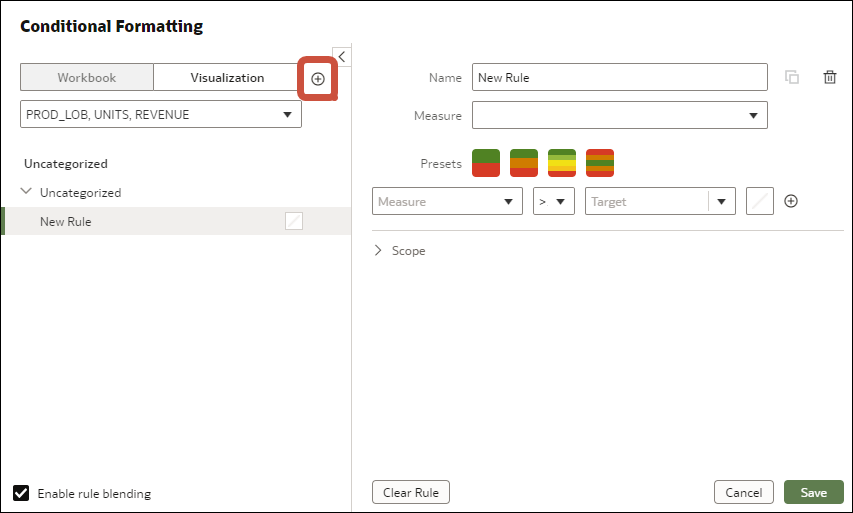
- On the canvas toolbar, click Conditional Formatting
 .
. - In Name, change the default name to something more user-friendly.
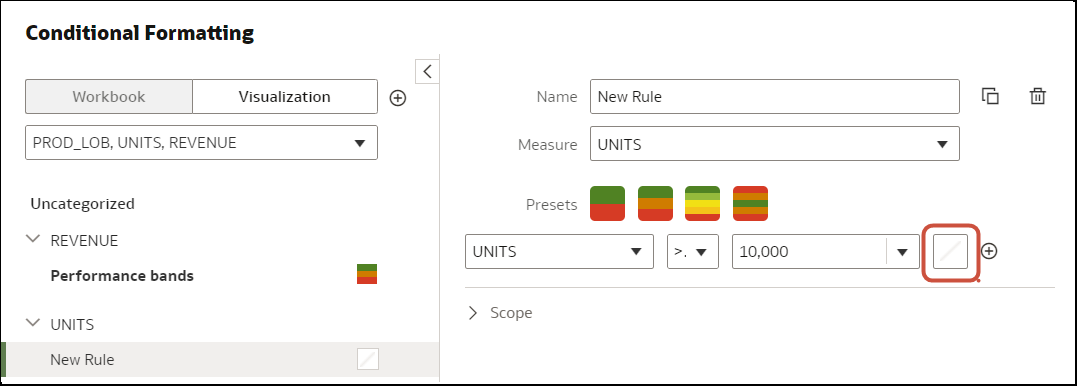
- Below the Presets, select the column on which the rule is evaluated, the operator field, and the threshold.For example, to highlight revenue rates greater than 1,000,000, select REVENUE in the evaluator column field, select the greater than symbol > in the operator field, and enter 1,000,000 in the value field.Tip: You can also create a rule using a template by clicking one of the Presets and defining a value for each threshold. For example, click 3 Steps Threshold to create a set of stoplight thresholds.
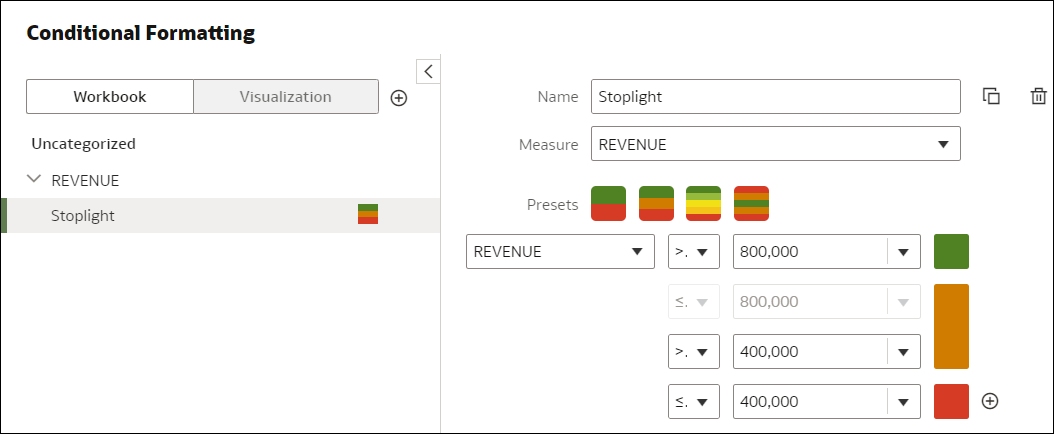
Description of the illustration conditional-format-example-threshold-configuration.png - Click Format to configure the fill color, font, icon or emoji (tabular data), note, and legend.
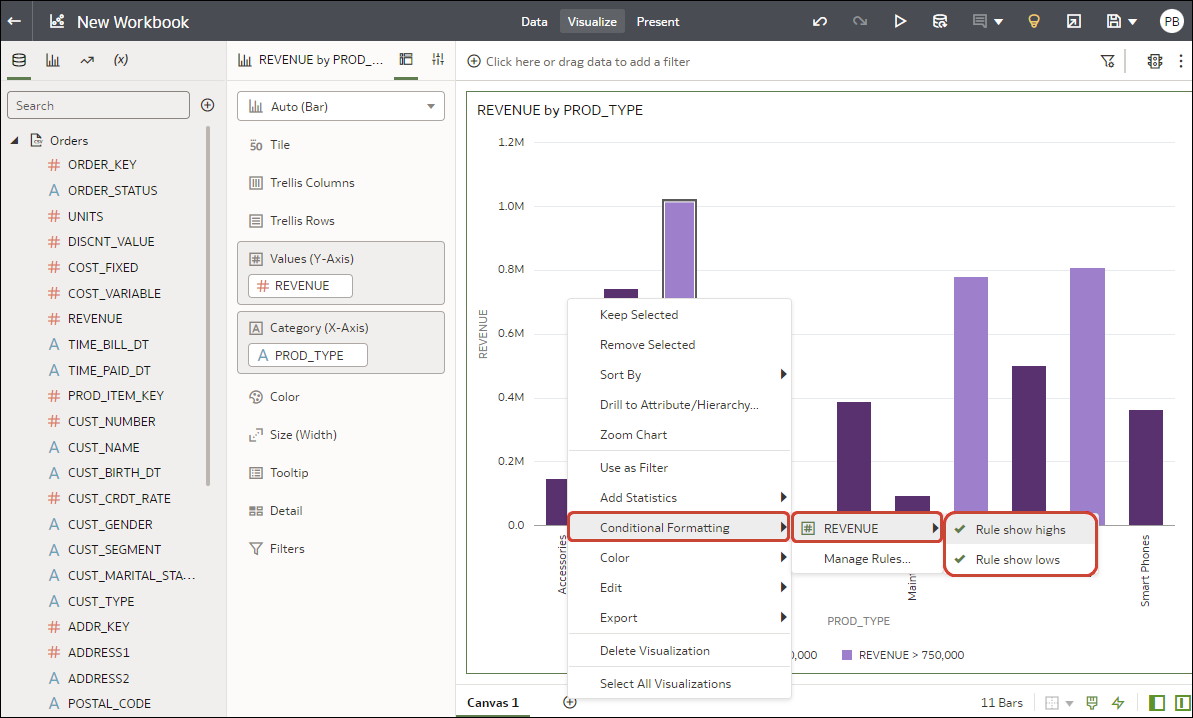
- Click a column name, for example, REVENUE, to display workbook-level rules available for that measure.In this example, REVENUE has two rules available, "Rule show highs" and "Rule show lows". Active rules have a check mark.